Qingdao Walking Guide: Old Town, Ocean Views and Laoshan
A practical, image-rich guide you can actually use.


travel better
On this page
Quick Answer
This Qingdao walking guide is best for travelers who want to feel the city on foot: old town alleys, red roofs, sea-view promenades, beach edges, cafe pauses, and a separate Laoshan day. Keep the route scenic rather than strict because Qingdao rewards slower detours and weather-aware timing.
Before you go: If you need a more structured day-by-day route, compare this walking guide with the four-day self-guided tour and the seven-day itinerary.
Introduction
Imagine a city where the wild northern winds stir up the sea into foamy waves, while a gentle southern breeze brings light rain. Spring arrives late here—while other places are already celebrating the Dragon Boat Festival, this city is just blooming into a paradise of flowers. That’s Qingdao, as captured by the writer Lao She in his poetic lines.
Qingdao is a coastal gem where the sea meets the city at every turn. As a first-time visitor, you’ll find yourself drawn to the coastline, where the sound of waves and the scent of salt air become your constant companions. The city’s unique blend of German colonial architecture, modern skyscrapers, and pristine beaches creates a backdrop that feels both European and distinctly Chinese.
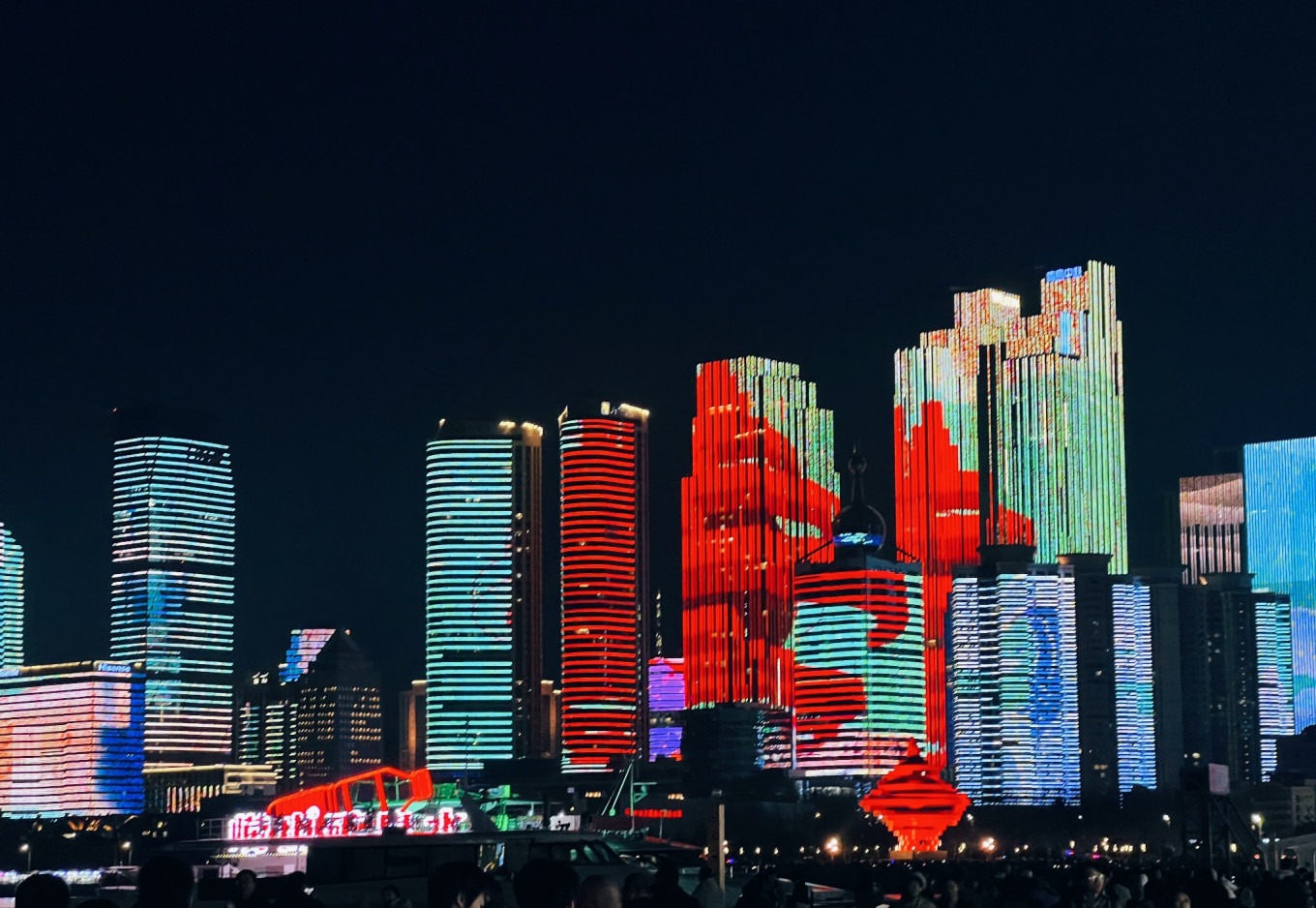
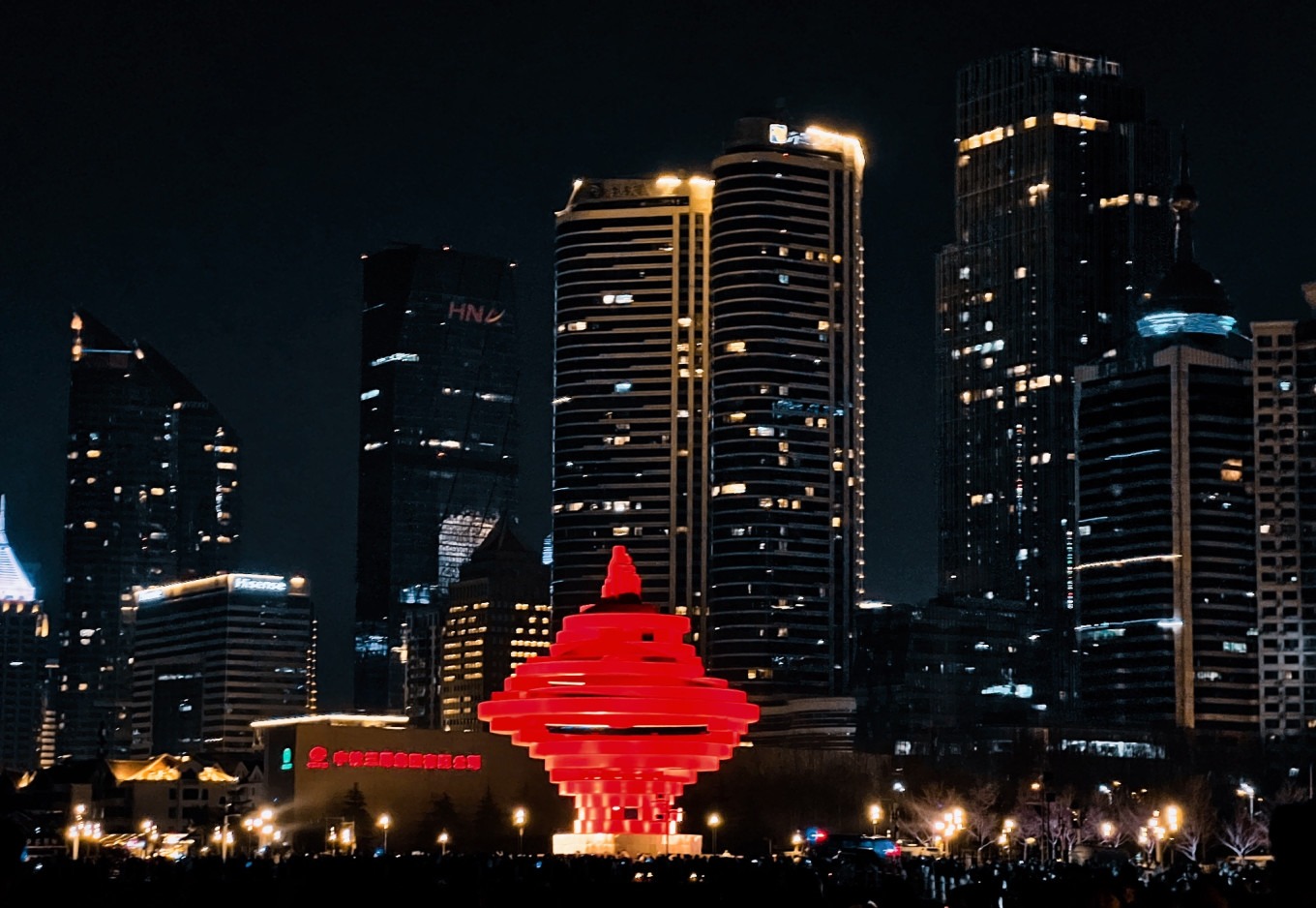
To make the most of your trip, start your exploration along the shoreline. The classic route follows the coastline from Zhan Qiao (栈桥) to the May Fourth Square (五四广场), passing by the iconic red spheres of the Olympic Sailing Center. Along the way, you can stop at the many seafood stalls and beer gardens—Qingdao is famous for its beer, after all. Don’t miss trying the local specialty: grilled squid on a stick, paired with a cold glass of Tsingtao beer.
A Play of Light and Color in Qingdao
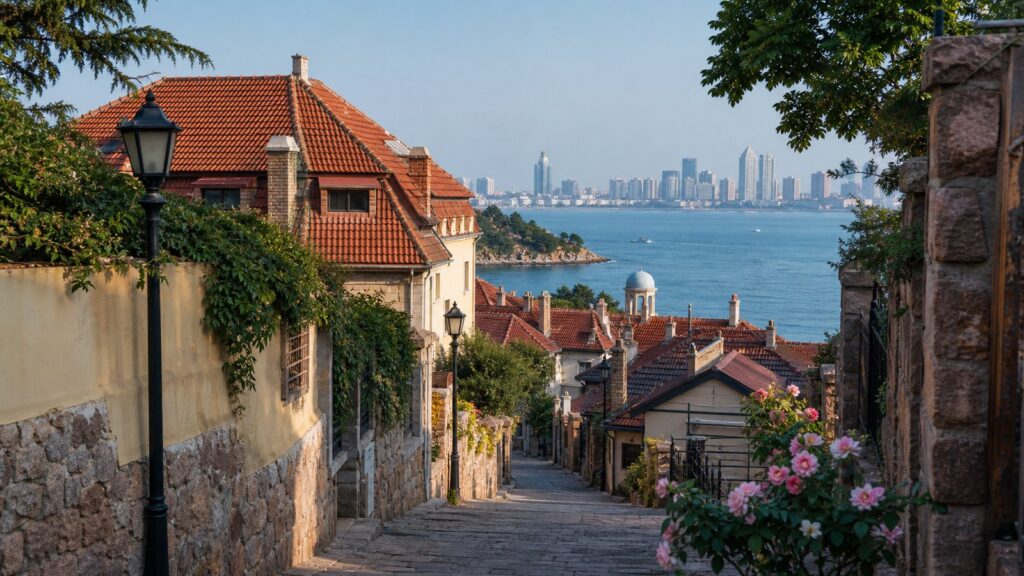
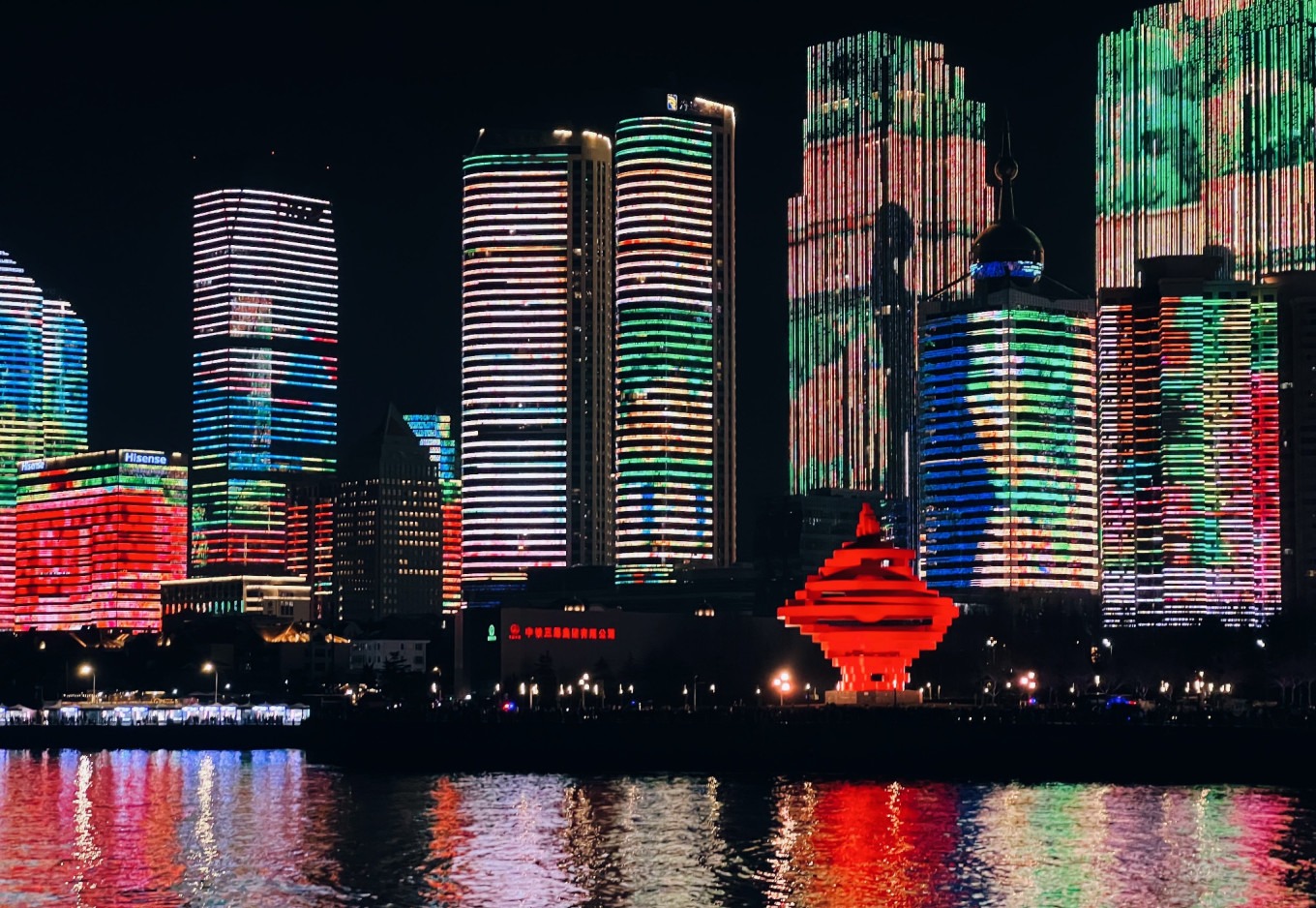
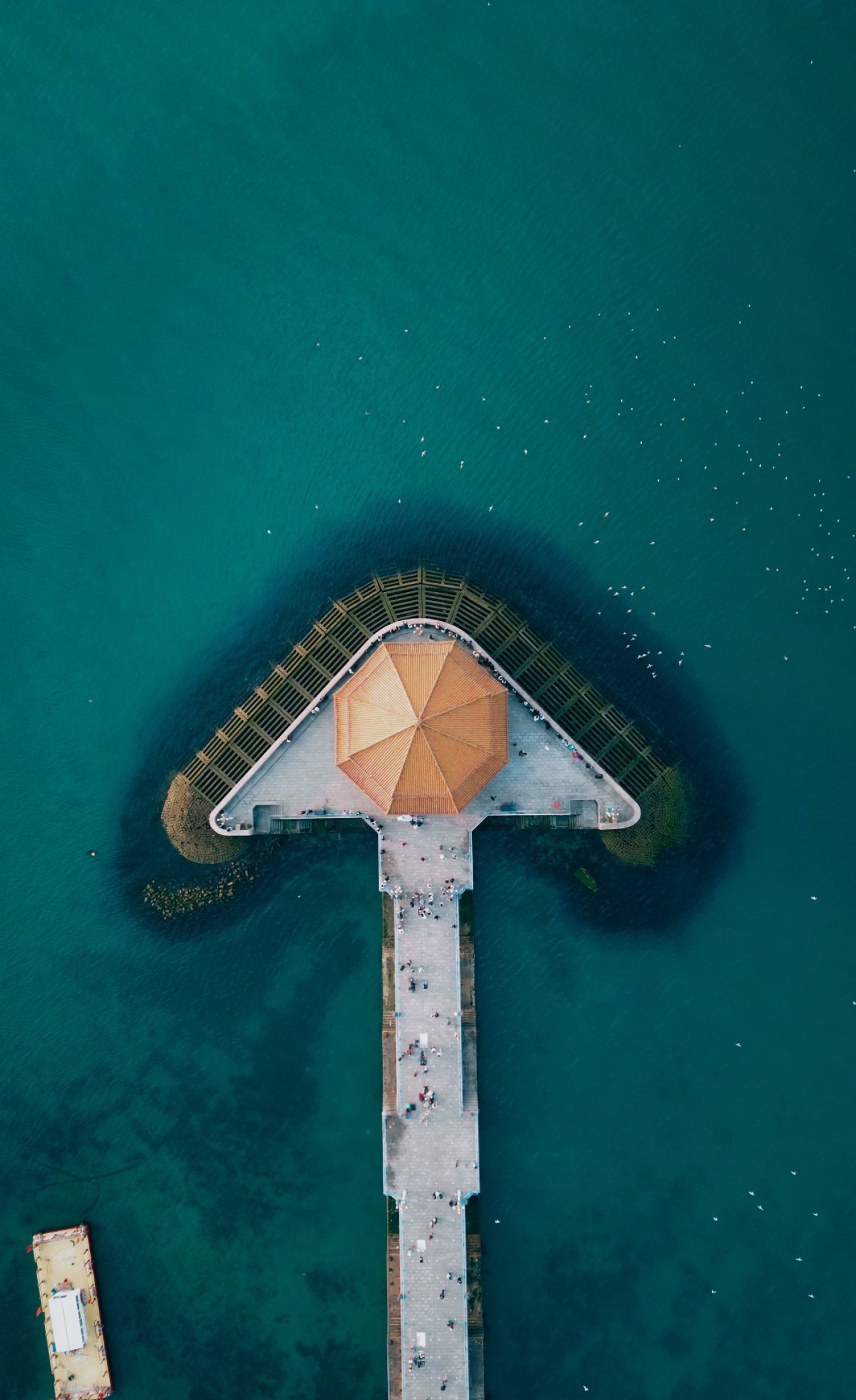
Imagine a city where blue isn’t just a color—it’s the vast ocean stretching to the horizon, calm on the surface yet hiding powerful currents beneath. Red doesn’t just appear; it blazes across sunset skies and crowns the sloping roofs of European-style buildings, whispering stories of a bygone era. White gleams pure and serene, like moonlight, reminding you of innocence lost as seagulls dance over the Zhanqiao Pier. And color? It bursts into joy and hope, weaving through night markets and shimmering on stained glass in cathedrals, painting the dreams of the faithful. This is Qingdao—a journey, a game of light and shadow.
Blue, red, white, and color—each hue tells a story in this coastal city. As you explore, you’ll find blue in the endless sea, red in the historic architecture, white in the purity of the sky and the pier, and color everywhere else, from the vibrant nightlife to the intricate church windows. Let Qingdao’s palette guide your journey.
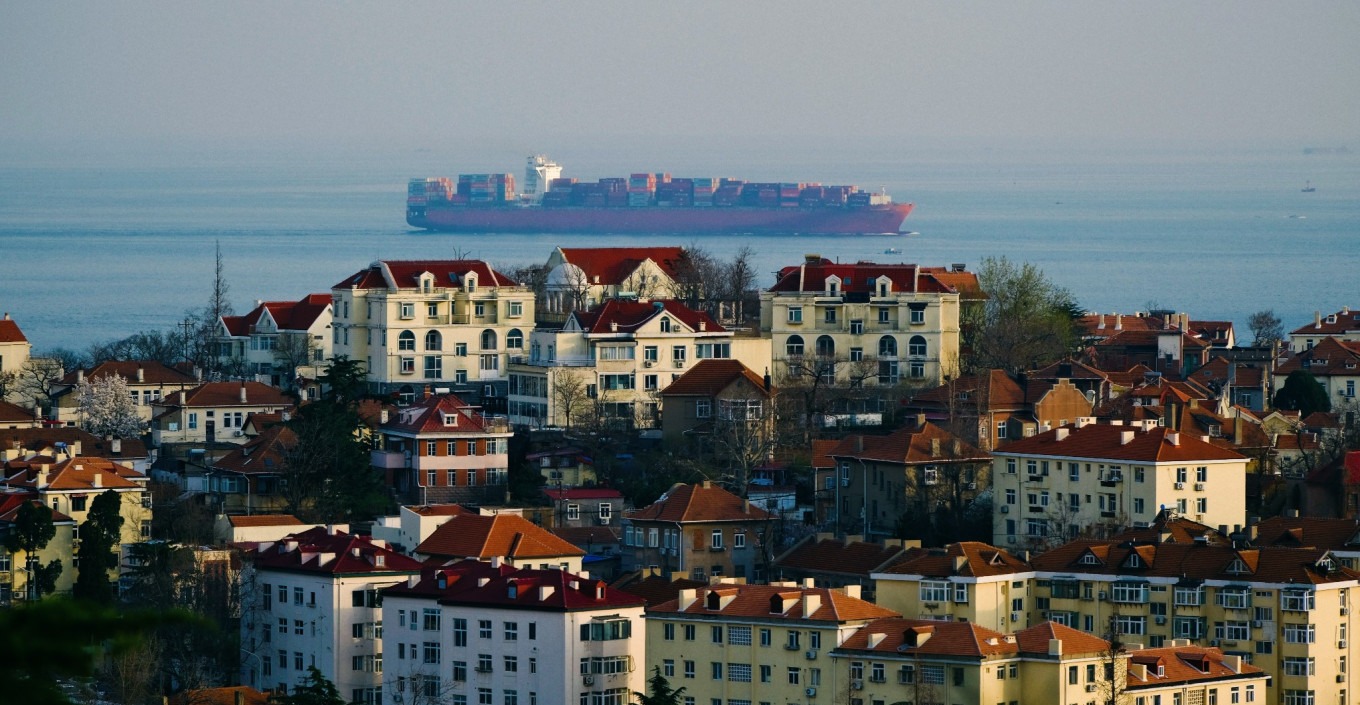
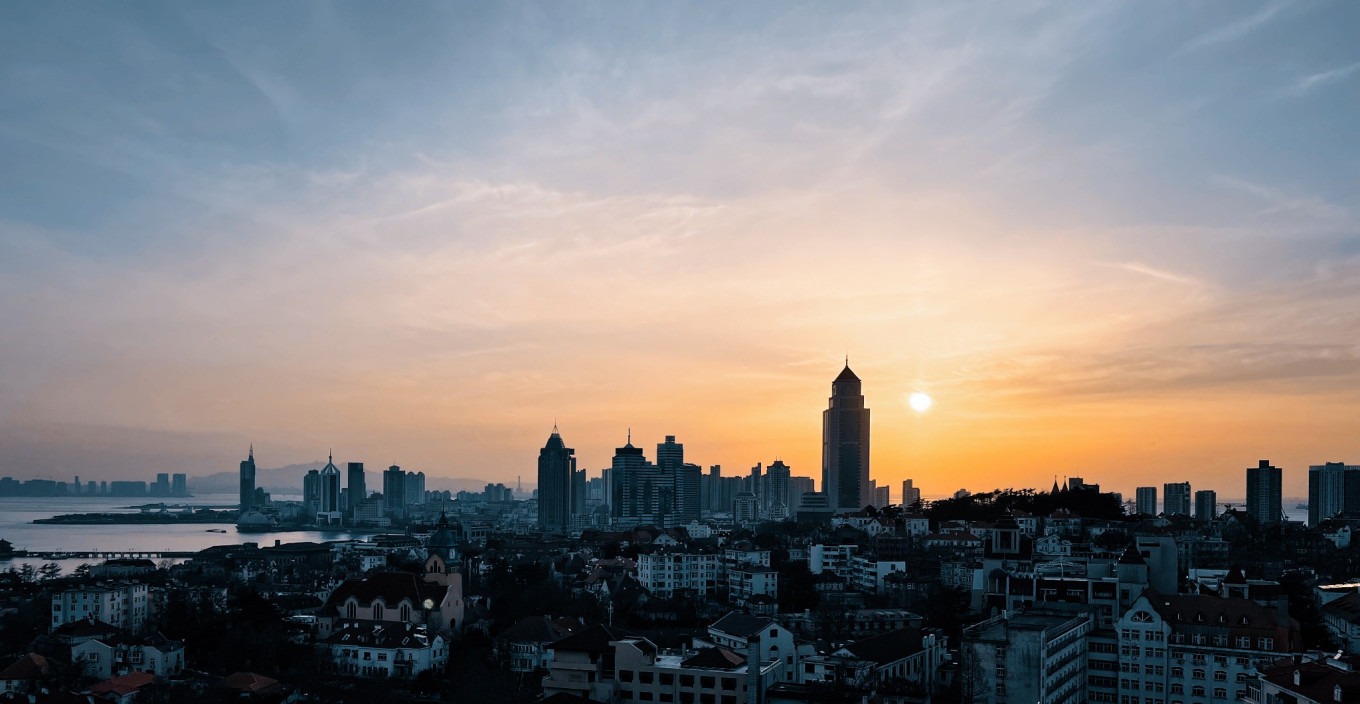
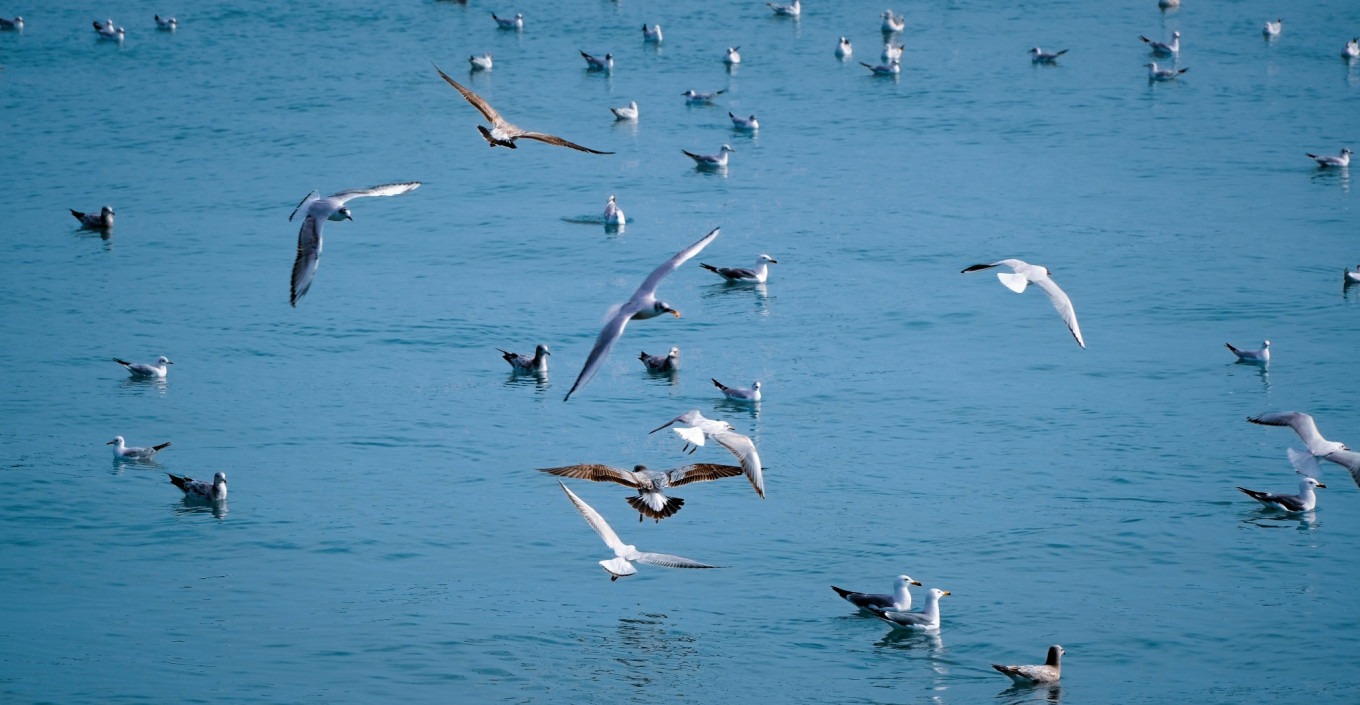
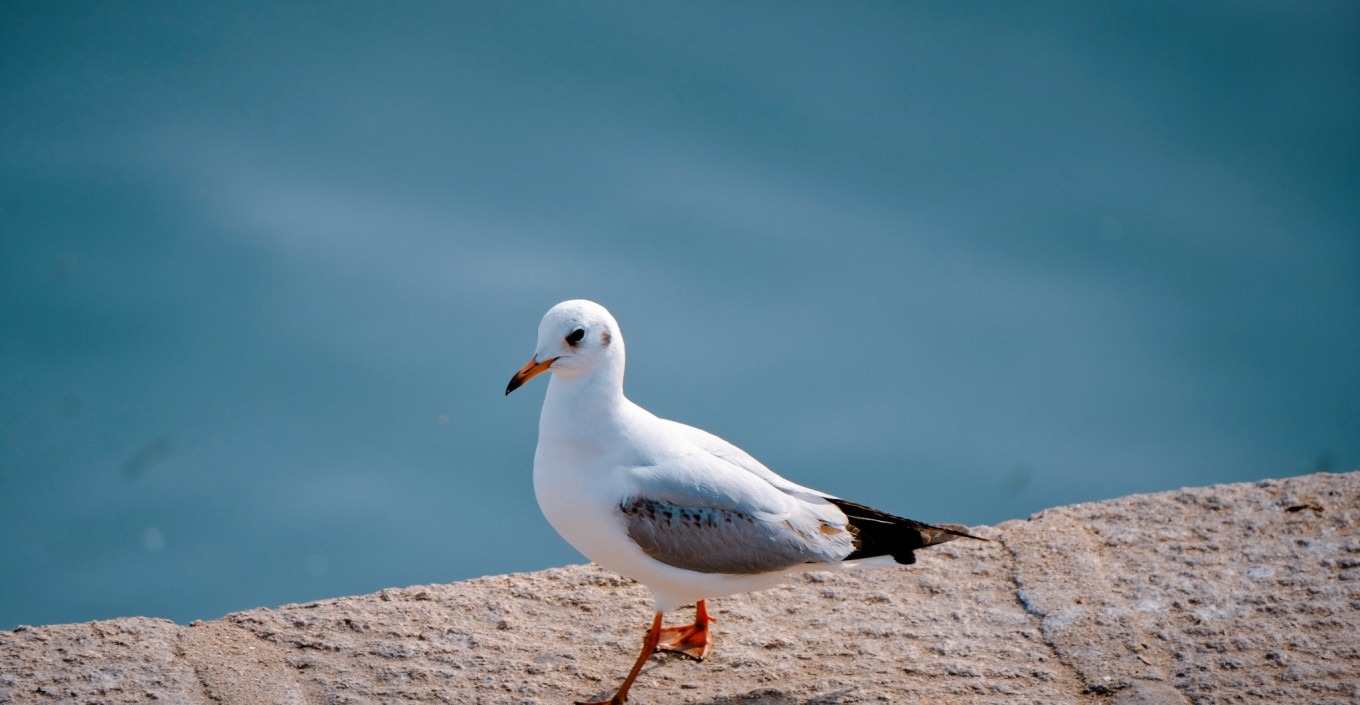
Color comes alive at night, when neon lights reflect off the water, and in the stained glass of St. Michael’s Cathedral, where every pane tells a story. Don’t miss the chance to see the city from different angles—each view offers a new combination of hues.

Practical tip: You can prioritize one signature stop around the area, and you should adjust timing and budget based on transport and peak hours.
A First-Timer’s Guide to Qingdao: City Walk & Food
If it’s a practical introduction to Qingdao, don’t worry about planning every detail. The city is perfect for a spontaneous City Walk. From the historic streets of the southern district to the coastal promenade, you can explore from sunrise to sunset on foot. Here’s a practical overview and food recommendations to get you started.
**Sample Itinerary** – Day 1: Beijing → Qingdao (high-speed rail) → Home Inn (栈桥店) → St. Michael’s Cathedral → Zhejiang Road (浙江路) → Longjiang Road (龙江路) → Signal Hill (信号山) → Zhongshan Road (中山路) – Day 2: Zhanqiao Pier (栈桥) morning → Seafood foraging (赶海) by car → Laoshan Yangkou Scenic Area (崂山仰口景区) → May Fourth Square (五四广场) → Zhanqiao Pier at night – Day 3: Qingdao Beer Museum (青岛啤酒博物馆) → Wheat Island (小麦岛) by taxi → Taipingjiao (太平角) → Badaguan (八大关) → Qingdao Station → Beijing
**Transport Tips** During holidays like Qingming, extra high-speed trains run from Beijing to Qingdao, taking just over 3 hours. The slowest trains, like the return trip, may take 5+ hours – a good chance to nap. As a tourist city, Qingdao’s metro covers all major attractions. In the southern district, City Walk routes are dense, but roads are mostly one-way; walking is often faster than taking a taxi that may detour. For Laoshan, consider joining a quality day tour like Bikego if you prefer hassle-free travel.
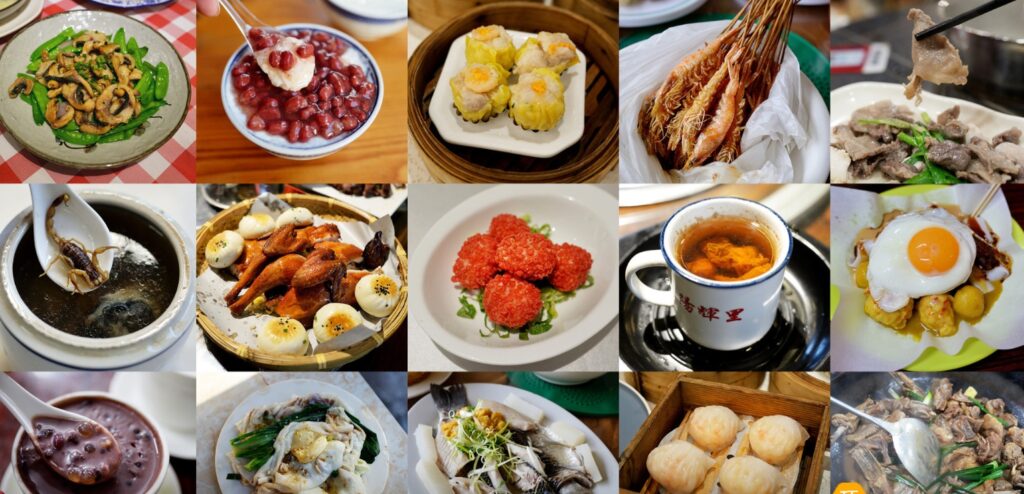
**Food Recommendations** **白玉餐厅 (Baiyu Restaurant)** – Address: 湖北路8号 (No. 8 Hubei Road) – Try the 辣炒蛤蜊 (spicy stir-fried clams) – fresh but lightly seasoned; 辣炒鱿鱼 (spicy squid) and 鱼香茄子 (fish-fragrant eggplant) are great with rice. If you’re heading to the cathedral from the train station, this is a convenient spot for a meal. **王姐烧烤海鲜家常菜 (Wang Jie BBQ & Seafood Home Cooking)** – Address: 莱阳路61号 (No. 61 Laiyang Road) – Pair dumplings with beer, add BBQ and 椒盐虾虎 (salt-and-pepper mantis shrimp), and finish with a simple vegetable dish for a balanced meal.
Strolling the Southern District: 30,000 Steps Is Just a Warm-Up
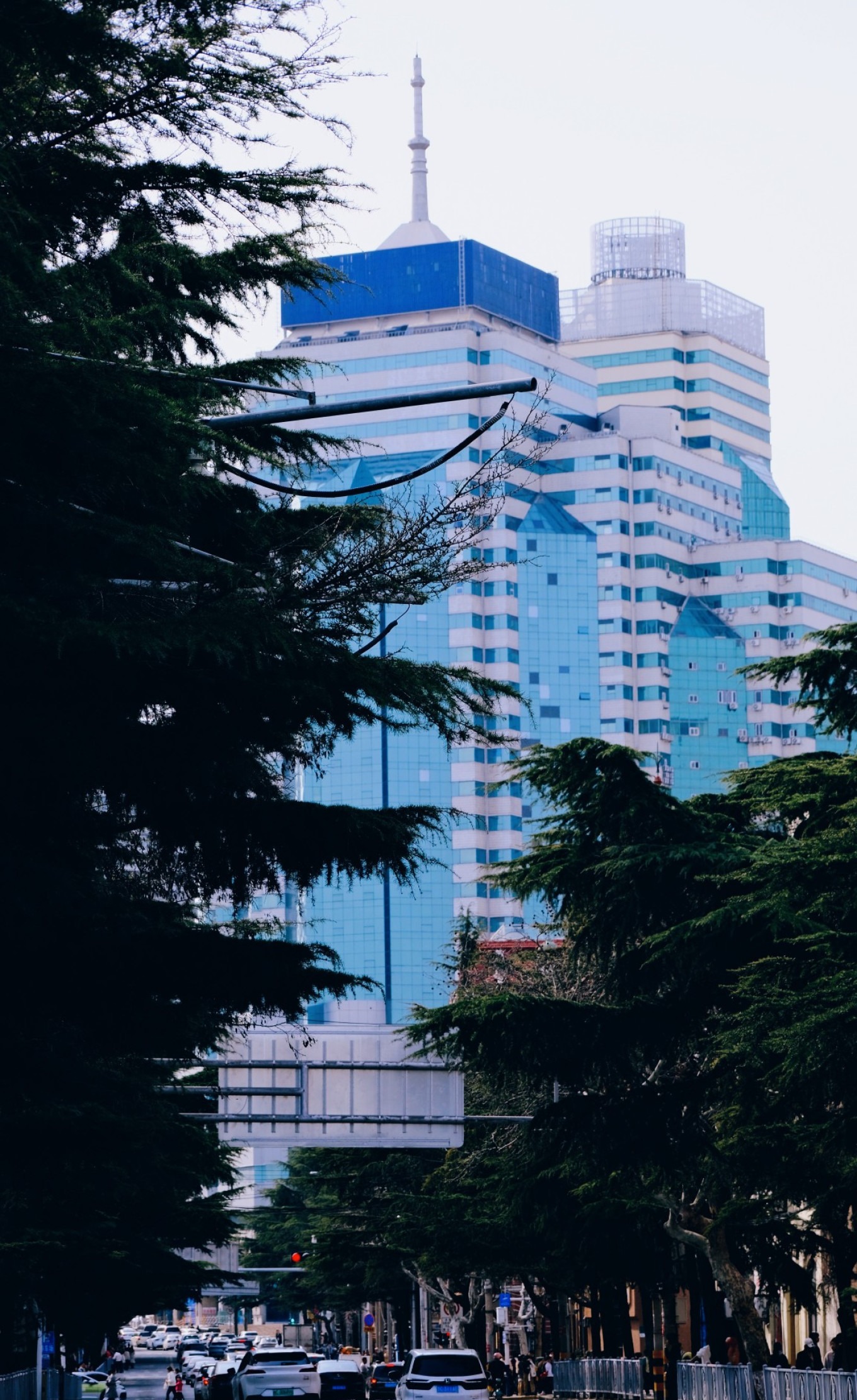
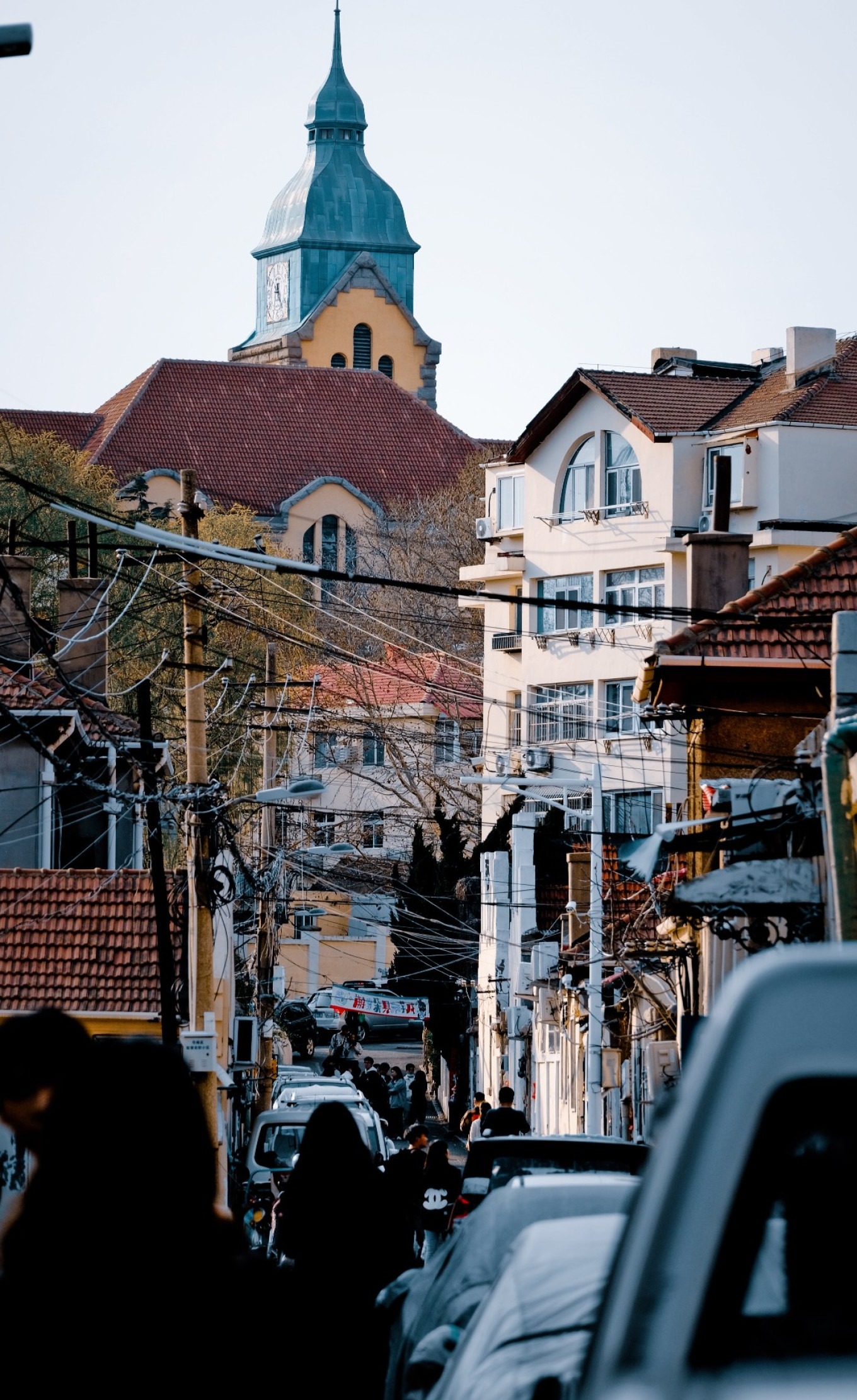
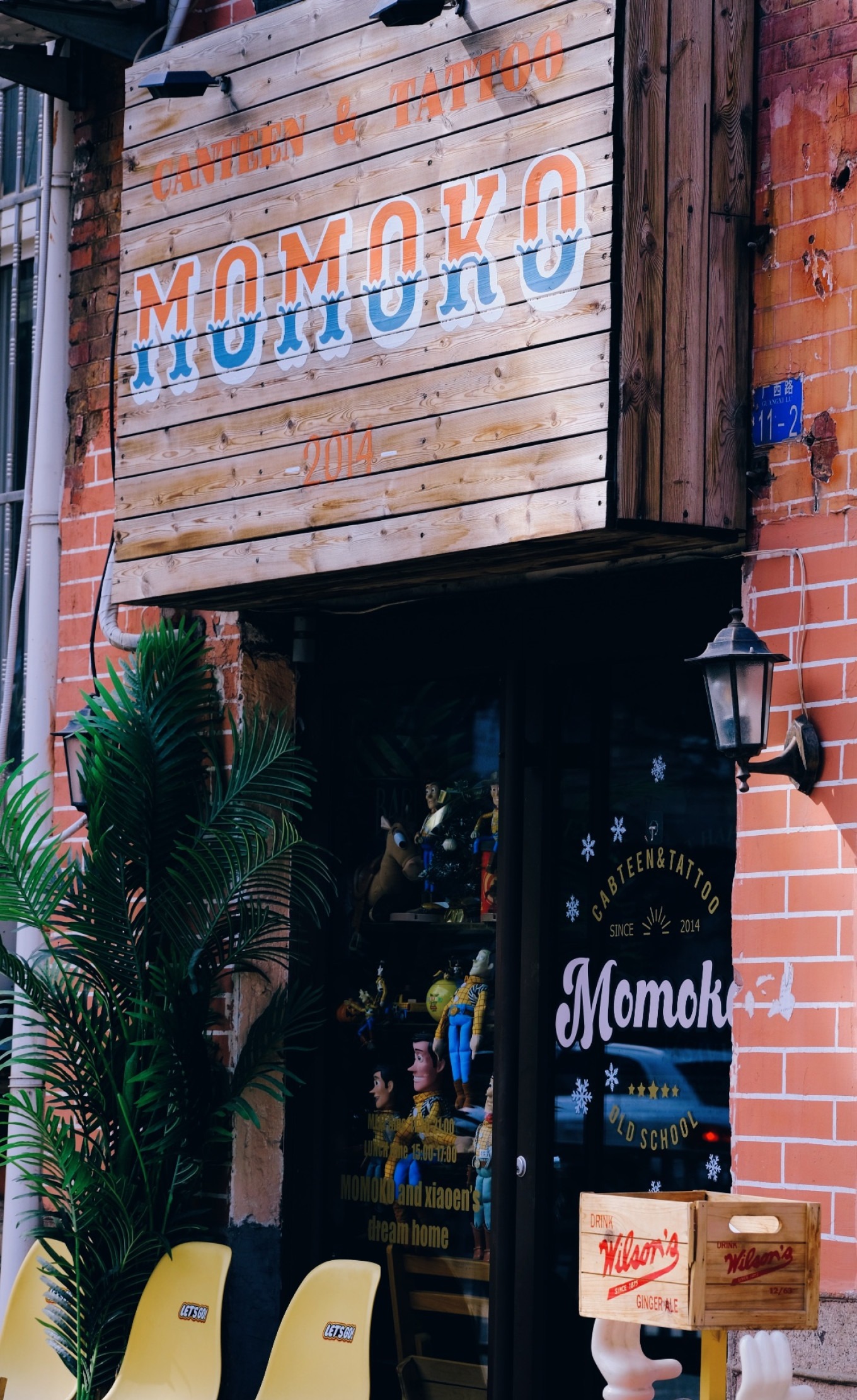
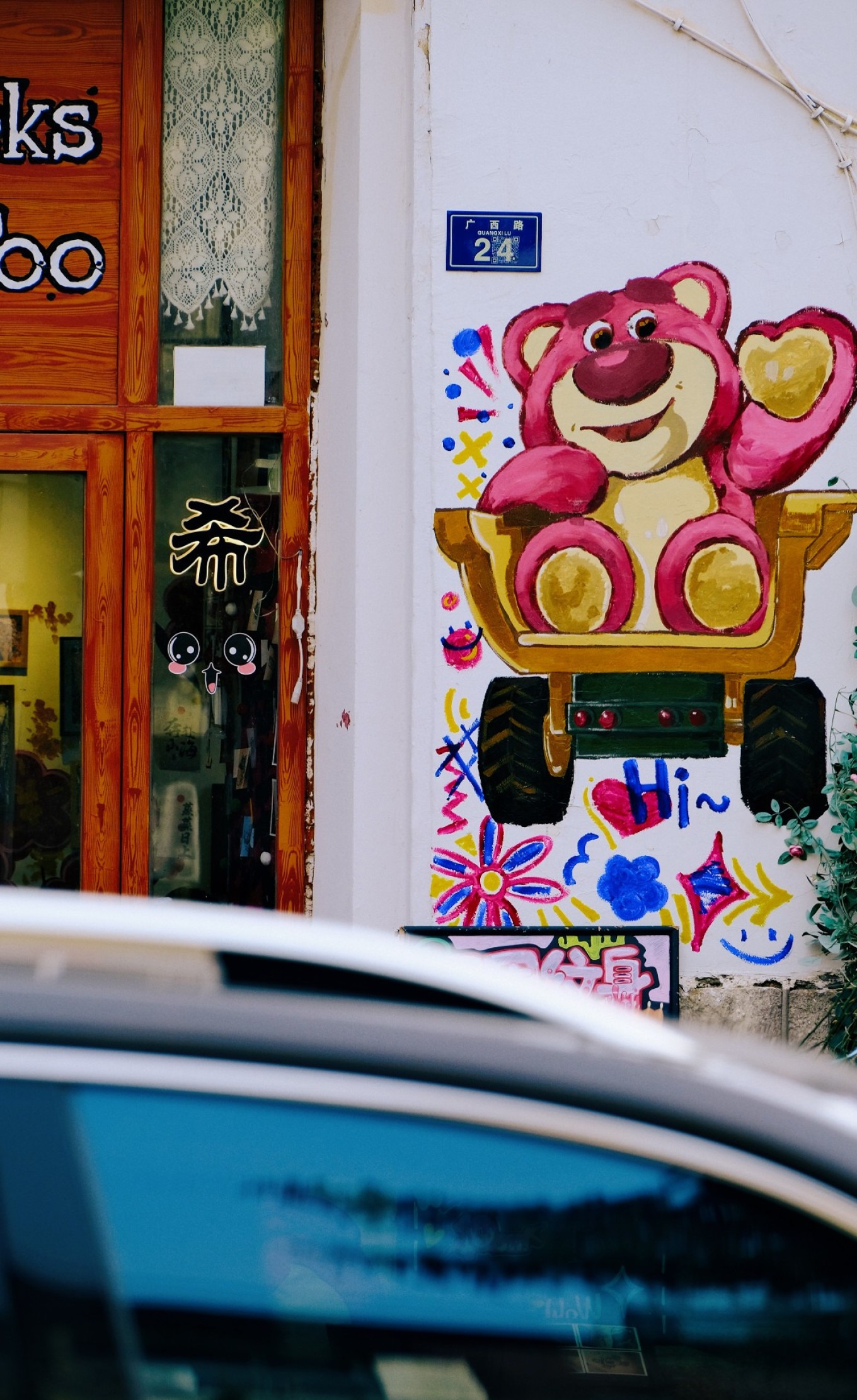
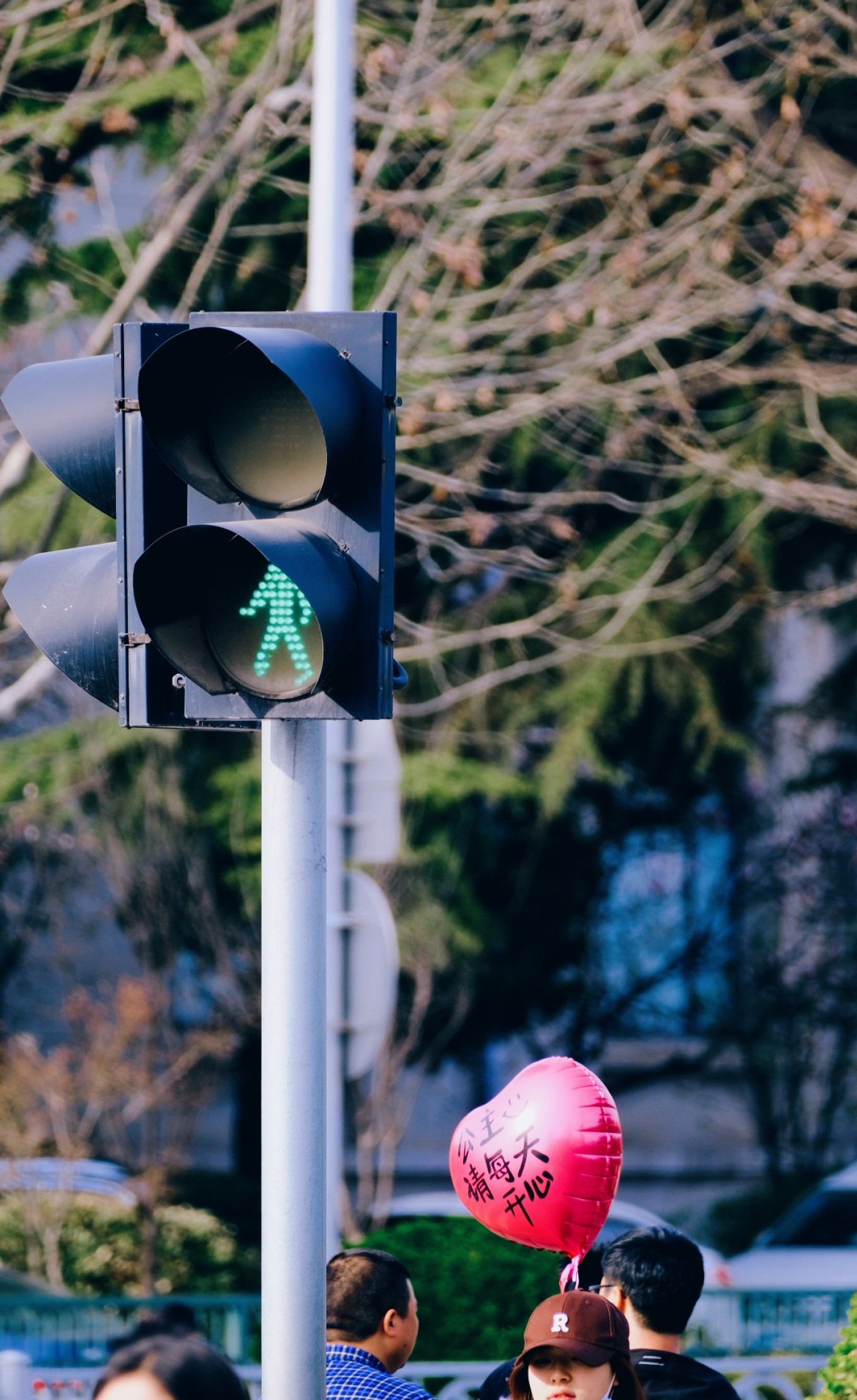
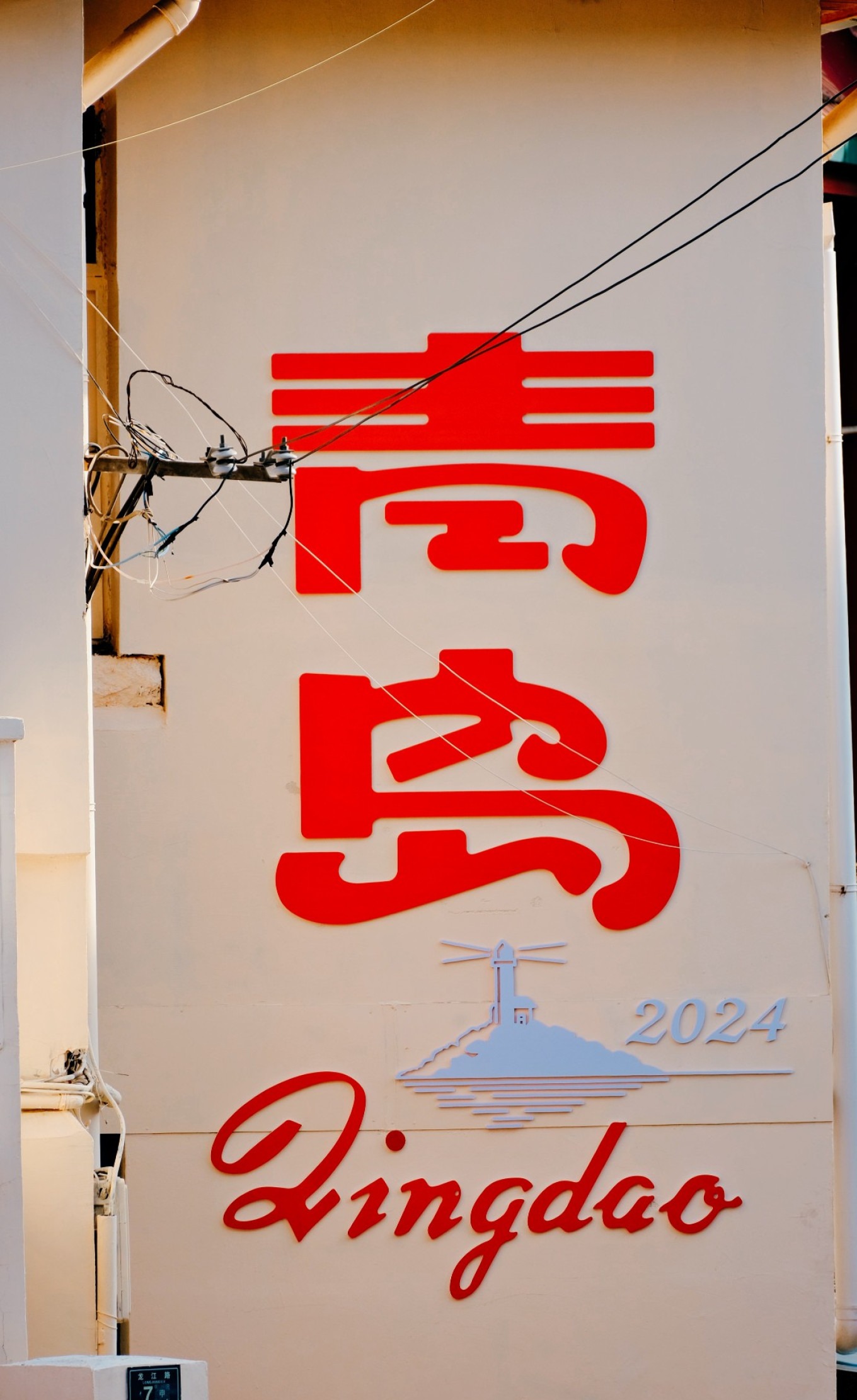
Start your journey right outside Qingdao Railway Station and head along Guangxi Road to check into your hotel. As you pass Zhongshan Road, you’ll be greeted by a sea of people — a sure sign you’ve arrived during peak season. From there, walk north on Zhejiang Road to St. Michael’s Cathedral, then turn into Qufu Road, pass by the Little Red Mansion Art Museum, and continue along Anhui Road back to Guangxi Road. When you reach Jiangsu Road, cut over to Taiping Road, then follow Daxue Road into Longjiang Road and other trendy alleyways that lead toward Signal Hill. It’s a fair distance to Signal Hill, but around every corner you’ll discover unique boutiques, historic villas, and the thrill of exploration.
In the old Qingdao Post Office, you can write a letter that may never arrive — and that’s part of its charm. Drop it into the mailbox, and it will travel across mountains and seas, carrying a piece of your heart to an uncertain destination. It’s a romantic gesture that echoes the slower pace of a bygone era.
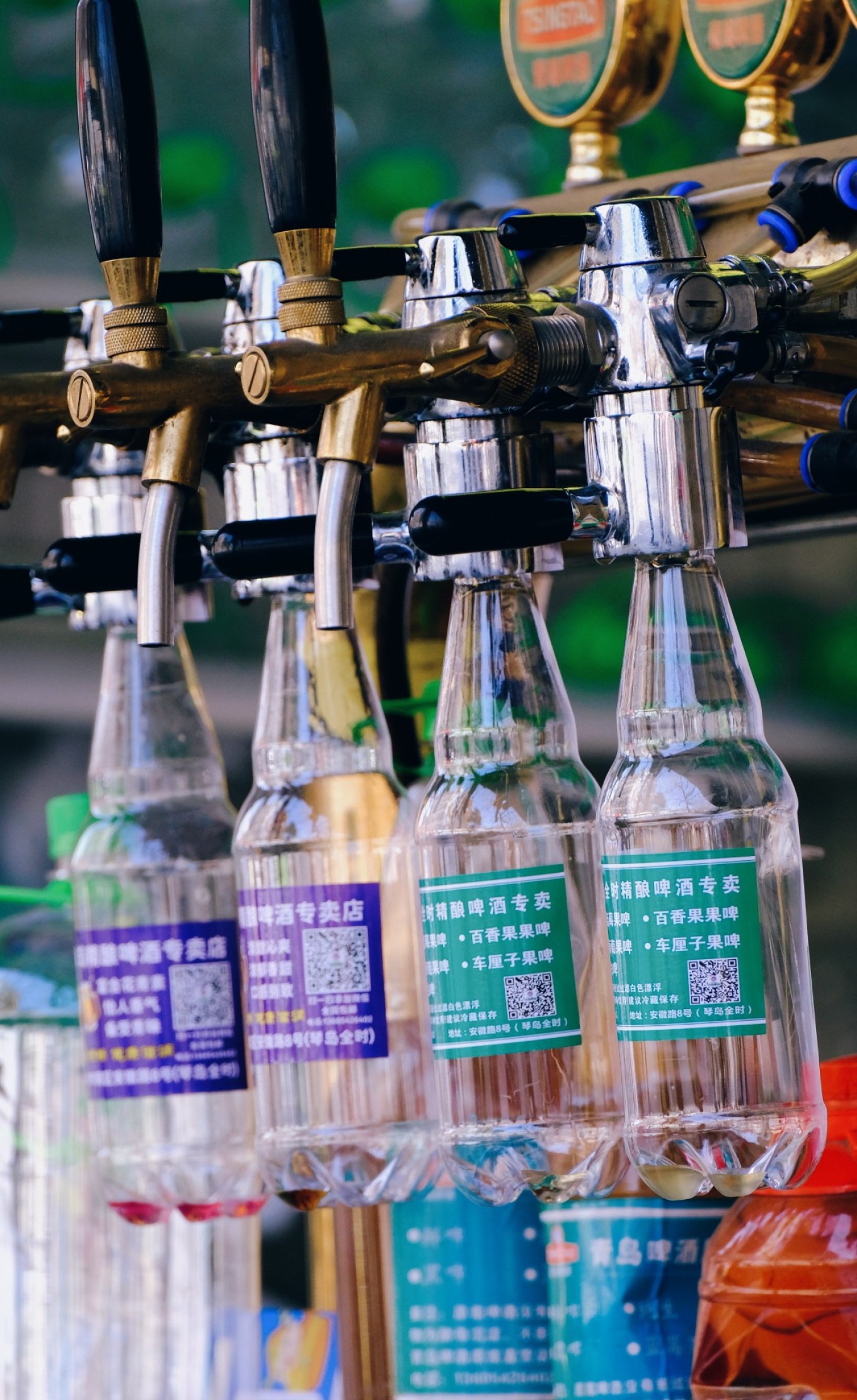
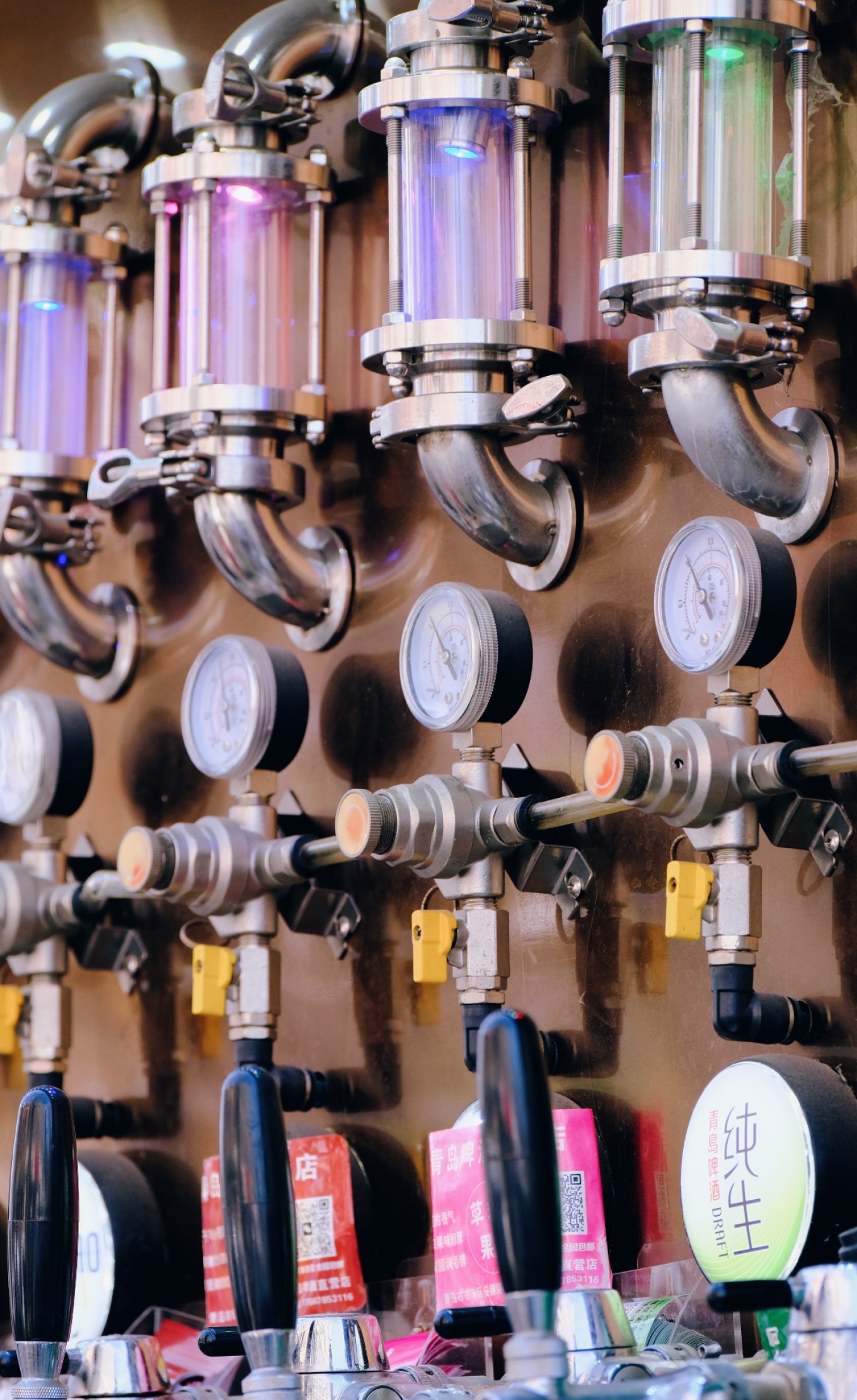
When thirst strikes in Qingdao, skip the bottled water and fizzy drinks. Instead, reach for a glass of draft beer (原浆啤酒), pure draft (纯生啤酒), or chilled fruit beer (果啤). As long as you’re not driving, a bottle of fruit beer is refreshing and light — the perfect way to cool down.
On Taiping Road, two elegant green buildings catch the eye. Graceful and refined, they face the sea and quietly witness the vastness of Qingdao Bay. According to Amap, this is the former residence of Bialucha (毕娄哈旧宅), designed by German architect Arthur Bialucha and built between February and November 1933. Bialucha once lived here, though post-war German property records suggest he may not have owned it.
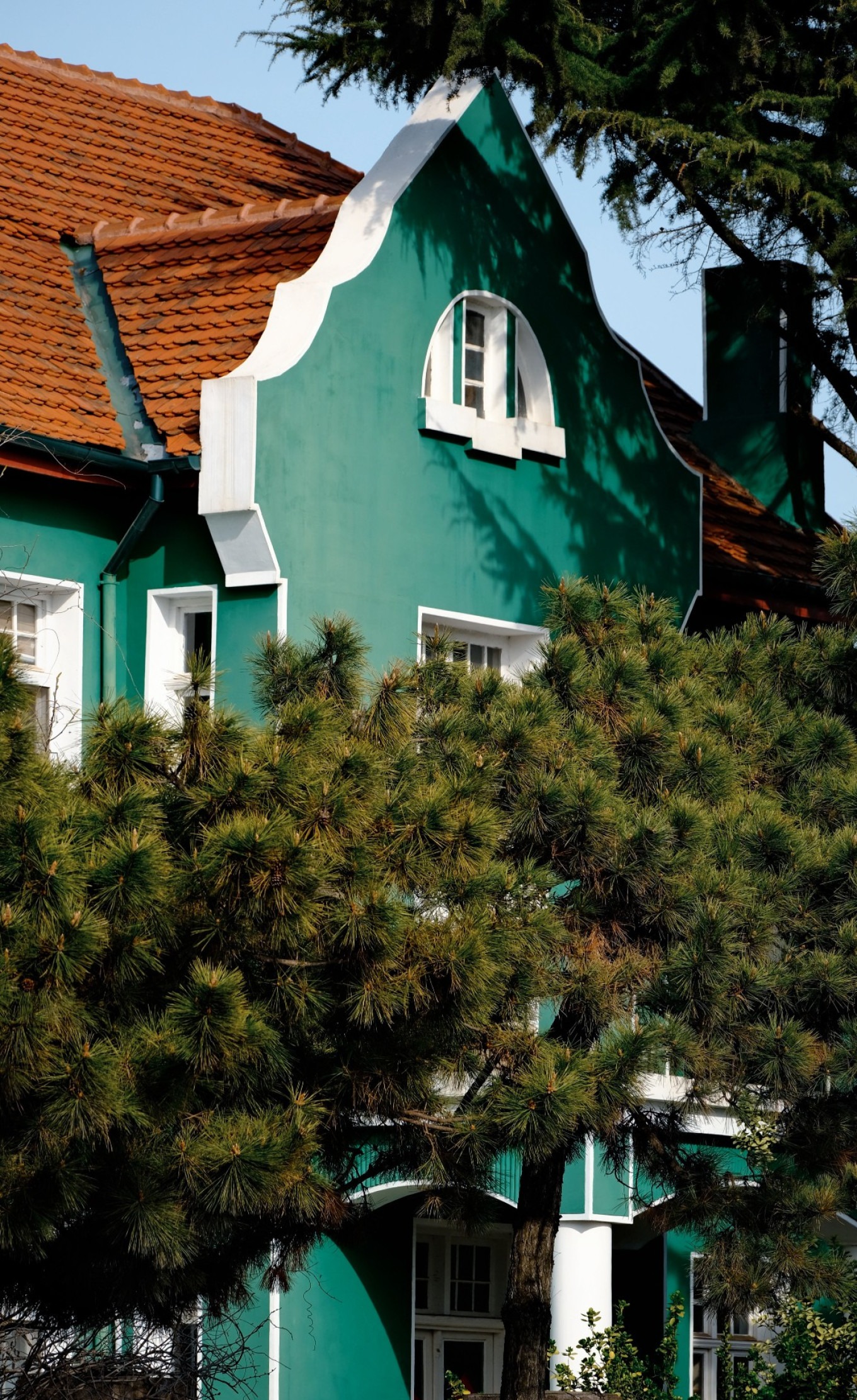
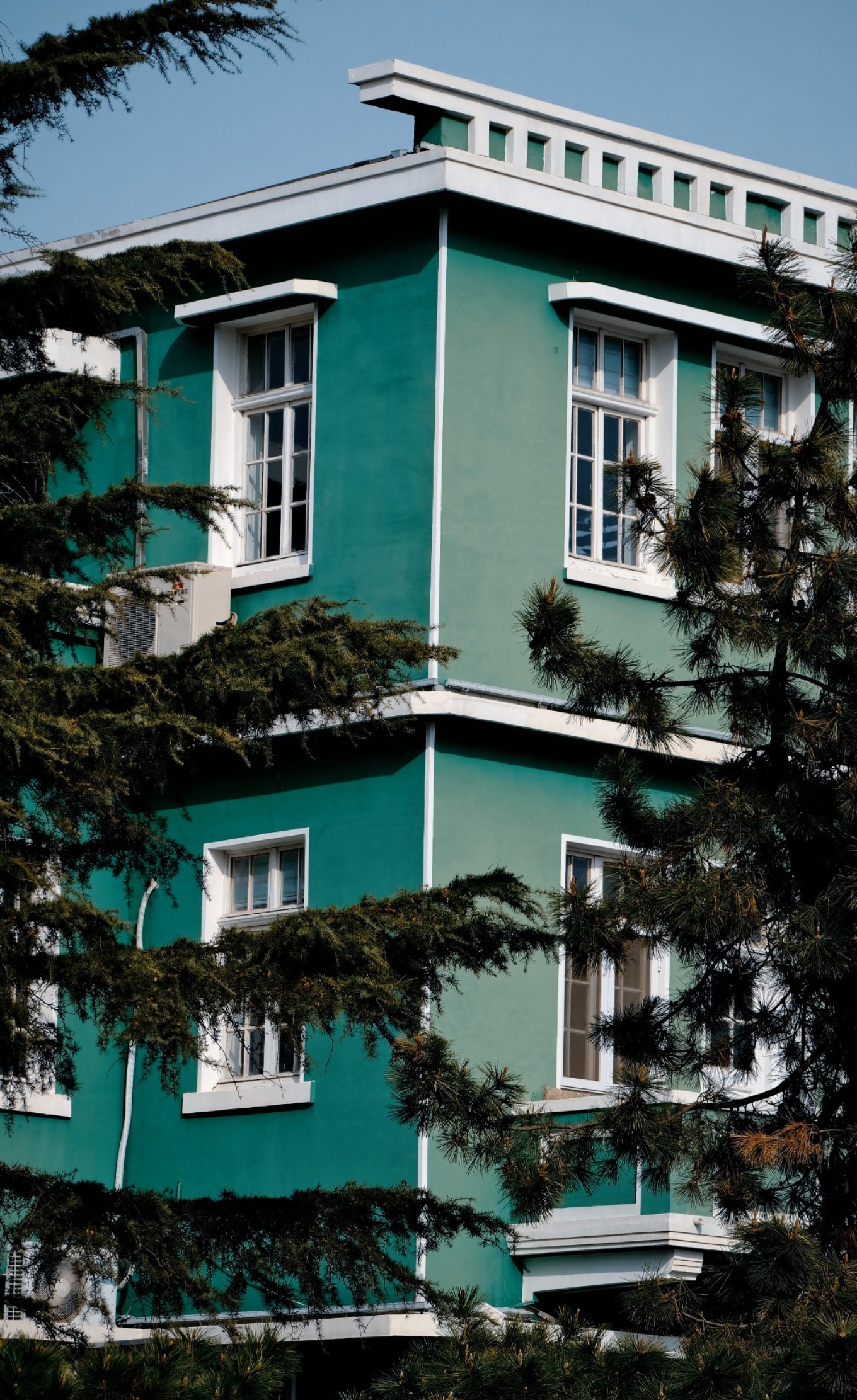
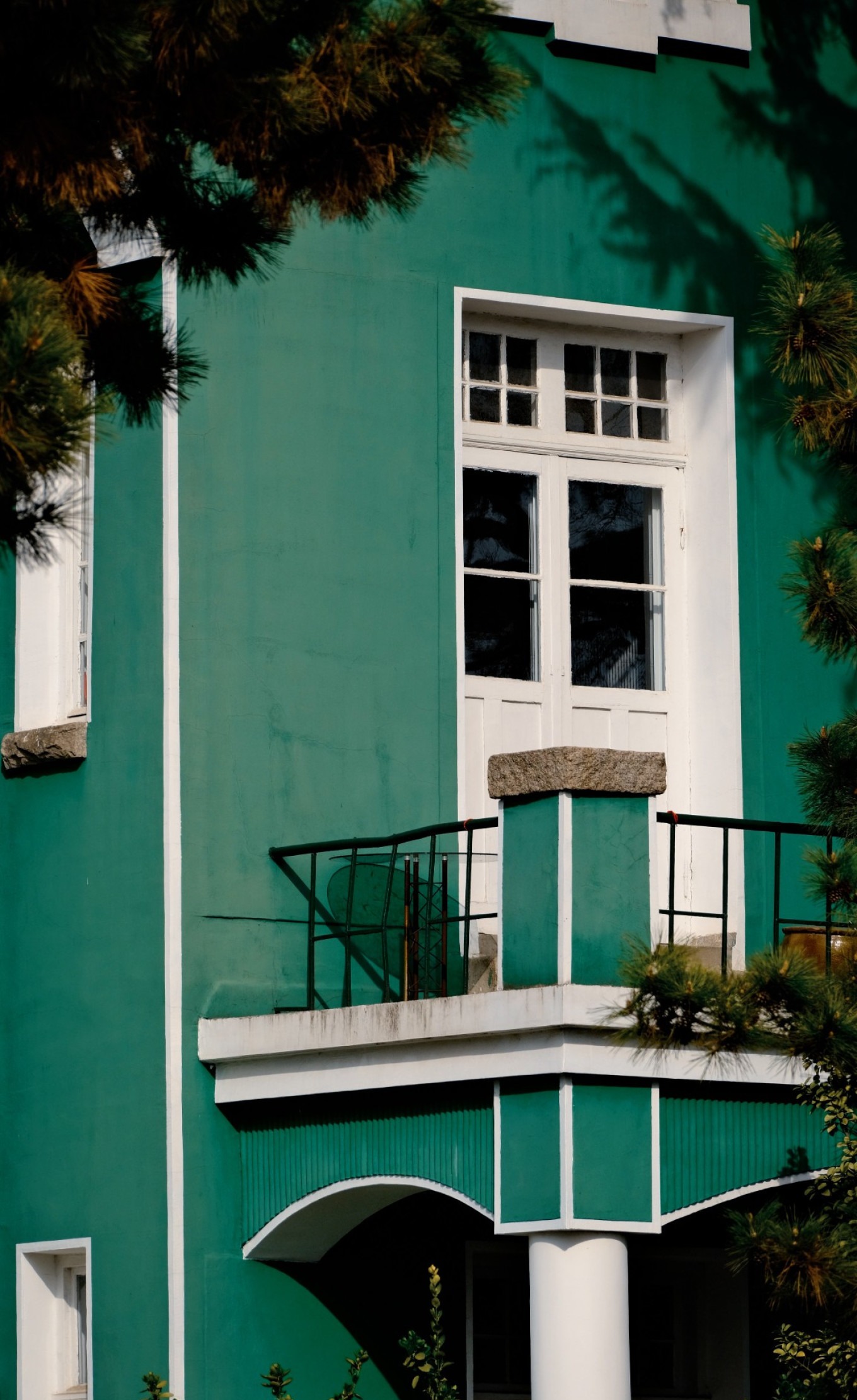
Along the route, you’ll also pass the former Pharmacy Building, praised by German scholar Torsten Warner as “Qingdao’s most beautiful German Jugendstil building”; the German Consulate, a romantic courtyard-style villa; the exquisite former German Qingdao Post Office, with a century-old wooden tower that now houses Liangyou Bookstore (良友书坊); and the castle-like former Marquis Hotel.
The Stained Glass That Makes This Church Special
In Qingdao, the Catholic Church—officially named St. Michael’s Cathedral (圣弥厄尔教堂)—stands as a striking example of Gothic and Romanesque architecture. Designed by German architect Bie Luha, the original plan called for a 100-meter spire, but the outbreak of World War II and Hitler’s ban on capital outflow forced a scaled-down design. Construction began in 1932 and finished in 1934. The church’s floor plan is a Latin cross, with twin 60-meter bell towers flanking a platform 30 meters above the ground. Inside the towers hang four massive bronze bells that chime melodiously. Above the main entrance, a grand rose window is flanked by 4.5-meter crosses. The roof is covered with red tongue-shaped tiles, giving the building an imposing yet elegant presence. The interior, designed in Italian Renaissance style, features a spacious 18-meter-high hall with seven chandeliers, an altar beneath a dome adorned with saintly frescoes, and seating for 1,000. It is the largest Gothic church in Qingdao and the only consecrated cathedral in China.
Gothic churches have minimal wall space and expansive windows, making stained glass the primary canvas for artistic expression. Here, colorful glass panels form intricate biblical scenes and geometric patterns. When sunlight streams through, the interior is bathed in a kaleidoscope of colors, creating an almost heavenly atmosphere. Visitors often find themselves captivated by the ethereal light—it’s a photographer’s dream and a moment of quiet wonder.


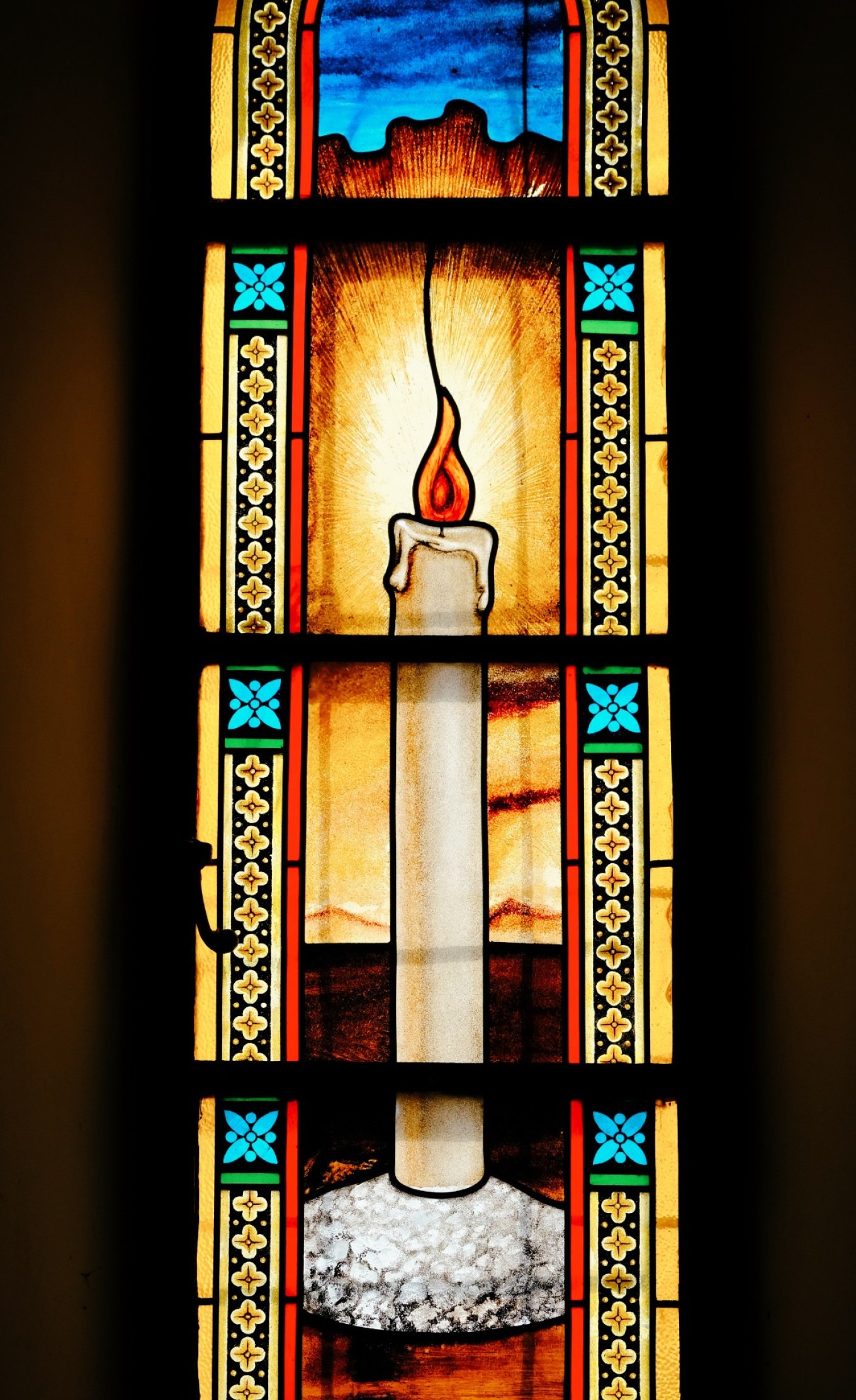

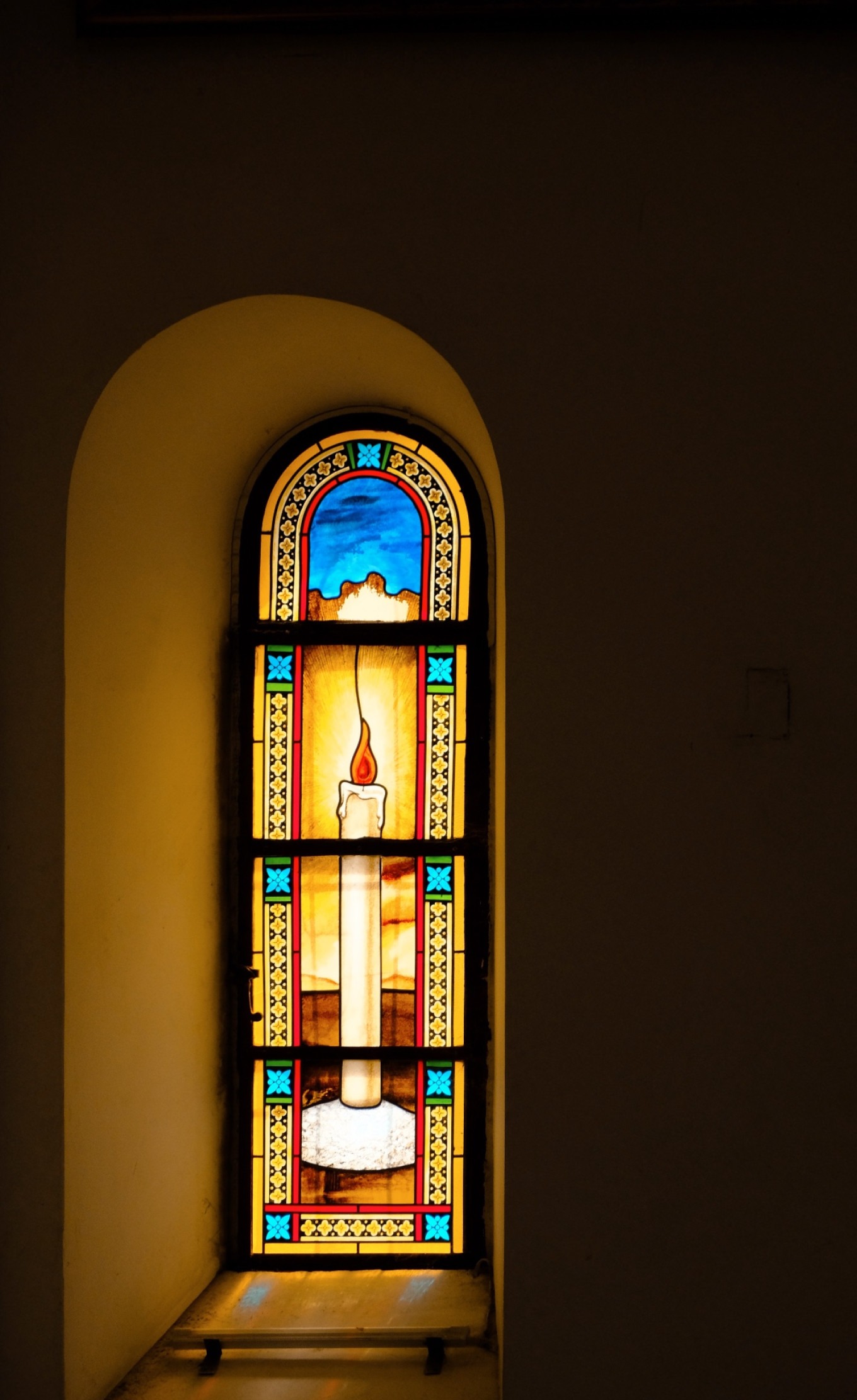
In front of the church, you’ll find a lively scene of travelers posing for photos, their smiles as bright as the stained glass. The steps and square offer a perfect vantage point for capturing the cathedral’s grandeur. For the best light, visit in the morning or late afternoon when the sun illuminates the facade and the stained glass glows most vividly.
Street Art and Coffee Corners
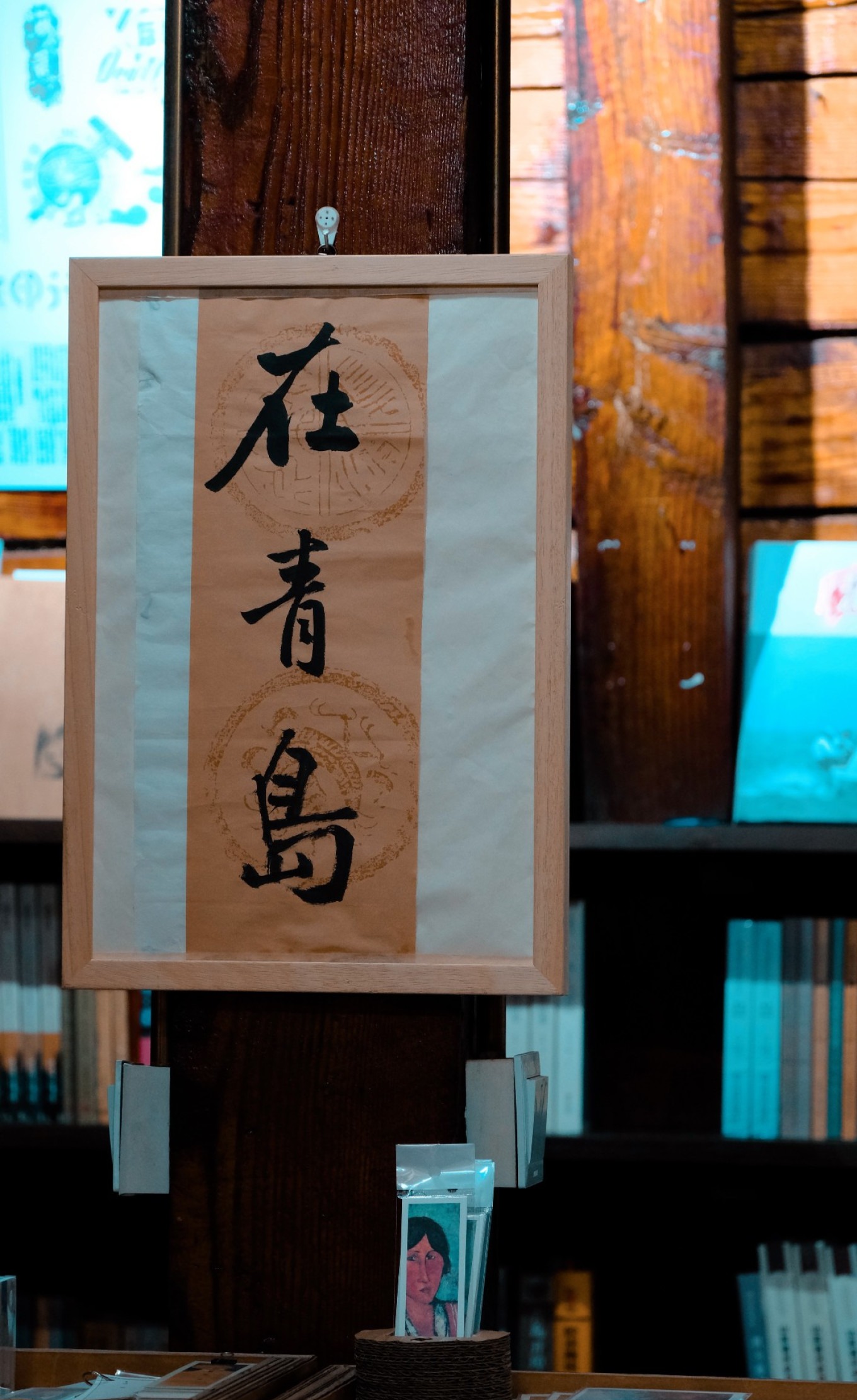
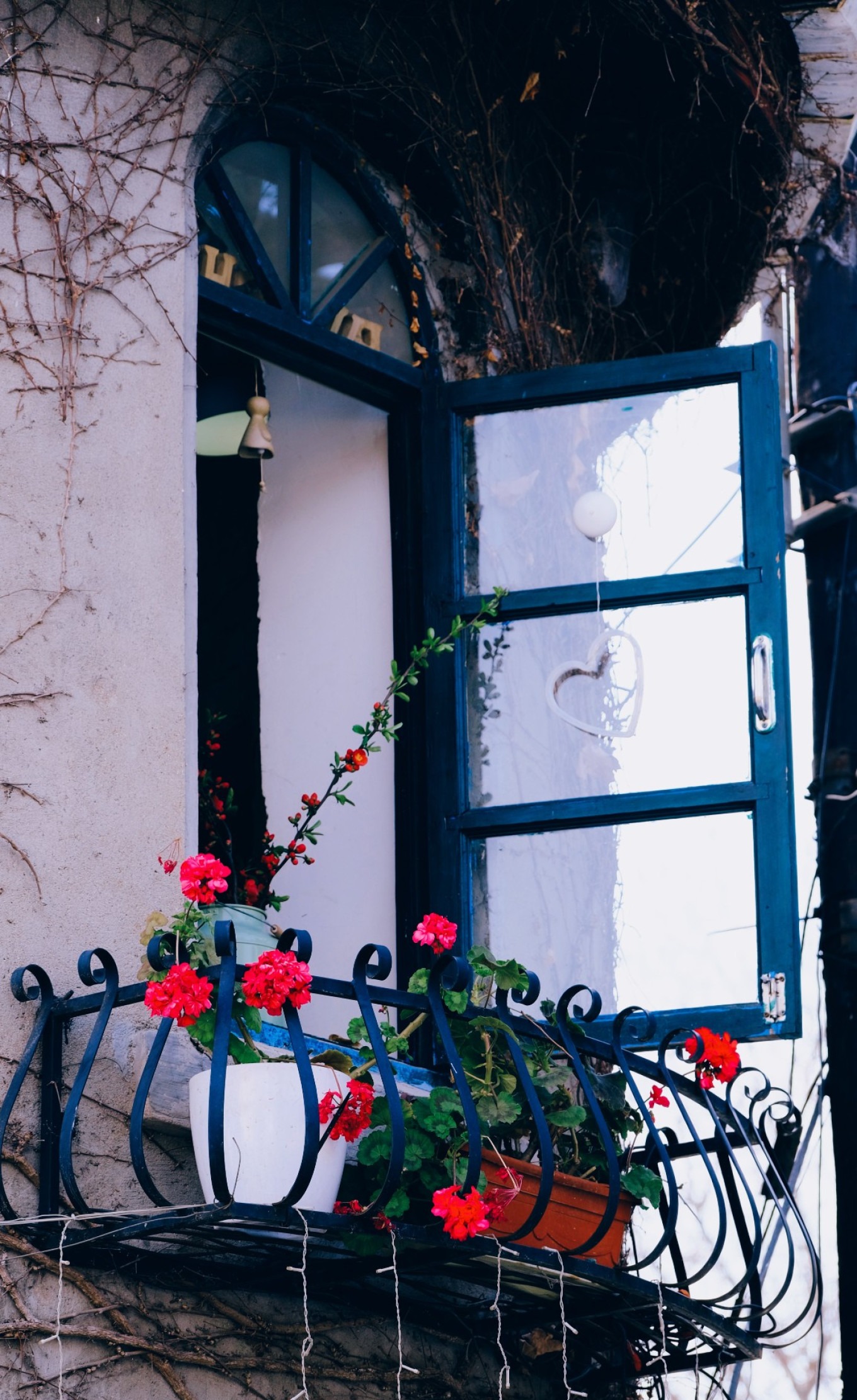
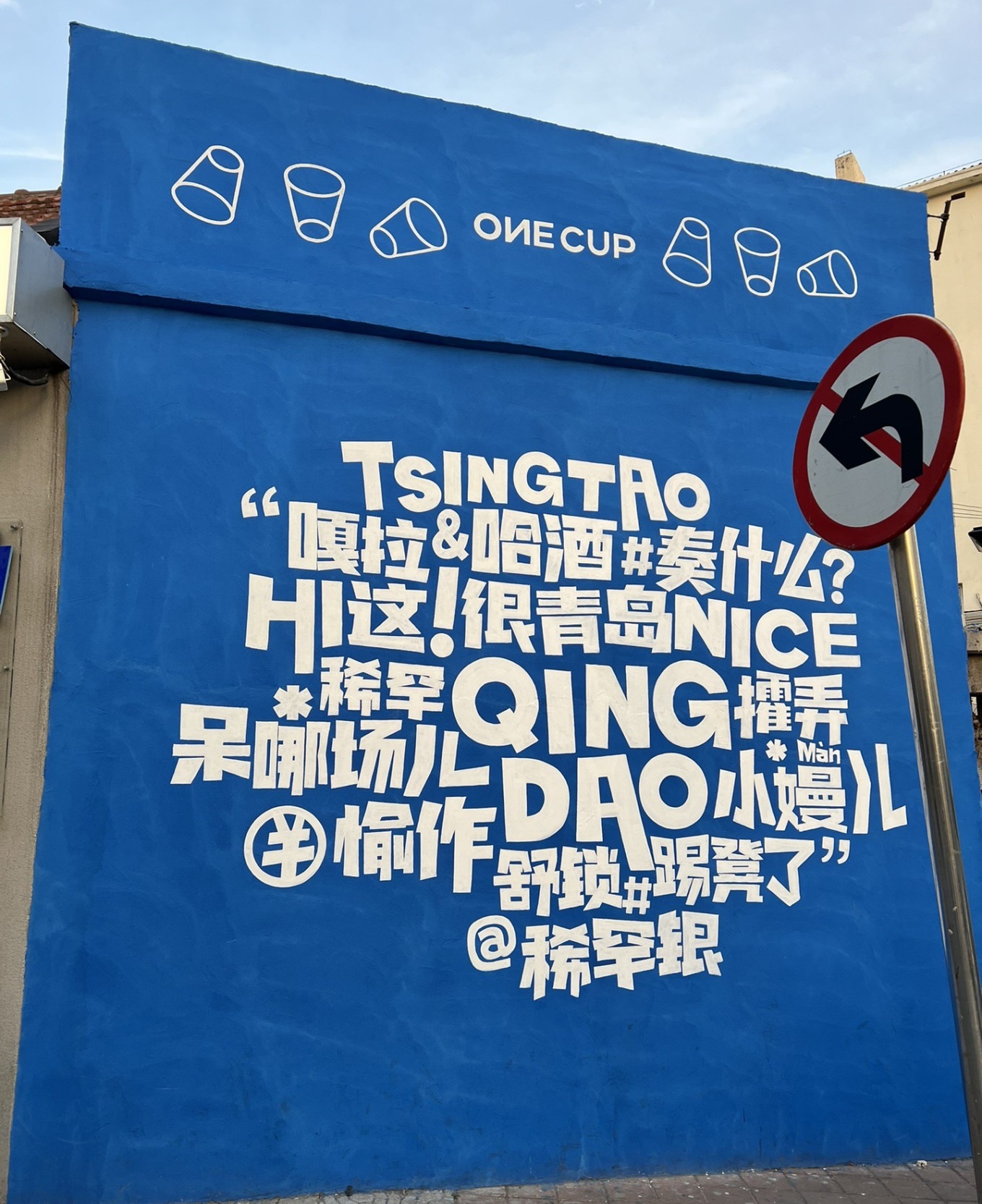
At the intersection of Yushan Road and University Road, you’ll find a surprisingly popular spot: a simple red wall with a white street sign that draws crowds of young visitors. While the photo appeal might not be obvious at first, the real charm lies nearby. Follow the narrow lane into a bohemian coffee alley, where art and literature blend seamlessly. The most notable landmarks here are Lao She’s Former Residence and the Huangdao Bookstore (荒岛书店), a beloved independent bookshop.
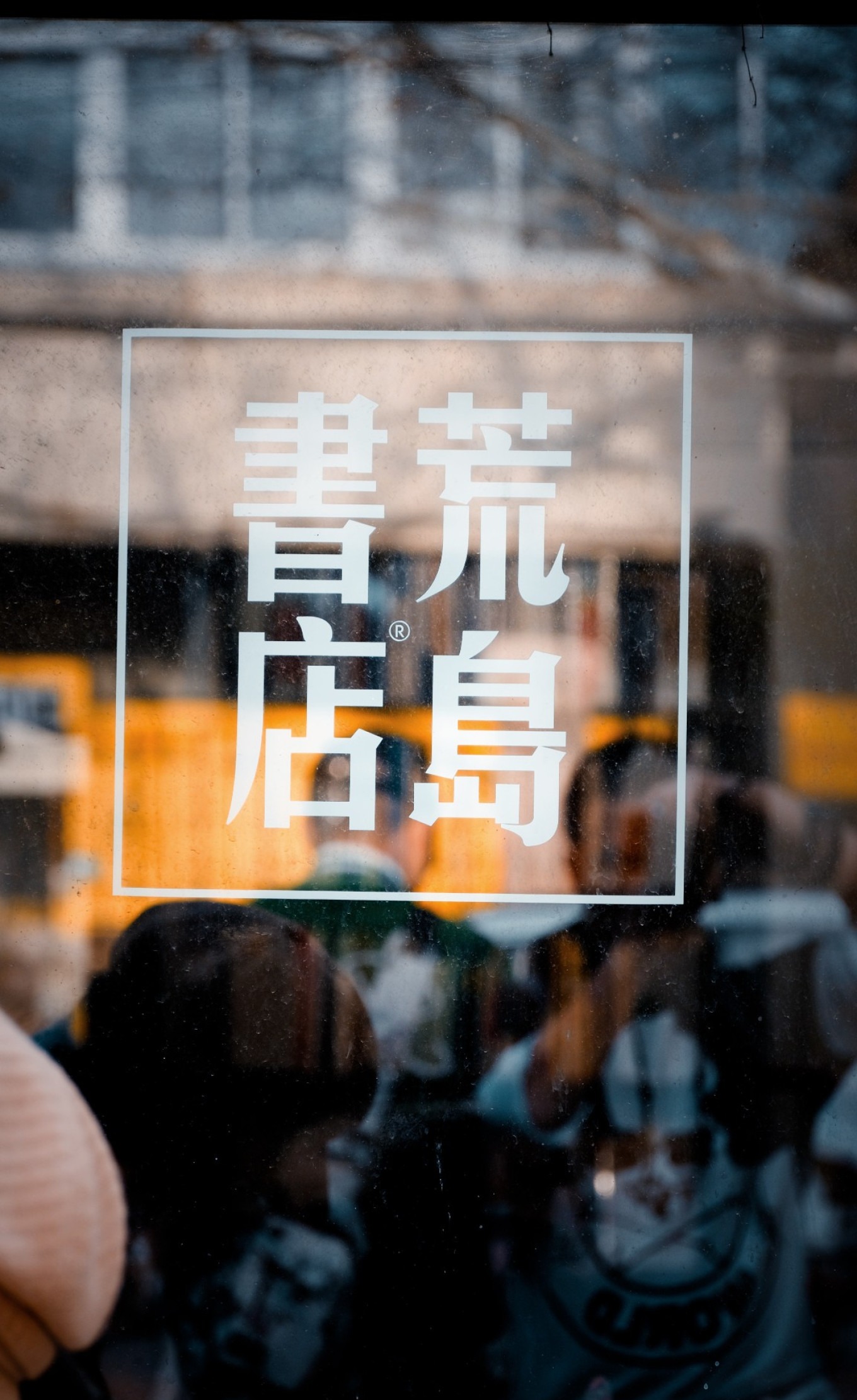
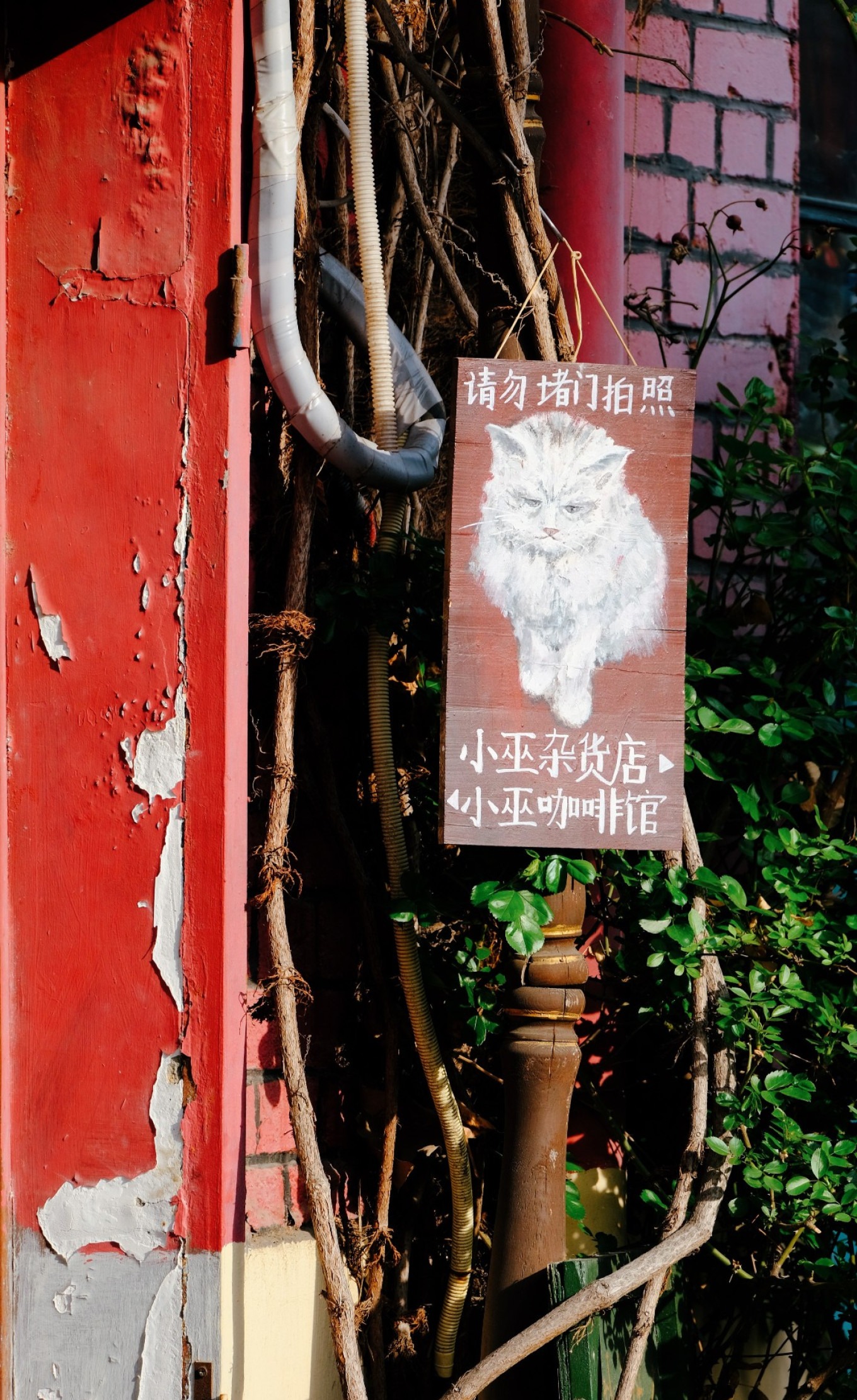
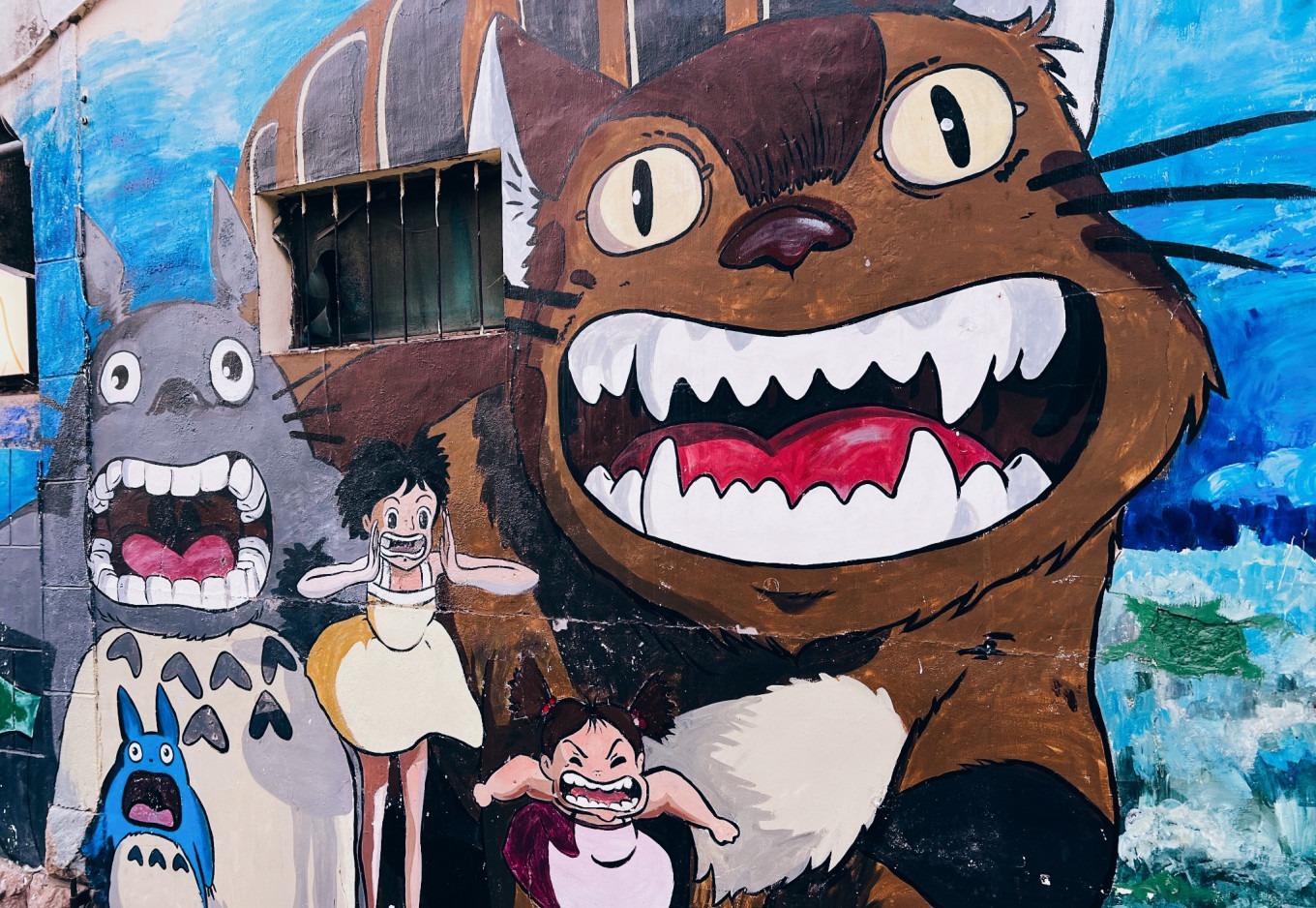
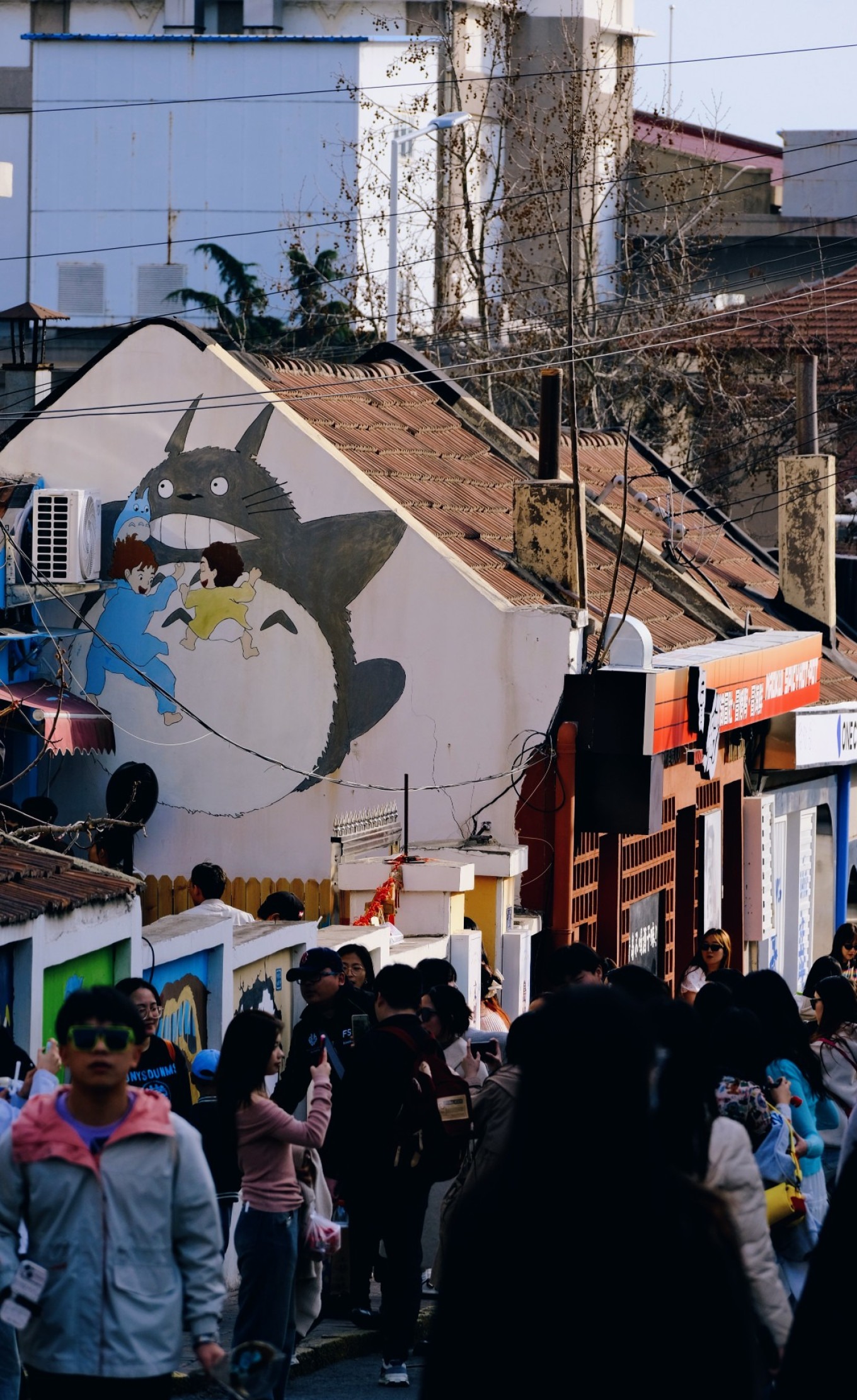
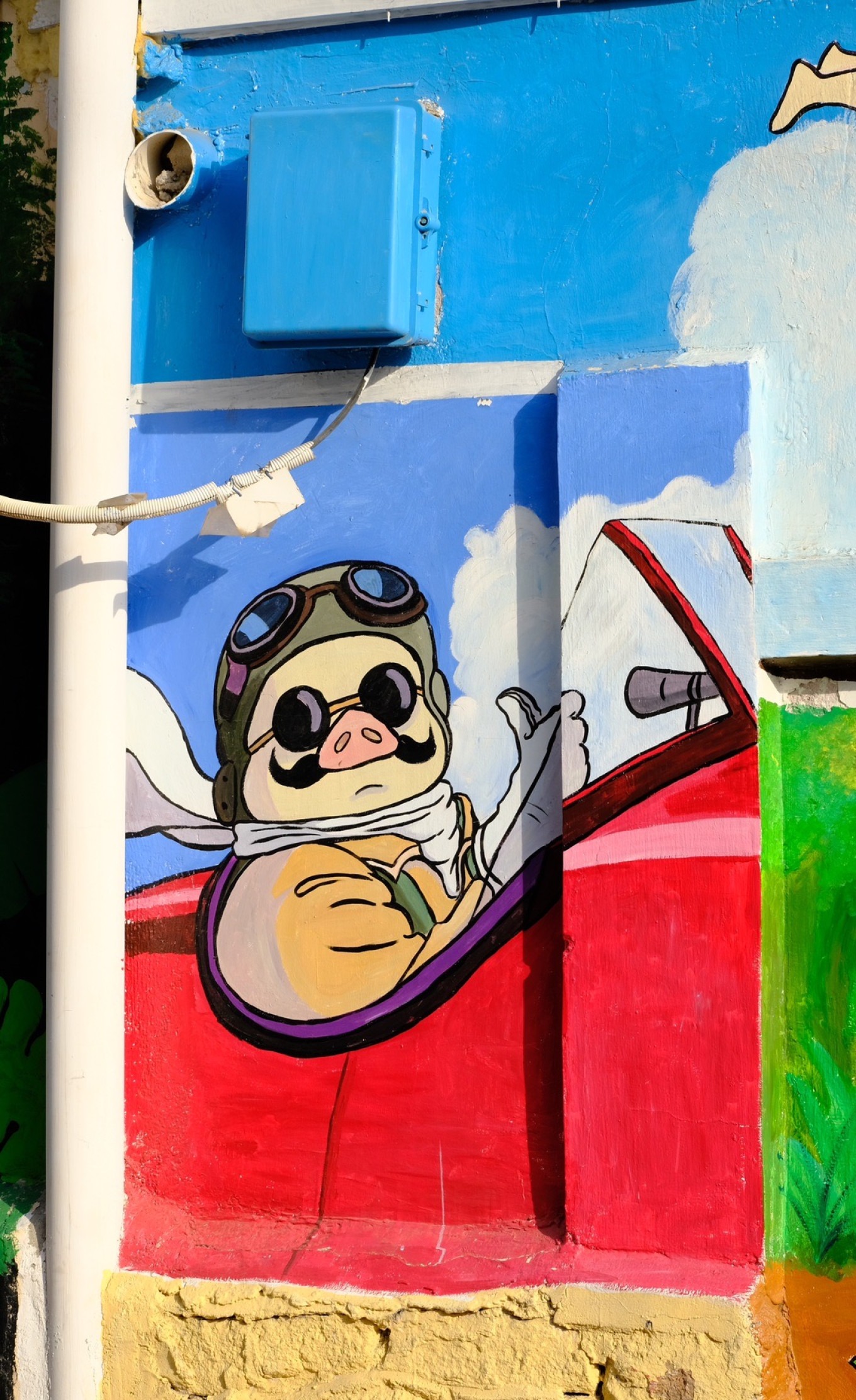
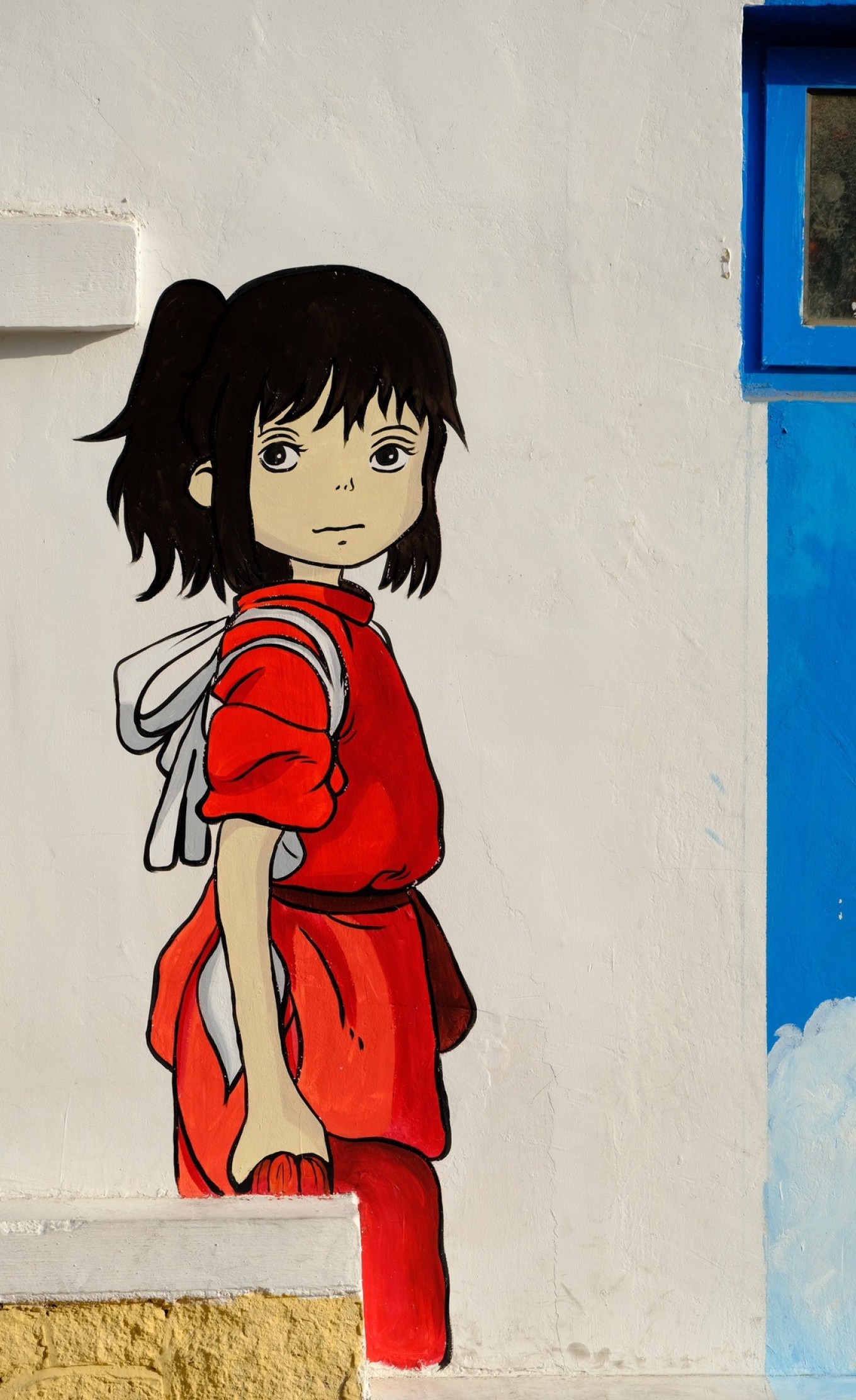
As you wander deeper, the walls come alive with murals depicting scenes from Studio Ghibli classics like Spirited Away (千与千寻), the Neighbor Totoro (龙猫), and Porco Rosso (红猪). Each adjacent café is equally inviting, with cozy lofts perfect for a lazy afternoon. If time permits, consider settling into one of the attic seats at a corner coffee shop — it’s a wonderful way to soak in the artistic atmosphere.
Every City Has a Place to Watch the Sunset
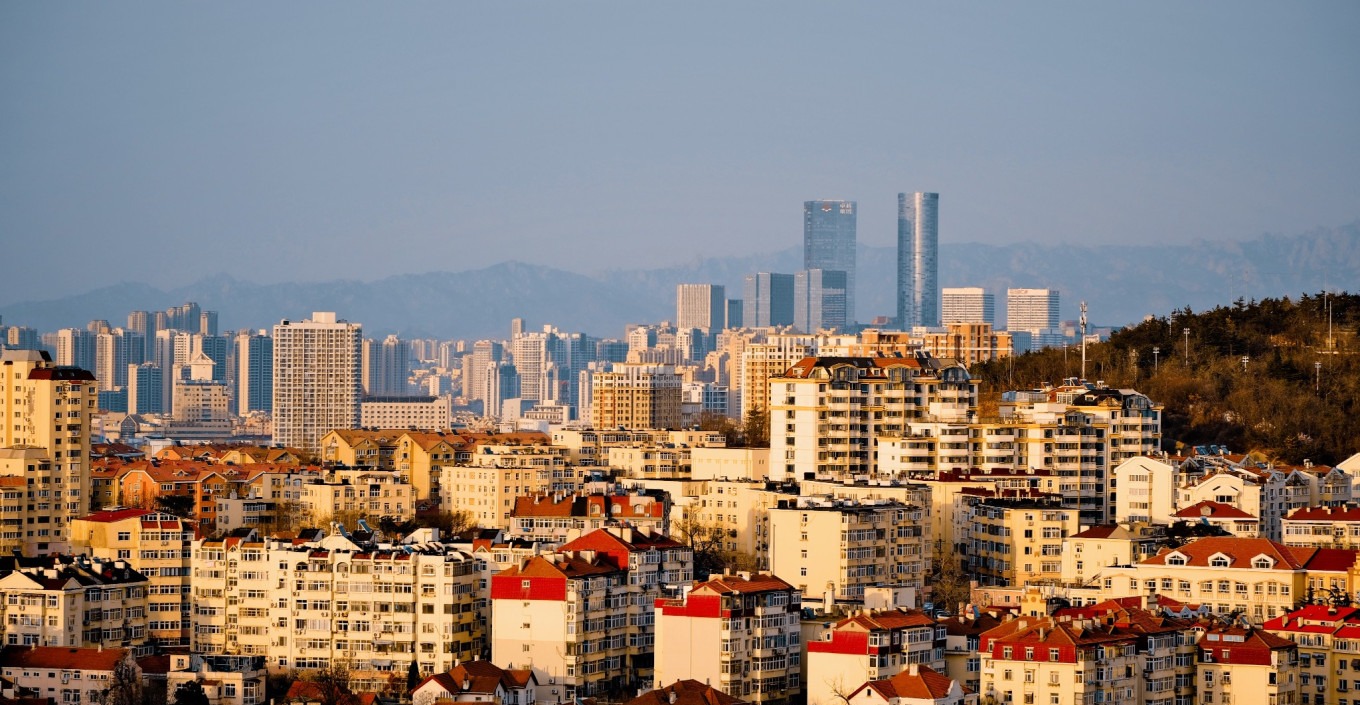
For a panoramic view of Qingdao’s coastline and old town, head to Signal Hill Park (信号山公园). Originally called Big Stone Mountain, it was renamed in 1898 when the Germans built a signal station here to guide ships into port. Standing 98 meters tall, the hill sits between five roads whose names all contain the character for ‘dragon,’ earning it the nickname Five Dragon Mountain. With the city behind you and the sea in front, it offers one of the best vantage points for overlooking the Zhanqiao Pier and the entire front bay area.
Arrive at the west gate around 5 p.m. and you’ll likely find a long line already formed. In fact, the queue can be so lengthy that walking to the end of it might take as long as climbing to the summit. Many young travelers show up for the sunset views, and the crowd’s reaction upon seeing the line is often a mix of awe and exasperation.
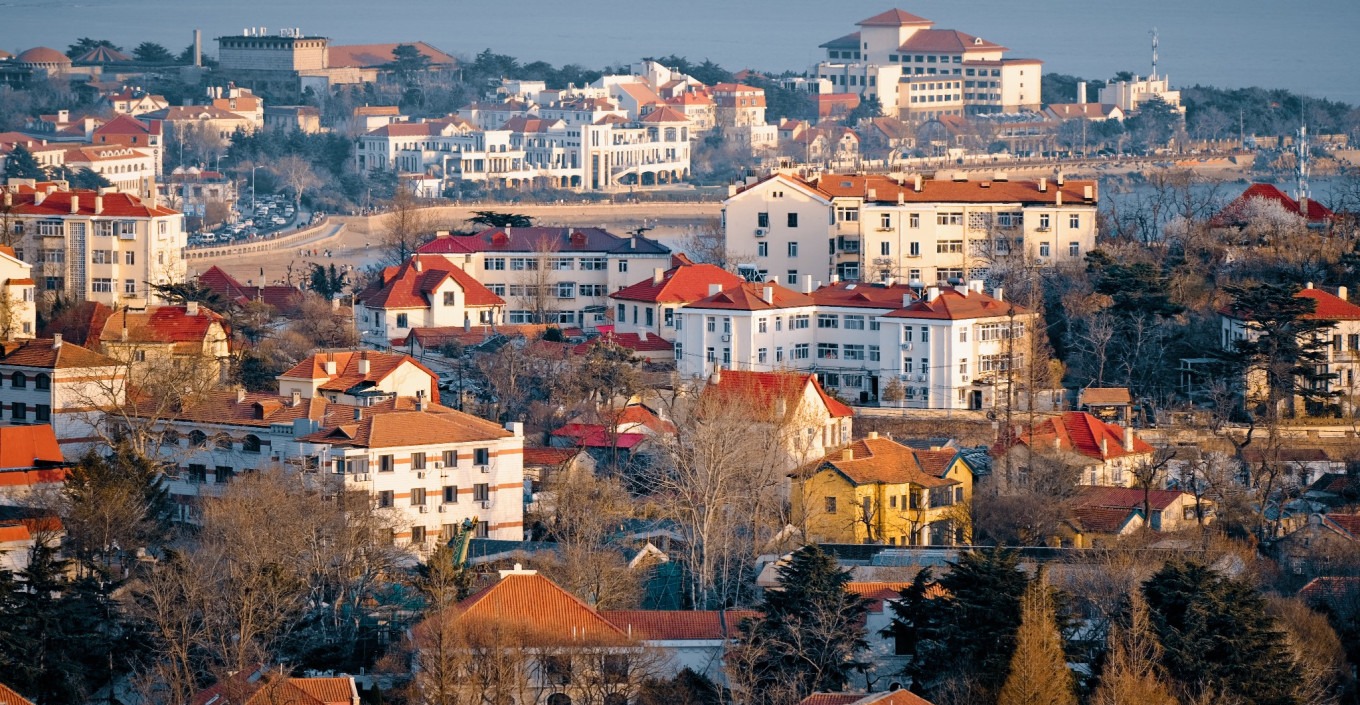
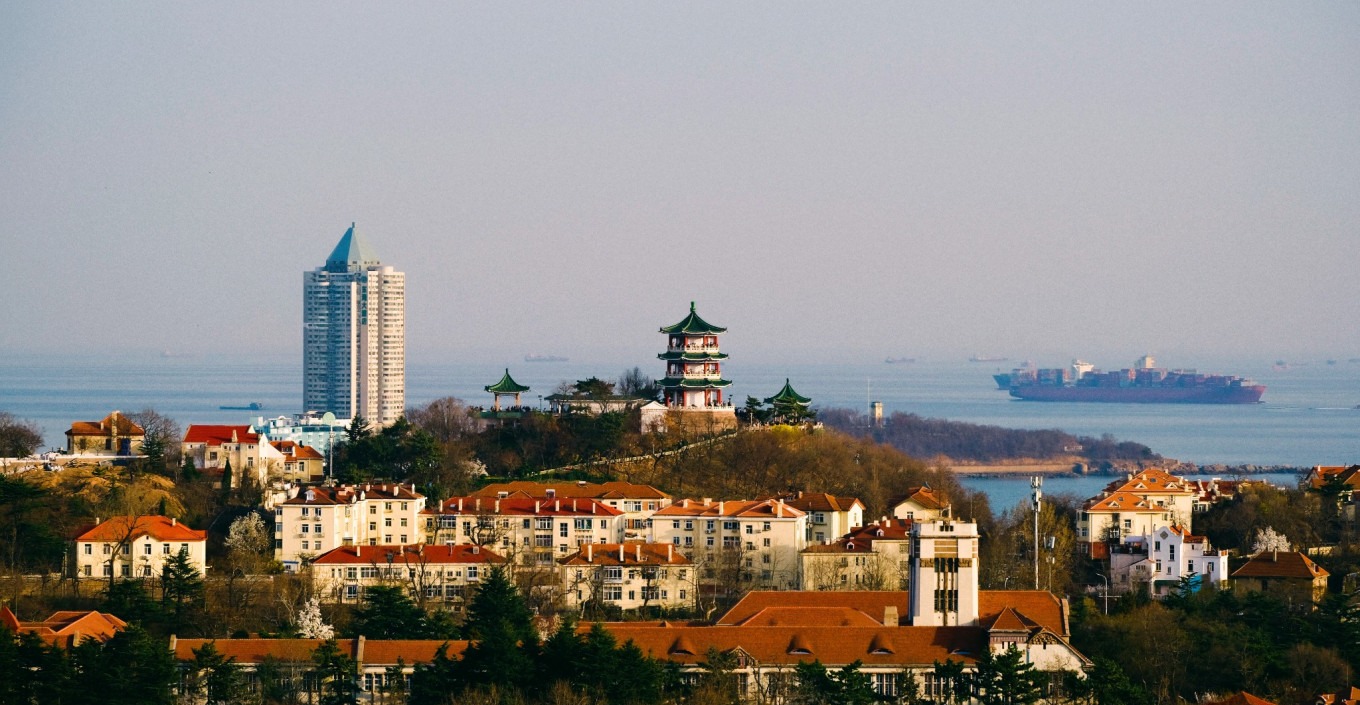
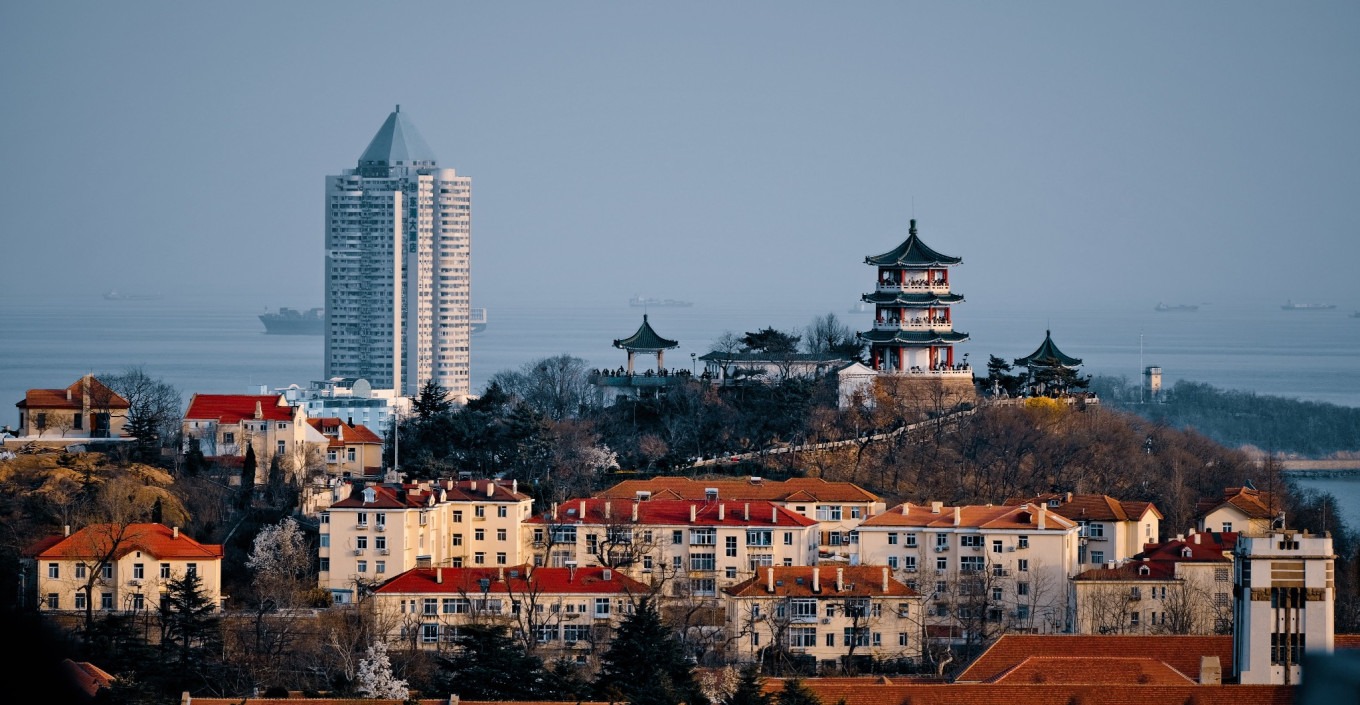
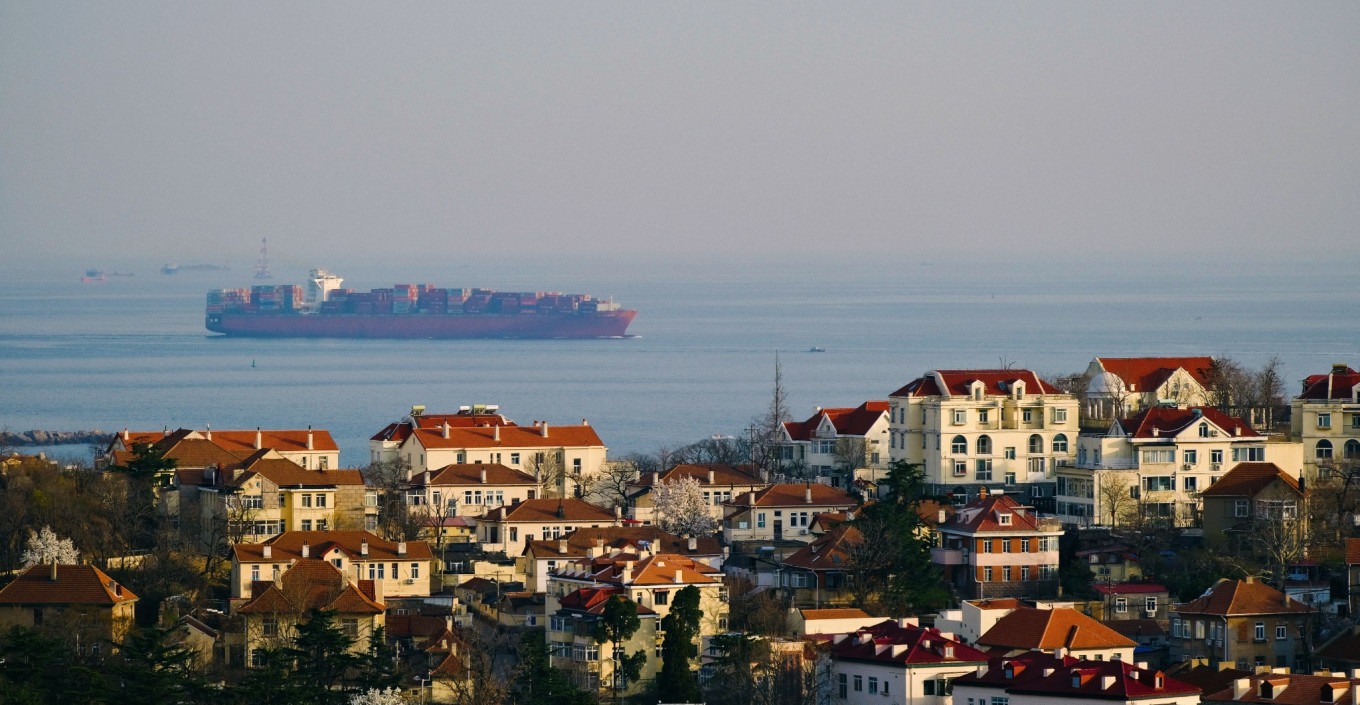
Once you’re inside, make your way to the mid‑slope observation platform. It’s here that you’ll capture the most memorable sunset silhouettes — the golden light spilling across the sea, with the city’s skyline and the iconic Zhanqiao Pier framed in the distance.
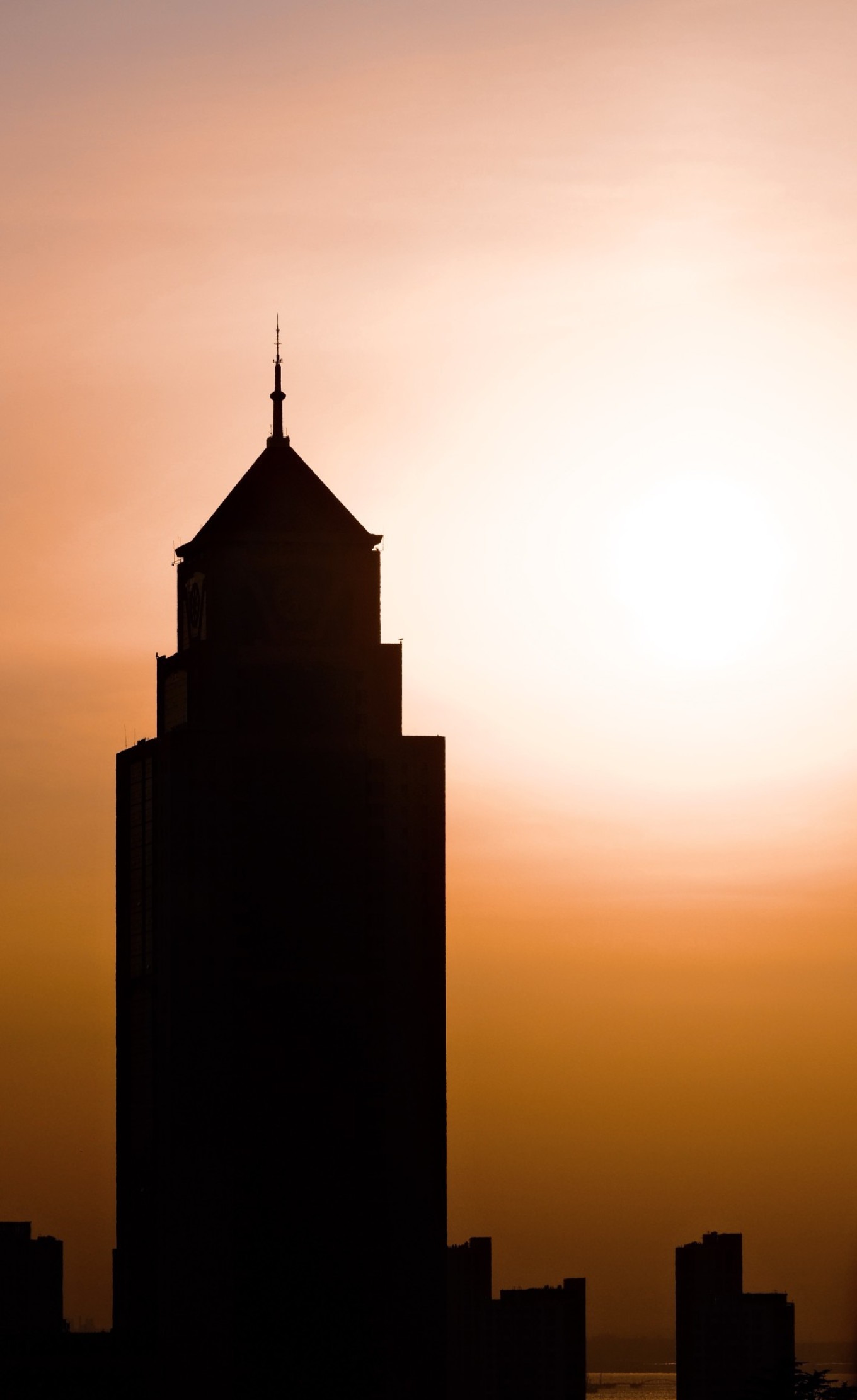
A Fleeting Blue After Dawn
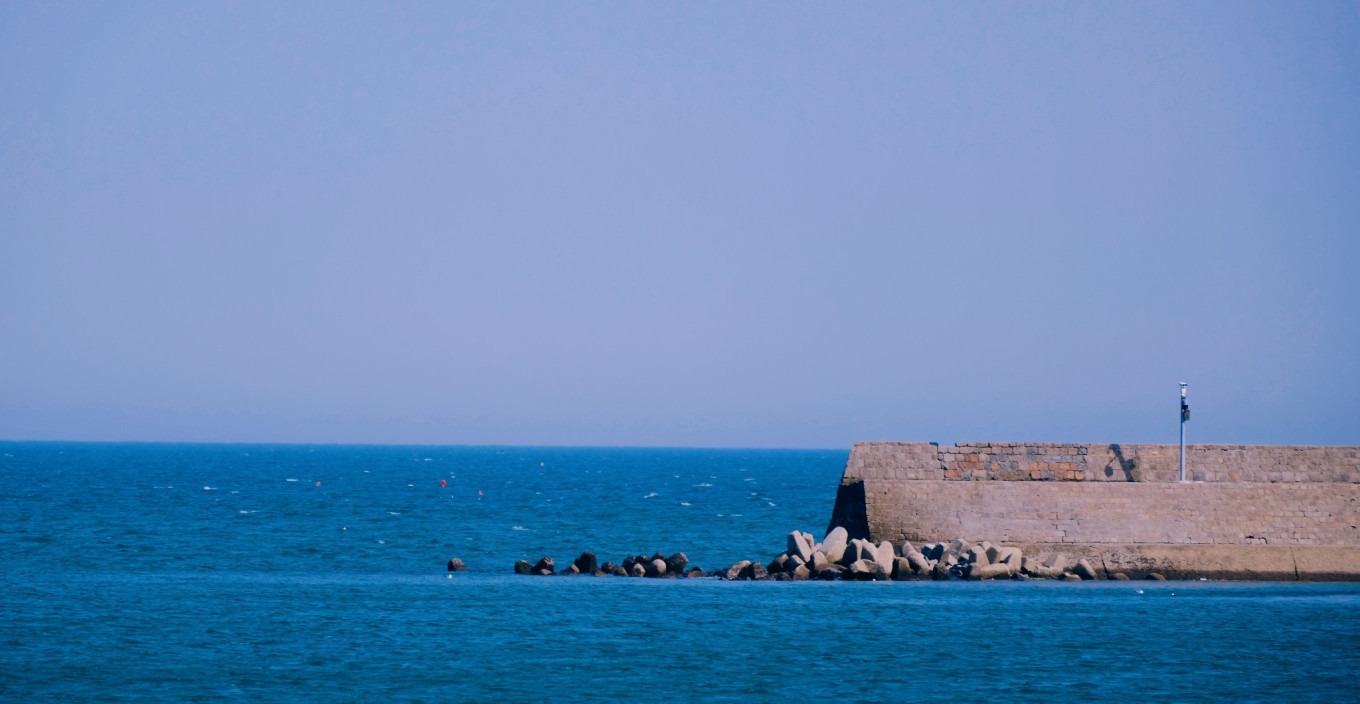
Before your driver arrives at 7:45 AM to take you to Laoshan, make the most of the early morning by visiting Zhanqiao Pier (栈桥). The pier at dawn is a completely different sight from the crowded midday version—when the sun rises, golden light scatters across the sea, the rocks, and the city’s skyscrapers, leaving a serene, shimmering glow.
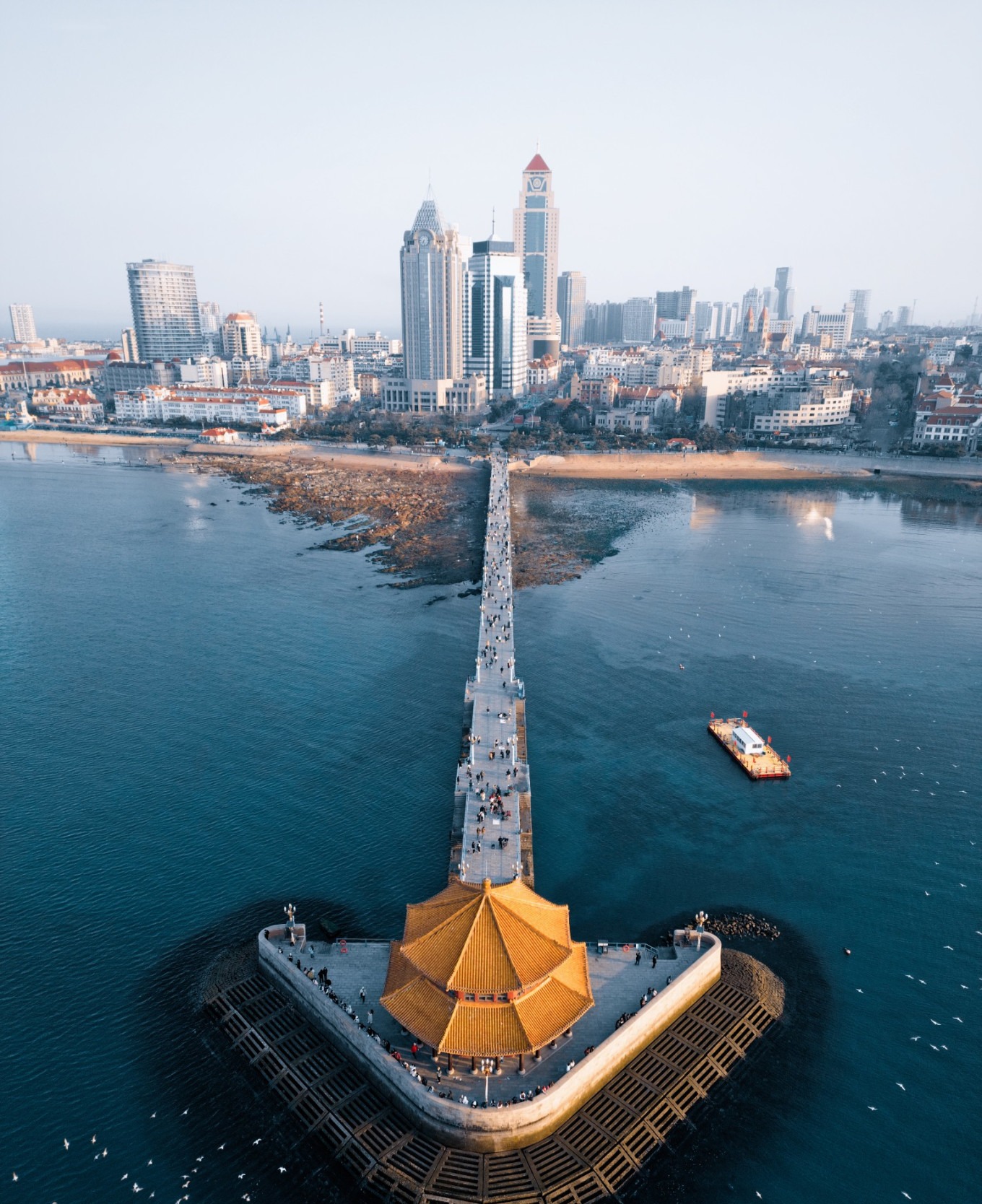

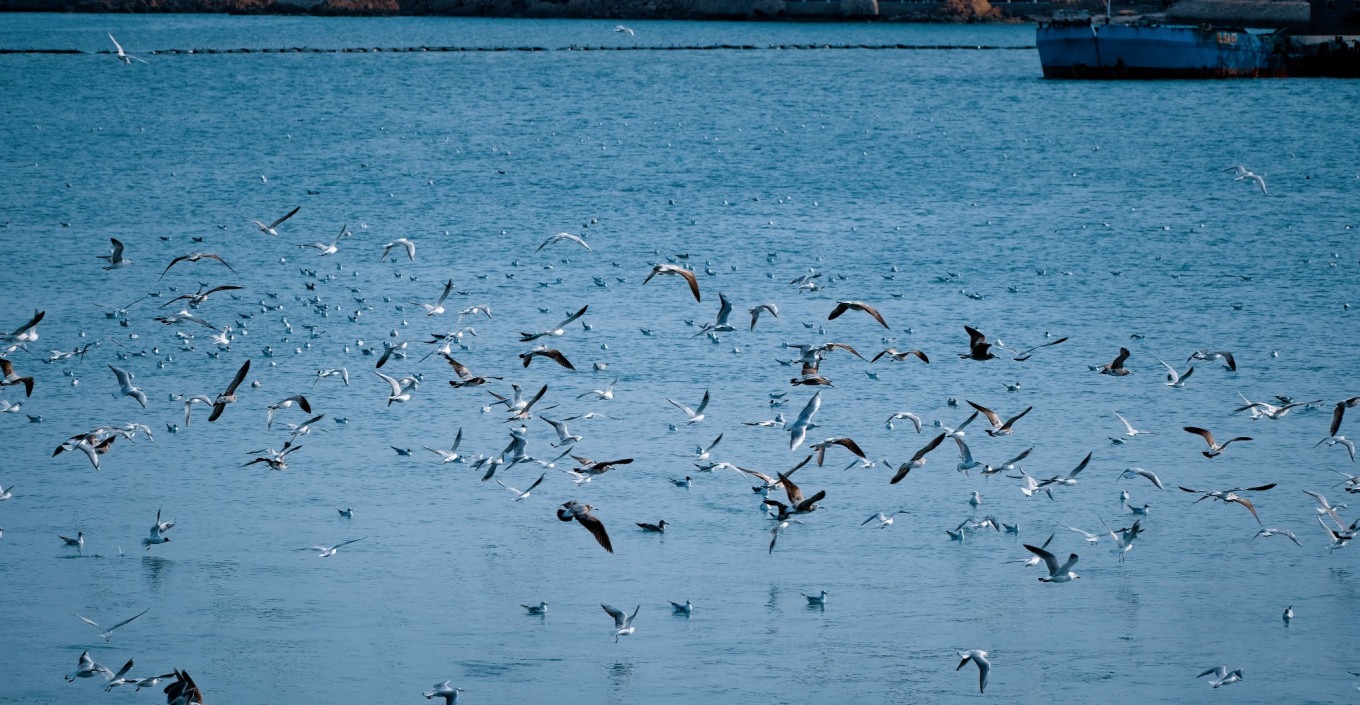
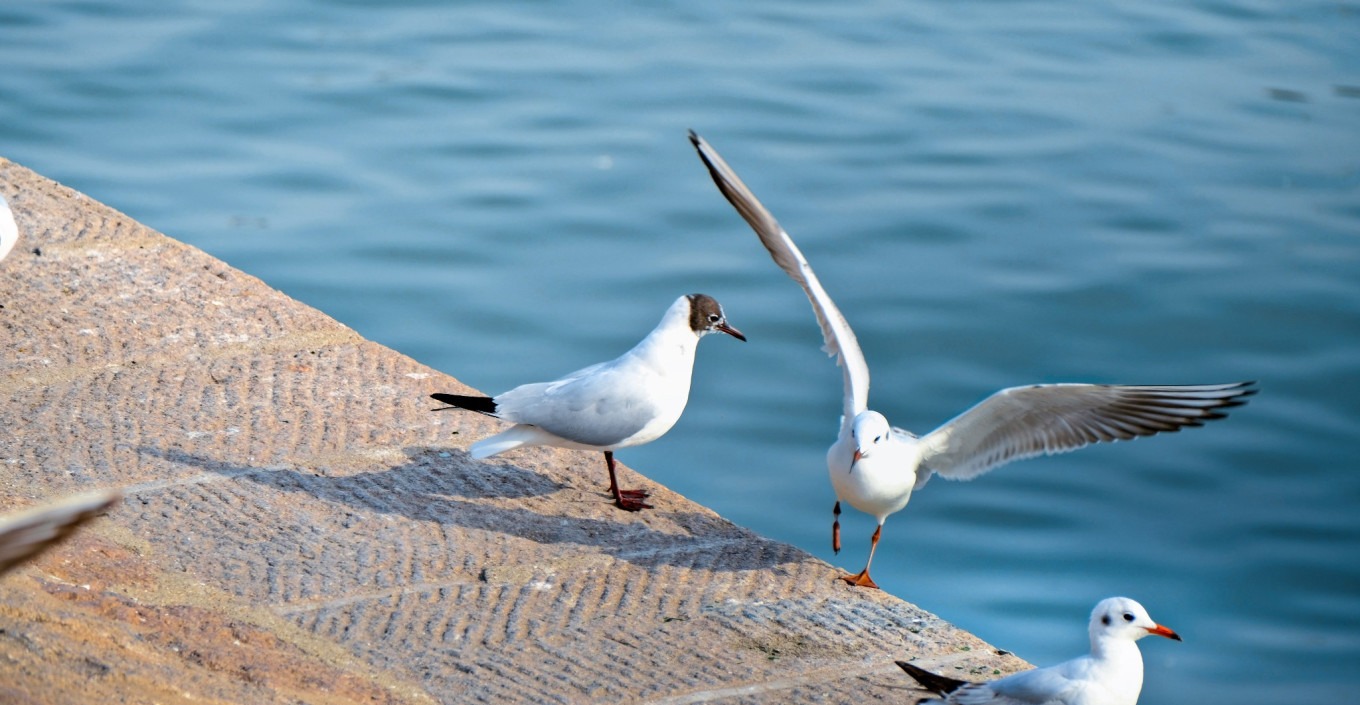
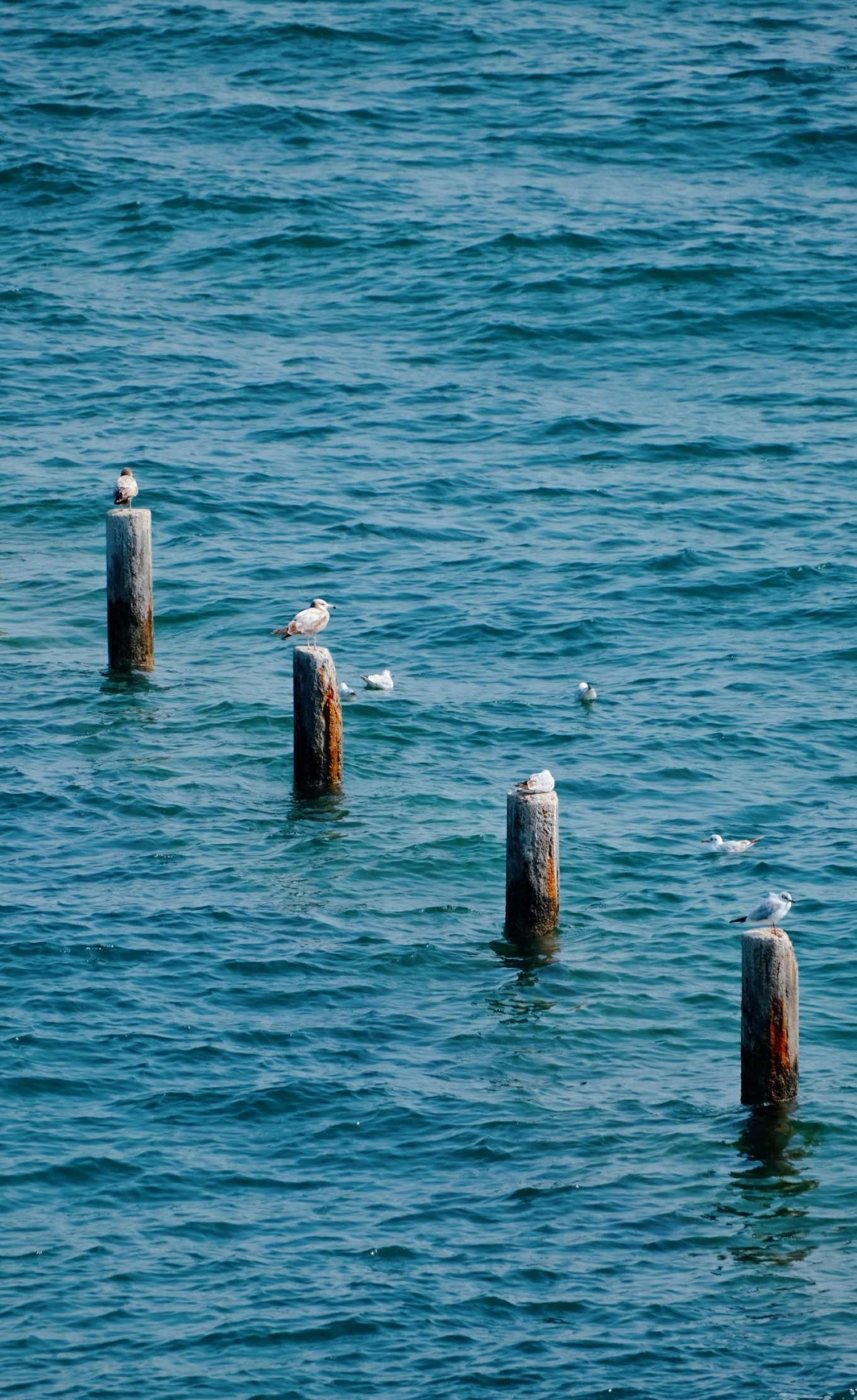
At the end of the pier, you’ll see flocks of seagulls circling overhead. Every winter, these birds migrate from Siberia to spend the cold season here, then return north as spring warms up.
Practical tip: You can prioritize one signature stop around the area, and you should adjust timing and budget based on transport and peak hours.
Laoshan: The Coastal Mountain You Can’t Miss
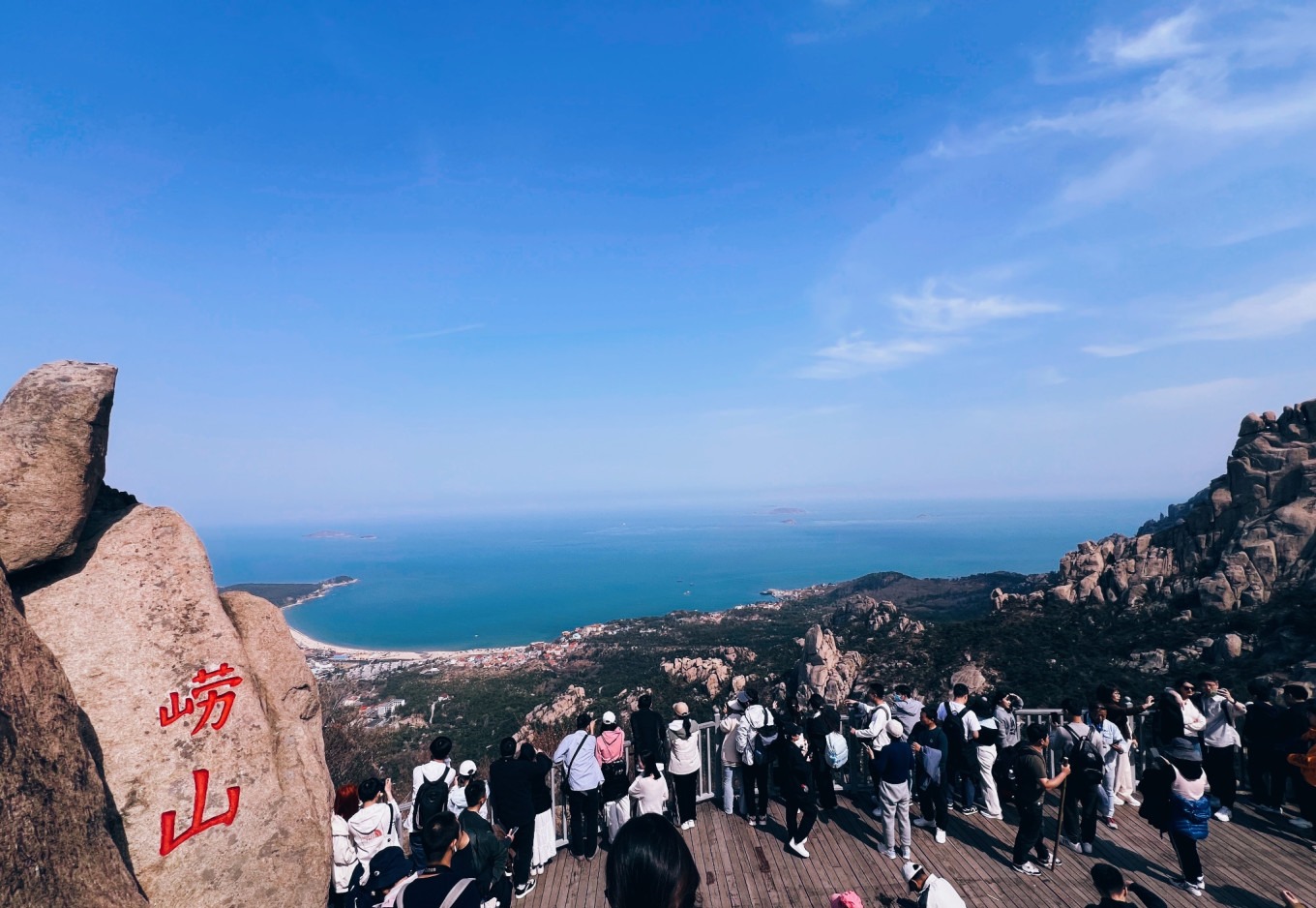
If you’re visiting Qingdao, Laoshan (崂山) is an essential day trip. Known as the “No. 1 Mountain by the Sea,” it’s a scenic area spanning 446 square kilometers. Its main peak, Jufeng (巨峰), rises 1,132.7 meters, making it the highest peak along China’s coastline. Laoshan is not only famous for its dramatic sea-and-mountain views but also for its deep Taoist heritage—it’s considered one of the birthplaces of Taoism in China, often called the “Second Jungle of Quanzhen Taoism under Heaven.” The Taiqing Palace (太清宫), built over 2,100 years ago during the Western Han dynasty, is the ancestral temple of Laoshan Taoism.
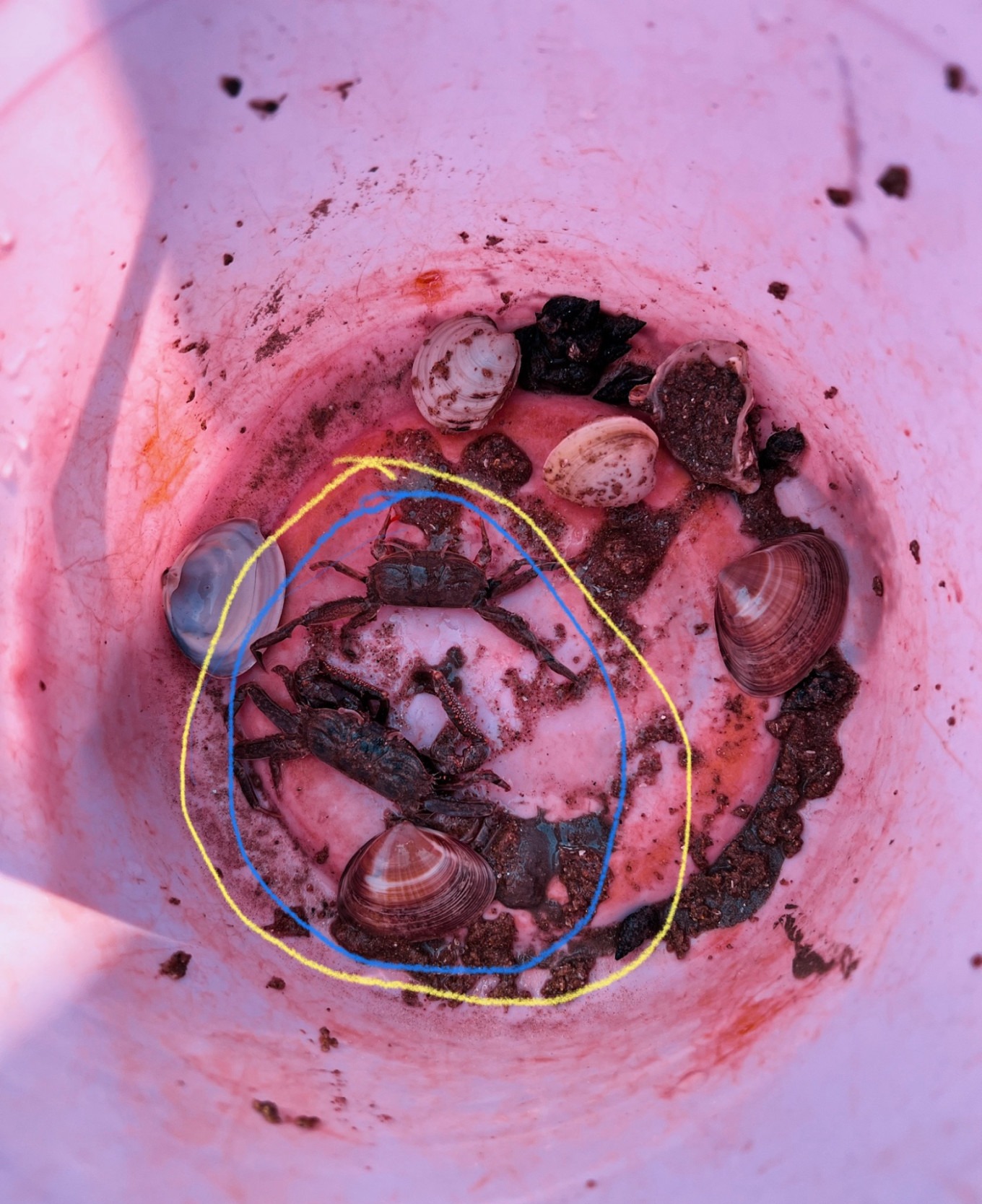
The Yangkou (仰口) area you’ll likely visit is just one of eight scenic sections. The others include Hualou, Erlongshan, Beijiushui, Jufeng, Liuqing, Taiqing, and Qipanshi. Before hiking, consider joining a guided trip to a small fishing village to catch your own seafood—clams and even tiny crabs are common catches. It’s a fun way to experience the local coastal life.
With limited time, taking the cable car up is a smart move. From above, you’ll see Taiping Palace (太平宫), Lion Peak (狮子峰), and the Shouzi Peak (寿字峰) from a distance. The main challenge is Mitian Cave (觅天洞), which can have a one-hour queue to reach Tiantian (天苑). An alternative is to bypass the cave and climb directly to Tiantian, but even then you might wait about 20 minutes at the top.
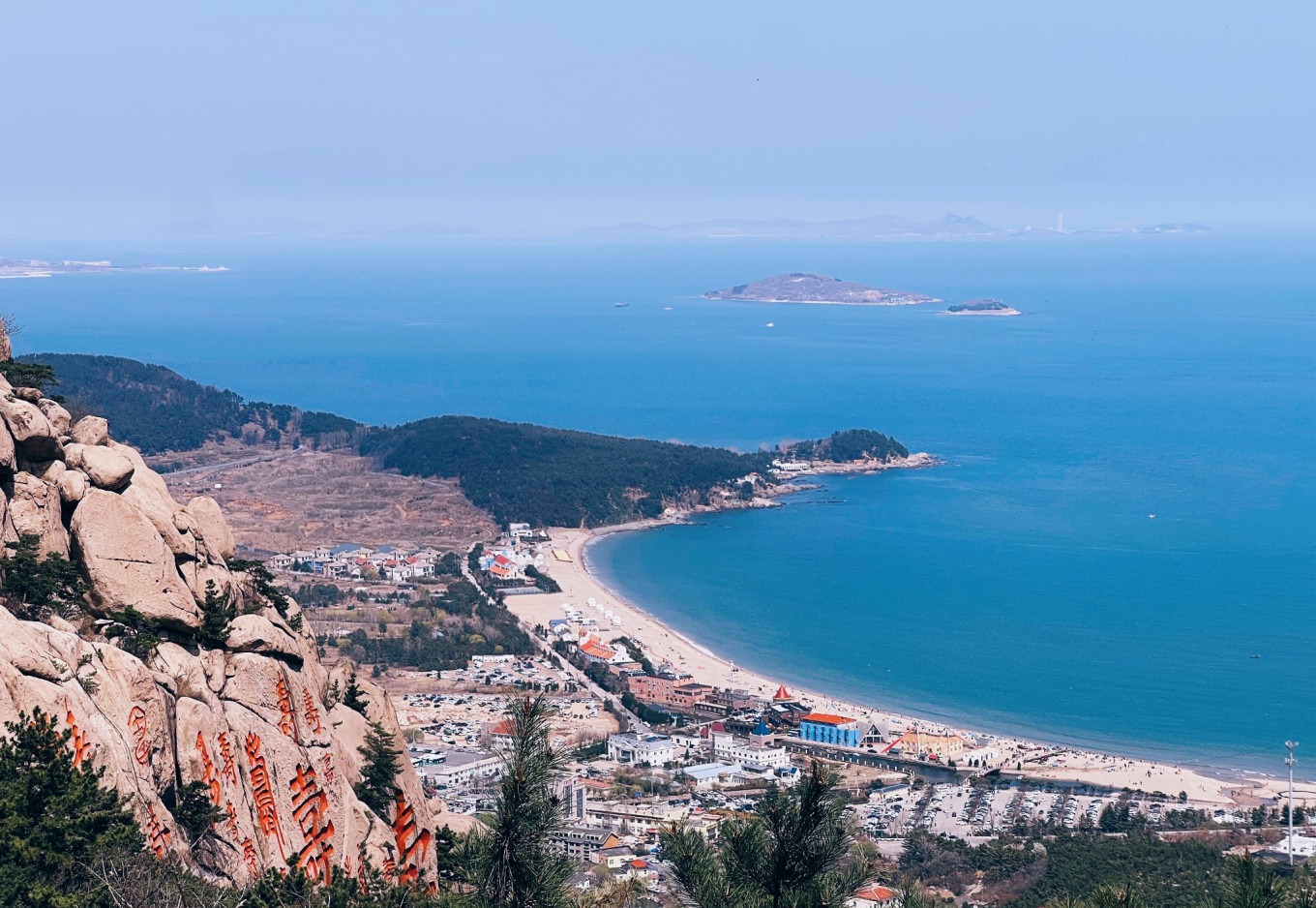
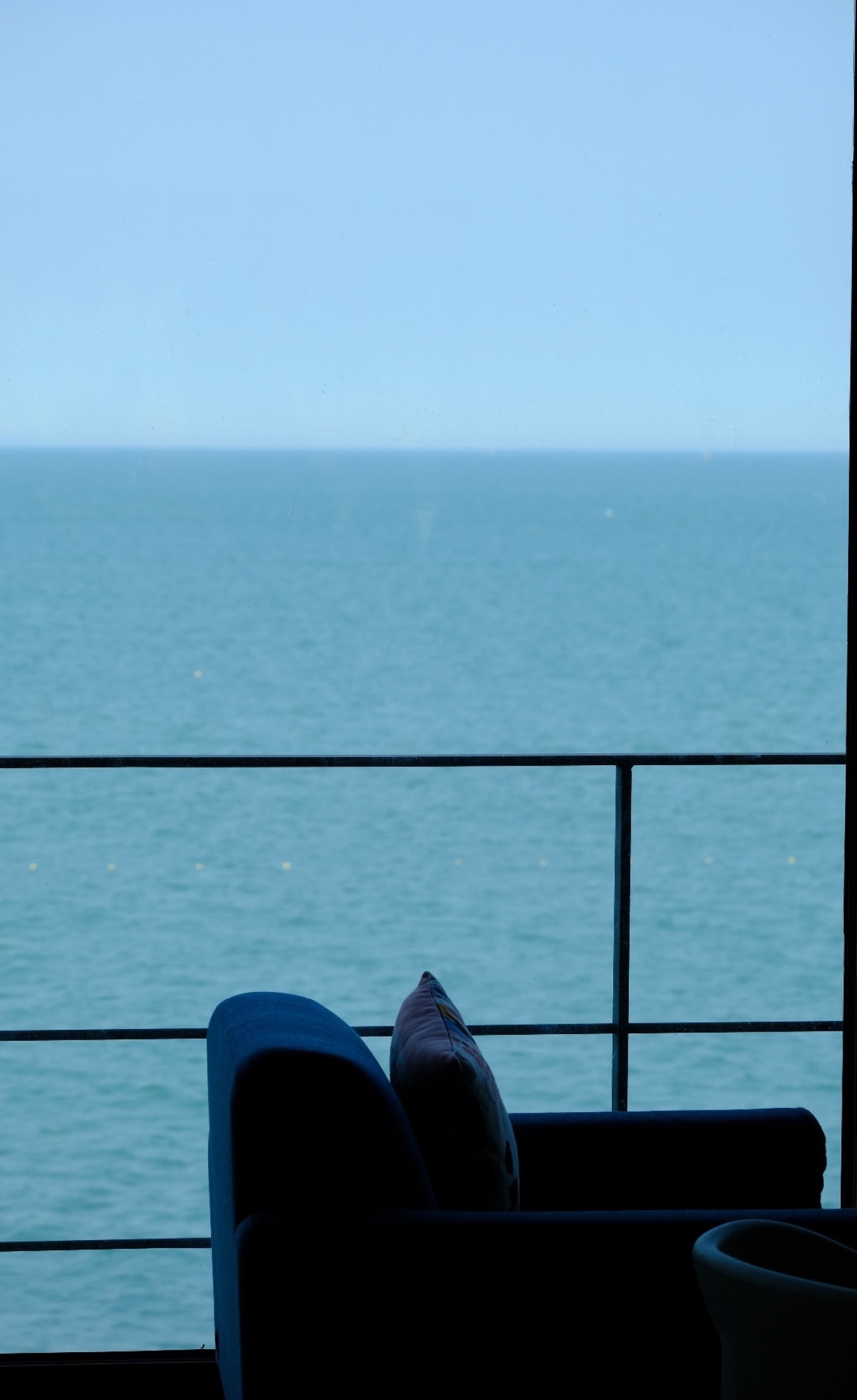
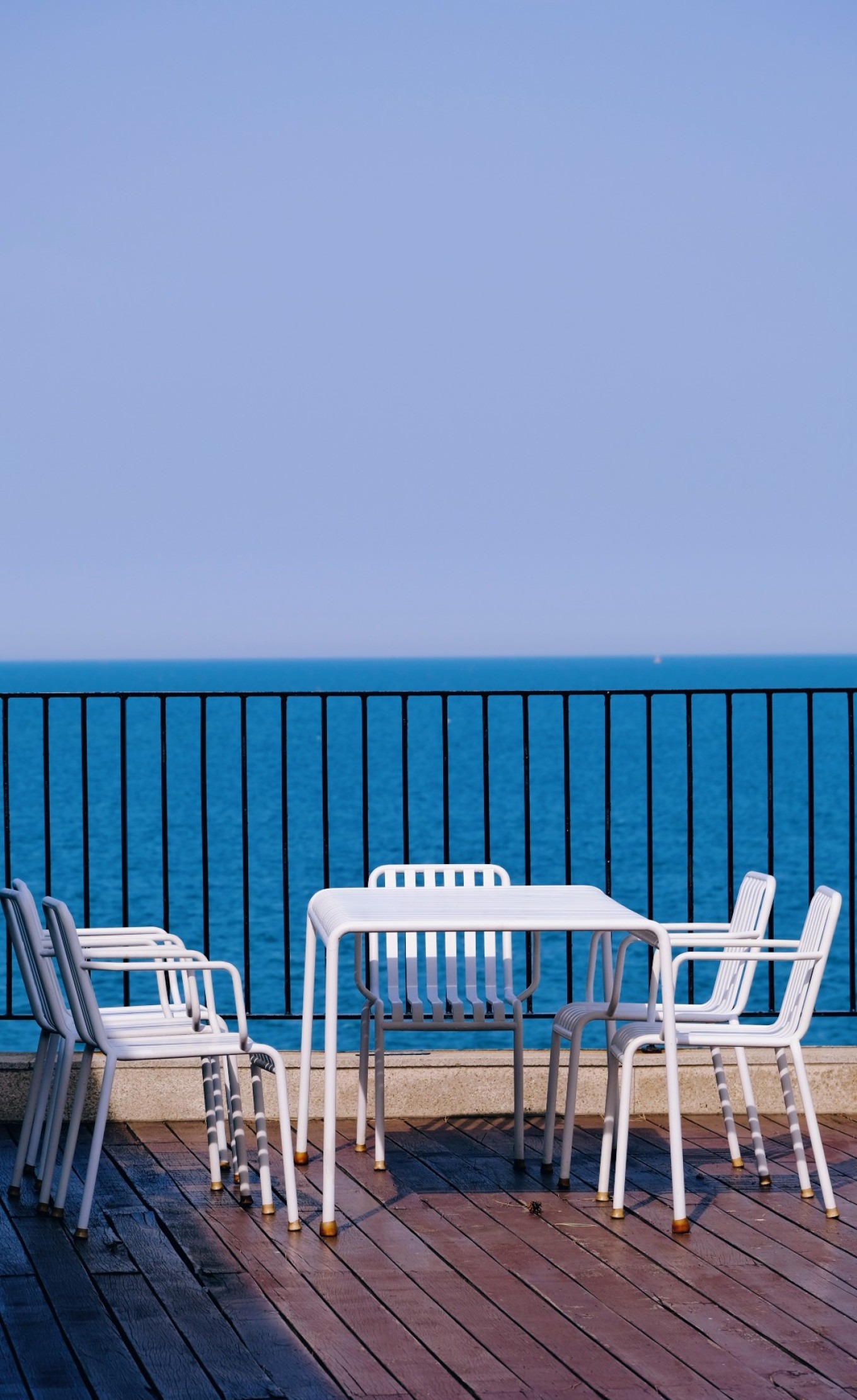
After hiking, you can recharge at a seaside café with an Americano—though you’ll only have about half an hour to enjoy the view before heading back.
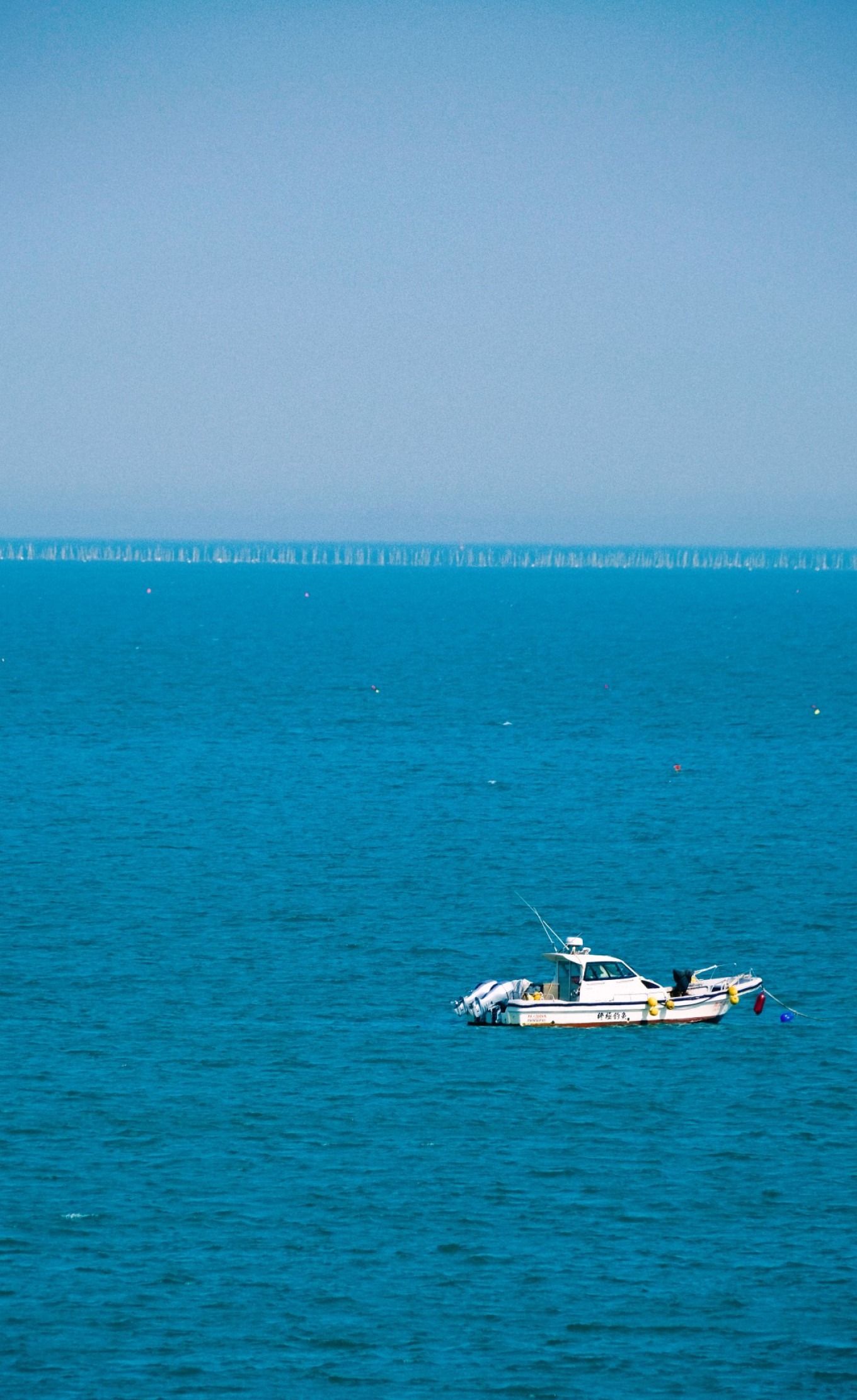
On the way back to the city, you can snap a photo of Qingshan Fishing Village (青山渔村). The afternoon weather might turn hazy, giving everything a soft gray tone.
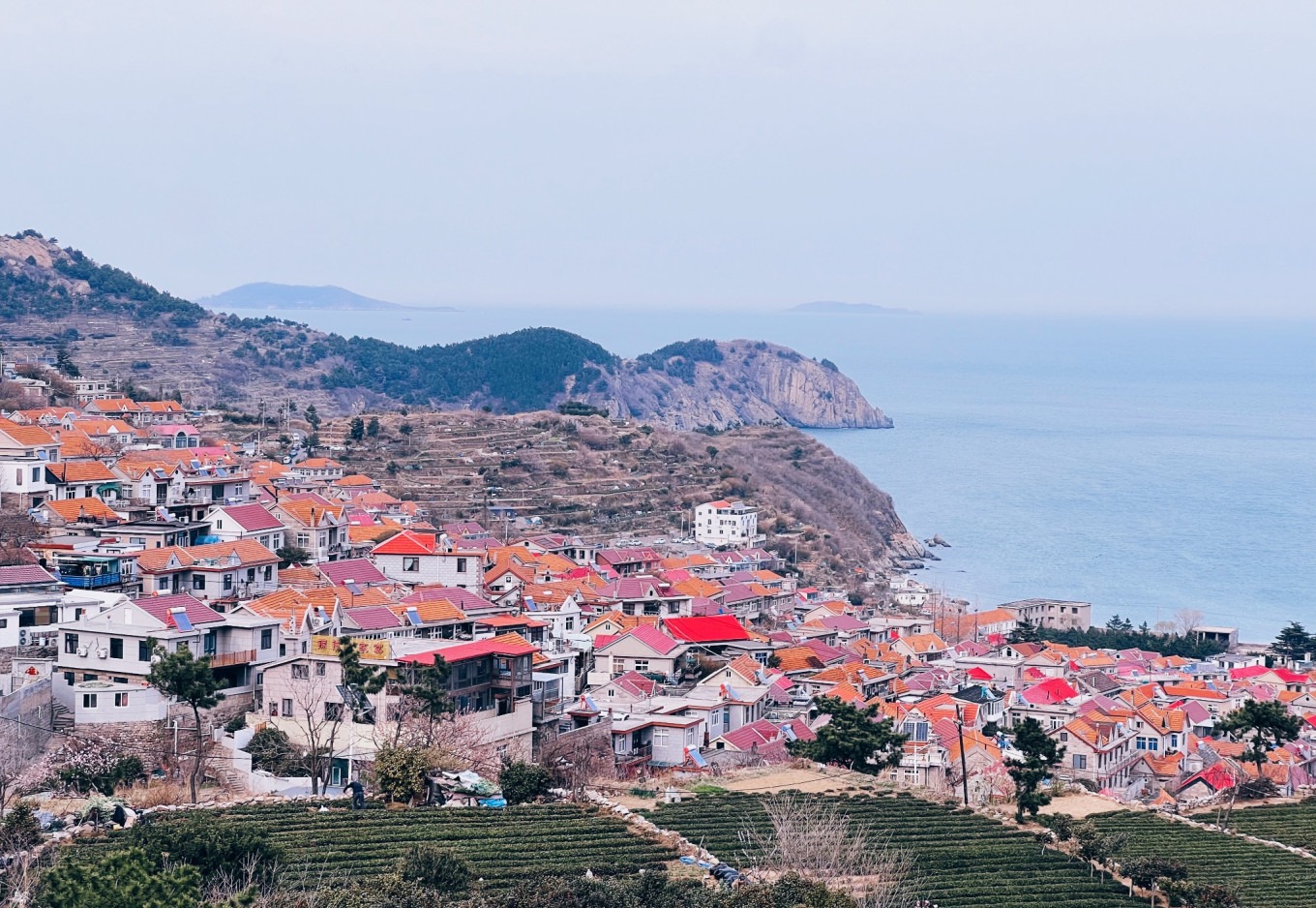
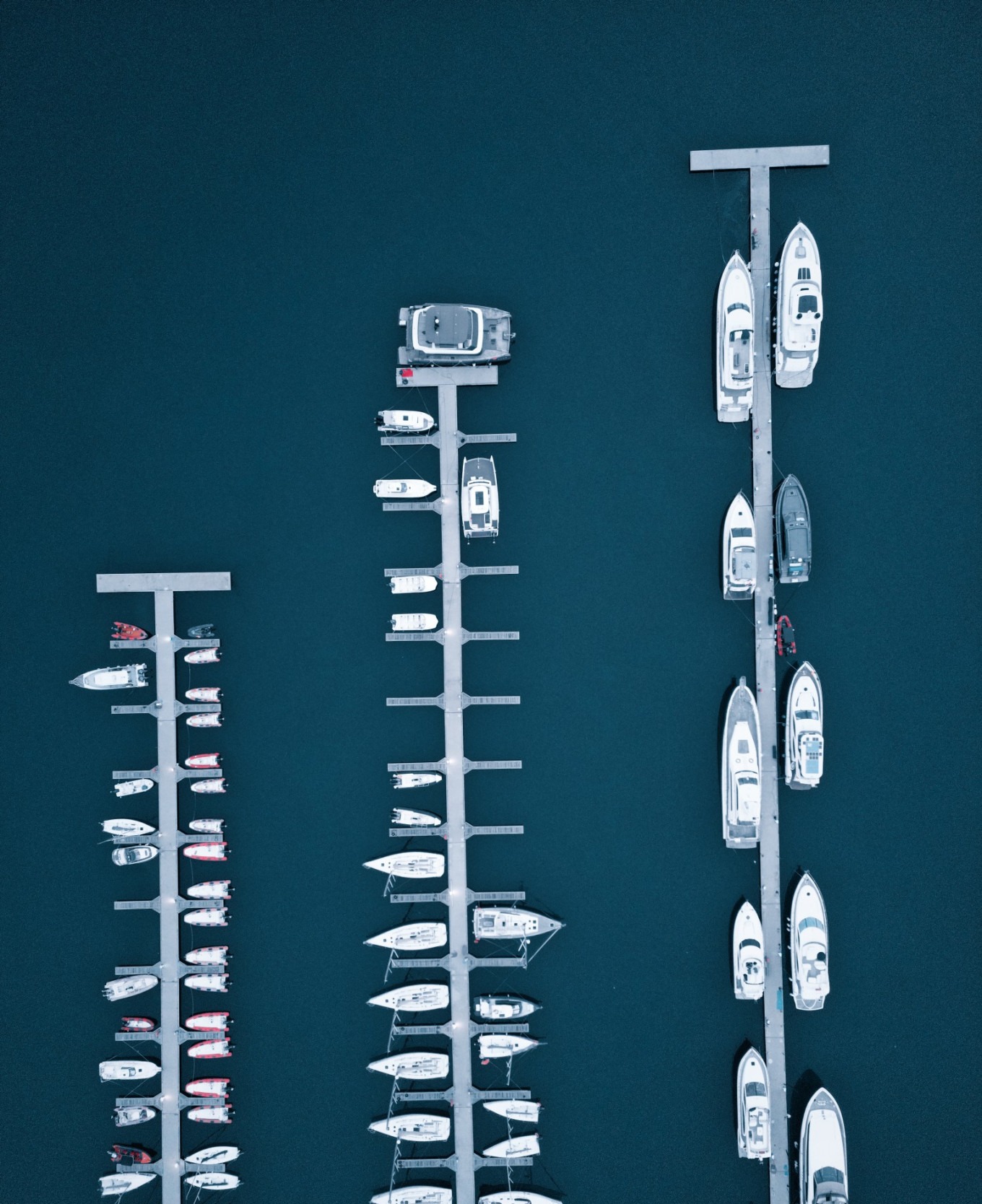
Your Laoshan day ends at the Olympic Sailing Center (奥帆中心). Before the sky darkens, take a picture of the docked cruise ships. Unlike the quiet Shinan District after 8 PM, the May Fourth Square (五四广场) area is lively and worth a stroll.
Museum Hopping with Beer Tasting
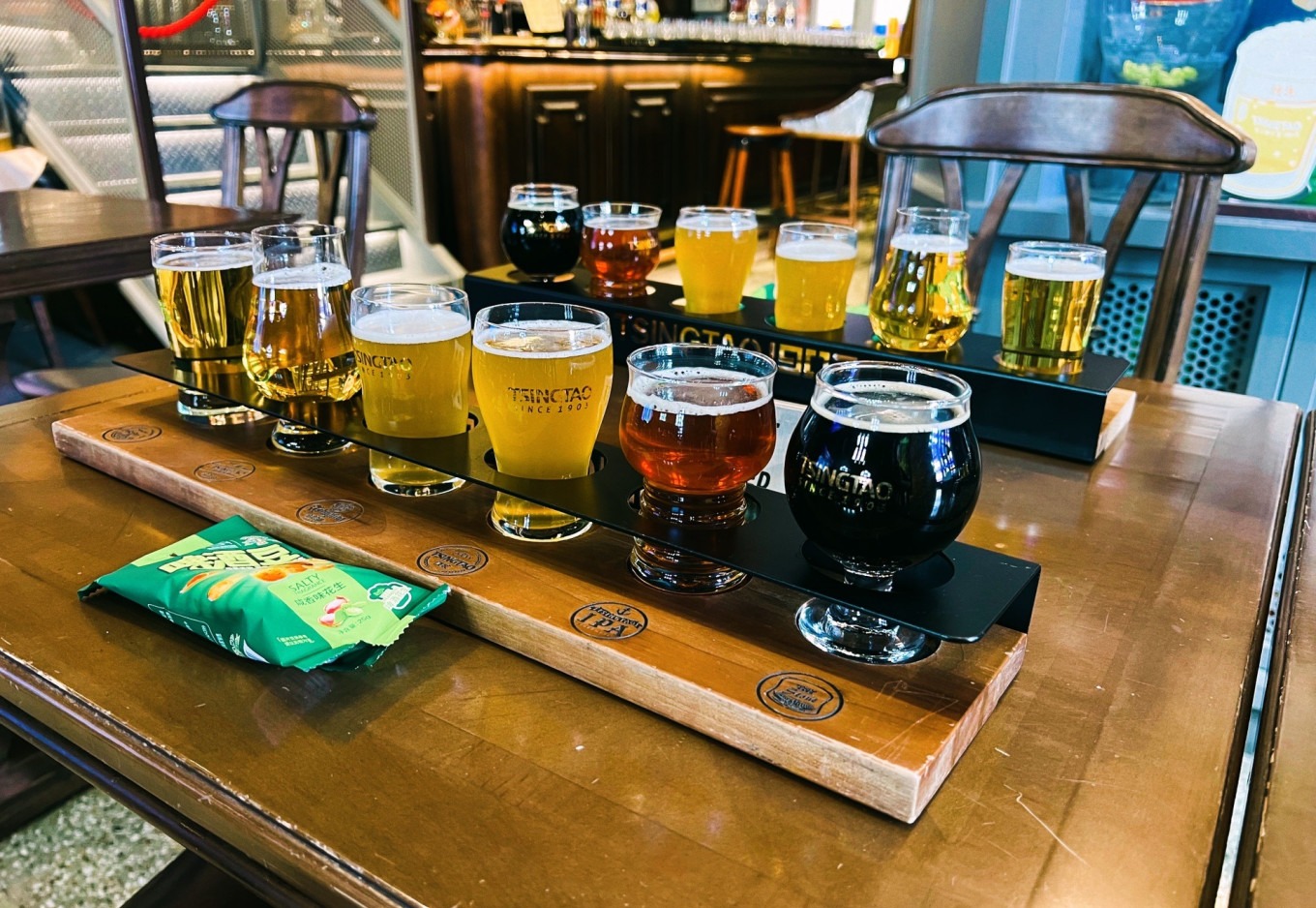
If you’re planning a trip to Qingdao, the Tsingtao Beer Museum (青岛啤酒博物馆) in Shibei District is a must-visit. As China’s first beer museum, it offers a fascinating journey through the origins and evolution of the country’s most famous brew. General admission includes a complimentary 150ml glass of draft Tsingtao, but for a more immersive experience, consider the 78 RMB tasting package, which lets you sample six varieties: original draft, pure draft, Pilsner, dark beer, white beer, and IPA.
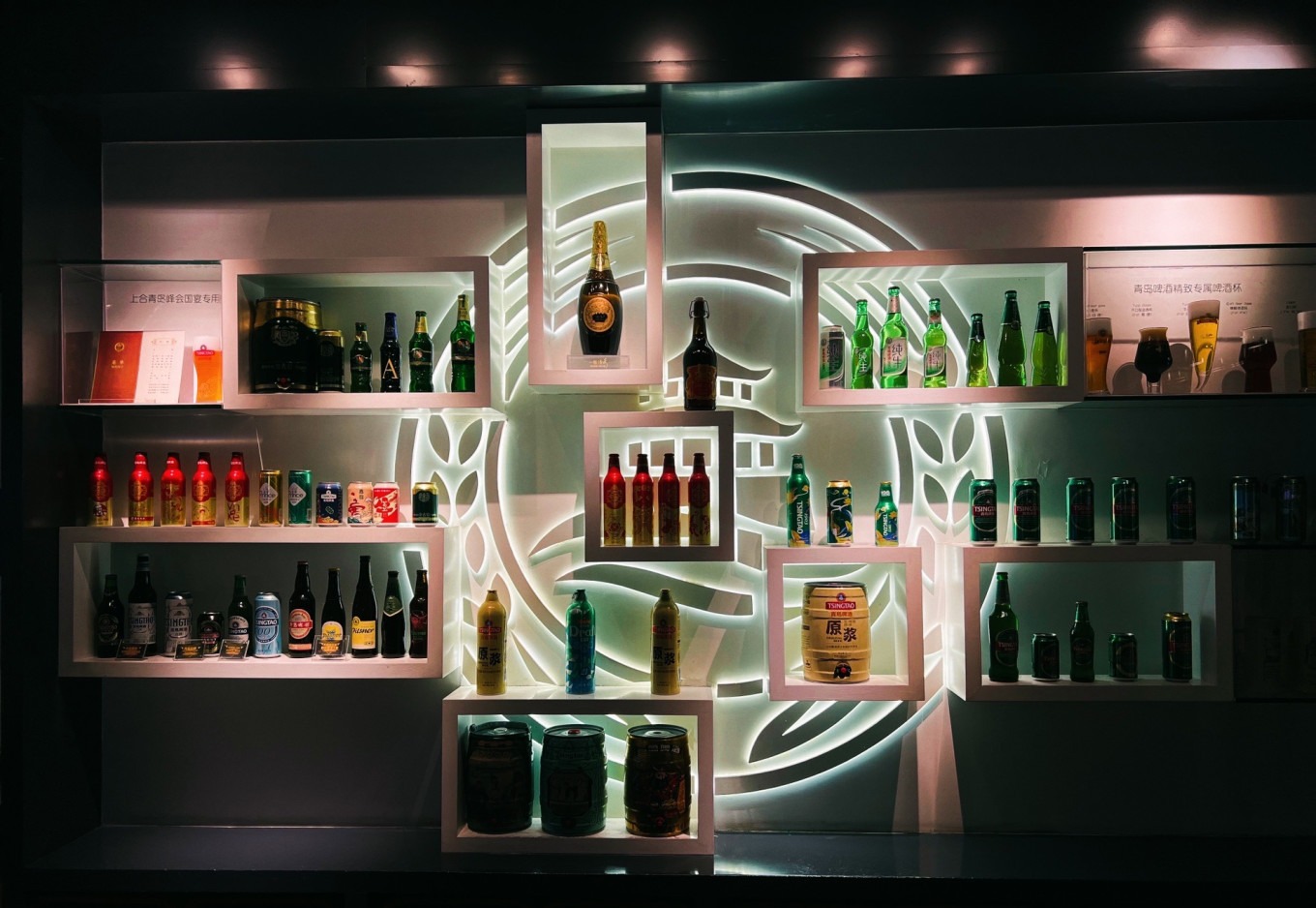
The museum is divided into three main areas: the century-old cultural history zone, the production process zone, and a multi-functional area. You’ll see original buildings, vintage equipment, and recreated workshop environments that vividly illustrate how Tsingtao beer is made and how it evolved over the decades.
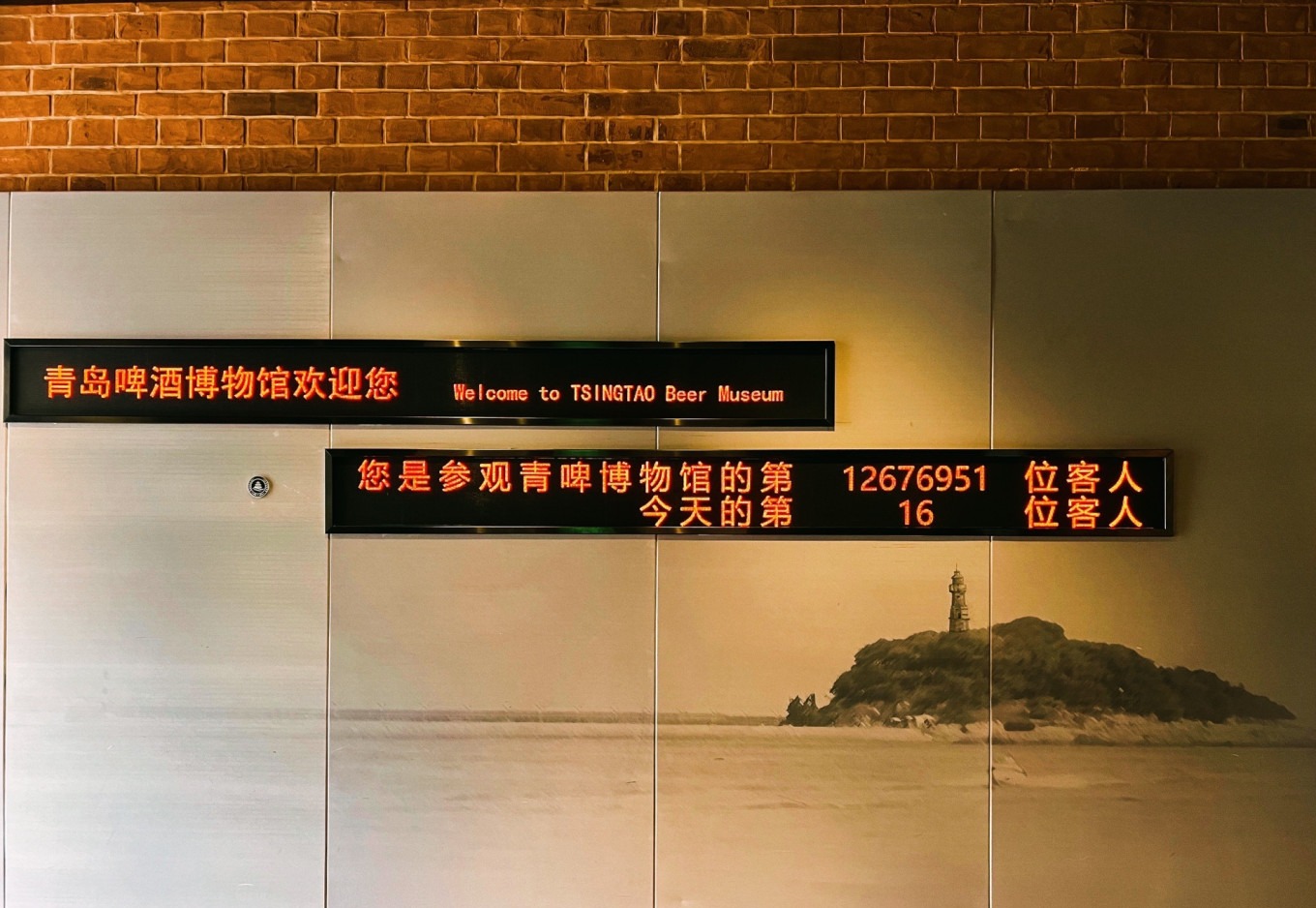
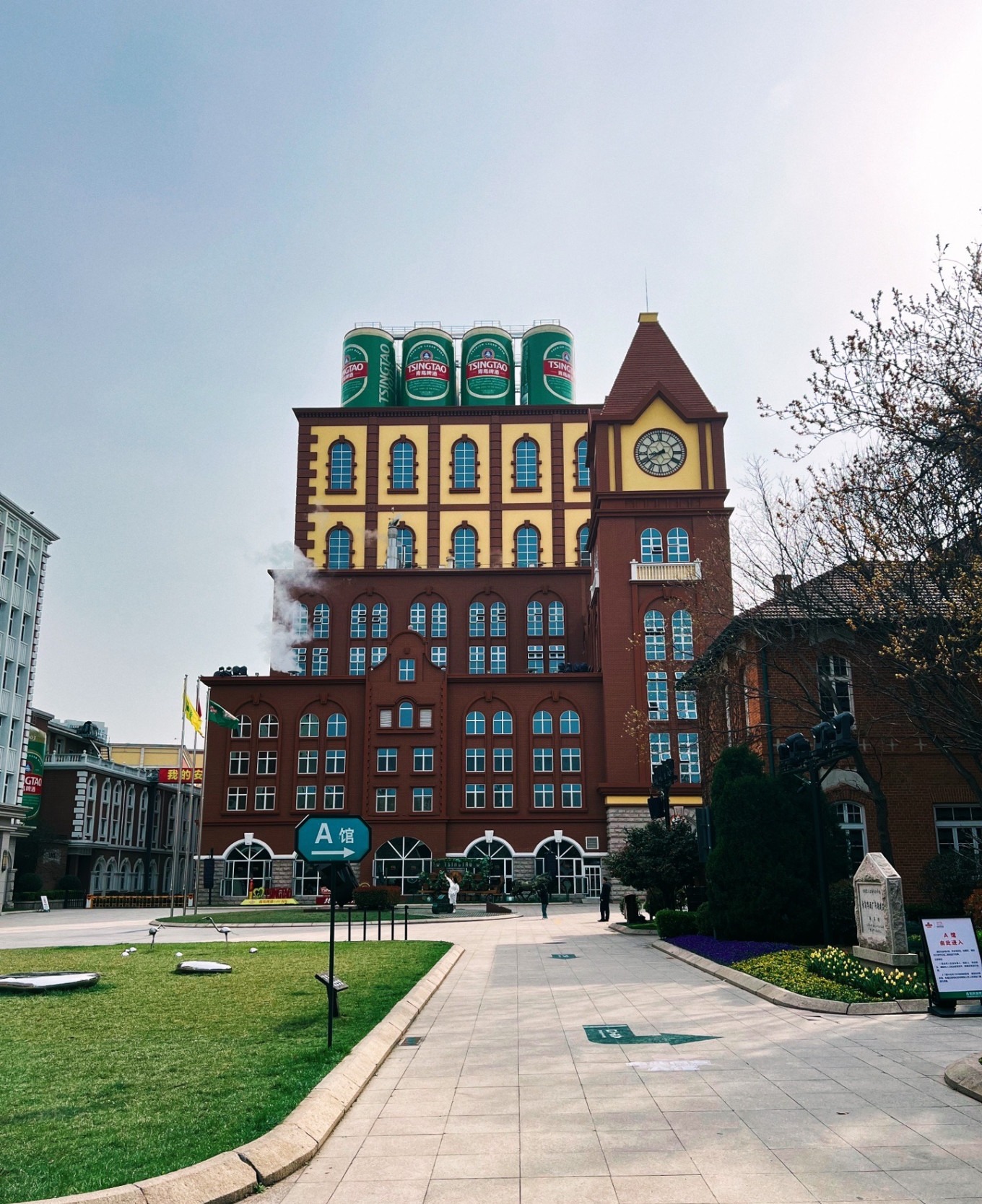
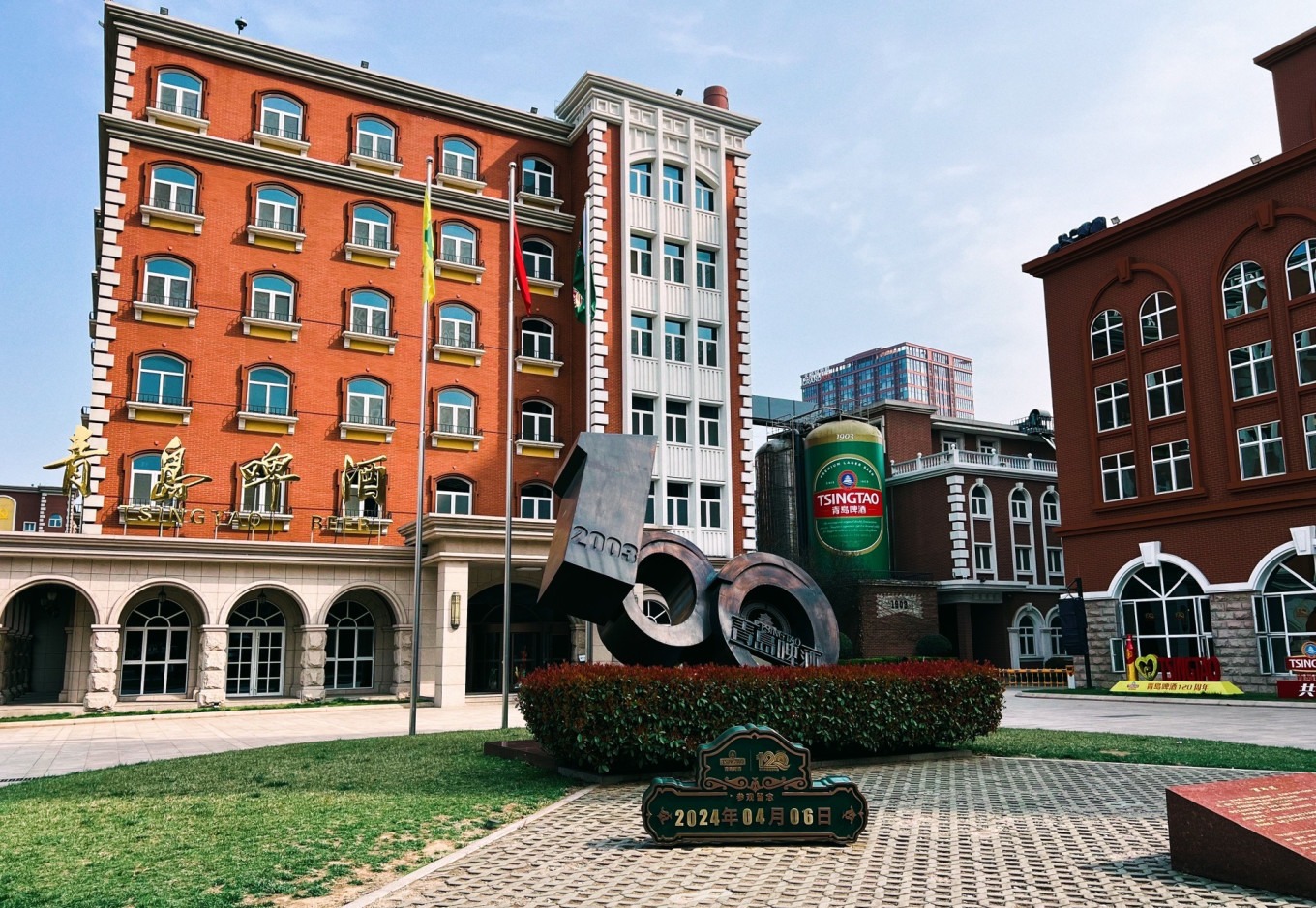
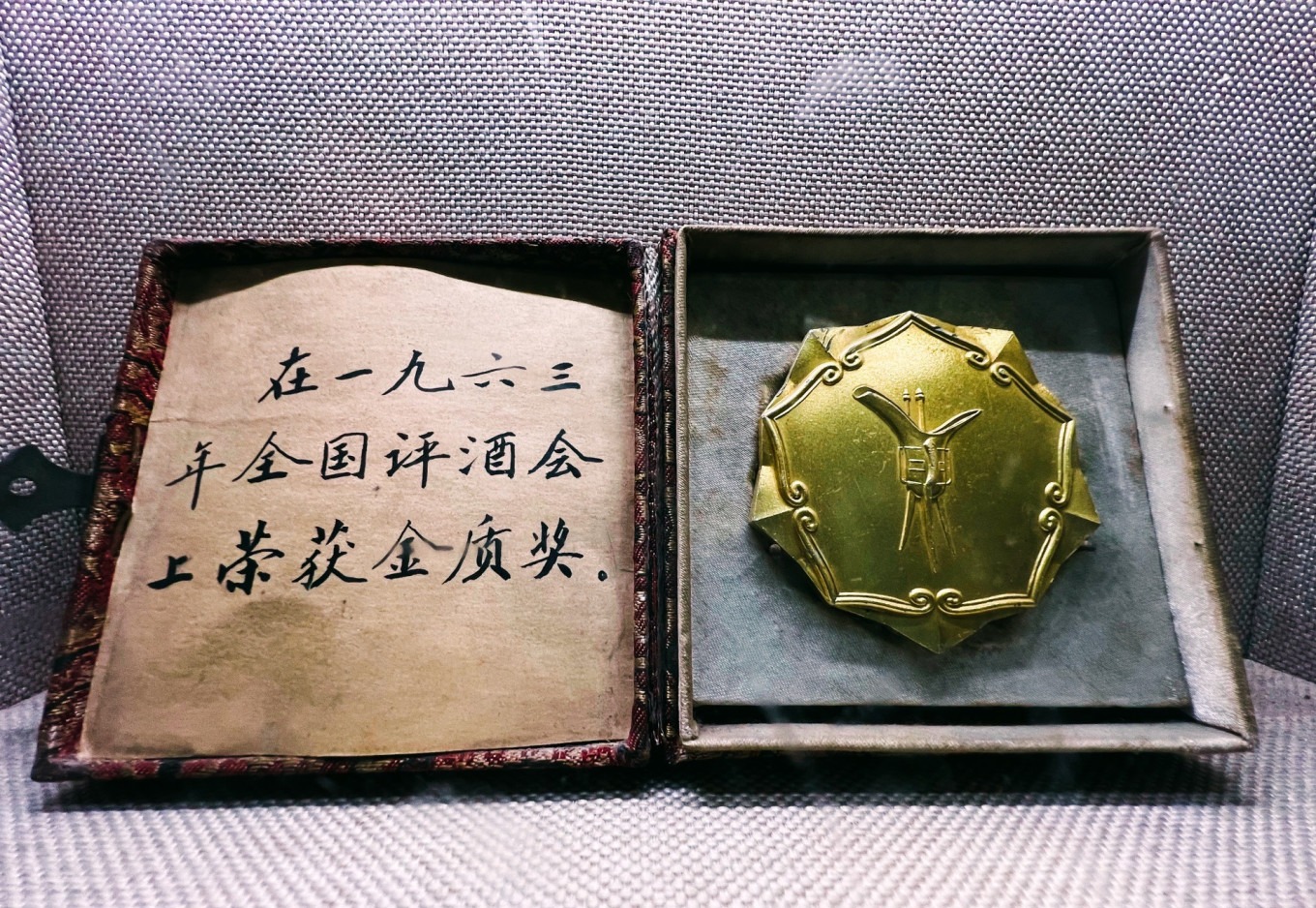
- RestaurantTsingtao Beer Museum (青岛啤酒博物馆)
- Address56 Dengzhou Road, Shibei District, Qingdao (青岛市市北区登州路56号)
- Recommended dishesOriginal draft (原浆), Pure draft (纯生), Pilsner (皮尔森), Dark beer (黑啤), White beer (白啤), IPA
- Average spend78 RMB per person for tasting package
Next Time, Lie on the Grass and Soak Up the Sun
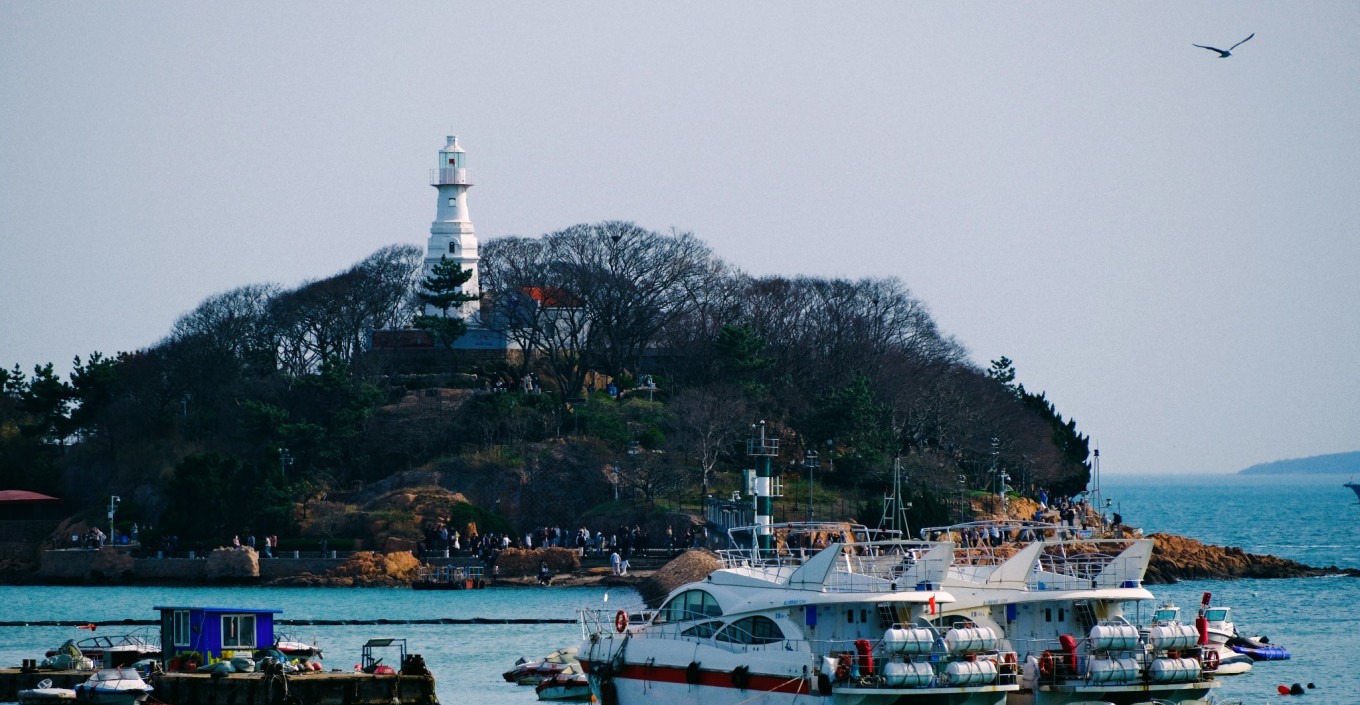
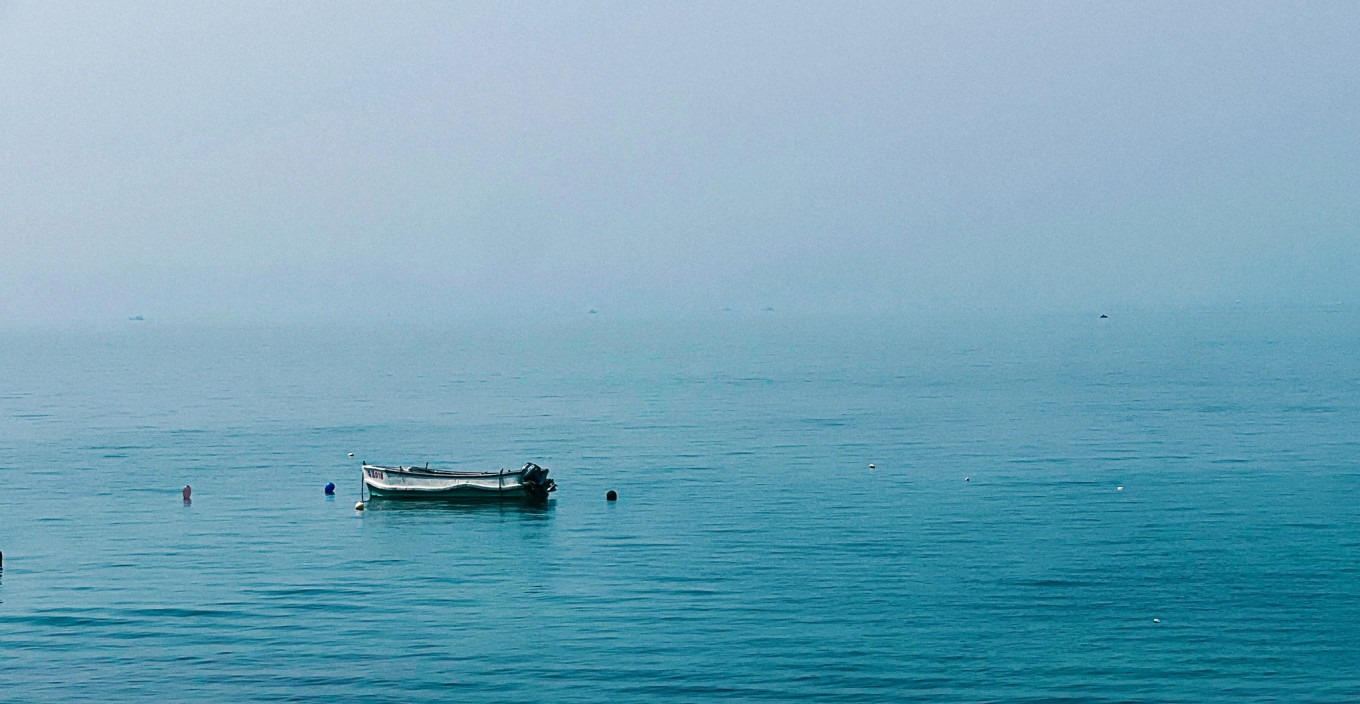
Imagine visiting Xiaomai Island (小麦岛) at noon, but the real magic happens at dusk. As the curtain of twilight falls, the island transforms into a lively sea of people — a buzz that can rival the waves themselves. This tiny garden on the sea, connected to the mainland only by a concrete bridge, is the perfect spot to soak in golden sunset hues and embrace the romance of watching the ocean.
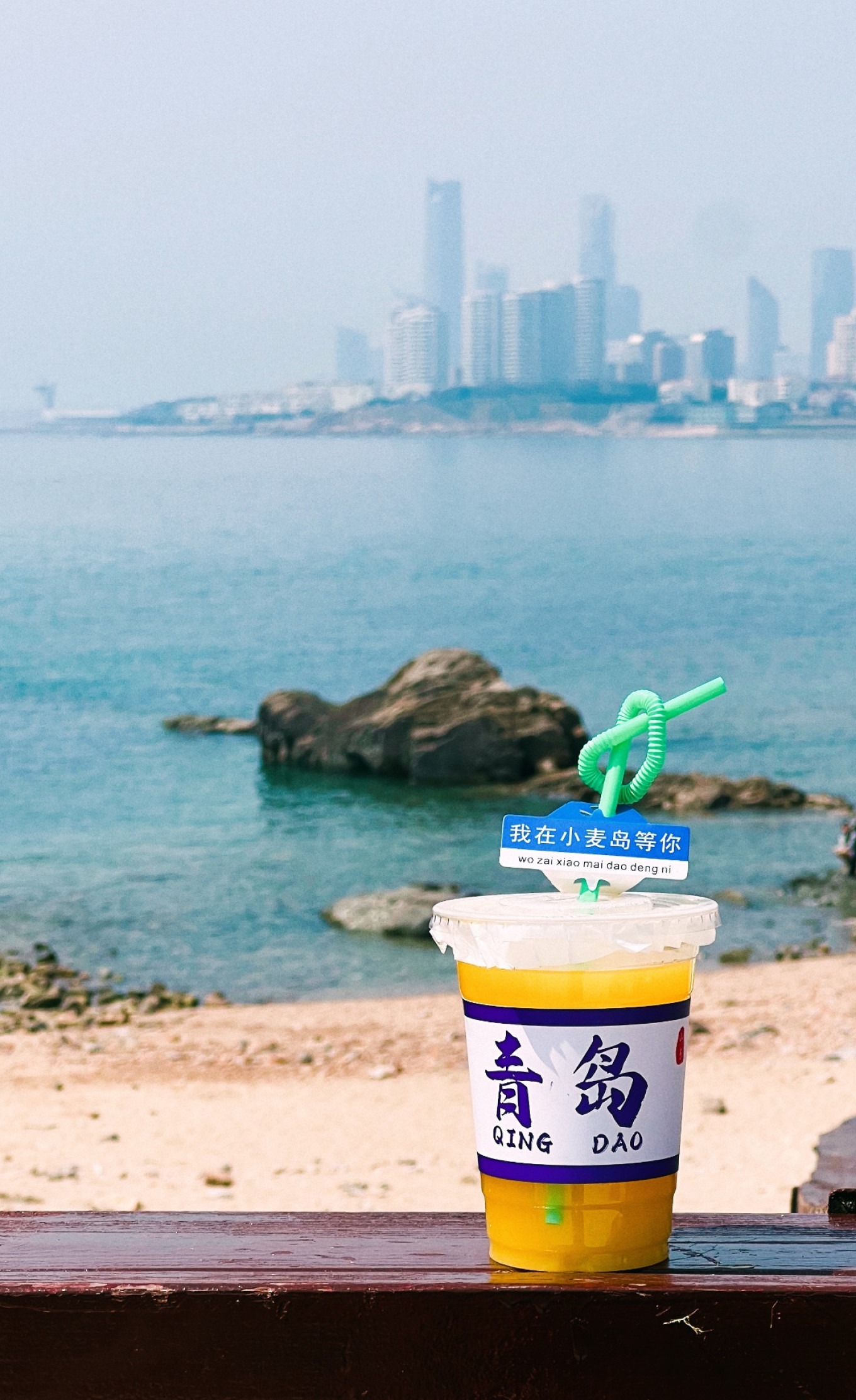
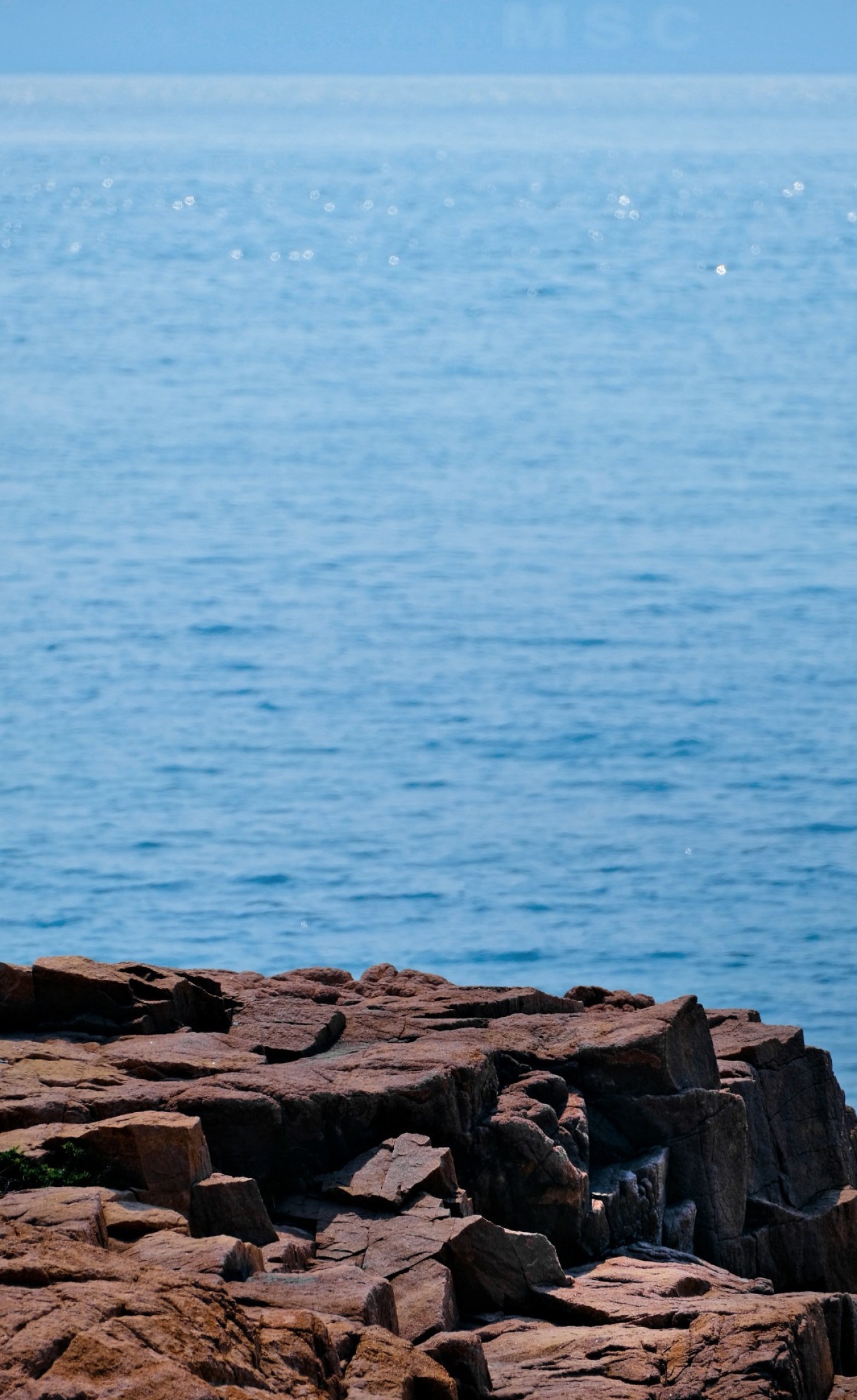
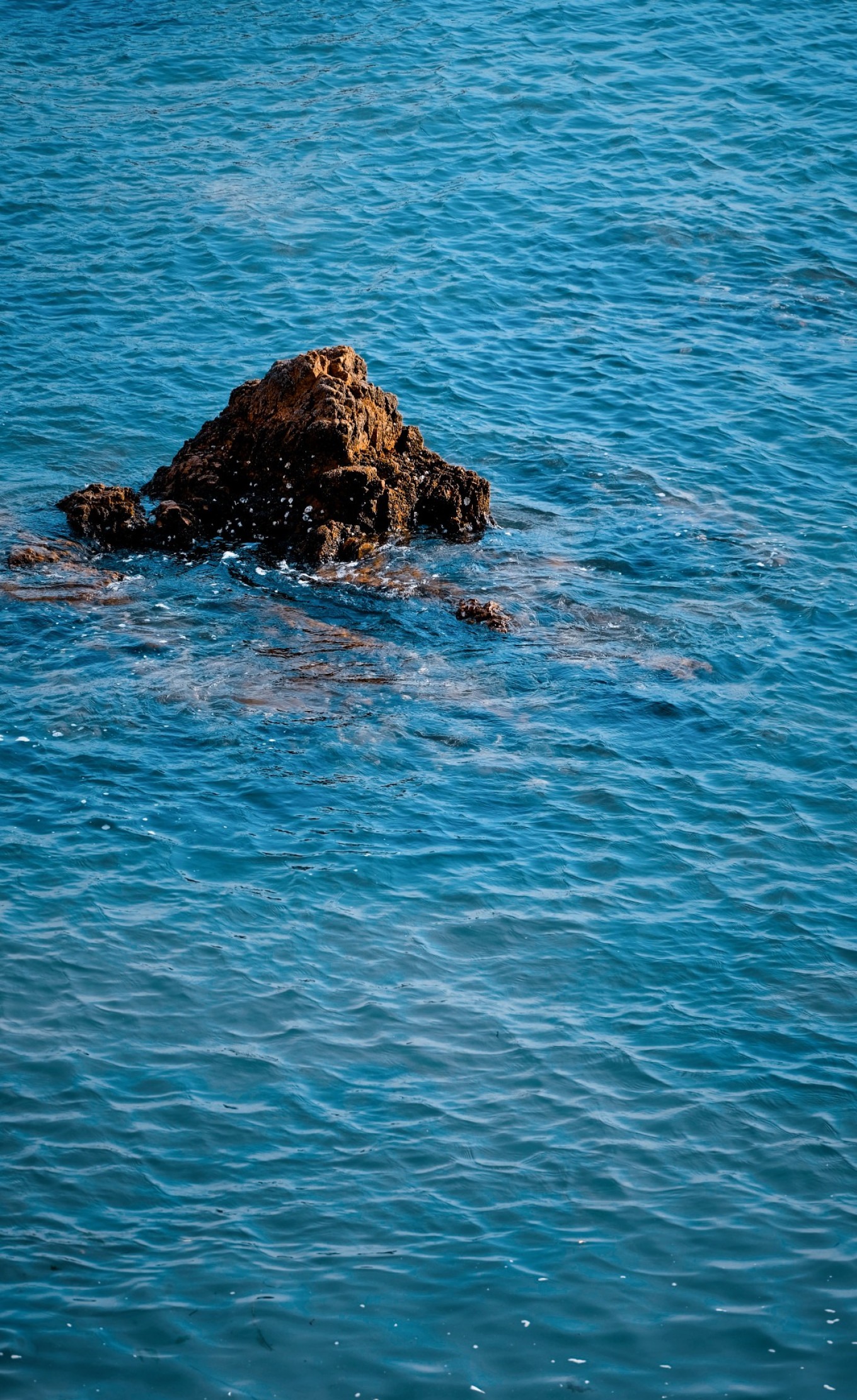
After leaving Xiaomai Island, take a taxi to Taipingjiao (太平角) and stroll along the seaside boardwalk back toward Qingdao Railway Station (青岛火车站). Along the way, you can explore the romantic old villas of Badaguan (八大关) and catch one last glimpse of Qingdao’s deep blue at the beach.
Final Thoughts
While summer is famously the season to escape the heat in Qingdao, the city truly shines in autumn. The northern sky is crisp and clear, yet the sea breeze softens the dryness, creating a perfect balance. As the Chinese writer Lao She once said, ‘Summer here goes without saying—Qingdao and escaping the heat are forever linked. Actually, autumn is better: there’s the northern clarity and coolness, without the dryness, because the northern climate is softened by the sea.’
Practical tip: You can prioritize one signature stop around the area, and you should adjust timing and budget based on transport and peak hours.
Common Traveler Questions
Is Qingdao a good city for walking?
Yes. The old town, Shinan coast, beaches, and viewpoint streets are rewarding on foot, but slopes and spread-out coastal sections mean you should mix walking with metro or taxis.
Can I combine old town, beaches, and Laoshan in one day?
It is possible only as a rushed checklist. Laoshan works better as its own day, while old town and coast walks fit better into separate half-day blocks.
What should I do if Qingdao weather turns foggy or rainy?
Move mountain or beach-heavy plans to a clearer window, then use indoor stops such as the beer museum, cafes, seafood meals, churches, or old-town streets between showers.
Guide Navigation
Enjoyed this article? Consider buying me a coffee to support more content like this!
💖 0 people have clicked to support this article.