China Domestic Travel Guide 2026: Trains, Flights, and Buses
Plan domestic travel in China in 2026 with high-speed rail, flights, buses, 12306, passport checks, apps, payments, luggage, and route-planning tips.
travel better
On this page
A practical guide to choosing high-speed rail, domestic flights, long-distance buses, and local transfers when you are moving between Chinese cities.
Last updated: May 16, 2026
Quick Answer
For most first-time China trips, use high-speed rail for journeys of about two to six hours, use domestic flights for very long hops such as Beijing to Guangzhou or Shanghai to Urumqi, and use long-distance buses mainly for rural scenic areas that trains do not reach. The best China domestic travel plan is usually a mix, not one transport mode for the whole trip.
Before you book, set up mobile payment, internet access, and your transport apps. If you have not done that yet, start with the China travel apps guide, then come back to choose routes.
China is large enough that transfer days can shape the whole mood of a trip. A route that looks simple on a map can feel tiring if every city change requires an airport far from town, an early checkout, a security line, and a late arrival. A slightly slower train can sometimes be the calmer choice because it moves you from one urban rail network to another with less friction.
This guide updates the old “train, flight, or bus” comparison for current planning. It keeps the practical structure of the original article but refreshes the parts that have changed: railway booking now centers on 12306 and passport identity verification, standard train ticket sales are generally within a 15-day window, mobile payment is easier for foreign visitors than it used to be, and domestic flight security has become stricter about power banks.
How to Choose Between Rail, Flights, and Buses
Start with total door-to-door time, not only the timetable. A two-hour flight can become a six-hour transfer after airport transport, check-in, security, boarding, baggage claim, and the taxi or metro ride into the city. A five-hour high-speed train can feel shorter because you board near the city, keep your luggage with you, and arrive directly into the local metro or taxi network.
Distance is still useful as a first filter. For city pairs under about 400 km, high-speed rail or an intercity train is usually best. For 400 to 1,200 km, high-speed rail is often the best balance. For routes over 1,200 km, flights become more attractive, especially if the train takes eight hours or more. Buses sit outside this simple scale: they are useful when the destination is a mountain town, old village, hot spring area, or scenic region beyond the rail grid.
High-speed rail for Beijing-Xi’an, Shanghai-Hangzhou, Chengdu-Chongqing, Guangzhou-Shenzhen, and many classic tourist routes.
Flights for cross-country jumps, western China, northeast-south routes, and trips where a long rail day would cost too much energy.
Buses for scenic areas and smaller towns after you reach the nearest rail or air gateway.
| Question | Best answer for most travelers | Watch out for |
|---|---|---|
| Is the train under six hours? | Choose high-speed rail first. | Some high-speed stations are outside the center; check the exact station name. |
| Is the train eight hours or more? | Compare flights carefully. | Airport transfers and delays may erase the time saving on short routes. |
| Are you traveling during Chinese holidays? | Book as soon as tickets are released and keep route backups. | Trains, flights, and buses can all sell out; avoid peak departure days where possible. |
| Do you have large luggage? | Rail is usually easier because there are no airline-style liquid rules. | You still need to lift bags through security and onto racks. |
| Are you going to a village or scenic area? | Use train or flight to the gateway, then bus, car, or local transfer. | Bus stations can be far apart and English support is limited. |
High-Speed Rail: The Default for Many Routes
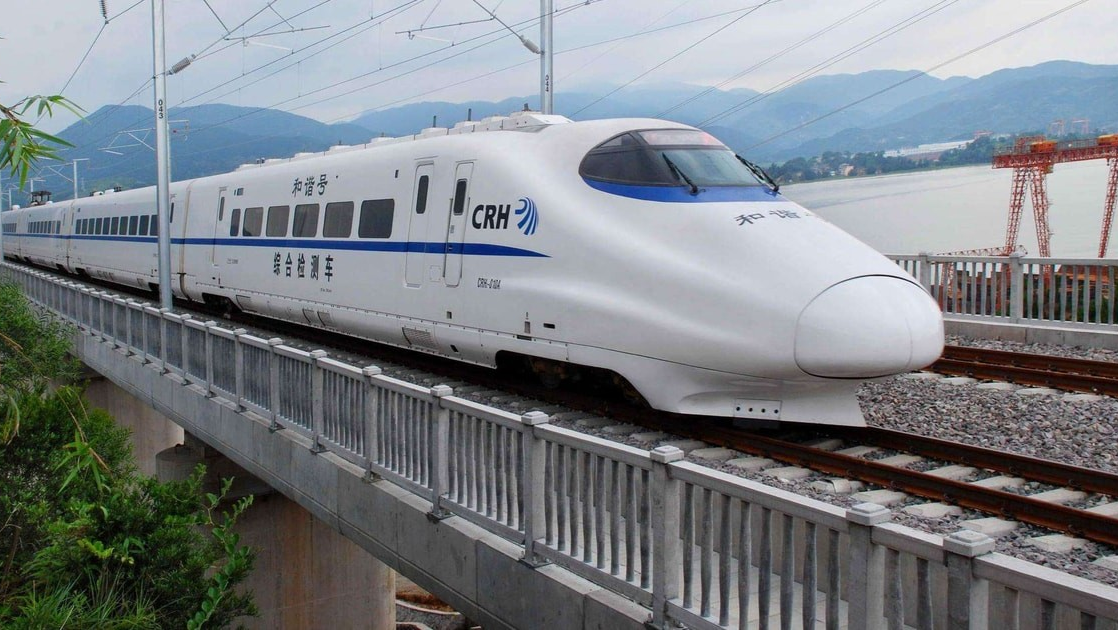
China’s high-speed rail network is usually the most comfortable way to move between major cities. G trains are the fastest services and often run at 300 to 350 km/h on suitable lines. D trains are still fast, generally making more stops or serving routes where full-speed G services are not the main option. Conventional overnight trains still exist, but for a first trip, high-speed rail is the simplest starting point.
Why rail often wins
Rail works especially well when both cities have metro-connected stations. You pass security, enter a large waiting hall, board shortly before departure, and keep your bags with you. The ride is usually smooth, seats are wider than economy-class aircraft seats, and there is enough space to read, work, eat, or simply watch the landscape change.
If your wider itinerary is still forming, the China high-speed rail guide goes deeper into station procedure, seat classes, ticket checks, and what to expect on board.
Rail advantages
- Reliable city-to-city timing. On many tourist routes, rail is less exposed to weather delays than flights.
- Less stressful baggage. You still go through security, but you do not deal with checked baggage deadlines or liquid limits.
- Good comfort for medium distances. Second class is adequate for most travelers, first class gives more space, and business class is premium but expensive.
- Strong route coverage. Beijing, Shanghai, Xi’an, Chengdu, Chongqing, Hangzhou, Suzhou, Guangzhou, Shenzhen, Guilin, Kunming, and many other visitor cities are connected by fast rail.
- Simple arrival. Many stations connect directly to metro lines, taxis, or ride-hailing pickup zones.
Rail disadvantages
- Tickets can sell out. Popular routes and holidays require fast action when tickets become available.
- Stations can be huge. Beijing South, Shanghai Hongqiao, Guangzhou South, and similar hubs need extra time.
- Some stations are far from the old center. Always check whether the station is North, South, East, West, or a suburban high-speed terminal.
- Very long rides become tiring. Once a rail trip approaches eight or nine hours, compare flights.
Current booking note: 12306 is the official China Railway ticketing platform. The English 12306 site lists passport-based services and Beijing’s official transport guidance says foreign travelers can use valid passports for railway identity verification. Current official and municipal guidance also describes the normal ticket release window as 15 days, so do not plan around the old 30- or 60-day assumption.
Domestic Flights: Best for Long Hops
Domestic flights make sense when China’s scale becomes too large for a pleasant rail day. Beijing to Guangzhou, Shanghai to Urumqi, Chengdu to Harbin, or a gateway flight toward Tibet, Xinjiang, Hainan, or far southwest China may save a meaningful amount of time. Flights are also useful when you are protecting a fixed hotel night, cruise, tour, or onward international departure.

When flying is worth it
Choose flights when the rail time is long enough that you would lose most of a day, when the destination has a convenient airport, or when the route crosses mountain or desert regions where rail is indirect. For international arrival planning and airport logistics, pair this page with the flying to China guide.
For domestic routes, arrive at the airport with a real buffer. Two hours before departure is a sensible baseline for unfamiliar airports, and more is safer during holidays, weather disruptions, or when checking luggage.
Flight advantages
- Best for cross-country jumps. A two- to four-hour flight can replace an all-day or overnight train.
- Wide network. Major and regional airports cover areas that are awkward by rail.
- Competitive fares. Discounted flights can beat high-speed rail prices on long routes.
- Useful for fixed plans. Flights can protect time when the destination is far and the itinerary is short.
Flight disadvantages
- Door-to-door time is longer than it looks. Airport transfers, check-in, security, boarding, arrival, and baggage claim add hours.
- Weather can disrupt schedules. Summer thunderstorms and winter weather can affect busy airport corridors.
- Baggage and battery rules are stricter. Liquids, checked baggage limits, and lithium battery restrictions matter more than on trains.
- Airports may be far from the city. Confirm transport from the arrival airport before choosing a late-night flight.
Power bank update: CAAC announced stricter domestic-flight rules from June 28, 2025 for uncertified or recalled power banks. For China domestic flights, carry power banks in hand luggage, keep capacity and certification markings clear, and check your airline if a device is close to the approval threshold.
Long-Distance Buses: Useful, but Not the First Choice
Buses remain important in China, but they are no longer the main answer for most intercity tourist routes. High-speed rail has taken over many city pairs that buses once served. Today, buses are most useful for the final leg: from a rail city to a mountain village, from an airport gateway to a scenic area, or between smaller towns where train service is indirect.
When buses make sense
- Rural or scenic access. Places such as smaller Yunnan towns, mountain parks, hot spring areas, and villages may depend on coach links.
- Short regional hops. A two- or three-hour bus can be easier than backtracking to a high-speed station.
- Budget travel. Buses can be cheaper, though the comfort trade-off is real.
- Sold-out rail backups. During holidays, a bus may be the only available option.
Bus cautions
- Large cities can have several bus stations; verify the exact station name in Chinese.
- English support is much weaker than at major rail stations or airports.
- Journey time depends on traffic, weather, and road conditions.
- Toilets, rest stops, seat quality, and luggage handling vary widely.
- For mountain roads, avoid planning a tight same-day connection after a long bus ride.
A practical pattern is to travel by high-speed rail to the nearest strong gateway, sleep there if needed, and take the bus or hired transfer the next morning. This keeps scenic travel from turning into a rushed transfer chain.
Luggage, Comfort, and Travel-Day Energy
Transport planning is not only about speed. It is also about how tired you will feel when you arrive. A first-time visitor who is carrying one large suitcase, one camera bag, and a daypack may experience the same route very differently from a backpacker with one cabin bag. The more luggage you have, the more valuable direct station access, elevators, and simple transfers become.
High-speed rail is usually the easiest option with normal tourist luggage because you keep bags with you and avoid airline-style checked baggage rules. That said, you still need to pass security, lift bags into overhead racks or luggage areas, and move quickly when boarding starts. If your suitcase is heavy, stand near your carriage position in the waiting hall and board early within the allowed window.
Flights are cleaner when you travel light. If you need to check a bag, add time for the counter and baggage claim. If you carry camera batteries, power banks, or electronics, keep them accessible for inspection and confirm the capacity markings before the flight day. For families, older travelers, or anyone with mobility concerns, the rail-versus-flight choice should include walking distance inside the station or airport, not only ticket price.
| Traveler type | Usually easiest | Planning detail |
|---|---|---|
| Light solo traveler | Rail or flight | Choose by total time and fare; you can handle either mode easily. |
| Family with children | Rail for medium routes | More space, easier snacks, less pressure around boarding and baggage. |
| Large suitcase traveler | Rail when under six hours | Avoid stairs where possible and check station elevator access. |
| Older traveler | Rail or direct flight | Avoid rushed multi-transfer plans and late-night arrivals. |
| Remote scenic route | Mixed mode | Use rail or flight to the gateway, then book a daylight road transfer. |
Stations and Airports: The Details That Change the Day
Chinese transport hubs are efficient, but they are often large. The biggest planning mistake is assuming all stations with the same city name are interchangeable. Beijing Railway Station, Beijing West, Beijing South, Beijing North, and Beijing Chaoyang are different places. Shanghai Railway Station, Shanghai Hongqiao, and Shanghai South are also different. The same pattern appears across China.
When you book, save the station name in English and Chinese, confirm the metro line or taxi route, and screenshot the booking details. Do this before your travel day because station Wi-Fi, roaming, or app loading can fail at exactly the wrong moment. The same applies to airports: confirm whether you are using Pudong or Hongqiao in Shanghai, Capital or Daxing in Beijing, and the correct terminal in large airports.
Arrive 45 to 60 minutes early at familiar stations, and 75 to 90 minutes early at major hubs or with first-time passport checks.
Arrive about two hours before domestic flights; add more time for checked bags, holidays, and unfamiliar airports.
Check the last metro and realistic taxi pickup area before choosing late trains or late flights.
Holiday strategy
China’s public holidays are a separate planning category. During Spring Festival, Qingming, Labor Day, Dragon Boat Festival, Mid-Autumn Festival, National Day, and busy summer weekends, routes that are normally easy can become difficult. Trains sell out quickly, flights become more expensive, and highways can be slow. If your trip overlaps with a holiday, make the transport plan first and let the hotel plan follow it.
The safest holiday strategy is to avoid long-distance movement on the busiest departure and return days. If you must move, choose direct routes, book early, and keep backup departures in the same city pair. A less famous destination with a direct train can be better than a famous destination that requires a late flight, taxi transfer, and morning bus.
Booking Setup Before You Move Around China
Transport works much better when your phone is ready before the first transfer. Install and test the apps while you still have stable internet. Add your passport details carefully, because railway and flight bookings use real-name information. Keep your passport with you on travel days; for China rail, it is not just an identity document but often the document used to enter and board.
Train booking
Use 12306 directly if you are comfortable setting up the official platform, or use a reputable travel booking platform if you prefer a simpler English interface. Either way, the underlying rail ticket is tied to your passport information. For high-demand routes, be ready when tickets are released, choose acceptable backup trains, and avoid building an itinerary that depends on one perfect departure time.
Flight booking
Domestic flights can be booked through airline sites, major travel platforms, or app ecosystems. Check baggage allowance before paying, especially on discounted fares. If you are connecting from an international flight to a domestic flight, leave enough time for immigration, baggage, terminal transfer, and any unexpected arrival delay.
Payment and internet
China’s official payment guidance for overseas visitors now describes several practical options: mobile payments, bank cards, and cash. In real travel, mobile payment is the most useful daily layer, while a small cash backup and a card backup still matter. Set up Alipay or WeChat Pay before relying on taxis, station shops, small restaurants, or bus-related payments. The detailed setup steps belong in the how to pay in China guide and the foreign card linking guide.
For connectivity, use a tested eSIM, SIM, or roaming plan rather than assuming free Wi-Fi will carry you through a transport day. If you need a setup checklist, read the China eSIM guide and the getting online in China guide.
Sample Route Logic
The right transport choice depends on the rhythm of the trip, not only the distance. These examples show how to blend modes without turning every day into a logistics project.
Classic first trip
Beijing -> Xi’an -> Shanghai: use high-speed rail between Beijing and Xi’an if the timing works, then compare rail and flight for Xi’an to Shanghai. For a ready-made route, see the 10-day China itinerary.
Shanghai and the lower Yangtze
Shanghai -> Suzhou -> Hangzhou: use short high-speed rail segments. Avoid flights entirely; station choice and hotel location matter more than distance. Start with the Shanghai travel guide before choosing day trips.
Yunnan slow travel
Kunming -> Dali -> Shaxi/Xizhou: use rail to reach Dali, then bus, car, or local transfer for smaller towns. This keeps the slow-travel mood intact; the Yunnan travel guide explains how to pace the region.
Western China
Shanghai or Beijing -> Urumqi/Kashgar: fly for the long approach, then use trains, drivers, or regional flights depending on the route and season.
Common mistakes to avoid
- Booking a hotel near the wrong station because the city has several similar station names.
- Choosing a cheap late-night flight without checking the arrival airport transfer.
- Trying to travel on the first or last day of a major Chinese public holiday.
- Leaving passport identity verification or payment setup until the morning you need tickets.
- Planning every city transfer as a sightseeing day. Most transfer days need breathing room.
A simple planning workflow
First, list the cities you want in order and mark the nights you cannot move, such as the first arrival night, a reserved hotel, or a fixed tour. Second, check rail time between each city pair before checking flights. If rail is under six hours and the stations are convenient, keep it as the default. Third, check flights only for the long legs or routes where the train is clearly awkward. Fourth, identify any final scenic-area transfer and decide whether it belongs on the same day or the next morning.
Finally, test the weak points. A route is only as good as its worst transfer. If one day requires a hotel checkout, metro ride, high-speed train, taxi to a bus station, mountain bus, and late guesthouse arrival, it may look efficient but feel unpleasant. Splitting that transfer with a gateway overnight often creates a better trip, even if it adds one hotel change.
Reader-first rule: if two transport choices are close on paper, choose the one that leaves you with enough energy to enjoy dinner and a short walk after arrival. In China, the best travel days usually come from clean logistics, not the maximum number of cities.
Official Sources and Useful Next Guides
This article was refreshed against official or government-linked travel information where possible, including the 12306 English website, Beijing’s official transport guidance for foreign travelers, the State Council’s overseas visitor payment guide, and CAAC’s 2025 power bank notice.
FAQ
Is high-speed rail better than flying in China?
For many routes under about six hours by train, yes. Rail often gives a calmer door-to-door day because stations are closer to the city and there is no checked-baggage process. For very long routes, flights can still be better.
How early can I book China train tickets?
The normal public guidance is a 15-day ticket sales window, including the day of travel. Some platforms let you place a request earlier, but the actual ticket still depends on release through the railway system.
Can foreign visitors use passports for China train travel?
Yes. China railway travel is real-name based, and foreign travelers should use the same passport information for booking and travel. Bring the physical passport to the station.
Should I use long-distance buses in China?
Use them selectively. They are useful for scenic areas, villages, and short regional hops without rail service. For major city-to-city routes, high-speed rail is usually easier.
What should I set up before traveling between Chinese cities?
Set up mobile payment, internet access, route apps, passport details in booking platforms, and offline screenshots of tickets, hotels, and station names.
Enjoyed this article? Consider buying me a coffee to support more content like this!
💖 1 people have clicked to support this article.