China Etiquette for Travelers: 10 Social Rules to Know
1,774 words, 9 minutes read time.


travel better
Greetings, gifts, meals, queues, face, and everyday respect
Quick Answer
For most visitors, good etiquette in China means being observant, respectful, and calm. You do not need perfect cultural knowledge; start with polite greetings, titles, patience, modest disagreement, careful gift choices, and awareness of face.
Before you go: Etiquette varies by region, generation, and formality. Use this guide as a baseline and adapt to the people you are with.
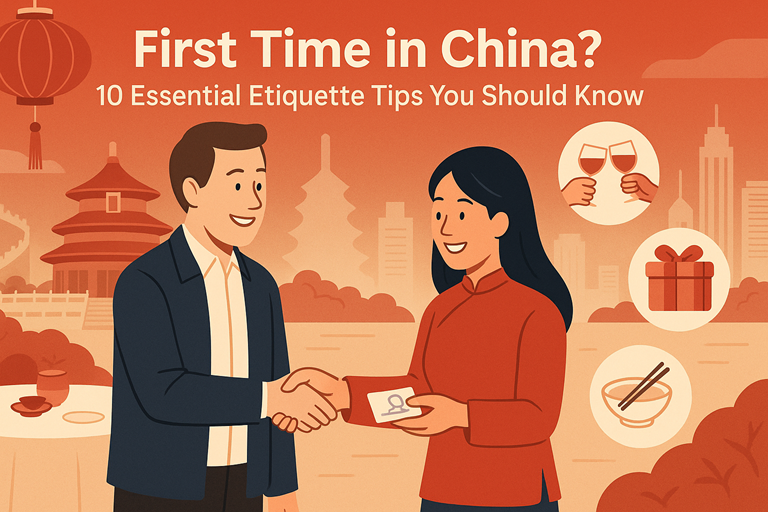
A trip to China promises an incredible journey through ancient wonders, futuristic cityscapes, diverse landscapes, and vibrant cultures. While the language barrier might seem like the biggest hurdle, understanding and observing basic social etiquette can significantly enhance your interactions, show respect, and open doors to more meaningful experiences.
Chinese people are generally very understanding of foreigners, but making an effort to observe local customs will be greatly appreciated. Here are 10 essential social etiquette tips to help you navigate your first visit with grace and confidence.
From greetings to dining customs, these guidelines will help you avoid common cultural faux pas and ensure your interactions with locals are positive and respectful.
Etiquette in Common Travel Moments
- Meeting someone new: A handshake or nod is enough. Use titles when you know them, and avoid jumping into personal jokes too quickly.
- Receiving help: Thank the person clearly, accept help gracefully, and avoid making a small mistake into a public drama.
- Disagreeing with staff or a driver: Stay calm and specific. If language is the problem, use a translation app rather than raising your voice; the language tools guide and China travel apps guide are worth preparing before you need them.
- Being invited to a meal: Follow the host’s lead on seating, ordering, toasts, and payment. For table-specific rules, see the China dining etiquette guide.
- Standing in crowded places: Expect less personal space on subway platforms, station queues, and popular attractions. Move patiently and keep valuables secure.
1. Greetings: Handshakes, Nods, and the Art of Introduction
The Handshake
In formal situations, business settings, or when being introduced to someone new, a handshake (握手 – Wòshǒu) is common and appropriate. It’s usually not as firm as a Western handshake and may last a bit longer. A slight nod of the head while shaking hands is a sign of respect.
Nodding
For more casual encounters or when greeting someone you already know, a simple nod and a smile, perhaps with a “Nǐ hǎo” (你好 – Hello), is perfectly acceptable.
Key Greeting Tips
- Avoid Overly Familiar Physical Contact: Unlike some Western cultures, casual hugs, back-slapping, or kisses on the cheek are generally not part of the initial greeting custom.
- Order of Introduction: When introductions are made, the senior or more important person is usually introduced first. When introducing yourself, state your name clearly.
2. Addressing People: Titles, Surnames, and Showing Respect

Surname First
In China, the family name (surname) comes first, followed by the given name. For example, if someone is named Zhang Wei (张伟), Zhang is the surname and Wei is the given name.
Use Titles and Surnames
It’s polite to address people using their title and surname, especially in formal settings or when addressing elders or superiors. For example, “Mr. Zhang” (张先生 – Zhāng Xiānsheng), “Ms. Li” (李女士 – Lǐ Nǚshì), or “Director Wang” (王总 – Wáng Zǒng, “Zǒng” is a common title for a boss/manager).
Avoid Using Given Names Too Quickly: Using someone’s given name is usually reserved for close friends and family. Wait until your relationship develops or until they invite you to use their given name.
3. The Concept of “Face” (Mianzi – 面子): The Cornerstone of Social Interaction

Understanding “Face”
“Mianzi” is a crucial concept in Chinese culture, representing a person’s reputation, social standing, honor, and dignity. It’s about how someone is perceived by others. Giving face means showing respect, while causing someone to lose face can be deeply offensive.
4. Gift Giving and Receiving: A Gesture of Goodwill

The Act of Giving
Giving small, thoughtful gifts is a common way to show appreciation, build relationships, or mark special occasions.
Gift Etiquette Essentials
- Two Hands: Always present and receive gifts with both hands. This shows respect and attentiveness.
- Initial Refusal: It’s customary for the recipient to politely refuse a gift once or twice before accepting. This is a sign of modesty.
- Reciprocity: If you receive a gift, it’s good etiquette to reciprocate with a gift of roughly equivalent value later.
Appropriate Gifts
Good Choices:
- Local specialties from your home country
- Good quality tea
- Fruit baskets
- Alcohol (except for Muslims)
Avoid:
- Clocks (送钟 sounds like “attending a funeral”)
- Sharp objects like knives or scissors
- Handkerchiefs (associated with funerals)
- Things in sets of four (四 sounds like “death”)
- White or black wrapping paper
Opening Gifts: Gifts are generally not opened in front of the giver unless they insist. This avoids potential embarrassment.
5. Business Card Etiquette (Mingpian – 名片): A Formal Exchange

Business Card Protocol
- Two Hands: Present your card with both hands, Chinese side facing the recipient.
- Receive with Respect: Accept cards with both hands and take time to read them carefully.
- Display Prominently: Place cards on the table during meetings rather than putting them away immediately.
- No Writing: Avoid writing on someone’s card in their presence.
- Store Properly: Keep cards in a clean cardholder, not crumpled in your pocket.
Importance: Business cards are treated with great respect in China as they represent the person and their professional identity.
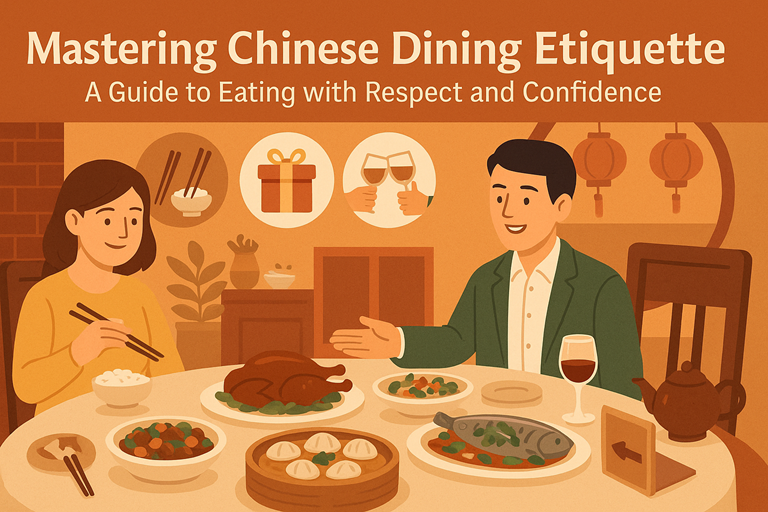
6. Dining Etiquette: More Than Just Chopsticks
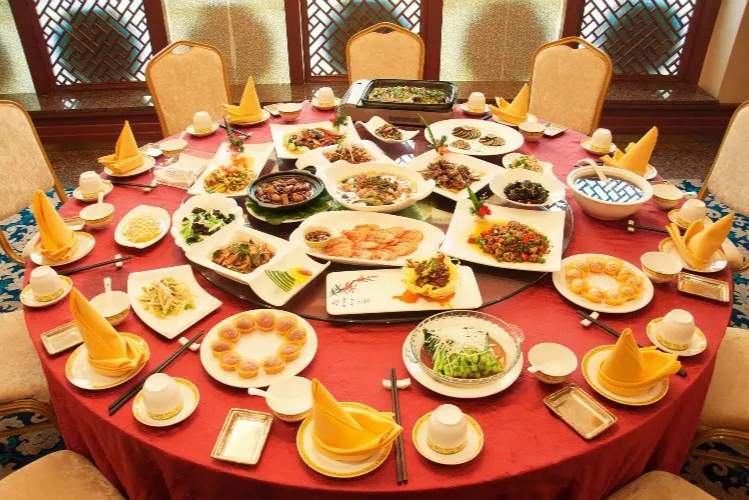
Seating Arrangements
In formal banquets, the host will guide seating. The seat facing the entrance or the most central seat is typically for the guest of honor.
Chopstick (筷子 – Kuàizi) Rules
Do:
- Place them horizontally when not in use
- Use serving chopsticks (公筷) if provided
- Hold them towards the end, not the middle
Don’t:
- Stick upright in rice (resembles funeral incense)
- Point at people or dishes
- Spear food (unless very difficult to pick up)
- Drum on bowls or tables
Toasting (Ganbei – 干杯)
Toasting is very common, especially at banquets. The host usually offers the first toast. When clinking glasses, the junior person’s glass rim should be slightly lower than the senior’s.

Paying the Bill (Maidan – 买单)
The host almost always pays. There may be a polite “fight” over who pays – this is part of showing generosity. As a guest, make a gesture but ultimately allow your host to pay.
7. Punctuality: Being on Time Matters

Time Expectations
- Arrive Early: Aim to be on time or a few minutes early for both business and social engagements.
- Lateness = Disrespect: Being late is considered rude and shows lack of respect for others’ time.
- Inform if Delayed: If unavoidably delayed, inform the person immediately with an apology and ETA.
While younger generations may be more flexible about time, punctuality remains highly valued in formal and business contexts.
8. Public Behavior: Pointing, Personal Space, and Noise Levels

Pointing
Avoid pointing with your index finger. Use your whole open hand, palm up, to indicate something.
Personal Space
Expect less personal space in crowded areas. Be patient in queues and on public transport.
Voice Levels
Public spaces can be noisy, but avoid being overly loud in ways that draw negative attention.
Queuing
While improving, you may still encounter pushing in lines. Maintain your composure.
9. Modesty and Handling Compliments

Humility is Valued
Modesty and humility are traditionally prized virtues. Avoid boasting or excessive self-praise.
Complimenting Others
Offering sincere compliments is a good way to give face. Focus on achievements, hospitality, or skills.
10. Navigating “Yes” and “No”: The Art of Indirect Communication

Indirectness
Chinese communication often uses indirectness to avoid confrontation or loss of face.
Communication Tips
- A “Yes” Might Mean “I Understand” rather than agreement
- “No” is Often Subtle: Listen for “Maybe” or “It might be difficult”
- Avoid Direct Questions that force a yes/no answer when you sense reluctance
- Read Between the Lines: Pay attention to what isn’t said directly
Final Thoughts

Don’t feel overwhelmed by these customs! Chinese people are generally very hospitable and forgiving of cultural faux pas made by foreigners. The most important thing is to be observant, respectful, and show genuine interest in their culture.
祝你旅途愉快!
Zhù nǐ lǚtú yúkuài!
Wishing you a pleasant journey!
Common Traveler Questions
Do tourists need to follow Chinese etiquette perfectly?
No. Most people are forgiving of visitors. Respect, patience, and willingness to learn matter more than memorizing every rule.
What etiquette rule helps the most in China?
Avoid causing public embarrassment. Speak calmly, avoid harsh public criticism, and give people room to save face.
How should I behave when visiting a Chinese home or meal?
Arrive on time, follow the host, accept arrangements graciously, try a little of what is offered when possible, and show appreciation before leaving.
Enjoyed this article? Consider buying me a coffee to support more content like this!
💖 3 people have clicked to support this article.