Changzhi and Beyond: Temple Hopping in Southeast Shanxi
A deep southeast Shanxi temple route guide covering Changzhi, Pingshun, Qinxian, ancient timber halls, murals, rural roads, and practical planning tips.
travel better
On this page
A practical, image-rich guide you can actually use.
Introduction
- RestaurantN/A (店名)
- AddressZiyun Mountain, Setou Town, Zhangzi County, Changzhi City, Shanxi Province (山西省长治市长子县色头镇紫云山山麓)
- Recommended dishesN/A (菜名)
- Average spendFree entry
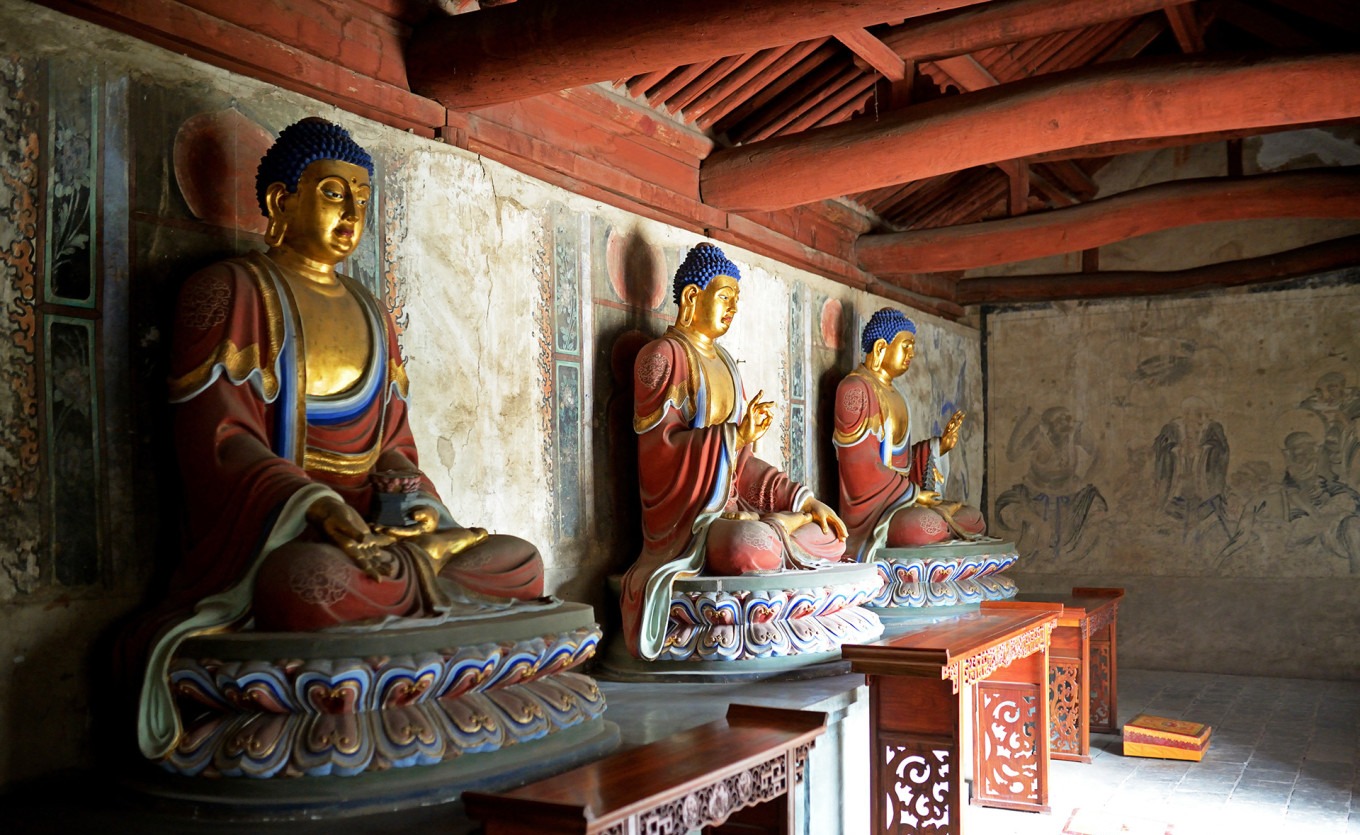
Hidden on the slopes of Ziyun Mountain (紫云山) in Changzhi’s Zhangzi County, Chongqing Temple (崇庆寺) is a must-visit for anyone exploring the ancient architecture and painted sculptures of southeastern Shanxi. The temple dates back to the Northern Song dynasty and is renowned for its remarkably preserved clay sculptures, particularly the 18 Arhats in the Thousand Buddha Hall. Best of all, entry is free — no ticket required.
To reach the temple, head to Setou Town (色头镇) in Zhangzi County. The temple sits at the foot of Ziyun Mountain, surrounded by a tranquil forest. There is no public transport directly to the site, so you’ll need to drive or hire a car. The road up is narrow and winding, but the reward is a peaceful, uncrowded experience with some of China’s finest Song-dynasty sculpture.
Bucun Yuhuang Temple
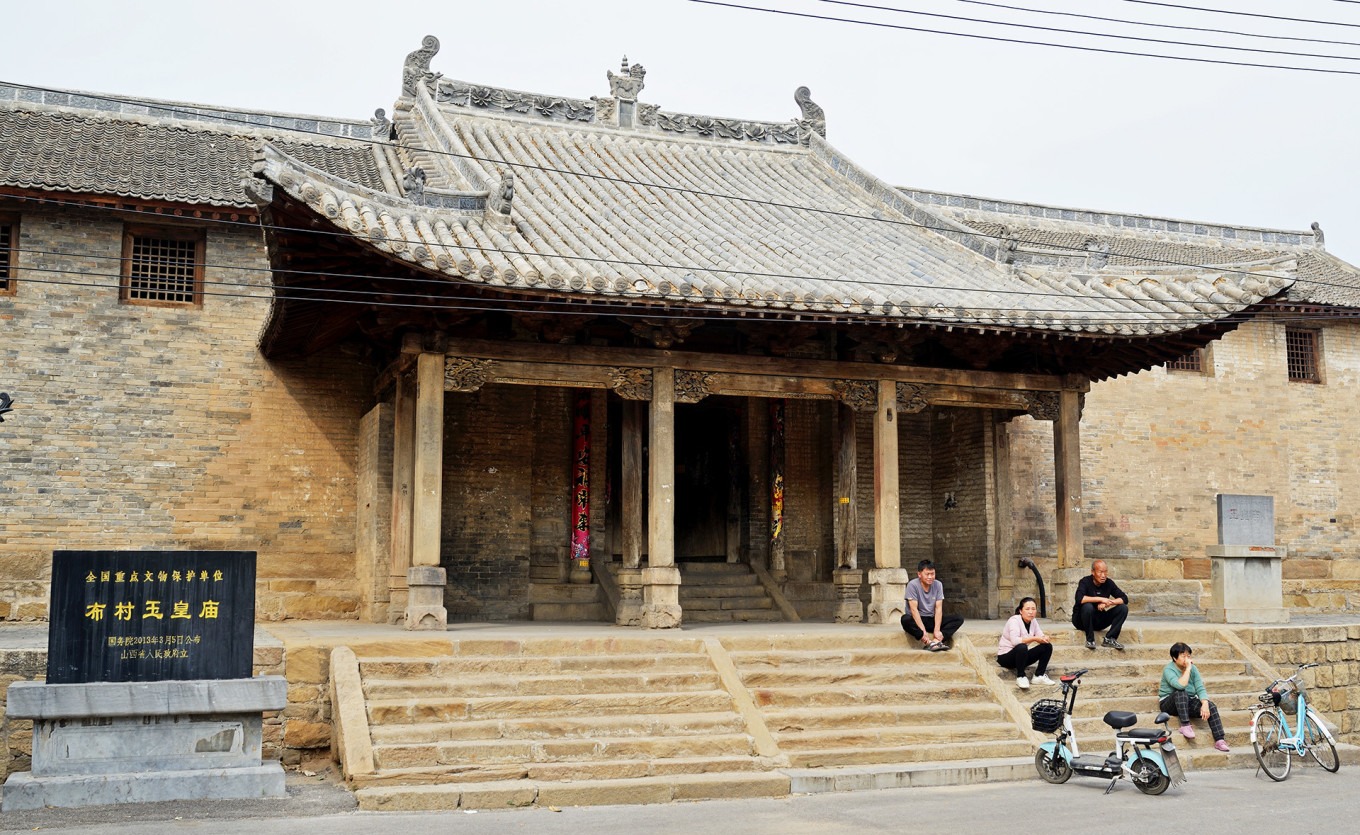
after prioritizing Chongqing Temple, the next suggested stop is Bucun Yuhuang Temple (布村玉皇庙), located in Bucun, Cilin Town, Zhangzi County. It’s less than 10 kilometers from Chongqing Temple, just a 10-minute drive away. This temple is one of the few surviving structures that may date back to the Five Dynasties and Ten Kingdoms period. Currently, only five buildings in China are confirmed from that era, with four more under debate—and the main hall of Bucun Yuhuang Temple is one of those disputed candidates.
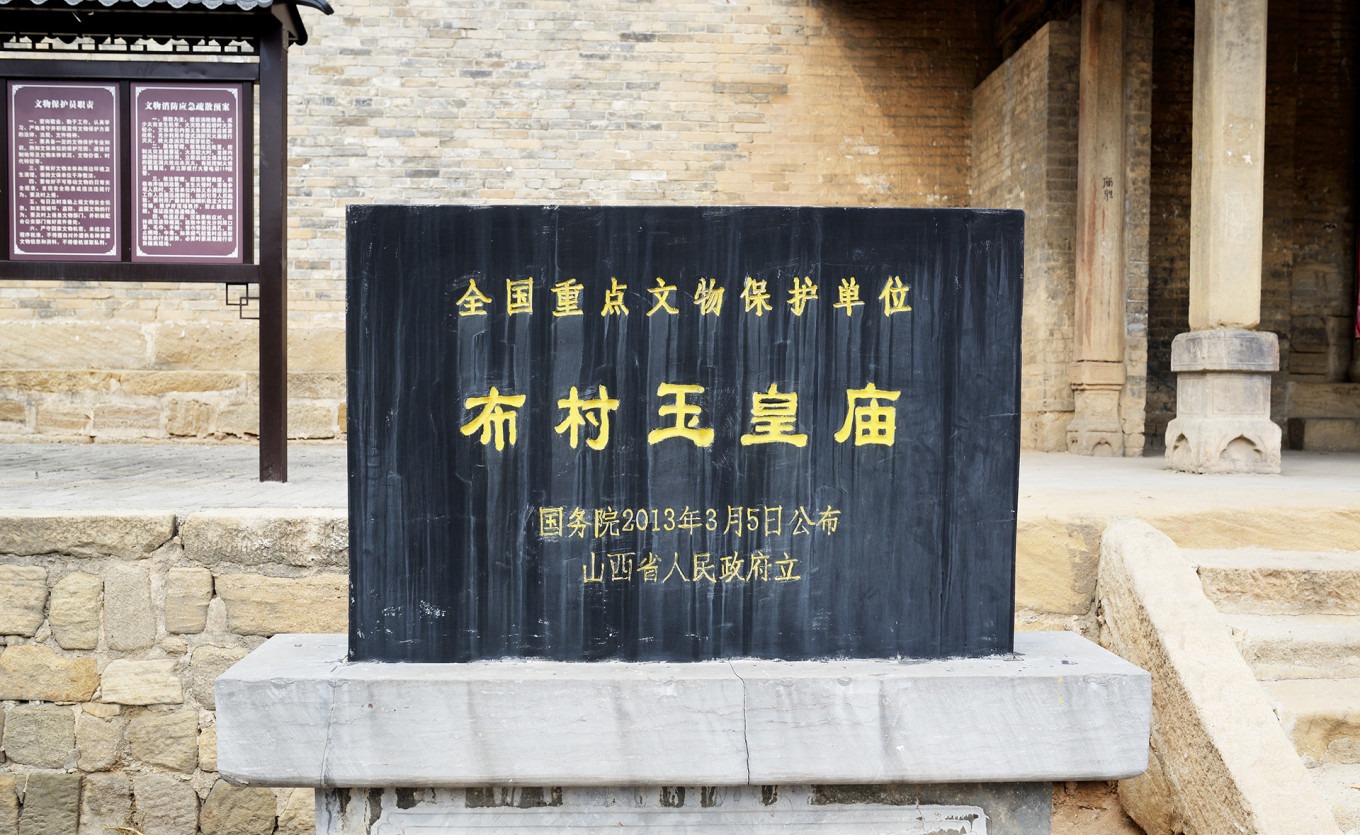
The temple’s exact founding date is unknown. It consists of two courtyards along the central axis: a gatehouse, the ruins of the front hall, a worship hall, the main hall (中殿), and the rear hall. After 1949, the temple was used as a school and grain depot, then abandoned for many years. It wasn’t until the early 2000s that the main hall was recognized as an early wooden structure. In 2013, it was elevated to a National Key Cultural Relic Protection Unit and underwent comprehensive restoration.
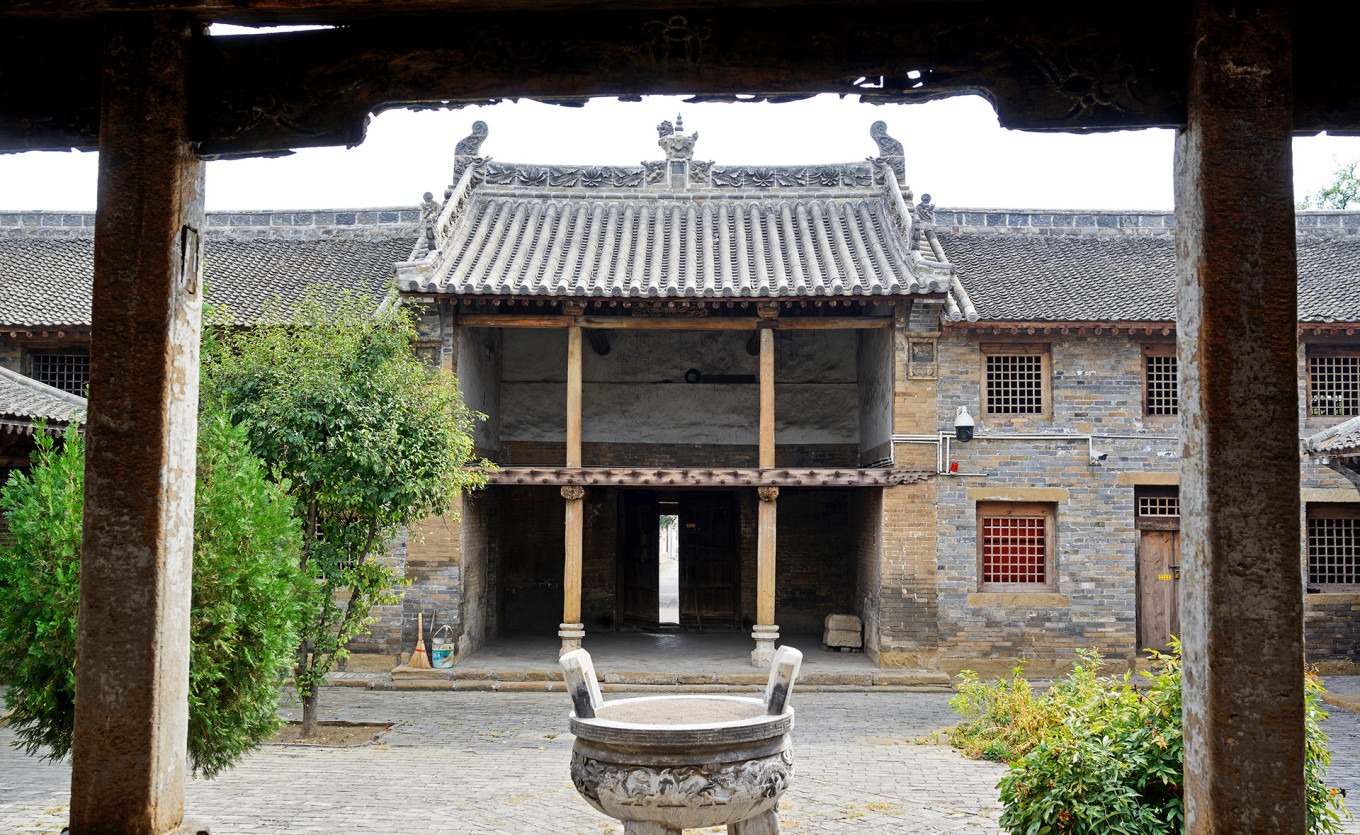
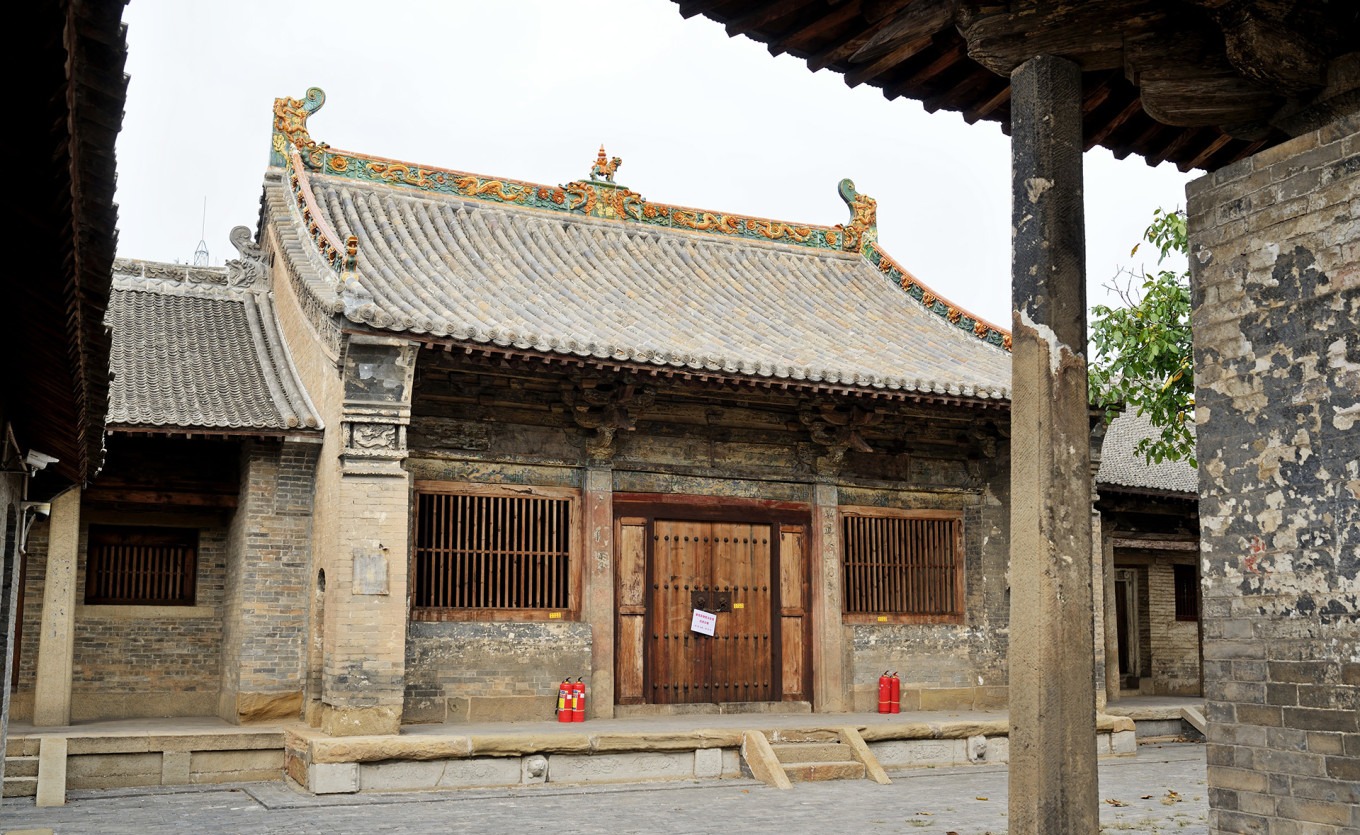
The gatehouse features a covered porch (抱厦) that serves as the entrance, while behind it lies an inverted stage (倒座戏台) facing the rear. To ensure good acoustics for performances, the southern wall of the west wing is thick and tall, with small windows. The porch design cleverly balances sound quality and decoration, giving the gatehouse a solemn and majestic appearance.
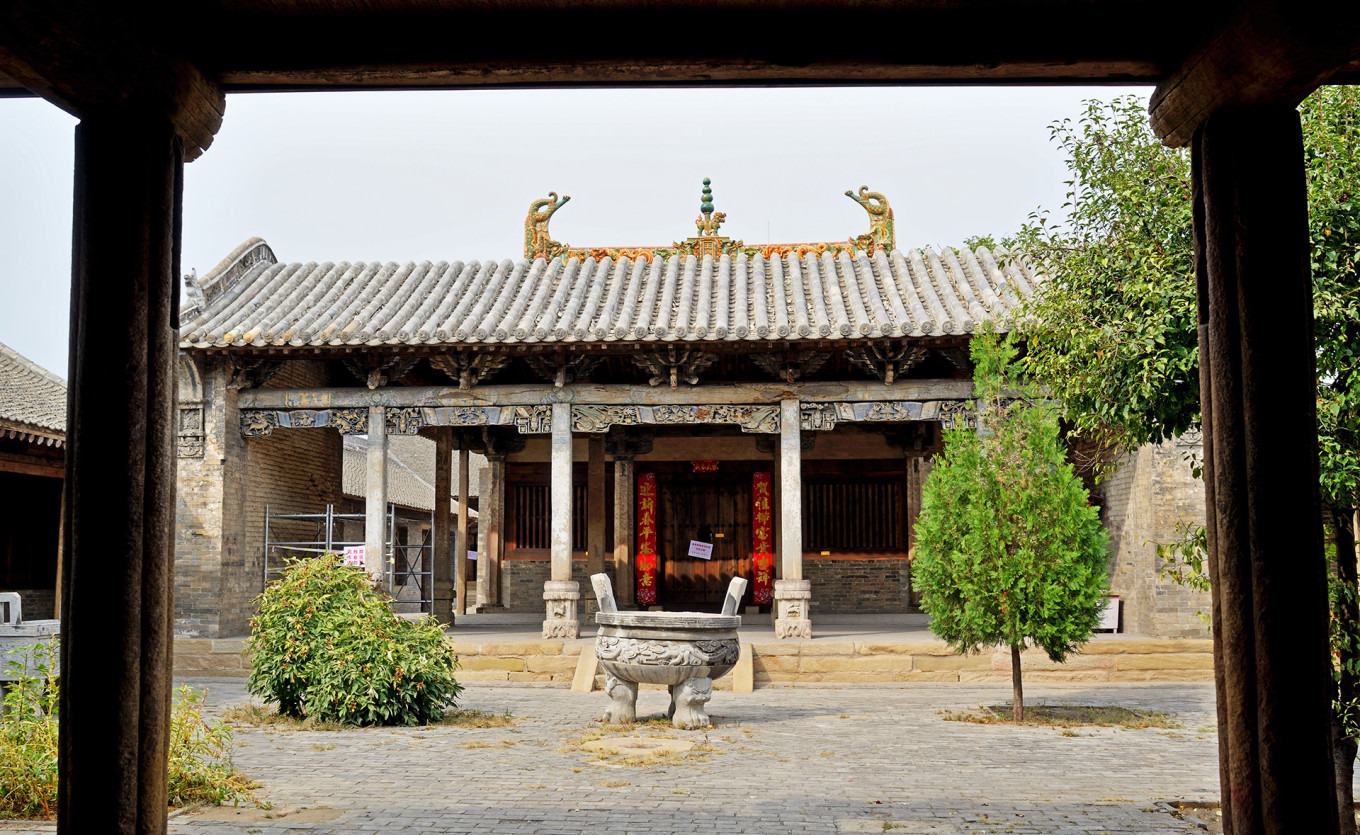
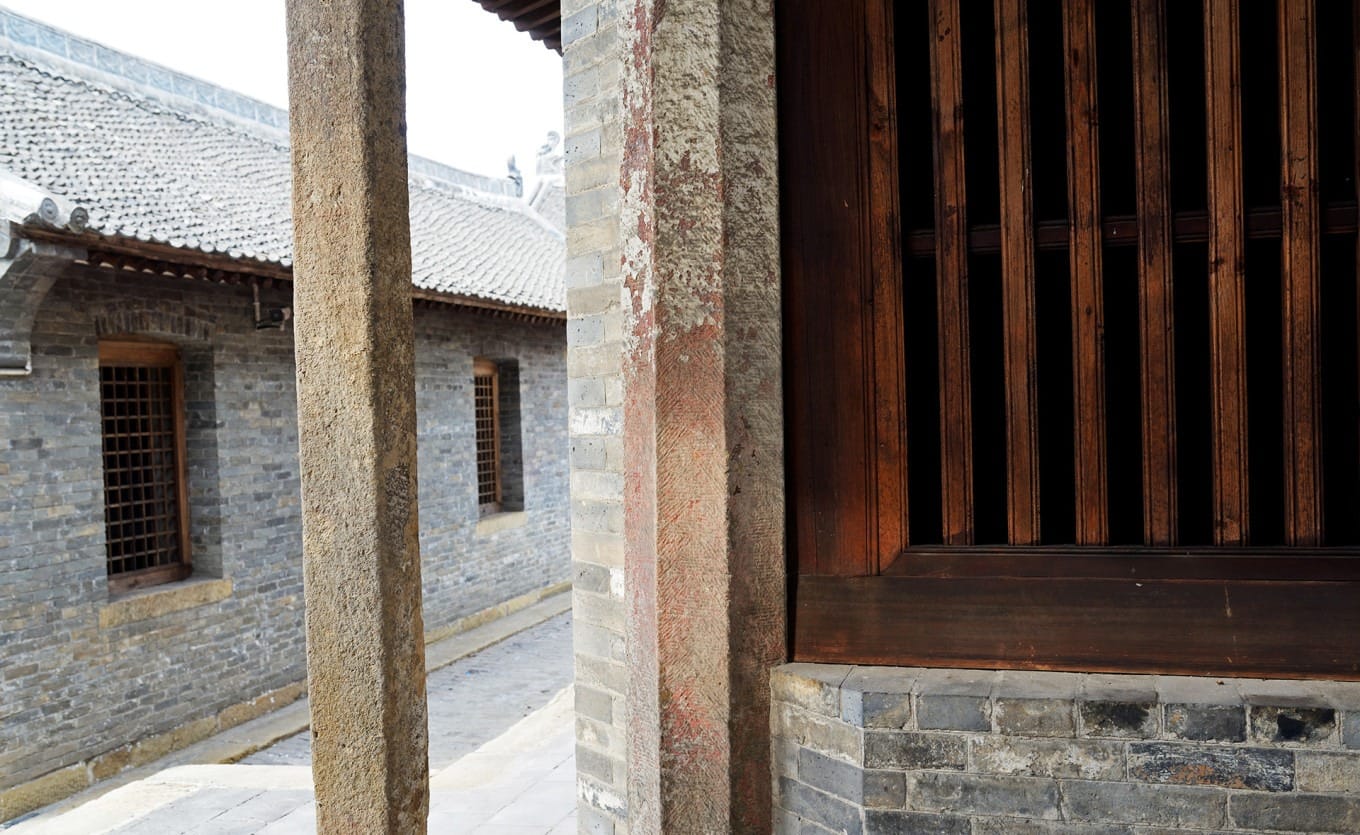
Enter the courtyard and pass through the worship hall (献殿). The main hall suddenly appears before you, but because it’s so close to the worship hall, you can’t capture a full frontal view. Walk around to the back, and you’ll notice strong Tang dynasty characteristics—especially the octagonal eave columns, a hallmark of Tang architecture.
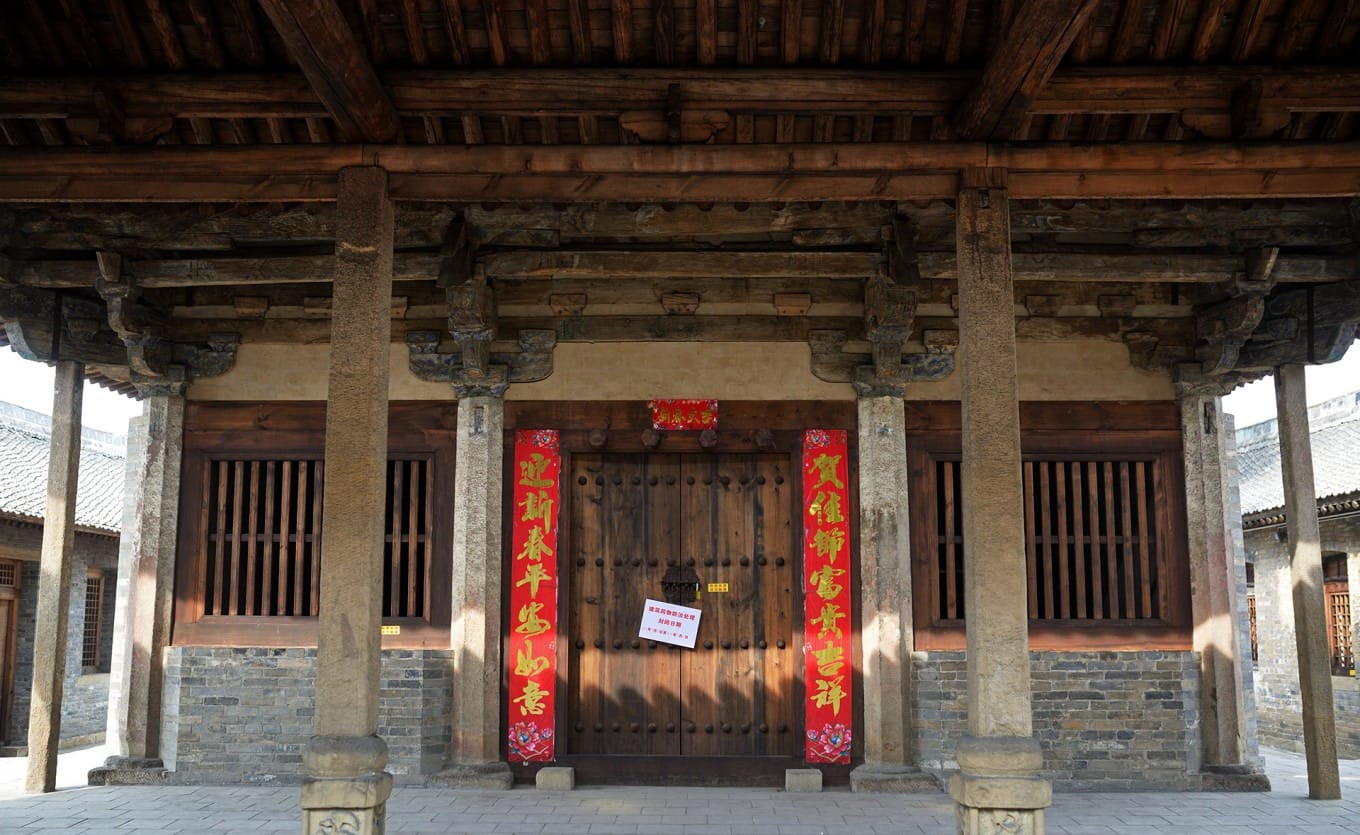
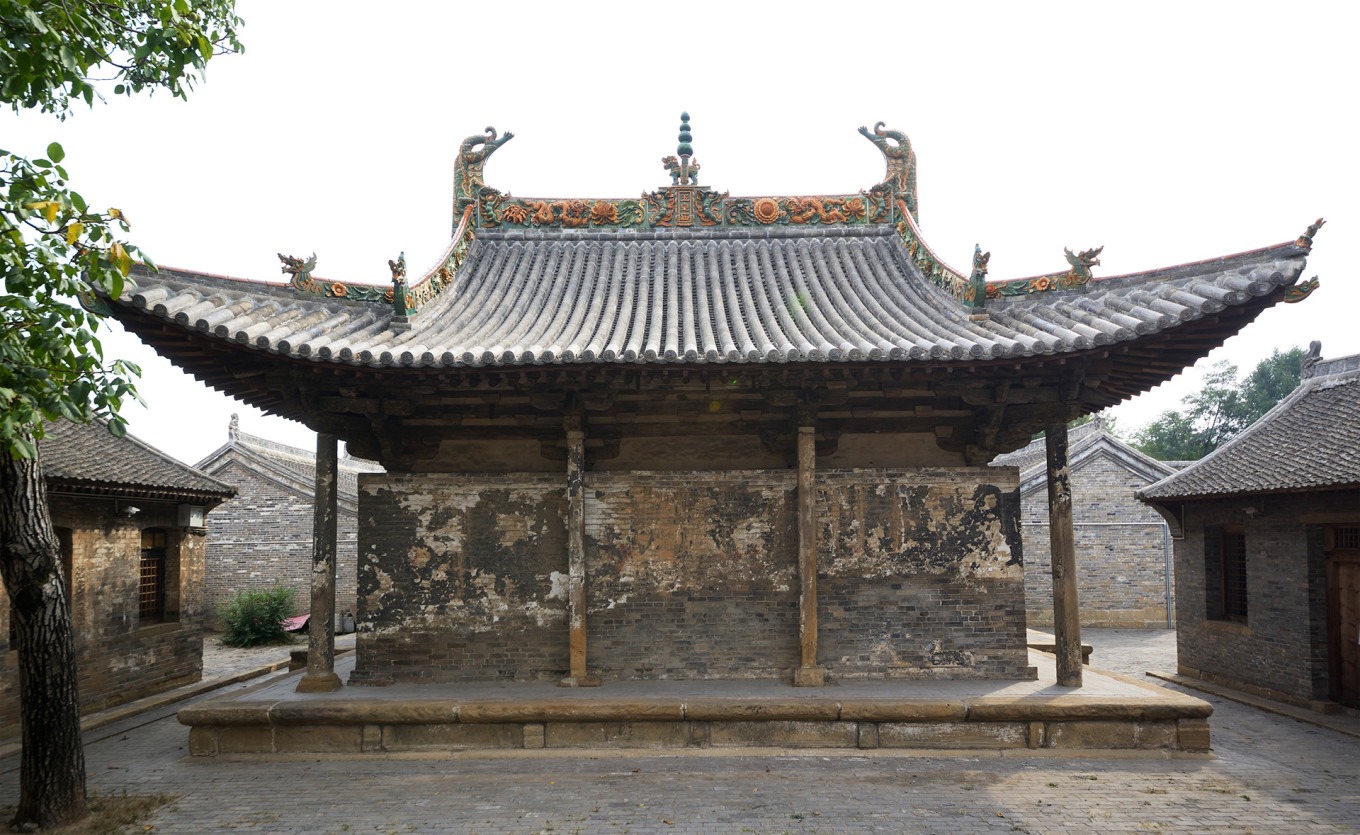
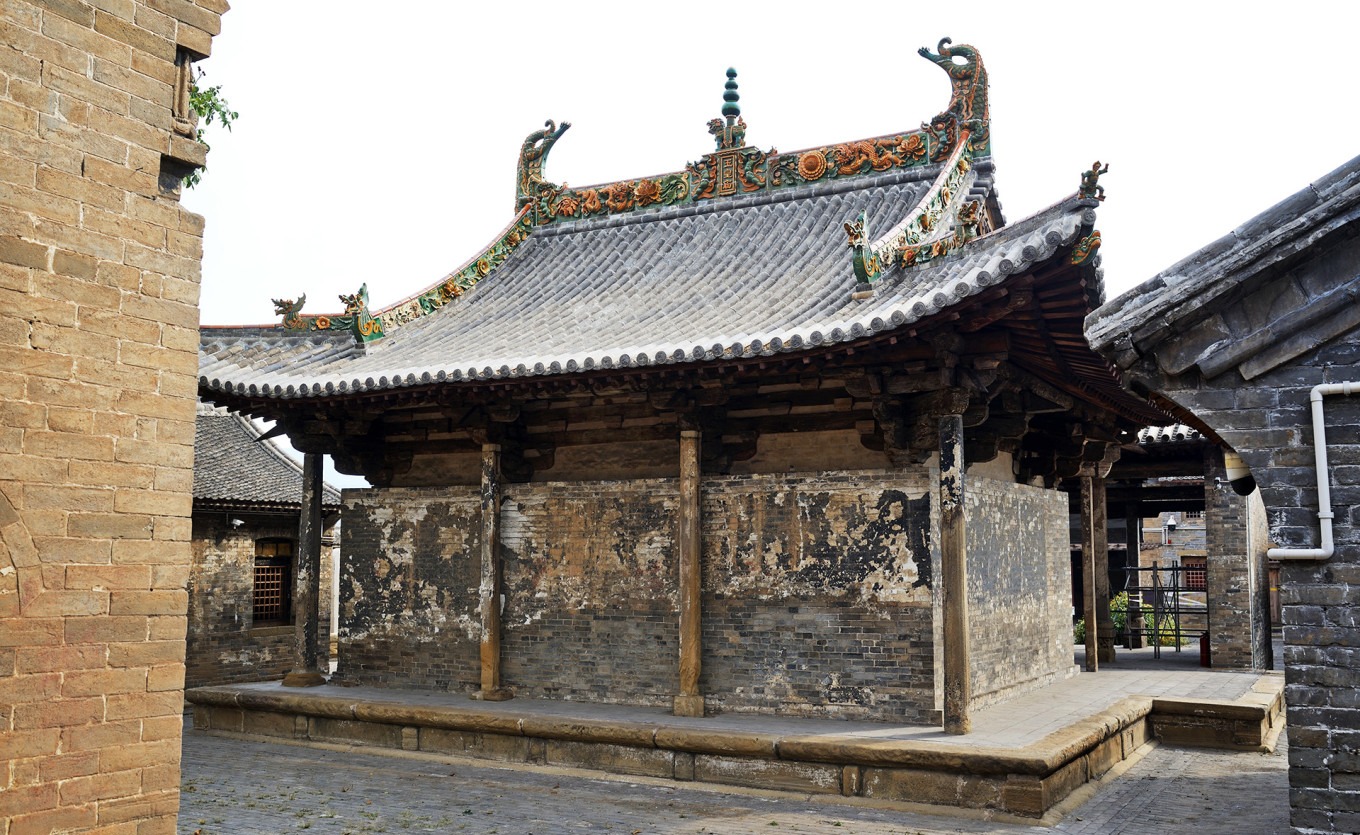
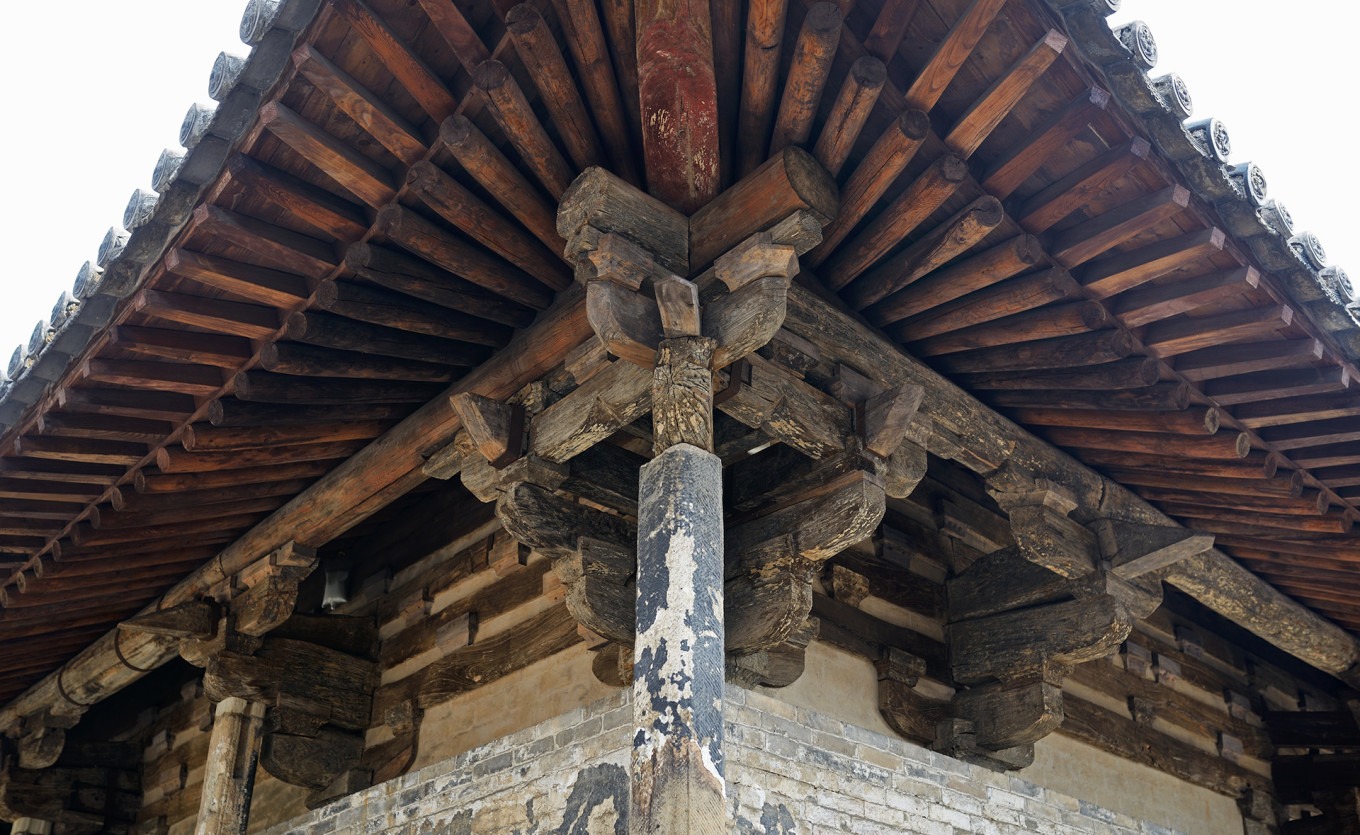
When you step inside, be prepared for a strong chemical smell—the temple had just been fumigated for pests in mid-September. Hold your breath and look up: the beam frame appears ancient but chaotic, due to numerous renovations over the centuries. Different eras of components are mixed together, and without any inscriptions about the original construction, dating the hall remains controversial.
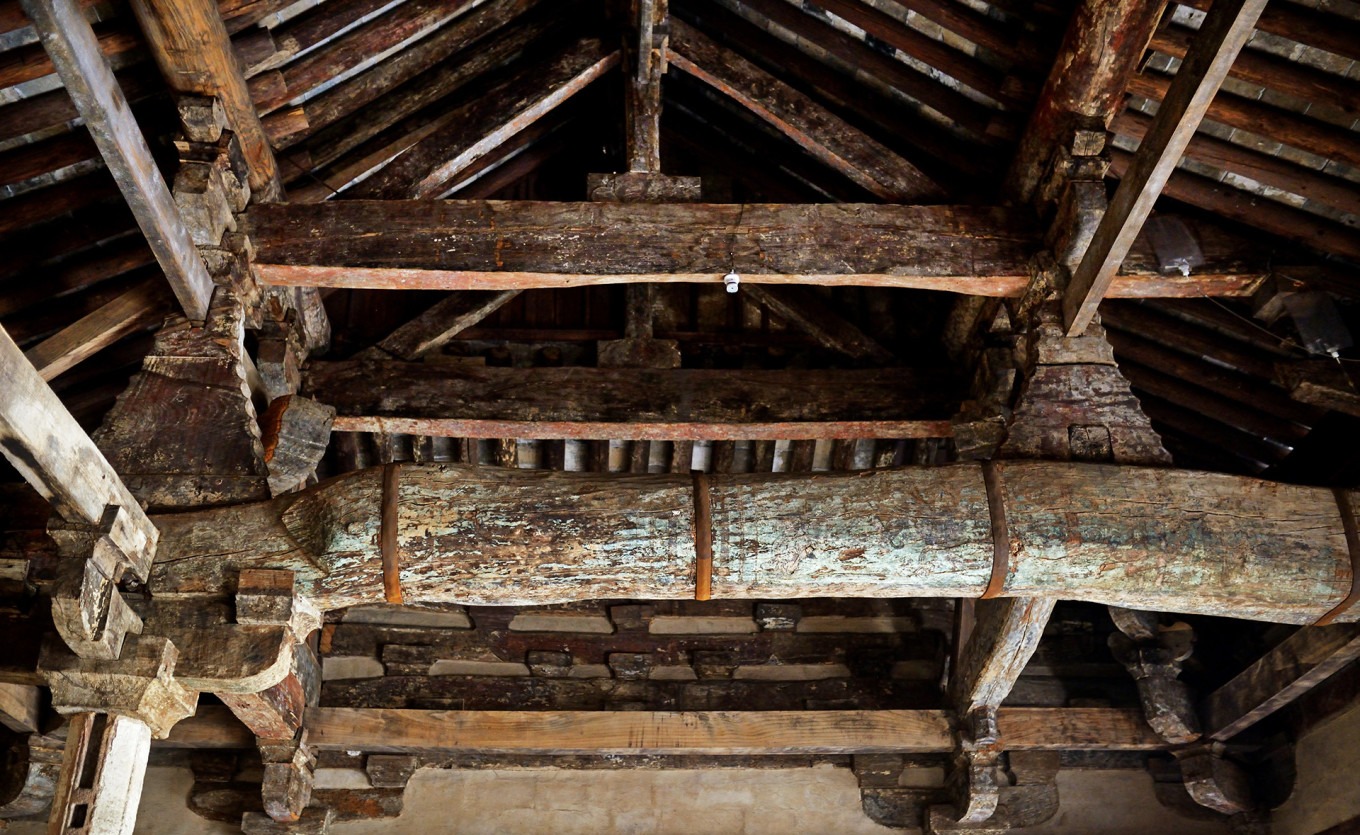
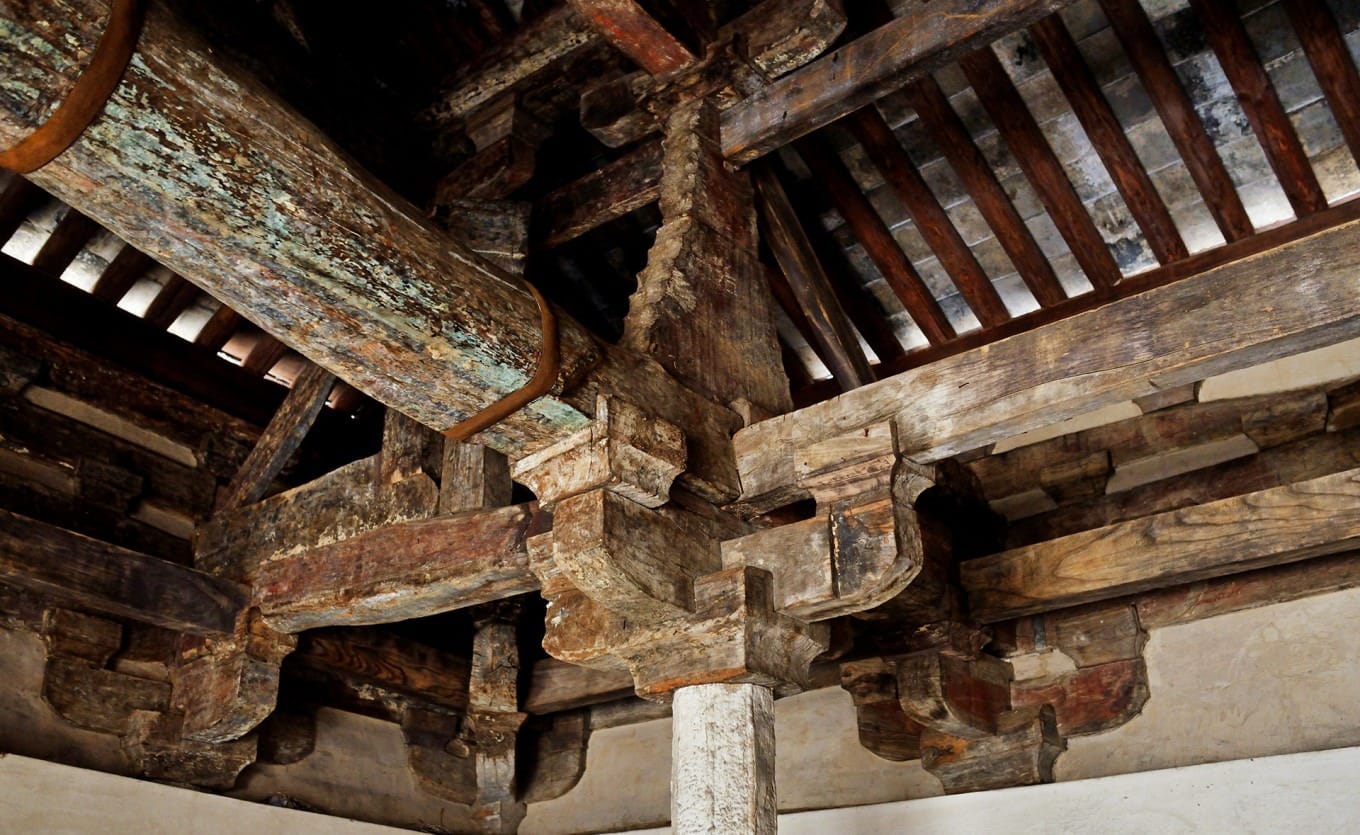
In national surveys of Five Dynasties architecture, the main hall of Bucun Yuhuang Temple is usually counted. However, some scholars argue it could be Tang or Song based on its features. Regardless, it’s undoubtedly a very ancient structure, ranking among the top 20 surviving wooden buildings in China.
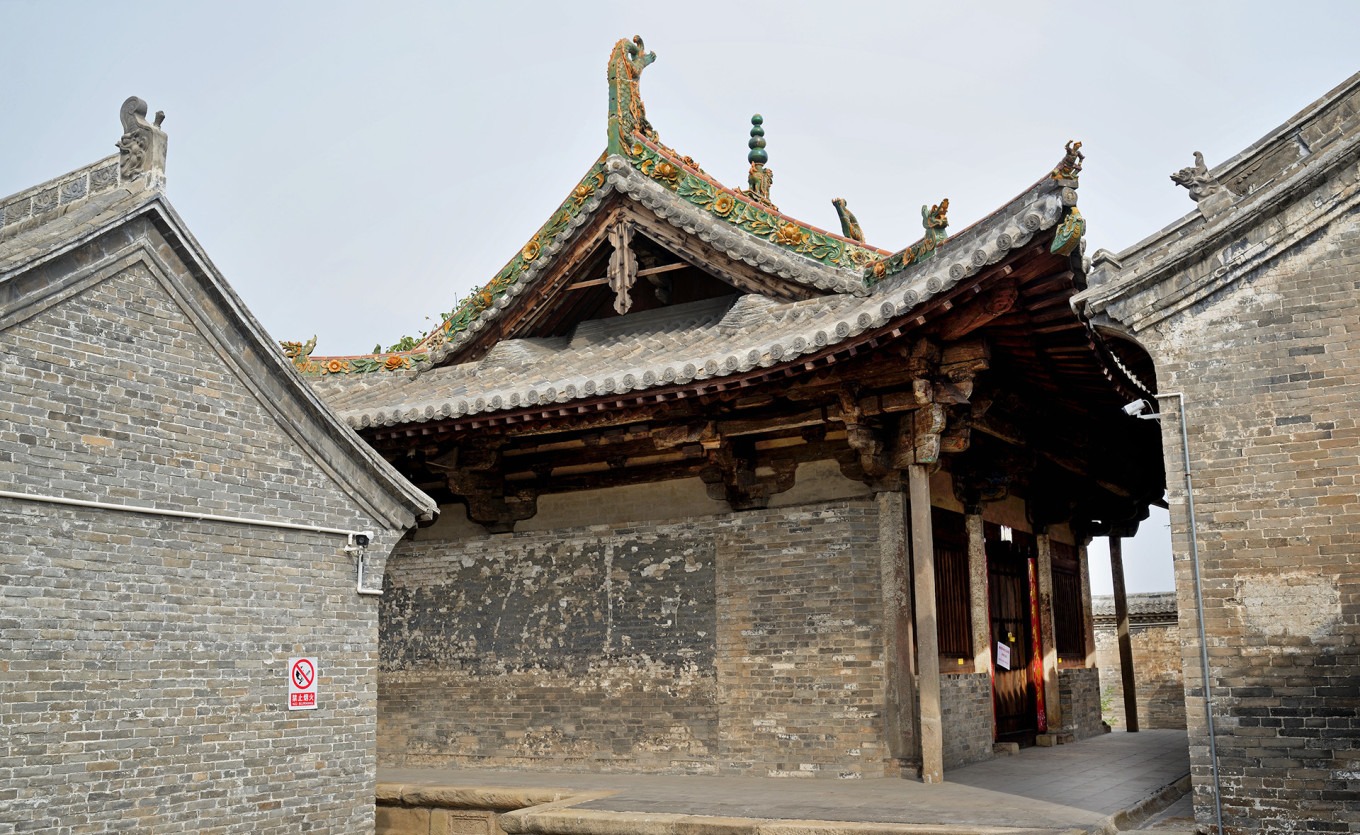
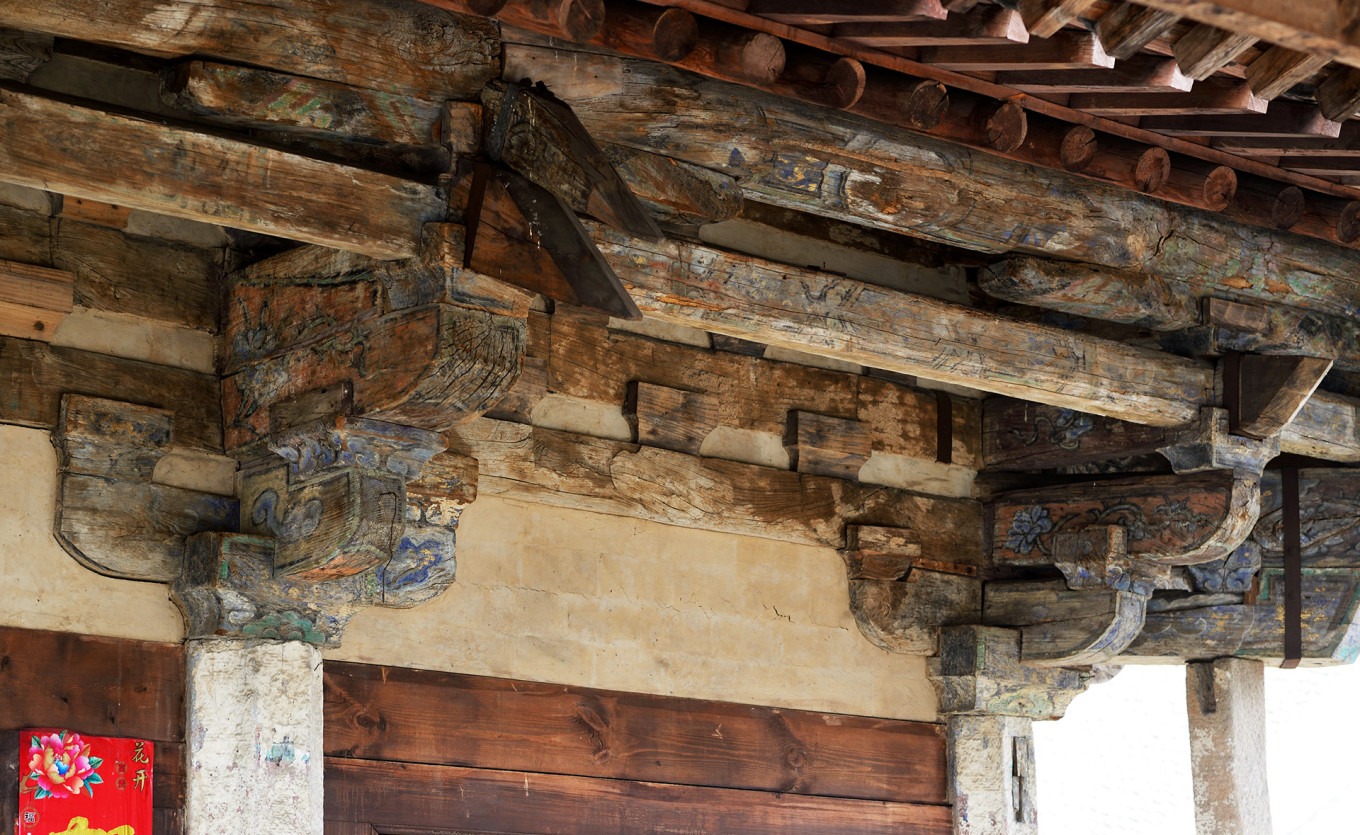
The rear hall looks like a Qing dynasty building at first glance, but its single bracket with one cantilever (单杪单昂斗拱) reveals it was actually built in the Jin dynasty. Apart from the main hall and rear hall, all other structures were built in the Ming and Qing periods.
- Address: Bucun, Cilin Town, Zhangzi County, Changzhi City (长治市长子县慈林镇布村)
- Admission: Free
Xiaozhang Biyun Temple
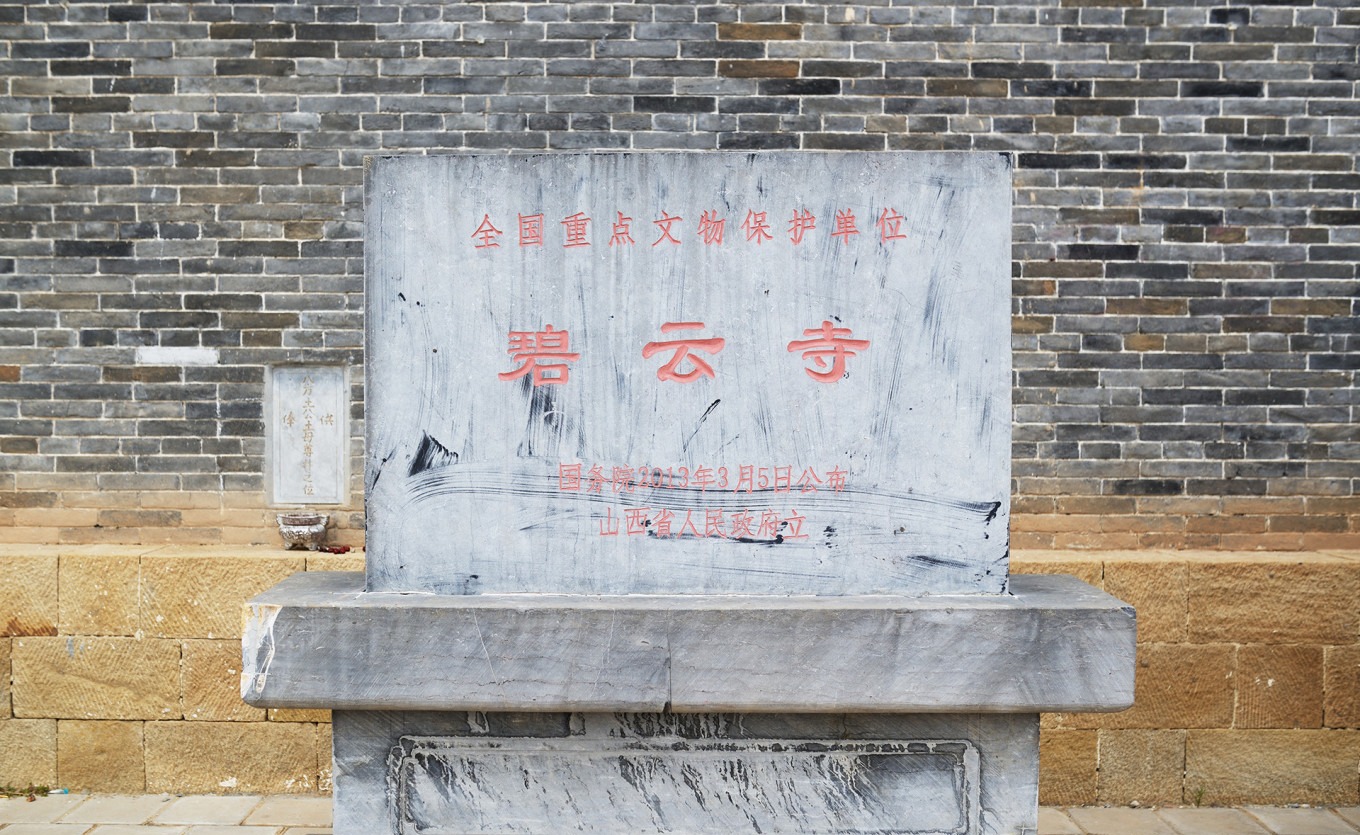
Just outside the county seat of Zhangzi, about 5 kilometers to the northwest in Danzhu Town’s Xiaozhang Village, you’ll find Xiaozhang Biyun Temple (小张碧云寺), another candidate among the four surviving Five Dynasties timber structures. Its founding date is unrecorded in local gazetteers, and no stele marks its original construction. The site may have first been a Daoist temple before being converted into a Three Teachings Temple (三教寺) during the Ming and Qing dynasties, honoring Confucianism, Buddhism, and Taoism. Legend has it that Qin Qiong, a famous general of the late Sui and early Tang dynasties, once tied his horse here—but whether this is fact or folklore remains unknown.
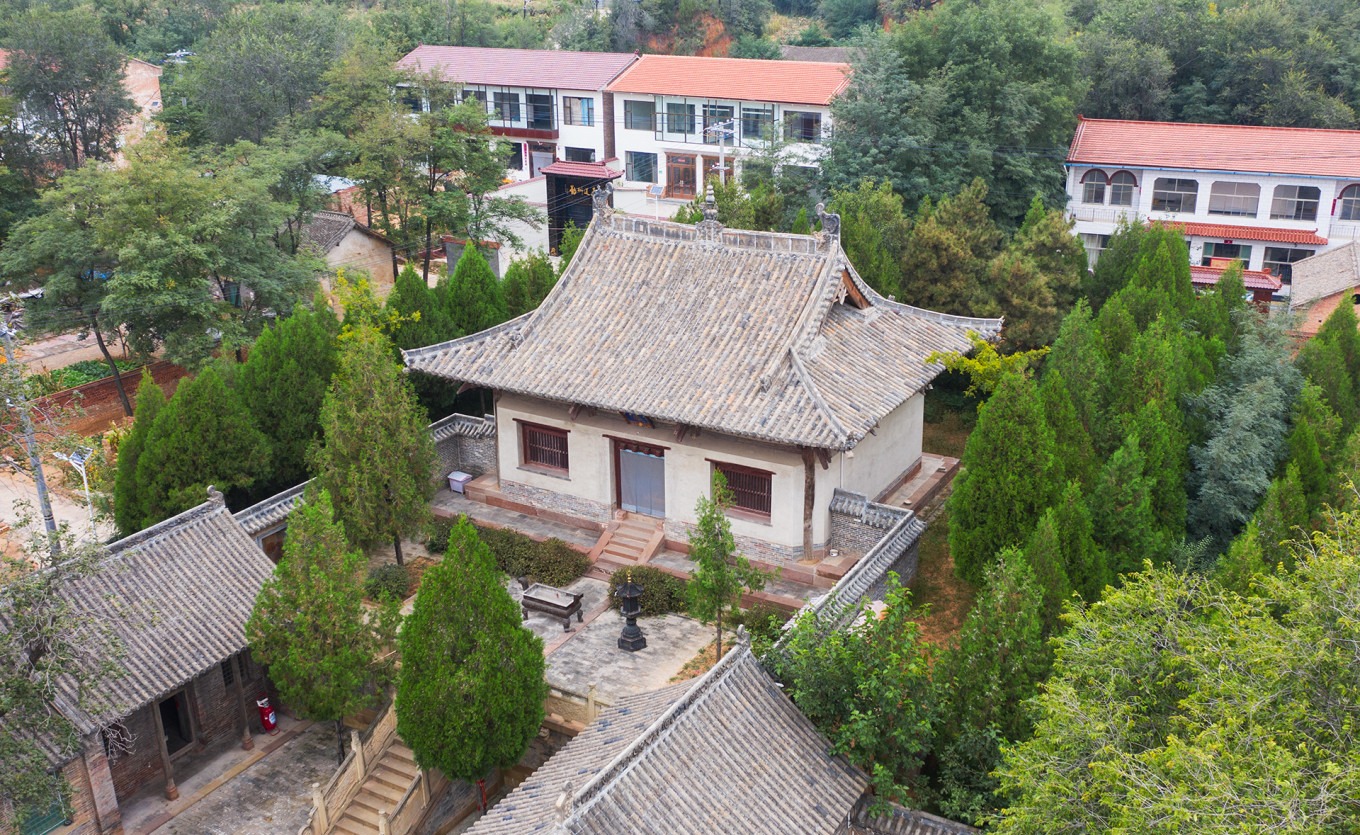
Like Bu Village Yuhuang Temple, Xiaozhang Biyun Temple was used as a school and grain warehouse after 1949—a common fate for many temple buildings in southeastern Shanxi, which often survived precisely because they were repurposed. In the early 2000s, a Buddhist nun carried out simple repairs on the collapsing halls. It wasn’t until 2006, during a heritage survey, that cultural authorities recognized the main hall as an early timber structure, elevating it directly from a county-level protected site to the seventh batch of national key cultural relics.
Despite being a rural temple, Xiaozhang Biyun Temple is laid out in an orderly fashion, rising step by step along a terraced slope from south to north. The tiered arrangement gives it a striking, layered presence, earning it the local nickname ‘Xiaozhang Grand Temple’ (小张大庙).
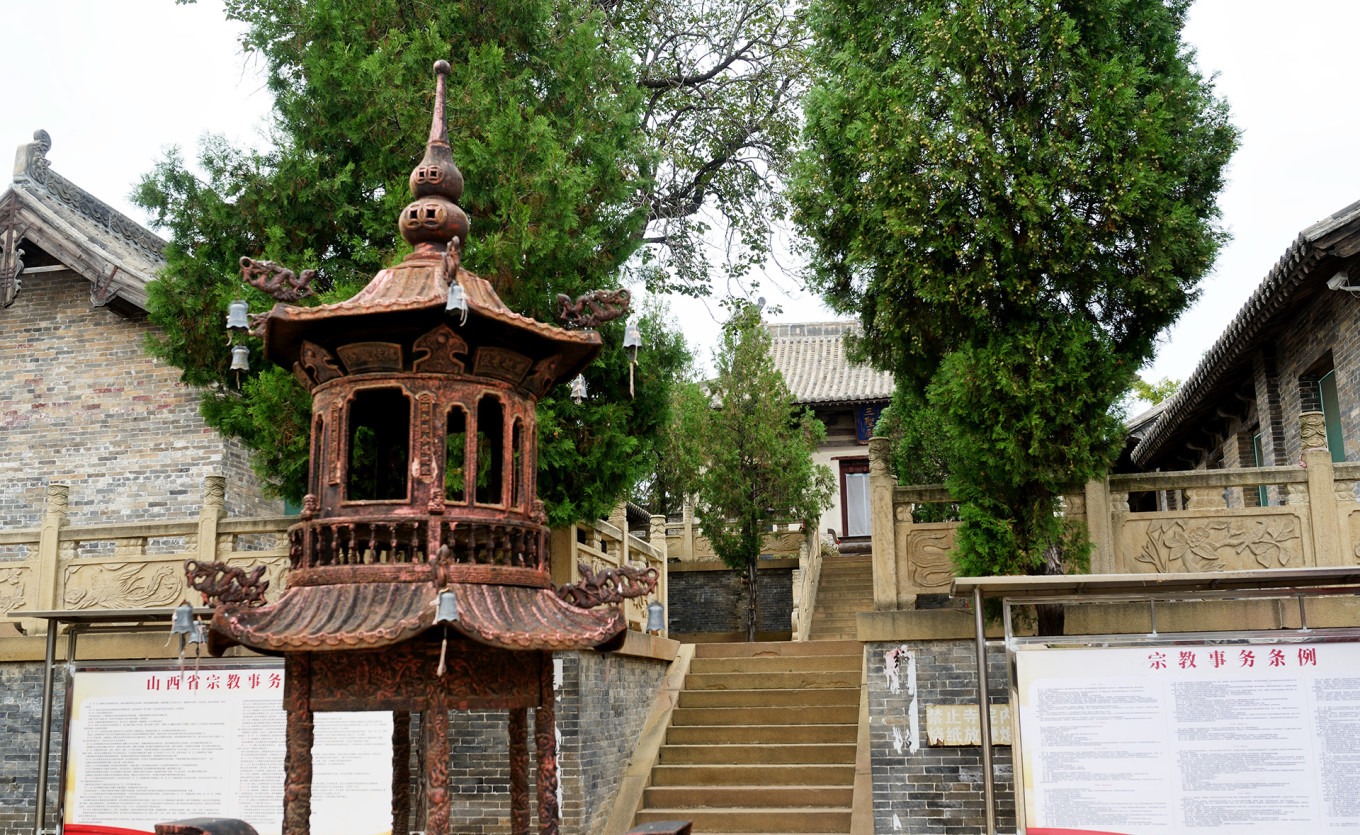
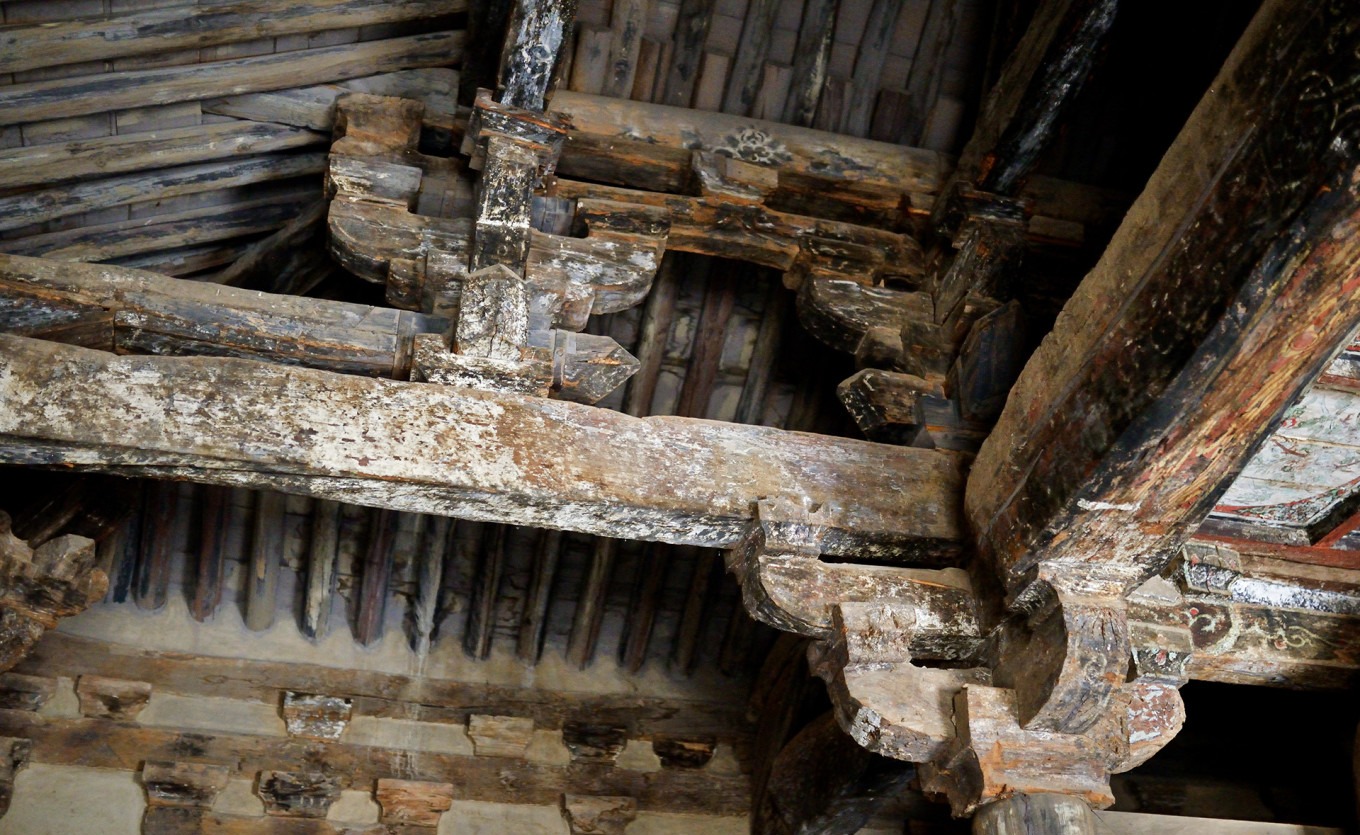
The main hall, also called the Three Teachings Hall (三教殿), sits on a platform over two meters high. Its architecture is strikingly archaic. The eave columns and bracket sets (dougong) exhibit early-period techniques and original components, including rare cross-shaped bracket arms that support the ceiling frame. However, the stylistic mix suggests the hall was built before the Song dynasty’s ‘Yingzao Fashi’ (Building Standards) was codified, during a time when timber modulus was not yet unified.
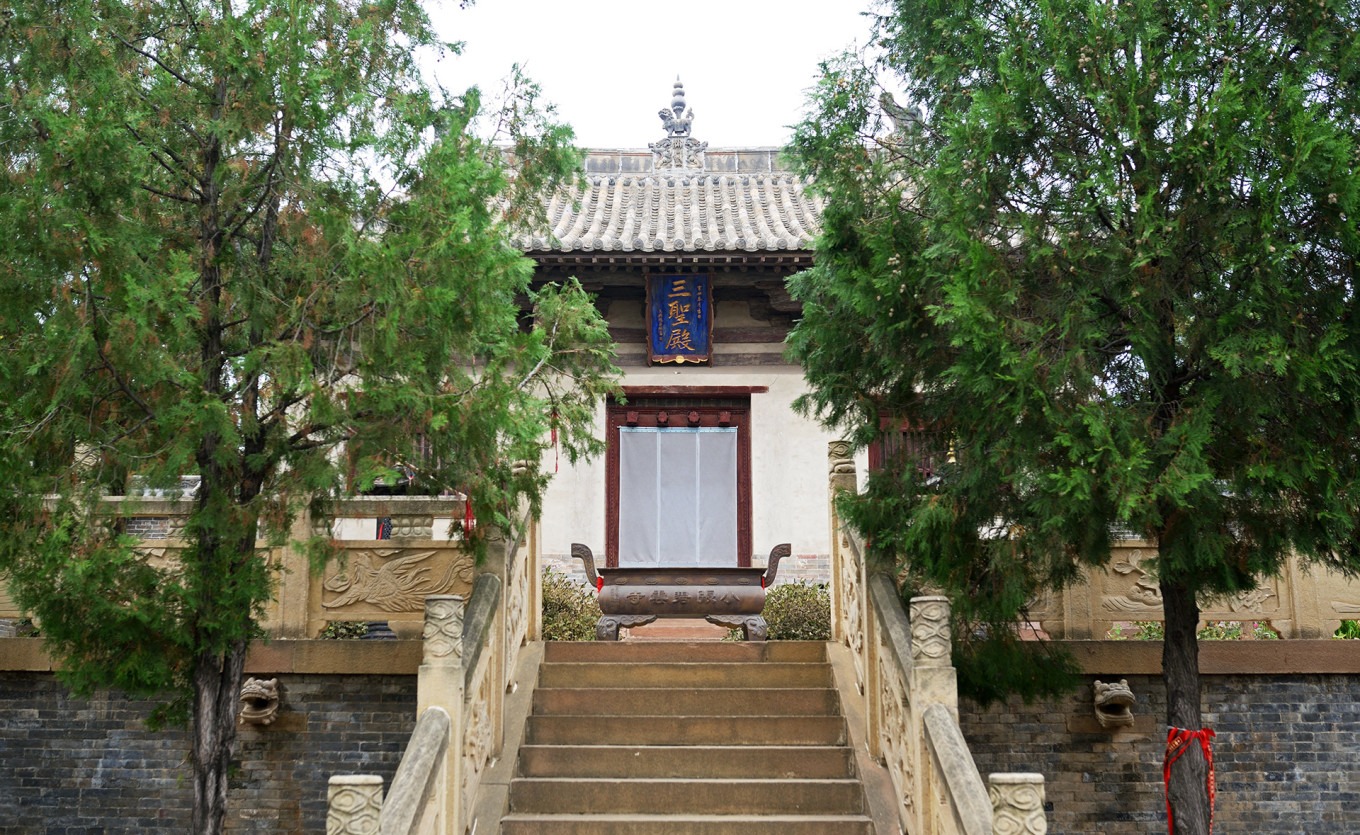
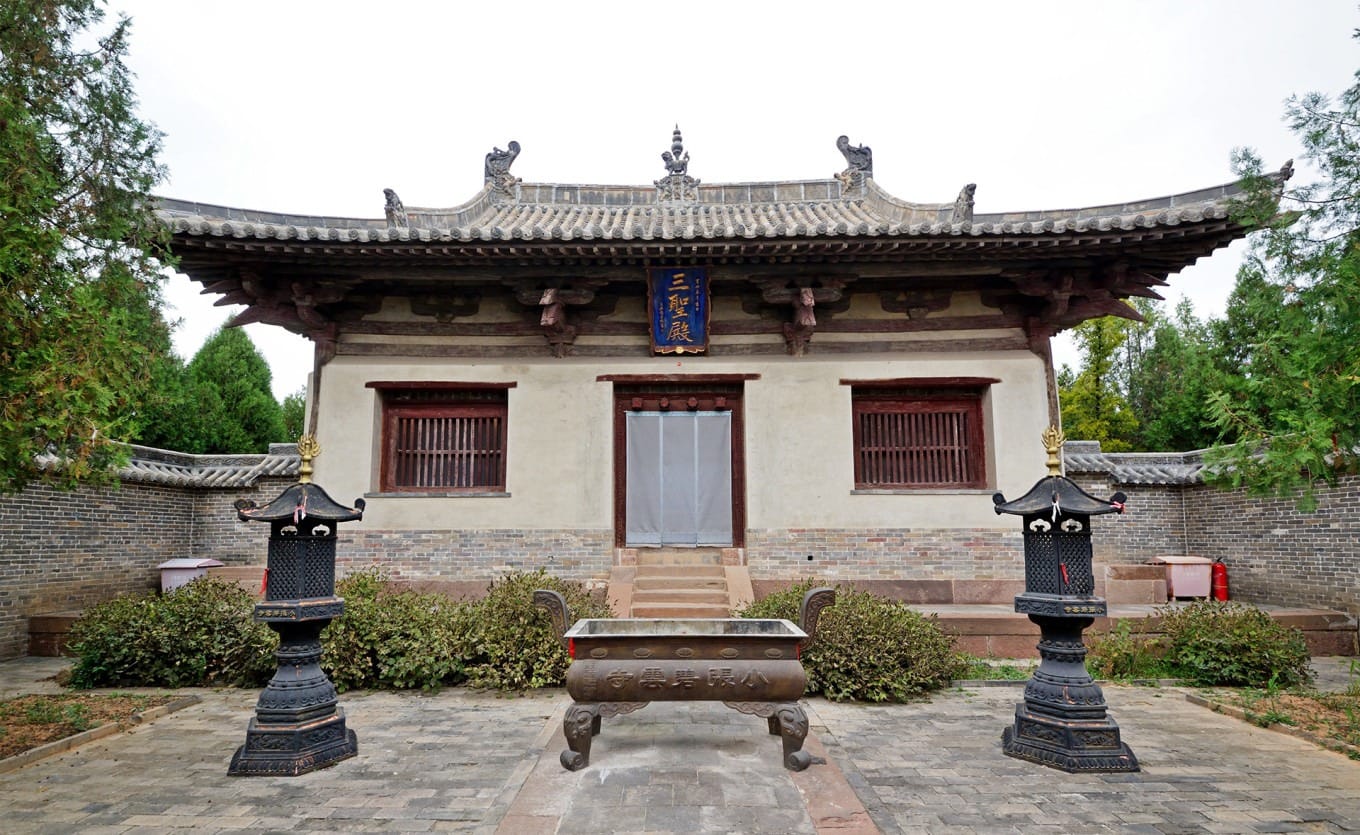
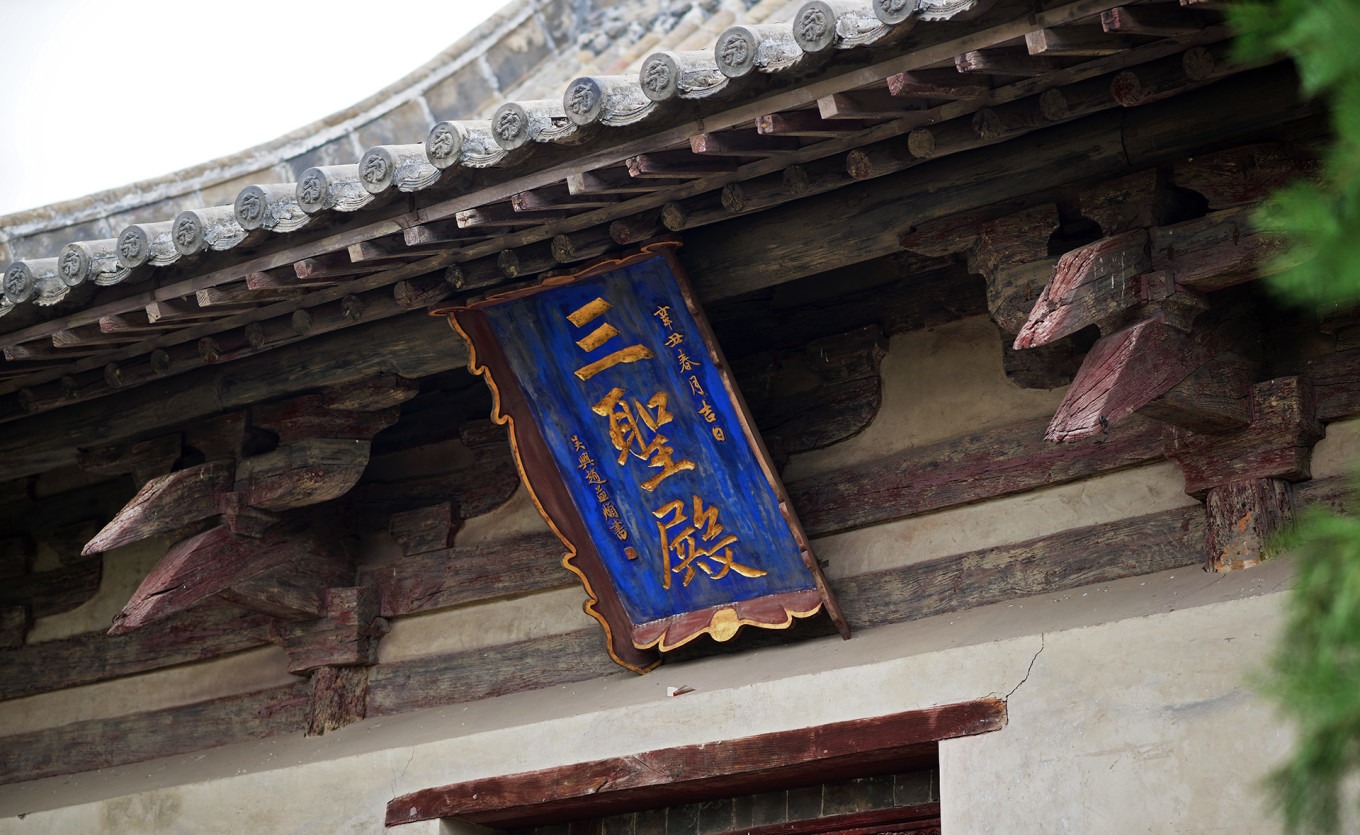
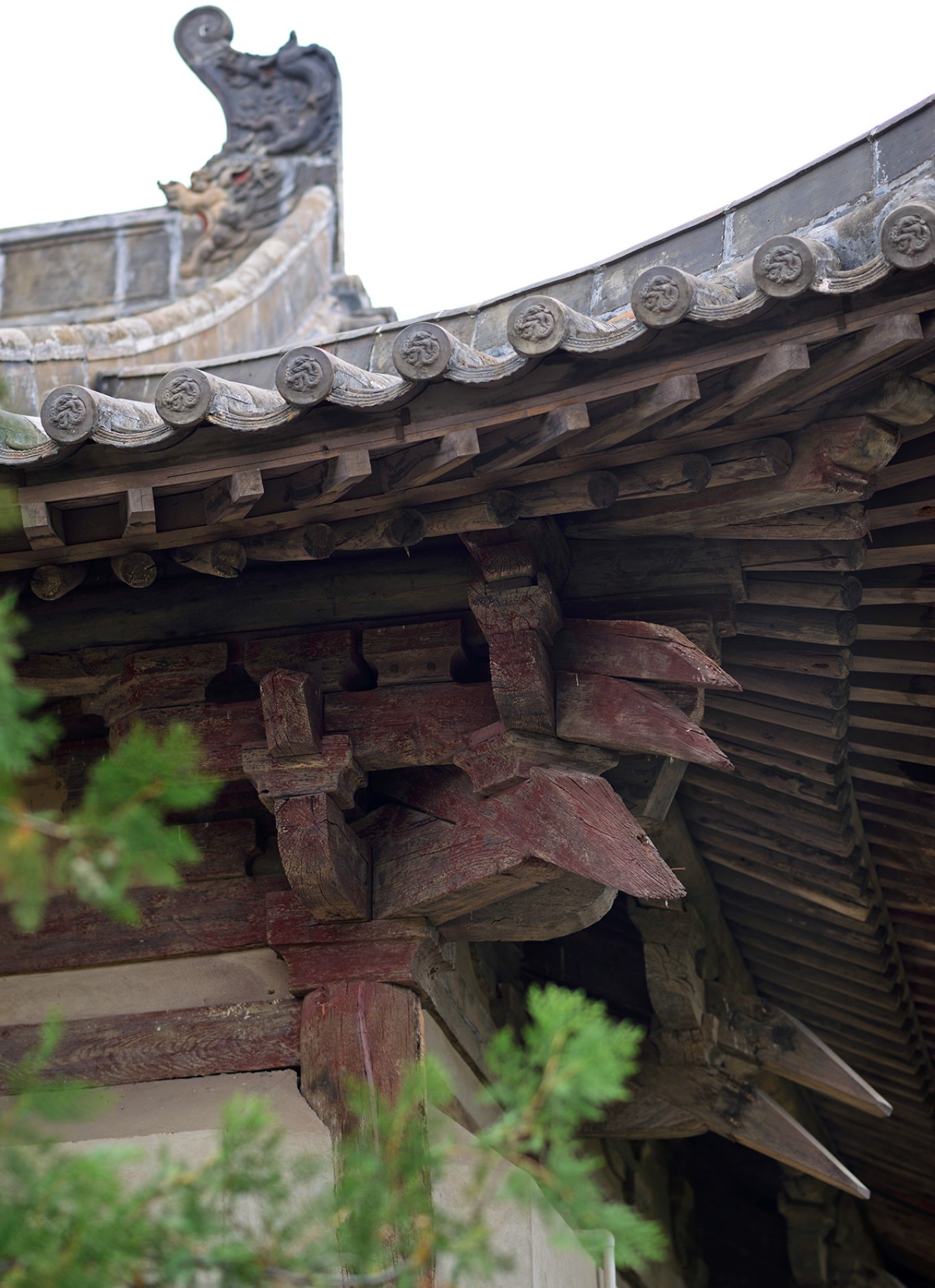
Step inside and look up: the beams, rafters, and columns reveal a mix of features. Some bear Tang and Five Dynasties characteristics, others align with the ‘Yingzao Fashi’, and still others show post-Song modifications, likely from later repairs. In fact, scholars cannot definitively date the hall. Although local authorities listed it as a Song-dynasty structure for national protection, the prevailing view among experts places it among the Five Dynasties buildings.
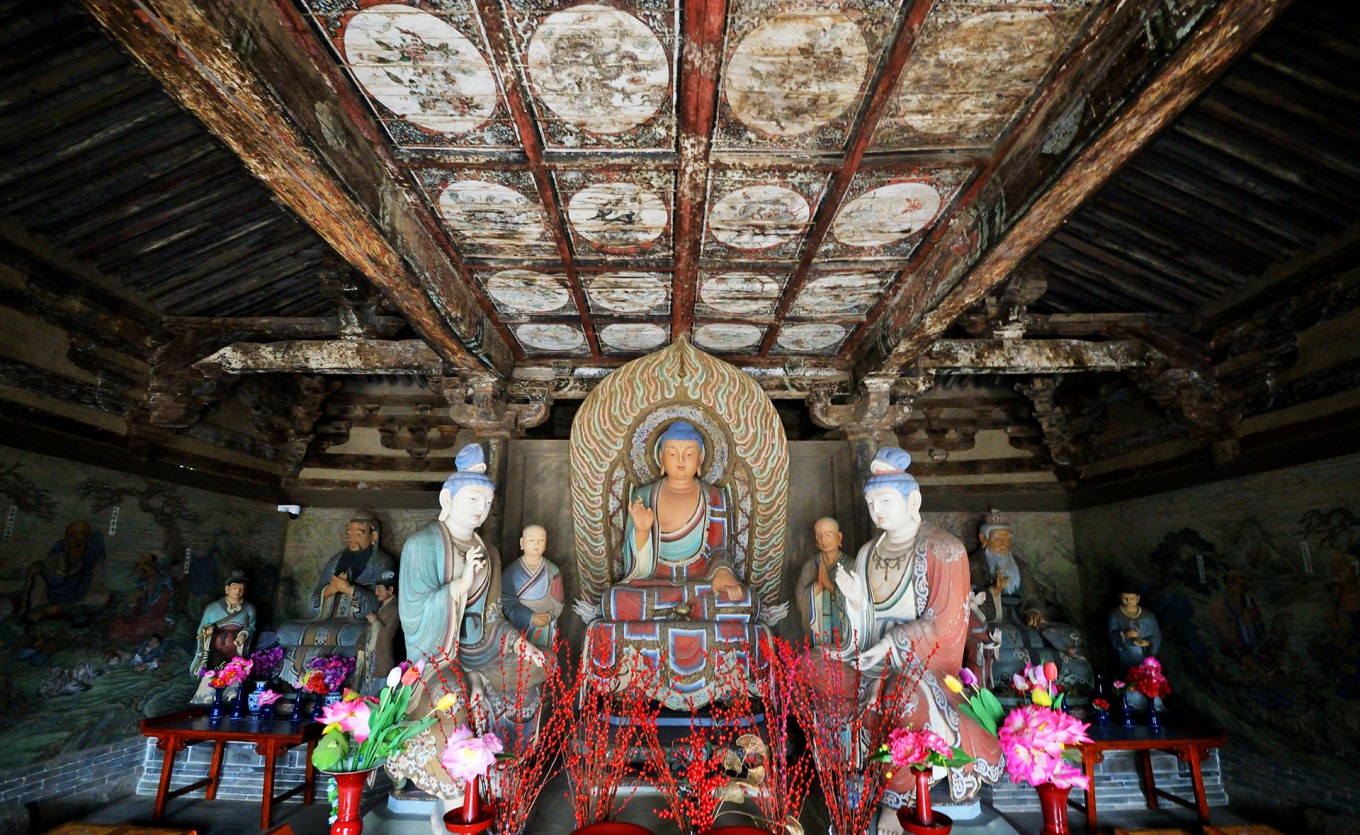
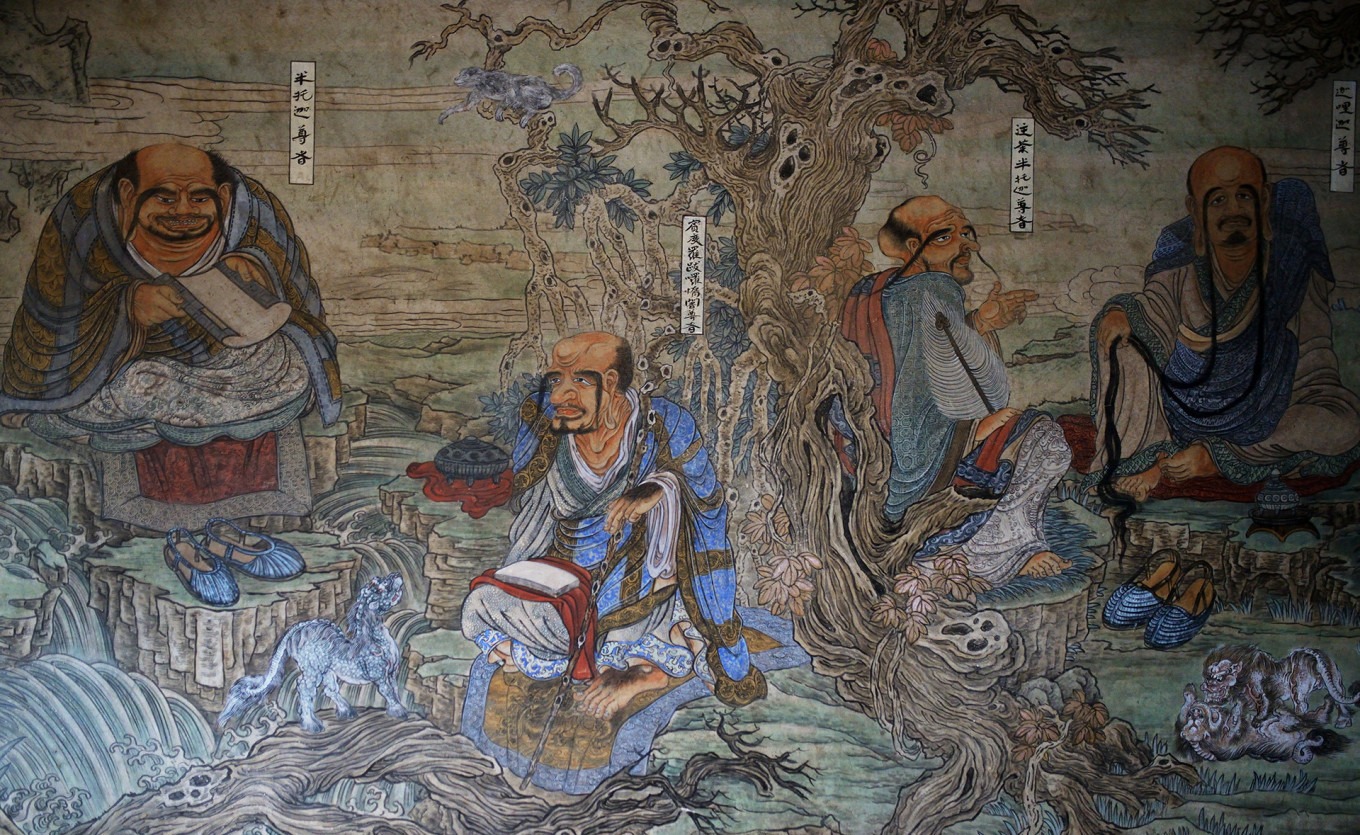
Incidentally, the painted sculptures in the central and side bays are modern restorations guided by the Changzhi Painted Sculpture Art Research Institute (长治彩塑艺术研究院), and they display considerable craftsmanship. The murals on the east and west walls were recently copied from the ‘Sixteen Arhats’ (十六应真像) by the Five Dynasties monk-painter Guanxiu. The sixteen arhats, together with the later additions of the Dragon-subduing and Tiger-subduing arhats, form the familiar set of eighteen arhats.
- Address: 长治市长子县丹朱镇小张村 / Xiaozhang Village, Danzhu Town, Zhangzi County, Changzhi City
- Admission: Free
Practical tip: You can prioritize one signature stop around the area, and you should adjust timing and budget based on transport and peak hours.
Qianwanhu Tangwang Temple
- Restaurant前万户汤王庙 (Qianwanhu Tangwang Temple)
- Address山西省长治市长子县丹朱镇前万户村 (Qianwanhu Village, Danzhu Town, Zhangzi County, Changzhi City, Shanxi Province)
- Recommended dishesN/A (菜名)
- Average spendFree admission
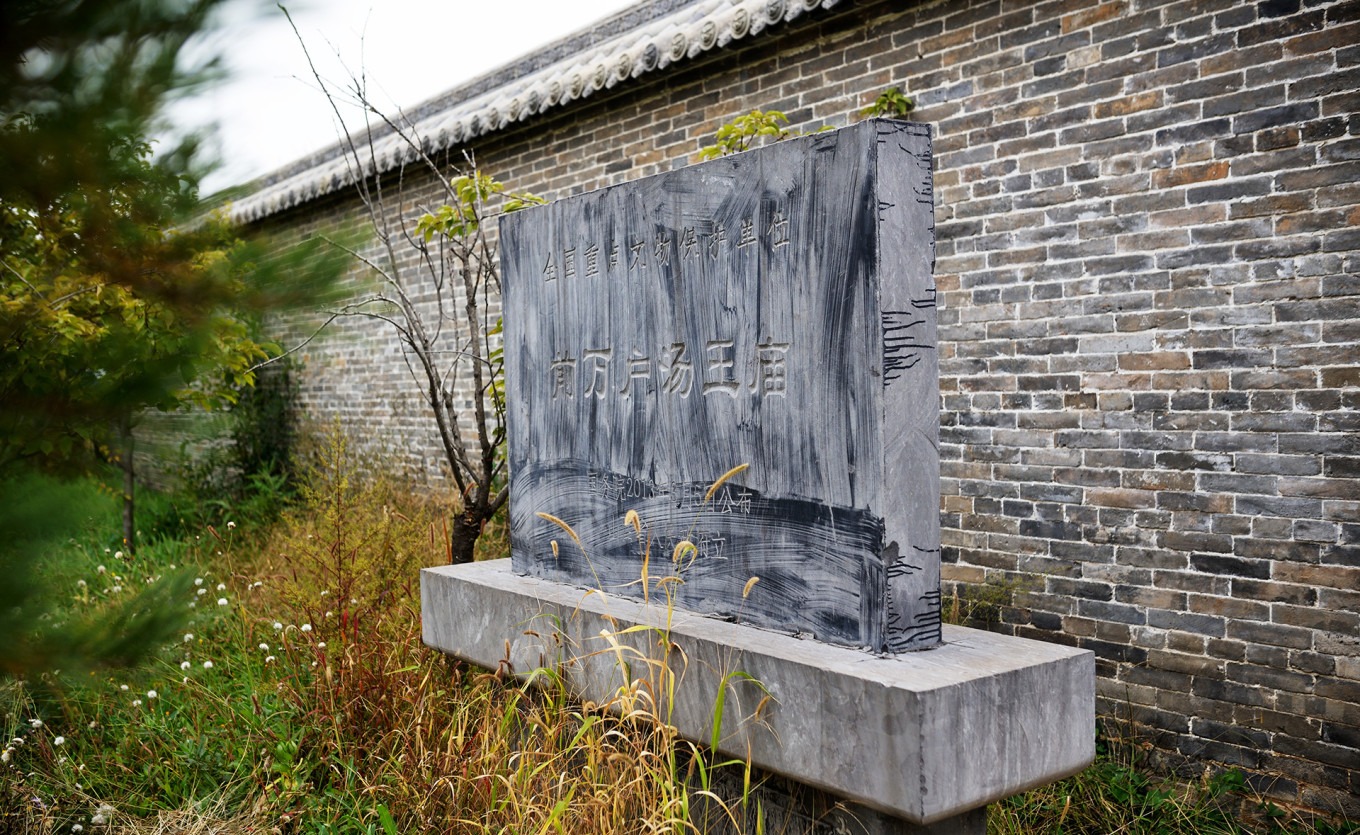
In the village of Qianwanhu (前万户村), just a ten-minute drive from Xiaozhang Biyun Temple, stands the Tangwang Temple (前万户汤王庙). This village was once a prosperous settlement — in 2007, a cache of Song and Jin dynasty coins was unearthed here, hinting at its historical wealth. The temple is dedicated to Cheng Tang, the founding emperor of the Shang dynasty, who is widely worshipped in southeastern Shanxi and surrounding areas as a rain-bringing deity. In fact, many villages in Changzhi and Jincheng have temples honoring him; in Zhangzi County alone, there are three Tangwang Temples with surviving Song, Jin, and Yuan dynasty timber structures.
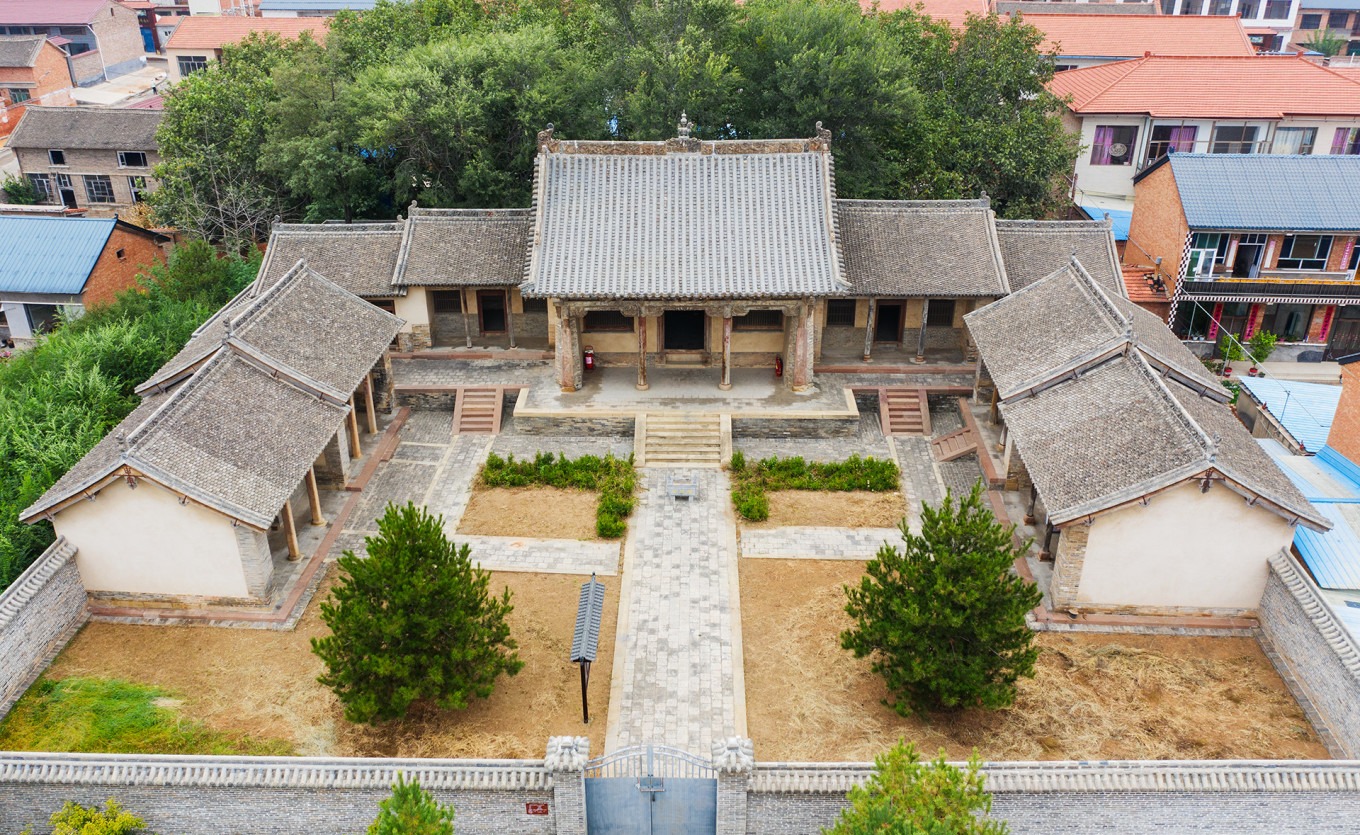
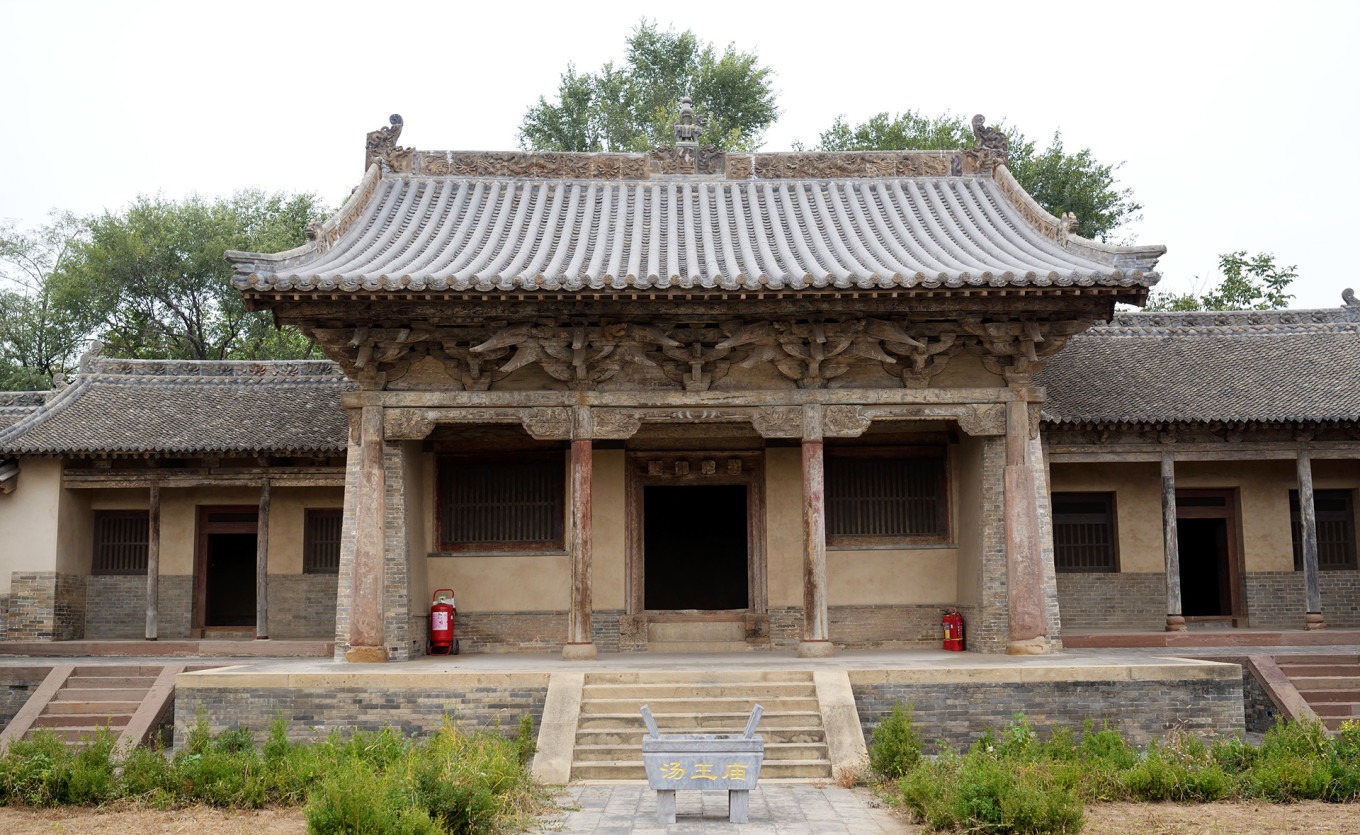
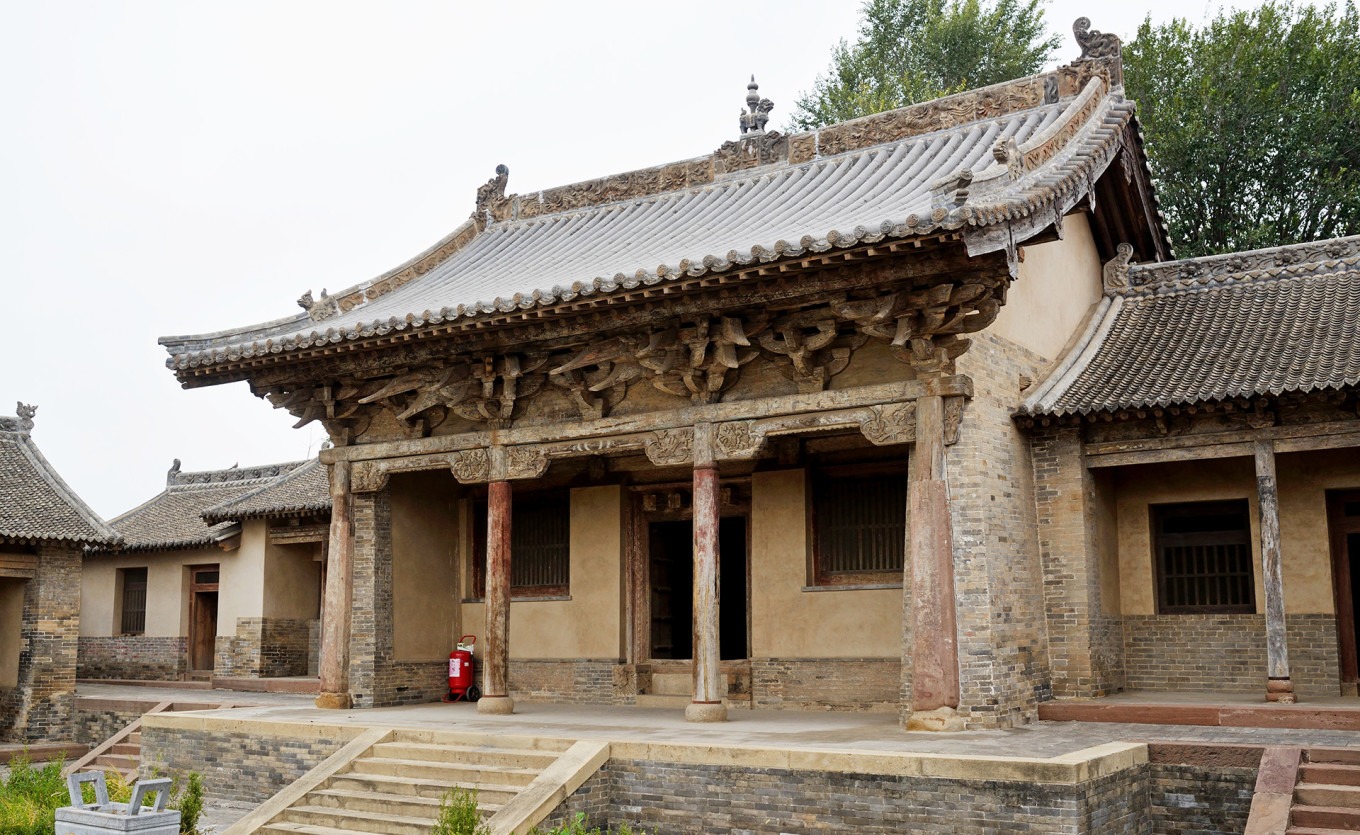
The main hall of this temple dates from the Yuan dynasty, while the rest are Qing dynasty additions. Though not the oldest in Shanxi, it has been listed as a national protected site for two remarkable features: its exquisite bracket sets (dougong) and its surviving Yuan dynasty murals.
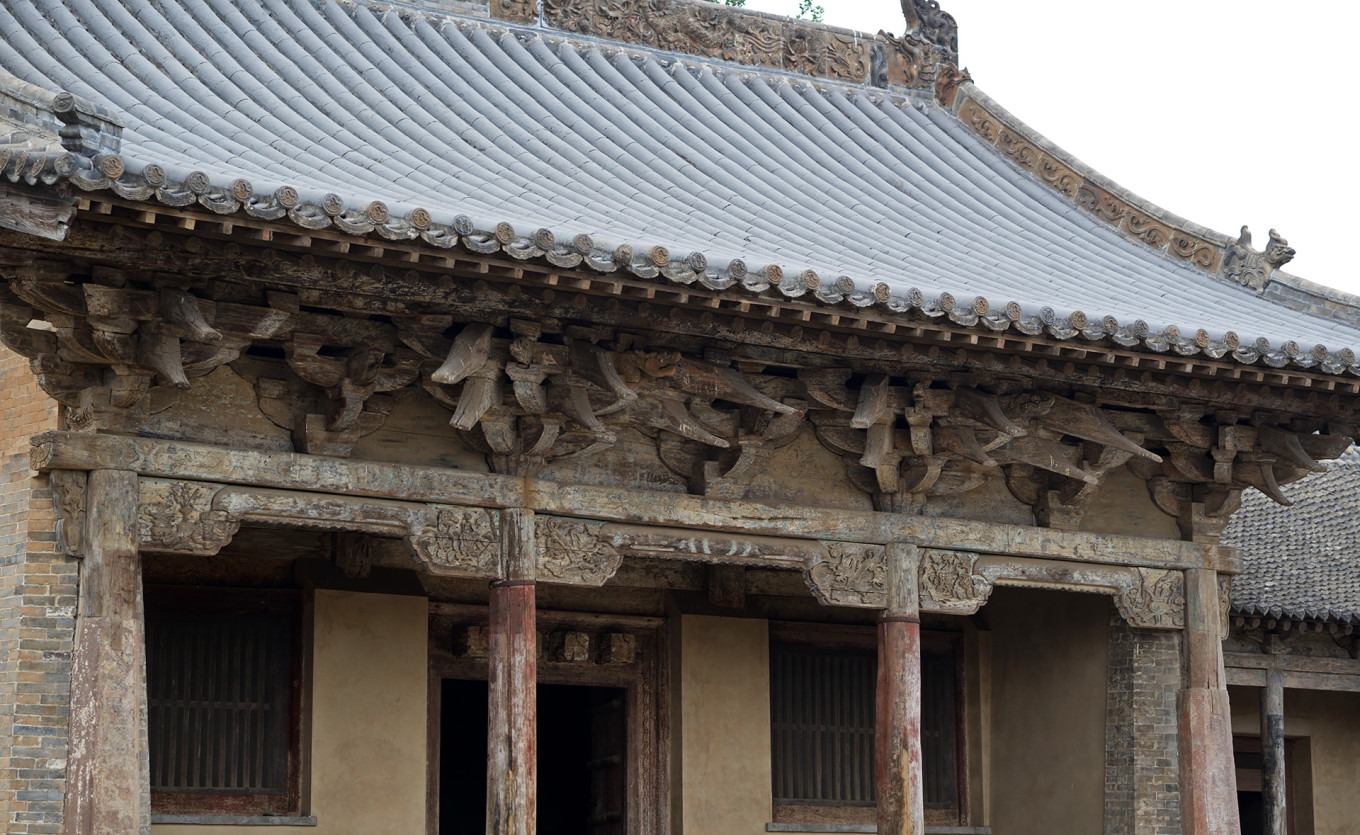
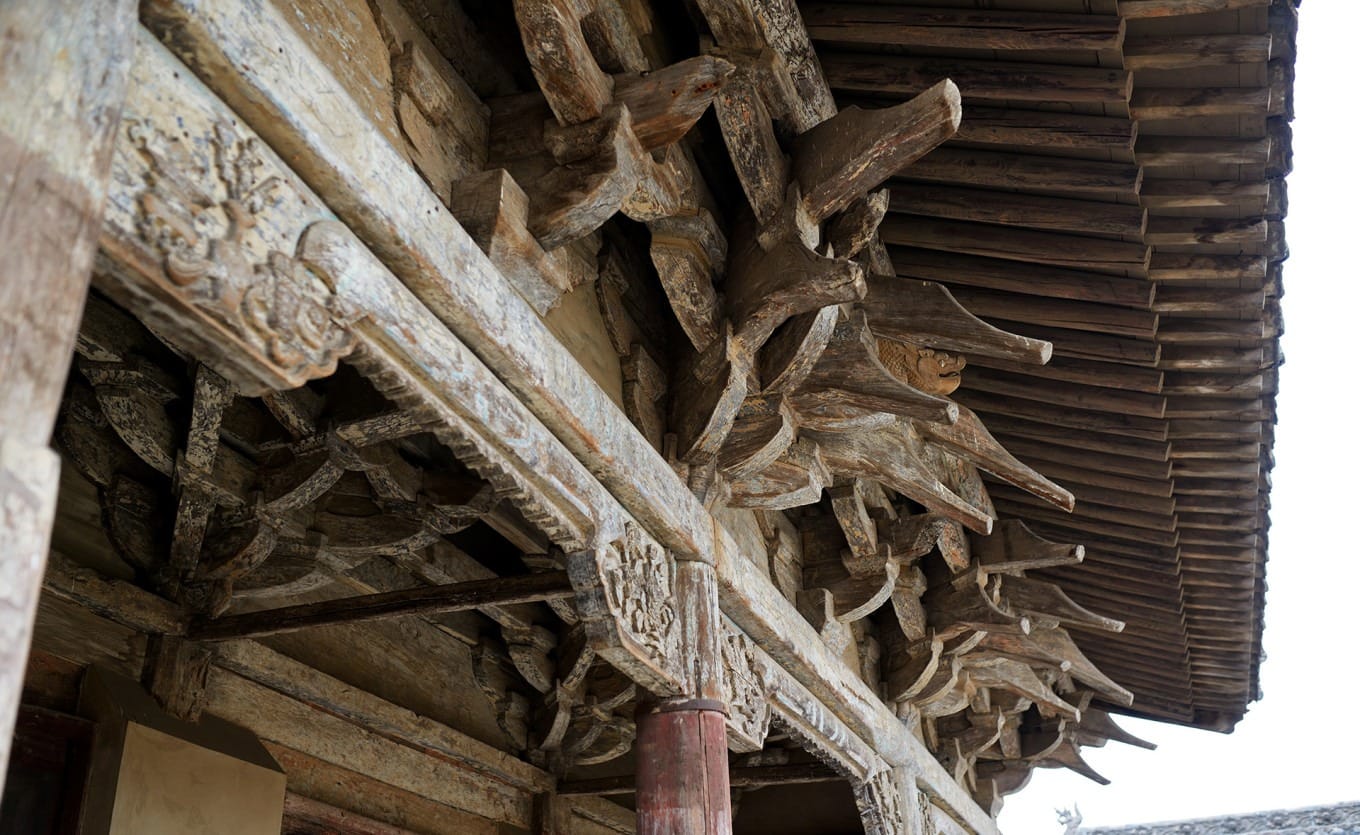
Standing before the hall and looking up, you’ll notice the front-eave dougong are exceptionally elaborate. The column-top brackets (zhutou dougong) project two steps, forming a five-puzuo with one transverse arm and two downward-angling arms, while the bracket bases (ludou) are carved in the shape of lotus petals. The inter-column brackets (bujian dougong) project one step, a four-puzuo with one transverse arm. Additionally, the column-top brackets incorporate two types of diagonal arms (xiegong), and the same diagonal arms appear on the interior. Visually, the dense layers of dougong stack like a symphony score, creating a powerful, almost overwhelming impact.
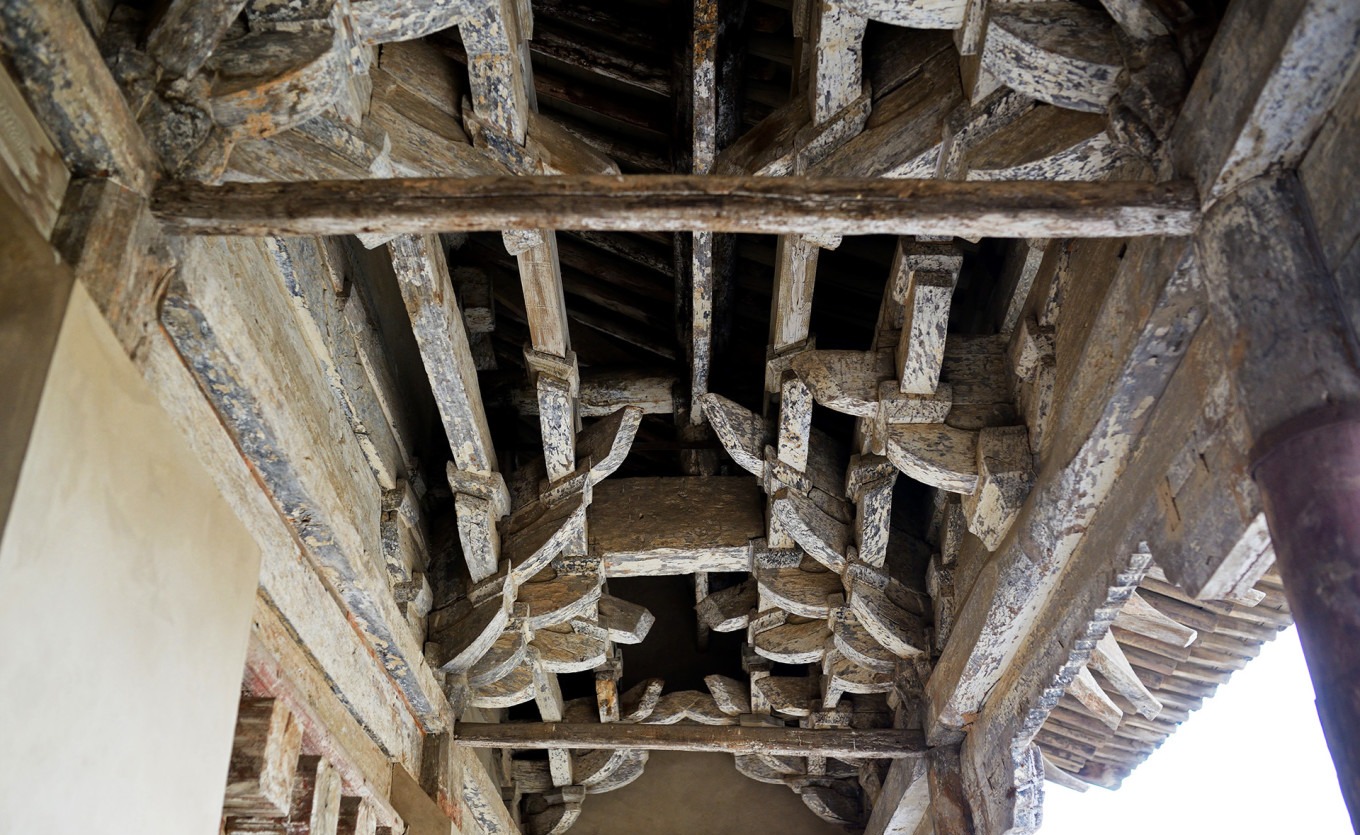
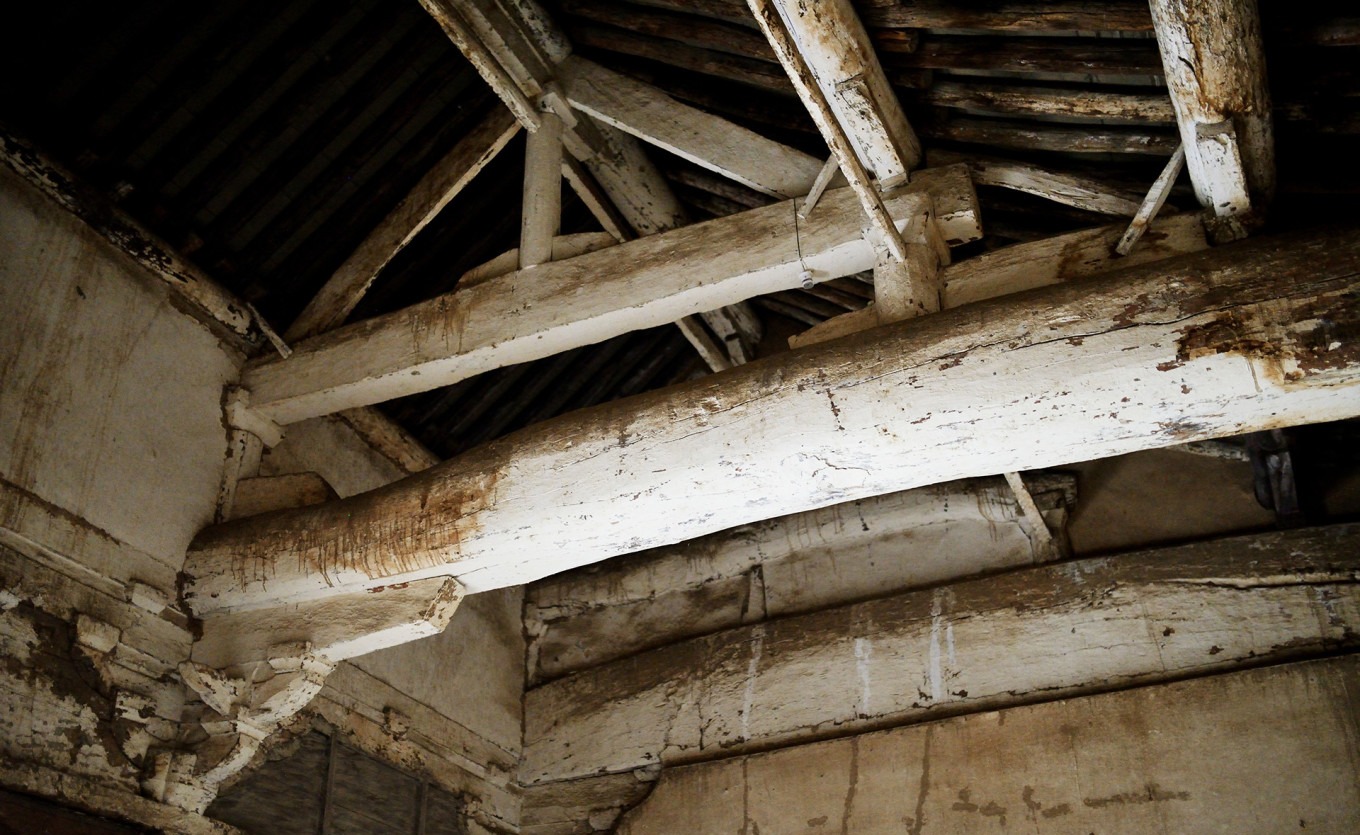
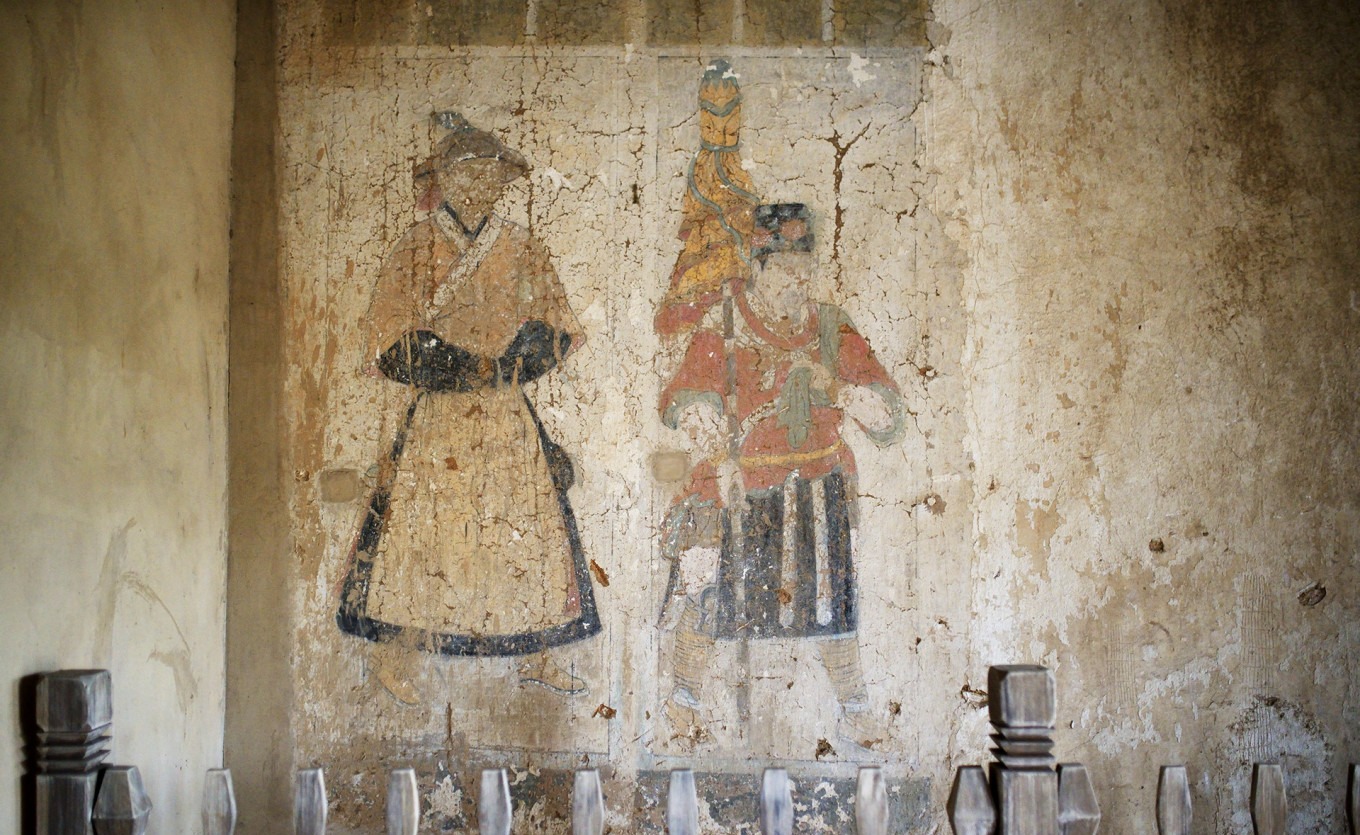
Inside the hall, aside from the ancient, massive roof beams, the space is empty except for a Yuan dynasty mural on the east wall. This mural was uncovered during recent renovations; though small in area, it depicts two figures. Despite the faded details, their clothing and postures remain distinguishable.
The taller figure wears a long robe and a boli crown (钹笠冠), a hat popular among the Yuan ruling class. The shorter figure beside him is an attendant, wearing a leather cap and boots, with arrow-cuffed sleeves (箭袖), holding an umbrella-like object in his right hand. This mural is the only surviving Yuan dynasty temple mural in Zhangzi County, making it extremely precious.
Changzhi: The Historical Heart of Southeastern Shanxi
As you plan your journey through southeastern Shanxi, Changzhi (长治) stands out as the region’s historic and cultural core. Historically known as Shangdang Commandery (上党郡) and later Lu’an Prefecture (潞安府), this city has been the absolute center of the area since ancient times. Its strategic importance is underscored by a famous episode on the eve of the Tang Dynasty’s golden age: Li Longji, then Prince of Linzi, served as the assistant governor of Lu Prefecture (潞州别驾) here. During his three-year tenure, he gathered talented advisors before returning to Chang’an to reclaim the Li family’s empire. Today, Changzhi is a treasure trove of human relics and exquisite ancient architecture from various historical periods, offering a cultural depth that words can barely capture.
Ancient architecture in Changzhi, southeastern Shanxi
For first-time visitors, prioritize the city’s ancient architectural sites and cultural landmarks. The legacy of Li Longji’s time is still palpable in the local heritage. You can explore well-preserved temples, pagodas, and traditional courtyards that reflect centuries of history. Practical tip: consider hiring a local guide to fully appreciate the stories behind each site, as many have layered historical narratives.
Guanyin Hall
- RestaurantGuanyin Hall (观音堂)
- AddressLijiazhuang Village, Luzhou District, Changzhi (长治市潞州区梁家庄村)
- Recommended dishesN/A (菜名)
- Average spendAdmission 10 RMB
In Changzhi city and its surroundings, the most famous and unmissable attraction is the Guanyin Hall (观音堂), first built in the ninth year of the Wanli reign of the Ming dynasty (1581). This temple, with over four centuries of history, is renowned worldwide for its exquisite painted sculptures and hanging sculptures. It is a fifth-batch Major Historical and Cultural Site Protected at the National Level, with undeniable historical and artistic value.
Unlike most temples that face south, Guanyin Hall faces east. The main structure is a two-courtyard complex, with only the main hall being a Ming dynasty relic; the rest were rebuilt in the Qing dynasty. Yet this small temple hides a masterpiece of ancient Chinese sculpture art. Inside the main hall, Ming dynasty hanging sculptures blending Confucianism, Buddhism, and Taoism are still largely intact. Their superb artistry and depiction of the celestial realms provide visitors with aesthetic pleasure and insight into the evolution of folk religious beliefs. Together with Xiaoxitian in Xixian, Shuanglin Temple in Pingyao, and Shui’an Temple in Lantian, Shaanxi, it is known as one of the ‘Four Great Hanging Sculptures’.
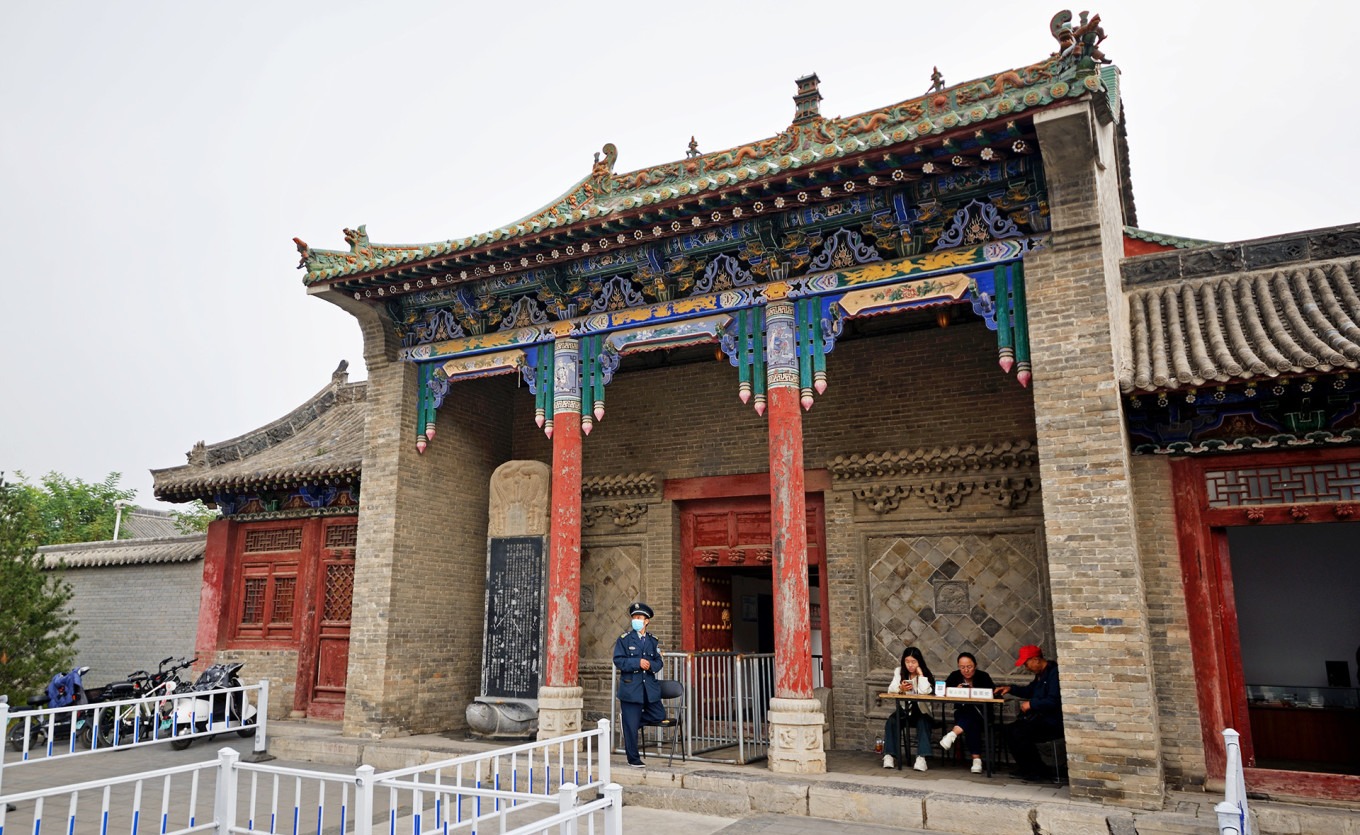
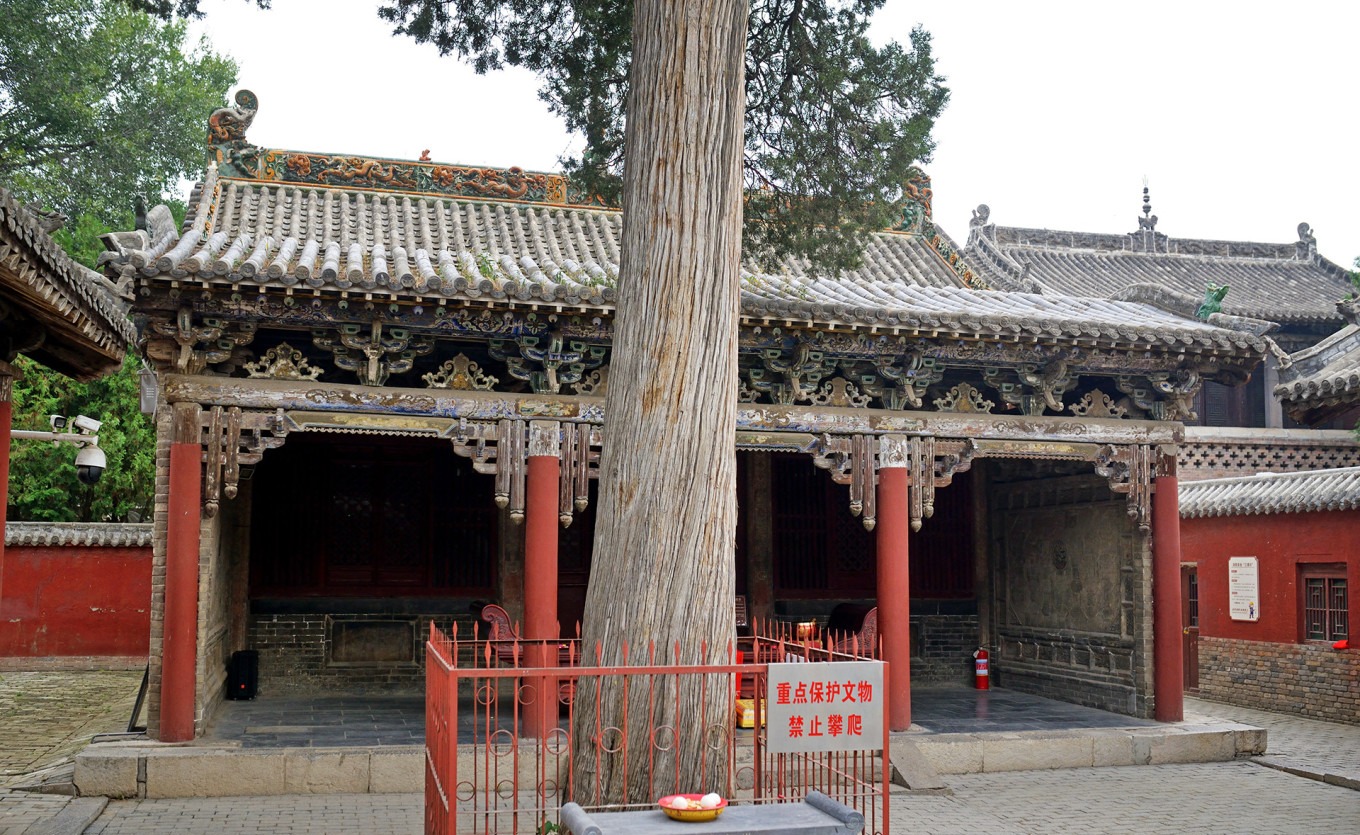
Passing through the Heavenly King Hall, you’ll see a tall cypress tree from the Sui dynasty, over a thousand years old. Who planted it and why remain a mystery.
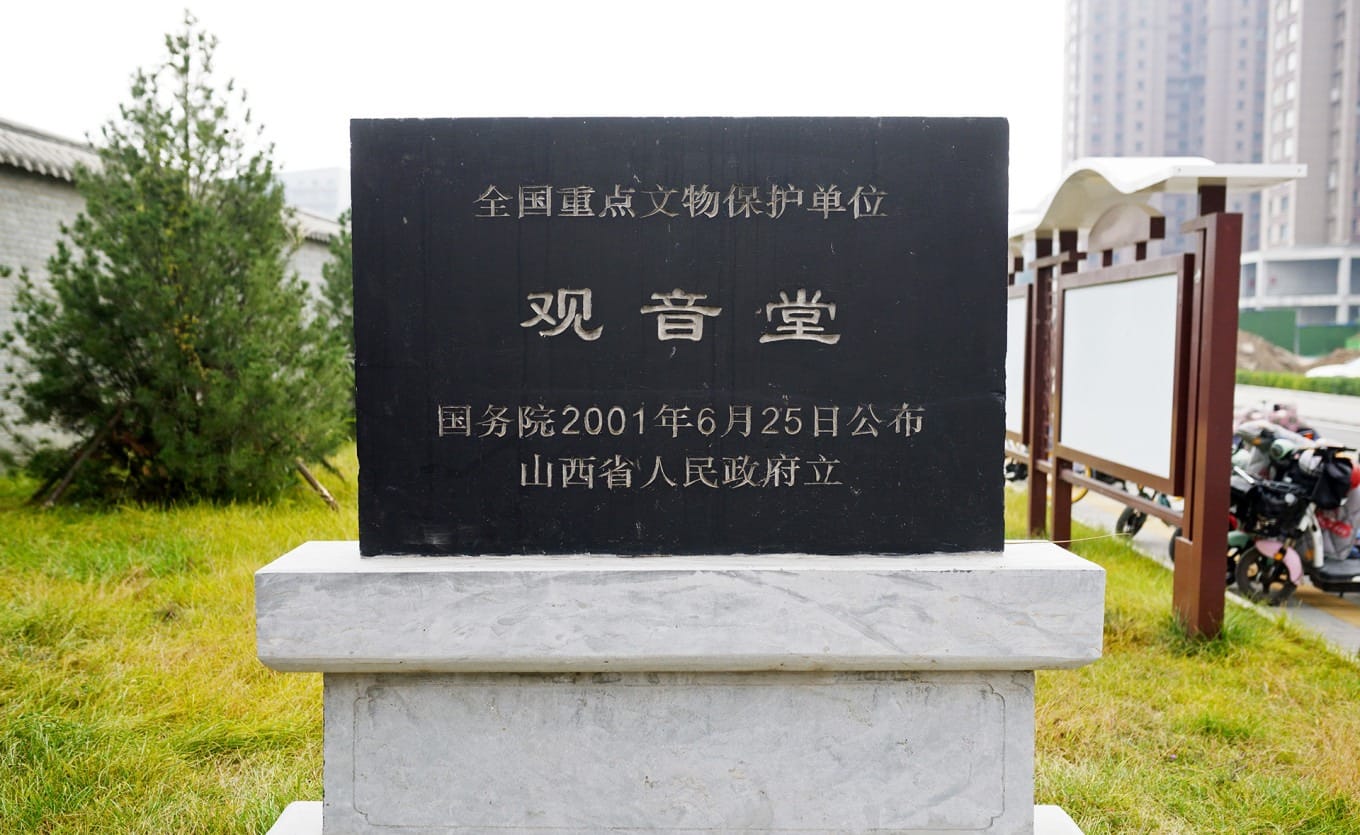
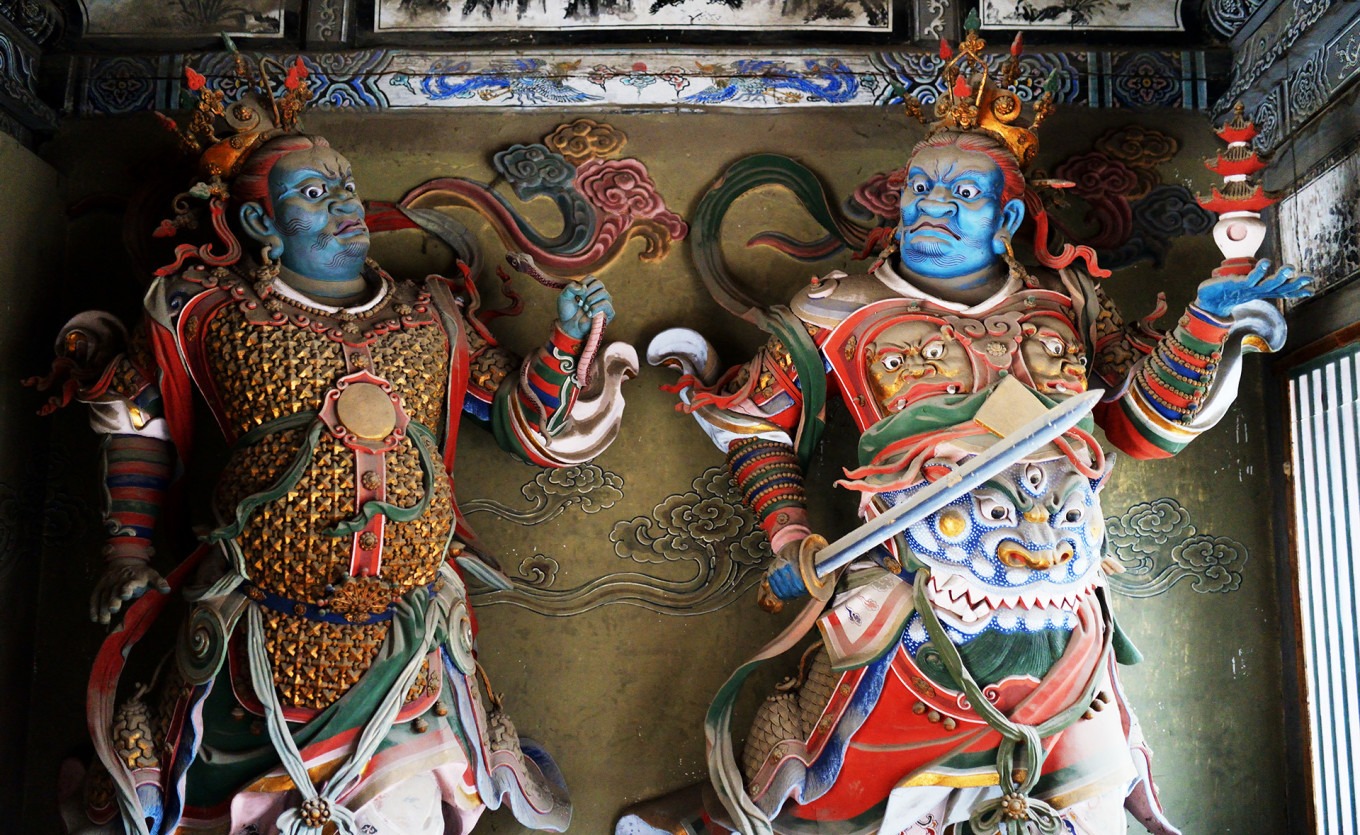
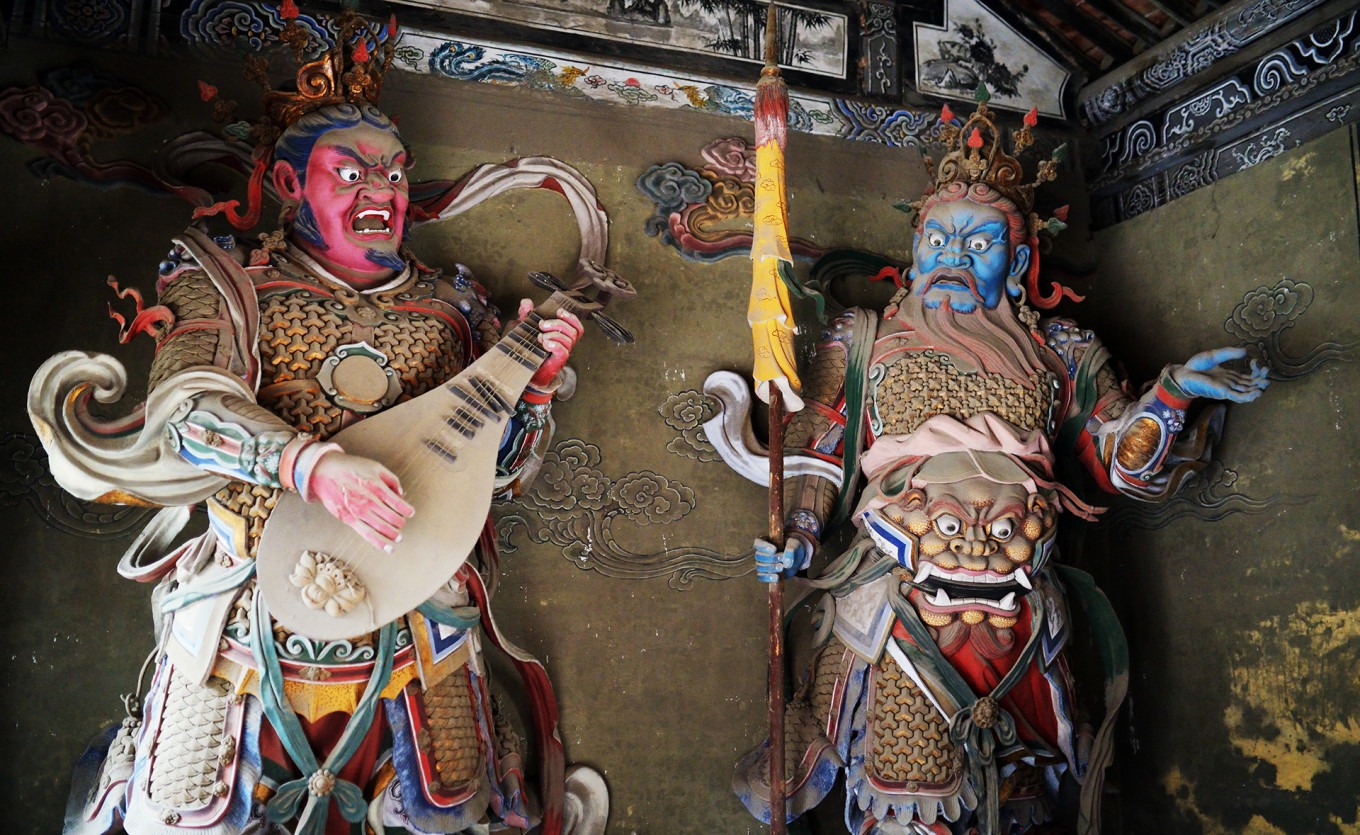
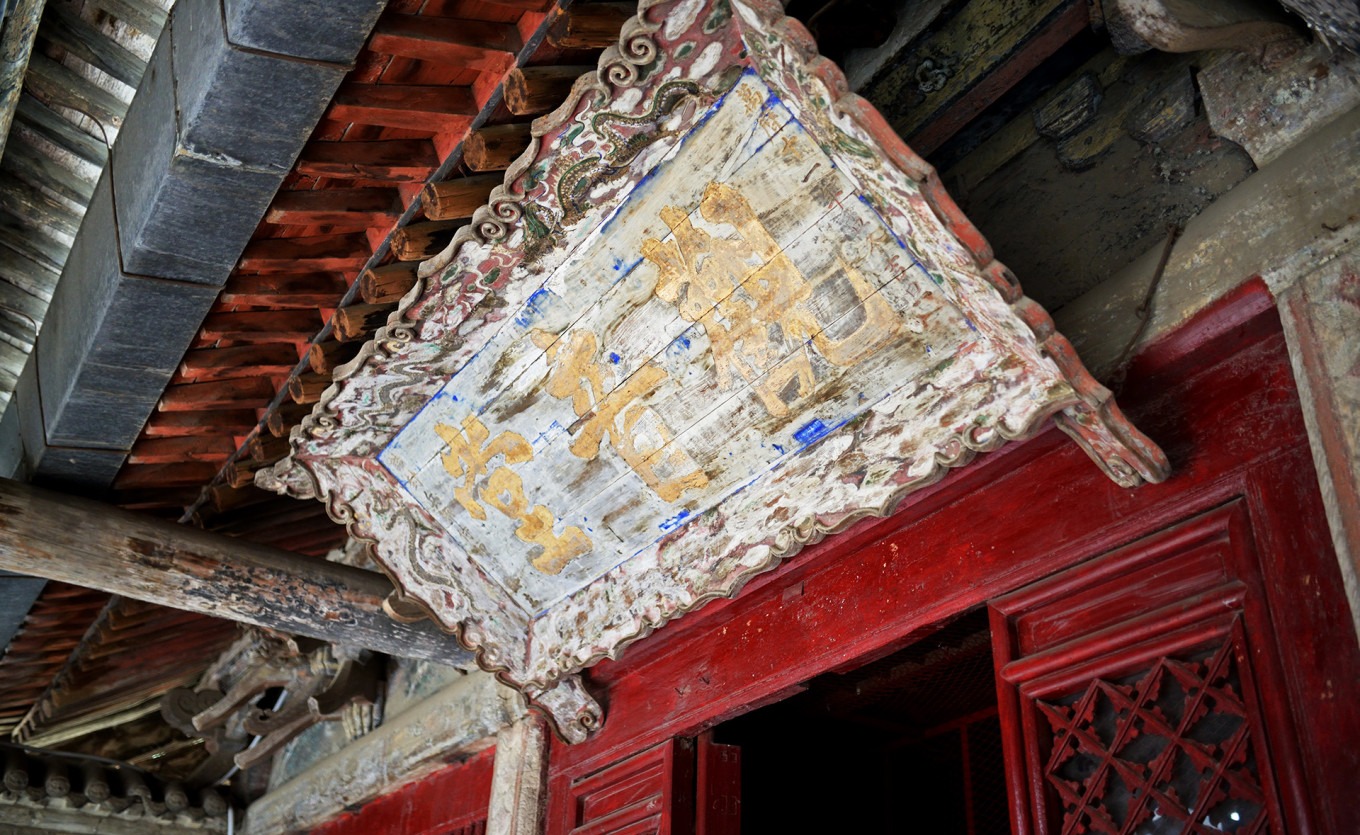
Behind the ancient tree is the main hall, built in 1581. The glazed tile ridge features powerful dragon reliefs. Above the door, a golden plaque reads ‘Guanyin Hall’ (观音堂), inscribed by Gao Qin, a Ming dynasty Minister of War from Lu’an Prefecture.
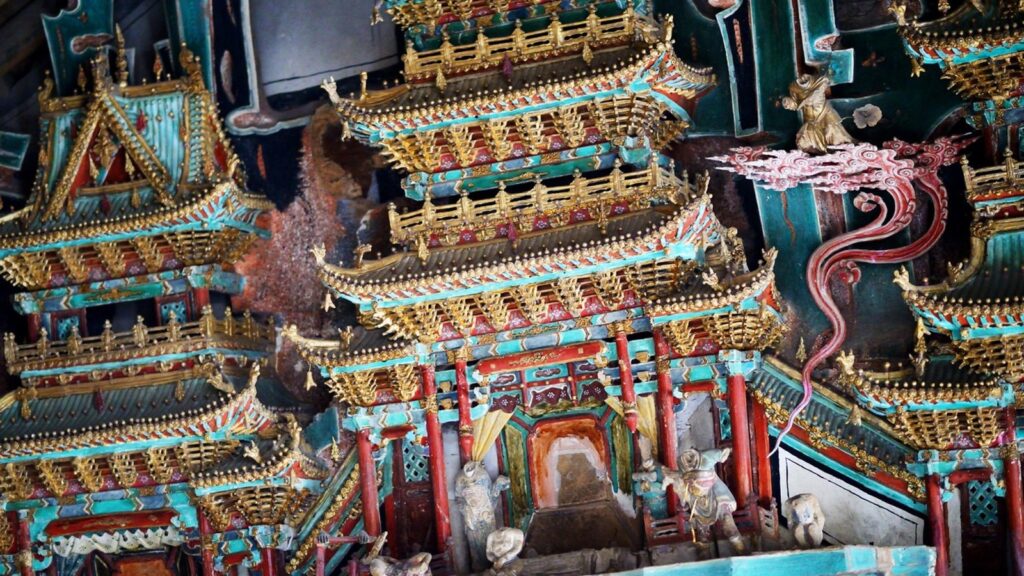
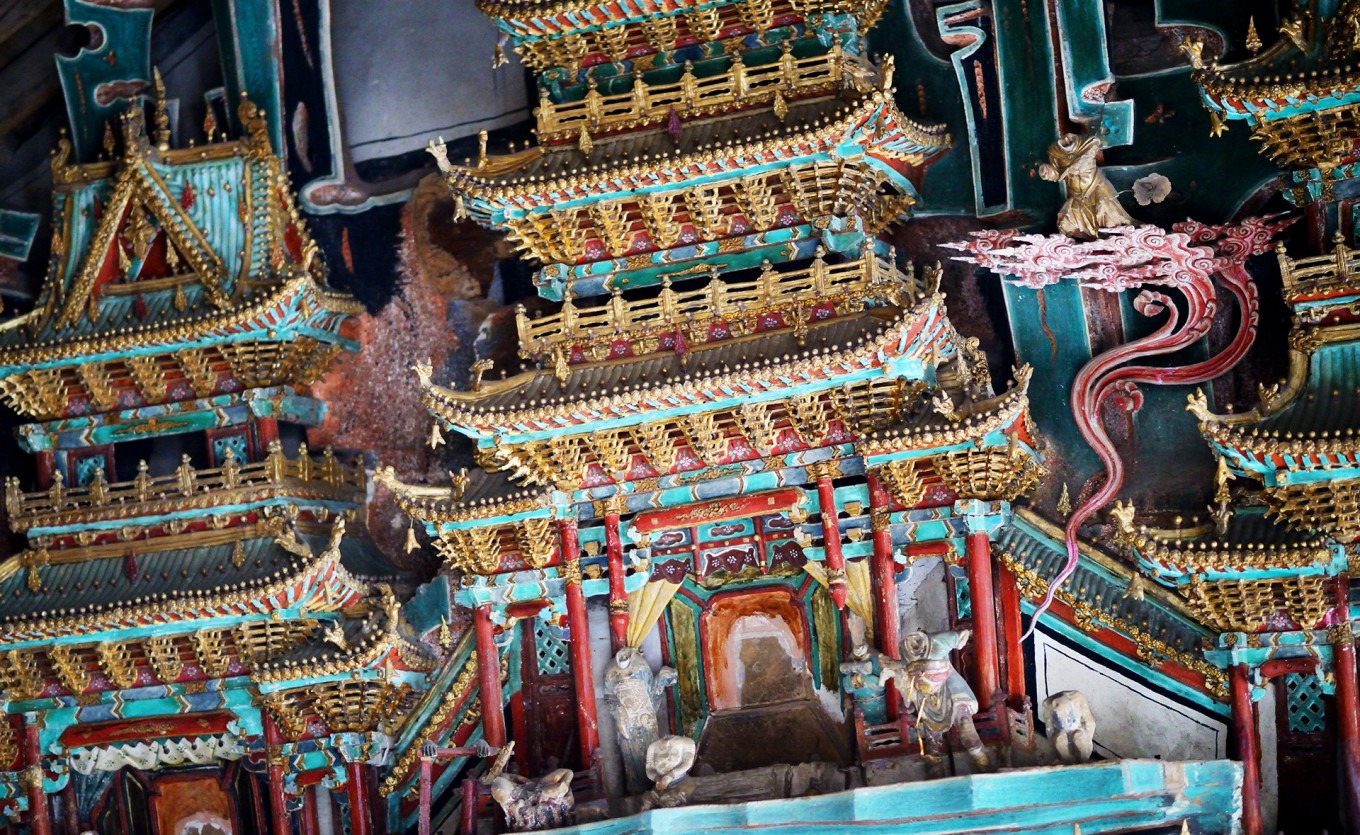
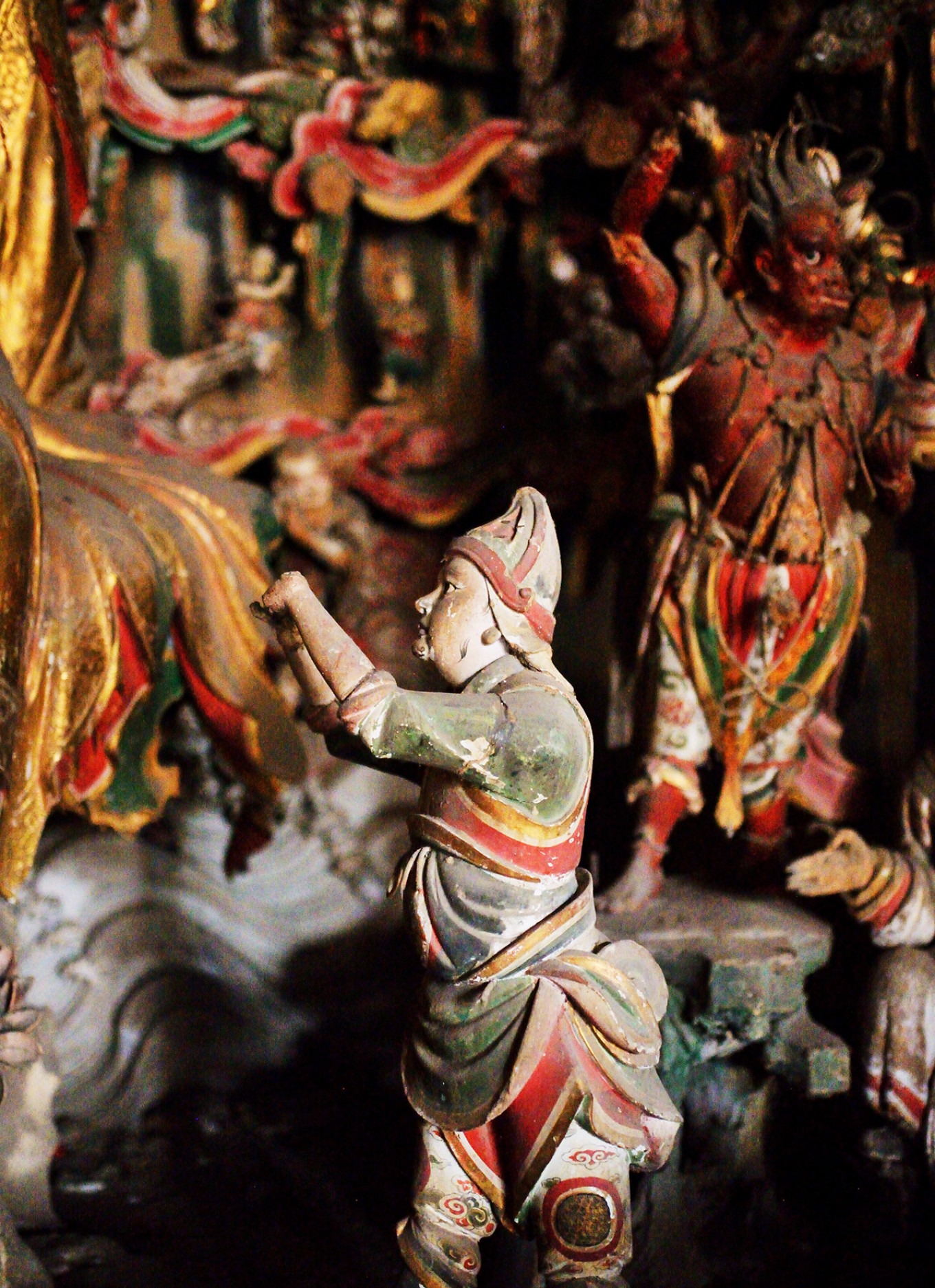
The real highlight awaits inside the main hall: the hanging sculptures. As you step in, despite the dim light, the dazzling scene is breathtaking. The central altar enshrines the Three Great Bodhisattvas, while the north and south walls are lined from bottom to top with the Eighteen Arhats, Twenty-Four Devas, and Twelve Perfections, each group forming a thematic unit. Walls and beams are filled with over five hundred figures of Buddhas, bodhisattvas, Taoist and Confucian deities, and scenes from Buddhist stories, making you feel as if you’ve entered a celestial world created by hanging sculpture art.
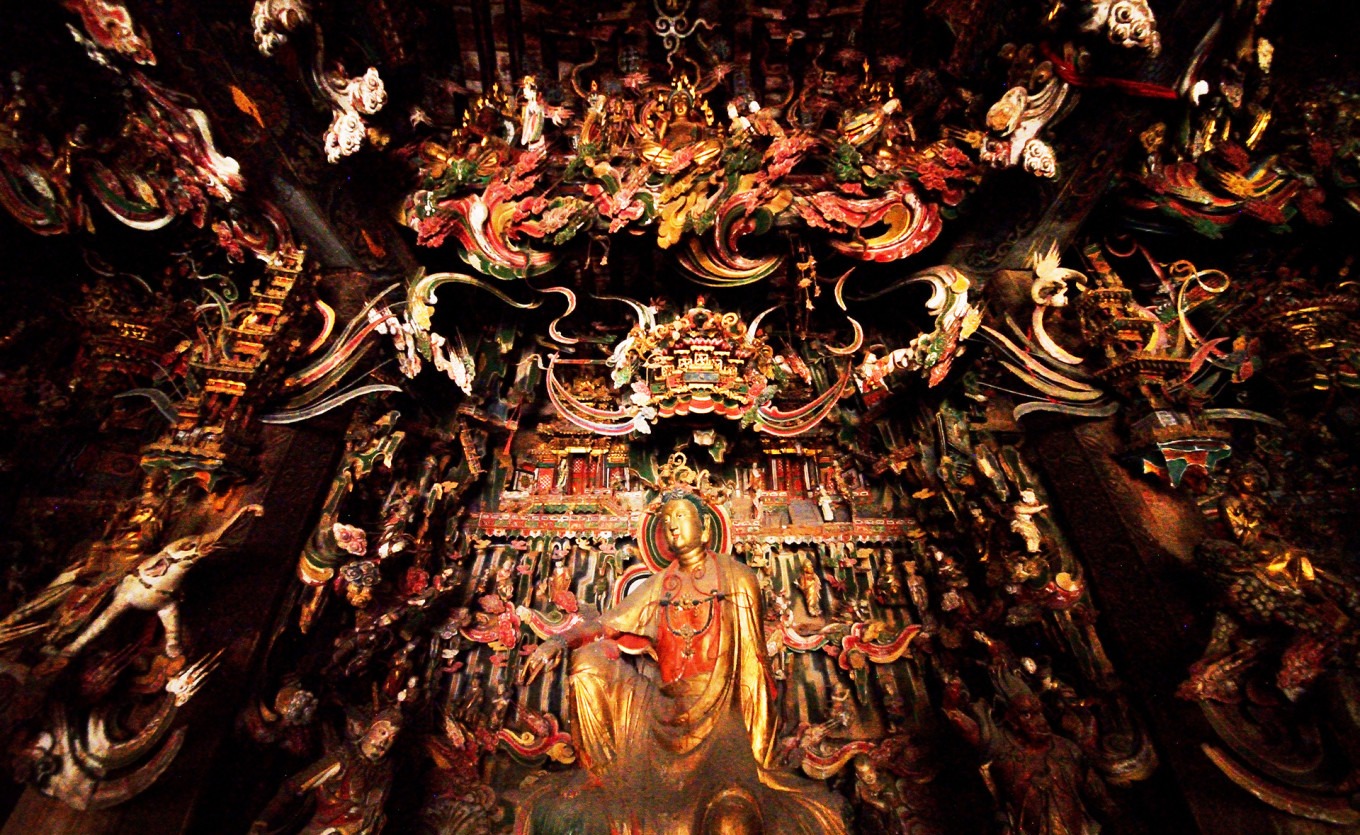
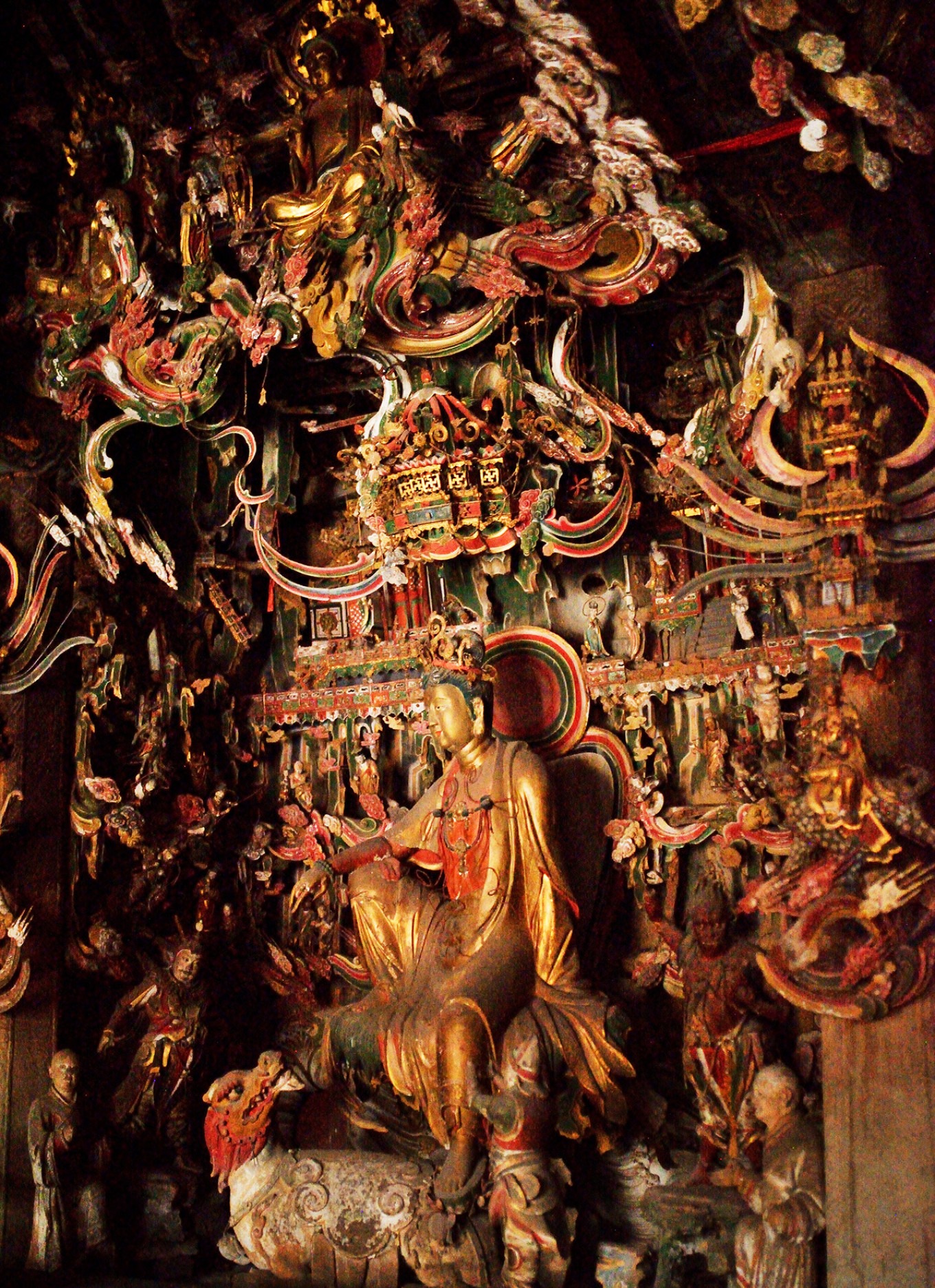
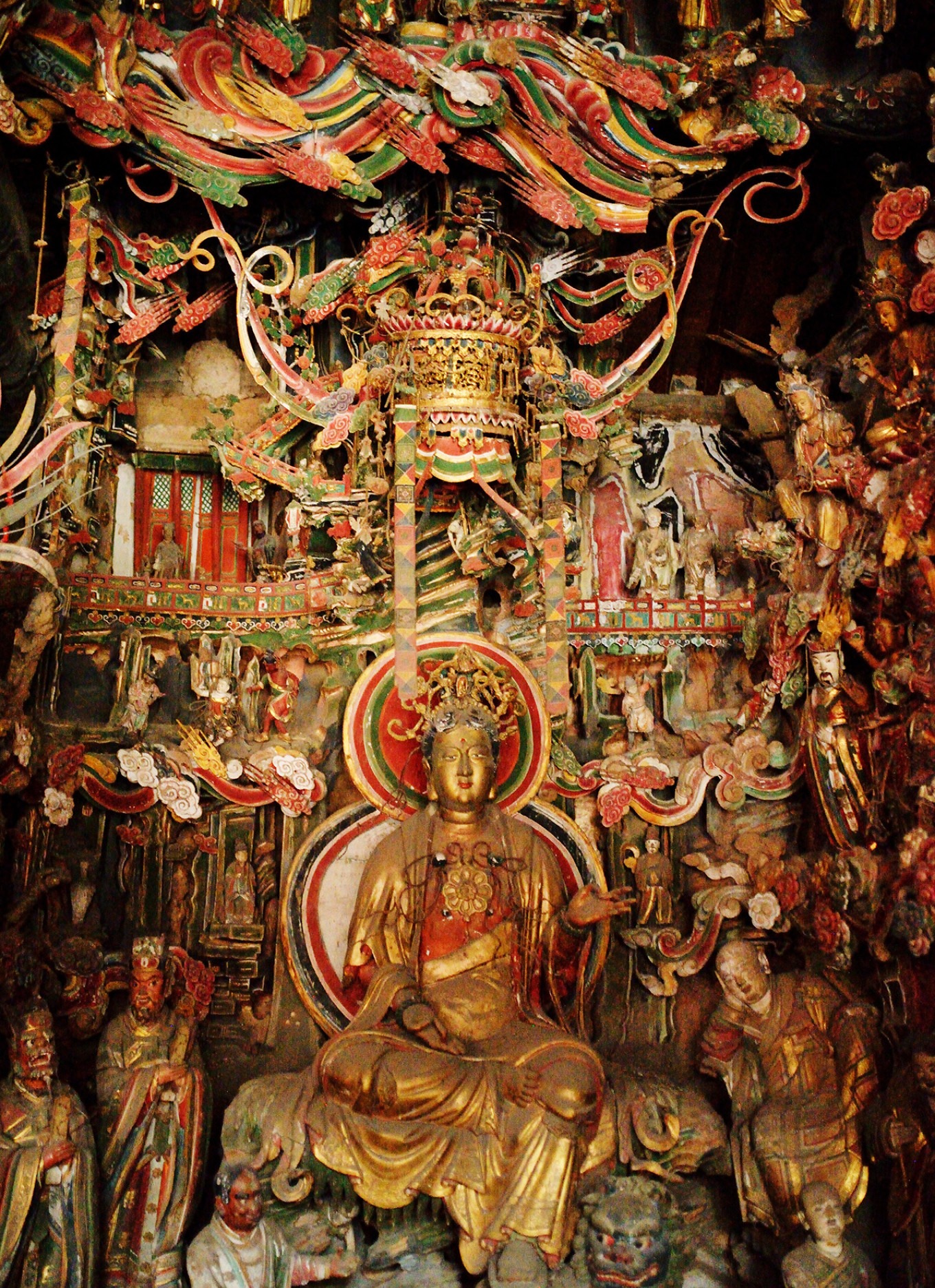
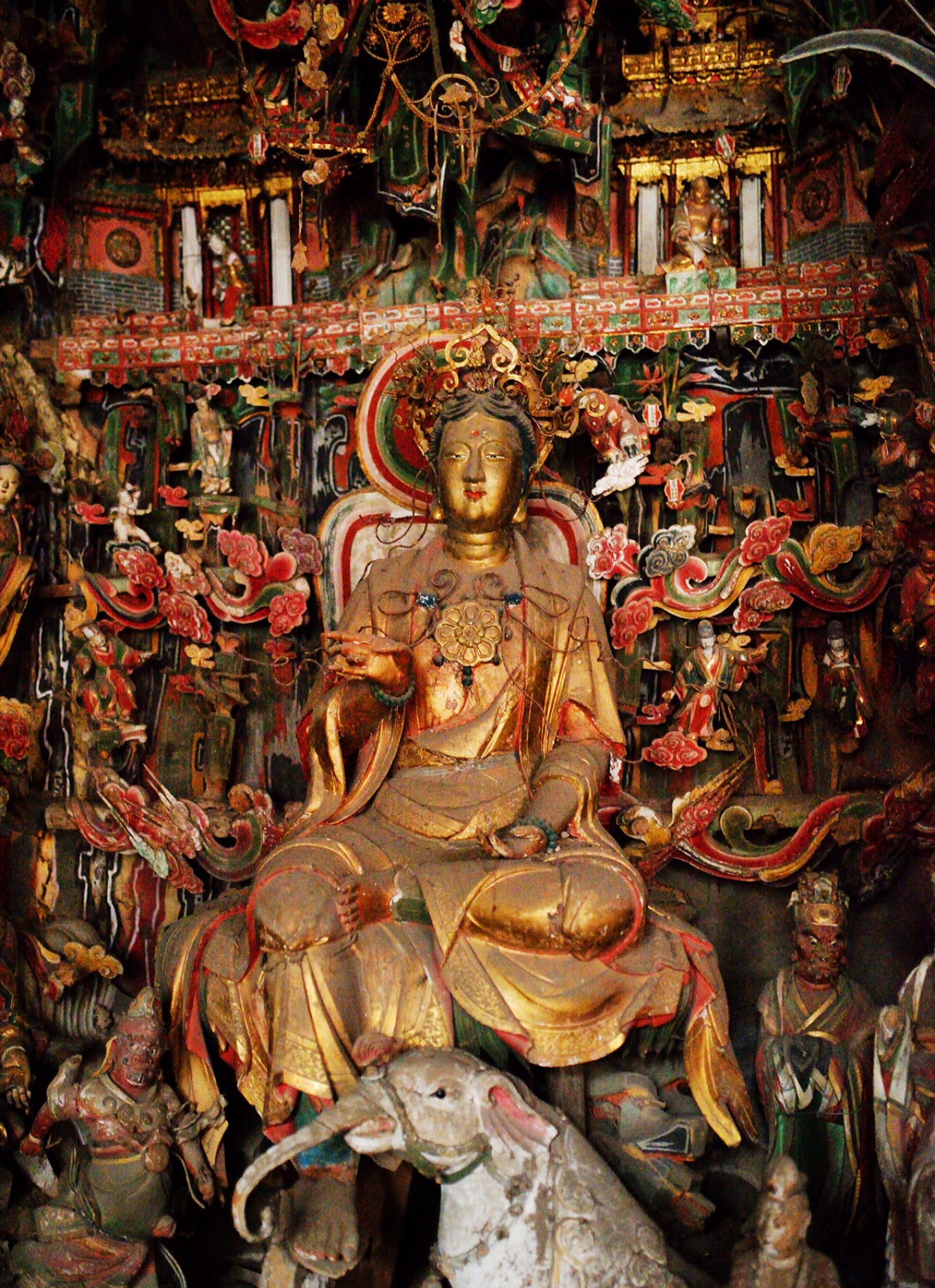
Start at the center of the hall: the main statue is Guanyin Bodhisattva (观音菩萨). Seated on a lotus throne, fully gilded, with one leg crossed high and body slightly leaning forward, her left arm naturally extended and right hand resting on her knee, she exudes a relaxed, natural air, earning the name ‘Free and Unrestrained Guanyin’.
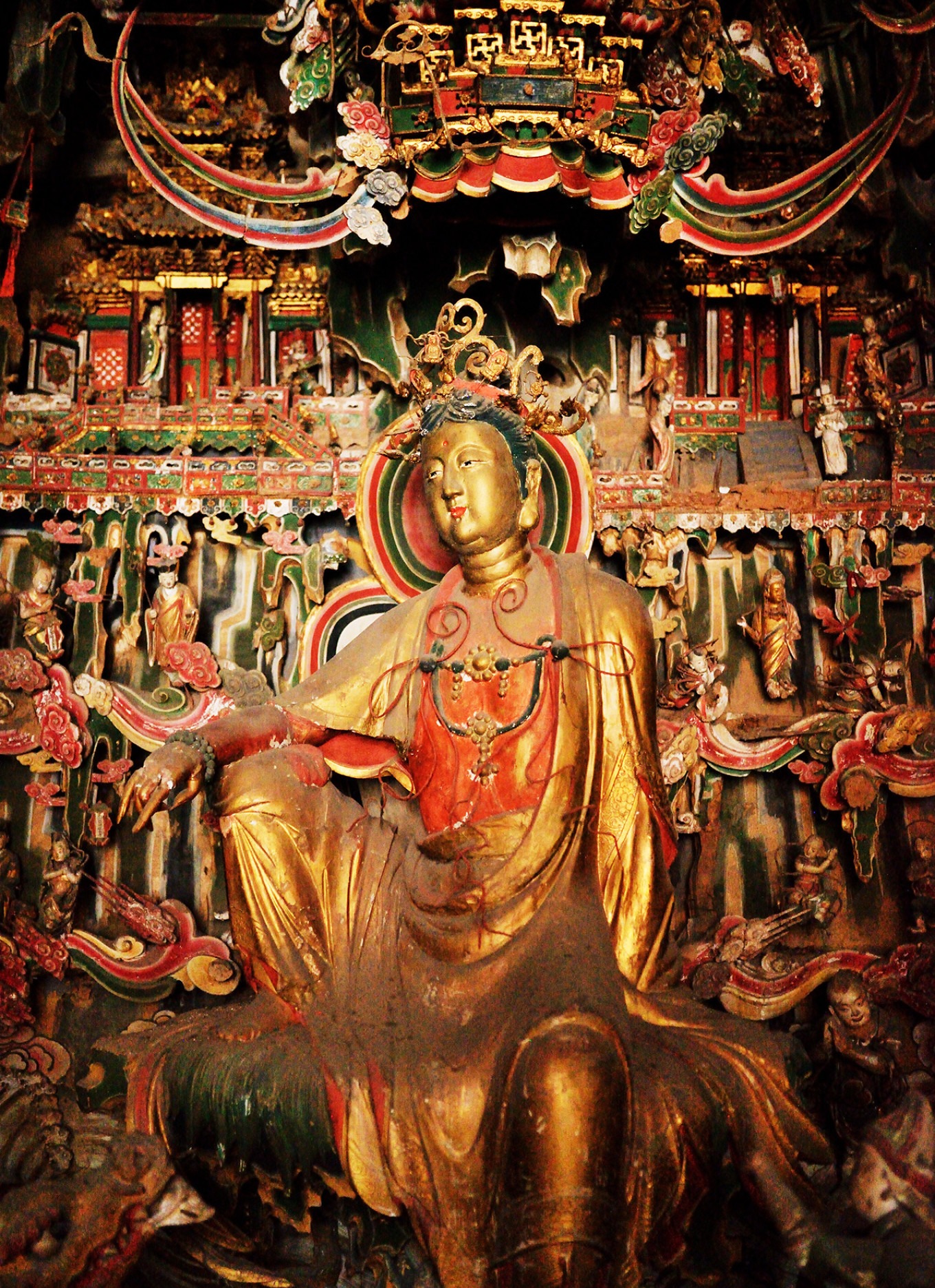
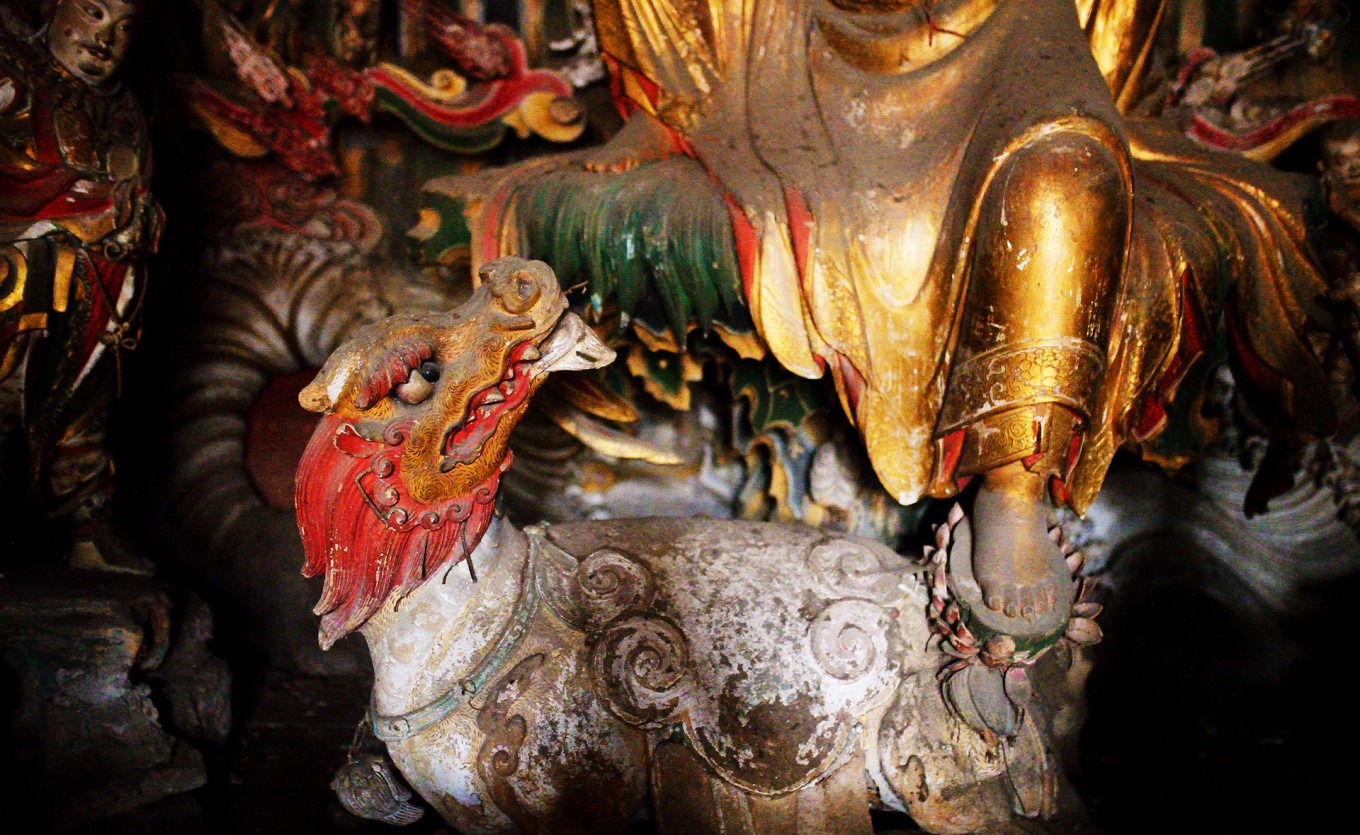
Flanking Guanyin are Wei Tuo, Yaksha, and Sudhana; a Dragon Girl statue was destroyed. Below her seat is her mount, the Hou Tian Hou (a mythical beast), along with an attendant and two novices. On the side pillars are Manjushri riding a lion and Samantabhadra riding an elephant. Above her head hangs an ornate canopy with colorful clouds.
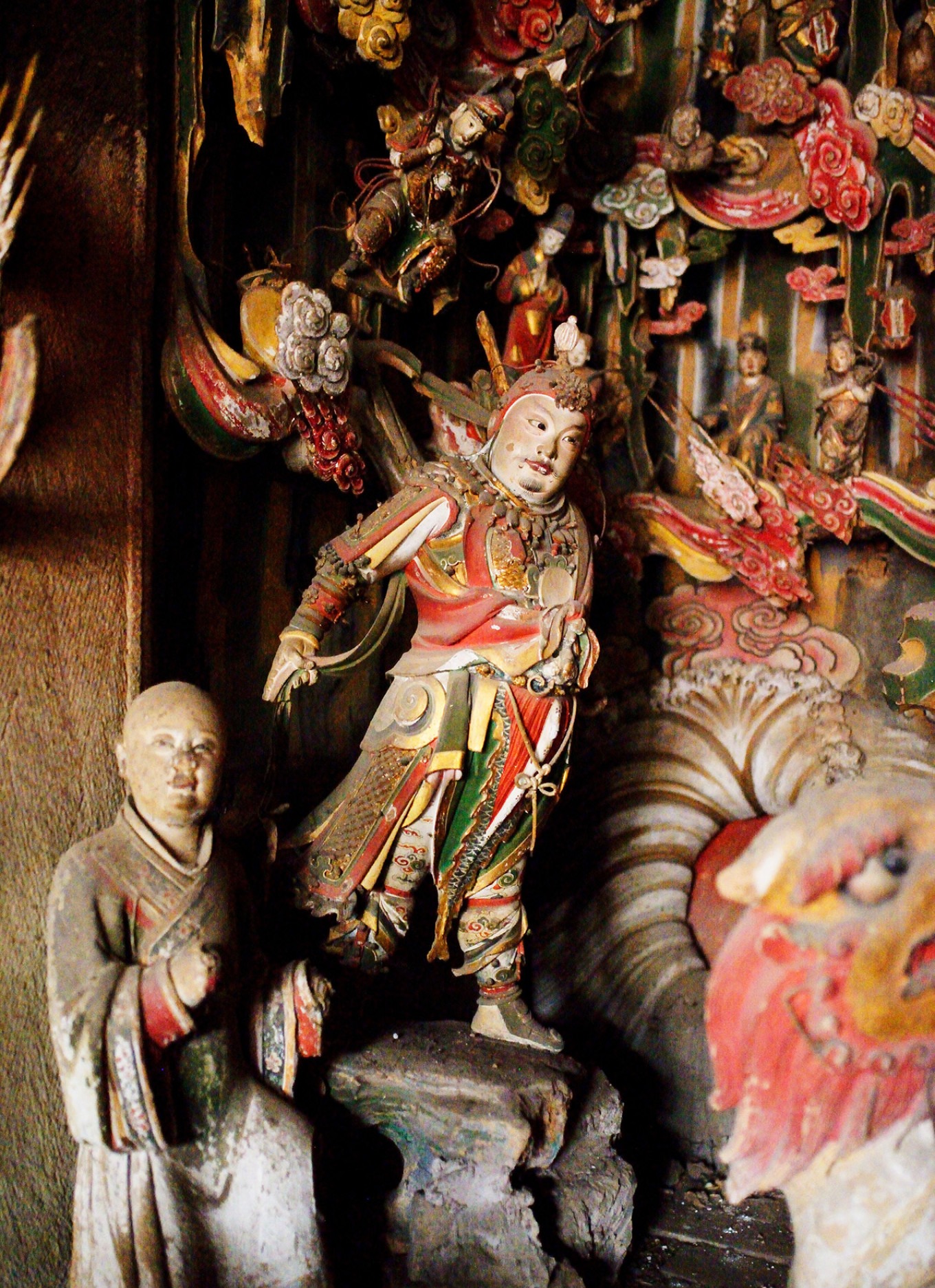
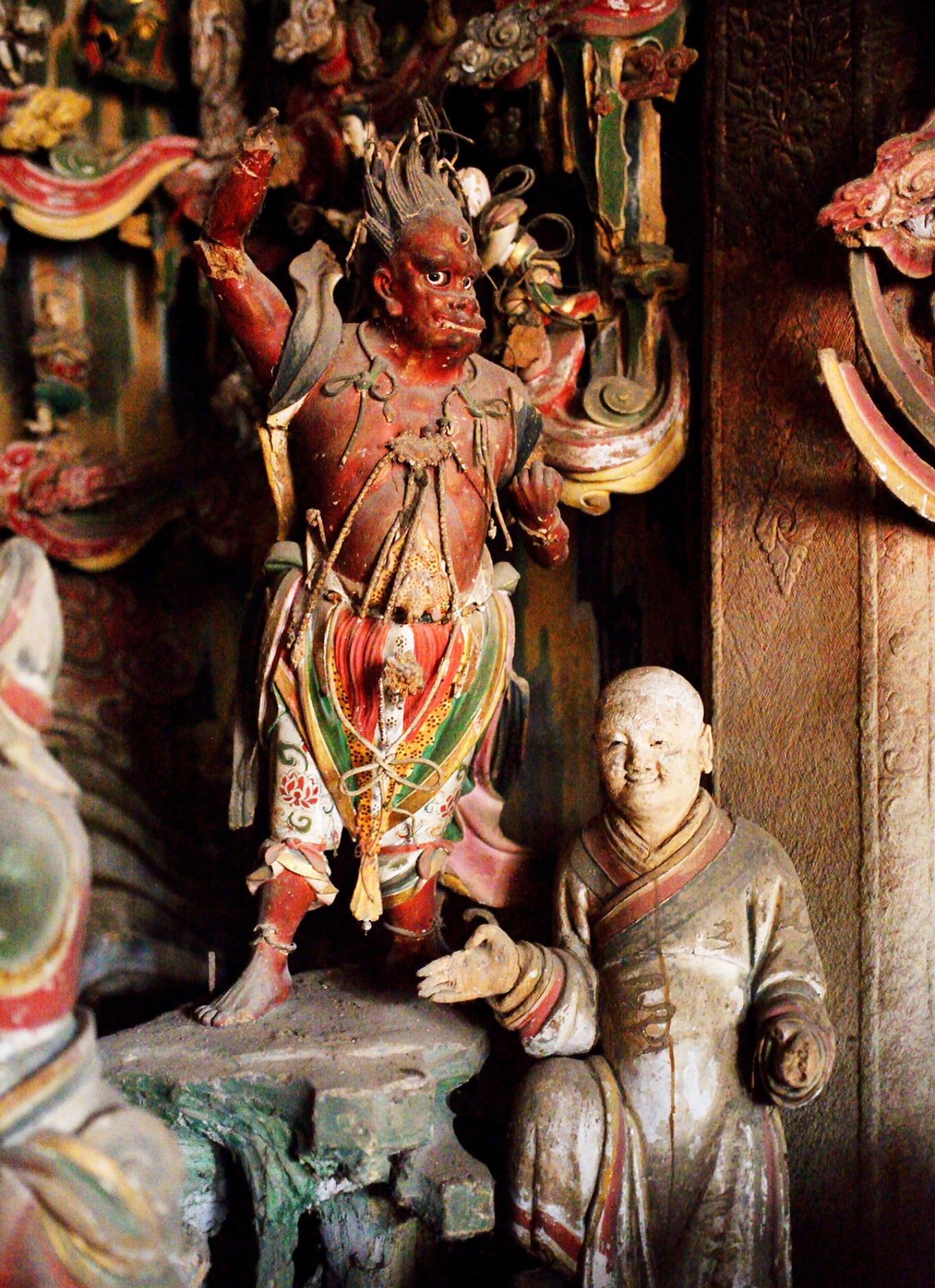
Behind Guanyin is a set of hanging sculptures depicting the ‘Sudhana’s Fifty-Three Visits’ from the Avatamsaka Sutra. The story follows Sudhana as he seeks enlightenment by visiting fifty-three virtuous teachers. The sculptures include figures from all walks of life, along with caves, buildings, doors, windows, and clouds, all in exquisite detail—a marvel of compact storytelling.
In addition, there are sculptures based on the ‘Universal Gate Chapter’ of the Lotus Sutra, depicting Guanyin’s compassionate deeds. The south and north side halls feature similar scenes behind Manjushri and Samantabhadra. The varied figures each seem to have their own story, and the layout is masterful.
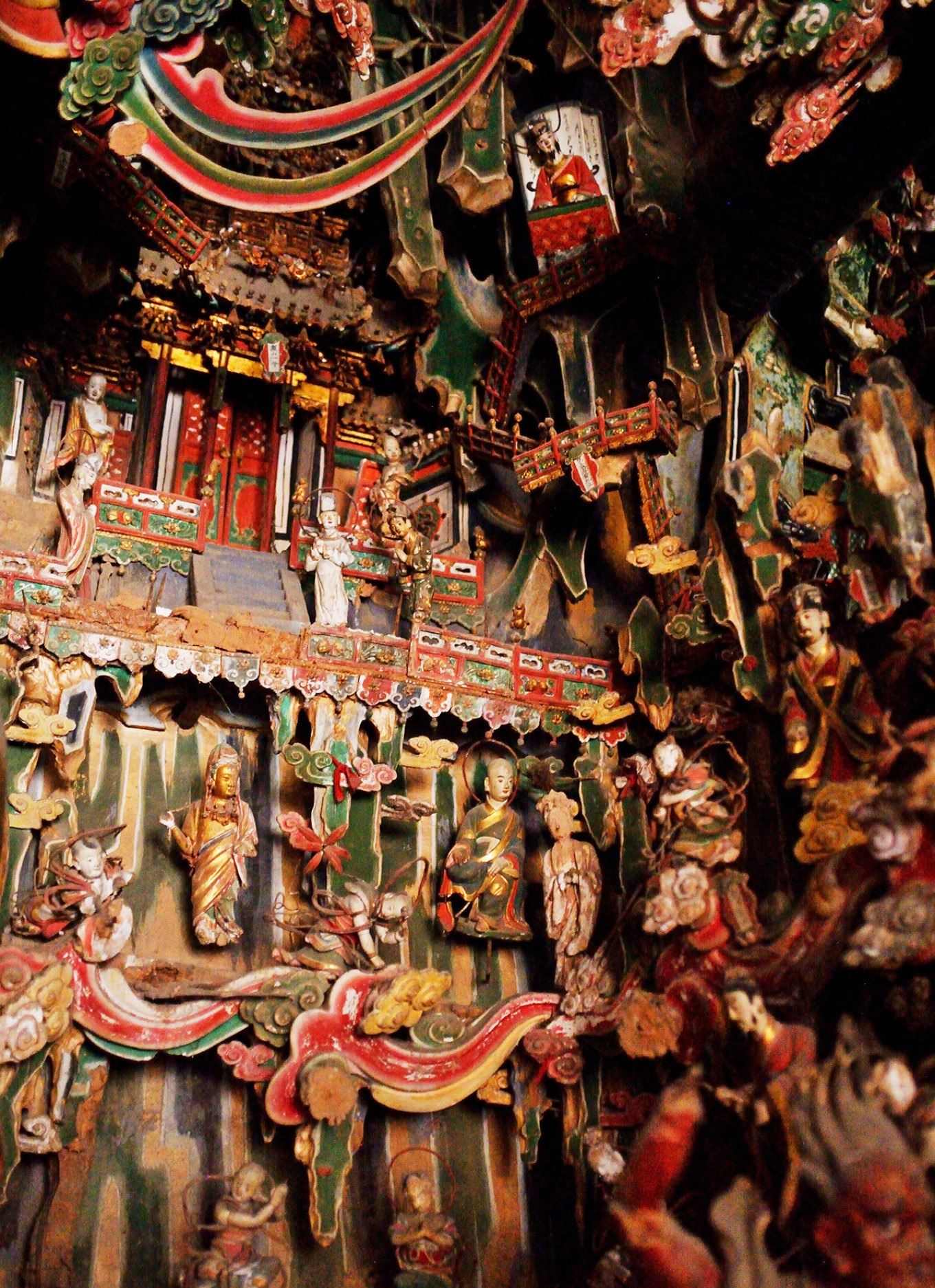
Above Guanyin’s canopy, two architectural structures are sculpted with different figures. One group is called ‘The Assembly on Vulture Peak’, where Shakyamuni preaches; the other’s inscription is lost. Similar sculptures appear above the canopies of Manjushri and Samantabhadra. The south side hall’s two buildings are badly damaged, while the north side hall’s are better preserved.
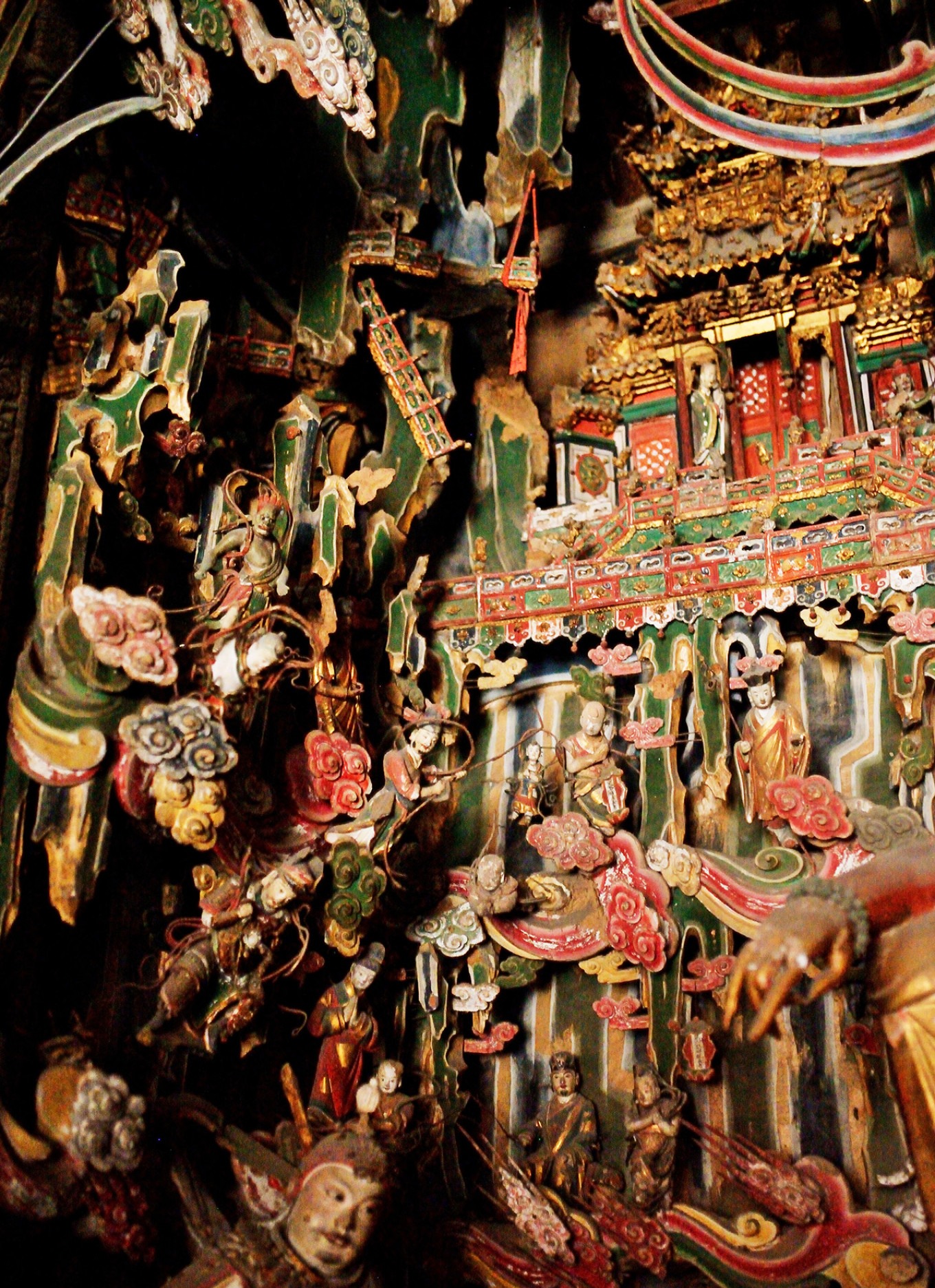
Looking up, above Guanyin’s canopy are three groups of hanging sculptures depicting the founders of Confucianism, Buddhism, and Taoism. On the left: Confucius seated on clouds, holding a tablet, solemn and dignified, flanked by his four disciples (Yan Hui, Zengzi, Zisi, Mencius) with the words ‘Qi Guan Gu Jin’ and ‘De Pei Tian Di’ behind. In the center: Shakyamuni Buddha with Ananda and Kasyapa, and Manjushri and Samantabhadra, with ‘Fo Ri Zeng Hui’ and ‘Fa Lun Chang Zhuan’ behind. On the right: Laozi, with a childlike face and white hair, flanked by the Four True Men (Zhuangzi, Liezi, Wenzi, Kangcangzi), with ‘Dao De Zhi Zun’ and ‘Chu San Jie Wai’ behind. These three groups bring together the sacred figures of the three faiths, exquisitely crafted and visually stunning.
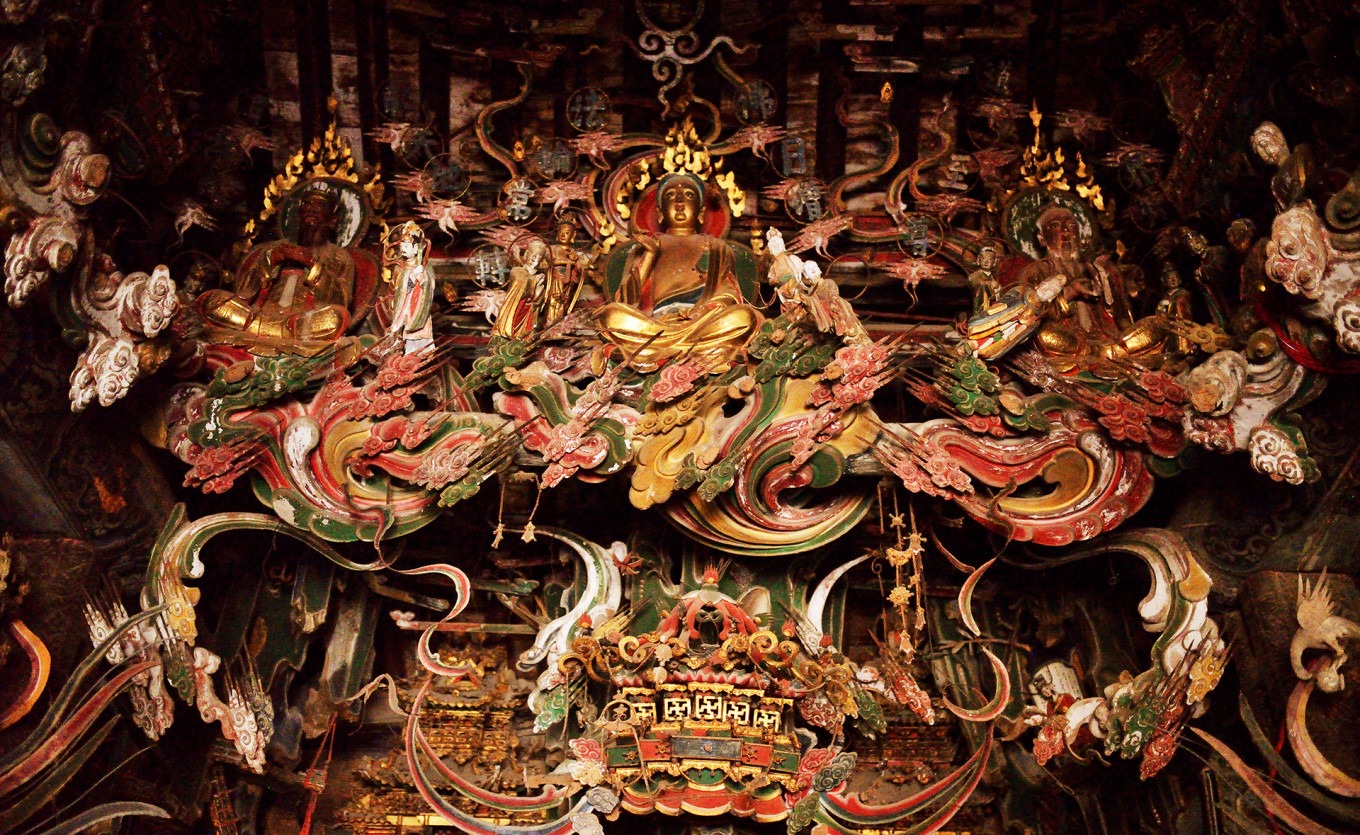
In the south side hall, the main statue is Manjushri Bodhisattva (文殊菩萨), seated in lotus position with one hand raised. Behind are the ‘Sudhana’s Fifty-Three Visits’ and ‘Universal Gate’ scenes, plus two buildings, but damage makes them unidentifiable.
Beside Manjushri are two dragon kings and a young novice; in front is his mount, a green lion. Under the lotus throne, a small monkey is thought to represent Sun Wukong.
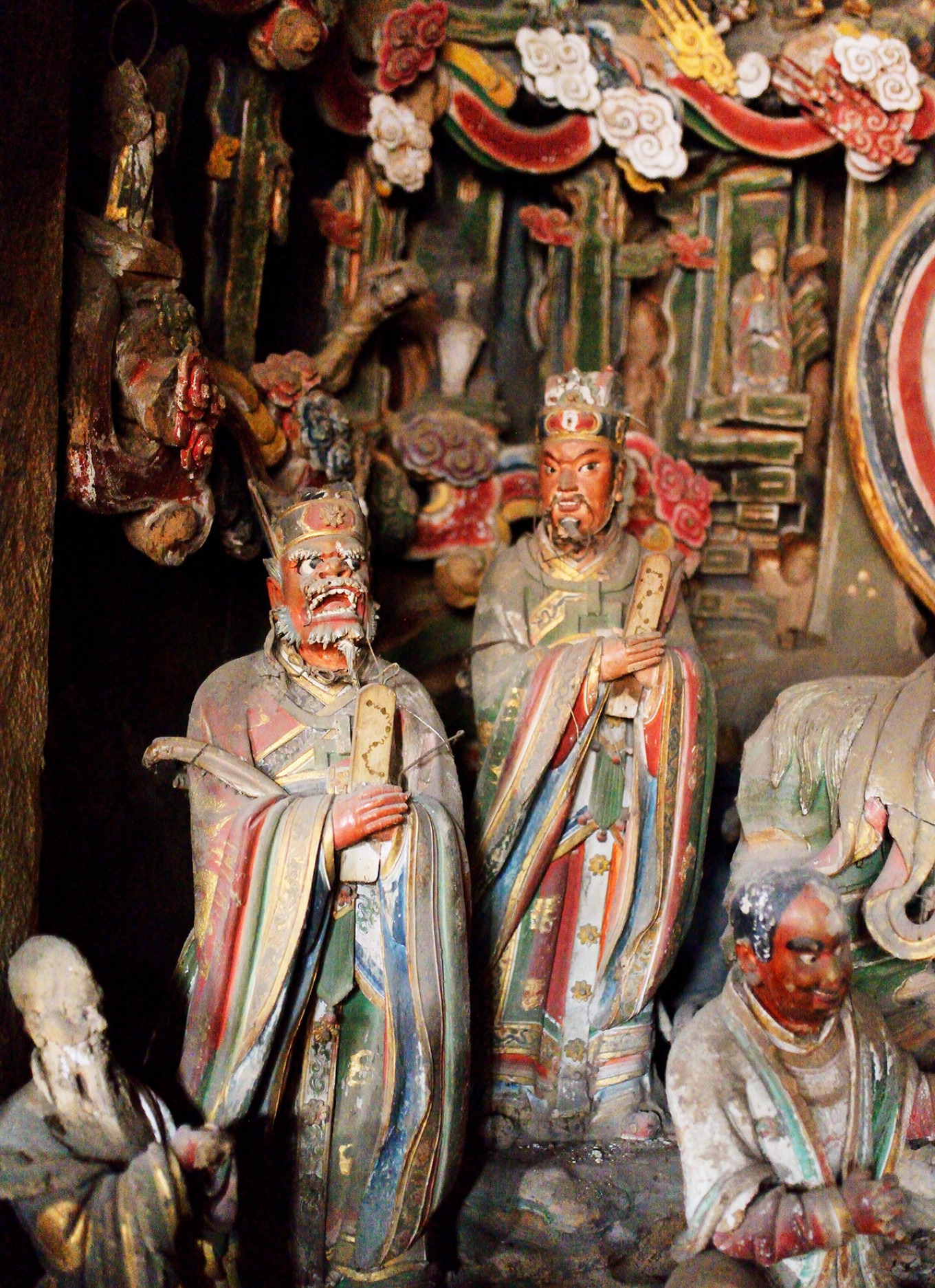
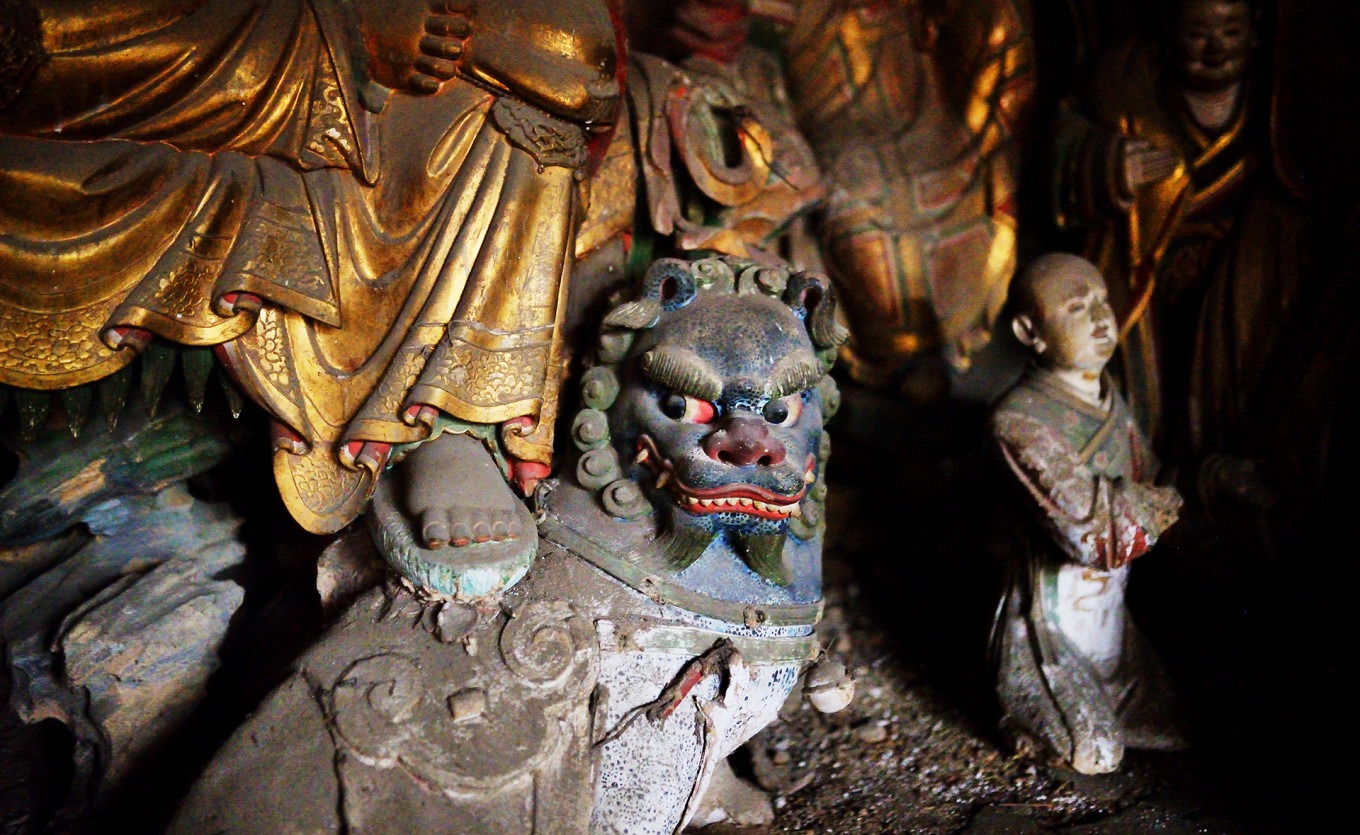
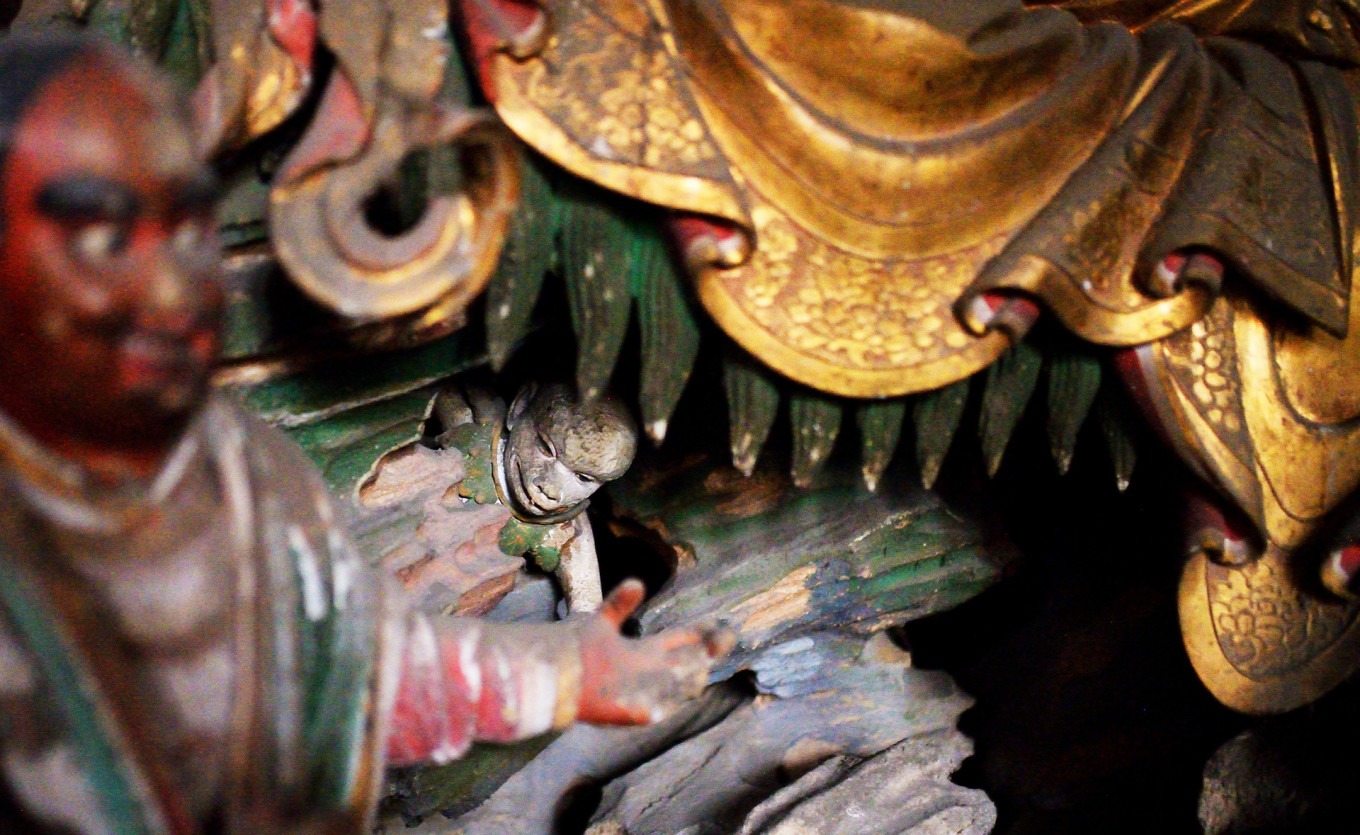
Above the canopy is a group of Taoist deities, with the Jade Emperor at center, holding a tablet, flanked by two dragons and over twenty civil officials. They are likely the ‘Ten Taiyi’ and ‘Twelve Yuanchen’, though unconfirmed. At the top center of the south side hall are three statues of the ‘Three Pure Ones’ (Sanqing): Yuanshi Tianzun, Lingbao Tianzun, and Daode Tianzun, the highest Taoist deities.
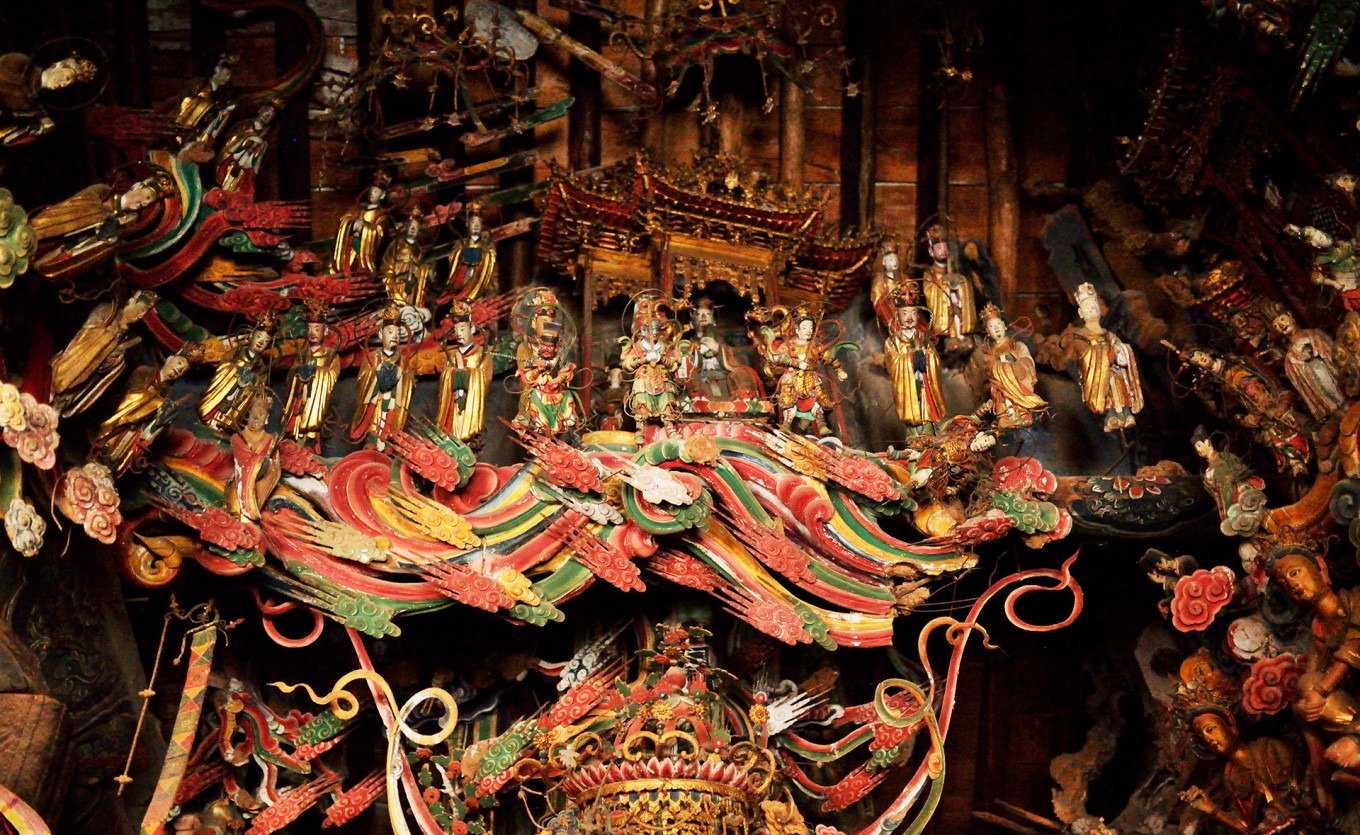
Turning to the south wall, it is divided into six layers from bottom to top. The lower three layers feature Buddhist figures: first layer Eighteen Arhats, second layer Twenty-Four Devas, third layer Twelve Perfections; above the fourth layer are Taoist figures.
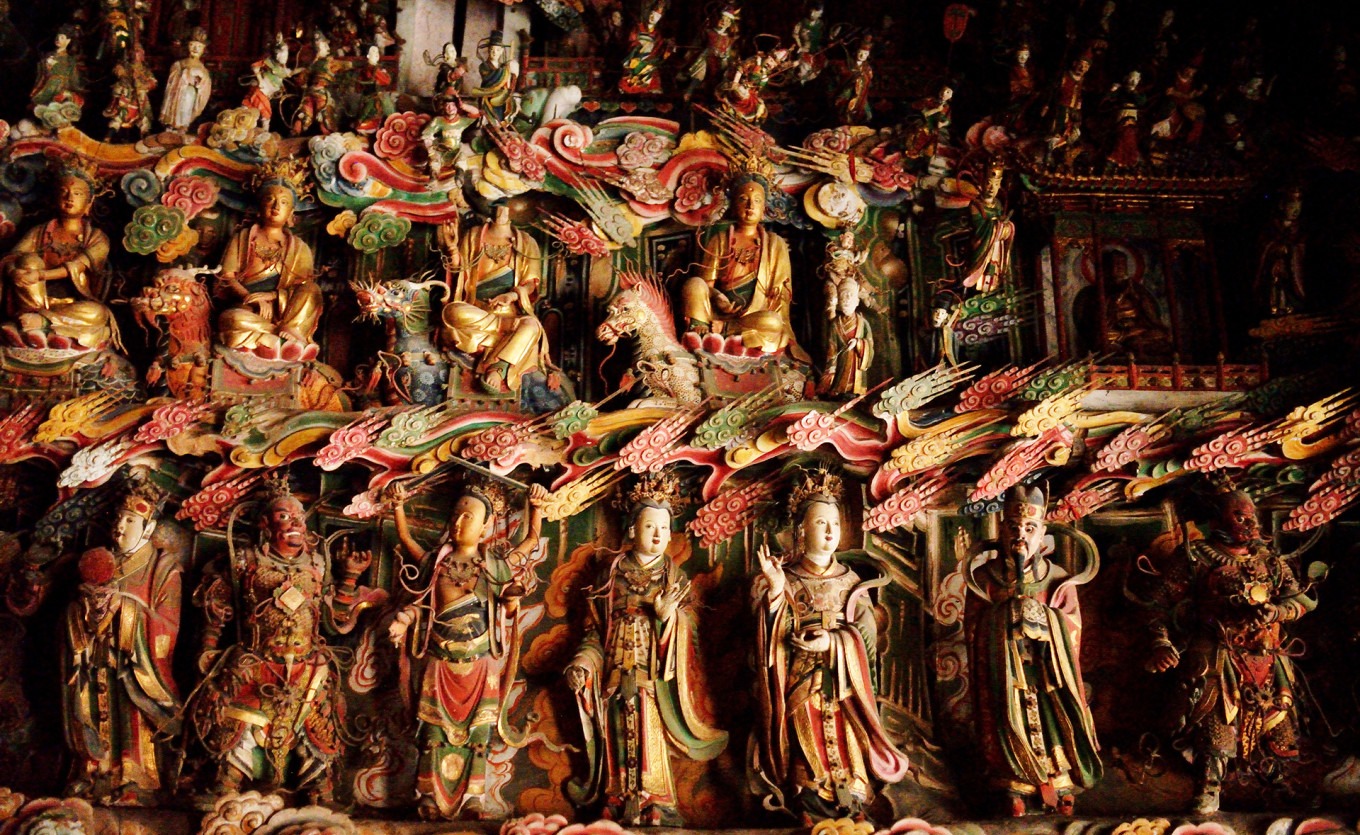
At the right end of the six Perfections on the south wall, a group of Taoist musicians play drums, sheng, and xiao, lifelike and dynamic.
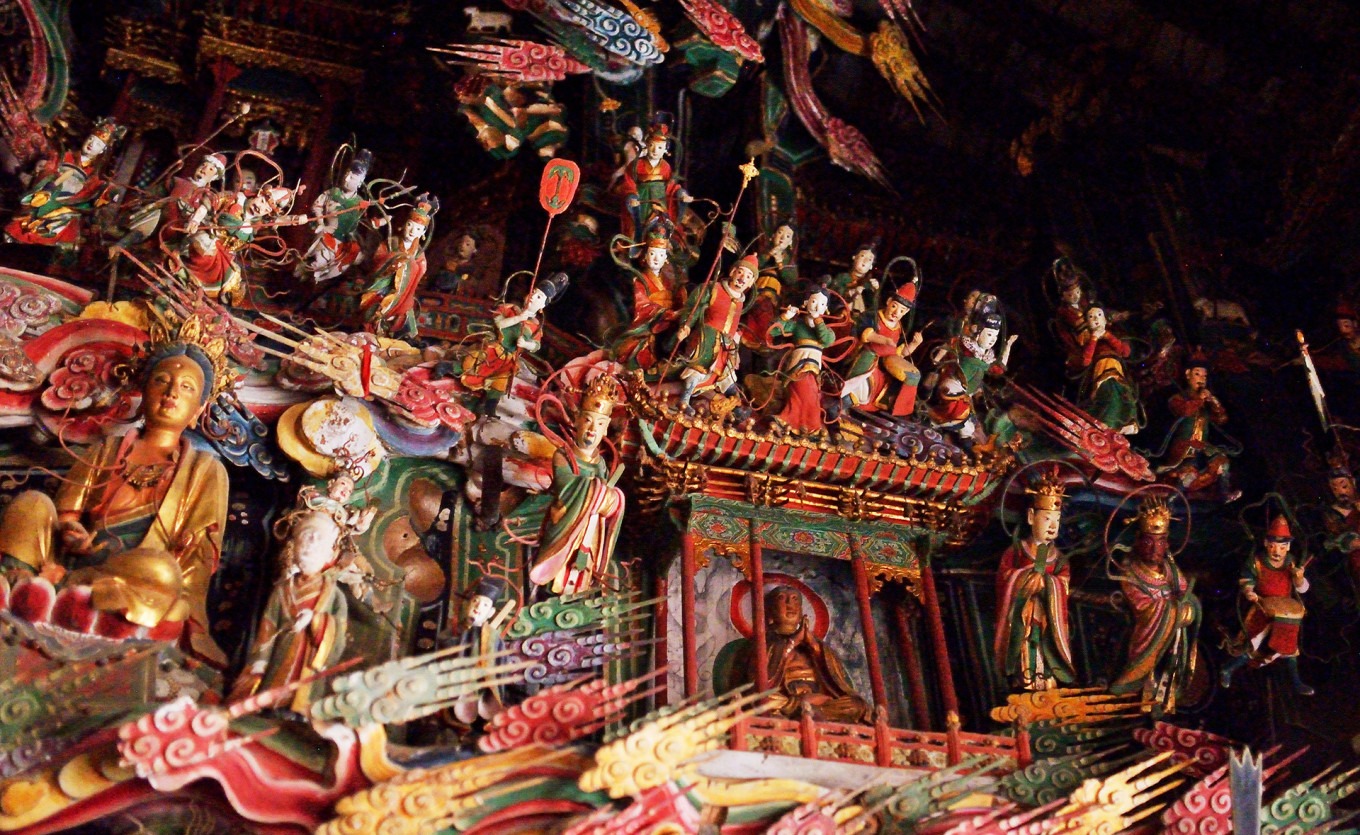
At the top under the ridge beam is the Queen Mother of the West (Xiwangmu). Below her are three armored generals—the ‘Three Heavenly Gate Generals’ (Tang Hong, Ge Yong, Zhou Wu), loyal ministers from the Zhou dynasty. Also on the south wall is a group of ‘Eight Immortals Celebrating Longevity’, with the Star of Longevity at center and the Eight Immortals (Li Tieguai, Han Zhongli, Zhang Guolao, Cao Guojiu, Lü Dongbin, Han Xiangzi, Lan Caihe, He Xiangu) on both sides. On the fourth layer, two ornate buildings: one with a plaque ‘Three Officials Great Emperor’ (Sanguan Dadi), with statues of Water and Earth Officials (Heaven Official lost); the other with ‘Xuantian Supreme Emperor’ plaque, housing Zhenwu Emperor, the northern god.
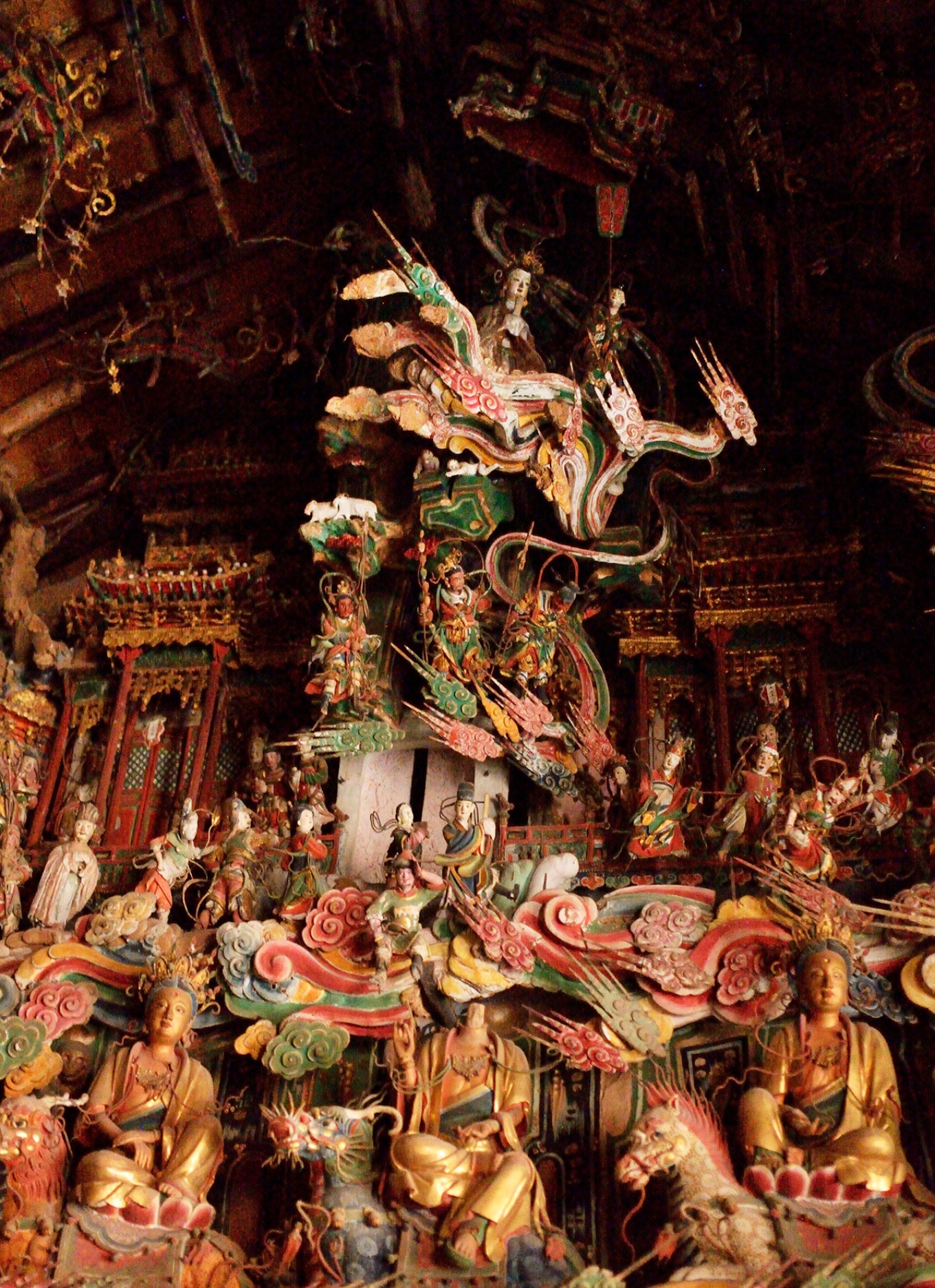
The third layer on both north and south walls features the Twelve Perfections (十二圆觉), six on each wall. These bodhisattva statues are masterfully crafted, each with distinct facial expressions and mounts. Notably, the fourth from left on the south wall has a monkey behind it, thought to be Sun Wukong after attaining Buddhahood.
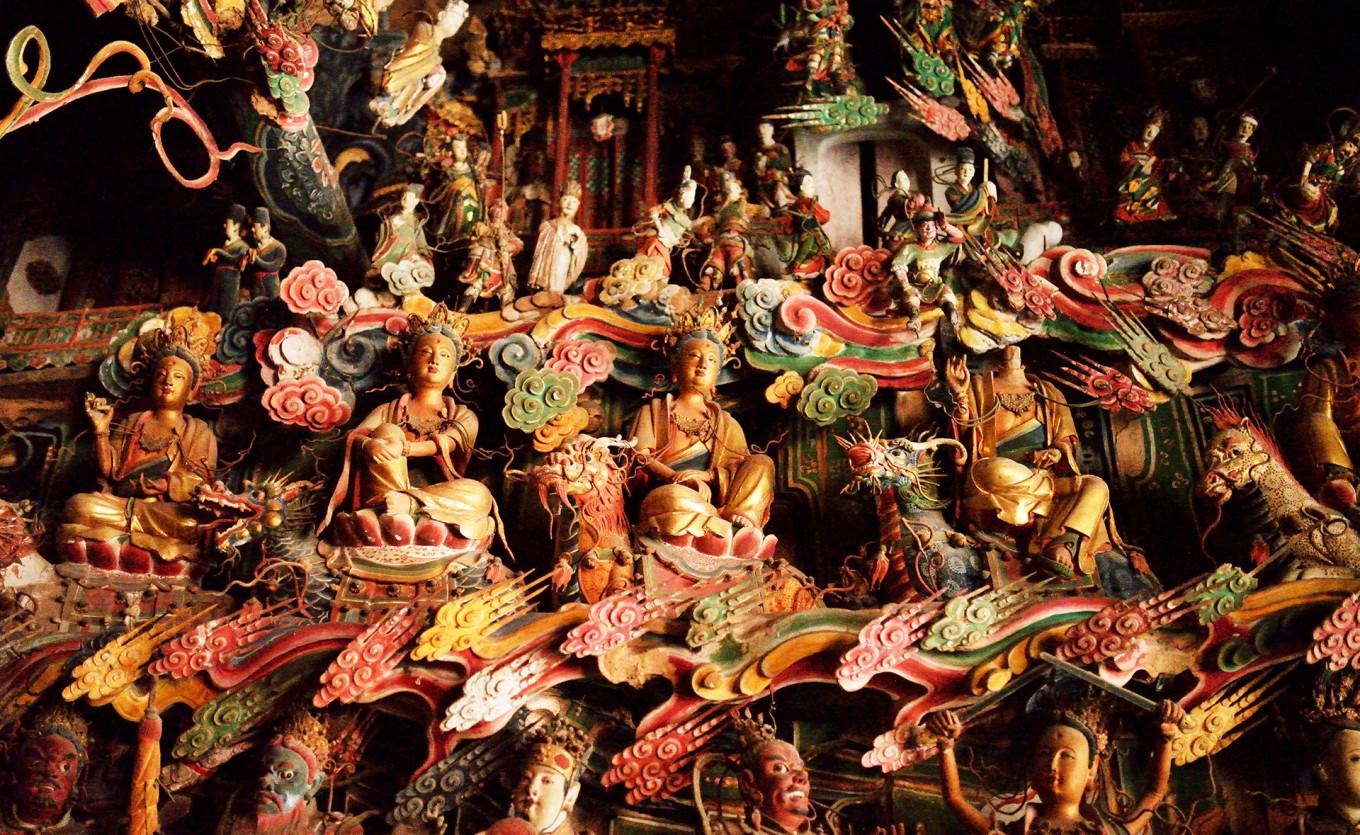
The second layer on both walls displays the Twenty-Four Devas (二十四诸天), twelve on each wall. On the south wall, from left: Brahma, Marici, Dhritarashtra, Vaishravana, Surya, Vajrapani, Saraswati, Hariti, Kinnara, Yama, Sanda, and Skanda.
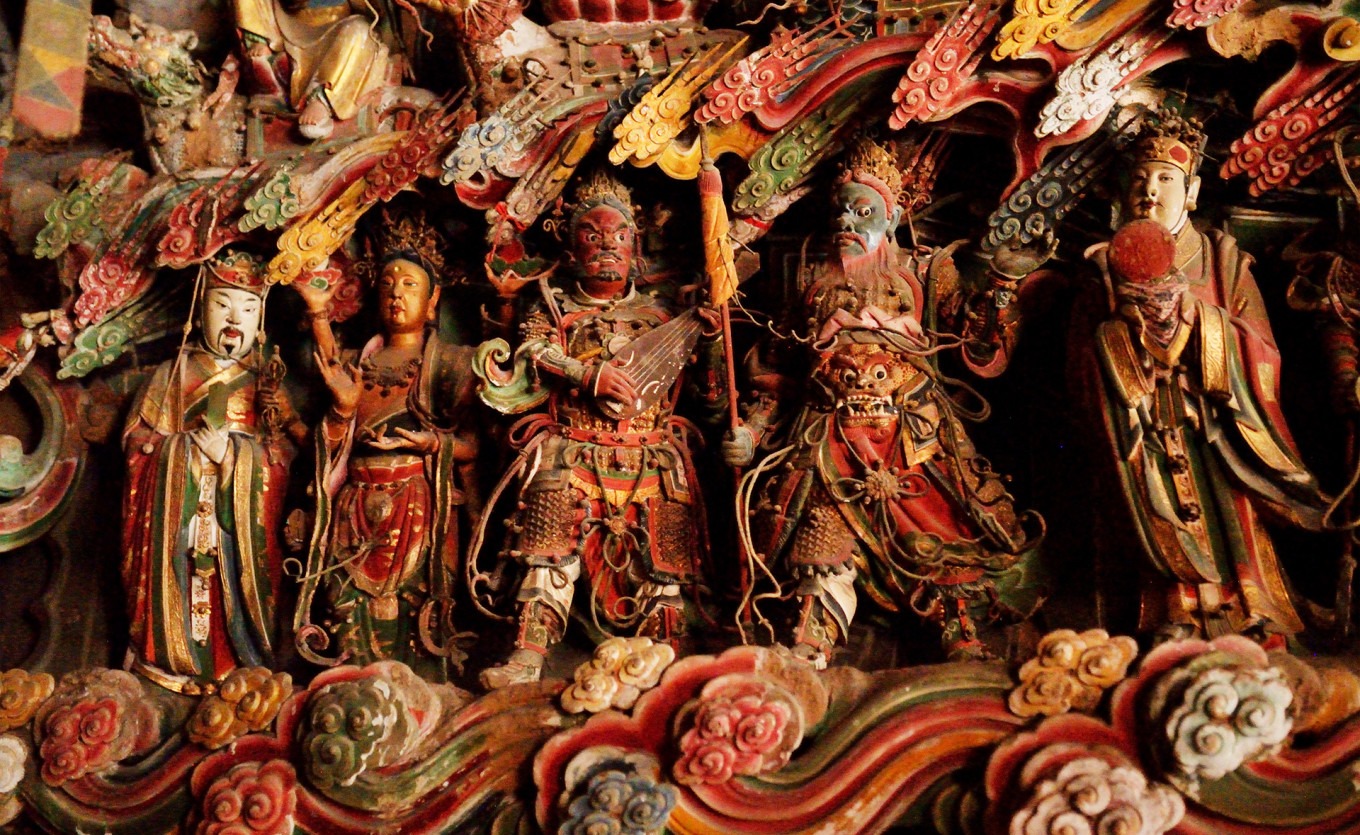
These guardian deities include males and females, appearing as emperors, bodhisattvas, officials, generals, and noblewomen, with varied skin colors and attire. Some are majestic, some dignified, some kind, some solemn—you won’t want to miss a single one.
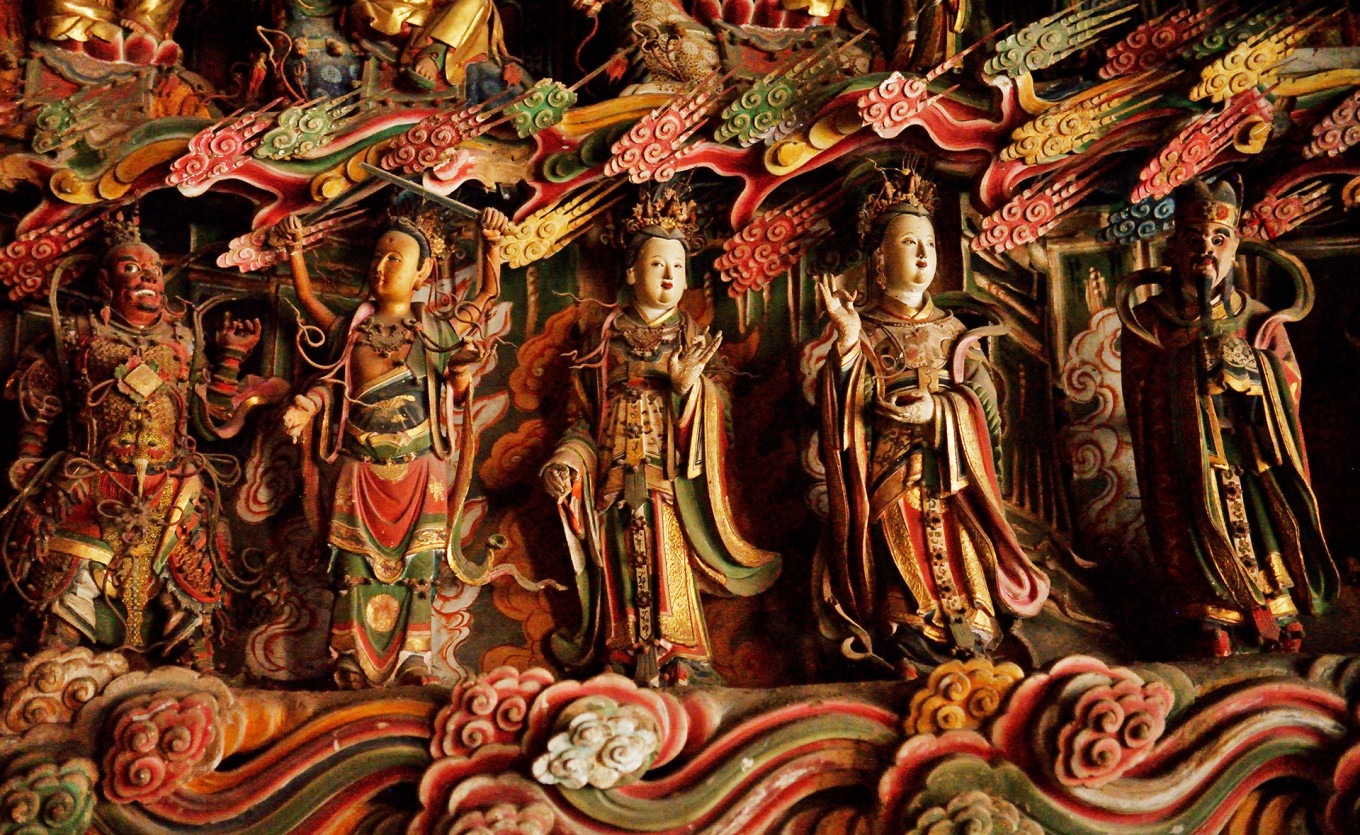
The bottom layer on both walls features the Eighteen Arhats (十八罗汉), nine on each wall. They range from serene meditators to robust warriors, neatly dressed to unkempt, each meticulously detailed.
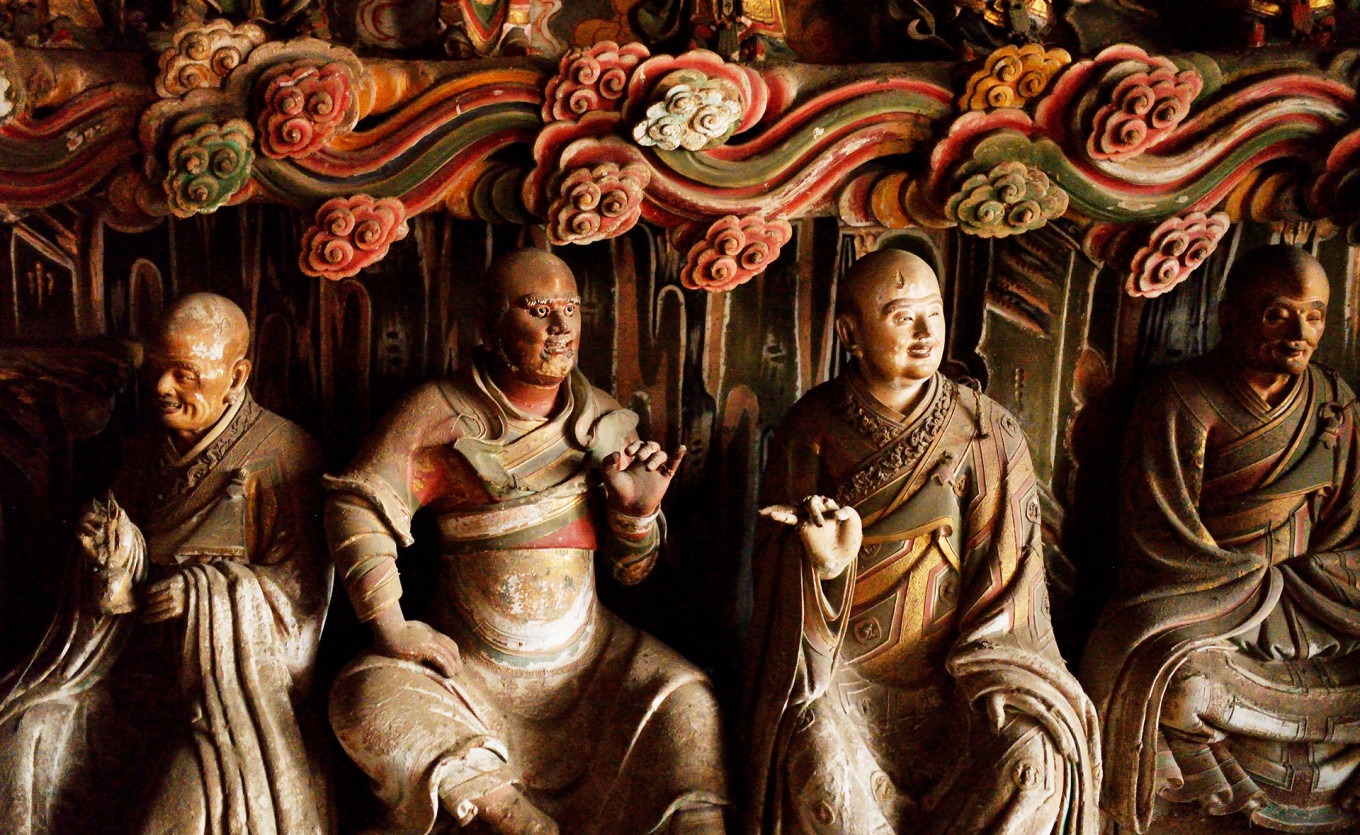
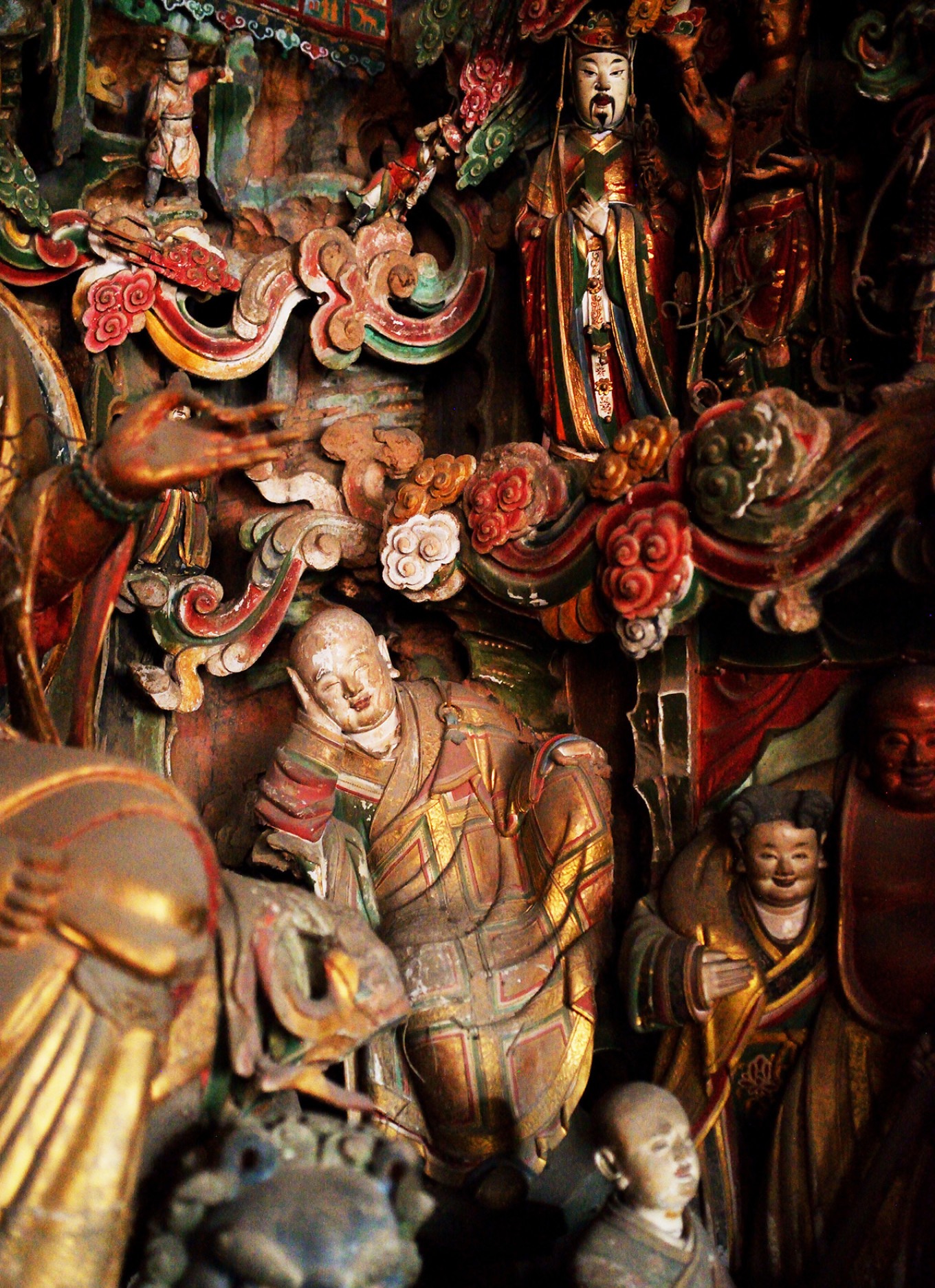
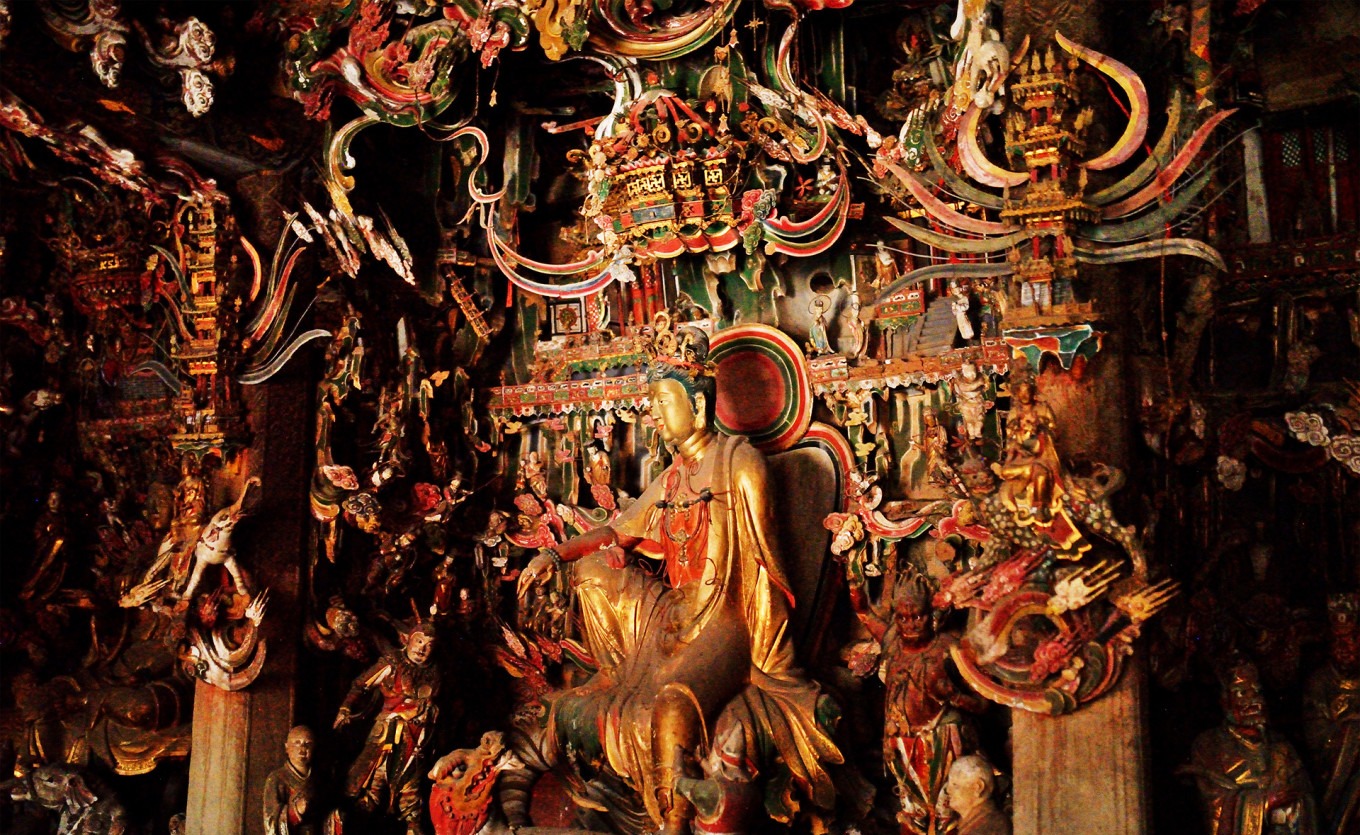
On the south wall, from left: first is the Sleeping Arhat, with hands on cheeks, eyes half-closed, smiling peacefully. Second is the Door-Keeping Arhat, pot-bellied, kind-eyed, emerging from a door with a girl on his arm and a boy carrying his staff.
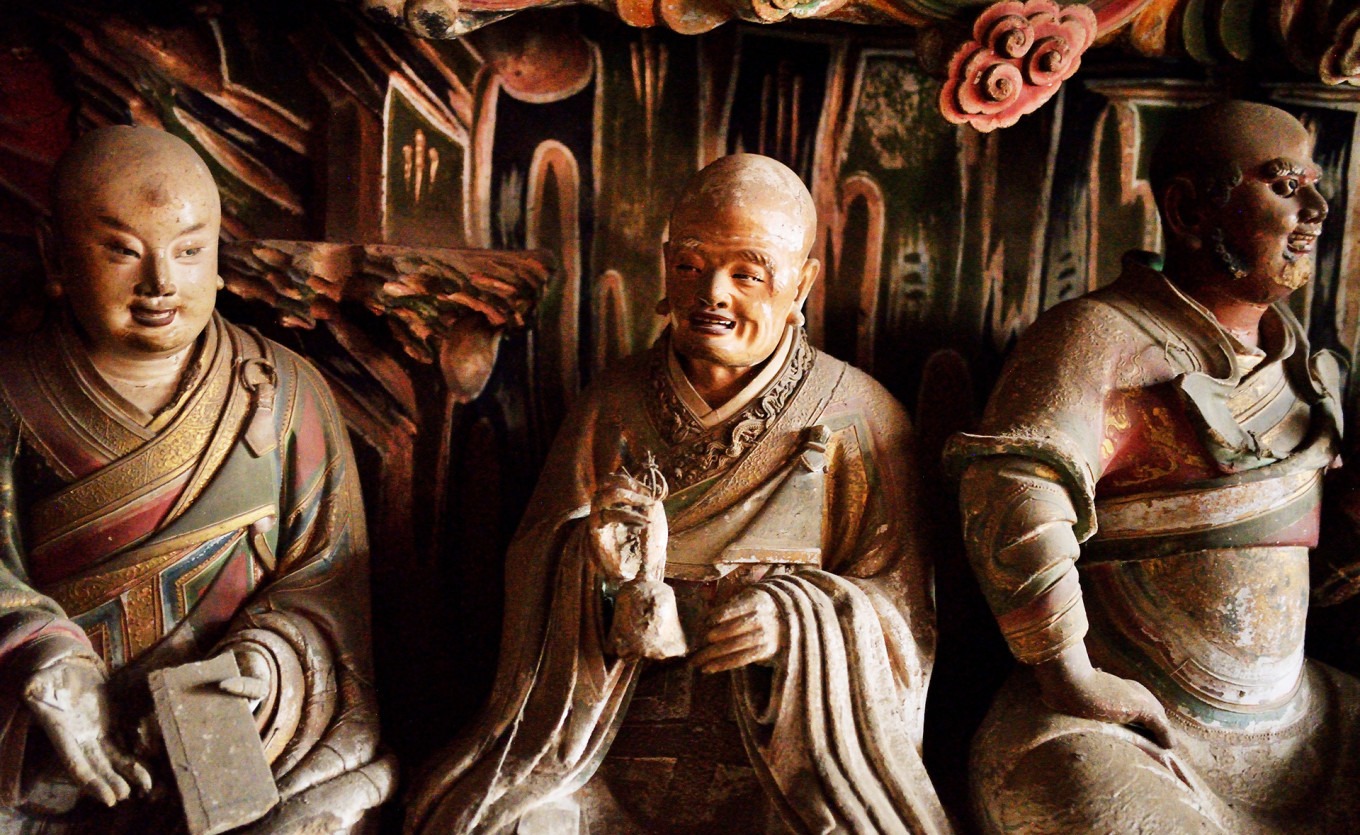
Third is the Preaching Arhat, holding a sutra and gesturing as if explaining. Fourth is the Bell-Ringing Arhat, holding a bell. Fifth is the Dragon-Subduing Arhat, red-faced, staring at a dragon sculpture on the window, symbolizing his power to subdue it.
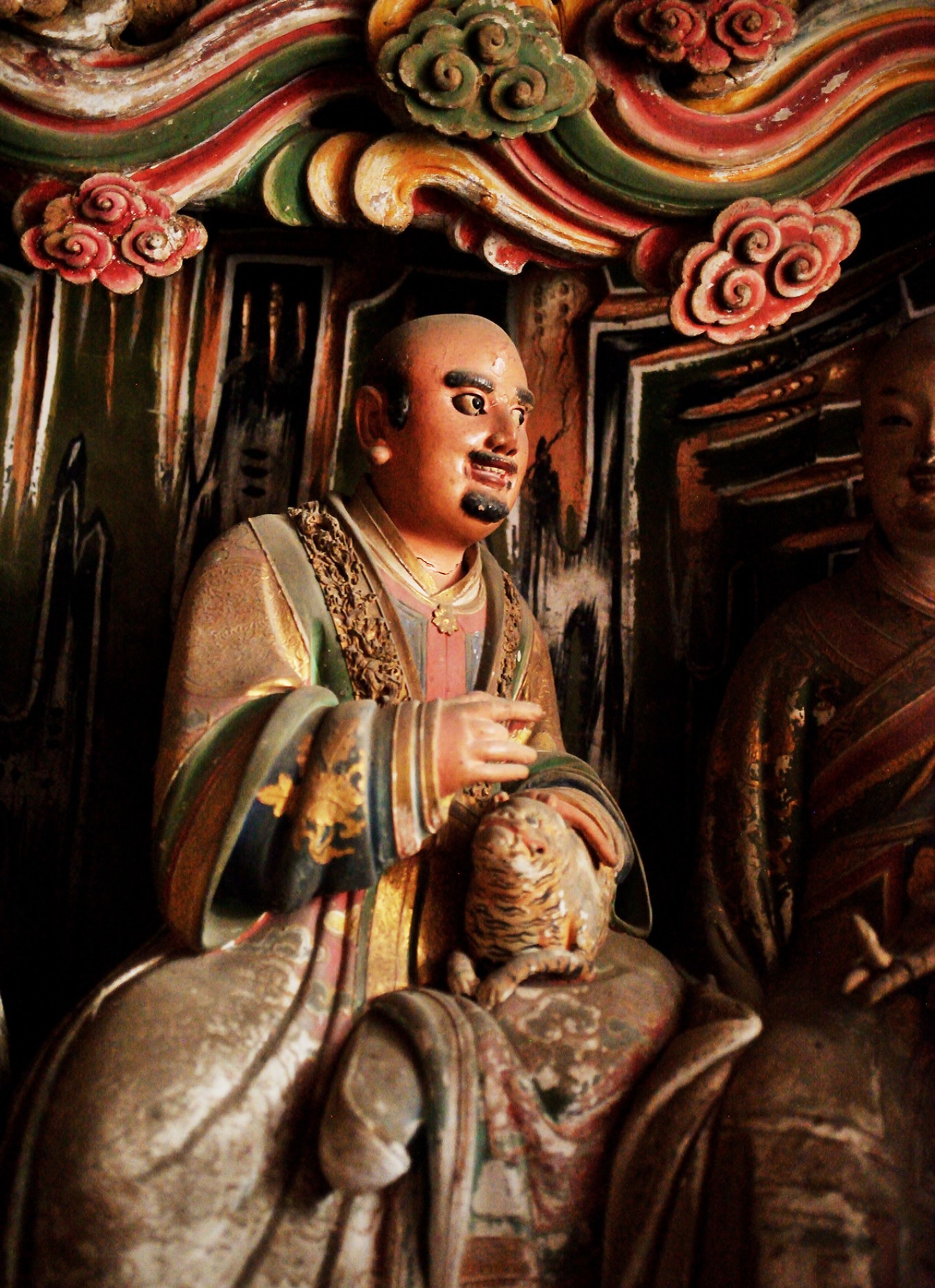
Eighth is the Tiger-Taming Arhat, with thick eyebrows and big eyes, a small tiger lying on his left thigh, his hands seeming to soothe it. The sixth, seventh, and ninth lack distinctive features, so their identities remain unknown.
In the north side hall, the main statue is Samantabhadra Bodhisattva (普贤菩萨), similar in pose to Manjushri, with his mount, a six-tusked white elephant, in front. Behind are the ‘Sudhana’s Fifty-Three Visits’ and ‘Universal Gate’ scenes, plus two buildings. The left building’s inscription is lost; the right one is ‘Fifty-Two Visits to Maitreya Bodhisattva’, showing Sudhana paying respects to Maitreya, but only Maitreya remains (with a big head and bare belly), Sudhana is missing.
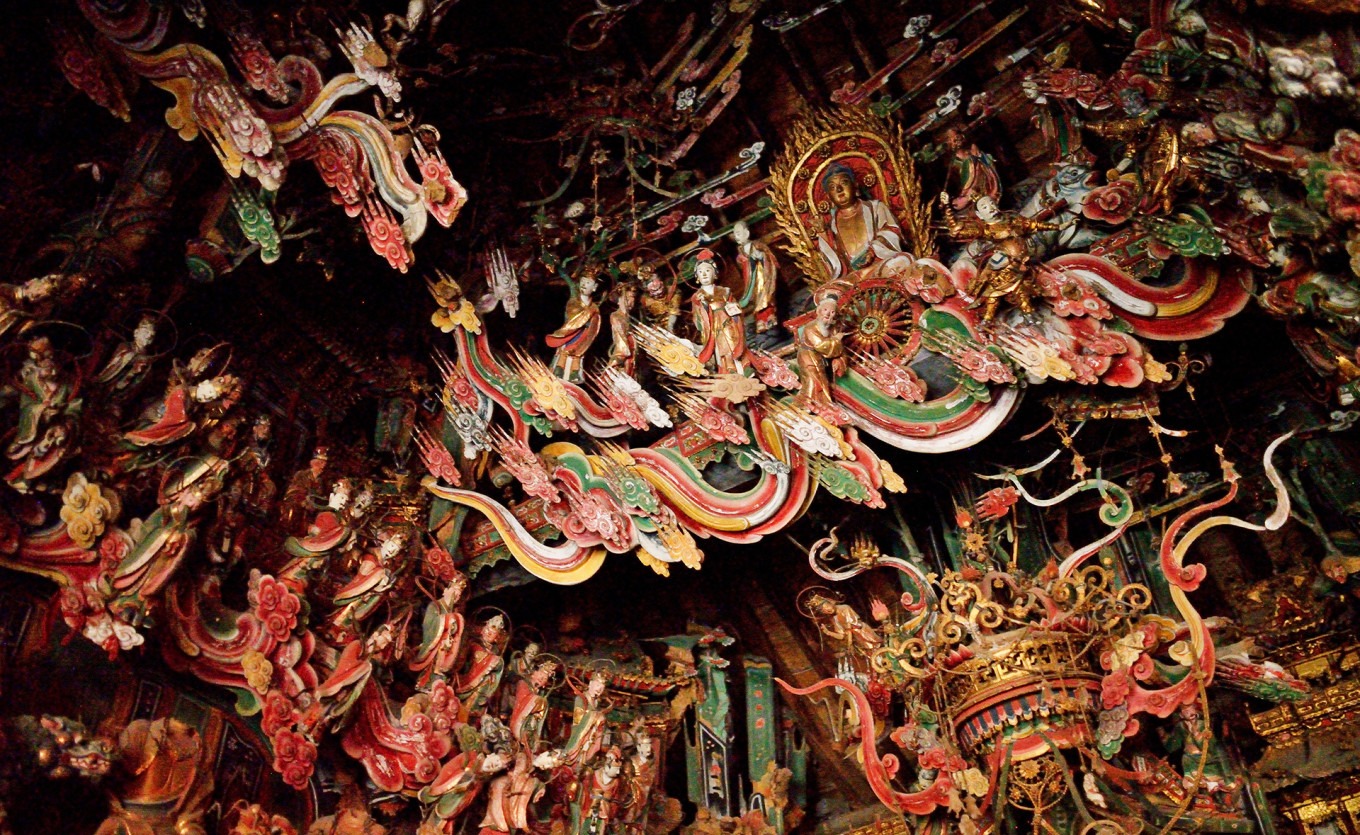
Above the canopy is a group with Tejaprabha Buddha at center, seated on an ox cart, flanked by disciples. On both sides are Taoist ‘Eleven Luminaries’ (Shiyiyao): Sun, Moon, Wood, Fire, Metal, Water, Earth, Rahu, Ketu, Ziyang, and Yuebei star lords, holding flowers, tablets, brushes, books, or weapons. At the top center of the north side hall is a group called ‘Tang King Welcoming Sutra at Thunderclap Monastery’, depicting Emperor Taizong of Tang welcoming Xuanzang back from his journey.
Like the south wall, the north wall has six layers. The lower three are Buddhist: Arhats, Devas, and Perfections. Above the fourth layer are Confucian figures—the ‘Seventy-Two Disciples of Confucius’ (孔门七十二贤), an overwhelming array.
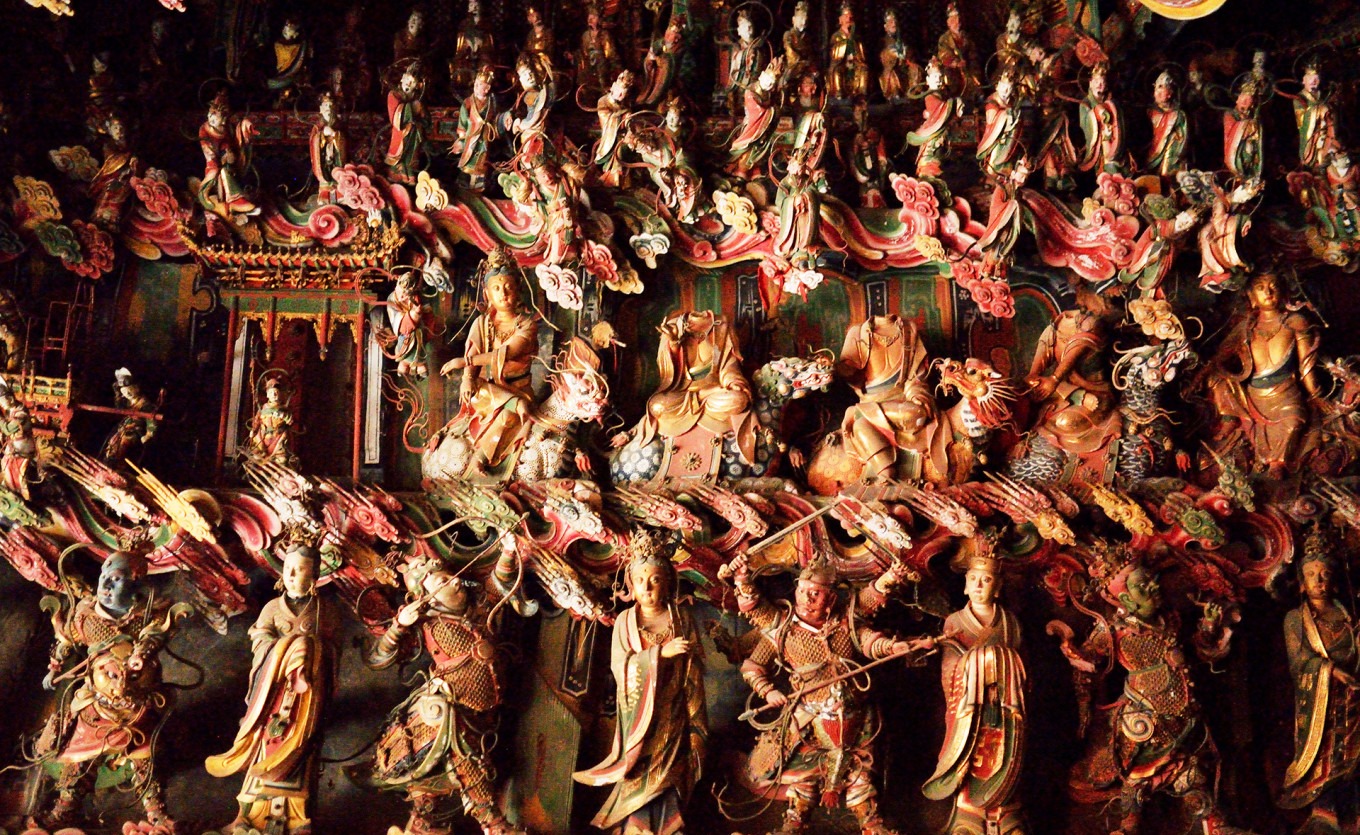
The third layer on the north wall holds six of the Twelve Perfections, some of which have lost their heads due to theft.
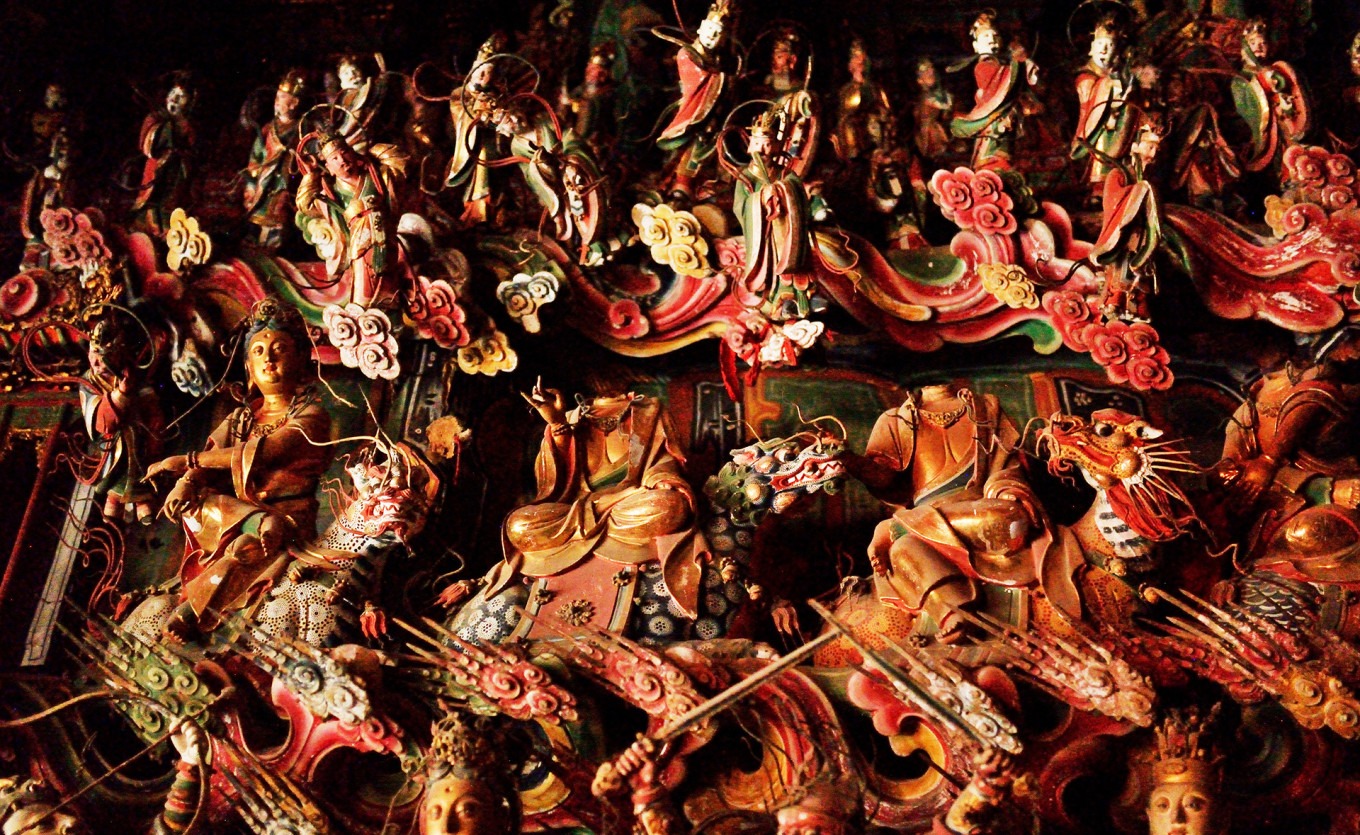
West of the Twelve Perfections, a group depicts the Ming dynasty folk religion of the Western Great Vehicle Sect (Xidachengjiao). According to legend, the sect’s founder, Patriarch Lü, was a nun who, as a madwoman, tried to dissuade Emperor Yingzong from a campaign. After his defeat and capture, she brought him food; later, after his restoration, temples were built to honor her. The sculptures show Emperor Yingzong in a sedan chair heading to Tumu Fortress, Mongol soldiers with weapons, and many civil and military officials, recreating the ‘Tumu Crisis’, ‘Patriarch Lü’s Rescue’, and ‘Nangong Restoration’.
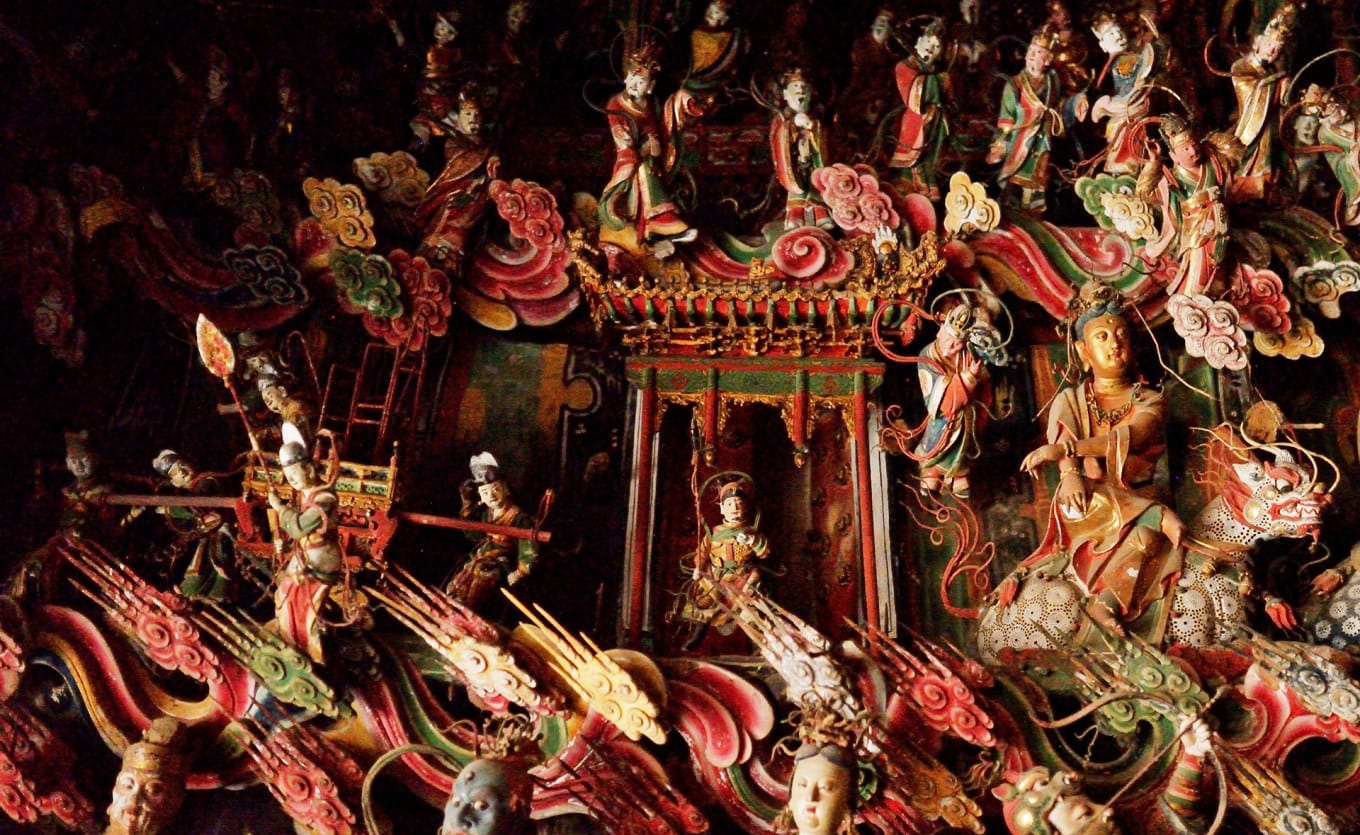
The second layer on the north wall features twelve Devas. From right: Indra, Virudhaka, Bodhi Tree Goddess, Virupaksha, Chandra, Maheshvara, Sthavara, Hou Yi, Mahadevi, Rakshasi, Emperor Ziwei, and Guan Yu.
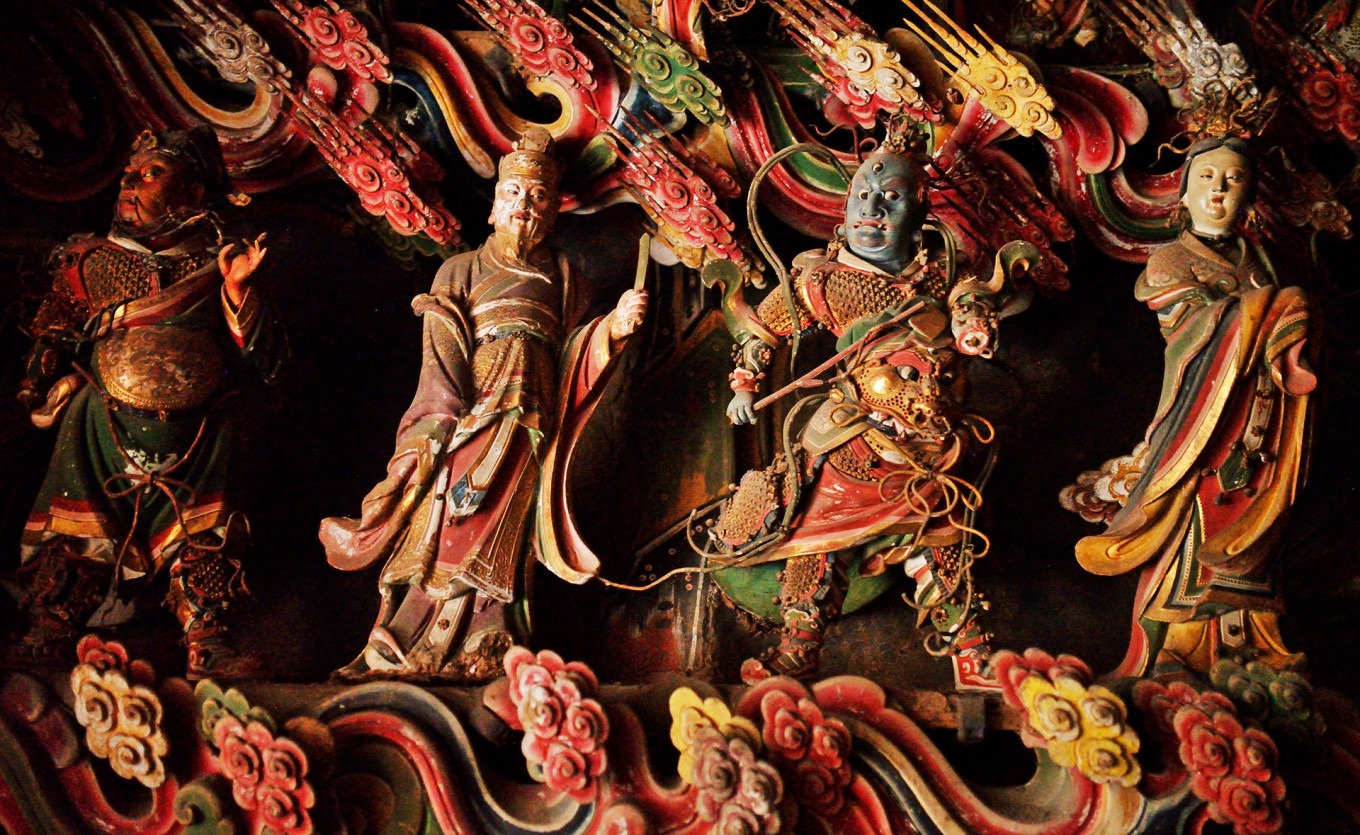
Interesting are the eighth from right, Hou Yi, and the twelfth, Guan Yu—both local deified figures from the Shangdang region. Hou Yi, as the god of Mount Sanzong, was prayed to for rain, so many temples (Sanzong Temple) in Changzhi honor him. Guan Yu, a native of Xiezhou, Shanxi, is included among the Twenty-Four Devas as a guardian deity in Buddhism.
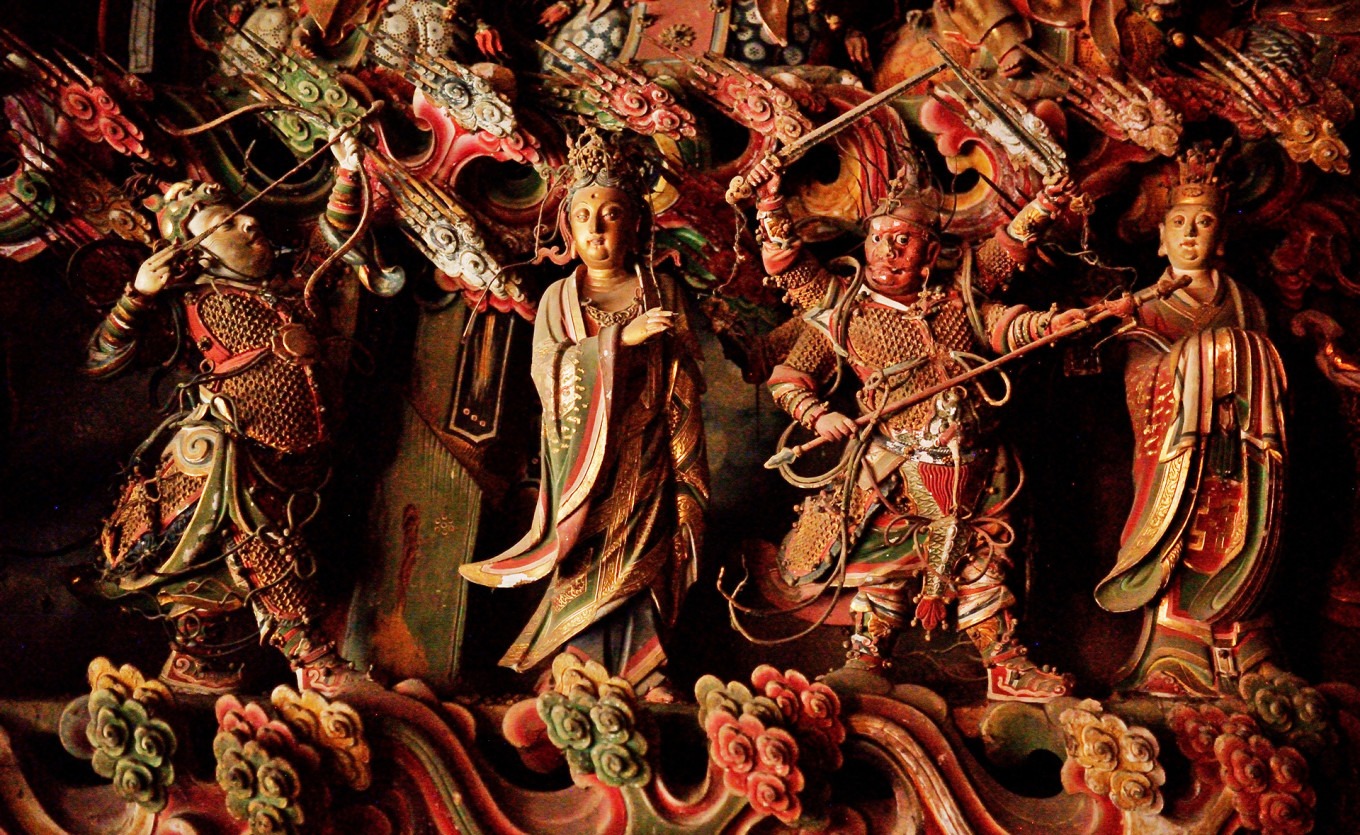
The bottom layer on the north wall holds the remaining nine Arhats. From right: first is the Sick Arhat, thin with prominent forehead and visible ribs, looking unwell. Fourth is the Ear-Picking Arhat, with right hand raised, fingers curled, little finger extended as if picking his ear, looking relaxed.
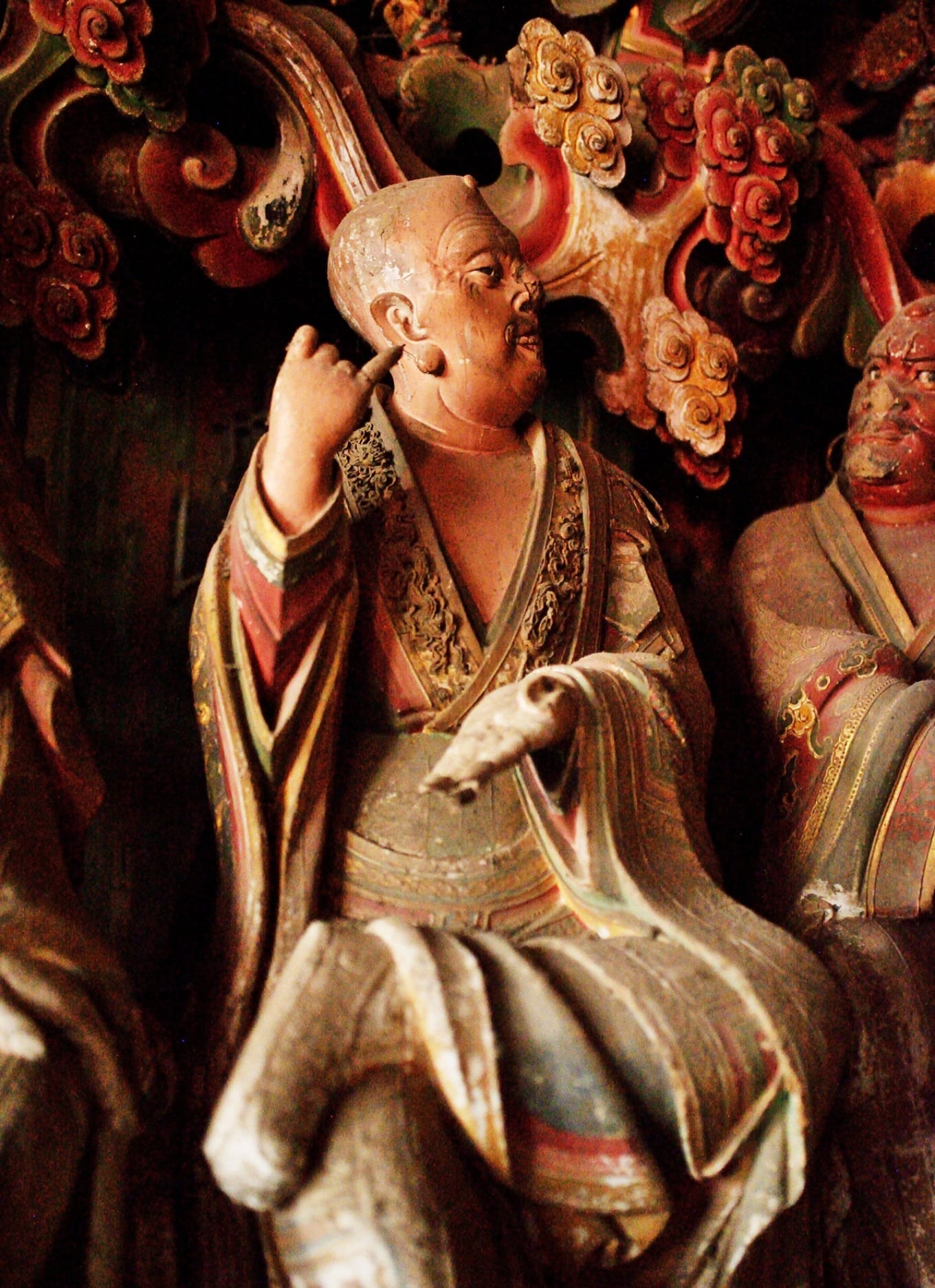
Fifth is the Plantain Arhat, left hand on knee, right hand holding a plantain fan, with an ethereal expression. Sixth is the Long-Eyebrow Arhat, emaciated with eyebrows reaching his face. Seventh is the Meditating Arhat, wearing a hood, bright-eyed, broad forehead, robust, sitting solemnly.
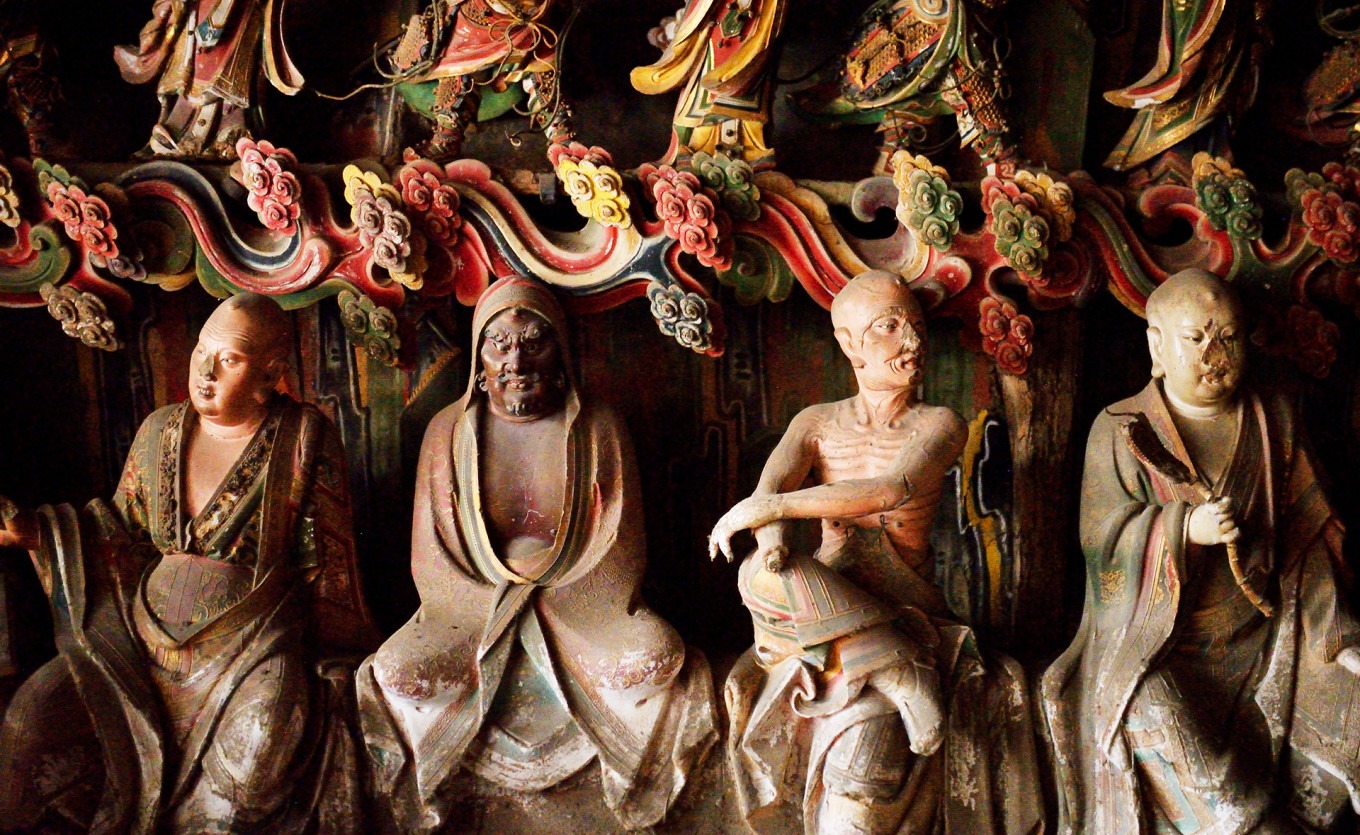
The second, third, and eighth Arhats lack distinctive features, so their names are unknown.
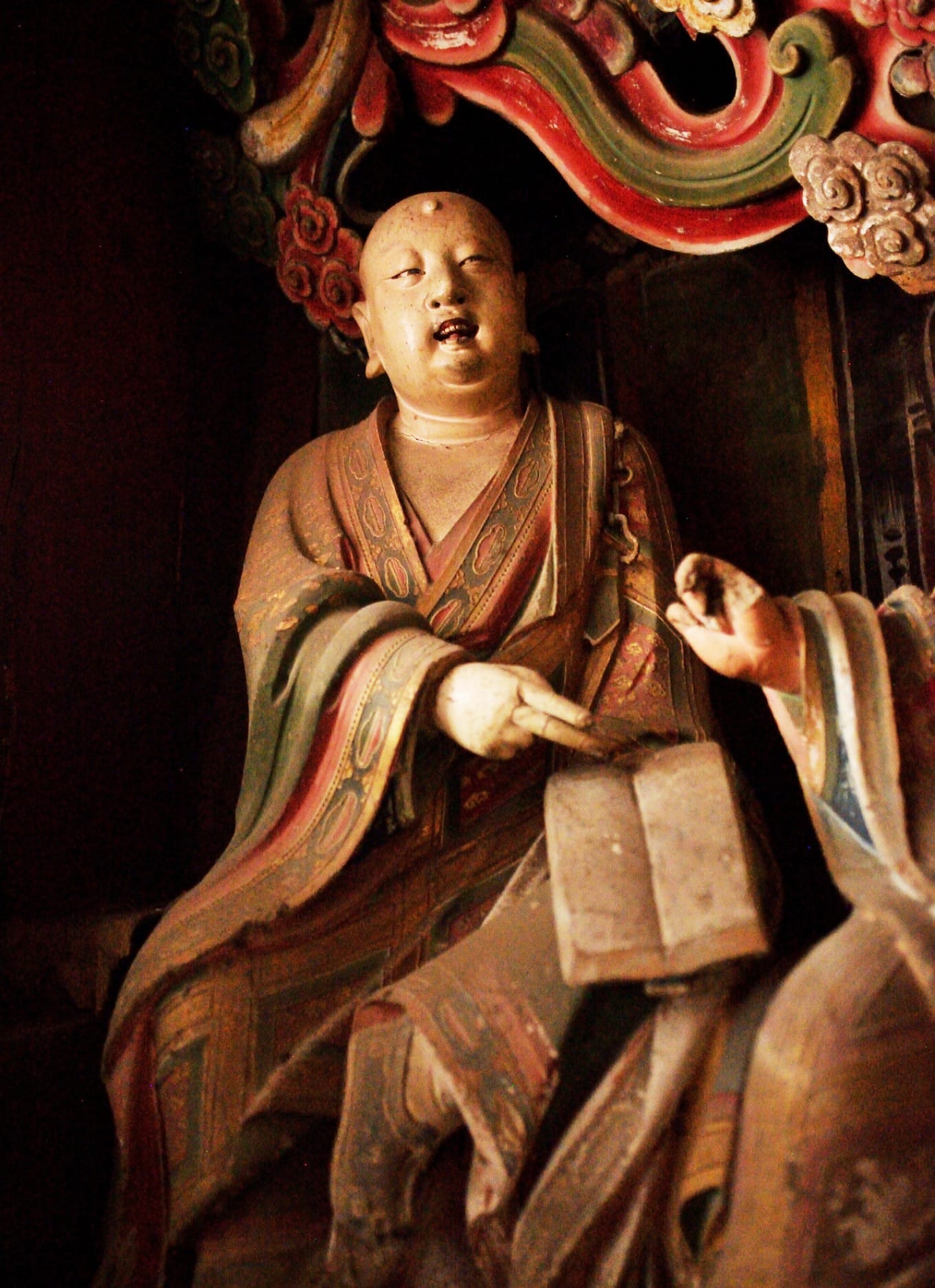
Finally, look up at the beams. The craftsmen cleverly used the height difference between the main beam and secondary beam to create golden pavilions and auspicious clouds, arranging the ‘Thirty-Five Buddhas’ within. The ‘Thirty-Five Buddhas’ are the thirty-five Buddhas dwelling in all worlds. In fact, Guanyin Hall has more than thirty-five—forty-four were made due to layout needs. Similarly, above the south side hall, a group of Taoist deities is sculpted, though their names are unknown. Above the north side hall, the ‘Seventy-Two Disciples of Confucius’ appear, continuing the theme from the upper north wall.
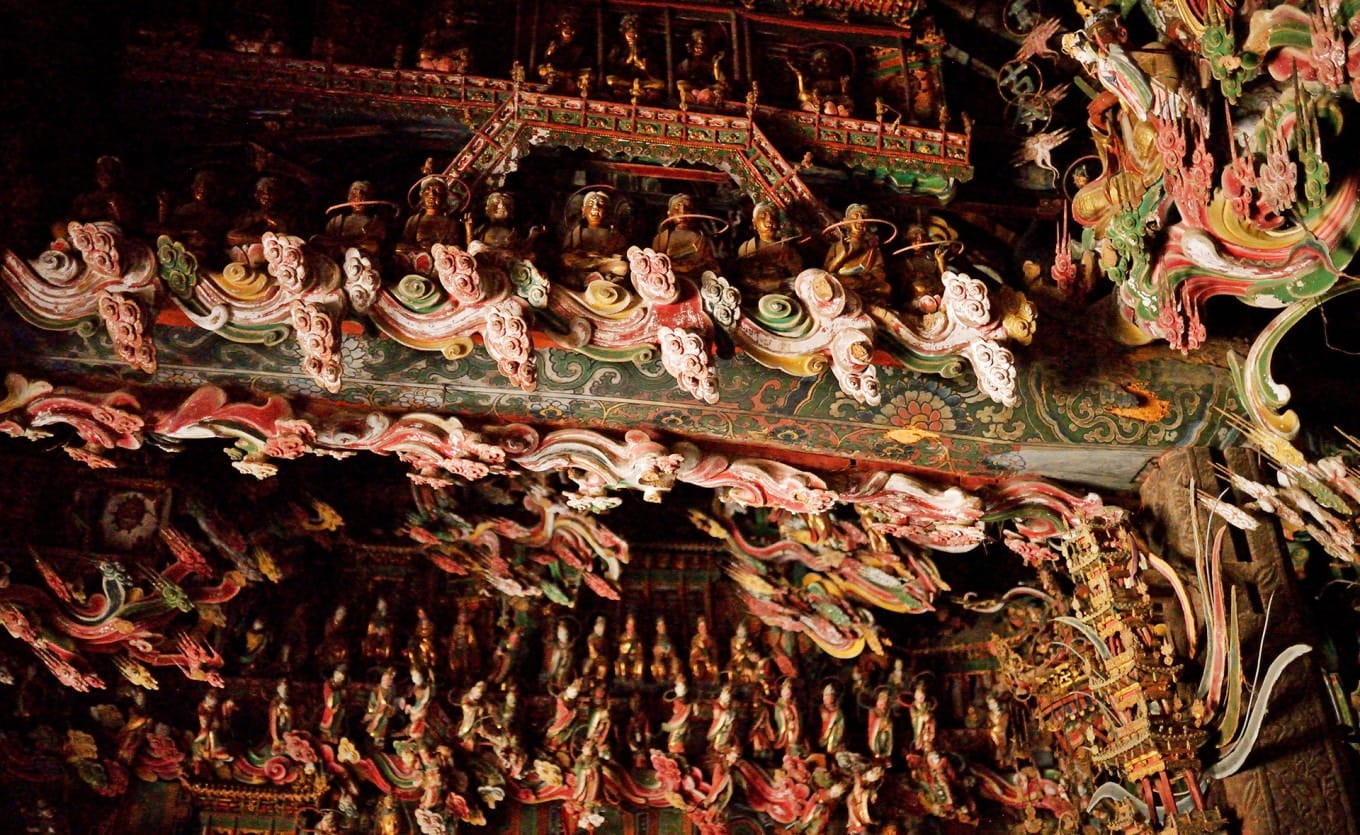
Though the main hall is only a three-bay structure with limited space, ancient artisans skillfully created such a vast number of divine figures in this confined area, presenting a splendid panorama of the three religions. This makes Changzhi’s Guanyin Hall a shining pearl in China’s treasure house of sculpture art.
Shangdang Gate
Perched on a high ridge along West Street in Changzhi, Shangdang Gate (上党门) is both the city’s iconic landmark and a protected heritage site. Since the Sui dynasty, this spot served as the government office of Shangdang Commandery. Historical records note that Li Longji, later Emperor Xuanzong of Tang, when serving as the prefect of Luzhou, expanded the complex into a palace with nearly three hundred pavilions and halls. However, warfare during the Jin and Yuan dynasties razed these Tang and Song splendors to the ground.
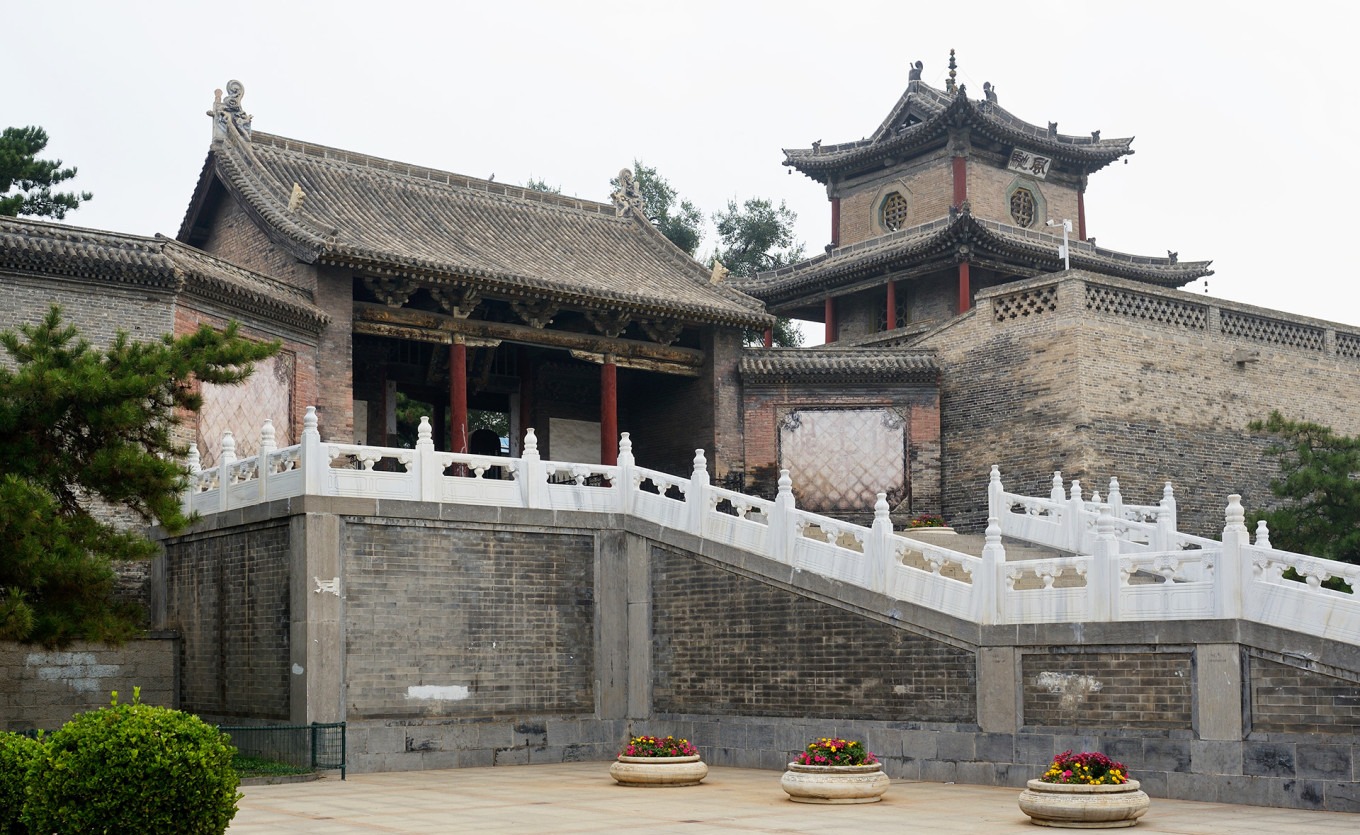
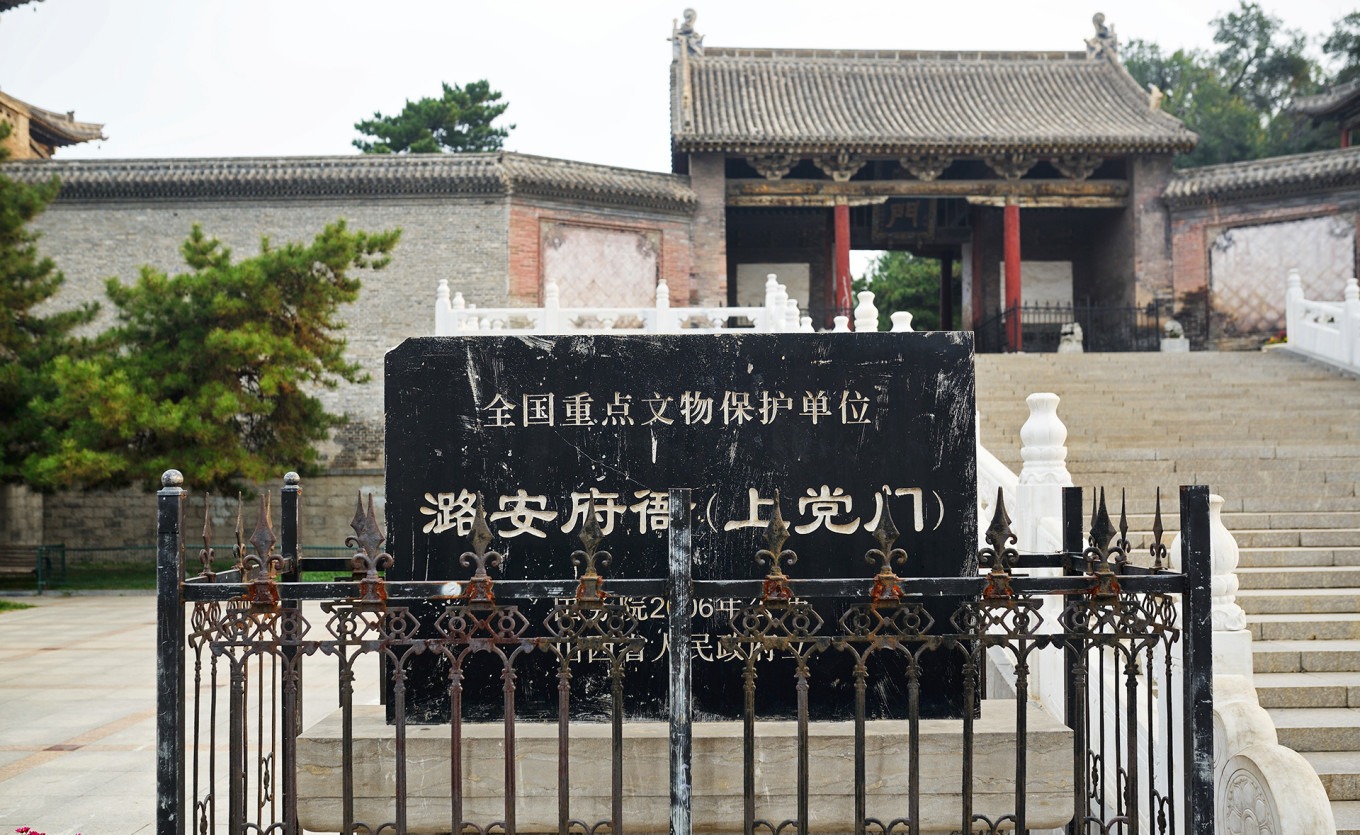
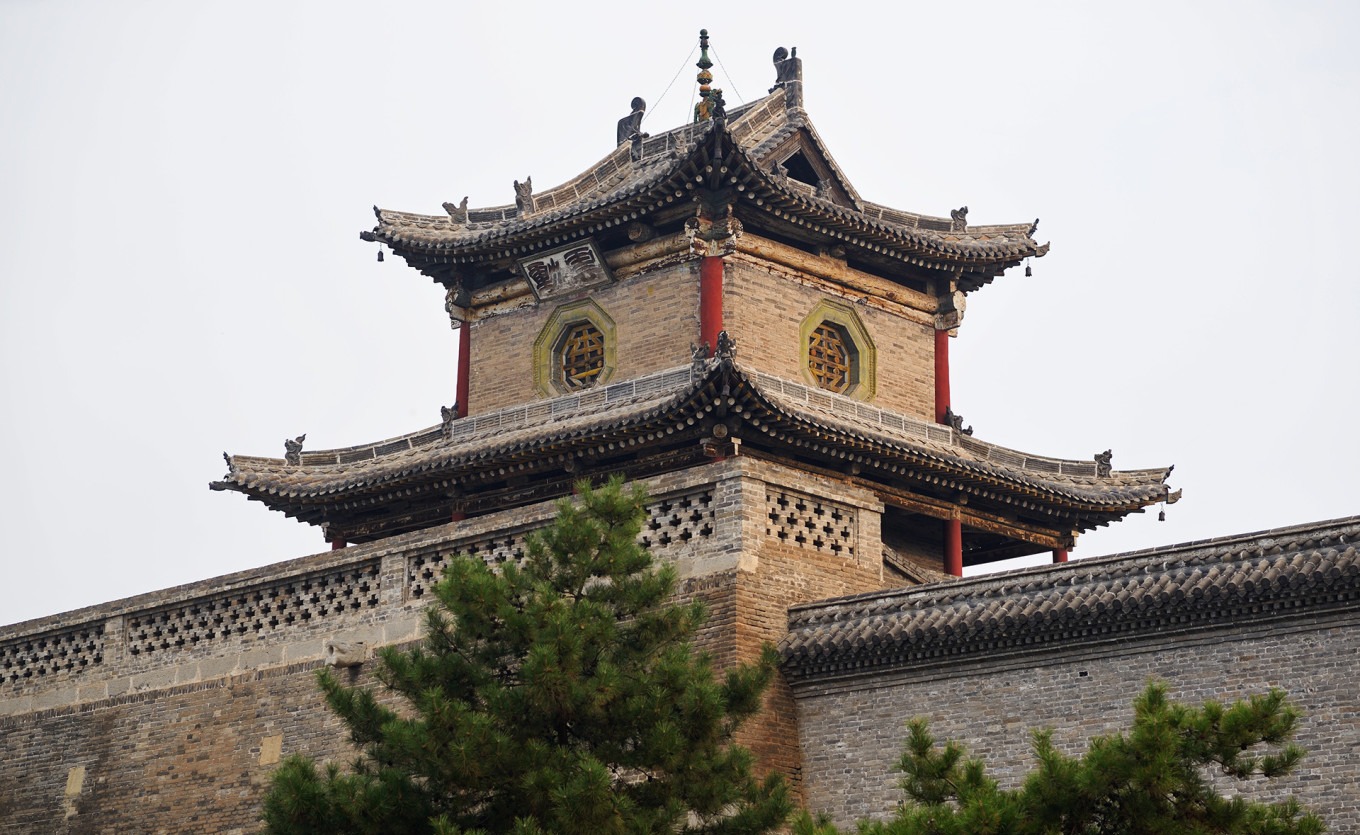
What remains today of the original Shangdang government complex is only the gate itself, rebuilt in the third year of Hongwu (1370) during the Ming dynasty, along with the later-added bell and drum towers.
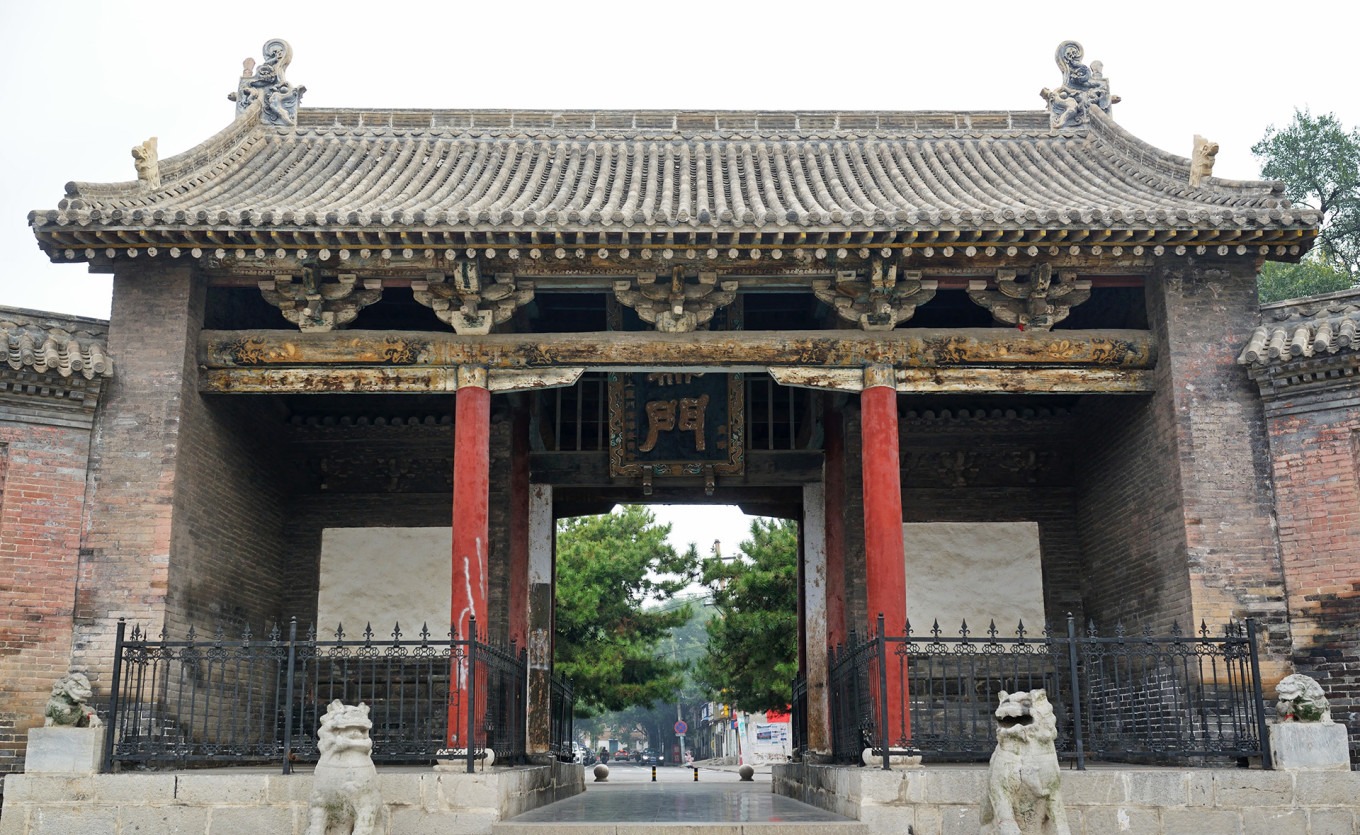
Though modest in scale, Shangdang Gate makes the most of its terrain. When you stand at the foot of the steps and look up, the gate perched on its high platform appears grand and imposing. On the bell tower (left) and drum tower (right), both with double-eave xieshan roofs, hang enormous plaques reading “Wind Speed” (风驰 (local term)) and “Cloud Move” (云动 (local term)), evoking the towering majesty of the original government complex.
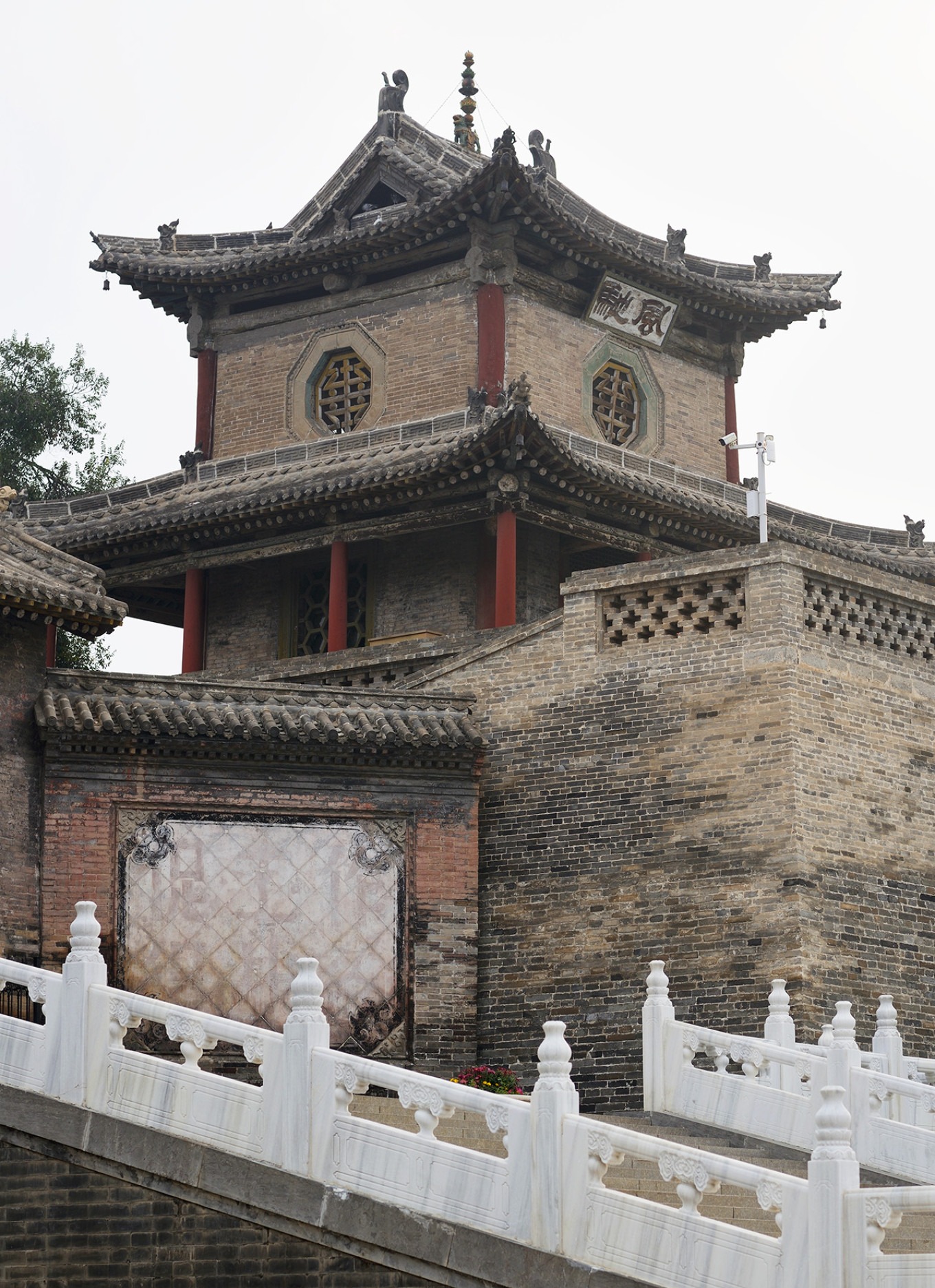
- Address: 15 Fushang Street, Luzhou District, Changzhi (长治市潞州区府上街15号)
- Admission: Free
Practical tip: You can prioritize one signature stop around the area, and you should adjust timing and budget based on transport and peak hours.
Lu’an Prefecture City God Temple
- RestaurantN/A temple site no restaurant on premises (店名)
- Address长治市潞州区庙道巷 / Miaodao Lane, Luzhou District, Changzhi City
- Recommended dishesN/A (菜名)
- Average spendAdmission 5 RMB
Just under a kilometer from Shangdang Gate, the Lu’an Prefecture City God Temple (潞安府城隍庙) sits in the busiest part of downtown Changzhi. Founded in the Yuan dynasty, it is one of the largest surviving prefecture-level City God temples in China. The complex faces south with a three-courtyard layout, featuring from south to north: the Six-Dragon Screen, Hongmen Gate, wood archway, stone archway, mountain gate, double-eaved tower, stage, offering pavilion, central main hall, and sleeping palace. Side halls and corridors flank each courtyard. The temple was listed as a fifth-batch National Key Cultural Relics Protection Unit in 2001.
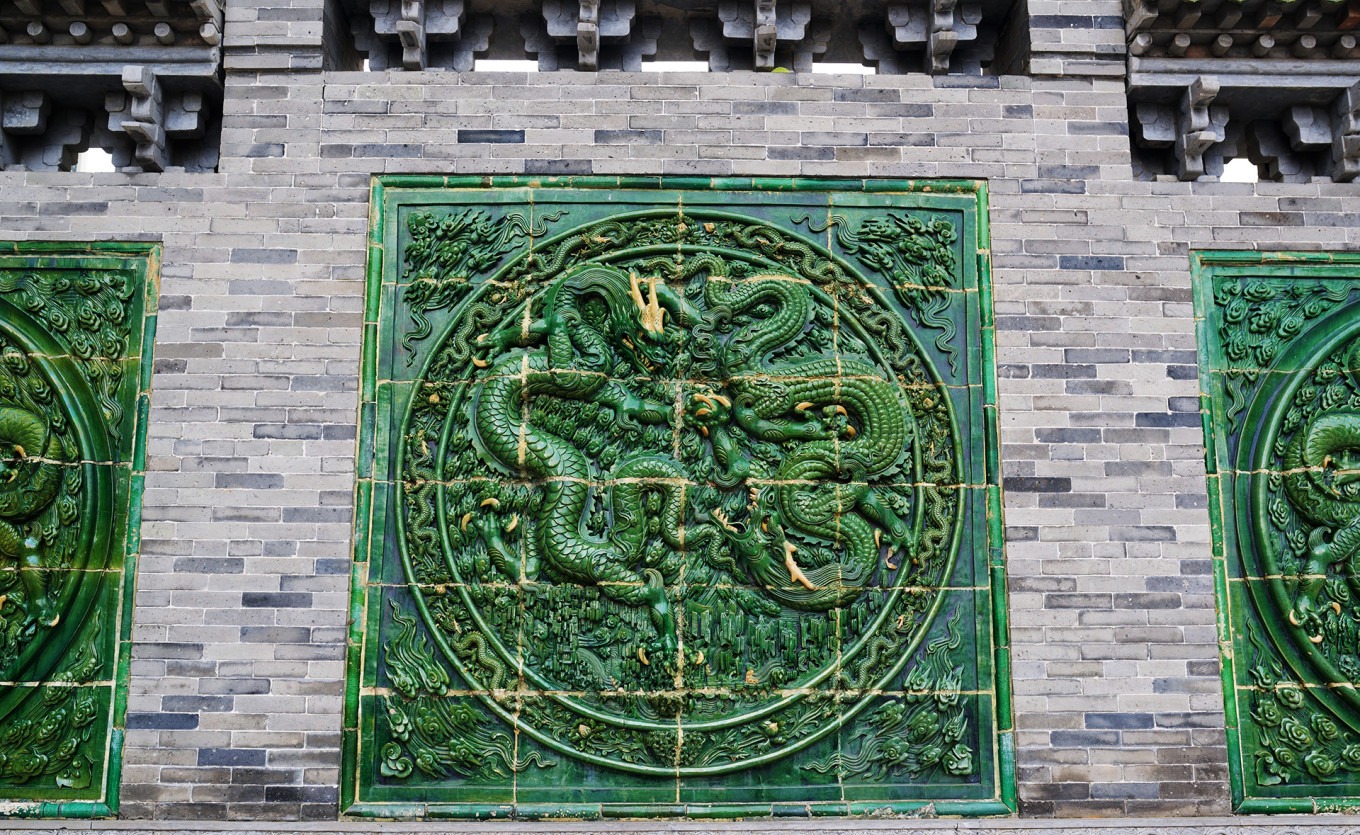
The southernmost Six-Dragon Screen (六龙壁) was first built in the 33rd year of Kangxi (1694). It was dismantled in the 1970s for road widening and later relocated to its current position. The screen features three green-glazed ceramic panels with the motif of two dragons playing with a pearl. These glazed tiles look quite new and may not be original.
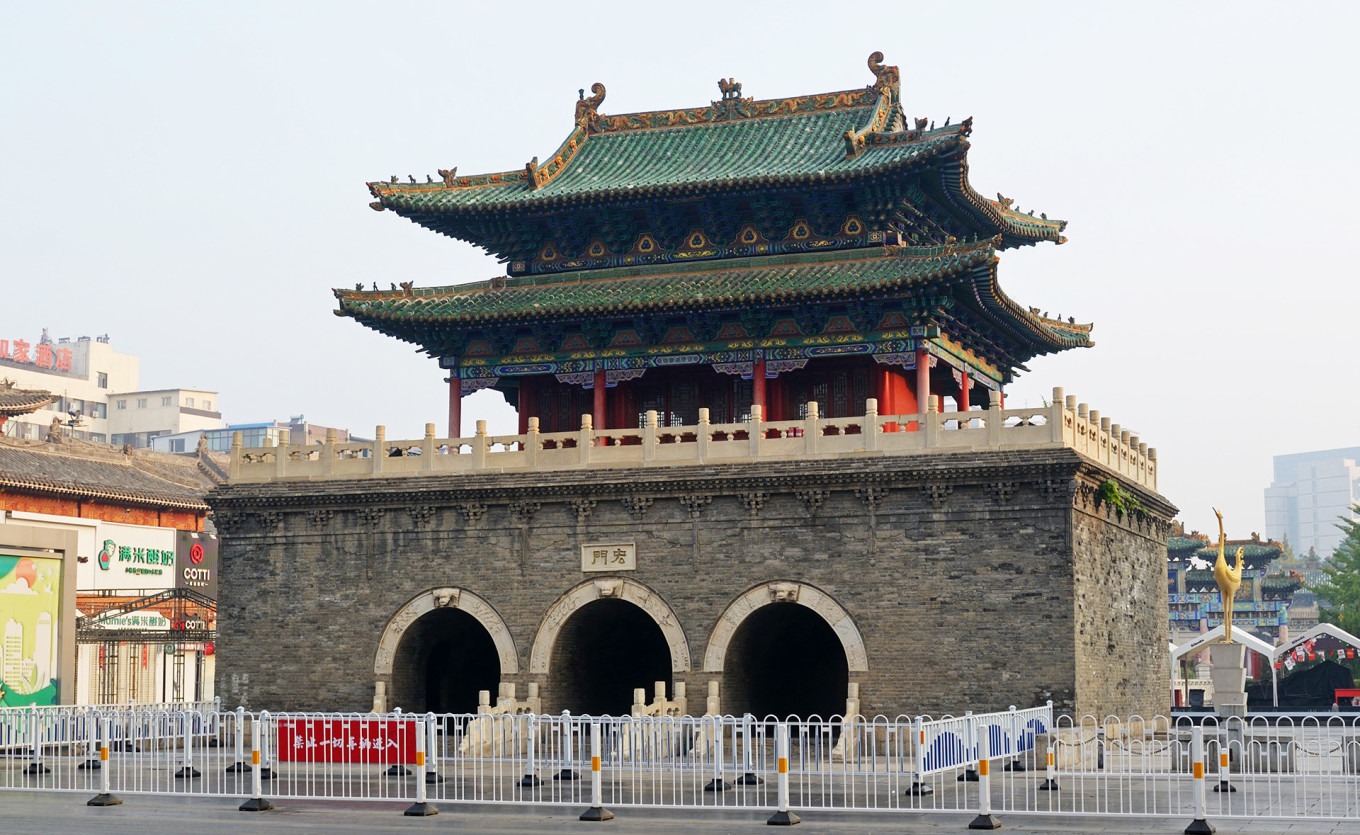
Across the road from the Six-Dragon Screen is the City God Temple Square. The first structure you see is the rebuilt Hongmen Gate (宏门). This gatehouse symbolizes the temple’s scale—only prefecture-level City God temples were allowed to have a Hongmen Gate.
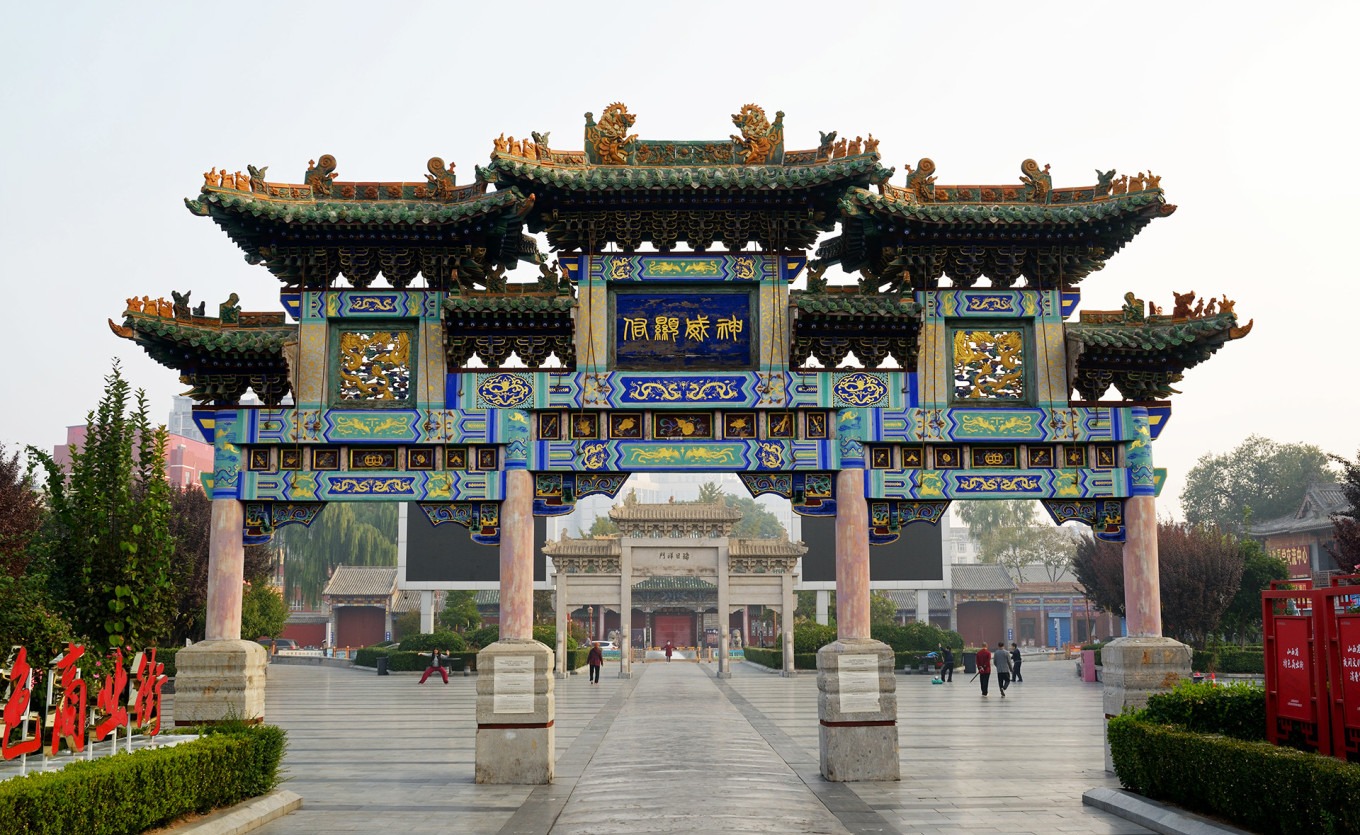
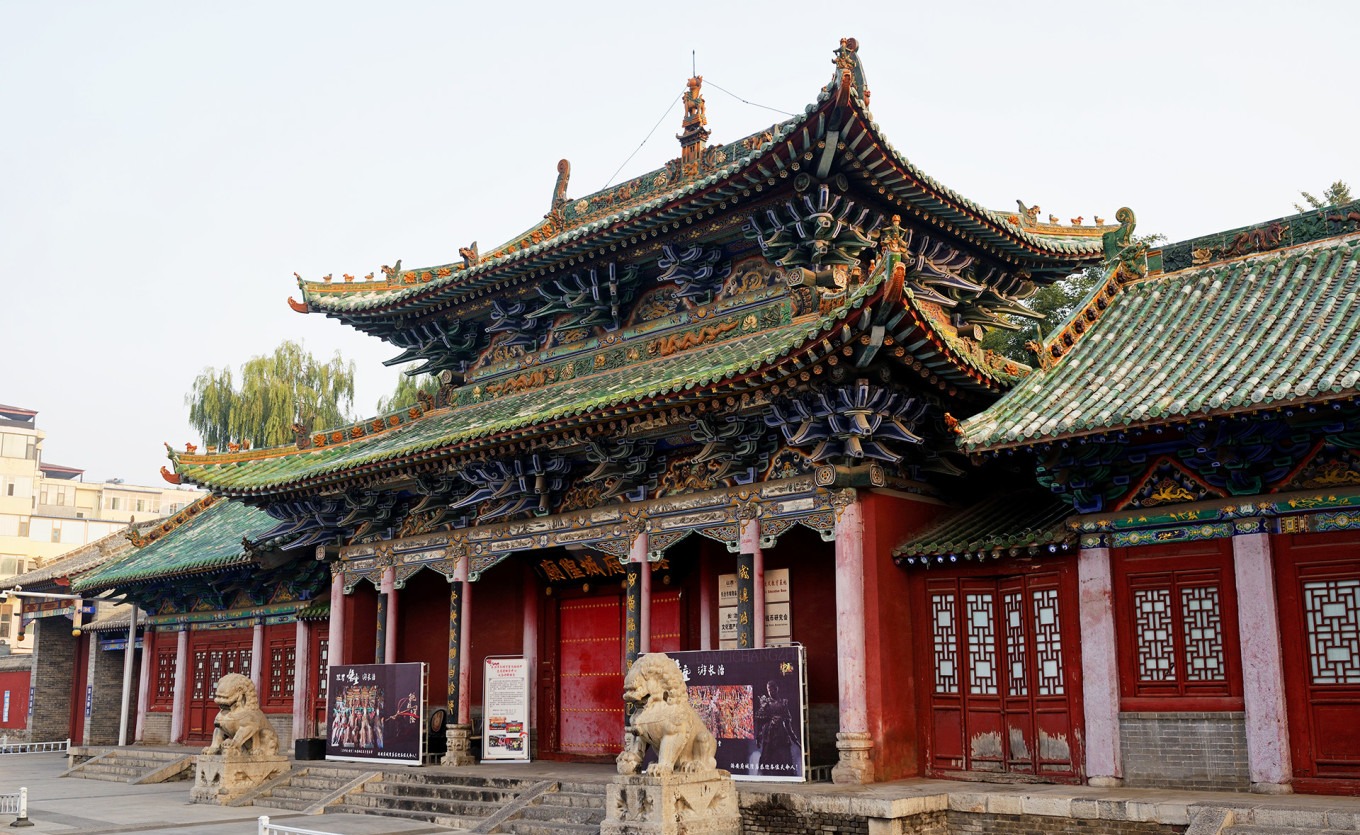
Walking from Hongmen Gate toward the mountain gate, you’ll pass a wood archway (木牌坊) and a stone archway (石牌坊). The wood archway has ‘威灵显赫’ (Weiling Xianhe) on the front and ‘神灵显佑’ (Shenling Xianyou) on the reverse. The stone archway bears ‘瑞日祥门’ (Ruiri Xiangmen) on the front and ‘威灵显赫’ (Weiling Xianhe) on the reverse. Both archways are later reconstructions.
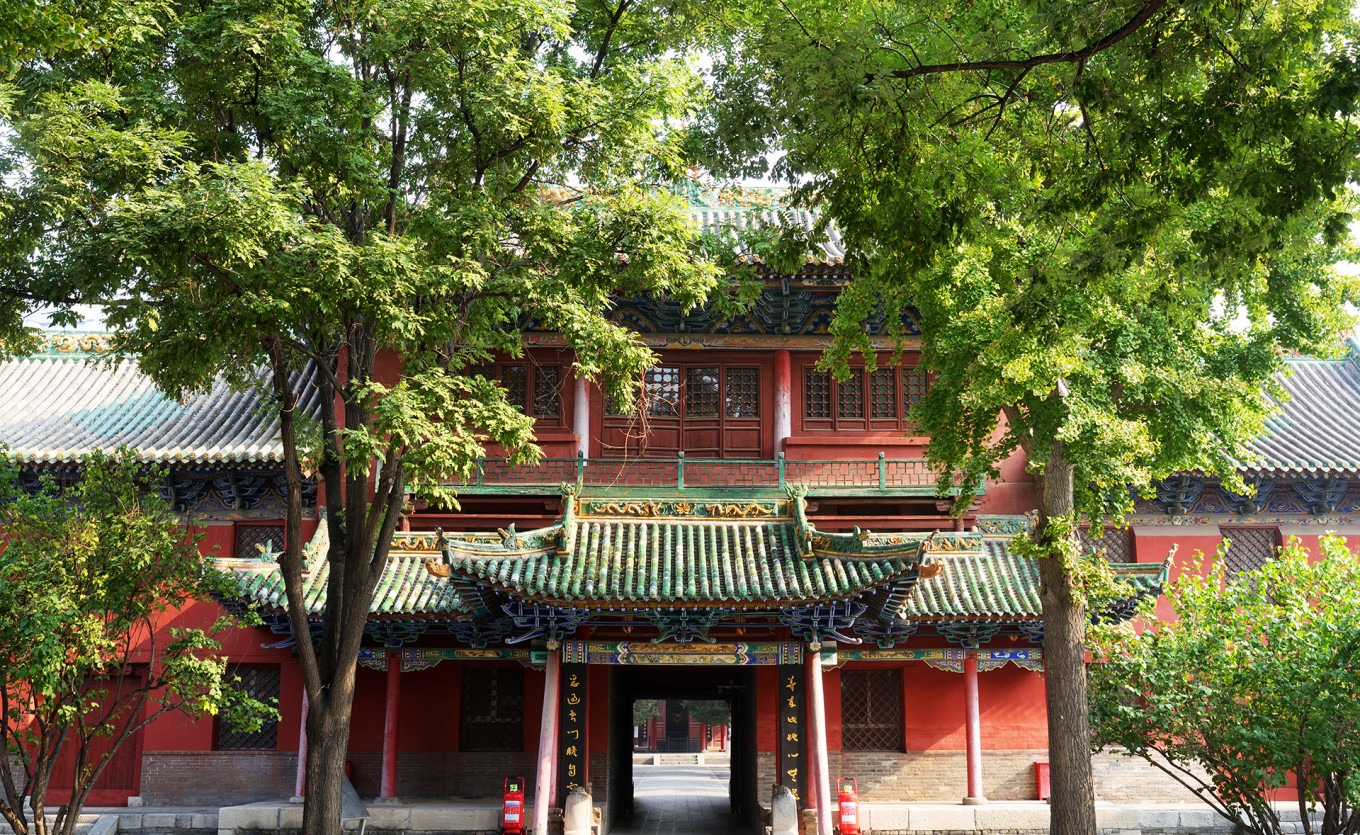
Passing through the mountain gate, you’ll first see the double-eaved tower (重楼), also known as Xuanjian Tower (玄鉴楼), built in the Ming dynasty. It has a front porch (抱厦) and side rooms, and is connected at the back to an inverted-stage theater. Notice the layered, richly painted dougong brackets—they are elaborately decorative but bear little structural load, a hallmark of Ming architecture that contrasts with the simpler, more spacious style of Tang and Song.
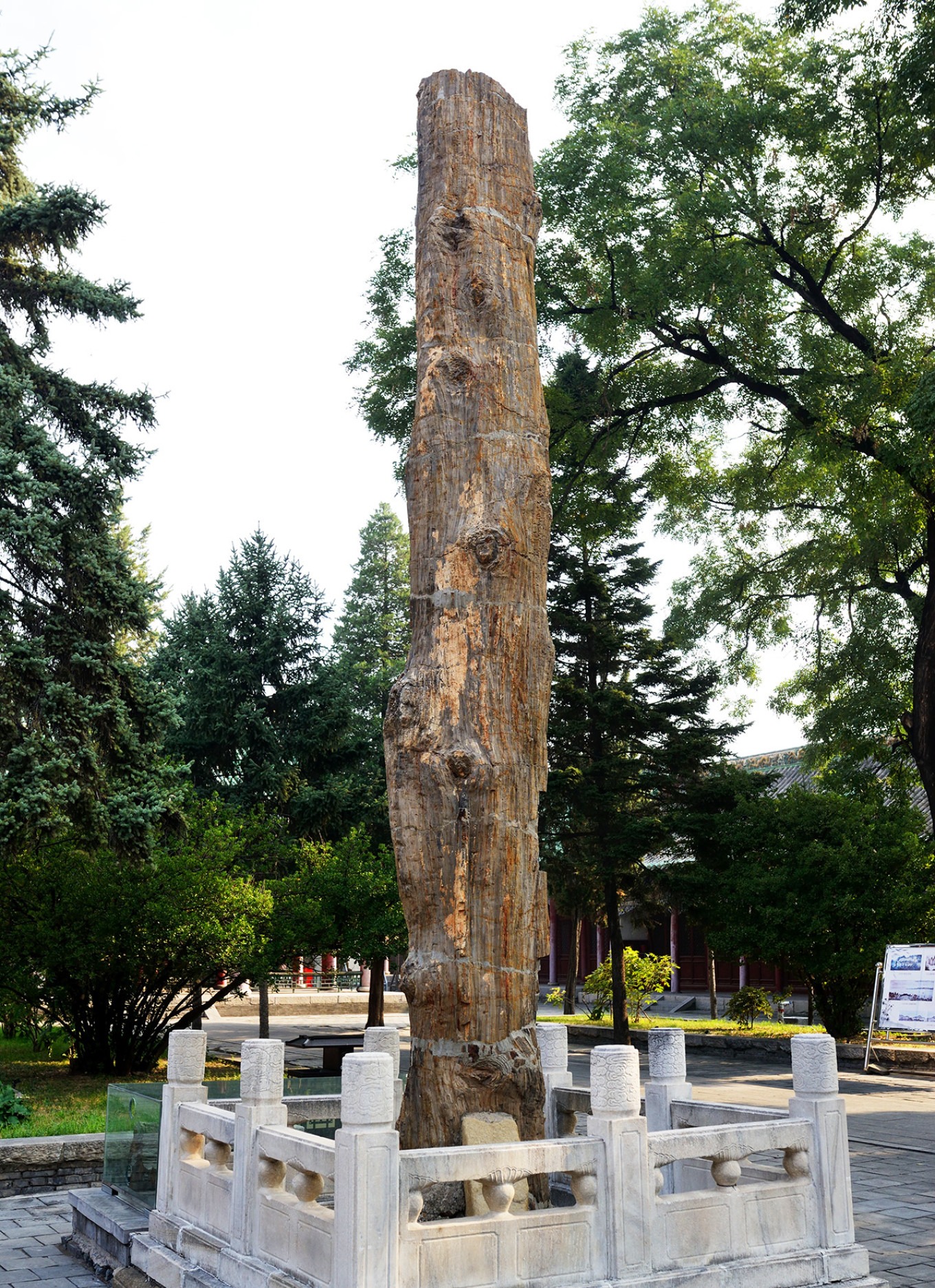
Entering the second courtyard, you’ll find lush ancient trees, but one tall petrified wood (硅化木) stands out. This fossil, discovered on a mountain near Nanchen Township in Zhangzi County, is over 200 million years old.
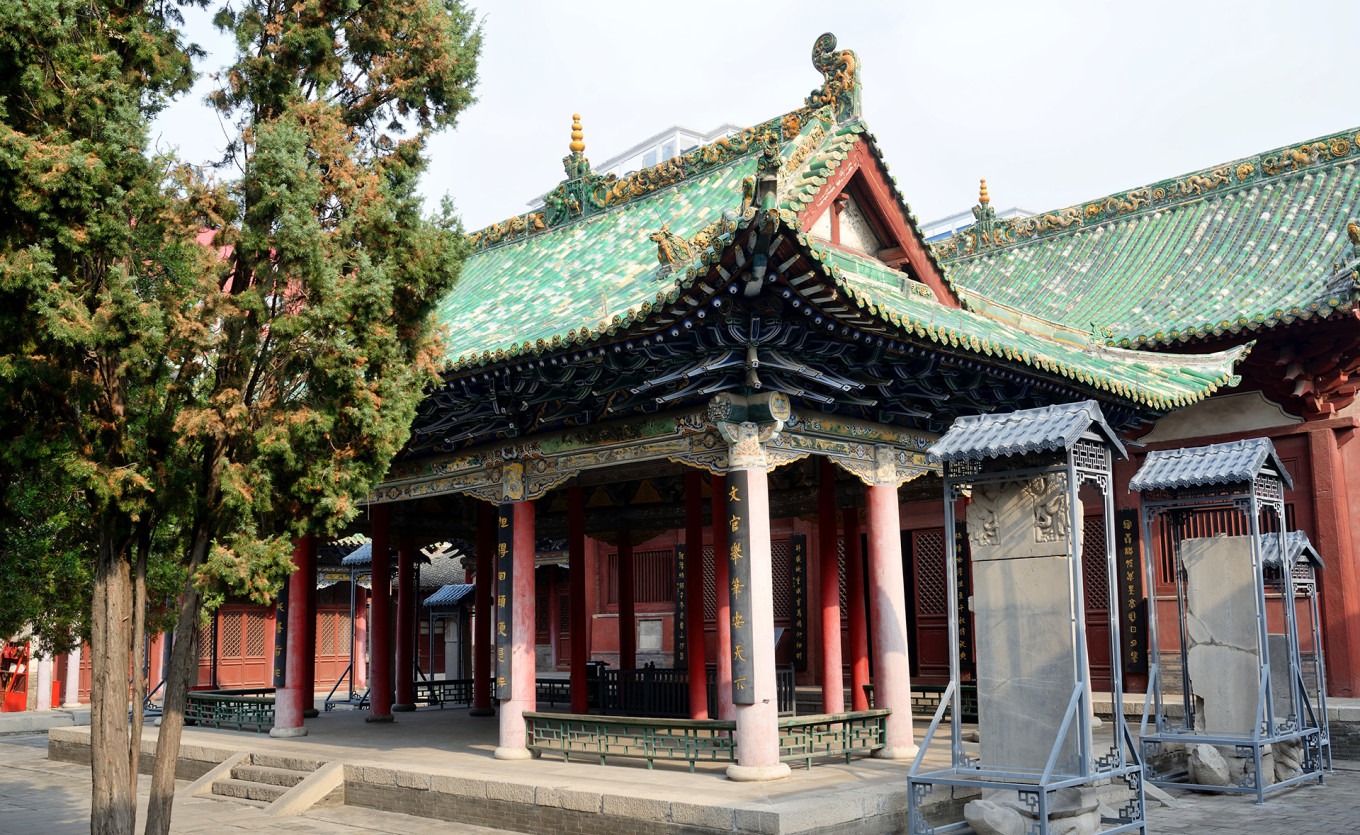
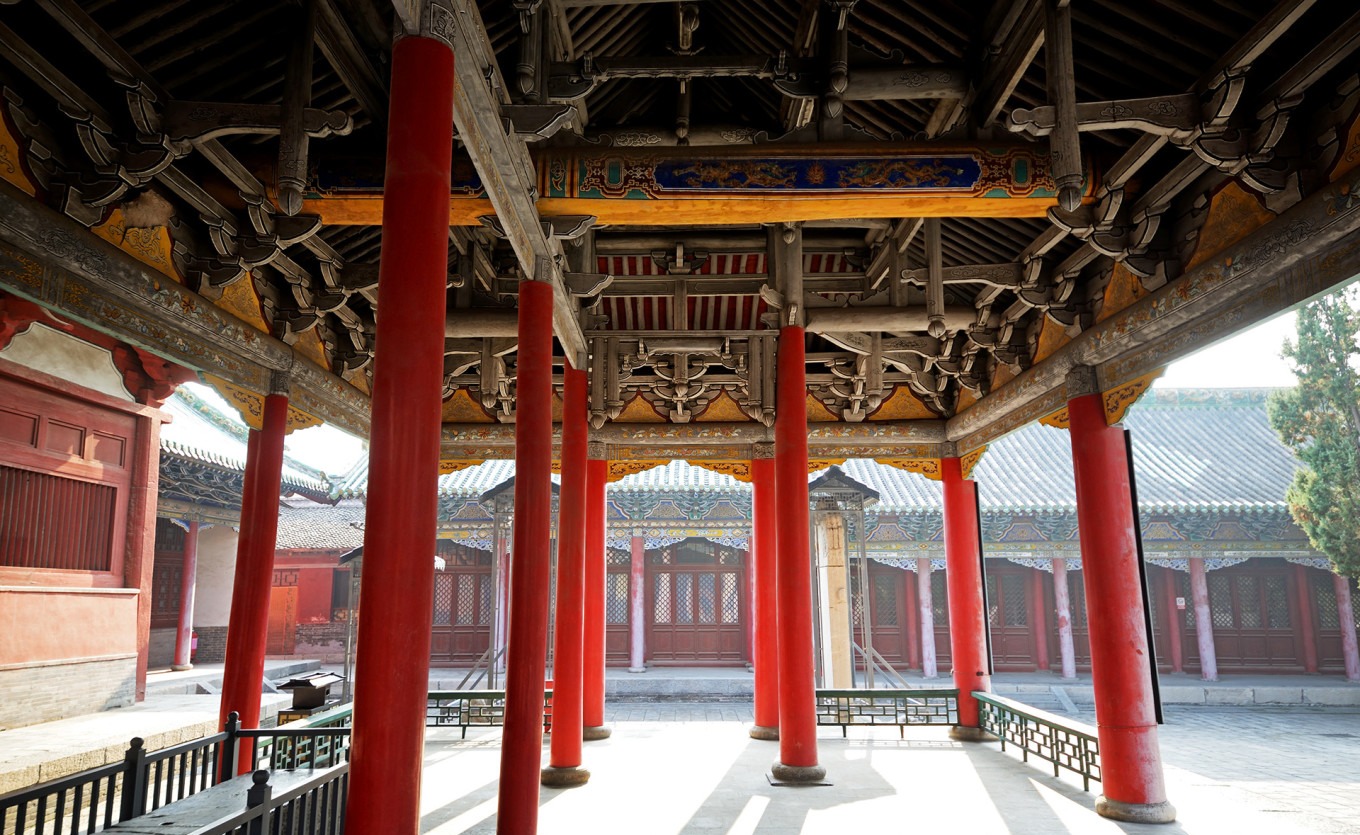
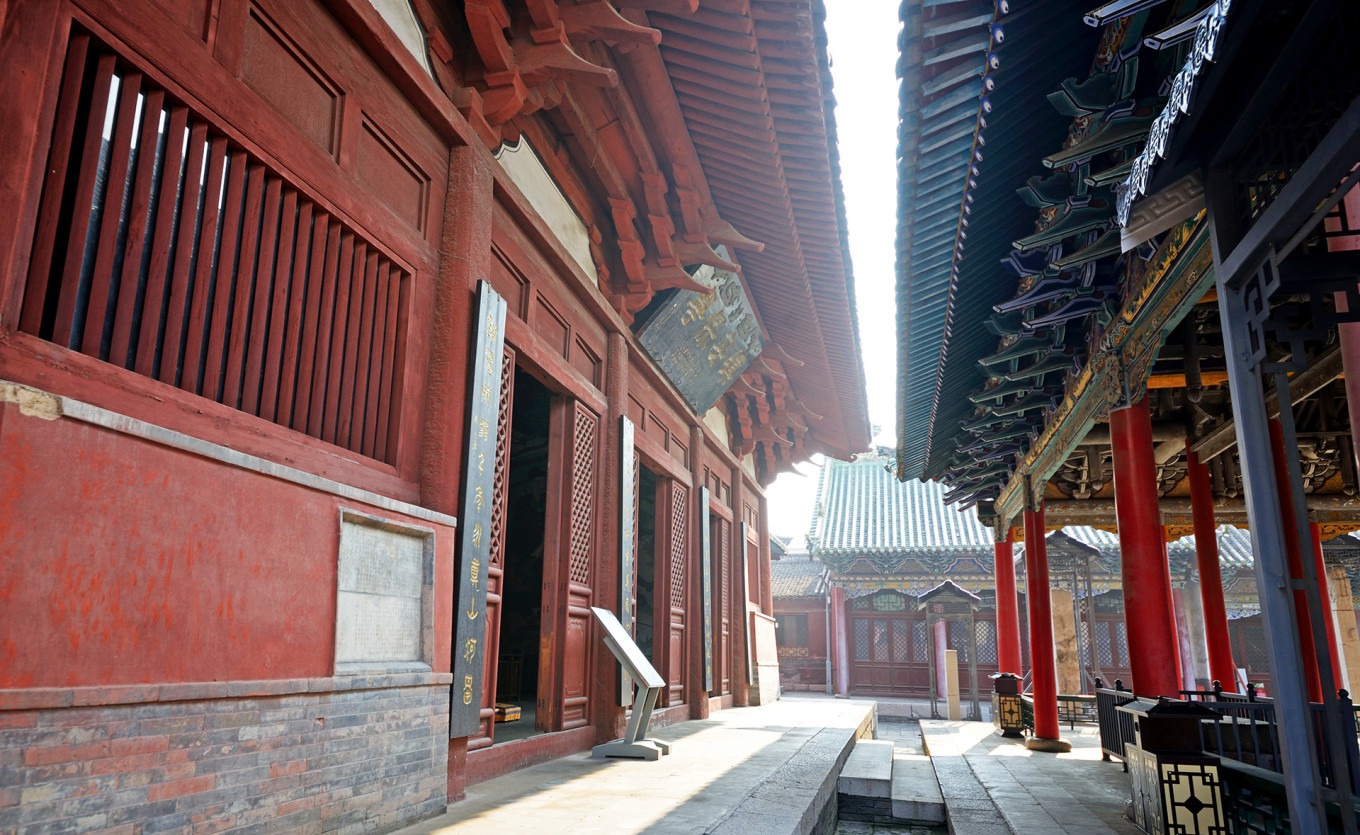
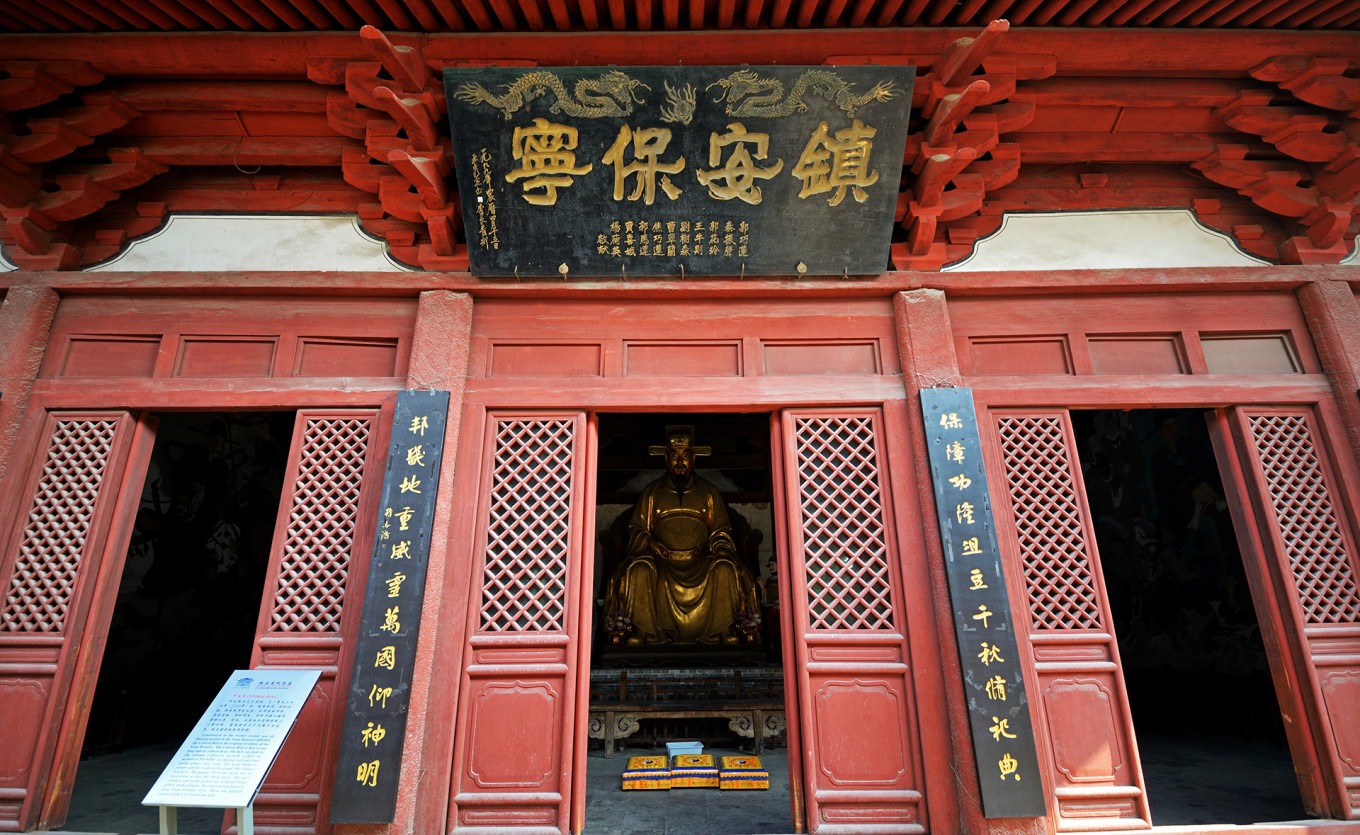
At the north end of the second courtyard are the offering pavilion (献亭) and the central main hall (中大殿). The central main hall is the oldest building in the temple, dating to the 22nd year of Zhiyuan (1285) in the Yuan dynasty. It is seamlessly connected to the offering pavilion in front. Inside, you’ll see massive timbers—large natural curved beams left unadorned, a classic Yuan feature. The hall also uses the column-reduction method (减柱法) to create more interior space.
During the Ming dynasty, the City God of Lu’an Prefecture was enshrined as a second-rank ‘Weiling Gong’ (监察司民城隍威灵公). However, the original identity of this City God is now unknown. The statues and murals inside the hall are recent additions.
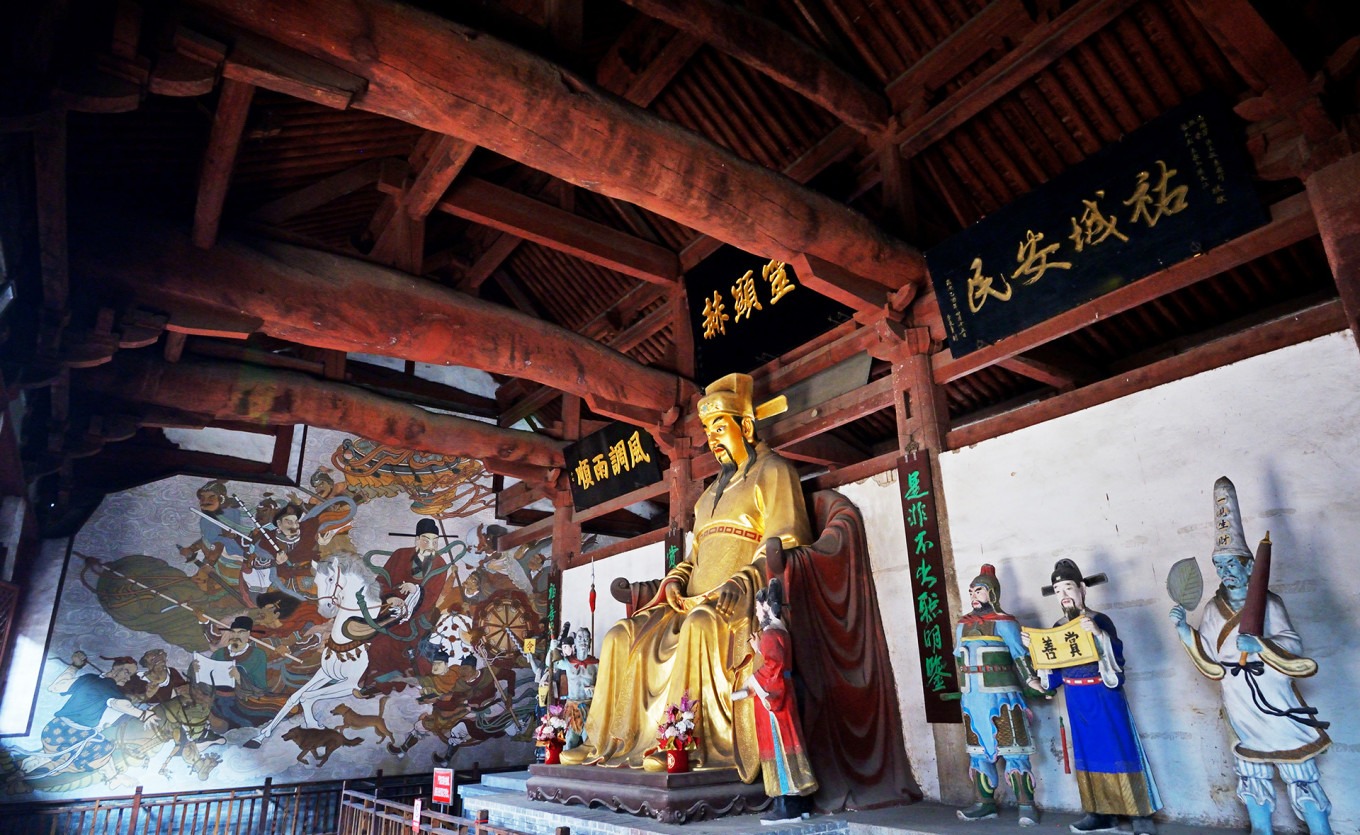
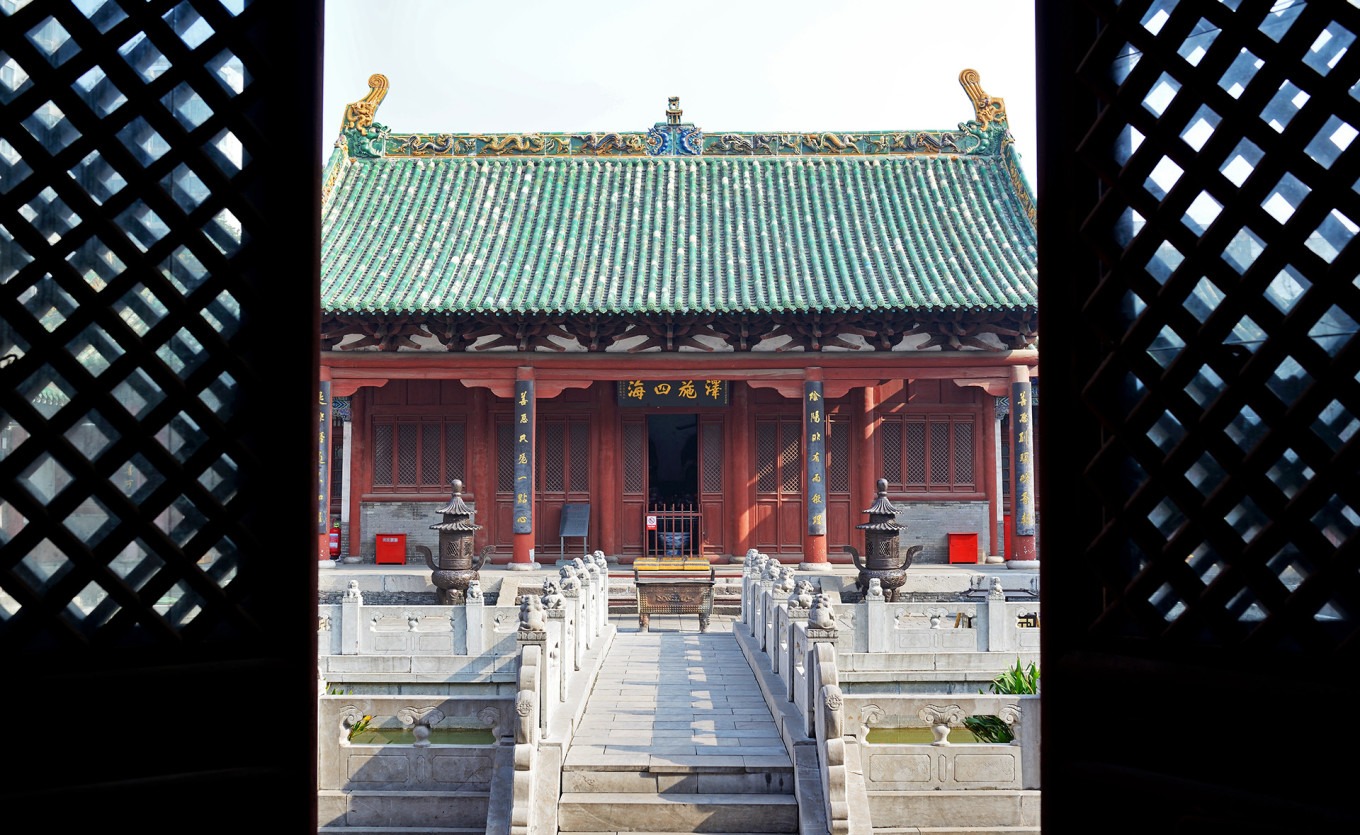
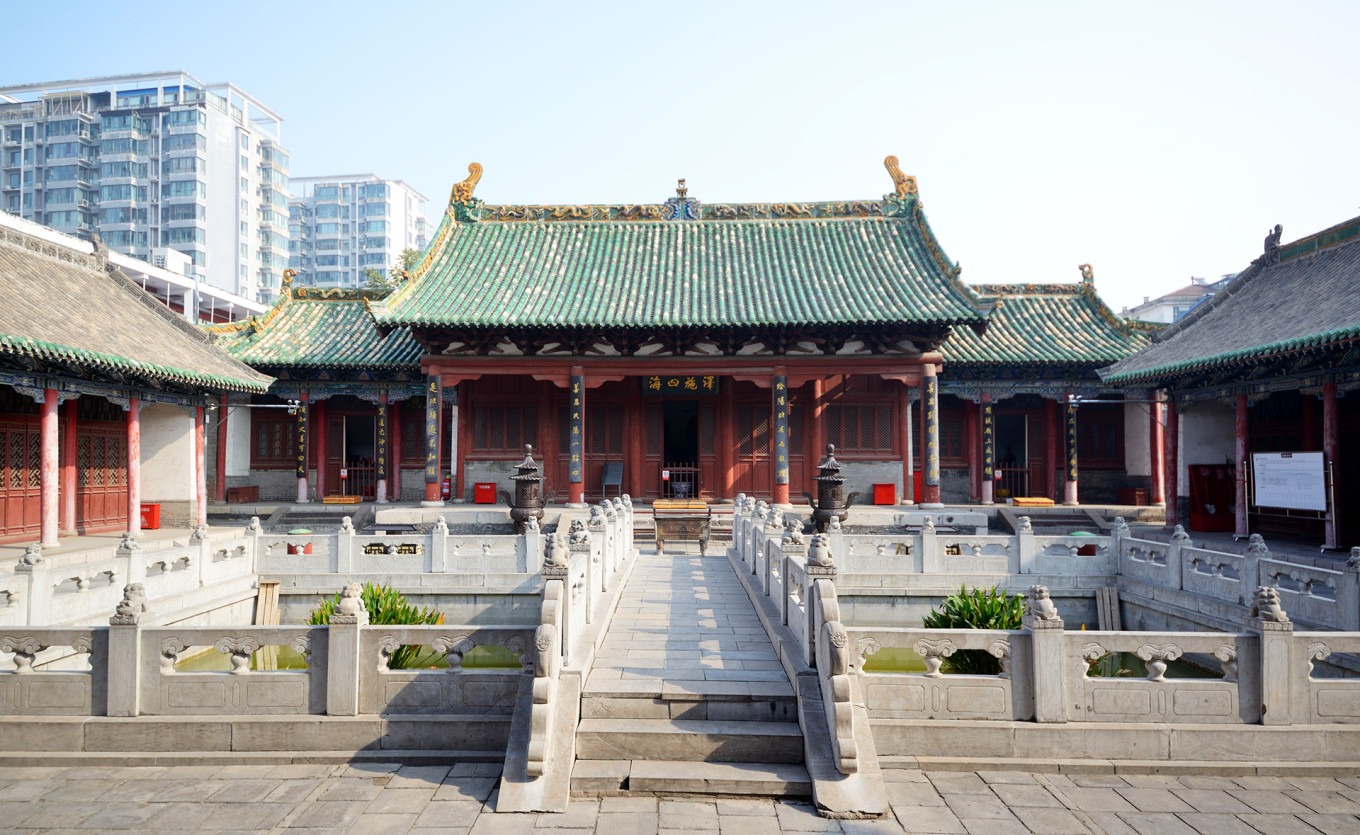
The third courtyard features a rectangular pond in the center. To the north stands the sleeping palace (寝宫), a Ming-dynasty building where the City God and his consort were believed to rest. It sits on a platform with a front veranda and side rooms.
Changzhi Yuhuang Temple
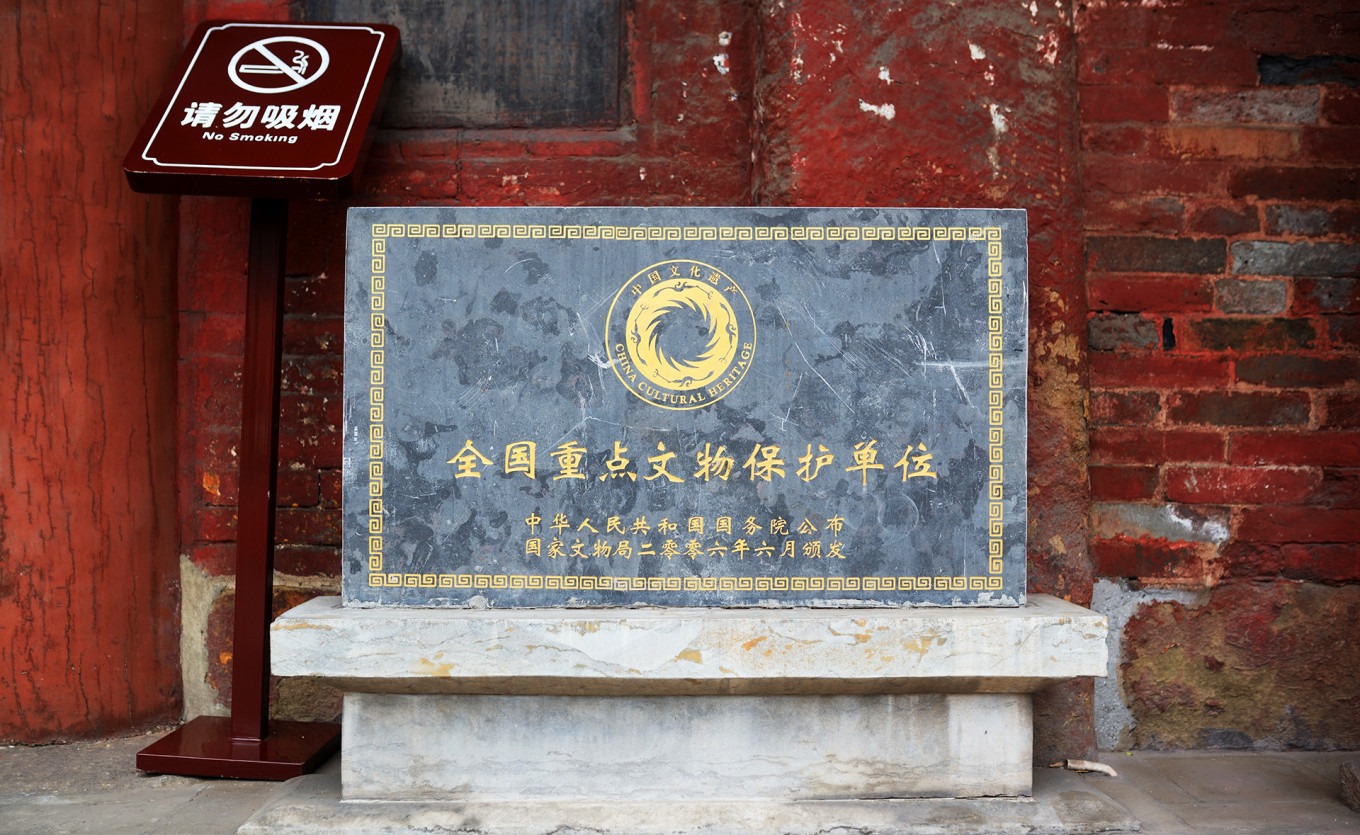
After exploring the City God Temple, continue your journey to the Yuhuang Temple (玉皇观) in Changzhi. Located in Nansong Village, Nansong Town, about a 30-minute drive southeast of the city center, this temple is a sixth batch Major Historical and Cultural Site Protected at the National Level. Believed to have been first built in the Song dynasty and renovated during the Ming and Qing, the complex faces south in a single-courtyard layout. Its most magnificent and precious structure is the mountain gate — the Five-Phoenix Tower (五凤楼).
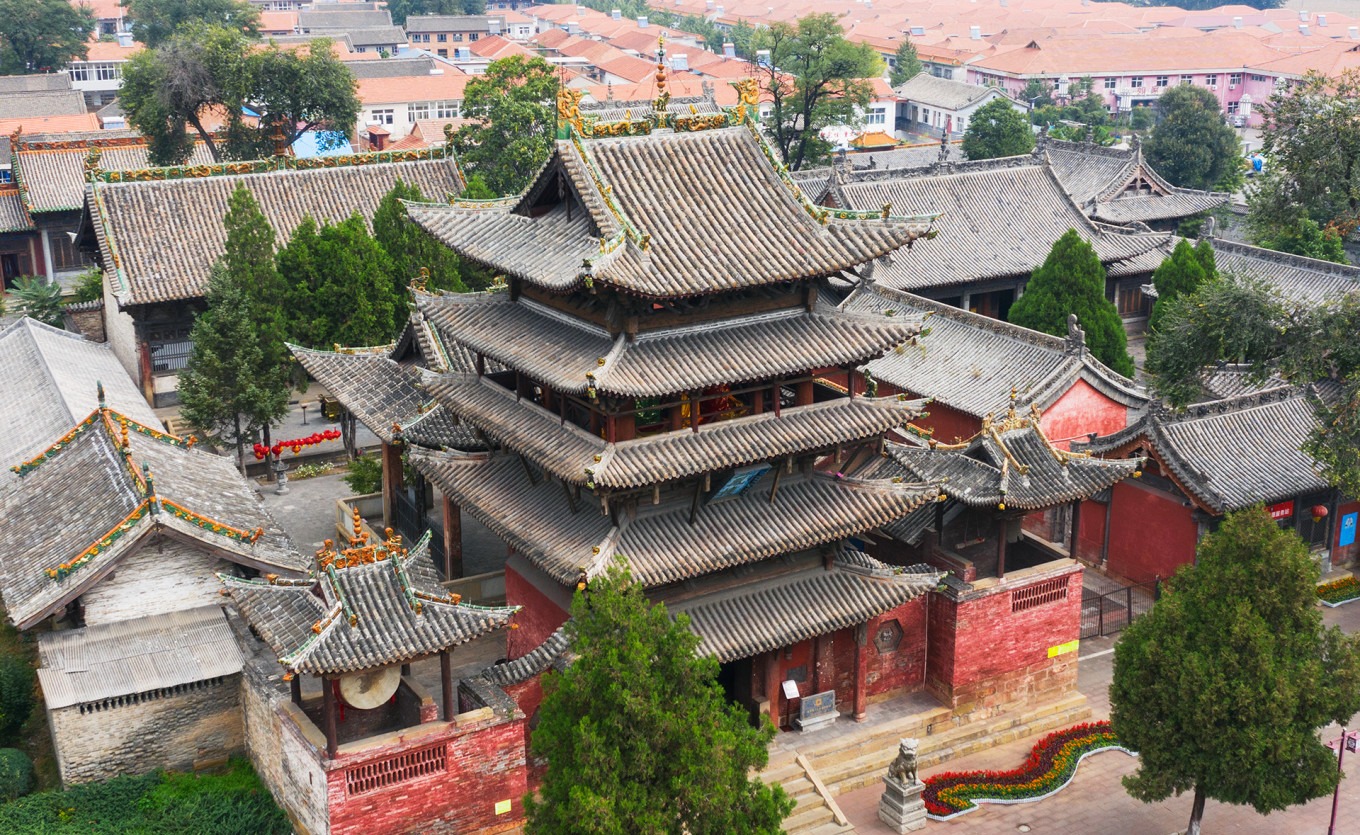
The Five-Phoenix Tower stands at the front of the temple complex. Originally built in the late Song to early Yuan dynasties, this nearly 30-meter-high, five-eaved pavilion occupies three bays in width and depth, with an almost square plan and harmonious proportions.
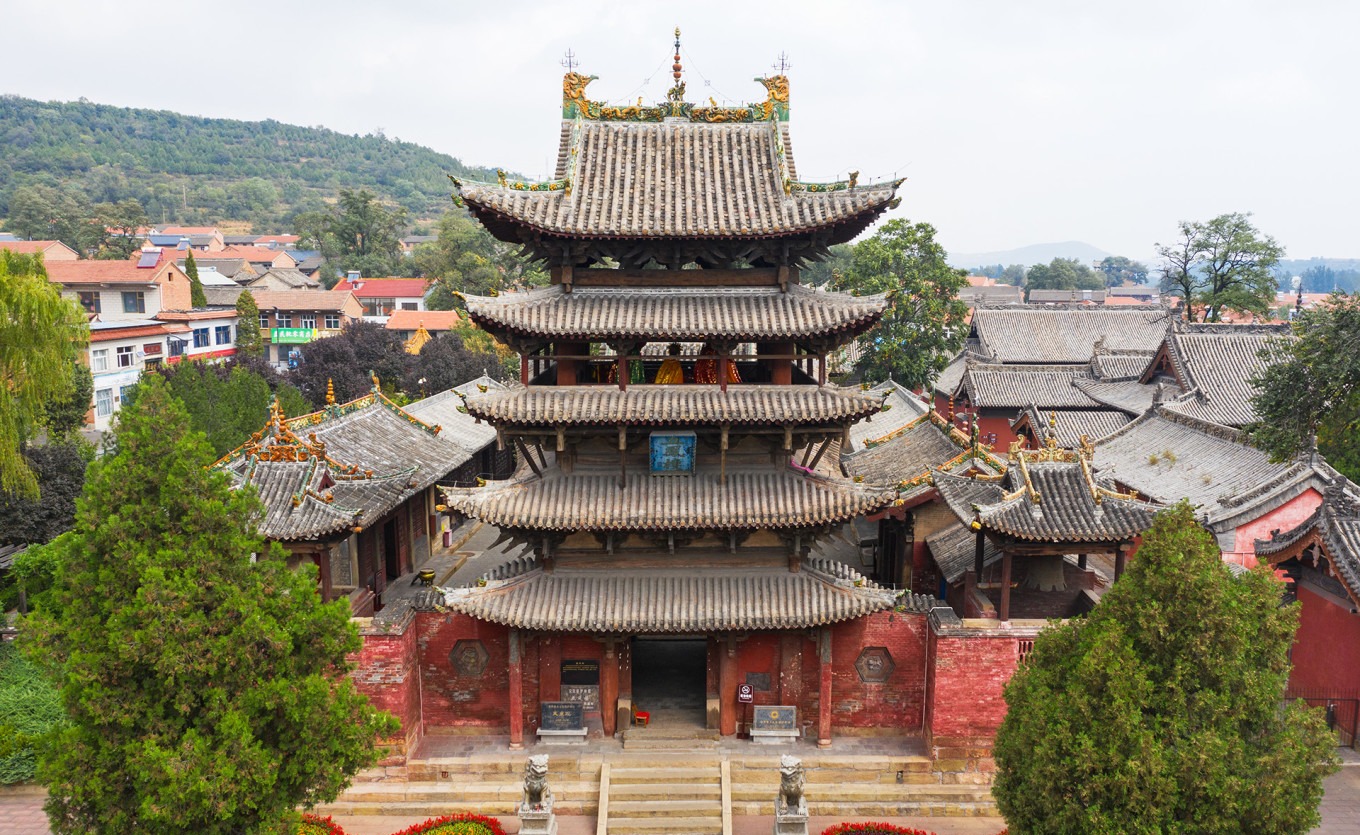
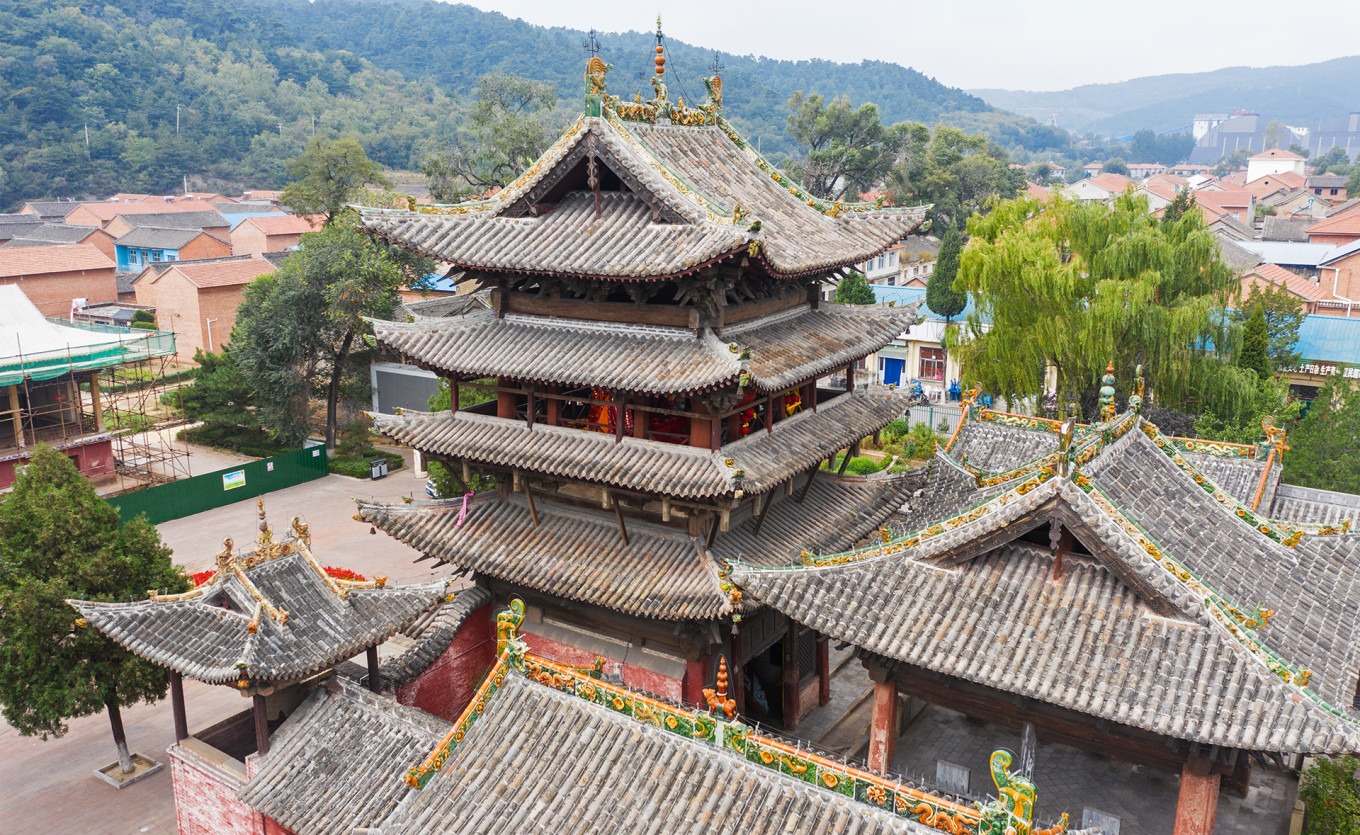
Standing before the gate, you’ll notice that large, robust bracket sets (dougong) support the soaring eaves, creating a rugged yet elegant beauty. Each eave curves upward like a phoenix in flight, giving the tower its name. Another legend says the tower was built to commemorate the five daughters of the Jade Emperor. Regardless, the structure is both beautiful and awe-inspiring — more than just a building, it’s a breathtaking work of art.
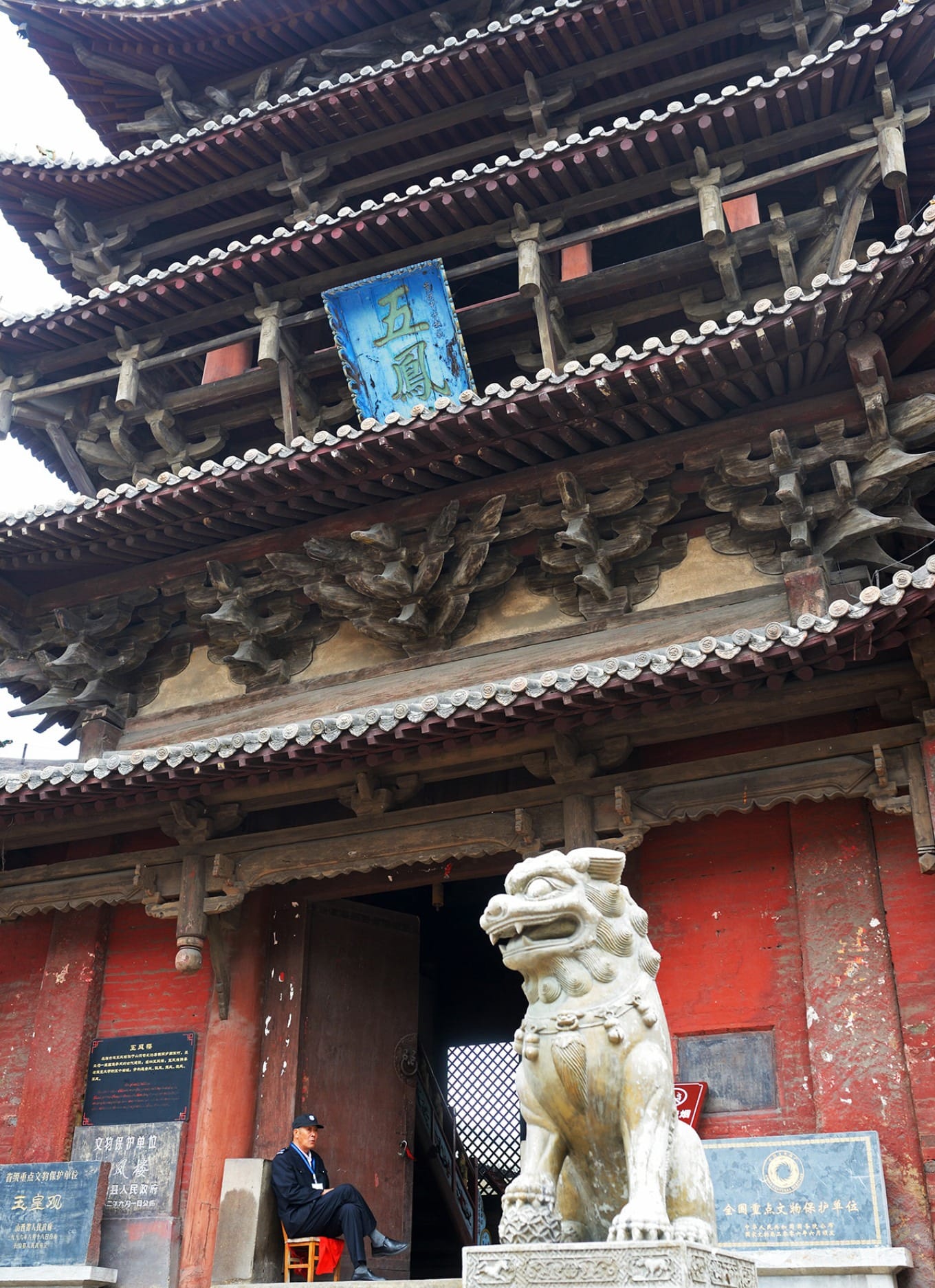
The true marvel of the Five-Phoenix Tower lies inside. The main body is supported by four pillars running from bottom to top, and the interior actually has three floors including a hidden mezzanine. On the ground floor, you’ll find a unique wooden ladder made from a single mulberry trunk — the original only way up. Imagine climbing that curved, shaky old tree trunk in the old days — quite a thrilling thought.
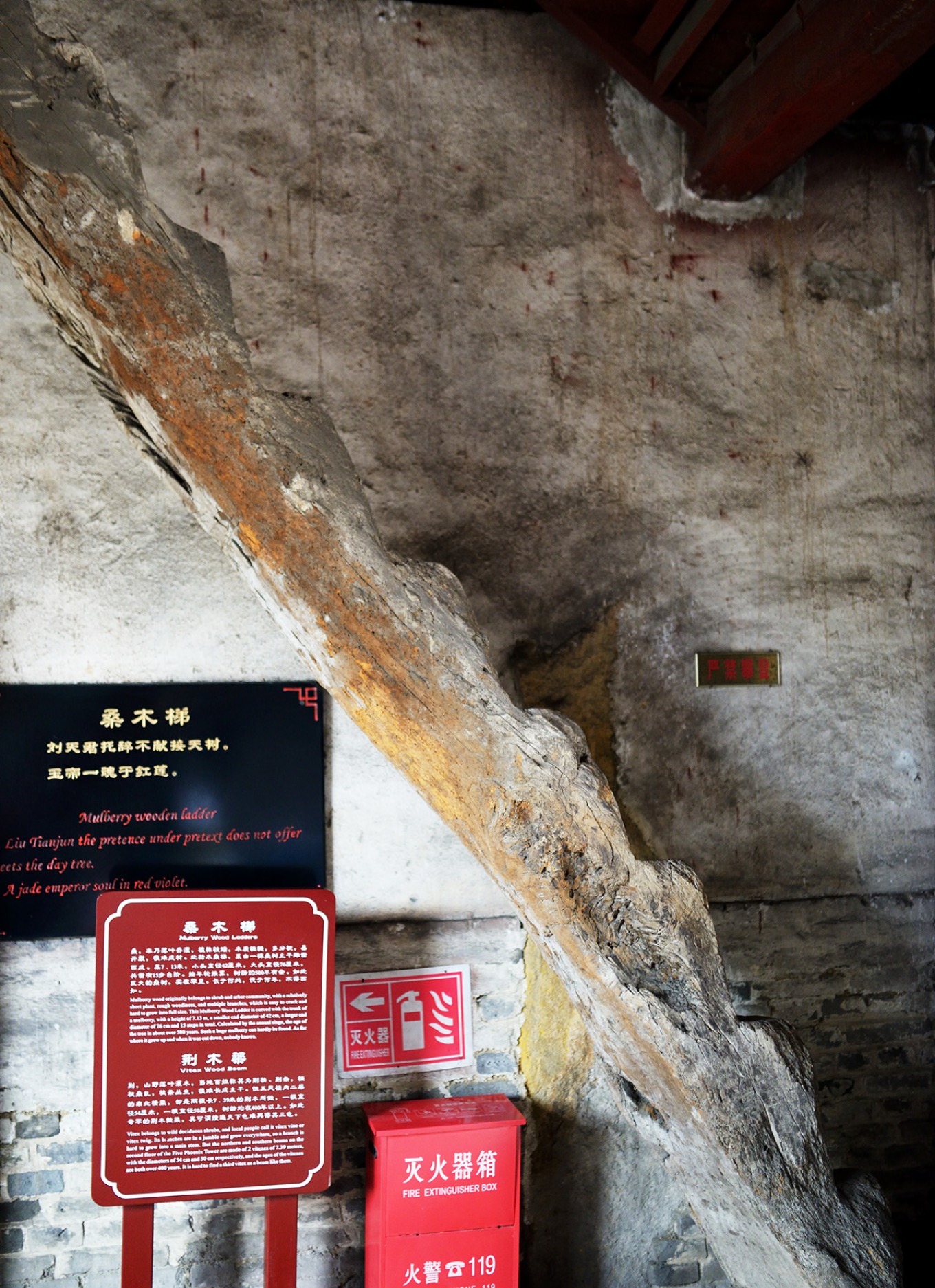
The second floor is actually a mezzanine. Its most remarkable feature is the two crossbeams made of chaste wood (荆木), each half a meter in diameter. Chaste wood normally comes from a slender shrub, so beams of this size are extremely rare — truly one of a kind.
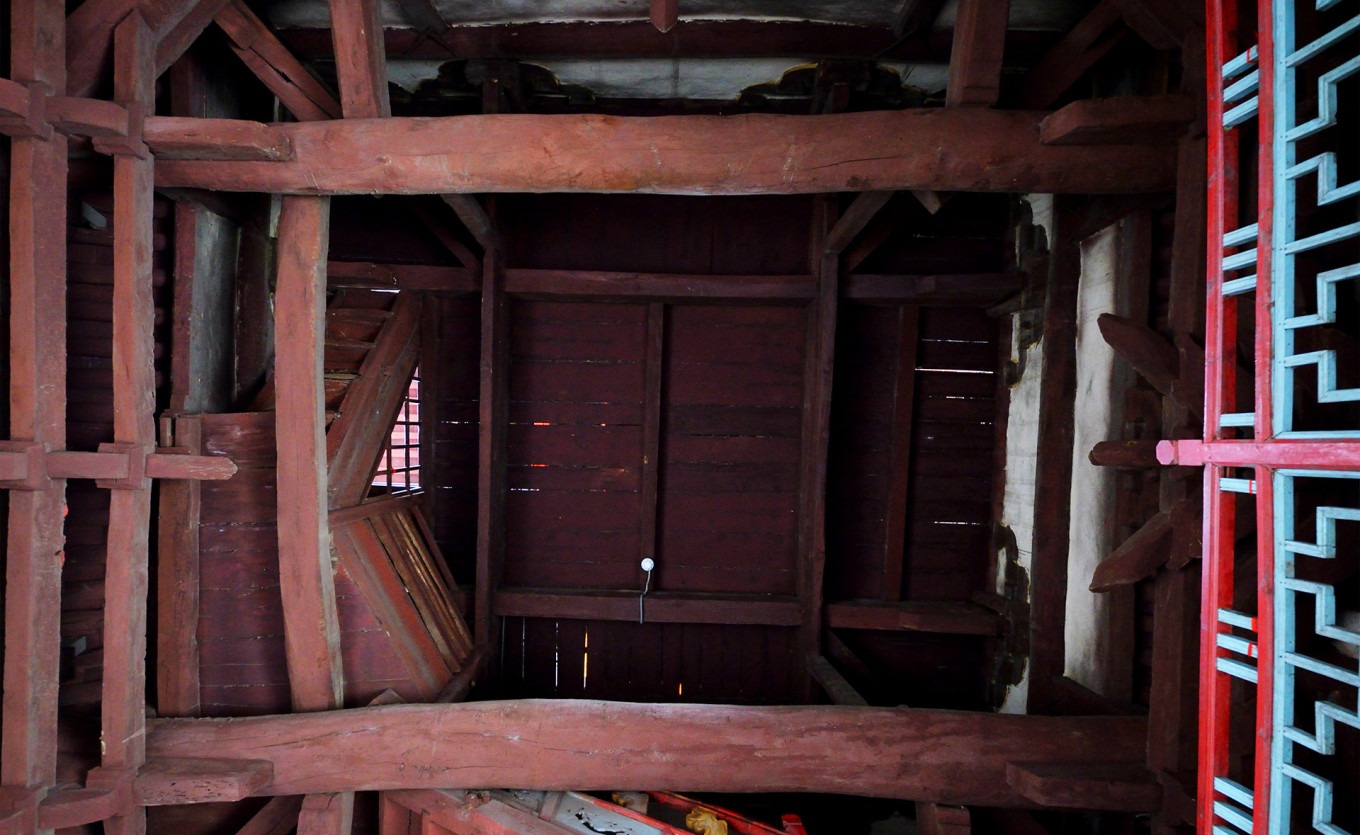
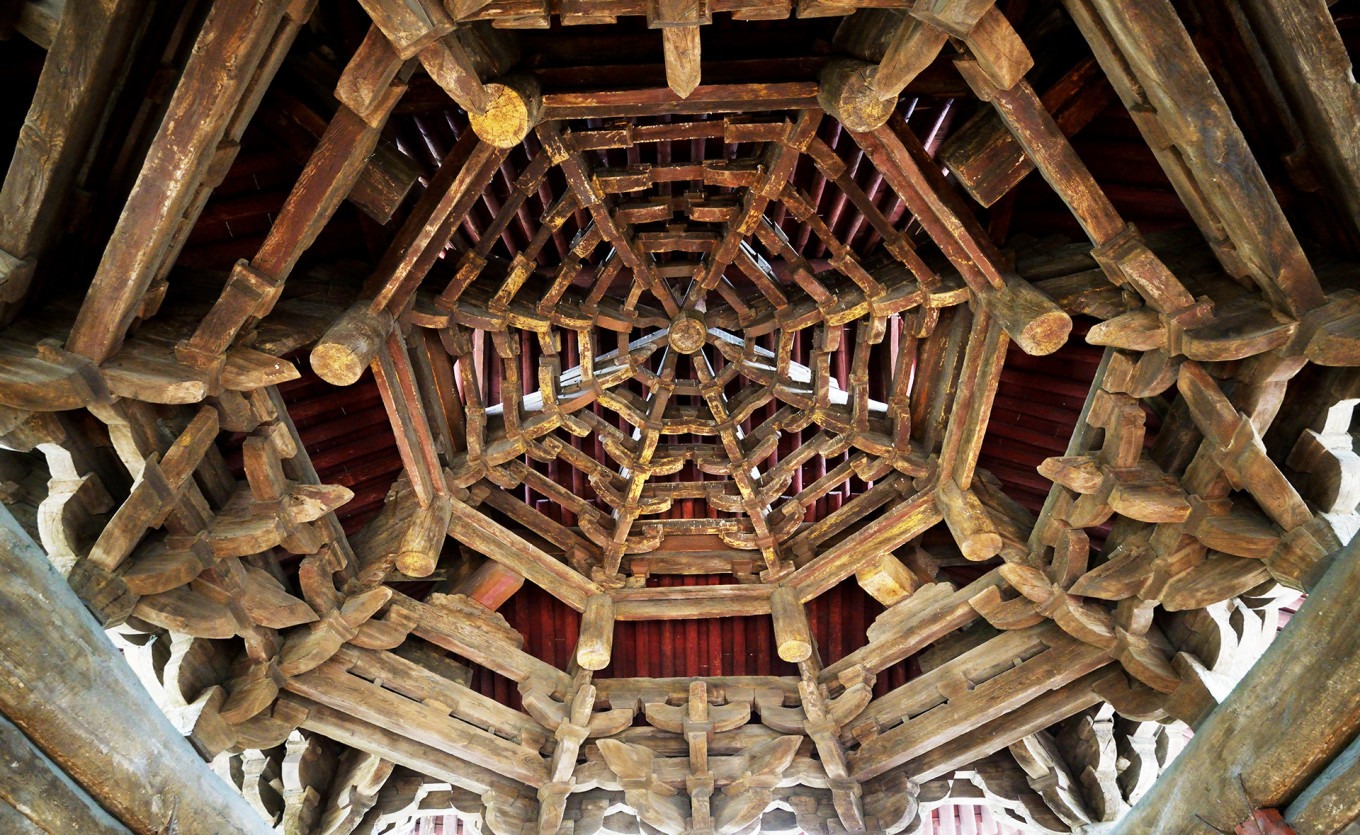
At the top floor, the space opens up with views in all directions. Leaning on the railing, you can take in the rolling mountains. Looking up, you’ll see an exquisite octagonal caisson ceiling (zaojing) that is both solemn and delicate, showing great craftsmanship.
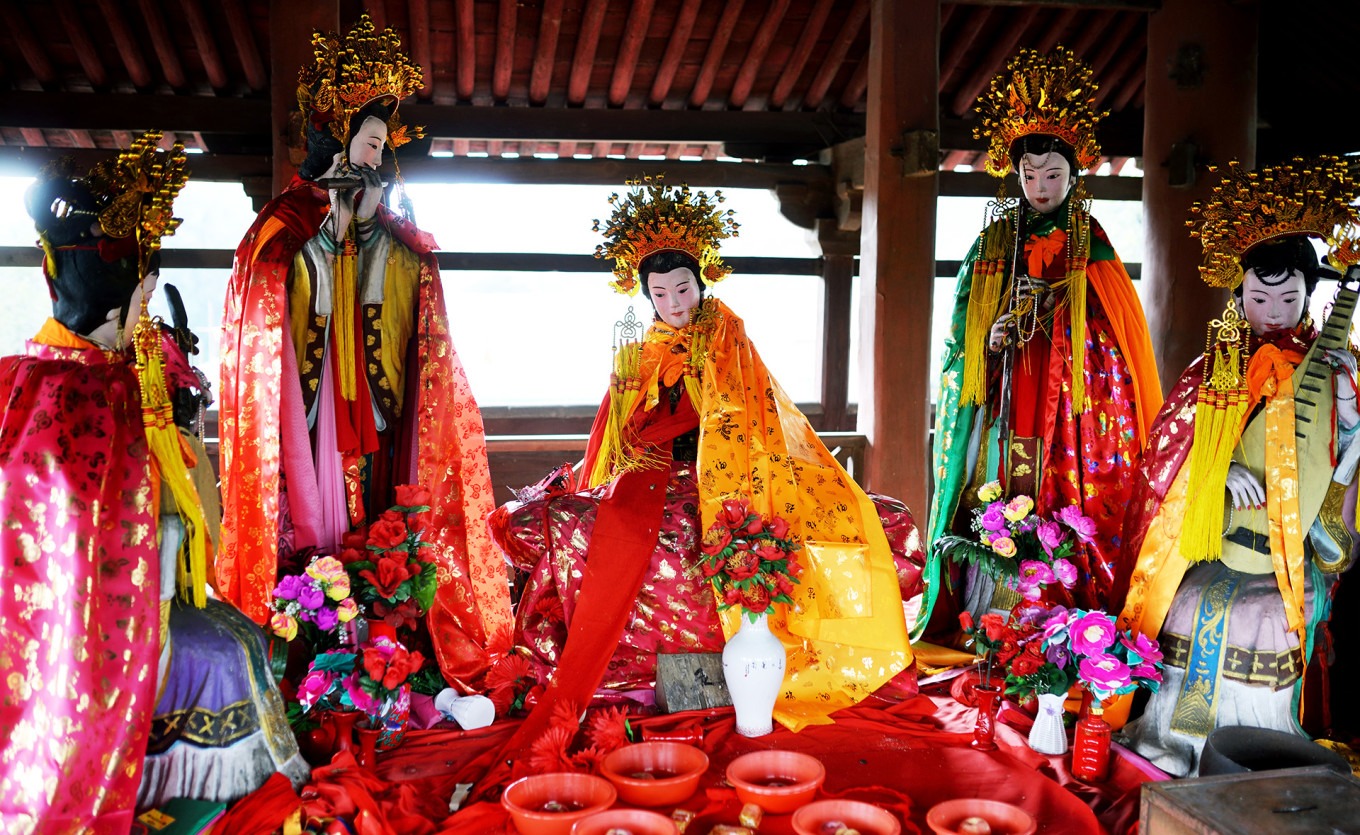
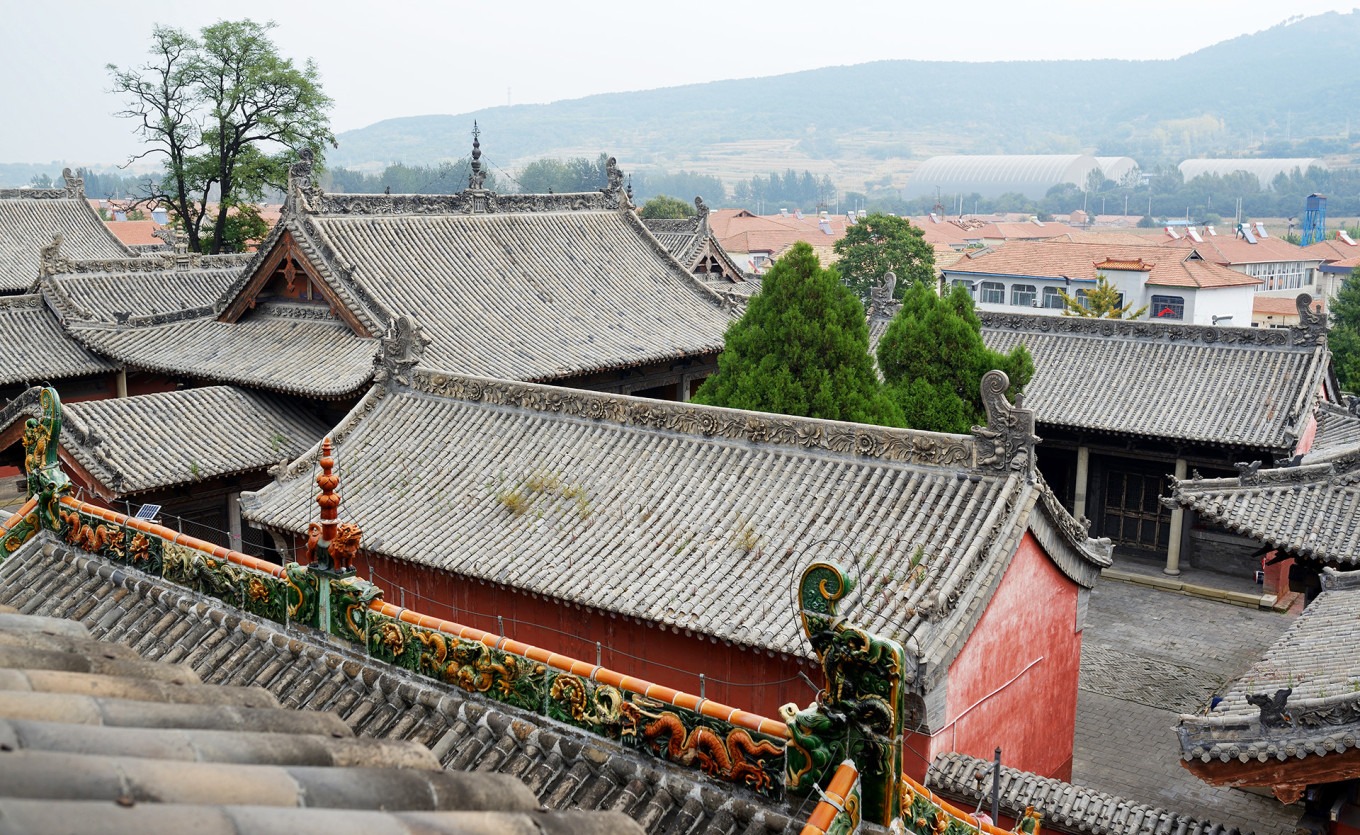
Passing through the ground floor of the Five-Phoenix Tower, you enter the courtyard and immediately encounter an offering pavilion (献亭). Built on a broad platform, its four large columns are carved with reliefs of clouds, dragons, flowers, auspicious beasts, and Buddhist figures in a bold, unrestrained style typical of the Yuan dynasty.
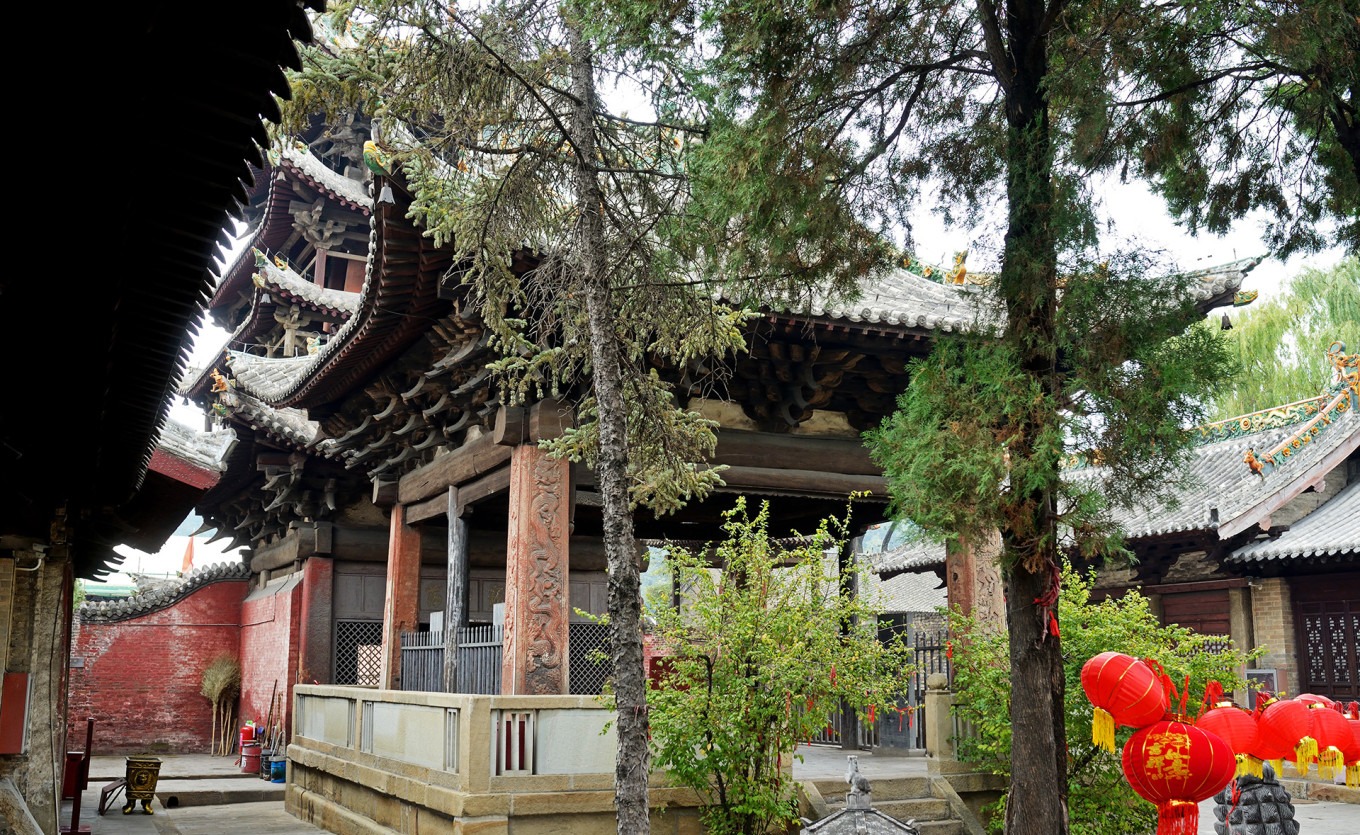
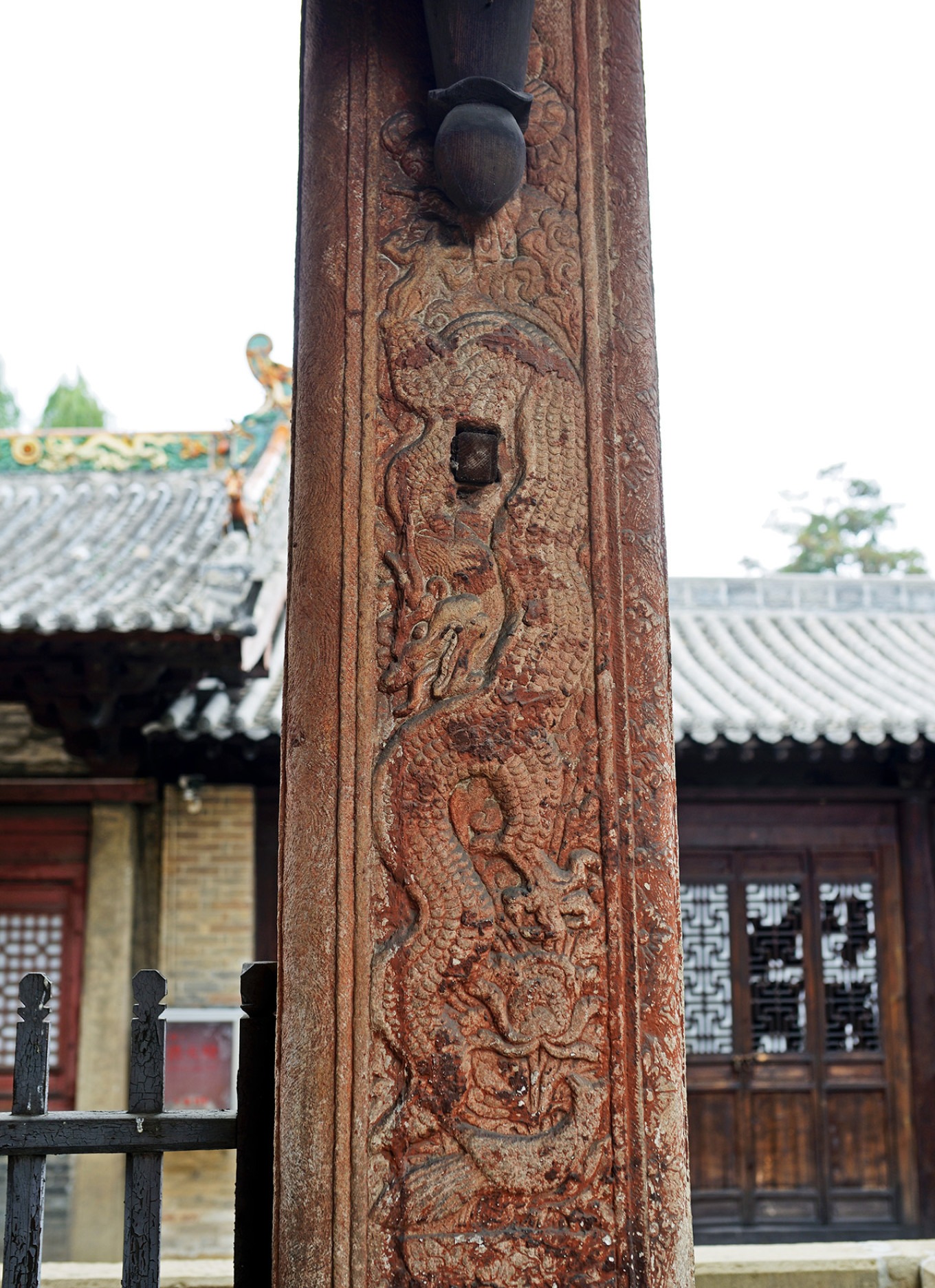
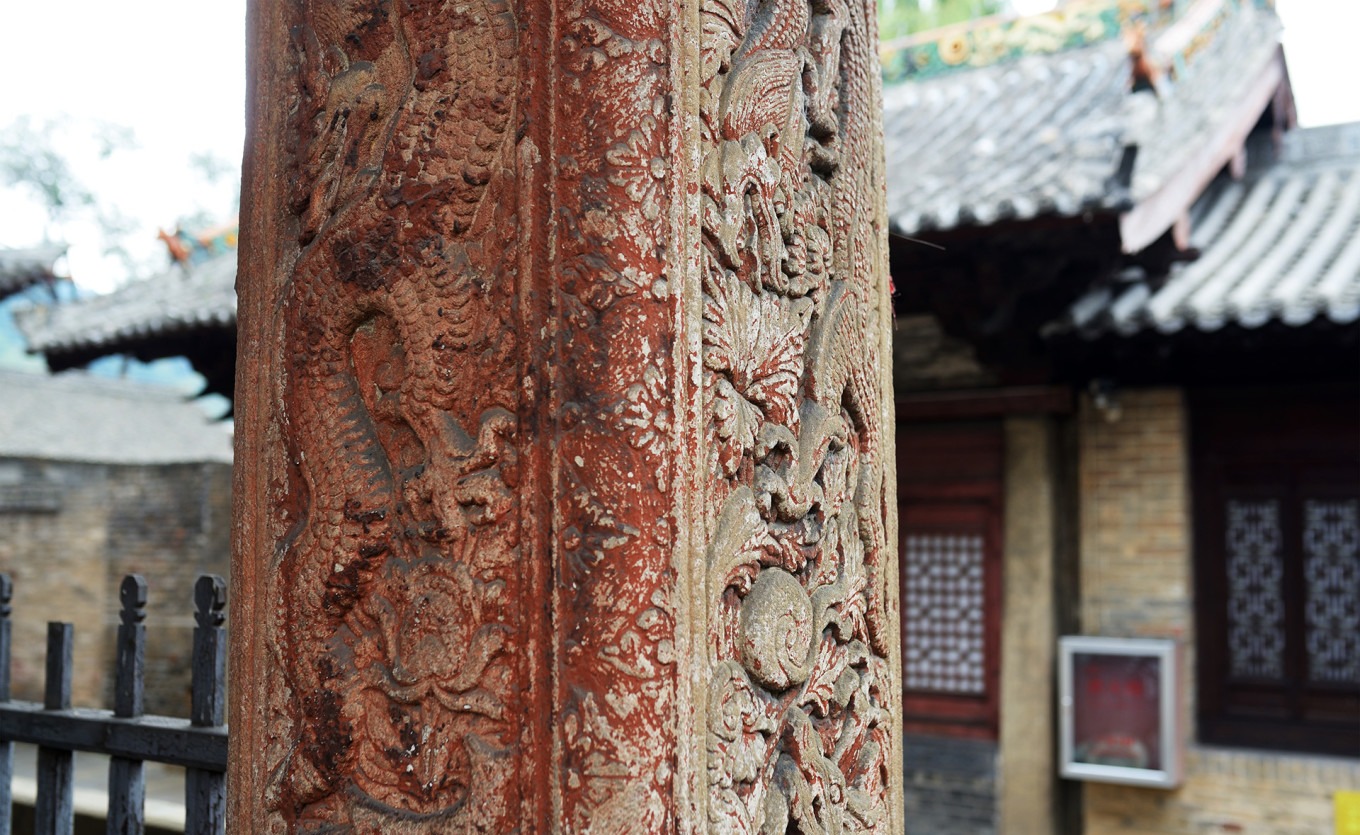
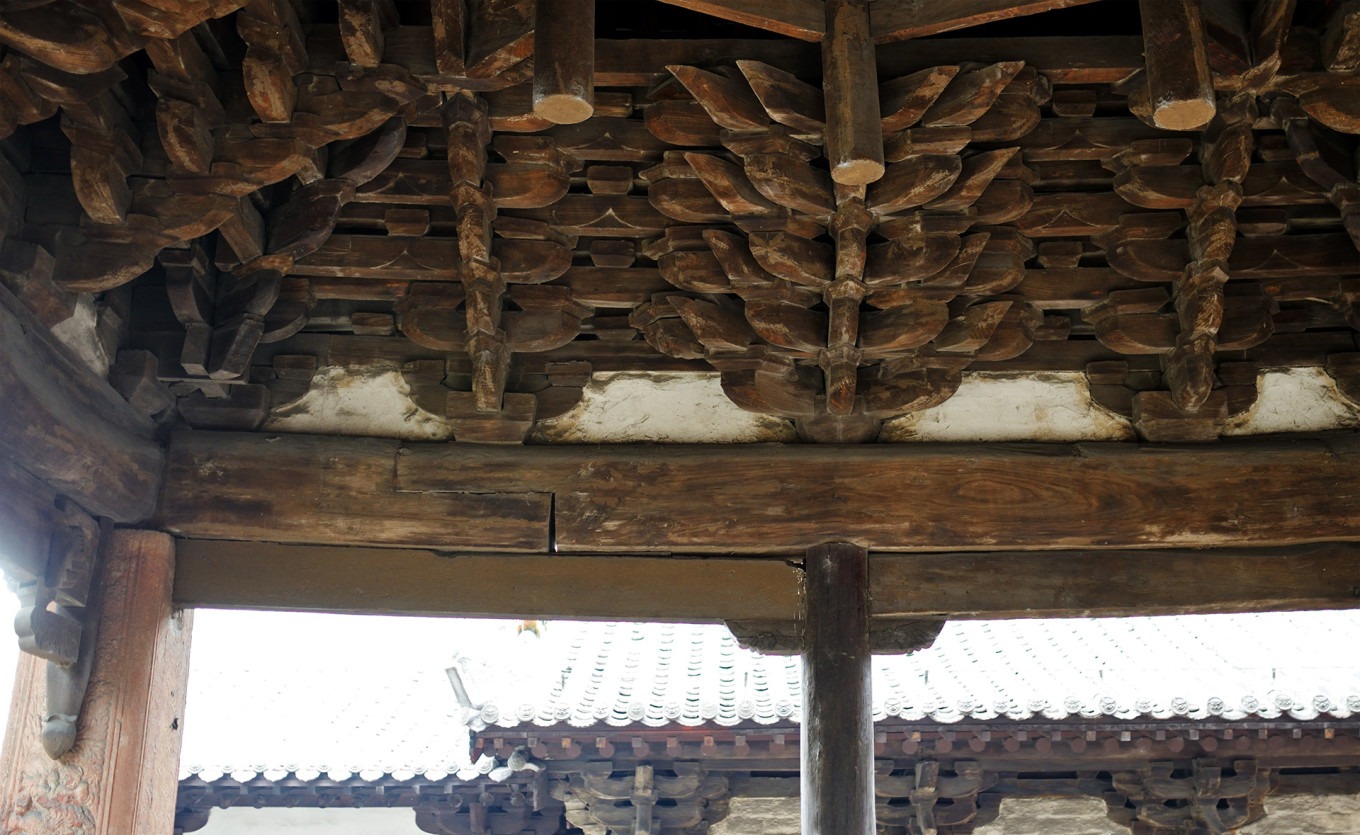
The caisson ceiling of this pavilion is also noteworthy — made of densely interlocking small bracket sets, it is even more intricate than the one in the Five-Phoenix Tower. However, the most peculiar feature is the eastern architrave (efang), which is spliced from two pieces of wood. Unlike the ‘broken beam’ structure at Chongming Temple in Gaoping, this one is asymmetrical. Given the high rank of Yuhuang Temple, a shortage of timber is unlikely, so why the craftsmen used two unequal beams remains a puzzle for scholars.
At the northernmost end of the temple is the main hall, the Yuhuang Hall (玉皇殿), also called the Lingxiao Hall by locals, as it enshrines the Jade Emperor.
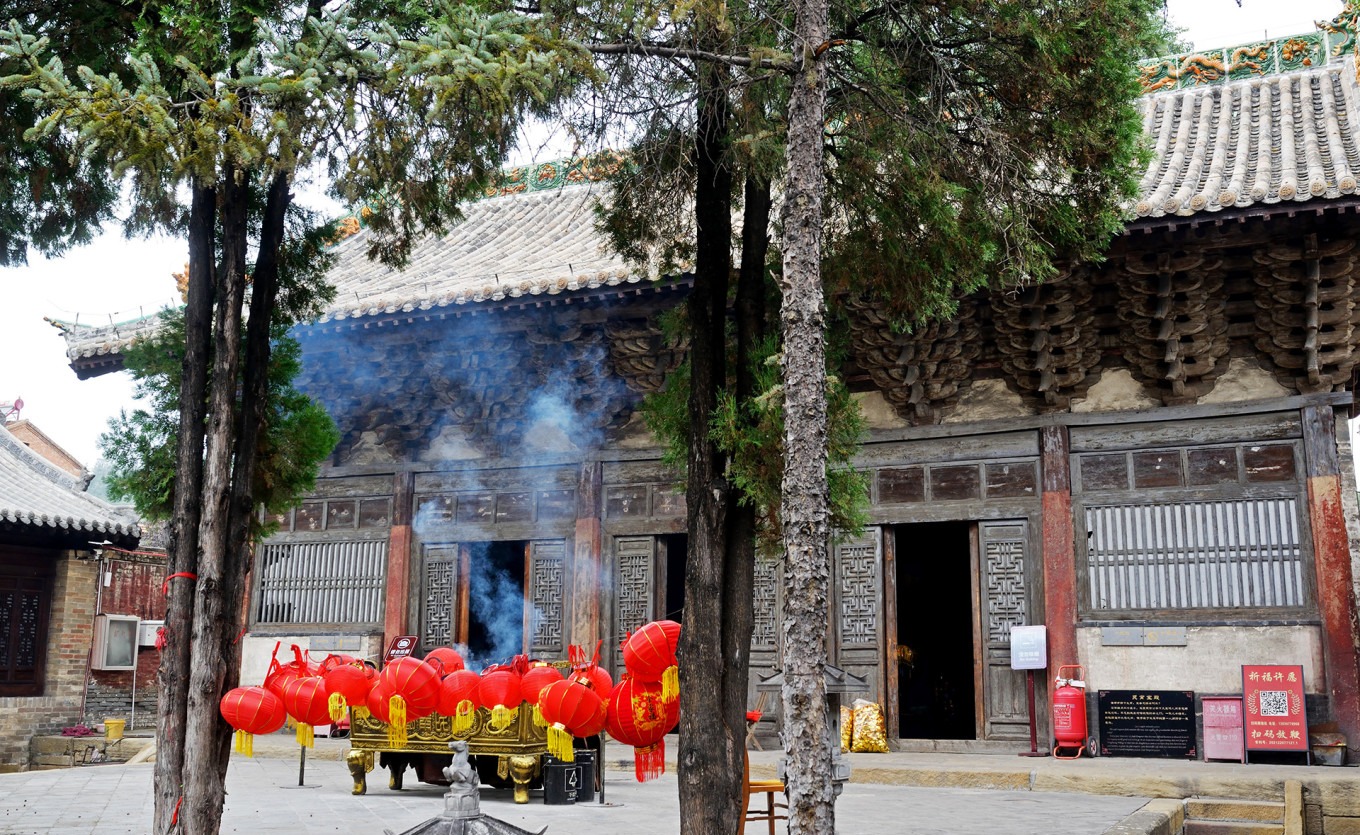
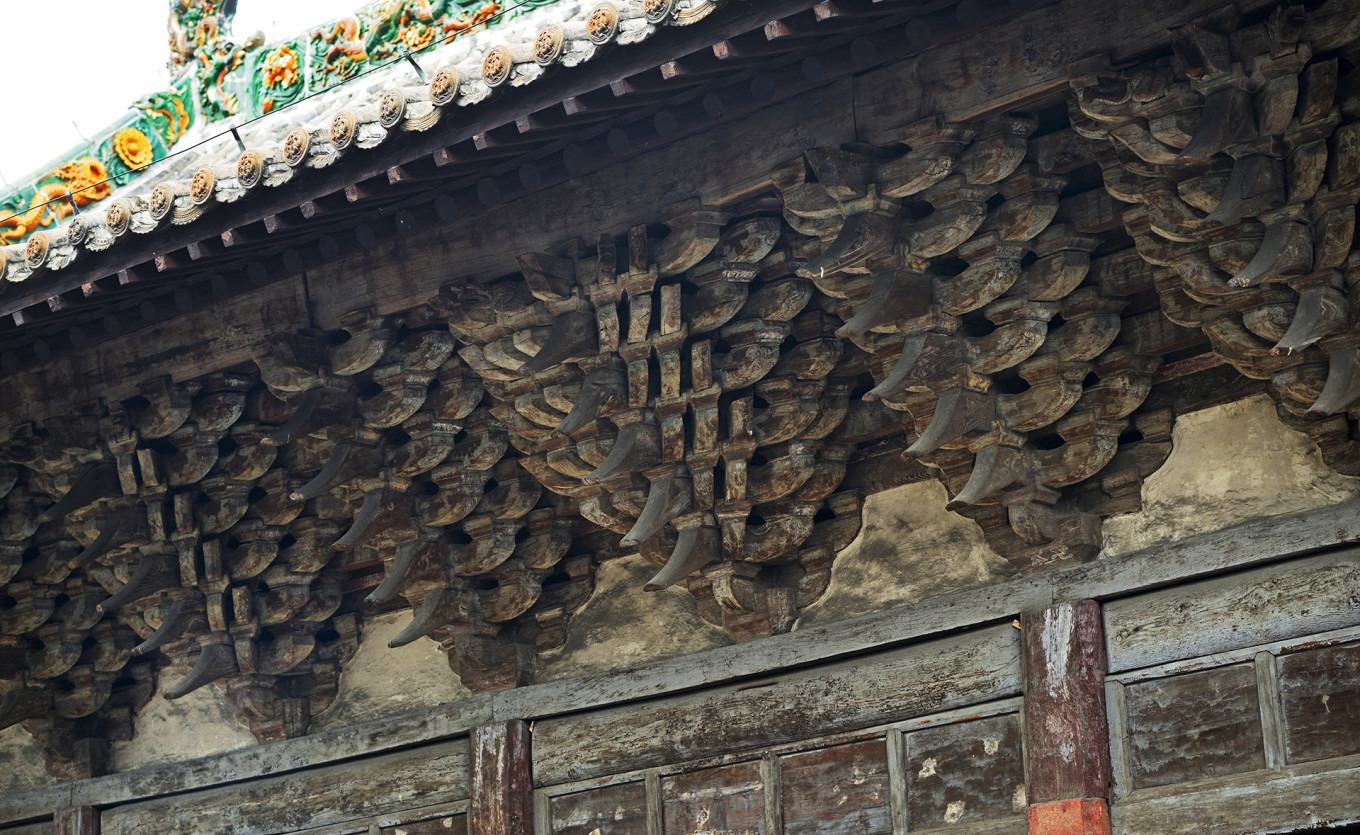
This hall is of high architectural rank, especially the eleven sets of bracket supports under the eaves — technically known as ‘four jumps, five ang, seven puzuo, thirteen cai’ (四跳五昂七铺作十三踩). It is said to have the most projecting bracket sets of any structure discovered in China. No wonder some call it the ‘Number One Yuhuang Temple under Heaven’.
- Address: 长治市上党区荫城镇琚寨村 (Juzhai Village, Yincheng Town, Shangdang District, Changzhi City)
- Ticket: 15 RMB full price
Qinxian County
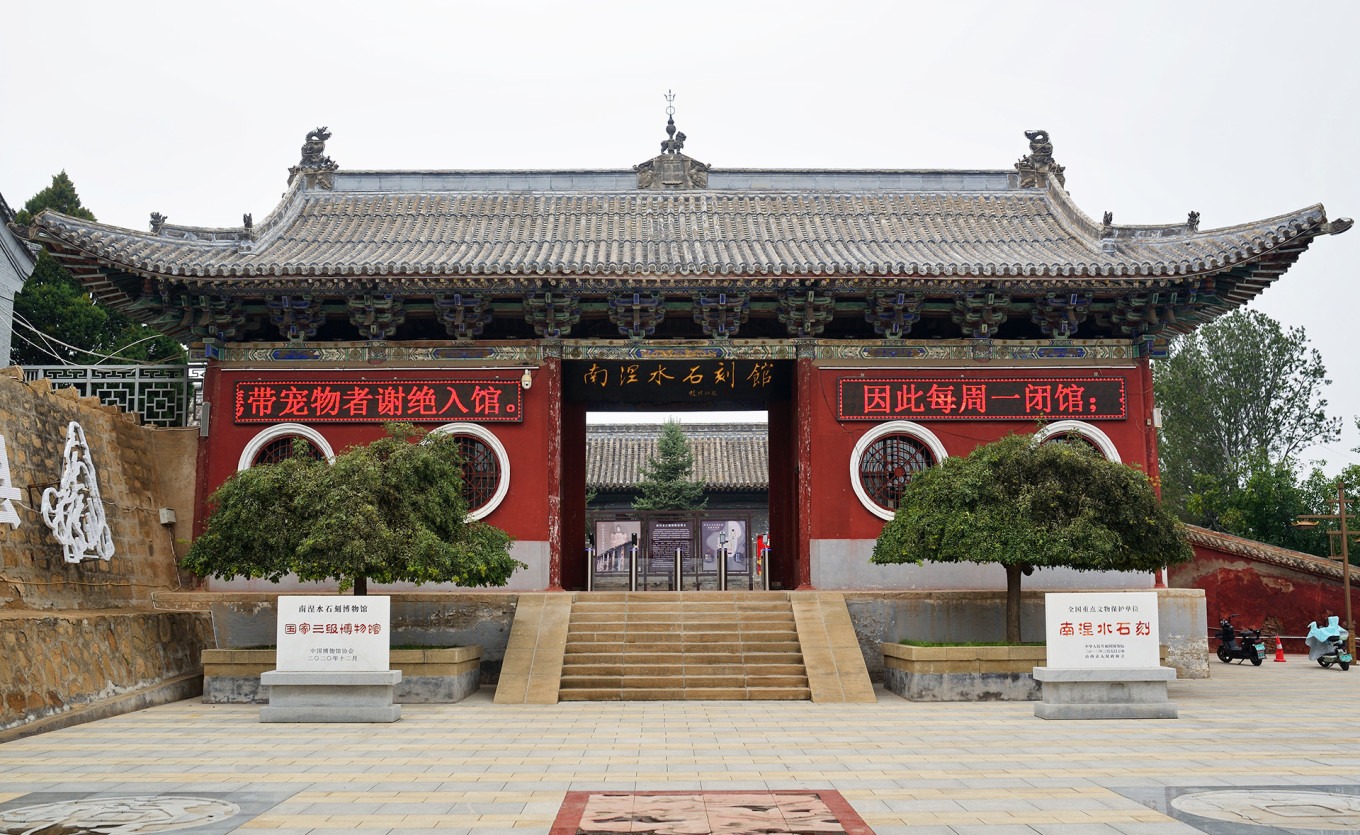
Tucked away in southeastern Shanxi, Qinxian County (沁县) is a place few travelers ever reach. Located about 70 kilometers (a 1.5-hour drive) from downtown Changzhi, this quiet county holds one compelling reason to visit: the Nanieshui Stone Carvings (南涅水石刻), a collection of Buddhist niches that lay buried underground for over a thousand years before being unearthed.
These stone carvings date back to the Northern Wei dynasty and are now displayed at the Nanieshui Stone Carvings Museum (南涅水石刻馆) in Qinxian. As you explore the exhibits, you’ll see exquisitely carved Buddhas, bodhisattvas, and donors, many still bearing traces of original pigment. The museum is compact but rich in detail—allow about an hour to appreciate the craftsmanship.
Getting here requires some planning. Public buses from Changzhi’s long-distance station run to Qinxian, but schedules are infrequent. Most travelers opt for a private car or taxi. Once in Qinxian, the museum is a short taxi ride from the county center. There are no major hotels, so consider making it a day trip from Changzhi or staying at a local guesthouse.
For a taste of local life, stop by the morning market near the county government building. You’ll find simple noodle stalls and steamed buns—perfect for a quick bite before heading to the museum.
Nanxieshui Stone Carvings: A Buried Treasure of Buddhist Art
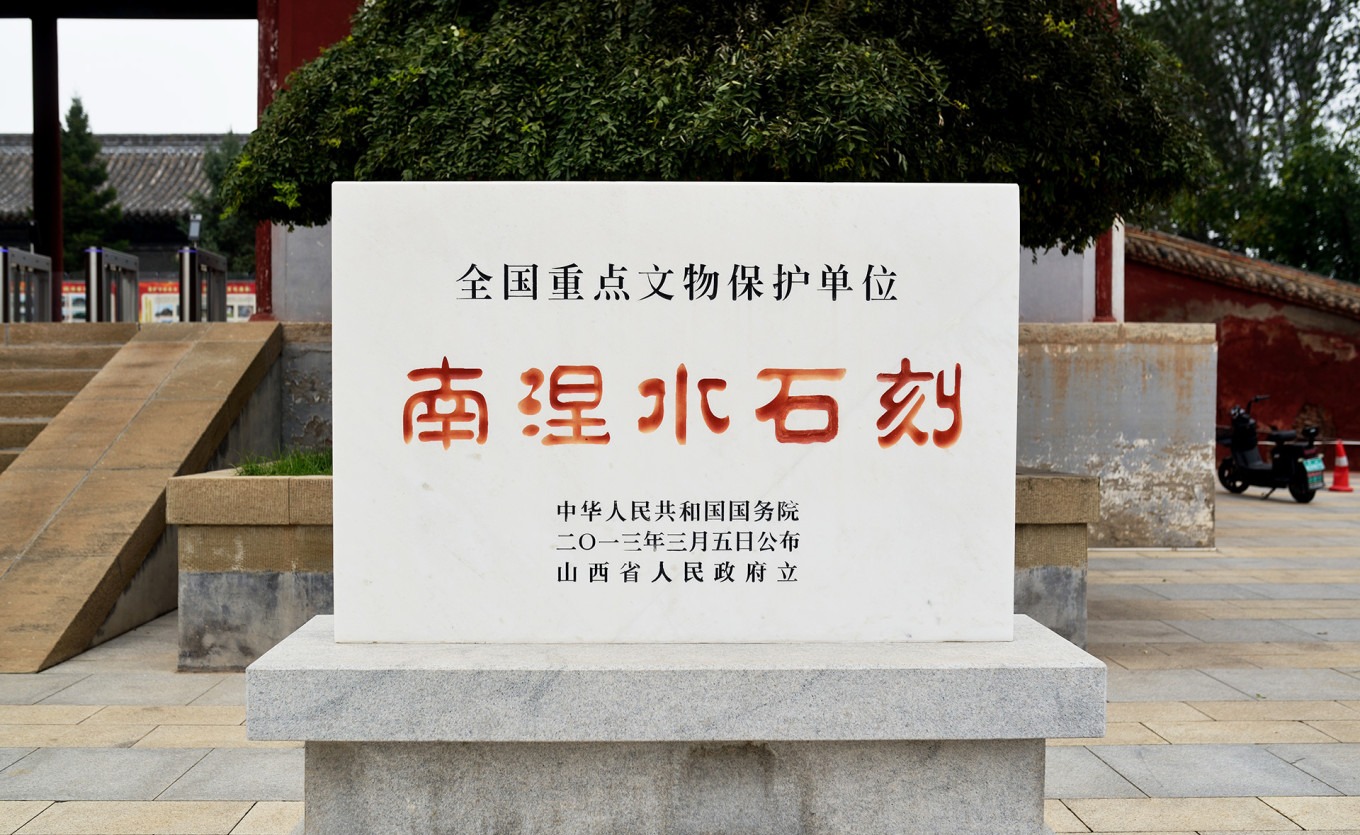
If you’ve heard of the famous Buddhist sculpture hoard at Qingzhou’s Longxing Temple in Shandong, you might be surprised to learn that Shanxi has its own remarkable cache: the Nanxieshui Stone Carvings (南涅水石刻) in Qin County (沁县). This collection, one of the earliest discovered Buddhist stone carving hoards in the province, holds an irreplaceable place in Chinese sculpture history. In 1989, the Nanxieshui Stone Carving Museum opened on Erlang Mountain south of Qin County, offering a rare opportunity to see these treasures up close.
The story of these carvings begins in the 1940s, when villagers in Nanxieshui Village (南涅水村) accidentally unearthed stone statues while digging for clay along the Nishui River. In the autumn of 1956, a canal-digging project caused a collapse, revealing more Buddhist figures. An archaeological team began formal excavations the following year, bringing the Nanxieshui carvings to light. To date, over 2,000 statues and pagoda niches have been recovered, with inscriptions dating the earliest to the second year of the Yongping era of the Northern Wei (509 CE) and the latest to the ninth year of the Tiansheng era of the Song Dynasty (1031 CE)—a span of more than 500 years. Unlike the aristocratic and royal Buddhist sites such as Qingzhou’s Longxing Temple or Datong’s Yungang Grottoes, the Nanxieshui carvings were purely the work of local communities.
Because the excavation coincided with the Three Years of Natural Disasters (1959–1961) and a lack of experienced personnel, the carvings were not systematically cataloged at the time. It wasn’t until 2022 that the first authoritative excavation report was published, leaving many mysteries. The creation of these carvings is linked to Emperor Xiaowen of the Northern Wei moving the capital to Luoyang in 494 CE. The southeastern region of Shanxi lies along the ancient Pingluo Road, and geographically, Nanxieshui sits midway between the Yungang and Longmen Grottoes. As Xianbei people passed through on their way to the Central Plains, a wave of Buddha image-making swept the area. Why the statues were eventually buried underground remains uncertain, but it is thought to be related to one of the historical persecutions of Buddhism.
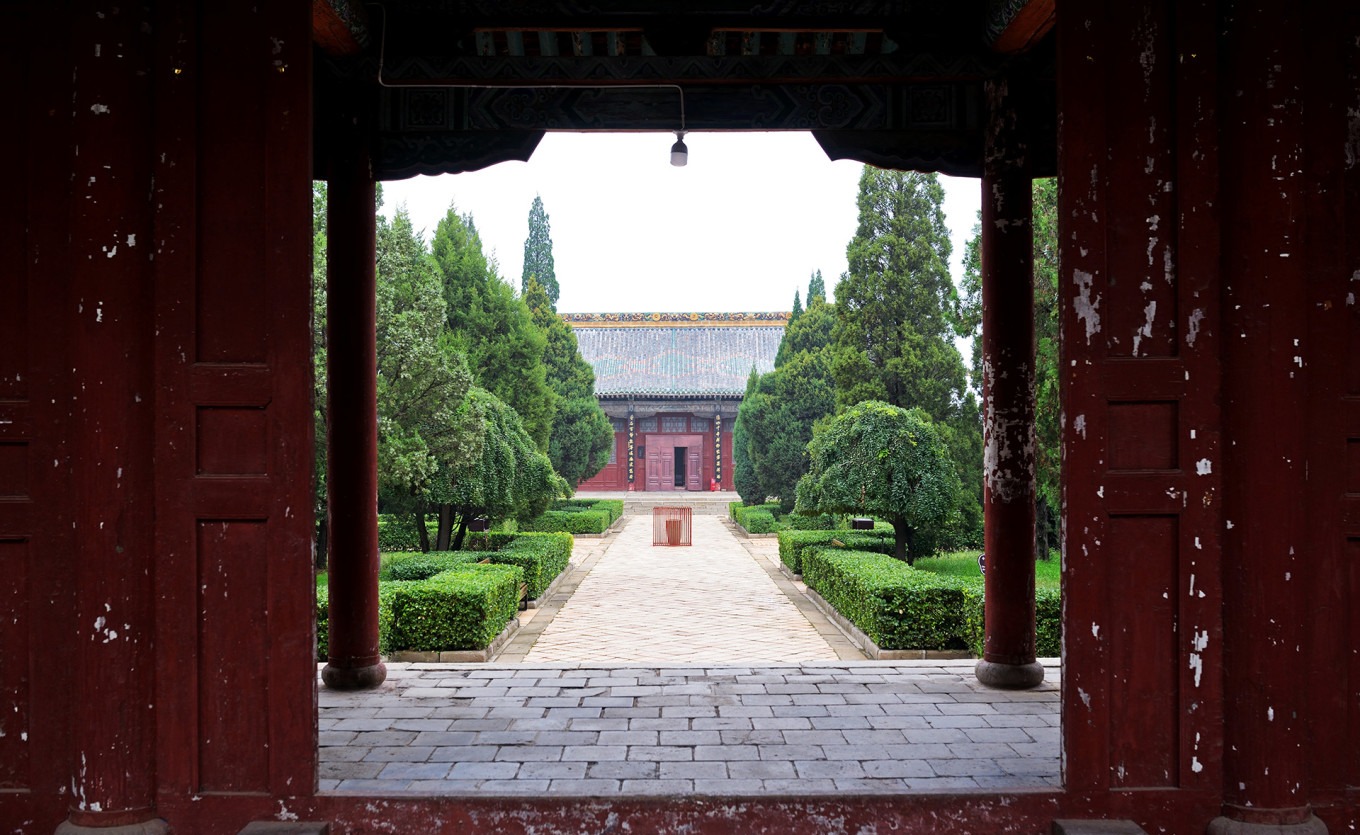
The museum has six stone carving exhibition halls and one stele hall, though some halls may be closed for digitization or maintenance. Currently, five carving halls are open to visitors.
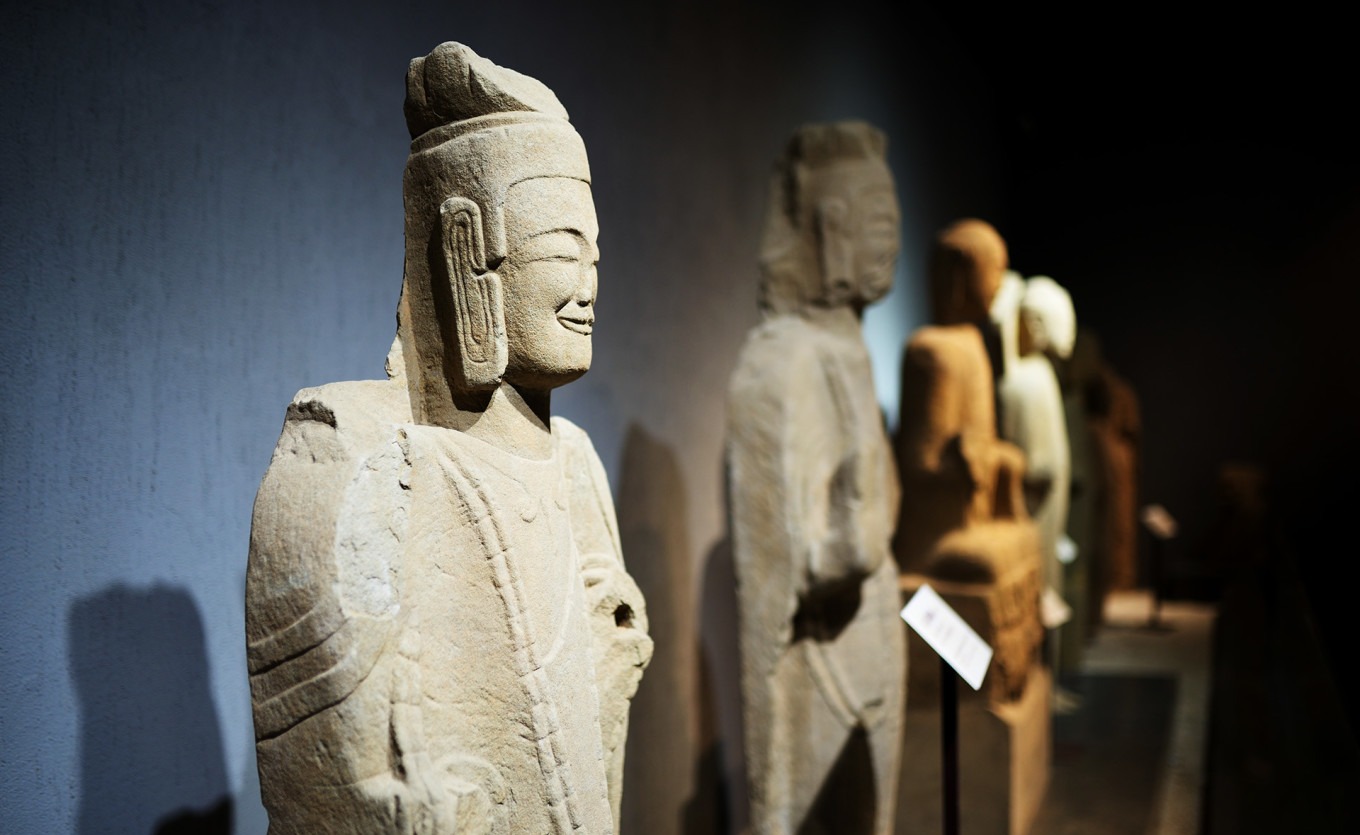
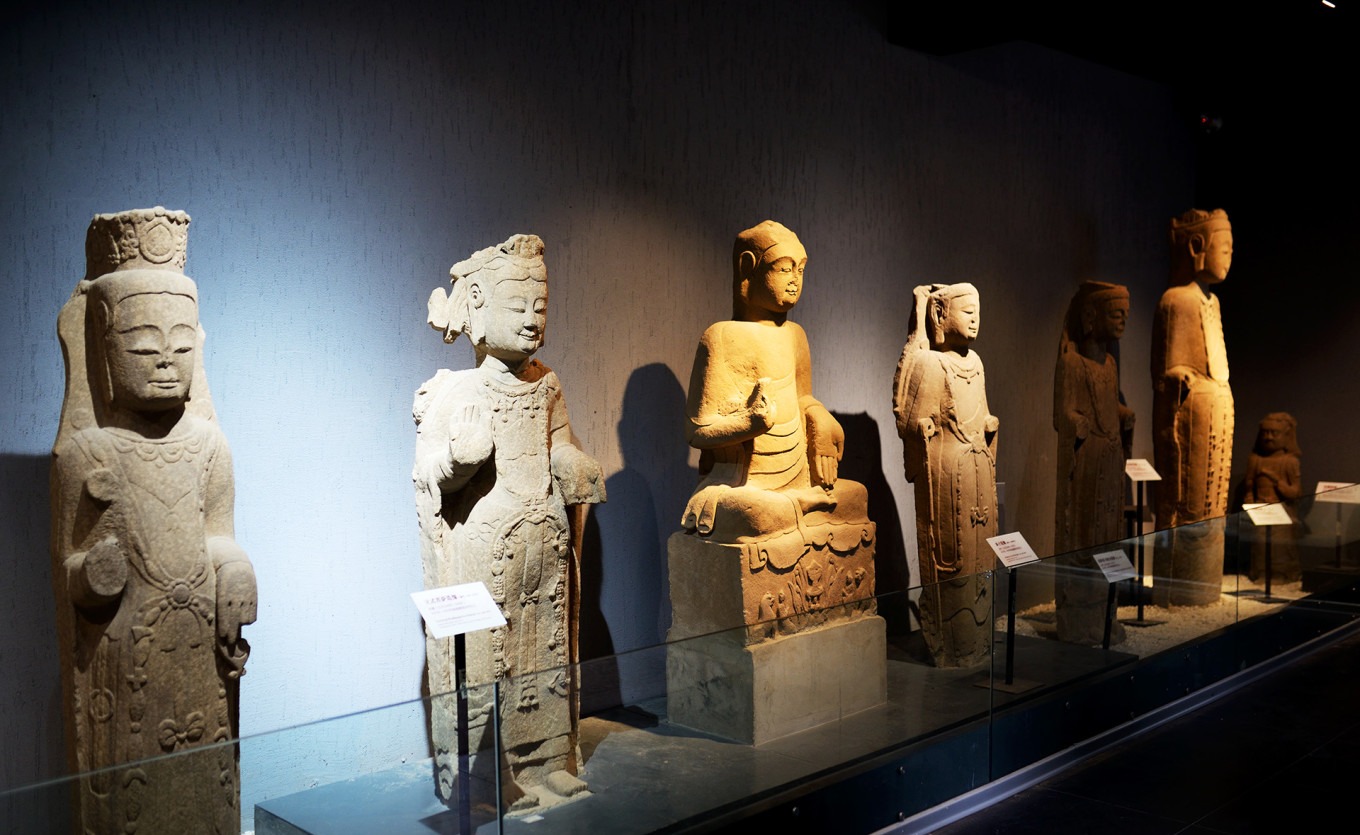
The Nanxieshui carvings fall into two main categories: single figures and pagoda niches. Single figures are further divided into two types. The first type depicts a single Buddhist figure—a Buddha, bodhisattva, disciple, or vajra warrior—in standing, sitting, or cross-legged poses.
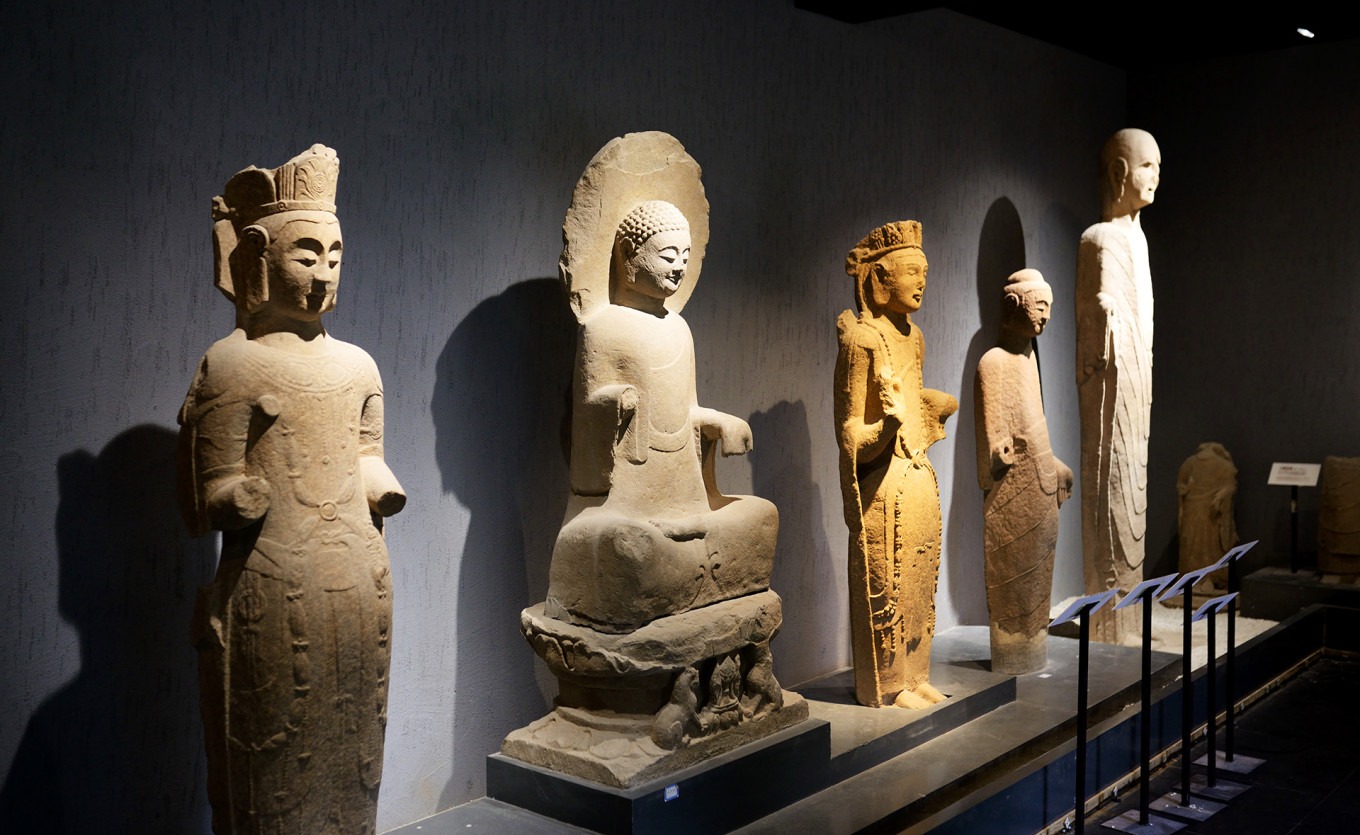
These are common in the exhibition halls. The tallest stands over 2.5 meters, while the smallest is less than 20 centimeters. Their forms range from plump and rounded to slender and elegant, reflecting the stylistic changes and spiritual expressions of different eras.
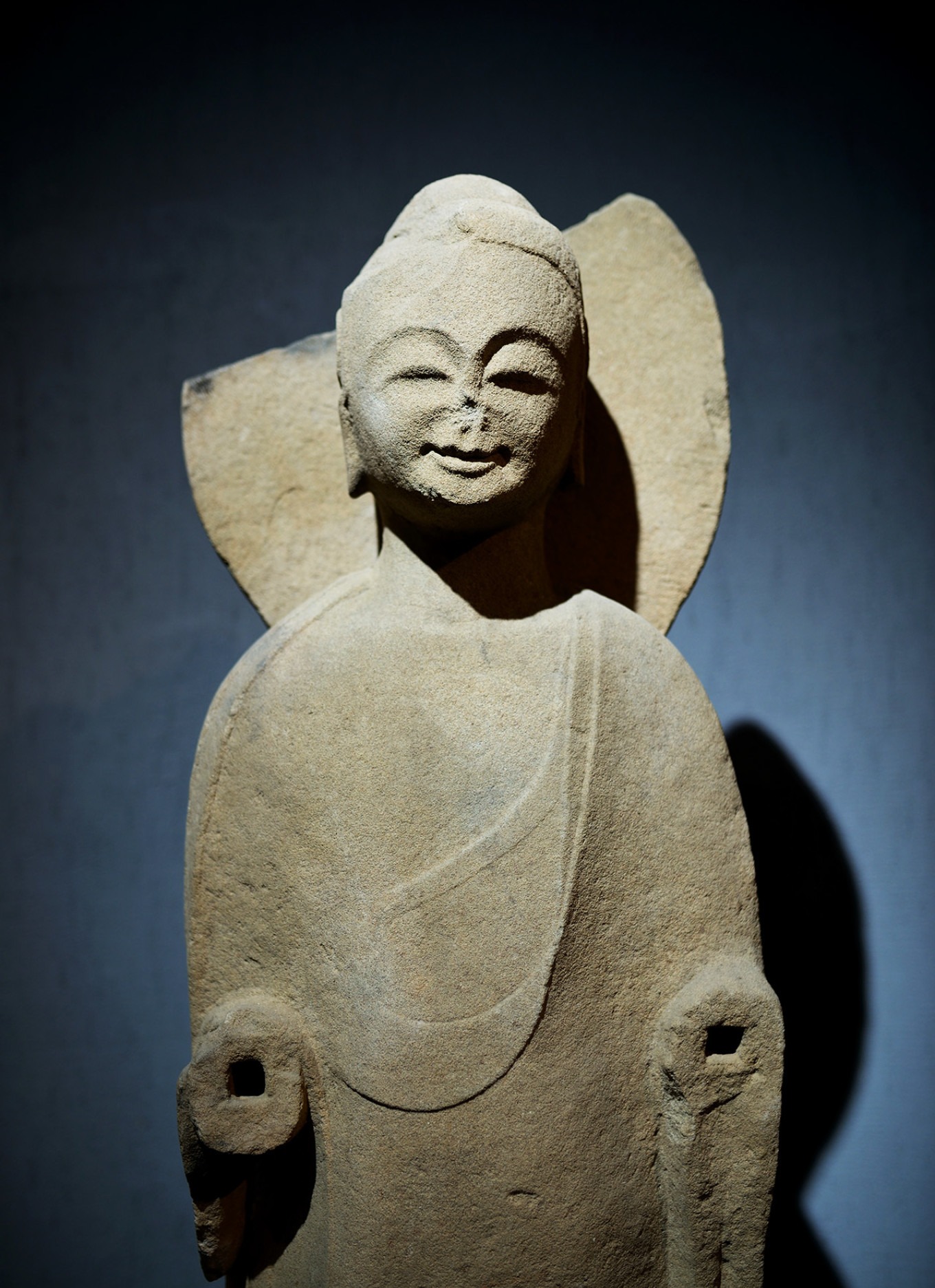
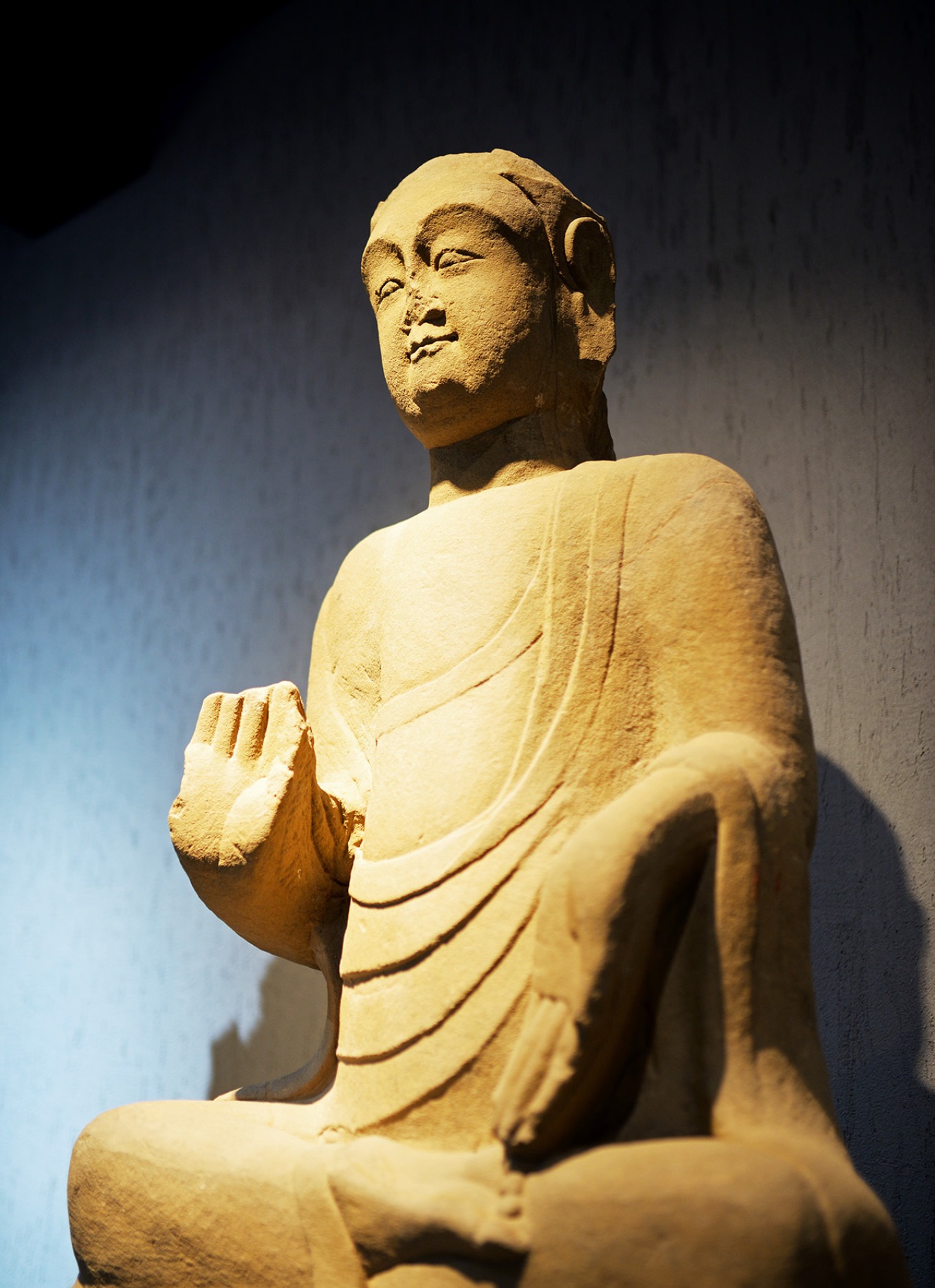
The second type of single figure combines a carved figure (Buddha, bodhisattva, or disciple) on the upper part of a stone block, with a decorative halo or flame pattern behind, and lotus flowers, vajra warriors, guardian beasts, or donors carved below. This style unites the Buddhist realm on one stone, mimicking cliff-side cave carvings—a miniature version of rock-cut cave temples.
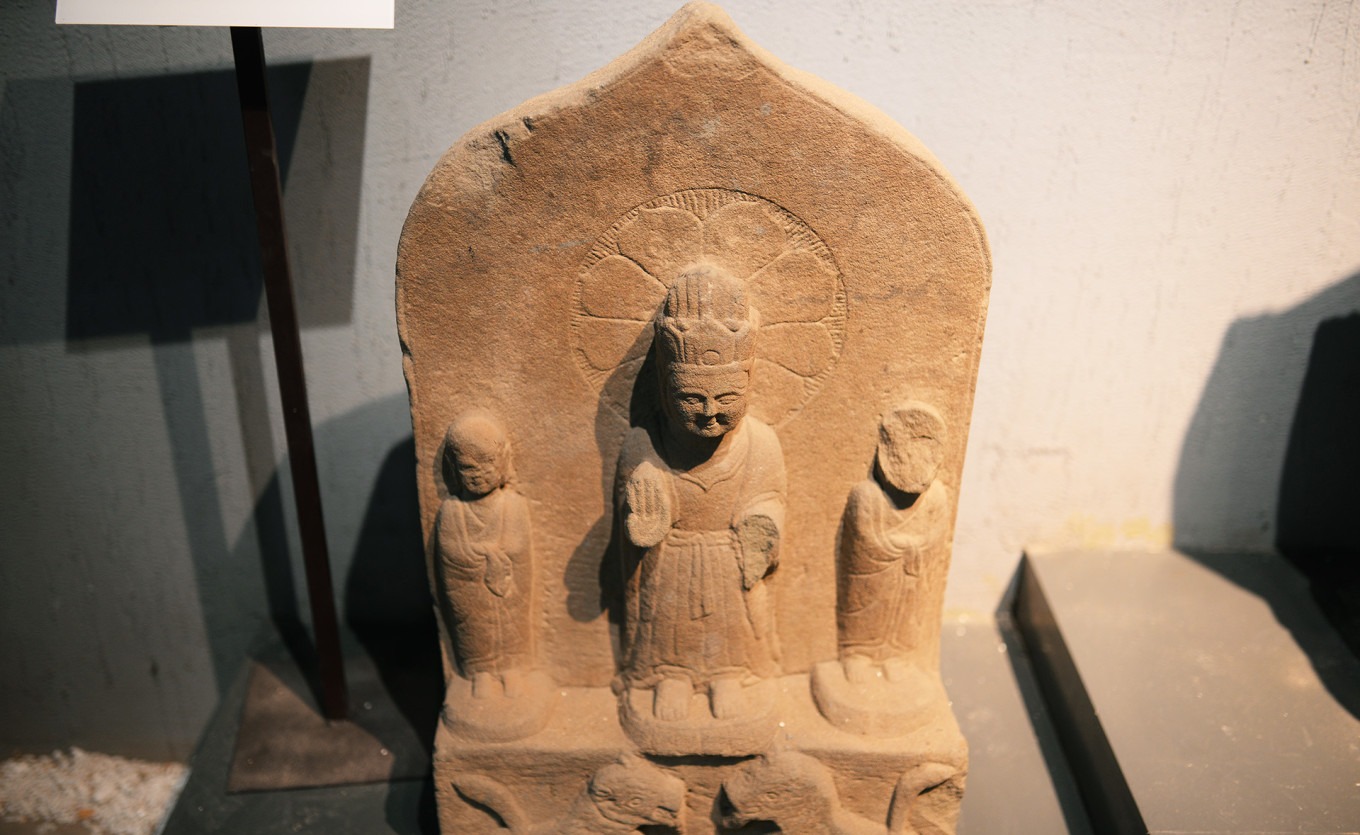
Though some carvings are damaged, their overall integrity remains impressive. The Buddhas and bodhisattvas wear calm, natural expressions with subtle dynamic shifts—stillness within motion. The drapery folds follow the body’s contours, simple yet clearly defined.
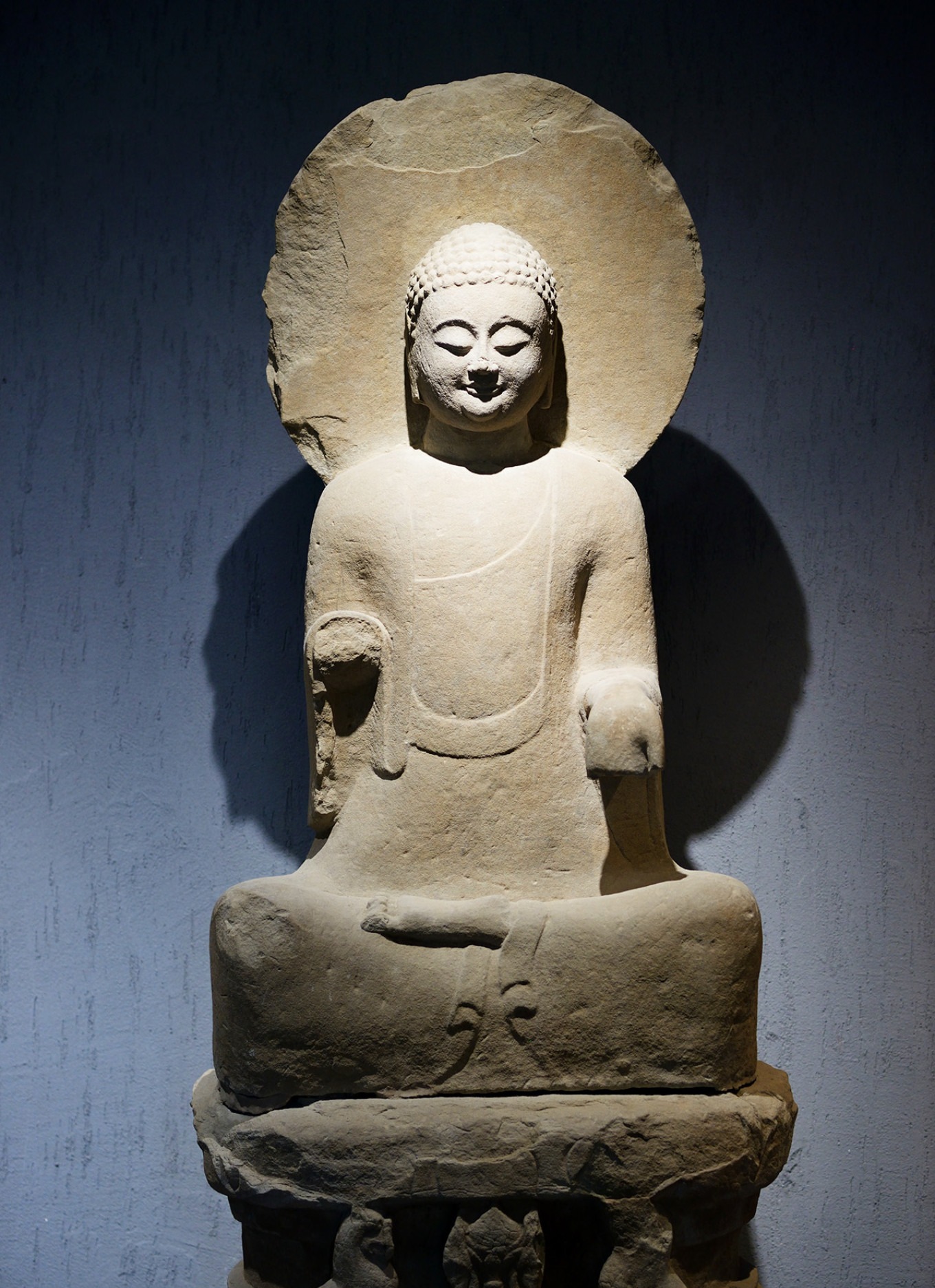
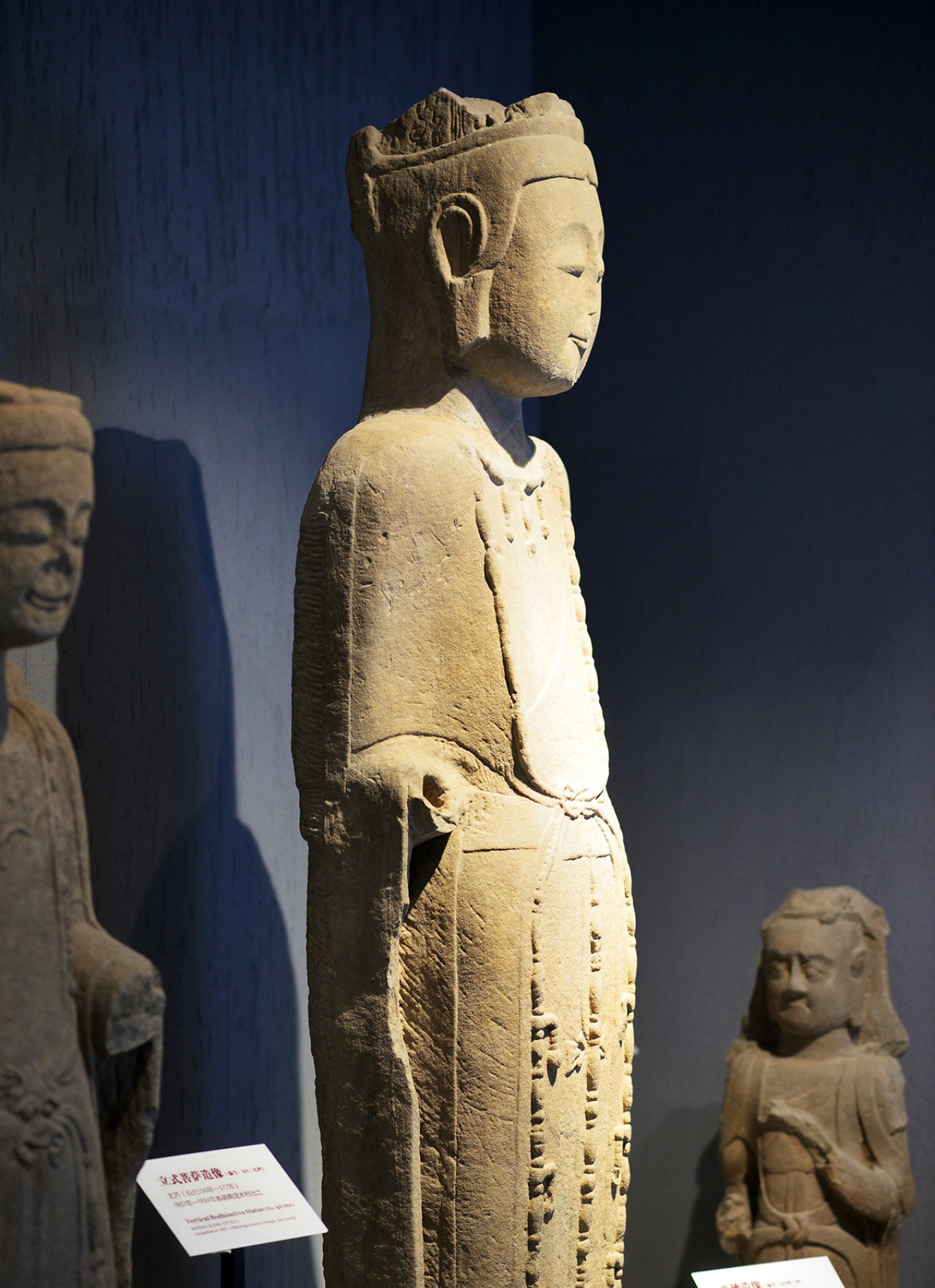
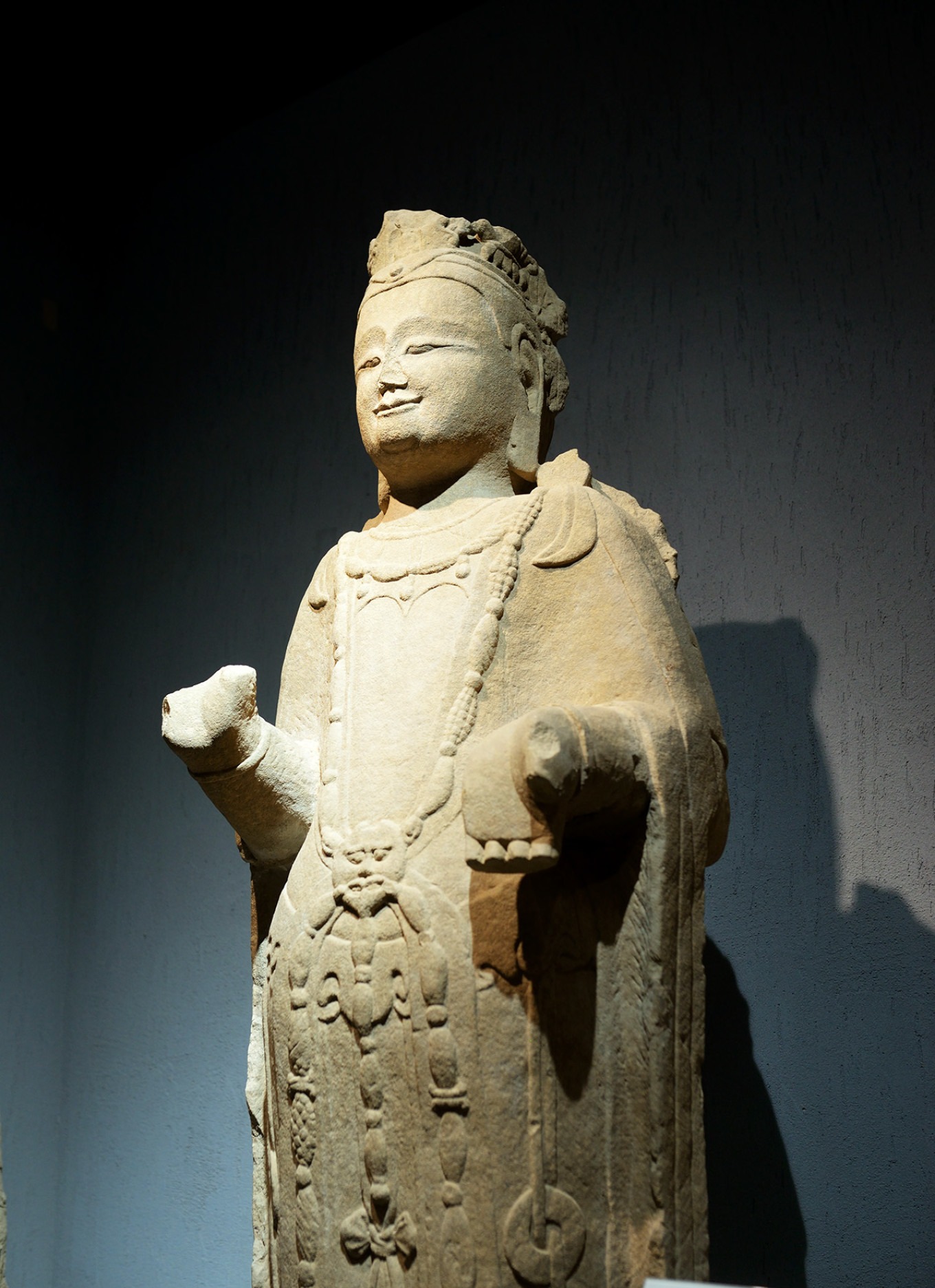
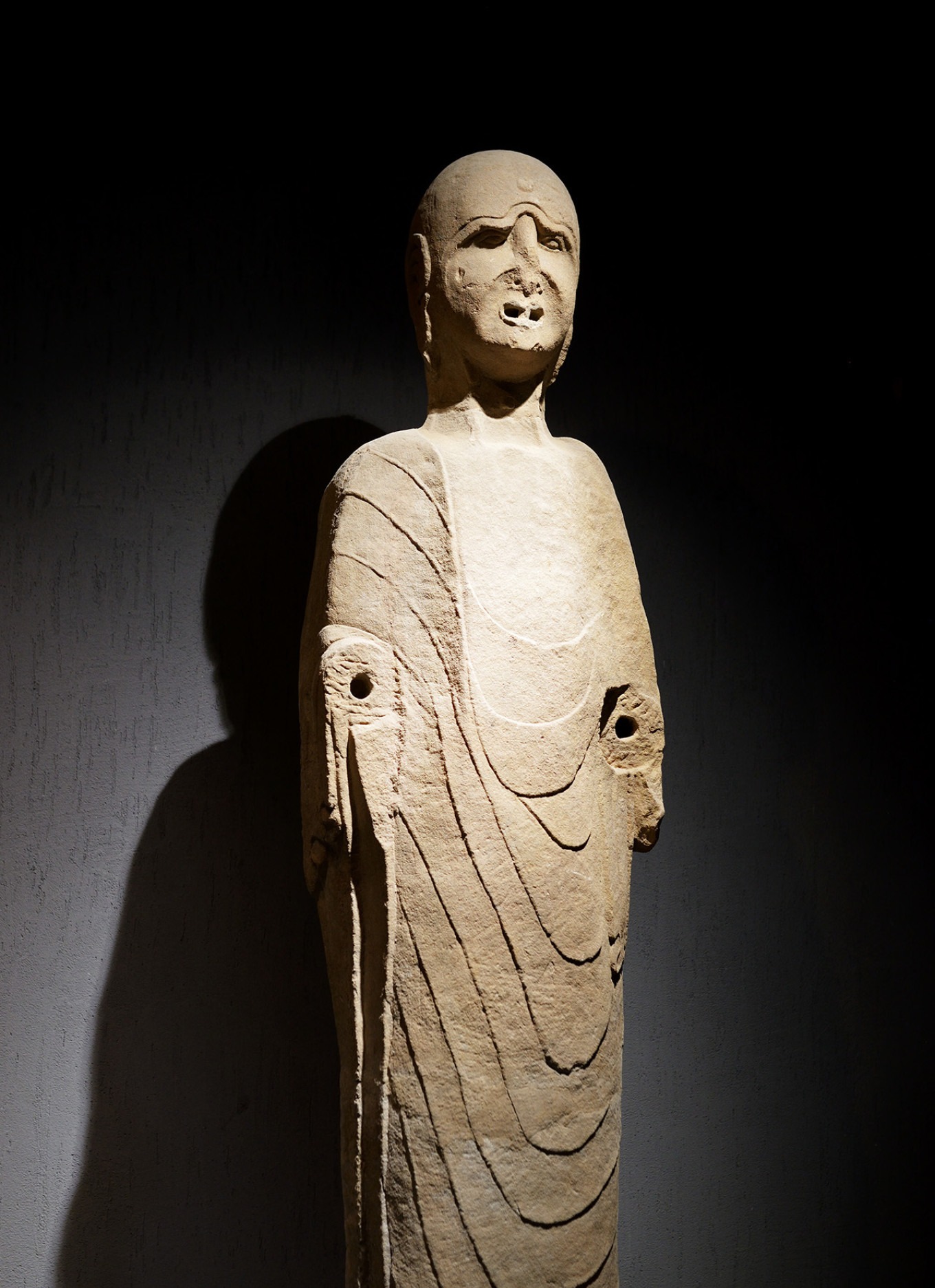
One standout is the statue of the disciple Mahakashyapa (迦叶), the tallest among the Nanxieshui carvings. He appears as a weather-beaten, gaunt old man, with clear, crisp robe lines that look remarkably realistic.
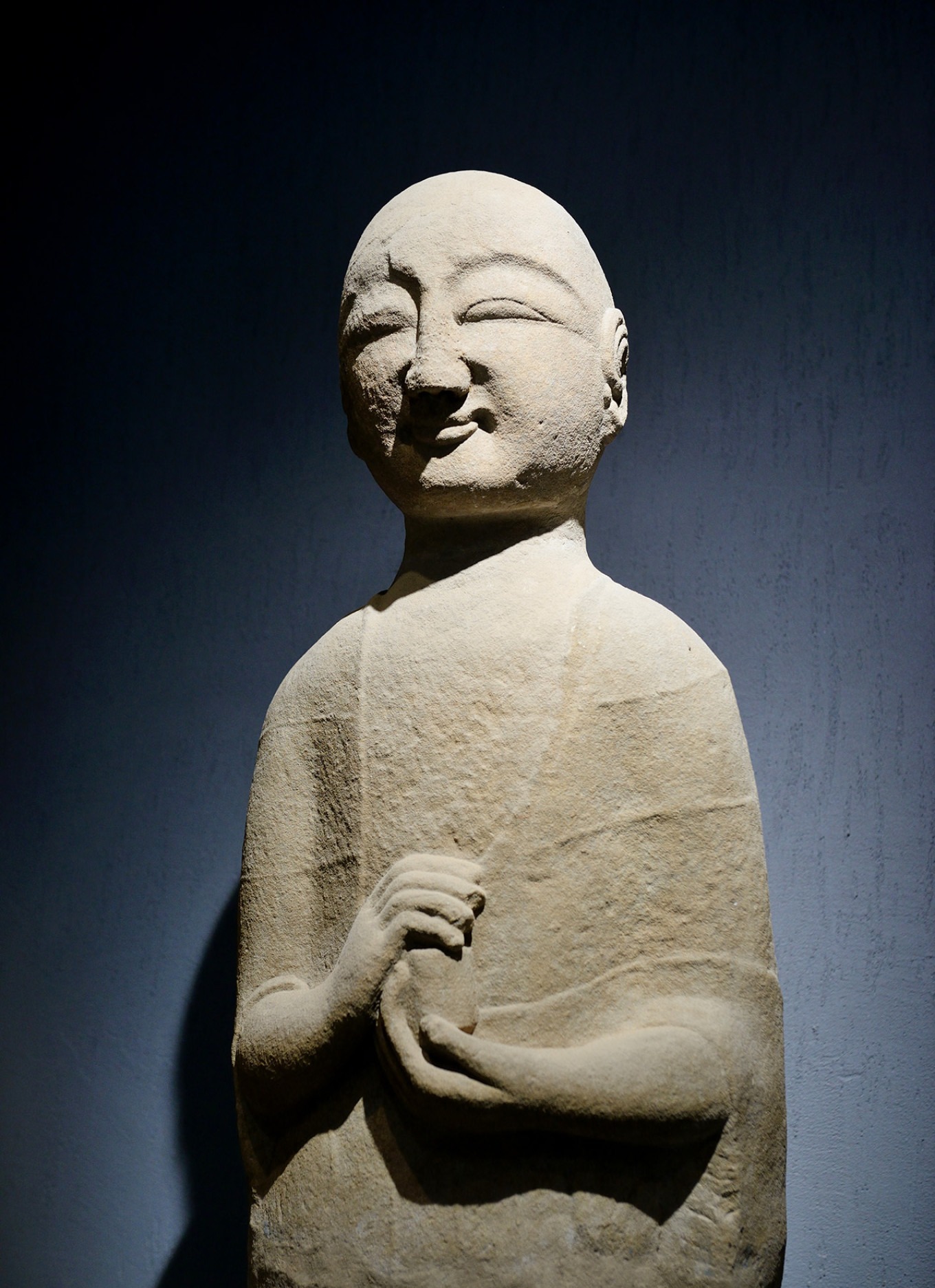
Beside him is the young monk Ananda (阿难), with a shaved head, round face, and delicate features. He holds a mani pearl before his chest, appearing enlightened after hearing the Dharma. The contrast between the aged Kashyapa and youthful Ananda shows the artisans’ skill in emphasizing individual character and expression, striving for vivid naturalism.
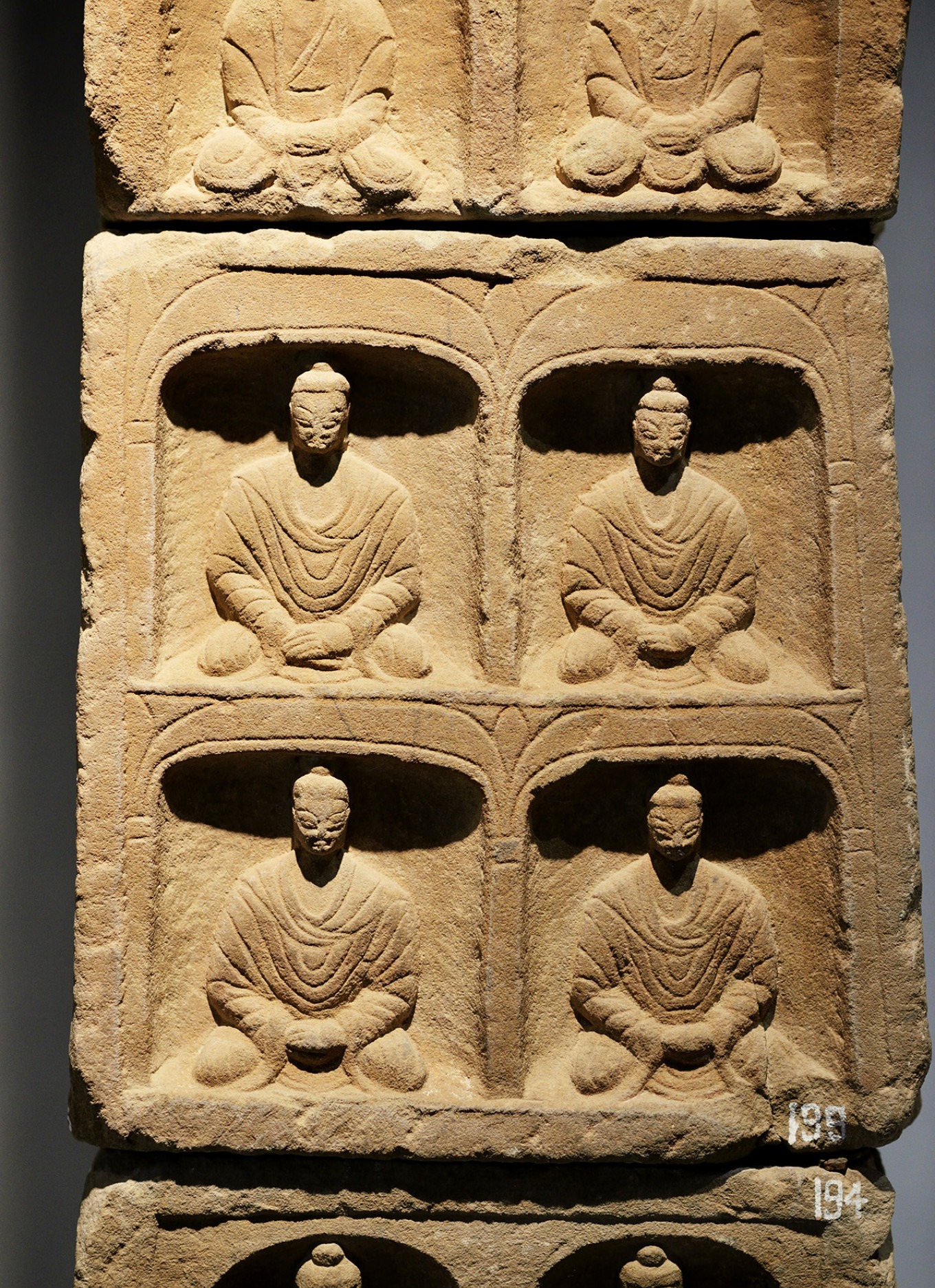
The other major category is pagoda niches (造像塔), a new folk Buddhist art form that emerged after the Northern Dynasties’ cliff-side cave carving tradition. These niches are carved on square stone blocks, usually tapering upward, though some are uniform in size. Each set consists of five to seven blocks, with seven layers being most common. Each block can be moved individually and stacked into a pagoda shape.
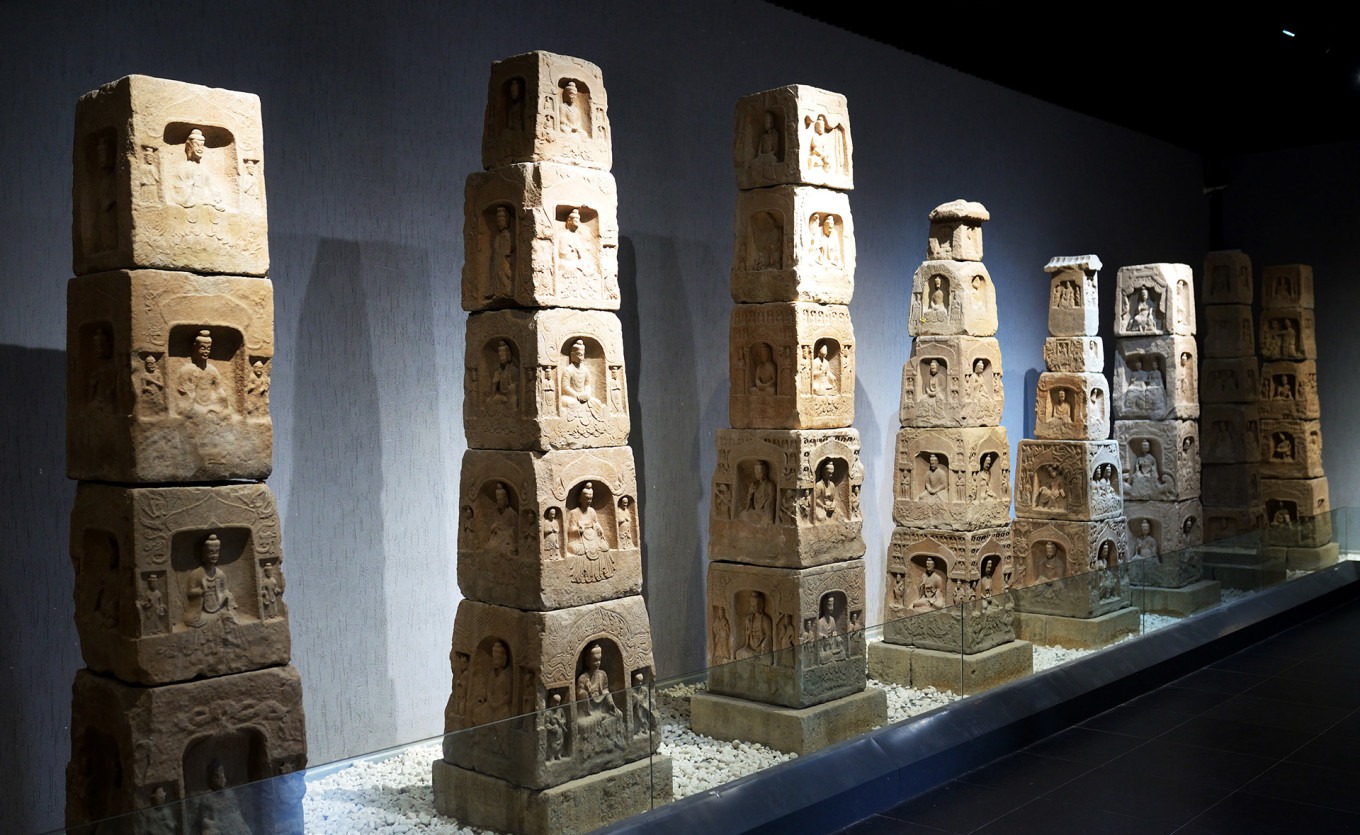
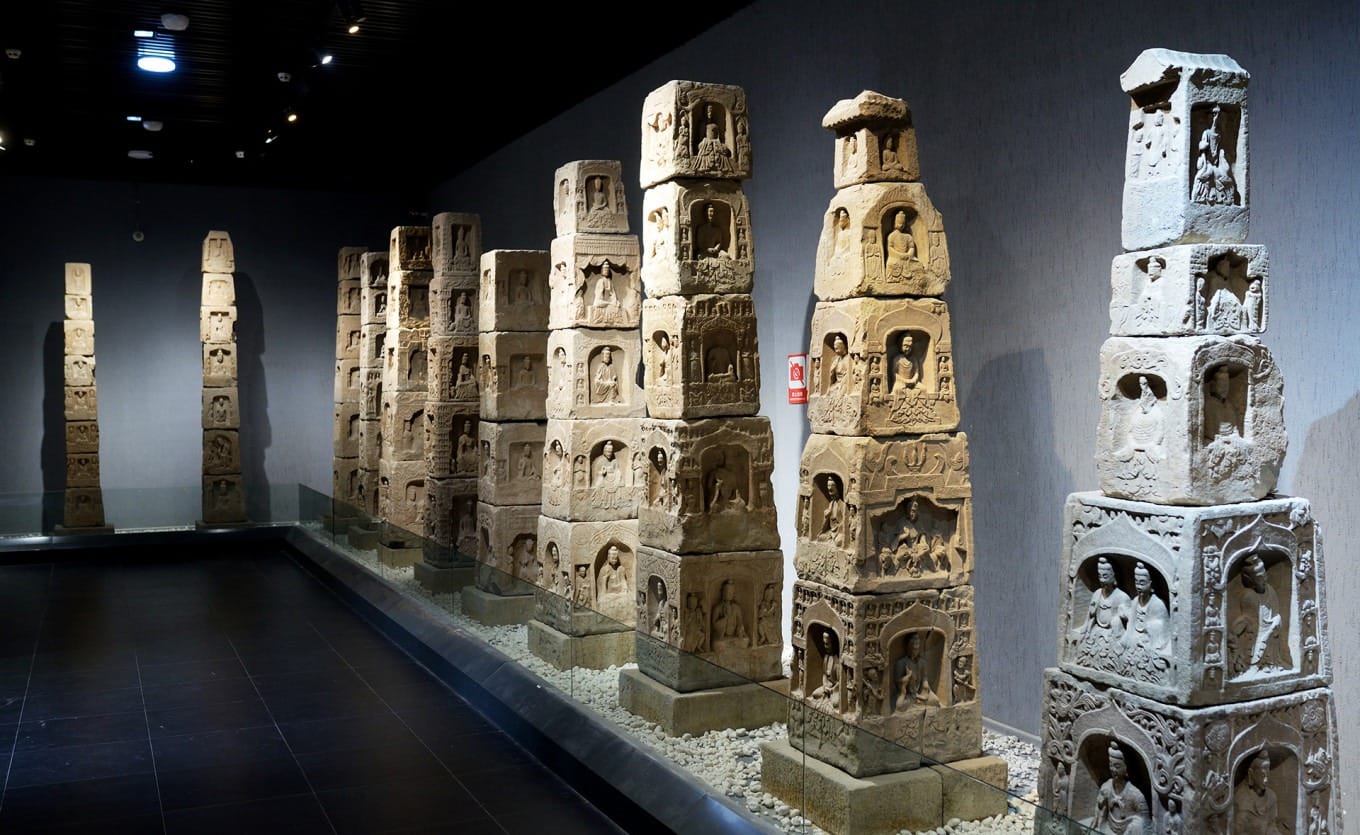
The niches come in a variety of shapes: pointed-arch, house-shaped, round-arch, tree-shaped, and more. Above the niche opening, flying apsaras and symbols of the sun and moon—golden-winged birds and toads—are often carved. Flanking the niche are typically bodhisattvas, vajra warriors, and disciples, while donors or earth spirits appear below, all rendered with concise lines.
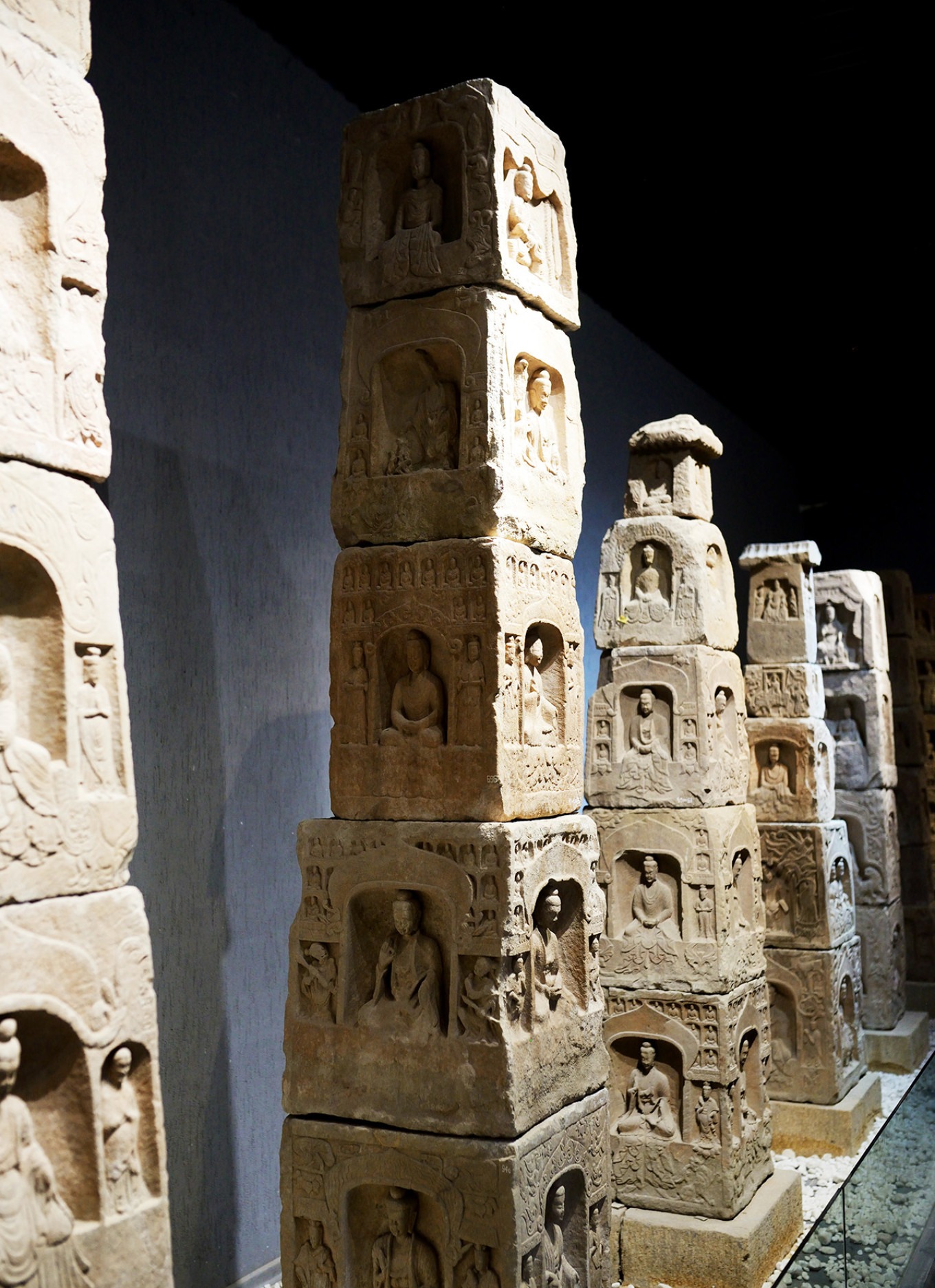
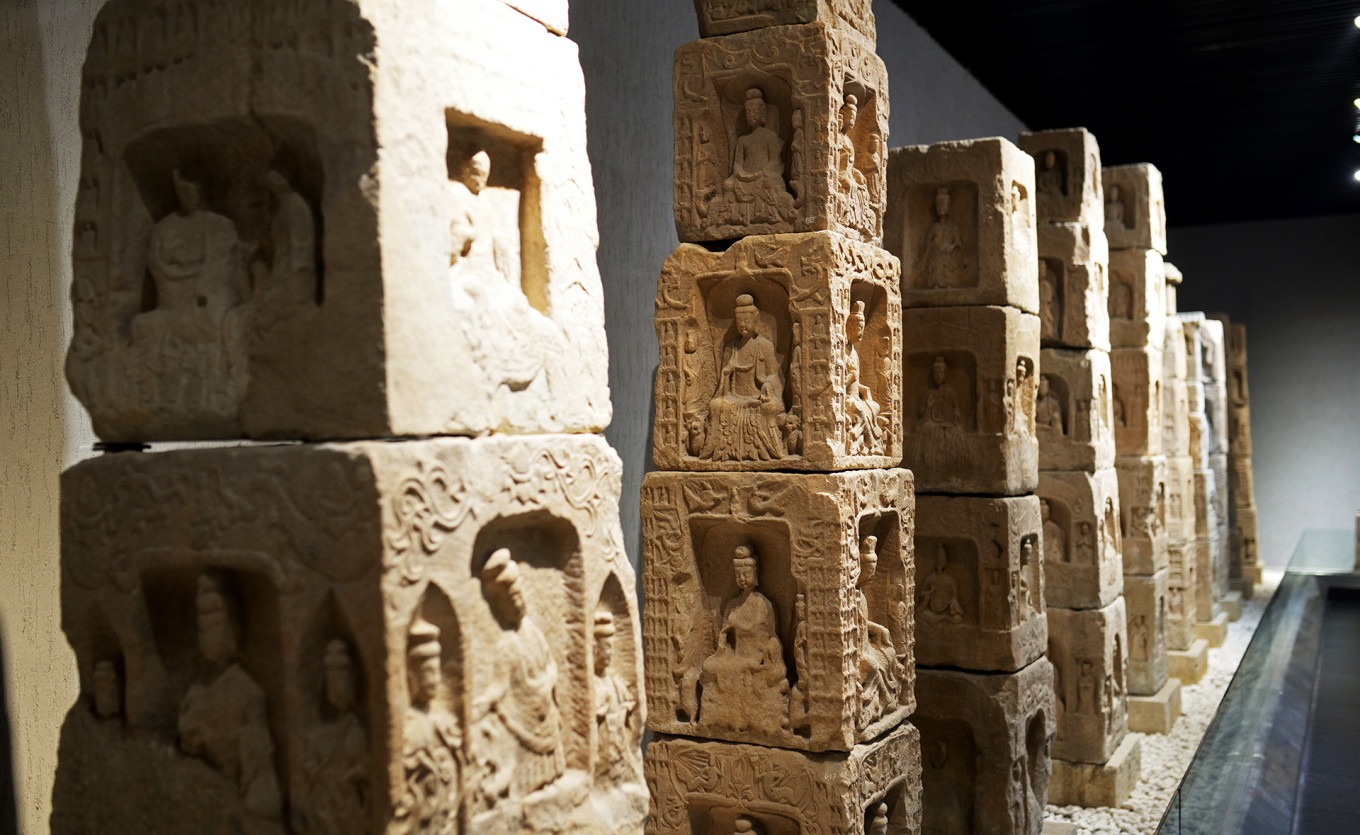
Most niches date from the Northern Wei period, when the prevailing style was slender figures with high nose bridges and thin lips—a ‘clear bone and elegant appearance.’ This confirms that the Nanxieshui carvings were influenced by Emperor Xiaowen’s capital move to Luoyang.
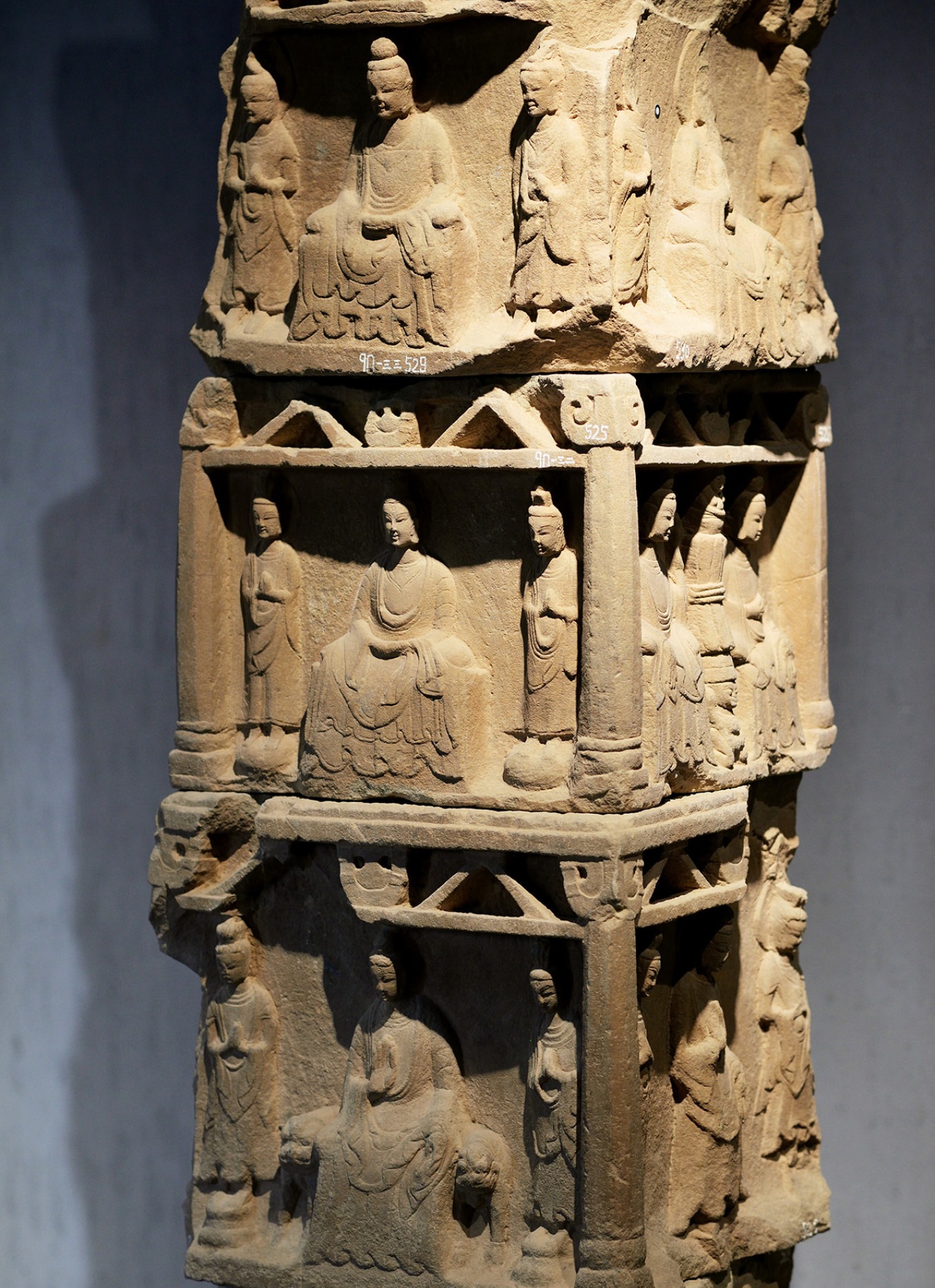
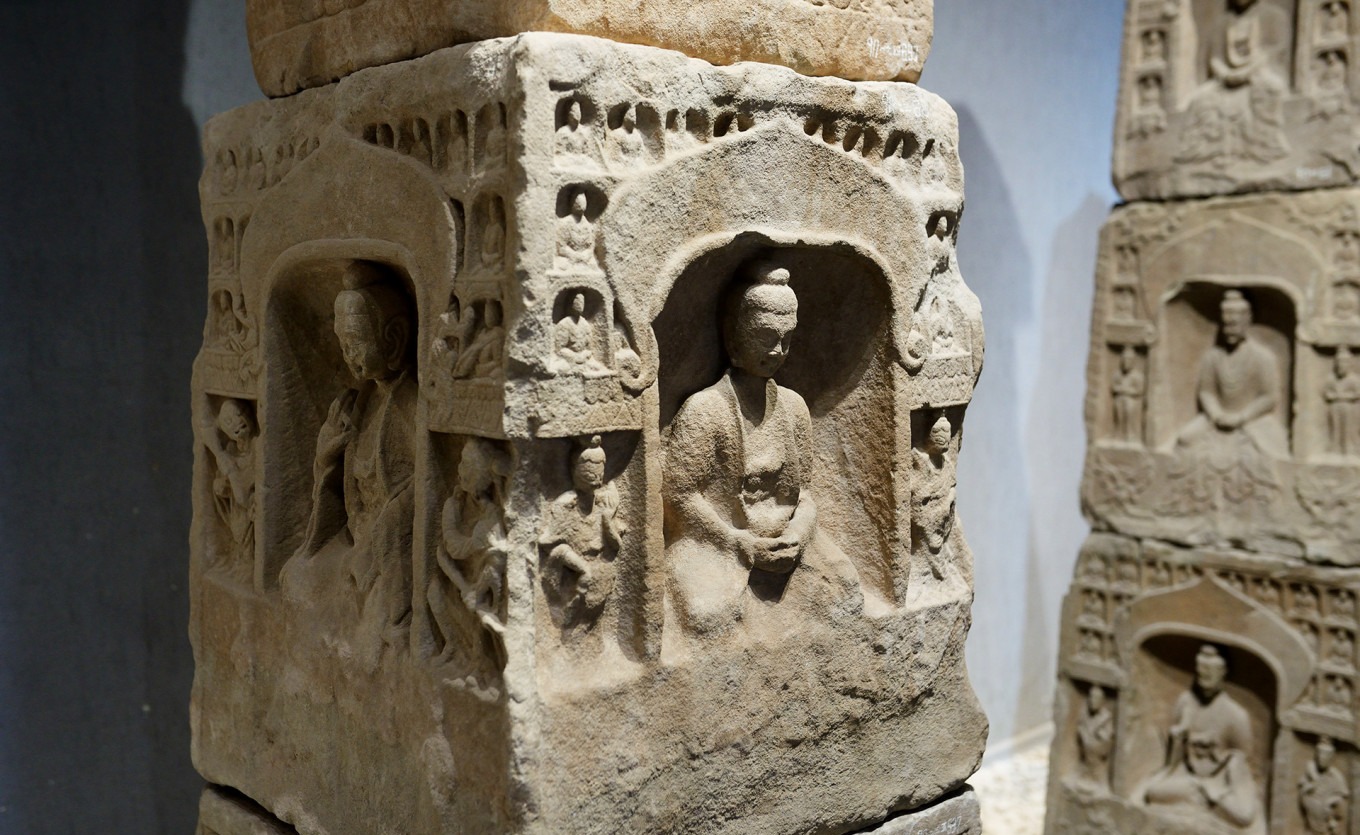
The Buddhas sit upright, turn to converse, or lean forward as if teaching—each posture different, yet all close to real life, reflecting a folk and market-town sensibility.
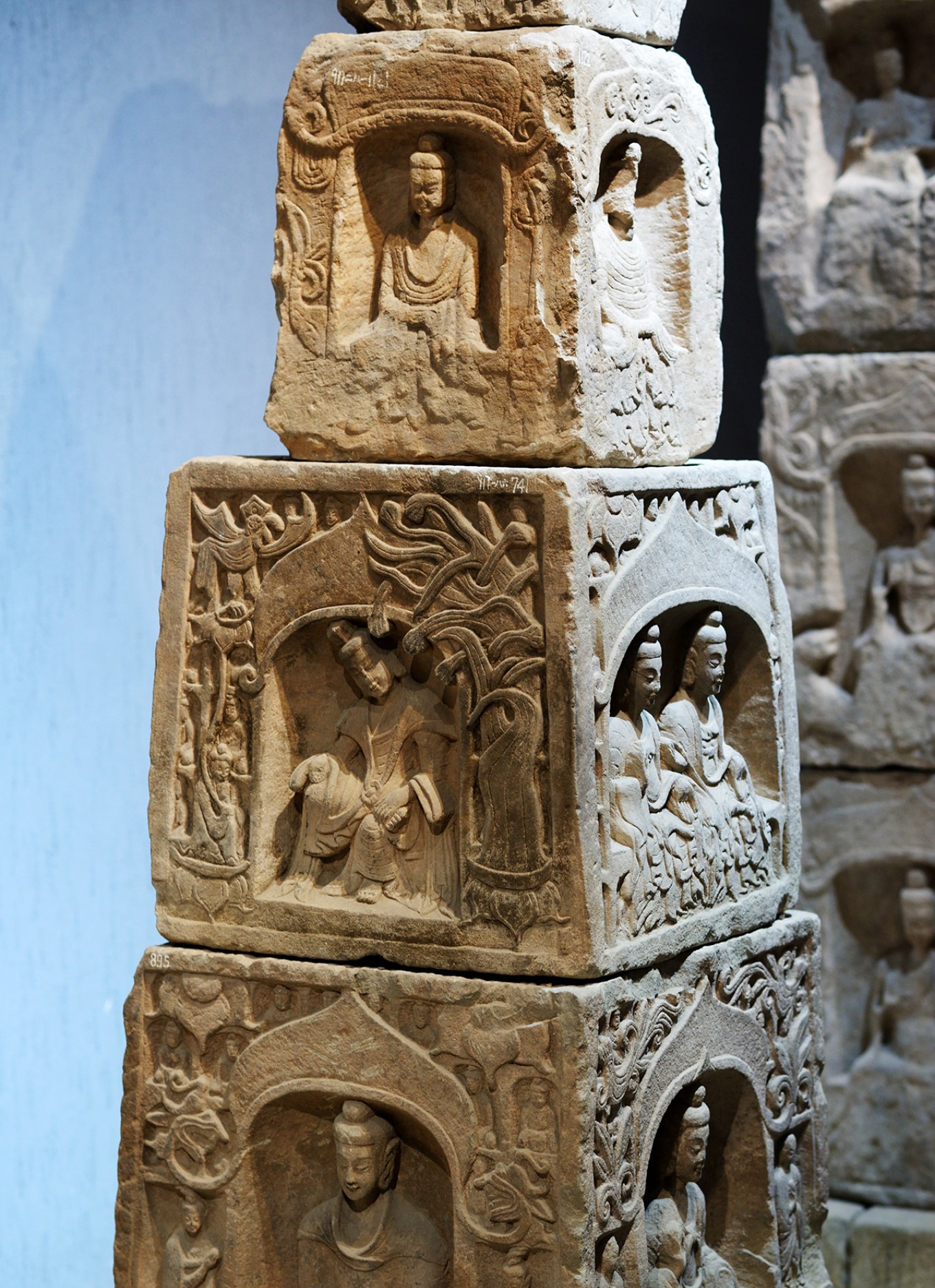
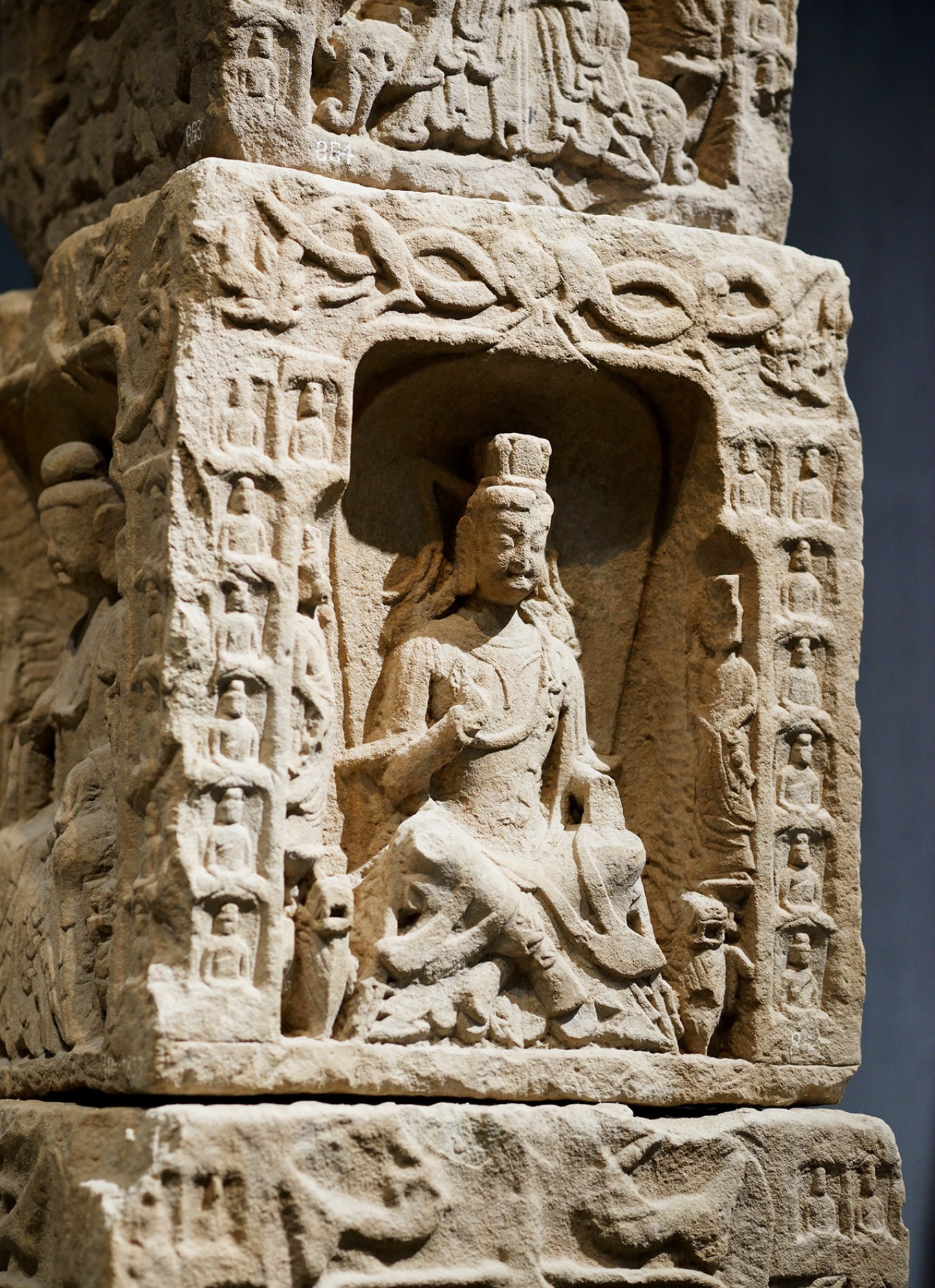
By the Northern Qi period, the clothing and accessories changed. The faces of Buddhas and bodhisattvas became rounder and fuller, with broader shoulders, moving away from the extremely slender Northern Wei style. This foreshadowed the sculptural style of the Sui and Tang dynasties.
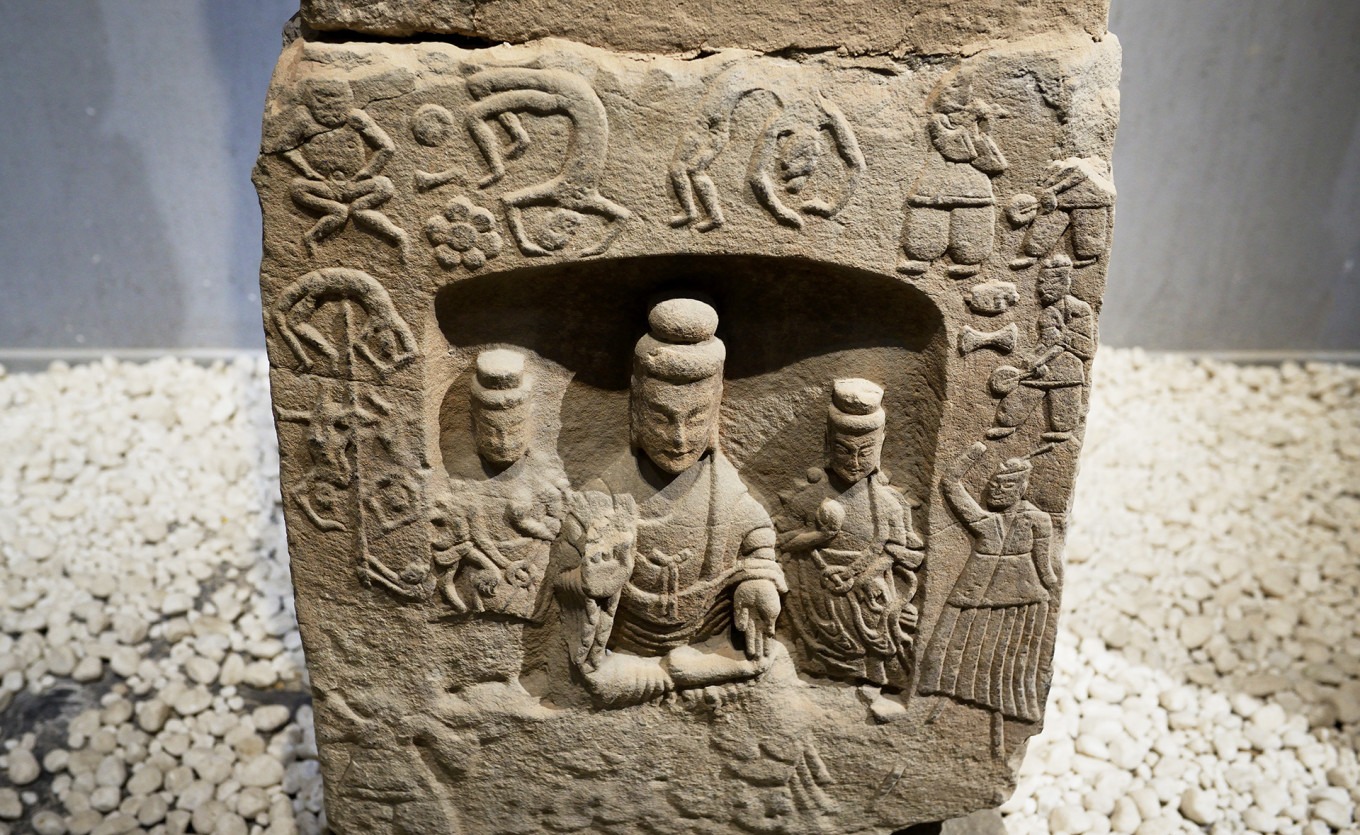
Among the most fascinating niches is the ‘Hundred Entertainments’ (百戏图) niche. ‘Hundred Entertainments’ is a general term for acrobatic and variety arts since the Han Dynasty, popular from the Northern and Southern Dynasties onward. This niche depicts various acrobatic feats and musical accompaniment around its exterior. On top, three figures perform contortion; on the left, one person balances a long pole while others climb it (a trick called ‘xun tong’ 寻橦 (local term)); on the right, a stilt-walker performs. Three musicians accompany them, creating a lively and amusing scene.
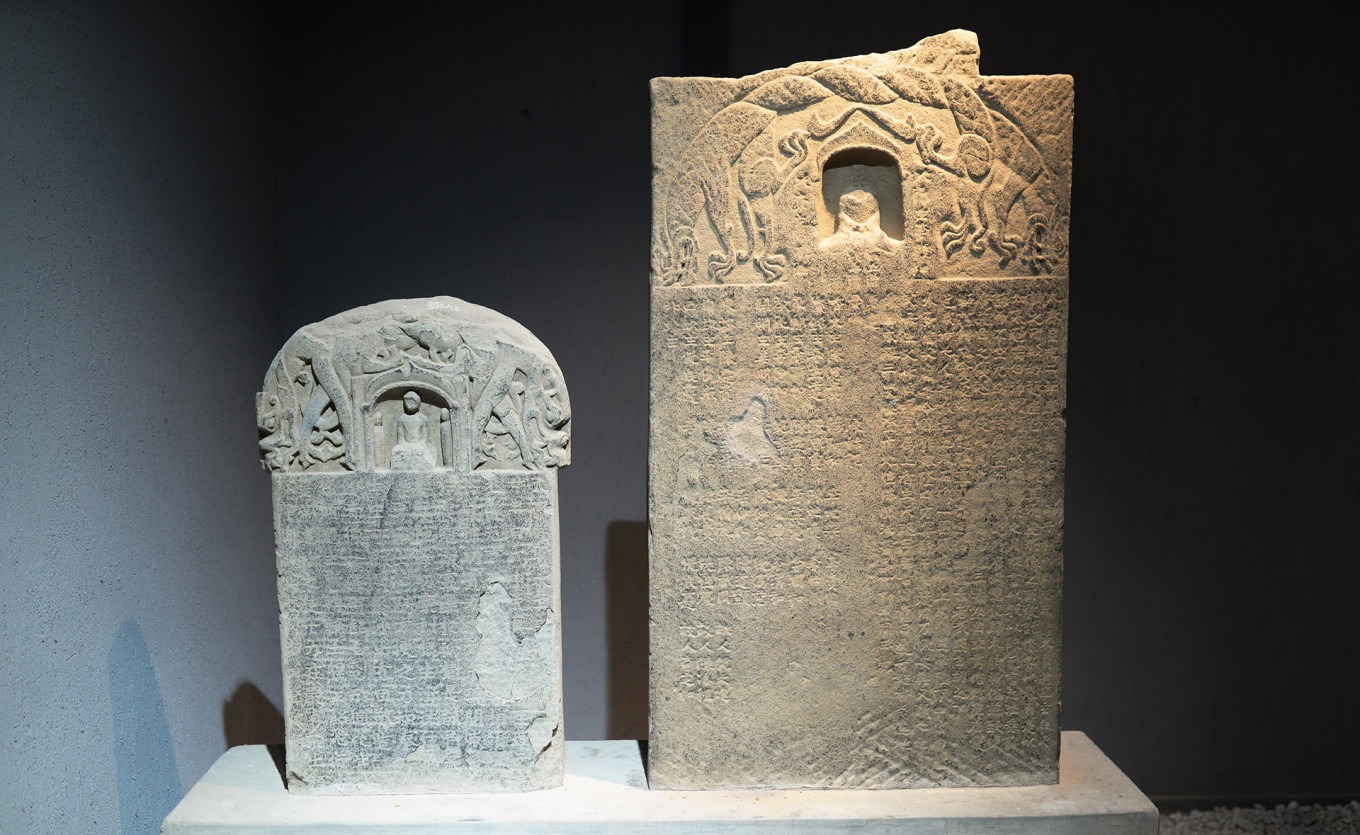
The collection also includes about fifty inscribed steles from the Northern Wei, Eastern Wei, and Northern Qi periods, including vow texts, donation records, and pagoda stone inscriptions.
- Address: 长治市沁县定昌镇暖泉樊湖线 (Nuanquan Fanhu Line, Dingchang Town, Qin County, Changzhi City)
- Admission: Free
Practical tip: You can prioritize one signature stop around the area, and you should adjust timing and budget based on transport and peak hours.
Pingshun: The Ancient Architecture Corridor of the Zhuozhang River Valley
For any traveler passionate about ancient Chinese architecture, the Zhuozhang River Valley in Pingshun County (平顺县) is an absolute must-visit. This valley, through which the Zhuozhang River—the main source of the Zhang River—flows from Licheng and Lucheng before entering Hebei Province, holds an extraordinary concentration of historic buildings. Along less than 50 kilometers of riverbanks, you’ll find eight nationally protected ancient structures, including three from the Five Dynasties period and three from the Song Dynasty. Such a density of early medieval architecture is rare even nationwide, making this valley a true treasure trove.
What makes this area so remarkable is that buildings from the Five Dynasties and Song periods are extremely scarce across China, yet here they cluster together, offering a unique opportunity to see multiple examples in one trip. As you explore the valley, you’ll encounter temples and halls that have stood for over a thousand years, their wooden brackets and painted beams whispering stories of a bygone era.
Practical tip: You can prioritize one signature stop around the area, and you should adjust timing and budget based on transport and peak hours.
Tiantai Temple
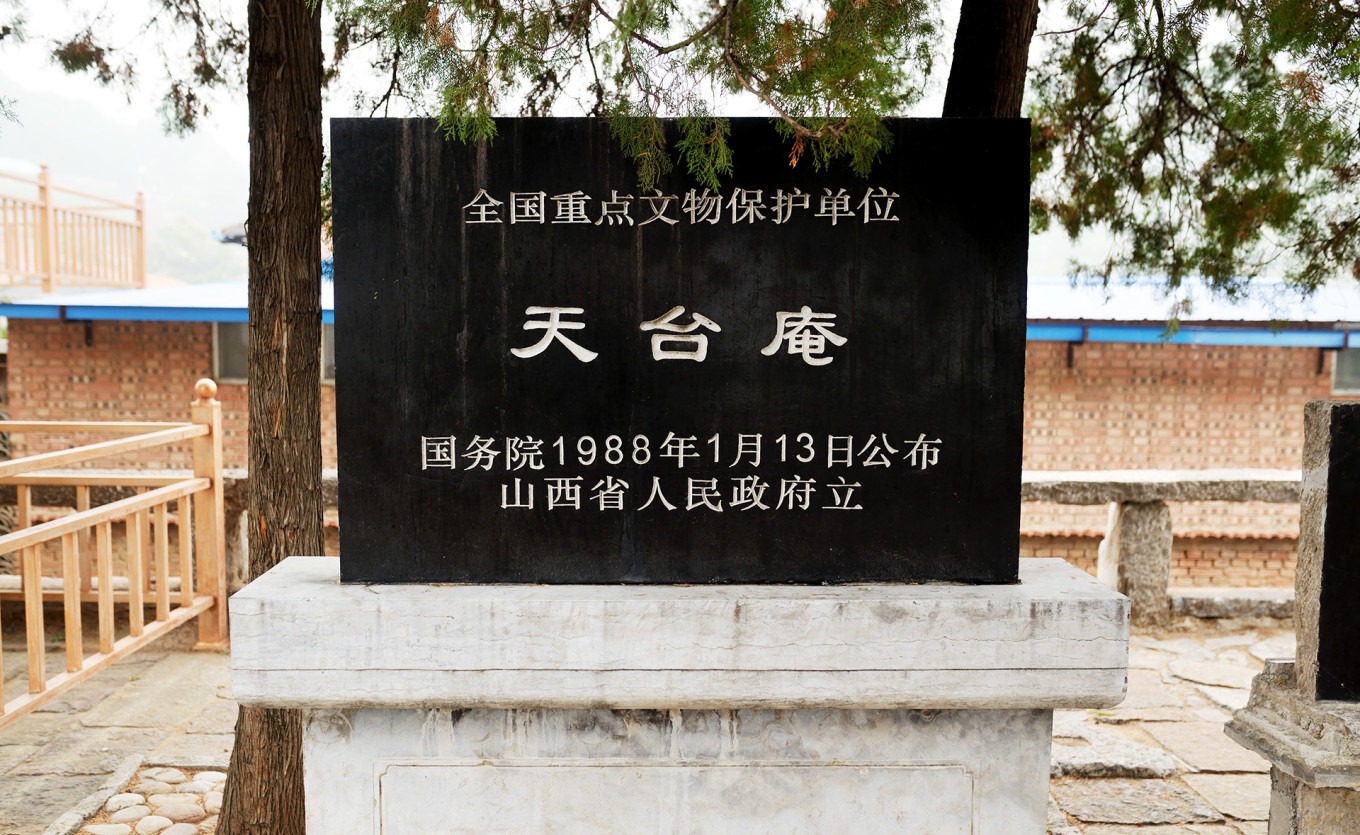
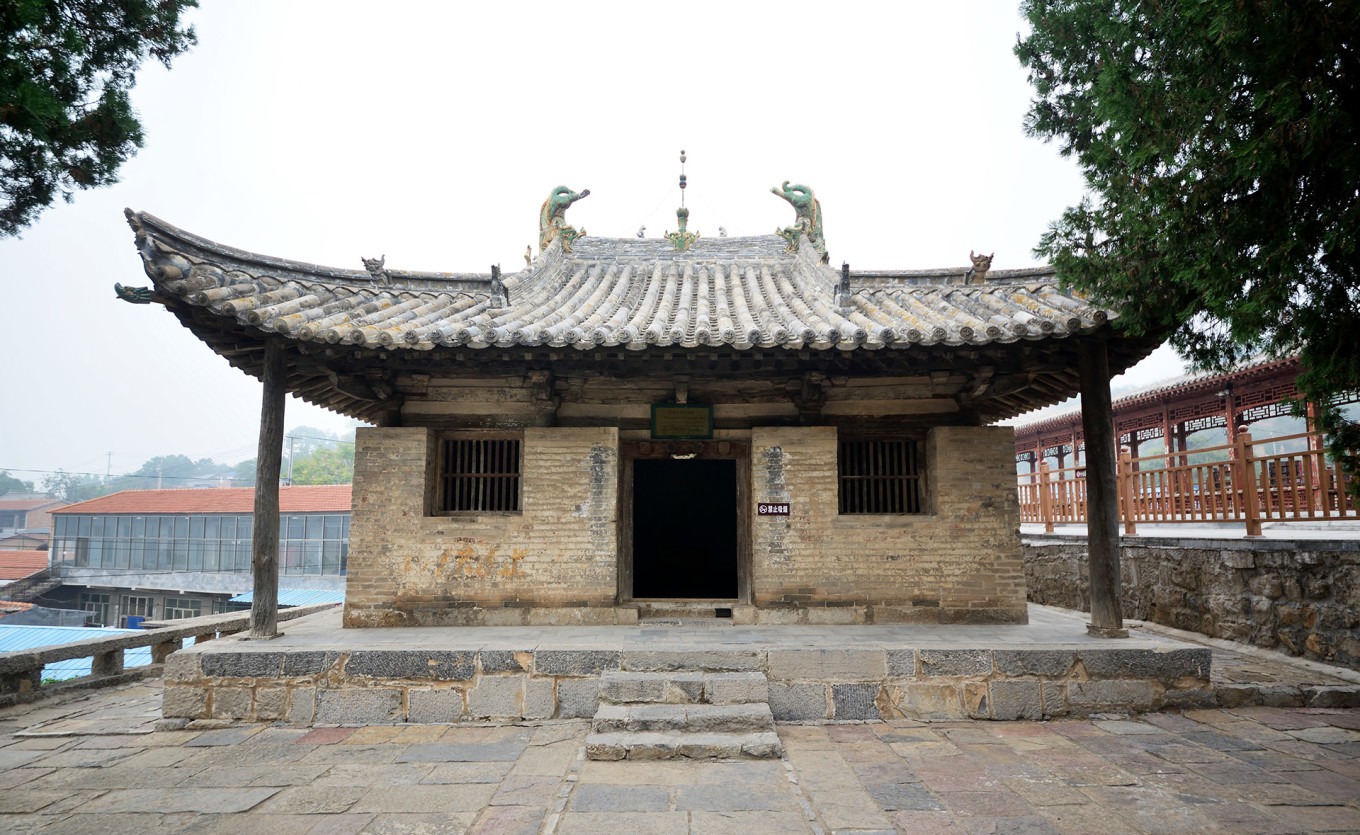
About an hour’s drive from Changzhi city center, you’ll reach the Zhuozhang River Valley. a practical first stop is Tiantai Temple (天台庵), perched on a high point at the entrance of Wangqu Village in Pingshun County. It’s the most upstream of the eight national-level protected ancient buildings in the valley. If the string of ancient structures along the valley is a sonata, Tiantai Temple is undoubtedly a powerful opening movement. As you step into the courtyard, the main hall, the Mituo Hall (弥陀殿), immediately catches your eye. This timber structure, a significant landmark in Chinese architectural history, is the only surviving building of the temple. It has three bays wide, four rafters deep, a single-eave hip-and-gable roof, and sits on a stone platform less than one meter high.
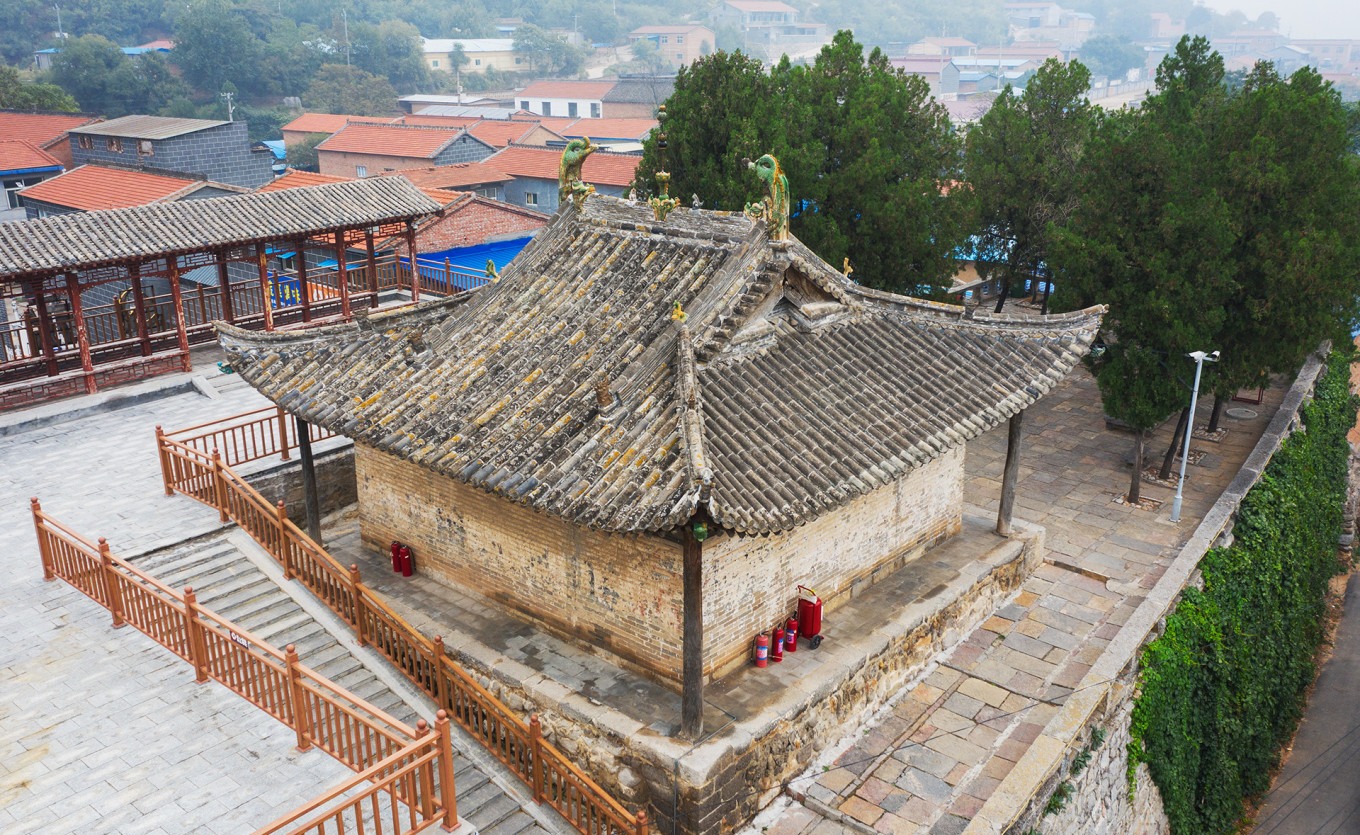
The history of Tiantai Temple was once shrouded in mystery. No local gazetteers mention it, and even the name ‘Tiantai Temple’ was passed down only by word of mouth. For a long time, due to a lack of written evidence, scholars dated the temple solely by its architectural style. After the first national cultural relic survey in 1956, Tiantai Temple was long considered one of only four surviving complete Tang-dynasty structures in China, earning it a spot on the third batch of national key cultural relics.
During a major restoration in 2014, workers discovered an inscription on the ridge beam reading ‘Recorded on the second day of the ninth month of the fourth year of Changxing’ and another on the flying rafters stating ‘Built in the fourth year of Tiancheng of the Great Tang.’ The ‘Great Tang’ here refers not to the Tang dynasty but to the Later Tang (923–936) founded by Li Cunxu. Both ‘Changxing’ and ‘Tiancheng’ are era names of the Later Tang. This confirmed that Tiantai Temple is not a Tang-dynasty structure; the main hall was actually built in the fourth year of Tiancheng of the Later Tang (929 CE), with subsequent repairs in the Jin, Ming, and Qing dynasties. As a result, China’s surviving Tang-dynasty buildings are now reduced to just three: Nanchan Temple and Foguang Temple in Wutai County, and Guangren Wang Temple in Ruicheng County. Some also count the lower part of the bell tower at Kaiyuan Temple in Zhengding, Hebei, making it ‘three and a half Tang structures.’
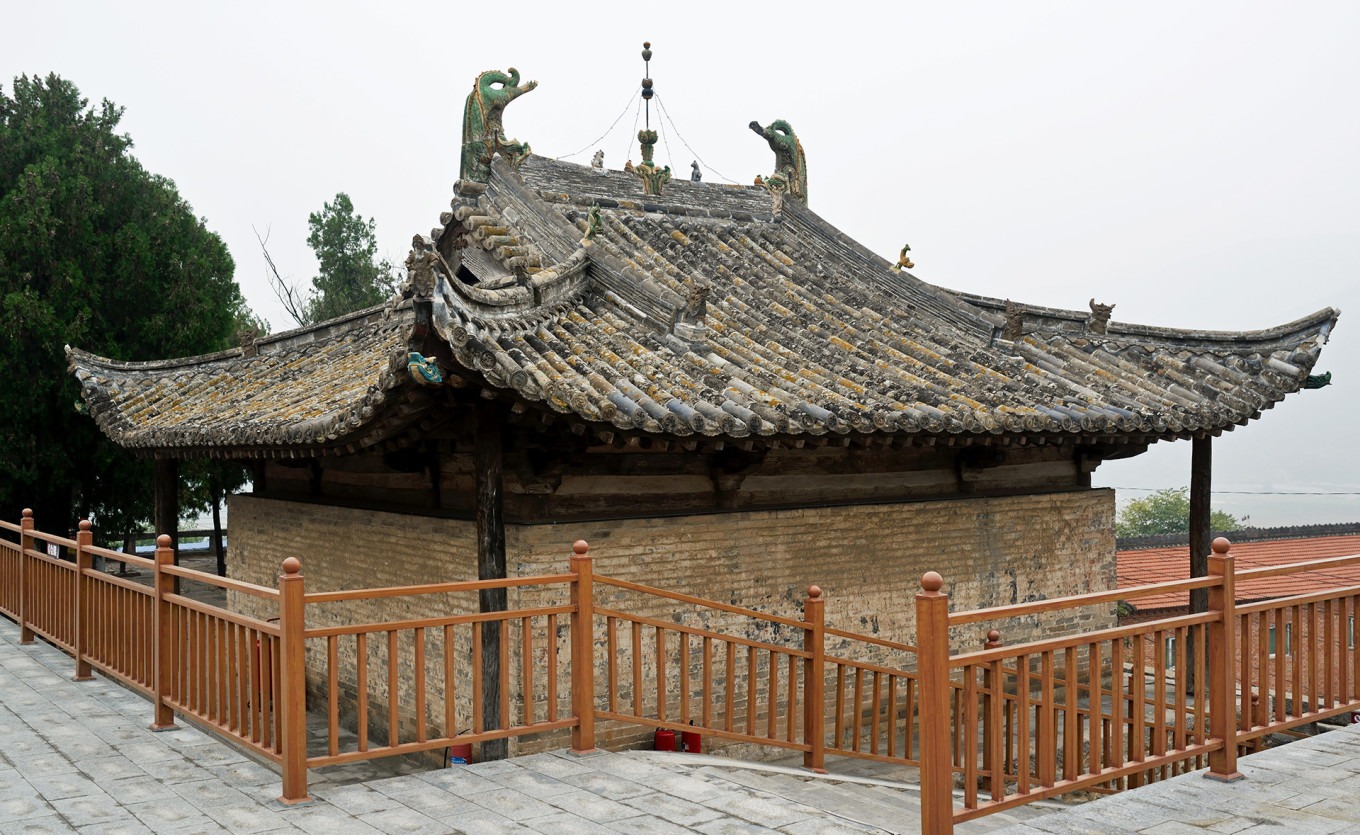
Although Tiantai Temple was ‘delisted’ from Tang architecture, it still exudes the spirit of Tang construction. In fact, the Mituo Hall was built only about twenty years after the fall of the Tang dynasty, and the craftsmen continued Tang building techniques. The hall is simple and small in shape, with all-wooden doors and windows and no decoration. The four pillars supporting the eaves were added during later repairs. Looking up, you’ll see the roof’s flying eaves extending far outward, like the wings of a bird in flight, perfectly capturing the poetic description ‘like a bird spreading its wings, like a pheasant in flight.’
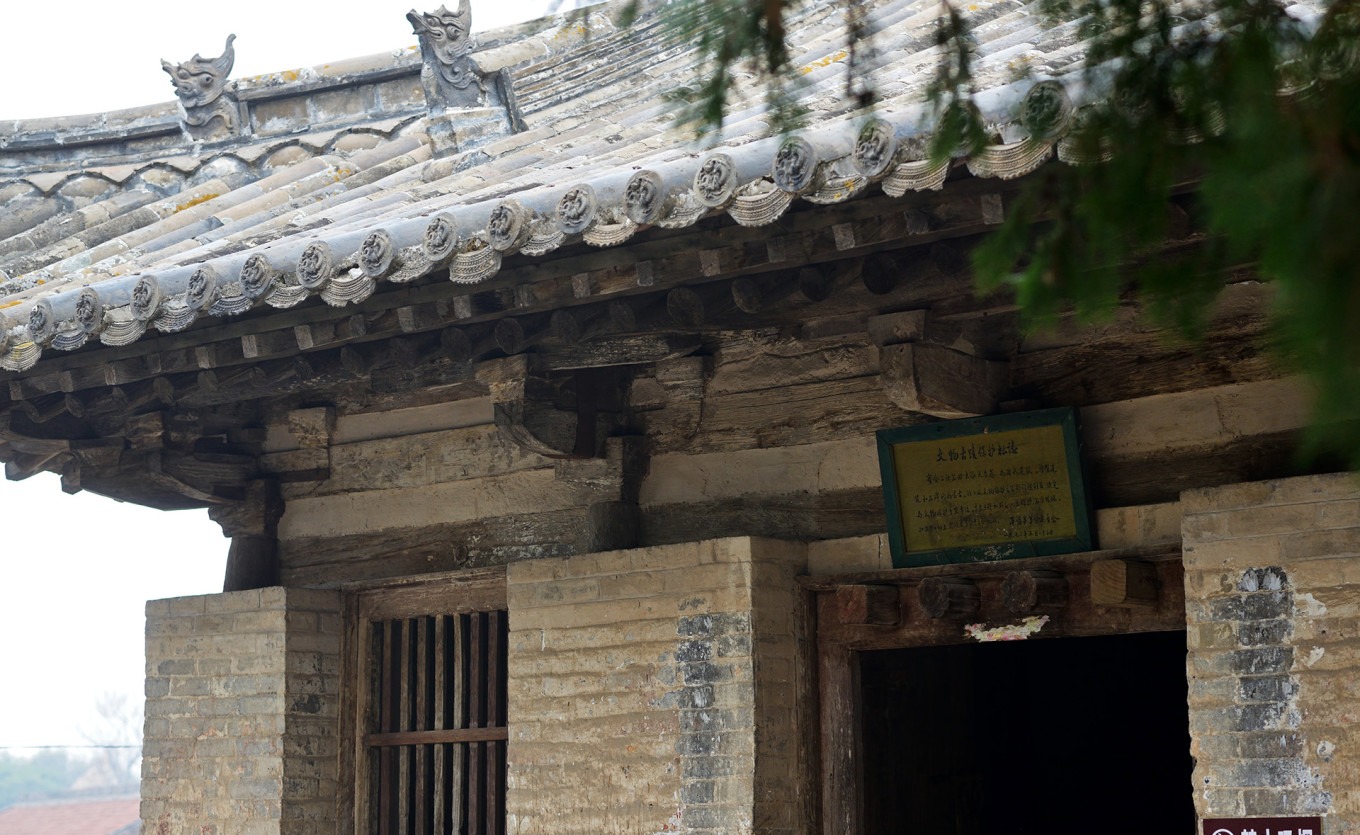
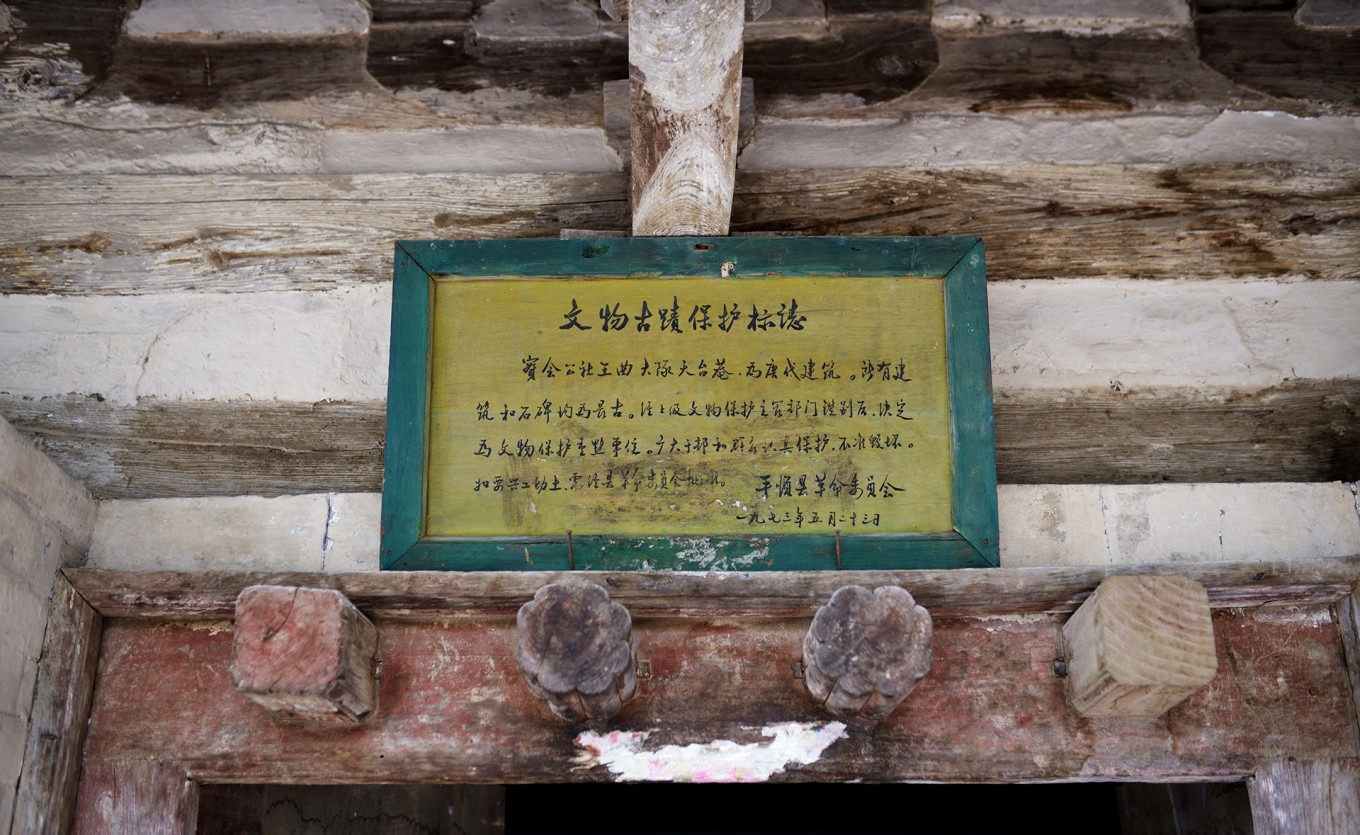
Under the eaves of the main hall, a protective plaque from 1973, issued by the Pingshun County Revolutionary Committee, still identifies the temple as a Tang-dynasty structure. This shows that even during a special era, Tiantai Temple received exceptional attention and protection.
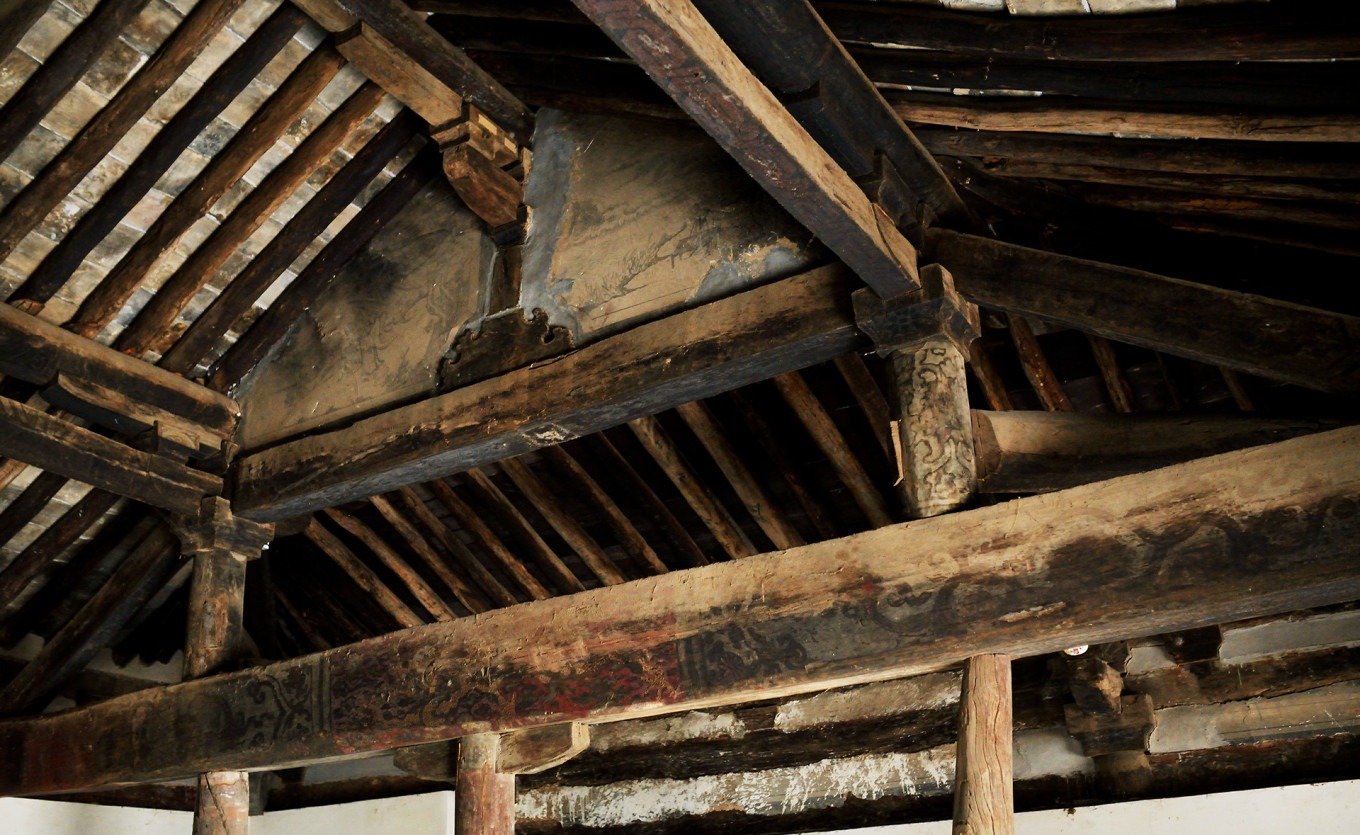
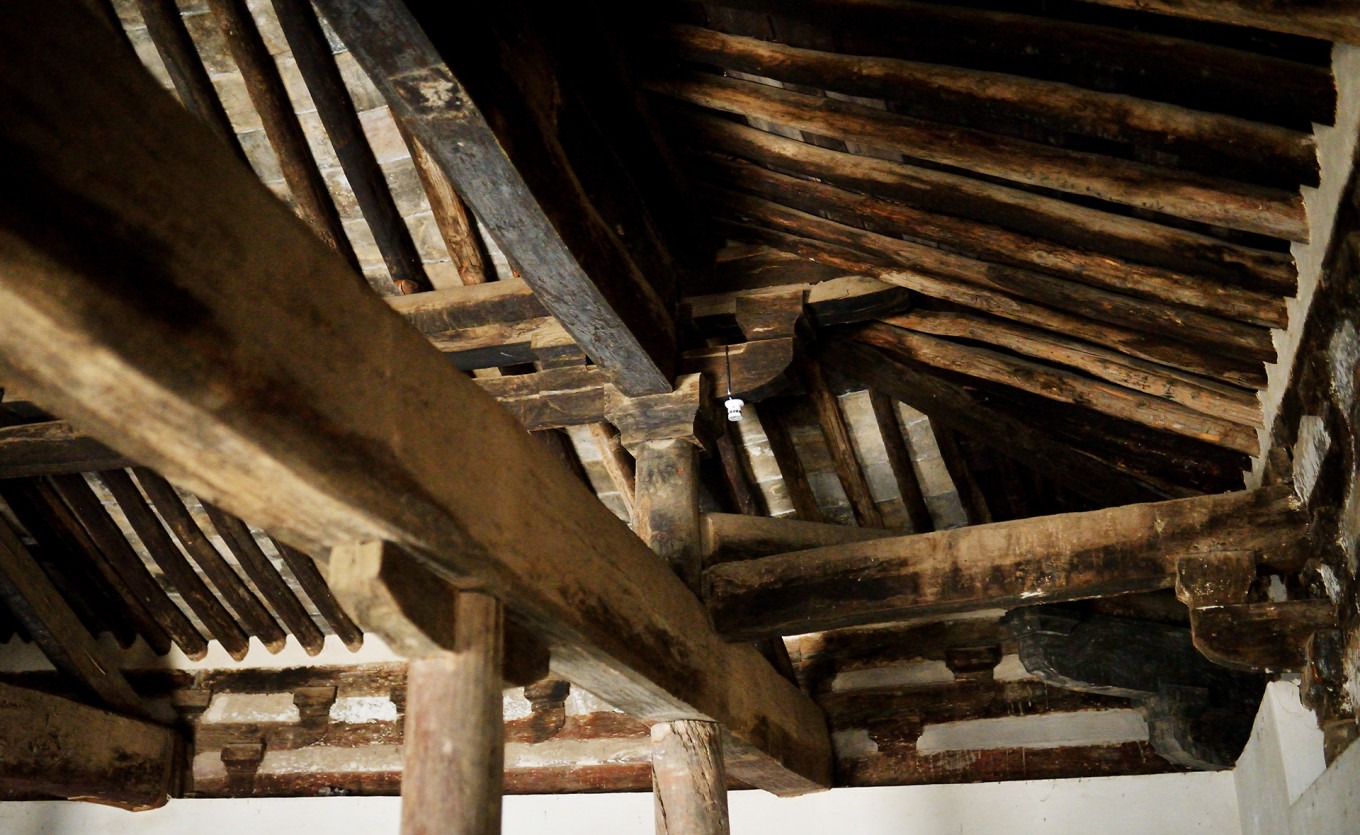
Inside the hall, you’ll find it completely empty. The beam frame has undergone many later repairs, with significant changes in details, but the main structure remains intact. Incidentally, the hall originally had only eaves pillars and no interior columns; the six pillars you see inside today were added later.
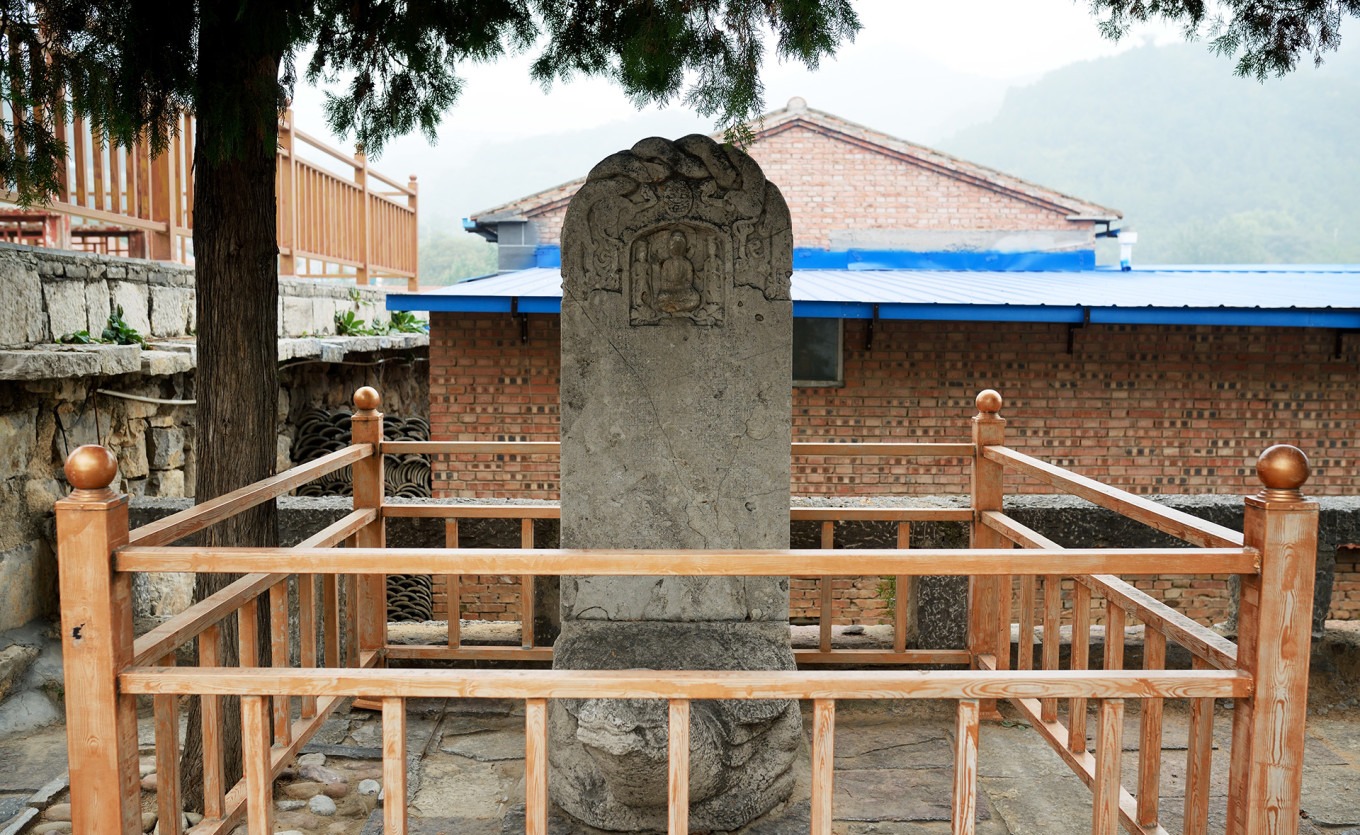
In the courtyard, you can also find an ancient stele, though its inscription has been worn away by wind and rain. Look closely, and you’ll notice that the top and sides of the stele are carved with Buddha figures, bearing the lingering style of the Tang dynasty.
- Ticket: 10 yuan (full price)
Yuanqi Temple
- RestaurantN/A no dining on site (店名)
- AddressXin’an Village (新安村), Huangniuti Township, Lucheng District, Changzhi City, Shanxi (长治市潞城区黄牛蹄乡新安村)
- Recommended dishesN/A (菜名)
- Average spendFree admission
Your second stop along the Zhuozhang River Valley is Yuanqi Temple (原起寺), perched on a high platform atop Fenghuang Mountain in Xin’an Village (新安村). Though Xin’an Village lies on the west bank of the river and belongs to Lucheng District (潞城区) of Changzhi (长治) rather than Pingshun County (平顺县), the temple is best visited in sequence here. According to legend, the temple was founded in 747 AD (the sixth year of Tianbao during the Tang Dynasty) when Emperor Xuanzong (Li Longji) heard that the Fenguang Mountain vein was destined to produce a noble—either an empress or imperial consort. Fearing another “Wu-Wei Rebellion,” he ordered the construction of Yuanqi Temple to suppress the mountain’s energy.
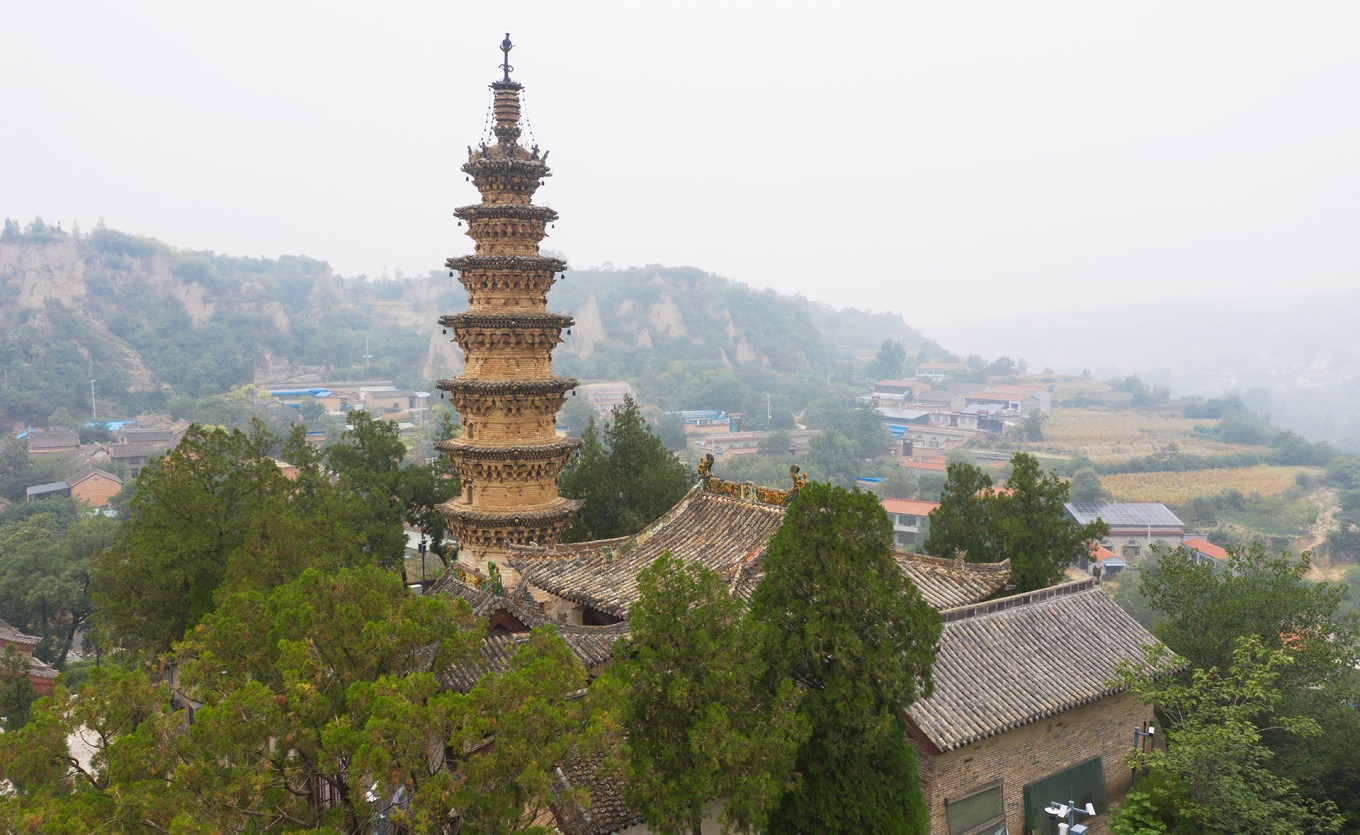
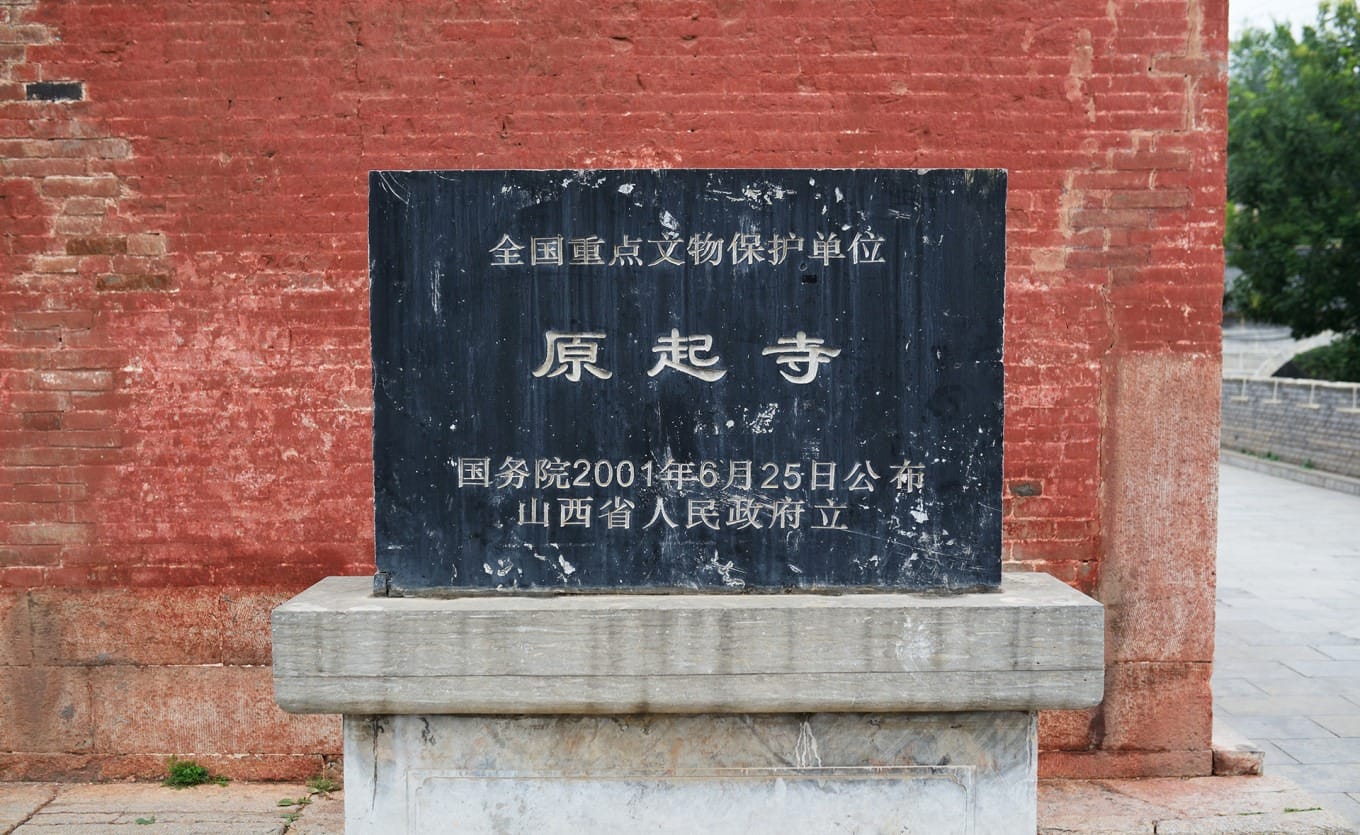
Because the hilltop is narrow, the temple complex is compact. It houses a Tang-dynasty stone scripture pillar, a main hall that may date to the Song or Five Dynasties, and a pagoda built in 1087 (the second year of Yuanyou, Song Dynasty). The rest are Ming and Qing structures. The site is a fifth-batch Major Historical and Cultural Site Protected at the National Level.
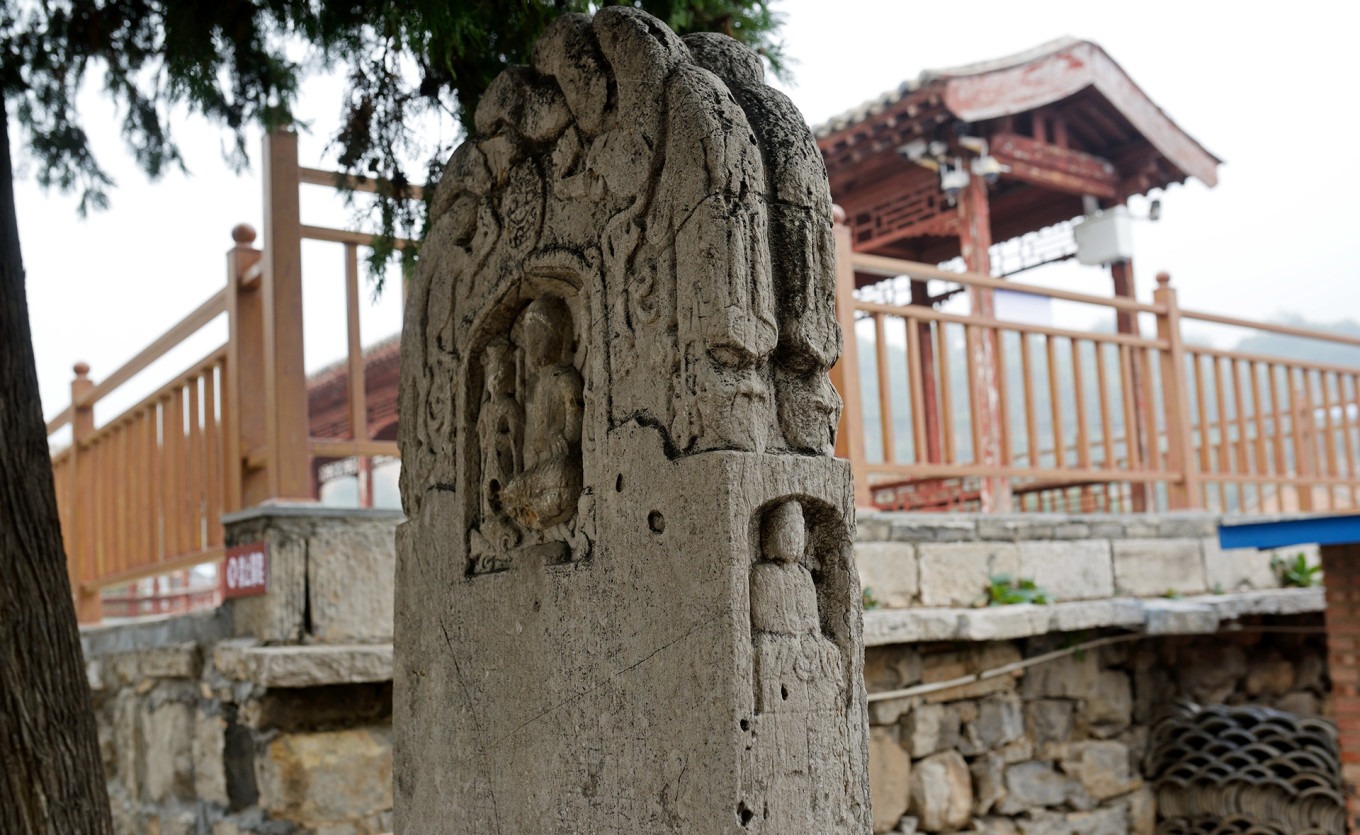
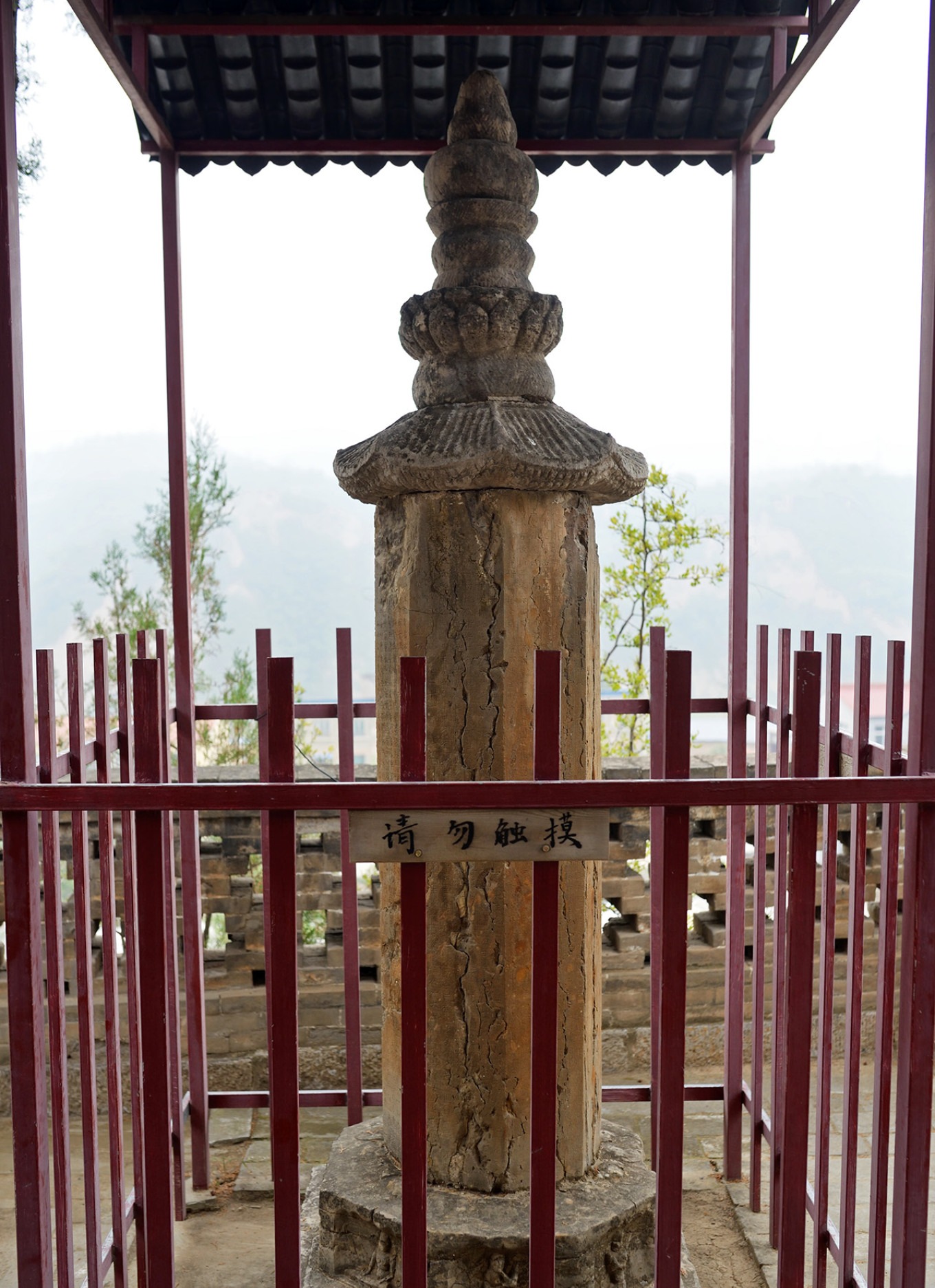
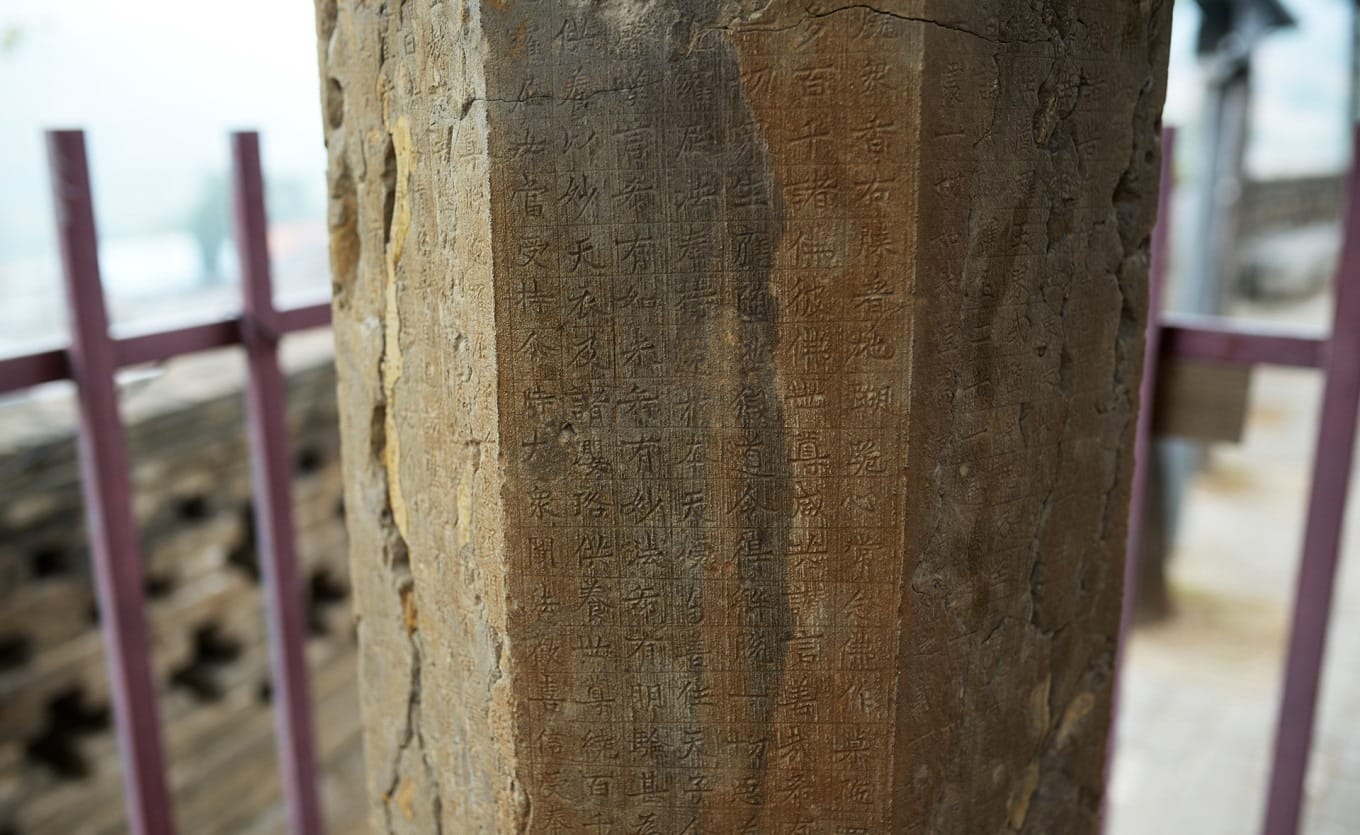
Pass through a narrow wooden gate and climb the steps into the courtyard. The first structure on the central axis is an octagonal stone scripture pillar (jingchuang) carved with the Dharani sutra. This pillar, created in 747, is the oldest surviving artifact in the temple.
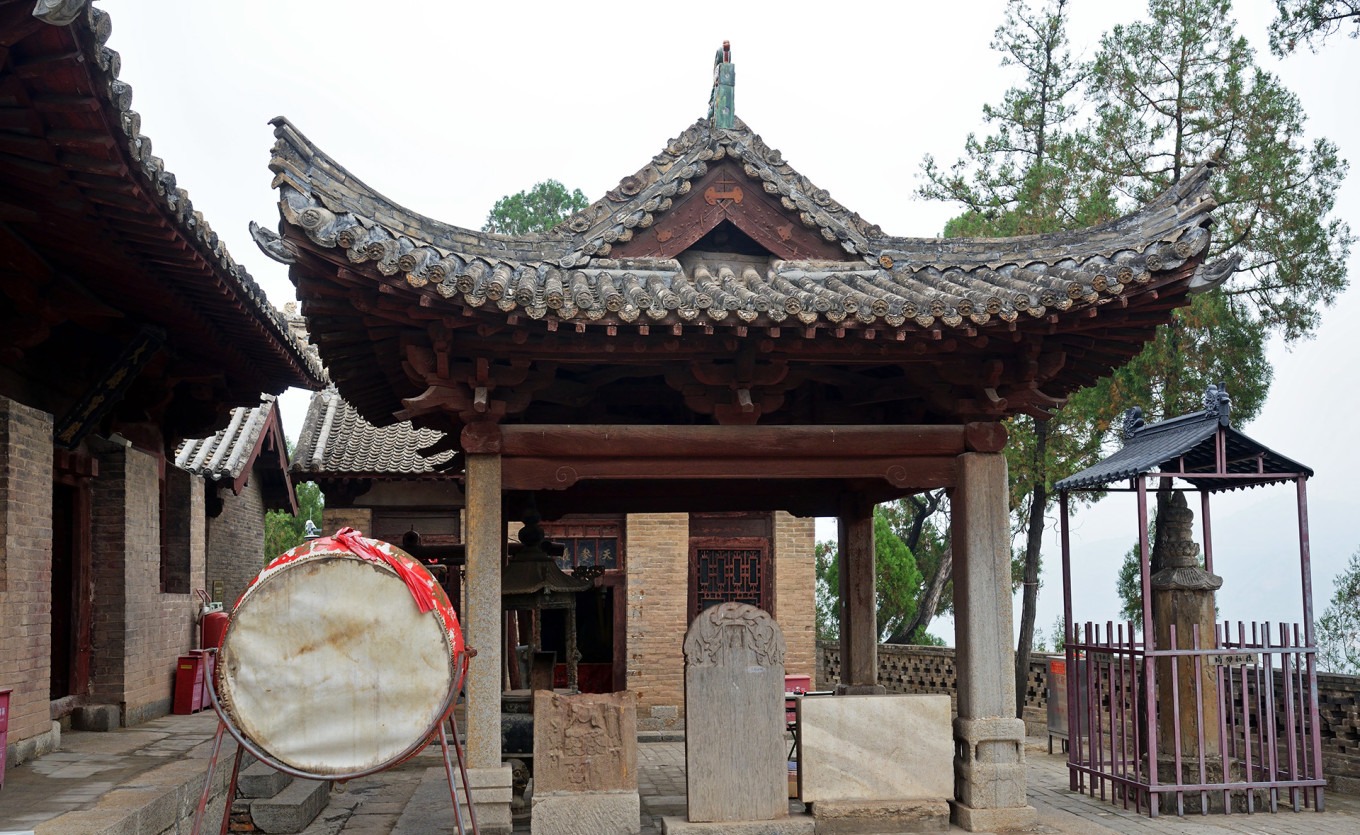
Behind the pillar stands an incense pavilion (xiangting) from the Ming dynasty, which served as a offering hall.
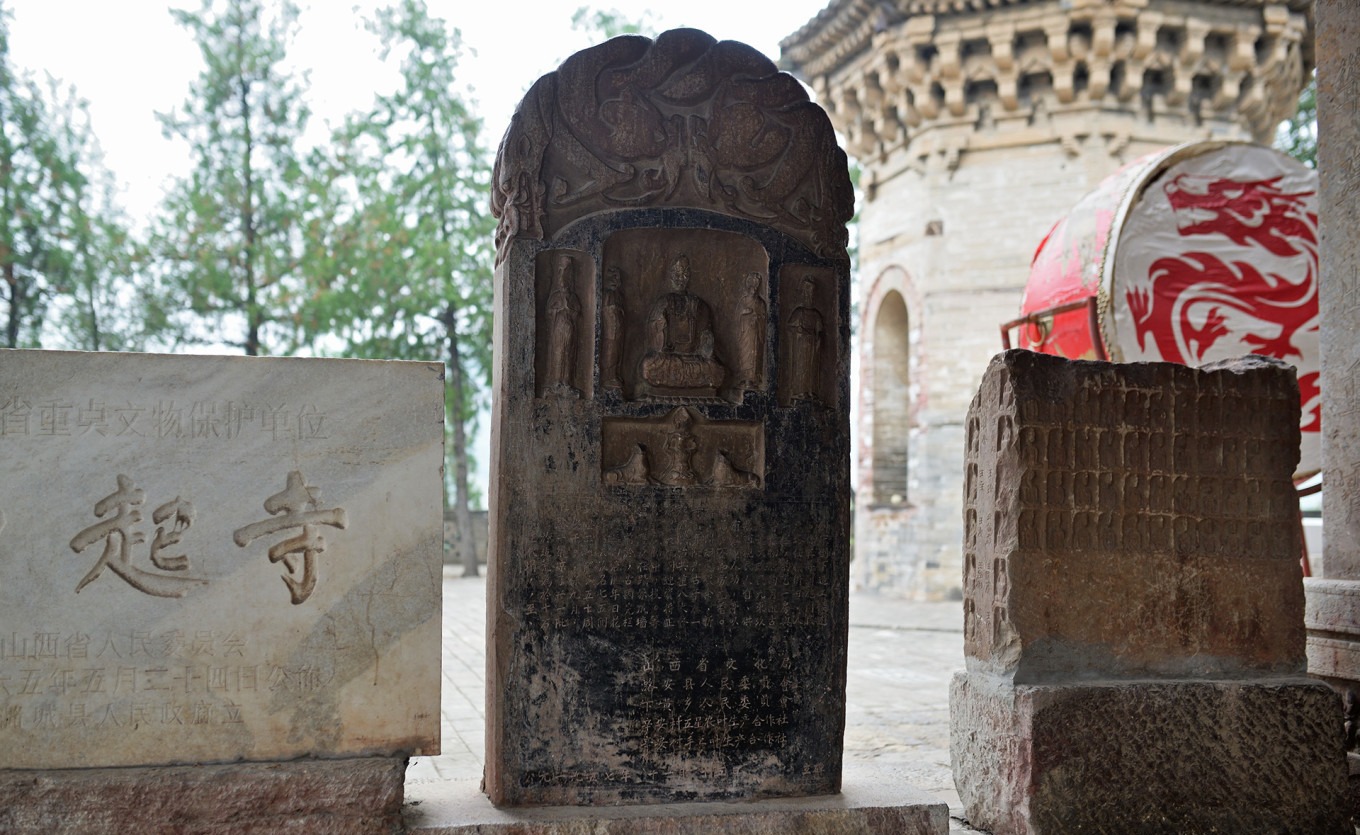
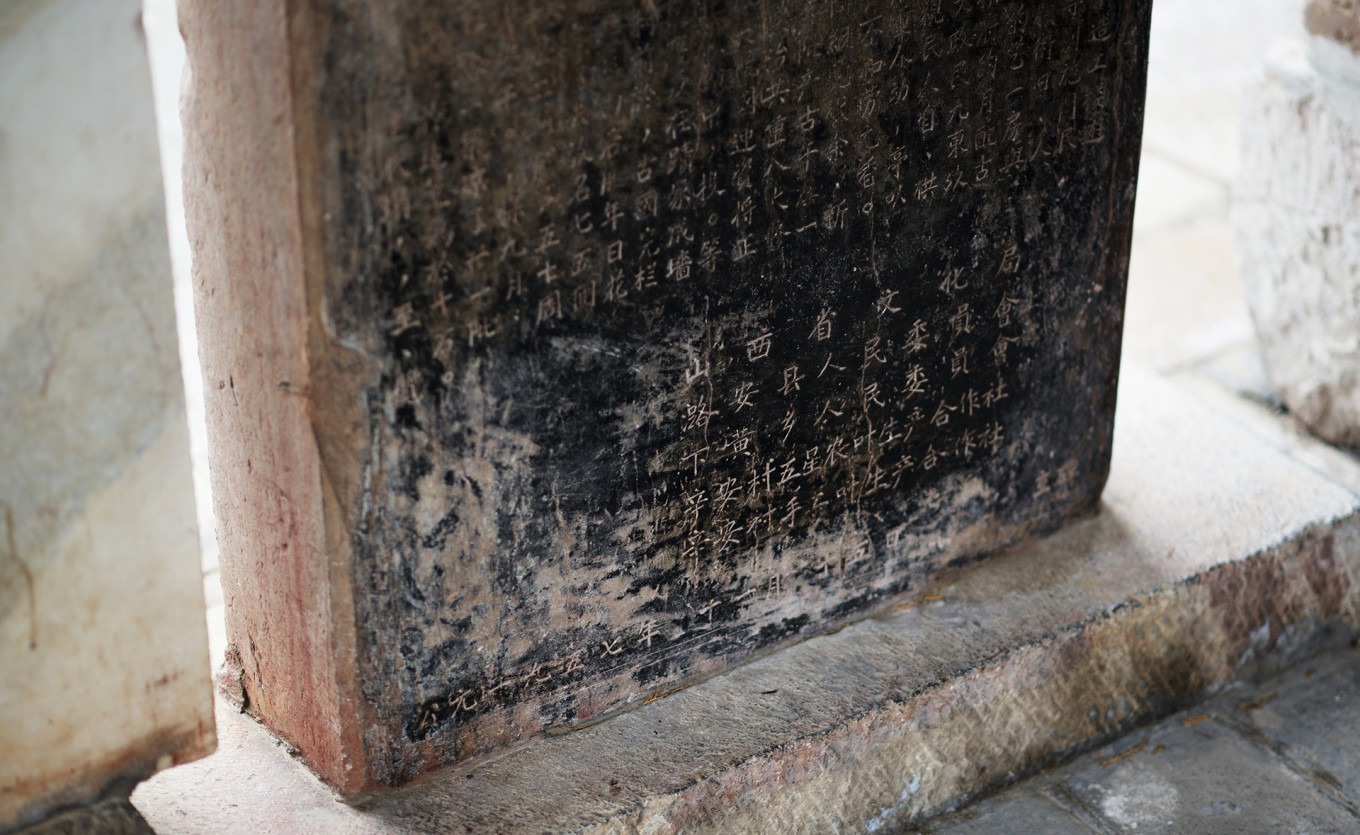
To the west of the pavilion are three stone steles. The northernmost is a fragmented statue stele, with one side featuring a relief of one Buddha and two disciples, and the other side showing neatly arranged small Buddhas. Stylistically, this is a Northern Wei stele—why it stands here remains unknown. The middle stele has a dragon pattern at the top, a niche with one Buddha, two disciples, and two bodhisattvas, while the lower part was ground down and re-engraved with text from the local cultural bureau and production cooperative—a curious layer of history.
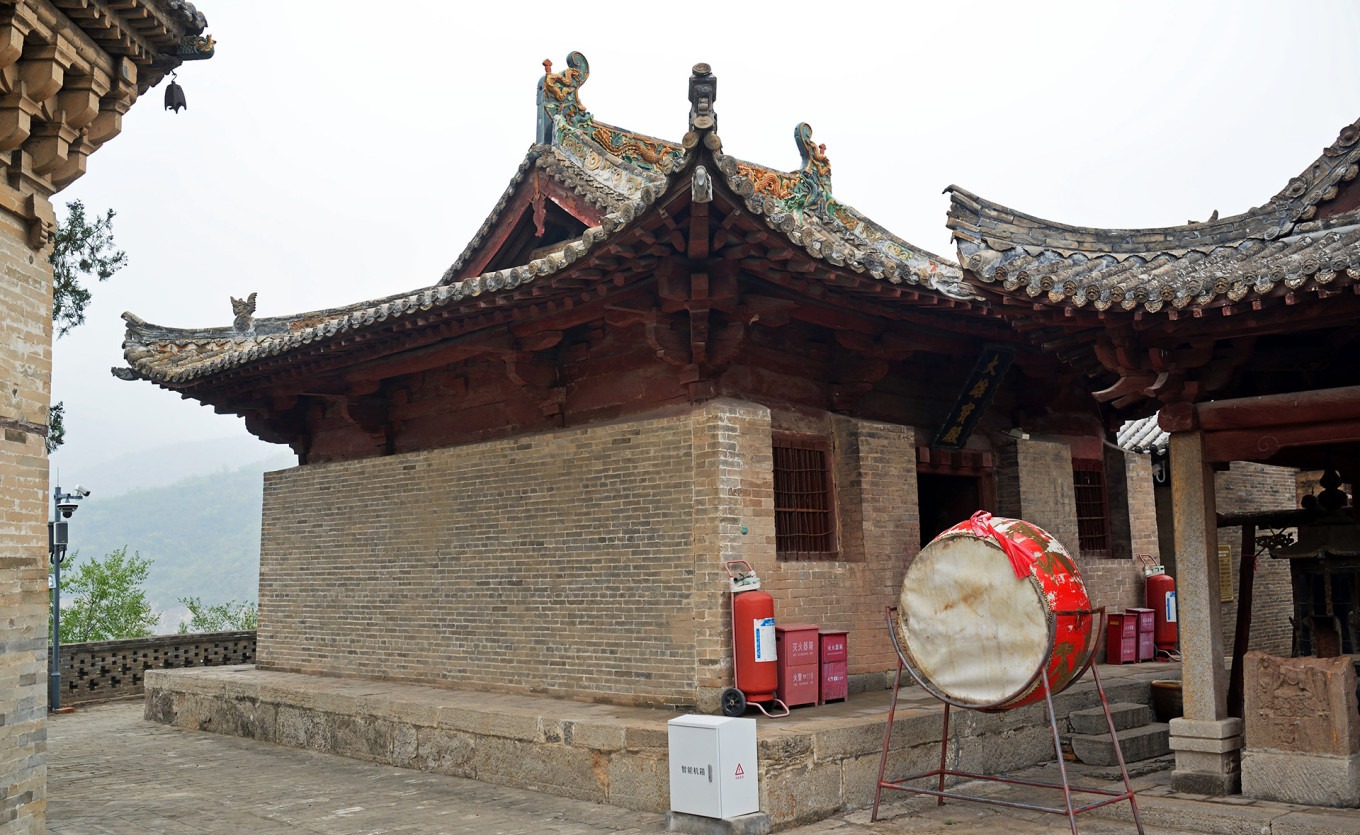
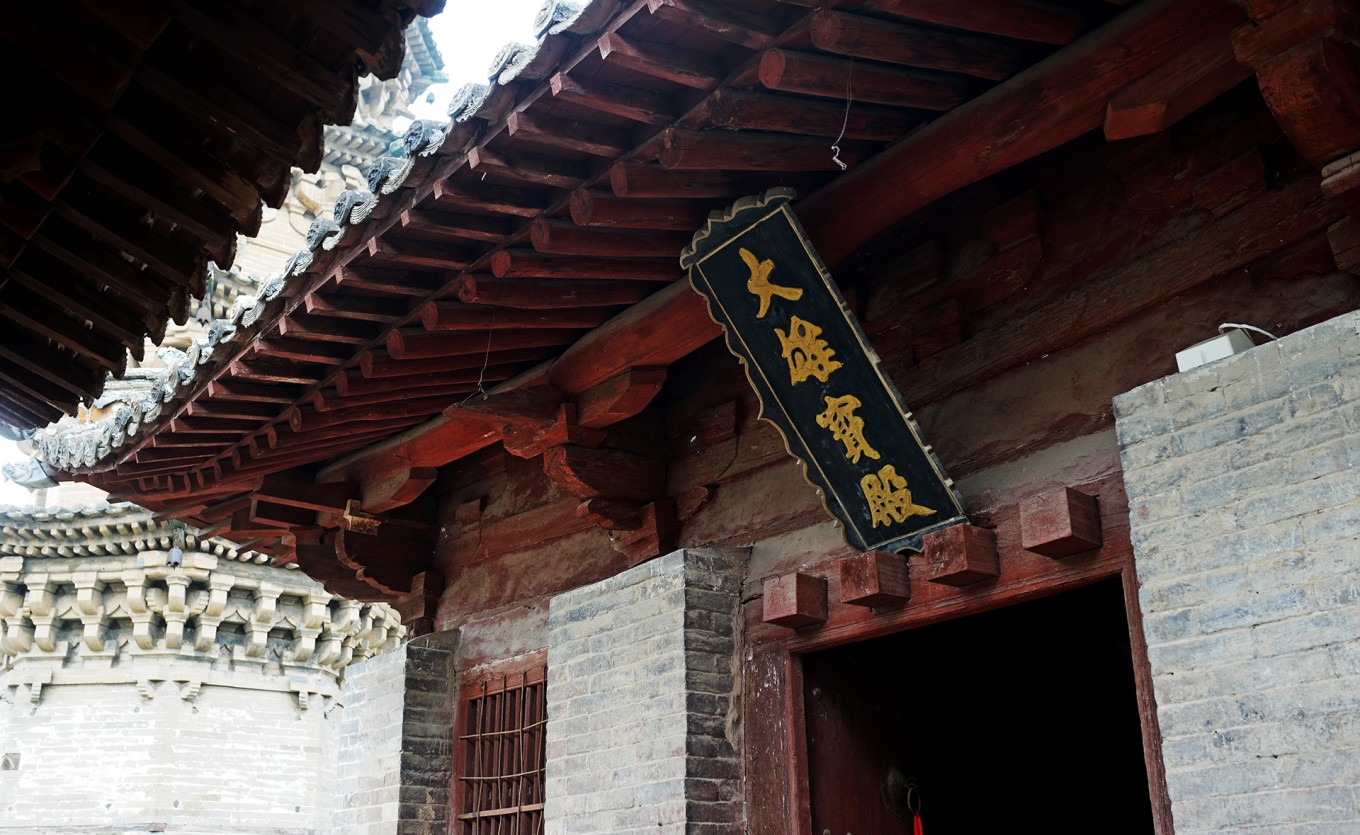
The main hall (Daxiong Baodian) sits on a half-meter-high stone platform, with deep, gentle eaves. Its beam frame and layout resemble the Maitreya Hall at Tiantai Temple (天台庵). The dating of this hall is debated: local authorities classify it as Song, but some scholars argue it is Five Dynasties due to similarities with Tiantai. In some national tallies of Five Dynasties wooden structures, this hall is included. Note that statistics for Five Dynasties and Ten Kingdoms wooden buildings are inherently messy—the period from the fall of Tang (907) to the founding of Northern Song (960) lasted only 53 years, and without ink inscriptions, dating by form alone is difficult. The Ten Kingdoms ended 19 years later than the Five Dynasties, overlapping with early Song, adding to the confusion. In fact, among Shanxi’s 518 extant wooden structures from the Yuan dynasty and earlier, only 244 have direct or indirect textual dating—many truths remain hidden in history.
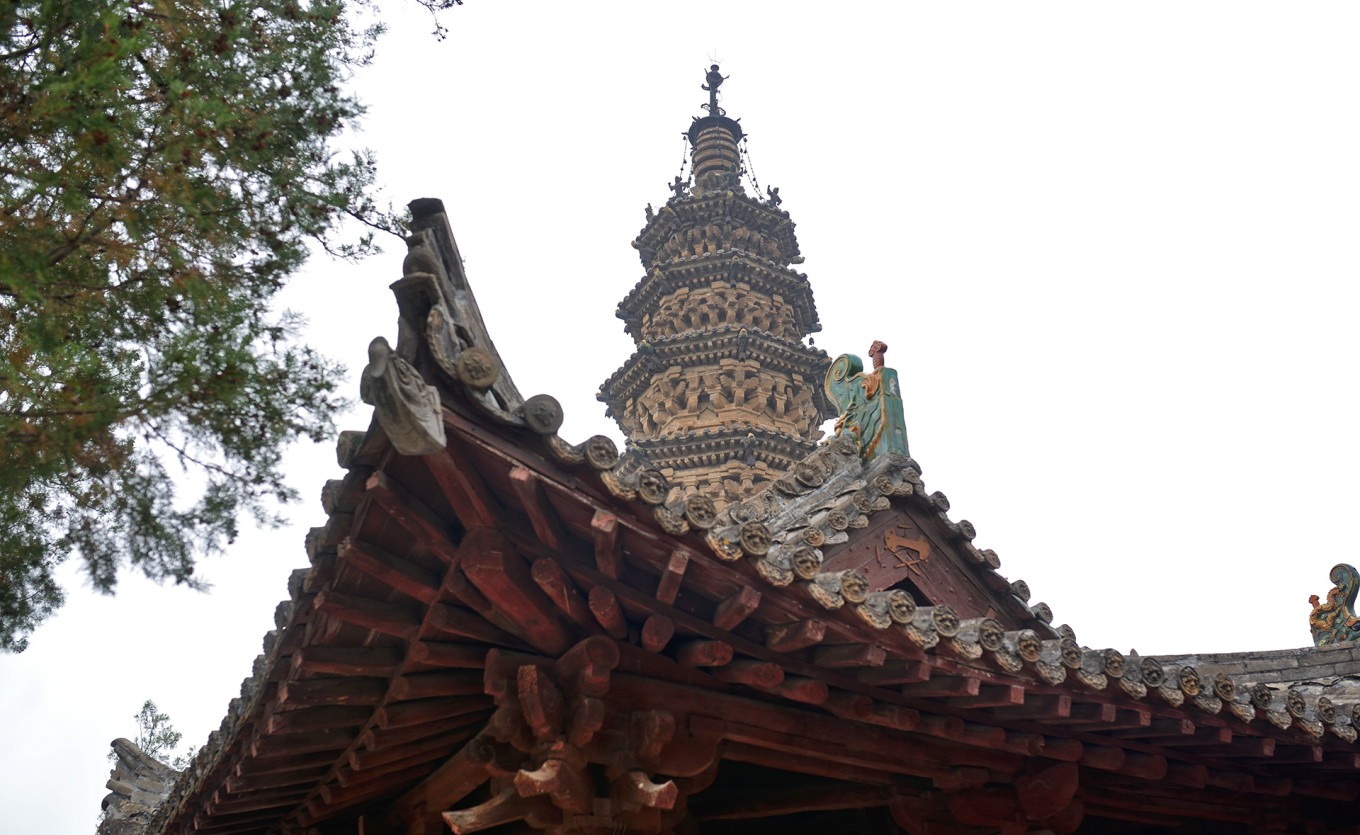
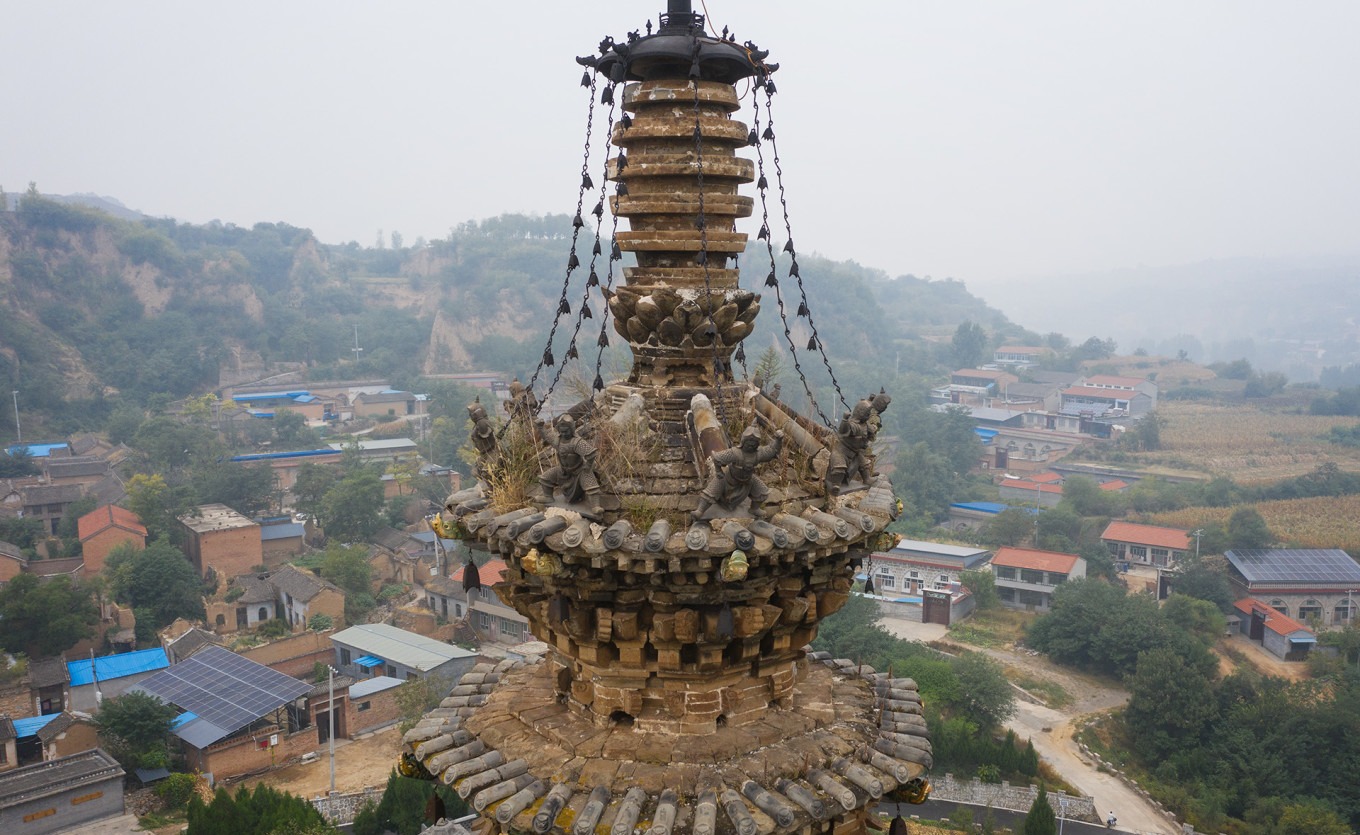
Finally, visit the Dasheng Pagoda (大圣宝塔), also called the Qinglong Pagoda (青龙塔). Built in 1087, it is a 17-meter-tall, seven-story, octagonal, close-eave brick pagoda. The first three stories are hollow, while the upper stories are solid. Except for an arched door on the south side of the first story, all walls are decorated with brick-carved doors and windows. The eaves gradually taper from the fourth story upward, and each level is densely adorned with imitation wood bracket sets (dougong).
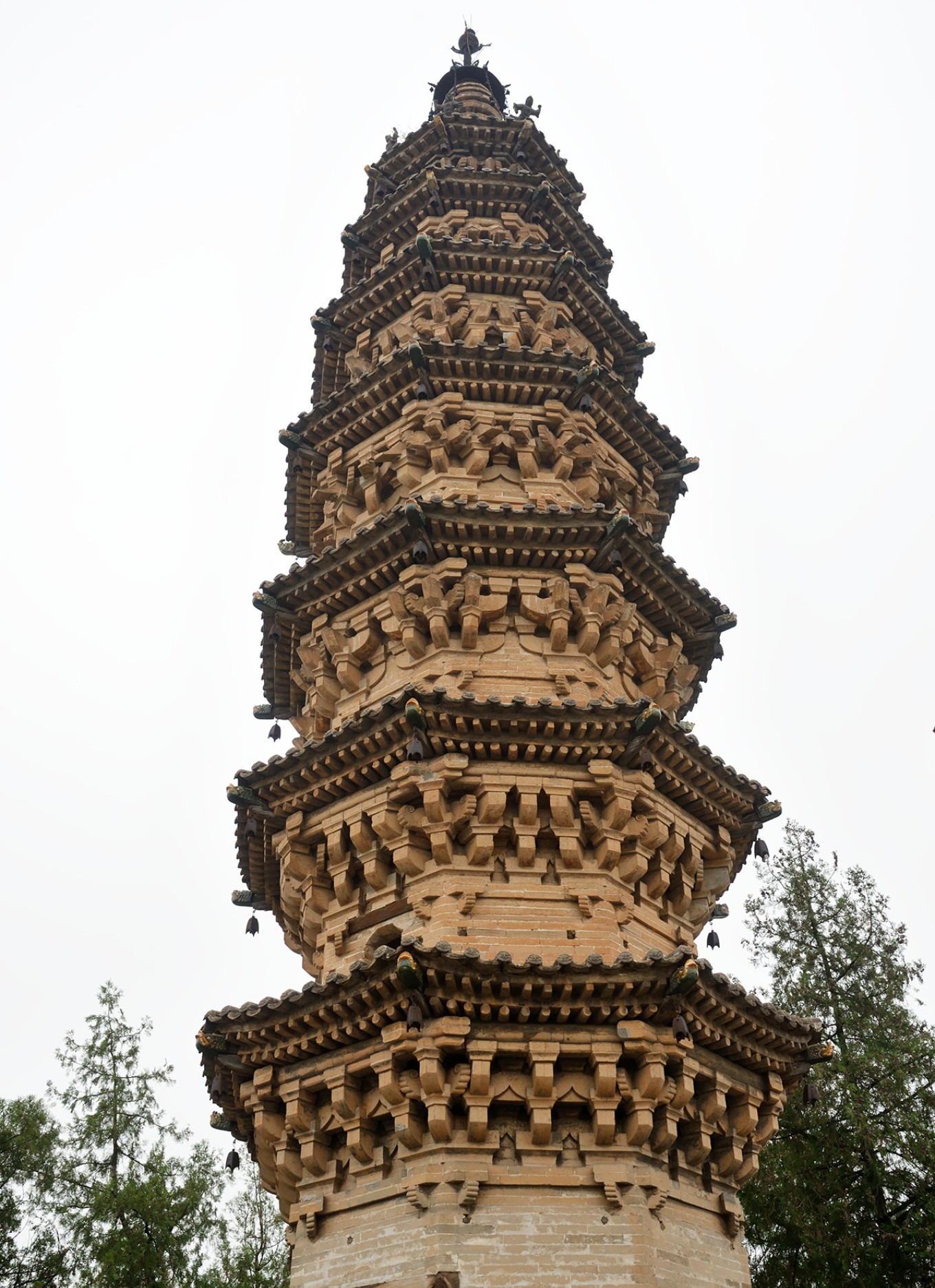
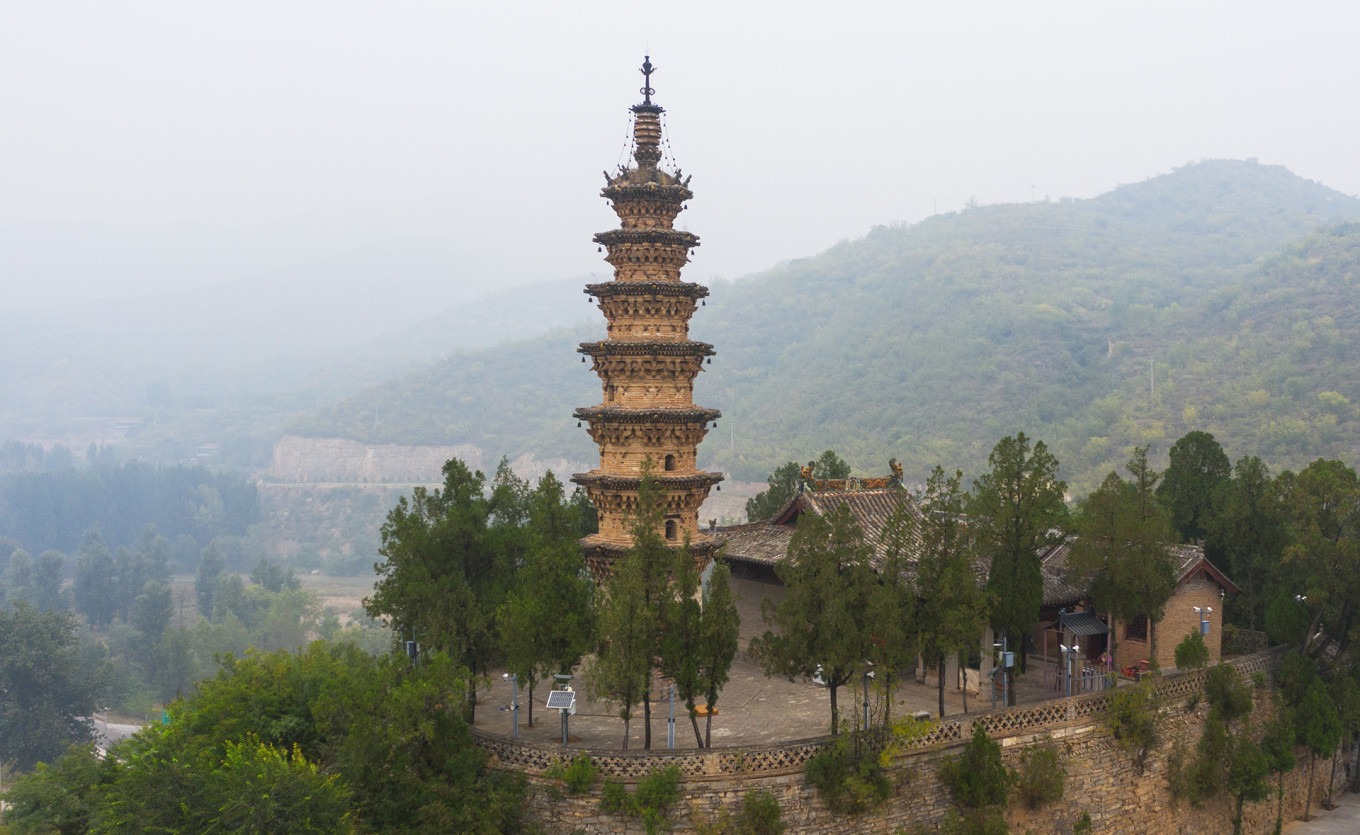
Pay attention to the finial at the top: a vase-shaped spire secured by iron warriors holding chains from the eaves. Unfortunately, the original Song-dynasty iron figures were stolen years ago; the current ones are later replacements.
Dayun Temple
- RestaurantDayun Temple (大云院)
- AddressShihui Village, Pingshun County, Changzhi City, Shanxi Province (山西省长治市平顺县实会村)
- Recommended dishesN/A (菜名)
- Average spendTicket: 20 RMB
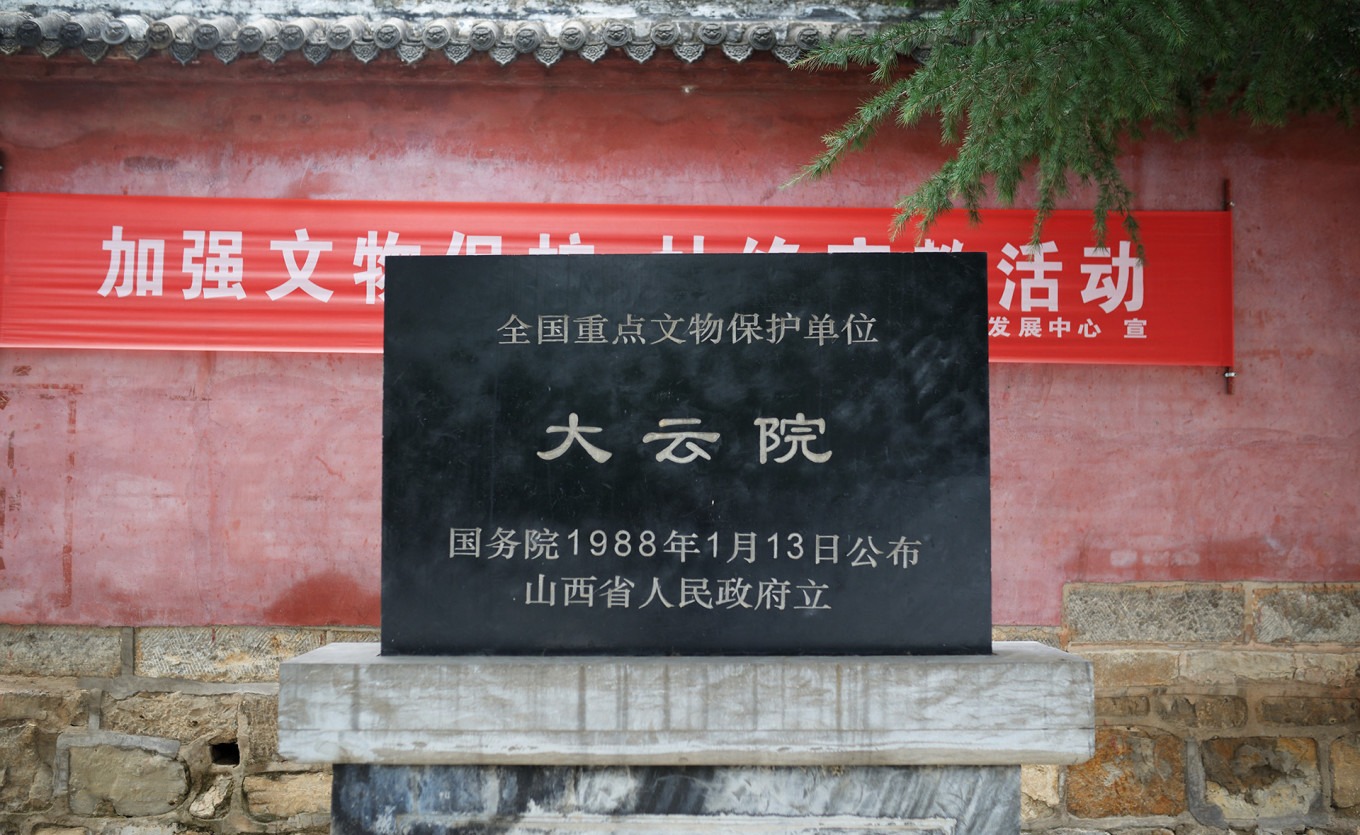
Nestled in Shihui Village, Beidanche Township, Pingshun County, Dayun Temple (大云院) is a hidden gem among Shanxi’s ancient architecture. The temple sits at the foot of Long’er Mountain, surrounded by nine ridges forming a semi-circle. According to the stele ‘Chici Shuangfengshan Dayun Yuan Shifang Bei’, the temple was founded in 938 AD during the Later Jin Dynasty of the Five Dynasties period. It was likely originally a subsidiary temple of Longmen Temple in the Zhuozhang River Valley.
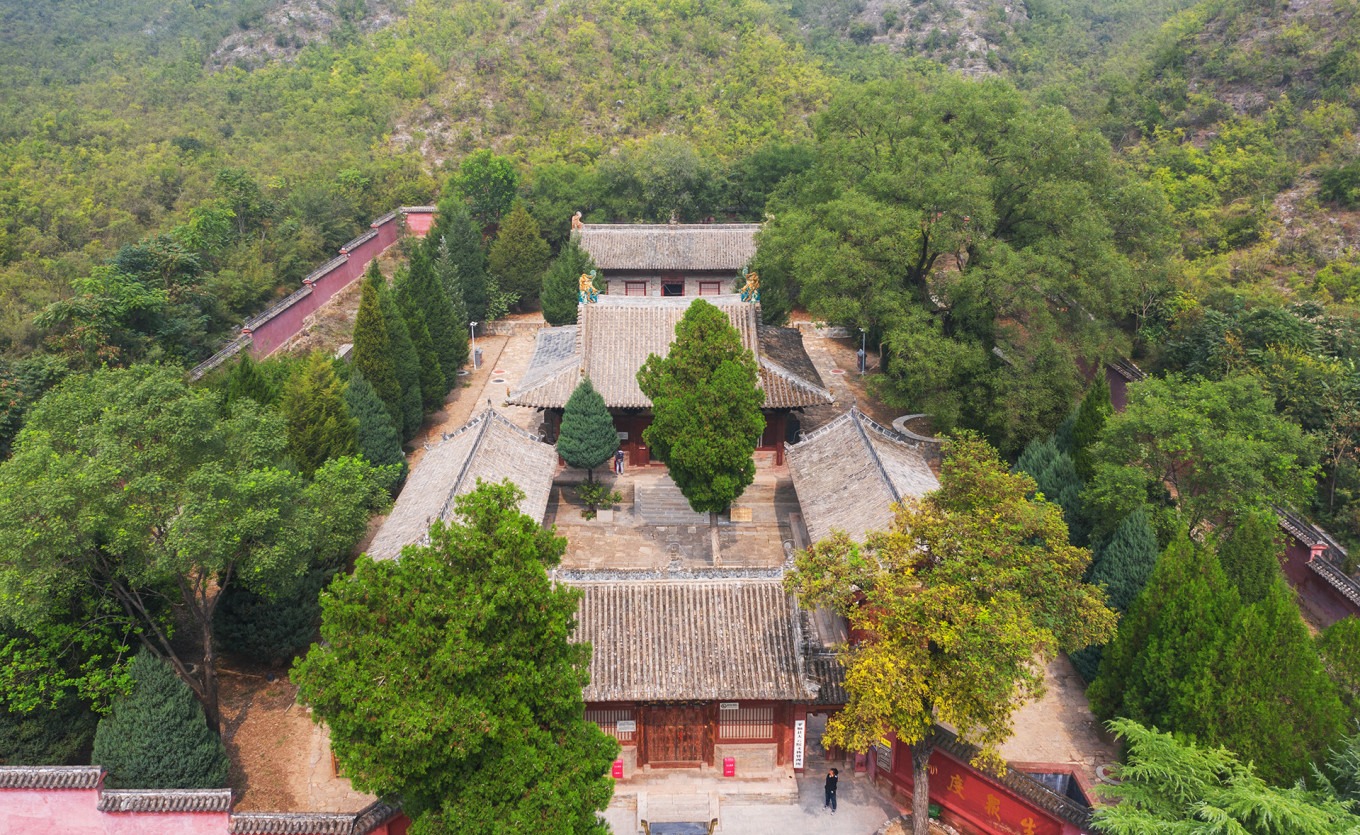
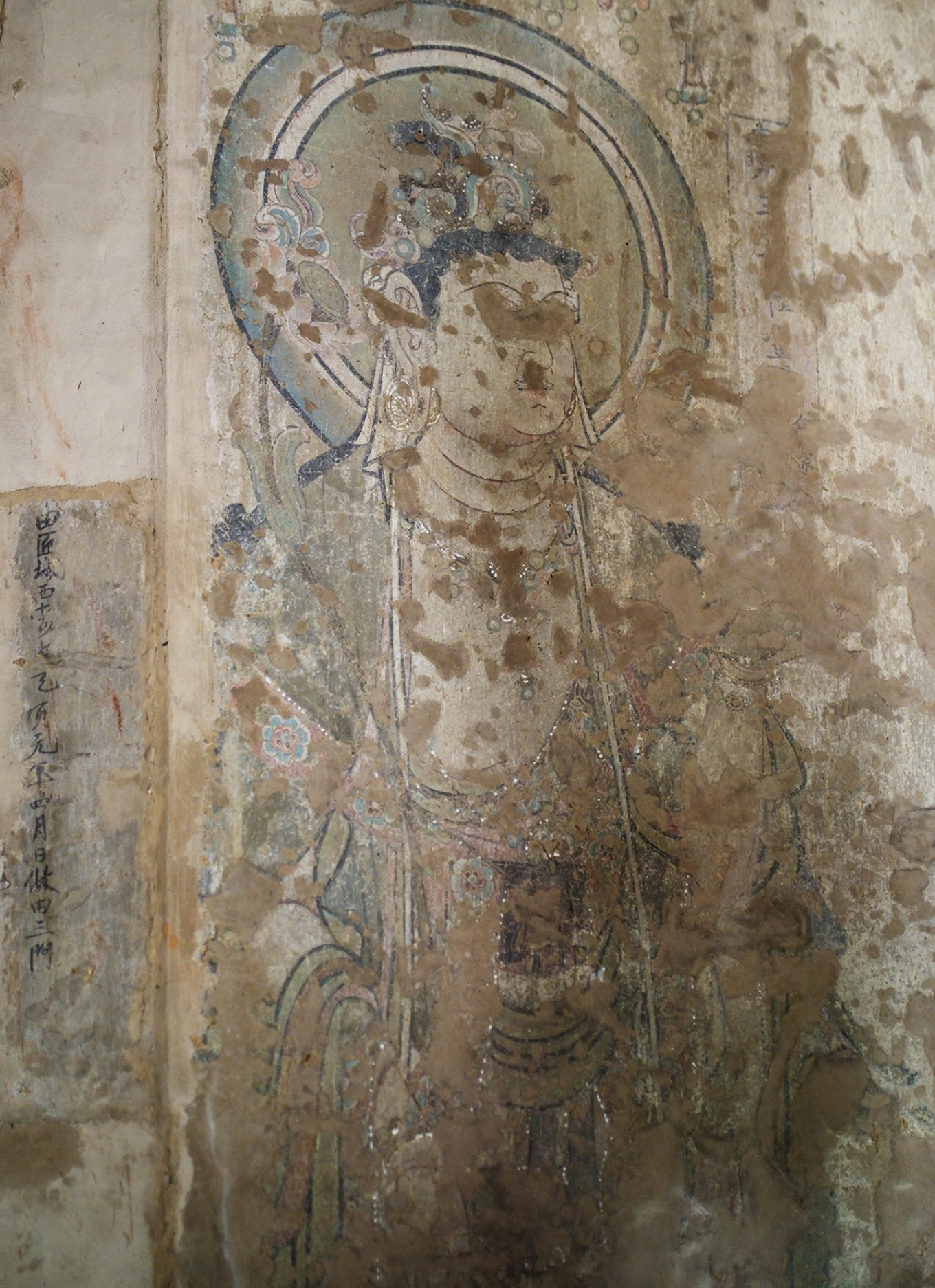
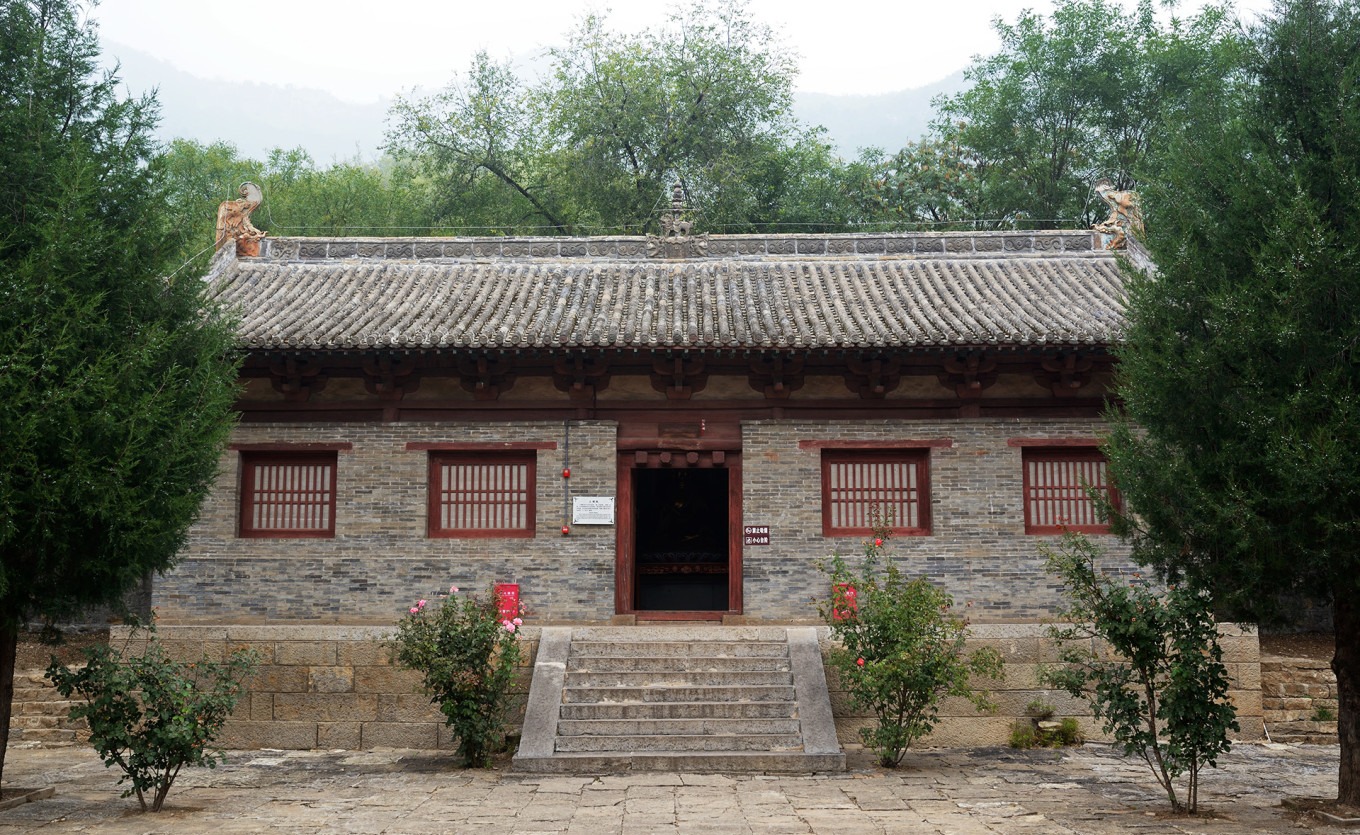
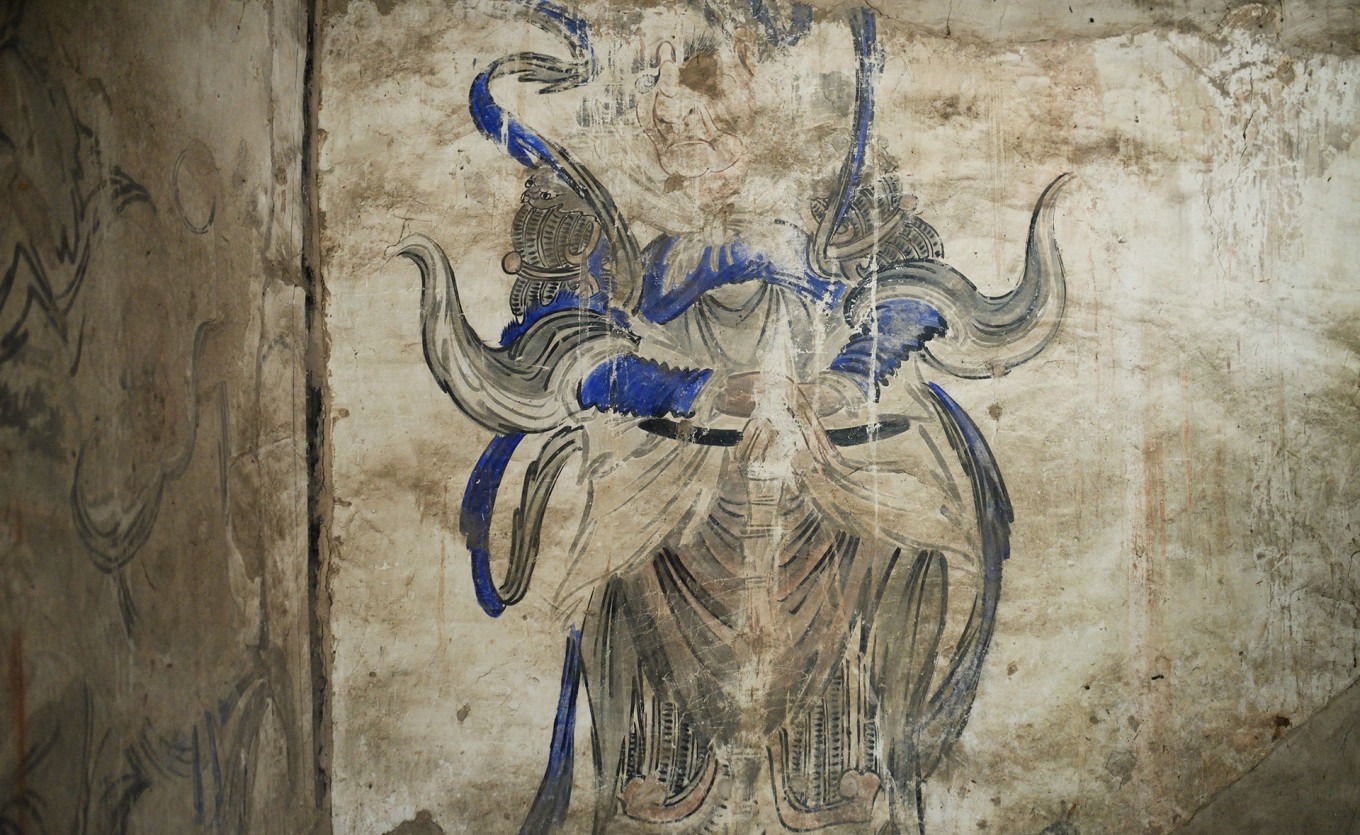
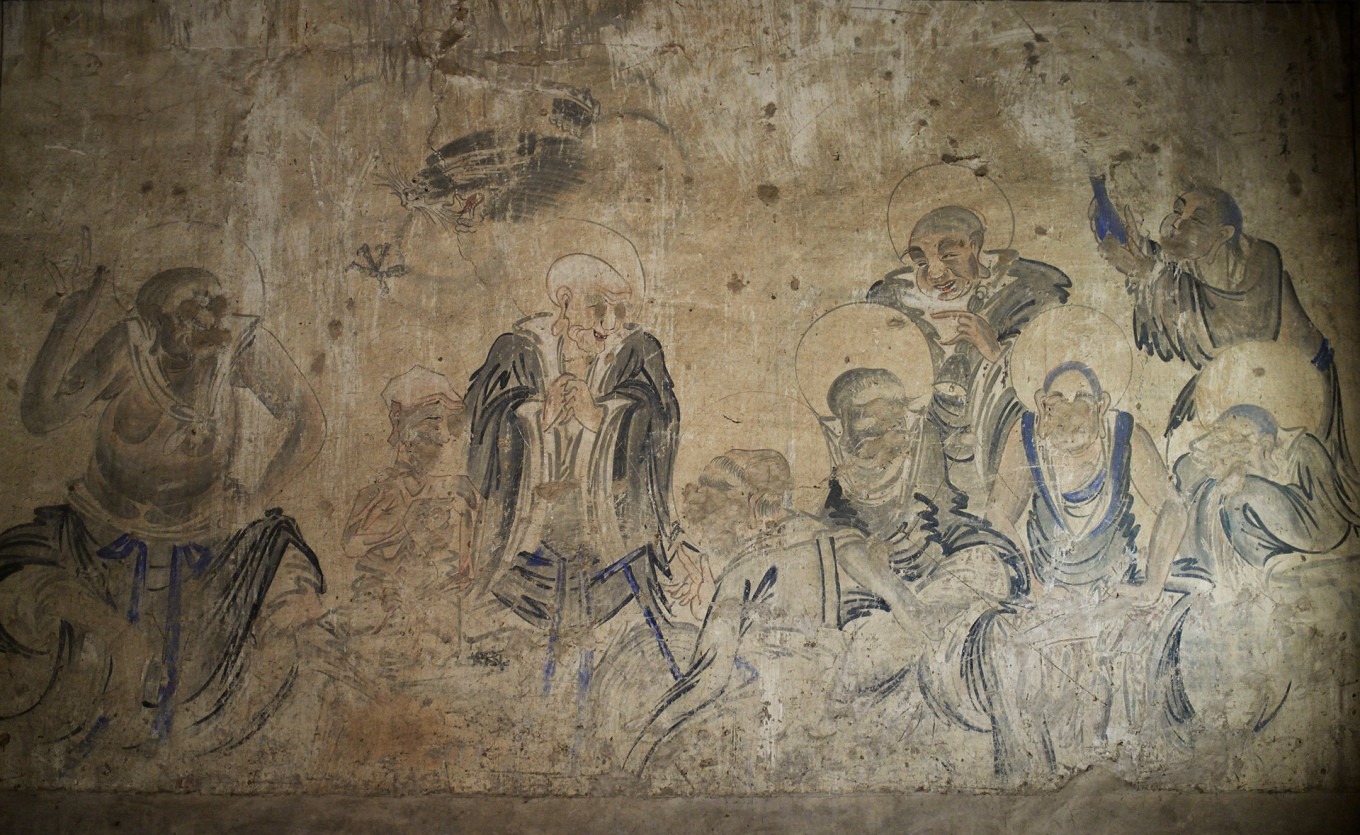
The Mituo Hall (弥陀殿) at Dayun Temple is a rare surviving structure from the Five Dynasties period (938 AD). It ranks among the top ten oldest wooden buildings in China. In 1988, the temple was listed as a National Key Cultural Relic Protection Unit. Even more remarkably, the hall contains the only surviving temple murals from the Five Dynasties period in China. Previously, such murals could only be seen at the Mogao Caves in Dunhuang. Finding them here, in a small mountain village temple in southeastern Shanxi, makes a visit to Dayun Temple truly worthwhile.
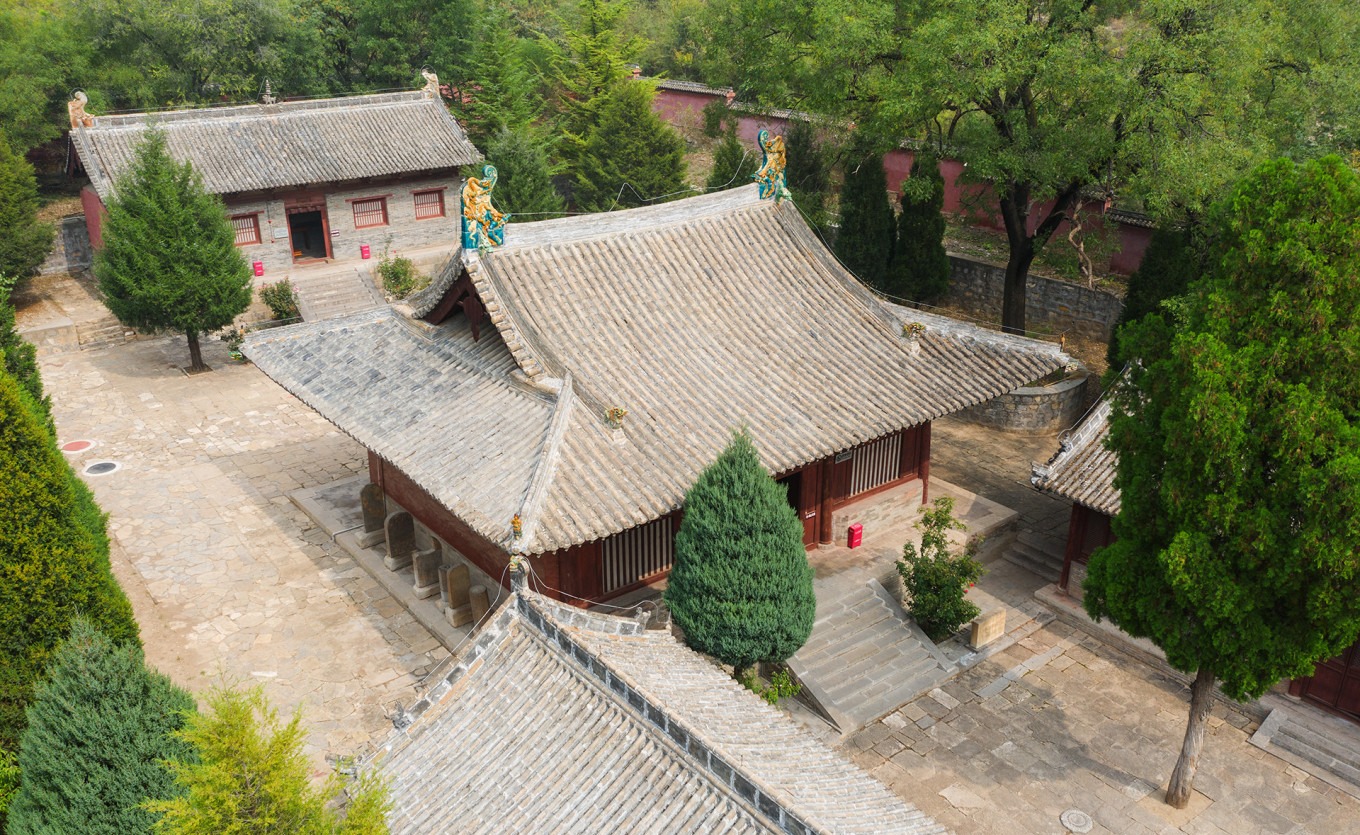
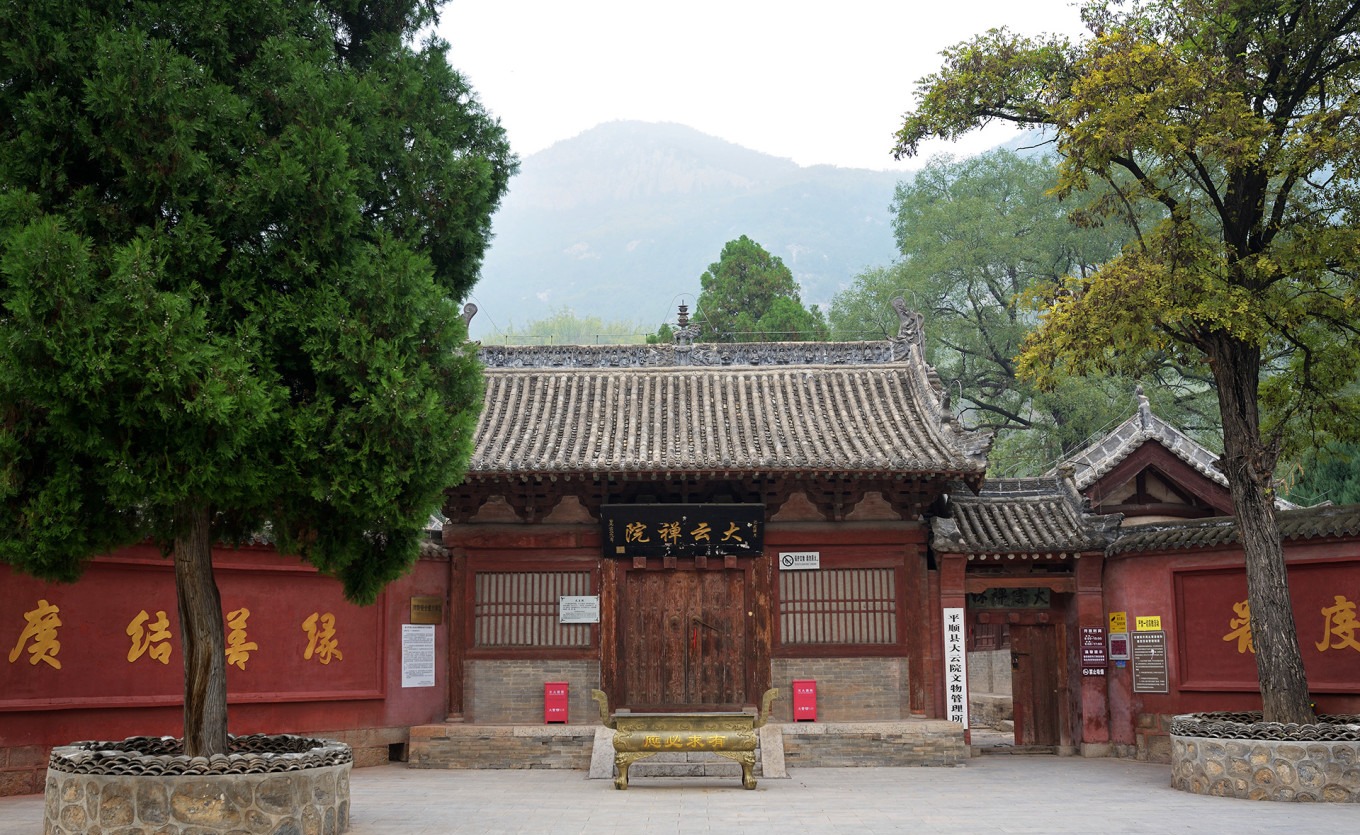
Dayun Temple today consists of two courtyards. Enter through the side gate next to the mountain gate, and you’ll first see the main hall, Mituo Hall. Although no inscription has been found on the building itself, based on historical records, inscriptions, architectural style, and mural analysis, it is widely accepted as a Five Dynasties structure.
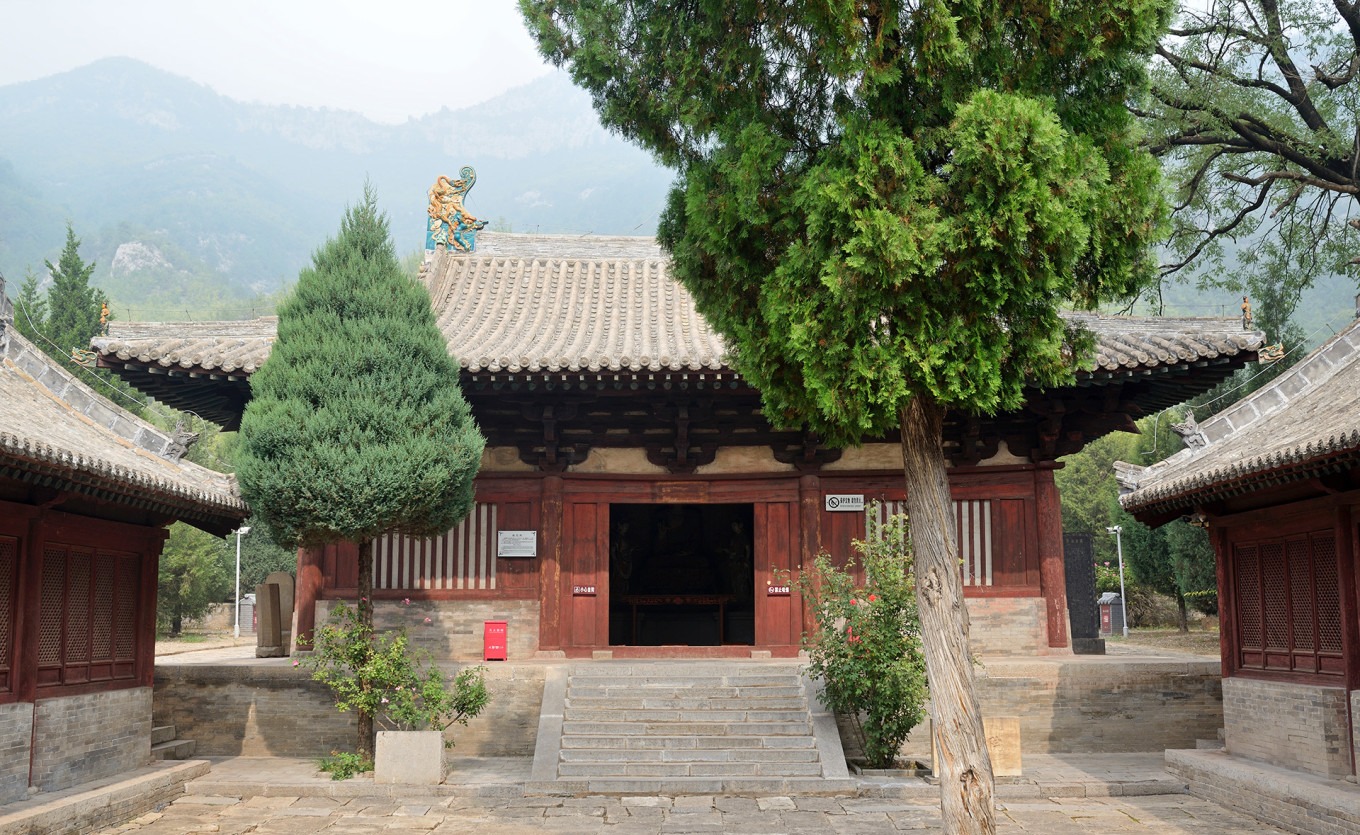
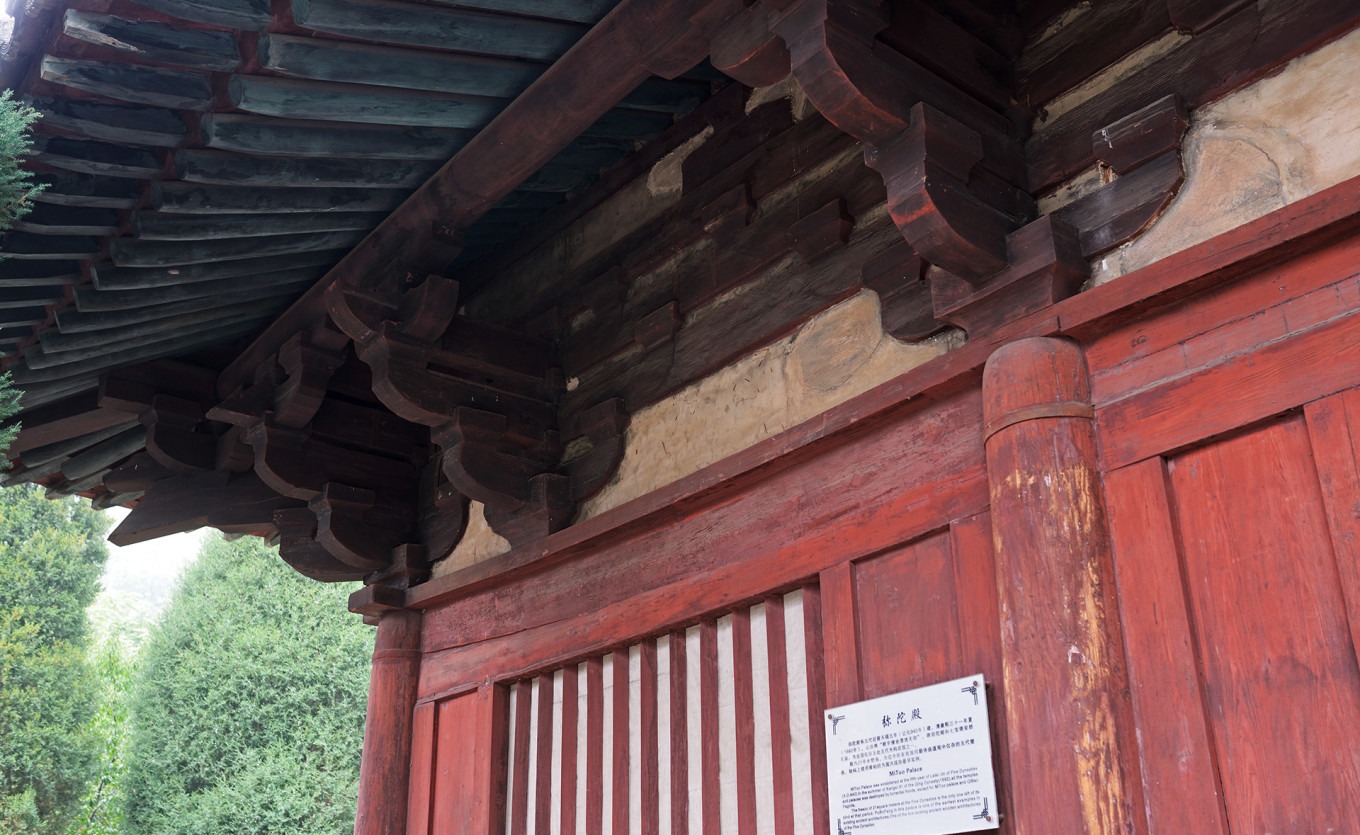
Mituo Hall sits on a one-meter-high platform. From the front, its deep, sweeping eaves and large bracket sets (dougong) still retain the grandeur of Tang dynasty architecture. However, a wooden beam called ‘pupai fang’ (普拍枋) appears between the lintel and the brackets—a feature absent in Tang buildings. This makes Dayun Temple’s Mituo Hall the earliest surviving example of a pupai fang in Chinese wooden architecture, serving as a key marker for dating ancient buildings.
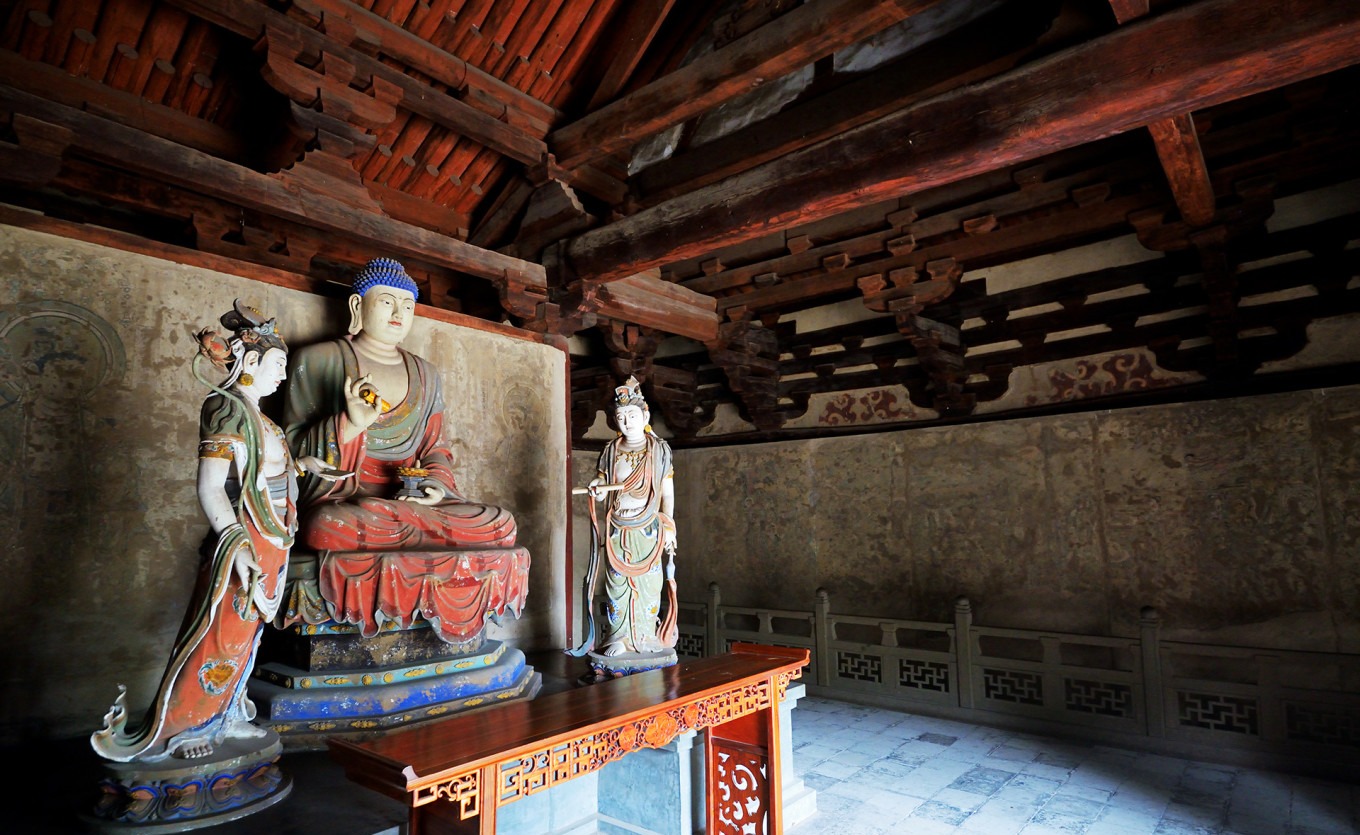
Inside the hall, on the east wall and the screen wall, about 40 square meters of Five Dynasties murals survive. The east wall murals are best preserved, covering over 20 square meters. They depict the ‘Vimalakirti Sutra’ (维摩诘经变), illustrating nine of the fourteen chapters of the sutra.
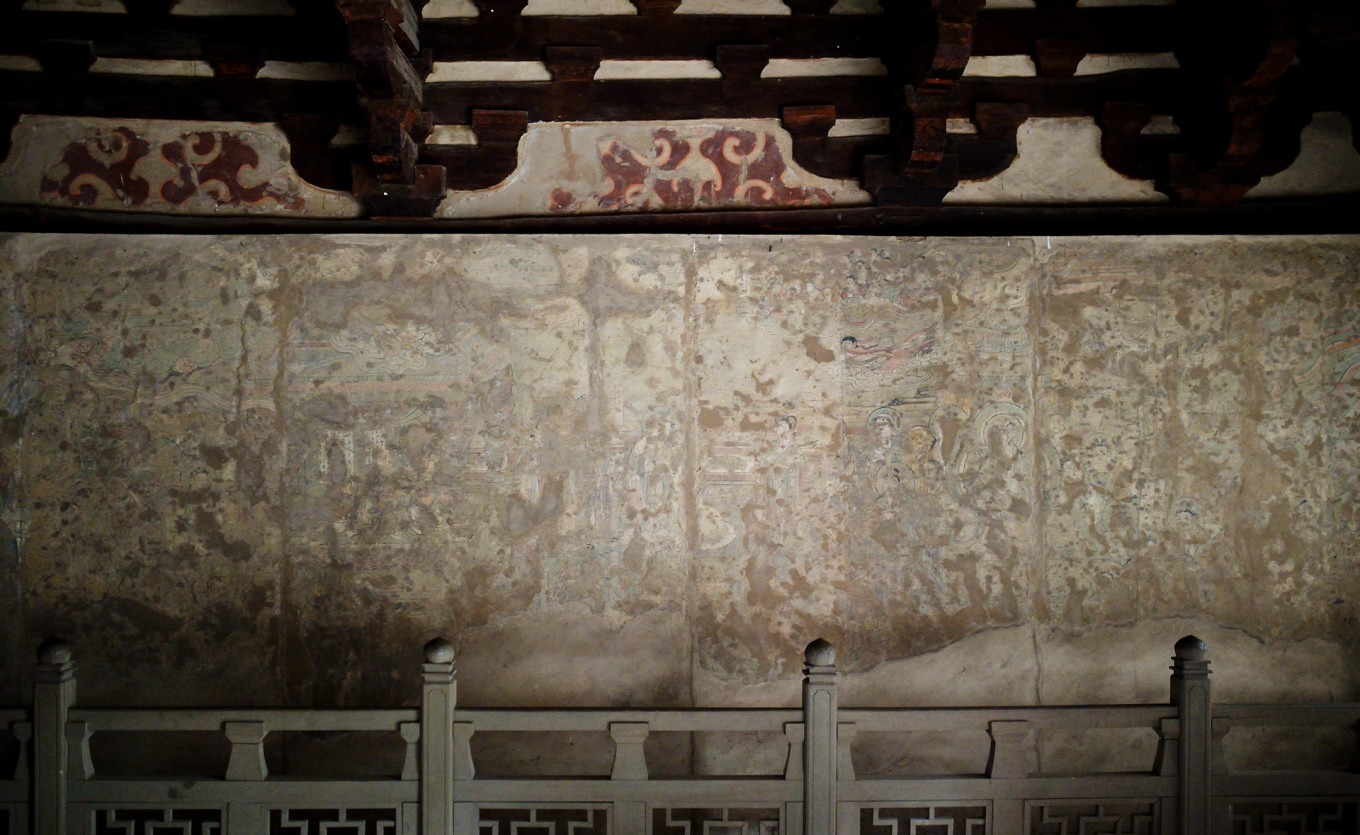
The Vimalakirti Sutra is a key Buddhist text. Vimalakirti, a layman contemporary of the Buddha, was renowned for his profound understanding of the dharma. When he feigned illness, the Buddha sent disciples to visit, but all feared debating him—except Manjusri Bodhisattva. Their lengthy debate is vividly depicted on the walls, surviving vividly across a millennium.
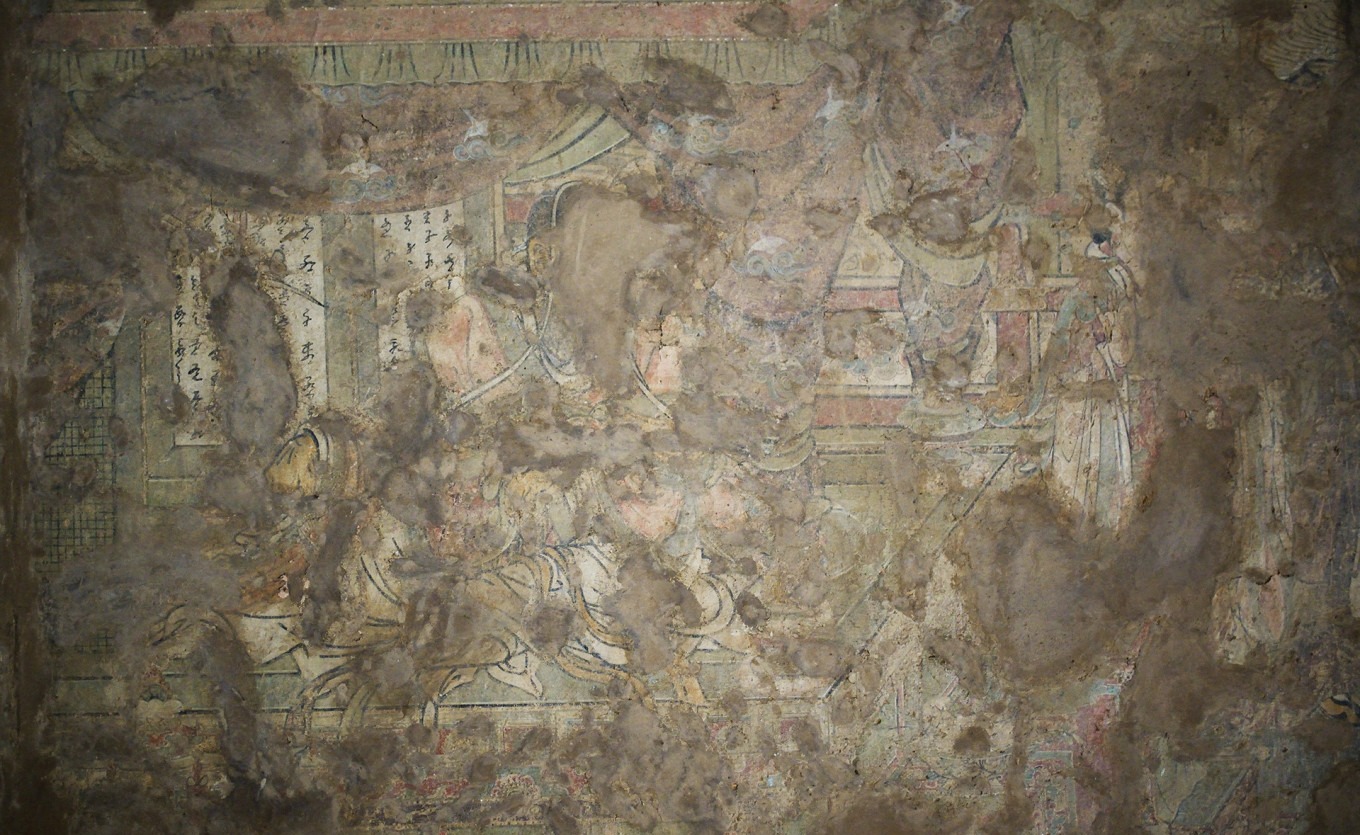
Although the paintings are not in perfect condition, you can still discern images of bodhisattvas, heavenly kings, arhats, and flying apsaras. Their plump figures closely resemble those in Tang dynasty murals at Dunhuang and the reliefs of the ‘Female Musicians’ from the Five Dynasties tomb of Wang Chuzhi at the Hebei Museum. Though the Tang dynasty had fallen, its brilliant art continued.
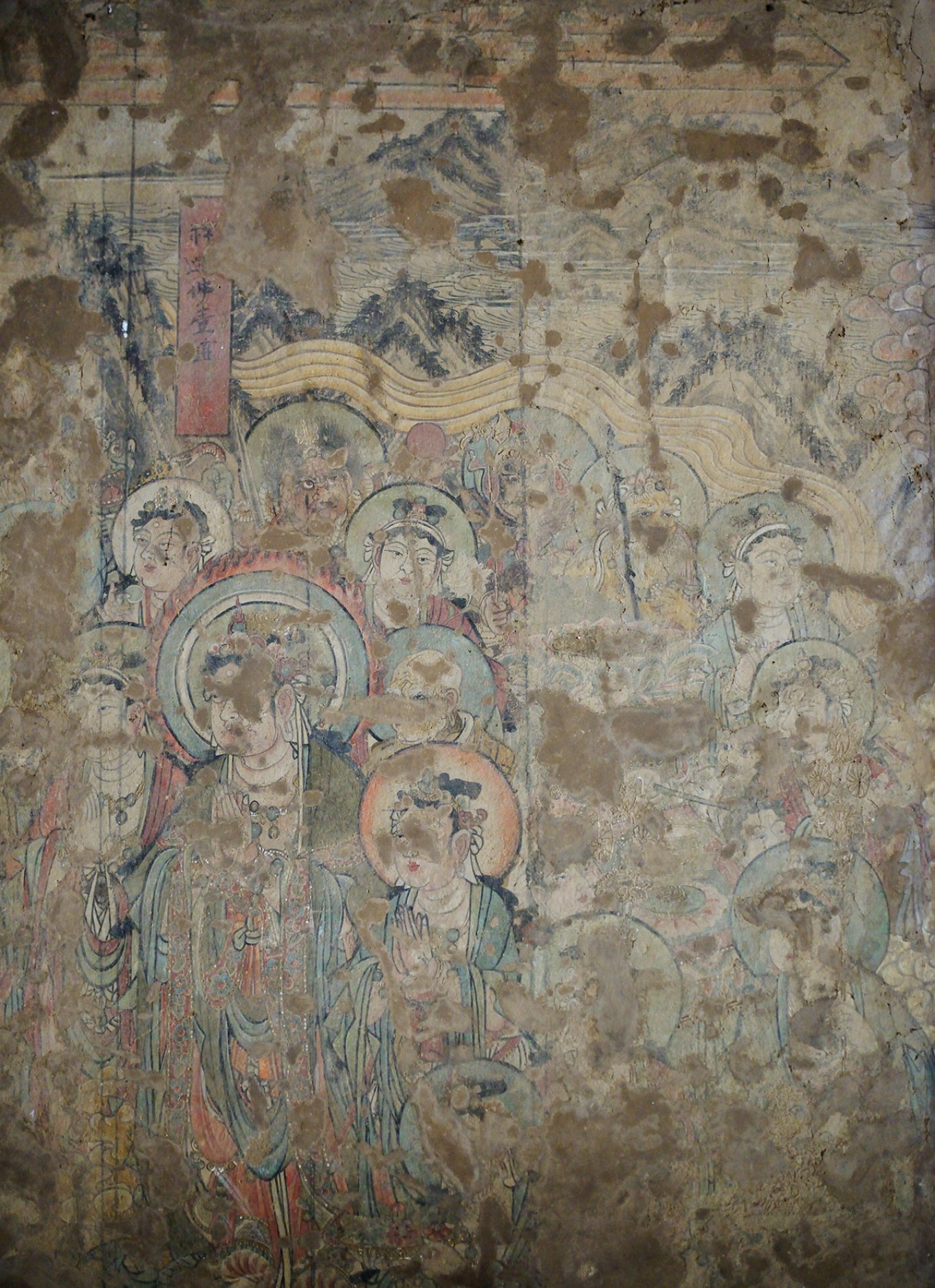
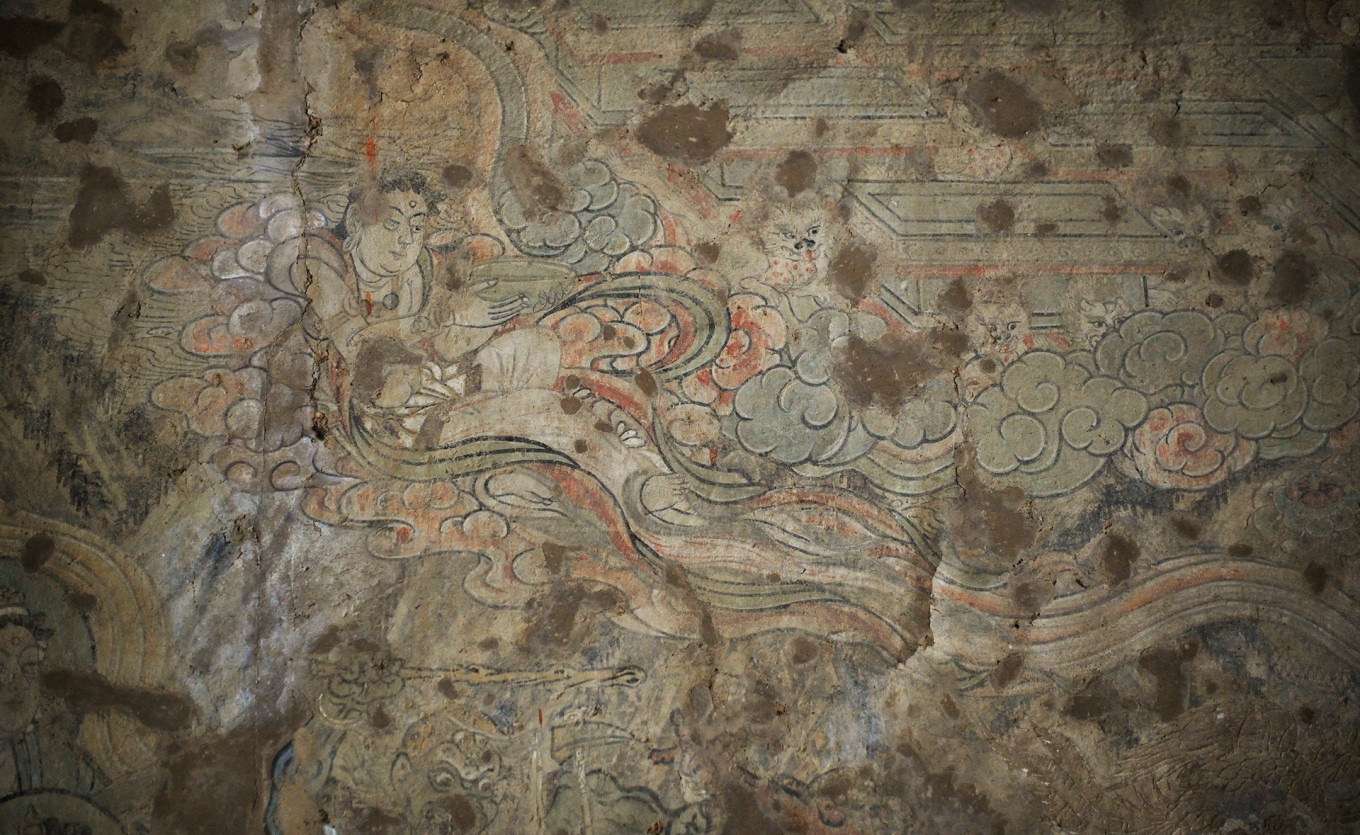
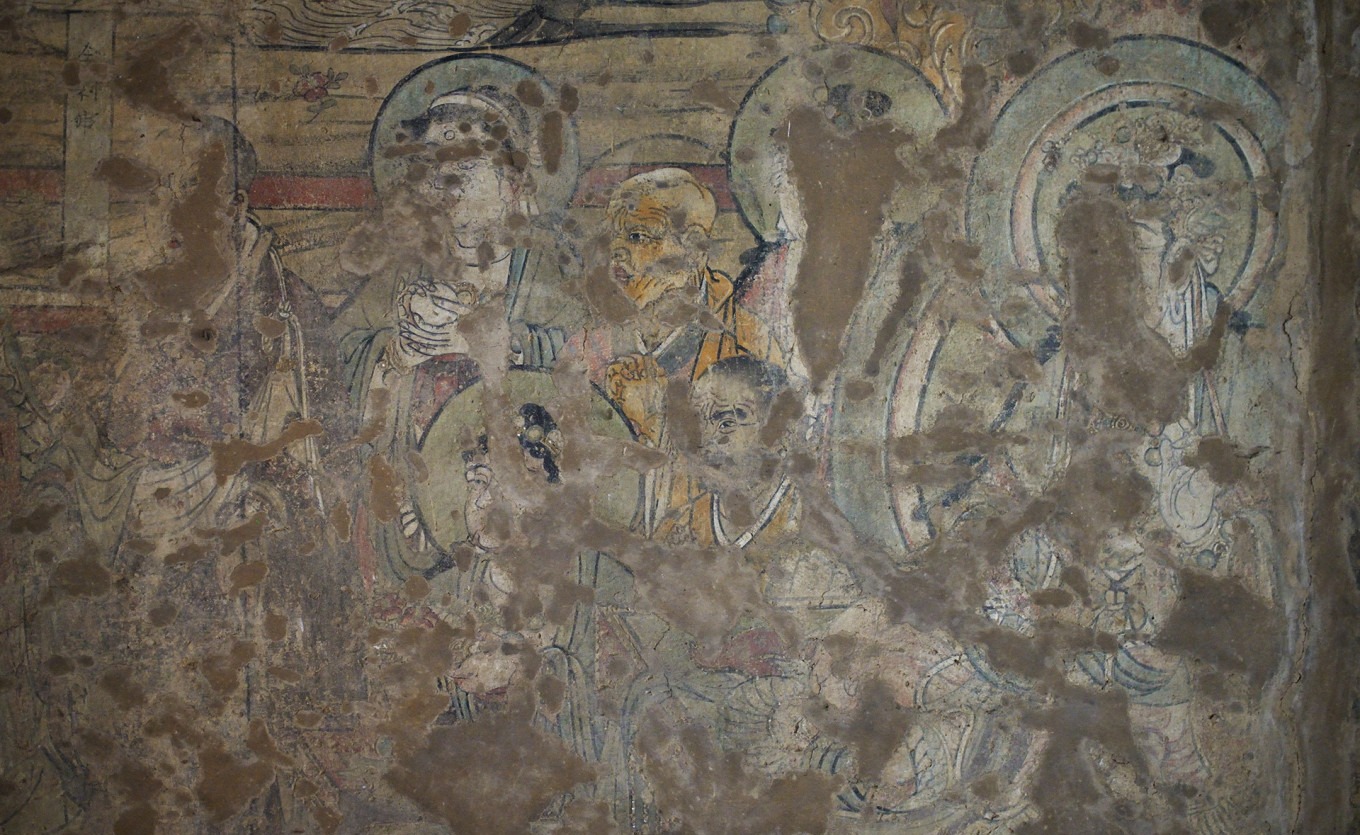
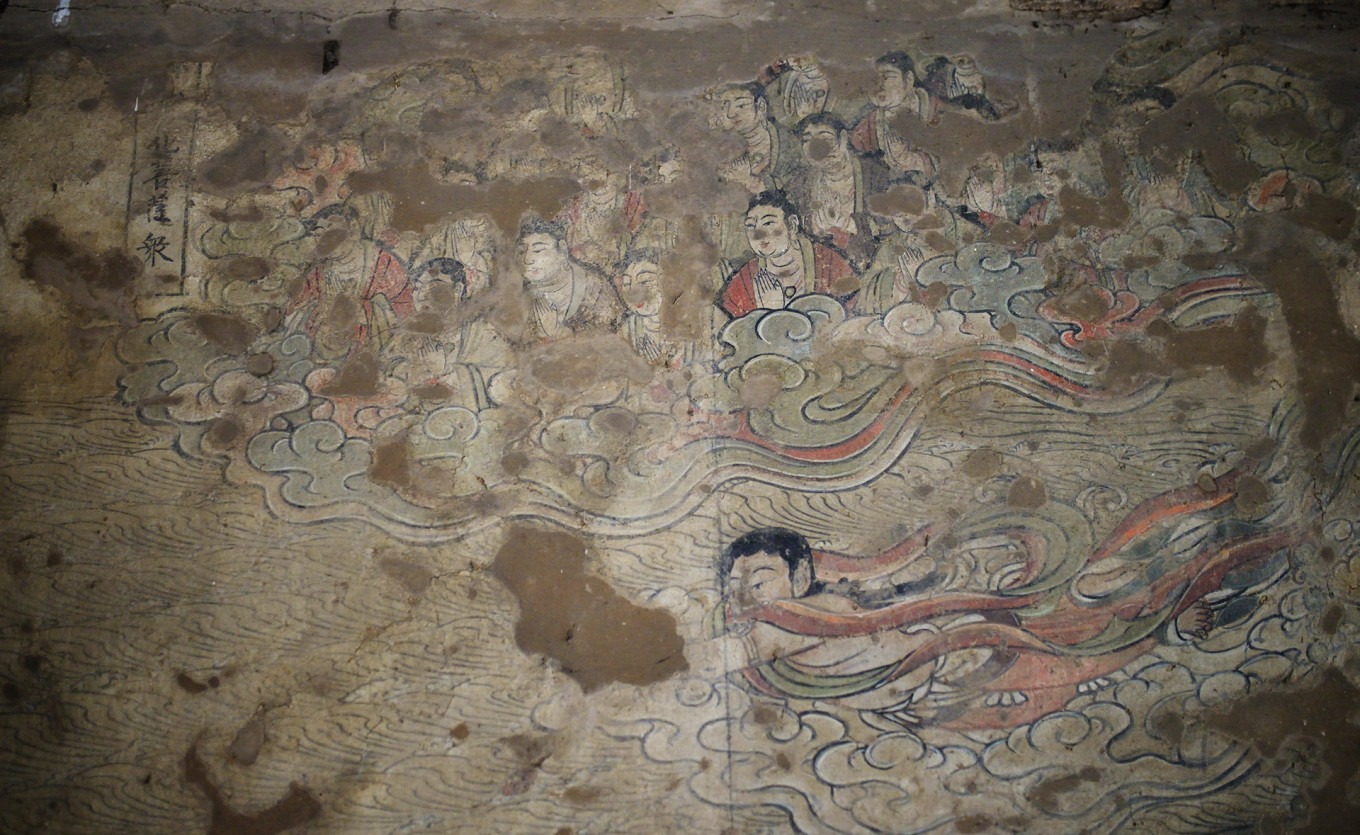
On the screen wall, the front side depicts the ‘Western Three Saints’ (西方三圣): Guanyin Bodhisattva on the left, Mahasthamaprapta Bodhisattva on the right, but the central figure of Amitabha Buddha is missing. The back side shows the ‘Western Pure Land Transformation’ (西方净土变). Additionally, on the northeast corner of the north wall, about five square meters of murals depict pavilions, bodhisattvas, and disciples.
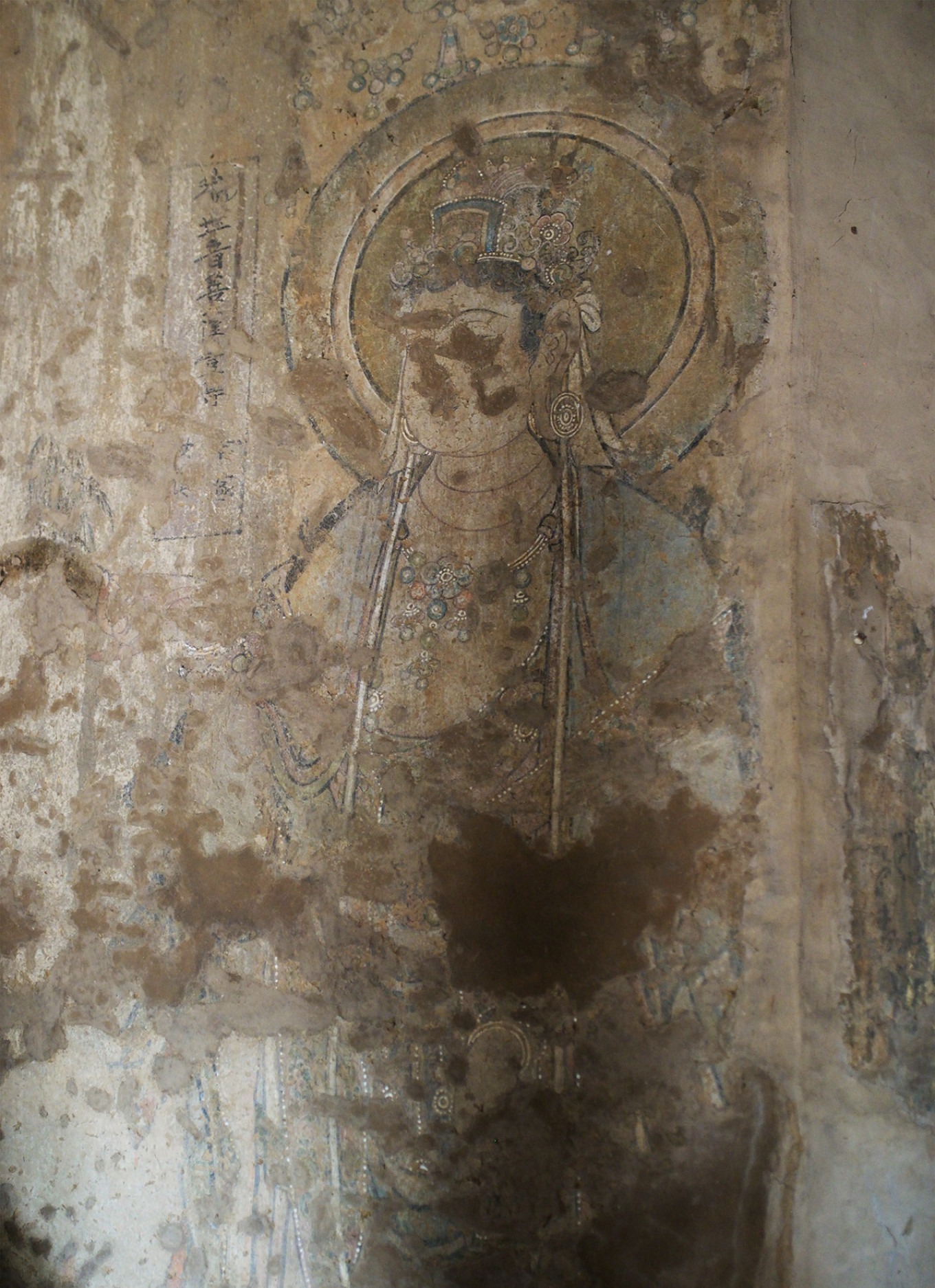
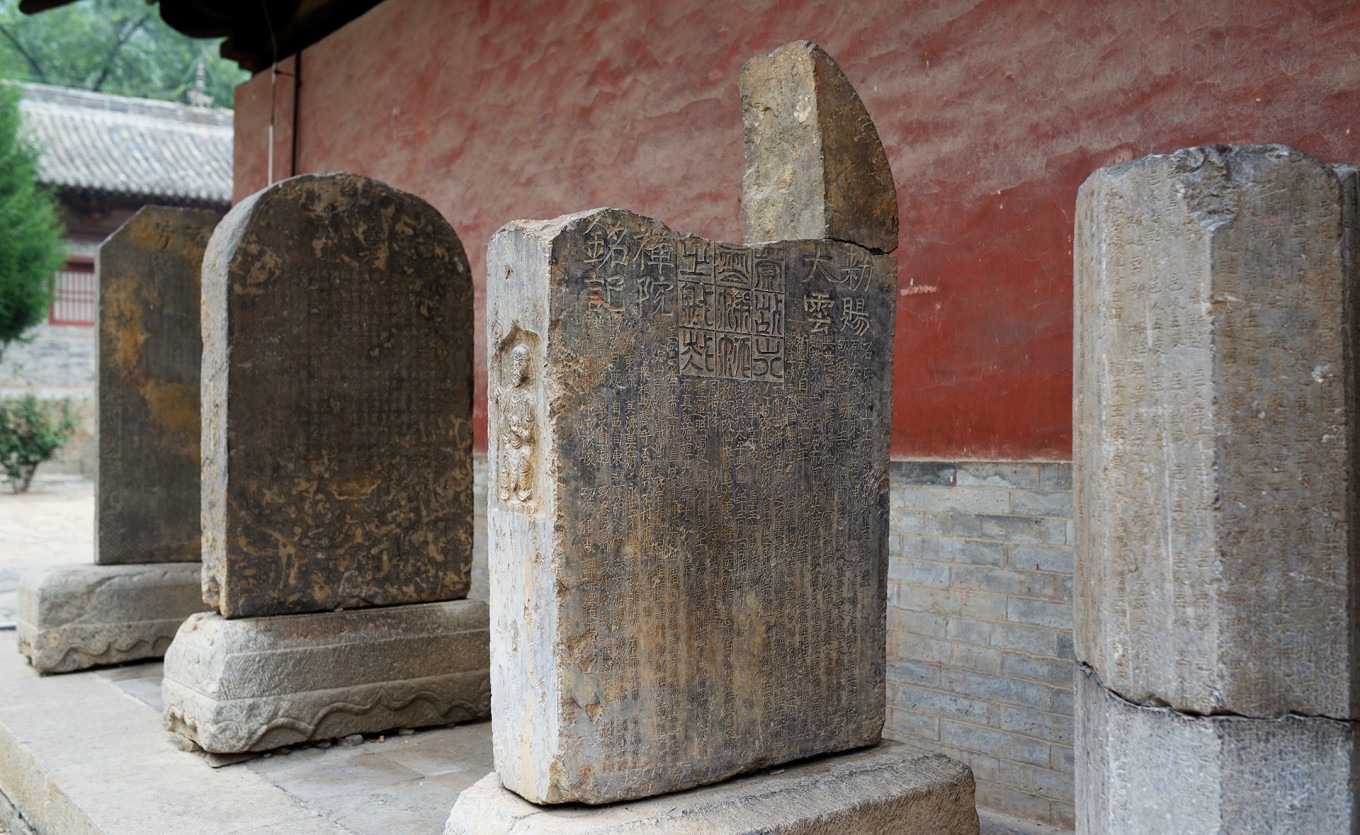
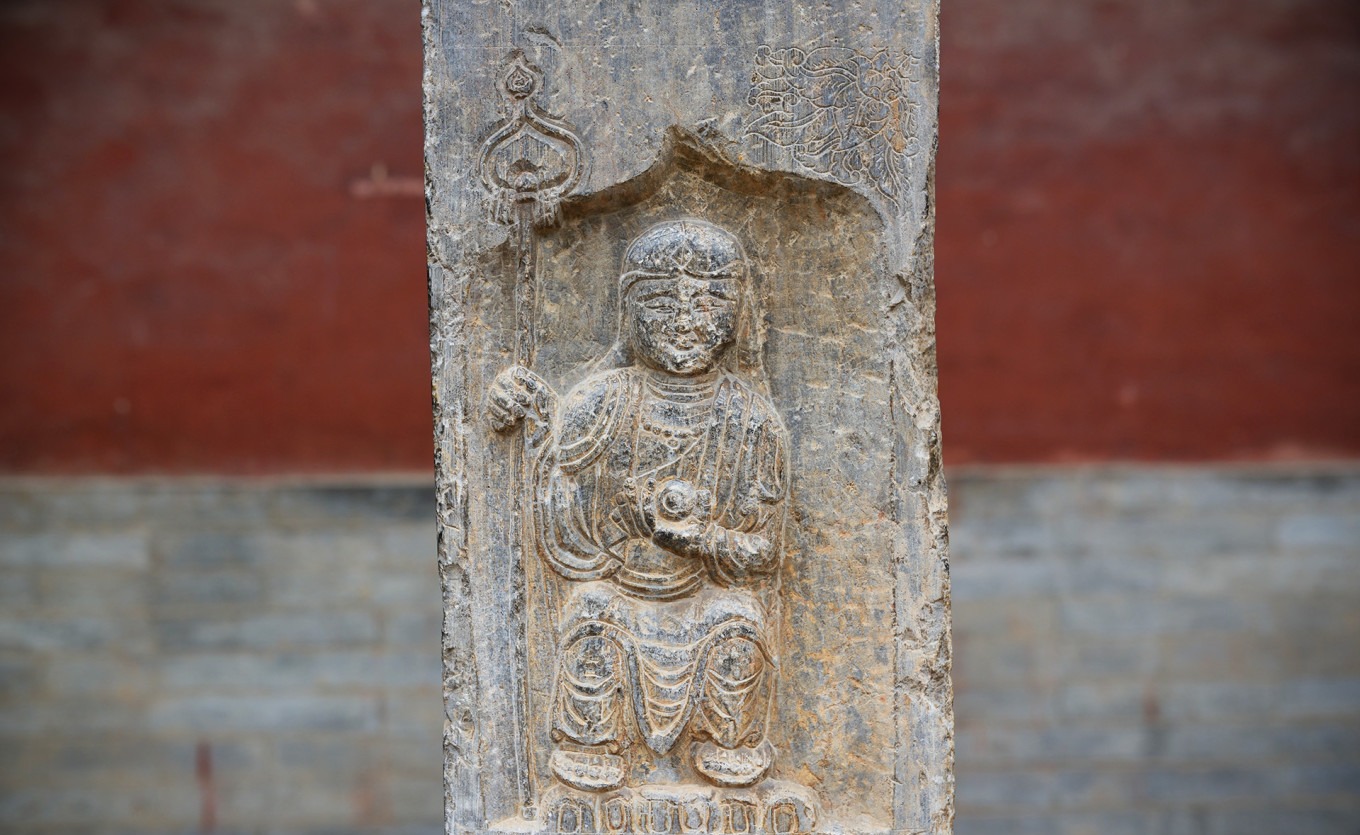
Outside Mituo Hall, you’ll find several steles. One, the ‘Chici Dayun Chanyuan Mingji’, records the temple’s founding history. Both sides of the stele feature carved Buddha images on the top and sides, with simple, flowing lines. The front inscription is unusual: it has two titles in regular and seal scripts, carved in both intaglio and relief—a rare combination.
In the rear hall, the Sanfo Hall (三佛殿), there are also murals, but these are Qing dynasty paintings of the Eighteen Arhats. Their brushwork and colors are far inferior to the Five Dynasties murals in Mituo Hall.
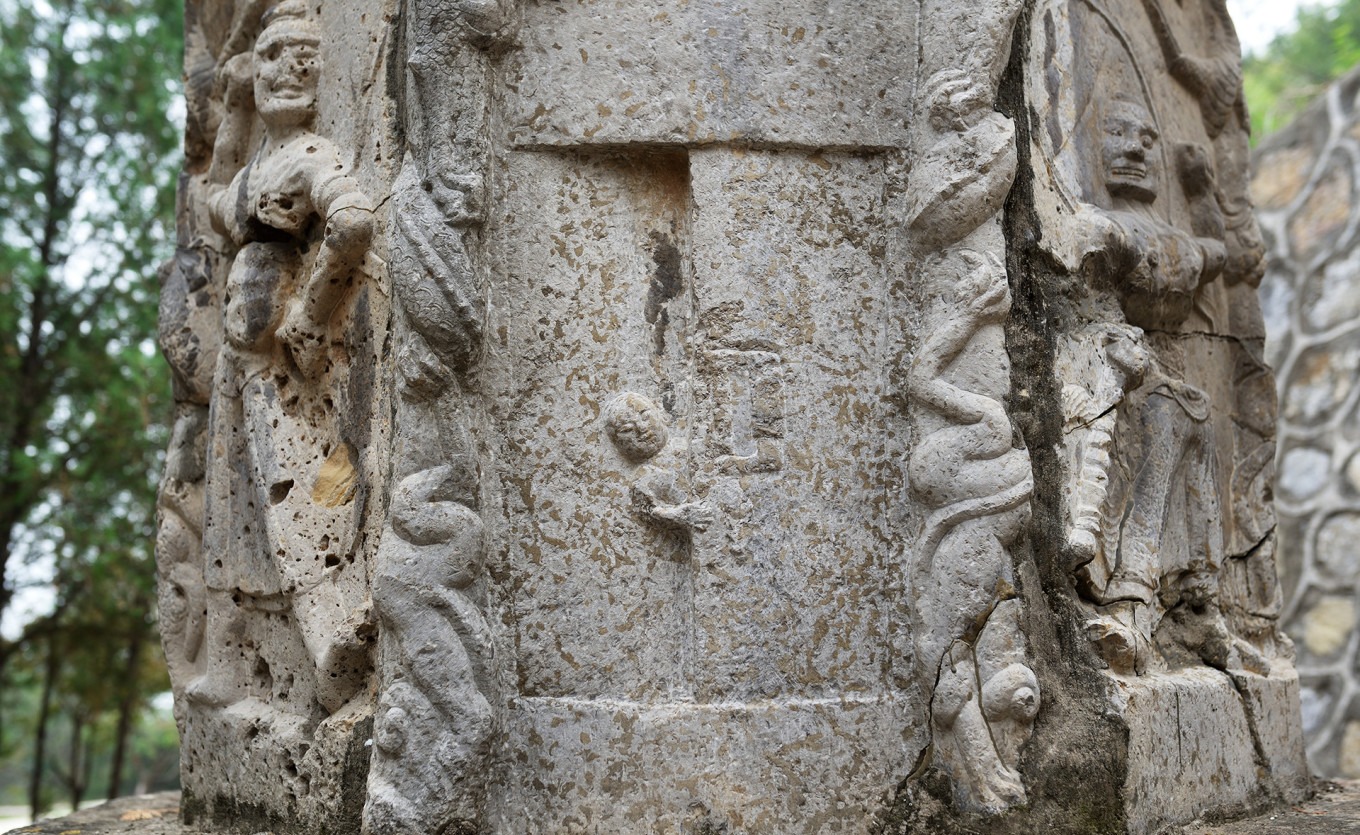
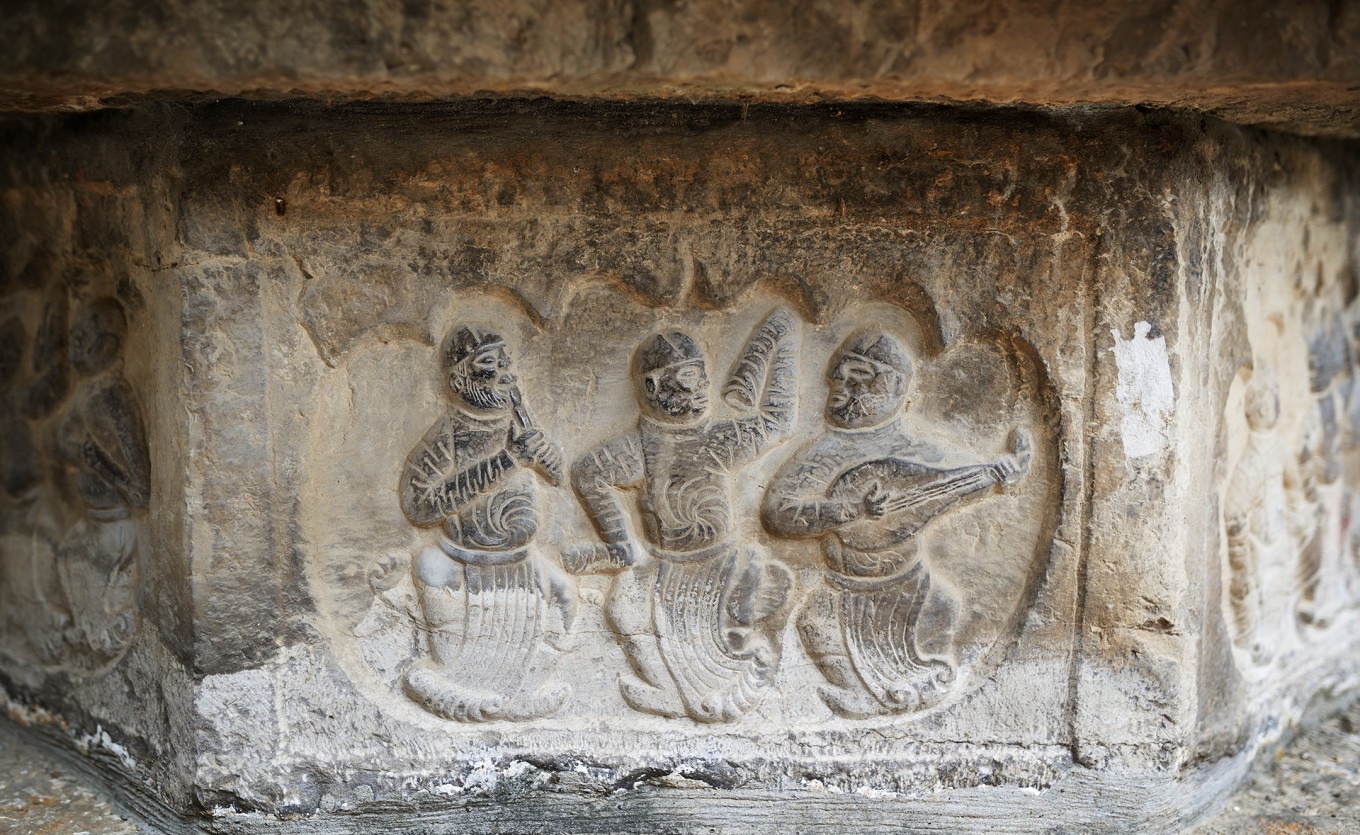
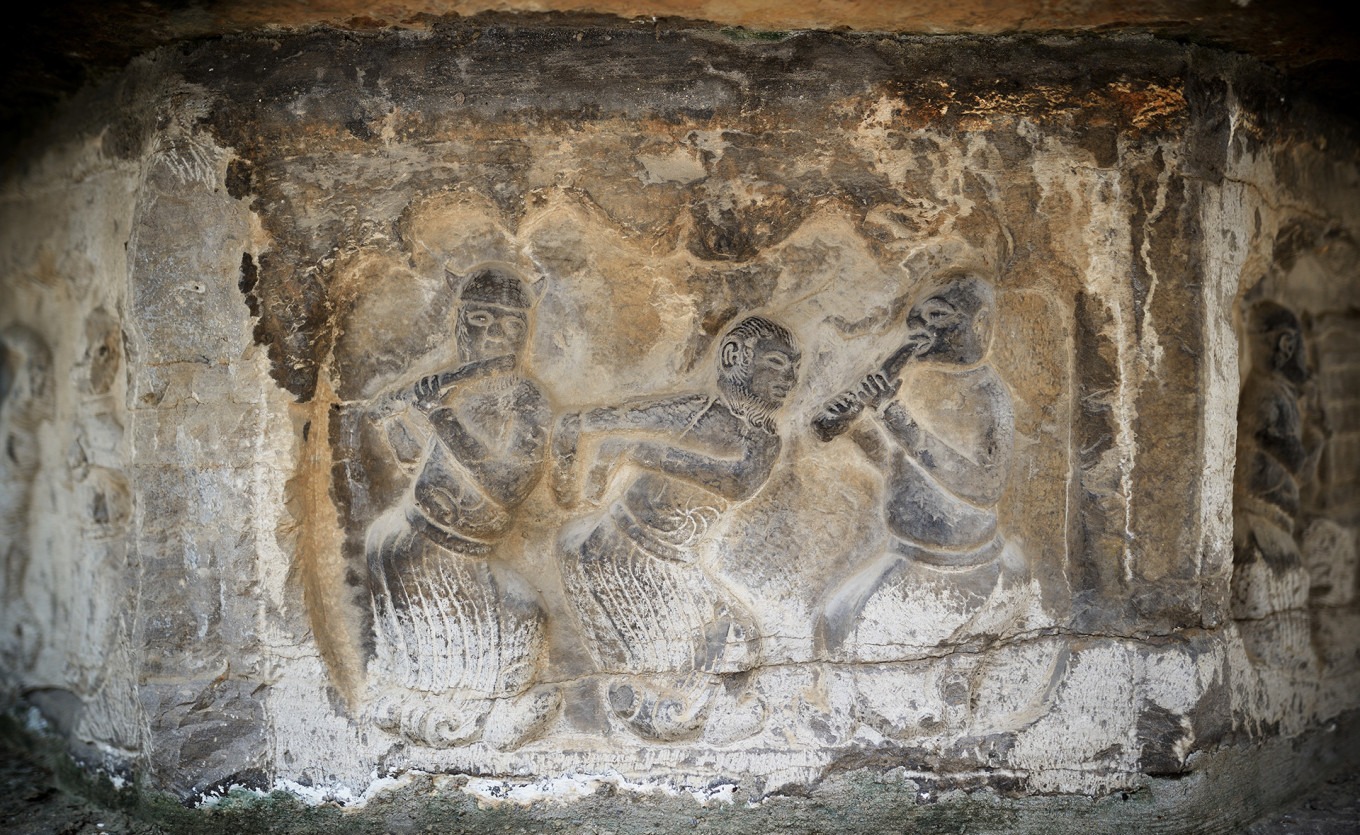
Outside the mountain gate, in the pine forest, stands a six-meter-high octagonal stone pagoda, the Seven Jewel Pagoda (七宝塔), also from the Five Dynasties. The pagoda features relief carvings of generals, warriors, and musicians on the waist, all beautifully sculpted and lifelike.
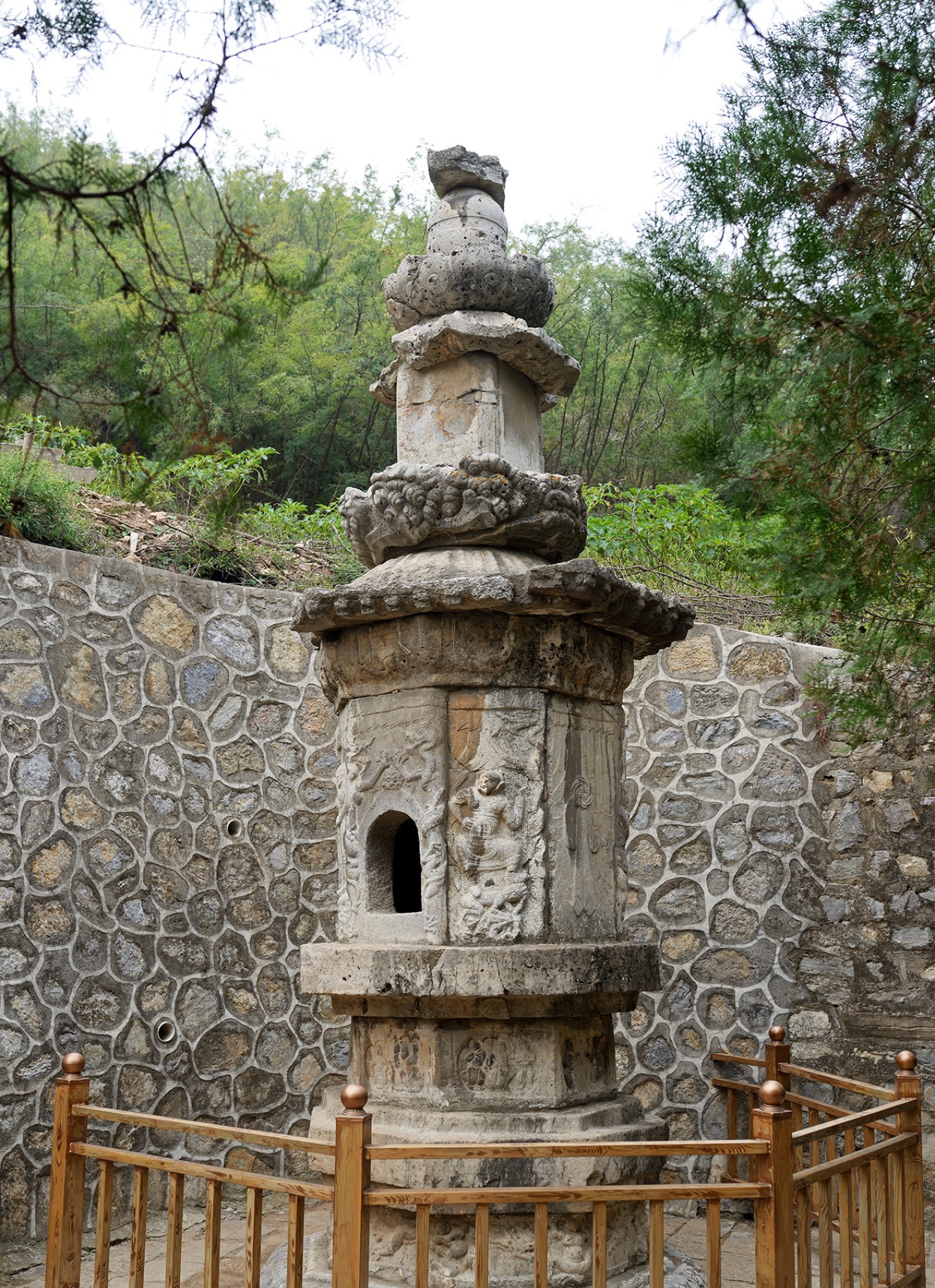
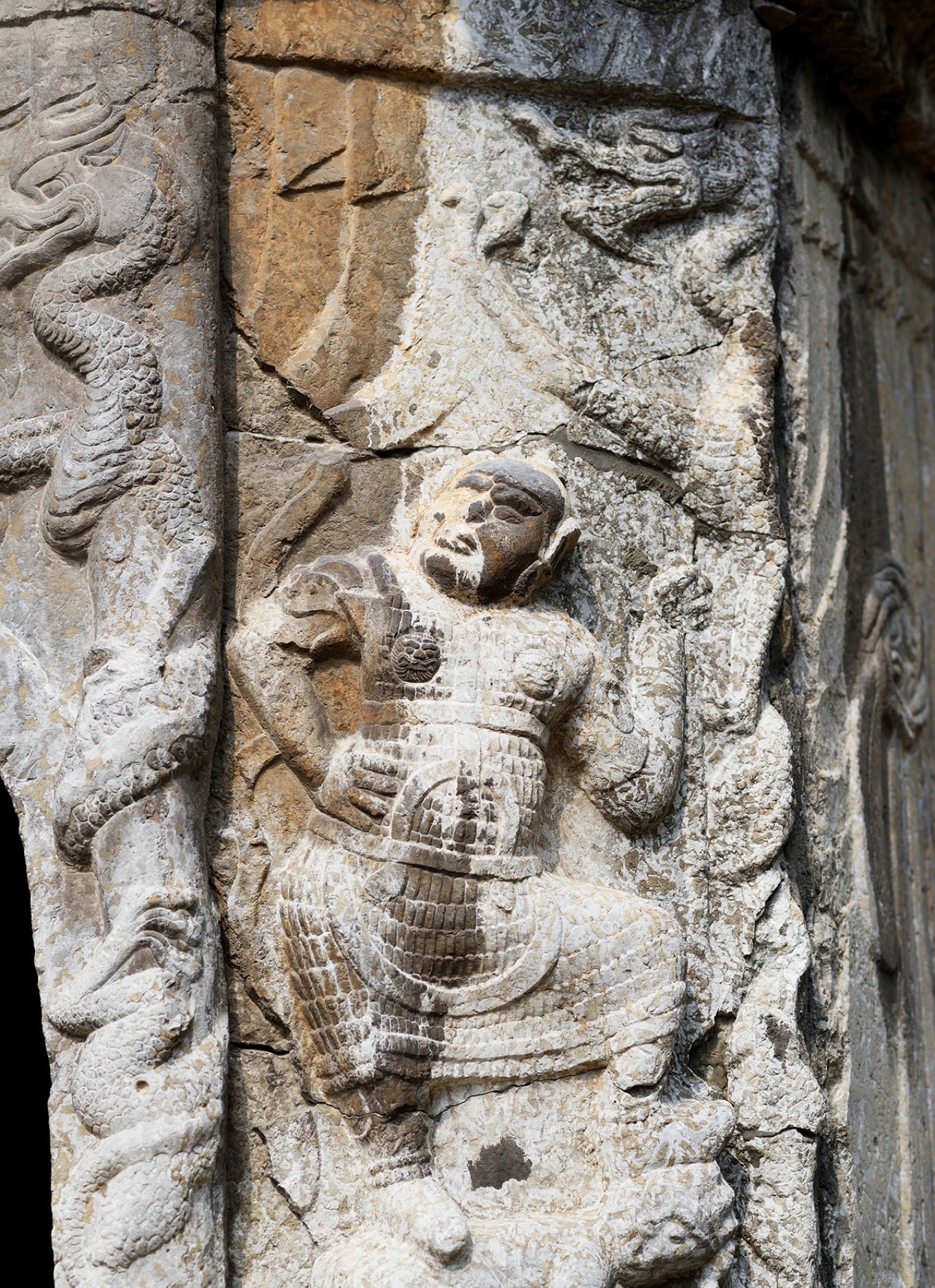
Look closely, and you’ll notice a ‘woman opening the door’ (妇人启门) motif on the back of the pagoda. This pattern is commonly found in Song and Jin dynasty tombs, but its appearance on a Five Dynasties Buddhist pagoda is unique.
Fotou Temple
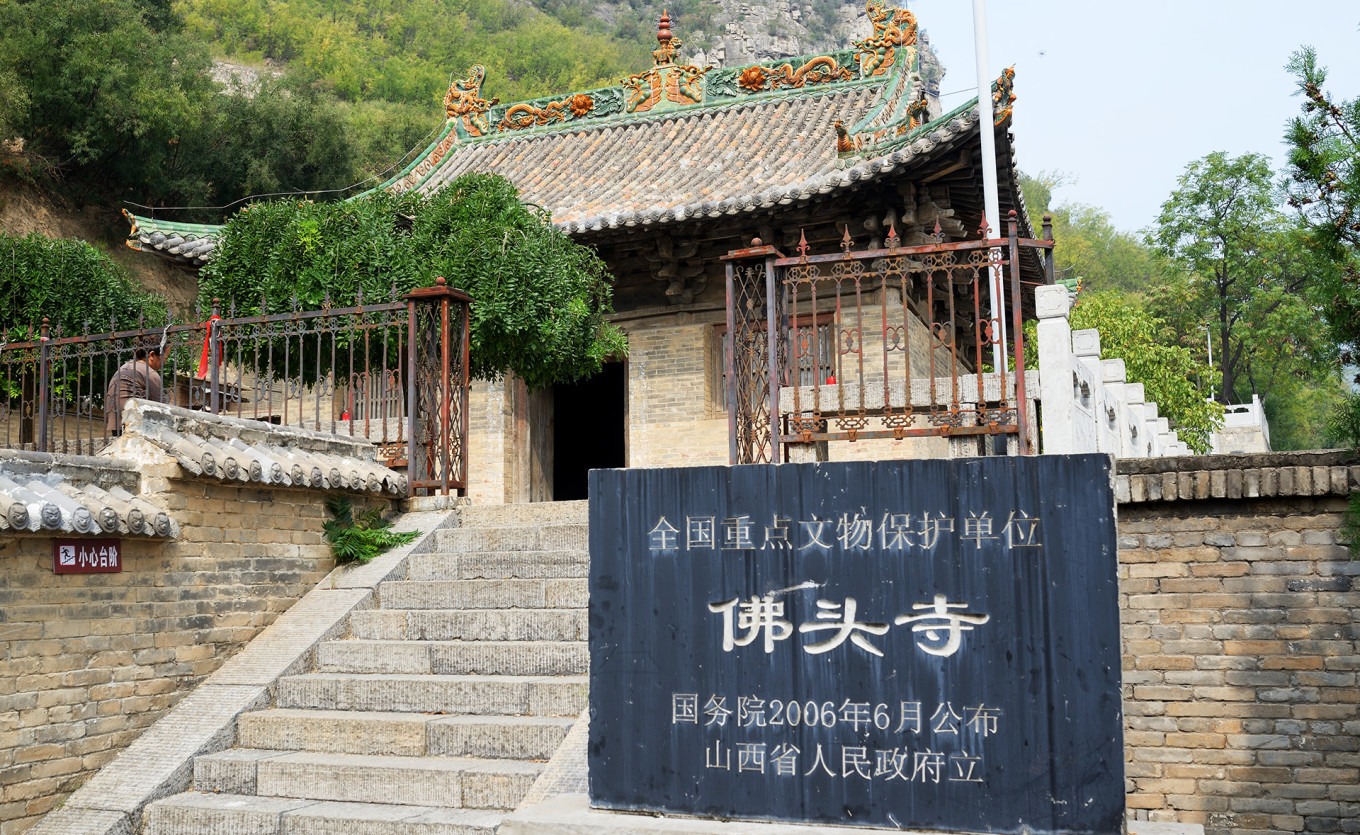
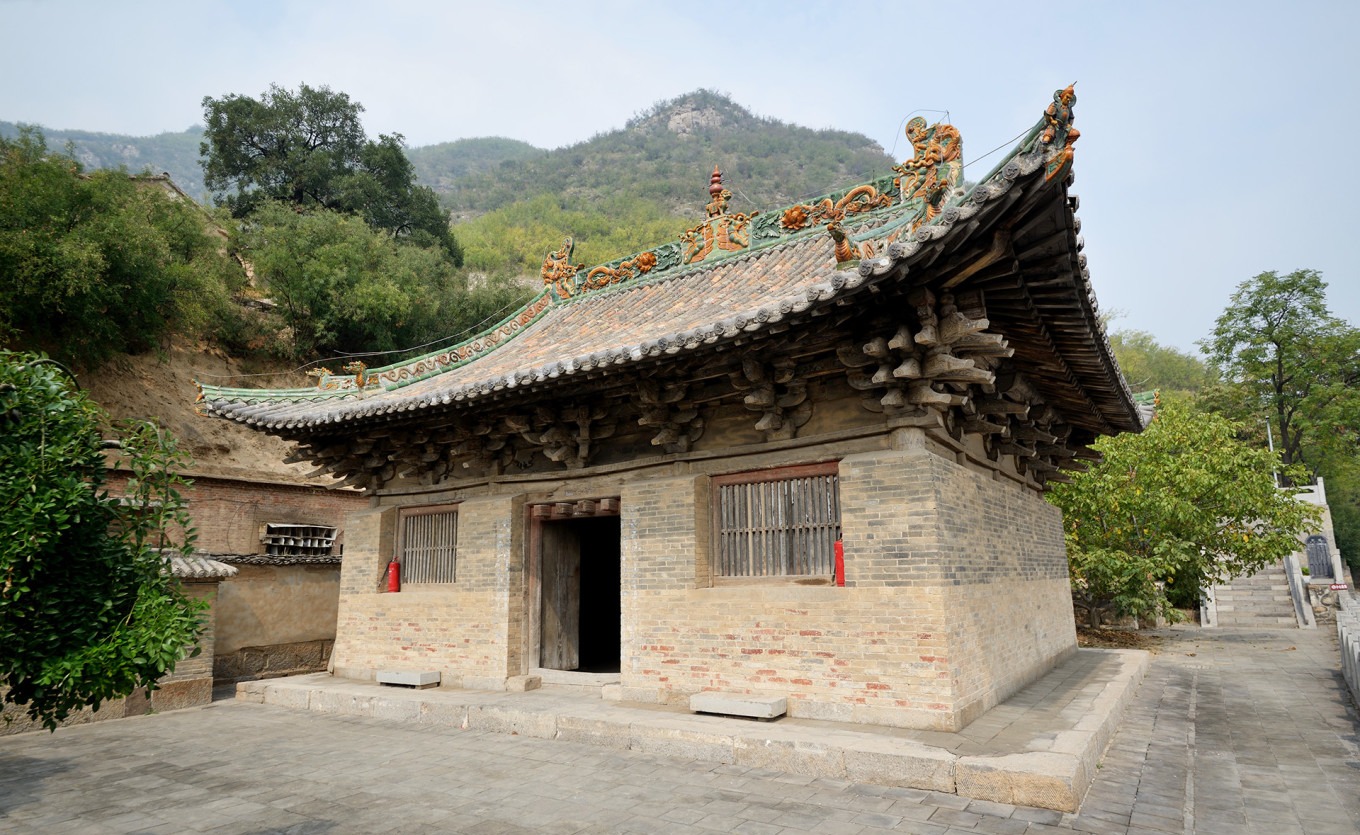
From Shihui Village, head east along the Zhuozhang River Valley for about ten kilometers to reach Chedang Village on the south bank. Nestled at the foot of a hill on the village’s west side, Fotou Temple (佛头寺) takes its name from the peak behind it, which resembles the head of a Buddha. This temple is a National Key Cultural Relics Protection Unit (6th batch). Although the original complex was once sizable, only the main hall remains today. While no inscriptions or historical records pinpoint its founding date, architectural analysis suggests it dates to the Song dynasty, though some scholars argue for the Jin dynasty—two periods with closely related building styles.
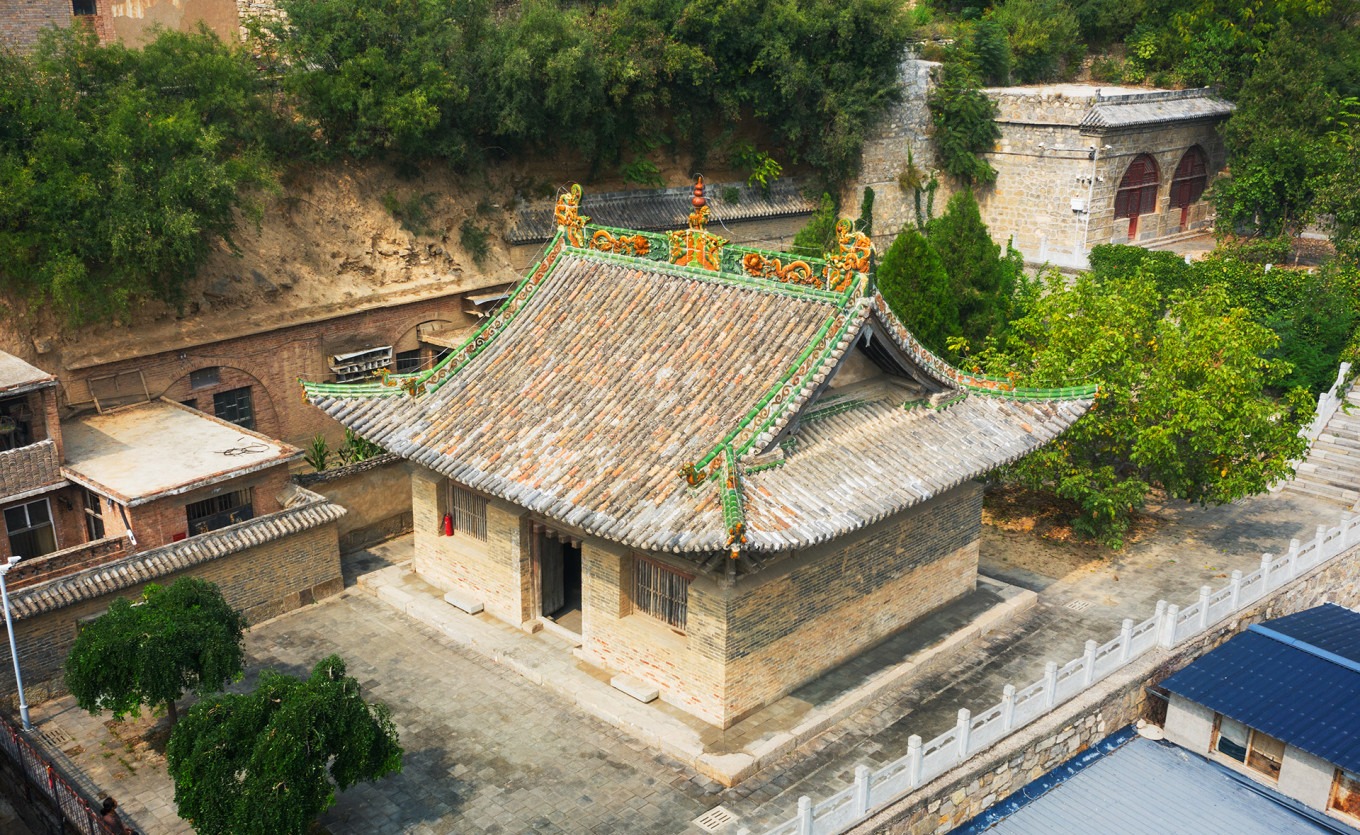
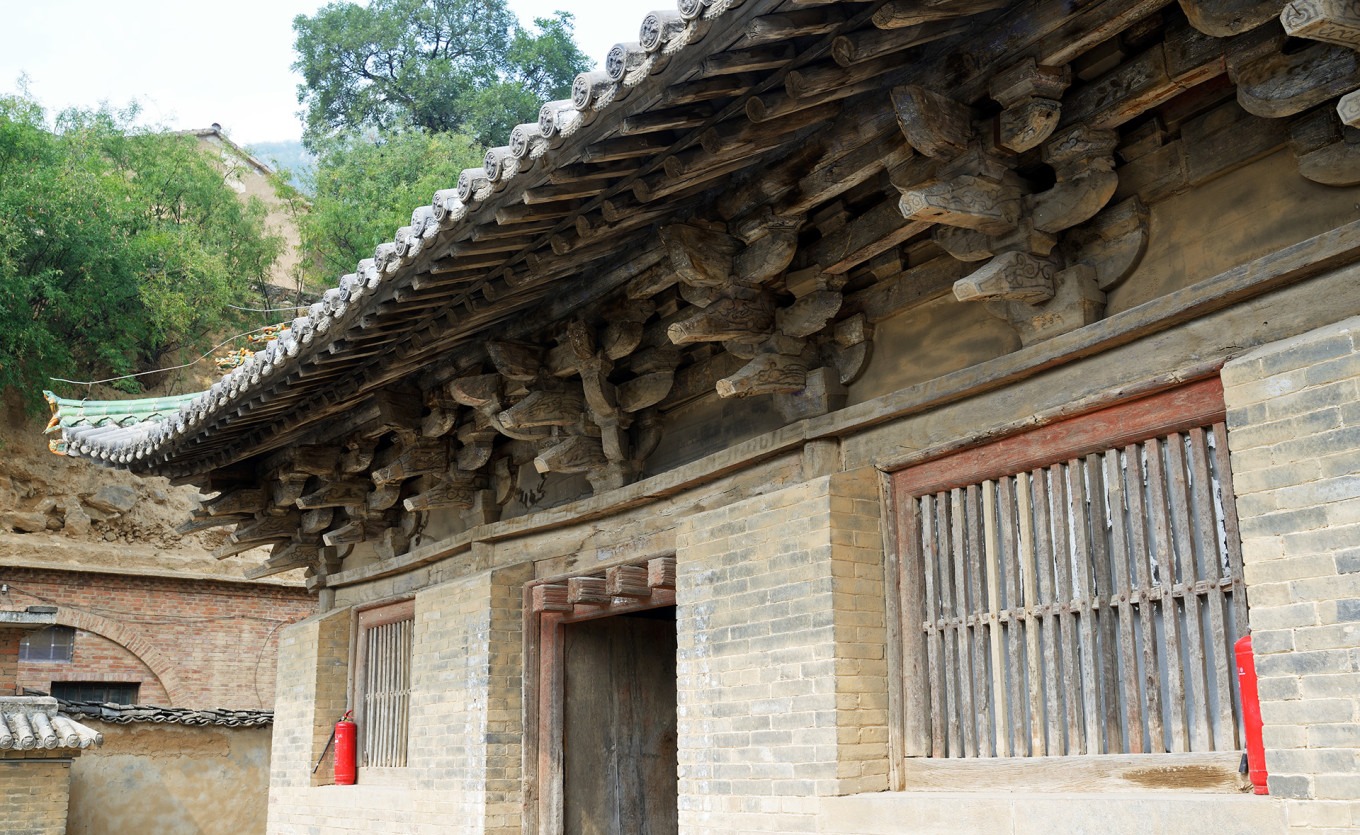
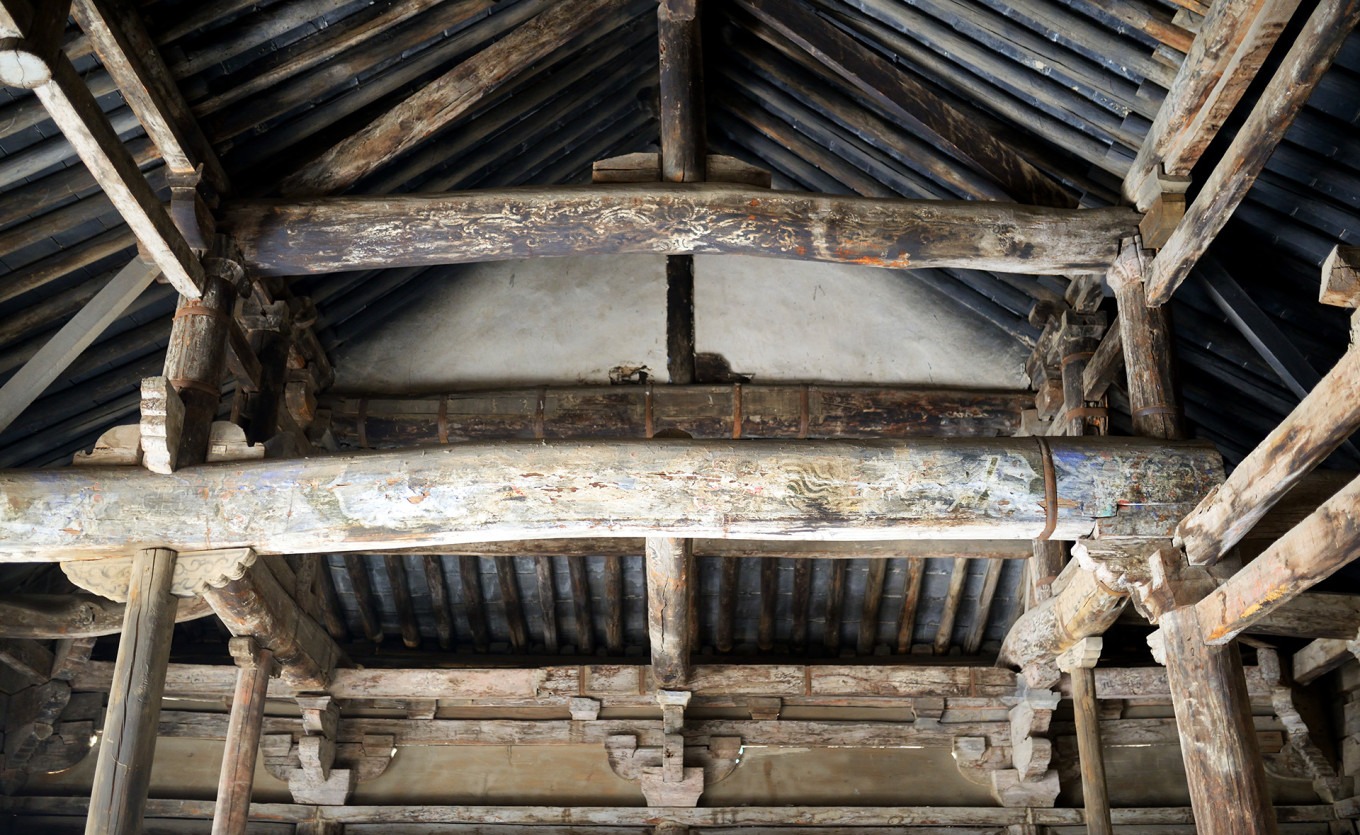
The hall features a single-eave hip-and-gable roof (歇山顶), three bays wide and four bays deep, with a nearly square floor plan. Its upturned eaves and soaring roofline appear more dynamic than those of the Maitreya Hall at Tiantaian Temple or Yuanqi Temple. Step inside and look up: the complex beam-frame structure reveals a mix of fine craftsmanship and rough, natural timber—a testament to repairs carried out over successive dynasties.
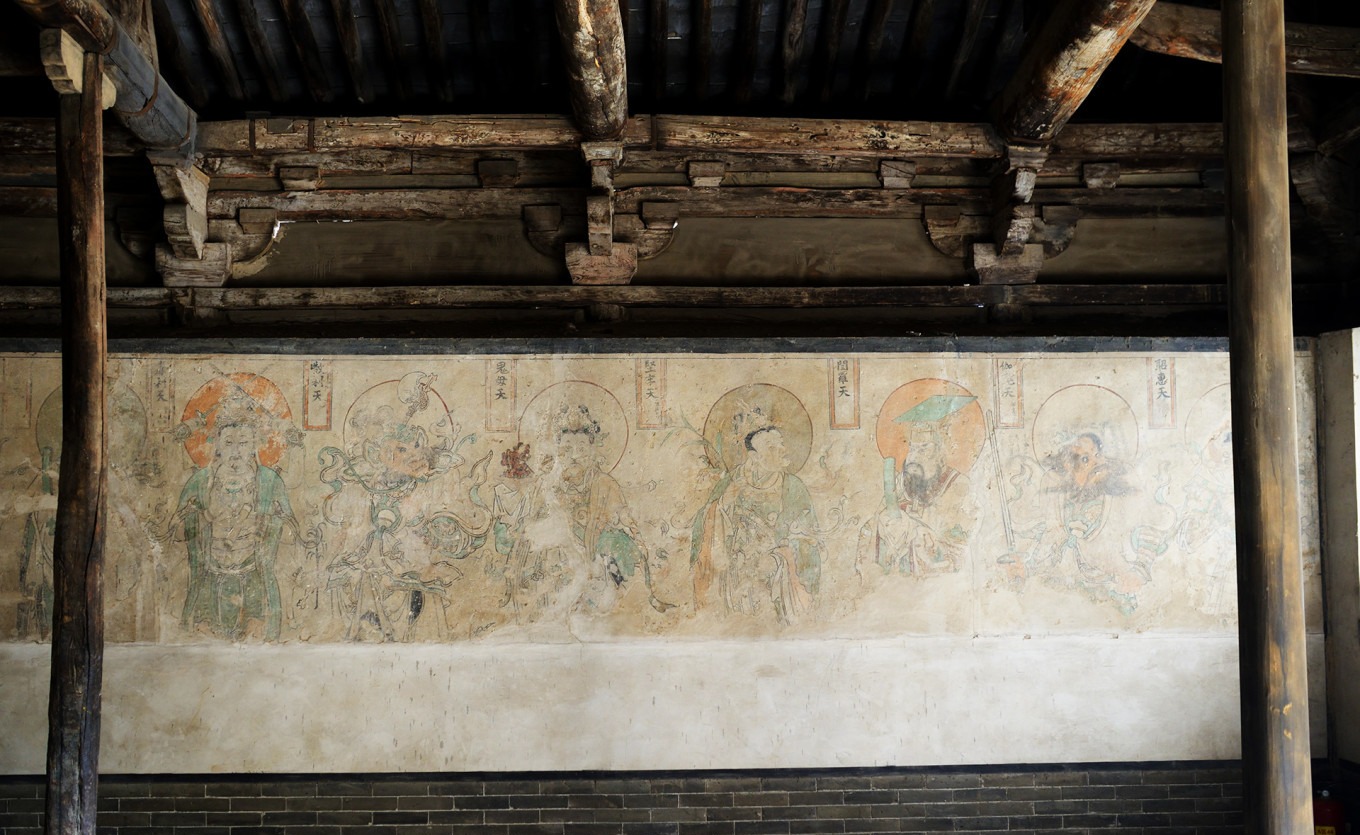
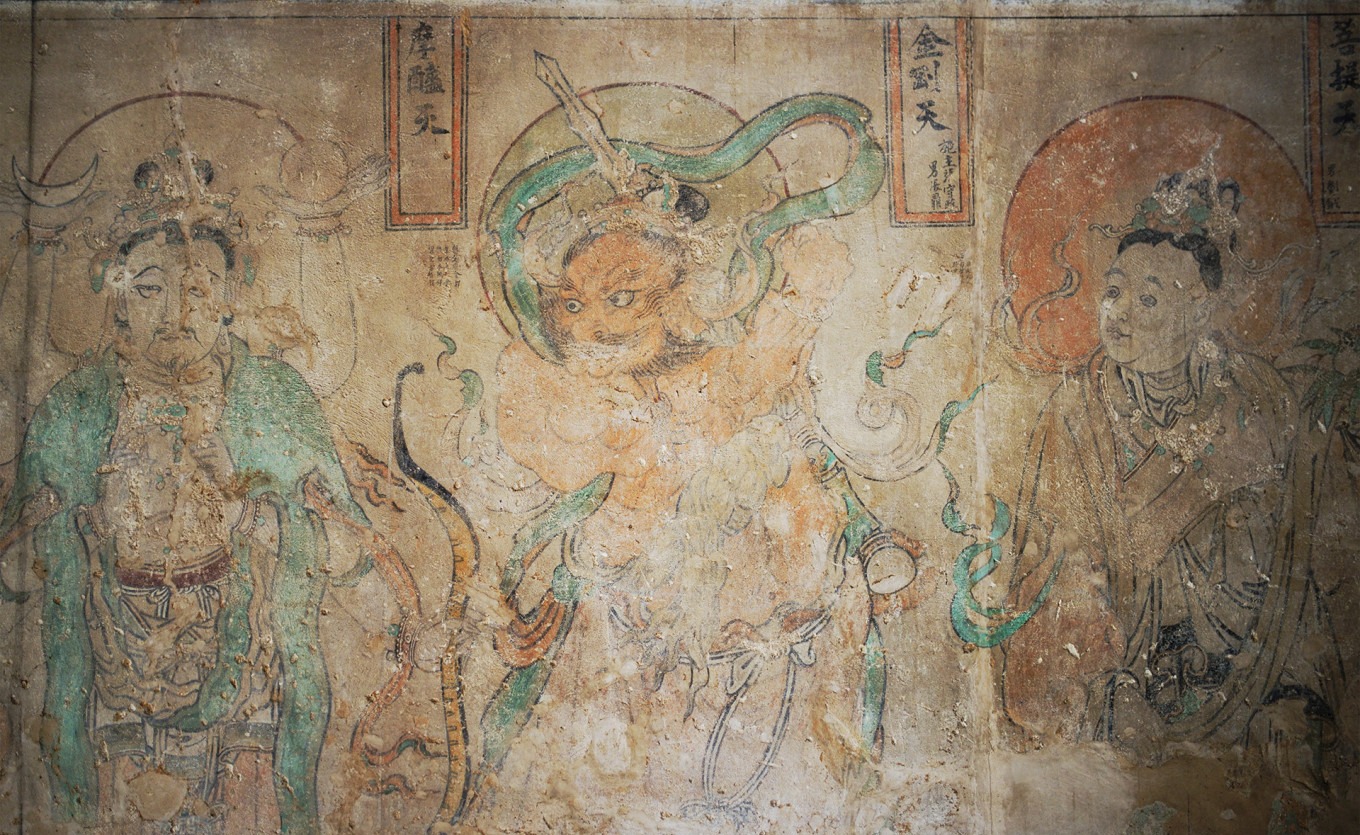
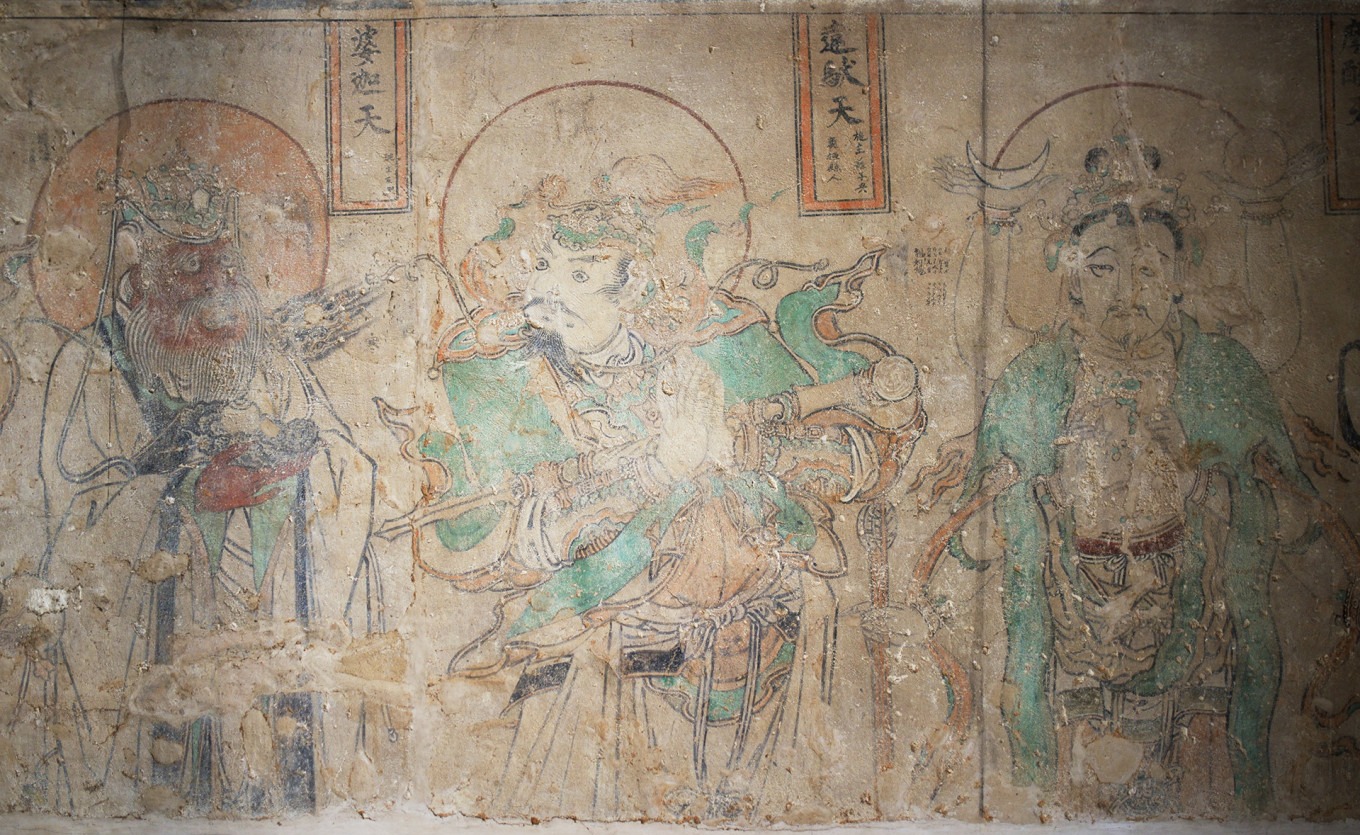
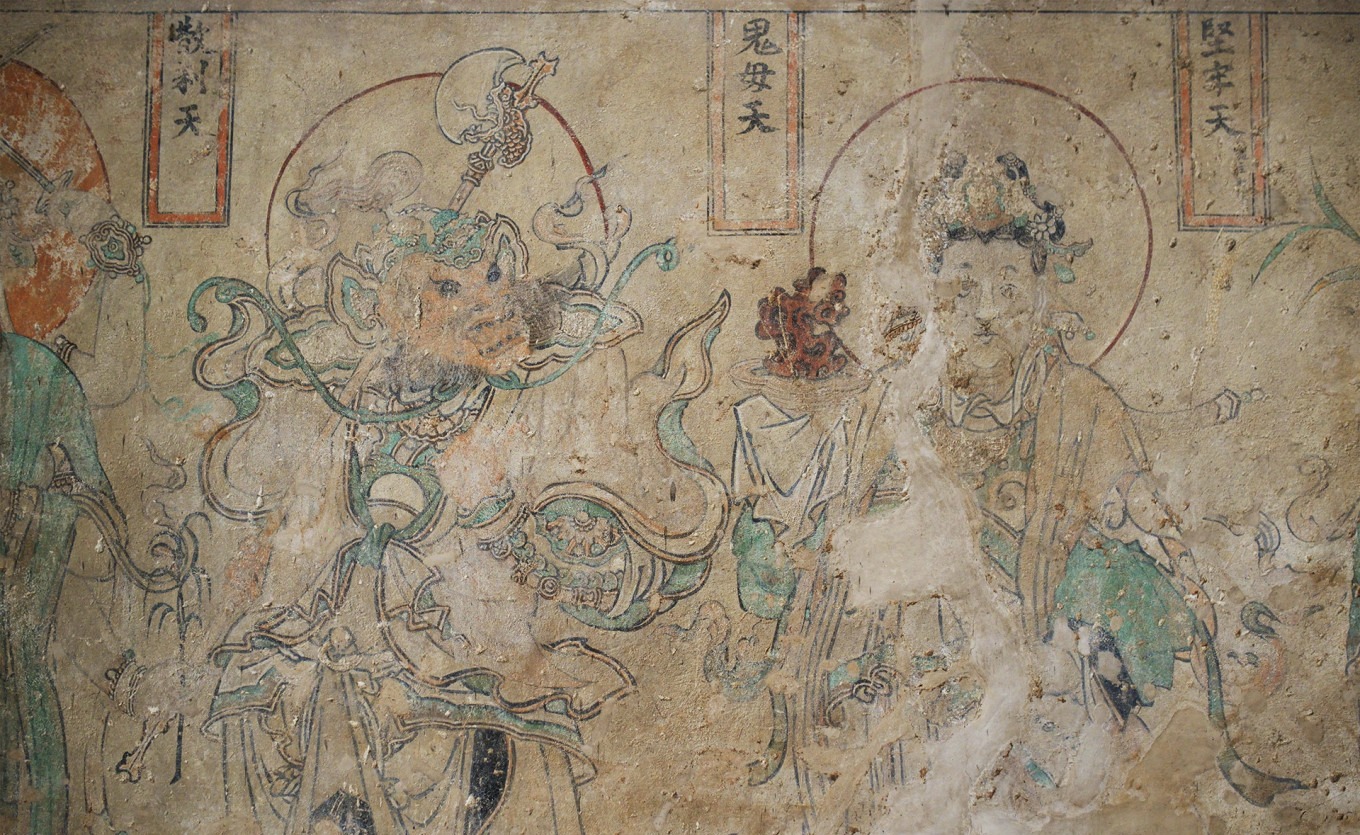
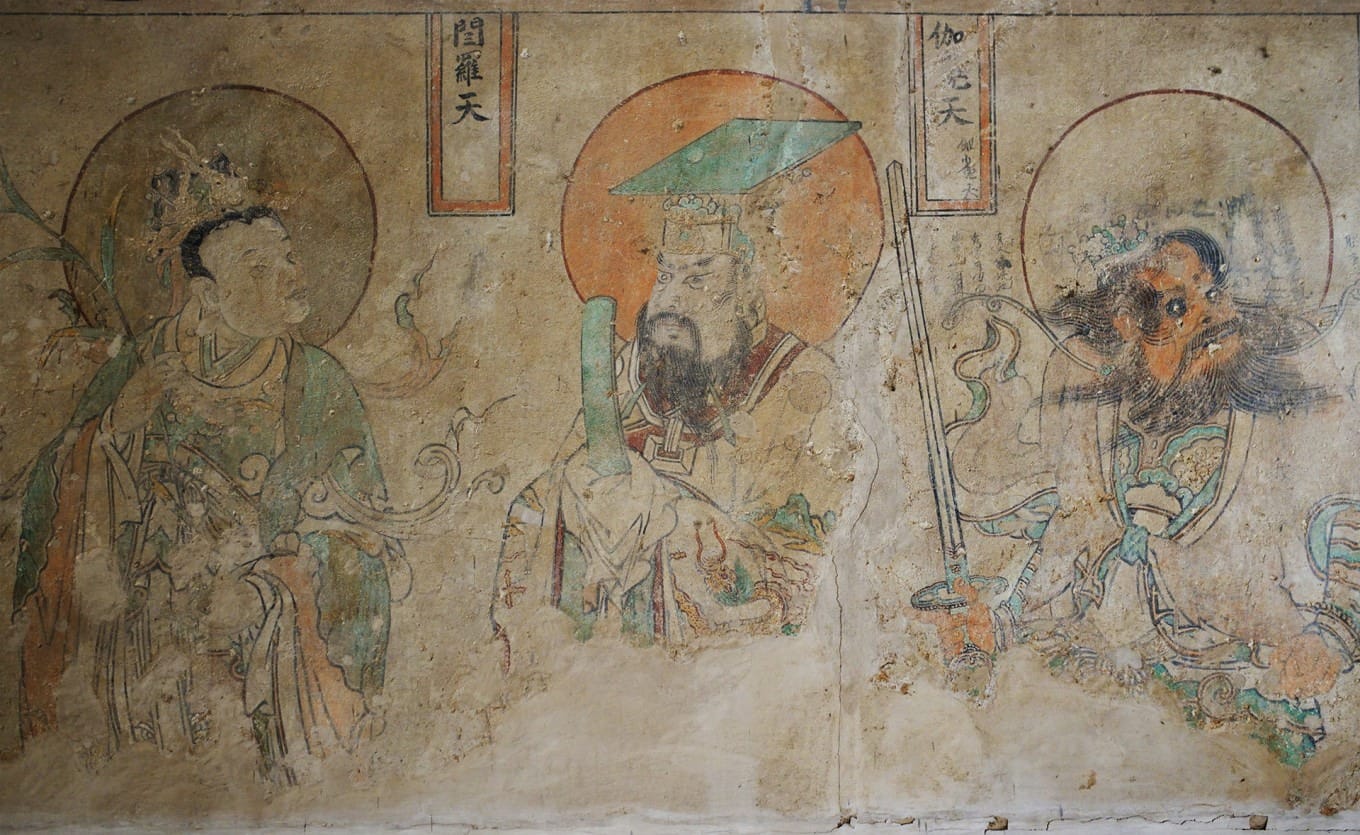
During a 2010 renovation, the original whitewashed plaster was stripped away, revealing murals on the east, west, and north walls. These paintings, covering over 30 square meters, depict the Twenty-Four Devas (二十四诸天). The color scheme is dominated by green and red, with gilded relief work (沥粉堆金). They are believed to be the work of Yuan dynasty folk artisans—a truly rare treasure.
- Address: Chedang Village, Yanggao Township, Pingshun County, Changzhi City, Shanxi Province (山西省长治市平顺县阳高乡车当村)
- Admission: Free
Chunhua Temple
Not far from Fotou Temple, you’ll find Chunhua Temple (淳化寺) in Yanggao Village (阳高村). This thousand-year-old temple was listed as a national cultural heritage site in 2001. Unlike many other ancient sites, the temple sits right beside the village road without any fences. However, the main gate is usually locked, and it can be difficult to contact the caretaker, so you may only be able to admire the exterior.
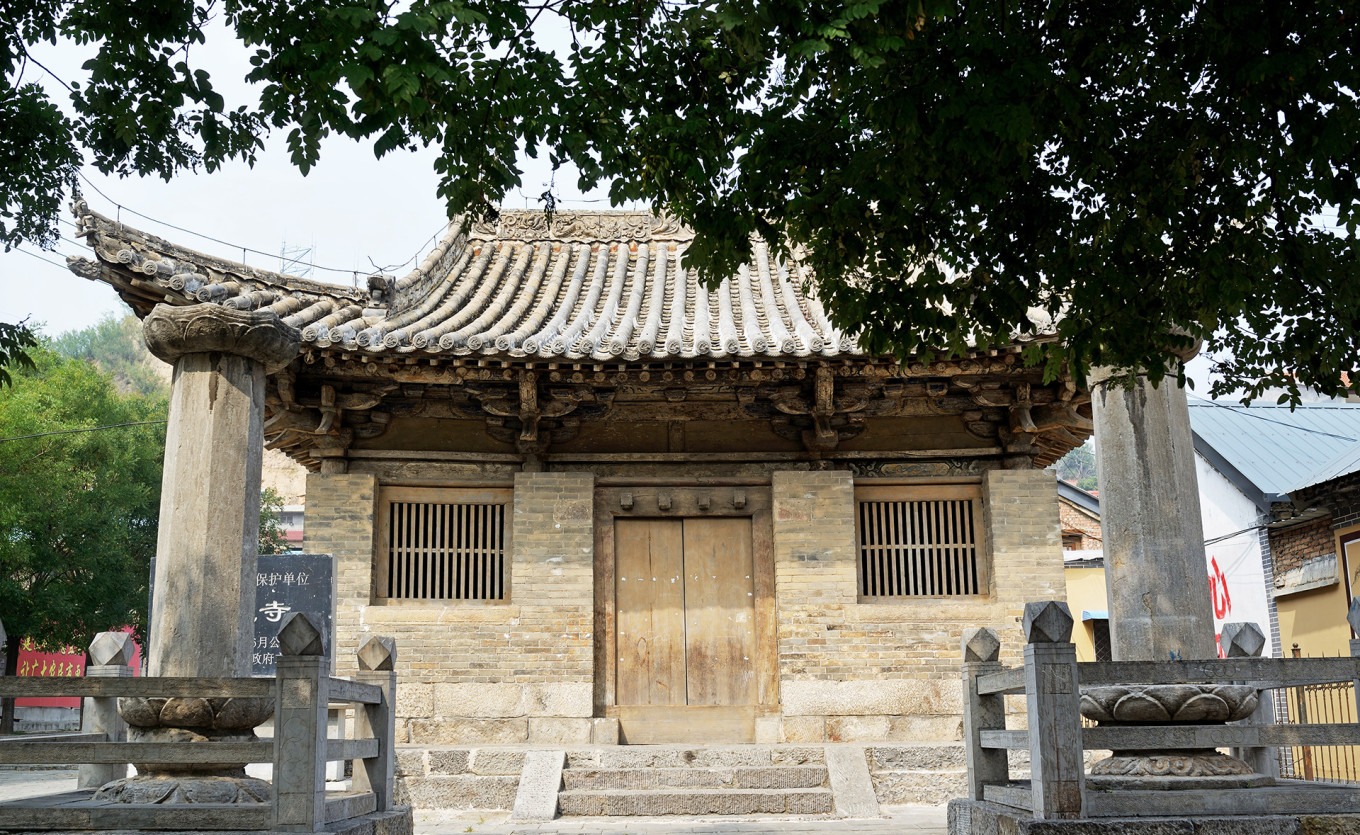
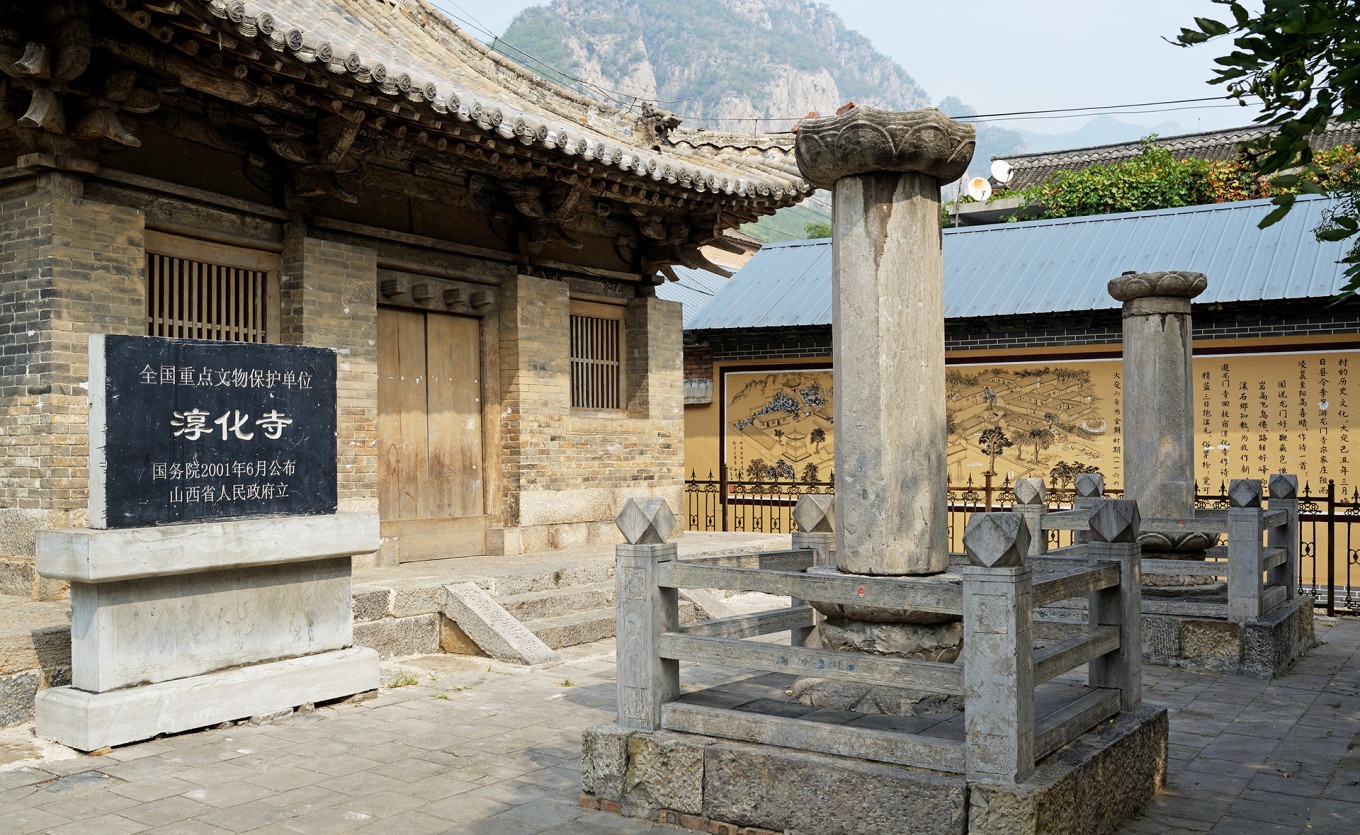
Chunhua Temple traces its history back to the Northern Qi dynasty (550–577), when it was founded as Longmen Chan Monastery (龙门禅院). Like Dayun Temple, it was a subordinate temple of Longmen Temple (龙门寺). The name was changed to Chunhua Temple in 991 (the second year of the Chunhua era of the Northern Song). Unfortunately, the original layout has been lost, and only one main hall and two stone dhvaja pillars (经幢) remain; all other structures have been destroyed.
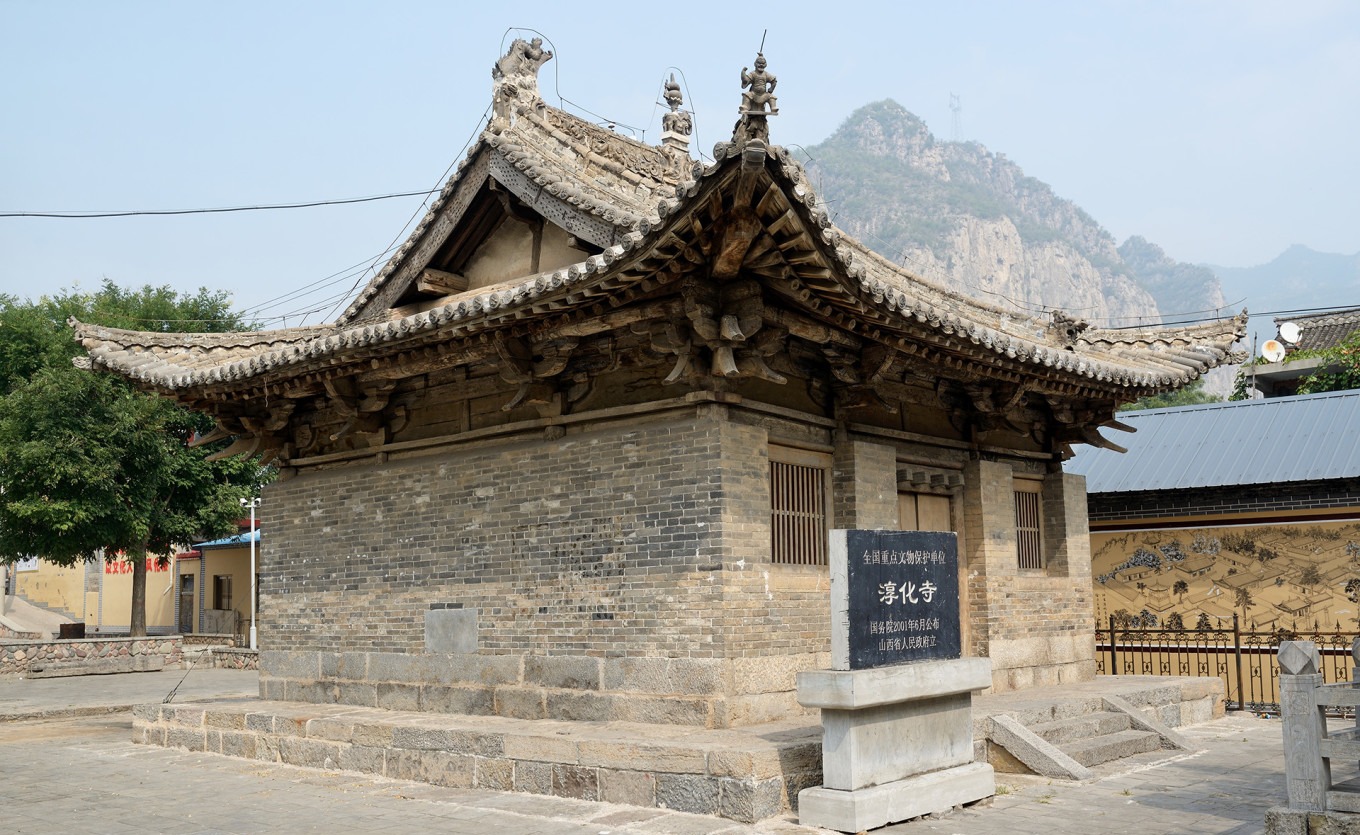
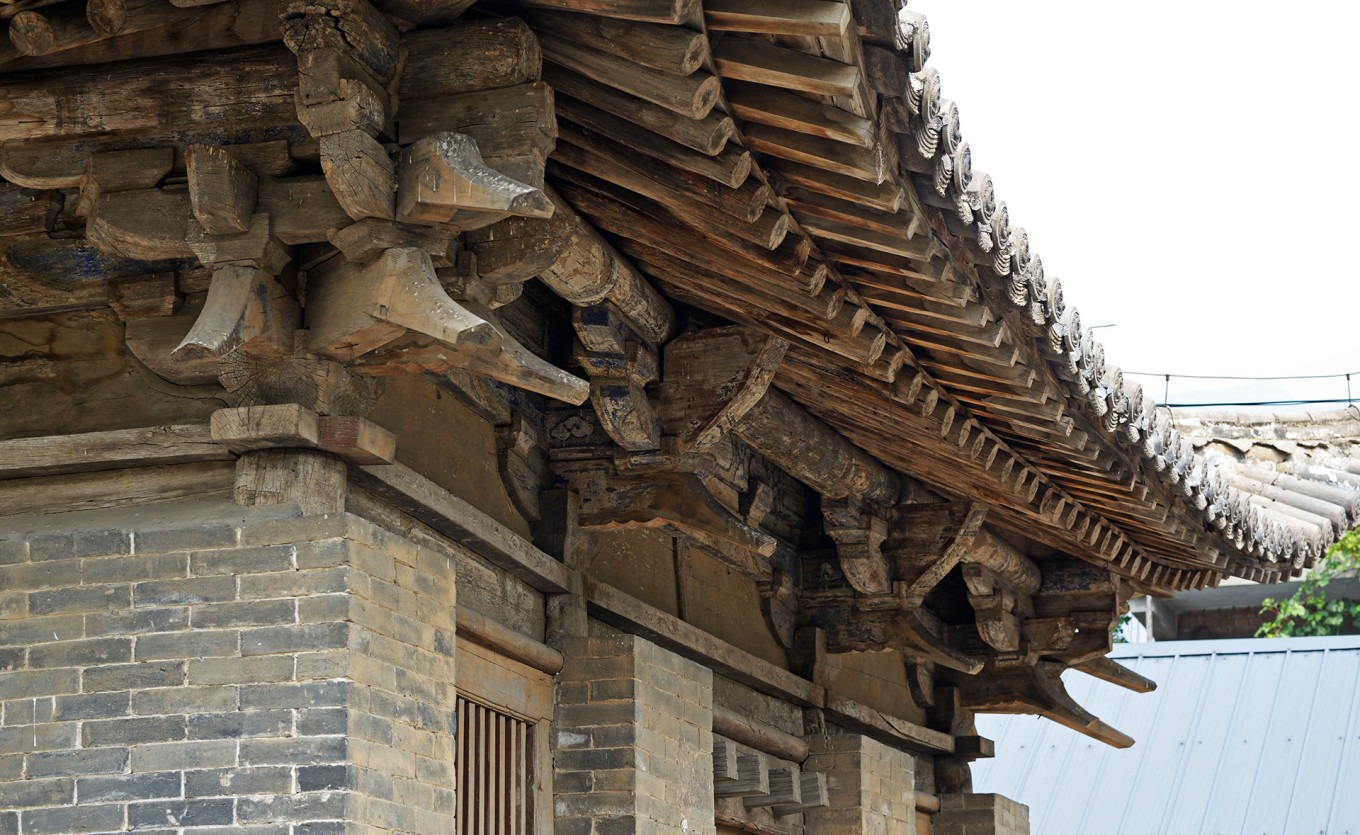
The main hall is a Jin dynasty (1115–1234) structure, facing south with a simple yet ancient design. Its eaves are exceptionally wide, and like many buildings of that era, the eaves corners curve upward gracefully, giving the hall an elegant and soaring appearance.
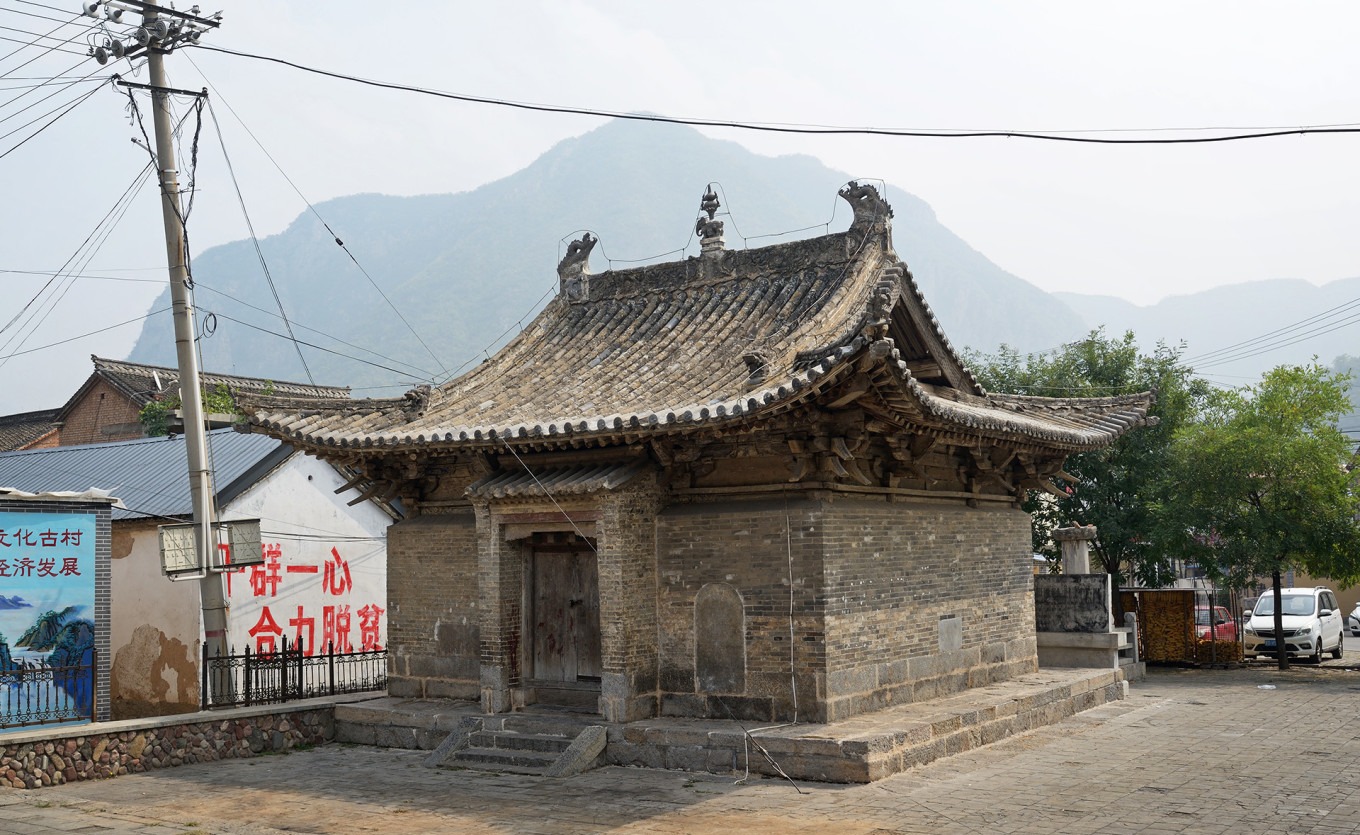
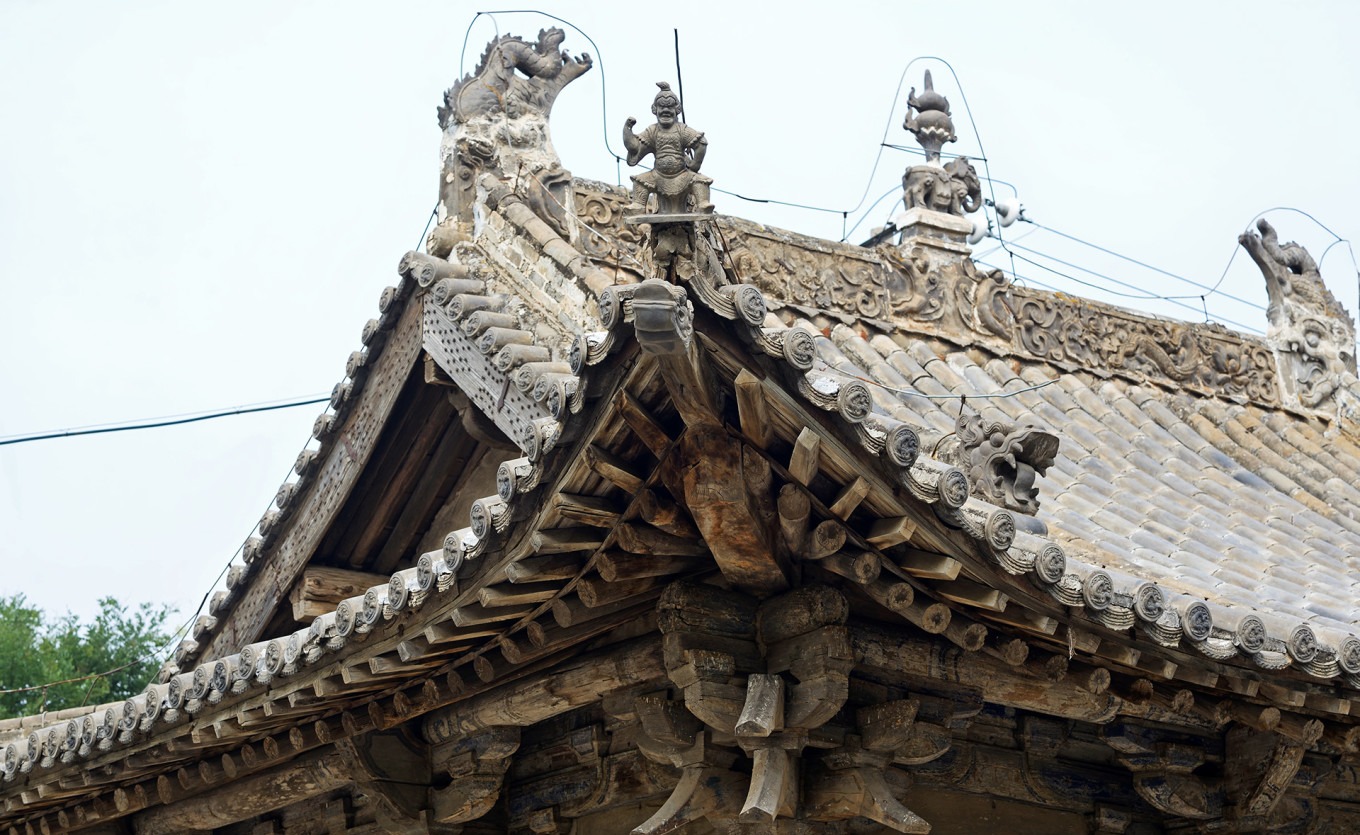
Since the hall is locked, you can only peek through window cracks to see the ancient beam structure inside. Take a moment to look at the four small warrior figures standing at the front of each of the four eaves corners. These are armored, squatting warrior statues known as the ‘Four Short Men’ (四短人). They are said to represent four historical figures: Zidu (子都), Pang Juan (庞涓), Han Xin (韩信), and Luo Cheng (罗成). Each of these men was known for negative traits—narrow-mindedness, treachery, arrogance, or shortsightedness—despite their military achievements.
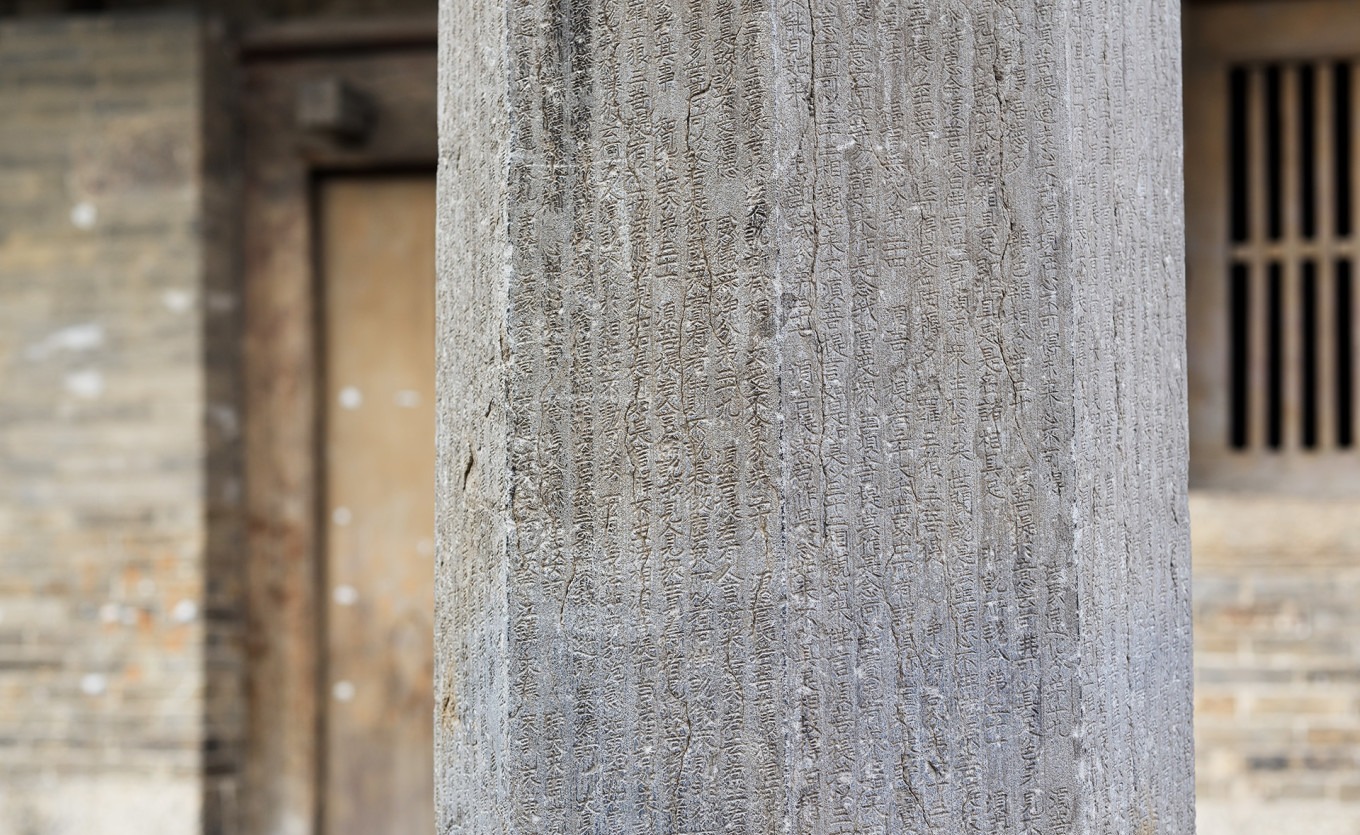
In front of the hall, you’ll find two stone dhvaja pillars from the Northern Song dynasty. One is inscribed with the *Sutra of the Victorious Dharani* (《尊胜陀罗尼经 (local term)》), and the other with the *Diamond Sutra* (《金刚般若波罗密经 (local term)》). These pillars originally belonged to the abbot’s courtyard.
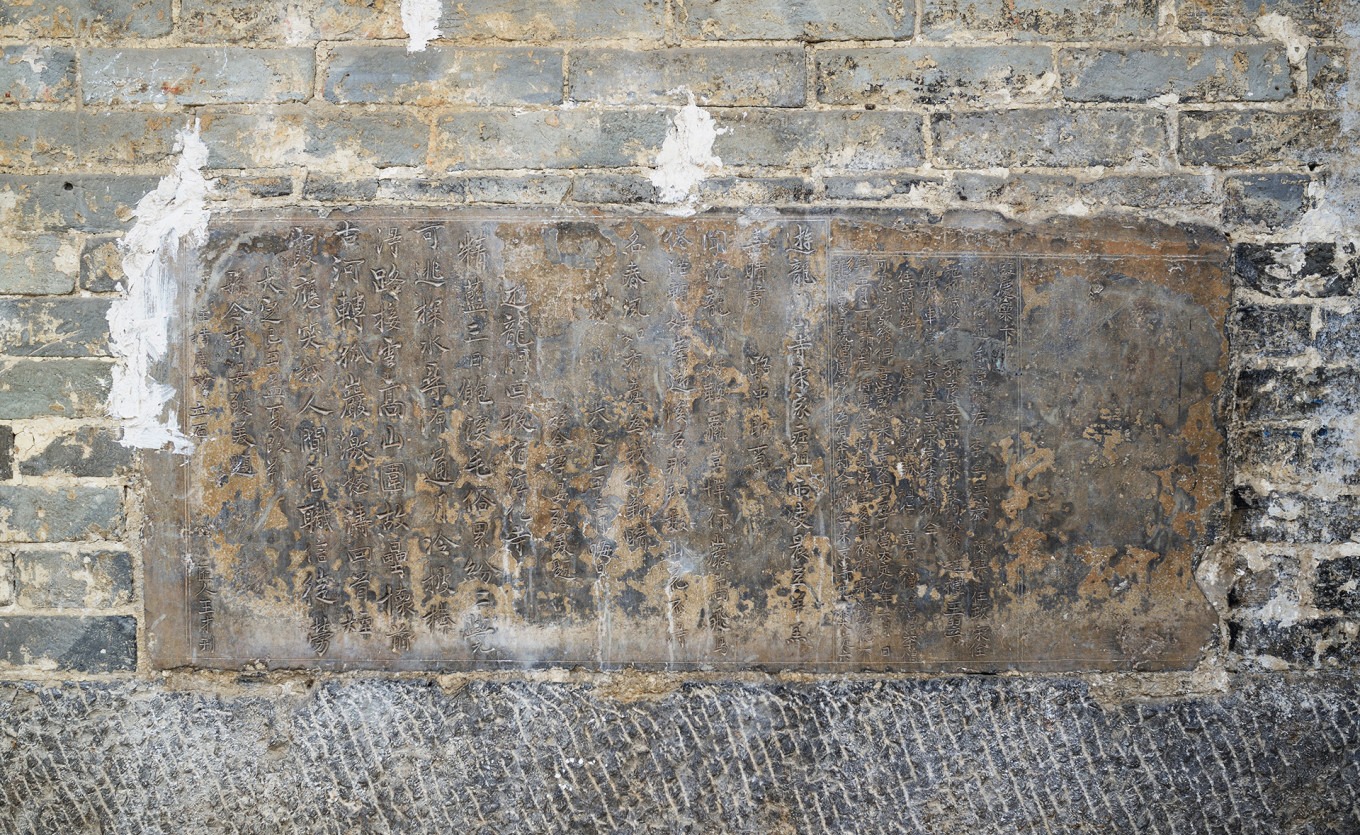
Additionally, at the base of the north wall of the main hall, you can find a stele with poems dated to the ‘Dading Yichou’ year (1185). The poems, titled *On the Road* and *Returning from Longmen Temple to Stay Overnight at Chunhua Temple*, were written by Li Yan (李晏), then the magistrate of Pu County (蒲县). Li Yan, a native of Gaoping in Zezhou (泽州高平), later rose to become Minister of Rites and a Hanlin academician.
- Address: 山西省长治市平顺县阳高乡阳高村 / Yanggao Village, Yanggao Township, Pingshun County, Changzhi City, Shanxi Province
- Admission: Free
Huilong Temple
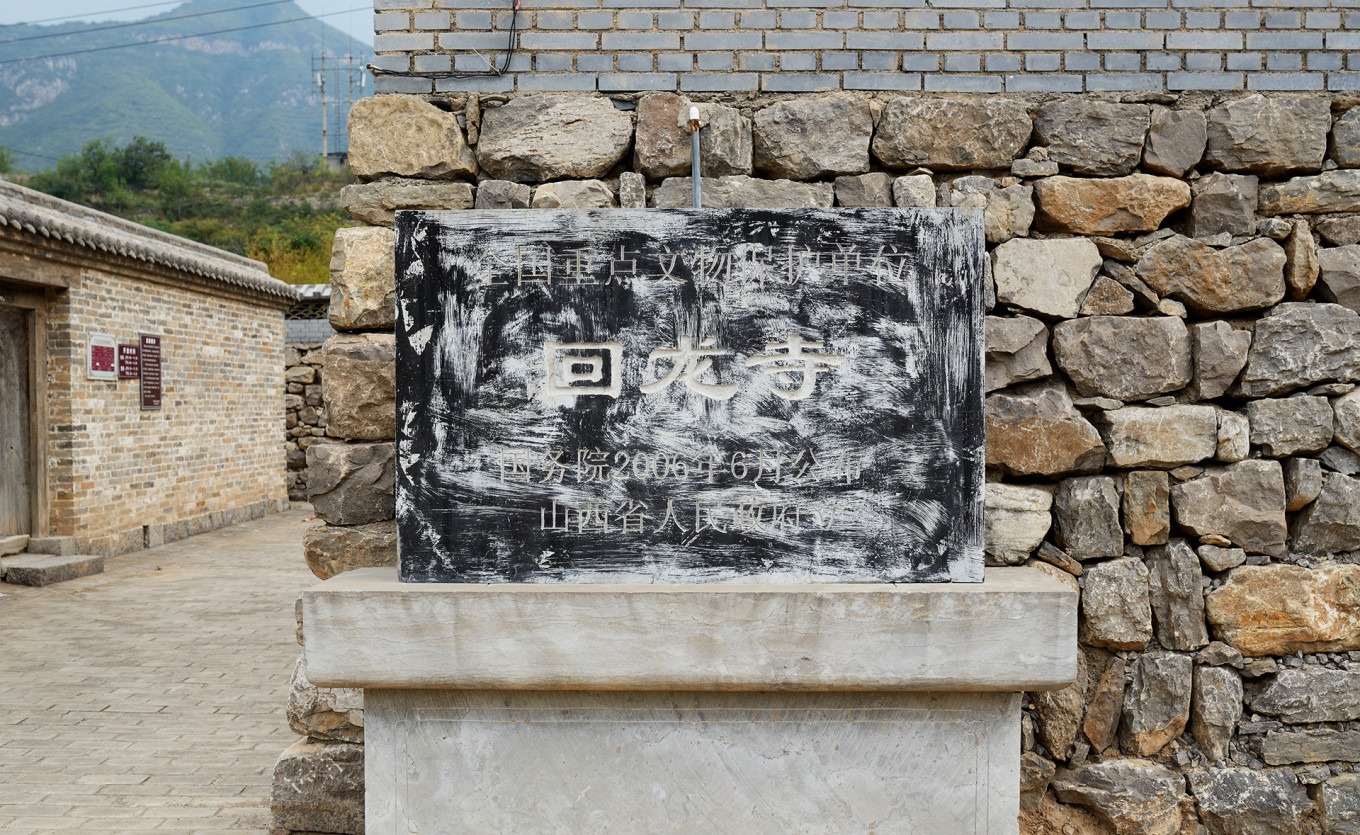
Leaving Chunhua Temple and continuing east along the river valley, you’ll reach the next stop: Huilong Temple (回龙寺). Located in Houbi Village, this temple now consists of just a single hall enclosed by a modest courtyard wall. At first glance, it may seem unremarkable—in fact, it was used as a village lumber warehouse for much of the 20th century. It wasn’t until 2001, when students and faculty from Peking University’s School of Archaeology and Museology conducted a field survey of ancient architecture in Pingshun County, that its true age was recognized. Huilong Temple was subsequently designated a sixth-batch Major Historical and Cultural Site Protected at the National Level in 2006.
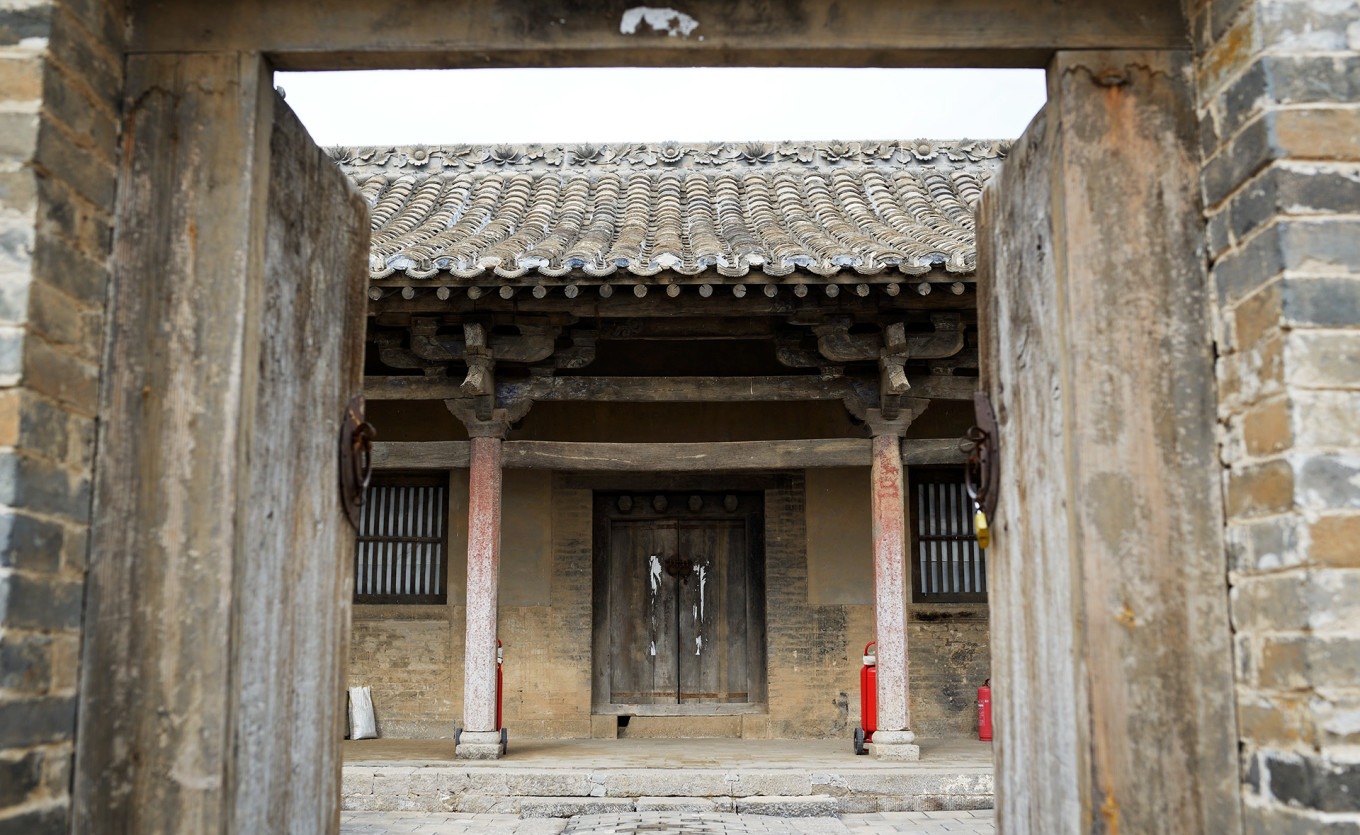
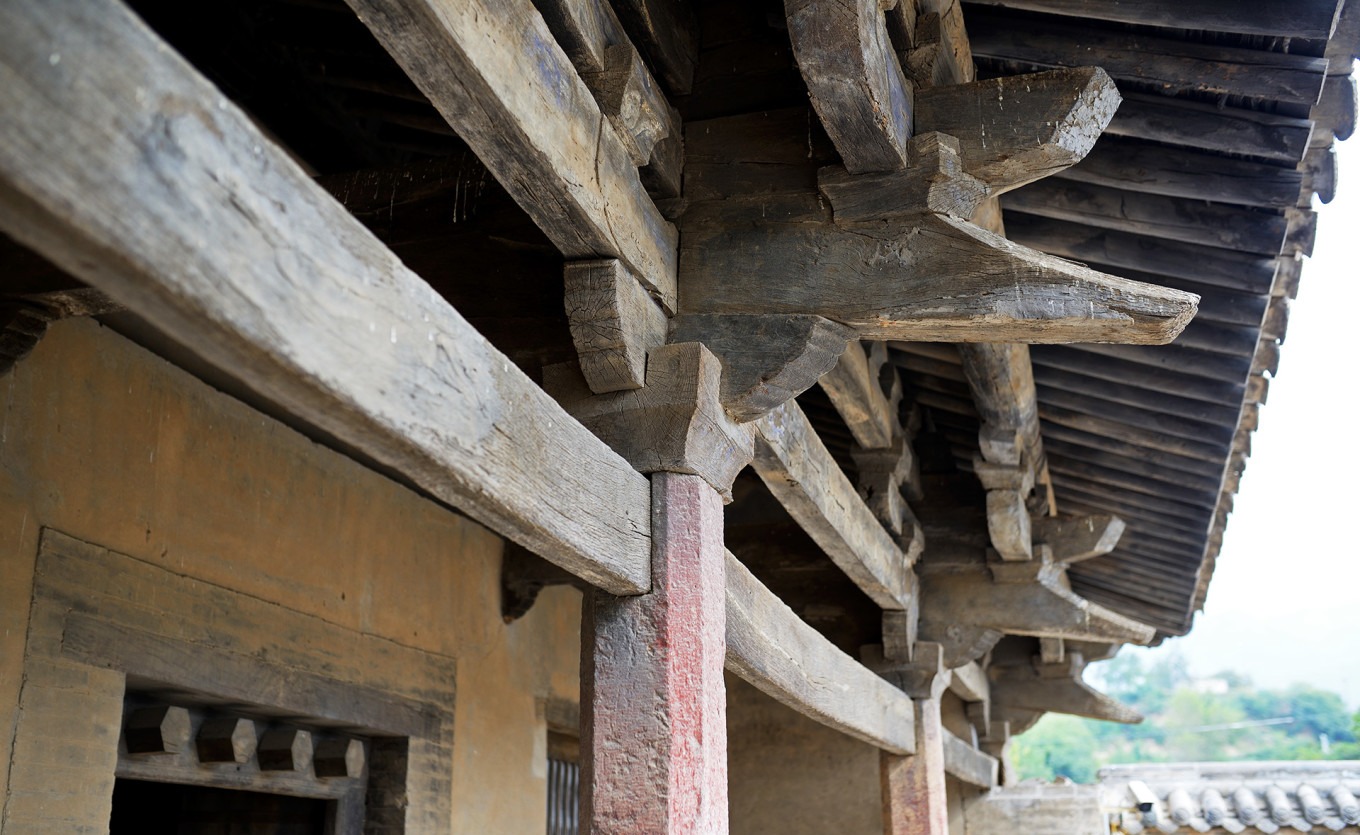
To this day, the exact construction date of Huilong Temple remains uncertain. The existing hall, three bays wide with a single-eave overhanging gable roof (xuanshan ding), is believed to date from the Jin dynasty (1115–1234). Despite being a small rural temple, it preserves many early architectural features, some of which are unique among surviving Song and Jin buildings. For instance, the ‘cicada-belly’ shaped solid bracket arms (shipa gong) on the front eaves and the lower ang (cantilever arm) that falls somewhere between a true ang and a false ang are unconventional—testaments to the creativity of local craftsmen.
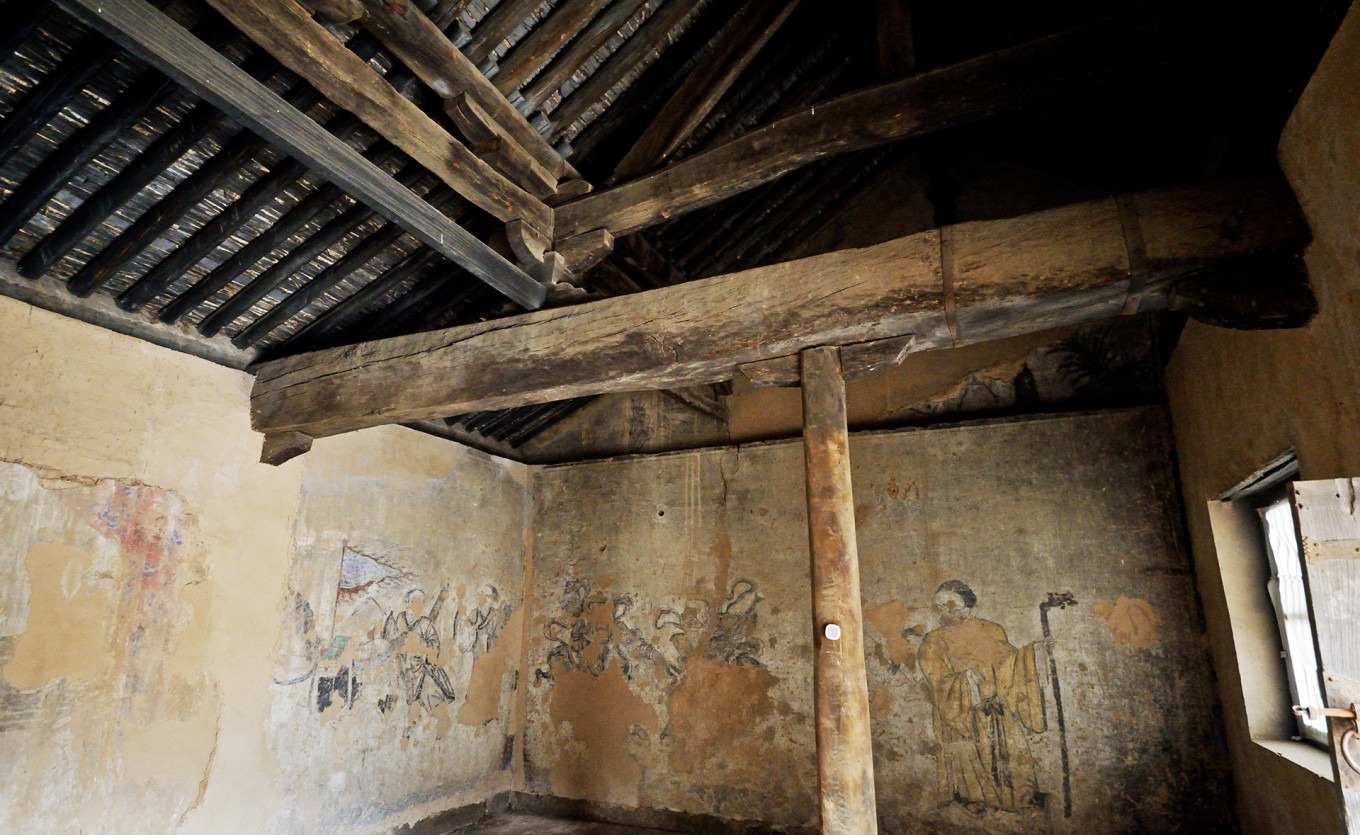
Inside the hall, you’ll find over 50 square meters of fine-brush, light-color murals painted by Qing-dynasty artisans. One mural depicts scenes from *Journey to the West*, with the four pilgrimage characters clearly recognizable.
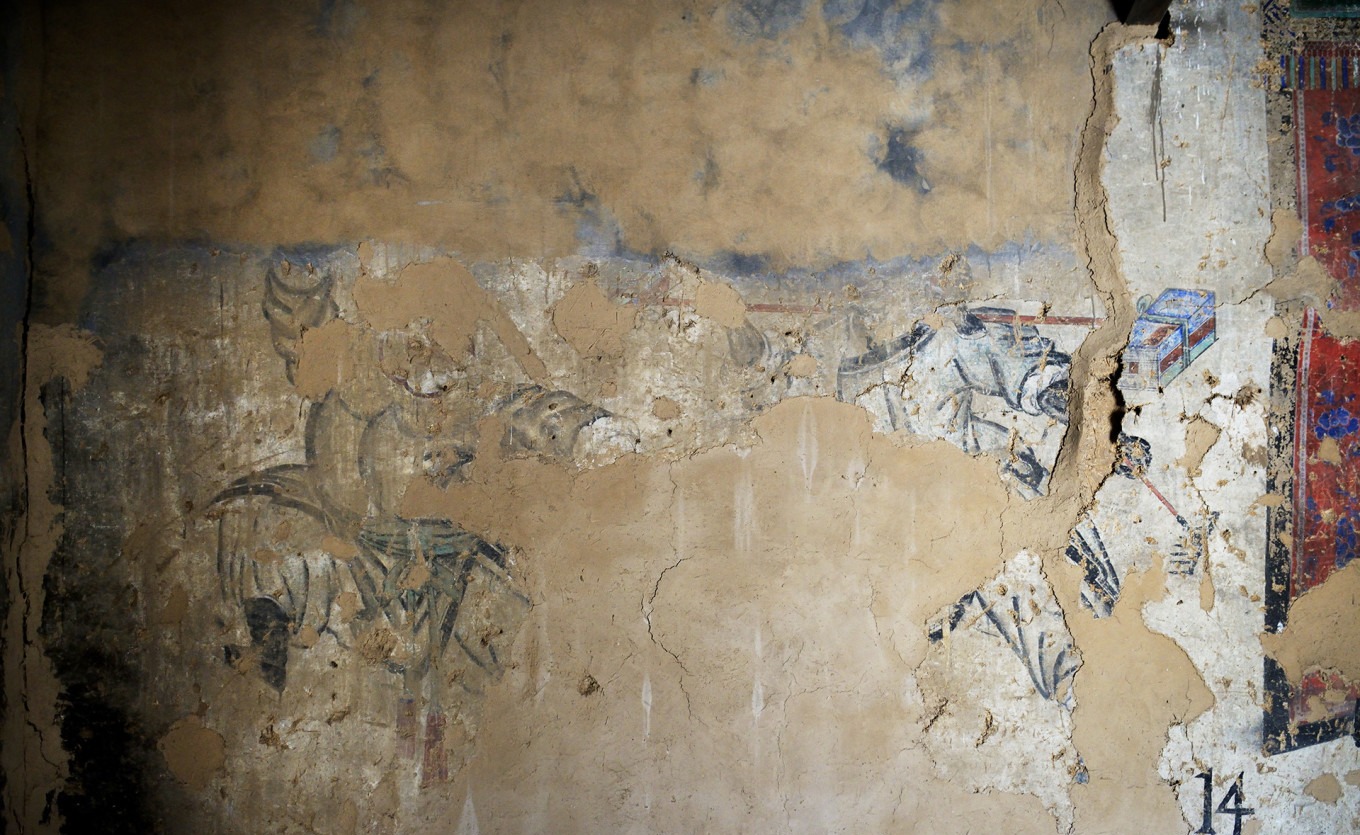
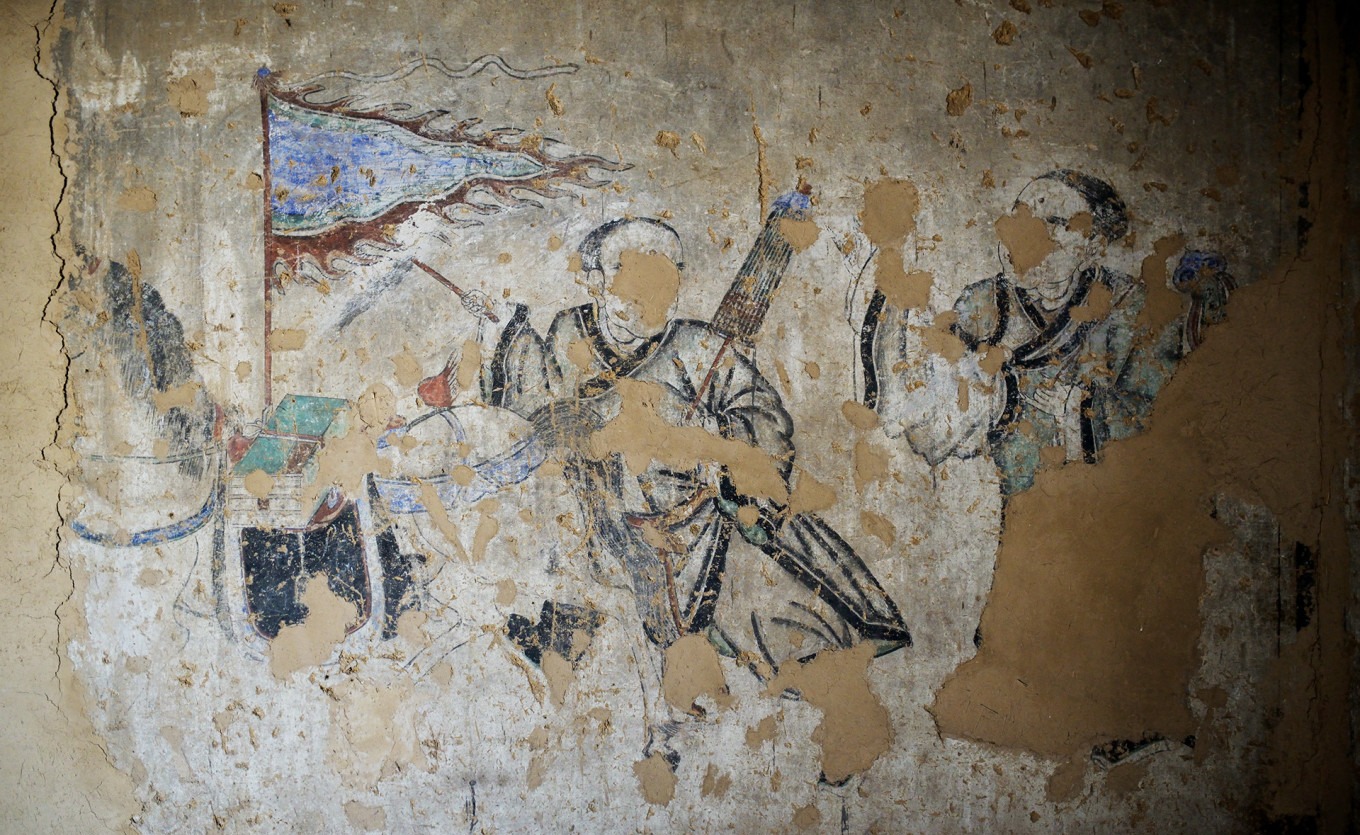
Another mural illustrates a popular local legend from southeastern Shanxi. The story goes that at the end of the Western Han dynasty, Liu Xiu (later Emperor Guangwu) was pursued by Wang Mang’s forces to the banks of the turbid Zhang River. Trapped and desperate, he encountered an old man who hid him and then wrote the characters ‘匡扶汉室 (local term),刘秀当兴 (local term);篡夺皇权 (local term),王莽当灭’ (Restore the Han, Liu Xiu shall rise; usurp the throne, Wang Mang shall fall) on the ground with honey. Ants soon gathered to form the words. When Wang Mang saw this, he believed it was a heavenly omen and fled in fear. In gratitude, local villagers built this temple and named it Huilong (Return of the Dragon), hoping that the true dragon—Liu Xiu—would one day return.
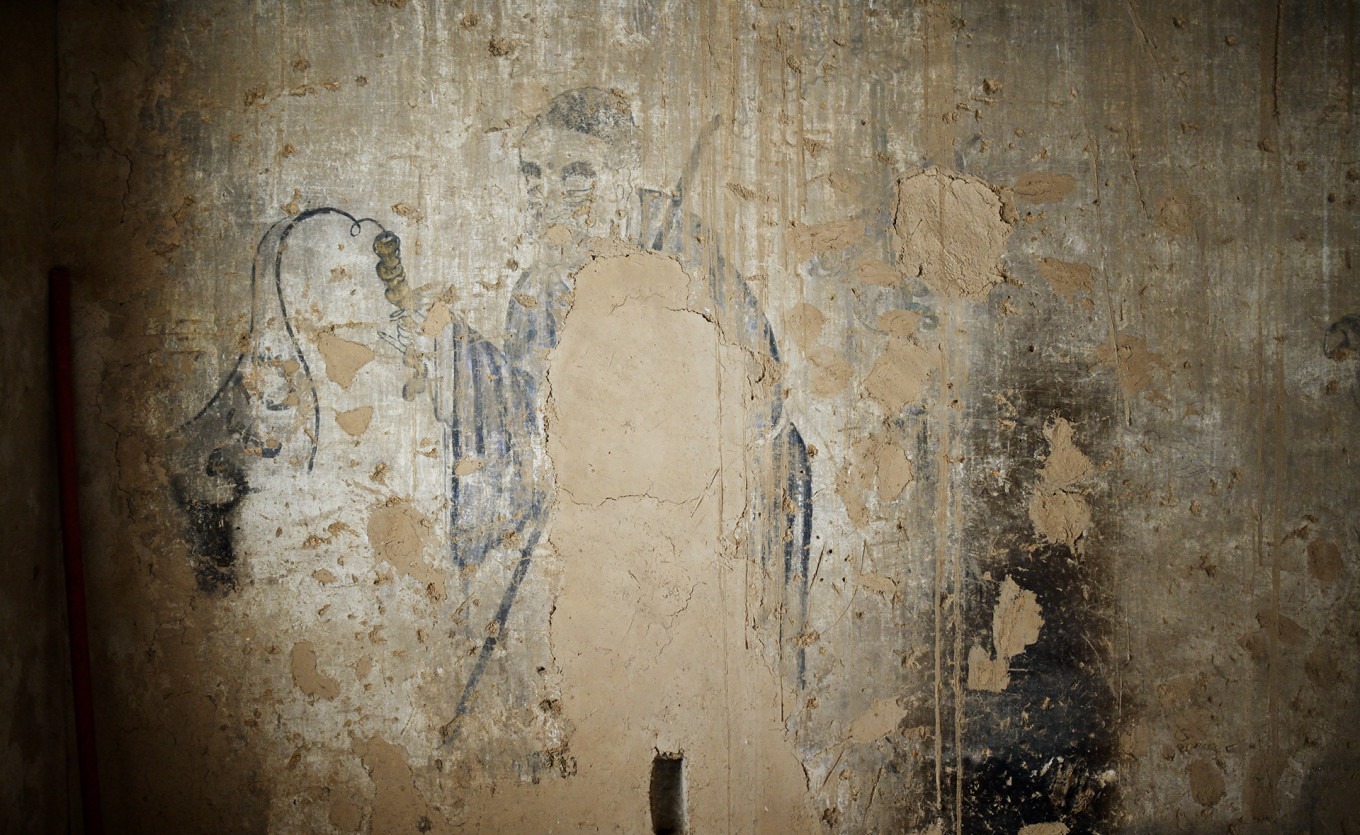
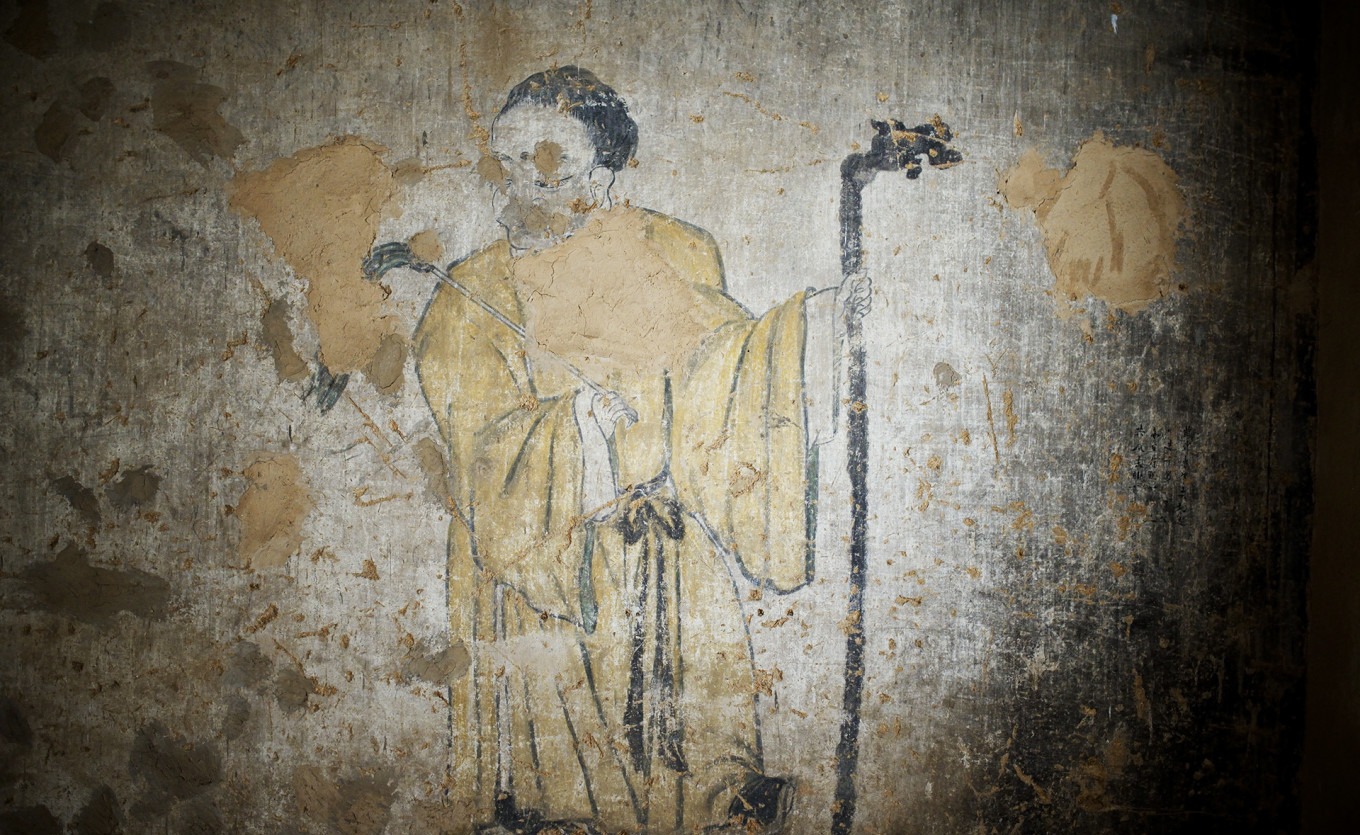
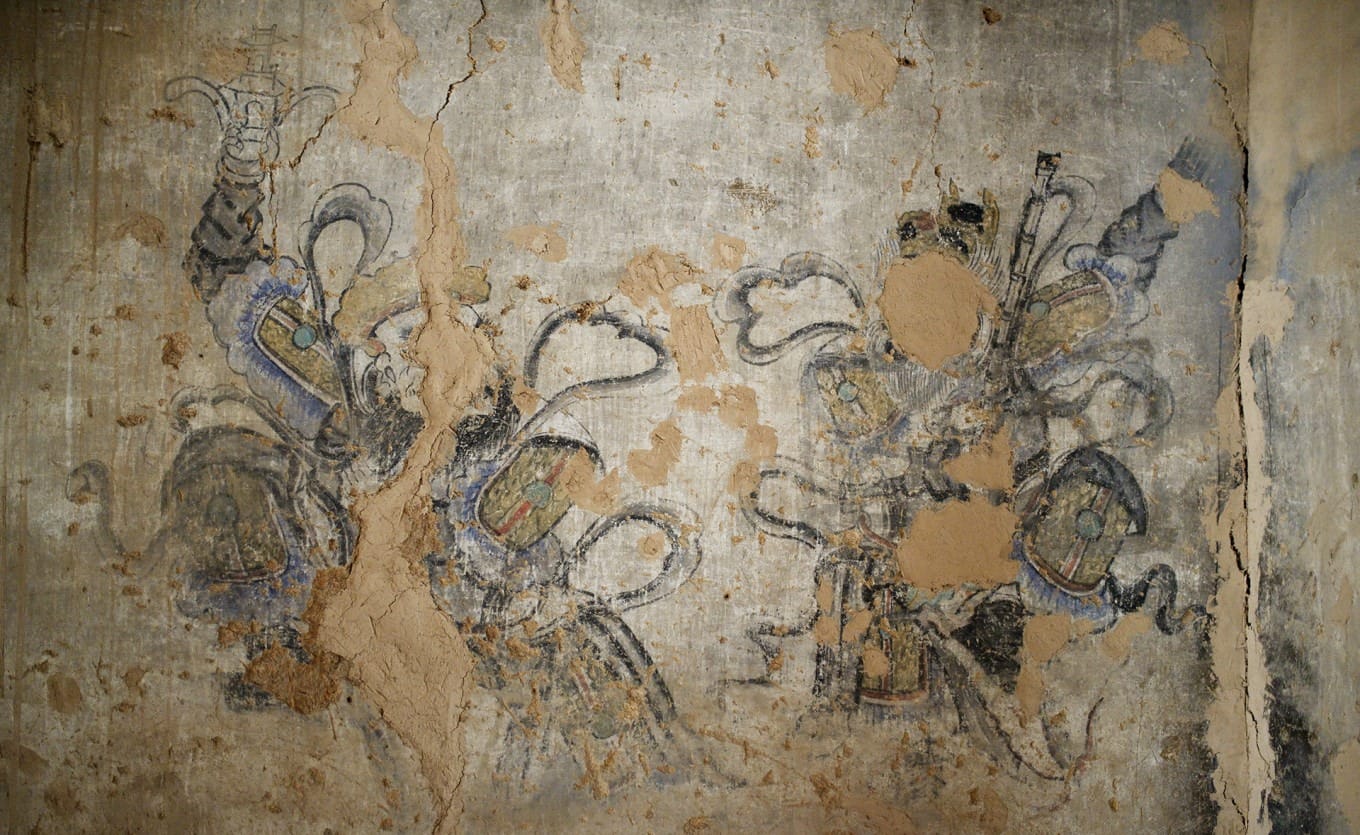
- Address: 长治市平顺县阳高乡侯壁村 / Houbi Village, Yanggao Township, Pingshun County, Changzhi City
- Admission: Free
Practical tip: You can prioritize one signature stop around the area, and you should adjust timing and budget based on transport and peak hours.
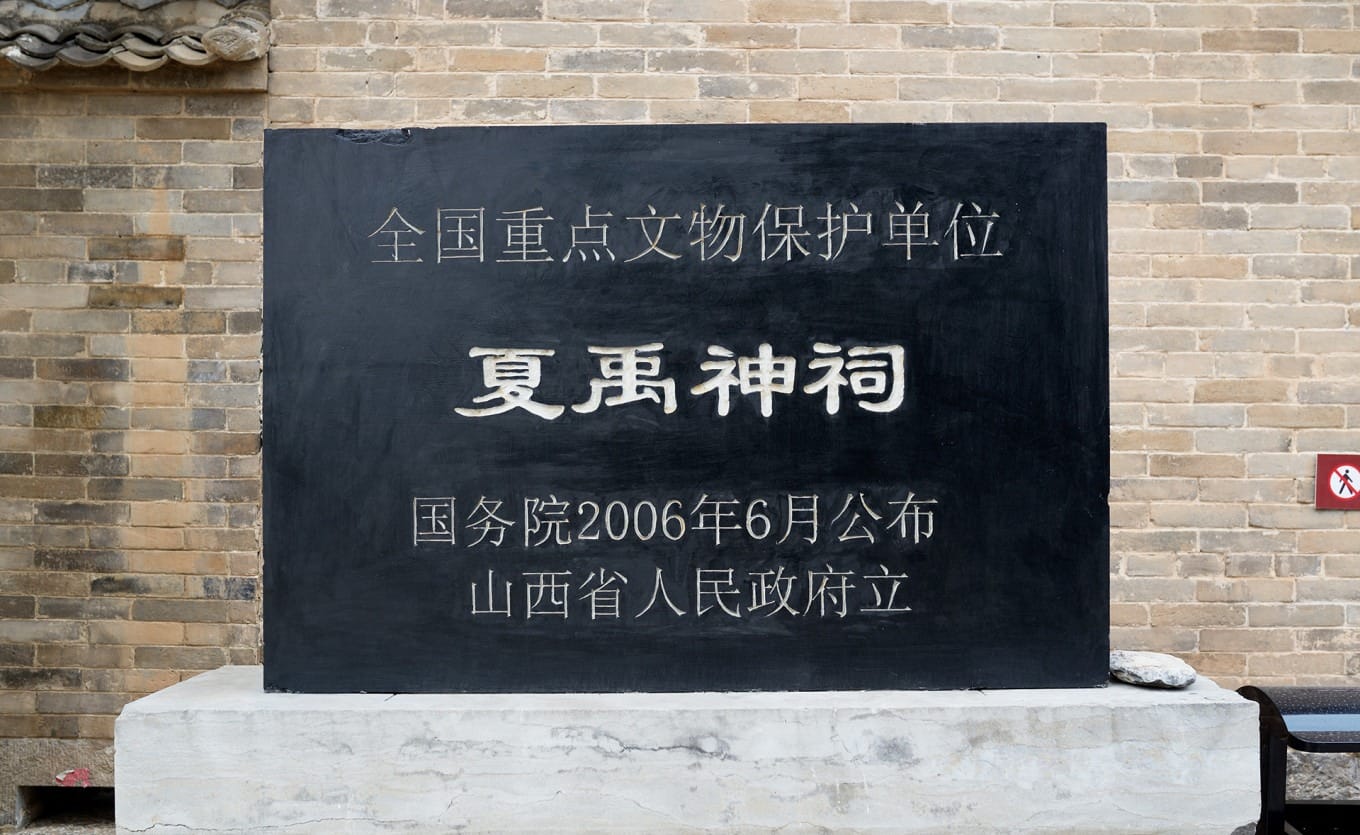
Xia Yu Shrine
In the village of Houbi (侯壁村), two national heritage sites await. Besides Chunhua Temple (淳化寺), you’ll find the Xia Yu Shrine (夏禹神祠), perched at the village’s highest point. Dedicated to Yu the Great, the legendary tamer of floods, this shrine was first built in 1336 (the second year of the Zhiyuan era of the Yuan Dynasty) and underwent renovations during the Ming and Qing dynasties. The complex is a single-courtyard layout comprising a gate, a main hall, and side halls.
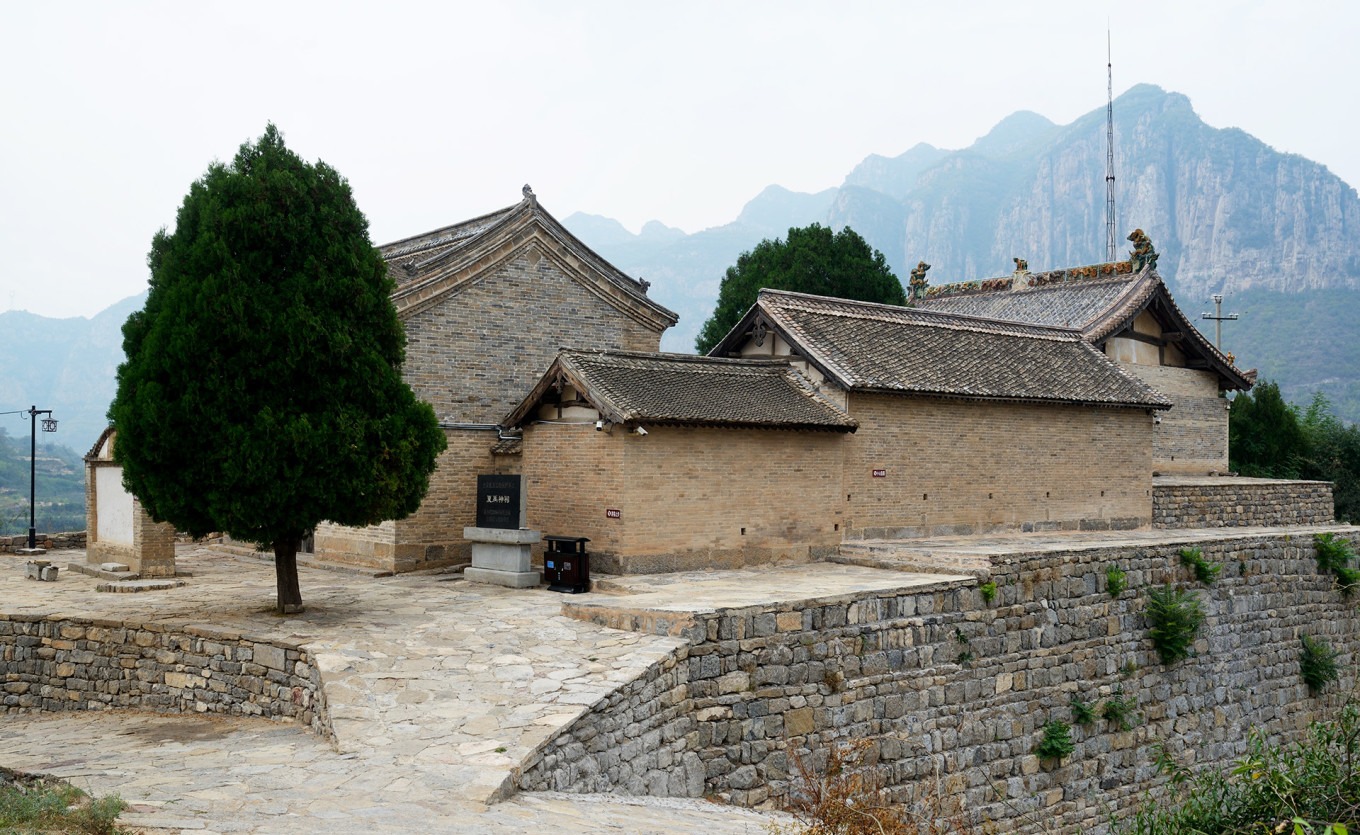
From the shrine’s terrace, you can gaze out at sheer cliffs and the surging Zhuozhang River (浊漳河) below. This river is the main source of the Zhang River, which historically flowed into the Yellow River. Yu the Great spent thirteen years taming the Yellow River, traveling across the nine provinces and repeatedly passing through the Zhuozhang River basin. Legend has it that the village of Aozhi (奥治村), just eight kilometers from Houbi, is where Yu actually dug a channel to divert the river eastward. For locals, Yu is a deified figure who controls floods and ensures favorable weather.
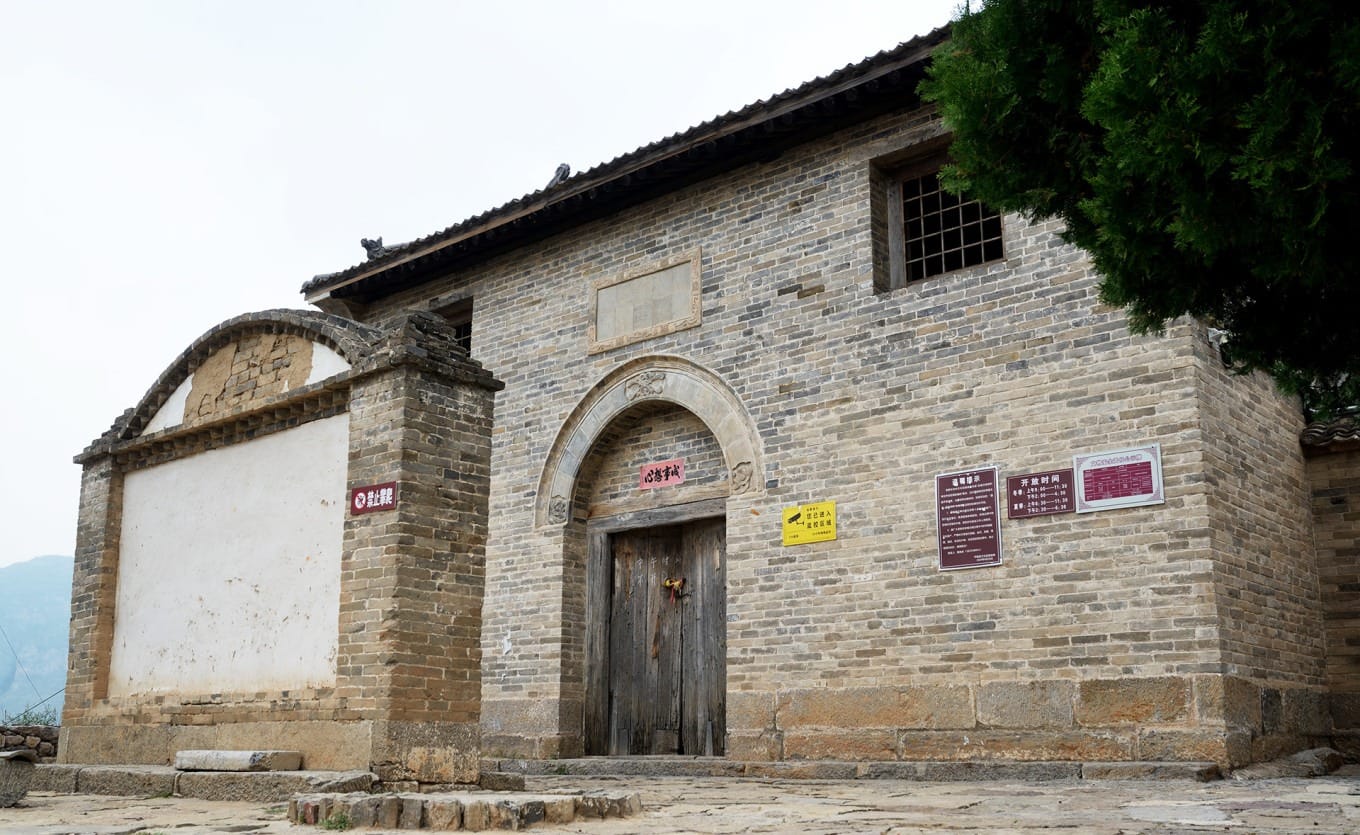
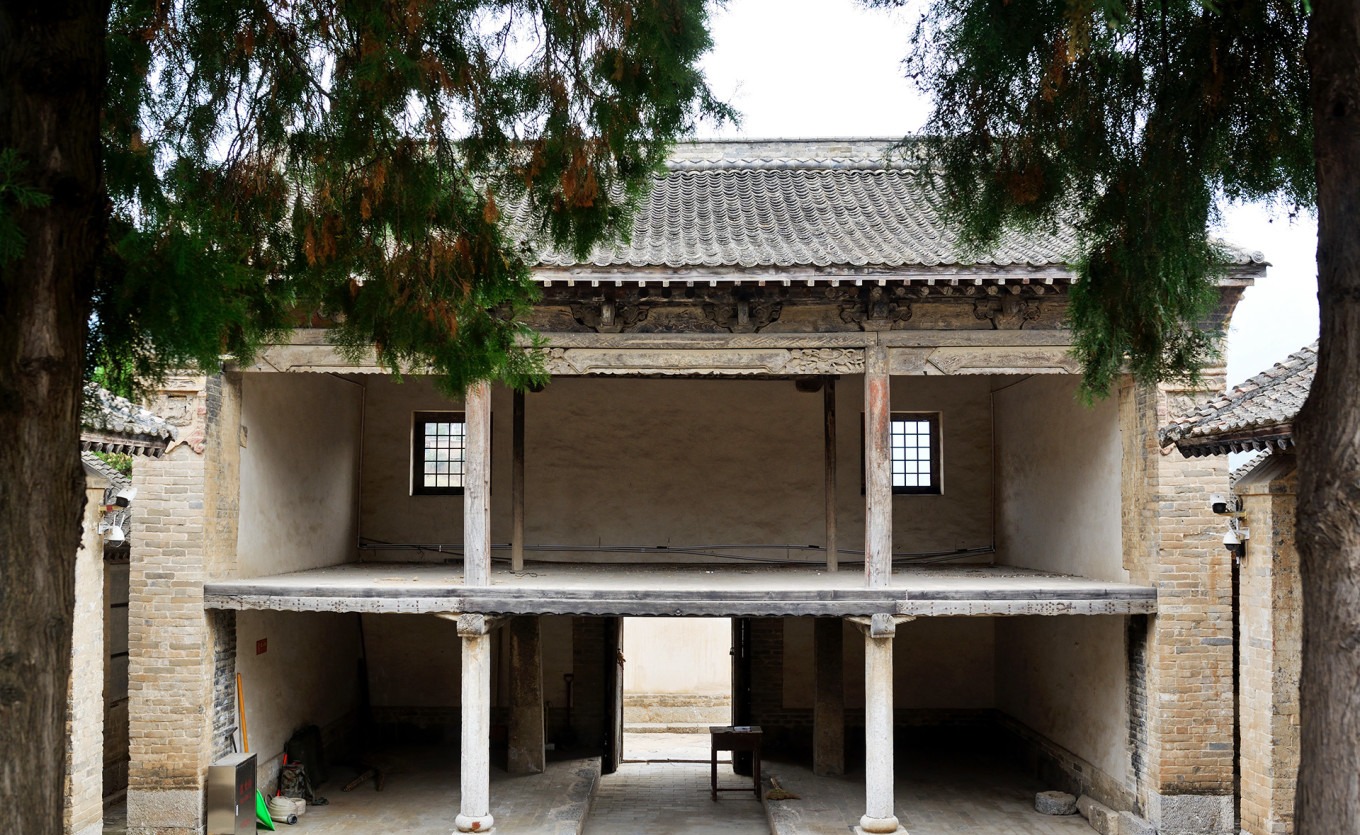
In front of the shrine, a modern screen wall (照壁) has been erected. Facing it is the gate; step through the side door into the courtyard, and you’ll discover that the gate’s reverse side doubles as an inverted stage (倒座戏台).
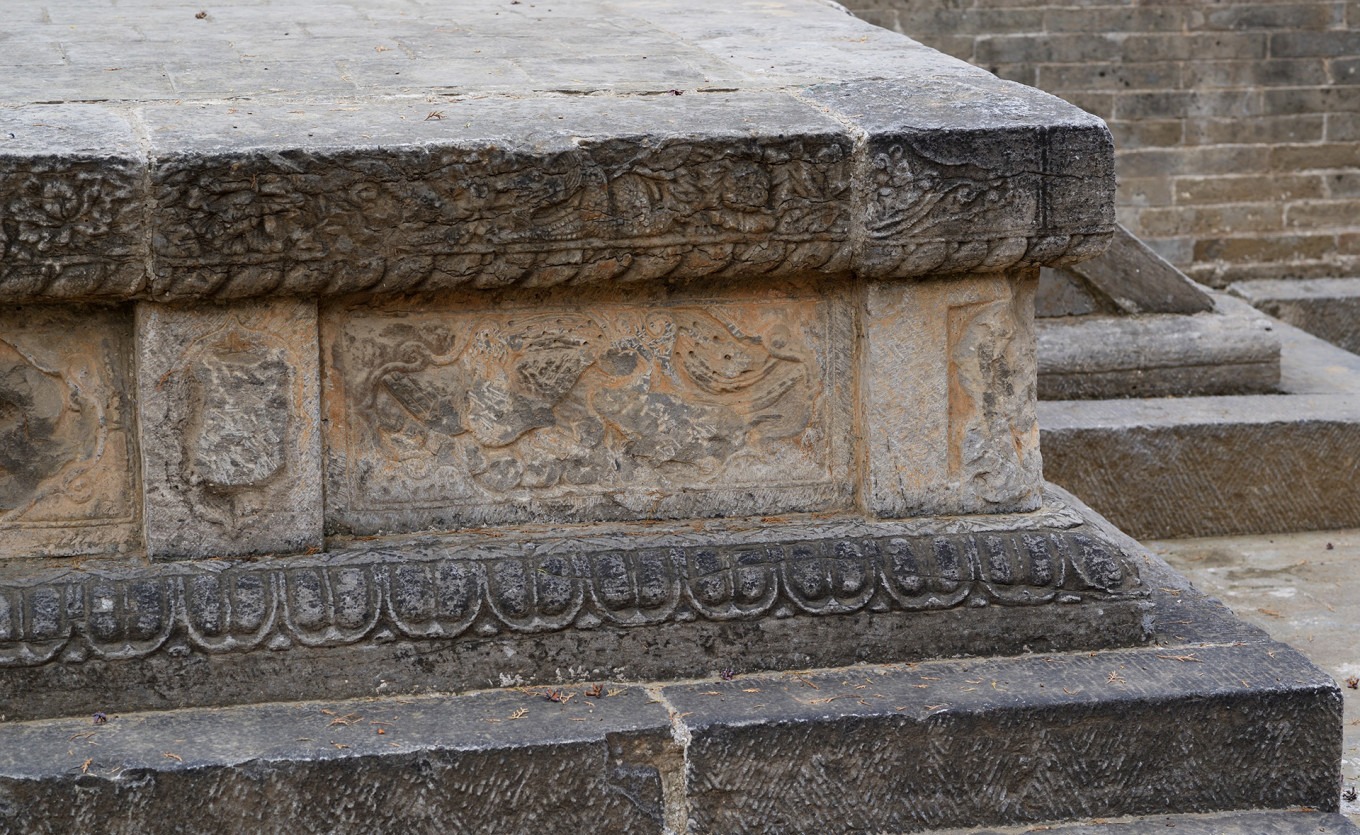
Opposite the gate stands the main hall of Xia Yu Shrine. Based on inscriptions, this building dates from the Yuan Dynasty and rests on a one-meter-high platform. The waist of the platform is adorned with carvings of flowers, auspicious beasts, and figures. Among them, two line-engraved panels are especially precious: the “Gold Figure Towel Dance” (金人巾舞图 (local term)) and the “Song-Jin Dialogue Scene” (宋金对戏图 (local term)).
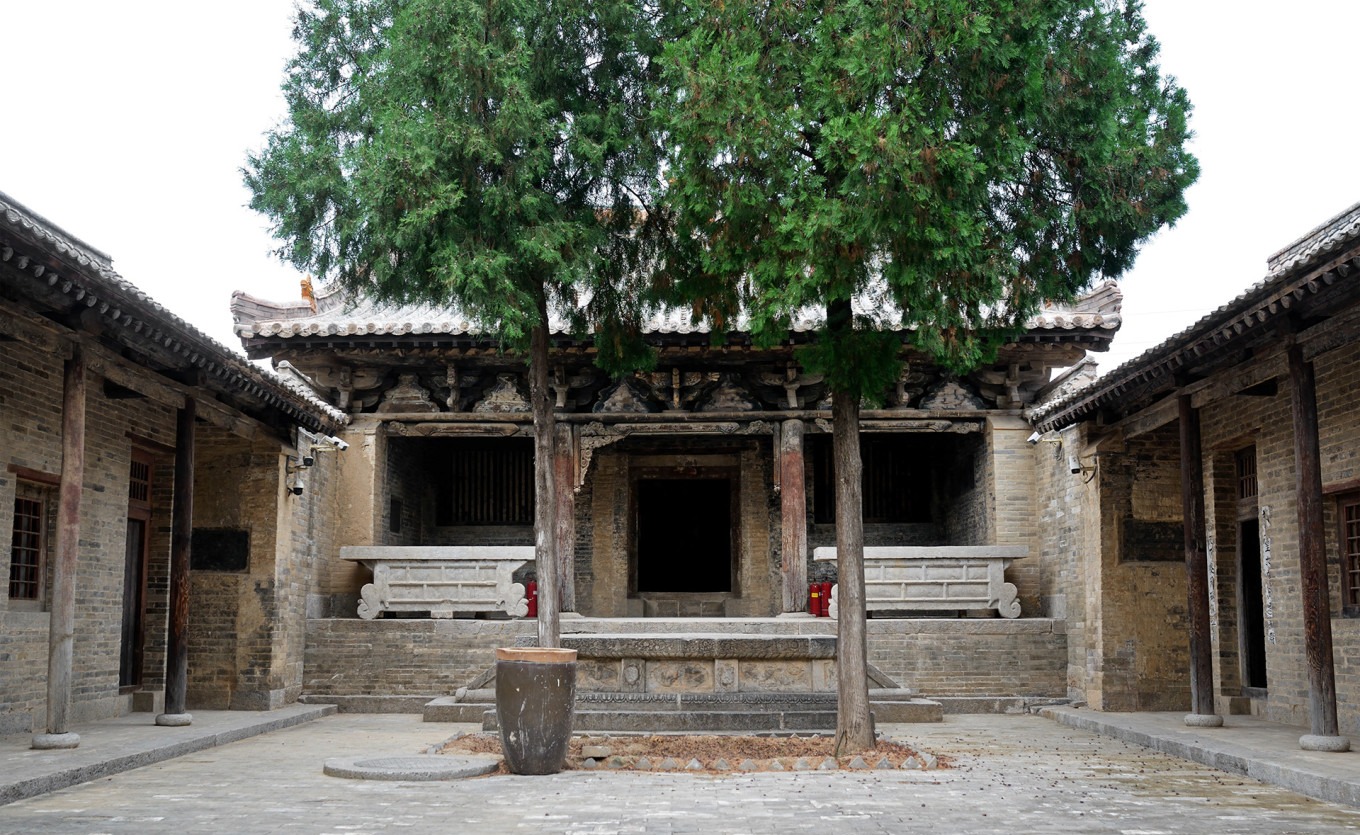
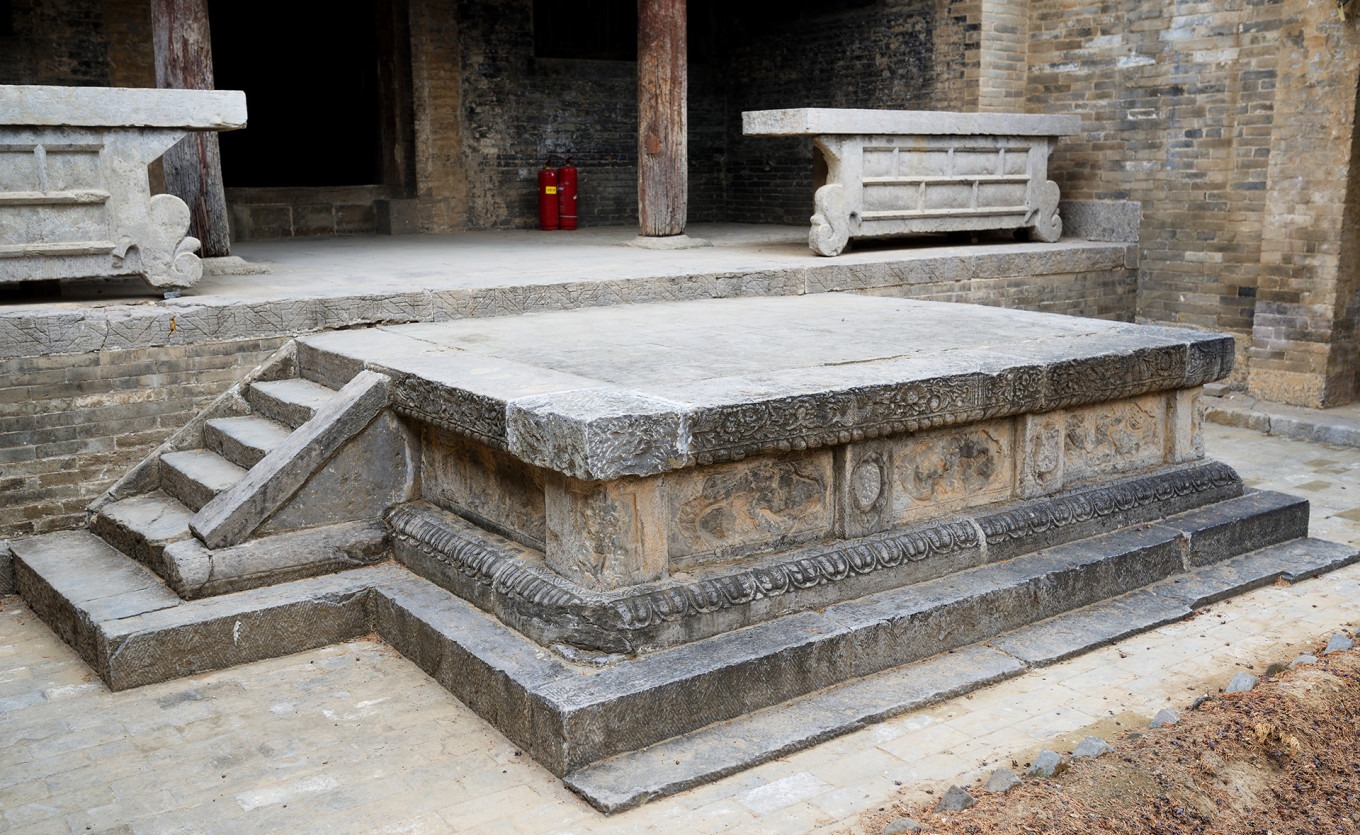
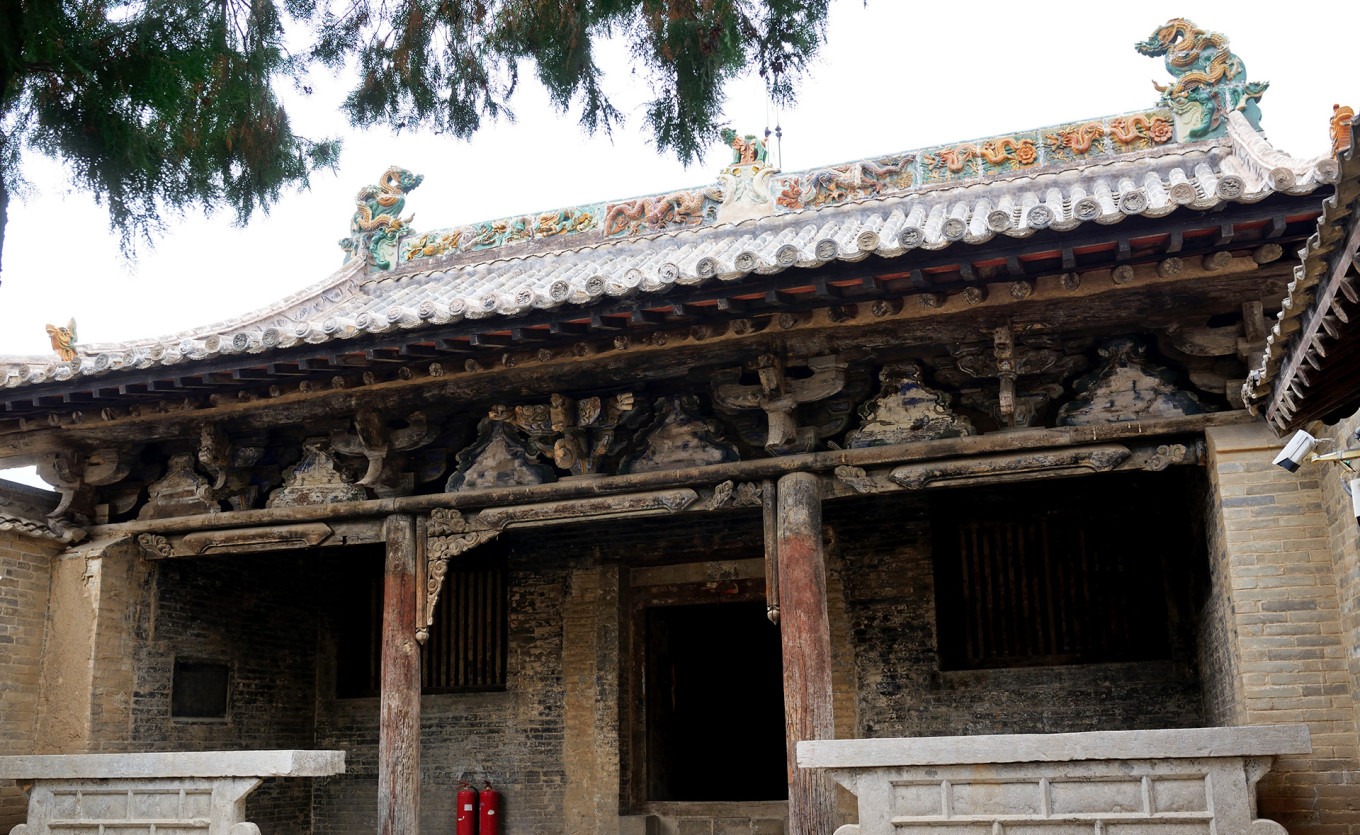
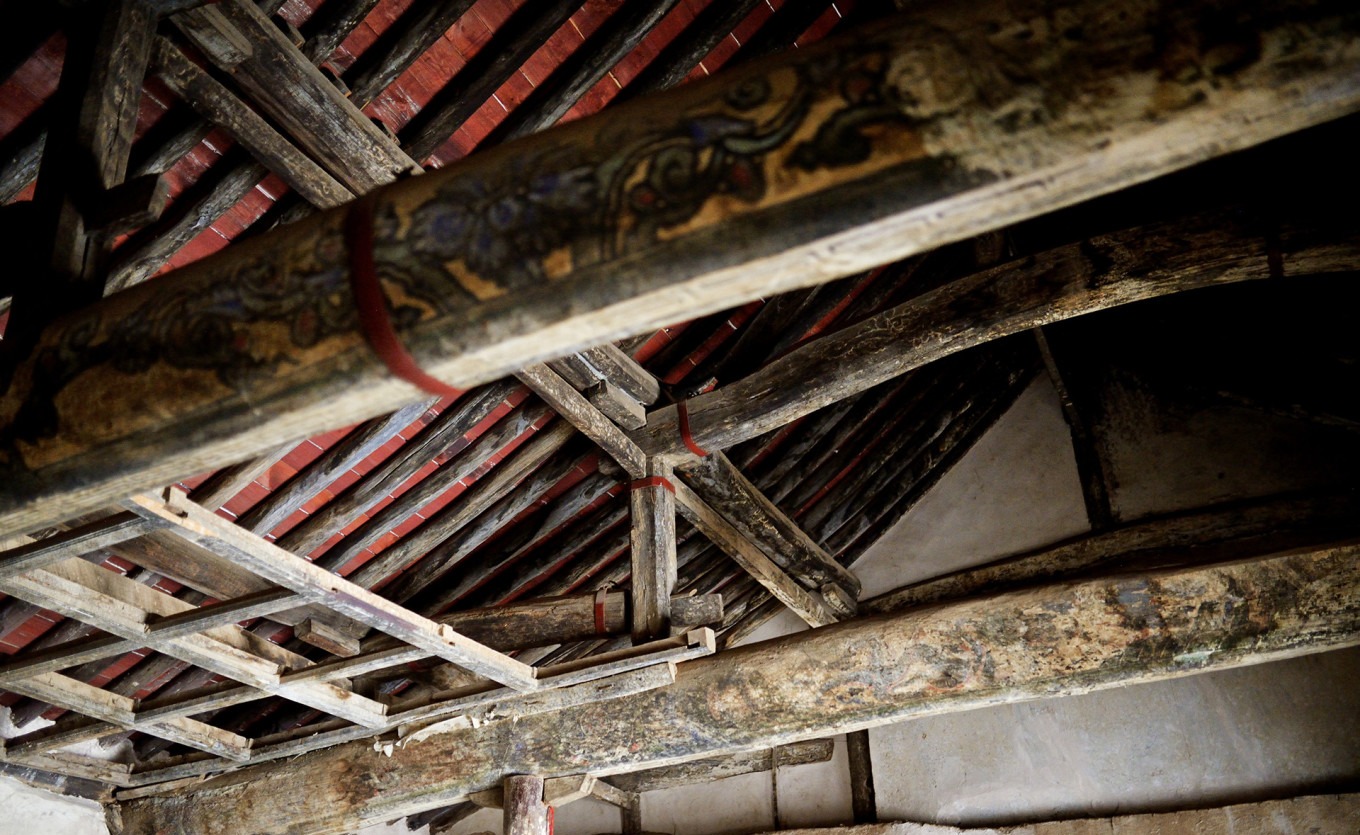
Approach the hall and look up: the beams under the front eaves are decorated with exquisite painted patterns. On the exterior of the south wall, you’ll find Ming Dynasty murals depicting the “Eight Immortals Crossing the Sea” (八仙过海 (local term)). Despite centuries of weathering, the colors remain vivid.
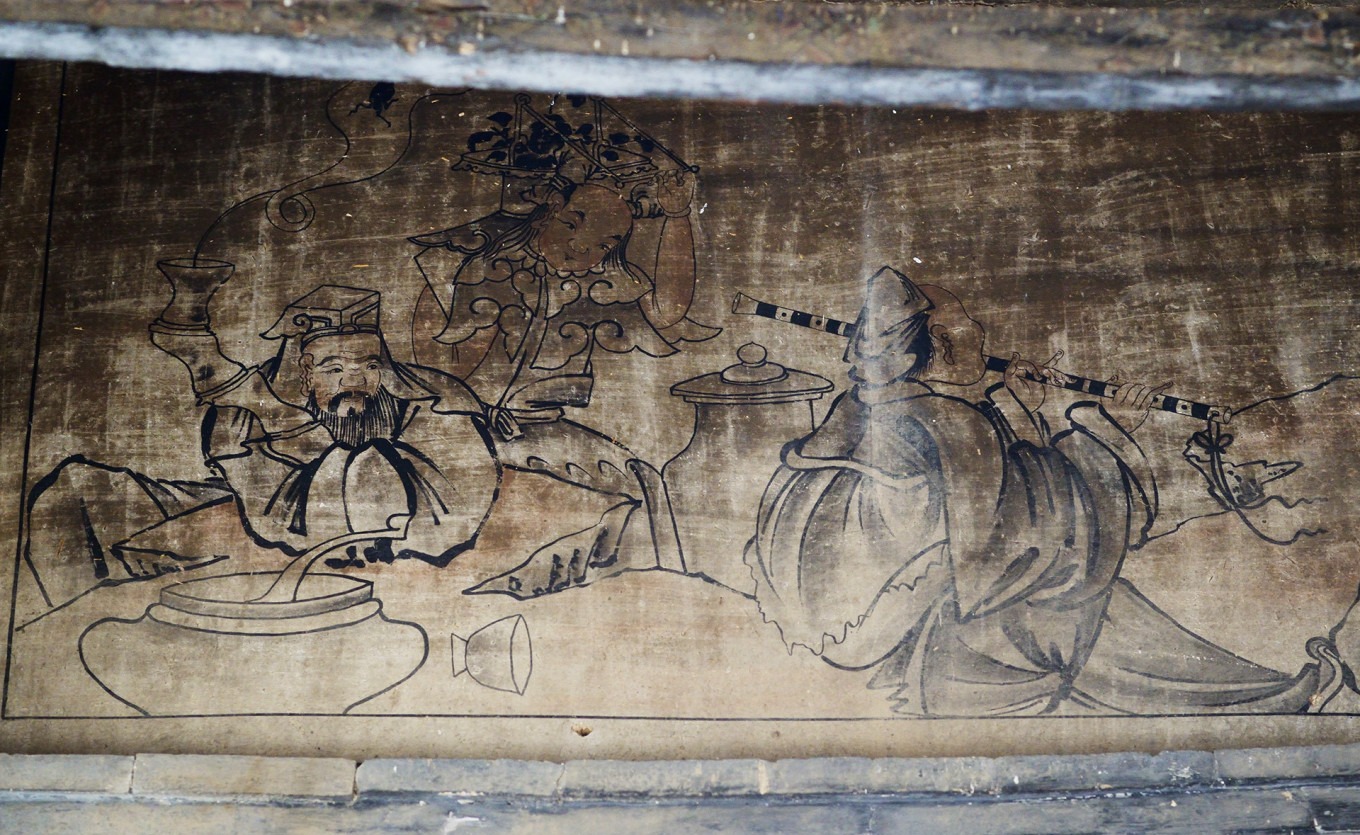
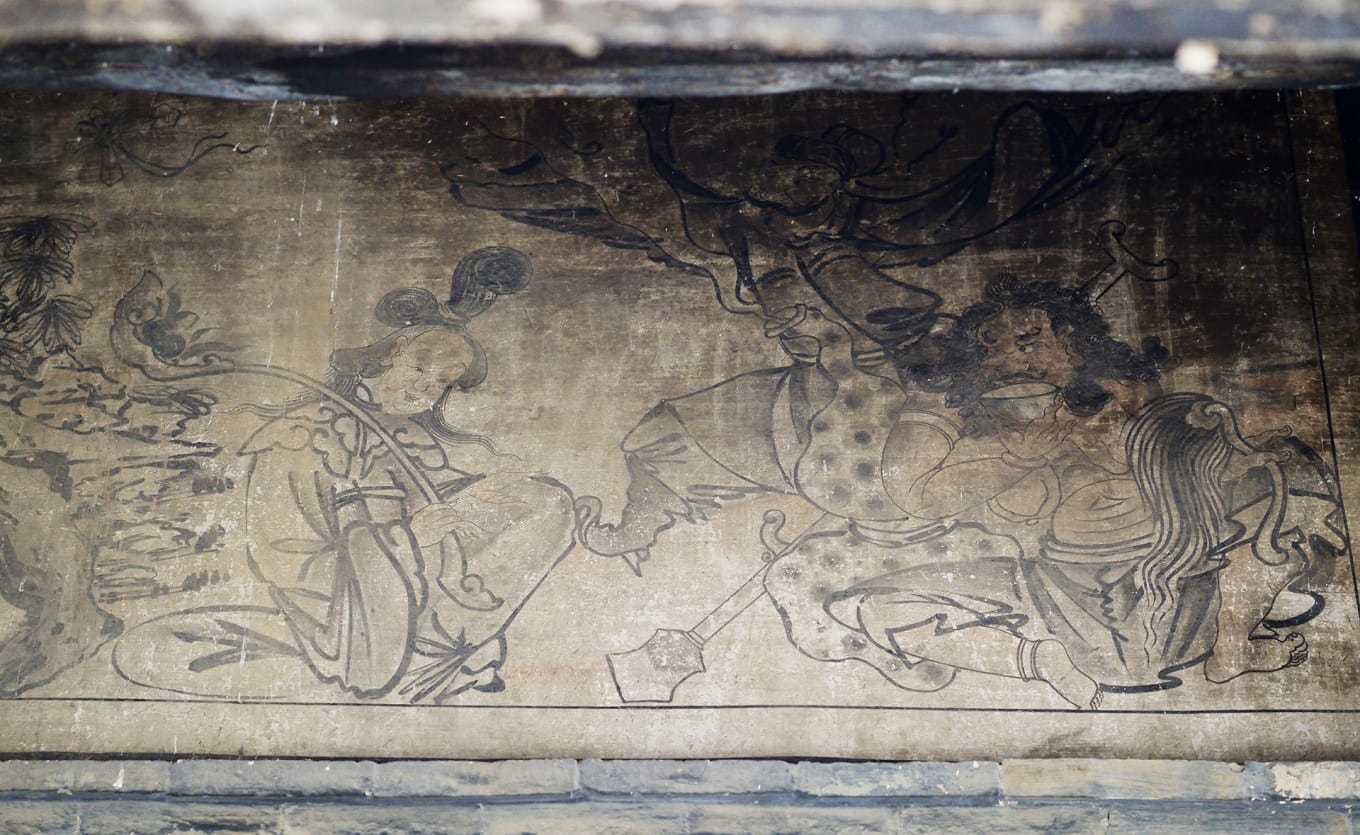
Step inside the hall. The beam structure is simple and unadorned, preserving the Yuan architectural style. The statue of Yu the Great enshrined here is a modern replacement.
- Address: 长治市平顺县阳高乡侯壁村 (Houbi Village, Yanggao Township, Pingshun County, Changzhi City)
- Admission: Free
Longmen Temple: A Living Museum of Chinese Architecture
- RestaurantN/A (店名)
- AddressShicheng Town, Pingshun County, Changzhi City, Shanxi Province (山西省长治市平顺县石城镇)
- Recommended dishesN/A (菜名)
- Average spendFull ticket: 20 RMB
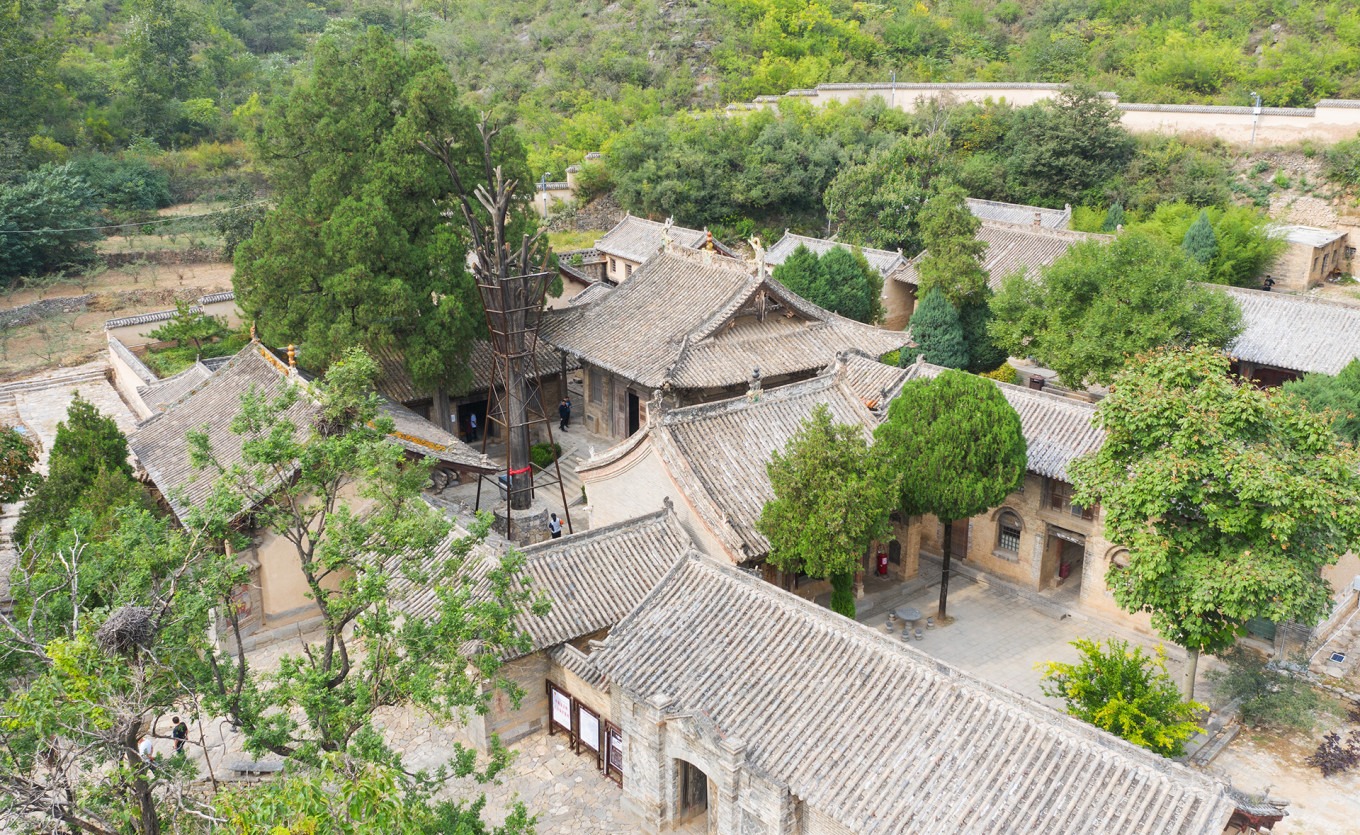
Your journey along the Zhuozhang River Valley culminates at Longmen Temple (龙门寺) in Shicheng Town, just ten kilometers from the border of Shanxi, Hebei, and Henan provinces. To the east lies the Red Flag Canal in Linzhou, Henan. This temple, perched on a broad terrace facing south, was first built during the Northern Qi dynasty (550–577 CE) and underwent numerous expansions and renovations over subsequent dynasties. At its peak, it housed over three hundred monks, and even Dayun Temple and Chunhua Temple in the same valley once served as its subordinate monasteries.
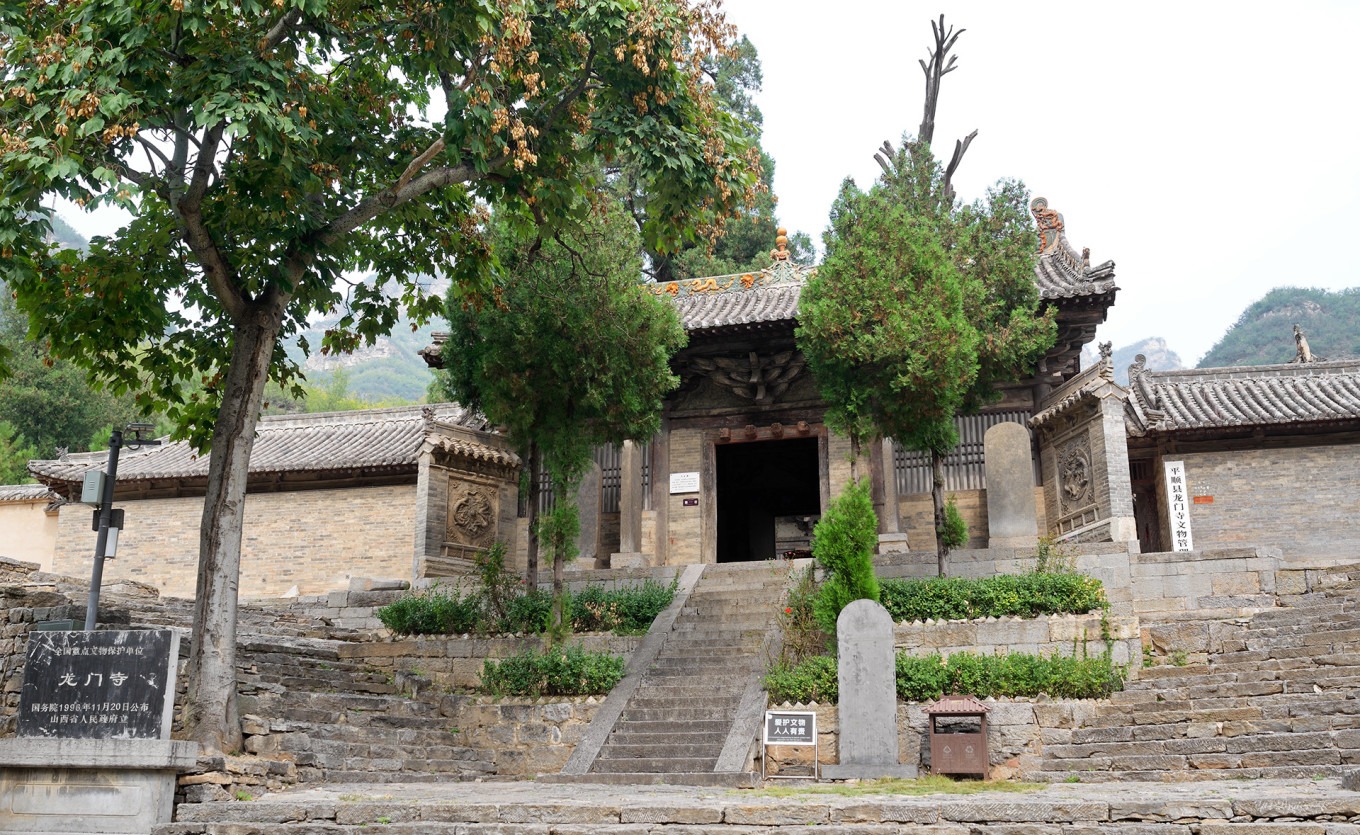
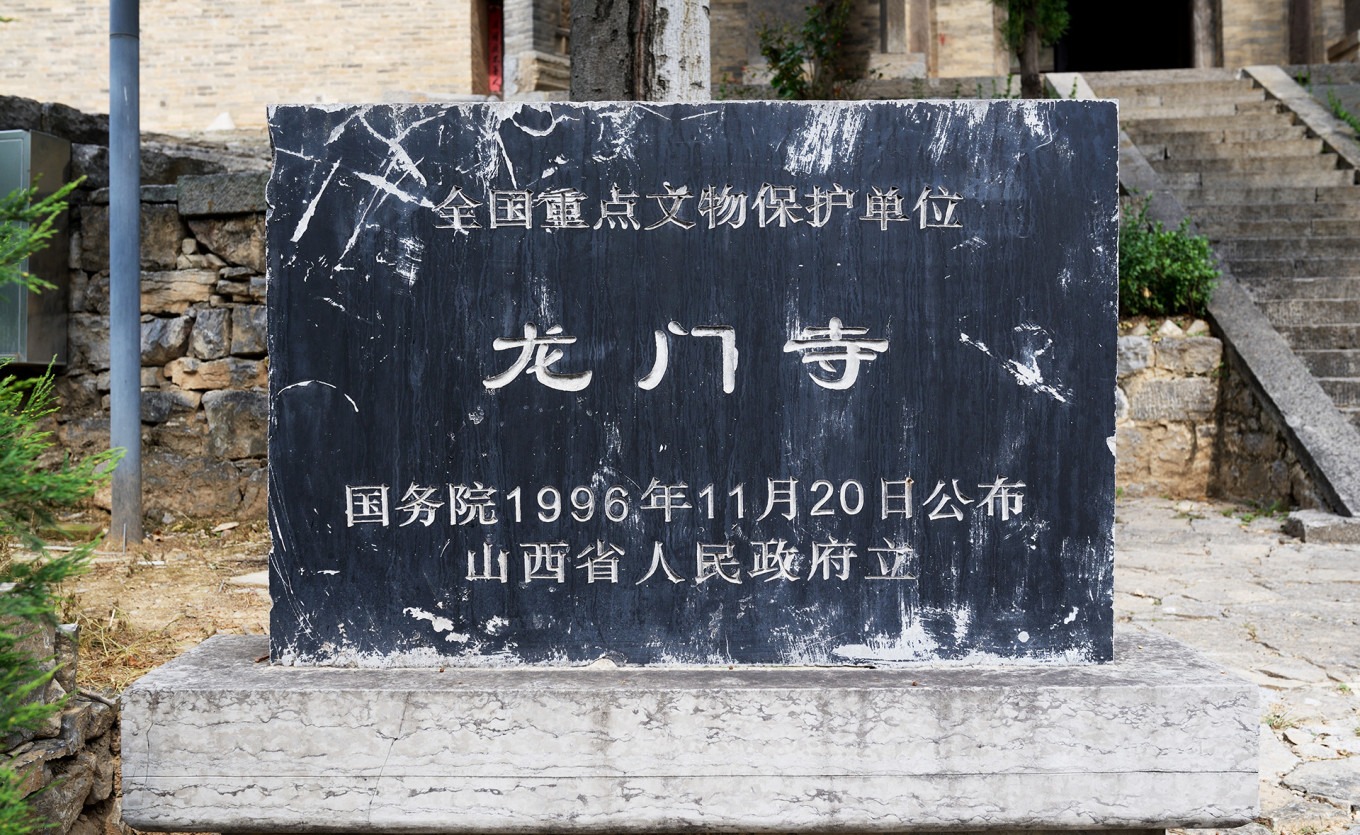
Designated a Major Historical and Cultural Site Protected at the National Level (fourth batch), Longmen Temple is the oldest and most historically layered temple in the valley, boasting the greatest number of ancient buildings and steles. Its oldest surviving structure is the Western Side Hall (西配殿), dating to the Five Dynasties period. Of the nine confirmed or disputed Five Dynasties buildings in China, seven are in Shanxi, and four are clustered in the Zhuozhang River Valley: the Maitreya Hall at Tiantai Nunnery, the Maitreya Hall at Dayun Temple, the controversially dated Main Hall at Yuanqi Temple, and this Western Side Hall at Longmen Temple.
Remarkably, Longmen Temple preserves a complete chronological sequence of Chinese wooden architecture: the Five Dynasties Western Side Hall, a Northern Song Main Hall, a Jin Dynasty gate (also serving as the Heavenly King Hall), a Yuan Dynasty Lamp-Lighting Buddha Hall, a Ming Dynasty Eastern Side Hall, and various Qing Dynasty halls. This makes it the only existing temple complex in China that showcases architectural styles from five consecutive dynasties—a priceless gem in Shanxi’s reputation as the ‘Museum of Above-Ground Cultural Relics.’
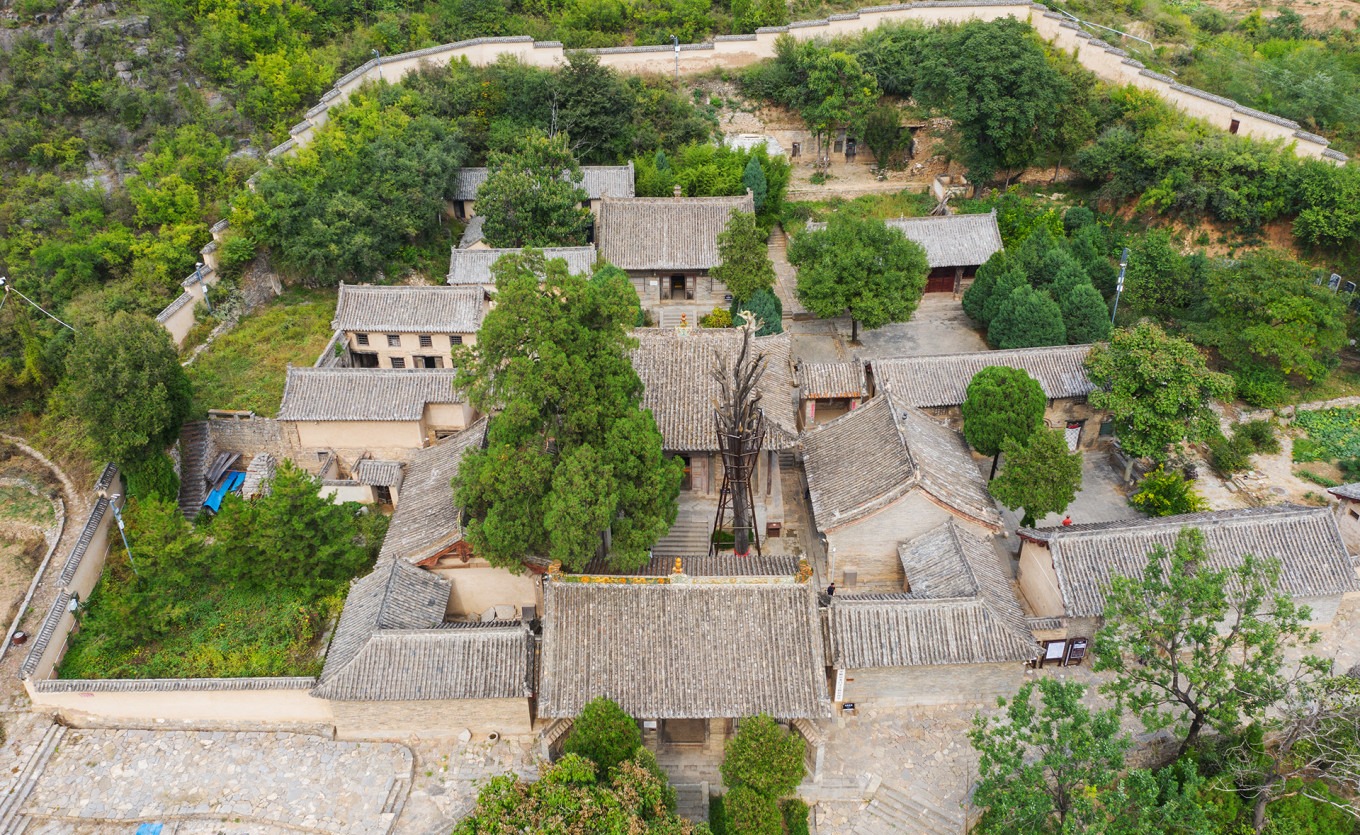
Start your exploration with the Western Side Hall. Though unassuming, it is the only surviving Five Dynasties building with a hanging-eave roof (悬山顶). Built between 925 and 935 CE—just over sixty years after the Tang Dynasty’s Foguang Temple—it features a shallow roof, simple yet massive bracket sets (斗拱), and an overall Tang-dynasty aesthetic. The hall is three bays wide and four rafters deep, with a clean, unadorned facade.
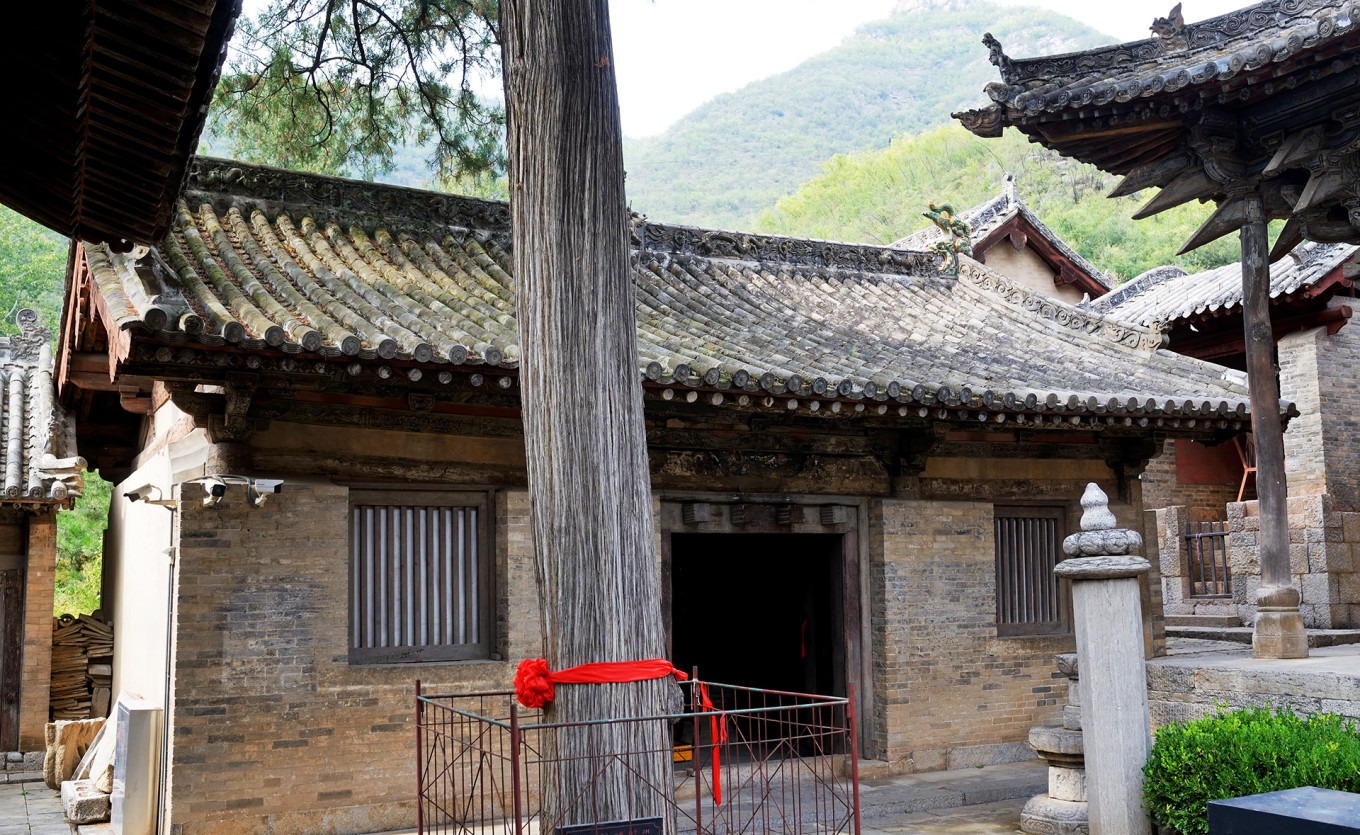
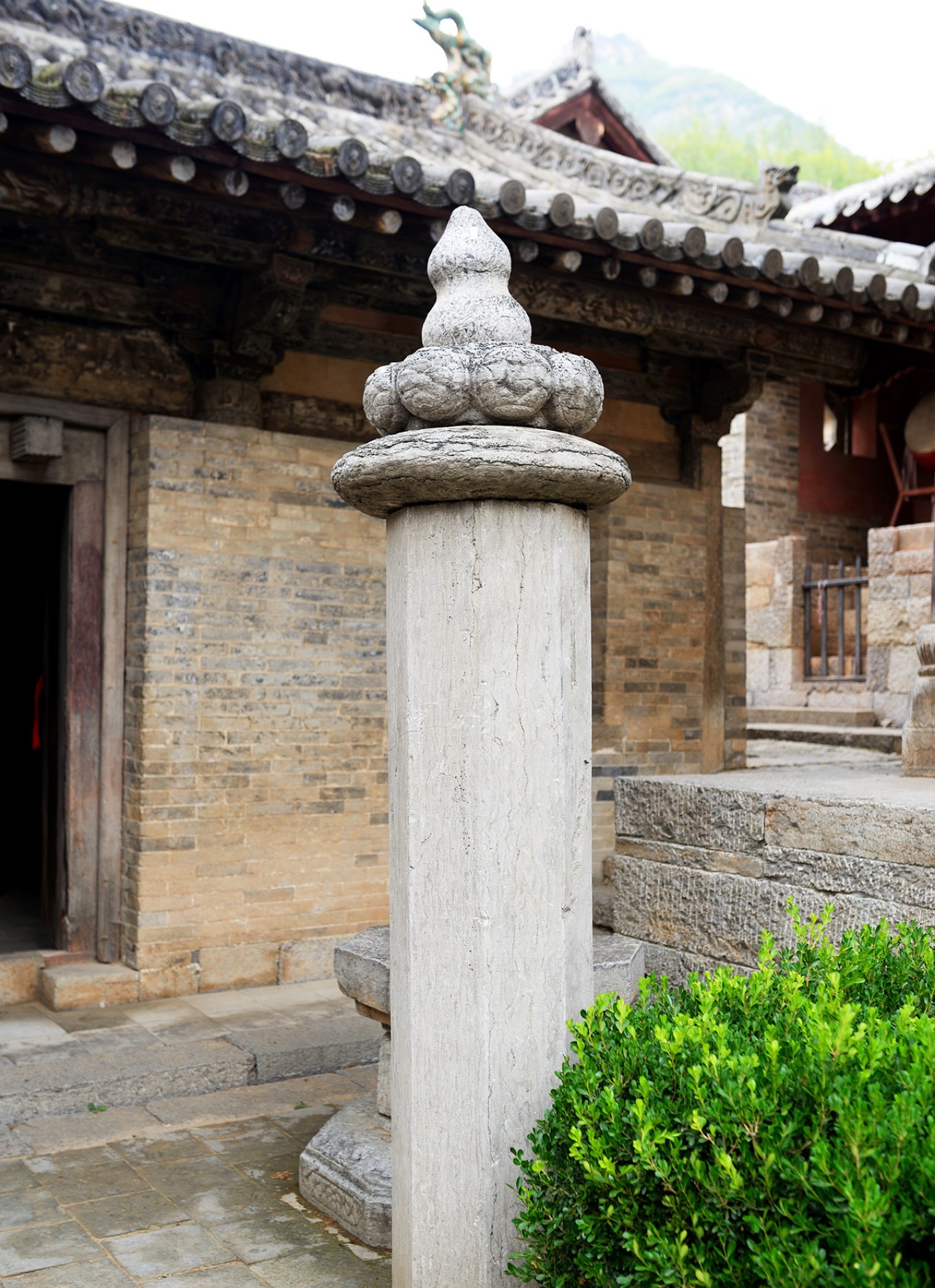
In front of the Western Side Hall stands an octagonal stone sutra pillar (经幢) from 950 CE, during the Later Han dynasty. The pillar’s inscription was key to dating the hall: besides the Usnisa Vijaya Dharani Sutra, it records that the temple then had over fifty rooms, including a ‘Guanyin Hall.’ Scholars, combining this with the hall’s construction techniques, identified the Guanyin Hall as the surviving Western Side Hall.
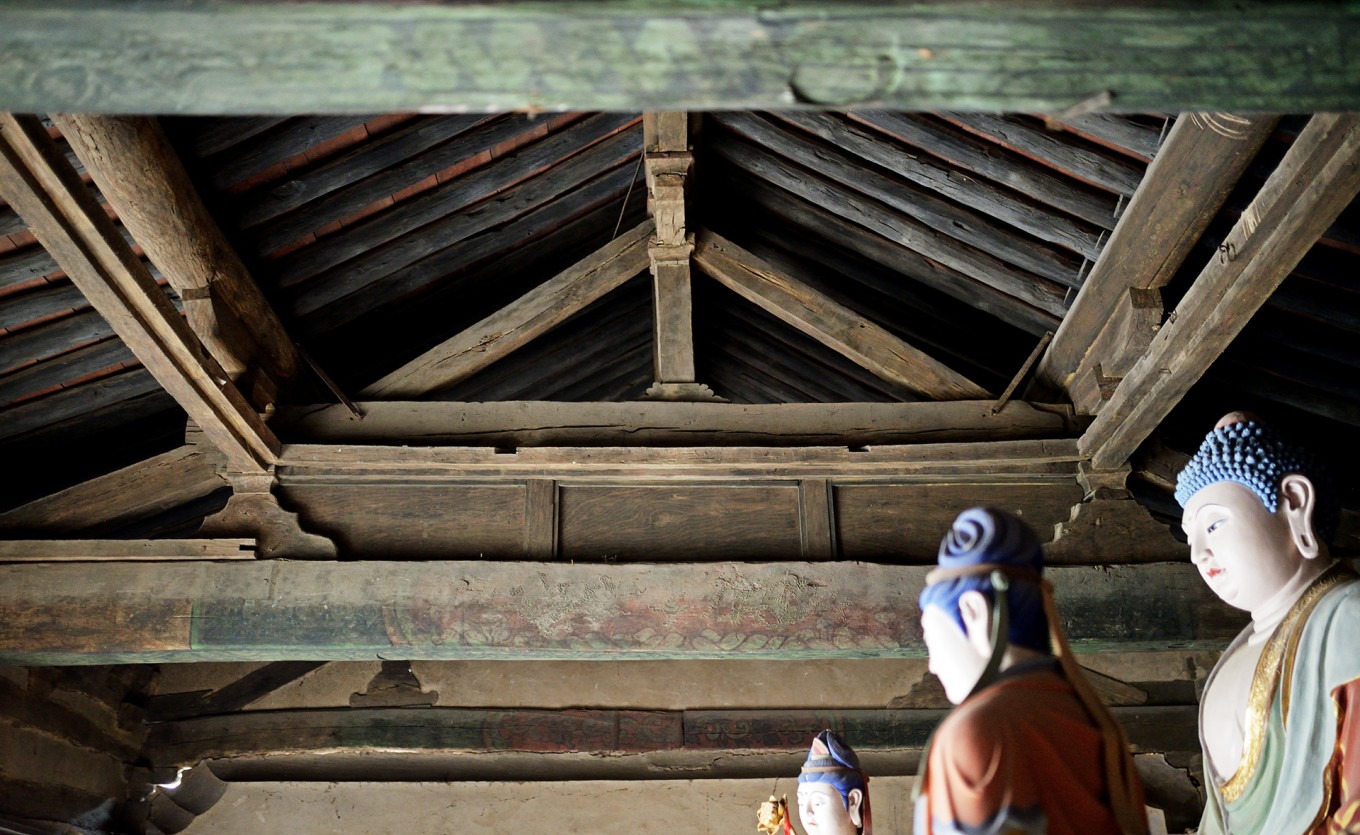
At the north end of the first courtyard, the Main Hall (大雄宝殿) was built in 1098 CE (Song dynasty), over 170 years after the Western Side Hall. It sits on a platform, and because it was rebuilt on the original foundation, it appears modest in size. Constructed just five years before the publication of the *Yingzao Fashi* (Treatise on Architectural Methods), its structure closely follows that canonical text—clean, orderly, and typically Song. However, some curved and irregular beams reveal it was a folk construction rather than an official one.
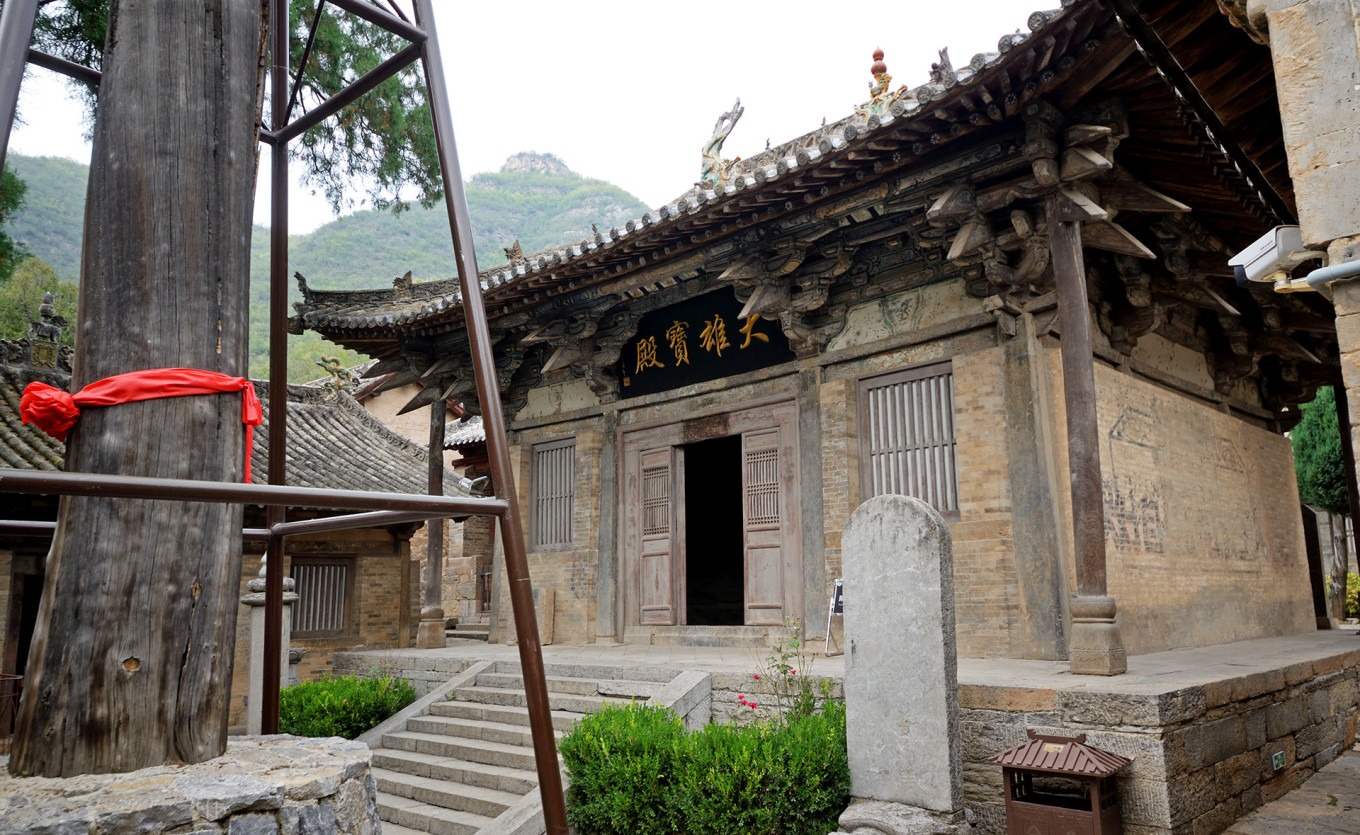
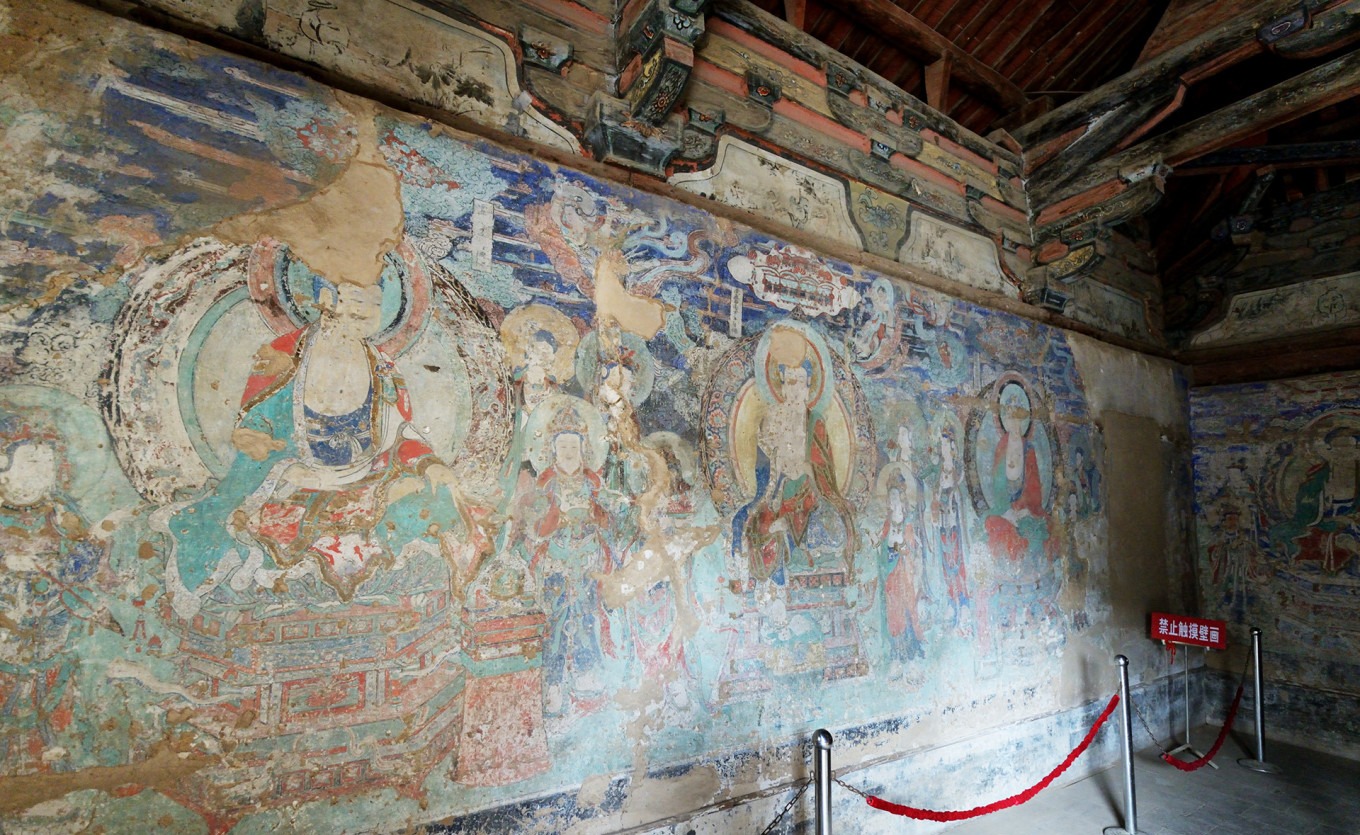
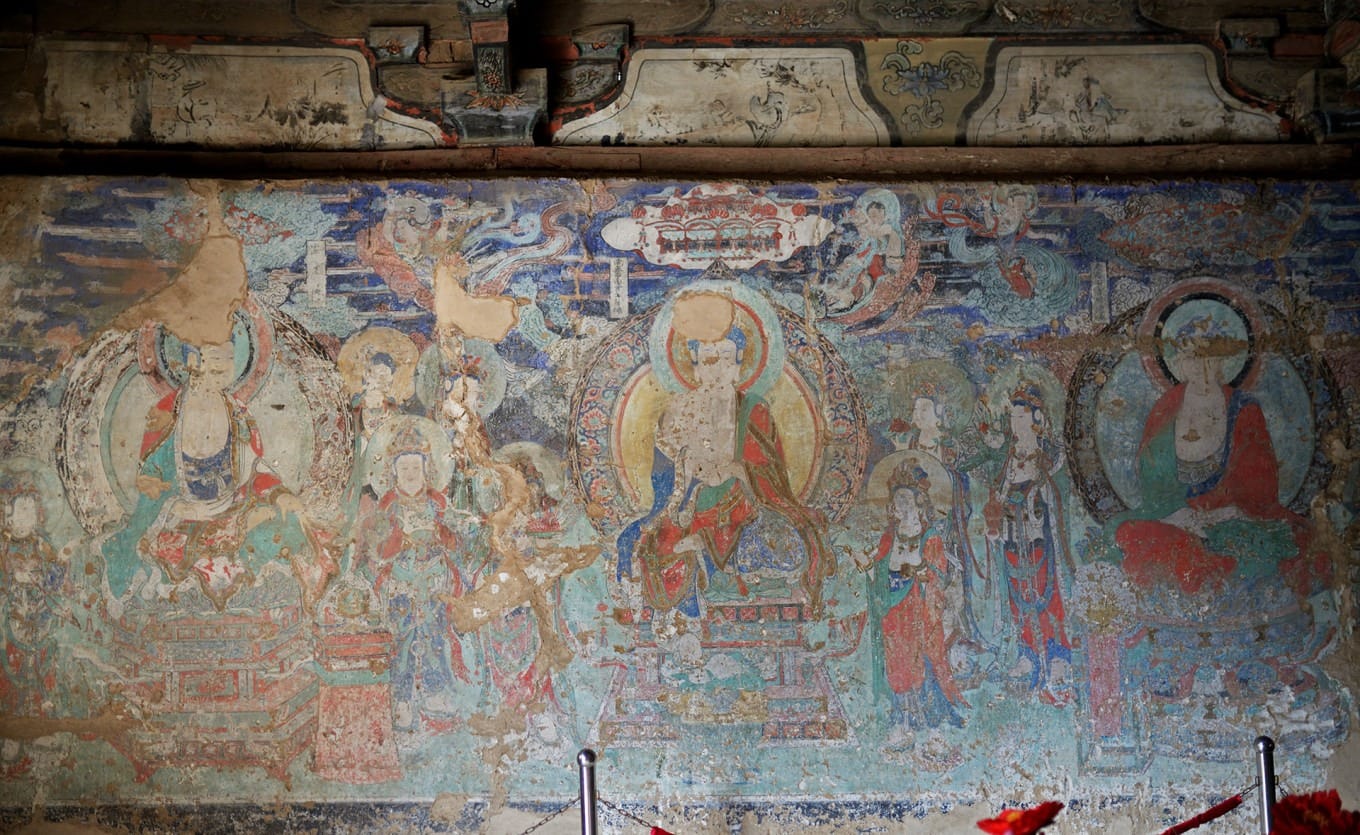
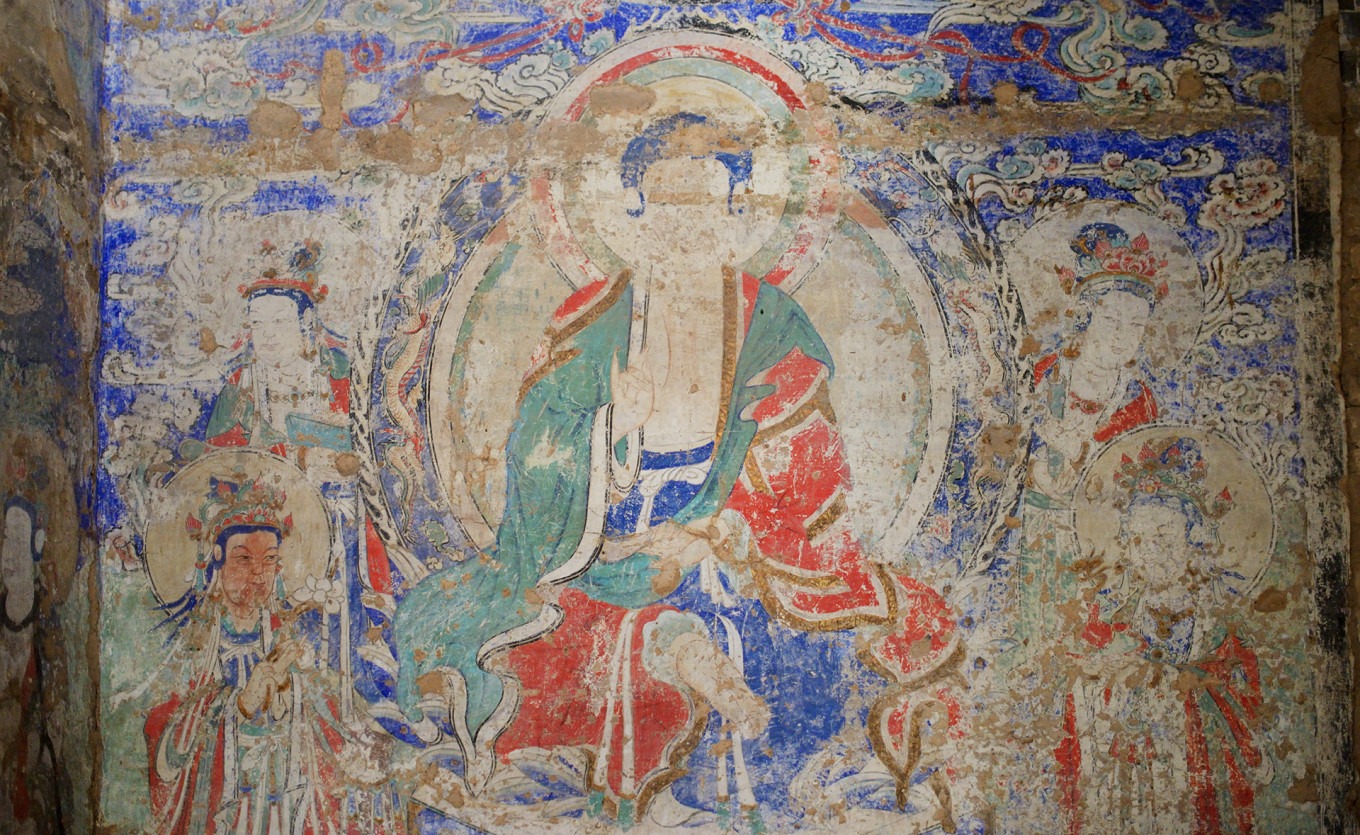
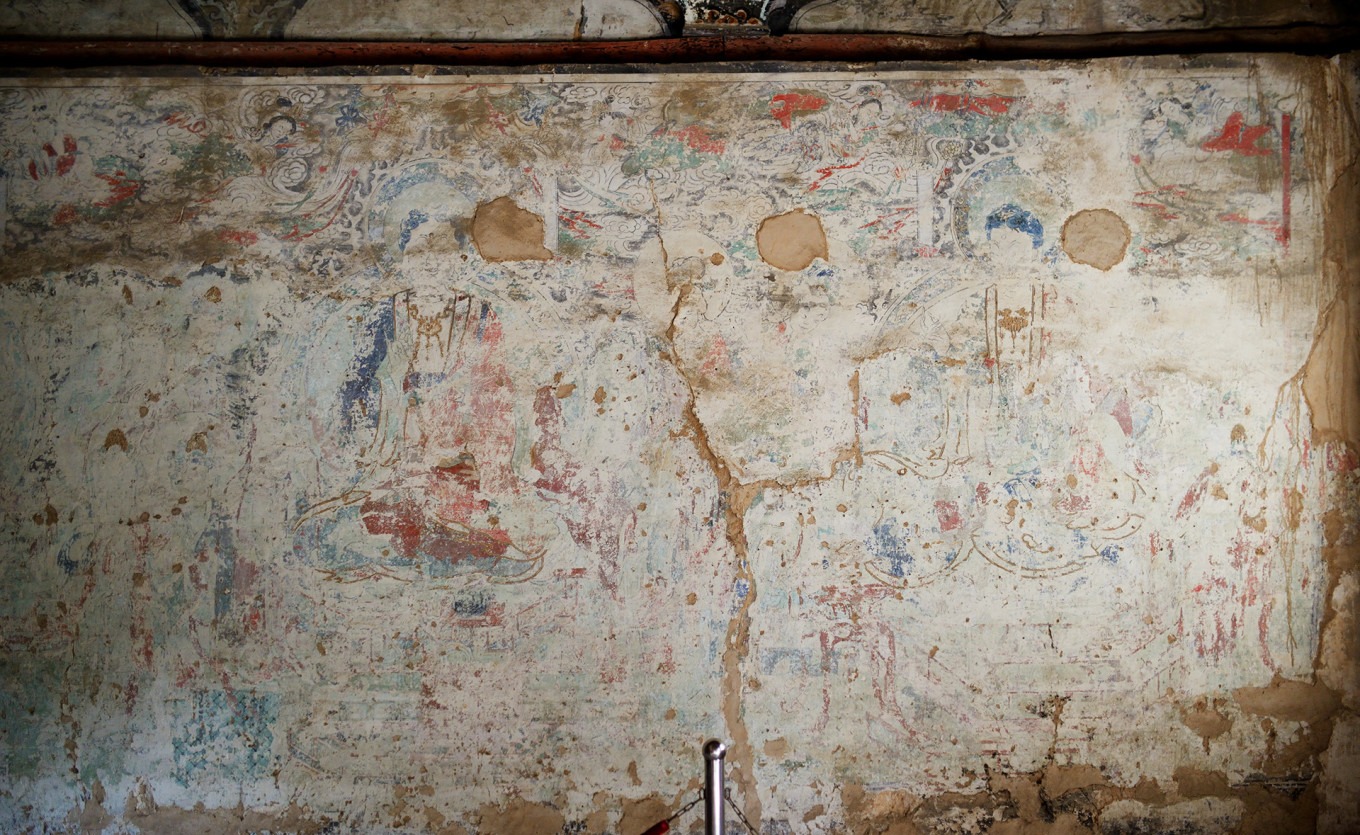
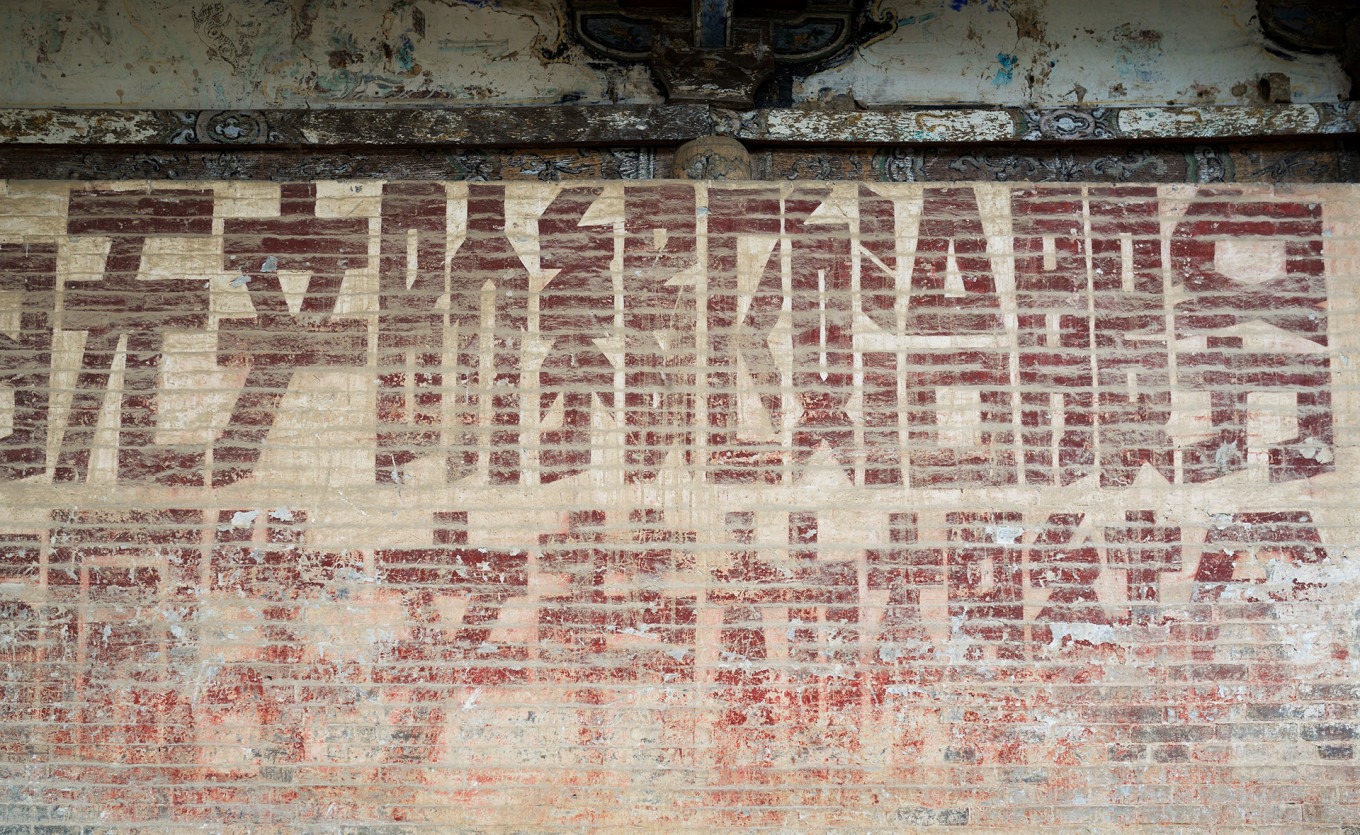
Inside the Main Hall, large areas of Ming dynasty Buddhist murals survive on the walls, with the west wall being the most complete. These murals were miraculously preserved because after 1949 the temple was converted into a primary school; new layers of plaster covered the walls, protecting the paintings from destruction.
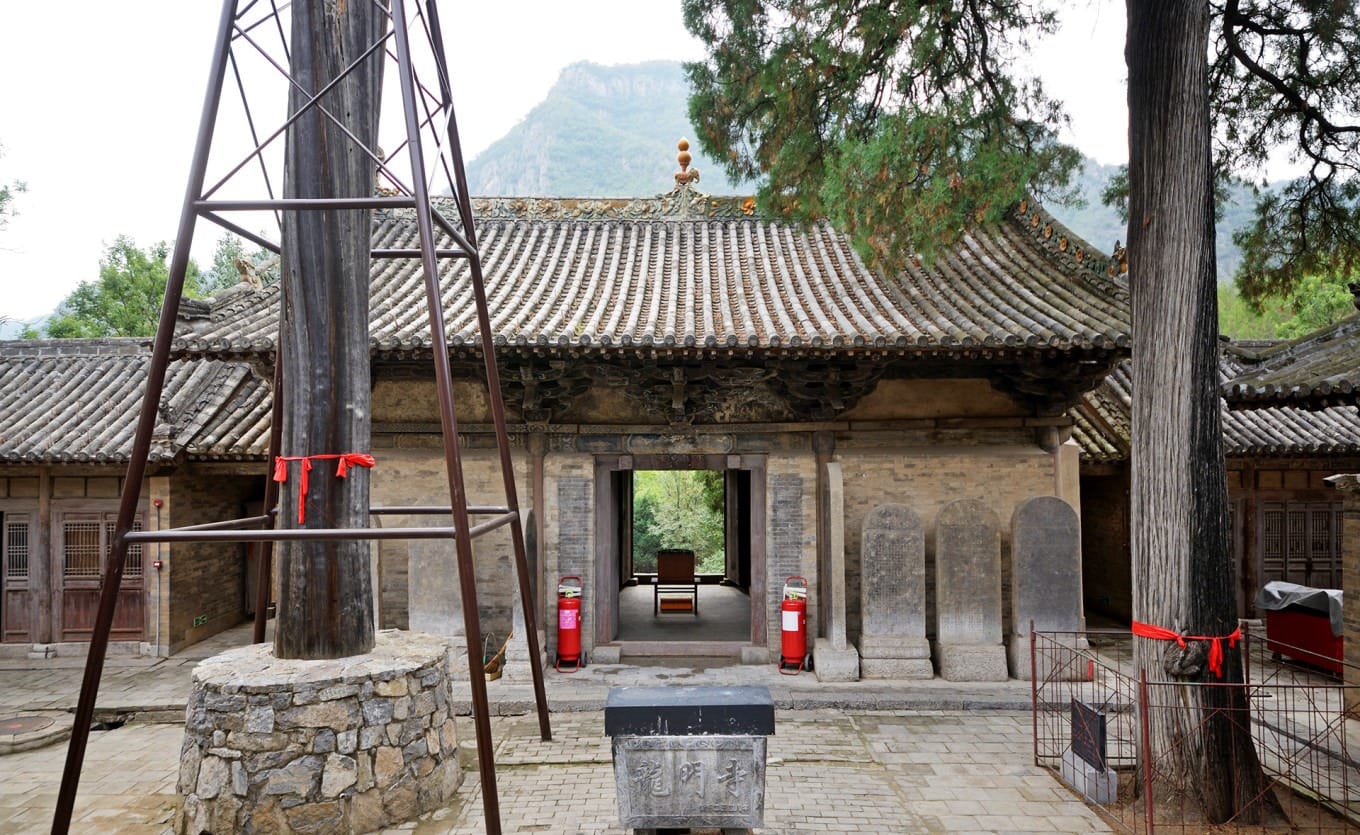
Turn back to the gate, which also serves as the Heavenly King Hall (天王殿), a Jin dynasty structure. Notice its bracket sets: they resemble blooming peonies, a hallmark of the Jin style that inherited Song traditions.
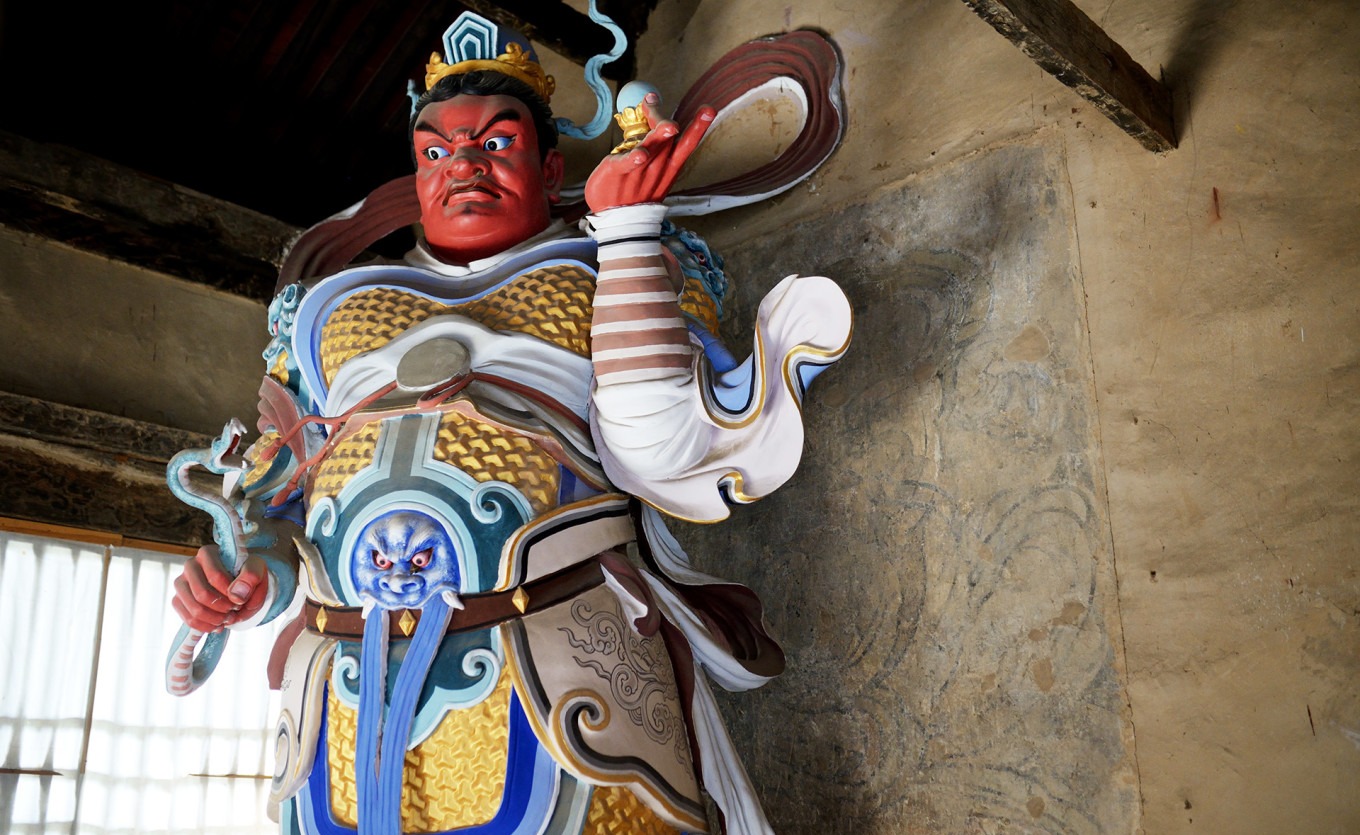
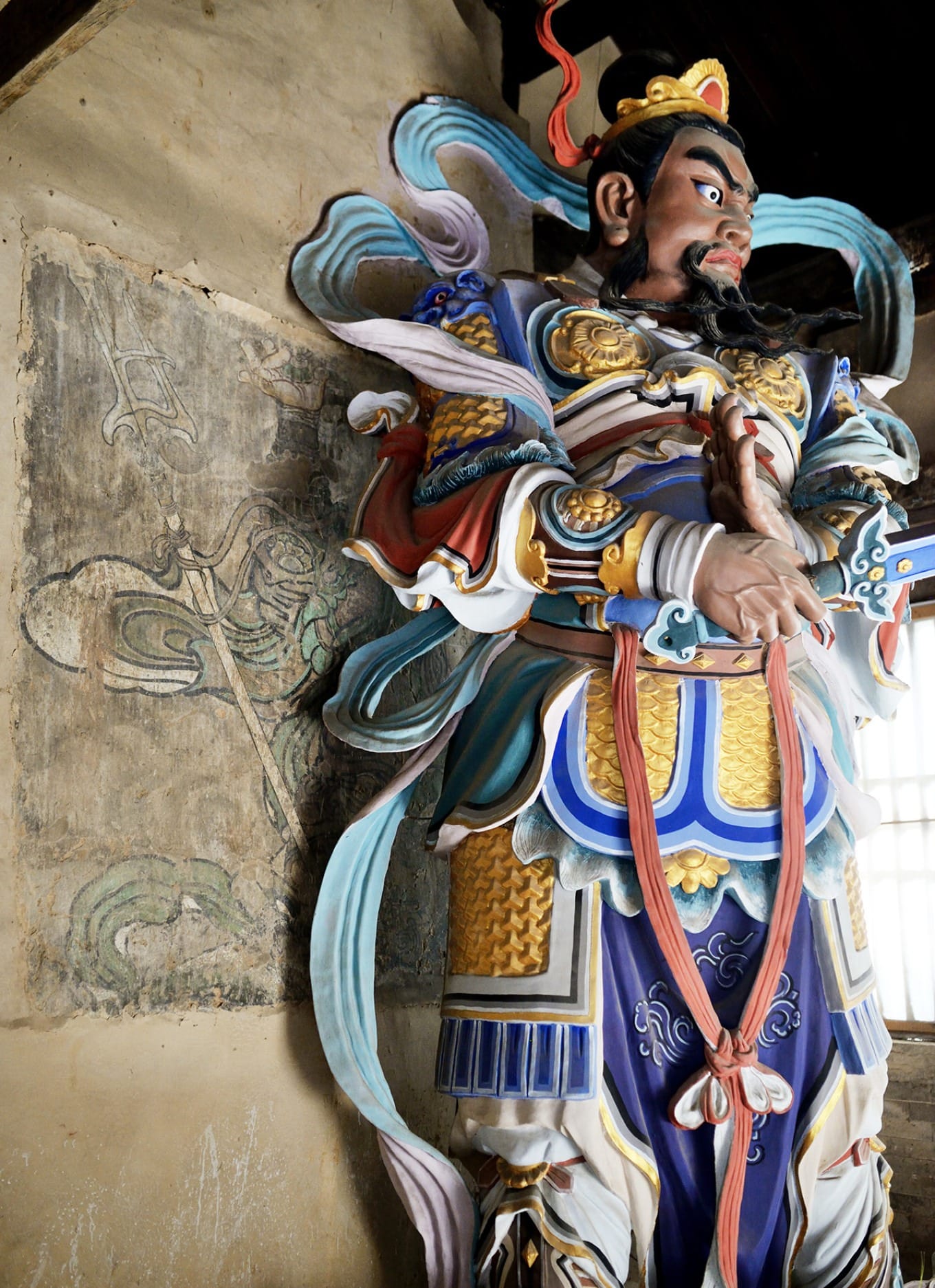
Inside the gate, four Heavenly Kings (added later) stand guard, and some fragmentary murals remain, though they are incomplete.
Proceed to the second courtyard, where the Lamp-Lighting Buddha Hall (燃灯佛殿) is a typical Yuan dynasty building. Unlike the strict Song style, Yuan architecture often uses naturally curved beams and rafters, roughly hewn and left undecorated.
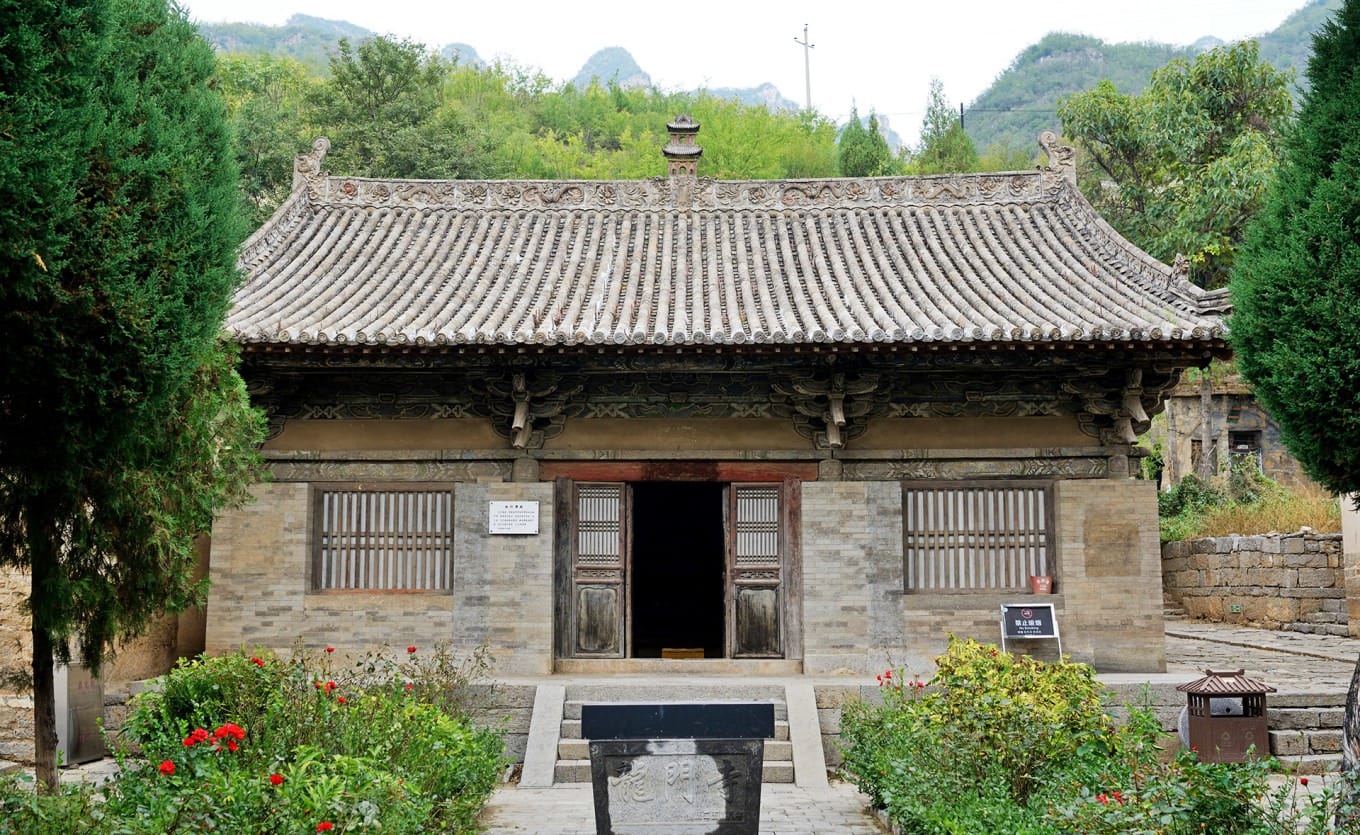
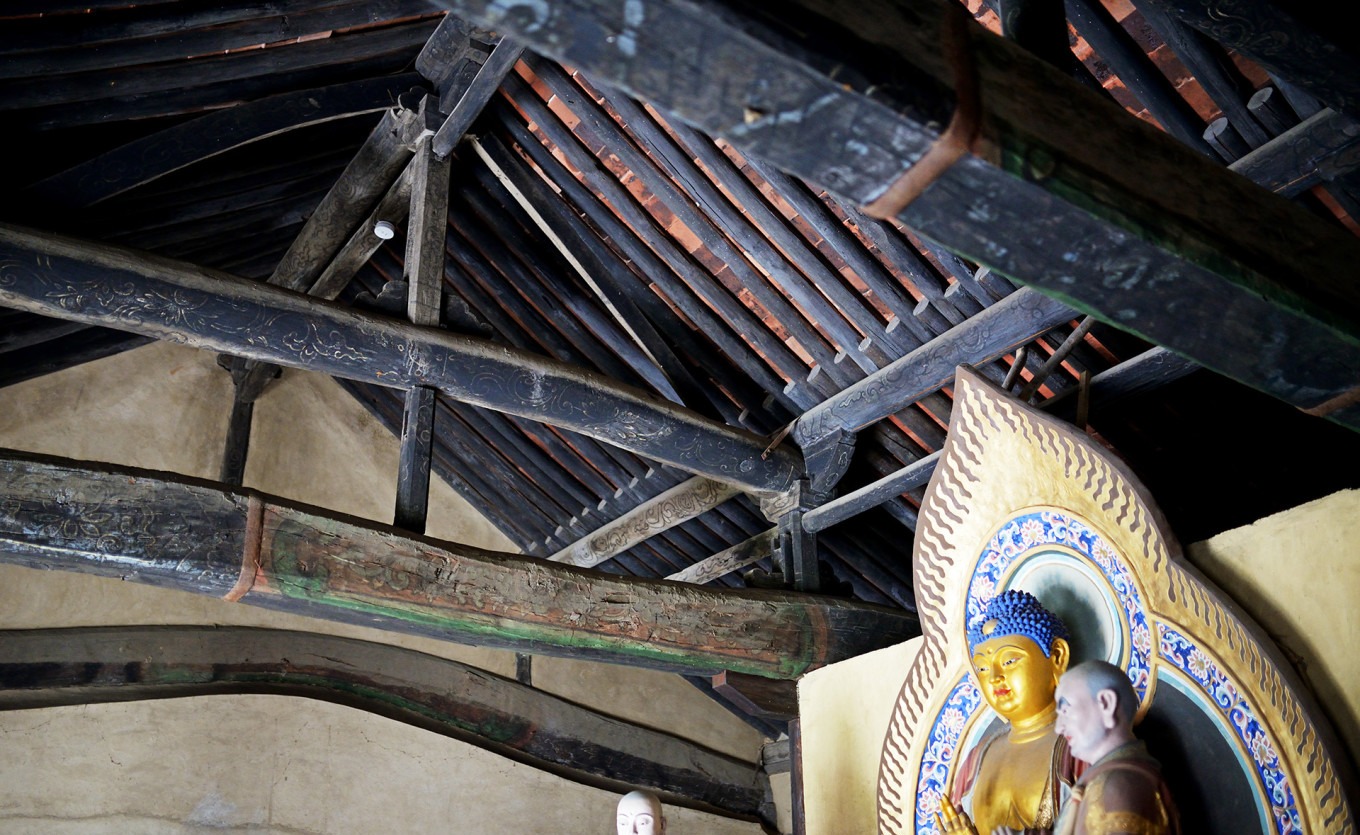
Finally, return to the first courtyard to see the Eastern Side Hall (东配殿), built during the Ming Hongzhi era (1488–1505). Similar in size to its western counterpart, it has more restrained eaves and roof. Ming architecture is characterized by slender columns, small bracket sets, and extensive use of brick masonry—indicating that timber columns and brackets were increasingly less load-bearing.
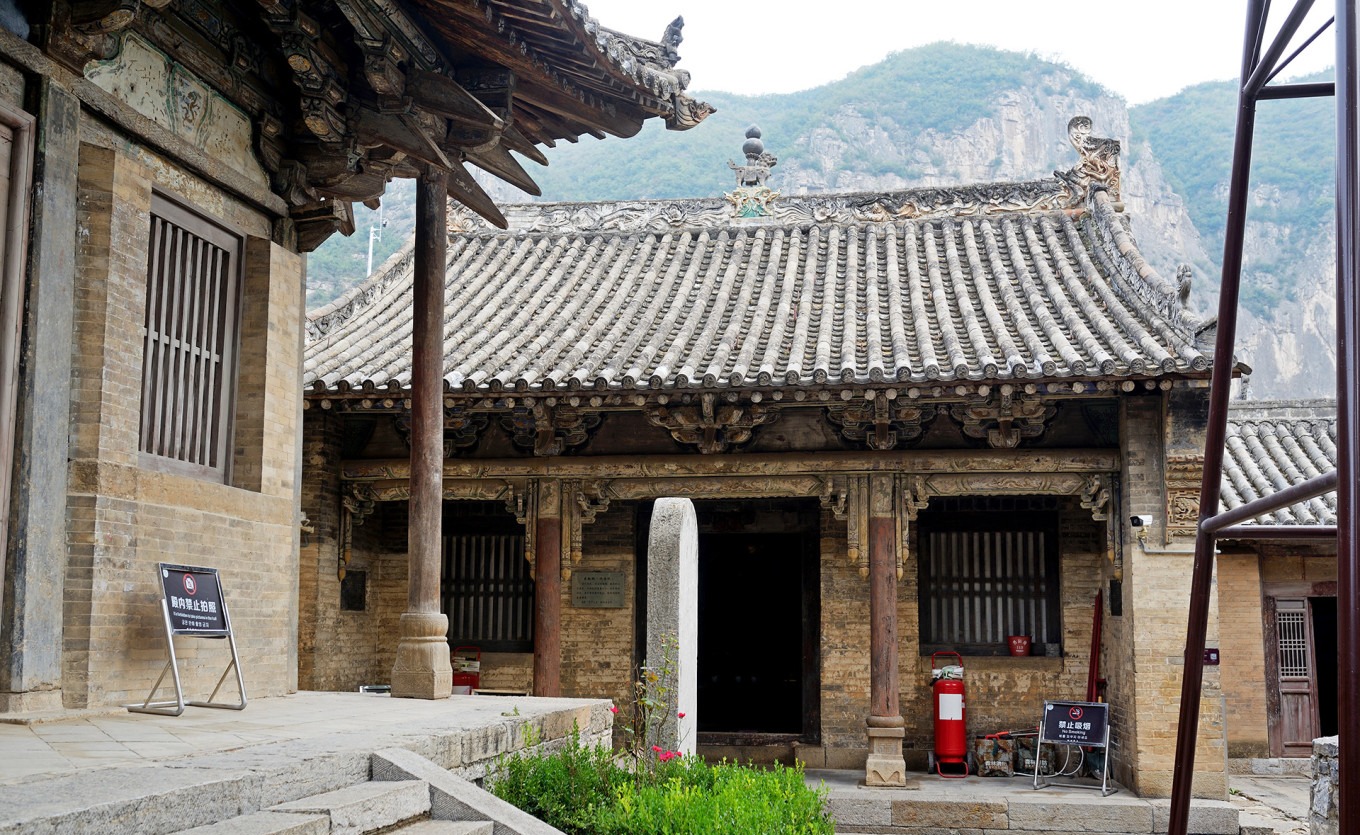
By the Ming dynasty, large timber had become scarce, while brick-making technology advanced. Buildings relied more on brick walls for support, reducing the need for massive wooden columns. This trend continued in Qing structures like the Hall of King Yama, Bell and Drum Towers, and the Water-Land Hall within the temple.
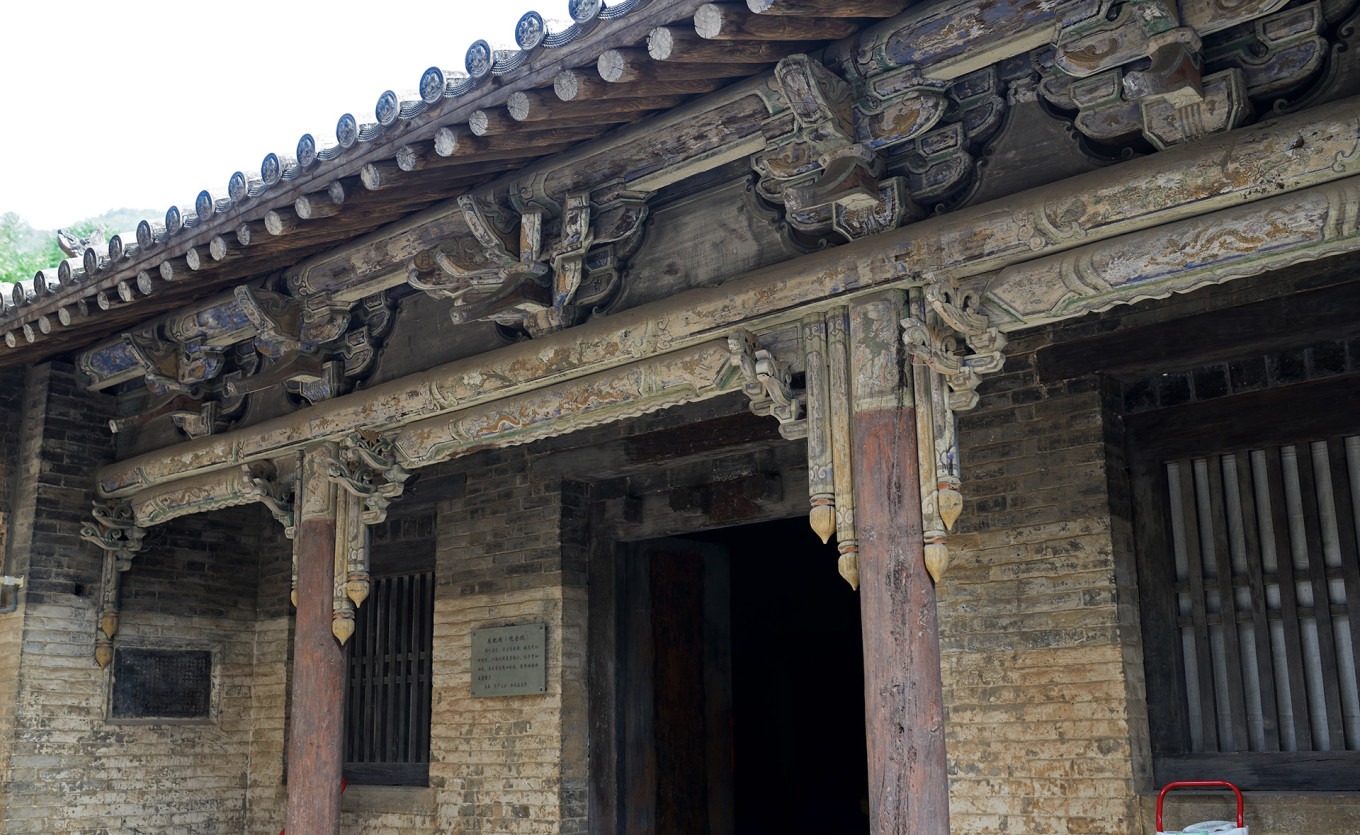
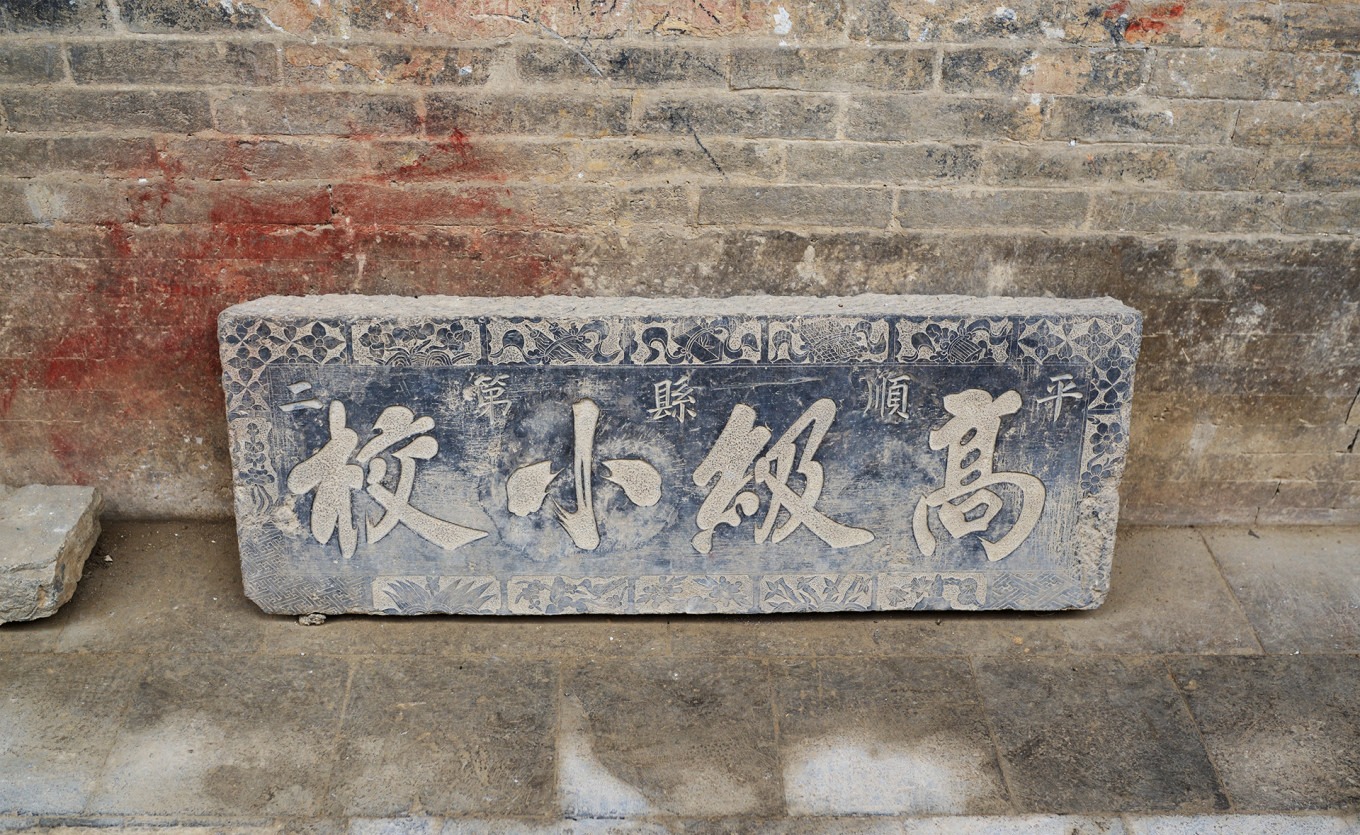
Beyond the buildings, Longmen Temple houses over sixty steles dating from the Five Dynasties to the Republican era—roughly one stele every twenty to thirty years. These stone ‘diaries’ record the temple’s history and the passage of time. The latest stele, from the Republican period, documents how local scholars established a primary school on the temple grounds.
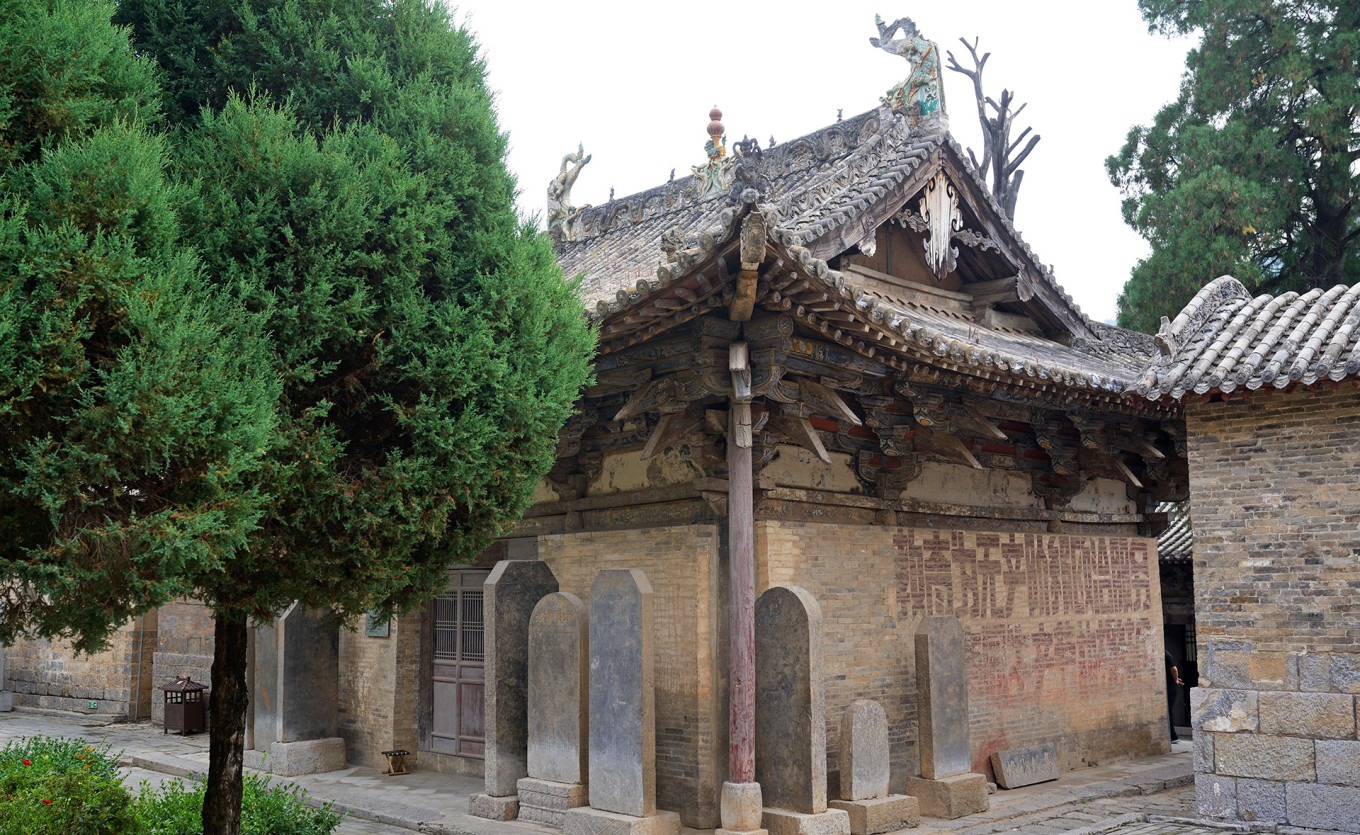
Throughout the temple, you can still see traces of the 20th century. On the outer wall of the Main Hall, the slogan ‘Education must serve proletarian politics’ remains clearly visible. In a sense, converting the temple into a school during that era was a form of protection, sparing these ancient buildings from outright destruction.
After exploring Longmen Temple, your journey through the Zhuozhang River Valley and southeastern Shanxi comes to an end.
Practical Information
Planning a trip to southeastern Shanxi? Here’s what you need to know about transportation, itinerary, and preparation. The best time to visit is during the shoulder season—between Mid-Autumn Festival and National Day—to avoid crowds. Note that Changzhi’s Guanyin Hall (长治观音堂) reopened on September 26, so if you want to include it, consider starting in Jincheng and then heading to Changzhi.
Getting to Jincheng: You can take a high-speed train directly to Jincheng East Station (晋城东站). Alternatively, fly to Zhengzhou Xinzheng Airport (郑州新郑机场) in Henan, where a high-speed train connects directly to Jincheng East Station. Once in the region, public transport is limited—most ancient temples are in rural areas with no bus service. Renting a car is highly recommended. A compact car like a Honda Fit works well on the surprisingly good roads, and its small size makes it easy to navigate narrow village lanes.
A sample 6-day itinerary: Day 1: High-speed train to Jincheng East, pick up rental car, overnight in Jincheng. Day 2: Visit Yuhuang Temple (府城玉皇庙), Guandi Temple (府城关帝庙), Jincheng Museum (晋城博物馆), Erxian Temple (小南村二仙庙), and Wenbi Peak Pagoda (文笔峰塔); overnight Jincheng. Day 3: Qinglian Temple (青莲寺), Chongming Temple (崇明寺), Tiefo Temple (铁佛寺), Dinglin Temple (定林寺), and Kaihua Temple (开化寺); overnight Gaoping. Day 4: Boxian Xianweng Temple (伯方仙翁庙), Wangbao Erlang Temple (王报二郎庙), Faxing Temple (法兴寺), Chongqing Temple (崇庆寺), Bucun Yuhuang Temple (布村玉皇庙), and Guanyin Hall (观音堂); overnight Changzhi. Day 5: Shangdang Gate (上党门), Lu’an Prefecture City God Temple (潞安府城隍庙), Yuhuang Guan (玉皇观), Nannie River Stone Carvings (南涅水石刻), Xiaozhang Biyun Temple (小张碧云寺), and Qianwanhu Tangwang Temple (前万户汤王庙); overnight Changzhi. Day 6: Tiantai Nunnery (天台庵), Yuanqi Temple (原起寺), Dayun Temple (大云院), Fotou Temple (佛头寺), Chunhua Temple (淳化寺), Huilong Temple (回龙寺), Xiayu Shenci (夏禹神祠), and Longmen Temple (龙门寺); return car at Changzhi East Station, take high-speed train home.
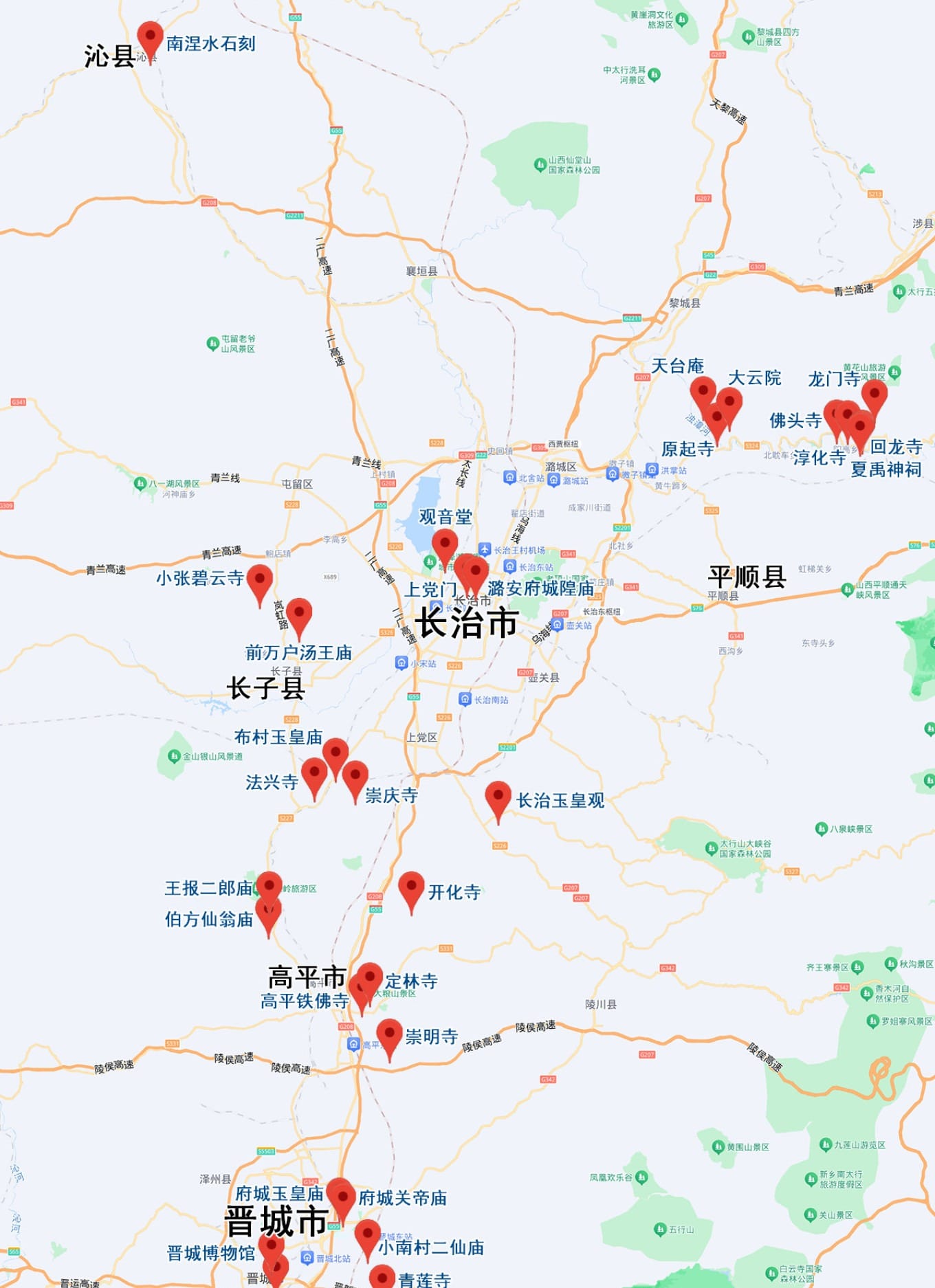
For accommodation, consider staying in Jincheng (2 nights), Gaoping (1 night), and Changzhi (2 nights). Newly opened budget chain hotels offer good value, especially outside peak season, and most have parking—essential for road trippers.
One final tip: Shanxi’s attractions are mostly ancient architecture and cultural sites with deep historical roots. There’s a learning curve. If you’re not already a connoisseur of wooden architecture, painted sculptures, or murals, do your homework before you go. Read up on the key features of each site, so when you arrive, you’ll know exactly what to look for. This trip is not just a visual feast—it’s a journey through history that leaves you in awe.
FAQ
Is southeast Shanxi worth visiting for ancient architecture?
Yes. Southeast Shanxi is one of the strongest regions in China for surviving timber architecture, temple murals, rural halls, and less crowded cultural sites.
Do you need a car for the Changzhi temple route?
A car, hired driver, or carefully arranged private transfer is the most practical choice because many temples sit outside town and public transport can be limited.
How should I combine Changzhi with Taiyuan?
Use Taiyuan as the northern anchor for Jinci, museums, pagodas, and arrival logistics, then continue south or southeast toward Changzhi, Pingshun, and temple villages.
Enjoyed this article? Consider buying me a coffee to support more content like this!
💖 0 people have clicked to support this article.