China’s 240-Hour Visa-Free Transit
2,816 words, 15 minutes read time.


travel better
Quick Answer
China’s 240-hour visa-free transit lets eligible travelers visit parts of mainland China for up to 10 days while transiting to a third country or region. As of the latest National Immigration Administration update checked for this guide, the policy covers 55 eligible countries and 65 designated ports across 24 provincial-level regions.
The key rule is that your route must be a real transit: Country or region A -> Mainland China -> Country or region B. Hong Kong, Macau, and Taiwan are treated as separate regions for this purpose, so routes such as London -> Beijing -> Hong Kong can qualify if all other requirements are met.
Short China trips during an international journey
Passport, confirmed onward ticket, accommodation details, and trip plan
240 hours, counted from 00:00 on the day after entry
Eligible nationality, exact port, route, and permitted travel area
IMPORTANT DISCLAIMER: This article incorporates the latest significant updates to China’s Transit Visa Exemption policy announced by the National Immigration Administration (NIA). However, visa policies can be subject to further adjustments. Before planning your trip and traveling, you MUST verify the latest policies with the official website of the Chinese Embassy or Consulate in your country/region, or through official channels of China’s National Immigration Administration (NIA).
Exciting news for international travelers! China has significantly expanded and optimized its Transit Visa Exemption (TWOV) policy, extending the permissible stay from the previous 72 or 144 hours to a generous 240 hours (10 days) for eligible nationals from 55 countries.
China’s major cities like Shanghai are now more accessible with the extended 240-hour visa-free transit
This major enhancement, effective immediately as of the latest announcement from China’s National Immigration Administration, also now includes 65 designated entry/exit ports across 24 provinces, autonomous regions, and municipalities, with broader permitted areas of activity.
“The value of the 240-hour policy is not simply the longer stay. It is the ability to plan a real stopover, as long as your nationality, route, entry port, onward ticket, and permitted travel area all match the official transit rules.”
This guide will detail everything you need to know about the new 240-hour visa-free transit policy.
The 240-hour visa-free transit policy currently applies to citizens of 55 countries. Indonesia was added to the list in 2025, so older lists that mention 54 countries are now outdated.
European Countries (40):
- Austria
- Belgium
- Czech Republic
- Denmark
- Estonia
- Finland
- France
- Germany
- Greece
- Hungary
- Iceland
- Italy
- Latvia
- Lithuania
- Luxembourg
- Malta
- Netherlands
- Poland
- Portugal
- Slovakia
- Slovenia
- Spain
- Sweden
- Switzerland
- Monaco
- Russia
- United Kingdom
- Ireland
- Cyprus
- Bulgaria
- Romania
- Ukraine
- Serbia
- Croatia
- Bosnia and Herzegovina
- Montenegro
- North Macedonia
- Albania
- Belarus
- Norway
Americas, Oceania, and Asia:
- American Countries (6): United States, Canada, Brazil, Mexico, Argentina, Chile
- Oceanian Countries (2): Australia, New Zealand
- Asian Countries (7): South Korea, Japan, Singapore, Brunei, United Arab Emirates, Qatar, Indonesia
Practical tip: Nationality eligibility is based on the passport you use to enter China. If you hold more than one passport, make sure your ticket, passport, and onward travel documents match.
55 countries now qualify for China’s 240-hour visa-free transit policy
To be eligible for the 240-hour visa-free transit, applicants must meet the following conditions:
Nationality Requirement
You must be a citizen of one of the 55 countries listed above.
Passport Requirement
- Hold a valid international travel document (passport) with at least 3 months of validity from the date of entry.
- Meet the entry requirements for the third country (or region) you are transiting to.
Itinerary Requirement
- Hold a connecting ticket (e.g., an onward air ticket) or relevant proof with a confirmed date and seat to a third country or region within 240 hours (10 days) of arrival in China.

Proper documentation is essential for visa-free transit approval
Entry Procedures
- Fill out an “Arrival Card for Temporary Entry Foreigners.”
- Undergo inspection and questioning by China’s immigration inspection authorities at the port of entry.
Crucial Itinerary Note
Your journey must be Country A → China (transit) → Country B.
- Example of an eligible itinerary: New York (USA) → Shanghai (China) → Bangkok (Thailand).
- Example of an ineligible itinerary: New York (USA) → Shanghai (China) → Los Angeles (USA).
Hong Kong, Macau, and Taiwan are considered separate regions from mainland China for this policy. Therefore, an itinerary like London (UK) → Beijing (China) → Hong Kong is eligible.
Eligible foreigners can apply for the 240-hour visa-free transit at immigration inspection authorities at 65 designated ports across 24 provinces, autonomous regions, and municipalities. The 240-hour (10-day) stay period begins from 00:00 on the day following entry.
Provincial Coverage and Common Ports
| Province/Region | Applicable Ports | Permitted Area of Stay |
|---|---|---|
| Beijing | Beijing Capital Int’l Airport, Beijing Daxing Int’l Airport | Beijing Municipality |
| Tianjin | Tianjin Binhai Int’l Airport, Tianjin International Cruise Home Port | Tianjin Municipality |
| Hebei | Shijiazhuang Zhengding Int’l Airport, Qinhuangdao Port | Hebei Province |
| Liaoning | Shenyang Taoxian Int’l Airport, Dalian Zhoushuizi Int’l Airport, Dalian Port | Liaoning Province |
| Shanghai | Shanghai Hongqiao Int’l Airport, Shanghai Pudong Int’l Airport, Shanghai Port | Shanghai Municipality |
| Jiangsu | Nanjing Lukou Int’l Airport, Sunan Shuofang Int’l Airport, Yangzhou Taizhou Int’l Airport, Lianyungang Port | Jiangsu Province |
| Zhejiang | Hangzhou Xiaoshan Int’l Airport, Ningbo Lishe Int’l Airport, Wenzhou Longwan Int’l Airport, Yiwu Airport, Wenzhou Port, Zhoushan Port | Zhejiang Province |
| Anhui (New) | Hefei Xinqiao Int’l Airport, Huangshan Tunxi Int’l Airport | Anhui Province (Entire Province) |
| Fujian | Fuzhou Changle Int’l Airport, Xiamen Gaoqi Int’l Airport, Quanzhou Jinjiang Int’l Airport, Wuyishan Airport, Xiamen Port | Fujian Province (Entire Province – Expanded) |
| Shandong | Jinan Yaoqiang Int’l Airport, Qingdao Jiaodong Int’l Airport, Yantai Penglai Int’l Airport, Weihai Dashuibo Int’l Airport, Qingdao Port | Shandong Province |
| Henan | Zhengzhou Xinzheng Int’l Airport | Henan Province |
| Hubei | Wuhan Tianhe Int’l Airport | Hubei Province (Entire Province – Expanded) |
| Hunan | Changsha Huanghua Int’l Airport, Zhangjiajie Hehua Int’l Airport | Hunan Province |
| Guangdong | Guangzhou Baiyun Int’l Airport, Shenzhen Bao’an Int’l Airport, Jieyang Chaoshan Int’l Airport, Guangzhou Pazhou Ferry Terminal, Shenzhen Shekou Port, Shenzhen Huanggang Port, Shenzhen Luohu Port, Zhuhai Port, Hengqin Port, Hong Kong-Zhuhai-Macao Bridge Zhuhai Port, Gongbei Port, Zhongshan Port, Shantou Port | Guangdong Province |
| Hainan (New) | Haikou Meilan Int’l Airport, Sanya Phoenix Int’l Airport | Hainan Province (Entire Province) |
| Chongqing | Chongqing Jiangbei Int’l Airport | Chongqing Municipality |
| Guizhou (New) | Guiyang Longdongbao Int’l Airport | Guizhou Province (Entire Province) |
| Shaanxi | Xi’an Xianyang Int’l Airport | Shaanxi Province (Entire Province – Expanded) |
| Shanxi (New) | Taiyuan Wusu Int’l Airport | Taiyuan City, Datong City |
| Heilongjiang | Harbin Taiping Int’l Airport | Harbin City |
| Jiangxi (New) | Nanchang Changbei Int’l Airport | Nanchang City, Jingdezhen City |
| Guangxi | Nanning Wuyu Int’l Airport, Guilin Liangjiang Int’l Airport, Beihai Fucheng Airport, Beihai Port | Nanning, Guilin, Beihai, Liuzhou, Wuzhou, Fangchenggang, Qinzhou, Guigang, Yulin, Hezhou, Hechi, Laibin (12 cities) |
| Sichuan | Chengdu Shuangliu Int’l Airport, Chengdu Tianfu Int’l Airport | Chengdu, Luzhou, Deyang, and 8 other cities (total 11 cities) |
| Yunnan | Kunming Changshui Int’l Airport, Lijiang Sanyi Int’l Airport, Mohan Railway Port | Kunming, Lijiang, Xishuangbanna, and 6 other prefectures/cities (total 9 prefectures/cities) |
Note: This table summarizes the 24 provincial-level regions covered by the 240-hour visa-free transit policy and major commonly used ports. Because port lists can change, confirm the exact eligible port on the National Immigration Administration website before booking.
One of the most significant enhancements is the ability for transiting foreigners to travel across provinces within the permitted areas of stay of these 24 provinces/regions.
Key Ports and Permitted Areas
Beijing
Ports: Beijing Capital Int’l Airport, Beijing Daxing Int’l Airport
Permitted Area: Beijing Municipality
Shanghai
Ports: Shanghai Hongqiao Int’l Airport, Shanghai Pudong Int’l Airport, Shanghai Port
Permitted Area: Shanghai Municipality
Guangdong
Ports include: Guangzhou Baiyun Int’l Airport, Shenzhen Bao’an Int’l Airport, Jieyang Chaoshan Int’l Airport, Shekou Port, Luohu Port, Gongbei Port, Hengqin Port, Hong Kong-Zhuhai-Macao Bridge Zhuhai Port, Zhongshan Port, Shantou Port
Permitted Area: Guangdong Province
Newly Added Provinces
Anhui, Guizhou, Hainan, Jiangxi, Shanxi now fully included with expanded permitted areas
Major Expansion
Fujian, Hubei, Shaanxi now allow travel throughout entire province
Cross-Provincial Travel
Example: Enter through Shanghai, visit Hangzhou (Zhejiang), Suzhou (Jiangsu), then depart from Nanjing
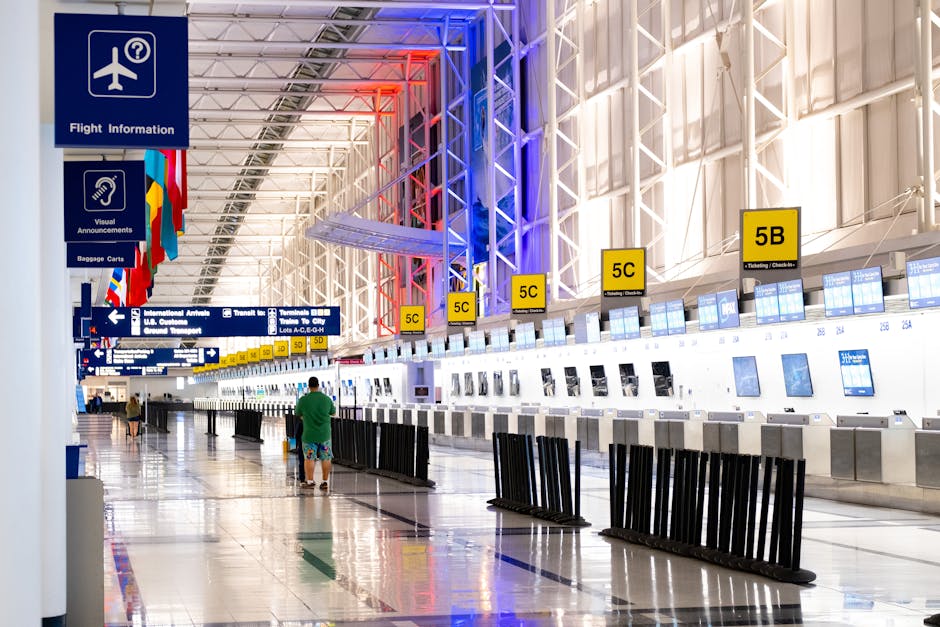
Designated ports now include 65 air, sea, rail, and land ports across China
Duration of Stay
A maximum of 240 hours (10 days), calculated from 00:00 on the day following entry.
Permitted Area of Activity
You can travel within the designated areas of the 24 provinces (autonomous regions and municipalities) listed in the table above, including cross-provincial travel within these permitted zones.
Special Provisions
If your country has a mutual visa exemption agreement with China or is eligible for a unilateral visa exemption policy that offers different terms (e.g., longer stay), you may be able to choose the more favorable policy. Consult with immigration officials upon arrival.
“The main planning advantage is broader movement within approved areas, but this is still not a national open-travel permission. Check the permitted stay area for your actual entry port before building a multi-city route.”
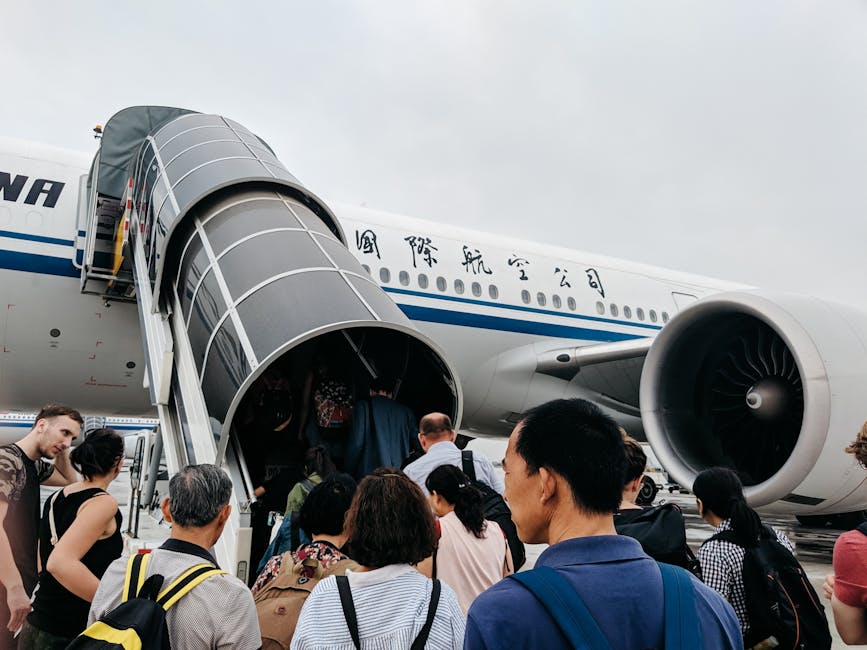
China’s efficient high-speed rail network makes cross-provincial travel easy during your 10-day stay
- Onward Ticket is Key: You must have a confirmed onward ticket to a third country or region. Failure to provide this may result in denied entry under the transit policy.
- Immigration Inspection: Be prepared for questioning by immigration officials. They may ask for supporting documents such as hotel reservations or your travel itinerary within China.
- No Overstaying: Overstaying the 240-hour limit will result in penalties, including fines and potential future entry restrictions.
- Policy Changes: While this is a major and positive update, policies can always be adjusted. It’s highly recommended to check the latest announcements from the National Immigration Administration (NIA) or the relevant Chinese Embassy/Consulate before your trip.
- Accommodation Registration: Upon arrival, if you are not staying in a hotel (which typically handles this for you), you must register your temporary residence with the local police station within 24 hours.
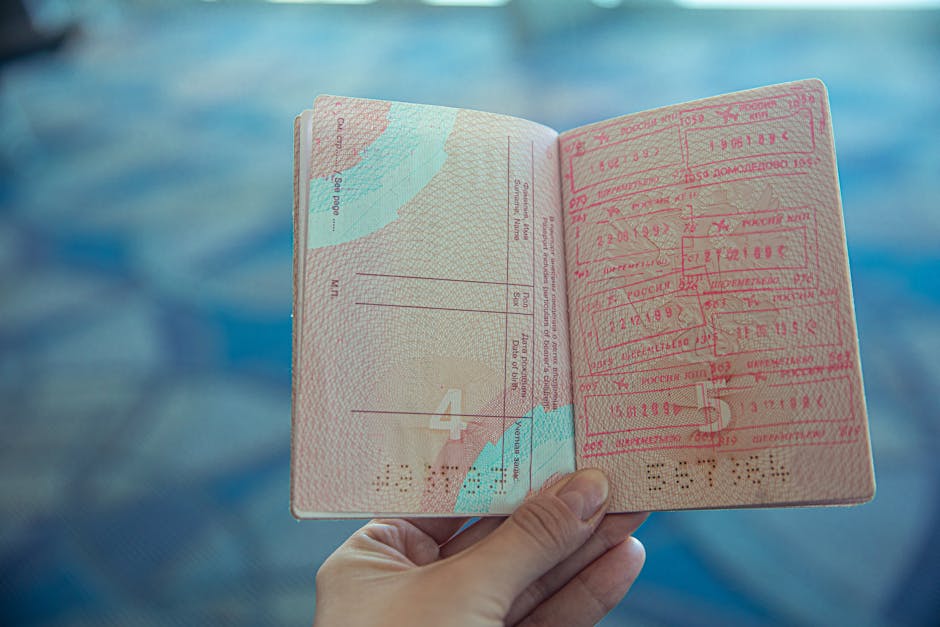
Ensure your passport gets the correct entry stamp indicating visa-free transit
❓ Can I transit through Hong Kong or Macau and still be eligible?
✅ Yes, this is perfectly fine! For the purpose of this transit policy, Hong Kong SAR and Macau SAR (and Taiwan) are considered “third countries/regions” distinct from Mainland China. So, an itinerary like London → Beijing (transit stay) → Hong Kong (final destination or further transit) is eligible.
❓ After my 240-hour visa-free transit ends, can I immediately re-enter Mainland China from Hong Kong for another 240-hour visa-free transit?
✅ Generally, yes, this should be possible, provided you meet all criteria for each transit. Each entry under the transit policy is treated as a new application. So, if you depart Mainland China to Hong Kong (a third region), and then have a valid ticket from Hong Kong transiting through Mainland China to a different third country (like Canada), you can apply for the 240-hour visa-free transit again upon arrival in Shanghai from Hong Kong. The key is that for each transit entry into Mainland China, you must be en route to a different subsequent international destination.
❓ Do I need to enter and exit Mainland China through the same port/city?
✅ Not necessarily the same port, but your travel must adhere to the permitted regions for the ports you use. The current policy allows entry at any of the 65 designated ports and permits cross-provincial travel within the 24 designated provinces/regions. For example, you could enter through Shanghai and, after traveling within the permitted Yangtze River Delta region (and other permitted interconnected regions), depart from Nanjing or Hangzhou if your onward international flight is from there.
❓ What specific documents should I have ready besides my passport and onward ticket?
✅ While the primary documents are your valid passport (with at least 3 months validity) and your confirmed onward ticket to a third country/region within 240 hours, it’s wise to also have:
- A copy of your travel itinerary within China
- Hotel reservations (if any)
- Completed arrival card
More FAQ Highlights
❓ Can I work or study during my 240-hour stay?
No. The 240-hour visa-free transit is strictly for transit purposes, which can include tourism, visiting friends/family, or short-term business discussions related to your transit.
❓ What if my onward flight is delayed or cancelled?
Immediately contact the Public Security Bureau (PSB) Exit-Entry Administration office in the city you are in. Explain the situation and provide proof from the airline. Do not simply overstay.
With a generous 240 hours (10 days) and the ability to travel within the permitted areas of 24 provinces/regions, your transit stop in China can transform into an exciting mini-adventure! Here are four curated itinerary themes to inspire you, utilizing the new policy’s flexibility.
Theme 1: Imperial Grandeur & Ancient Wonders (North China Focus)
Possible Entry Ports: Beijing (PEK/PKX), Tianjin (TSN), Shijiazhuang (SJW)
Possible Exit Ports: Xi’an (XIY), Beijing (PEK/PKX), Shanghai (PVG/SHA)
Key Highlights: Imperial palaces, Great Wall, Terracotta Army
Days 1-4: Beijing
- Explore the Forbidden City, Tiananmen Square, Temple of Heaven
- Hike a section of the Great Wall (Mutianyu or Badaling)
- Wander through the Summer Palace and old Hutongs
Days 5-7: Xi’an (Shaanxi Province)
- Marvel at the Terracotta Warriors
- Cycle atop the ancient City Wall
- Explore the Muslim Quarter and the Great Mosque
Days 8-9: Options based on interest
Option A (History & Culture):
Fly to Luoyang or Zhengzhou for Longmen Grottoes or Shaolin Temple
Option B (Mountain Scenery):
Fly to Taiyuan/Datong for Yungang Grottoes or Mount Wutai
Day 10: Depart China
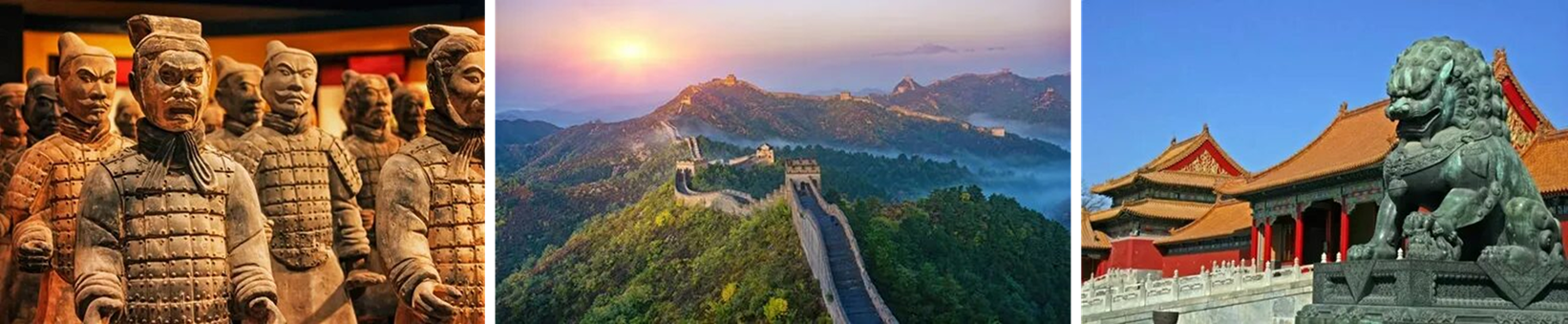
Theme 2: Modern Marvels & Water Town Charm (East China Focus)
Possible Entry/Exit Ports: Shanghai (PVG/SHA), Hangzhou (HGH), Nanjing (NKG)
Key Highlights: Futuristic cities, classical gardens, water towns
Days 1-3: Shanghai
- Walk The Bund, explore Pudong’s skyline (Oriental Pearl Tower)
- Visit Yu Garden, Jing’an Temple, and French Concession
- Enjoy diverse culinary experiences
Days 4-5: Suzhou (Jiangsu Province)
- Explore classical Chinese gardens (Humble Administrator’s Garden)
- Take a canal boat ride
Days 6-7: Hangzhou (Zhejiang Province)
- Cycle around West Lake, visit Leifeng Pagoda
- Explore Lingyin Temple and tea plantations
Days 8-9: Options based on interest
Option A (Historical Capital):
Travel to Nanjing to visit Sun Yat-sen Mausoleum
Option B (Nature):
Visit Huangshan (Yellow Mountain) for stunning scenery
Day 10: Depart China

Theme 3: Southern Flavors & Scenic Landscapes (South & Southwest Focus)
Possible Entry/Exit Ports: Guangzhou (CAN), Chengdu (CTU), Guilin (KWL)
Key Highlights: Pandas, karst mountains, tropical beaches
Days 1-3: Chengdu (Sichuan Province)
- Visit the Giant Panda Breeding Research Base
- Explore Jinli Ancient Street and Kuanzhai Alleys
- Indulge in Sichuan hotpot
Days 4-6: Guilin & Yangshuo (Guangxi)
- Take a Li River cruise
- Cycle through karst landscapes
- Watch “Impression Liu Sanjie” show
Days 7-9: Options based on interest
Option A (Tropical Escape):
Fly to Hainan for beaches and resorts
Option B (Unique Landscapes):
Explore Guizhou’s waterfalls and villages
Day 10: Depart China

Theme 4: “Pick & Mix” – Cross-Provincial Freedom
With the expanded policy allowing travel across 24 provinces/regions, create your unique itinerary:
Sample Combination:
- Days 1-3: Beijing (North)
- Days 4-6: Shanghai (East)
- Days 7-9: Chengdu (Southwest)
- Day 10: Depart from Chengdu
Planning Tips:
- Use high-speed trains between major cities
- Book domestic flights in advance
- Stay within permitted regions
“Use these itinerary themes as inspiration, then verify every city and port against the permitted stay area for your entry and exit route.”

China’s new 240-hour (10-day) visa-free transit policy is a fantastic development for eligible international travelers. It provides a significantly longer window to explore major cities and regions, experience diverse cultures, and even undertake multi-city itineraries within the permitted zones without the need for a standard tourist visa.
Key Advantages:
- Extended 10-day stay (vs previous 3-6 days)
- Expanded geographical coverage (24 provinces)
- Cross-provincial travel flexibility
- More entry/exit port options (65 total)
Remember:
- Always verify current policy before travel
- Ensure you meet all eligibility requirements
- Have confirmed onward travel arrangements
- Stay within permitted areas and time limit

With proper planning, China’s 240-hour visa-free transit offers unforgettable experiences
If you require a longer stay or your purpose of visit is other than transit (e.g., work, study), you will still need to apply for the appropriate Chinese visa.
Sources checked May 15, 2026: China National Immigration Administration 240-hour transit visa exemption guidance and the State Council/NIA update on the Nov. 3, 2025 expansion. Check the official NIA policy page and your Chinese embassy or consulate before booking.
Practical FAQ
Can I use China’s 240-hour visa-free transit for a round trip?
Usually no. The 240-hour transit policy is for travelers transiting through China to a third country or region, so a simple round trip such as Country A to China and back to Country A normally does not qualify.
When does the 240-hour visa-free transit period start?
After border inspection issues the temporary entry permit, the stay period is normally counted from 00:00 on the day after entry. Still, you should confirm the exact timing with the border officer and keep your onward ticket safely within the allowed window.
Can I travel anywhere in China during the 240 hours?
No. You must stay within the permitted areas connected to your approved entry port and route. Do not leave the allowed region just because the policy gives you up to 240 hours.
Enjoyed this article? Consider buying me a coffee to support more content like this!
💖 1 people have clicked to support this article.