eSIM Cards in China: Internet Option for Foreign Tourists
2,304 words, 12 minutes read time.


travel better
On this page
A practical 2026 guide to travel eSIMs, local SIM cards, roaming, phone-number limits, and backup internet access in China.
Quick Answer
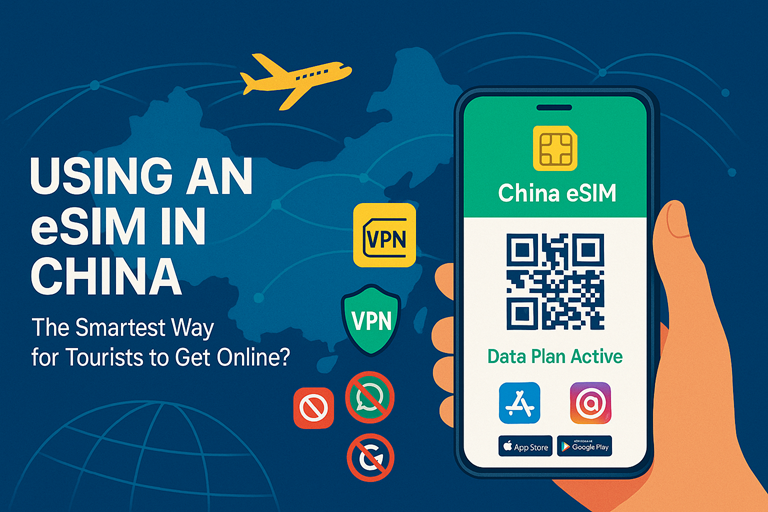
For most short-term visitors, a travel eSIM is the easiest way to get mobile data in China before landing. Treat it mainly as a data plan: many travel eSIMs do not include a local Chinese phone number, so they may not solve every SMS verification or local-calling problem.
China’s three major carriers rolled out domestic phone eSIM services nationwide in October 2025, but that is a different product from most tourist travel eSIMs. In 2026, visitors should still check device model, carrier rules, passport activation, and whether a physical local SIM is simpler if they need a reliable +86 number.
Instant data on arrival
Usually no local Chinese phone number
Available but device and store rules may vary
Physical SIM or roaming plan
The way travelers connect in China keeps changing. A travel eSIM can be the cleanest way to land with data already working, but it is not the same as a local Chinese phone number and it does not automatically guarantee access to every global app. This guide separates the practical choices: travel eSIM, domestic carrier eSIM, local physical SIM, roaming, and VPN backup.
I. What is an eSIM?
An eSIM (embedded Subscriber Identity Module) is a digital SIM card that is built into your smartphone or device by the manufacturer. Instead of a physical, swappable nano-SIM card, your phone has a small chip that can be programmed with mobile plan information from various carriers. You download a “profile” from an eSIM provider, which then allows your device to connect to a local mobile network.
Key Characteristics:
- Embedded: It's part of your phone's hardware.
- Digital: Plans are downloaded and activated digitally, often via a QR code or an app.
- Flexible: You can store multiple eSIM profiles on one device (though usually only one or two can be active at a time, alongside a physical SIM if your phone supports Dual SIM functionality).
II. Advantages of Using an eSIM for Tourists in China
eSIMs offer several significant benefits, particularly appealing for international travel to a country like China:
Pre-Arrival Setup & Instant Connectivity
This is arguably the biggest advantage. You can research, purchase, and install your China eSIM plan before you even leave home. Upon landing in China, you simply activate the eSIM (or it activates automatically upon detecting a Chinese network), and you have data access immediately. No need to find a SIM card vendor at the airport, deal with language barriers, or queue for registration.
Convenience and Simplicity
No fumbling with tiny SIM cards, ejector tools, or worrying about losing your home SIM. The entire process, from purchase to activation, is digital.
Keep Your Home SIM Active (Dual SIM Functionality)
Most eSIM-compatible phones are also Dual SIM capable (either Dual eSIM or one eSIM + one physical SIM). This means you can keep your home physical SIM in your phone for calls and texts (be mindful of roaming charges from your home carrier!) while using the eSIM for affordable data in China. This is great for receiving important SMS from home (like bank verification codes) without needing two phones.
Possible Easier Access to Some Global Services
This is the point to check carefully before purchase. Some international travel eSIMs route data outside mainland China, often through Hong Kong or another region, which may make some global services easier to reach. Others behave more like ordinary mainland mobile data. Verify the plan’s routing and supported services before paying, and keep a VPN or other backup ready if global app access matters to you.
Competitive Data Packages
While perhaps not always as cheap per GB as some local physical SIM deals found in city stores, travel eSIMs often offer competitive data packages tailored for tourists (e.g., 5GB for 7 days, 10GB for 15 days, 20GB for 30 days).
Easy to Switch and Manage
You can easily switch between different eSIM profiles if you have multiple stored, or switch between your eSIM and physical SIM for data use. Topping up or buying a new plan is usually done through the provider's app or website.
No Chinese Phone Number Required for Purchase/Activation
Unlike buying a physical local SIM in China which requires passport registration and often a local address (hotel is fine), purchasing a travel eSIM online typically only requires payment.

III. Potential Disadvantages and Considerations for eSIMs in China
While attractive, eSIMs are not without their drawbacks:
Device Compatibility
Not all smartphones support eSIM technology. It's generally found on newer, higher-end models. You must check if your specific phone model is eSIM compatible and unlocked before purchasing an eSIM plan.
Commonly compatible devices include:
- Newer iPhones (iPhone XS, XR, 11 series and later)
- Google Pixel phones (Pixel 3a and later)
- Newer Samsung Galaxy S & Z series (check specific regional models)
- Some Motorola, Huawei (international versions), and other Android devices.
Cost
While convenient, eSIM plans from international providers can sometimes be more expensive per gigabyte than buying a local physical SIM from a Chinese carrier store, especially if you need a large data allowance. The premium may still be worth it for short trips because setup is faster and can be completed before departure.
Mostly Data-Only
Most travel eSIMs for China are data-only. They typically do not come with a local Chinese phone number or traditional voice/SMS allowances. For communication, you will rely on data-based apps such as WeChat, FaceTime Audio, Skype, or other services that work on your connection. If you need +86 SMS verification for local services, plan for a physical local SIM or confirm domestic eSIM activation rules with a Chinese carrier.

Activation May Require Initial Internet Connection
To download and install the eSIM profile (usually via a QR code), you often need an existing internet connection (e.g., Wi-Fi at home or at the airport before your original SIM stops roaming). Some allow offline installation if you've saved the QR code.
Reliance on Provider Support
If you encounter issues, you'll need to contact the eSIM provider's customer support, which will be online. Ensure they offer good support channels.
Routing and Access Can Vary by Provider
If the eSIM provider does not clearly explain mainland China routing, assume global app access may be limited. Do not buy only because a review says it worked for someone else. Check the provider’s current China page, refund terms, hotspot rules, and whether the plan uses a mainland carrier profile, roaming profile, or international routing partner.
No Local Chinese Phone Number
While an advantage for simplicity, not having a local Chinese number can be a minor inconvenience if you need to use certain local services that require SMS verification with a +86 number (e.g., some public Wi-Fi hotspots, some local apps). However, for most tourist needs, this is not a major issue.
IV. How to Get and Set Up an eSIM for China: A Step-by-Step Guide
Step 1: Check Device Compatibility & Unlock Status
Verify that your smartphone supports eSIM. You can usually find this in your phone's settings (search for “eSIM” or “add mobile plan”) or on the manufacturer's website. Ensure your phone is “unlocked” (not tied to a specific carrier). If you bought it outright, it likely is. If it's on a contract, check with your home carrier.
Step 2: Choose an eSIM Provider and Plan
Research international eSIM providers that offer mainland China plans, but compare the plan details rather than relying on a generic provider list. Useful checks include:
- Whether the plan is data-only or includes calls/SMS.
- Whether the provider explains China routing and global app access clearly.
- Whether tethering/hotspot is allowed.
- Whether top-ups are available during the trip.
- Whether your exact phone model and purchase region support eSIM.
- Refund terms if activation fails before travel.
Compare plans based on:
- Data allowance (GB)
- Validity period (days)
- Price
- Network coverage (they usually partner with one or more of China Mobile, China Unicom, or China Telecom)
- Crucially: Does it claim to bypass the GFW?
- Customer reviews
Step 3: Purchase the eSIM Plan Online
Buy your chosen plan from the provider's website or app. You'll typically pay with a credit card or PayPal.
Step 4: Receive Activation Details (Usually a QR Code)
After purchase, the provider will email you instructions, which usually include a QR code. Sometimes they offer manual setup details as well.
Step 5: Install the eSIM Profile on Your Phone (Do this before travel or on Wi-Fi upon arrival)
For iOS (iPhone):
- Go to Settings > Cellular (or Mobile Data).
- Tap “Add Cellular Plan” or “Add eSIM.”
- Scan the QR code provided by your eSIM provider.
- Follow the on-screen prompts to label your new plan (e.g., “China Travel eSIM”).
For Android (e.g., Google Pixel, Samsung):
- Go to Settings > Network & internet > SIMs (or Connections > SIM card manager).
- Tap the “+” icon or “Add eSIM” (wording may vary).
- Select “Download a SIM instead?” or “Scan QR code.”
- Scan the QR code.
- Follow the on-screen prompts.

Step 6: Configure Settings for Use in China
Data Roaming: Once the eSIM is installed, you'll likely need to enable Data Roaming for that specific eSIM plan for it to work in China (as it's “roaming” onto a Chinese network partner). This is normal and usually doesn't incur extra charges beyond your eSIM plan cost.
Primary Data Line: Set your new travel eSIM as the primary line for mobile data.
Keep Home SIM (Optional): You can choose to keep your home SIM active for calls/texts or turn it off to avoid roaming charges.
Step 7: Activate Upon Arrival (or as per provider instructions)
Some eSIMs activate automatically when they connect to a supported network in China. Others might require you to manually select the network or turn on the eSIM line in your settings. Follow your provider's specific instructions.
Tip: Want a trusted and easy option? Check Airalo China eSIM plans as one comparison point, then verify routing, hotspot, top-up, and refund details before buying.
V. Using Your eSIM in China: Practical Tips
GFW & VPN
If your eSIM provider says global services work through international routing, test only ordinary services you actually need and keep a backup. If access is unreliable, use the layered plan from the VPN and internet access guide: install before arrival, keep offline copies, and do not depend on one app or one network.
Network Selection
Your phone will usually automatically connect to the partner network (China Mobile, China Unicom, or China Telecom). If you have issues, you might be able to manually select a network in your phone's cellular settings.
Check Data Usage
Monitor your data consumption through your phone's settings or the eSIM provider's app (if they have one) to avoid running out unexpectedly.
Topping Up
If you need more data, check if your provider allows top-ups or if you need to purchase a new plan. Some providers allow top-ups in their app; confirm this before departure and save the support page offline.

VI. eSIM vs. Local Physical SIM vs. Pocket Wi-Fi in China: A Quick Comparison
| Feature | eSIM | Local Physical SIM | Pocket Wi-Fi |
|---|---|---|---|
| Setup Location | Before travel (home) | Upon arrival in China | Pre-booked or upon arrival |
| Convenience | Very High | Moderate (requires purchase & registration) | Moderate (extra device to carry/charge) |
| Global App Access | Depends on routing and provider | Mainland routing; use backups if needed | Mainland routing; backup needed on devices |
| Phone Number | Usually data-only (no local number) | Yes (local Chinese number) | No (data only) |
| Device Comp. | Newer, compatible phones only | Any unlocked phone | Any Wi-Fi enabled device |
| Keep Home SIM? | Yes (Dual SIM) | No (unless phone has Dual Physical SIMs) | Yes |
| Cost | Moderate to High | Low to Moderate | Moderate (rental + data) |
| Instant Internet | Yes (upon landing) | After purchase/activation | After setup |

Practical FAQ
Is an eSIM enough for a trip to China?
It can be enough for data if your phone supports eSIM and the plan has reliable China coverage. It may not be enough if you need a local +86 number for calls, SMS, or app verification.
Do China travel eSIMs usually include a phone number?
Many travel eSIMs are data-only and do not include a Chinese phone number. Check the plan details before buying if you need SMS, calls, or account verification.
Does an eSIM replace the need for a VPN in China?
Not always. Some travel eSIMs route traffic outside mainland networks, but access can vary by provider and route. Prepare a VPN or offline tools if you rely on blocked overseas apps.
VII. Conclusion: Is an eSIM the Right Choice for Your China Trip?
For many foreign tourists, especially short-term visitors with compatible unlocked phones, a travel eSIM is a strong first choice for data in China. Its real advantage is pre-arrival setup and fast landing-day connectivity. Its weakness is that it usually does not provide a Chinese phone number, and global app access depends on the provider’s routing.
However, it's crucial to:
- Verify your phone's eSIM compatibility and unlock status.
- Choose a provider that clearly explains China coverage, routing, hotspot rules, top-ups, and refund terms.
- Compare costs with the potential of getting a local physical SIM if budget is your absolute top priority and you don't mind the on-arrival process.
If convenience and instant data matter most, start with a travel eSIM. If you need a local phone number for app verification, ride-hailing, delivery, or customer calls, compare it with a local SIM card before you leave.
Check routing, hotspot, top-up, and refund details before buying

Enjoyed this article? Consider buying me a coffee to support more content like this!
💖 0 people have clicked to support this article.