
Yunnan Travel Guide for Slow Travelers
Plan a slower Yunnan route through Dali, Xizhou, Shaxi, Lijiang, Shangri-La, markets, guesthouses, food, seasons, and transport.


travel better
On this page
A practical destination guide for planning Yunnan around Dali, Xizhou, Shaxi, Lijiang, Shangri-La, markets, guesthouses, food, mountain weather, and time on the ground.
Last updated: May 17, 2026
Quick Answer
Yunnan is best when you choose it as a real route, not as a two-night ornament on a national itinerary. The province rewards old towns, courtyard guesthouses, markets, mountain roads, regional food, tea-road history, and quiet mornings. If you only want a fast checklist, Yunnan can feel inefficient. If you want atmosphere, it can become the most memorable part of a China trip.
For a first Yunnan trip, choose one clear line. Seven days can cover Dali and Lijiang at a simple pace. Ten to fourteen days lets you add Xizhou, Shaxi, Weishan, or Shangri-La without turning every transfer into a rush. For a deep route through Dali, Shaxi, and Xizhou, use the detailed slow travel Yunnan itinerary after this hub.
Who Should Choose Yunnan?
Yunnan suits travelers who like slower days and mixed cultural landscapes. It is good for people who want old towns with real residential life, food that changes by valley and ethnicity, mountain views, markets, tea-road stories, and guesthouses where the setting matters. It is less ideal for travelers who need every transfer to be simple, every meal to be predictable, or every day to contain a famous national landmark.
Slow travelers, photographers, food travelers, old-town walkers, guesthouse lovers, and visitors who want a southwest China route.
Road timing, altitude, rain, holiday crowds, and town-to-town transfers matter more than they do in big-city routes.
Use Yunnan as the main route or a clearly protected branch, not a rushed add-on after too many famous cities.
If you are choosing between Yunnan, Guangdong, Shanghai, and a history route, start with where to go in China for a first trip. Yunnan should win when pace and atmosphere matter more than collecting famous names.
Understand Yunnan by Region
Yunnan is not one destination. Dali, Lijiang, Shangri-La, Xishuangbanna, Yuanyang, Kunming, and smaller market towns are different trips. The biggest planning mistake is treating them as if they sit beside each other like metro stops.
Dali, Xizhou, Shaxi, and Weishan
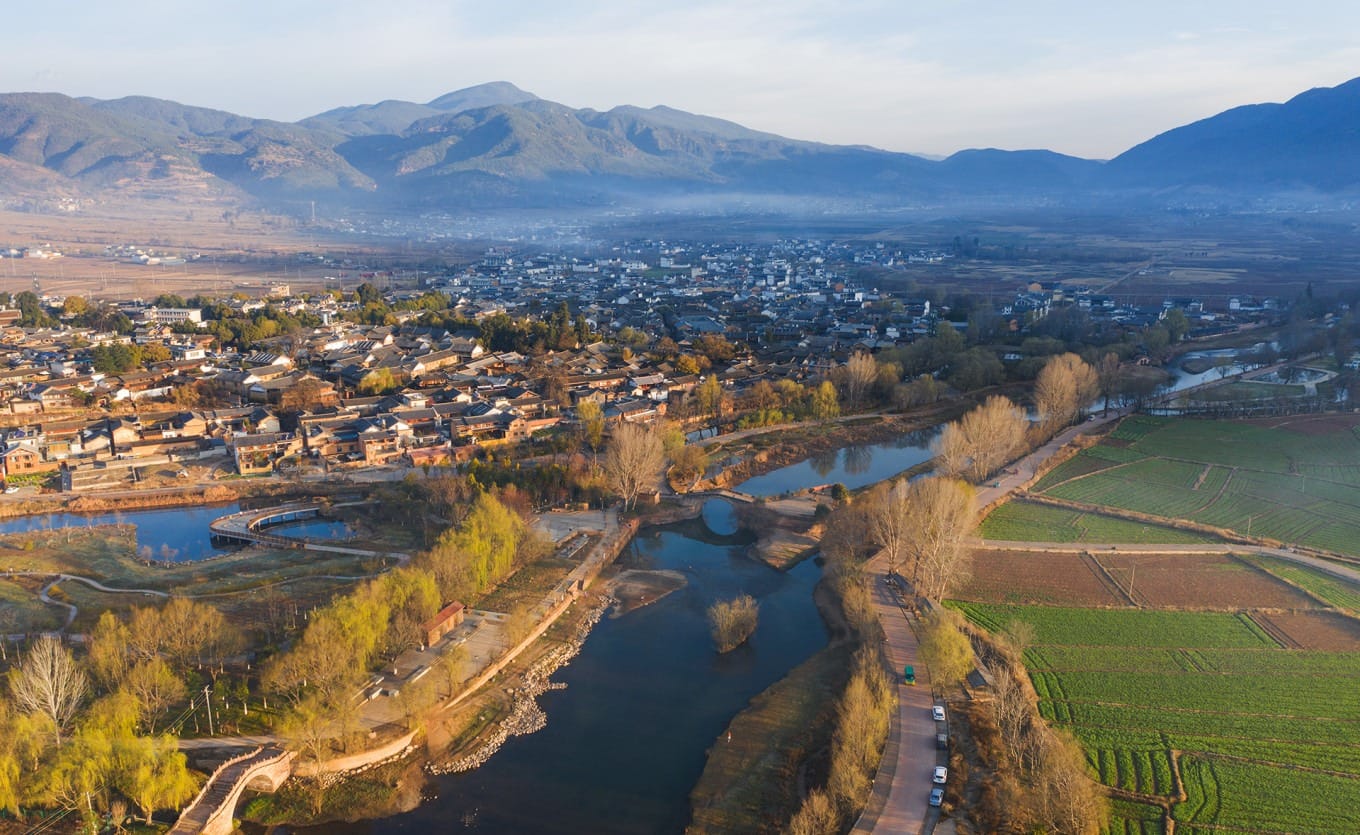
This is the best slow-travel base for many visitors. Dali gives access and services, Xizhou gives Bai architecture and village texture, Shaxi gives Tea Horse Road atmosphere, and Weishan adds food and quieter old-town life. It is the strongest match for travelers who want Yunnan without rushing.
| Region | Best for | Planning note |
|---|---|---|
| Kunming | Arrival city, Stone Forest branch, easier flights and rail | Useful gateway, but not always the emotional core of the trip. |
| Dali and Xizhou | Erhai, Bai architecture, old towns, food, guesthouses | Best first base for slow travelers. |
| Shaxi and Jianchuan | Tea Horse Road atmosphere, markets, courtyards, slower streets | Needs road-transfer planning and usually rewards overnight stays. |
| Lijiang | Old town access, Jade Dragon Snow Mountain, wider service base | Famous and convenient, but can feel crowded if you only stay in the busiest areas. |
| Shangri-La | Higher altitude, Tibetan cultural landscapes, grasslands, monasteries | Do not rush it after sea-level cities; altitude and weather matter. |
| Xishuangbanna or Yuanyang | Tropical south or rice-terrace landscapes | Better as separate branches unless you have enough days. |
Yunnan Route Ideas by Trip Length
Use Yunnan time for depth. A shorter route should choose fewer places, not move faster. If you have only a week, do not try to cover Kunming, Dali, Lijiang, Shangri-La, Xishuangbanna, and rice terraces in one trip.
Choose Dali plus Xizhou, or Dali plus Lijiang. Keep one easy gateway and one main atmosphere base.
Use Kunming or Dali as the gateway, then build Dali -> Xizhou -> Shaxi or Dali -> Lijiang with enough buffer for weather.
Best for slow travel. Add Shaxi, Weishan, or a quieter village stay. This is where the detailed two-week Yunnan guide becomes useful.
Add Shangri-La or another branch only if altitude, season, and transport timing make sense. Otherwise, deepen Dali/Shaxi/Xizhou instead.
Route logic: Yunnan should not be squeezed between Shanghai, Guangdong, and a northern history route unless you have enough days. It is usually better as the main story of the trip.
How to Make Yunnan Feel Like Slow Travel
Yunnan’s best days are often not the famous-ticket days. They are the morning market, the guesthouse courtyard, the walk between fields, the bus station snack, the old stage in a town square, and the second dinner in a place you almost skipped. That means the route needs empty space.

Protect mornings and transfer days
Small-town Yunnan is sensitive to timing. A late arrival can turn a beautiful place into only a hotel night. Protect market mornings, leave time for check-in, and avoid planning a major sight immediately after a road transfer.
Use the China travel budget guide to plan where money improves the trip: better-located guesthouses, a private transfer on awkward legs, and food experiences that match the town.
Getting Around Yunnan
Yunnan combines trains, flights, buses, ride-hailing, hotel pickups, and private drivers. Rail works well for larger nodes such as Kunming, Dali, Lijiang, and some onward connections. Smaller towns such as Shaxi require more careful planning because the final leg may be by bus, car, or arranged pickup.
Before booking non-refundable hotels, check transfer timing and station names. For broader planning, use the China domestic travel guide, the China high-speed rail guide, and the official 12306 China Railway English site.
Best Time to Visit Yunnan
Spring and autumn are usually the most comfortable for walking, road transfers, and photography. Summer is green but wetter, and rain can affect mountain views or road timing. Winter can be clear and beautiful, but higher places can be cold. Shangri-La and other high-elevation areas need extra care with altitude and clothing.
Use the best time to visit China guide and the China packing list before choosing dates and clothing.
Common Yunnan Planning Mistakes
- Adding Yunnan too casually. It is far from many national-route cities and deserves its own time.
- Moving every night. Yunnan rewards repeat mornings and local rhythm.
- Underestimating roads. A short map distance can still become a meaningful transfer day.
- Ignoring altitude. Shangri-La and mountain areas need slower pacing and warmer layers.
- Only chasing famous old towns. Dali and Lijiang are useful, but Xizhou, Shaxi, Weishan, and smaller markets often carry the deeper memory.
Official Sources and Next Guides
For current local context, check the Yunnan English portal, the State Council/Xinhua update on Shaxi tourism after restoration, and the official 12306 China Railway English site for rail planning.
Yunnan Travel FAQ
How many days do I need in Yunnan?
Seven days is enough for a simple Dali and Lijiang route. Ten to fourteen days is better for Dali, Xizhou, Shaxi, Weishan, or Shangri-La without rushing. Yunnan works best when it is the main route, not a quick add-on.
Is Yunnan good for a first China trip?
Yes, if you already want slower travel, old towns, mountain scenery, markets, guesthouses, and regional food. It is less convenient than a pure big-city route, so prepare payments, maps, translation tools, and transport buffers before arrival.
Should I choose Dali, Lijiang, or Shangri-La?
Choose Dali for the easiest base and nearby towns, Lijiang for a more famous old-town and mountain route, and Shangri-La for higher-altitude Tibetan cultural landscapes. Do not force all three into a short trip.
Is Shaxi still quiet?
Shaxi is still slower than Dali Old Town or Lijiang, but it is not unknown. Weekends and holidays can be busy. Stay overnight and use early mornings if atmosphere matters.
What is the best season for Yunnan?
Spring and autumn are usually the most comfortable. Summer can be green but rainy, and winter can be clear but cold at higher elevation. Mountain weather can change quickly in any season.
Enjoyed this article? Consider buying me a coffee to support more content like this!
💖 0 people have clicked to support this article.