Buying a SIM Card in China: Local Data Plan Guide
2,606 words, 14 minutes read time.

travel better
Quick Answer
Foreign travelers can buy a local China SIM card from China Mobile, China Unicom, or China Telecom, usually by showing a passport at an official carrier store or airport service counter. A local SIM gives you a Chinese phone number, which can help with local apps, deliveries, bookings, and account verification.
Before you rely on this option, make sure your phone is unlocked and compatible with Chinese networks. If you mainly need data on arrival, an international roaming plan or travel eSIM can be easier, but it usually will not give you a local Chinese number.
Original passport and unlocked phone
Official carrier store or airport service counter
Travelers who need a Chinese phone number
Roaming or travel eSIM for instant data
Staying connected in China is about more than data. A local SIM card can give you a Chinese phone number, local mobile data, and easier access to some app verification flows. For short trips, a travel eSIM or roaming plan may be easier on arrival; for travelers who need +86 SMS, local calls, delivery, ride-hailing support, or longer stays, a local SIM is still worth considering.
I. Why Get a Local Chinese SIM Card?
Before diving into the “how,” let's quickly cover the “why”:
- Cost-Effectiveness: Local SIM cards offer significantly cheaper data, call, and text rates compared to most international roaming plans. You can get generous data packages for a fraction of the price.
- Reliable High-Speed Data: China has extensive 4G and rapidly expanding 5G networks. A local SIM ensures you get the best possible speeds and coverage.
- Local Phone Number: Having a Chinese phone number can be incredibly useful for various services, such as:
- Registering for public Wi-Fi hotspots (many require SMS verification).
- Booking train tickets or local tours.
- Using certain local apps or services that require a Chinese number.
- Making local calls at local rates (e.g., to your hotel or a restaurant).
- Convenience: Once set up, you have seamless connectivity without worrying about racking up huge roaming bills.
- Avoiding Wi-Fi Hassles: While Wi-Fi is available in hotels, cafes, and airports, it can sometimes be slow, require cumbersome registration processes (often needing a Chinese phone number for an SMS code), or be unreliable. A personal data plan gives you freedom.
II. Major Mobile Network Operators in China
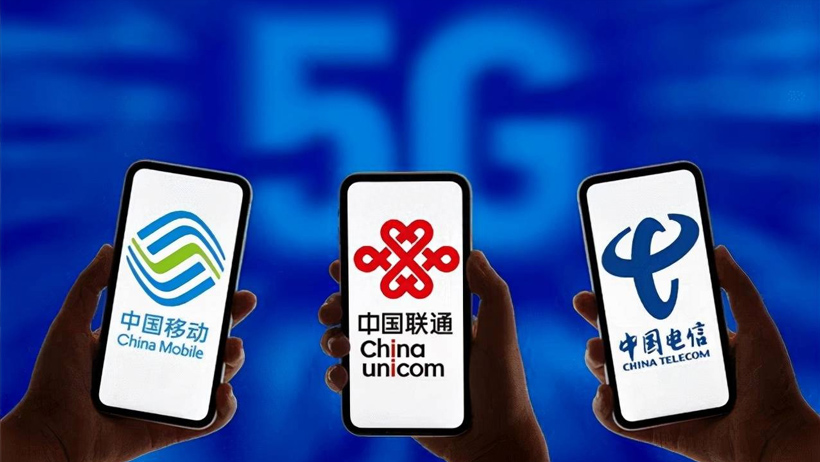
There are three main state-owned mobile network operators in China:
China Mobile (中国移动 – Zhōngguó Yídòng):
- Largest provider with the most extensive network coverage, especially strong in rural and remote areas.
- Historically, their 3G (TD-SCDMA) and some 4G (TD-LTE) bands were less compatible with international phones. However, with widespread 4G (FDD-LTE, which is common globally) and 5G deployment, this is becoming less of an issue for modern smartphones.
- Still, it's worth double-checking your phone's band compatibility if you primarily need coverage outside major urban centers.
China Unicom (中国联通 – Zhōngguó Liántōng):
- Second largest provider. Generally considered the most compatible with international smartphones, as their 3G (WCDMA) and 4G (FDD-LTE) networks use bands common in many parts of the world.
- Good coverage in urban areas and increasingly in rural areas. Often a popular choice for foreign visitors.
China Telecom (中国电信 – Zhōngguó Diànxìn):
- Third largest provider. Their network technology (historically CDMA/CDMA2000 for 3G) was different, but their 4G (FDD-LTE) and 5G networks are also widely compatible with modern international phones.
- Good coverage, particularly in southern China and urban areas.
Recommendation for Tourists:
For most tourists with modern unlocked smartphones, any of the three can work well in major cities. China Unicom and China Telecom have historically been easier for some international phone models, while China Mobile has very broad coverage. The practical choice depends on your exact device bands, the store available when you arrive, and whether staff can register a foreign passport smoothly.
III. What You'll Need to Buy a SIM Card
Your Passport (Absolutely Essential!):
China implements real-name registration for mobile numbers. Bring your original passport and expect the carrier outlet or airport counter to scan or record your passport details and complete identity verification. Shanghai’s official guidance says foreign visitors should bring a passport; requirements can vary by store, so use official carrier counters when possible.
An Unlocked Phone:
Your phone must be “unlocked” to accept a SIM card from a different carrier. If your phone is locked to your home carrier, a Chinese SIM card will not work. Contact your home carrier before your trip to ensure your phone is unlocked or to request an unlock.
Payment:
Carry at least one backup payment method. Airport counters in major cities may accept foreign bank cards, and Alipay or WeChat Pay can often be set up by visitors with supported international cards, but acceptance varies by counter. Keep some RMB cash or a working card available for the SIM purchase.
SIM Card Size:
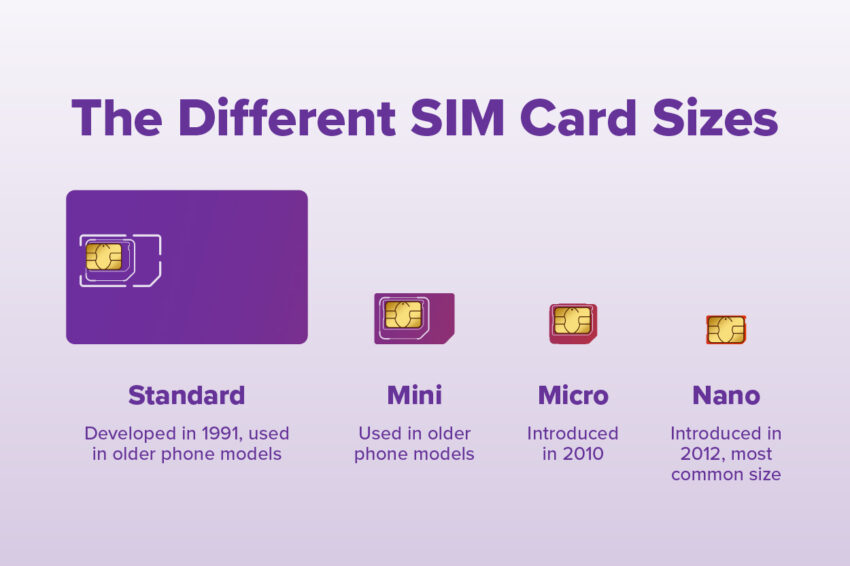
Know whether your phone uses a Nano, Micro, or Standard SIM card. Most modern phones use Nano SIMs. Vendors usually have all sizes or multi-fit SIMs.
IV. Where to Buy a SIM Card
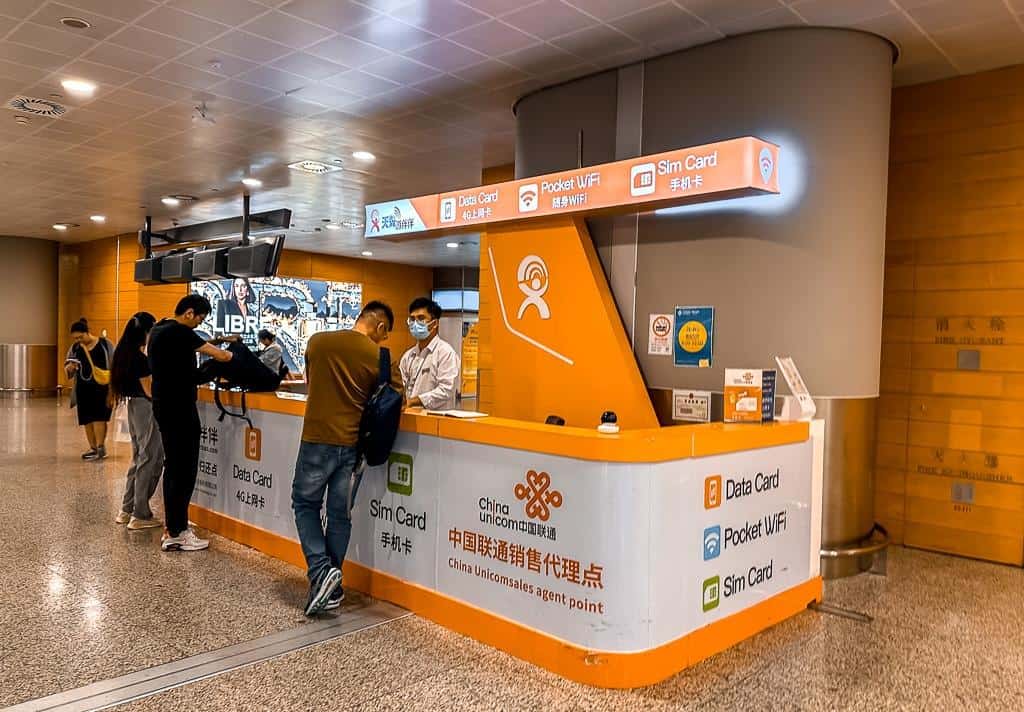
International Airports (e.g., Beijing Capital/Daxing, Shanghai Pudong/Hongqiao, Guangzhou Baiyun):
Pros: Most convenient option upon arrival. Staff are more likely to speak some English and are accustomed to dealing with tourists. You can get connected immediately.
Cons: Plans might be slightly more expensive or offer less data/flexibility compared to city stores. Options might be limited to specific “tourist packages.”
Process: Look for kiosks or counters of China Mobile, China Unicom, or China Telecom in the arrivals hall.
Official Carrier Stores (营业厅 – Yíngyètīng):
Pros: Widest range of plans, including regular prepaid plans that might offer better value than airport tourist packages. Staff can provide more detailed assistance (though English may be limited). Official and reliable.
Cons: You'll need to locate a store in the city. Language barrier can be a challenge if staff don't speak English (use a translation app!).
Process: Search on a map app (like Baidu Maps or Amap, pre-downloaded or accessed via hotel Wi-Fi) for “China Mobile,” “China Unicom,” or “China Telecom” near you.
Online (Pre-Arrival for Airport Pickup/Delivery):
Pros: You can research and purchase your SIM card before your trip. Some services offer delivery to your hotel or pickup at the airport.
Cons: Requires planning ahead. Ensure the seller is reputable.
Providers: Websites like Klook, Trip.com, or specialized SIM card retailers sometimes offer Chinese SIM cards for tourists.
Street Vendors or Small Convenience Stores:
Pros: Can sometimes be cheaper.
Cons: Generally NOT recommended for tourists. Higher risk of scams, improperly registered SIMs (which could be deactivated), or pre-used SIMs. Real-name registration might not be done correctly, leading to problems. Stick to official channels.
V. Types of SIM Card Plans for Tourists
When you purchase a SIM, you'll typically be looking at prepaid options:
Dedicated Tourist SIM Packages:
- These are often available at airports and are designed for short stays.
- They usually come with a fixed amount of data (e.g., 10GB, 20GB, 50GB), sometimes a small amount of call credit, and a fixed validity period (e.g., 7 days, 15 days, 30 days).
- Example: A 30-day SIM with 20GB data and 50 minutes of local calls might cost around ¥100-¥200.
- Pros: Simple, hassle-free, designed for tourist needs.
- Cons: Might be slightly less value per GB than regular local plans.
Standard Prepaid Plans (Pay-As-You-Go with Monthly Bundles):
- Available at official carrier stores. You buy a SIM card (often with a small initial credit) and then subscribe to a monthly data/call bundle.
- These can offer better value if you need a lot of data or are staying longer.
- You might need help from store staff (or a Chinese-speaking friend) to understand and select the best bundle.
- Pros: Potentially better value, more flexibility in choosing data/call amounts.
- Cons: Can be more complex to set up and understand than a straightforward tourist package.
Data-Only SIMs:
If you only need internet access and don't plan on making traditional calls or texts (relying on apps like WhatsApp, WeChat, Skype over data), a data-only SIM might be an option, though less common for short-term tourist purchases.
Key things to ask/clarify when buying:
- Total data allowance (e.g., “How many GB?”).
- Validity period (e.g., “How many days?”).
- Cost of the SIM and plan.
- Whether it includes any call minutes or SMS.
- How to check your remaining data balance.
- How to top up if needed (though for short trips, getting a plan with enough data upfront is easiest).
VI. The Activation Process
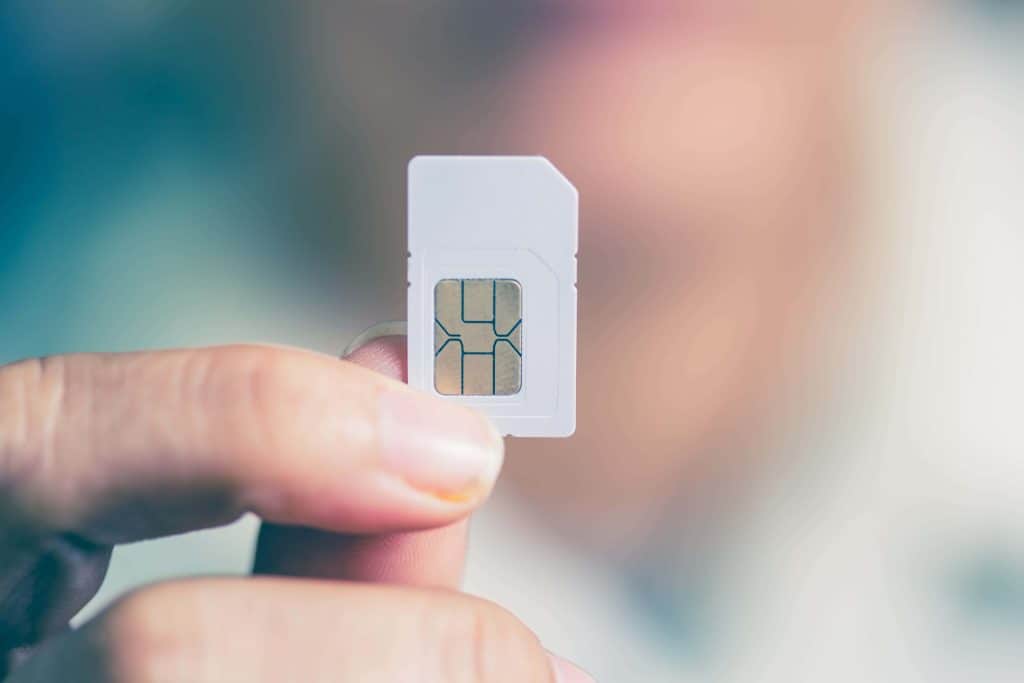
- Registration: The vendor will take your passport, scan it, and likely take a photo of your face to comply with real-name registration laws. This is standard procedure.
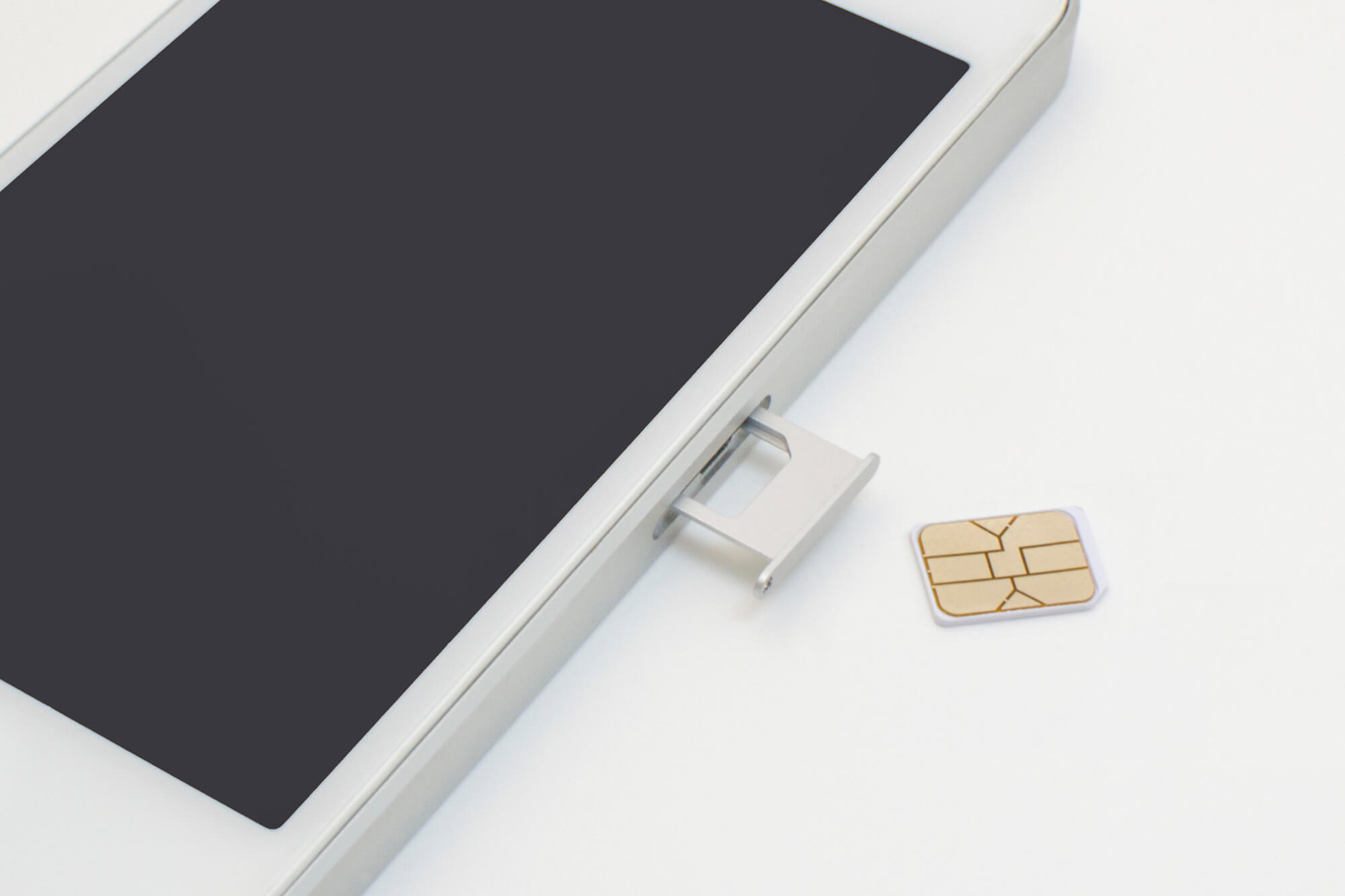
- SIM Insertion: The staff will usually help you insert the SIM card into your phone.
- Phone Restart: Your phone may need to be restarted.
- APN Settings: Access Point Name (APN) settings are usually configured automatically. However, if you have trouble connecting to data, the staff might need to check or manually input these. It's rare for modern phones.
- Testing: Crucially, test the data connection before leaving the store. Open a browser or an app that uses data to ensure it's working. If you plan to use a VPN (see below), you might want to test that too, if possible.
VII. Topping Up Your SIM Card (Recharging)
If you run out of credit or data on a prepaid plan (less likely if you buy a tourist package with sufficient data for your trip):
Official Carrier Stores:
The most straightforward way.
Online via Alipay/WeChat Pay:
This is how most locals top up. If you've managed to set up these payment apps with an international card or have a friend assist, this is very convenient.
Carrier Apps/Websites:
Each carrier has its own app or website for account management, but these are usually in Chinese and may require your Chinese phone number to log in.
Voucher Cards:
Sometimes available at convenience stores, though less common now.
For most tourists on short trips (e.g., up to 10-15 days), it's often easiest to buy a plan with enough data to cover your entire stay to avoid the hassle of topping up.
VIII. Internet Restrictions, VPNs, and Backup Access
This is a critical point for anyone wanting to access many Western websites and apps in China.
What is it?
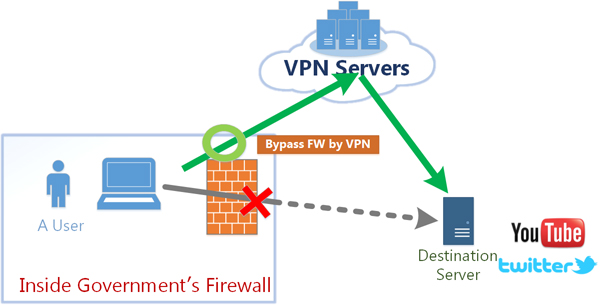
The Great Firewall of China is a sophisticated system of internet censorship that blocks or restricts access to many popular international websites and services.
Blocked Services:
This includes Google (Search, Gmail, Maps, Drive), Facebook, Instagram, X (Twitter), WhatsApp (messaging can be unreliable, calls/media often blocked), YouTube, New York Times, BBC, and many others.
VPN (Virtual Private Network):
A local Chinese SIM usually follows mainland internet routing. Some global services may be blocked or unreliable. If access to global apps is important, prepare your internet backup before arrival and read the dedicated VPN and internet access guide for current caution, setup steps, and alternatives.
Action Required:
Install, update, log in, and test any VPN or alternative access tool before you arrive in China. Provider websites, app downloads, and support pages may be hard to reach after arrival.
Choosing a VPN:
Do not rely on fixed brand lists. VPN performance changes, and legal guidance should be treated conservatively. Check current provider support notes, your government’s travel advice, and whether roaming or a travel eSIM gives you a better backup.
Using a VPN:
Once your local SIM is active, test the services you actually need before leaving the counter or airport. Keep offline maps, hotel addresses, booking confirmations, translation tools, and emergency contacts available even if global apps are slow.
IX. Phone Compatibility (4G LTE / 5G Bands)
Ensure your phone is unlocked.
Most modern smartphones from major international brands (Apple, Samsung, Google Pixel etc.) support the necessary 4G LTE and 5G bands used in China.
Key FDD-LTE bands used by China Unicom & China Telecom:
- Band 1 (2100MHz)
- Band 3 (1800MHz)
- Band 5 (850MHz)
- Band 8 (900MHz)
Key TDD-LTE bands used by all three (especially China Mobile):
- Band 38 (2600MHz)
- Band 39 (1900MHz)
- Band 40 (2300MHz)
- Band 41 (2500MHz)
You can check your phone's specifications online (e.g., on GSMArena) to see which LTE bands it supports. If your phone supports several of these, you should be fine.
X. Alternatives to a Local SIM Card
eSIMs:
Pros: Very convenient for short trips because you can buy and install the plan before departure. No need to swap physical SIMs.
Cons: Your phone must support eSIM and be unlocked. Many travel eSIMs are data-only, often do not include a Chinese phone number, and global app access depends on provider routing rather than a guarantee.
For details, compare this with the China eSIM guide.
International Roaming from Your Home Carrier:
Pros: Utmost convenience – your phone works as soon as you land.
Cons: Usually extremely expensive for data. Check your carrier's rates carefully. Some offer daily flat-rate passes, which might be viable for very short trips or emergencies but are not cost-effective for longer stays.
Pocket Wi-Fi (Mobile Hotspot):
Pros: Can connect multiple devices (phone, tablet, laptop) simultaneously.
Cons: Another device to carry, charge, and potentially pay a deposit for. You rent it for your trip. Still uses a local SIM inside, so GFW considerations (and need for VPN on your devices) apply unless the Pocket Wi-Fi service itself includes VPN-like routing.
XI. Final Tips & Summary
- Prepare internet backups before you go to China: eSIM or roaming for instant data, and any VPN/access tools installed and tested before arrival.
- Bring your PASSPORT for SIM card registration.
- Ensure your phone is UNLOCKED.
- Airport purchase is convenient for immediate connectivity. Official carrier stores in the city may offer better value/more options.
- Test your SIM and data connection (and VPN) before leaving the point of purchase.
- For short trips, buy a plan with enough data to last your entire stay.
- Learn a few basic Mandarin phrases or have a translation app handy.
A local SIM card is the best China internet option when you need a Chinese phone number, longer-stay value, or local app verification. For a short city break, an eSIM or roaming plan may be simpler. The strongest setup is often layered: instant data on arrival, a local number if you need it, and offline backups for the moments when apps or networks do not behave as expected.

Practical Steps
A local SIM is useful when you need mainland data, a +86 phone number, calls, or app verification during a longer trip.
Check your phone before departure
Make sure your phone is unlocked, supports China mobile bands, and has space for a physical SIM if you plan to use one.
Bring your passport to a carrier counter
Use an official airport, carrier-store, or trusted counter and expect real-name registration with your passport.
Choose a plan that fits your trip length
Pick a data allowance and validity period based on how long you will stay and whether you need calls, SMS, or a +86 number.
Ask staff to activate and test it
Before leaving the counter, confirm data works, check the phone number if included, and test any app verification you need.
Keep eSIM or roaming as backup
If local setup takes time or fails, use a travel eSIM, roaming, hotel Wi-Fi, or offline tools so you are not stranded without maps or translation.
Practical FAQ
Why would a foreign traveler buy a local SIM card in China?
A local SIM can provide mainland mobile data, local calls, and often a +86 phone number that helps with app verification, delivery, ride-hailing, and customer service calls.
Do I need my passport to buy a SIM card in China?
Usually yes. Mainland China uses real-name registration for phone numbers, so foreign visitors should expect to show their passport at official counters or carrier stores.
Should I choose a local SIM or an eSIM?
Choose a local SIM if you need a +86 phone number, local calls, or longer-stay value. Choose an eSIM if you mainly need data ready on arrival and your phone supports it.
Enjoyed this article? Consider buying me a coffee to support more content like this!
💖 1 people have clicked to support this article.