China Travel Budget 2026: How Much Does a China Trip Cost?
Plan a realistic China travel budget for 2026, with daily costs, route-based examples, payment setup, food spending, hotels, trains, Guangdong food routes, and Yunnan slow travel.
travel better
On this page
Quick Answer
For 2026 planning, a realistic China travel budget is about CNY 350-650 per person per day for a careful local-style trip, CNY 750-1,500 per person per day for a comfortable mid-range trip, and CNY 1,800-3,500+ per person per day for premium hotels, private transfers, or high-end dining. These ranges exclude long-haul international flights and assume normal city travel rather than a luxury tour.
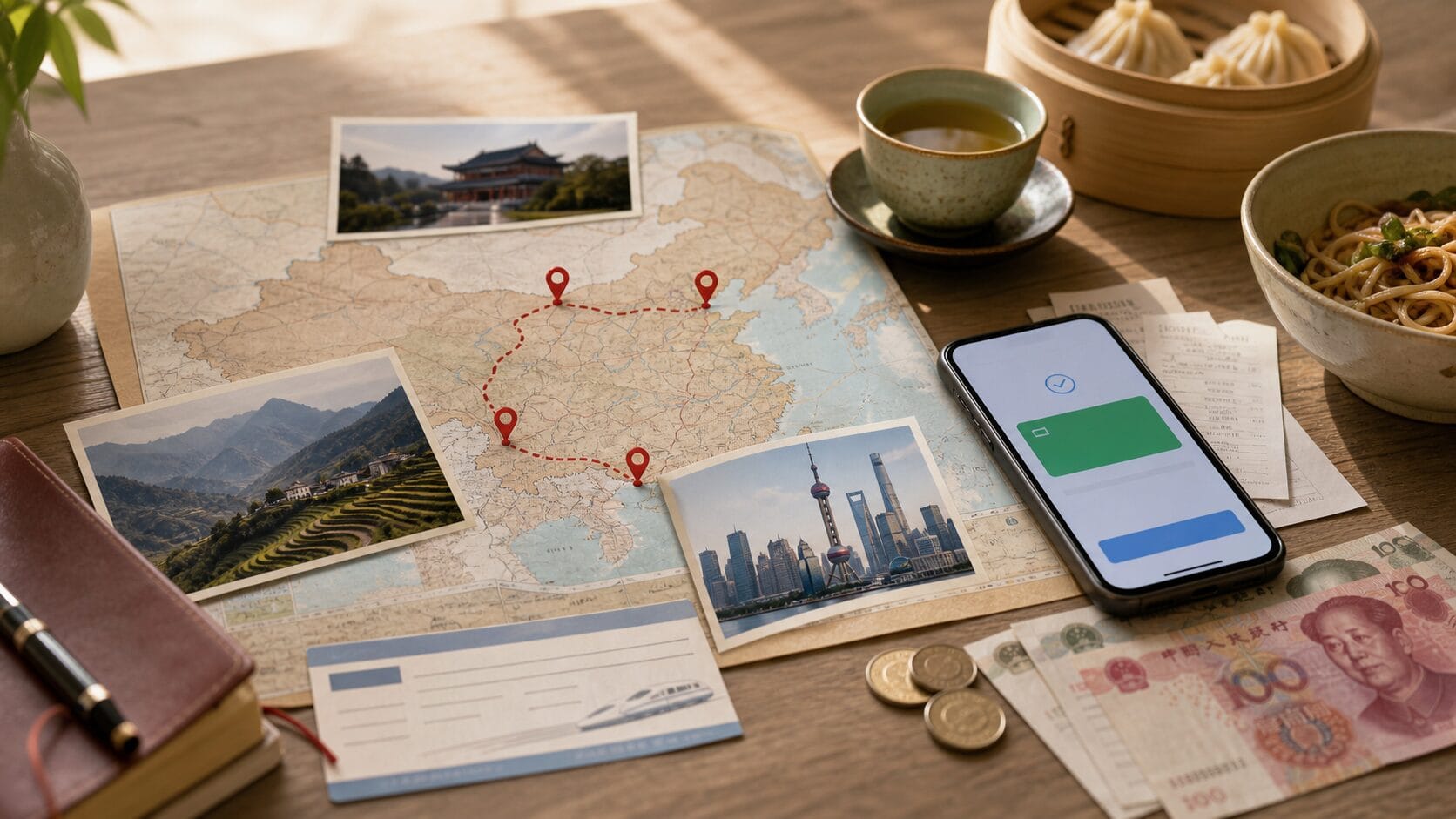
Use Chinese yuan as the working budget. A rough USD conversion can help, but exchange rates move; if USD/CNY is around 6.8-7.2, CNY 1,000 is roughly USD 140-150. Before paying deposits, check your bank or card app for the live rate and foreign transaction fees. For payment setup, read the mobile payments in China guide and the international card setup guide.
China can be cheaper than many first-time visitors expect, but it is not one price level. A bowl of noodles can cost less than a cafe coffee in Europe, while a last-minute holiday hotel in Shanghai, a private driver in Yunnan, or a premium restaurant in Shenzhen can change the budget quickly. The real question is not “Is China cheap?” It is “Where should the money go so the trip feels better?”
A good China budget should start with the way you want to travel: local food, neighborhood walks, rail timing, season, and enough time on the ground instead of spending everything on famous photo stops. A northern history route, a Guangdong food line, a lower Yangtze city-walk route, and a slow Yunnan route all cost differently, even if the number of days is the same.
If you are still choosing destinations, read where to go in China for a first trip before you lock the budget. Route shape affects cost more than most small daily savings.
What This Budget Includes
The ranges in this article cover normal on-the-ground travel: accommodation, local meals, city transport, ordinary attractions, basic travel apps, and domestic transport planning. They do not include long-haul flights to China, visa fees, travel insurance, major shopping, medical costs, or very specialized trips such as Tibet permits, private photography routes, ski trips, or luxury cruises.
Most sample totals below are per person and assume two travelers sharing one hotel room. Solo travelers should raise the daily total because they pay the full room cost alone. Families should calculate hotels separately because room capacity rules, extra beds, and breakfast charges vary by property.
Budget rule: calculate in CNY first, then convert. China costs are paid in RMB, and the final amount depends on your payment app, card issuer, exchange spread, cash withdrawal fees, and whether a merchant accepts your foreign card-linked wallet.
Daily China Travel Budget by Style
These daily ranges are planning numbers, not promises. Prices rise during Chinese New Year, May Day, summer holidays in popular family destinations, and the National Day Golden Week. A normal weekday in a second-tier city can feel much cheaper than a weekend beside the Bund or inside a famous old-town area.
| Travel style | Daily budget per person | What it usually means | Best fit |
|---|---|---|---|
| Careful local-style | CNY 350-650 | Budget hotel or hostel, simple local meals, metro and buses, selective paid sights, minimal taxis. | Students, longer trips, food-first travelers who do not need premium rooms. |
| Comfortable mid-range | CNY 750-1,500 | Good location hotel, frequent local restaurants, some taxis, major sights, a few comfortable train or flight choices. | Most first-time travelers who want comfort without wasting money. |
| Premium flexible | CNY 1,800-3,500+ | Boutique or luxury hotels, better restaurants, private transfers, drivers, guides, flexible flight choices. | Short trips, families needing convenience, travelers prioritizing comfort and time. |
Budget rooms often sit around CNY 120-350. Mid-range rooms often sit around CNY 350-800. Boutique or four-star rooms often start around CNY 800-1,600.
Local breakfast can be CNY 10-25. A casual meal can be CNY 25-60. A good local restaurant meal can be CNY 80-180+.
Metro rides are usually inexpensive. Taxis and ride-hailing are useful, but airport rides, late nights, and long cross-city trips add up.
For payment reliability, do not rely on one method. Set up Alipay or WeChat Pay, carry a small RMB cash backup, and keep at least one international card available. The RMB and cash backup guide explains when cash still matters.
How Route Style Changes the Budget
The biggest budget mistake is comparing China trips only by day count. A 10-day trip with three efficient rail cities can cost less and feel smoother than a 10-day trip that flies across four regions. The route decides hotel nights, transfer costs, wasted time, and whether you pay for convenience because the schedule is too tight.
Budget is a route decision
A northern history route usually spends more on intercity transport, major sights, and central hotels. A Guangdong food route can spend less on long transfers but more on meals if you chase famous restaurants in Shunde, Chaozhou, or Shantou. A Yunnan slow-travel route can be affordable day to day, but private drivers and boutique guesthouses can raise the total.
Before buying tickets, compare the route with the China domestic travel guide. The cheapest ticket is not always the cheapest day if it creates a bad station transfer or a tired arrival.
History route
Beijing -> Xi’an -> Luoyang/Nanjing, or Beijing -> Xi’an -> Shanghai if you want a modern-city ending, can work well when the trip is about history and museums. Budget for long intercity legs, major sights, and central hotels. Use the 10-day China itinerary as one classic reference, not a required template.
Guangdong food line
Guangzhou, Shunde, Chaozhou, Shantou, Shenzhen, and Dongguan can be high-value because transfers are regional and meals are the point of the trip. Start with the Shunde food guide and Shenzhen food guide.
Yunnan slow travel
Dali, Xizhou, Shaxi, and nearby towns reward time more than spending. Daily costs can stay moderate if you move slowly, but drivers, old-town hotels, and scenic transfers need planning. Start with the Yunnan travel guide, then use the two-week route for deeper pacing.
Shanghai and lower Yangtze
Shanghai is not always cheap, but it is efficient. City walks, museums, Suzhou, and Hangzhou can create a rich route without too many hotel changes. The Shanghai travel guide is a useful base before choosing a detailed walking itinerary.
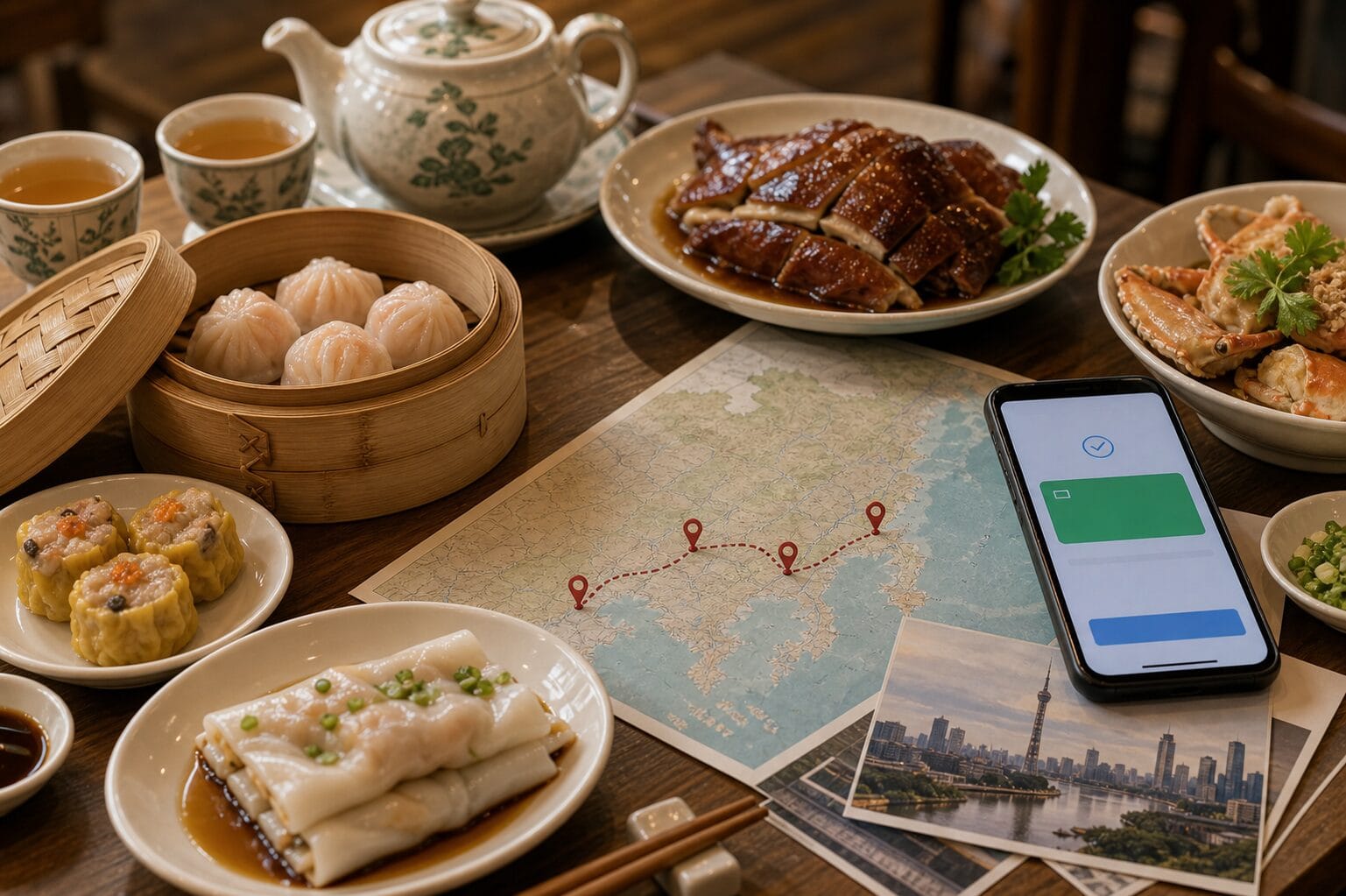
Guangdong: spend on meals, save on wasted movement
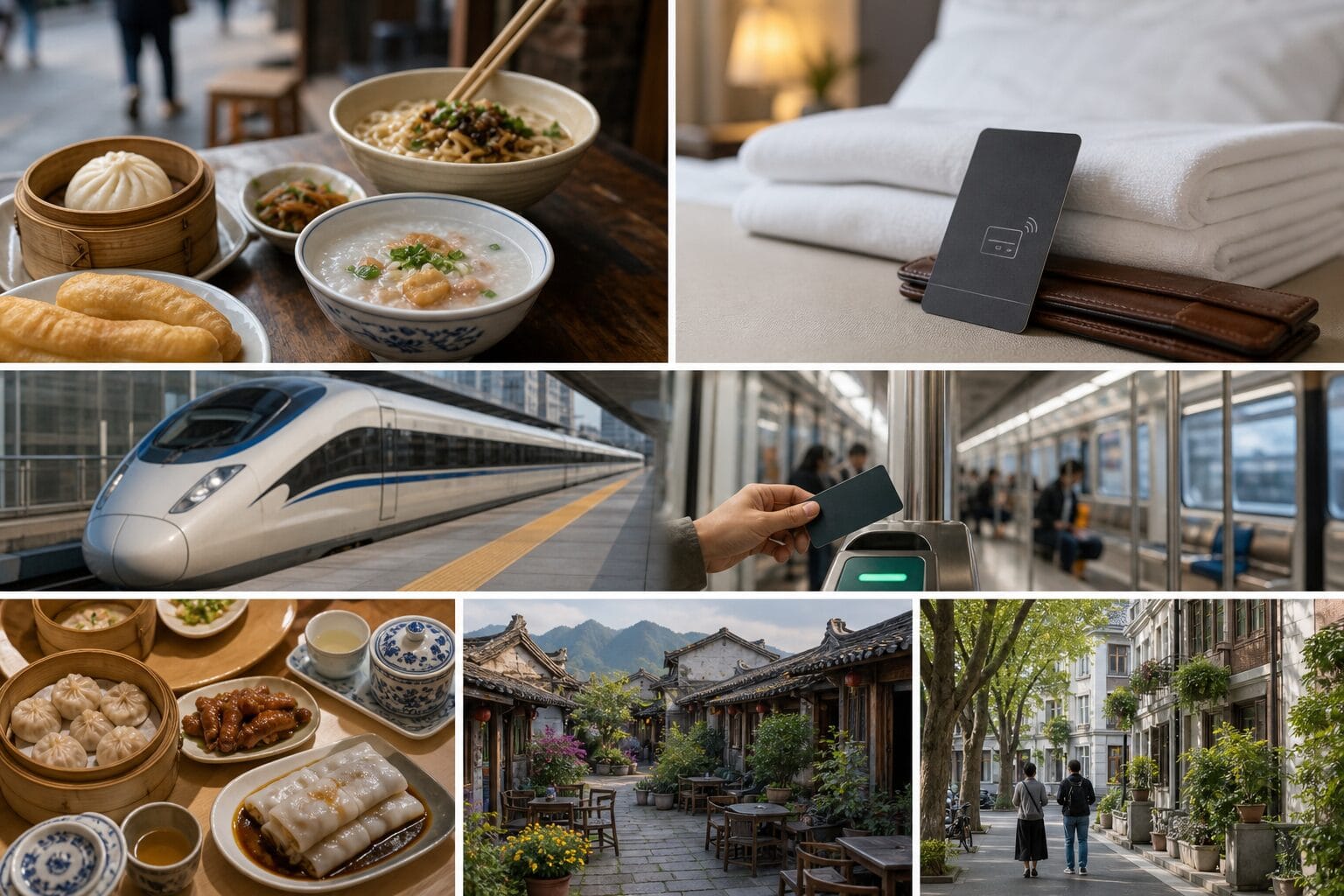
A Guangdong food line can be one of the strongest value routes in China because the cities are close enough to connect naturally. The budget should leave space for dim sum, Shunde cooking, Chaoshan beef hotpot, rice rolls, seafood, and neighborhood snacks instead of spending everything on long cross-country transfers.
Do not make Guangdong too generic. Guangzhou, Shunde, Chaozhou, Shantou, Shenzhen, and Dongguan each have a different food and city rhythm. The money is best spent on meals and location, not on turning the route into another checklist of photo stops.
China Trip Cost Categories
Hotels
Hotels are the cost category with the widest swing. Location matters more than star rating for many travelers. A slightly smaller hotel near a metro station or old neighborhood can save taxis, reduce fatigue, and make evenings better. In Beijing and Shanghai, central locations often cost more but can be worth it for a short trip. In Guangdong or Yunnan, a characterful local stay can be better value than an international chain.
Do not book only by the lowest price. Check whether the hotel accepts foreign guests, whether the name is easy to find in maps, how far it is from the metro or station, and whether late check-in works. A cheap hotel that creates two extra taxi rides per day is not always cheap.
Food
Food is where China can give excellent value. Breakfast stalls, noodle shops, canteens, neighborhood restaurants, and tea houses can be inexpensive and memorable. The local way to spend well is not to eat fancy every night; it is to choose the right local meal for the city. In Guangdong, that could be dim sum, Shunde dishes, Chaoshan beef hotpot, rice rolls, or late-night seafood. In Xi’an, noodles and simple local restaurants can be better than expensive tourist menus.
Food-first travelers should not under-budget meals. If the trip is built around Guangdong, leave room for destination restaurants and shared dishes. The goal is not to spend more for status. It is to avoid missing the reason you came.
Transport
China’s high-speed rail is often worth paying for because it saves mental energy and keeps city-center travel simple. The official China Railway platform is 12306, and English support exists on the official site, but many foreign visitors still compare app usability, payment, and ticket timing carefully. For the station process, use the China high-speed rail guide.
Flights can be better for long hops, but airport transfers and delay risk change the real cost. For arrival-city planning, connect this budget with the flying to China guide. A cheaper international flight into the wrong city can cost you a hotel night, an extra domestic flight, and a worse first day.
Attractions and museums
Many museums, parks, temples, and city walks are inexpensive or free, but reservation rules can matter more than ticket cost. Famous places can require timed booking, passport details, or app setup. Budget money for major sights, but also budget attention: a free museum you cannot reserve is not free in practice.
For a better trip, mix famous sights with low-cost local life. A market morning, a ferry ride, a neighborhood walk, or a long tea break may teach more than another rushed landmark. This is especially true if your route includes Shanghai walks, Guangdong food streets, or Yunnan old towns.
Apps, internet, and payments
Some trip costs are small but important: eSIM or local SIM, VPN or roaming strategy, translation setup, map backup, payment setup, and cloud access. Do this before you fly. The China travel apps guide and China packing list cover the practical setup.
Sample China Travel Budgets
Use these as planning frames, not fixed quotes. They assume two travelers sharing a room, normal paid sights, a mix of local meals and comfortable meals, and no long-haul international flight. Add more for solo rooms, private guides, premium hotels, holiday periods, or heavy shopping.
| Trip type | Practical total per person | Comfortable total per person | Budget notes |
|---|---|---|---|
| 7 days, two cities | CNY 3,800-6,000 | CNY 6,500-10,500 | Works best with one rail or flight transfer and good hotel locations. |
| 10 days, history route | CNY 6,000-9,000 | CNY 8,500-14,000 | Budget for two intercity legs, major sights, and central hotels. |
| 7-10 days, Guangdong food route | CNY 4,500-7,500 | CNY 7,000-12,500 | Transfers can be efficient, but meals deserve a bigger share of the budget. |
| 10-14 days, Yunnan slow route | CNY 6,500-11,000 | CNY 10,000-18,000 | Slow pacing helps; private drivers and boutique inns can raise costs quickly. |
| 14 days, mixed first trip | CNY 9,000-14,000 | CNY 13,000-22,000 | Best when the route has one clear branch, not every famous region. |
Planning shortcut: after you draft the route, count expensive movement days. If too many days are spent changing cities, the budget and the mood both suffer.
Yunnan: a slower pace changes the math
Yunnan is a good example of why daily budget and trip quality are connected. A slower route can keep costs moderate because you are not constantly buying tickets, taxis, and one-night hotel stays. The money you do spend can go toward a better guesthouse, a driver for a specific countryside leg, or extra time in markets and old towns.
If the budget is tight, cut distant add-ons before cutting the slow days that make Yunnan worth visiting. A quiet morning in Xizhou or Shaxi is not an empty day; it is the reason the region works.

Where It Is Worth Spending More
Spend on the parts that protect time, energy, and local experience. A better located hotel can save more than it costs. A high-speed rail ticket at the right time can be better value than a cheap flight with airport transfers. A good local restaurant in Shunde, Chaozhou, Chengdu, or Shanghai can become the memory of the trip.
Spend carefully on private guides and drivers. They are useful for places with poor public transport, countryside stops, family travel, or language-heavy experiences, but they are not necessary for every city. In Beijing, Shanghai, Guangzhou, Shenzhen, and many rail-linked cities, public transport and good planning can do most of the work.
Save money by cutting weak transfers, not by cutting every good meal. A local breakfast, metro ride, museum, and neighborhood walk can be inexpensive without feeling cheap. The more local the route becomes, the more value you can get from ordinary days.
Common Budget Mistakes
Every extra city adds transfers, packing time, station buffers, and often one tired hotel night.
A cheap flight can become expensive if it forces an awkward arrival city or long airport transfer.
Hotel and rail prices can jump around major Chinese holidays. Route flexibility drops too.
Paying for every famous sight can crowd out better local meals, walks, and slower places.
One app, one card, or no cash backup can create friction at the worst moment.
If Guangdong or Chengdu is the reason for the trip, meals are not incidental; they are the itinerary.
The most useful budget choice is often restraint. Choose fewer cities, stay in better locations, and leave room for the local reason each place matters. A trip usually feels better when every transfer has a purpose instead of becoming another ticket, hotel change, and rushed landmark.
Official Sources and Next Planning Guides
For payment conditions, start with the State Council’s Guide to Payment Services in China and its payment service guide for overseas visitors. For train planning, check the official 12306 China Railway English site.
China Travel Budget FAQ
How much money do I need for 10 days in China?
For a comfortable 10-day first trip excluding international flights, many travelers should plan around CNY 8,500-14,000 per person if sharing a hotel room. A careful local-style trip can be lower, while premium hotels, private transfers, and high-end dining can be much higher.
Is China cheap for tourists in 2026?
China can be good value, especially for local food, metro travel, and many everyday services. It is not automatically cheap if you book central luxury hotels, move too quickly between regions, travel during major holidays, or rely on private tours for everything.
Should I bring cash to China?
Yes, but as a backup rather than your main payment method. Mobile payment is usually smoother in cities, but small RMB cash can help with app problems, small vendors, rural stops, older taxis, or phone battery issues.
Is a Guangdong food trip cheaper than a history route?
It can be, because regional transfers are efficient and many excellent meals are not expensive. However, a food-first trip can spend more on destination restaurants. The value is high when the route is built around meals, neighborhoods, and local life rather than long cross-country transfers.
What is the easiest way to reduce a China trip budget?
Reduce city changes before cutting meaningful experiences. Fewer transfers can save tickets, taxis, tired hotel nights, and missed meals. Staying longer in one region often makes the trip cheaper and better.
Enjoyed this article? Consider buying me a coffee to support more content like this!
💖 0 people have clicked to support this article.