Shenzhen Travel Guide: Best Food, Museums & Urban Villages
Is Shenzhen a food desert? Absolutely not. Discover the best local eats in urban villages, hidden cultural gems, and practical travel tips in our guide.
travel better
On this page
Quick Answer
This Shenzhen guide is best read as a food-and-neighborhood map, not a list of only famous landmarks. Shenzhen is a young migrant city, so its travel value comes from mixed regional food, museums, creative areas, urban villages, and easy links to Hong Kong and other Guangdong food cities.
Before you go: Restaurants, small shops, museums, and neighborhood access can change quickly in Shenzhen. Re-check opening hours, booking rules, and map locations before heading across town.
Introduction: Is Shenzhen Really “City”?
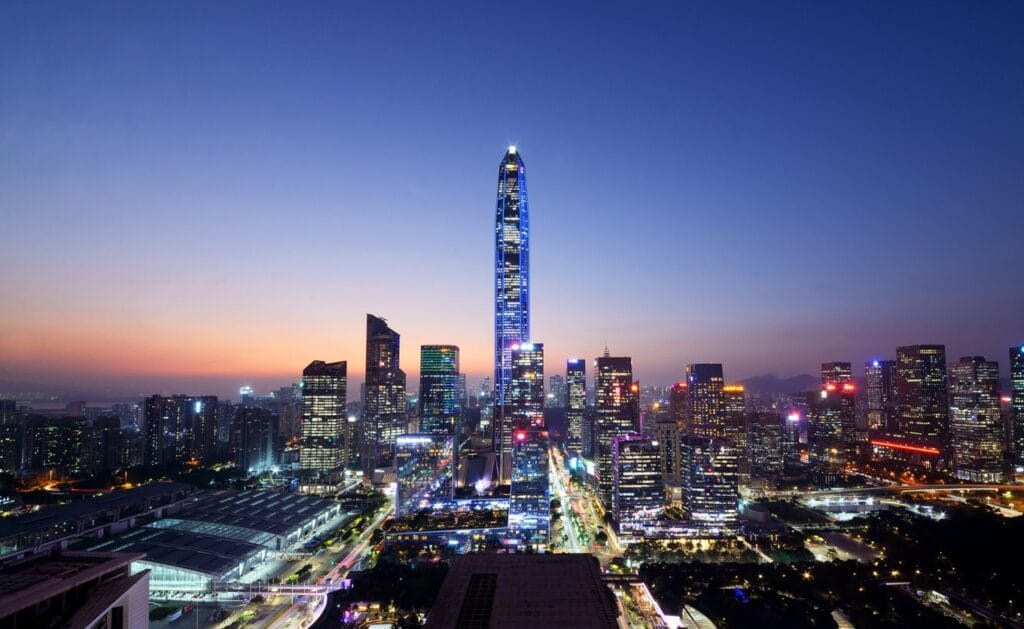
Not long ago, foreign travel bloggers visiting China sparked a viral phrase on social media: “city 不 city.” The expression has since become shorthand for cities that feel modern, cosmopolitan, and stylish. So which cities in China are the most “city”? Rankings may vary, but Shenzhen(深圳)almost always earns a place on the list.
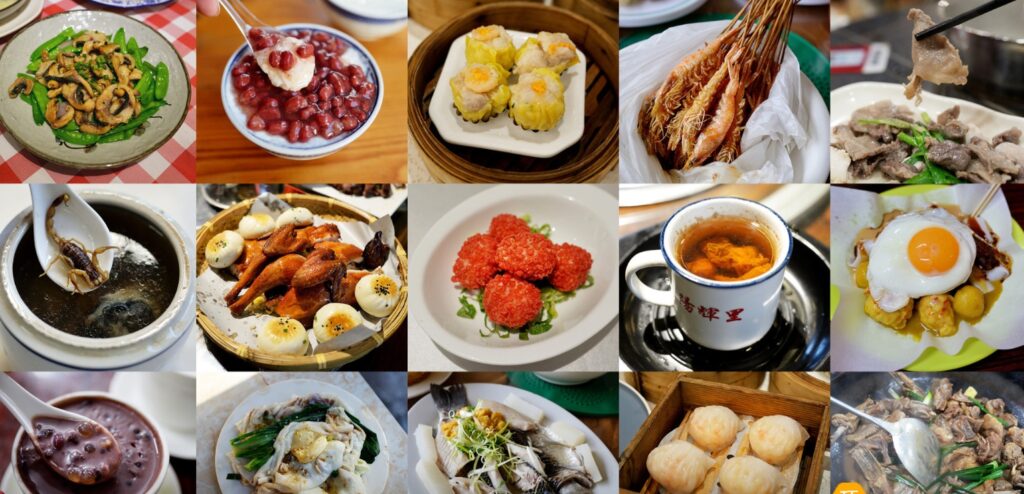
That said, despite being a first-tier metropolis and sitting next to three major food capitals—Guangzhou(广州), Hong Kong(香港), and Shunde(顺德)—Shenzhen is often teased as a “food desert.” To be fair, the city doesn’t really have many signature local dishes that originated here.
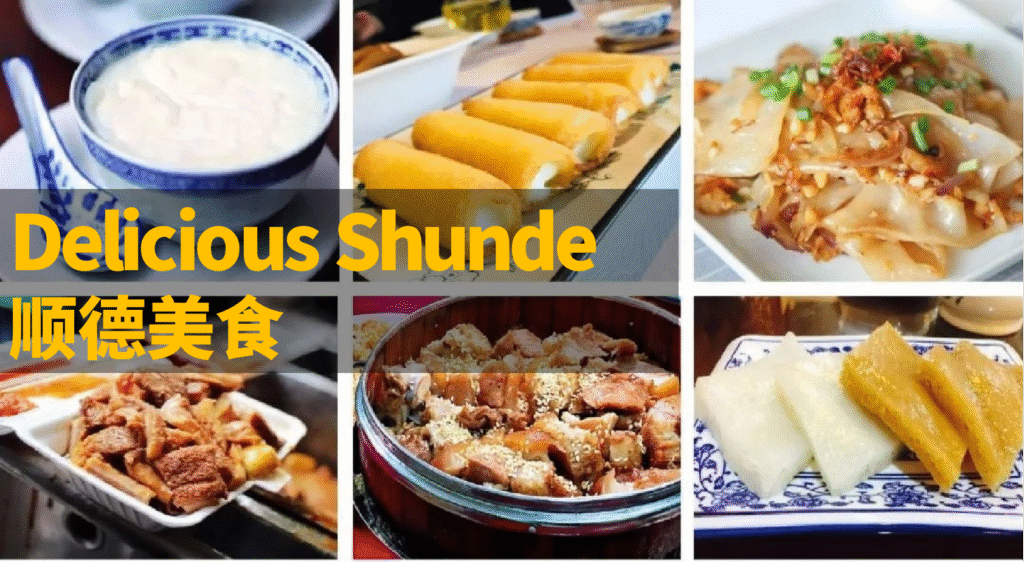
📖 Read Also: Speaking of food capitals, if you want to explore the roots of Cantonese cuisine just a short train ride away, check out our Ultimate Shunde Food Guide: 22 Best Restaurants.
But as China’s largest immigrant city, Shenzhen brings together people from every corner of the country—and with them, the flavors of their hometowns. As a traveler, you’ll find that almost any regional cuisine from China can be discovered somewhere in Shenzhen, making it surprisingly easy to taste dishes that feel like home to people from all over the nation.
If you’re searching for truly good food in Shenzhen, urban villages(城中村)are places you can’t ignore. With relatively low rents, these neighborhoods attract migrant workers who bring not only their livelihoods but also their hometown cooking skills. Over time, these areas have become dense clusters of authentic, affordable regional eateries.
There’s a saying here: “Once you arrive, you are a Shenzhener; once you arrive, it becomes Shenzhen cuisine.” In this city, there is always a flavor that can stir nostalgia and comfort for travelers and locals alike.
💡 Traveler Tip: Connectivity
Don’t get lost in the winding alleys of Shenzhen’s urban villages! Stay connected with an Airalo eSIM. It gives you instant high-speed data in China without needing a physical SIM swap.
On the cultural side, Shenzhen is also a famously “young” city. Its transformation from a small fishing village into an international metropolis happened within just a few decades. Because of this rapid rise, many outsiders assume the city lacks cultural depth or historical roots, earning it the long-standing nickname “cultural desert(文化沙漠).” Even some locals have accepted this label over the years.

In reality, Shenzhen does have history and culture—they’re simply overshadowed by its dazzling economic achievements and nonstop urban renewal. Human civilization in this area dates back over 7,000 years. Nanshan’s Nantou Ancient City(南头古城), for example, was already the administrative center of Bao’an County(宝安县)during the Eastern Jin Dynasty.
When you step into Shenzhen’s museums and art institutions today, you’ll quickly notice a strong and confident cultural atmosphere. Far from being absent, culture has quietly become one of the defining labels of this ever-evolving city.
A Preview of Shenzhen’s Food and Culture
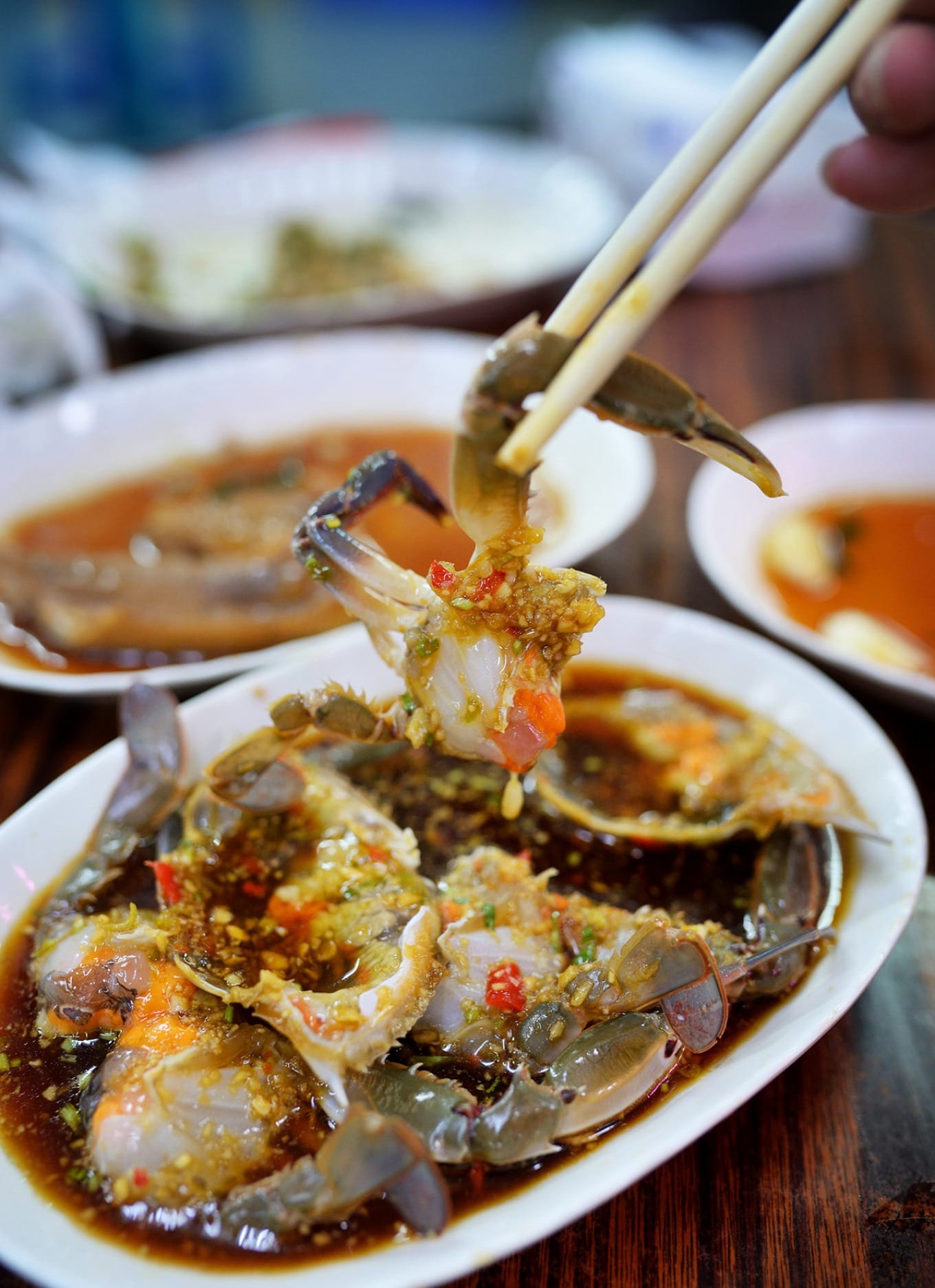
Chaoshan people(潮汕人)are the largest migrant community in Shenzhen(深圳), and they brought their hometown flavors with them. If you’re not intimidated by the dramatic nickname “Chaoshan poison(潮汕毒药),” you should absolutely try Chaoshan-style marinated seafood, known as 生腌(raw-marinated seafood), a bold local favorite.
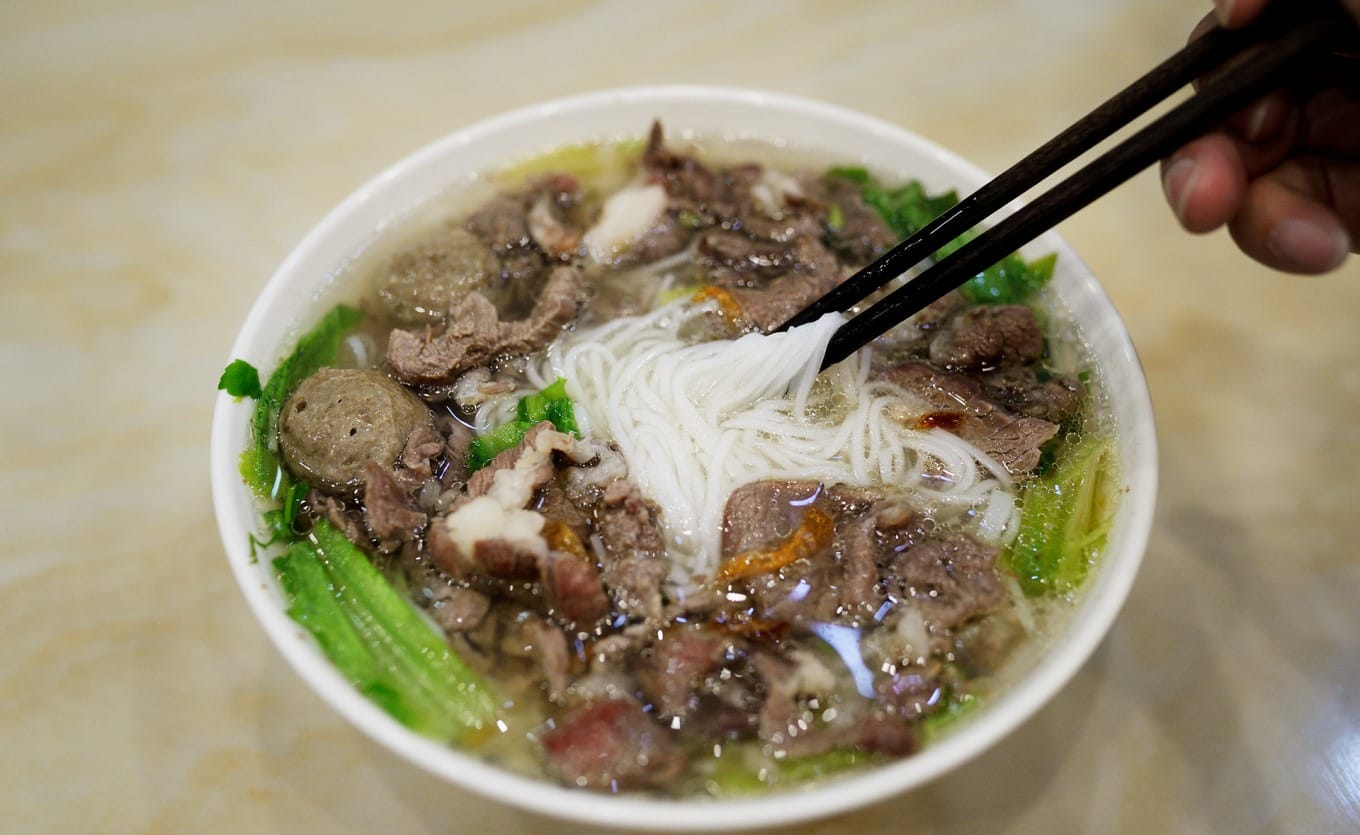
When talking about Chaoshan food in Shenzhen,粿条(Guo Tiao rice noodles)are impossible to miss. They may look similar to Guangzhou’s 河粉(Ho Fun rice noodles), but the texture is thicker and springier, with a stronger rice aroma.
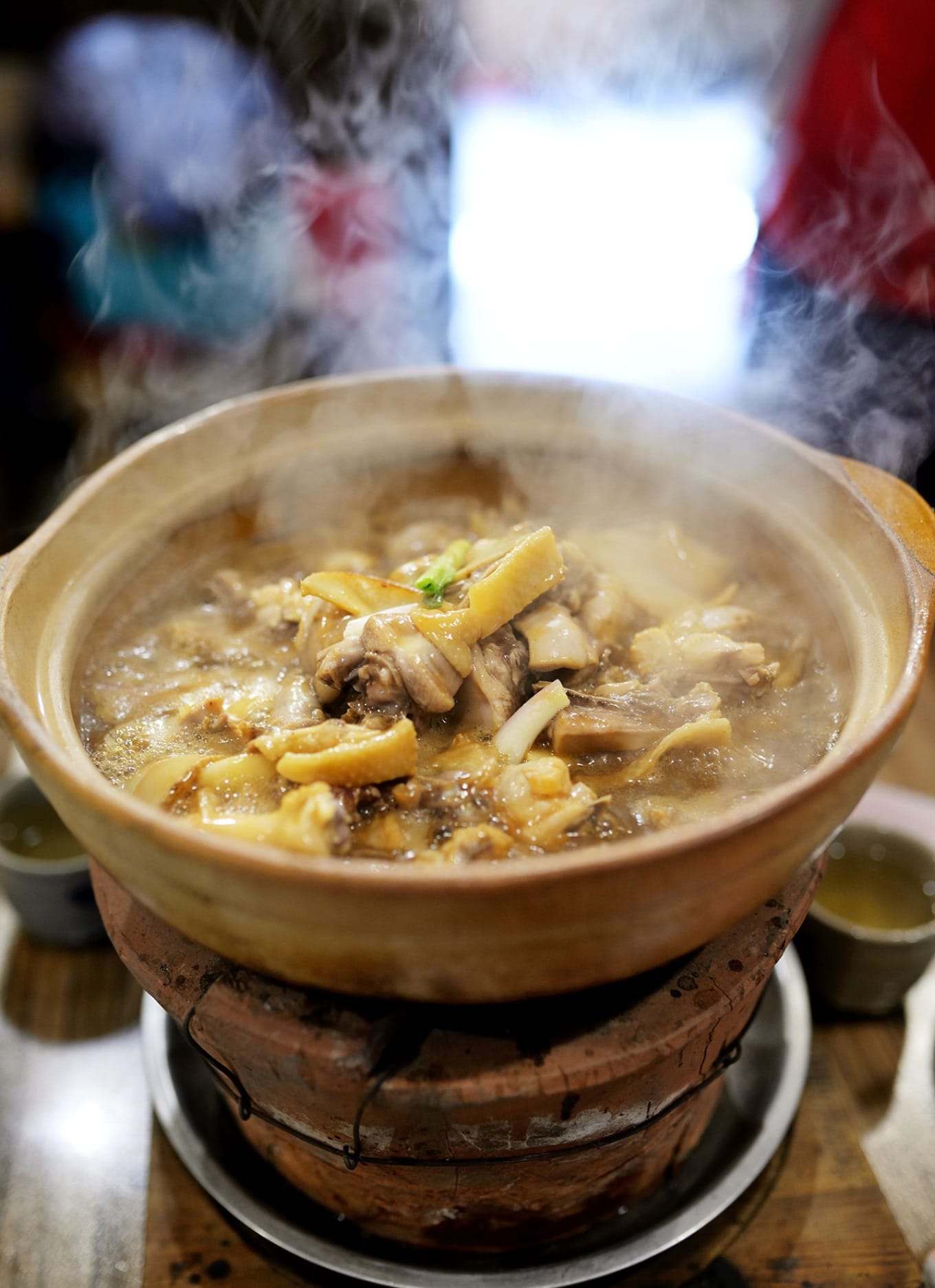
Cantonese diners love chicken, especially chicken hotpot(鸡煲)in winter. Traditionally cooked in a clay pot over charcoal, the slow heating process allows smoky aromas to seep into the dish, creating a deep, comforting flavor unique to this style.
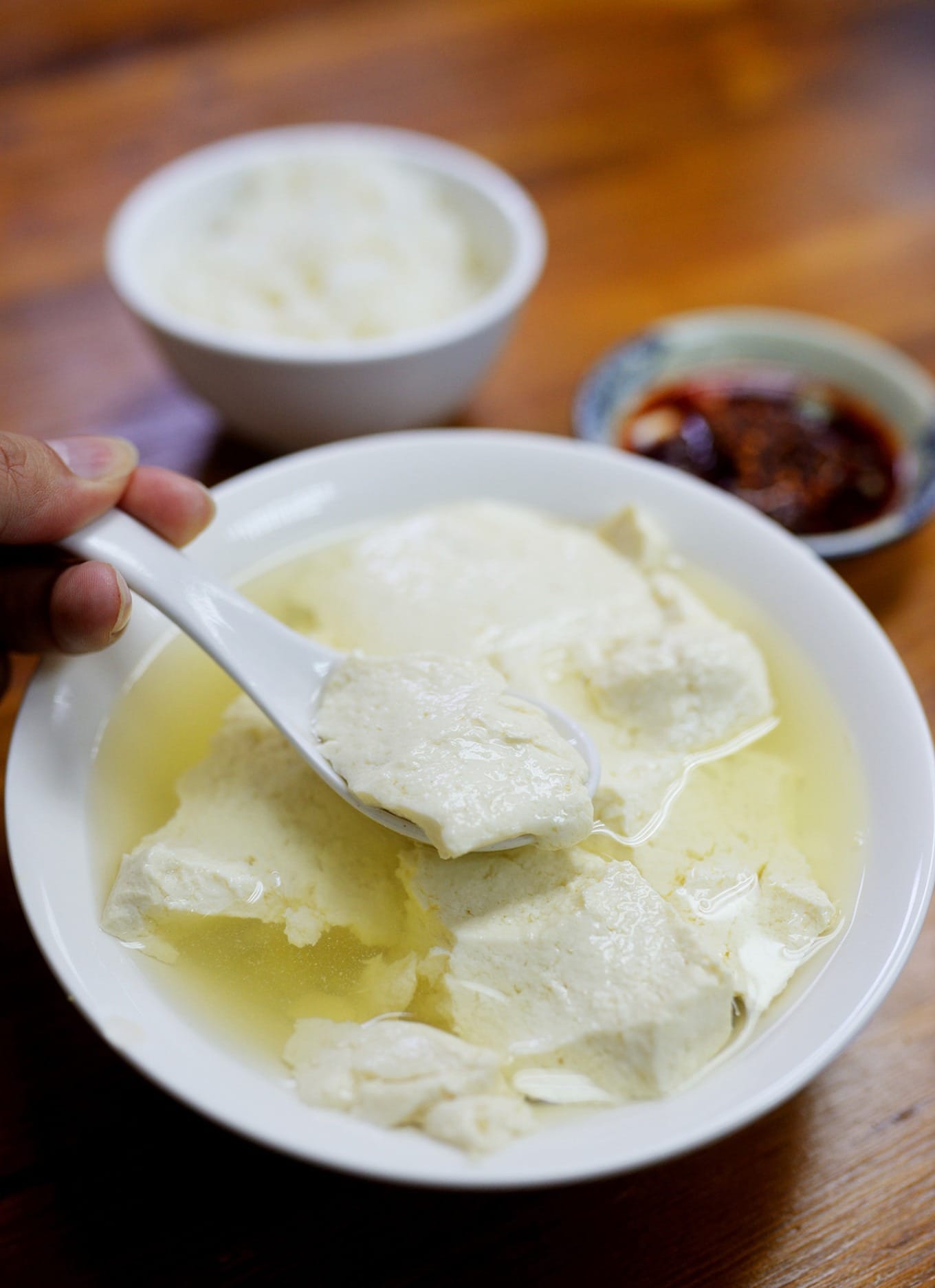
It’s said that more than 600,000 Sichuan people(四川人)live in Shenzhen, so it’s easy to find good Sichuan cuisine(川菜)across the city. Beyond classics, you can even encounter 豆花饭(Douhua Rice), a simple yet beloved Sichuan meal rarely seen outside Sichuan and Chongqing.
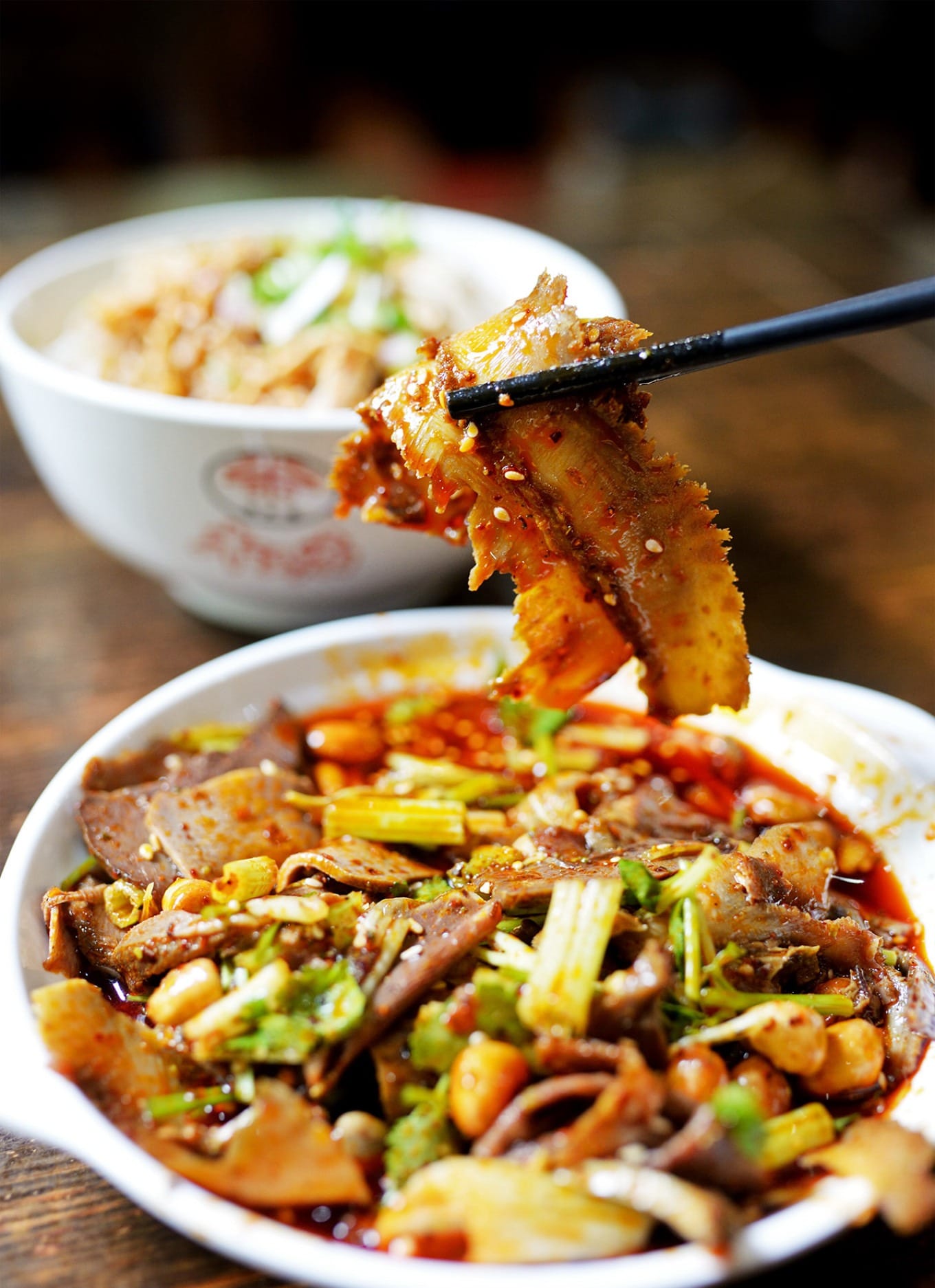
Another must-try is 夫妻肺片(Fuqi Feipian, sliced beef and offal in chili sauce). In Shenzhen, the spice level is often gentler than the traditional Sichuan-Chongqing version, better suited to Cantonese tastes—still flavorful, aromatic, and thoroughly satisfying.
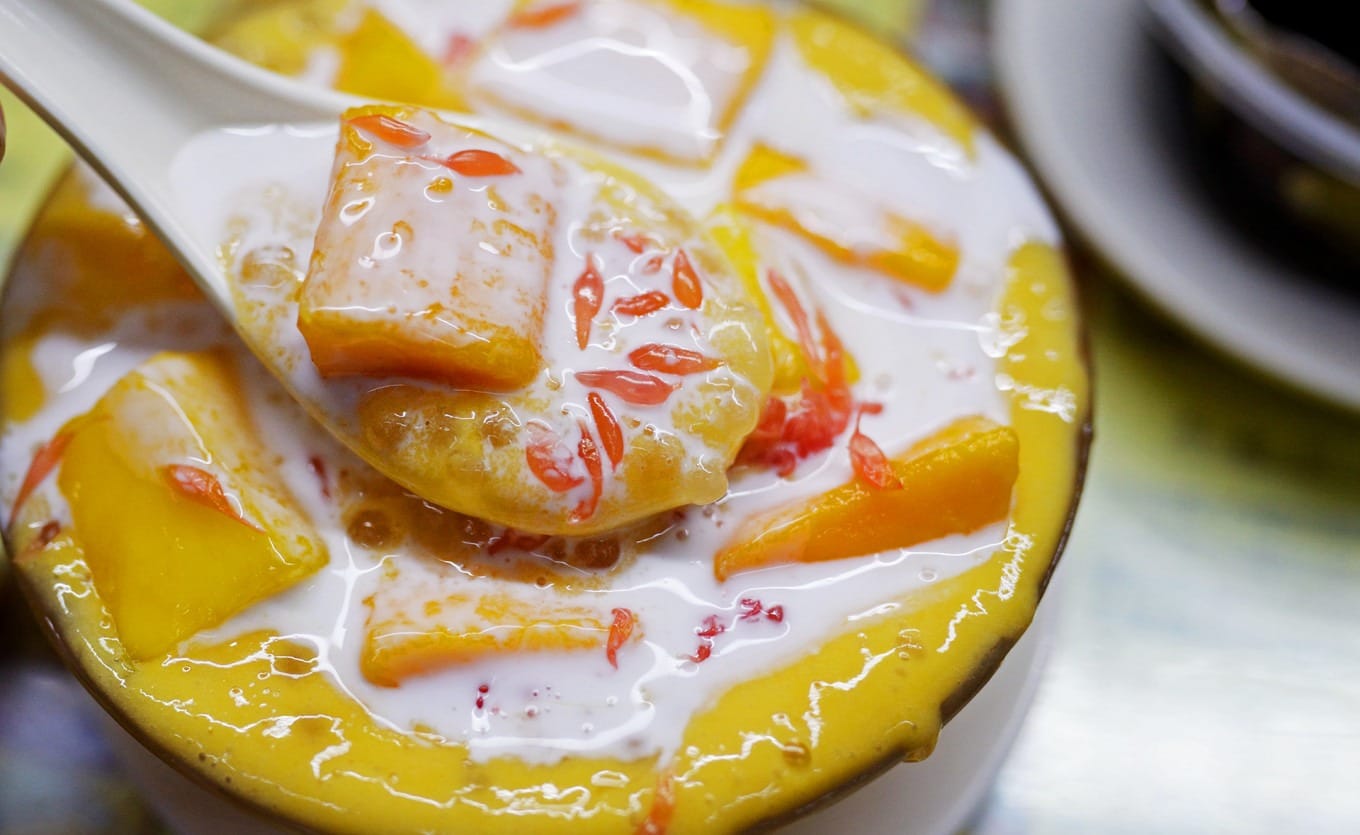
The habit of enjoying sweet soups(糖水)runs deep in Cantonese culture, and Shenzhen, located in the Pearl River Delta, is no exception. A bowl of 杨枝甘露(Yangzhi Ganlu, mango pomelo sago)with generous chunks of fresh mango and pomelo feels like sipping a breeze straight from summer.
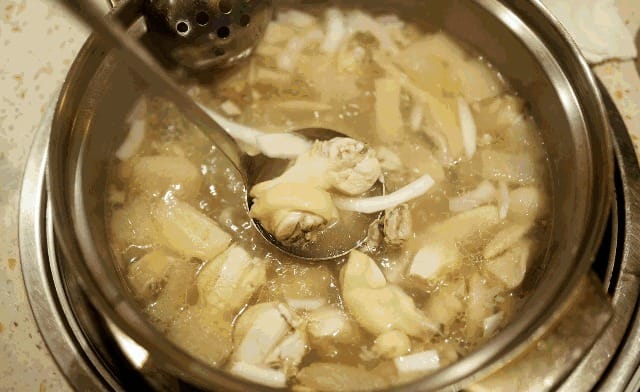
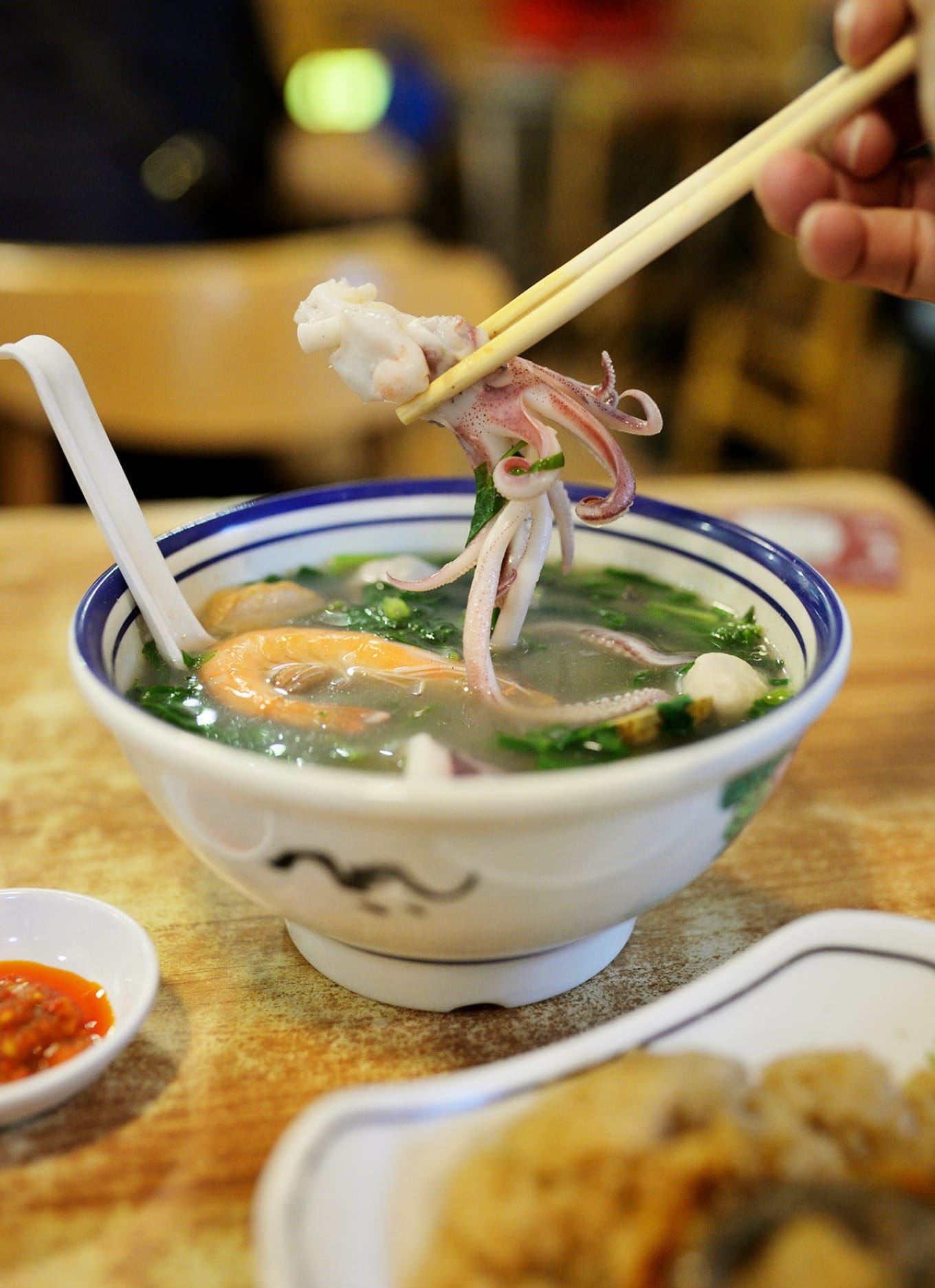
A simple seafood soup, seasoned only with salt and cilantro, perfectly reflects Cantonese respect for natural flavors. With no heavy seasoning, the sweetness of the seafood itself shines through in every spoonful.
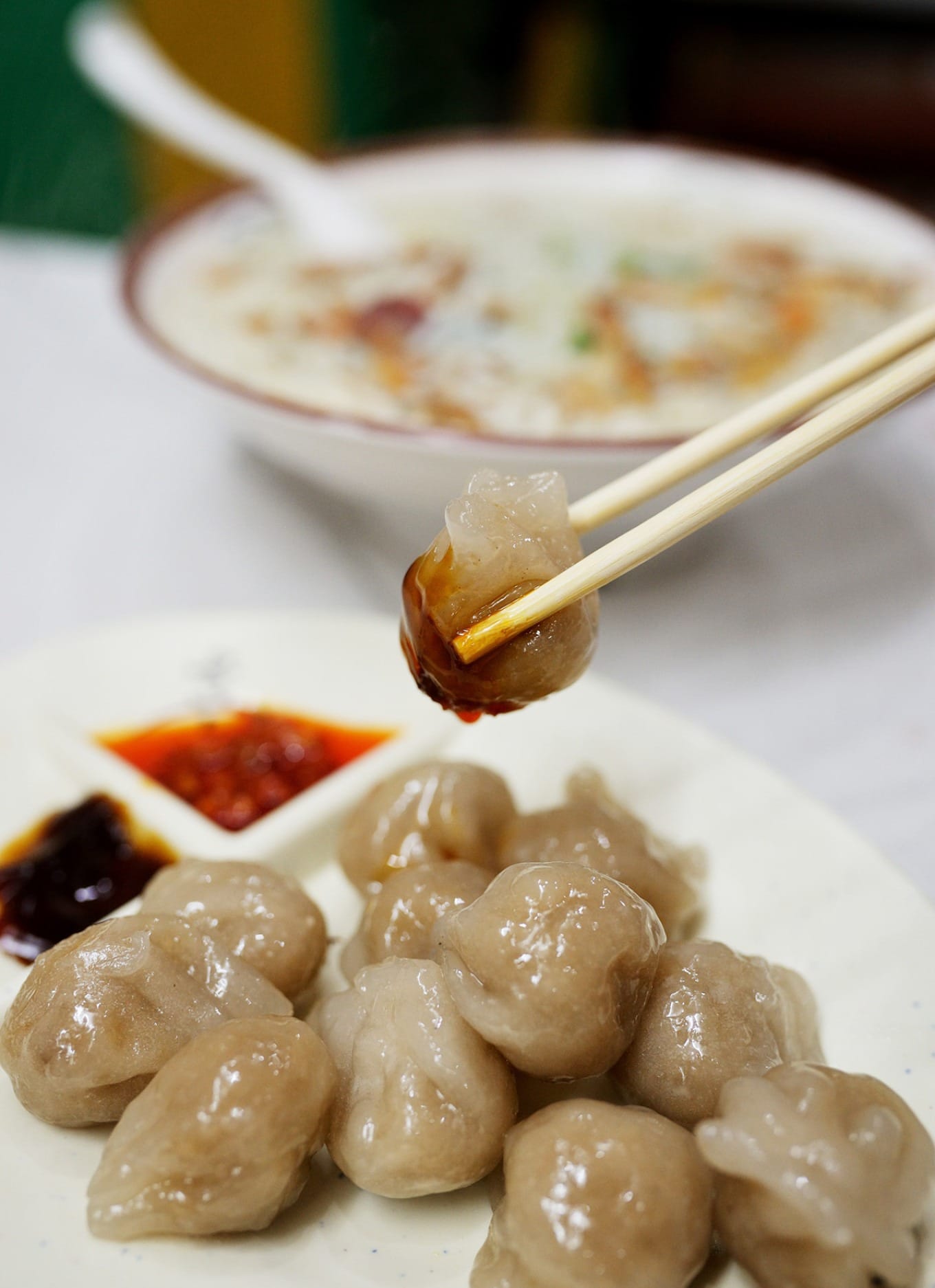
In Shenzhen, you can also try authentic Haifeng-style 小米(Haifeng “Xiaomi” snack). Despite the name, it has nothing to do with millet; the outer layer is actually made from sweet potato starch, giving it a chewy and distinctive texture.
Because Shenzhen rose so quickly, it’s often labeled as a “young” city, leading many to believe it lacks history. In fact, its history dates back to around 5000 BCE. If you want a concise introduction to Shenzhen’s past and cultural roots, Shenzhen Museum(深圳博物馆)is an ideal starting point.
The museum’s collection is surprisingly strong in both quantity and quality. While it can’t rival museums in China’s major archaeological provinces, it stands out among comprehensive museums in typical prefecture-level cities.
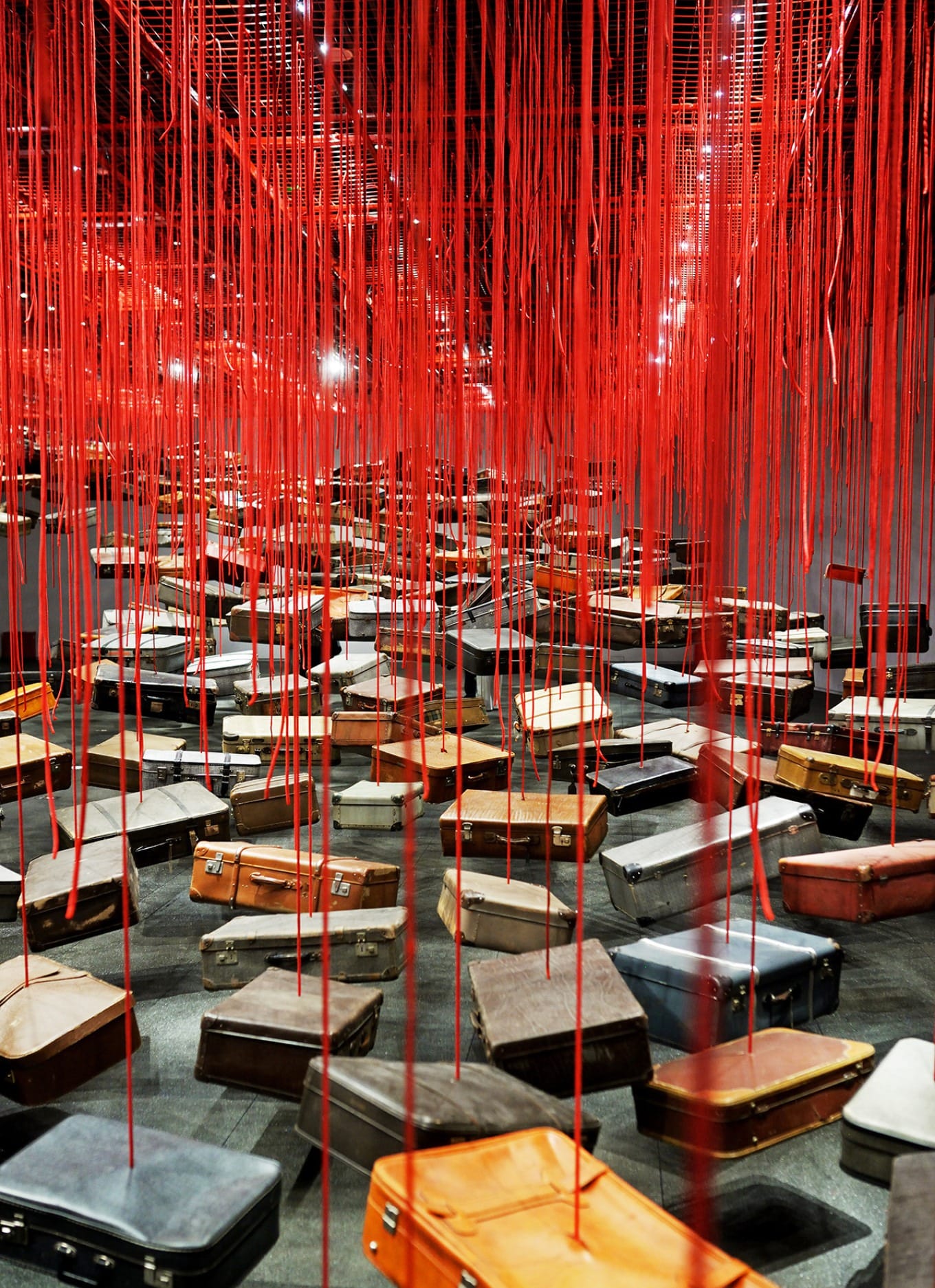
If you enjoy art, don’t miss the new Shenzhen Art Museum(深圳美术馆新馆). Opened at the end of 2023, it impresses with both the caliber of its collections and the scale and design of its exhibition spaces.
Inside the new building, you can view highlights from over 40 years of the museum’s collection, including works by Li Kuchan(李苦禅), Zhu Qizhan(朱屺瞻), Guan Shanyue(关山月), Li Xiongcai(黎雄才), Li Keran(李可染), Pan Tianshou(潘天寿), Wu Guanzhong(吴冠中), and Huang Yongyu(黄永玉).
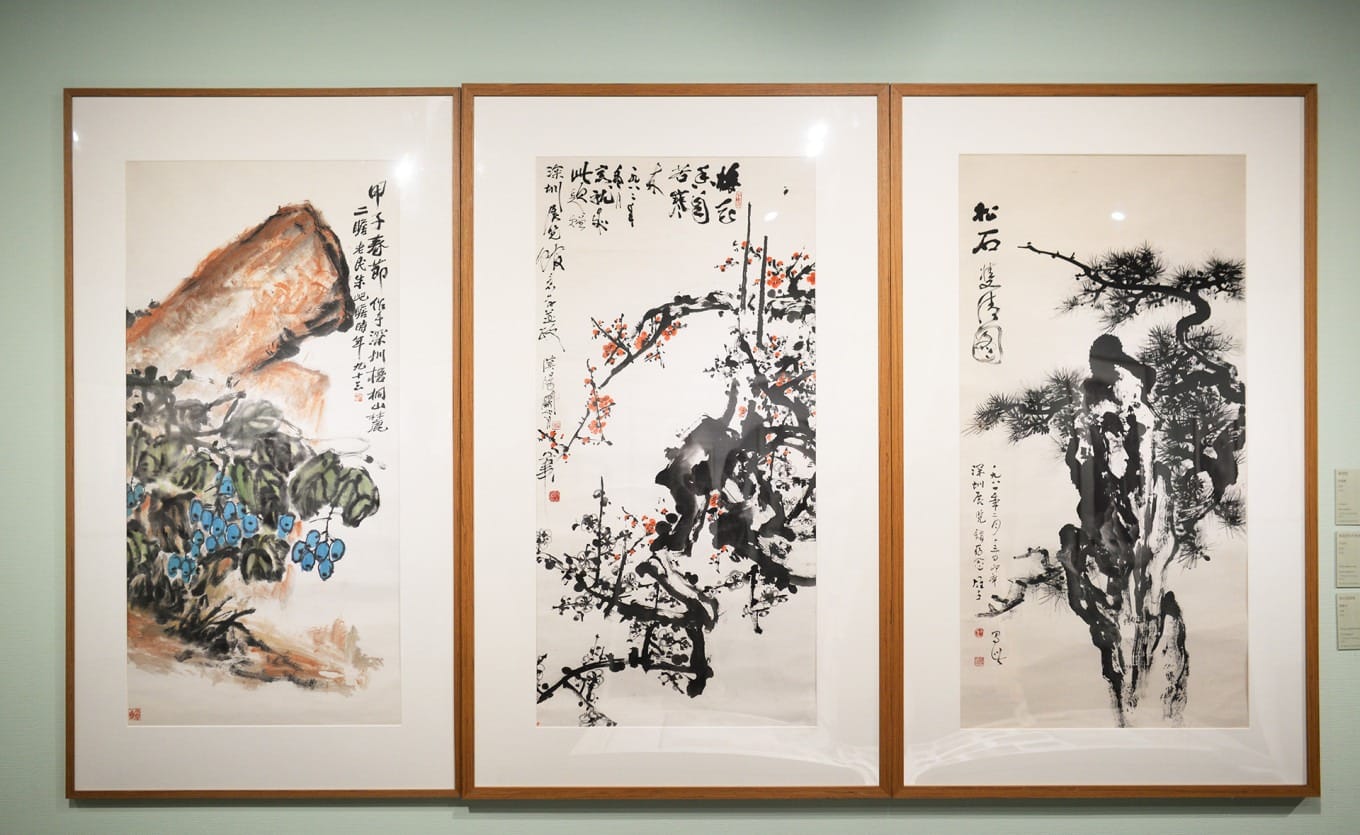
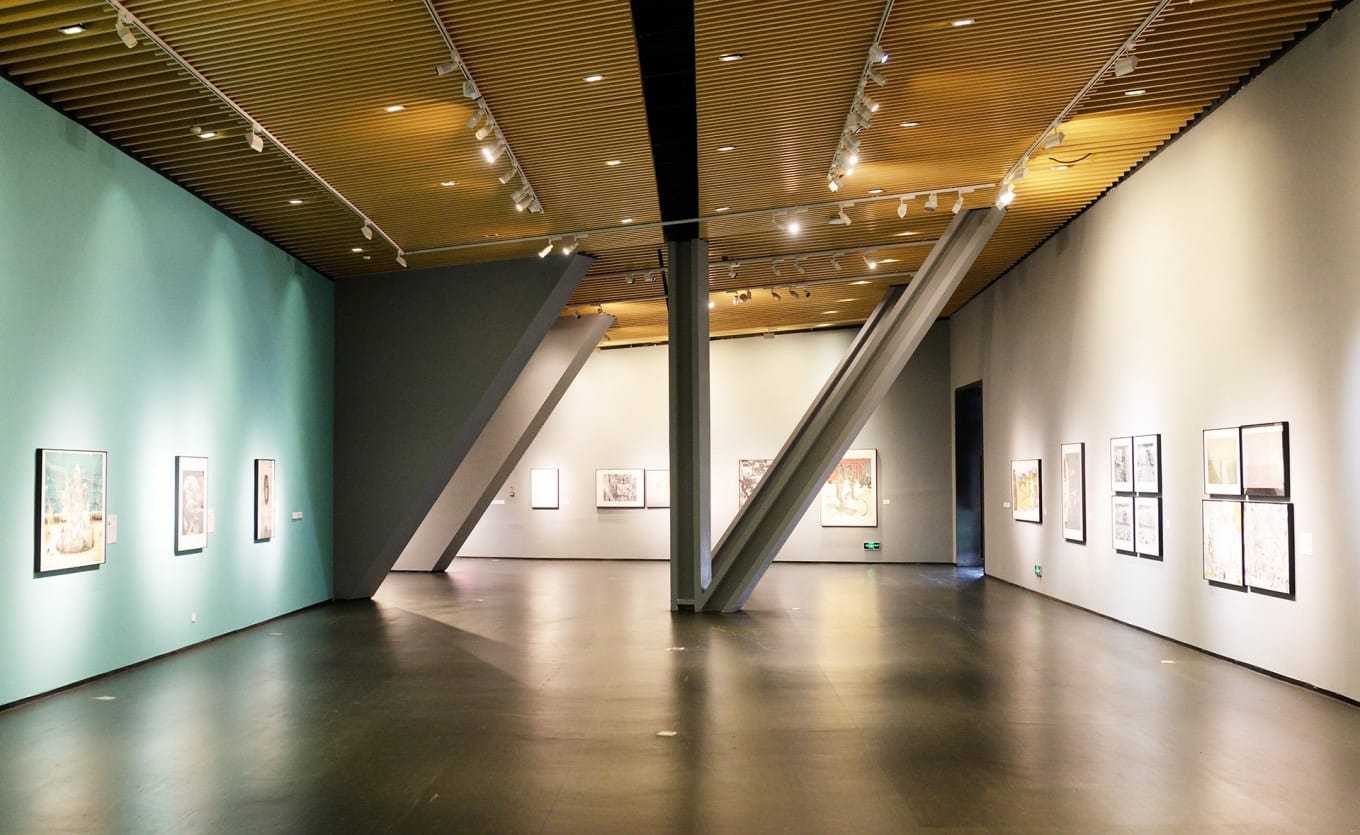
Shenzhen is also home to a national-level art institution: the China Printmaking Museum(中国版画博物馆). Its Guanhua International Print Biennial(观澜国际版画双年展), held annually, is one of China’s most internationally influential printmaking exhibitions.
Shenzhen | Food Scene Overview
By reputation, Shenzhen(深圳)is often labeled a “food desert,” but once you spend time eating around the city, you’ll notice a very different reality. Here, people approach food with a distinct kind of enthusiasm—one built on openness rather than tradition.
A defining trait of Shenzhen’s food culture is what locals half-jokingly call “borrow-and-adapt.” As migrants from across China settle here, they bring their hometown flavors with them. These cuisines are embraced, adjusted, and sometimes reinvented, making it easy for travelers to find regional dishes from all over China that suit their own tastes.
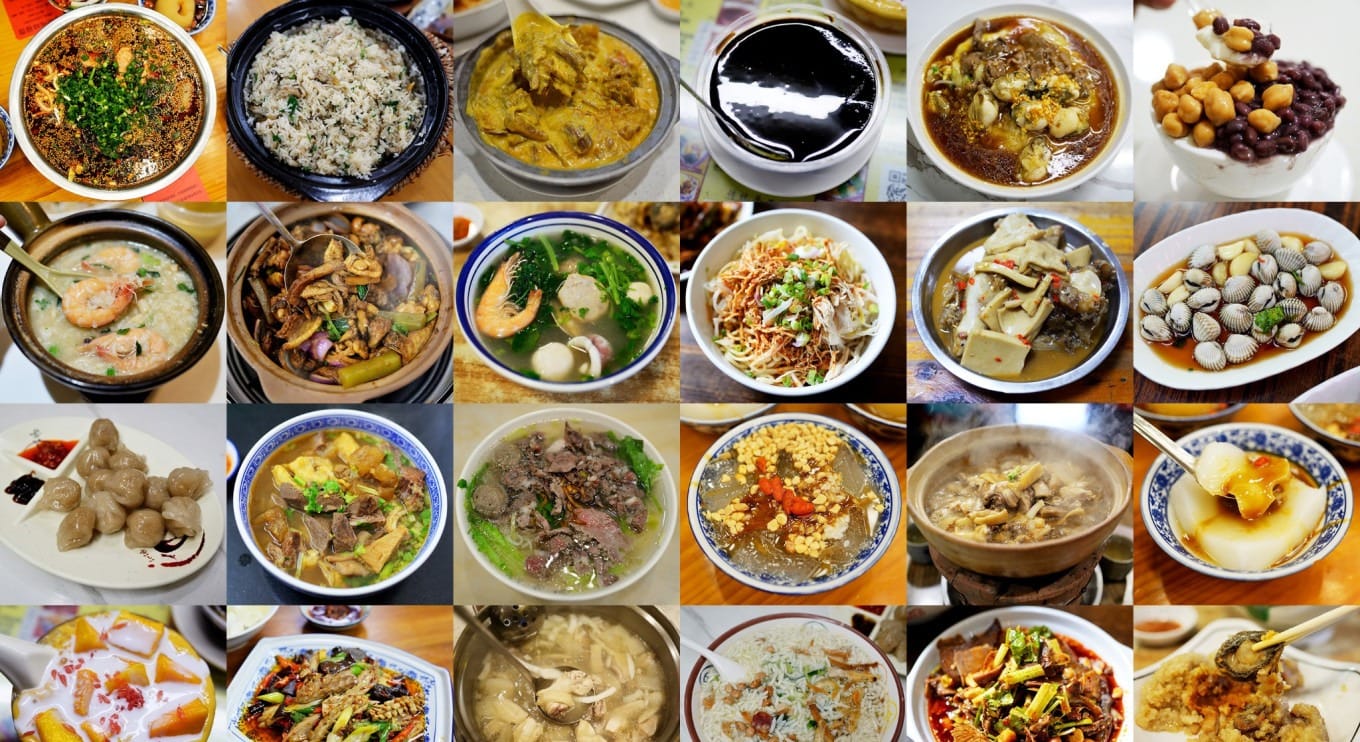
Below, you’ll find a closer look at some of the foods you can expect to encounter in Shenzhen—an edible snapshot of how this city eats, blends, and evolves.
Niuxiang Sweet Potato Congee (牛巷番薯粥)
- RestaurantNiuxiang Sweet Potato Congee(牛巷番薯粥)
- AddressNo. 54-1 Niuxiang Fang, Futian Road(福田路牛巷坊54-1号)
- Recommended dishesRaw-marinated shrimp(生腌虾), raw-marinated crab(生腌蟹), blood cockles(血蛤), goose liver(鹅粉肝), braised pork intestine(卤水粉肠), fried tofu(炸豆干), red clam meat(红肉米), Mah Ye vegetables(麻叶菜), sweet potato congee(番薯粥)
- Average spendRMB 60 per person(人均60元)
More than three-fifths of Shenzhen’s population consists of migrants, with Chaoshan people(潮汕人)forming the largest group among them. As they settled in Shenzhen(深圳), they brought along their hometown cooking traditions. Locals often joke that a strong Chaoshan accent is a guarantee of flavor—and if you’re looking for authentic Chaoshan cuisine outside Chaoshan itself, Shenzhen may be your best bet.
🍲 Foodie Inspiration: If you fall in love with these bold Chaoshan flavors in Shenzhen, why not plan a pilgrimage to their source? Read our Food Lover’s Guide to Shantou to discover where these dishes originated.
Futian Village(福田村)is known as a gathering place for Chaoshan natives, earning it the nickname “Chaoshan Village(潮汕村).” Along Niuxiang Street(牛巷街), you’ll find many Chaoshan eateries, but the most popular by far is Niuxiang Sweet Potato Congee(牛巷番薯粥), a classic Chaoshan-style late-night eatery known as a “Da Leng” stall(打冷大排档).
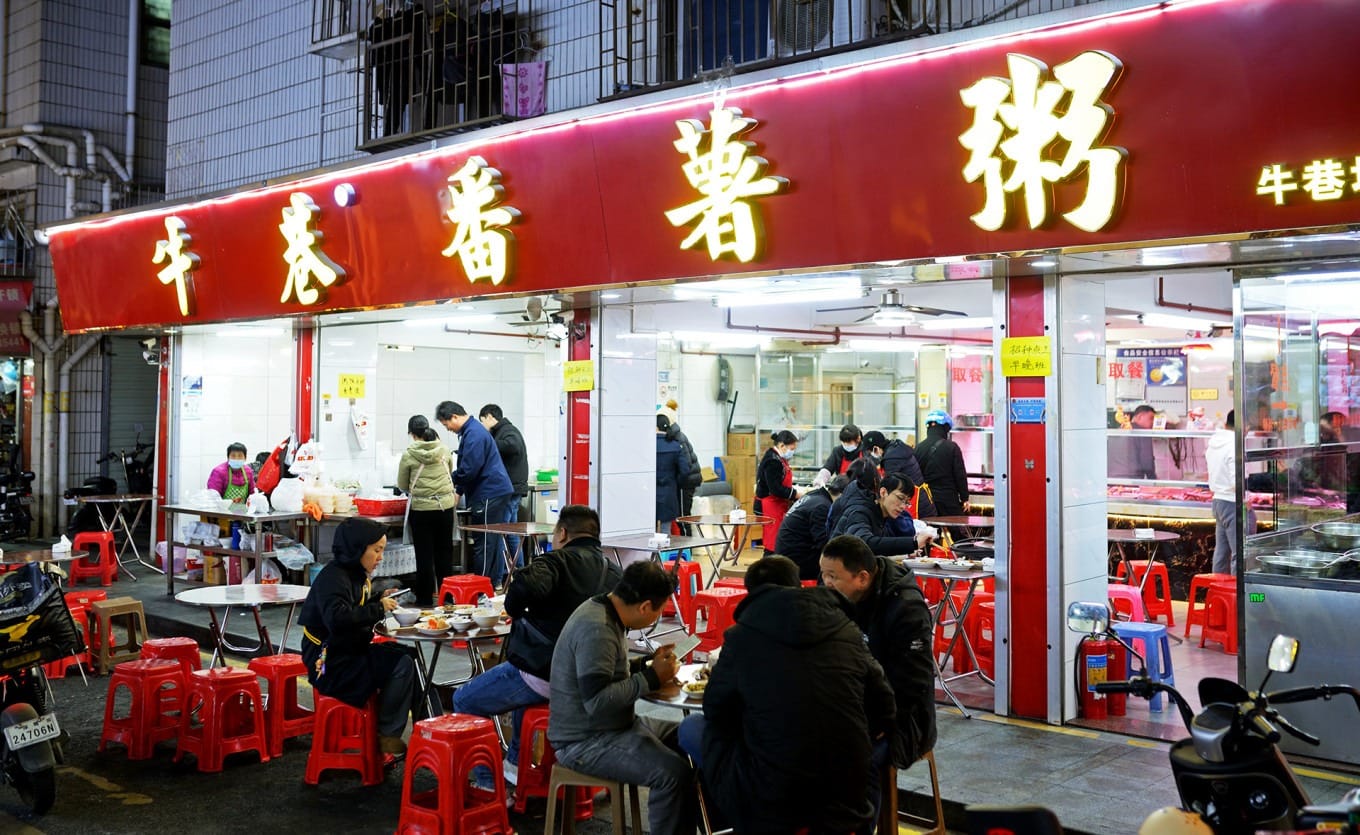
The term “Da Leng(打冷)” originated in Hong Kong, while in Chaoshan it’s more commonly called “Ye Mi(夜糜).” The concept is simple: plain rice porridge or sweet potato congee paired with a wide variety of side dishes. Dozens of options are laid out at the counter; you simply point to what you want, and smaller groups can even order mixed platters.
📱 Useful Tool: Ordering at local “Da Leng” stalls can be tricky due to language barriers. Make sure you have the Essential Apps For Traveling In China downloaded to help with translation and navigation.
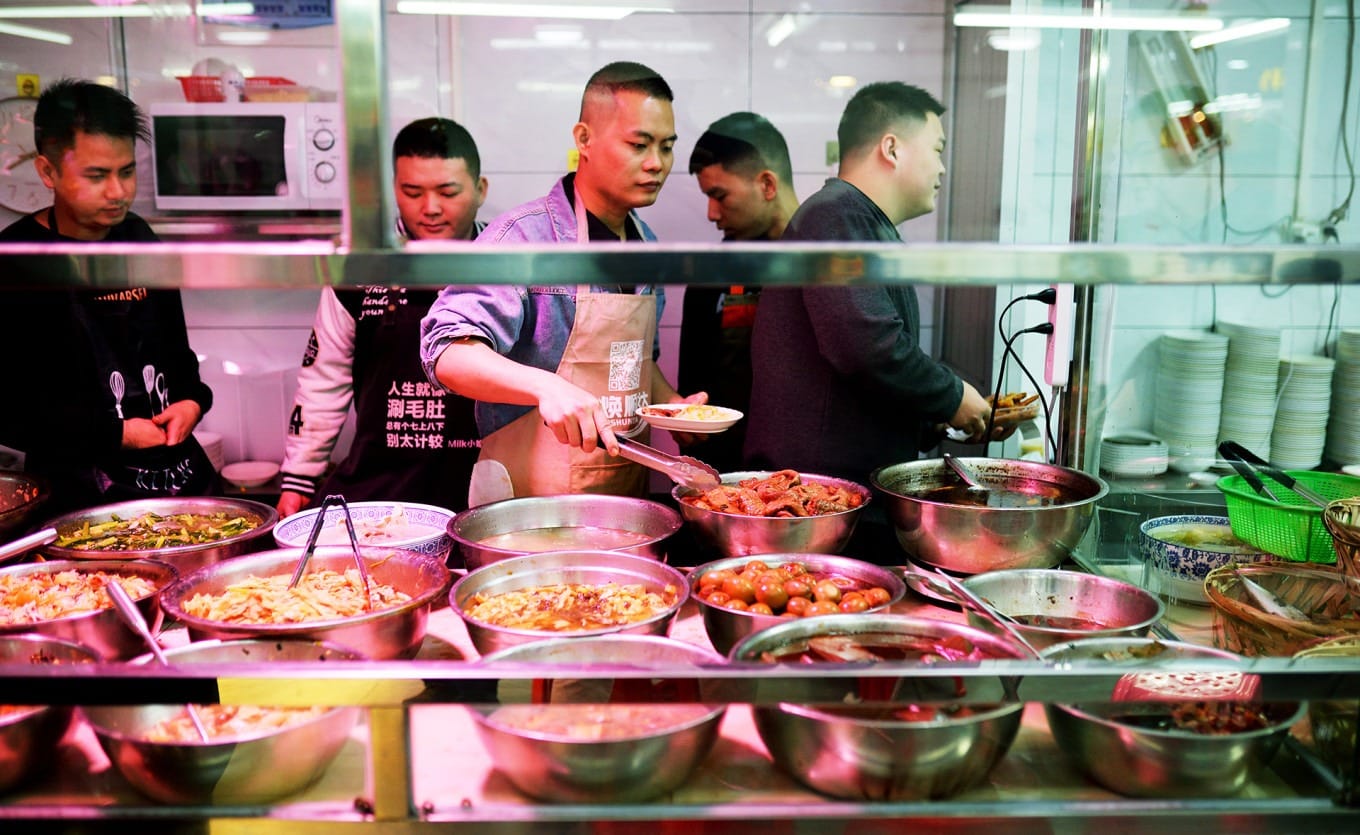
Just like in Chaoshan, this Shenzhen stall offers an impressive spread of cold prepared dishes: raw-marinated seafood, braised items, fish rice(鱼饭), fresh seafood, cooked meats, and assorted savory sides(咸杂). Most dishes use humble, everyday ingredients, though you’ll also spot premium items like raw-marinated lobster, making the selection almost overwhelming.
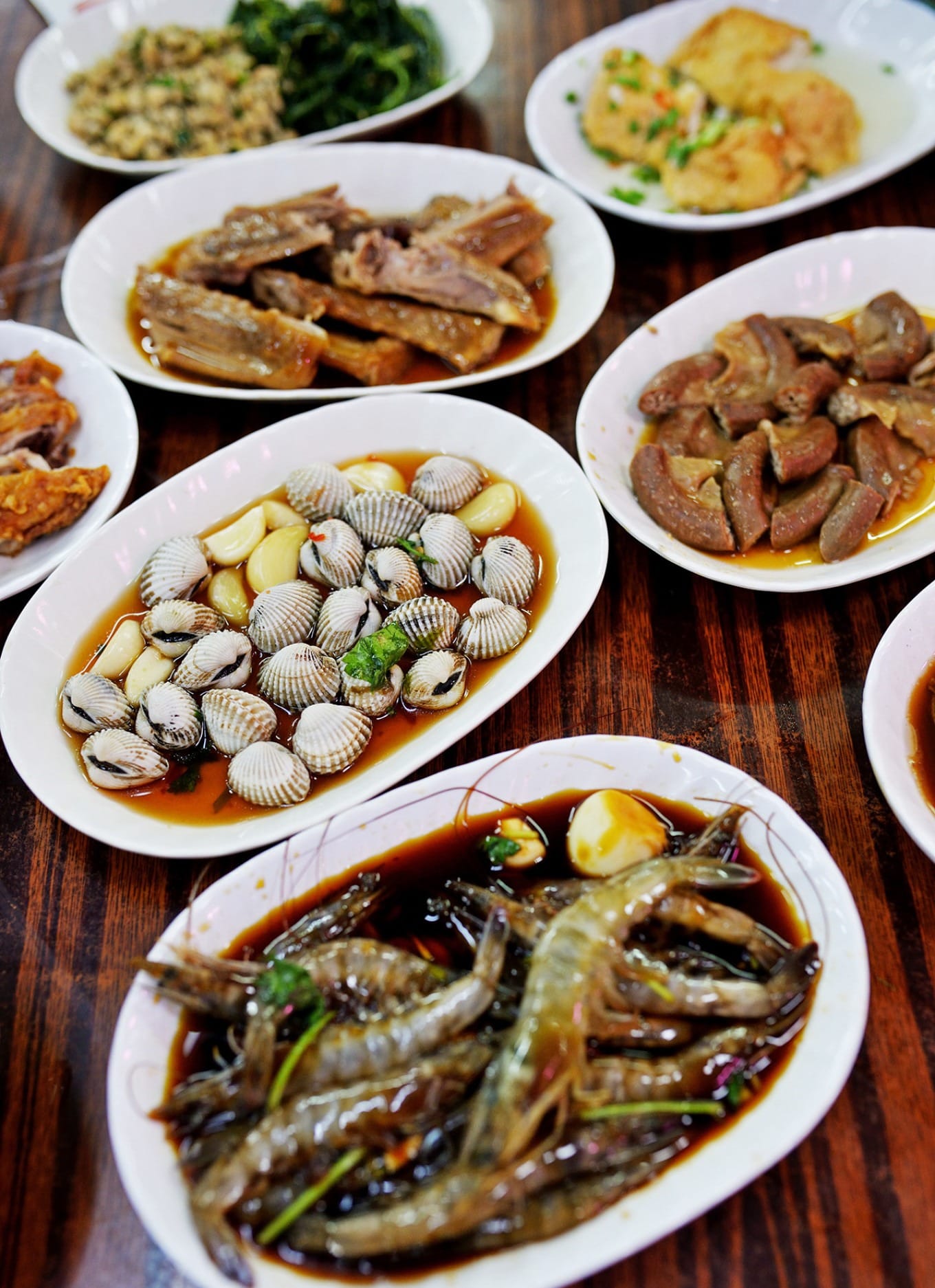
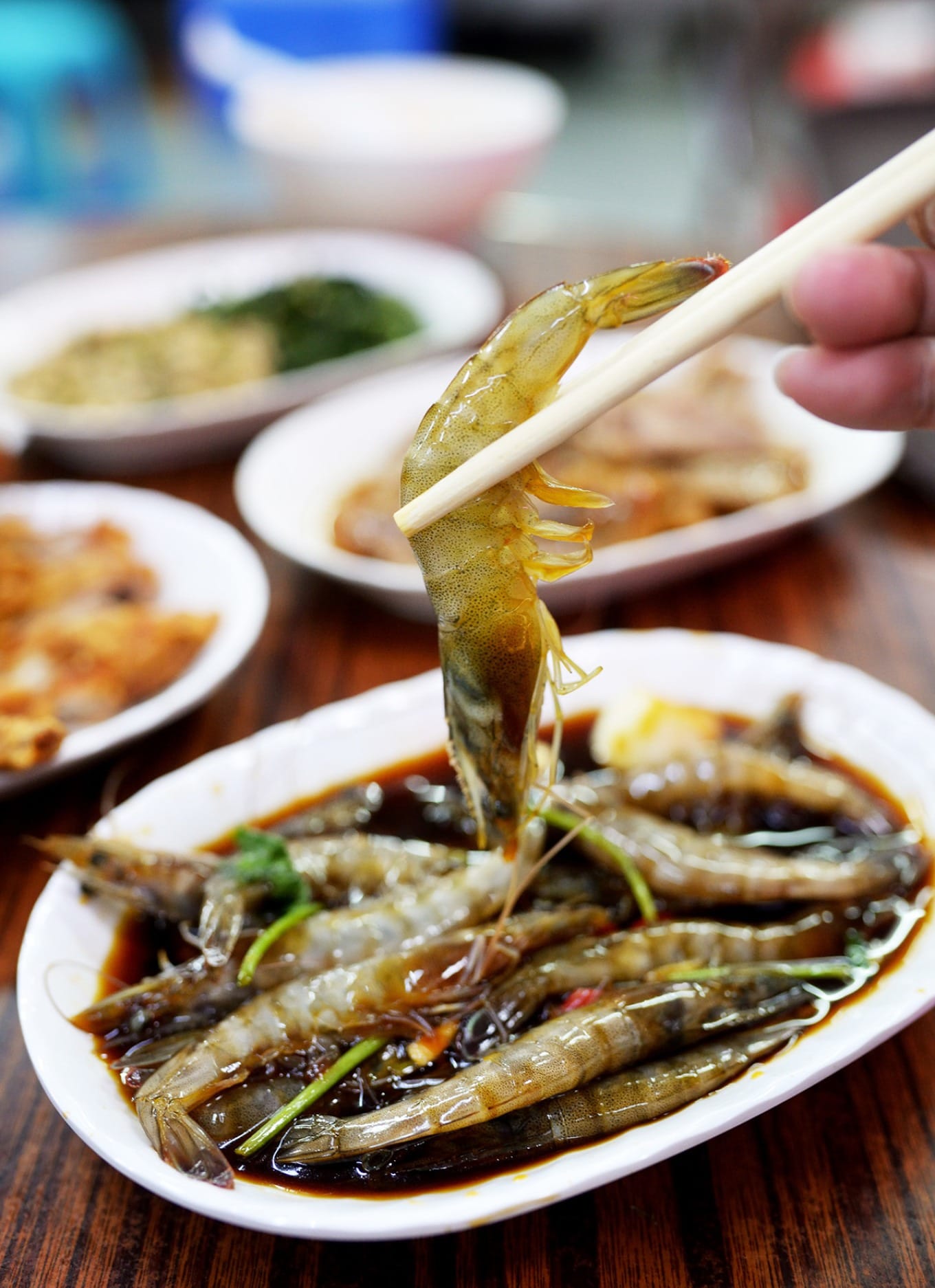
If you’re not intimidated by the dramatic nickname “Chaoshan poison(潮汕毒药),” raw-marinated seafood(生腌) is an absolute must. This beloved Chaoshan technique dates back to the Song Dynasty. Live shrimp are cured with sea salt, then combined with rice vinegar and seasonings, which both sterilize and enhance the shrimp’s natural sweetness. The result is translucent, jelly-like shrimp meat—fresh, savory, lightly spicy, and astonishingly tender.
Raw-marinated crab(生腌蟹)is prepared by soaking live crabs in soy sauce with garlic, chili, and cilantro for several hours to a full day. The pale yellow roe turns a vivid orange-red, while the salt transforms the meat into a delicate, gelatinous texture. Though the crabs are small, the roe is rich and abundant. The crab meat melts effortlessly in your mouth, intensified by the umami-rich soy sauce—deeply addictive with every bite.
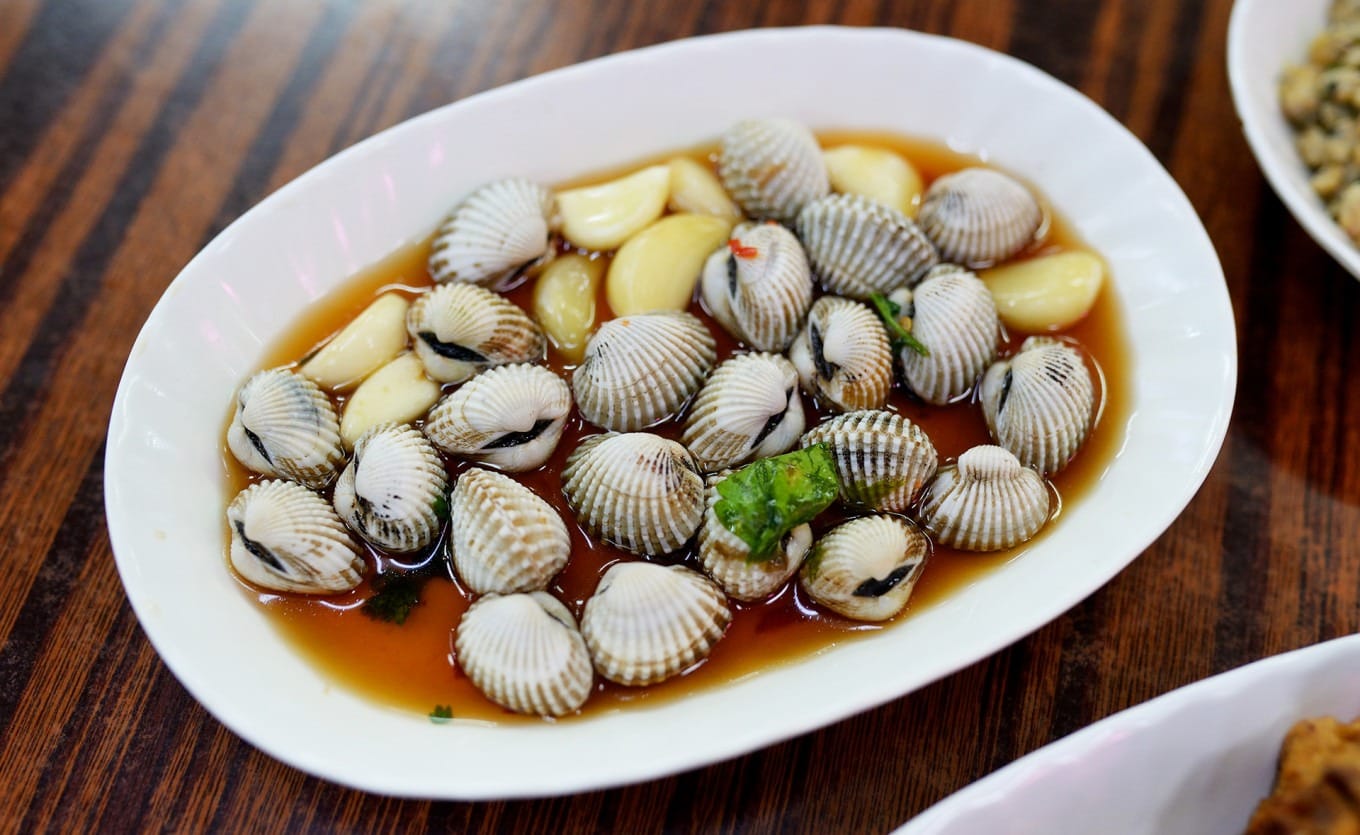
Another ingredient that can make newcomers nervous is blood cockles(血蛤), best enjoyed raw-marinated as well. After a brief blanching to make the shells open, they’re marinated with cooking wine, ginger, garlic, and seasonings for about an hour. With a gentle twist, the shell opens to reveal tender meat and crimson juices—fresh, silky, and surprisingly delicious.
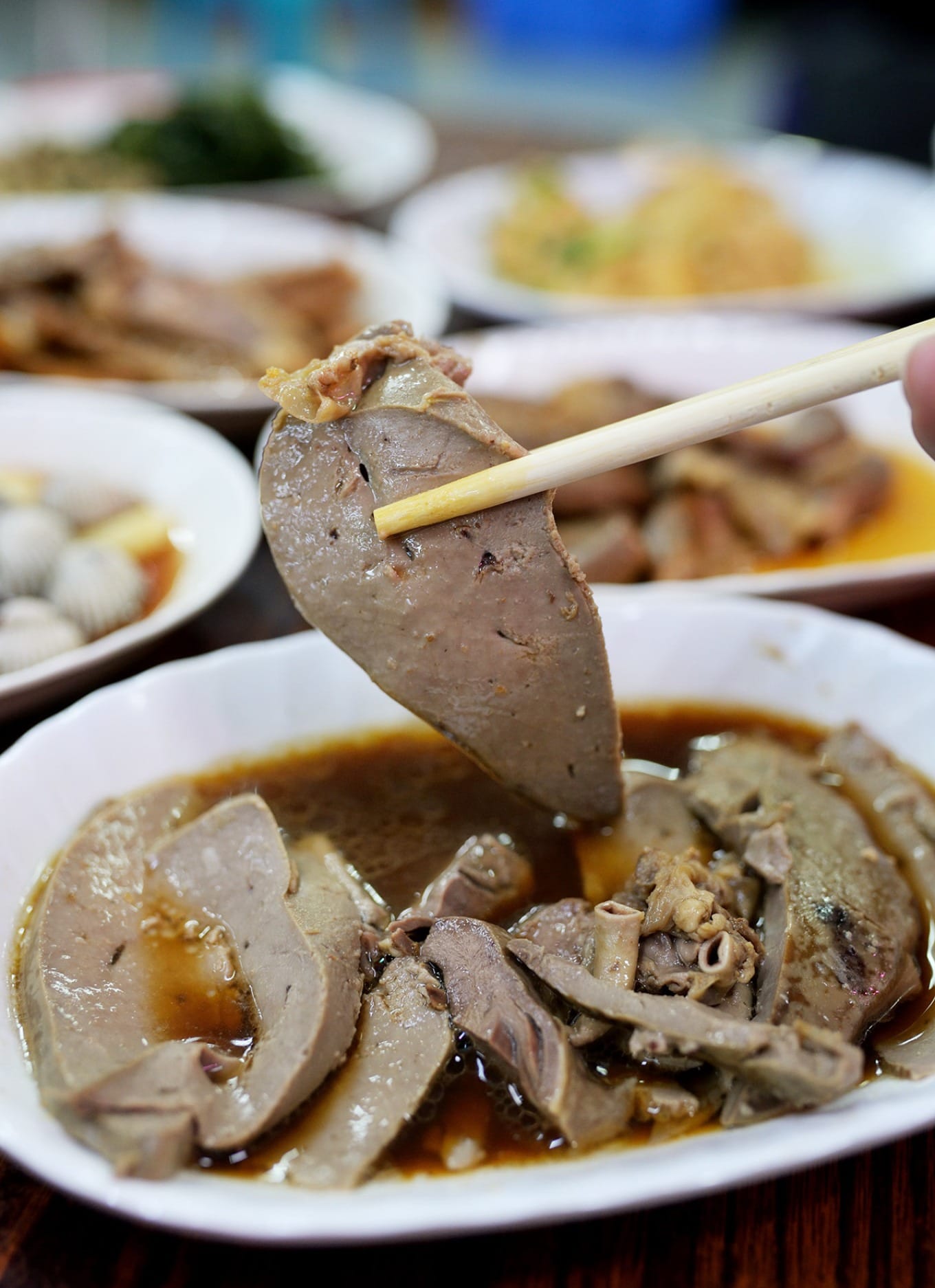
Chaoshan-style braised dishes(卤水)are equally essential. The master stock relies on precise spice ratios, especially the use of galangal(南姜), whose sweet-spicy aroma defines Chaoshan braising. Braised goose(卤鹅)is the pinnacle of this tradition, and the most prized cut is goose liver(鹅粉肝), far silkier than ordinary foie gras—so soft it dissolves on your tongue.
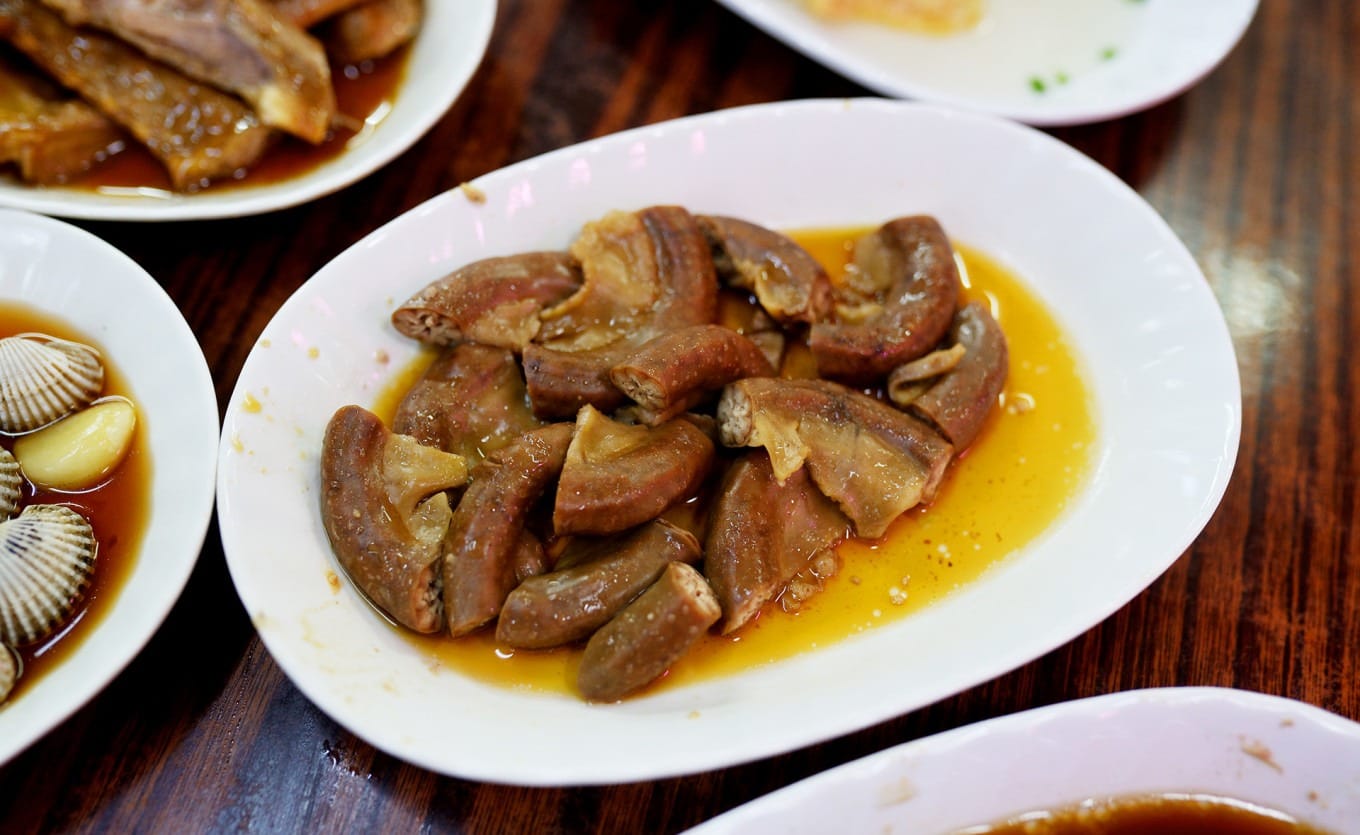
Braised pork intestine(卤水粉肠)is another highlight. Made from the front section of the pig’s small intestine, it has little odor compared to large intestine and a thick yet springy bite. The inner fat layer has a slightly powdery texture, giving it the name “Fen Chang(粉肠).” After long braising, the aromatic stock fully penetrates the meat, making it far more delicious than you might expect.
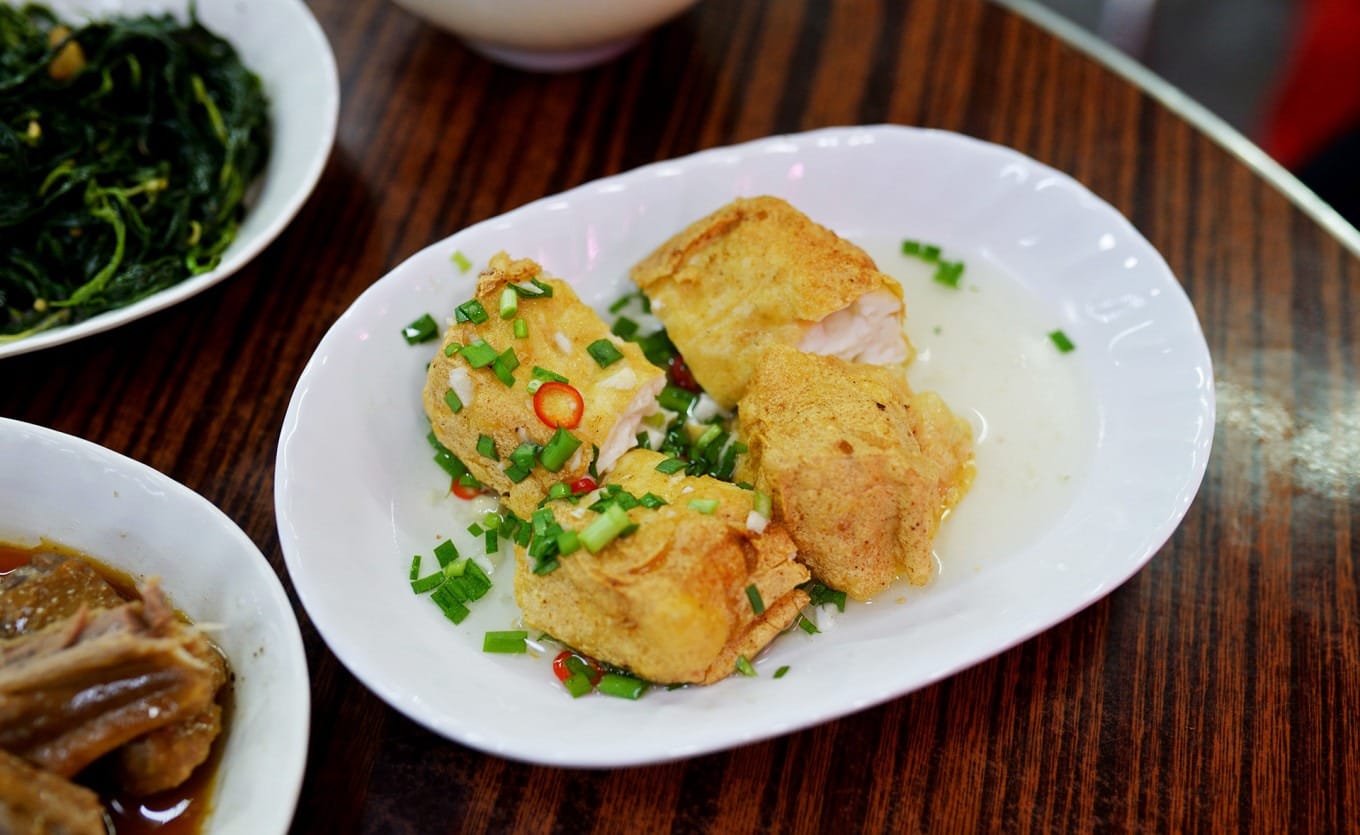
Fried tofu(炸豆干)is a specialty from Puning(普宁). This shop follows the classic Puning method: frying first, then cutting. Because Puning tofu often contains sweet potato starch, it retains more moisture than regular tofu, resulting in an exceptionally soft interior. It’s paired with a light chive-infused saltwater dip(韭菜盐水)that gently enhances the tofu’s natural aroma. Crisp outside, tender inside, it’s irresistibly fragrant.
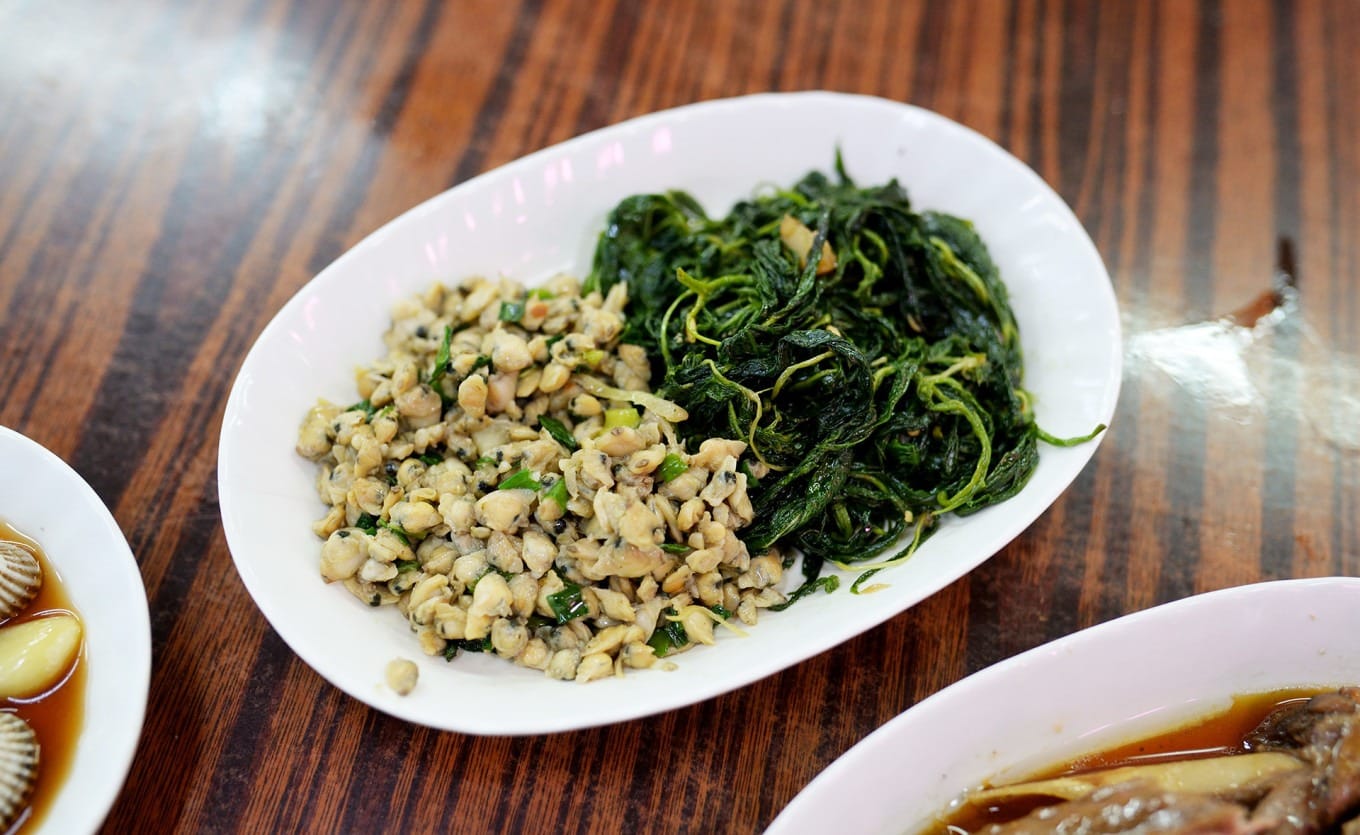
Among Chaoshan savory sides(咸杂), red clam meat(红肉米)is a standout. These small clams are shelled and stir-fried, delivering a salty, briny flavor that pairs perfectly with sweet potato congee. Stir-fried Mah Ye vegetables(麻叶菜), a greens rarely seen outside Chaoshan, are another classic—simply cooked with garlic to bring out their fragrance.
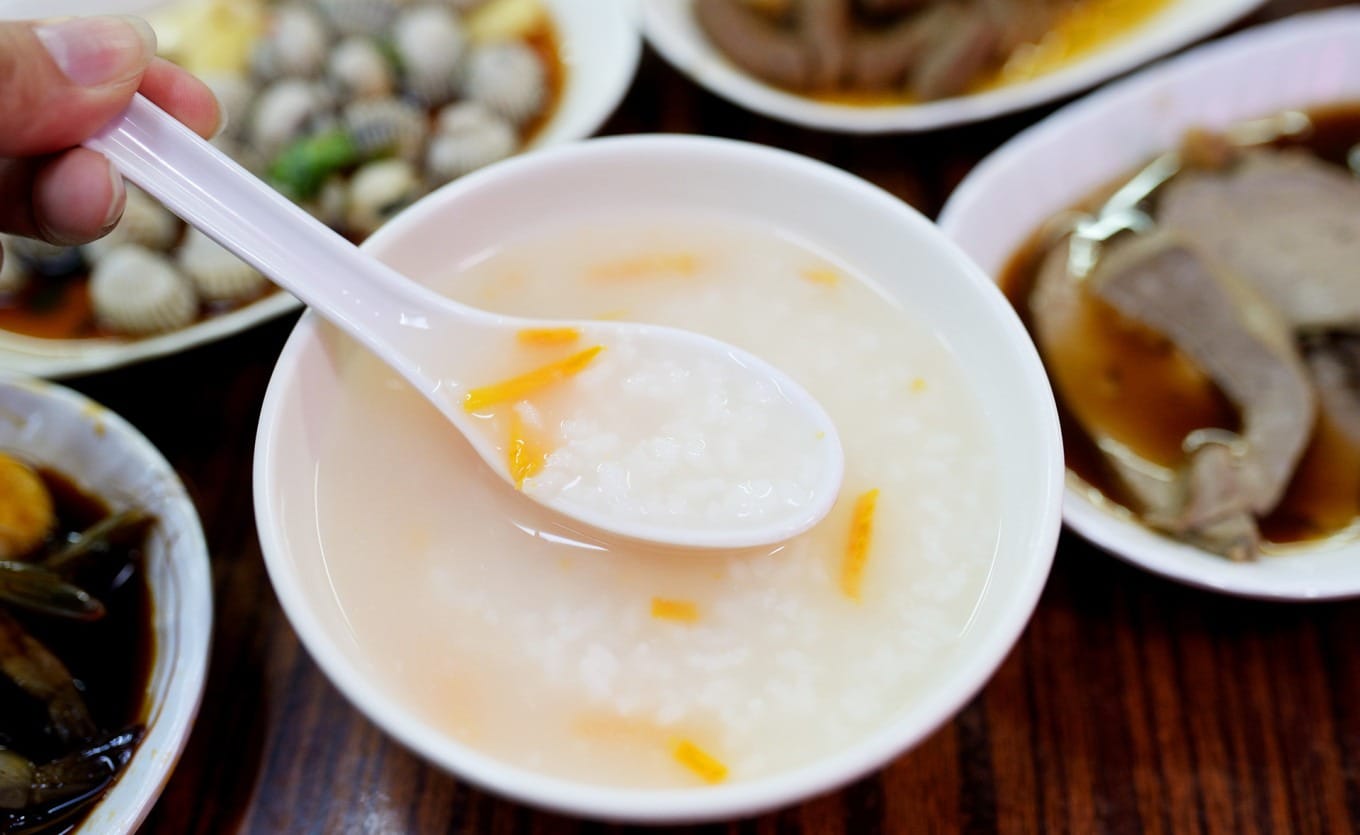
At the heart of every Da Leng meal is the congee itself. Traditionally, Chaoshan diners opt for plain white porridge, though this shop serves sweet potato congee(番薯粥)instead. Made with short, plump pearl rice, the porridge is thicker than usual—somewhere between soaked rice and classic congee. Simple as it may seem, this bowl carries deep emotional weight for Chaoshan natives. Lightly sweet, fragrant, and comforting, it’s a flavor many Chaoshan people in Shenzhen hold close to their hearts.
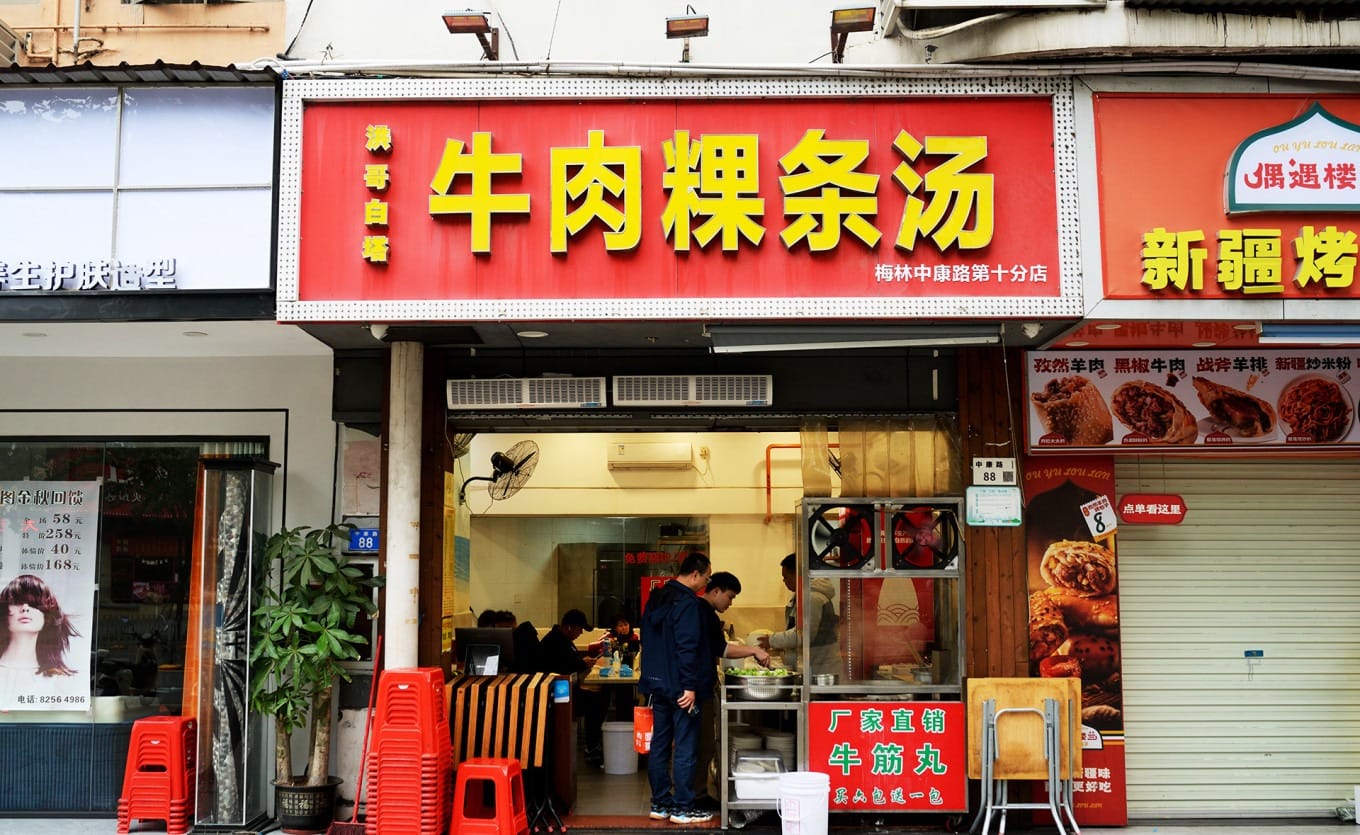
Hong Ge Baita Beef Guo Tiao Soup (洪哥白塔牛肉粿条汤)
- RestaurantHong Ge Baita Beef Guo Tiao Soup (Meilin Zhongkang Road No.10 Branch)(洪哥白塔牛肉粿条汤·梅林中康路第十分店)
- AddressNo. 88 Zhongkang Road(中康路88号)
- Recommended dishFresh Beef Guo Tiao Soup(鲜牛肉粿条汤)
- Average spendRMB 25 per person(人均25元)
When exploring Chaoshan cuisine(潮汕美食)in Shenzhen(深圳), guo tiao(粿条)made from rice batter is impossible to miss. At first glance, Chaoshan guo tiao resembles Guangzhou-style ho fun(河粉), and the preparation is similar. However, guo tiao uses a higher proportion of rice batter and no added starch, making it less chewy but noticeably thicker, with a purer, more pronounced rice flavor.
Hong Ge Baita Beef Guo Tiao Soup(洪哥白塔牛肉粿条汤)is located near Shangmeilin Metro Station(上梅林地铁站)and is a well-regarded neighborhood shop. The owner comes from Baita Town, Jieyang(揭阳白塔镇), the birthplace of the famous Tongkeng Guo Tiao(桐坑粿条), which already hints at the shop’s authenticity.
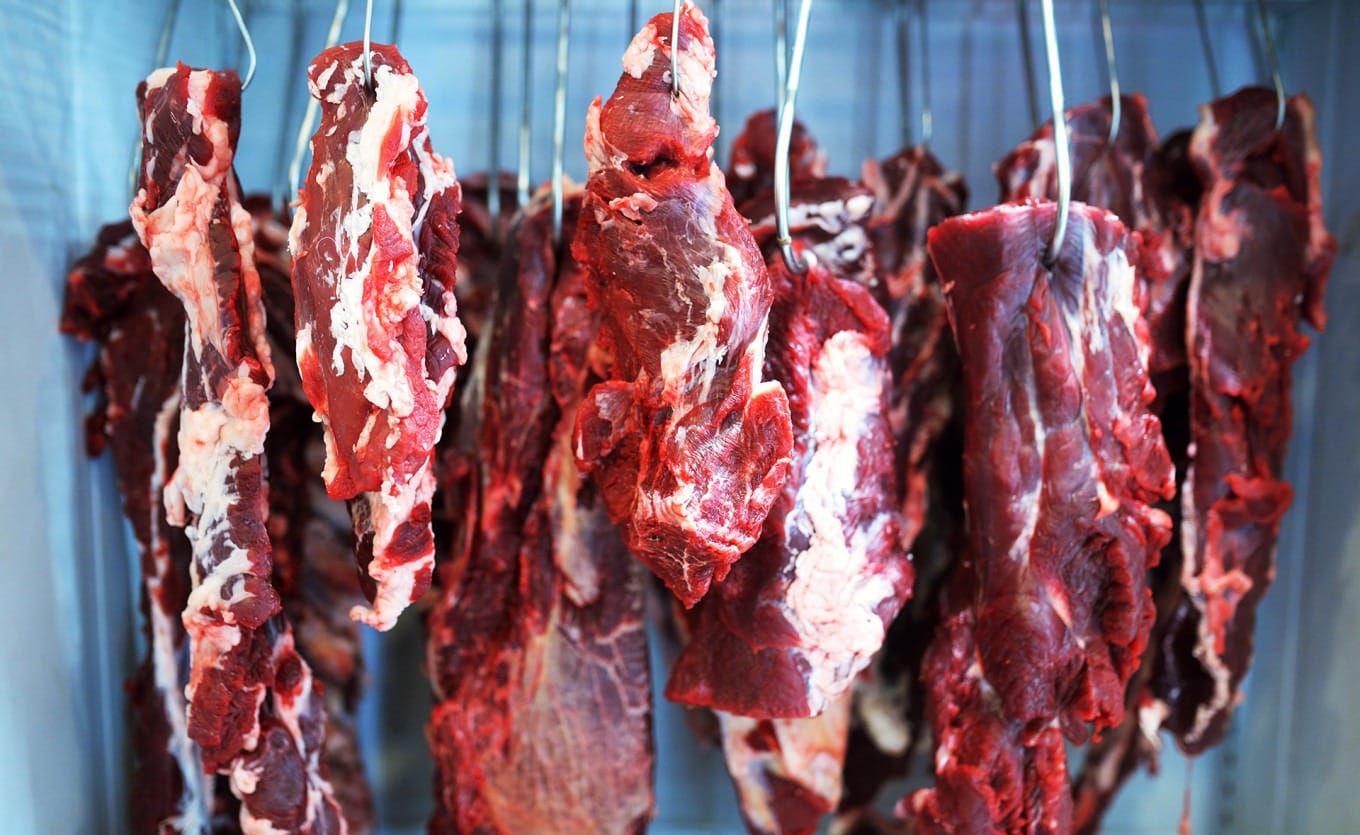
The ideal partner for guo tiao is beef, and purists insist on using diaolong beef(吊龙肉). This cut comes from the spine area of the cow and can be loosely compared to sirloin or ribeye in Western terms—slightly thick, tender, and laced with just enough fat to enhance flavor.
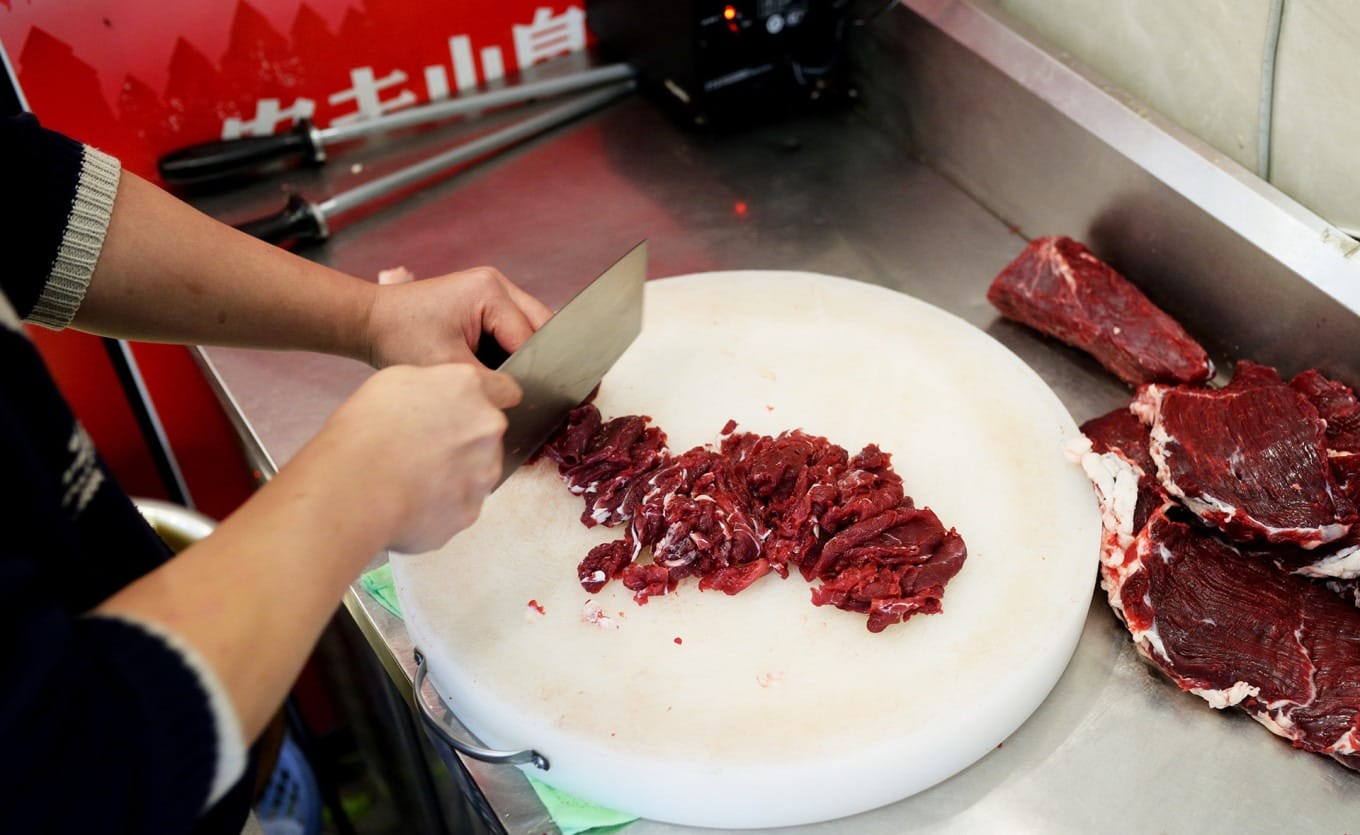
Chaoshan diners are famously particular about beef. Fresh beef must be hand-sliced, with careful attention paid to the grain and thickness. This precision ensures the meat cooks evenly and retains its ideal tenderness.
The shop uses very thin Tongkeng-style guo tiao from Jieyang, slender like vermicelli. Because of their fine shape, these noodles absorb broth easily and are especially suited for soup. Each bowl is cooked to order. Despite their delicate appearance, the noodles hold up well without breaking. Once finished, a ladle of rich bone broth is poured over them, elevating the already refined texture.
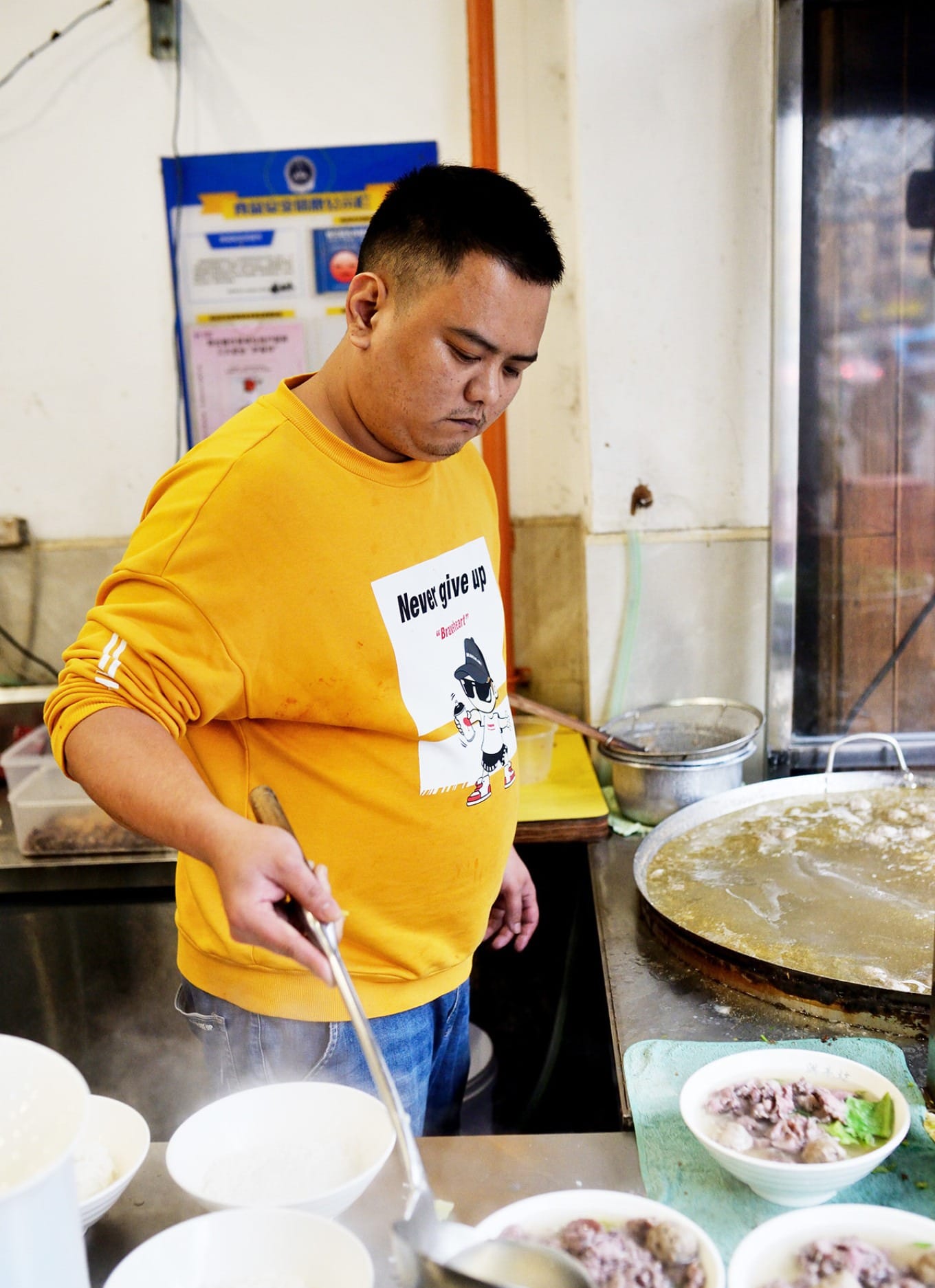
A bowl of fresh beef guo tiao soup arrives with slices of fresh beef, a few beef meatballs, and leafy greens. Just before serving, a drizzle of scallion oil is added, faithfully recreating the flavors of Jieyang. With your first bite, the noodles—fully soaked in broth—feel smooth and silky, while the beef’s natural sweetness unfolds with every chew. The beef meatballs are impressively springy, rivaling those from dedicated beef hotpot restaurants.
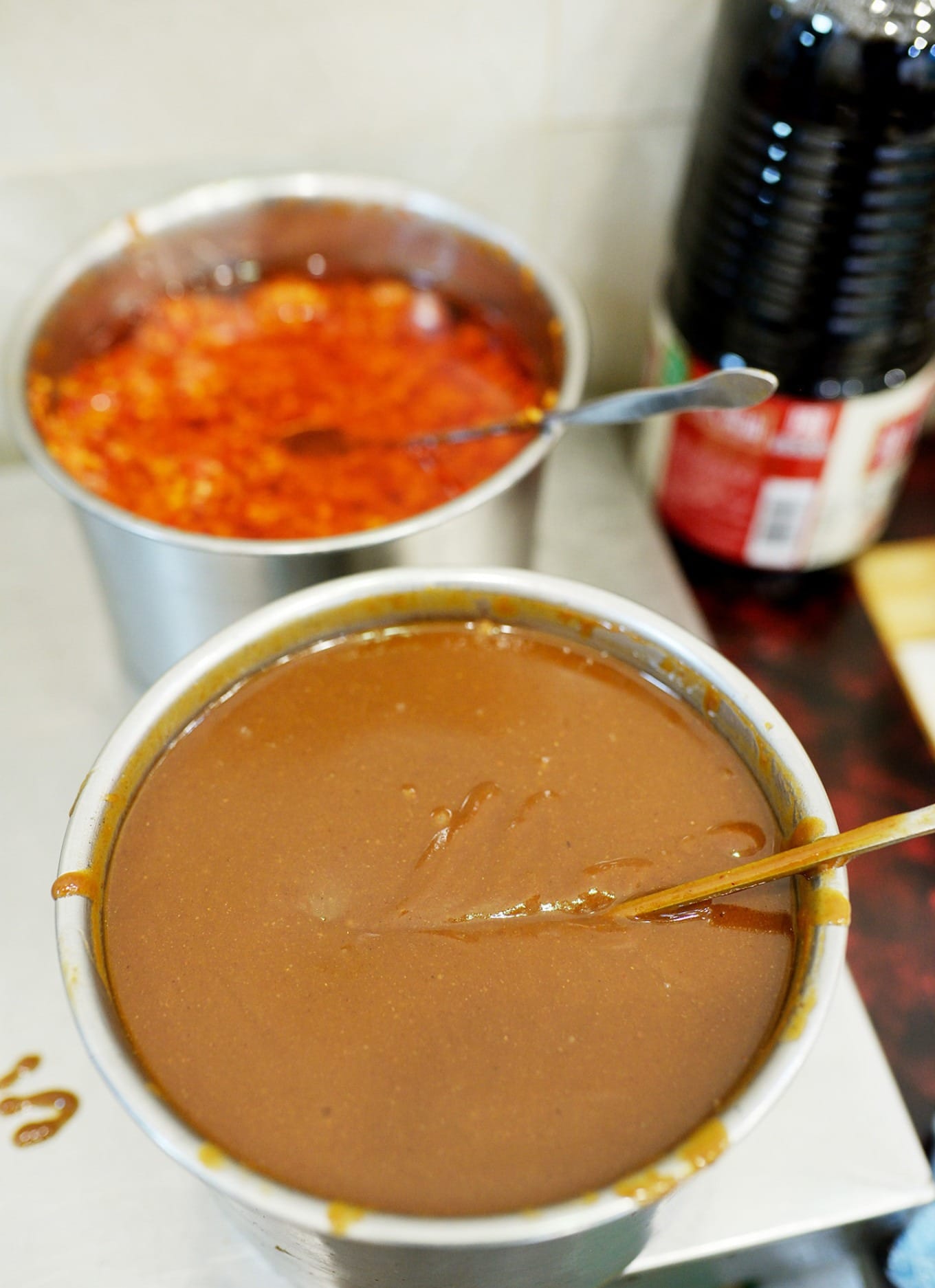
When eating beef guo tiao soup, you can also add a spoon or two of Chaoshan-style satay sauce(沙茶酱). Made from more than ten ingredients—including dried shrimp, fish, sesame, and turmeric—this sauce balances savory and sweet notes. It adds depth without overpowering the natural flavor of the beef.
Xinyiwei Puning Rice Noodle Rolls King (新一味普宁肠粉王)
- RestaurantXinyiwei Puning Rice Noodle Rolls King(新一味普宁肠粉王)
- AddressShop 104, Building 216, Shangmeilin New Village, Meihua Road(梅华路上梅林新村216栋104铺)
- Recommended dishOyster and Beef Rice Noodle Rolls(生蚝拼牛肉肠粉)
- Average spendRMB 30 per person(人均30元)
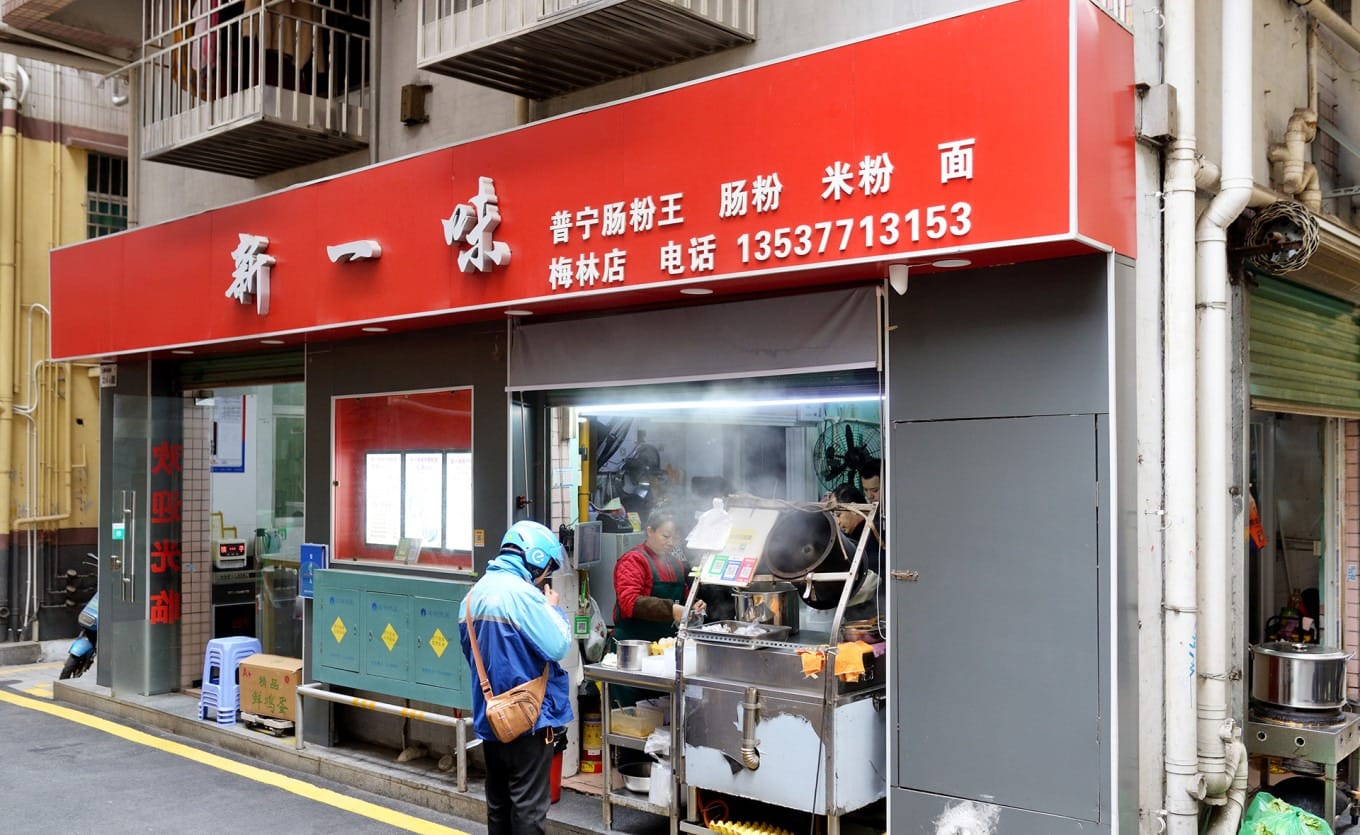
When it comes to Shenzhen’s food hotspots, Shangmeilin(上梅林)is impossible to overlook. This area is an urban village often described as the backyard of Futian CBD(福田CBD后花园). With relatively low rents, it attracts migrant workers from across China—and with them, a dense concentration of regional flavors. Many modest-looking shops here are run by low-profile masters whose skills speak entirely through their food.
After exploring guo tiao, you can wander through the narrow alleys of Shangmeilin Village, weaving between tightly packed residential blocks, to find one of the area’s most talked-about rice noodle roll shops: Xinyiwei Puning Rice Noodle Rolls King(新一味普宁肠粉王). The space is tiny and plainly furnished, but it draws a steady crowd every day, with many diners coming specifically for its rice rolls.
Unlike Cantonese-style rice noodle rolls(广式肠粉), Chaoshan rice rolls(潮汕肠粉)stand out for their fillings and sauces. Even within Chaoshan itself, styles vary between Chaozhou(潮州), Shantou(汕头), and Jieyang(揭阳). This shop is run by a Puning(普宁)couple, and their sauce reflects that heritage—a Puning-style braising sauce(卤汁)made with soy sauce as its base. Lighter in color and milder in flavor than sauces from other Chaoshan areas, it seasons the dish thoroughly without masking the natural aroma of the rice batter.
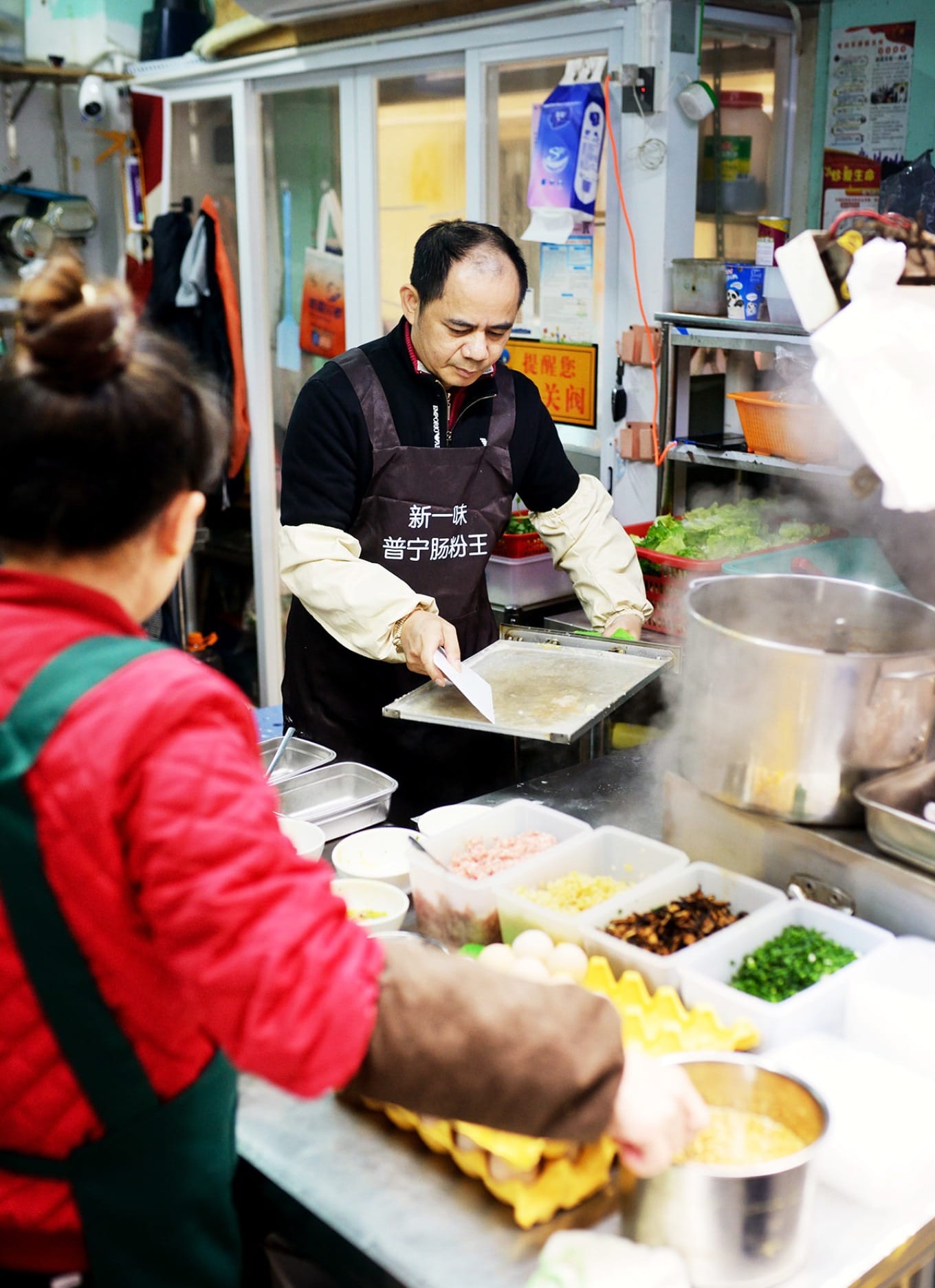
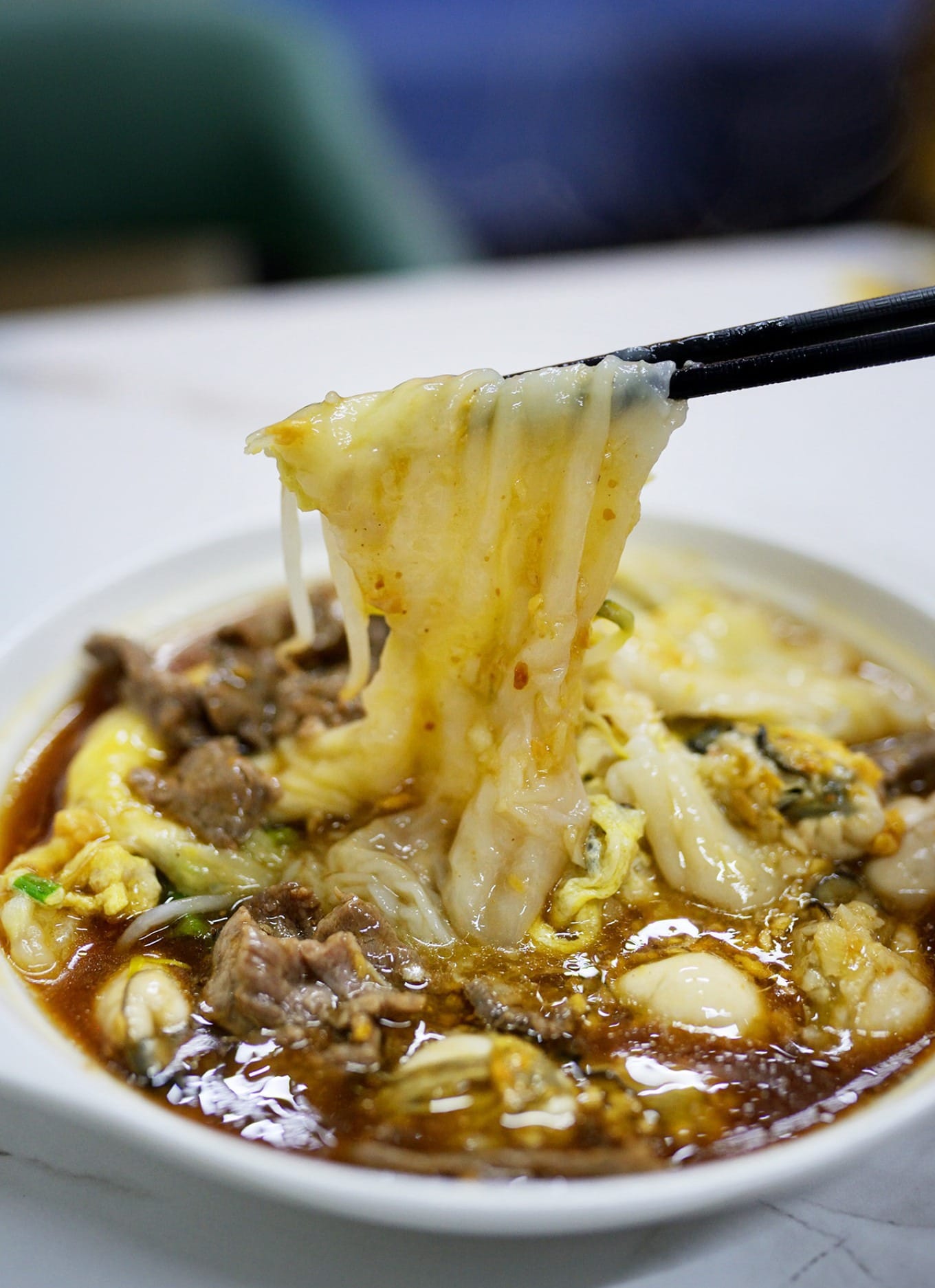
A popular choice here is the oyster-and-beef rice noodle roll(生蚝拼牛肉肠粉), which takes a creative approach even by Puning standards. Inside the rice roll are egg, bean sprouts, and lettuce, while the small oysters and beef are placed on top rather than wrapped inside. The dish is finished with the house braising sauce and a drizzle of garlic oil(蒜头油). At nearly RMB 30, it’s not cheap, but the generous portions make it reasonable by Shenzhen’s first-tier city standards.
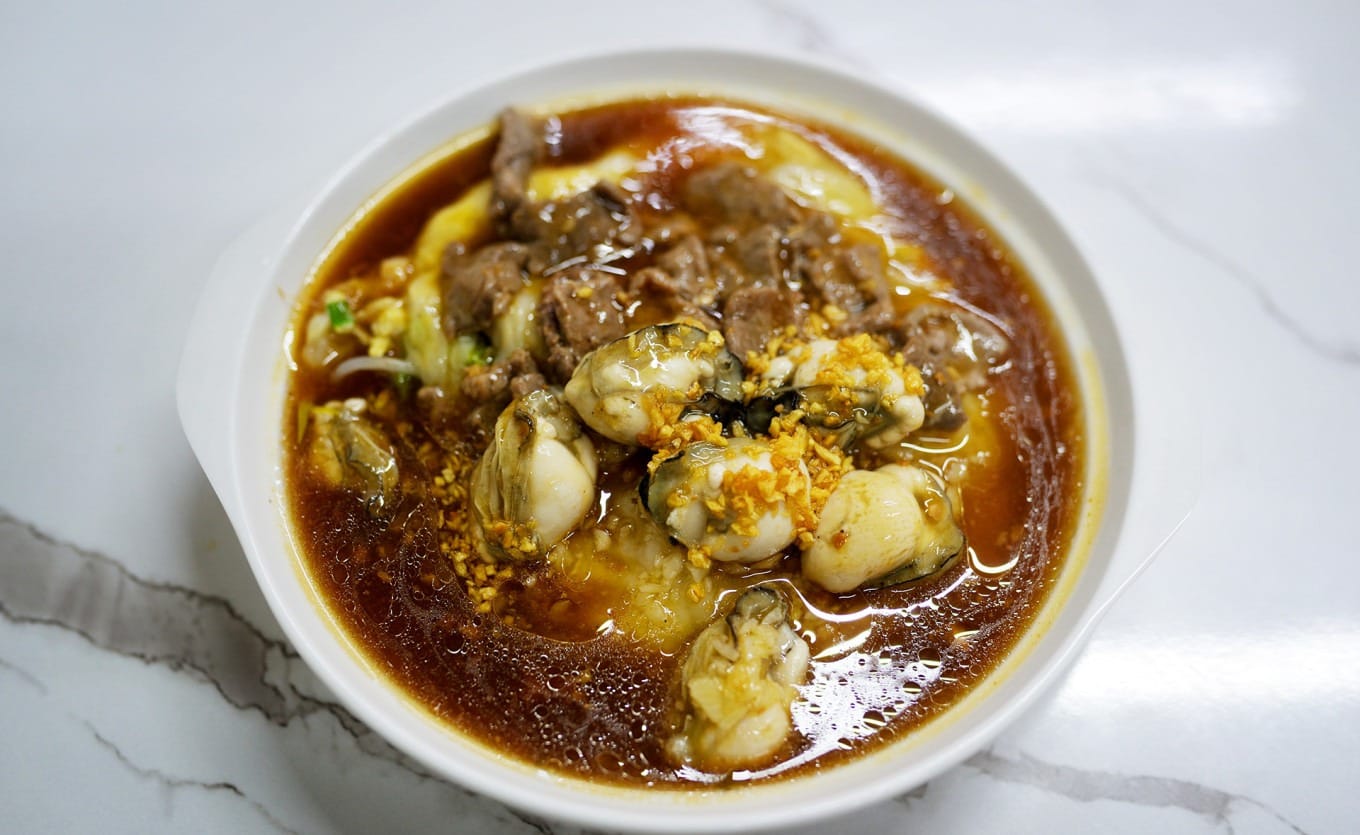
Because the shop uses a drawer-style steaming method(抽屉式), the rice sheets are exceptionally thin—flexible without feeling heavy. Soaked in braising sauce and garlic oil, they become deeply flavorful. The small oysters are the highlight: plump, tender, and bursting with juice. The beef is pre-stir-fried, making it slightly firmer than freshly sliced beef, but overall the dish remains satisfying, with only minor imperfections.
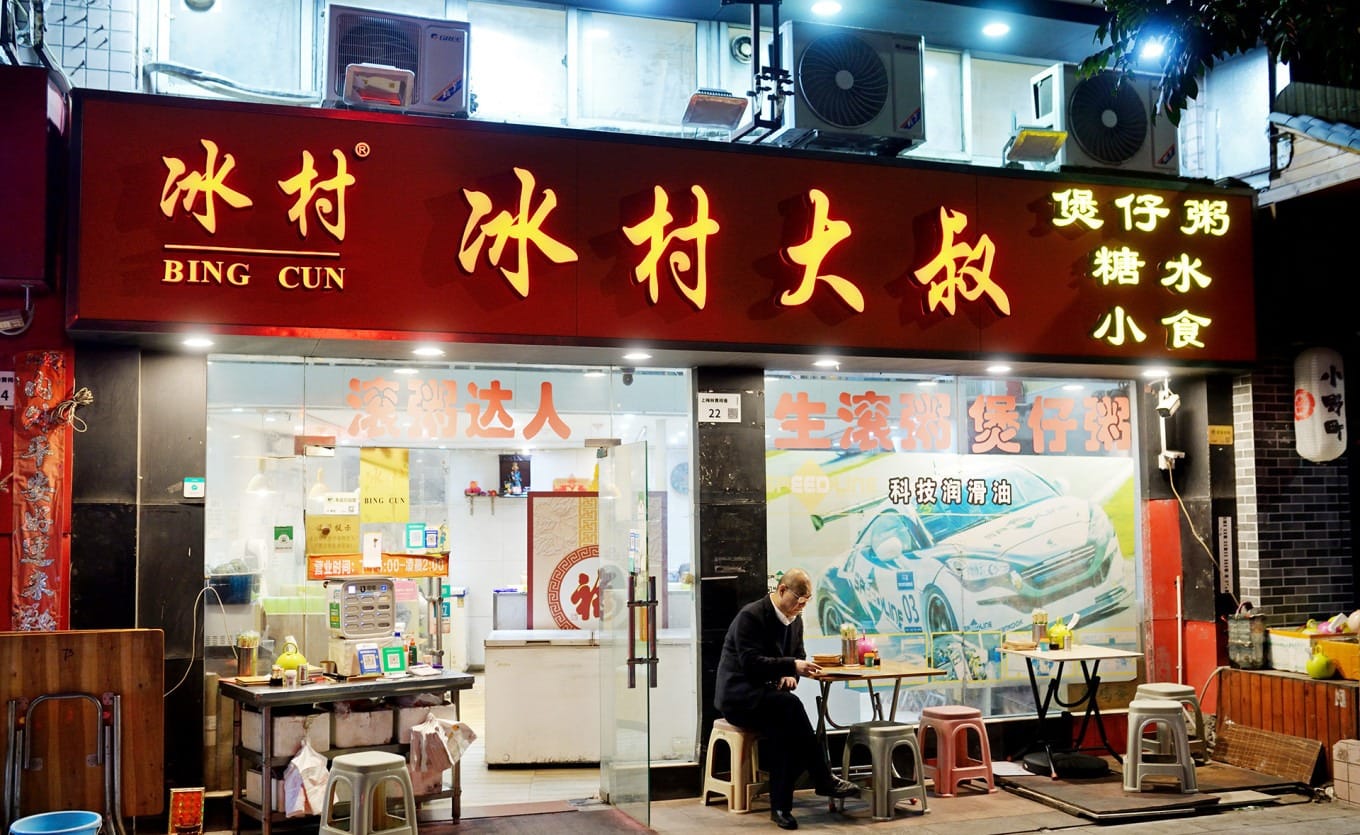
Uncle Bingcun · Claypot Congee & Sweet Soups (冰村大叔·煲仔粥糖水店)
- RestaurantUncle Bingcun · Claypot Congee & Sweet Soups(冰村大叔·煲仔粥糖水店)
- AddressShop 107, Hongmeixuan, Tianyuan Meilinjü, Zhongkang Road(中康路天源梅林居红梅轩107号)
- Recommended dishesFresh Shrimp Congee(鲜虾粥), Fish Skin Dumplings with Oyster Sauce Tossed Noodles(鱼皮饺蚝油捞面), Aged Tangerine Peel Mung Bean Paste(陈皮绿豆沙)
- Average spendRMB 50 per person(人均50元)
Also located in Shangmeilin(上梅林), Uncle Bingcun · Claypot Congee & Sweet Soups opens its doors at 5:00 pm every day. When you’re unsure what to eat for a late-night snack, stepping into this congee shop is almost always a safe bet.
A regular on Dianping’s “Must-Eat” list for several consecutive years, Uncle Bingcun has long been a Shangmeilin favorite. Its crowd is a mix of curious visitors and nearby residents, and it’s not uncommon to see luxury cars pulling up late at night—proof of just how popular this spot has become.
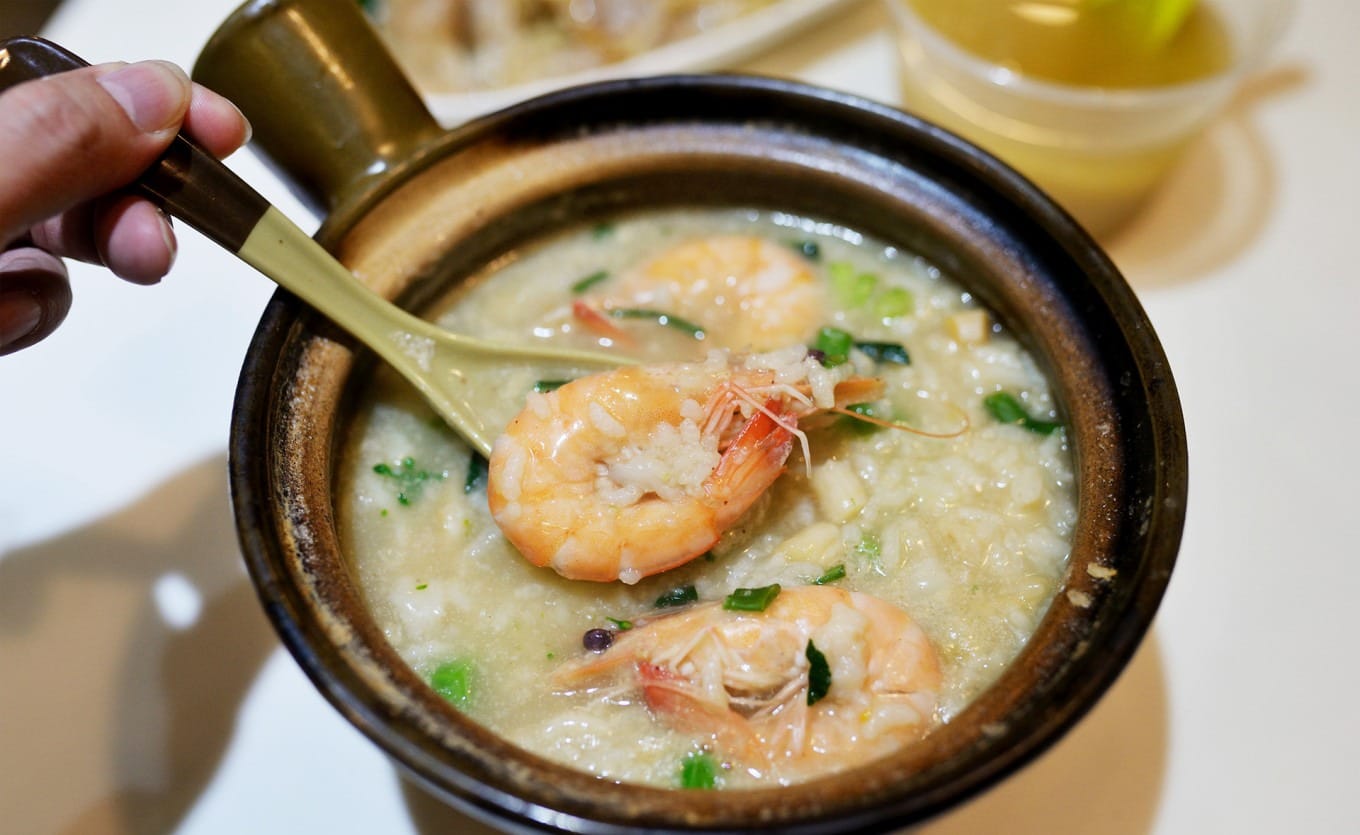
The specialty here is claypot congee(煲仔粥). What makes it distinctive is the cooking method: the shop borrows the technique of Chaoshan-style claypot congee(潮汕砂锅粥), but instead of cooking raw rice from scratch, it uses a pre-cooked congee base similar to Cantonese fresh-cooked congee(广式生滚粥). The result is a texture that falls right between the two—rich and smooth, yet not overly thick.
A popular order is the fresh shrimp congee(鲜虾粥). One pot is generously portioned, enough for two people with smaller appetites. The shrimp are plentiful, large, and very fresh—plump, crisp, and juicy, delivering a satisfying burst with every bite. Regulars often ask the owner to add a salted egg yolk(咸蛋黄)into the congee, which reportedly takes the flavor to another level.
Another signature dish is fish skin dumplings with oyster sauce tossed noodles(鱼皮饺蚝油捞面). The noodles used are bamboo pole noodles(竹升面), and the oyster sauce adds a pleasant savory lift. While the flavor is decent, the noodles lean a bit soft and lack bounce, so this dish is best treated as a secondary option—congee remains the main attraction.
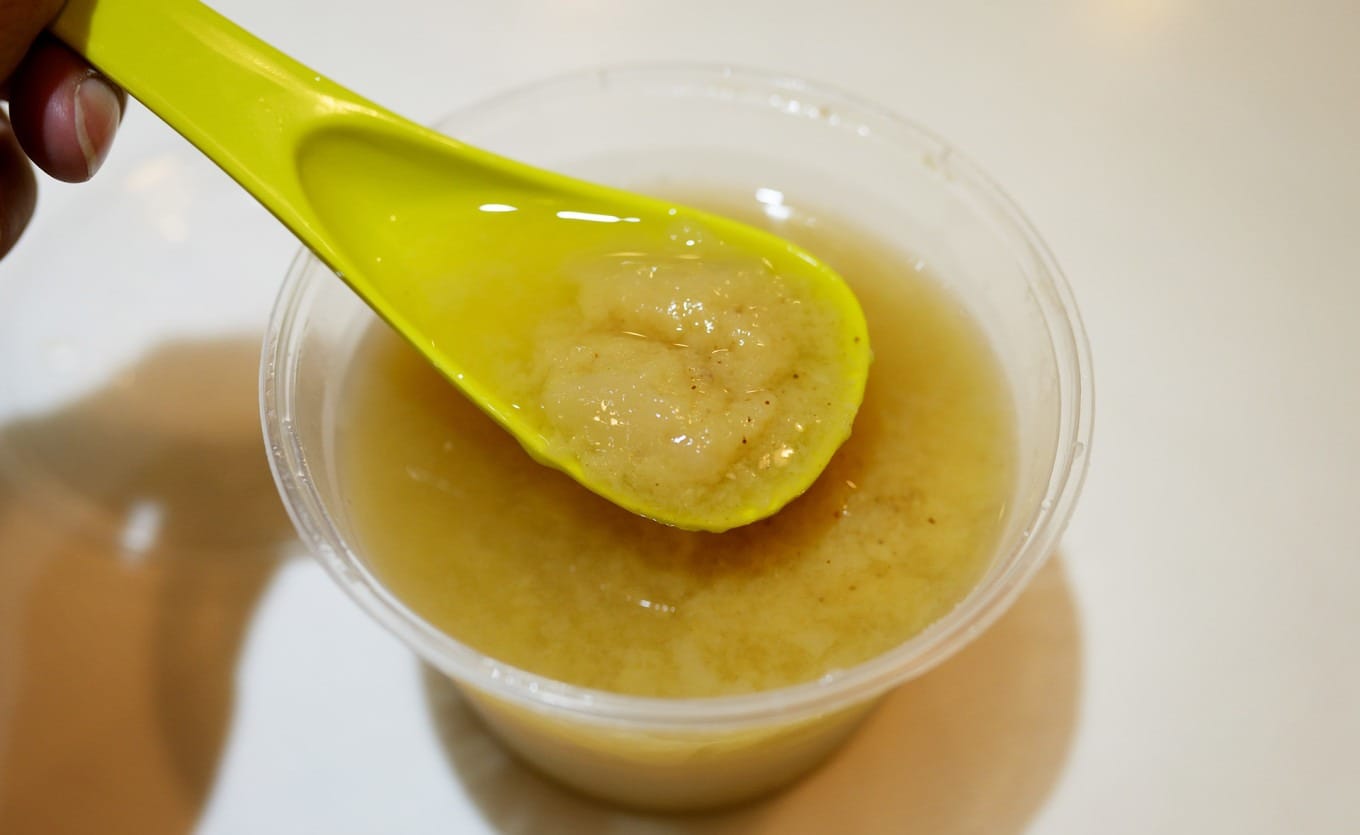
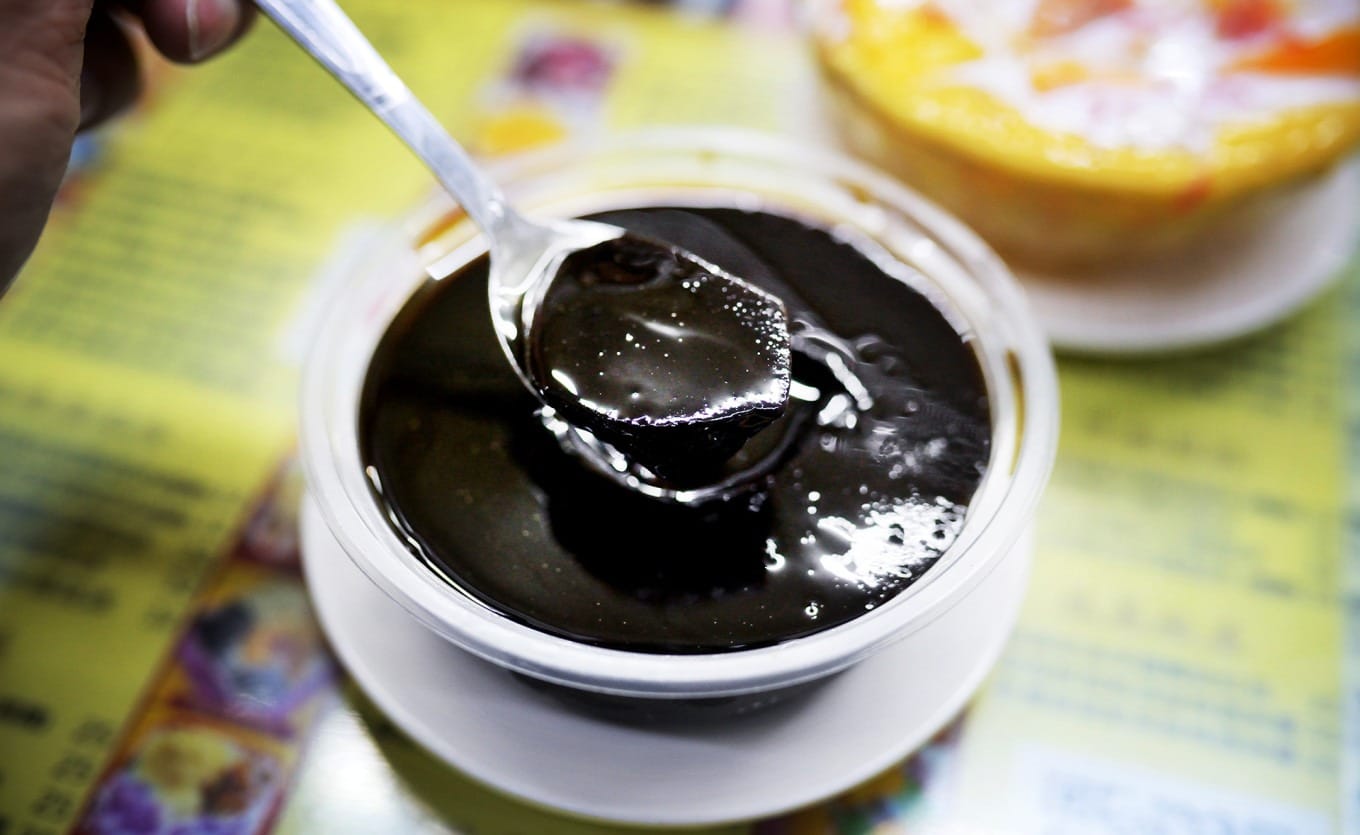
For dessert, the aged tangerine peel mung bean paste(陈皮绿豆沙)stands out. Unlike the classic Cantonese version, this one is made from peeled mung bean purée. After slow simmering, it develops a texture reminiscent of miso soup, evoking the nostalgic taste of mung bean popsicles from childhood.
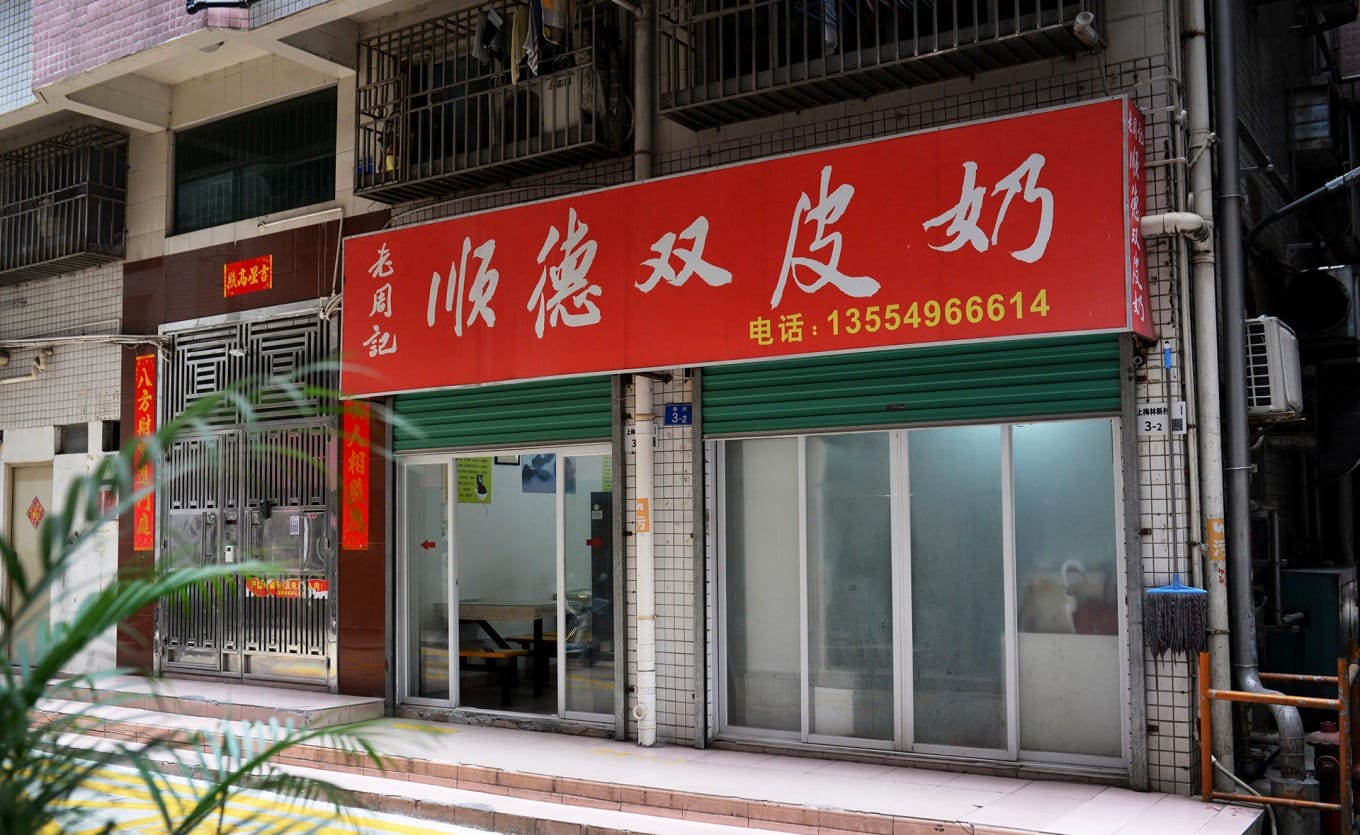
Lao Zhou Ji Shunde Double-Skin Milk Pudding (老周记顺德双皮奶)
- ShopLao Zhou Ji Shunde Double-Skin Milk Pudding(老周记顺德双皮奶)
- AddressNo. 3-2, Building 3, Shangmeilin New Village(上梅林新村3栋3-2号)
- RecommendedRed Bean & Chickpea Double-Skin Milk Pudding(红豆鹰嘴豆双皮奶)
- Average spendRMB 20 per person(人均20元)
Located in Shangmeilin New Village(上梅林新村), Lao Zhou Ji Shunde Double-Skin Milk Pudding(老周记顺德双皮奶)has been around for many years and is something of a neighborhood institution. The shop is run by an elderly couple, giving it the warm, home-style feel of a small family workshop—simple, unpretentious, and welcoming.
Double-skin milk pudding(双皮奶)originated in Shunde(顺德)and is traditionally made with buffalo milk(水牛奶). The process involves two rounds of steaming: after the first, the milk cools and forms a thin skin on top. This skin is gently pierced, the milk poured out and mixed with egg white and sugar, then returned to the bowl for a second steaming. Once cooled, the dessert forms two visible layers of milk skin—hence the name.
Here, you can customize your double-skin milk pudding with various toppings. One particularly distinctive option is chickpeas(鹰嘴豆), a topping rarely seen in traditional double-skin milk shops. A popular choice is the red bean and chickpea double-skin milk pudding(红豆鹰嘴豆双皮奶), generously topped with both ingredients for a deeply satisfying presentation.
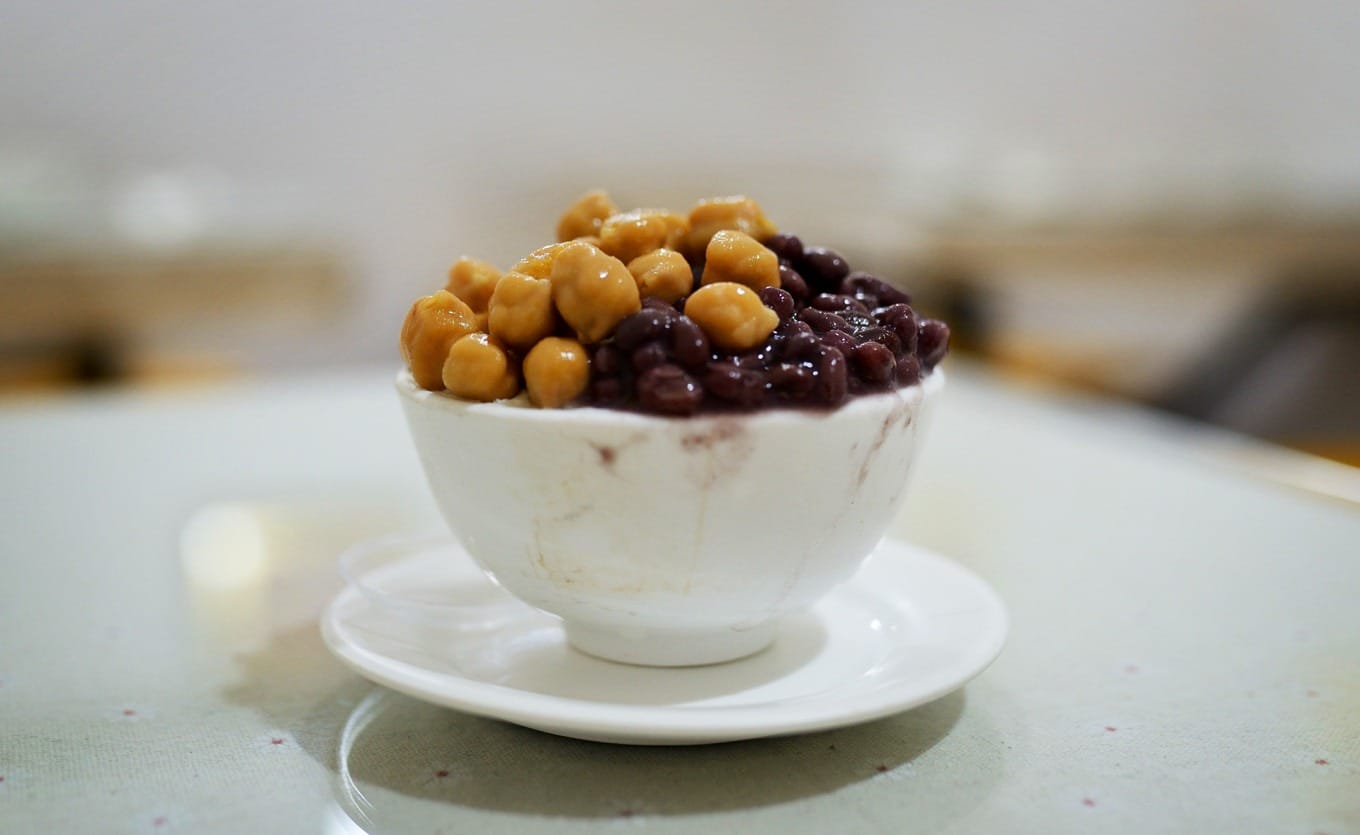
With a spoonful in your mouth, rich milk aroma fills the palate immediately. While the texture may not quite match the very best versions found in Shunde itself, the difference is small. The real highlight lies in the toppings: chickpeas and red beans make an unexpectedly perfect pairing—one sandy and crumbly, the other soft and tender—creating a harmonious contrast when wrapped in silky, fragrant milk pudding. The result is genuinely impressive.

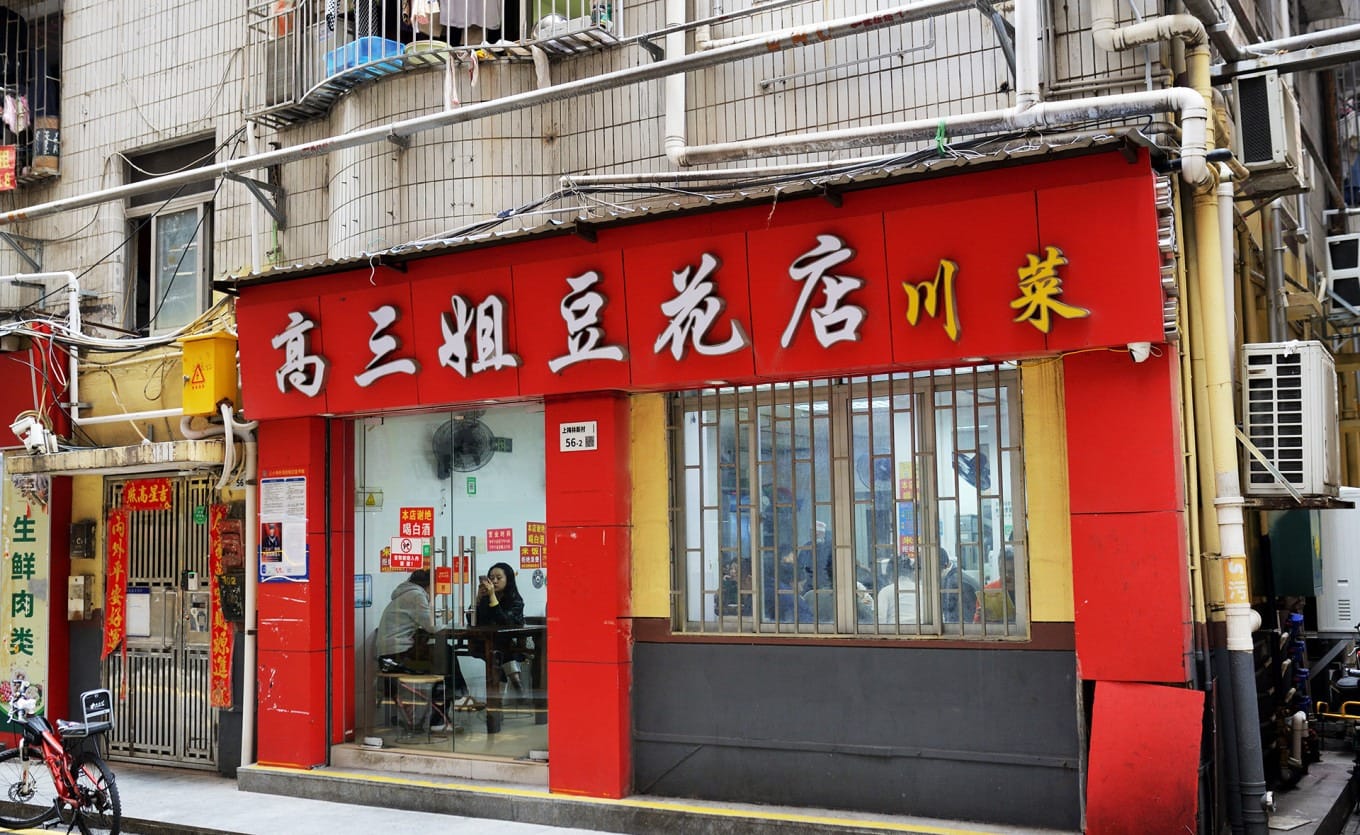
Gao Sanjie Douhua Rice Shop (高三姐豆花店)
- RestaurantGao Sanjie Douhua Rice Shop(高三姐豆花店)
- AddressShop 102, Building 56, Shangmeilin New Village(上梅林新村56栋102铺)
- Recommended dishesDouhua Rice(豆花饭), Stir-fried Pork Kidneys(爆炒腰花)
- Average spendRMB 60 per person(人均60元)
Shenzhen(深圳)is said to be home to more than 600,000 people from Sichuan(四川), which explains why authentic Sichuan flavors are easy to find throughout the city. If you look closely, you can even come across douhua rice(豆花饭), a dish rarely seen outside Sichuan and Chongqing.
Gao Sanjie Douhua Rice Shop(高三姐豆花店)sits beneath a residential building in Shangmeilin’s urban village(上梅林城中村). This is a classic hole-in-the-wall eatery, with fewer than ten tables inside, and table-sharing during peak hours is completely normal. The staff are all Sichuan aunties(四川嬢嬢)speaking thick Sichuan dialect—step inside and you’ll feel as if you’ve been transported straight back to Sichuan.
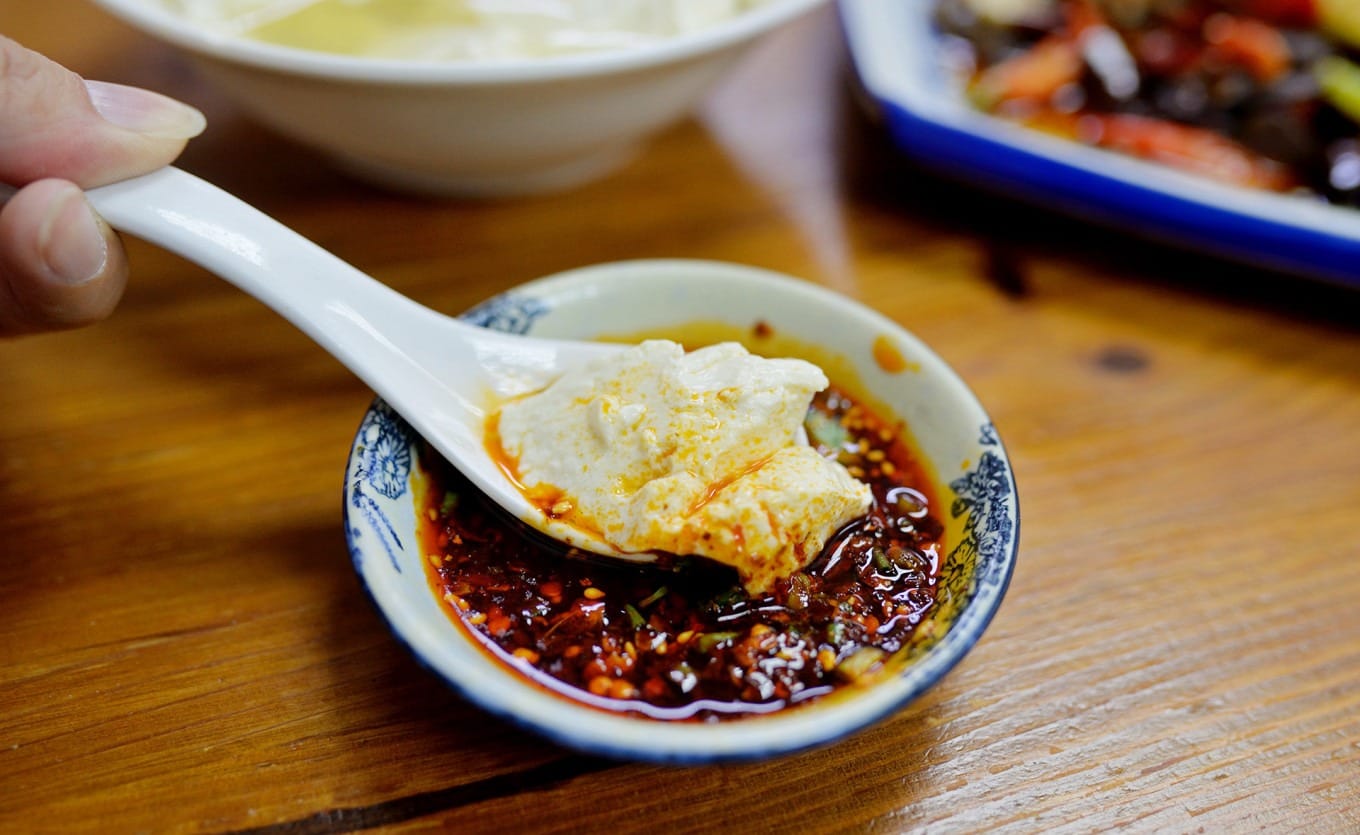
The must-order here is douhua rice(豆花饭), and nearly every table has one. This dish is a regional staple unique to Sichuan and Chongqing, and for many locals, it’s pure comfort food. As the name suggests, it consists of a bowl of douhua paired with a bowl of steamed white rice.
Unlike sweet or savory tofu pudding found elsewhere in China, douhua rice uses lao douhua(老豆花), a firmer tofu set with brine(盐卤). Its texture falls between tofu and silken tofu—dense, smooth, and substantial.
The douhua itself avoids the sweet-versus-savory debate entirely. Its true partner is the dipping sauce made from chili, fermented broad bean paste(豆瓣), and aromatic spices. Spoon it over rice and douhua, and you’ll experience layers of savory depth, numbing heat, and rich soybean fragrance—bold, addictive, and unforgettable.
When eating douhua rice, you can also order stir-fried dishes to accompany it. One standout is the stir-fried pork kidneys(爆炒腰花). Though it’s a home-style dish, it demands extremely fresh ingredients, precise knife work, and perfect control of heat.
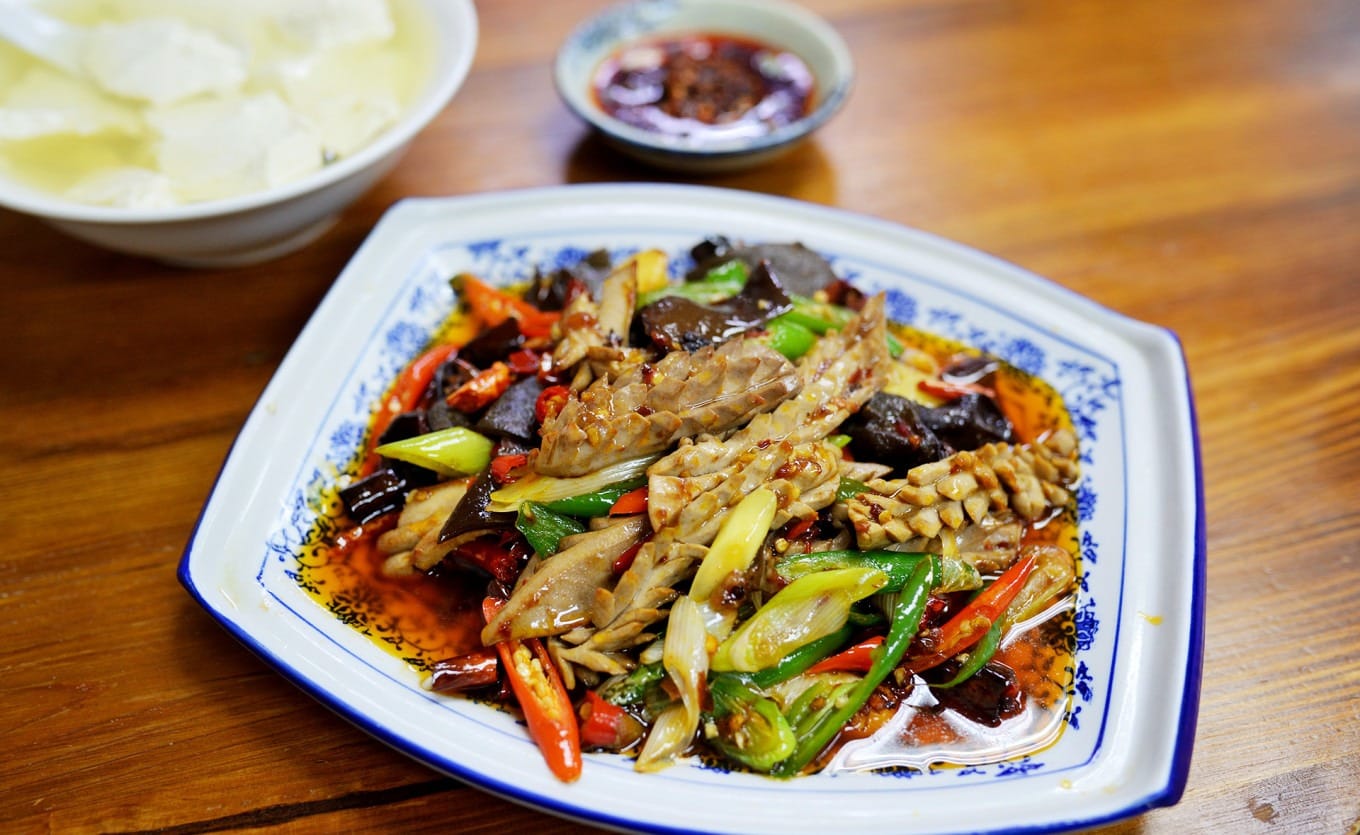
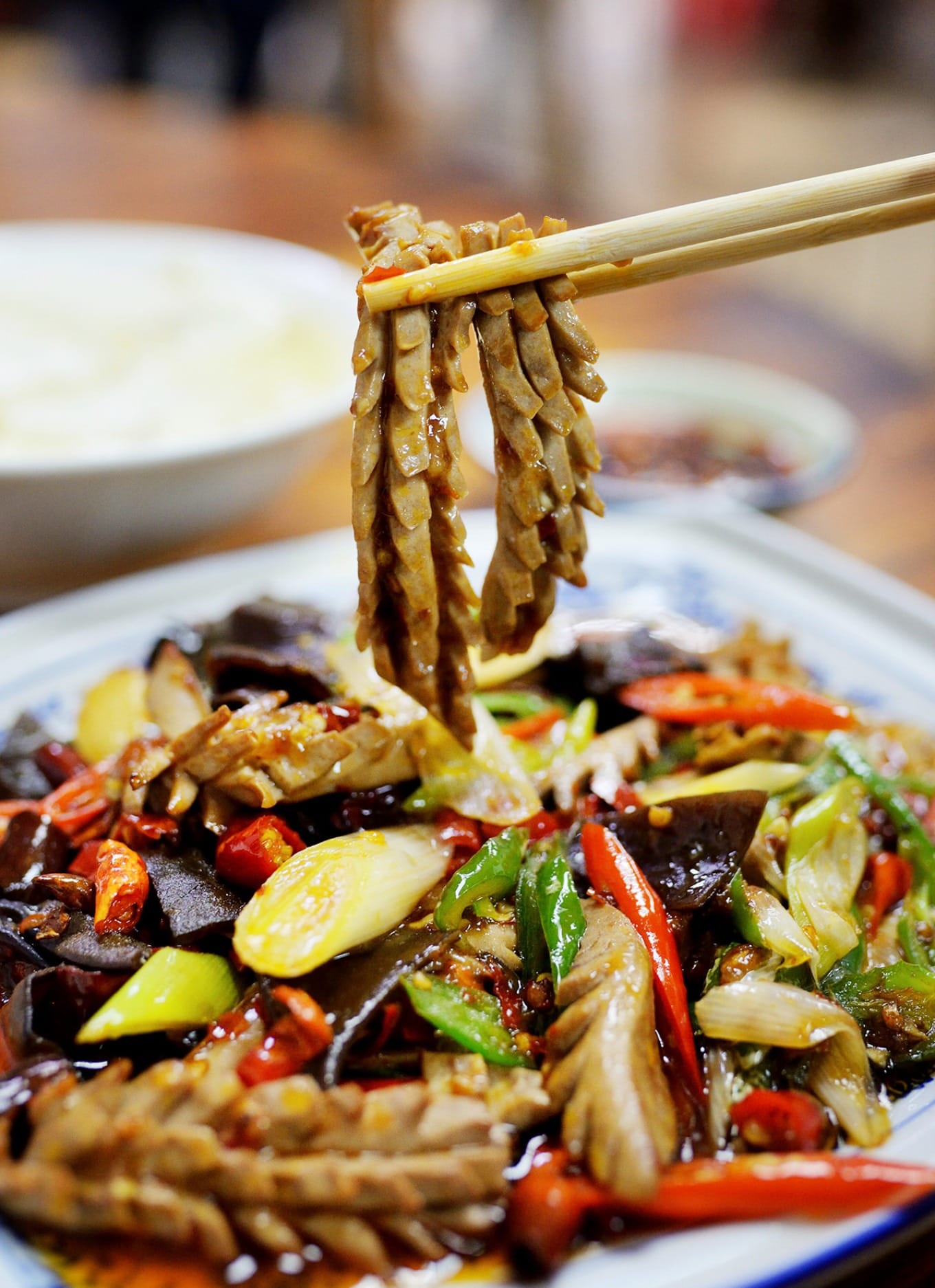
The finished kidneys fan out like a bundle of wheat, evenly sliced and cooked just past raw. They’re full of wok hei(镬气), tender without any gaminess or toughness. The combination of doubanjiang and red chili oil seals the deal—spicy but not harsh, aromatic without being overwhelming. One bite is enough to ignite your taste buds and deliver deep satisfaction.
Guzhao Flavor Memory Workshop (古早味味觉记忆坊)
- ShopGuzhao Flavor Memory Workshop(古早味味觉记忆坊)
- AddressShop 009, Hewang Pavilion Community, Guangsha Road(广厦路合旺阁小区009号铺)
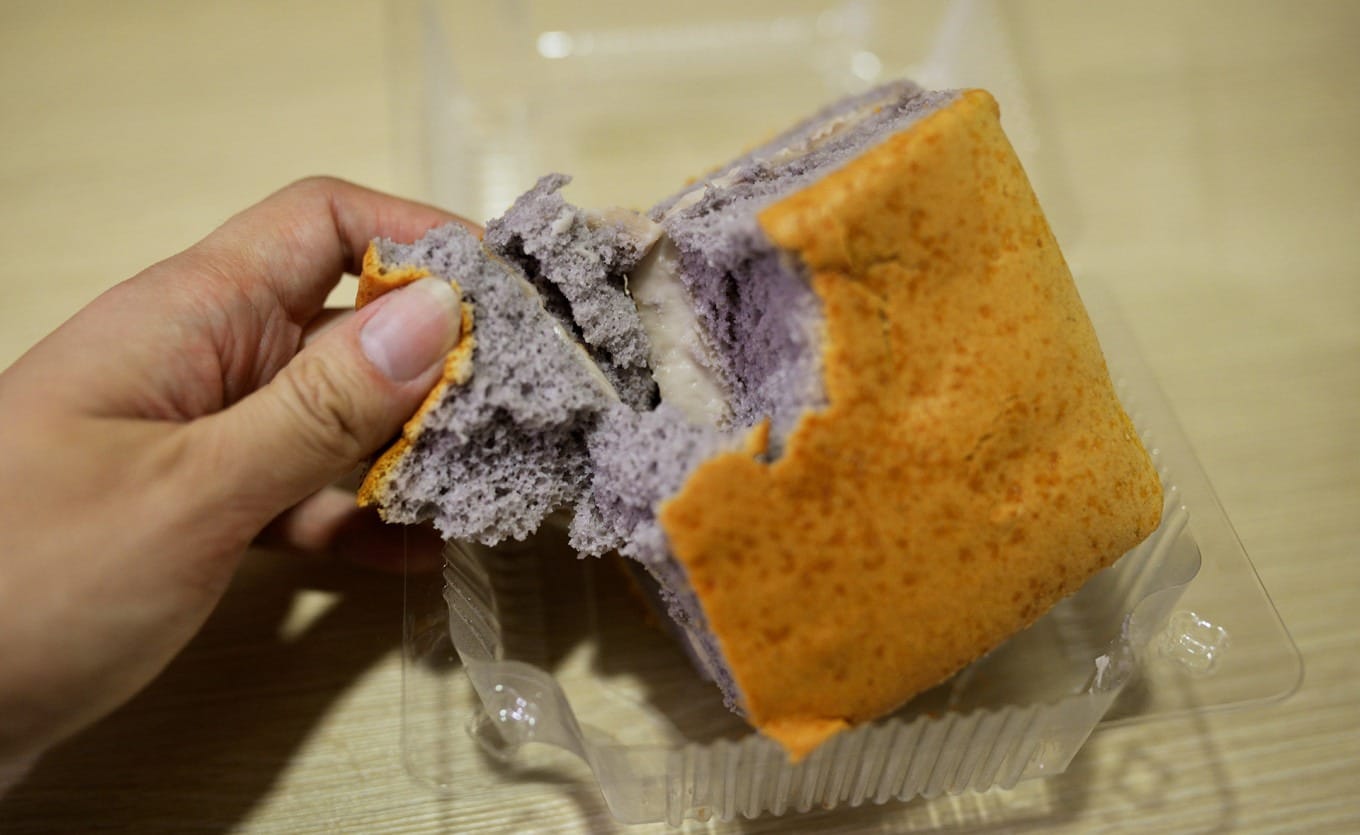
- RecommendedTaro Cake(芋泥蛋糕)
- Average spendRMB 15 per person(人均15元)
Guzhao Flavor Memory Workshop(古早味味觉记忆坊)comes recommended by local Shenzhen friends and is also located in Shangmeilin(上梅林). The shop focuses on handmade cakes and keeps things minimal: the space is tiny, there’s no seating, and everything is made strictly for takeaway. Despite its modest setup, it’s consistently busy—and far more impressive than you might expect at first glance.
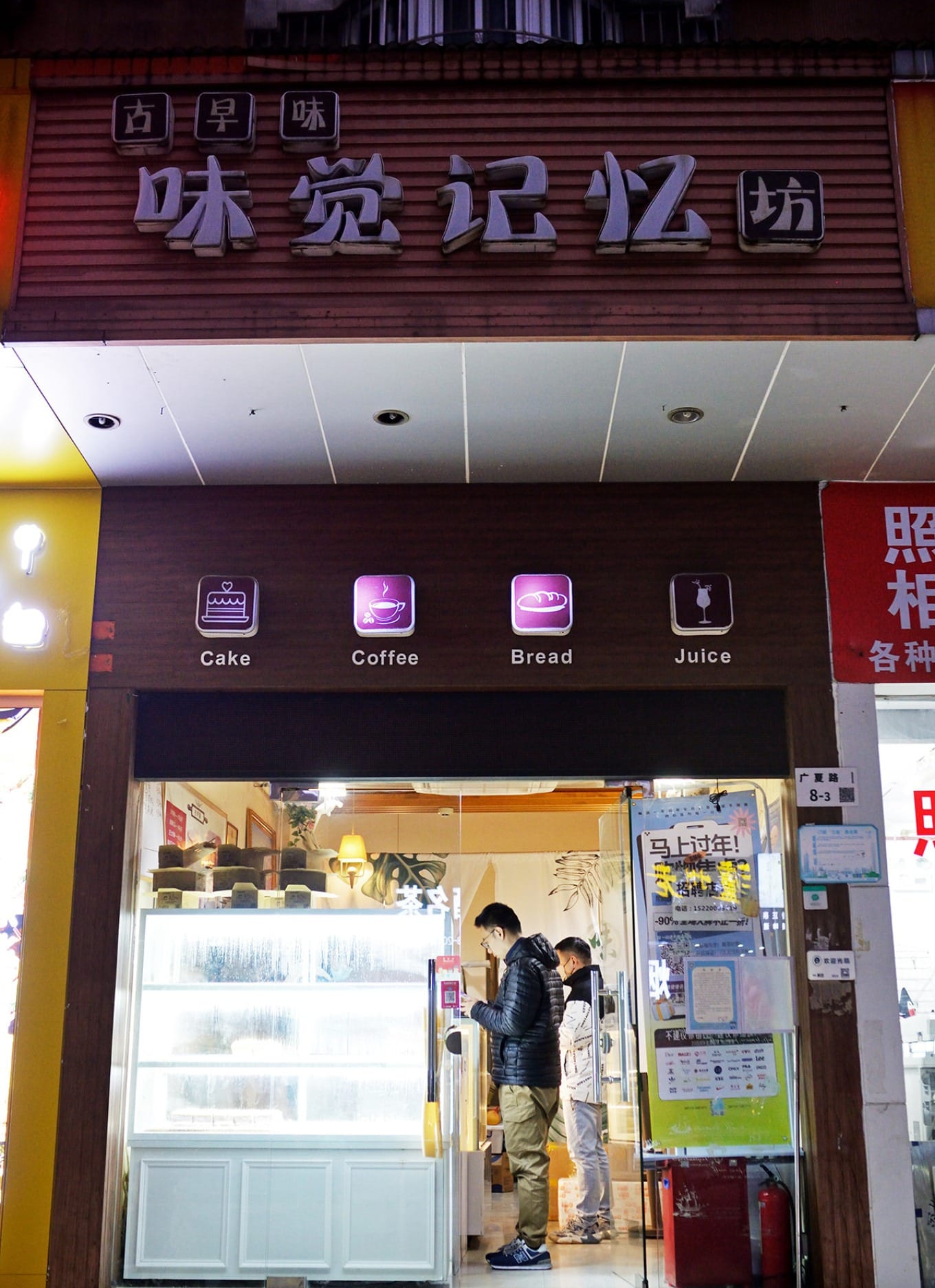
All cakes here are baked fresh throughout the day and sold by weight, with a minimum purchase of half a jin (250 g). Three items are clear crowd favorites: taro cake(芋泥蛋糕), molten chocolate cake(爆浆巧克力蛋糕), and the original plain cake(原味蛋糕). Fresh trays often sell out almost as soon as they come out of the oven.

If you’re choosing just one, the taro cake is especially worth trying. Its soft lavender hue carries a gentle taro aroma that’s immediately inviting. One bite reveals a texture as light and airy as a cloud—sweet but never cloying. The real highlight is the diced taro folded into the taro paste: incredibly smooth, dense, and deeply satisfying, making this cake genuinely memorable.
Jiahua Snacks (嘉华小吃)
- RestaurantJiahua Snacks(嘉华小吃)
- AddressNo. 2, Yucun Road 1(渔村路1号之二)
- Recommended dishesAbalone Zongzi(鲍鱼粽), Seafood Soup(海鲜汤)
- Average spendRMB 35 per person(人均35元)
When it comes to truly down-to-earth food in Shenzhen(深圳), Shekou(蛇口)in Nanshan District is impossible to skip. Known as the starting point of China’s Reform and Opening-Up, Shekou today remains one of the city’s most lived-in, street-level neighborhoods—and a place where hidden food gems quietly thrive.
Located next to Shekou Market(蛇口市场), Jiahua Snacks(嘉华小吃)is easy to miss at first glance. Yet this unassuming shop has been open for over 20 years, serving generations of local residents. For many longtime neighbors, it’s a taste they’ve grown up with.
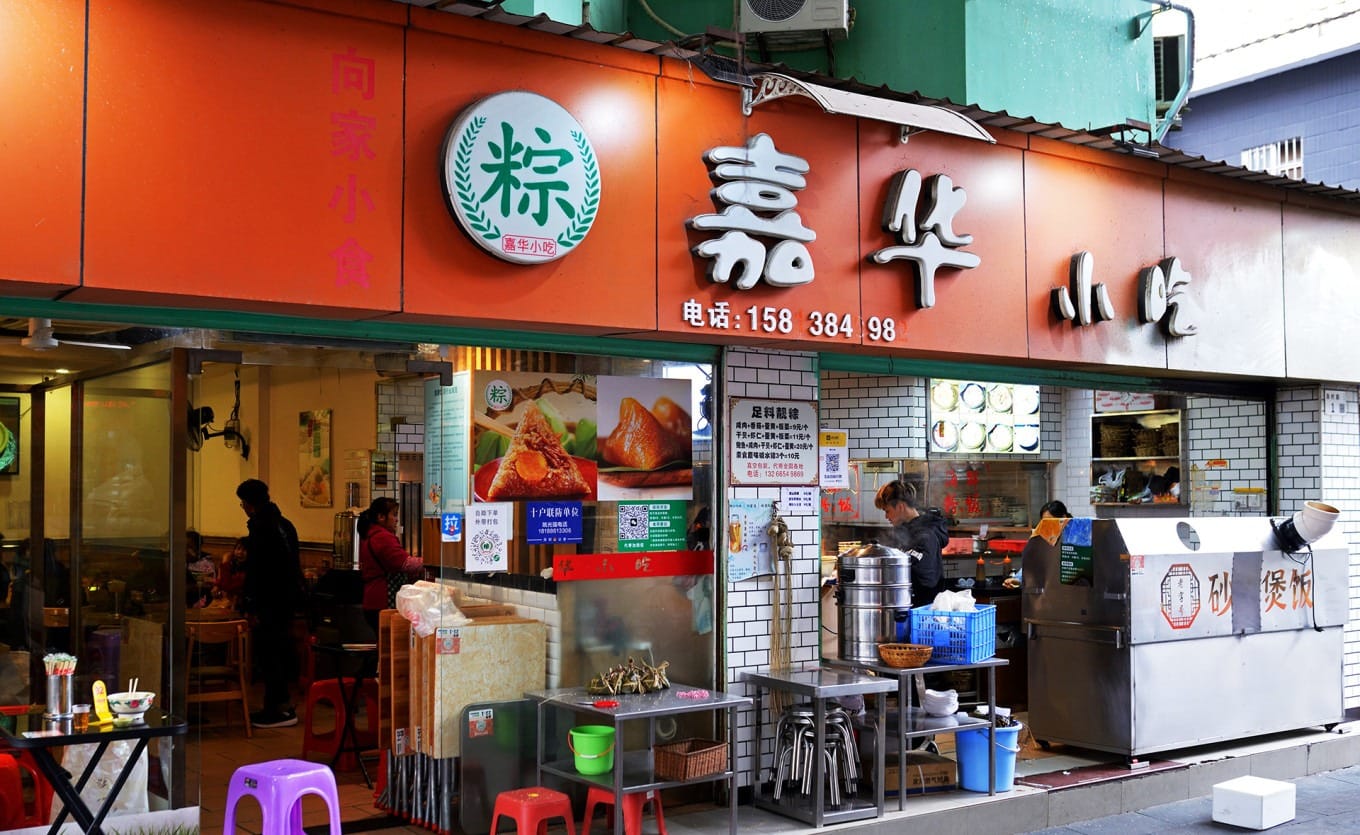
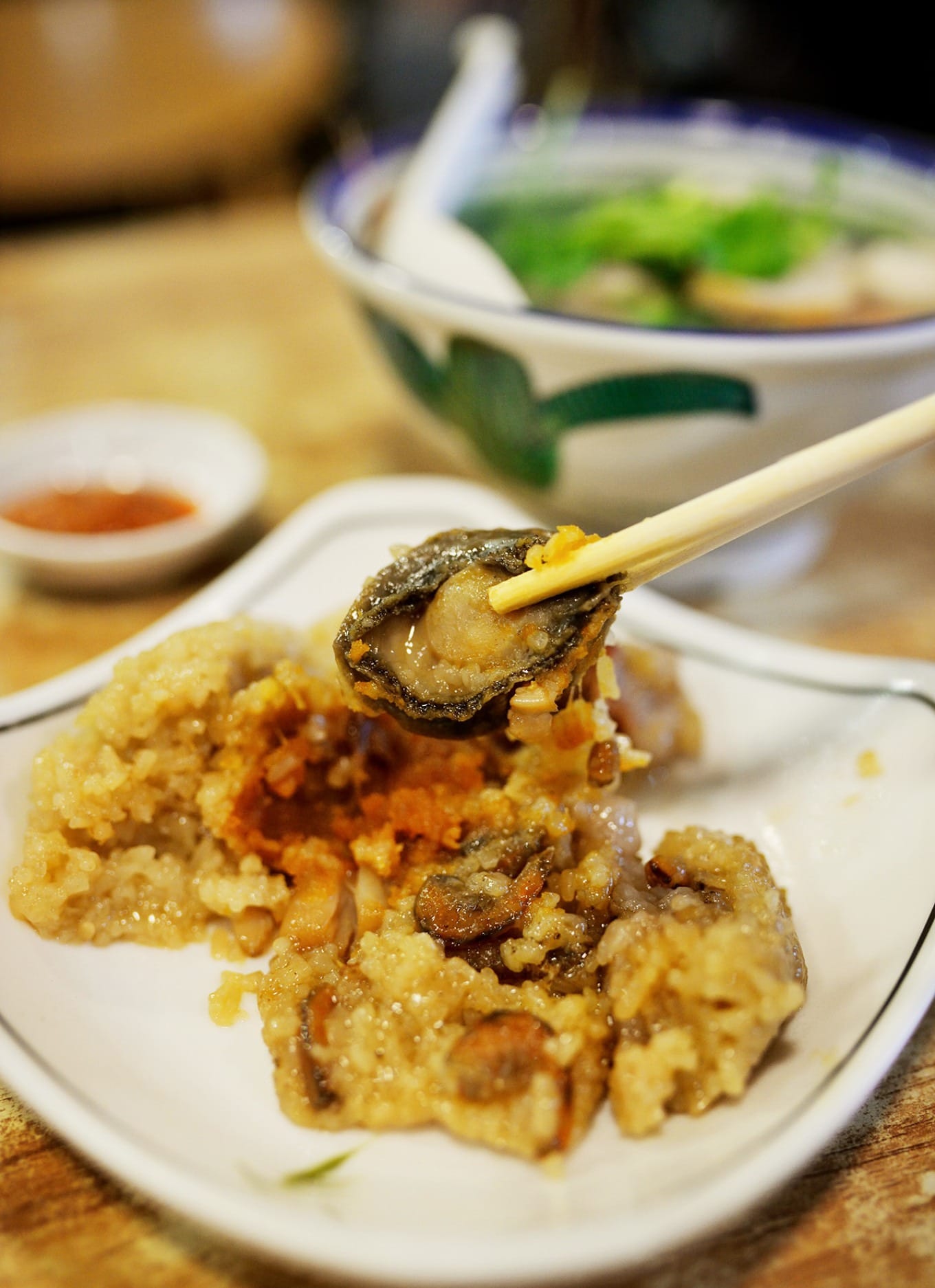
The signature item here is Chaoshan-style zongzi(潮汕粽子). Once you unwrap the bamboo leaves, the glutinous rice glistens with a rich sheen, releasing a warm, fragrant aroma. In Chaoshan, zongzi are also called zongqiu(粽球). Inside, the main fillings are pork belly(五花肉)and salted egg yolk(咸蛋黄), with the addition of chestnuts(板栗)that bring a subtle sweetness.
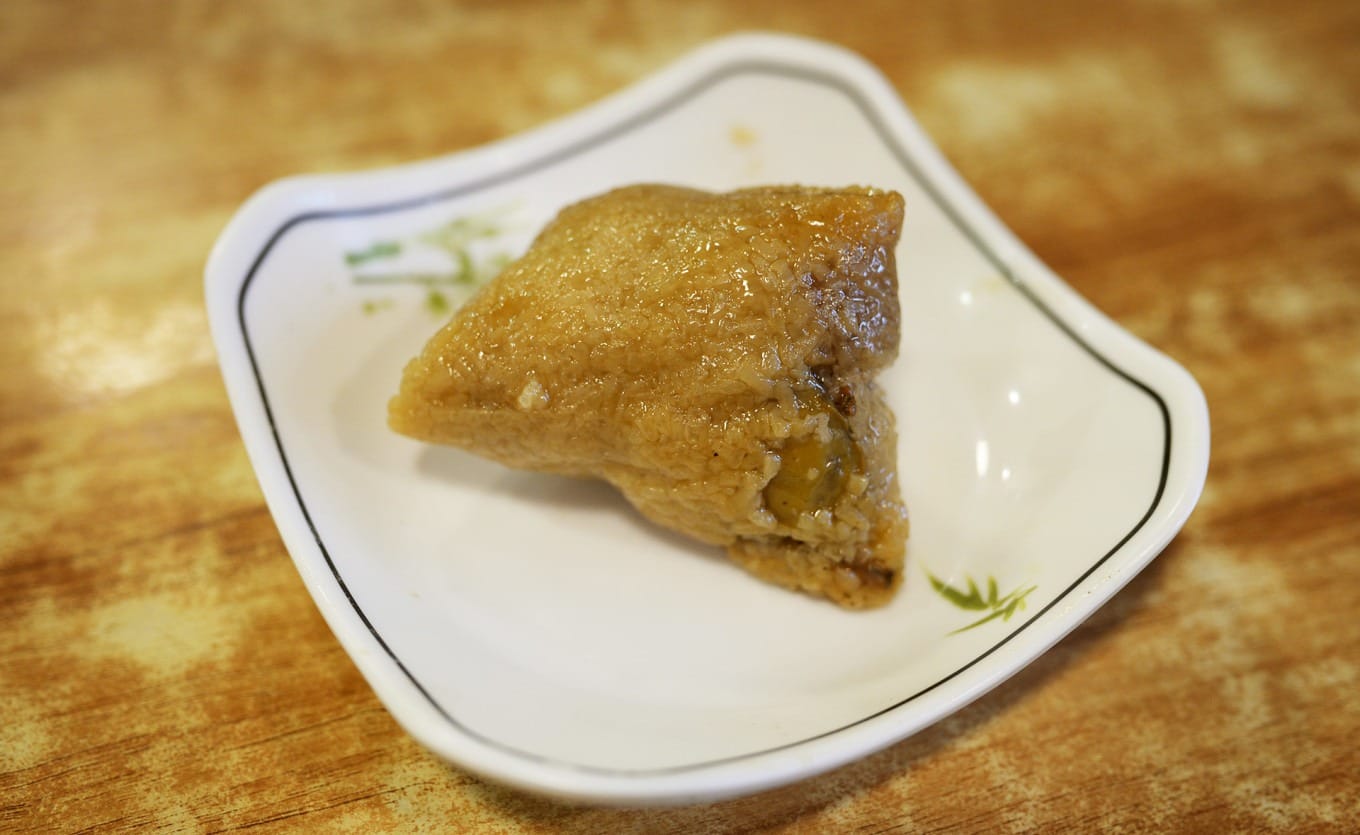
Prices range from single digits up to around RMB 20, depending on the filling. The most luxurious option is the abalone zongzi(鲍鱼粽). Alongside salted pork belly, egg yolk, chestnuts, dried shrimp(虾米), and dried scallops(干贝), it includes a whole abalone. Compared to standard savory meat zongzi, the Chaoshan version offers greater depth: the pork belly melts on contact, while abalone and dried seafood add layers of umami. Each bite feels like a compact feast of land and sea wrapped into glutinous rice.
The seafood soup(海鲜汤)is another highlight. At just over RMB 10 per bowl, it’s generously filled with shrimp, fresh squid, fish balls, meat rolls, and water spinach(西洋菜). Unlike Cantonese slow-simmered soups, this one is made by quickly cooking the seafood to preserve its freshness.
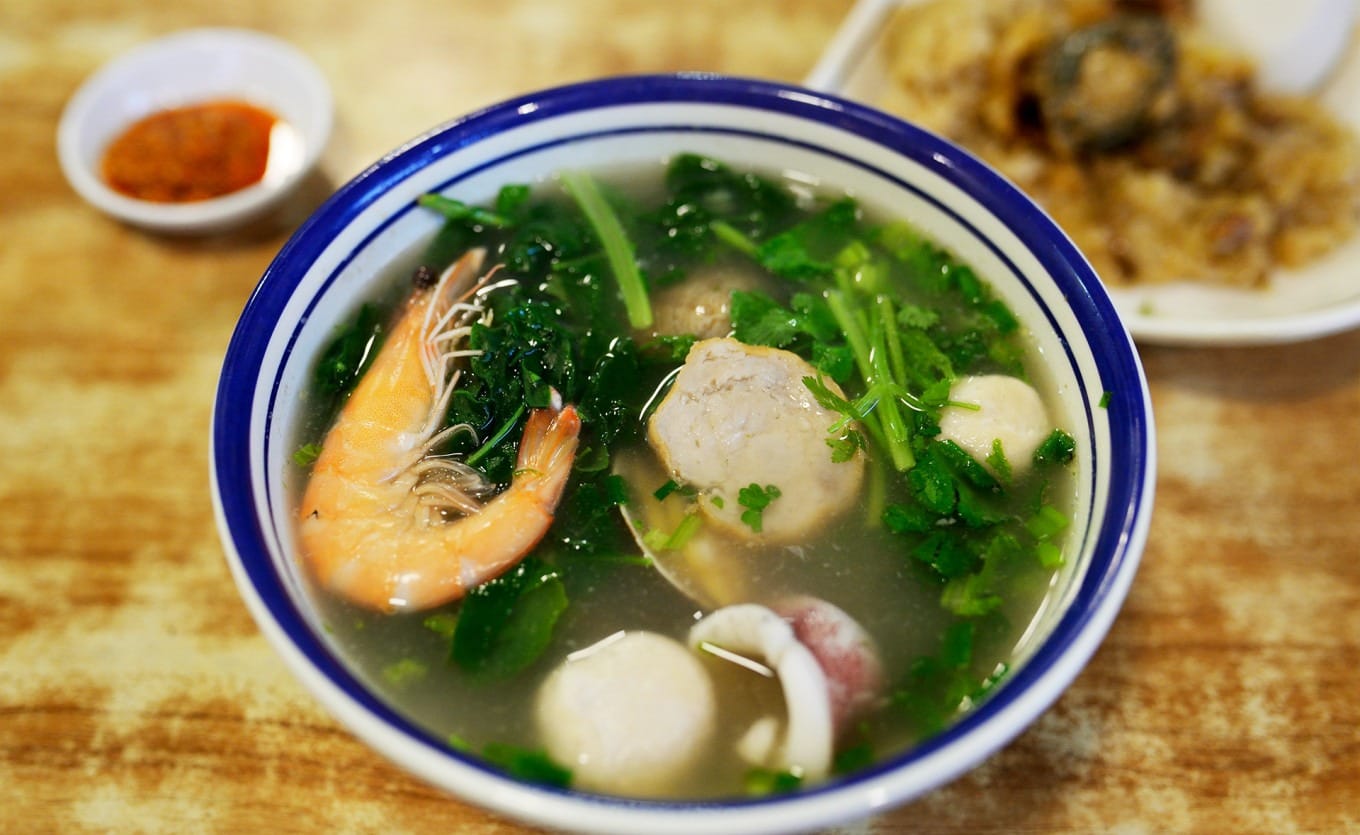
Seasoned simply with salt and cilantro, the soup showcases the Cantonese pursuit of pure, natural seafood flavor. One sip reveals a clean, lingering sweetness that’s unmistakably fresh and deeply satisfying.
Jiajun Eight-Treasure Beef Offal (佳俊八宝牛杂)
- RestaurantJiajun Eight-Treasure Beef Offal(佳俊八宝牛杂)
- AddressNo. 38 Nanshui Road, Nanshui Pedestrian Street(南水步行街南水路38号)
- Recommended dishEight-Treasure Beef Offal(八宝牛杂)
- Average spendRMB 30 per person(人均30元)
Tucked away in a small alley in Shekou(蛇口), Jiajun Eight-Treasure Beef Offal(佳俊八宝牛杂)is an unassuming neighborhood shop that somehow stays busy at all hours. This is the kind of place locals rely on—simple storefront, steady crowd, and flavors that keep people coming back.
In Guangdong(广东), beef offal(牛杂)generally falls into two major styles: clear broth(清汤)and seasoned braise known as hewei(和味). Jiajun specializes in hewei beef offal. The braising sauce is built on chu hou paste(柱侯酱) and layered with star anise(八角), bay leaves(香叶), Sichuan peppercorns(花椒), dried tangerine peel(陈皮), and other spices. The result is rich and savory rather than sweet, setting it apart from the sweeter profiles often found in Guangzhou-style beef offal.
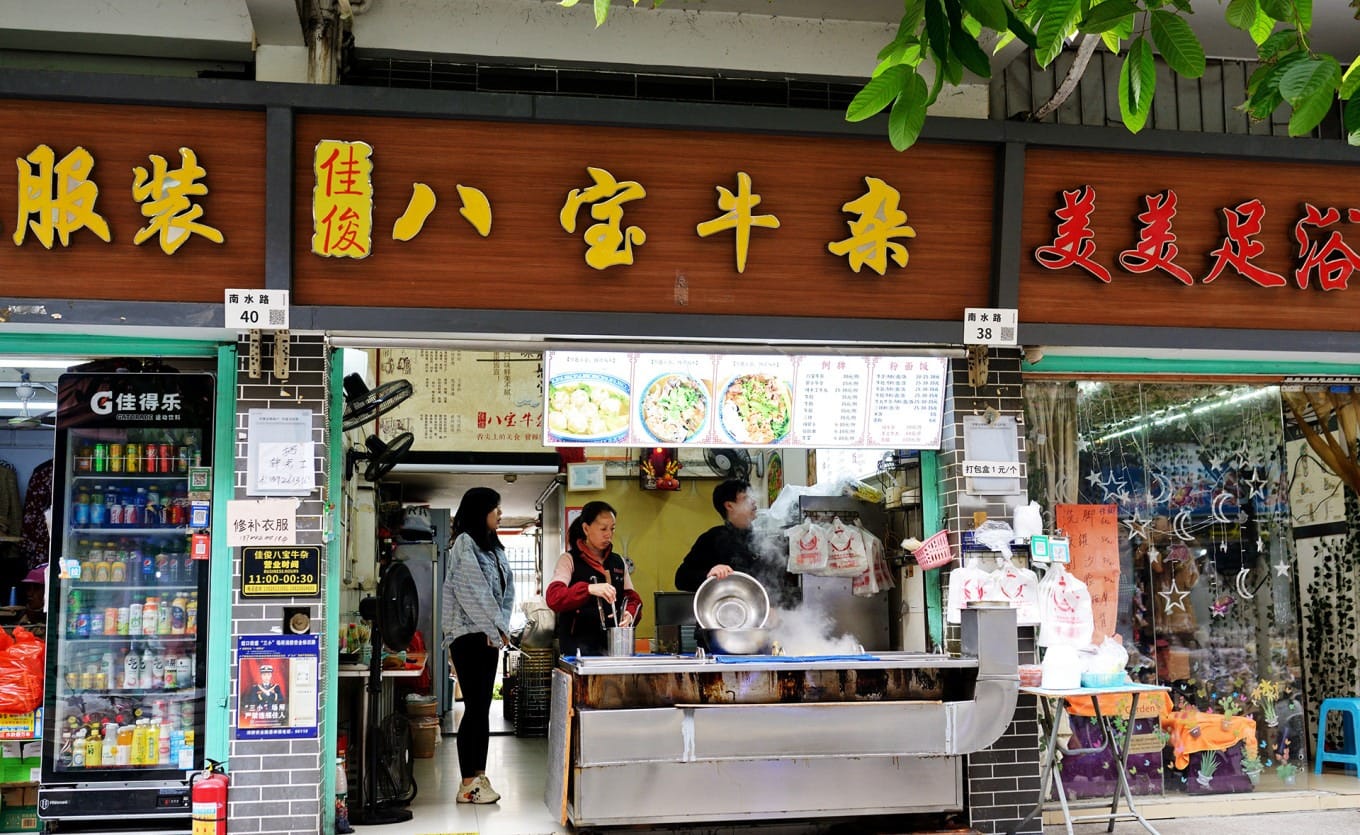
No matter the style, every beef offal shop guards its own secret recipe. Even though the selection of cuts may look similar from place to place, the flavors can be dramatically different—and that’s exactly what makes exploring beef offal so rewarding.
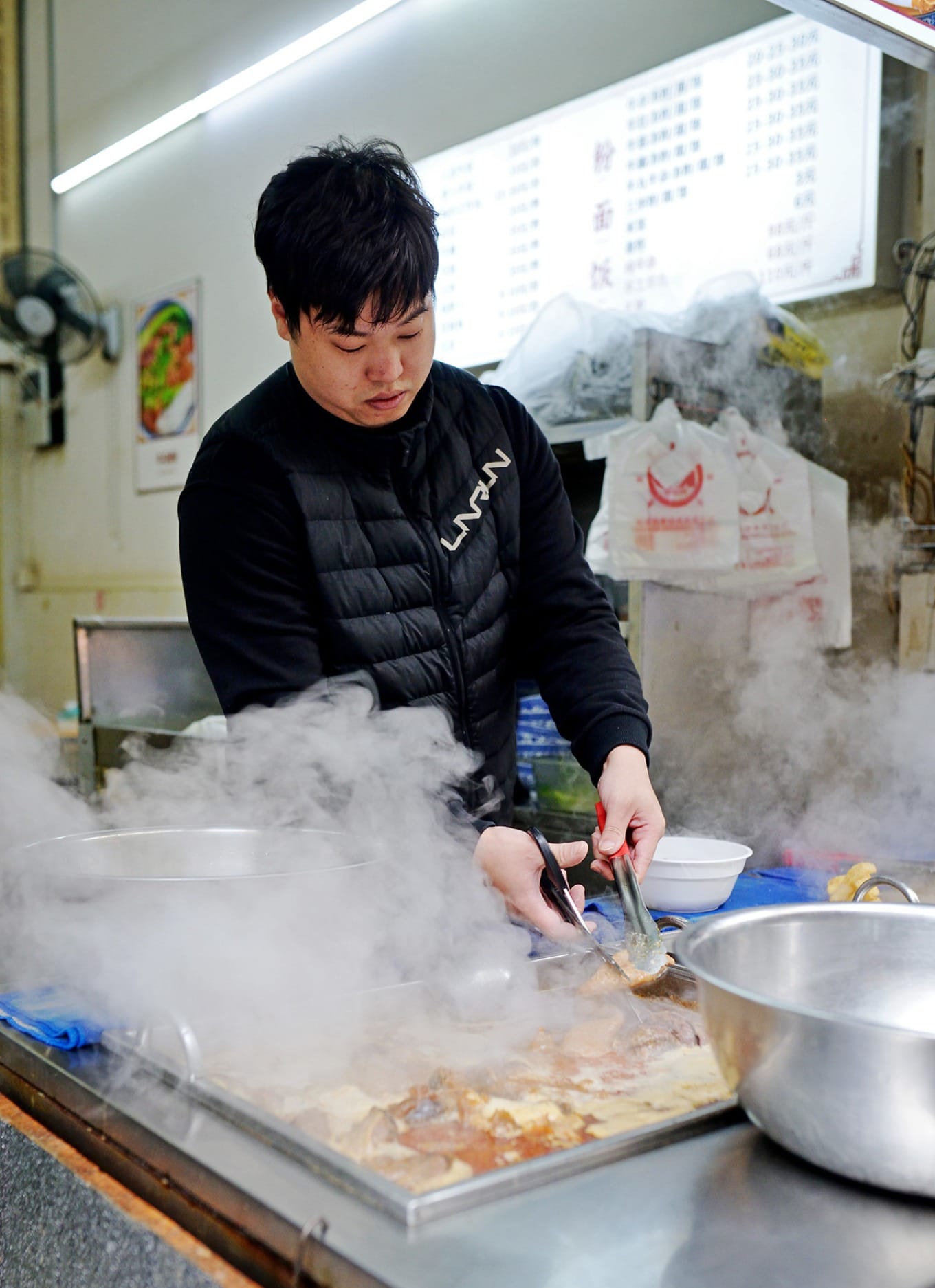
If this is your first visit, the best choice is the Eight-Treasure Beef Offal(八宝牛杂), which lets you sample a full range of cuts in one bowl. At RMB 30 per serving, it isn’t cheap, but the portion size is generous and satisfying.
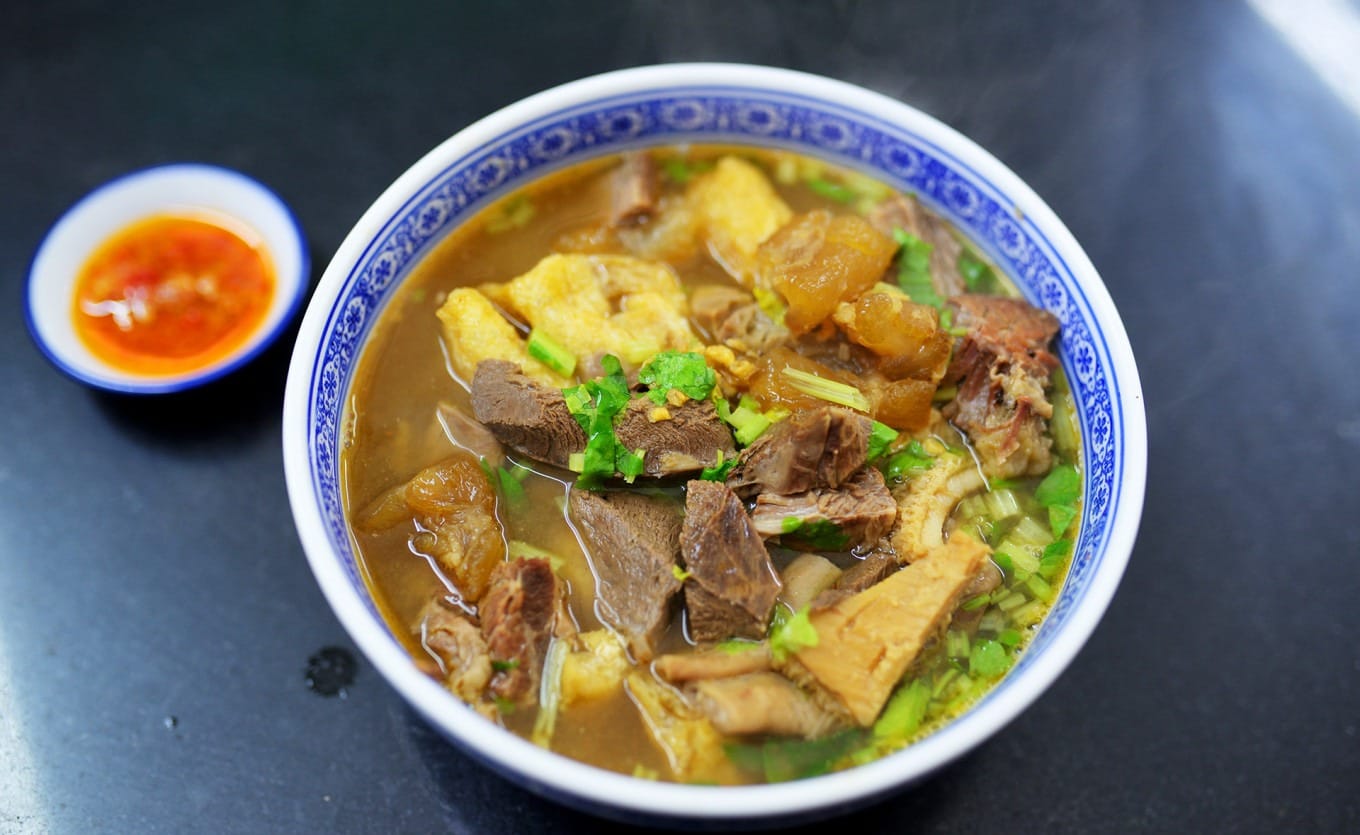
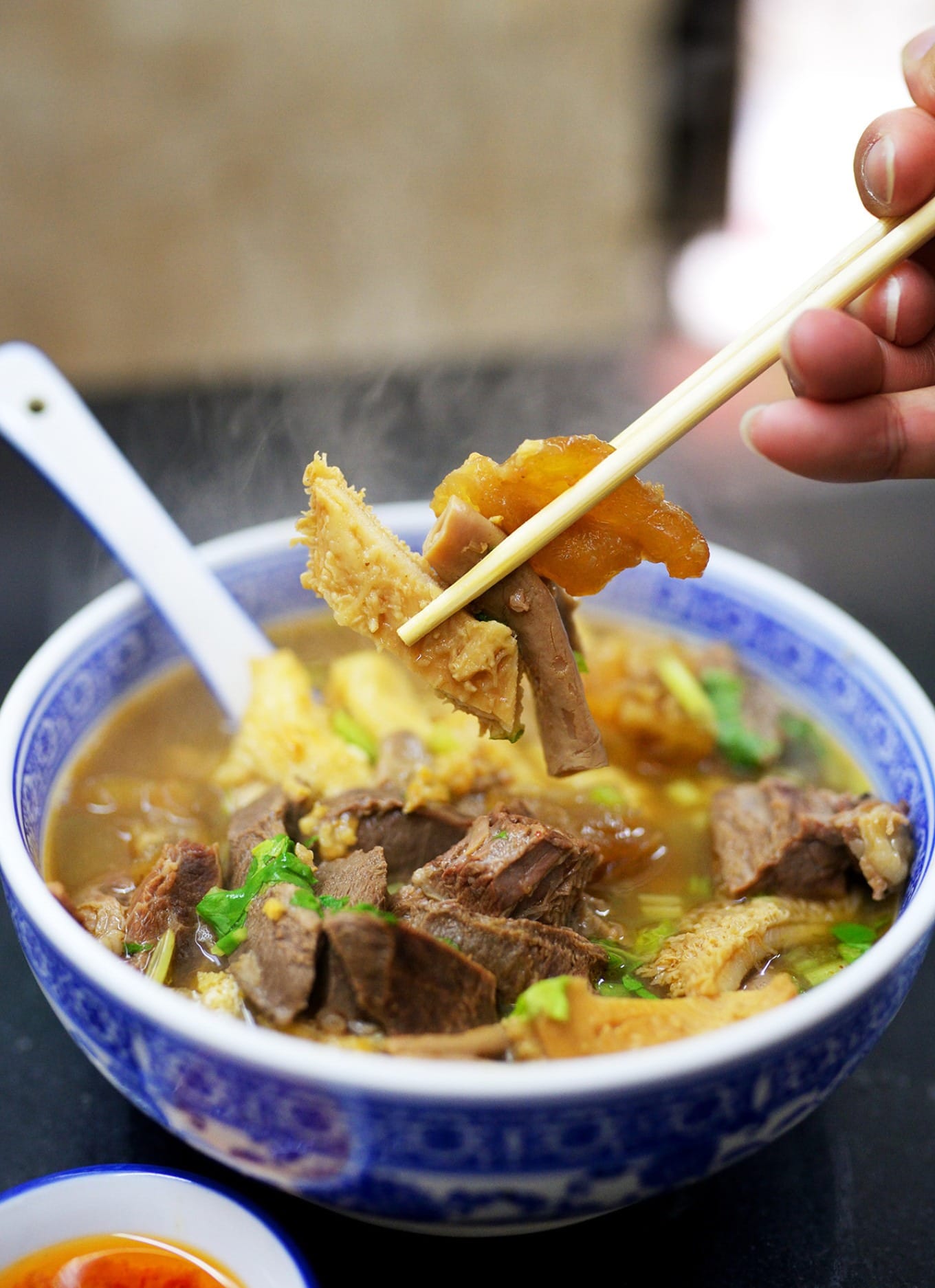
Each cut brings a distinct texture: tripe(牛肚)is tender yet resilient, intestine(牛肠)has a pleasant chew, tendon(牛筋)is soft and gelatinous, flank(牛膀)offers a slightly grainy, powdery mouthfeel, and brisket(牛腩)is meltingly tender while still springy. The braising sauce is not overly heavy, so even after soaking up the flavors, the beef offal retains its own natural aroma. Dip a piece into chili sauce and take a bite—the savory richness fills your mouth and lingers long after.
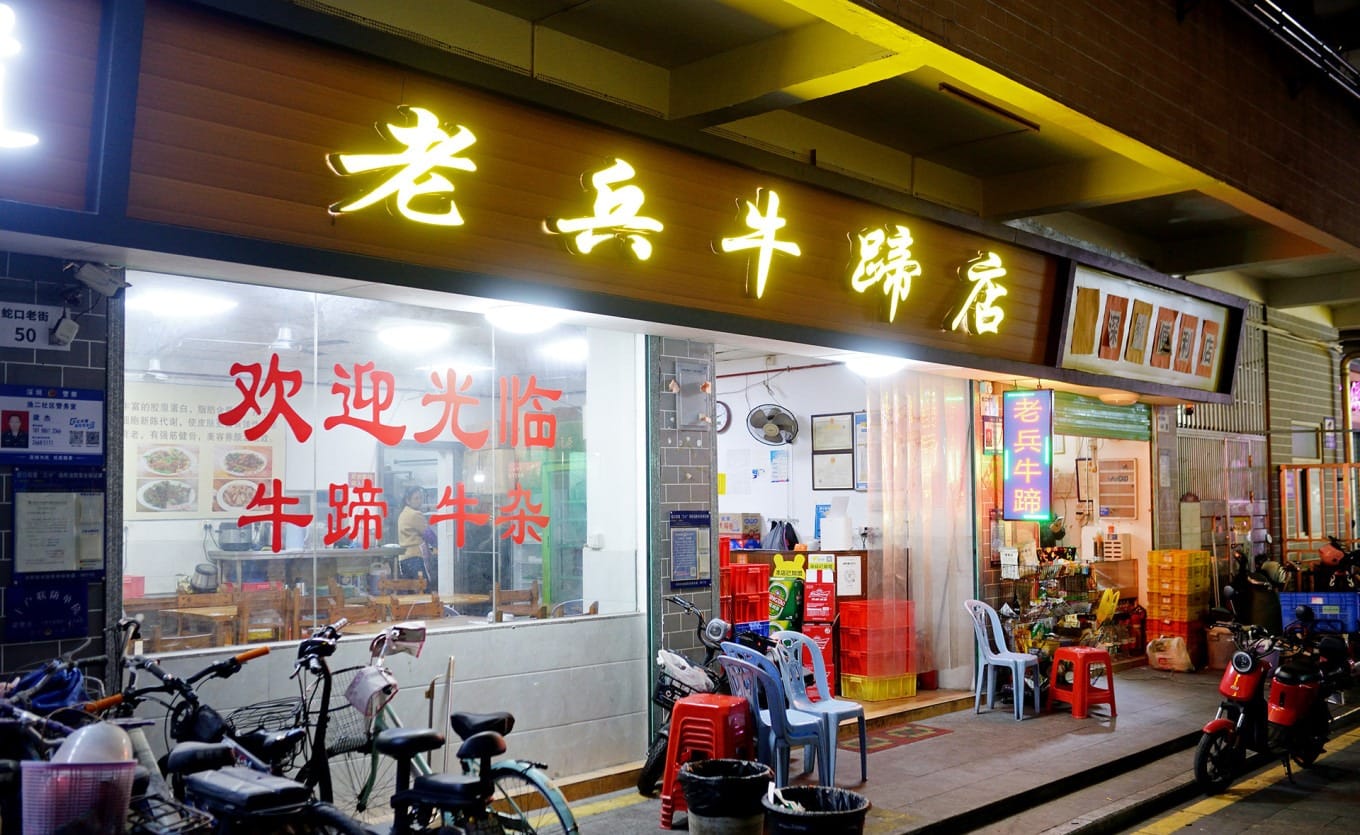
Laobing Beef Trotter Night Stall (老兵牛蹄店)
- RestaurantLaobing Beef Trotter(老兵牛蹄店)
- AddressNo. 46 Shekou Old Street(蛇口老街46号)
- Recommended dishesBeef Trotter(牛蹄), Hundred-layer Tofu(百叶豆腐 / 千叶豆腐)
- Average spendRMB 25 per person(人均25元)
Laobing Beef Trotter(老兵牛蹄店)is a well-known late-night spot in Shekou(蛇口). The name comes from its owner, a retired soldier. The shop used to sit along a main road but has since moved into a quieter alley, making it a bit hidden if you don’t know where to look.
A quick tip before you go: this place only operates as a night snack stall, opening around 6–7 pm. Nearby, you’ll also find Pangzi Beef Trotter(胖子牛蹄), opened by one of the owner’s former apprentices. Locals say the flavors are also solid—if one has a long queue, simply head to the other.
The focus here is beef trotter(牛蹄). Compared with pork trotters, beef trotters are less common because their bones are larger and the meat yield is lower. That said, beef trotters contain less fat, making them noticeably lighter and less greasy than their pork counterparts.
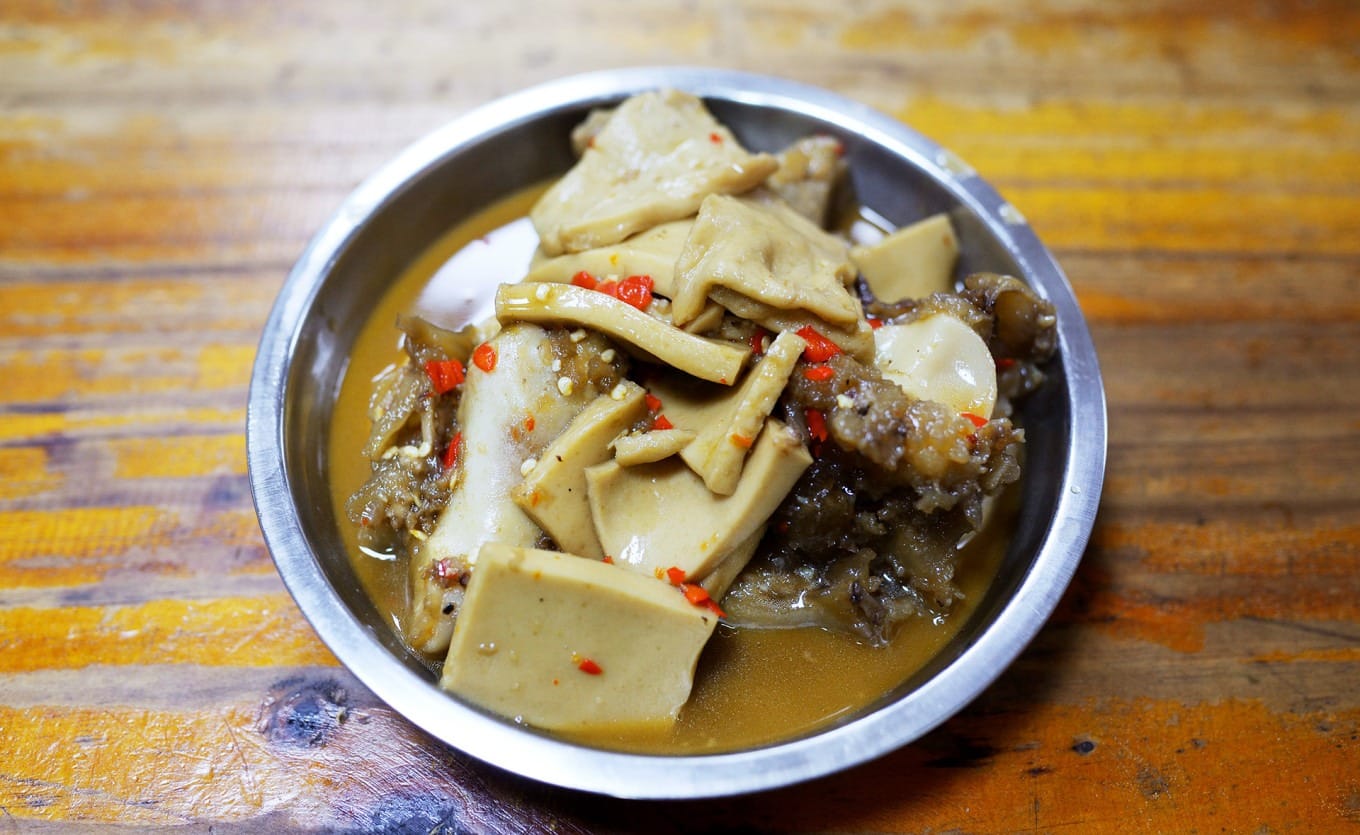
Each beef trotter is chopped into small pieces and slow-cooked for hours until the meat becomes tender. The tendon sections remain pleasantly elastic without turning tough. The dish is seasoned with chopped chili peppers(剁椒)and a touch of sourness, but the real highlight is the sauce. Star anise(八角)and various medicinal herbs(药膳)are added, creating a sauce that smells subtle at first yet delivers an intense, layered flavor once you take a bite. The rich savory and herbal notes surge across your palate, making it hard to stop eating.
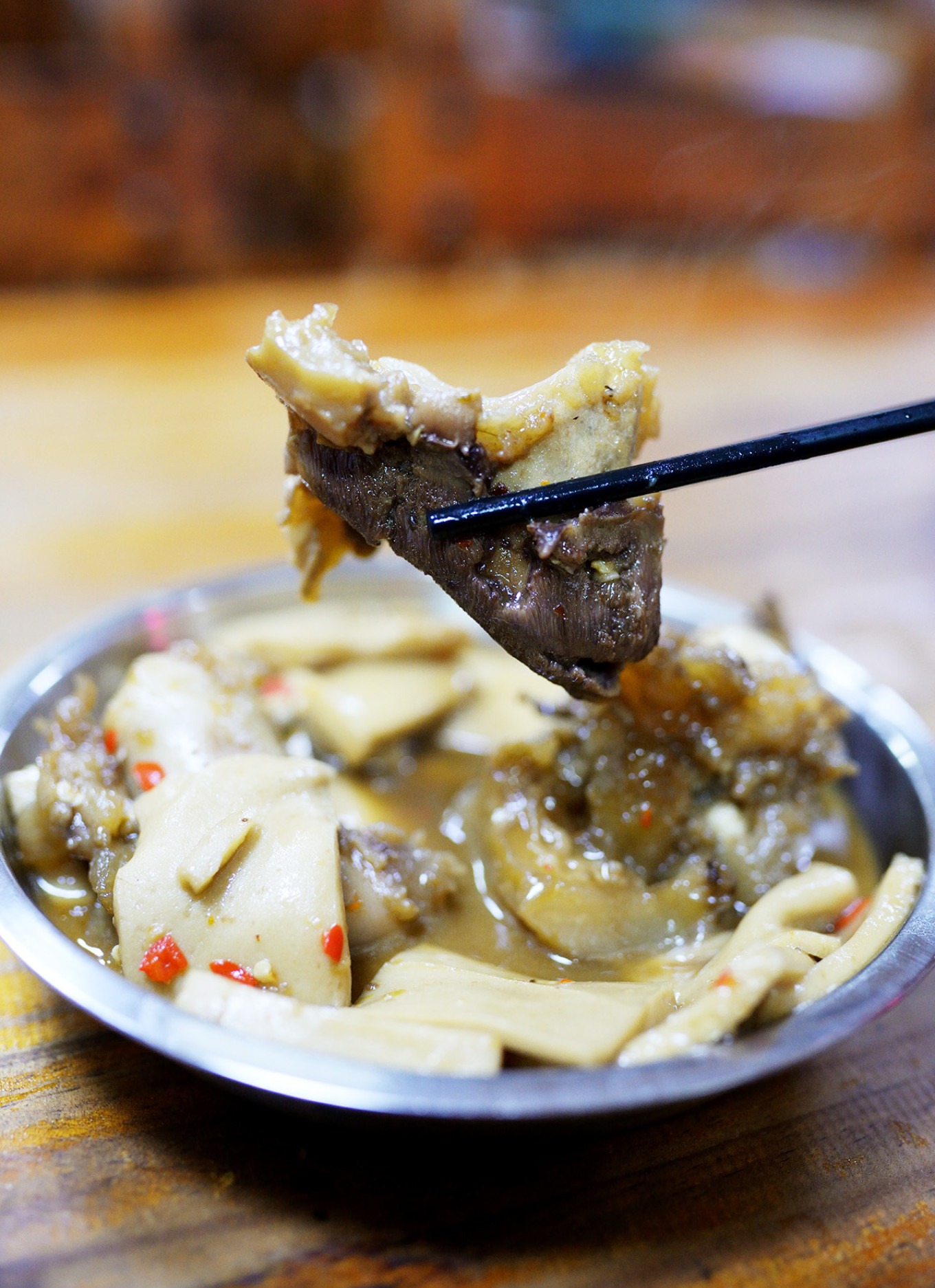
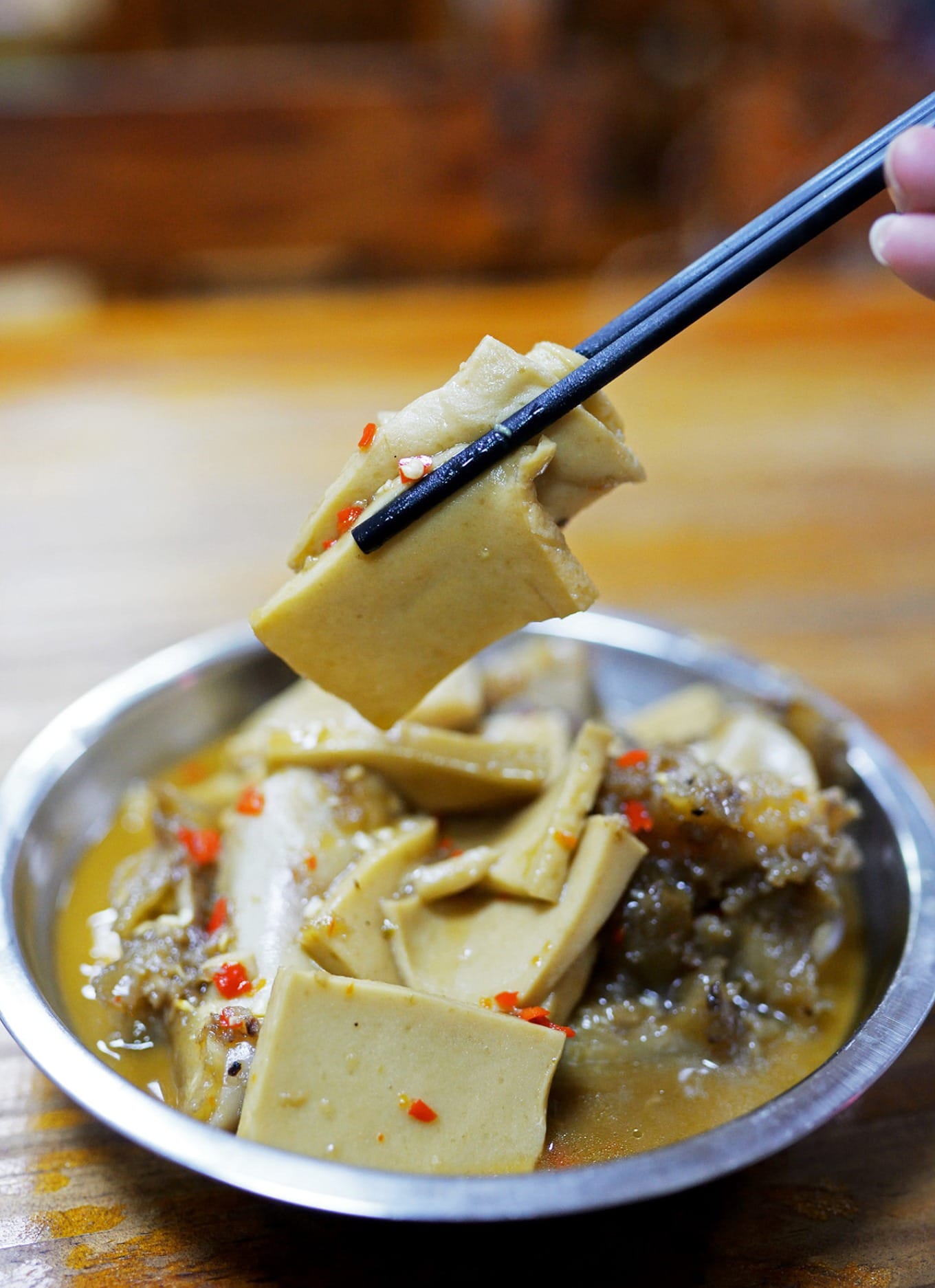
Beef trotters here are typically paired with hundred-layer tofu(百叶豆腐), also known as thousand-layer tofu(千叶豆腐). On its own, the tofu has only a mild soybean aroma, but it absorbs the beef trotter sauce exceptionally well. Once soaked, it becomes deeply flavorful, with a tender and springy texture that complements the trotters perfectly.
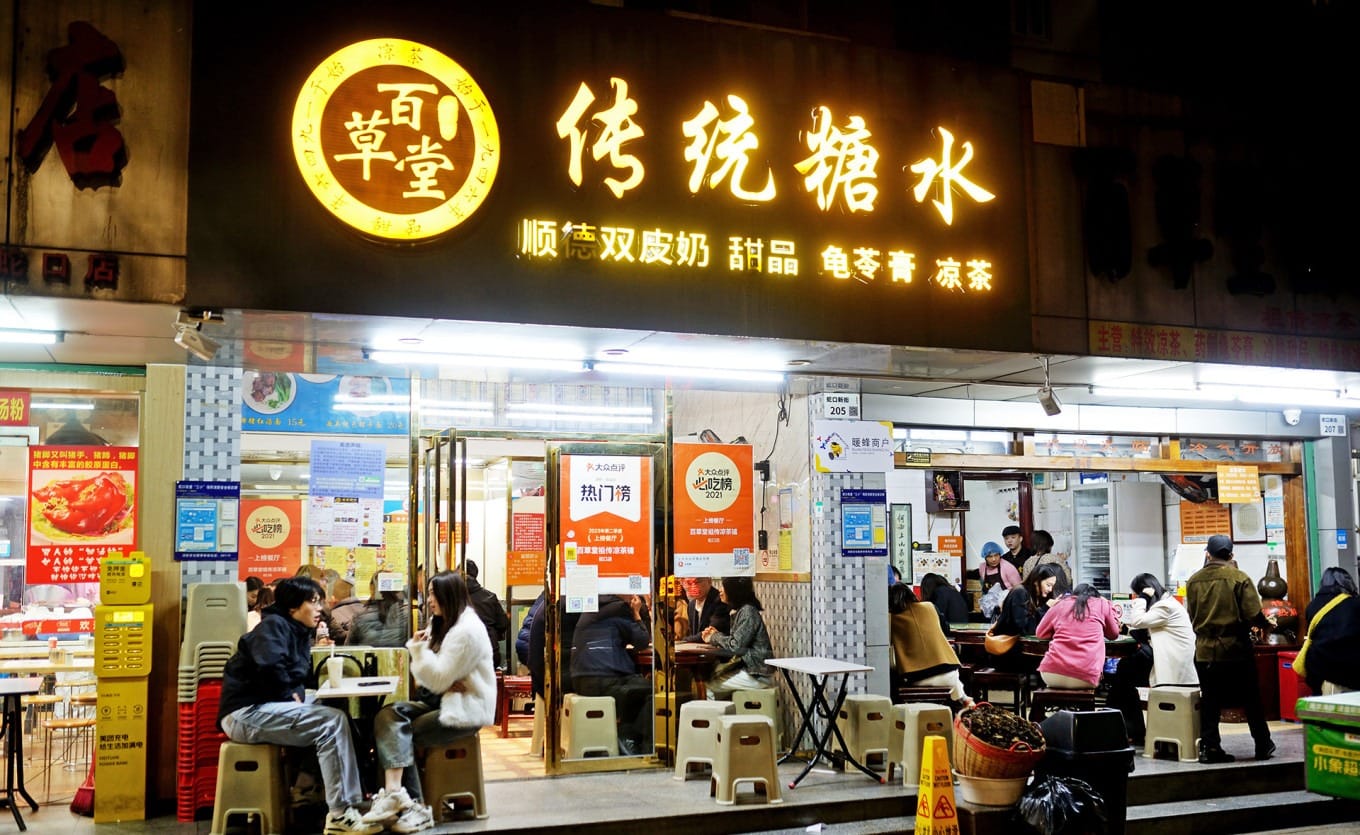
Baicaotang Ancestral Herbal Tea Shop (百草堂祖传凉茶铺)
- ShopBaicaotang Ancestral Herbal Tea Shop(百草堂祖传凉茶铺)
- AddressNo. 207 Shekou New Street(蛇口新街207号)
- RecommendedYangzhi Ganlu(杨枝甘露), House Poria Jelly(秘制茯苓膏)
- Average spendRMB 30 per person(人均30元)
The habit of enjoying sweet soups(糖水)runs deep in Cantonese culture, and Shenzhen(深圳), located in the Pearl River Delta, is no exception. In Shekou(蛇口), Baicaotang Ancestral Herbal Tea Shop(百草堂祖传凉茶铺)is a longtime local favorite. Arrive around 8–9 pm and you’ll often find seats filled both inside and out—an easy sign that the quality here is dependable.
Yangzhi Ganlu(杨枝甘露)is a classic Hong Kong–style dessert. Evolved from mango sago, it’s made by splitting fresh mango—half diced, half blended—then mixing it with coconut milk, milk, sago pearls(西米), and pomelo bits(西柚粒). The result is smooth and luscious, balancing fruity freshness with creamy richness.
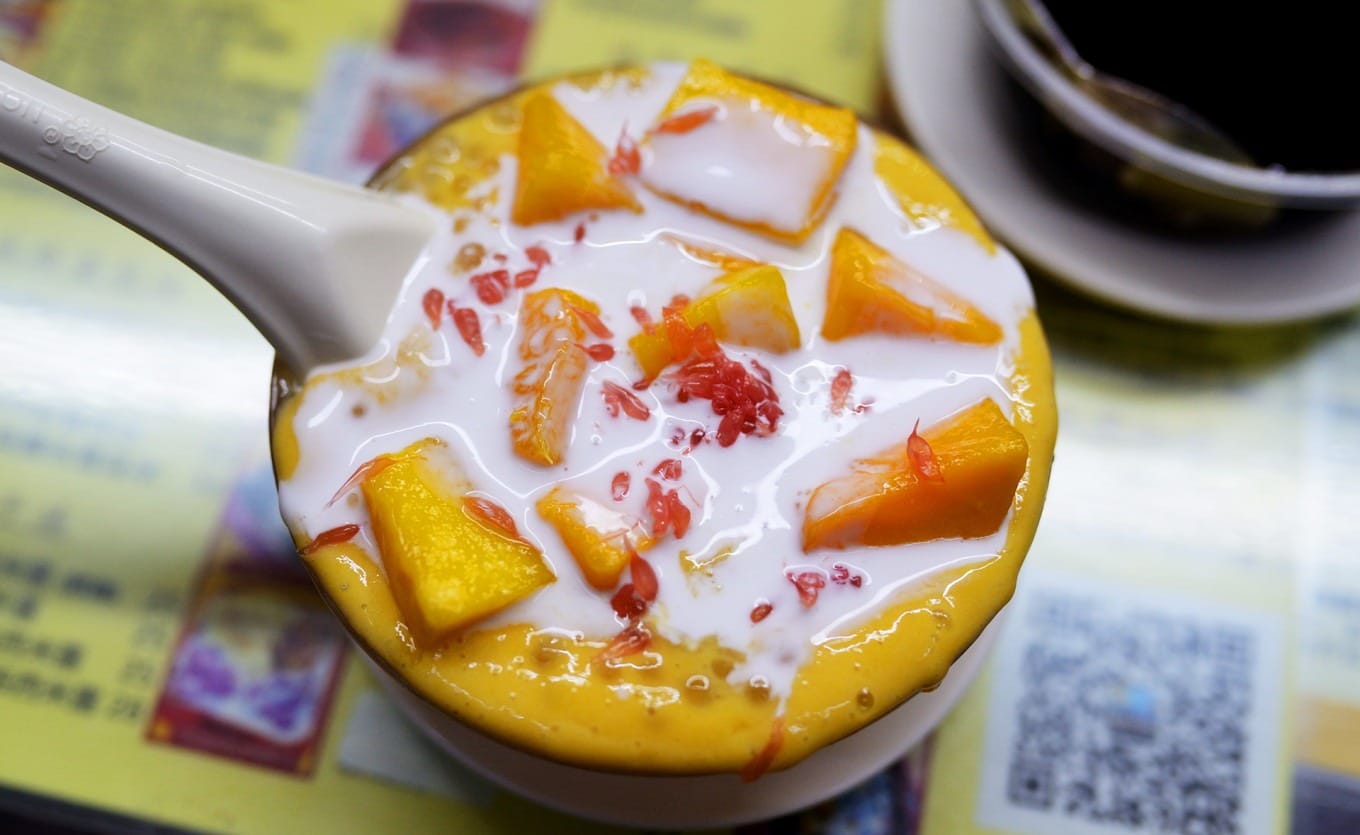
What makes a great Yangzhi Ganlu is real ingredients. Here, generous chunks of fresh mango deliver a bright sweet-tart flavor that plays off the gentle acidity of pomelo. Combined with the thick, velvety base, each spoonful feels like a cool summer breeze—refreshing and deeply satisfying.
You’ll also find a more traditional option: Poria jelly(茯苓膏). Though modest in appearance, it’s made by steaming poria, blending it with milk, and simmering gently. Often mistaken as an acquired taste, it’s traditionally valued for cooling the body, clearing heat and toxins, soothing the lungs, and supporting digestion. The flavor is lightly bitter at first, followed by a clean, subtle sweetness.
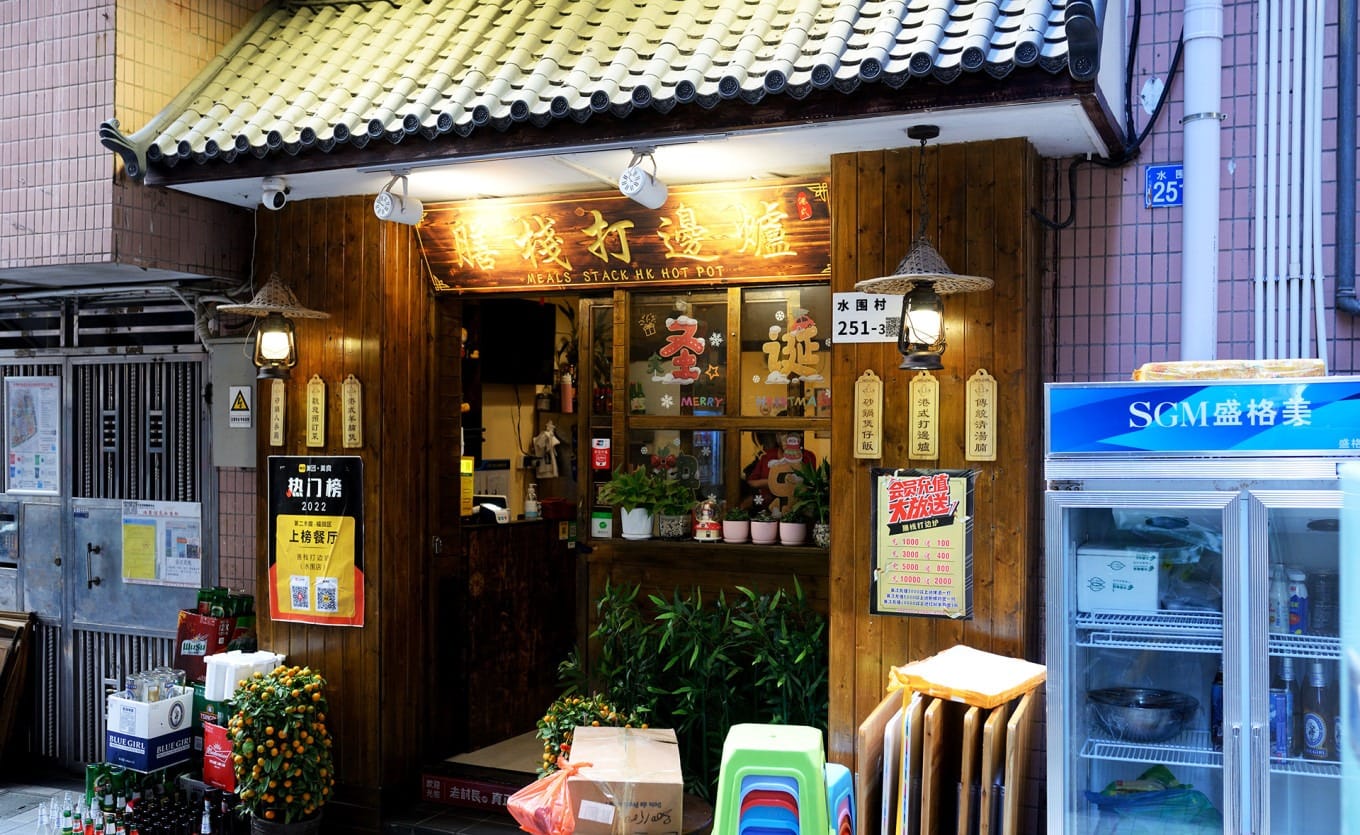
Shanzhan Hong Kong–Style Claypot Hotpot (膳栈港式打边炉)
- RestaurantShanzhan Hong Kong–Style Claypot Hotpot(膳栈港式打边炉)
- AddressGround Floor, Building 241, Shuiwei Village(水围村241栋一楼)
- Recommended dishClaypot Golden Abalone Snail Chicken(砂锅黄金鲍螺鸡)
- Average spendRMB 100 per person(人均100元)
After Shekou(蛇口), it’s worth turning your attention to Shuiwei(水围). Shuiwei Village and neighboring Huanggang Village(皇岗村) are both urban villages just a river away from Hong Kong(香港), with Futian Port(福田口岸)and Huanggang Port(皇岗口岸)close by. Because of this, many Hong Kong residents live and dine here—bringing with them a keen palate and helping turn the area into a genuine food haven in Shenzhen.
🛂 Border Crossing: Since Shenzhen is a key gateway, ensure your documents are in order. Check our latest guide on China’s Visa Free Policies before you plan your crossing.
Shanzhan Hong Kong–Style Claypot Hotpot(膳栈港式打边炉)is one of those low-key places where good food hides deep in the alleys. Tucked between tightly packed residential buildings in Shuiwei Village, it’s easy to miss unless you’re looking for it—but it’s well worth the effort.
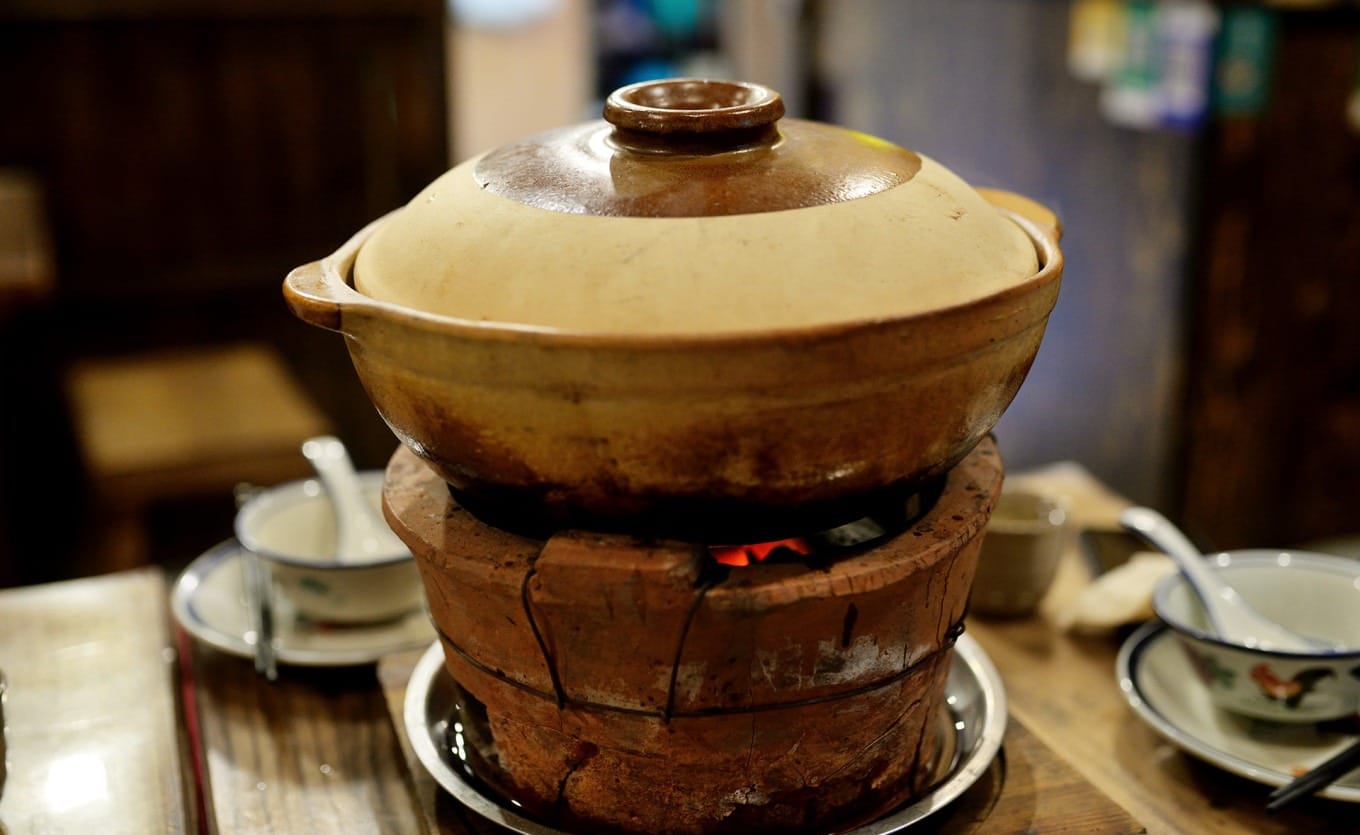
“Da Bian Lu(打边炉)” is the Cantonese term for hotpot, with “bian” originally referring to a small clay vessel. Cantonese diners have a special love for chicken, especially claypot chicken in winter. Traditionally, chicken pots are heated over charcoal using clay pots, which warm slowly and evenly, preventing the meat from drying out. Gentle simmering keeps the broth at a steady boil, allowing smoky, fire-kissed aromas to develop over time.
Because of cost and safety concerns, true charcoal-fired claypot chicken has become increasingly rare. This shop, however, still sticks to the traditional charcoal method—a commitment that’s becoming harder and harder to find.
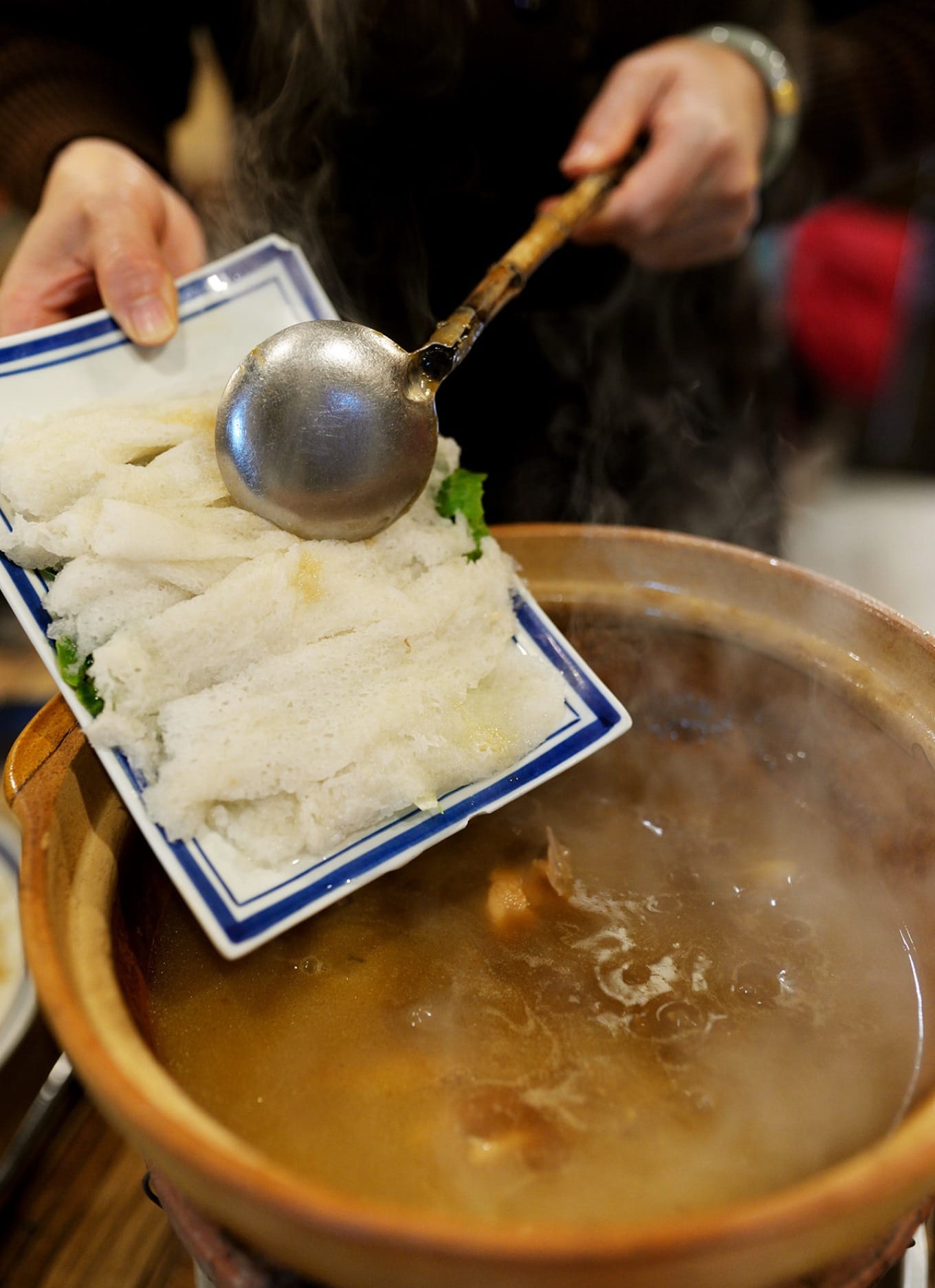
The specialty here is Hong Kong–style chicken pot(港式鸡煲), with the most popular choice being the Claypot Golden Abalone Snail Chicken(砂锅黄金鲍螺鸡). Compared with Guangzhou-style versions, the seasoning is noticeably lighter. Medicinal herbs and abalone snails are added, making the dish both nourishing and aromatic.
Despite the name, abalone snails(鲍螺)are actually a type of snail. Sliced thin and slow-simmered with Qingyuan chicken(清远鸡), they lend a subtle oceanic sweetness to the broth. The chicken itself is firm yet juicy, with crisp skin and tender meat that never turns dry. Thanks to the light seasoning, the natural flavor of the chicken really shines. Using the broth to spoon over rice is especially satisfying.
Once most of the chicken is eaten, you can add extra ingredients to the pot. Bamboo fungus(竹荪)is a classic choice—it pairs beautifully with chicken broth. After simmering briefly, it absorbs all the richness of the soup while remaining crisp and fragrant.
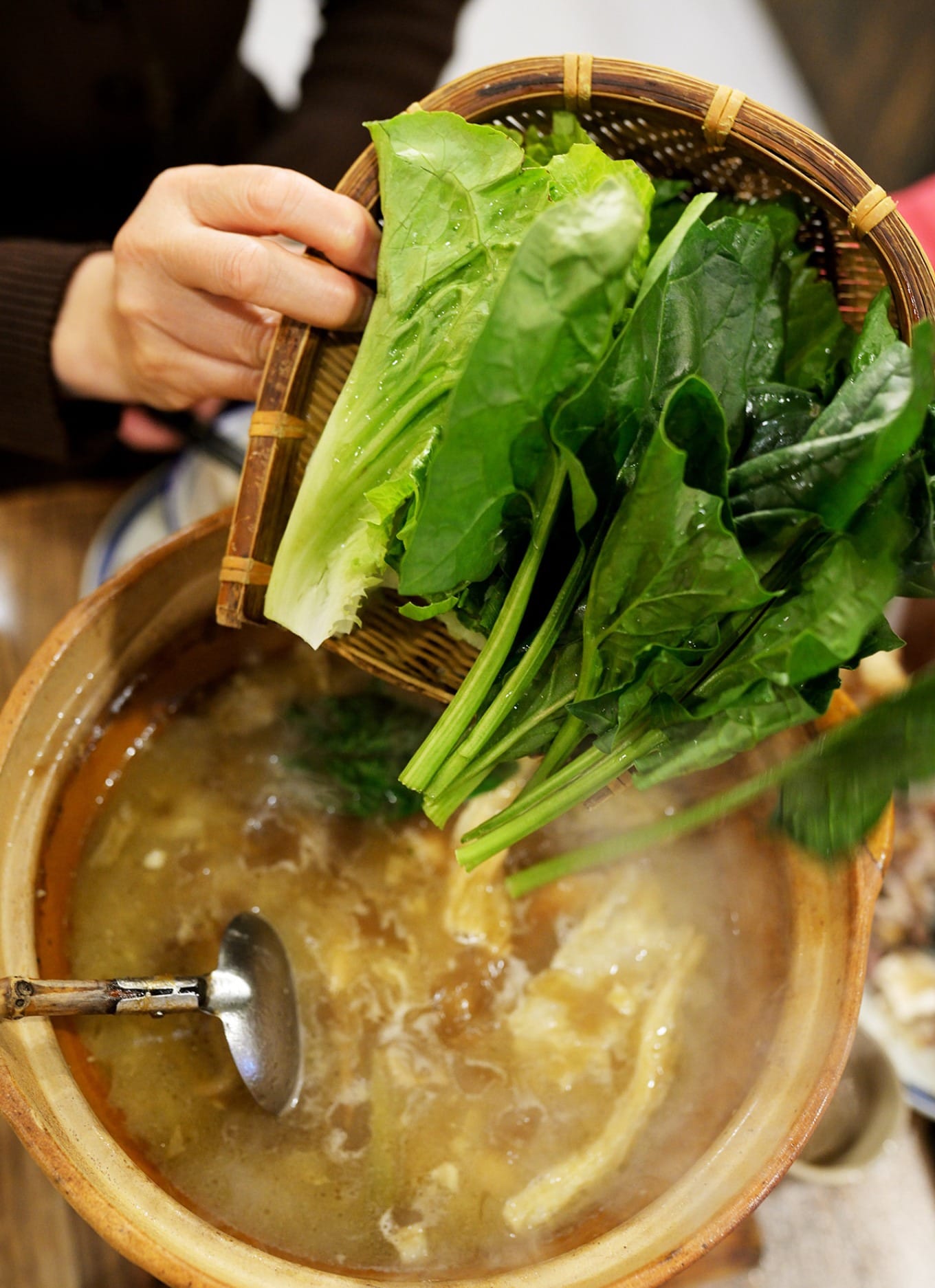
For Cantonese diners, vegetables are never optional. A quick blanch is all they need before lifting them out of the pot. Light, refreshing, and naturally sweet, they cut through the richness and are surprisingly delicious.
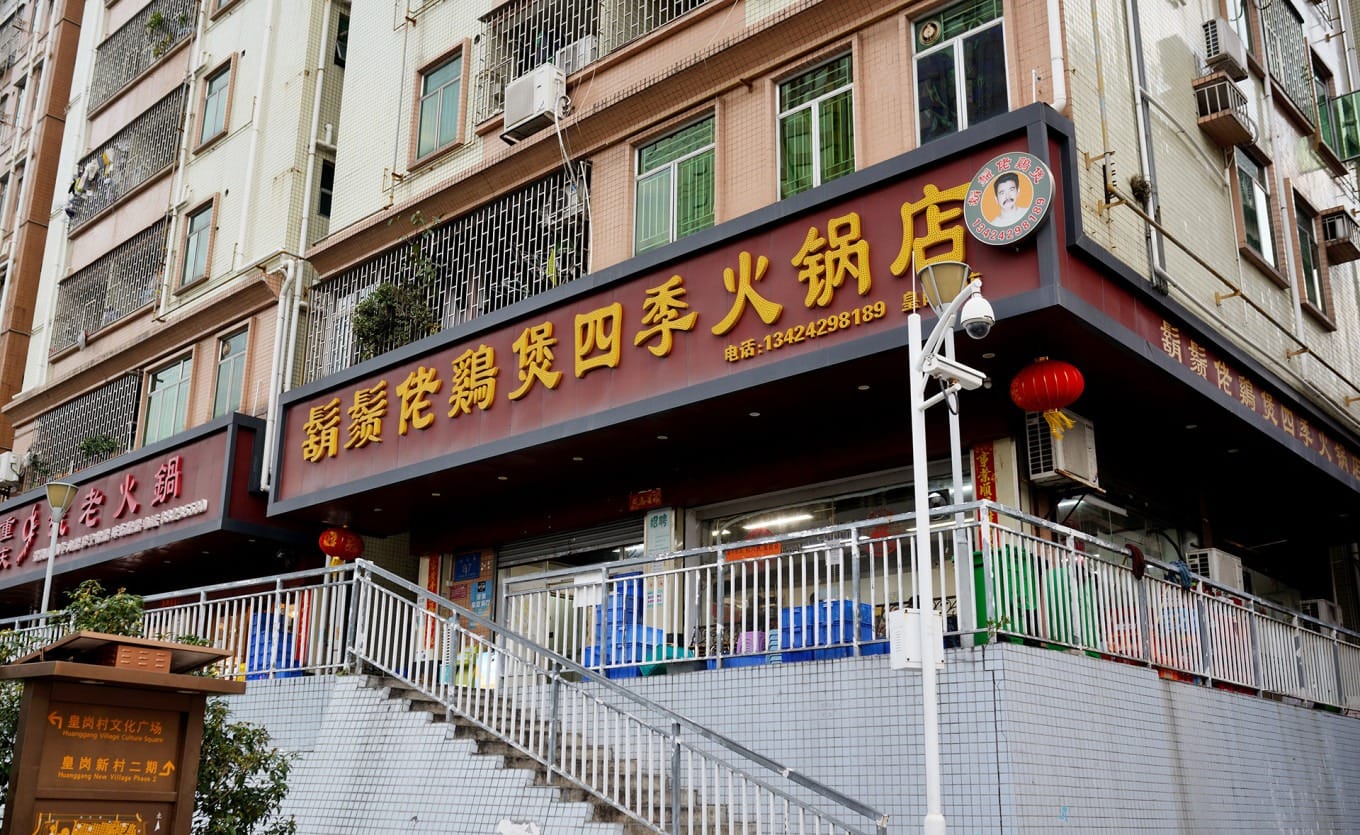
Hu Xu Lao Chicken Pot & All-Season Hotpot (胡须佬鸡煲四季火锅)
- RestaurantHu Xu Lao Chicken Pot & All-Season Hotpot (Huanggang Flagship)(胡须佬鸡煲四季火锅·皇岗总店)
- AddressGround Floor, Building 135, Huanggang New Village(皇岗新村135栋一楼)
- Recommended dishesHu Xu Lao Chicken Pot(胡须佬鸡煲), Stir-fried Pork Skin(沙爆猪皮), Fresh Goose Liver(新鲜鹅肝), Fried Beancurd Skin(炸腐竹)
- Average spendRMB 80 per person(人均80元)
Compared with the lighter, Hong Kong–style chicken pot at Shanzhan, Hu Xu Lao Chicken Pot & All-Season Hotpot(胡须佬鸡煲四季火锅)offers a completely different experience. Widely regarded as one of Shenzhen’s most popular chicken pot brands, Hu Xu Lao has been around for nearly 20 years and now operates seven or eight branches across the city.
The Huanggang Village flagship store(皇岗村总店)is a longtime gathering place for local residents. Located on the ground floor of a self-built residential building, the setting is casual and unpolished—very much a neighborhood spot where flavor matters more than appearances.
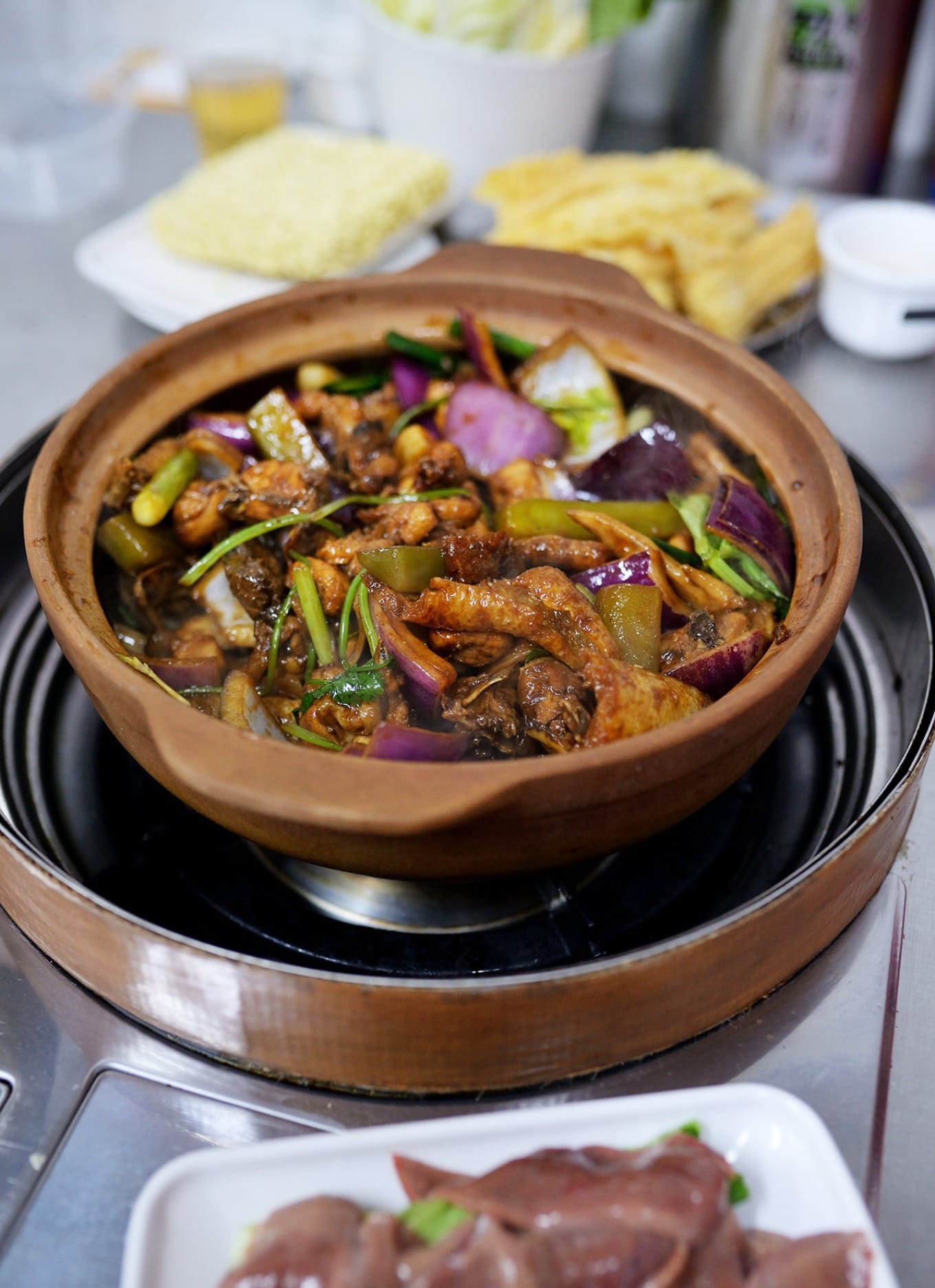
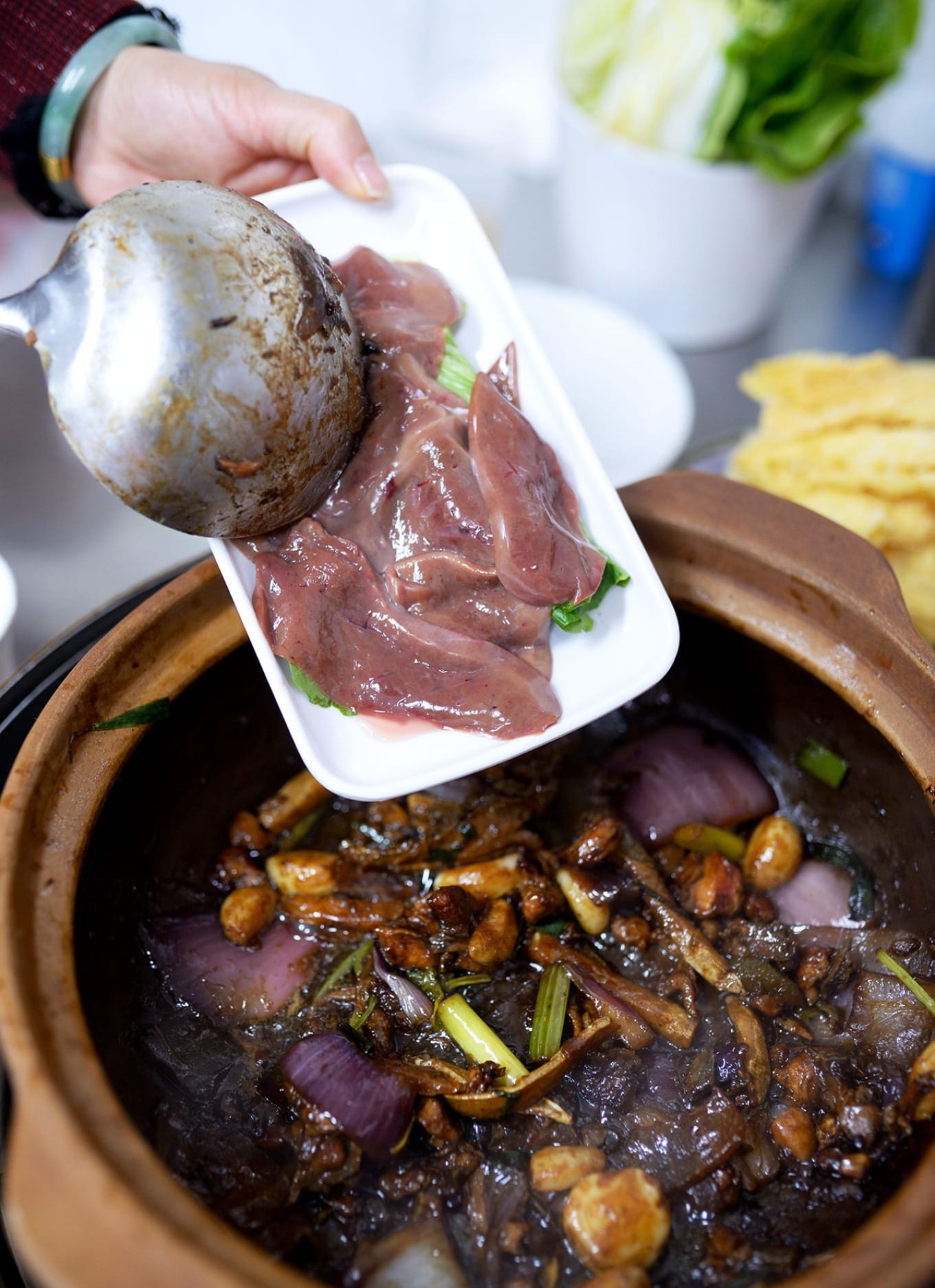
Here, the chicken is first stir-fried with the house secret sauce, creating a flavor profile reminiscent of braised chicken in brown sauce(黄焖鸡). It’s then transferred into a clay pot and simmered with onions, green peppers, cilantro, and other aromatics. No water is added during cooking—the dish relies entirely on the natural juices released by the ingredients, especially the onions. As a result, the chicken is relatively dry compared with soup-based versions, but the aroma is exceptionally intense.
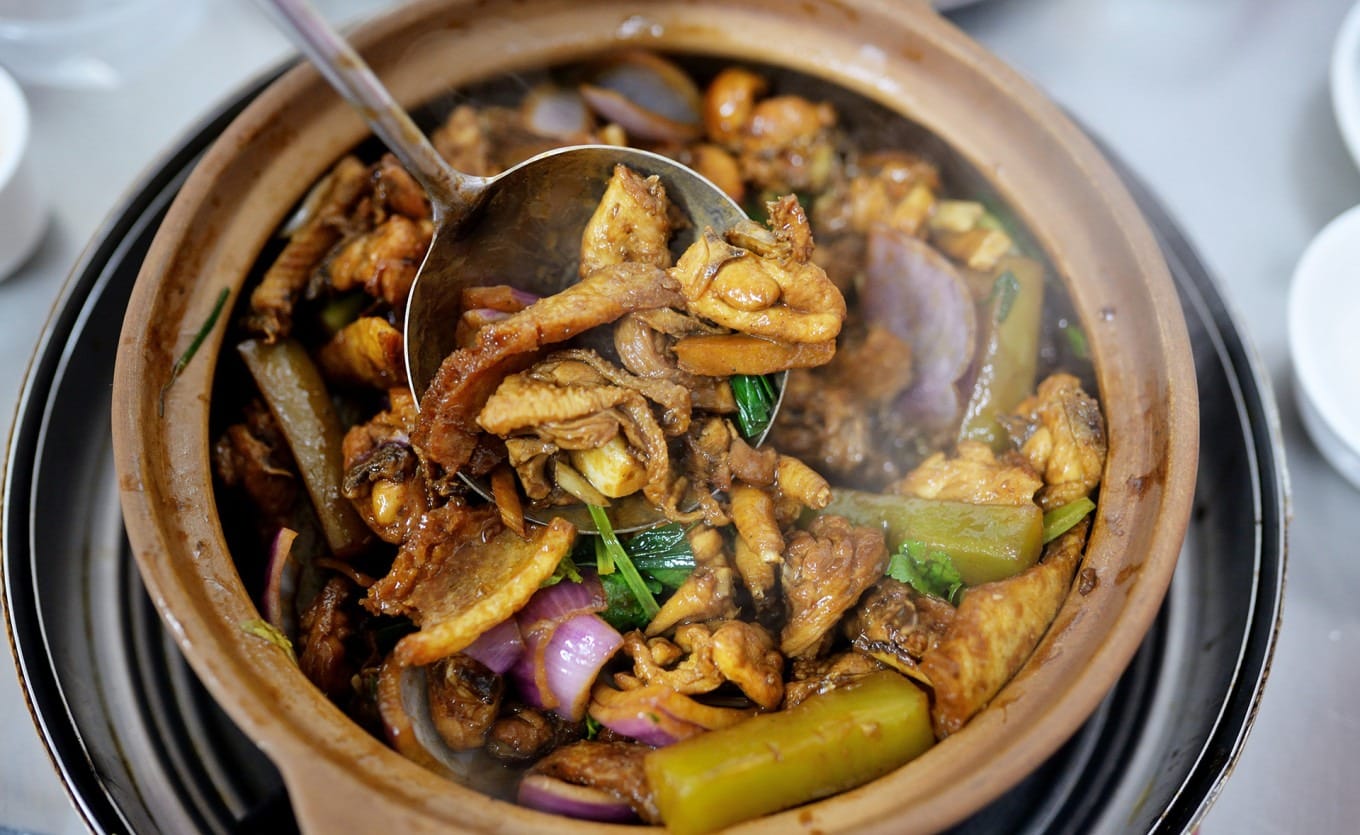
As you lift a spoonful of chicken, bold sauce aromas mixed with light caramelized notes rise immediately, triggering your appetite before you even take a bite. While the chicken here isn’t as tender as at Shanzhan, the pre-stir-frying gives it a pleasantly springy, crisp texture. That satisfying bite alone explains why this chicken pot has won over so many Shenzhen diners.
After finishing the chicken, you can add additional ingredients to the pot. Two standout options are the stir-fried pork skin(沙爆猪皮)and fresh goose liver(新鲜鹅肝). The pork skin absorbs the sauce beautifully, staying crisp yet chewy, while the goose liver is soft and delicate—just be careful not to cook it too long, or it can toughen quickly.
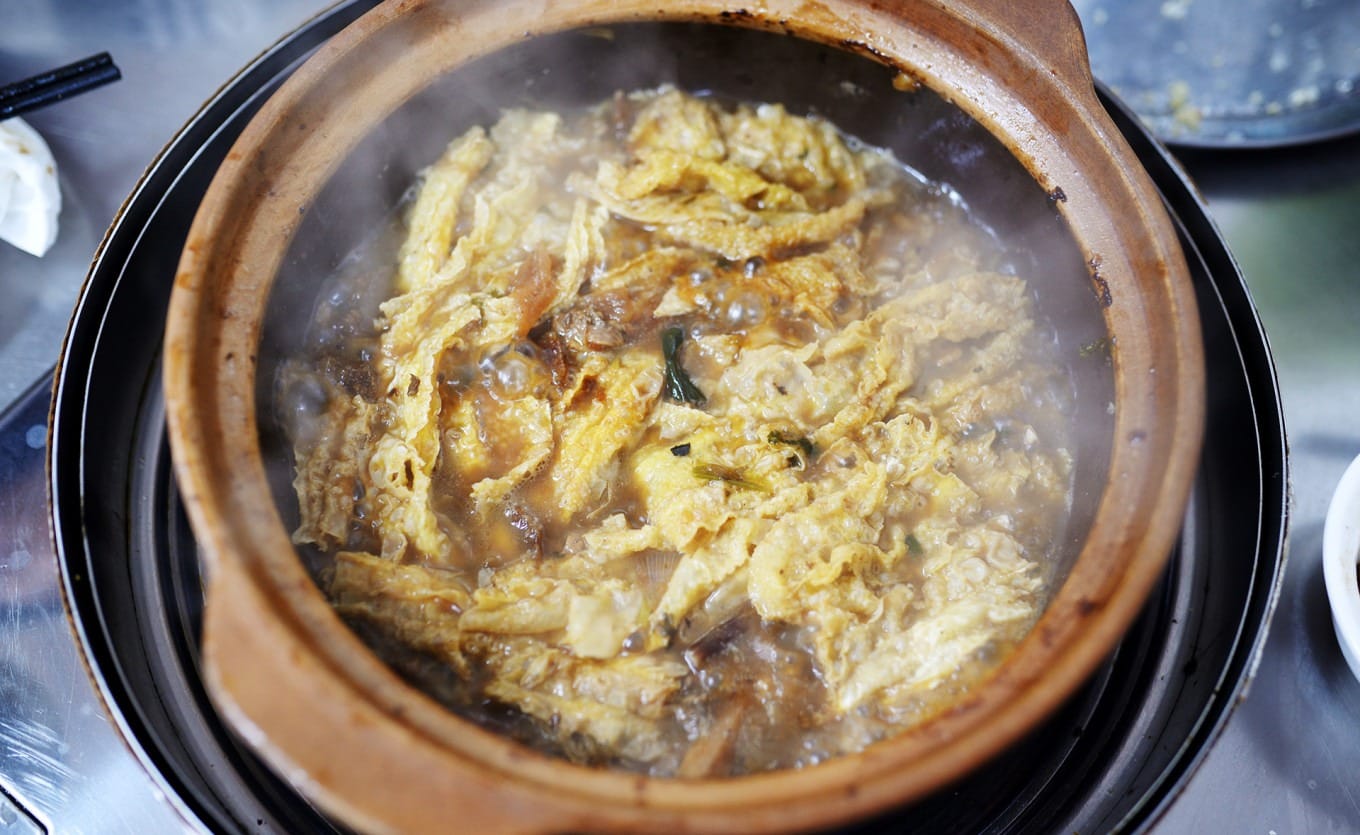
To finish the meal, ask the staff to add broth to the pot and cook the fried beancurd skin(炸腐竹). Naturally rich with its own oil aroma, the beancurd skin soaks up the broth, reaching a perfectly balanced saltiness with a soft, slightly sweet finish—an excellent final course.
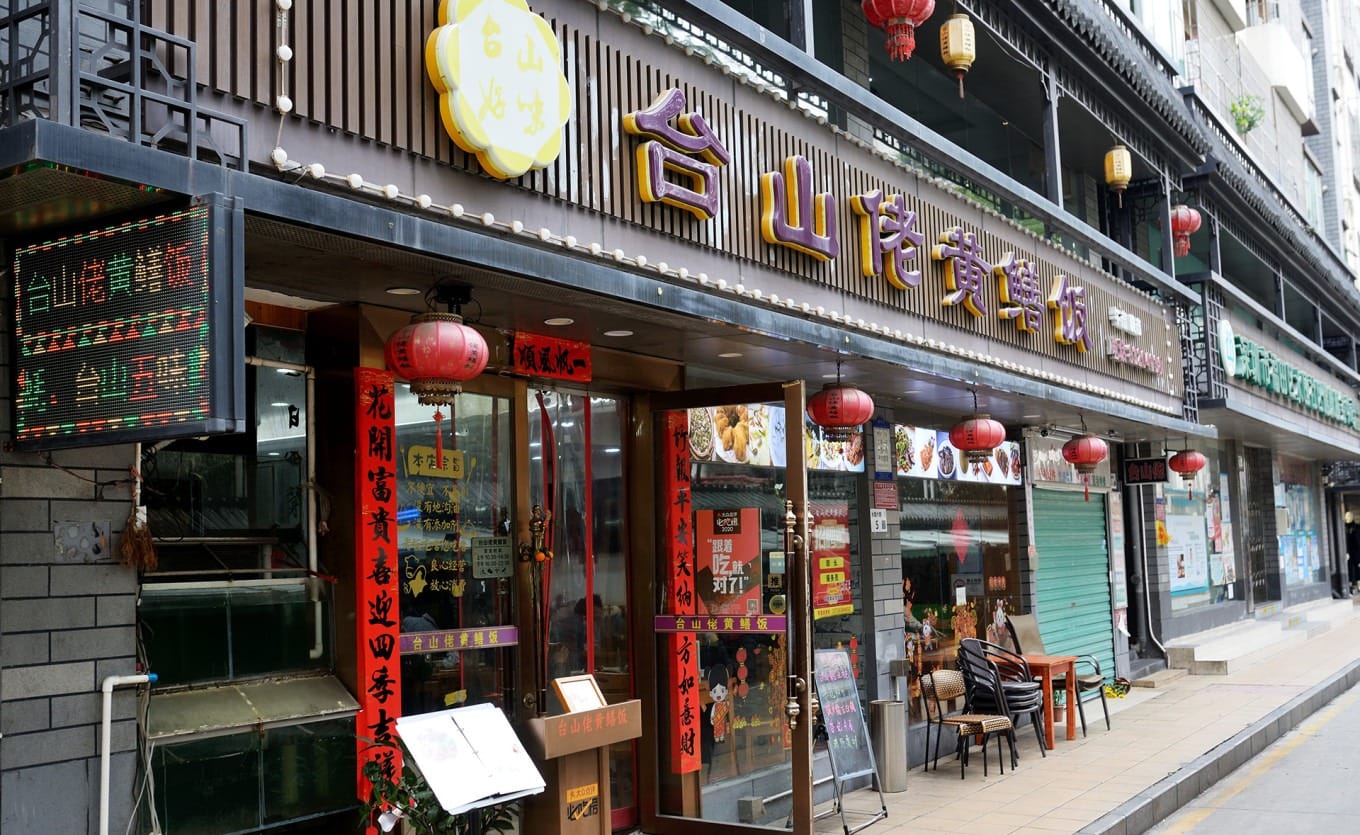
Taishan La Eel Claypot Rice (台山佬黄鳝饭)
- RestaurantTaishan La Eel Claypot Rice (Shuiwei Branch)(台山佬黄鳝饭·水围店)
- AddressGround Floor, Building 117, Shuiwei Sixth Street(水围六街117栋1楼)
- Recommended dishesTaishan Eel Claypot Rice(台山黄鳝饭), Five-Flavor Goose(五味鹅), Tangerine Peel Crispy Ribs(陈皮脆香骨), Shrimp Paste ‘Ze’ Duhuo Cauliflower(虾酱啫都斛菜花)
- Average spendRMB 80 per person(人均80元)
Also hidden inside Shuiwei Village(水围村), Taishan La Eel Claypot Rice(台山佬黄鳝饭)is one of the most authentic Wuyi-region restaurants you can find in Shenzhen(深圳). While eateries serving Wuyi cuisine(五邑菜)are not uncommon in the city, this one stands out thanks to its roots—the owner is a native of Taishan(台山), and the flavors stay true to home.
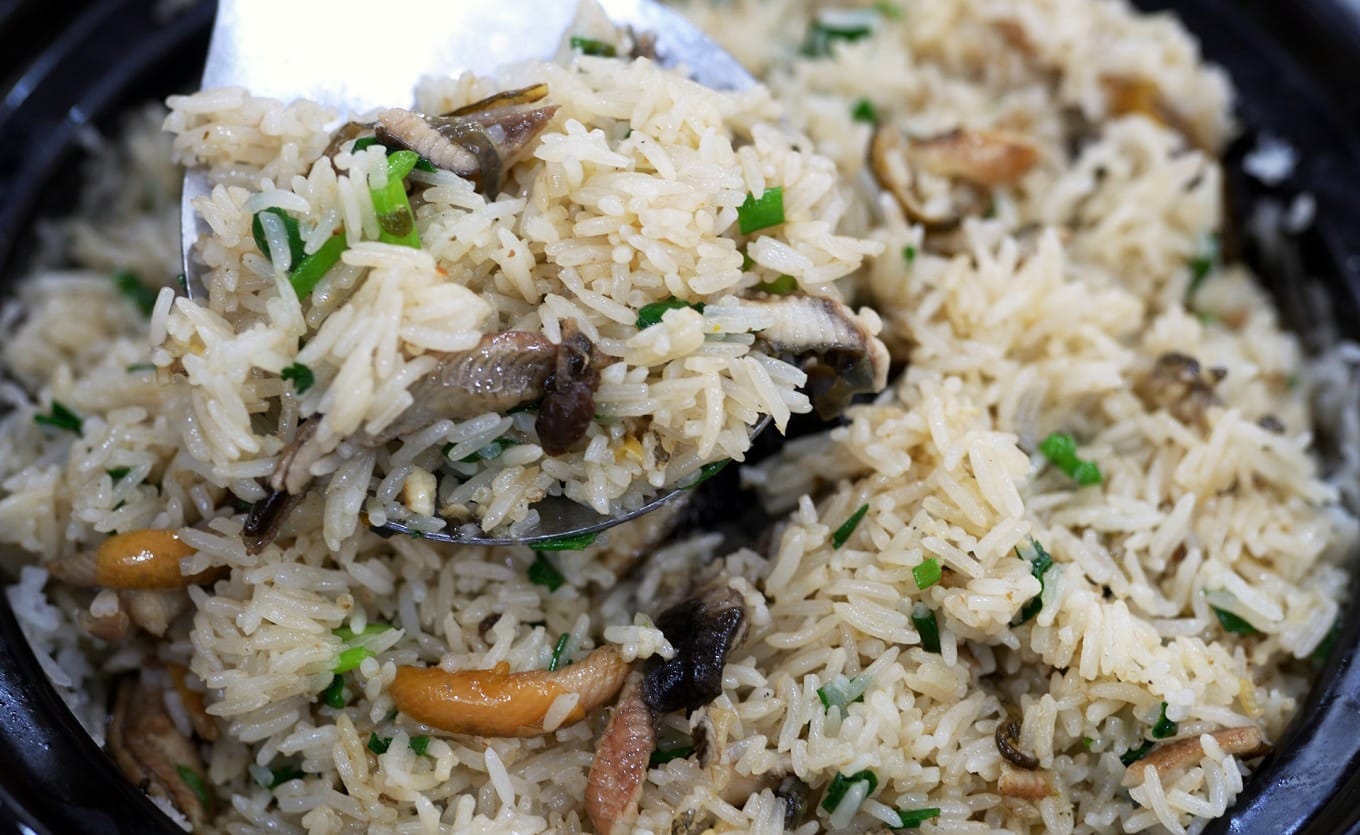
In Taishan, eel claypot rice(黄鳝饭)comes in several variations. The method used here closely follows the classic style from Shuibu(水步), home to the very first Huaxing Eel Rice(华兴黄鳝饭). Fresh eels are blanched, deboned, and shredded. The eel bones are simmered into a broth, which is then used to cook fragrant Simiao rice(丝苗米). The cooked rice is stir-fried with eel meat and eel blood before being sealed in a claypot and baked for a few final minutes.
Taishan cooks are meticulous about the ratio of eel to rice, and to keep the meat tender, smaller eels are preferred. Because each pot is made to order, eel claypot rice takes time—patience is required. The staff recommend waiting a few extra minutes after the claypot arrives before lifting the lid, allowing the flavors to fully settle.
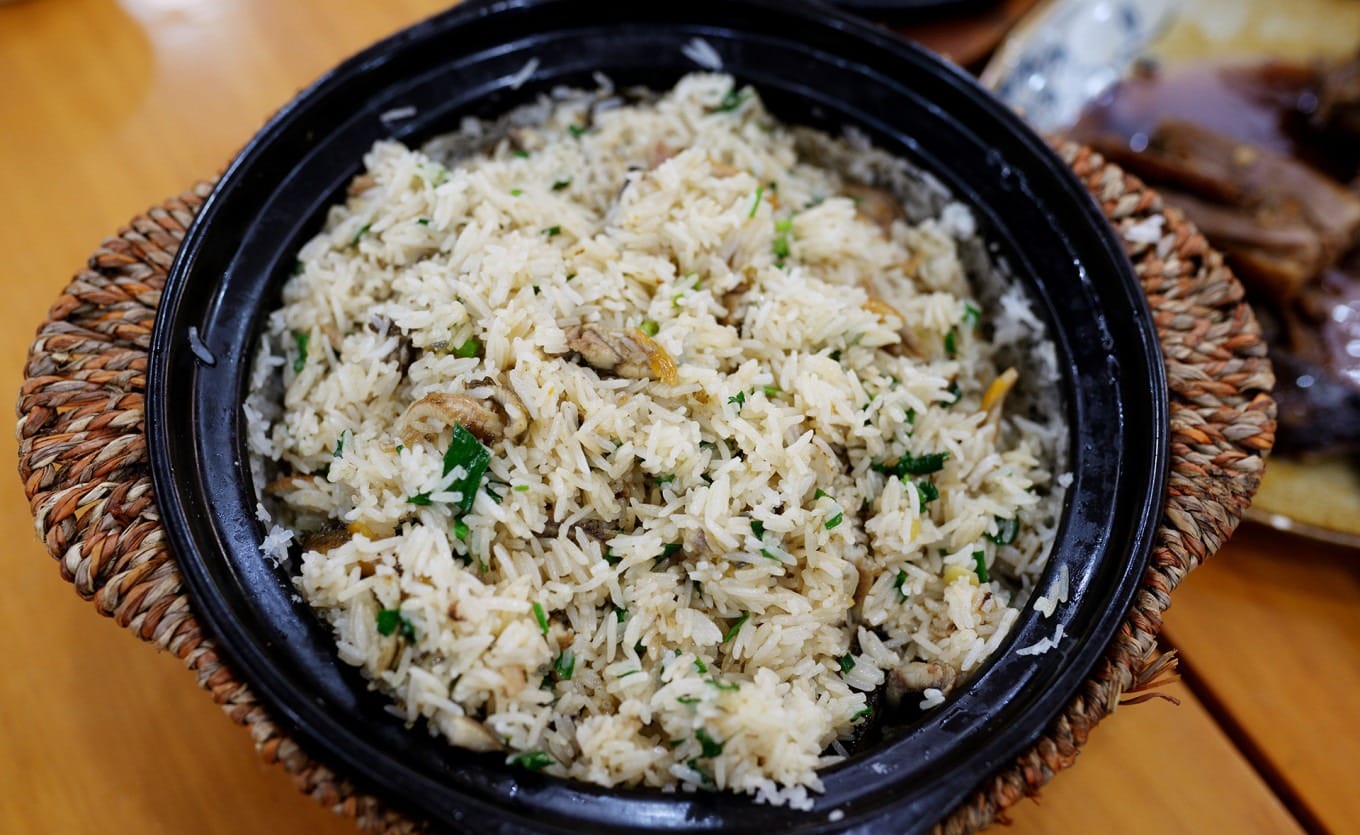
Seasoning is intentionally restrained: just oil, salt, scallions, a touch of ginger, and cilantro. That’s enough to draw out the aroma. The rice is on the drier side, with clearly separated grains that soak up the eel’s natural sweetness, releasing a clean, distinctive fragrance. Don’t miss the crispy rice crust(锅巴)at the bottom—it’s deeply toasted and packed with flavor.
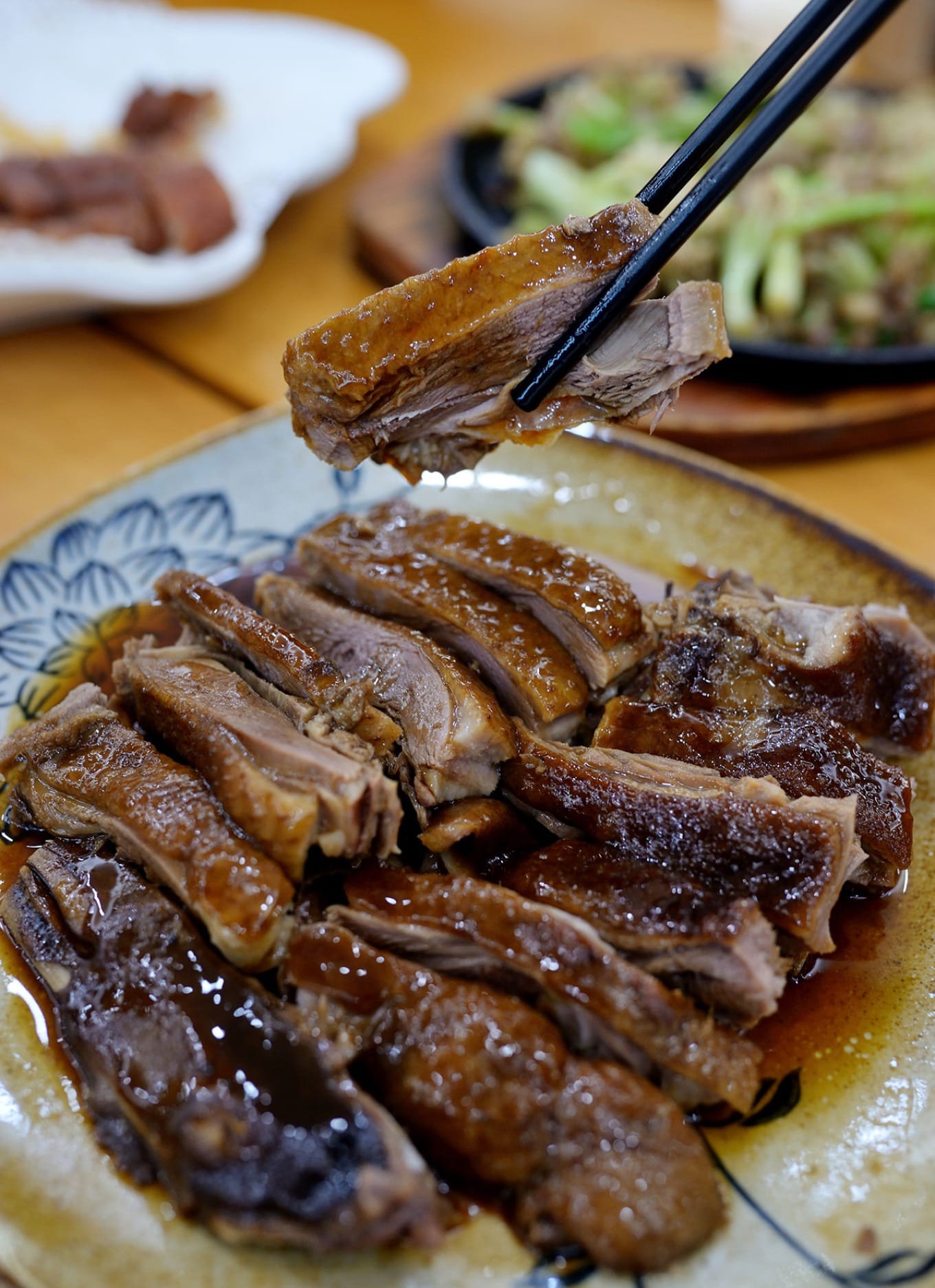
Beyond eel rice, the Five-Flavor Goose(五味鹅)is another local specialty worth ordering. “Five flavors” refers to sour, sweet, mild bitterness, spiciness, and saltiness. The preparation is complex, involving marination and braising, with the goose repeatedly basted in sauce to ensure even seasoning. Each bite is rich yet balanced—neither fatty nor lean—with layered flavors that are hard to resist.
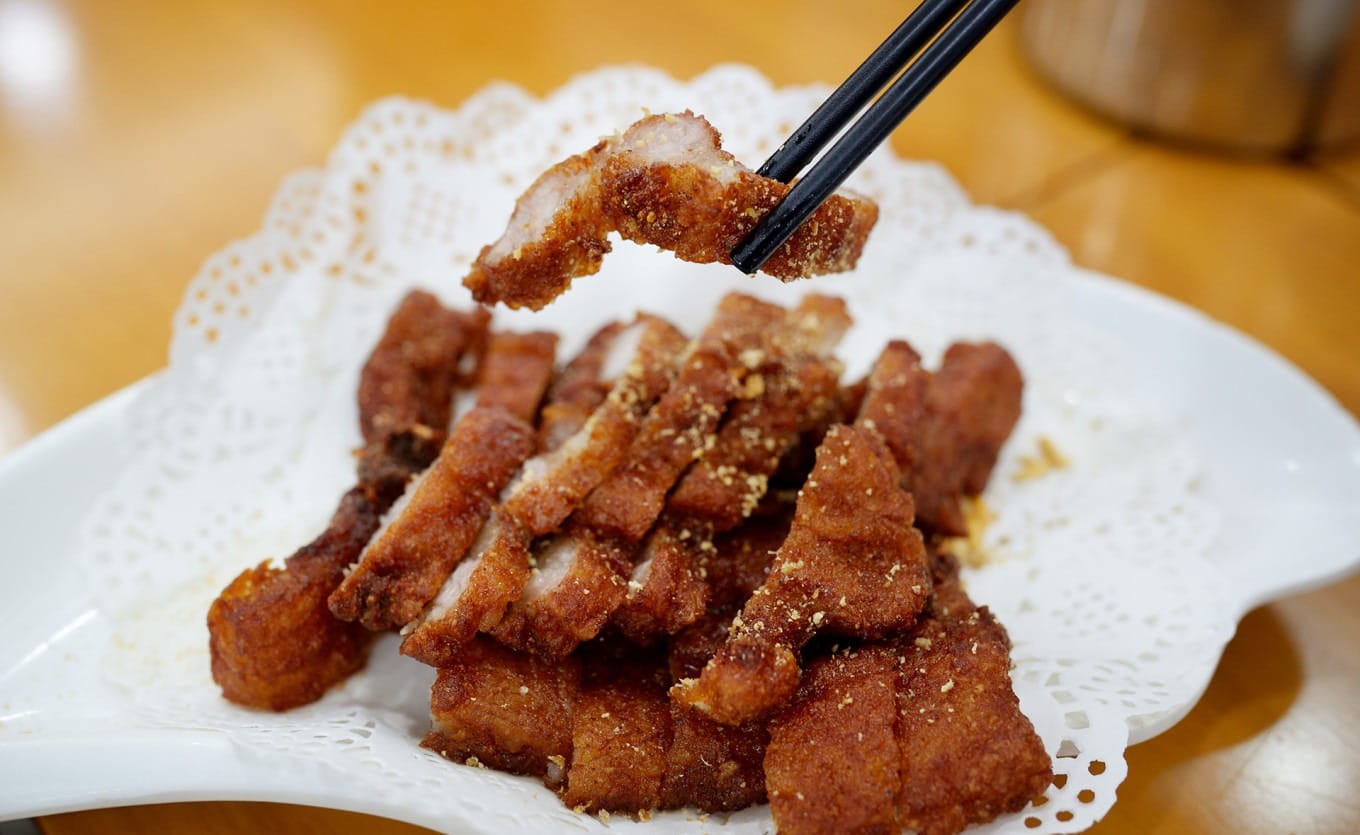
The Tangerine Peel Crispy Ribs(陈皮脆香骨)are equally impressive. Guangdong tangerine peel(陈皮)is famously prized, especially that from Xinhui(新会), also part of the Wuyi region. Here, ribs are fried until crisp outside and tender inside, then dusted generously with tangerine peel powder. The result is a savory-sweet aroma where citrus notes brighten the meat without overpowering it.
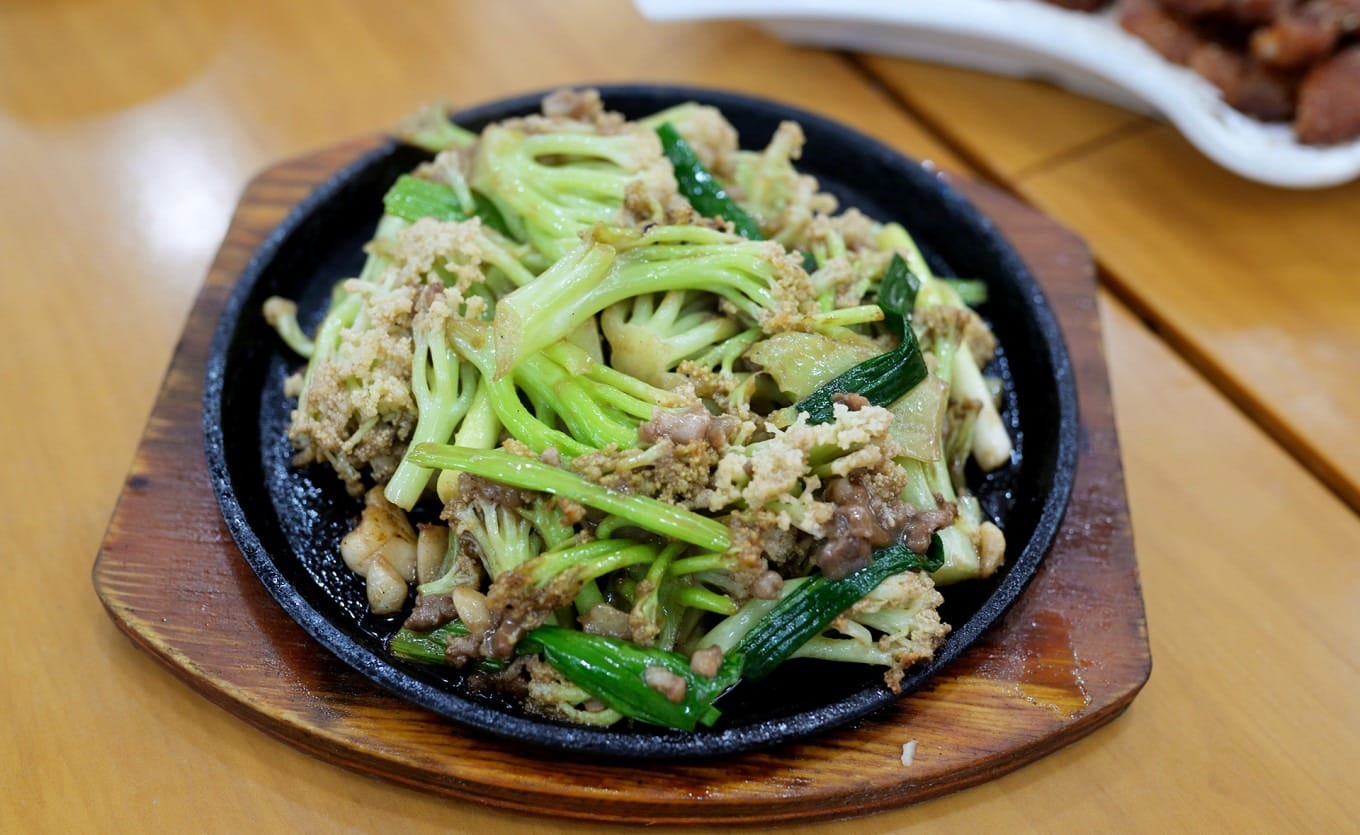
Another standout is the Shrimp Paste ‘Ze’ Duhuo Cauliflower(虾酱啫都斛菜花). Duhuo(都斛)is a town under Taishan known for cauliflower with unusually long stems, which are sweeter and crunchier than average. In Cantonese cooking, “ze”(啫)refers to sizzling, claypot-style searing similar to iron-plate baking. Combined with shrimp paste, the dish delivers a bold savory punch while keeping the vegetable crisp.
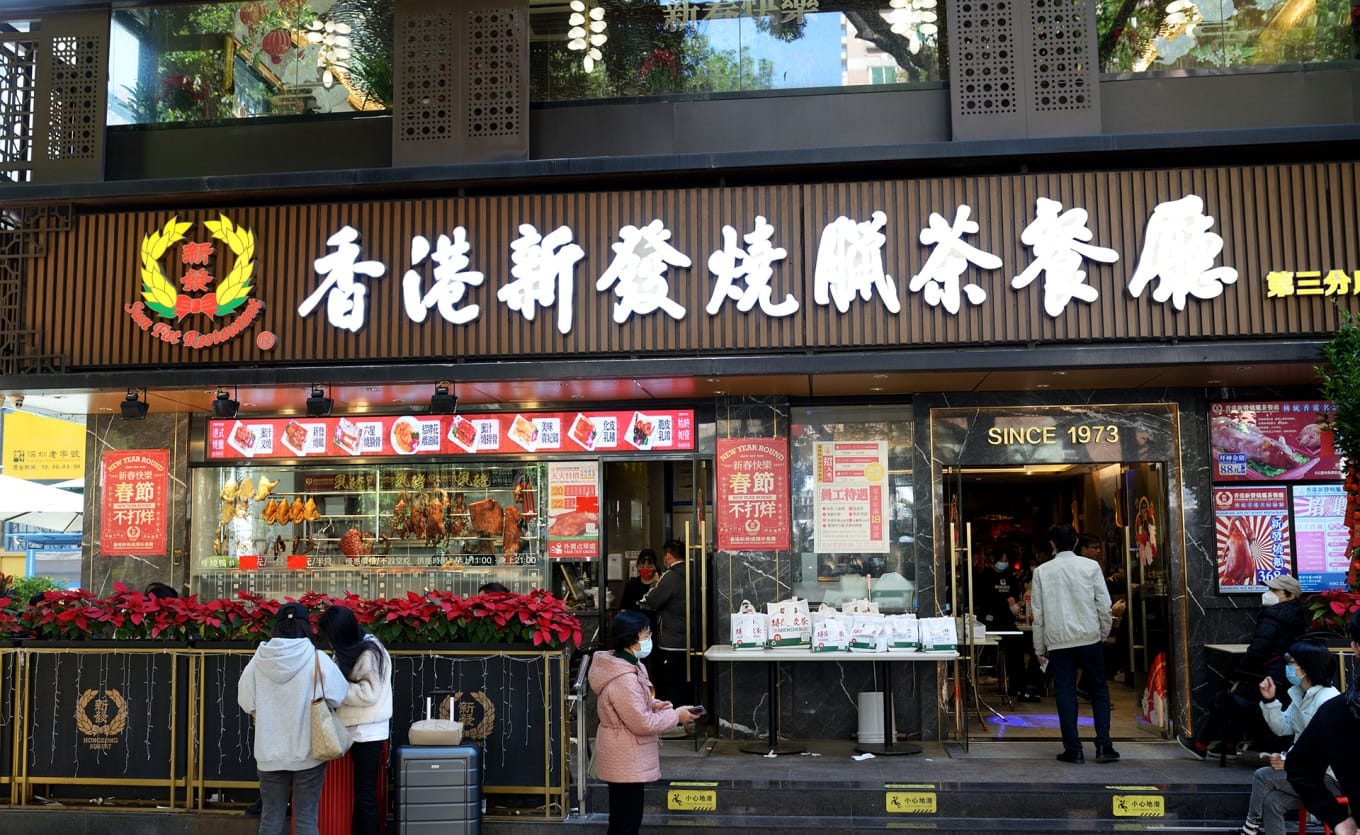
Hong Kong Sun Fat Roast & Cha Chaan Teng (香港新发烧腊茶餐厅)
- RestaurantHong Kong Sun Fat Roast & Cha Chaan Teng (Shuiwei Branch)(香港新发烧腊茶餐厅·水围店)
- Address1/F, No. 306 Shuiwei Village, Fumin Road(福民路水围村306号1楼)
- Recommended dishesHong Kong Milk Tea(港式丝袜奶茶), Pineapple Bun with Butter(菠萝油), Roast Goose(烧鹅), Dry-fried Beef Ho Fun(干炒牛河), Curry Beef Brisket(咖喱牛腩)
- Average spendRMB 70 per person(人均70元)
Cha chaan teng(茶餐厅)are an essential part of Hong Kong’s food identity. Originating in the 1950s, they blend Western cooking techniques with distinctly Hong Kong flavors. Thanks to Shenzhen’s close proximity to Hong Kong, the city has developed a strong cha chaan teng culture of its own.
Hong Kong Sun Fat Roast & Cha Chaan Teng(香港新发烧腊茶餐厅)is one of Shenzhen’s well-known veteran cha chaan teng brands, originally from Hong Kong. The Shuiwei(水围)branch operates 24 hours a day, making it a reliable option whenever hunger strikes—day or night.
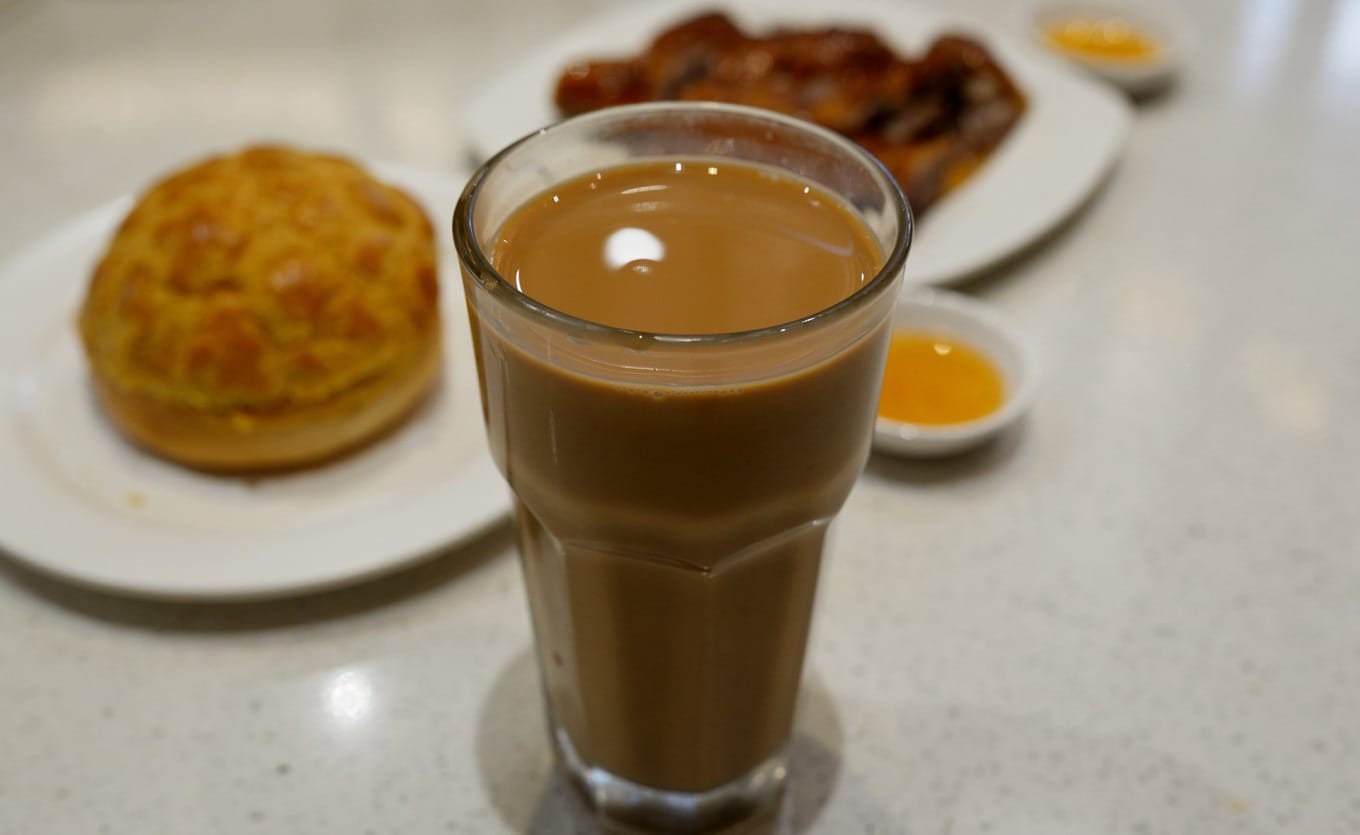
The most iconic item at any cha chaan teng is Hong Kong–style silk-stocking milk tea(港式丝袜奶茶). Its name comes from the fine cotton filter used during brewing, which—after repeated pulling and pouring—resembles a silk stocking. Unlike Taiwanese milk tea, Hong Kong milk tea evolved from British black tea traditions, combining strong brewed tea with evaporated milk. The result is bold, aromatic, and deeply satisfying.
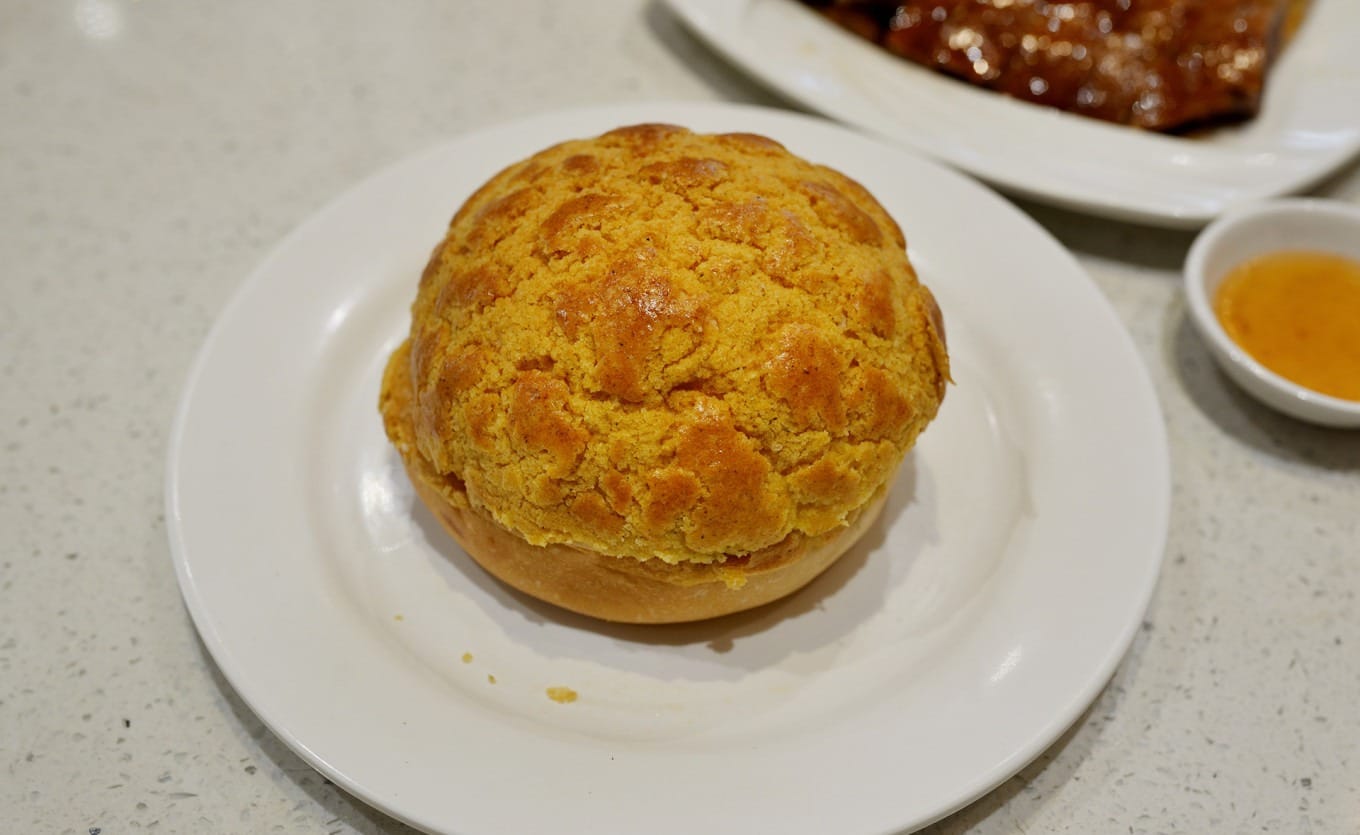
Another classic shaped by Western influence is pineapple bun with butter(菠萝油). Each bun is baked to order, with a crackly, crumbly crust on top. The defining touch is the slice of cold butter tucked inside. As the heat melts the butter, it releases a rich aroma. Bite in while it’s hot to enjoy the contrast of crisp topping, soft bread, and luscious butter.
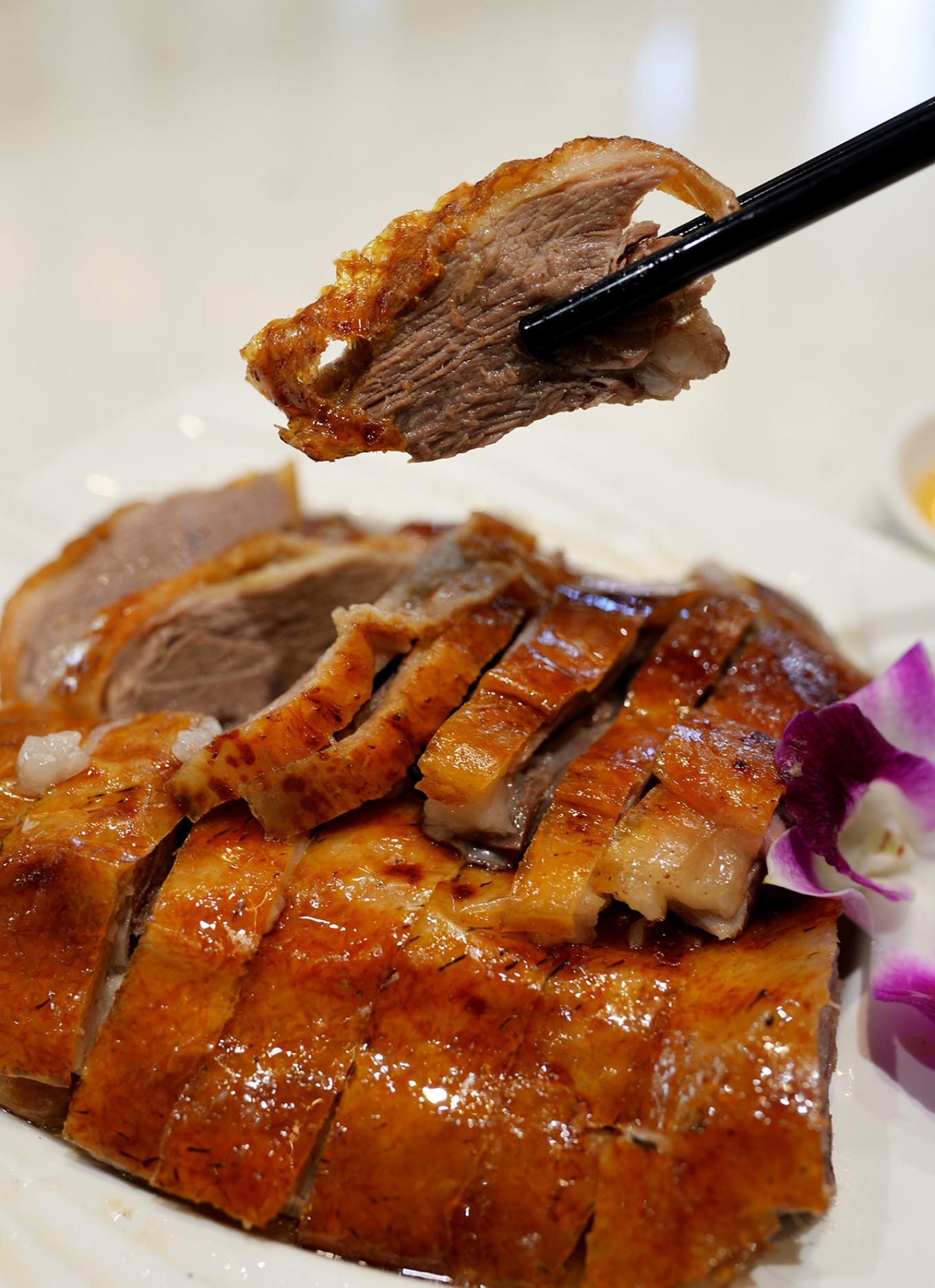
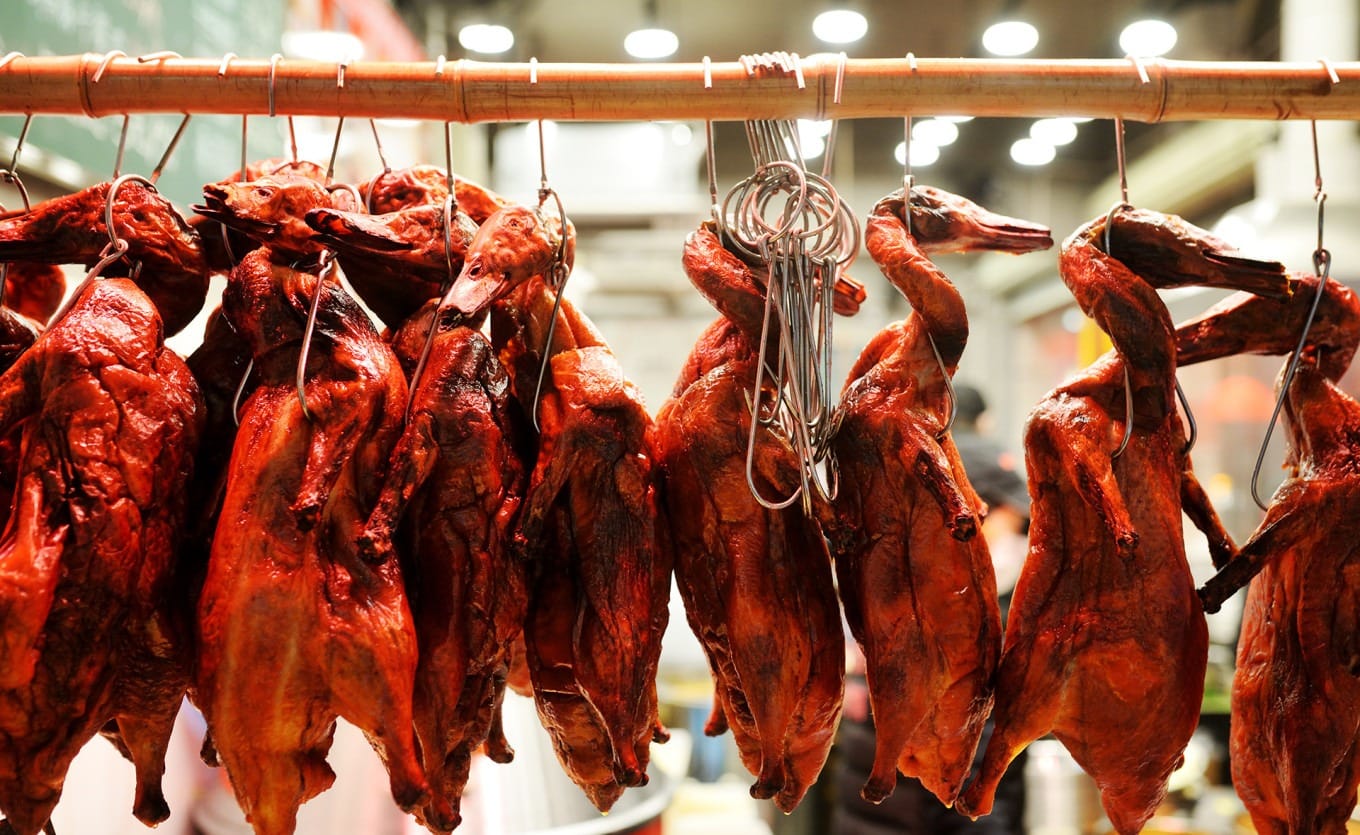
Roast goose(烧鹅)is another house specialty. Cantonese roast goose traces its roots to northern roast duck, but differs in both technique and texture. Served with glossy, golden-red skin, the goose is crisp outside with firm, well-balanced meat. Dip it in plum sauce(酸梅酱)and it’s hard not to keep eating.
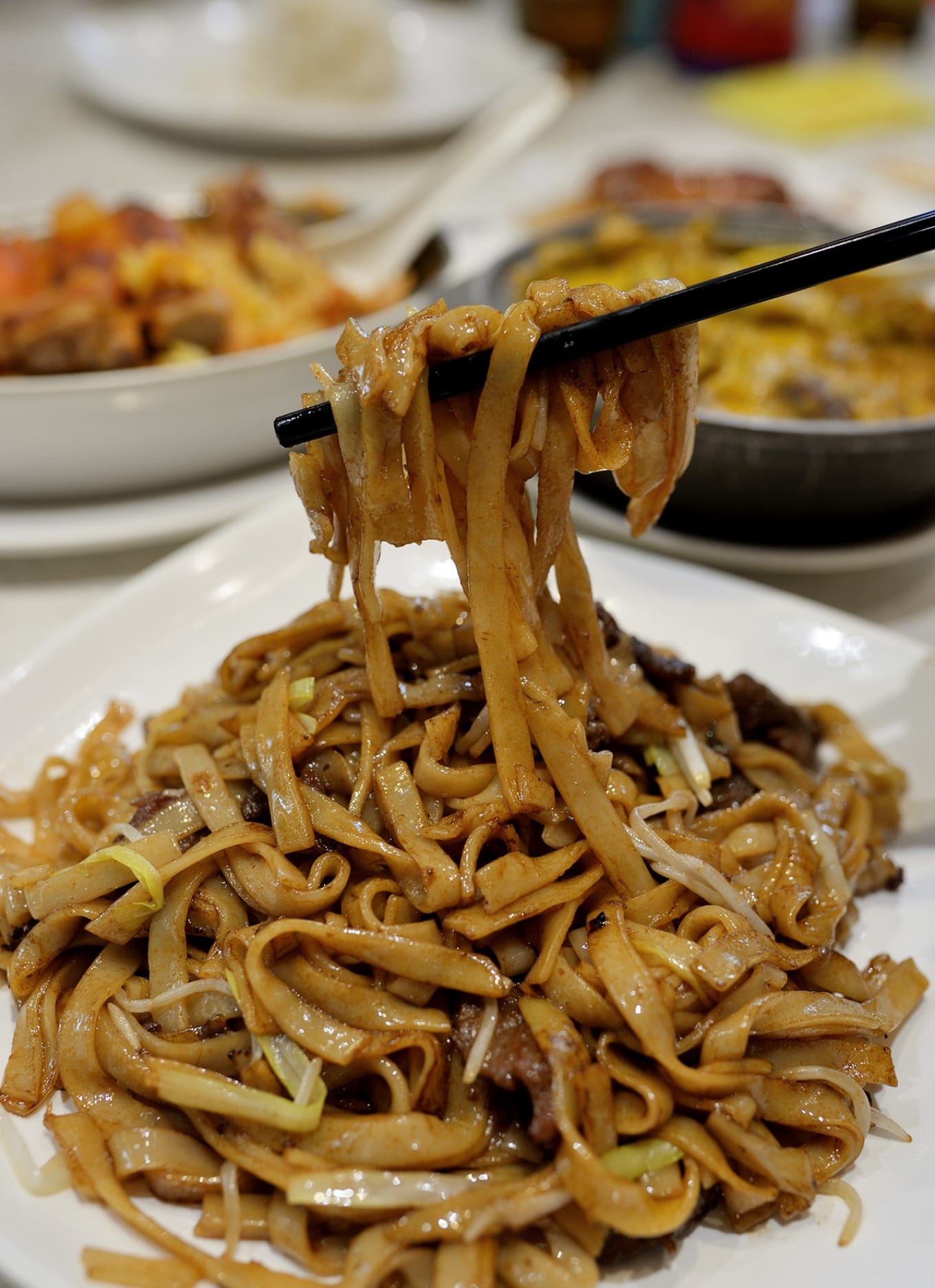
The dry-fried beef ho fun(干炒牛河)may look simple, but it’s a true test of skill. The noodles must be dry yet smoky with wok hei(镬气), the plate free of excess oil, and the beef tender rather than tough. Sun Fat’s version checks all the boxes—best enjoyed hot, when the aroma is at its peak.
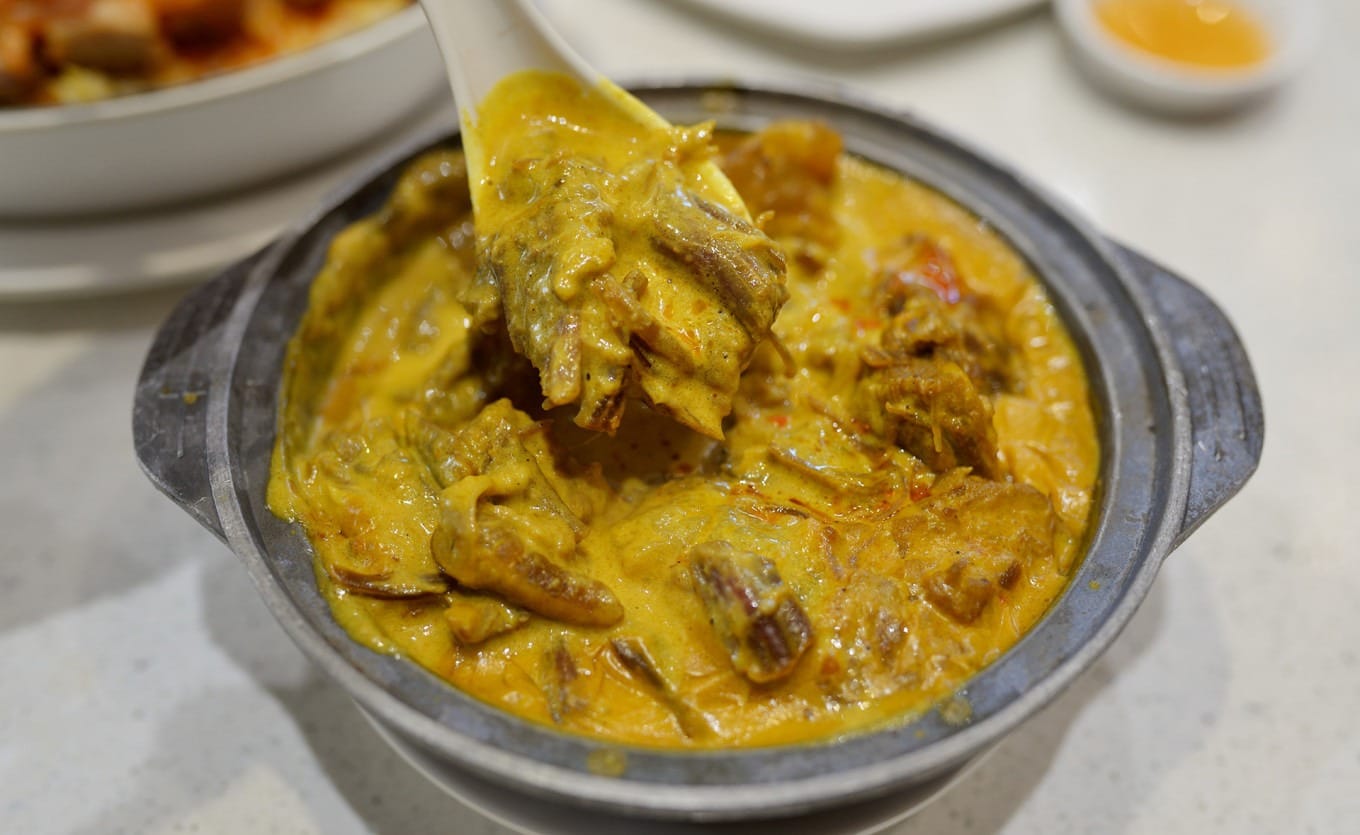
You can also try the curry beef brisket(咖喱牛腩), which maintains a consistently high standard. The thick curry sauce gets its golden color from turmeric(姜黄)and is enriched with coconut milk, creating a fragrant, comforting depth. Portions of beef brisket are generous, making this a hearty and rewarding choice.
Lao Fei Mao Roast Duck (老肥冒烤鸭)
- RestaurantLao Fei Mao Roast Duck(老肥冒烤鸭)
- AddressNo. 8, Building 3, Minzhi Avenue 449(民治大道449号3栋8号)
- Recommended dishesMao Cai(冒菜), Hand-rubbed Ice Jelly(手搓冰粉), Brown Sugar Cold Cake(翻砂红糖凉糕)
- Average spendRMB 60 per person(人均60元)
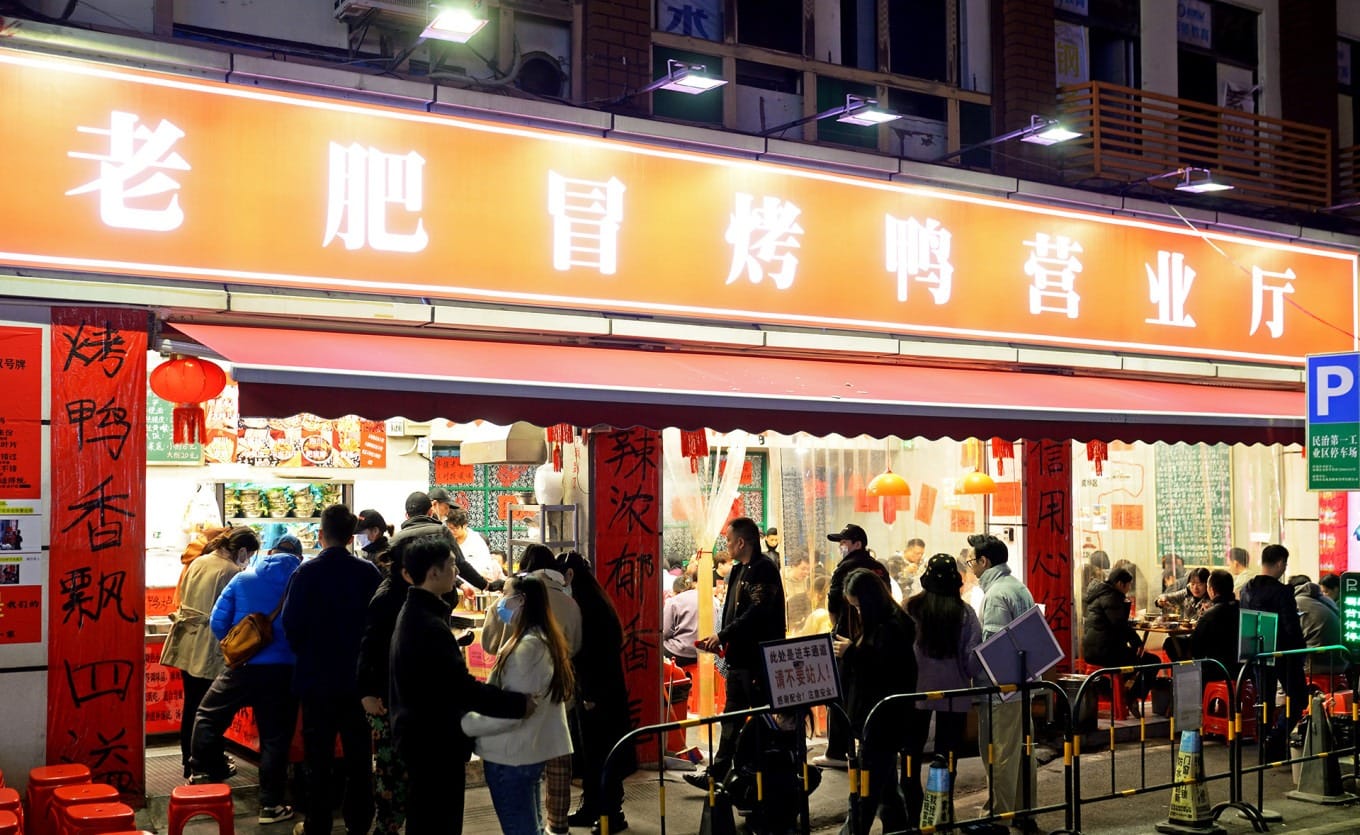
Located near Minzhi Metro Station(民治地铁站), Lao Fei Mao Roast Duck(老肥冒烤鸭)has become a viral favorite online. The shop is styled like a traditional street food stall(大排档风), with tightly packed seating and a constant line forming outside. It’s crowded and lively, but the steady queue makes it clear why people are willing to wait.
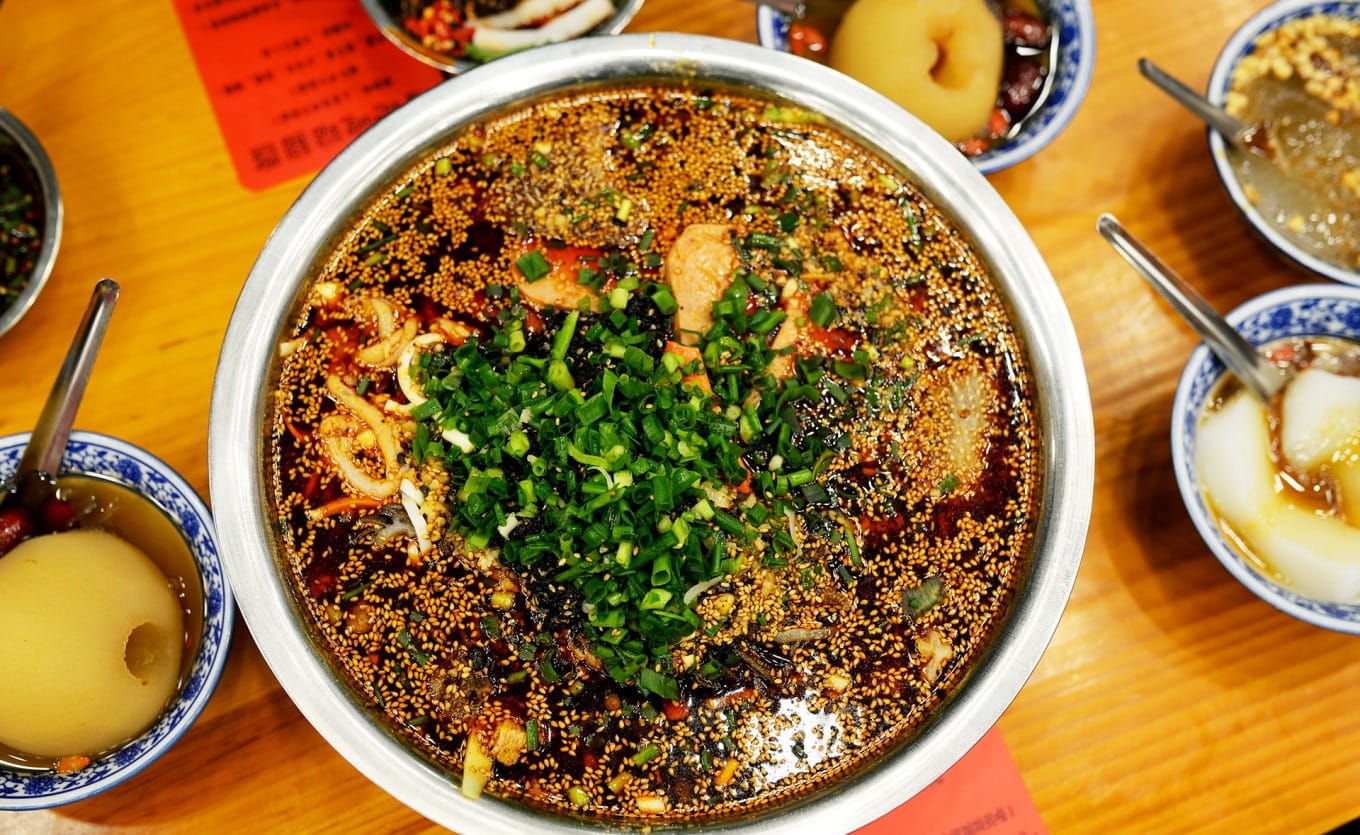
The name “mao roast duck(冒烤鸭)” refers to a Sichuan-style way of eating roast duck by submerging it into mao cai(冒菜). For travelers unfamiliar with Sichuan and Chongqing flavors, this combination feels refreshingly new. The value for money is solid, and while online buzz may play a role in its popularity, there’s no denying that mao roast duck has exploded in fame over the past couple of years.
Mao cai is a signature Sichuan street food that originated in Chengdu(成都). The character “mao(冒)” is believed to come from the ancient word “芼,” meaning to blanch ingredients quickly in boiling broth. It’s a flexible format that allows diners to choose their own ingredients, cooked together in a rich, spicy soup base.
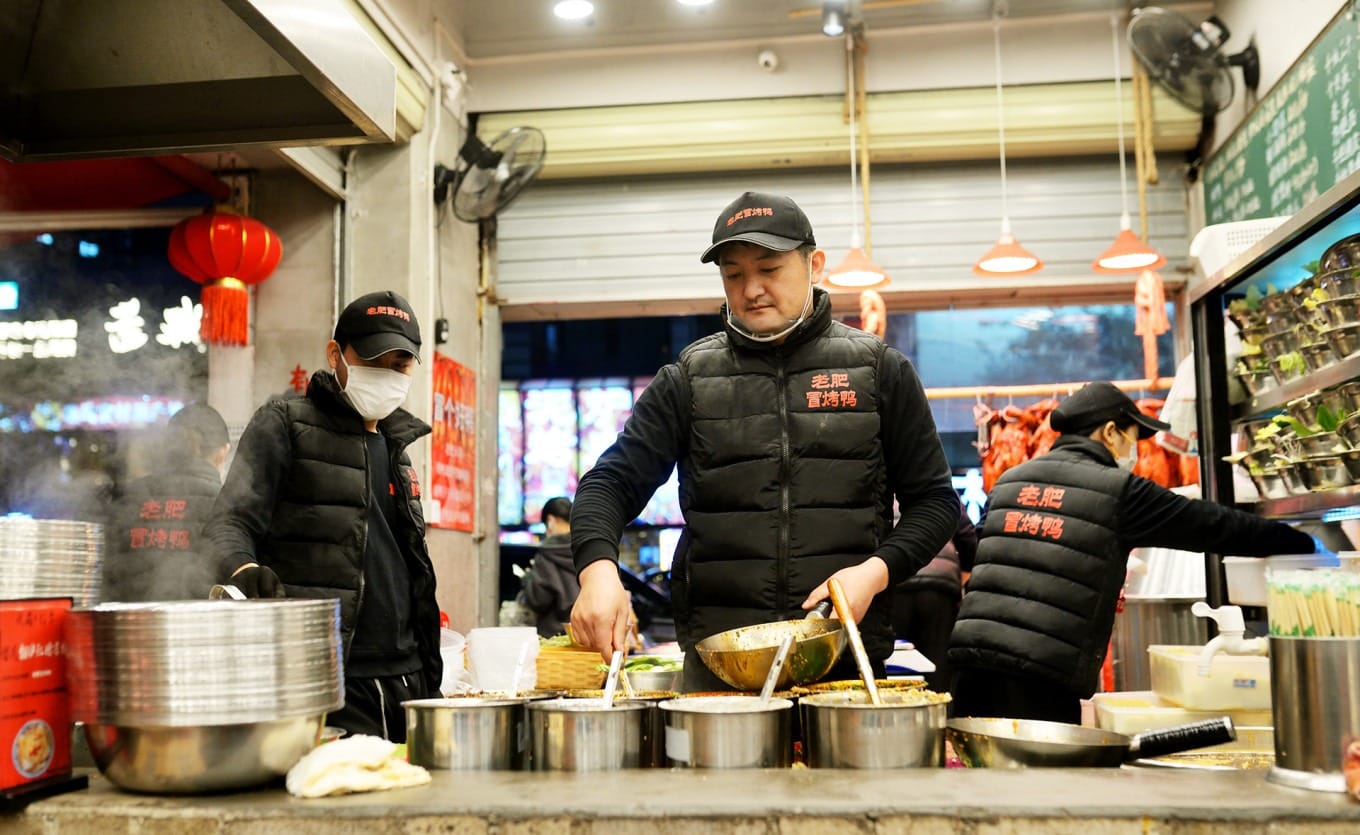
For mao roast duck, the duck is roasted until about 80–90% done, then placed directly into the mao cai red oil broth to finish heating. This method combines the deep, savory fragrance of Sichuan braising spices with the crisp aroma of oven-roasted duck—creating a dish that’s very much greater than the sum of its parts.
You’re free to choose from a wide range of add-ins, whether you want to keep it simple or go all out. After selecting your ingredients, you’ll receive a number and can sit down to wait. Everything—duck and sides alike—is cooked together in a large stainless-steel basin, creating a presentation that feels almost like a personal hotpot.
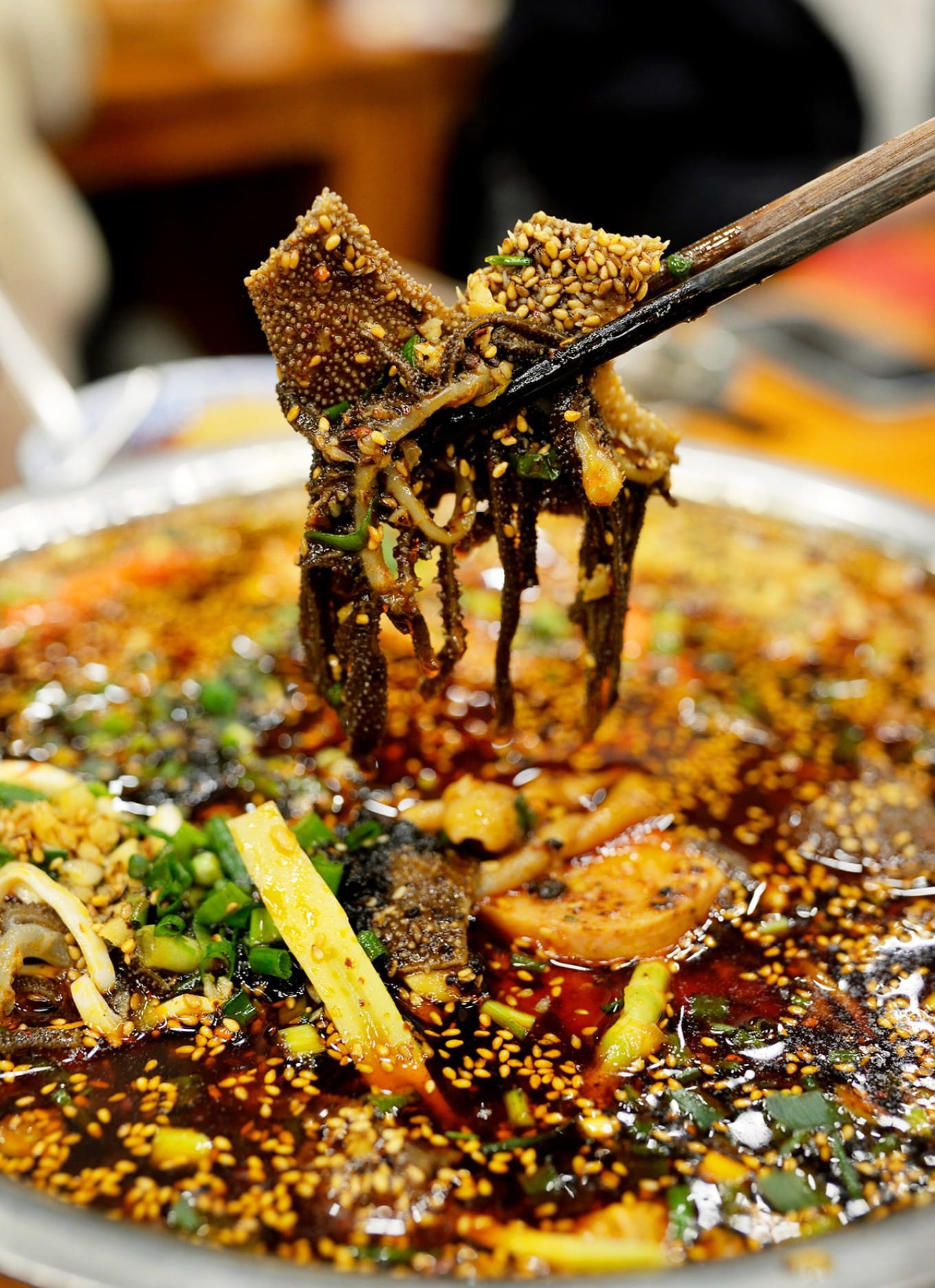
Take a bite and the duck remains tender and juicy, while the skin stays crisp and aromatic—an instant appetite booster. The side ingredients shine as well. Highly recommended are Thousand-Shred Fatty Intestine(千丝肥肠), Layered Tripe(千层肚), Beef Tripe(毛肚), Meilin Luncheon Meat(梅林午餐肉), bamboo shoots(笋), and tribute vegetables(贡菜). With the red oil broth as a base, every meat and vegetable becomes boldly spicy, fragrant, and addictive.
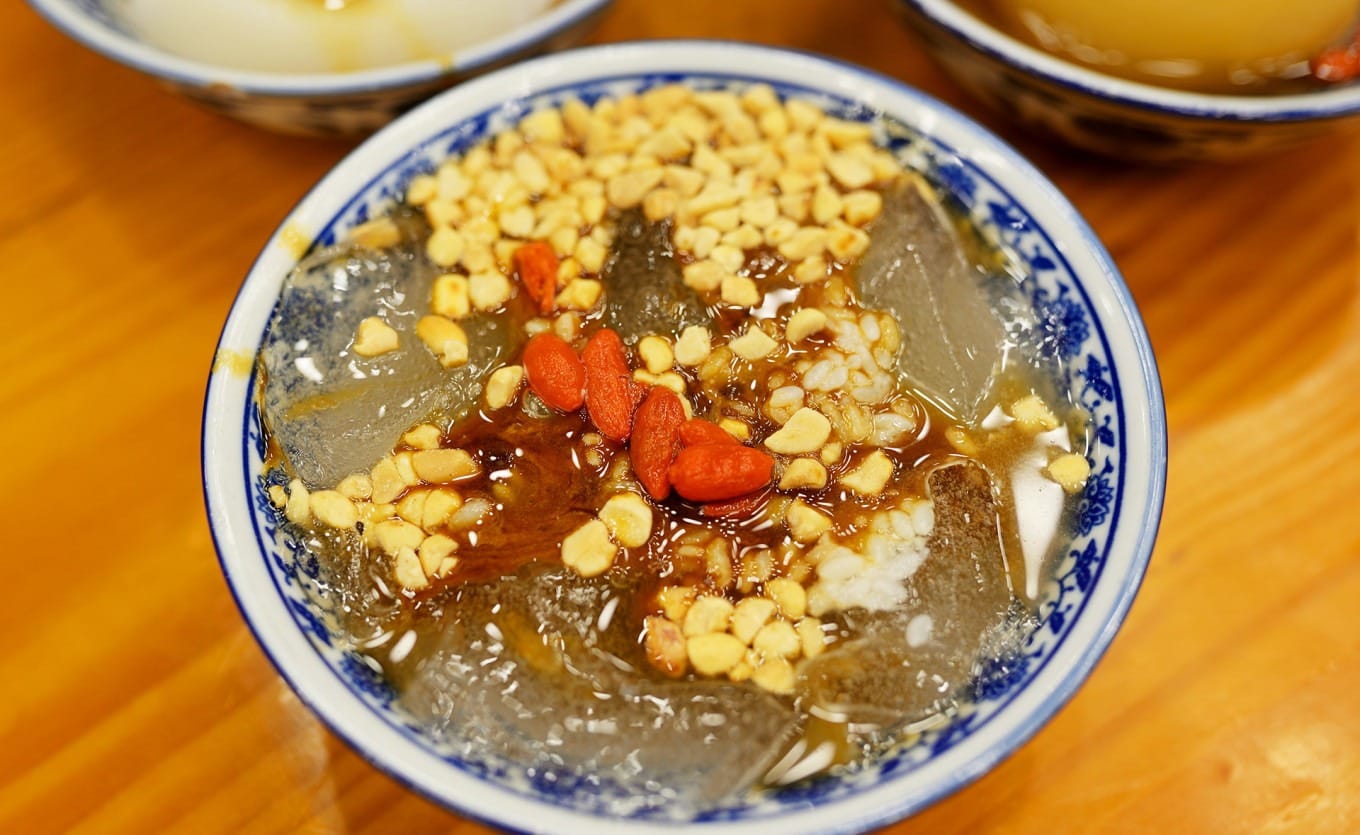
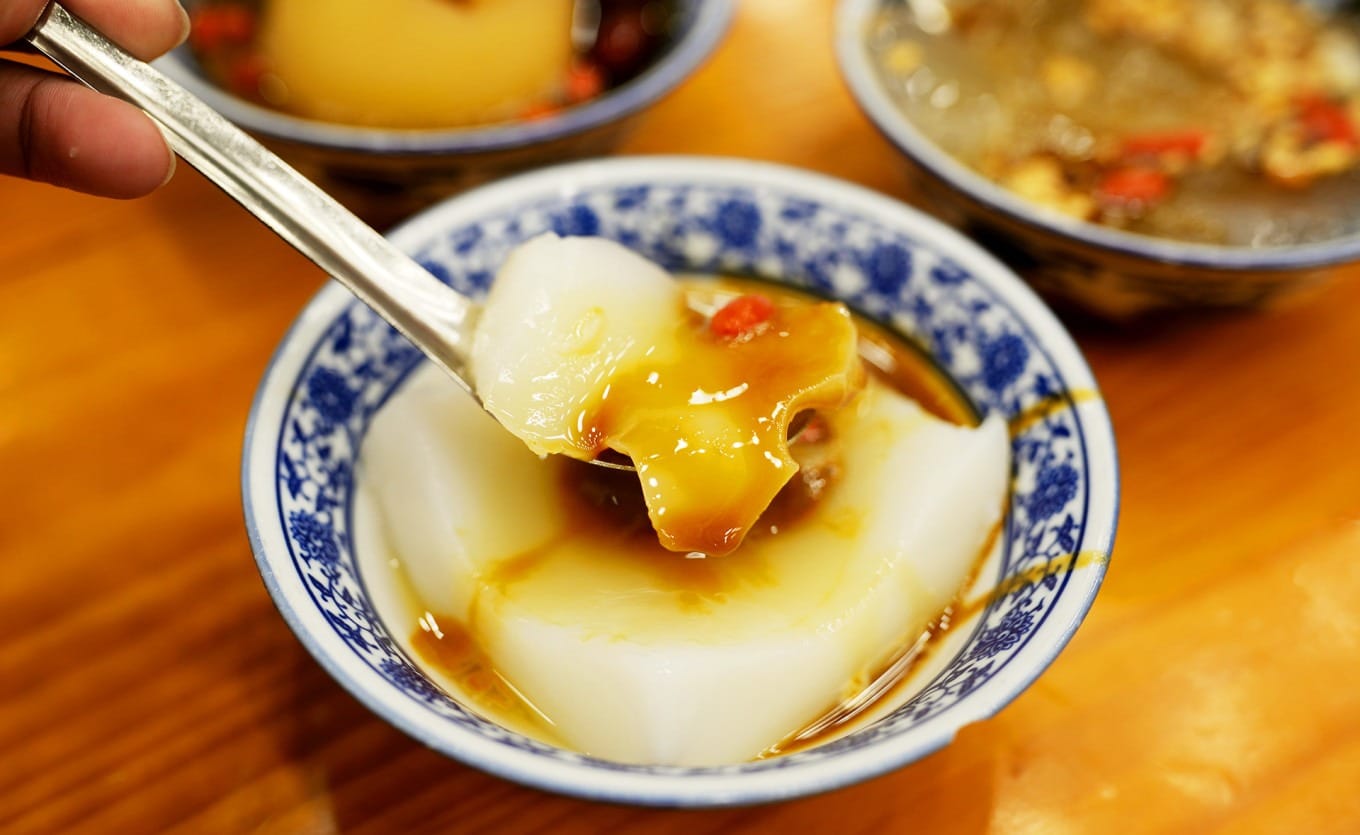
If you’re worried the flavors might feel too heavy, order a bowl of hand-rubbed ice jelly(手搓冰粉)to balance things out. Popular in Sichuan and Chongqing, ice jelly is made from seeds of the lantern plant(假酸浆). Here, it’s freshly hand-prepared—you can see tiny air bubbles throughout. Topped simply with crystallized brown sugar syrup(翻砂红糖), crushed peanuts, and a few goji berries, it melts instantly on your tongue, cooling and refreshing.
Another classic dessert is brown sugar cold cake(翻砂红糖凉糕). Cold cake originated in Yibin(宜宾) and is made from rice slurry. Because lime water is used in the process, it naturally carries a slight alkaline note, which the aromatic brown sugar syrup perfectly offsets. The result is silky-smooth, gently sweet, and extremely comforting.
Niuwangmiao Sichuan Eatery (牛王庙)
- RestaurantNiuwangmiao(牛王庙)
- Address1/F, Building 36, No. 14–15 Huayuan Street(花园大街14-15号36栋1楼)
- Recommended dishesShredded Chicken Cold Noodles(鸡丝凉面), Fuqi Feipian(夫妻肺片)
- Average spendRMB 50 per person(人均50元)
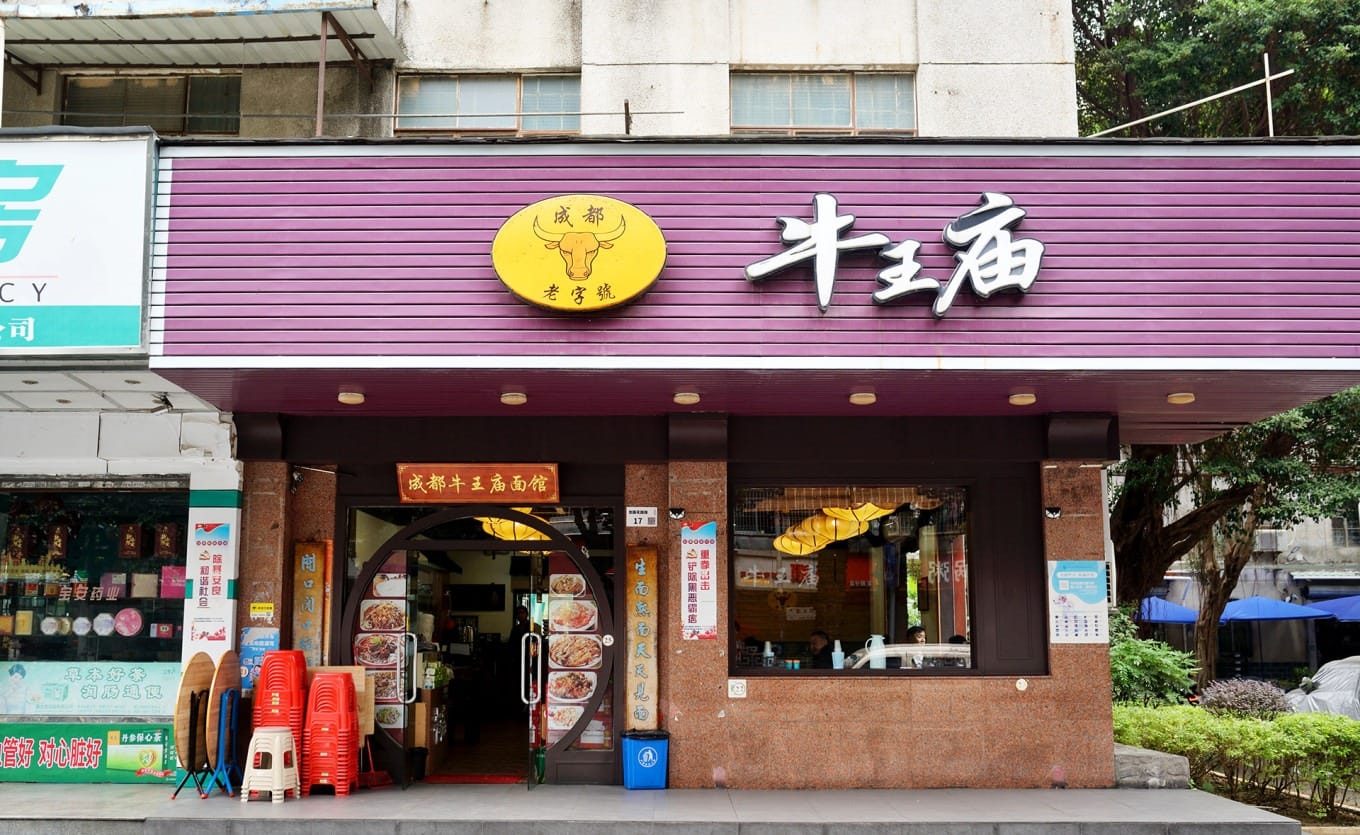
Near Longhua Park(龙华公园), Niuwangmiao(牛王庙)is a compact Sichuan eatery with a bold name. Anyone familiar with Chengdu(成都)knows Niuwangmiao Snack Street—so choosing this name signals confidence. Step inside and you’ll find a no-frills spot focused squarely on flavor.
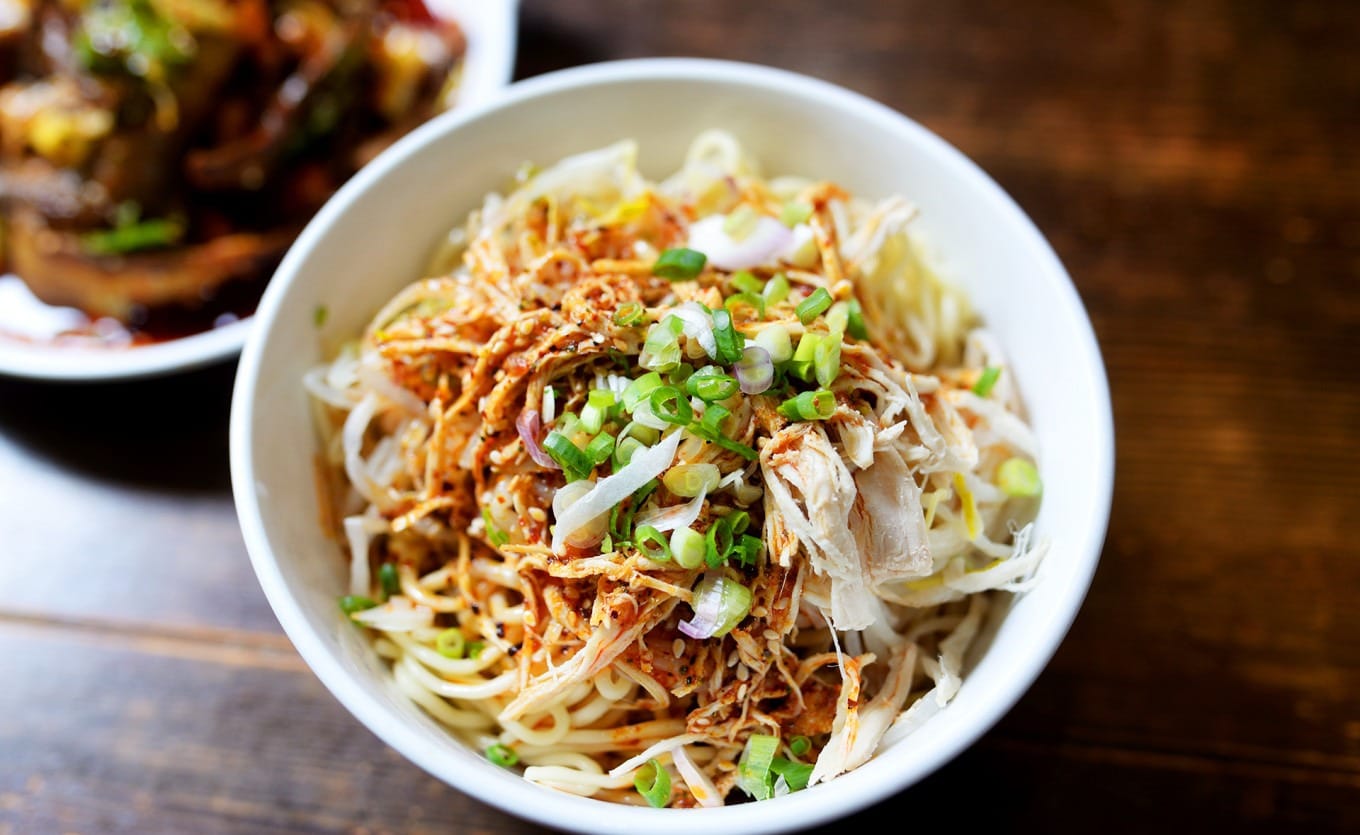
A must-order here is the shredded chicken cold noodles(鸡丝凉面). The red chili oil is poured generously, giving the dish a bright, glossy hue. Aromas of toasted sesame and scallions rise immediately, making it hard to wait.
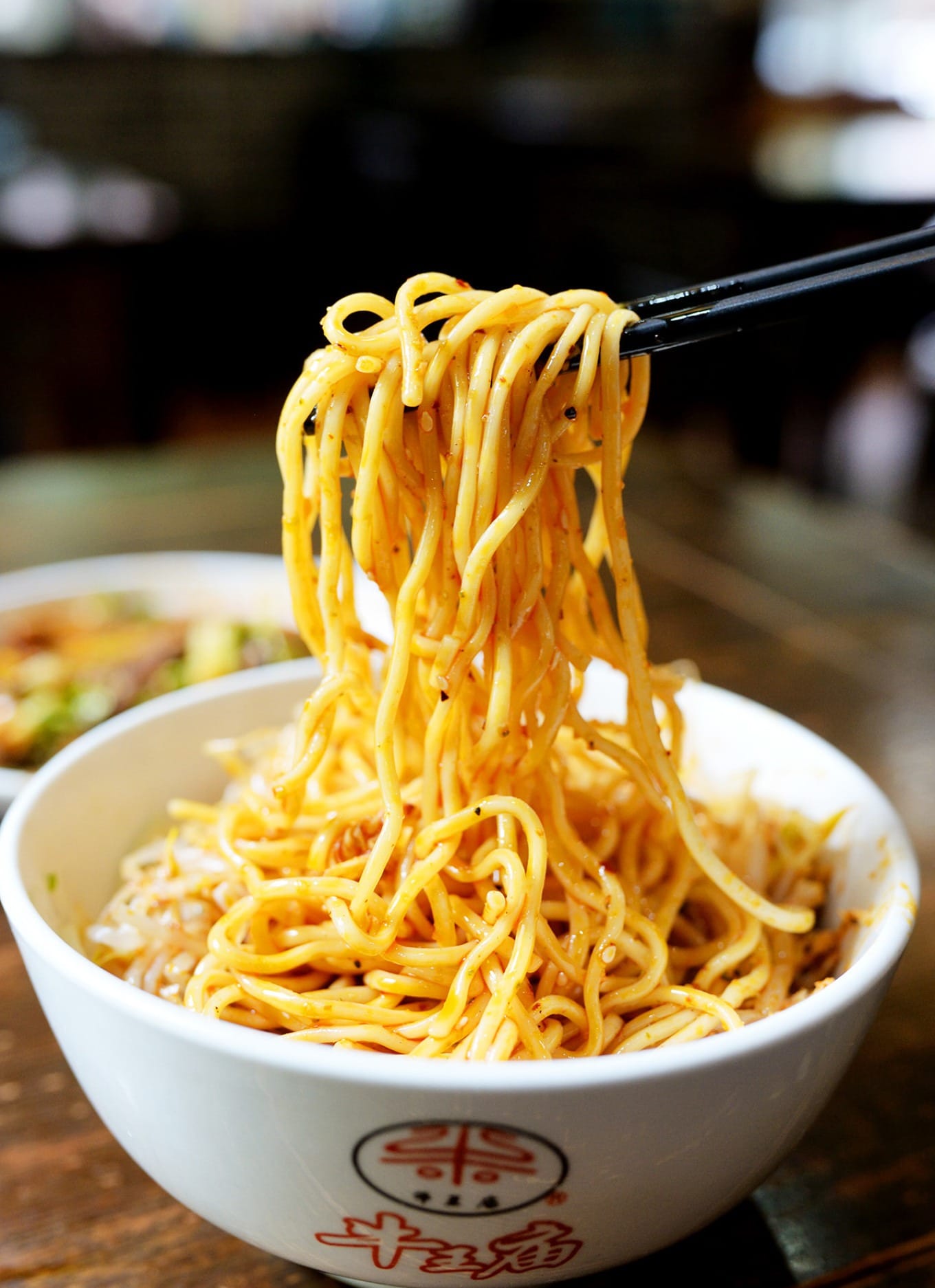
Once mixed, the noodles, chicken, and sauce come together beautifully. Despite the deep color, the chili oil is fragrant rather than harsh, balanced with a pleasant sweet-sour tang that’s incredibly appetizing. The noodles are springy and slick, and each bite delivers a wave of numbing spice and refreshing acidity that quickly wins you over.
Another standout is fuqi feipian(夫妻肺片), a classic Sichuan cold dish. Typically made with sliced beef, beef tongue, tripe, and beef skin, it arrives drenched in aromatic red oil, releasing an irresistible spicy fragrance the moment it hits the table.
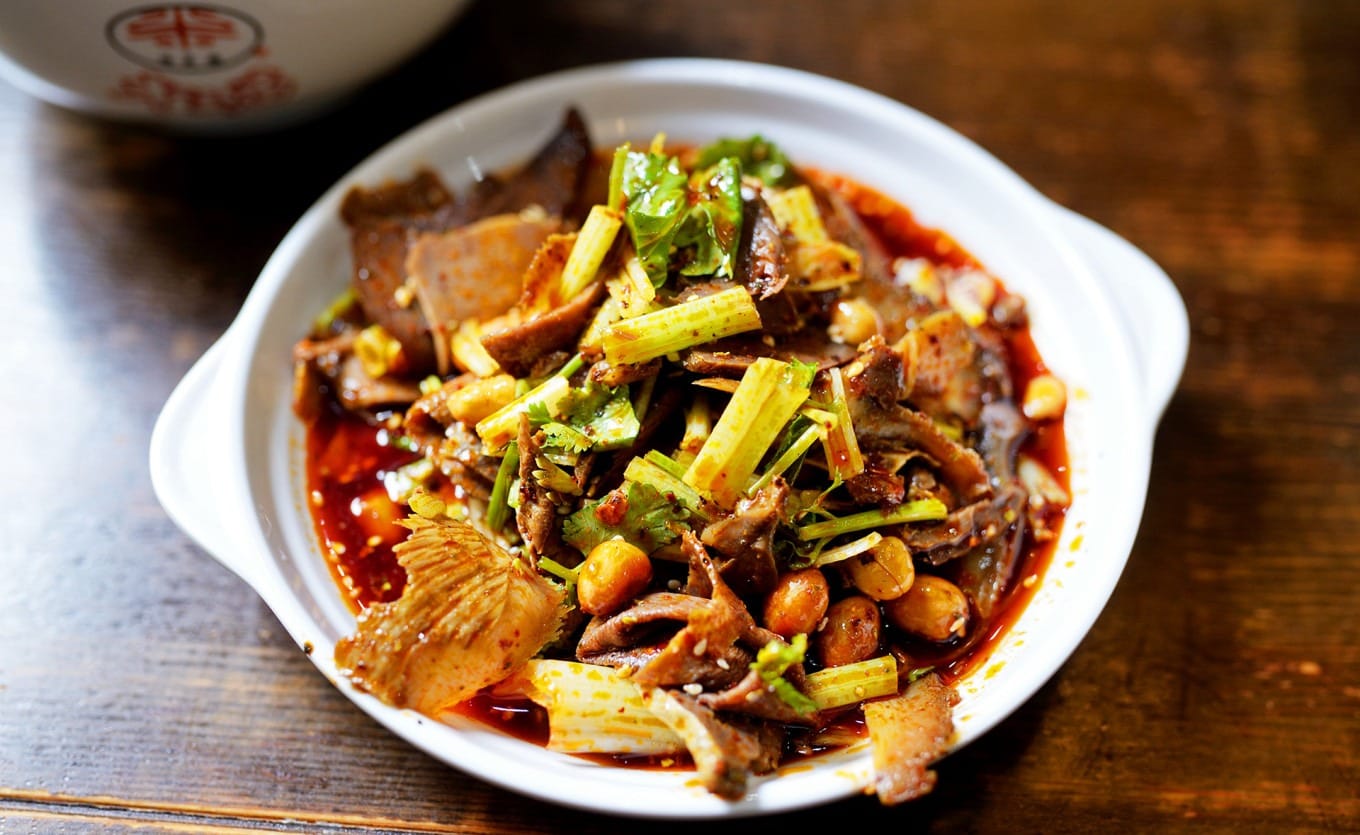
Here, the spice level is slightly gentler than traditional Sichuan-Chongqing versions, making it more approachable for Guangdong(广东)palates that prefer less heat. The result is still unmistakably Sichuan—numbing, savory, and deeply satisfying—without overwhelming your taste buds.
Uncle Lin’s Haifeng Snacks (林叔海丰小吃)
- RestaurantUncle Lin’s Haifeng Snacks(林叔海丰小吃)
- AddressRoom 101, Unit 1, No. 13-1 Dongcun, Nan Yuan Shaputou, Nanyuan Road(南园路南园沙埔头东村13号之一单元101房)
- Recommended dishesHaifeng Xiaomi(海丰小米), Haifeng Cai Cha(海丰菜茶)
- Average spendRMB 30 per person(人均30元)
In Shenzhen(深圳), you can still find regional snacks that are rare elsewhere. At Shaputou(沙埔头), Uncle Lin’s Haifeng Snacks(林叔海丰小吃)serves authentic Haifeng flavors, including the much-loved Haifeng “Xiaomi” (海丰小米). Popular in Haifeng, Shanwei(汕尾), this snack is also known locally as Cifen Dumplings(茨粉饺). Despite the name, it has nothing to do with millet—the wrapper is made from sweet potato starch(番薯粉).
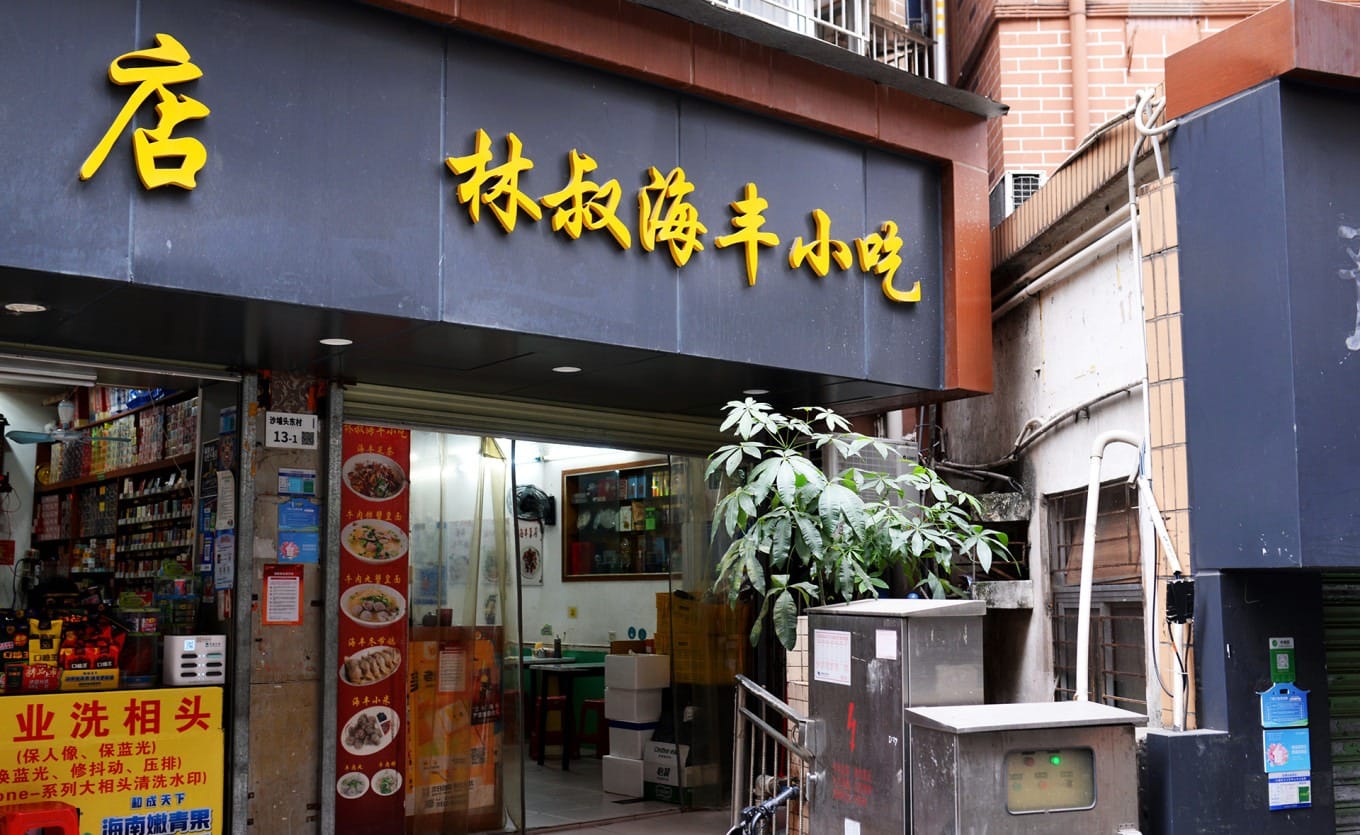
Each Haifeng Xiaomi encloses a filling of minced pork, dried shrimp(虾米), and ground dried fish(大地鱼粉). The dumplings are plump and, once cooked, turn crystal-clear, revealing the filling inside like glossy pearls. Their bite-sized shape makes them perfect to eat one at a time.
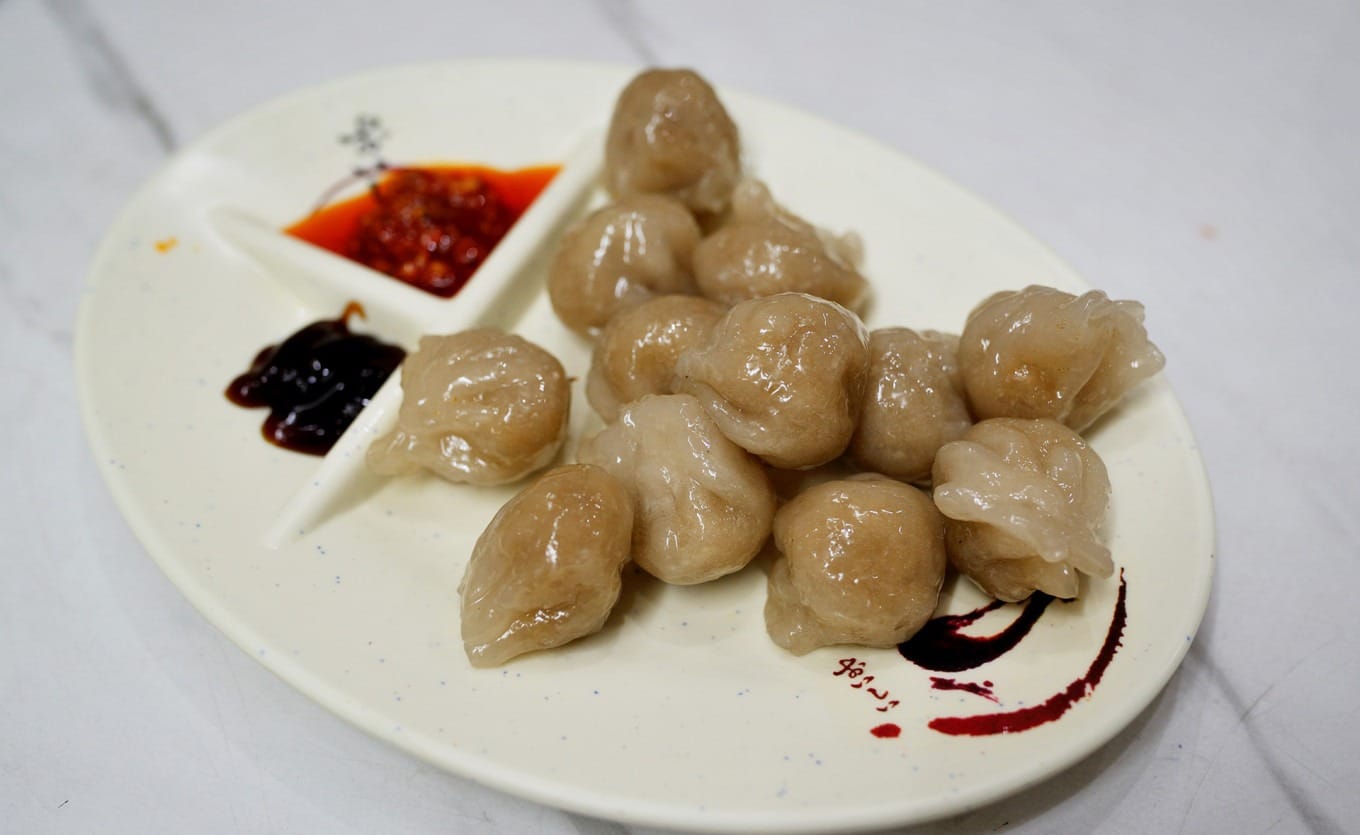
Dip a dumpling into chili sauce(辣椒酱)and oyster sauce(蚝油), and you’ll notice the wrapper’s soft yet resilient texture. The sauces mingle with the savory pork filling and the subtle fragrance of sweet potato starch, creating a flavor combination that’s instantly memorable.
Haifeng snacks wouldn’t be complete without Cai Cha(菜茶). In Haifeng, it’s also known as “Zhuangding Tea”(壮丁茶), traditionally served at banquets celebrating the birth of a son. Today, it’s enjoyed simply for its hearty, comforting flavors.
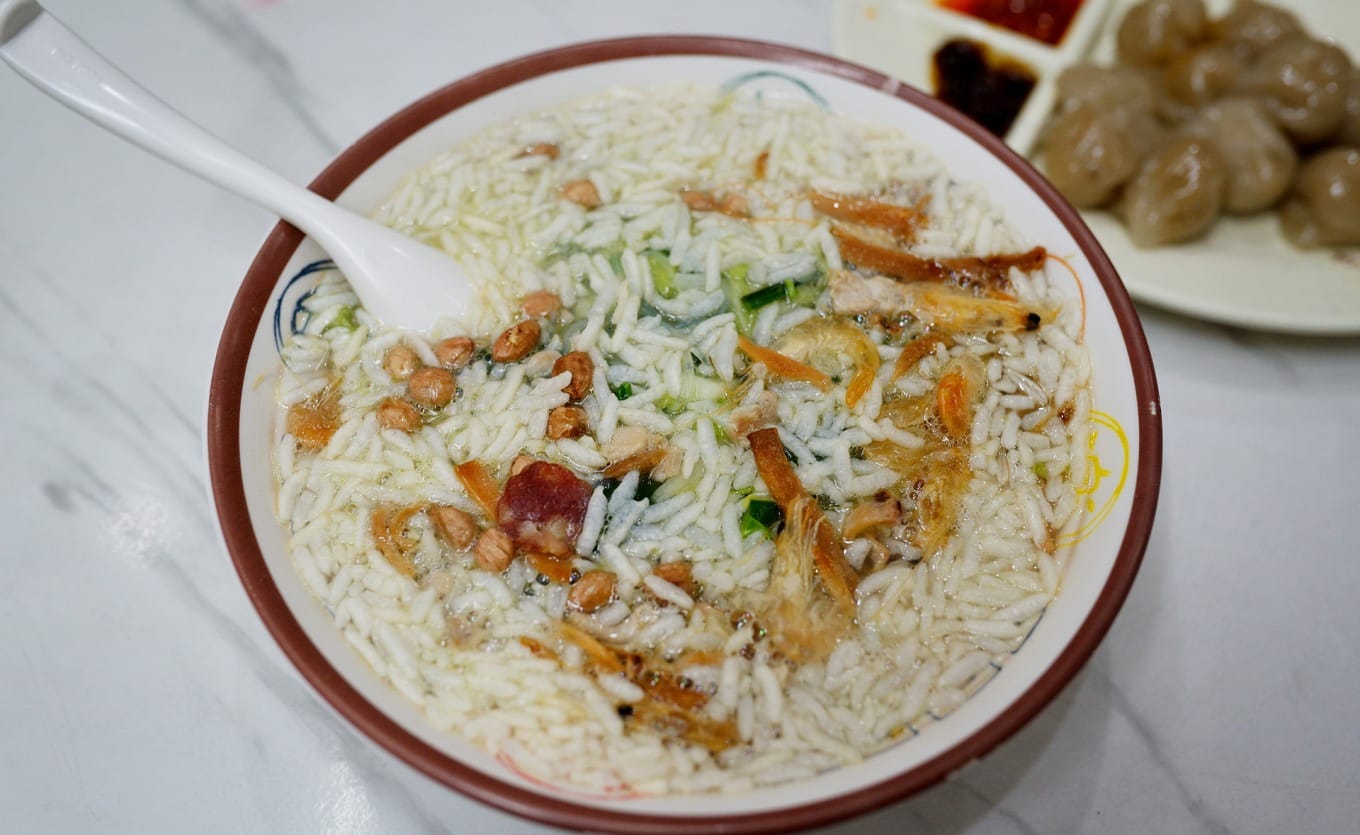
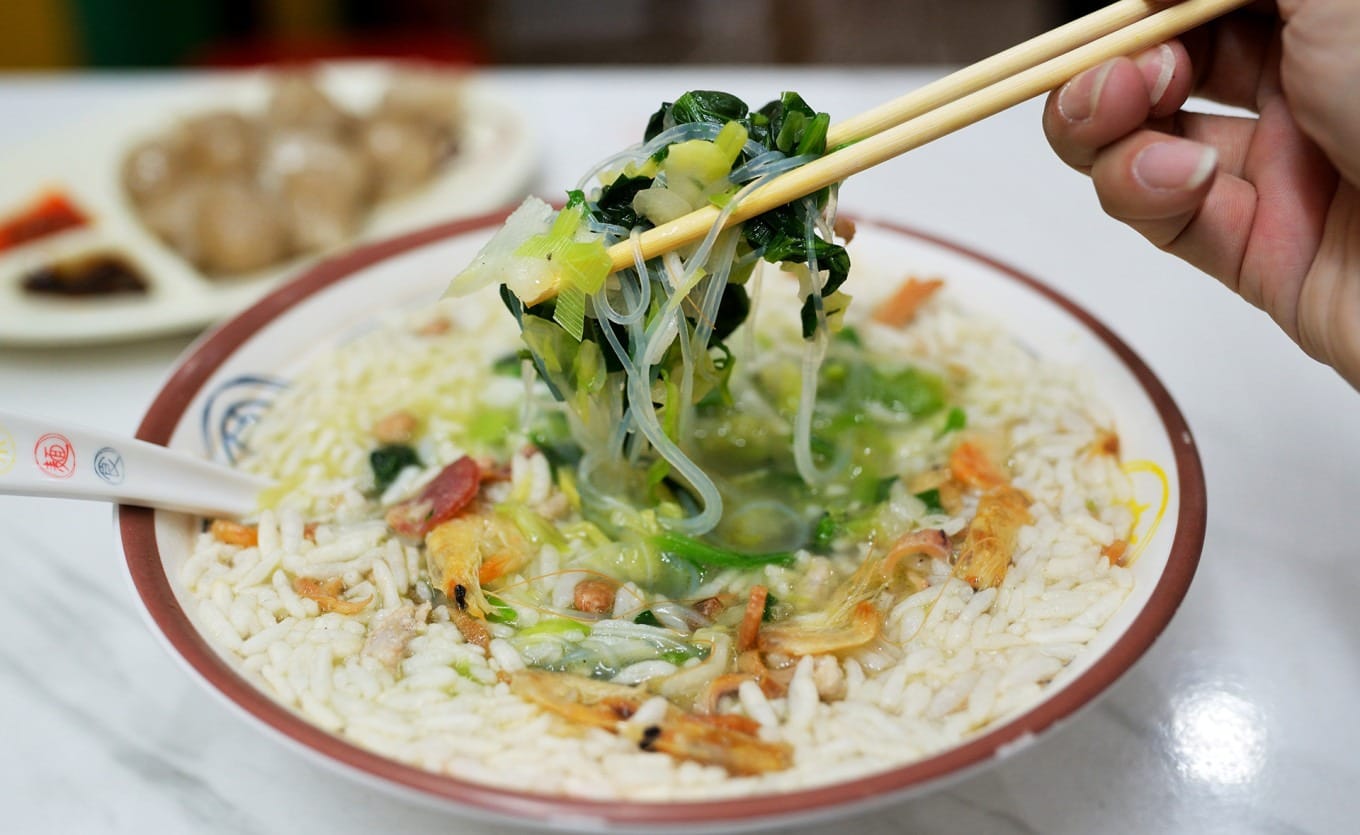
Cai Cha is made by mixing assorted vegetables with vermicelli(粉丝), then topping the bowl with a thick layer of toasted rice(炒米), dried shrimp, Chinese sausage(腊肠), and dried squid(鱿鱼干). Everything is finished with a pour of pork bone broth(猪大骨汤). The aroma is immediately inviting, and each spoonful delivers layers of texture and flavor colliding in the mouth—deeply satisfying and comforting.
Runyuan Four Seasons Coconut Chicken Hotpot (润园四季椰子鸡火锅)
- RestaurantRunyuan Four Seasons Coconut Chicken Hotpot (Zhuoyuehui Branch)(润园四季椰子鸡火锅·卓越汇店)
- AddressF5, Zhuoyuehui Shopping Mall, No. 126 Zhongkang Road(中康路126号卓悦汇购物中心F5)
- Recommended dishesBamboo Fungus Coconut Chicken(竹笙椰子鸡), Chinese Sausage Claypot Rice(腊味煲仔饭)
- Average spendRMB 120 per person(人均120元)
Before wrapping up your food journey in Shenzhen(深圳), there’s one dish you shouldn’t miss: coconut chicken hotpot(椰子鸡)—often called the city’s unofficial “signature dish.” Invented by Shenzhen locals, it’s one of the city’s few truly homegrown foods, even though many visitors mistakenly assume it comes from Hainan(海南). That confusion is understandable: Shenzhen doesn’t produce coconuts or chickens locally, and many restaurants decorate themselves in a Hainan-inspired style.
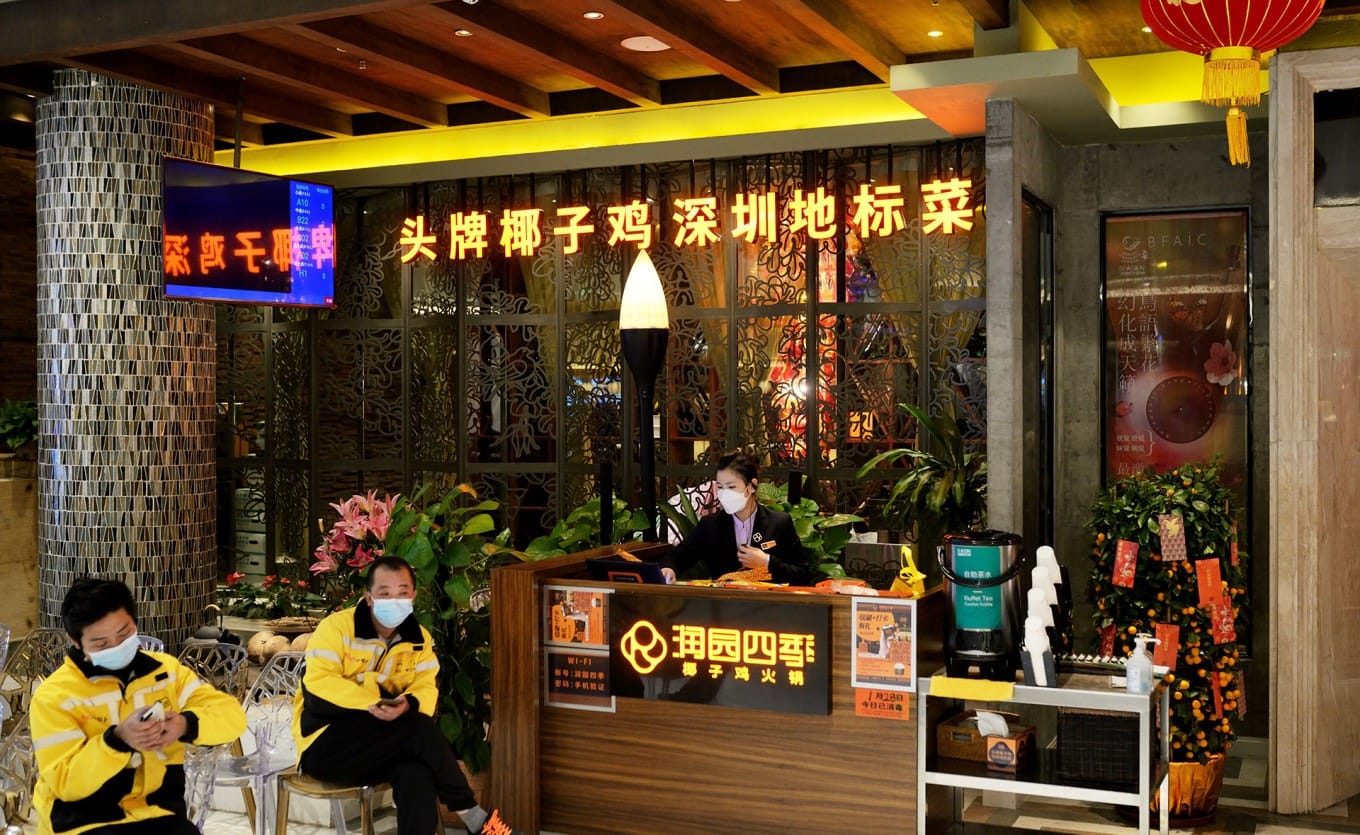
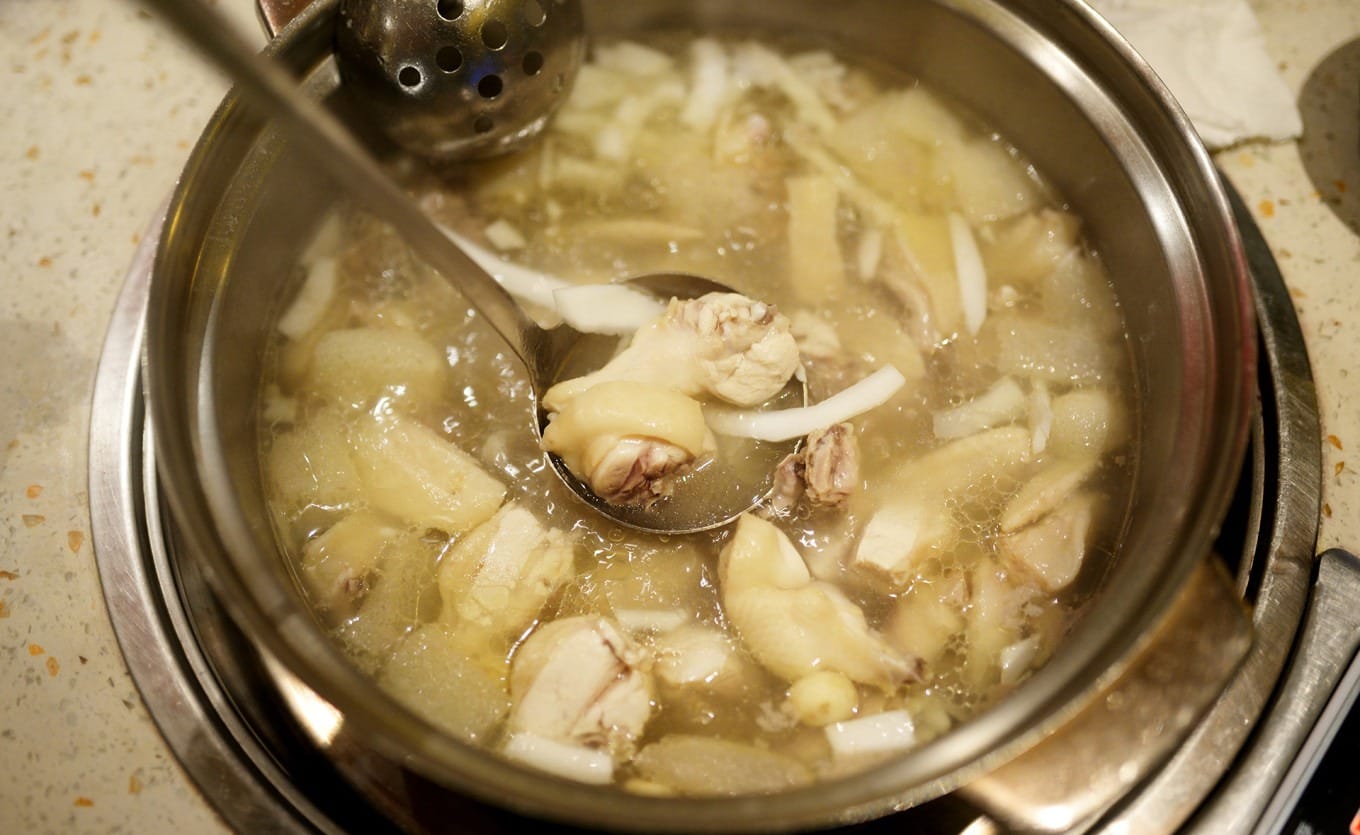
At Runyuan Four Seasons Coconut Chicken Hotpot(润园四季椰子鸡火锅), often promoted as a “Shenzhen landmark dish,” the concept stays true to its roots. Fresh young coconut water(椰青水)and coconut flesh form the soup base, into which chopped Qingyuan chicken(清远鸡)is added and gently simmered. While the ingredients themselves may not be local, this cooking method is unmistakably a Shenzhen original.
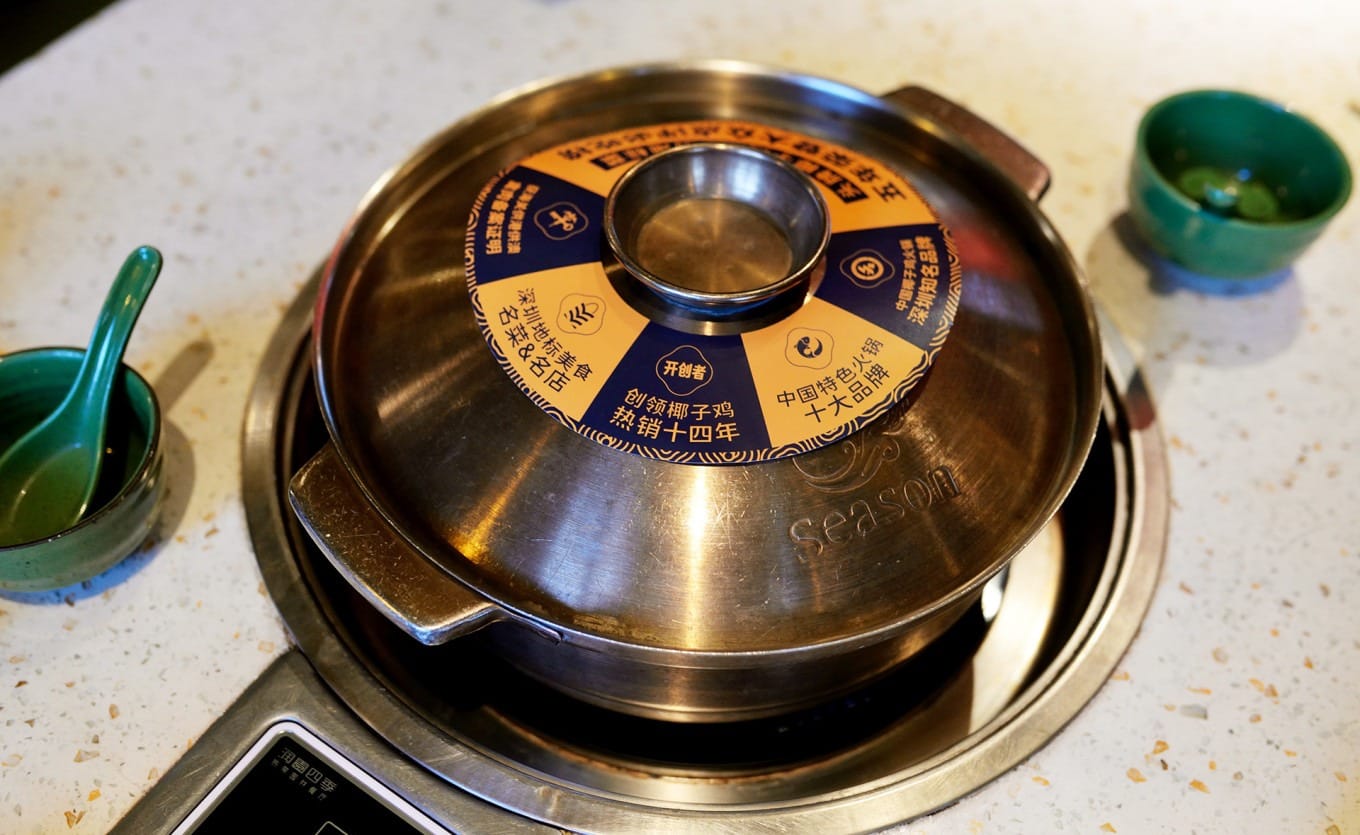
Aside from the chicken and coconut water, the hotpot keeps things minimal—just water chestnut(马蹄), bamboo fungus(竹荪), and a few slices of ginger. Everything is designed to highlight pure, natural flavors. After the pot simmers for five to six minutes, lift the lid—but don’t rush for the chicken yet. Start with a bowl of soup. Enhanced by the chicken, the coconut water’s natural sweetness fully blooms, making the broth incredibly soothing and comforting.
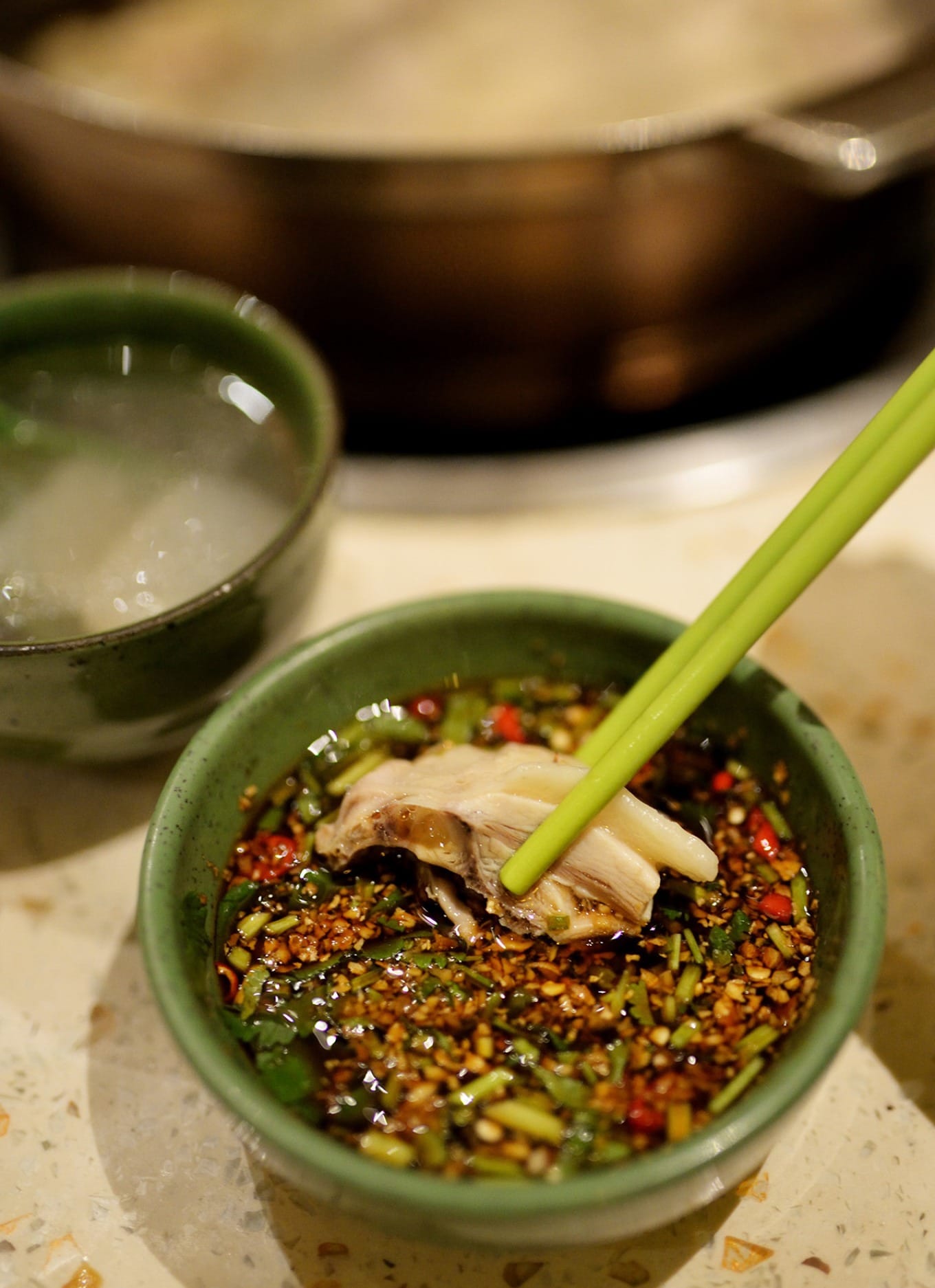
The soup itself contains no salt, so when it’s time to eat the chicken, dip it into the house sauce made from sand ginger(沙姜), bird’s eye chili(小米辣), and fresh calamansi or lime juice(小青柠汁). This bright, aromatic dip brings everything into balance. The chicken is tender and silky, with a rich, clean fragrance—so fresh that even those who joke about Shenzhen being a “food desert” admit coconut chicken is the standout dish of the city.
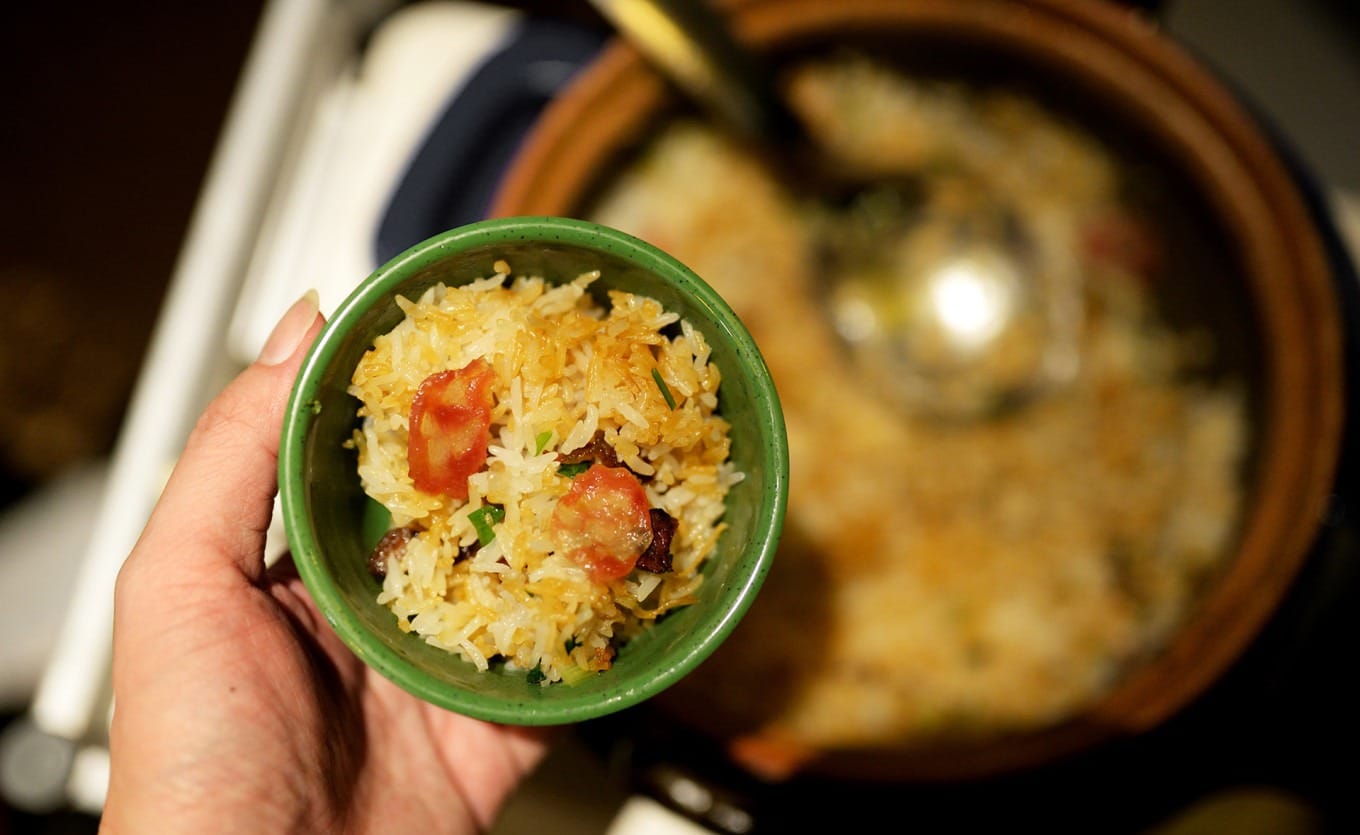
In Shenzhen, the perfect partner for coconut chicken is claypot rice(煲仔饭), especially Chinese sausage claypot rice(腊味煲仔饭). Runyuan Four Seasons delivers a strong version: glossy rice infused with savory fat, slices of Chinese sausage and cured pork balanced between lean and fatty, and a deeply fragrant finish. Don’t leave the crispy rice crust(锅巴)behind—it’s one of the best parts.
Shenzhen | Attractions Overview
After exploring Shenzhen’s(深圳)food scene, it’s worth turning your attention to the city’s attractions. To be fair, Shenzhen isn’t a classic tourist city in the traditional sense—but it’s still a destination well worth visiting.
Even if you’ve never been to Shenzhen, you’re probably familiar with its story: a former fishing village that transformed into an international metropolis within just a few decades. Today, it’s known for high housing prices and a fast-paced lifestyle, but it also offers an impressive number of free cultural and public spaces.
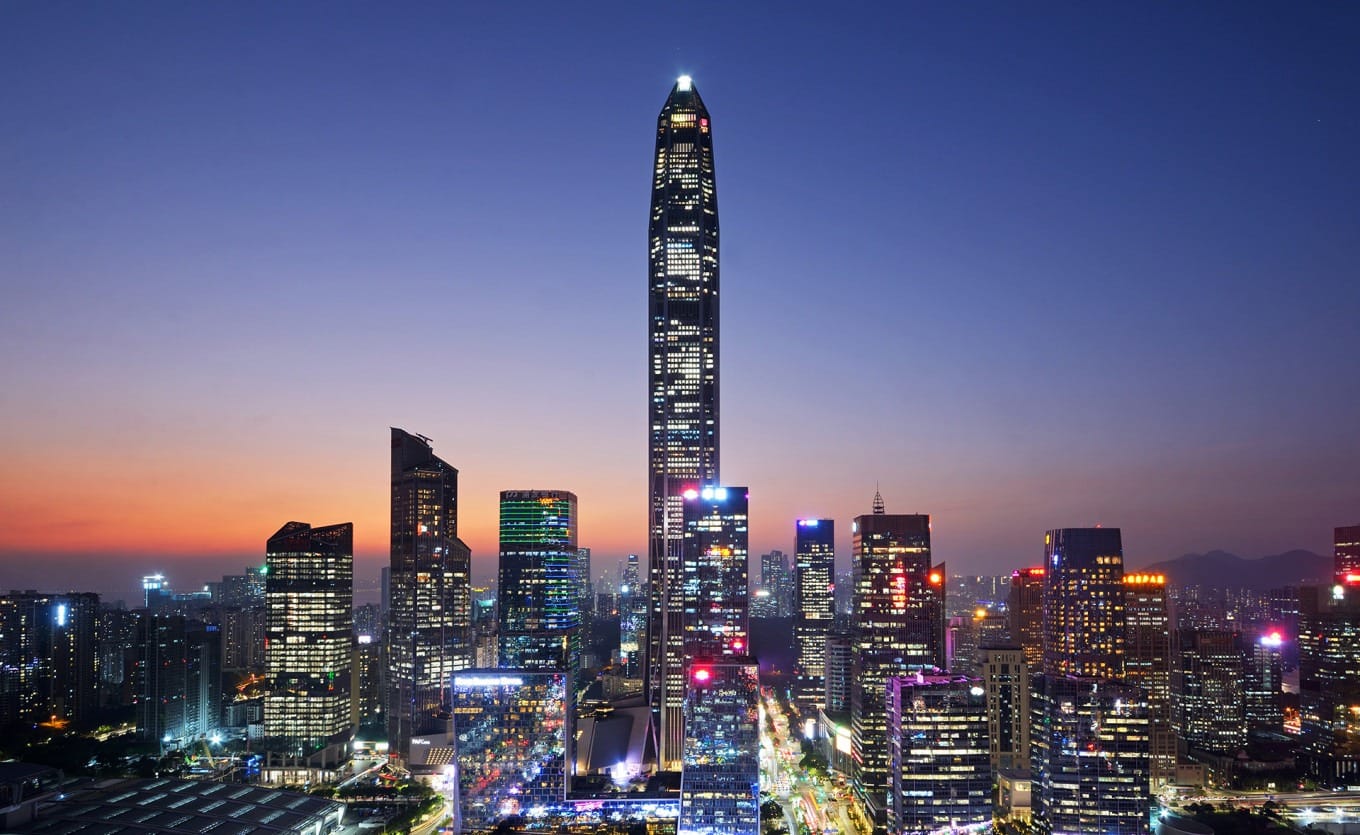
Across the city, you’ll find museums, art galleries, parks, and open plazas that cost nothing to enter. Combined with Shenzhen’s modern skyline and thoughtfully designed urban spaces, these places create cityscapes that are surprisingly beautiful—and easy to get lost in, in the best possible way.
Shenzhen Museum · History & Folk Culture Hall
- AttractionShenzhen Museum · History & Folk Culture Hall(深圳博物馆·历史民俗馆)
- AddressCivic Center A Zone, Fuzhong Road, Futian District(福田区福中路市民中心A区)
- AdmissionFree(免费)
Because Shenzhen(深圳)rose so rapidly, it’s often labeled a “young” city—leading many to assume it has little history. In reality, Shenzhen’s human history stretches back to around 5000 BCE. If you want a clear, efficient introduction to the city’s past and cultural roots, Shenzhen Museum is the best place to start.
Shenzhen Museum is the city’s only National Grade-One Museum. It has two main venues: the newer History & Folk Culture Hall(历史民俗馆)beside the Civic Center on Jintian Road(金田路市民中心旁), and the older Ancient Art Hall(古代艺术馆)on Tongxin Road(同心路). Both are open from Tuesday to Sunday and closed on Mondays. Interestingly, the newer hall has not been renovated since opening in 2008, while the older hall was upgraded and reopened in 2021—making the “old” building feel more modern than the “new” one.
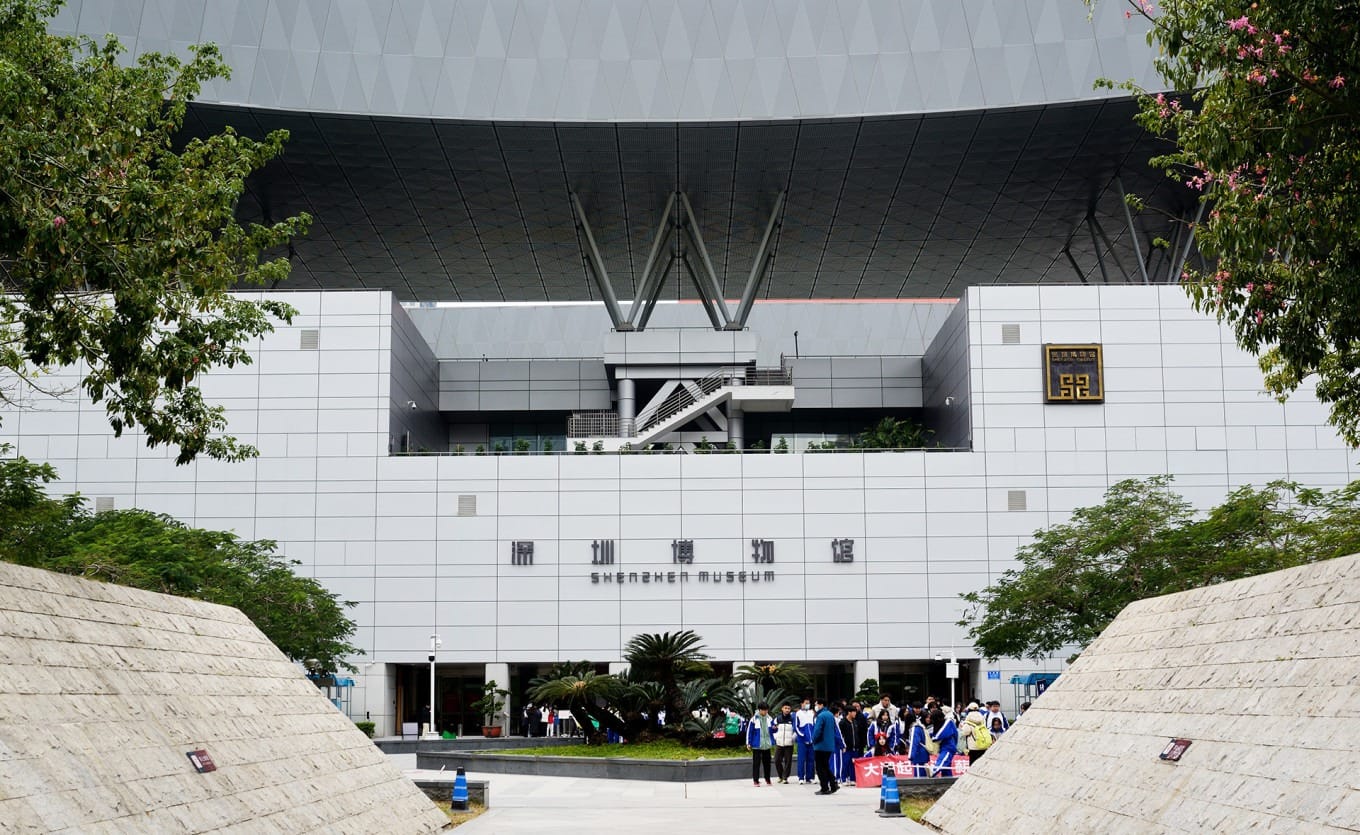
At the History & Folk Culture Hall, the most important exhibition is the permanent display on the second floor, *Ancient Shenzhen(古代深圳)*. Many people believe Shenzhen was once just a small fishing village, but this exhibition tells a very different story. Walking through it is like brushing dust off history, revealing outlines of 7,000 years of human presence, more than 1,700 years of urban history, over 600 years of coastal defense, 800 years of Cantonese (Guangfu) culture, and 300 years of Hakka migration.
【Painted Pottery Ring-Foot Basin, Mid-Neolithic Period(彩陶圈足盆,新石器时代中期)】 As you enter the gallery, the earliest artifacts come from the Neolithic era. Contrary to popular belief, prehistoric civilization in the Shenzhen region is remarkably ancient. About 7,000 years ago, early humans were already living along the shores of Dapeng Bay(大鹏湾). This modest-looking painted pottery basin, excavated from the Xiaomeisha site(小梅沙遗址)in Yantian District(盐田区), is the most important artifact in the entire exhibition. Made of sand-tempered pottery, it was polished and coated with a gray-white slip, then painted with ochre-red wave patterns. Small perforations along the wave crests reflect clear elements of maritime culture—brushstrokes from more than 6,000 years ago, still visible today.
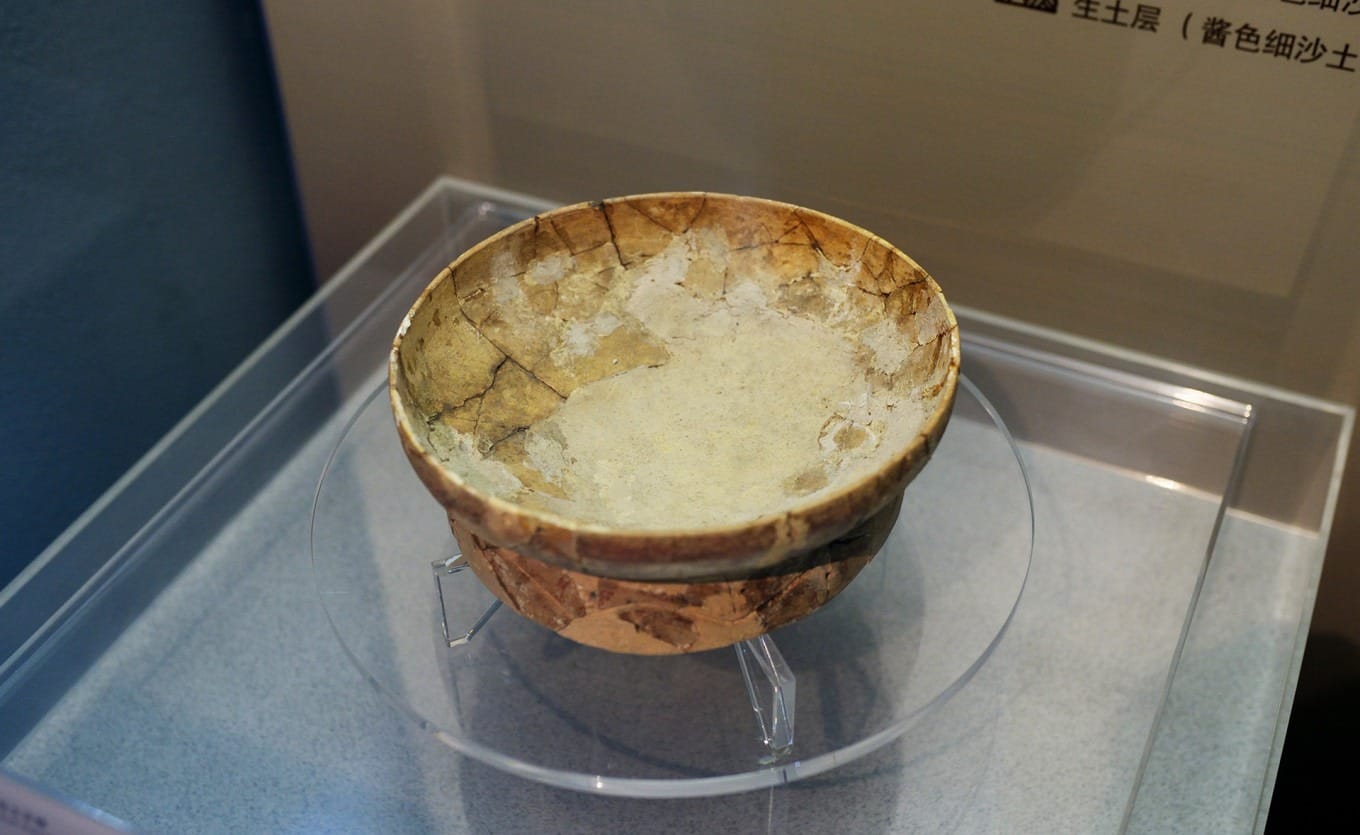
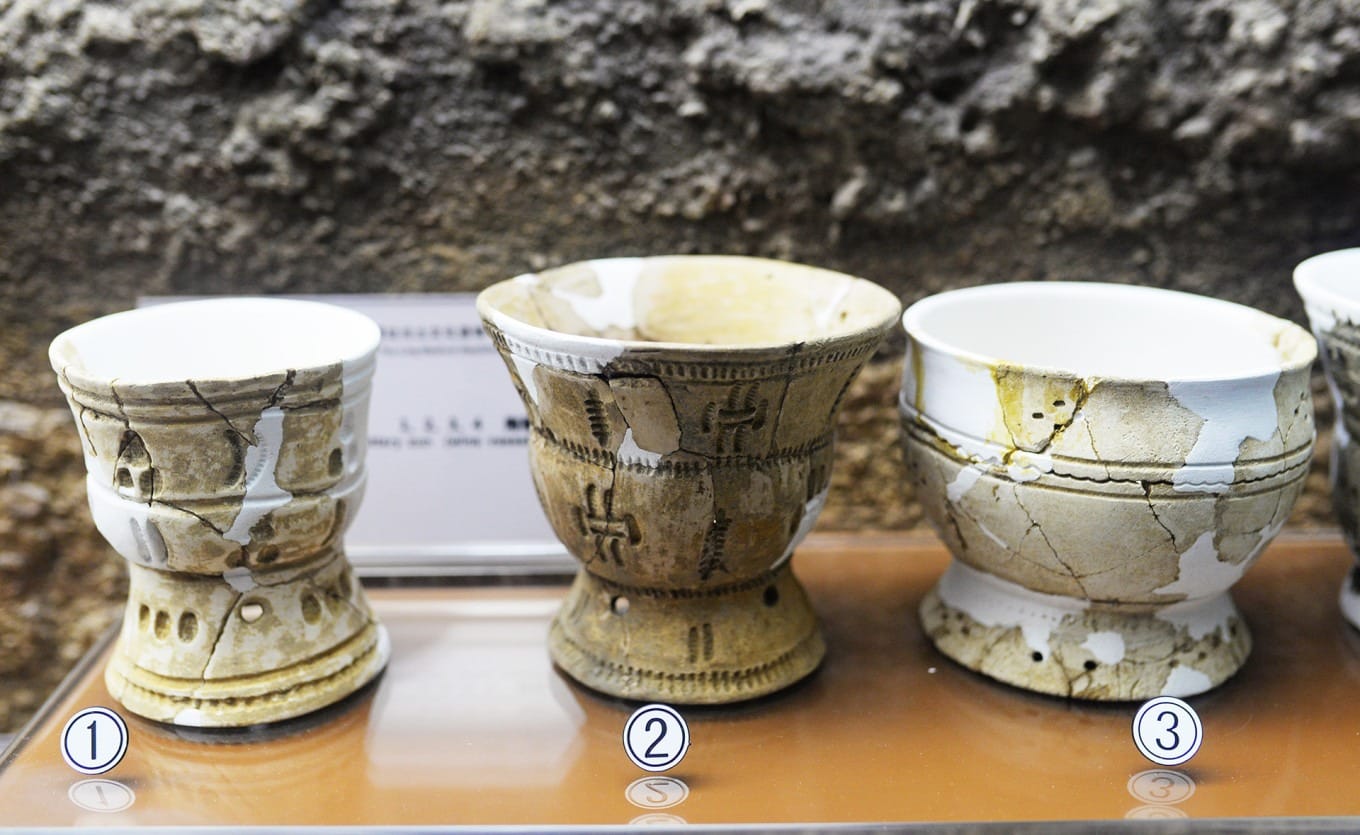
【Pottery Zun, Mid-Neolithic Period(陶尊,新石器时代中期)】 These pottery vessels were excavated from the Xiantouling site(咸头岭遗址)on the Dapeng Peninsula. Their forms and craftsmanship show influence from the Gaomiao culture of western Hunan(湘西高庙文化). Xiantouling is known as a “pioneer of prehistoric culture along the South China Sea” and was listed among China’s Top Ten Archaeological Discoveries in 2006. Most finds here date to the Neolithic and Shang periods, with Neolithic remains being especially significant.
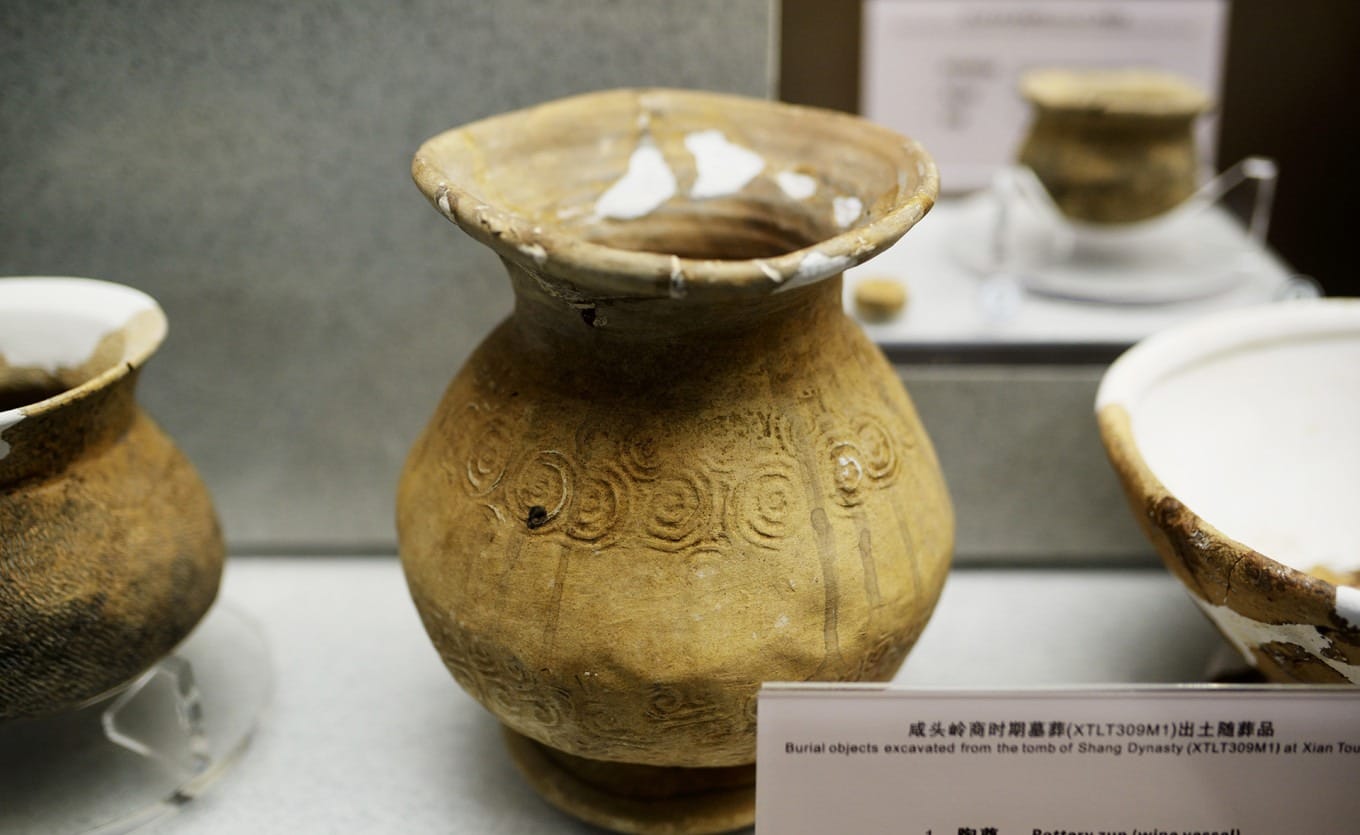
【Pottery Zun, Shang Dynasty(陶尊,商)】 This pottery zun was unearthed from a Shang Dynasty tomb at Xiantouling. During the Shang period, bronze civilization flourished in the Yellow and Yangtze River regions, but no bronze artifacts had yet appeared in Lingnan. Still, the shape of this vessel shows traces of Central Plains Shang culture, offering valuable insight into cultural transmission in ancient Shenzhen.
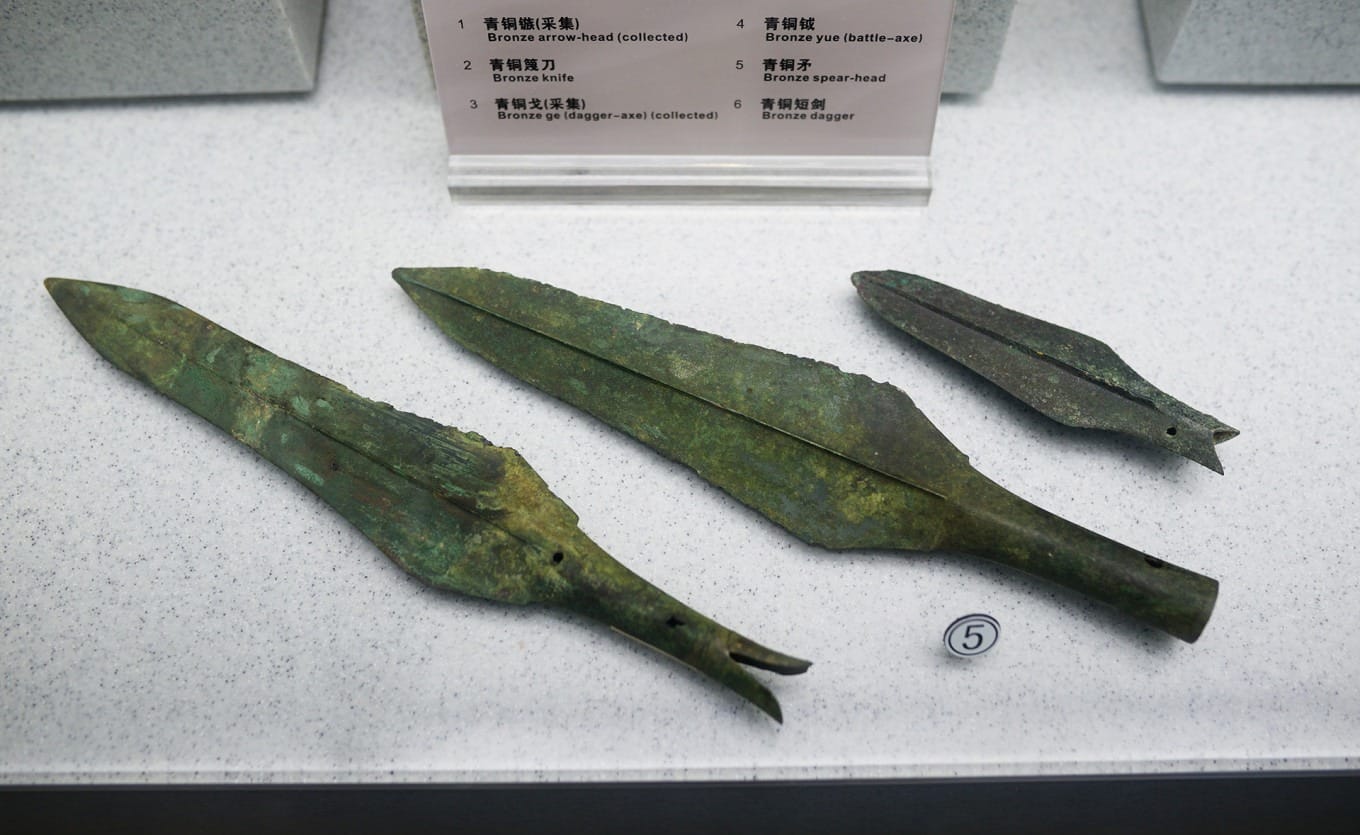
【Bronze Spearheads, Spring and Autumn Period(青铜矛,春秋时期)】 These bronze spearheads were excavated from Area II of the Dameisha site(大梅沙遗址Ⅱ区)and date to the late Spring and Autumn period. Ten tombs from this era were uncovered here, six containing bronze artifacts—marking the first discovery of bronze objects in Spring and Autumn–period graves in the Shenzhen area.
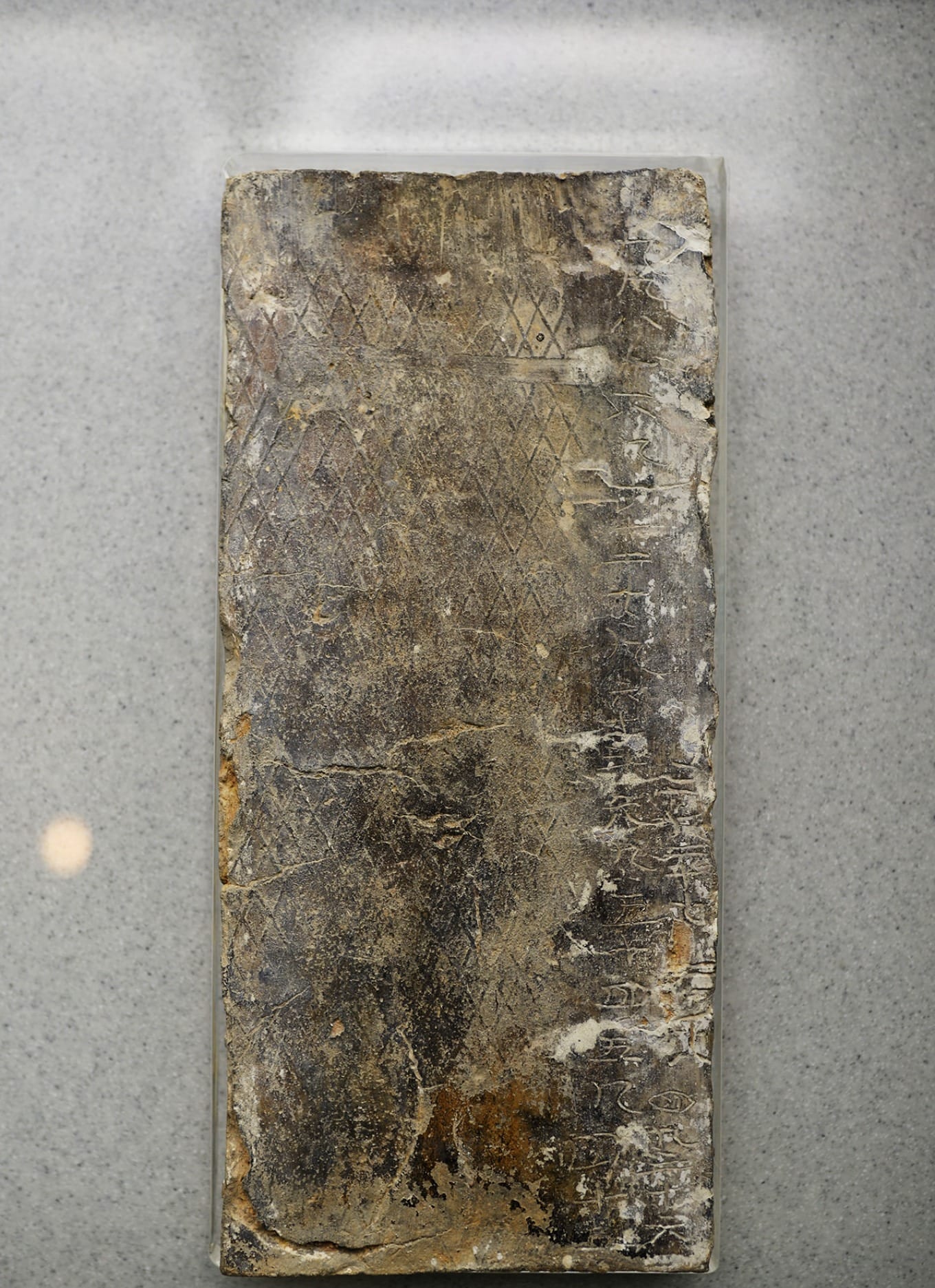
【Multiplication Table Brick, Han Dynasty(九九口诀砖,汉)】 This remarkable brick was excavated from a Han Dynasty tomb in Honghuayuan, Nantou(南头红花园). It bears a carved multiplication table—an unprecedented discovery in China. Scholars believe the characters were etched by brickmakers while the clay was still wet. Though the strokes are uneven, the text is clear, proving that people in Shenzhen had mastered the nine-times table as early as 1,800 years ago.
【“Xiping Fourth Year” Tomb Brick, Han Dynasty(“熹平四年”墓砖,汉)】 Excavated from the Tiezaishan burial complex(铁仔山古墓群)in Bao’an District(宝安区西乡), this brick is dated to Xiping Year Four (175 CE) of the Eastern Han Dynasty. Since its discovery in 1983, multiple excavations have taken place here, but this inscribed brick remains the most important find.
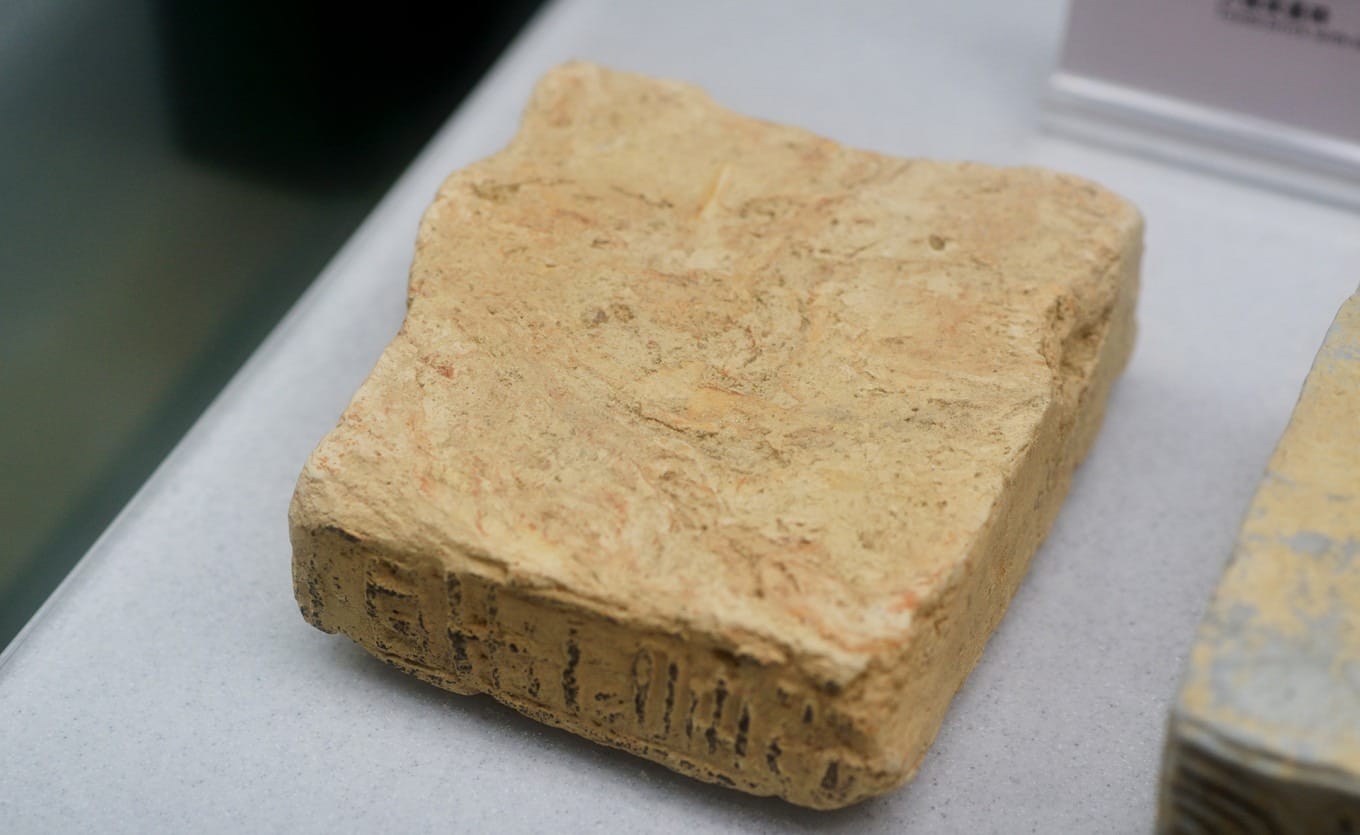
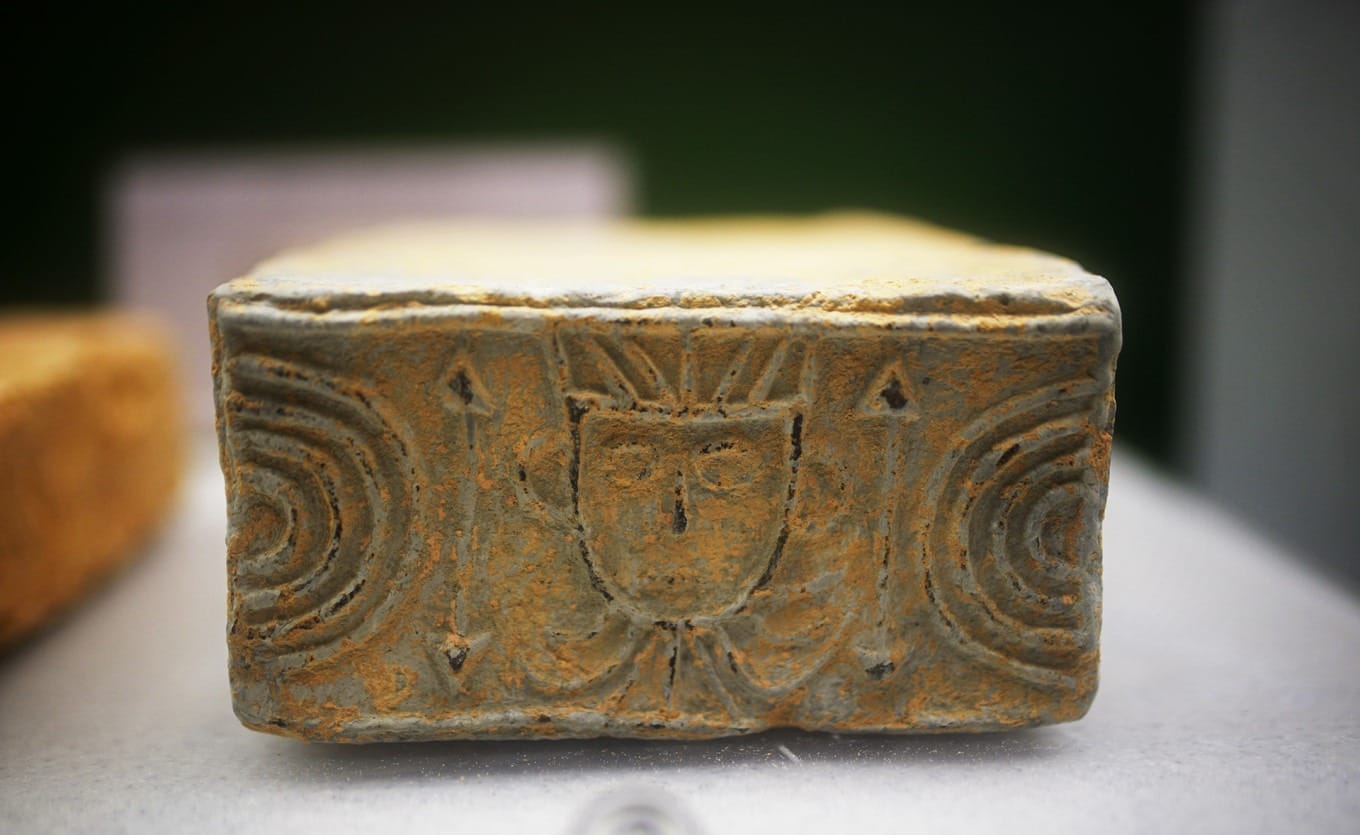
【Human-Face Pattern Tomb Brick, Han Dynasty(人面纹墓砖,汉)】 Unearthed alongside the Xiping brick, this piece helps illustrate the highly organized layout of the Tiezaishan cemetery. Over 600 tombs from the Han through Ming–Qing periods are arranged west to east, suggesting this area once served as a public burial ground for residents of Nantou Ancient City(南头古城).
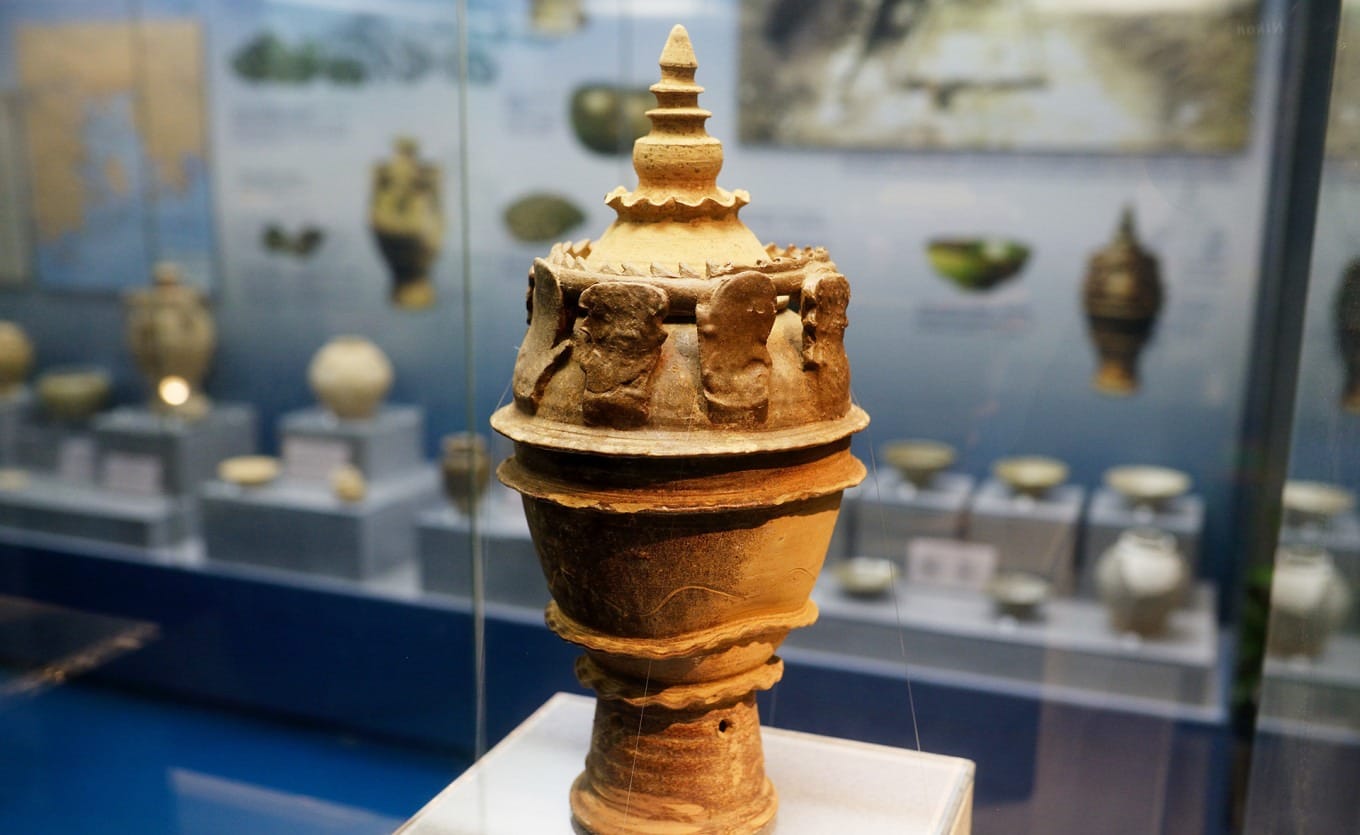
【Brown-Glazed Soul Jar, Song Dynasty(褐釉陶魂瓶,宋)】 This soul jar, also known as a granary jar(谷仓罐), was excavated from a Song Dynasty tomb in Dalingkeng, Kuichong(葵涌大林坑). Common south of the Yangtze River, these burial objects often contained grain remains and were believed to nourish the soul in the afterlife—or possibly store remains. Its exact purpose is still debated.
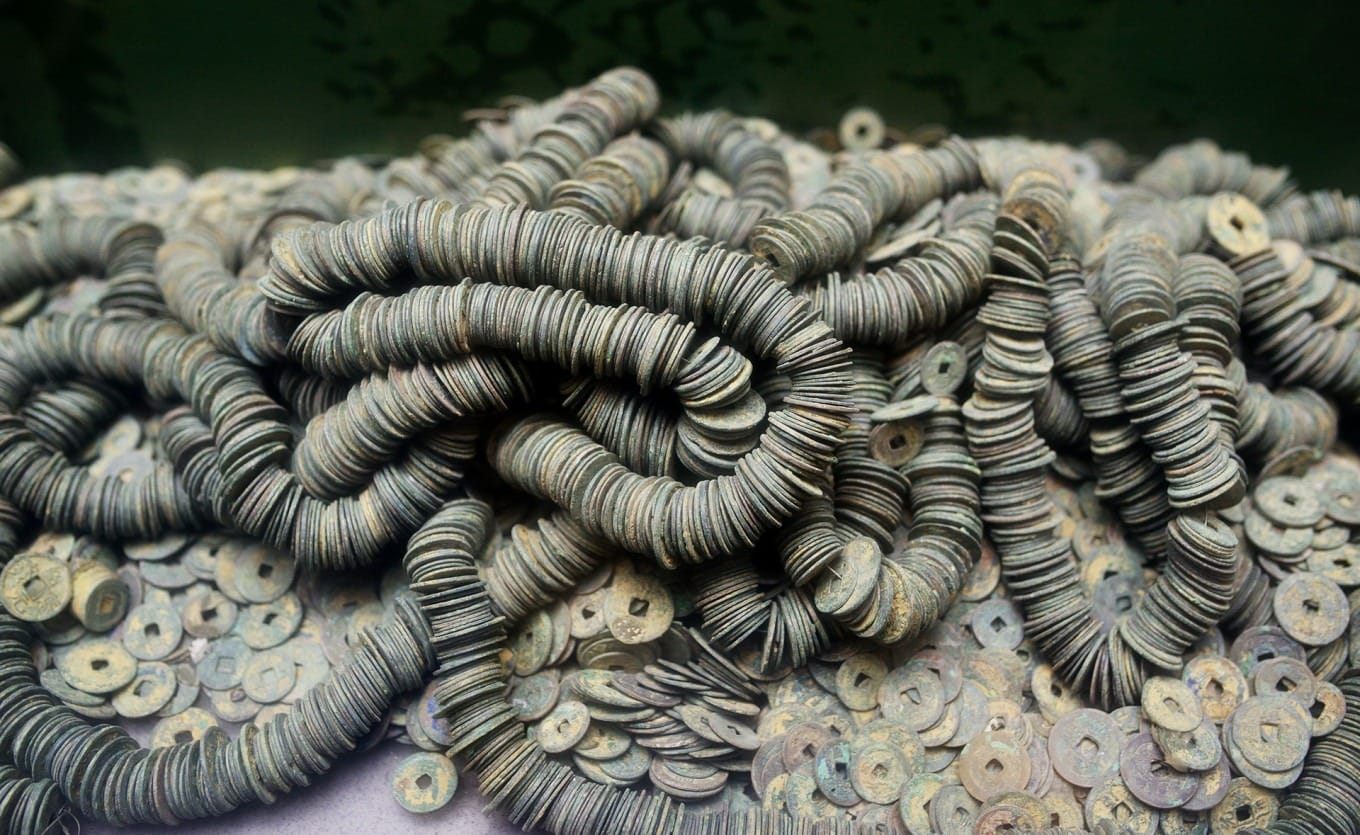
【Coin Hoard, Song Dynasty(铜钱,宋)】 This massive cache of copper coins was found in a Song Dynasty cellar at Shapuwei Village, Songgang(松岗沙浦围村). Weighing about four tons, it includes coins from multiple dynasties—from Han Dynasty wuzhu coins to Southern Song Chunyou Yuanbao. Many believe the hoard is linked to the prolonged Song–Yuan conflicts in Lingnan, as most ancient coins found near the Pearl River Estuary date to the Song period.
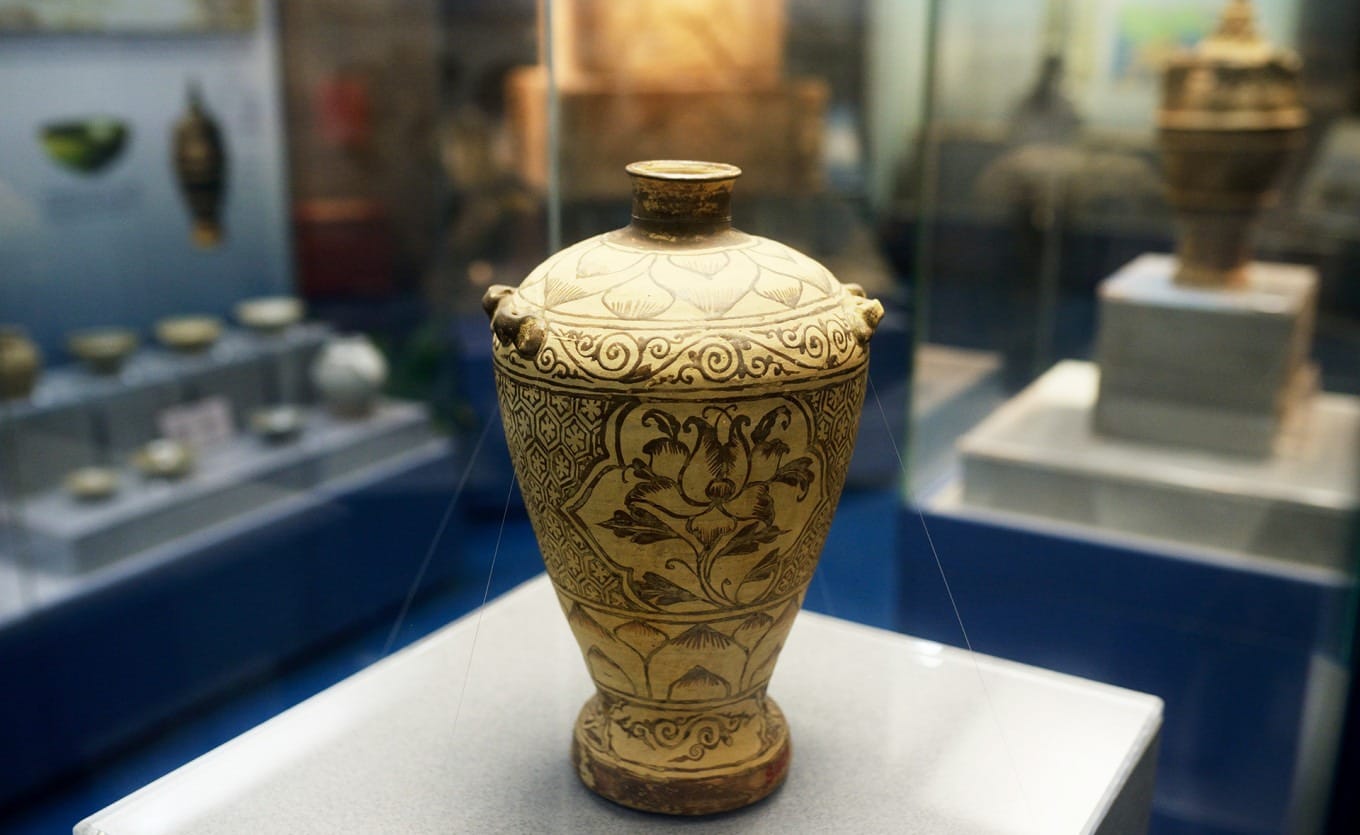
【Brown-Painted Peony Pattern Sutra Jar, Yuan Dynasty(褐彩牡丹纹经瓶,元)】 This jar was excavated from a Yuan Dynasty tomb in Nantou Houhai(南头后海). Another matching piece is displayed at the Ancient Art Hall. Research suggests it was produced in or near the Wentouling kilns of Foshan Nanhai(佛山南海文头岭窑), with decorative influence from Jiangxi’s Jizhou kilns and techniques possibly inspired by Hunan’s Yueyang kilns—making it a product of diverse cultural exchange.
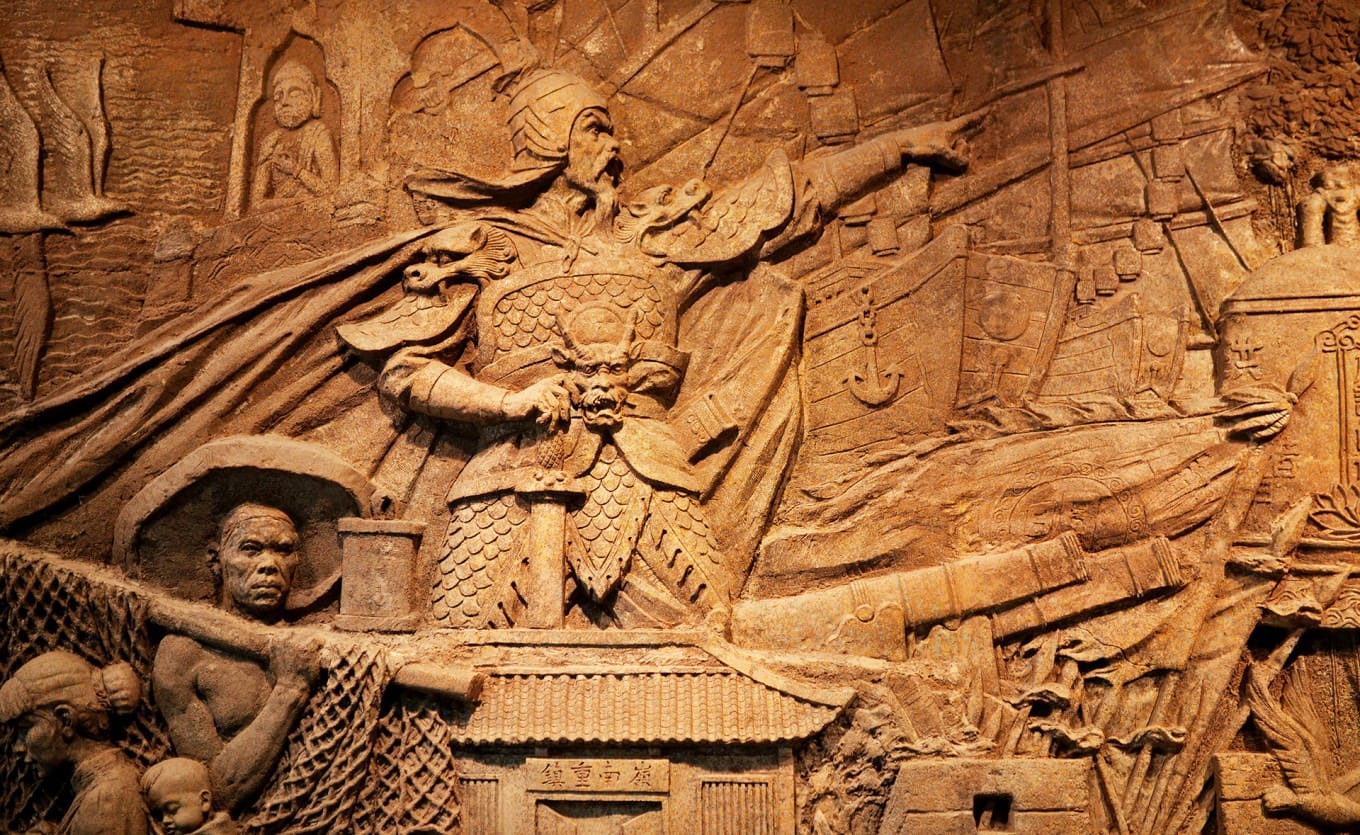
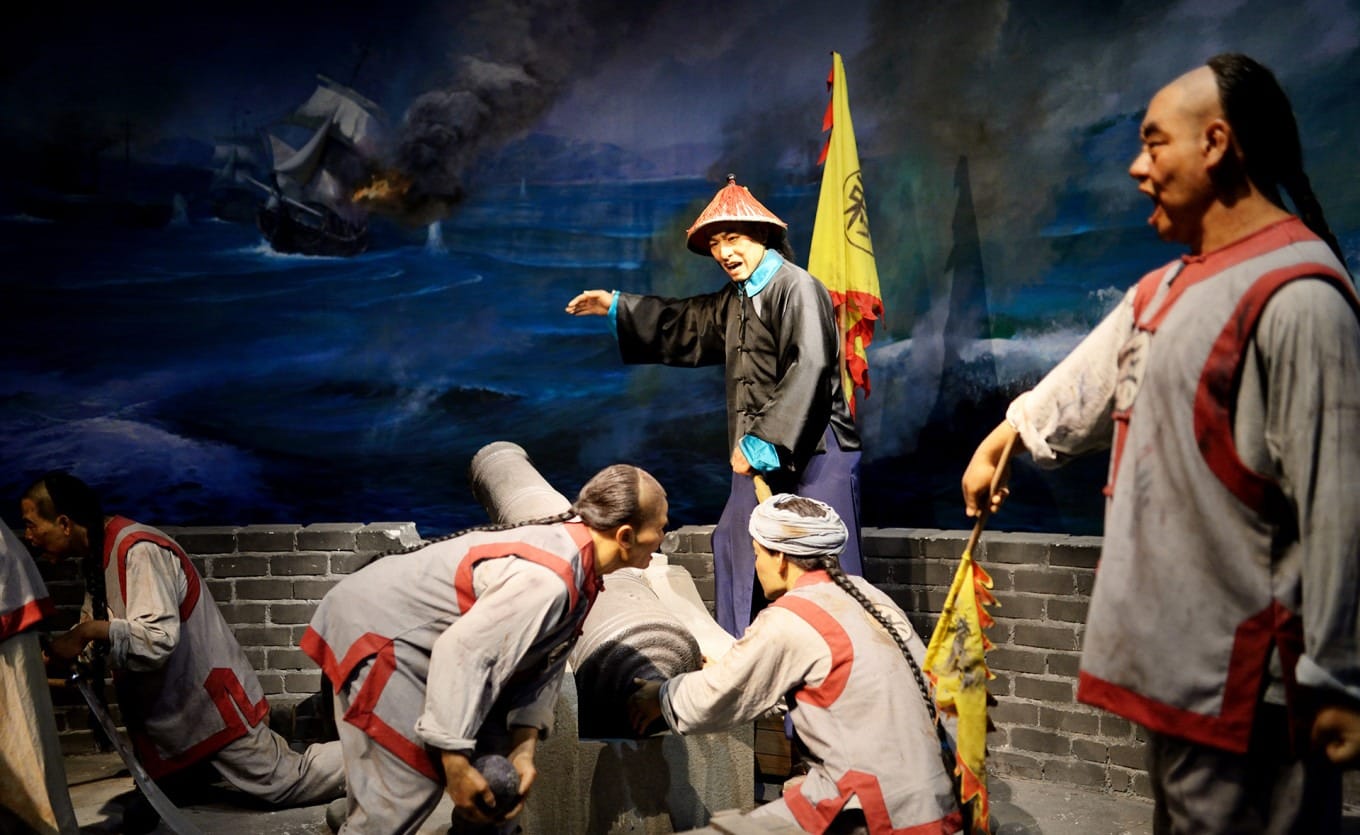
【Battle of Tuen Mun(屯门海战)】 During the Ming and Qing periods, southeastern China faced frequent pirate and foreign incursions. The Dapeng Fortress(大鹏守御千户所城)was built as a coastal defense base. In 1521 and 1522, Ming forces led by Wang Hong(汪鋐)expelled Portuguese forces from Tuen Mun and nearby waters. Only later, in 1553, did the Portuguese gain trading rights in Macau through bribery—establishing their first foothold in China.

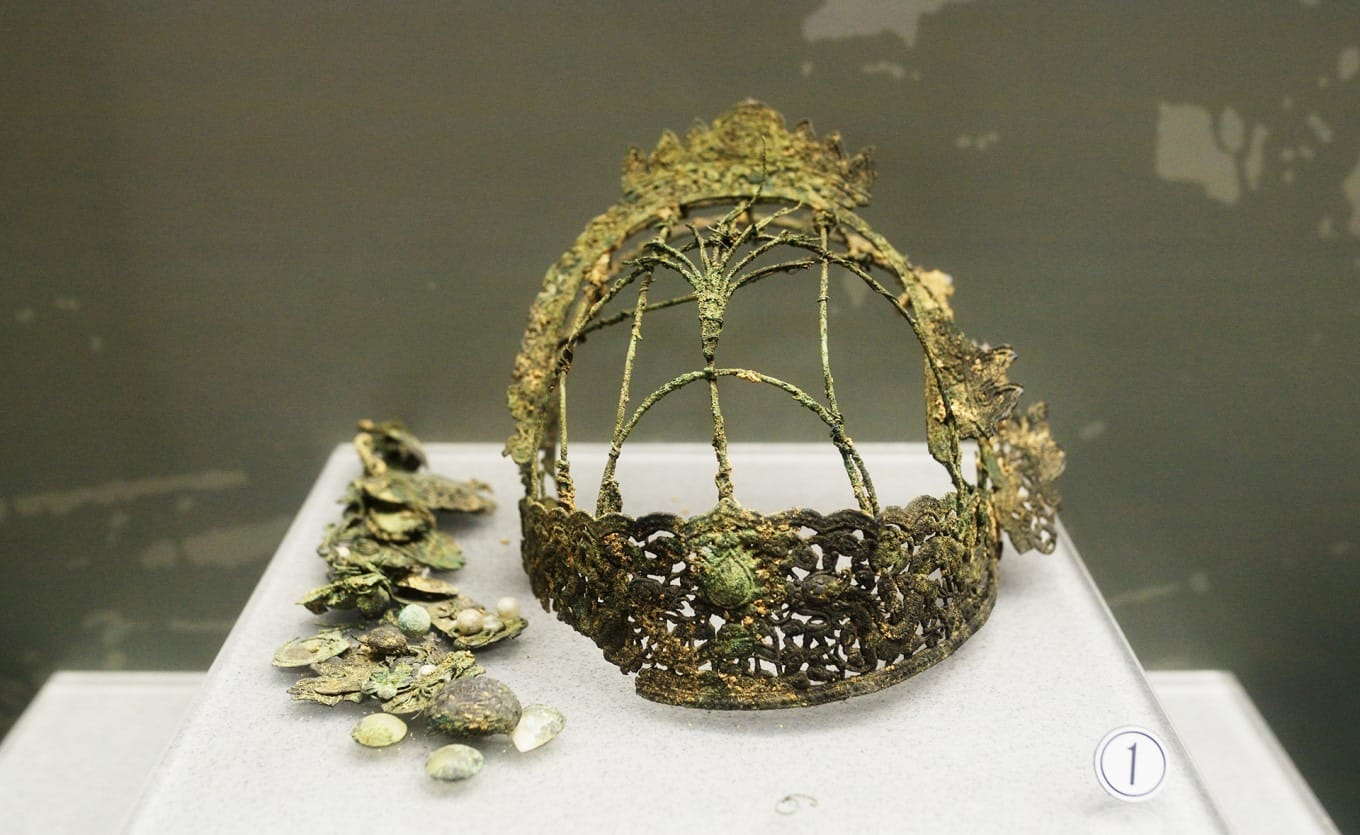
【Copper-Wire Phoenix Crown, Qing Dynasty(铜丝凤冠,清)】 This phoenix crown was excavated from the tomb of General Liu Qilong(刘起龙)and his first-rank wife in Dapeng City(大鹏城). Liu, a native of Dapeng, rose from common soldier to Fujian naval commander and was awarded the title “Zhenwei General” for his success in suppressing pirates.
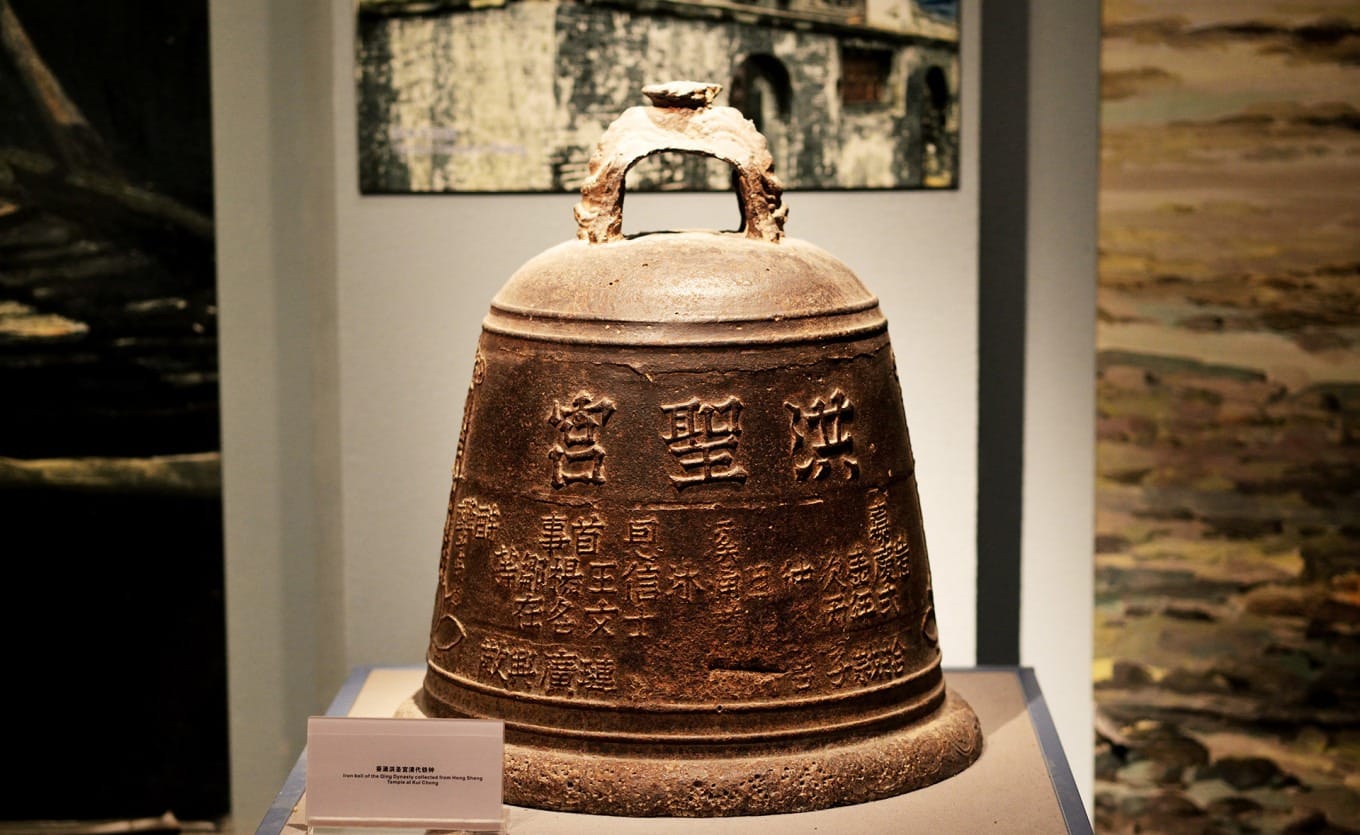
【Iron Bell of Hung Shing Temple, Qing Dynasty(洪圣宫铁钟,清)】 This iron bell, cast in the 21st year of the Jiaqing reign, once belonged to the Hung Shing Temple(洪圣宫)in Kuichong. Hung Shing, originally Tang Dynasty official Hong Xi(洪熙), was revered as a sea deity after legends of him saving fishermen at sea—an important figure in Guangdong coastal folk belief.
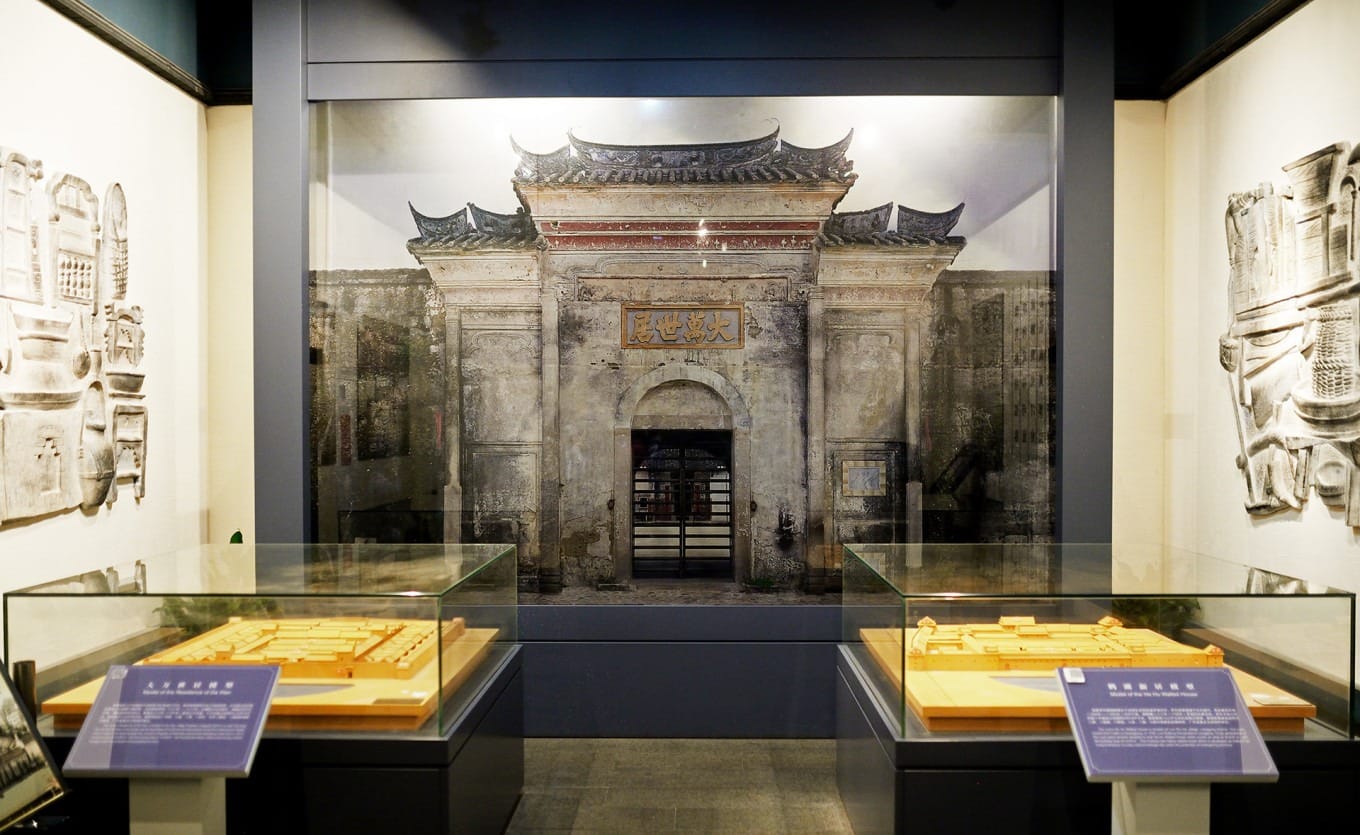
【Dawan Shiju & Hakka Enclosed Houses(大万世居)】 During the Ming and Qing periods, Shenzhen belonged to Xin’an County(新安县). Following coastal evacuations and later resettlement policies in 1668, large numbers of Hakka people migrated here and became Shenzhen’s largest indigenous group. Models of two iconic Hakka walled residences—Dawan Shiju in Pingshan(坪山大万世居)and Crane Lake New Residence in Longgang(龙岗鹤湖新居)—are displayed here.
If time allows, you can also visit the exhibition *Modern Shenzhen(近代深圳)*. Centered on China’s modern resistance history, it traces events from the 1939 Sino-British Kowloon Sea Battle through the War of Liberation. In many ways, modern Shenzhen mirrors the broader course of modern Chinese history.
Shenzhen Museum · Ancient Art Hall
- AttractionShenzhen Museum · Ancient Art Hall(深圳博物馆·古代艺术馆)
- AddressNo. 6 Tongxin Road, Futian District(福田区同心路6号)
- AdmissionFree(免费)
Compared with the artifacts at the History & Folk Culture Hall, the collections at Shenzhen Museum’s Ancient Art Hall(古代艺术馆, also known as the Old Hall)are noticeably more ornate and visually striking—even though most of them were not excavated in Shenzhen itself.
When Shenzhen Museum was first established in 1996, a significant group of bronze vessels was transferred from Henan Museum(河南博物馆,今河南博物院)to support its founding. This single allocation immediately placed Shenzhen Museum among the leaders in Guangdong in terms of both the quantity and quality of bronze artifacts. Later, additional terracotta figures were transferred from Shaanxi(陕西), supplemented over the years by private donations and items recovered through anti-smuggling efforts. While the collection can’t rival those of China’s major archaeological provinces, it stands out strongly among comprehensive museums at the prefecture-level.
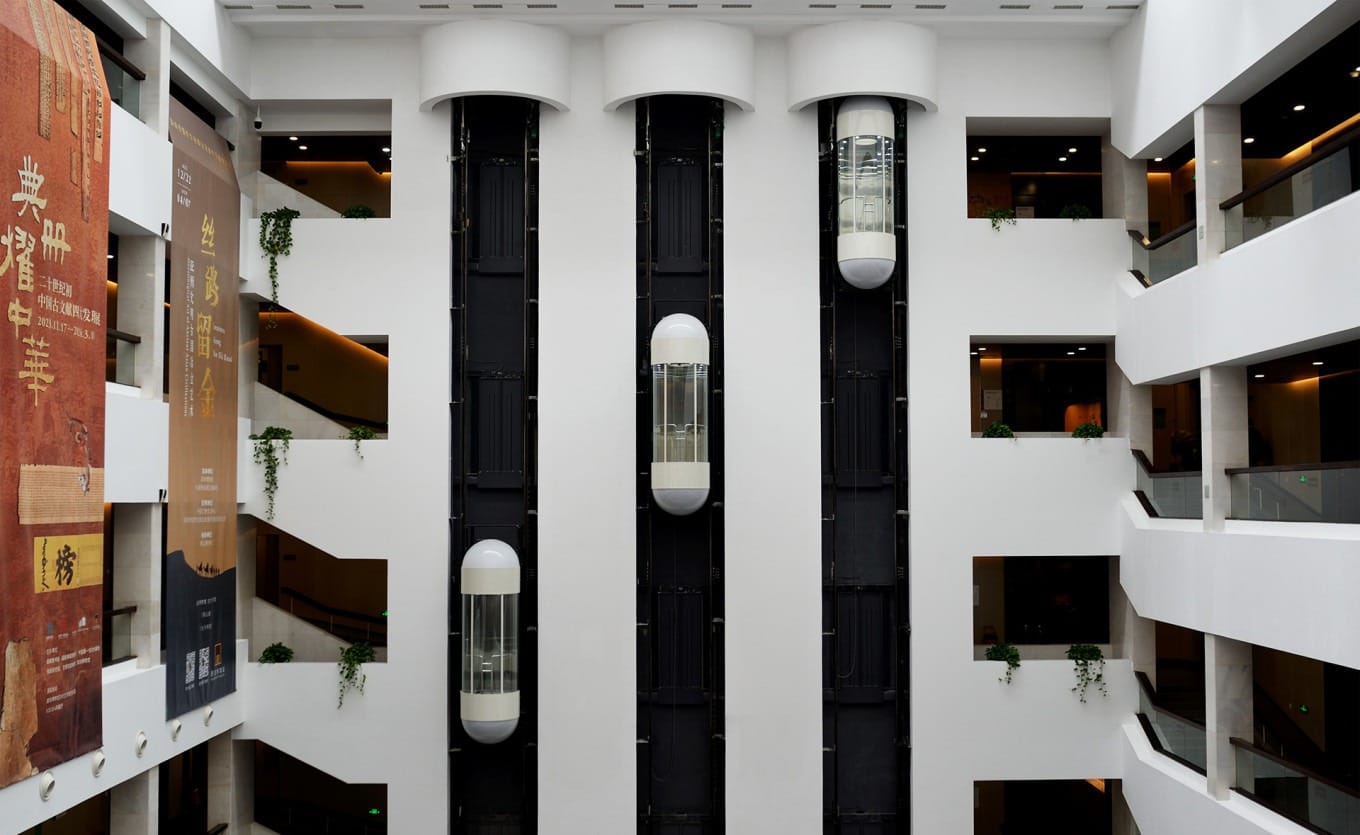
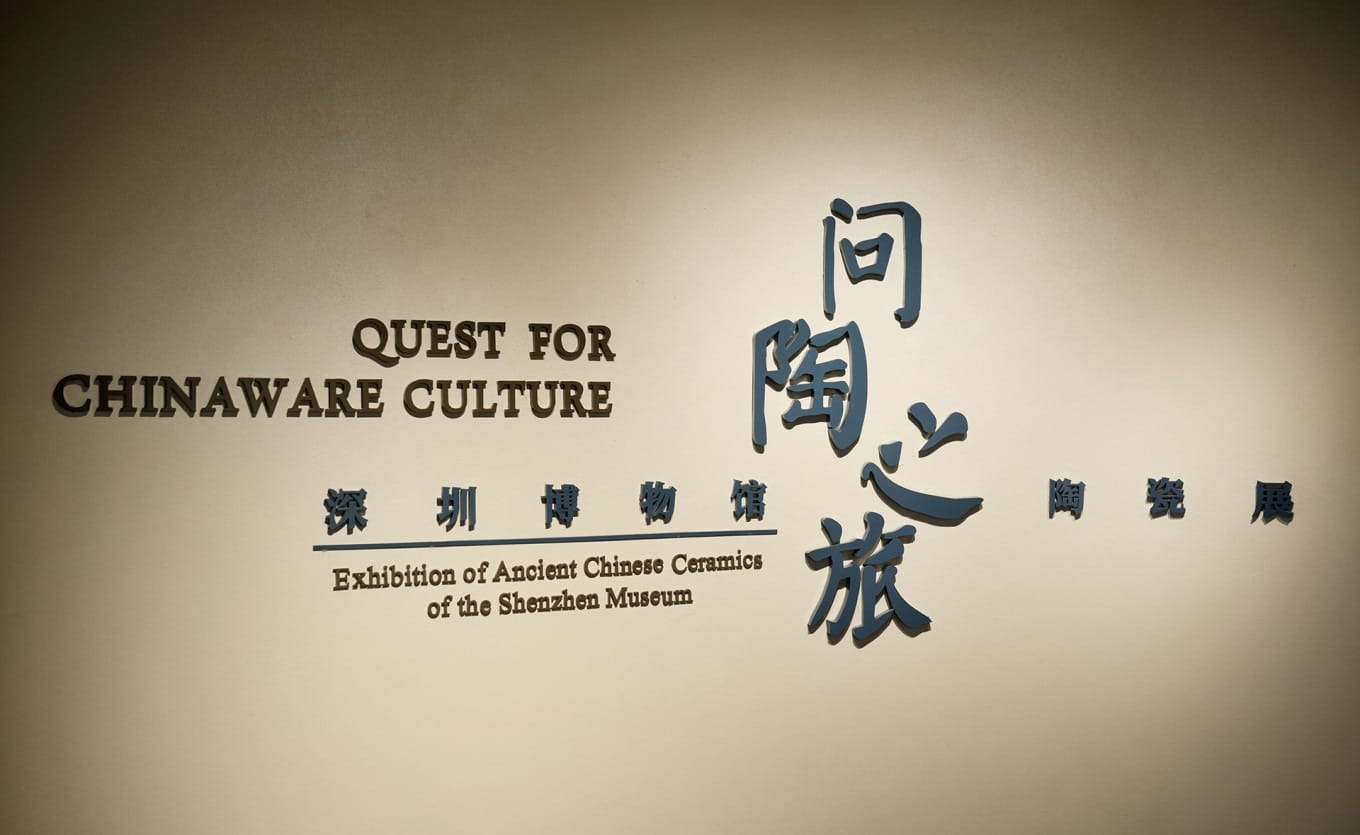
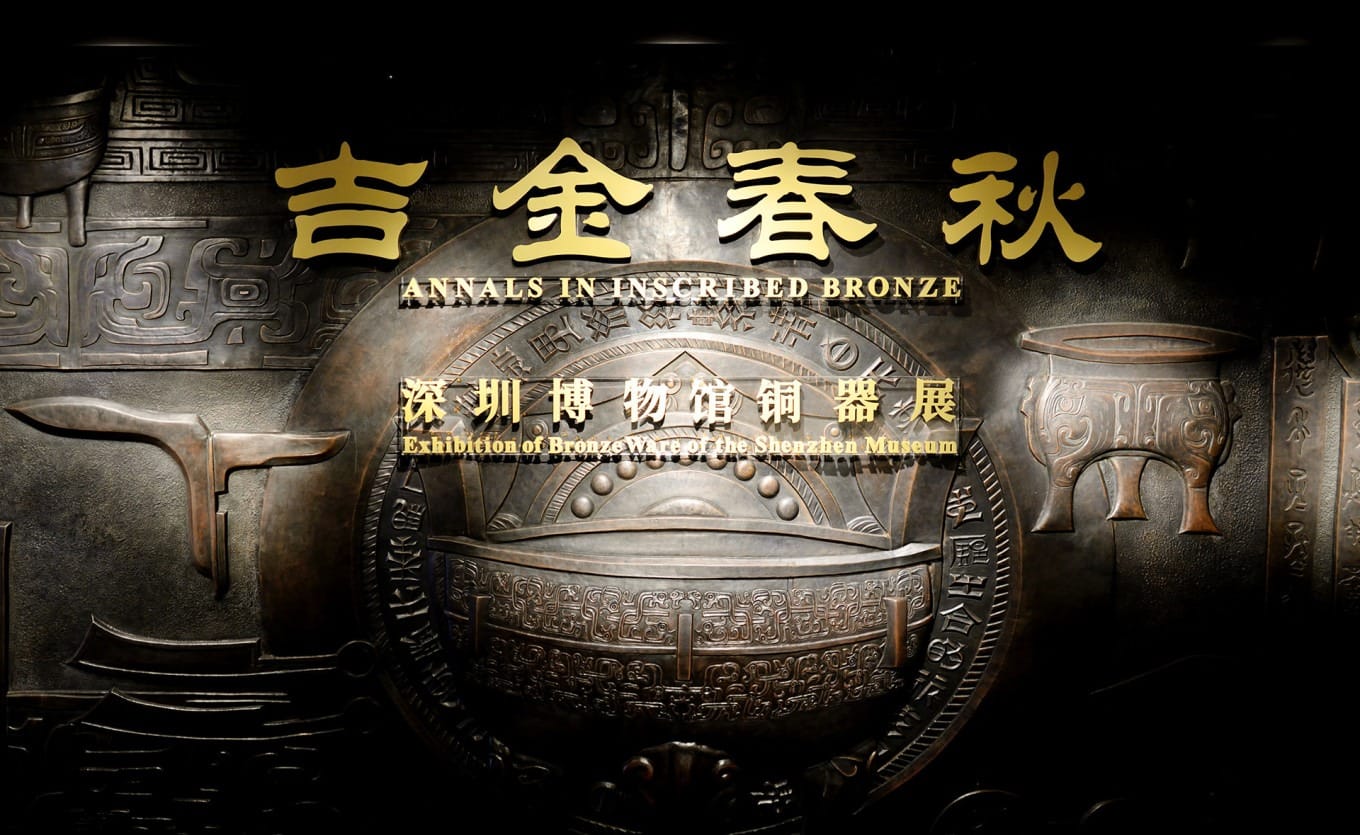
When visiting the Ancient Art Hall, it’s best to focus on two permanent exhibitions: *Journey of Ceramics*(问陶之旅)and *Spring and Autumn of Bronze*(吉金春秋).
*Journey of Ceramics* presents more than 300 ceramic works, most transferred from other cultural institutions or acquired through public collection. Spanning from the Neolithic period to the Ming and Qing dynasties, the exhibition offers a compact yet comprehensive overview of the development of Chinese ceramic culture.
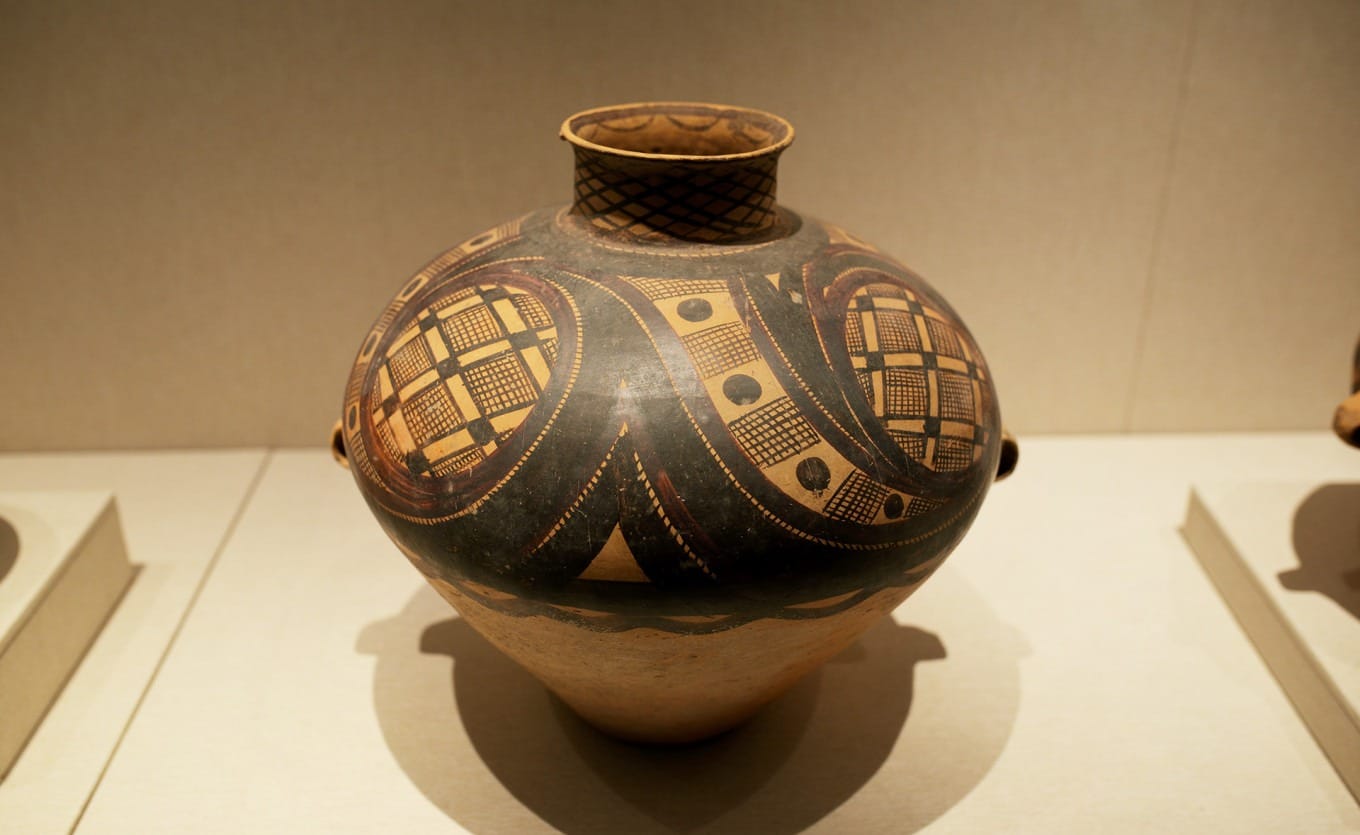
【Painted Pottery Jar with Spiral and Diamond Patterns, Neolithic Period(圆涡菱格纹彩陶壶,新石器时代)】 This painted pottery jar belongs to the Majiayao culture. It was confiscated in an anti-smuggling case and transferred to Shenzhen Museum by the Guangdong Armed Police Border Defense Corps. Its four spiral motifs, a pattern that first appeared in late Yangshao culture and flourished during the Majiayao period, are filled with intricate decorative elements, reflecting an advanced sense of design.
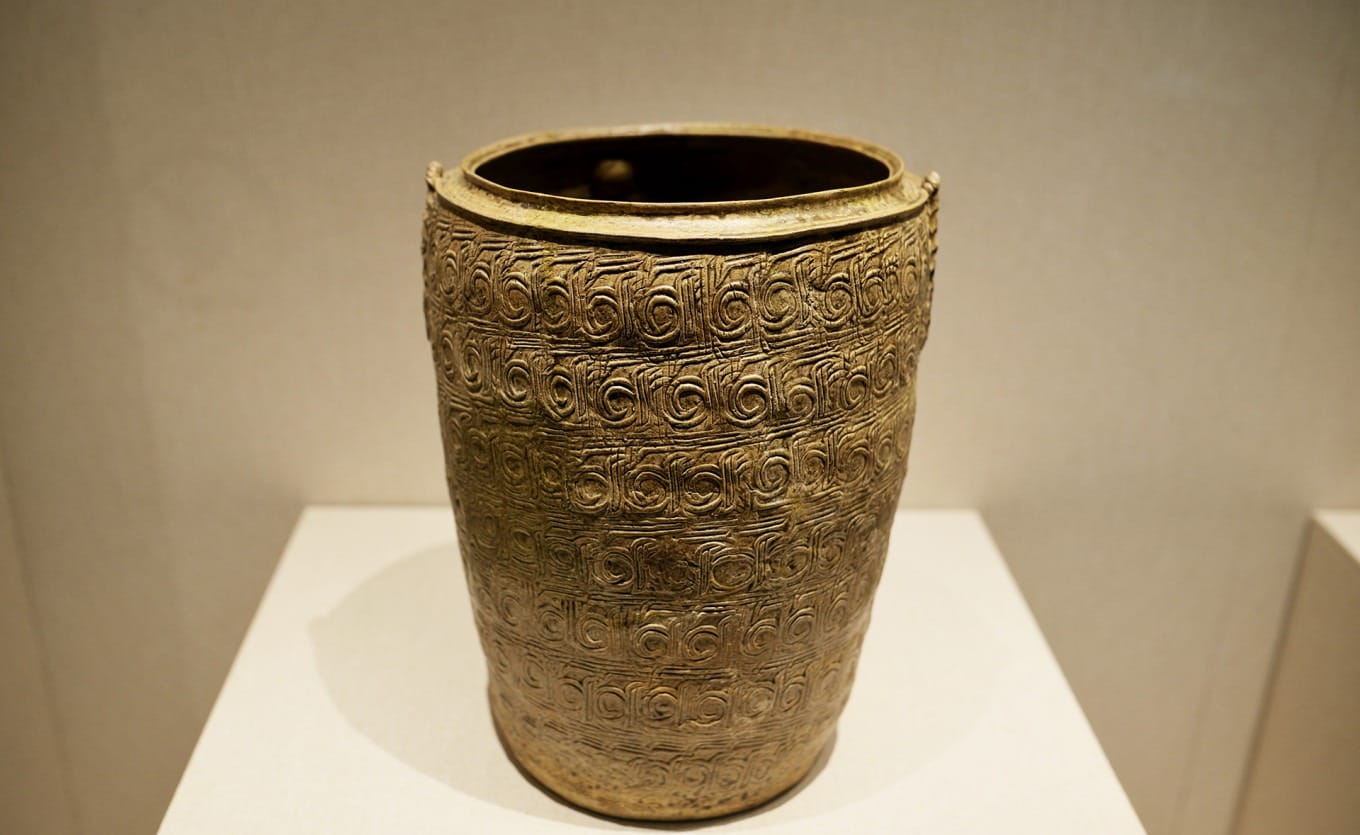
【Proto-Celadon Stamped Twin-Handled Jar, Spring and Autumn Period(原始青瓷印纹双耳罐,春秋)】 Donated by a Japanese friendship organization, this cylindrical jar is covered in stamped panchi-dragon patterns and coated with a thin, translucent green glaze. The uneven surface reveals the coil-building technique popular during the Shang and Zhou periods.
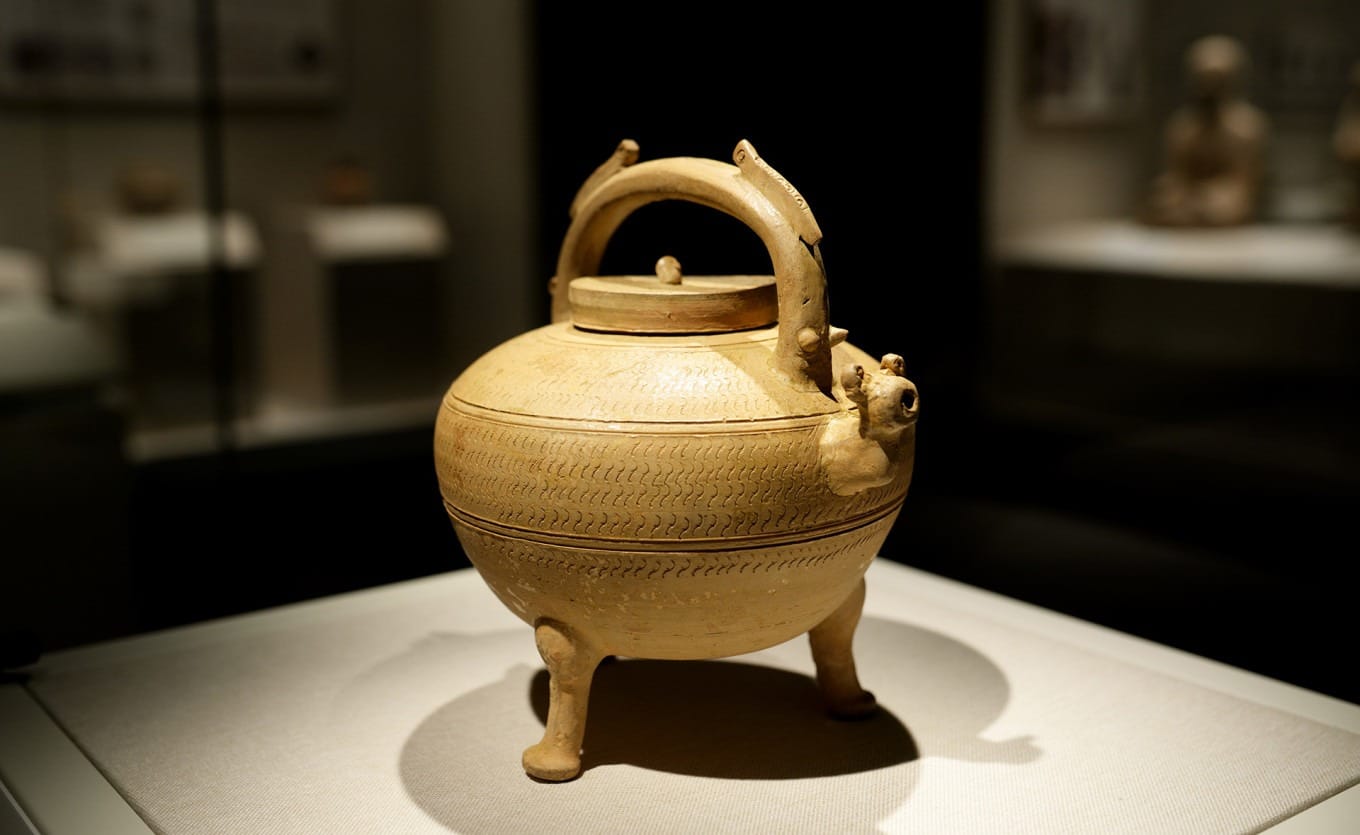
【Proto-Celadon Three-Legged He with Handle, Warring States Period(原始青瓷提梁三足盉,战国)】 Also donated by a Japanese organization, this vessel was used for warming wine. Its form imitates contemporary bronze examples: a dragon-head spout, dragon-tail handle, and raised ridges forming the dragon’s body—an elegant fusion of function and symbolism.
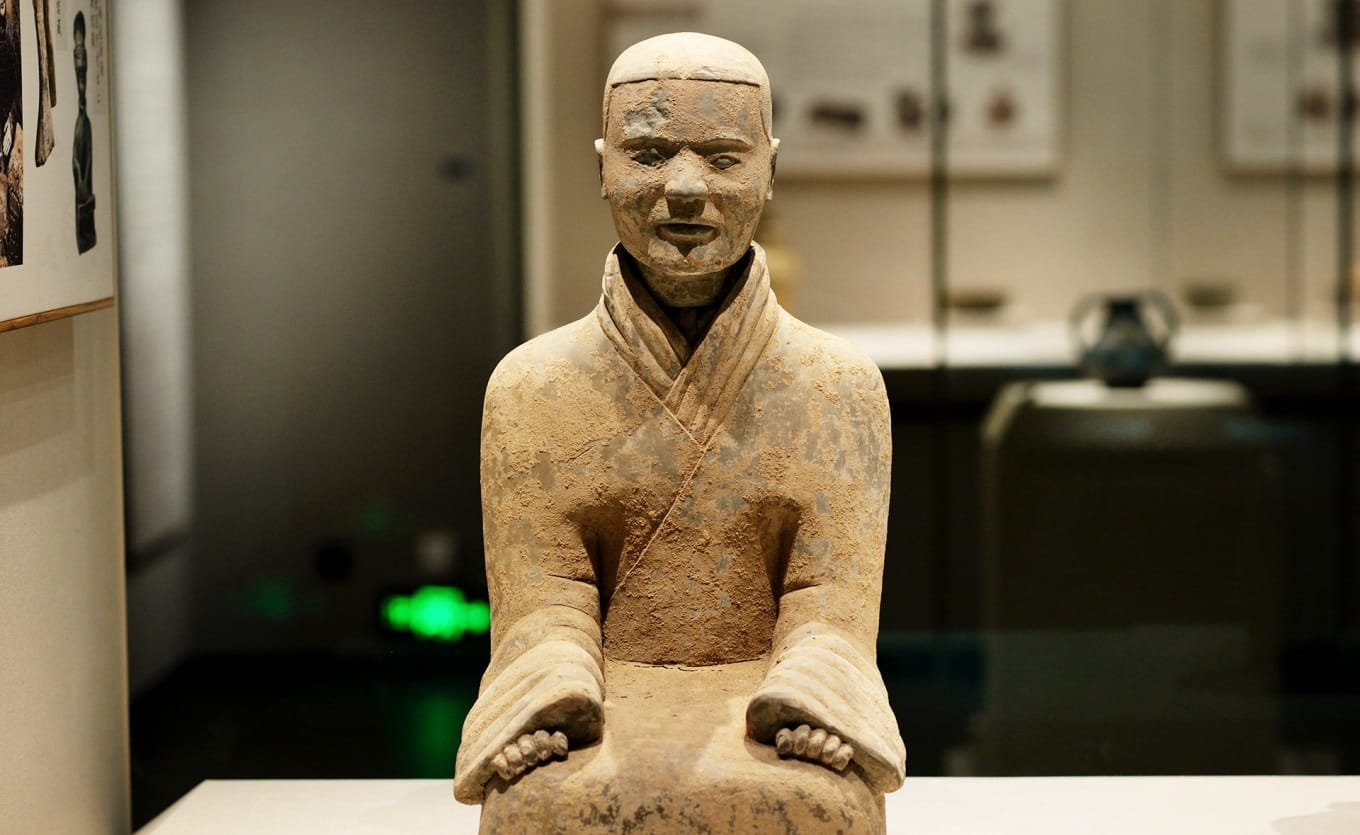
【Kneeling Terracotta Figure, Qin Dynasty(跽坐陶俑,秦)】 Excavated from Shangjiaocun in Lintong(临潼上焦村), Shaanxi, this figure likely represents a stable attendant. The site lies within the Qin Shi Huang Mausoleum complex, where real horses and seated figures were often buried together.
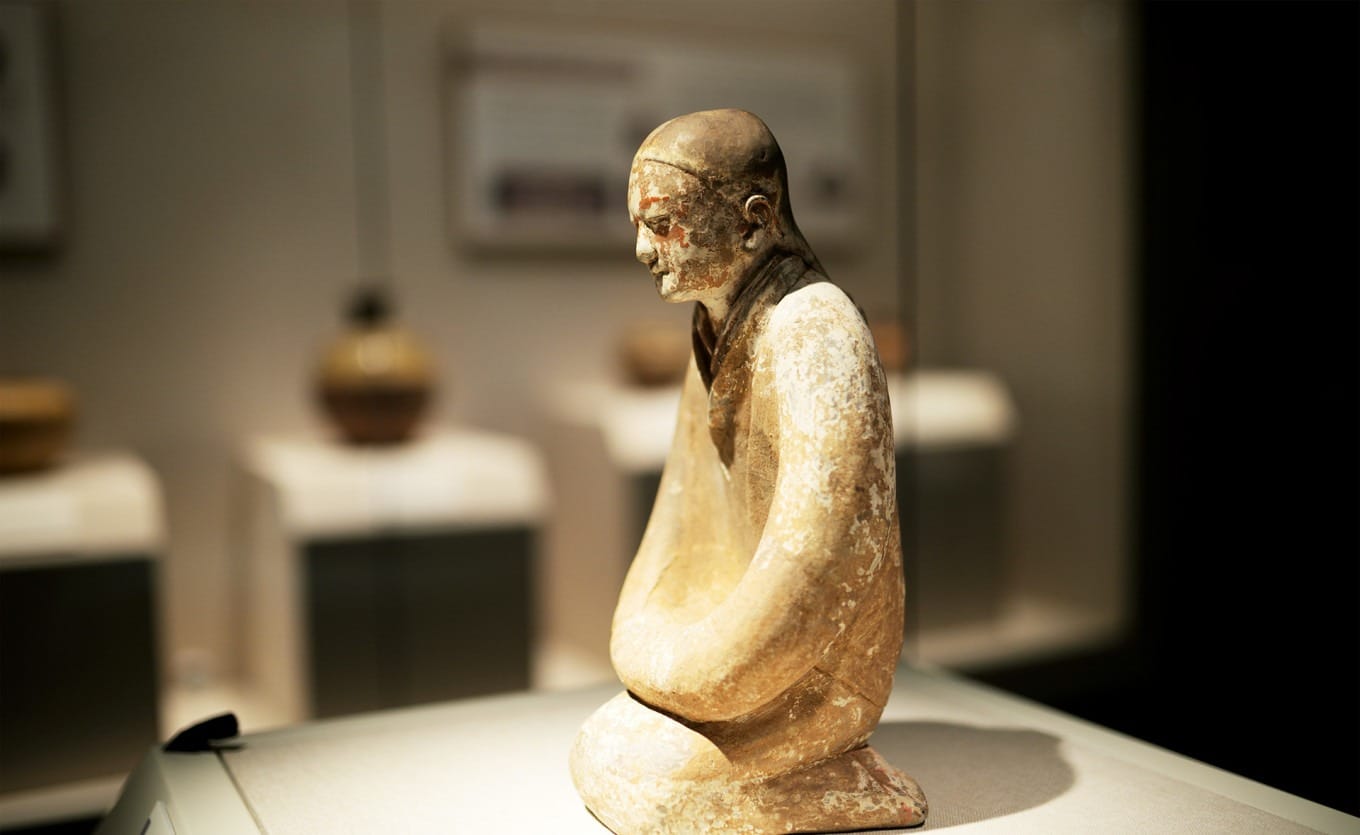
【Painted Kneeling Female Figurine, Western Han Dynasty(彩绘跽坐女陶俑,西汉)】 Unearthed from the Baling Mausoleum(霸陵)of Emperor Wen of Han near Xi’an, this figure reflects the more restrained burial customs of the early Western Han, a period marked by recovery after years of warfare.
【Painted Female Figurines, Western Han Dynasty(彩绘女陶俑,西汉)】 These figures, excavated from Han tombs at Sanyao Village(三爻村)in Xi’an, are notable for their clothing. The long-sleeved, cross-collared robes belong to the *shenyi*(深衣)style, a key form of Han women’s dress.
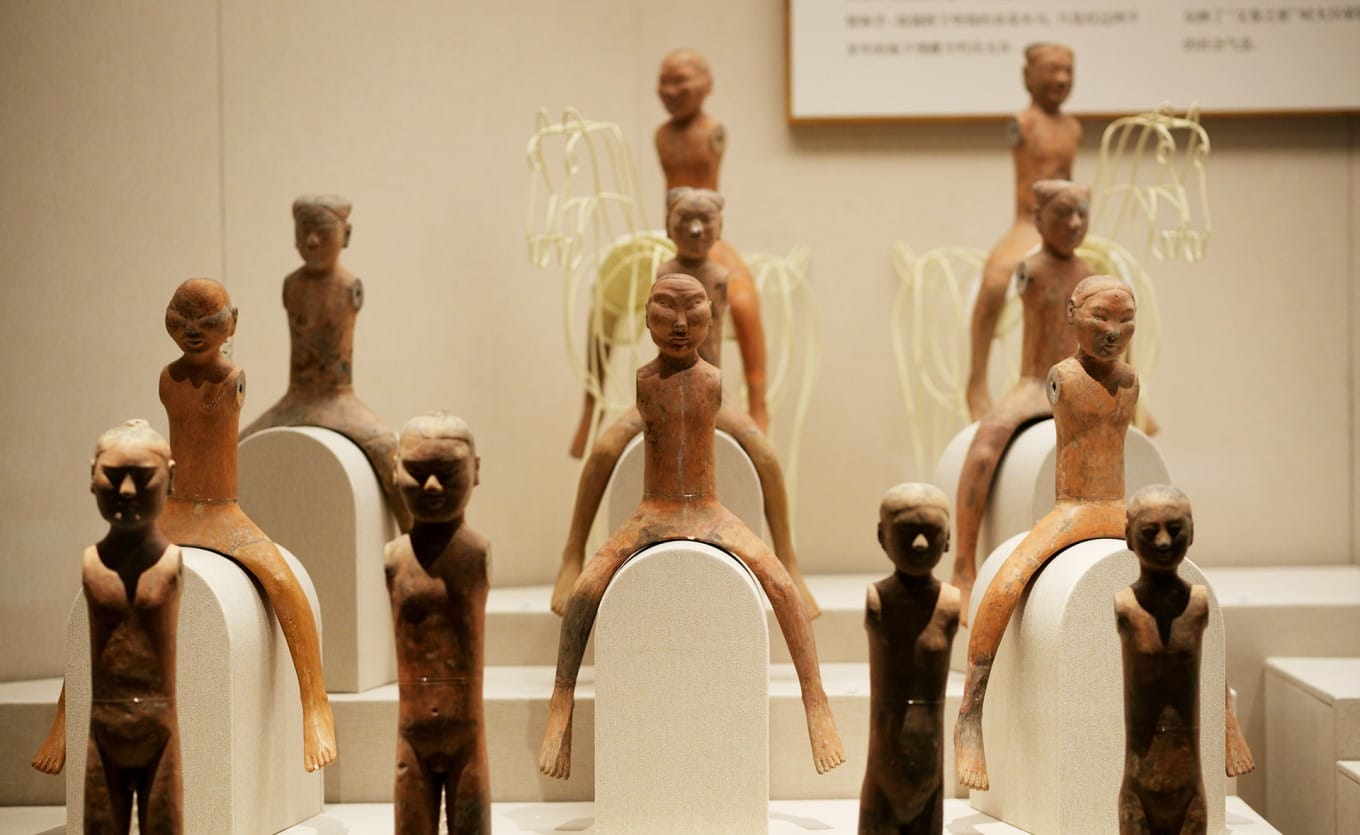
【Nude Terracotta Figurines, Western Han Dynasty(裸体陶俑,西汉)】 These twelve figurines were excavated from the Yangling Mausoleum(汉阳陵)of Emperor Jing of Han in Xianyang. Designed to be dressed with real garments, they combine Qin realism with Chu artistic traditions. Among them are rare female mounted figures, believed to represent attendants rather than soldiers.
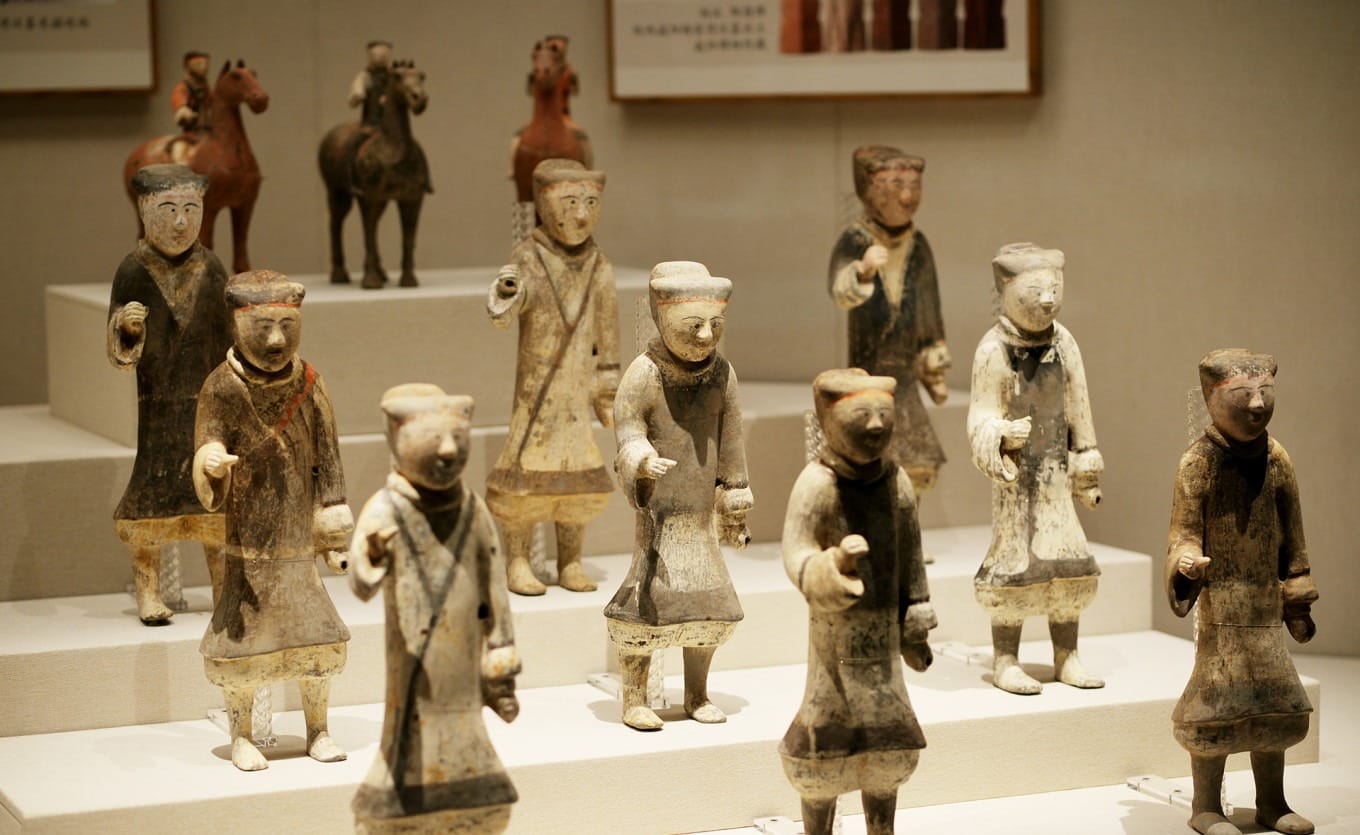
【Painted Infantry Figurines, Western Han Dynasty(彩绘步兵陶俑,西汉)】 Donated by a Japanese organization, these figures retain traces of red, white, and black pigment. Their uniforms, armor, and dynamic poses vividly capture the readiness of Han soldiers.
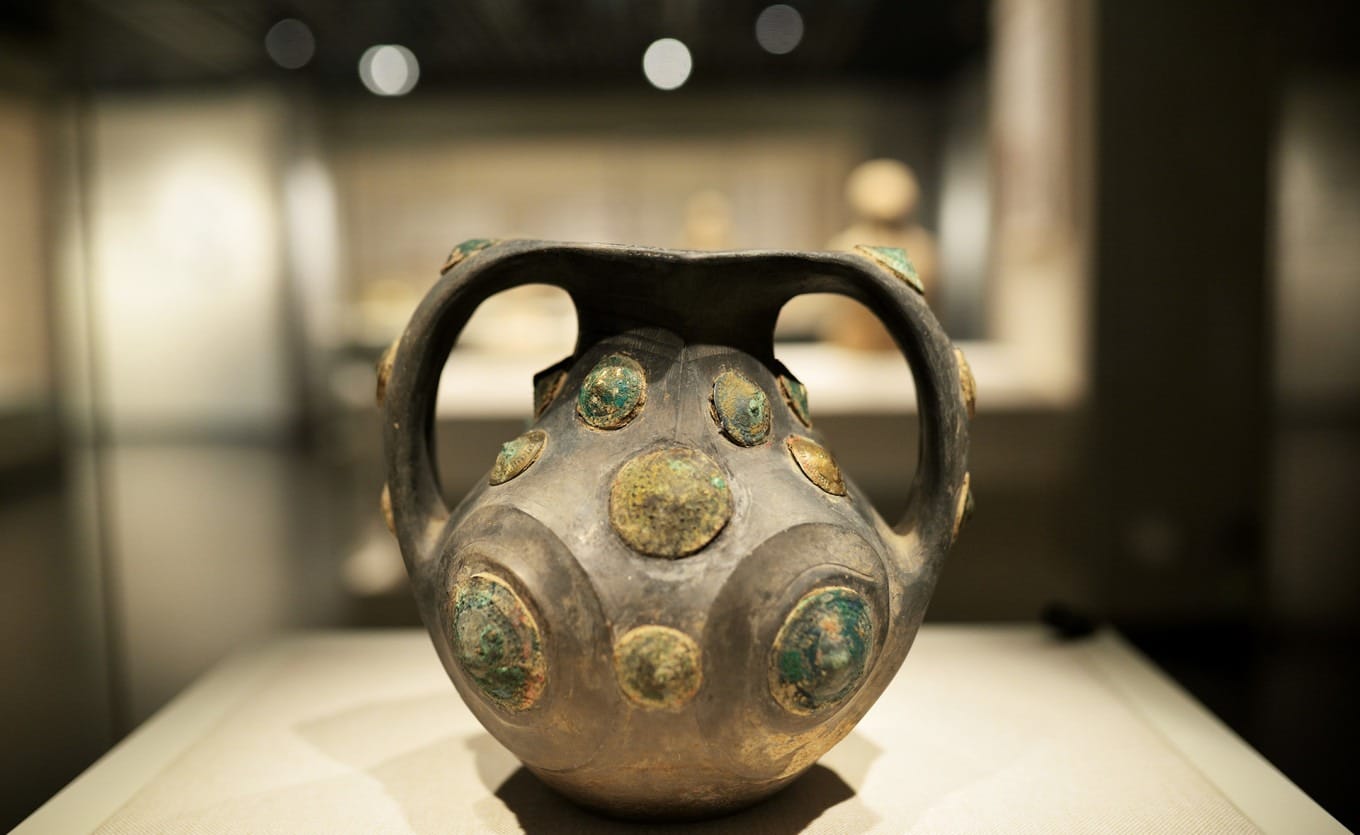
【Black Pottery Jar with Copper Studs, Western Han Dynasty(黑陶嵌铜泡钉双耳壶,西汉)】 This rare jar, donated from Japan, features copper studs embedded in black pottery. Scholars believe it may be linked to Di-Qiang ethnic groups who migrated from northwestern to southwestern China before gradually assimilating into Han culture.
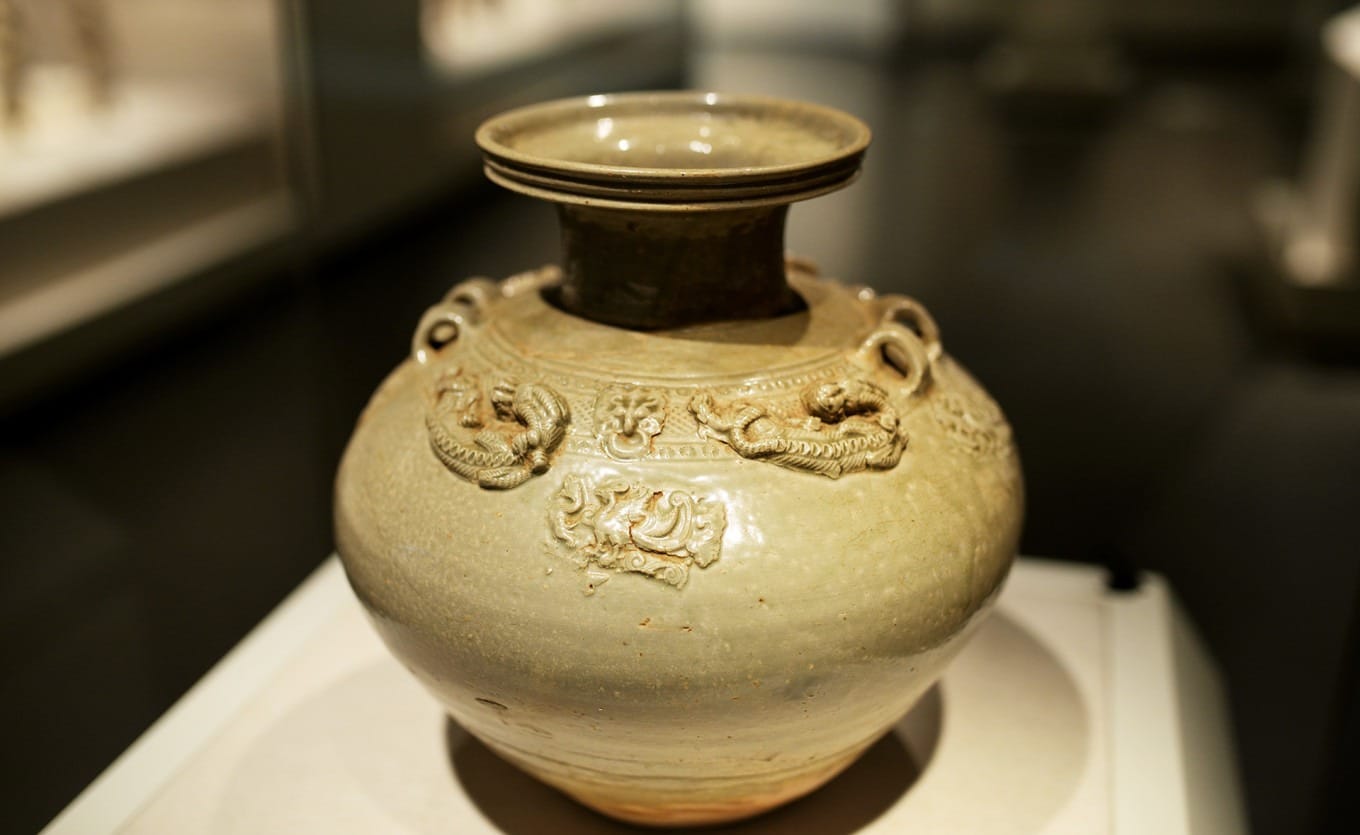
【Green-Glazed Dragon-and-Phoenix Jar, Western Jin Dynasty(青釉贴塑龙凤纹盘口壶,西晋)】 Transferred by the National Cultural Heritage Administration in 1993, this jar features applied dragon and phoenix motifs. Such molded decoration is characteristic of celadon wares from the Three Kingdoms to Western Jin period.
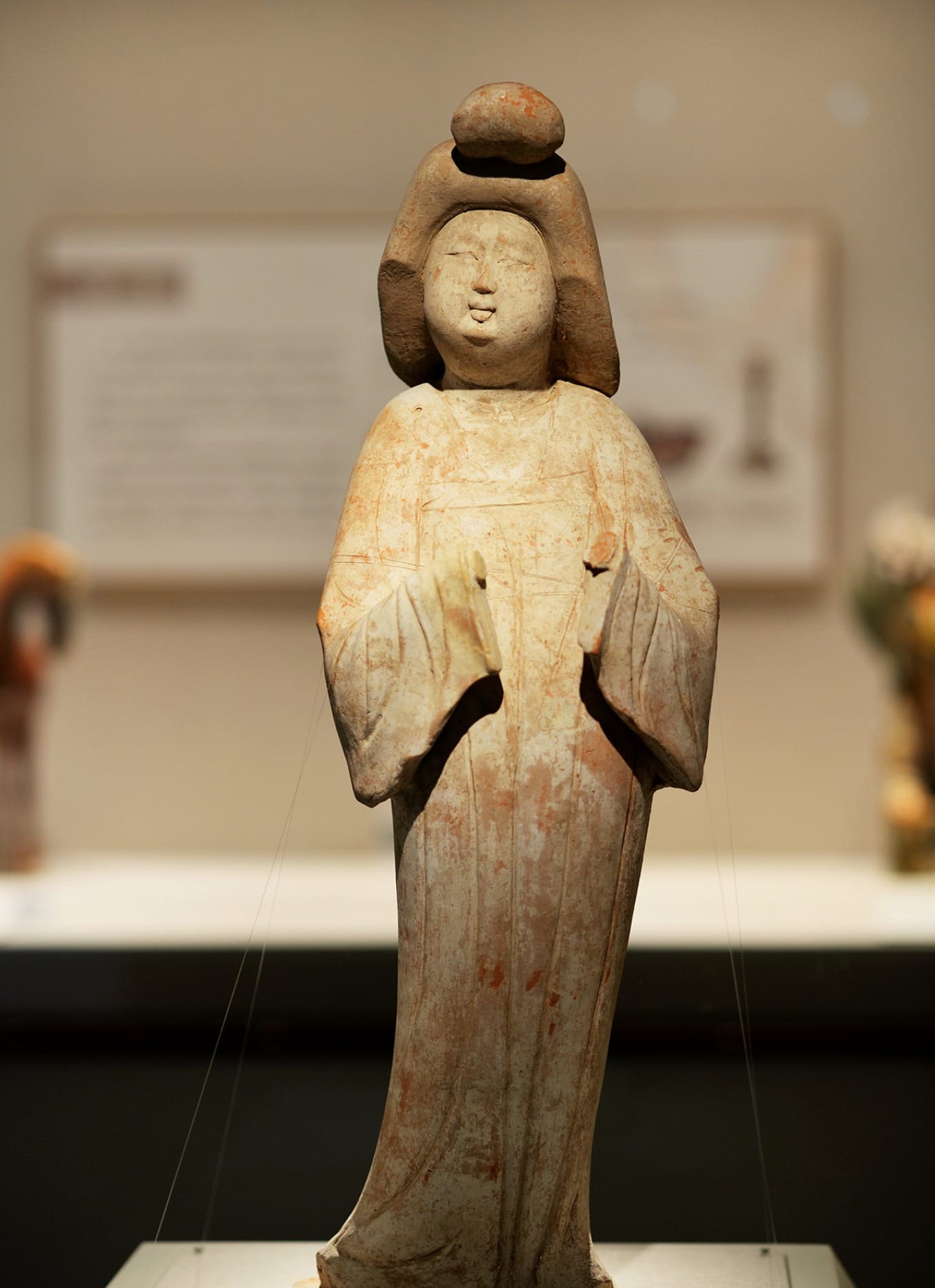
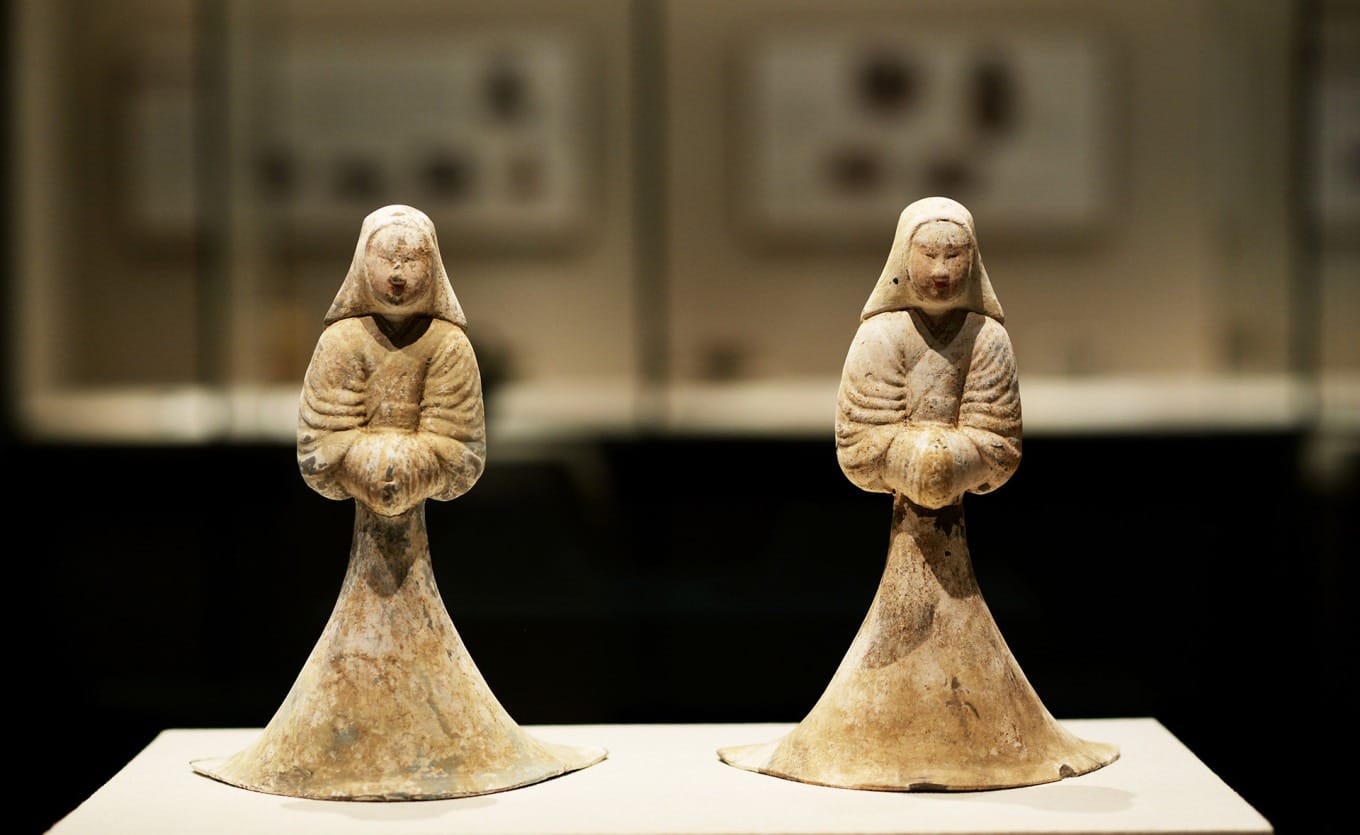
【Painted Court Lady Figurine, Tang Dynasty(彩绘仕女陶俑,唐)】 Excavated from the tomb of Li Xian(李宪), the so-called “Abdicating Emperor,” this figure dates to the High Tang era. With flowing lines and confident posture, it vividly captures the elegance and prosperity of Tang women.
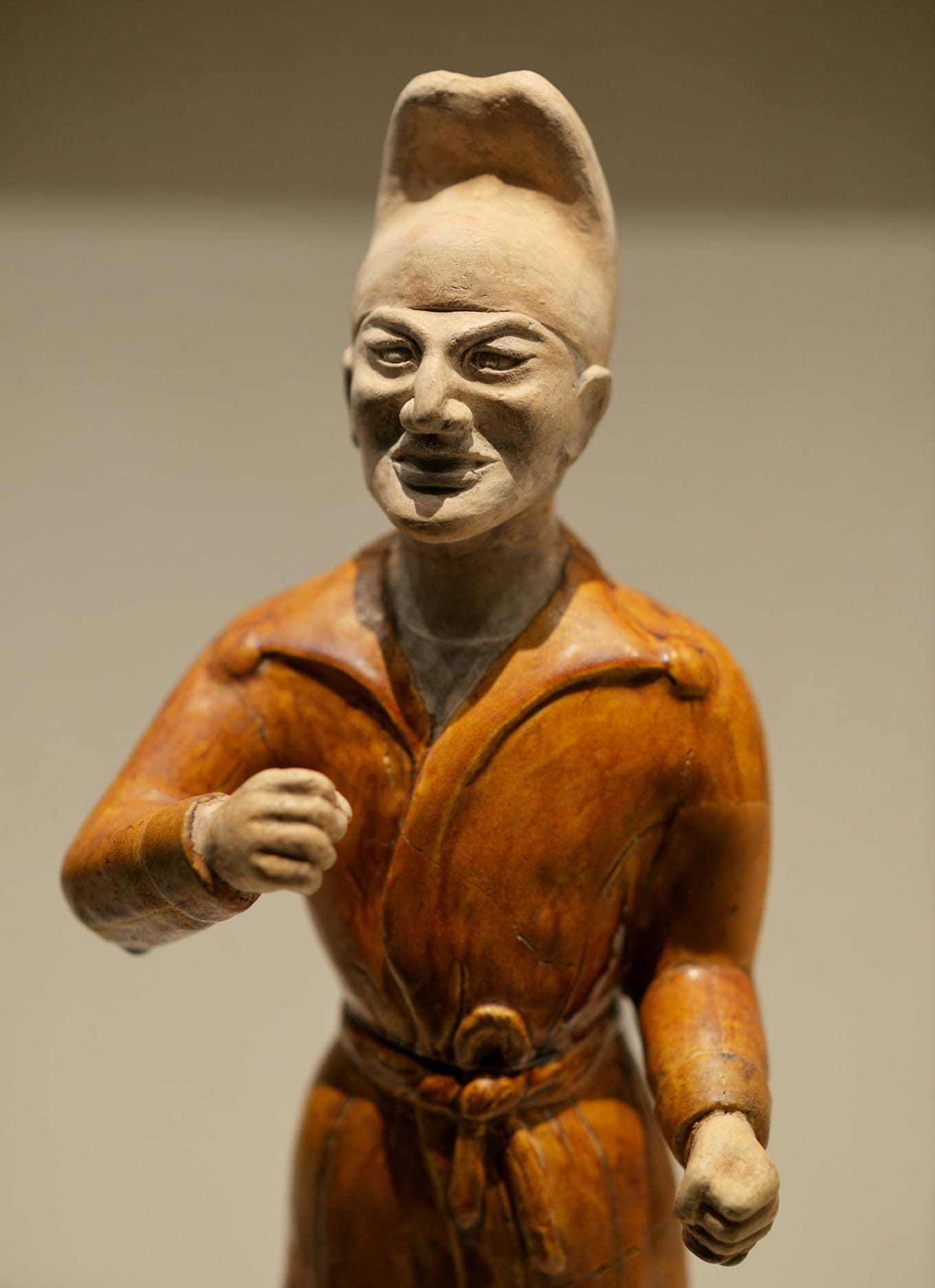
【Tri-Color Glazed Camel, Tang Dynasty(三彩骆驼,唐)】 Donated by a Japanese organization, this sancai camel reflects the vital role of camel caravans along the Silk Road during the Tang dynasty, symbolizing trade and cultural exchange.
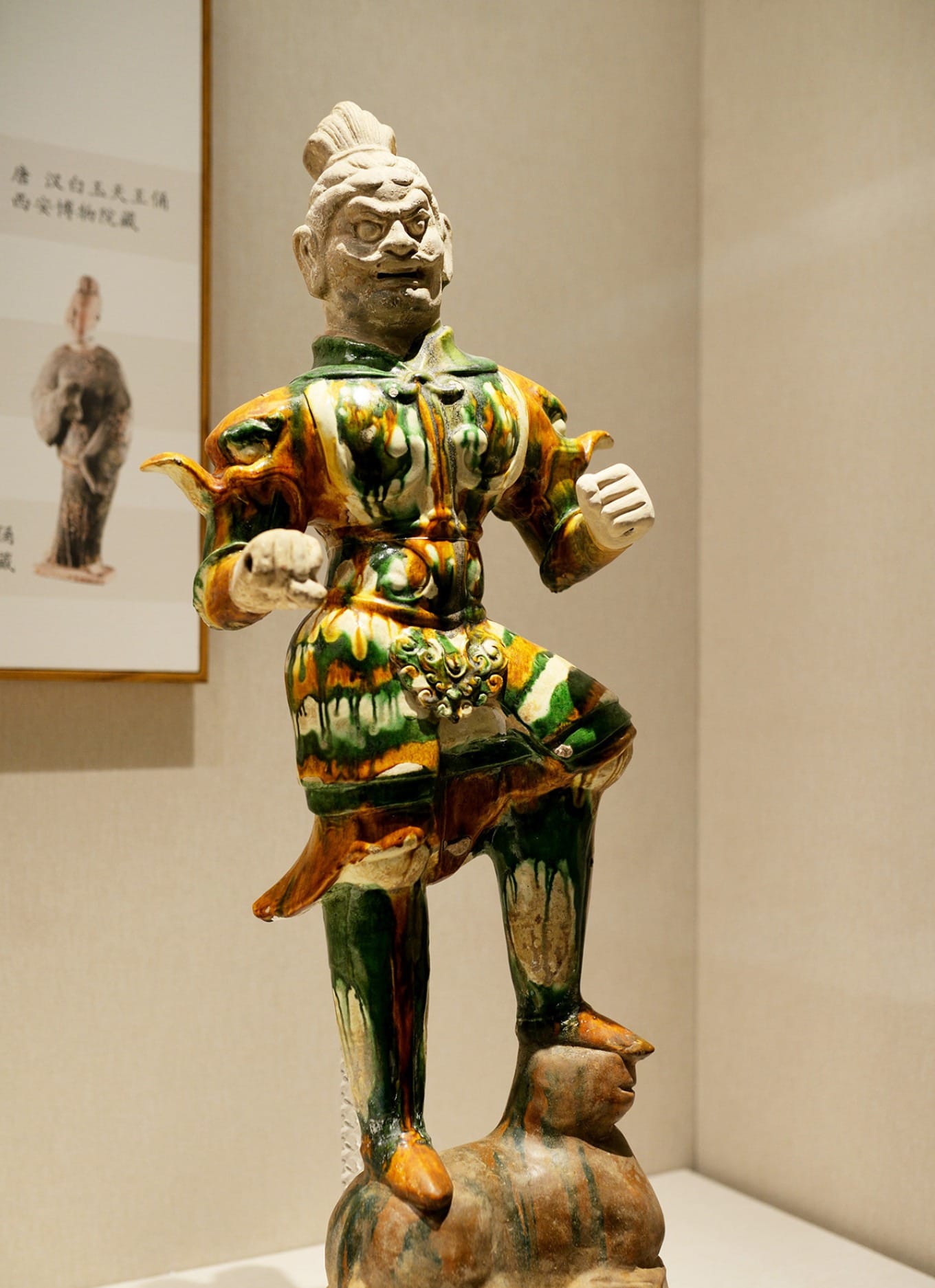
【Tri-Color Heavenly King Guardian, Tang Dynasty(三彩天王俑,唐)】 Transferred from Henan Museum, this powerful figure blends Buddhist guardian imagery with Tang military aesthetics—armored, forceful, and full of commanding presence.
*Spring and Autumn of Bronze*(吉金春秋)is the second major highlight, displaying over 300 ritual vessels, weapons, mirrors, coins, and musical instruments. Many masterpieces were transferred from Henan Museum, including bronzes from Huixian Liulige(辉县琉璃阁), Erlitou and Erligang sites(郑州二里岗), and the Guo State cemetery at Sanmenxia(三门峡虢国墓地)—representing the core strength of Shenzhen Museum’s bronze collection.
Shenzhen Wangye Museum
- AttractionShenzhen Wangye Museum(深圳望野博物馆)
- Address3/F, Longhua Cultural & Arts Center, No. 1377 Longhua Avenue, Longhua District(深圳市龙华区龙华大道1377号龙华文化艺术中心三楼)
- AdmissionFree(免费)
- NoteClosed on Mondays(每周一闭馆)
Beyond Shenzhen Museum, the city is home to many other museums that are well worth your time. One standout is the Shenzhen Wangye Museum(深圳望野博物馆), located on the third floor of the Longhua Cultural & Arts Center(龙华文化艺术中心). This is a privately run National Grade-Two Museum, with a focused but high-quality collection centered on Tang Dynasty ceramics and Song Dynasty ceramic pillows. While the total number of artifacts is modest, the proportion of rare and significant pieces is remarkably high.
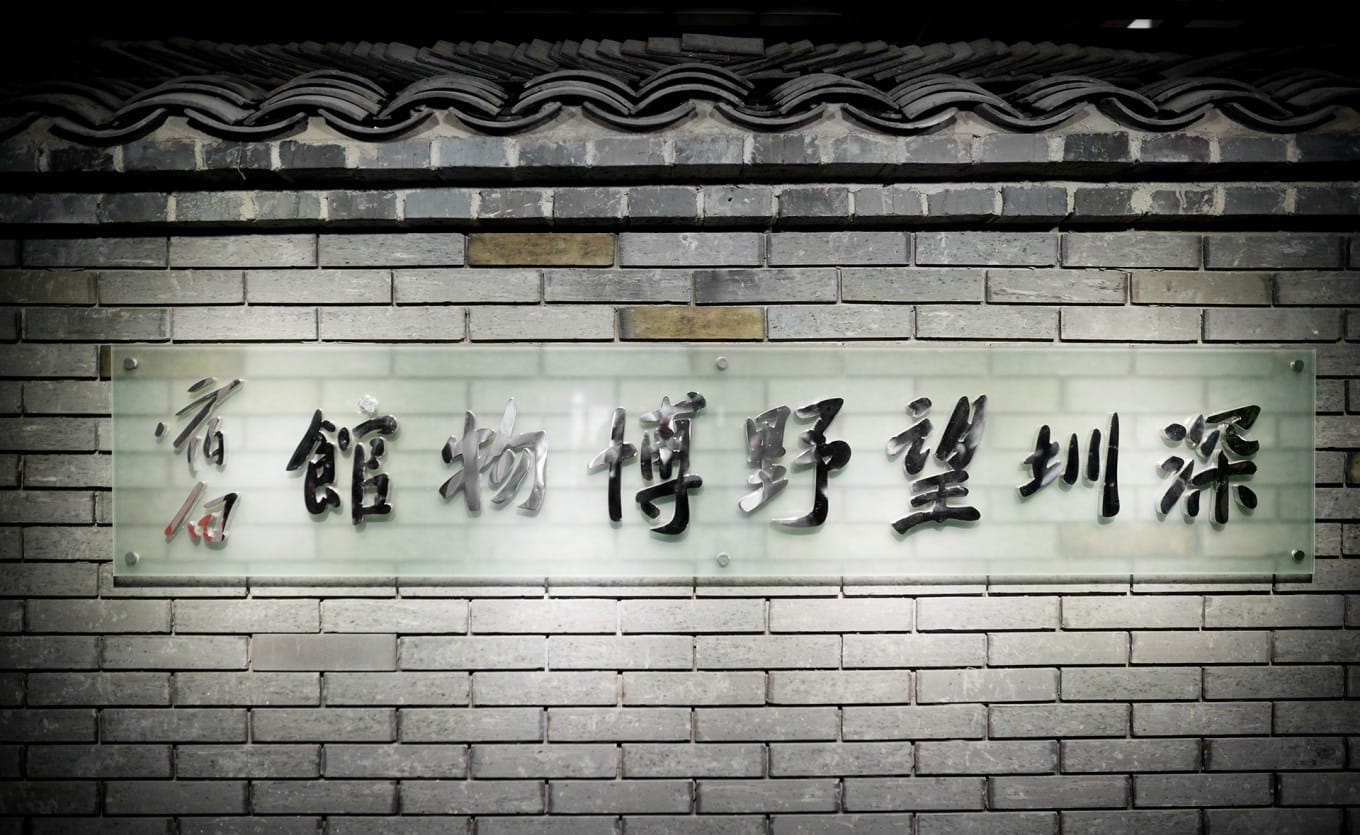
As you enter, take a moment to notice the museum’s name plaque—its calligraphy was written by Su Bai(宿白), one of China’s most respected archaeologists. The museum does not maintain a permanent exhibition. Instead, it hosts rotating special exhibitions. At present, the main displays are *Secrets Within the Pillow — Ancient Chinese Pillows*(《枕中秘—中国古代枕具展》)and *Grasping the Sword — A Thousand Years of Blood and Valor*(《握剑——血气千年》). Note that the museum is closed on Mondays, so plan your visit accordingly.
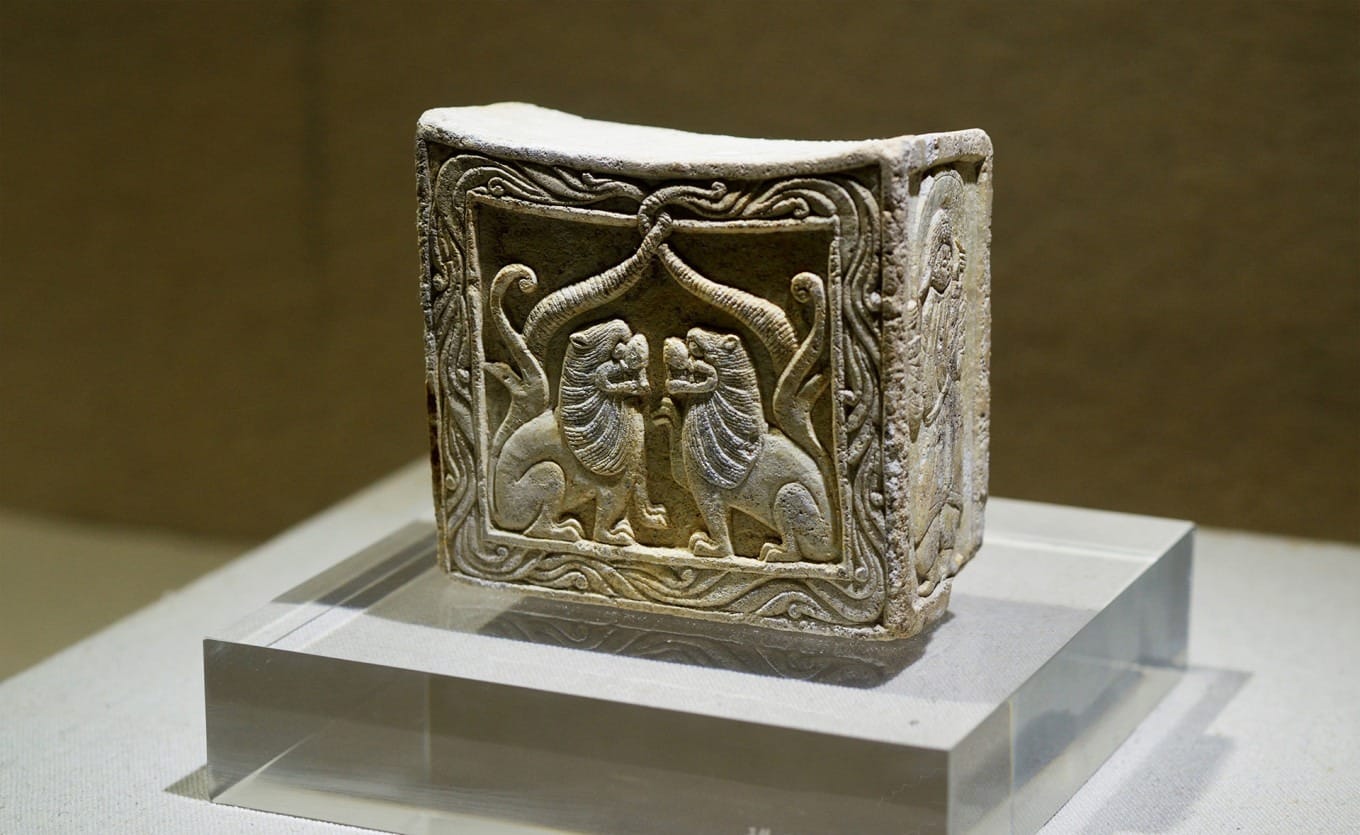
The exhibition *Secrets Within the Pillow* begins with an exploration of ancient pillows. In premodern China, ceramic pillows were everyday household objects. Before the Sui and Tang dynasties, surviving hard pillows are rare—aside from jade pillows found in elite tombs, most preserved examples are made of stone.
【Stone Pillow with Twin Lion Motifs, Northern Dynasties(双狮纹石枕,北朝)】 At the entrance, you’ll encounter a stone pillow from the Northern Dynasties period. Two male lions are carved on the front, while figures resembling Sogdians appear on the sides, giving the piece a strikingly foreign aesthetic that reflects cultural exchange along early trade routes.
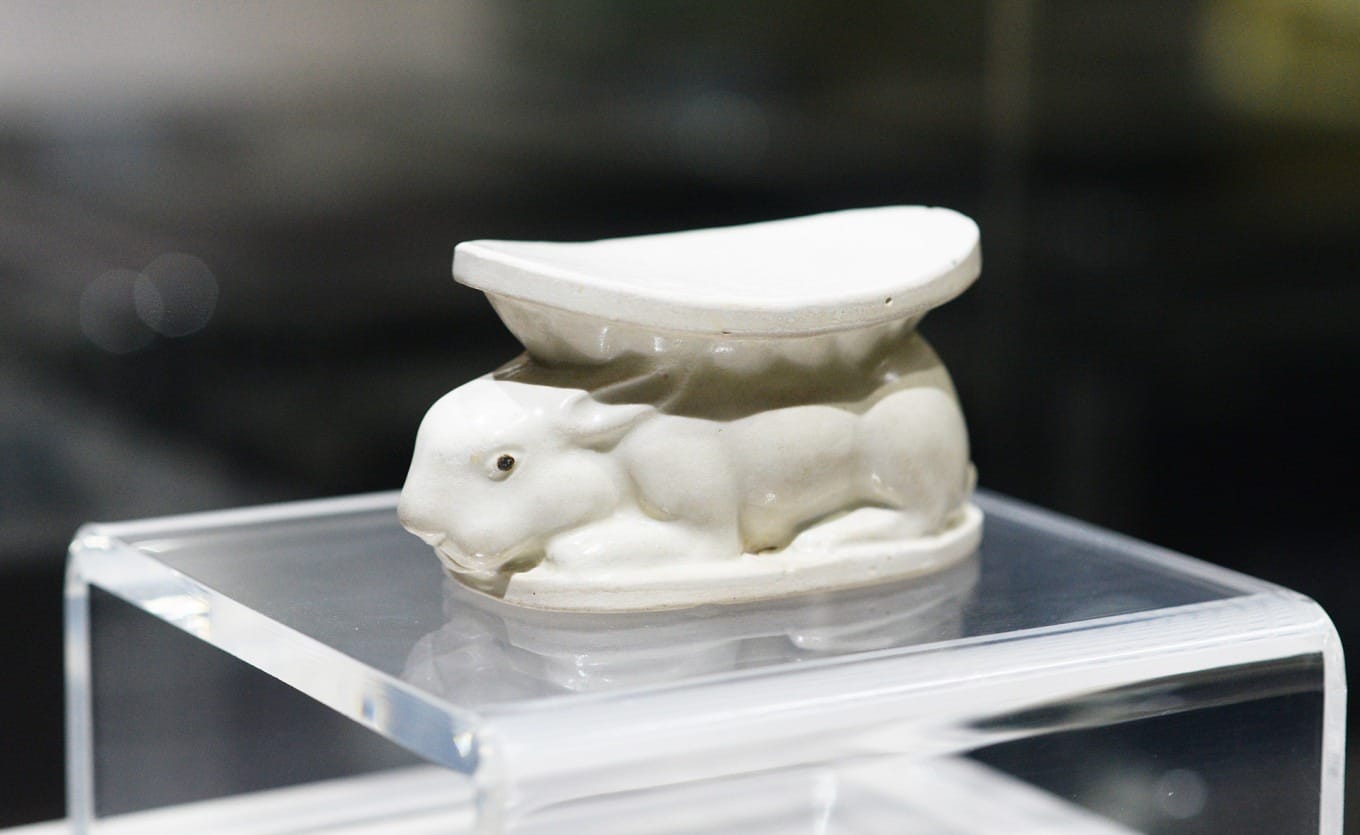
【White Porcelain Rabbit Pillow with Black-Splashed Decoration, Tang Dynasty(巩县窑白瓷点黑彩兔枕,唐)】 Produced at Gongxian Kiln(巩县窑)in present-day Henan Province(河南), this rabbit-shaped pillow is coated in white glaze, with dark brown accents on the eyes. The sculptural form is lively and expressive. In ancient China, rabbits symbolized the moon and fertility, so such pillows carried auspicious meanings of protection and blessings.
【Pearl-Ground Makara Dragon Pattern Pillow, Song Dynasty(登封窑珍珠地摩羯龙纹方圆枕,宋)】 Song Dynasty ceramic pillows represent the peak of this art form. Dengfeng Kilns(登封窑)refer collectively to kilns active from the Sui through Jin–Yuan periods, with Hequ Kiln(河曲窑)especially renowned for pearl-ground sgraffito wares. The Makara—a mythical aquatic creature of Indian origin later absorbed into Buddhist iconography—was associated in China with the idea of ‘fish transforming into a dragon,’ symbolizing success in the imperial examinations and dreams fulfilled.
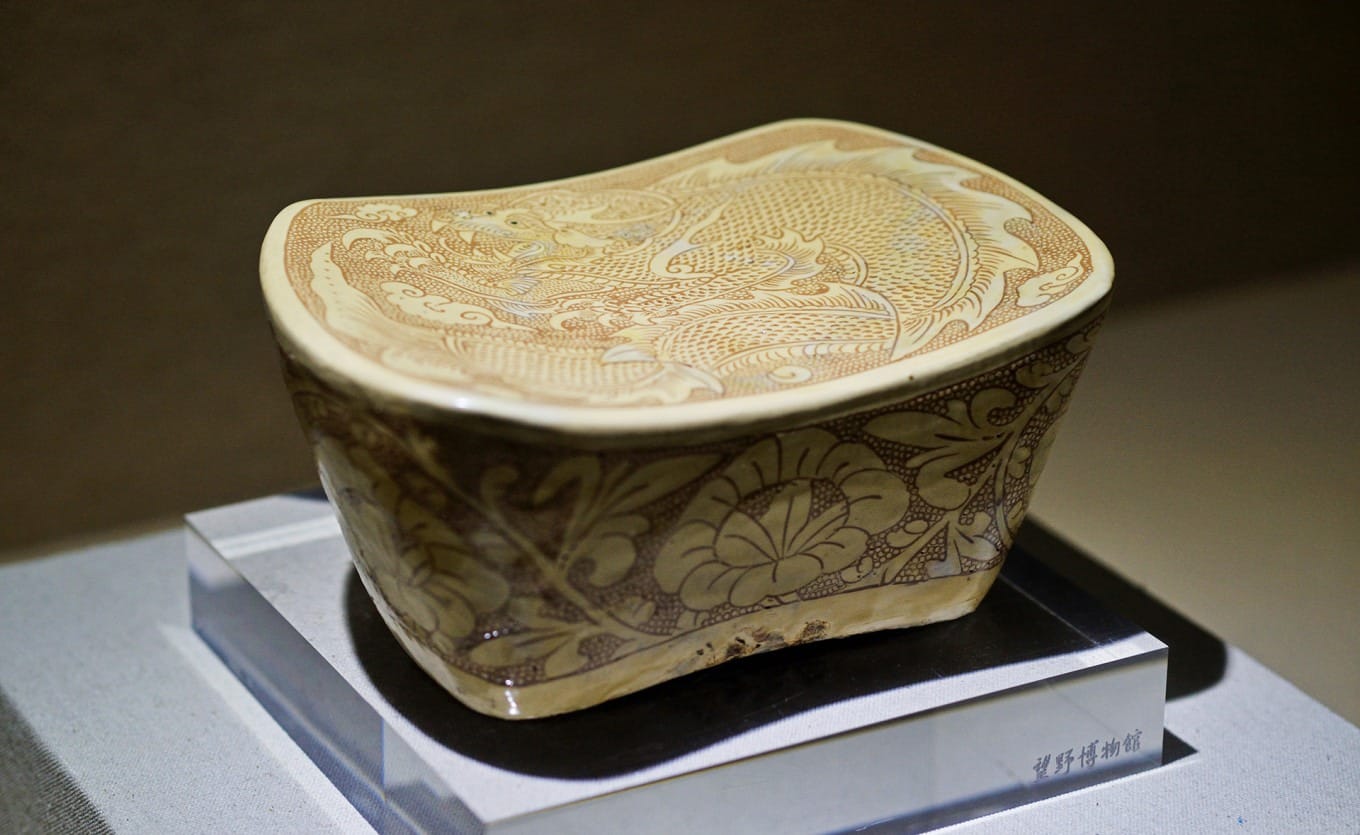
【Leaf-Shaped White-Ground Carved Pillow, Song Dynasty(观台窑白地划刻花叶形枕,宋)】 Guantai Kiln(观台窑)was a major northern folk kiln from the Northern Song through Yuan dynasties, belonging to the Cizhou Kiln system. The kiln site sits atop what locals believe was Cao Cao’s ancient military observation platform in present-day Cixian, Hebei(河北磁县).
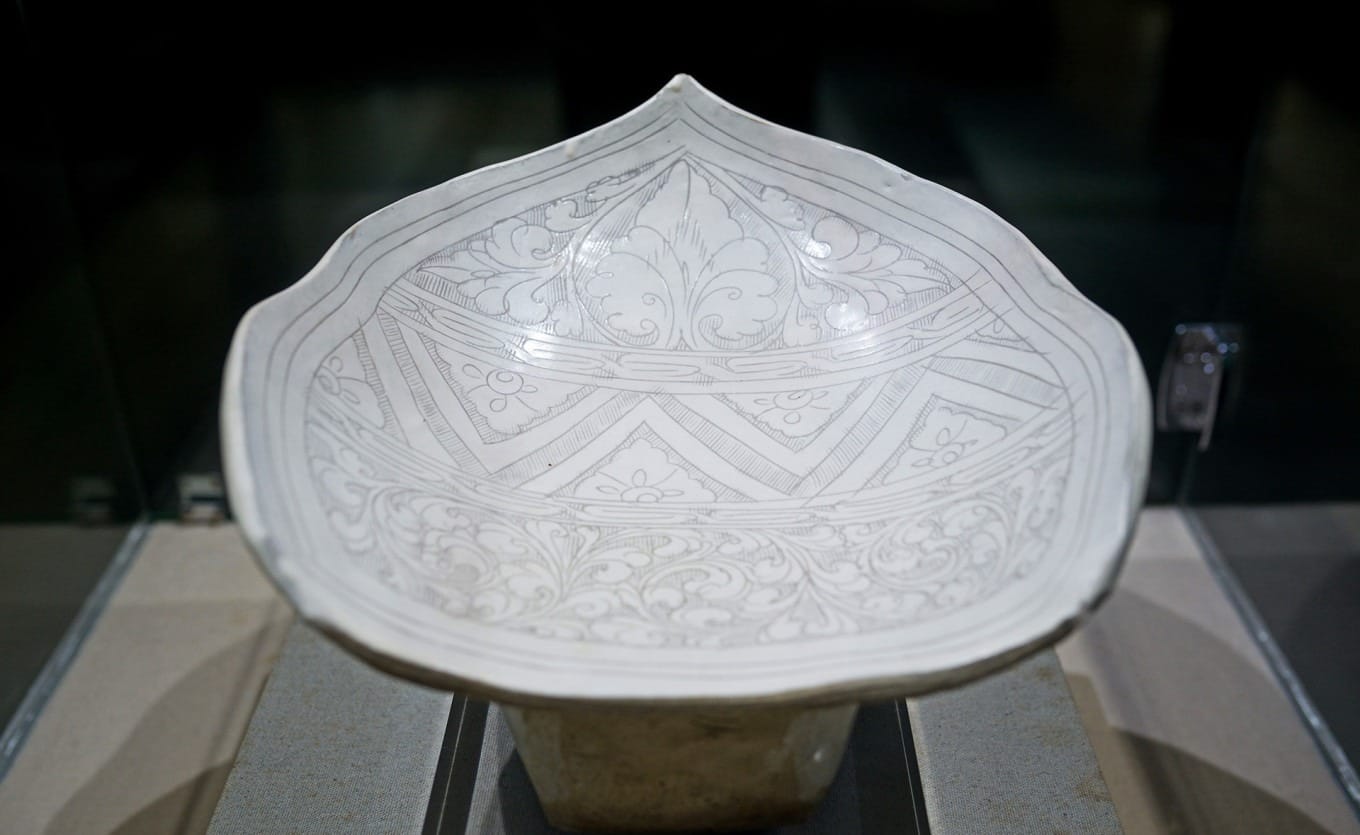
【Hexagonal Dark-Engraved Floral Pillow, Song Dynasty(虢石倭边暗刻花卉纹方枕,宋)】 This six-sided pillow is made from Guoshi stone(虢石), also known as purple pottery stone, sourced from Lushi and Lingbao counties in Henan(河南卢氏、灵宝).
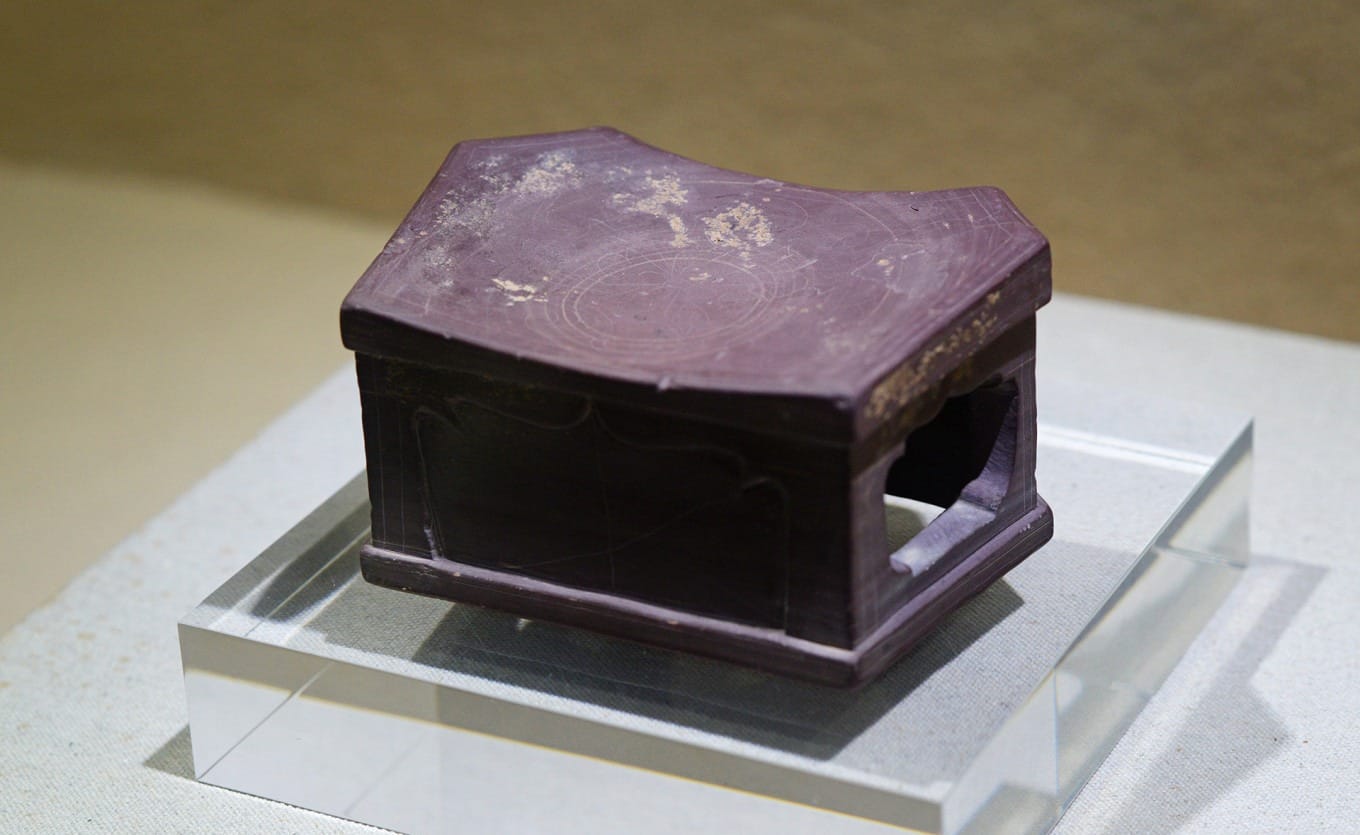
【Green-Glazed Marbled ‘Pei Family’ Flower Pillow, Northern Song(绿釉绞胎裴家花枕,北宋)】 The base of this pillow is inscribed with the words ‘Pei Family Flower Pillow(裴家花枕),’ indicating production by the Pei family kiln. This inscription shows that Song Dynasty potters already possessed a strong sense of branding and workshop identity.
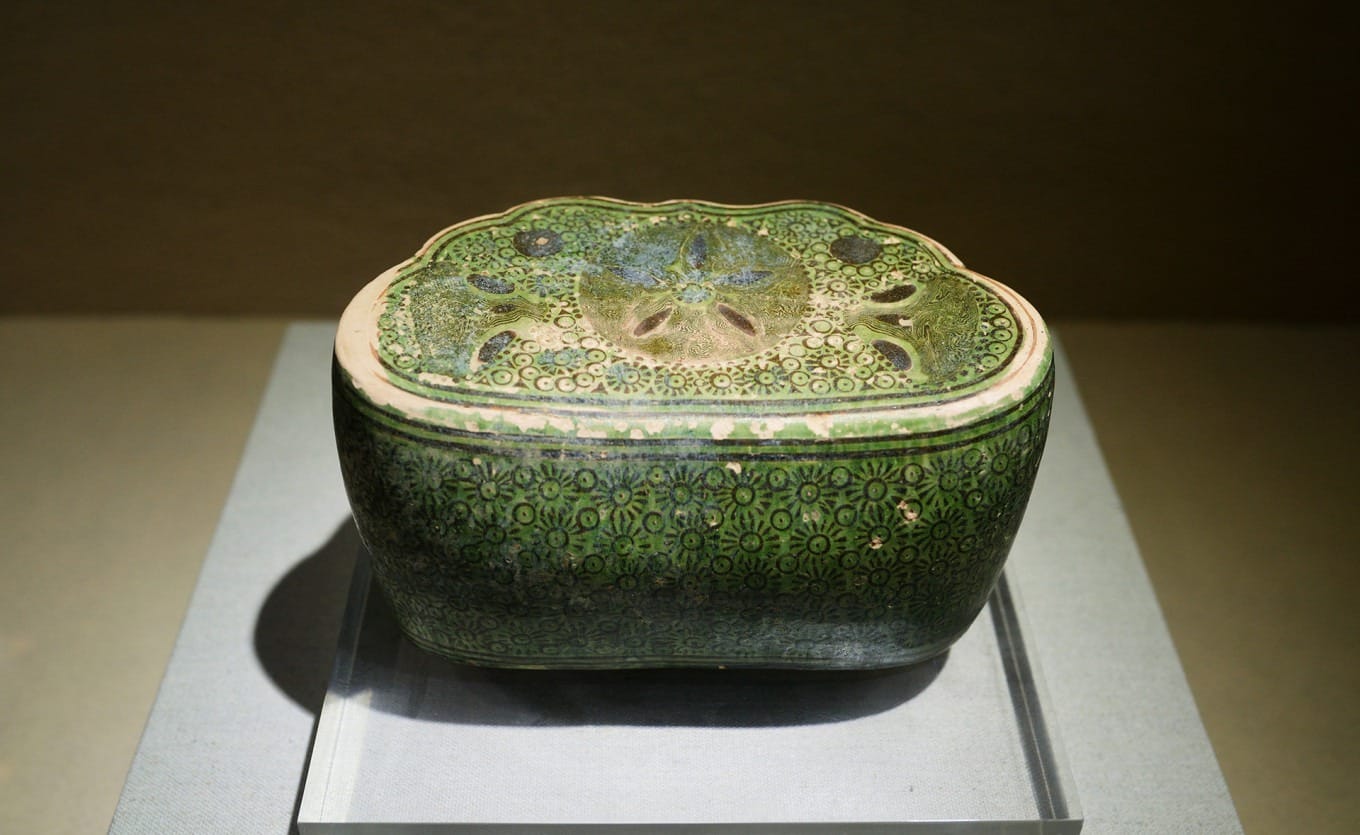
【Landscape-Painted Pillow, Jin Dynasty(长治窑白地黑花绘山水纹图圆枕,金)】 Produced at Changzhi Kiln(长治窑)in present-day Shanxi(山西长治八义镇), this pillow features a tranquil landscape scene. By this time, ceramics had clearly become a medium for literati expression and cultural transmission.
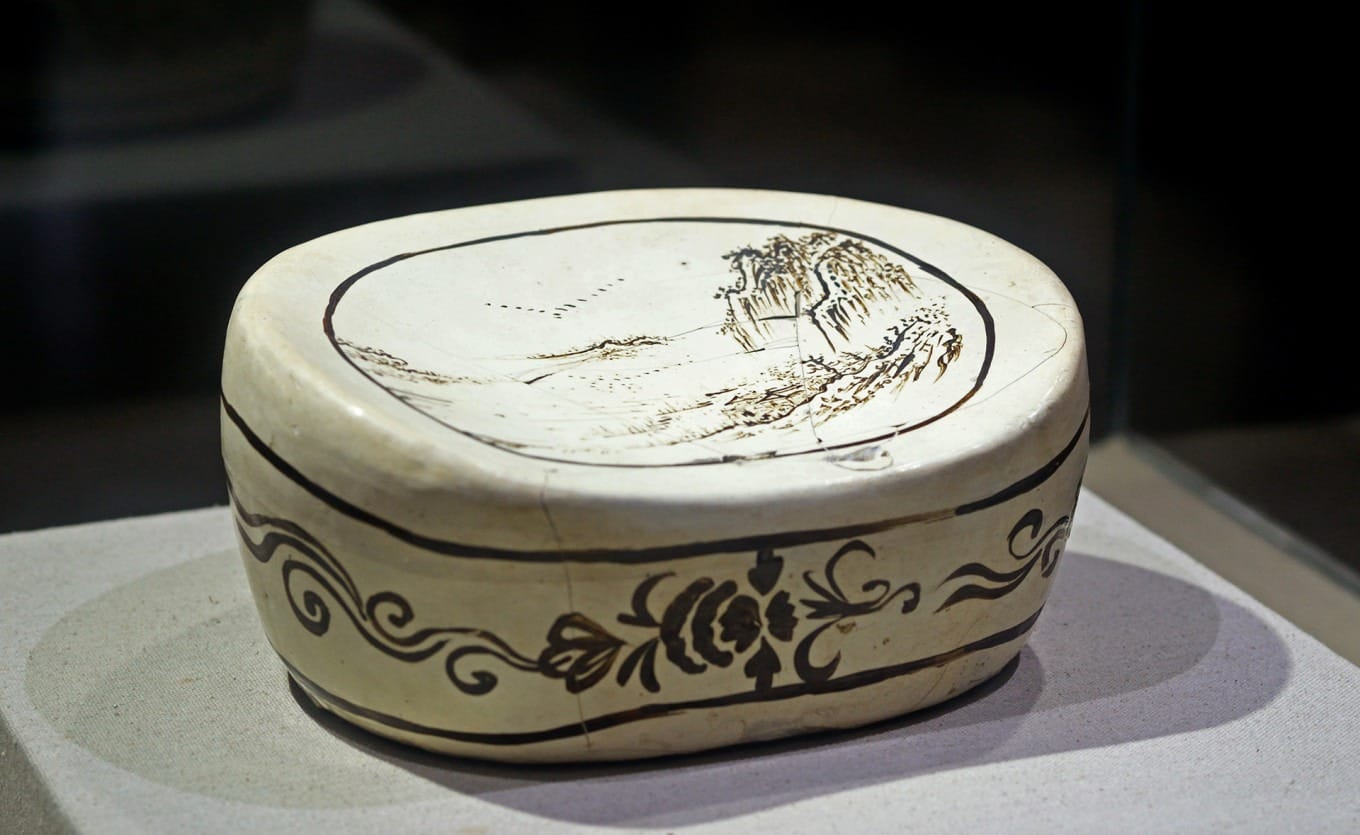
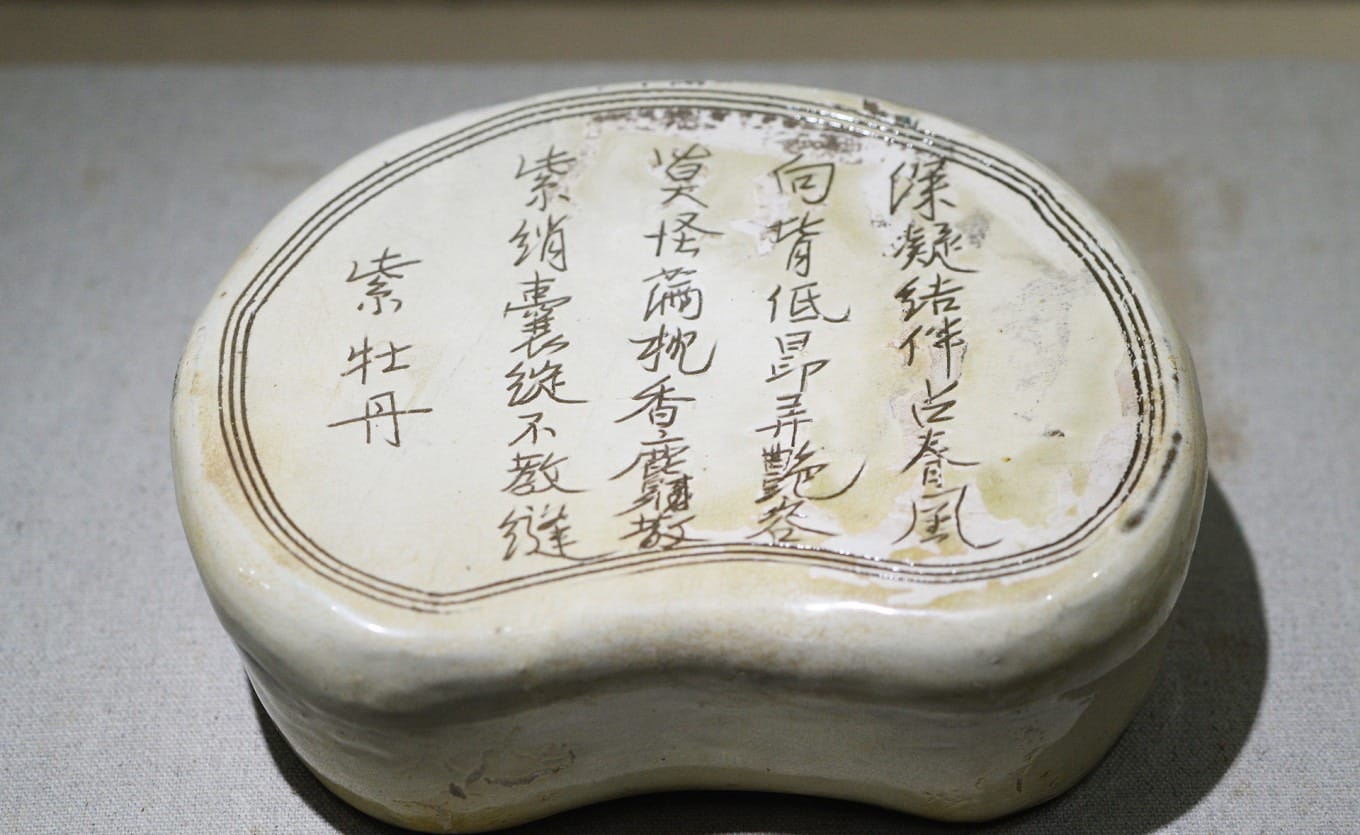
【Poem-Inscribed White Porcelain Pillow, Jin Dynasty(长治窑刻划诗文白瓷枕,金)】 This Changzhi Kiln pillow bears an engraved poem praising the purple peony, revealing how poetry, ceramics, and daily life intertwined in medieval China.
【Bird-Motif Pillow, Jin Dynasty(磁州窑白地黑彩鸟纹枕,金)】 Cizhou Kiln(磁州窑), centered in modern Handan, Hebei(河北邯郸磁县), was one of northern China’s most important folk kilns. This ruyi-shaped pillow features a myna bird, chosen for its distinctive ‘eight-shaped’ wing markings and its reputation for mimicking human speech—both symbols of good fortune.

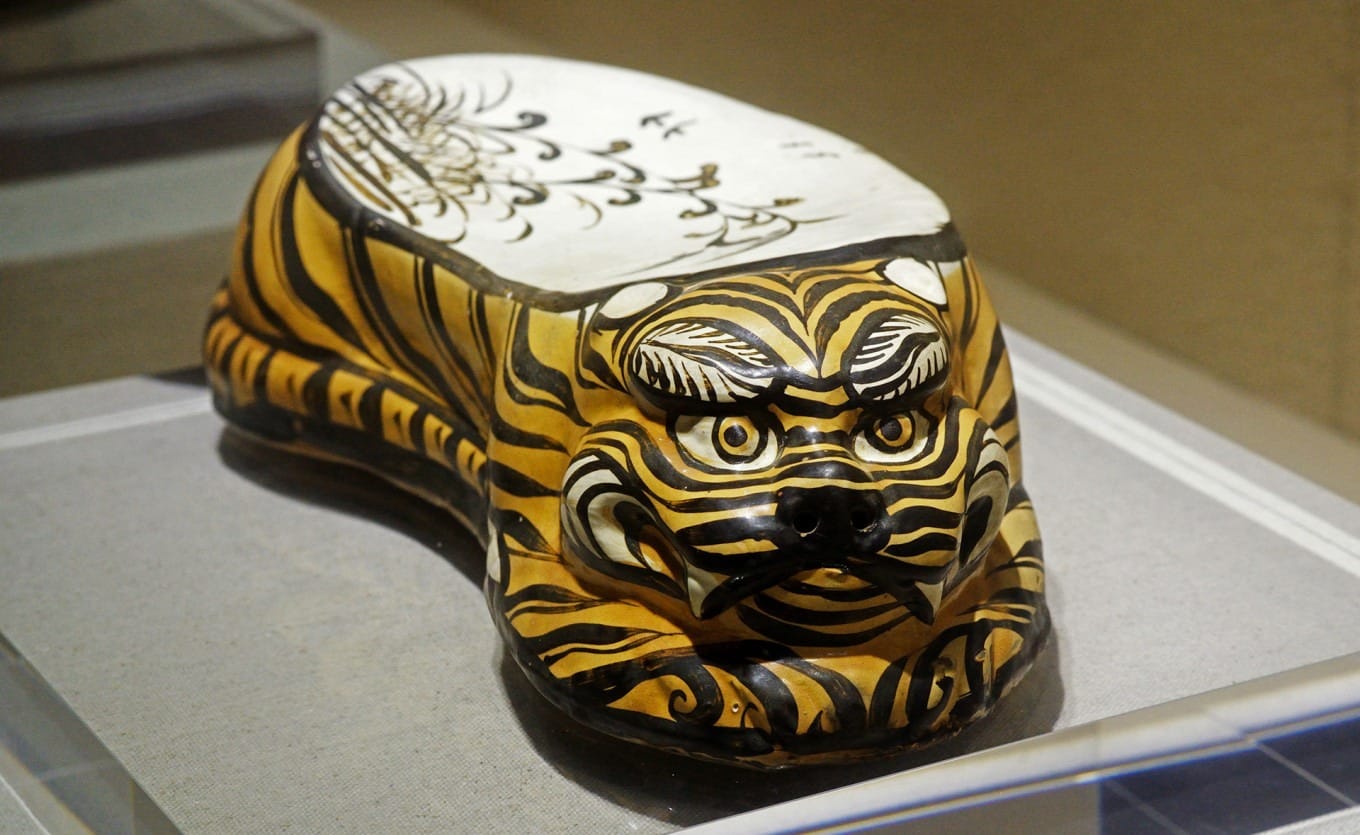
【Yellow-Glazed Reclining Tiger Pillow, Jin Dynasty(黄釉黑彩卧虎枕,金)】 Shaped like a crouching tiger, this pillow uses the animal’s back as the resting surface. The painted scene of autumn birds among reeds conveys a quiet, melancholic mood. Similar tiger-shaped pillows were produced at Cizhou, Bacun, and Changzhi kilns, sharing closely related styles.
The second exhibition, *Grasping the Sword — A Thousand Years of Blood and Valor*, shifts focus from daily life to warfare.
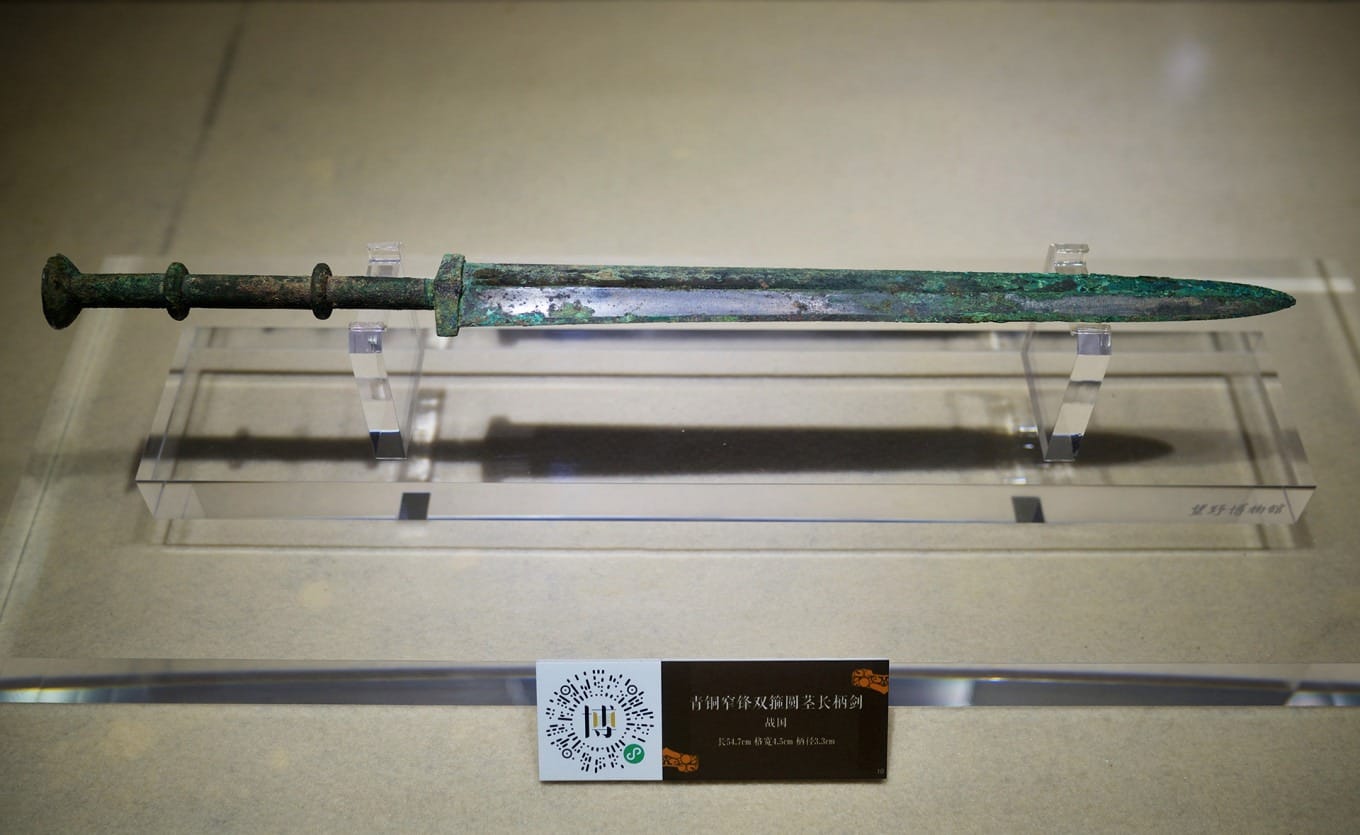
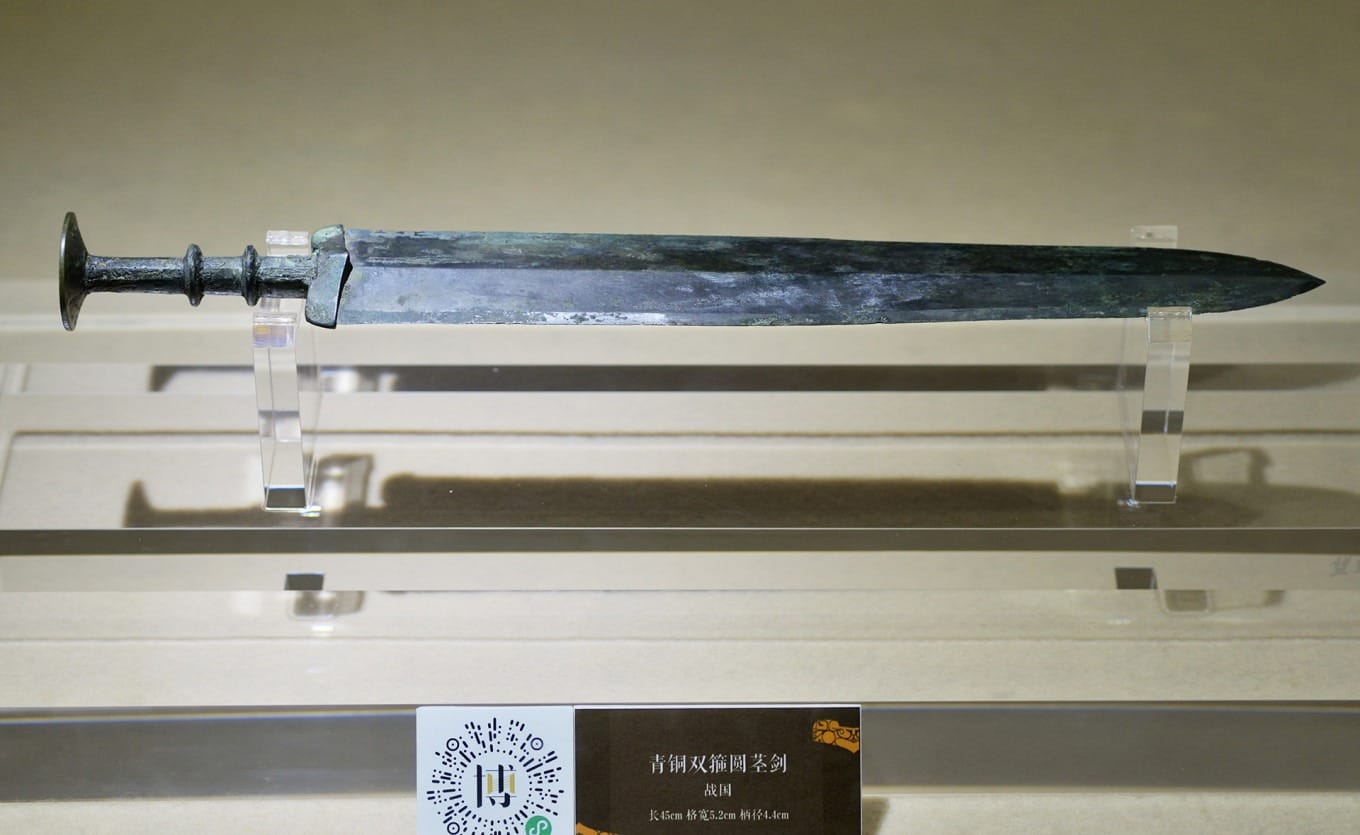
【Bronze Long Sword with Narrow Blade and Double Rings, Warring States Period(青铜窄锋双箍圆茎长柄剑,战国)】 From the late Spring and Autumn period onward, bronze swords with ringed grips became widespread. Compared with earlier designs, these rings improved grip stability, allowing the sword to function more effectively for both cutting and thrusting.
【Wu–Yue Style Bronze Sword, Warring States Period(青铜花格双箍圆茎同心圆首剑,战国)】 This sword represents the Wu–Yue tradition. In the water-rich south, chariots were impractical, making infantry combat and short weapons essential. Wu and Yue sword-making techniques far surpassed those of the Central Plains, and legendary figures such as Gan Jiang and Mo Ye remain famous to this day.
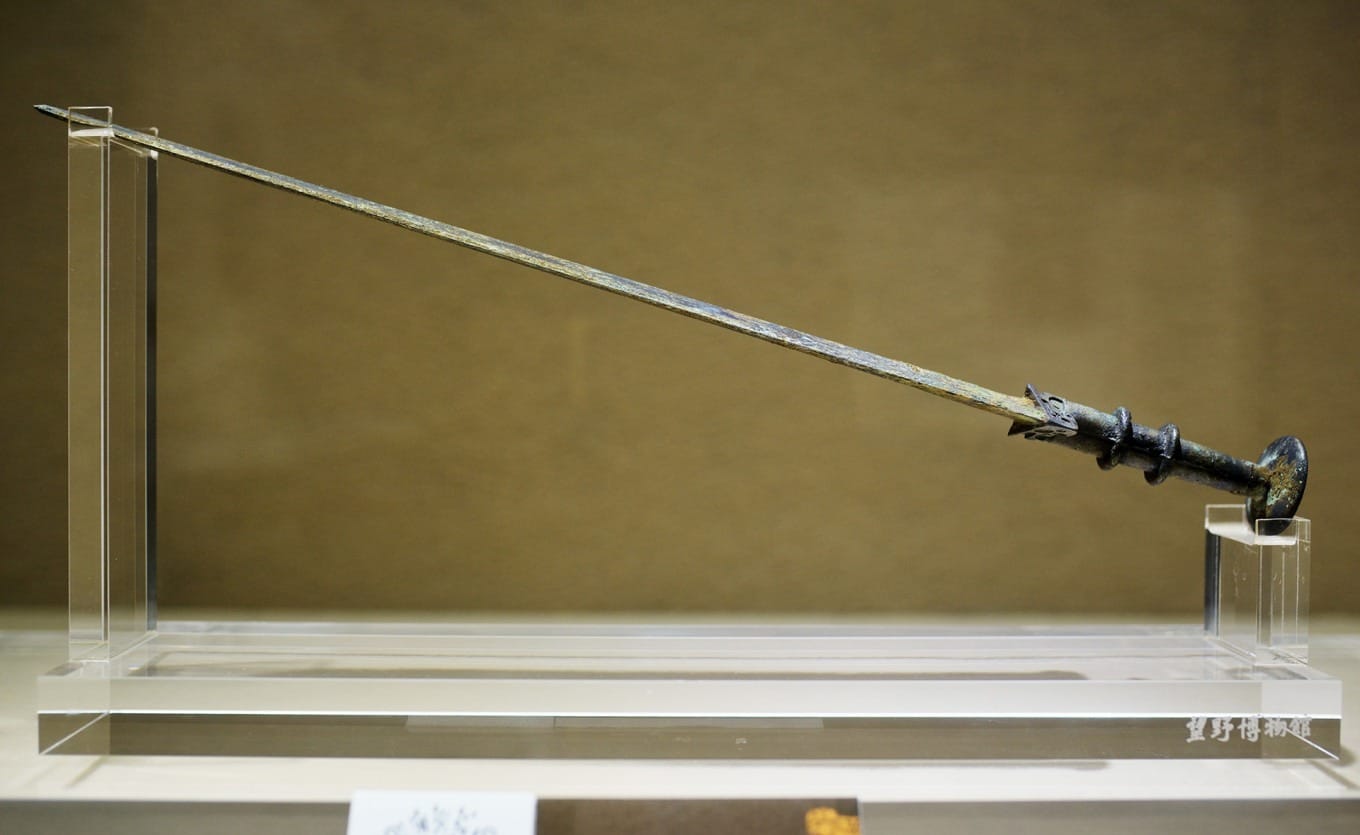
【Eastern Zhou Style Bronze Sword, Warring States Period(青铜双箍圆茎剑,战国)】 As Wu and Yue states increasingly engaged in Central Plains politics, their sword designs influenced northern metallurgy, giving rise to Eastern Zhou–style swords. During this era, swords also became symbols of noble status—high crowns and long swords marked adulthood among aristocrats, while educated elites wore swords to distinguish themselves from common trades.
Shenzhen Art Museum
- AttractionShenzhen Art Museum(深圳美术馆)
- AddressBuilding 1, No. 30 Tenglong Road, Daling Community, Minzhi Subdistrict, Longhua District(深圳市龙华区民治街道大岭社区腾龙路30号1栋)
- AdmissionFree(免费)
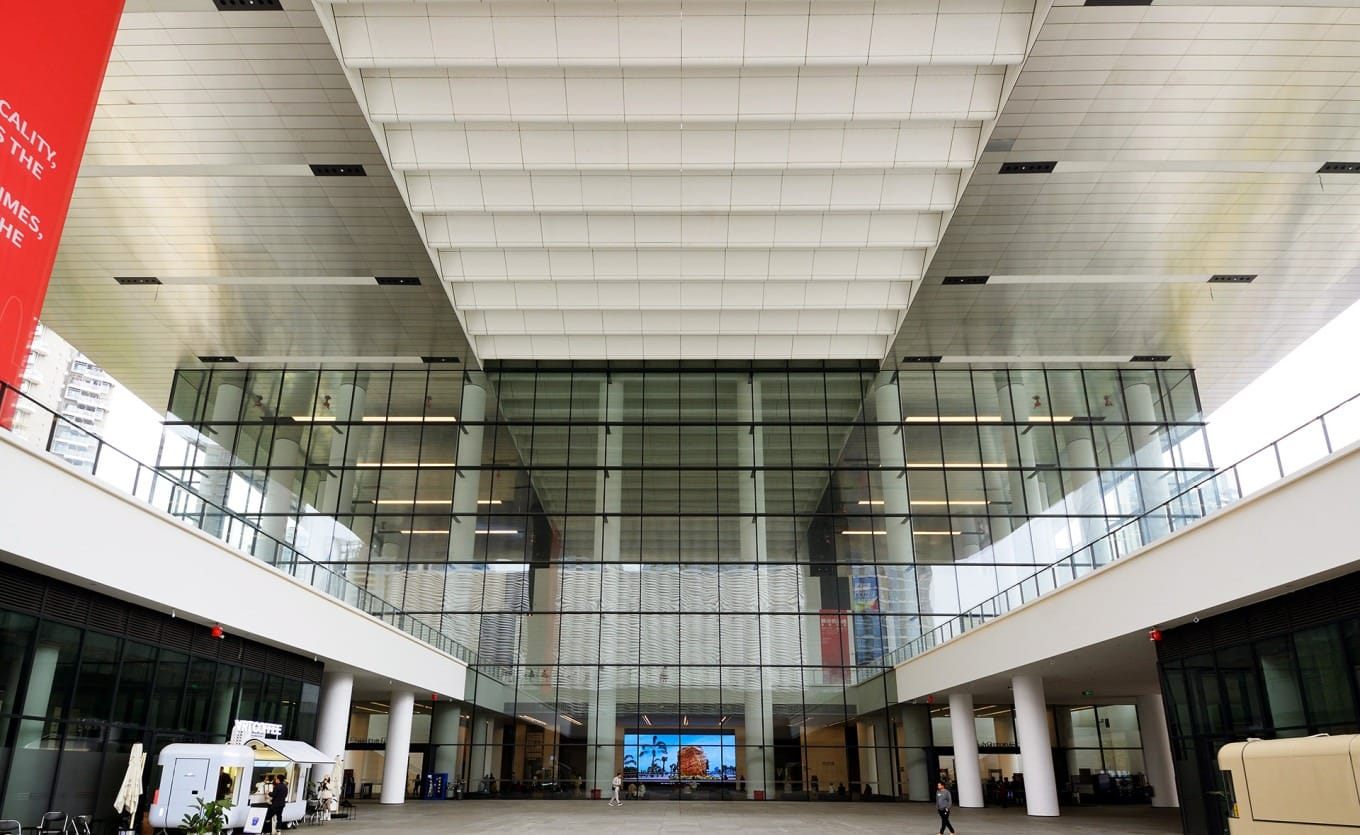
Beyond the museums already mentioned, Shenzhen Art Museum(深圳美术馆)is another cultural stop well worth your time. Its origins trace back to the Shenzhen Exhibition Hall founded in 1976, making it the city’s earliest dedicated art exhibition institution and a key witness to Shenzhen’s artistic development.
Today, Shenzhen Art Museum operates two venues: the Donghu Branch(东湖馆)in Luohu District and the New Shenzhen Art Museum(深圳美术馆新馆)in Longhua District. If your schedule allows for only one visit, prioritize the new museum. Opened at the end of 2023, it stands out for both the quality of its collection and the scale of its exhibition spaces. The only downside is its popularity—visitor numbers remain high, so if possible, plan your visit on a weekday rather than during weekends or public holidays.
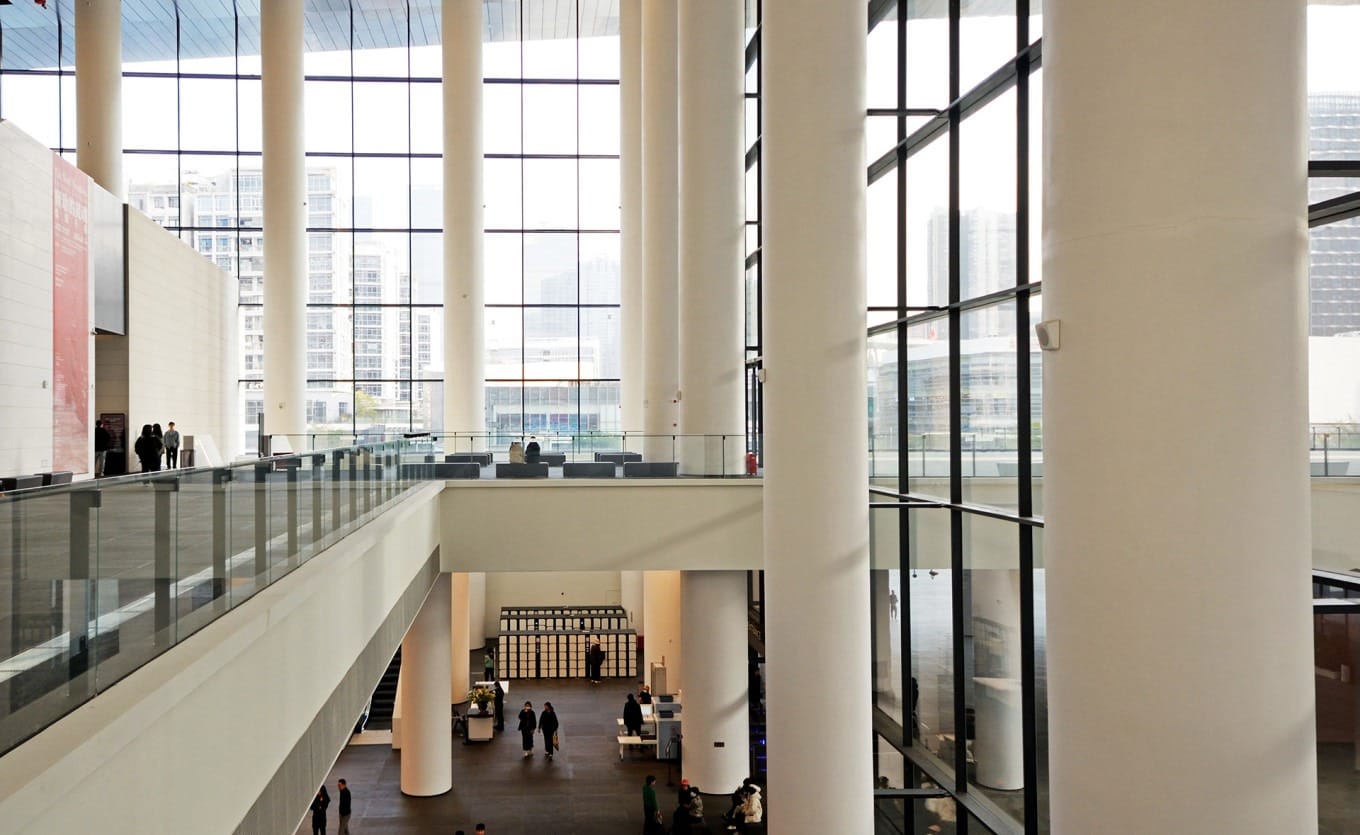
When the new museum opened, it launched with two major exhibitions. The first, *Flourishing Endeavors — Highlights from the Shenzhen Art Museum Collection*(《欣欣生意——深圳美术馆馆藏精品及文献特展》), brings together some of the museum’s finest works accumulated over more than four decades, offering a rare opportunity to see the depth of its permanent collection in one place.
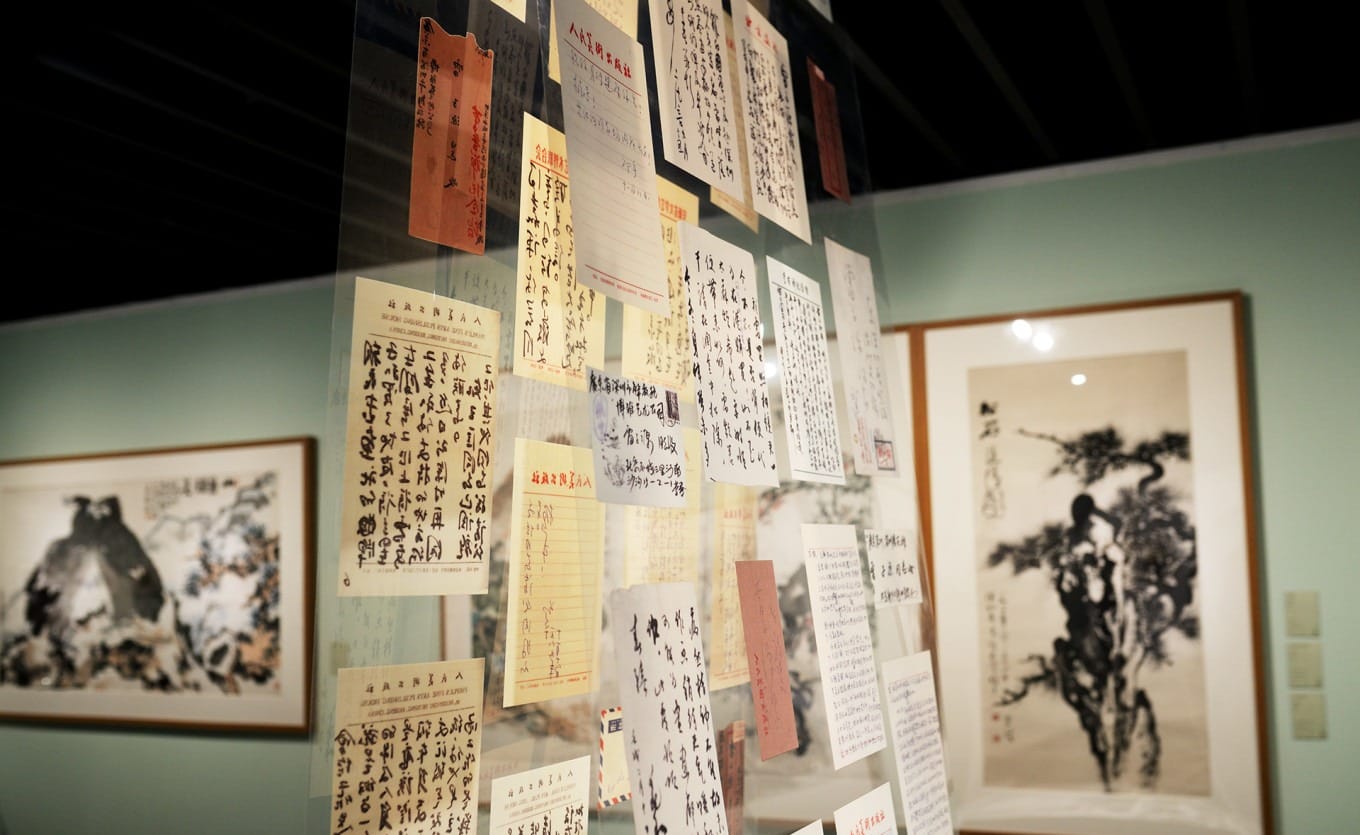
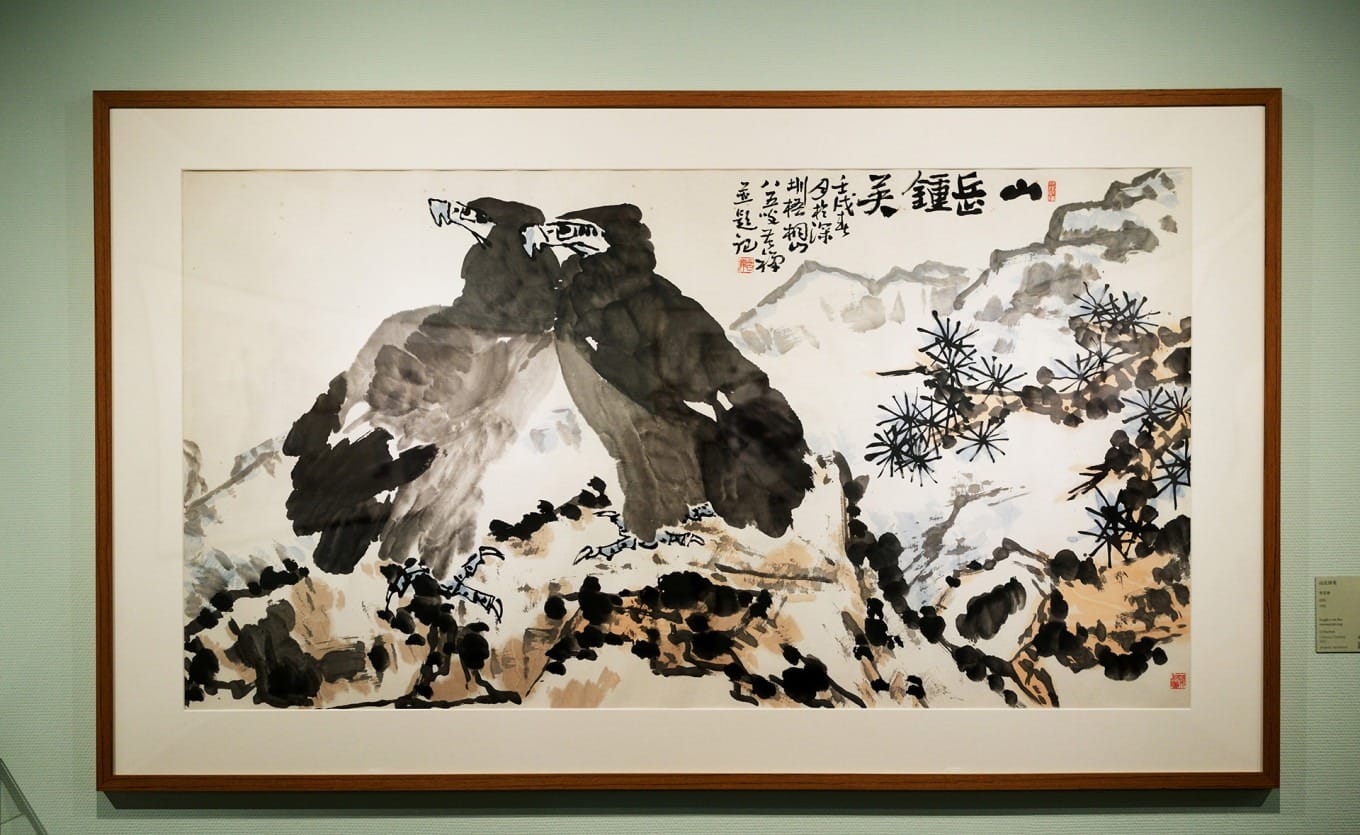
【Mountains Gather the Finest Spirit, Li Kuchan(《山岳钟英》,李苦禅)】 As you enter the gallery, one of the first works to command attention is Li Kuchan’s monumental freehand ink painting *Mountains Gather the Finest Spirit*. Li Kuchan, a master of Chinese painting and a student of Qi Baishi, was renowned for his expressive eagle paintings across different periods. This work was completed in 1982 and exemplifies his powerful brushwork.
【Grapes, Zhu Qizhan(《葡萄图》,朱屺瞻)】【Plum Blossoms Blossom from Bitter Cold, Guan Shanyue(《梅花香自苦寒来》,关山月)】【Pines and Rocks in Harmony, Li Xiongcai(《松石双清图》,黎雄才)】 These three large-scale freehand ink paintings represent giants of modern Chinese art. Zhu Qizhan, a leading figure of the Shanghai School, was especially known for grape motifs. Guan Shanyue, a second-generation master of the Lingnan School, gained fame for landscapes and plum blossoms. Li Xiongcai, also of the Lingnan School, was celebrated for his pine paintings and later honored as the “Evergreen Pine of Ten Thousand Years.”
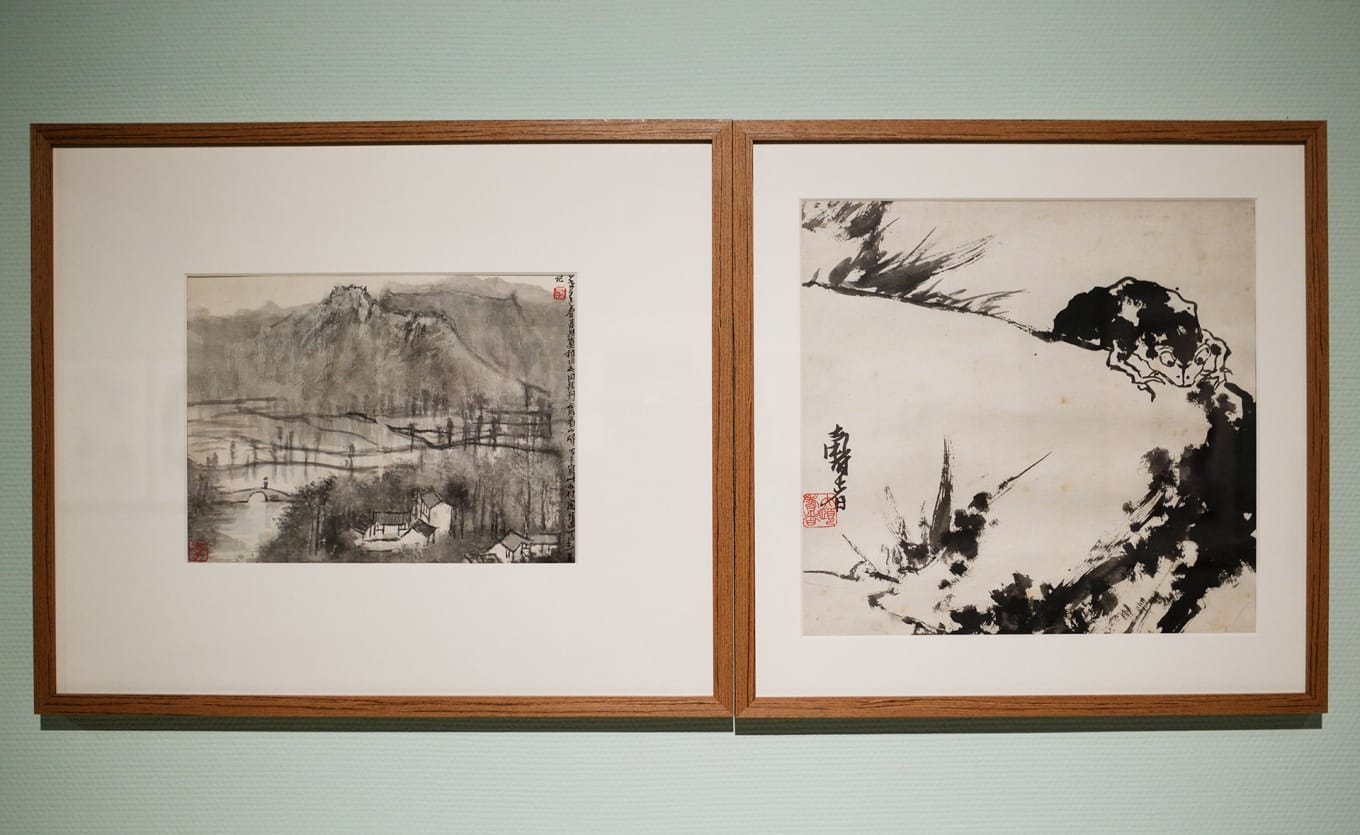
【Water Village, Li Keran(《水村图》,李可染)】【Frog and Rock, Pan Tianshou(《蛙石图》,潘天寿)】 Li Keran’s *Water Village*, painted in 1973, reflects the artist’s mastery of landscape ink painting. Pan Tianshou’s *Frog and Rock* reveals his fondness for unconventional subjects—frogs and toads—and his signature finger-painting technique, known as finger-ink painting(指墨画).
【Night Chongqing, Wu Guanzhong(《夜重庆》,吴冠中)】 This work by Wu Guanzhong captures the glowing nightscape of Chongqing, where the artist once lived for five years during the War of Resistance. Known for blending Chinese ink aesthetics with Western compositional techniques, Wu uses ink-inspired forms to depict a modern city bathed in lights.
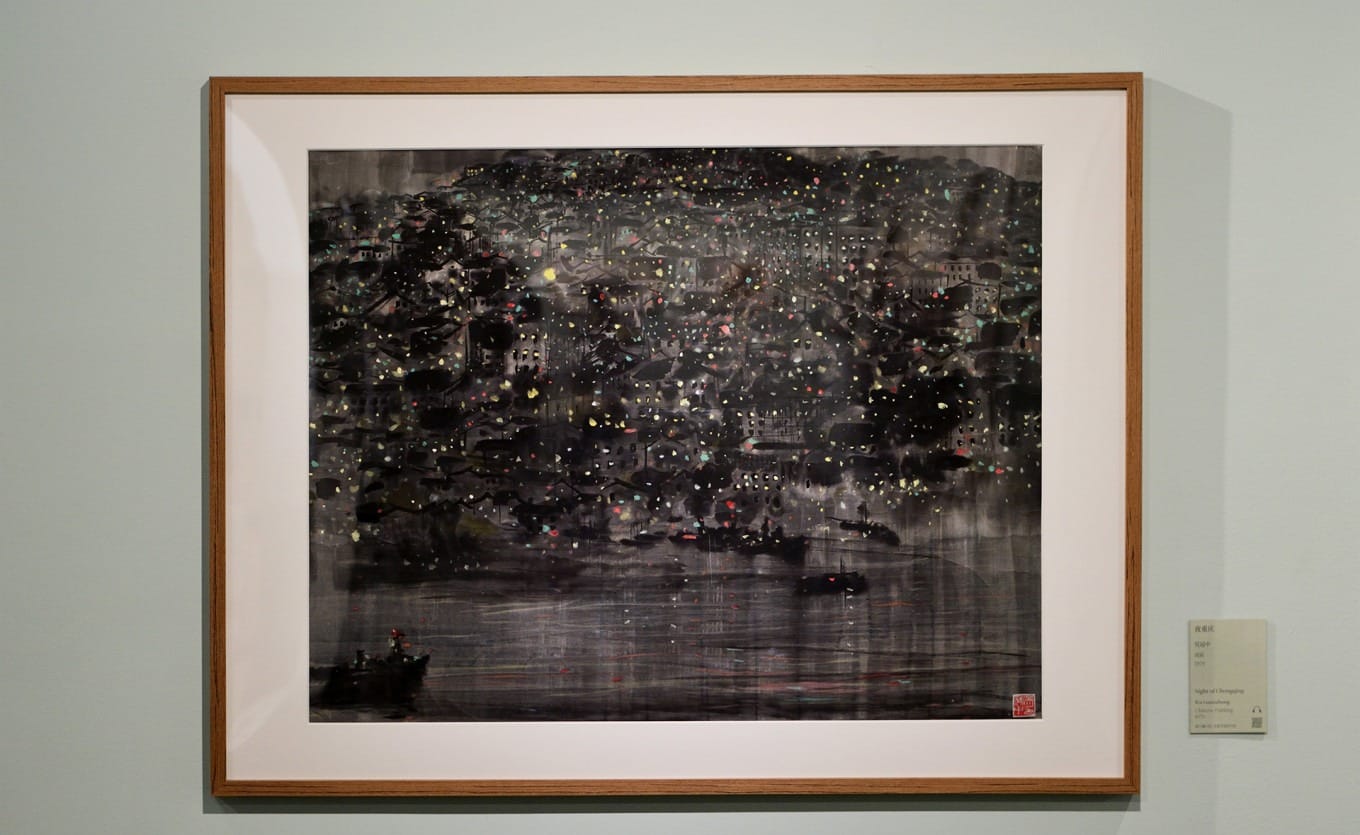
【Who Will the Red Peonies by the Bridge Bloom for Each Year, Huang Yongyu(《念桥边红药年年知为谁生》,黄永玉)】 Created by Huang Yongyu, one of China’s most influential contemporary artists, this ink painting showcases his imaginative compositions. Huang is particularly known for Chinese painting and printmaking and is often nicknamed the “eccentric genius” of the art world.
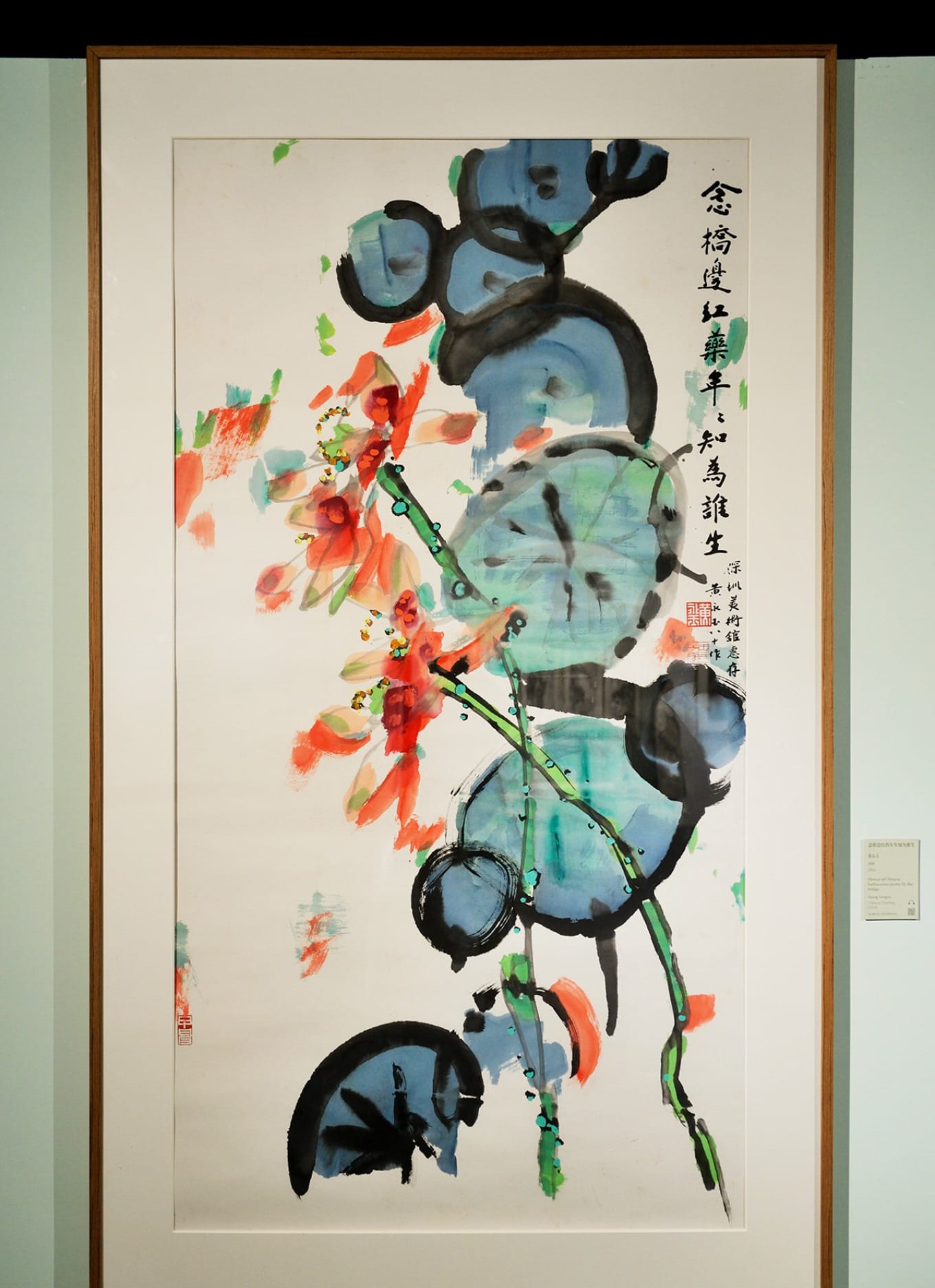
【Autumn in a Mountain Village, Zhou Sicong(《山村秋意》,周思聪)】 Zhou Sicong, a renowned female Chinese artist, was celebrated for her ink figure paintings. This work reflects her sensitivity to everyday life and childlike innocence, themes that frequently appear in her art.
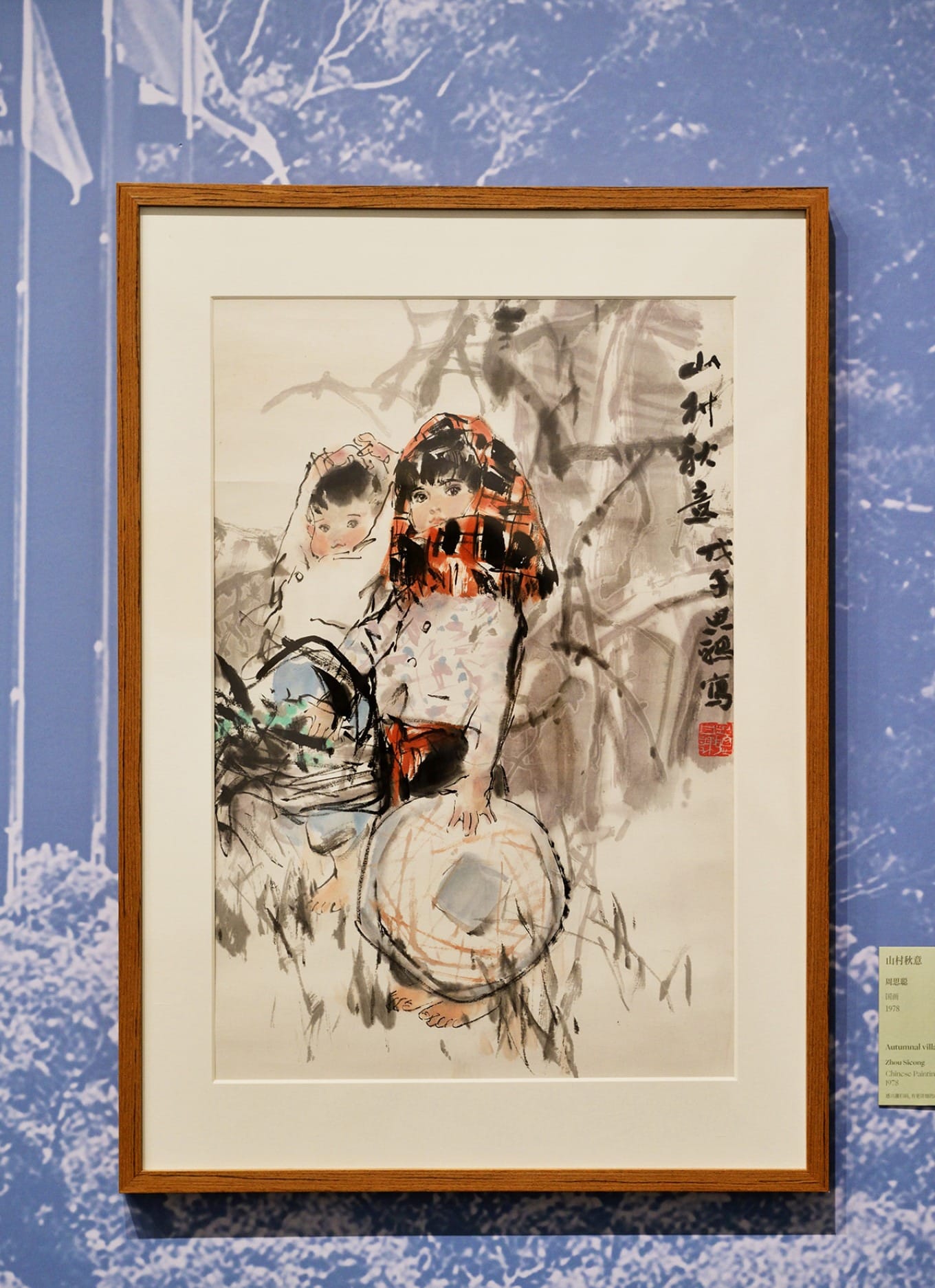
【Miscellaneous Memories of the Dongjiang Guerrillas’ Hundred Days, Ding Cong(《“东江游击队百日”杂忆》组画,丁聪)】 This powerful series by cartoonist Ding Cong recalls the dramatic rescue of hundreds of intellectuals and their families by the Dongjiang Guerrillas after Hong Kong fell in late 1941. Created when the artist was 71, the works depict scenes of hiding in huts, night watches, and sentry duty during the escape.
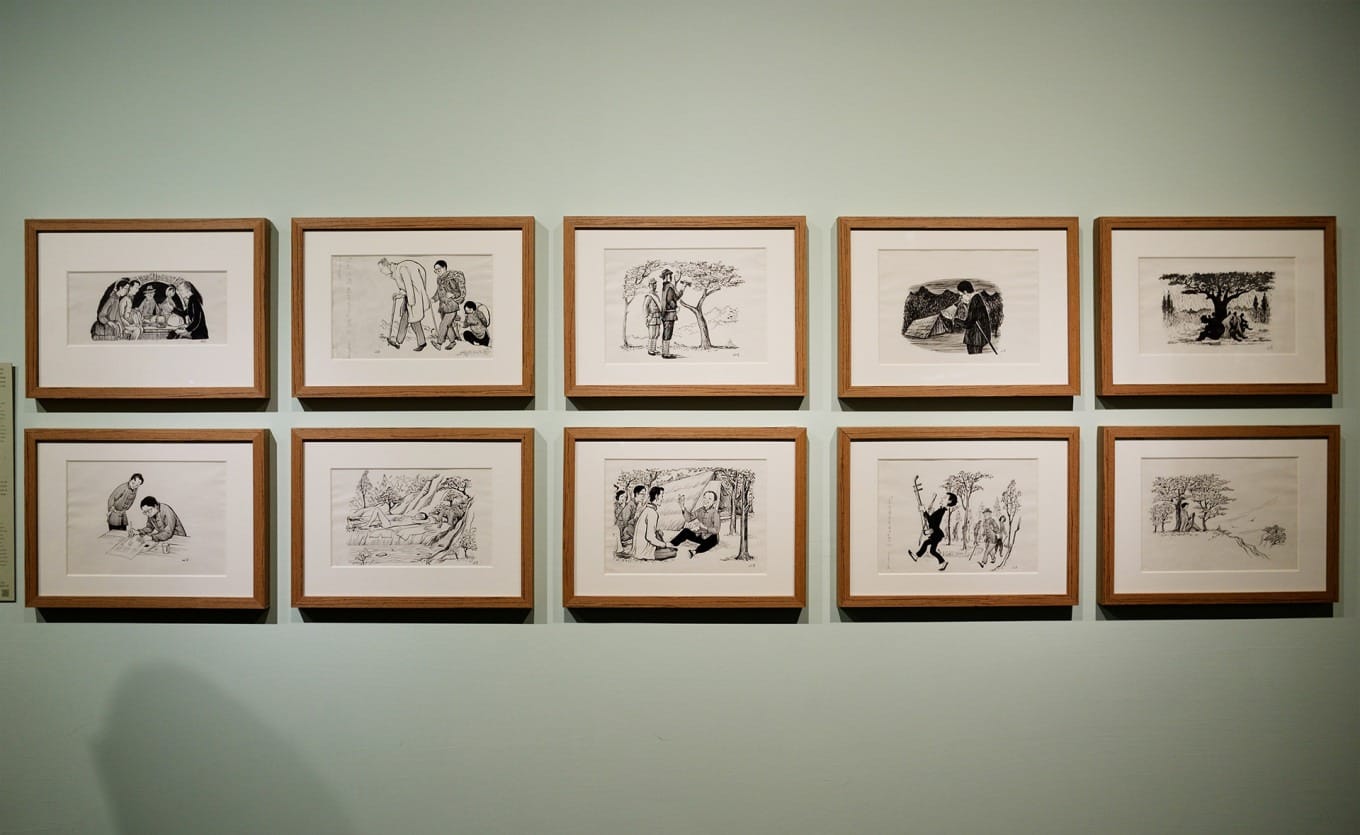
【Cartoons, Hua Junwu(漫画,华君武)】 These cartoons by Hua Junwu highlight his career-long commitment to satire. Early on, his political cartoons played a major role in wartime propaganda; later works sharply criticized social absurdities and outdated practices.
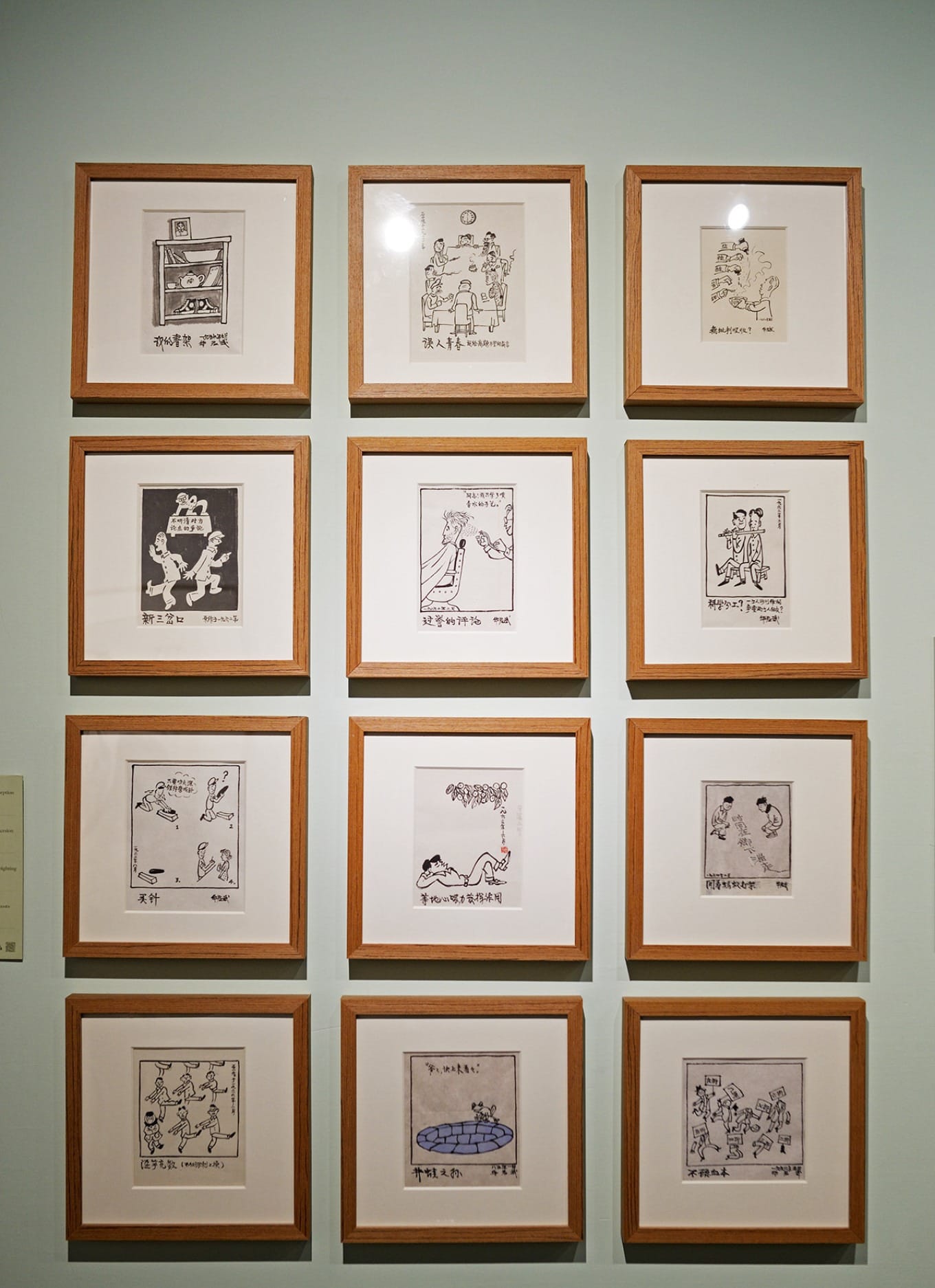
The second opening exhibition, *Chiharu Shiota: Trembling Soul*(《盐田千春·颤动的灵魂》), became a nationwide sensation. Featuring works by Japanese artist Chiharu Shiota(盐田千春), the exhibition invites you to engage emotionally rather than intellectually—understanding is less important than personal reflection.
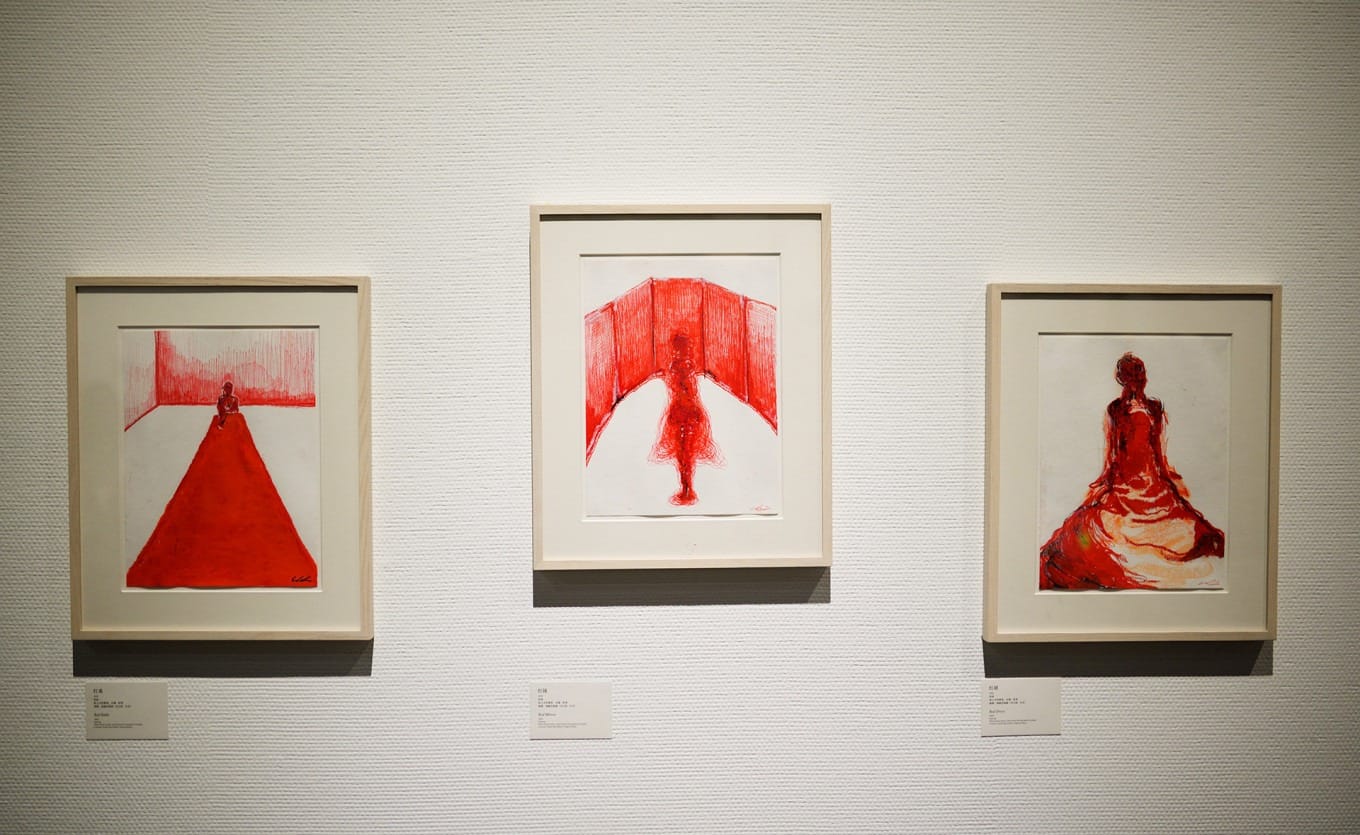
Upon entering, you’re immediately struck by the overwhelming installation *Uncertain Journey*(《未知的旅程》). Dense red threads spill from wire-frame boats, tangling and breaking overhead. The work symbolizes intertwined human destinies, individual solitude, and the shared journey into the unknown.
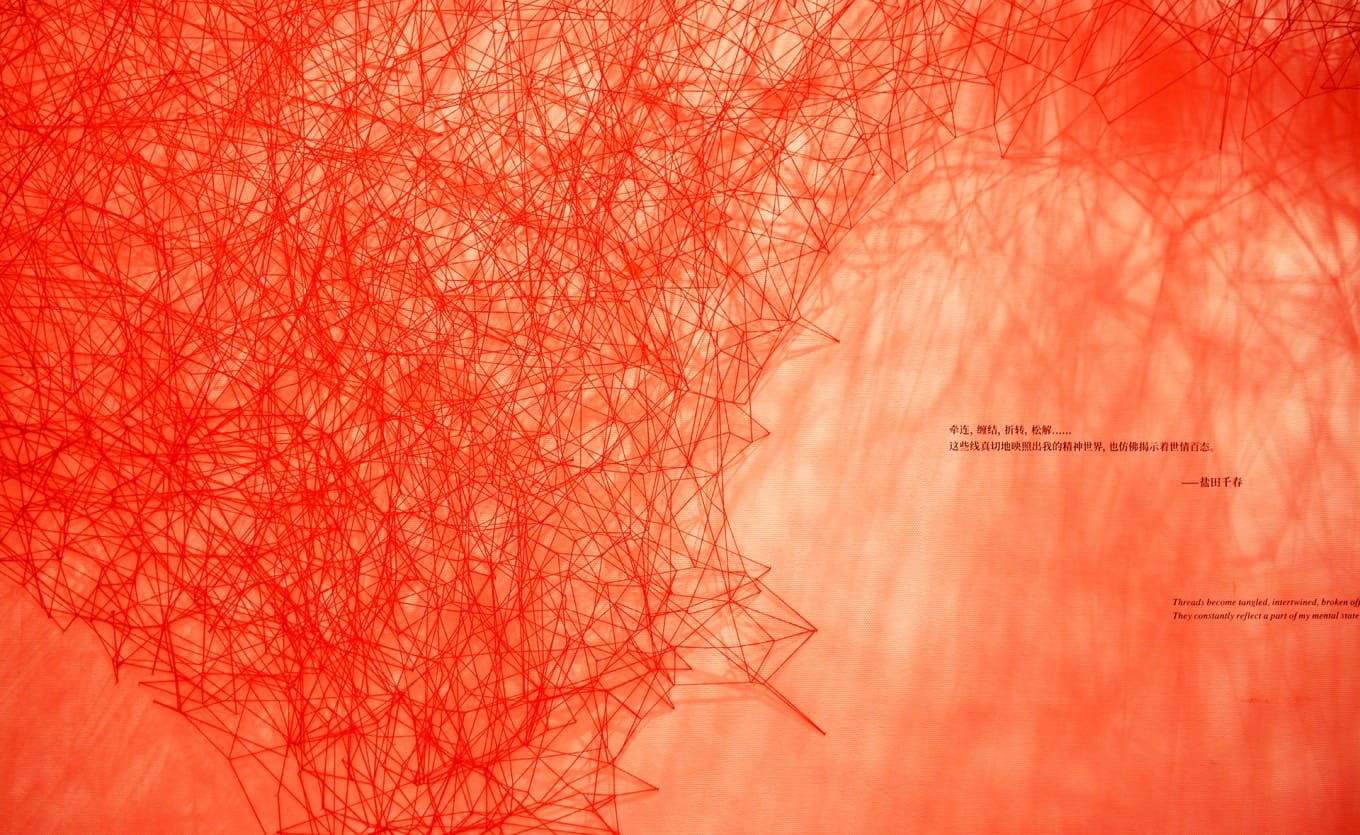
Another work, *In Silence*(《在沉默中》), uses black yarn to wrap objects such as a piano and wedding dress, recreating the aftermath of a house fire the artist witnessed at age nine.
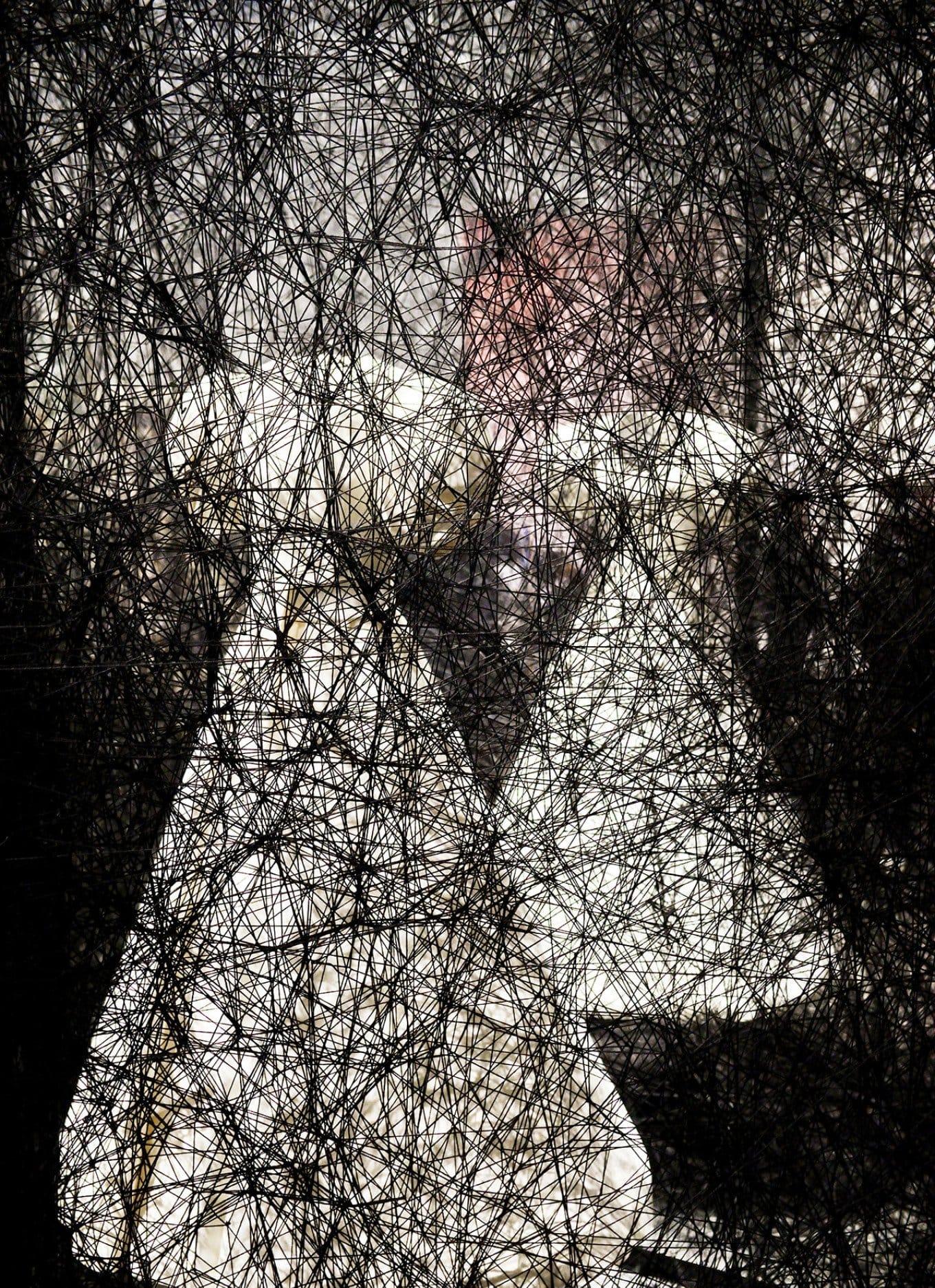
*Inside and Outside*(《内与外》)draws on the history of the Berlin Wall. The windows used in the installation were collected across Germany over several years. Each window once connected people to the outside world, yet also formed part of a barrier—embodying both separation and communication.
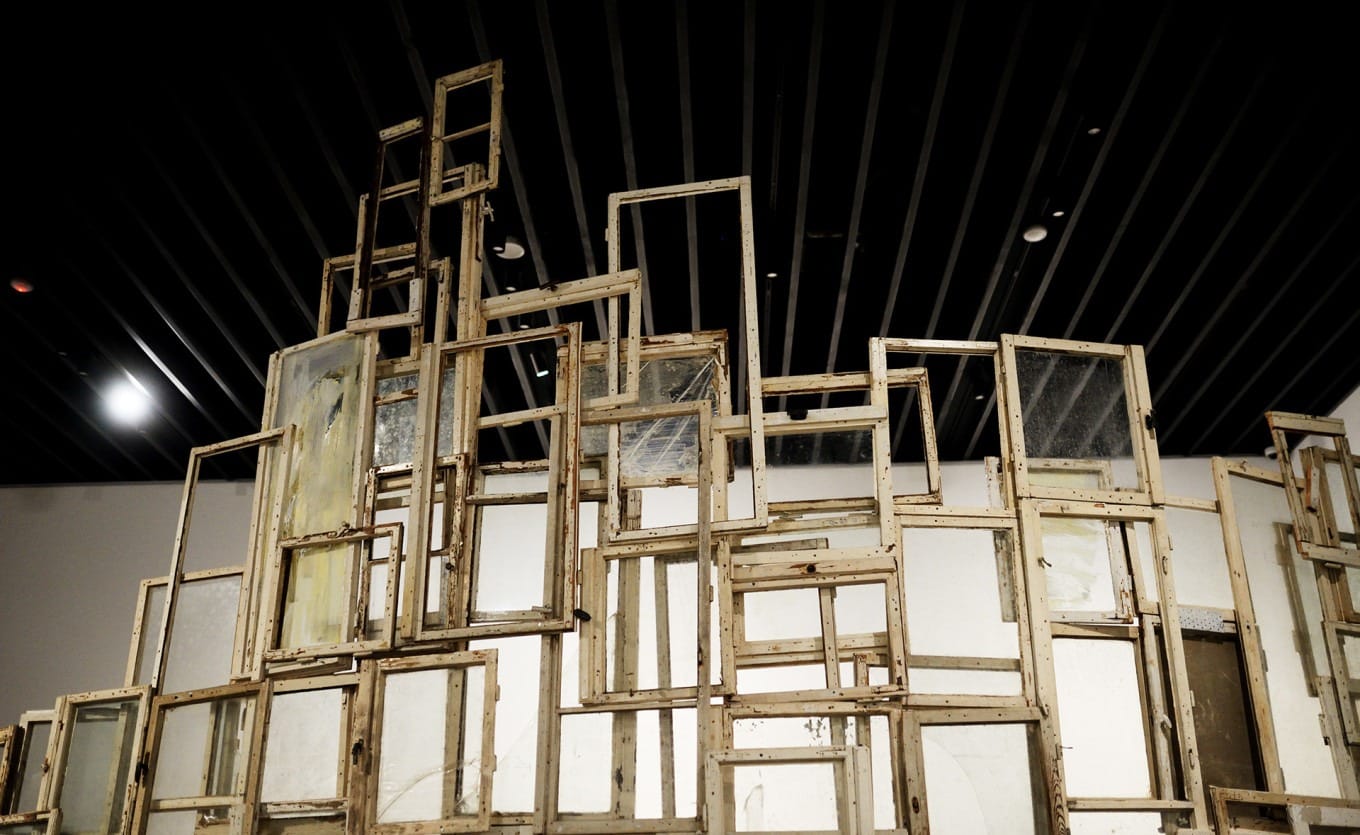
The exhibition concludes with *Gathering — Seeking Home*(《聚集——追寻归宿》), where hundreds of old suitcases are suspended by red threads. Subtle vibrations inside the suitcases suggest countless individual lives, each shaped by movement and memory.
Another major opening exhibition, *Looking Back · Pioneering Forward — 45 Years of Shenzhen Art*(《回望·先行——深圳美术45年专题陈列展》), traces the city’s artistic journey through three phases: Exploration and Foundations (1978–1992), Growth and Prosperity (1992–2012), and A Brilliant New Era (2012–present). Together, they tell Shenzhen’s own “Spring Story.”
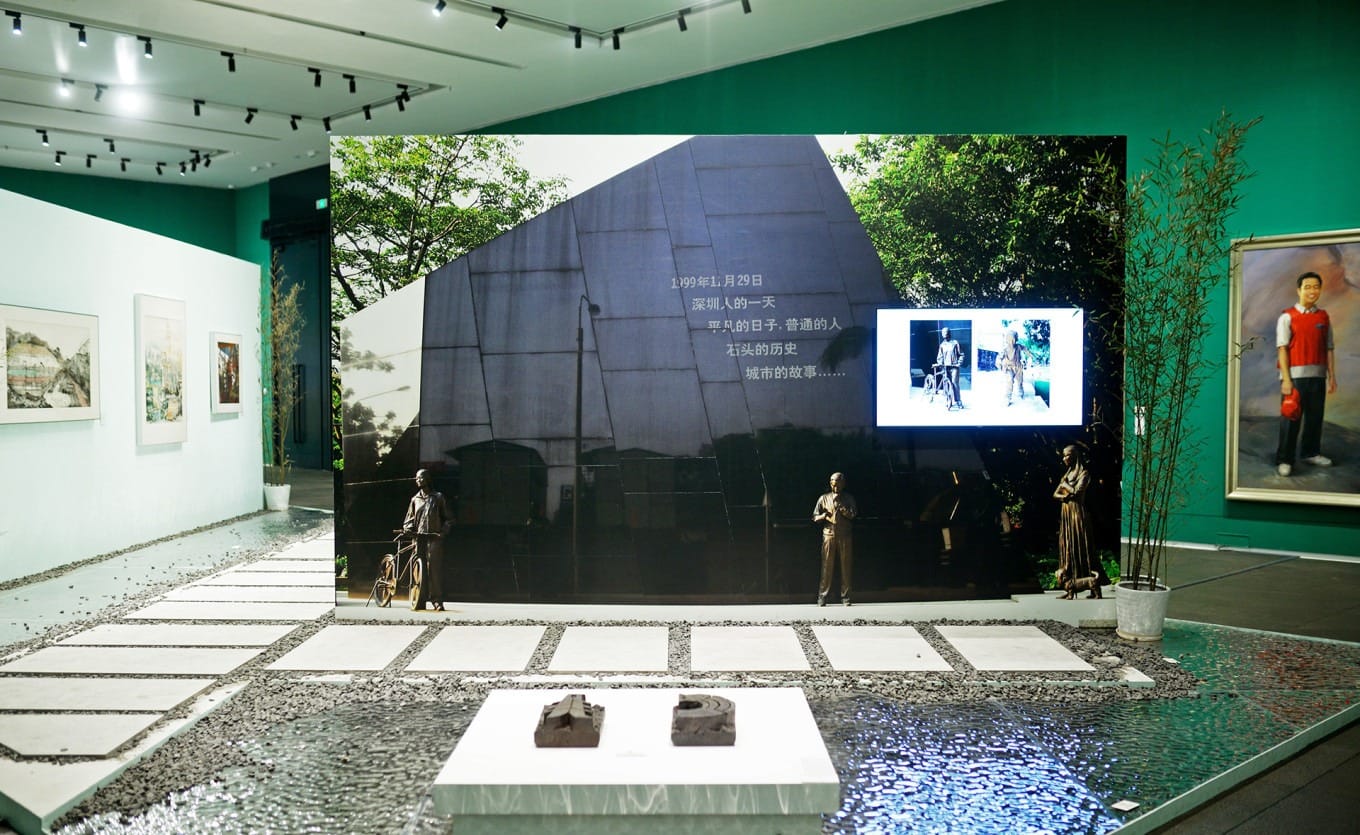
【Pioneering Ox, Pan He(《开荒牛》,潘鹤)】 This sculpture study by Pan He, created in 1983 for Shenzhen, has become both a city icon and a national symbol of China’s Reform and Opening-up spirit over the past four decades.
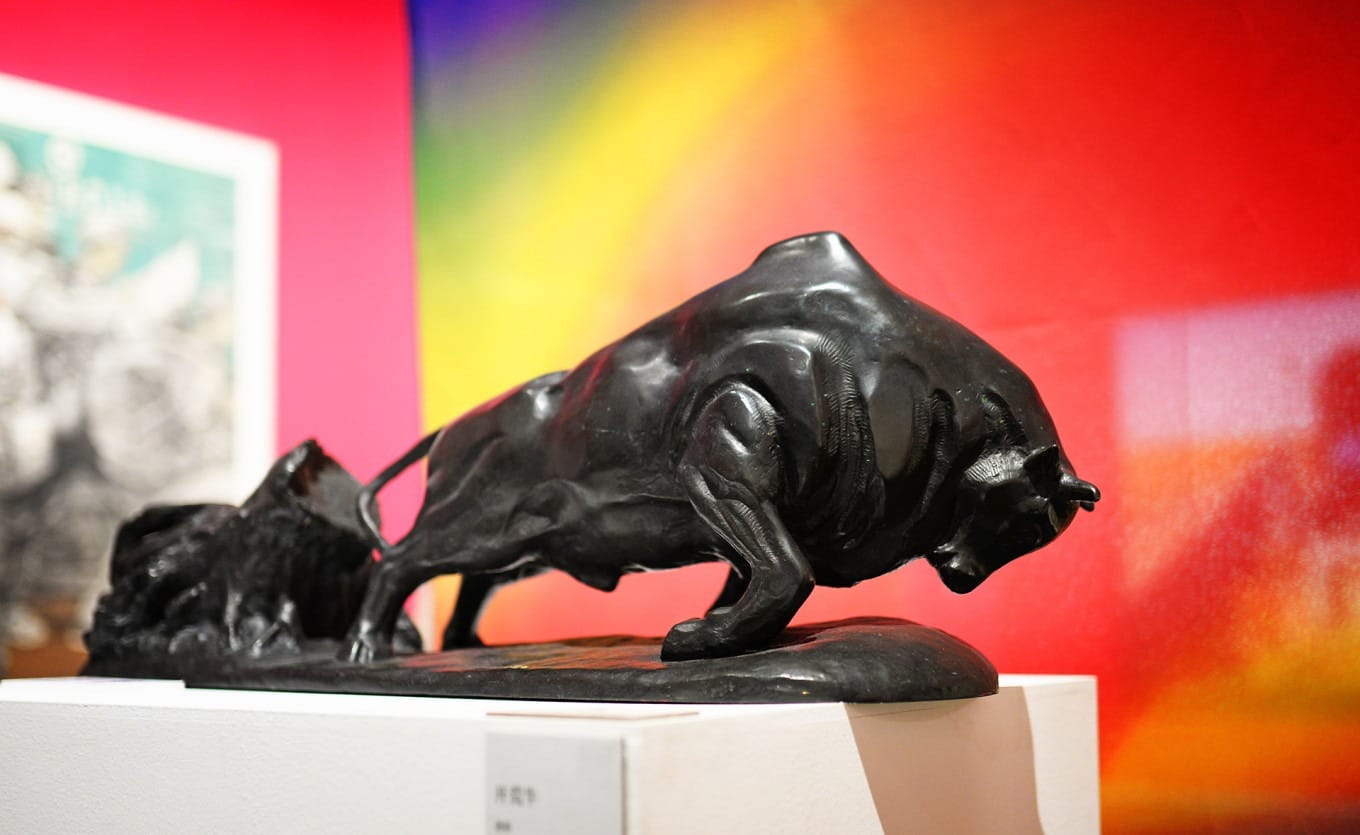
【We Were Part of the Spring Story of 1982, Wang Xueta(《82年春天的故事有我们》,王雪涛)】 This ink painting depicts the arrival of tens of thousands of construction troops in Shenzhen in early 1982, including female medical soldiers who later helped establish what is now Shenzhen Second People’s Hospital.
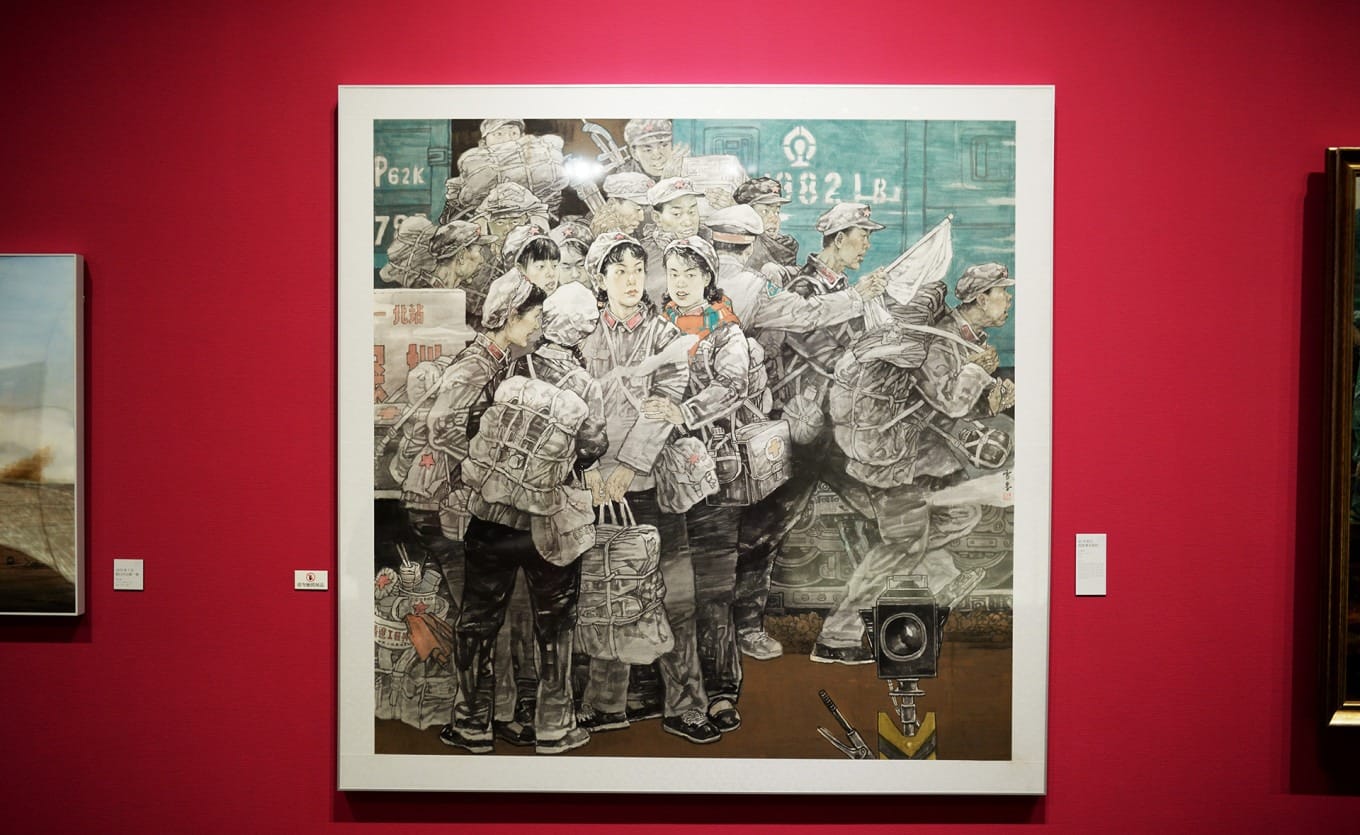
【Shenzhen Speed, Pan Xiliang(《深圳速度》,潘喜良)】 Part of the artist’s Shenzhen trilogy, this work records the legendary construction of the International Trade Center—one floor every three days. The workers portrayed are shown as the true foundation of Shenzhen’s rapid rise.
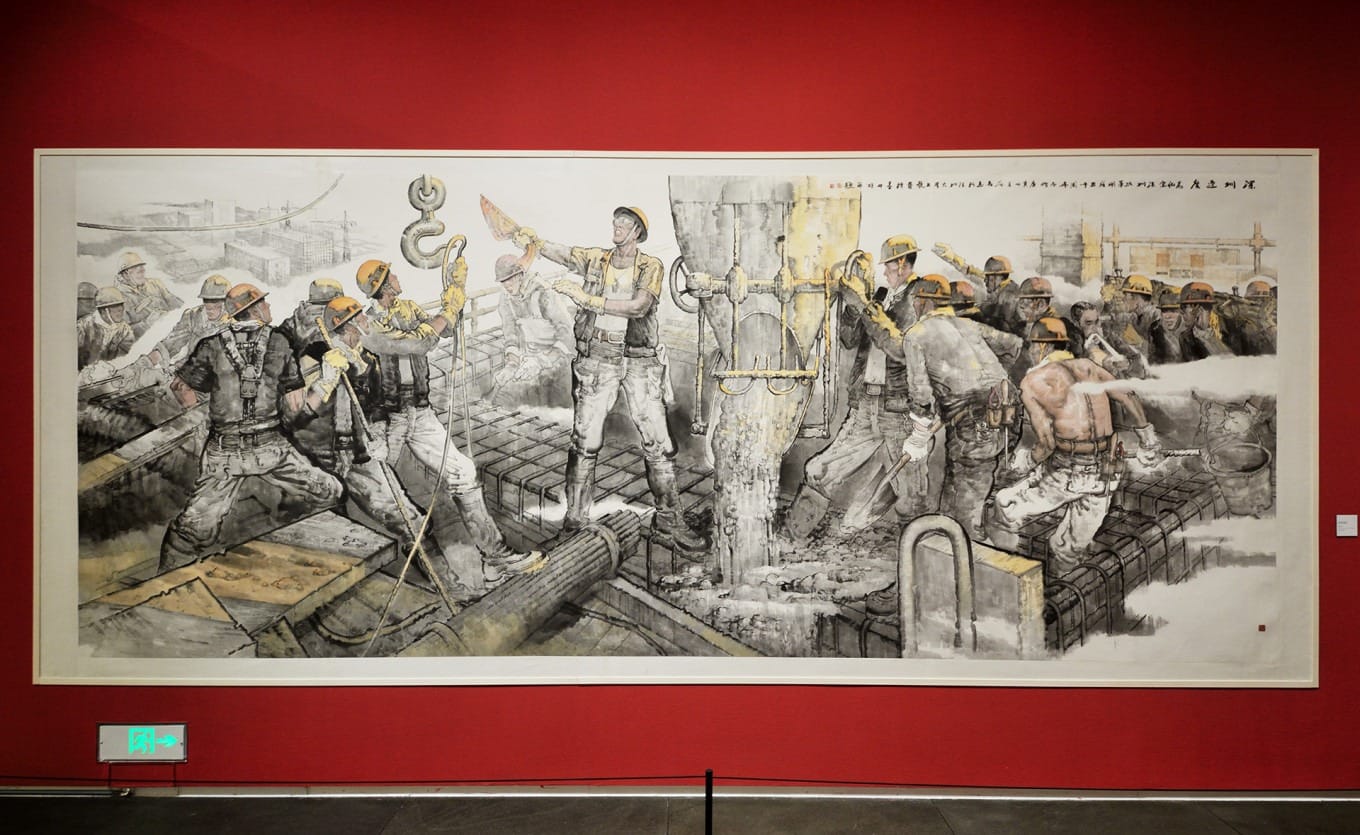
China Printmaking Museum
- AttractionChina Printmaking Museum(中国版画博物馆)
- AddressNo. 125 Yuxin Road, Niuhu Community, Guanlan Subdistrict, Longhua District, Shenzhen(深圳市龙华区观澜街道牛湖社区裕新路125号)
- AdmissionFree(免费)
Shenzhen(深圳)is also home to a national-level art institution: the China Printmaking Museum(中国版画博物馆). Located in Guanlan Printmaking Village(观澜版画村), it is China’s first museum dedicated entirely to printmaking. Even if you’re not deeply familiar with the medium, this is a place that can genuinely shift how you experience contemporary art.
During major exhibition periods, the museum becomes especially compelling. One of the most significant was the *2023 Guanlan International Print Biennial Nomination Exhibition(2023观澜国际版画双年展提名展)*. First launched in 2007, the Guanlan International Print Biennial has now been held seven times and is widely recognized as one of China’s most internationally influential printmaking exhibitions.
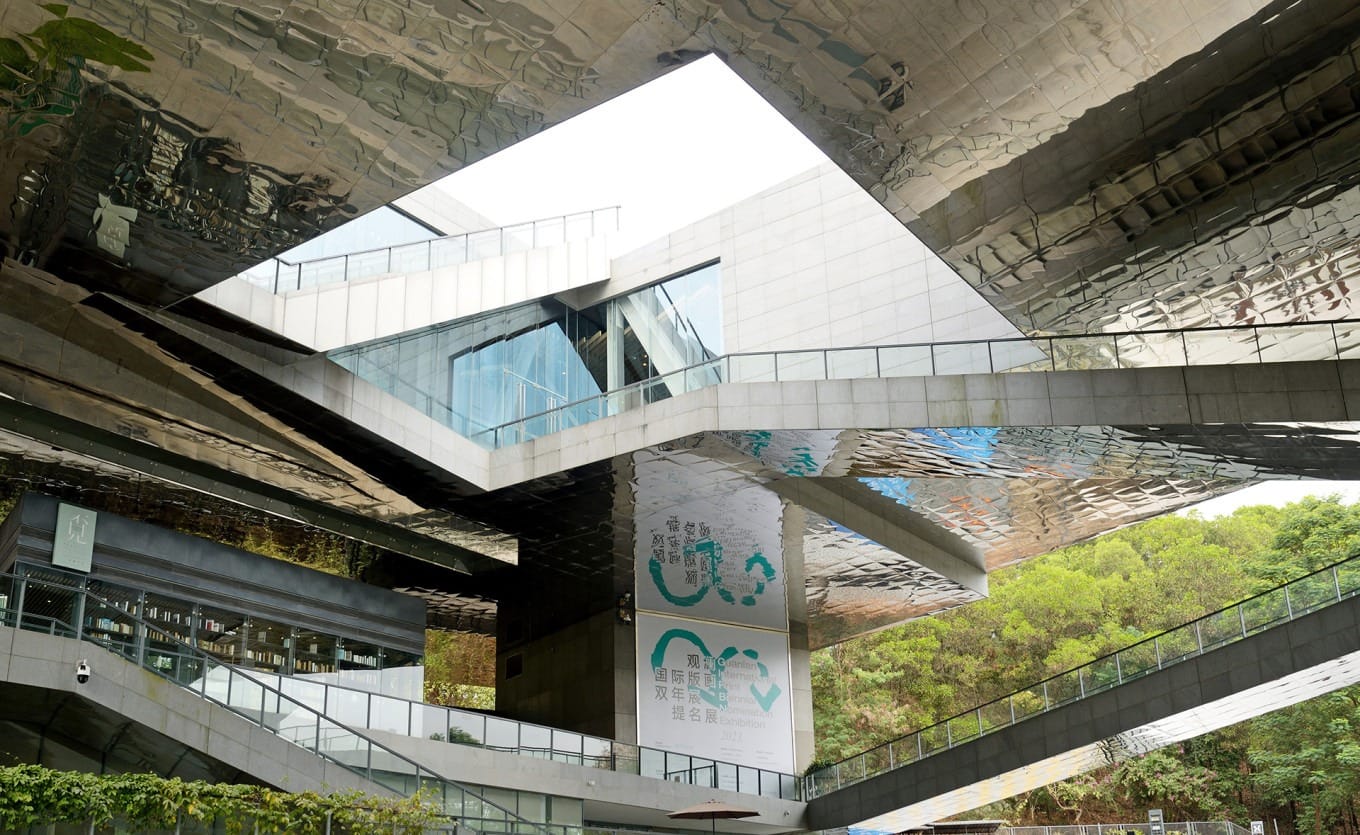
The nomination exhibition featured works by more than 200 artists from 46 countries and regions. Among them, ten artists received the Biennial’s *Honorary Works Award(荣誉作品奖)*, representing a broad range of themes, techniques, and cultural perspectives.
【”Magic Star Map” – Spiral Fortress Scene: Fox in the Snow, Sun Xun(《魔法星图》之螺刹场景设定——雪中狐狸,孙逊)】 One of the first honorary works is by Sun Xun(孙逊), a leading figure in China’s new media art scene. This piece originates from his feature-length animated film *Magic Star Map(《魔法星图》)*, serving as one of its background scenes. In the film’s narrative, the protagonist follows guidance from a master and the mystical star map, transforming into different roles while traveling through six fictional nations—”Spiral Fortress(螺刹)” being one of them.
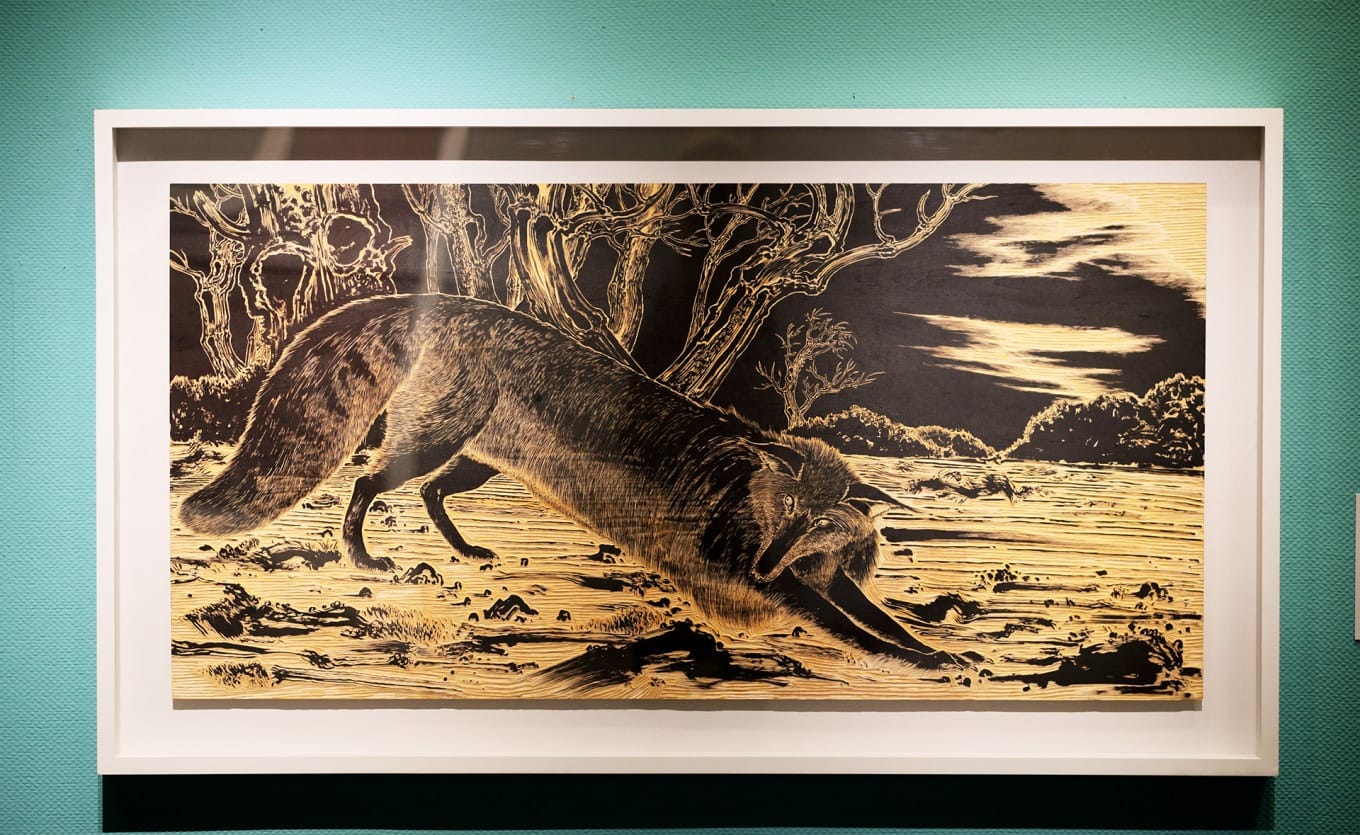
【Return, Carlos Damasio Gómez(《回报》,卡洛斯·达马西奥·戈麦斯)】 Created by Carlos Damasio Gómez(卡洛斯·达马西奥·戈麦斯), a printmaking instructor at the University of Chile(智利大学), this intaglio print depicts a defeated tribe trudging back toward their village. Look closely and you’ll notice a small soul hovering like a guiding bird, leading them toward a hopeful path—quietly shifting the work from despair to resilience.
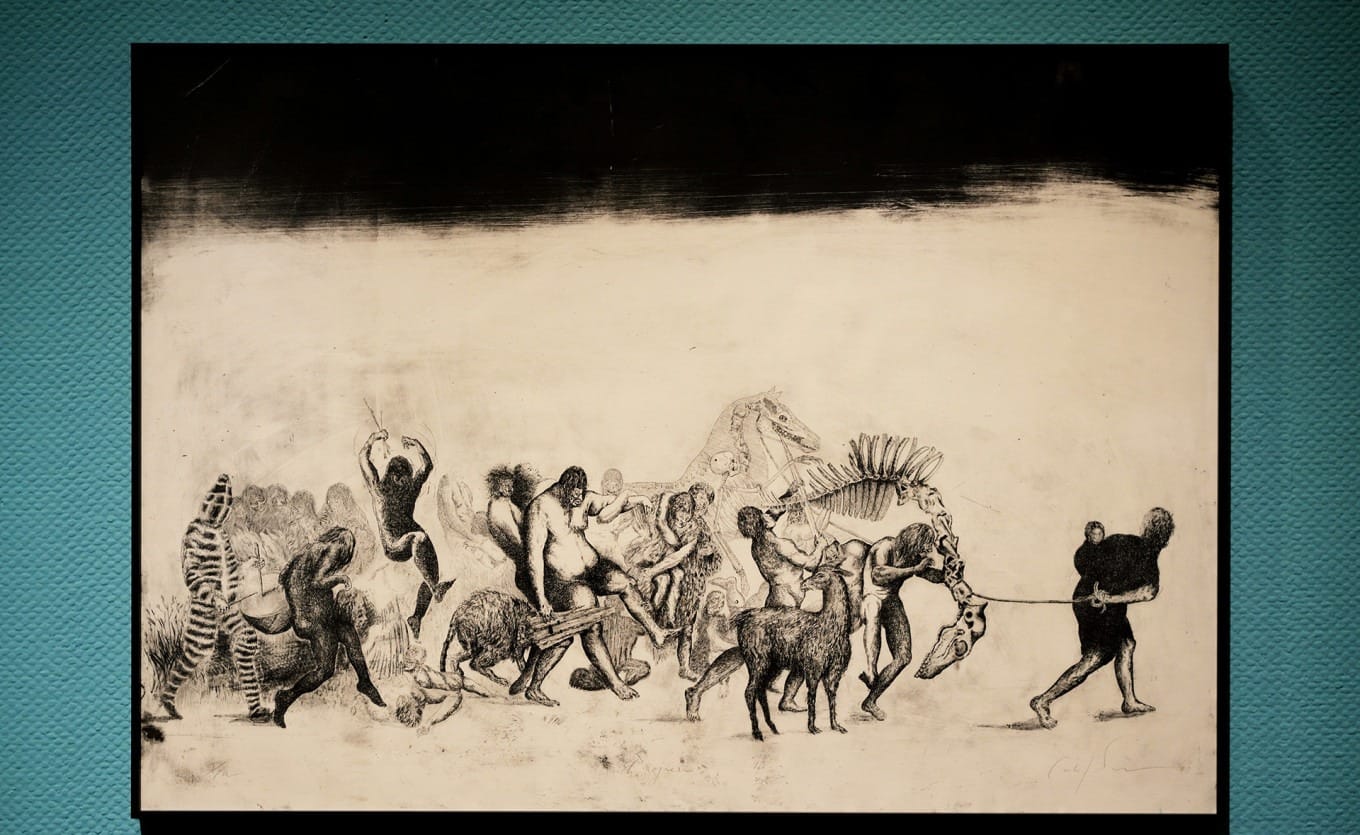
【Ode to Joy, Li Changxing(《欢乐颂》,李长兴)】 Li Changxing(李长兴), a professor in the Printmaking Department at Guangzhou Academy of Fine Arts(广州美术学院), constructs a surreal utopian space where life and nature coexist in harmony. The scene feels dreamlike yet grounded, inviting you to linger and explore its layered symbolism.
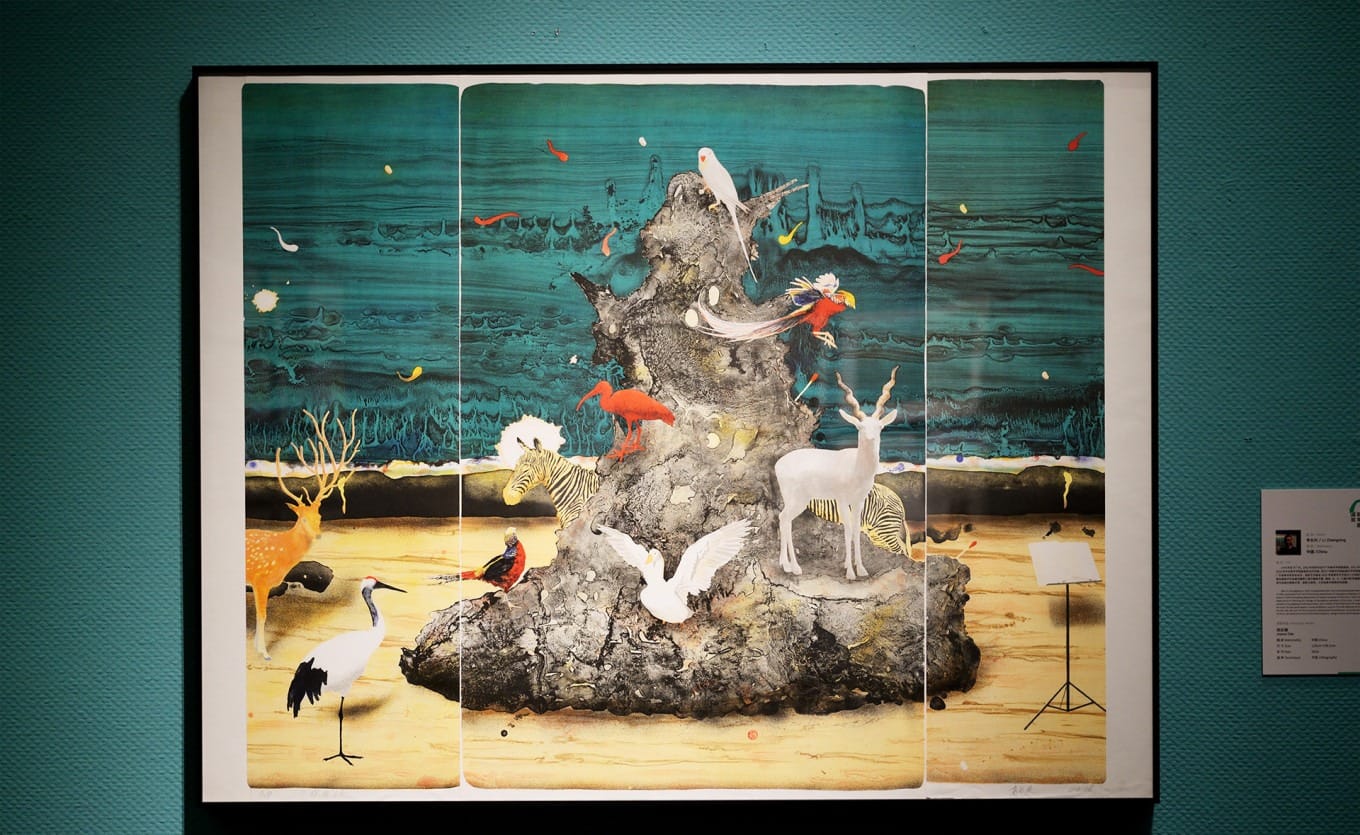
【Out of Control, Matthew de Oliveira(《失去控制》,马修·德·奥利维拉)】 This intense intaglio print by Polish artist Matthew de Oliveira(马修·德·奥利维拉)uses compressed space and dramatic tension to explore the fear underlying the human desire for control—fear rooted in insecurity, anxiety, and the restless independence of the mind.
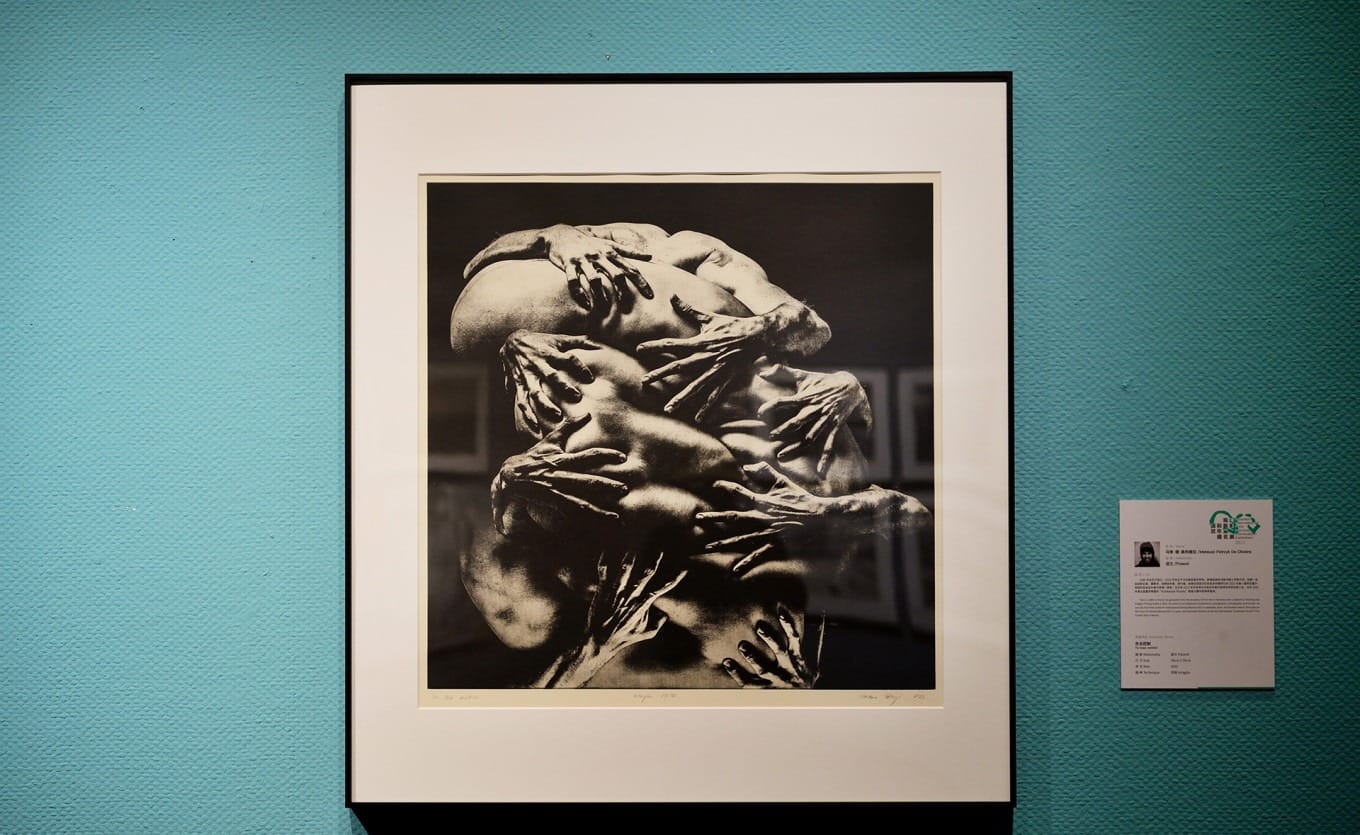
【The Thief of Sound — Portrait of a Friend, Vasil Kolev(《声音的窃贼——朋友的肖像》,瓦西尔·科列夫)】 Bulgarian artist Vasil Kolev(瓦西尔·科列夫)employs intaglio techniques to carve deep grooves that accentuate facial details. The method draws your attention directly to the subject’s expression, creating an intimate and psychologically charged portrait.
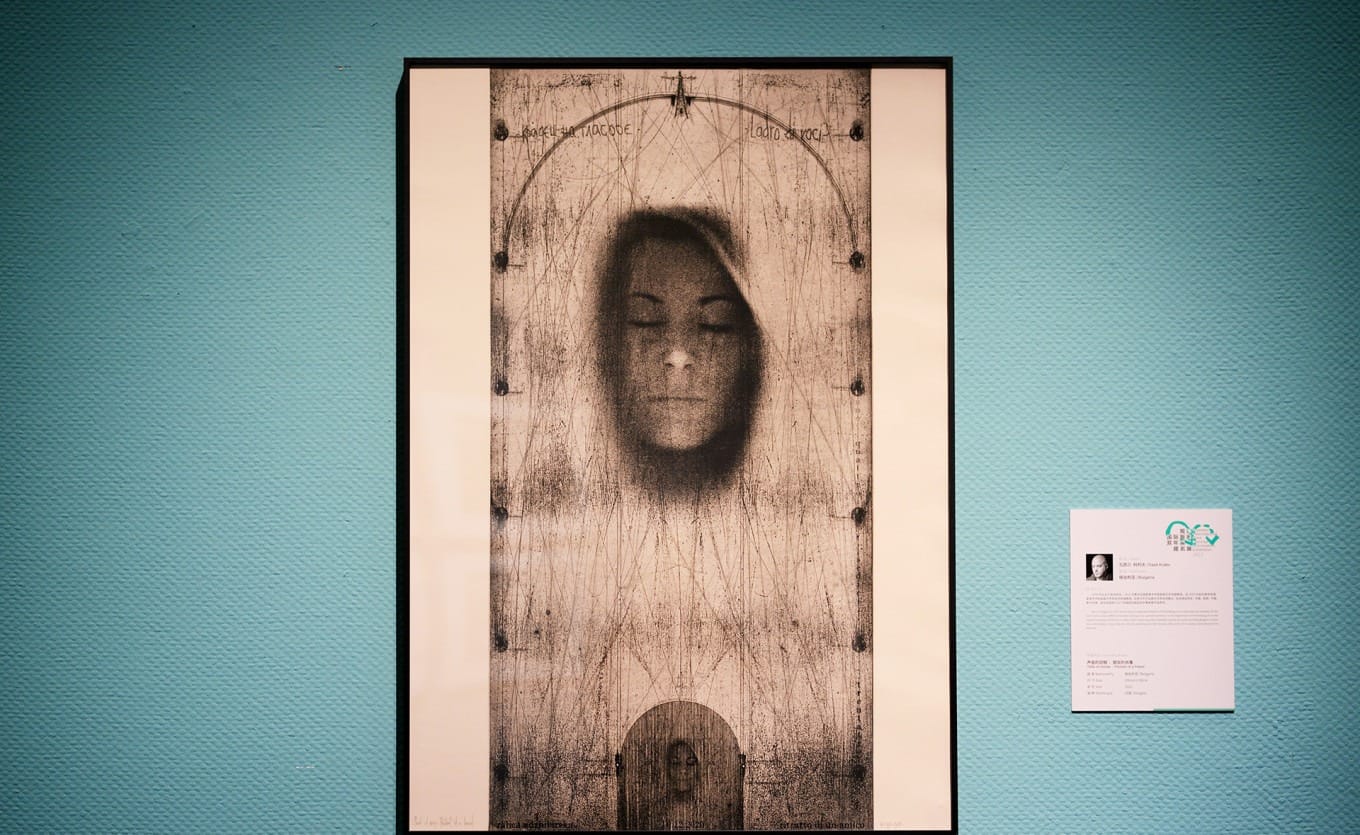
【Theatre Series No.3 (Intaglio), Pan Li(《剧场系列3(凹)》,潘黎)】 Pan Li(潘黎), a doctoral candidate at the Chinese National Academy of Arts(中国艺术研究院), depicts a recessed, box-like space resembling a miniature theater or camera lens. Each surface contains an independent image, forming a space that appears logical under linear perspective yet feels absurd and alien in reality—an uncanny reflection of life in the internet age.
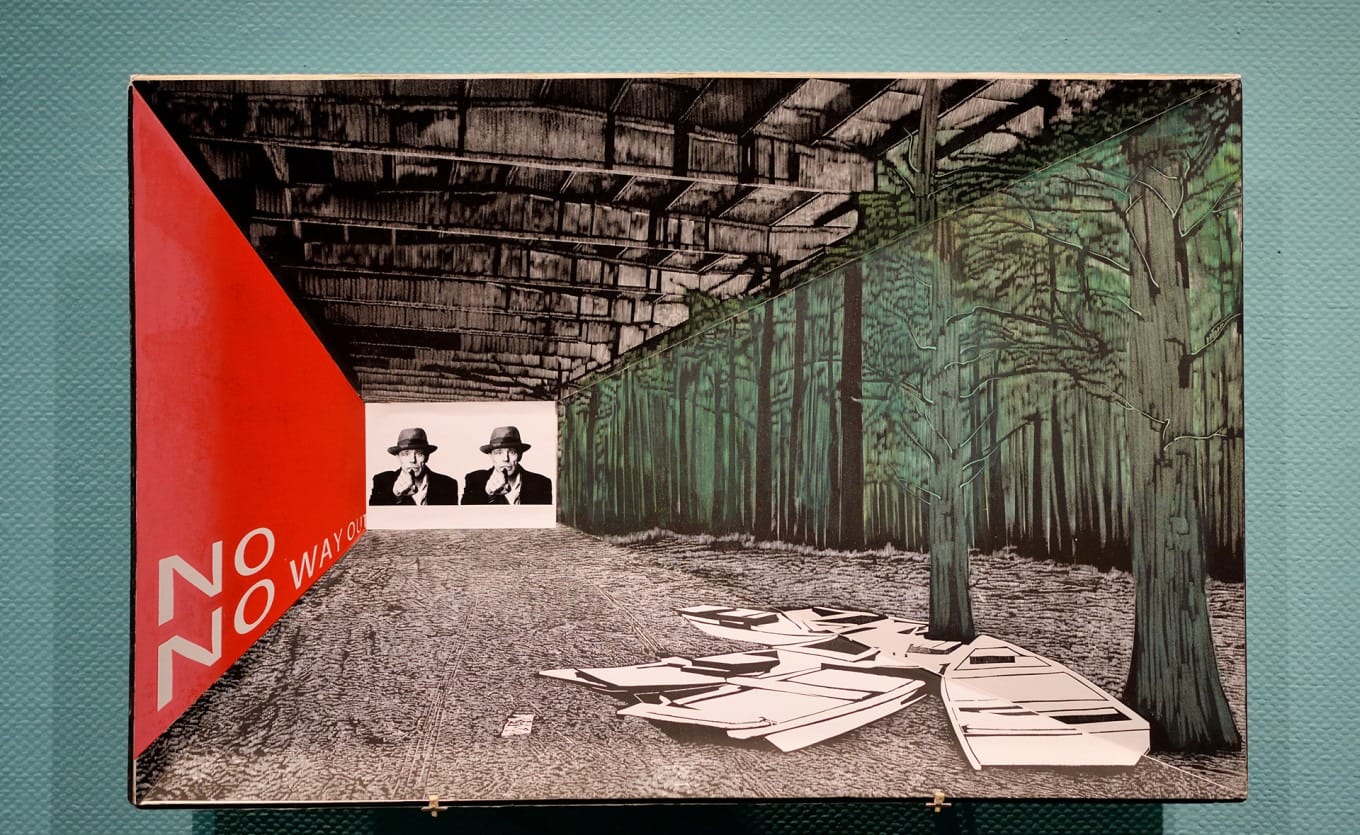
【Dressing Table, Therawat Kong-ong(《梳妆台》,特拉沃特·康·翁)】 Thai-born artist Therawat Kong-ong(特拉沃特·康·翁)portrays a bedroom as a shared space of family memory. After the loss of a loved one, time within this room seems to stretch endlessly. The covered dressing table—once belonging to the artist’s mother—becomes both an act of preservation and a vessel for remembrance.
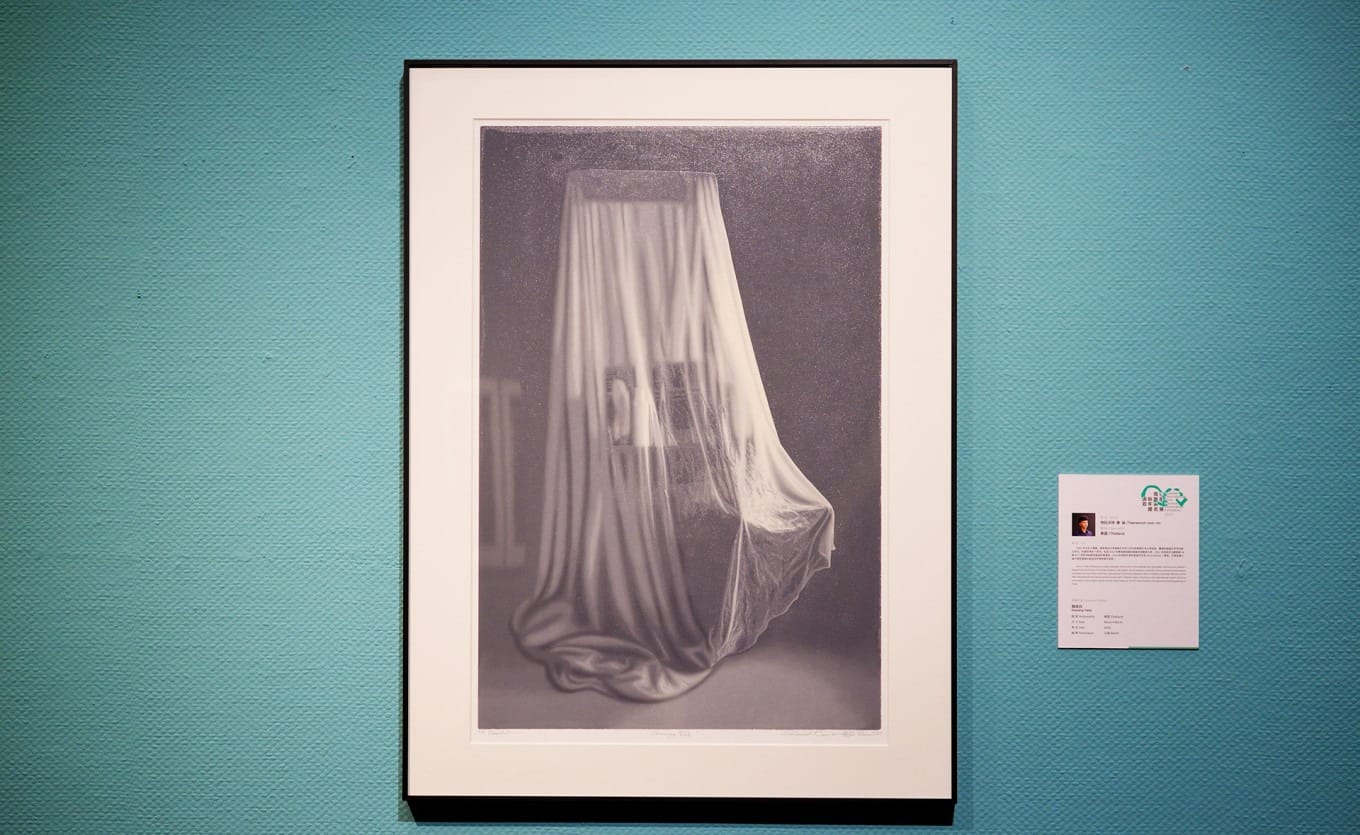
【Three People — 1, 2, 3, Li Yaping(《三个人—1、2、3》,李亚平)】 Born in Hunan(湖南), Li Yaping(李亚平)creates a series of face-to-face portrait studies. The scattered light spots in the compositions come from accidental reflections during prolonged observation, captured and transformed into symbols of emotional connection and visual rhythm.
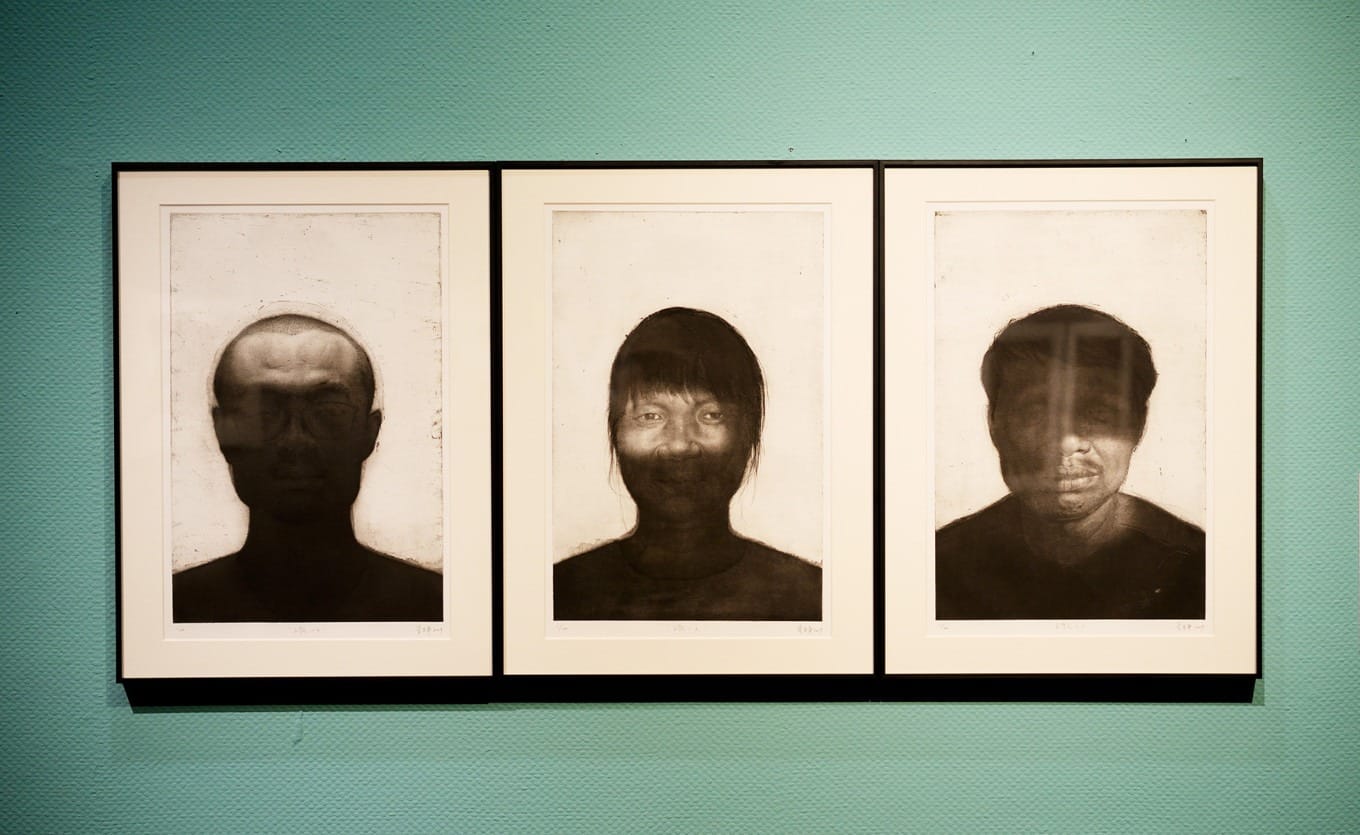
【Fading Landscape No.1, Kou Jianghui(《逐渐逝去的风景—1》,寇疆晖)】 This multi-color lithograph by Kou Jianghui(寇疆晖), Vice President of Tianjin Academy of Fine Arts(天津美术学院), uses layered transparent inks to explore harmony between visual language and inner emotional states.

【Joyful Floating Garden No.3, Krzysztof Tomalski(《欢乐的漂浮花园3》,克里斯托夫·托马斯基)】 Polish artist Krzysztof Tomalski(克里斯托夫·托马斯基)depicts a world composed of material fragments and symbolic forms, expressing a metaphysical sense of matter imbued with spirit.
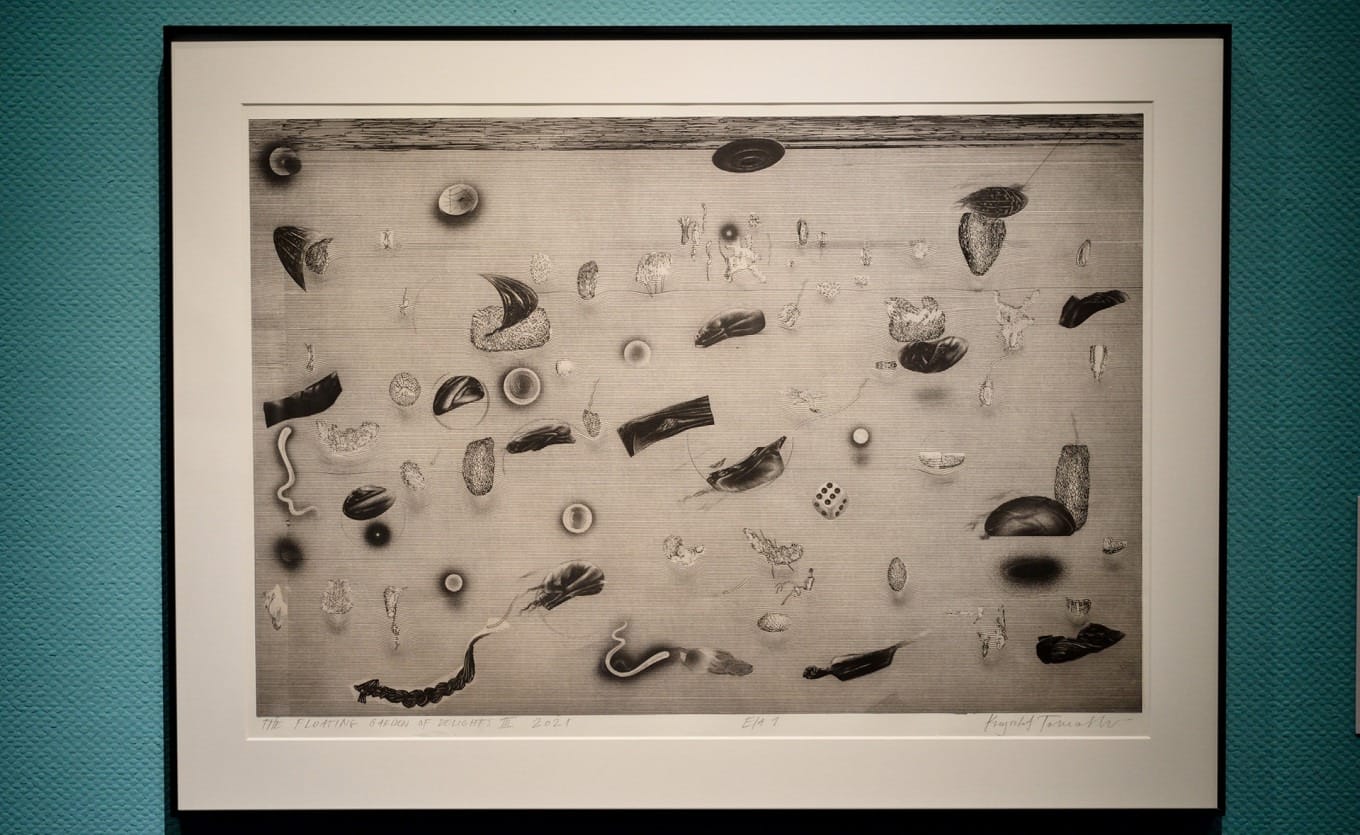
After walking through the exhibition, you may find that complete understanding isn’t the point. Even if some works feel elusive, the emotional impact is undeniable. Art, after all, exists to brush away the dust that accumulates in the soul—feeling its resonance is more than enough.
Note: The China Printmaking Museum is closed every Tuesday(每周二闭馆), so be sure to plan your visit accordingly.
Guanlan Printmaking Village
- AttractionGuanlan Printmaking Village(观澜版画村)
- AddressNo. 169 Yuxin Road, Dashuitian, Niuhu Community, Guanlan Subdistrict, Longhua District, Shenzhen(深圳市龙华区观澜街道牛湖社区大水田裕新路169号)
- AdmissionFree(免费)
Just a short walk from the China Printmaking Museum(中国版画博物馆), you’ll find the Guanlan Original Printmaking Industry Base—far better known to locals as Guanlan Printmaking Village(观澜版画村). The nickname is fitting: long before it became a national printmaking hub, this was a genuine Hakka(客家)village with centuries of history.
Guanlan Printmaking Village is formed by two natural villages—Xinweichang(新围场)and Dashuitian(大水田)—both built against hills and beside water, surrounded by gentle scenery. Today, it stands as one of Shenzhen’s cultural calling cards, a transformation closely tied to one key figure: Chen Yanqiao(陈烟桥), a pioneering printmaker and an important figure in China’s New Woodcut Movement(中国新兴木刻运动).
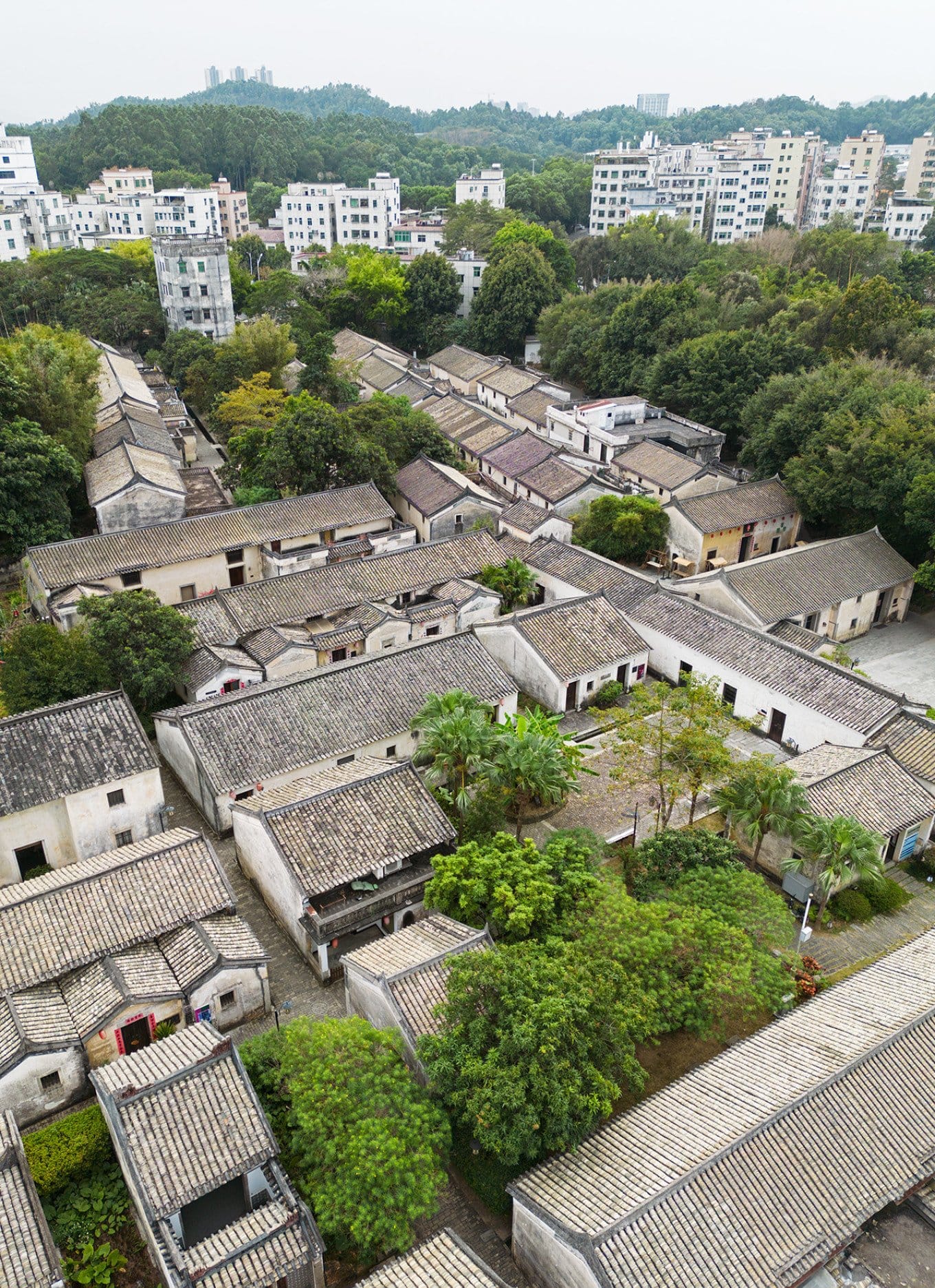
Chen Yanqiao was a native of Niuhu, Guanlan(观澜牛湖). Beginning in the 1930s, he devoted himself to printmaking and joined the League of Left-Wing Artists of China(中国左翼美术家联盟), studying under Lu Xun(鲁迅). During the War of Resistance against Japanese Aggression, he used printmaking as a weapon to depict the people’s struggle. After the founding of the People’s Republic of China, he continued working in art education through the 1970s.
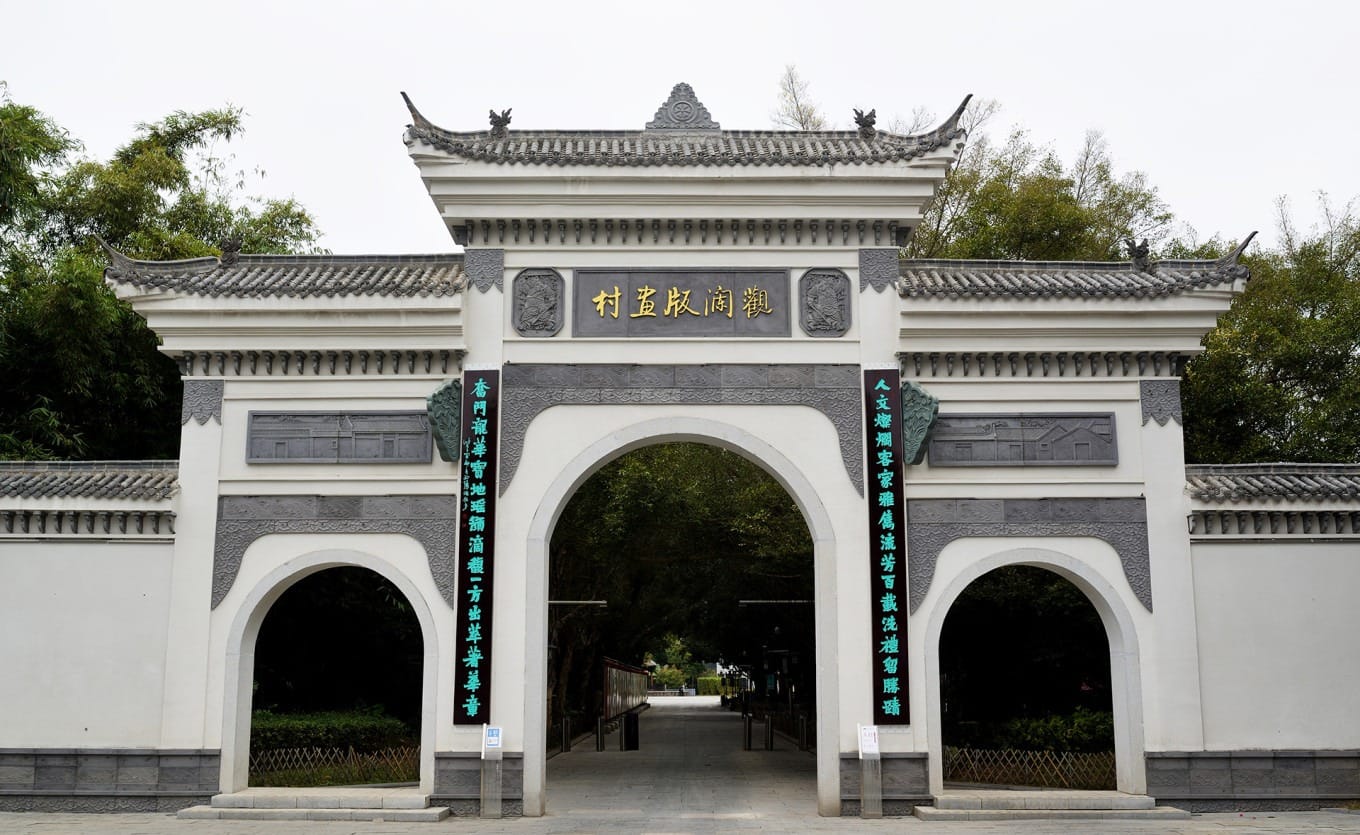
In 2006, the China Artists Association(中国美术家协会)and the Shenzhen municipal government jointly decided to establish a printmaking industry base in Chen Yanqiao’s hometown. The chosen site was Xinweichang and Dashuitian—what you now explore as Guanlan Printmaking Village.
Passing through the stone archway at the village entrance, you arrive first at Xinweichang, also known historically as Longmen Wei(龙门围). In earlier times, the village was mainly inhabited by the Chen(陈)and Ling(凌)clans. Xinweichang was originally a square Hakka walled village, with interior houses built in the traditional flying-eaves row-house style common in old Bao’an County(宝安县). Above the main gate hangs a plaque reading “Longmen Shiju(龙门世居),” meaning ‘Generations of Residence at Longmen.’


As the population grew, new houses were later built south of the original enclosure, forming the village layout you see today. Most buildings date from the late Qing Dynasty to the Republican era, including the Chen Clan Ancestral Hall(陈氏宗祠), constructed in 1926. According to village elders, the ancestral hall once featured elaborate carvings, painted beams, and richly decorated clay murals, and it was the heart of festivals and celebrations.
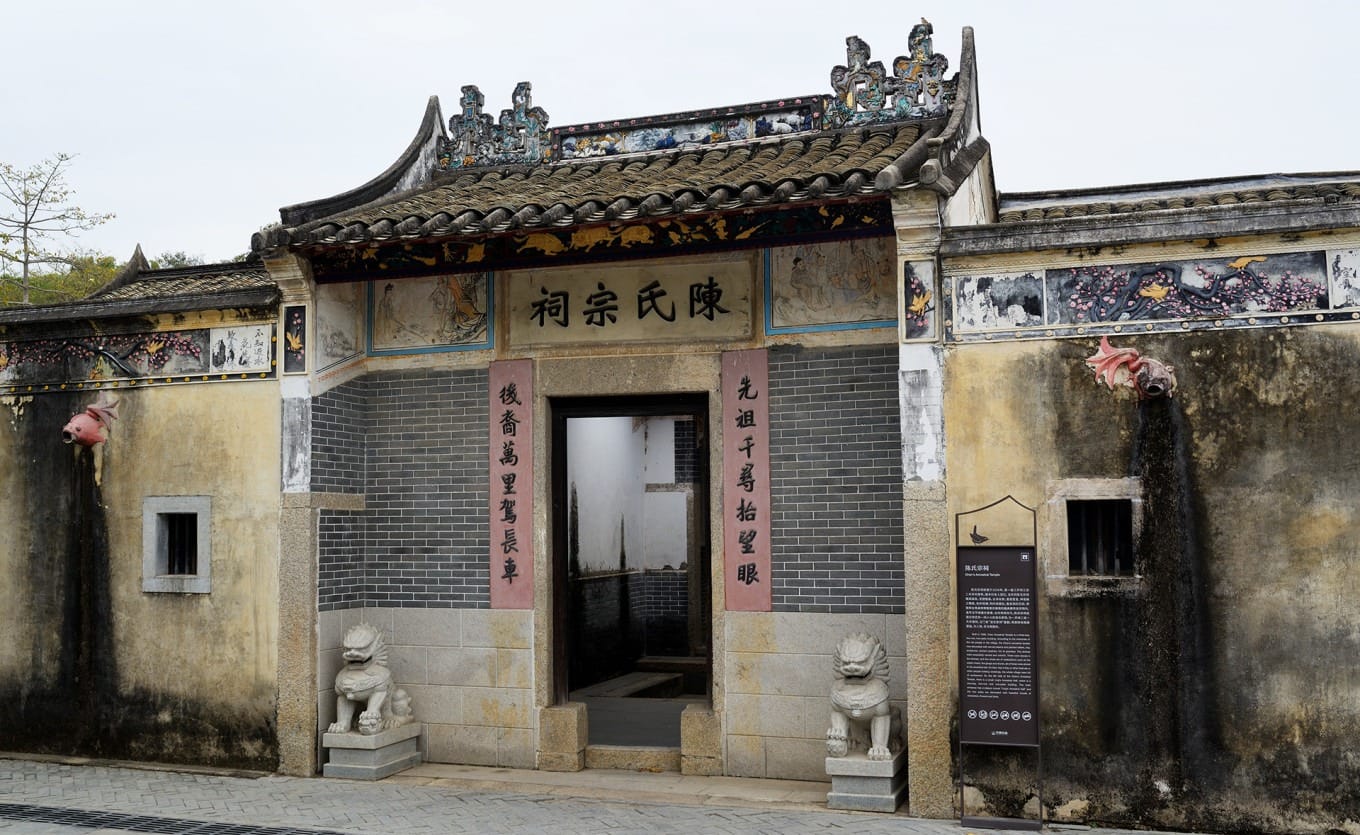
The most striking structure in Xinweichang stands at the village’s northern corner: the Chen Clan Watchtower(陈氏碉楼), also known as a blockhouse. Firing holes at the top reveal its original defensive purpose—protecting villagers from bandit raids. Before liberation, there were actually two such towers, once connected by steel cables that allowed defenders to slide between them during emergencies.
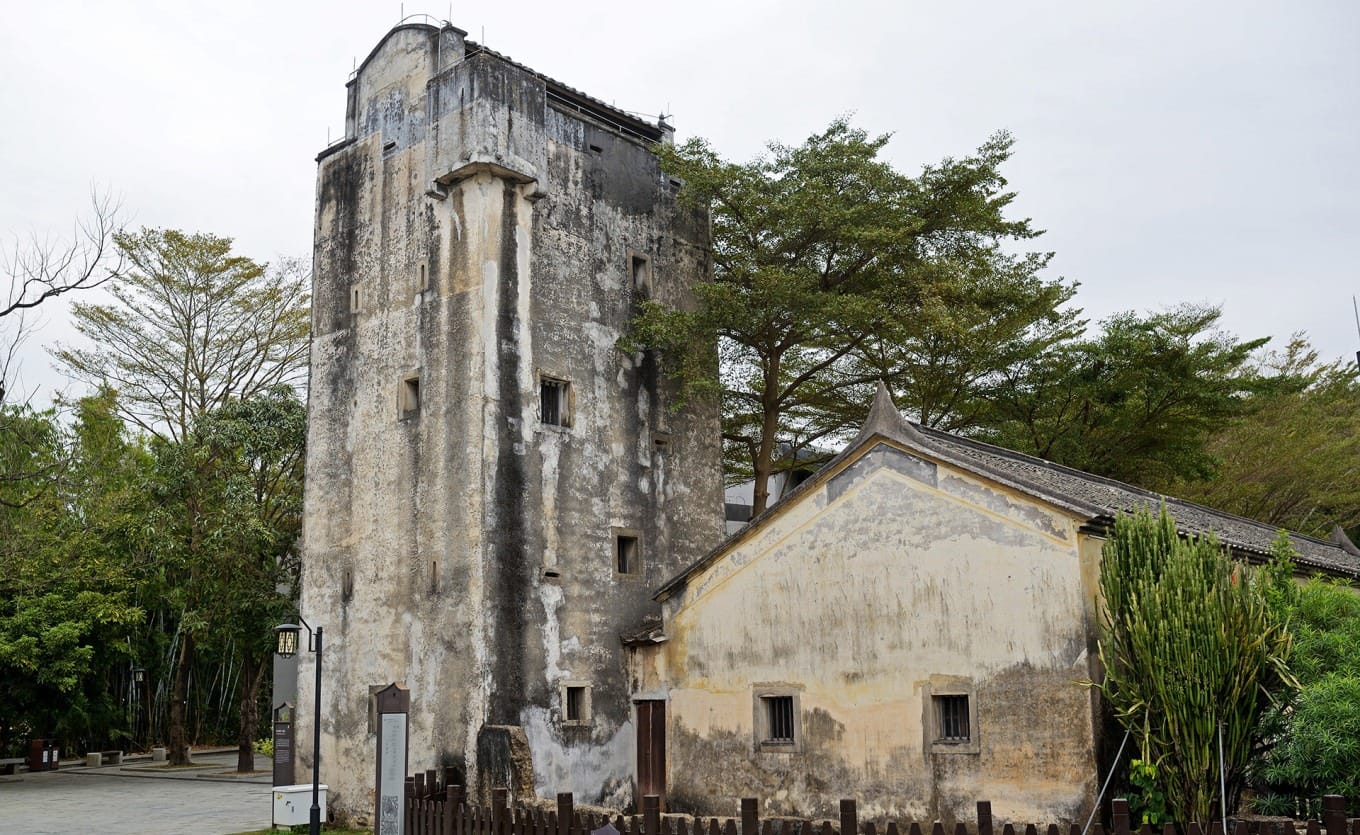
About 200 to 300 meters northwest lies Dashuitian Village(大水田), historically a Ling clan settlement. Legend says that when the village was first established, there was a large paddy field and several big trees at the front, giving rise to the original name ‘Dashutian(大树田),’ later evolving into ‘Dashuitian.’
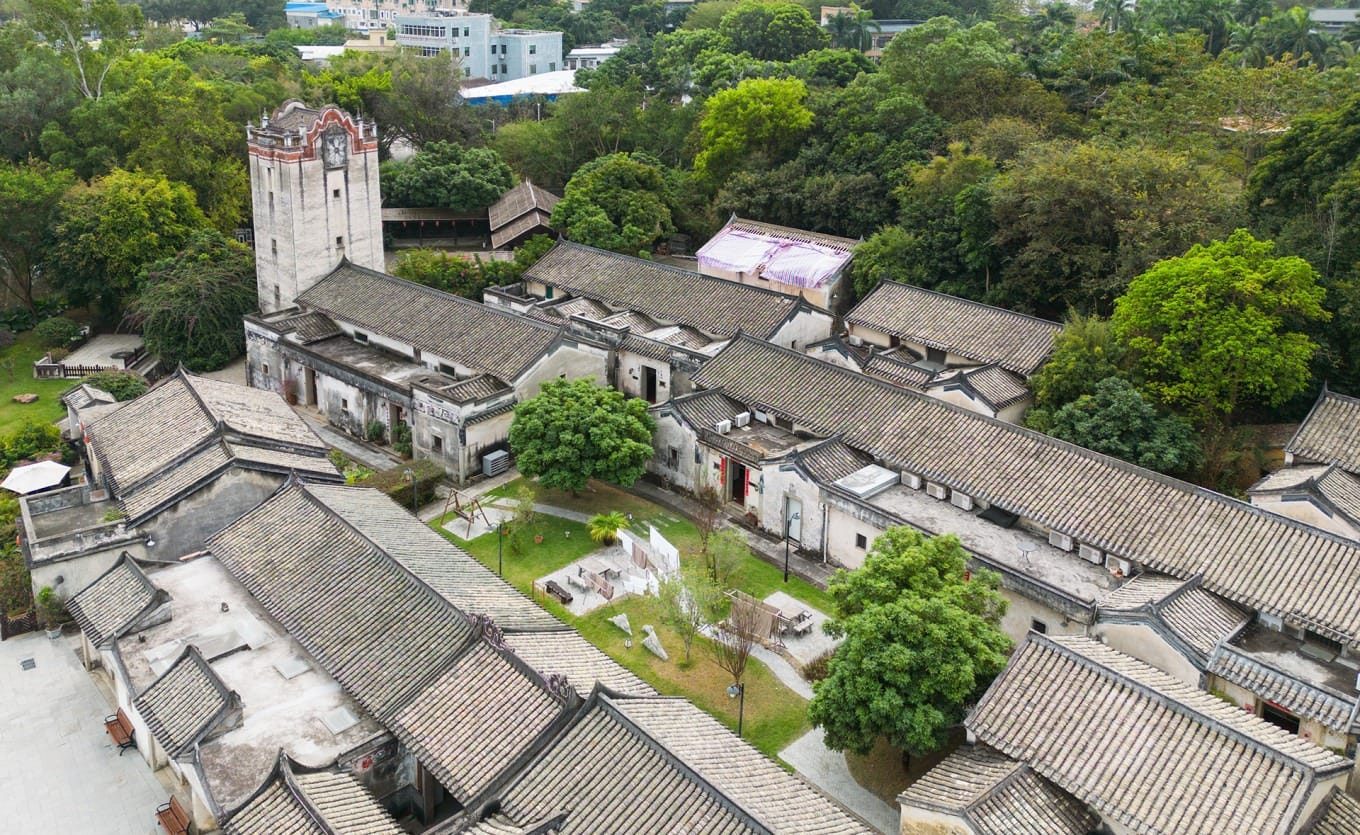
After the printmaking base was established in 2006, original residents of Xinweichang and Dashuitian relocated. Today, all former residences have been converted into studios and workspaces for printmakers and artists, giving the village a distinctly creative atmosphere.
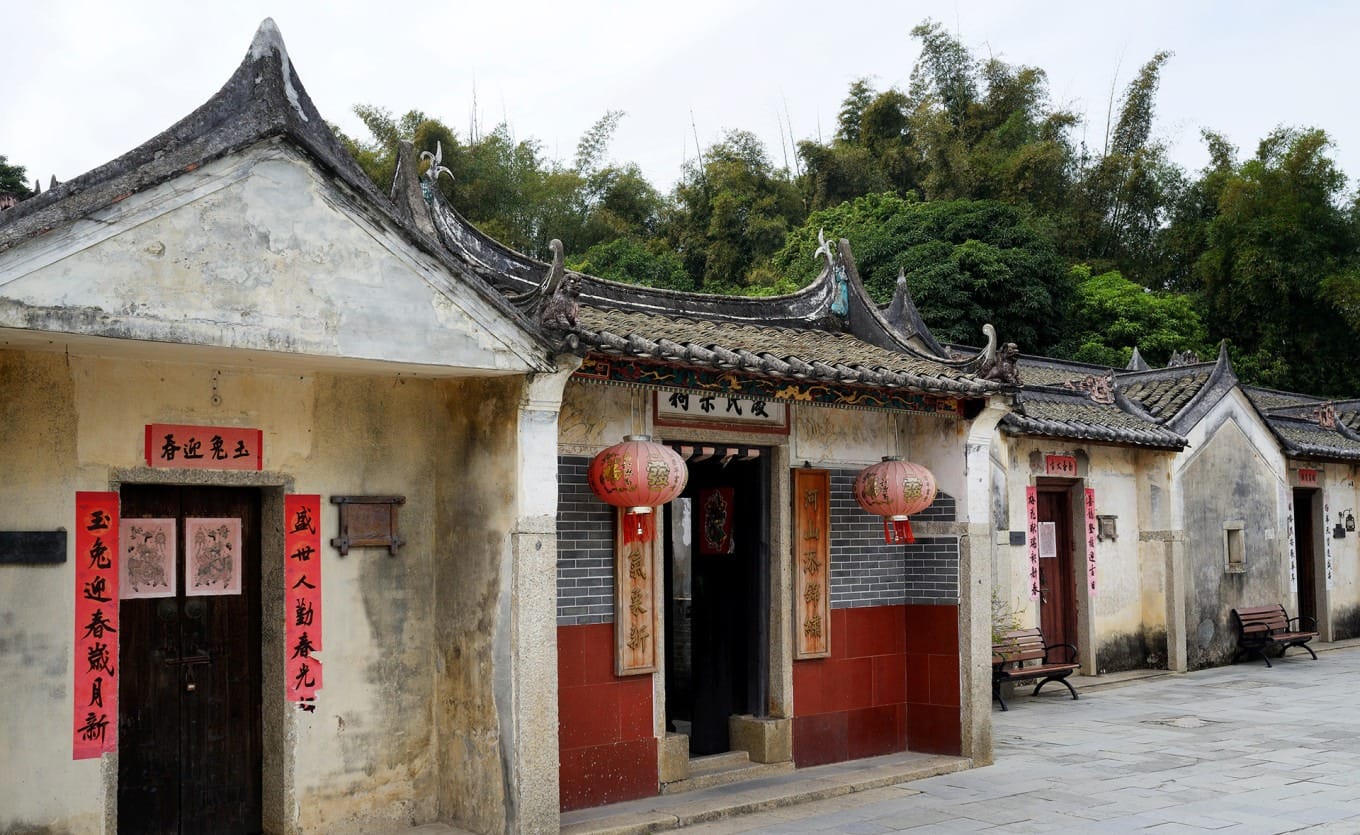

Dashuitian contains more than twenty houses, one ancestral hall, and two watchtowers. The most ornate is the Ling Clan Watchtower(凌氏碉楼)at the eastern end of the village. Built in 1911, it incorporates noticeable Baroque-style decorative elements. The rammed-earth walls are made with traditional sanhe earth(三合土), while the stone window frames are finely carved. The parapet features protruding firing platforms on all sides, blending European motifs with local defensive architecture.
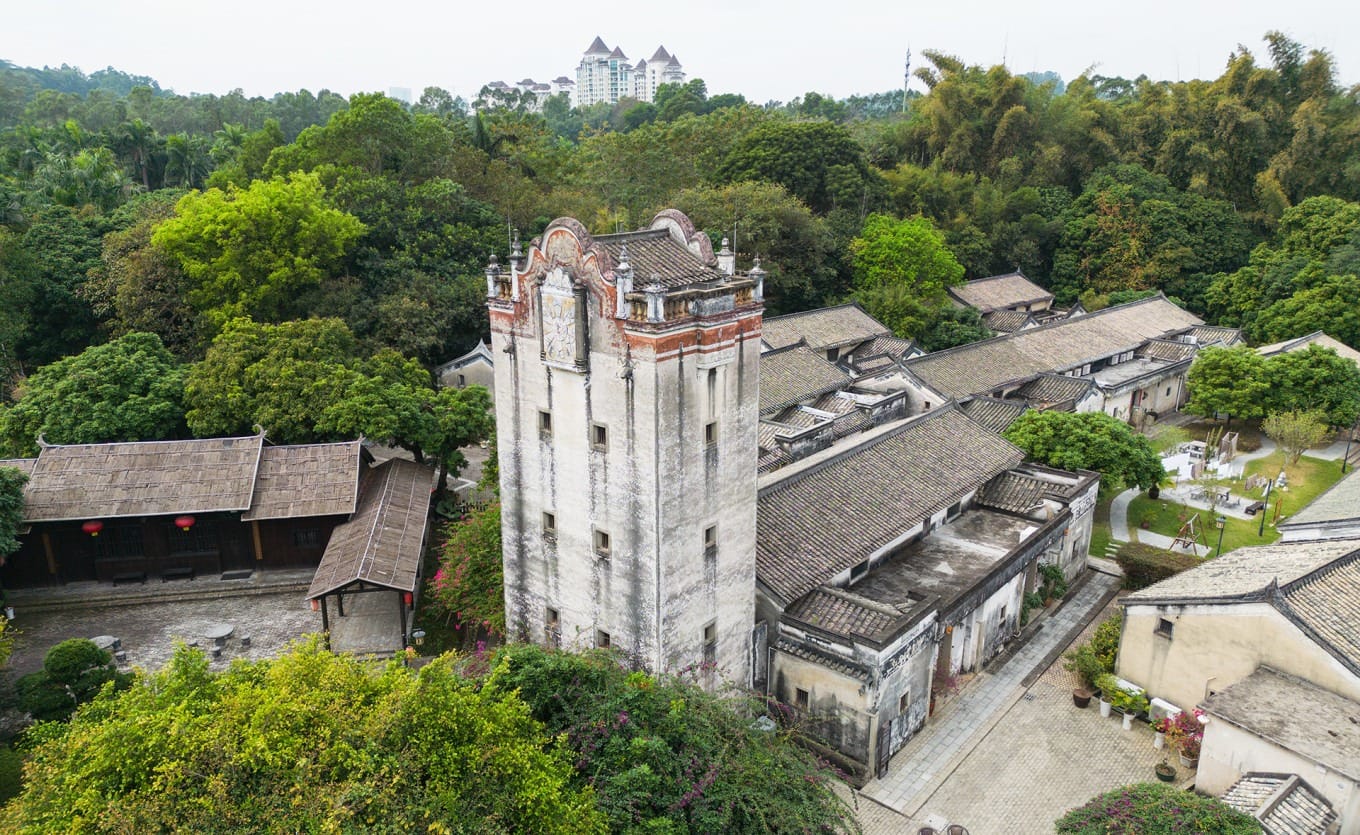

In today’s peaceful era, these watchtowers no longer serve a defensive role. Their once-tense atmosphere has faded, yet their commanding presence still hints at the authority and vigilance they once embodied.
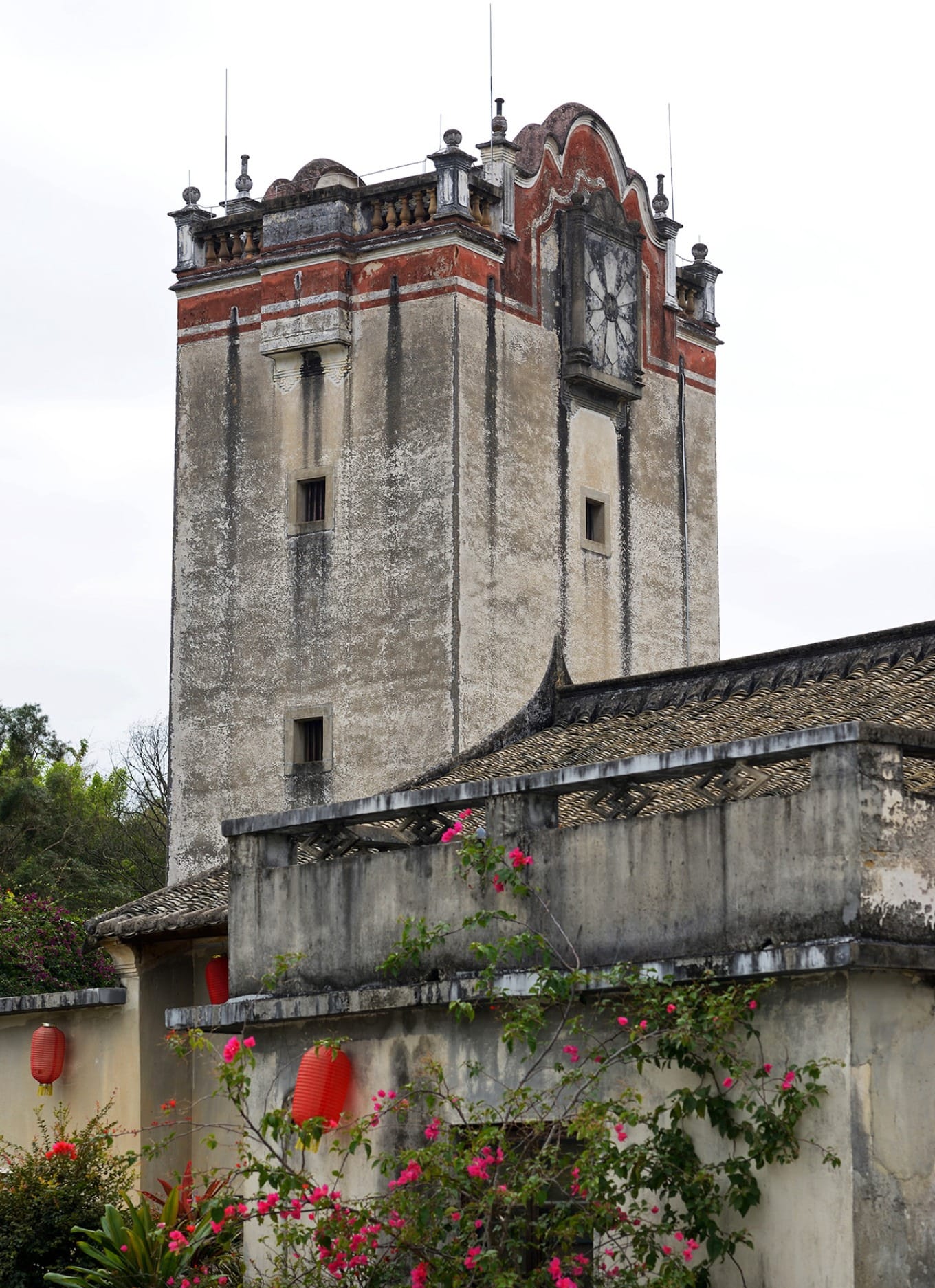
Shekou Market
- AttractionShekou Market(蛇口市场)
- AddressNo. 49 Yucun Road, Nanshan District, Shenzhen(深圳市南山区渔村路49号)
- AdmissionFree(免费)
Nothing reflects everyday life more vividly than a local market. If you enjoy immersing yourself in how a city truly lives and breathes, visiting a wet market is one of the most rewarding travel experiences you can have.
Among Shenzhen’s(深圳)many markets, Shekou Market(蛇口市场)in Nanshan District stands out as one of the city’s most important seafood markets. With a history of more than 20 years, it’s not just a place to shop—it’s a living snapshot of Shenzhen’s coastal identity and daily rhythms, rich with unmistakable street-level vitality.
Shekou Fishing Port(蛇口渔港)was once Shenzhen’s largest national first-class fishing port and also the biggest seafood import–export hub in the Pearl River Delta. Thanks to its immediate proximity to the harbor, Shekou Market has long supported a substantial share of Shenzhen’s seafood supply.
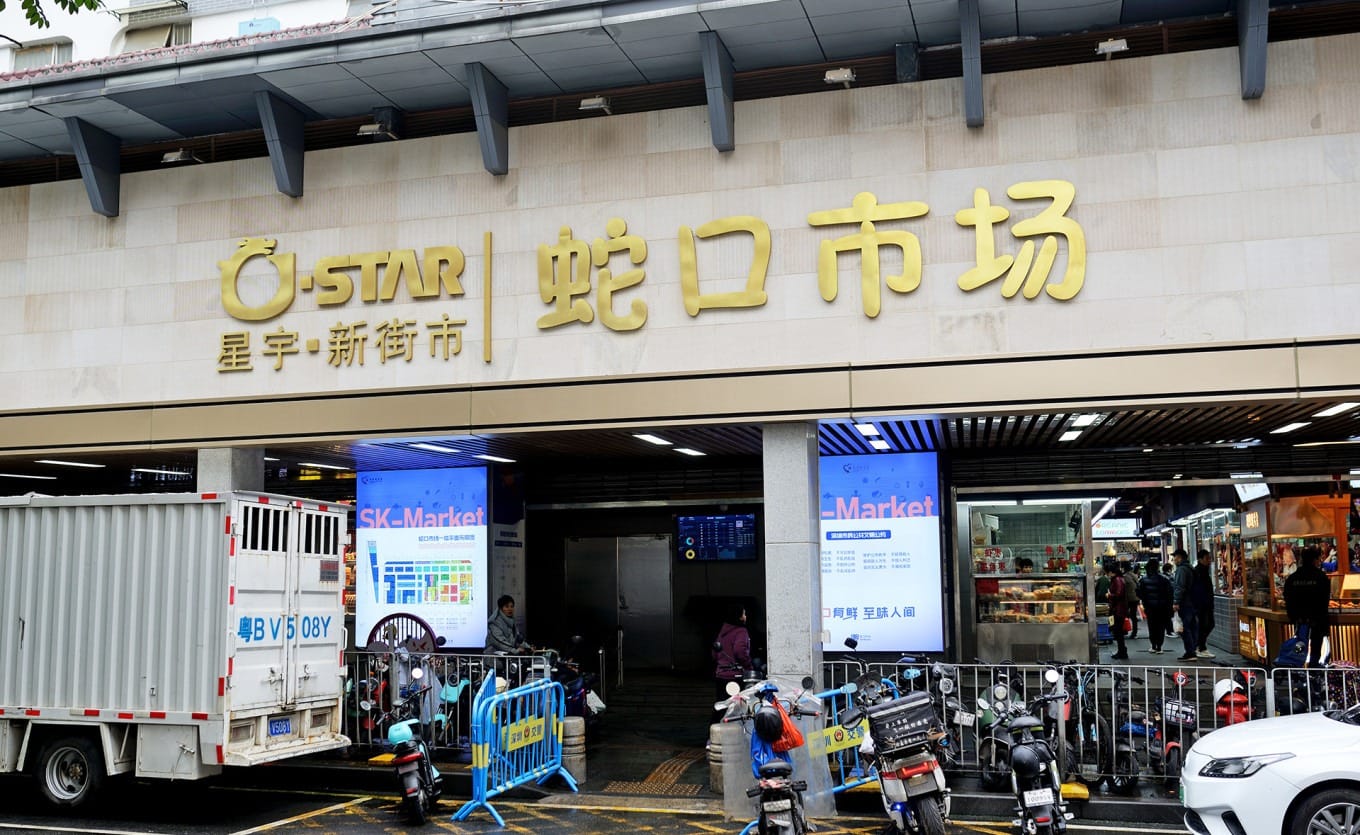
After a major renovation completed a few years ago, Shekou Market has become strikingly modern. At first glance, you might even mistake it for a high-end fresh food supermarket. Step inside, though, and the coastal abundance quickly becomes clear—shouts from vendors and the sound of bargaining fill the air.
💰 Payment Tip: When shopping at wet markets like Shekou, cash is rarely used. Learn how to pay like a local with our guide to Mastering Mobile Payments in China (Alipay & WeChat Pay).
Although it’s a comprehensive wet market selling everything from vegetables to dry goods, the seafood selection here rivals—and often surpasses—many markets dedicated exclusively to aquatic products.
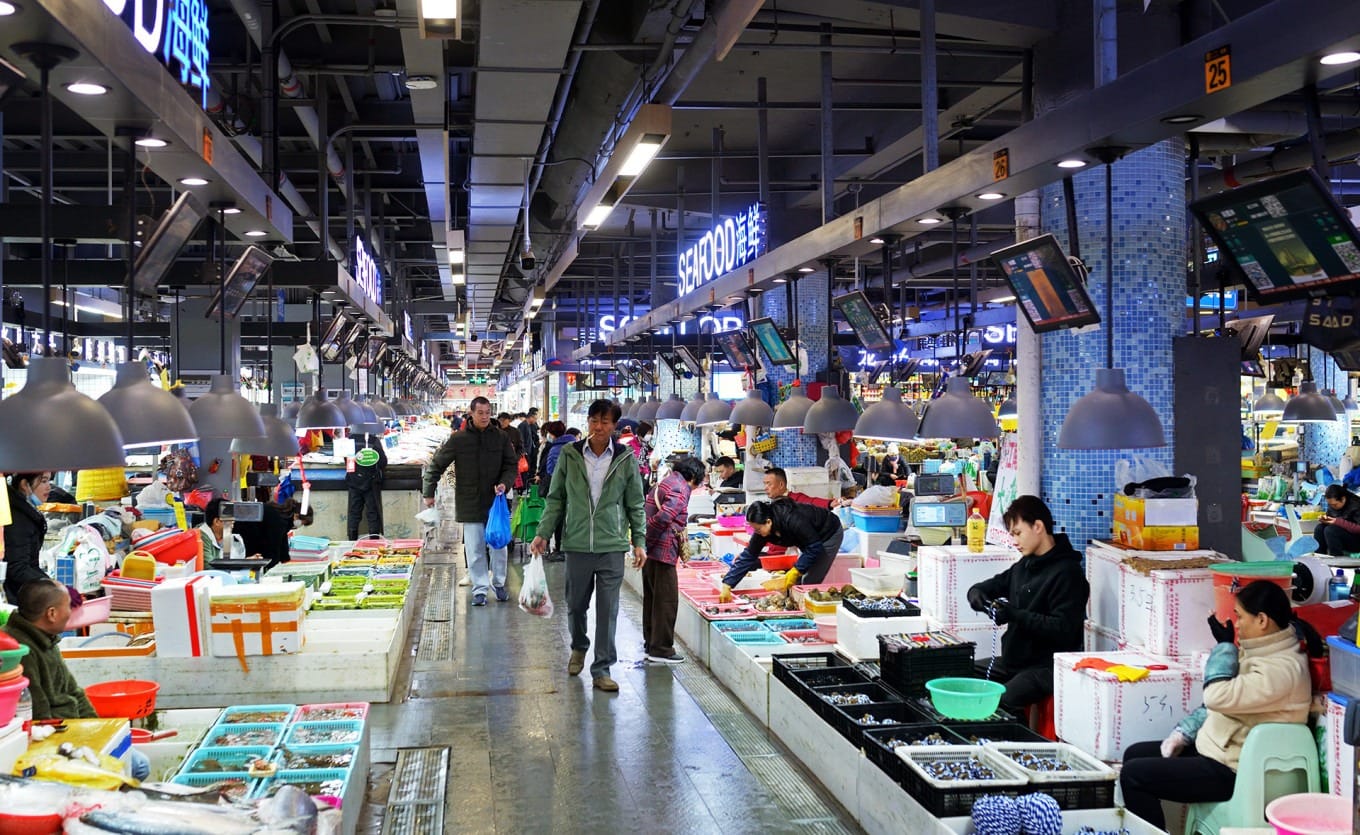
Some seafood stalls are downright extravagant, comparable to luxury brand counters in shopping malls. Take the king crabs(帝王蟹)on display—far larger than what you’d typically see in supermarkets. These massive specimens could easily dominate the seafood tanks of upscale Cantonese restaurants.
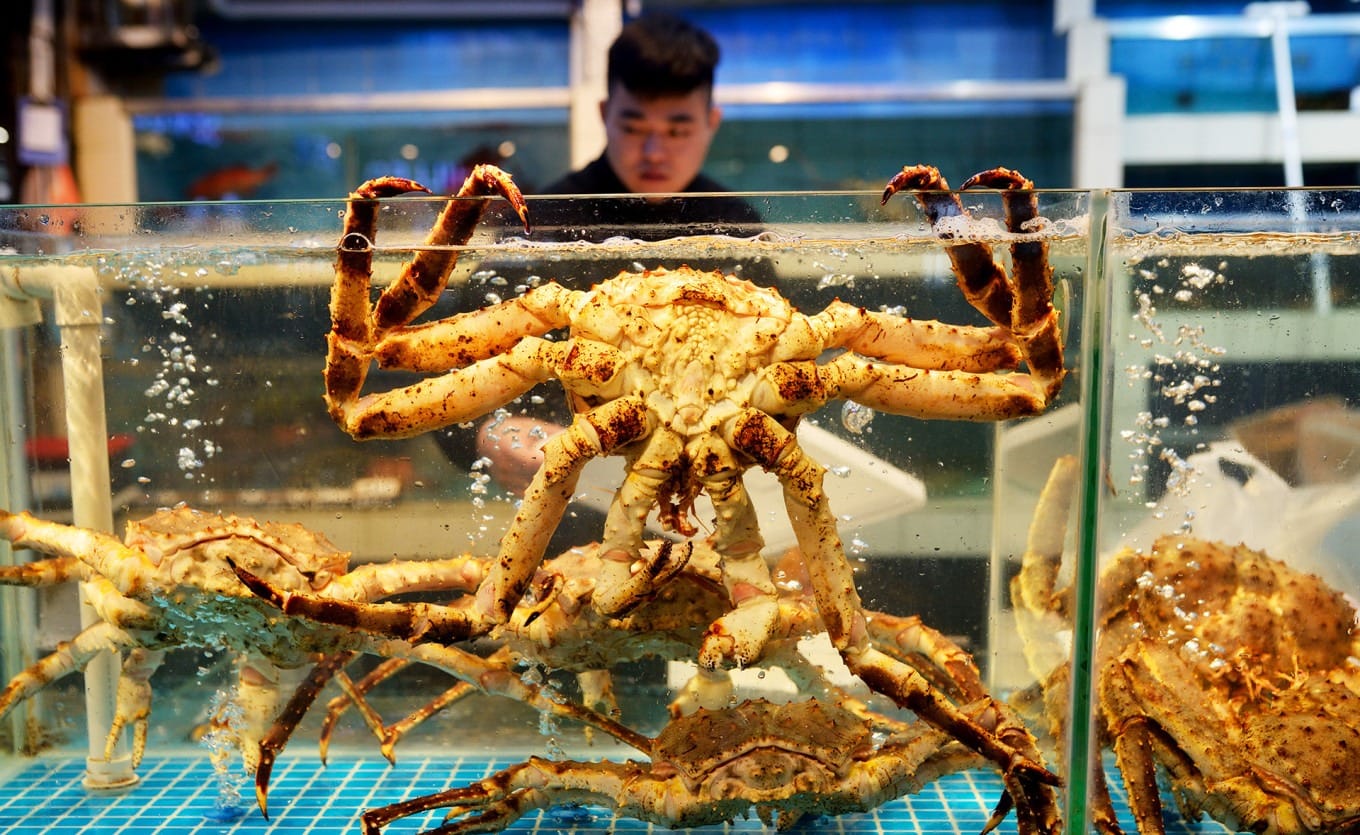
Local roe crabs(膏蟹)feel much more down-to-earth. They’re essentially mature green crabs(青蟹), which are available year-round in Guangdong(广东). Depending on their growth stage, green crabs are classified as water crabs(水蟹), immature crabs(奄仔蟹), soft-shell crabs(重皮蟹), meat crabs(肉蟹), roe crabs(膏蟹), and the highly prized butter crabs(黄油蟹)—covering every possible craving.

You’ll also find geoduck clams(象拔蚌)imported from the west coast of North America. They’re graded A or B based on the length of their siphon—often jokingly called the “nose.” Slice the tender siphon meat thinly and enjoy it as sashimi or lightly blanched; either way, the sweetness and crunch are exceptional.
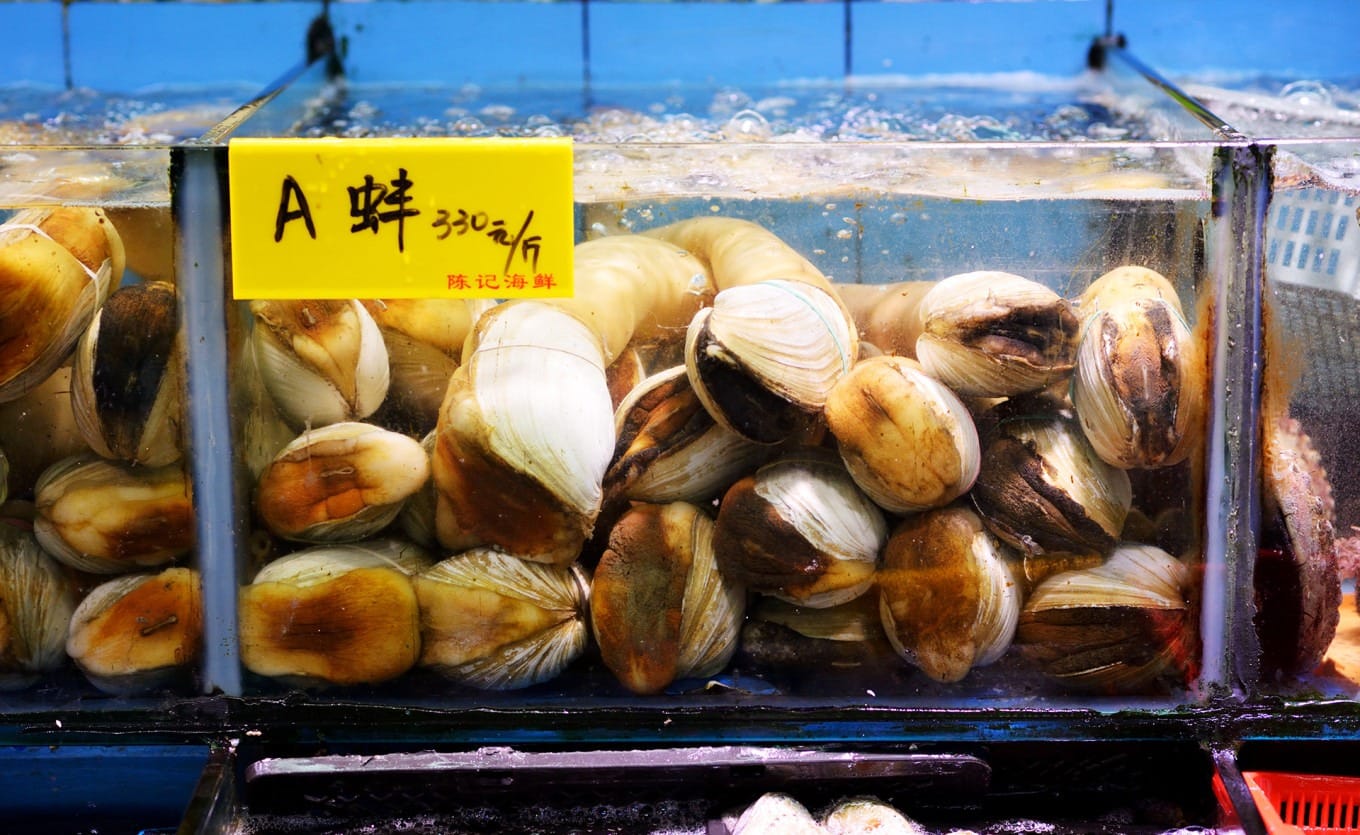
Other shellfish and sea snails line the stalls in dazzling variety, gleaming under bright lights. Most need very little preparation—simple boiling or blanching is often all it takes to bring out their natural flavors.
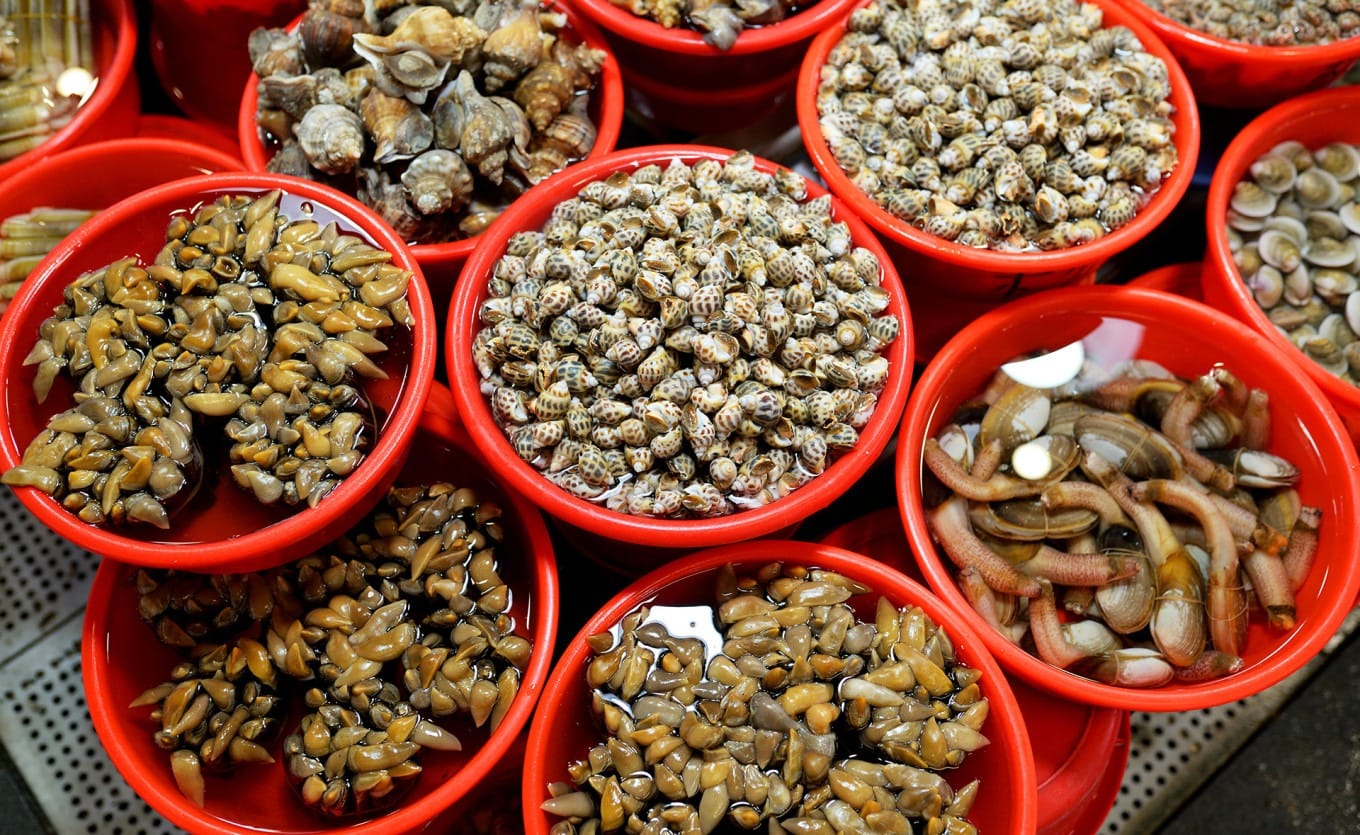
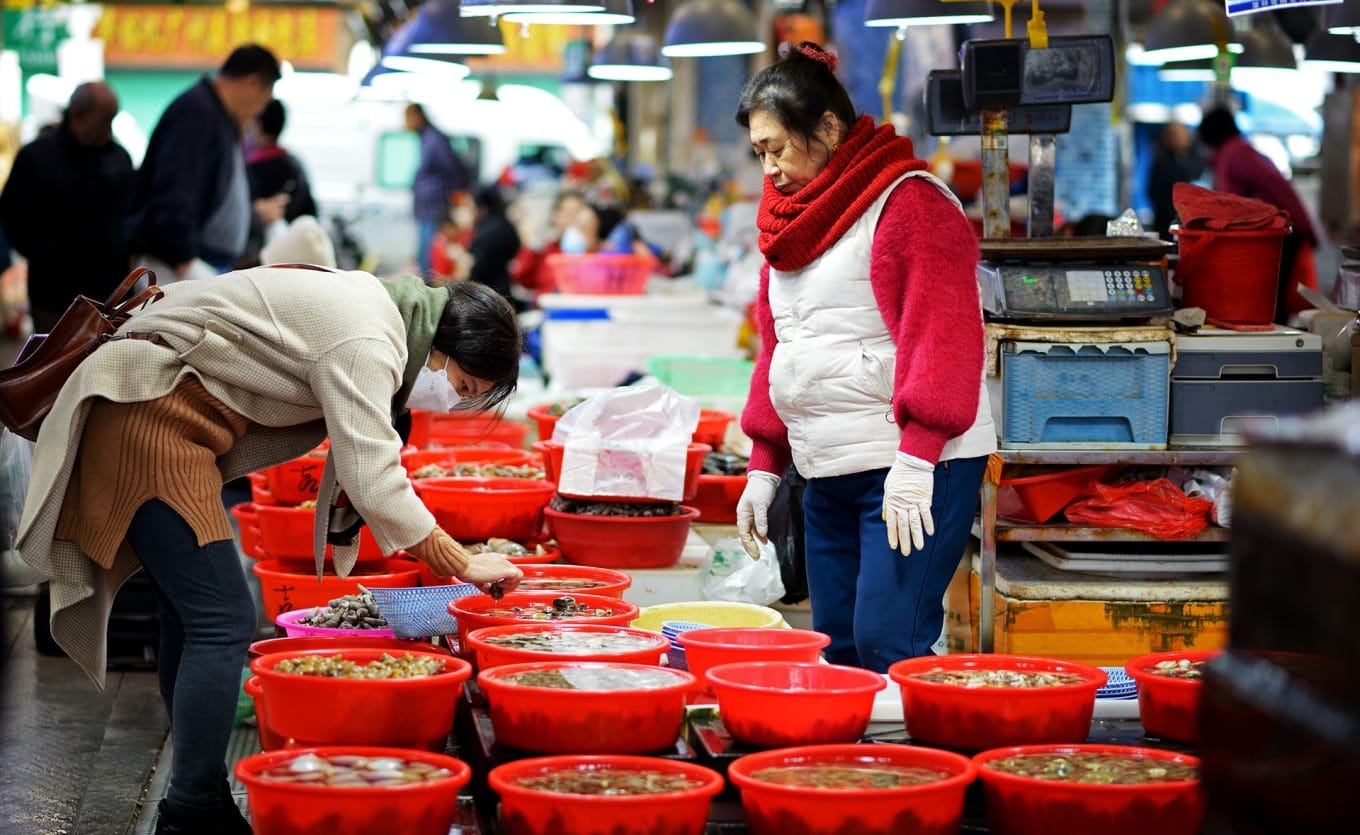
One particularly rare find is the wild striped beakfish(斑石鲷), typically caught only through sea fishing. This species feeds on shellfish attached to reefs, which explains its exceptionally sharp teeth—sharp enough to bite through fishing lines. Spotting it here is pure luck, and tasting it is a true treat.
Common sea fish are, of course, well represented too: mudskippers(泥猛), mullet(鲻鱼), pomfret(鲳鱼), yellow croaker(黄鱼), and golden threadfin bream(金线鱼)lie neatly sorted in baskets, waiting for buyers to choose their dinner.
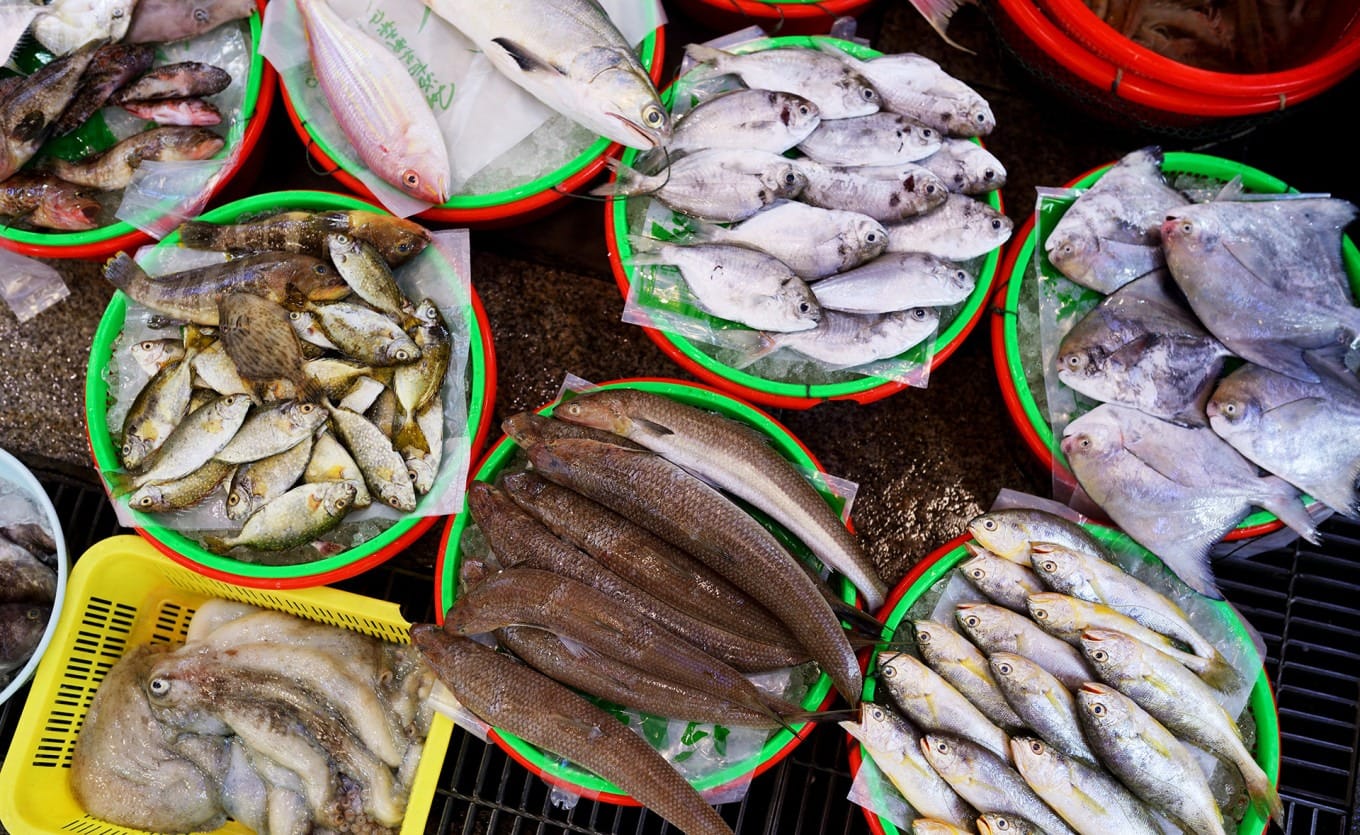
Freshwater fish are equally prominent, and whatever the species, they’re impressively large. Whether they end up steamed, stir-fried, or transformed into chopped chili fish head(剁椒鱼头)depends entirely on your taste.
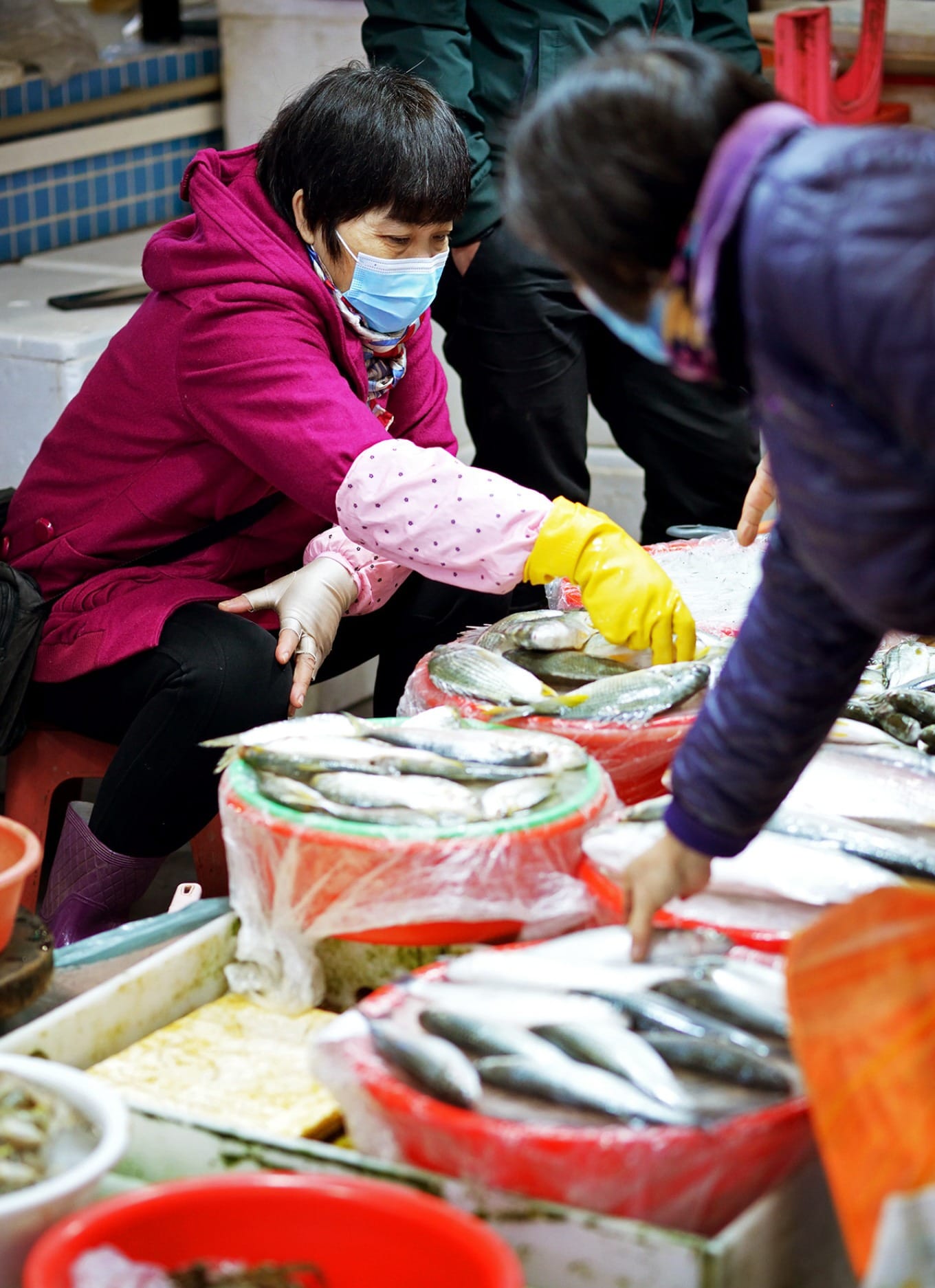
Beyond seafood, Shekou Market is also known for its Guangdong soup-ingredient shops(广东汤料铺), which resemble traditional Chinese medicine stores. The air is filled with herbal aromas. From premium ingredients like cordyceps(虫草)and lingzhi(灵芝)to everyday items such as poria(茯苓)and Solomon’s seal(玉竹), the selection is extensive.
If you’re unsure how to combine ingredients, just ask the shop owners. They know the properties of each herb well and can recommend soup combinations based on the season and your body type—a level of personalized advice that’s hard to find elsewhere.
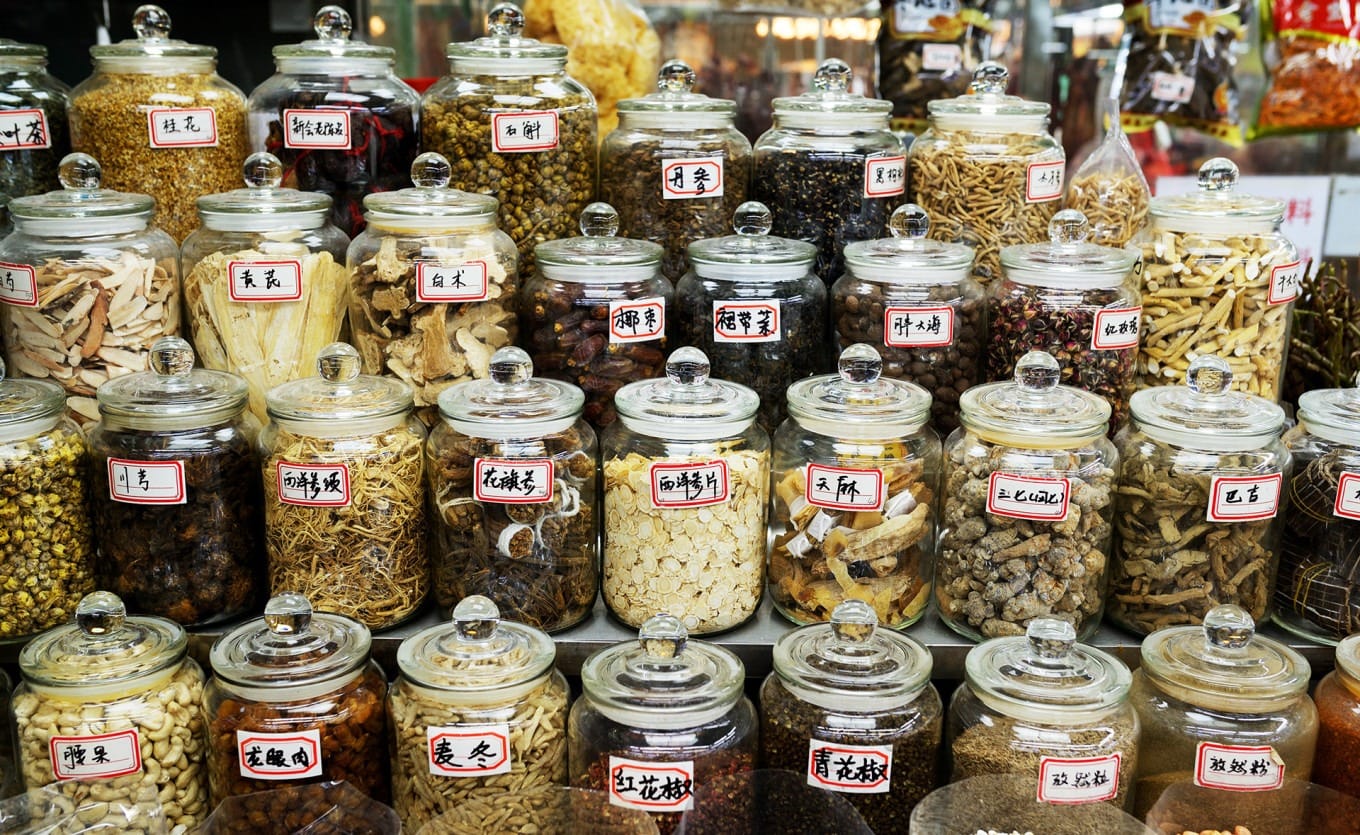
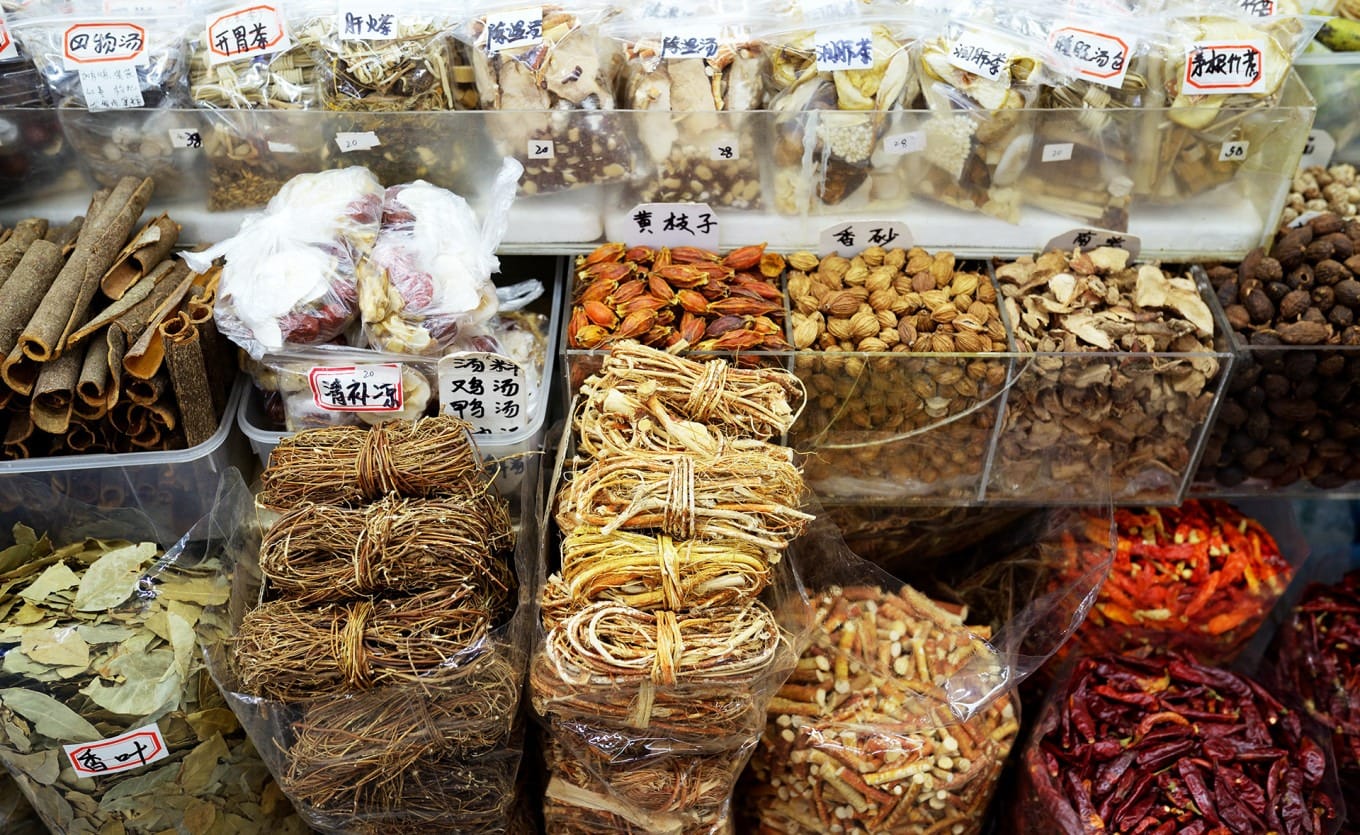
Dry goods and cured meats are also plentiful. One highlight is Dongguan Houjie sausage(东莞厚街腊肠), which comes in many variations—fresh meat, original flavor, aged tangerine peel(陈皮), dried mushroom(冬菇)and more. The plump, glossy sausages look far more appealing than supermarket-packaged versions, though they do come at a noticeably higher price.
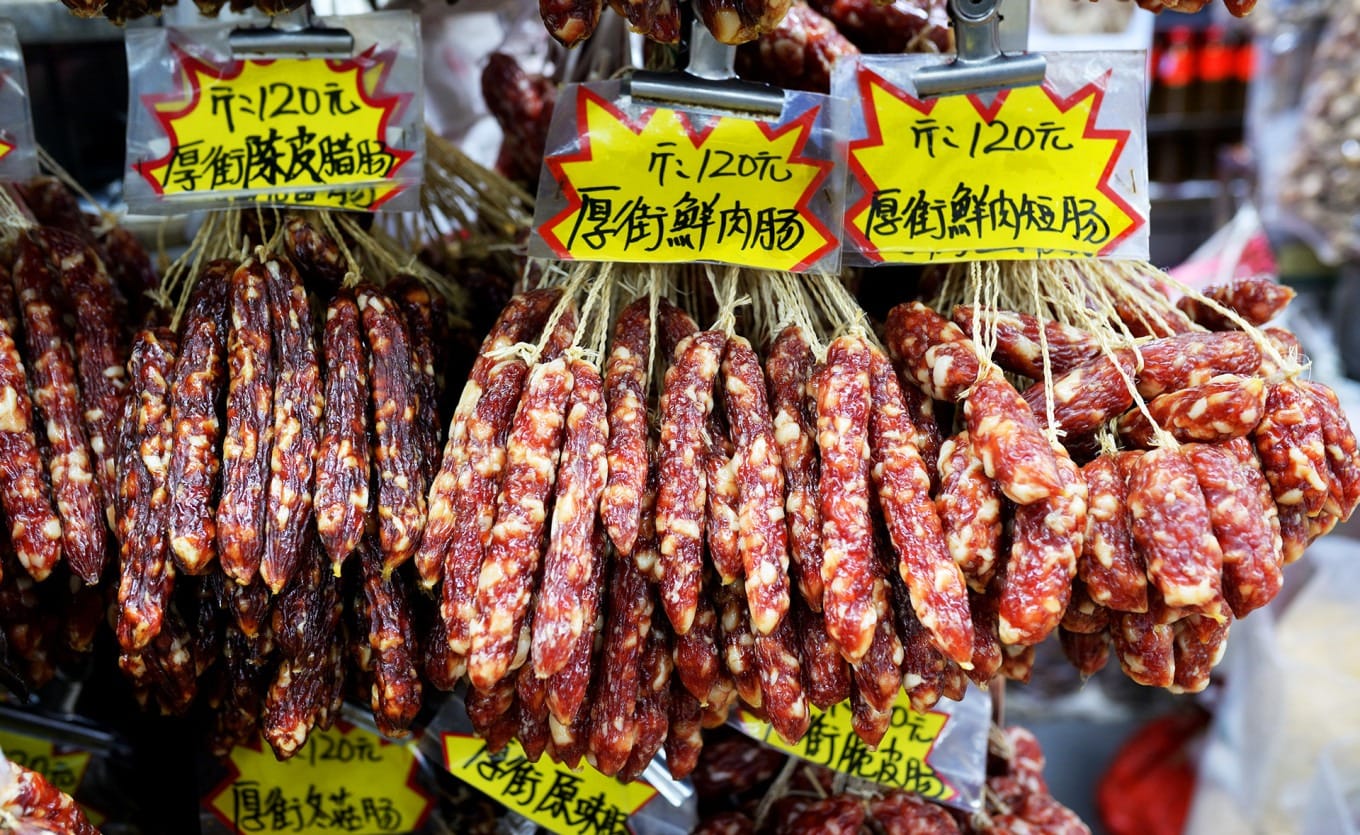
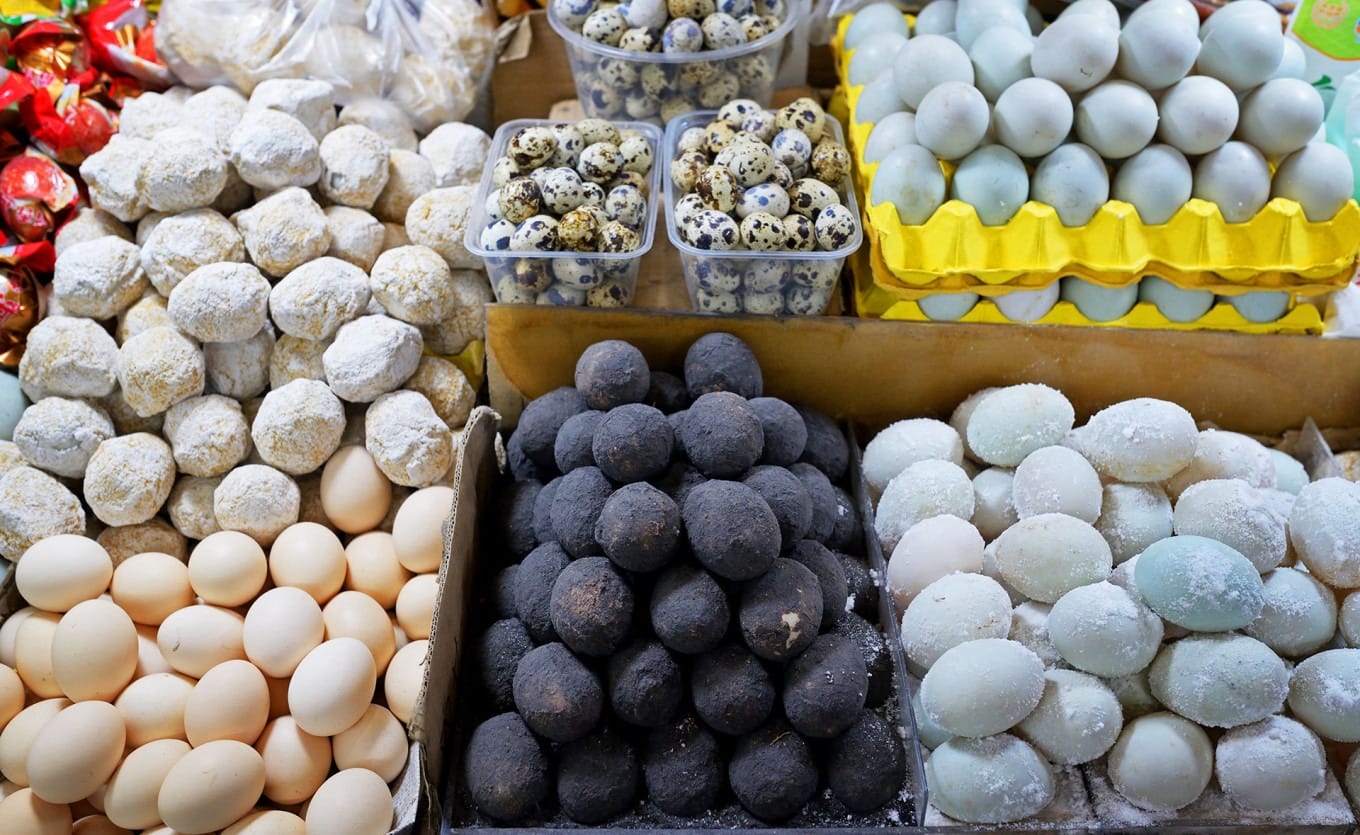
Jinzhonghuan International Business Tower
- AttractionJinzhonghuan International Business Tower(金中环国际商务大厦)
- AddressFutian District, Shenzhen(深圳市福田区)
- AdmissionFree(免费)
If you’re interested in photographing Shenzhen’s(深圳)urban skyline, one location is practically a rite of passage: Jinzhonghuan International Business Tower(金中环国际商务大厦)in Futian CBD. Among local photography enthusiasts, this building is often jokingly called a “beginner’s checkpoint,” thanks to its easy access and consistently dramatic views.
After entering the lobby, take the elevator directly to the 44th floor and step out onto the outdoor smoking balcony. If that area happens to be locked, try the 42nd or 40th floor instead. In general, the even-numbered floors share the same outward-facing direction, offering similar sightlines over the CBD.
Although the building is openly accessible, it’s best to keep a low profile while shooting—avoid blocking passages or disturbing nearby offices, and respect the normal operations of businesses inside.
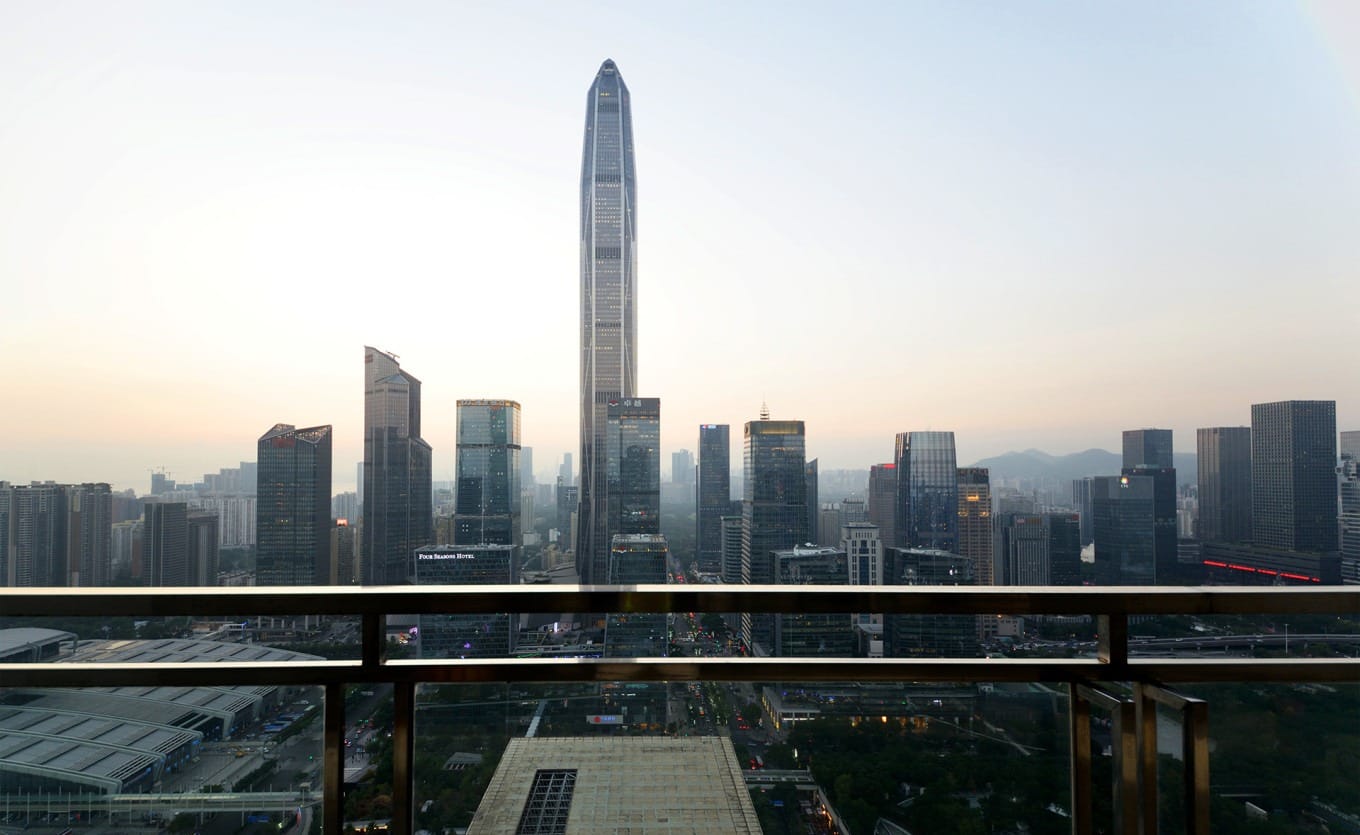
Dominating the frame is a skyscraper that looks like a sword drawn straight into the sky: the Ping An Finance Center(平安金融中心). At 599.1 meters tall, it is currently the tallest building in Shenzhen, second only to Shanghai Tower(上海中心)in China, and ranks among the world’s top four tallest buildings.
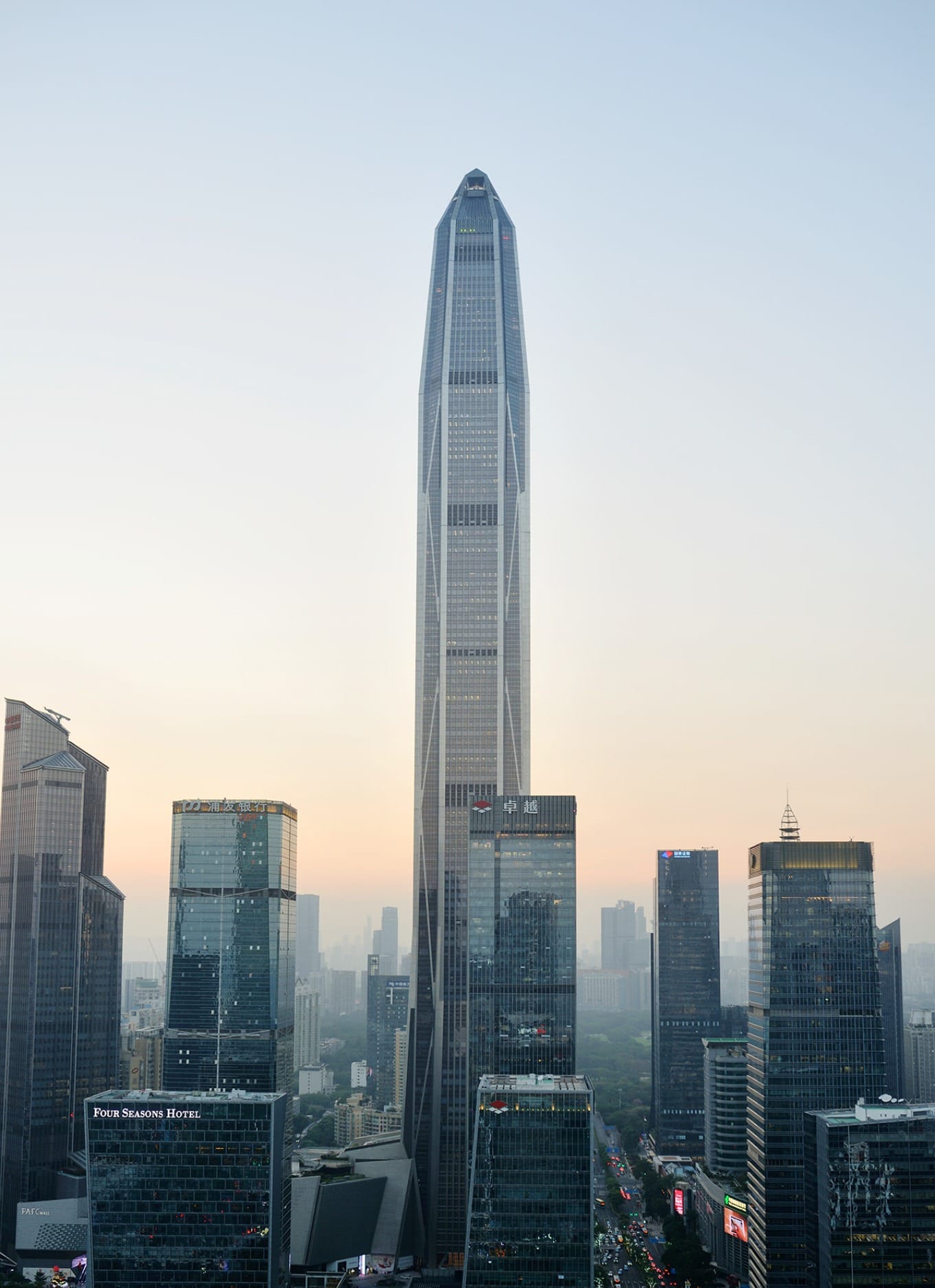
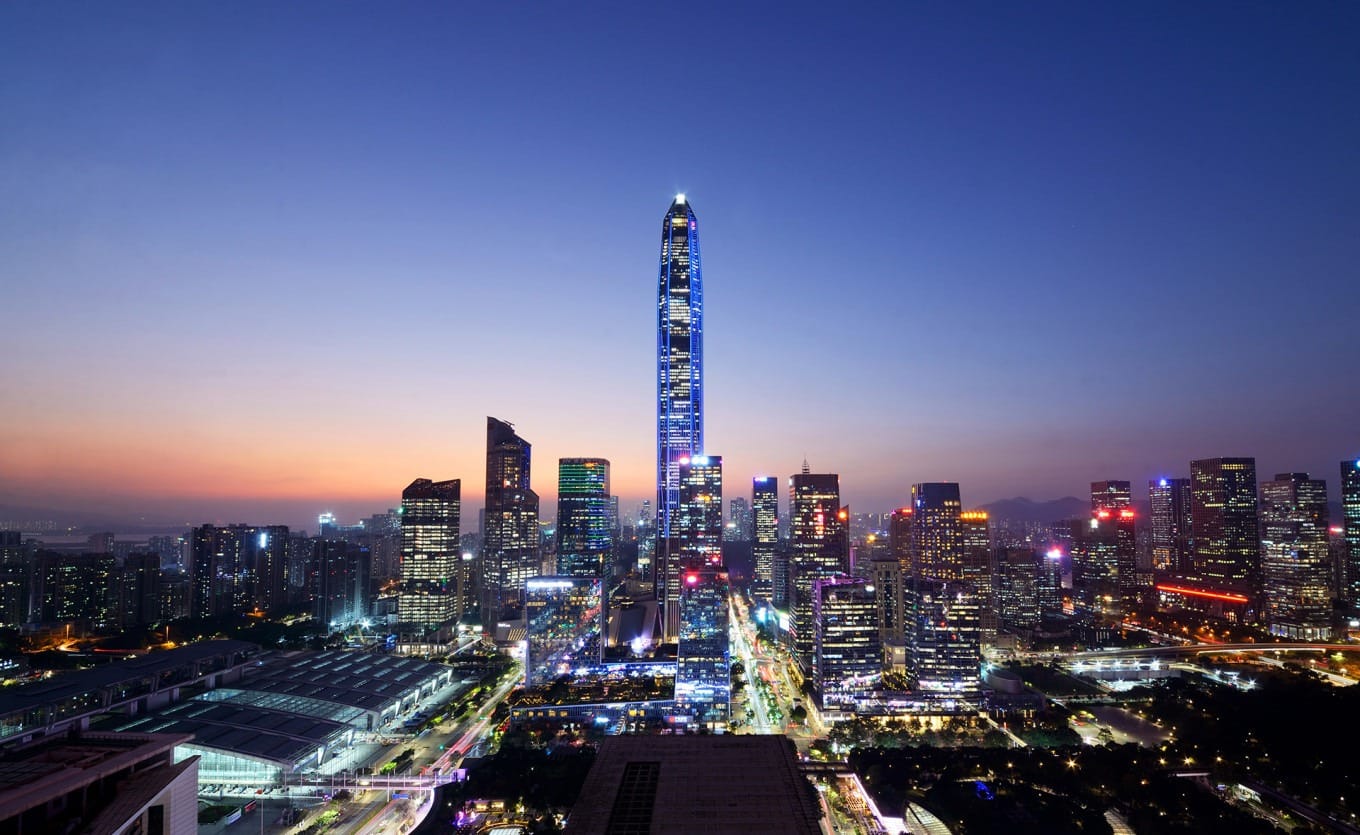
After night falls, the CBD transforms into a sea of lights. Behind the glass facades of those towering buildings, offices remain brightly lit, almost as if daytime never truly ends. Over the past forty years of rapid growth, more than ten million people have come to Shenzhen to work and build their lives. Their late-night silhouettes—still moving, still working—are what make this city’s nightscape so quietly powerful.
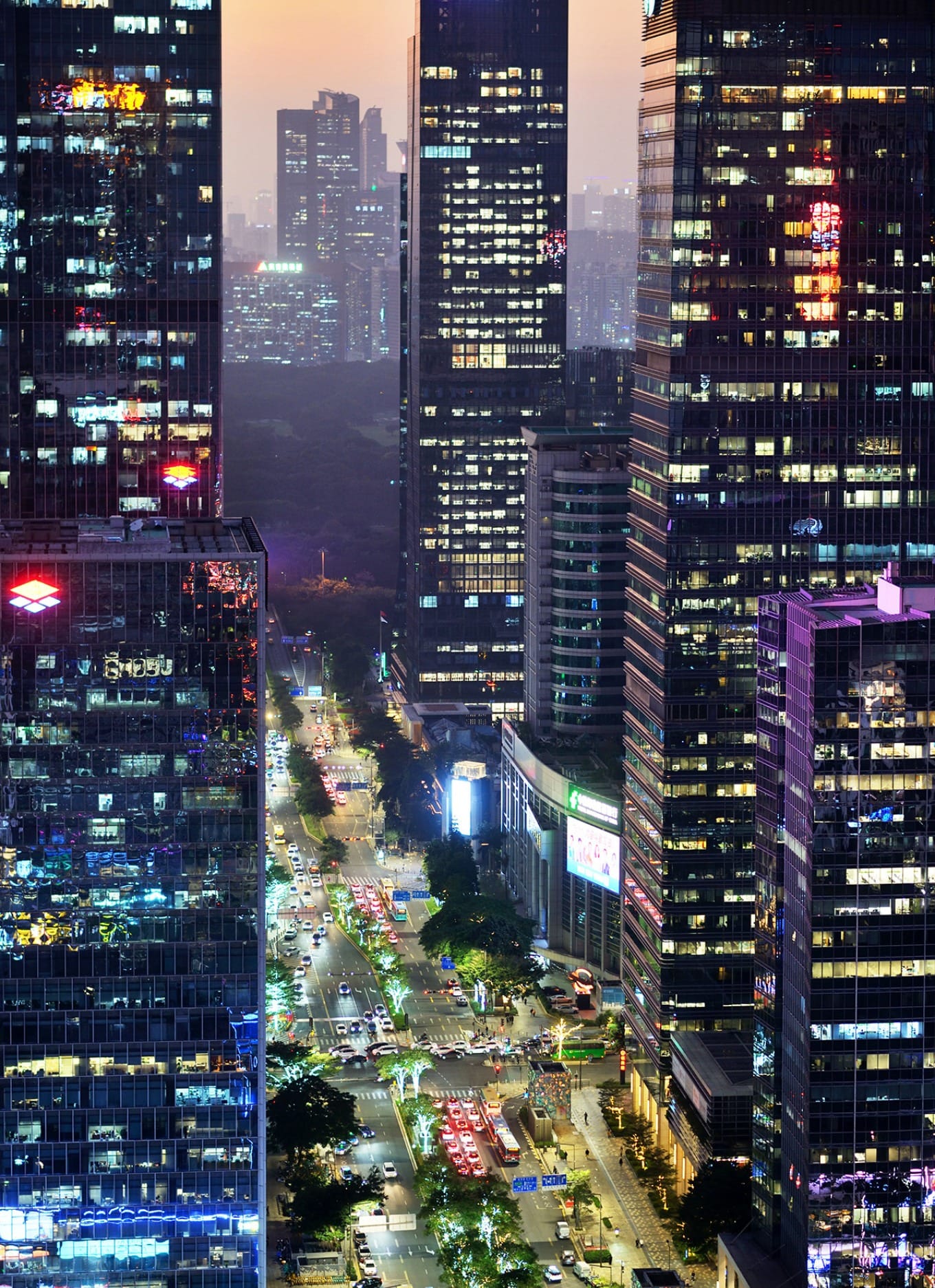
Practical Information: Getting In & Getting Around Shenzhen
Before planning your itinerary, it helps to understand how to arrive in and move around Shenzhen(深圳). Thanks to its role as a major transportation hub in southern China, getting here is generally straightforward and efficient.
Shenzhen Bao’an International Airport(深圳宝安国际机场)is located in Bao’an District(宝安区)and functions as a major sea–land–air integrated international airport. It’s connected by expressways to cities across the Pearl River Delta, and its passenger ferry terminal offers routes to Hong Kong(香港), Macau(澳门), and Zhuhai(珠海). From the airport to downtown Shenzhen, the most convenient options are Metro Line 1(地铁1号线)and Metro Line 11(地铁11号线).
If you’re arriving by train, Shenzhen Railway Station(深圳站)and Shenzhen North Railway Station(深圳北站)are the city’s two main high-speed rail hubs. Additional high-speed rail stations include Futian(福田)and Pingshan(坪山). For intercity travel within the Greater Bay Area, the Guangzhou–Shenzhen Intercity Railway(穗深城际铁路)stops at stations such as Shajing West(沙井西), Fuhai West(福海西), and Shenzhen Airport(深圳机场).
🚅 Book Your Transport
Whether you’re taking the high-speed rail to Shenzhen North or flying in, booking tickets can be difficult on Chinese sites. We recommend Trip.com for a hassle-free experience with a full English interface.
Within the city, Shenzhen’s long, narrow layout makes public transportation especially practical. Most visitor routes—particularly in Futian(福田), Longhua(龙华), and Nanshan(南山)districts—are well covered by the metro system, which can handle the vast majority of daily travel needs.
If you plan to drive, be aware of Shenzhen’s traffic restriction policy for non-local license plates. On weekdays, external vehicles are prohibited from driving on city roads during morning rush hours (7:00–9:00) and evening rush hours (17:30–19:30). If you need to drive during restricted periods, be sure to apply in advance for a temporary exemption.
🏨 Plan Your Shenzhen Stay
Find the best hotels in Futian (for city center) or Nanshan (for culture & food) using the map below.