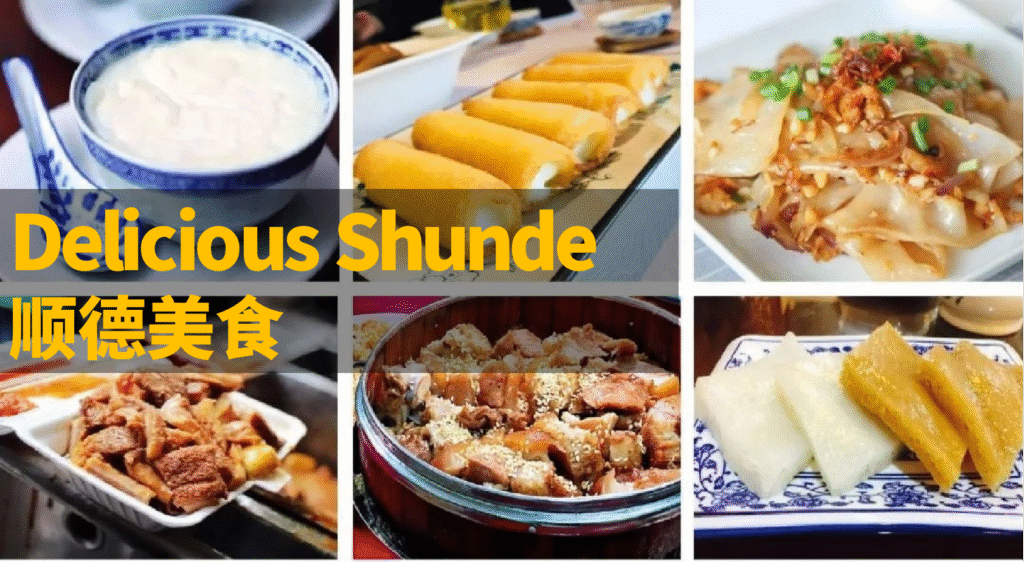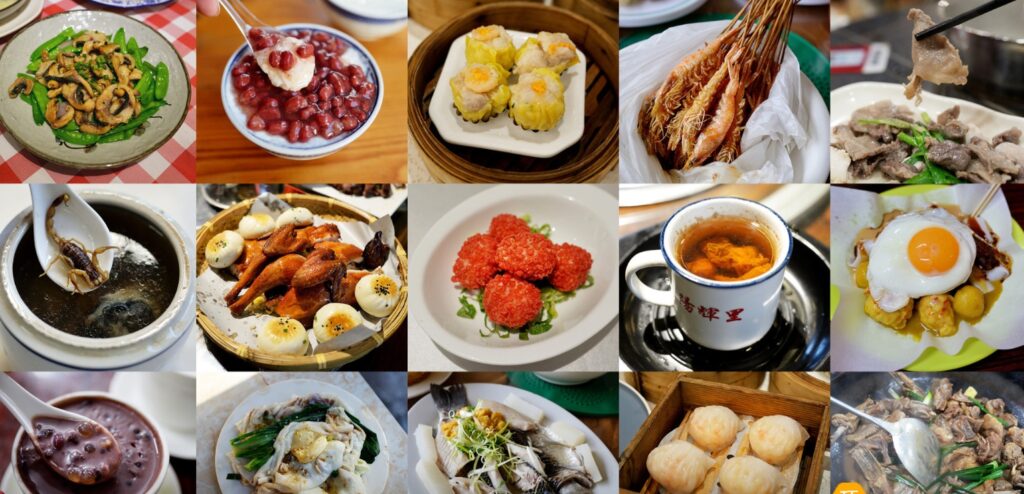
Dongguan’s Gourmet Quest: A Foodie’s Must-Visit Destination
A practical, image-rich guide you can actually use.
Discovering Dongguan’s Culinary Secrets
You might be surprised to learn that Dongguan, a city more renowned for its manufacturing prowess, is also a hidden gem in the culinary world. Nestled on the eastern bank of the Pearl River Delta, Dongguan is uniquely positioned between Guangzhou and Shenzhen, making it a melting pot of flavors. Once known as the leader of the ‘Four Little Tigers’ of Guangdong, Dongguan has evolved from an industrial powerhouse to a foodie’s paradise.

Dongguan’s culinary scene is as diverse as its geography. With a dense network of waterways and a climate that nurtures a variety of ingredients, the city offers a rich tapestry of flavors. From the salty and fresh waters of the Pearl River estuary, the region’s cuisine is a testament to the bounty of the land and sea. As the creator of the food documentary ‘Flavors of Dongguan’, Chen Xiaoqing, aptly put it: ‘Dongguan not only makes the world, but also makes delicious food!’
Dongguan’s food world extends beyond what meets the eye. Unlike many cities, it does not have distinct districts or a central downtown, but each town and street has its own traditional cuisine, each worthy of exploration. Whether you find yourself in Shilong, Shijie, Wanjiang, or any of the other towns, every corner holds a culinary surprise waiting to be uncovered.
If you’re planning a trip to Dongguan, consider visiting some of the local classic restaurants and hidden gems that even the locals might not know about. Your journey could take you through a variety of towns, each with its own unique flavors and dishes that will keep your taste buds dancing with delight.
- Explore the local cuisine in each town for a diverse culinary experience.
- Watch the food documentary ‘Flavors of Dongguan’ for a deeper insight into the city’s food culture.
- Don’t miss out on the traditional dishes that each town has to offer.
Dongguan Gastronomy: A Culinary Journey
Dongguan’s culinary scene is as diverse as it is delightful, with each town boasting its own signature dishes. However, if there’s one dish that epitomizes Dongguan, it’s the roast goose. With an annual consumption of at least 170 million geese in Guangdong, it’s clear that this dish is a local favorite.

In the town of Dalingshan, locals insist on using locally sourced lychee wood to roast their geese. Although the skin may not be as crispy, the rich flavor infused with the aroma of the wood is distinctive and memorable.
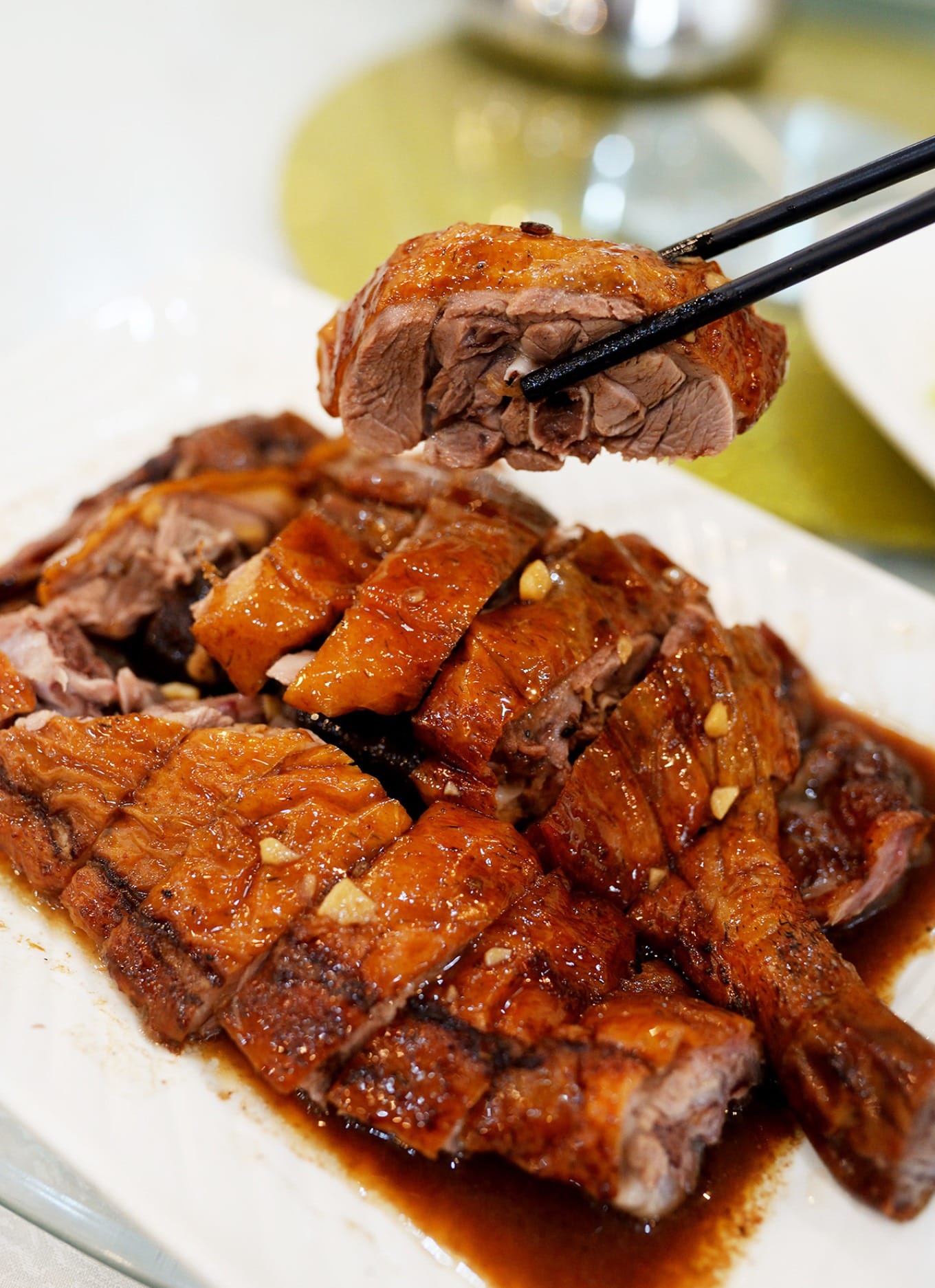
Outside of Dalingshan, most roast geese in Dongguan are prepared with a crispy skin. The contrast between the fragrant, crispy skin and the tender, juicy meat creates a delightful sensory experience that’s hard to forget.
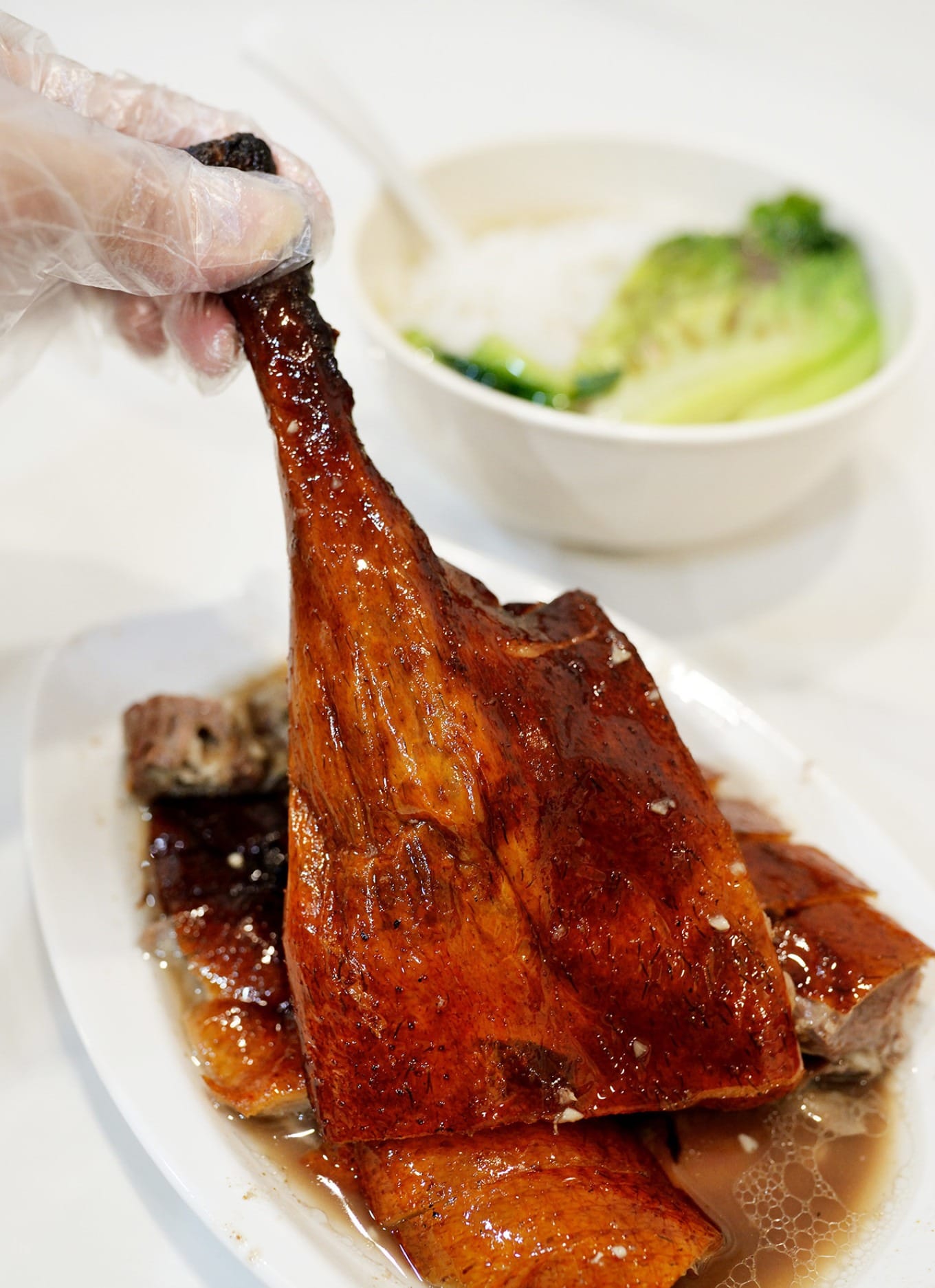
When enjoying roast goose in Dongguan, it’s traditionally paired with Shui Fen, a type of rice noodle. The combination of the smooth noodles with the rich goose meat is a simple yet brilliant culinary creation.

Dongguan’s love for poultry extends to chicken as well. One of the most iconic dishes is Shilong’s Doupi Chicken, which has been a must-try since the 1980s.
Another chicken dish that has gained popularity is the Jue Jue Chicken Pot. The Maillard reaction from high-temperature cooking imparts a rich aroma, with the chicken skin becoming crispy while the meat remains tender and juicy.

In every water town of Dongguan, there’s a tradition of eating Dragon Boat Rice. This dish, made with glutinous rice stir-fried with various ingredients, is fragrant and satisfying.

Dongguan’s expertise in fish cooking is evident in their numerous methods. One technique involves deboning the fish and slicing it, then stir-frying it to perfection, which requires precise control over the heat.

The Zhongtang Fish Packet is another example of Dongguan’s culinary ingenuity. Made from the finest part of the dace fish, it’s minced and pressed hundreds of times before being filled with chopped pork, encapsulating the essence of fish flavor.

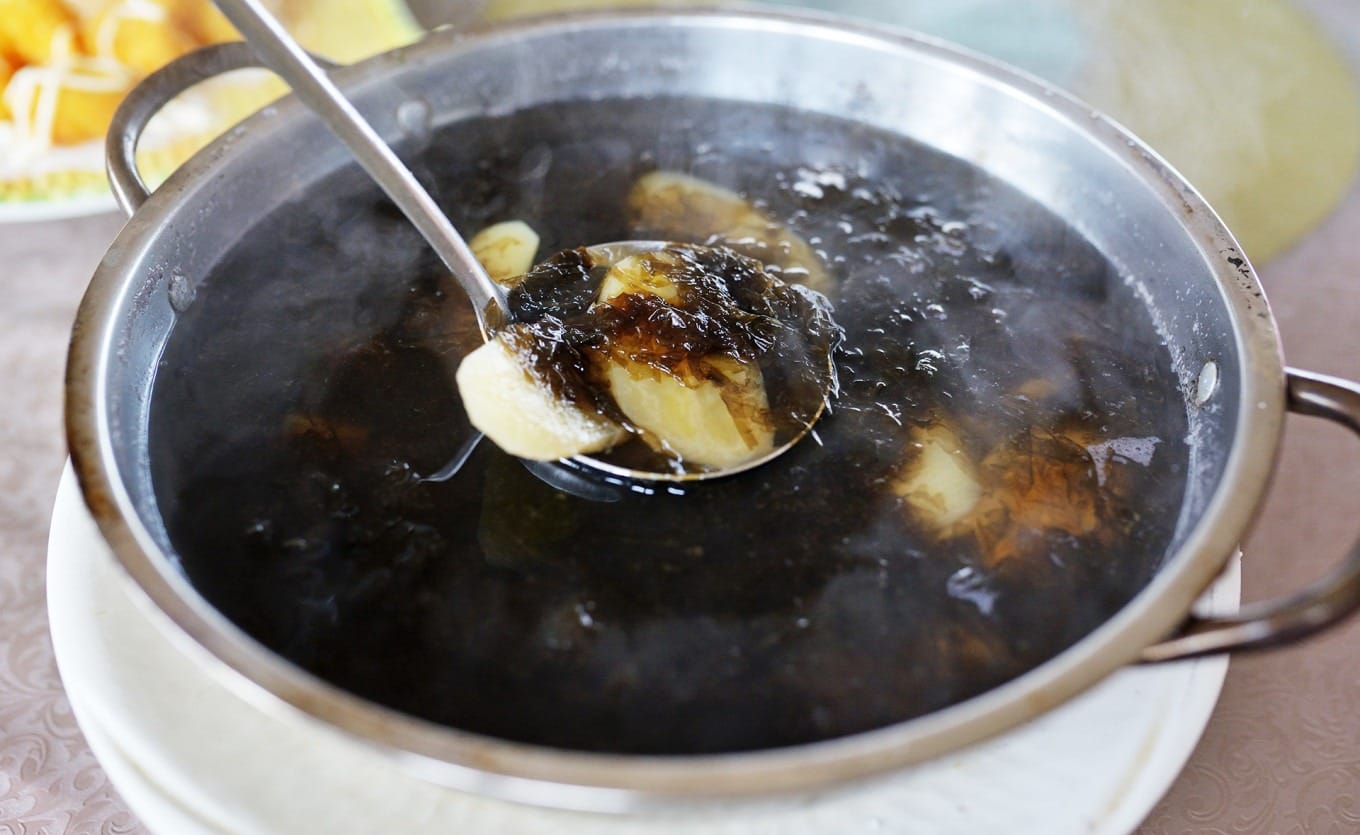
For dessert, the Banana Seaweed Sweet Soup is a unique combination that breaks the mold. This unusual pairing of banana and seaweed in a sweet soup might seem like an acquired taste, but it’s a beloved local dessert.
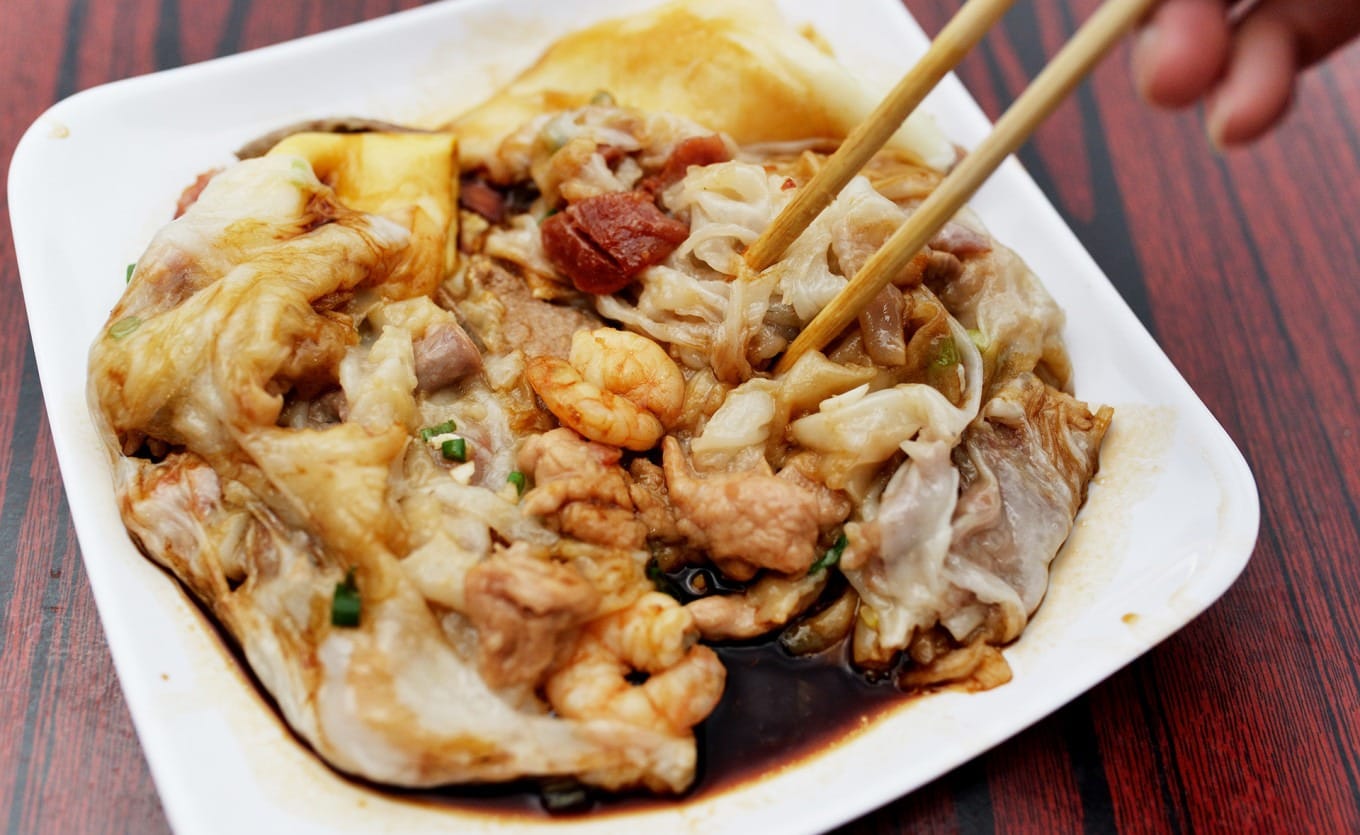
Dongguan’s Cheong Fun, or rice noodle rolls, are typically made in a drawer-style steamer, which allows for an exceptionally thin texture. The variety of ingredients adds depth to the flavor, making it an instant hit with food lovers.
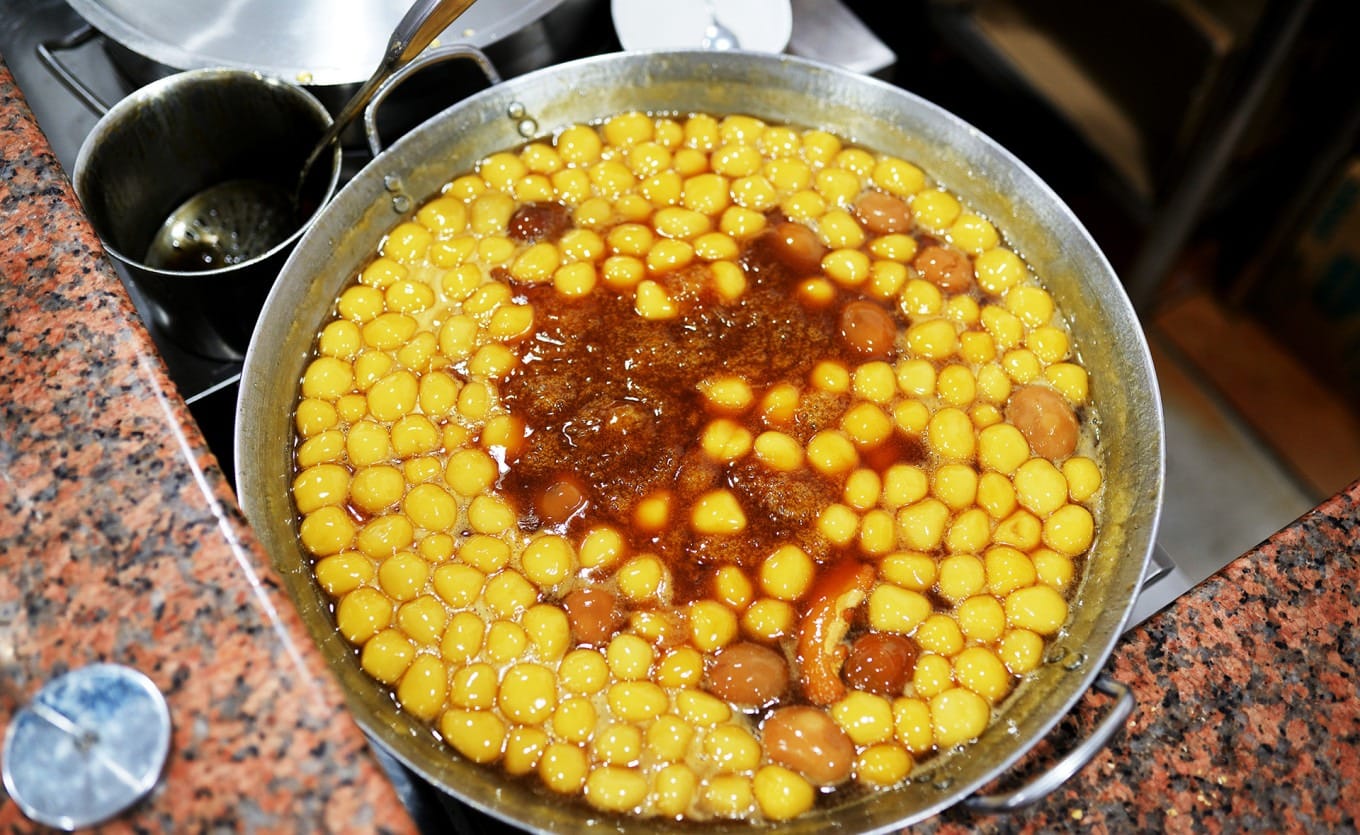
The Dongkeng Tang Bu Shuai is a traditional sweet made by frying glutinous rice balls in hot oil and then stir-frying them in a syrup until each ball is evenly coated. Its appearance alone is enough to whet one’s appetite.
Dongguan’s status as one of the first cities to attract Taiwanese investment has brought a taste of Taiwan to its streets. In the heyday of Taiwanese business, many flavors from Taiwan found their way to Houjie Town.
For a traditional barbecue experience, Dongguan offers a unique style that emphasizes the use of sweetness. The sweet flavors from honey penetrate the ingredients, making it hard to resist.

- Roast Goose (烧鹅)
- Dragon Boat Rice (龙船饭)
- Jue Jue Chicken Pot (啫啫鸡煲)
- Zhongtang Fish Packet (中堂鱼包)
- Banana Seaweed Sweet Soup (香蕉紫菜糖水)
- Cheong Fun (肠粉)
- Dongkeng Tang Bu Shuai (糖不甩)
Practical tip: You can prioritize one signature stop around the area, and you should adjust timing and budget based on transport and peak hours.
Embarking on a Roasted Goose Quest in Dongguan
Dongguan’s culinary scene is as diverse as it is delightful, with each town boasting its own signature dishes. However, if there’s one dish that could claim to represent Dongguan, it would undoubtedly be the roasted goose. In Guangdong, geese hold a rightful place of dominance on dining tables, with an estimated 170 million geese consumed annually. In Dongguan, the finest fate for a goose is to be transformed into a succulent roasted goose, particularly when paired with the beloved local dish of roasted goose with rice noodles, known as ‘烧鹅濑粉’ (Shao E Laifen), a culinary staple that is a testament to the city’s gastronomic heritage dating back to the late Song and early Yuan dynasties.
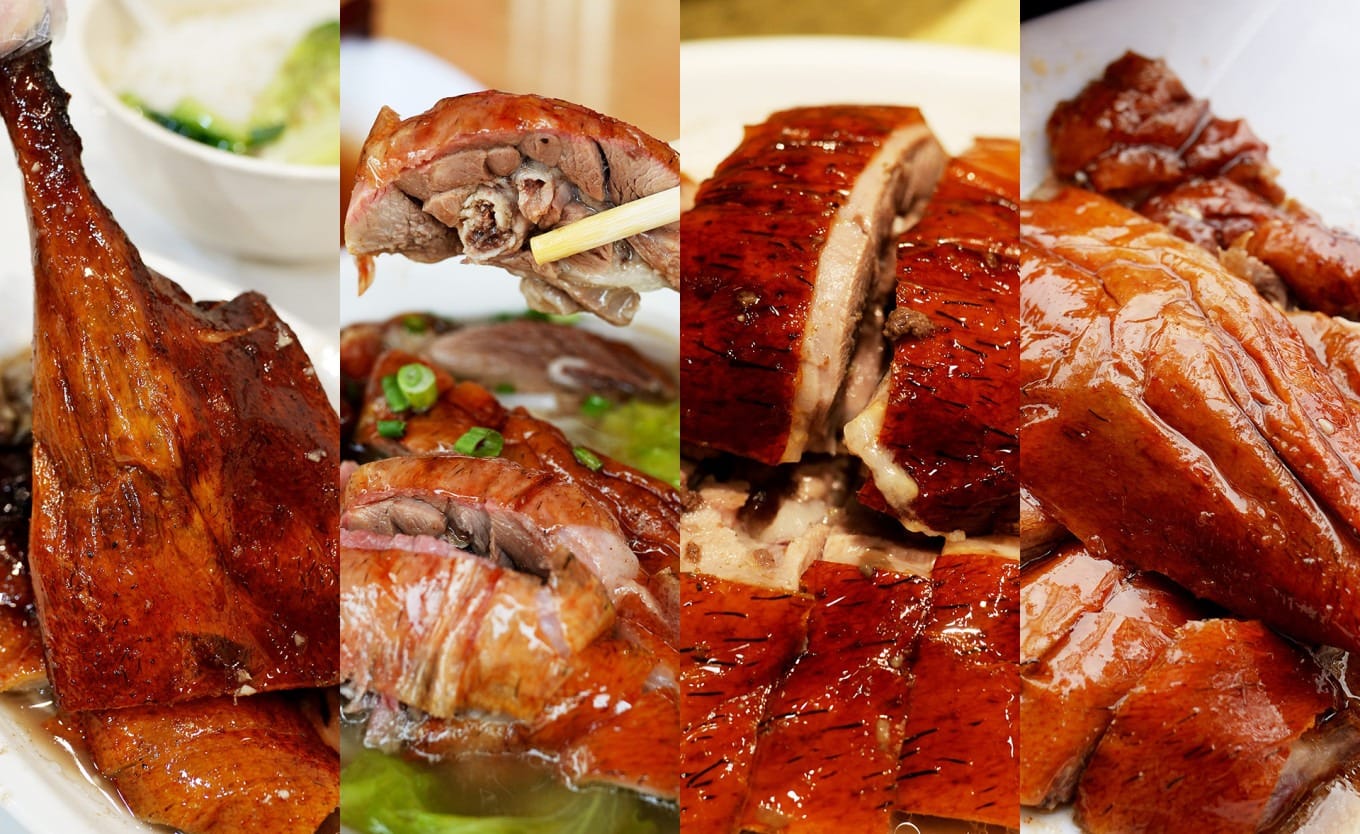
Roasted goose is more than just a dish in Dongguan; it’s ingrained in the culinary DNA of the city. The glistening, golden-red skin with its glossy sheen is enough to whet any appetite, even from behind a shop window. The quest for the best roasted goose in Dongguan is akin to a never-ending debate, much like asking a Guangzhou local for the best cheong fun (肠粉). Every resident would swear by the one right under their building. Truth be told, each roasted goose shop in Dongguan has its own secret techniques, and after sampling from various establishments across different towns, from well-known hotspots to unassuming neighborhood joints, one thing is clear: as long as the roasted goose is freshly made, it’s bound to be delicious.
- Explore various towns in Dongguan to taste the distinct flavors of roasted goose each shop offers.
- Do not miss out on the classic combination of ‘烧鹅濑粉’ (Shao E Laifen), a dish that marries roasted goose with rice noodles.
- Restaurant烧鹅专卖店 (Roasted Goose Specialty Store)
- Address烧鹅街 123号, 东莞 (Shao E Jie 123, Dongguan)
- Recommended dishes烧鹅 (Roasted Goose), 烧鹅濑粉 (Shao E Laifen)
- Average spend¥50-¥100 per person
Practical tip: You can prioritize one signature stop around the area, and you should adjust timing and budget based on transport and peak hours.
Dashiu Lychee Firewood Roasted Goose
When it comes to the culinary delights of Dongguan, the roasted goose from Dalingshan stands out. Within Guangdong province, the preparation of roasted goose can be categorized into three distinct schools: Gujing, Shenjing, and the unique Dalingshan style. Dalingshan boasts over a hundred roasted goose restaurants, each with its own fanbase. The secret to the delectable taste of Dalingshan roasted goose lies in its unique cooking method, which uses locally sourced lychee wood. The town is abundant with lychee trees, and the wood from these trees is dense and long-lasting, providing a steady heat source without smoke or soot, and imparting a subtle lychee fragrance to the goose meat.
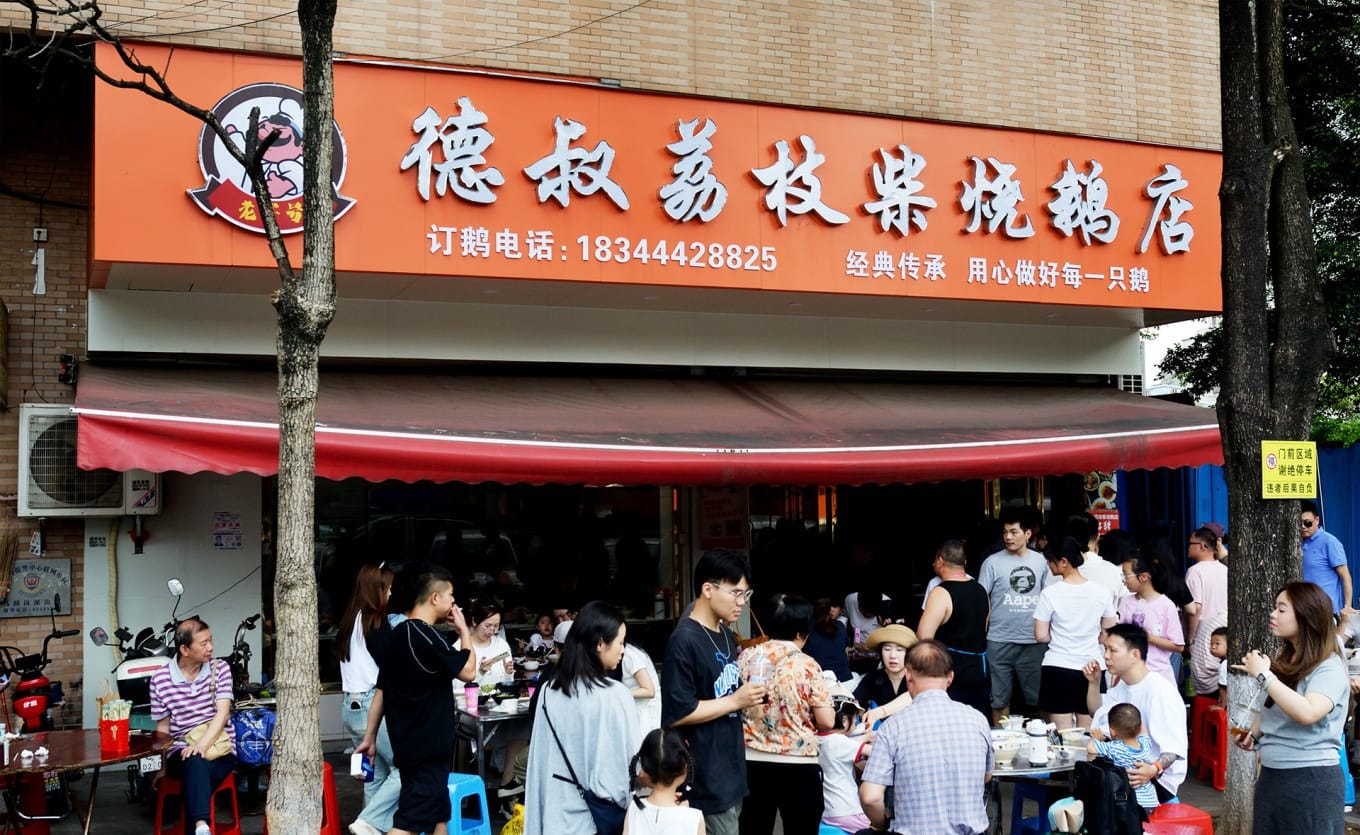
At Dashiu Lychee Firewood Roasted Goose (德叔荔枝柴烧鹅), the goose is prepared using a meticulous process. The goose is first cleaned and plucked, then marinated with a mixture of soy sauce, rice wine, cinnamon, and other spices. The cavity is sealed, and the skin is brushed with a glaze made from red vinegar, white vinegar, and maltose, which is left to air dry for several hours. This process tightens the skin and, when roasted, results in a crispy skin with a luscious red color due to the caramelization of the glaze. The goose is then roasted in a bell-shaped oven, rotating evenly to ensure even cooking. The choice of lychee wood is crucial; small lychee wood is used to ignite the oven, and as it heats, larger, older lychee wood is added for a more intense flavor.
After approximately forty-five minutes of roasting over an open flame, the goose meat absorbs the flavors of the marinade, and the skin achieves a glossy red hue. The aroma from the burning lychee wood permeates the goose, enhancing its flavor. Unlike the crispy skin sought after in Guangzhou’s Shenjing style, Dalingshan’s roasted goose focuses on the seasoning of the sauce. Each restaurant has its own unique, often family-inherited, sauce recipe that becomes the soul of the dish. This sauce, rich in the flavors of the goose’s own fats, is typically served as a dipping sauce, extracted directly from the goose’s cavity, adding another layer of depth to the dish.
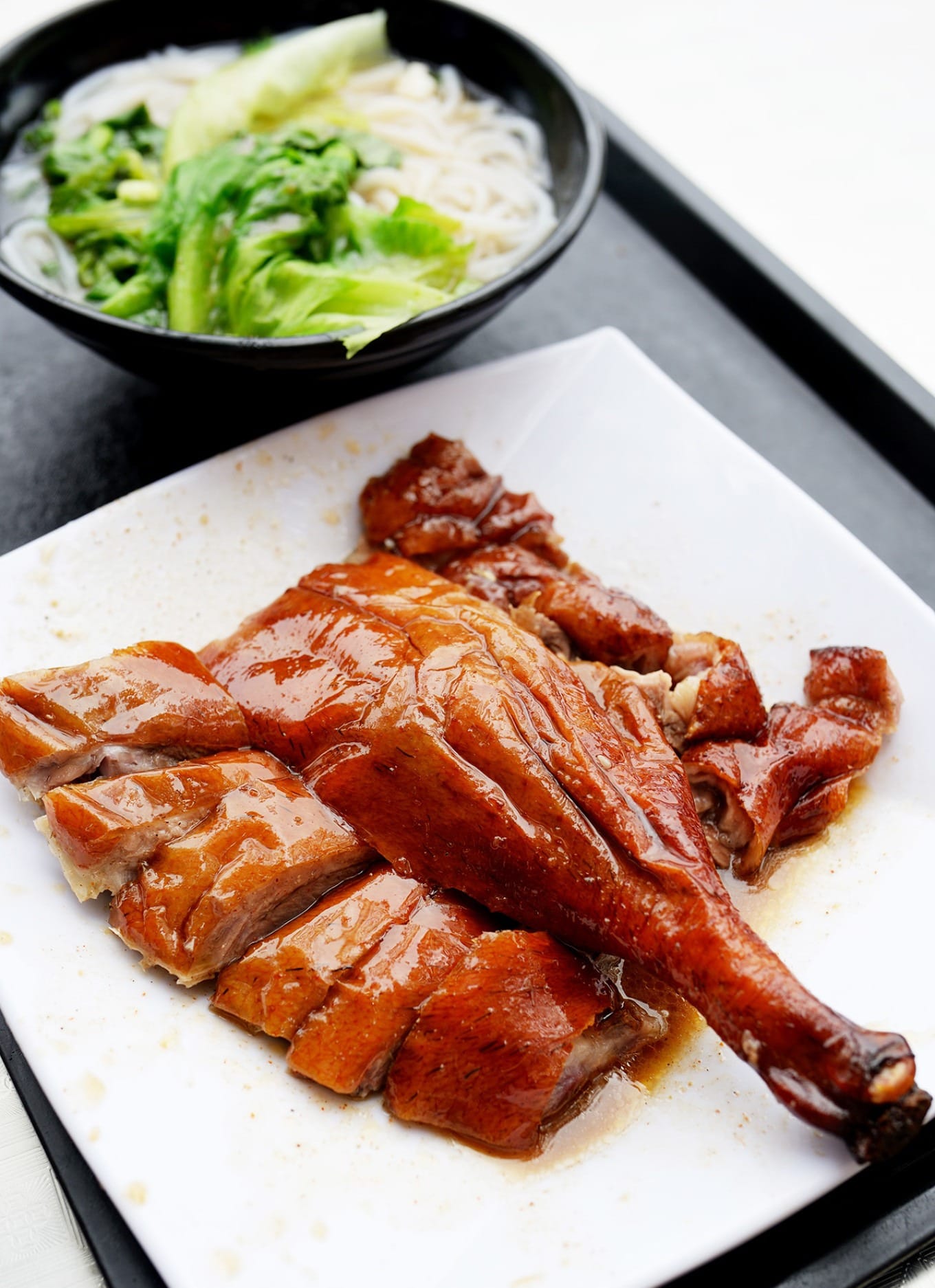
The freshly roasted goose has a plump skin that, while not as crispy as other styles, carries a rich, woody flavor that is distinctive to the Dalingshan method. Beneath the shiny skin lies a thin layer of fat that, when bitten into, releases a burst of succulent juices without feeling greasy. The goose meat itself is tender and flavorful, with a savory taste and complex spice notes, all while maintaining the freshness of the meat.
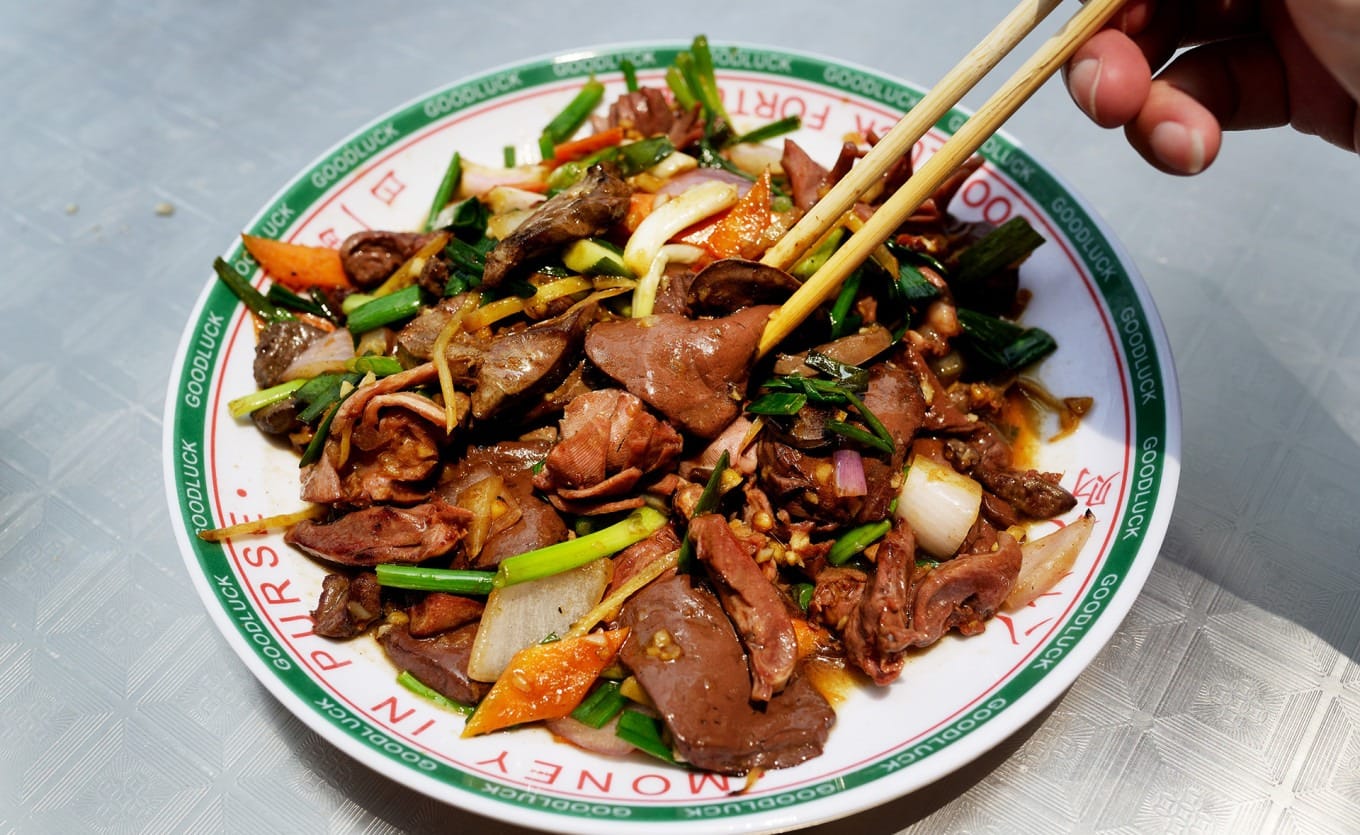
In the preparation of roasted goose, the innards such as the kidneys, liver, and intestines are removed and used in other dishes. In Dongguan, these parts are not wasted but are instead prepared as a stir-fried dish with ginger, scallions, and goose blood. The chefs at Dashiu have mastered the art of quick stir-frying, resulting in a dish that is both flavorful and appetizing.
- Dashiu Lychee Firewood Roasted Goose (德叔荔枝柴烧鹅) is a must-visit for any food enthusiast in Dalingshan.
- The goose is marinated and roasted to perfection, with a focus on the unique lychee wood flavor.
- Try the signature roasted goose, as well as the local specialty, Seifen (濑粉), and the stir-fried goose offal.
- RestaurantDashiu Lychee Firewood Roasted Goose (德叔荔枝柴烧鹅)
- Address25 Zhenma Road, Dalingshan Town, Dongguan City (东莞市大岭山镇振马路25号)
- Recommended dishesRoasted Goose (烧鹅), Seifen (濑粉), Stir-fried Goose Offal (姜葱炒鹅杂)
- Average spend60 CNY
Practical tip: You can prioritize one signature stop around the area, and you should adjust timing and budget based on transport and peak hours.
Discovering the Authentic Flavors at Shengji Roast Goose
When exploring the culinary delights of Dalingshan Town, a must-visit destination is the village of Ailingkan. Known as the birthplace of Dalingshan roast goose, this village has been perfecting the art of roasting goose for six centuries. Today, the tradition continues with a concentration of roast goose restaurants along the Shao’e Street in Ailingkan, where each establishment, often run by descendants of the Ye family, boasts its own unique techniques in drying the goose, selecting firewood, and blending sauces, all contributing to the distinct flavors of the roast goose.

Among these, Shengji Roast Goose (胜记烧鹅美食) is a local internet-famous, heritage shop featured in the documentary ‘Taste of Dongguan’. The owner, Ye Zhaowen, is known for his mastery in crafting the traditional Dalingshan roast goose. When ordering, you’ll find that a standard serving is a quarter of a goose, suitable for sharing among two to three people. This can be divided into ‘upper’ and ‘lower’ sections—the ‘upper’ includes the wing, while the ‘lower’ features the leg, which is often more sought after due to its richer flavor and slightly higher fat content, resulting in a more succulent taste.

Like other reputable roast goose establishments, Shengji ensures that each goose is freshly roasted on-site. Unlike the chilled goose from Chaoshan, roast goose is best enjoyed hot, with its flavor and texture deteriorating rapidly once it leaves the oven. Therefore, it’s a culinary rule to savor it while it’s hot. The moment you take a bite, the rich, oily goose skin, though not crispy, complements the tender meat, releasing a burst of juices and a wave of goose fat aroma that will envelop your senses. The ease with which the bone separates from the meat is testament to the perfect roasting technique.
In Dongguan, roast goose is traditionally paired with a bowl of Laifen (濑粉). This traditional handmade rice noodle is made by extruding a rice batter into boiling water, a process that gives it its name. Dongguan Laifen is similar in appearance to Guilin rice noodles from Guangxi but has a softer and smoother texture. Each restaurant has its own unique broth for the Laifen, and at Shengji, it’s a lotus root soup that adds a sweet and refreshing flavor to the dish. A bowl of smooth Laifen with a few slices of roast goose may seem simple, but it’s a shining example of Dongguan’s culinary heritage.

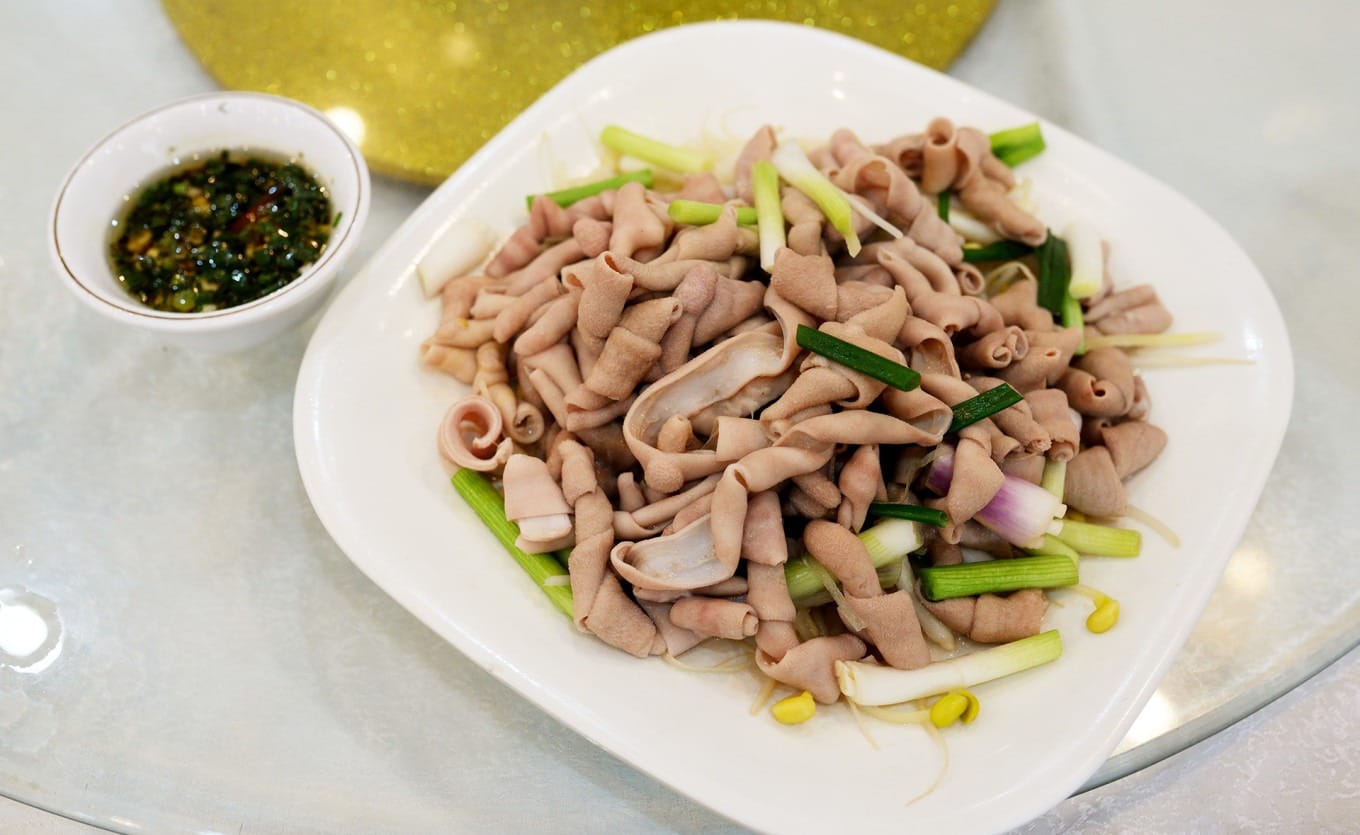
Another dish not to be missed is the blanched goose intestines. The term ‘blanched’ refers to the simple cooking method of boiling the food in water, which is a true test of the freshness of the ingredients. At Shengji, the goose intestines are meticulously cleaned and blanched to a perfect tenderness, served warm with a slight pink hue indicating the ideal doneness. Dipped in the house’s ginger and scallion oil, the intestines offer a crisp texture that gradually releases a rich, aromatic flavor with each chew, awakening your taste buds.
- RestaurantShengji Roast Goose (胜记烧鹅美食)
- Address101, No.
- Recommended dishesRoast Goose (烧鹅), Laifen (濑粉), Blanched Goose Intestines (白灼鹅肠)
- Average spend60 CNY
Discovering the Best Roasted Goose in Dongguan at Feitao Roast Meat Restaurant
For the ultimate roasted goose experience in Dongguan, a visit to Shilong is a must. Known as the town of weightlifters and one of the oldest established towns in Dongguan, Shilong boasts a rich history dating back to the Qing Dynasty. Its strategic location as a waterway hub and later as a railway station has fostered a vibrant culinary scene. Among the culinary gems in Shilong is Feitao Roast Meat Restaurant (肥桃烧腊店), a well-established eatery that has been serving delectable roast goose for over three decades.

In Shilong, the preparation of roasted goose is distinct from other towns in Dongguan. The process involves inflating the goose with air to separate the skin from the meat, resulting in a crispier texture. After being brushed with a special glaze and air-dried for a few hours, the goose is roasted using charcoal, preserving the authentic flavor of the goose. This method, which involves sealing the seasoning inside the goose and cooking it from both inside and out, makes the dish more akin to a baked goose rather than a traditional roast.
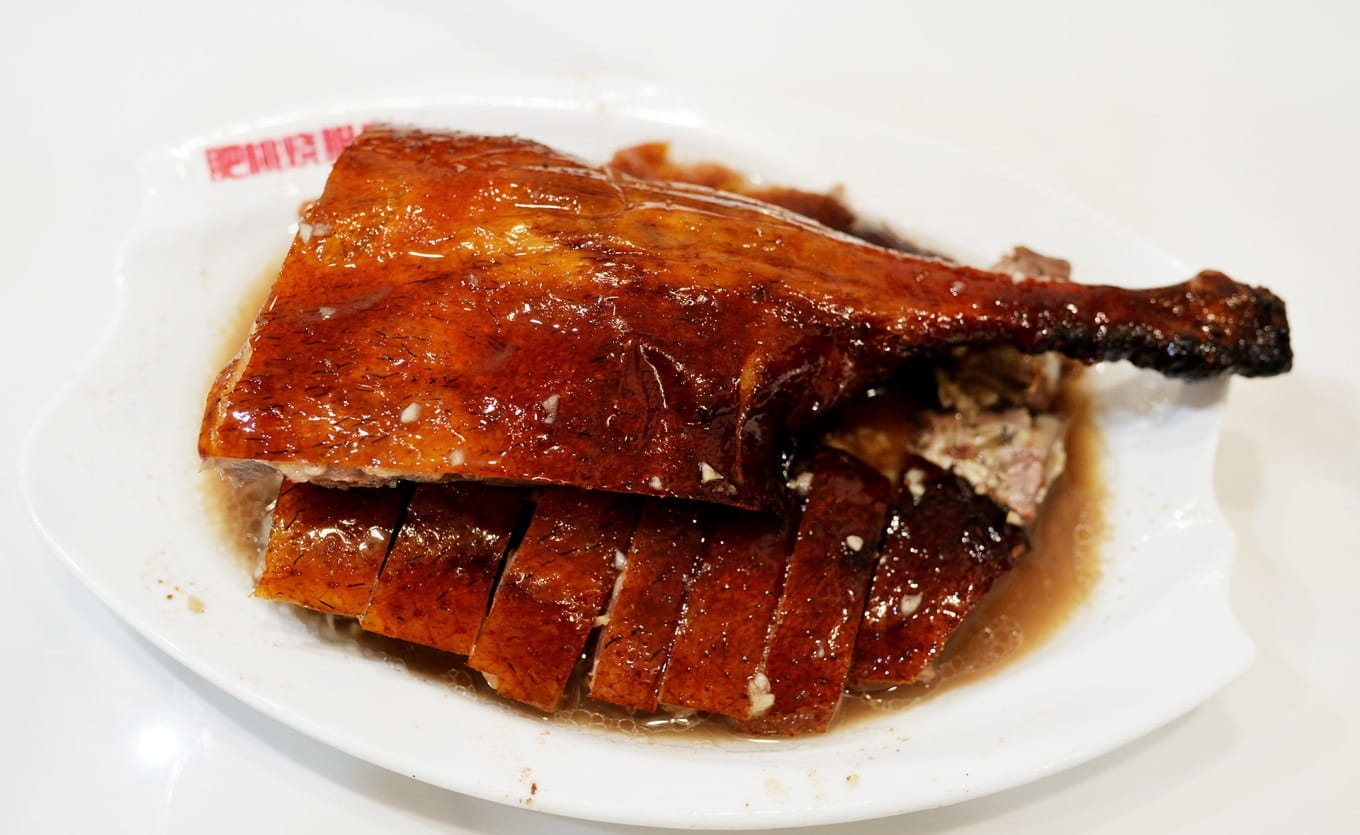
When you visit Feitao Roast Meat Restaurant, you’ll find that the roasted goose leg is a popular choice, with its crispy skin and succulent meat offering a delightful contrast. The balance of sweet and savory flavors, along with the rich, unctuous fat and savory juices, create an unforgettable culinary experience. Pairing the goose with a local favorite, Shui Fen (rice noodles), adds another layer of flavor. If you prefer a saltier taste, you can enhance the dish by adding some of the goose’s juices.

- Feitao Roast Meat Restaurant (Huangzhou Branch) is a must-visit for authentic roasted goose in Dongguan.
- Restaurant肥桃烧腊店 (Feitao Roast Meat Restaurant)
- Address东莞市石龙镇方正中路19号126室 (No.
- Recommended dishes烧鹅 (Roasted Goose), 濑粉 (Shui Fen Noodles)
- Average spend40元 (Approximately 40 RMB per person)
Feicheng Roast Goose Restaurant: A Must-Visit in Dongguan
When planning your culinary tour in Dongguan, Feicheng Roast Goose Restaurant is a name that frequently comes up among food enthusiasts. With its reputation bolstered by online reviews, this restaurant has expanded from its original location in Shilong Old Town to branches in Huangzhou, Dongcheng, and Nancheng. The Dongcheng branch, in particular, has earned a spot on a popular food review platform’s ‘must-eat’ list. Your visit to the Huangzhou branch will reveal a decor reminiscent of a classic Hong Kong tea restaurant, with an open kitchen where you can watch the chefs skillfully prepare the dishes.
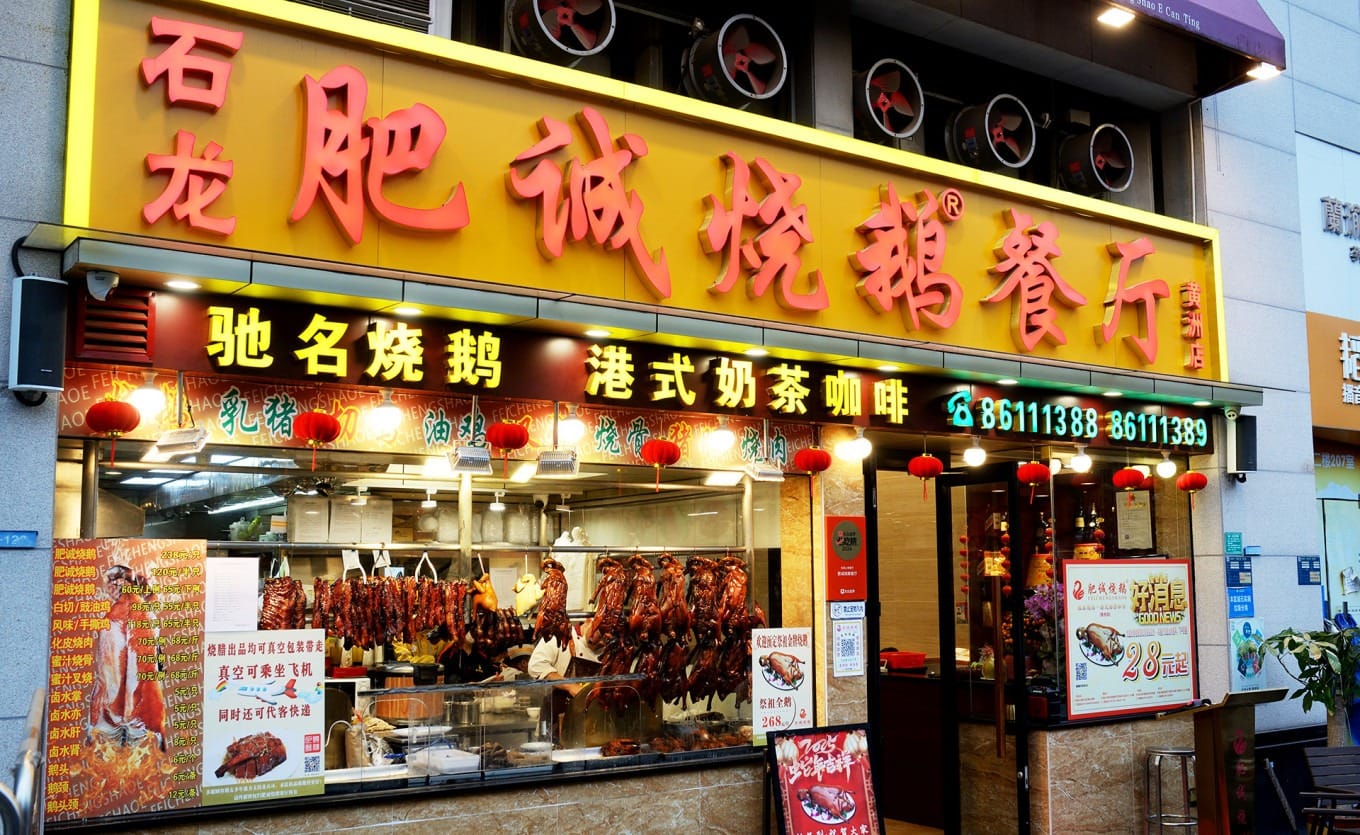
Feicheng prides itself on using the renowned Qingyuan Black Bristle Goose, which is about seventy to eighty days old. This breed, along with Kaiping Magang Goose, Shantou Shihtzu Goose, and Yangjiang Yellow Bristle Goose, is known as one of the ‘Four Famous Geese of Guangdong’. A close look at the goose will reveal subtle black bristles beneath the skin, a characteristic of the young Black Bristle Goose, not a sign of poor preparation.
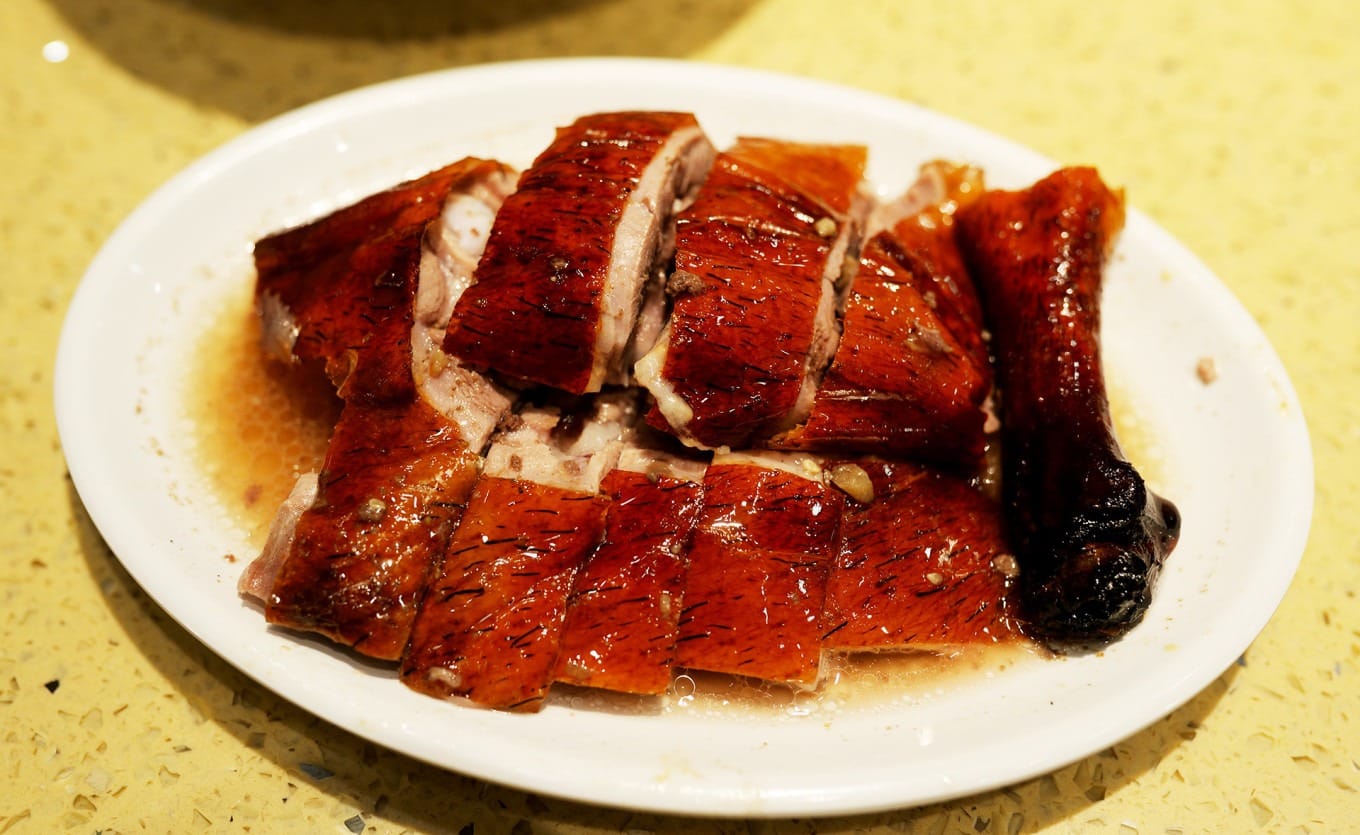
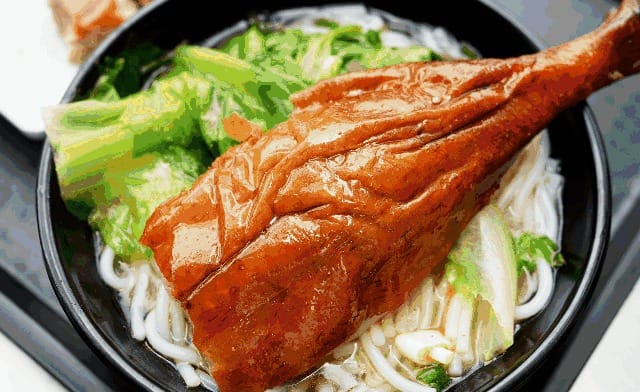
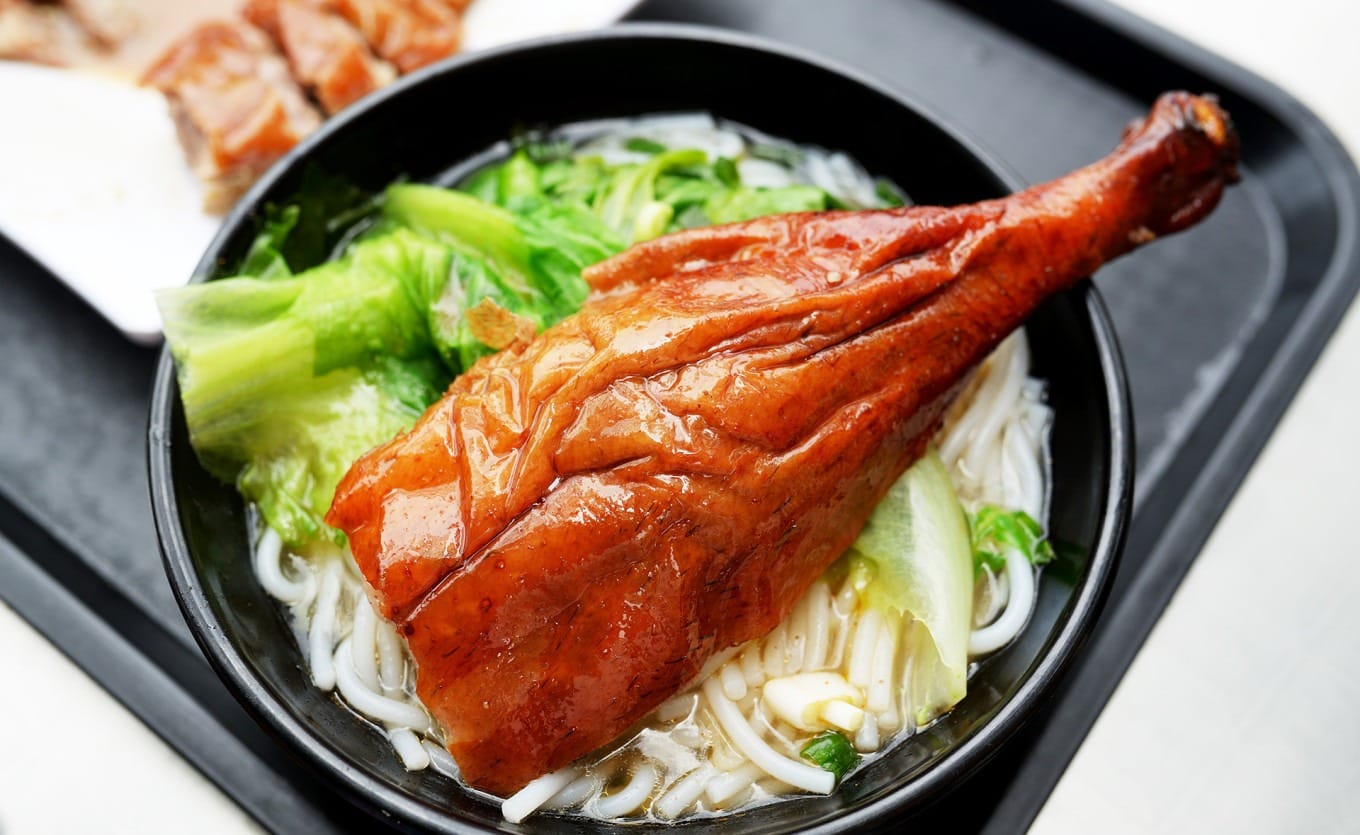
For a true local experience, consider ordering the goose leg soup with rice noodles, known in Cantonese as ‘goose thigh’. This part of the goose is celebrated for its tender and succulent meat. Locals often prefer to eat it whole, ‘leaving the thigh’, by holding it with their hands and biting into it. However, due to the thickness of the goose leg, the seasoning may not fully penetrate the meat, leading some to prefer it cut and soaked in roast goose sauce for enhanced flavor. The taste is a delightful balance of fatty richness and savory aroma, with a hint of charcoal from the roasting process.
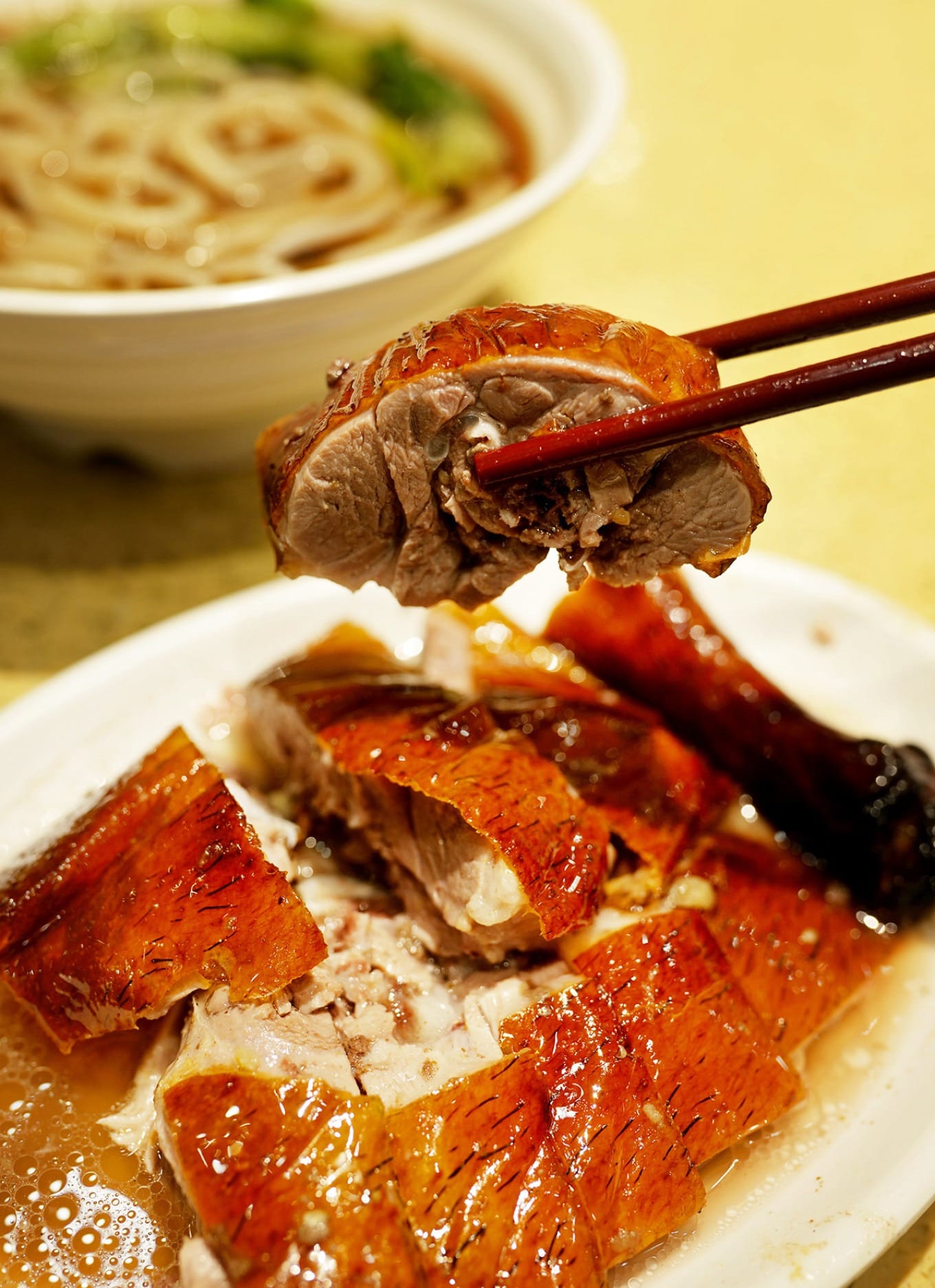
The highlight of Feicheng’s menu is the rice noodle dish, which is served in a soup base made from raw and ripe herbs. This clear yet richly flavored broth carries a hint of medicinal aroma, and the noodles, soaked in this broth, are smooth and satisfying. A bowl of this dish is sure to comfort your soul.
In addition to the signature roast goose and rice noodles, you should also try the double-boiled liver and kidney in brine. The goose liver is tender and rich, while the goose kidney is crisp with a bit of chewiness. These offal dishes, after being simmered in a complex broth with dozens of spices, achieve a harmonious depth of flavor that is hard to resist.

- RestaurantFeicheng Roast Goose Restaurant, Huangzhou Branch (肥诚烧鹅餐厅(黄洲店))
- Address东莞市石龙镇京瓷路黄州汇星商业大厦5栋120号 (No.
- Recommended dishes烧鹅腿汤濑粉 (Roast Goose Leg Soup Rice Noodles), 卤水肾 (Marinated Goose Kidney), 卤水肝 (Marinated Goose Liver)
- Average spendaround 40 yuan (人均约40元)
Gongji Roasted Goose: A Culinary Gem in Dongguan
Nestled at the confluence of saltwater and freshwater along the Dongjiang River, the town of Machong in Dongguan is a culinary powerhouse. Its proximity to Guangzhou’s city center makes it a popular destination for food enthusiasts from the nearby metropolis, who often make the trip to indulge in the renowned Dongguan roasted goose. Among the many establishments, Gongji Roasted Goose, located on the historic Gu Mei Fengqing Street, stands out as a local favorite.

Upon entering Gongji Roasted Goose, you’ll find a spacious and bright interior, adorned with a trendy Hong Kong-style neon sign decor. Despite the modern ambiance catering to a younger crowd, the preparation of the roasted goose remains steeped in tradition, using a brick oven and charcoal for cooking.

Arriving early allows you to secure the first batch of freshly roasted goose. The crispy skin and succulent meat are separated yet still connected, a testament to the chef’s mastery over the cooking process. The bright red color of the goose indicates a perfect control of the heat, resulting in a visually appealing and delicious dish.
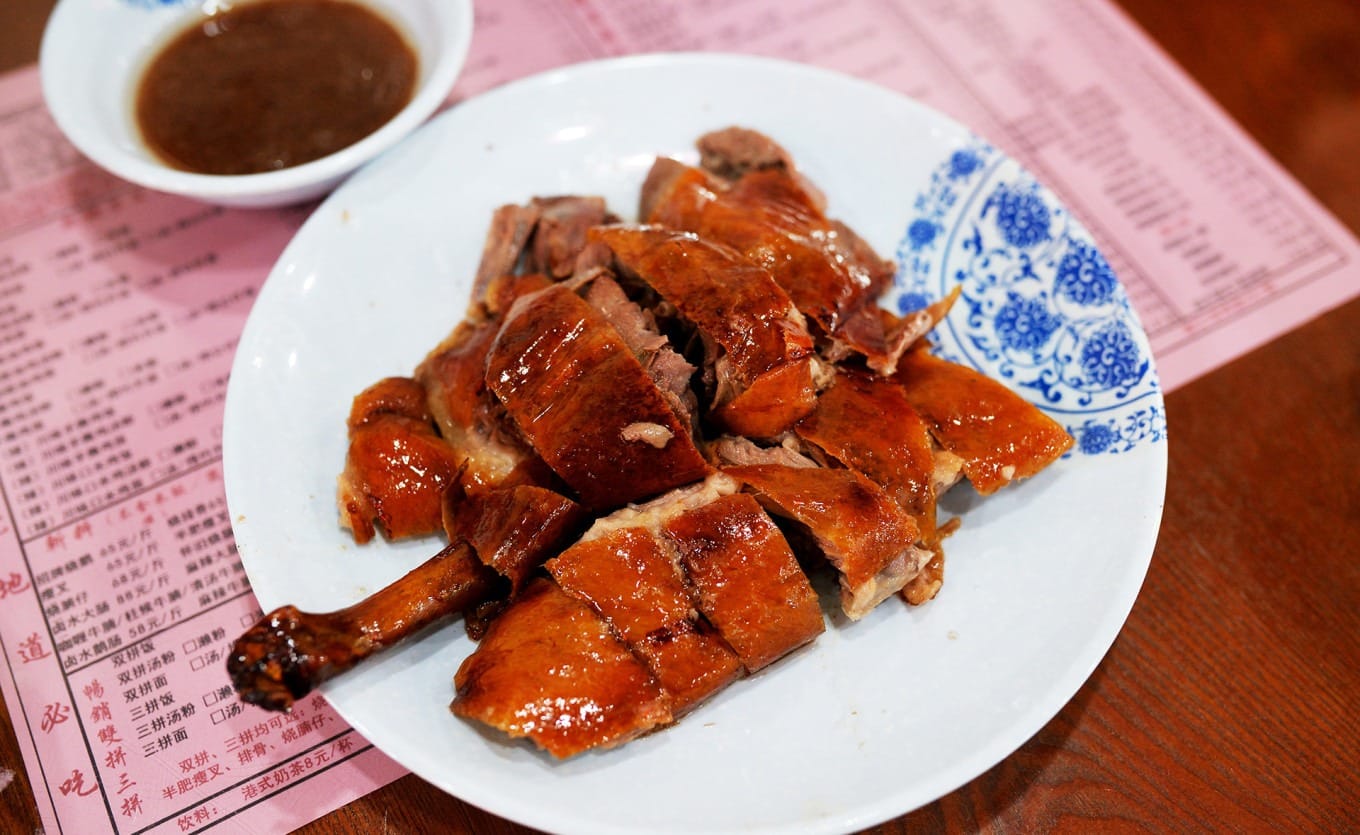
The first bite reveals the crispiness and rich aroma of the goose skin, followed by the tender and firm meat that is both delicate and elastic. The rich juices burst in your mouth, creating an immediate symphony of flavors. This roasted goose is truly deserving of a five-star rating.
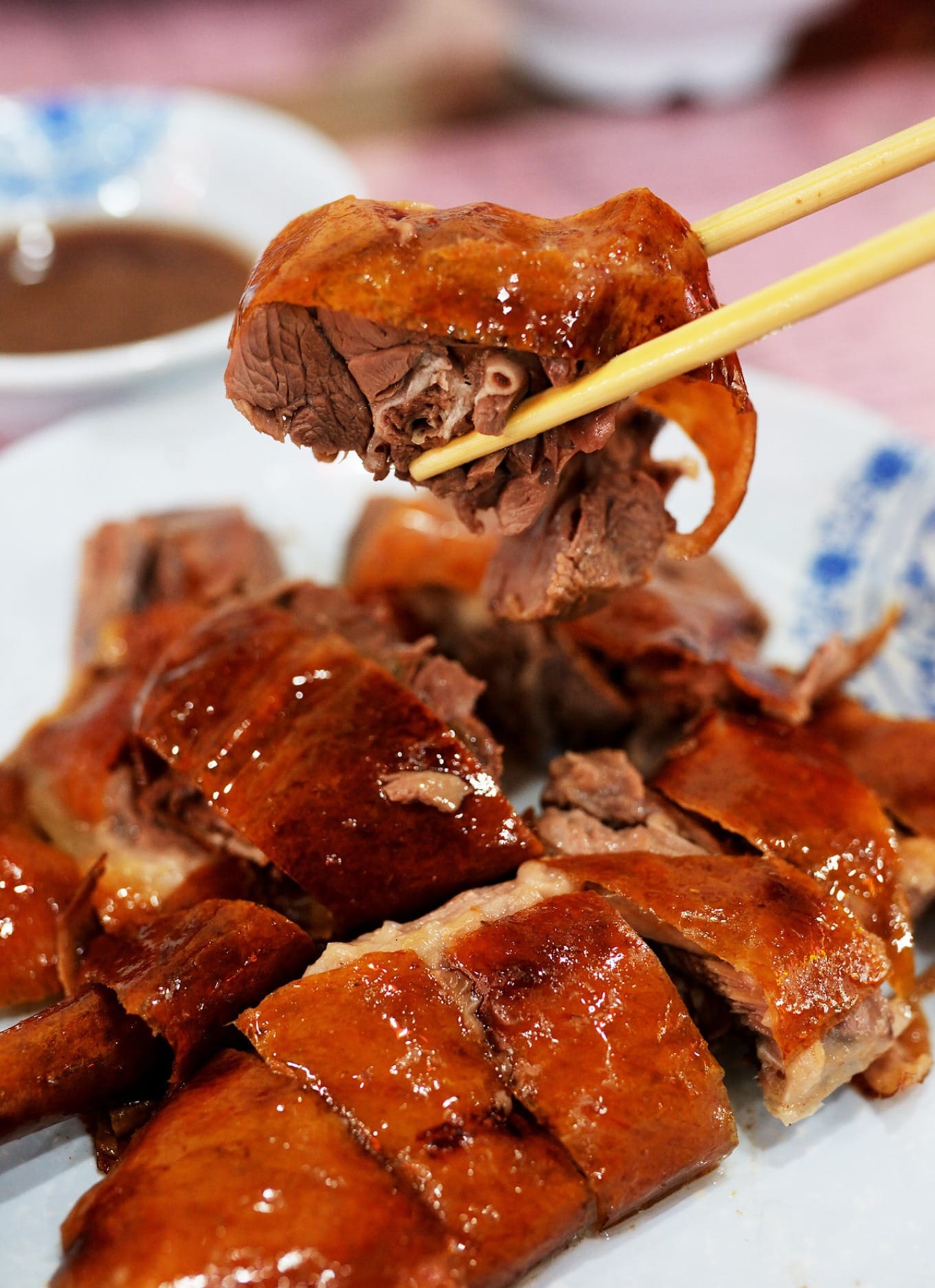
In addition to the roasted goose, Gongji’s marinated goose kidney is also highly recommended. Prepared in the traditional Guangdong style, it has a sweet base with a savory aroma, offering a crisp and chewy texture that is never greasy, even after several pieces. At a mere ten yuan per serving, it’s an excellent value.

Completing the meal is a complimentary self-service bingfen, a refreshing dessert that is surprisingly high-quality despite being free. It’s enriched with osmanthus and coconut milk, making it smoother and sweeter than many commercial versions that cost several times more.
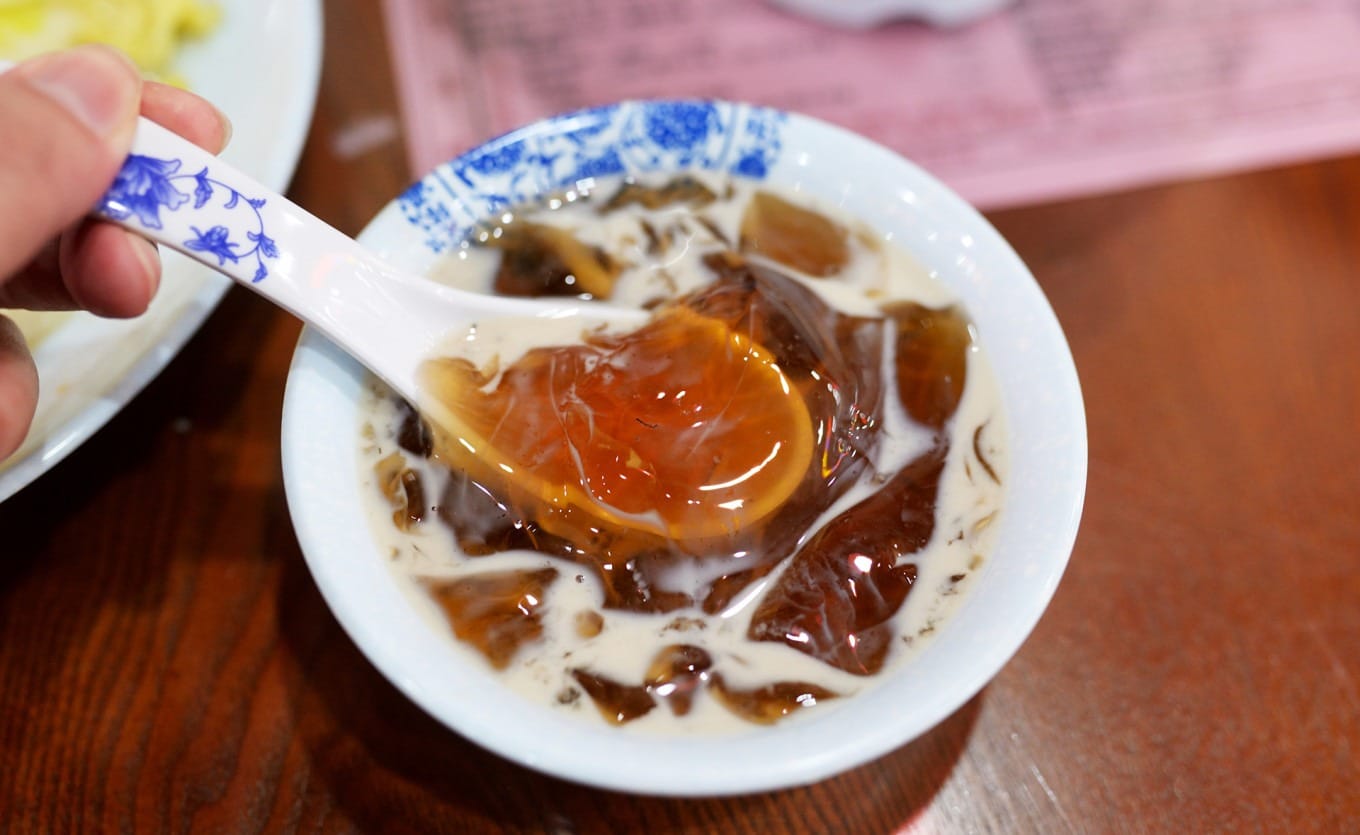
- Avoid visiting on Sunday evenings as the restaurant is closed.
- Try to arrive early to enjoy the first batch of freshly roasted goose.
- Do not miss out on the marinated goose kidney and the complimentary bingfen.
Exploring Authentic Dongguan Flavors at Quanji
For an authentic taste of Dongguan, consider a visit to Quanji Dongguan Shao E (全记东莞烧鹅), nestled in the heart of Liaobu Town, which serves as the geographical center of Dongguan City. This humble, 24-hour eatery, with its down-to-earth ambiance and fewer than a hundred reviews on popular review platforms, offers a true community dining experience that keeps the traditional flavors of Dongguan alive and thriving.

When you order the roasted goose leg here, you might opt for the rustic ‘Liu Bi’ style, which brings out the bold and hearty flavors of the dish. The goose is served with its skin glistening like glass, a sight that whets the appetite. Each bite reveals a skin that, while not overly crispy, is rich with a succulent, fatty aroma. The goose meat is well-balanced in terms of fat and lean, with a robust spice profile that complements rather than overpowers the natural taste of the meat. The sensation of the fat bursting in your mouth is particularly delightful, and the whole leg is satisfying to hold and savor.
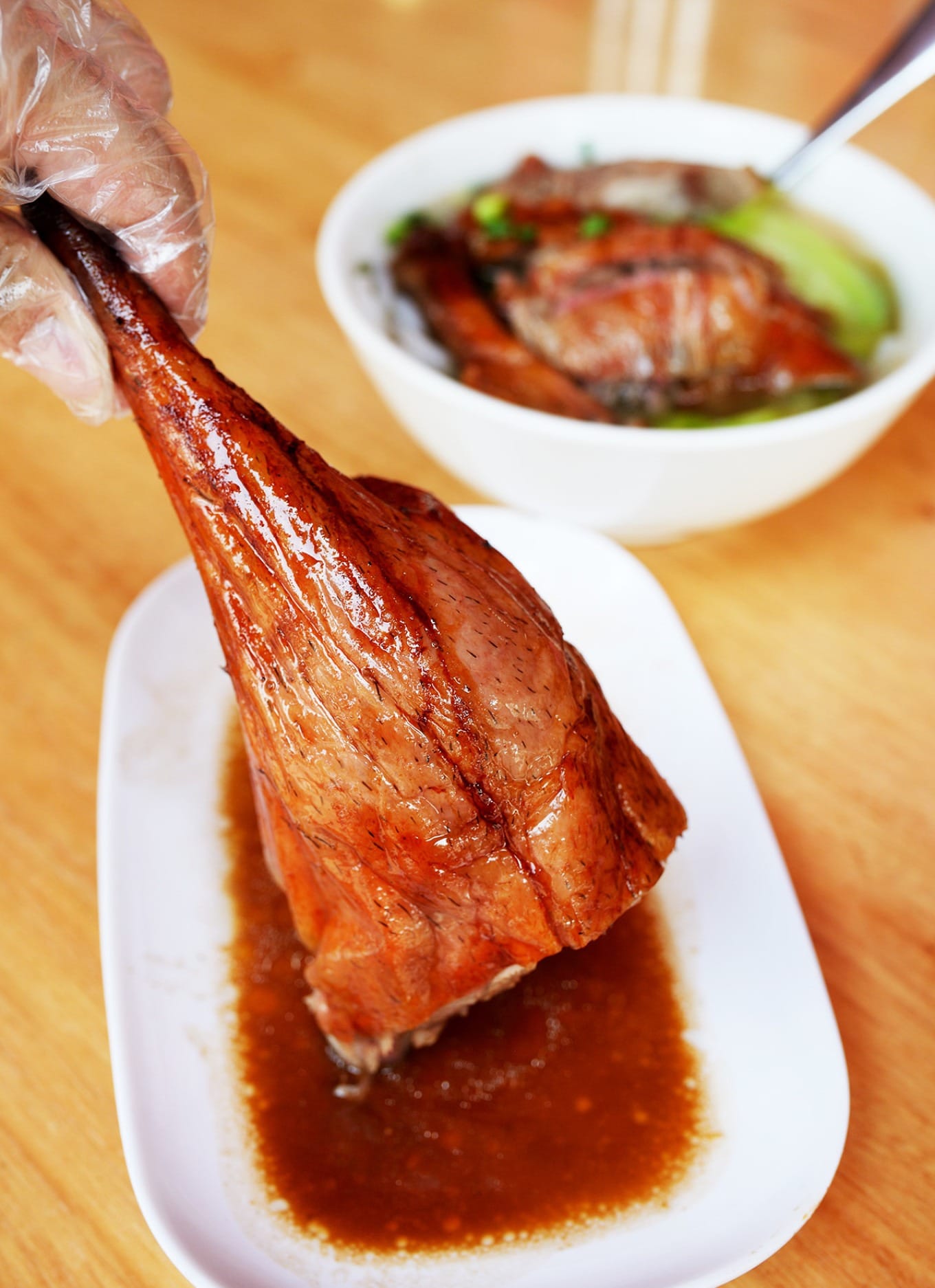
Alternatively, you can have the goose leg chopped and served on top of Laifen (濑粉), creating a stunning contrast of golden-red goose skin against the pure white noodles, a combination known as ‘Golden Goose, Silver Laifen’. The heat of the Laifen further melts the rich goose fat, enhancing the texture of the meat and adding a depth of flavor to the noodles.
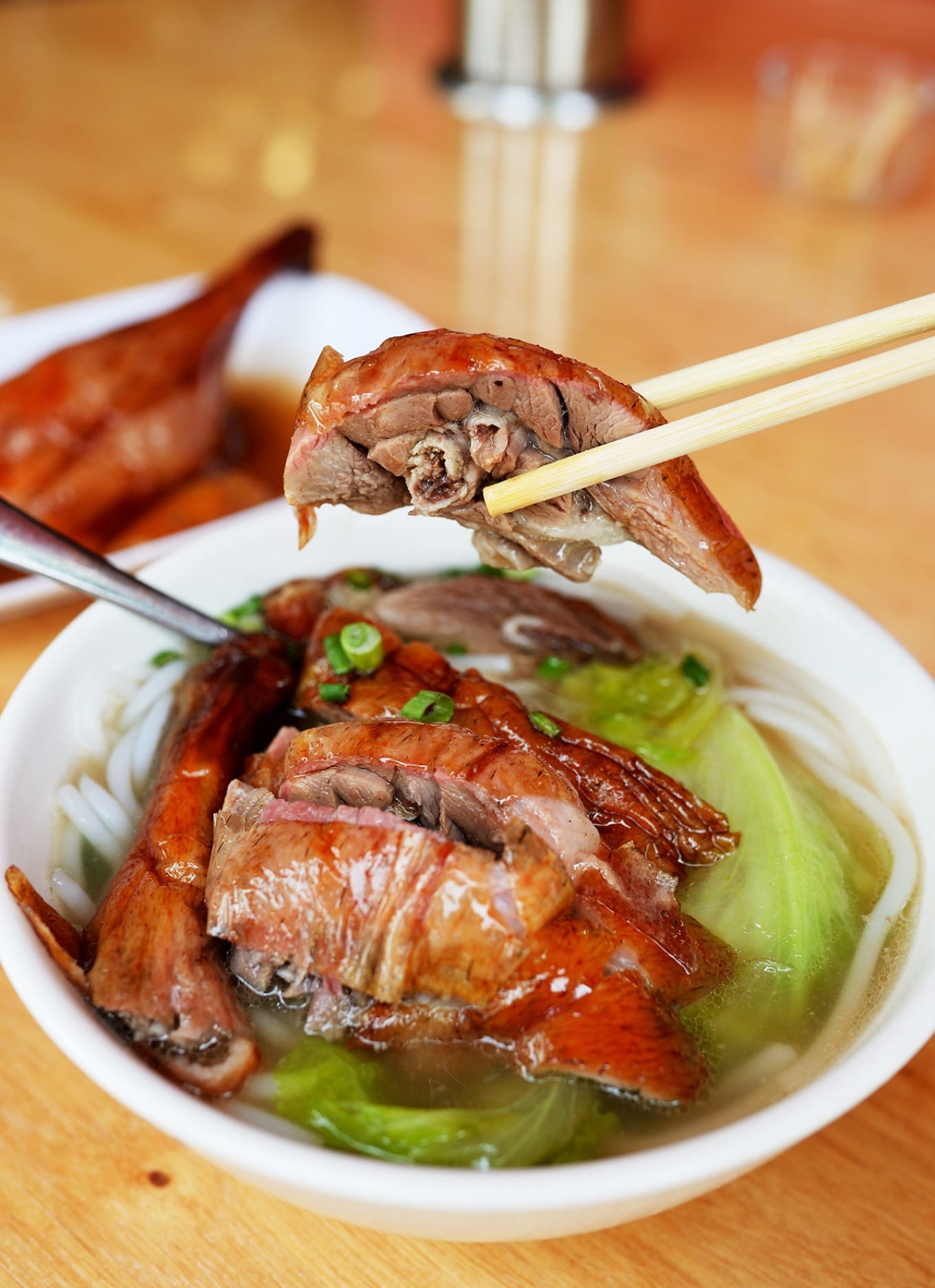
- Quanji Dongguan Shao E (全记东莞烧鹅) is a must-visit for those seeking the authentic taste of Dongguan.
- The roasted goose leg, served in the ‘Liu Bi’ style, is a hearty and flavorful choice.
- Pairing the goose leg with Laifen creates a memorable ‘Golden Goose, Silver Laifen’ dish.
- RestaurantQuanji Dongguan Shao E (全记东莞烧鹅)
- Address3 Xiangshi Road, Liaobu Town, Dongguan City, Guangdong Province, China (东莞市寮步镇香市路3号)
- Recommended dishesRoasted Goose Leg with Laifen (烧鹅腿濑粉)
- Average spend30 CNY
Savoring the Authentic Flavors at Shi De Fu
In Dongguan, the unchanging culinary faith is the combination of roasted goose and Laifen rice noodles. Among the towns known for this dish, Houjie Town stands out for its exceptional Laifen. Known as one of the ‘Four Great Laifens of Guangdong,’ Houjie’s Laifen is a must-try for any food enthusiast. Among the renowned shops offering this delicacy, Shi De Fu (食得福美食店) has carved a niche for itself with its unique flavors and quality.
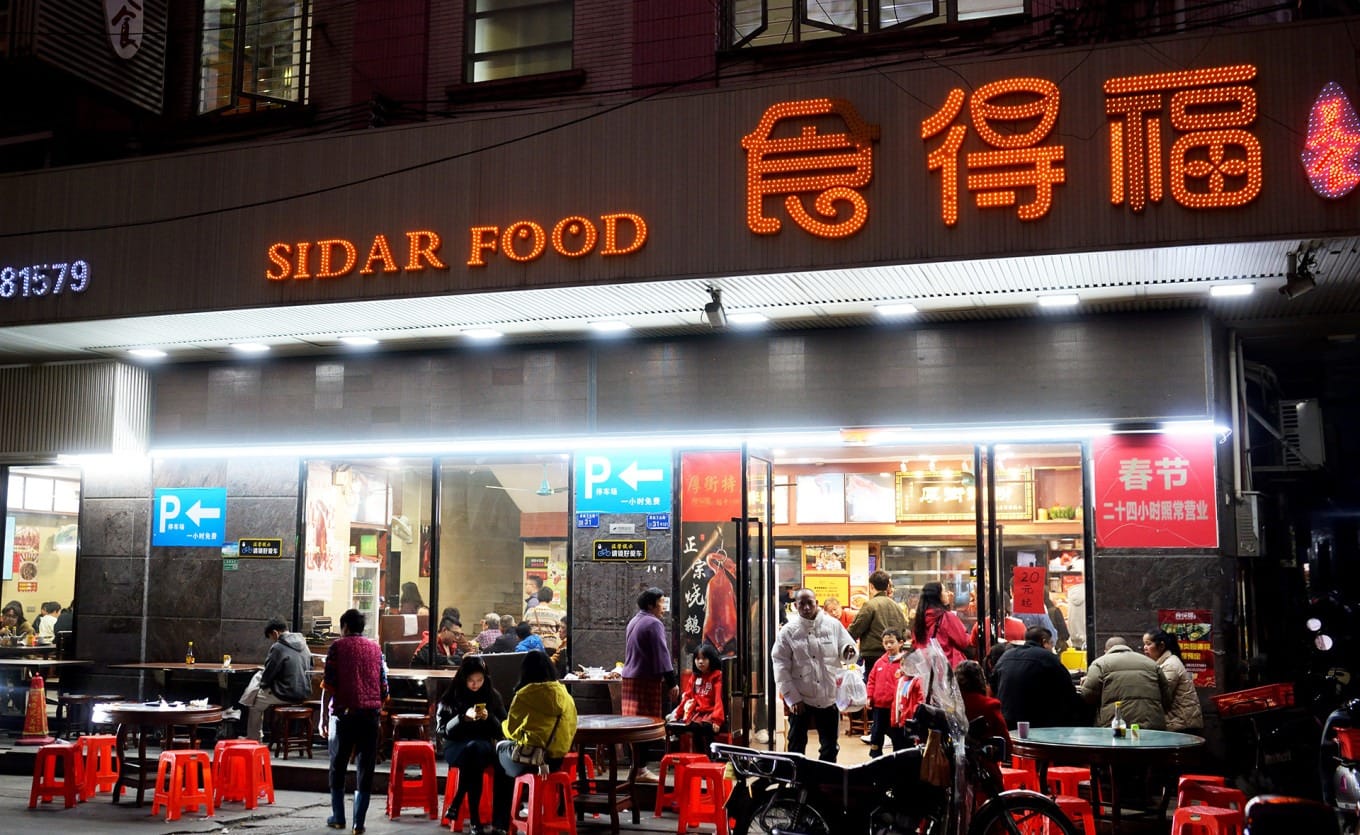
Operating for over three decades, Shi De Fu is a round-the-clock dining spot cherished by the locals. Its roasted goose, while not as greasy as some, offers a memorable aroma that lingers. The savory and slightly sweet sauce complements the meat’s flavor, creating an explosion of taste in your mouth.

What truly stands out at Shi De Fu is their Laifen. Handmade to preserve the traditional taste, each noodle varies in length and thickness, offering a soft and smooth texture. The larger pores in handmade noodles allow them to absorb the soup’s sweetness more effectively, a testament to the chef’s expertise and years of experience.

The char siu (叉烧) at Shi De Fu is also a highlight, with a perfect balance of fat and lean meat, rich in flavor and not overly sweet. The meat is tender, and the fat melts in your mouth, blending with the signature honey glaze to create a harmonious taste. The slightly charred parts add a smoky aroma that enhances the overall experience.

- RestaurantShi De Fu (食得福美食店)
- Address31 Xiayuan Road, Houjie Town, Dongguan City (东莞市厚街镇下元路31号)
- Recommended dishesRoasted Goose (烧鹅), Char Siu (叉烧), Vegetarian Laifen (斋濑粉)
- Average spend60 CNY
Dongguan’s Culinary Delights Beyond Roast Goose
Dongguan’s culinary scene is a treasure trove of flavors that extends far beyond its famous roast goose. As you delve into the city’s gastronomic landscape, you’ll find that the variety of dishes is as diverse as its geography. With a terrain that spans from mountainous regions to coastal plains and water towns, Dongguan’s natural bounty is unparalleled, leading to a rich tapestry of local specialties that are sure to satisfy any food enthusiast’s palate.
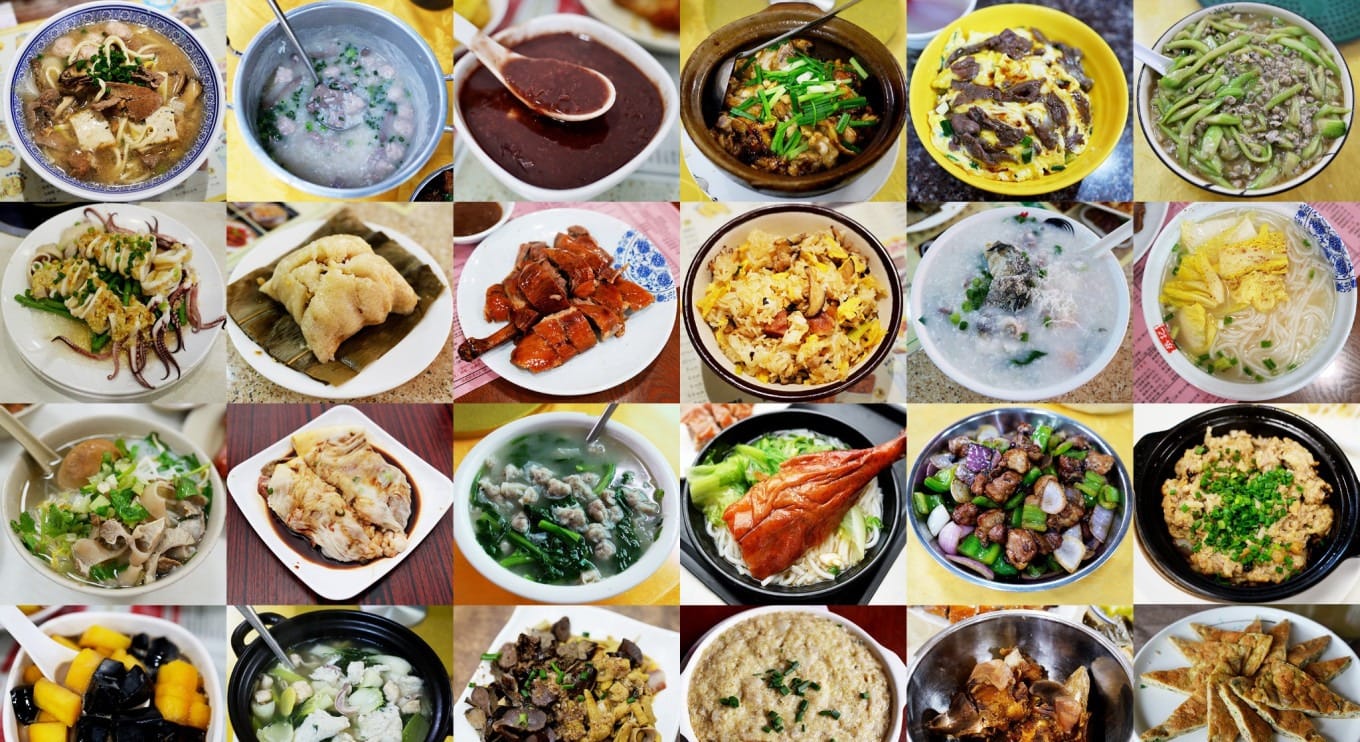
As one of China’s four prefecture-level cities without districts, Dongguan is home to 28 towns and 4 streets, each with its unique culinary offerings. From Shilong’s (石龙) bean curd chicken, to Tangxia’s (塘厦) braised goose, and Wanjiang’s (万江) dragon boat rice, the variety is staggering. If you’re a seafood lover, don’t miss Humen’s (虎门) crab cakes or Chang’an’s (长安) basin dishes. For a sweet finish, try Zhongtang’s (中堂) fish dumplings, Daojiao’s (道滘) meatball porridge, Dongkeng’s (东坑) sugar-coated snacks, or Mashong’s (麻涌) seaweed sugar water.
If you’re planning a culinary tour of Dongguan, consider dedicating a week to explore its diverse food scene. Each town and street offers a unique gastronomic experience, making it a foodie’s dream destination. Whether you’re a fan of traditional Chinese cuisine or looking for something more adventurous, Dongguan’s food culture is sure to impress.
- Explore Dongguan’s diverse food scene by visiting different towns and streets for unique local specialties.
- Try Shilong’s bean curd chicken (石龙豆皮鸡), Tangxia’s braised goose (塘厦碌鹅), and Wanjiang’s dragon boat rice (万江龙船饭).
- For seafood, Humen’s crab cakes (虎门蟹饼) and Chang’an’s basin dishes (长安盆菜) are must-trys.
- End your meal with sweet treats like Zhongtang’s fish dumplings (中堂鱼包), Daojiao’s meatball porridge (道滘肉丸粥), Dongkeng’s sugar-coated snacks (东坑糖不甩), and Mashong’s seaweed sugar water (麻涌紫菜糖水).
Discovering Authentic Dongguan Cuisine at Qi Xiang Restaurant
In Dongguan, the love for goose and chicken is a culinary tradition shared by many Guangdong residents. Among the must-try dishes is the renowned Shilong Doupi Chicken, a dish so famous that there’s a saying from the 1980s, ‘If you haven’t tasted Doupi Chicken, you haven’t truly been to Shilong Town.’
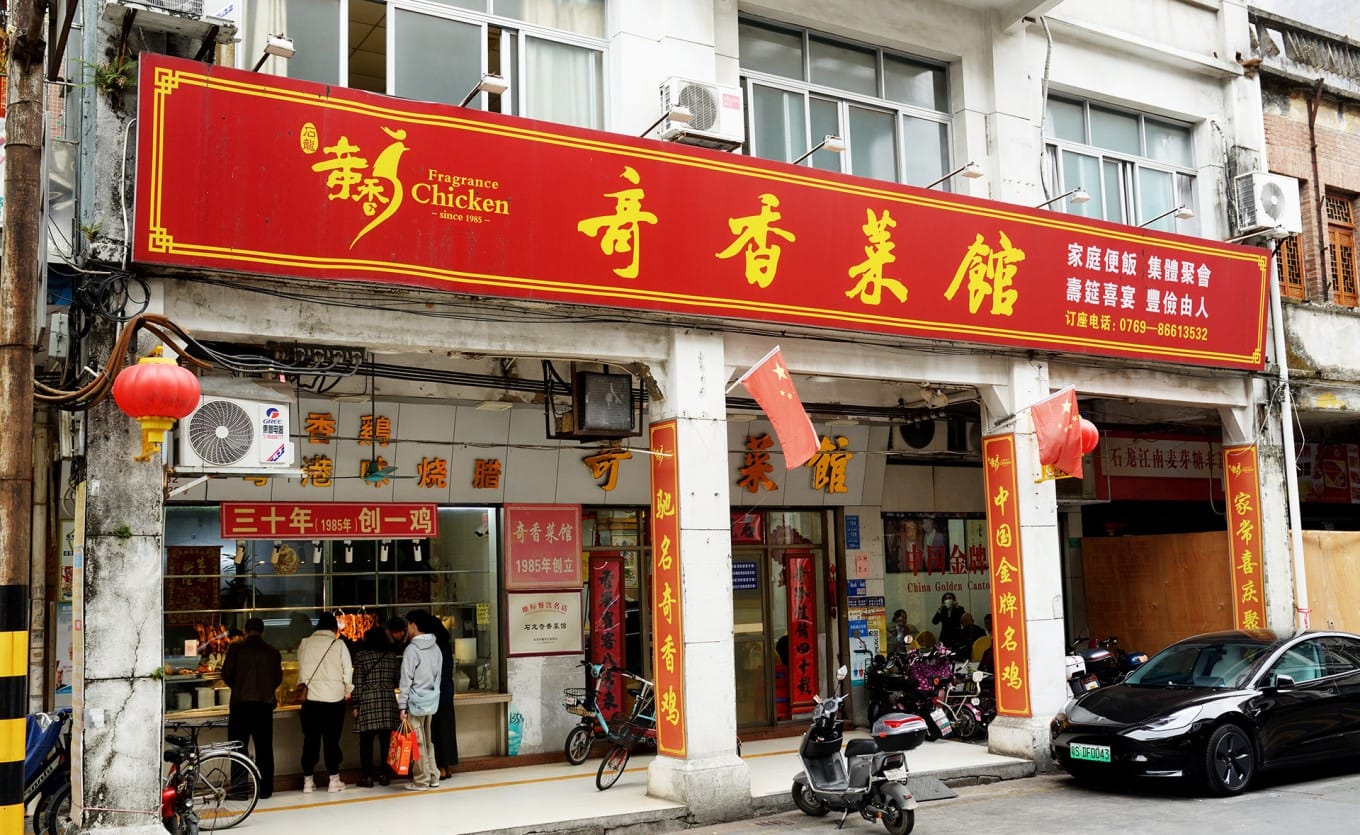
Nestled in the old town of Shilong, Qi Xiang Restaurant (奇香菜馆) has been serving up delectable dishes for nearly four decades. Its location next to the well-known Fei Tao Roast Meat shop makes it a convenient stop for food enthusiasts. Patrons include not only local residents but also travelers from other parts of Dongguan, Shenzhen, and Guangzhou who make the journey specifically for a taste of their specialties.
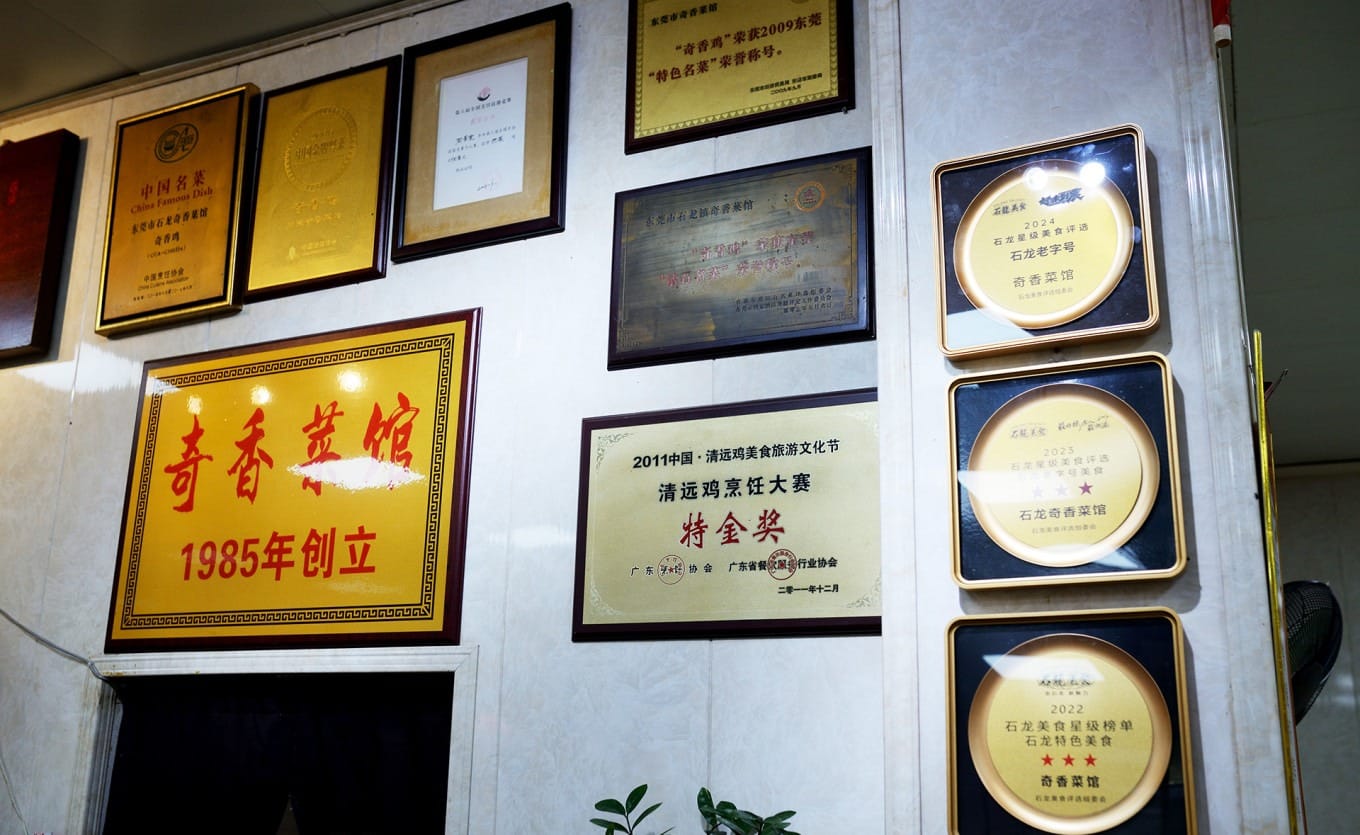
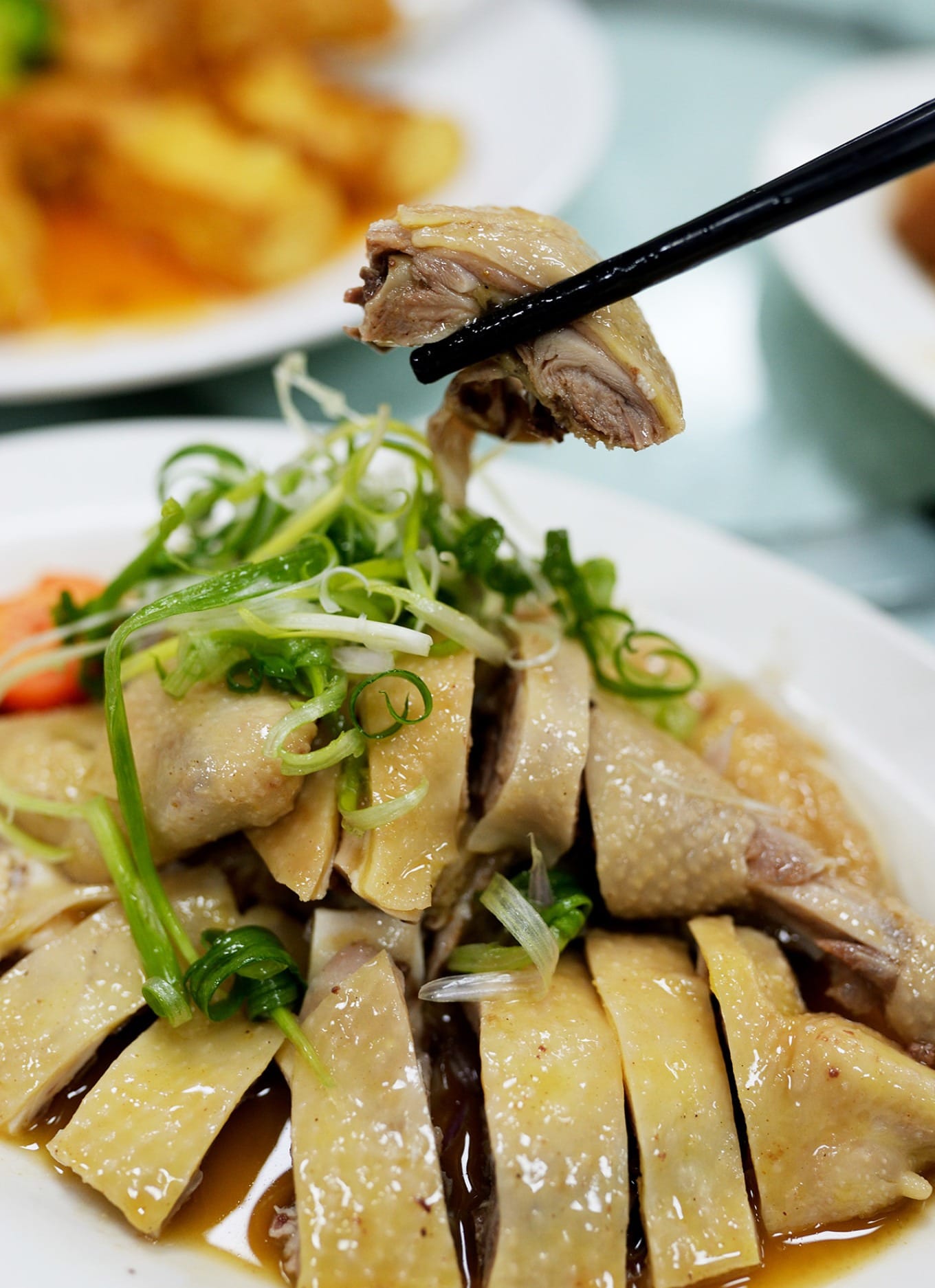
The star of the menu, ‘Qi Xiang Chicken’ (奇香鸡), is a dish that starts with half a chicken and is prepared in a manner similar to Guangzhou’s white-cut chicken, using a special breed of chicken from Hunan known as San Huang Chicken. The key to its tenderness lies in a process of submerging the chicken in boiling water and then cooling it in cold water, repeated several times to achieve a smooth skin and tender meat.
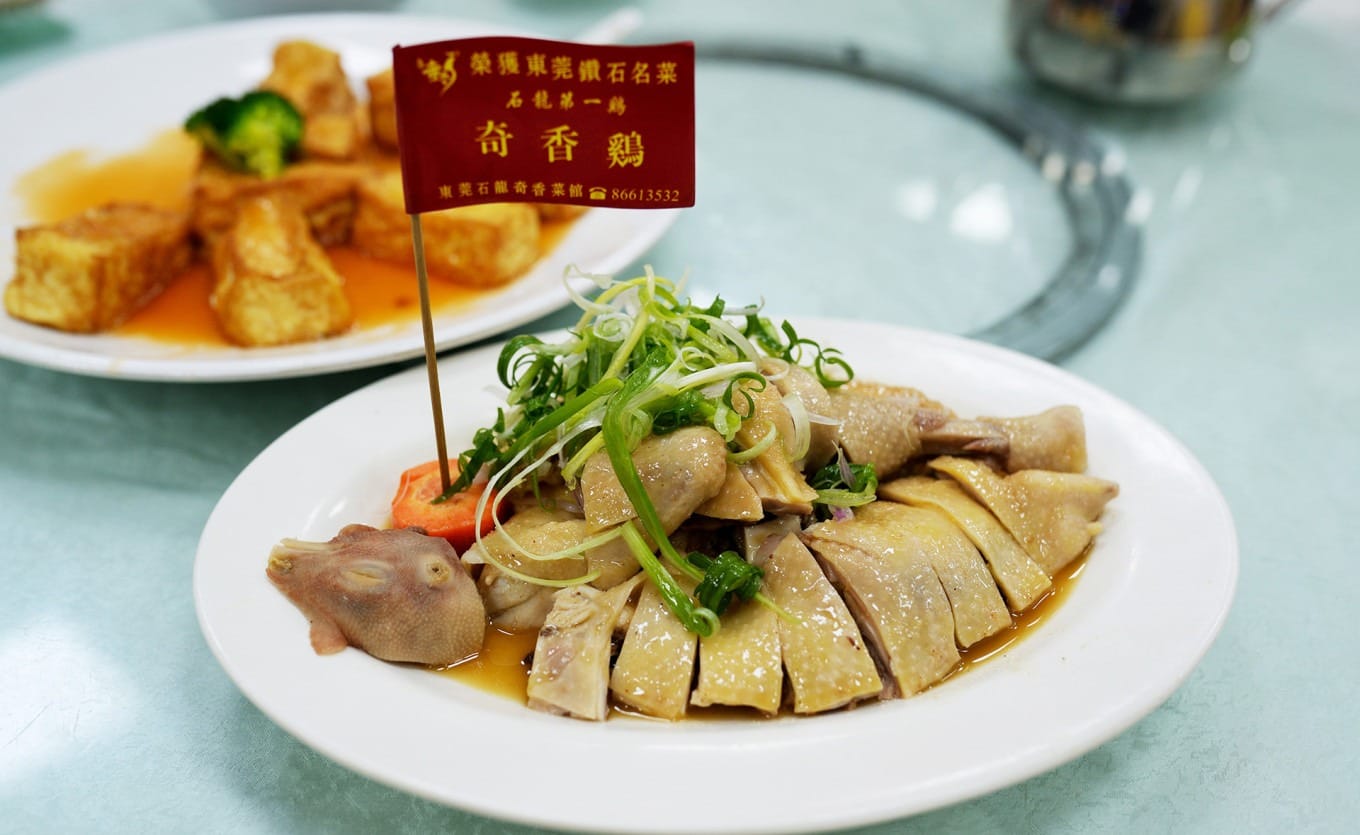
The magic of Qi Xiang Chicken also lies in its sauce, a secret blend of peanut oil, sesame oil, and sha jiang, with a generous topping of shredded scallions. When you dip a piece of chicken in the sauce and combine it with the scallions, the flavors meld into an irresistible aroma that’s hard to resist.
Another local specialty, Lu Goose (碌鹅), is said to have originated from Tangxia Town in the southeastern mountainous region of Dongguan, a Hakka community. The term ‘Lu’ describes the cooking process of continuous rolling and frying, allowing the goose meat to absorb the rich flavors of the spices and seasonings.
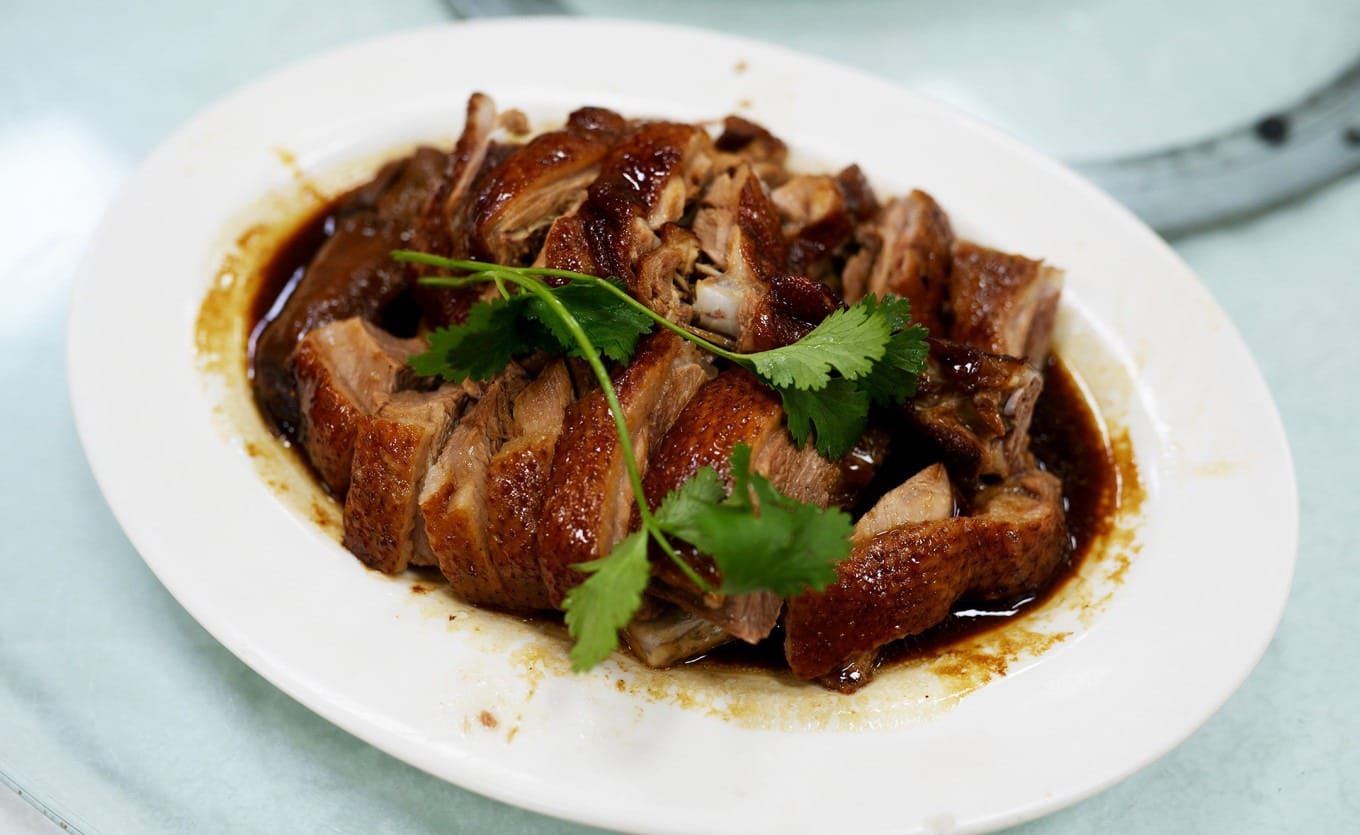
During the cooking of Lu Goose, the high temperature forces the fat from the goose skin to be released, which is then absorbed by the taro placed underneath. The combination of goose meat with its rich, fragrant sauce creates a layered sensory experience that’s unforgettable.

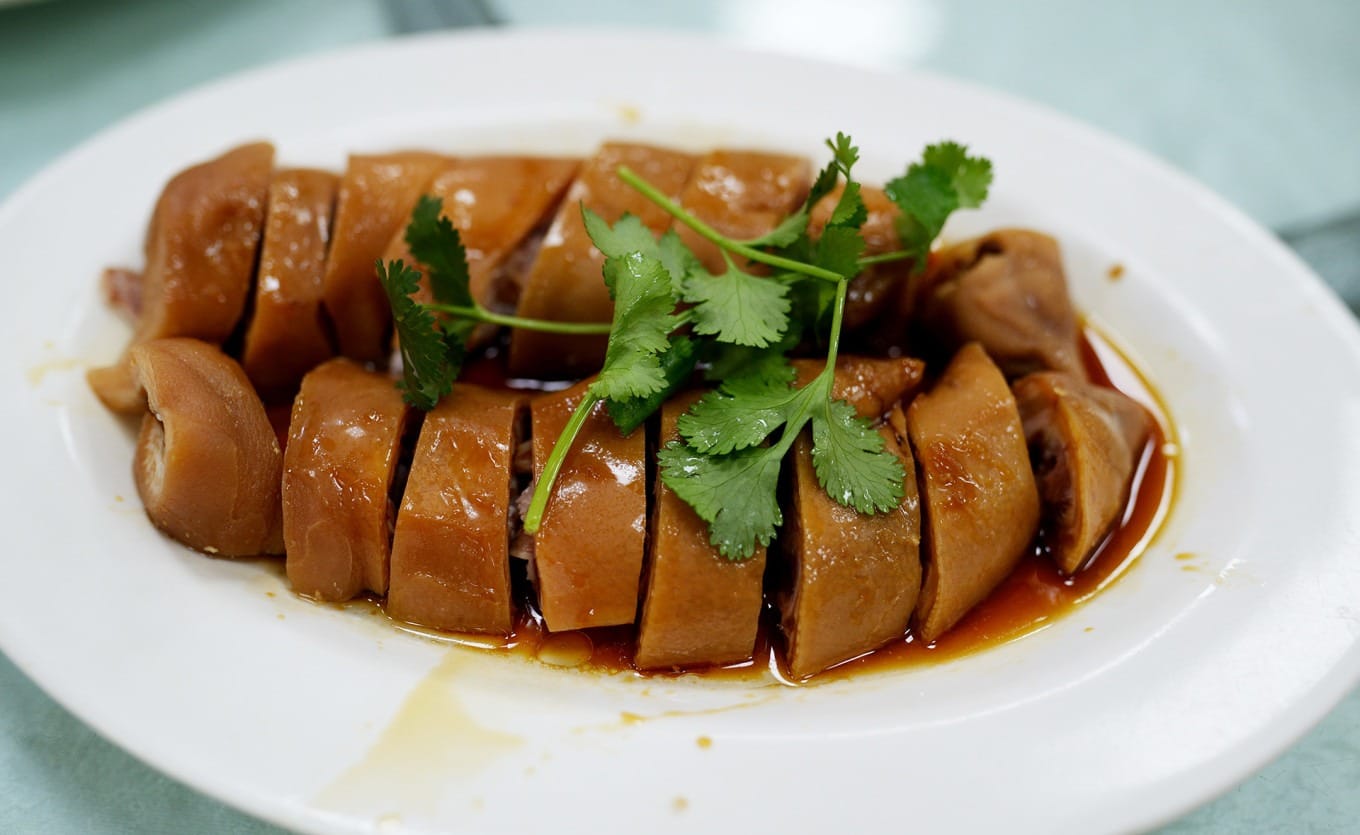
For a refreshing cold dish, the Crispy Pig’s Trotter (脆皮猪手) is a must-try. In Guangdong, pig’s trotters are considered a delicacy, especially the front legs which have less meat and more skin and tendon, offering a delightful chewiness and elasticity.
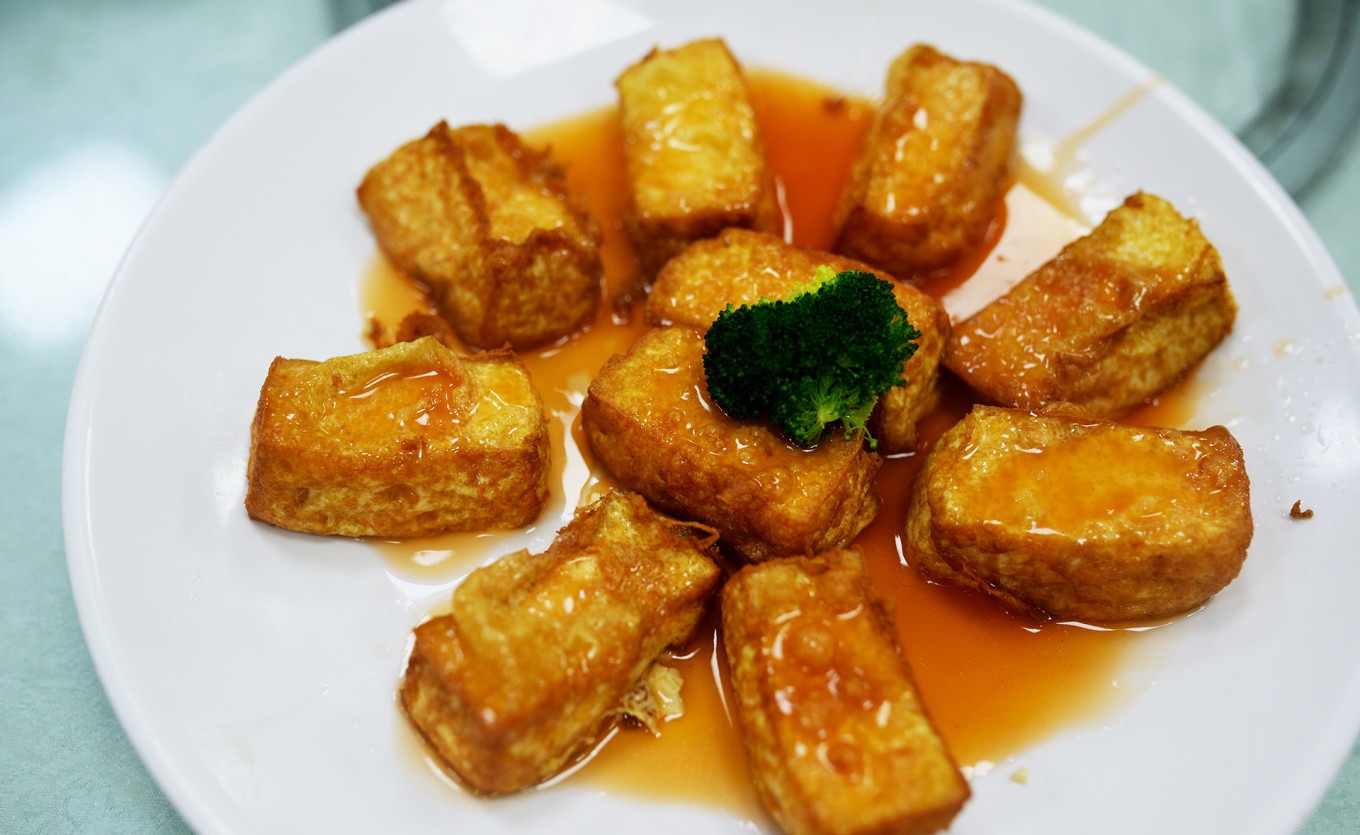
Another signature dish is Golden Tofu (黄金豆腐), made from egg tofu that’s been deep-fried to a golden crisp and then served with a savory sauce that complements its tender interior perfectly.
- Qi Xiang Chicken (奇香鸡)
- Lu Goose (碌鹅)
- Crispy Pig’s Trotter (脆皮猪手)
- Golden Tofu (黄金豆腐)
- RestaurantQi Xiang Restaurant (奇香菜馆)
- Address124 Zhongshan West Road, Shilong Town, Dongguan City, Guangdong Province, China (东莞市石龙镇中山西124号)
- Recommended dishesQi Xiang Chicken (奇香鸡), Lu Goose (碌鹅), Crispy Pig’s Trotter (脆皮猪手), Golden Tofu (黄金豆腐)
- Average spend80 CNY
A Culinary Journey to Quanji Snack Shop
Before arriving in Dongguan, you might have heard whispers about a culinary gem with over a century of history, the Quanji Snack Shop (聚豪华庭店). Established in 1900, this iconic eatery has expanded from its roots in Shilong Old Town to a branch in Huangzhou. Many of Shilong’s historic food establishments have followed suit, opening branches in Huangzhou to cater to the growing demand. Note that Quanji operates only during morning and lunch hours, closing its doors at 2 PM sharp.

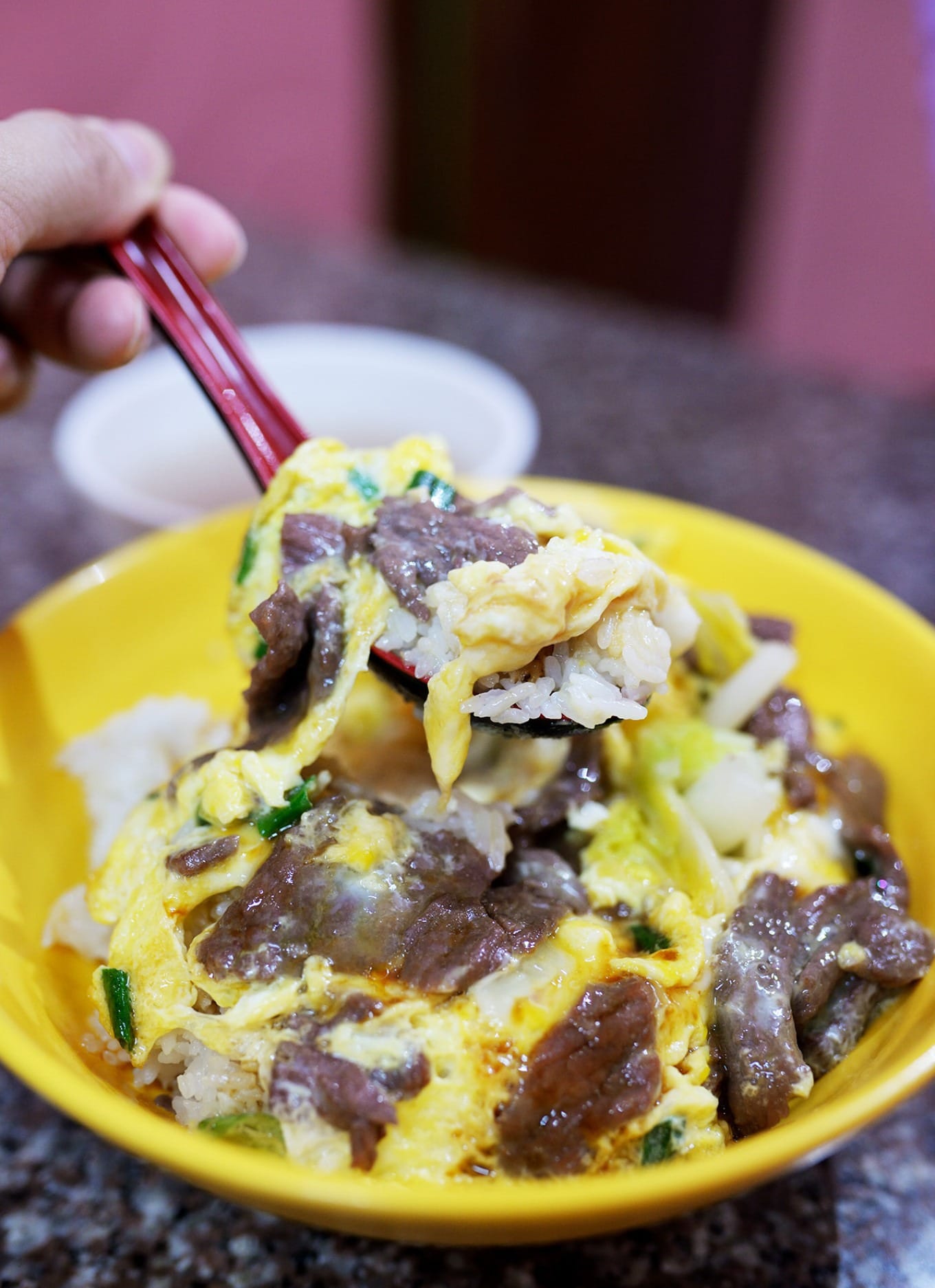
Quanji Snack Shop started with wonton noodles but has since evolved to offer a full range of porridge, noodles, rice, and more. Nowadays, locals flock to the shop for their signature Soft Egg Beef Rice. This dish, a classic in the tea restaurant circuit of Guangdong, Hong Kong, and Macau, features a half-cooked egg and generous slices of beef covering a bed of rice. The semi-solid egg whites and the rich sauce create an irresistible visual appeal.
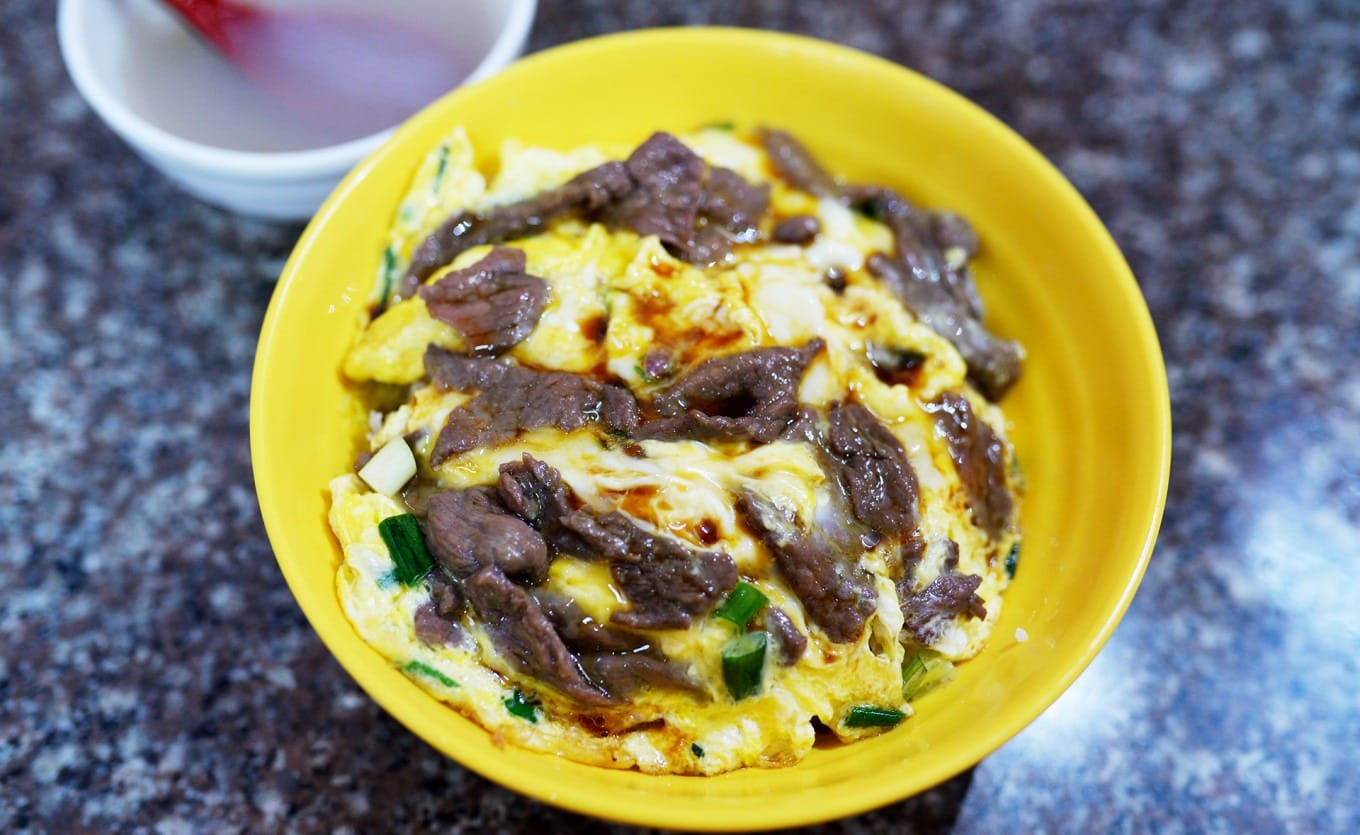
The Soft Egg Beef Rice, with its nickname ‘Snot Beef Rice’, is a testament to the dish’s incredibly smooth and tender egg whites. When you scoop up a mouthful, the moist egg yolk melds with the equally tender beef, creating a tantalizing flavor profile. The layers of egg aroma, meat juice, and sauce progress on your palate, with the fragrance blooming boldly and stimulating your appetite.
- RestaurantQuanji Snack Shop (聚豪华庭店) (Jùháohuátíng Diàn)
- Address东莞市石龙镇京瓷路黄洲聚豪华庭东北 (Dōngguǎn Shì Shílóng Zhèn Jīng Cí Lù Huángzhōu Jùháohuátíng Dōngběi)
- Recommended dishes滑蛋牛肉饭 (Huá Dàn Niú Ròu Fàn) – Soft Egg Beef Rice
- Average spend20元 (approximately 3 USD)
Ziyuan Snack Shop: A Culinary Gem in Dongguan
Nestled in the heart of Shijie Town, adjacent to Shilong Town in Dongguan, lies a humble snack shop that has earned its reputation as one of the best places to enjoy cheong fun. Ziyuan Snack Shop (自园小食店) is a local favorite, known for its authentic and flavorful dishes served in a casual, neighborhood setting. Don’t expect a fancy ambiance or top-notch service; instead, embrace the rustic charm that adds to the overall dining experience.

Operating only in the evenings and late nights, from five in the evening until three in the morning, Ziyuan Snack Shop (自园小食店) is a testament to the saying ‘the best things in life come late.’ Despite the late hours, the queue of eager diners is a common sight, with many making a special trip from neighboring towns just for a taste of their signature cheong fun.
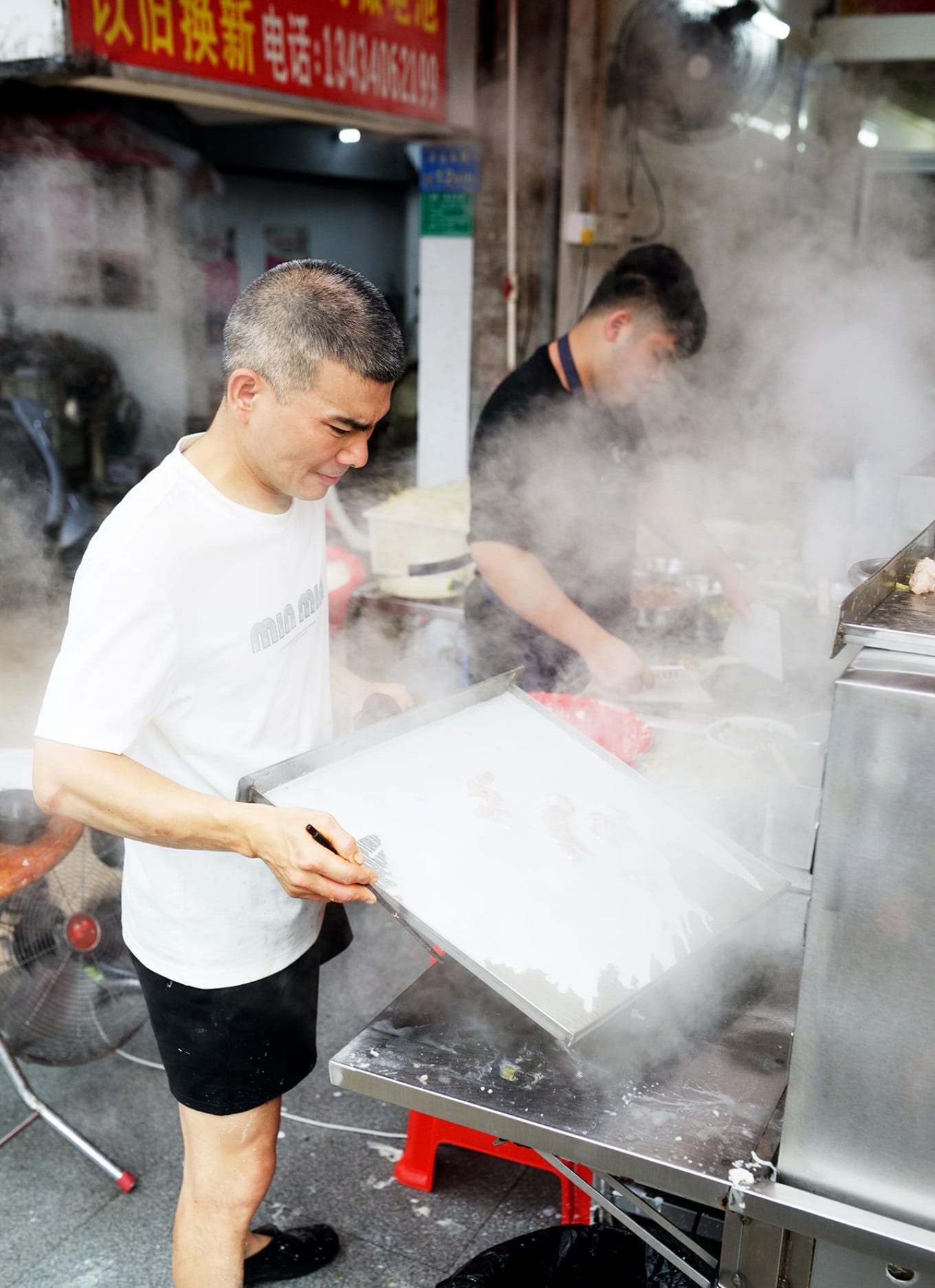
Among the various methods of making cheong fun, including drawer-style, cloth-style, and basket-style, Ziyuan Snack Shop (自园小食店) specializes in the drawer-style, which results in exceptionally thin and delicate cheong fun. The meticulous preparation is evident in every steaming dish that comes out of their kitchen.
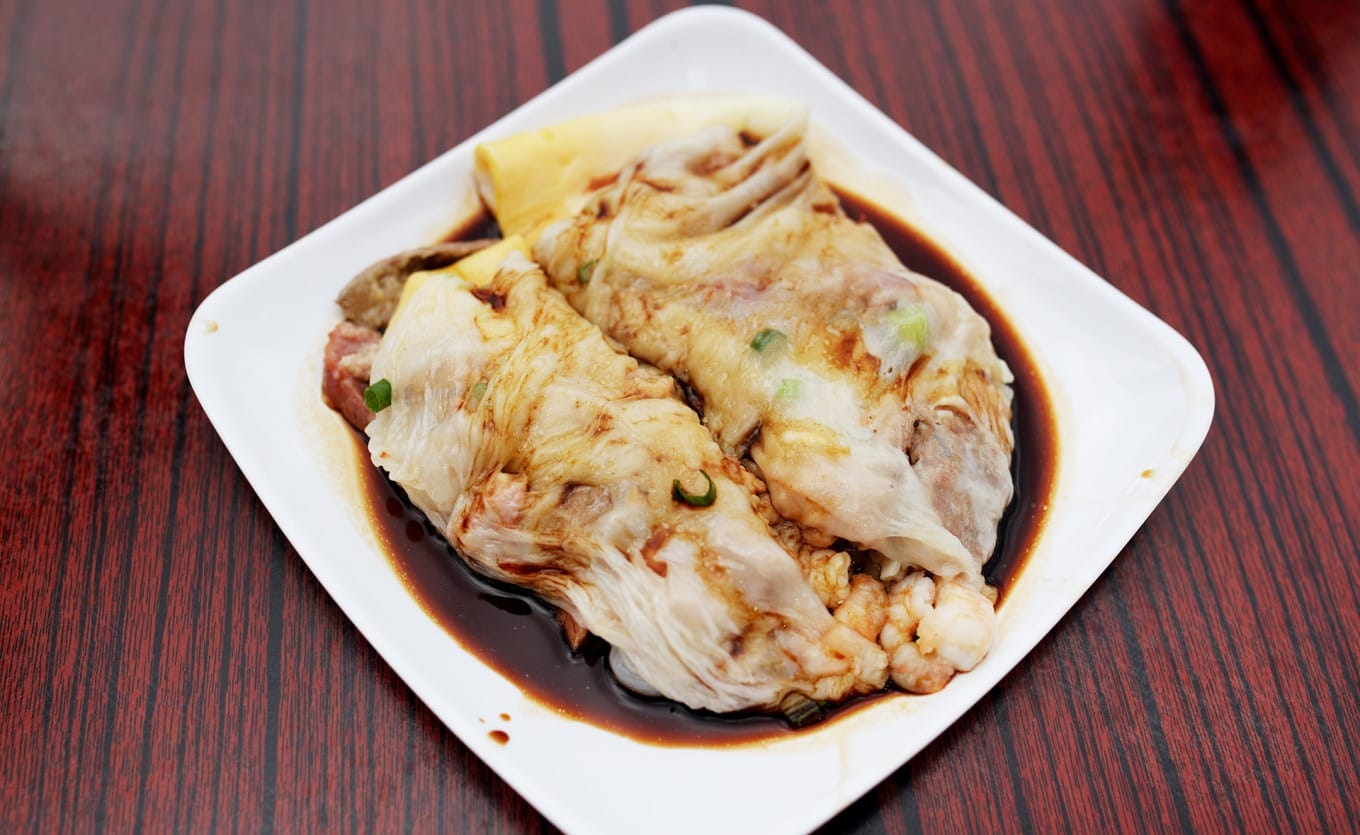
Ziyuan Snack Shop’s cheong fun stands out for its generous use of ingredients. If you order the assorted cheong fun, expect a delightful combination of shrimp, beef, pork, char siu, pig liver, and rice noodle rolls. The masterful chefs at Ziyuan Snack Shop (自园小食店) have a keen sense of timing, ensuring that each serving is steamed to perfection, resulting in a warm, almost translucent cheong fun that showcases the fillings within.
The steamed rice noodles, another signature dish, are prepared in a similar manner to cheong fun, with a variety of ingredients steamed to perfection within each noodle strand. The aroma that fills the air as the dish is served is enough to whet anyone’s appetite, and it’s no surprise that plates are cleaned with gusto.

- Ziyuan Snack Shop (自园小食店) is a must-visit for any food lover traveling to Dongguan.
- The shop’s cheong fun and steamed rice noodles are not to be missed, offering a true taste of local cuisine.
- RestaurantZiyuan Snack Shop (自园小食店)
- Address6 Jinhuang 2nd Road, Shijie Town, Dongguan City, Guangdong Province, China (东莞市石碣镇晋煌二路6号)
- Recommended dishesAssorted cheong fun (什锦肠粉), Assorted steamed rice noodles (什锦蒸米粉)
- Average spend15 CNY per person
Discovering the Sweet Delights at Yongcheng Sweet Soup Shop
In the town of Shijie, a culinary gem awaits every food enthusiast—the Yongcheng Sweet Soup Shop (永成糖水店). Open 365 days a year, this place is always bustling with locals who swear by its delectable offerings. Guangdong’s tropical and subtropical climate makes sweet soups a staple, and in Dongguan, this tradition is alive and thriving with a menu that goes beyond just desserts to include congee, noodles, rice, and a variety of snacks that can bewilder newcomers.
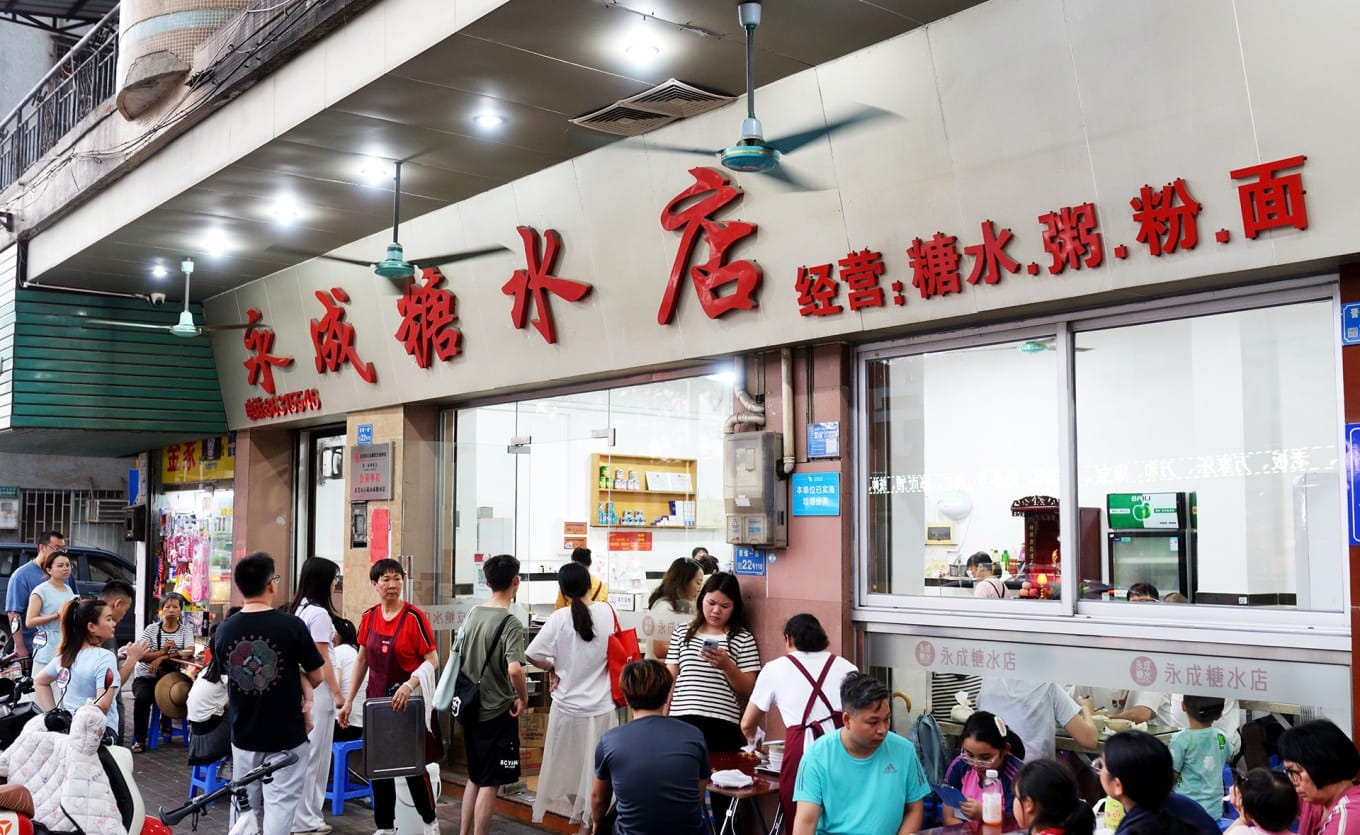
A must-try dessert at Yongcheng is the Tong Bat Leung, or ‘sugar won’t leave’. Originating from Dongguan’s Dongkeng Town, this dessert has become a favorite across the Guangdong-Hong Kong-Macau Greater Bay Area. The glutinous rice balls are cooked in water, then tossed in a syrup made with hot oil, ensuring each morsel is evenly coated. Topped with crushed peanuts and egg threads, its appearance is as tempting as its taste.
In the hearts of Guangdong locals, Tong Bat Leung is also a symbol of love. The round glutinous rice balls, covered in syrup and peanuts that won’t ‘leave’, mirror the sweetness and clinginess of romantic love. Historically in Dongguan, if a matchmaker brought a suitor to a girl’s home and the parents were pleased, they would serve Tong Bat Leung, all but sealing the marriage deal. The dessert is sweet but not cloying, with a soft and chewy texture that doesn’t stick to your teeth, spreading a sense of happiness and contentment in every bite.

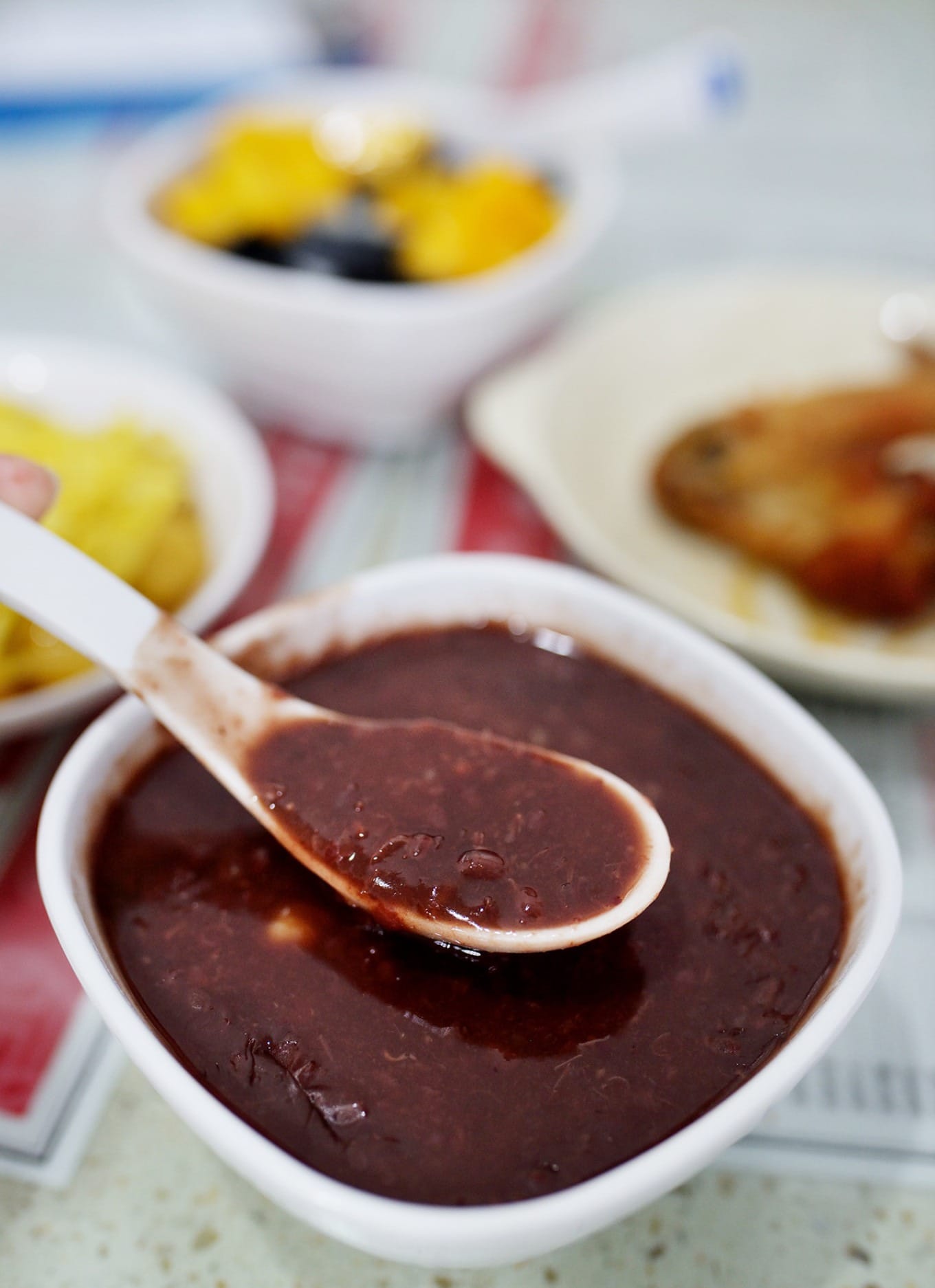
Another classic is the Red Bean Soup, one of the traditional ‘two sands and three pastes’ Cantonese desserts. The version with lotus seeds and lily bulbs, known as Lotus Lily Red Bean Soup, carries auspicious meanings: red beans for prosperity, lilies for a harmonious union, and lotus seeds for fertility. It’s customary for newlyweds to share a bowl of this soup on their wedding day in many parts of Guangdong. The soup, made with rock sugar, is smooth and thick, with a rich and lingering flavor that warms the heart.
For a refreshing take, try the Fresh Mango Coconut Jelly. The black jelly, unique to the Pearl River Delta, is made from the jelly grass plant. The plant’s stems and leaves release pectin when boiled, which is then mixed with rice paste to set. This jelly is similar to the ‘burnt grass jelly’ from Fujian and Taiwan and the ‘grass cake’ from Chaoshan, with a smooth texture that, when combined with mango and condensed milk, creates a cooling and satisfying dessert.

- Tong Bat Leung (糖不甩) – A symbol of love and sweetness.
- Fresh Mango Coconut Jelly (鲜芒果奶凉粉) – A refreshing dessert with a smooth texture.
- Lotus Lily Red Bean Soup (莲子百合红豆沙) – Traditional and full of auspicious meanings.
- RestaurantYongcheng Sweet Soup Shop (永成糖水店)
- Address10 Hua Xing 4th Street, Shijie Town, Dongguan City, Guangdong Province, China (东莞市石碣镇华兴四街10号)
- Recommended dishesTong Bat Leung (糖不甩), Fresh Mango Coconut Jelly (鲜芒果奶凉粉), Lotus Lily Red Bean Soup (莲子百合红豆沙)
- Average spend15 CNY
Exploring Traditional Delights at Pinxiang Restaurant
Dongguan, a city without district divisions, is home to a variety of traditional culinary delights, with the old town of Guancheng Street being a prime location for such gastronomic experiences. Nestled near the scenic Qifeng Mountain, Pinxiang Restaurant (品香菜馆) is a long-standing establishment where the locals’ favorite dishes are served without the need for a menu. Regulars know exactly what to order, and first-timers can expect a warm introduction to the specialties from the restaurant’s staff.
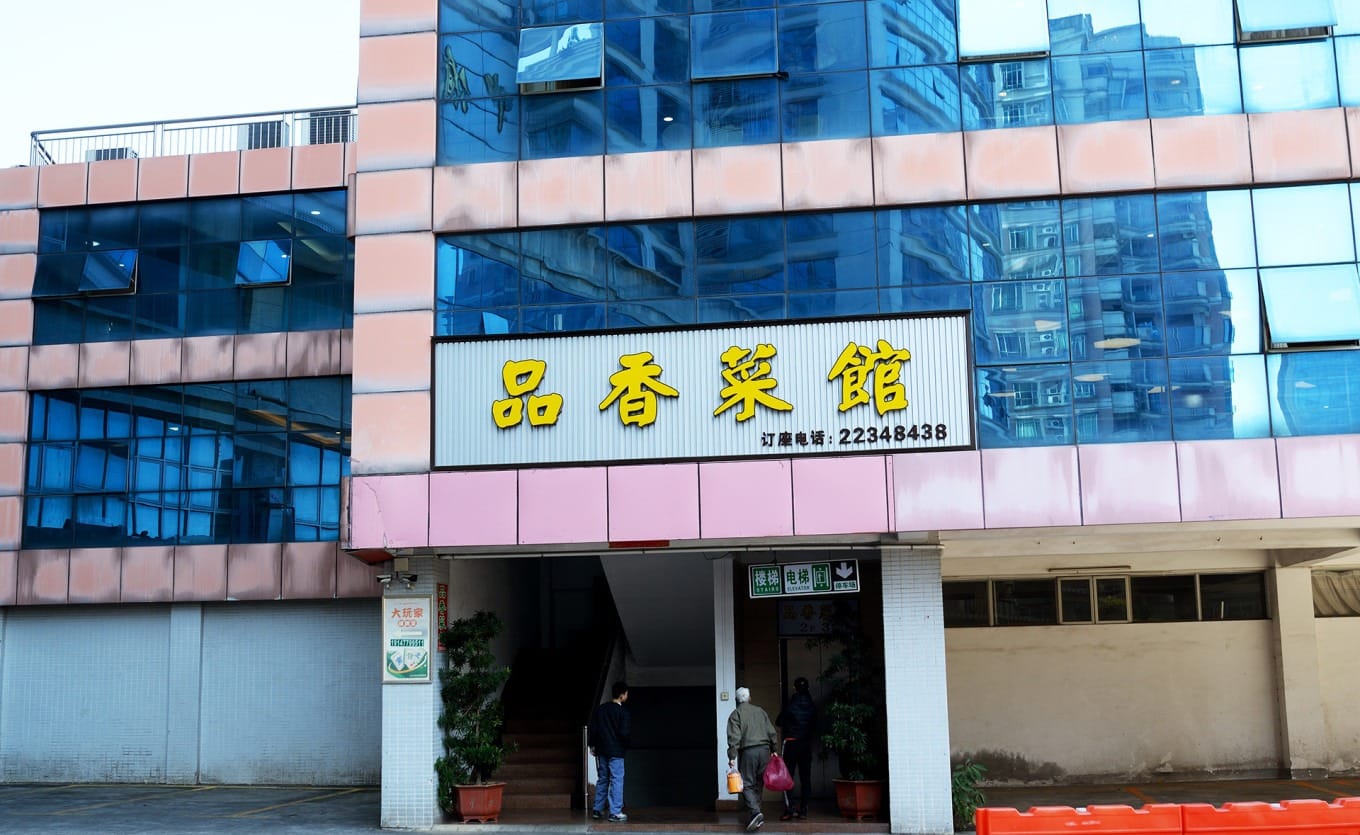
The star dish at Pinxiang Restaurant is the Doupiji (豆皮鸡), a specialty from Shilong Town in Dongguan. Even though the restaurant is located in Guancheng, the preparation and taste are authentically Shilong-style. If a trip to Shilong Town isn’t on your itinerary, Pinxiang’s Doupiji is an excellent alternative. The chicken is ordered starting from half a portion, and the quality is exceptional, with smooth skin, tender meat, and a translucent layer of aspic between the skin and meat, exuding a layer of chicken fat along the bones.
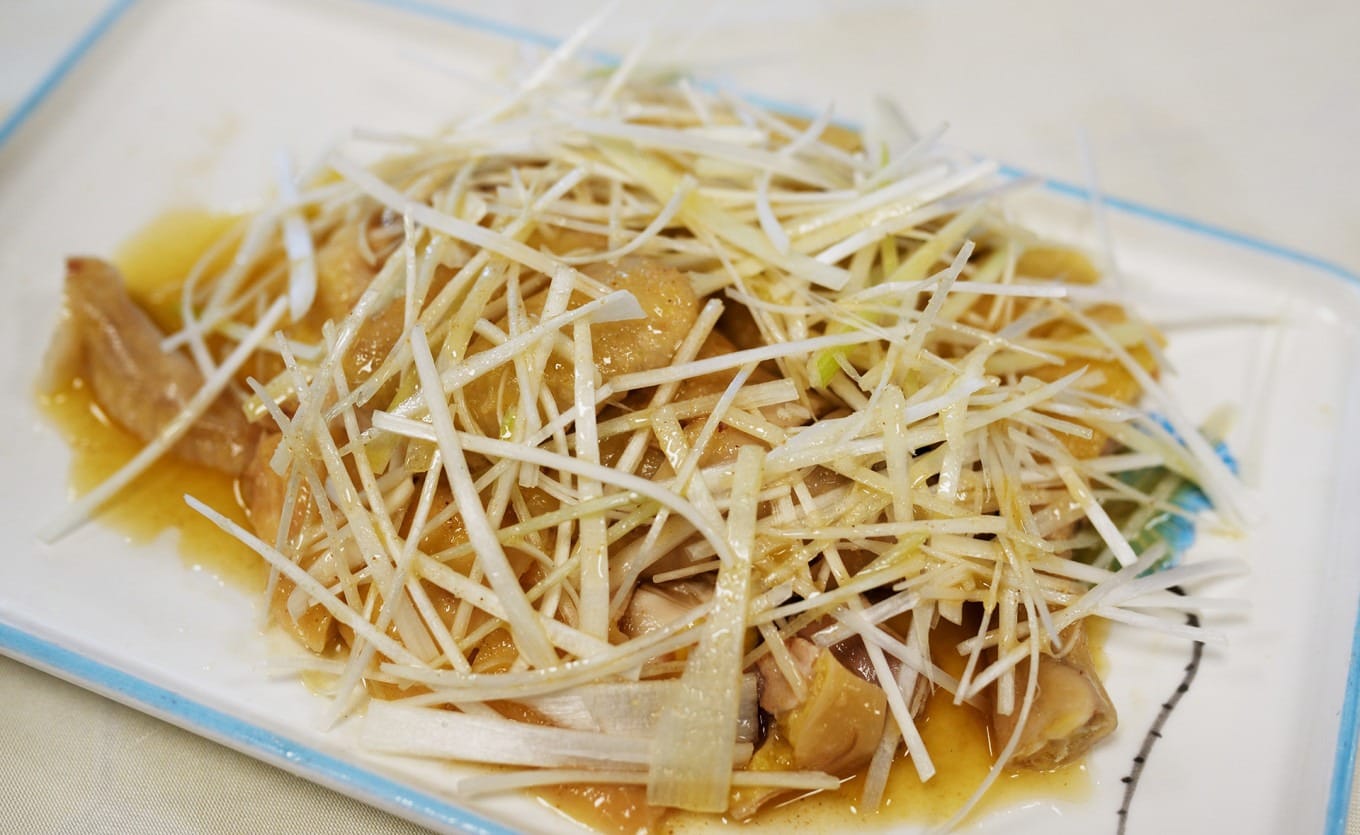
When you take a bite of the chicken, the complex aroma of peanut oil, sesame paste, and sha jiang quickly spreads in your mouth, an experience that is truly commendable. Another dish not to be missed is the Hong Cong Tou Rou Bing (红葱头肉饼), which is quite unique. In Guangdong cuisine, red onions are typically used to steam chicken, but steaming meat pies is a less common practice. The pie is made from a mixture of three parts fat to seven parts lean minced meat with head vegetable particles, and it’s steamed with a generous bed of red onions on the bottom. The high-temperature cooking process releases the flavor of the onions, which the loose structure of the meat pie absorbs perfectly. The moment the pot lid is lifted, the aroma is captivating, and the taste leaves a lasting impression.

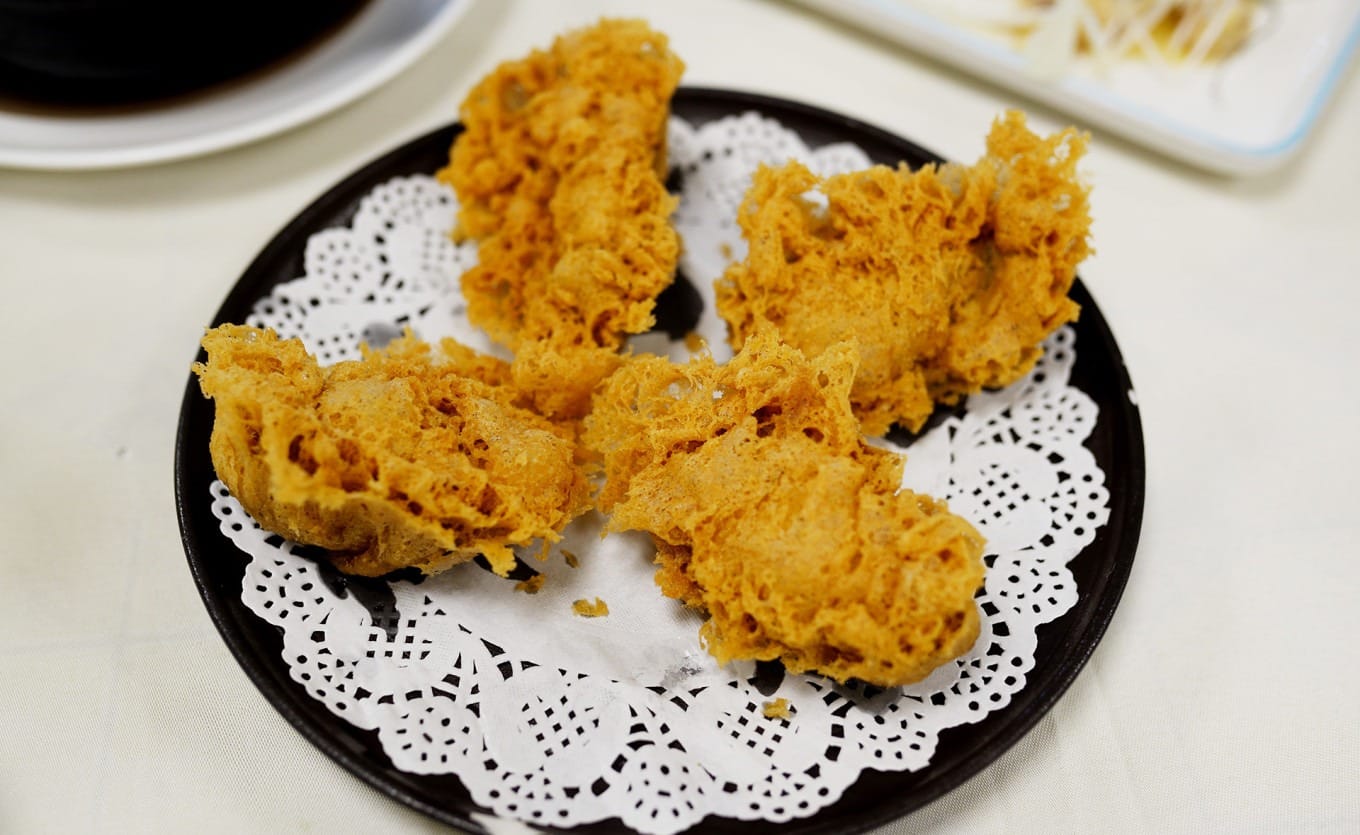
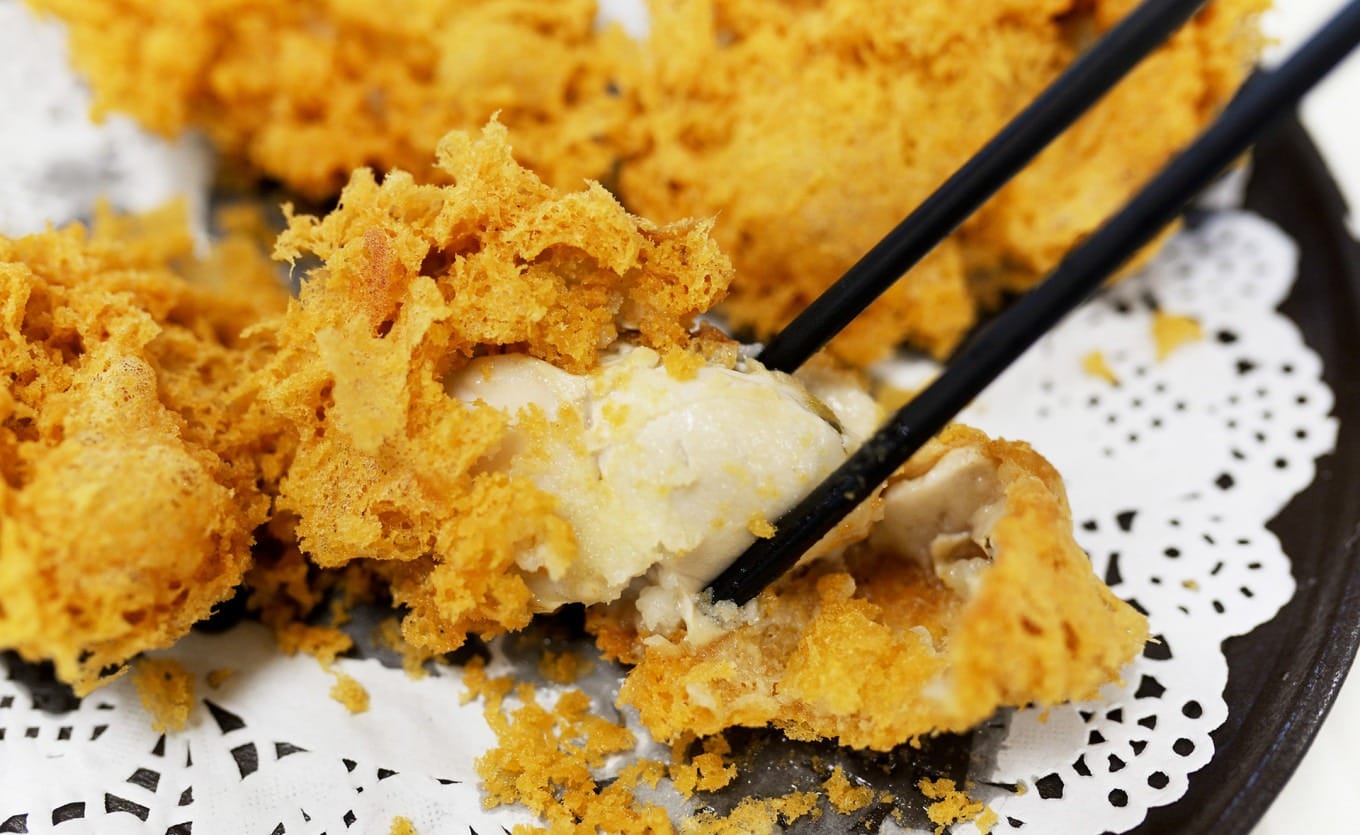
The restaurant’s auntie also recommended their oysters, which are plump and full during the season. You can choose from garlic steamed, cheese baked, or deep-fried preparations. The fried oysters are particularly impressive with their golden-brown, crispy exterior resembling a honeycomb. This level of culinary artistry is a testament to the chef’s mastery of the ratio of wheat starch and pork fat, as well as the control of oil temperature.

When you take a bite, the initial sensation is the dry and fluffy exterior, followed by the tender and juicy oyster meat. The oysters are cooked to perfection, rich and flaky, making each bite a delightful assault on the taste buds. However, it’s worth noting that at 18 yuan apiece, they are on the pricier side.
- Dongguan is a ‘direct-controlled’ city without district divisions, only streets and towns.
- Guancheng Street is one of the four streets under the jurisdiction of Dongguan City and is also the old town area.
- Pinxiang Restaurant is located near Qifeng Mountain and has been a long-standing establishment.
- RestaurantPinxiang Restaurant (品香菜馆)
- Address162 Qifeng Road, Guancheng Street, Dongguan City (东莞市莞城街道旗峰路162号)
- Recommended dishesDoupiji (豆皮鸡), Hong Cong Tou Rou Bing (红葱头肉饼), Fried Oysters (炸生蚝)
- Average spend80 yuan
Discovering Authentic Dongguan Cuisine at Nanzhou Restaurant
As the eastern tributaries of the Dongjiang River weave through Dongguan’s urban landscape, they create a tapestry of waterways and sandbars that define the essence of the Lingnan water town. For a taste of authentic Dongguan water town cuisine, Nanzhou Restaurant (南舟美食) in Wanjiang Street’s Liuyongwei is a must-visit. With a history spanning three decades, this restaurant, once a floating eatery on the river, has transitioned to a land-based establishment, enhancing its popularity.

Dongguan’s culinary prowess with fish is evident in the diverse preparations. A must-try at Nanzhou Restaurant is the signature dish of ‘one fish, two ways’: stir-fried fish slices and mustard greens fish bone tofu soup. The restaurant uses the freshwater snakehead fish, known locally as ‘black fish’, for these dishes. The fish is deboned and sliced, with the chef’s mastery of heat crucial to achieving the perfect texture and flavor.
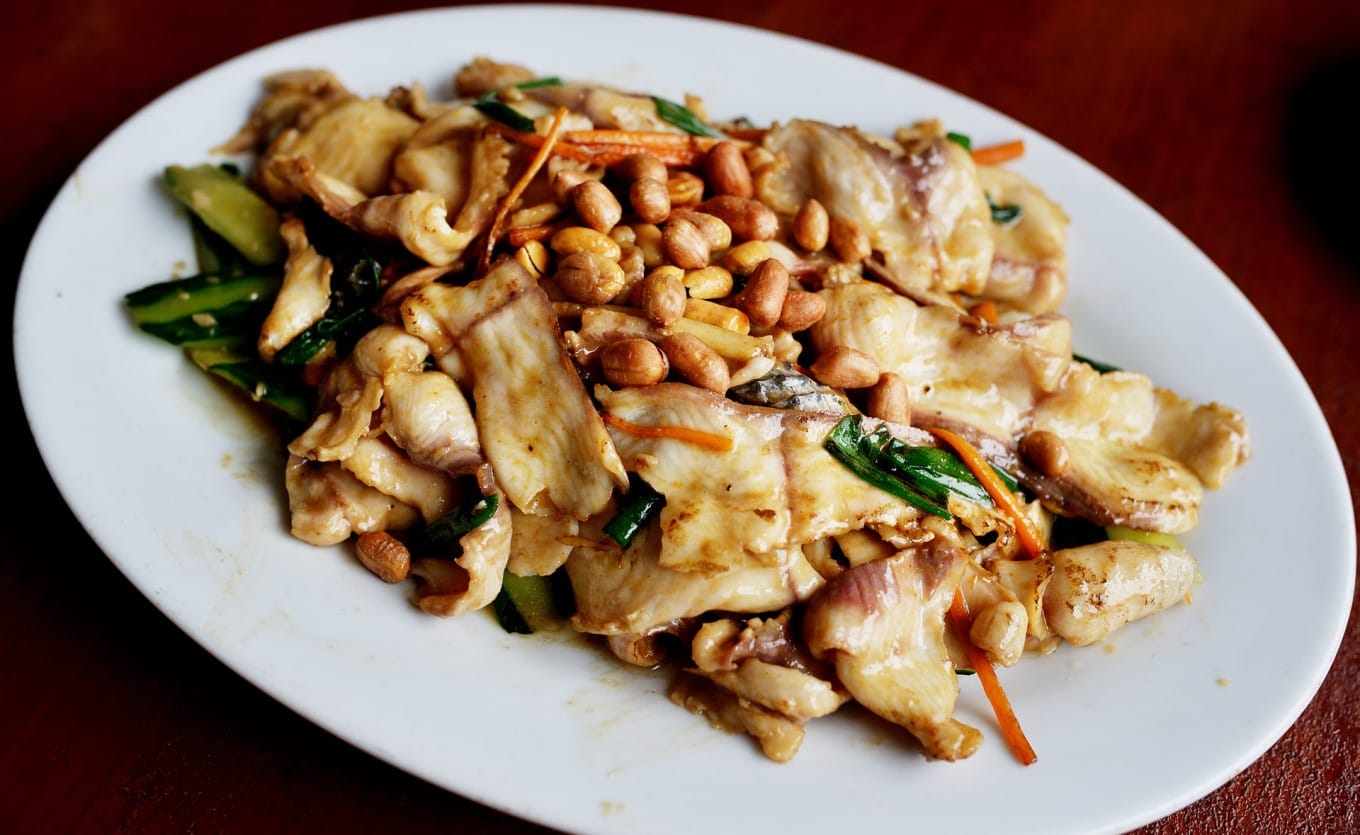
The stir-fried fish slices are served with a rich, wok-heated aroma, elastic skin, and tender flesh, offering a perfect balance of fresh fish flavor and the savory scent from the Maillard reaction. A special touch is the addition of homemade salted peanuts, which add a delightful crunch and elevate the dish to new heights.
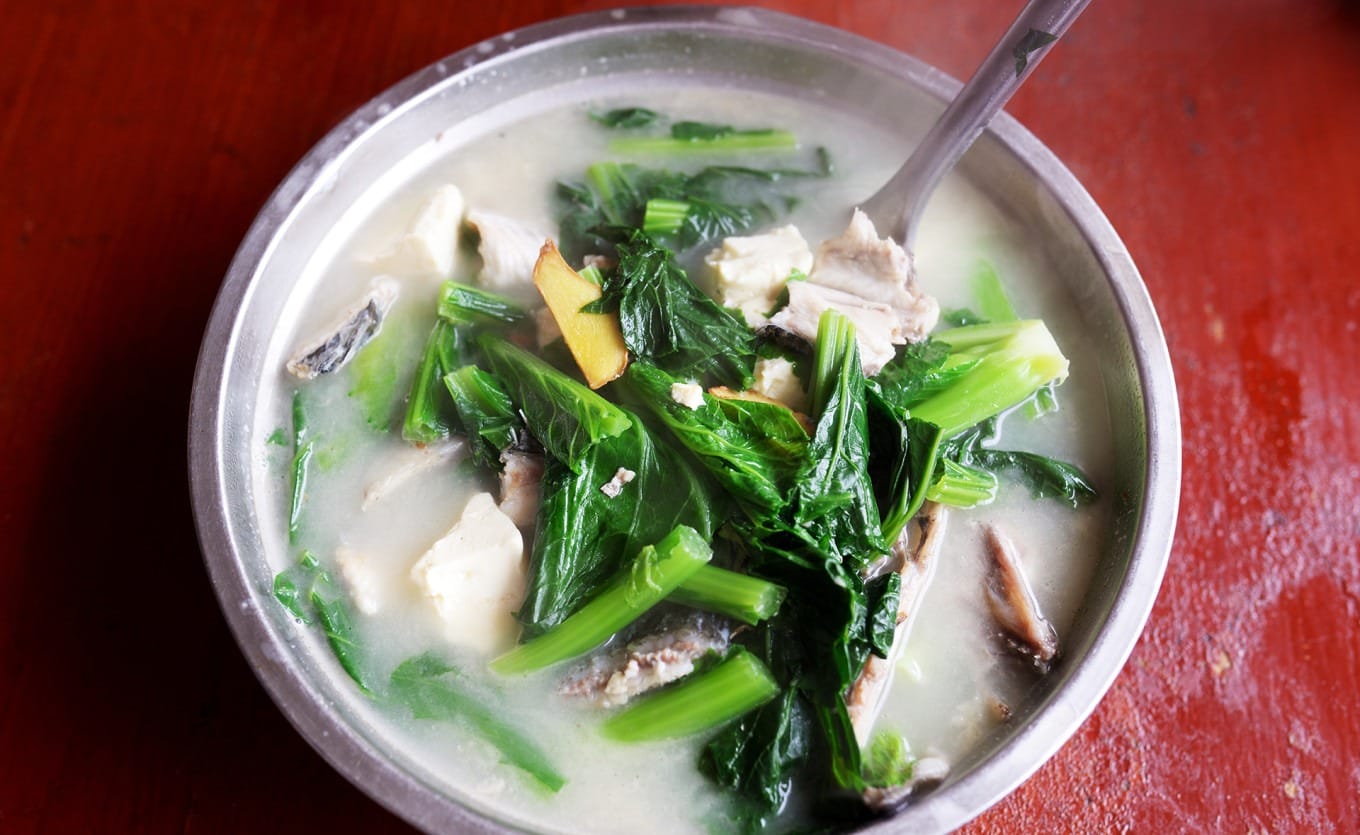
The fish head and bones, once separated from the fillets, are used to create a broth with mustard greens and tofu. The resulting soup is a milky white, rich and thick, seasoned with a hint of pepper, eliminating any fishy taste and leaving only a profound freshness.
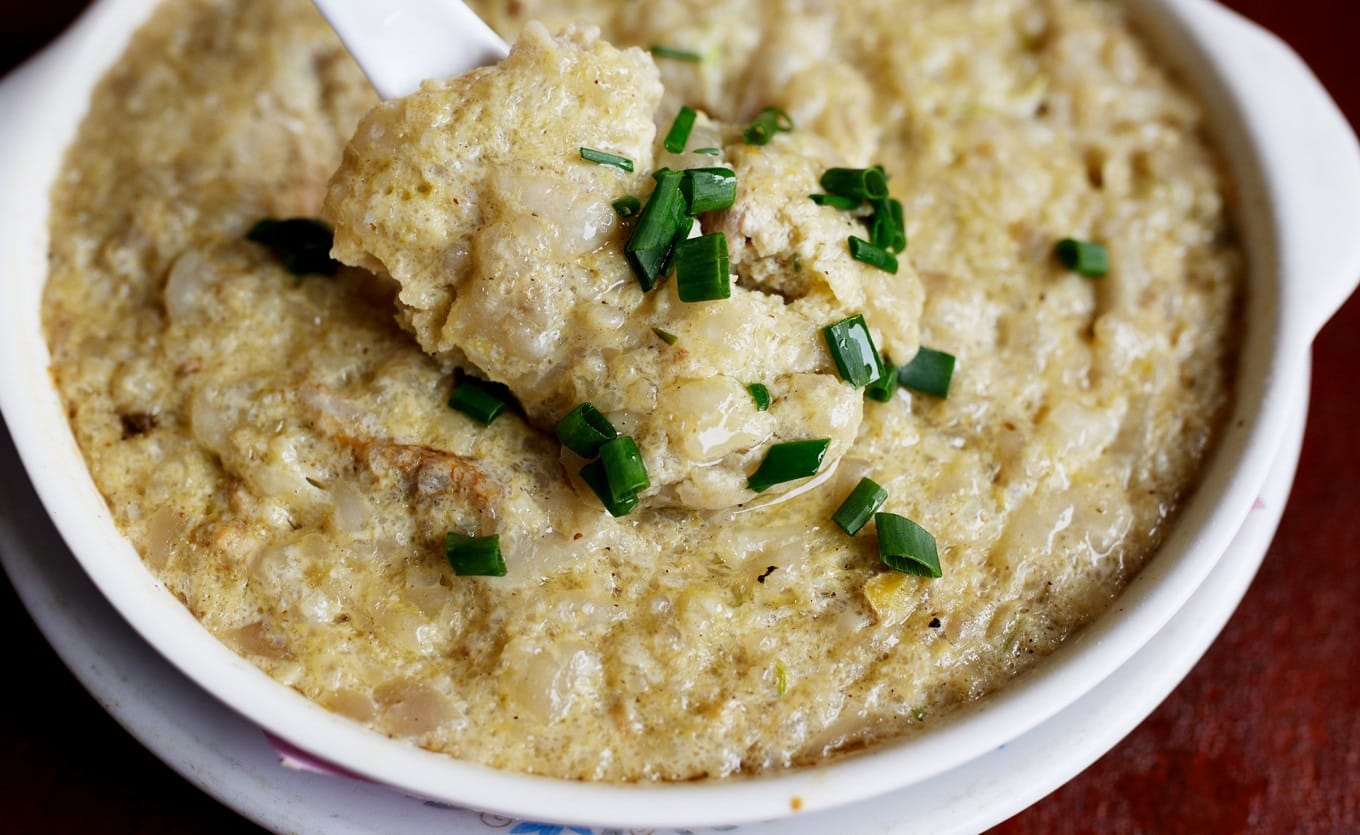
Another dish not to be missed is the fish intestine baked egg. Often overlooked as a kitchen byproduct, the fish intestine is transformed into a classic Cantonese dish here. The combination with eggs reduces the bitterness and enhances the natural umami flavor of the fish intestines. Unlike common practices that remove the fat, Nanzhou Restaurant retains some, adding a rich, oily flavor that makes the dish uniquely fragrant and perfect for pairing with rice.

- Nanzhou Restaurant is a culinary gem that brings the essence of Dongguan’s water town to your plate.
- Restaurant南舟美食 (Nanzhou Restaurant)
- Address东莞市万江街道汾溪沿河路乐业百货隔壁 (Fenxi Yanhe Road, Wanjiang Street, Dongguan City, next to Leye Department Store)
- Recommended dishes生炒鱼片 (Stir-fried Fish Slices), 芥菜鱼骨豆腐汤 (Mustard Greens Fish Bone Tofu Soup), 鱼肠焗蛋 (Fish Intestine Baked Egg)
- Average spend50元 (Approximately 50 CNY per person)
Discovering the Culinary Delights at Renmei Restaurant
Embark on a culinary journey in Dongguan and you’ll find that the locals’ wisdom in fish cooking is epitomized in a special dish known as Zhongtang Fish Wrappers. Traveling northwest from Wanjiang for about ten kilometers, you’ll arrive at Chaqiao Village in Zhongtang Town, which sits by the Dongjiang River and faces Xin Tang Town in Guangzhou’s Zengcheng across the water.

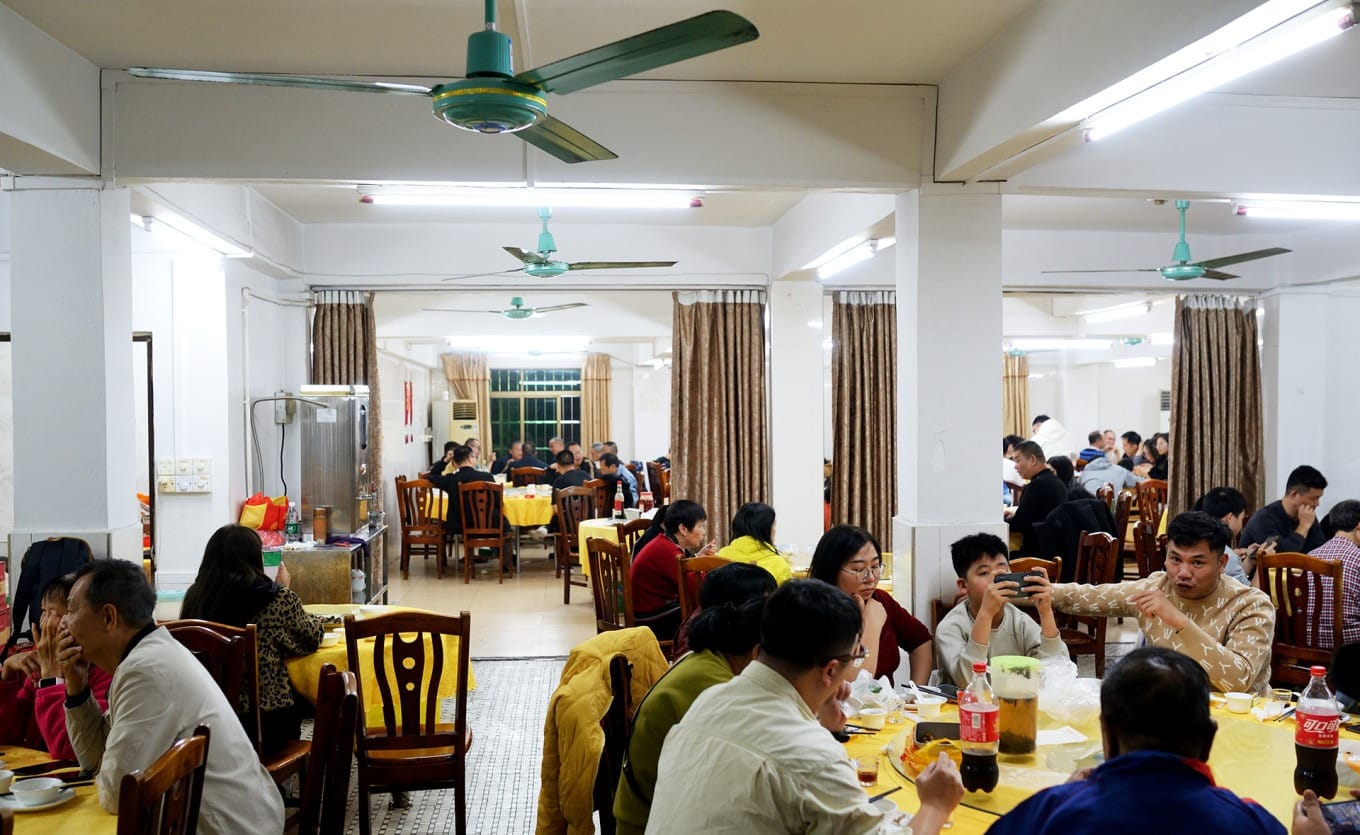
Renmei Restaurant (仁美饭店), a popular and long-standing establishment in Chaqiao Village, may not be the most conspicuous, but its reputation for delicious food draws a steady stream of diners. The decor inside is reminiscent of a bygone era, and the majority of patrons are locals from nearby towns and villages. In Dongguan, where everyone is a gourmand, the endorsement of so many discerning foodies speaks volumes about the quality of the dishes served.
The signature dish at Renmei Restaurant is the Zhongtang Fish Wrapper. Made from the plump white flesh of the locally abundant Ling fish, which is not ideal for direct consumption due to its many bones, the fish is transformed into a thin, less than a millimeter thick cake through hundreds of presses. This cake is then cut into triangles and filled with minced pork, mushrooms, and sausage to create the fish wrapper. The finished product, resembling a wonton with a long tail, is shaped like a goldfish, symbolizing ‘surplus year after year’. Interestingly, locals adhere to the principle of ‘eating according to the season’, making fish wrappers a delicacy typically found only in the autumn and winter seasons.
Locals often enjoy fish wrappers with crown daisy in a soup known as ‘Shangtang Crown Daisy Fish Wrappers’. Since the wrappers are made entirely from Ling fish without any flour, they hold their shape during cooking. The cooked wrappers are full of pleats, yet remain translucent, with a chewy and resilient skin and a smooth, sweet filling. Each bite-sized wrapper captures the essence of the fish, offering an incredibly satisfying taste.

Another specialty at Renmei Restaurant is the Taro Cake (芋饼), a water town delicacy also known as ‘Wealth Cake’ due to the Cantonese homophone of ‘taro’. This dish is made by mixing taro, lard, and sugar, and wrapping it around savory ingredients like shrimp, egg yolk, and mushrooms before being fried to create a crispy, soft crust.

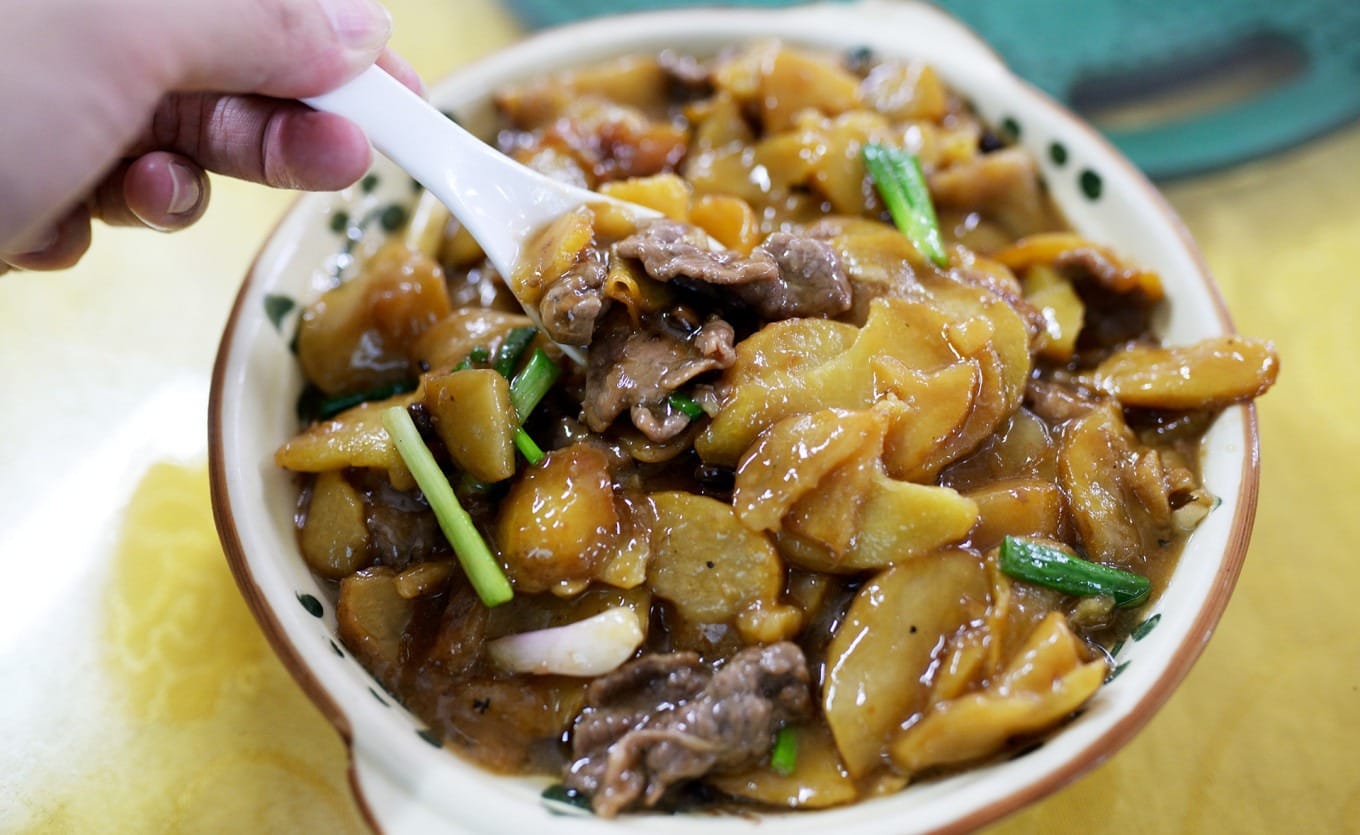
Don’t miss out on their Potato Beef (薯仔牛肉), a dish with a savory-sweet flavor that’s a local favorite. In Cantonese, ‘Potato’ refers to potatoes, a common ingredient that pairs exceptionally well with beef. The dish is cooked with a strong wok hei, with the potatoes lightly fried beforehand to enhance their aroma. The starch from the potatoes encapsulates the rich flavor of the beef, resulting in a hearty and aromatic dish.

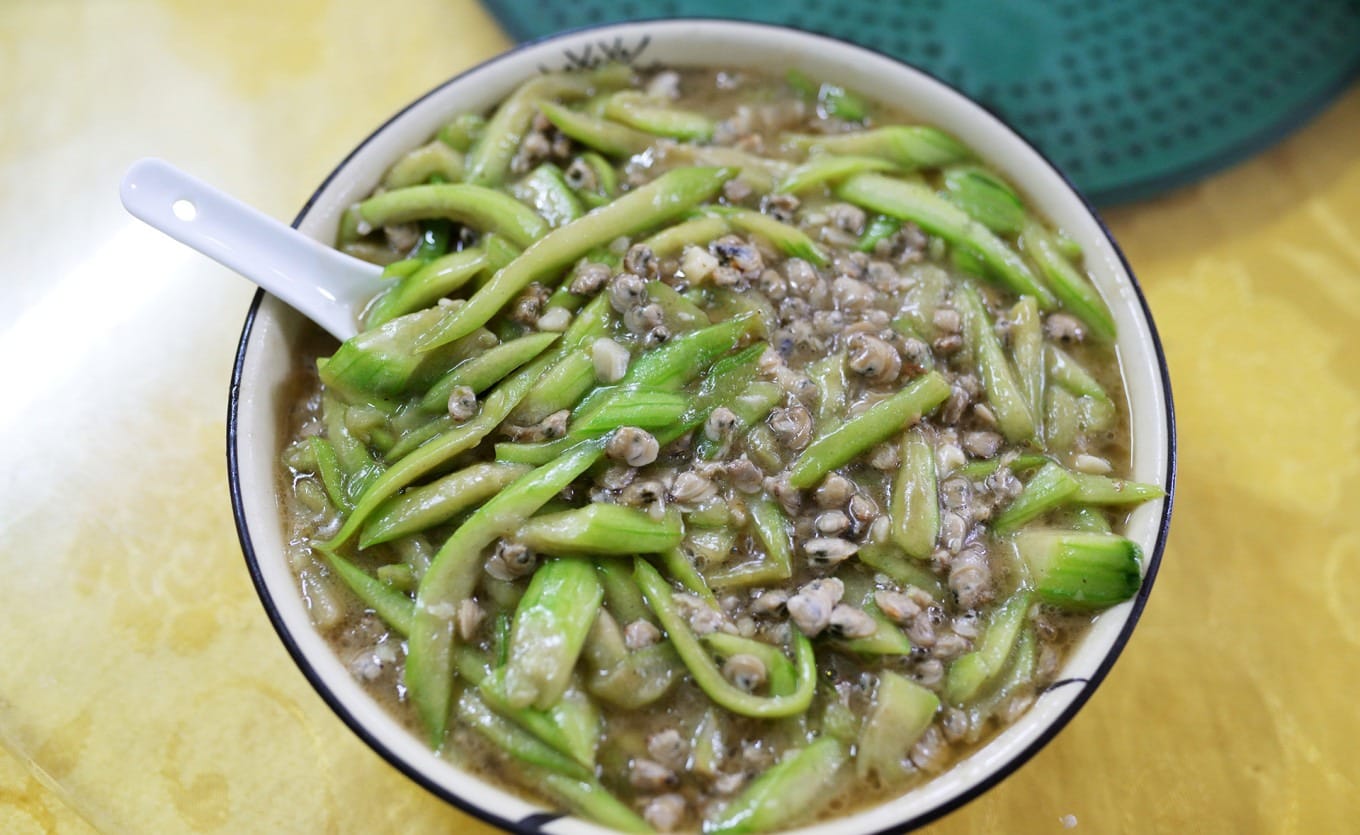
Also worth trying is the Sponge Gourd Stir-fried with Clam Meat (水瓜炒蚬肉), a water town specialty. Zhongtang’s crisscrossing rivers and estuaries, along with its long sandy riverbeds, provide the perfect environment for the cultivation of delicious clams. Clams are enjoyed in various ways here, including being stir-fried with sponge gourd, known as ‘water melon’ in Guangdong. This dish is full of juices, with the sweet, water-rich sponge gourd complementing the succulent clam meat, making for an incredibly fresh and memorable flavor.
A word of caution, the service at Renmei Restaurant can be chaotic, and during peak dining hours, the wait for dishes can be quite long. If you’re sensitive to service speed, this might not be the place for you.
- RestaurantRenmei Restaurant (仁美饭店)
- Address1 Qiexiang 3rd District, Chaqiao Village, Zhongtang Town, Dongguan City, Guangdong Province, China (东莞市中堂镇槎滘三坊三区七巷1号)
- Recommended dishesShangtang Crown Daisy Fish Wrappers (上汤茼蒿鱼包), Fried Taro Cake (炸芋饼), Potato Beef (薯仔牛肉), Sponge Gourd Stir-fried with Clam Meat (水瓜炒蚬肉)
- Average spend60 CNY
Exploring the Unique Flavors of Fengshou Farm in Dongguan
Just ten kilometers west of Zhongtang Town in Dongguan lies the town of Machong, the closest to Guangzhou’s city center. Known for its bananas, which have been a prized product of Dongguan for centuries, the region’s unique geography at the confluence of the Dongjiang River’s salt and freshwater creates an ideal environment for banana cultivation. At Fengshou Farm in Zhanpeng Village, you can indulge in a variety of dishes that creatively incorporate bananas into their recipes.

One must-try dish is the ‘Jiao Lei Jian Dan’ (蕉蕾煎蛋), a local favorite. Made from the tender male part of the banana plant, known as the banana bud, this dish is stir-fried with eggs, creating a texture similar to spring bamboo shoots with a hint of okra’s sliminess. The buds are thinly sliced, blanched to remove any bitterness, mixed with beaten eggs, and gently pan-fried with a sprinkle of scallions and a touch of oil and salt.
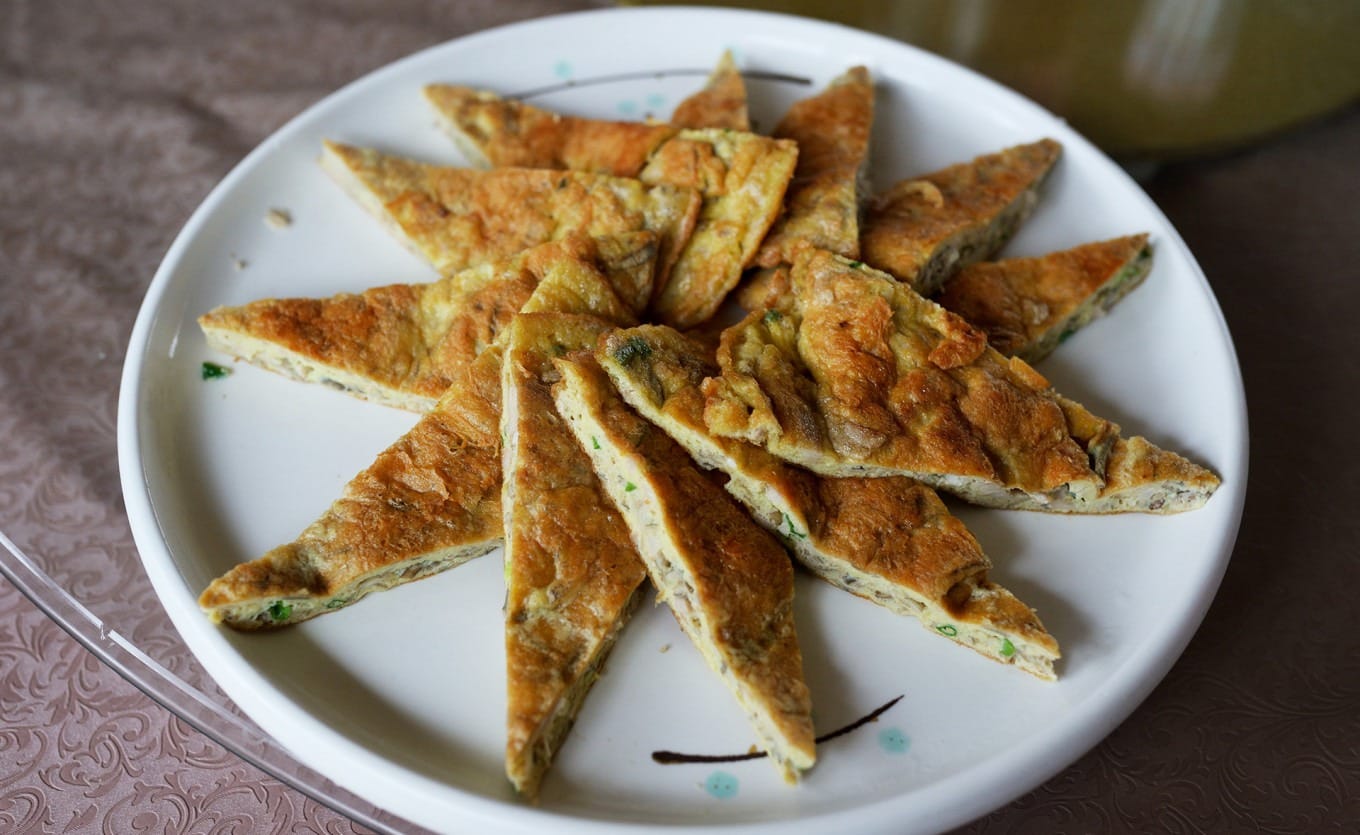
When you take a bite of the Jiao Lei Jian Dan, the smoky fragrance of the egg is complemented by the fresh scent of the banana bud, releasing a rich, earthy aroma in your mouth. The refreshing sensation on your tongue is truly delightful.

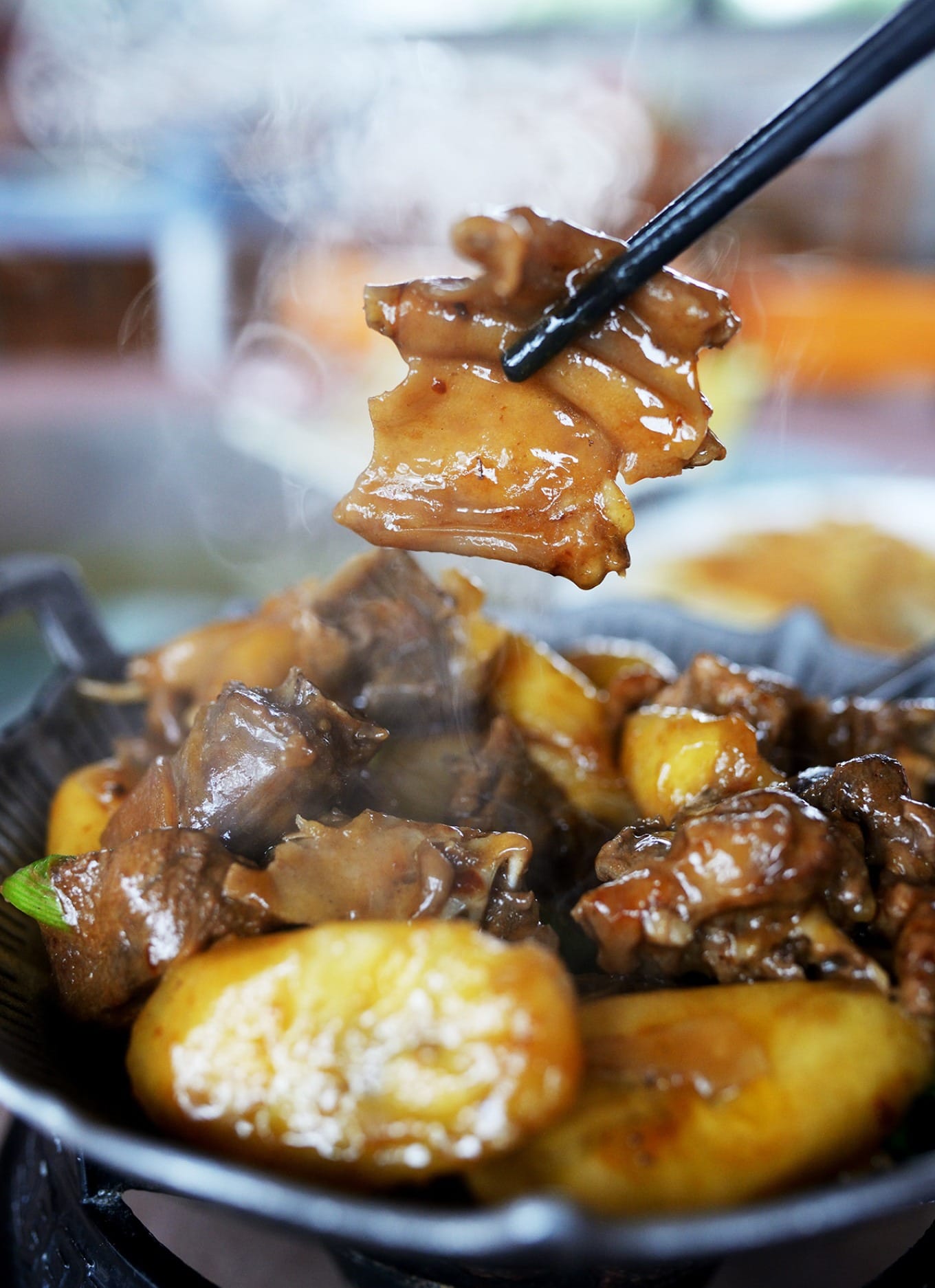
Another popular combination is bananas with duck, a pairing that locals relish. Unripe bananas, which are starchy and not sweet enough to eat as fruit, are cooked with duck to create a dish called ‘Banana Braised Duck’ (香蕉焖鸭). The cooking process softens the bananas, giving them a texture similar to taro, with their mild fruit fragrance seeping into the duck’s fibers.
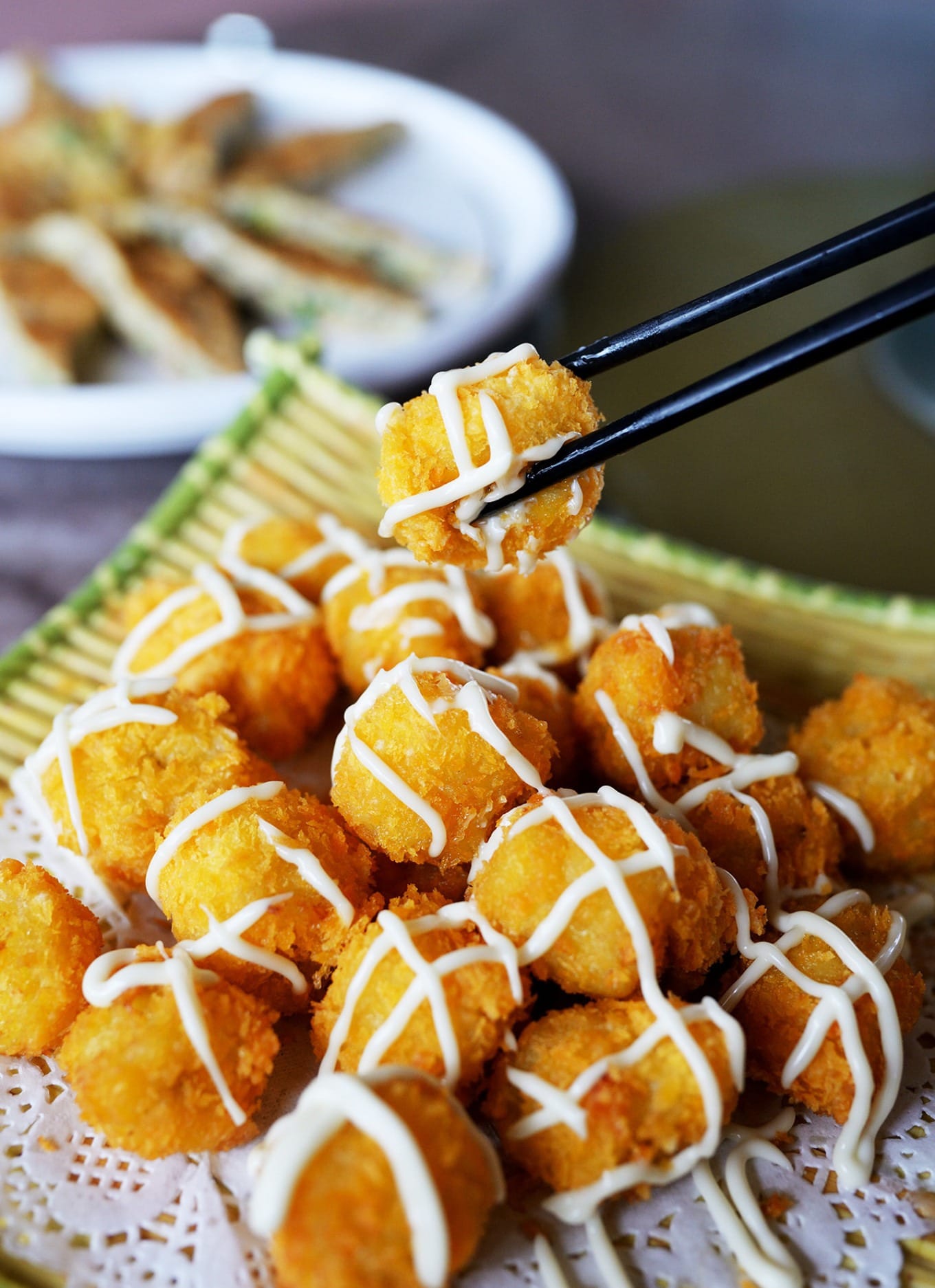
Bananas, when allowed to ripen for about a week, become sweet and soft, perfect for making ‘Golden Wheat Banana Balls’ (金麦蕉球). These are bananas coated in a batter and breadcrumbs, then deep-fried to create a harmonious blend of banana, oil, and flour aromas. The result is a crispy exterior with a soft, sweet, and sticky interior that melts in your mouth, making it irresistible.
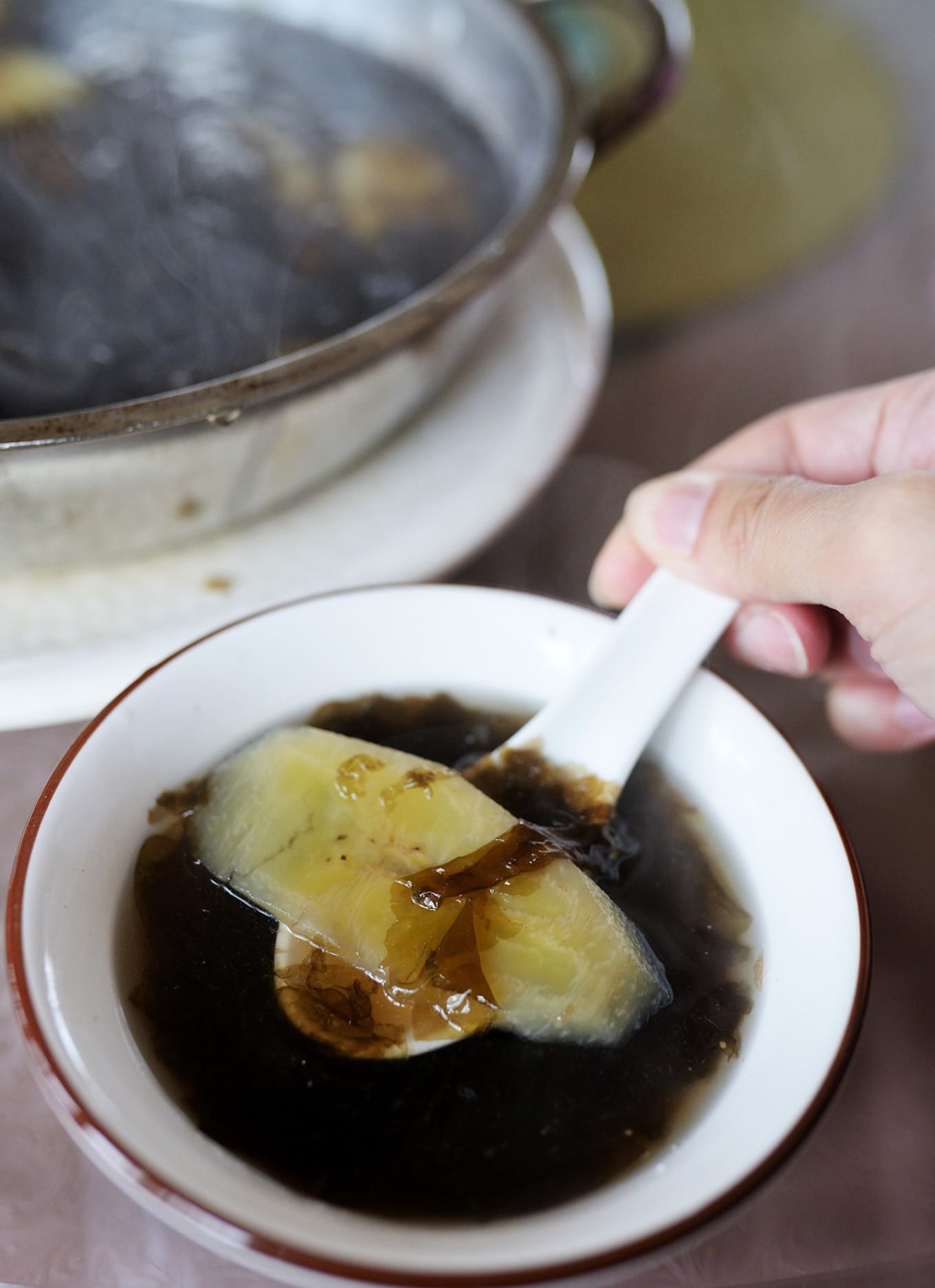
Lastly, ‘Banana Seaweed Sweet Soup’ (香蕉紫菜糖水) is a dish that may surprise you. Combining bananas and seaweed in a sweet soup might seem unconventional, but it’s a beloved dessert and a regional specialty of Machong. The soup is made with unripe bananas, boiled with brown sugar and ginger, and topped with soaked seaweed. The smooth texture of the bananas is enveloped by the umami flavor of the seaweed, offering a refreshing taste that captures the essence of both land and sea.
- Fengshou Farm (丰收农庄) is a must-visit for food enthusiasts.
- Try the Jiao Lei Jian Dan (蕉蕾煎蛋) for a unique take on banana dishes.
- Experience the local favorite, Banana Braised Duck (香蕉焖鸭).
- Indulge in the Golden Wheat Banana Balls (金麦蕉球) for a sweet treat.
- Challenge your palate with the unexpected Banana Seaweed Sweet Soup (香蕉紫菜糖水).
- RestaurantFengshou Farm (丰收农庄)
- Address东莞市麻涌镇漳澎村五坊 / Dongguan City Machong Town Zhanpeng Village Wu Fang
- Recommended dishesJiao Lei Jian Dan (蕉蕾煎蛋), Banana Braised Duck (香蕉焖鸭), Golden Wheat Banana Balls (金麦蕉球), Banana Seaweed Sweet Soup (香蕉紫菜糖水)
- Average spend70 CNY
Discovering the Delights of Huang Jin Ge
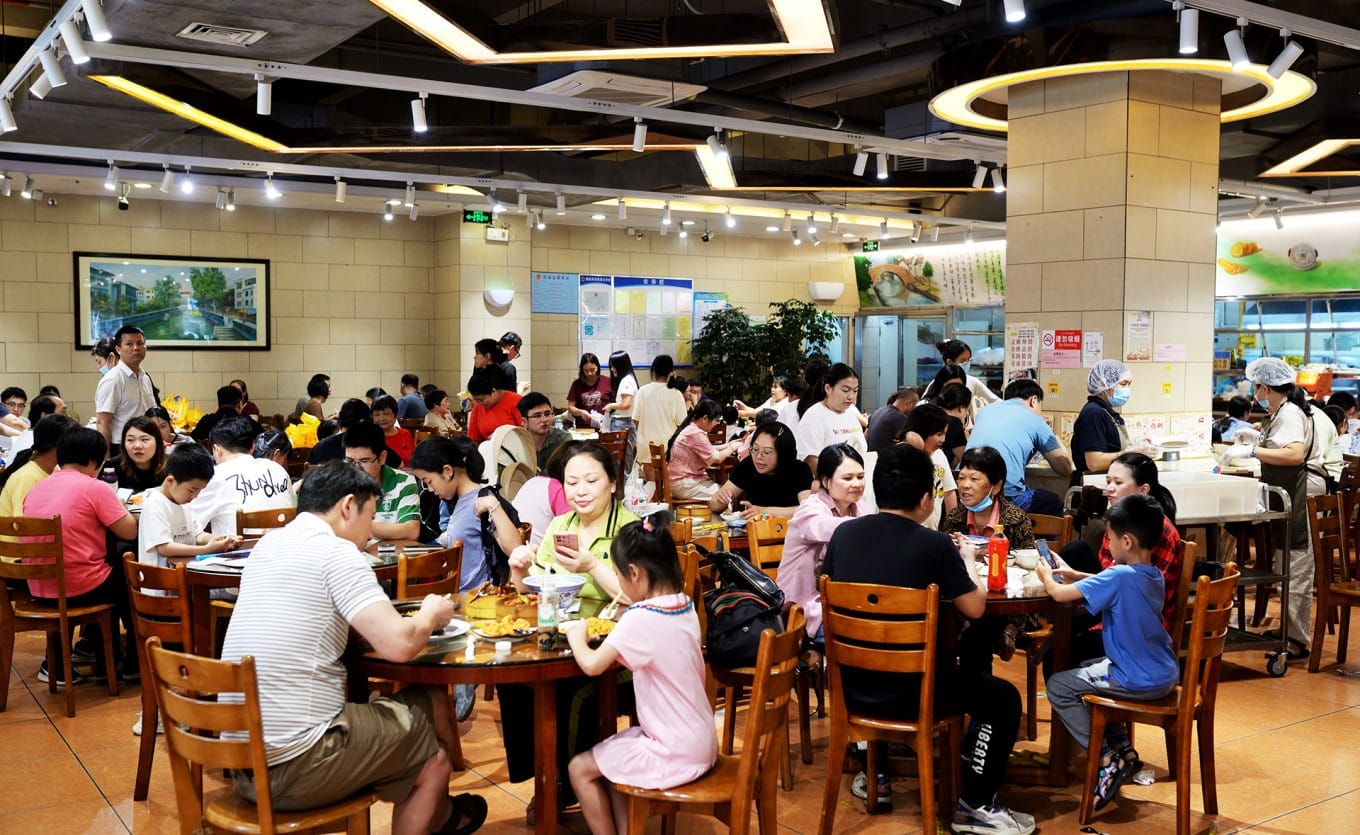
For an authentic culinary experience in Dongguan, Huang Jin Ge (皇金鸽) is a must-visit. This long-standing establishment in Majong offers a unique blend of a bustling food stall and a grand restaurant. Despite the noise, the quality of their dishes and affordable prices make it a popular choice among locals for gatherings.

As a specialized pigeon restaurant, Huang Jin Ge offers several ways to enjoy this delicacy, including braised and scallion oil methods. However, the classic braised pigeon is a must-try. Known as ‘hongshao’ in Guangdong, this dish involves marinating the pigeon in a flavorful brine and then deep-frying it until it achieves a rich, agate-like color.
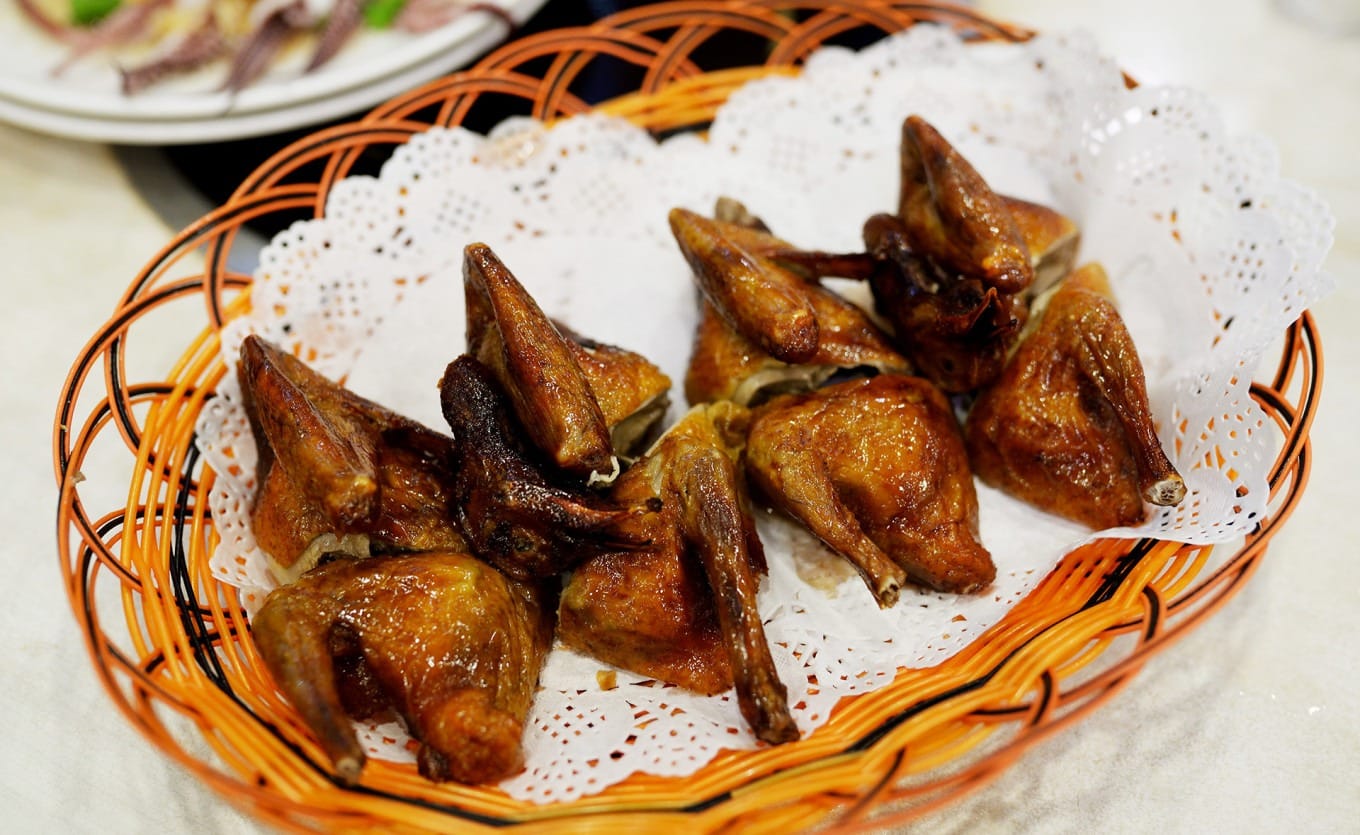
Take a bite and you’ll find the meat to be incredibly tender, indicating it’s from a young pigeon under 25 days old. While the juiciness may not match those from Zhongshan, the skin is thinner and crispier. The breast meat is the most exquisite part, rich in texture and subtly flavored with a hint of pigeon oil, enhancing your appetite.

Don’t miss out on their garlic steamed squid with vermicelli. Steaming is the best way to preserve the natural flavors of squid, and garlic adds a fresh and fragrant touch. The squid has a delightfully chewy texture, and the vermicelli at the bottom absorbs the essence of the squid and garlic, creating an overwhelming burst of oceanic flavors that will leave you savoring every last drop.

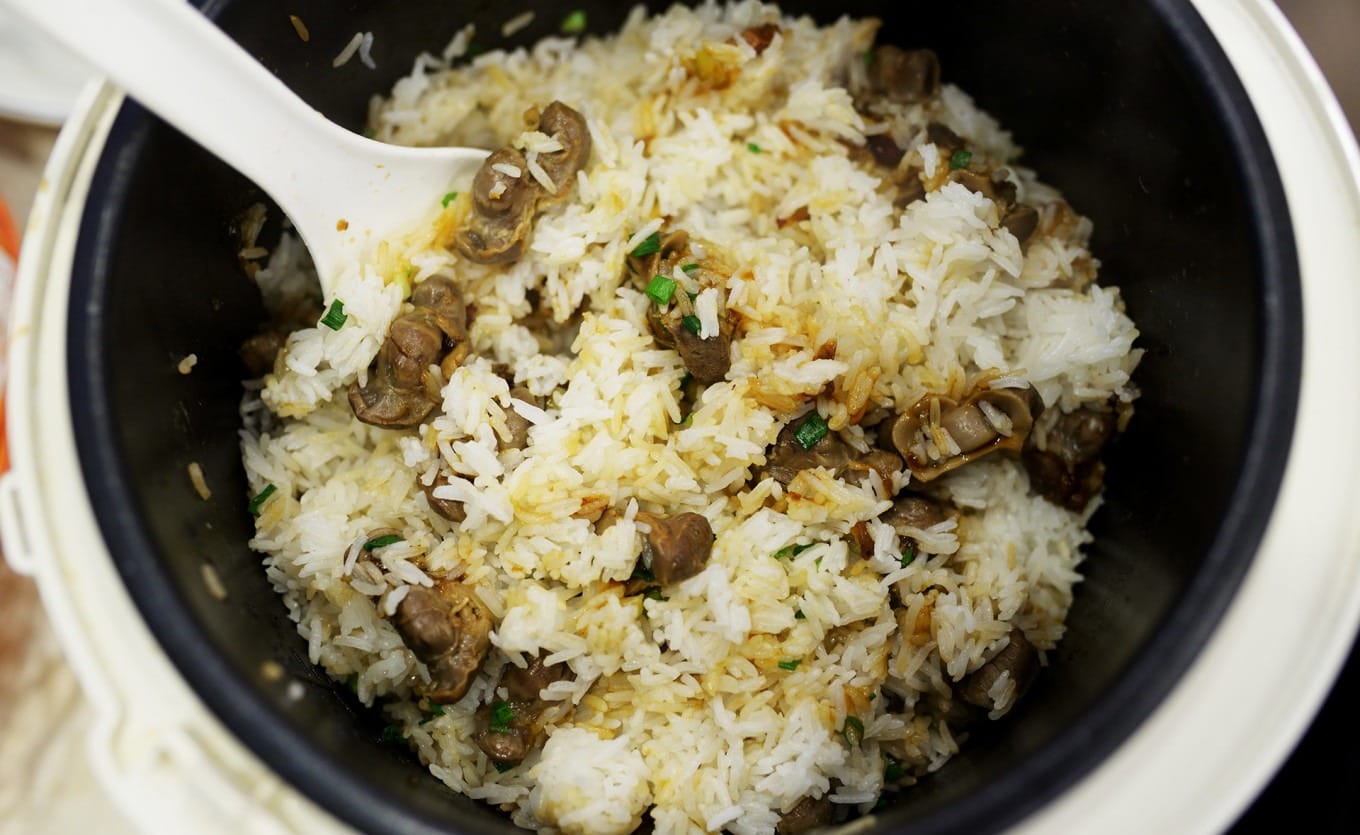
Another recommendation is the pigeon kidney rice, which is generously portioned enough for four people. Before serving, the staff will sprinkle scallions and mix the pigeon kidneys with the rice. Each grain of rice is distinct and has absorbed the flavor of the pigeon kidneys, making it a savory and irresistible dish.
- RestaurantHuang Jin Ge (皇金鸽)
- Address16 Zhongxin Dadao, Majong Town, Dongguan City (东莞市麻涌镇中心大道16号)
- Recommended dishes红烧乳鸽 (Braised Pigeon), 蒜蓉粉丝蒸鲜鱿 (Garlic Steamed Squid with Vermicelli), 鸽肾饭 (Pigeon Kidney Rice)
- Average spend60 yuan
Exploring the Flavors of Jia Jia Delights
Dongguan’s Daojiao Town is a renowned culinary destination in China, known for its water-town charm and abundance of fish and rice. Much like its sister town, Majong, Daojiao is a place where rivers and ponds create a fertile ground for distinctive local cuisine. Among the many eateries, Jia Jia Delights stands out as a local institution, favored for its affordable and authentic dishes, despite its modest surroundings.

Upon entering Jia Jia Delights, you’ll find a bustling scene, particularly during lunchtime. The menu is a testament to Dongguan’s culinary heritage, offering a variety of staple foods such as porridge, rice noodles, and congee, alongside sweet treats and desserts. These may not be the grand dishes you’d expect, but they encapsulate the essence of Dongguan’s everyday flavors.
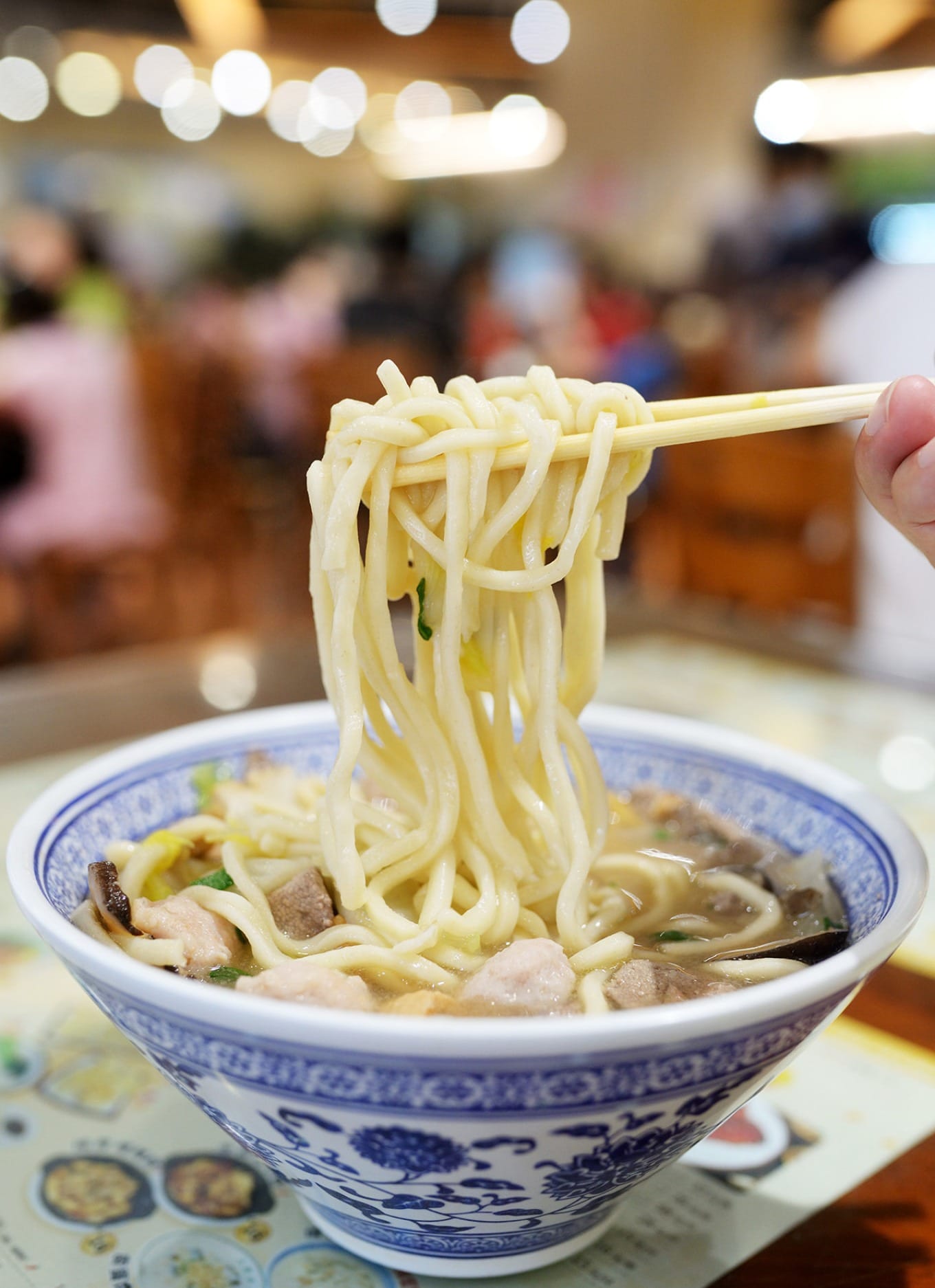
One must-try dish is the wet noodles, known as ‘Dongguan’s first noodle’. This traditional hand-rolled noodle dish is said to have originated during the Ming and Qing dynasties. It’s a hearty bowl that combines over a dozen ingredients such as Daojiao meatballs, pig liver, cured duck, dried mushrooms, dried squid, and Chinese cabbage, creating a flavorful medley.
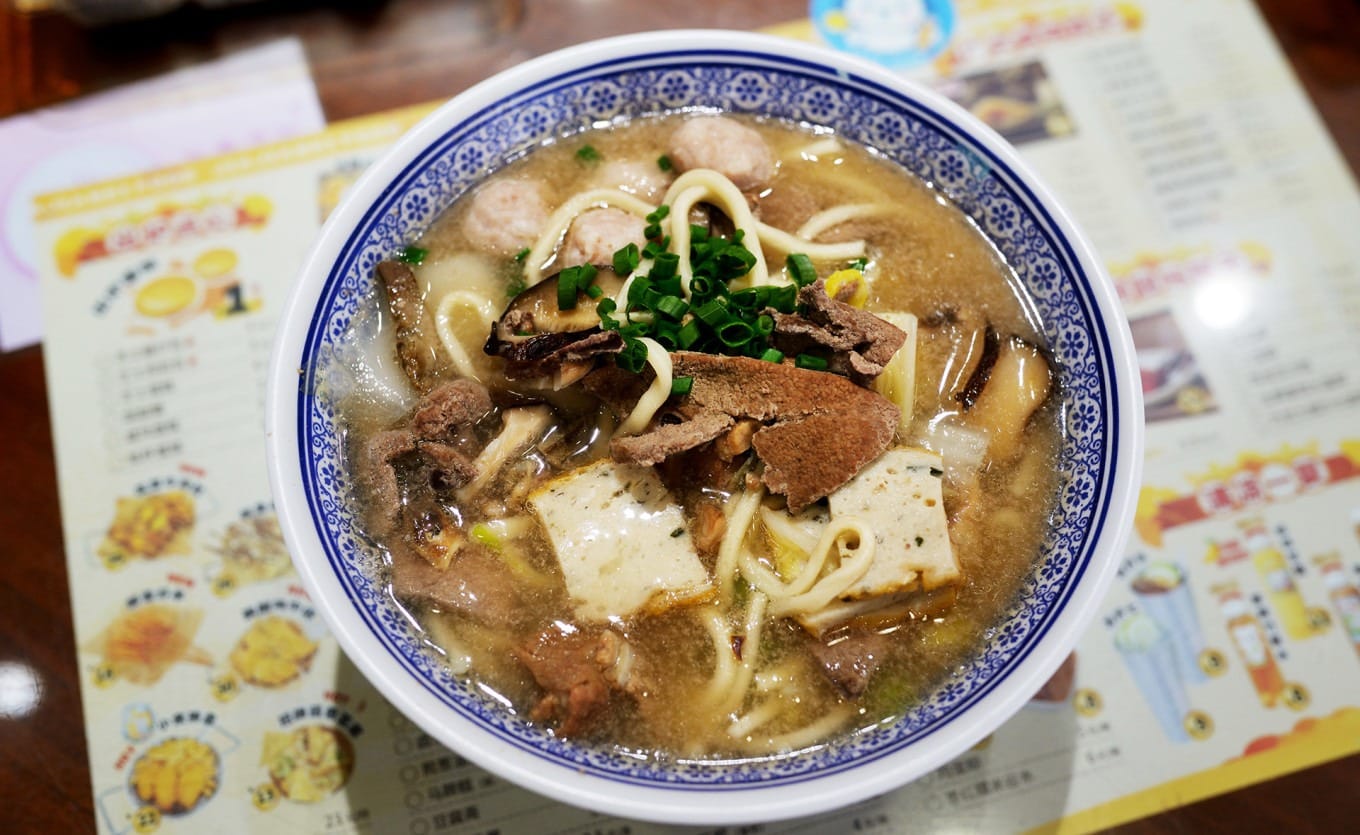
The art of cooking these noodles lies in achieving the right texture—cooked through yet not mushy. The chefs at Jia Jia Delights master this balance, resulting in a smooth and elastic noodle with a savory and fragrant taste. The saltiness of the noodles comes not from salt alone but from a rich broth made from simmering pork bones and chicken frames, giving it an exceptional aroma.
Another popular dish is the Dragon Boat Rice, particularly famous in Wanjiang but a staple in every water town. Traditionally eaten after dragon boat races during the Dragon Boat Festival, this dish is made with glutinous rice stir-fried with cured sausage, cured meat, dried squid, shrimp, and shiitake mushrooms, making it a hearty and satisfying meal.
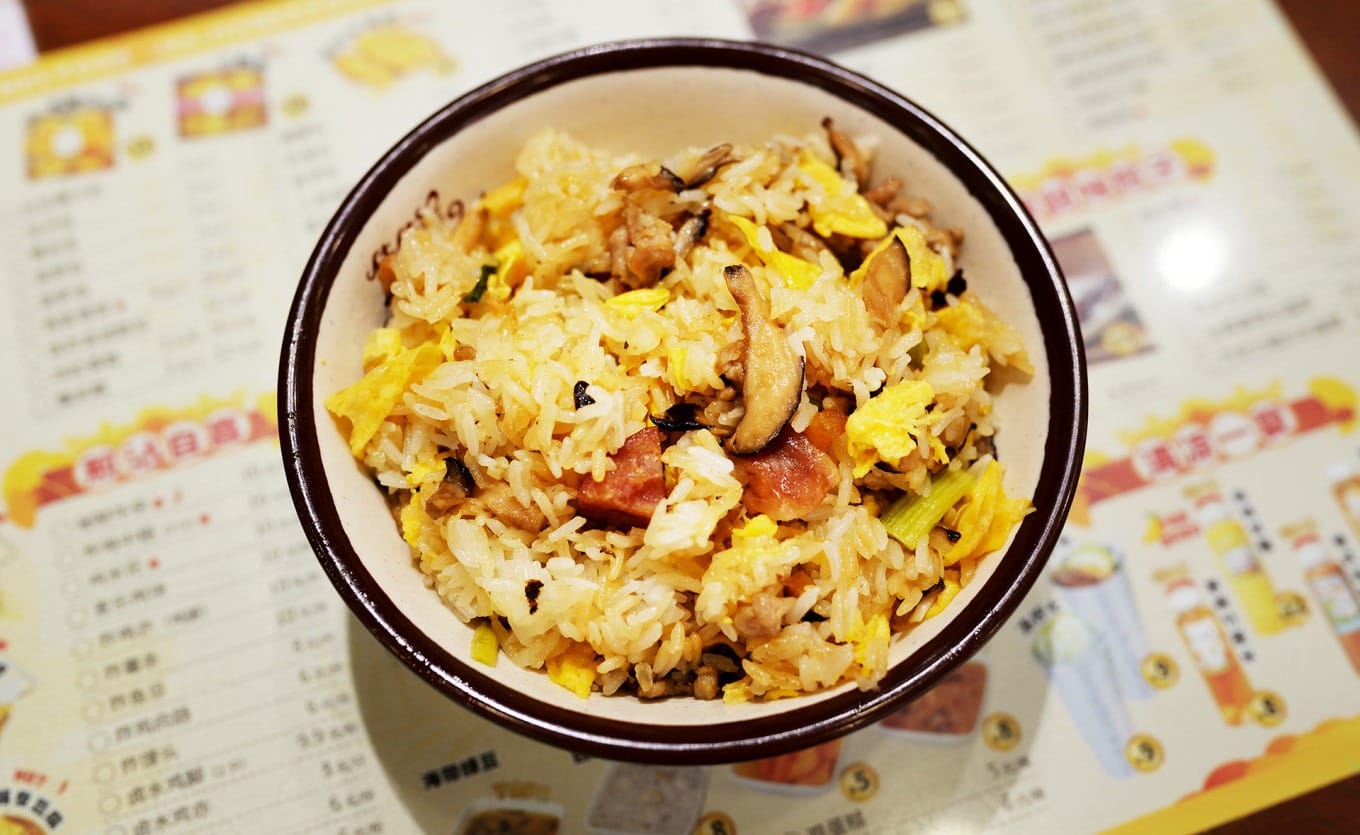
The Dragon Boat Rice at Jia Jia Delights is cooked to perfection, with each ingredient’s aroma infusing the glutinous rice, creating a layered flavor that bursts in your mouth with every bite.
Don’t miss out on the Vinegar Chicken Feet, marinated in aged vinegar for hours, resulting in a tender and elastic texture with a tangy, appetizing flavor that teases the palate and is rich in collagen.

Apart from the dining area, Jia Jia Delights also features a shopping section where you can purchase their homemade souvenirs, particularly their zongzi (rice dumplings). During the Dragon Boat Festival, zongzi is a household staple in Daojiao, and Jia Jia Delights’ zongzi is well-regarded, making it a great item to bring back home.

- Restaurant佳佳美食店 (Jia Jia Delights)
- Address东莞市道滘镇振兴路211号 (No.
- Recommended dishes湿面 (Wet Noodles), 龙船饭 (Dragon Boat Rice), 陈醋凤爪 (Vinegar Chicken Feet)
- Average spend20元 (Approximately 3 USD)
Tai Shu Tofu Pudding: A Time-Honored Taste of Dongguan
For an authentic taste of Dongguan, make your way to Tai Shu Tofu Pudding, a local institution that has been serving its signature dish for over forty years. What started as a humble operation on a tricycle has grown into a beloved shop, yet the flavor of their tofu pudding remains as timeless as ever.

All tofu pudding at Tai Shu is crafted by hand, with only two barrels made daily to ensure freshness and quality. The Guangdong-style tofu pudding is primarily sweet, and the simplest version, the signature syrup-topped tofu pudding, is a delightful blend of soft, creamy tofu with a drizzle of golden syrup. The texture is so smooth and delicate that it melts in your mouth, leaving a lingering aroma of rich bean flavor, reminiscent of the famous Shunde double skin milk.

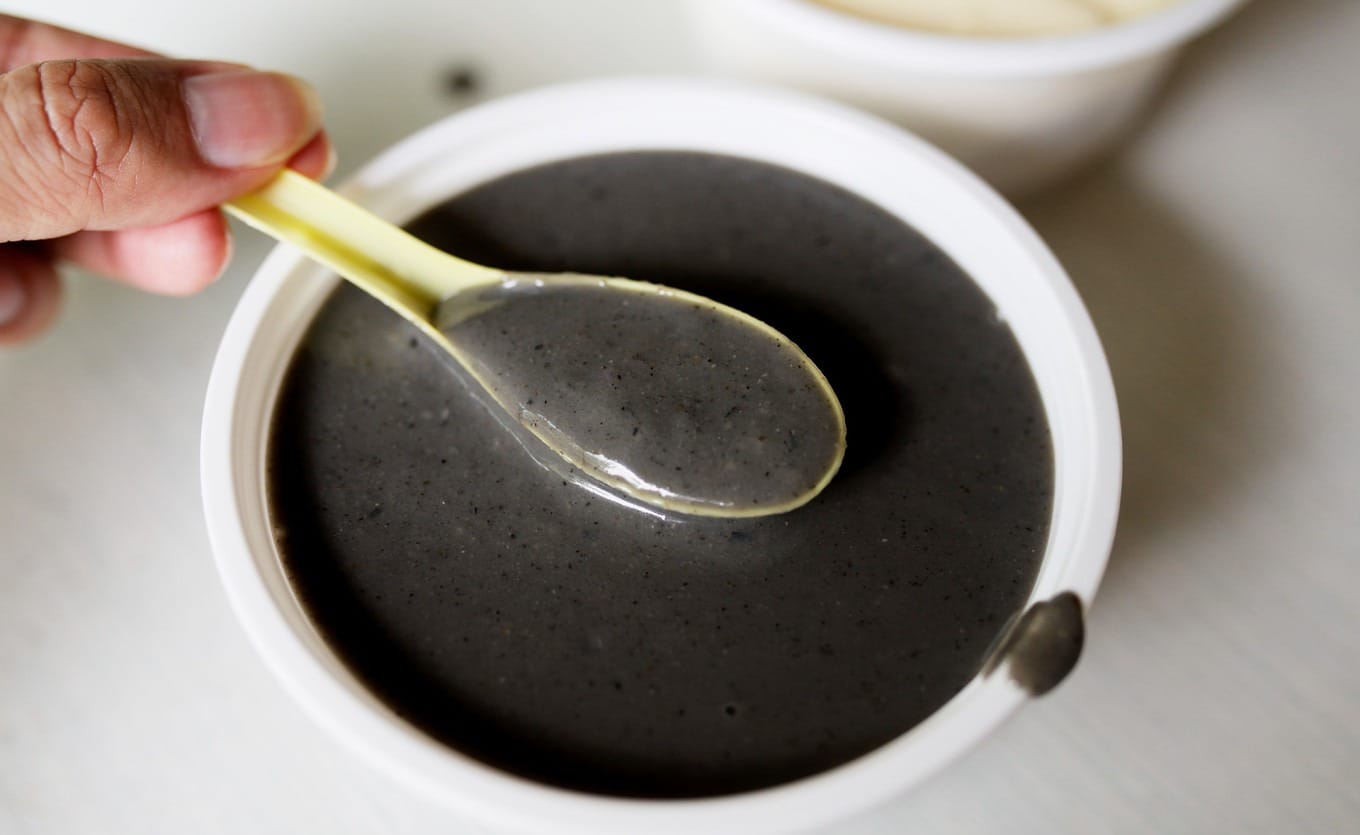
In addition to their renowned tofu pudding, the sesame paste at Tai Shu is also a standout. It boasts a rich flavor that isn’t overly sweet, allowing the natural aroma of sesame to shine through. The texture is smooth and slightly viscous, providing a comforting warmth and satisfaction with every spoonful.
- Visit Tai Shu Tofu Pudding for an authentic taste of Dongguan’s local cuisine.
- Try the signature syrup-topped tofu pudding for a classic and delicious experience.
- Don’t miss out on their sesame paste, a rich and aromatic treat.
- Restaurant泰叔豆腐花 (Tai Shu Tofu Pudding)
- Address东莞市道滘镇闸口西路5号 (Dongguan City, Daojiao Town, Zhakou West Road No.5)
- Recommended dishes豆腐花 (Tofu Pudding), 芝麻糊 (Sesame Paste)
- Average spend10元 (Approximately 1.5 USD)
Exploring the Delights of Wei Ji Niu Ti
In the heart of Shenyong Village, Daojiao Town, lies a culinary gem that specializes in a unique delicacy: the beef hoof. What started as a small eatery with just a few tables has now expanded to accommodate hundreds, with a reputation that has spread far and wide, even opening a branch in the neighboring Wangniudun Town. The secret to their success? A signature marinated beef hoof dish that has drawn countless returning customers.
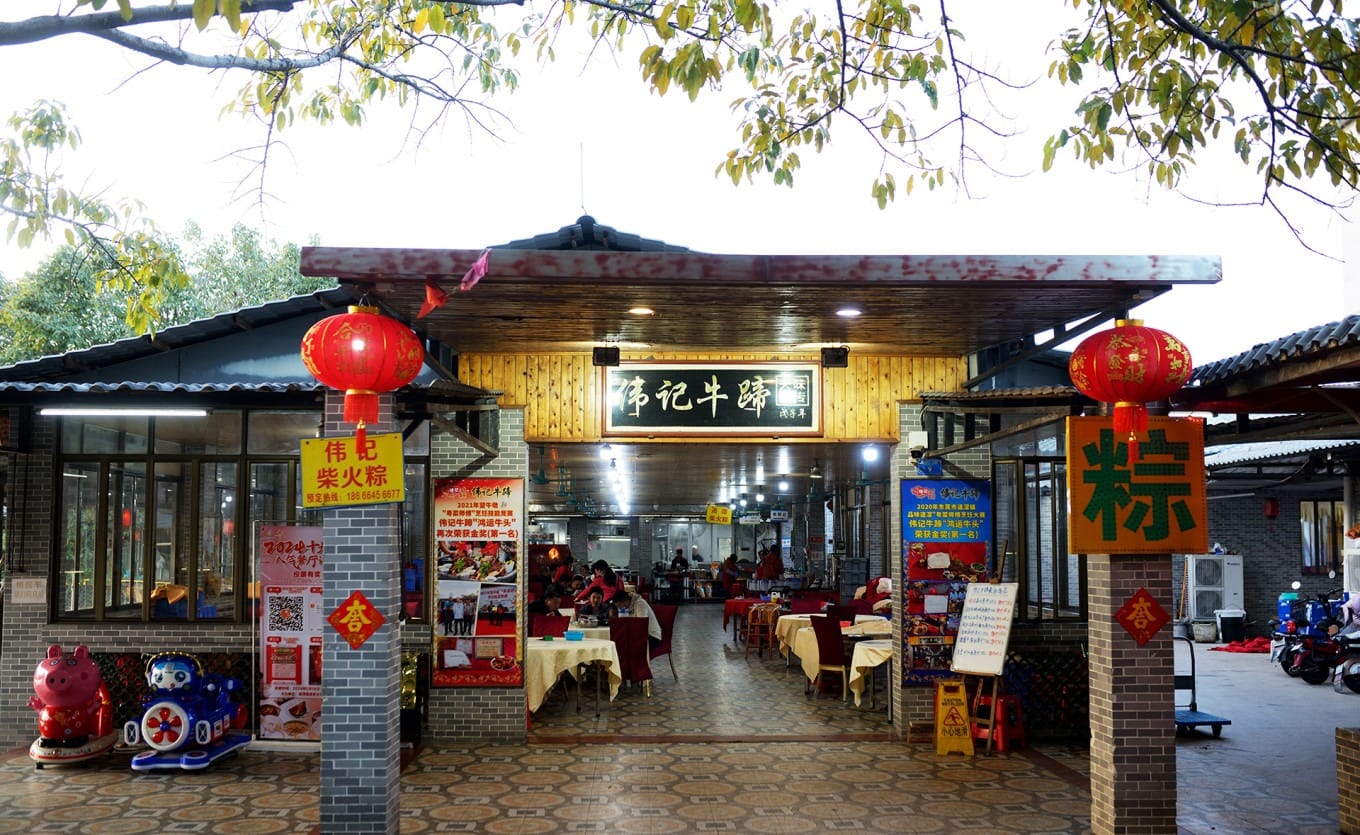
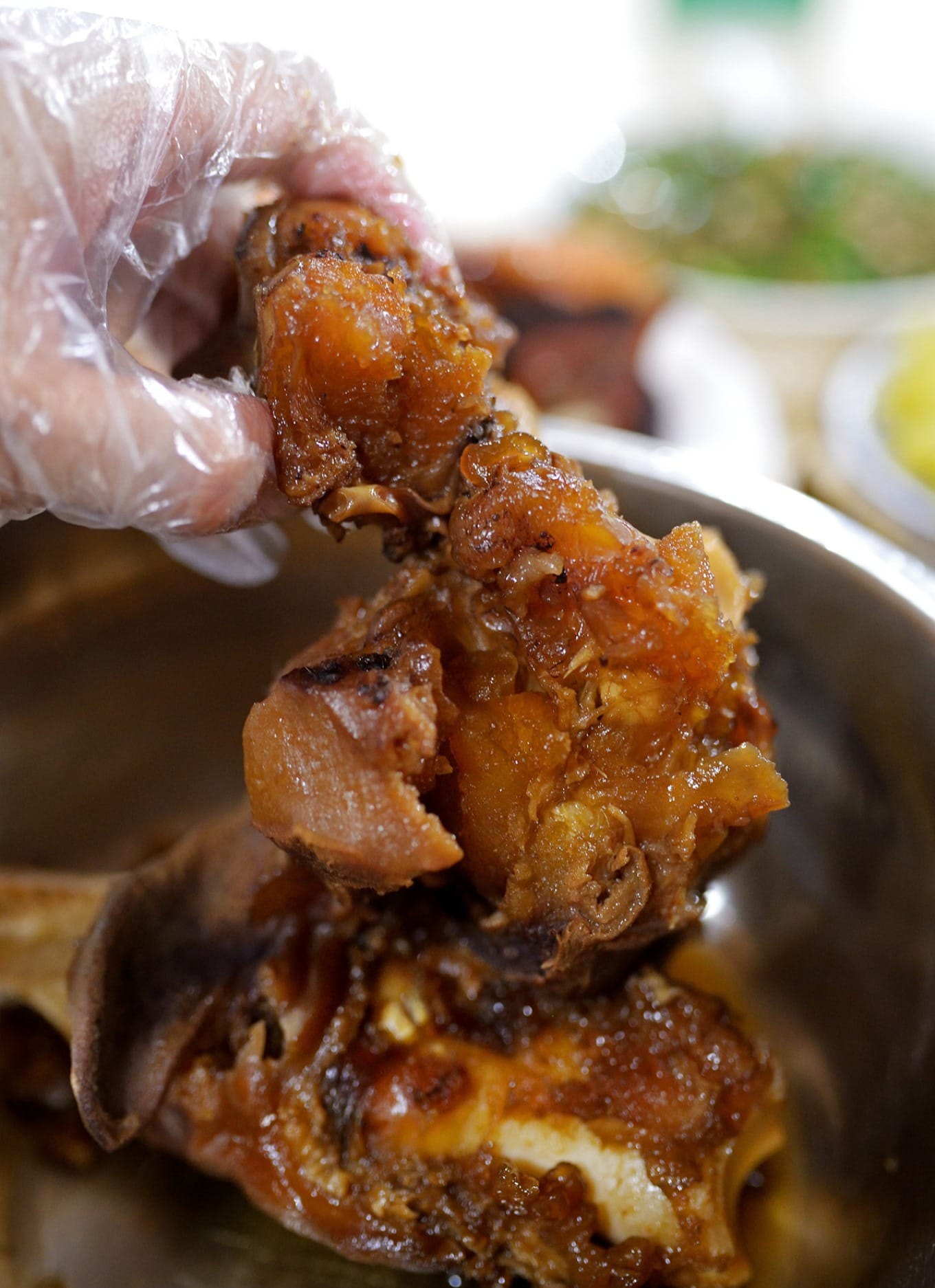
When you visit Wei Ji Niu Ti (伟记牛蹄), you’ll find that their signature marinated beef hoof is served in a rather rustic stainless steel basin, a presentation that adds to the overall dining experience. Unlike pork trotters, beef hooves are less common on Cantonese tables due to the lower daily slaughter of cattle and the larger bones that yield less meat. However, they are favored for their lower fat content and less greasy texture. It’s recommended to enjoy the beef hoof while it’s hot, as the light marination imparts a perfect balance of savory flavors without overpowering the dish.

In addition to the beef hoof, you should consider trying their crispy roast chicken. This dish is a staple in Guangdong, where chickens are marinated, air-dried, and then roasted to perfection. Despite using common white-feathered chickens, the meat remains tender and juicy, with the flavors of the marinade subtly enhancing the natural taste of the chicken, making it a dish that needs no additional condiments.

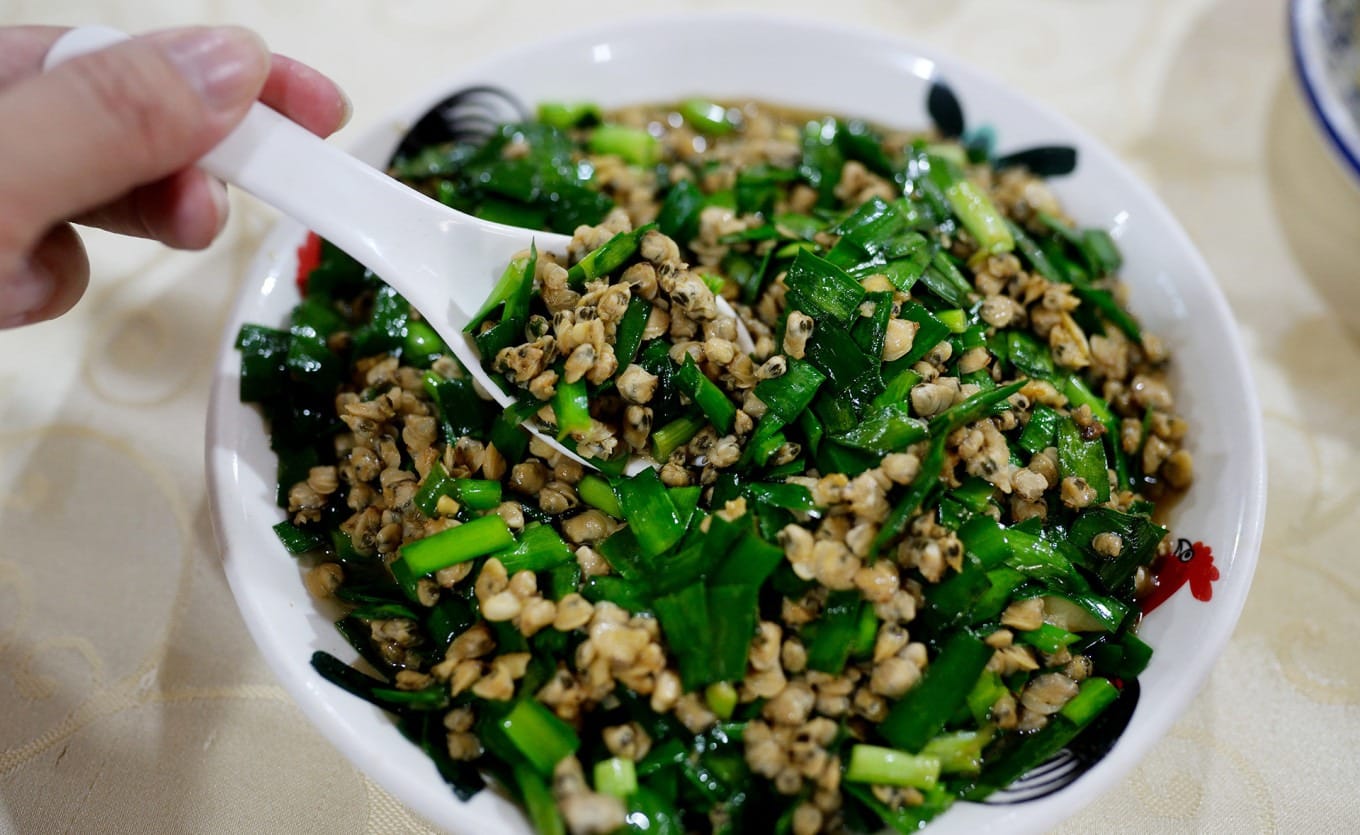
Another dish not to be missed is the stir-fried clam meat with chives. As one of Dongguan’s water towns, Daojiao is known for its sand clams. The clam meat is incredibly fresh and pairs exceptionally well with chives, creating a dish that is both fragrant and full of umami flavors. The chives add a sweetness that complements the clams, making every bite a delightful experience.
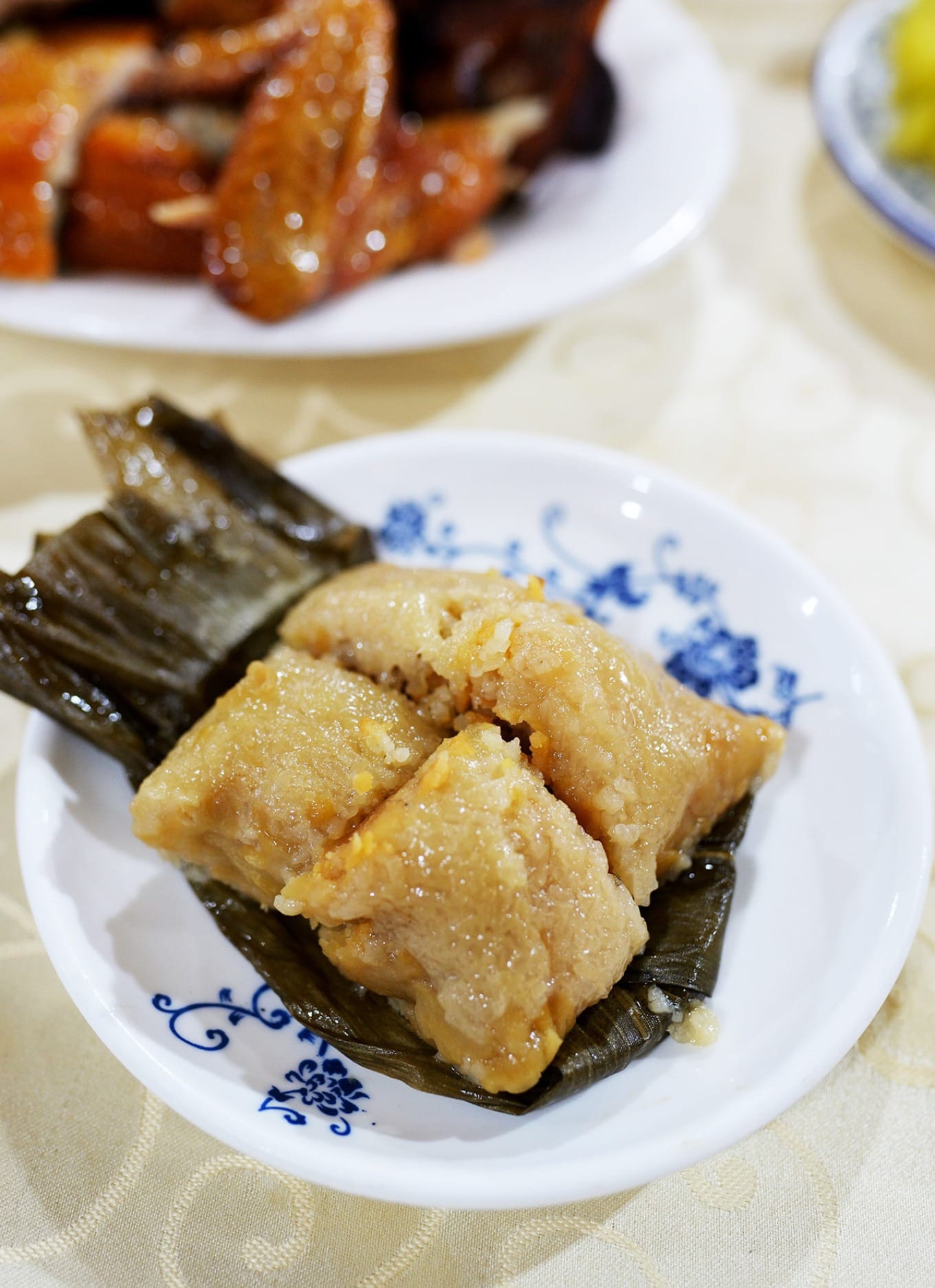
Lastly, be sure to try their salted egg yolk and mung bean zongzi (rice dumplings). Daojiao’s zongzi is famous, and unlike other varieties in the region, it is wrapped in locally sourced Dongguan grass, which gives the dish a unique flavor. The mung beans are soft and creamy, the salted egg yolk adds a rich, salty depth, and the pork belly provides a decadent layer of fat that melds perfectly with the glutinous rice.
- Restaurant伟记牛蹄 (Wei Ji Niu Ti)
- Address东莞市道滘镇新风路昌平村深涌村25巷11号 (Dongguan Shi Daojiao Zhen Xinfeng Lu Changping Cun Shenyong Cun 25 Xiang 11 Hao)
- Recommended dishes特色牛蹄 (Special Beef Hoof), 烧鸡 (Roast Chicken), 蚬肉炒韭菜 (Stir-Fried Clam Meat with Chives), 蛋黄绿豆粽 (Salted Egg Yolk and Mung Bean Zongzi)
- Average spend50元 (approximately 7.5 USD per person)
Daojiao Fish Porridge: A Traditional Taste of Dongguan
For an authentic taste of Daojiao-style fish porridge, head to the Daojiao Fish Porridge (厚街店) located in Houjie Town, ten kilometers south of Daojiao. Despite its location, it upholds the traditional Daojiao porridge-making methods and offers a variety of local snacks. Conveniently situated near the Shanmei metro station, the restaurant is easy to reach and, like many eateries in Dongguan, may not boast extravagant decor but is always bustling with a diverse crowd of food enthusiasts.
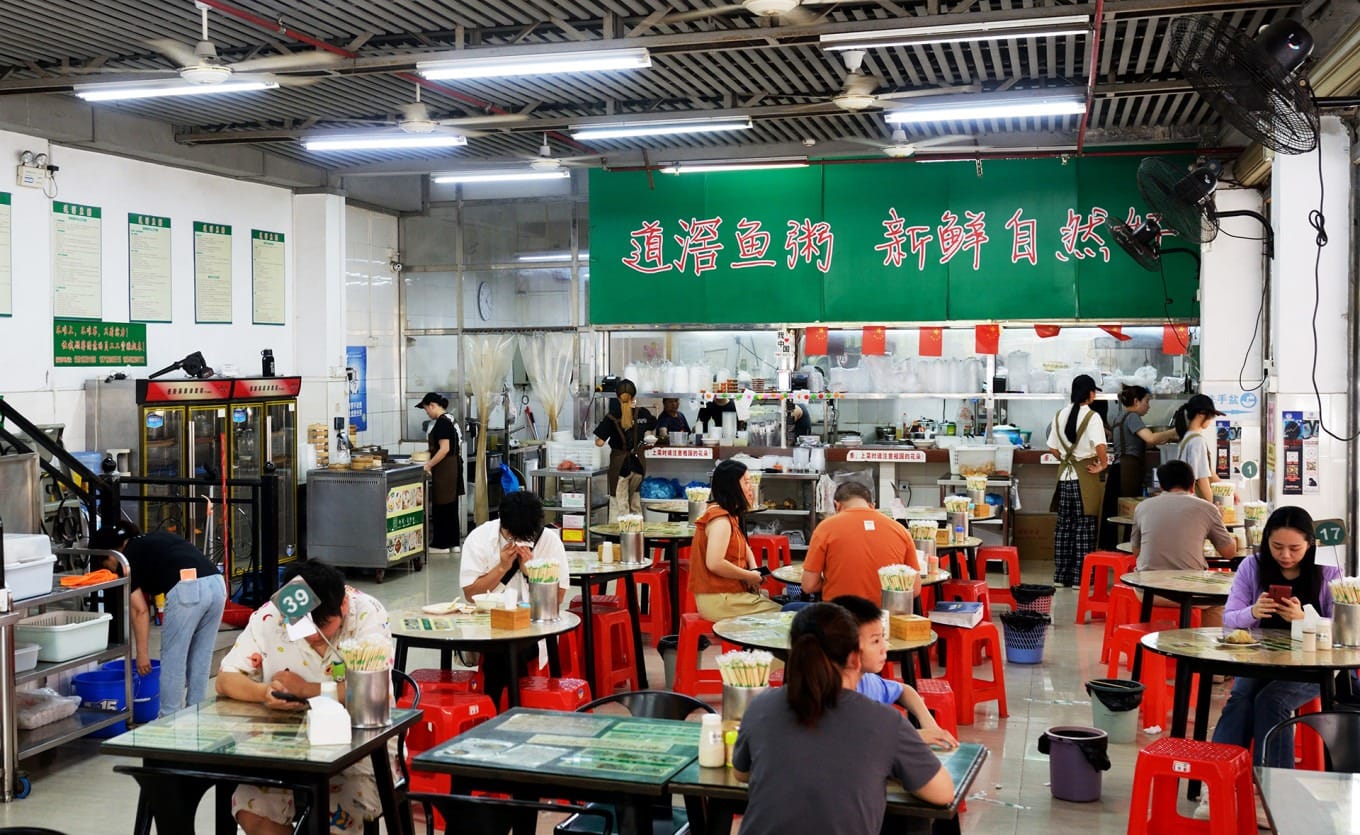
Daojiao has long been celebrated as a land of fish and rice, and its porridge is renowned in Dongguan. The porridge base is uniformly prepared with slow simmering, resulting in a smooth and delicate texture. Customers can select three ingredients from various options to create their own combination, with a bowl of three-ingredient porridge costing just a few dollars, making it an economical choice. A popular combination includes fish slices, Daojiao meatballs, and goji leaves.
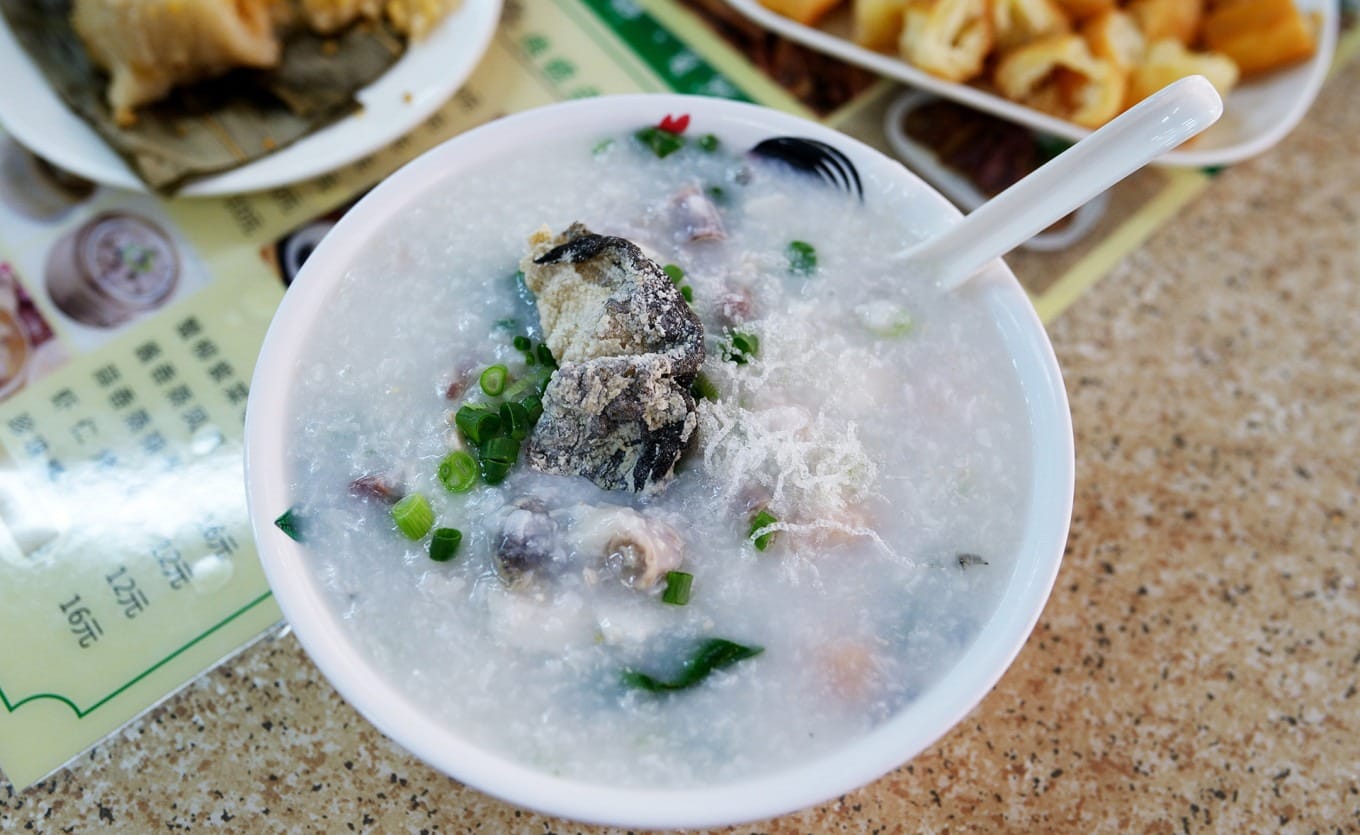
Locals in Daojiao favor using crucian carp in their porridge, often breaking down the fish into slices and bones. The fish slices, thinly sliced to two millimeters, are immersed in the boiling porridge base to bring out the best flavor, resulting in a tender and richly flavored dish. The Daojiao meatballs, another local specialty, are made from finely ground pork and are similar to Chaoshan beef balls but with a distinct taste and texture. Once cooked, these meatballs, when added to the porridge, offer a delightful chewiness.
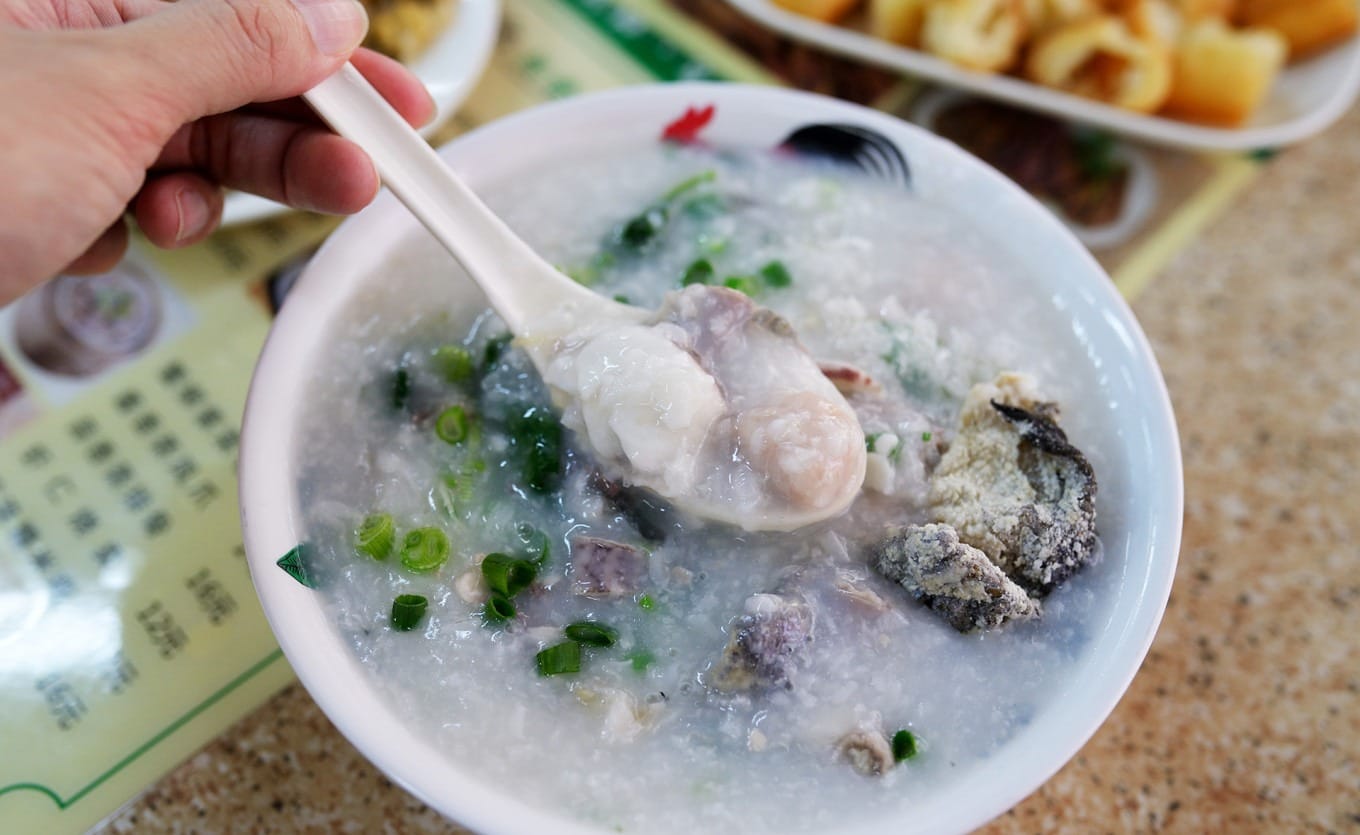
For an added layer of flavor, consider adding a serving of crispy fried fish skin. Soaking it in the porridge infuses it with a savory taste and adds a pleasant crunch. It’s also delicious eaten on its own, with a satisfyingly crisp texture that snaps with each bite.

- Restaurant道滘鱼粥 (Daojiao Fish Porridge)
- Address东莞市厚街镇康乐南路明丰广场旁 (Kangle South Road, Mingfeng Plaza, Houjie Town, Dongguan)
- Recommended dishes鱼片肉丸枸杞粥 (Fish Slices and Meatballs Porridge with Goji), 油条 (Deep-Fried Dough Sticks), 炸鱼皮 (Crispy Fried Fish Skin)
- Average spend20元 (Approximately 3 USD)
Exploring Taiwanese Flavors at Yongbo Rice Noodle Soup
When it comes to the culinary delights of Houjie, Taiwanese cuisine is a must-mention. As one of the first cities on the mainland where Taiwanese businessmen invested, Dongguan, particularly Houjie, has seen an influx of Taiwanese flavors. Among the many Taiwanese eateries, Yongbo Rice Noodle Soup (勇伯米粉汤) stands out as the most renowned.

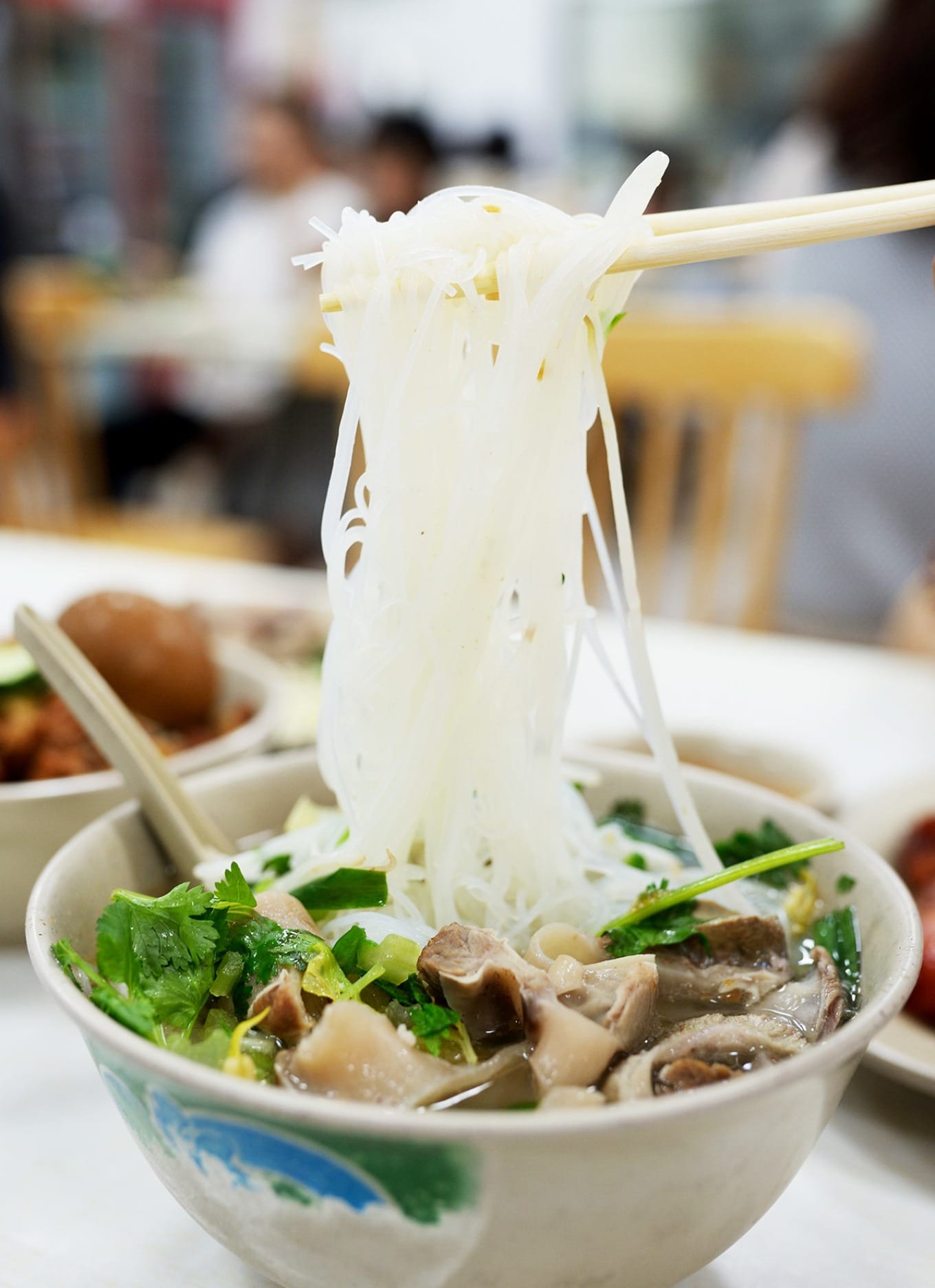
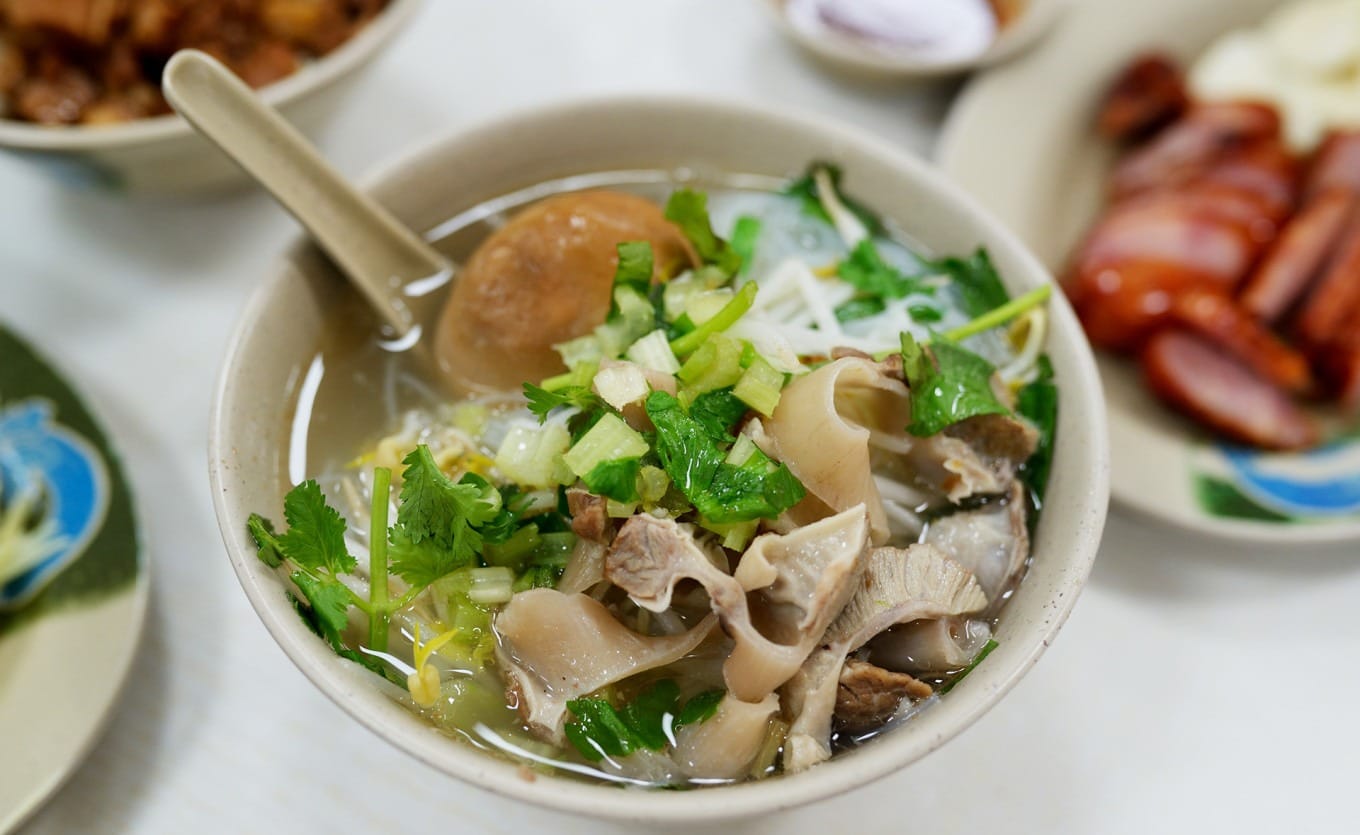
The owner of Yongbo Rice Noodle Soup is a genuine Taiwanese native, and the restaurant’s name, unrelated to the owner’s name, is inspired by a character named ‘Yongbo’ from a Taiwanese puppet show ‘Da Xia Shi Yanwen’. As for the signature dish, you simply must try the rice noodle soup. Originating from the busy farming season in Southern Fujian, this dish was a quick and hearty meal for laborers. The soup is a delightful combination of pork, marinated eggs, and cilantro, with the essence being the broth, simmered from pork bones, which highlights the natural flavors of the ingredients rather than an overpowering richness.

While traditionally made with fine rice noodles from Xinzhu, Yongbo has opted for Dongguan rice noodles, which offer a firmer texture and a smoother, more refreshing mouthfeel. The noodles, soaked in the rich bone broth, are incredibly palatable and leave a lasting impression.
If there’s one dish that could represent the nostalgia of Taiwanese people, it’s the braised pork rice. Slow-cooked to perfection, the fatty layers of the pork belly infuse the white rice with a rich, savory aroma. Each piece is visibly marbled with fat and skin, and the intense flavors of the meat and braising sauce permeate every grain of rice. To balance the richness, the dish comes with two pickled cucumber slices, a thoughtful accompaniment to cut through the fattiness.
Another crowd-pleaser is the pan-fried oyster dish, similar to the oyster omelet from the Chaoshan region of Guangdong. The oysters are coated with sweet potato starch to prevent them from shrinking and to achieve a crispy exterior. Served with mustard soy sauce, the oysters are juicy and layered with flavor, earning a well-deserved five-star rating.

For a true taste of Taiwan, don’t miss their fried sausages. Unlike the starch-filled sausages commonly found on the mainland, Taiwanese sausages are made from a mixture of ground pork, spices, and rice wine, stuffed into natural casings, and then air-dried and smoked, without any added starch. The traditional way to enjoy them is with a slice of garlic, creating a symphony of flavors that explode in your mouth—savory, salty, wine-infused, and the pungent kick of garlic.

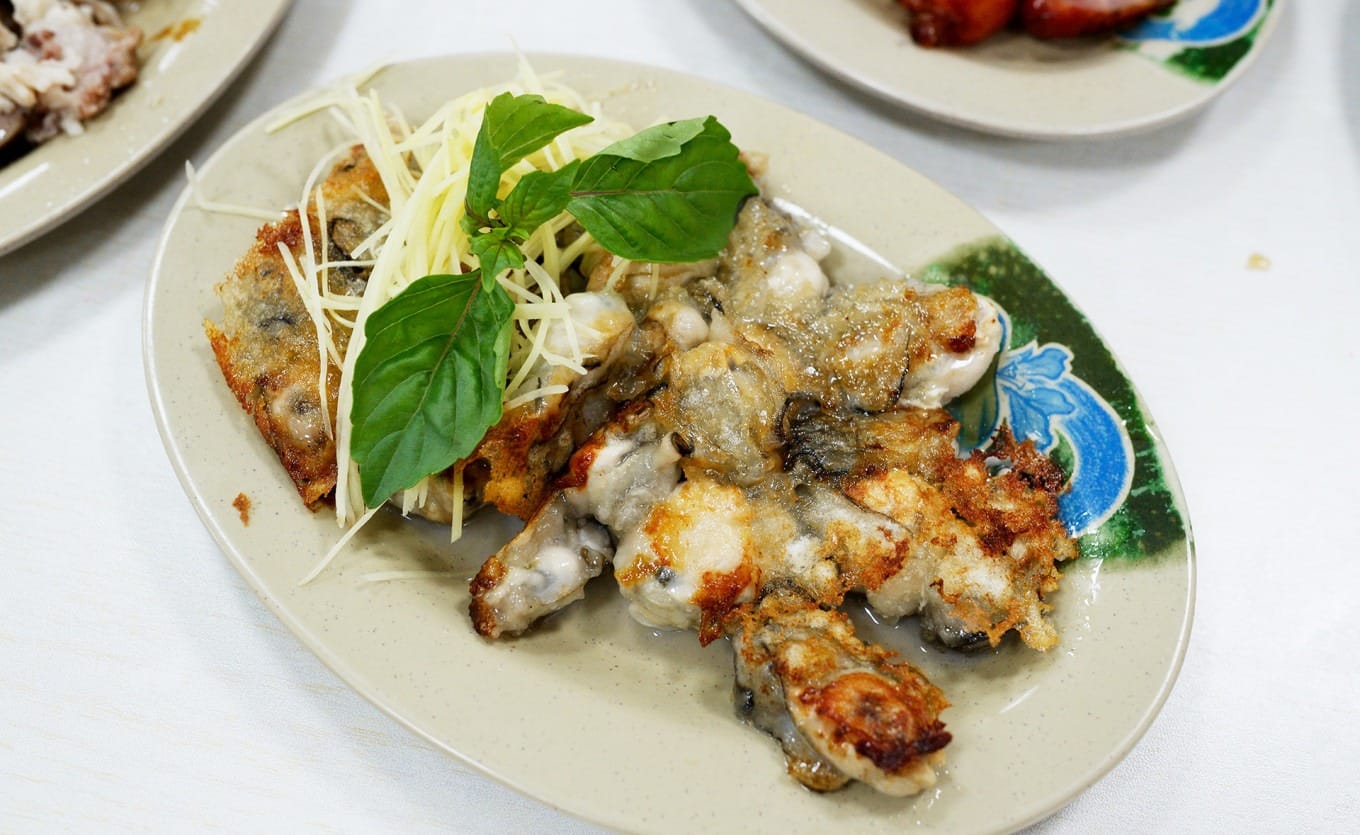
- Try the signature rice noodle soup for a taste of traditional Taiwanese cuisine.
- Experience the comforting flavors of braised pork rice, a dish that echoes Taiwanese nostalgia.
- Savor the juicy and crispy pan-fried oysters with a tangy mustard soy sauce.
- Indulge in the authentic Taiwanese fried sausages, best enjoyed with a slice of garlic.
- Restaurant勇伯米粉汤 (Yongbo Rice Noodle Soup)
- Address东莞市厚街镇南环路11号首信海鲜市场内 (Dongguan City, Houjie Town, Nanhuan Road No.
- Recommended dishes米粉汤 (Rice Noodle Soup), 卤肉饭 (Braised Pork Rice), 煎蚵仔连 (Pan-fried Oysters), 炸香肠 (Fried Sausage)
- Average spend40元 (Approximately 40 RMB per person)
Hongji Sweets: A Taste of Traditional Guangdong
When exploring the culinary delights of Houjie in Dongguan, a visit to the long-standing Hongji Sweets (洪记糖水店) shop is a must. Renowned for its affordable and nostalgic desserts, this local favorite has been a go-to spot for afternoon tea among the community for many years.
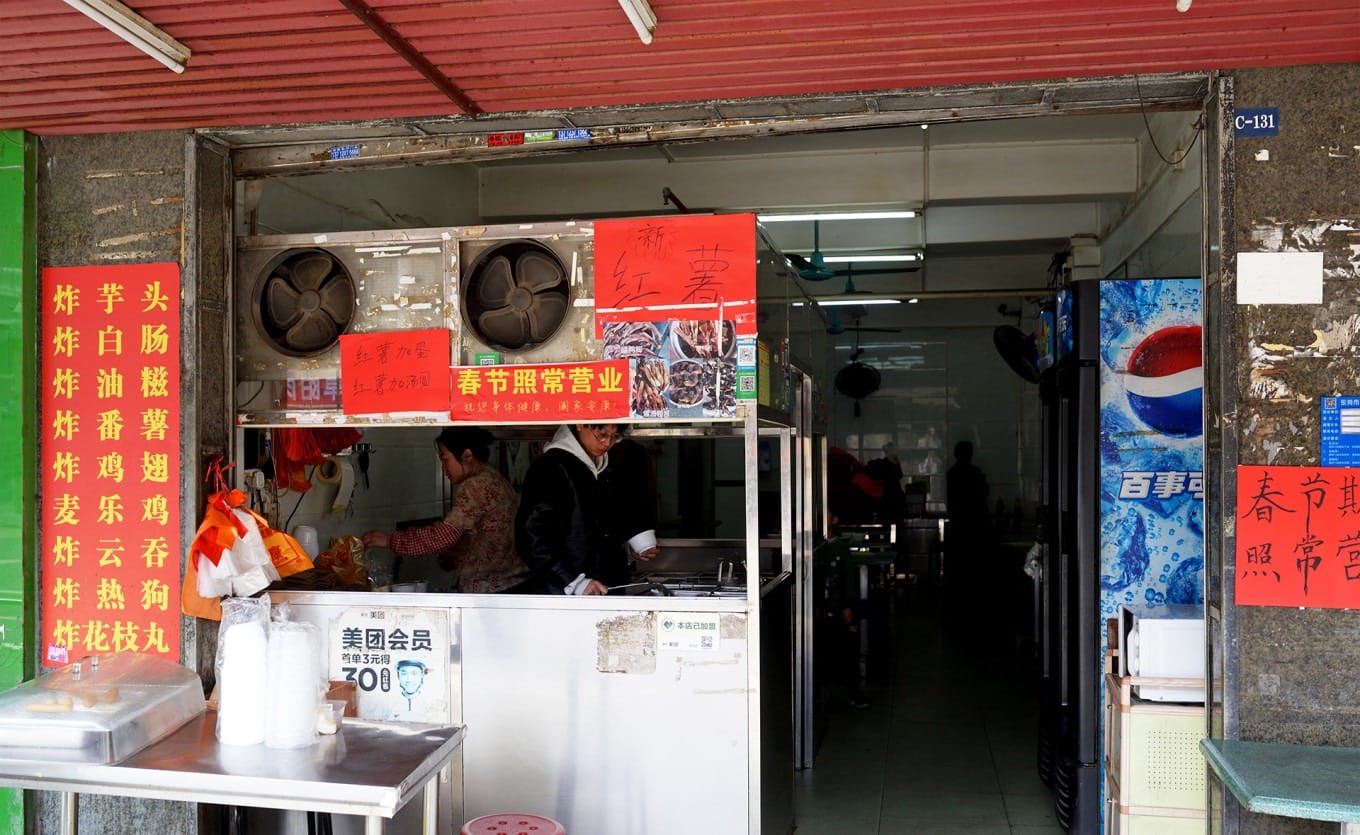
One of the classics in Cantonese sweet soups is the mung bean soup (绿豆沙), especially favored during the hot summer months for its cooling properties. The mung beans are first shelled with high heat and then simmered slowly, creating a delicate, sandy texture while preserving the beans’ natural aroma. What sets Hongji’s version apart is the absence of seaweed, a common ingredient in Guangdong, and the addition of egg flower, a pairing that, while uncommon in the region, offers a delightful and harmonious flavor profile once you’ve tried it.

Another standout is the red bean soup (红豆沙), which also features egg flower and the addition of dried tangerine peel (陈皮). The tangerine peel, after long hours of simmering, infuses the red bean soup with a rich, fragrant flavor that leaves a lasting impression with each spoonful.

In addition to their famous sweet soups, Hongji Sweets also offers a variety of snacks. You should consider trying the salt-baked quail eggs (盐焗鹌鹑蛋). The eggs are cooked using coarse salt as a heating medium, resulting in a crispy, yellow-white with a chewy texture and a savory, fragrant yolk that is simply irresistible.

- Hongji Sweets is a must-visit for anyone seeking traditional Guangdong desserts.
- Try the unique mung bean soup with egg flower for a refreshing twist on a classic.
- Restaurant洪记糖水店 (Hongji Sweets)
- Address东莞市厚街镇向群路与石角路交叉口西北角 (Intersection of Xiangqun Road and Shijiao Road, Houjie Town, Dongguan City)
- Recommended dishes绿豆沙 (Mung Bean Soup), 红豆沙 (Red Bean Soup), 盐焗鹌鹑蛋 (Salt-Baked Quail Eggs)
- Average spend10元 (Approximately 1.5 USD)
Discovering the Flavors of Humen Town at Xinwan Feiyi Chicken Pot
For first-time visitors to Dongguan, Humen Town stands out as a must-visit destination, not only for its historical significance but also for its culinary delights. Nestled near the confluence of saltwater and freshwater at the Pearl River estuary, Humen boasts an abundance of local produce and a vibrant food scene. Among the local eateries, Xinwan Feiyi Chicken Pot is a humble yet beloved dining spot that has won the hearts of the community with its consistent quality and flavor.
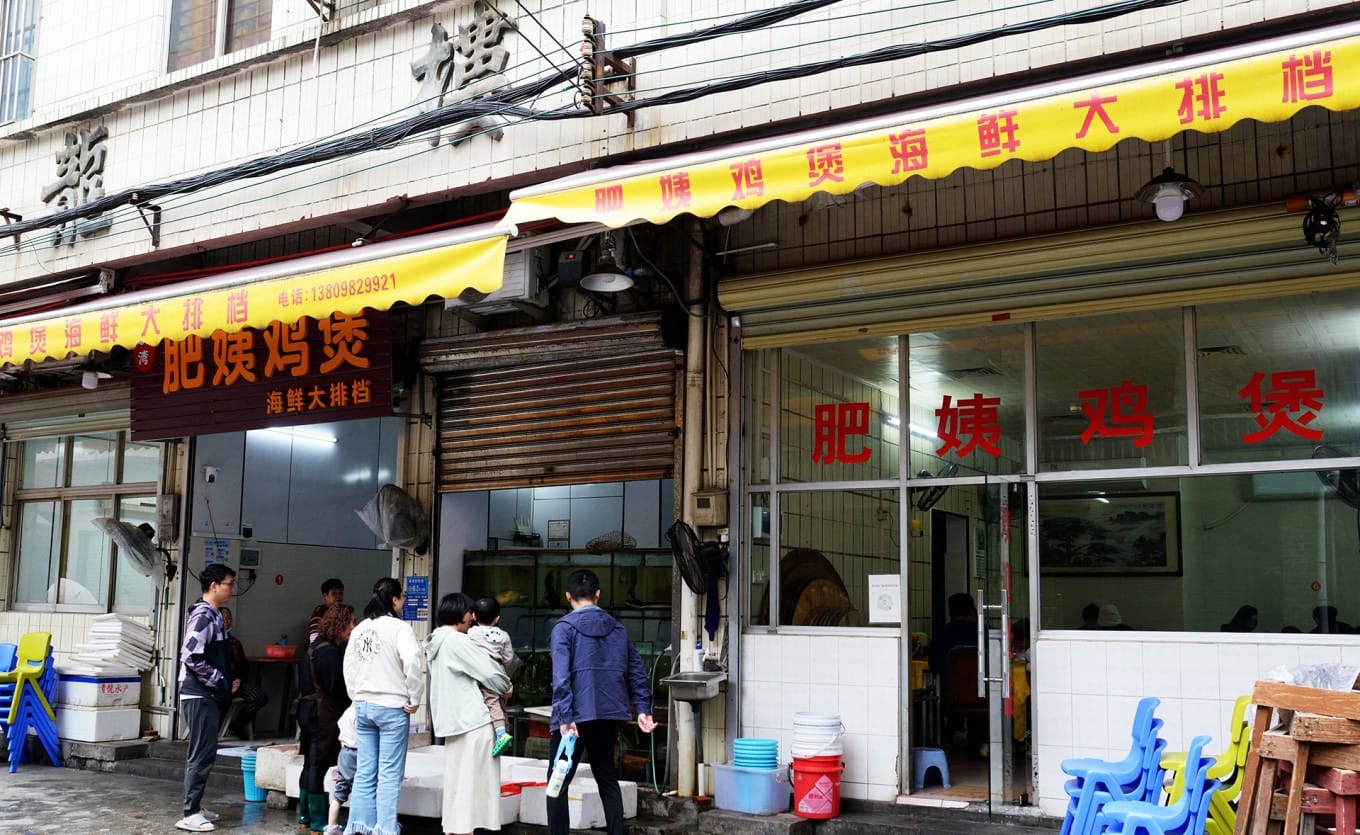
A visit to Xinwan Feiyi Chicken Pot is not complete without trying their signature dish, the Zhe Zhe Chicken Pot. This dish is a testament to the culinary technique of ‘Zhe Zhe’, a method where a clay pot is heated with oil and then filled with raw ingredients to stir-fry. The rapid evaporation of the sauce at high temperatures creates a sizzling sound, hence the name. The key to this dish is the precise control of heat, and Xinwan Feiyi nails it, serving the pot with a steaming aroma that is simply irresistible.
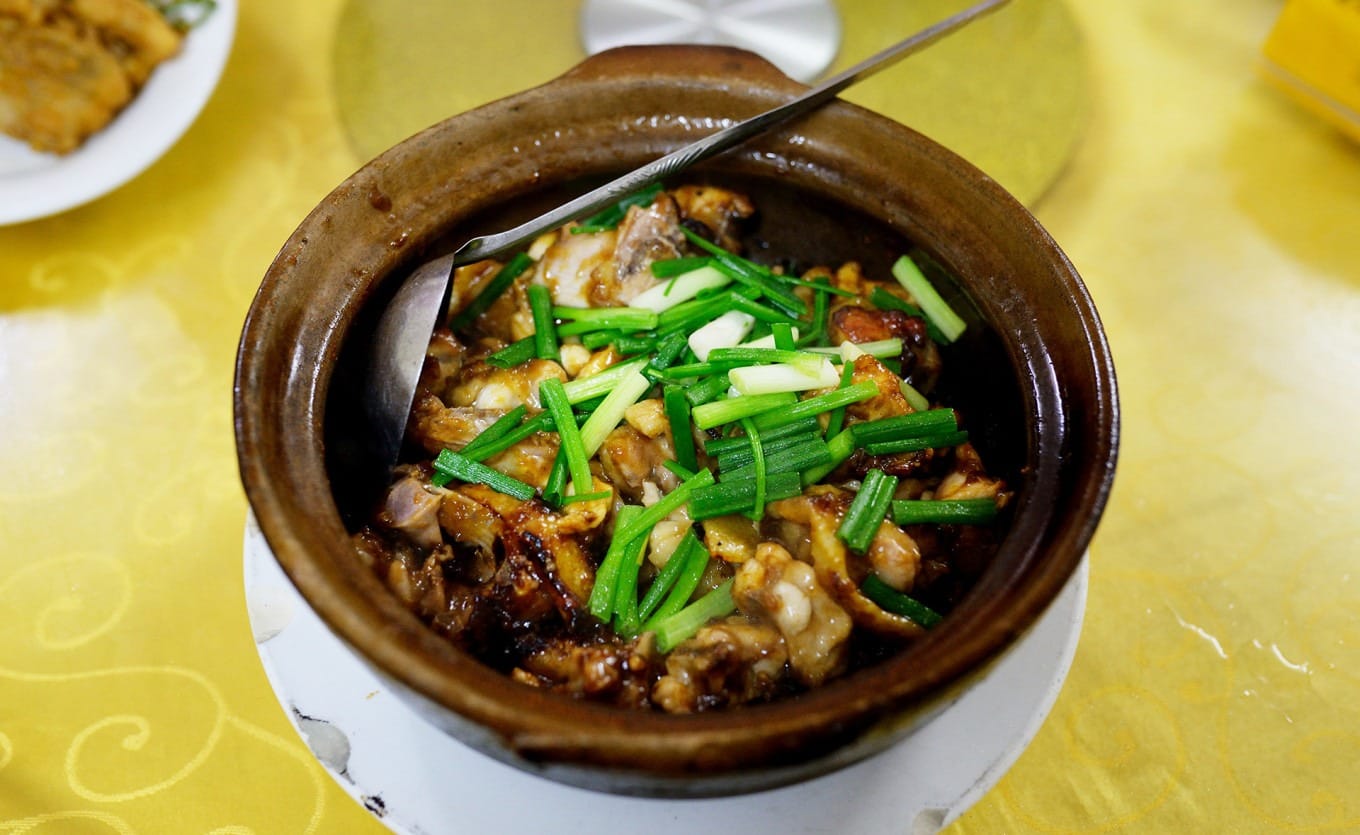
Stirring the chicken while it’s hot allows the Maillard reaction to occur, generating a wealth of aromatic compounds that enhance the dish’s flavor. The chicken pieces are cut small, ensuring that while the skin is crispy and fragrant, the meat remains tender and succulent, making for an exceptional dining experience.
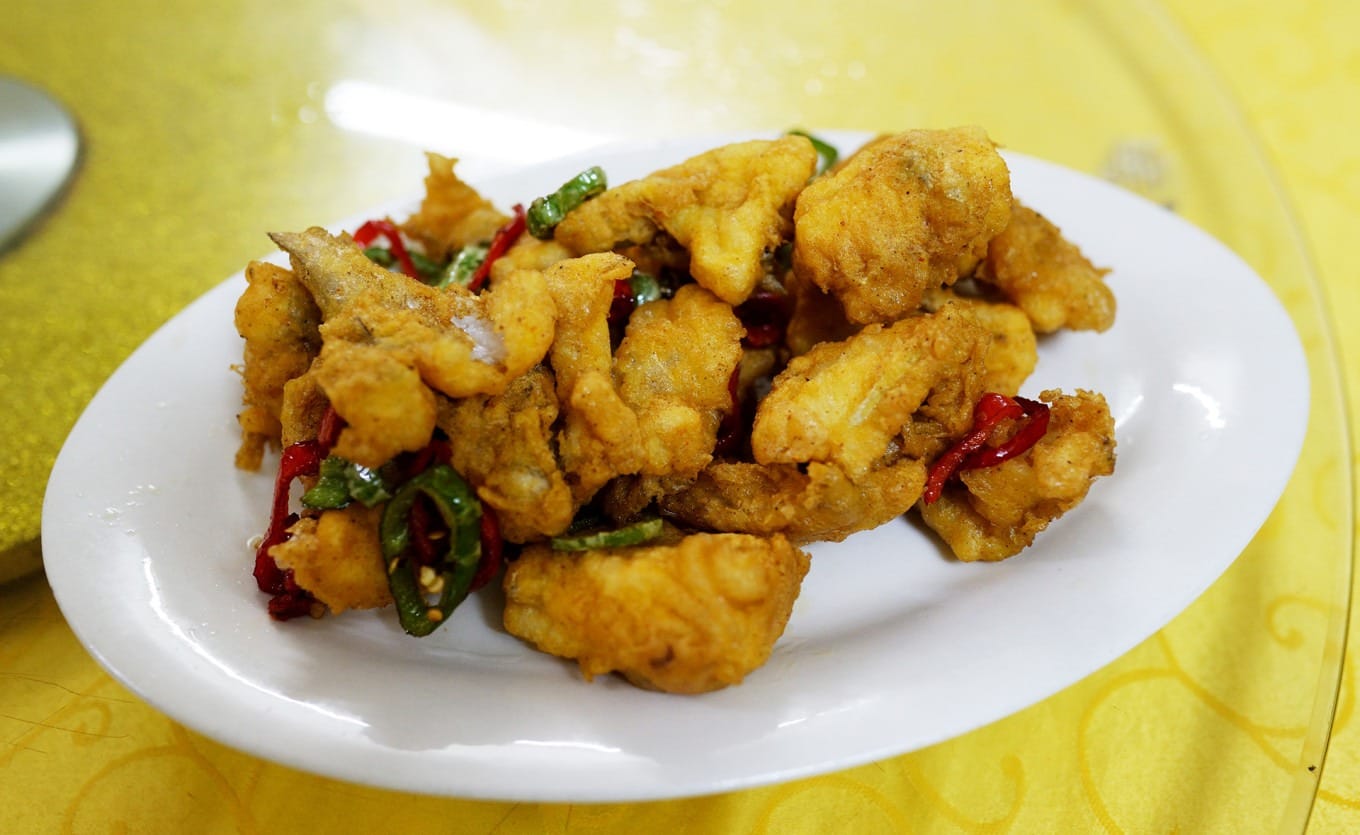
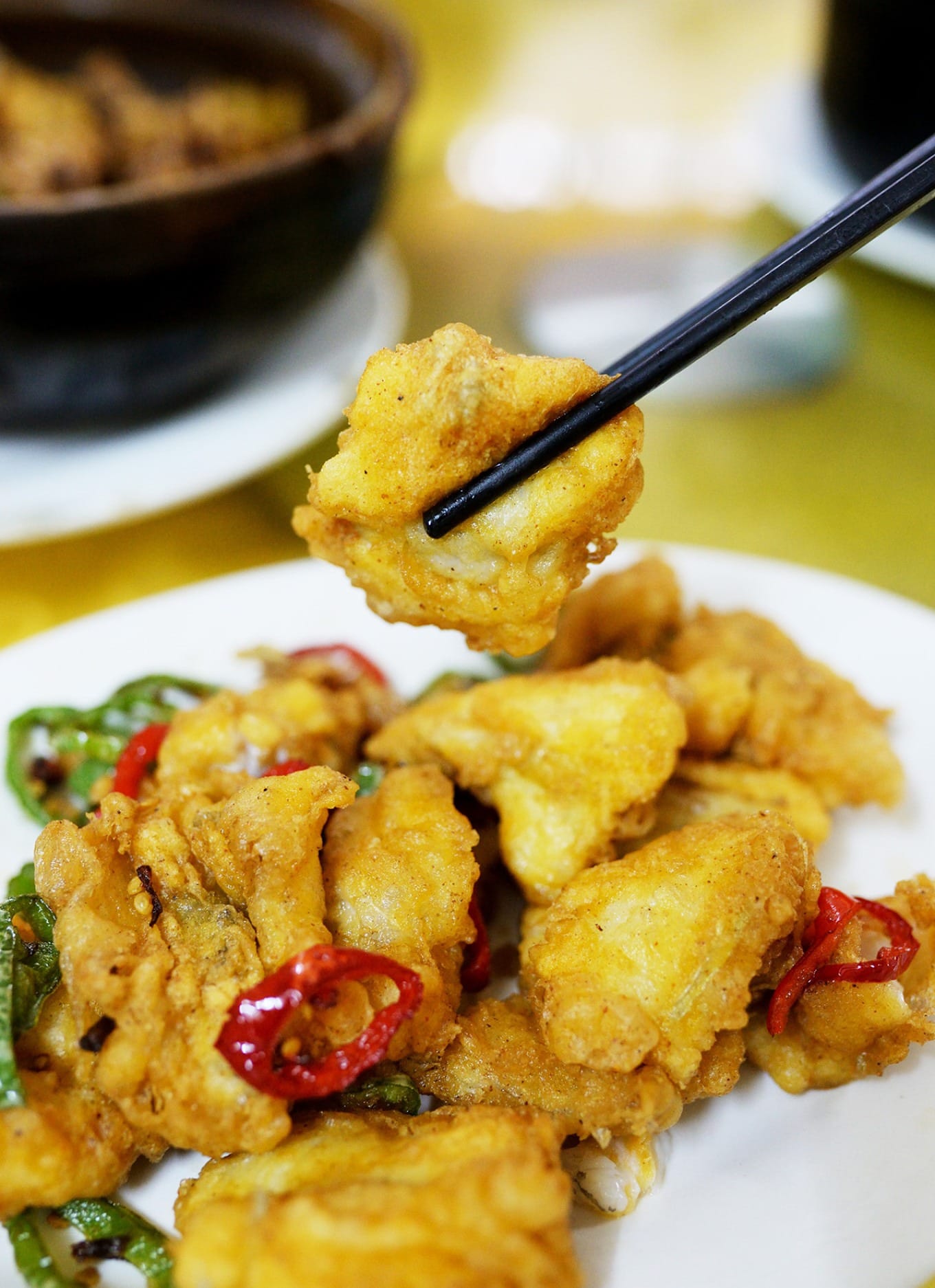
Another signature dish at Xinwan Feiyi Chicken Pot is the Spicy Salt Codfish. Known colloquially as ‘Dog Vomit Fish’, the fish’s scientific name is Hairtail, and it’s found in estuaries and coastal waters. The fish is known for its high water content, making it incredibly tender and smooth, hence its nickname ‘Tofu Fish’. The Spicy Salt Codfish is prepared in a typical Cantonese style, with a thin batter and thick, juicy fish, best enjoyed piping hot for a crispy exterior and a tender interior.
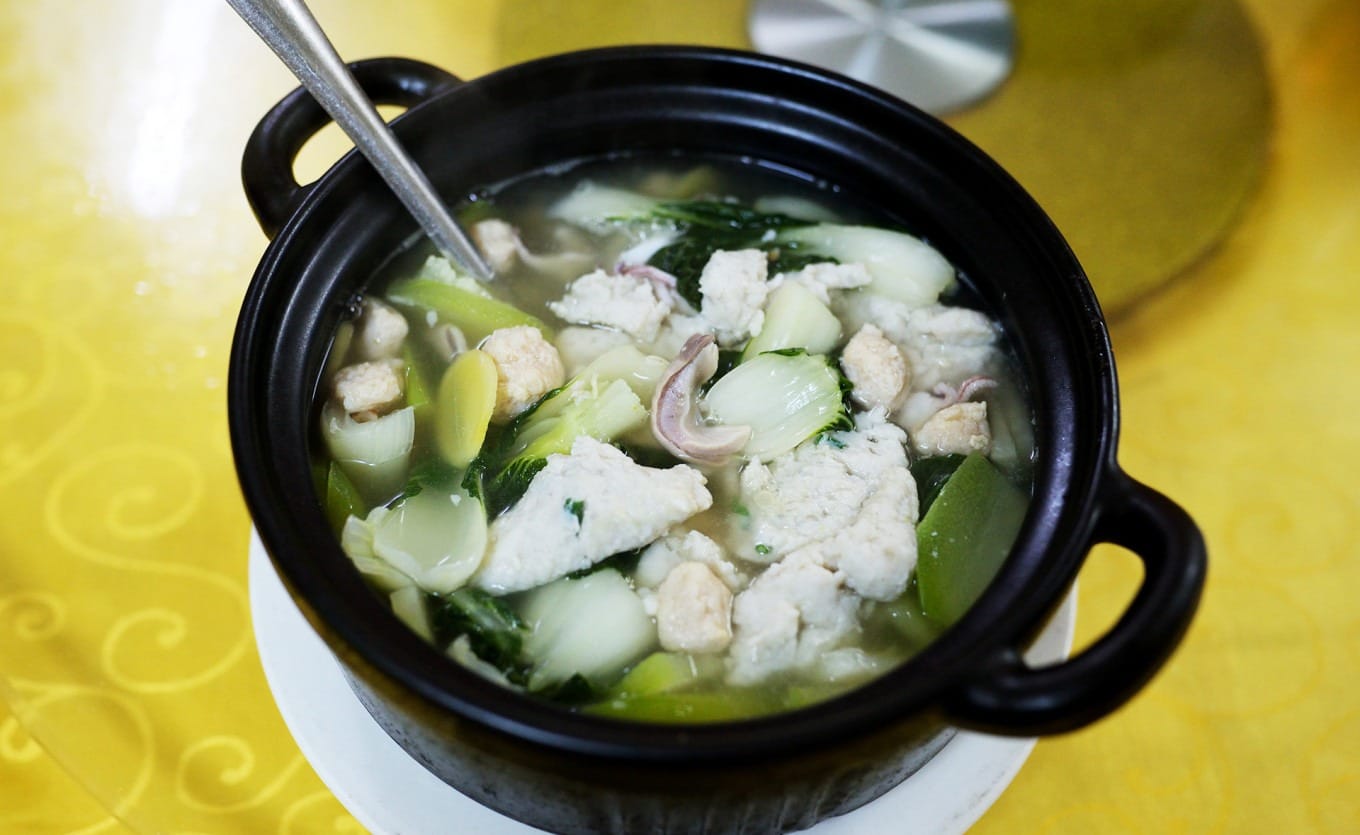
Lastly, the Mixed Vegetable Pot is a hearty dish that is more of a soup filled with an assortment of ingredients such as fish maw, meatballs, cabbage, squid, dried shrimp, and rice noodle rolls. The broth is incredibly fresh and flavorful, with the fish maw being a standout. Made from pounded mackerel, the fish maw is tender and sweet, a result of the fish’s fibers being broken down to release its proteins.
- Xinwan Feiyi Chicken Pot is a local favorite in Humen Town, Dongguan, known for its authentic and flavorful dishes.
- RestaurantXinwan Feiyi Chicken Pot (新湾肥姨鸡煲)
- AddressOpposite the Xinwan Police Station, Humen Town, Dongguan City, Guangdong Province, China (东莞市虎门镇新湾警务区对面)
- Recommended dishesZhe Zhe Chicken Pot (啫啫鸡煲), Spicy Salt Codfish (椒盐九肚鱼), Mixed Vegetable Pot (杂菜煲)
- Average spend70 CNY
Practical tip: You can prioritize one signature stop around the area, and you should adjust timing and budget based on transport and peak hours.
Discovering Rongji’s Culinary Delights in Dongguan
As you venture into the southernmost town of Dongguan, close to Shenzhen’s Bao’an District, you’ll find Chang’an Town, a bustling hub of culinary diversity. Here, the flavors from all over China have taken root, and one establishment stands out among the rest: Rongji Cuisine, a local institution that has been satisfying late-night cravings for over two decades.

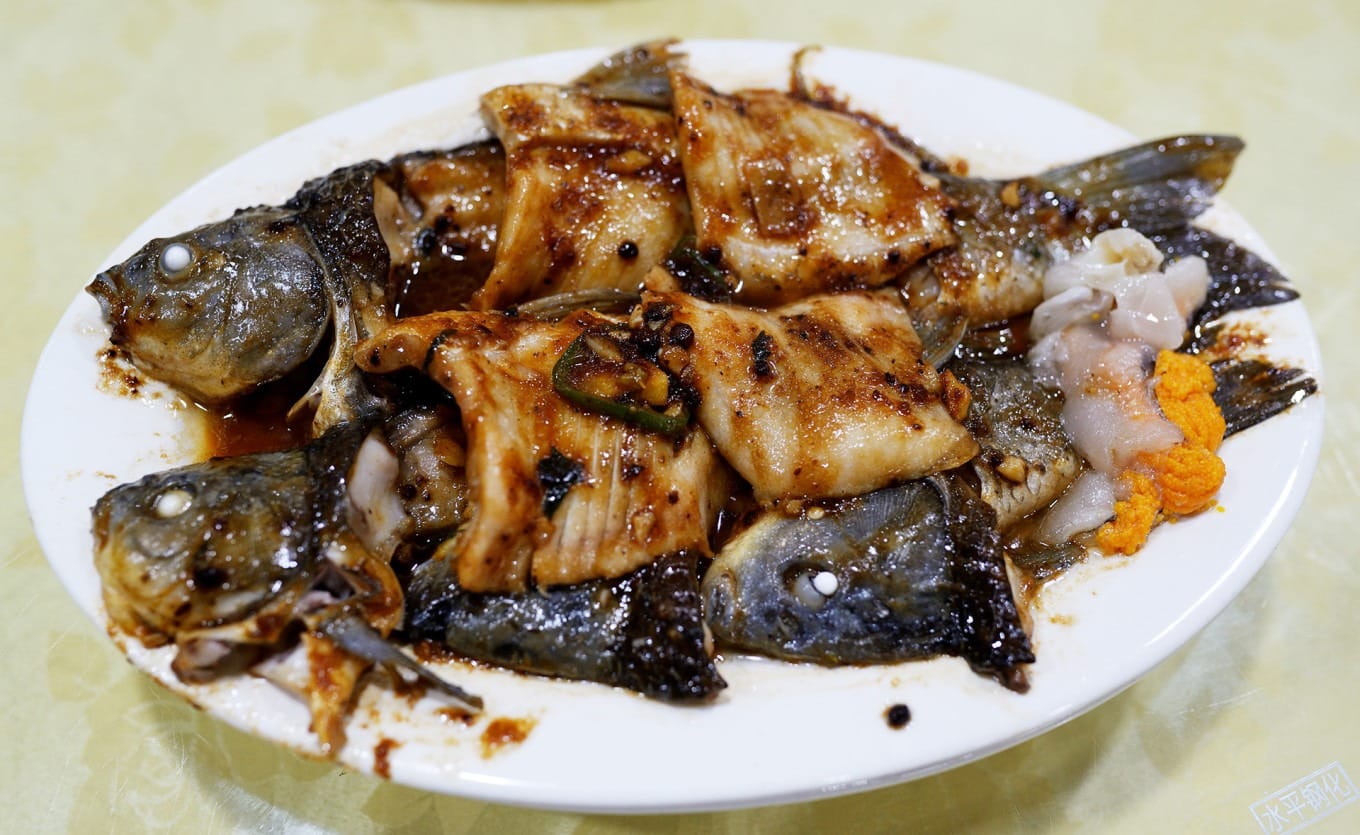
At Rongji Cuisine, the star of the menu is the unique ‘one fish, two dishes’ preparation of crucian carp. Known for its many bones, the fish is expertly filleted and deboned by skilled chefs to create a boneless crucian carp porridge. When served, a hot pot of porridge and a plate of raw fish slices are brought to your table. You should immediately pour the fish slices into the boiling porridge, where the heat instantly cooks the fish, releasing an enticing aroma.
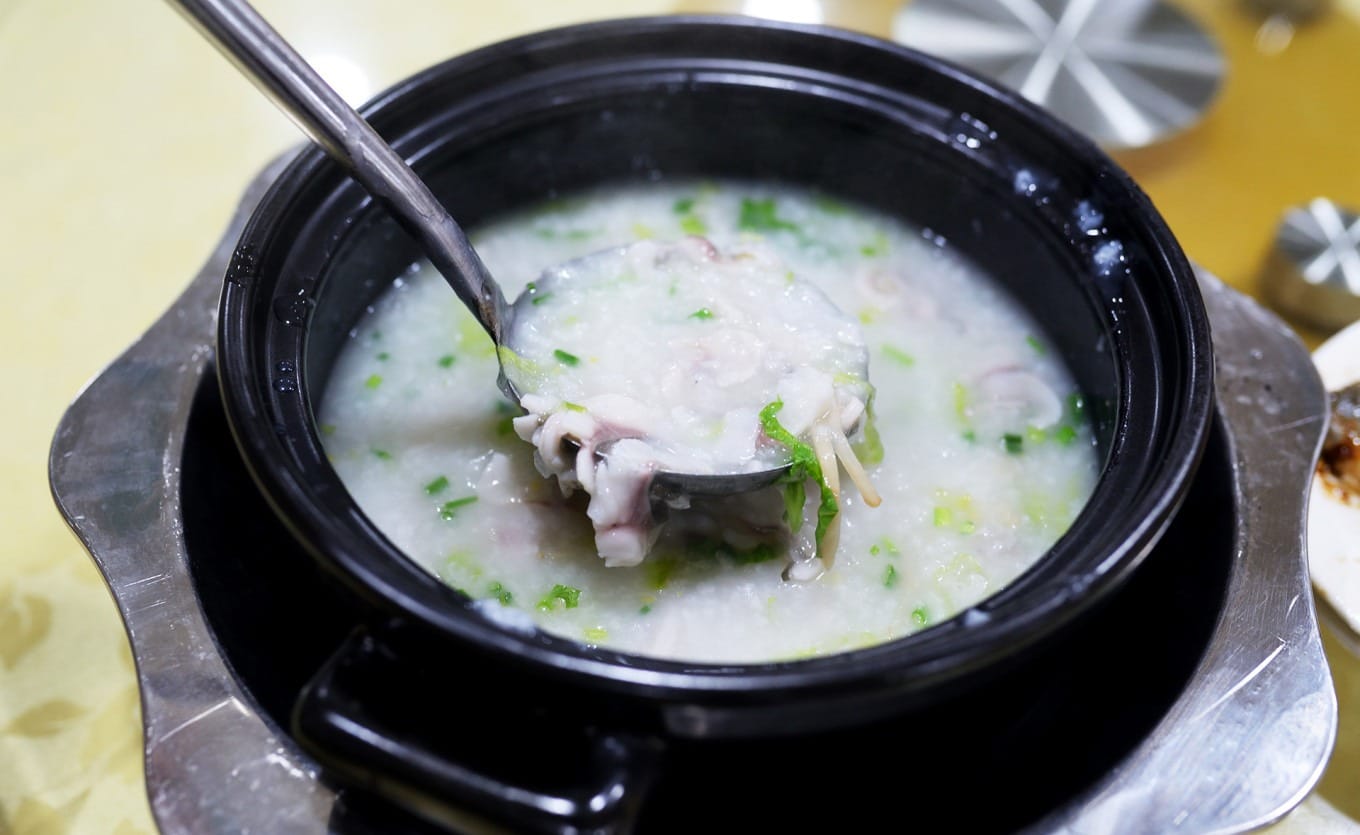
After a couple of minutes, the fish and porridge are ready to be savored. The fish is cooked to perfection, tender and free of bones, with a particularly delicious flavor. The porridge itself is a delight, thick and fragrant with a comforting texture that warms the stomach.

The remaining fish bones are not wasted but transformed into a delectable dish of steamed fish bones with fermented bean curd sauce. This dish is a testament to the chef’s mastery of cooking times, resulting in fish that melts in your mouth, infused with the savory flavors of the fermented beans, masking any earthy taste and leaving only a delightful taste.
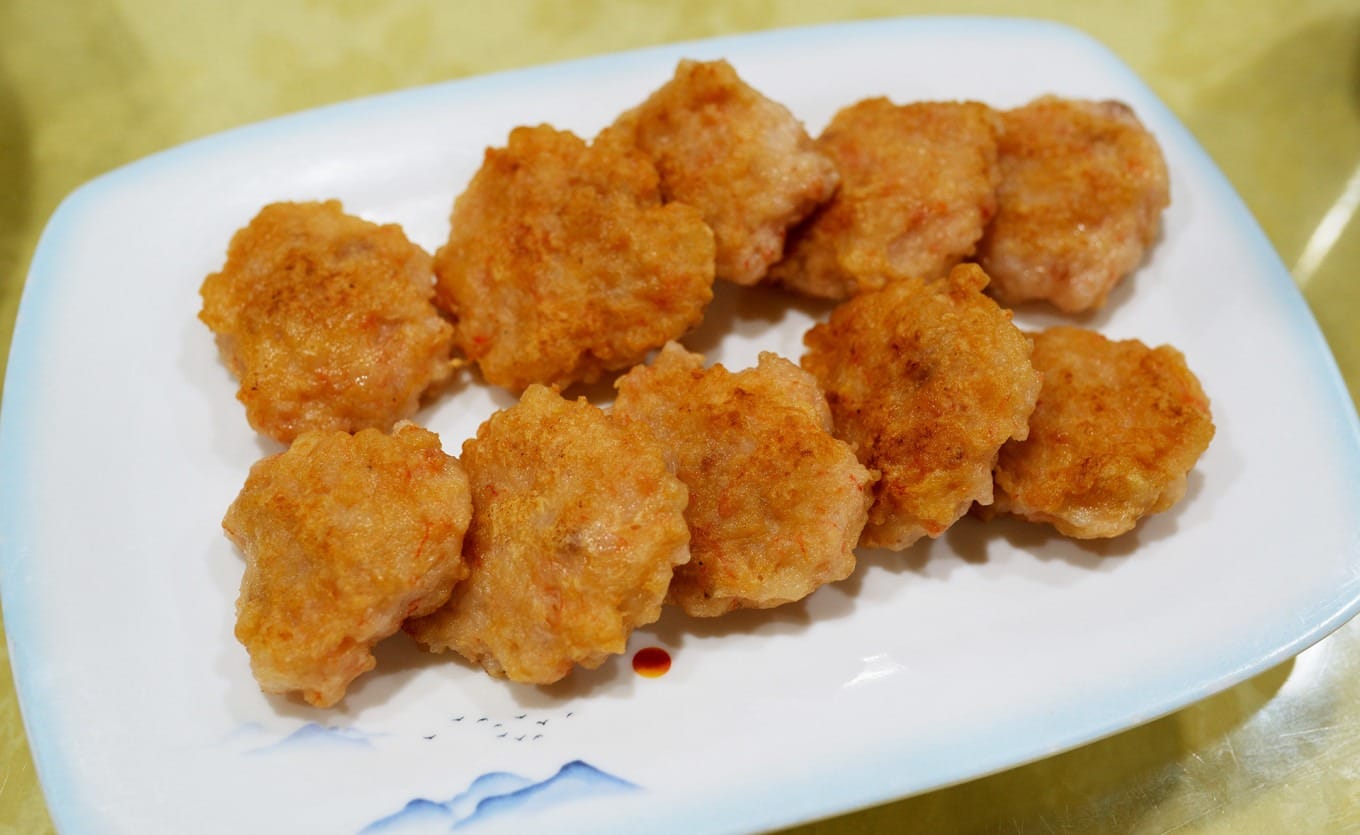
Rongji’s other signature dish is the fried shrimp cake. While shrimp cakes can be found throughout China, the northern and southern styles differ greatly. In the south, particularly in Dongguan’s Chang’an and Humen, shrimp cakes are made predominantly from local mantis shrimp, pounded and kneaded by hand to achieve a crisp and springy texture. One bite, and you’ll understand why it’s a local favorite.
Locals often pair their crucian carp porridge with a plate of stir-fried rice noodles. Cooked with high heat and a wok’s breath, the noodles are dry and free of excess oil, making for a satisfying accompaniment to the porridge.

- Rongji Cuisine (荣记美食) is a must-visit for food enthusiasts.
- Try the boneless crucian carp porridge for a unique culinary experience.
- Enjoy the fried shrimp cakes made with local mantis shrimp for a true taste of Dongguan.
- Pair your meal with the local favorite, stir-fried rice noodles.
- RestaurantRongji Cuisine (荣记美食)
- Address2 Defu East Road, Chang’an Town, Dongguan City (东莞市长安镇得富东路2号)
- Recommended dishes鲫鱼粥 (Crucian Carp Porridge), 豉汁蒸鱼骨 (Steamed Fish Bones with Fermented Bean Curd Sauce), 煎虾饼 (Fried Shrimp Cakes), 三丝炒米粉 (Stir-Fried Rice Noodles)
- Average spend60 yuan
Jinxiu Snack Shop: A Taste of Authentic Cantonese Flavors
For an authentic taste of Cantonese street food, head to the Jinshiu Snack Shop (锦厦小食店) in Chang’an Town, a twenty-year-old establishment nestled within a bustling market. Don’t let the modest surroundings fool you; this place is a gem for food lovers. The menu is simple yet enticing, featuring barbecue, marinated dishes, and sweet desserts.

The barbecue at Jinshiu Snack Shop is a traditional Cantonese style, distinct from the more common Northeastern or Zibo barbecues. Here, sweetness is artfully incorporated, with honey-glazed ingredients grilled over high heat. The result is a caramelized exterior that seals in the natural juices, creating a depth of flavor and tenderness that is hard to resist. A bite of the honey-infused barbecued chicken wings or the succulent grilled intestines is a culinary delight.
If you’re concerned about the heat from the barbecue, consider their marinated dishes. A rich broth filled with a variety of ingredients such as beef offal, pork intestines, chicken gizzards, meatballs, tofu, and mushrooms awaits. Each skewer is priced at three yuan, making it an affordable and satisfying choice.

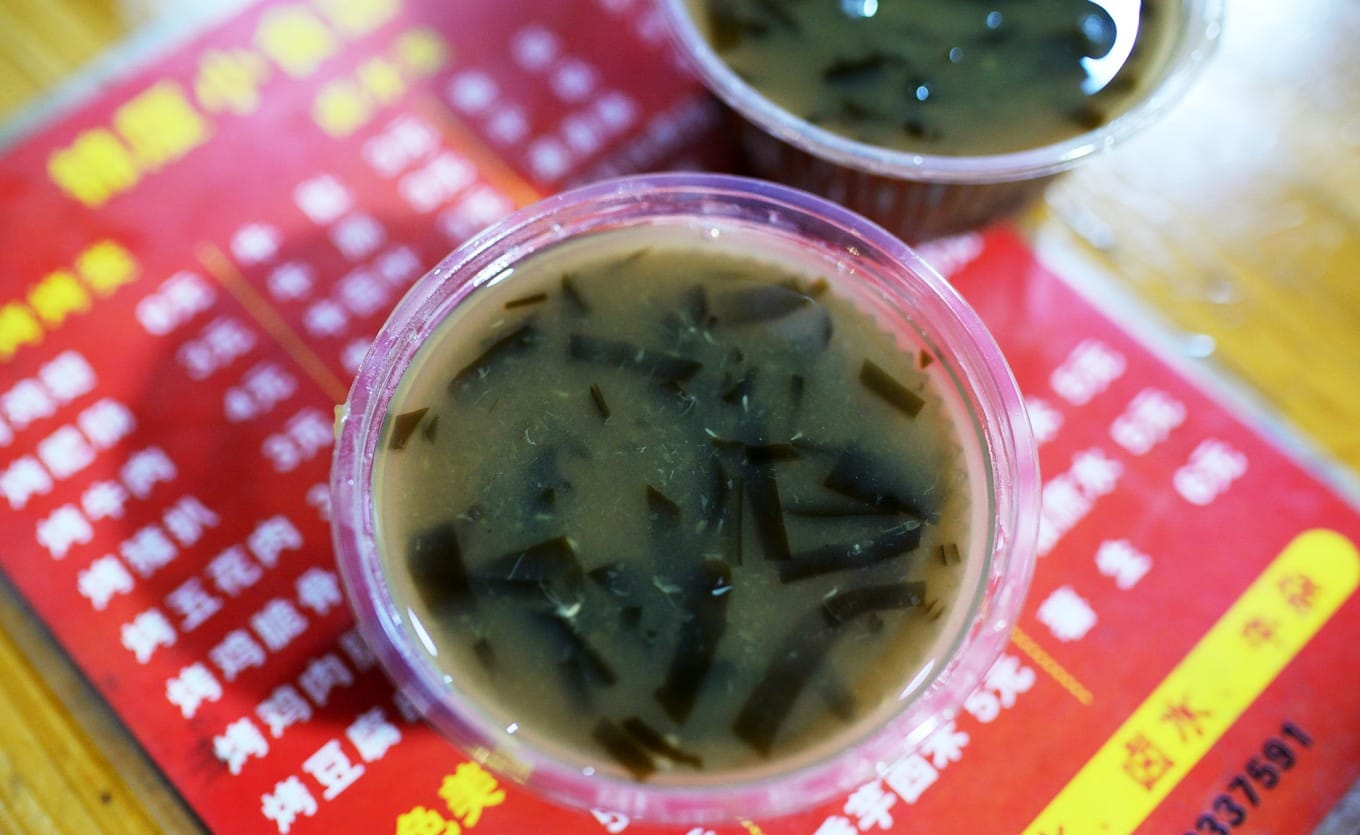
No visit to Jinshiu Snack Shop would be complete without a bowl of their signature kelp and mung bean dessert. While this combination might seem unusual to those from the north, in Cantonese desserts, it is a classic pairing. The mung beans are cooked until they burst, and the thinly sliced kelp adds a natural umami flavor that complements the sweetness of the dessert. It’s a refreshing and satisfying conclusion to your meal.
- Barbecued intestines (烤肥肠)
- Barbecued chicken wings (烤鸡翅)
- Marinated dishes (卤水)
- Kelp and mung bean dessert (海带绿豆)
- RestaurantJinshiu Snack Shop (锦厦小食店)
- Address150 meters east of the intersection of Jinxia Road and Jinyuan Road, Chang’an Town, Dongguan City (东莞市长安镇锦厦路与锦源路交叉口东150米)
- Recommended dishesBarbecued intestines (烤肥肠), Barbecued chicken wings (烤鸡翅), Marinated dishes (卤水), Kelp and mung bean dessert (海带绿豆)
- Average spend15 yuan
Zhongji’s Authentic Pork Delights
Nestled in the northern part of Chang’an Town lies the renowned Dalingshan Town, famous for its roast goose. While the delicacy of roast goose has been previously mentioned, another culinary gem awaits in the form of Zhongji’s Pork Offal and Spare Ribs Porridge, a must-visit for any food enthusiast.

Zhongji’s signature dish is the pork offal porridge, a beloved staple in the Pearl River Delta region. Many locals prefer this dish as their evening meal. The portions are tailored to the number of diners, ensuring that each guest can savor a variety of ingredients such as pig liver, rice noodle intestines, spare ribs, and pork meatballs.
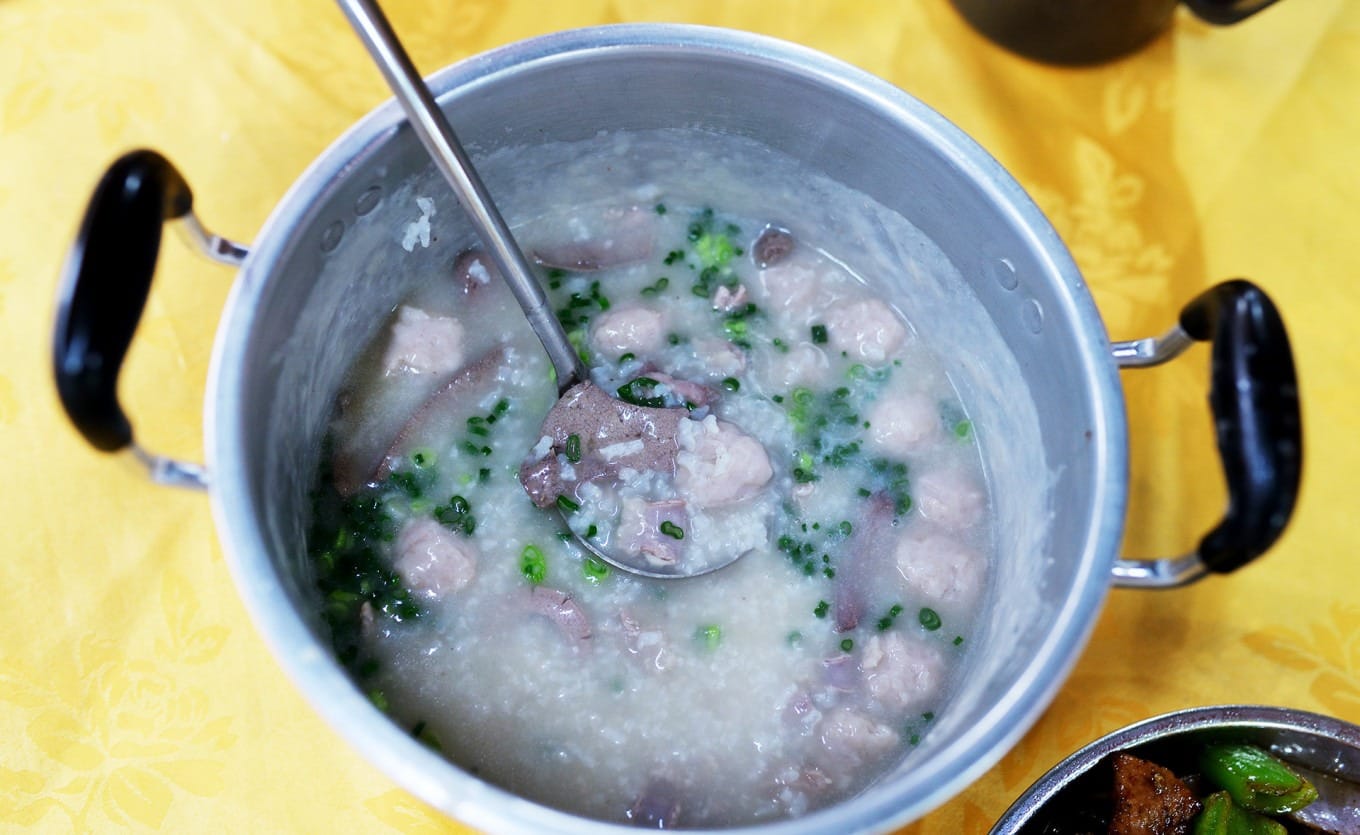
The porridge base at Zhongji is meticulously prepared in advance, with rice grains cooked to perfection and then transferred to a smaller pot with the offal for a final simmer. While the liver might not be the most tender due to slightly overcooking, the porridge itself is thick and smooth, offering a comforting warmth with each sip.

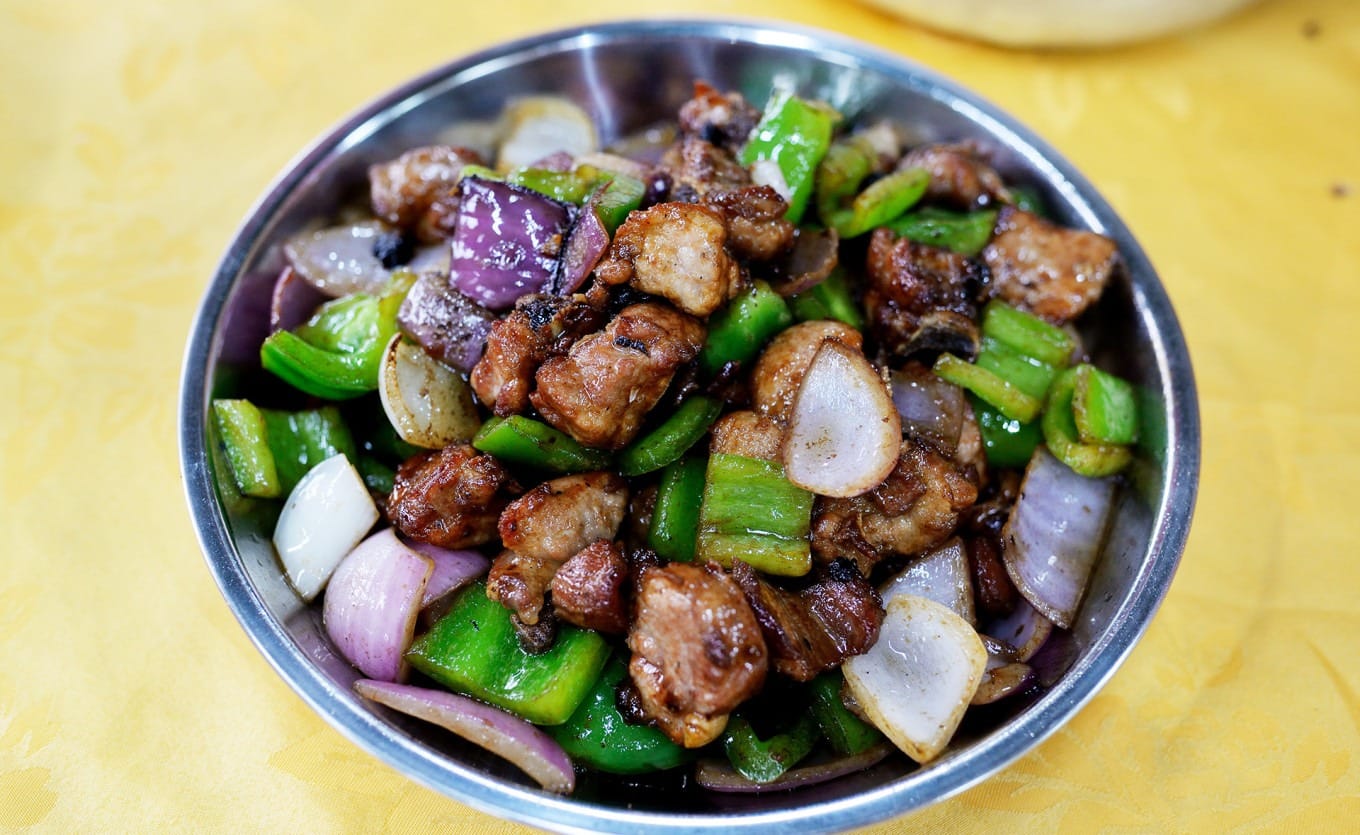
Beyond their porridge, the stir-fried spare ribs at Zhongji are a standout. The method of stir-frying enhances the natural flavors of the ribs, leaving no room for excess sauce, and allowing the true taste of the meat to shine through. The first bite is a revelation, with a savory and satisfying aroma that lingers.
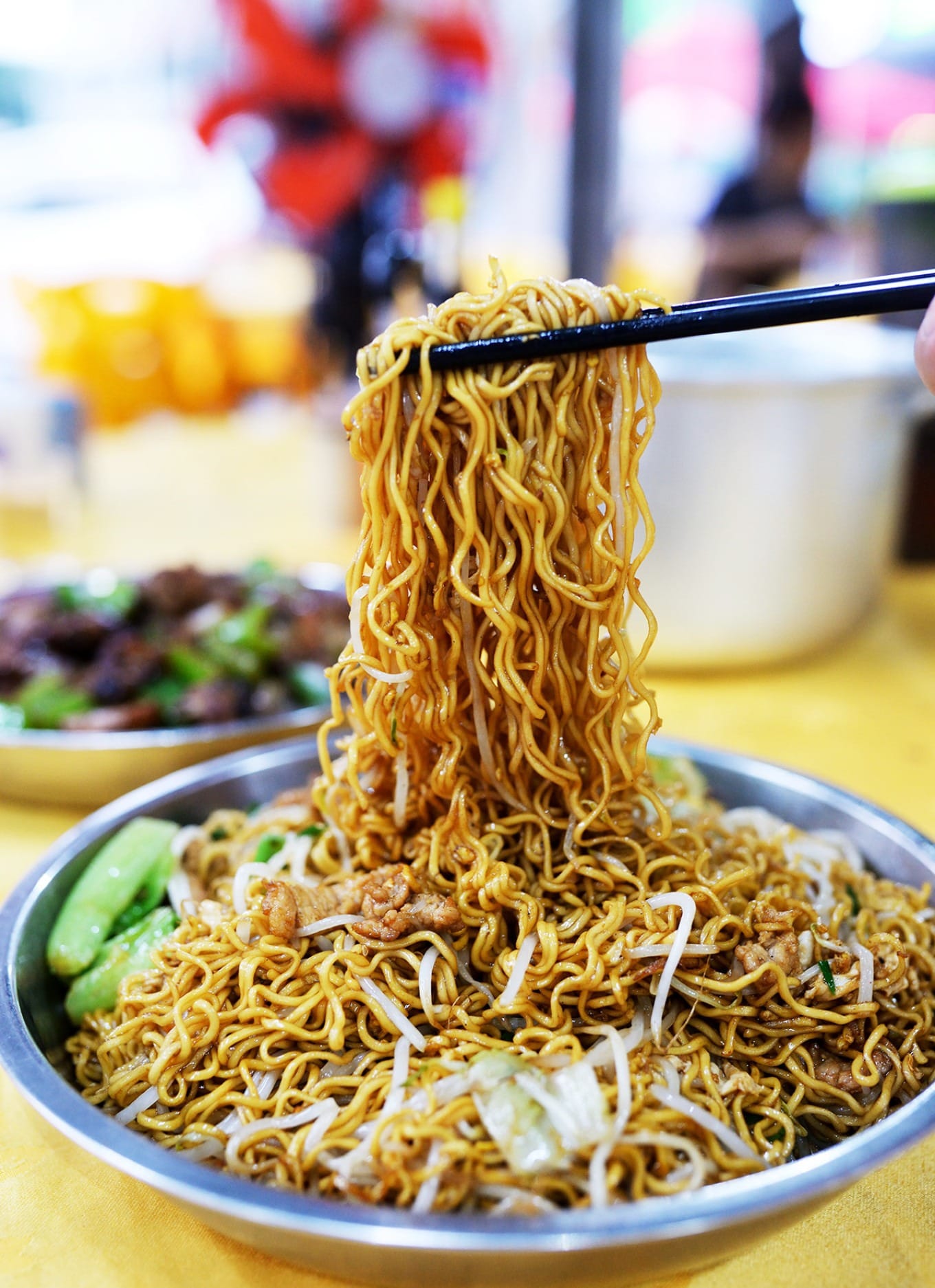
The fried noodles at Zhongji are also worth mentioning. The noodles, stir-fried with scallions, garlic, and bean sprouts, are cooked at high heat to seal in the flavors and create a rich, aromatic dish. The key to this dish is the ‘wok hay’, a term used to describe the smoky flavor that results from cooking at high heat in a wok, a quality highly prized in Cantonese cuisine.
- Zhongji’s Pork Offal and Spare Ribs Porridge (仲记猪杂排骨粥) is a must-visit for authentic flavors.
- Try the signature Pork Offal Porridge (猪杂粥), Stir-Fried Spare Ribs (生炒排骨), and the delectable Fried Noodles (炒面).
- RestaurantZhongji’s Pork Offal and Spare Ribs Porridge (仲记猪杂排骨粥)
- Address348 Hengzhen East Road, Dalingshan Town, Dongguan City, Guangdong Province, China (东莞市大岭山镇横镇东路348号)
- Recommended dishesPork Offal Porridge (猪杂粥), Stir-Fried Spare Ribs (生炒排骨), Fried Noodles (炒面)
- Average spend60 CNY
Practical tip: You can prioritize one signature stop around the area, and you should adjust timing and budget based on transport and peak hours.
Exploring the Traditional Remedies at Xinglin Chun
As you delve into the culinary delights of Dongguan, a visit to a local chain of herbal tea shops is a must. Xinglin Chun, a staple in the region, offers a unique insight into the Guangdong culture, where herbal teas, or ‘liang cha,’ are as much a part of the landscape as the famed roast goose and lychees. Historically, the Lingnan area, with its humid climate, has fostered a rich tradition of herbal remedies, and Xinglin Chun is a testament to this heritage.
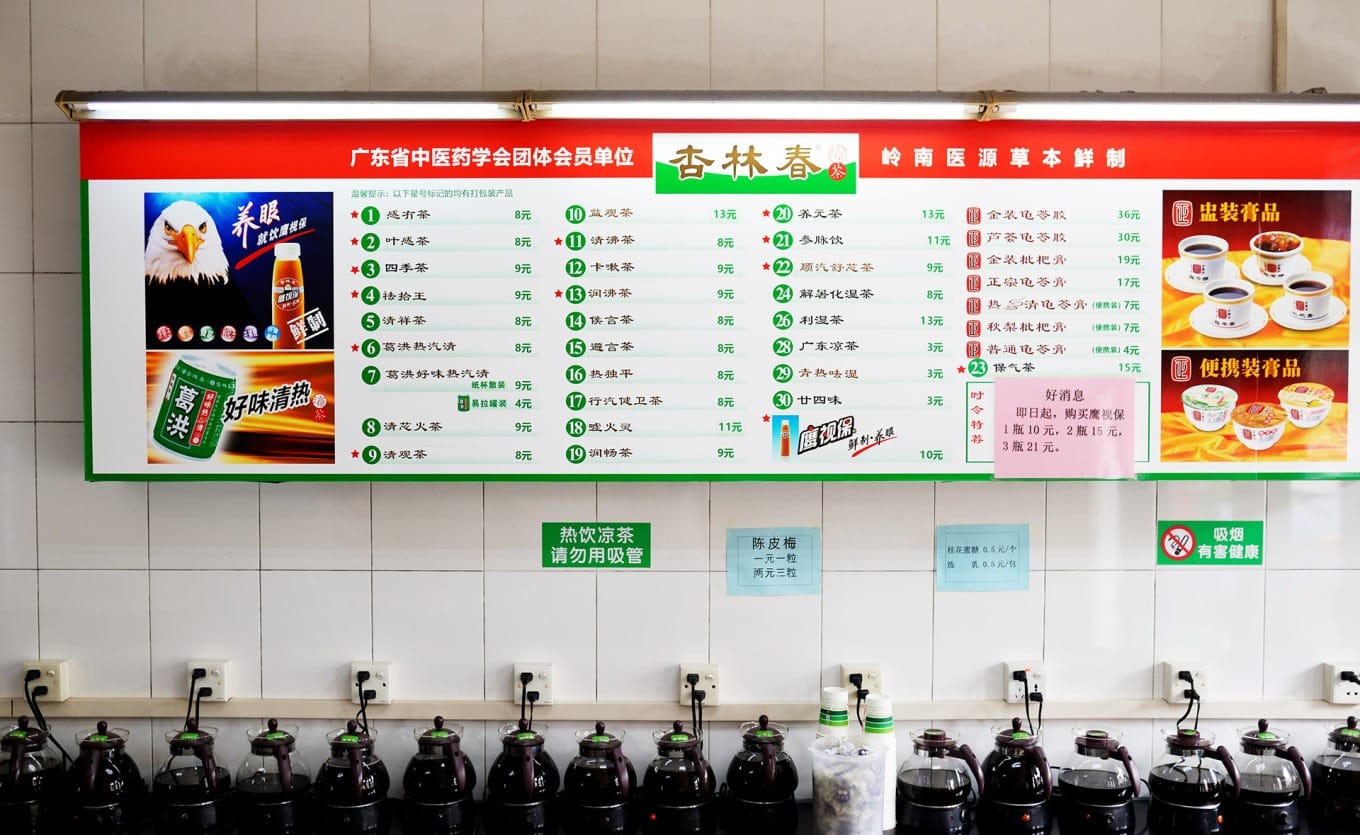
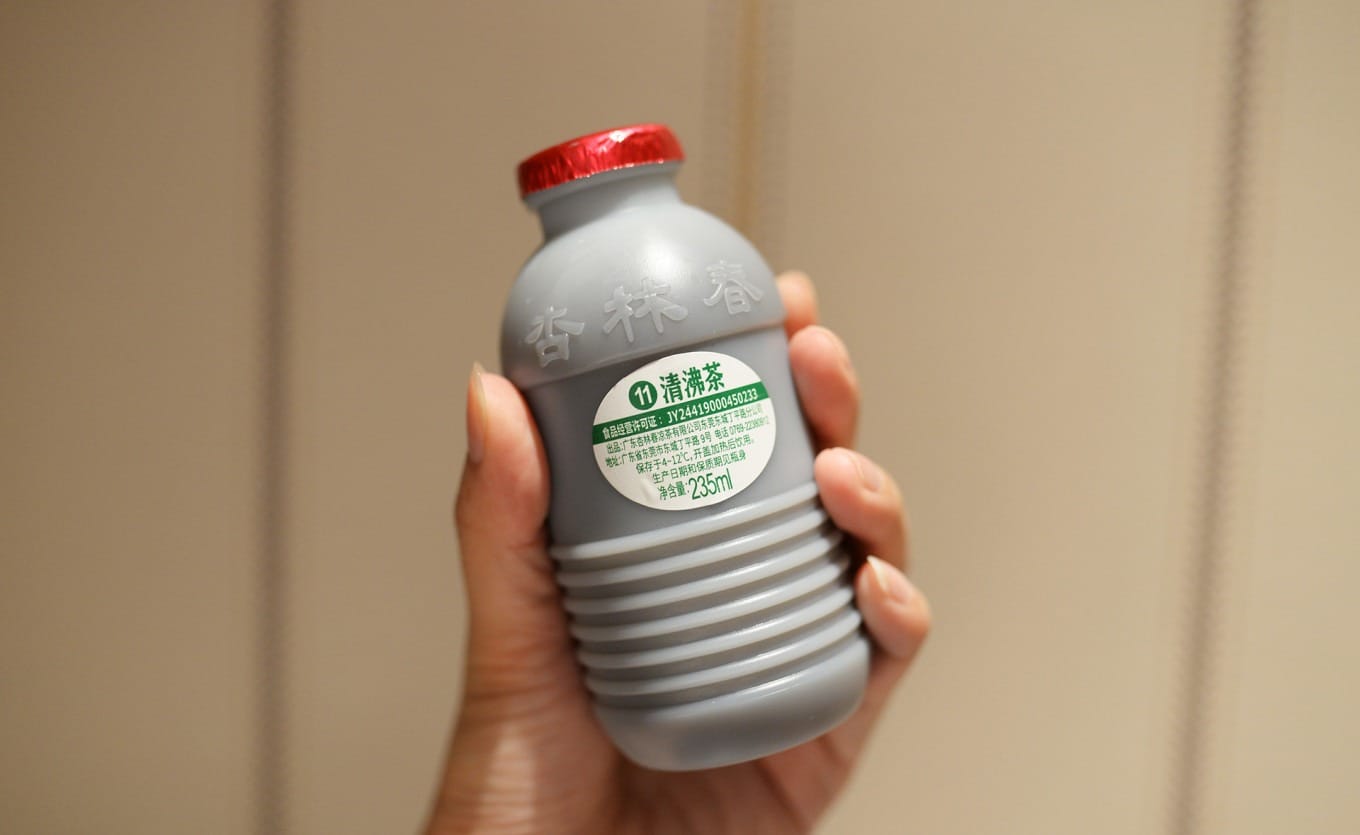
With nearly thirty varieties of liang cha, each with its own specific benefits, Xinglin Chun caters to a range of health concerns. Staff at Xinglin Chun are well-versed in traditional medicine and can recommend the perfect brew based on your symptoms. For instance, if you’ve indulged in the fiery flavors of Dongguan’s roast goose, you might be advised to try the Ge Hong Re Qi Qing, a herbal tea with a milder taste that’s easier on the palate.

For a sweeter option, consider the Qiu Li Pi Pa Gao, a syrup made from pears and loquats that’s known for its soothing properties for the lungs and relief from coughs. Enhance the experience by adding a touch of honey for a delightfully sweet and refreshing taste.

If you require a stronger remedy, the Qing Fei Cha is a more potent option, particularly effective for dry throats and coughs. However, its stronger flavor might be an acquired taste, so it’s best to approach this one with an open mind.
- RestaurantXinglin Chun (Zhenhua Road Branch)
- Address东莞市振华路店 (Dongguan Zhenhua Road)
- Recommended dishes葛洪热汽清 (Ge Hong Re Qi Qing), 秋梨枇杷膏 (Qiu Li Pi Pa Gao), 清沸茶 (Qing Fei Cha)
- Average spend10元 (CNY 10)
Practical Travel Tips for Dongguan
When planning your trip to Dongguan, situated at the heart of the Pearl River Delta, you’ll find that while there’s no local airport, the city’s intercity and high-speed rail connections are quite extensive. Conveniently located between Guangzhou and Shenzhen, both Guangzhou Baiyun Airport and Shenzhen Bao’an Airport offer direct bus services to Dongguan. However, as a typical ‘direct-administered city’ with twenty-eight towns and four streets, each area in Dongguan functions as an independent unit, spread out with considerable distance between them. With only one metro line in operation, relying on public transportation within the city can be challenging. In fact, Dongguan boasts a higher car ownership rate than both Guangzhou and Shenzhen, making it the top in Guangdong Province. Therefore, for exploring various towns and streets in Dongguan, renting a car is highly recommended.
As for accommodations, Dongguan’s hotel industry, once a beacon of prosperity, still offers a wide range of options despite recent changes. Whether you’re looking for luxury or budget stays, you’ll find hotels to suit every taste. If you have ample time, consider spending a night or two in different towns such as Nancheng, Houjie, Dalingshan, and Shilong to get a feel for the local culture and cuisine.
- Consider renting a car to navigate Dongguan’s towns and streets for a more flexible travel experience.
- Explore a variety of accommodations across different towns to experience the local flavor.
Enjoyed this article? Consider buying me a coffee to support more content like this!
💖 0 people have clicked to support this article.