Slow Travel Yunnan: Two Weeks in Dali, Shaxi and Xizhou
A practical, image-rich guide you can actually use.
Introduction: Discovering Yunnan’s Softness
If Yunnan had a defining prefix, it would be ‘softness.’ This province offers a uniquely comfortable and relaxed atmosphere that travelers can experience across its diverse cities. While destinations like Kunming, Lijiang, Jianshui, Mangshi, and Tengchong each have their charm, Dali stands out as the epitome of Chinese leisure—a place often described as the ‘poetry and distant horizon’ of travel dreams.
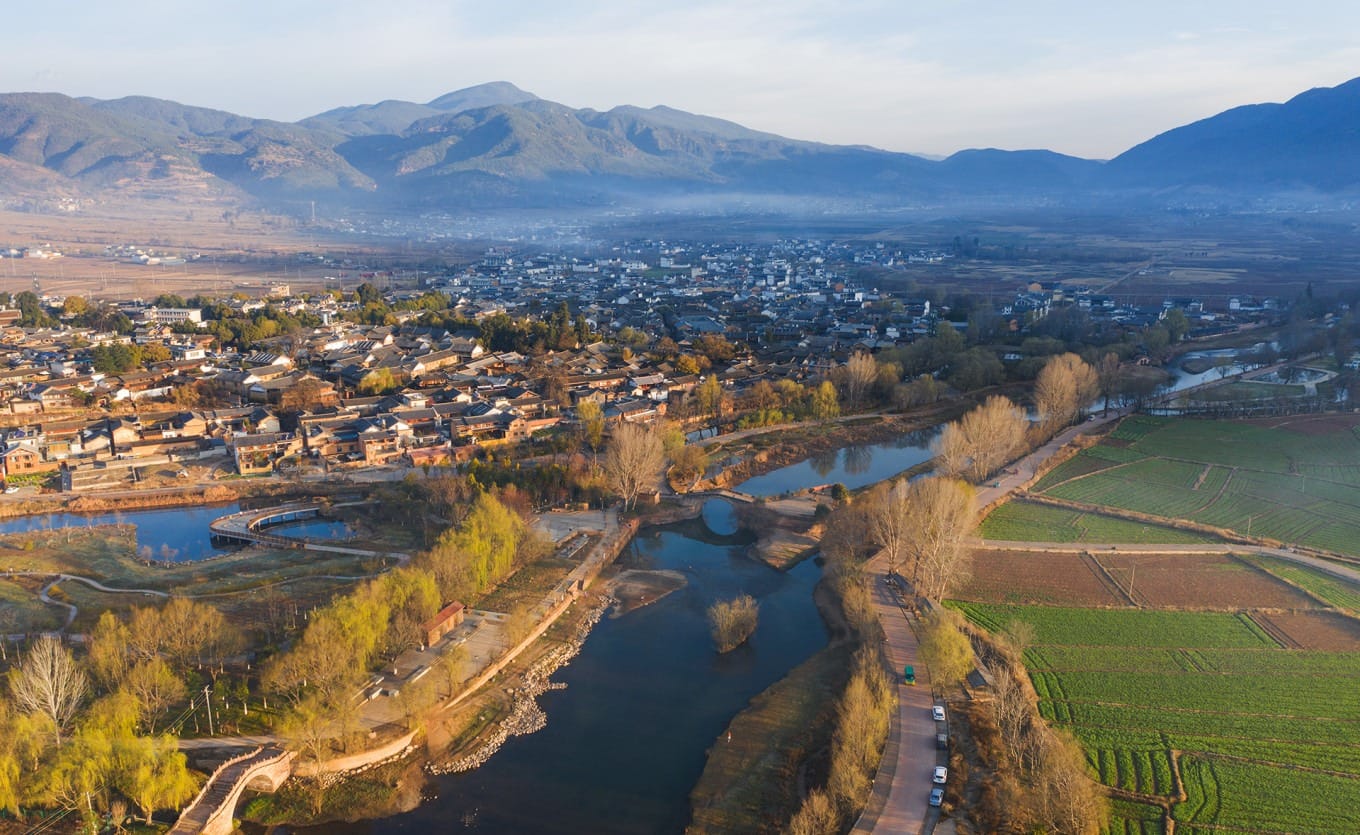
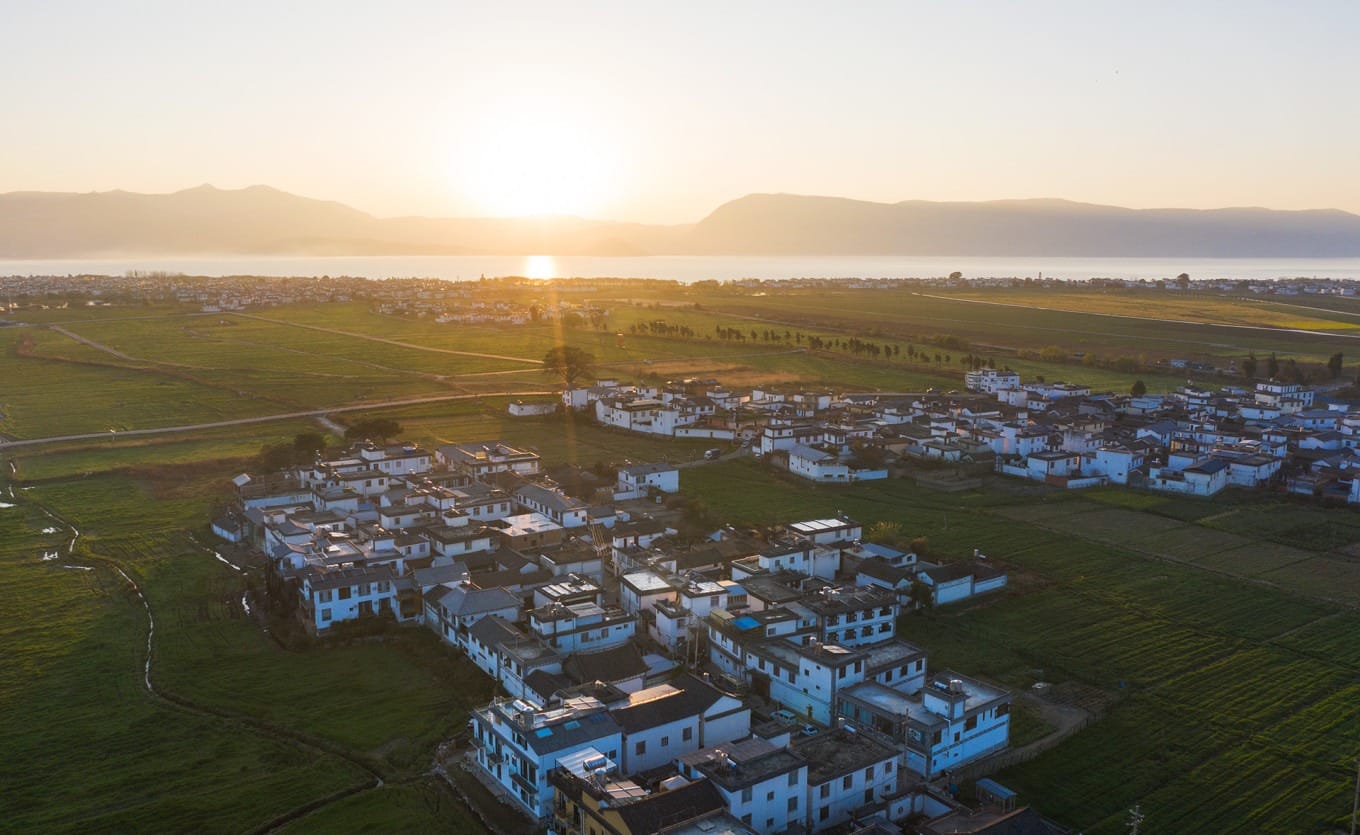
To truly appreciate Dali, consider slowing down. Instead of rushing through the popular Erhai Lake circuit or the bustling Dali Ancient Town, you can immerse yourself in the quieter pace of three surrounding ancient towns: Shaxi, Xizhou, and Weishan. These destinations reveal a more authentic, less commercialized side of the region.

Shaxi (沙溪) is a quiet,古朴 (ancient) town that escaped modern development, earning it the title of ‘the only surviving ancient market on the Tea Horse Road.’ Though a new highway has increased accessibility, its remote location still filters out hurried visitors, preserving a tranquil atmosphere.
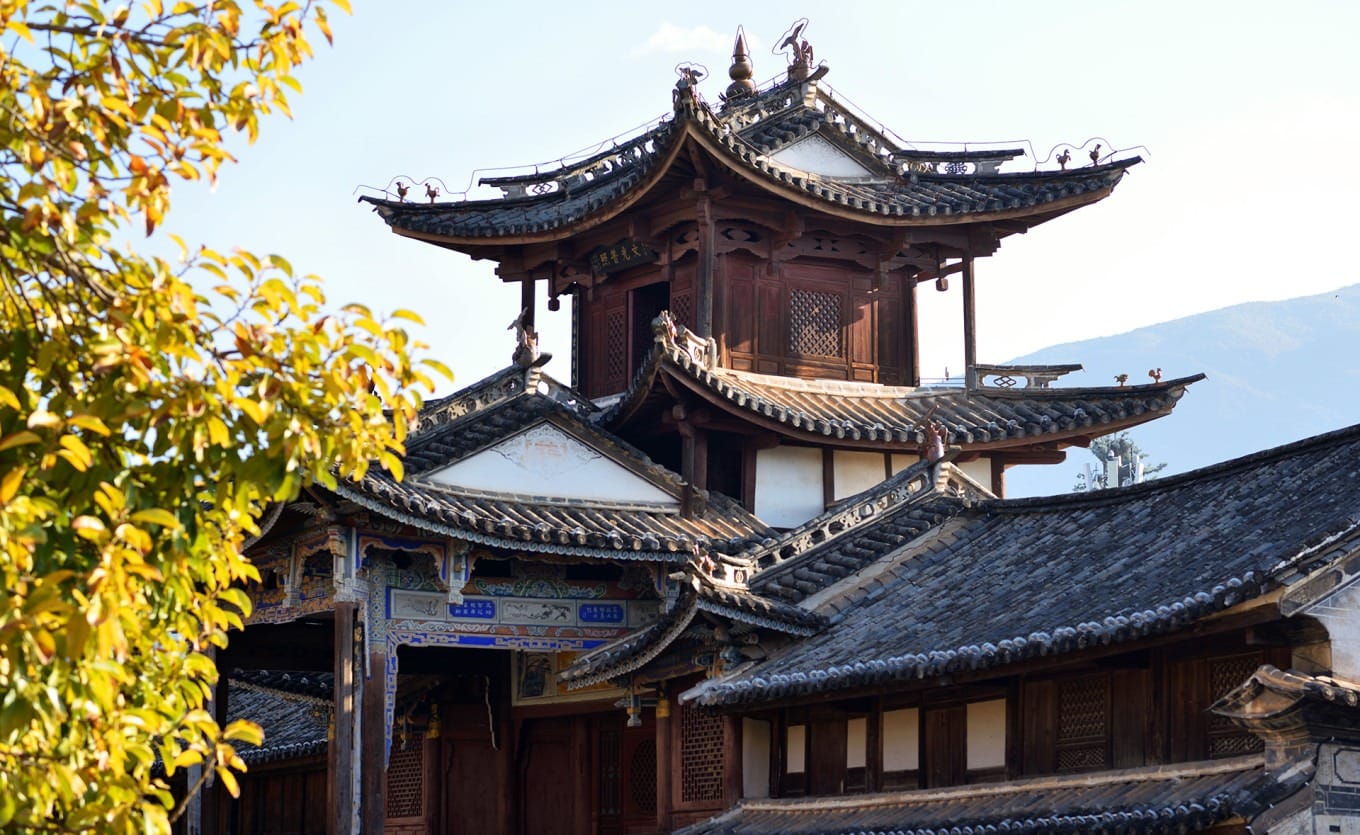
Xizhou (喜洲) is famous for its poetic ‘wind-blown wheat waves,’ which draw visitors seeking romance and 治愈 (healing). Beyond this natural beauty, the town holds deep history, with over a hundred grand courtyards hidden among everyday life. Exploring these offers a chance to unlock Xizhou’s lesser-known side, like visiting a living museum.
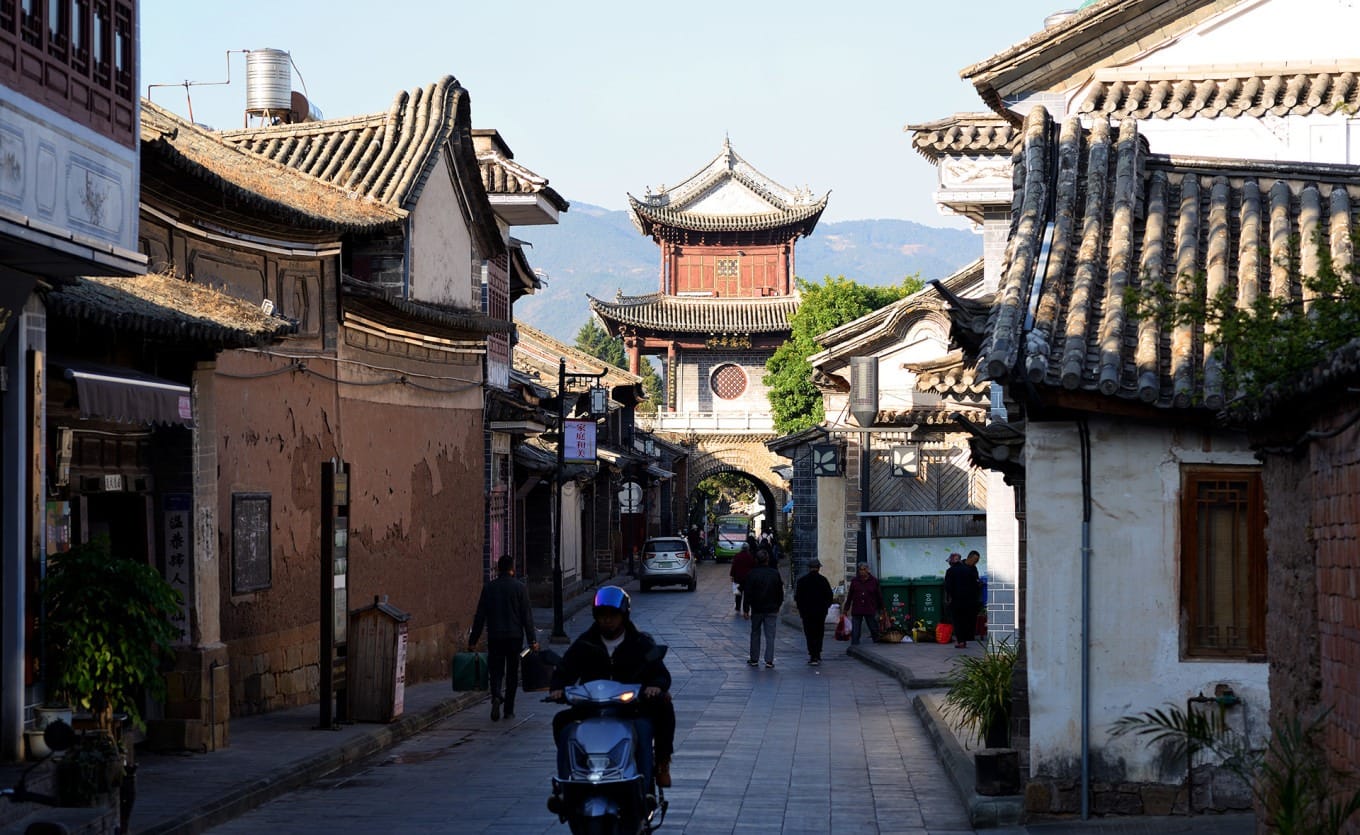
Weishan (巍山), the birthplace of the Nanzhao Kingdom, feels even more traditional due to fewer crowds. This well-preserved ancient town is 淳朴自然 (simple and natural) compared to Dali Ancient Town. Independent travelers visit, but local life continues at its own relaxed pace, undisturbed.
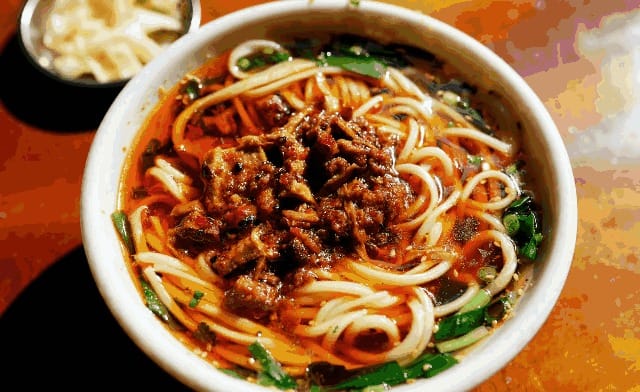
While enjoying Dali’s slow tempo, don’t miss its authentic 美食 (cuisine). The region’s higher altitude yields unique ingredients, and multi-ethnic 融合 (fusion) is reflected in its dishes. In Shaxi, Xizhou, and Weishan, restaurants mostly serve local fare, with some Halal or Western options—most are affordable and generous in portion. Weishan, in particular, is renowned as one of ‘China’s Famous Snack Towns’ alongside Shaxian, offering delicious and comforting eats for every palate.
In short, if you’re seeking 松弛感 (a sense of relaxation), these towns are the perfect choice for your Dali itinerary.
Preview: Shaxi, Xizhou, and Weishan
Your journey through Dali’s ancient towns begins with Shaxi, a historic stop on the ancient Tea Horse Road. Nestled among mountains and bisected by the Heihui River, a tributary of the Lancang, this town centers around Sideng Street, once a bustling hub for caravans. A short walk along the riverbank leads you to the elegant, single-arch Yujin Bridge.
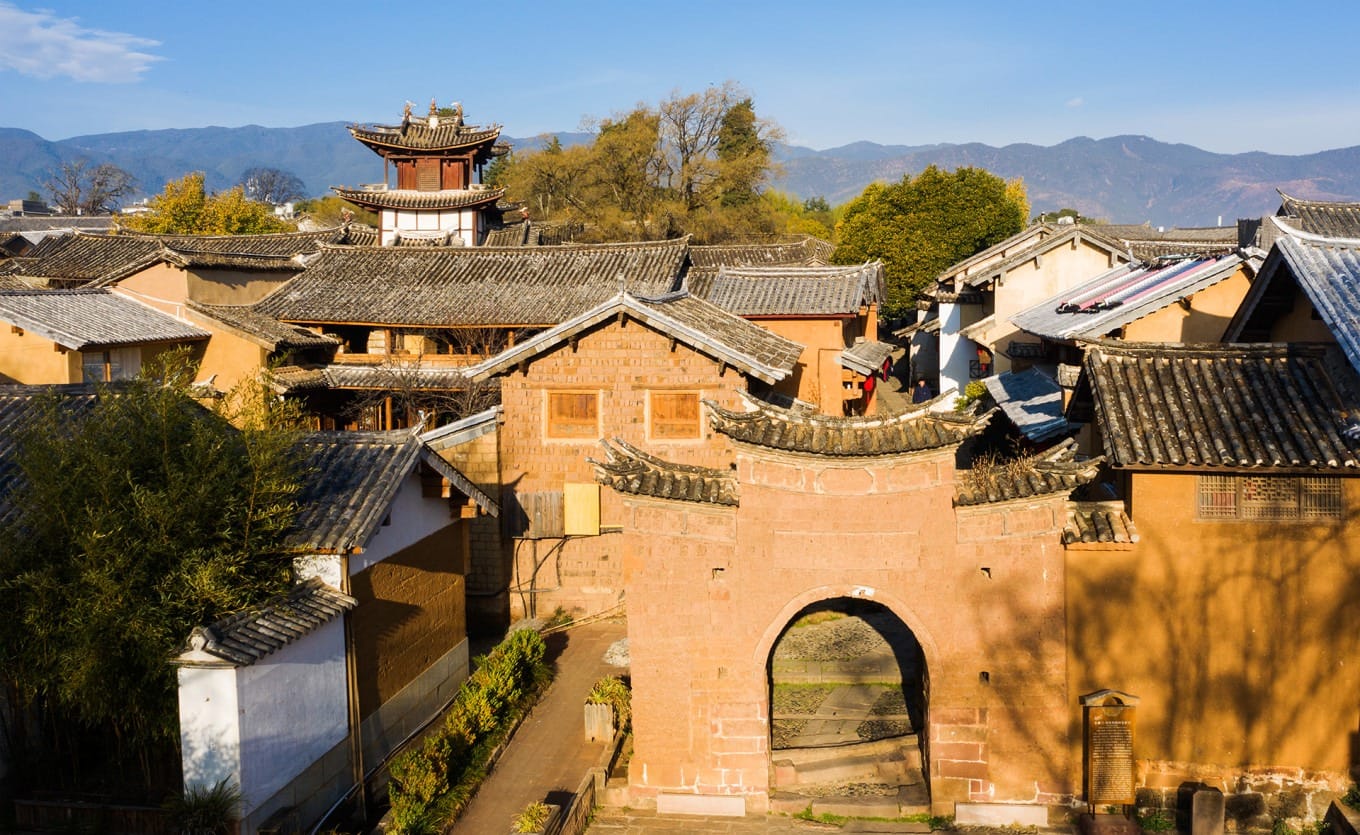
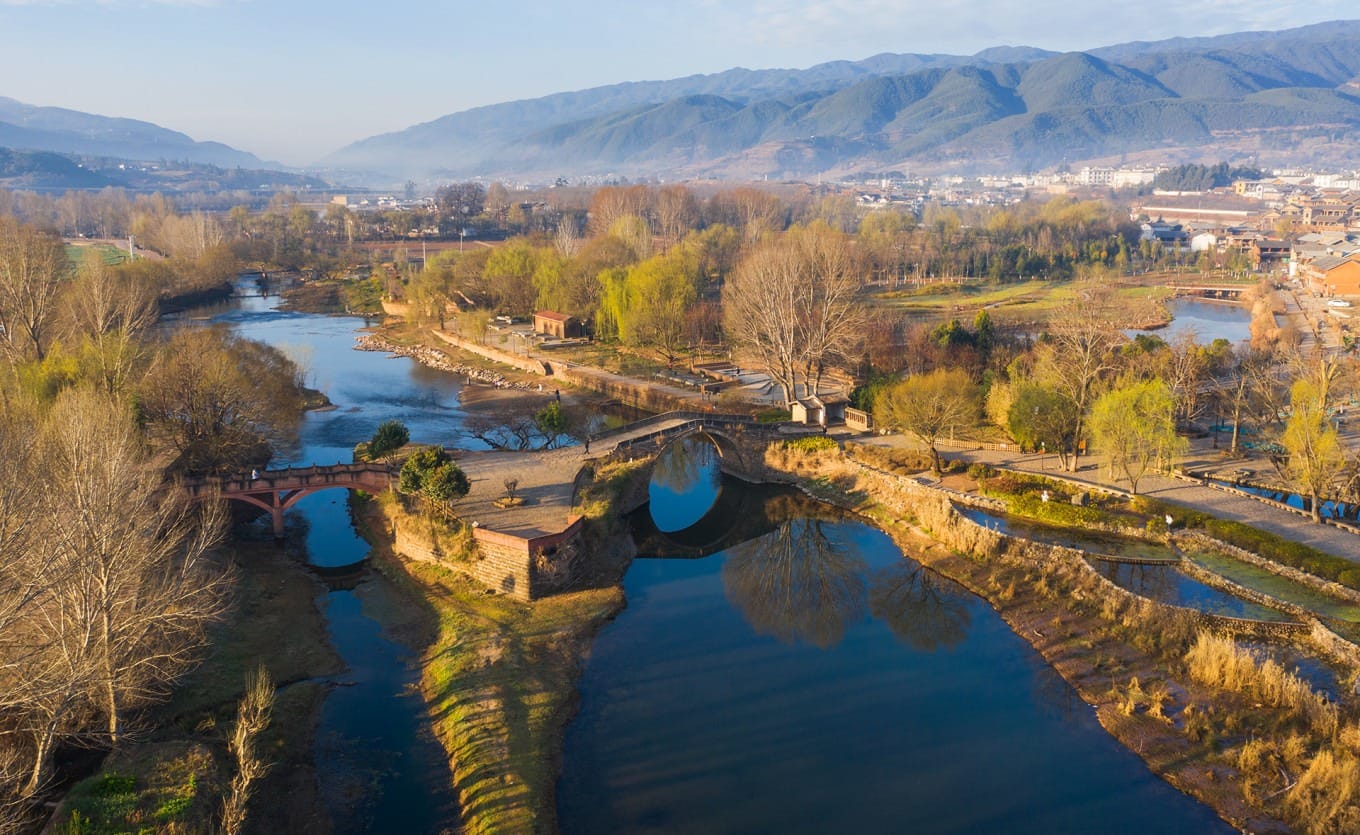
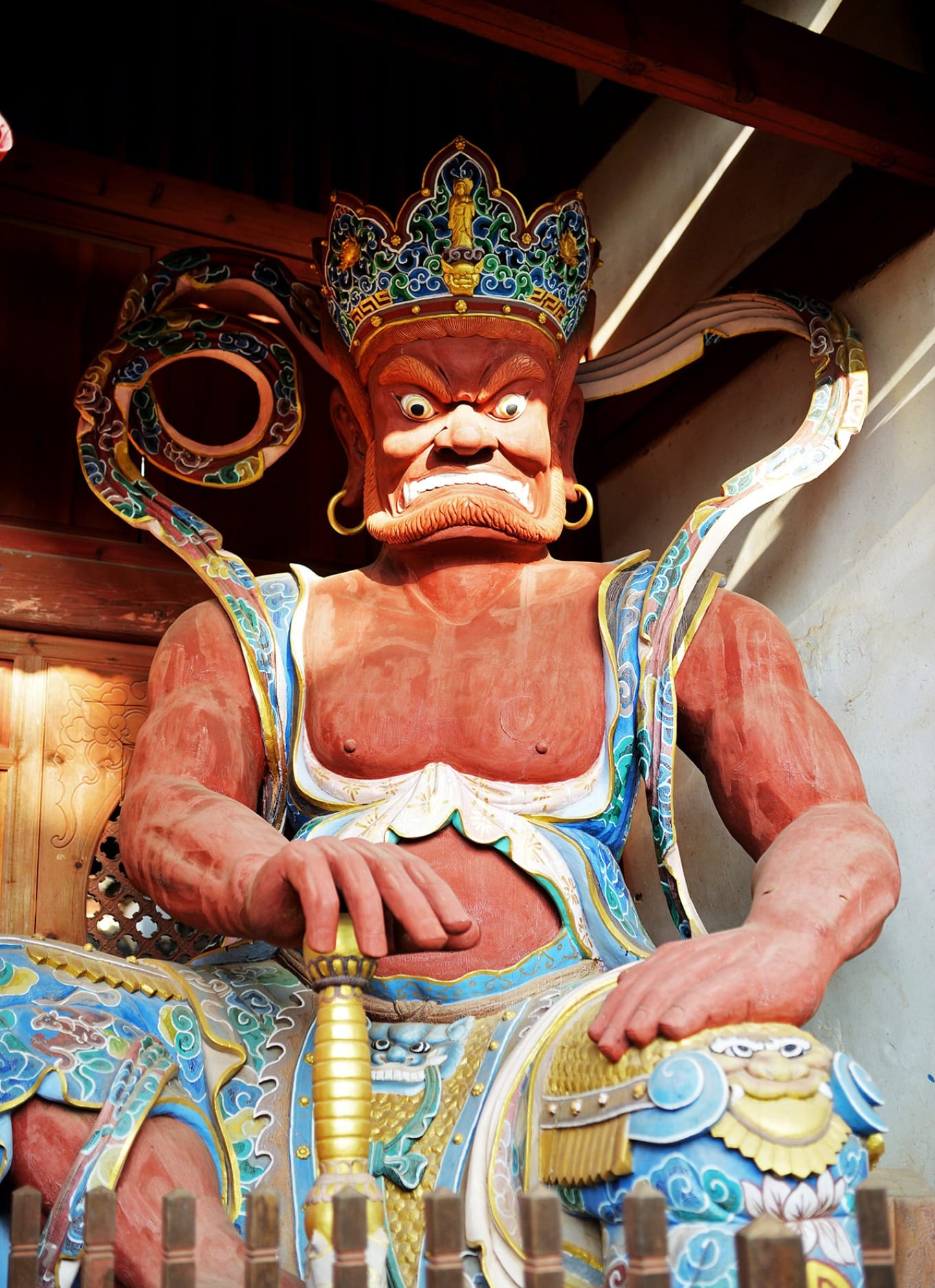
For centuries, Sideng Street was a vital marketplace, especially for salt, with a non-stop flow of mule caravans. You can explore this legacy at Xingjiao Temple on the west side of Sifang Square, the only remaining Ming-era Bai ethnic Azhali Buddhist temple in China. Don’t miss its sixteen Ming dynasty murals under the eaves.
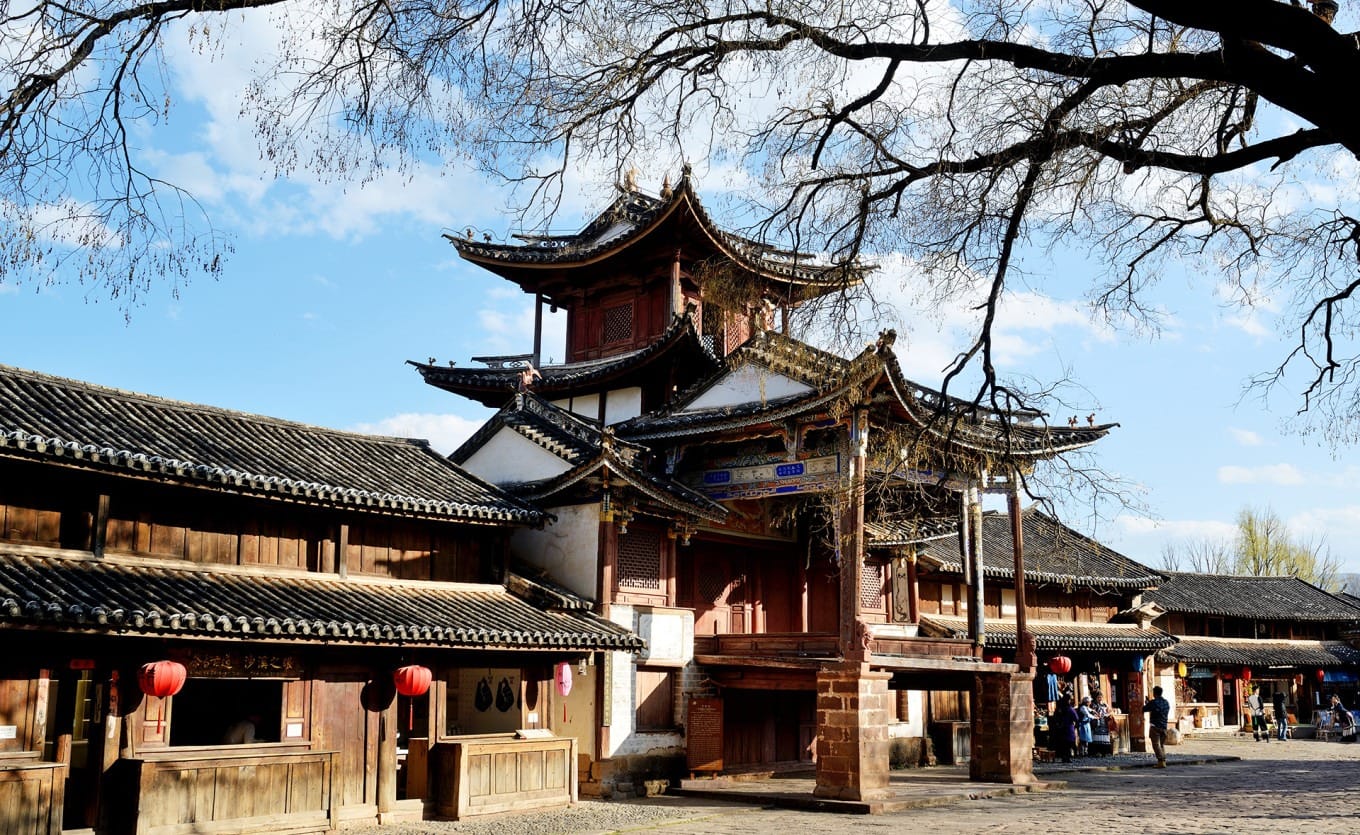
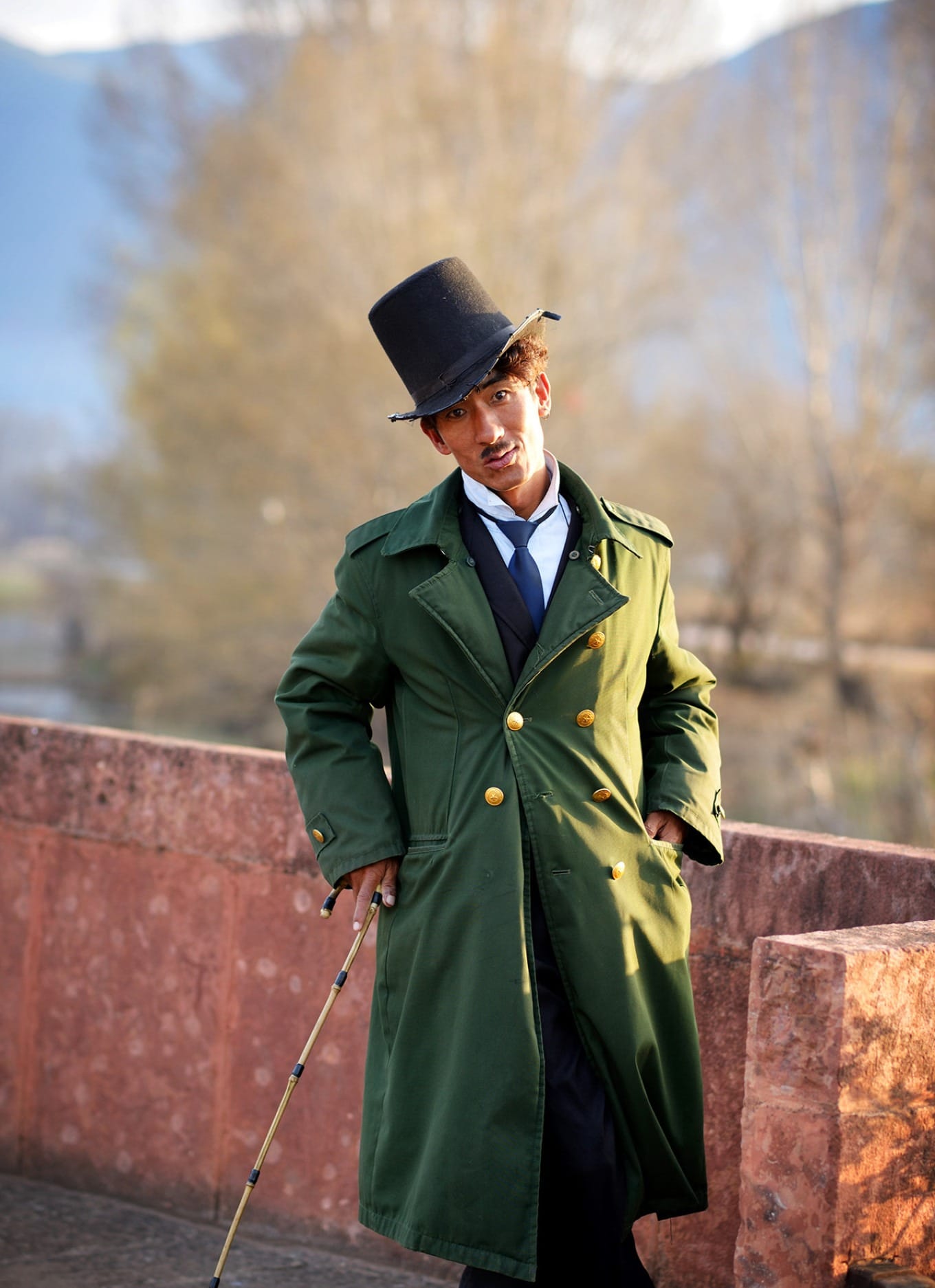
Many historic inns, or ‘horse shops’, once lined the streets. Ouyang Courtyard in Sanjia Alley was considered the ‘five-star’ accommodation for caravan traders. Keep an eye out for a local character known as the ‘Shaxi Chaplin’—a mustachioed performance artist often seen in a bowler hat. For a true local experience, try to visit on market day, a weekly tradition that continues the town’s barter heritage.
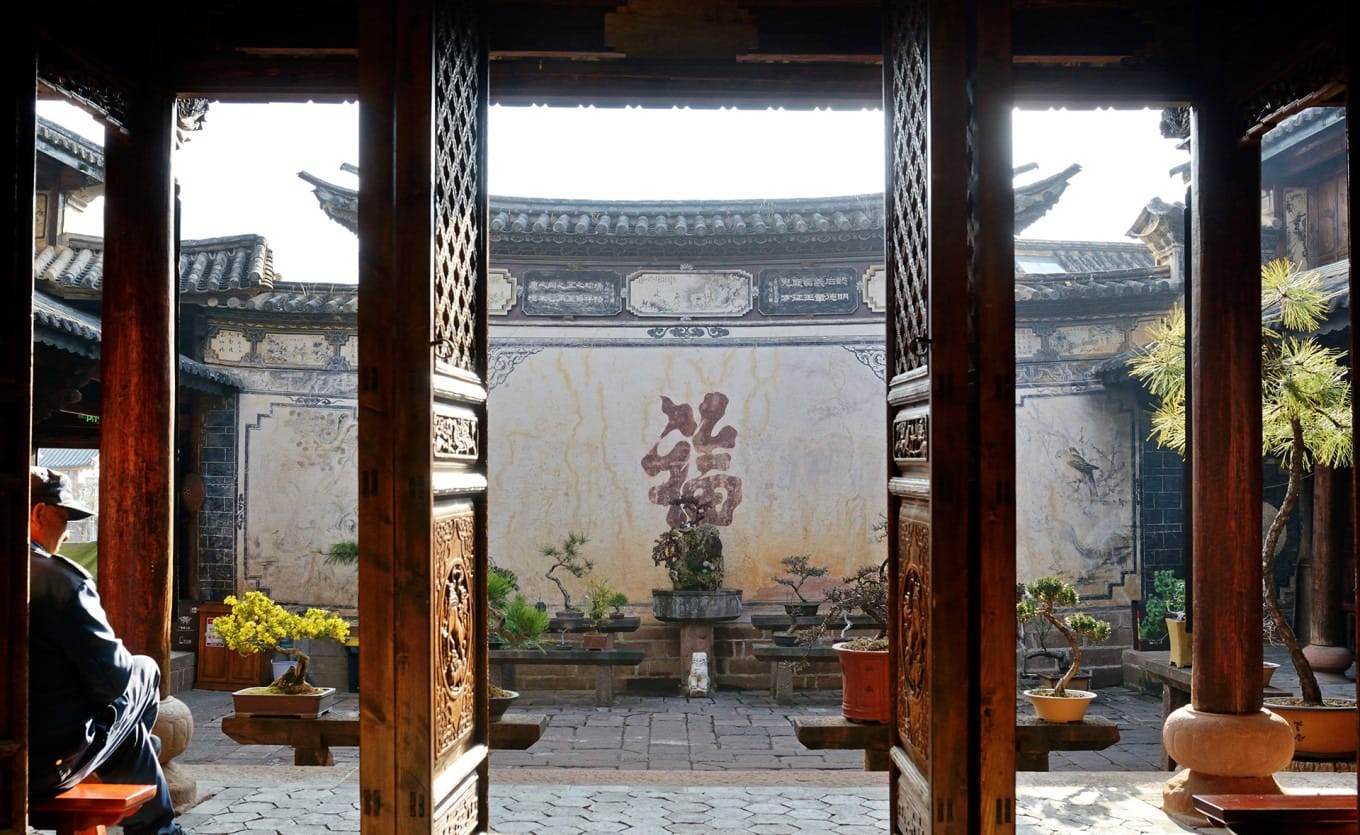

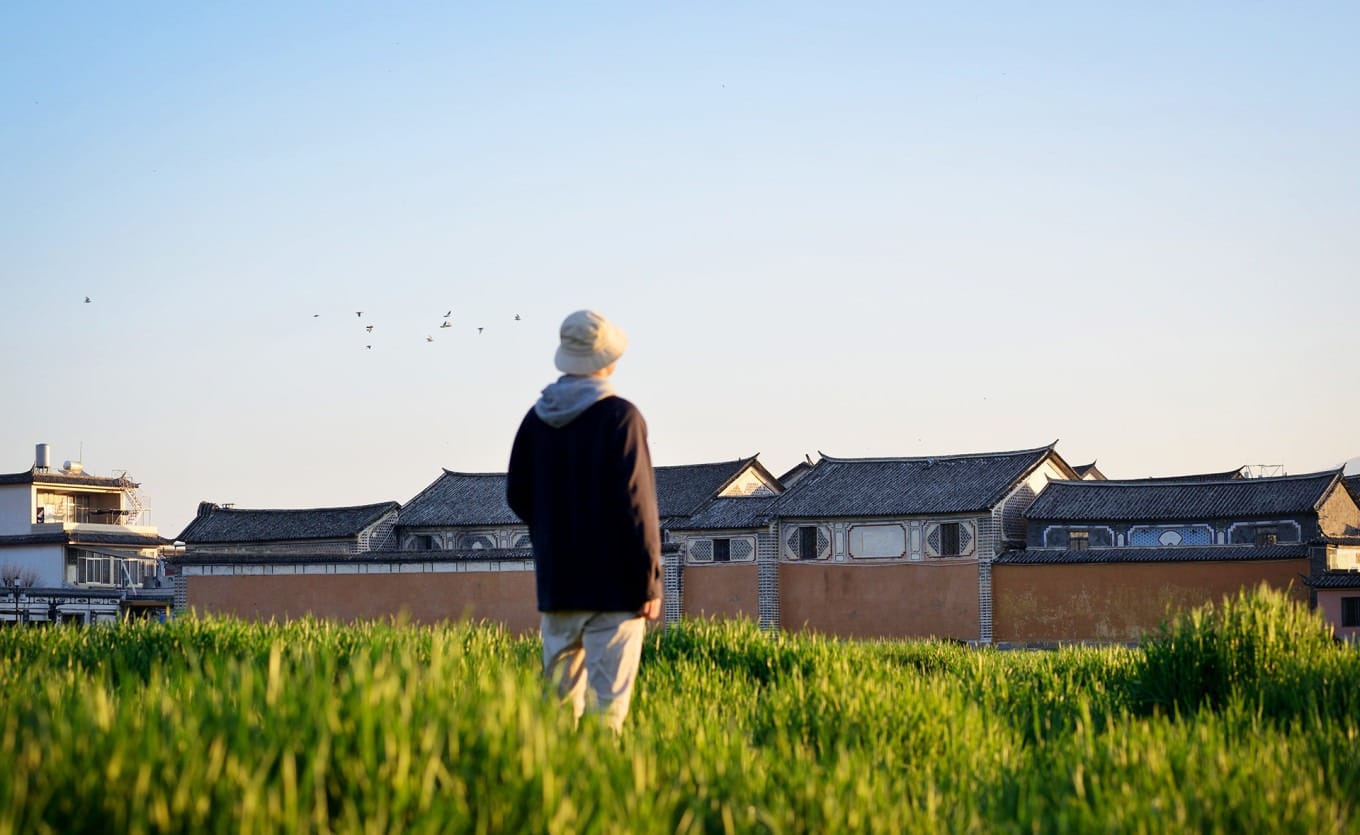
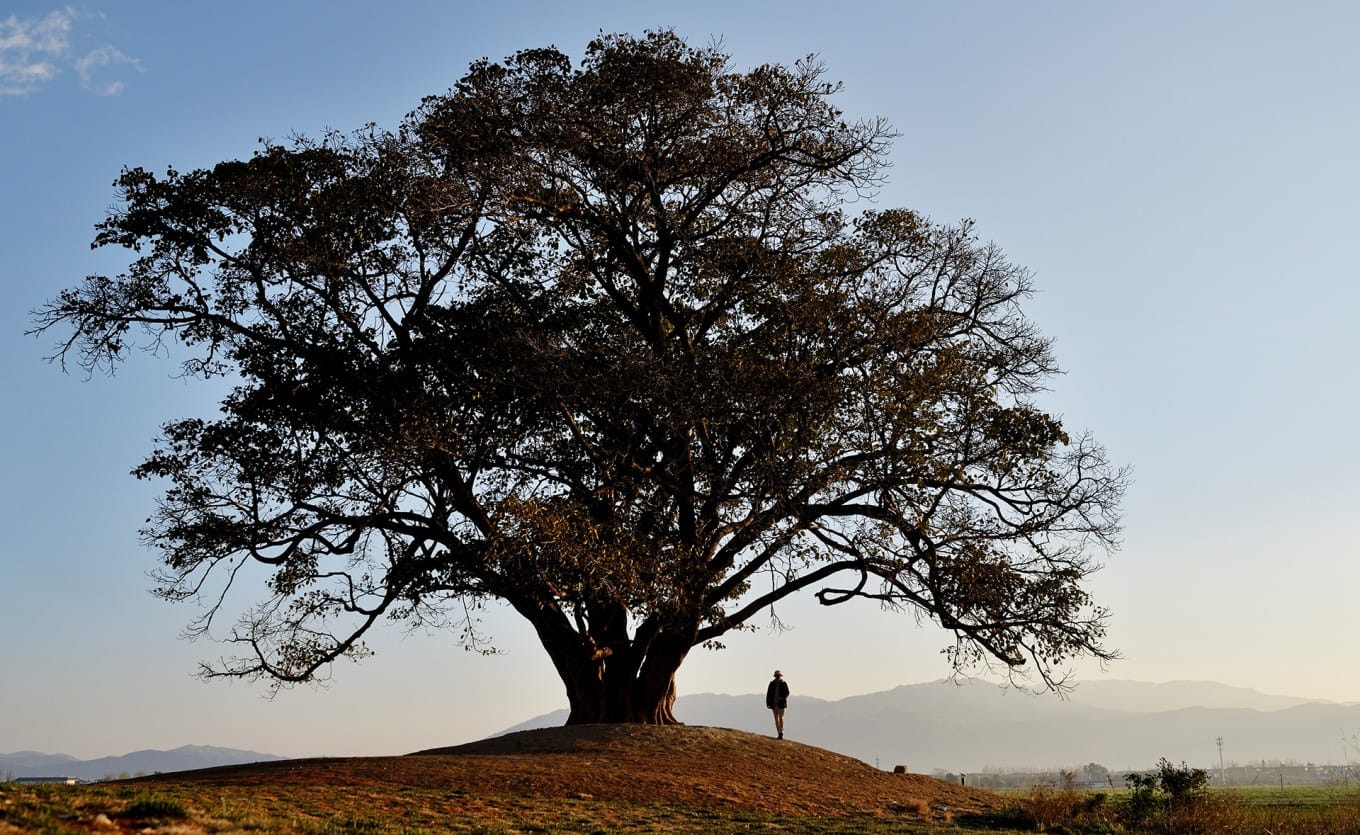
A different atmosphere awaits in Xizhou, a picturesque town beloved for its romantic, healing vibe. Visit in the morning when golden light bathes the vast wheat fields, creating scenes reminiscent of a Studio Ghibli film. A giant tree at the entrance of Xianglong Village gained fame as the ‘tree where Xu Hongdou cried’ from the popular TV drama ‘Meet Yourself’.

Beyond its beauty, Xizhou is a living museum. It was once the center of the Nanzhao Kingdom and home to powerful merchant families. The compact town is easily walkable in about fifteen minutes across, but you’ll want to linger among its grand, time-worn mansions. Look for traces of the historic merchant guilds—the ‘Four Great Families’, ‘Eight Middle Families’, and ‘Twelve Small Families’. For tranquility, head to Haise Park (海舌公园 / Haise Park), three kilometers northeast of town. This quiet spit of land offers a peaceful lakeside escape from the busier areas.
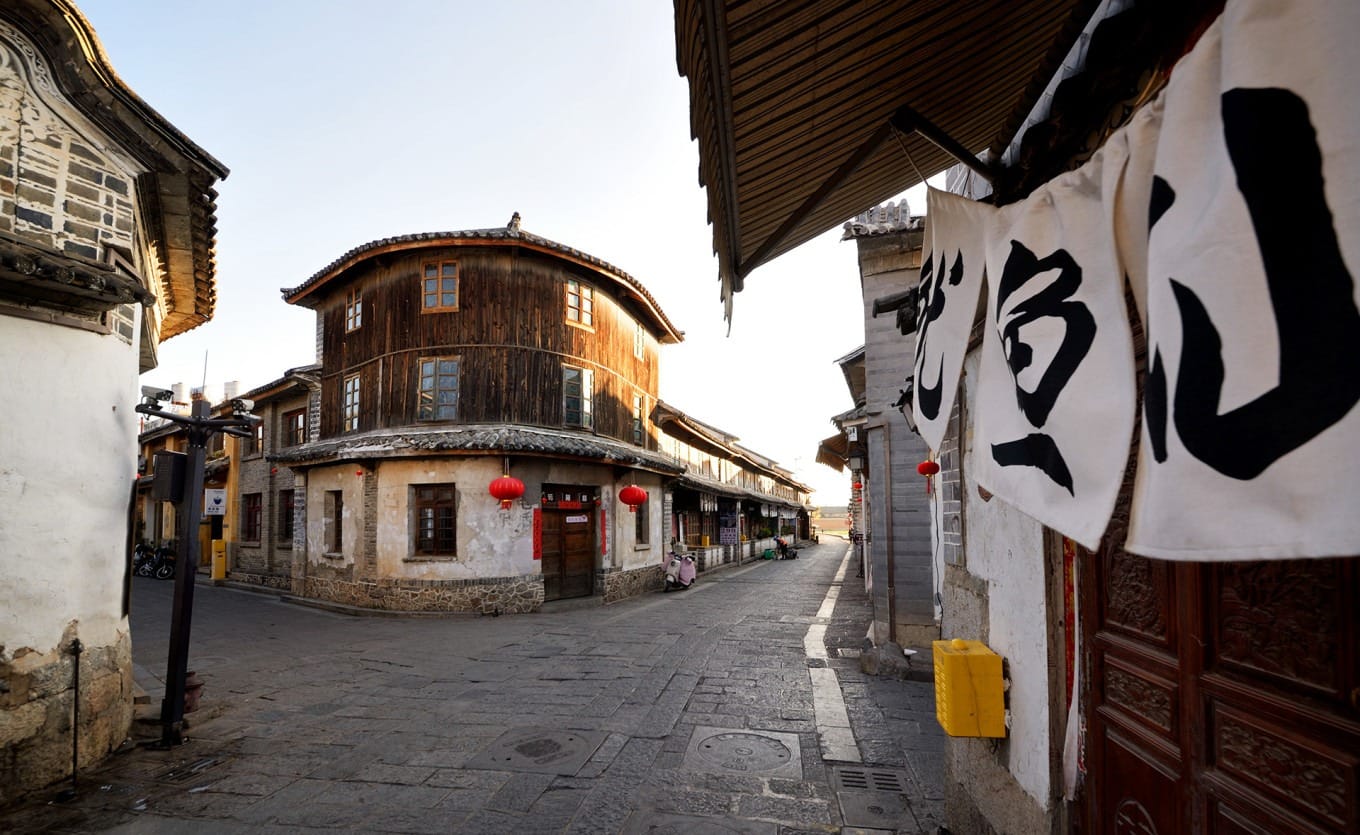
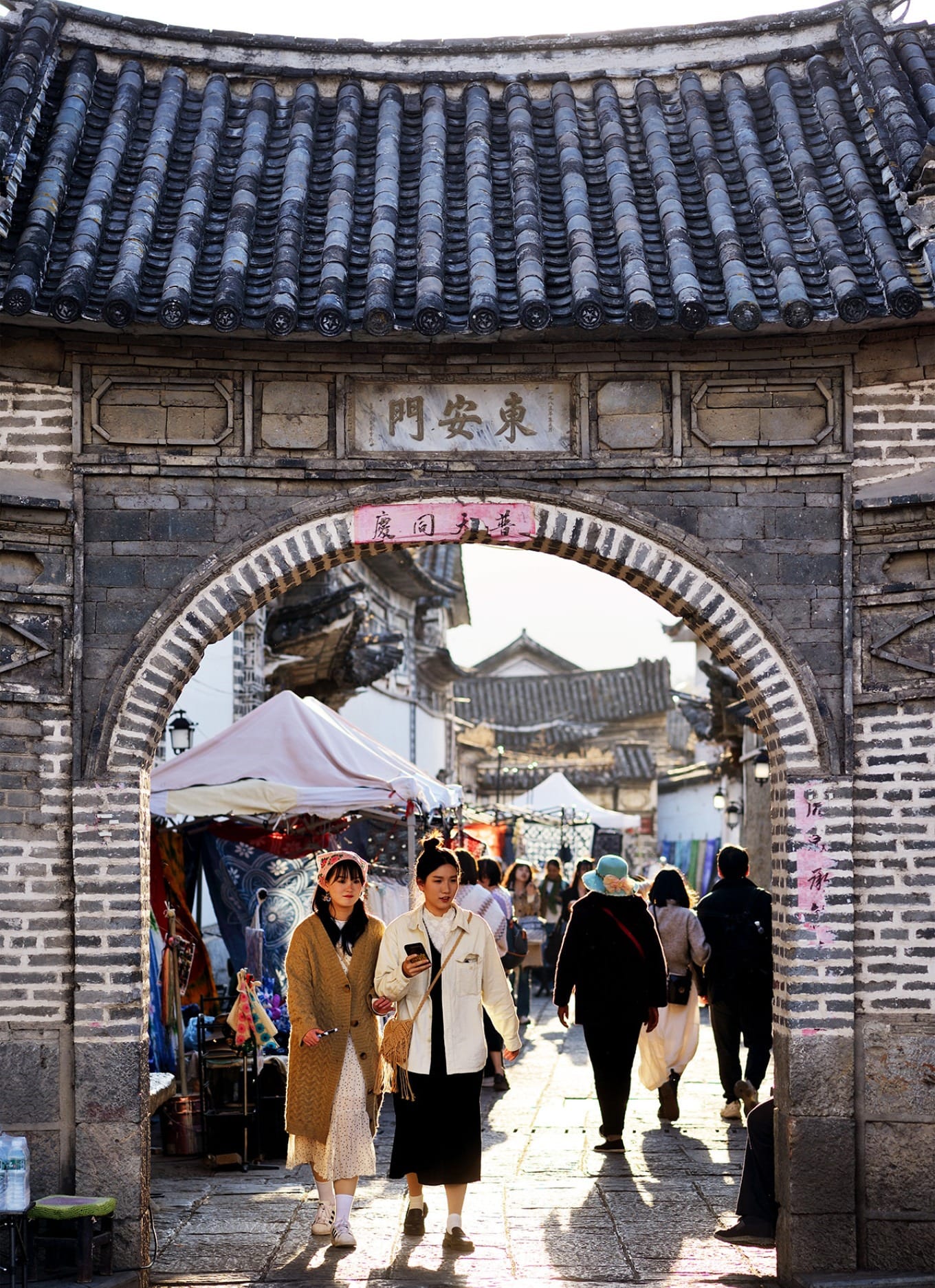
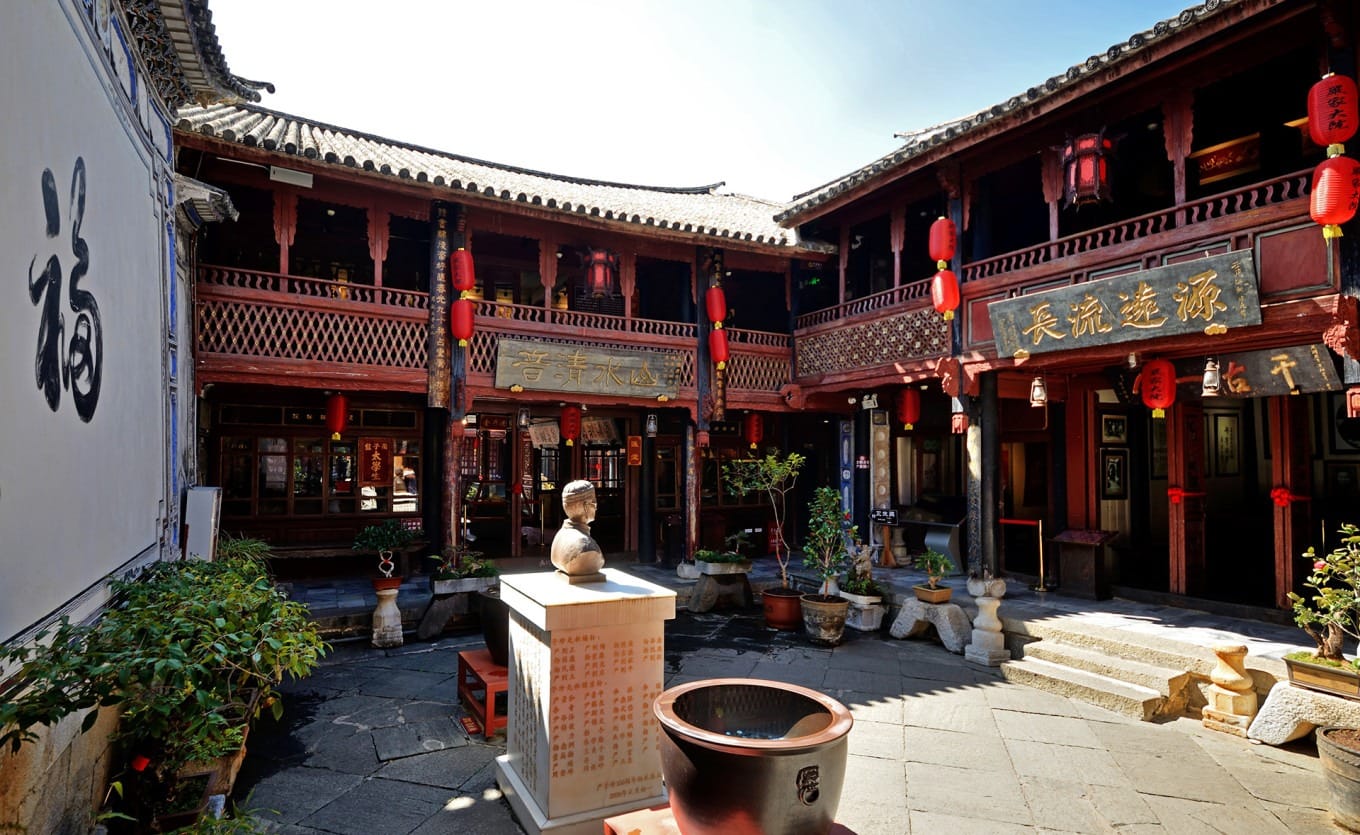

Further along the Tea Horse Road lies Weishan, a 古城 (gucheng / ancient city) that retained its peaceful, authentic character due to its remote, mountainous location. Stepping into Weishan feels like entering a genuinely lived-in old town, with a laid-back, friendly atmosphere. Architecture here largely preserves Ming and Qing dynasty styles. At the Nanzhao Museum, don’t miss the Sun Palace (太阳宫 / Taiyang Gong), an early Ming structure with Song dynasty architectural flair and elegantly upturned eaves.

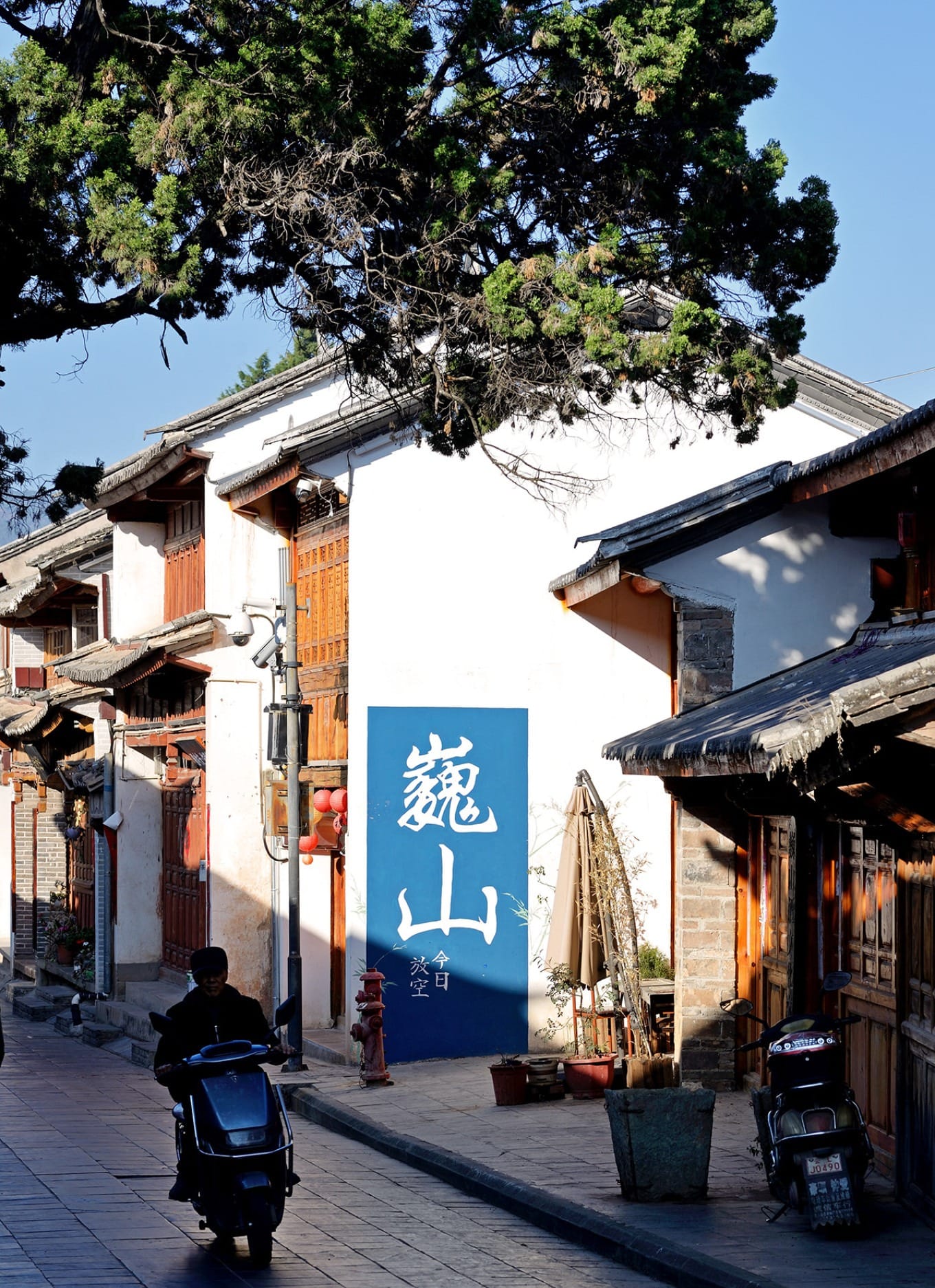
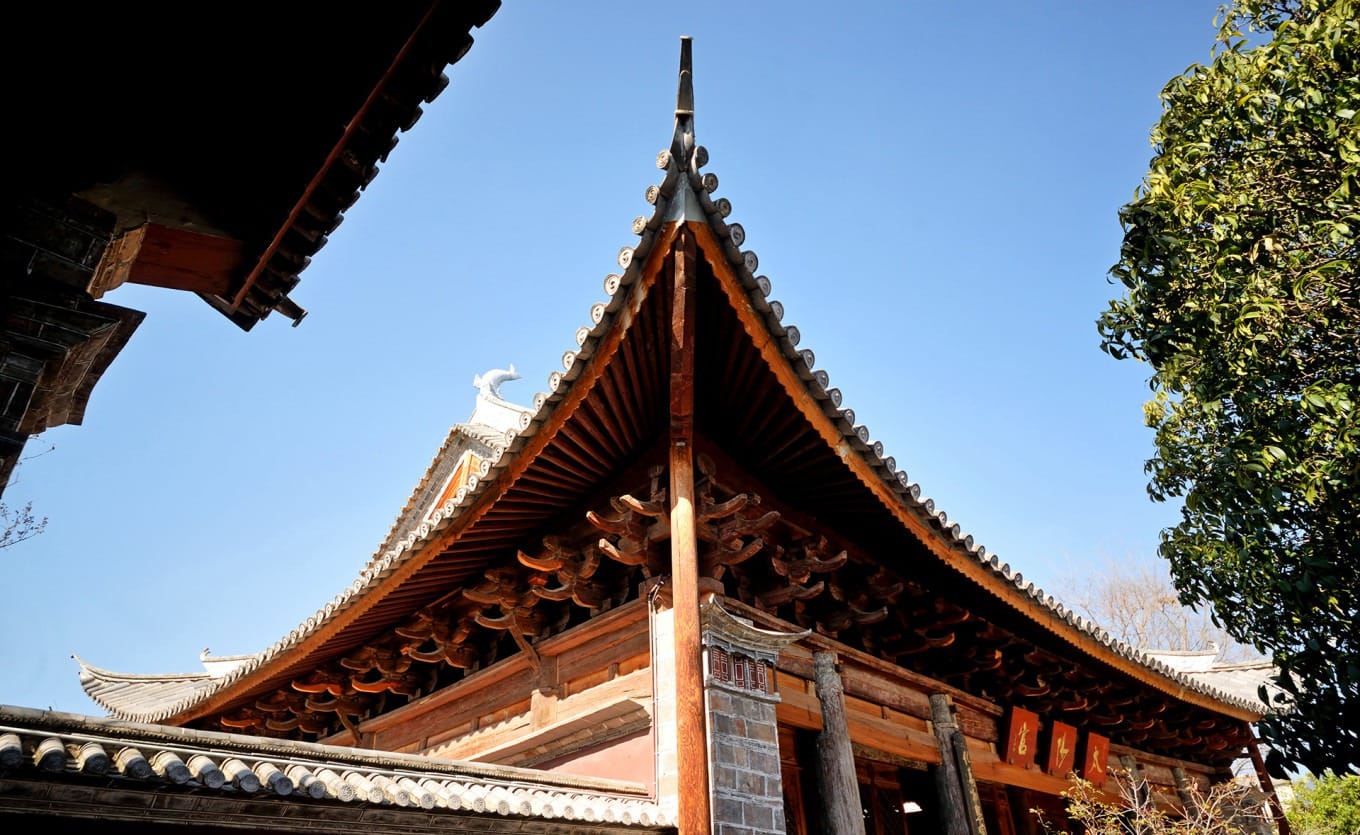
In the northeast corner of the city, visit Wenhua Academy (文华书院 / Wenhua Shuyuan), home to the Yuhuang Pavilion’s main hall—the largest and most complete Qing dynasty hall remaining in Weishan County. Compared to Dali Old Town, Weishan sees fewer tour groups and maintains a stronger traditional vibe, where local life continues undisturbed.
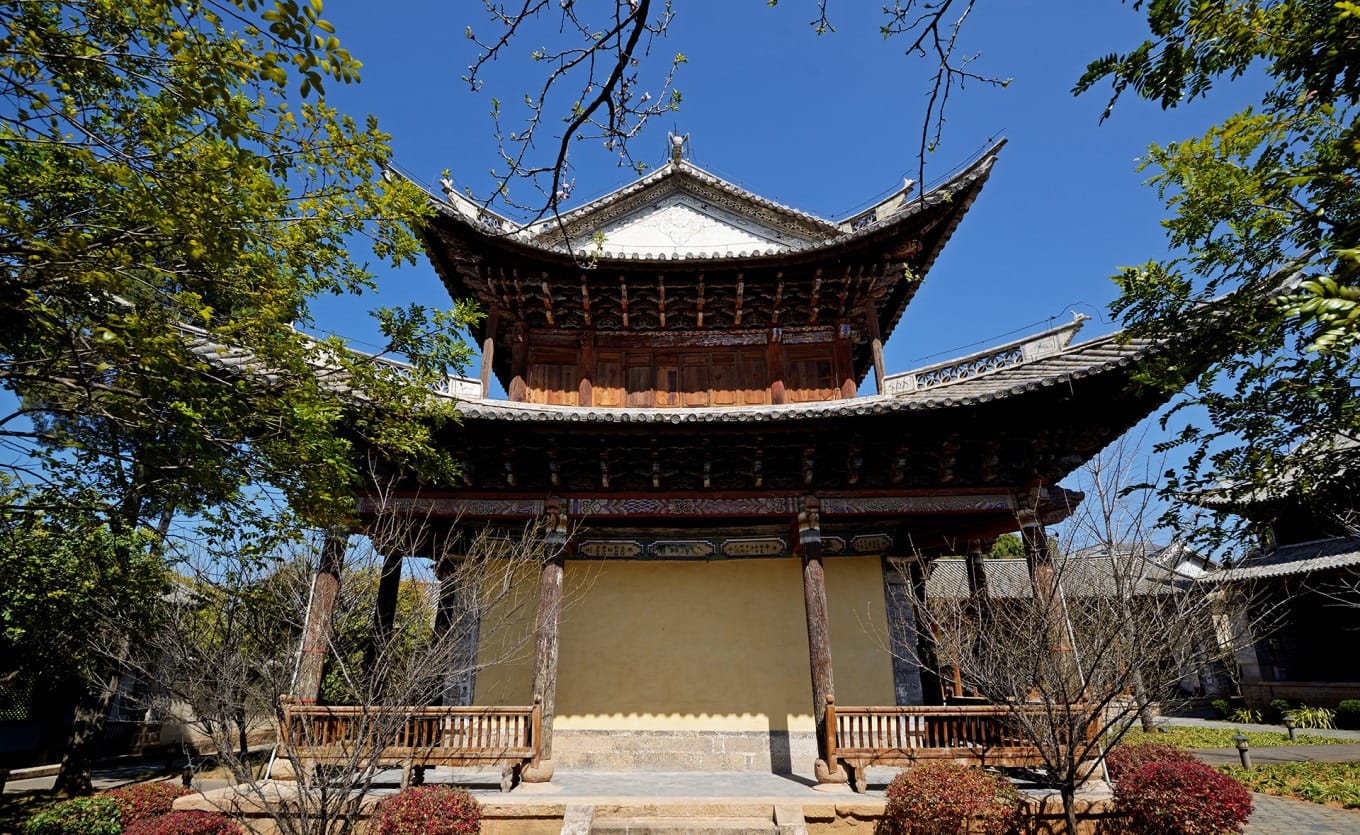
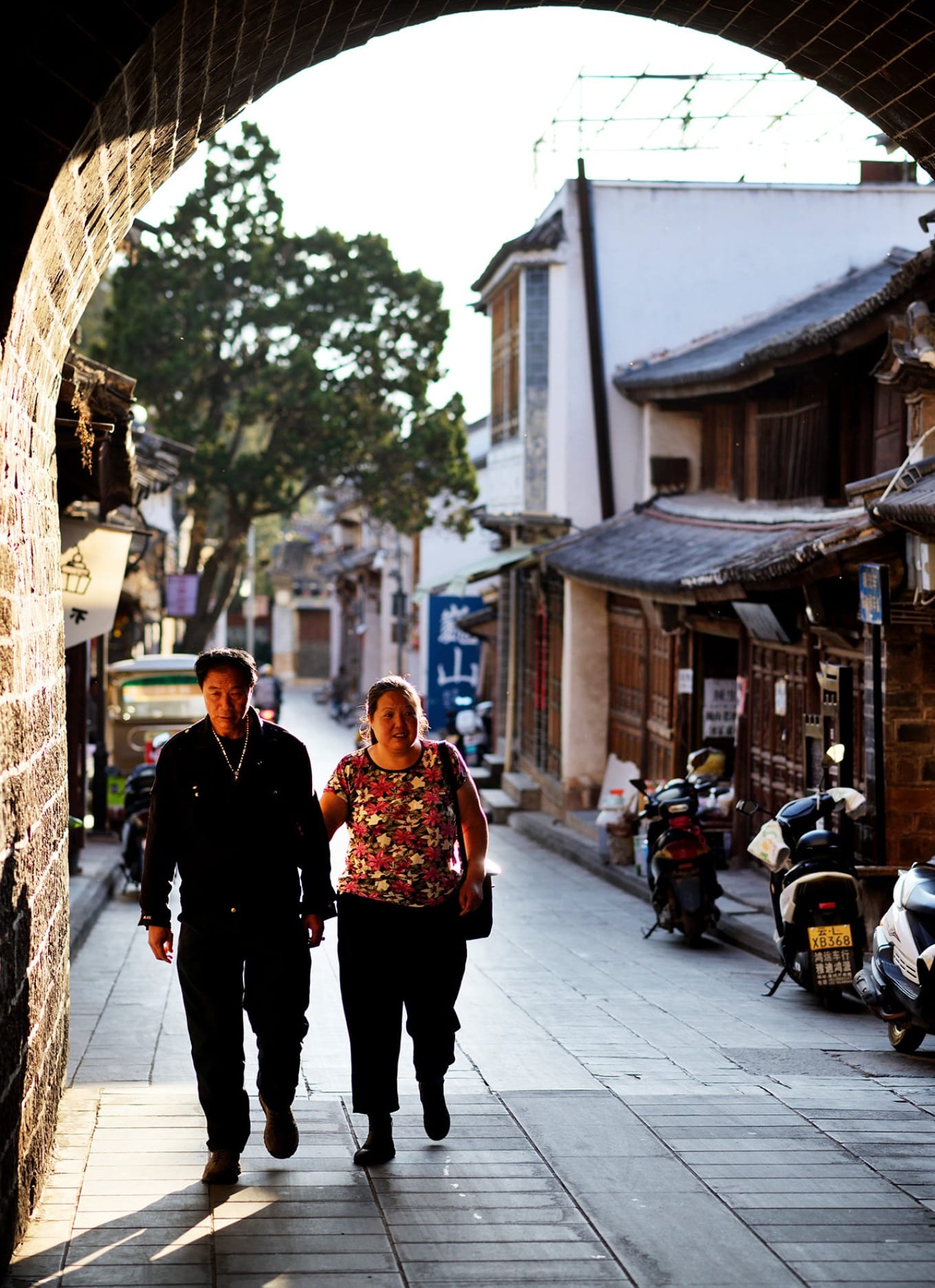
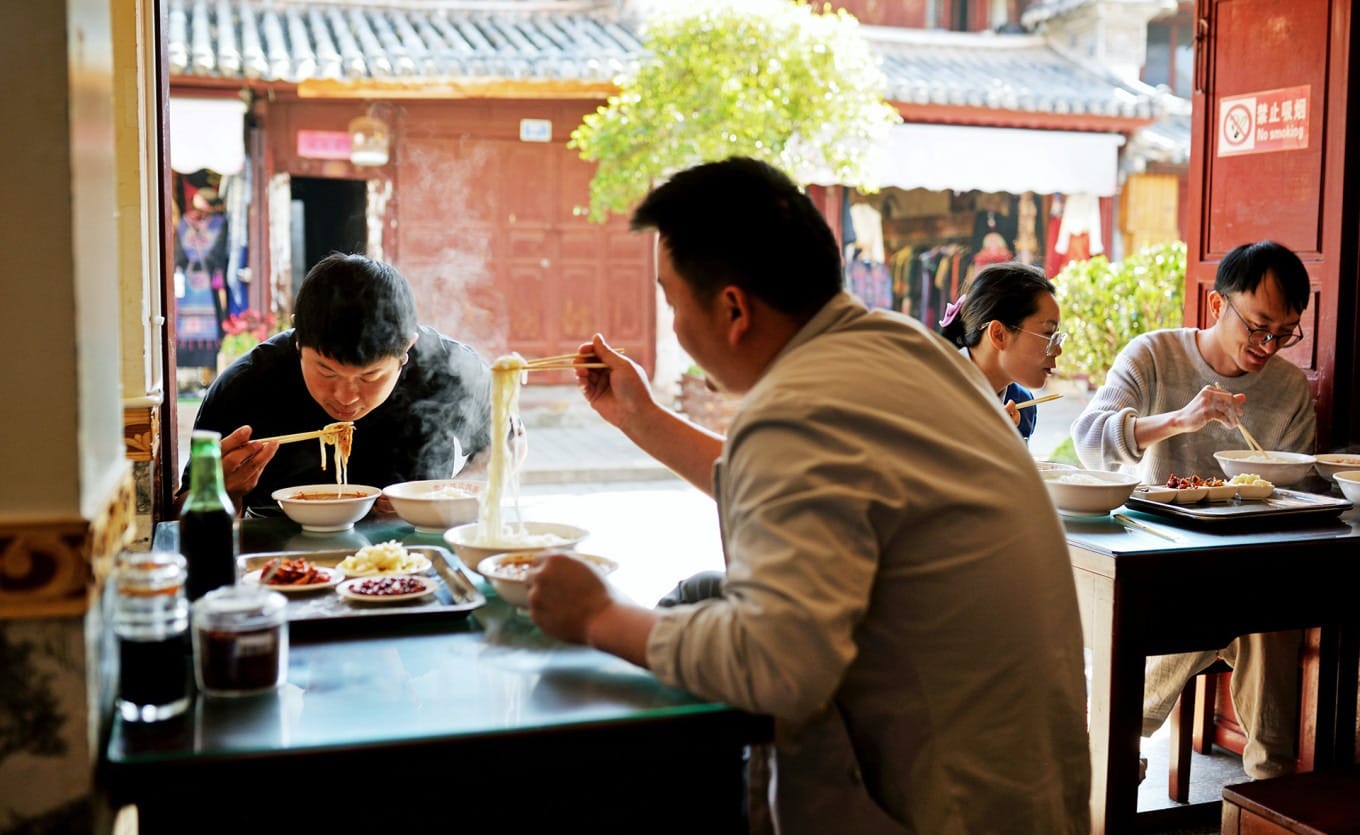
Food is a major highlight in Weishan, officially recognized as one of China’s Famous Snack Towns alongside Shaxian. The variety and quality of local 小吃 (xiaochi / snacks) are astounding, making culinary exploration a essential part of your visit.
Shaxi Ancient Town: A Timeless Escape on the Tea Horse Road
If you’re looking to escape the crowds of Dali Old Town, consider venturing further north to the serene Shaxi Ancient Town (沙溪古镇). Located about 80 kilometers north of Dali in Jianchuan County (剑川县), Shaxi offers a glimpse into a slower, more authentic pace of life. The journey ends at the Shaxi Tourist Center, just a short walk from the historic Siden Street (寺登街), where you’ll immediately be enveloped by an atmosphere of ancient tranquility.
Shaxi was a vital resting point and trading post on the ancient Yunnan-Tibet Tea Horse Road. Nestled among mountains, the town is cradled by a valley through which the Heihui River (黑惠江), a tributary of the Lancang River (澜沧江), flows from north to south.
The town itself is compact and walkable; you can traverse from east to west in about ten minutes. While there are only a handful of formal attractions, primarily clustered around the central Square Street (四方街), Shaxi isn’t really about ticking off sights. It’s a place to unwind. Meander along its crisscrossing flagstone paths, admire the well-preserved old houses, and pause beneath ancient trees that have stood for over five centuries. For the full experience, consider spending a few days here to truly soak in the timeless ambiance.

Shaxi’s long history is fascinating, though its precise origins are somewhat obscured by time. Archaeological evidence from nearby ancient tombs suggests the area’s earliest settlers were likely Di-Qiang people who migrated south over two millennia ago during the Spring and Autumn period. Today, over 90% of Shaxi’s residents are Bai ethnic people, whose ancestry can be traced back to these ancient migrations.
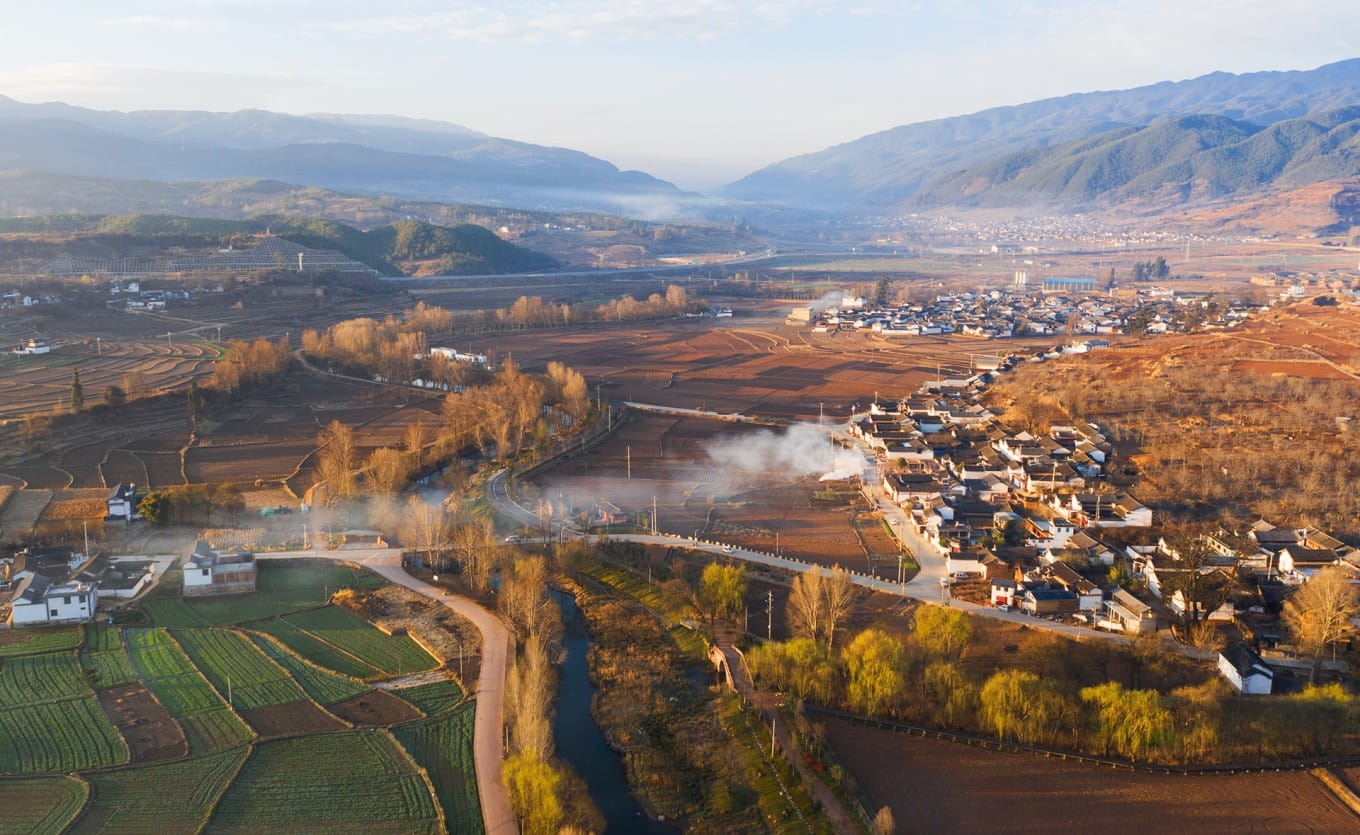
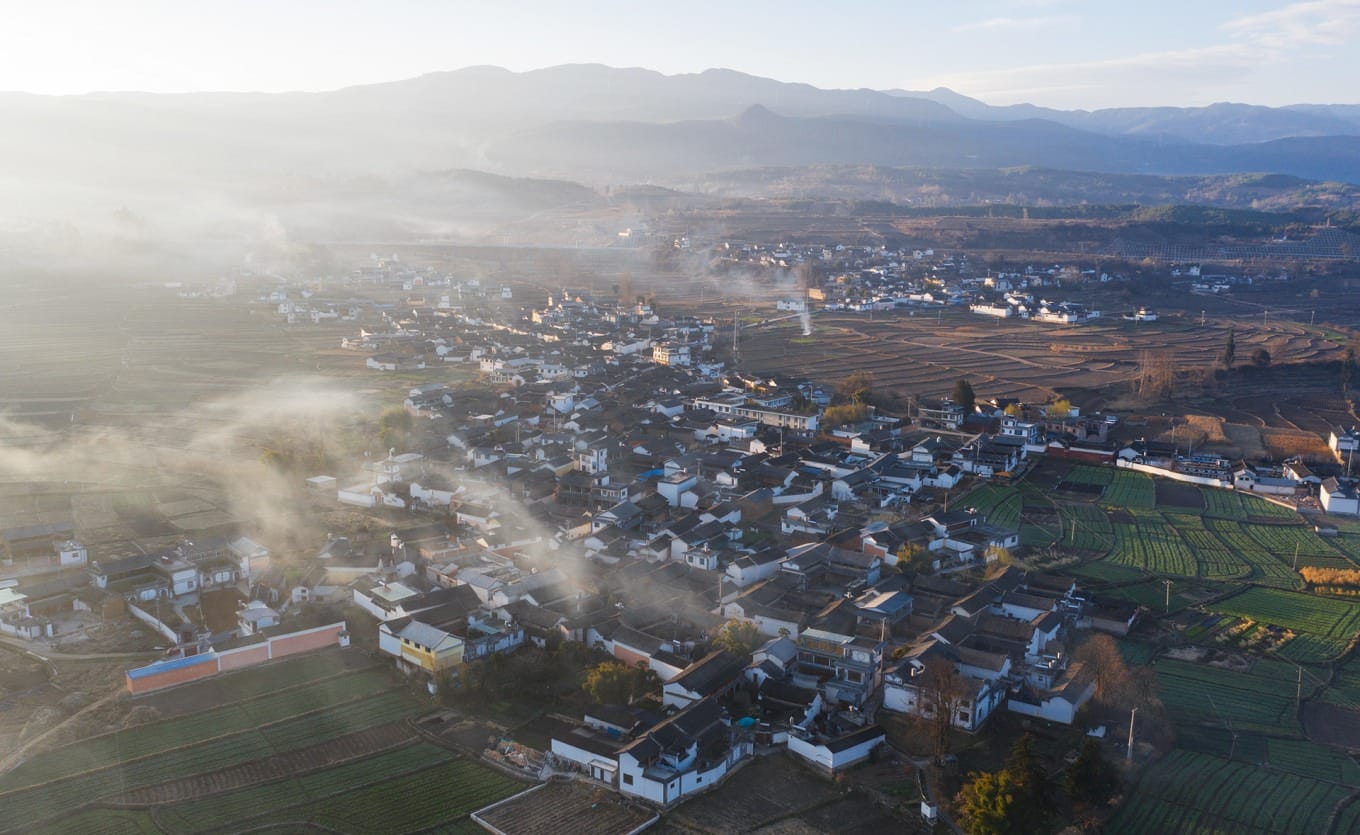
Scholars debate when Shaxi evolved from an agricultural village into a commercial hub. Some link its market’s emergence to the Tang Dynasty and the exploitation of nearby salt wells in Misha (弥沙) and Nuodeng (诺邓). Others cite a local saying, ‘First came the Xingjiao Temple, then came Siden Street,’ suggesting the market formed no earlier than the Ming Dynasty’s Yongle era when the Xingjiao Temple (兴教寺) was built. Regardless, by the late Ming and early Qing dynasties, Siden Street had become a bustling market on the Tea Horse Road. Caravans from Tibet brought horses, furs, and medicinal herbs, trading for salt and tea, while local Bai and Yi people sold their produce, creating a vibrant and prosperous scene.
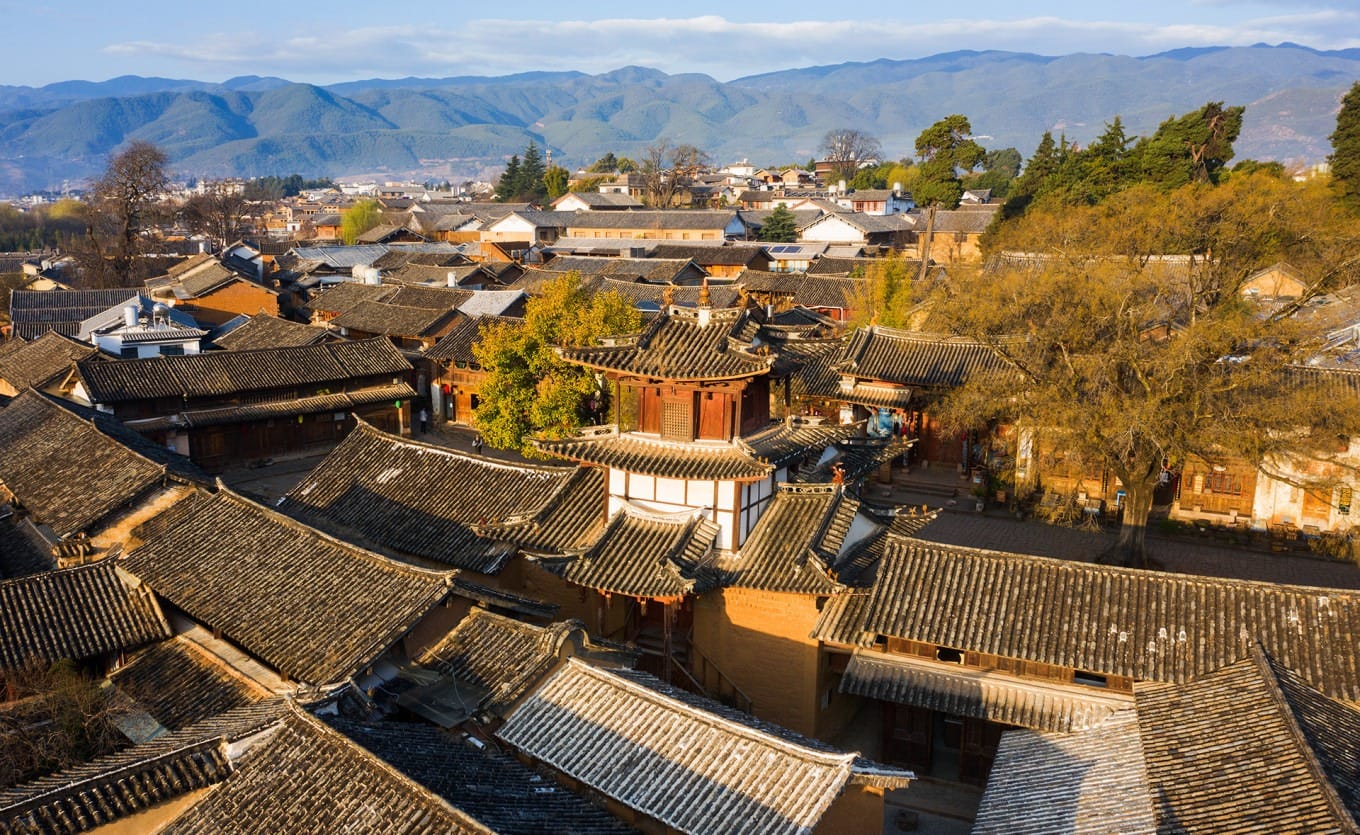
This prosperity faded in the 20th century with the advent of modern roads and railways, which rendered caravan transport obsolete. When National Highway 214 opened in the 1970s, connecting Yunnan and Tibet, it bypassed Shaxi entirely. The town was largely forgotten, fading into obscurity. Ironically, this isolation became its saving grace, shielding it from rapid modernization and allowing its ancient layout and architecture to remain remarkably intact.
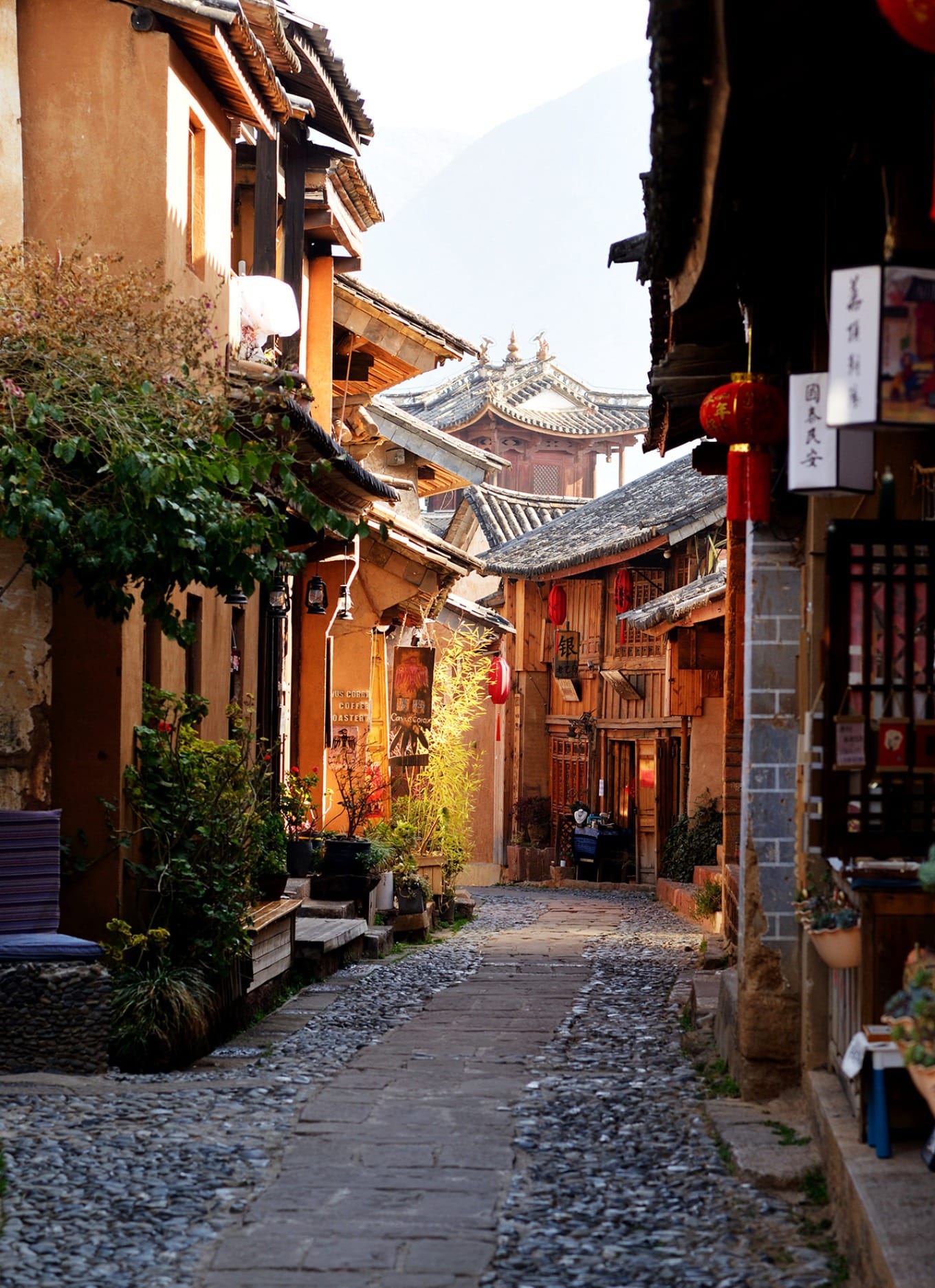
Shaxi’s fortunes changed at the turn of the millennium. In 2000, Swiss heritage experts visiting Jianchuan ‘discovered’ the town. They were amazed by its complete ensemble of historic structures—temples, a stage, village gates, and ancient bridges. In 2002, Shaxi was listed alongside the Great Wall on the World Monuments Fund’s list of ‘100 Most Endangered Sites,’ recognized as ‘the only surviving marketplace on the Tea Horse Road.’
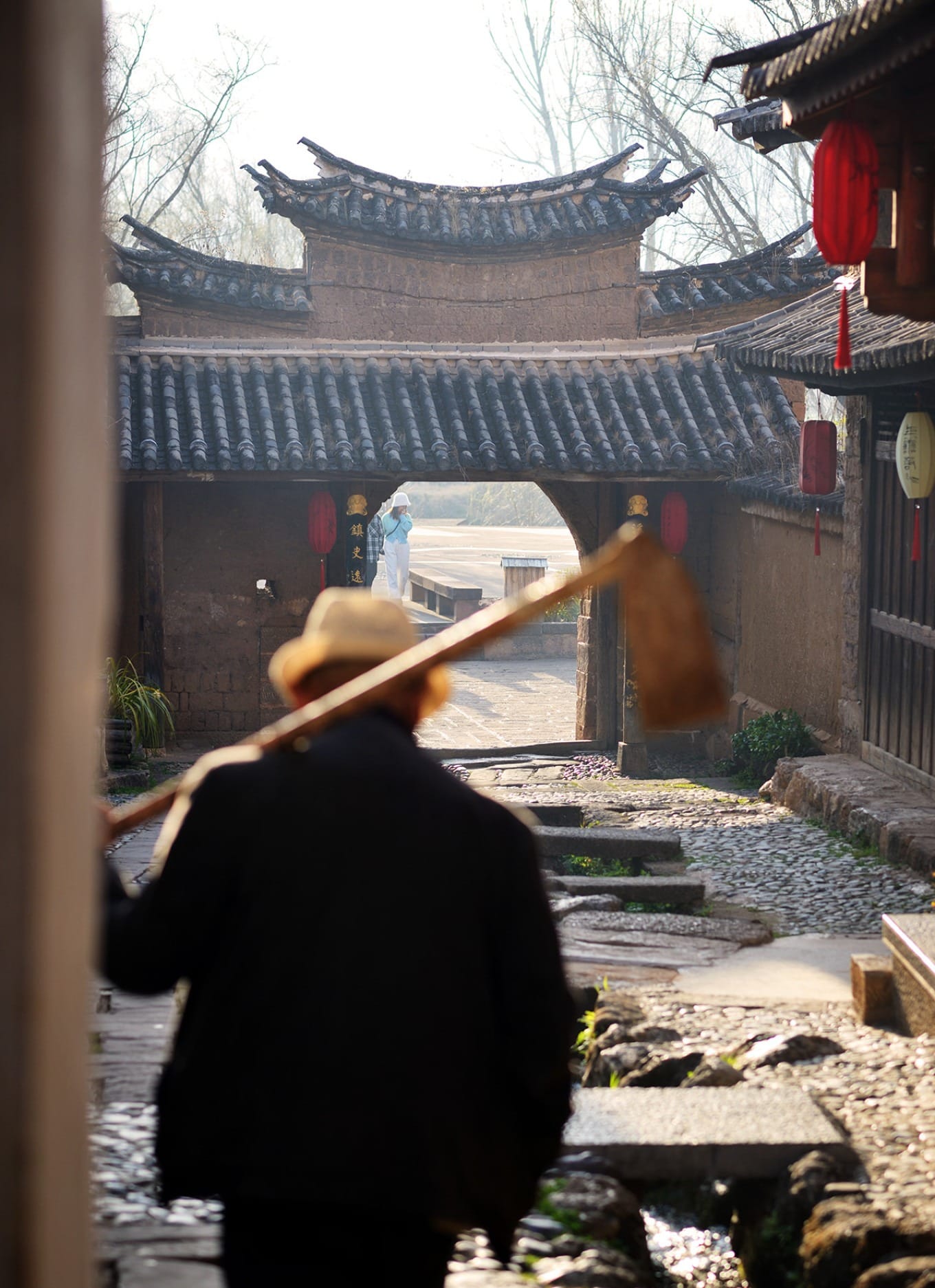
With assistance from the Swiss Federal Institute of Technology, significant restoration and conservation work was undertaken. While some recent developments show a trend toward a more ‘internet-famous’ aesthetic, the town’s core has largely retained its original, rustic character.
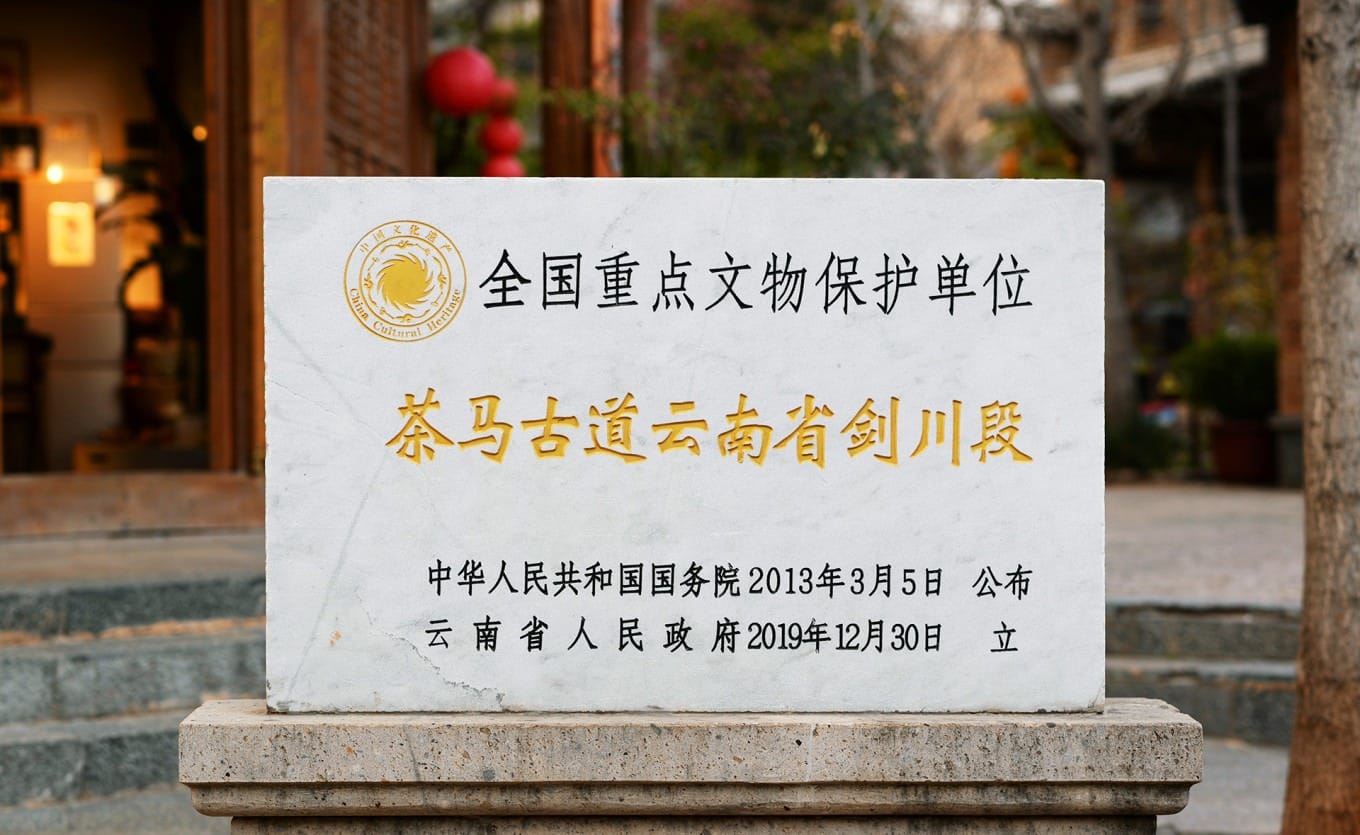
Until the recent opening of the Hejianlan Expressway branch to Shaxi, access from Dali was quite difficult. This remoteness long kept visitor numbers low. However, its profile has risen significantly since featuring as a primary filming location for the popular TV series ‘Meet Yourself’ (去有风的地方). While easier access may bring more visitors, Shaxi’s relatively remote location still deters those on tight schedules. Outside of major holidays like Golden Week and summer vacation, the town remains pleasantly quiet, offering a peaceful alternative to Dali’s bustle.
Yujin Bridge: The Ancient Gateway of Shaxi
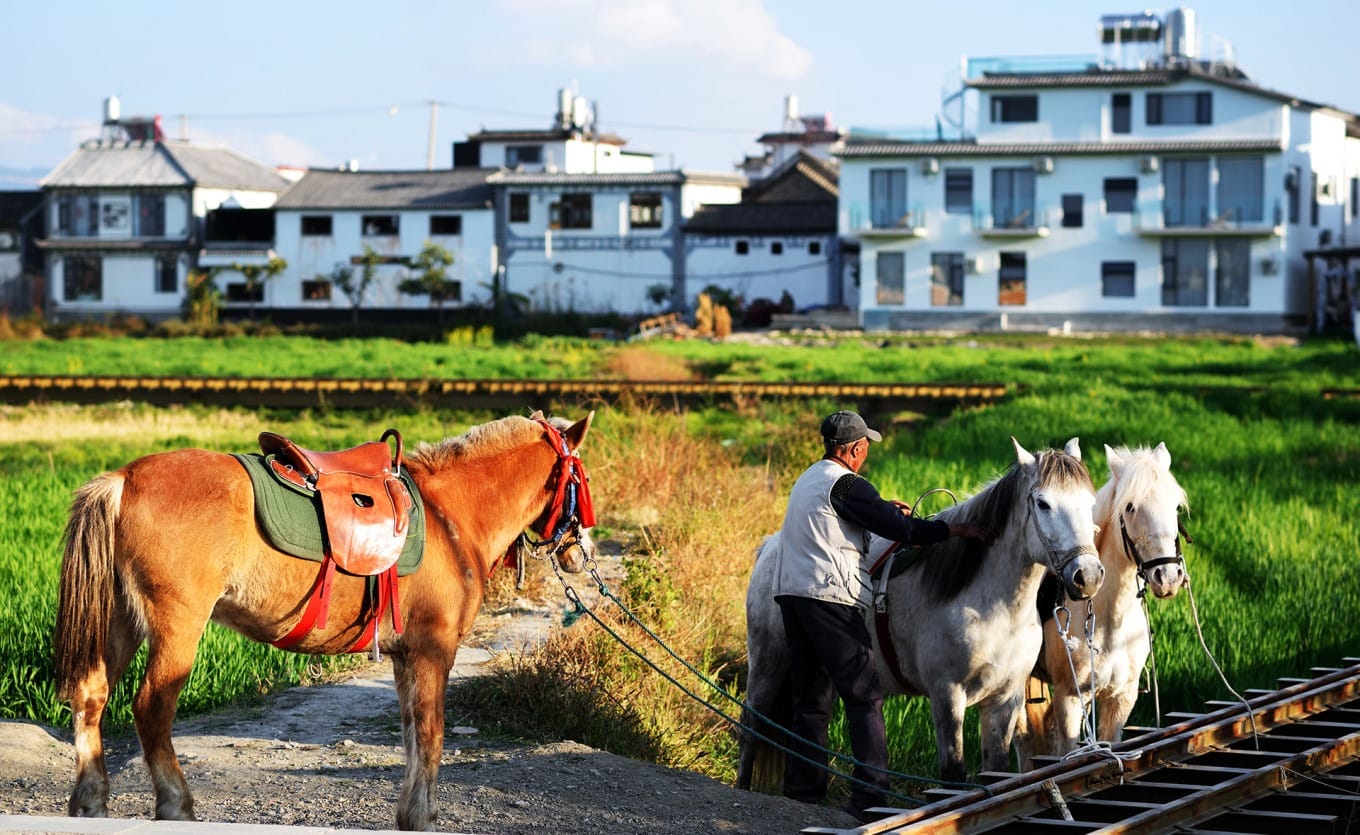
As you explore Shaxi Ancient Town, you’ll discover its name comes from the Black Hui River (黑惠江) flowing through the valley—a major tributary of the Lancang River with a history dating back to 784 AD. This river corridor has connected over twenty ethnic groups for centuries, and crossing it stands Yujin Bridge (玉津桥), the stone arch bridge that once served as the essential passage on the Ancient Tea Horse Road toward Eryuan and Dali.
Just a short walk from the town center along the riverbank, shaded by towering trees, you’ll encounter this elegant single-arch stone bridge. While its exact construction date isn’t recorded, the name ‘Yujin’ originates from a 1792 couplet inscribed on the bridge by Shi Lifei—a local scholar and educator who later compiled ‘Dian Xi,’ an encyclopedic record of Yunnan’s geography, history, and culture during the Qing Dynasty.

Originally a chain bridge featured in Shaxi’s ‘Four Scenes’ as ‘Iron Chains Locking the River,’ Yujin Bridge lost its chains during the 19th-century Du Wenxiu Rebellion when they were melted for weapons. The current stone structure was built in the early 1900s over fourteen years of fundraising—a testament documented on the bridge’s ‘Fundraising Stele’ inscribed by calligrapher Zhao Fan and general Yang Yiqian.
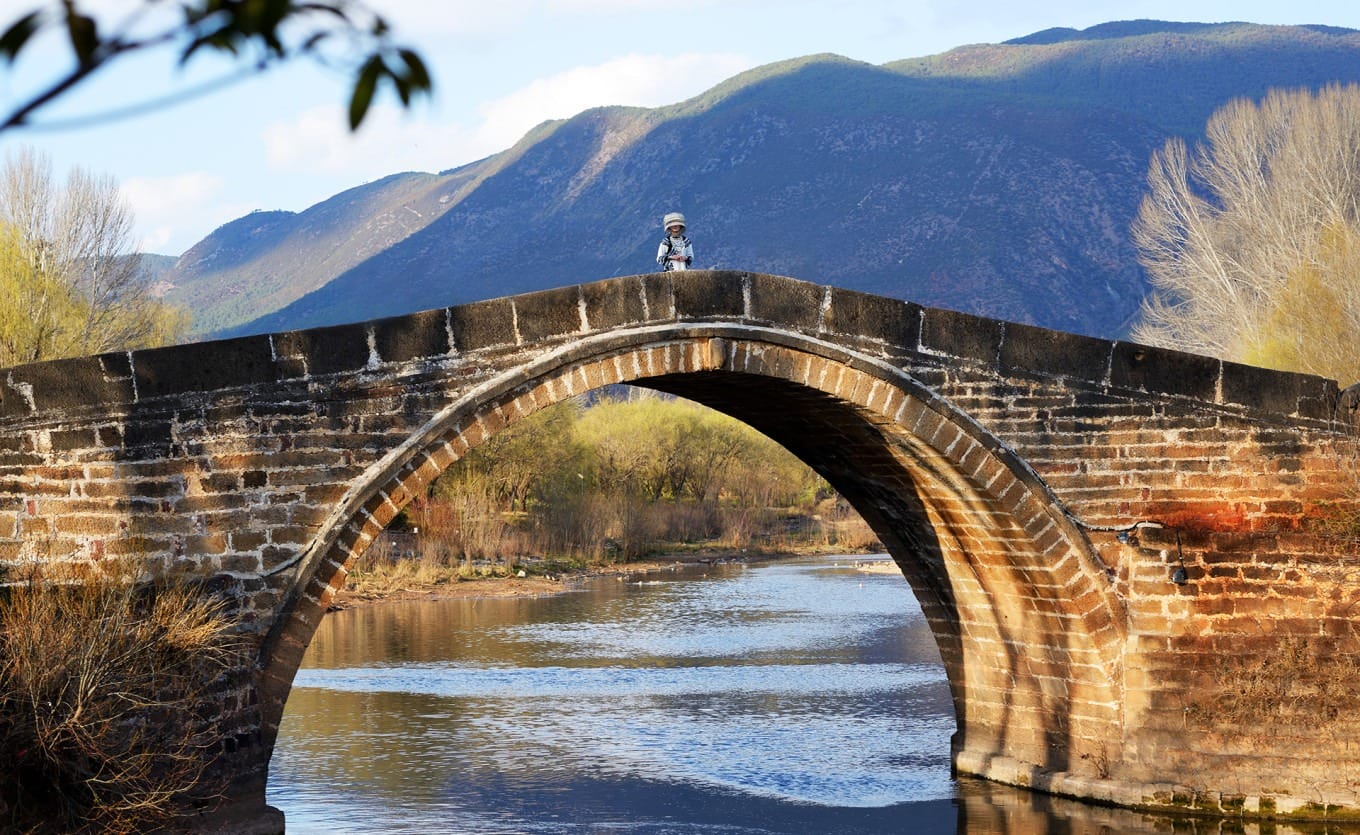
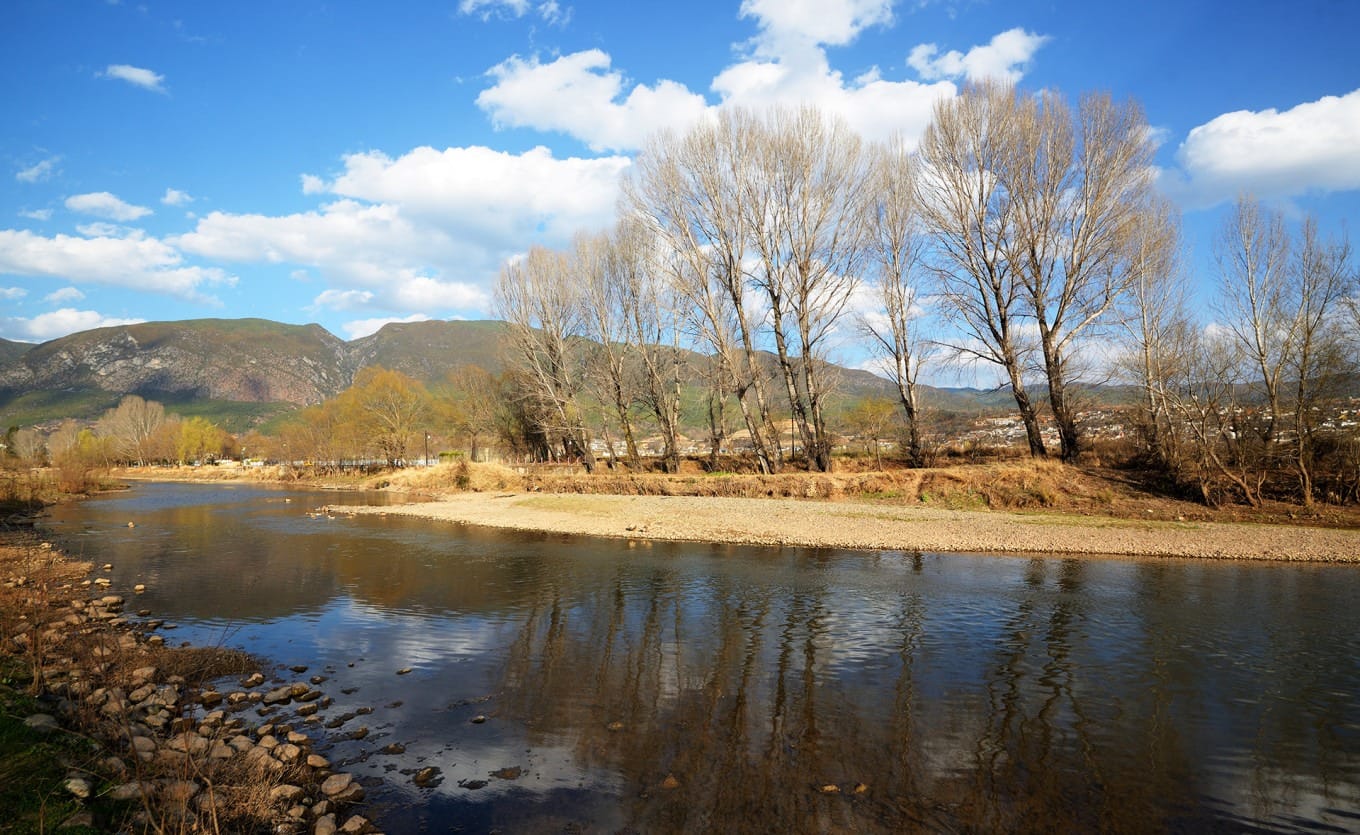
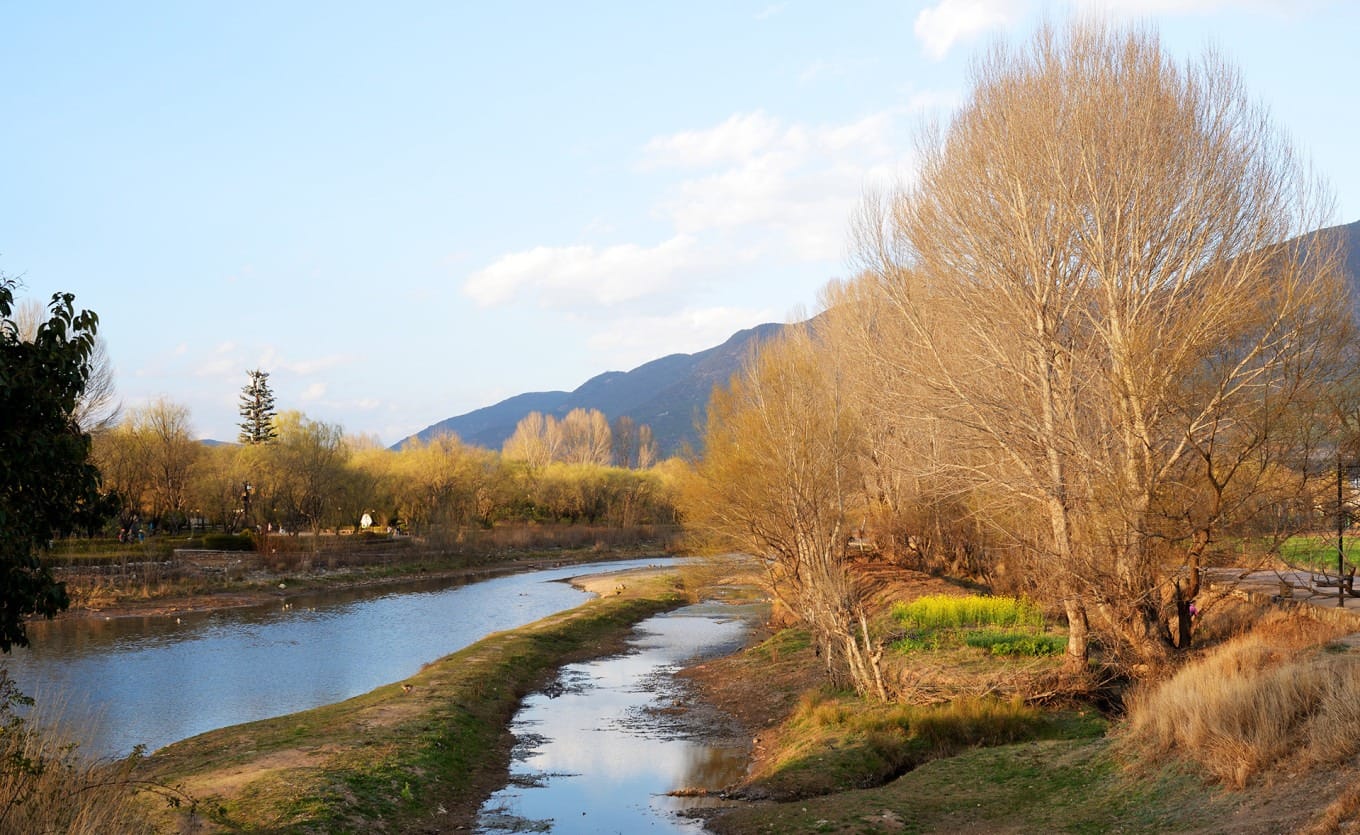
Climb the stone steps to the bridge deck where you can take in breathtaking views: rolling hills and dense forests unfold against blue skies like a traditional Chinese landscape painting. Gentle breezes ripple the water below, creating a serene atmosphere that makes this spot perfect for quiet contemplation.
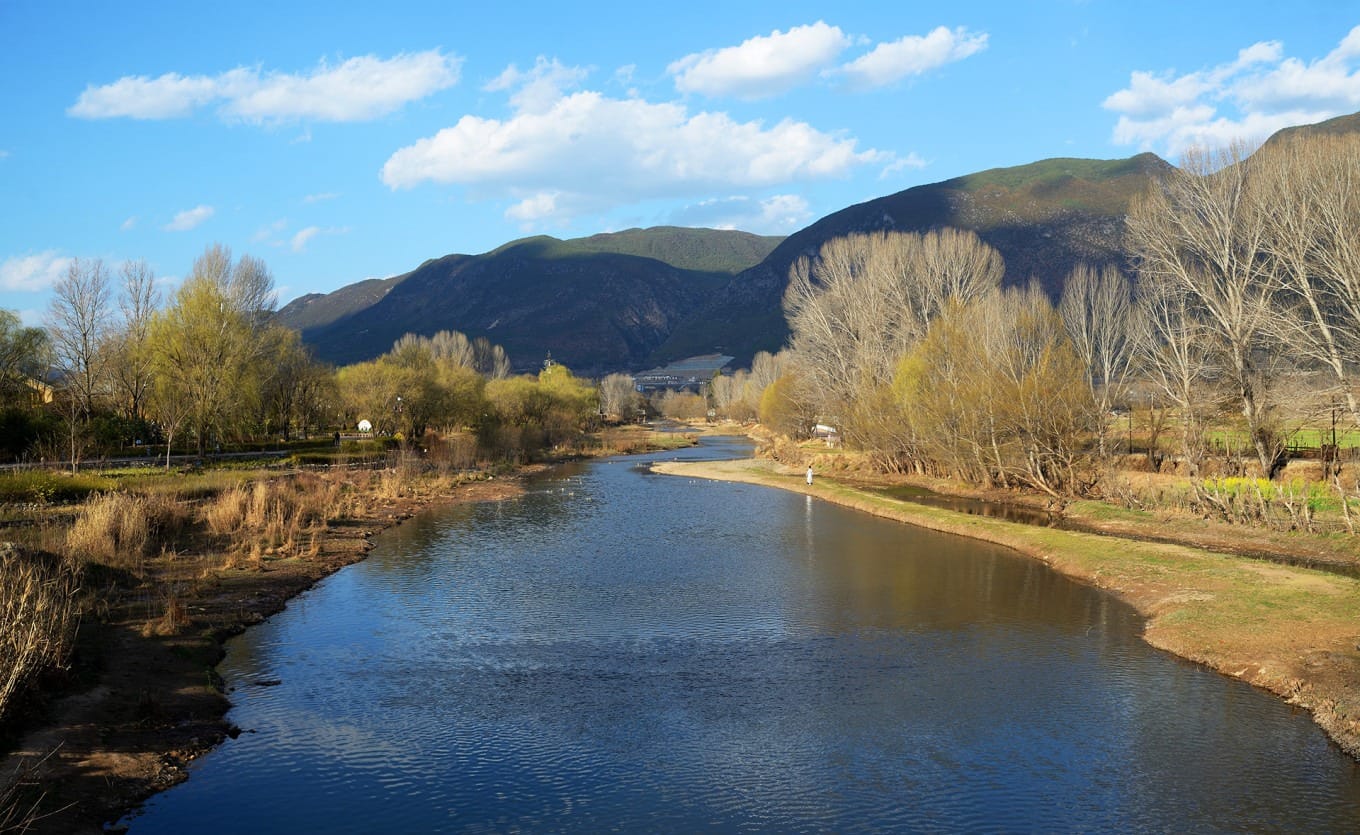
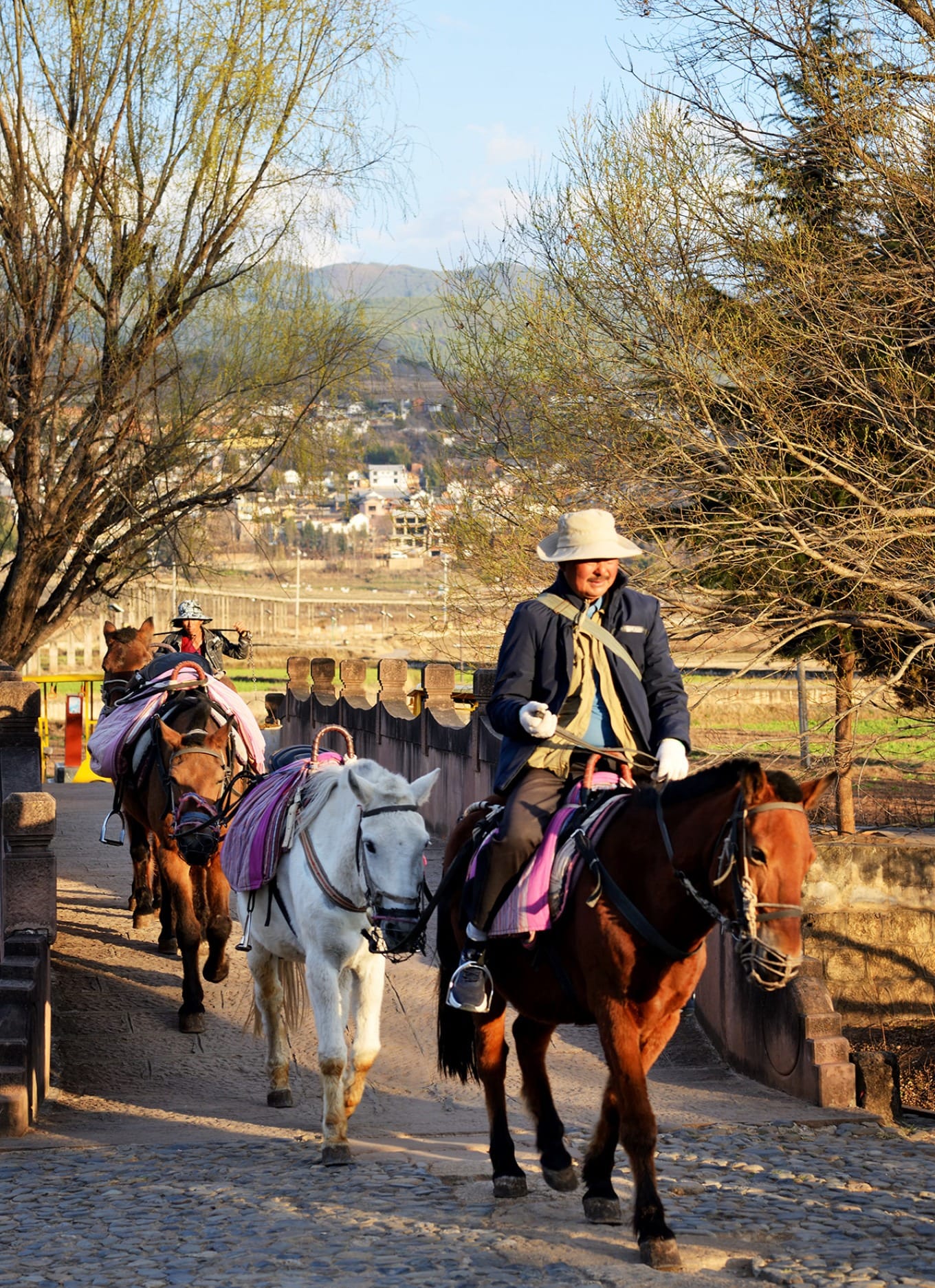
Today, you might still hear the clip-clop of horse hooves and jingling bells on Yujin Bridge—though these horses now carry tourists for experiences rather than transport goods along the ancient trade route. More unexpectedly, you could encounter Shaxi’s local celebrity: a tanned man with a mustache, wearing a bowler hat, slightly worn coat, large leather shoes, and carrying a cane—an uncanny resemblance to Charlie Chaplin.
This performance artist—known locally as ‘Shaxi’s Chaplin’—often entertains visitors with duck-walk imitations and spontaneous dances, laughing heartily after each act. His real name is Yang Lusen, who runs a guesthouse in a Yi ethnic village near Laojun Mountain when he’s not performing his Chaplin routine around Shaxi.

- RestaurantNot applicable for this location (店名)
- AddressShaxi Ancient Town, Jianchuan County, Dali Bai Autonomous Prefecture, Yunnan, China / 中国云南省大理白族自治州剑川县沙溪古镇
- Recommended dishesNot applicable (菜名)
- Average spendFree admission
Sifang Street: The Historic Heart of Shaxi
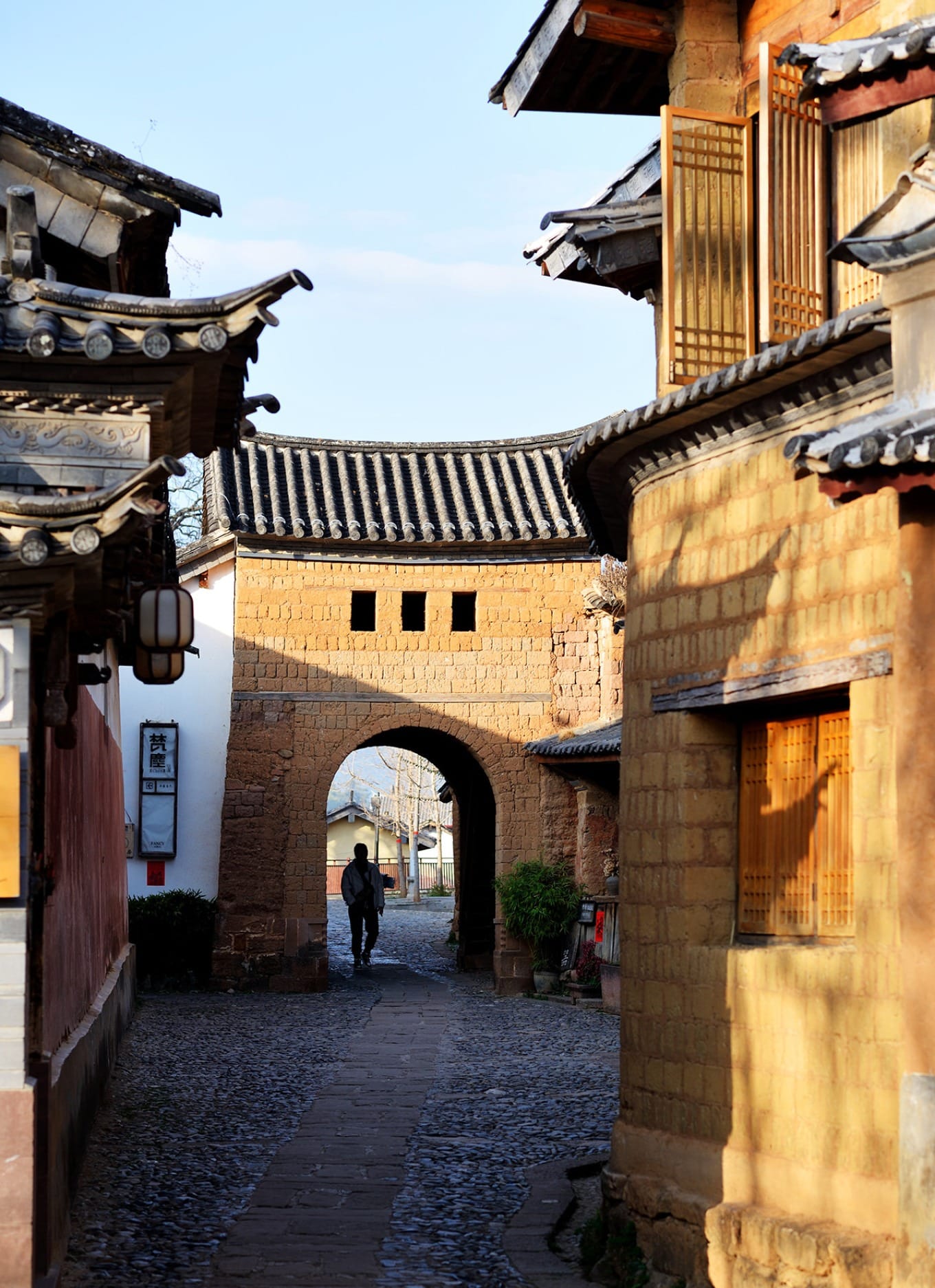
As you walk from Yujin Bridge toward Sifang Street, you’ll first pass through the East Gate (东寨门), a simple arched gateway built from rammed earth bricks. This gate is one of the main entrances to Shaxi’s historic core. Originally, Shaxi had three gates: the East Gate led toward Eryuan and Dali, the North Gate toward Tibetan regions, and the South Gate toward the salt wells south of Shaxi. The current structure is modest, but it replaced an earlier two-story watchtower that was destroyed multiple times by warfare, banditry, and heavy rains. It was last rebuilt in the late Republican era when local resources were scarce.
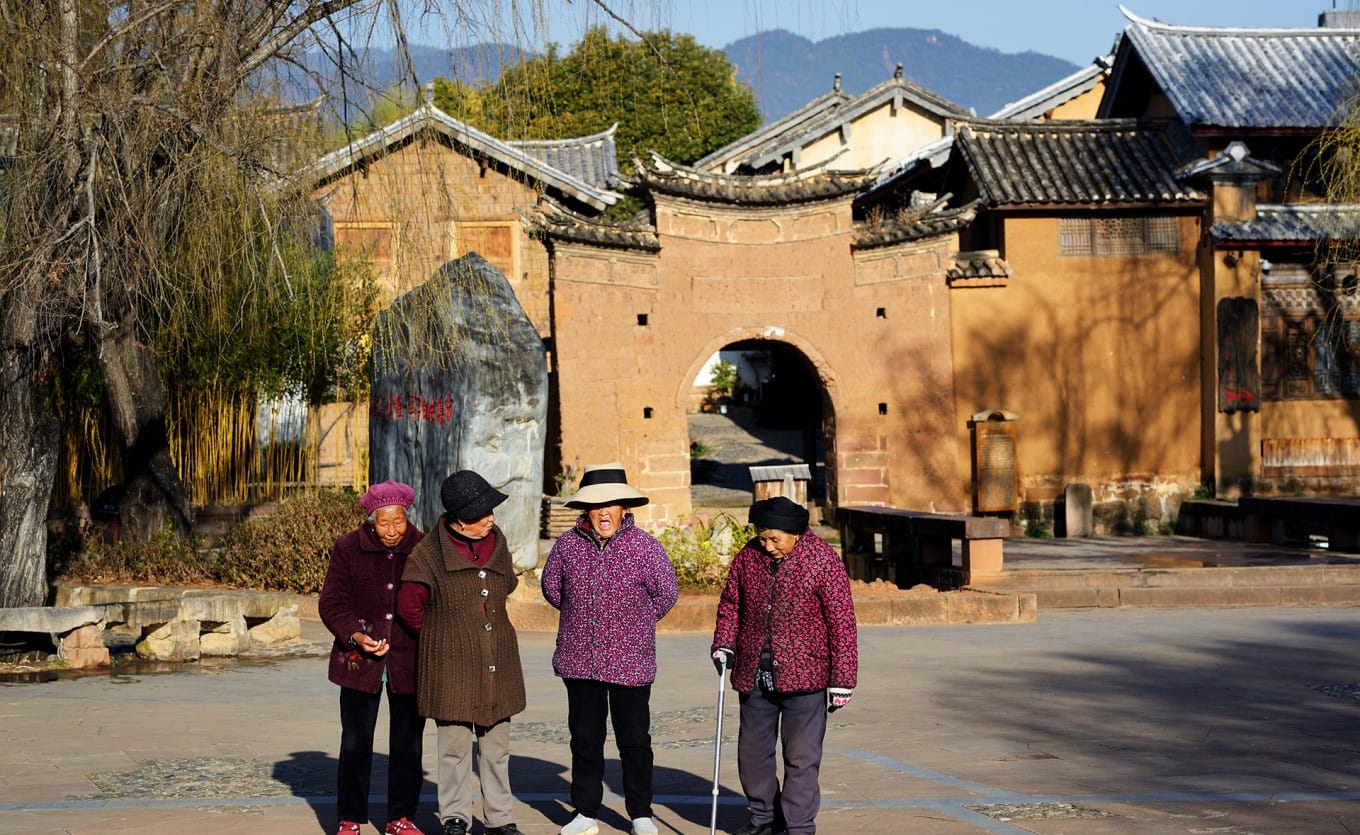
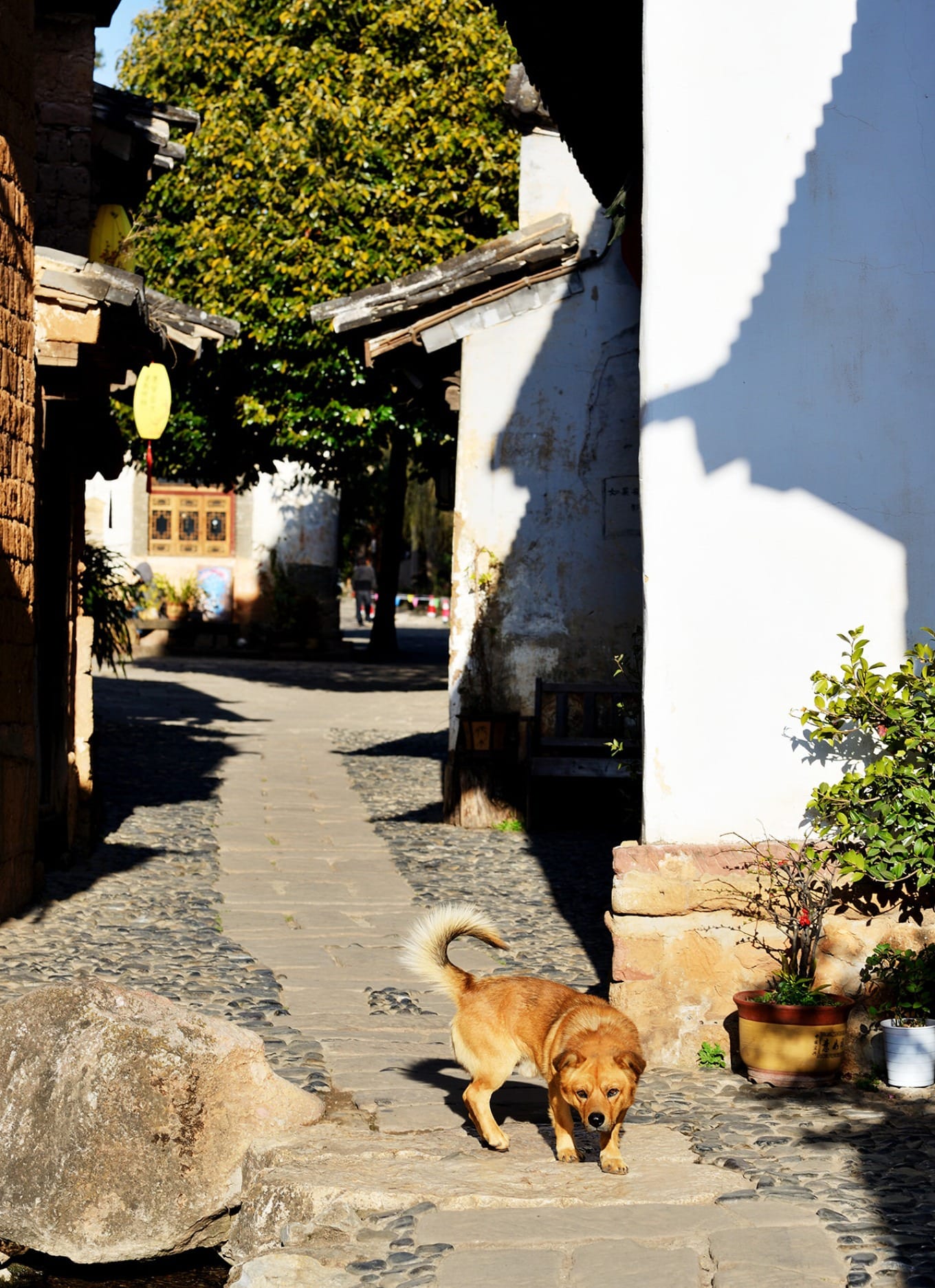
Passing through the gate brings you to Sifang Street, the central square of Shaxi Ancient Town. For centuries before the Republican period, Sideng Street was a crucial hub on the Tea Horse Road, especially for distributing well salt. Caravans flowed through constantly, with markets operating day and night—a true ‘sleepless city’ for muleteers. Historical records like the Qing-dynasty ‘Diannan Xinyu’ describe vibrant night markets where villagers gathered by torchlight to drink, sing, and dance. Today, that bustling market atmosphere returns every Friday, though to protect the ancient architecture, the market has been moved to another part of town.
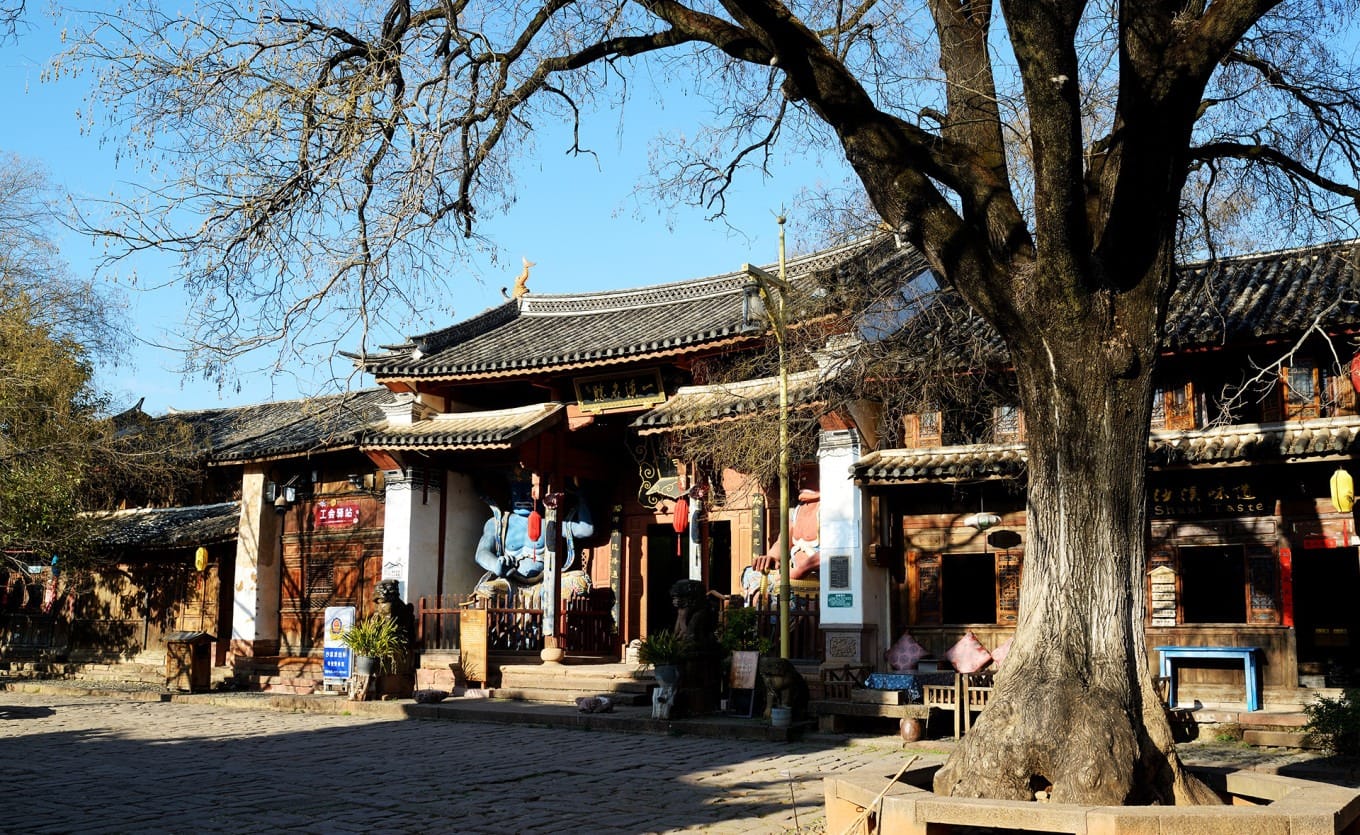
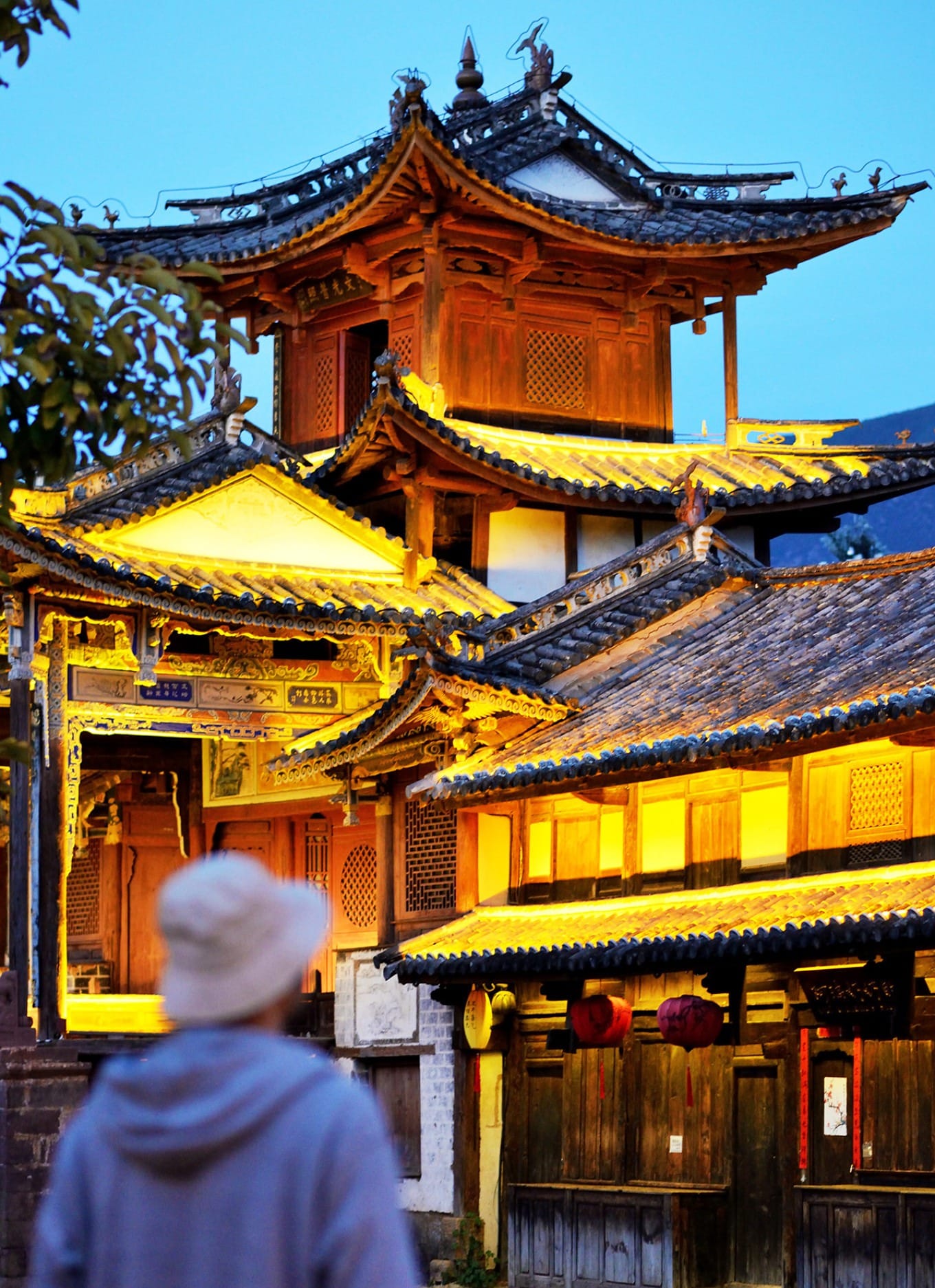
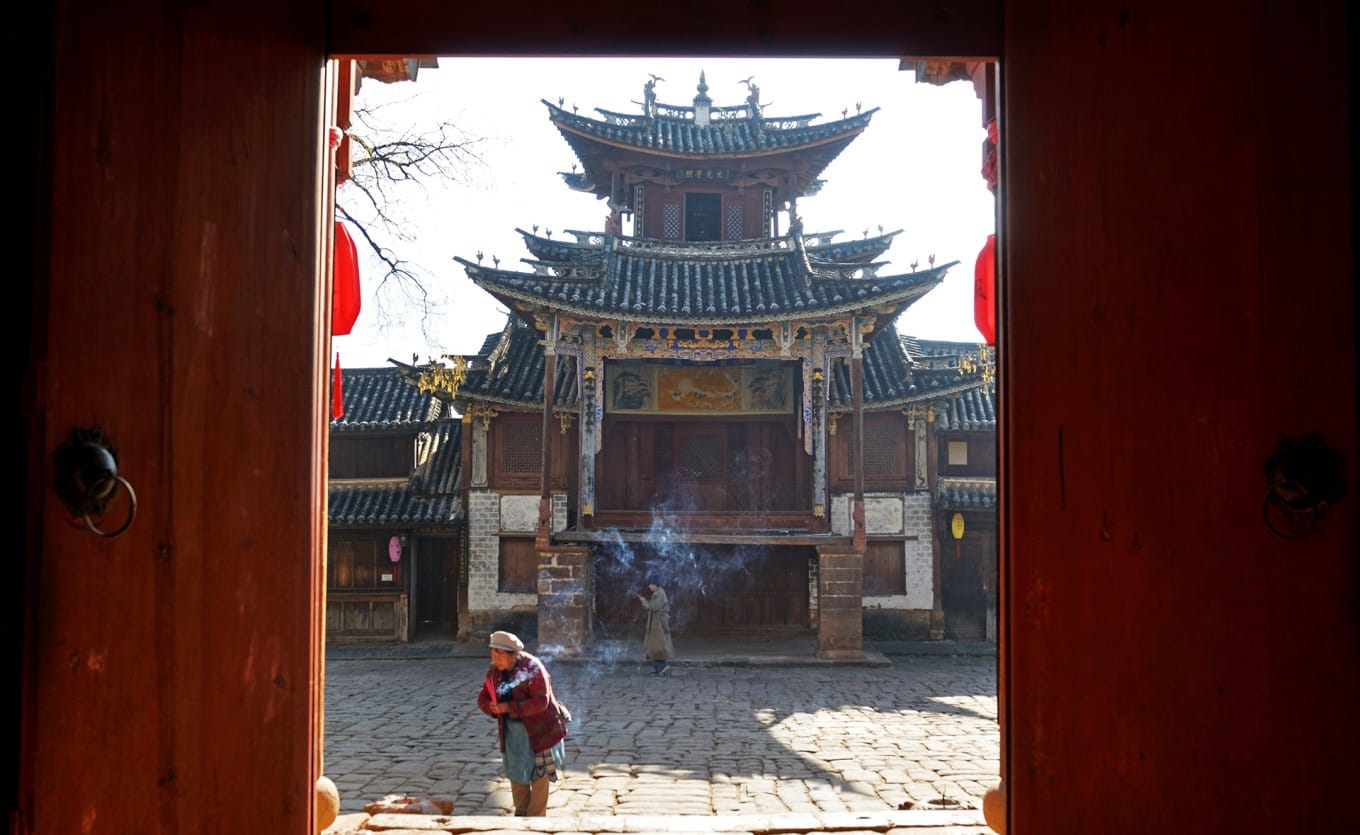
Dominating the square is the ancient stage (古戏台), one of Shaxi’s most important historic structures. It faces the entrance of Xingjiao Temple because, traditionally, performances were offered to deities. Built during the Qing Jiaqing era and rebuilt in 1880, it’s a striking three-story, fourteen-eave structure with sweeping upturned roofs that resemble a phoenix about to take flight. Unusually, it combines a theater, a Kuixing Pavilion (honoring the star of literature), and commercial shops—a rare multi-purpose design in China.
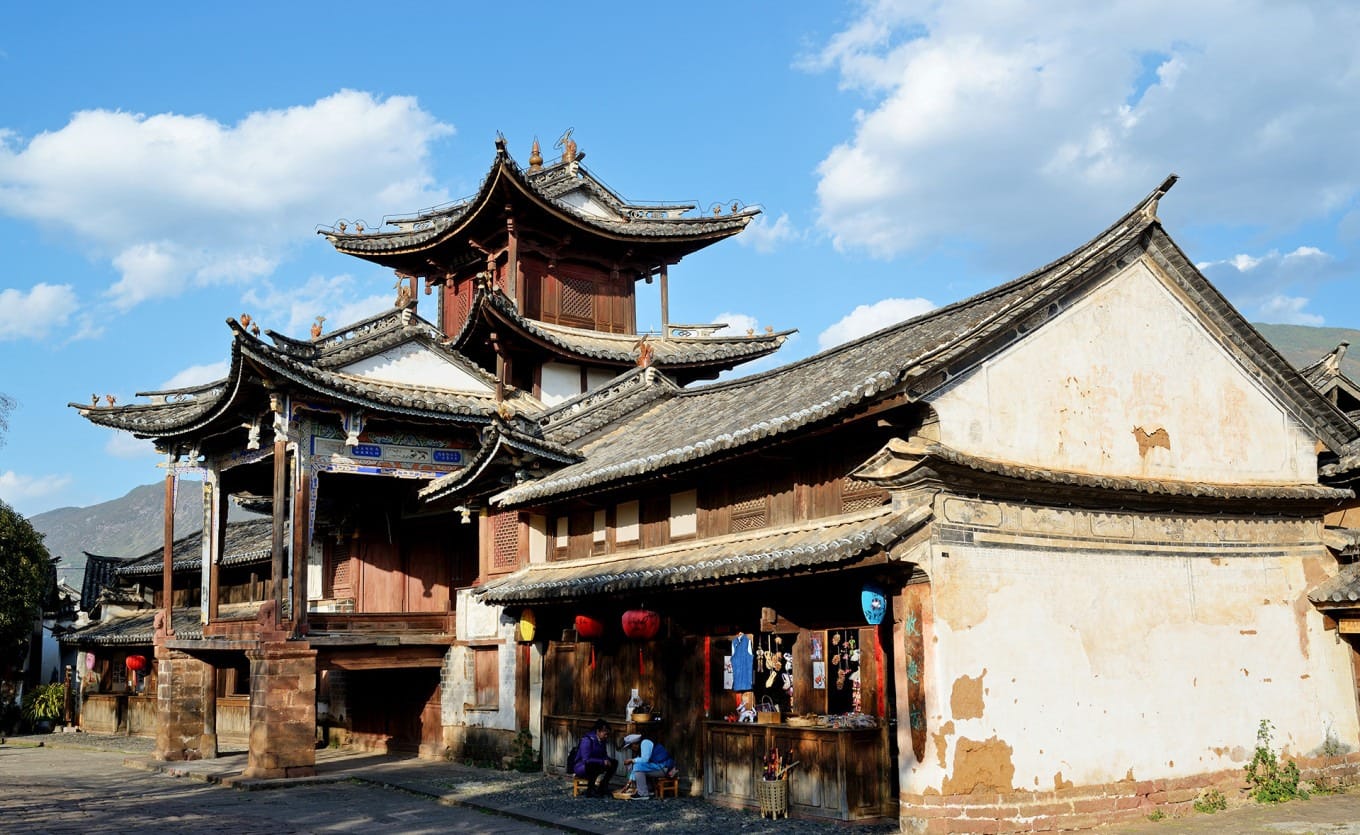
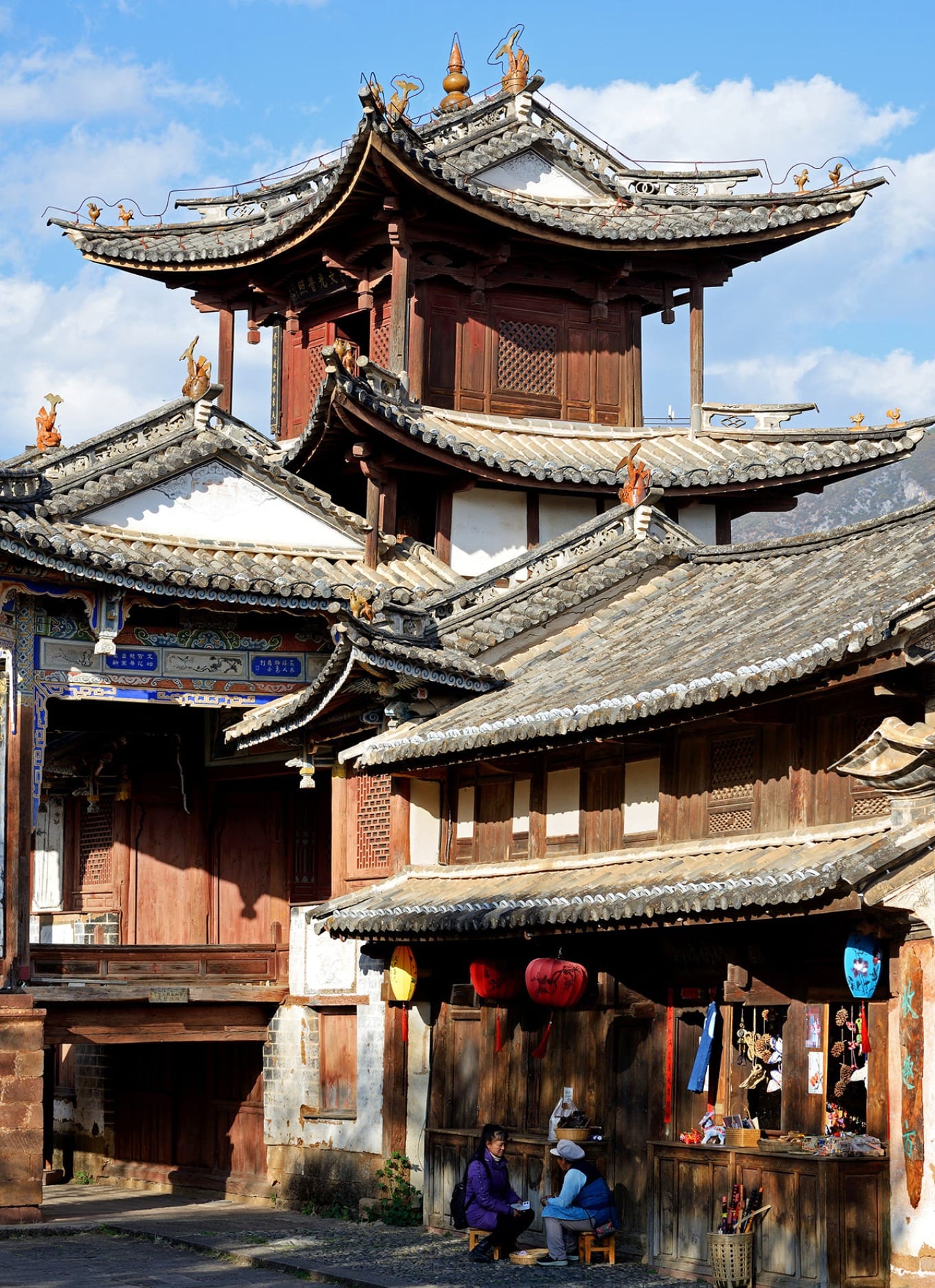
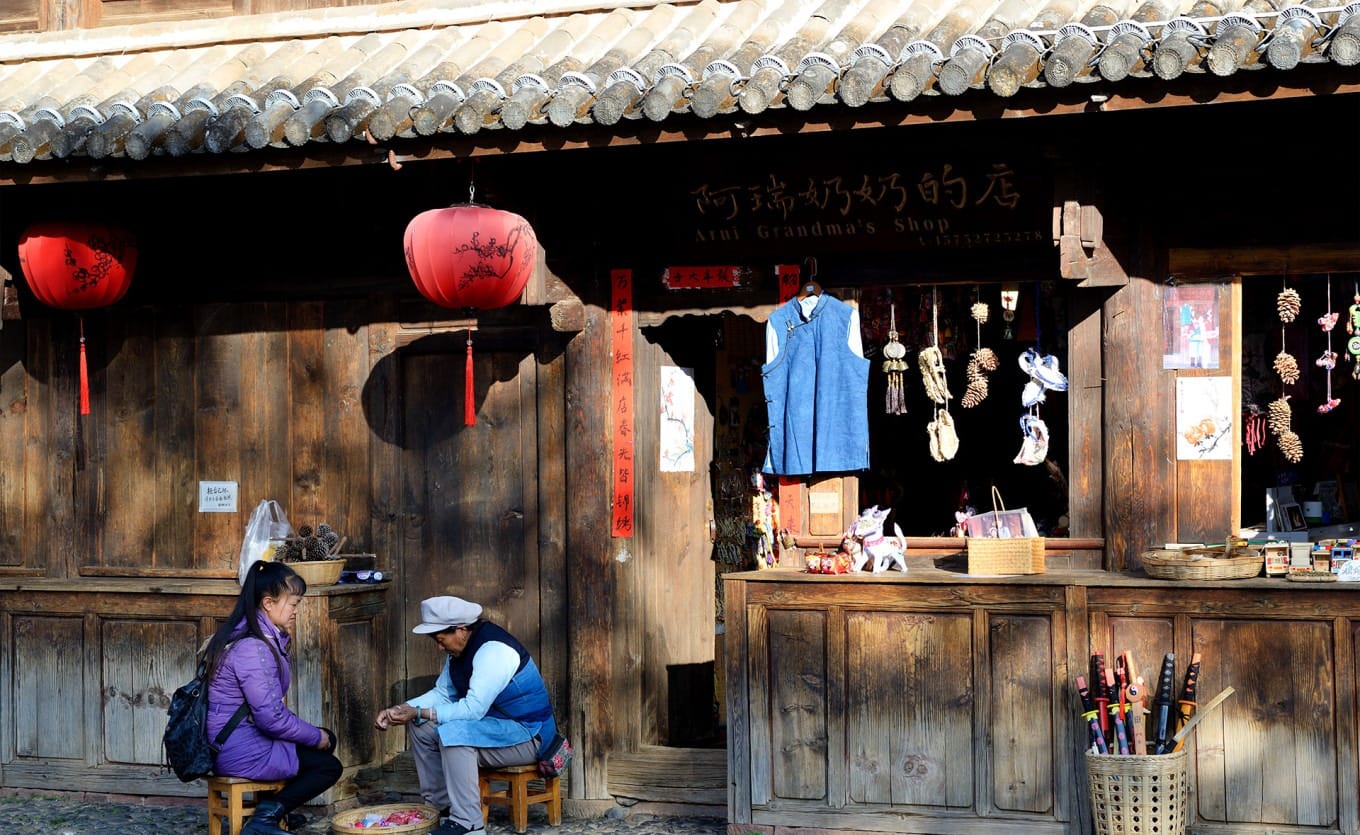
Right next to the stage, look for the unassuming shop of the famous Grandma A Rui (阿瑞奶奶的店). She has been crafting handmade items since childhood, and each piece in her shop is unique. While prices may seem high, they reflect the time and care of true craftsmanship.
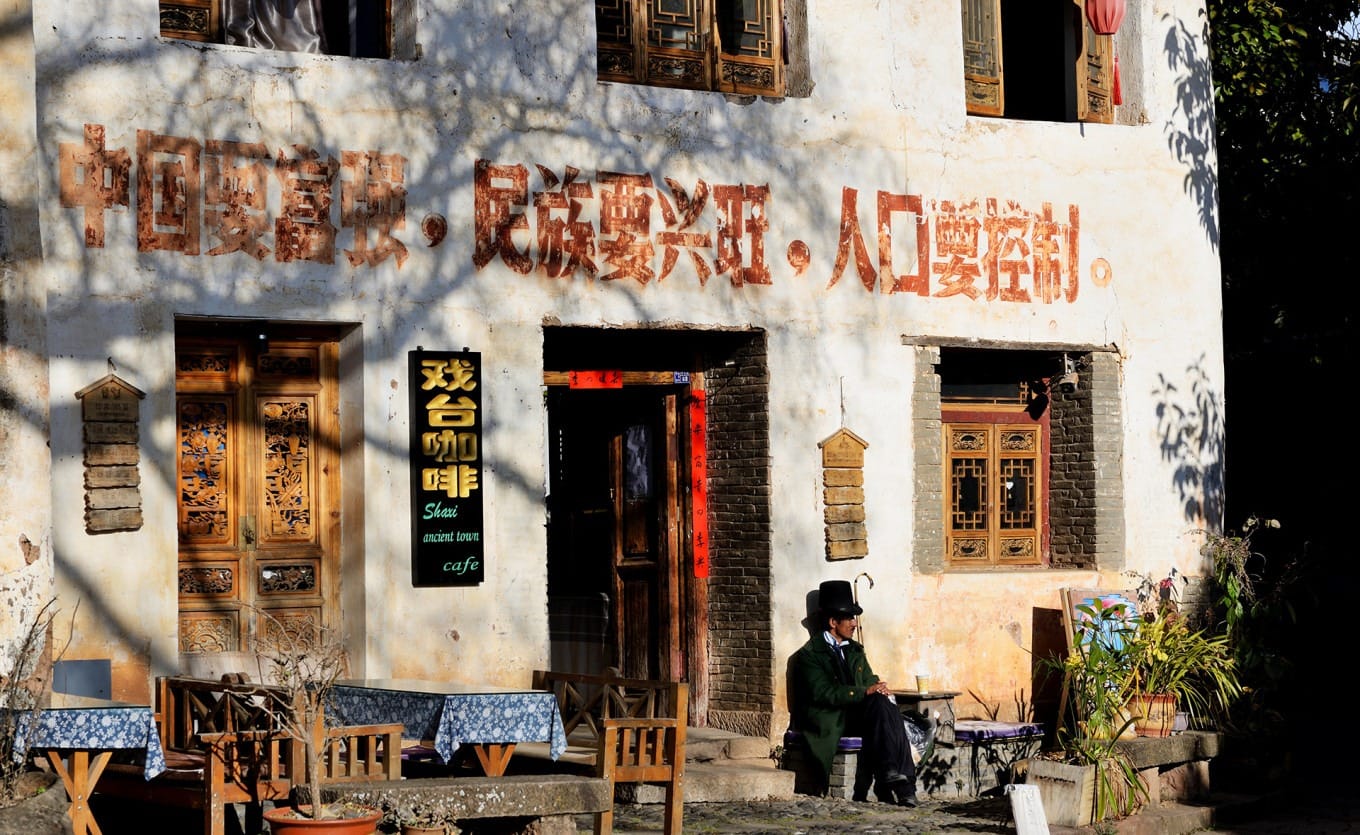
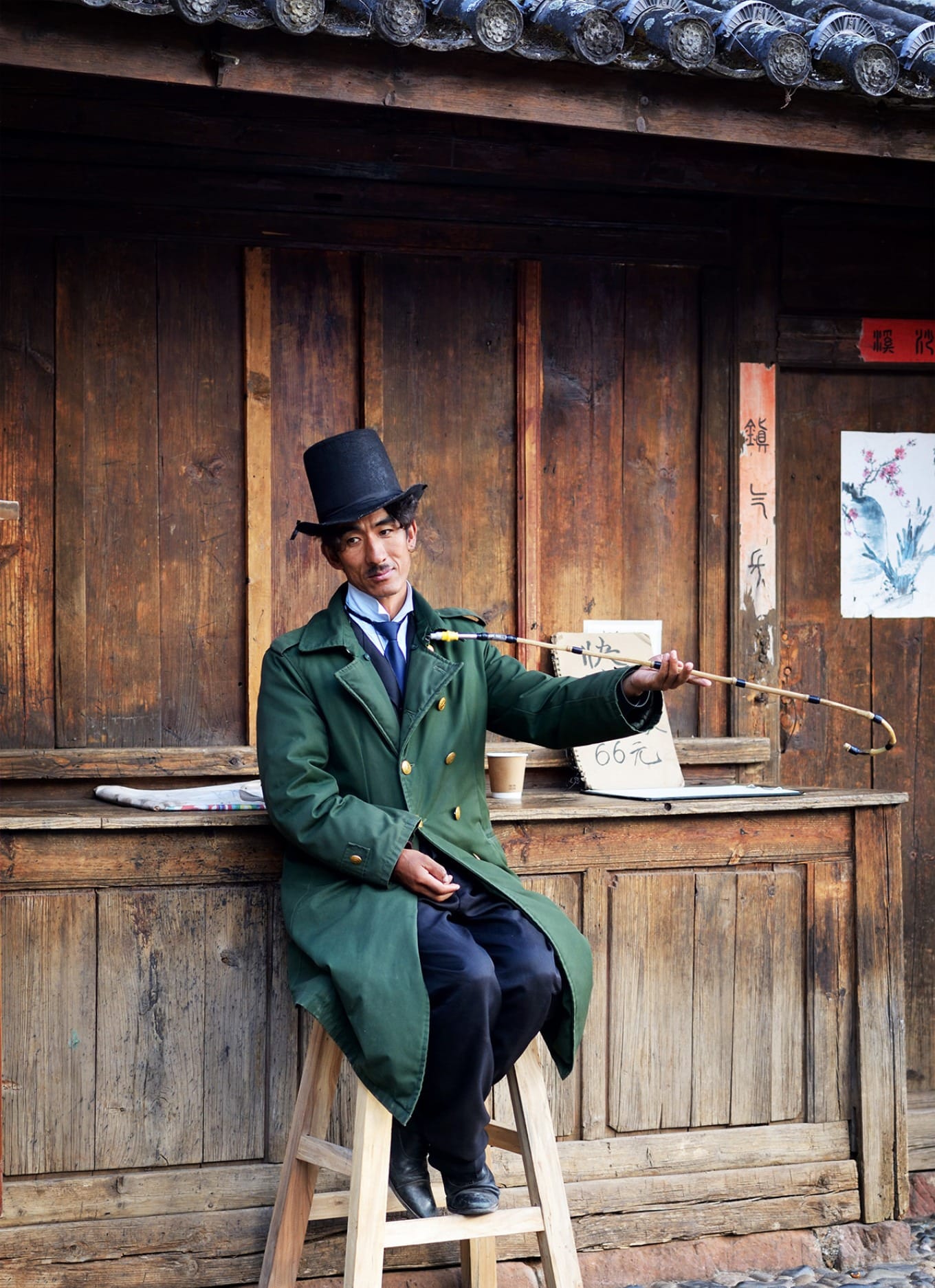
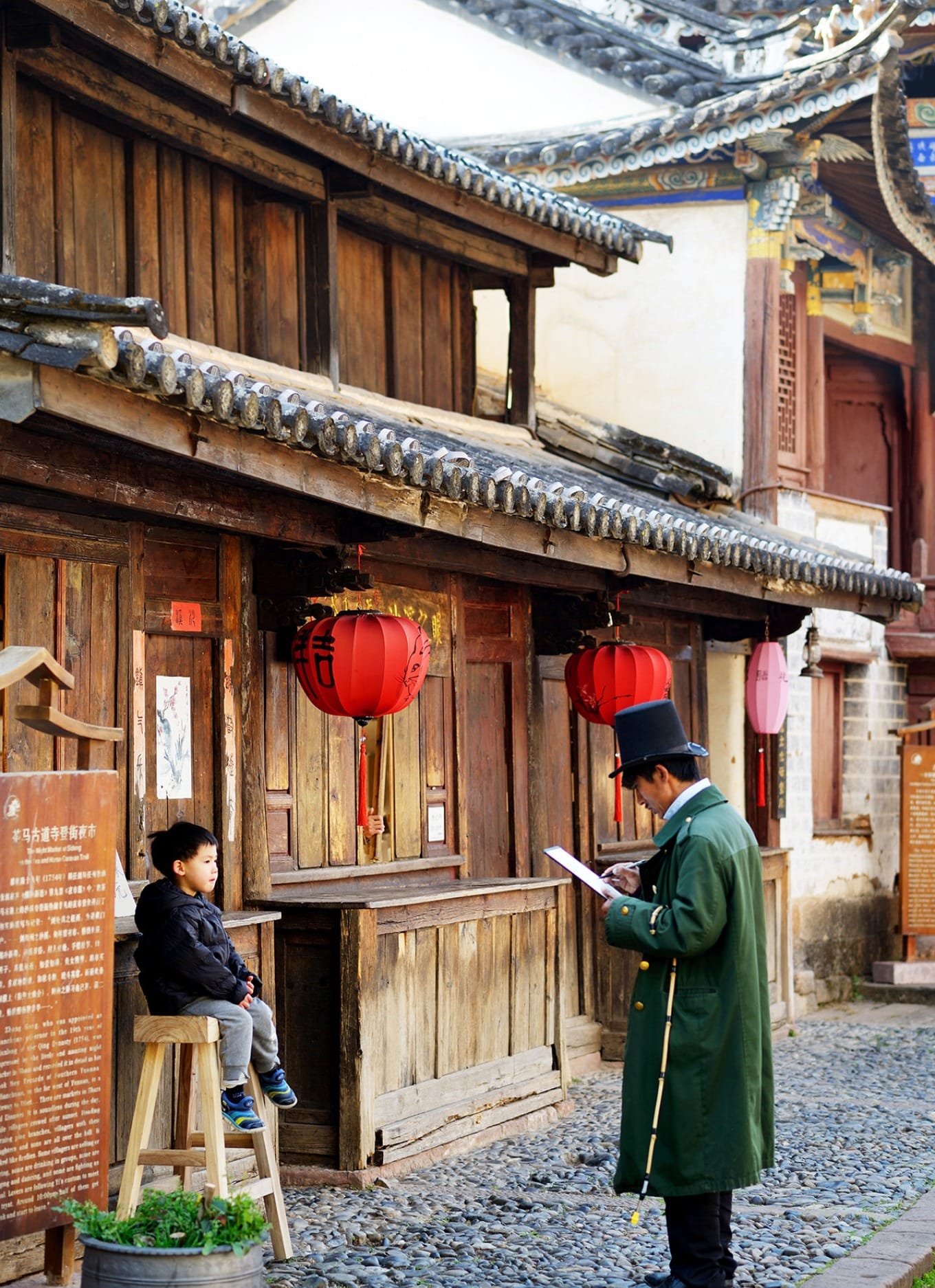
While exploring Sifang Street, you might also encounter Yang Lusen, known as the ‘Shaxi Charlie Chaplin.’ His story is well-documented online: initially met with little support, he persisted and gradually gained a following, becoming a local celebrity and another symbol of Shaxi. He even taught himself to paint, creating quick sketch portraits in just minutes. His artwork is affordable, and if he feels a special connection, he might even offer one as a gift.

In 2013, Shaxi’s ancient stage graced the cover of ‘Lonely Planet: Yunnan,’ introducing many travelers to this hidden gem. While some lament the increase in visitors, historically, Shaxi was always a bustling crossroads for merchants. Today, it’s simply rediscovering its vibrant spirit in a new era.
- RestaurantGrandma A Rui’s Shop (阿瑞奶奶的店)
- AddressSideng Street, Shaxi Ancient Town, Jianchuan County, Dali Bai Autonomous Prefecture, Yunnan, China / 中国云南省大理白族自治州剑川县沙溪古镇寺登街
- Recommended dishesHandmade crafts not a restaurant (菜名)
- Average spendVaries by item;
Xingjiao Temple: A Living Fossil of Bai Esoteric Buddhism
Facing the ancient stage on the west side of Sifang Street, Xingjiao Temple (兴教寺) stands as a remarkable historical site in Shaxi Ancient Town. Founded in 1415 during the Ming Dynasty, this temple holds over six centuries of history. What makes it truly unique is its status as the only surviving temple of the Bai Esoteric Buddhism tradition, known as Azhali (阿吒力) Buddhism, in China. The term ‘Azhali’ is derived from the Sanskrit ‘Acarya,’ meaning ‘teacher’ or ‘guide.’ This form of Buddhism, which blends elements of Han Buddhism, Tibetan Buddhism, Tantric practices, and local folk religion, was introduced to the Dali region during the Tang Dynasty and flourished as a distinctive local tradition.
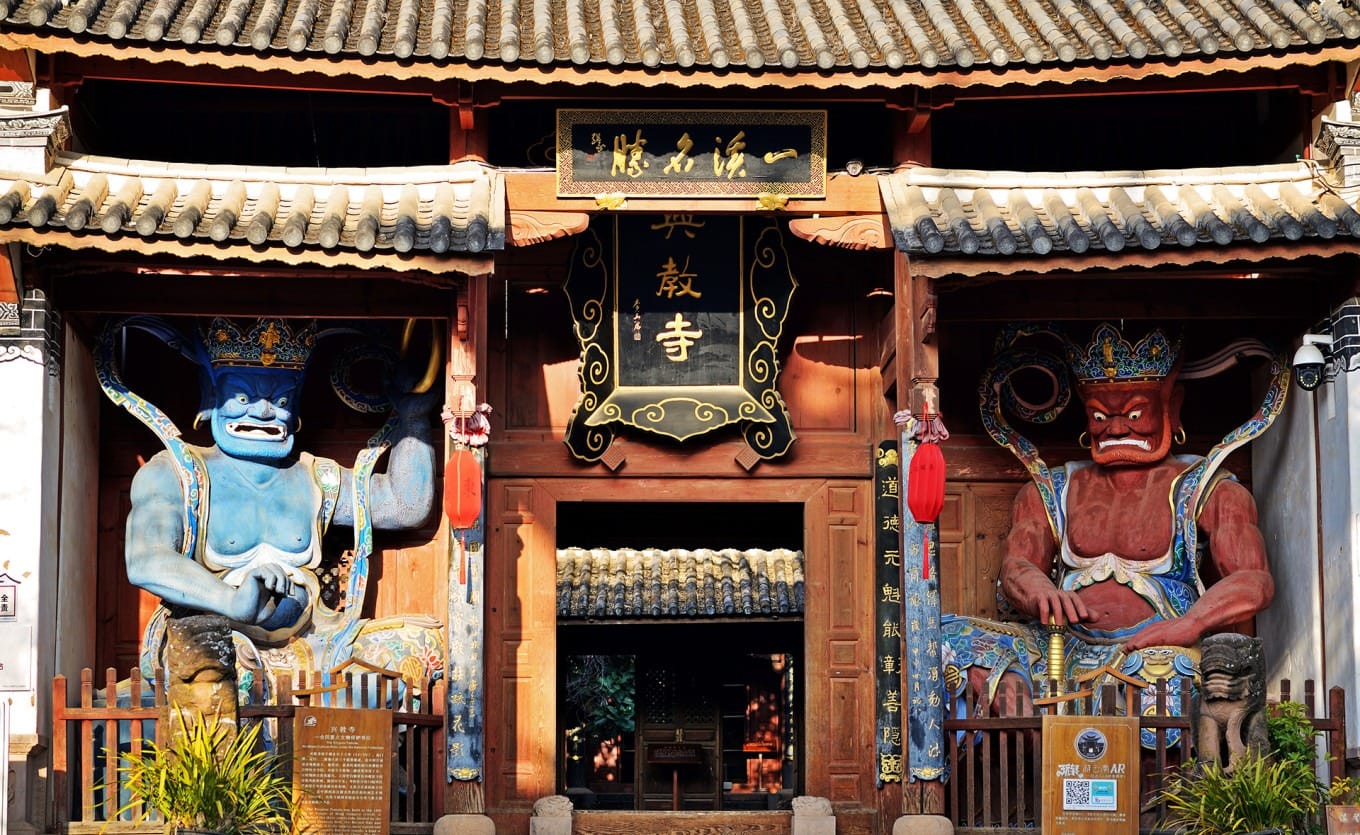
After its introduction to the Nanzhao Kingdom, Azhali Buddhism quickly gained popularity among the Bai people. By the 10th century, during the Dali Kingdom period, it reached its peak, nearly becoming the state religion. However, during the Yuan and Ming dynasties, due to conflicts between Azhali monks and local authorities, the tradition faced suppression, leading many followers to convert to Chan (Zen) Buddhism. By the late Qing Dynasty, Azhali Buddhism had declined significantly, making temples like Xingjiao Temple rare living fossils of this once-vibrant tradition.
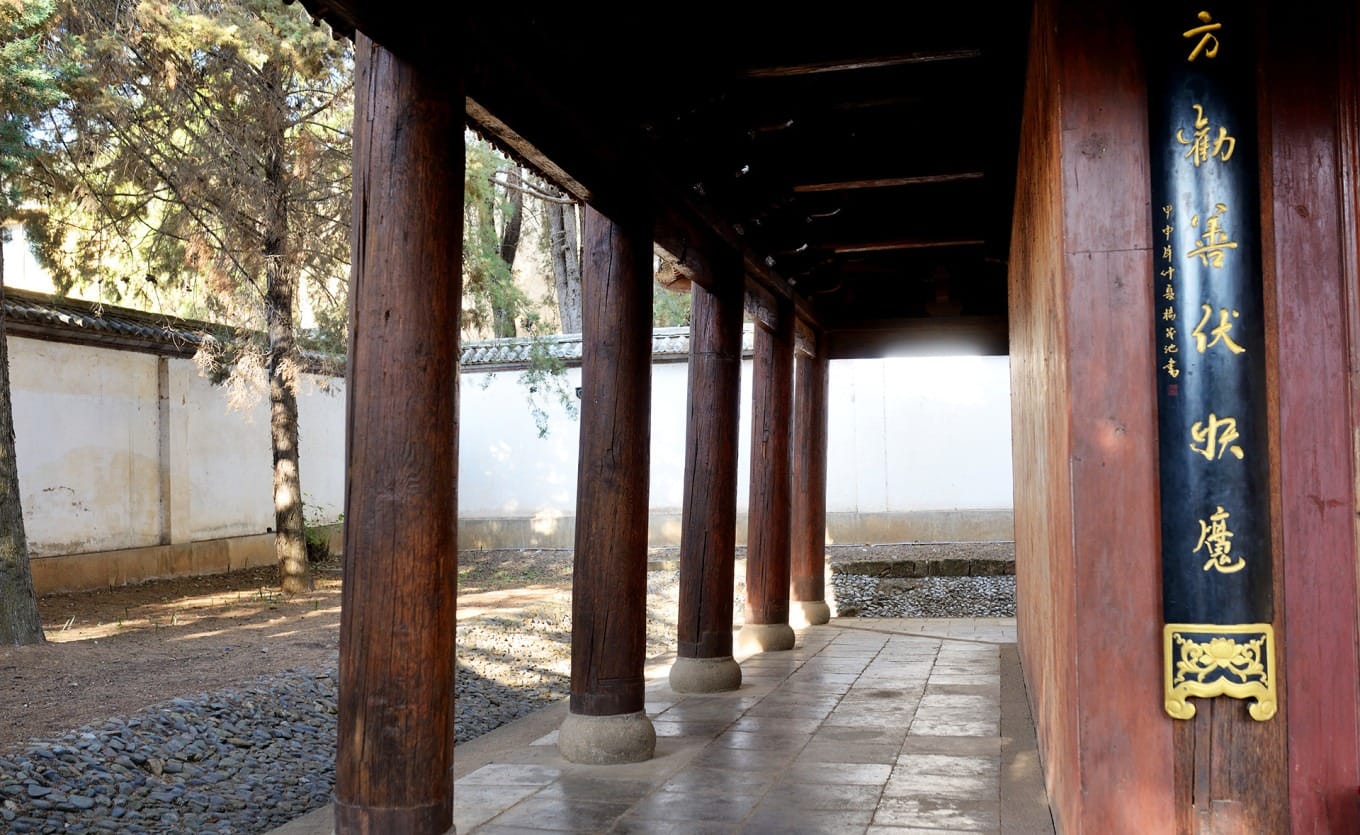
Though not expansive, Xingjiao Temple features a well-preserved layout with three courtyards along a central east-west axis. You’ll pass through the mountain gate, Guanyin Tower, the second hall, and the main hall, with side rooms flanking the courtyards. The main hall and second hall are particularly noteworthy as rare examples of Ming Dynasty architecture in western Yunnan.


The main hall, commonly called the Mahavira Hall, is a timber-framed structure with a double-eave hip-and-gable roof featuring upturned corners. Inside, it houses statues of the Five Direction Buddhas. Beyond the architecture, the hall’s true treasure lies in the Ming Dynasty murals beneath the eaves. Created in 1417 by Bai artist Zhang Bao from Jianchuan, these 16 Buddhist-themed murals display artistic continuity with the famous ‘Zhang Shengwen Scroll’ (also known as ‘The Dali Kingdom Buddhist Images Scroll’) housed in Taipei’s National Palace Museum, reflecting Tang and Song Dynasty artistic influences.
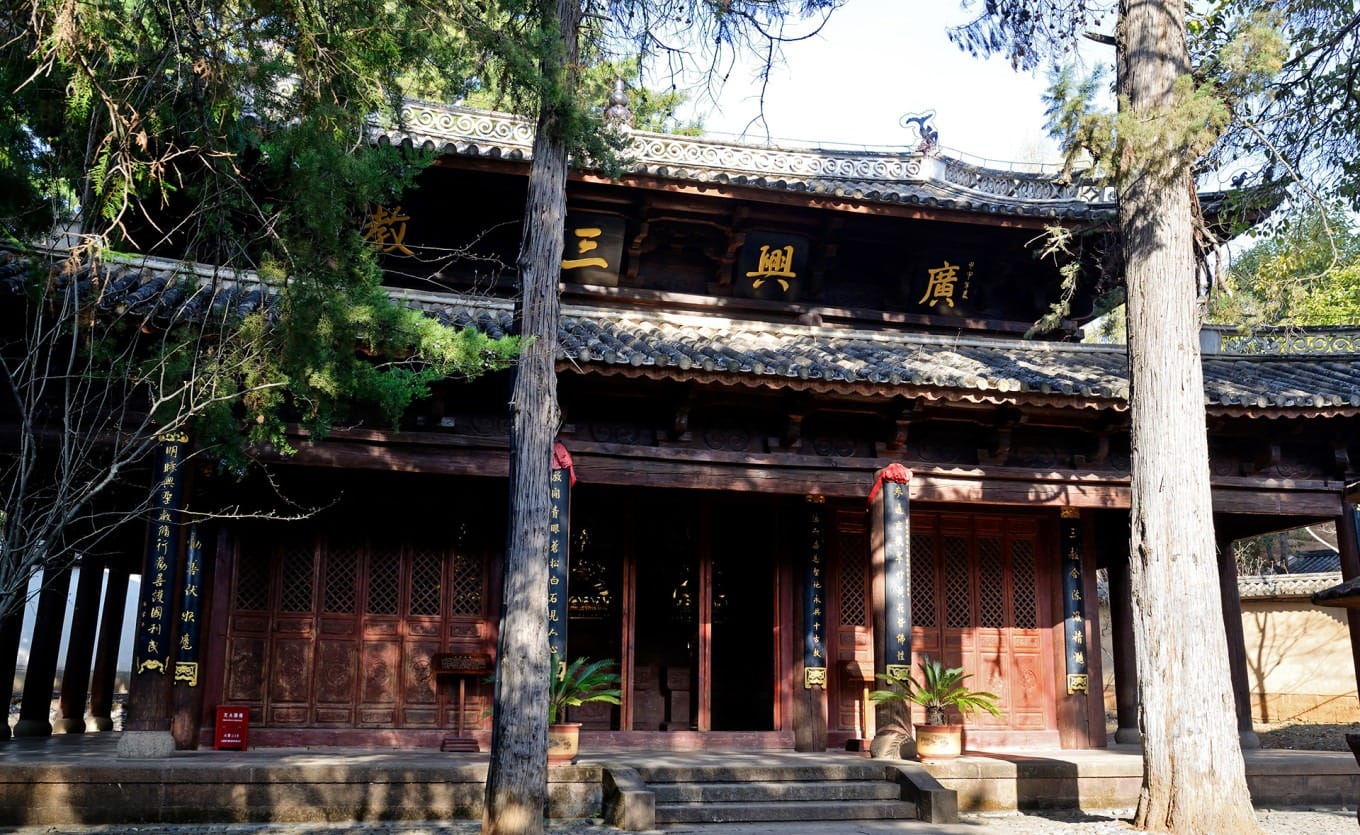
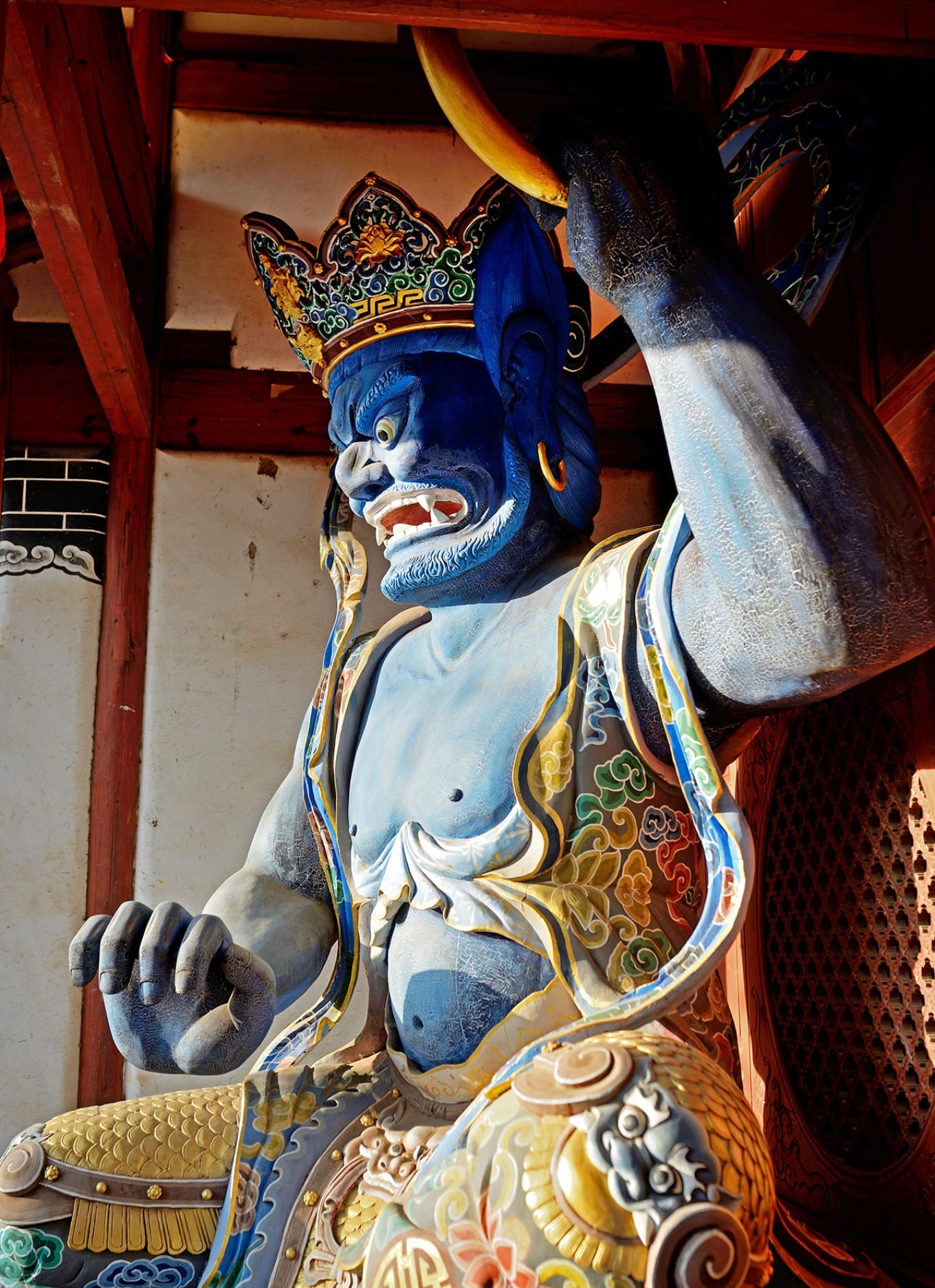
Among the murals, pay special attention to ‘The Assembly of Sakyamuni Buddha Subduing Demons’ (南无降魔释迦如来会图) on the lintel above the main door. This is the best-preserved mural in the temple. It depicts Sakyamuni Buddha seated in meditation at the center, flanked by the Four Heavenly Kings: Dhritarashtra (持国天王), Virudhaka (增长天王), Virupaksha (广目天王), and Vaishravana (多闻天王). Before them are groups of deities and demons, while the lower corners feature scenes with white horse-drawn carriages accompanied by nobles, warriors, and attendants. The mural masterfully captures the Buddha’s solemnity, the kings’ majesty, and the demons’ ferocity through expressive details.

Centuries of incense smoke, sunlight, and weather exposure have damaged many murals, leaving some sections faded. While restoration projects are underway, their outcomes remain uncertain. When visiting Xingjiao Temple in Shaxi, make sure to appreciate these precious Ming Dynasty artifacts—they’re fragile windows into a unique Buddhist heritage.

- AttractionXingjiao Temple (兴教寺)
- AddressSideng Street, Shaxi Ancient Town, Jianchuan County, Dali Bai Autonomous Prefecture, Yunnan, China (云南省大理白族自治州剑川县沙溪古镇寺登街)
- HighlightsMing Dynasty architecture, Azhali Buddhist heritage, 1417 murals by Zhang Bao
- AdmissionFree
Practical tip: You can prioritize one signature stop around the area, and you should adjust timing and budget based on transport and peak hours.
Ouyang Courtyard: A ‘Five-Star’ Caravan Inn
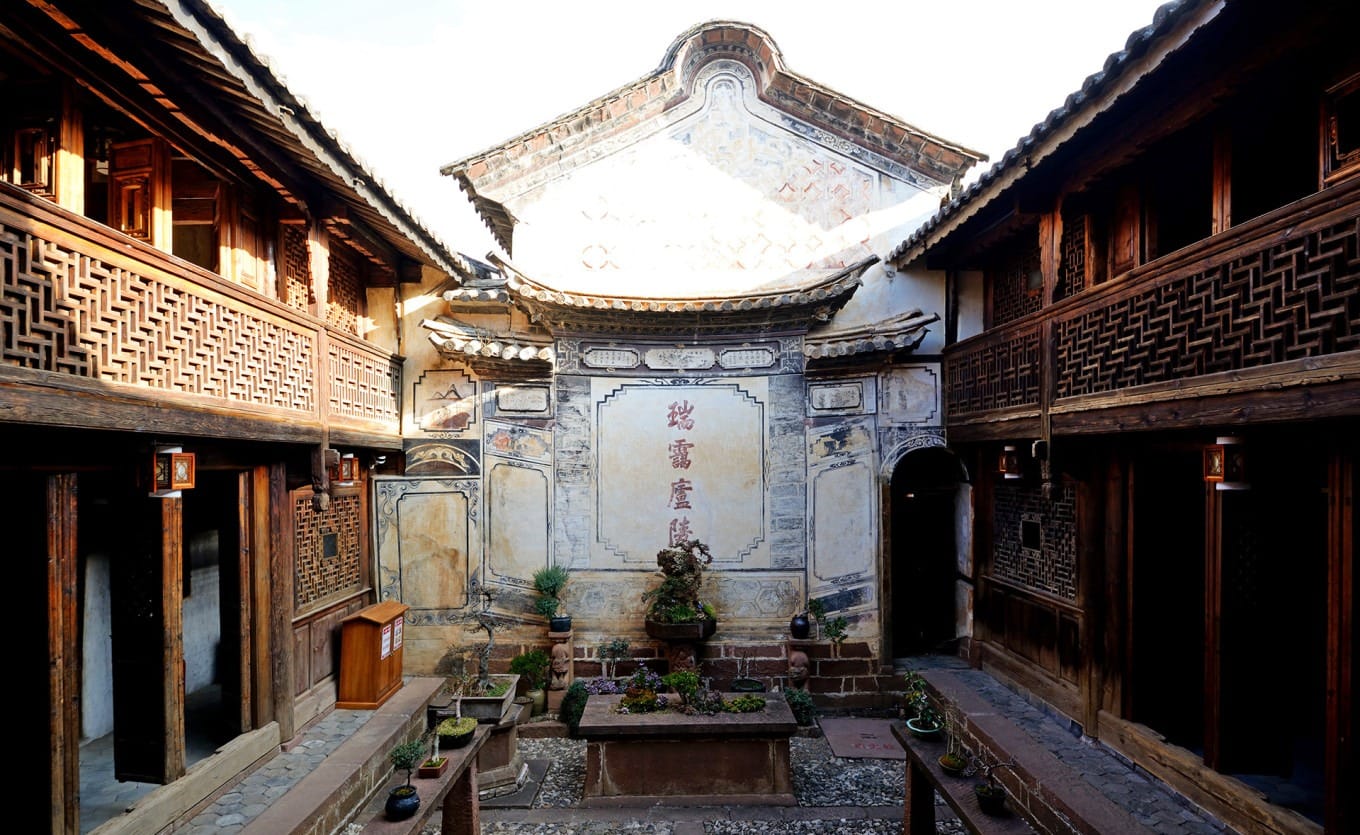
As you explore the ancient Shaxi (沙溪) town, you’ll discover its deep roots as a vital hub on the historic Tea Horse Road. Sideng Street (寺登街) was once lined with ‘horse inns’ or ‘madian’ (马店), which functioned as combined trading posts, guesthouses, and stables for the traveling caravans. The scale was immense—it’s said the street could comfortably accommodate a thousand horses at once. On the north side of Sifang Square, in Sanjia Lane (三家巷), you’ll find the best-preserved example: Ouyang Courtyard (欧阳大院). This grand complex was renowned as the ‘five-star horse inn’ of the Yunnan-Tibet Tea Horse Road.
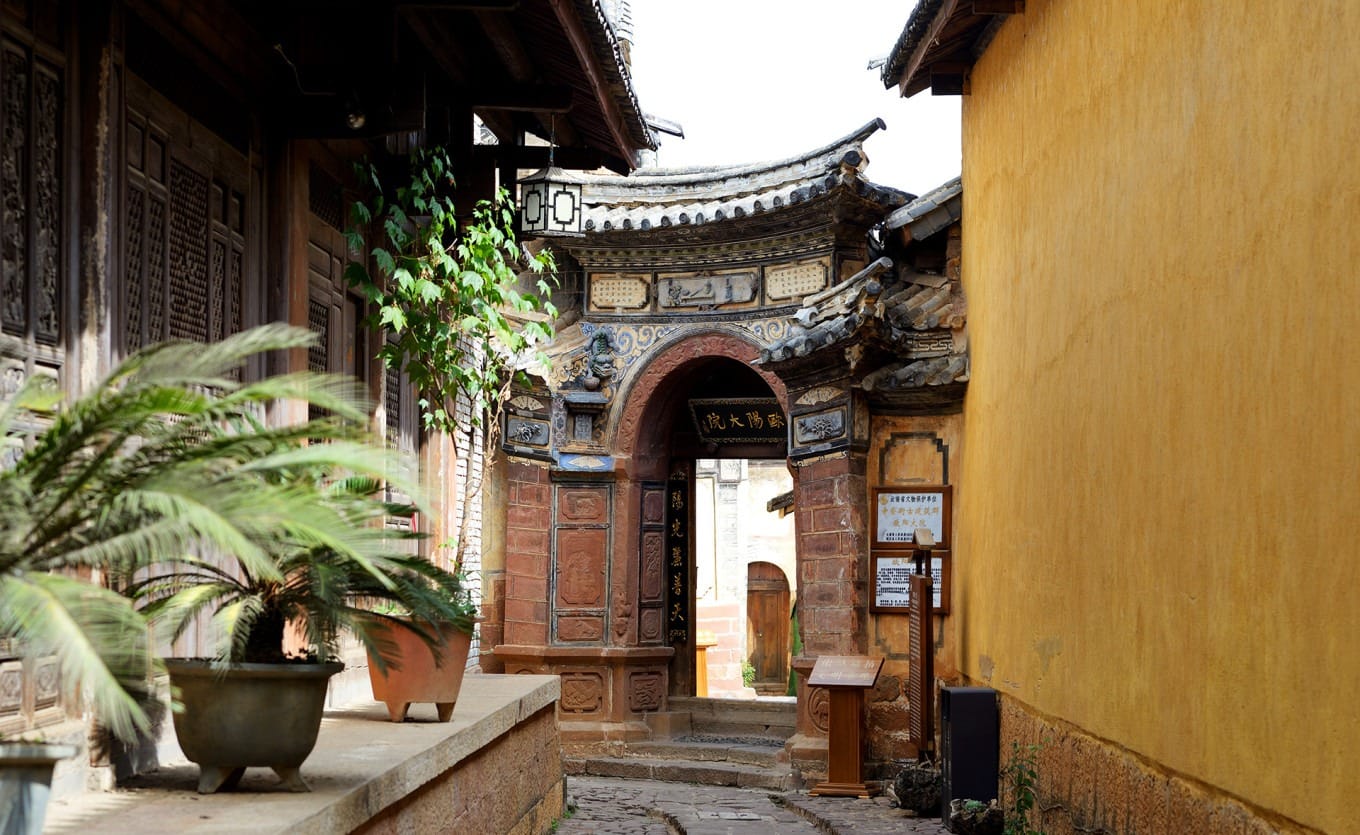
Built in the late Qing to early Republican era, the courtyard originally comprised two traditional Bai ethnic ‘three-room, one-screen-wall’ residences and a separate stable complex. Currently, the stables are under restoration, so your visit focuses on the two main residential courtyards. You’ll enter through two successive gates adorned with exquisite wood and brick carvings. The passageway between them features painted poems and illustrations depicting farming and scholarly life, offering a glimpse into the cultural values of the era.
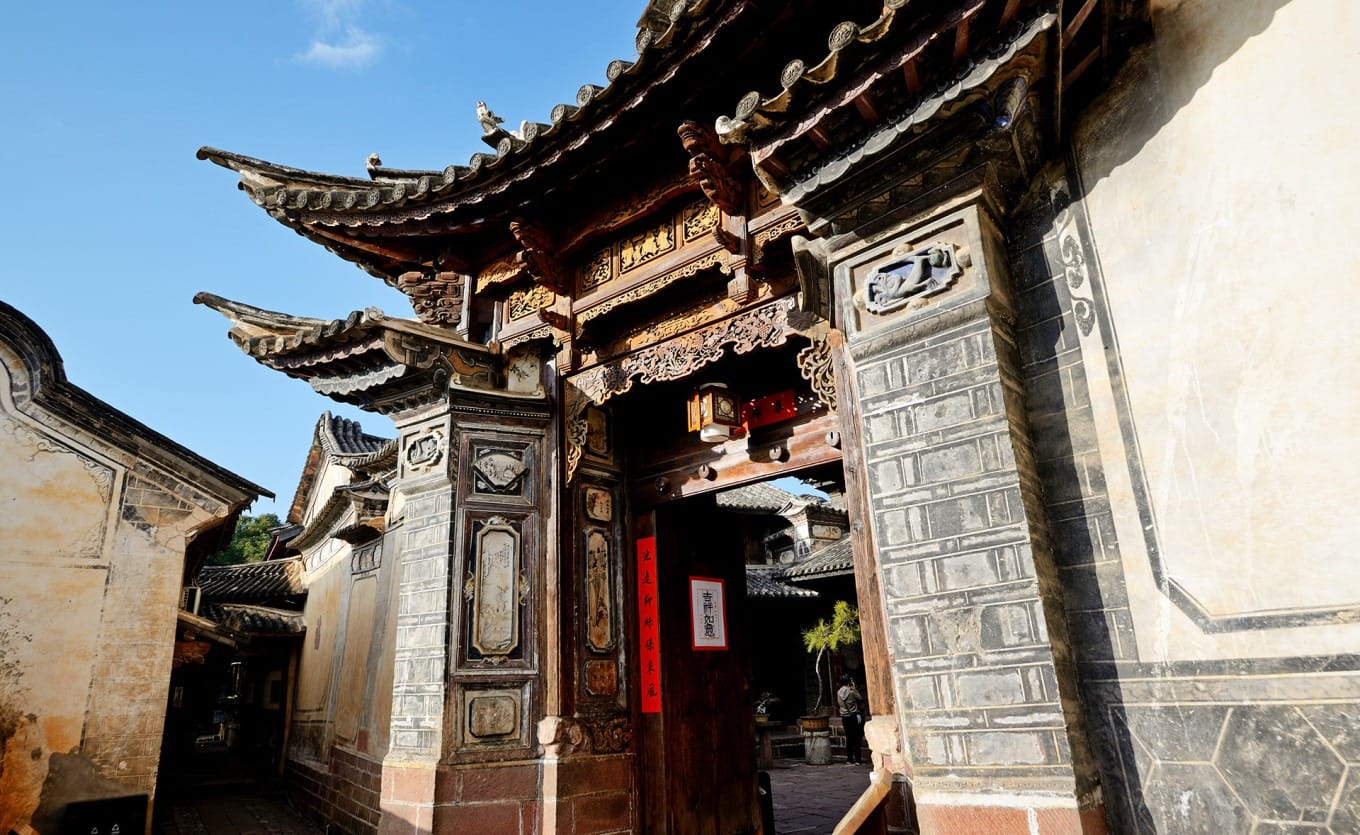
Passing through the second gate reveals a central courtyard paved with red sandstone slabs. The main house faces the decorative screen wall. Inside, you can admire a finely carved shrine on the upper floor, considered one of the most remarkable and complete examples in Yunnan. Note that the second floor itself is not currently open to the public.

The story of Ouyang Courtyard begins with its founders, who were not native to Shaxi. The Ouyang family ancestors were officials from Ji’an (吉安), Jiangxi (江西), who settled in Jianchuan (剑川), Yunnan during the Ming Dynasty. One branch later moved to Shaxi. Generations later, a man named Ouyang Jinghe rose from being a horse handler to become the wealthiest ‘maguatou’ (马锅头)—or caravan leader—in Shaxi. He funded the construction of this premier courtyard complex, which served as both a family mansion and a lodging facility for caravans.
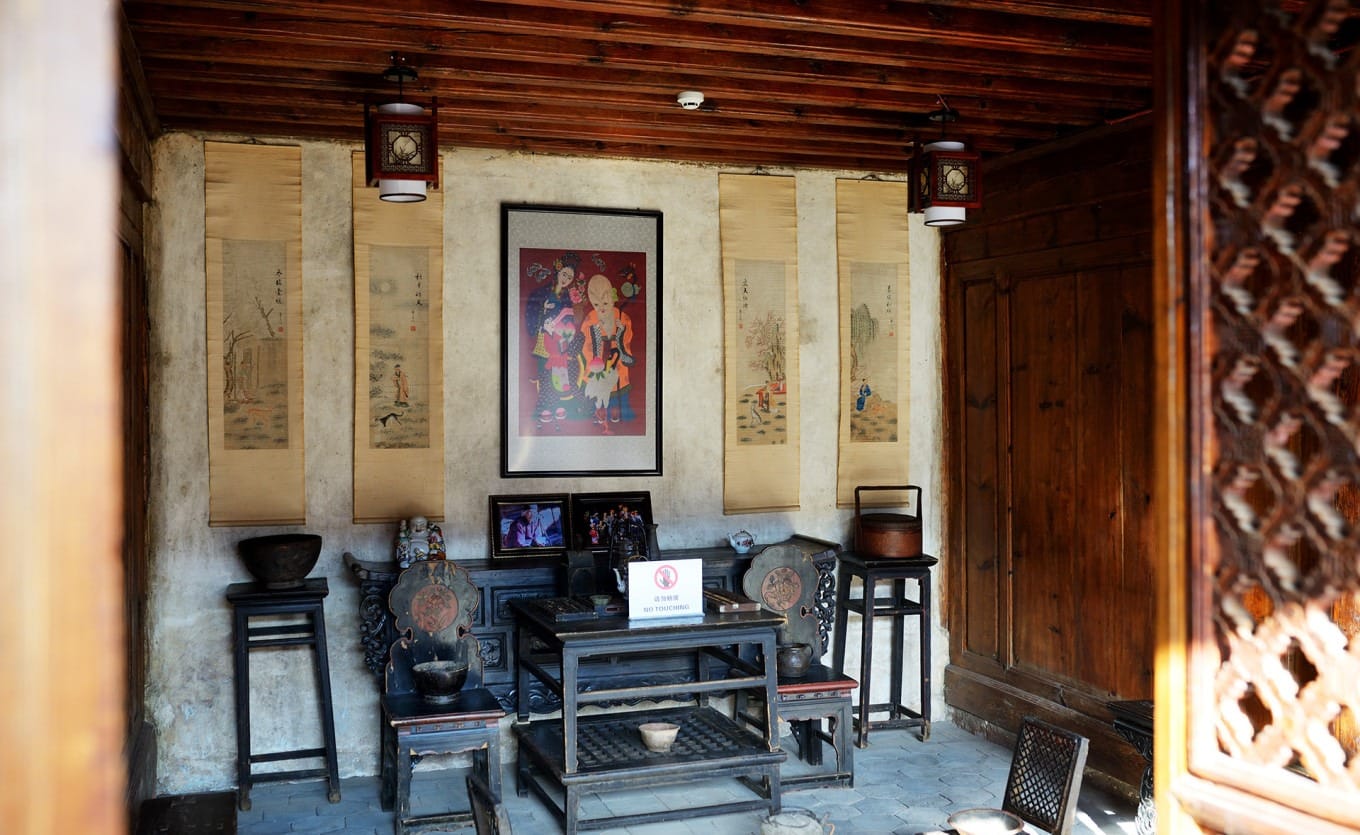
After Ouyang Jinghe’s death, his son Ouyang Shu inherited the caravan business. Tragedy struck in 1947 when Ouyang Shu was killed by bandits during a journey. His wife, Madame Zhao, courageously took over as the ‘maguatou,’ becoming the family matriarch known as the ‘female caravan leader.’ She lived until 2005, passing away at 94, and never remarried.
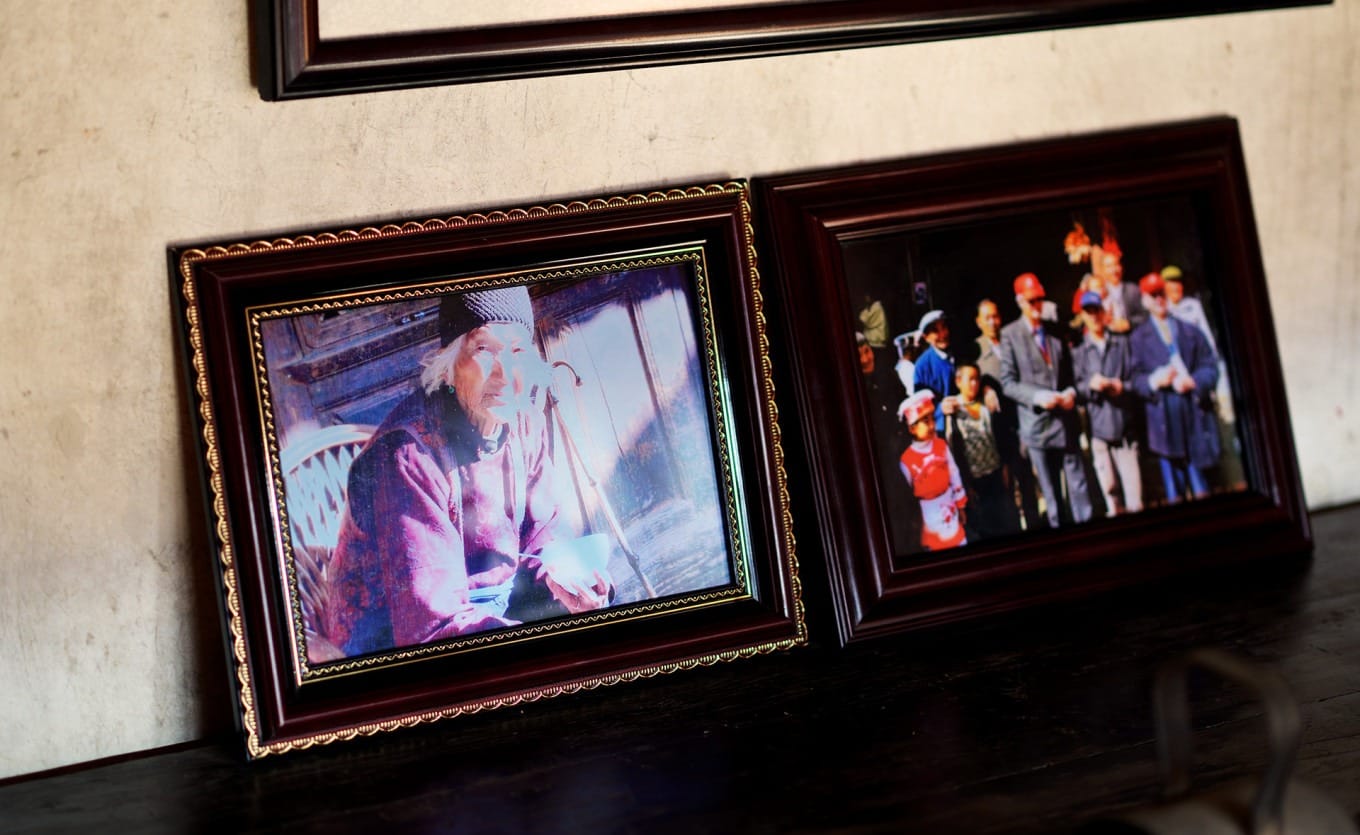
In 2019, the local government acquired the courtyard from the family for preservation. During restoration, original elements like lattice doors, the shrine, and period furniture were meticulously preserved. These artifacts stand as silent witnesses to the caravan era’s history.
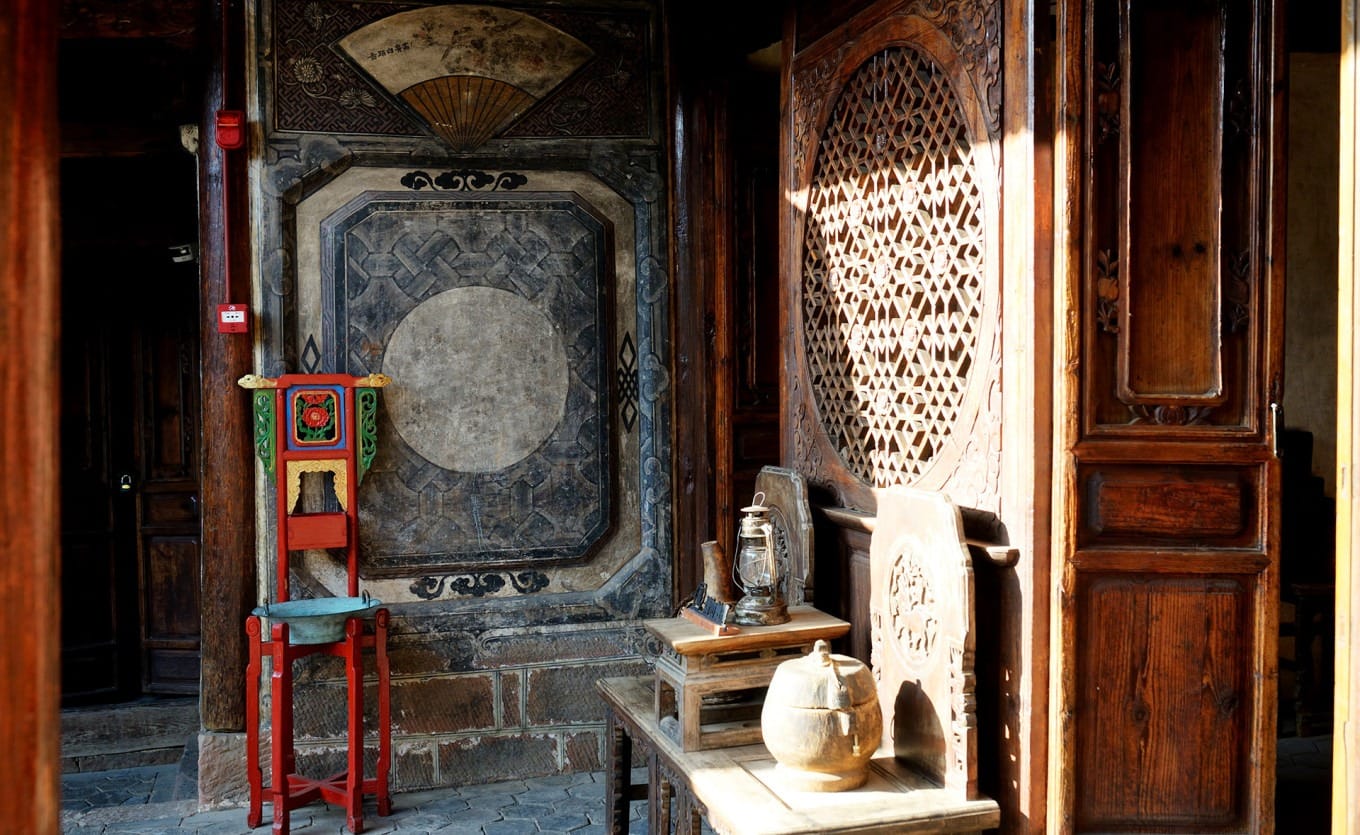
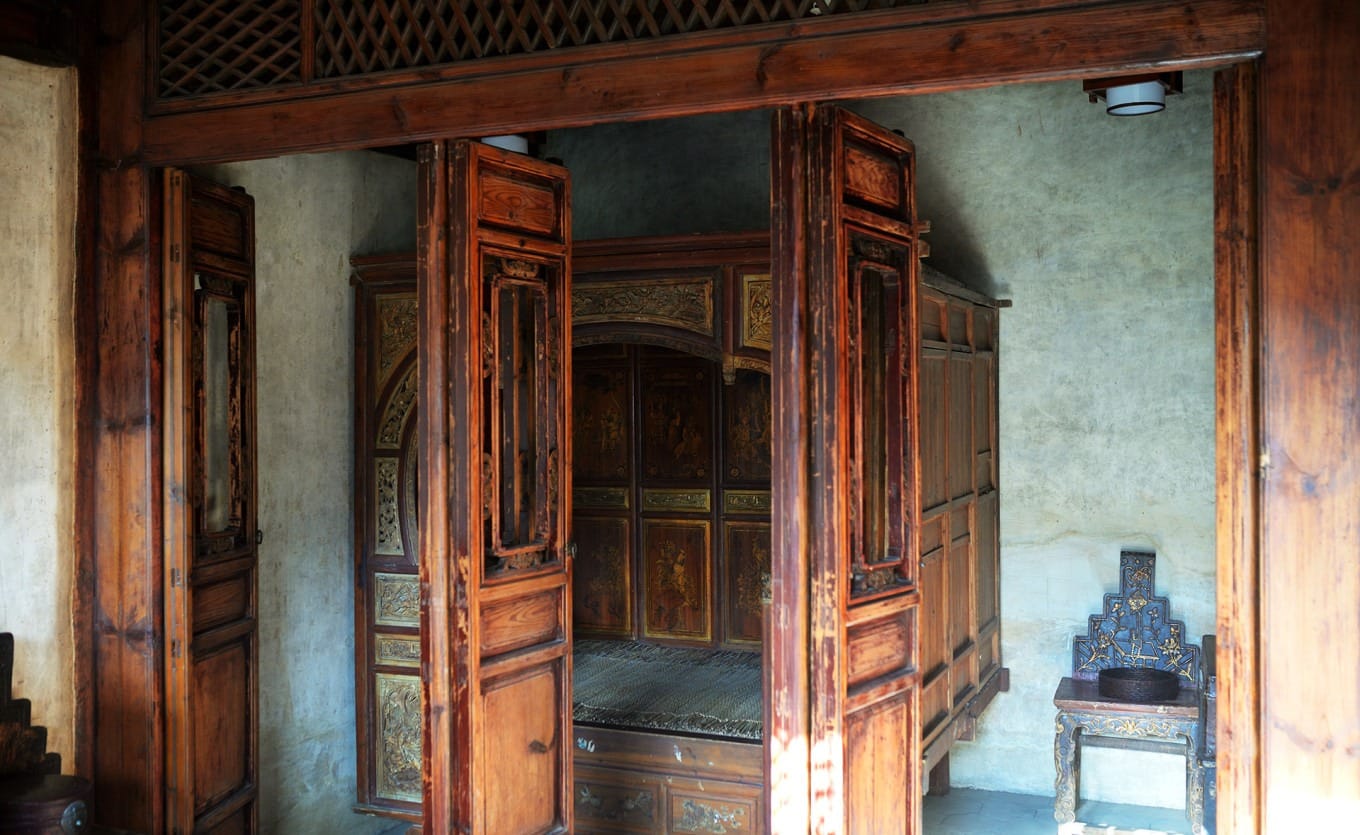
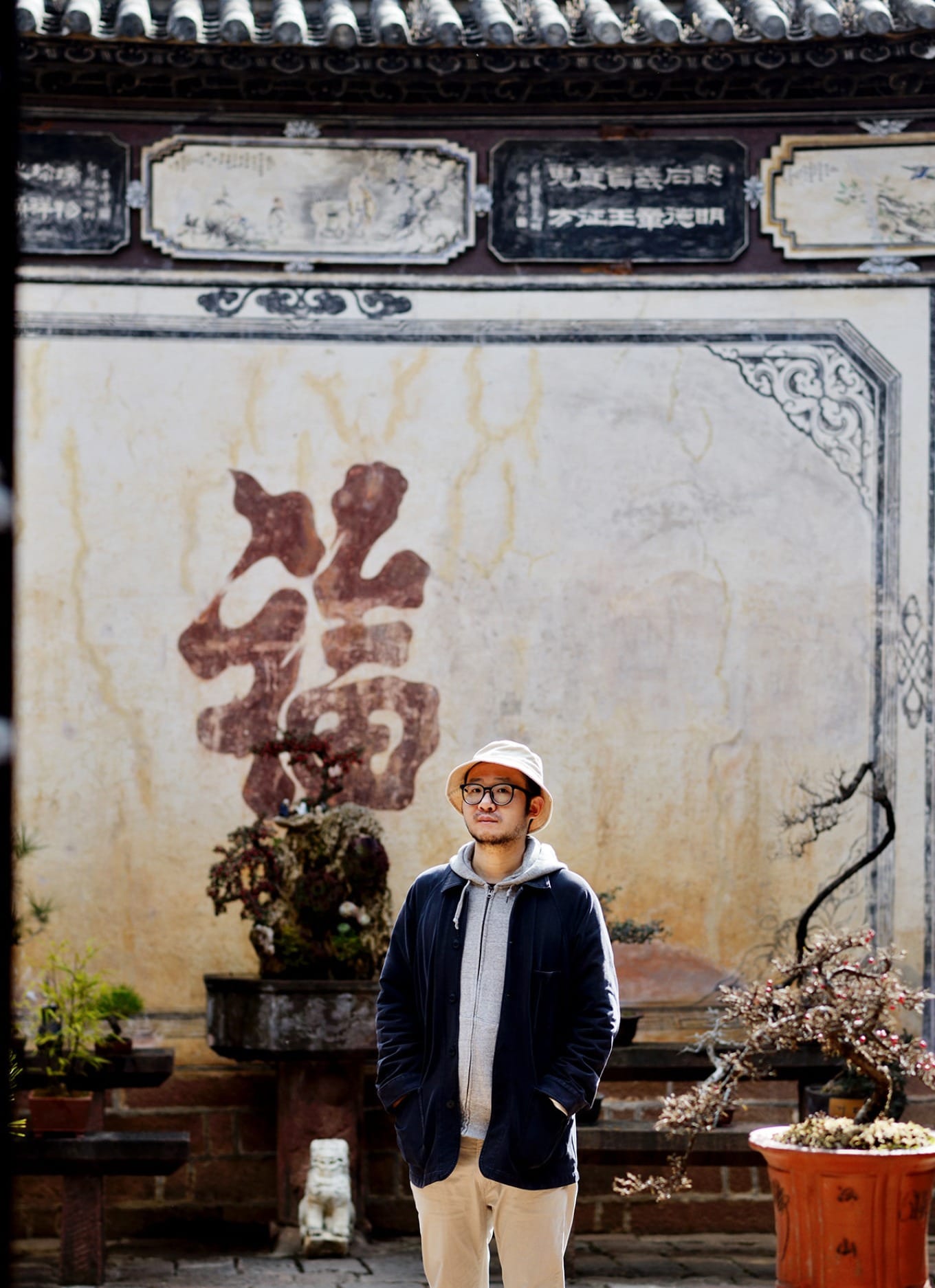
North of the main courtyard, you’ll find the former premium guest quarters for caravan merchants. The wing rooms on either side, with their beautifully carved wooden doors and windows, were private suites. A clever security feature: each bed had a hidden compartment underneath for travelers to stash valuables. On the screen wall in this courtyard, look for the inscription ‘Rui Ai Luling’ (瑞霭庐陵). ‘Luling’ (庐陵) refers to the family’s ancestral home in Ji’an, Jiangxi—a reminder from the elder caravan leader to his descendants never to forget their roots.
- AttractionOuyang Courtyard (欧阳大院)
- AddressSideng Street, Shaxi Ancient Town, Jianchuan County, Dali Bai Autonomous Prefecture, Yunnan, China / 中国云南省大理白族自治州剑川县沙溪古镇寺登街
- Recommended experienceExploring the historic architecture, learning about caravan culture, viewing the carved shrine and inscriptions
- Admission feeFree
Experience the Shaxi Friday Market
No visit to Shaxi is complete without experiencing its vibrant local market. While many towns around Dali host their own weekly markets, the Friday market in Shaxi stands out as the most authentic, preserving the trading culture that once thrived along the ancient Tea Horse Road. What began as barter exchanges centuries ago has evolved into a weekly gathering where locals and visitors alike can immerse themselves in the region’s living traditions.
On market days, villagers from surrounding communities arrive early to set up their stalls along the nearly two-kilometer stretch of road near the Shaxi Town Government offices. The market features a fascinating mix of professional vendors and local residents selling everything from daily necessities to regional specialties. You’ll find everything imaginable here: fresh seasonal fruits and vegetables, local handicrafts, household items, and traditional snacks.
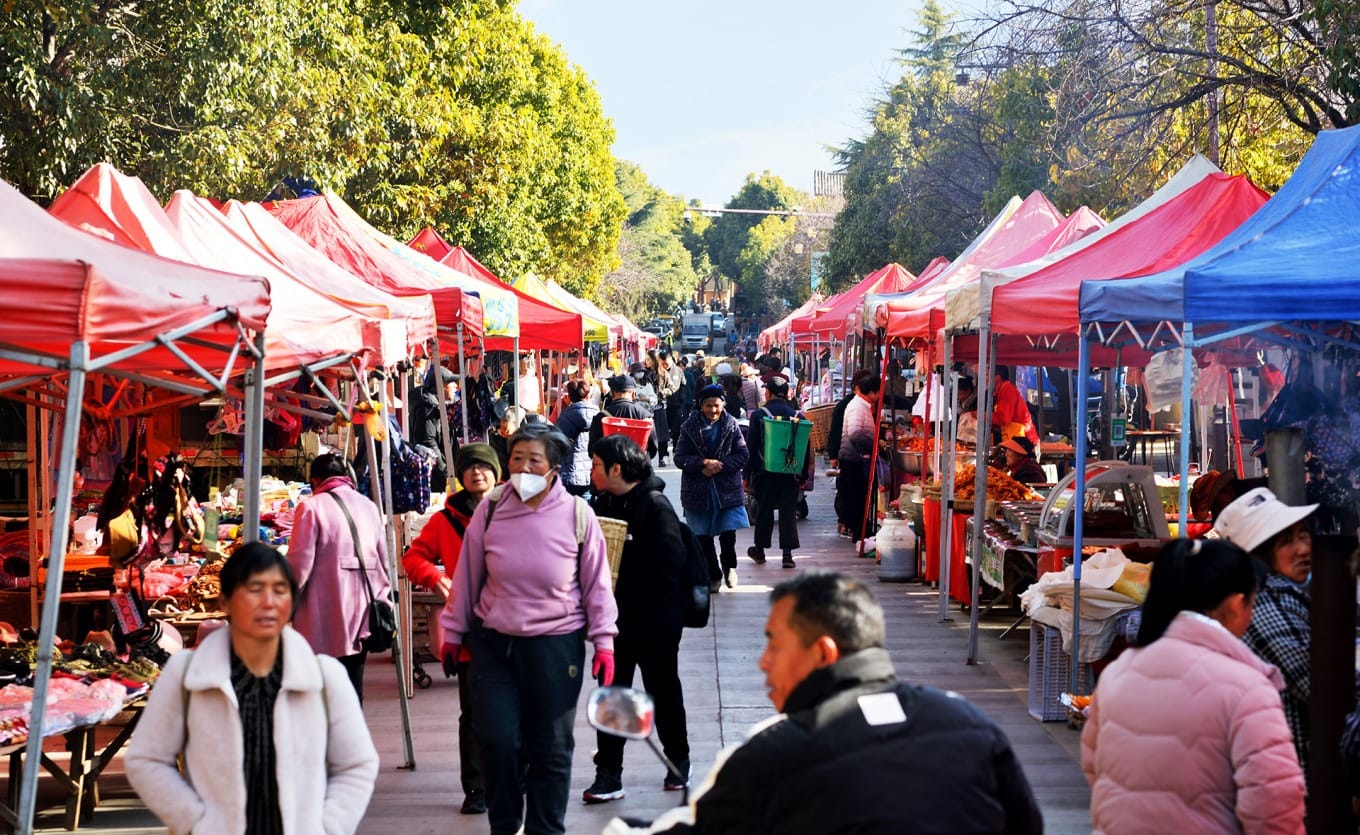
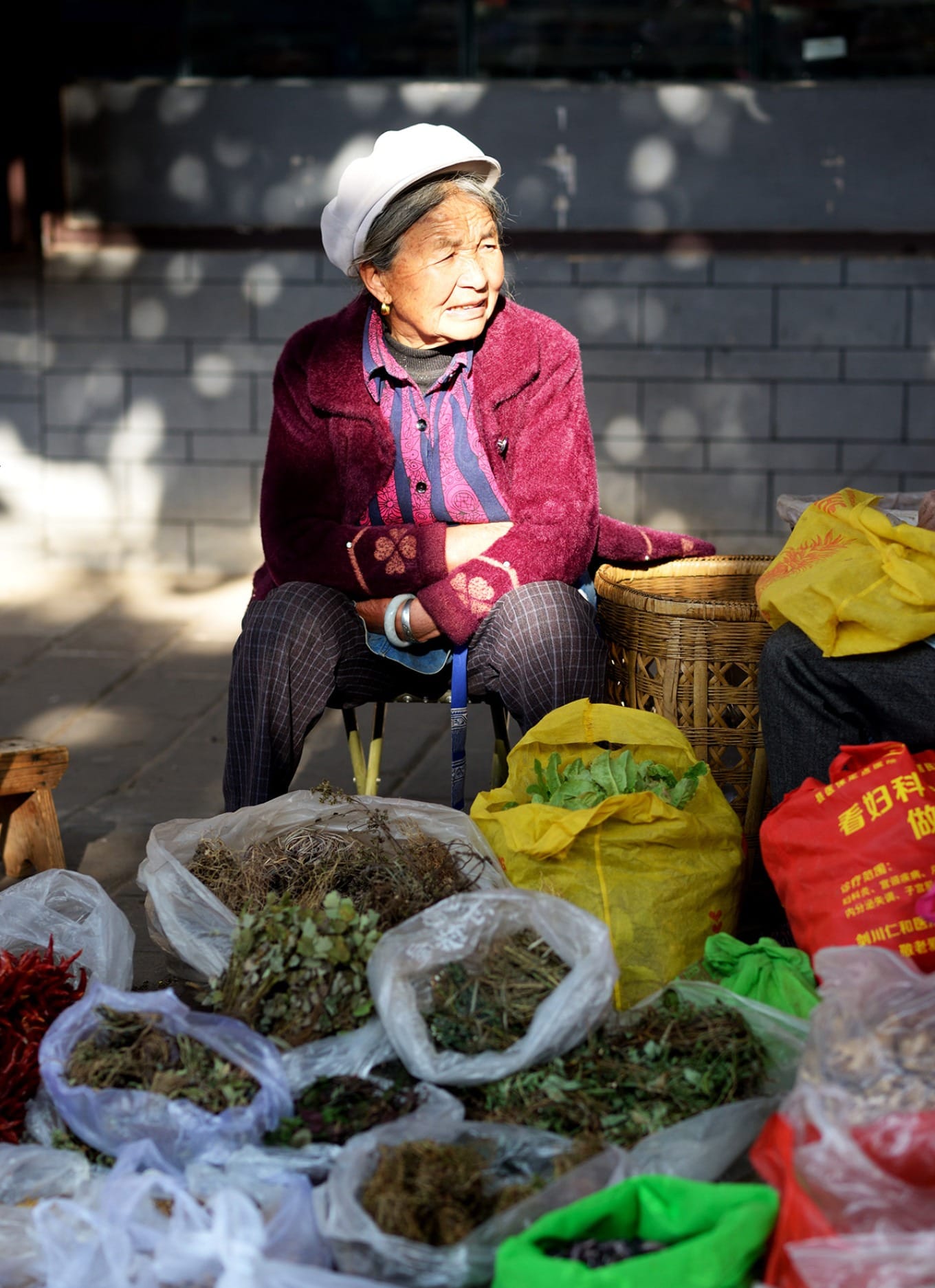
Seasonal mountain specialties are always worth seeking out, and you shouldn’t miss the handcrafted bamboo kitchenware and pottery made by local artisans. When you need a break from exploring, try a bowl of doufen (豆粉, bean jelly) from one of the food stalls. Even if you don’t plan to buy anything, simply observing the scene offers rich cultural insights. The vibrant traditional clothing of local minority groups, the animated bargaining in local dialects, and the lively chatter create an authentic atmosphere that embodies Bai culture.
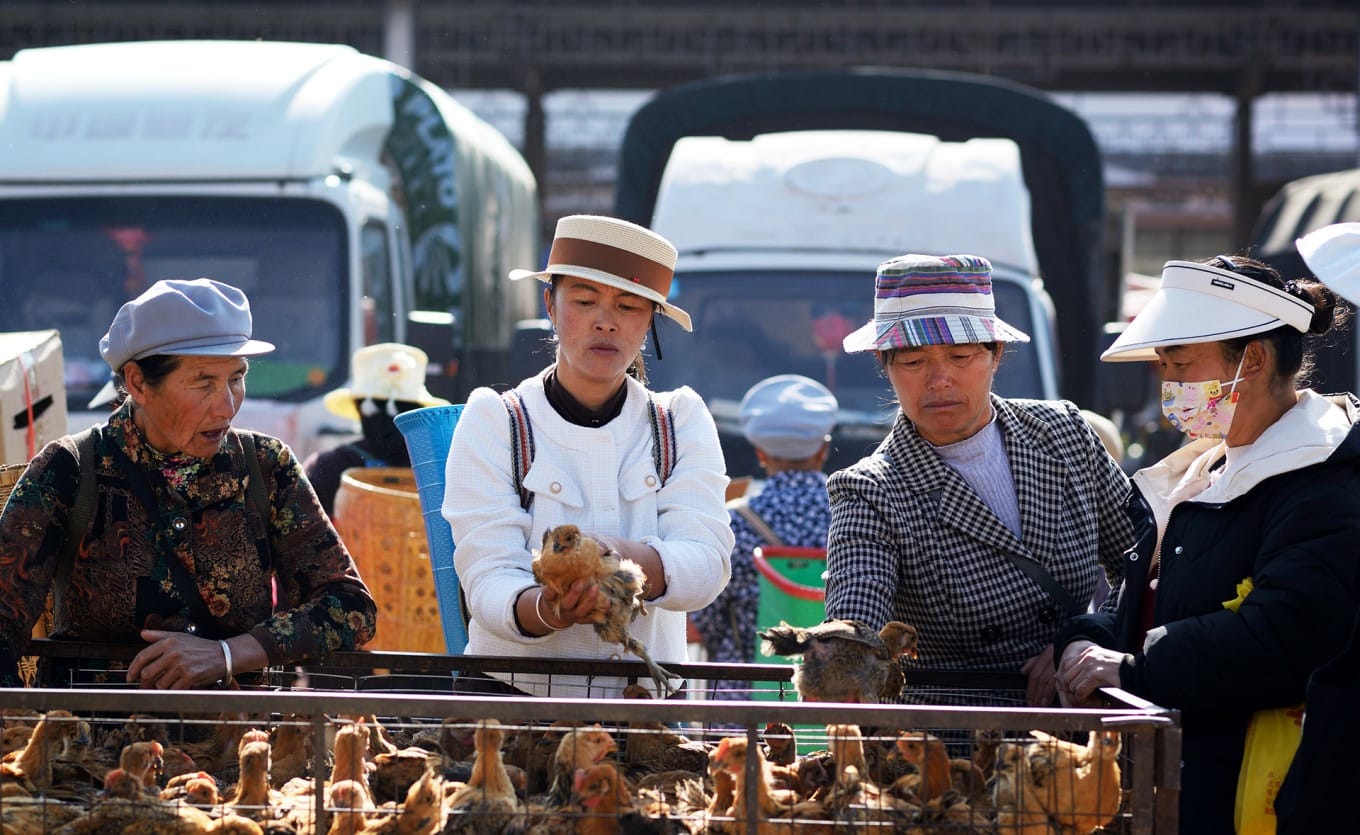
The market operates from morning until early afternoon, making it easy to incorporate into your Shaxi itinerary. If your visit coincides with a Friday, consider joining the locals with a traditional basket on your back. Embracing this lively market scene offers the most authentic way to experience local life in Dali.
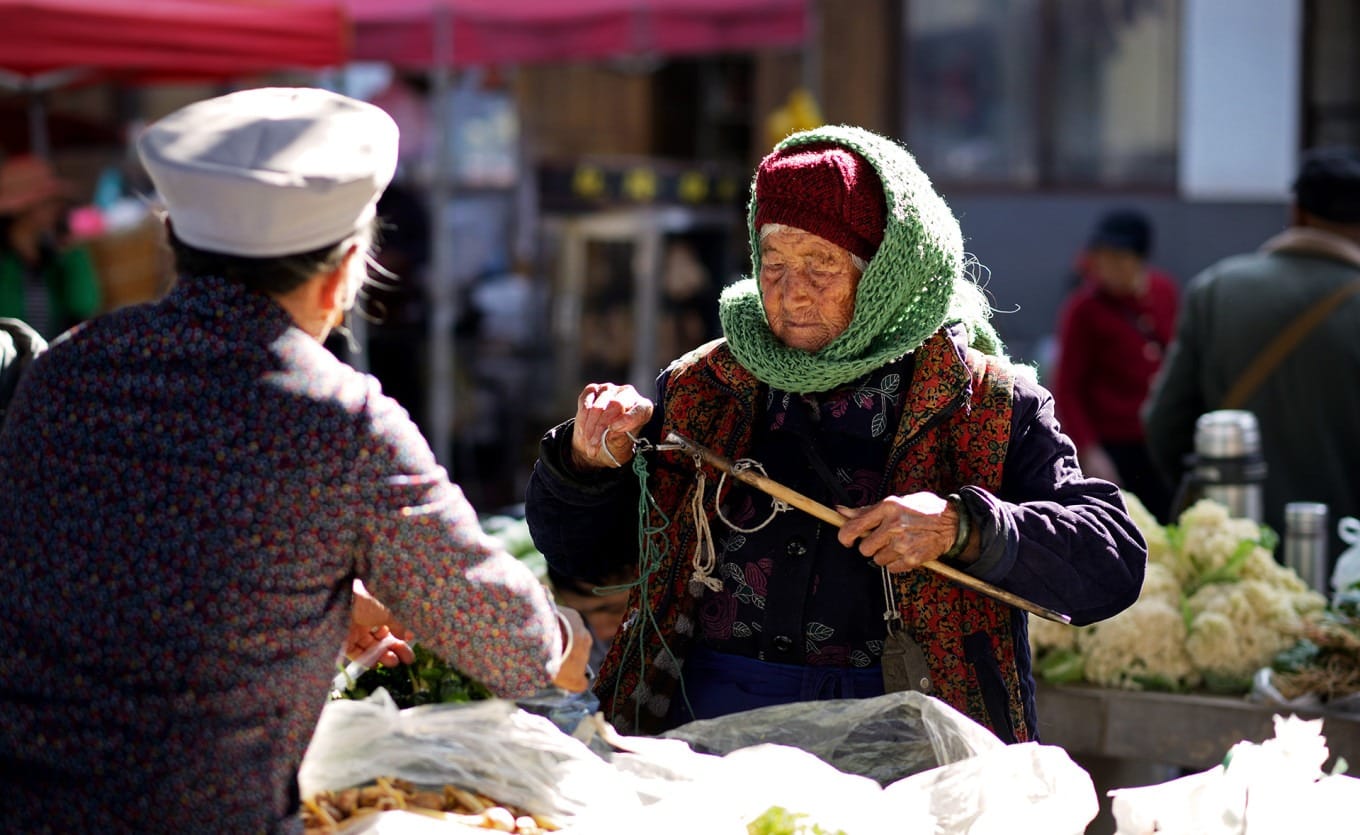
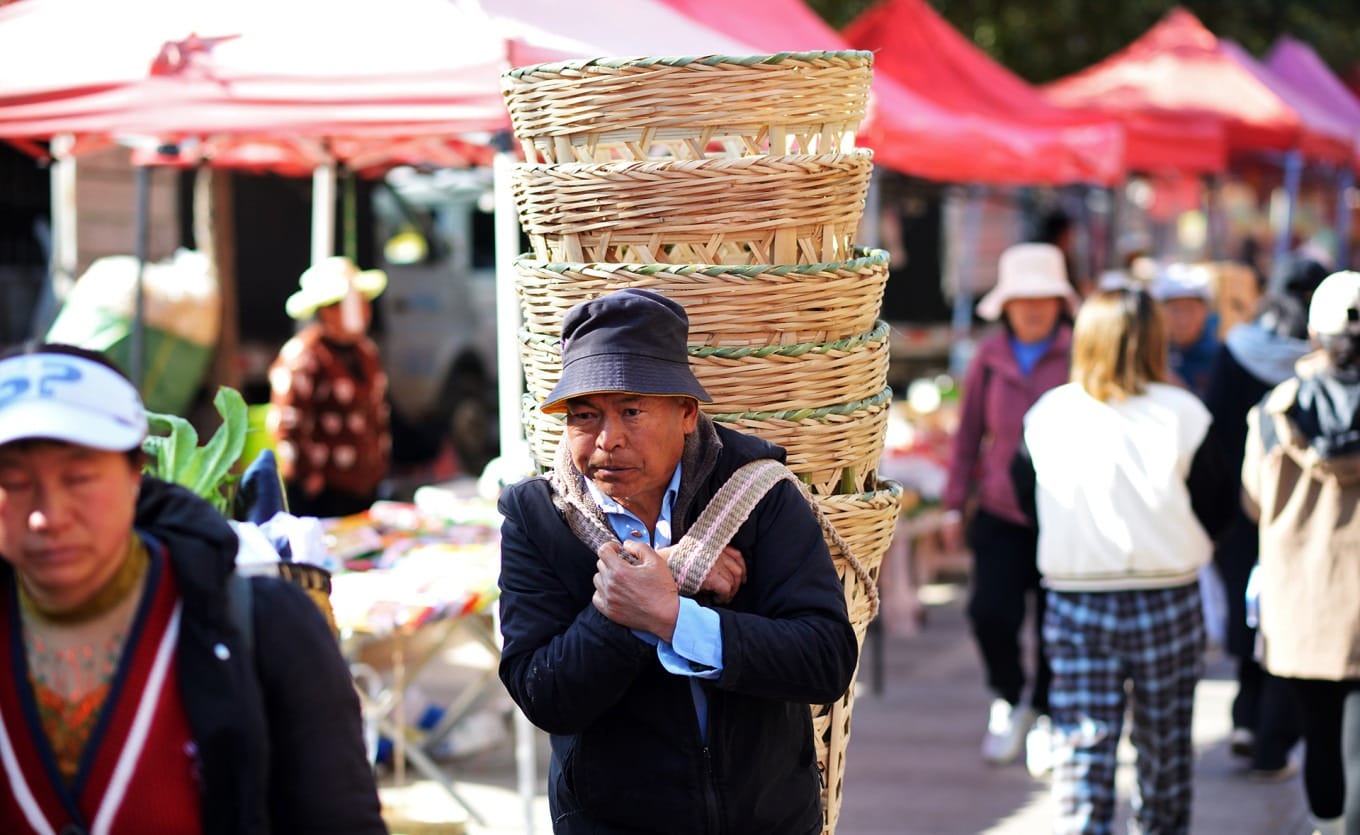
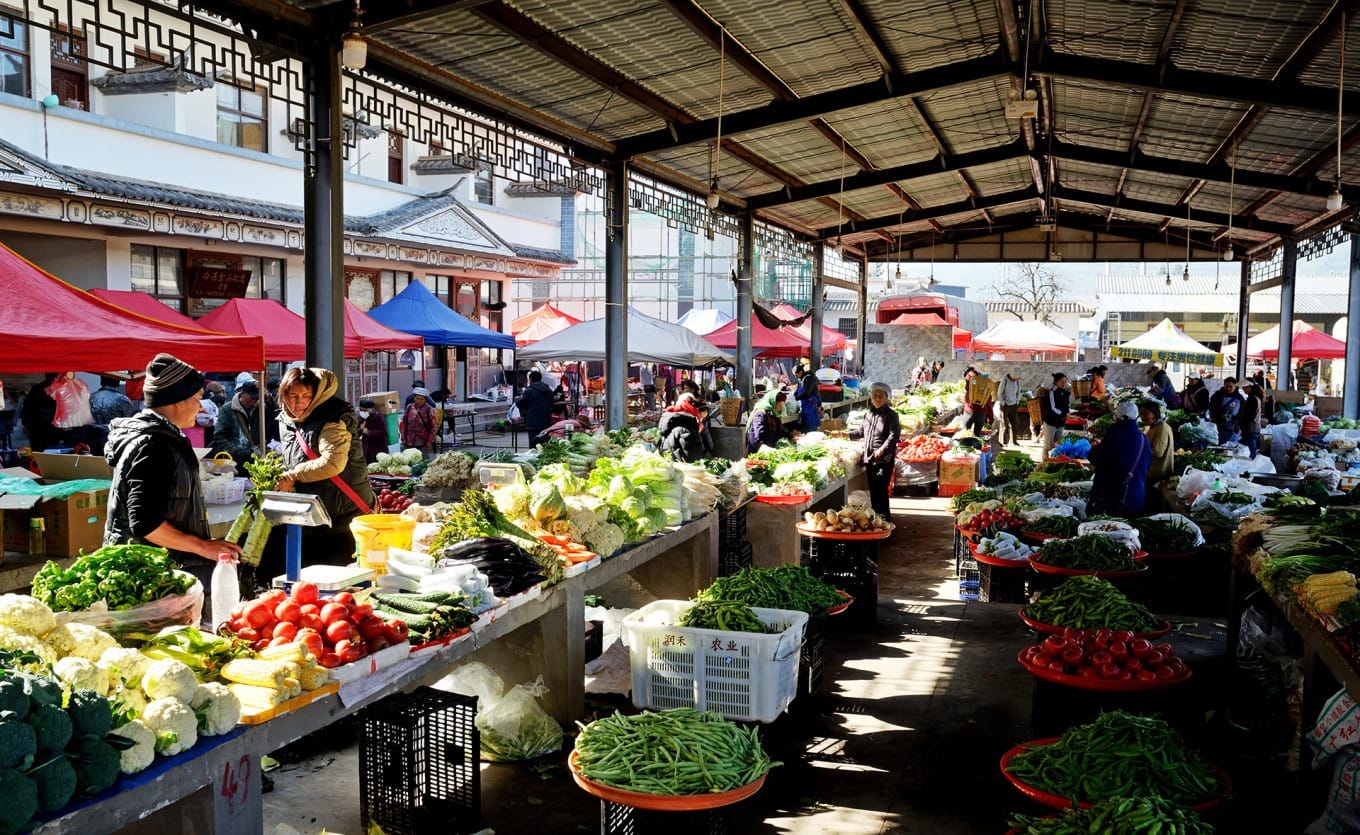
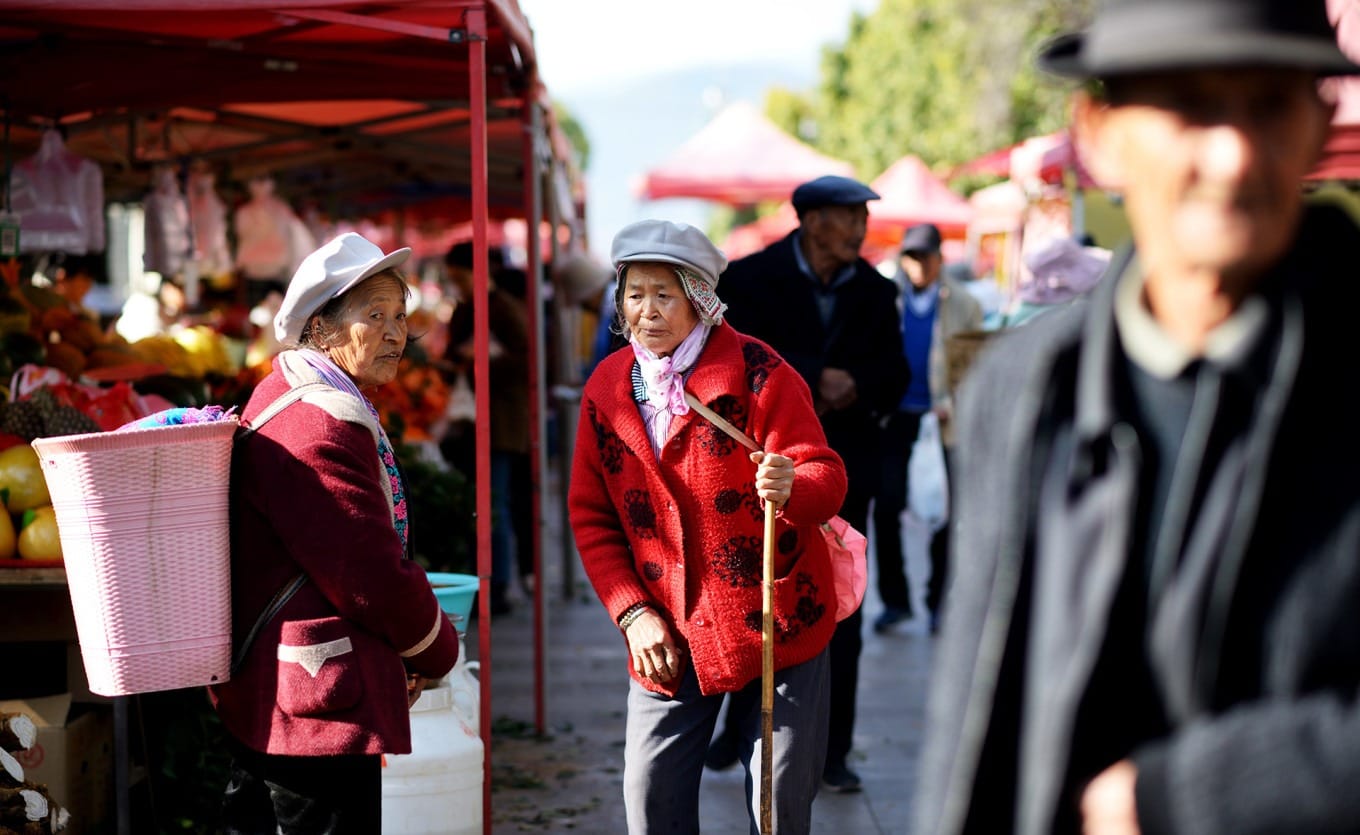
- Address大理白族自治州剑川县沙溪镇政府旁 (Next to Shaxi Town Government, Jianchuan County, Dali Bai Autonomous Prefecture)
- AdmissionFree
- Market DayFriday mornings until early afternoon
- Getting ThereAbout 10-minute walk from Sideng Street
Xizhou: A Living Museum of History and Commerce
Just 18 kilometers north of Dali Old Town, Xizhou (喜洲) offers a distinct experience from places like Shaxi. Nestled between Erhai Lake to the east and Cangshan Mountain to the west, this picturesque town is celebrated for its romantic, healing atmosphere. Yet, its deeper allure lies in its history as a living museum. Xizhou was once the center of the Nanzhao Kingdom and later the birthplace of Duan Siping, founder of the Dali Kingdom. Its true character is unlocked by exploring over a hundred grand mansions hidden within its streets, remnants of a powerful merchant past.

Dali’s historical record blends fact and legend, but Xizhou’s significance is clear. It was a center for the Bai people as early as the Spring and Autumn period and served as the Nanzhao capital, known then as Dali. Walking through Xizhou today, you’ll find one of China’s best-preserved collections of Bai-style traditional residences. Many of these century-old mansions were built by the famed Xizhou Merchant Group, whose global trade in tea, silk, and porcelain in the early 20th century funded their construction, leading to the local saying, ‘A small Dali, but a big Xizhou.’
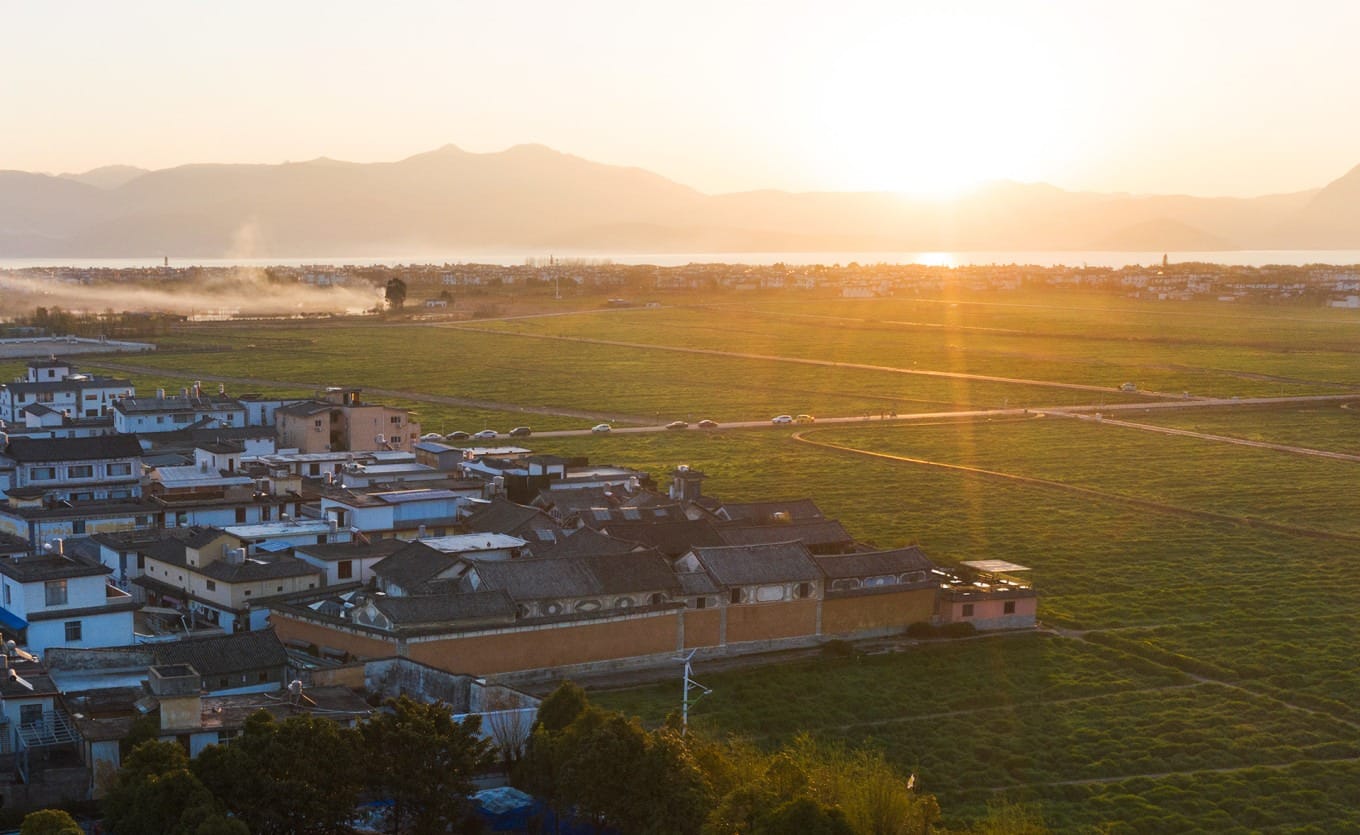
The writer Lao She, visiting in 1941, compared Xizhou to Cambridge, England, praising its tidy streets, shops, libraries with marble arches, and palaces of carved beams and painted pillars. To discover this legacy, venture beyond the main streets. You can trace the footprints of the merchant group’s ‘Big Four,’ ‘Middle Eight,’ and ‘Small Twelve’ families. North of Shiping Street (市坪街), the former domain of the Dong family, you’ll find sites like the restaurant Dong Jinhan Courtyard (董金汉院), the private scenic spot Dong Renmin Courtyard (董仁民院), and the famous Dongyuan Guesthouse (董苑迎宾馆), originally the home of patriotic industrialist Dong Chengnong.

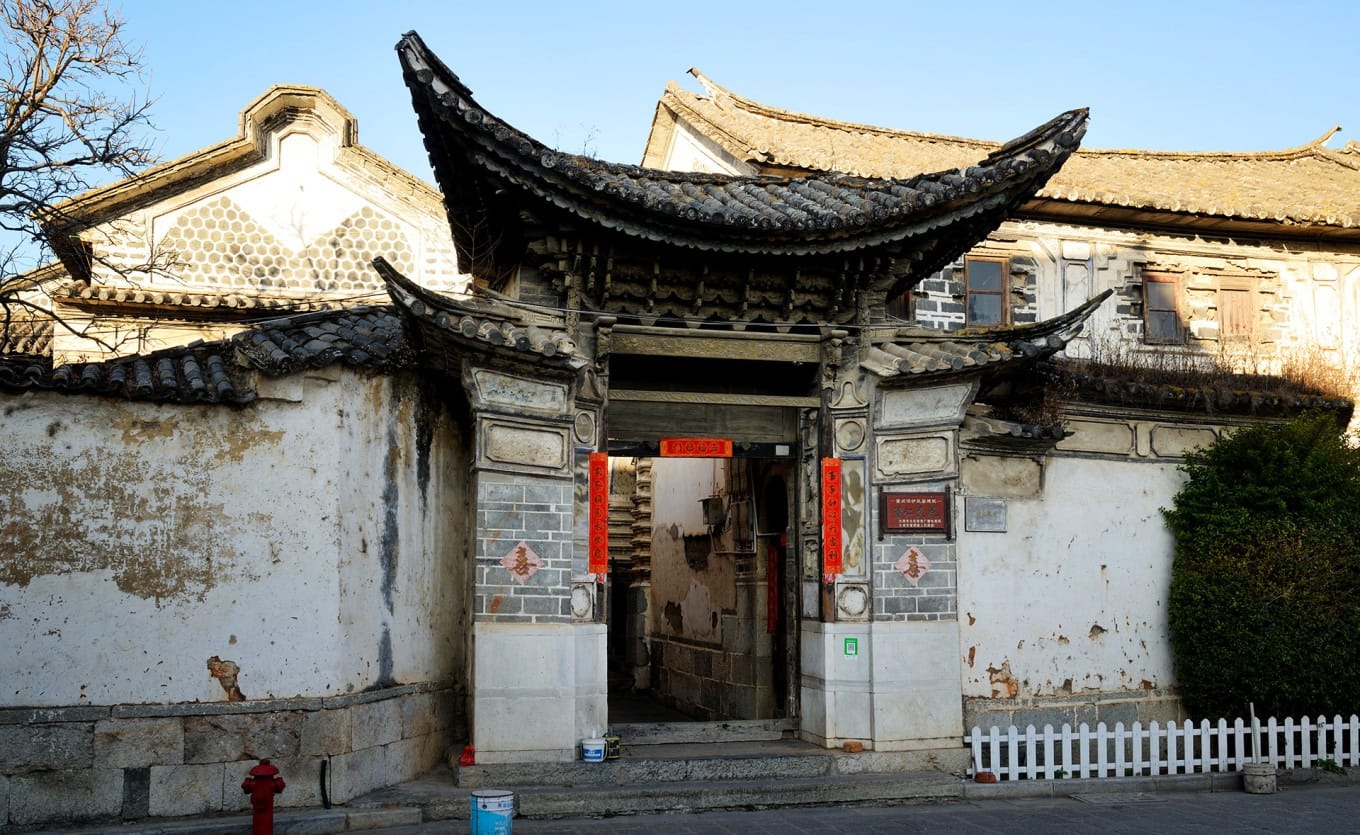
Across emerald wheat fields, you can see the earth-yellow walls of The Linden Centre (喜林苑, Xilin Yuan), the former mansion of Yang Pinxiang, a nephew of one of the ‘Big Four’ merchants. Heading south from the Corner Tower (转角楼) area leads to another surprise: the exquisite Baroque-style carved gate of Yang Guixian Courtyard (杨贵贤院), which looks transplanted from Europe. Inside the East Peace Gate (东安门), the well-preserved Yin Zhuoting Courtyard (尹卓廷院) and neighboring Yin Liting Courtyard (尹立廷院) are still private residences, not open to tourists.
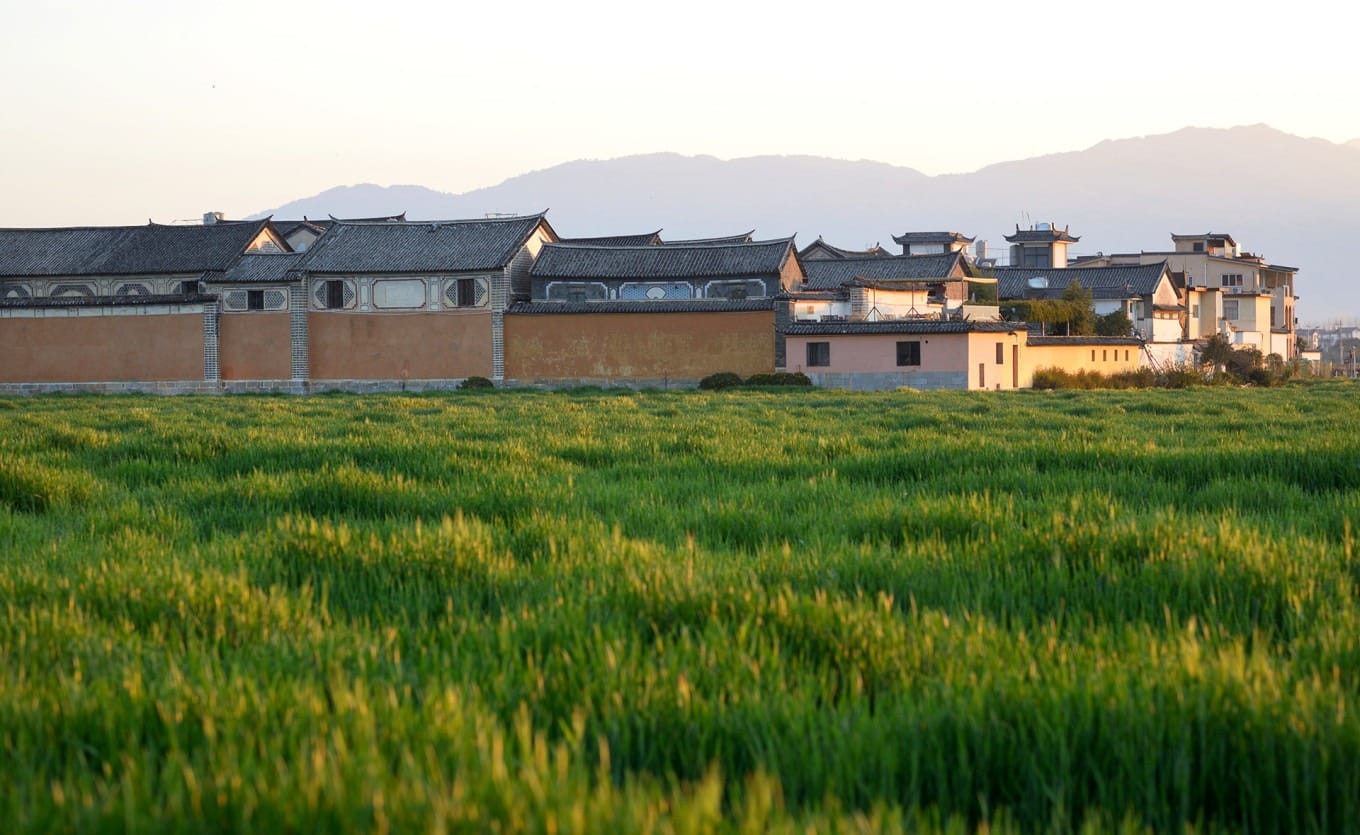
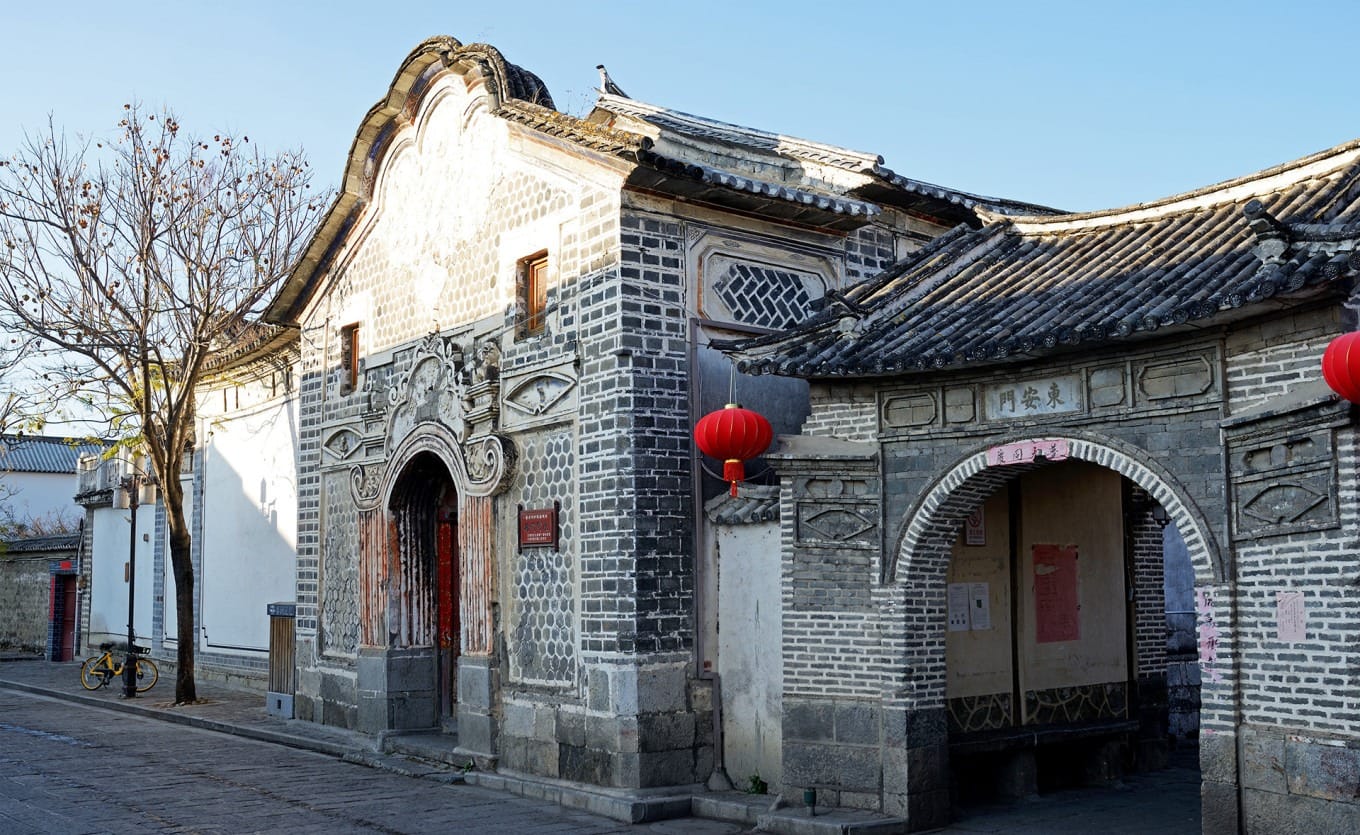
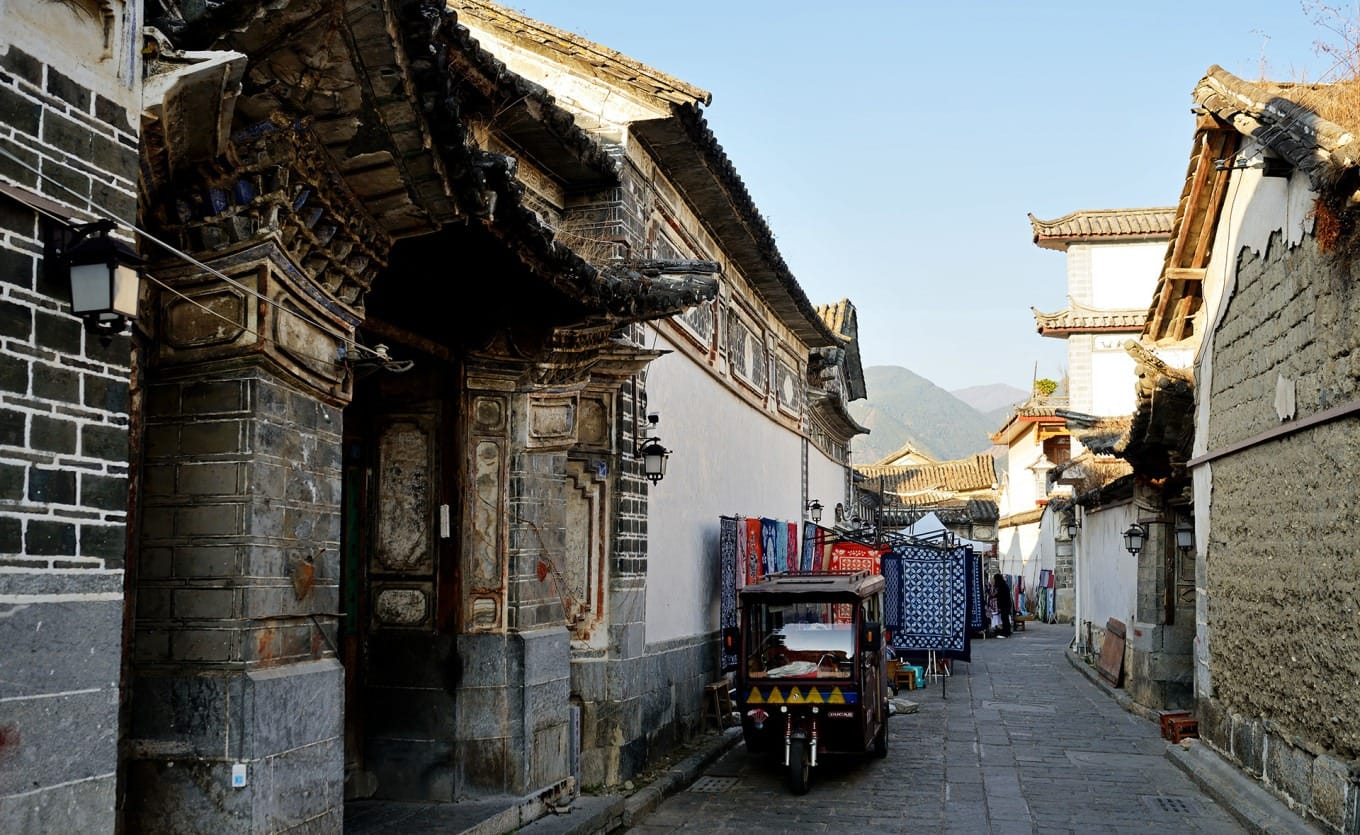
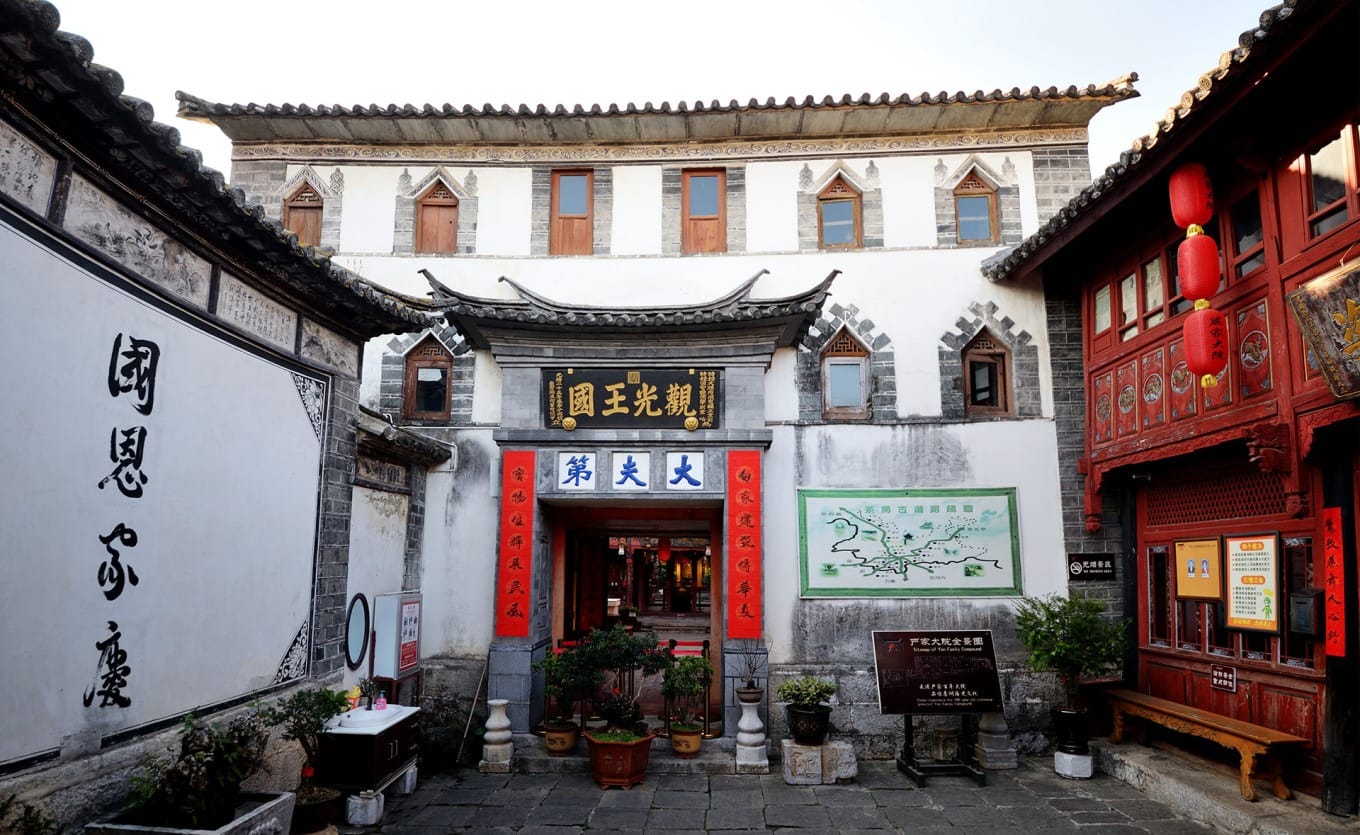
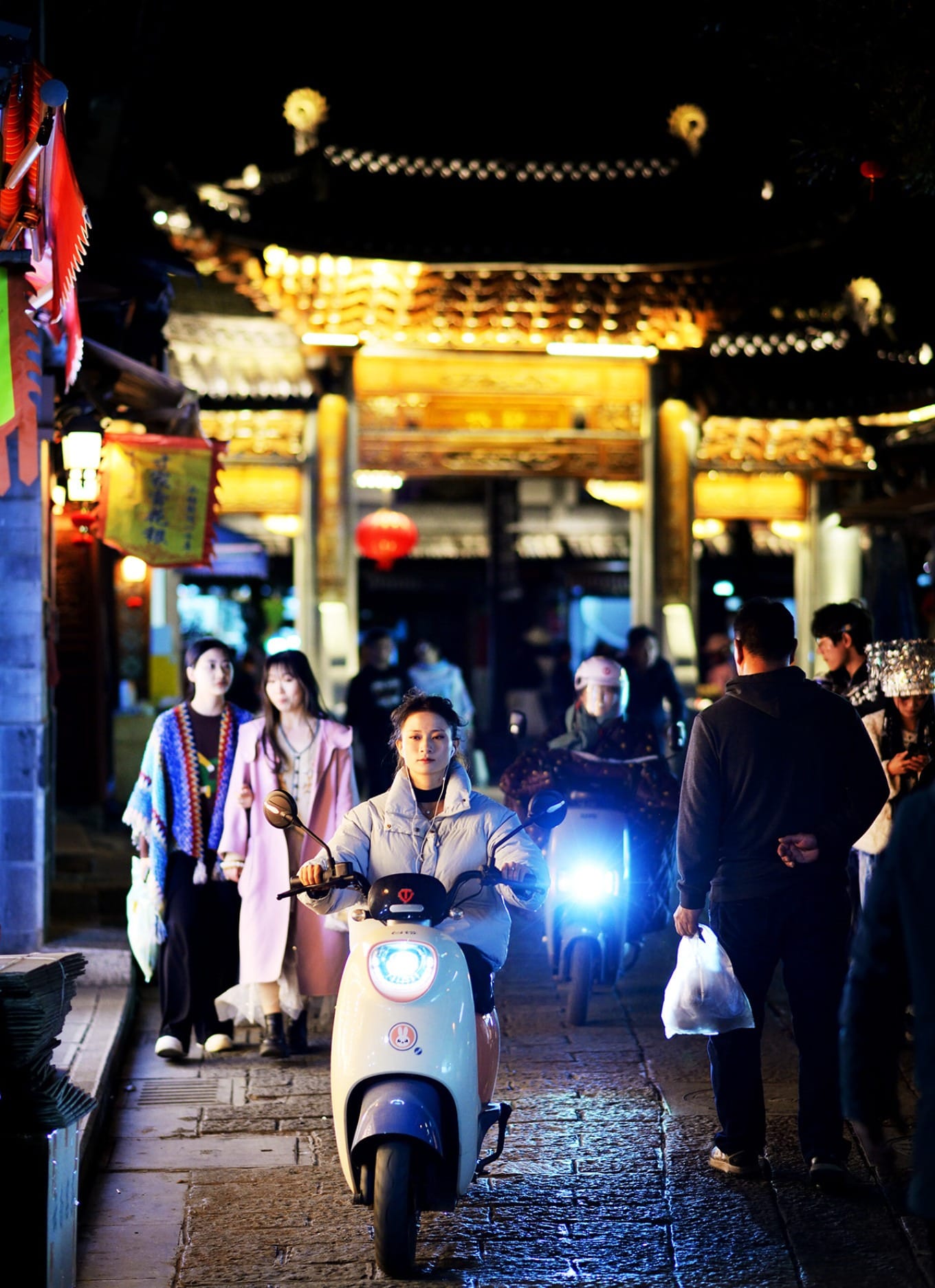
Xizhou is undoubtedly commercial and busy, often compared to a ‘traffic star’ with crowds rivaling Dali Old Town. However, as evening falls and day-trippers depart, the town reclaims a profound quiet. For the best experience, consider staying overnight. Wake early to walk through the morning wheat fields—if wind had a shape, it might just be the gentle ripple of these waves.
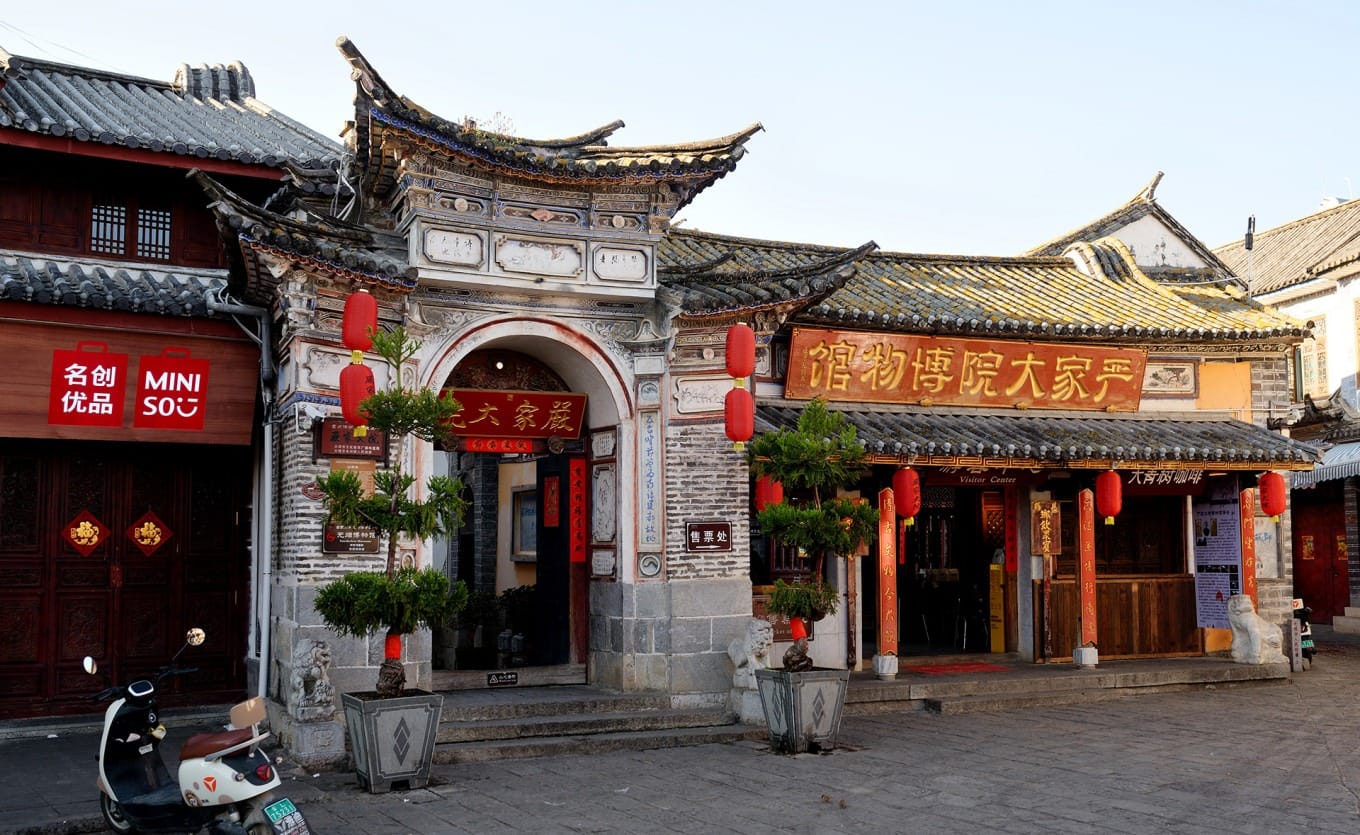
Yan Family Compound
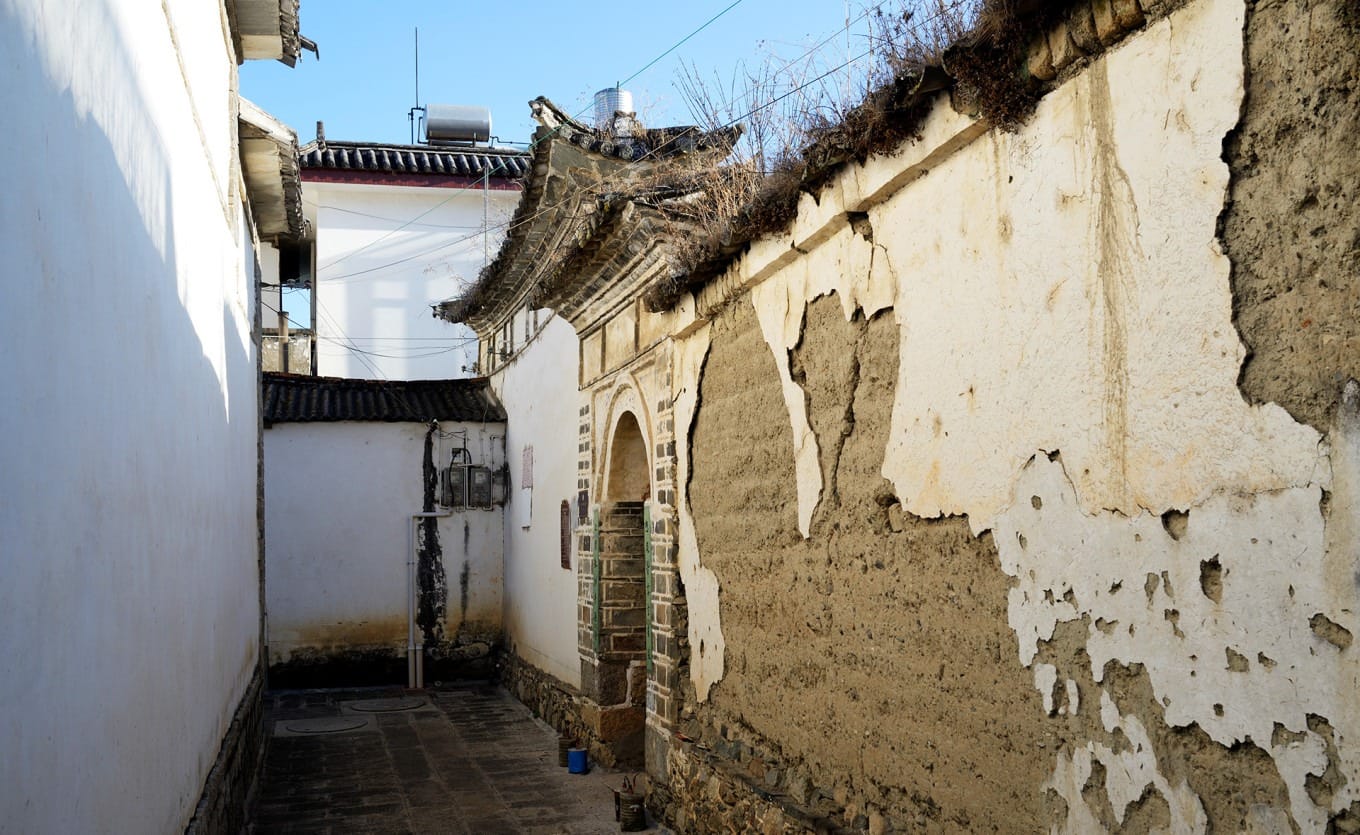
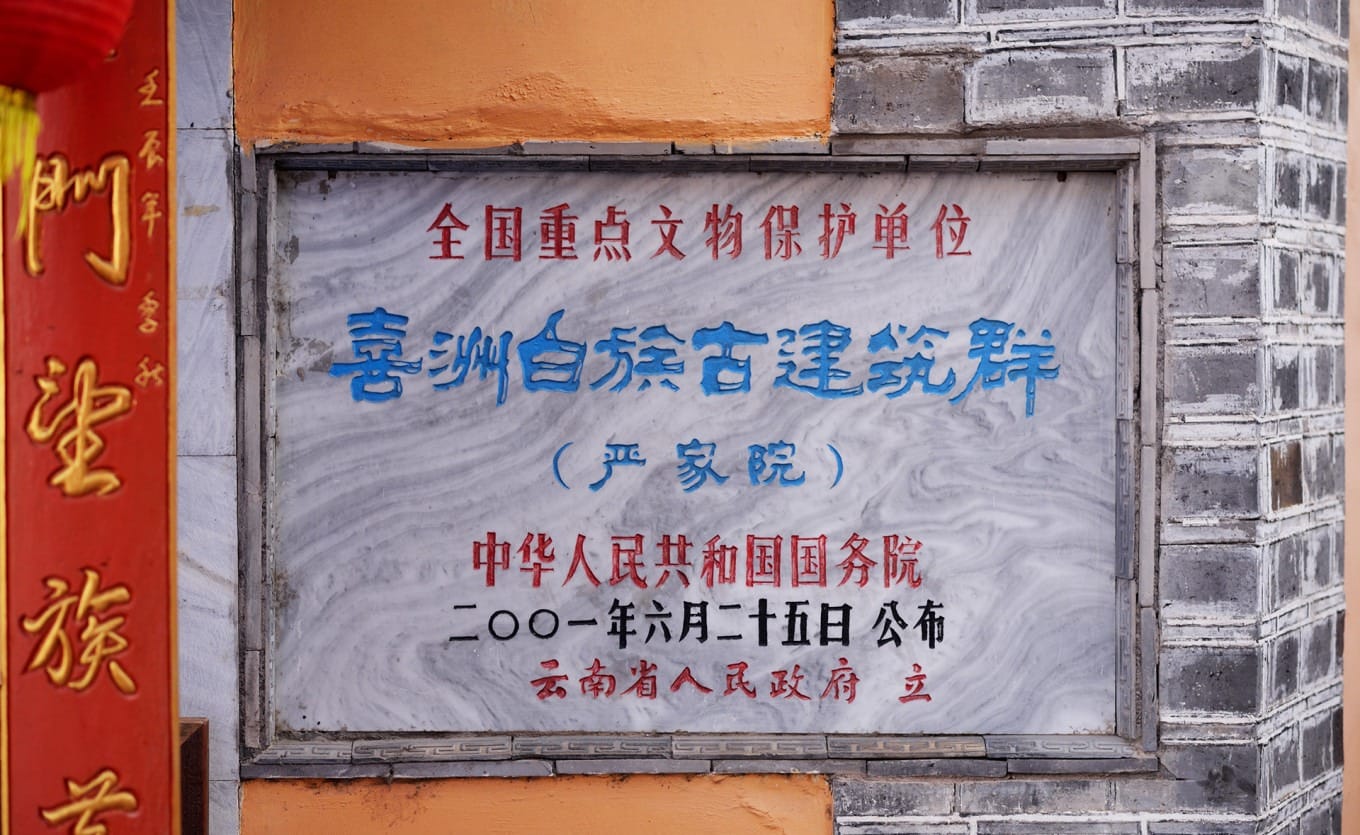
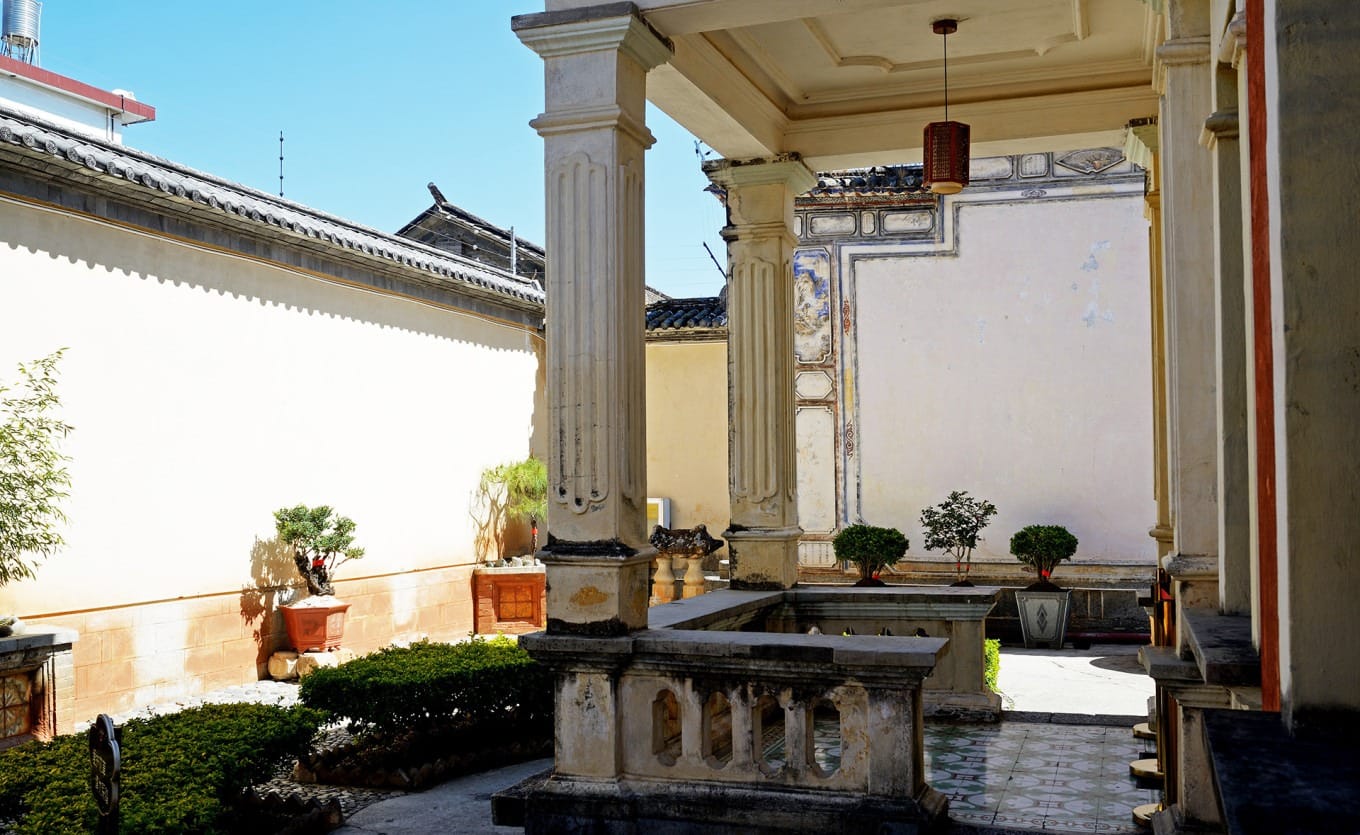
In the southwest corner of Sifang Street, the central square of Xizhou Old Town, you’ll find the opulent Yan Family Compound (严家大院). As the name suggests, it’s intimately connected to the Yan family, one of the ‘Four Great Families’ of Xizhou. This sprawling mansion, built between 1907 and 1917, was the home of Yan Zizhen, the founder of the Yongchangxiang (永昌祥) trading house and a leading figure in the Xizhou merchant guild. Its architecture is a magnificent showcase of Bai ethnic style, characterized by deep courtyards, imposing screen walls, upturned eaves, and intricately carved window lattices.
The compound’s layout is a masterpiece of traditional design. It consists of four main courtyards: two built in the ‘Three Rooms and One Screen Wall’ (三坊一照壁) style and two in the ‘Four-Sided Courtyard with Five Skylights’ (四合五天井) style. As you enter through the ticket office in Courtyard One, you’ll step into Courtyard Two. This is a classic ‘Three Rooms and One Screen Wall’ arrangement. In Bai architecture, the main room faces west, symbolizing the support of the Cangshan Mountains. The screen wall opposite reflects light and is believed to ward off evil winds.
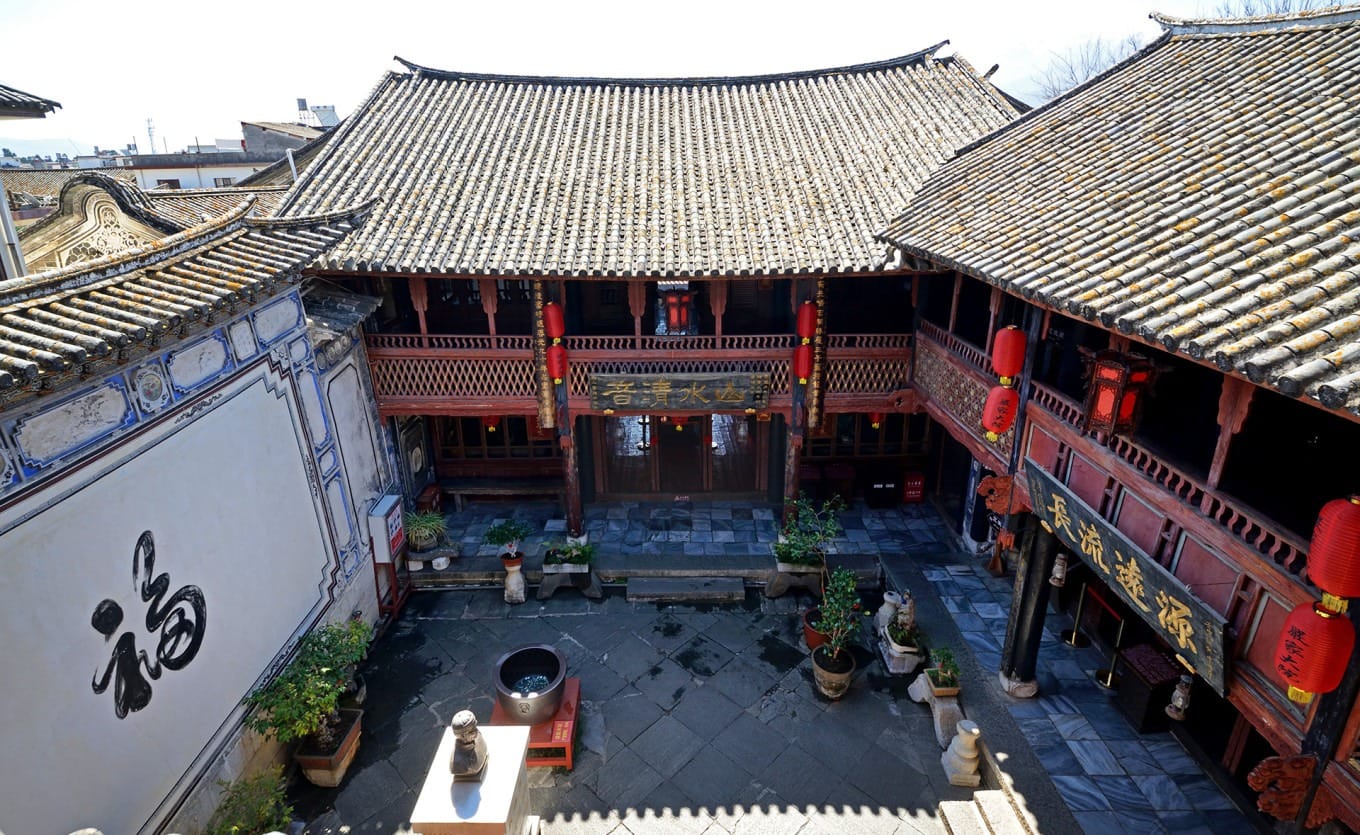
Courtyard Two’s main room was the residence of Yan Zizhen and his wife. Look for the two inscribed plaques here, presented by Chiang Kai-shek (蒋中正) and Long Yun (龙云), the then governor of Yunnan. These honor Yan’s significant donations to the war effort during the Anti-Japanese War. This room also leads to a hall displaying over twenty ancient plaques from the Ming, Qing, and Republican periods, many related to Dali’s history and cultural figures.
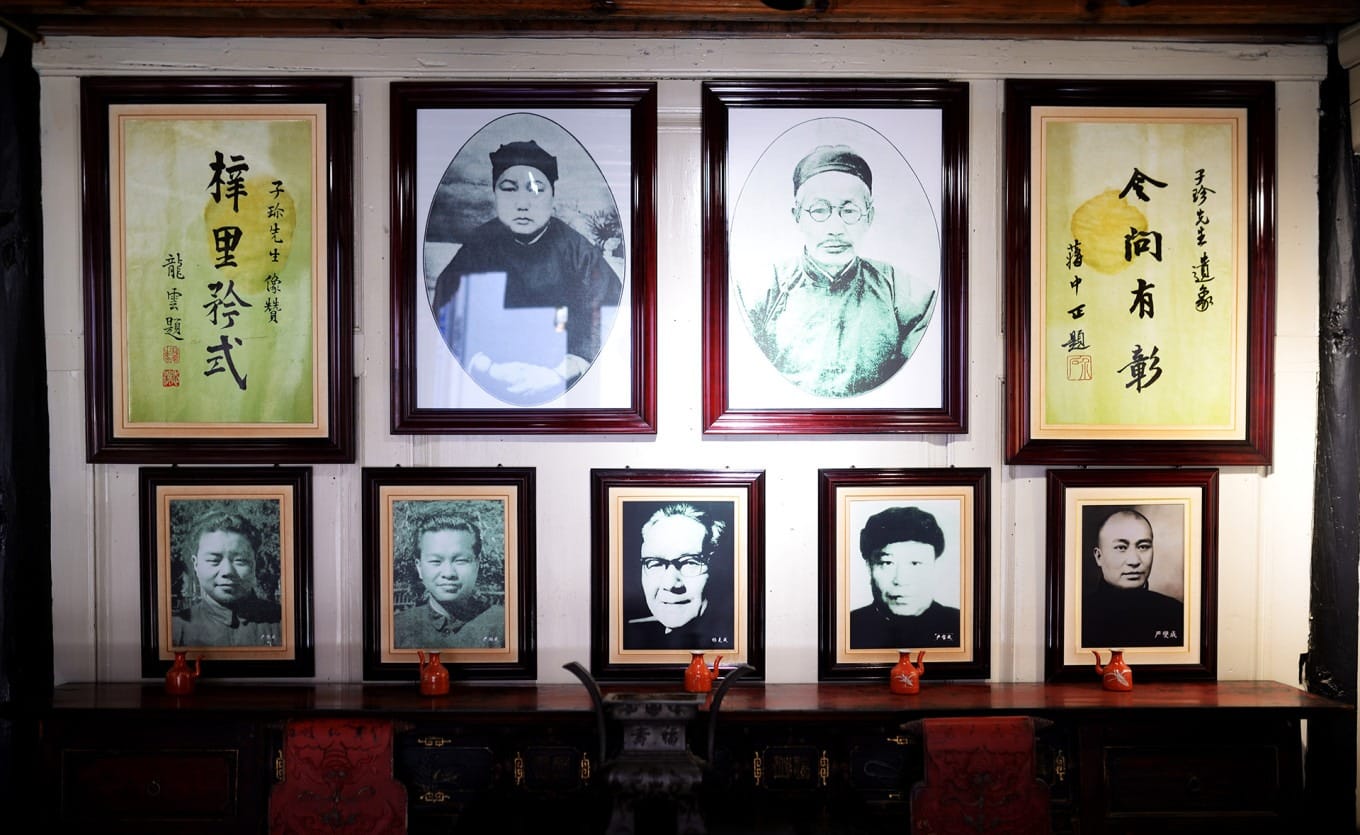
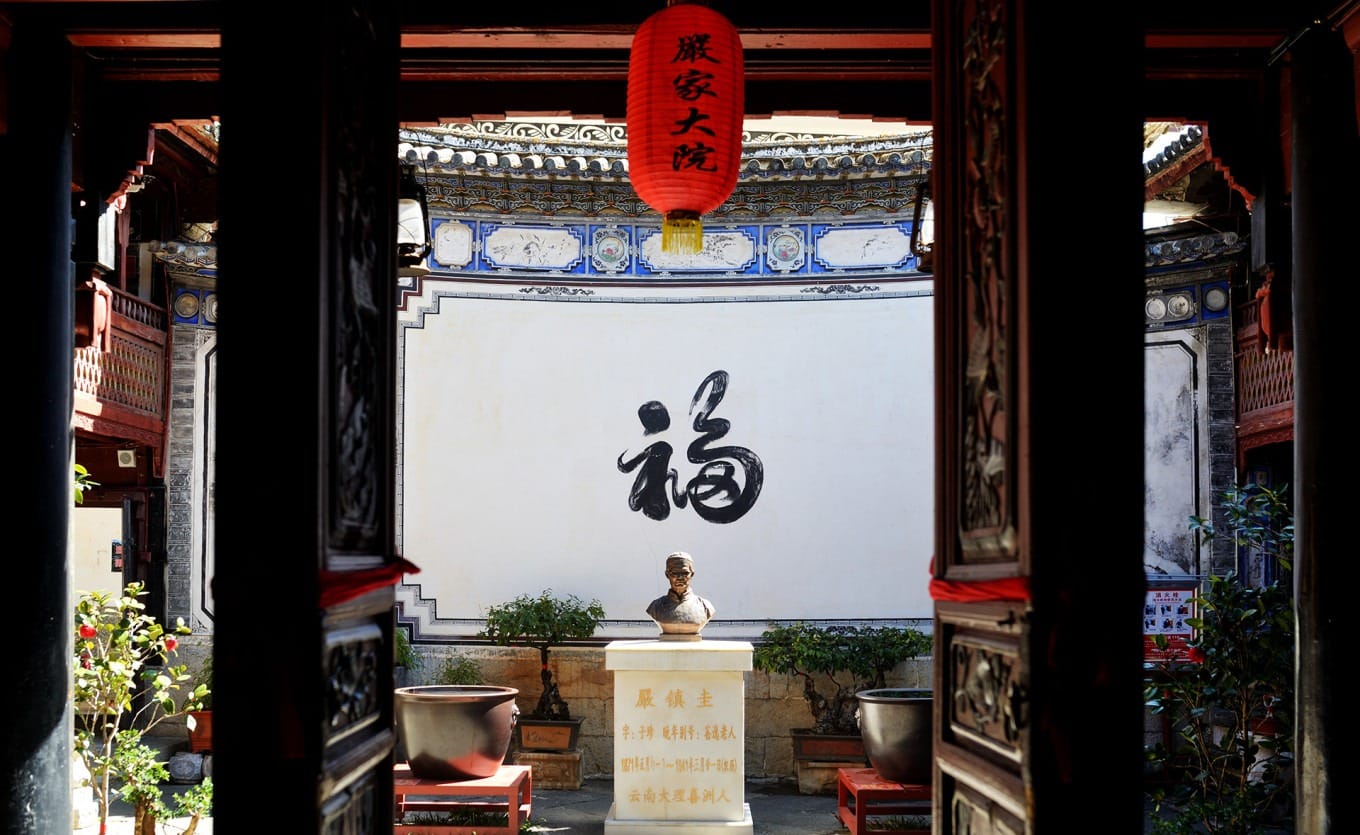
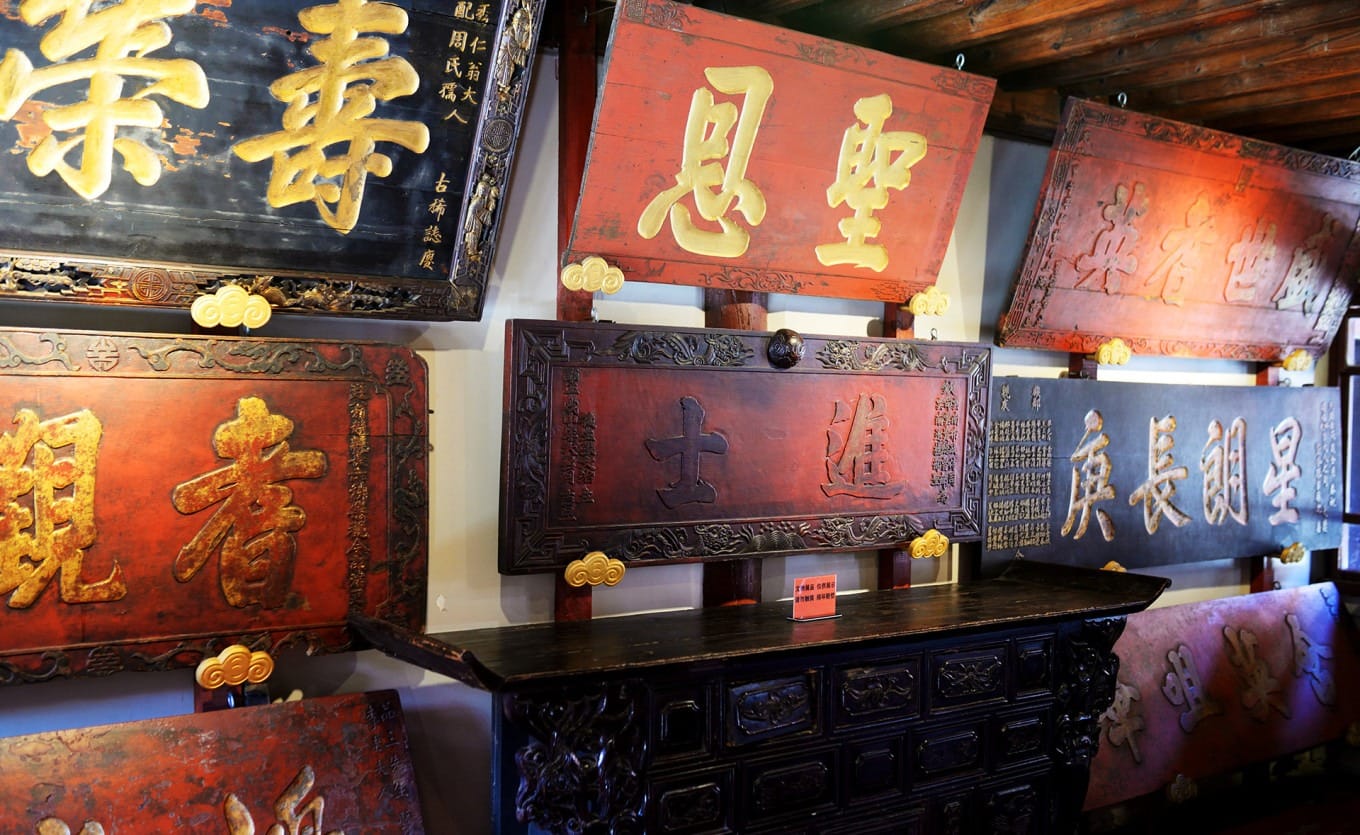
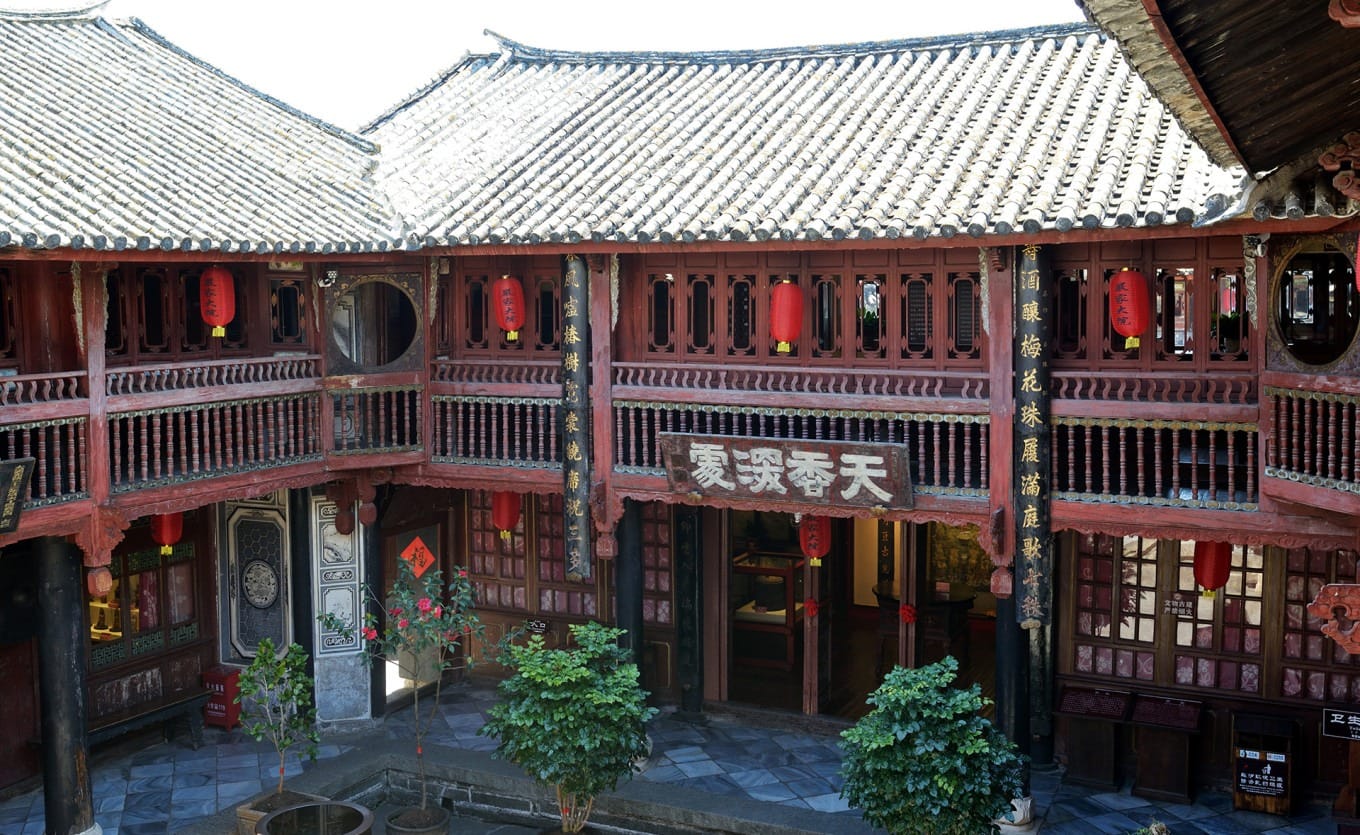
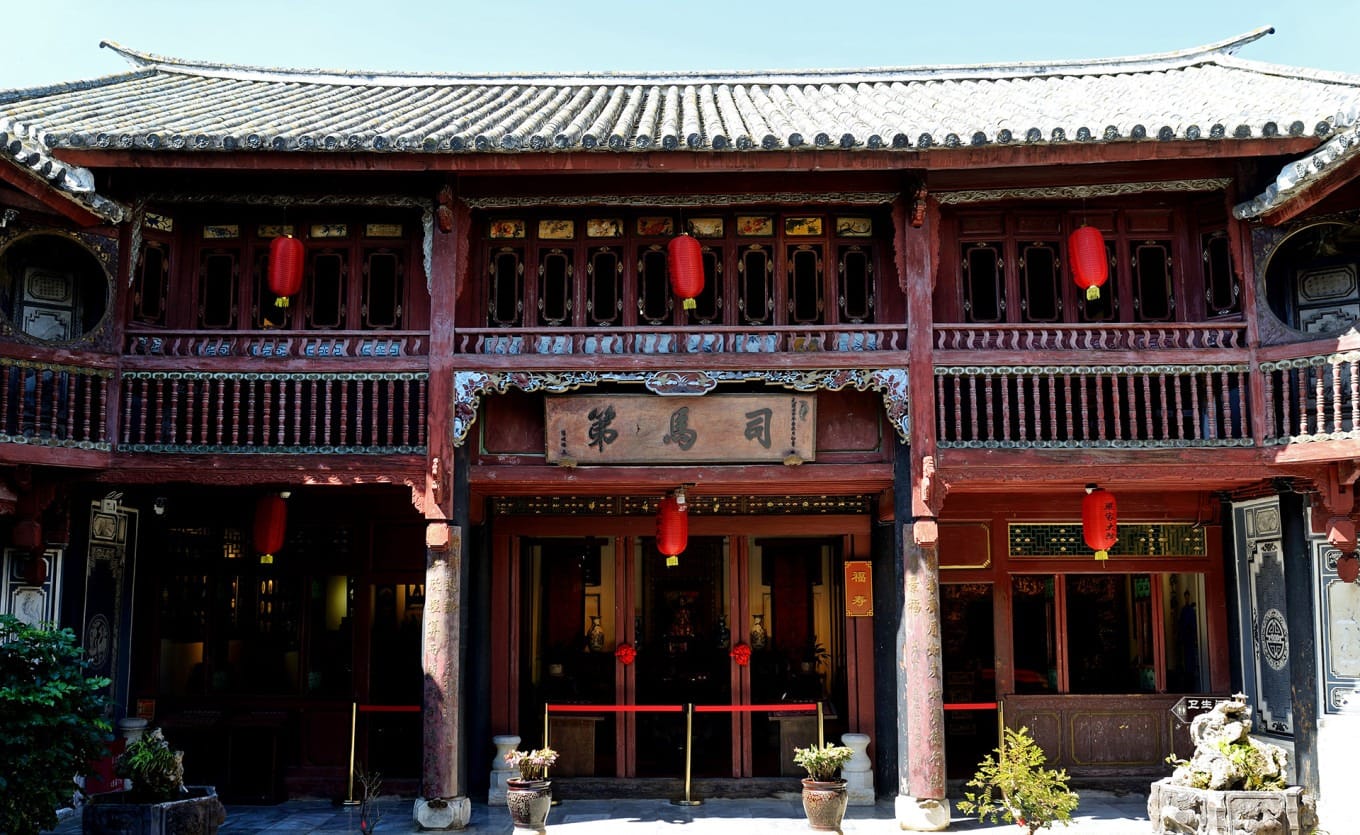
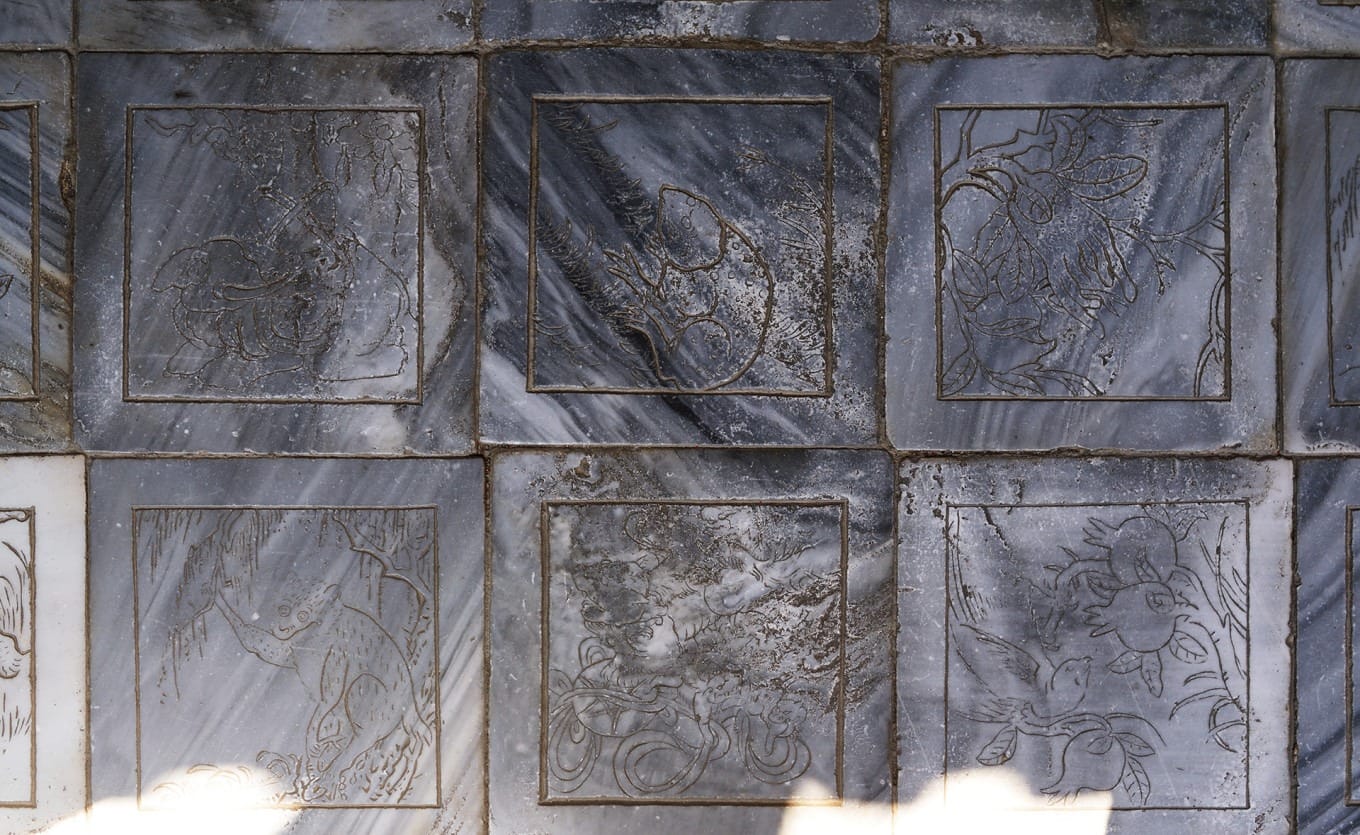
Moving through the plaque hall brings you to Courtyard Three, a ‘Four-Sided Courtyard with Five Skylights’. This interconnected layout is also called a ‘Horse-Running Corner Building’ (走马转角楼). Notice the ‘Beauty Windows’ (美人窗) on the upper floor’s enclosed corridor—legend says Yan Zizhen was inspired by a classical painting of Lin Daiyu from *Dream of the Red Chamber*. The main room here bears a ‘Simadi’ (司马第) plaque. While Yan was a merchant, he purchased the honorary title of ‘Tongzhi’ (同知), a vice-prefect rank, hence the plaque. Don’t miss the exquisitely carved marble floor in front of this room, featuring auspicious animals and flowers.

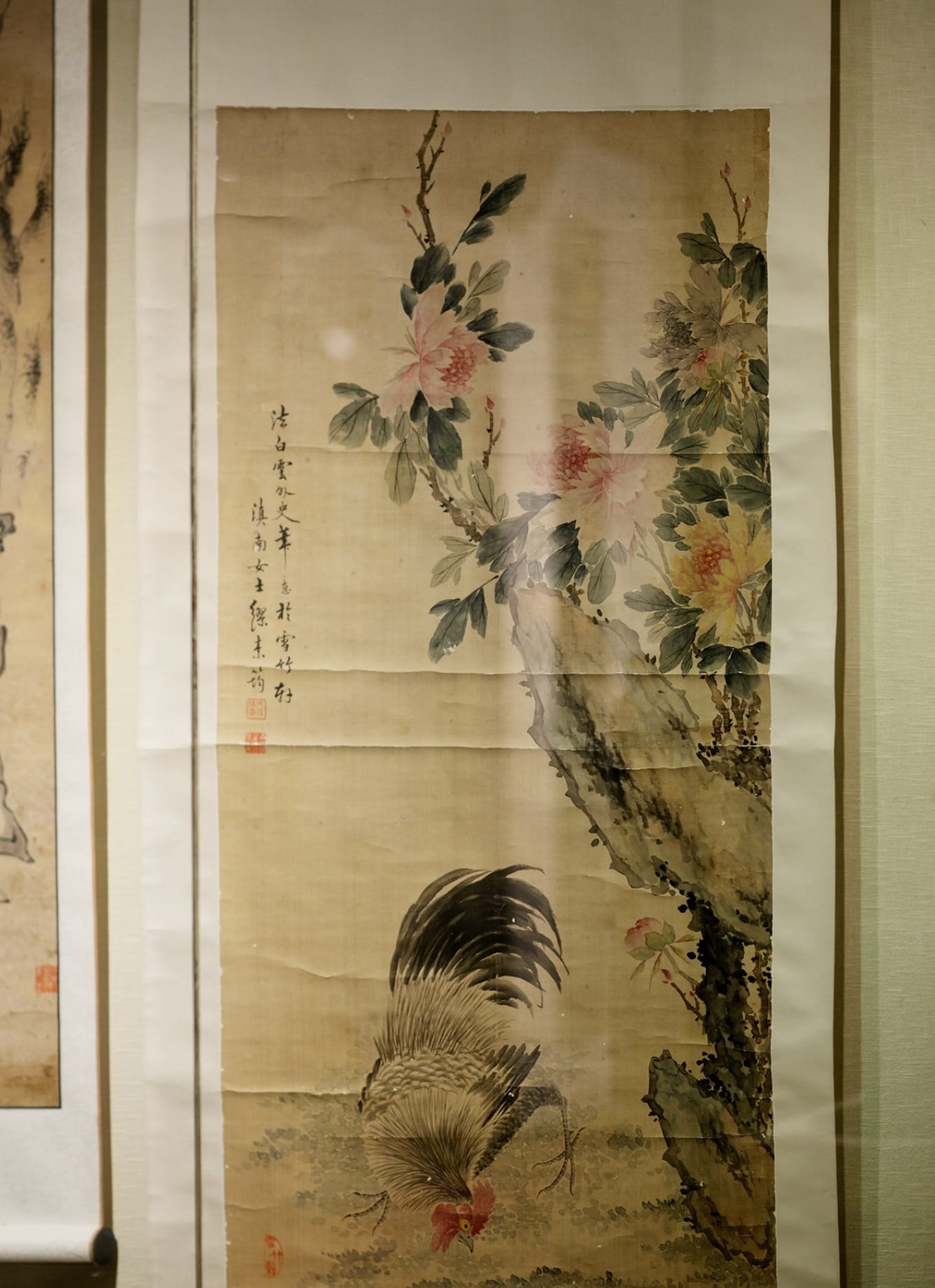
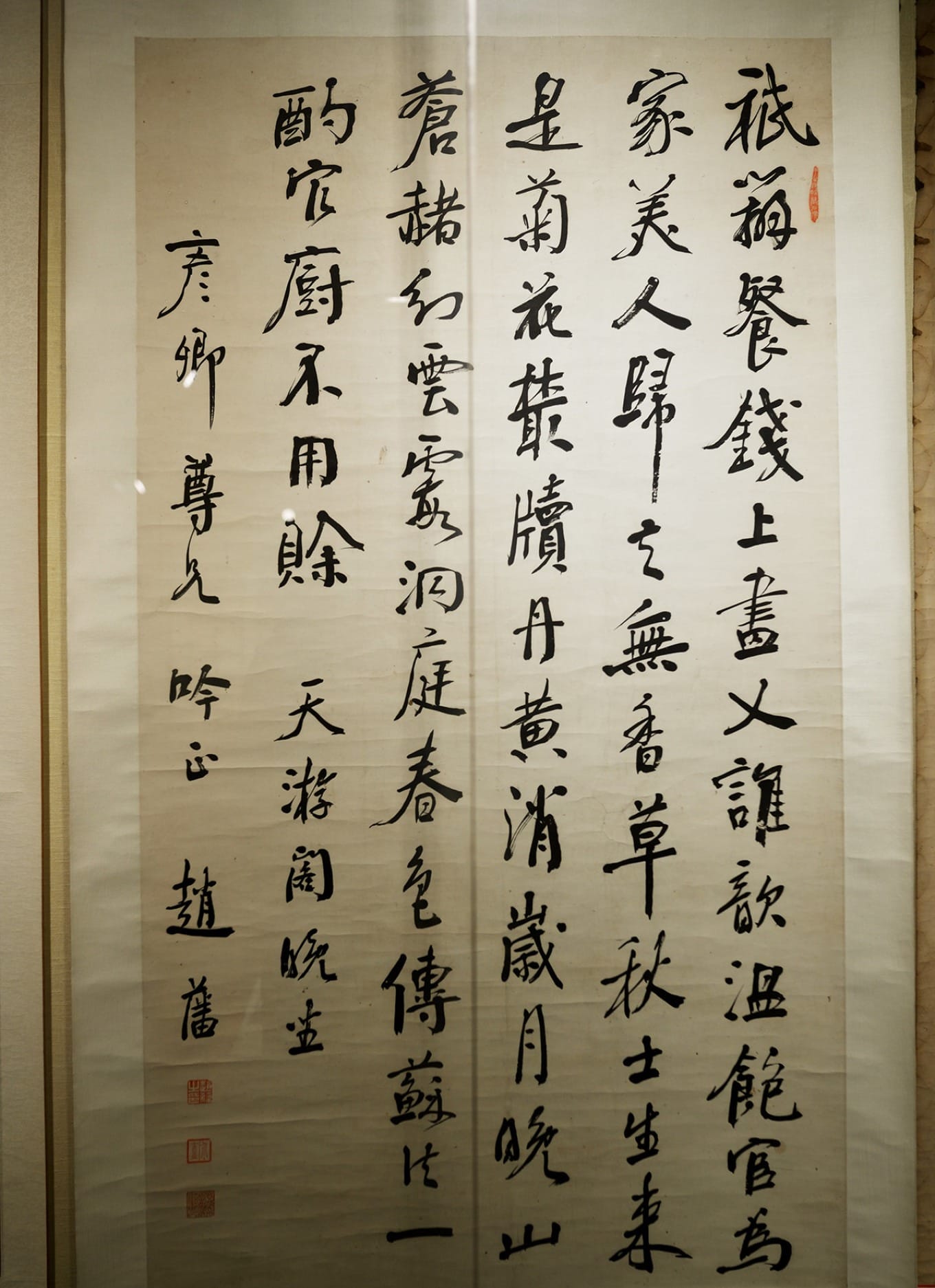
The painting hall in Courtyard Three is worth a look. Its prized possession is *The Foundation of Wealth and Nobility* (*富贵根基图 (local term)*) by Miao Jiahui, a Qing dynasty court painter who famously served as a ‘ghost painter’ for Empress Dowager Cixi. You can also find works by Zhao Fan, one of Yunnan’s four great calligraphers of the Qing era, who also authored the famous ‘Psychological Warfare Couplet’ at Chengdu’s Wuhou Shrine.
Courtyard Four served as the family’s reception area, a gathering place for scholars, merchants, and social elites. A narrow staircase leads to the interconnected second floor of all four courtyards. Rooms here include a meeting hall, ancestral hall, guest rooms, a Buddhist chapel, and the daughters’ chambers. The most significant is the meeting hall, where Yan Zizhen held crucial family and business discussions. Its true treasure is the set of 22 vibrant murals on the north and south walls, painted by local Dali artist Zhang Youxiang in the late Qing/early Republican period.
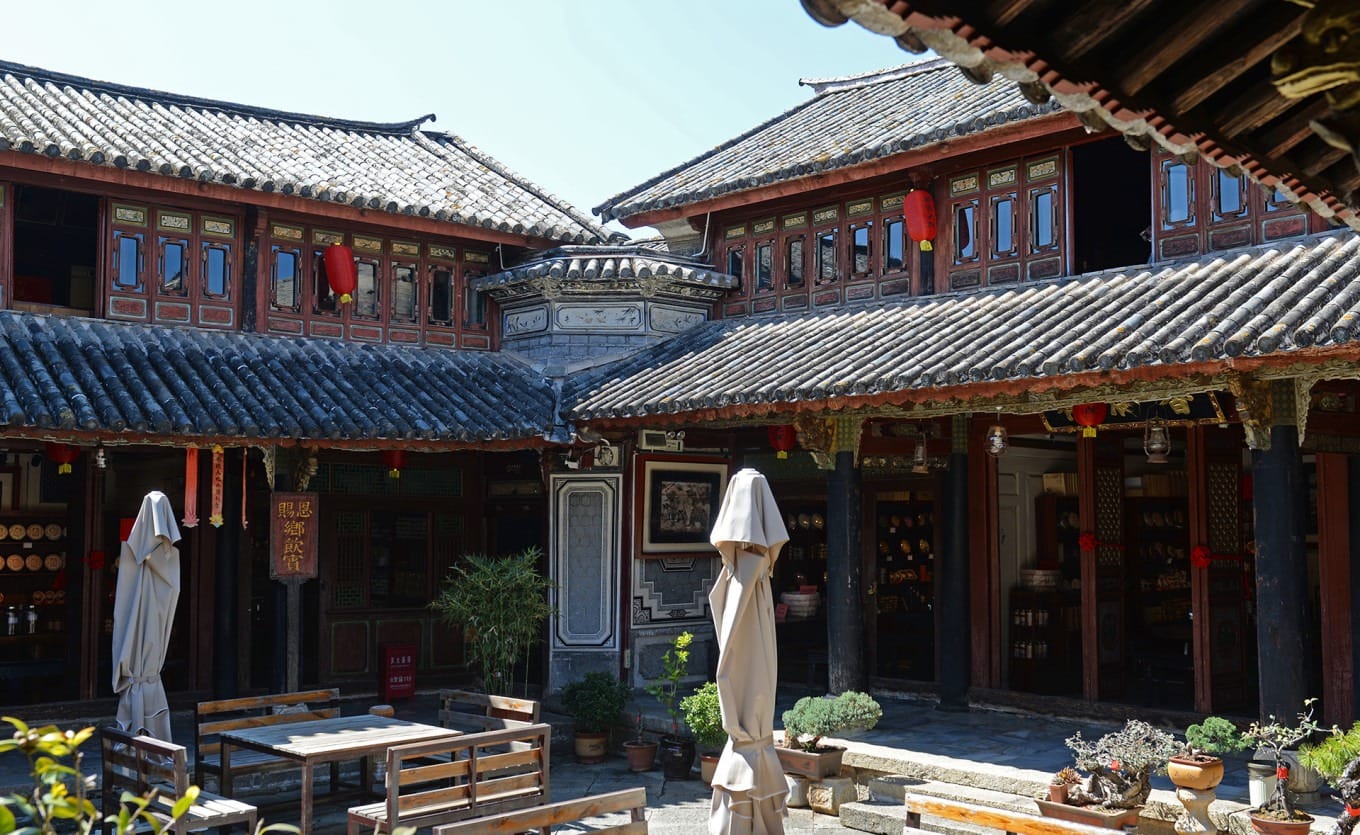
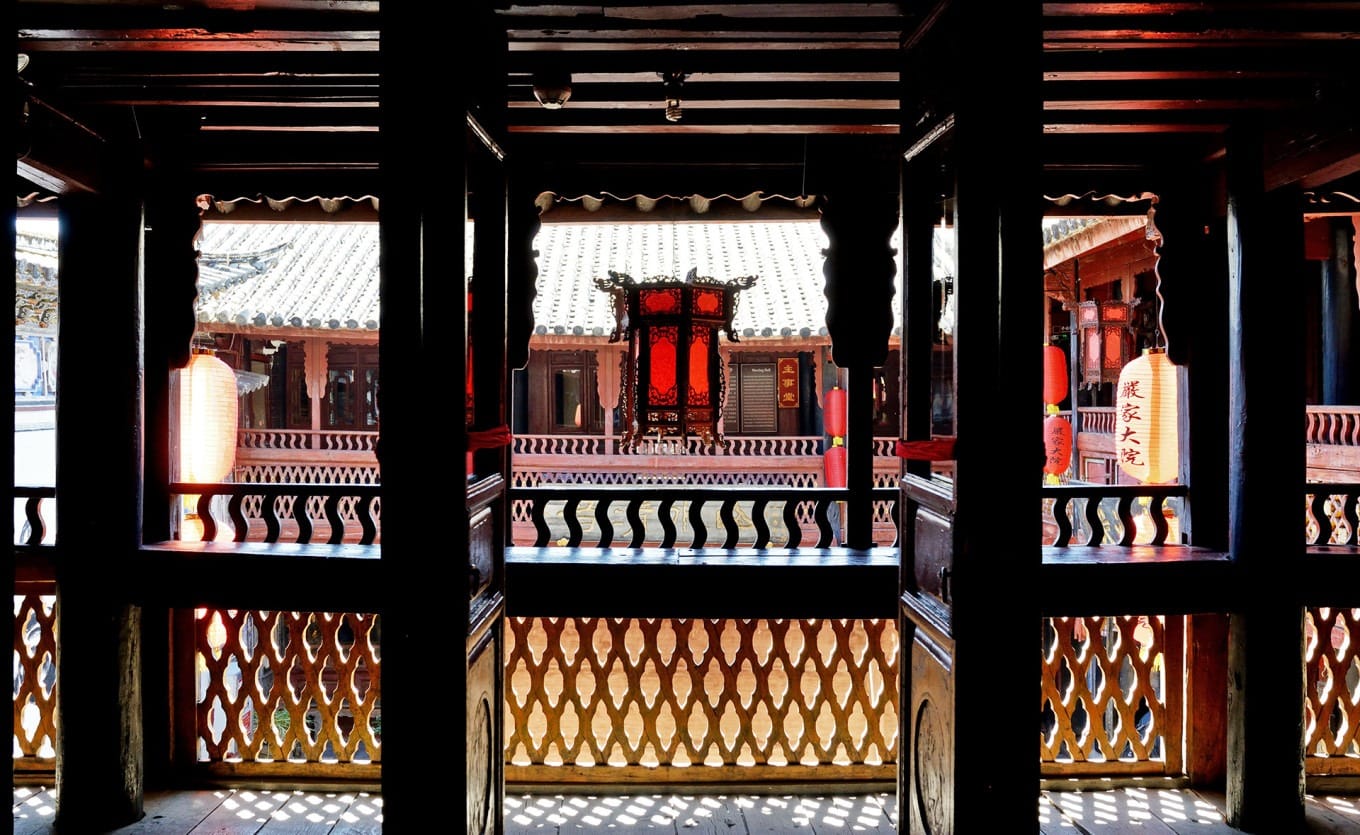
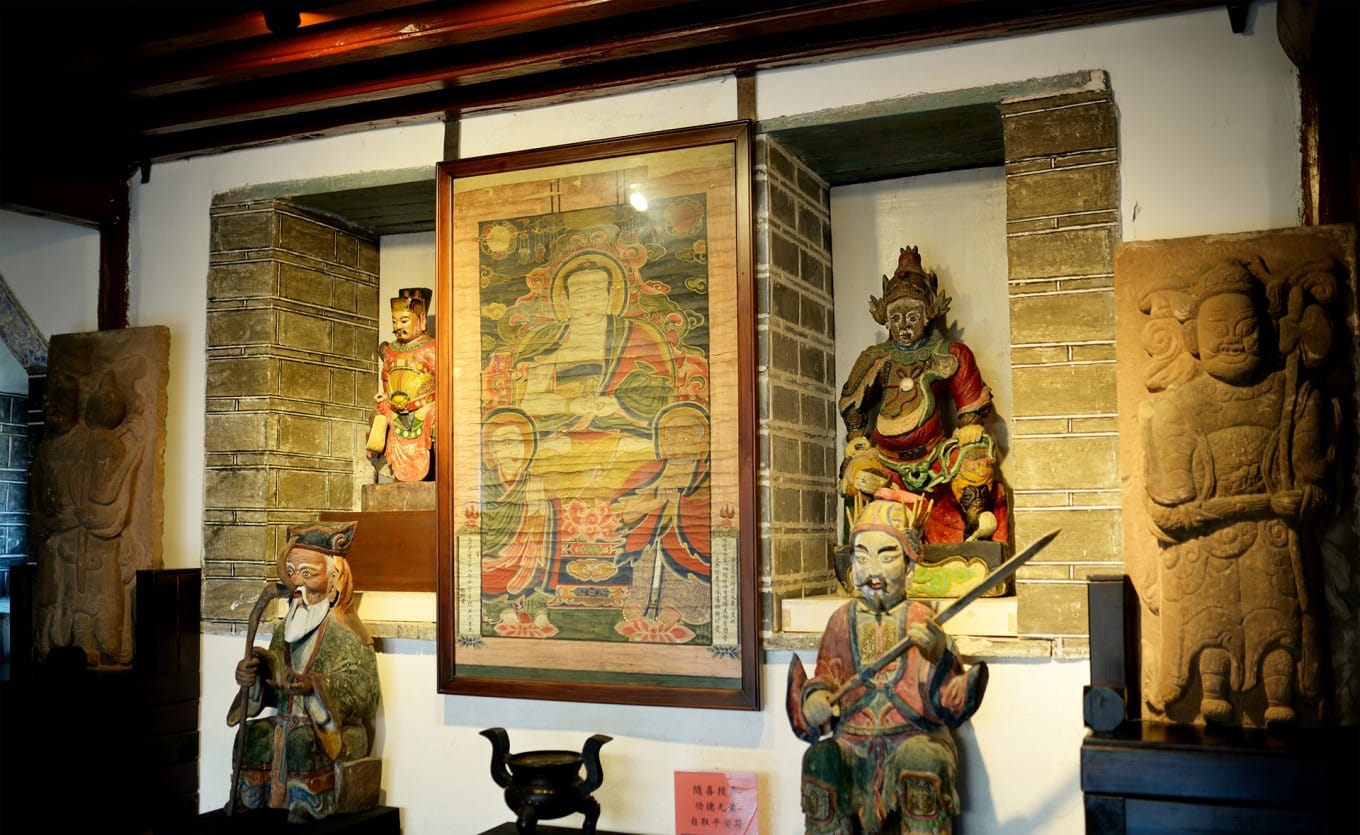
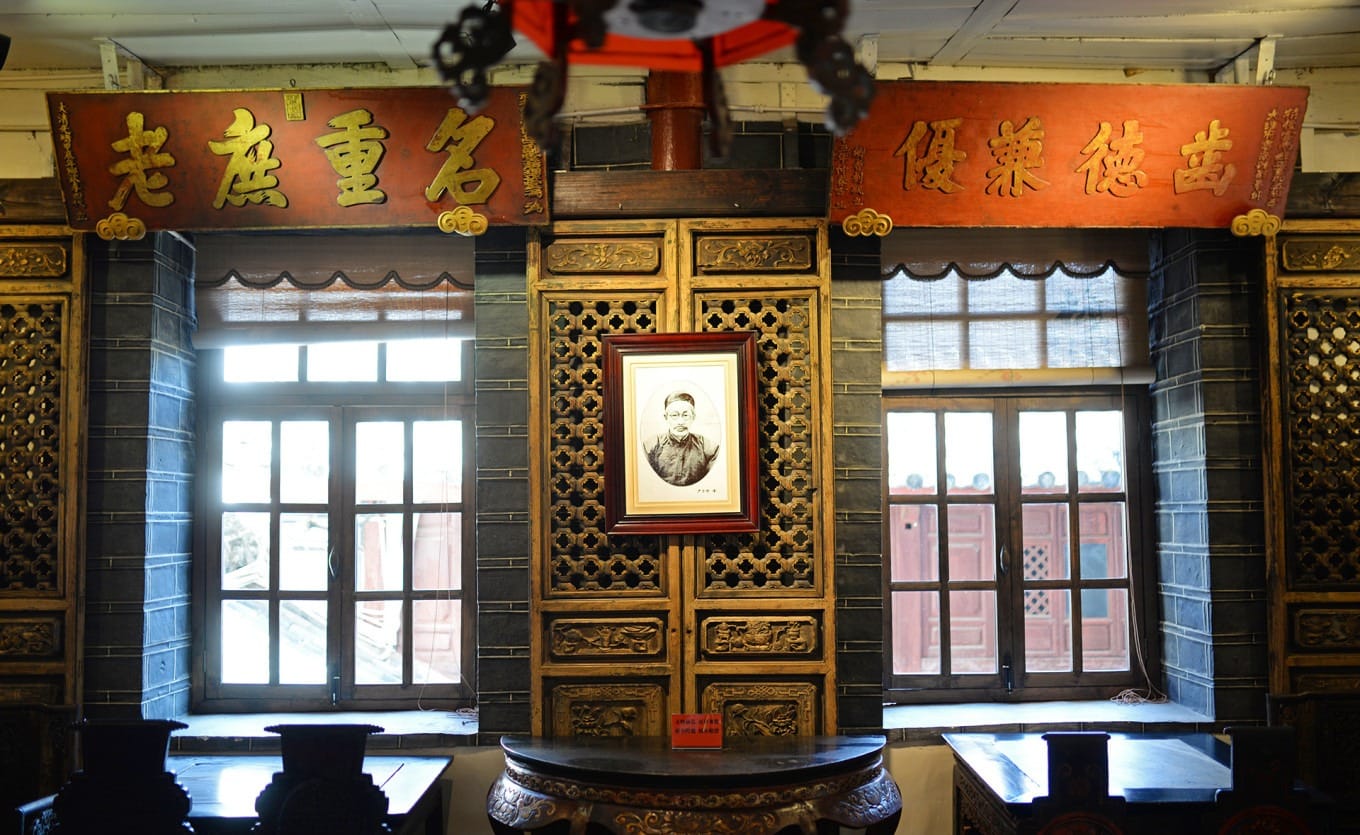

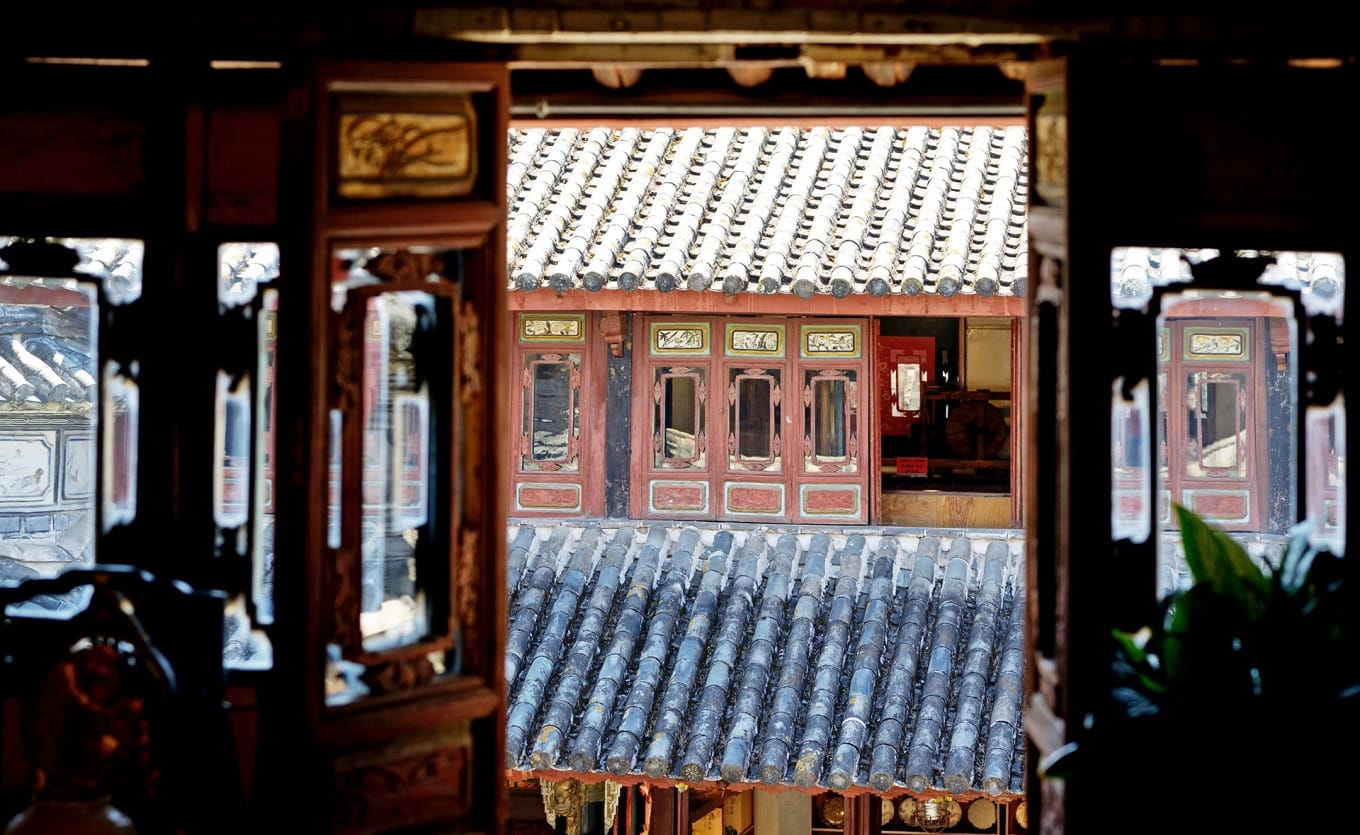
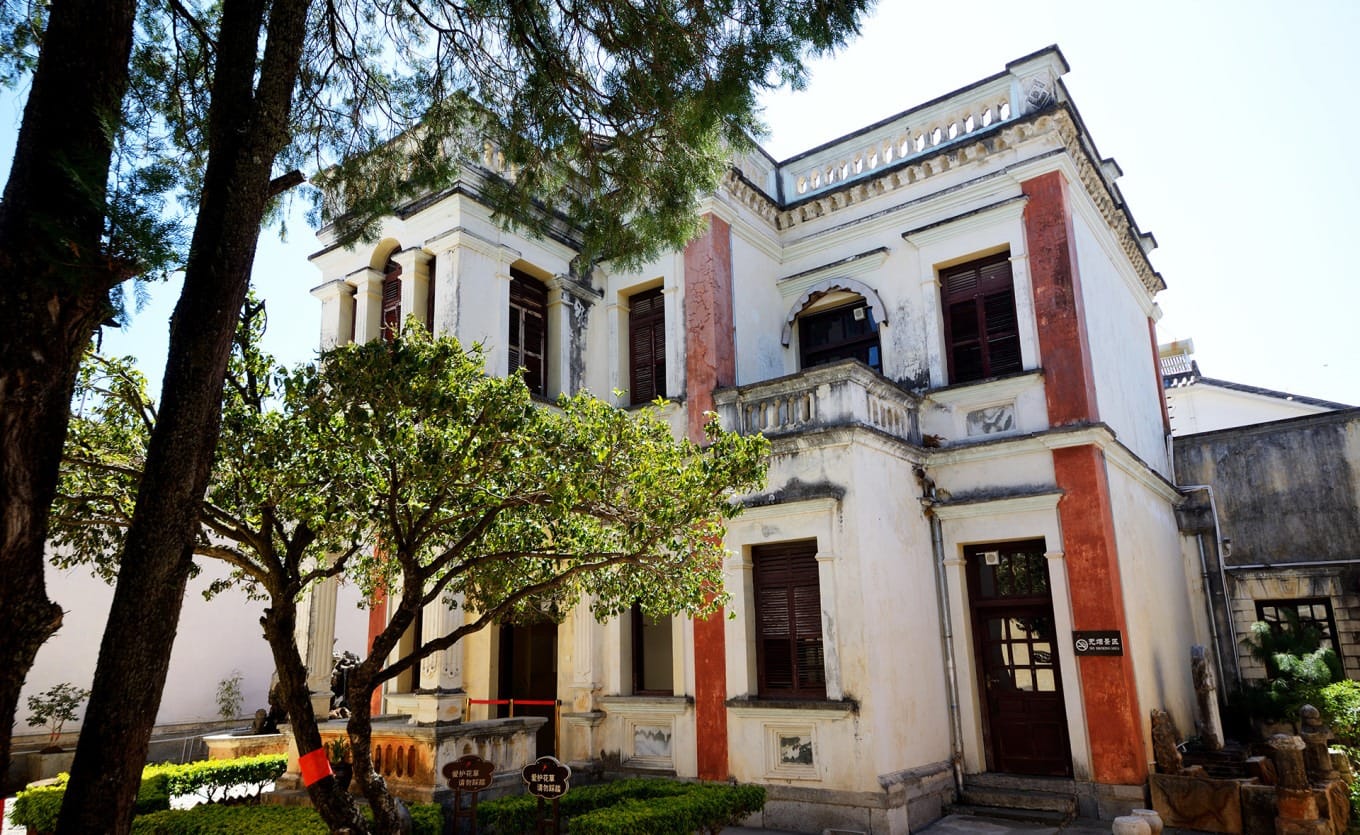
The final section, Courtyard Five, presents a striking contrast. Its Western-style villa, built in 1936, was Dali’s first reinforced concrete building. Yan Zizhen’s foreign trade exposed him to Western culture, leading him to import premium materials from France for this two-year project. Serving as a VIP guesthouse, it hosted cultural luminaries like Lao She and Xu Beihong. A curious feature from the war years is a hidden air-raid shelter; see if you can spot its entrance.
- Yan Family Compound (严家大院)
- Address: Sifang Street, Xizhou Town, Dali Bai Autonomous Prefecture, Yunnan (云南省大理白族自治州喜洲镇四方街)
- Ticket: 25 RMB
The Corner Building
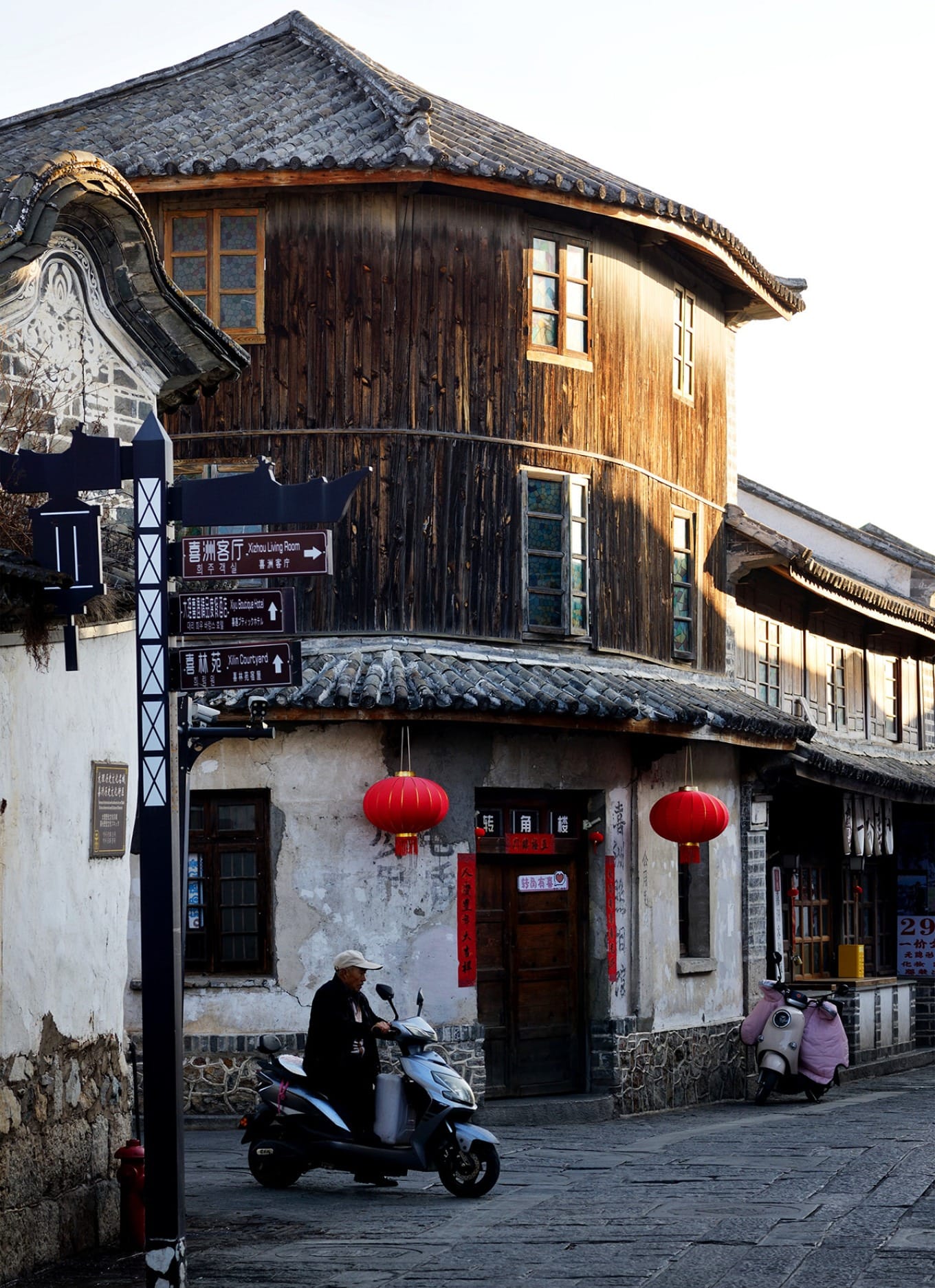
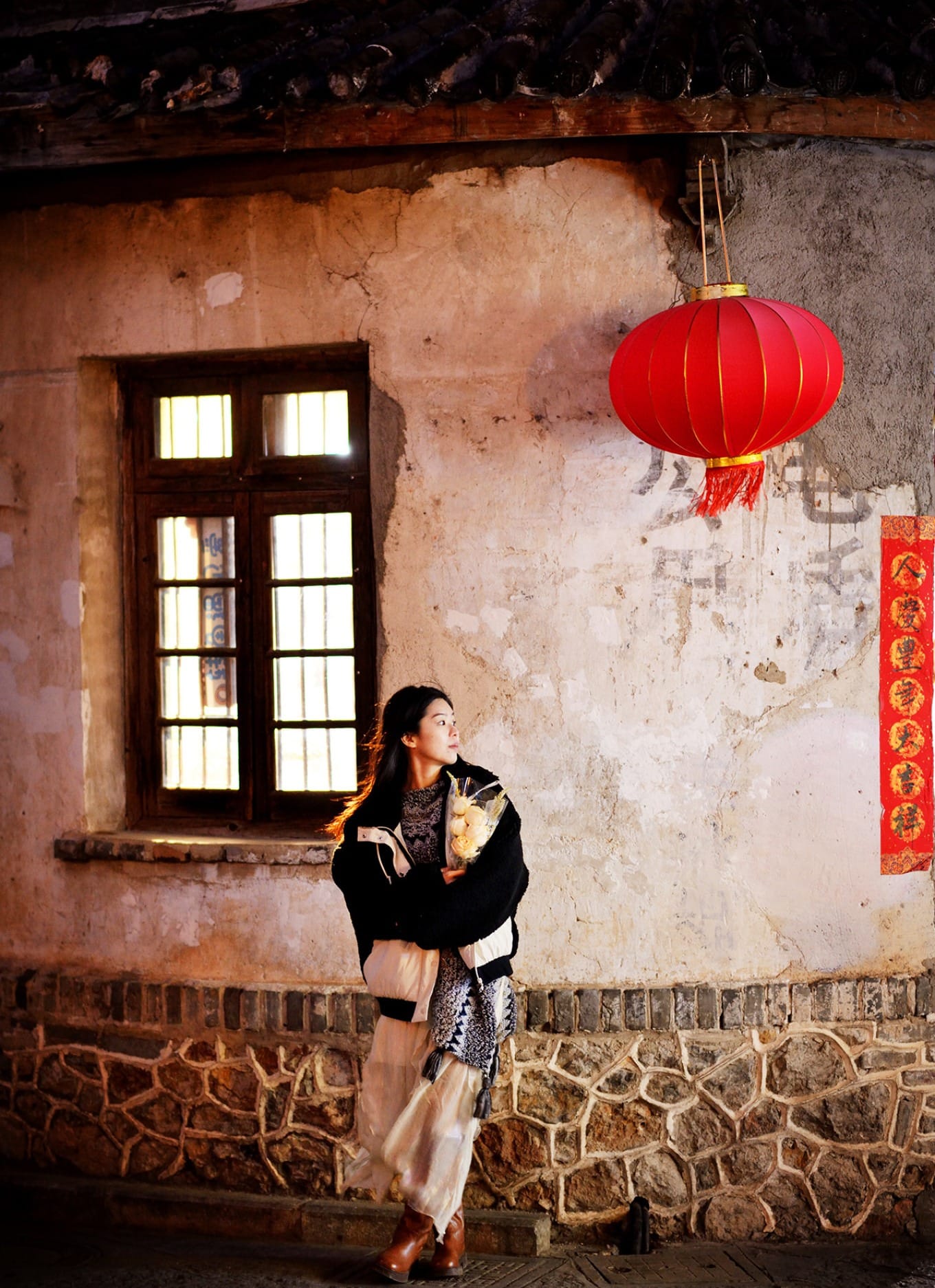
As you stroll along the stone-paved Shiping Street from Sifang Square toward the wheat fields, you’ll soon encounter one of Xizhou’s most iconic landmarks at a crossroads—the Corner Building (转角楼). This distinctive structure was originally built for Yang Ruxuan, a member of the influential Yang merchant family and brother-in-law to Dong Chengnong, one of Xizhou’s ‘Four Great Families.’ While its decoration is simpler compared to other grand mansions in town, its charming corner design has drawn comparisons to the ‘Most Beautiful Corner’ on Gulangyu Island in Xiamen, making it Xizhou’s most photographed spot.
There’s something universally appealing about corner buildings—think Shanghai’s Wukang Building or Wuhan’s Bagong House—and Xizhou’s version has become one of Dali’s hottest Instagram spots. While the saying goes ‘love is just around the corner,’ you’re more likely to encounter enthusiastic photographers than romance here, with visitors frequently posing for pictures against its photogenic facade.
- RestaurantCorner Building (转角楼)
- AddressIntersection of Zhen East Road and Shiping Street, Xizhou Town, Dali Bai Autonomous Prefecture, Yunnan / 云南省大理白族自治州喜洲镇镇东路与市坪街交叉口
- Recommended dishesN/A architectural landmark (菜名)
- Average spendFree admission
The Wheat Fields of Xizhou
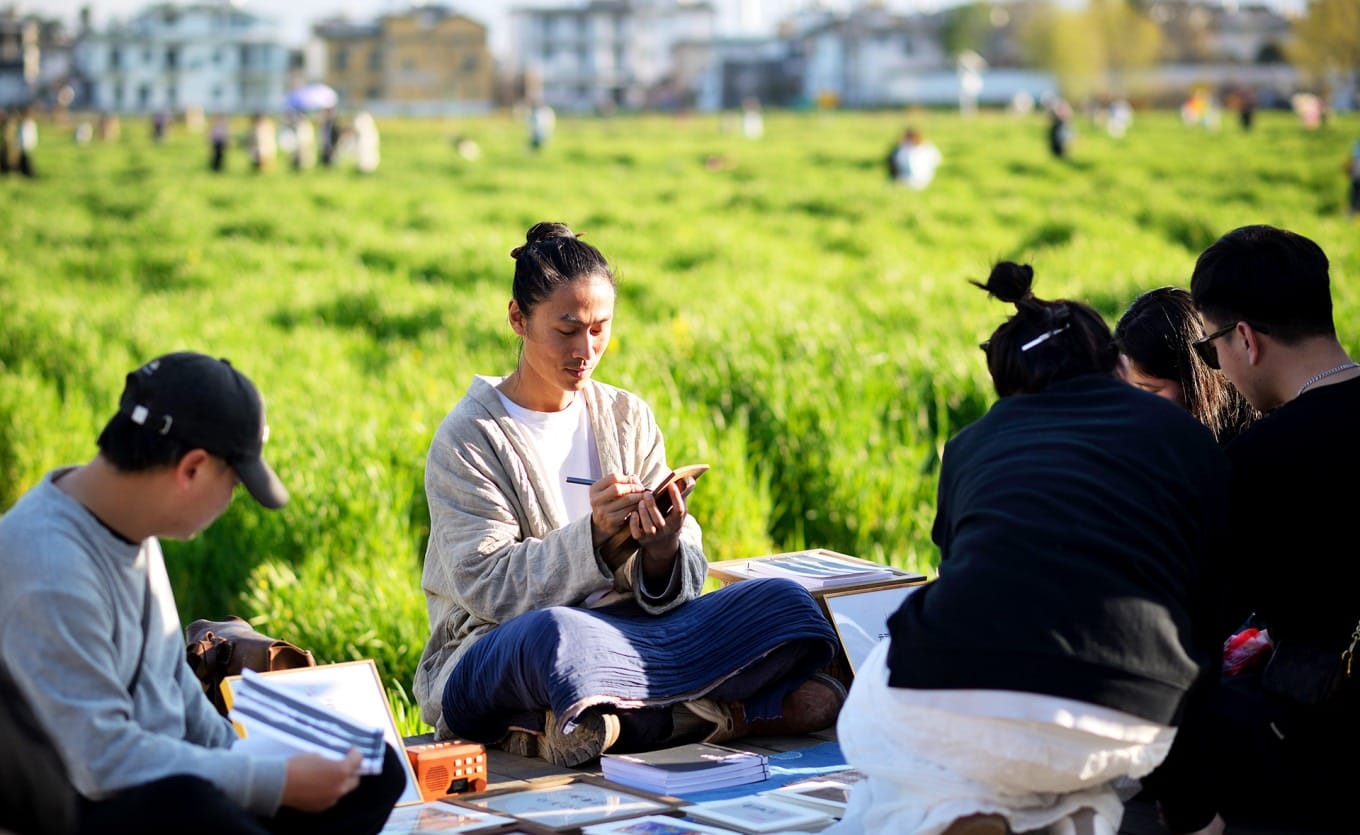
As you explore Xizhou (喜洲), a historic town in Dali, you’ll discover one of its most iconic landscapes just east of the Corner Tower: vast, rolling wheat fields. Situated on the Yunnan plateau at about 1,900 meters above sea level, Xizhou benefits from abundant rainfall, creating ideal conditions for growing wheat and other crops. The fields transform dramatically with the seasons, offering a different visual spectacle throughout the year—from vibrant green shoots to golden waves of grain.
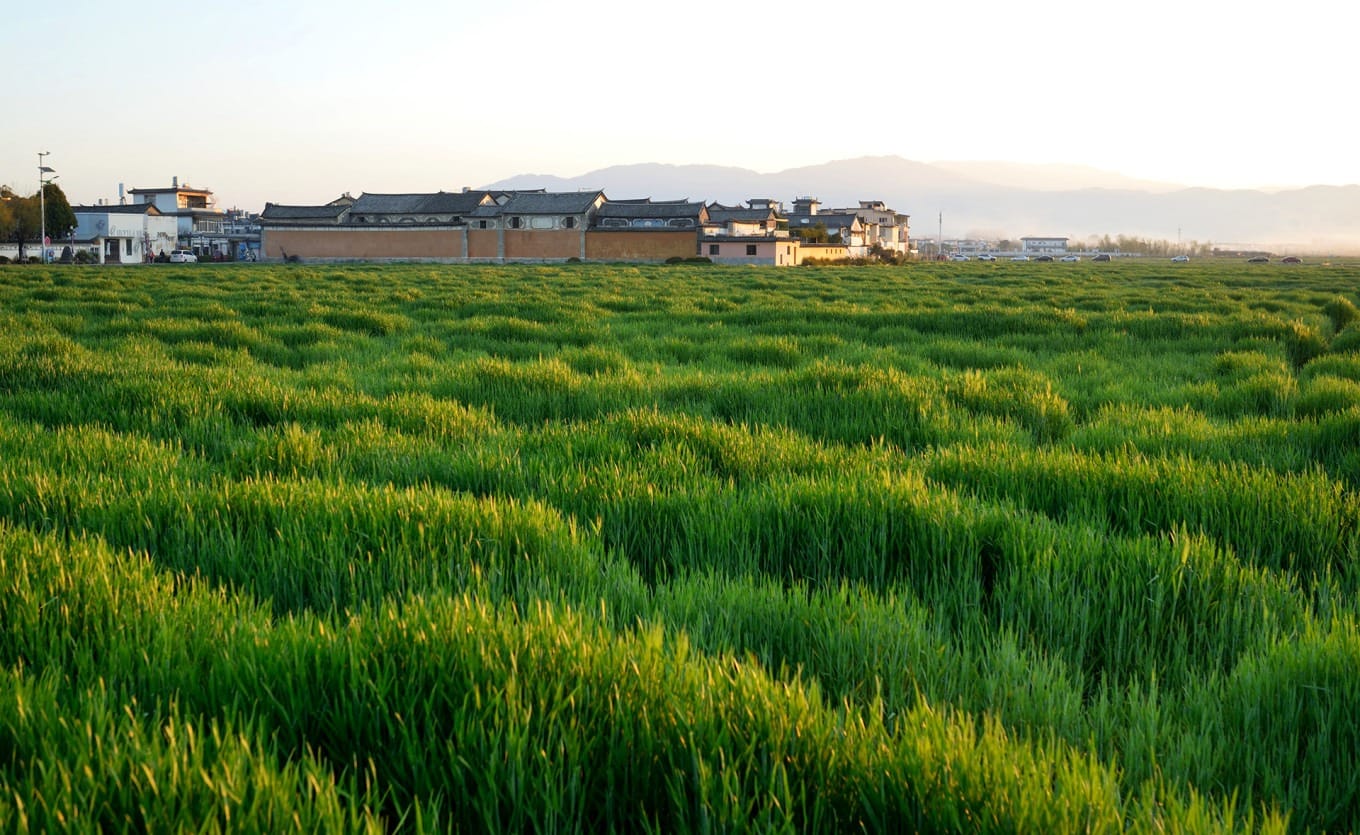
For the most serene and photogenic experience, plan to visit the wheat fields early in the morning. This is when the soft sunlight bathes the lush greenery in a golden glow, and a gentle breeze creates rippling waves across the landscape—a scene that often evokes the pastoral beauty of Studio Ghibli animations. Arriving at dawn helps you avoid the crowds that gather later, allowing you to fully appreciate the tranquility.
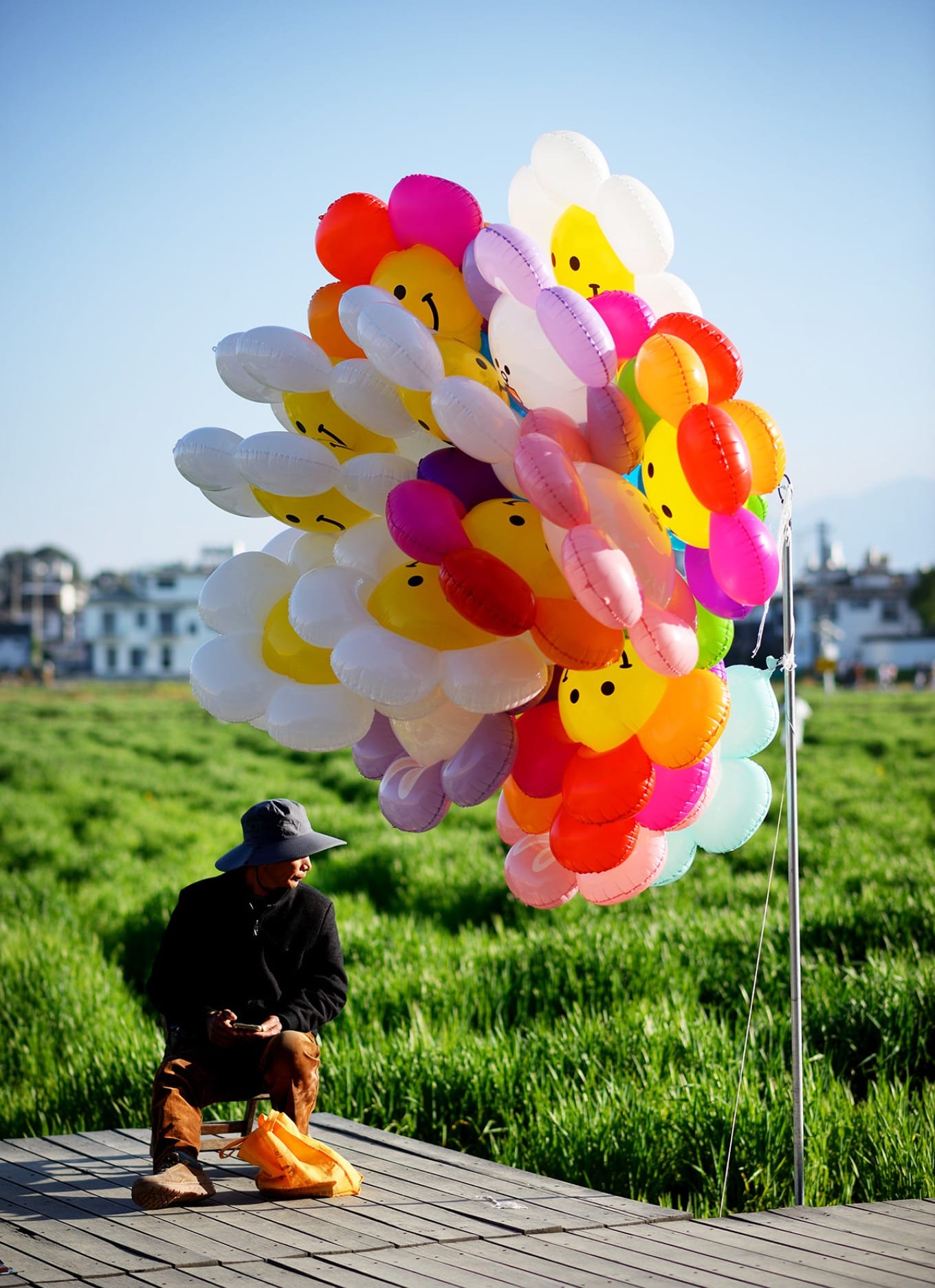
As the day progresses, the fields become a popular backdrop for photography. The contrast between the vibrant green wheat and the area’s traditional yellow-walled architecture is strikingly photogenic. You’ll find numerous angles and compositions to capture, from wide landscape shots to intimate details of the swaying stalks.


- LocationXizhou Town, Dali Bai Autonomous Prefecture, Yunnan Province (大理白族自治州喜洲镇)
- AdmissionFree
- Best time to visitEarly morning for fewer crowds and beautiful light
- Photography tipThe green wheat against yellow walls creates excellent contrast
- Seasonal noteAppearance changes throughout the year—check current conditions
Xilin Yuan Linden Centre
When exploring the rice fields of Xizhou, you’ll notice a distinctive building with earthy yellow walls. This is Xilin Yuan 喜林苑 (local term), also known as the Yang Pinxiang Residence, a historic mansion built in the 1940s. It was the home of Yang Pinxiang, a merchant from one of Xizhou’s prominent business families. His uncle, Yang Hongchun, ran the Hongxingyuan 鸿兴源 (local term) trading house. Yang Pinxiang initially learned business from his uncle before co-founding the Guangming 光明 (local term) trading company, which dealt in gold, foreign currency, and cotton yarn, operating in mainland China and Hong Kong.

Today, the property is owned by an American named Brian Linden (林登), who has meticulously restored it into a boutique hotel and cultural exchange center. As you approach the entrance, you’ll be surprised to find a Shanghai-style Shikumen 石库门 (local term) stone gate. This architectural choice reflects Yang Pinxiang’s time living in Shanghai and his fondness for the popular Shikumen style of that era.
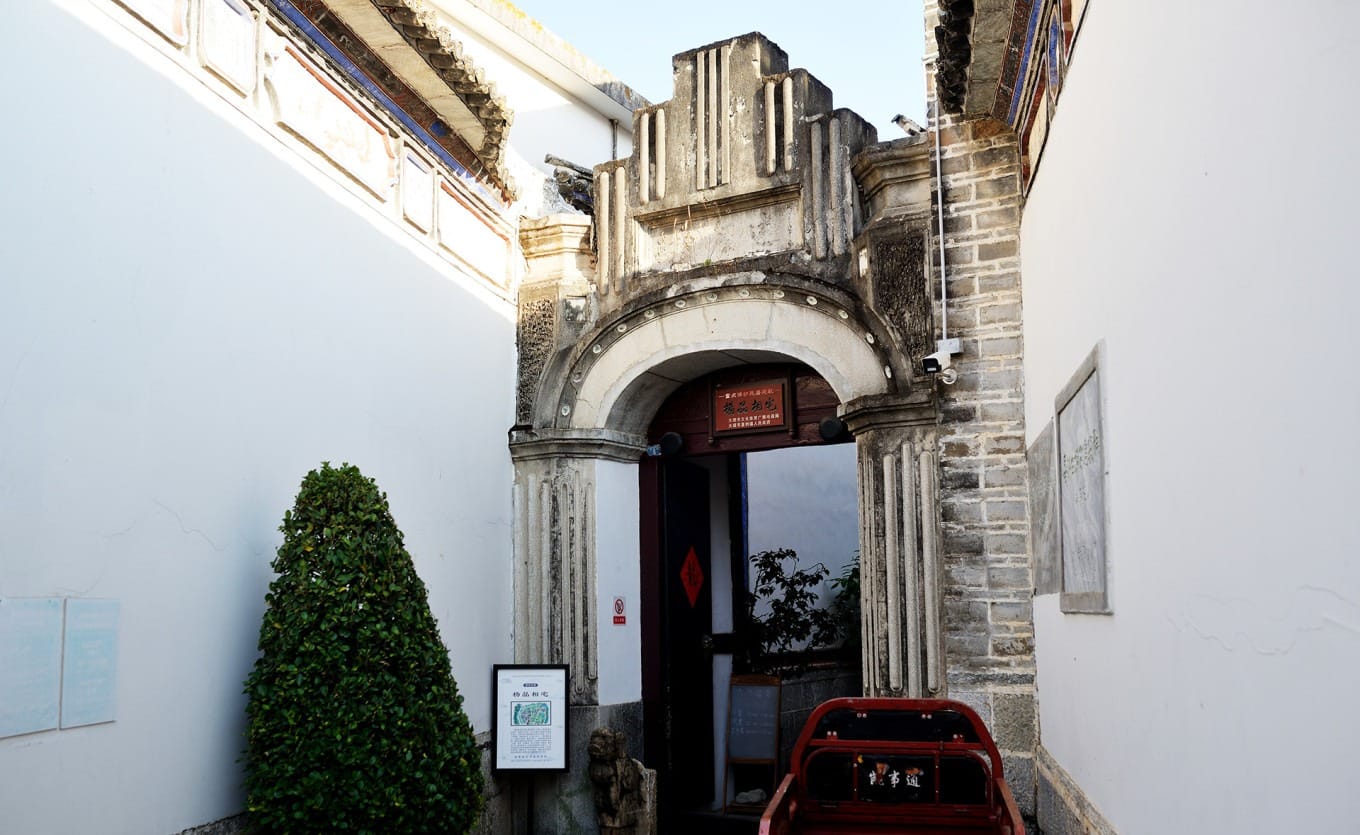
As a private hotel, only the first courtyard is open for public viewing; the second and third courtyards are reserved for guest accommodations. Stepping into the first courtyard, you can admire a traditional Bai ethnic “three sides and one screen wall” (三方一照壁 (local term)) layout. Interestingly, the original mansion had only two courtyards. During the restoration into a hotel, the former stable area at the back was transformed into the current third courtyard.
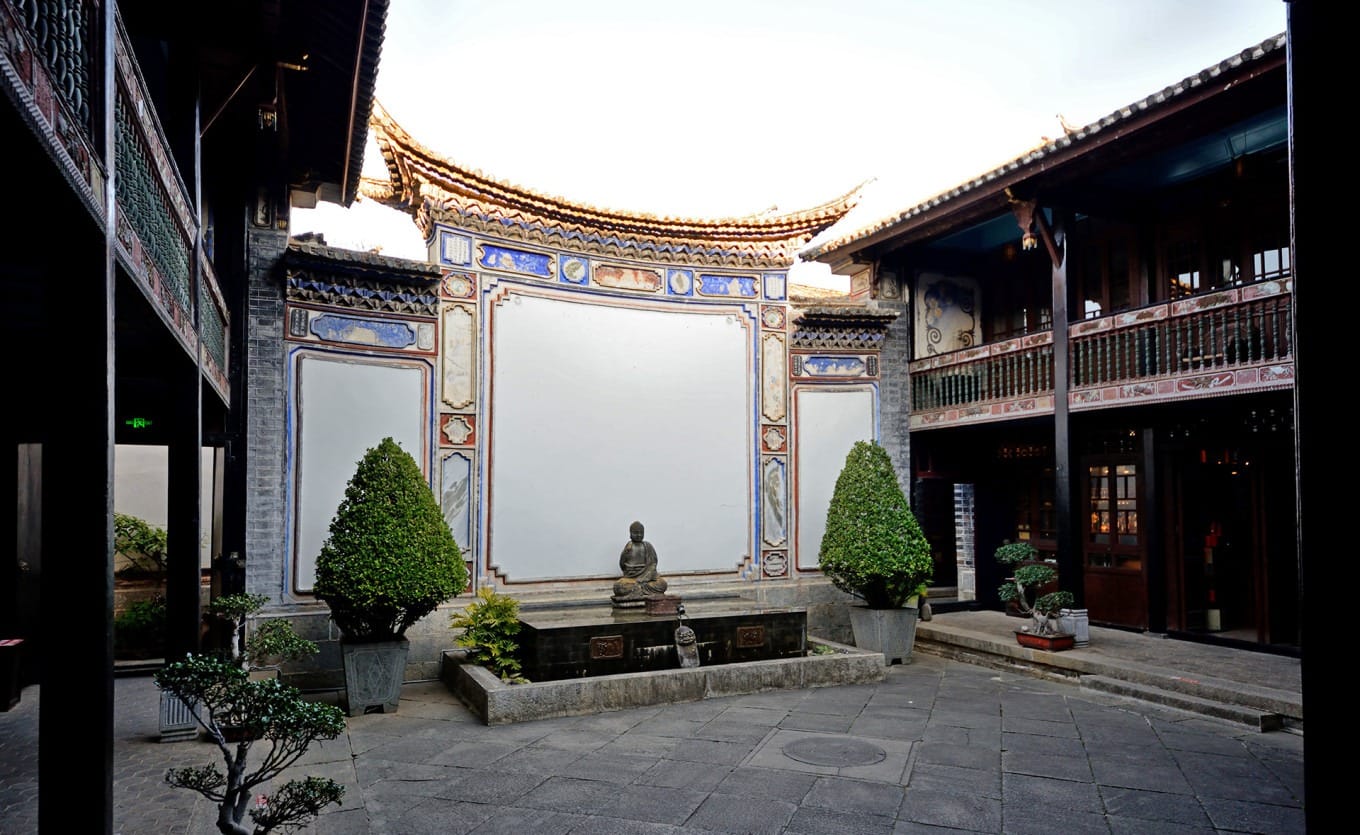
The story of Brian Linden is integral to Xilin Yuan. He first came to China in 1984 and returned with his wife in 2004. After two years of travel, they settled in Xizhou, Dali, where he undertook the restoration of the Yang Pinxiang Residence. He named the hotel Xilin Yuan 喜林苑 (local term), combining ‘Xi’ from Xizhou and ‘Lin’ from his Chinese name, Linden. For those interested in his journey, he authored a memoir titled “Finding Home in China: The Story of Brian Linden” (《寻乡中国 (local term):林登的故事 (local term)》), which you can seek out.
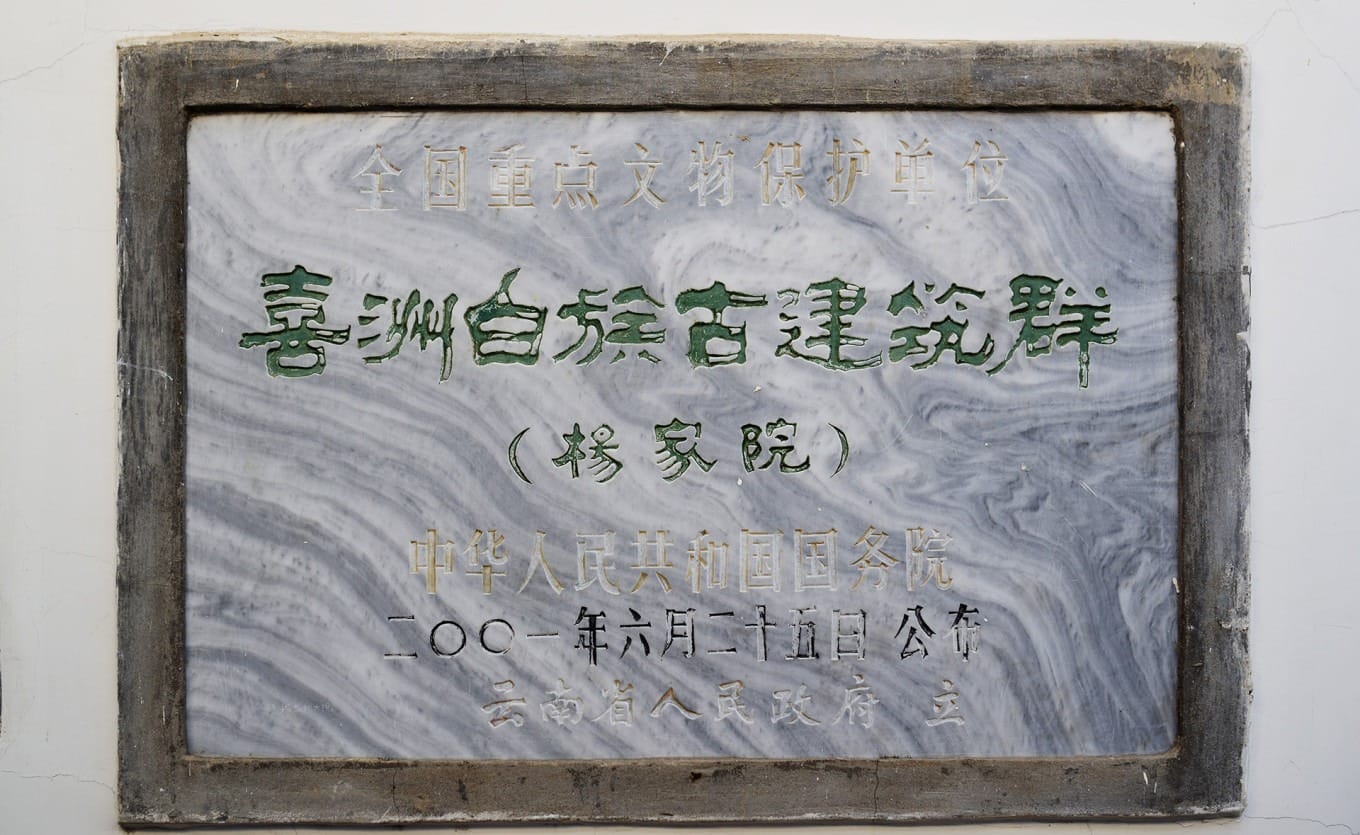
- RestaurantXilin Yuan 喜林苑 (Linden Centre)
- AddressNo.
- Recommended dishesN/A Primarily a hotel/cultural center dining may be for guests or by arrangement (菜名)
- Average spendFree entry for viewing the first courtyard
The Windy Tree
When exploring Xizhou (喜洲), you’ll find three iconic photo spots: the Corner Building, the wheat fields, and the famous ‘Windy Tree.’ This ancient banyan, known locally as a ‘big green tree’ (大青树, dà qīng shù), has stood for centuries. Its recent fame stems from the popular TV series ‘Meet Yourself’ (去有风的地方), where a key scene was filmed beneath its branches—transforming it into ‘the tree where Xu Hongdou shed tears’ and drawing visitors from across the country.
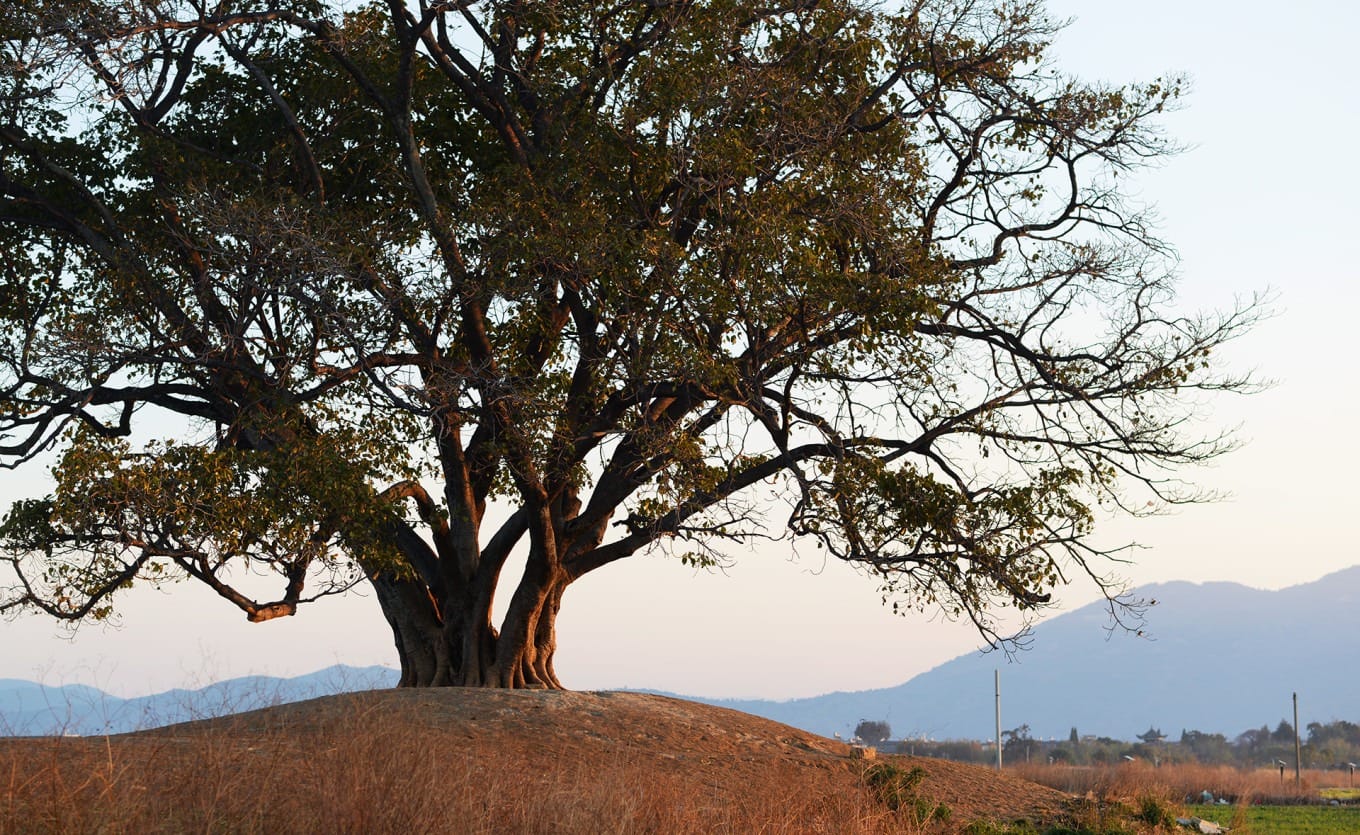
In Dali (大理), nearly every Bai village has its own big green tree at the entrance, serving as a feng shui symbol of prosperity and community vitality for the local ethnic group. While this particular tree has gained celebrity status, you’ll notice similar ancient trees throughout the region, each holding cultural significance.
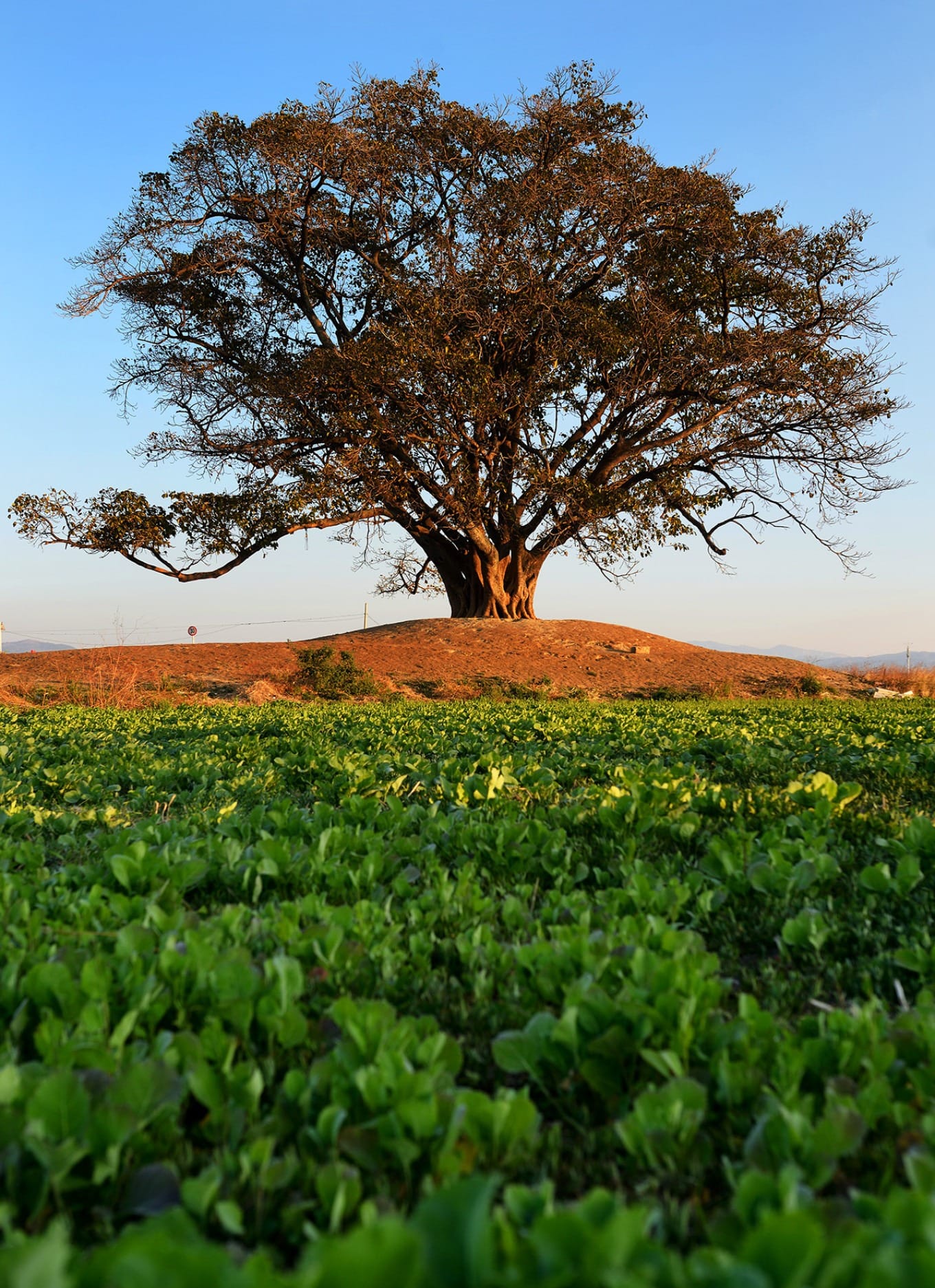
Finding the Windy Tree requires some navigation savvy. It’s located in Xianglong Village (翔龙村) within Xizhou Ancient Town, but doesn’t appear on standard mapping apps like Gaode or Baidu Maps. Instead, navigate to ‘Hetianli Homestay’ (禾田里民宿) and walk about fifteen minutes from the Corner Building—you’ll spot the majestic tree in an open field.
- LocationThe Windy Tree (有风的树)
- AddressXianglong Village, Xizhou Town, Dali Bai Autonomous Prefecture, Yunnan, China (云南省大理白族自治州喜洲镇翔龙村)
- AdmissionFree
- TipVisit early morning or late afternoon for softer light and fewer crowds
Haishe Park: Dali’s Hidden Peninsula
Erhai Lake is Dali’s most iconic landmark—a vast freshwater lake stretching 40 kilometers north to south that offers all the scenic grandeur of the sea. With nearly 250 square kilometers to explore, deciding how to experience it can be overwhelming. For a peaceful, up-close encounter with the water, skip the crowded boat tours and consider visiting Haishe Park (海舌公园), a slender peninsula that extends into the lake just 3 kilometers northeast of Xizhou in Jinhe Village.

Geologically, this peninsula formed from sediment carried by Cangshan Mountain’s Wanhua Stream, creating a long sandbar. From above, it widens at the shore and tapers into the lake like a tongue—hence the name Haishe, or ‘Sea Tongue.’

Among all the lakeside villages and attractions in Dali, Haishe Park stands out for its tranquility and relatively low visitor numbers. However, access is carefully managed: the park only opens in the morning and requires advance online reservations, with just 200 tickets released daily. During peak season, securing a spot can be nearly impossible, but if you do, you’ll be rewarded with a serene escape from the bustle of Xizhou Ancient Town.
While the park has been developed into a wedding photography base in recent years, its landscapes remain beautifully preserved. On sunny days, the entire area feels like a hidden paradise.

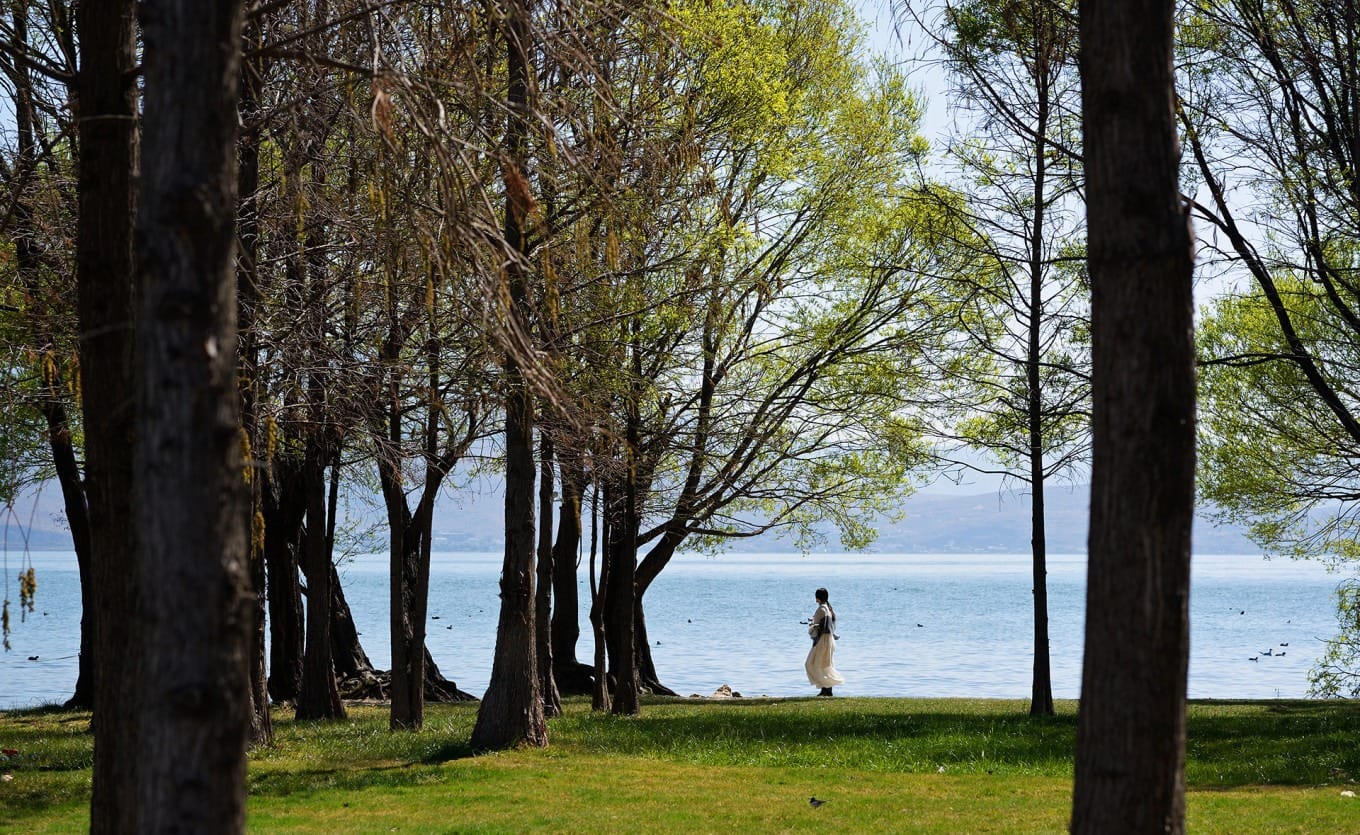
Inside the park, you’ll find expansive groves and tall grasses. Some trees along the shore grow directly in the water, forming a distinctive ‘water forest.’ Several crooked trees with half their trunks submerged have become popular photo spots, often attracting visitors who climb onto them for pictures.
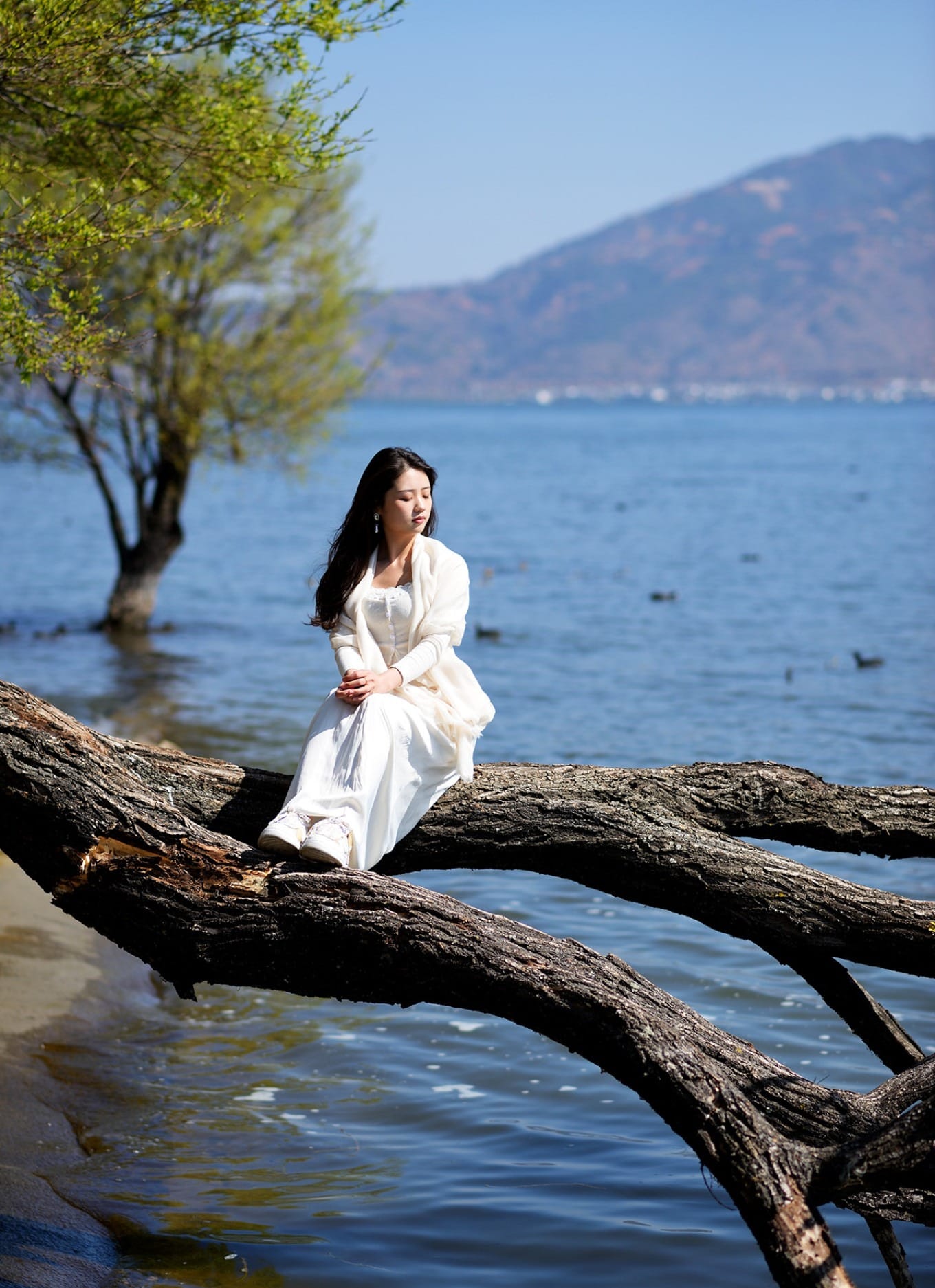
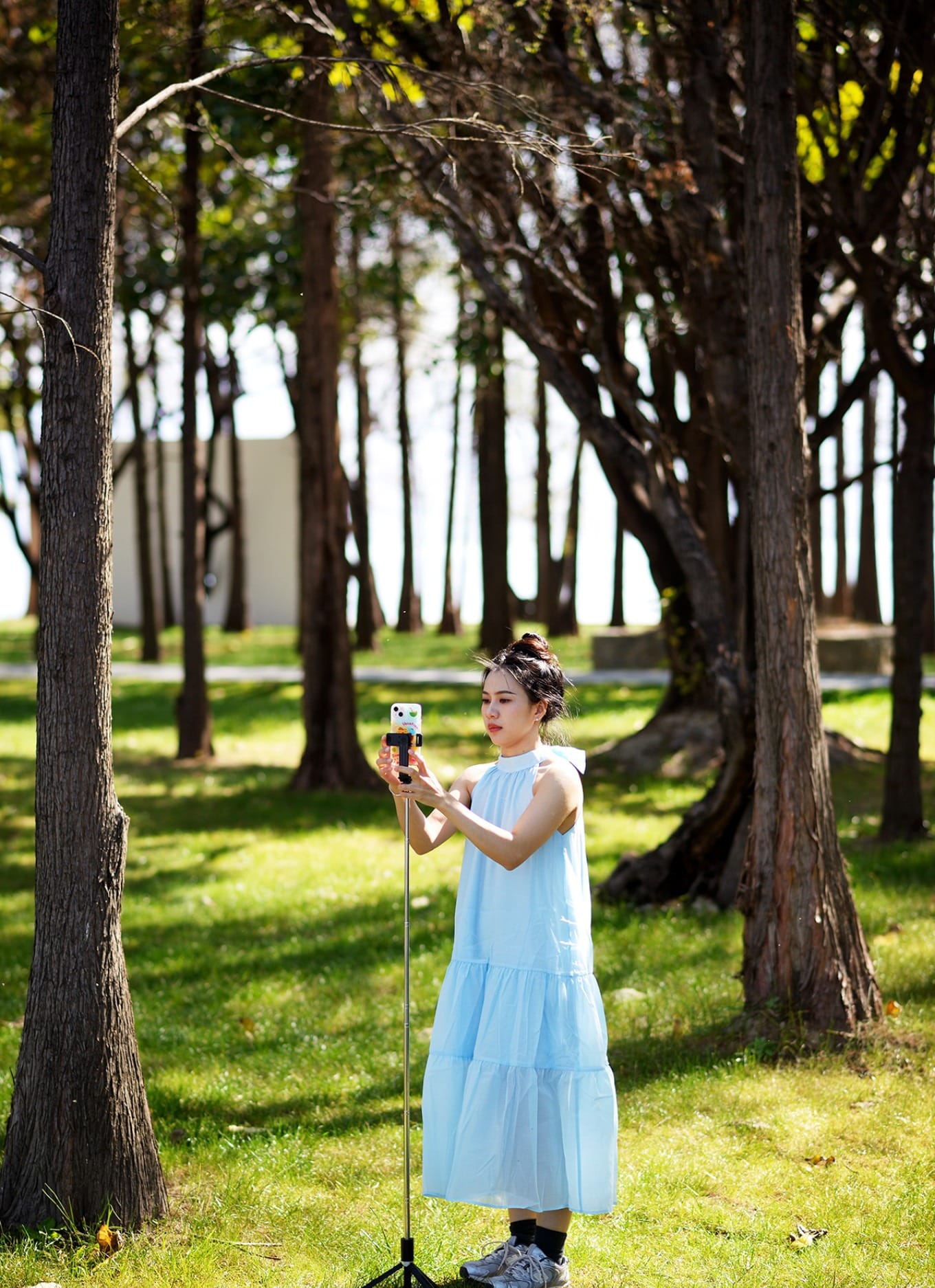
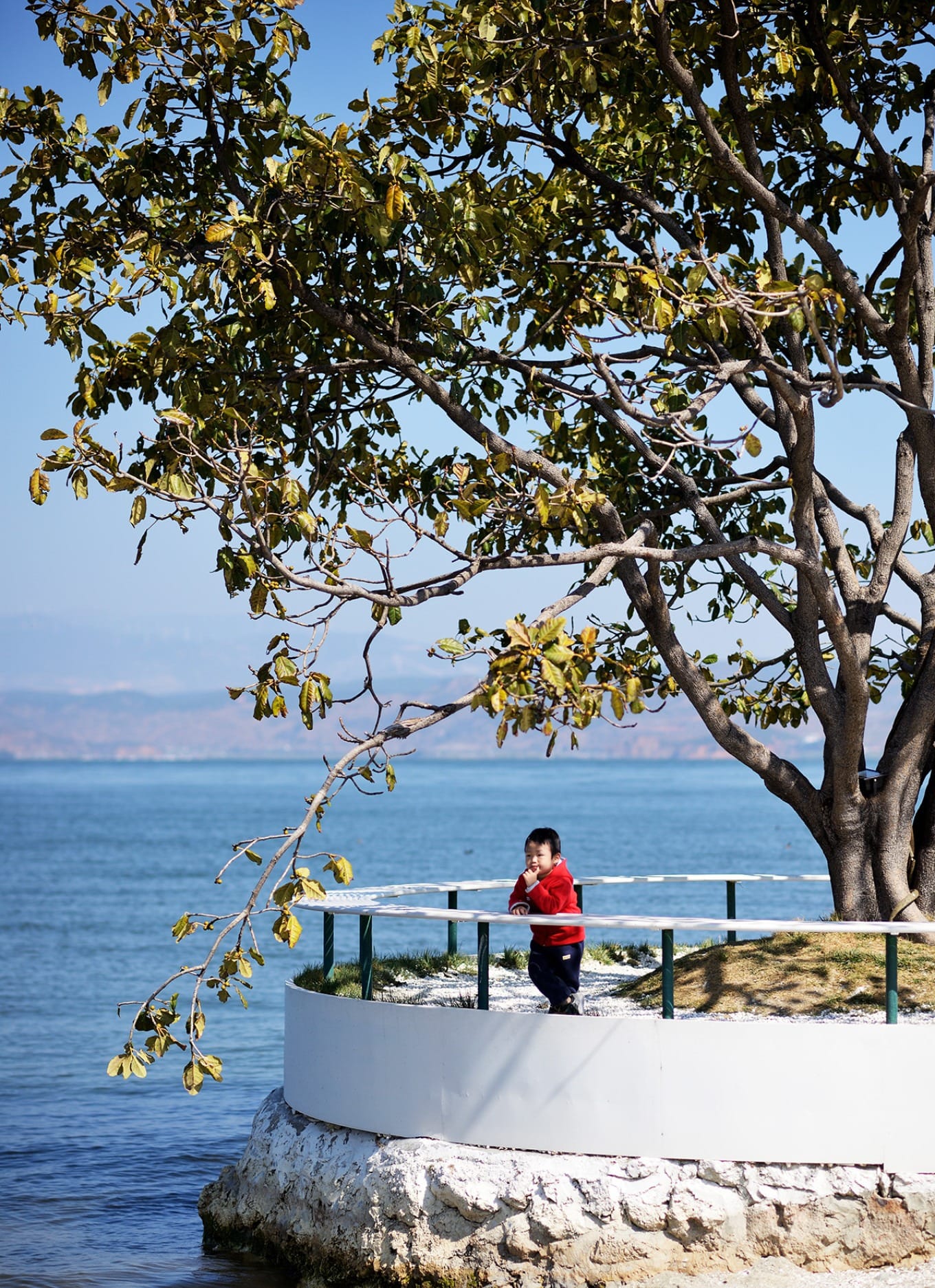
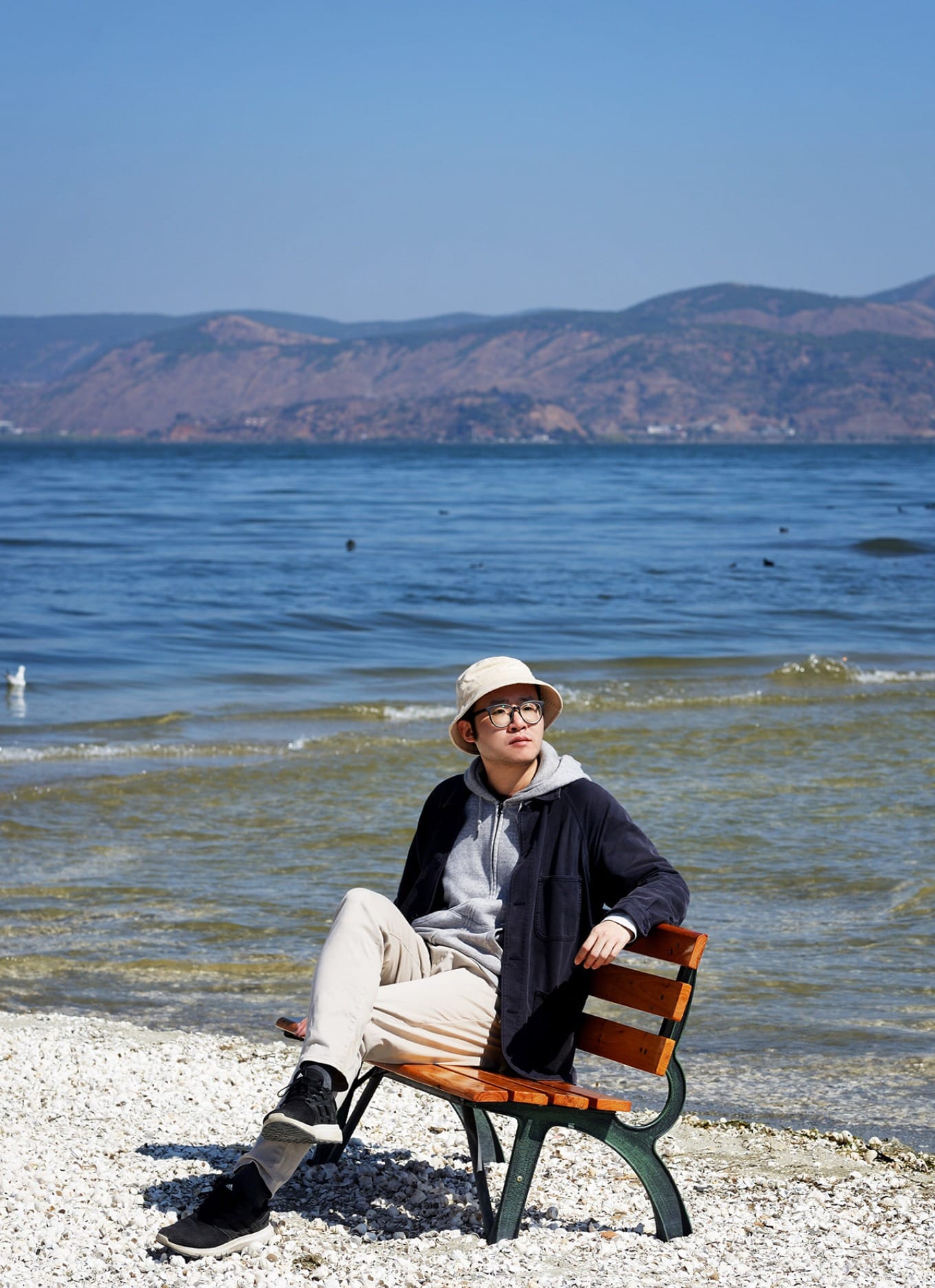
The lakeshore is shaded by lush trees, framing picturesque views of blue skies and white clouds against the water. Watch for waterbirds gliding by, leaving gentle ripples in their wake. Whether you’re strolling the boardwalk, leaning on the railings to gaze out, or finding a quiet corner to sit, the experience is deeply relaxing.
- AttractionHaishe Park (海舌公园)
- AddressJinhe Village North, Xizhou Town, Dali Bai Autonomous Prefecture, Yunnan, China (云南省大理白族自治州喜洲镇金河村北)
- AdmissionFree with reservation required
- Best time to visitMorning hours when park is open
Weishan: The Serene Cradle of the Nanzhao Kingdom
For travelers seeking a more tranquil and authentic slice of Yunnan’s history, Weishan (巍山) is a perfect destination. While it’s less frequented by large tour groups compared to Dali’s bustling old town, Weishan offers a profound sense of peace and a deeper connection to traditional culture. Its well-preserved layout and unhurried local life make it a rewarding detour.
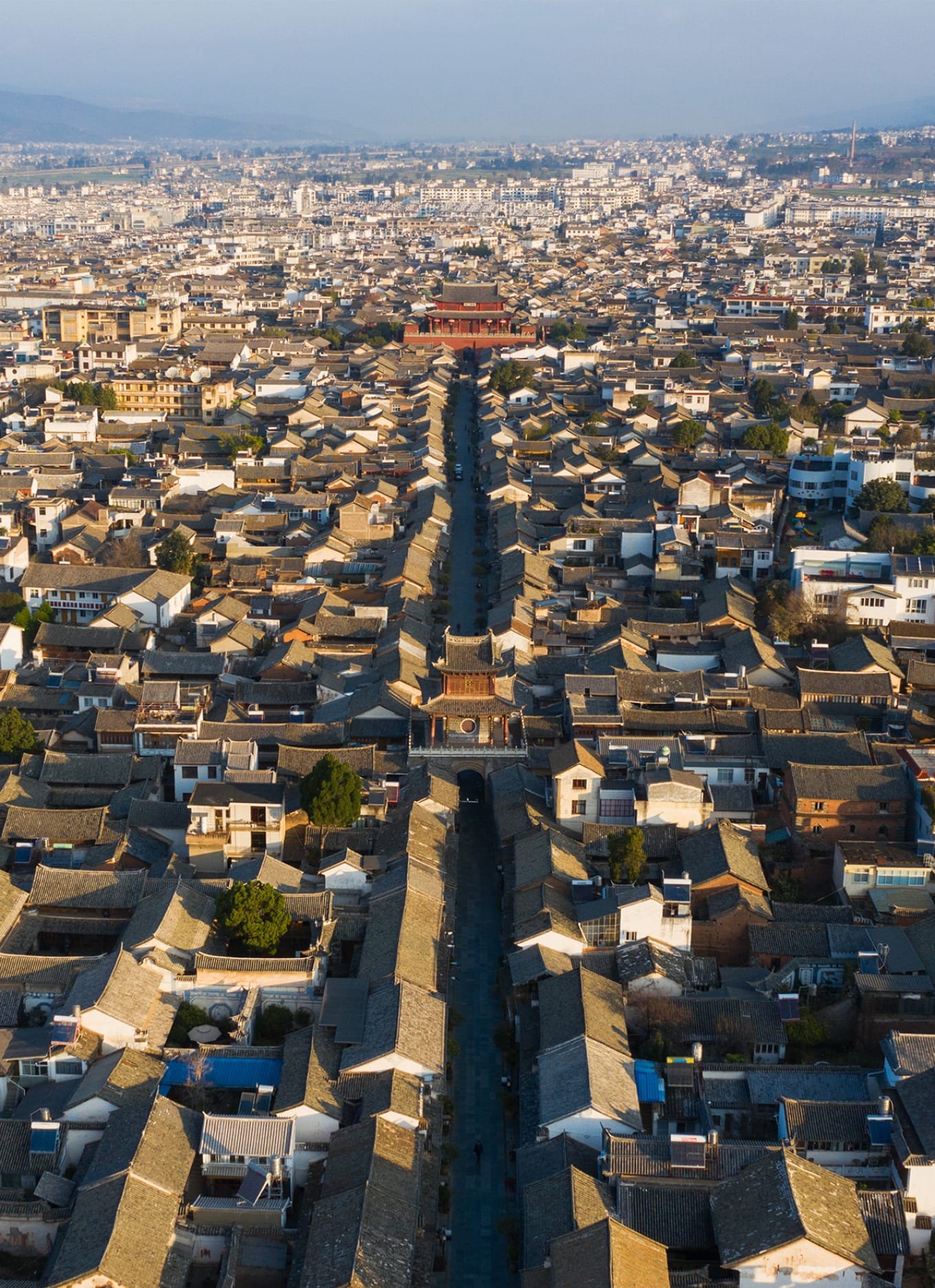
Weishan, formally known as the Weishan Yi and Hui Autonomous County (巍山彝族回族自治县), is located on a mountain plateau in southern Dali Prefecture. Its history is deeply significant: originally established as Xielong County during the Western Han Dynasty, it rose to prominence in the 8th century. Here, the Wuman chieftain Piluoge unified the six local tribes to establish the powerful Nanzhao Kingdom, earning Weishan the enduring title ‘Ancient Prefecture of Nanzhao’ (南诏故郡).
The ancient town you see today took shape in 1389 during the Ming Dynasty, under the direction of Commander Fan Xing. He oversaw the transformation of the original earthen walls into a formidable brick fortress. Historical records describe a city with four grand gates—Zhongwu (East), Yingxun (South), Weiyuan (West), and Gongchen (North)—centered around the Xinggong Tower, all protected by walls and a moat.

Despite six centuries of history, Weishan’s original chessboard-like street plan remains intact. The town is crisscrossed by 25 ancient streets and 18 lanes, with four main avenues forming a central cross. You’ll find architecture largely preserved from the Ming and Qing eras, with the majestic Gongchen Tower and the elegant Xinggong Tower standing as iconic landmarks.

Weishan’s strategic location made it a crucial junction on the historic Tea Horse Road. Caravans traveling north to Dali, Lijiang, and Tibet, east to Kunming, west to Tengchong, or south to Pu’er and Jinghong would converge here, often pausing for several days of rest and resupply.
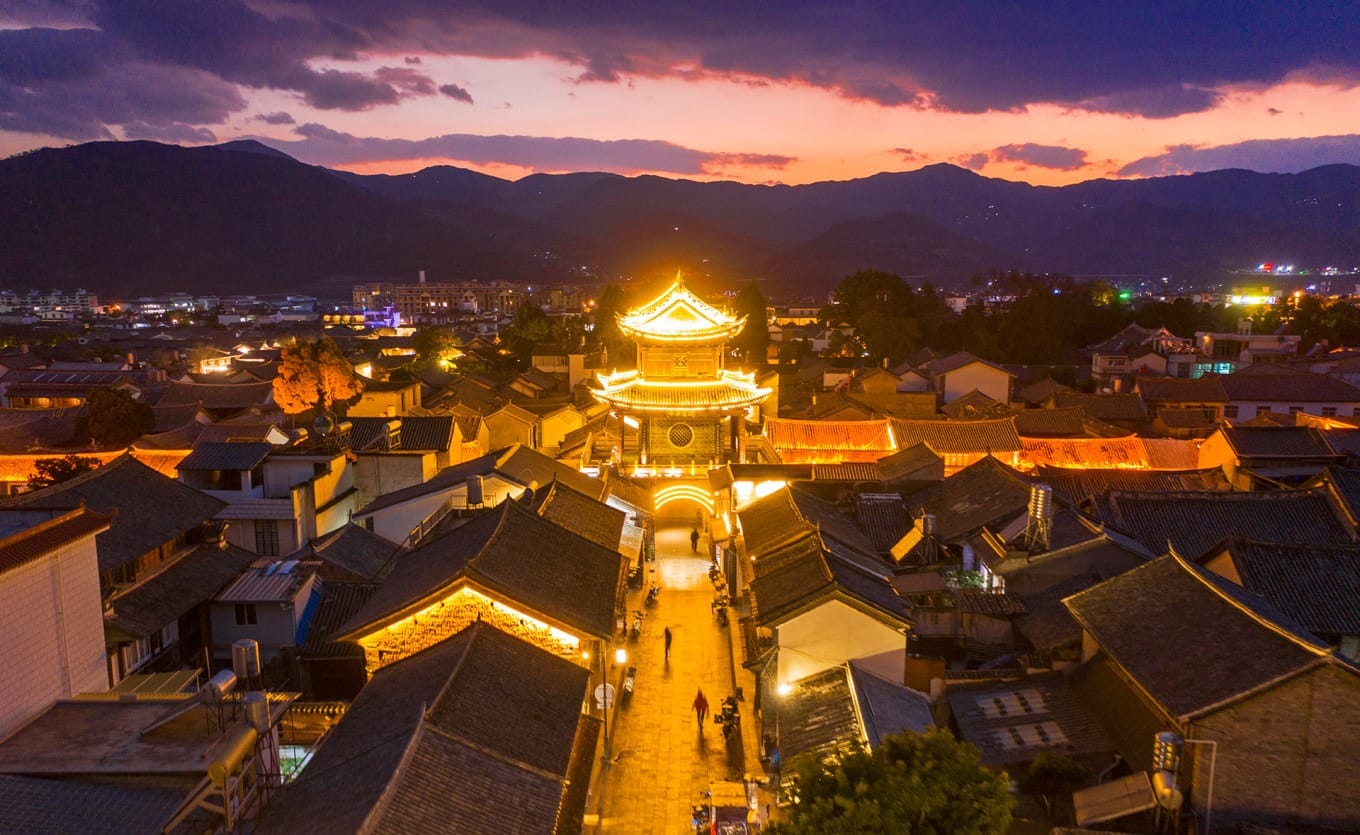
Wandering through Weishan today, you’ll experience a living, breathing ancient town. Its unpretentious, laid-back charm feels both authentic and welcoming. Getting here is now straightforward: a high-speed train from Dali Station takes just 20 minutes. While a day trip from Dali’s old town or Xiaguan is possible, consider staying for a night or two. This allows you to fully absorb the town’s rich history and savor its renowned local 小吃 (snacks) at a leisurely pace.
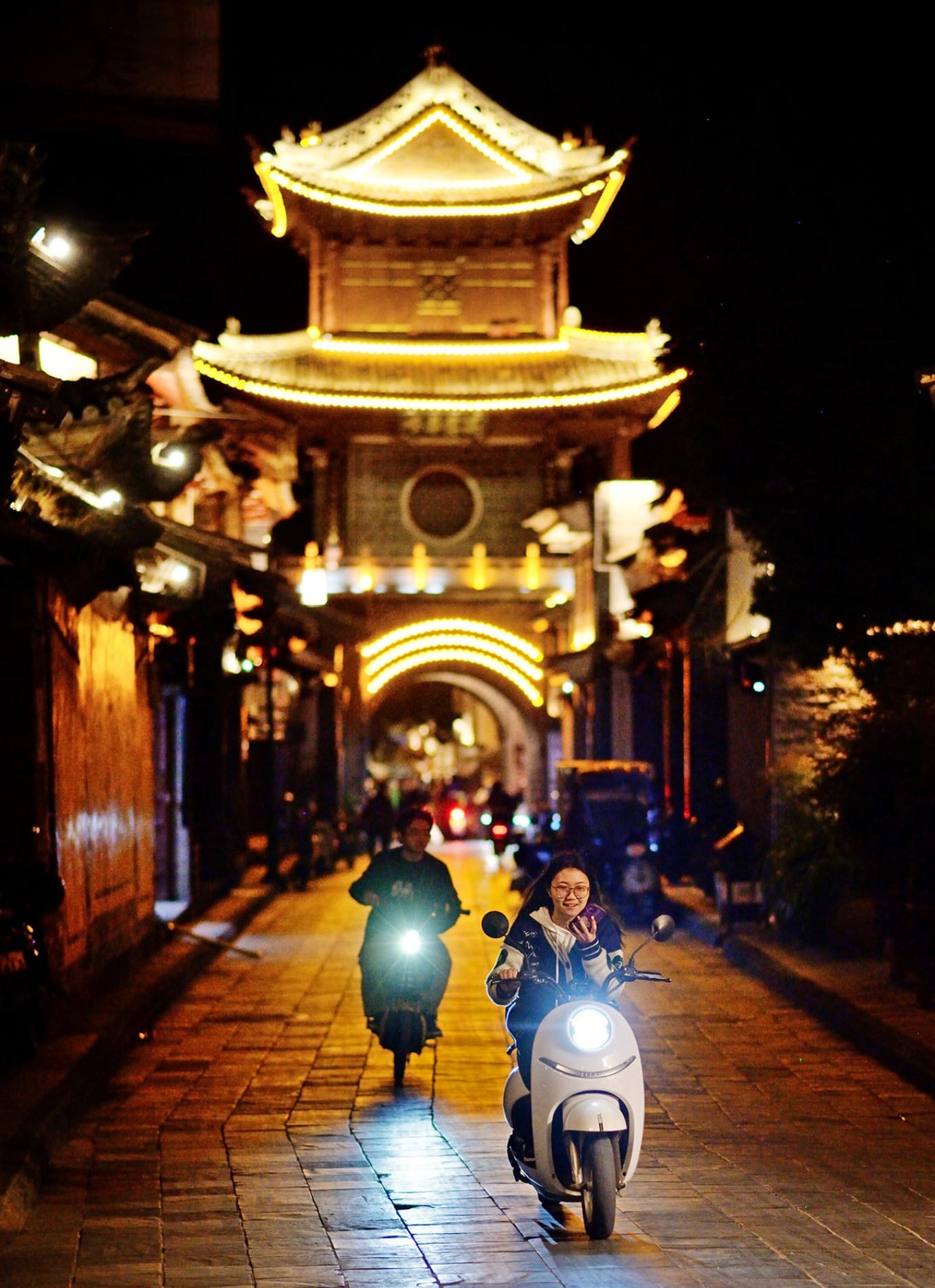
Gongchen Tower
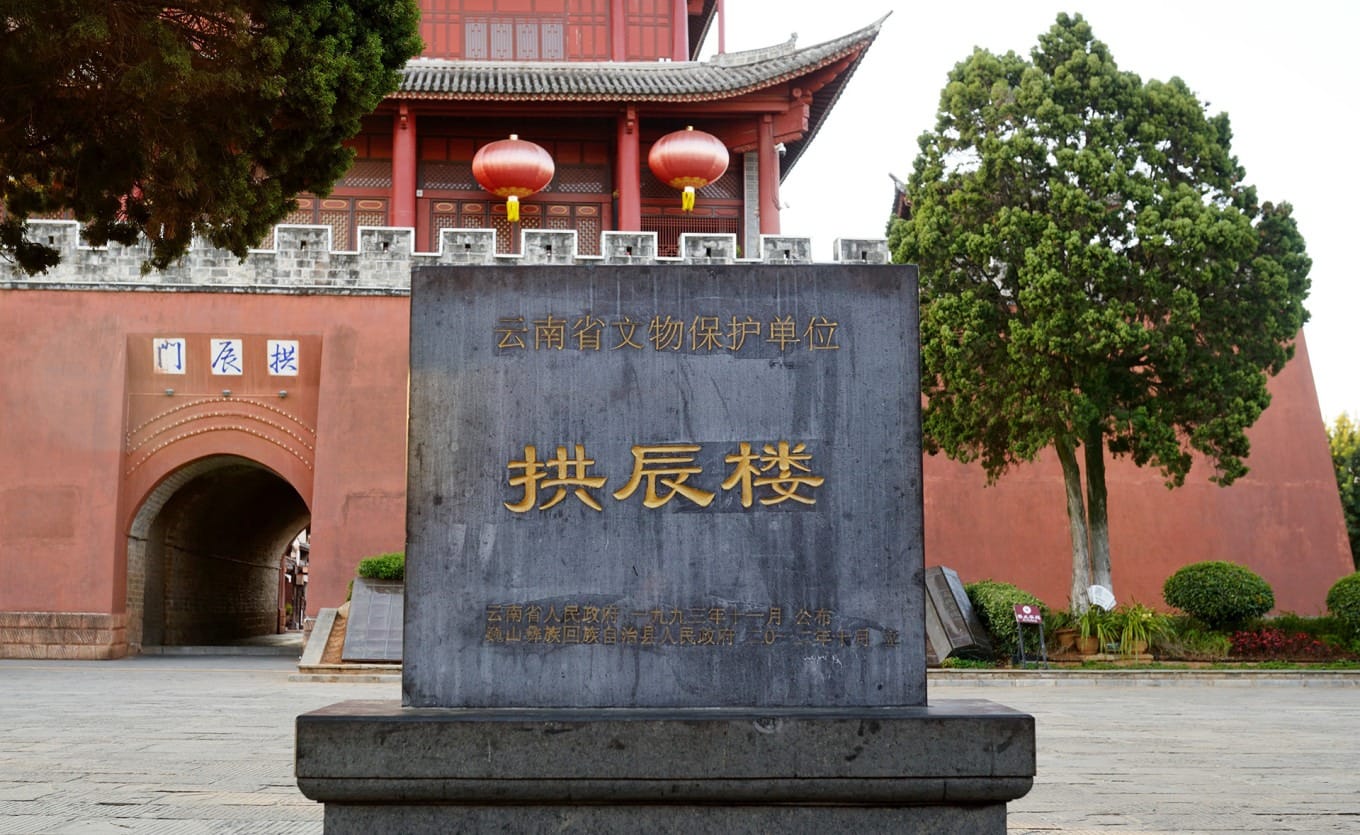
As you step into Weishan Ancient Town, you’ll feel transported back in time. Wandering through the historic streets, your eyes will naturally be drawn to the striking red-walled, black-tiled gate tower known as Gongchen Tower (拱辰楼). Locals say ‘one Gongchen Tower tells half of Weishan’s history’—this isn’t just the town’s most prominent landmark, but a witness to over six centuries of change in the region.
Built in 1390 during the Ming Dynasty—over two decades before Beijing’s Tiananmen Gate—Gongchen Tower originally served as the northern gate of the Meng Hua Prefecture, functioning as a defensive structure. As Weishan expanded northward over time, the tower became the town’s central architectural feature, and it remains the tallest building in the ancient town today.
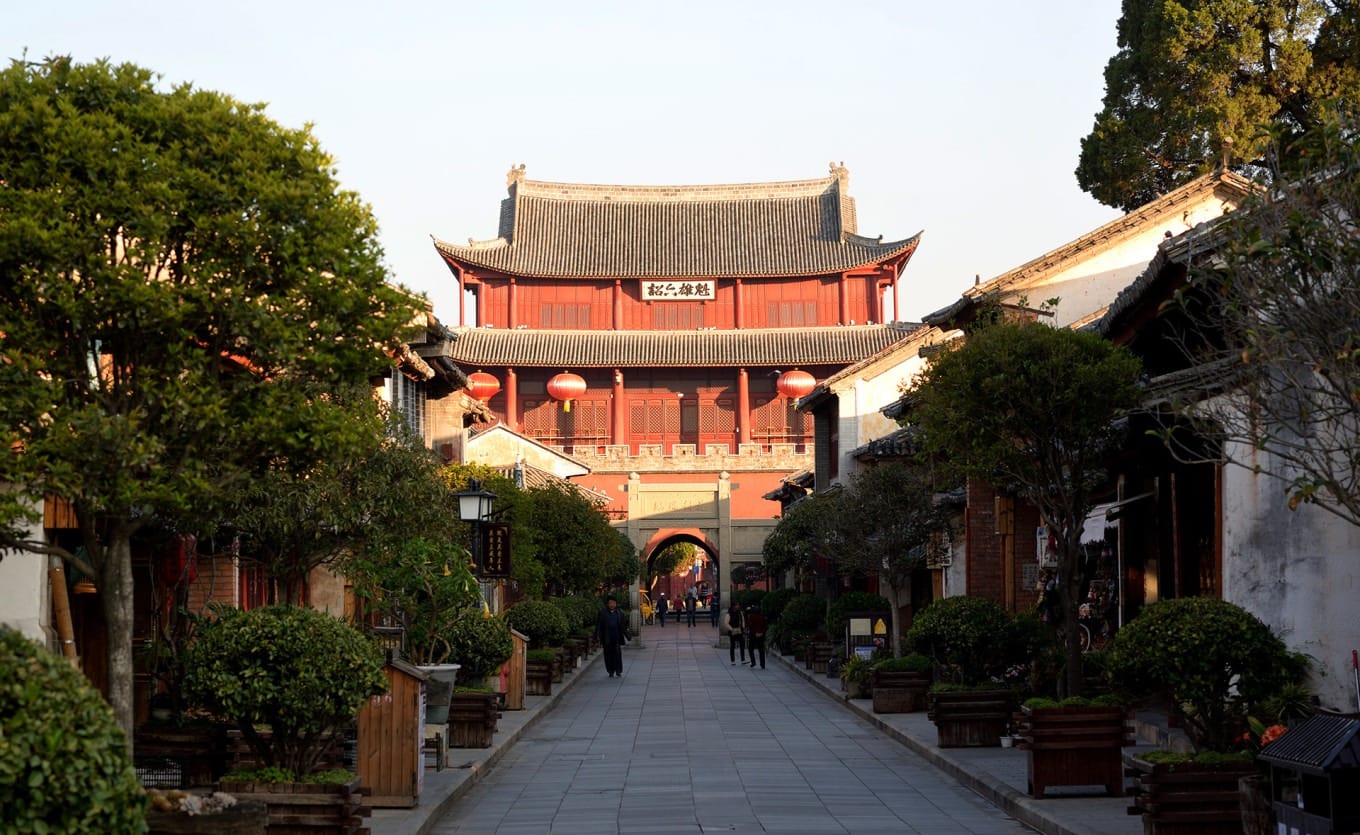
When you approach the tower, look up to see two significant plaques hanging beneath the southern and northern eaves. The southern plaque reads ‘魁雄六诏’ (Leading the Six Kingdoms), inscribed in 1748 by Kang Rang, while the northern plaque bears ‘万里瞻天’ (Gazing at Heaven from Ten Thousand Miles), added in 1785 by Huang Dahe. Though these plaques date from the Qing Dynasty, they reference events from the early Tang period when the Mengshe Kingdom unified six kingdoms in the Erhai region and pledged allegiance to the Tang emperor—a testament to Weishan’s historical significance as the birthplace of the Nanzhao Kingdom.
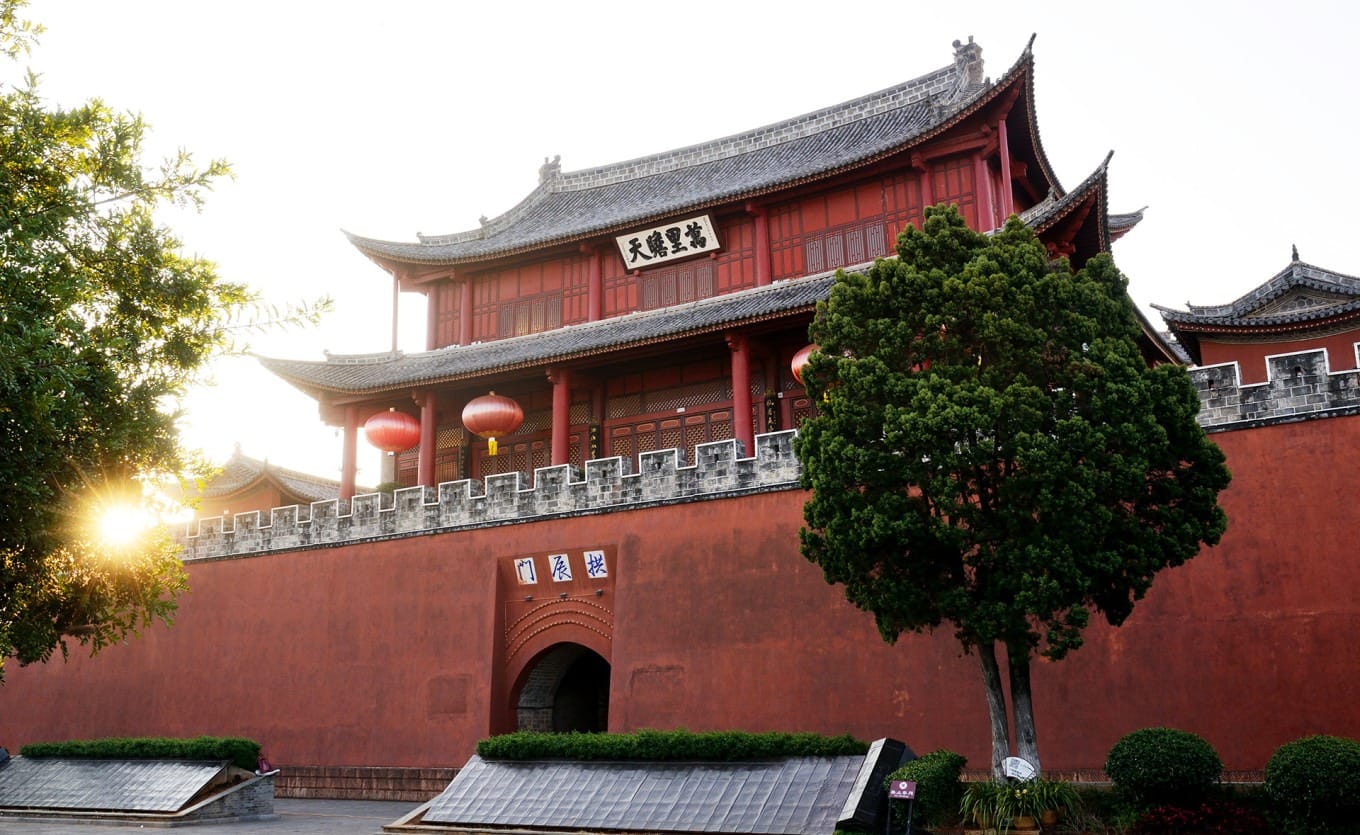
A devastating fire in January 2015 destroyed much of the tower’s original wooden structure, roof tiles, and ridge decorations. The restored version maintains Ming Dynasty architectural style—while it may lack some of the original weathered character, it still presents an imposing and majestic presence that captures the spirit of the historic structure.
- RestaurantGongchen Tower (拱辰楼)
- Address93 North Street, Nanzhao Town, Weishan Yi and Hui Autonomous County, Dali Bai Autonomous Prefecture, Yunnan (云南省大理白族自治州巍山彝族回族自治县南诏镇北街93号)
- Recommended dishesNot applicable historical site (菜名)
- Average spendFree admission
North Street: The Historic Heart of Weishan Ancient Town
Just beyond the Gongchen Tower lies North Street (北街), the historic commercial artery of Weishan Ancient Town. This street flourished centuries ago as a key hub on the ancient Tea Horse Road. The traditional architecture here follows a ‘shop-in-front, residence-in-back’ layout—a clever design where bustling storefronts give way to quiet living quarters, creating a harmonious blend of commerce and community life that feels remarkably relevant even today.
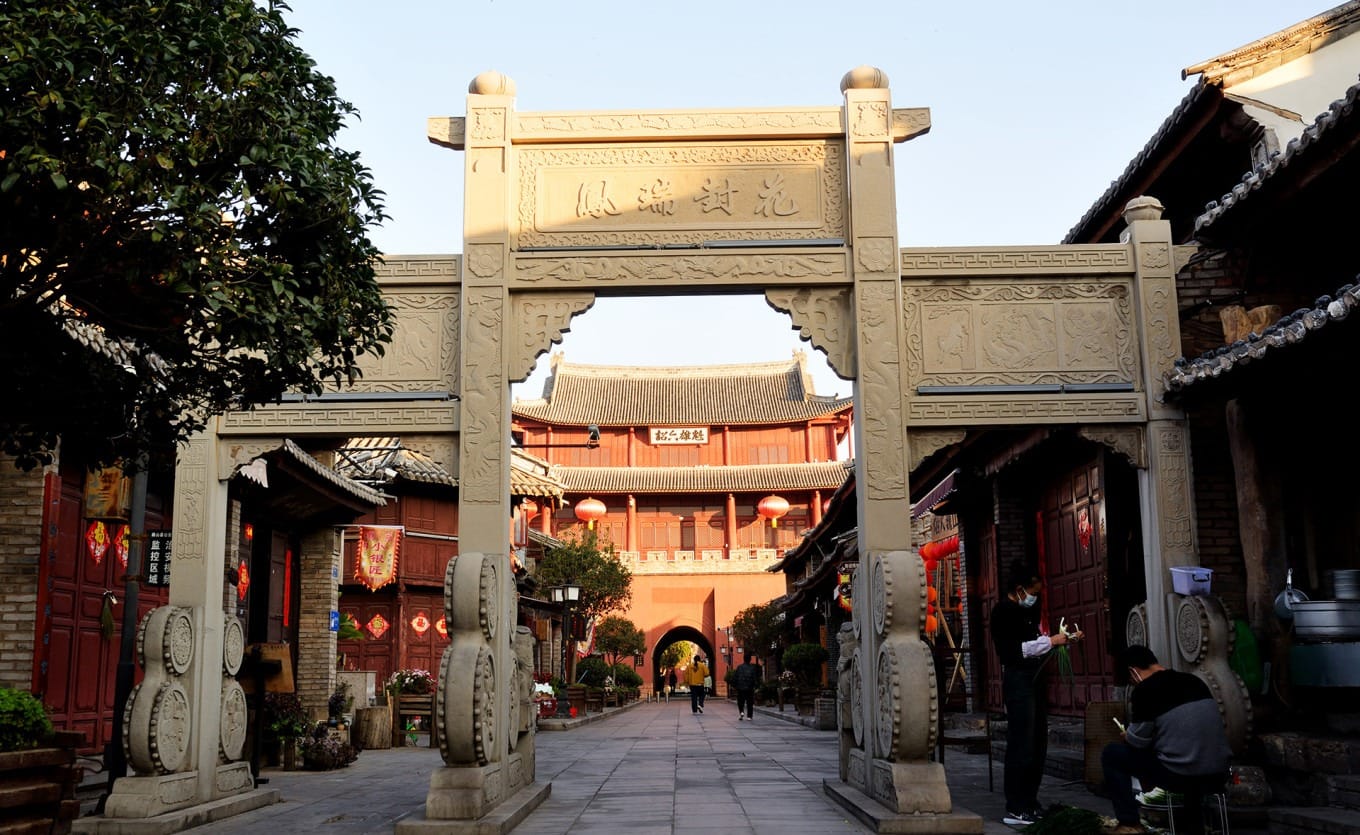
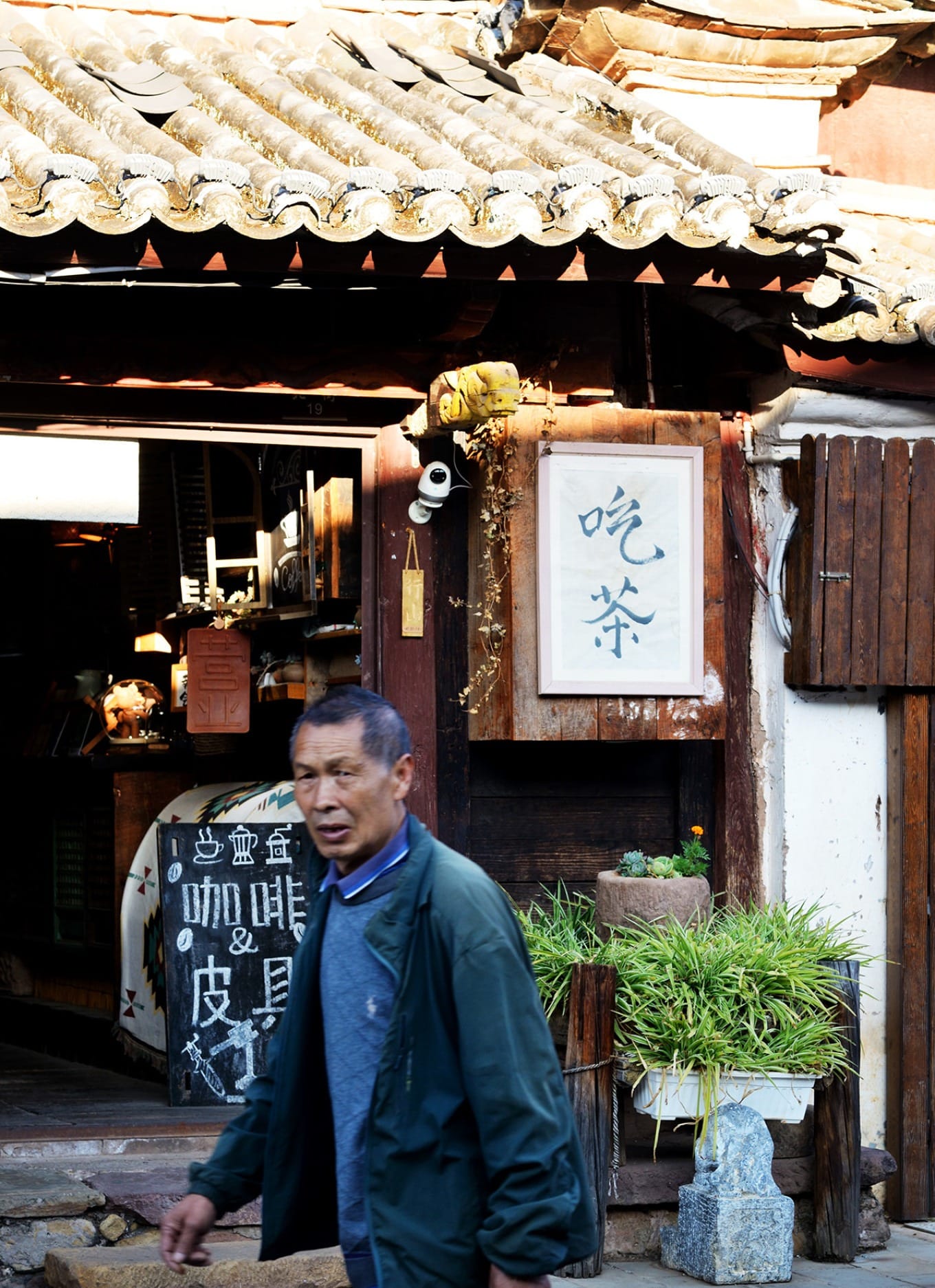
Walking along North Street feels like stepping through a time portal. Old houses, traditional teahouses, and family-run shops appear preserved from decades past, offering an authentic glimpse into the slow-paced,烟火气 (yānhuǒqì, ‘lively atmosphere’) daily life that defines Weishan.
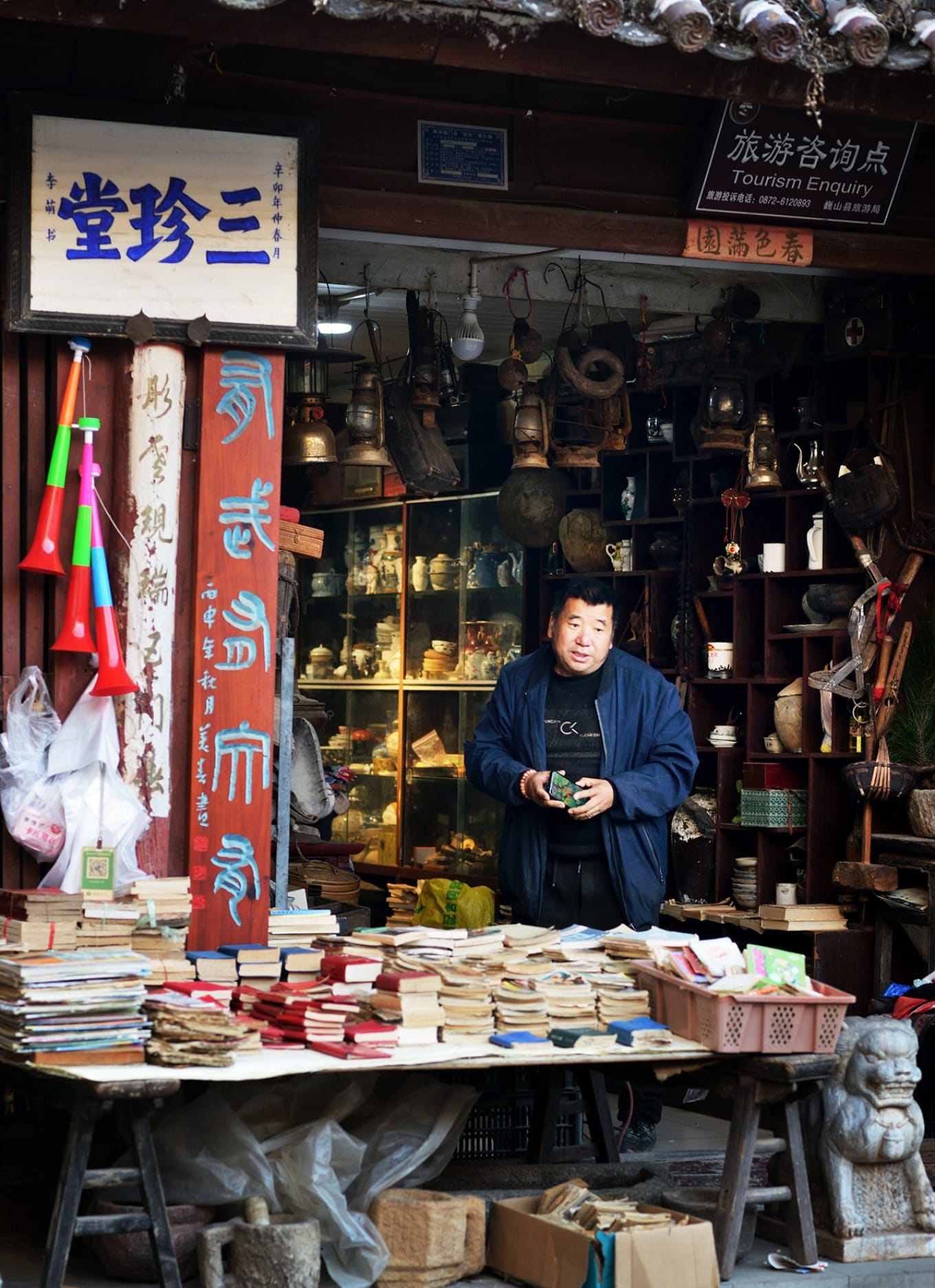
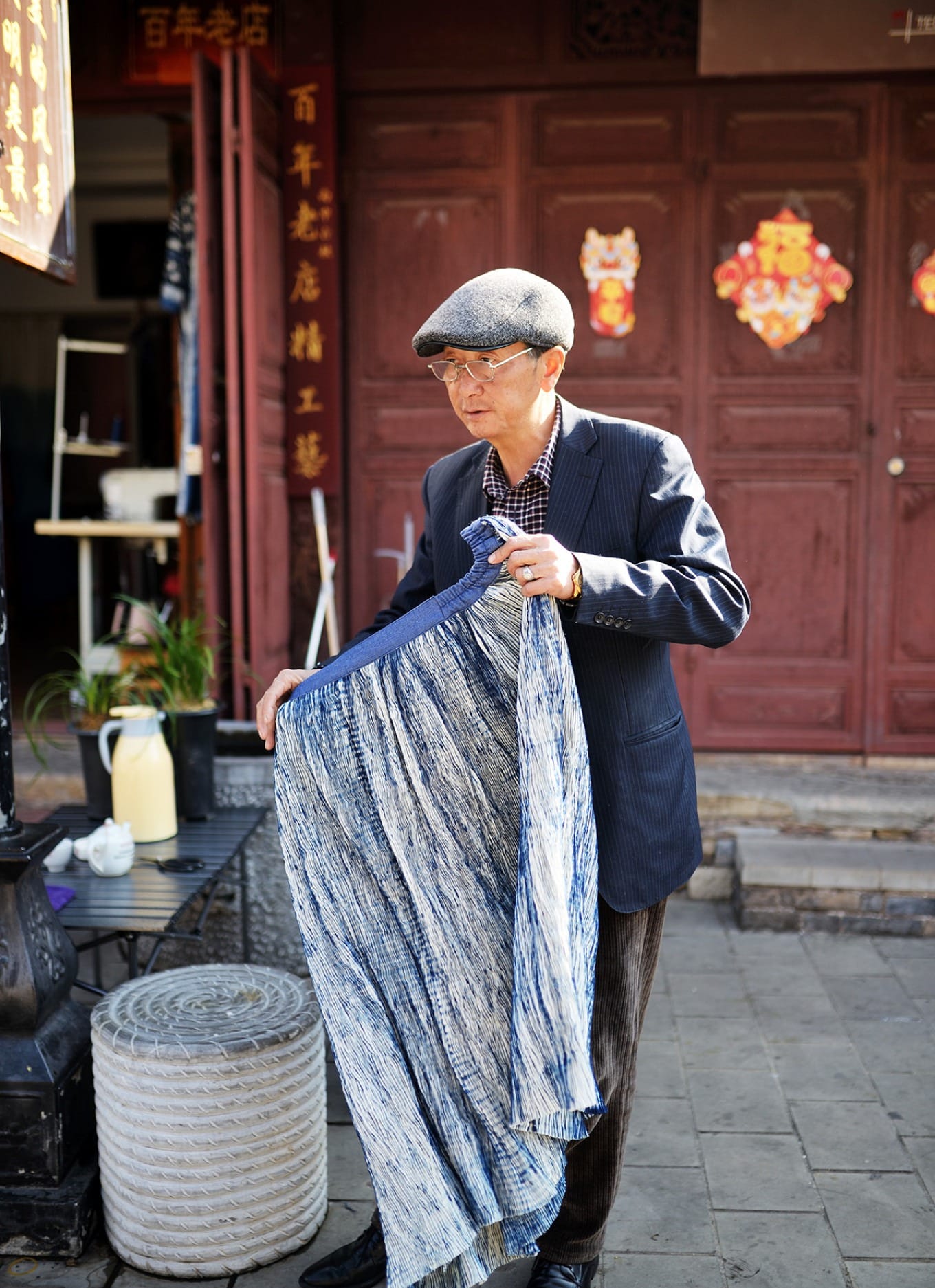
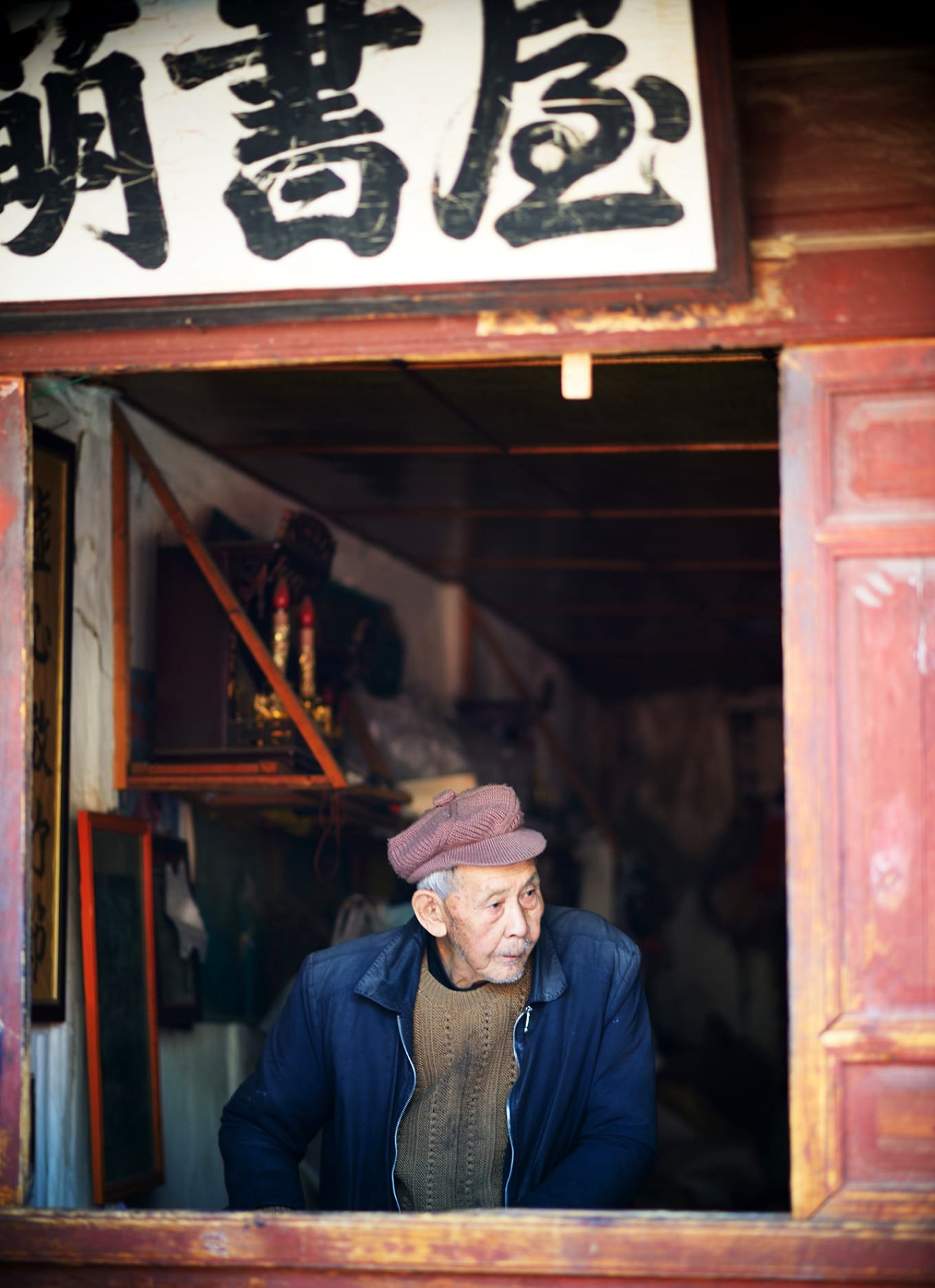
One of the street’s most cherished institutions is Li Meng’s Study (李萌书屋, Lǐ Méng Shūwū), a calligraphy shop that has been operating for over forty years. The proprietor, Li Meng, is a master calligrapher in his late eighties. For most of his life, he has been the town’s scribe—his brushwork adorns shop signs, couplets, personal letters, and even funeral notices across half the ancient town. Though hard of hearing, his skill remains undiminished, and he communicates with visitors through handwritten notes, preserving a traditional craft that has become rare elsewhere.
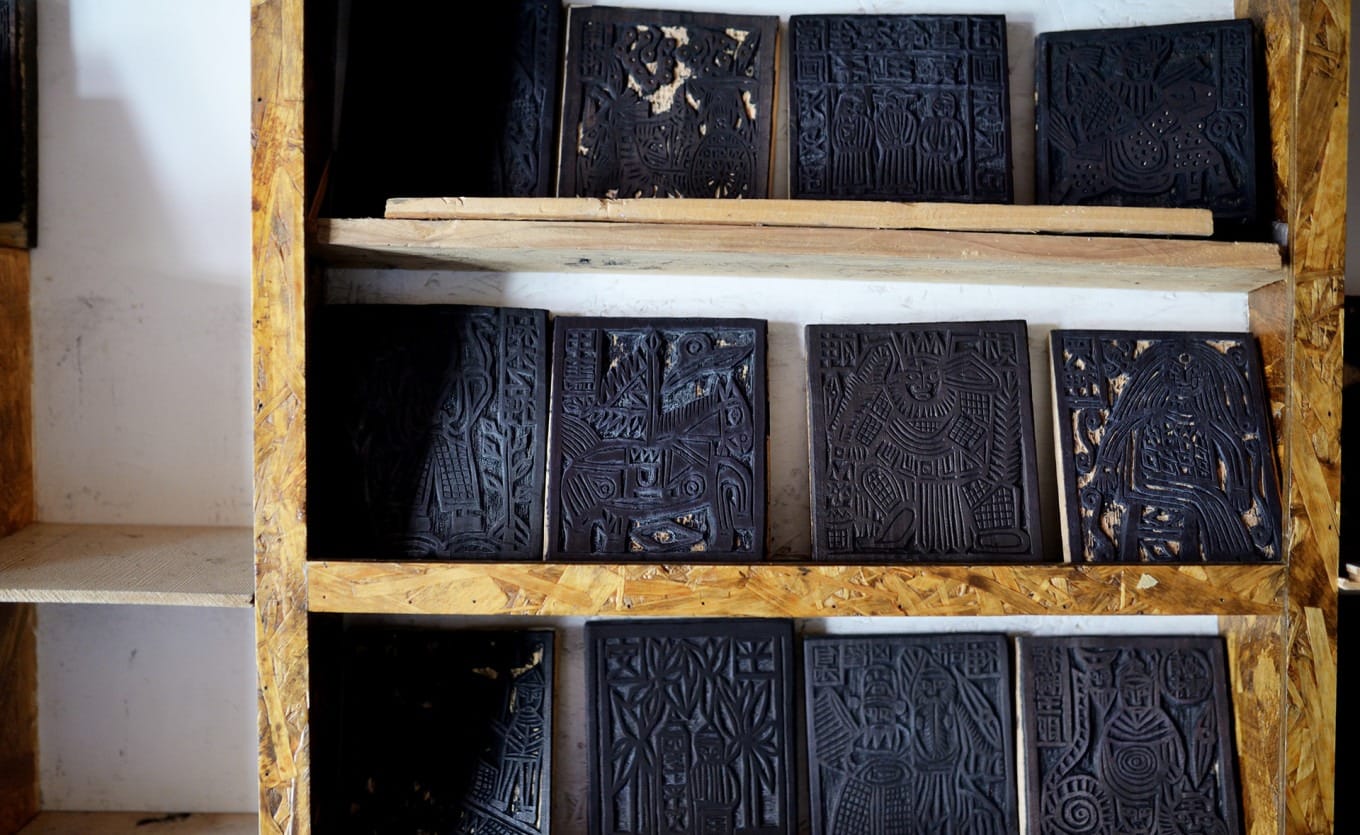
Further along the street, you can discover Weishan Jiama (巍山甲马, Wēishān Jiǎmǎ), a local folk art of woodblock printing also known as ‘paper horses’ or ‘Jiama paper’. The process is fascinating to watch: artisans apply ink to carved wooden blocks with palm-fiber brushes, place xuan paper over them, and use a 趟子 (tàngzi, a rubbing tool) to transfer the intricate designs. These prints traditionally depict deities and spirits and were used in rituals for blessings and averting misfortune. During ceremonies, the Jiama would be burned alongside offerings, acting as a ‘messenger’ to carry prayers to the heavens.

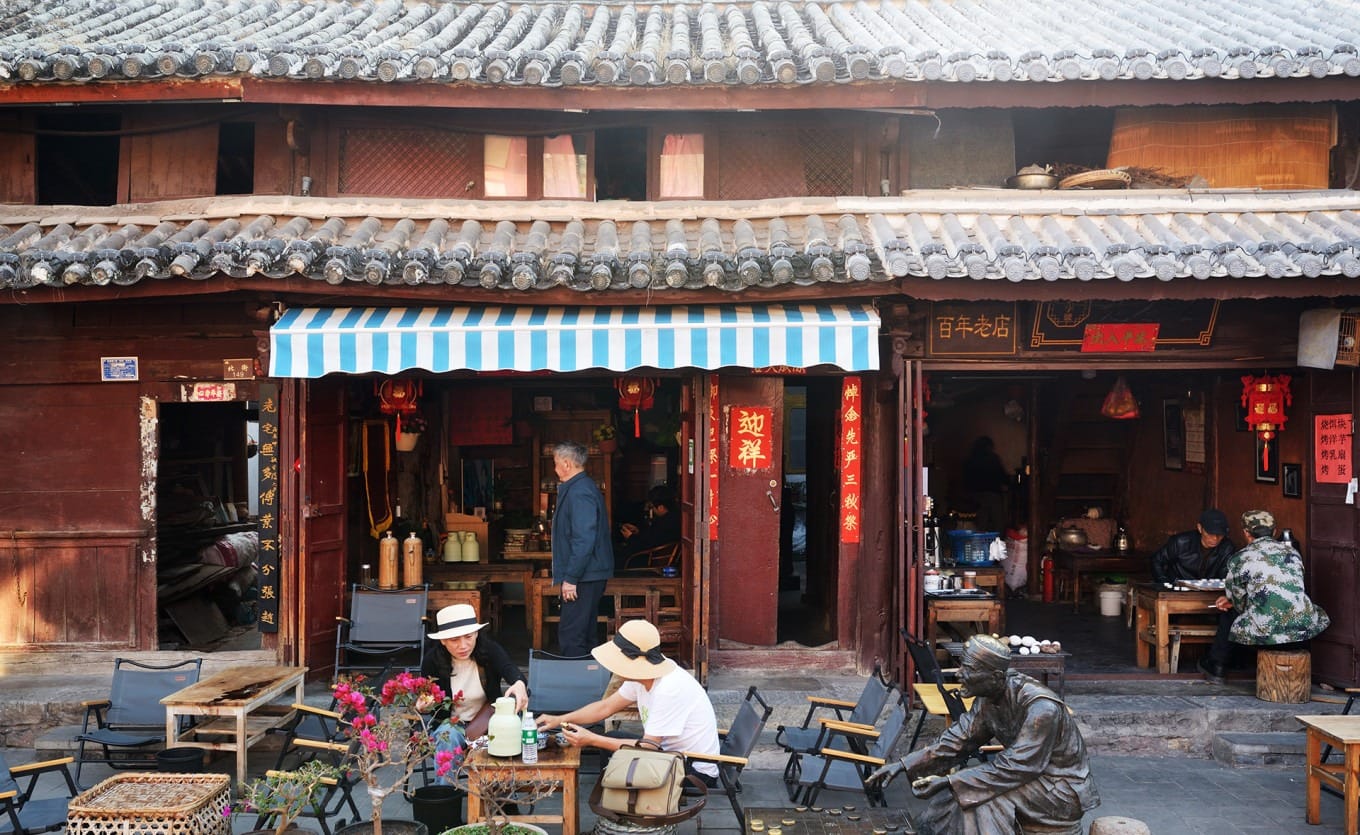
North Street is also home to old-fashioned teahouses that have largely vanished from major cities. Here, local residents gather to drink tea, play chess, and chat about everything from daily life to history. As a visitor, you can join in—order a cup of fragrant tea, settle in, and soak up the uniquely 古朴 (gǔpǔ, ‘simple and rustic’) and 悠闲 (yōuxián, ‘leisurely’) atmosphere of Weishan.
- Address: Dali Bai Autonomous Prefecture, Weishan Yi and Hui Autonomous County, Nanzhao Town, North Street (大理白族自治州巍山彝族回族自治县南诏镇北街)
- Admission: Free
Xinggong Tower
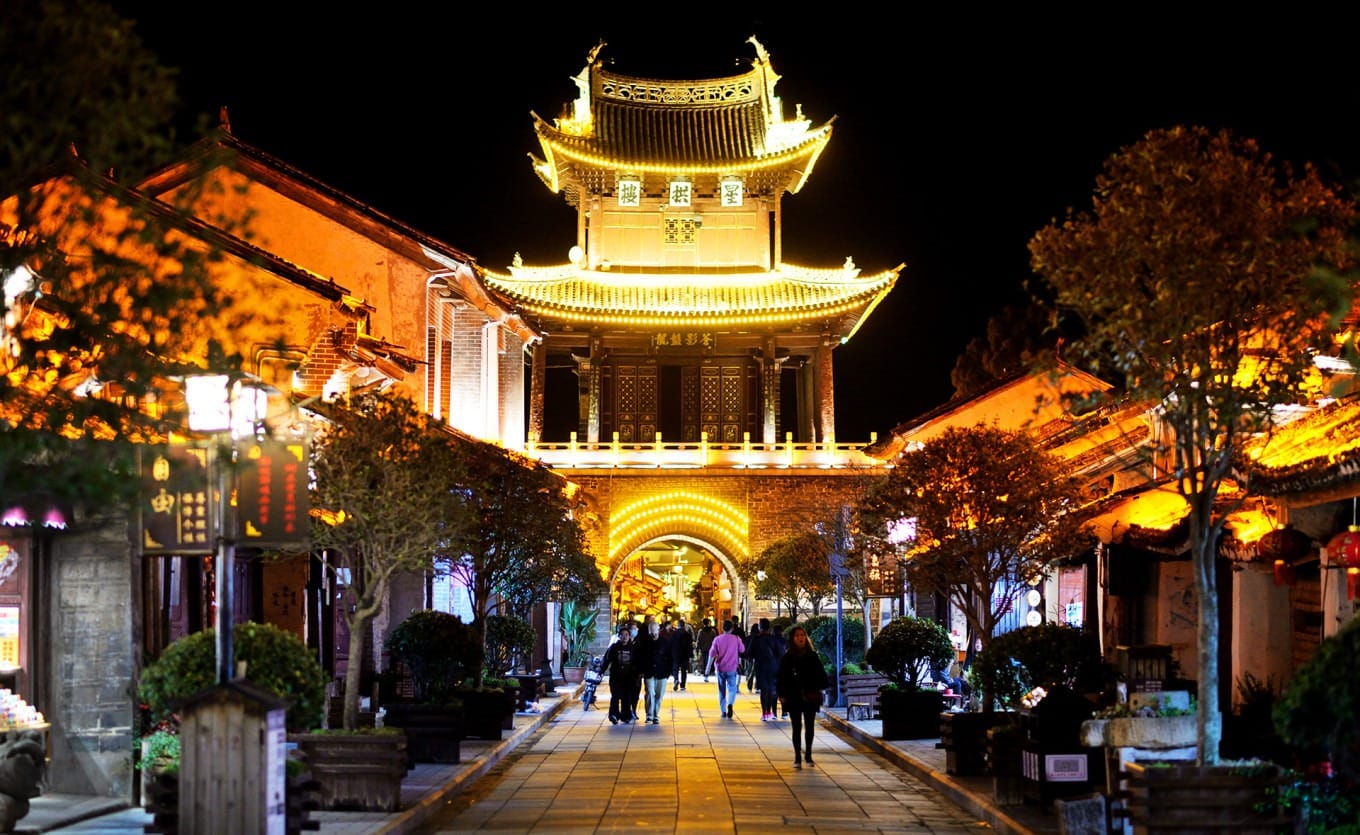
As you stroll a couple hundred meters south along North Street, you’ll arrive at Xinggong Tower (星拱楼), the historic overpass gate that has stood at the heart of Weishan Ancient Town for centuries. Originally built in 1390 during the Ming Dynasty, this landmark shares the town’s age and was first constructed by General Fan Xing. The structure you see today is a reconstruction from 1860, as the original was destroyed during wartime in the late Ming Dynasty and again during the Du Wenxiu Rebellion in the Qing Dynasty.
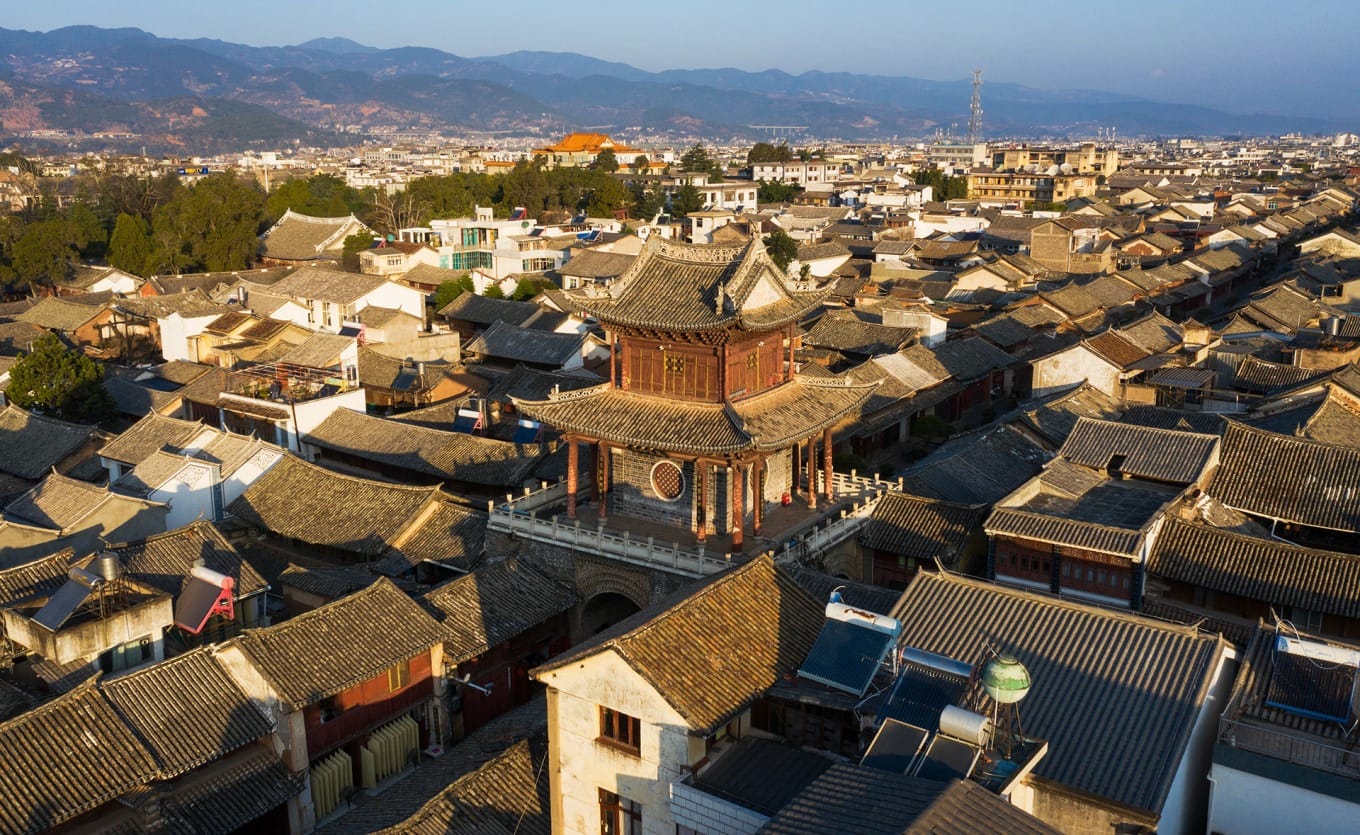
From above, you can appreciate how Xinggong Tower marks the precise center where the town’s four main streets—east, south, west, and north—converge. The layout is often described poetically: if Weishan resembles a large seal, the tower acts as its handle.

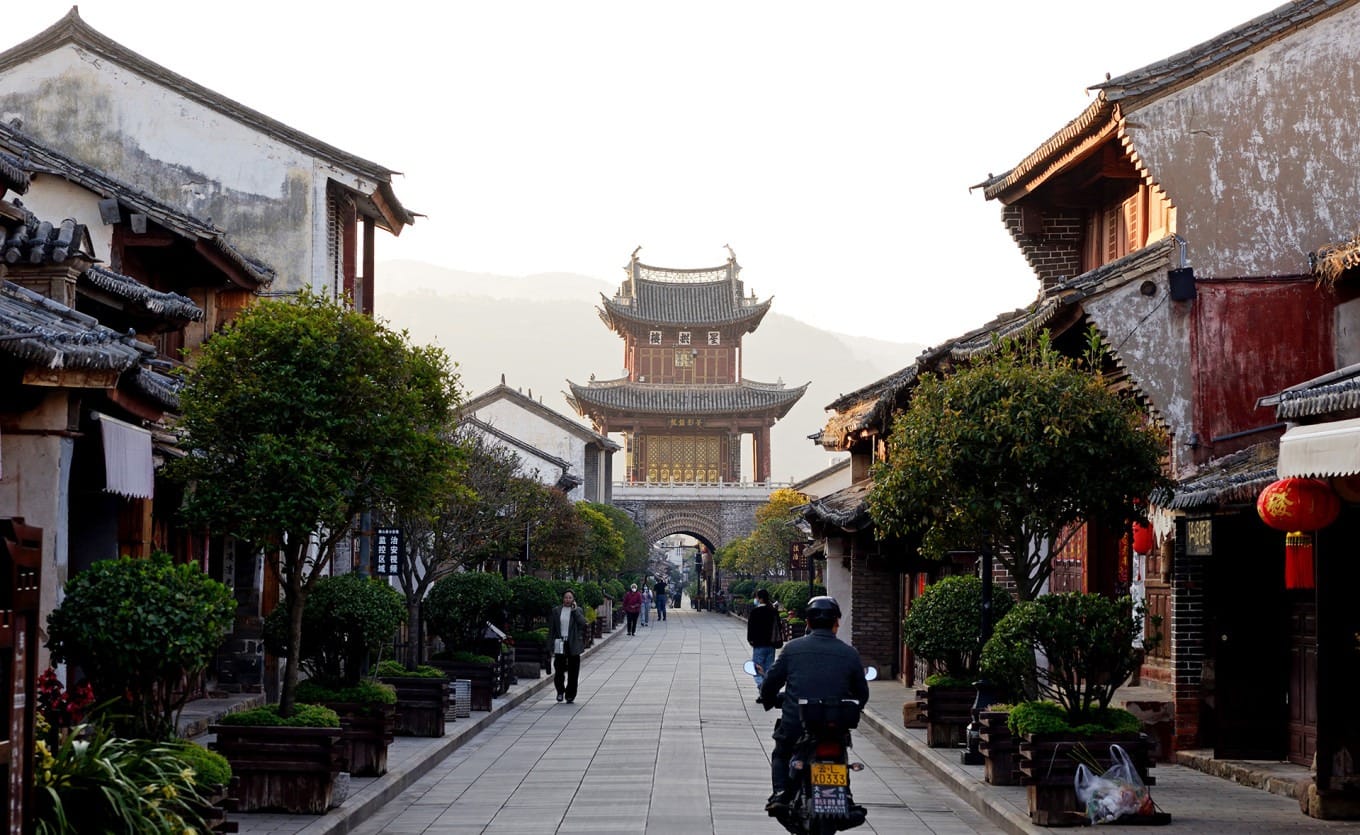
Compared to the more imposing Gongchen Tower elsewhere in town, Xinggong Tower presents a delicate, almost graceful appearance—earning it the nickname ‘Ningxiu Tower’ (凝秀楼), or ‘Tower of Concentrated Elegance.’ As you approach, notice the two-part construction: a wooden upper pavilion with characteristically high, swooping eaves, resting atop a solid brick-and-stone base. Look up to see the four inscribed plaques hanging beneath the eaves, each facing a cardinal direction.

These plaques—’Ruiai Huafeng’ (瑞霭华峰) to the east, ‘Weixia Yonghe’ (巍霞拥鹤) to the south, ‘Yuhuan Guapu’ (玉环瓜浦) to the west, and ‘Cangying Panlong’ (苍影盘龙) to the north—are not merely decorative. They poetically reference the iconic landscapes visible from each side of the tower: Mount Wenhua to the east, Mount Weibao to the south, the Yanggua River to the west, and the Cangshan Mountain Range to the north. Take a moment to ponder their meanings; they offer a beautiful, literary connection to the surrounding scenery.
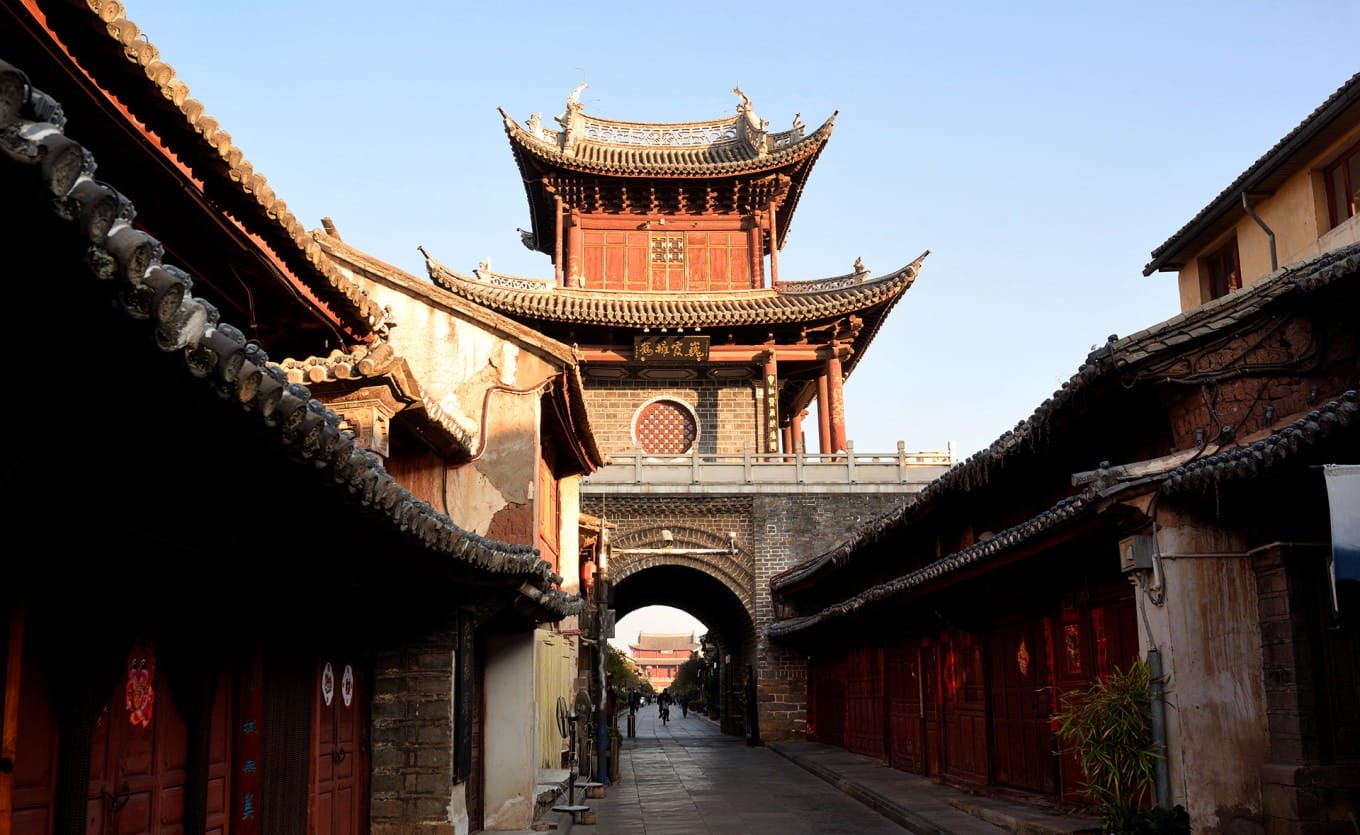
The tower’s open, arched passageway allows the four main streets to flow directly through it, a design that cemented its role as the ceremonial and geographic center of the Ming-era town. While the town’s development later shifted northward, elevating Gongchen Tower’s prominence, Xinggong Tower remains a powerful symbol of Weishan’s historical core.
A poignant local tradition unfolds within this passageway. You’ll often see traditional obituary notices, written in classical Chinese with brush and ink from right to left, posted on the walls. Passersby frequently pause to read them, learning of a community elder’s passing. These notices, simple yet profound, serve as a final communal acknowledgment of a life lived.
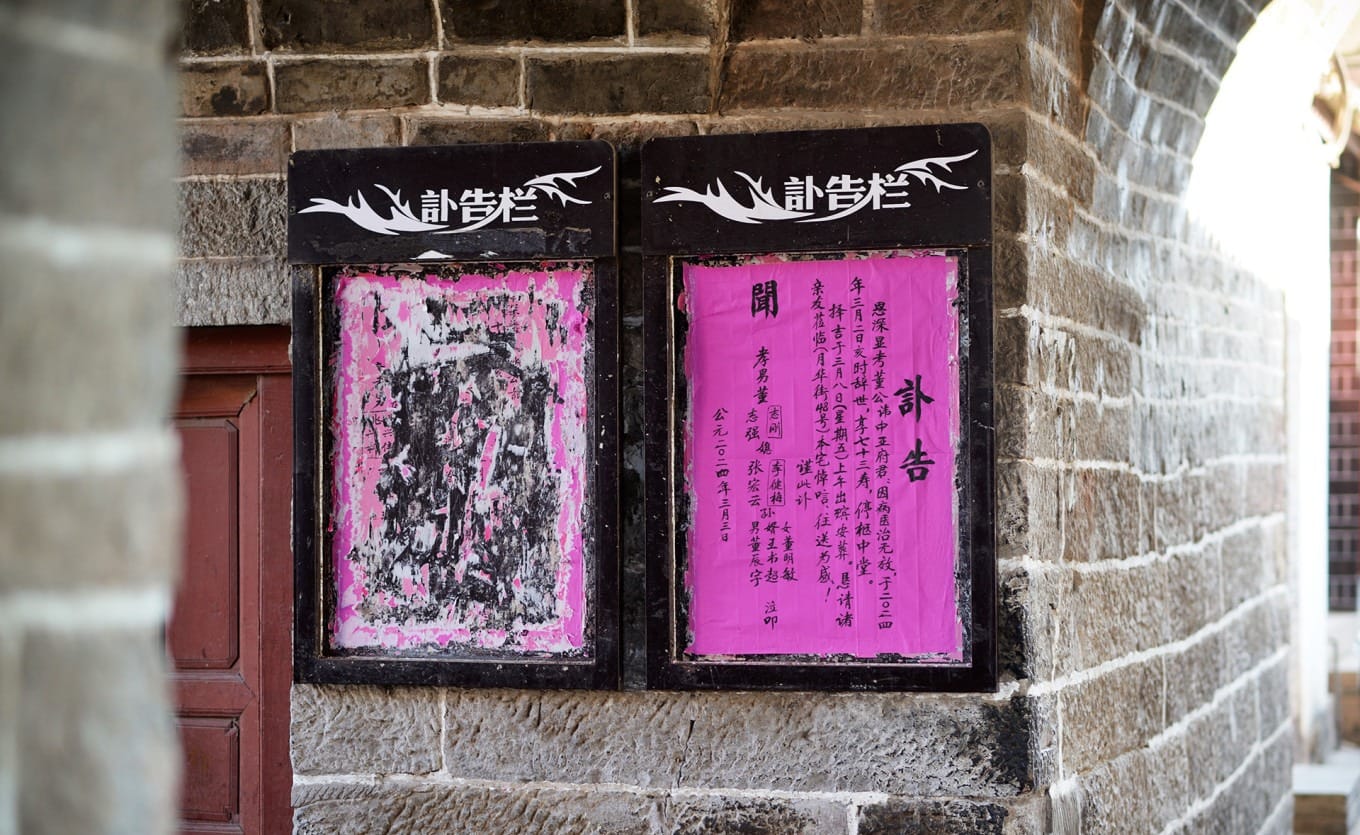
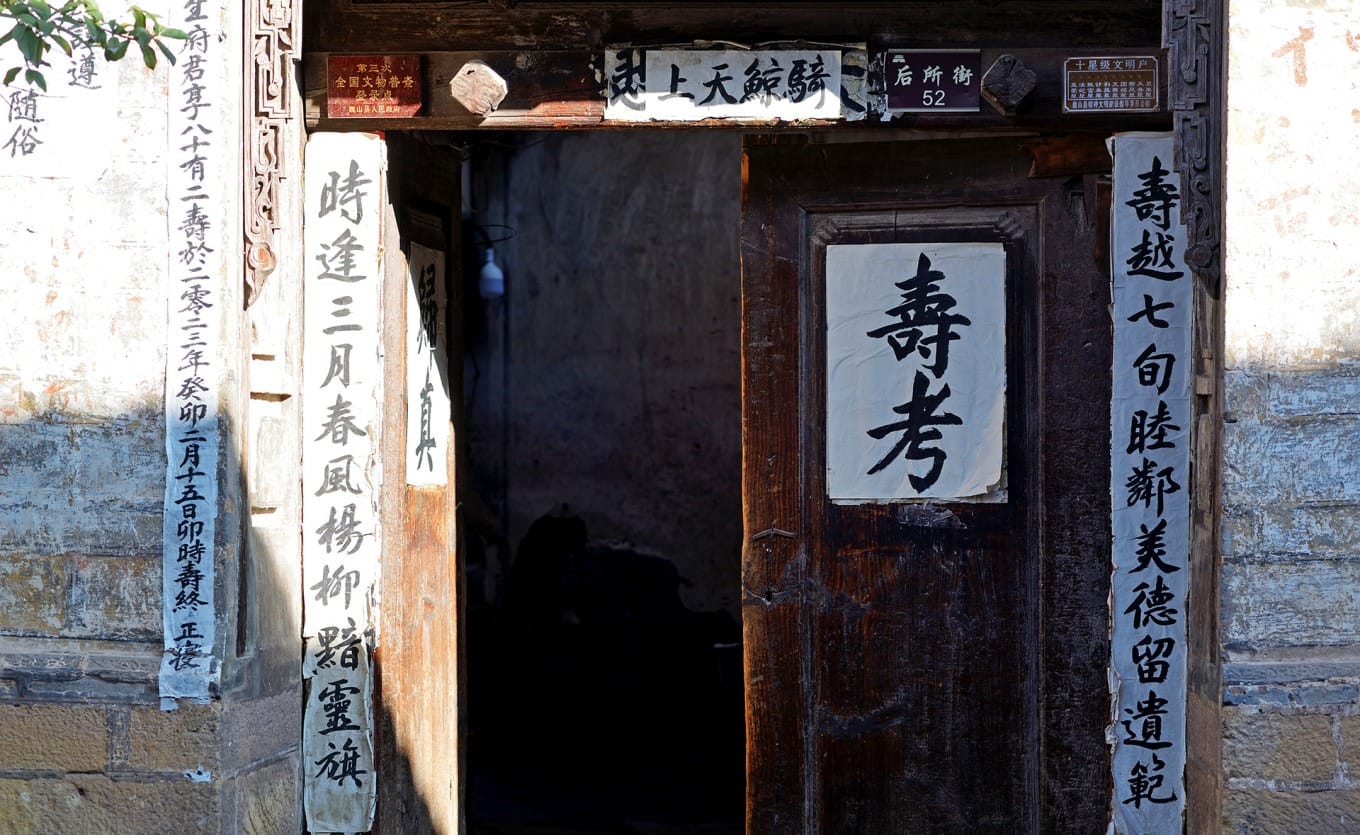
This practice is part of a broader custom in Weishan, where families publicly display mourning couplets outside their homes after a death. It’s a living tradition that connects the present to the past, offering a window into the town’s enduring cultural rituals.

These couplets typically remain in place for three years, which explains why you’ll see them throughout the ancient town. This three-year period is a form of filial observance—a time for remembrance and reflection on familial bonds.
- LandmarkXinggong Tower (星拱楼)
- AddressBeijie yu Xijie, Nanzhao Town, Weishan Yi and Hui Autonomous County, Dali Bai Autonomous Prefecture, Yunnan, China (云南省大理白族自治州巍山彝族回族自治县南诏镇北街与西街)
- Recommended activitiesAdmire the architecture and inscribed plaques, observe the traditional obituary notices, view the intersection of the four main streets
- Admission feeFree
Liu Family Courtyard
Just south of Xinggong Tower, a short walk brings you to a charming historical residence worth a small admission fee: the Liu Family Courtyard (刘家宅院), also known as Menghua Old Home. Built in the early Republican era, this was one of the primary homes of the influential Liu family, one of Weishan’s four great clans. The original owner, Liu Jiexian, was a caravan leader, while his more famous brother, Liu Jiemei, graduated from the Yunnan Military Academy alongside Zhu De, participated in the National Protection War and Northern Expedition, rose to the rank of major general, and later served as a county magistrate.
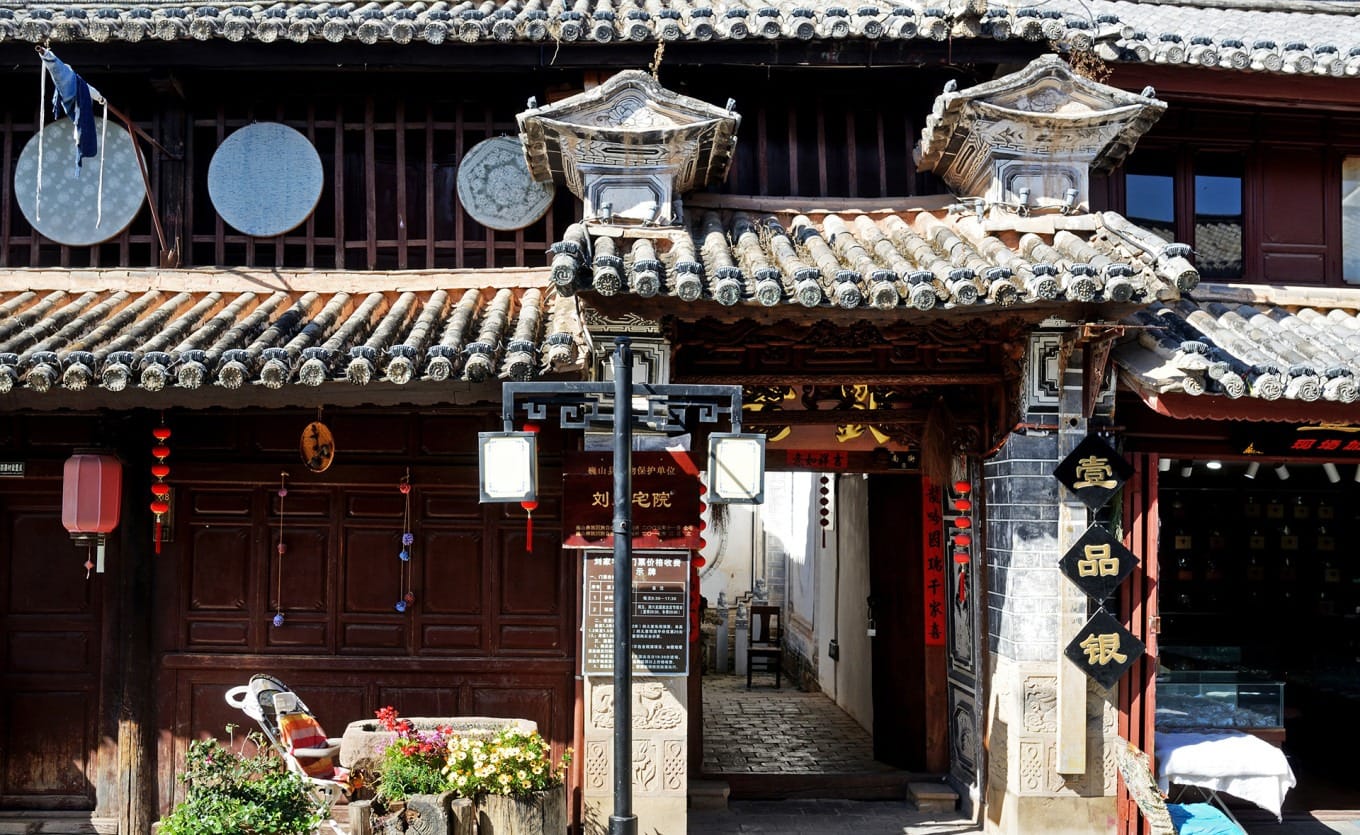
The courtyard’s layout reflects its practical origins. Designed with the eldest son’s caravan trade in mind, it follows a ‘shop in front, residence behind’ pattern. The street-facing section served as a storefront, while the rear comprises two distinct courtyard complexes: a ‘Three Rooms and One Screen Wall’ (三坊一照壁) and a ‘Four-Sided Courtyard with Five Skylights’ (四合五天井). Despite the narrow north-south plot, clever architectural planning minimized building depth to create surprisingly spacious, bright courtyards.


Though modest in scale, the courtyard offers an intimate glimpse into the domestic life of a wealthy merchant family from a century ago. You’ll find period furniture and artifacts arranged to evoke historical scenes, along with exhibits detailing the Liu family history and the broader story of the Weishan horse caravans. The collection is thoughtfully curated rather than overwhelming, making for a pleasant, informative visit.
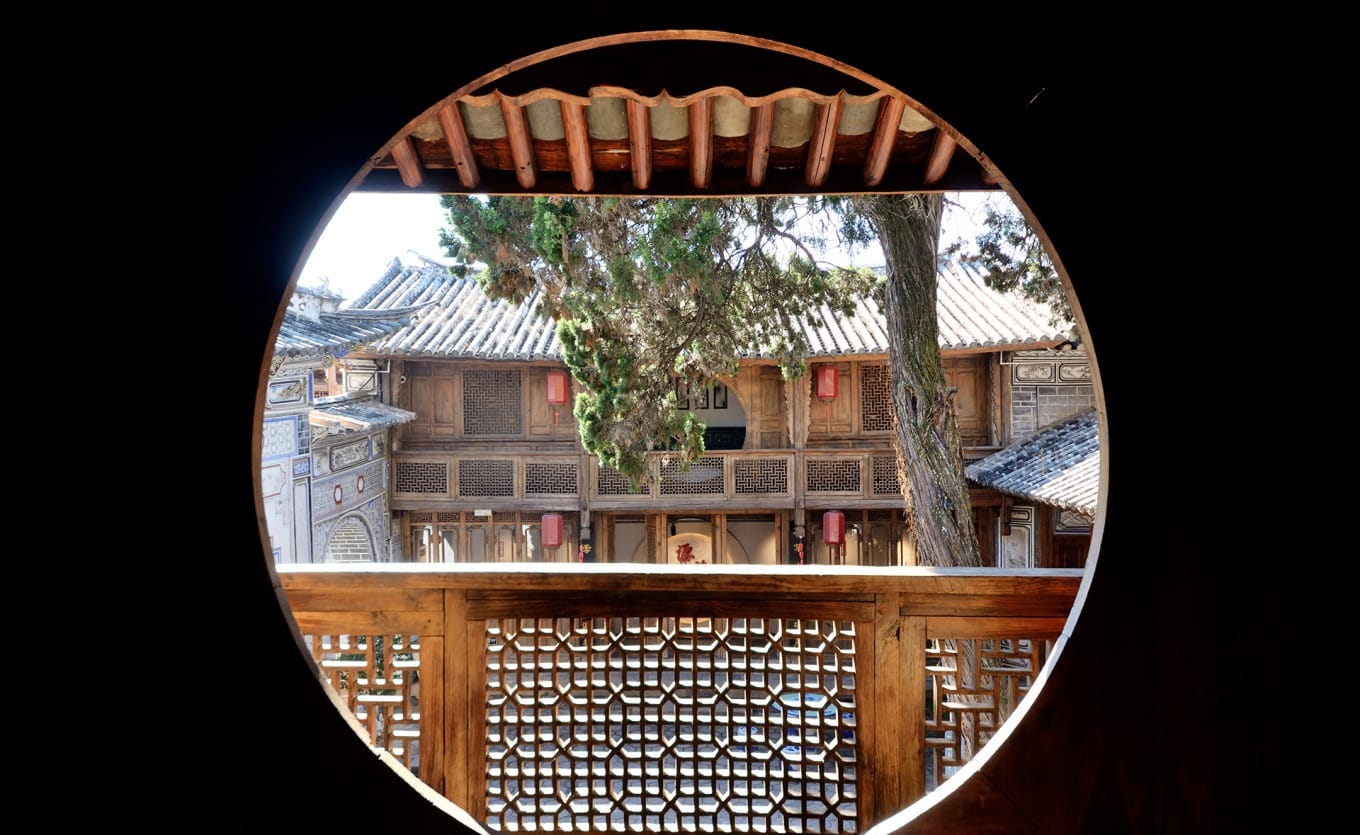
- AttractionLiu Family Courtyard (刘家宅院)
- AddressNo. 8 Nanjie, Nanzhao Town, Weishan Yi and Hui Autonomous County, Dali Bai Autonomous Prefecture, Yunnan, China / 中国云南省大理白族自治州巍山彝族回族自治县南诏镇南街8号
- Ticket10 CNY (full price)
Weishan Confucian Temple
Just a few minutes’ walk west from Xinggong Tower along West Street brings you to Weishan Confucian Temple (巍山文庙). This historic site reflects the profound cultural influence that arrived with Han Chinese migration from central China during the Ming Dynasty, transforming this southwestern frontier town. For over six centuries, the temple served as the highest official local academy during the imperial examination era, educating generations of scholars.
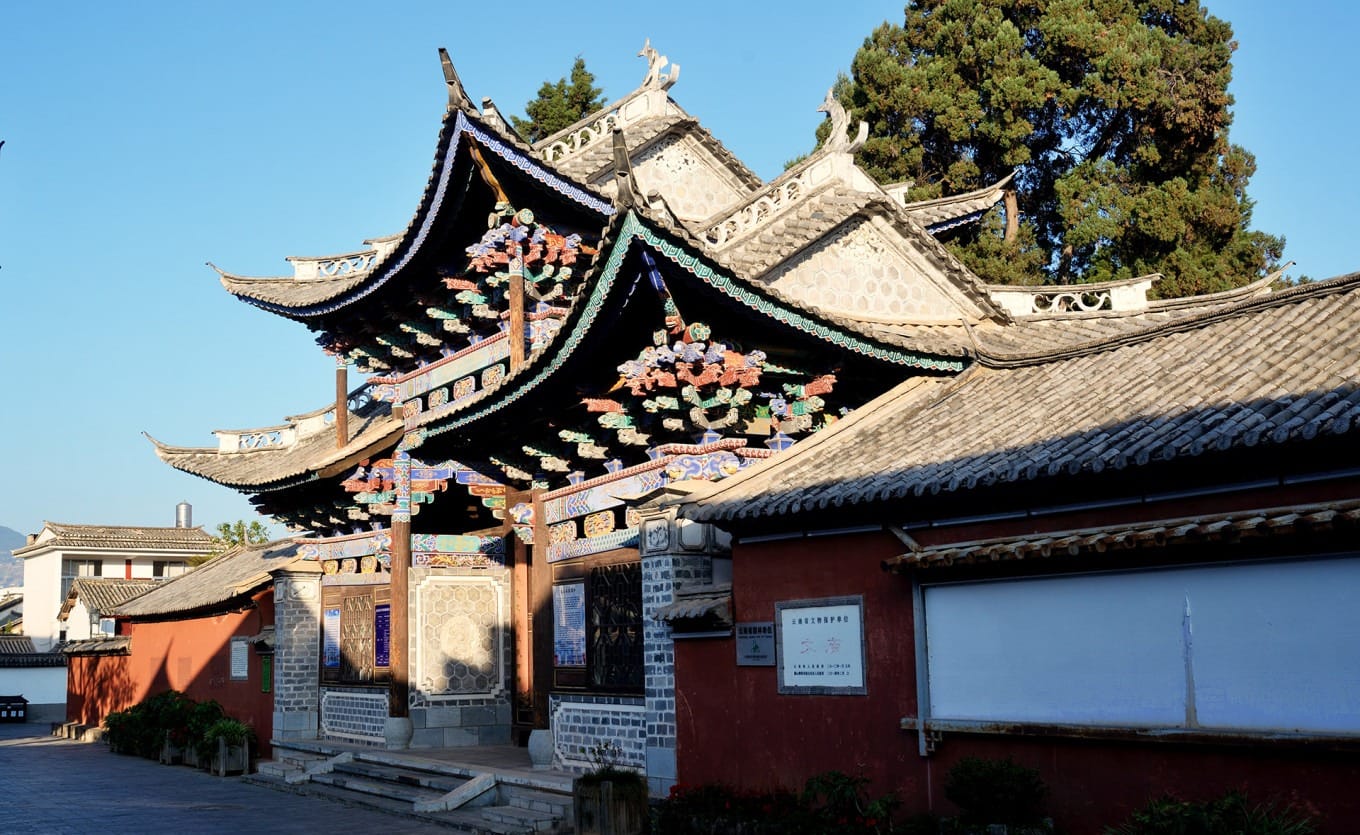
Originally established during the Hongwu reign of the Ming Dynasty, the temple underwent expansions during both Ming and Qing periods. It began as a prefectural school and was elevated to a prefecture academy when Meng Hua became a prefecture. In the early Republic of China era, it housed an education promotion office, and from 1939 until the early 21st century, it served as the campus for Meng Hua County Middle School after its relocation from Wenchang Academy.

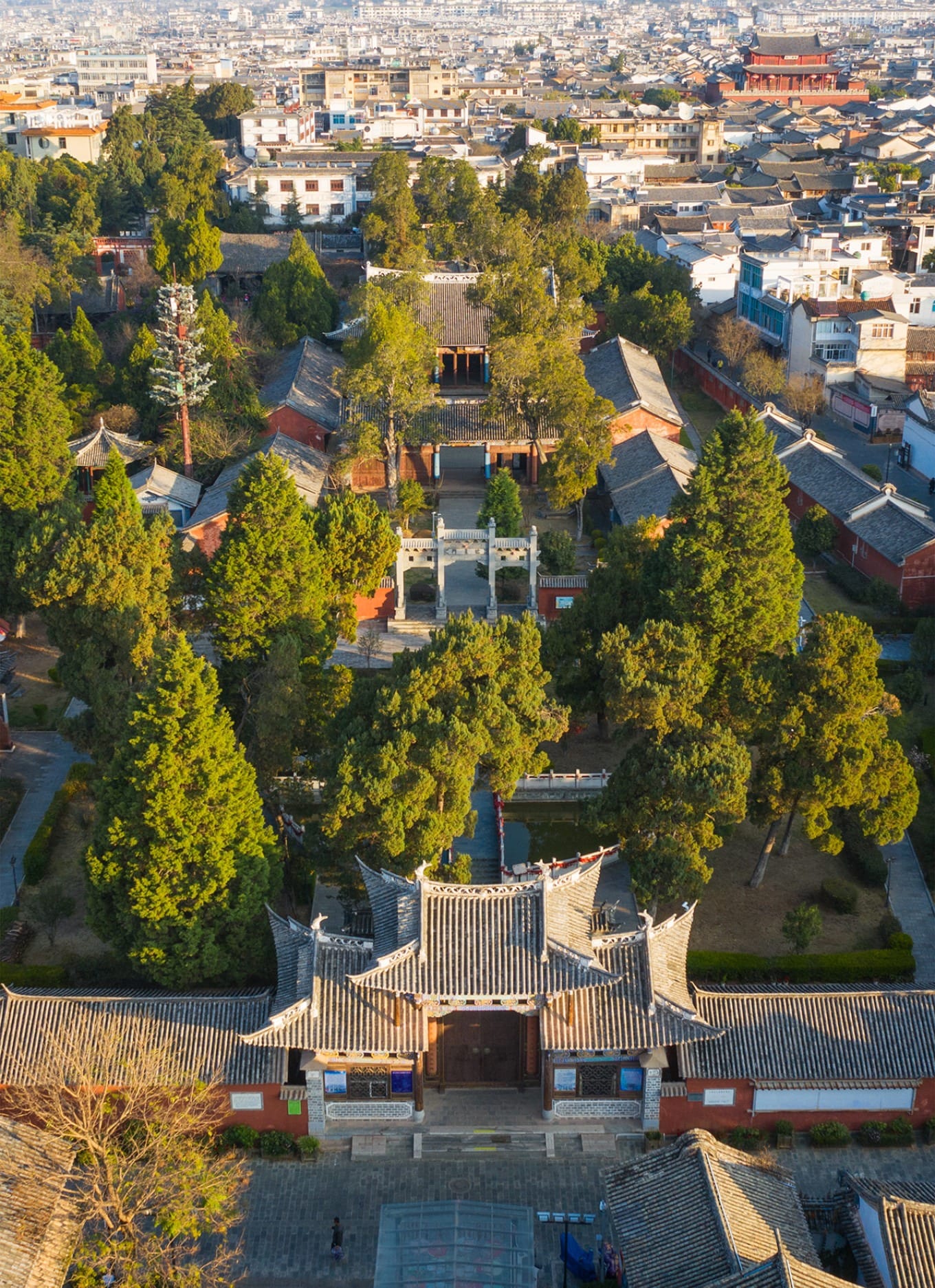
While the current temple complex isn’t identical to its original form, it remains an impressive architectural ensemble. The north-south central axis features traditional structures including the Screen Wall, Pan Pond, Lingxing Gate, Dacheng Gate, Dacheng Hall, Yanta Archway, Chongsheng Shrine, and Zunjing Pavilion. The latter three structures now fall within the adjacent Mengyang Park area.
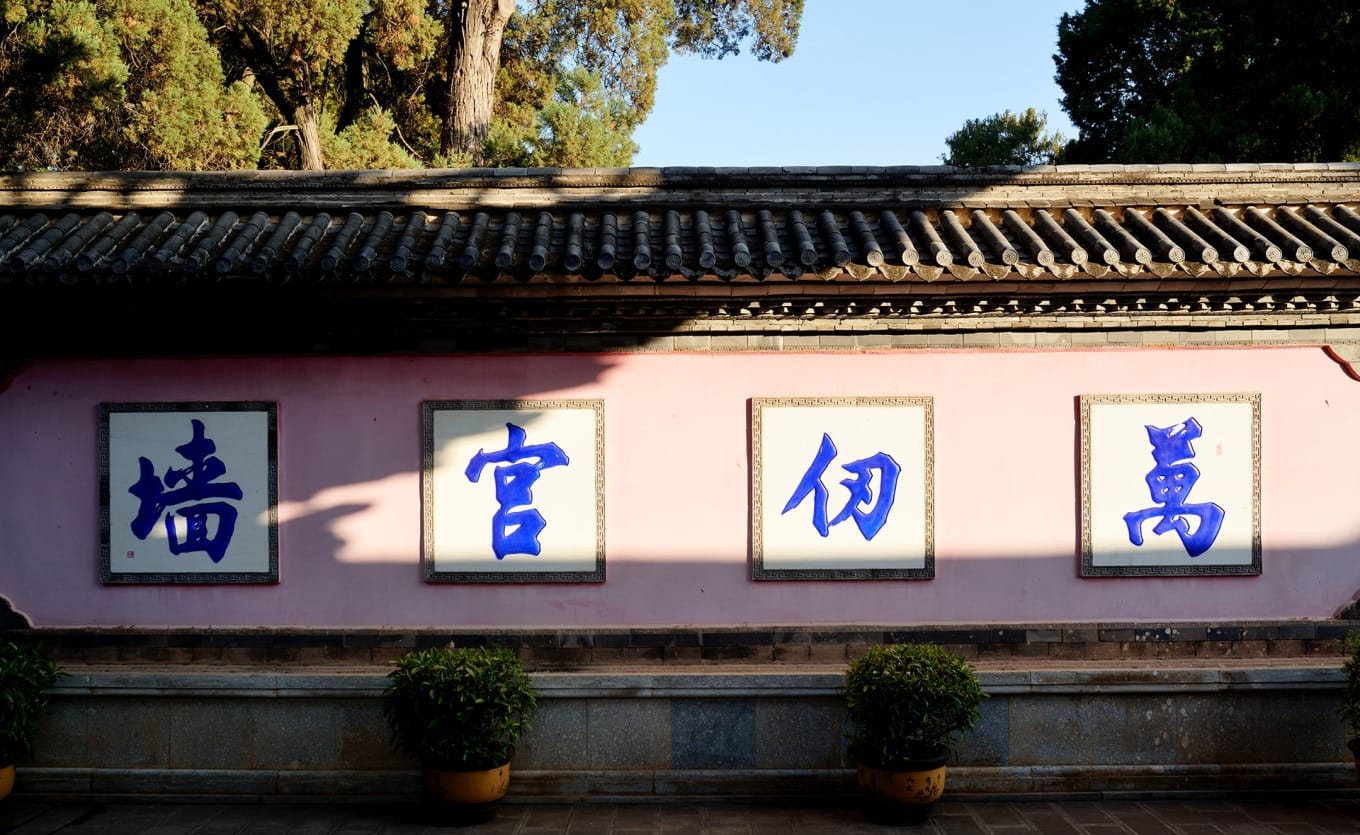
As you enter the temple, you’ll first encounter the Screen Wall inscribed with four large characters: ‘Wan Ren Gong Qiang’ (万仞宫墙). These words originate from The Analects of Confucius, symbolizing the profound depth of Confucius’s wisdom, virtue, and philosophy—suggesting that few can truly comprehend their full significance.
Behind the Screen Wall lies the Pan Pond, crossed by a stone arch bridge that leads to the Lingxing Gate stone archway. Flanking this main gate are two smaller side gates: the left gate named ‘Li Men’ (礼门, Gate of Propriety) and the right gate called ‘Yi Lu’ (义路, Path of Righteousness).
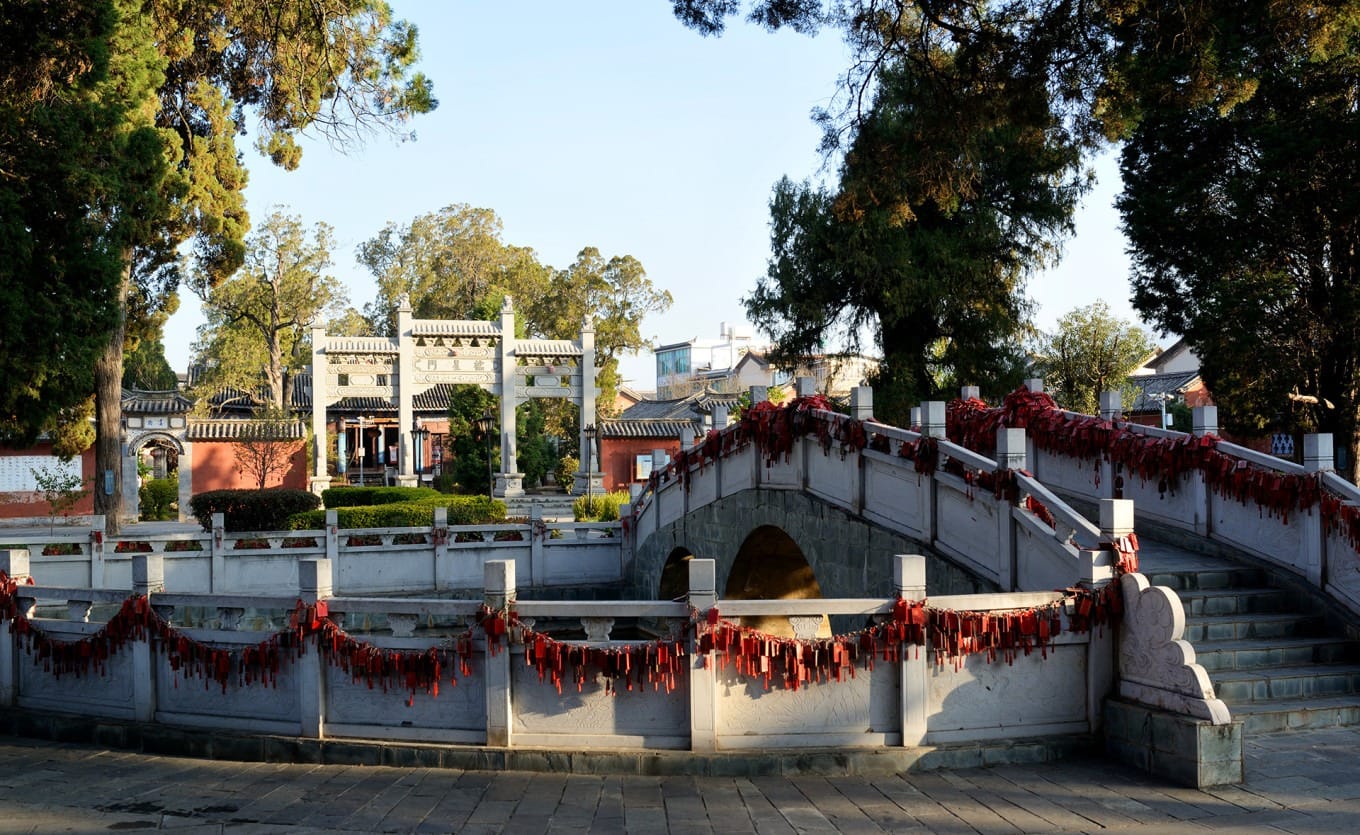
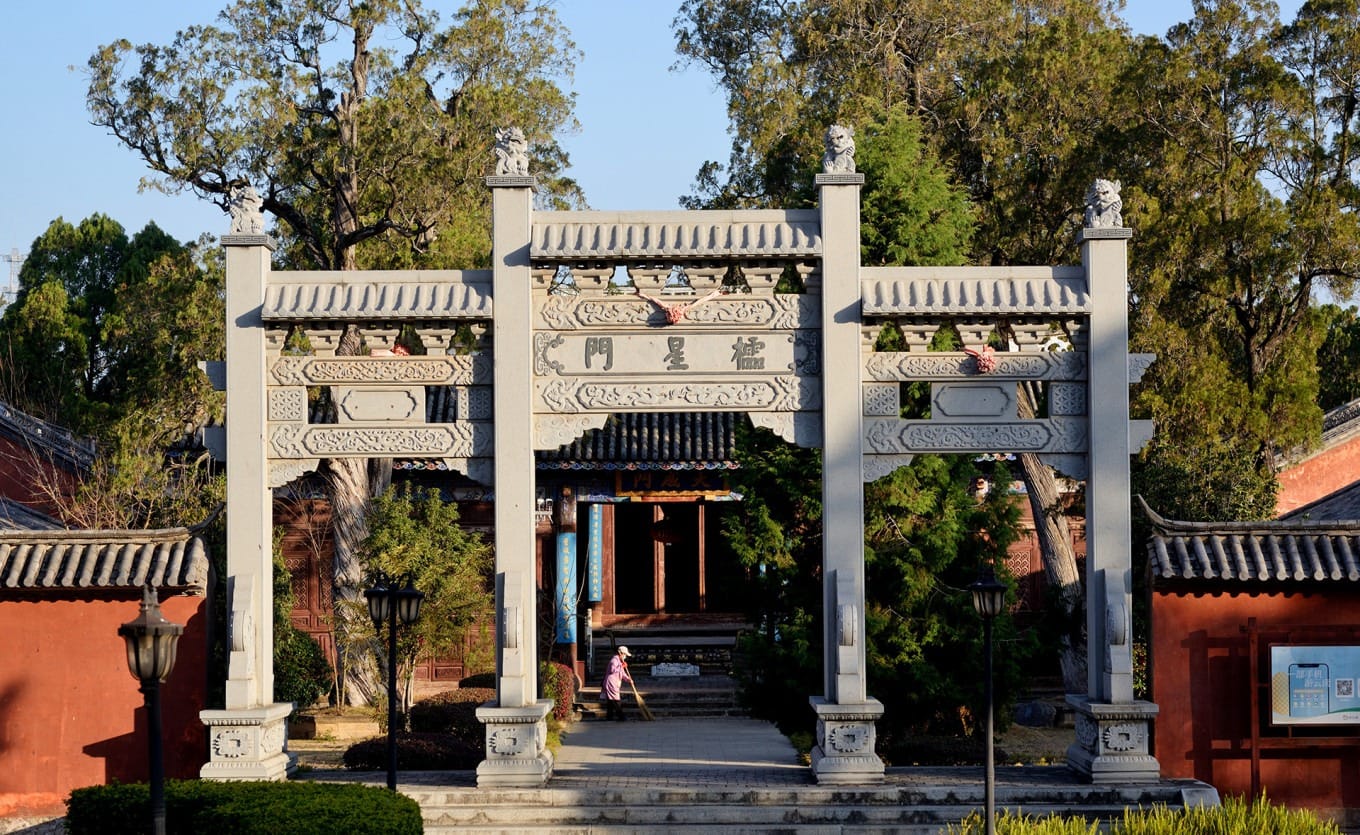
Passing through Lingxing Gate brings you to Dacheng Gate, marked by a large plaque bearing the characters ‘Da Cheng’ (大成). The courtyard here features ancient cypress trees and lush greenery. ‘Da Cheng’ represents Mencius’s evaluation of Confucius as the great synthesizer who gathered and perfected the wisdom of ancient sages.
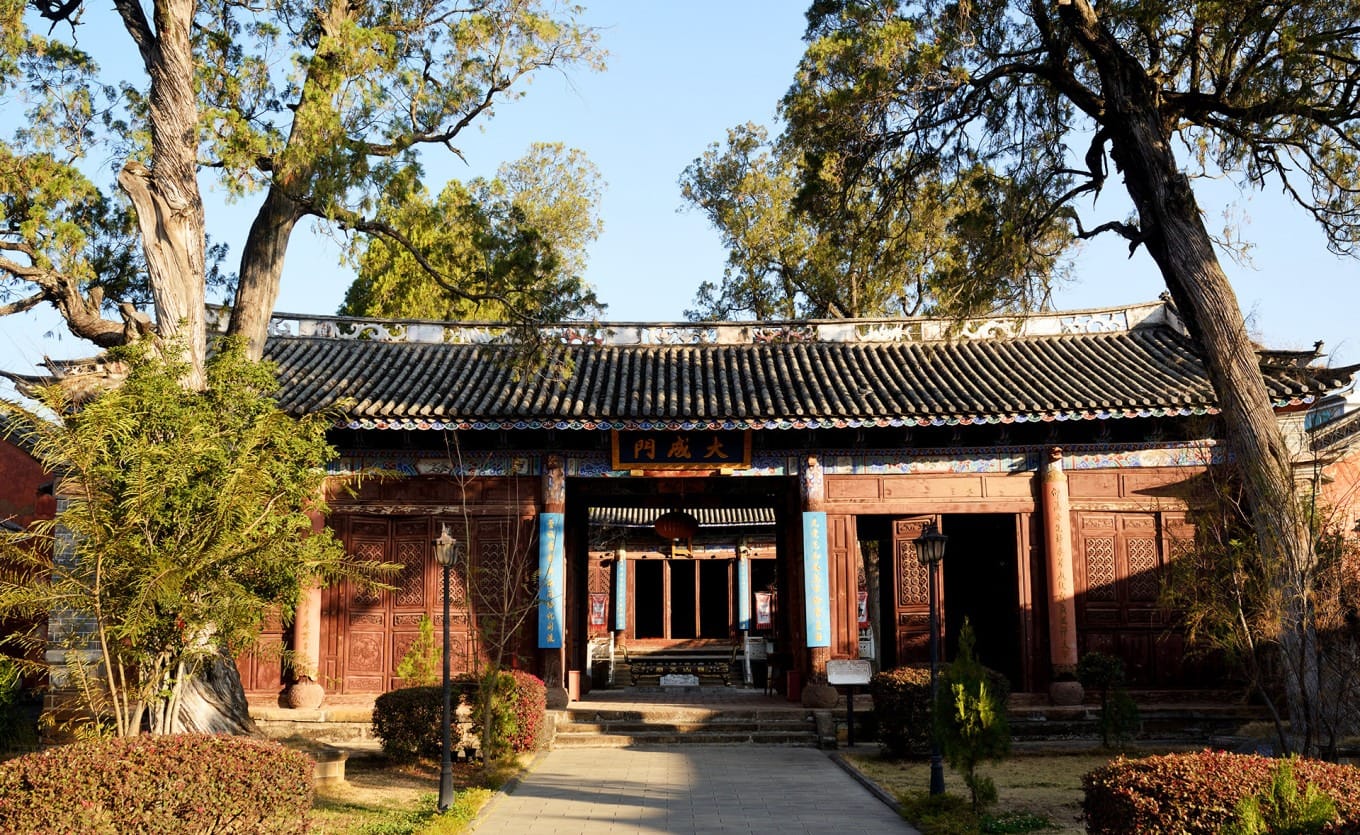
Continuing inward, you’ll reach the complex’s central structure: Dacheng Hall. This single-eave hip-and-gable roof building stands on a raised platform and houses the memorial tablet of Confucius.
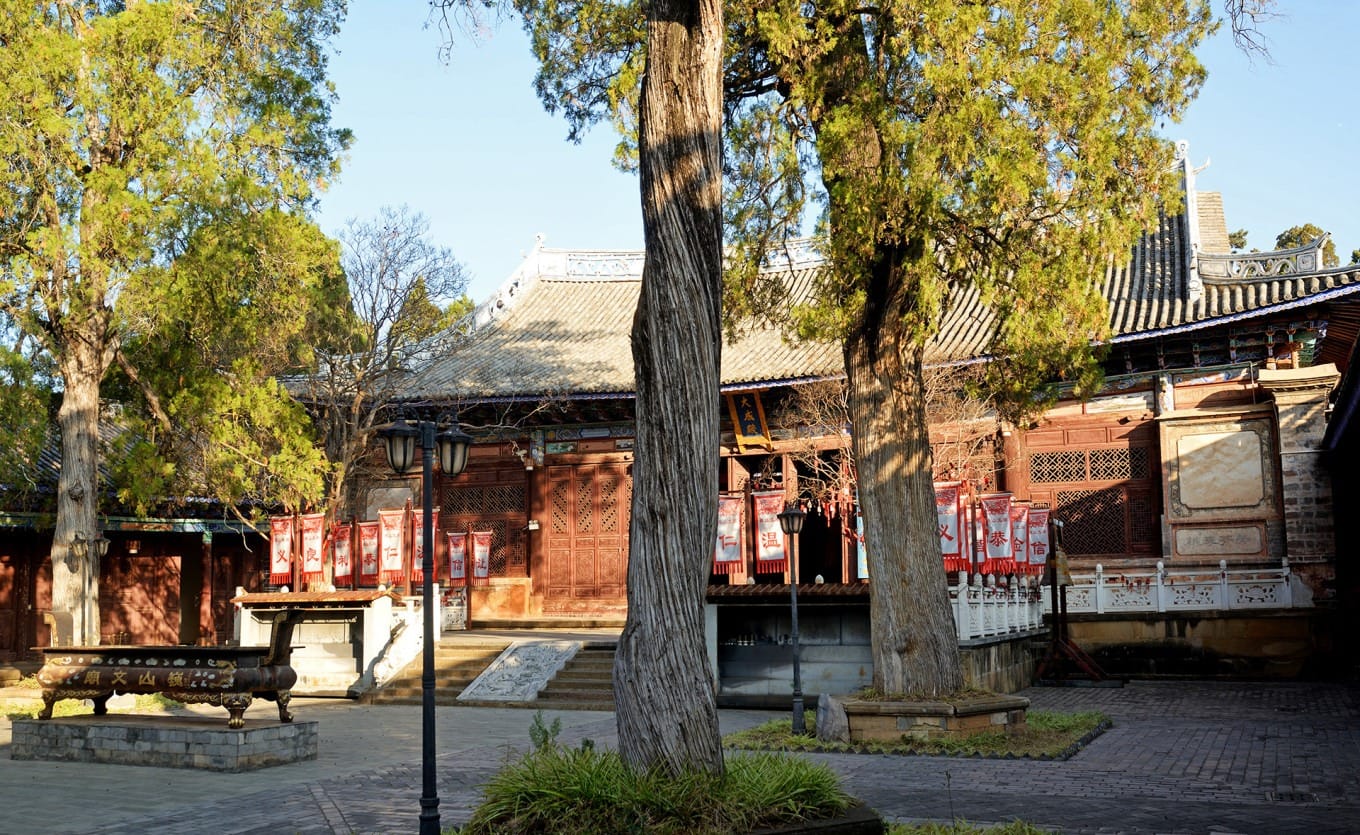
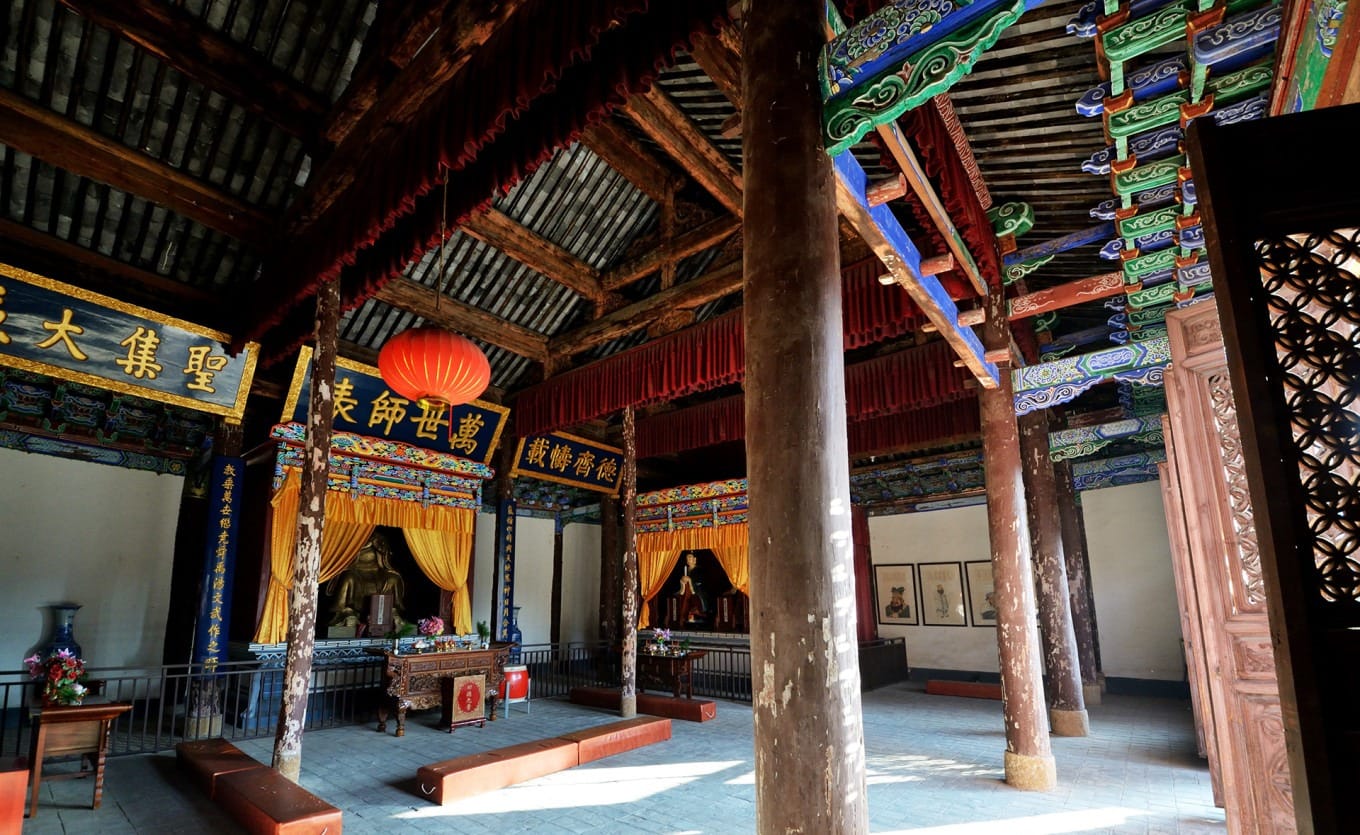
Weishan’s scholarly heritage is particularly notable—the Qing Dynasty emperor designated it a ‘Famous Land of Literature’ (文献名邦). Historical records indicate that during Ming and Qing times, beyond this Confucian Temple, Weishan hosted eight academies, twenty-five charitable schools, and over one hundred private schools. These included prestigious institutions like Wenhua Academy, Chongzheng Academy, and Wenchang Academy. The region produced twenty-three imperial scholars and over two hundred provincial graduates, demonstrating its remarkable academic tradition.
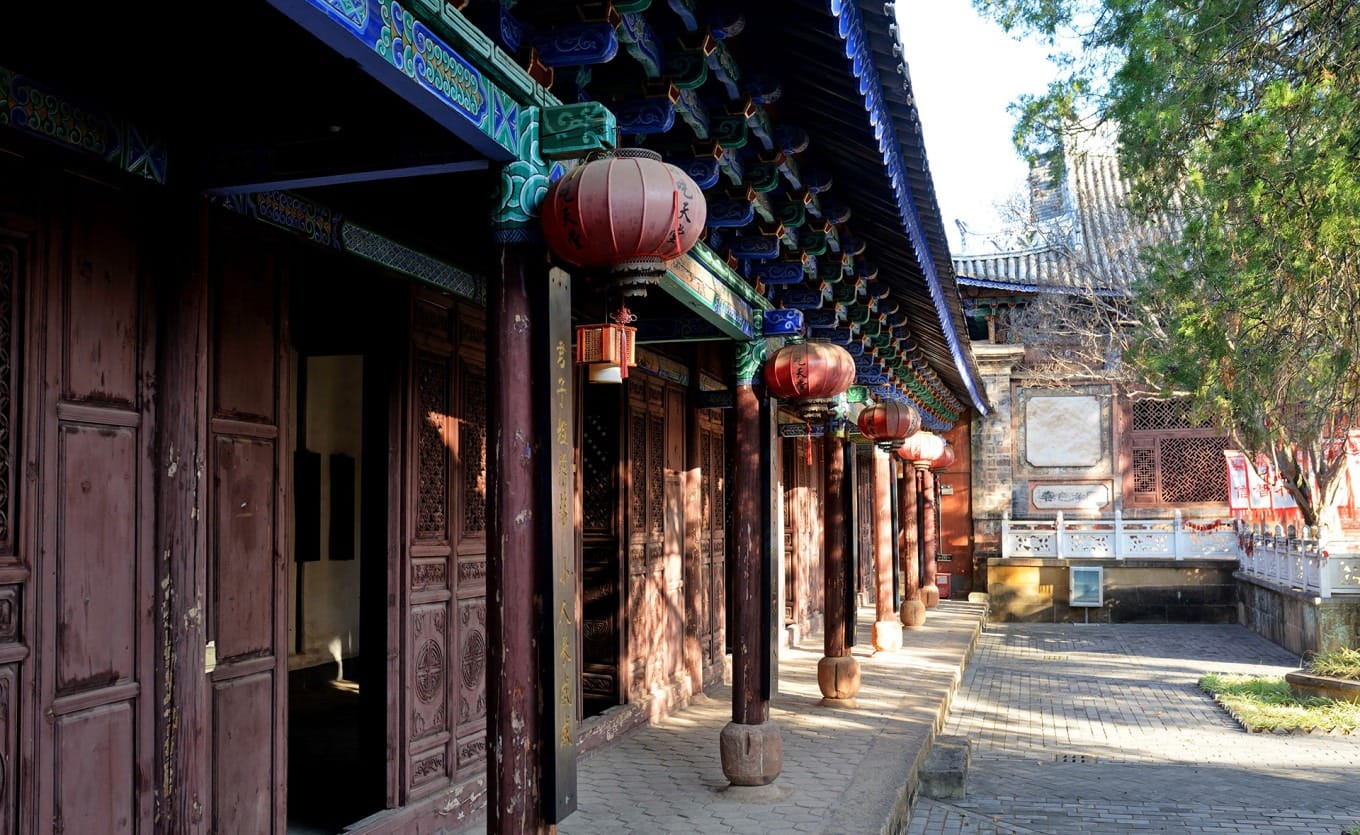
- Address: Mengyang Park, West Street, Nanzhao Town, Weishan Yi and Hui Autonomous County, Dali Bai Autonomous Prefecture (大理白族自治州巍山彝族回族自治县南诏镇西街蒙阳公园)
- Admission: Full ticket 5 yuan
Practical tip: You can prioritize one signature stop around the area, and you should adjust timing and budget based on transport and peak hours.
Mengyang Park: A Historic Garden in Weishan
Nestled right next to the Confucian Temple (文庙 Wénmiào), Mengyang Park (蒙阳公园 Méngyáng Gōngyuán) offers a peaceful escape into local history. Built in the 1930s and affectionately called ‘Big Park’ by residents, it’s a cherished green space where you can discover architectural remnants that once belonged to the temple complex.
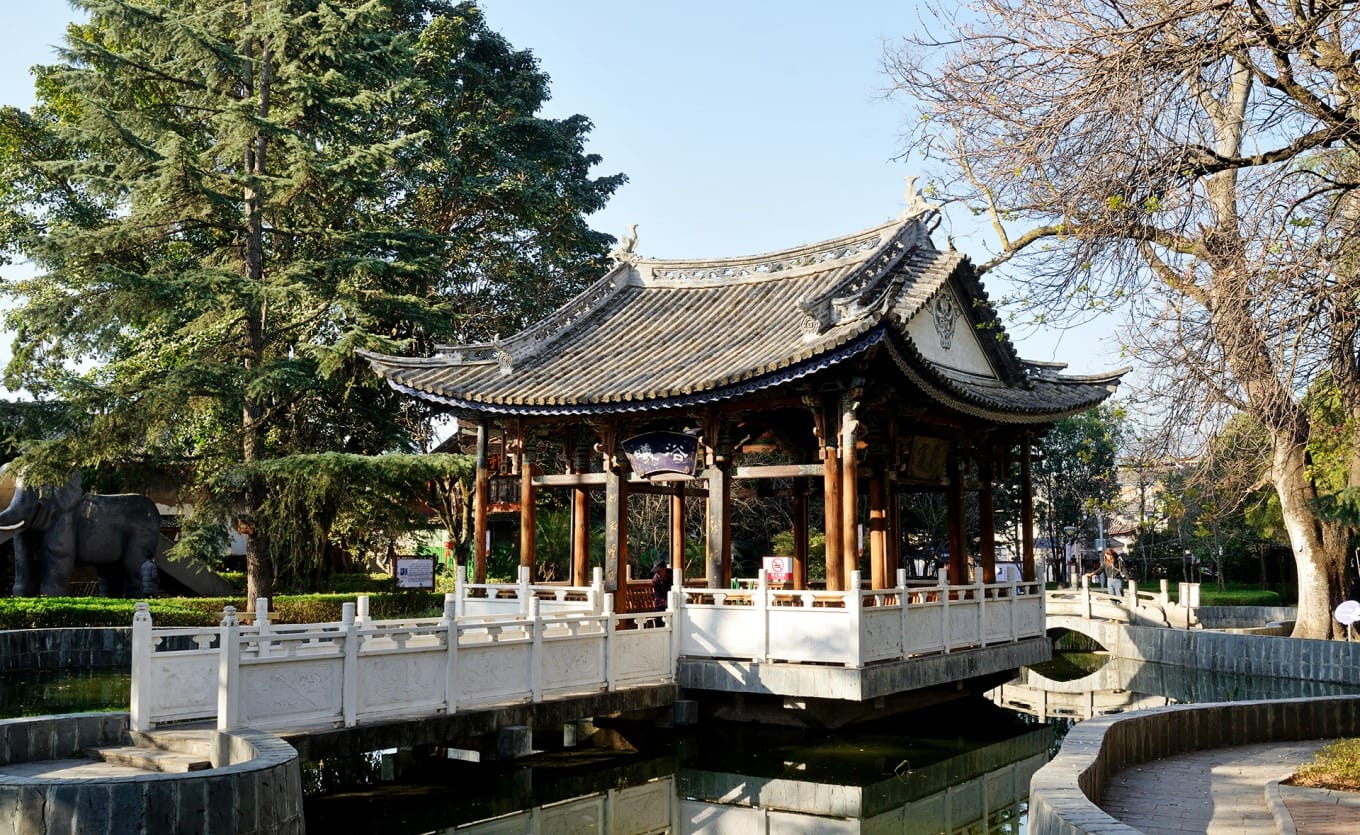
Within the park, look for Yanta Fang (雁塔坊 Yàntǎ Fāng), also known as Wenyuan Pavilion (文源亭 Wényuán Tíng). This ornate double-eave pavilion stands behind the temple’s main hall, featuring intricate bracket sets and a circular gateway. A 600-year-old ginkgo tree in front adds to the ancient atmosphere.
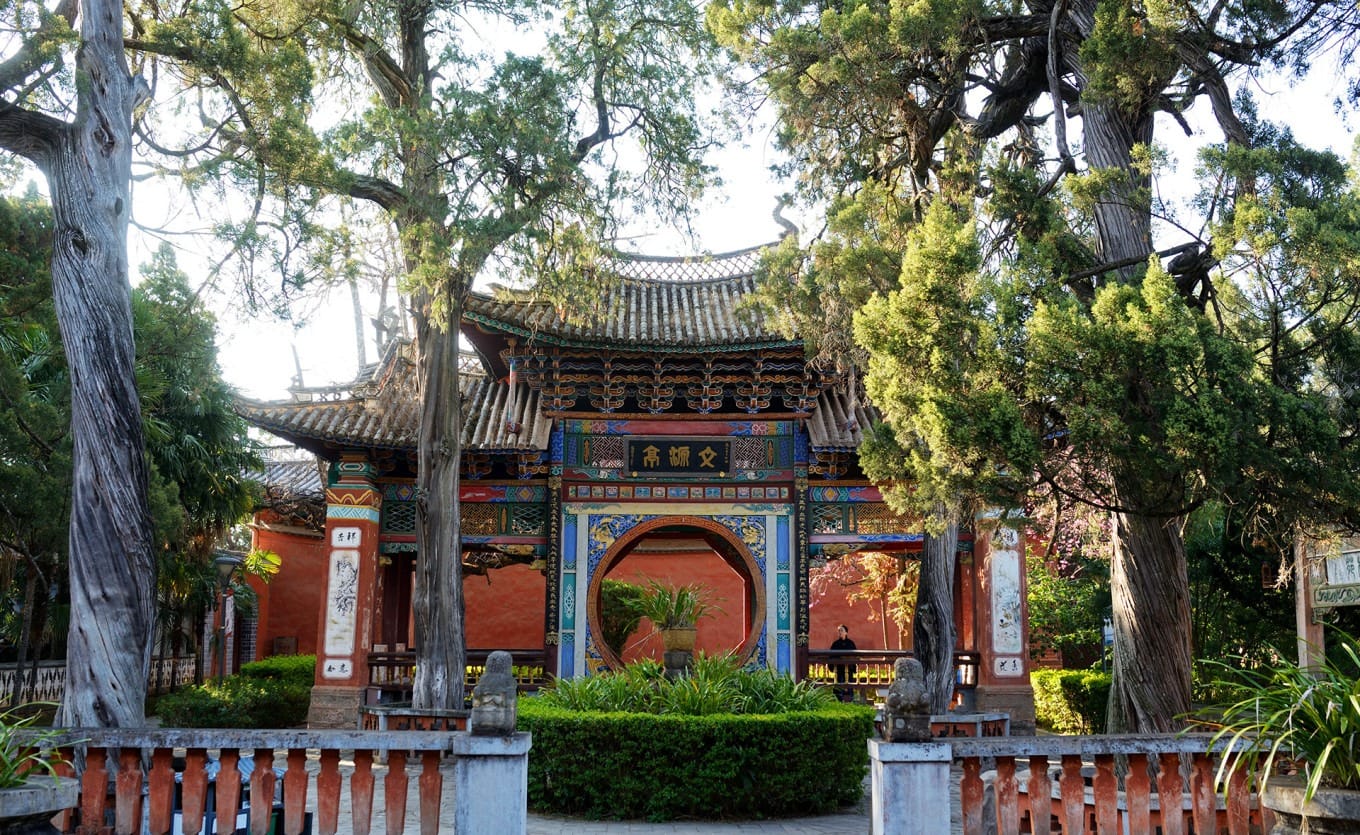
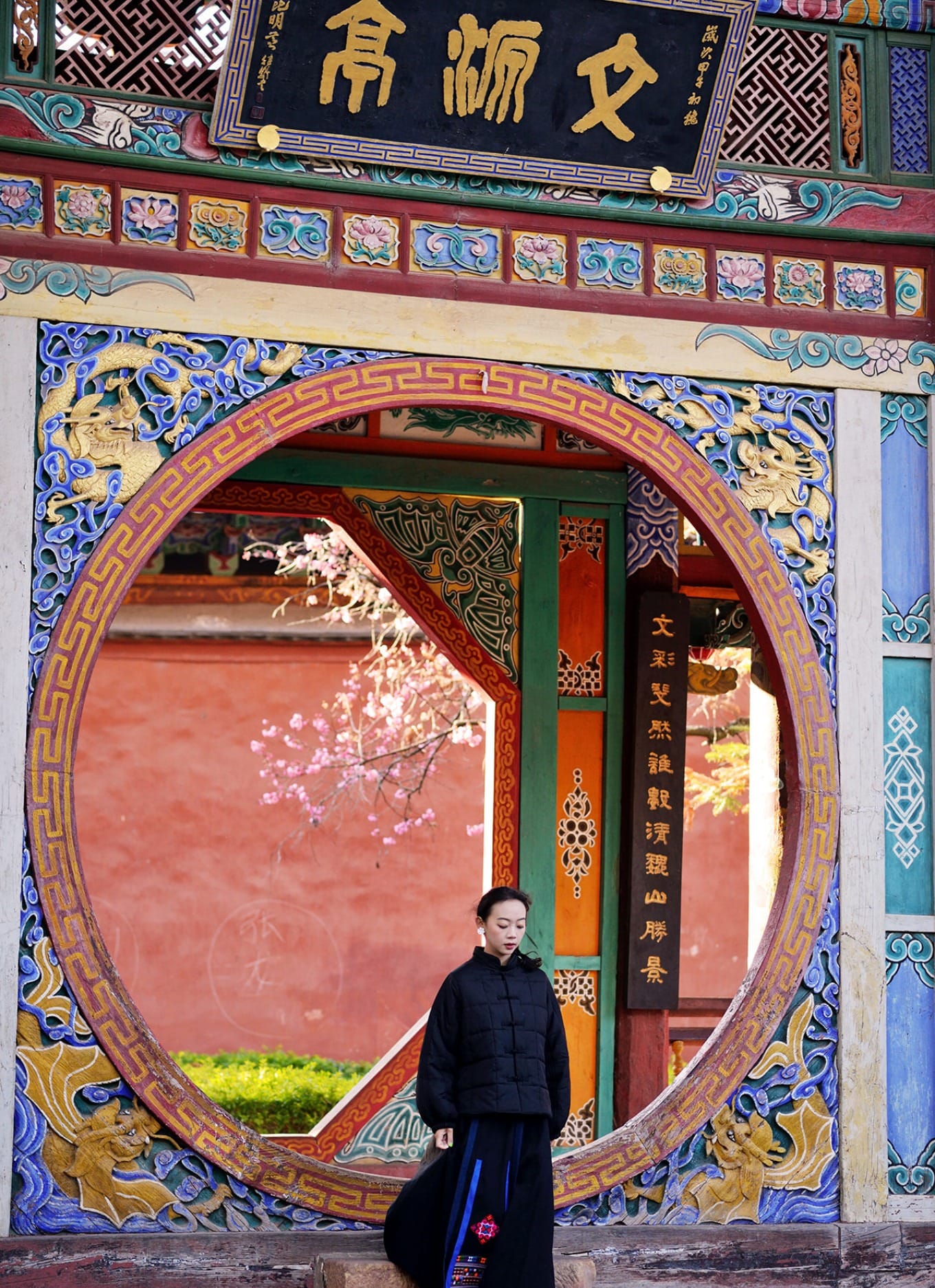
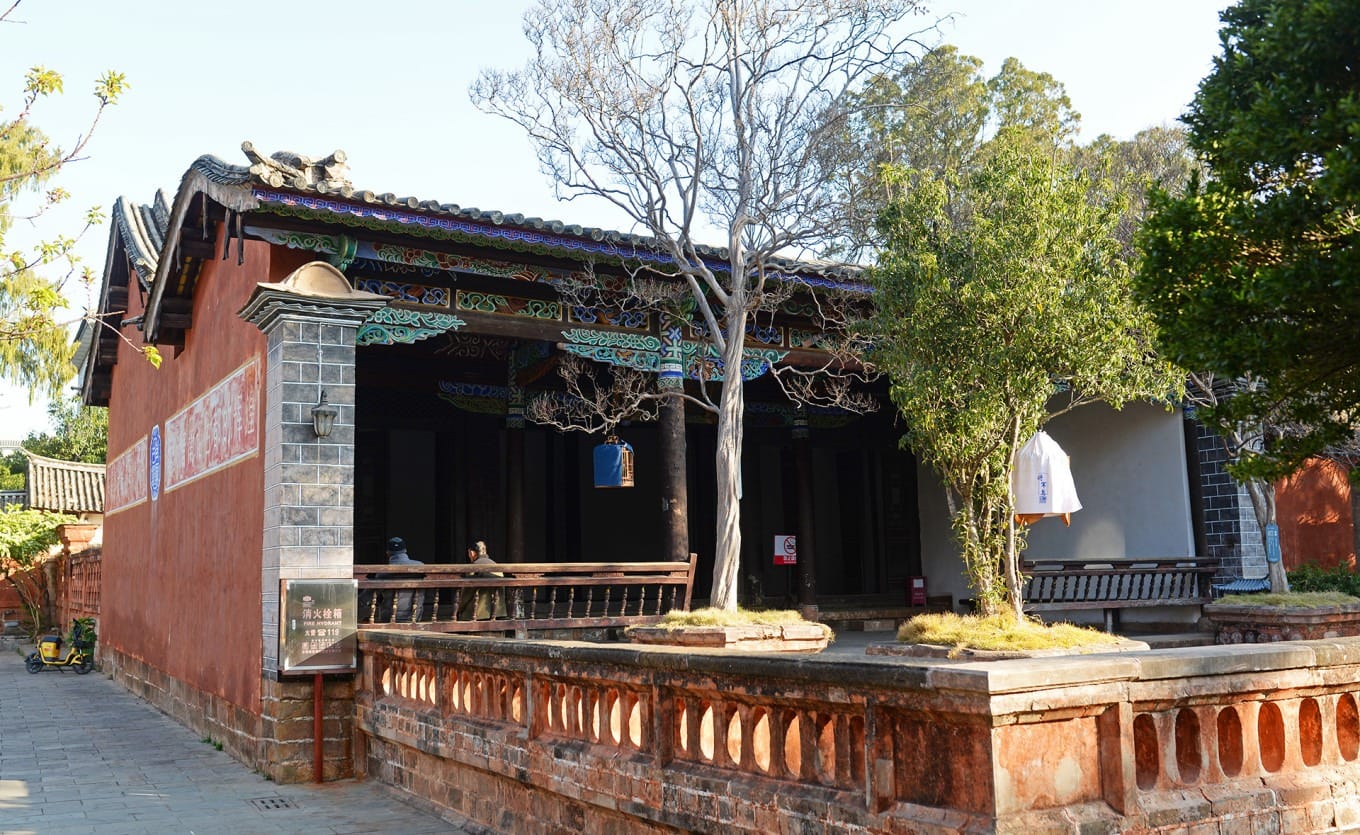
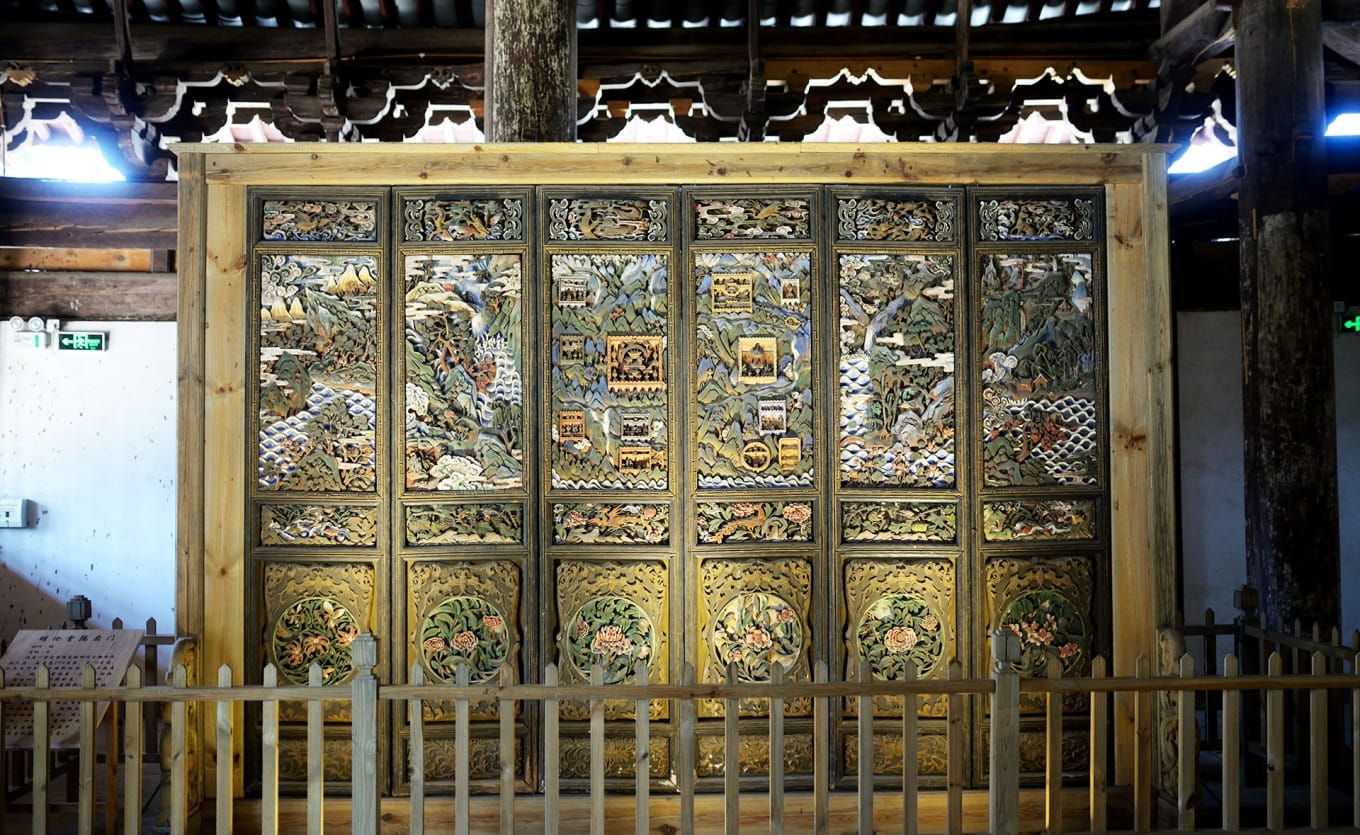
Another highlight is Minglun Hall (明伦堂 Mínglún Táng). While its original six carved partition doors—masterpieces of Ming dynasty openwork—are now displayed at the Nanzhao Museum’s Taiyang Palace in Weishan, the hall itself remains a site of historical significance.
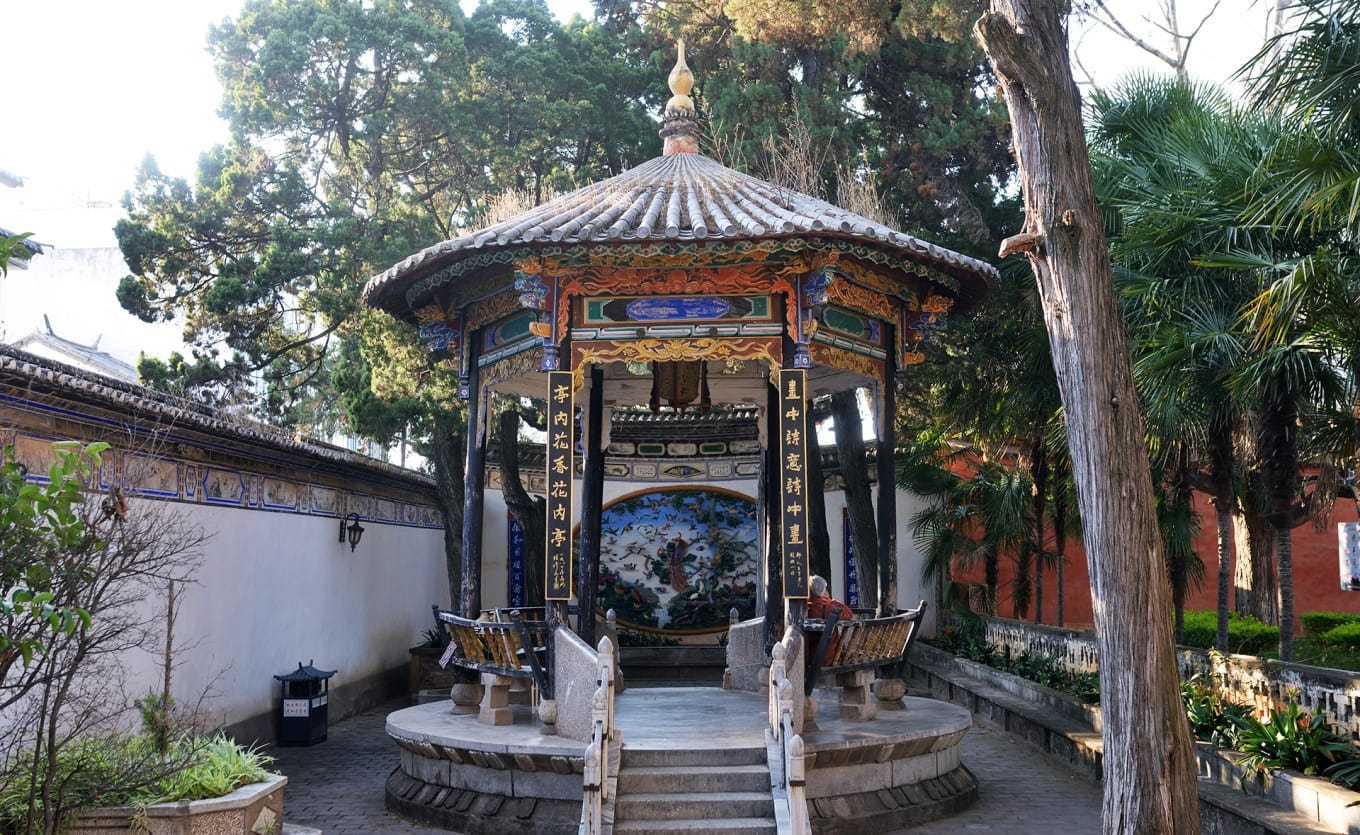
Next to Yanta Fang, explore the ‘Garden within a Garden’ (园中园 Yuánzhōngyuán), a petite landscaped area centered around a charming pavilion. On its pillars, you’ll find a reversible couplet that reads the same forwards and backwards: ‘画中诗意诗中画 (local term),亭内花香花内亭’ (Huà zhōng shīyì shī zhōng huà, tíng nèi huāxiāng huā nèi tíng). Behind the pavilion, a vivid ‘Hundred Birds Worshipping the Phoenix’ bas-relief adorns a screen wall.
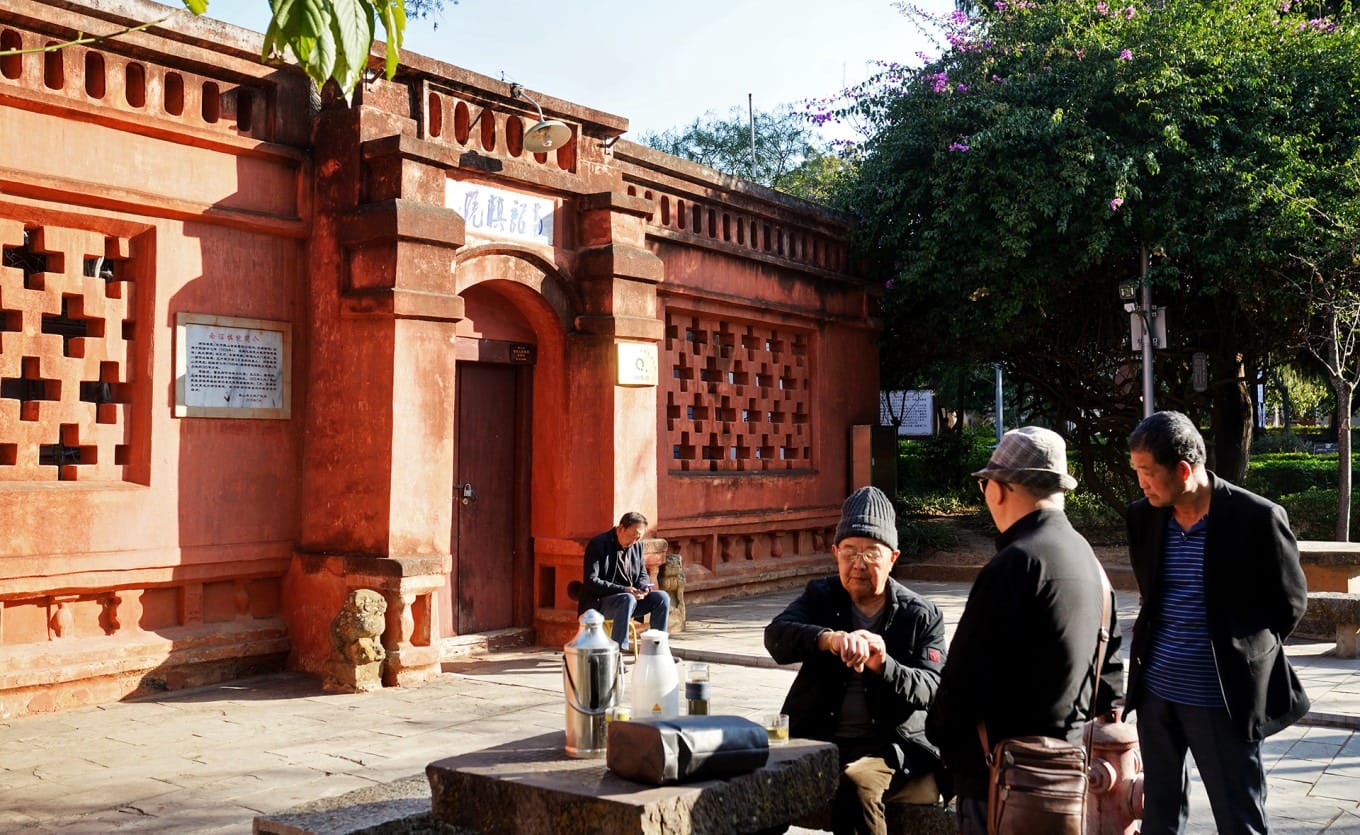
Also within the park is the former site of Nanzhao Chess Academy (南诏棋院 Nánzhào Qíyuàn), a building constructed in 1938 in the classic Yunnan ‘One Seal’ layout (一颗印 Yīkēyìn). It originally housed a community education center for music and chess.
Across the street from the park’s main entrance stands the Weishan County Government building. This structure has a long history—it was originally the Ming-era Menghua Government Office (蒙化官署 Ménghuà Guānshǔ), established during the Zhengtong reign. Despite damage during the Du Wenxiu Rebellion in the Qing Xianfeng period, its gate, passage hall, and screen wall survive, marking a political center that has endured for centuries.
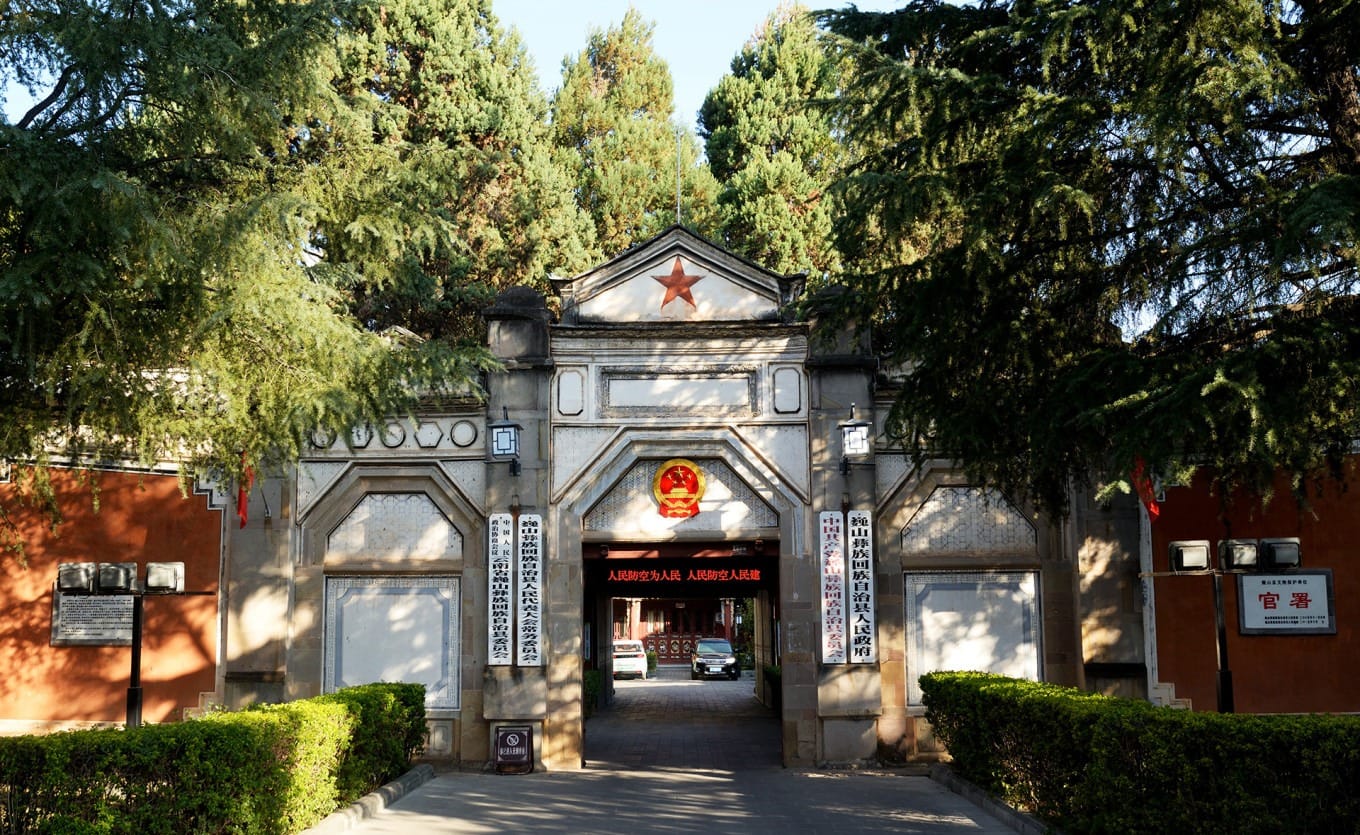
- Address: Mengyang Park, Xijie, Nanzhao Town, Weishan Yi and Hui Autonomous County, Dali Bai Autonomous Prefecture (大理白族自治州巍山彝族回族自治县南诏镇西街蒙阳公园)
- Admission: Free
Wenhua Academy: A Historic Complex in Weishan
Beyond the Weishan Confucian Temple, the Wenhua Academy (文华书院) nestled in the northeast corner of the ancient town offers another profound glimpse into the region’s scholarly heritage. This isn’t just a single building but a significant architectural complex known as the Nanzhao Town Ancient Building Complex. It uniquely brings together three distinct elements: the Confucian Wenhua Academy, the Xiao Gong Temple (萧公祠) which served as the Jiangxi Guildhall (江西会馆), and the Jade Emperor Pavilion (玉皇阁), a Taoist temple. This blend of academia, commerce, and spirituality, layered with its history as a revolutionary site, makes it a fascinating stop.
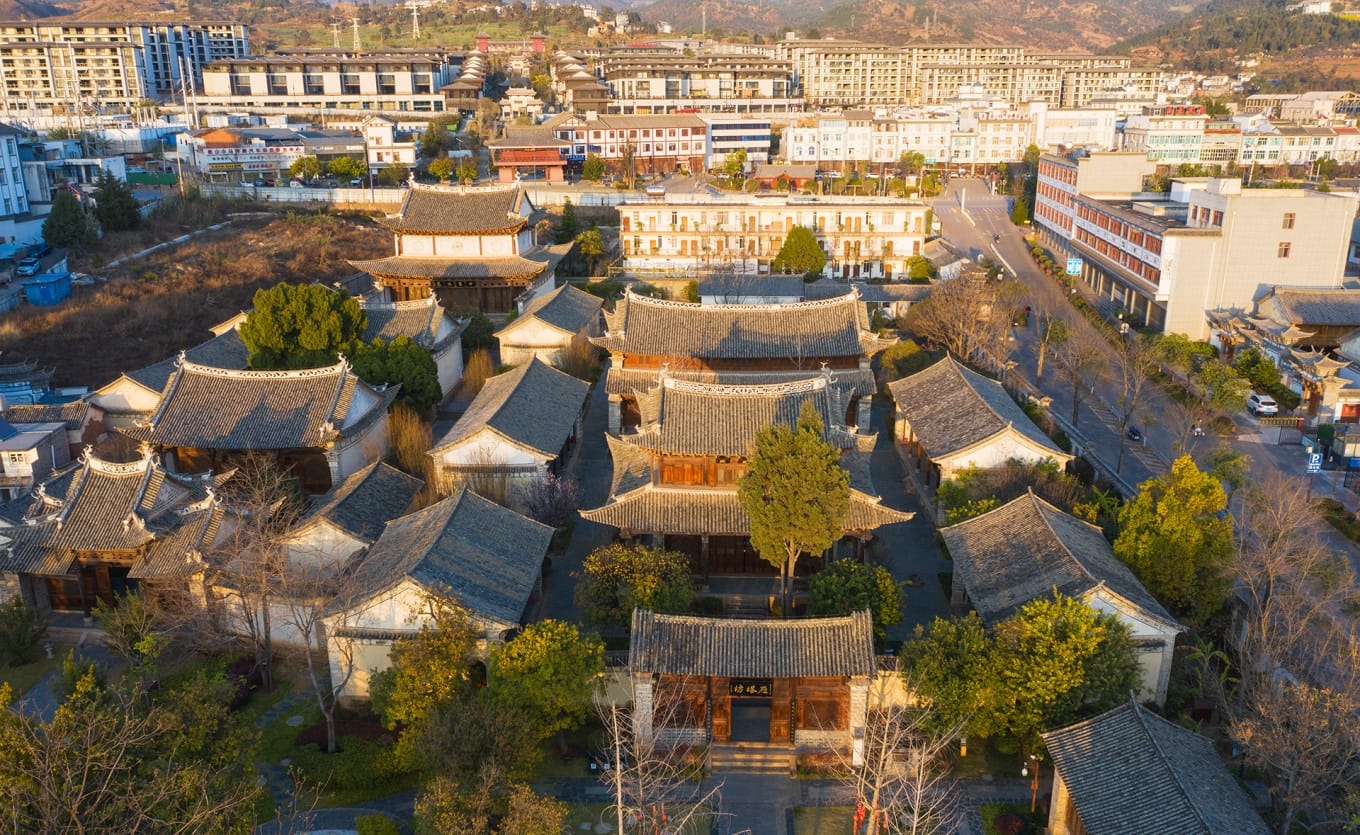
The complex has a storied past. Originally built during the Ming Dynasty, it was destroyed in warfare and later reconstructed in the Guangxu period of the Qing Dynasty. In the early 20th century, the academy was converted into a higher primary school. It later served as a local government office and as the campus for Weishan Wenhua Middle School. After a major renovation in 2022, it reopened as a cultural attraction. The 40-yuan entrance fee might give you pause, but its value depends on your interest in layered history and architecture.

Upon entering, you’ll first encounter the Xiao Gong Temple (萧公祠), the former Jiangxi Guildhall. From the Ming Dynasty onward, Han Chinese, many from Jiangxi province, settled in the area for military and civilian duties and trade. This temple, also historically called the Longevity Palace (万寿宫), was their gathering place. Today, it houses a creative culture shop and a book cafe. The current structure dates from a 1898 reconstruction, featuring a main gate, front hall, rear hall, and a garden.
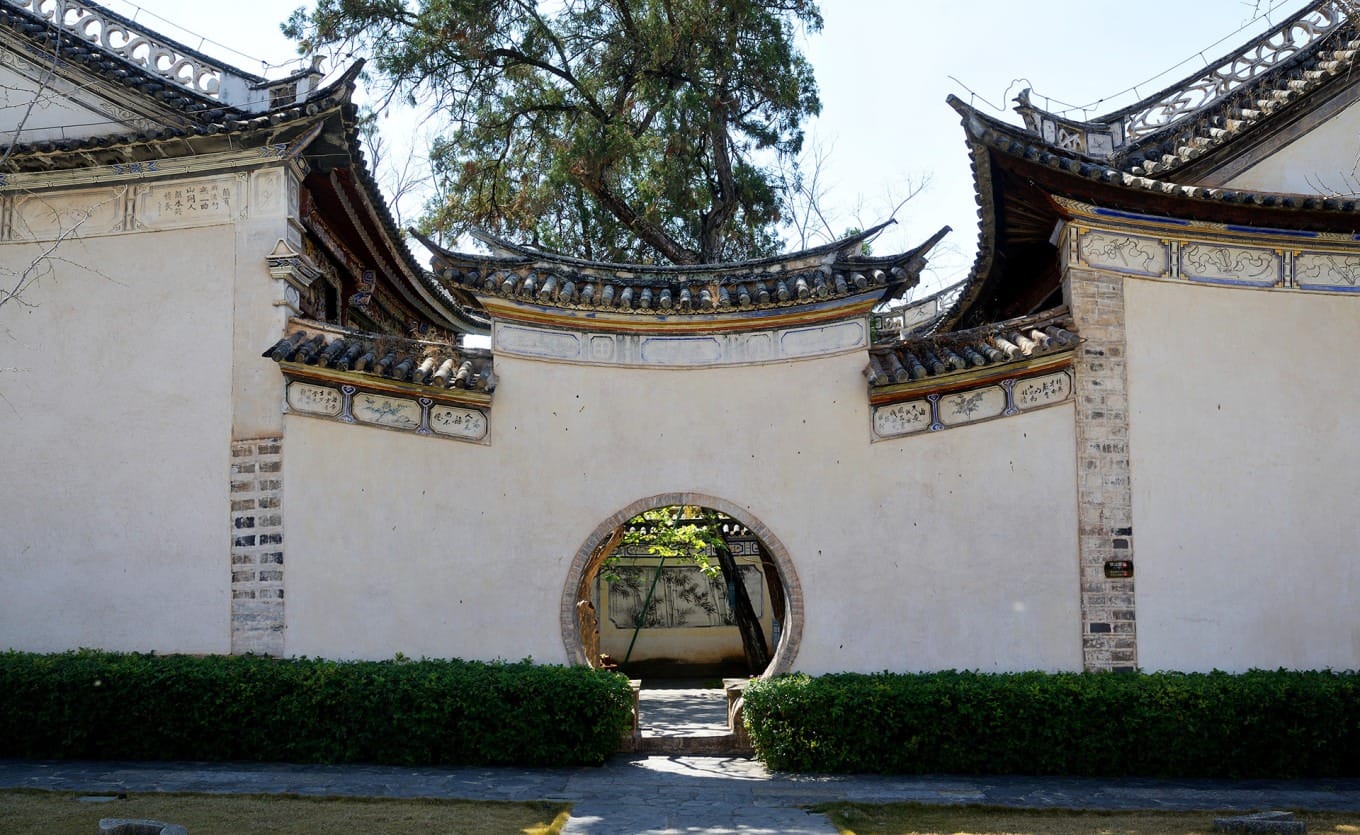
The temple was dedicated to the water deity Xiao Boxuan (萧伯轩), a figure from Jiangxi folklore believed to protect merchants and sailors. For Jiangxi merchants living far from home, he was a vital spiritual anchor. Wherever Jiangxi merchant communities settled, you’d often find a temple honoring Xiao Gong.
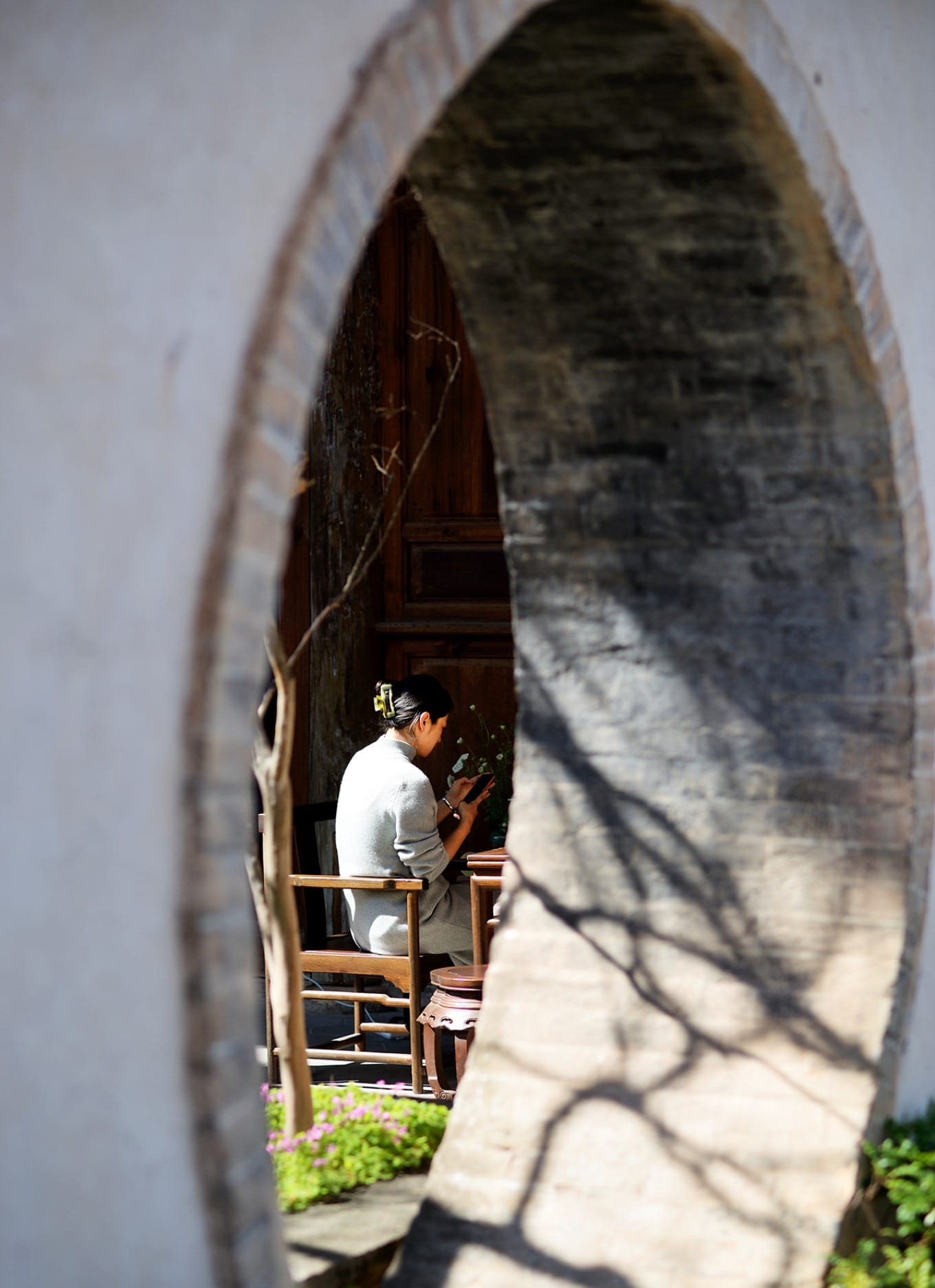
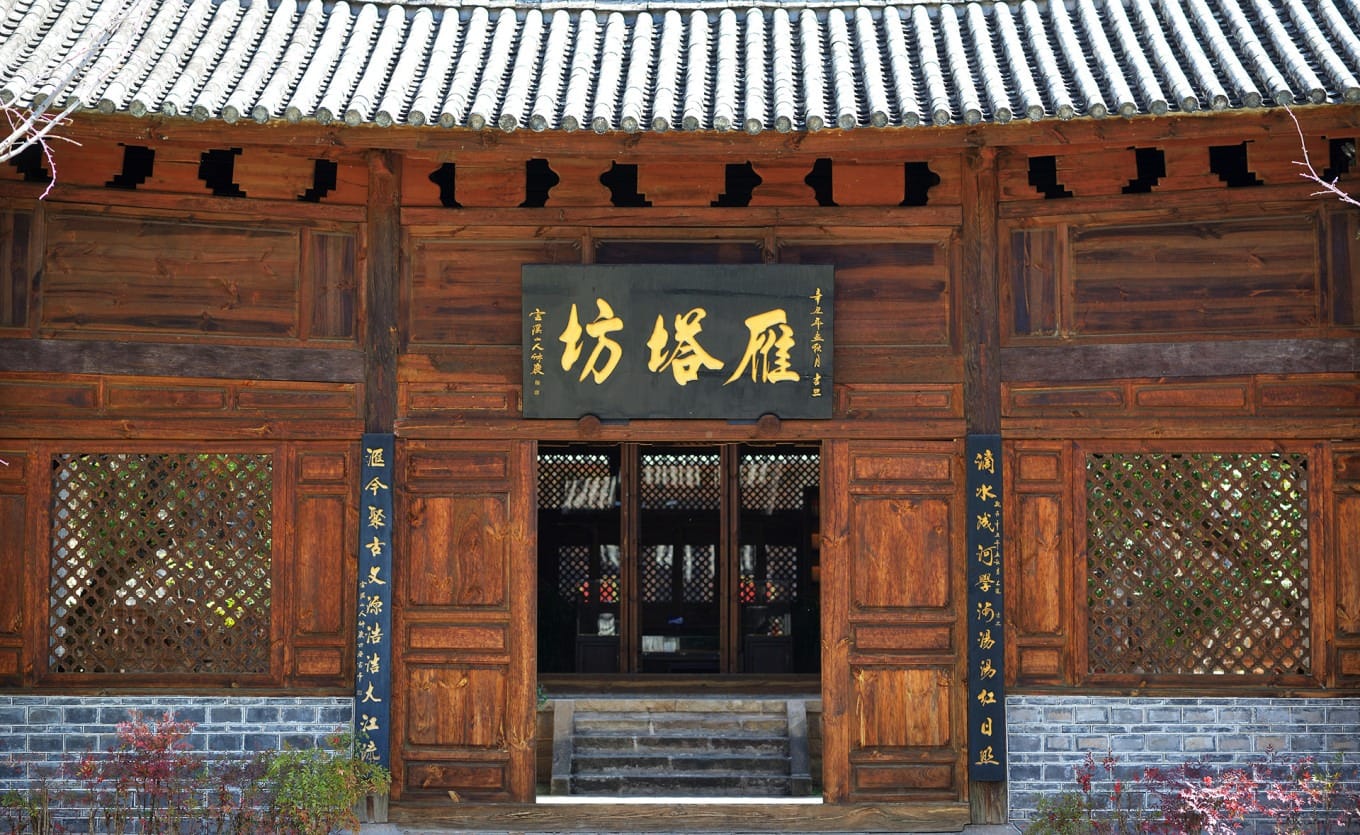
Passing through the guildhall leads you to the heart of the complex: the Wenhua Academy itself. Founded in 1875 on the former site of the Jade Emperor Pavilion, it was one of the three great academies of the Meng Hua Prefecture. Key surviving structures include the Yan Ta Archway (雁塔坊), the Kuixing Pavilion (魁星阁), the Library Building (藏书楼), and some side rooms.
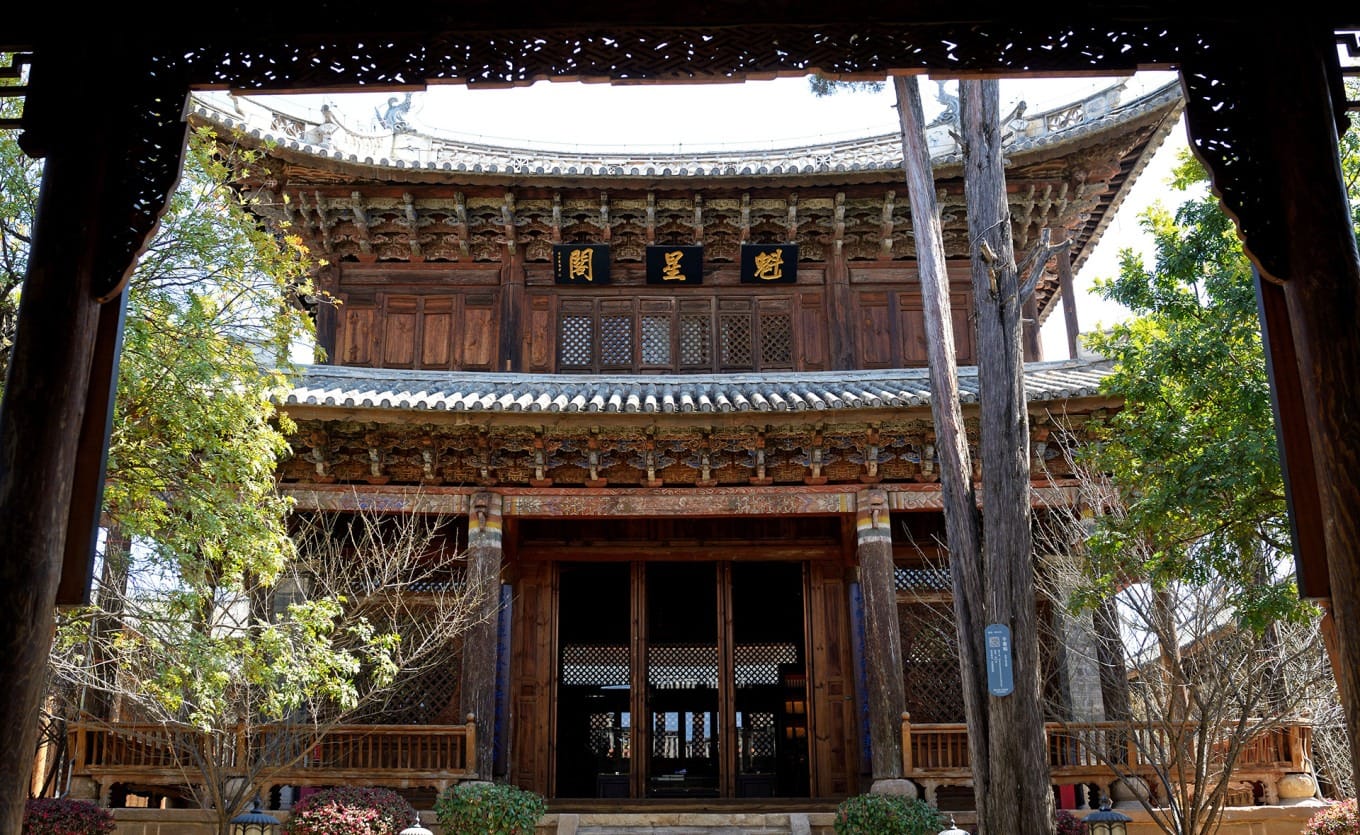
The academy still functions partly as a repository. The first two floors of the Kuixing Pavilion and the side rooms hold extensive local chronicles, literature on Southwest China’s ethnic minorities, and religious texts. The rear Library Building focuses on genealogy archives and features a movable-type printing experience area.
Adding another layer to its history, Wenhua Academy is also a recognized revolutionary site. After Yunnan’s peaceful liberation, it served as the office for the Communist Party’s West Yunnan Prefectural Committee and the West Yunnan People’s Administrative Commissioner’s Office, governing several counties including the area of modern-day Weishan.
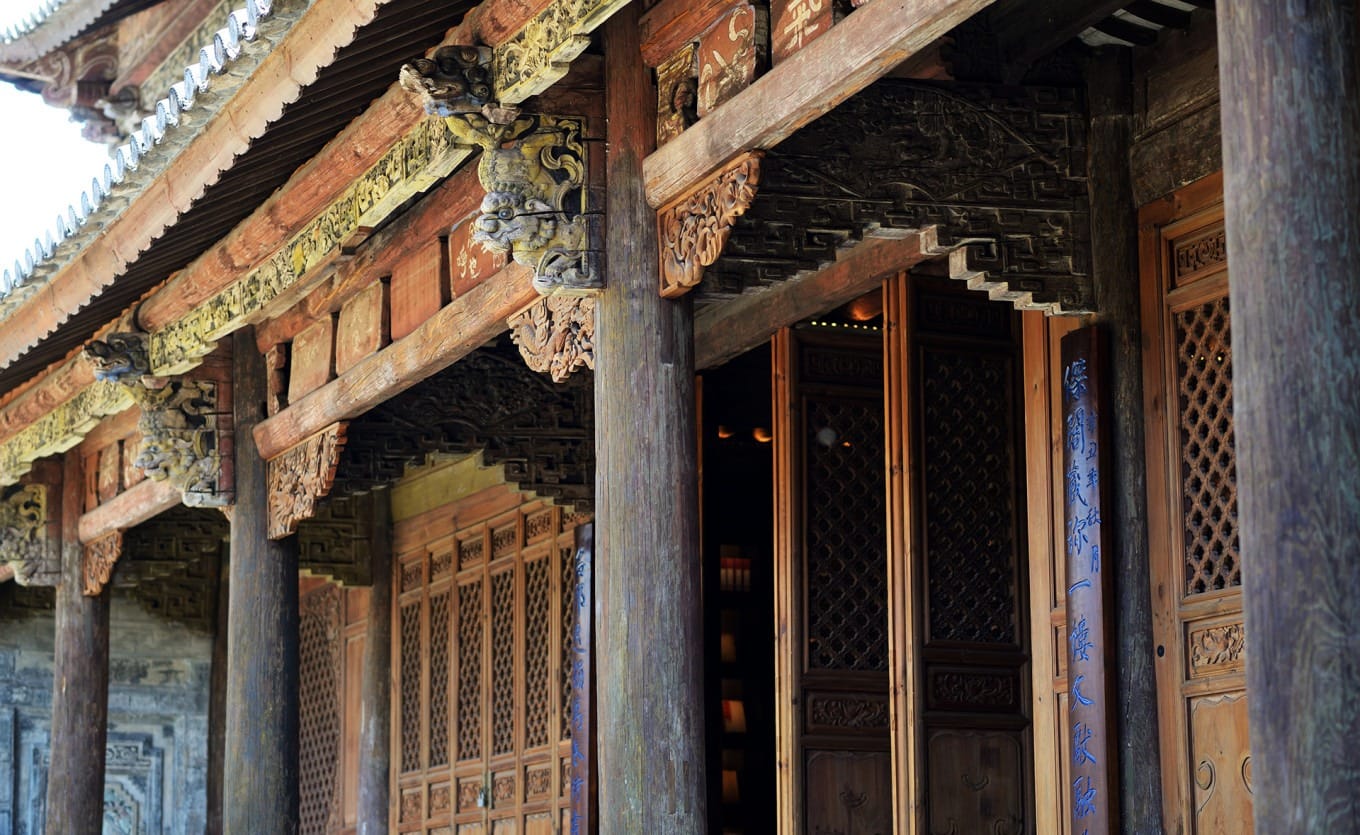
To the north of the academy lies the Jade Emperor Pavilion (玉皇阁). Originally built in the Ming Dynasty at the academy’s current location, its early structures were destroyed in the late 19th century. The pavilion you see today was reconstructed in 1900.
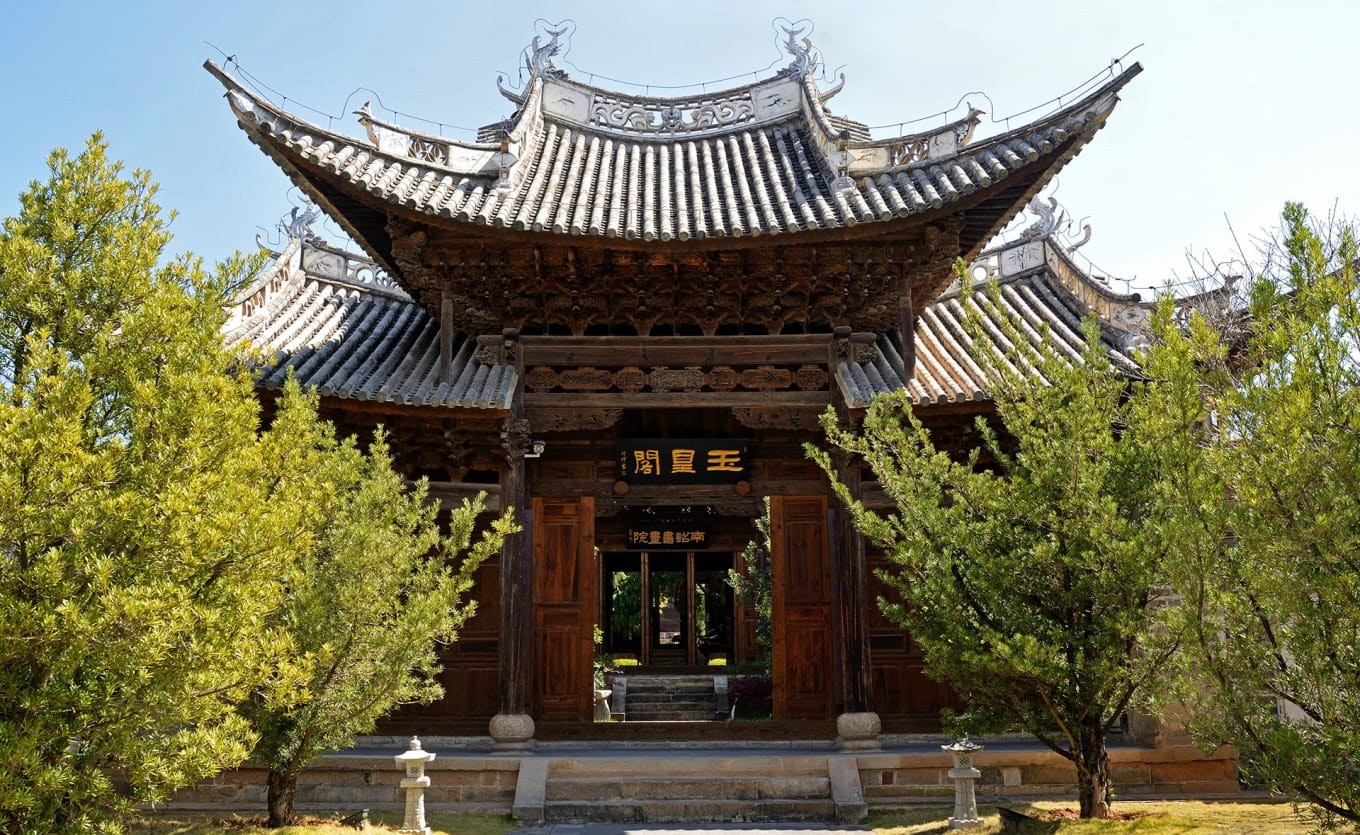
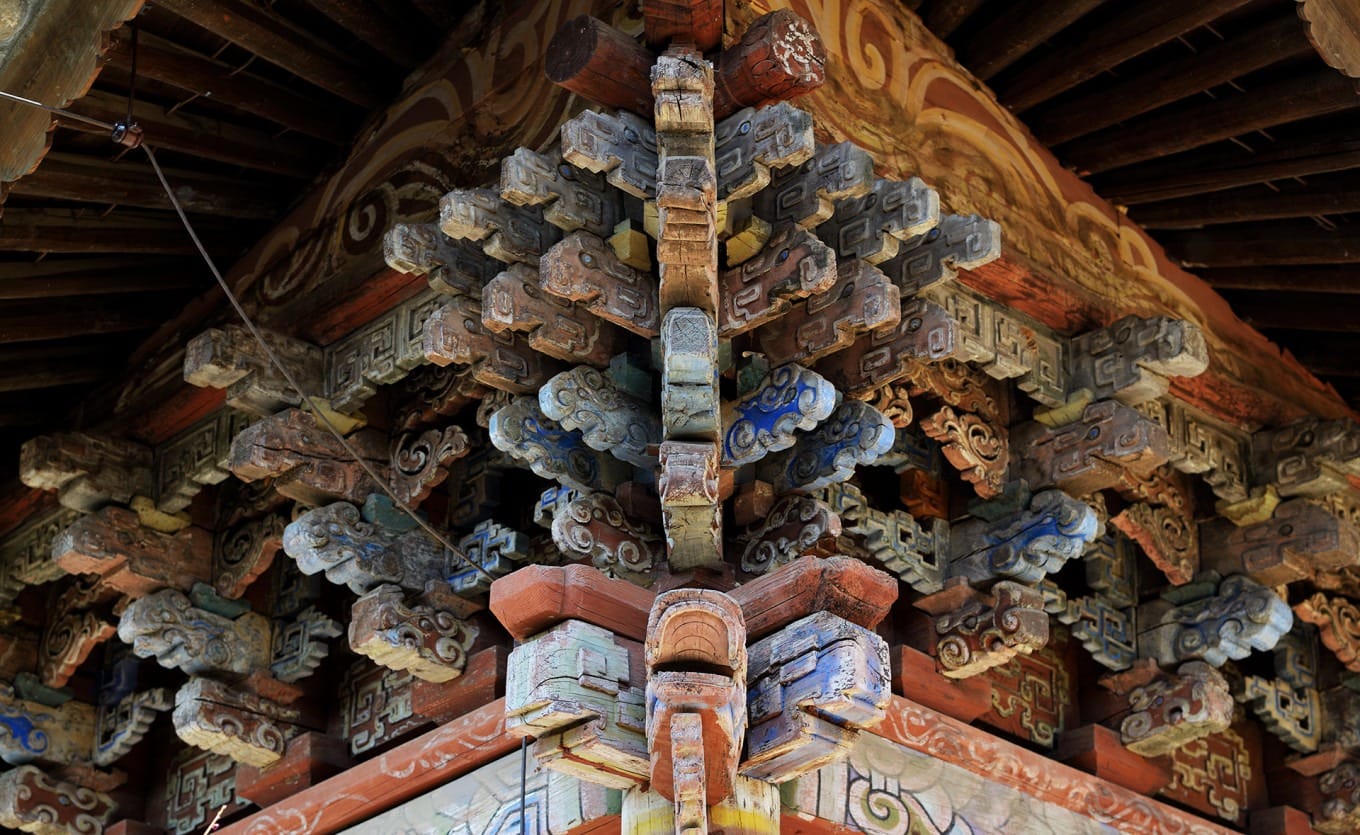
The pavilion’s layout is meticulously structured, with a mountain gate, front hall, middle hall, main hall, and side rooms arranged across three courtyards. The three-bay archway-style mountain gate is particularly notable for its intricate bracket sets, hanging pillars, and decorative brick carvings on the gable walls.
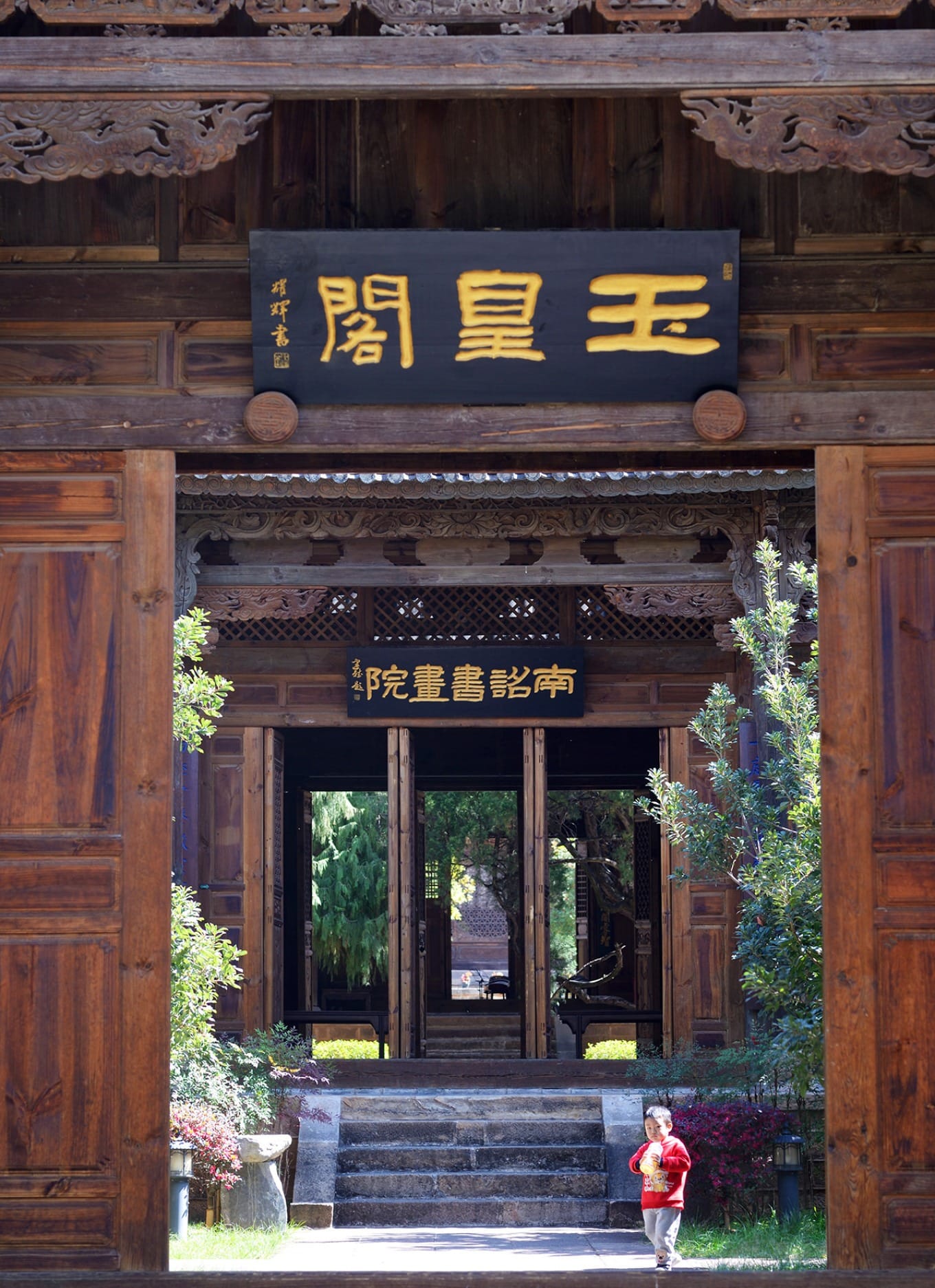
Today, the front and middle halls of the Jade Emperor Pavilion are dedicated to cultural arts, offering experiences in calligraphy, painting, guzheng (古筝) music, and various traditional board games.
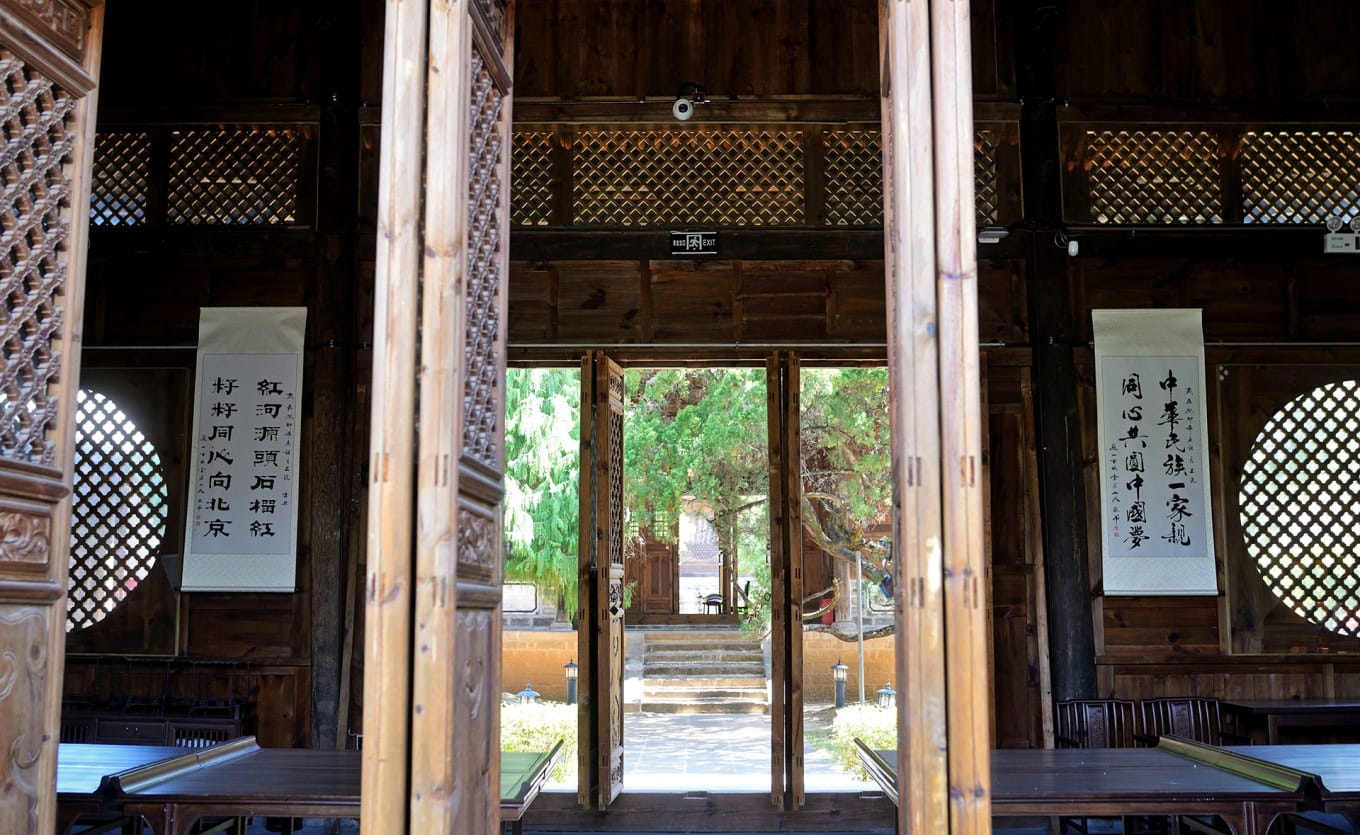
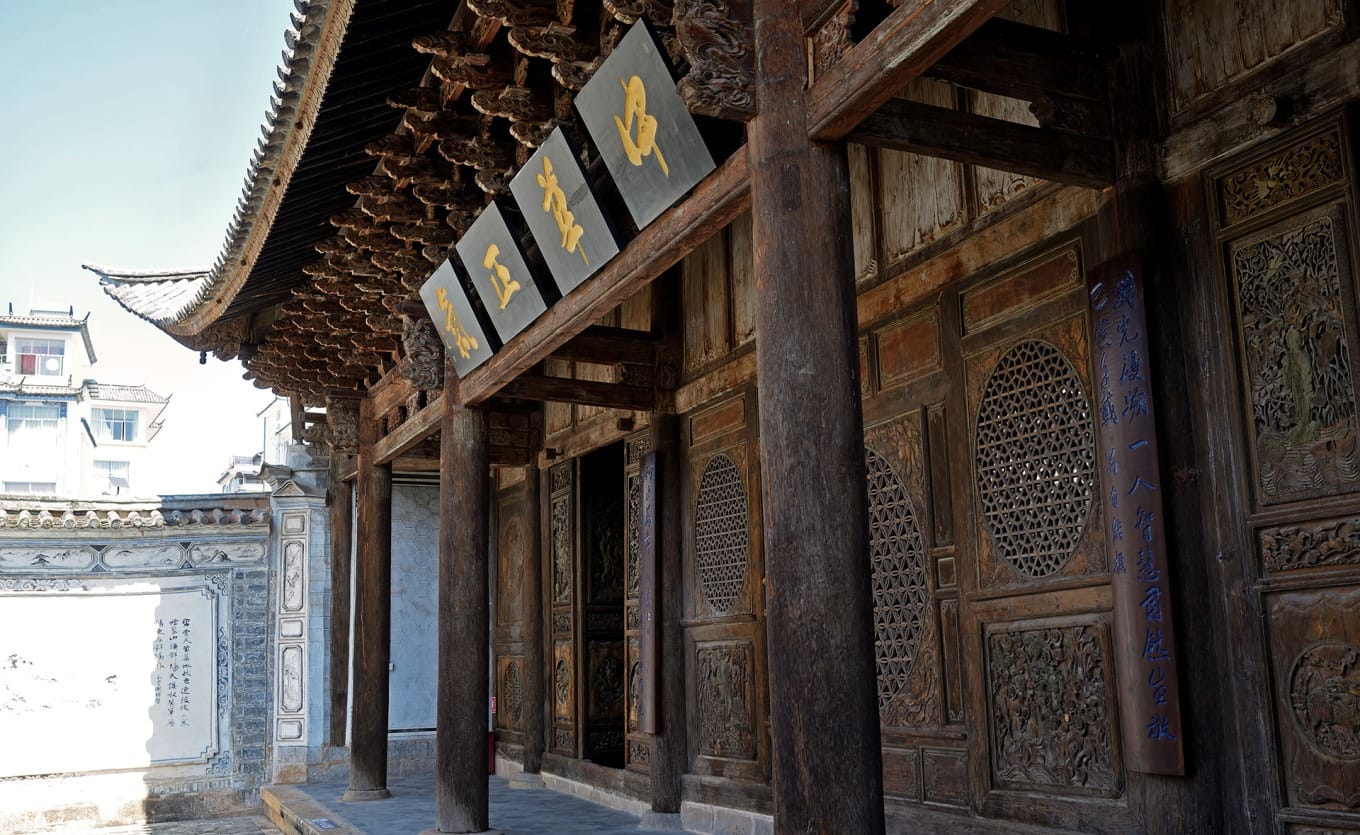
The main hall is the architectural highlight. This double-eave, hip-and-gable roof structure is the largest and most complete Qing Dynasty hall remaining in Weishan County. It stands imposingly with a front moon platform and flanking ‘ba zi’ walls.
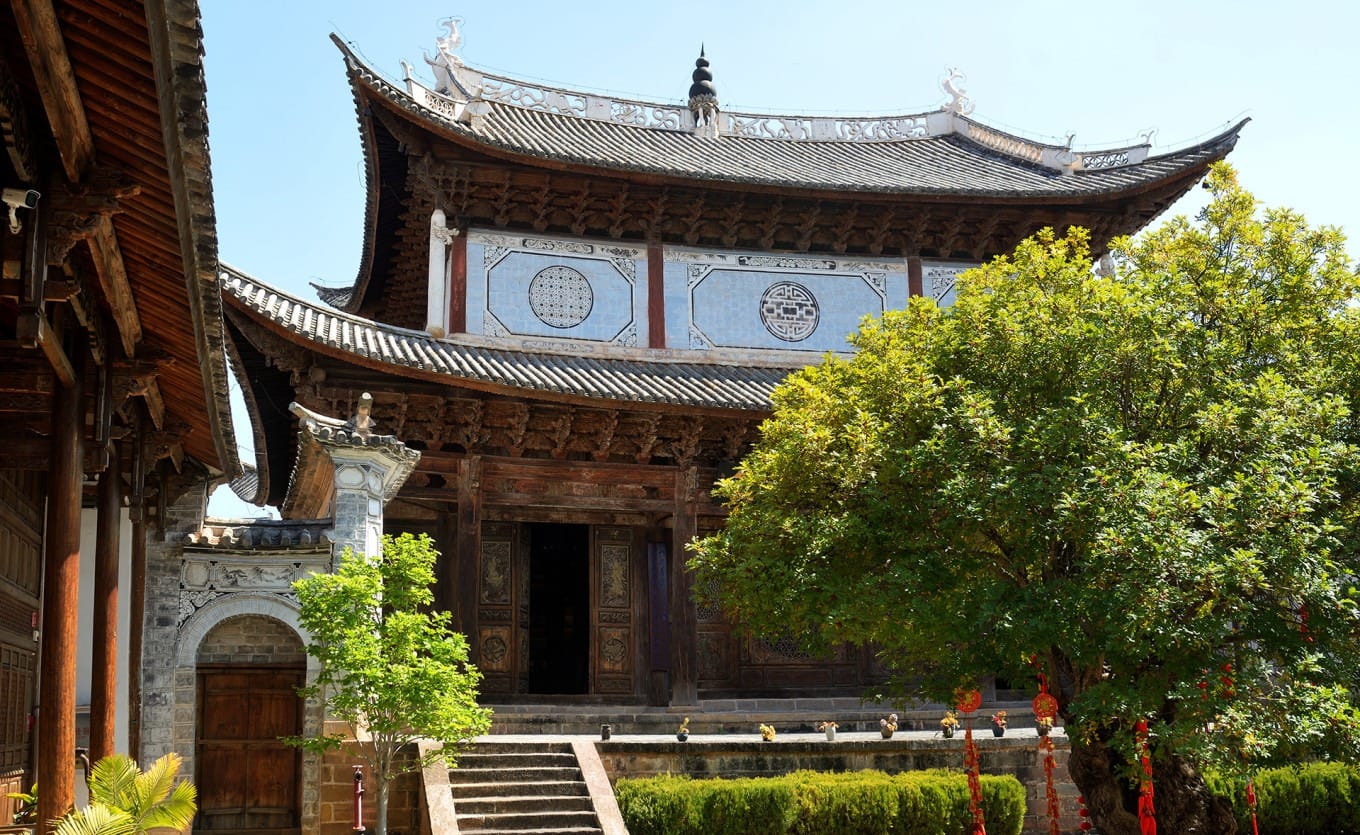
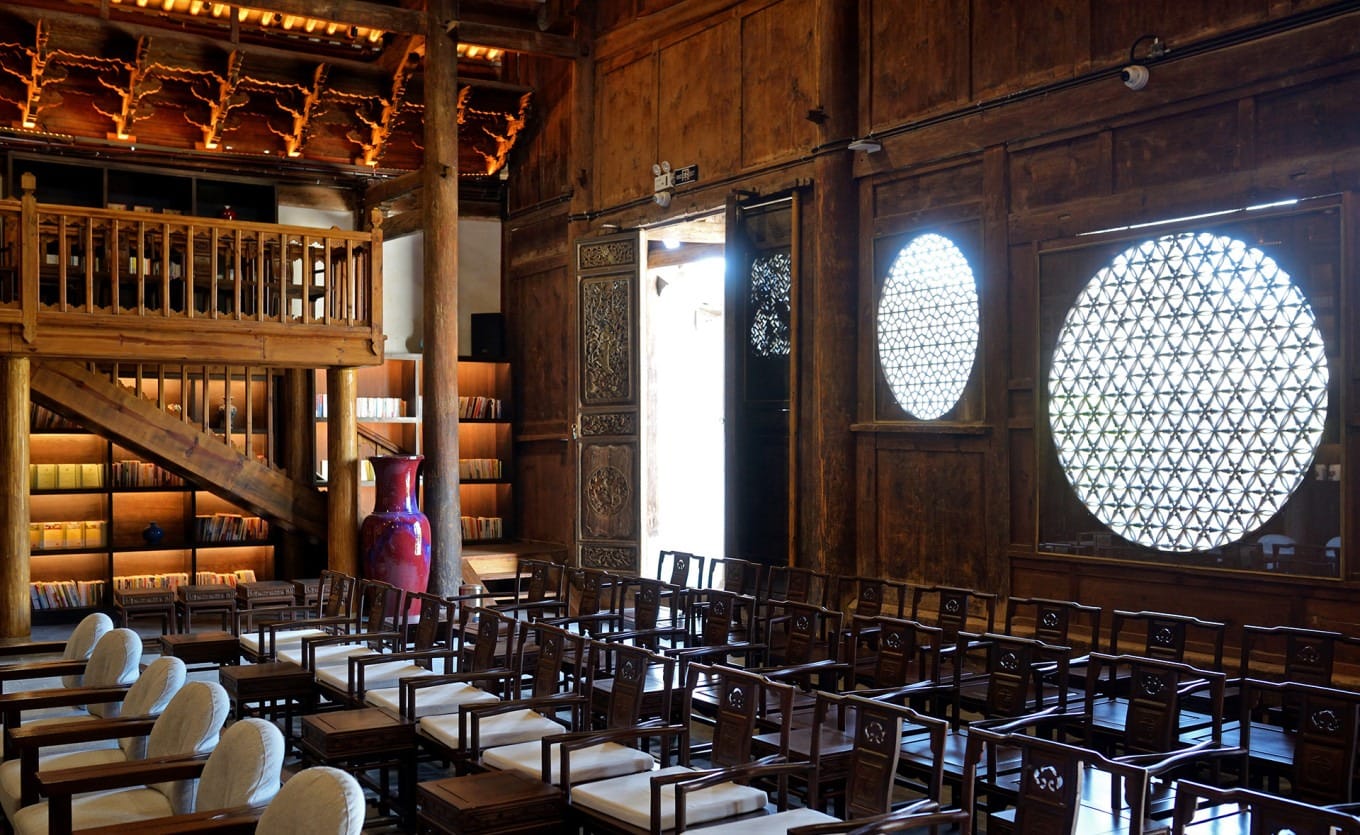
Inside, the most exquisite features are the eight partition doors, intricately carved with openwork scenes of the Eight Immortals Crossing the Sea (八仙过海). The interior space now functions as a conference hall.
- RestaurantN/A This section describes a cultural site, not a restaurant (店名)
- AddressIntersection of Huaxing South Road and Nanzhao East Road, Nanzhao Town, Weishan Yi and Hui Autonomous County, Dali Bai Autonomous Prefecture, Yunnan.
- Recommended dishesN/A (菜名)
- Average spendEntrance fee is 40 RMB per person.
Weishan Nanzhao Museum
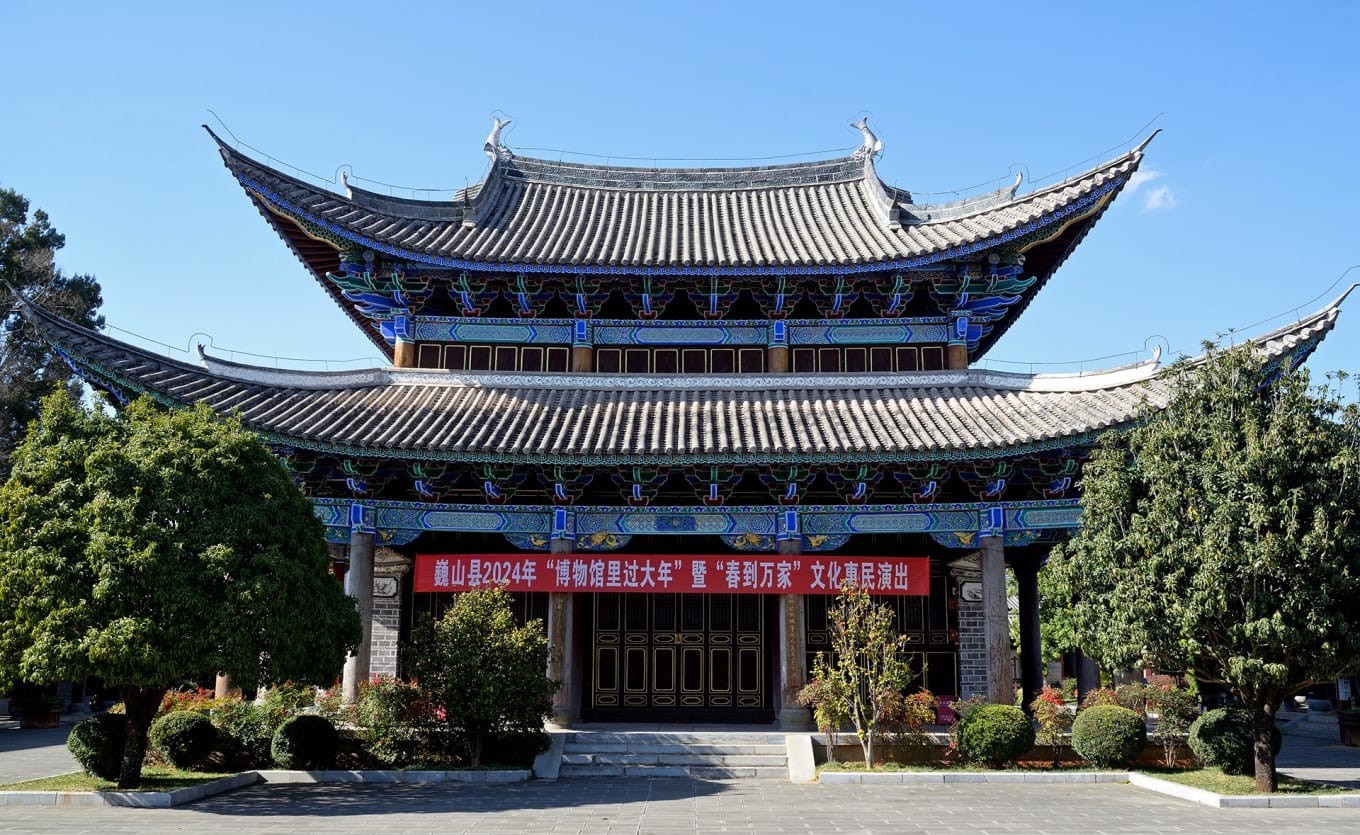
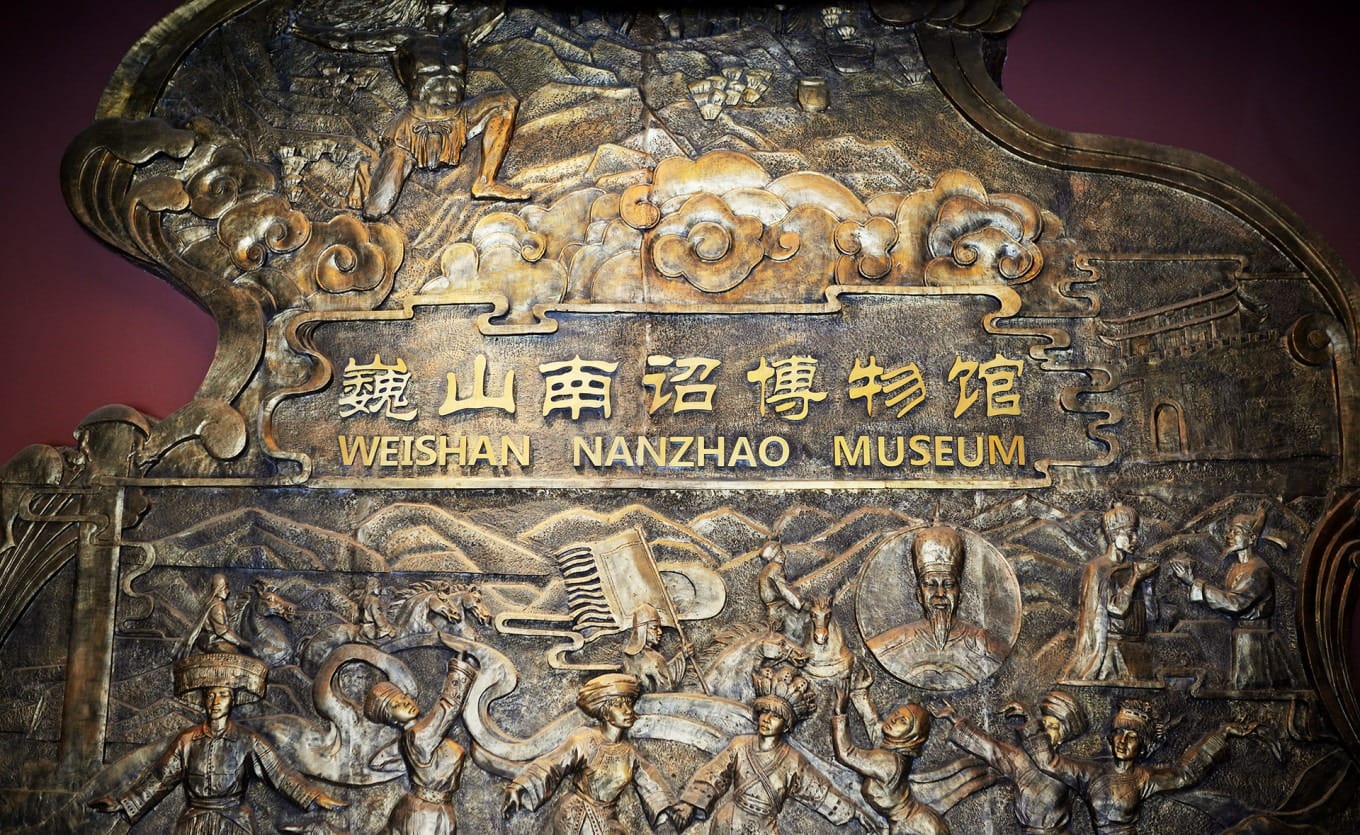
To truly understand the history of Weishan, a visit to the Weishan Nanzhao Museum is essential. Opened in 2015 on the site of the historic Dengjue Temple, this museum offers far more than a typical collection of artifacts. Its most significant exhibit is the temple’s Ming Dynasty Sun Palace itself, making the entire complex a living piece of history. Alongside the palace, you’ll find other ancient structures like the Dengjue Temple Twin Pagodas, Zhaozhong Temple, and Lingong Temple. While the number of displayed artifacts might not be vast, the depth and variety of historical architecture and cultural relics make it well worth dedicating half a day to explore. A key tip for planning your visit: the museum is closed on Mondays.
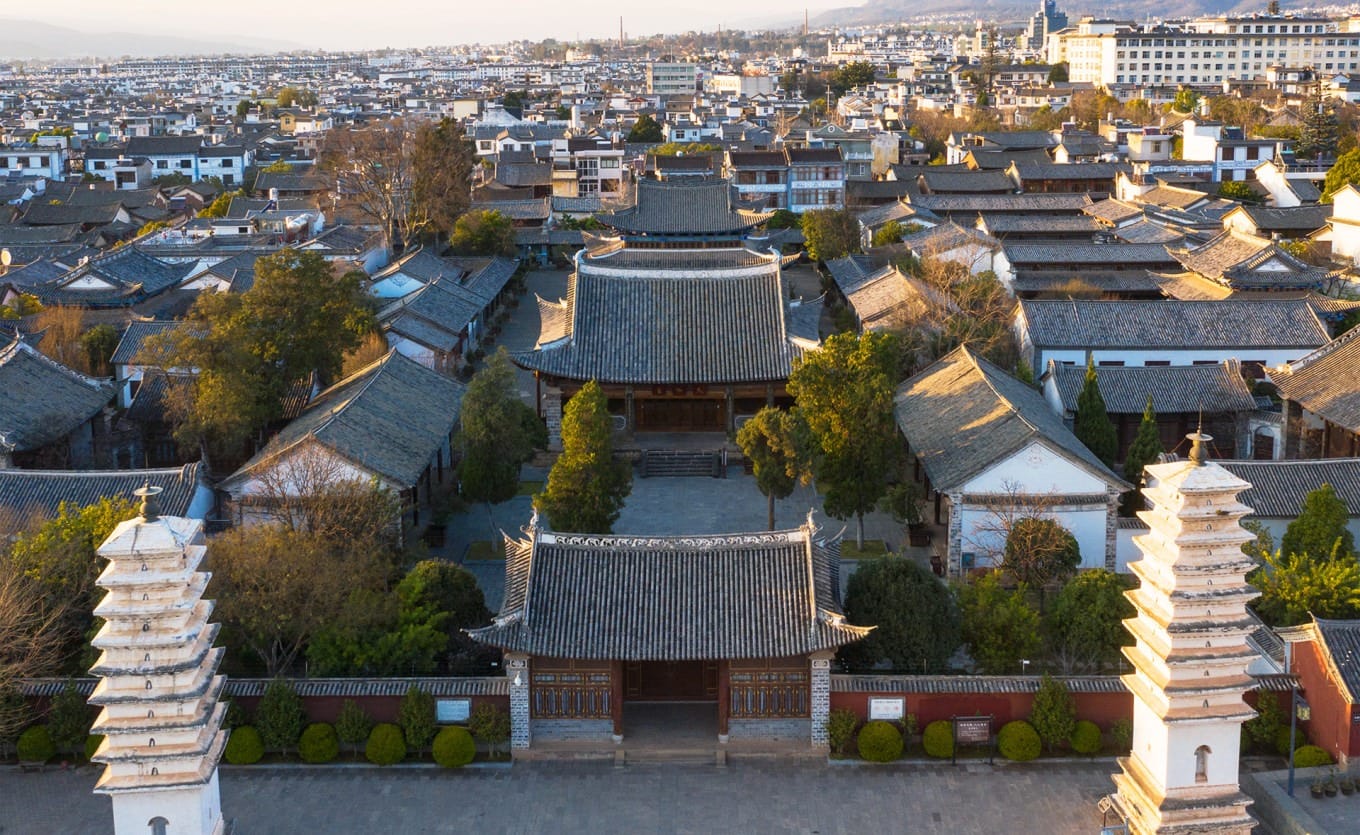
Enter the museum complex through the gate on Housuo Street. You’ll first encounter the Preface Hall, a retro-style building aligned on a central axis with the Sun Palace and the Twin Pagodas. Your exploration of Nanzhao history typically begins in the exhibition halls to the east of the Preface Hall, which house the Nanzhao Historical and Cultural Exhibition.
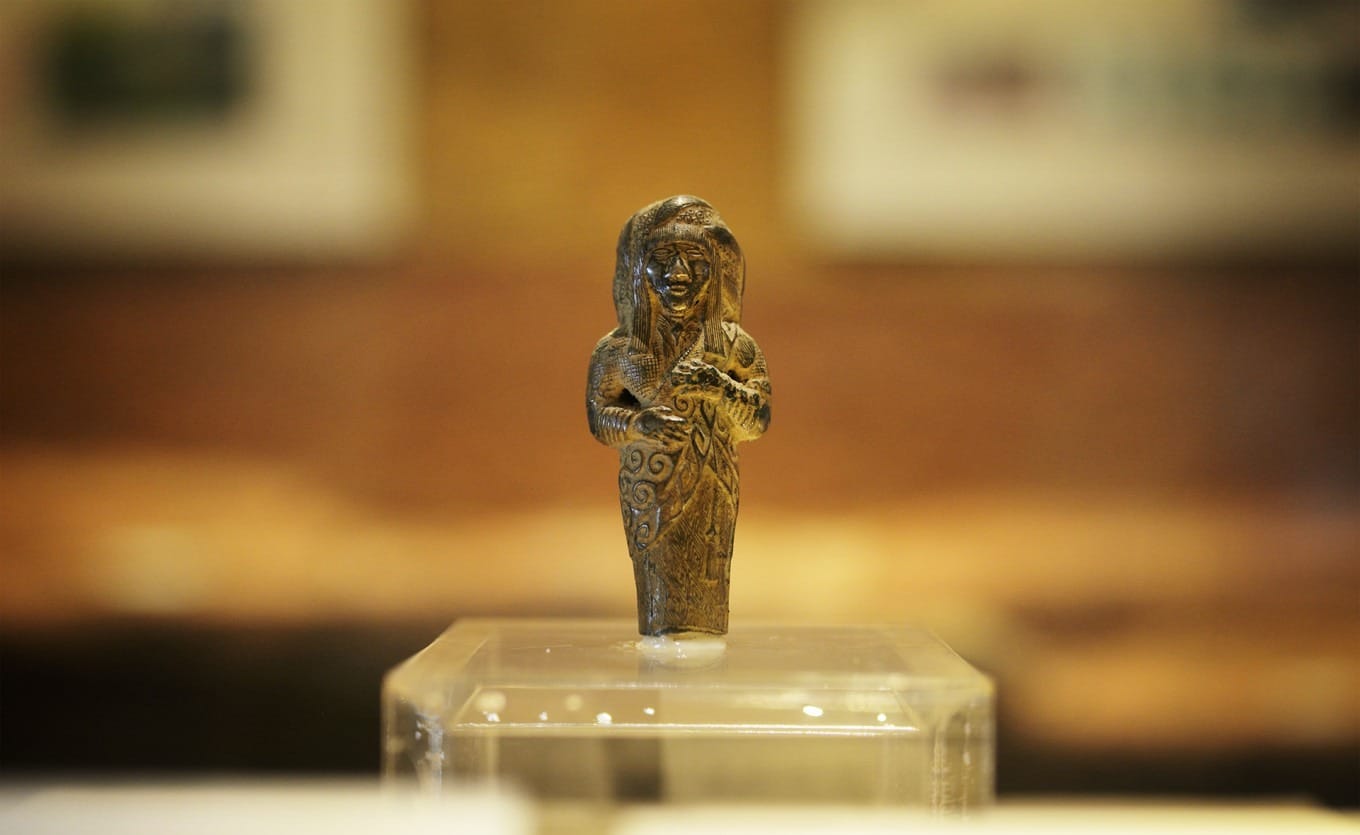
One of the collection’s highlights is a cache of bronze artifacts discovered in 2005 at Mugulu Village in Ma’anshan Township. Dating back to the Spring and Autumn Period, this hoard includes items like a Figure Staff Head (人物杖头首, Figure Staff Head), bronze bells, copper oxen, and bronze swords. The Figure Staff Head, a mere eight centimeters tall, is crafted from silver-plated bronze and depicts a minority woman with intricate braided hair, a cloud-patterned shawl, and dangling earring-like ornaments, showcasing remarkable craftsmanship.
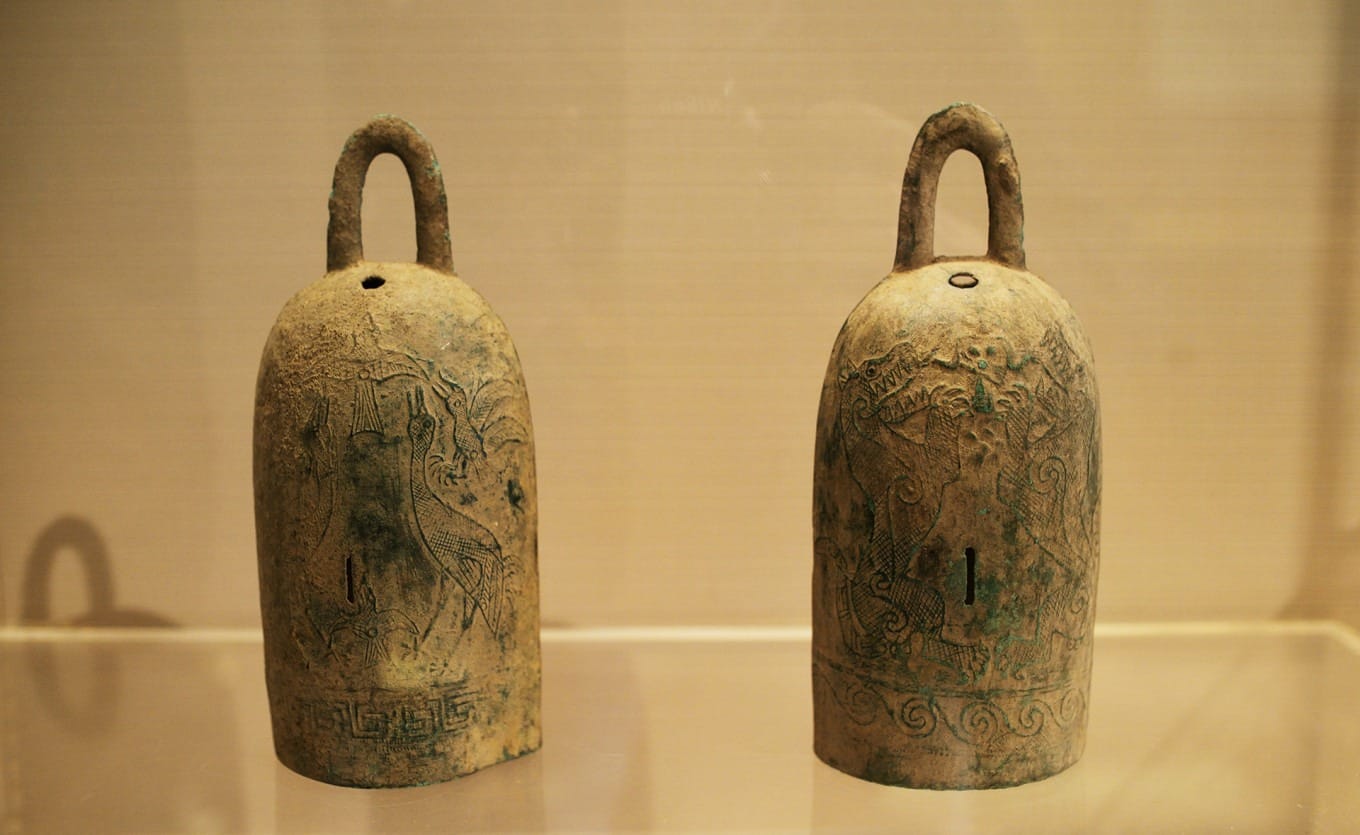
From the same Mugulu hoard, you can admire a pair of Bronze Bells (青铜编钟, Bronze Bells). Their surfaces are exquisitely decorated: the front features a “Twin Tigers Devouring a Human” pattern, where the human figure is depicted only from the waist up amidst tigers adorned with grid and swirling cloud patterns. The back displays a “Twin Cranes and Swallows” motif, with two cranes pointing their beaks upwards towards swallows, while other birds appear to be fleeing in a dynamic, lifelike scene.
The museum’s most significant batch of artifacts is a collection of over one hundred Buddhist statues unearthed in the 1990s from the Longwutu Mountain City site northwest of the county town. These statues, products of Tang Dynasty Buddhism’s spread into Weishan via Sichuan, bear distinct Tang stylistic influences and represent the earliest Buddhist sculptures discovered in Yunnan to date.
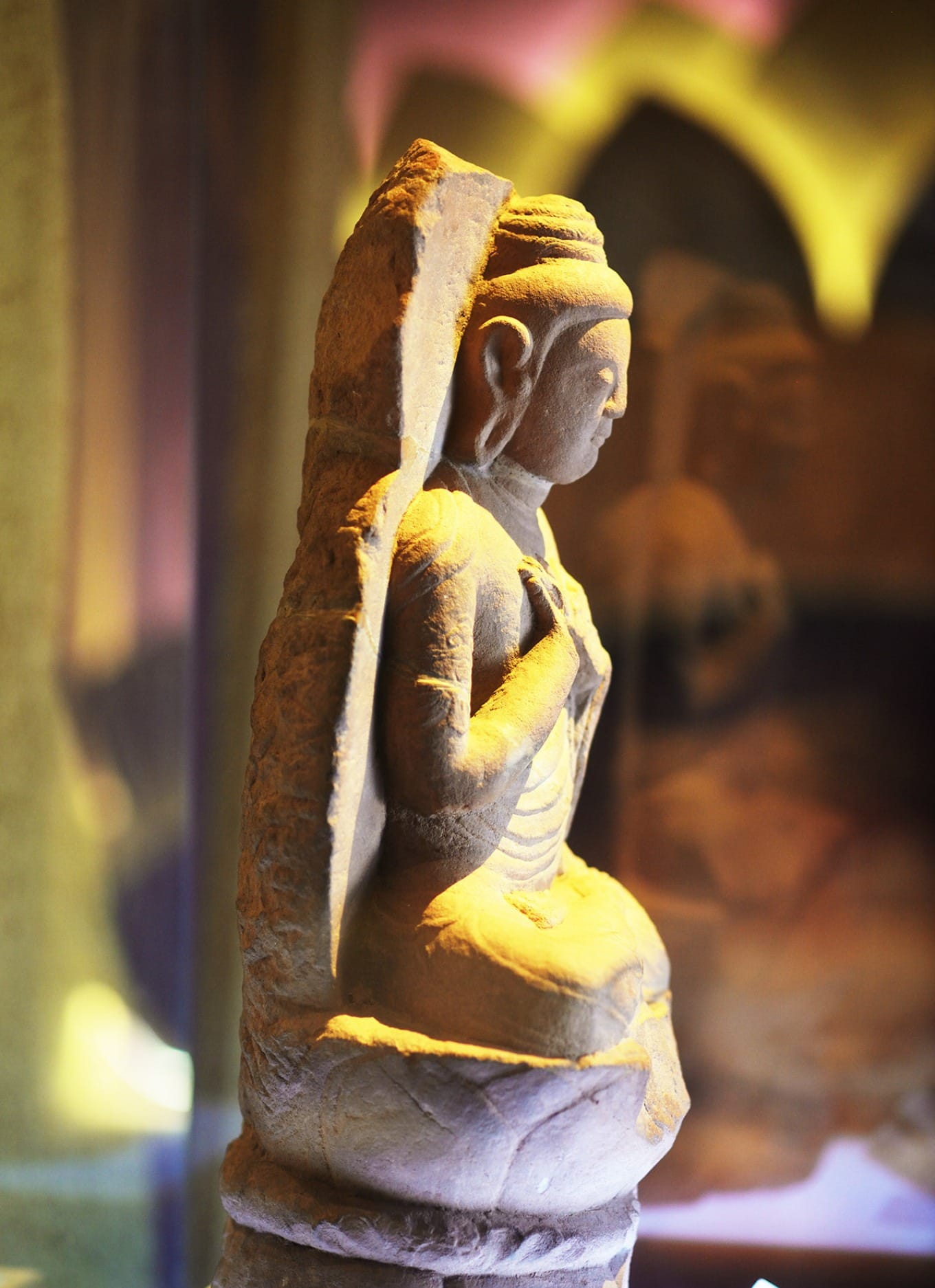
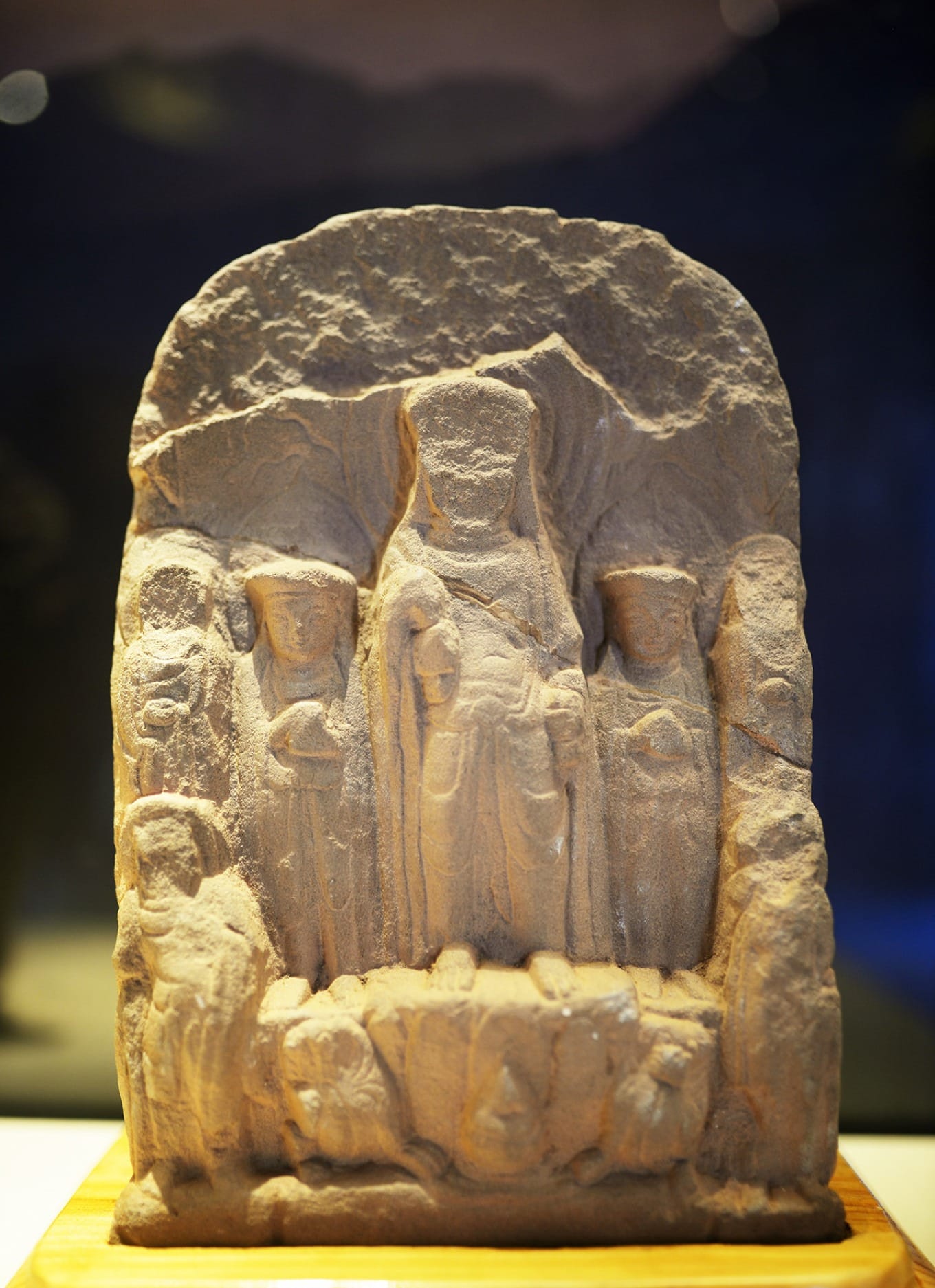
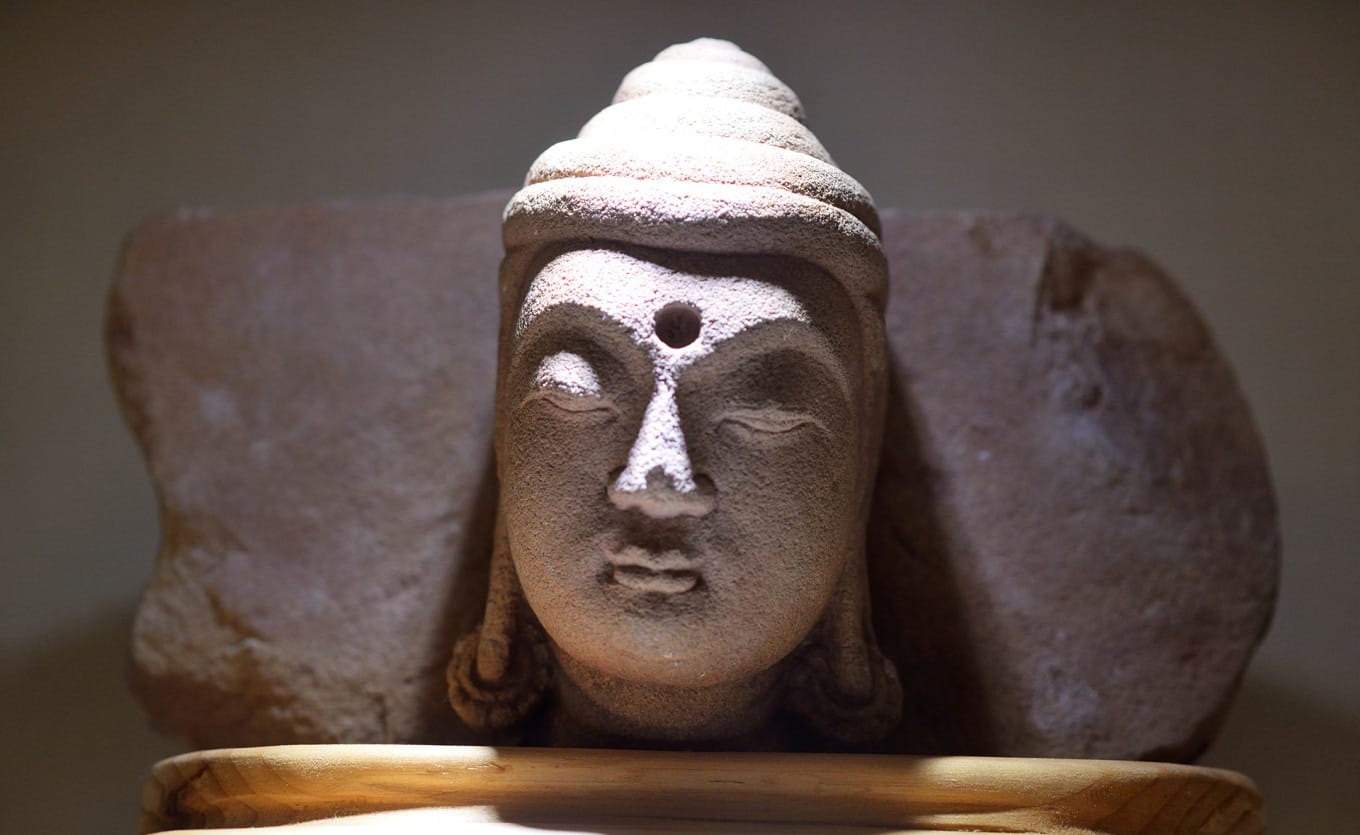
The museum also displays Ming Dynasty stone Buddha statues excavated from the Dengjue Temple site—the very ground the museum is built upon. This temple, also known as Baoguo Temple, traces its origins to the Nanzhao period, making it Weishan’s oldest Buddhist monastery. During the Qing Dynasty’s Xianfeng era, the Hui people’s uprising led by Du Wenxiu destroyed most of the temple’s halls, leaving only the Sun Palace and the Twin Pagodas standing.
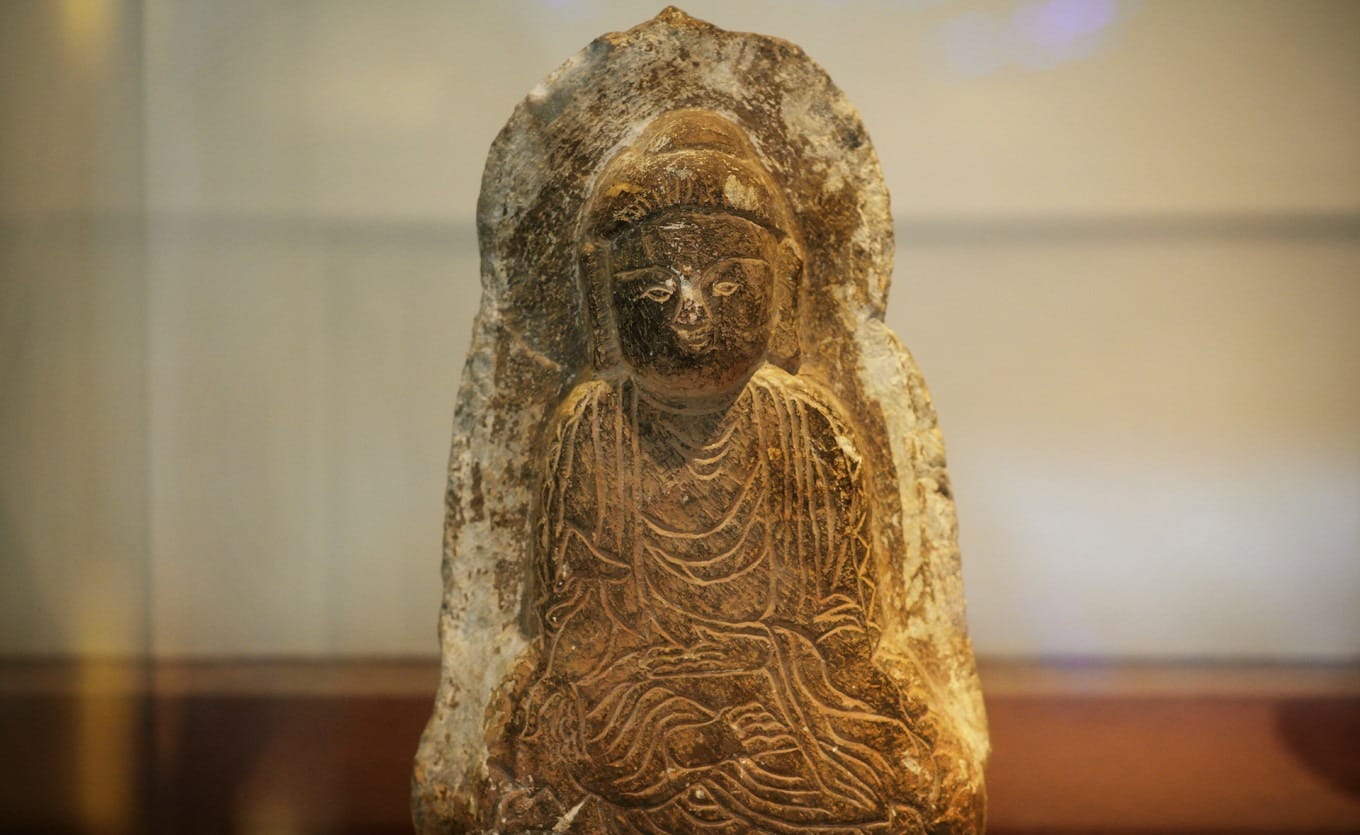
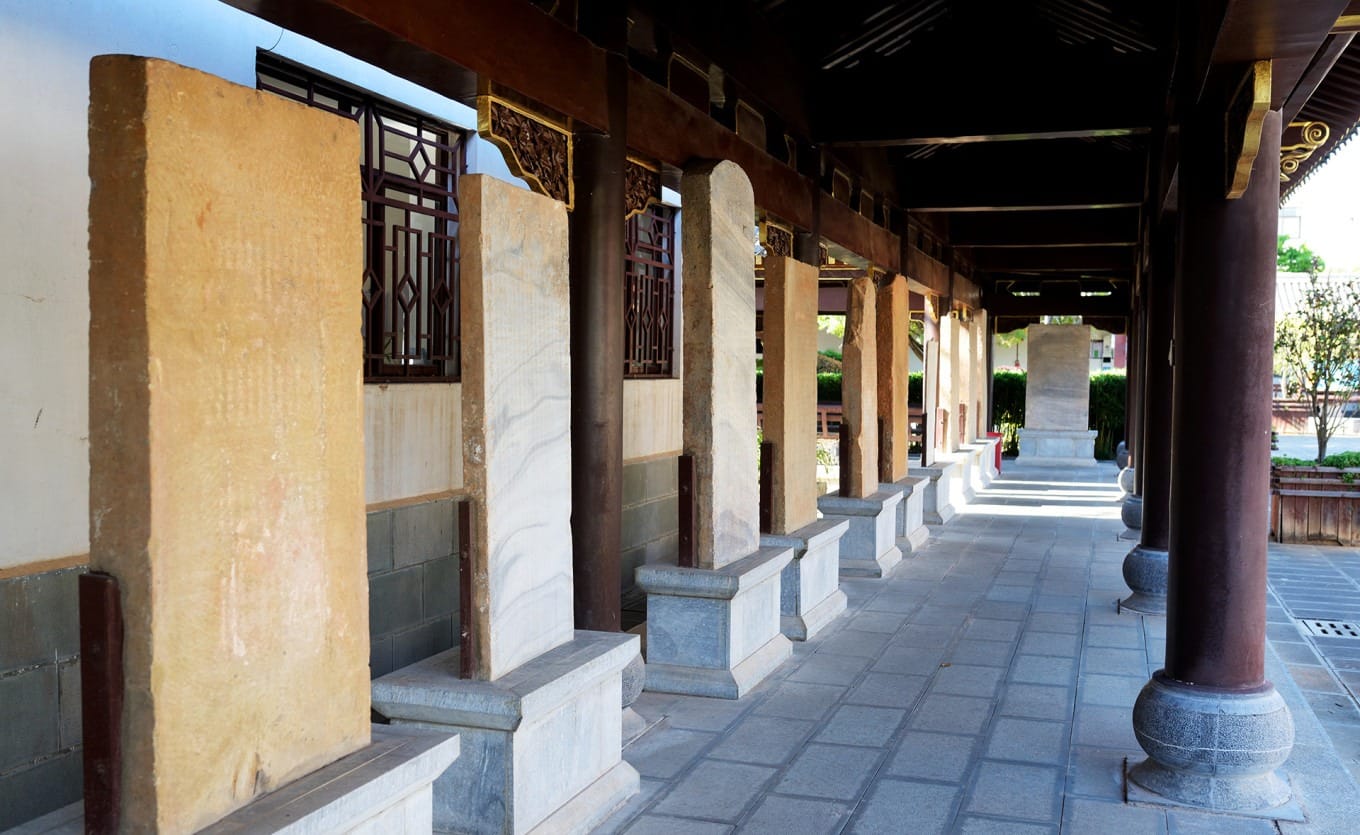
After exploring the indoor exhibits, make your way to the museum’s Stele Corridor. Here, dozens of ancient inscribed stone tablets are on display. Most were collected from scattered sites around Weishan County by cultural heritage departments and primarily date from the Ming and Qing dynasties. They include merit tablets, record tablets, imperial edict tablets, and tomb temple tablets, though the inscriptions on many have faded with time.
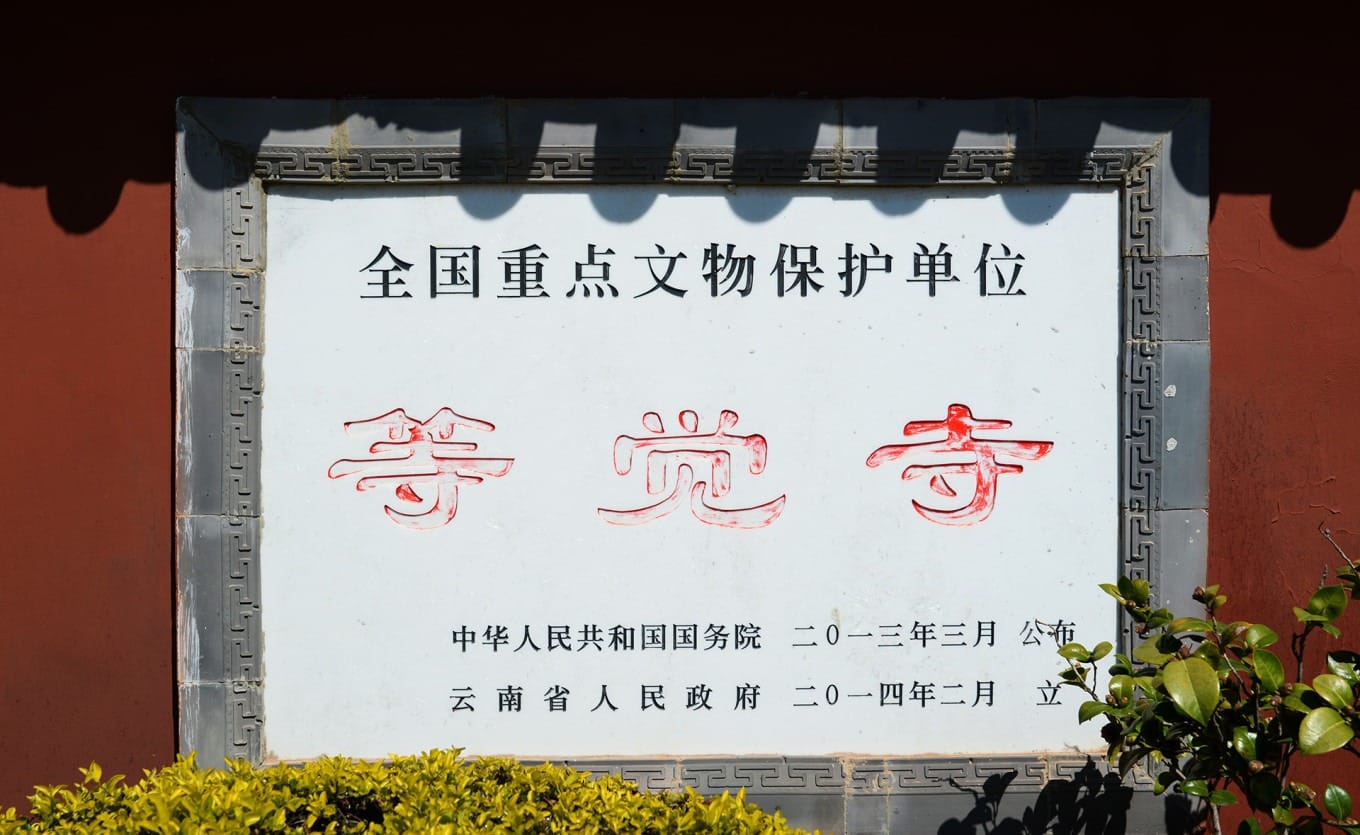
South of the Preface Hall stands the museum’s single largest artifact: the Dengjue Temple Sun Palace. This was the main hall of Dengjue Temple. For much of the 20th century, it was occupied by the county hospital, serving as wards and a pharmacy—a fate that ironically spared it from urban redevelopment. Today, the temple no longer functions as a place of worship but is open to the public as the centerpiece of the Nanzhao Museum.
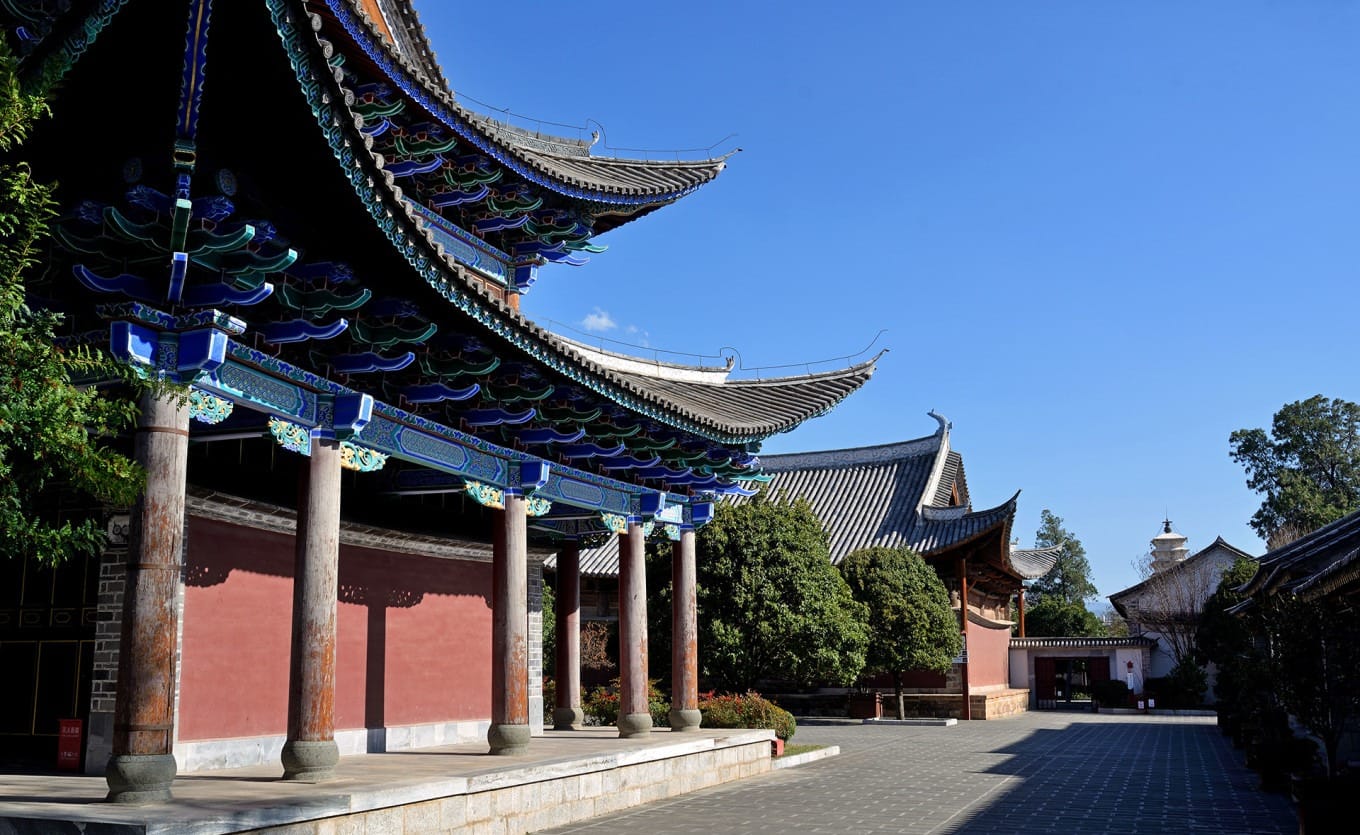
Construction of the Sun Palace began in 1418 (the 16th year of the Ming Yongle era) under the patronage of Zuo Jia, the native prefect of Menghua, and a monk named “Wuyong.” This five-bay-wide structure features a single-eave, hip-and-gable roof. Built with robust, substantial materials, its appearance is both 古朴 (simple and unadorned) and 恢弘 (grand and imposing).
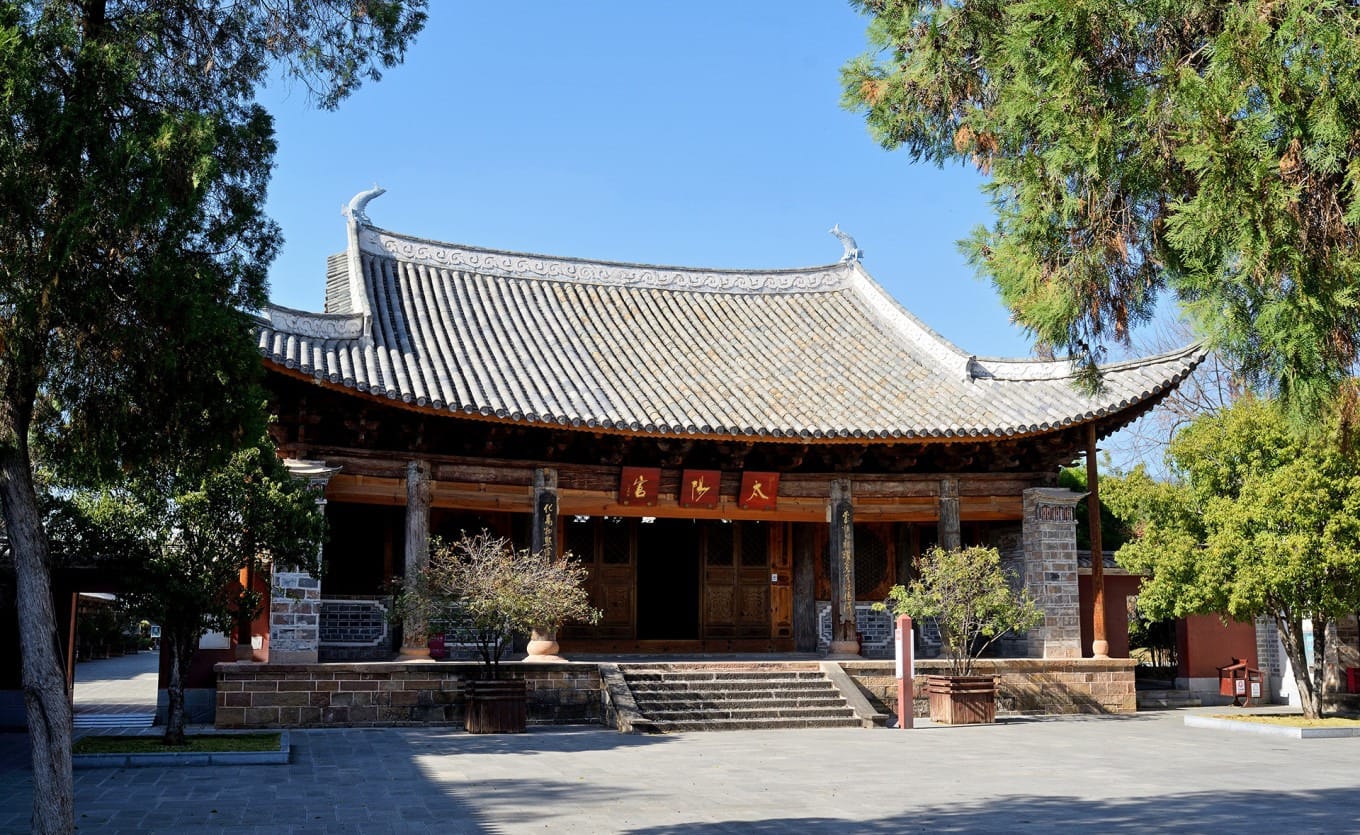
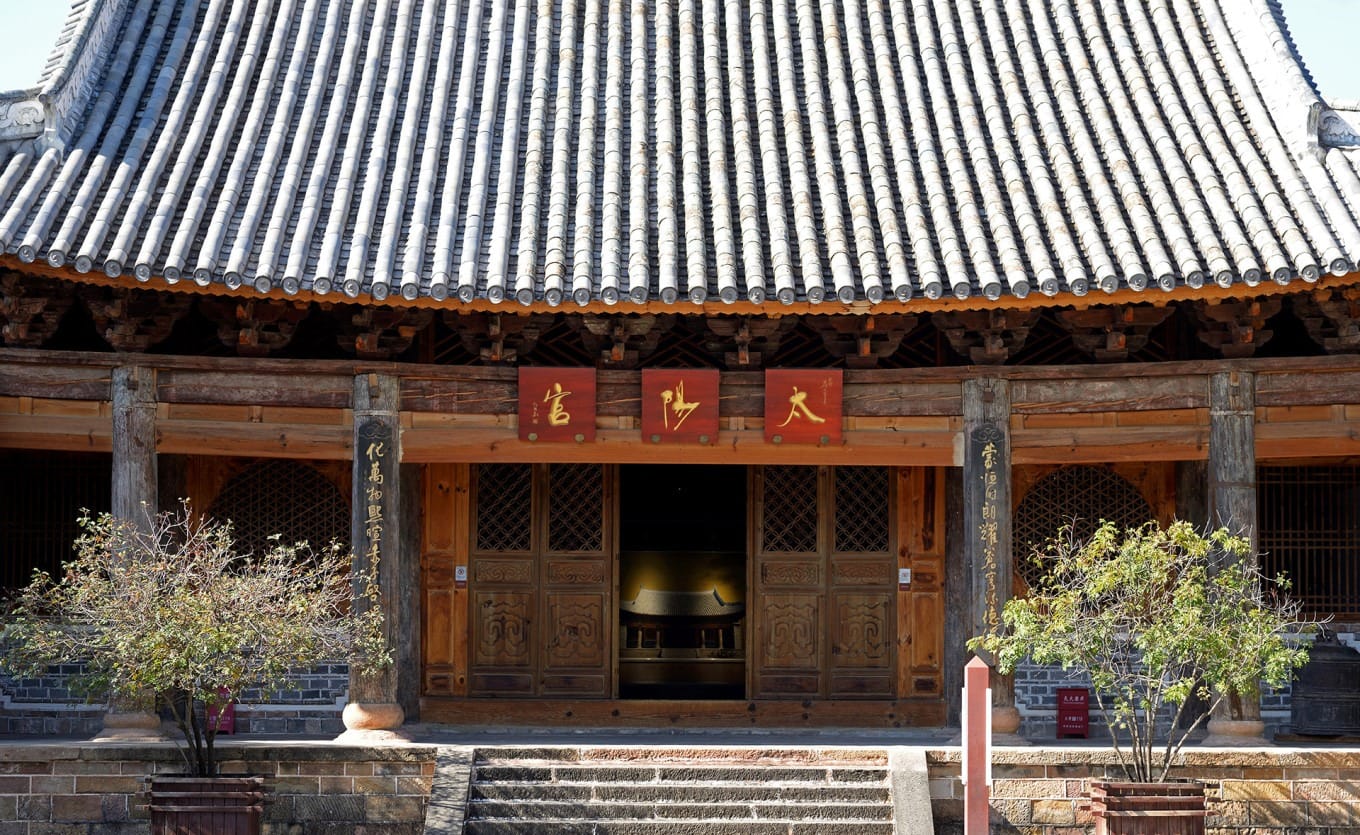
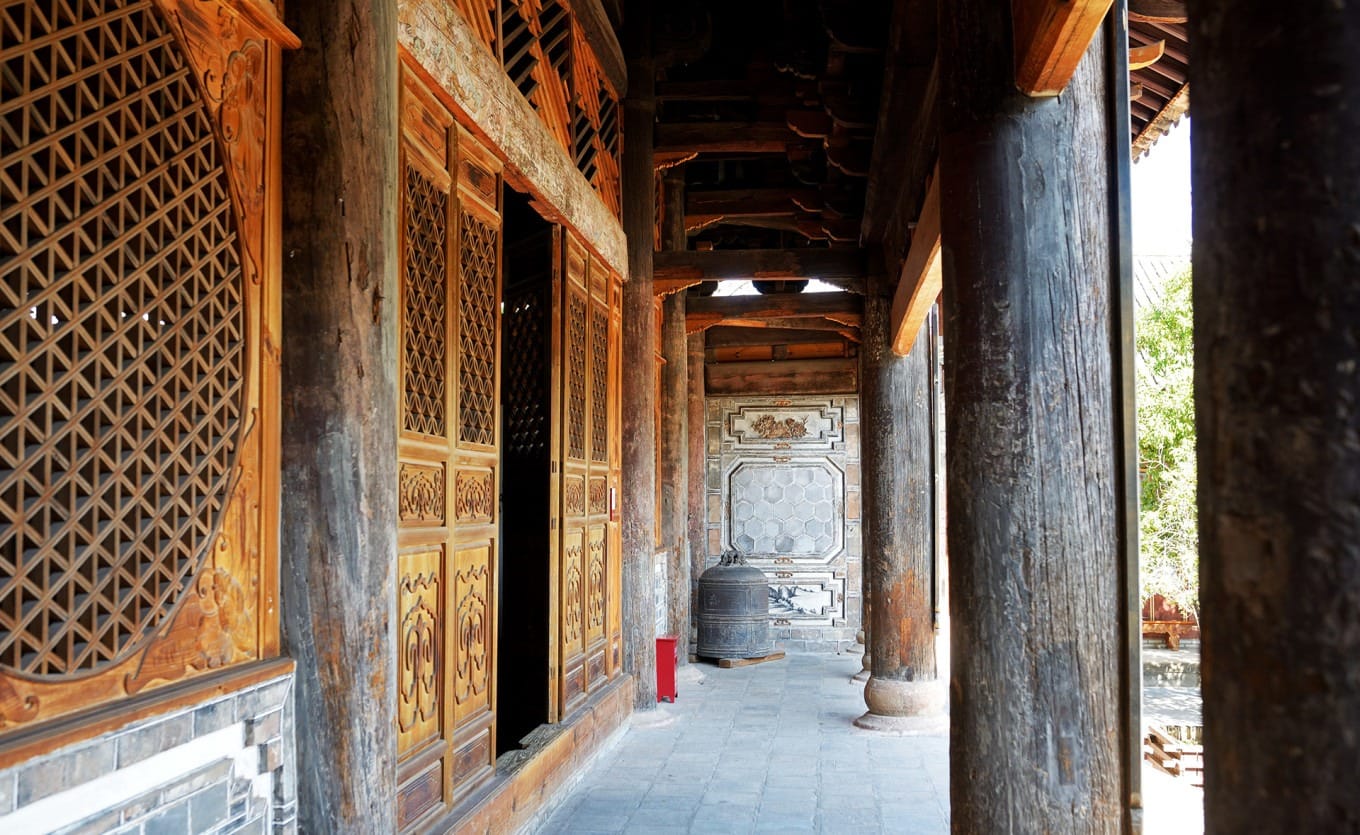
Despite being an early Ming construction, the Sun Palace retains strong stylistic echoes of Song Dynasty architecture. Its eaves sweep upwards in dramatically large curves, creating a sense of lightness and dynamism, as if the building itself is a giant roc ready to take flight.
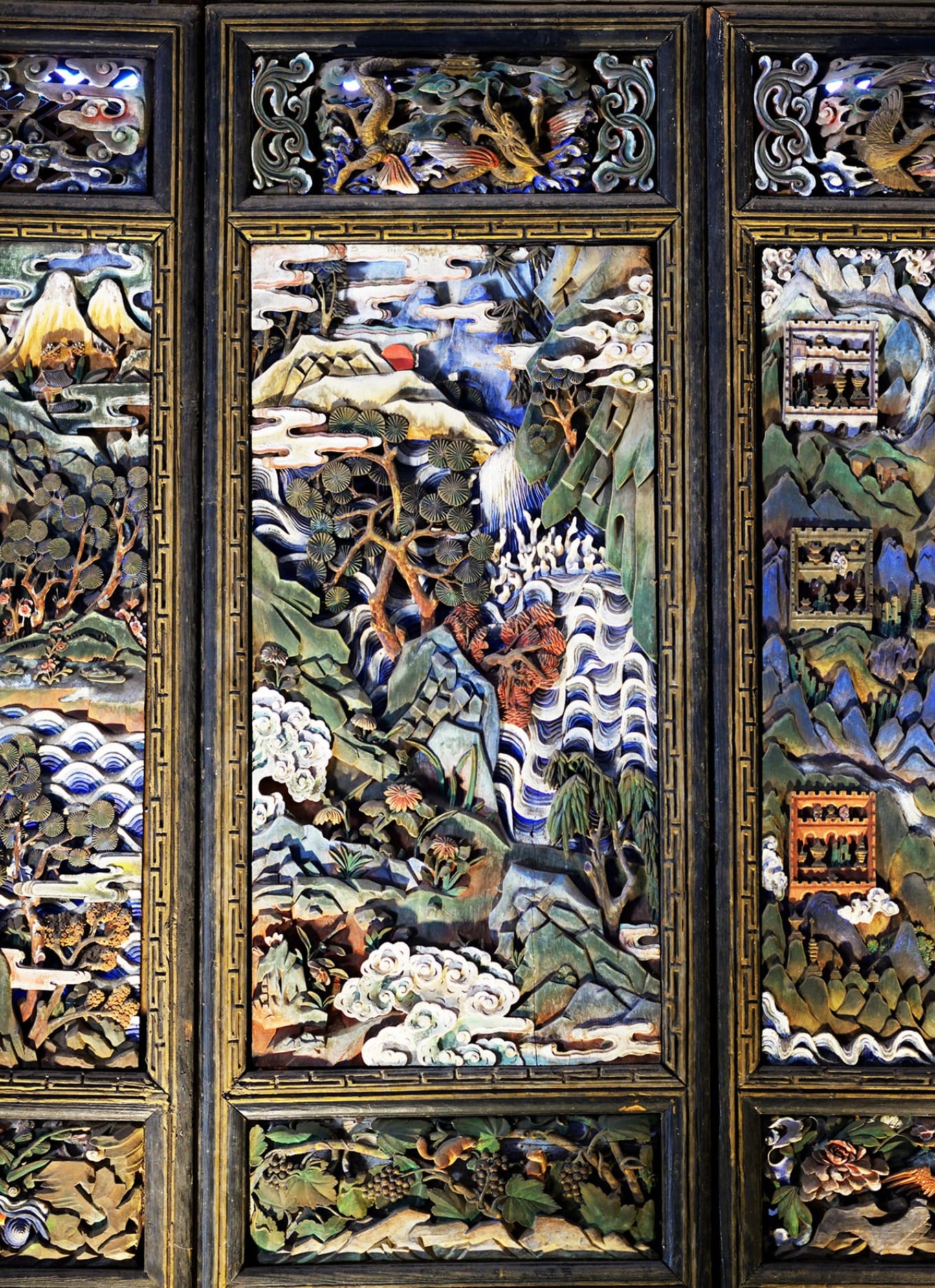
Housed within the Sun Palace is the museum’s true treasure: the Minglun Hall Partition Doors. This complete set of six Ming Dynasty wooden doors, each nearly three meters tall and about seventy centimeters wide, was originally installed in the Minglun Hall of the Weishan Confucian Temple. Look closely, and you’ll see each door is divided into five carved panels from top to bottom: the uppermost features auspicious animals like dragons, phoenixes, cranes, and tigers; the main panel depicts the four seasons or landscapes with temples and pagodas; and the three lower panels are adorned with floral patterns.
The doors employ a combination of 浮雕 (relief carving) and 透雕 (openwork carving), enhanced with vibrant colors to vividly portray seasonal scenery. The level of detail and craftsmanship is astonishing.
Also on display is a set of Hundred Longevity Characters Partition Doors (百寿图隔扇门 (local term), Hundred Longevity Characters Partition Doors), a Qing Dynasty wood carving. Originally a set of six, two are now missing. The lattice hearts of these doors are carved with one hundred different 篆刻 (seal-script) characters for “longevity” (寿 (local term)), making them a true artistic treasure.
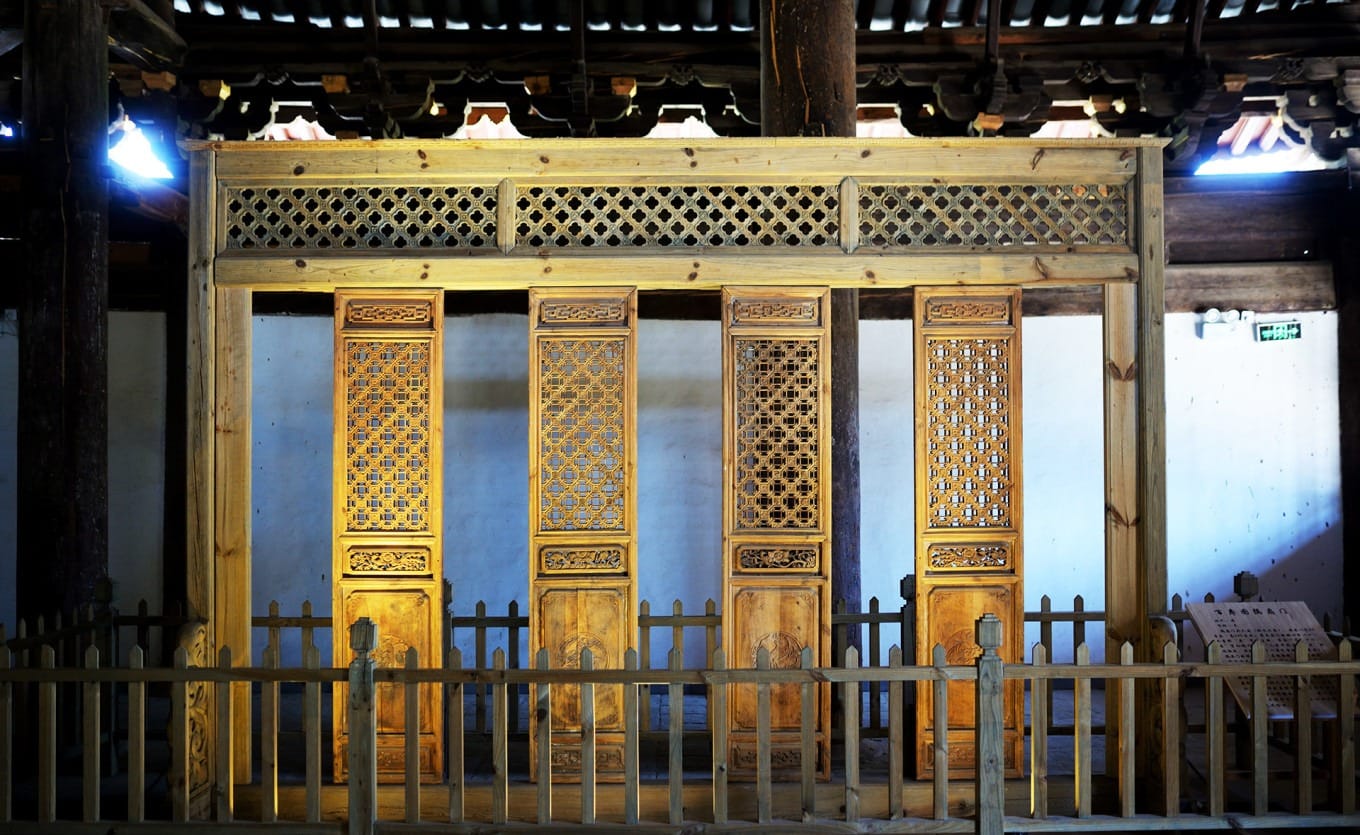
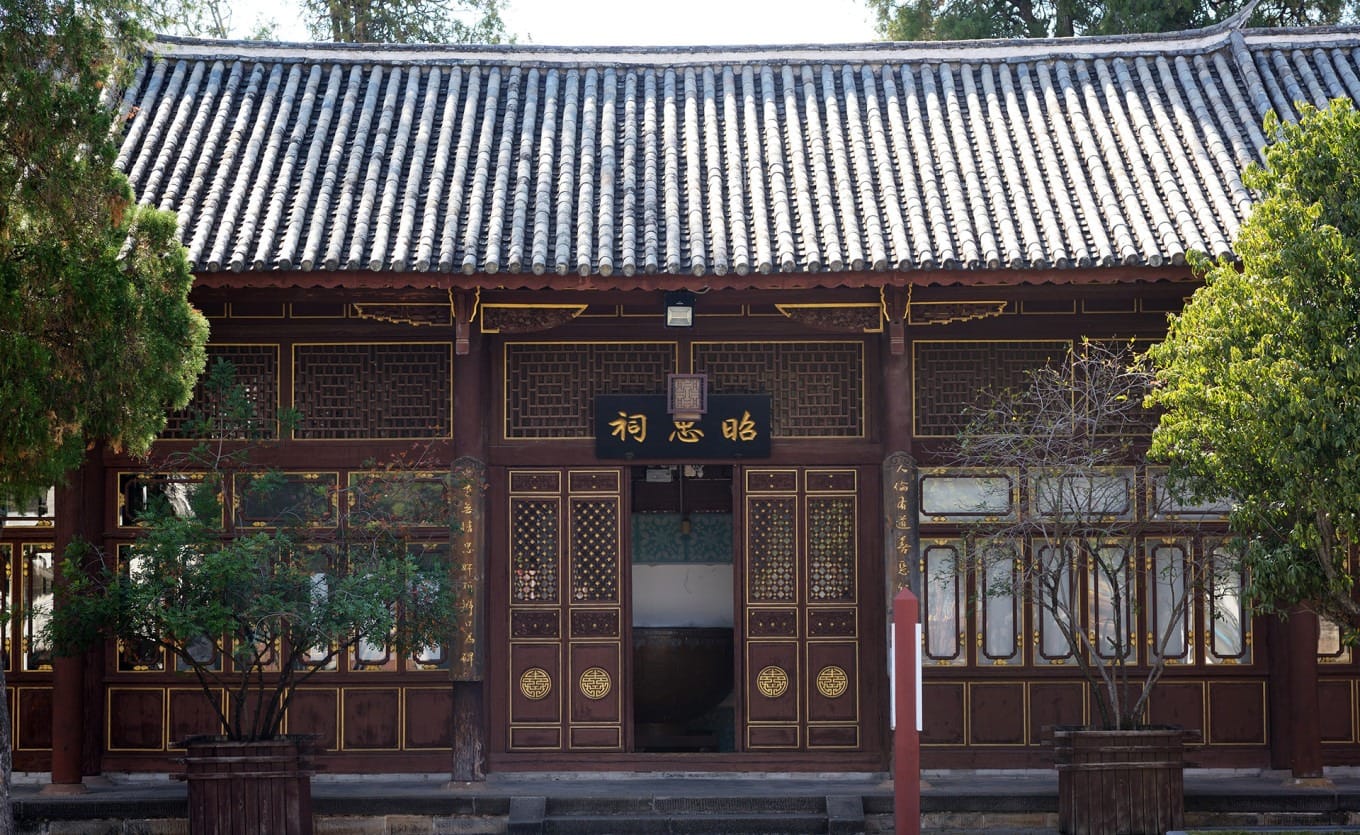
West of the Sun Palace stands the Zhaozhong Temple, built during the Qing Guangxu era to commemorate those who died in the Hui people’s uprising during the Xianfeng and Tongzhi reigns. It was later used in the Republican era to honor soldiers fallen in the War of Resistance against Japan. Opposite it is the Lingong Temple, originally dedicated to Lin Zexu, who served as Viceroy of Yun-Gui. Both halls now serve as the museum’s thematic exhibition spaces.
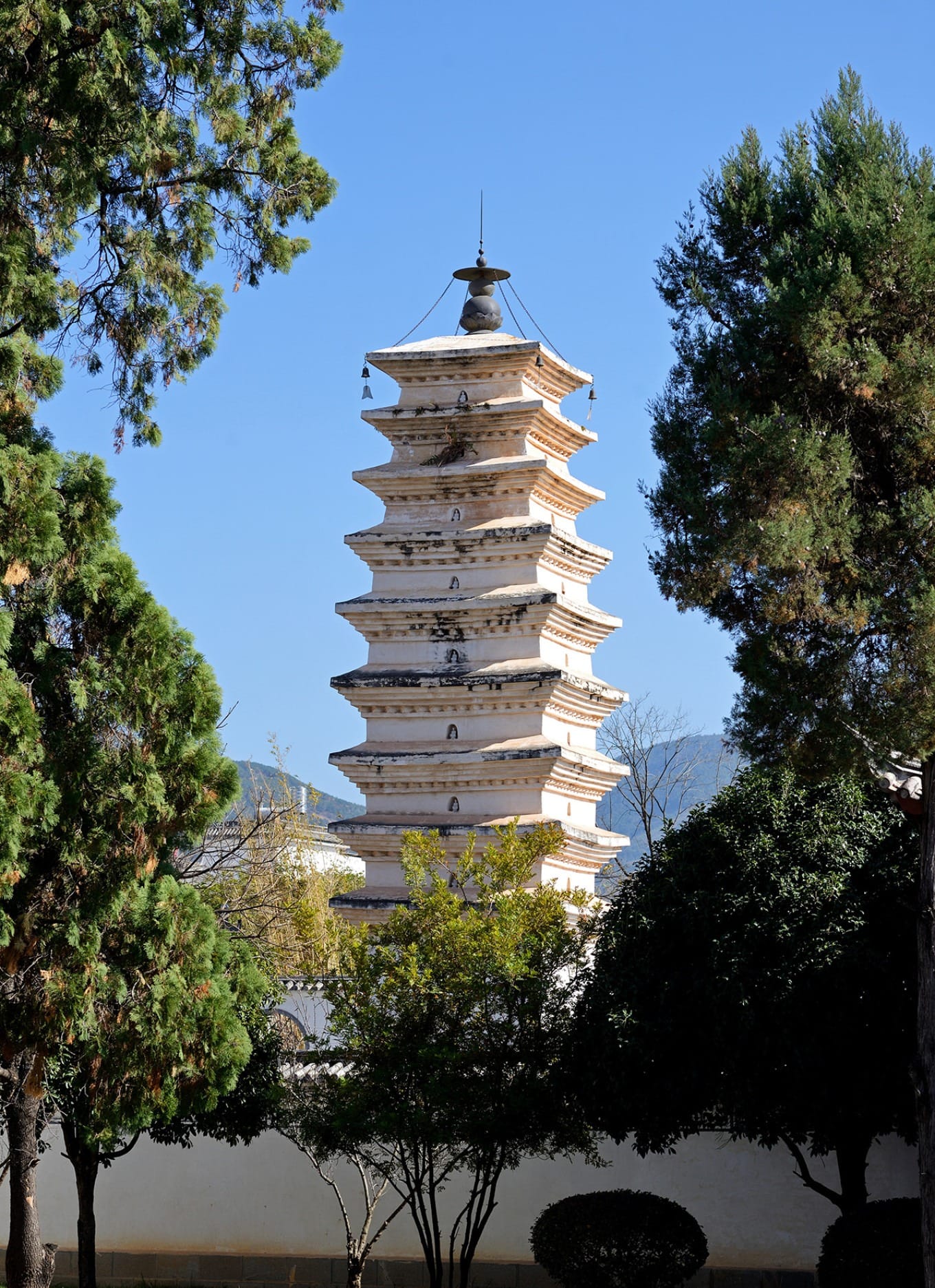
In front of the Dengjue Temple site stand two white pagodas, the Twin Pagodas. Like the Sun Palace, they are Ming Dynasty relics. Built in 1465 (the first year of the Ming Chenghua era) by native prefect Zuo Lin and his mother, Lady Zhang, they flank the temple’s former mountain gate. Both are nine-story, dense-eave, square brick pagodas of identical design.
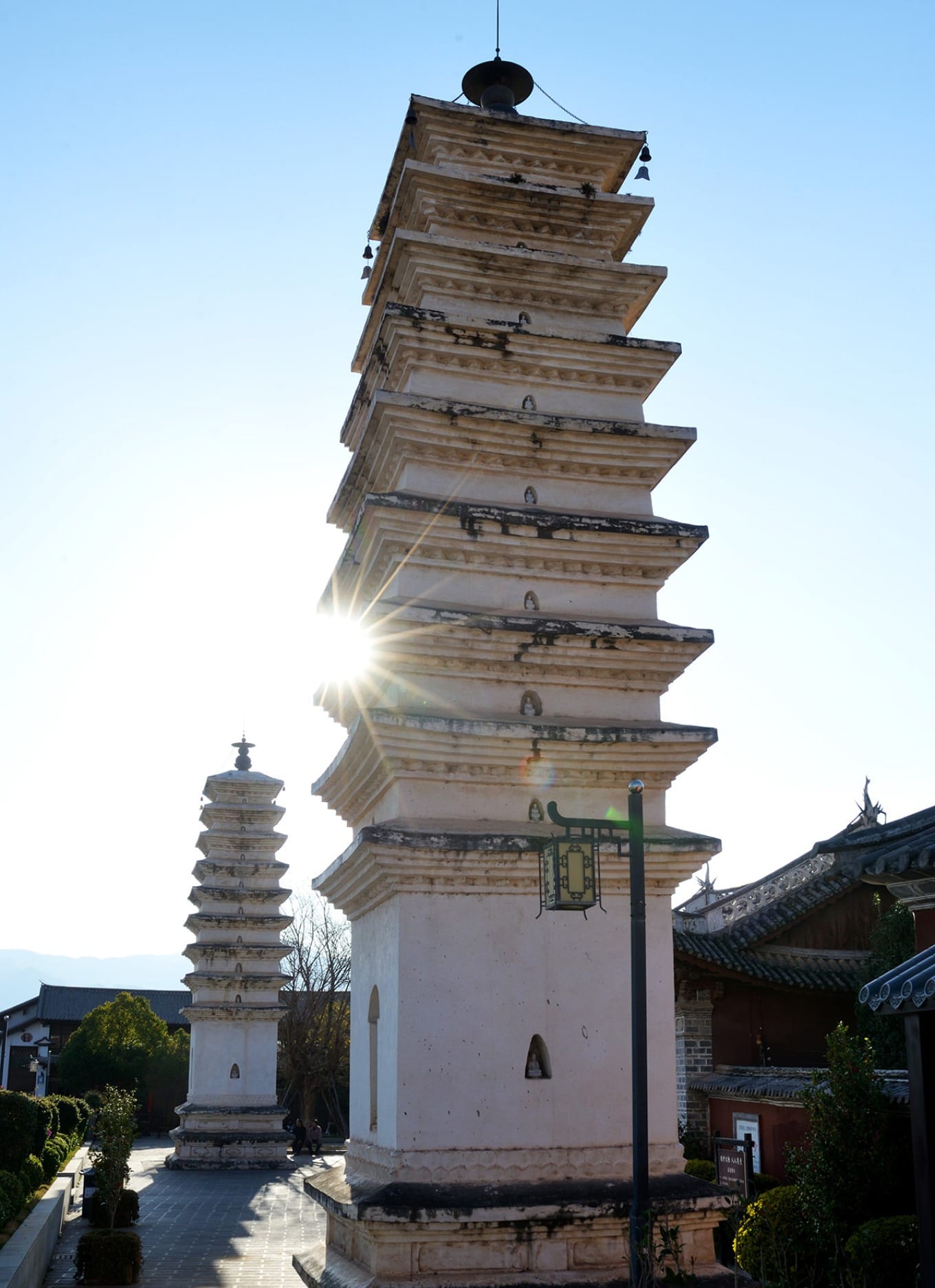
The Twin Pagodas suffered severe damage in the past: the west pagoda lost its pinnacle and finial, while the east pagoda was reduced to just its base and the lowest two stories. The pagodas you see today were successfully restored a few years ago, not only recovering their Ming Dynasty appearance but also adding a 庄严古朴 (solemn and antique) atmosphere to the ancient city of Weishan.
- RestaurantWeishan Nanzhao Museum (巍山南诏博物馆)
- Address1 Baoguo Street, Nanzhao Town, Weishan Yi and Hui Autonomous County, Dali Bai Autonomous Prefecture, Yunnan, China.
- Average spendFree admission.
Shaxi Food Guide
While soaking in Dali’s famously relaxed pace, don’t miss the chance to explore the region’s authentic local cuisine. Shaxi, a charming ancient town, is sometimes humorously called Dali’s ‘food desert’ by travelers, especially when compared to culinary hotspots like Weishan. It’s true that Shaxi’s dining scene is less developed than other parts of Dali, but finding good food here is no longer a challenge for visitors.
The restaurants in Shaxi generally fall into two categories. The first type caters primarily to locals, offering authentic flavors in simple, no-frills settings. The second type targets tourists, with more atmospheric decor and curated menus. Several popular, well-reviewed establishments in this latter category serve dishes that consistently satisfy travelers looking for a tasty meal.
Practical tip: You can prioritize one signature stop around the area, and you should adjust timing and budget based on transport and peak hours.
Three Fish Original Handmade Snacks
In Yunnan, the local love for rice shines brightest at breakfast, with one standout dish being bā ròu ěr sī (pounded meat rice noodles). For a taste of this specialty in Shaxi, head to Three Fish Original Handmade Snacks (三条鱼原创手作小吃). Despite its quirky, slightly anime-inspired name, this is a down-to-earth local breakfast spot that’s gained quite a following.
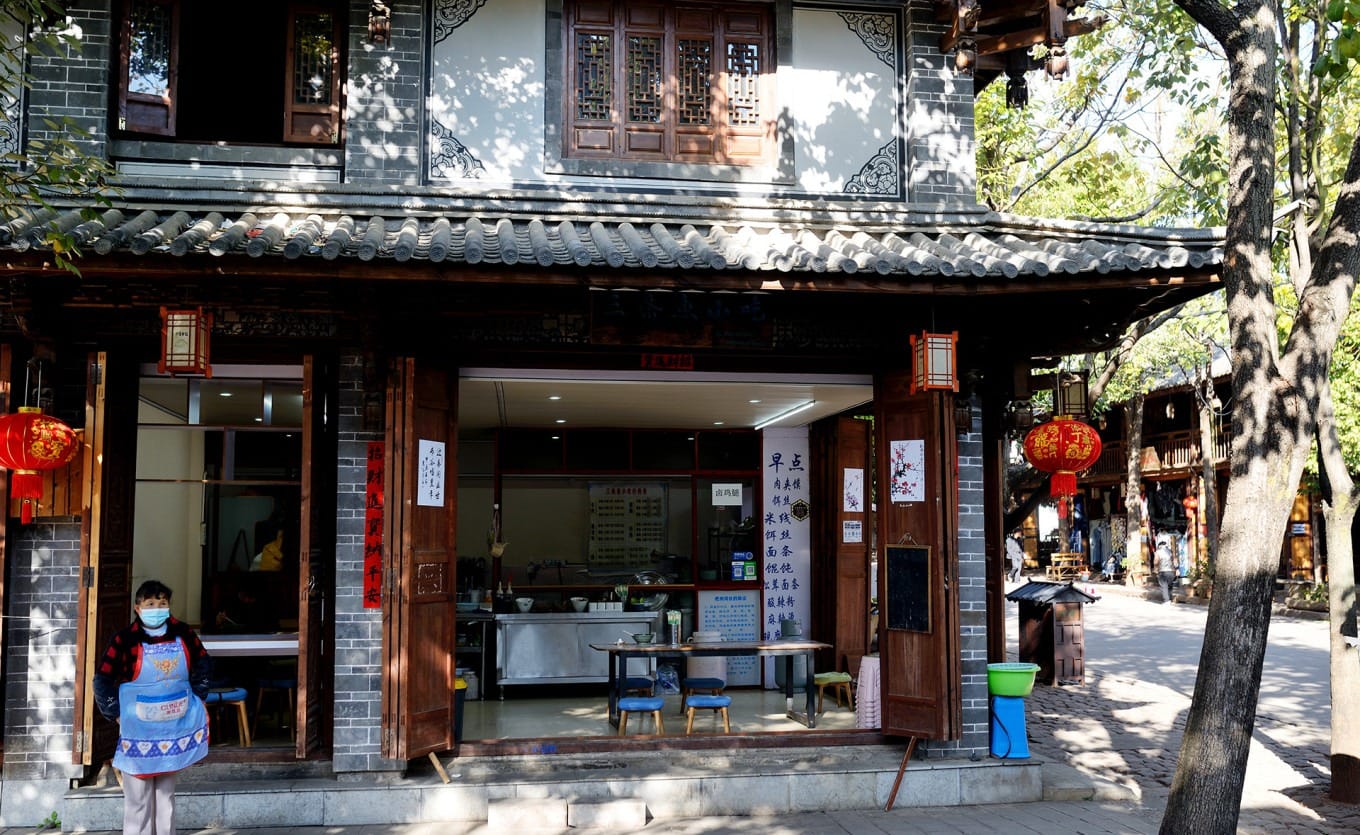
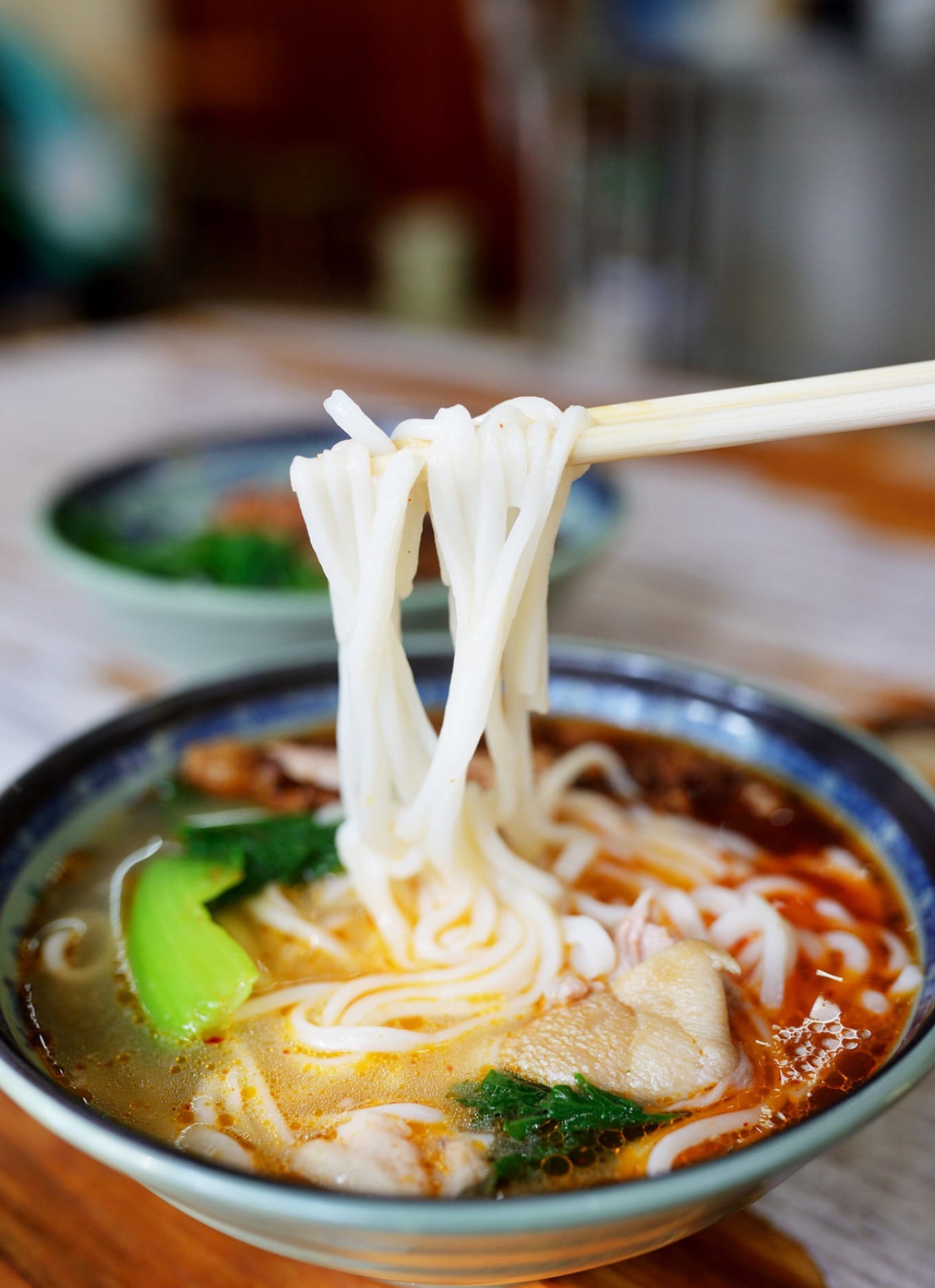
While people in southern and central Yunnan often prefer mǐ xiàn (rice noodles), here in western Yunnan, particularly around Dali and Jianchuan, ěr sī (rice ribbon noodles) reign supreme. Locals craft them from huā gǔ mǐ (flower valley rice), first making a rice cake, then hand-cutting it into soft, chewy ribbons. Before serving, the noodles are kept under a damp cloth, briefly blanched in boiling water, and ladled with a clear, savory broth. The result is a bowl where snow-white noodles float in a light, non-greasy soup, often topped with a rich-looking red oil that’s surprisingly mild.
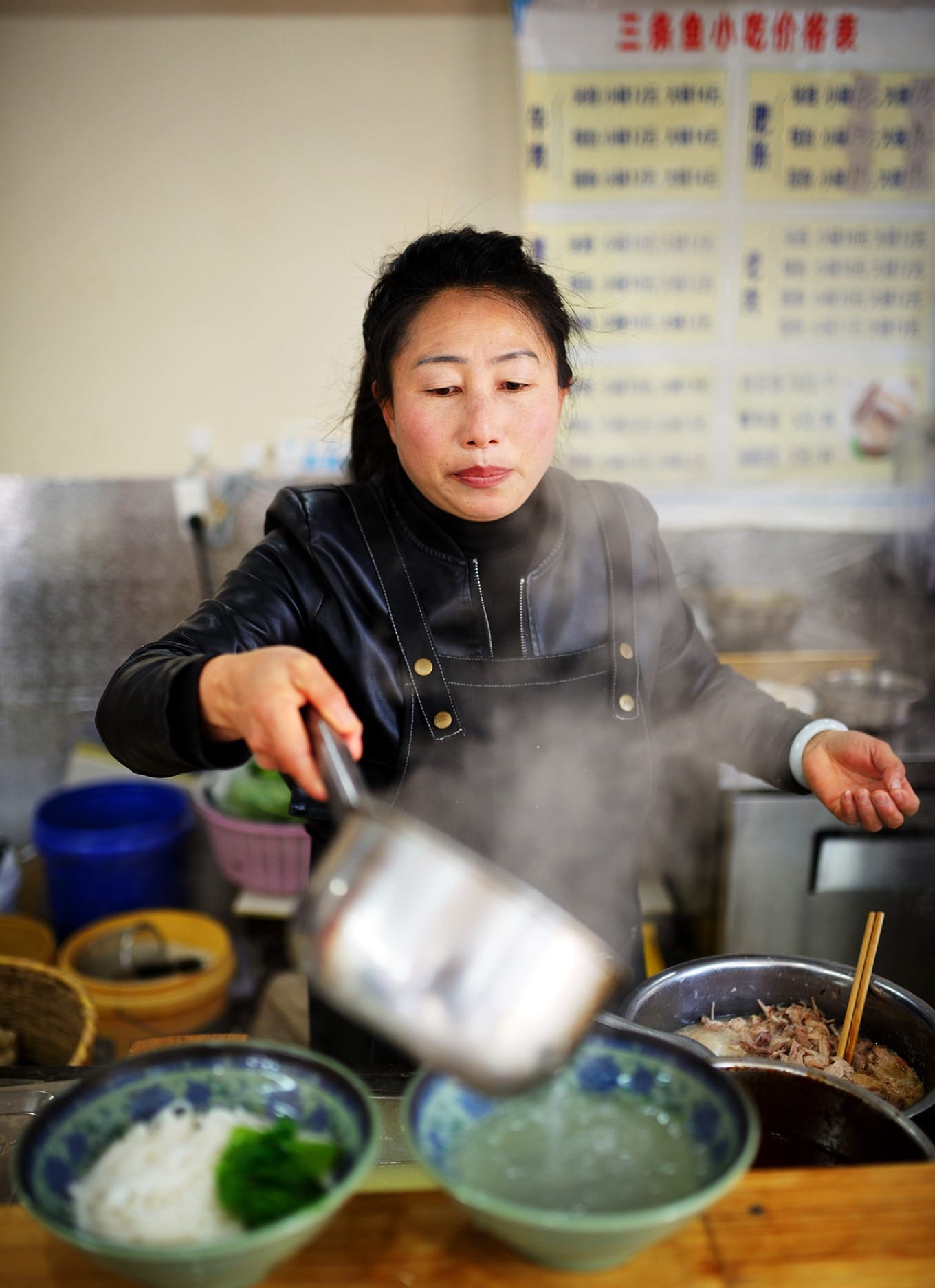
The topping, locally called a ‘mào zi’ (hat), completes the dish. The signature order here is bā ròu ěr sī (pounded meat rice noodles). This goes beyond the basic version with zá jiàng lǔ ròu (minced meat braised pork) by adding ‘bā ròu’—slow-braised pork leg so tender it melts in your mouth. One slurp wraps your taste buds in a wave of meaty fragrance and rich broth, an utterly satisfying experience.
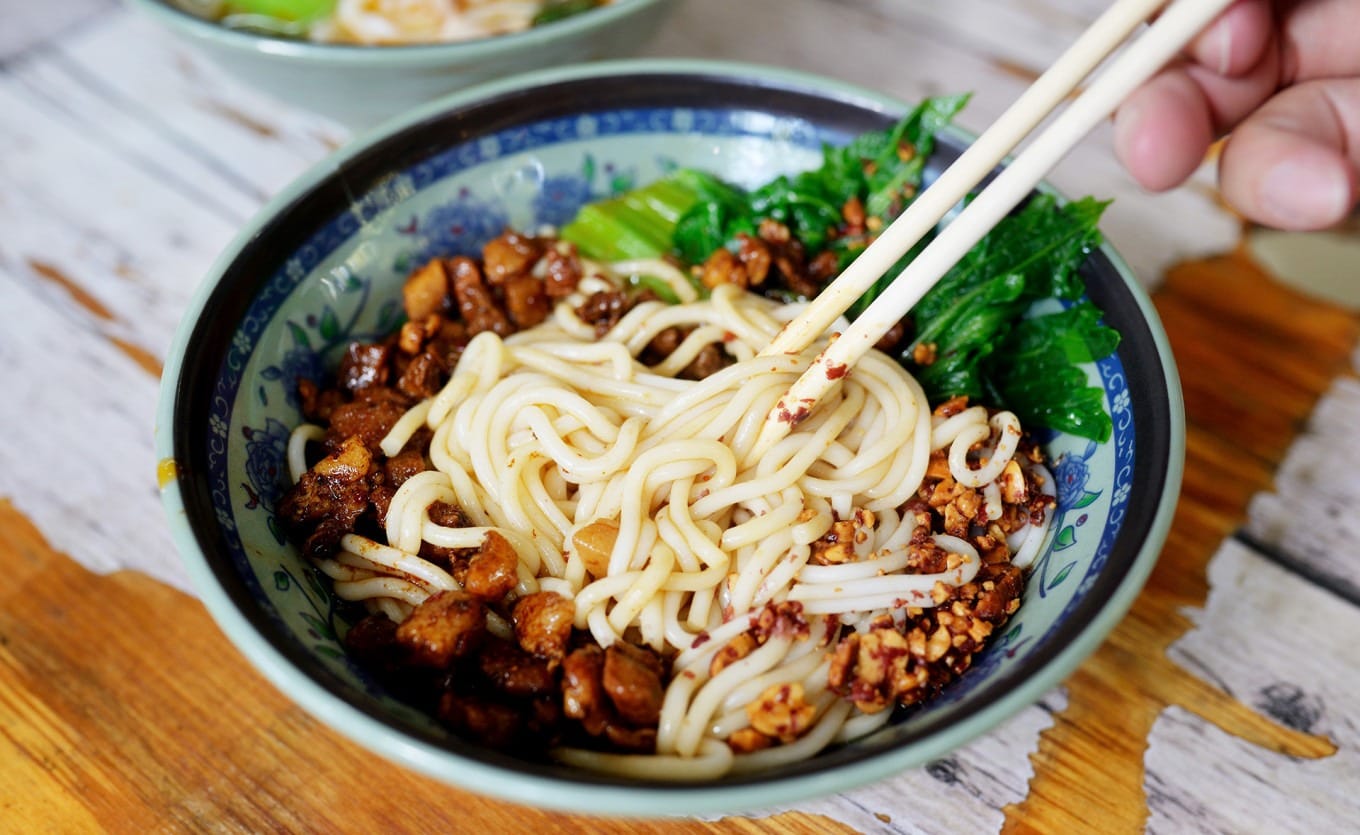
For comparison, you can also try their lǔ ròu mǐ xiàn (braised pork rice noodles), served cold-tossed with the same zá jiàng lǔ ròu topping. Compared to the soft, glutinous texture of ěr sī, the mǐ xiàn offers a smoother, more slippery mouthfeel, equally fragrant and delicious.
- RestaurantThree Fish Original Handmade Snacks (三条鱼原创手作小吃)
- Address大理白族自治州剑川县沙溪古镇寺登街十字路口 / Sideng Street Crossroads, Shaxi Old Town, Jianchuan County, Dali Bai Autonomous Prefecture
- Recommended dishesb r u r s pounded meat rice noodles , l r u m xi n braised pork rice noodles (菜名)
- Average spend10 CNY
Youyi Village Restaurant: Authentic Shaxi Flavors
When exploring Shaxi’s dining scene, you’ll find many small restaurants specializing in local cuisine. Among them, Youyi Village Restaurant (又一村饭店) stands out for its authentic flavors and excellent value. This unassuming spot is a favorite among locals, offering a menu where you can confidently order almost any dish without disappointment.

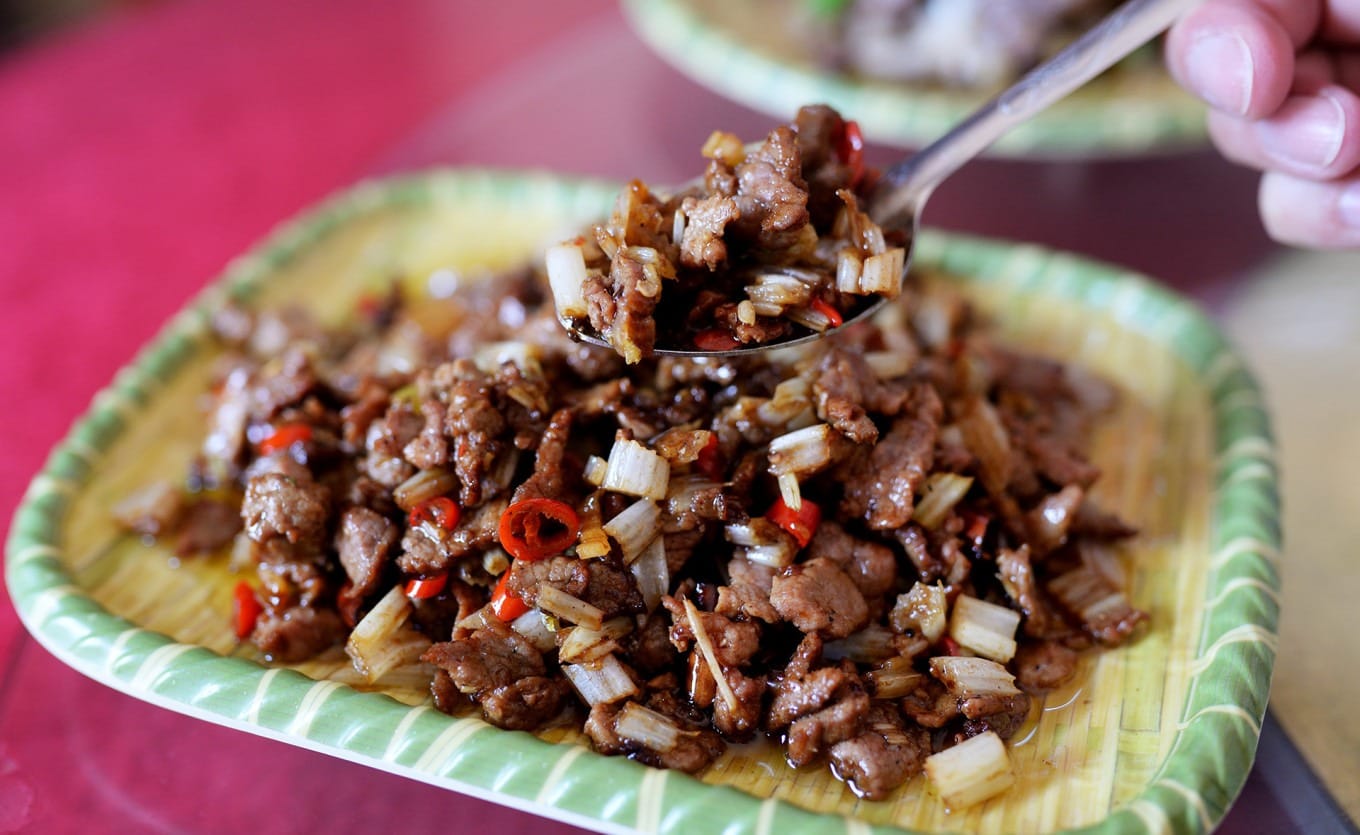
The restaurant’s signature dish is stir-fried beef (小炒牛肉, xiǎo chǎo niú ròu), which takes advantage of the region’s abundant yellow cattle. The beef is chopped into small, almost minced pieces and wok-fried at high heat to develop intense wok hei (breath of the wok). It’s then combined with Dali white celery and peppers, adding layers of flavor and texture. The result is a slightly spicy, aromatic dish that pairs perfectly with rice.
Another popular choice is stir-fried pork liver (爆炒猪肝, bào chǎo zhū gān), which requires precise cooking timing. Thinly sliced liver arrives at your table with that same beautiful wok hei while maintaining a tender, delicate texture. It’s a must-try for those who appreciate well-executed classic dishes.

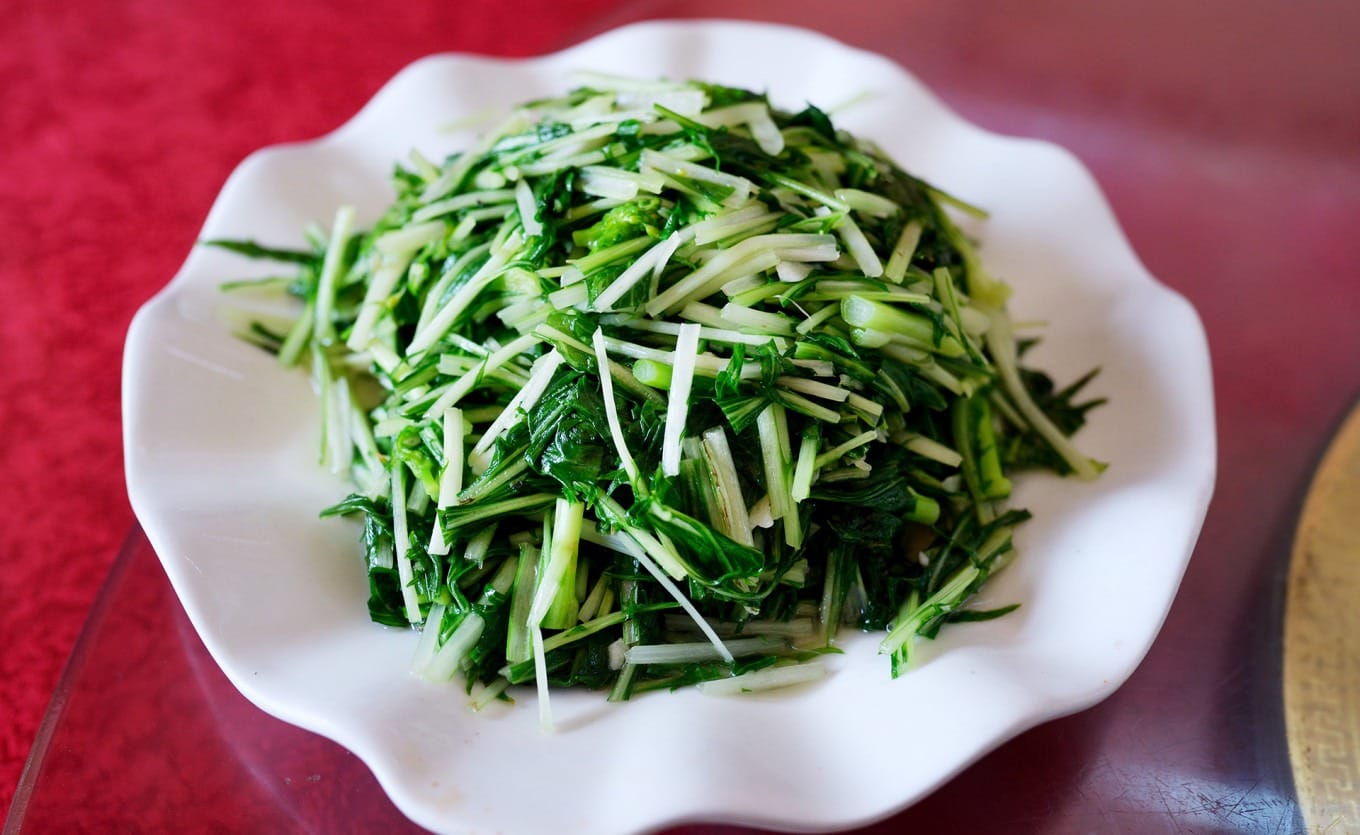
For vegetables, consider trying golden silk vegetable (金丝菜, jīn sī cài), which the restaurant recommends. Also known as sesame vegetable or arugula (rocket in Western salads), this Dali specialty is simply stir-fried to highlight its natural freshness and crisp texture. Though it looks humble, its clean, refreshing taste provides a perfect balance to the richer meat dishes.
- RestaurantYouyi Village Restaurant (又一村饭店)
- AddressYutalu, Shaxi Ancient Town, Jianchuan County, Dali Bai Autonomous Prefecture, Yunnan (玉塔路)
- Recommended dishesStir-fried beef (小炒牛肉), Stir-fried pork liver (爆炒猪肝), Golden silk vegetable (金丝菜)
- Average spend¥50 per person
Longfeng Ruiying Halal Restaurant
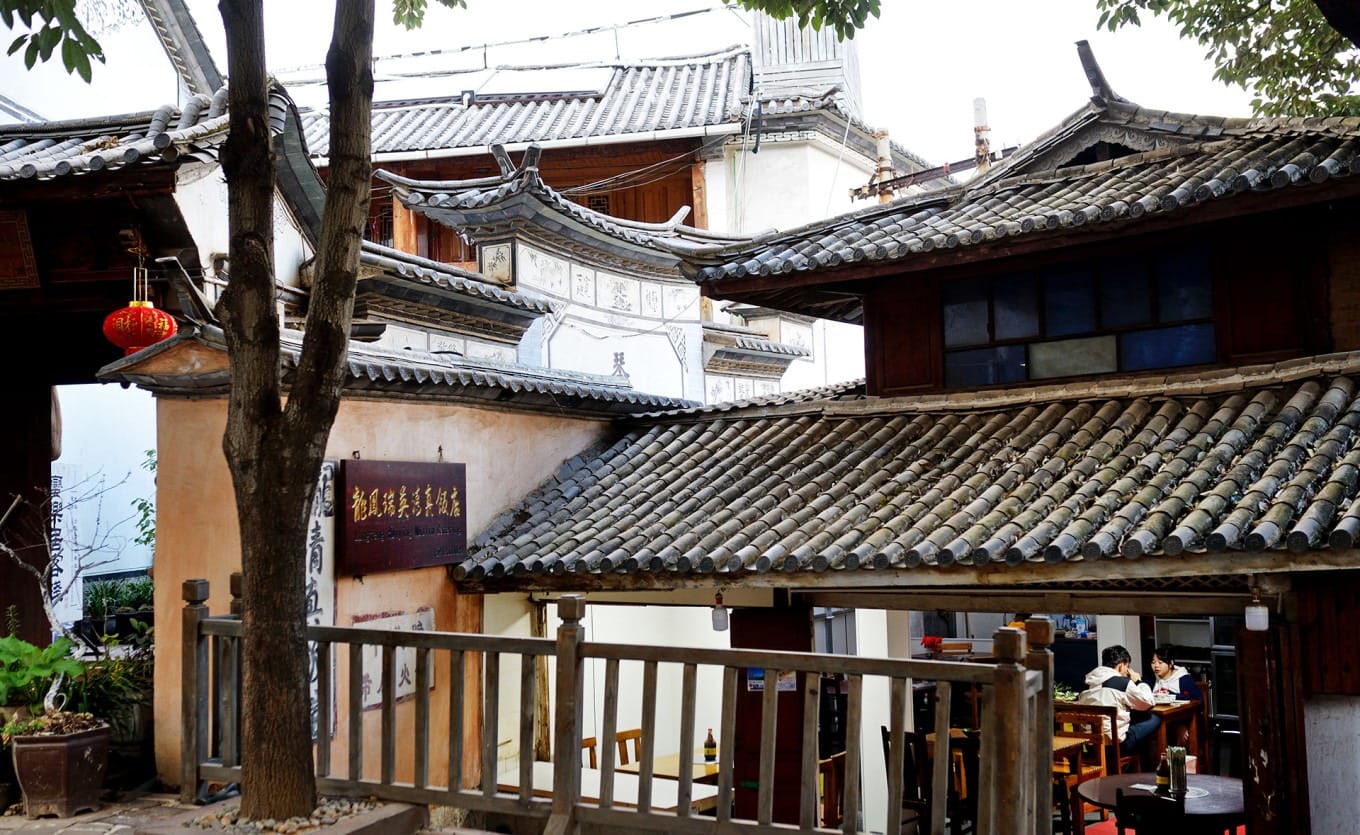
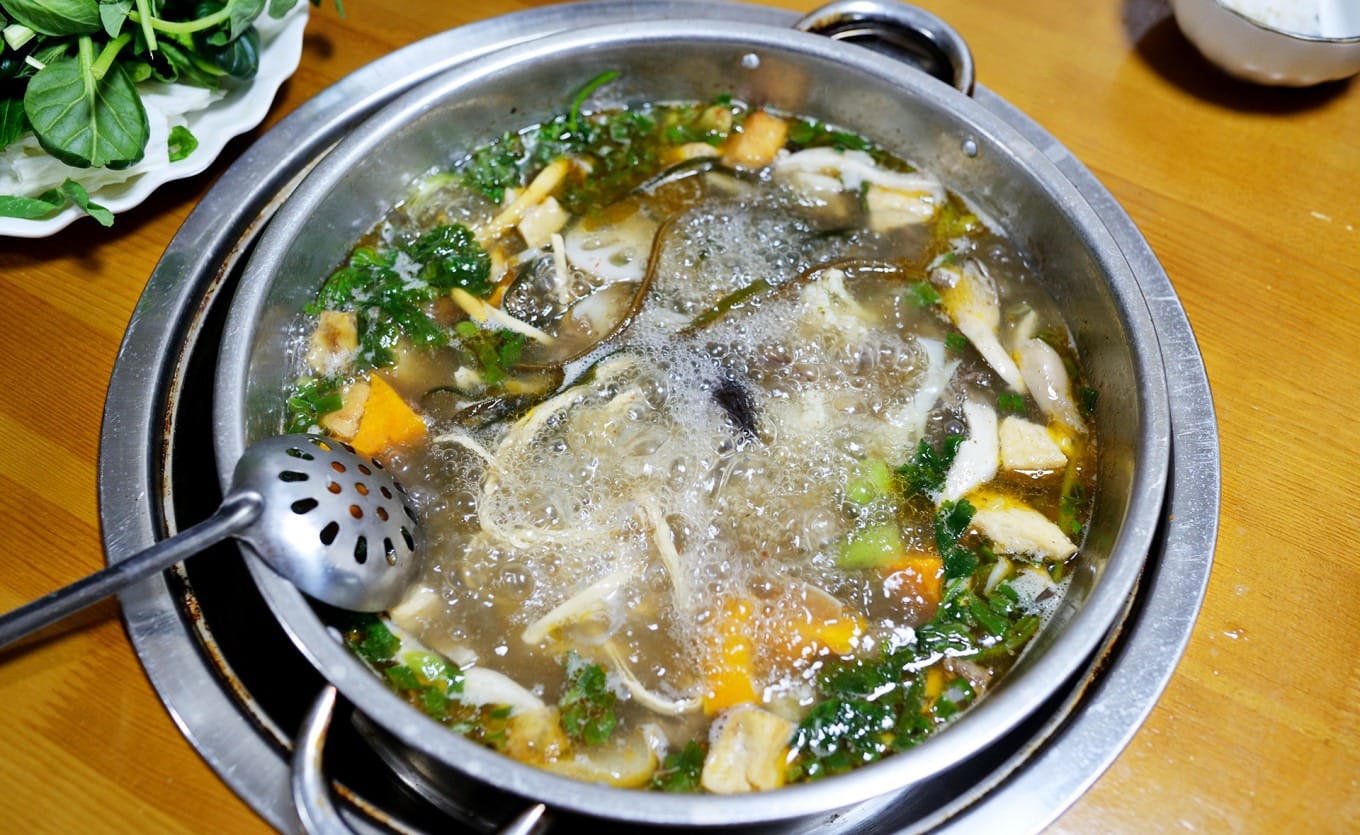
For an authentic taste of Shaxi’s local dining scene, head to Longfeng Ruiying Halal Restaurant (龙凤瑞英清真饭店). This long-standing halal eatery is a typical neighborhood spot—unpretentious, affordable, and located right next to the town post office. You can choose from a range of stir-fried dishes, but their beef hotpot is the star attraction, with the kitchen preparing a portion suited to your group size.
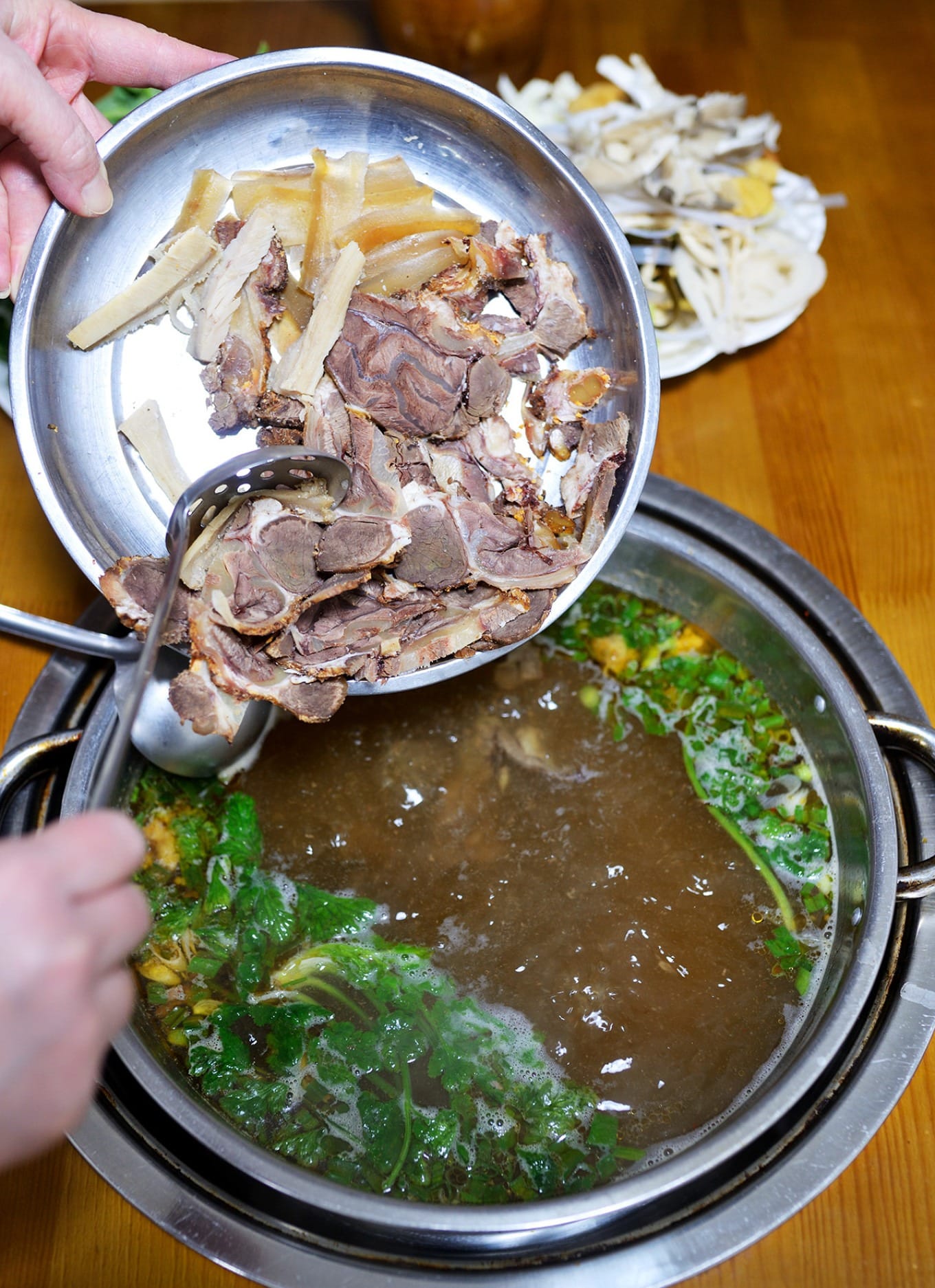
The hotpot here is a local specialty reminiscent of the copper-pot beef dishes found across western Yunnan. Served in a simple iron pot rather than ornate copper, this style of cooking is said to have originated with the caravan drivers along the ancient Tea Horse Road. The pot comes loaded with pre-cooked yellow beef, including cuts like skin-on beef, tendon, and tripe, all simmering together to create an incredibly aromatic broth.
- RestaurantLongfeng Ruiying Halal Restaurant (龙凤瑞英清真饭店)
- Address150 meters southwest of the intersection of Sideng Street and County Road 084, Shaxi Old Town, Jianchuan County, Dali Bai Autonomous Prefecture, Yunnan, China (云南省大理白族自治州剑川县沙溪古镇寺登街与084县道交叉口西南150米)
- Recommended dishesBeef hotpot (牛肉火锅), Sliced cold beef (牛肉凉片), Tripe (牛肚), Beef tendon (牛筋)
- Average spend¥50 per person
First Encounter with Shaxi Private Kitchen
When exploring Shaxi Ancient Town, you’ll want to visit 初见沙溪私房菜 (local term) (First Encounter Shaxi Private Kitchen (初见沙溪私房菜)), a popular restaurant known for its refined decor and fusion approach to local cuisine. The menu adapts traditional dishes to suit broader tastes, earning it excellent online reviews. Be aware that it’s often busy even during the low season, so arriving late might mean no table. If you’re visiting during peak times, booking ahead is essential.

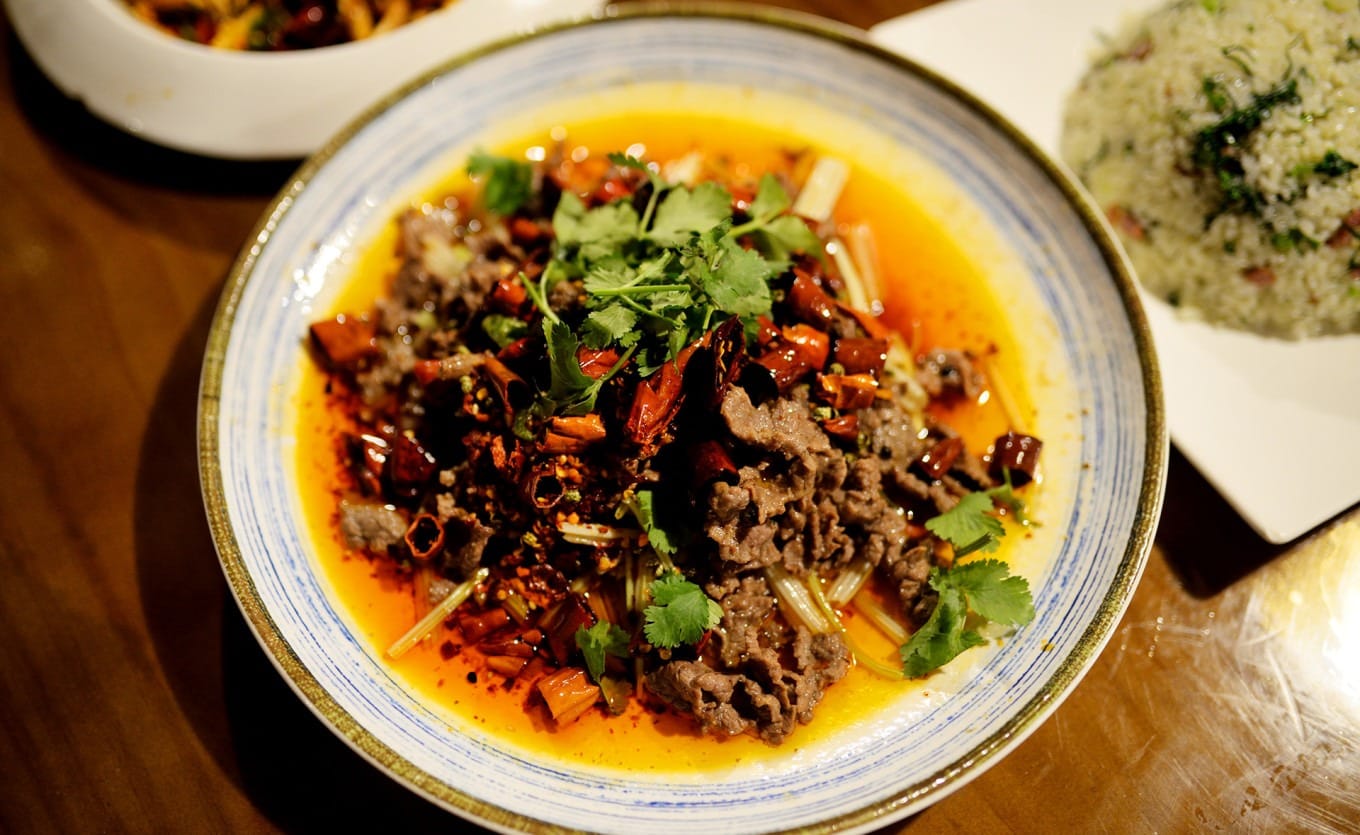
Start with their signature dish: 炝香牛肉 (Fragrant Stir-fried Beef). While it uses Dali white celery and chilies like other local beef dishes, this version stands out for its tender, chewy texture and rich, aromatic red oil sauce that pairs perfectly with rice—you might find yourself going for extra servings.
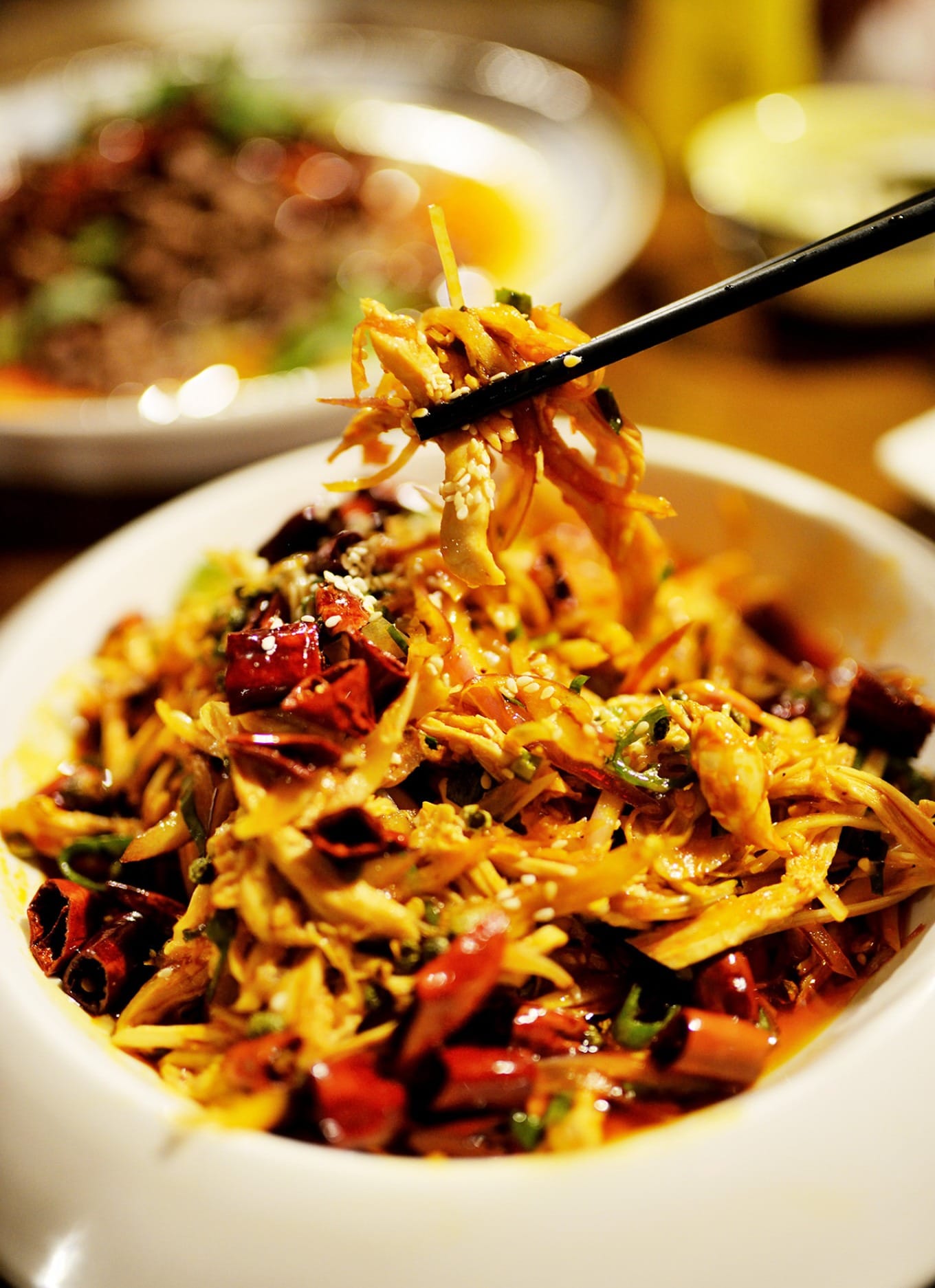
Another highlight is the 椒麻鸡 (Sichuan-Style Spicy Chicken), a cold appetizer that blends Sichuan peppercorn heat with Yunnan’s tangy spice. The numbing, sour, and spicy flavors create an addictive combination that keeps you reaching for more.
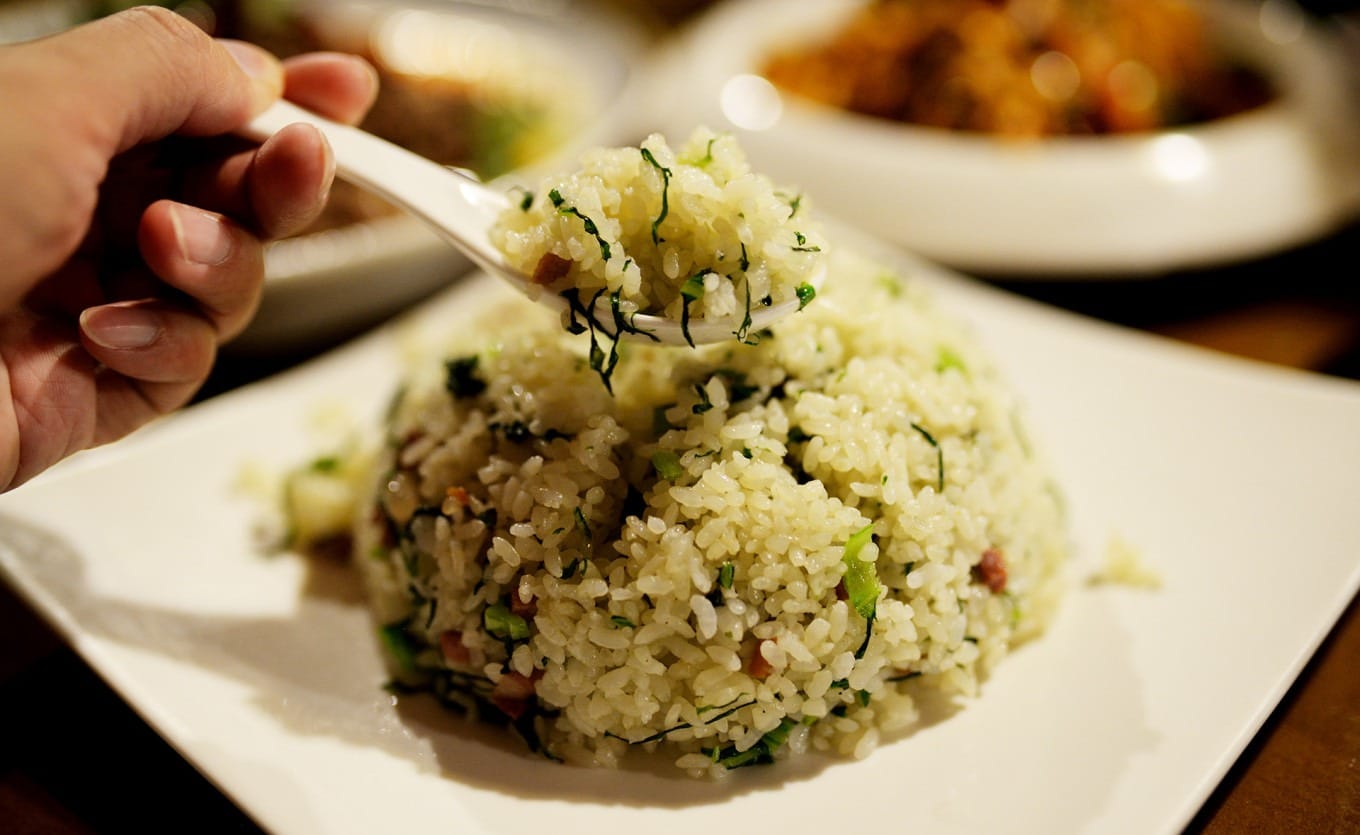
For a satisfying main, try the 老火腿素菜炒饭 (Old Ham and Vegetable Fried Rice). It’s remarkably light with minimal oil, yet each grain of rice remains separate and infused with wok aroma. Studded with small pieces of flavorful ham, it offers a hearty, comforting taste.
- Restaurant初见沙溪私房菜 (First Encounter Shaxi Private Kitchen)
- Address大理白族自治州剑川县沙溪古镇寺登街58号 / No.
- Recommended dishes炝香牛肉 (Fragrant Stir-fried Beef), 椒麻鸡 (Sichuan-Style Spicy Chicken), 老火腿素菜炒饭 (Old Ham and Vegetable Fried Rice)
- Average spend70 RMB
Xibao Shangfan Restaurant
For travelers seeking a memorable dining experience in Shaxi, Xibao Shangfan (喜宝赏饭) stands out as a popular destination known for its inviting atmosphere and creative cuisine. The restaurant boasts one of the most spacious and pleasant environments in the area, with a courtyard filled with lush plants that creates a warm, welcoming vibe.
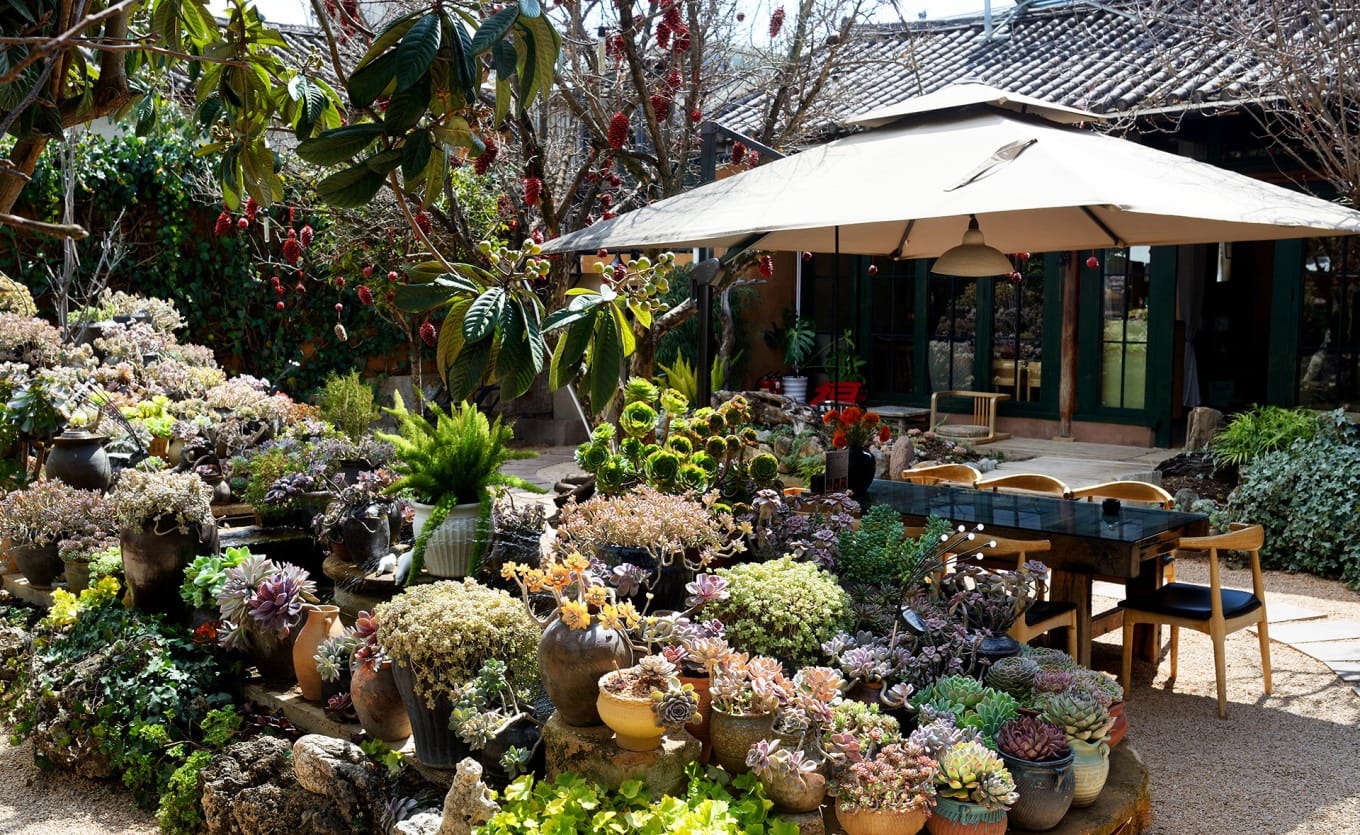
The menu focuses on fusion dishes that creatively blend local Bai cuisine with techniques from other culinary traditions, using fresh regional ingredients to produce unique flavors.

One must-try specialty is the Rushan Apple Tart (乳扇苹果塔). Rushan is a distinctive Dali snack—thin sheets of dried milk curd often described by the local saying, ‘Yunnan has eighteen peculiarities, one being milk sold in slices.’ Here, the chefs slice rushan into fine shreds and combine them with crisp apple strips, tossed in a salad dressing. The result is a delightful interplay of creamy dairy notes and refreshing apple sweetness that lingers pleasantly.
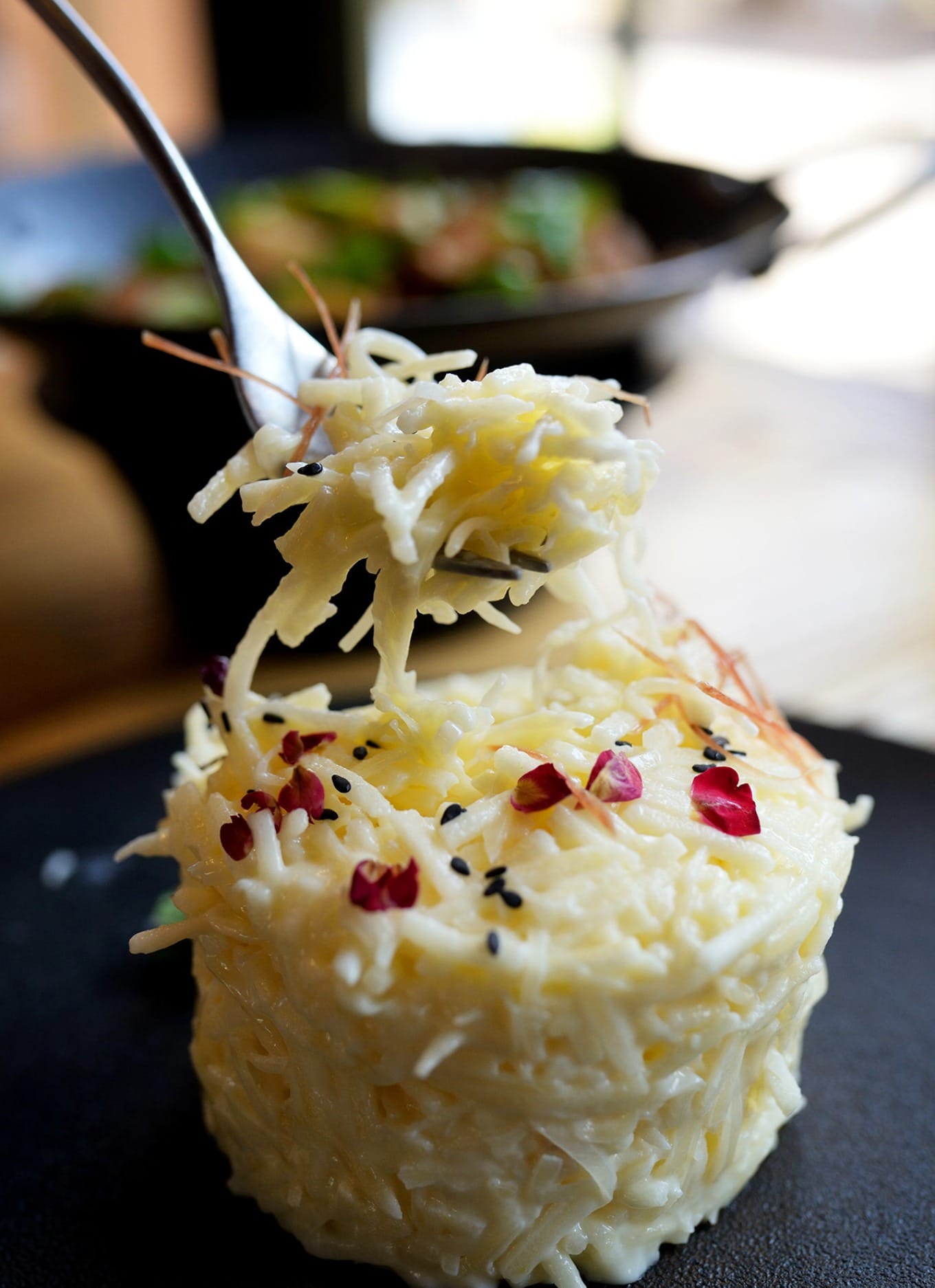
Another signature dish is the Mujiangzi Braised Chicken (木姜子油焖鸡). Mujiangzi, also known as mountain pepper or Litsea cubeba, imparts a distinctive aromatic spiciness common in Yunnan and Guizhou cuisine, especially in western Yunnan. The chicken is braised with mujiangzi oil, which infuses it with a rich, fragrant warmth that is robust yet not overpowering, offering a uniquely refreshing savory experience.
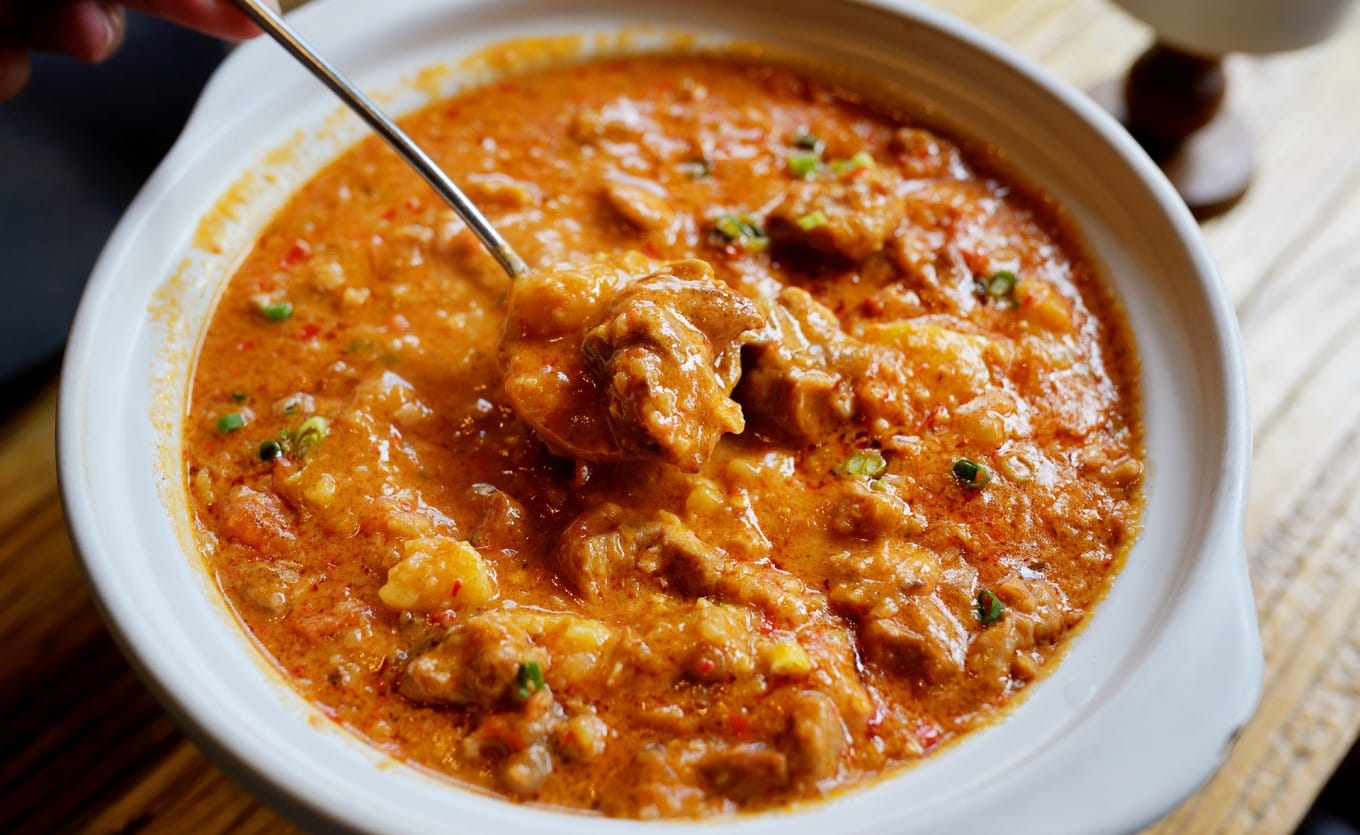
- RestaurantXibao Shangfan (喜宝赏饭)
- AddressNo.
- Recommended dishesRushan Apple Tart (乳扇苹果塔), Mujiangzi Braised Chicken (木姜子油焖鸡)
- Average spend¥80 per person
Xiang 12 Western Restaurant
Shaxi Town has earned a strong reputation among international backpackers, which means you’ll find several quality Western restaurants here. One standout is Xiang 12 Western Restaurant (芗12西餐厅), particularly famous for its exceptional burgers.
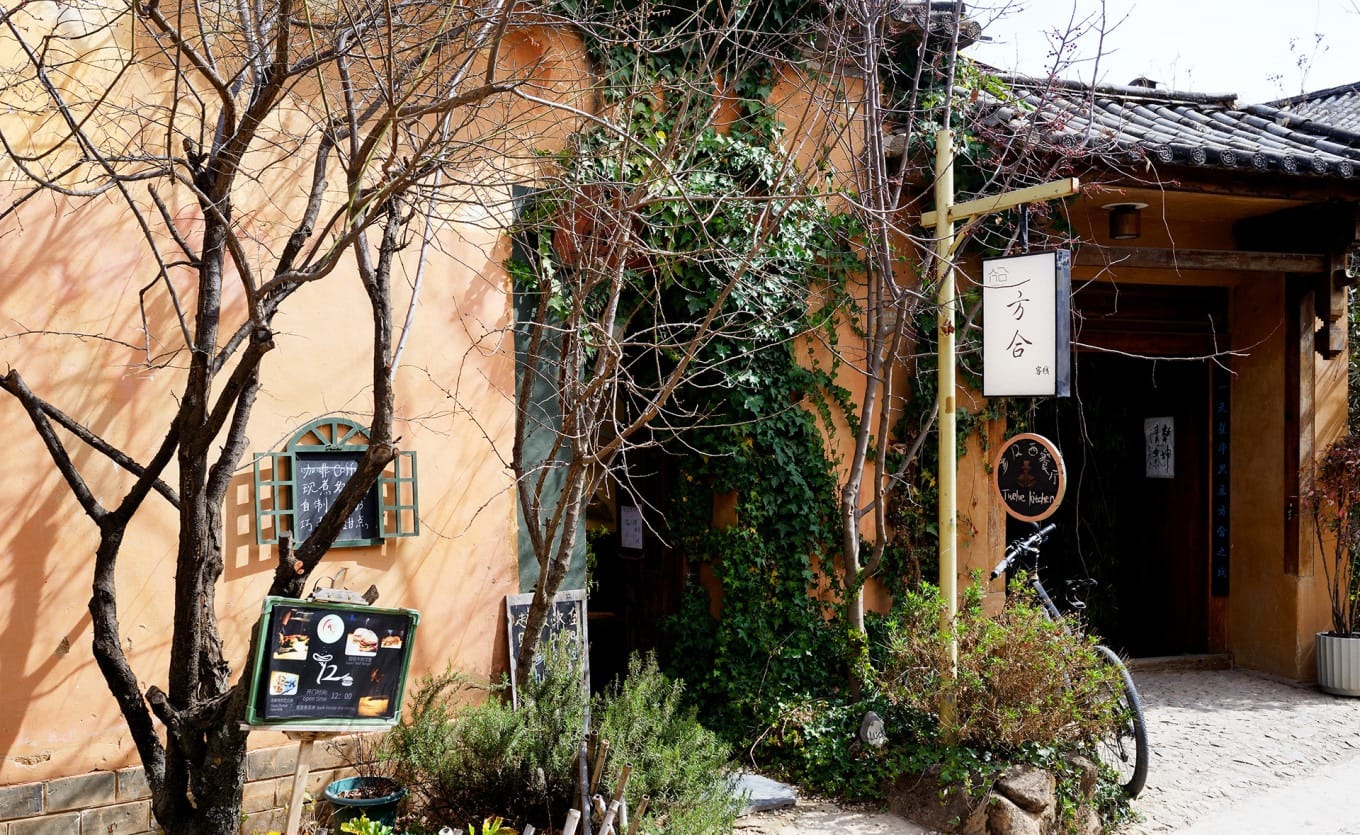
The menu at Xiang 12 is concise, focusing on burgers, pizzas, wraps, and cakes. The atmosphere is cozy and intimate, though the space is compact. Be mindful of their precise hours—they open daily at noon sharp, and popular items often sell out quickly if you arrive late.
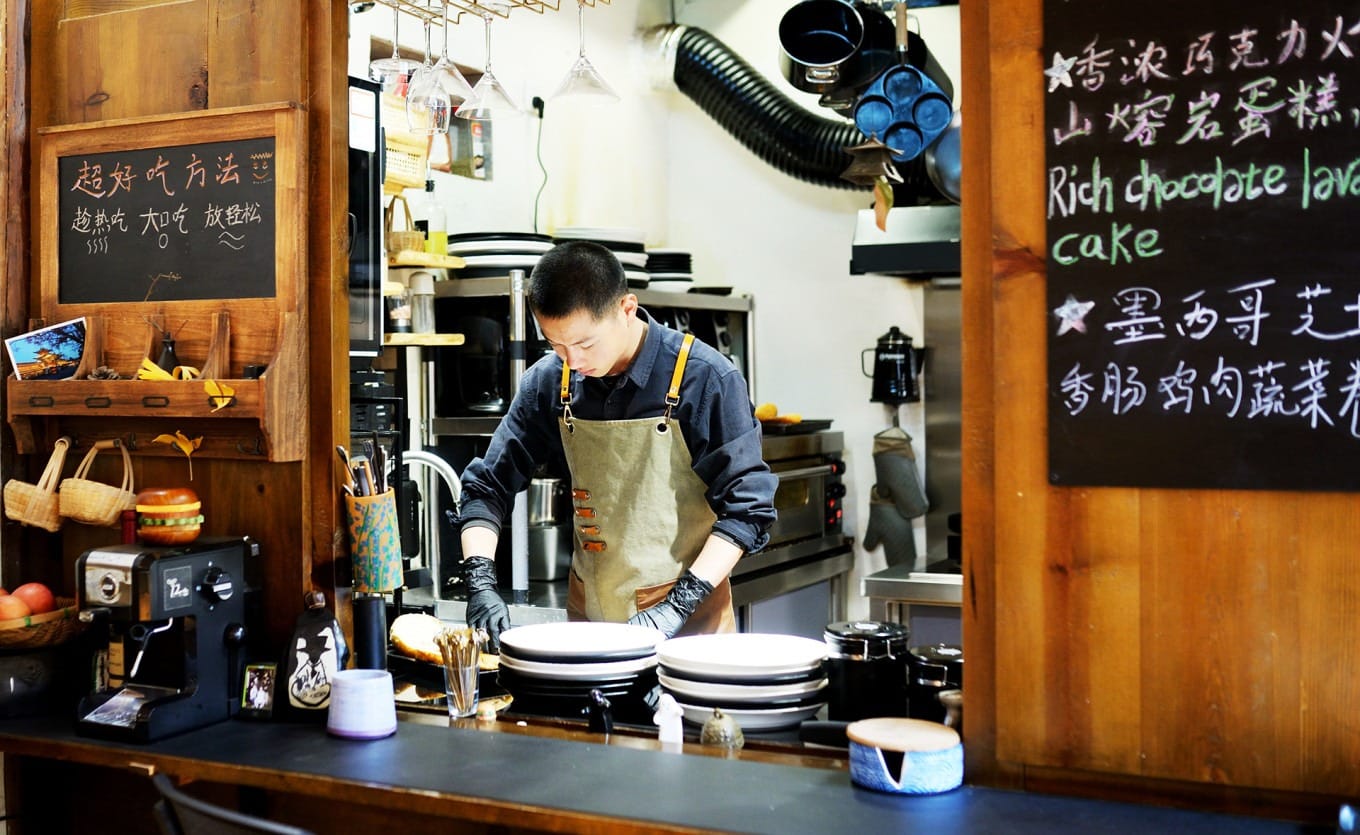
Their signature Super Beef Burger (超级牛肉堡) features a house-made semi-whole wheat bun and a patty made from local yellow cattle beef. While not overly thick, the patty is remarkably juicy. It’s layered with bacon, a secret sauce, and finely minced pickles, creating a wonderfully complex flavor profile that’s truly irresistible.

Another excellent choice is their Italian Salami Thin Crust Pizza (意大利萨拉米香肠薄饼). The crust achieves a perfect balance—crispy on the outside yet tender inside. The savory salami pairs beautifully with melted cheese, offering a deeply satisfying experience for any food lover.

- RestaurantXiang 12 Western Restaurant (芗12西餐厅)
- AddressNo.
- Recommended dishesSuper Beef Burger (超级牛肉堡), Italian Salami Thin Crust Pizza (意大利萨拉米香肠薄饼)
- Average spend60 CNY per person
Xizhou Food Guide: Beyond the Famous Pastry
When visiting Xizhou, you’ll quickly discover that the town’s culinary scene extends far beyond its most famous snack. While the renowned Po Su Baba (破酥粑粑) is a must-try, Xizhou’s rich history as a merchant hub and its abundant local produce have cultivated a deep and diverse food culture. This makes it an excellent destination for food-focused travelers exploring the Dali region.
You can find nearly all the popular Dali-area street foods here. Look for stalls and small restaurants serving Ru Shan (烤乳扇, grilled milk fan), Wan Dou Fen (豌豆粉, pea jelly), Zhua Zhua Fen (抓抓粉, a cold, chewy noodle salad), and Ji Si Mi Xian (鸡丝米线, shredded chicken rice noodles). The variety ensures you can sample a wide range of local flavors in one compact, walkable town.
To make the most of your visit, start by trying the signature Po Su Baba. Then, wander the old streets and explore the smaller eateries. Many offer set menus or combination plates, which are a great way to taste multiple dishes. Keep an eye out for places bustling with locals—this is often the best indicator of quality and authenticity.
Suxiangyuan Heshang Xizhou Posu Baba
When exploring Xizhou’s historic center, make sure to visit Suxiangyuan Heshang Xizhou Posu Baba (酥香园和尚喜洲破酥粑粑), a long-standing local institution on Sifang Street. The shop’s name includes ‘Heshang’—a nickname for the owner—and its posu baba (破酥粑粑) enjoys a stellar reputation throughout the region. Often called the ‘Eastern pizza,’ this flaky, layered wheat-flour baked flatbread is one of Xizhou’s—and indeed Dali’s—most iconic culinary treasures.
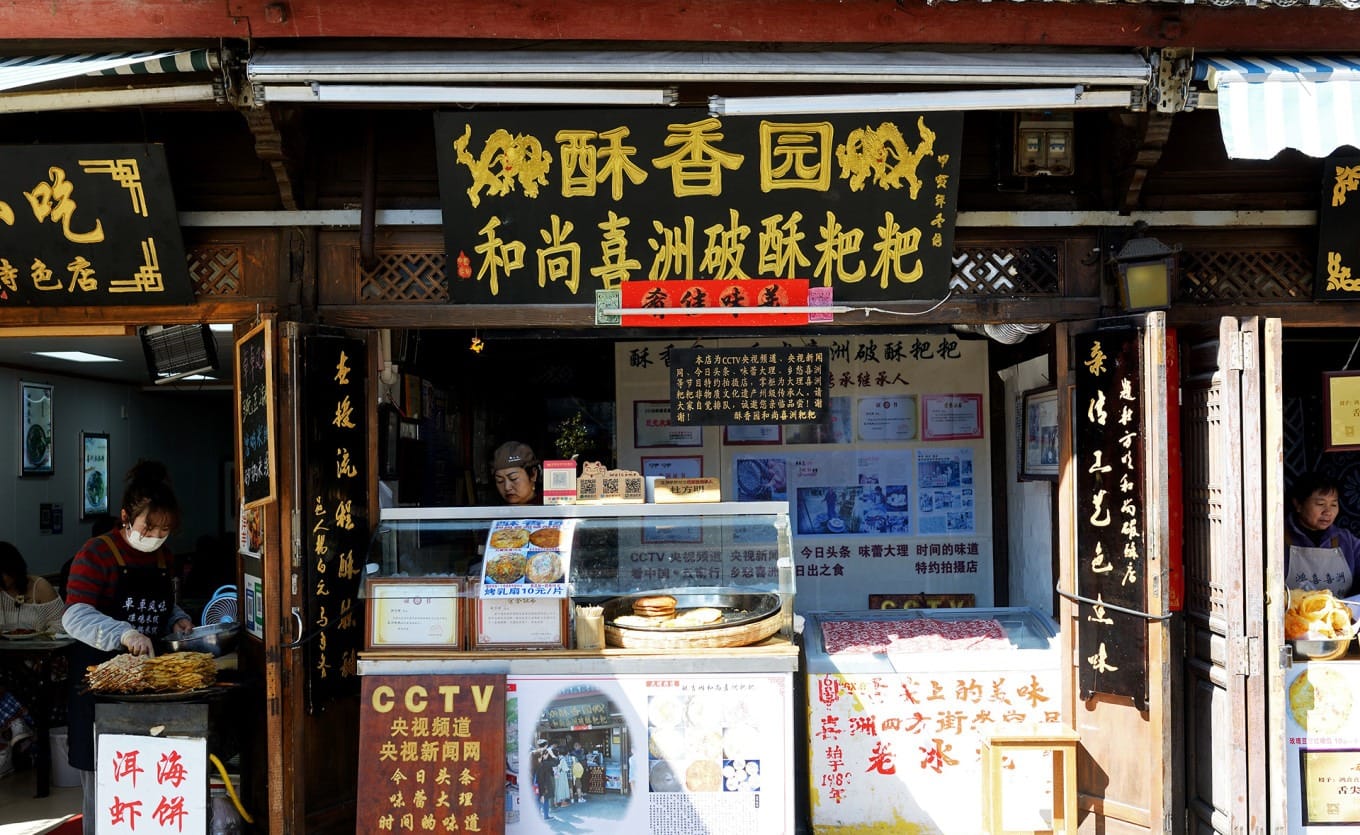
The bakery offers four varieties: scallion and pork (葱花肉), rose and red bean paste (玫瑰豆沙), a deluxe meat version (豪华版加肉), and the old-style traditional brown sugar (老式传统古仿糖). Each baba is baked using a unique method—tossed into a dual-deck oven where lard brushed on the dough heats and expands, creating those signature flaky, crisp layers.
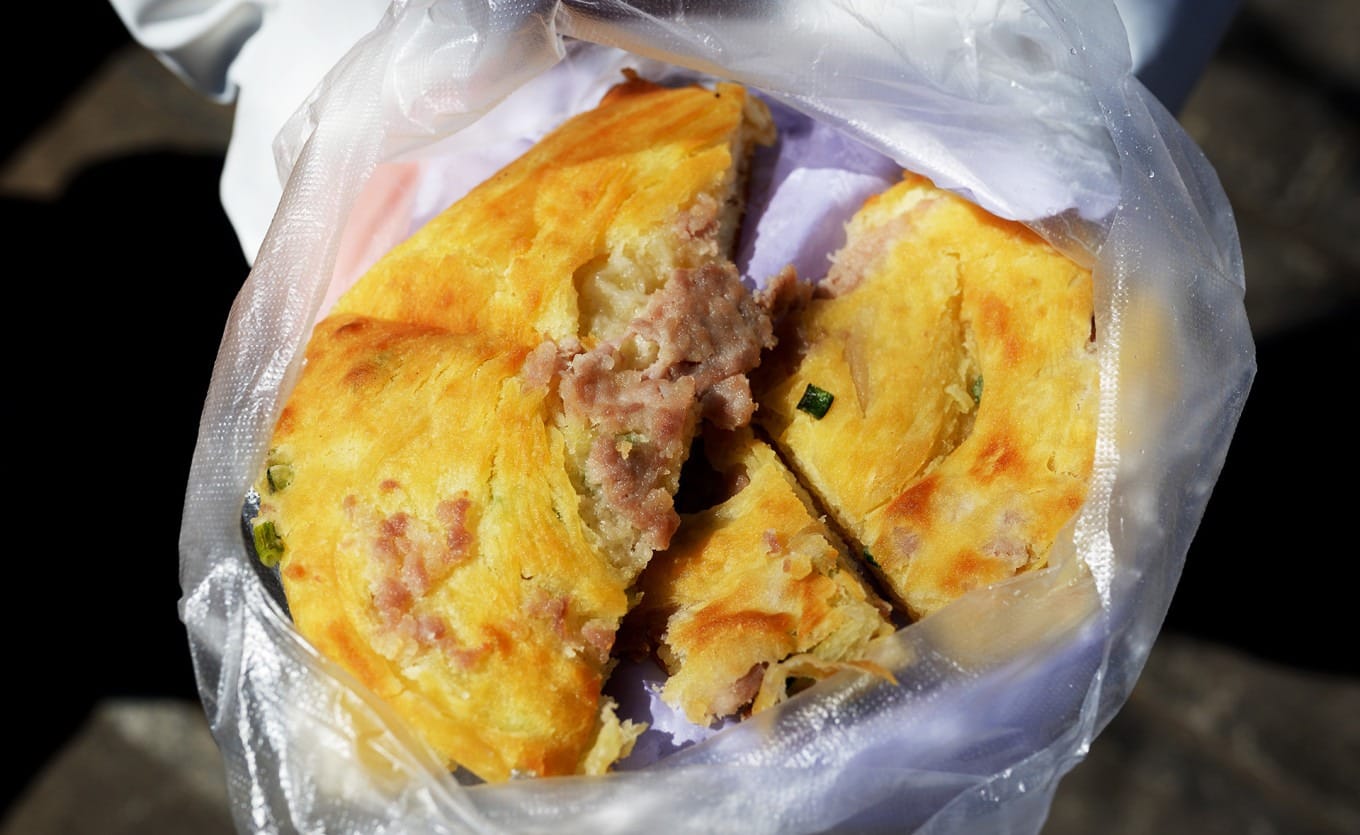
For a savory start, try the scallion and pork posu baba (葱花肉破酥粑粑). Fresh from the oven, it crackles with a crispy exterior while remaining tender inside, with the rich aroma of pork and wheat mingling deliciously.
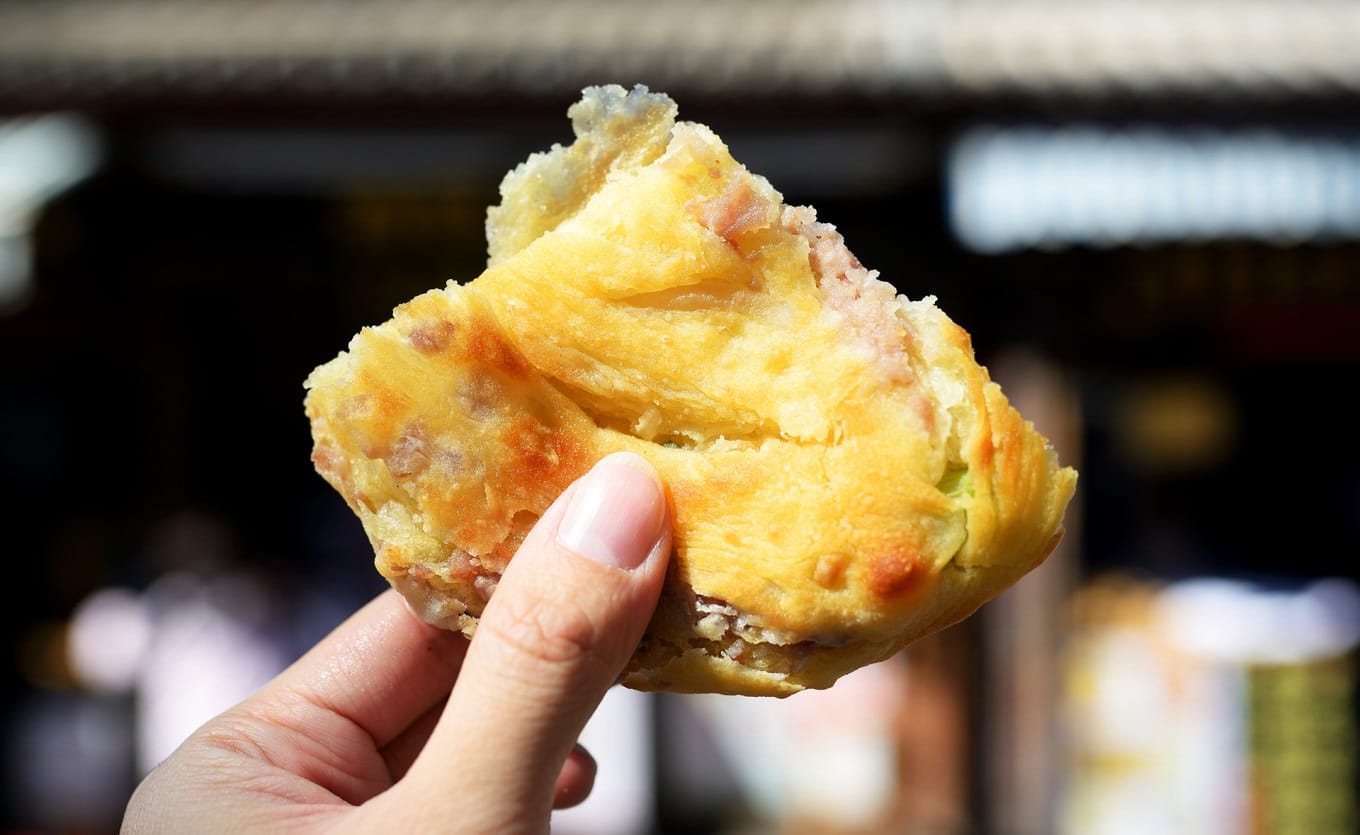
If you have a sweet tooth, don’t miss the old-style traditional brown sugar posu baba (老式传统古仿糖破酥粑粑), also known as ‘hui tang baba’ (烩糖粑粑). Made by kneading brown sugar directly into the dough, it bakes into a uniformly sweet, fragrant pastry. Note that this variety is limited—only about forty are available daily—so consider arriving early to snag one.
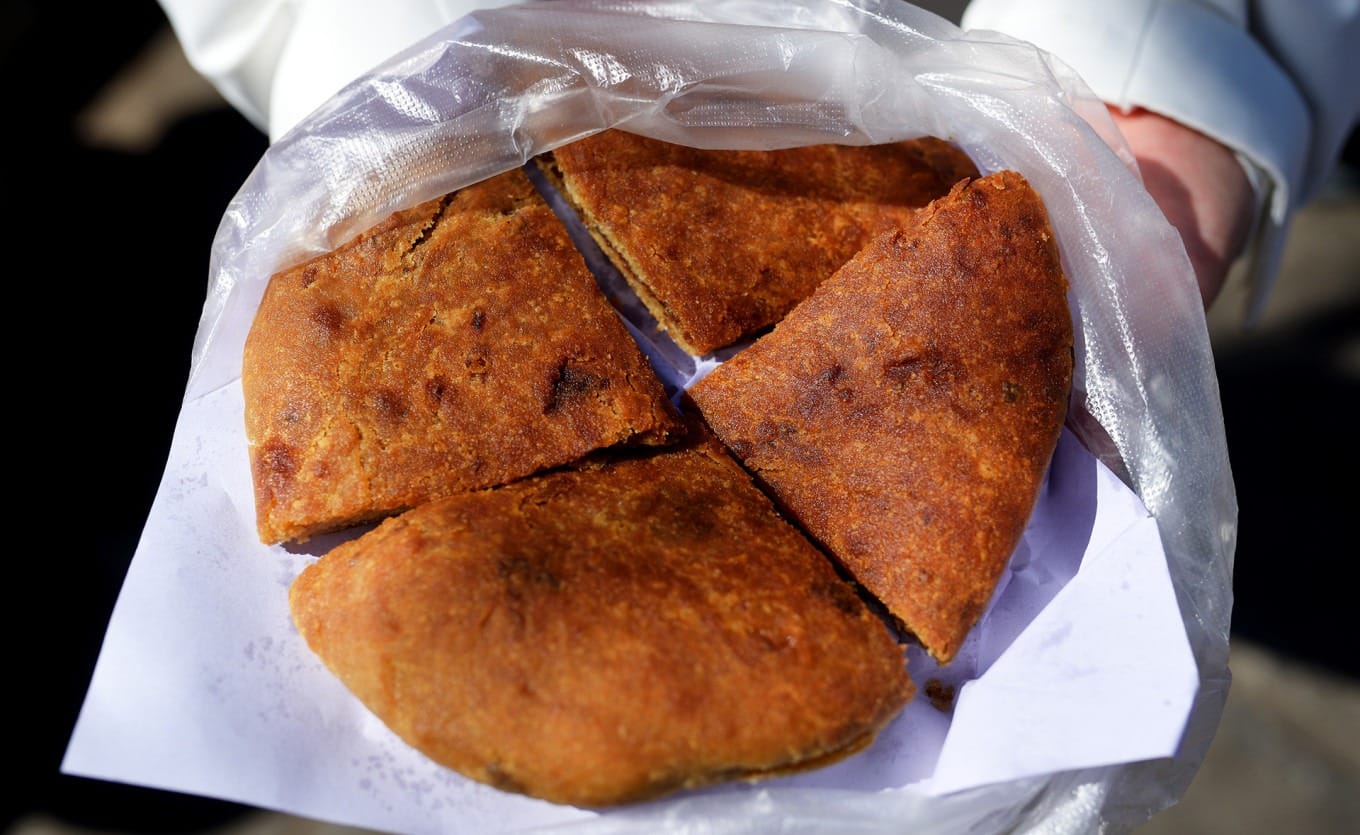
- RestaurantSuxiangyuan Heshang Xizhou Posu Baba (酥香园和尚喜洲破酥粑粑)
- AddressNo.
- Recommended dishesscallion and pork posu baba (葱花肉破酥粑粑), old-style traditional brown sugar posu baba (老式传统古仿糖破酥粑粑)
- Average spend¥10
Zhuozhuo Flavor: A Must-Try Snack Stop in Xizhou
Tucked next to the monk’s crispy pancake stall in Xizhou, you’ll find Zhuozhuo Flavor (卓卓风味), a small but highly recommended snack shop. Originally featured in a Hangzhou travel magazine, this humble spot delivers authentic local flavors at wallet-friendly prices. It’s worth noting that there’s another branch run by the owner’s brother inside Dali Old Town, but the Xizhou location offers a charming, less crowded experience.
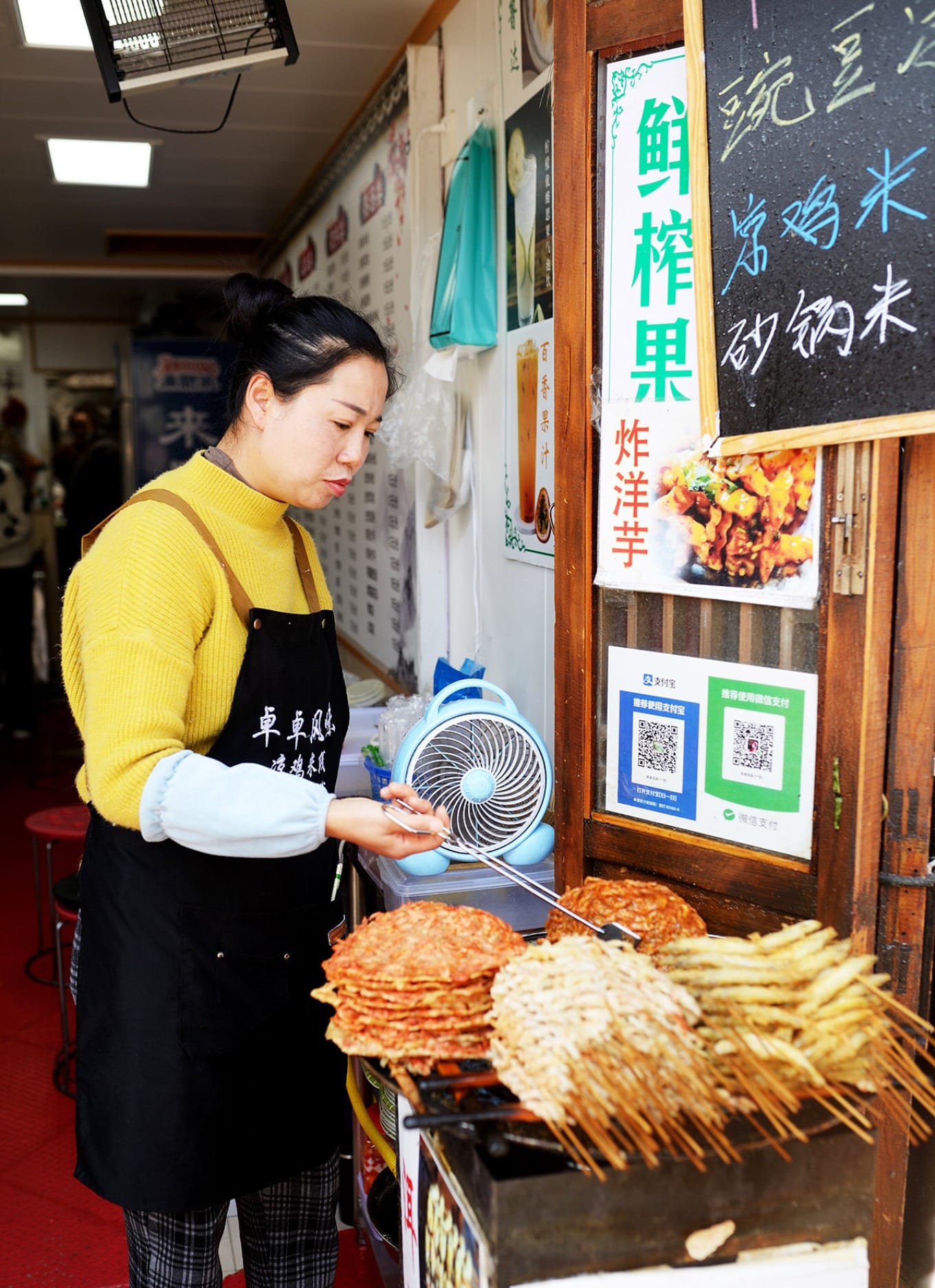
The star dish here is Liangji Mixian (凉鸡米线, cold chicken rice noodles), a Dali specialty. You’ll get chilled rice noodles topped with shredded cold chicken, tossed with crushed peanuts, chili sauce, minced garlic, and vinegar. The noodles are rinsed in cold water to maintain a slippery, refreshing texture. Mix everything together for a burst of layered flavors that’s both cooling and addictive.
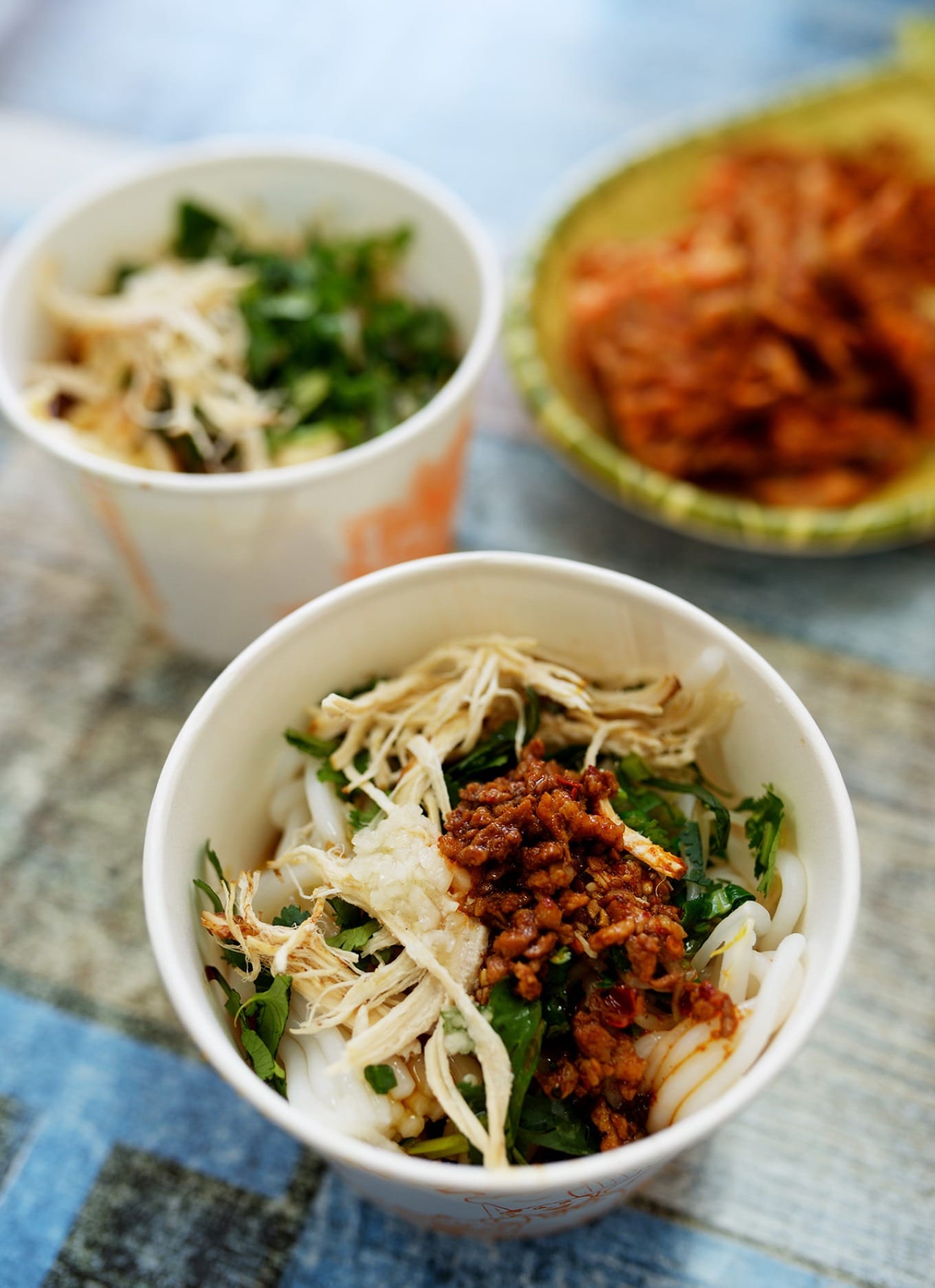
Another refreshing option is Zhuazhufen (抓抓粉, hand-pulled jelly noodles), available in two varieties: one made from broad bean flour (white in color) and another from pea flour (yellowish). Prepared similarly to the jelly noodles from Jianshui and Mengzi, the batter is scraped through a special perforated tool to form thin strands. Served cold with peanuts and chili, it’s a perfect light, summery bite.
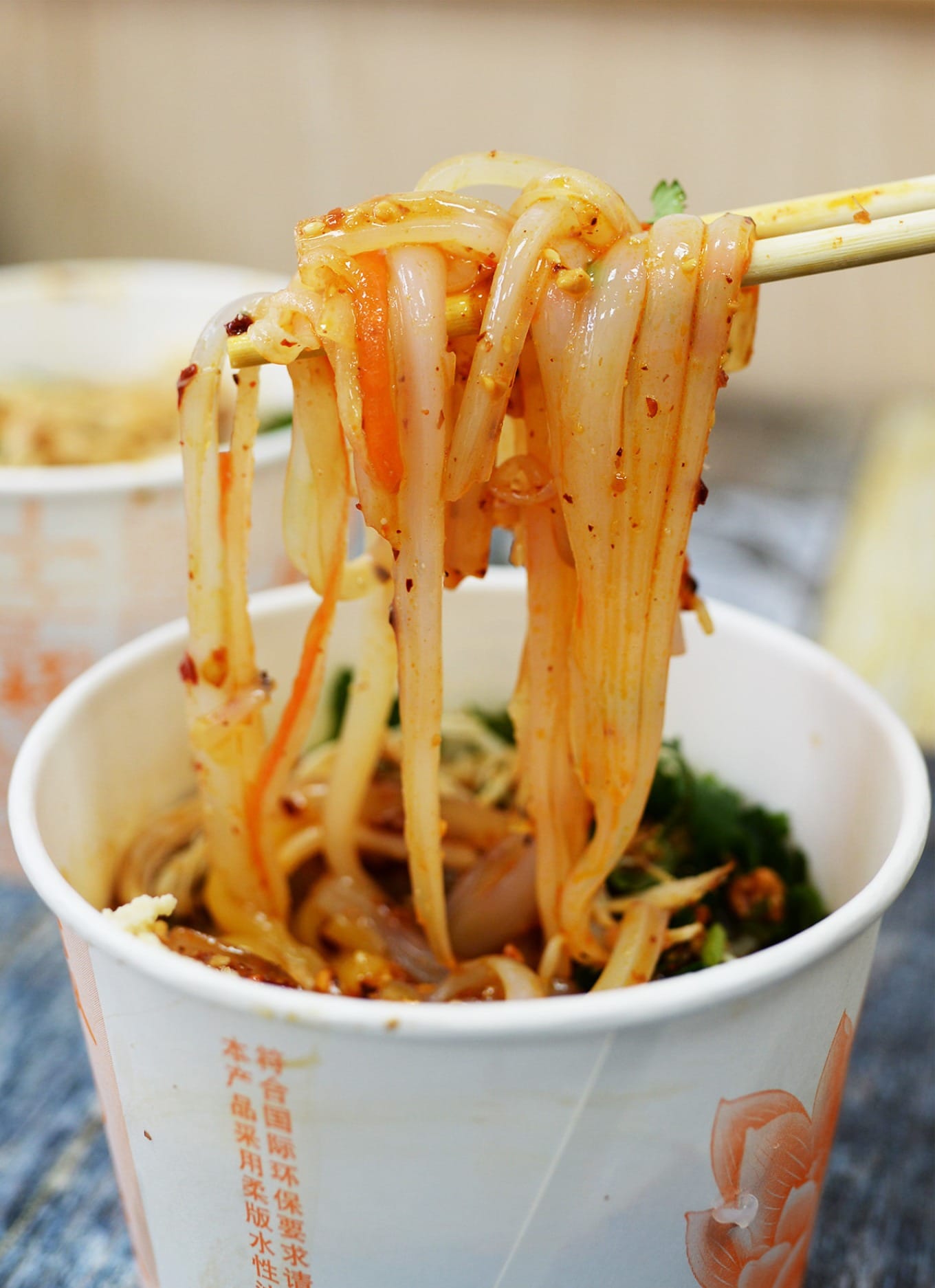
For something crispy, try the Erhai Shrimp Cake (洱海虾饼). Made with tiny shrimp caught from Erhai Lake, mixed into an egg and starch batter, and pan-fried until golden, these cakes are delightfully crunchy with a savory, slightly spicy kick.
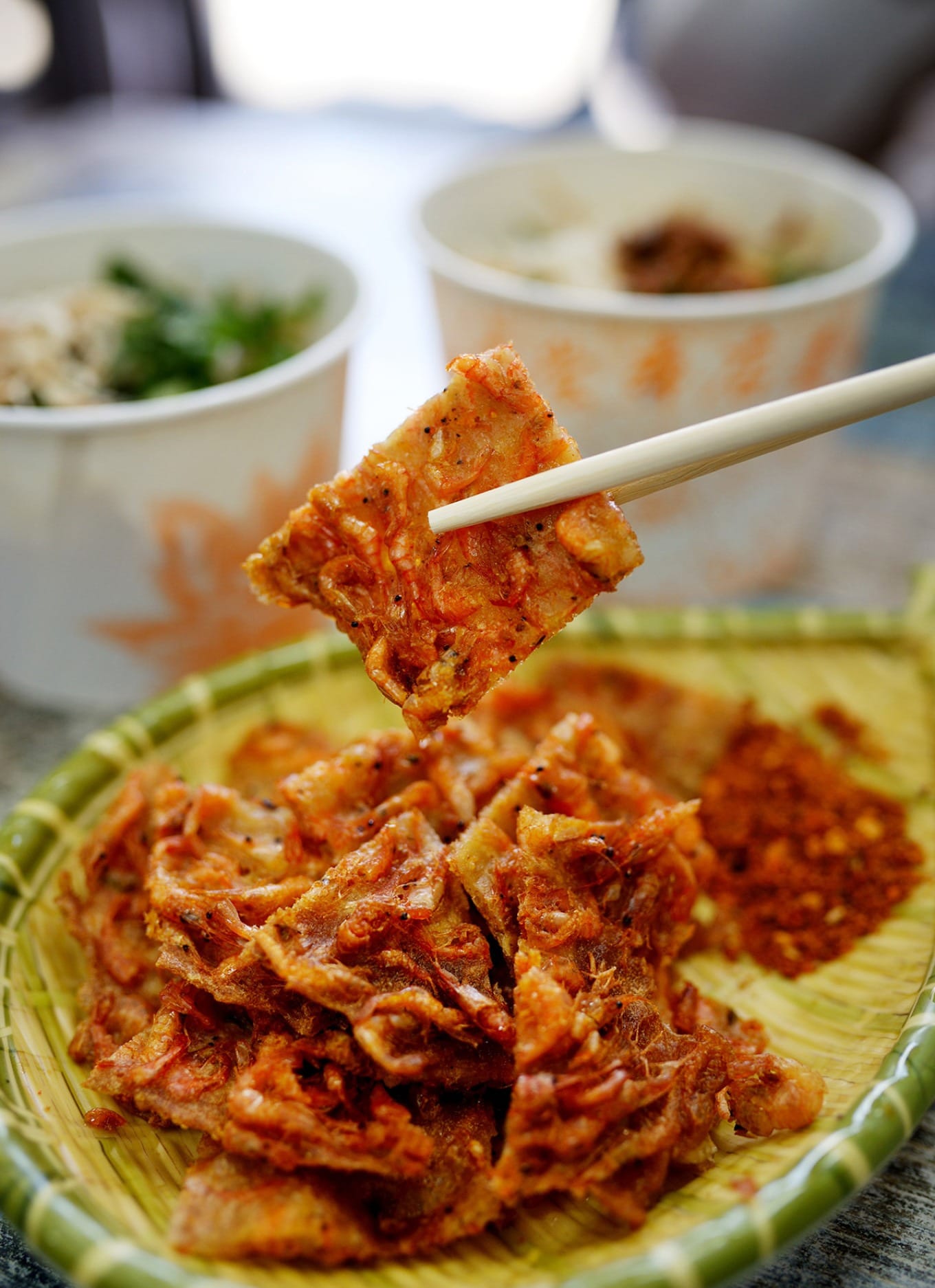
Don’t miss the local classic, Kao Rushan (烤乳扇, grilled milk fan). Here, it’s prepared in the popular street-food style: the milk fan is brushed with rose sugar, grilled until soft, and rolled up. The grilling mellows the strong dairy aroma, leaving a rich, fragrant cheese-like flavor that’s uniquely Yunnan.
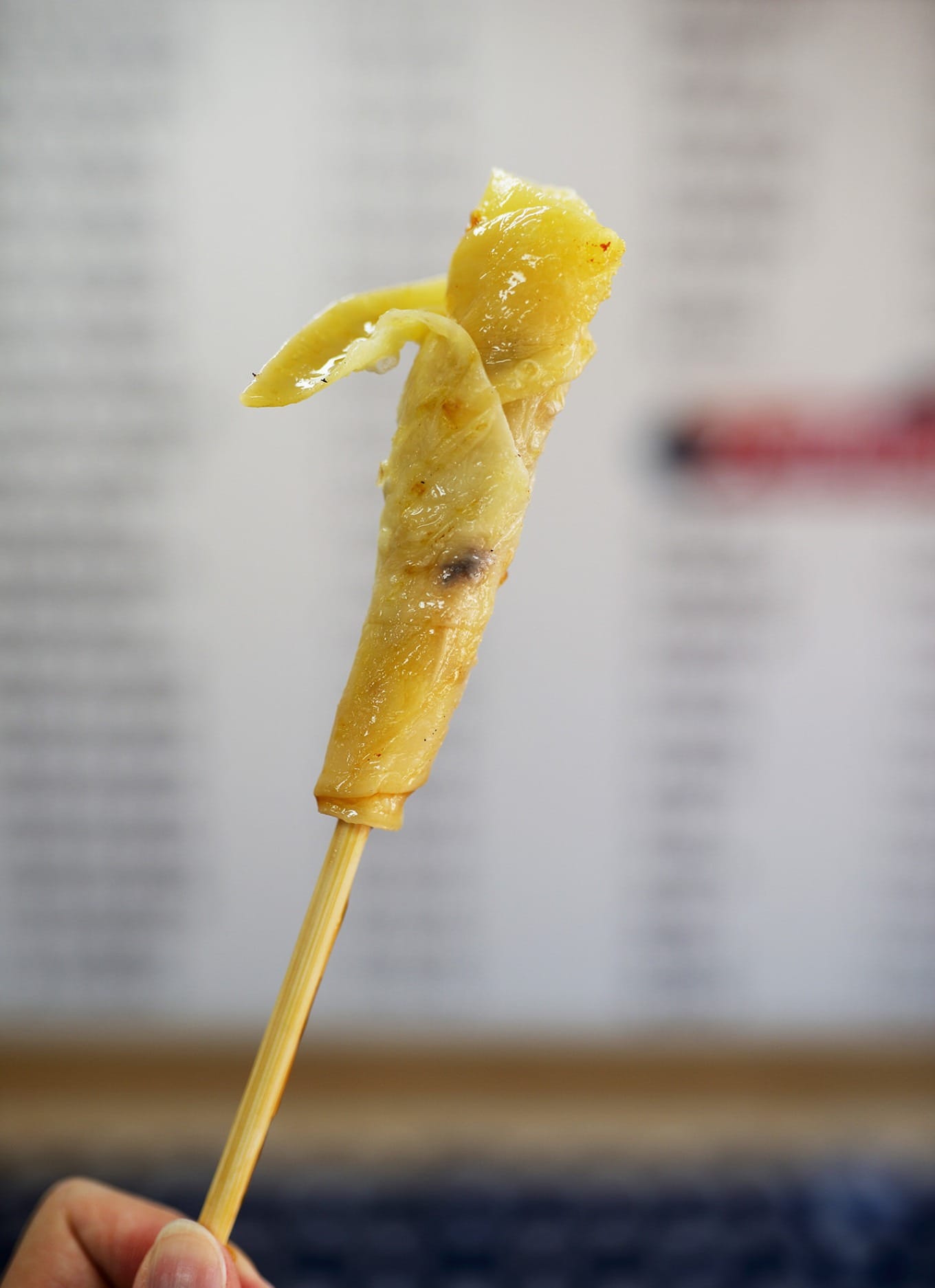
- RestaurantZhuozhuo Flavor (卓卓风味)
- AddressNo.
- Recommended dishesLiangji Mixian (凉鸡米线, cold chicken rice noodles), Zhuazhufen (抓抓粉, hand-pulled jelly noodles), Erhai Shrimp Cake (洱海虾饼), Kao Rushan (烤乳扇, grilled milk fan)
- Average spend¥20 per person
A Ma Ying Pea Jelly: Xizhou’s Iconic Snack
When exploring Xizhou’s food scene, you’ll quickly hear about A Ma Ying Pea Jelly (啊马英豌豆粉). This small, bustling shop near Sifang Street has been serving locals and visitors for over fifty years. Despite its modest size with just a few tables, it draws crowds for its authentic local specialties.
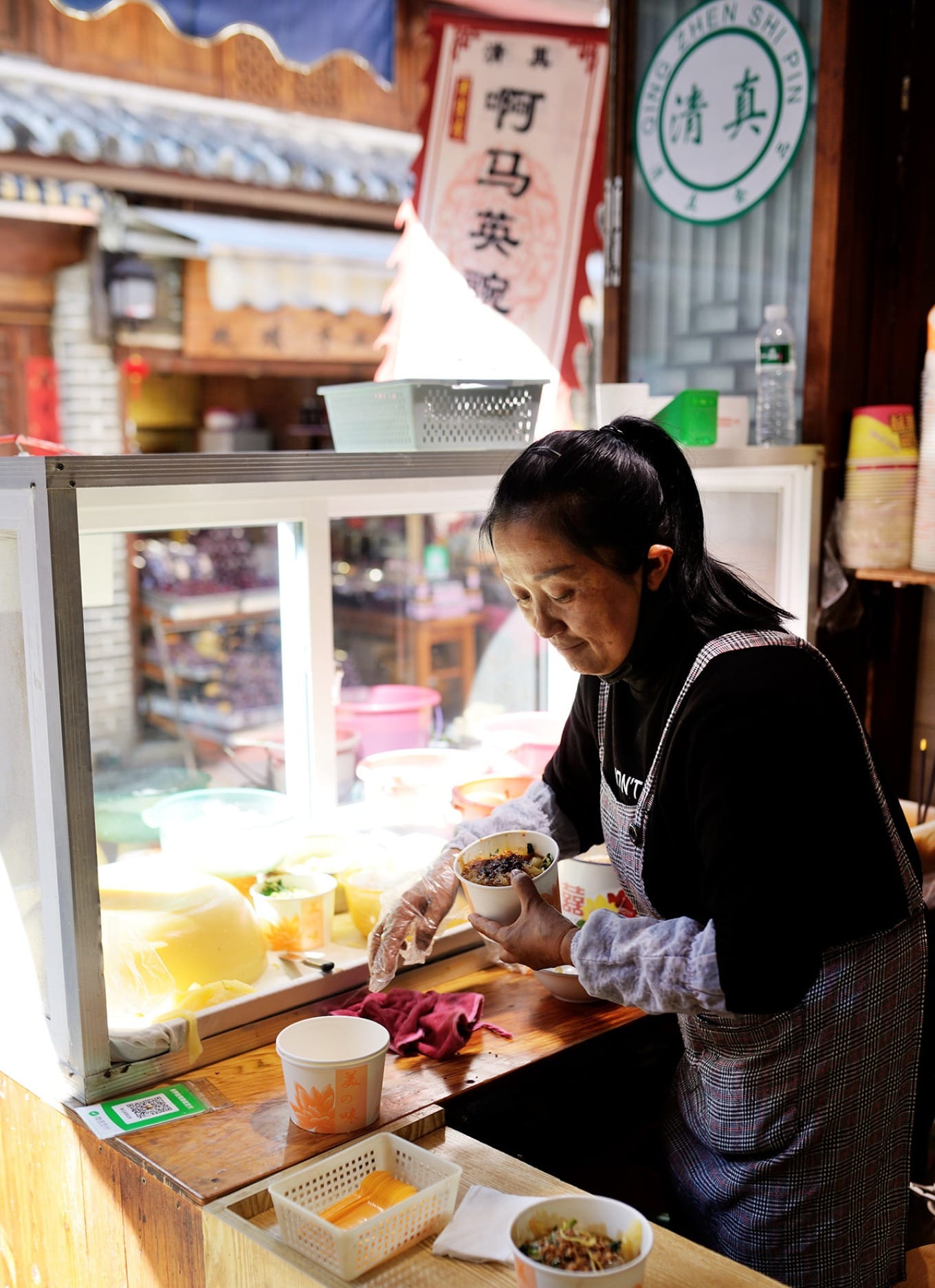
Their signature dish is pea jelly (豌豆粉 / wān dòu fěn), known locally as ‘oil powder’ or ‘yóu fěn’. This cold snack starts with dried peas that are soaked, ground with water, filtered, boiled into a paste, and cooled until solid. When you order, the vendor slices the jelly into thin strips and tosses it with a vibrant sauce of crushed peanuts, chili, and vinegar. The result is a soft, slippery texture with a bold, tangy-spicy flavor that’s uniquely satisfying.
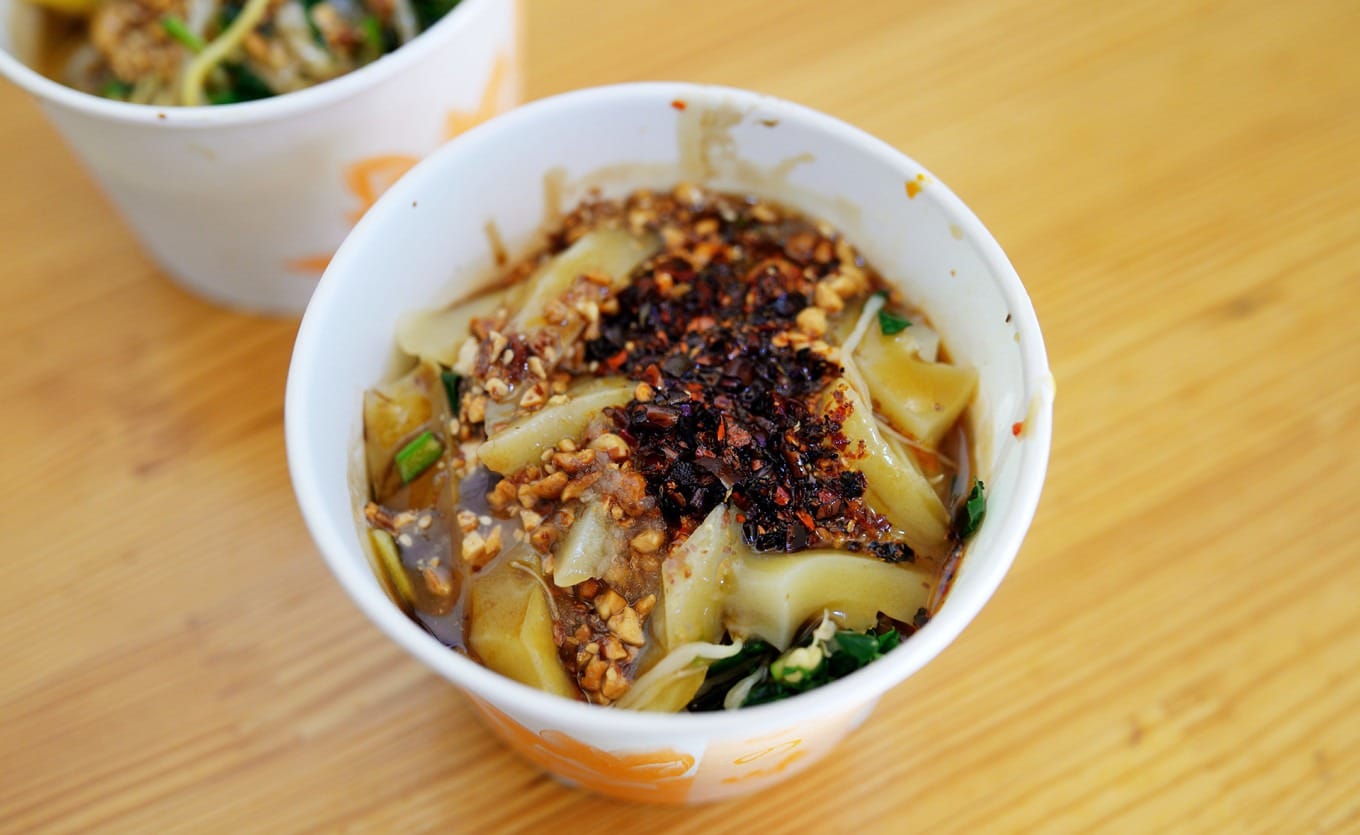
For those wanting to sample more, consider the mixed noodles (混搭粉 / hùn dā fěn), which combines pea jelly with cold rice noodles (凉米线 / liáng mǐ xiàn) and cold wheat noodles (凉面 / liáng miàn). While it might look like a jumble, this mix actually creates a more complex, enjoyable texture than the pea jelly alone.
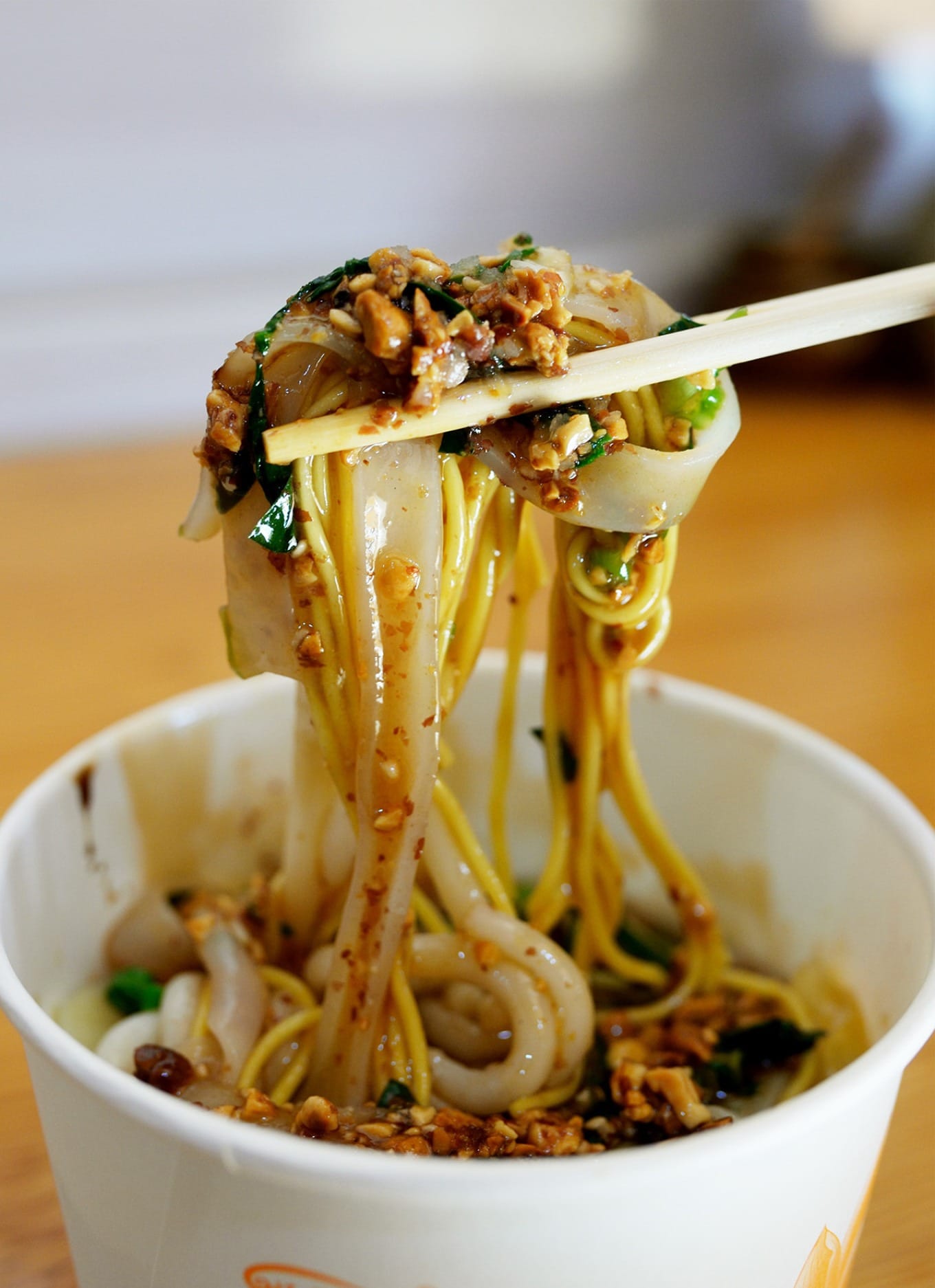
If you still have room, try the pea porridge (稀豆粉 / xī dòu fěn). This warm, savory porridge—made from ground dried peas slowly stirred into a thick paste—resembles northern Chinese flour tea. Since it’s quite mild, you’ll want to add the provided dipping sauce and chili. Its porridge-like consistency pairs perfectly with youtiao (油条 / yóu tiáo, fried dough sticks). Unlike in soy milk, the youtiao becomes delightfully semi-soft when dipped, creating a wonderful textural contrast.
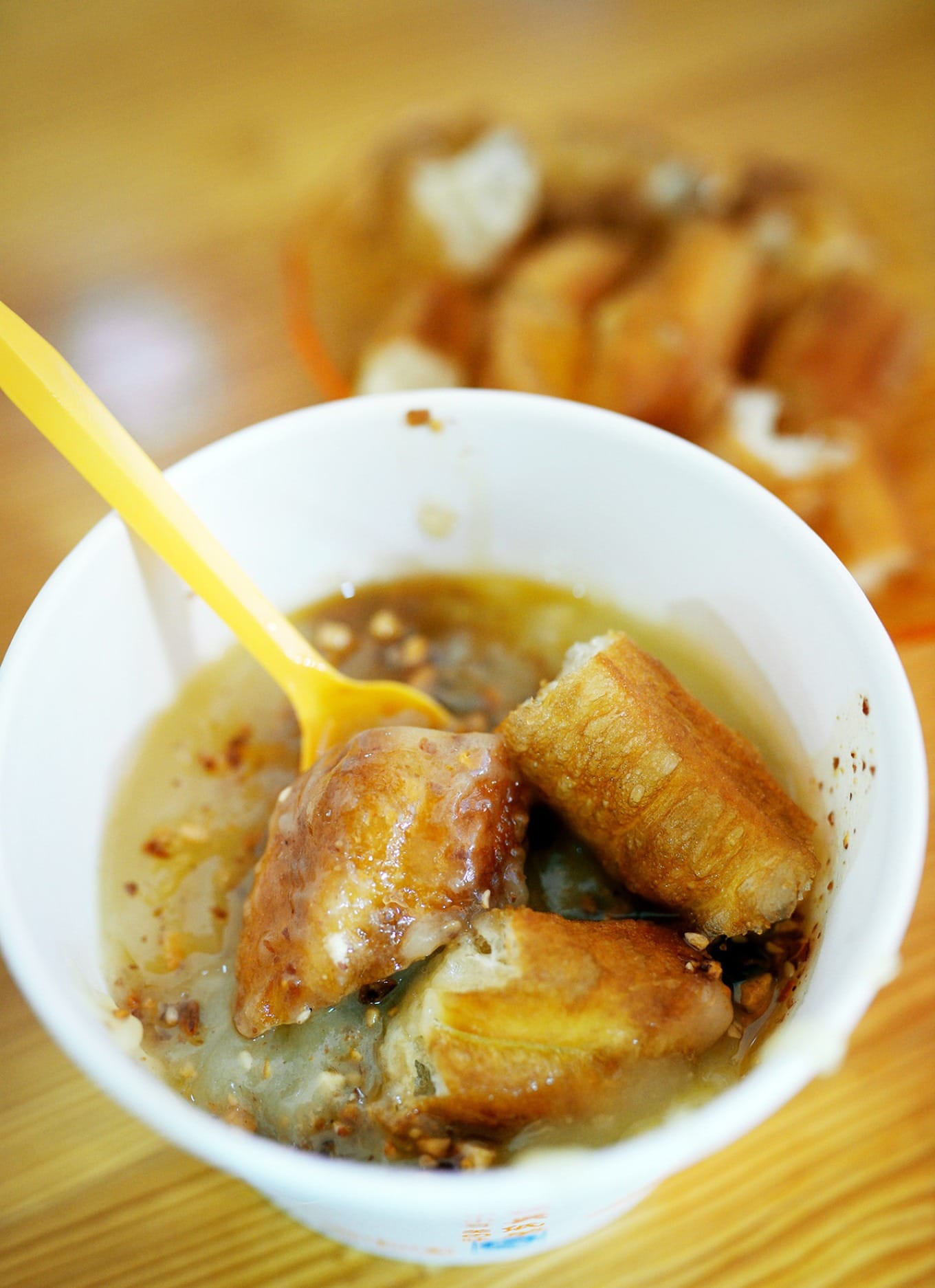
- RestaurantA Ma Ying Pea Jelly (啊马英豌豆粉)
- Address40 Shishang Street, Xizhou Town, Dali Bai Autonomous Prefecture, Yunnan / 云南省大理白族自治州喜洲镇市上街40号
- Recommended dishesPea jelly (豌豆粉), Mixed noodles (混搭粉), Pea porridge (稀豆粉), Youtiao (油条)
- Average spend¥10
Sifangjie Restaurant
When looking for a proper meal in Xizhou, Sifangjie Restaurant (四方街食店) is a solid choice. This long-standing establishment sits opposite the Yan Family Courtyard on Sifang Street, offering a taste of authentic local cuisine.
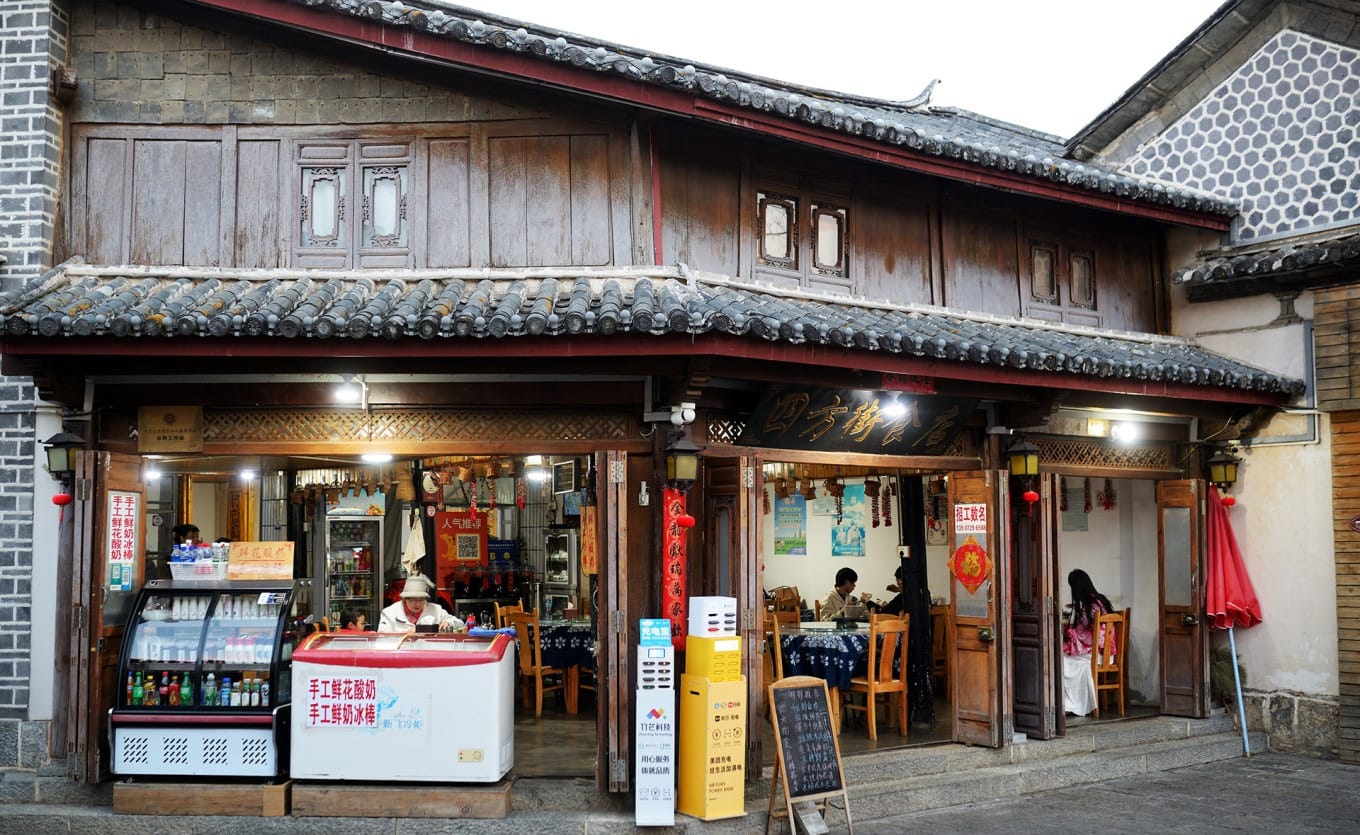
The menu focuses on Bai family-style dishes. A standout favorite is their braised pork (卤肉, lǔ ròu), which leans toward leaner cuts. The meat absorbs the rich, savory marinade beautifully. You can enjoy it with a dipping sauce—it pairs wonderfully with rice or makes a great accompaniment to drinks.
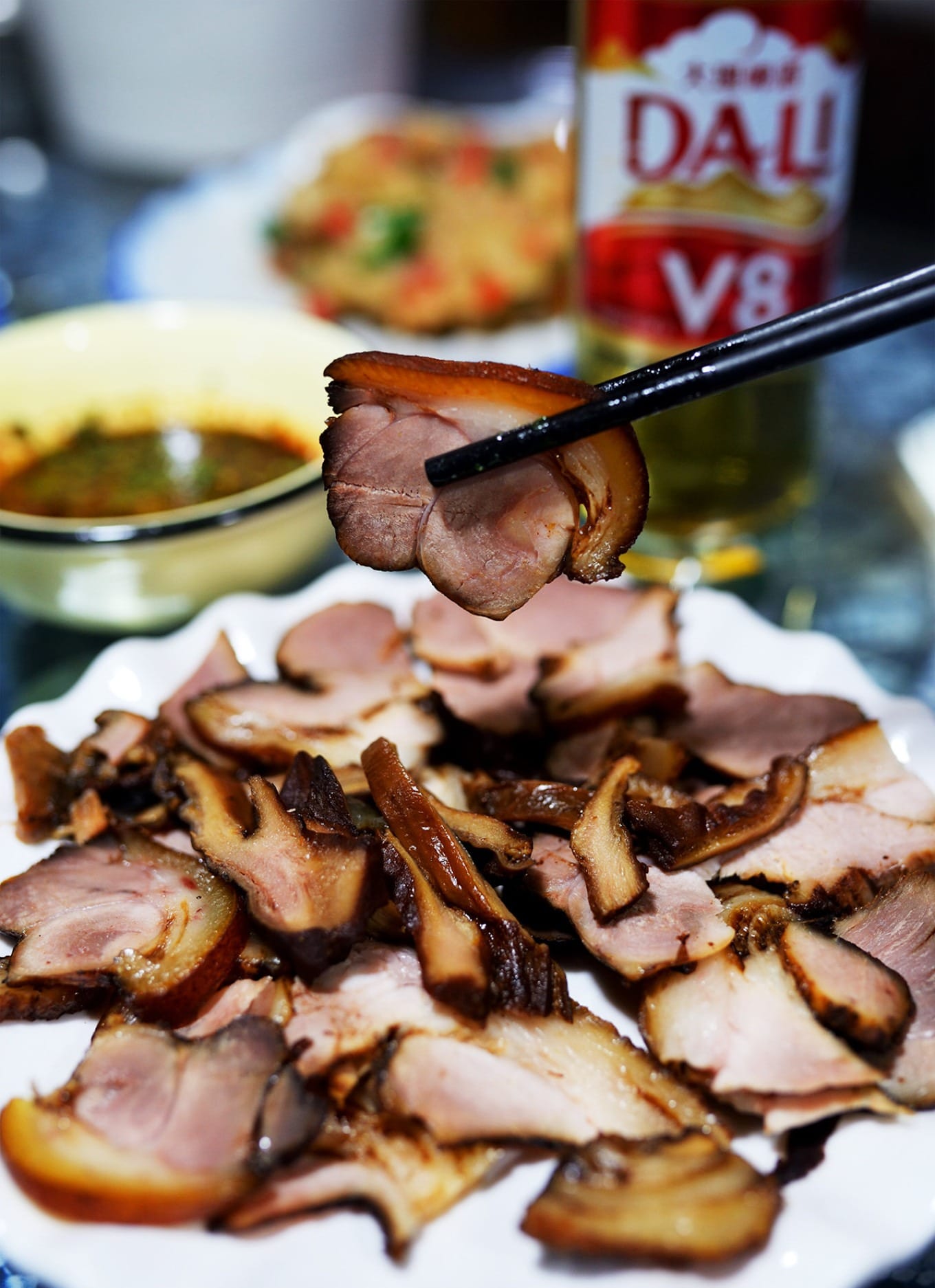
Given Xizhou’s proximity to Erhai Lake, you’ll often find water celery (水性杨花, shuǐ xìng yáng huā) on the table. This aquatic plant, scientifically known as Ottelia acuminata, thrives in high-altitude lakes and is a reliable indicator of clean water. Its stems are harvested for cooking. A simple stir-fry is all it needs—the result is a uniquely slippery, juicy texture with a fresh, delicate flavor.
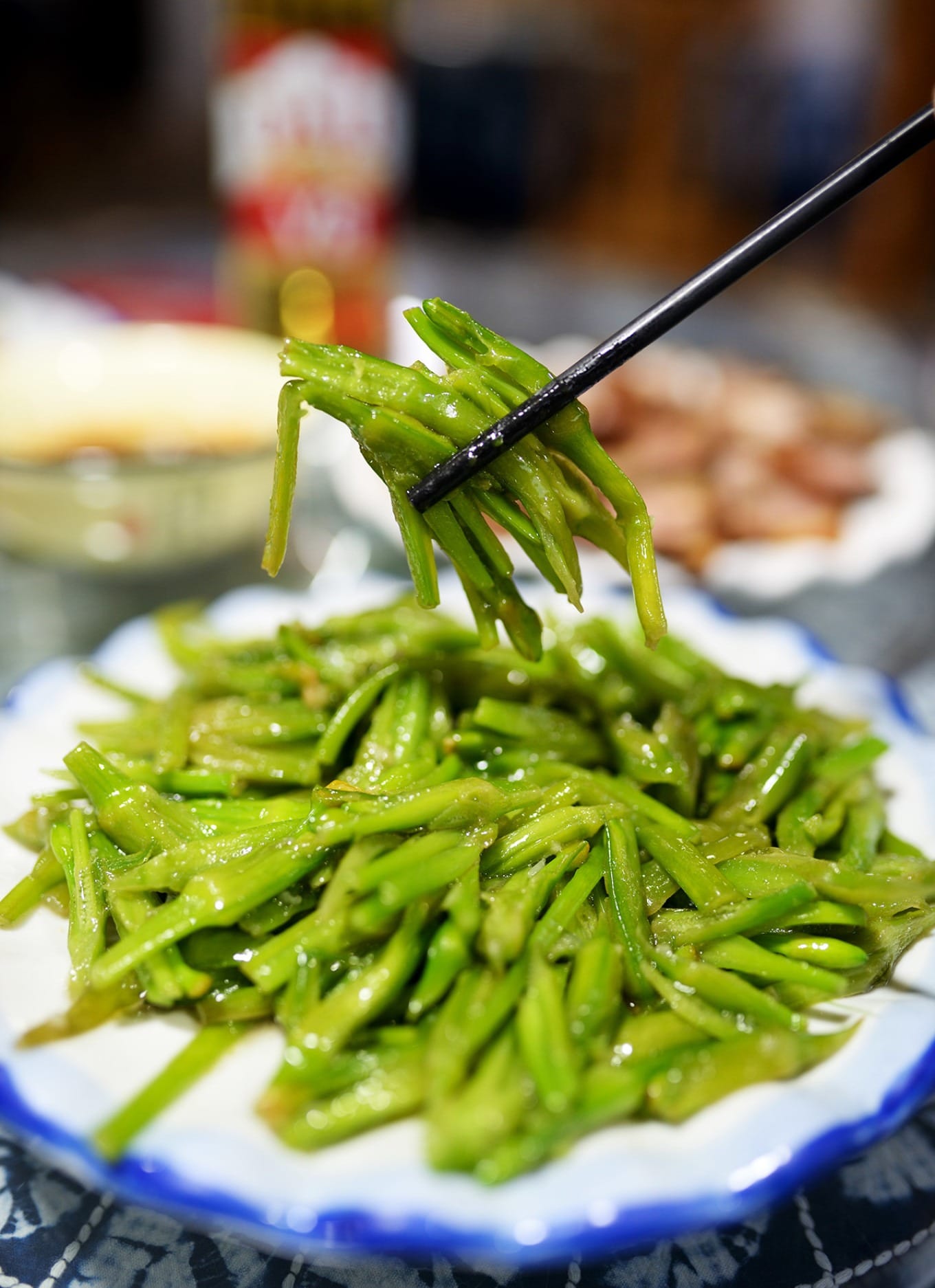
Another must-try is the whitebait fritter (银鱼煎蛋, yín yú jiān dàn). Made with tiny silver fish from Erhai Lake, the dish is less of an omelet and more of a light, crispy fritter—coated in egg and flour before frying until golden. Each bite delivers a burst of freshness. Interestingly, this type of whitebait is an invasive species in the lake, so enjoying it also supports local conservation efforts by helping control its population.
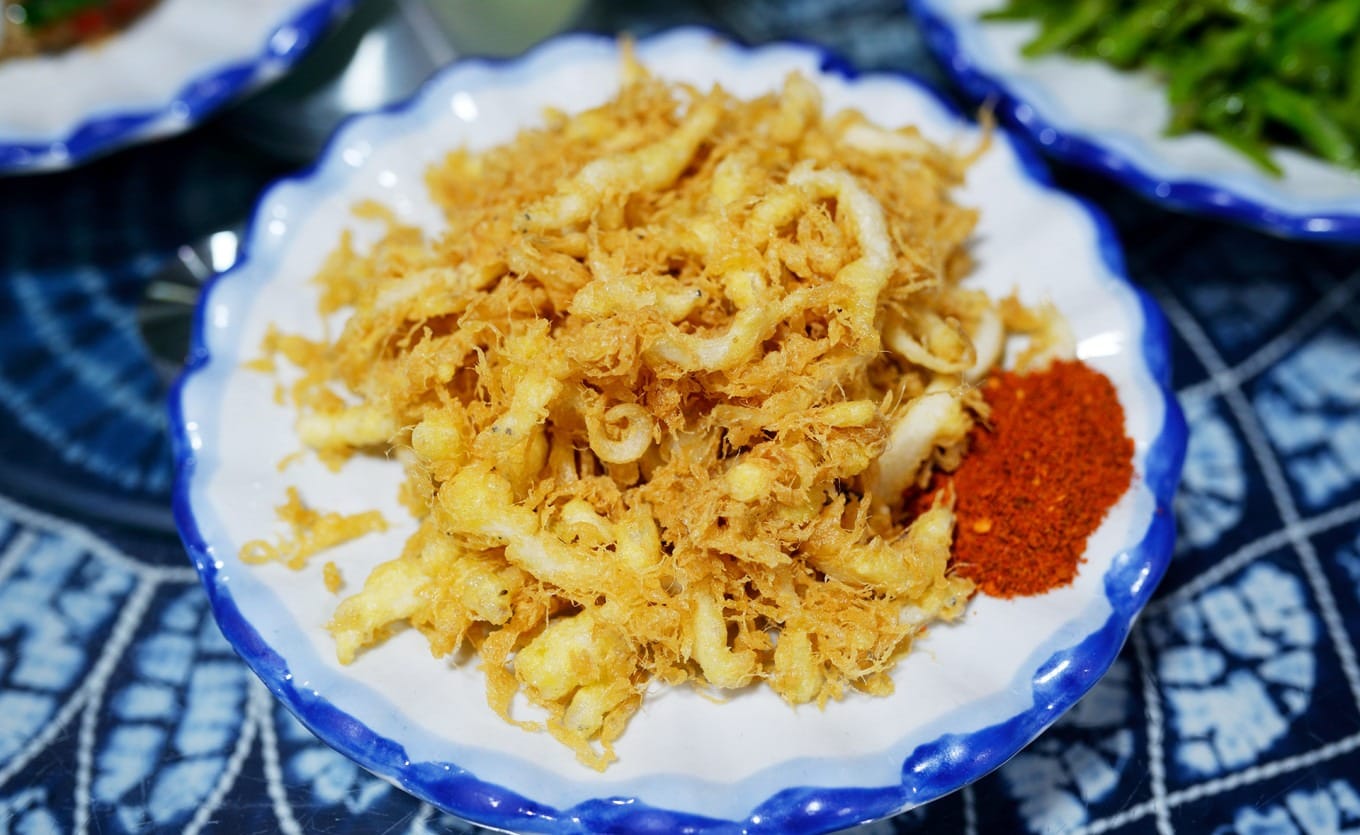
In Yunnan, many flowers find their way into the kitchen. Consider the stir-fried pomegranate flower with mashed potato (土豆泥炒石榴花, tǔ dòu ní chǎo shí liú huā). It’s not the petals or stamens used here, but the calyx—the base of the flower. After blanching, it’s stir-fried with creamy mashed potato, creating a comforting dish perfect for mixing with rice.
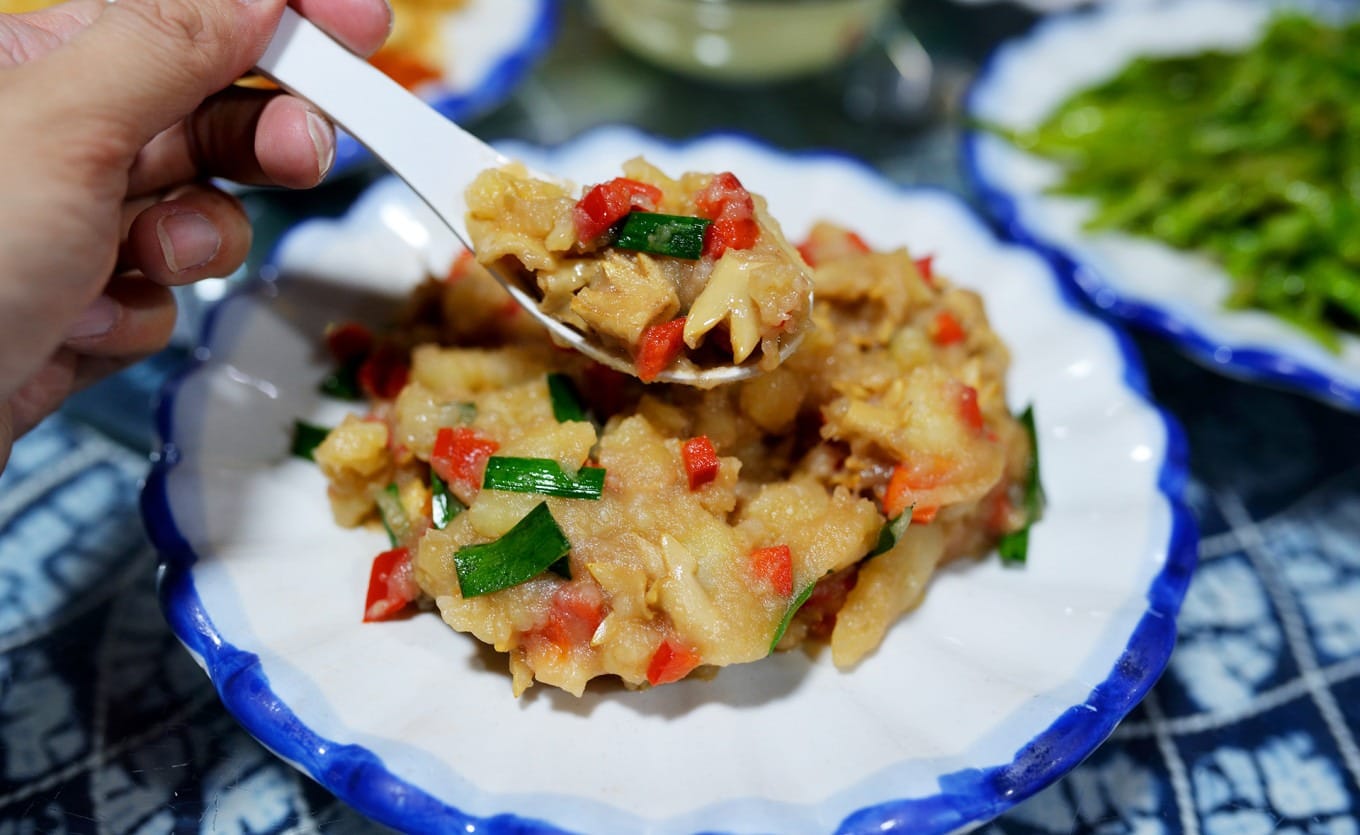
- RestaurantSifangjie Restaurant (四方街食店)
- AddressNext to Yan Family Courtyard, Sifang Street, Xizhou Town, Dali Bai Autonomous Prefecture (大理白族自治州喜洲镇四方街严家大院旁)
- Recommended dishesBraised pork (卤肉), Water celery (水性杨花), Whitebait fritter (银鱼煎蛋), Stir-fried pomegranate flower with mashed potato (土豆泥炒石榴花)
- Average spend60 CNY
Xilin Yuan Rice Field Restaurant
For a taste of refined Bai cuisine in a historic setting, head to Xilin Yuan Rice Field Restaurant (喜林苑稻田餐厅). This elegant dining spot is housed within the Xilin Yuan boutique hotel, which occupies the former mansion of Yang Pinxiang, a prominent merchant from Xizhou’s historic ‘Eight Major Families’ guild. The restaurant transforms traditional local dishes into beautifully presented, sophisticated meals.
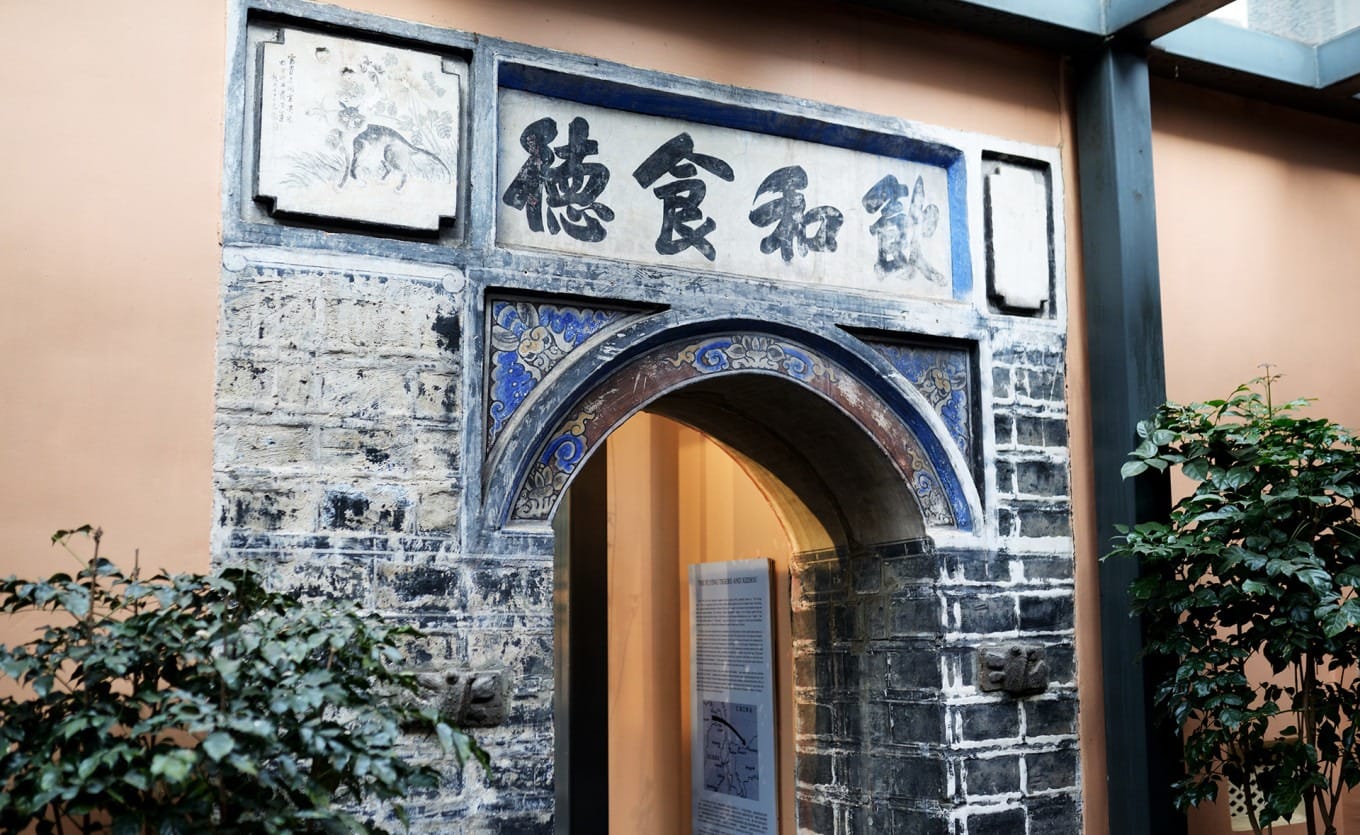
A must-try signature dish is the Diao Mei Xiao Pai (雕梅小排), or Caramelized Plum Ribs. This showcases the local culinary art of using fruit in savory cooking. ‘Diao mei’ refers to plums that are intricately carved, pitted, pressed into cakes, and then preserved with salt and honey. When braised with pork ribs, the plums cut through the richness and infuse the meat with a sweet-tangy depth that is utterly mouthwatering.
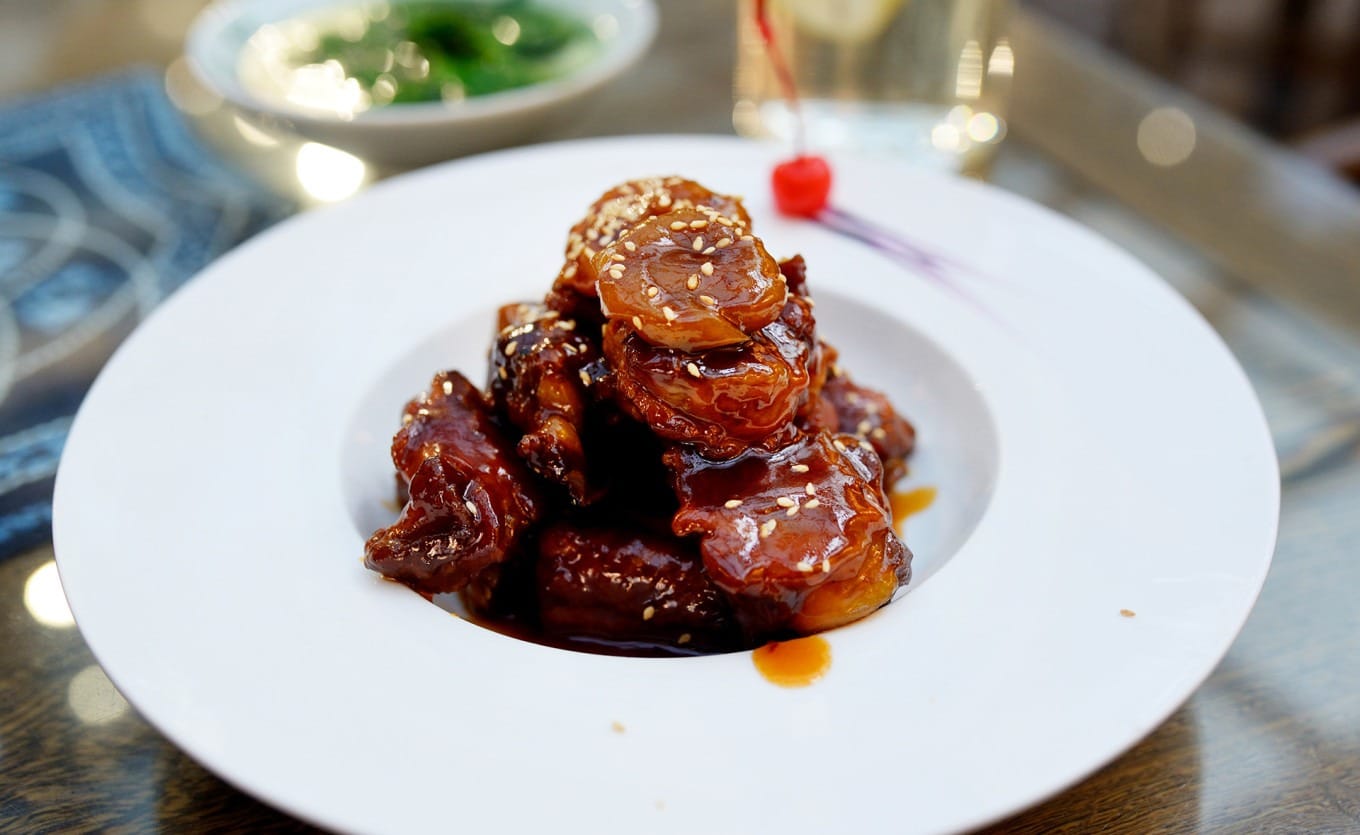
Another excellent choice is Jiu Cai Hua Chao Niu Rou Mo (韭菜花炒牛肉末), a stir-fry of minced beef with chive flowers. The tender, crisp chive shoots add a fresh, sweet note that perfectly complements the savory beef, creating a flavorful combination that pairs wonderfully with rice.
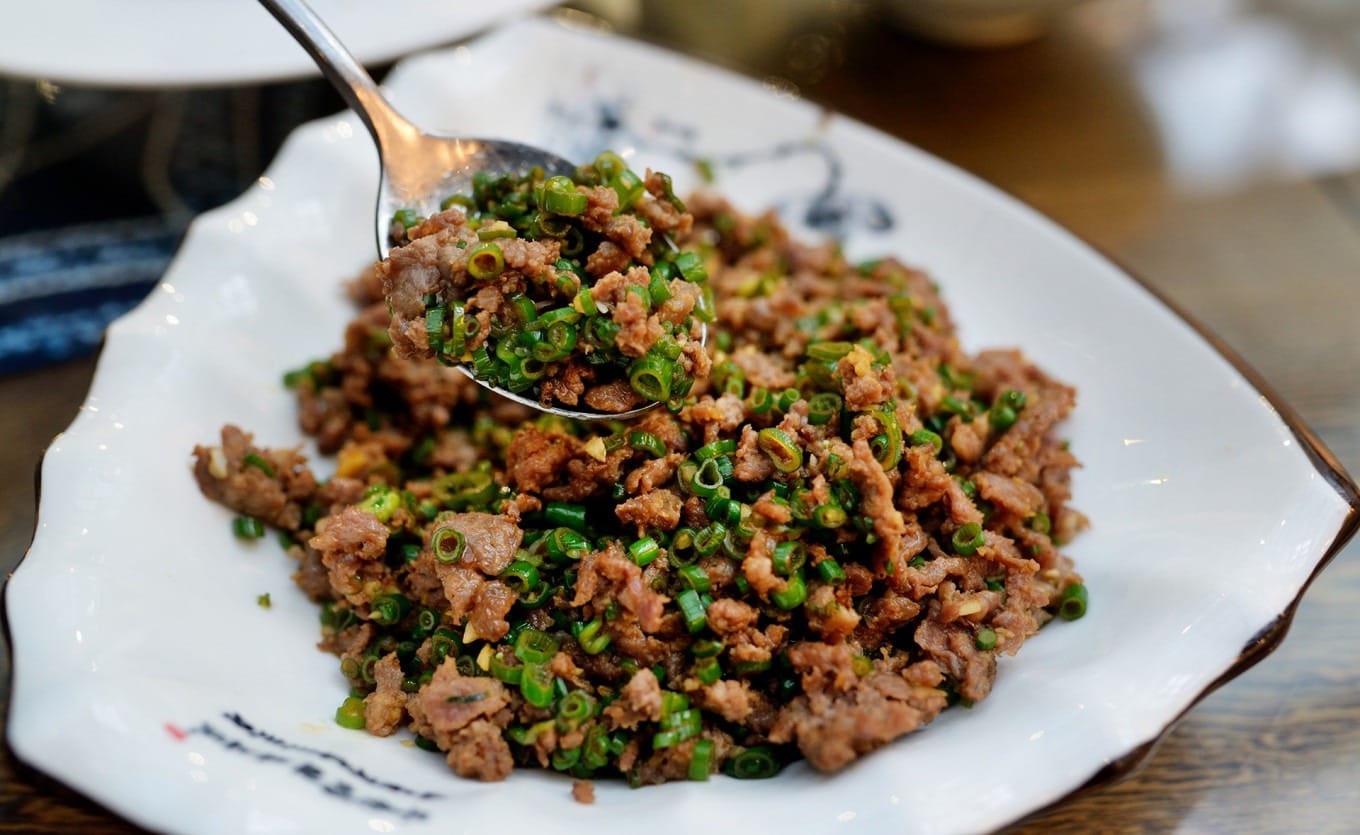
- RestaurantXilin Yuan Rice Field Restaurant (喜林苑稻田餐厅)
- AddressNo.
- Recommended dishesDiao Mei Xiao Pai (雕梅小排 / Caramelized Plum Ribs), Jiu Cai Hua Chao Niu Rou Mo (韭菜花炒牛肉末 / Stir-fried Minced Beef with Chive Flowers)
- Average spend¥70 per person
Kouwei Jianghu Cuisine
Tucked away in Chengbei Village of Xizhou, Kouwei Jianghu Cuisine (口未江湖菜) offers a dining experience that blends rustic charm with culinary adventure. The restaurant occupies a renovated old house featuring a small courtyard and decor that leans into vintage aesthetics, with numerous antique items creating a nostalgic, artistic atmosphere.
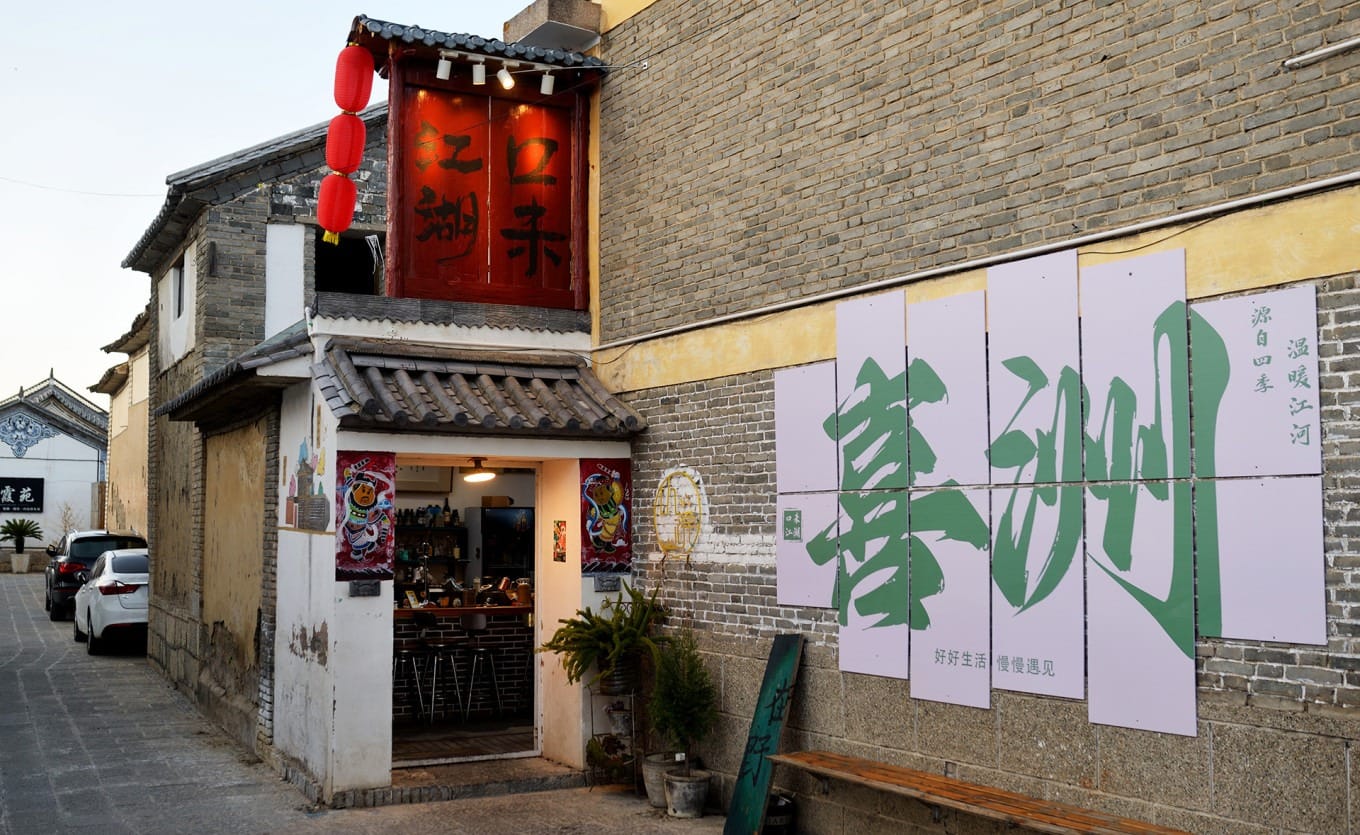
The menu includes both stir-fried dishes and hot pot. A standout option is their wild mushroom hot pot set, which offers excellent value at just over 100 yuan. The set includes three types of mushrooms: Niuganjun (牛肝菌, Boletus), Yangdujun (羊肚菌, Morel), and Chisongrong (赤松茸, Red Pine Mushroom). The broth is a light chicken soup simmered with songrong (松茸, Matsutake) and bamboo shoots. While wild mushroom hot pot isn’t a traditional local dish in Dali—locals typically prefer stir-frying mushrooms—it has emerged as a popular “new-style” offering driven by Yunnan’s tourism. The chicken-based broth works perfectly because its mild flavor complements rather than competes with the mushrooms’ natural aromas.

The hot pot is served in a striking black clay vessel with a chimney-like central chamber and a ring-shaped cooking cavity. This design ensures even heat distribution, ideal for slow, gentle simmering. As the broth bubbles, the mushrooms release layers of fragrance—an intricate blend of earthy, woody, and savory notes. For the best experience, let the mushrooms cook thoroughly, then savor the broth first before eating the mushrooms. The combination of chicken soup and mushroom essence creates a deeply comforting, flavorful harmony that feels wonderfully nourishing.
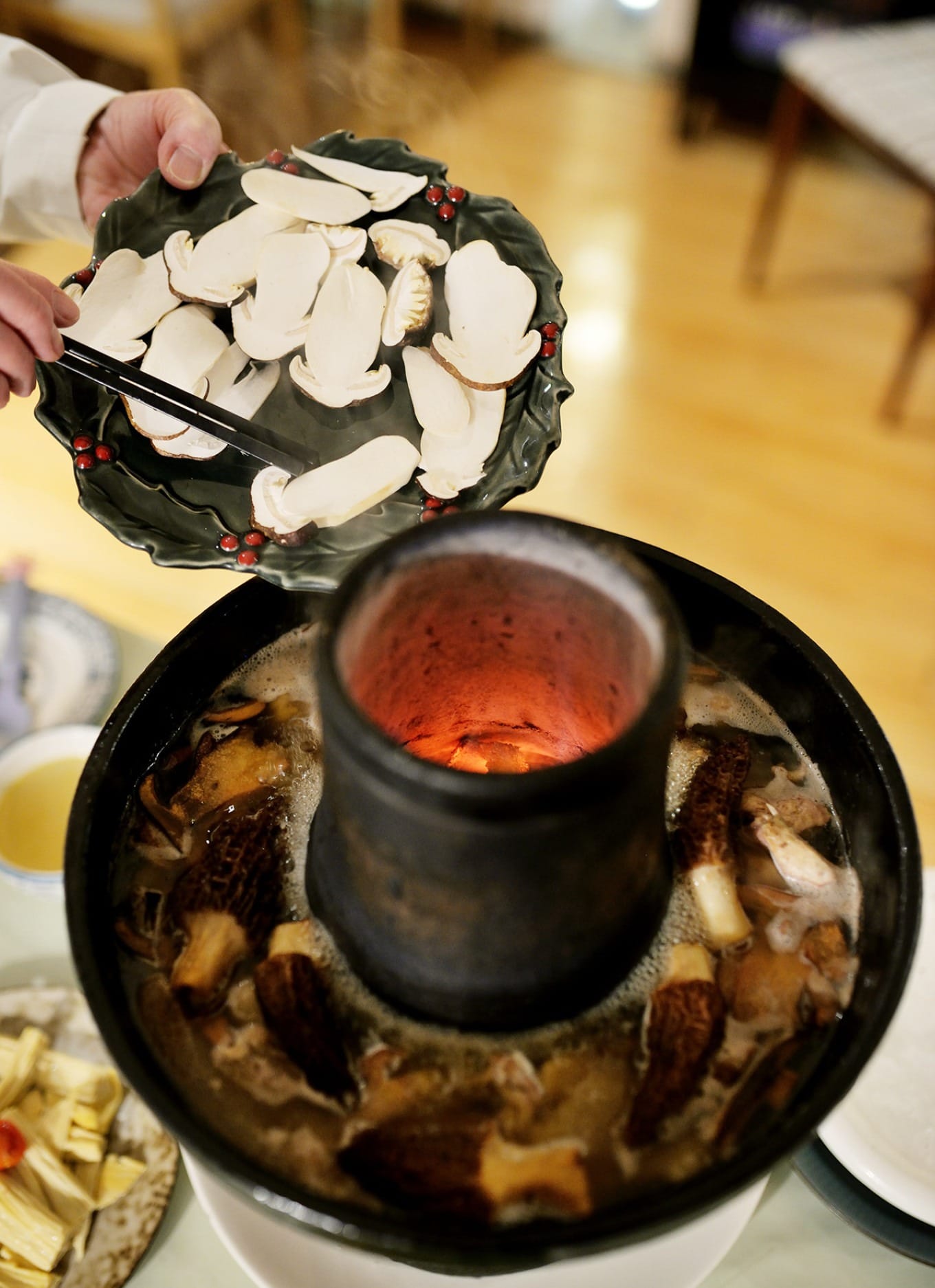
- RestaurantKouwei Jianghu Cuisine (口未江湖菜)
- AddressChengbei Village, Xizhou Town, Dali Bai Autonomous Prefecture, Yunnan (云南省大理白族自治州喜洲镇城北村)
- Recommended dishesTutaoyiguo Yeshengjun Huoguo 土陶汽锅野生菌火锅 (Clay Pot Wild Mushroom Hot Pot)
- Average spend60 yuan
Weishan Food Guide
When planning your trip to Weishan, food should be at the top of your itinerary. This charming town is widely considered the culinary capital of the Dali region, earning its reputation alongside Sha County as one of China’s ‘Hometowns of Famous Snacks’. The local government celebrates this heritage each year during the second lunar month with the Weishan Snack Festival, now in its eleventh edition.
Even outside the festival dates, Weishan’s streets overflow with incredible local flavors. Just south of the Gongchen Tower, you’ll find the famous snack street Hou Suo Jie (后所街), home to several renowned local eateries and restaurants. For a more authentic experience, venture further into the alleys to discover hidden, time-honored establishments praised by locals. The variety is so vast that you could eat from morning until night for days without repeating a single dish.
Practical tip: You can prioritize one signature stop around the area, and you should adjust timing and budget based on transport and peak hours.
Su Laosan Yigu Noodles
When visiting Weishan, you’ll quickly discover that locals have a beloved breakfast tradition: yīgēn miàn (one-string noodles). In the local dialect, this dish is called yīgǔ miàn, but both names refer to the same remarkable specialty. While several eateries in Weishan Ancient Town serve this dish, one stands out for its popularity despite its tucked-away location: Su Laosan Yigu Nian (苏老三一古面). Plan to arrive early, as they typically close before noon.
The magic of these noodles begins with dough made using 60°C water, which is then rolled into one incredibly long, thin strand coiled on a plate. When it’s time to cook, the chef grabs the end and deftly swings the entire noodle into a pot of boiling water. Whether you order a small or large bowl, you’re getting one continuous strand. It’s a mesmerizing performance—the slippery noodle seems to dance through the air. Chefs here are so skilled they can stretch a single noodle to over 1,700 meters without breaking!
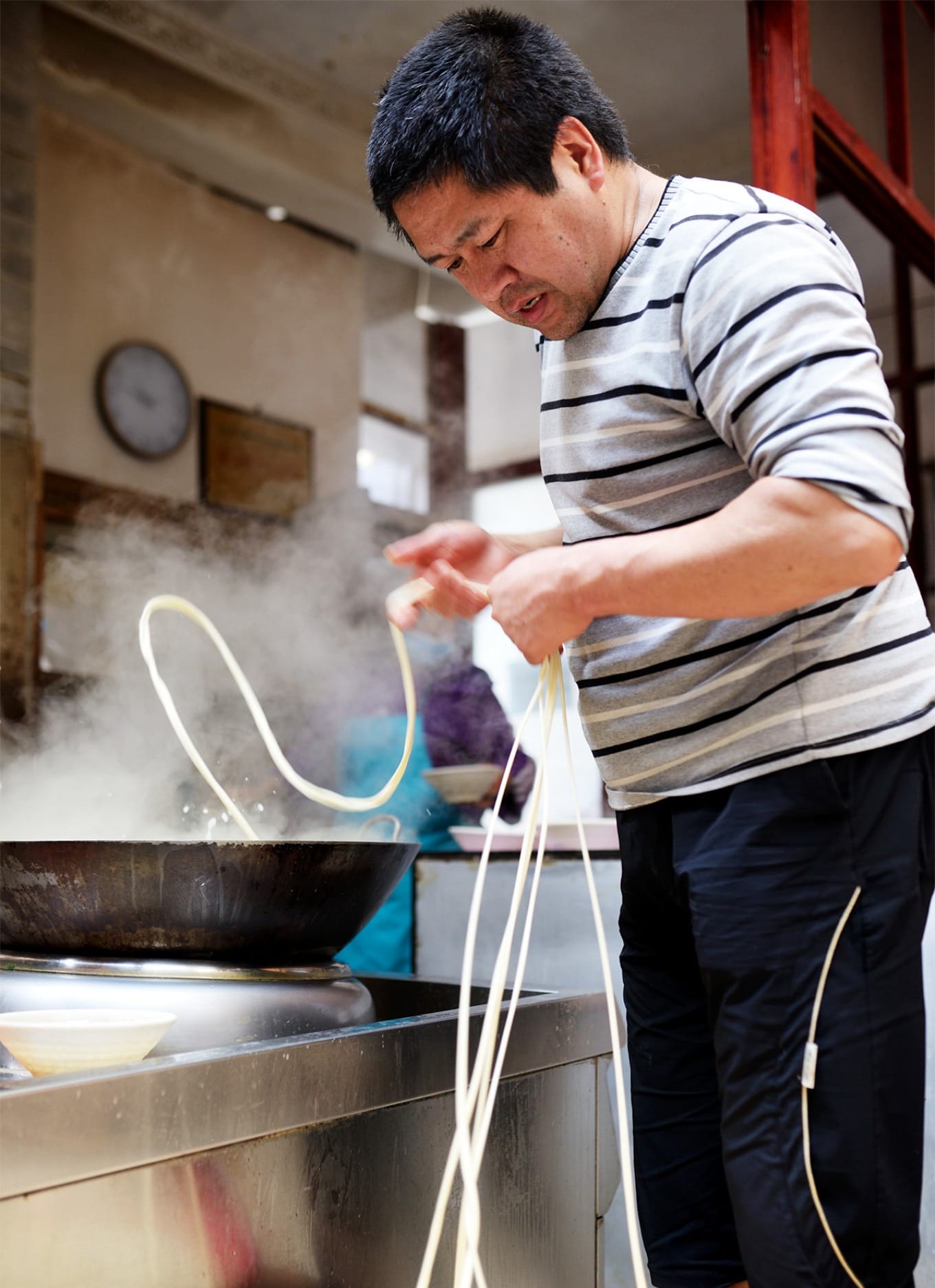
Once cooked, the noodle is served in a rich broth made from simmered pork bones and topped with a flavorful ‘hat’ of stir-fried ingredients. This topping, called màozi (帽子), typically includes braised pork, bamboo shoots, and chili peppers. The aroma alone is enough to make your mouth water.
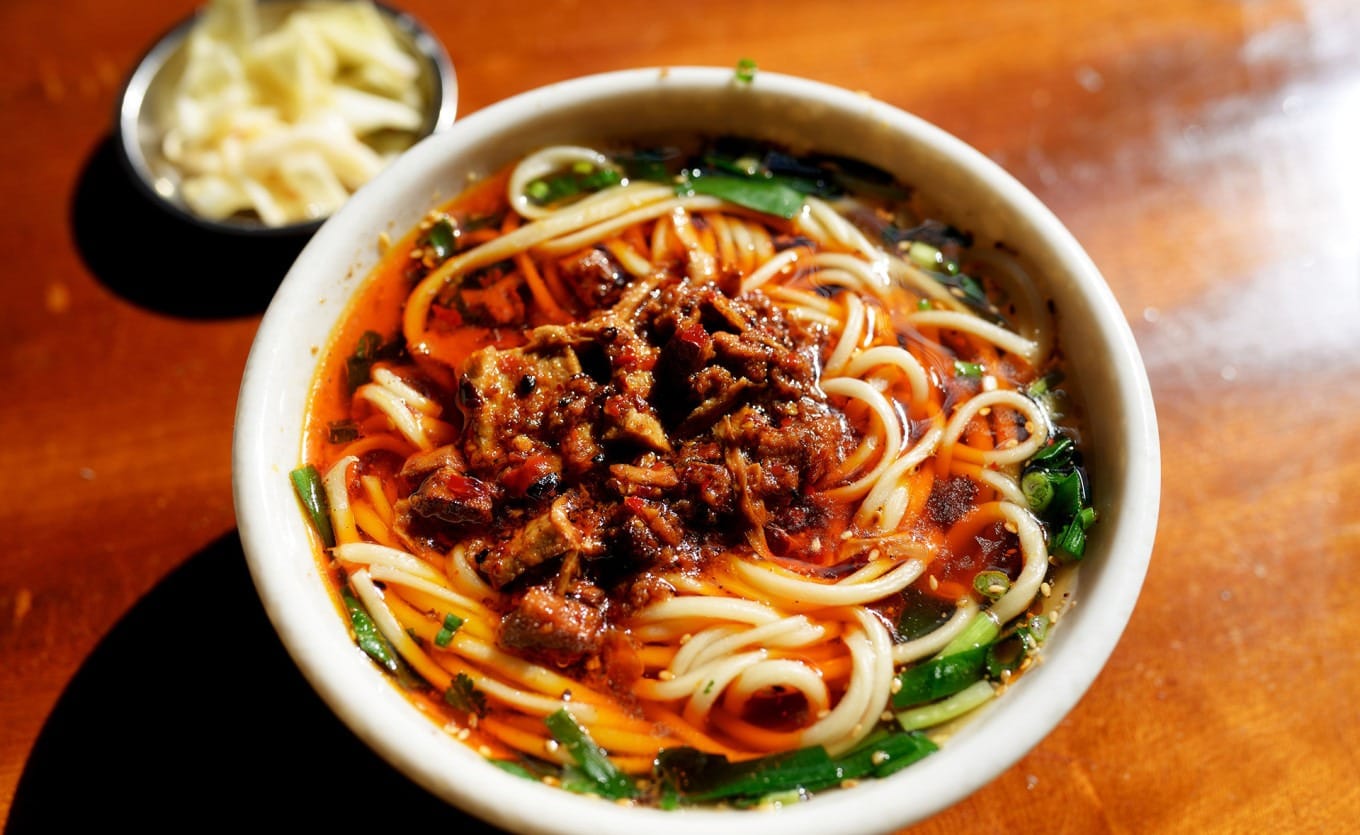
When you take your first bite, you’ll appreciate the noodle’s perfect texture—firm yet springy, with a satisfying chew. The savory notes from the braised pork meld beautifully with the wheaty flavor of the noodle itself, creating a truly memorable breakfast experience.
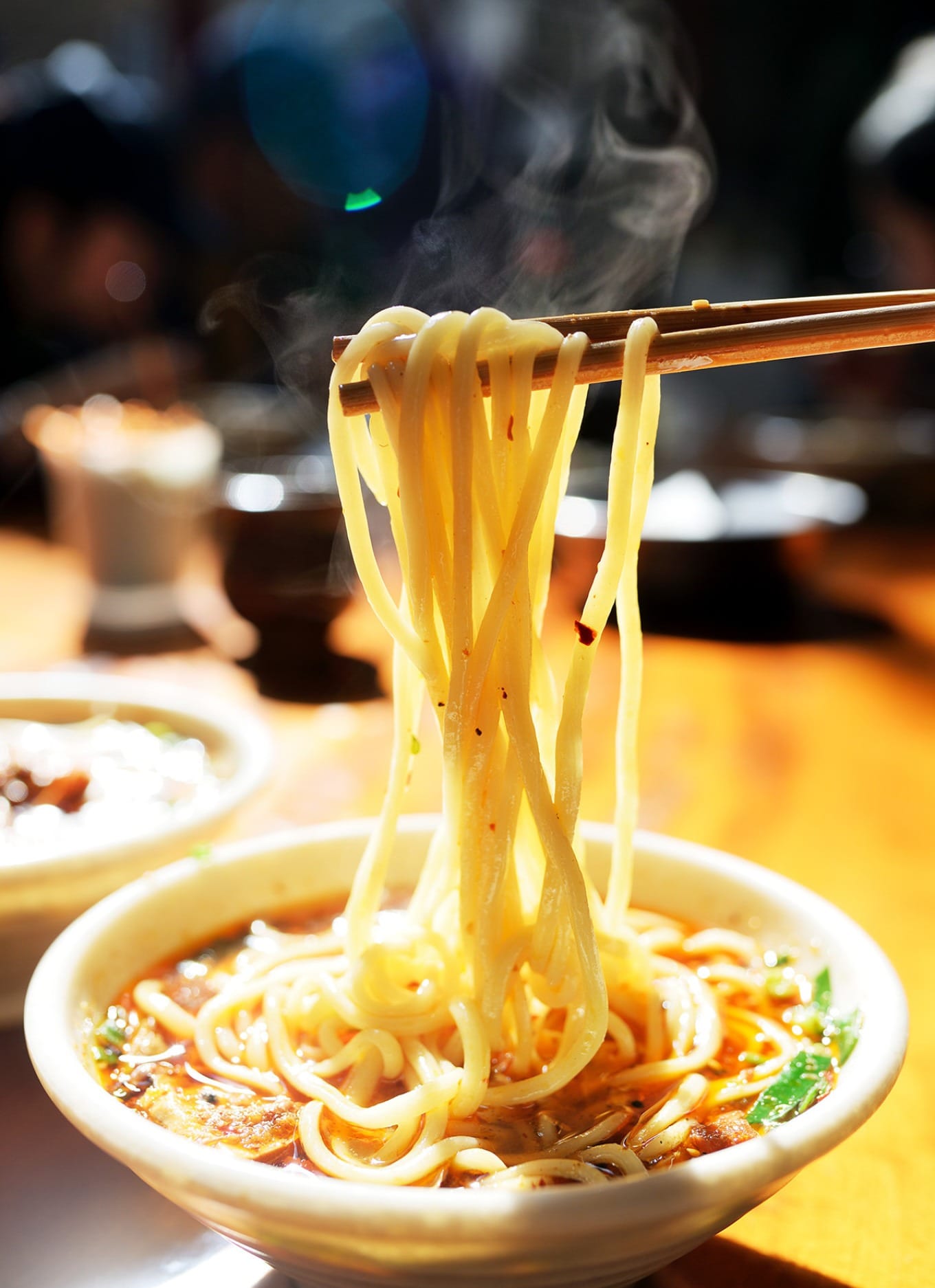
- RestaurantSu Laosan Yigu Nian (苏老三一古面)
- AddressHousuo Street, Nanzhao Town, Weishan Yi and Hui Autonomous County, Dali Bai Autonomous Prefecture, Yunnan (大理白族自治州巍山彝族回族自治县南诏镇后所街)
- Recommended dishesyīgēn miàn (一根面) / yīgǔ miàn (一古面)
- Average spend¥10 per person
Lao Wang Crossing-the-River Rice Noodles
When exploring Weishan’s breakfast scene, you’ll discover that beyond the famous ‘One Noodle’ (一根面), another beloved local specialty is Crossing-the-River Rice Noodles (过江饵丝). This dish originates in Weishan, where it’s made from locally grown yellow-skinned valley rice that’s first formed into rice cakes (饵块), then sliced into thin noodles.
For an authentic taste, head to Lao Wang Crossing-the-River Rice Noodles (老王过江饵丝), located at the intersection of North Street (北街) and Dashuigou Street (大水沟街). Like many local favorites, this shop operates only until midday and closes once sold out, so plan to arrive early to secure your bowl.
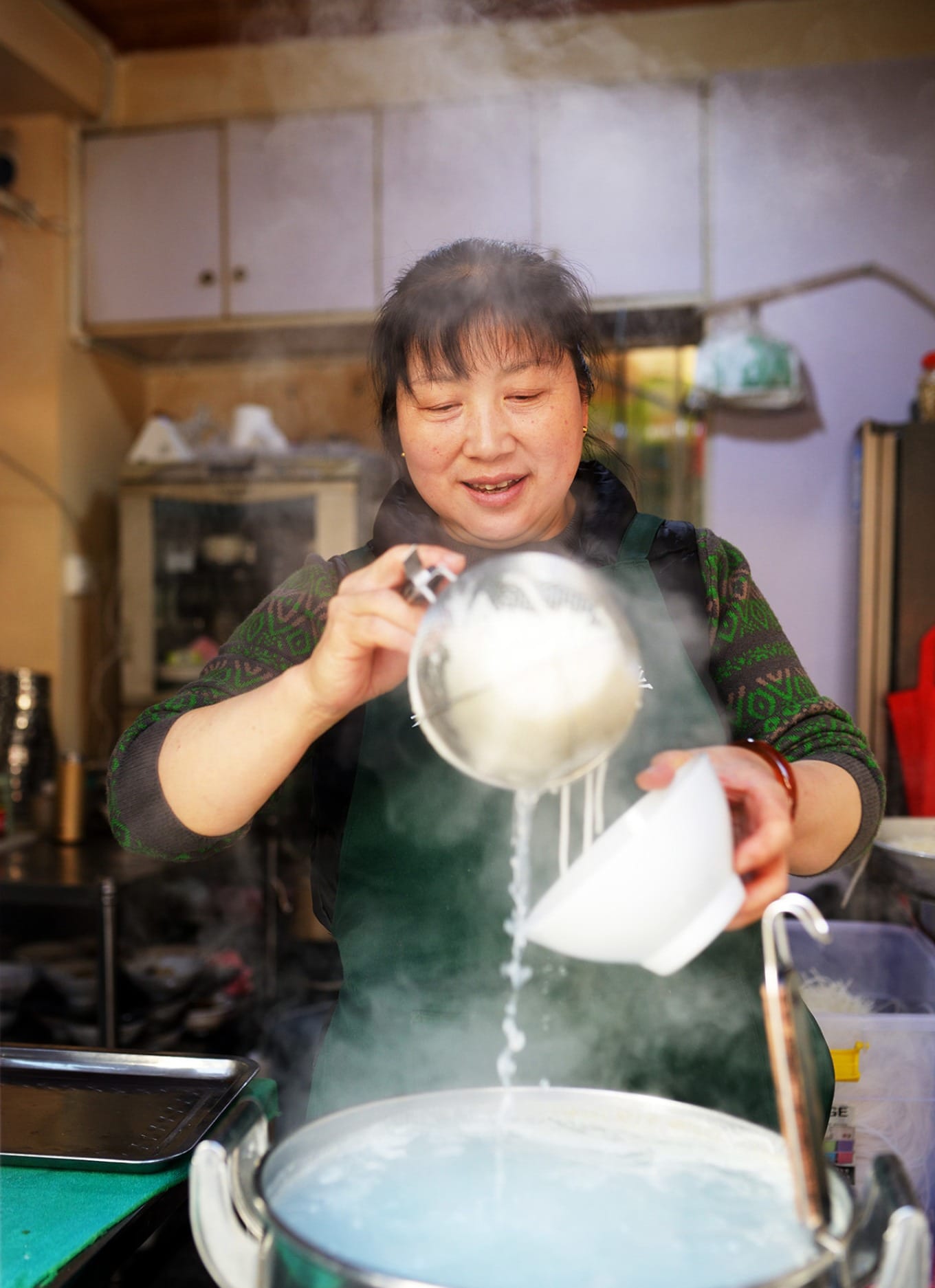
The ‘crossing-the-river’ name comes from the unique serving method. You’ll receive a bowl of rice noodles in clear broth alongside a separate, steaming hot bowl of rich braised meat soup (耙肉汤 / 𤆵肉汤), drizzled with chili oil, plus four small plates of pickled vegetables. To eat, you gradually transfer noodles from the clear broth into the meat soup, mixing them with the tender, golden braised meat. This technique creates a more flavorful broth than standard rice noodle dishes, with noodles that have a delightfully soft, glutinous texture reminiscent of rice cakes.
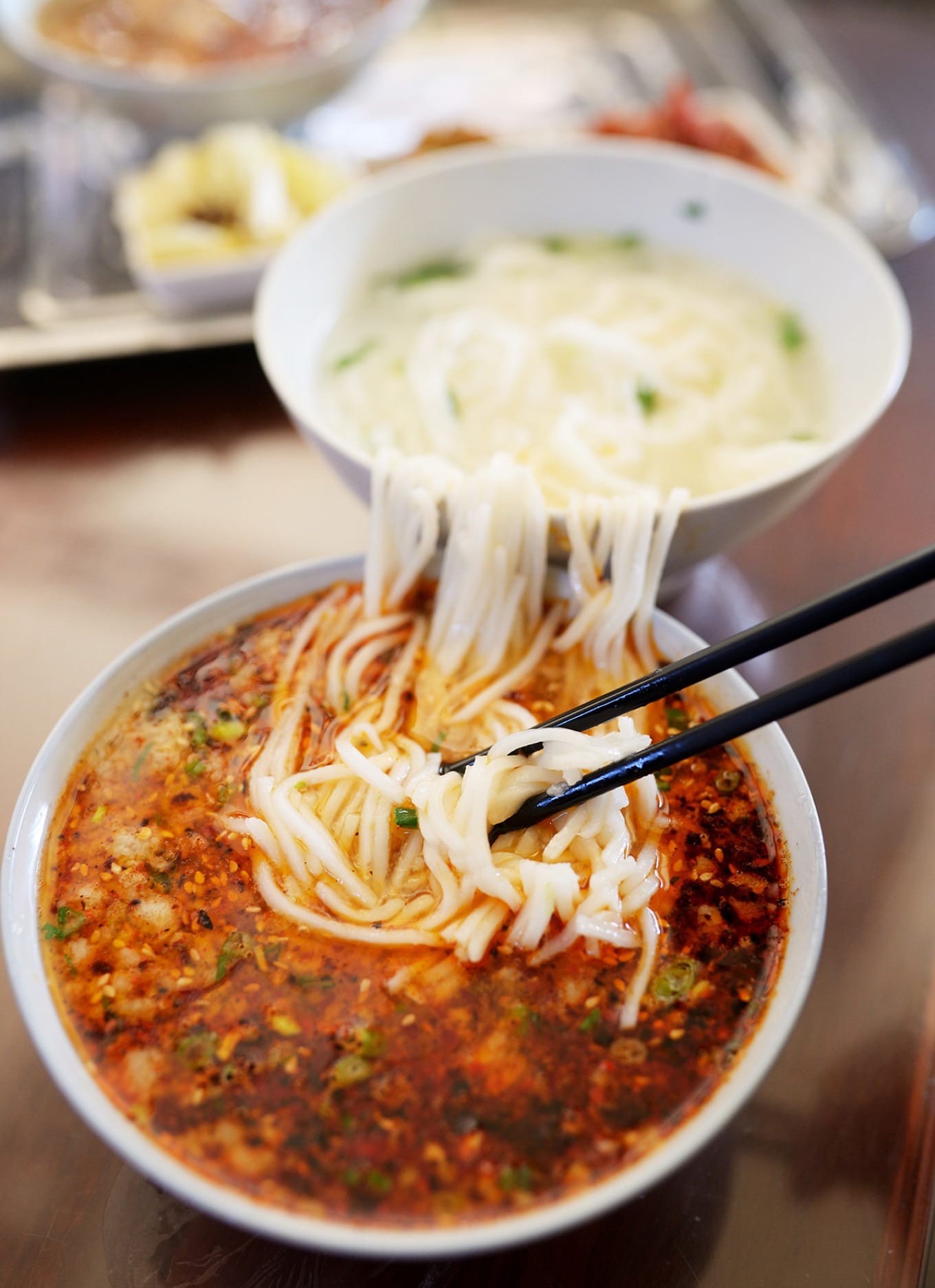
- RestaurantLao Wang Crossing-the-River Rice Noodles (老王过江饵丝)
- AddressBeijie, Nanzhao Town, Weishan Yi and Hui Autonomous County, Dali Bai Autonomous Prefecture, Yunnan (大理白族自治州巍山彝族回族自治县南诏镇北街)
- Recommended dishesCrossing-the-River Rice Noodles (过江饵丝)
- Average spend15 CNY
Lao Er Fan Zhuang: A Hidden Gem in Weishan
When exploring Weishan’s dining scene beyond street snacks, Lao Er Fan Zhuang (老二饭庄) stands out as a must-visit for authentic local flavors. This restaurant operates from a traditional courtyard house where the setting is unpretentious—simple low tables and stools arranged in the yard—and service is minimal, but the food speaks for itself.
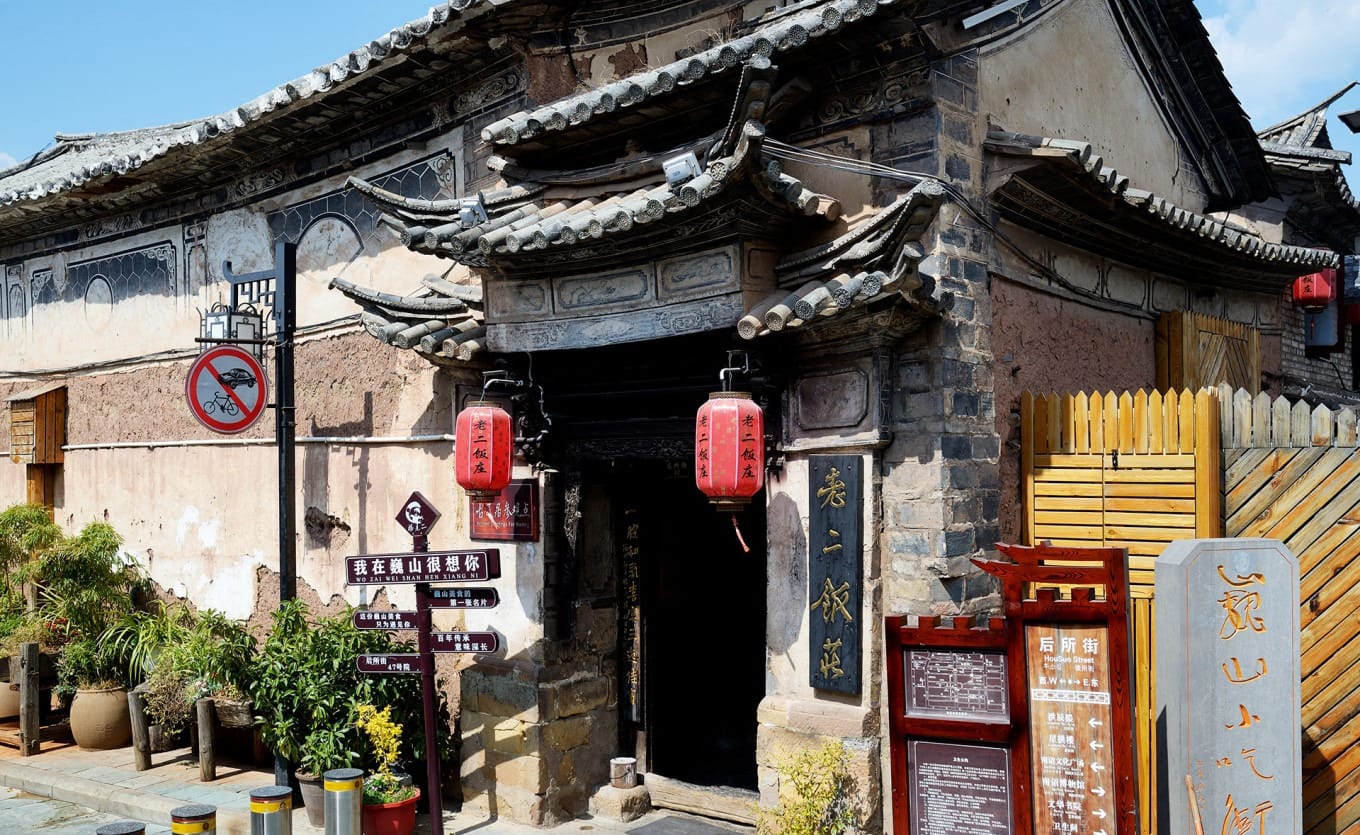
Start with their signature He Ye Ji (荷叶鸡, lotus leaf chicken), made with Weishan’s local black-bone chicken. This variety has dark skin, meat, and bones, yielding a denser texture than regular free-range chicken. The bird is marinated, stuffed with aromatics, wrapped in lotus leaves, and steamed until tender. The result is succulent meat infused with a subtle herbal fragrance, already savory on its own. For an extra kick, try it with the mildly spicy dipping sauce—it’s a flavor revelation.
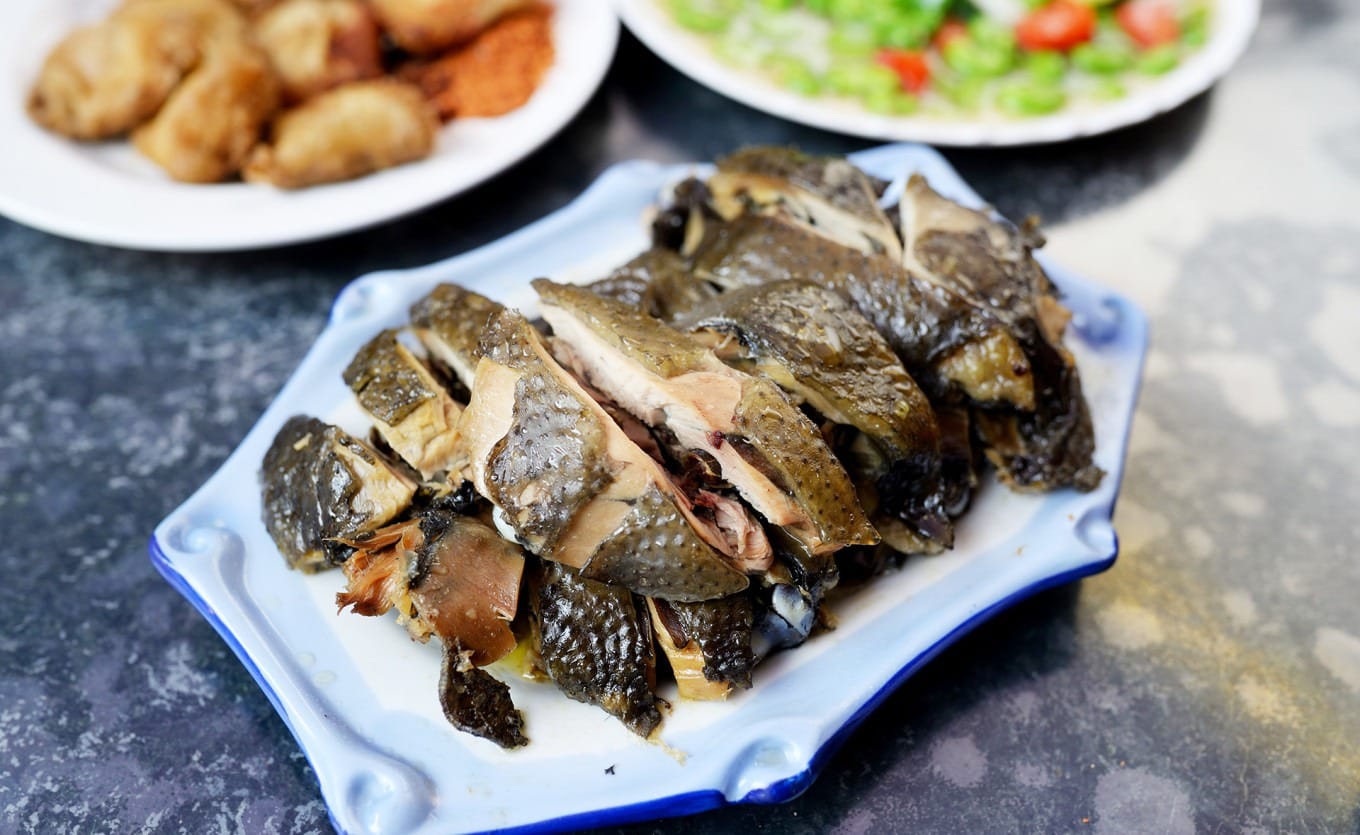
Another highlight is the Lu Rou (卤肉, braised pork), which uses cuts from the pig’s head—including cheek, ear, and snout—offering a mix of skin, fat, and lean meat. Compared to braised pork in Xizhou, this version is richer and more unctuous. Served cold-tossed with soy sauce, vinegar, chili oil, and peppers, the spicy dipping sauce elevates the dish with an addictive aroma and heat.
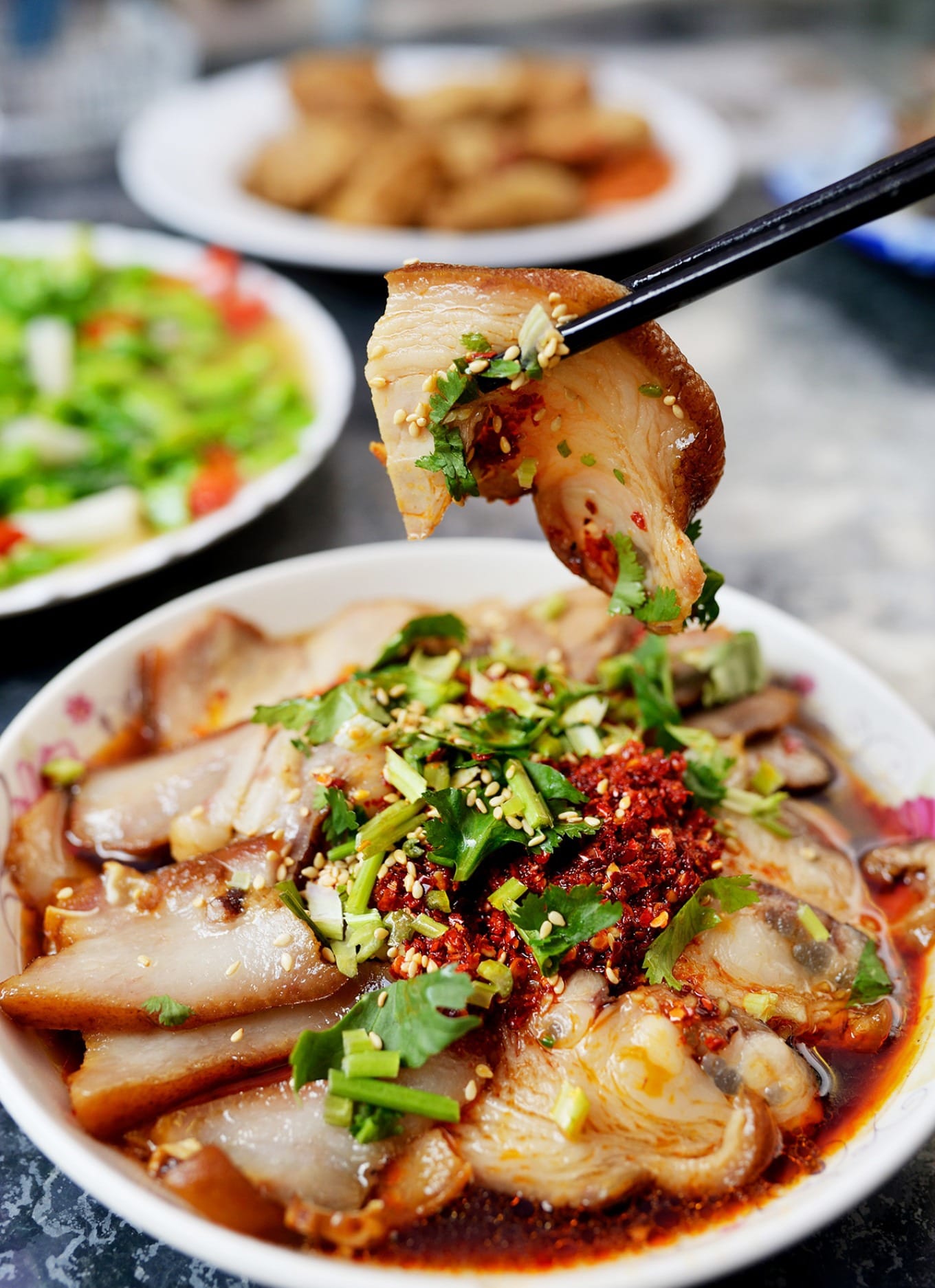
Don’t miss the Chou Doufu (臭豆腐, fermented tofu), which in Weishan is actually Mao Doufu (毛豆腐, hairy tofu)—distinct from the versions in Changsha or Shaoxing. This tofu undergoes microbial fermentation, developing a fuzzy surface. When fried, it turns crispy outside while remaining creamy-soft inside, melting on the tongue for a uniquely delightful experience.
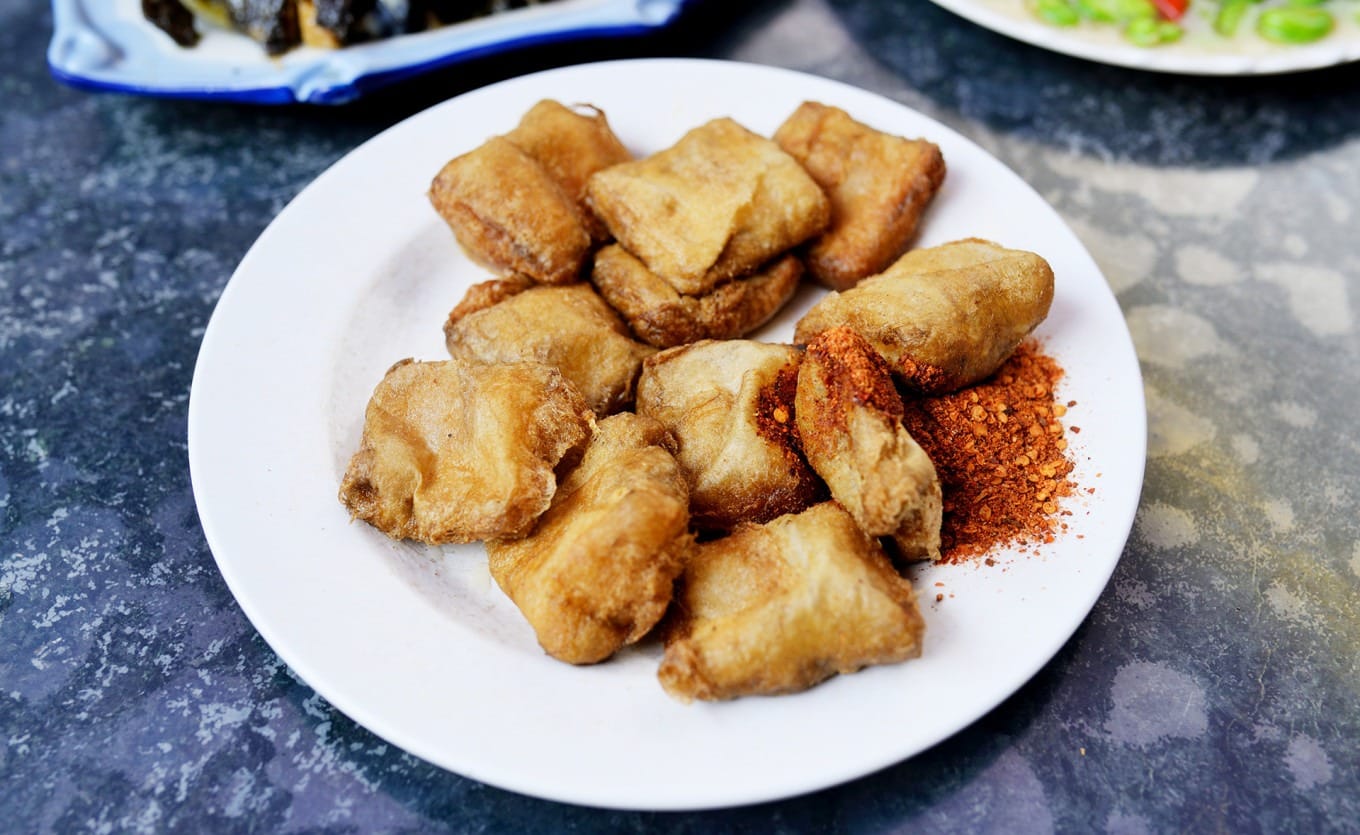
For a vegetable side, order the Chao He Bao Dou (炒荷包豆, stir-fried hebao beans), also known as emperor beans, grown locally in Dali. These vibrant green beans are stir-fried with a light starch glaze, offering a sweet, mild flavor reminiscent of fresh fava beans. The beans are tender yet intact, with a slightly starchy texture that adds to their appeal.
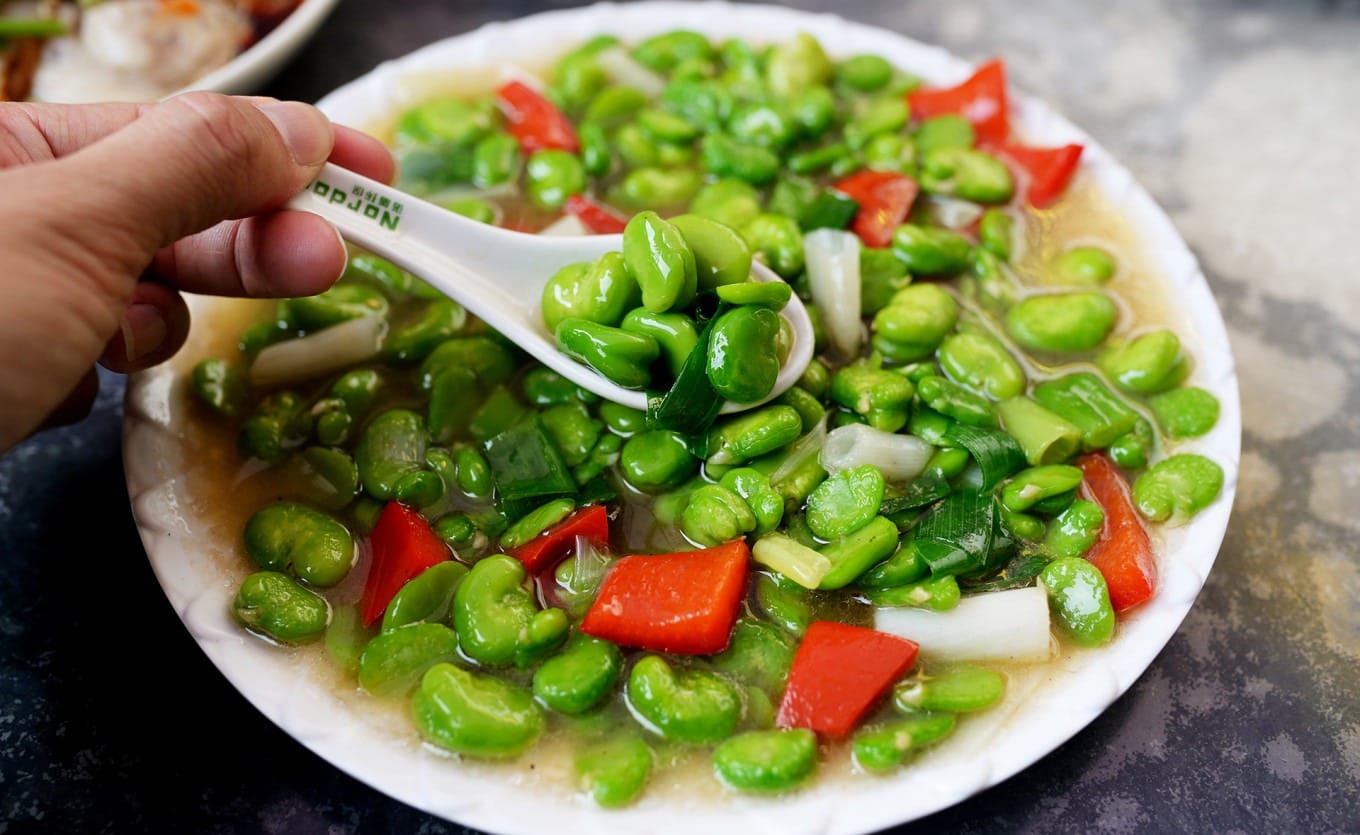
- RestaurantLao Er Fan Zhuang (老二饭庄)
- Address47 Weishan Snack Street, Nanzhao Town, Weishan Yi and Hui Autonomous County, Dali Bai Autonomous Prefecture, Yunnan / 云南省大理白族自治州巍山彝族回族自治县南诏镇巍山小吃街47号
- Recommended dishesHe Ye Ji (荷叶鸡, lotus leaf chicken), Liang Ban Lu Rou (凉拌卤肉, cold tossed braised pork), Zha Chou Doufu (炸臭豆腐, fried fermented tofu), Chao He Bao Dou (炒荷包豆, stir-fried hebao beans)
- Average spend50 CNY per person
Kunshifu Restaurant: A Local Culinary Gem in Weishan
Tucked away in a quaint courtyard on Housuo Street in Weishan, Kunshifu Restaurant (昆师傅饭庄) is a highly-rated local eatery you’ll often see recommended on platforms like Dianping and Xiaohongshu. While the per-person cost tends to be slightly higher than other restaurants in the area, the quality of ingredients and authentic flavors make it a worthwhile stop for a memorable meal.
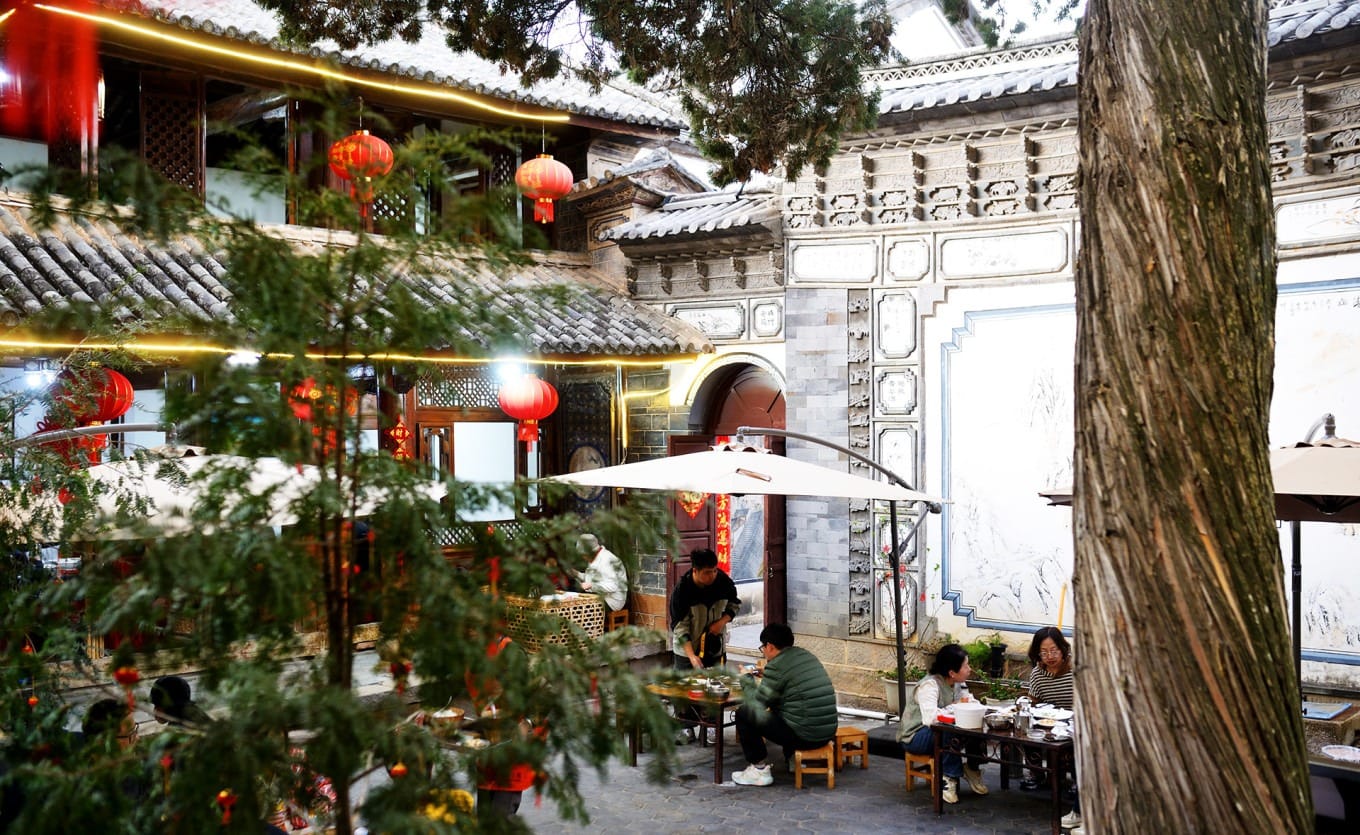
The restaurant’s signature dish is Duojiao Lijin (剁椒里筋, Chopped Chili Pork Tendon). ‘Lijin’ refers to two delicate tendons beneath the pork tenderloin, with less than half a kilogram yield per pig—just enough for one serving. The tendons are quickly stir-fried over high heat with pickled chilies and scallion whites, creating a harmonious blend of sour, sweet, and spicy flavors. Each bite offers a tender yet chewy texture, perfectly balanced with the aromatic chili heat.
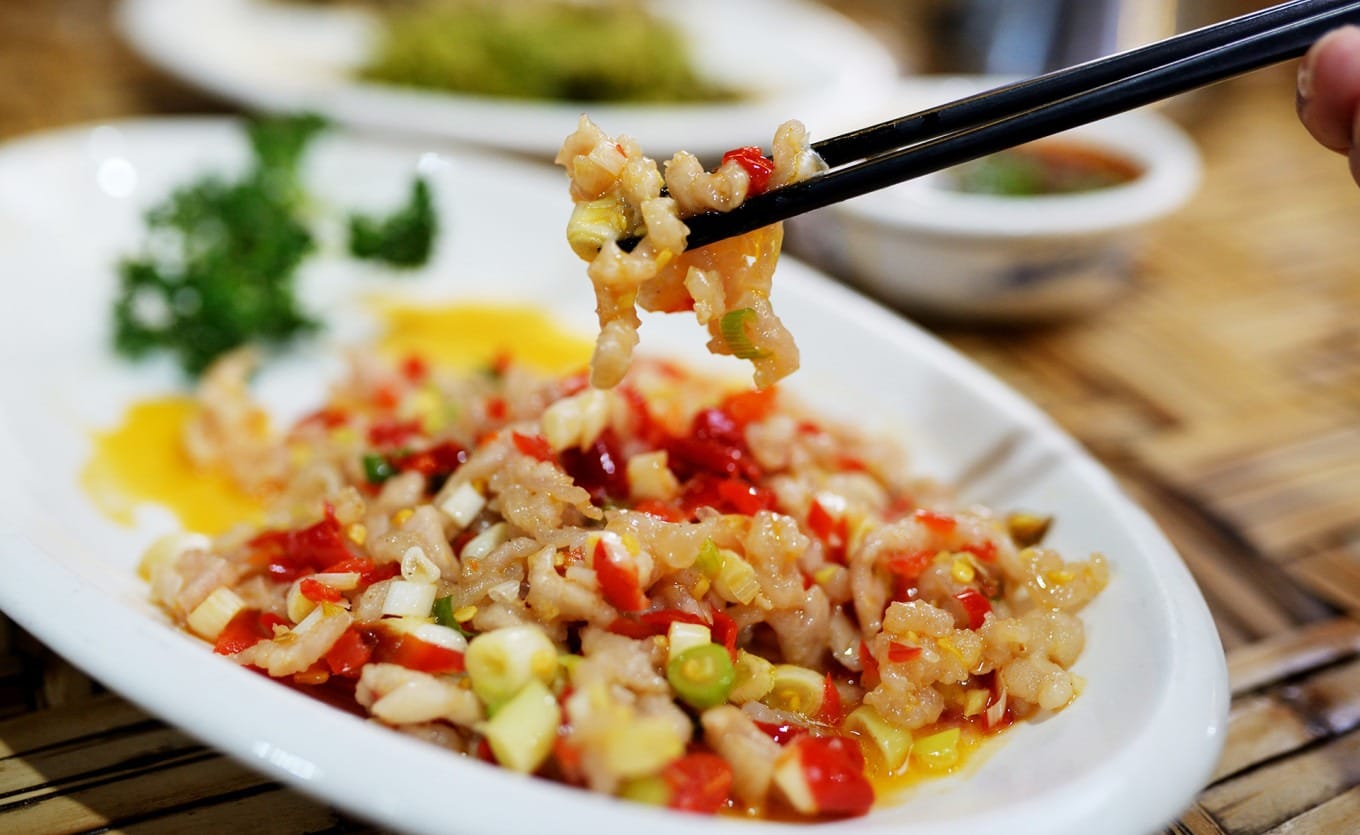
Another standout is Fengwei Qieding (风味茄丁, Flavored Eggplant Cubes). The eggplant is coated in starch and fried until crispy without becoming overly greasy. The exterior is delightfully crunchy while the inside remains soft, topped with a special seasoning powder called ‘Jigan Zha’ (鸡肝酢)—a dried, crushed chicken liver condiment that adds a savory, fragrant depth.
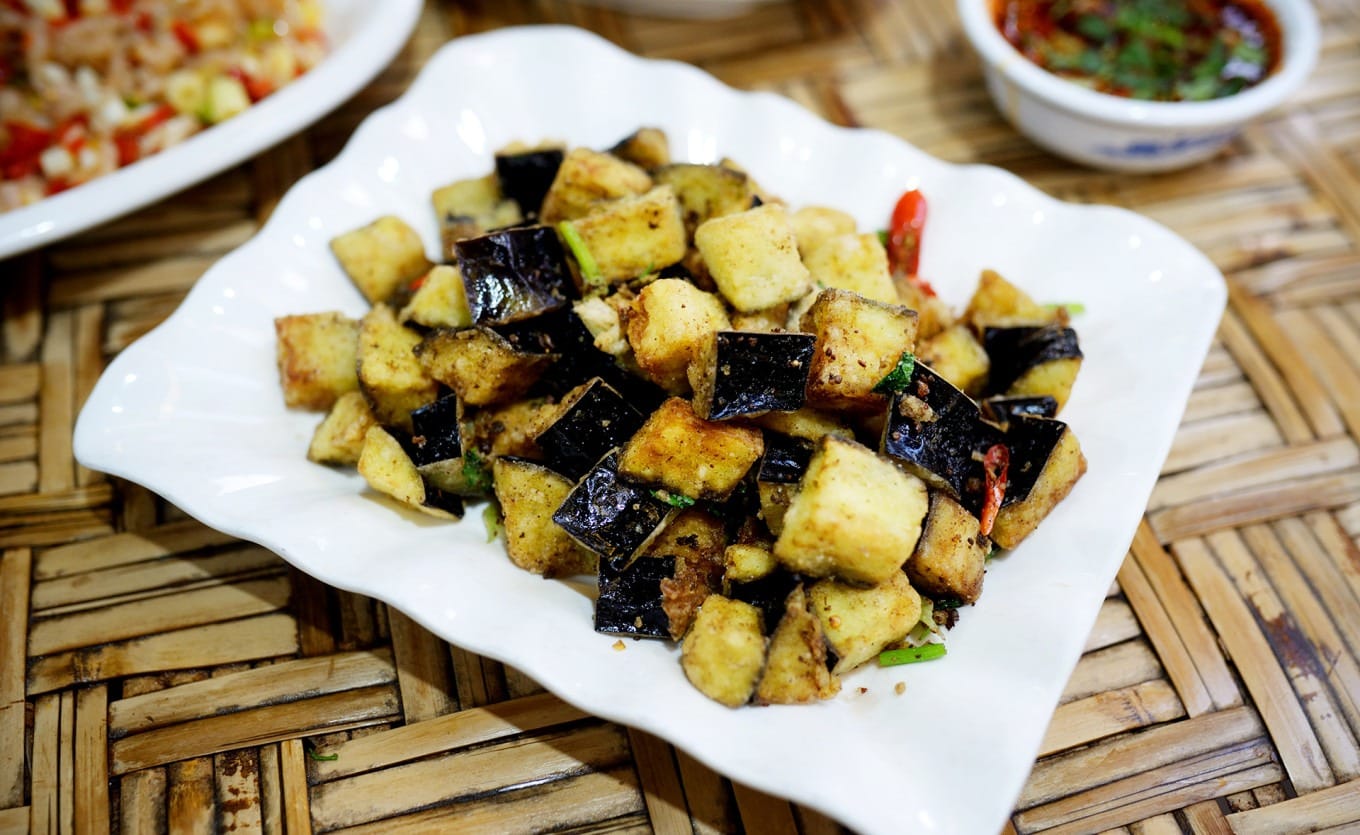
For a refreshing side, try Liangban Songjian (凉拌松尖, Cold Tossed Pine Tips). This dish features ‘Shasongjian’—the tender buds of Yunnan Keteleeria—briefly blanched and then dressed. Each mouthful releases a subtle, nutty pine-like aroma that’s both cooling and palate-cleansing.
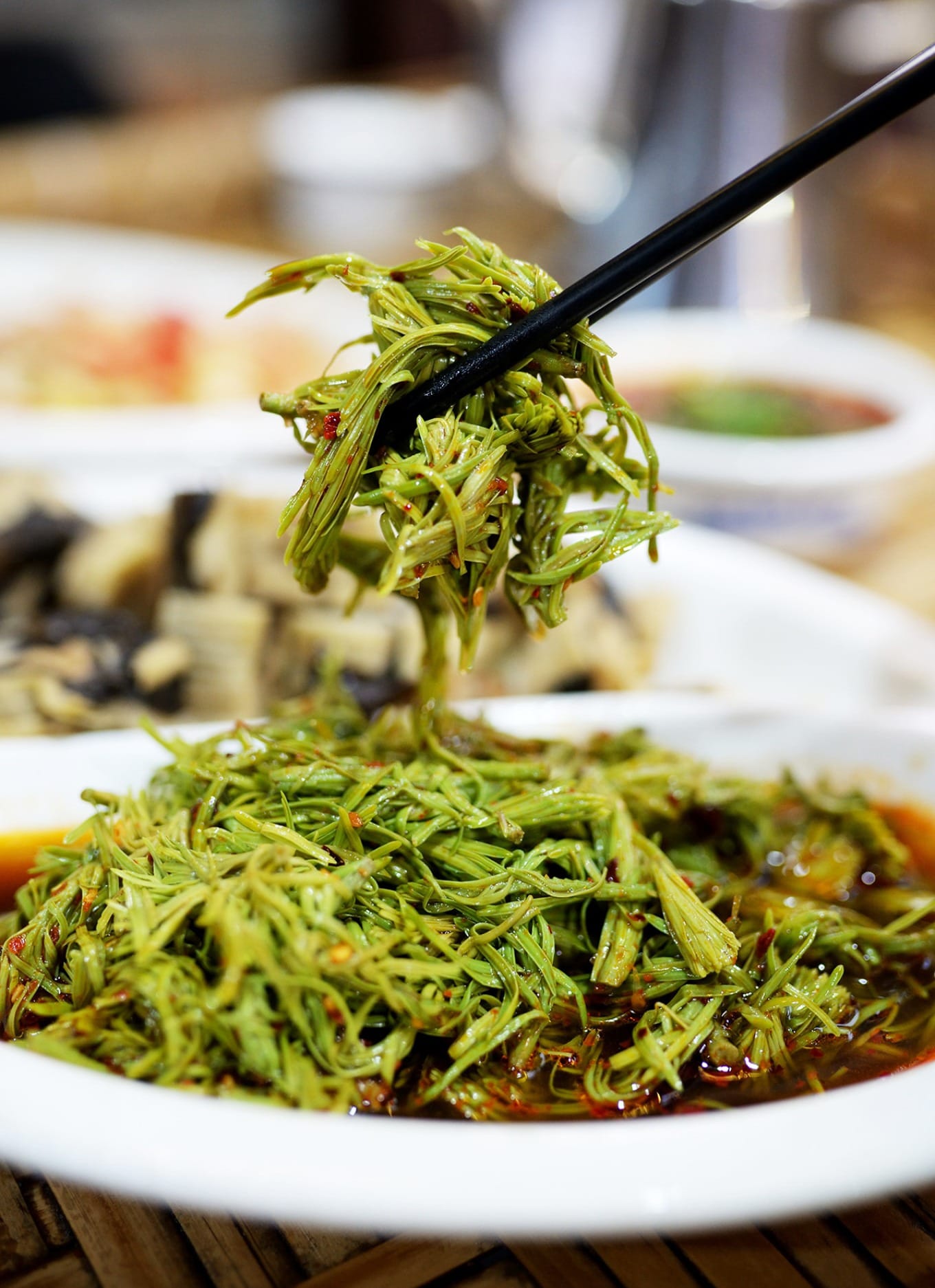
Don’t miss the Su Liangji (素凉鸡, Vegetarian ‘Cold Chicken’), a creative vegetarian dish. Fresh peeled walnut kernels and wood ear mushrooms are wrapped in tofu skin, bundled in cloth, and steamed for two hours. The result mimics chicken perfectly—black fungus stands in for dark meat, walnuts imitate cartilage, and tofu skin replicates chicken skin 纹理 (local term). It carries a light walnut fragrance and pairs beautifully with the Liangban Songjian.
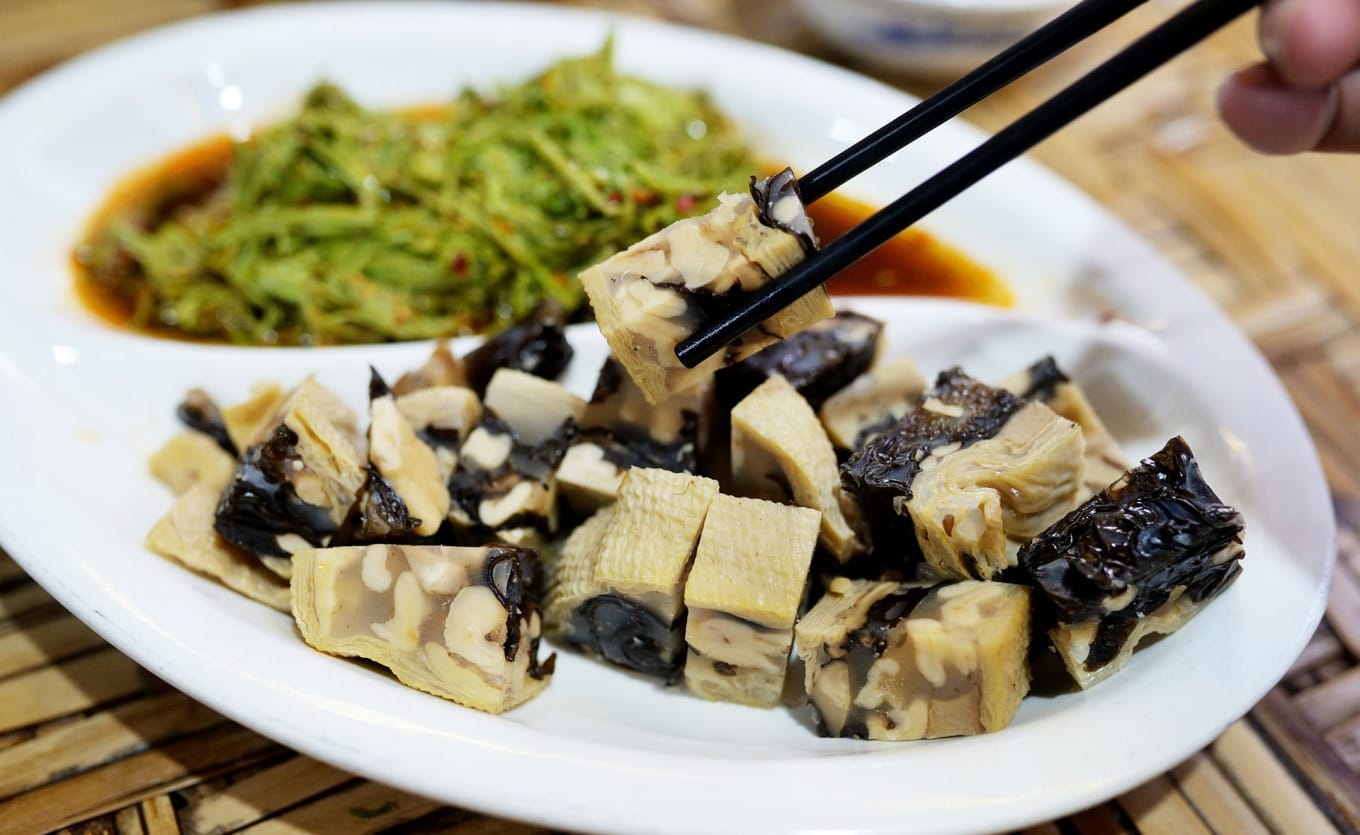
- RestaurantKunshifu Restaurant (昆师傅饭庄)
- Address7 Housuo Street, Nanzhao Town, Weishan Yi and Hui Autonomous County, Dali Bai Autonomous Prefecture, Yunnan / 云南省大理白族自治州巍山彝族回族自治县南诏镇后所街7号
- Recommended dishesDuojiao Lijin (剁椒里筋, Chopped Chili Pork Tendon), Fengwei Qieding (风味茄丁, Flavored Eggplant Cubes), Liangban Songjian (凉拌松尖, Cold Tossed Pine Tips), Su Liangji (素凉鸡, Vegetarian ‘Cold Chicken’)
- Average spend70 CNY per person
Lao Wu’s Family Restaurant
Tucked away on Housuo Street, just a few doors down from Kun Shifu Restaurant, you’ll find Lao Wu’s Family Restaurant (老吴家饭庄). This unassuming spot is a local gem known for its authentic flavors and excellent value, making it a reliable choice for travelers seeking a genuine taste of Weishan.
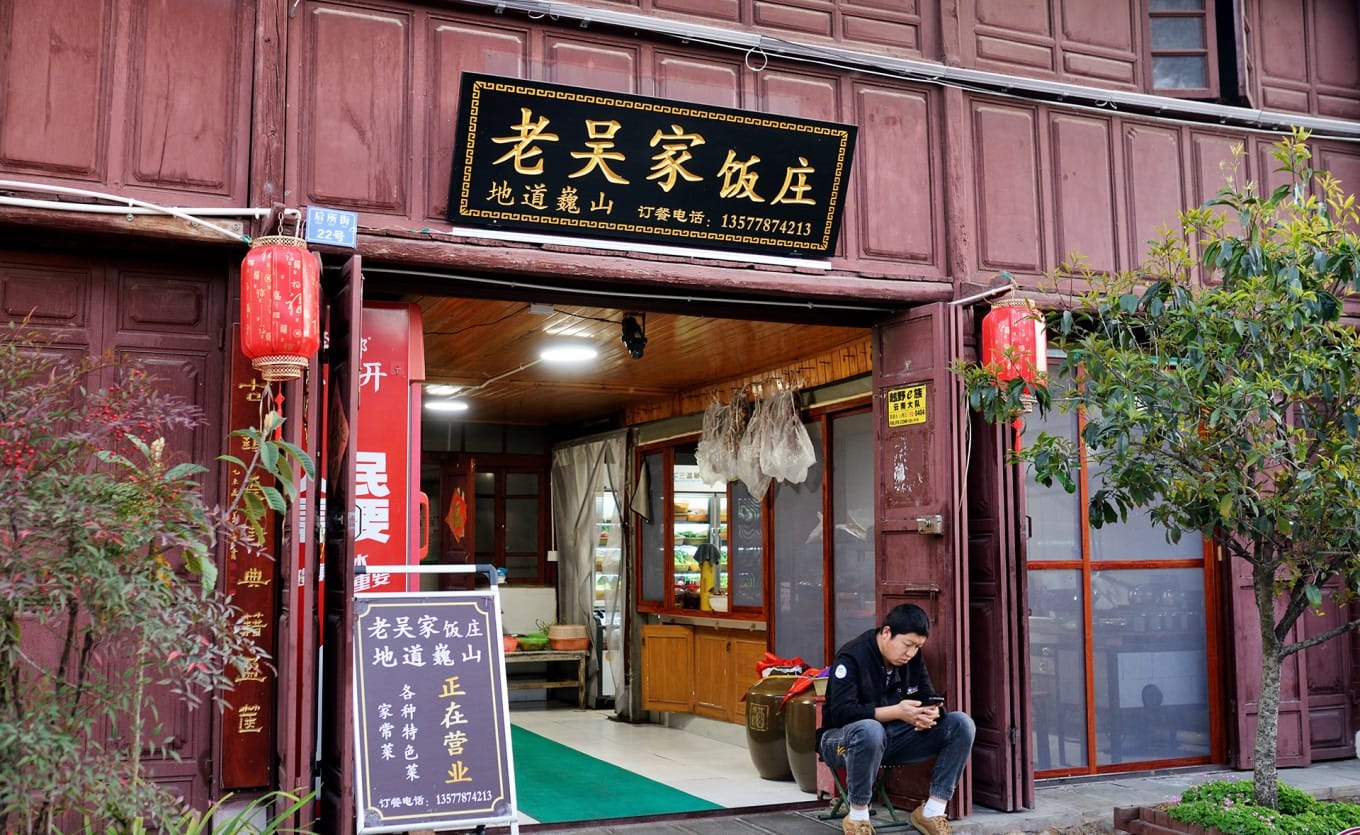
When dining here, be sure to try the local specialty: Chui Gan (吹肝), or ‘blown liver.’ While it might seem unusual at first glance, this is a traditional Dali dish, particularly famous from Heqing County. The preparation involves inflating fresh pork liver (traditionally by mouth or with a straw), stuffing it with a mixture of chili, Sichuan pepper, soy sauce, vinegar, and strong liquor, coating it with spices, and air-drying it for one to two months. It’s typically served cold and thinly sliced, revealing a honeycomb-like texture. Dipped in sauce, it offers a surprising burst of sweet, sour, and spicy flavors that are incredibly moreish.
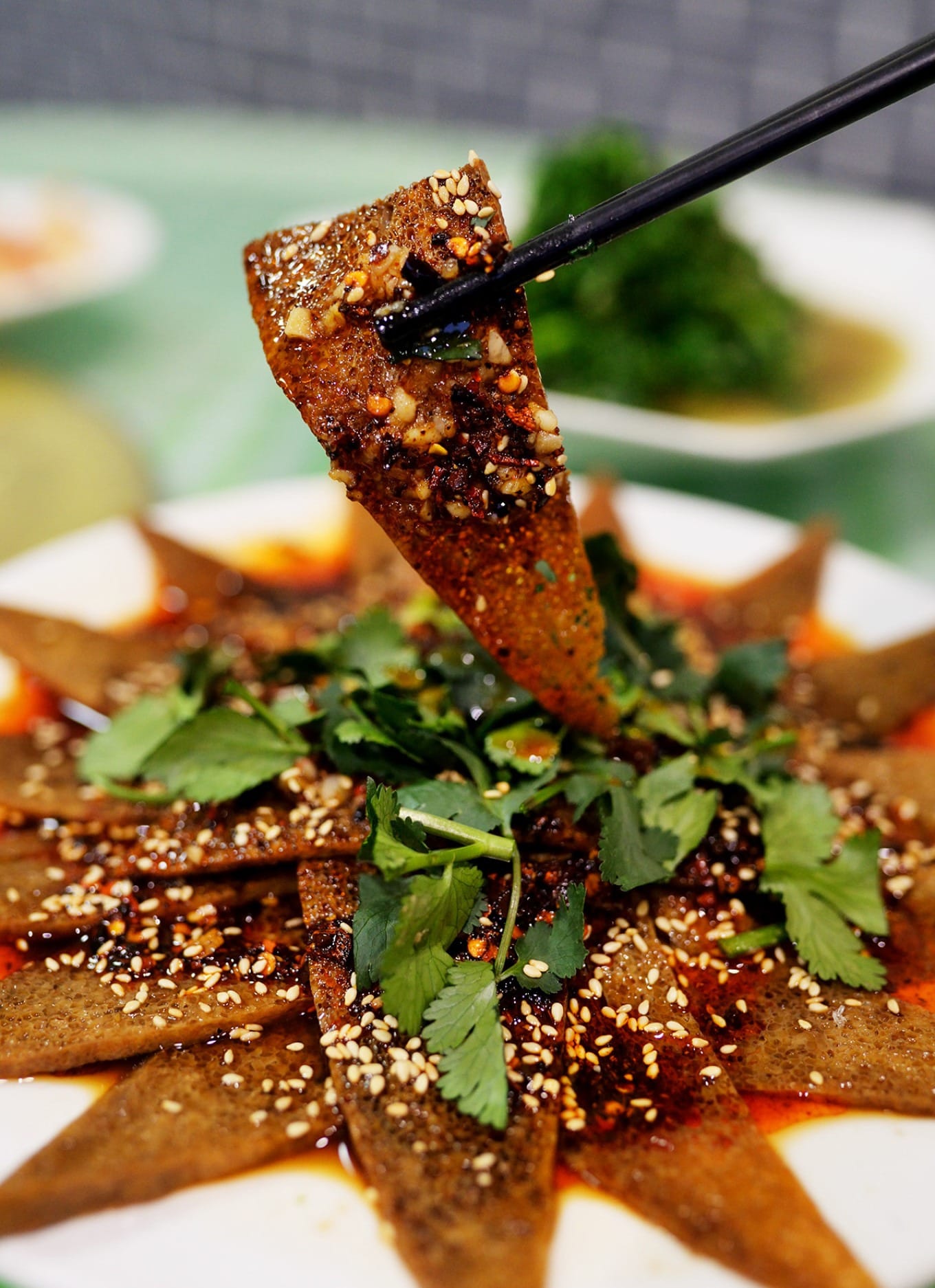
Another must-order is Yan Cai Chao Rou (腌菜炒肉), a stir-fry of preserved vegetables and pork. Preserved vegetables are a staple in Weishan households, and this dish showcases them perfectly. It’s rich, oily, and deeply savory, with the sour, fragrant vegetables and a hint of spice complementing the pork beautifully—a fantastic choice for lovers of sour and spicy flavors.
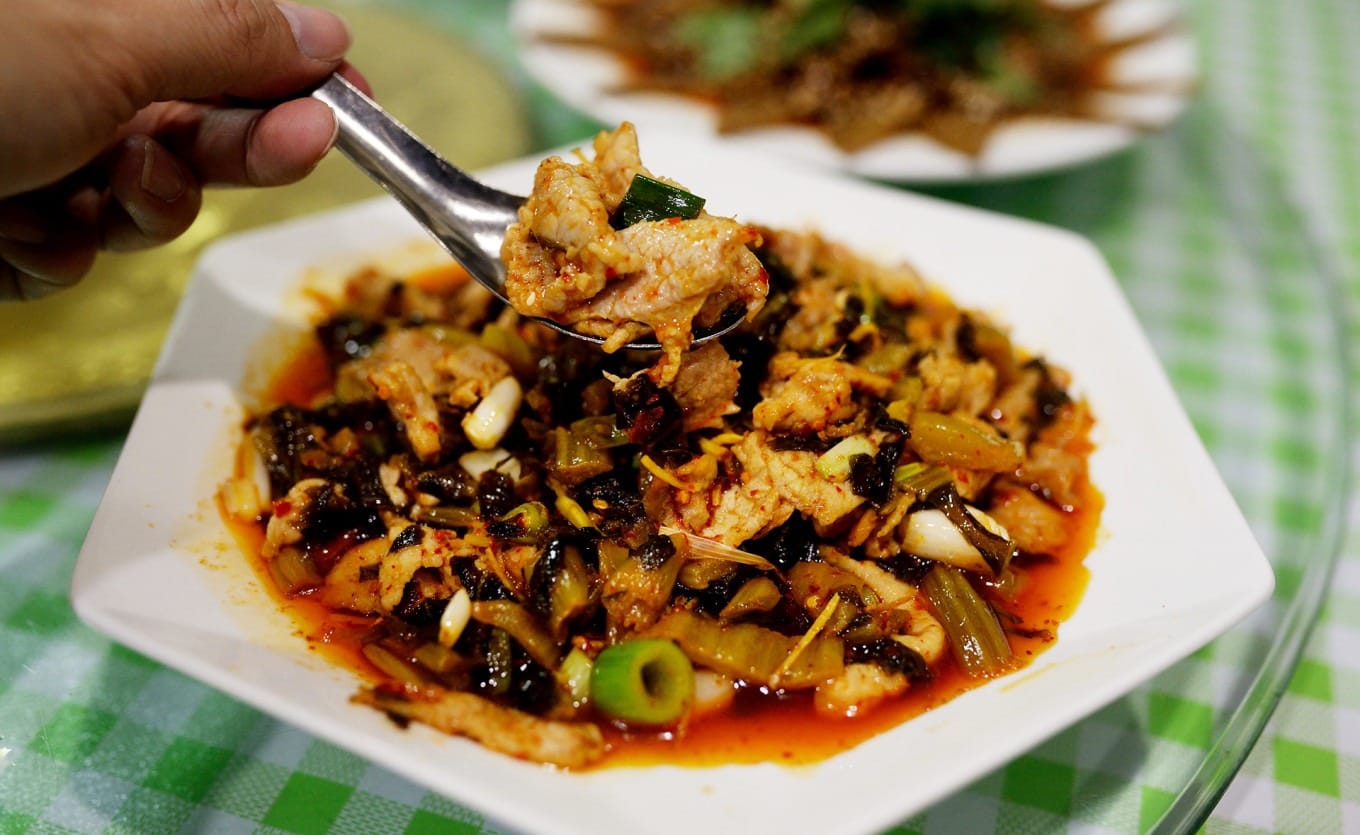
For a vegetable dish, consider Chao Ci Wu Jia (炒刺五加), a stir-fried wild green. Similar to le cai (簕菜) found in Guangdong, it’s delicious simply stir-fried. It has a unique, slightly bitter yet sweet and fragrant taste that sets it apart from common greens.
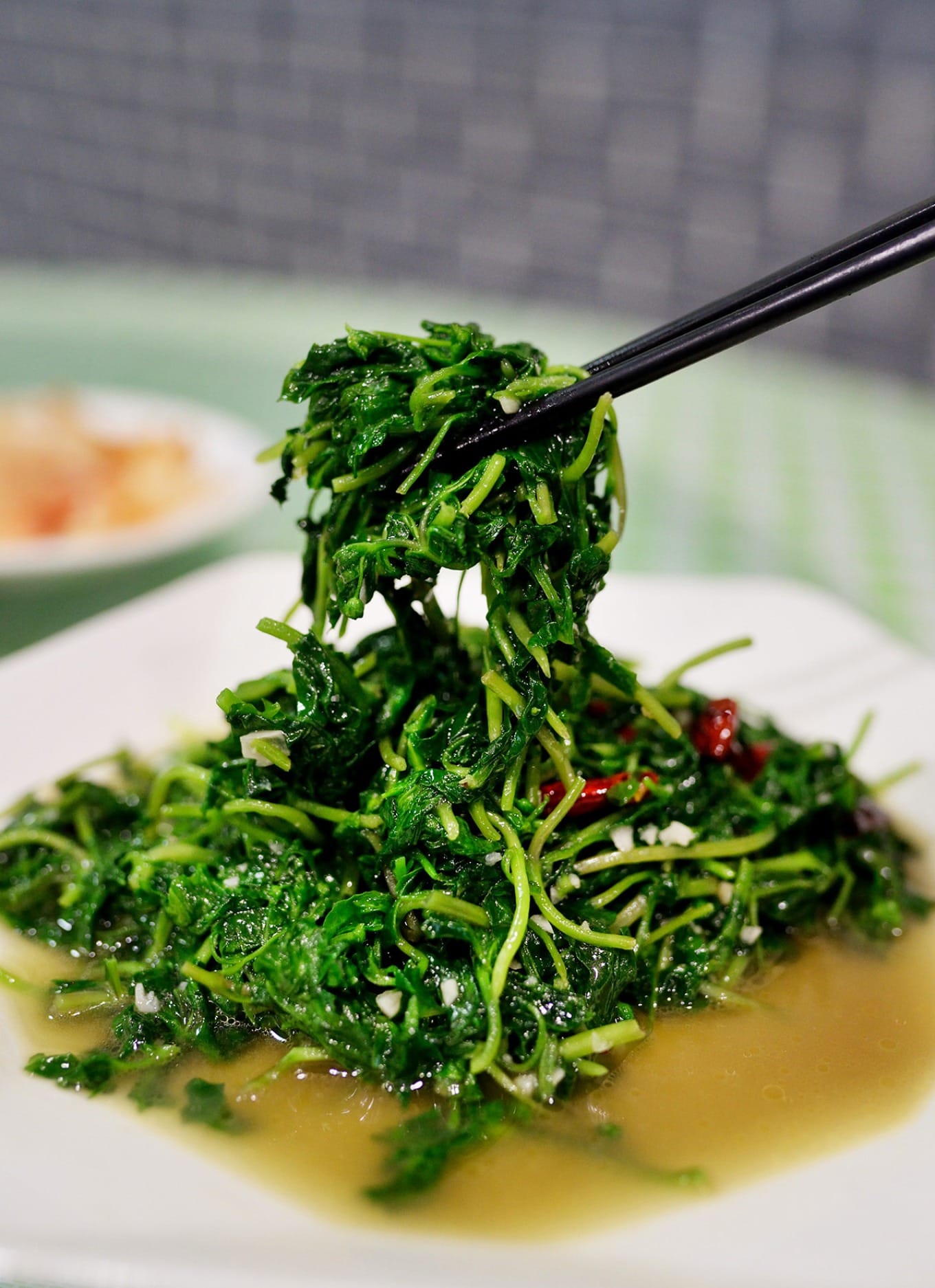
- RestaurantLao Wu’s Family Restaurant (老吴家饭庄)
- Address22 Housuo Street, Nanzhao Town, Weishan Yi and Hui Autonomous County, Dali Bai Autonomous Prefecture, Yunnan (云南省大理白族自治州巍山彝族回族自治县南诏镇后所街22号)
- Recommended dishesChui Gan (吹肝 / blown liver), Yan Cai Chao Rou (腌菜炒肉 / stir-fried preserved vegetables with pork), Chao Ci Wu Jia (炒刺五加 / stir-fried ci wu jia)
- Average spend40 CNY per person
Wuwei Restaurant: Authentic Yunnan Home Cooking
For a taste of genuine local life in Dali, head to Wuwei Restaurant (武伟餐厅), a no-frills eatery where the atmosphere is casual and the food speaks for itself. While it’s famous for its wild mushroom hotpot, you’ll find excellent stir-fried dishes year-round. A practical tip: there’s no printed menu—simply order directly at the fridge display filled with fresh ingredients, where the staff will guide you through the options.
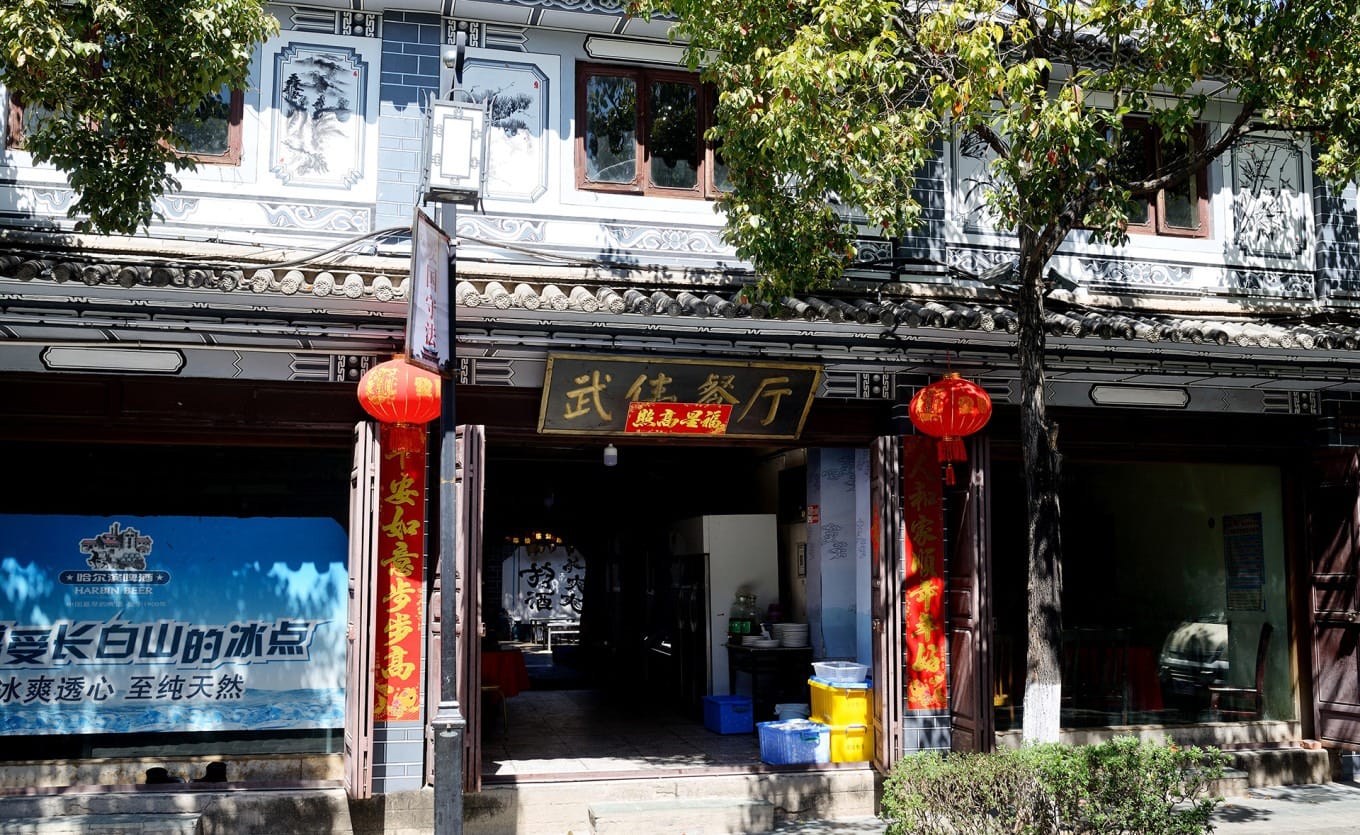
One dish not to miss is the braised pork with tender broad beans, known locally as doumi kourou (豆米扣肉). While braised pork is popular across southern China, the Yunnan version pairs the melt-in-your-mouth pork with local young fava beans (doumi). The beans soak up the rich flavors during steaming, creating a comforting, savory dish without any greasiness.
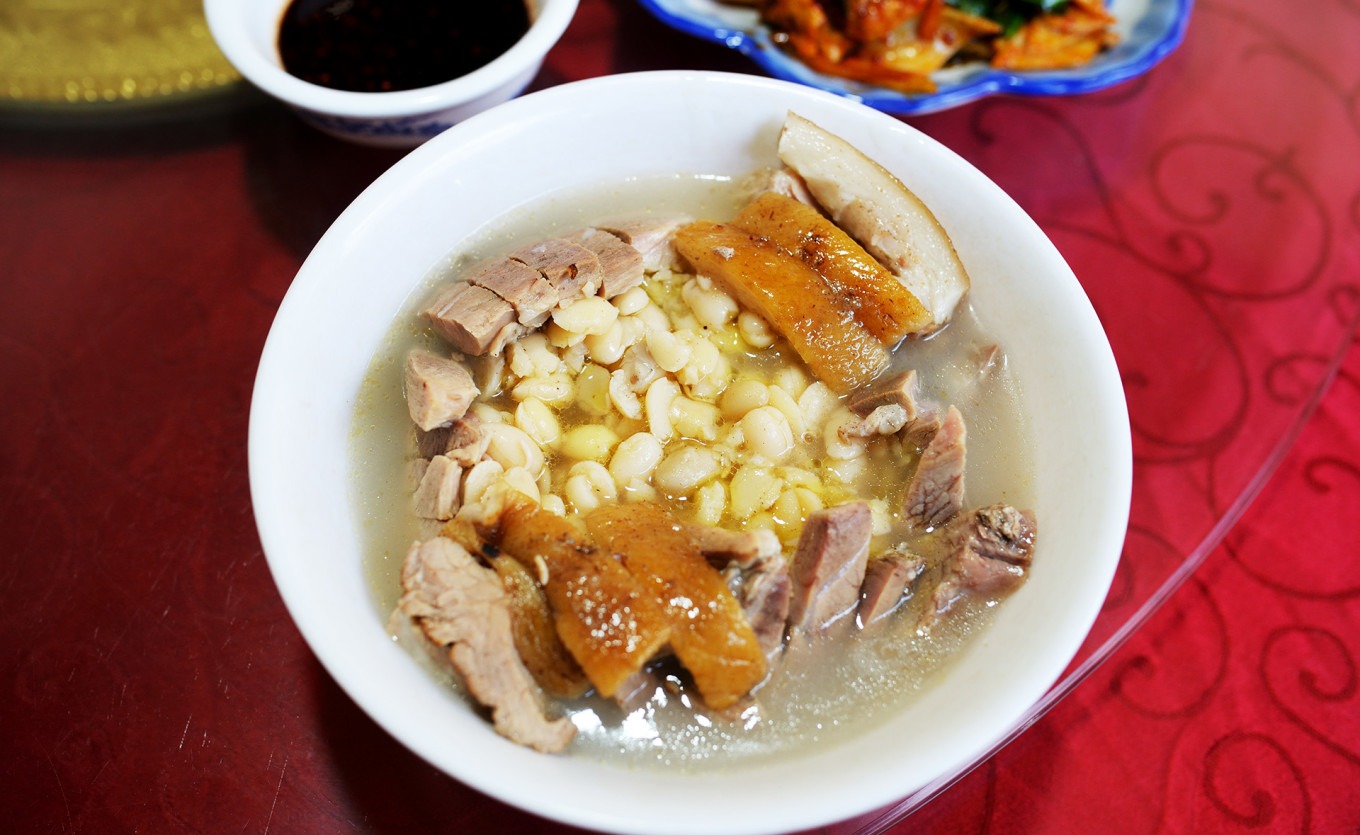
Another must-try is chao erkuai (炒饵块), a stir-fried rice cake that’s a signature dish of western Yunnan. Made from rice, it’s sliced and wok-fried with shredded leeks and carrots, seasoned with pickled vegetables and fermented chili (zaolazi). The result is a chewy, fragrant dish reminiscent of stir-fried rice cakes, offering a delightful texture and robust flavor.
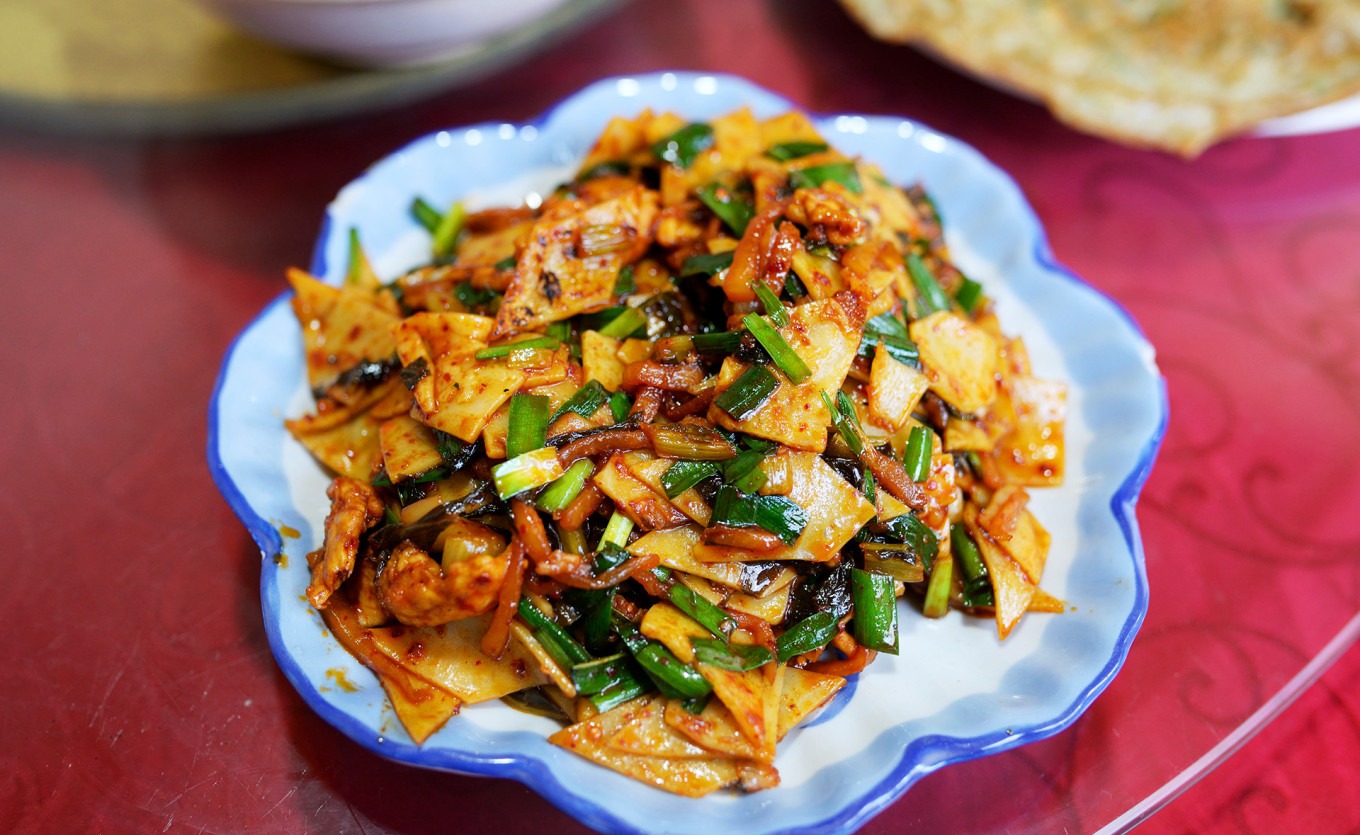
If you visit in spring, look for the seasonal masanghua danbing (马桑花蛋饼), an omelette made with mulberry tree flowers. This ingredient has a very short harvest window, and its floral aroma blends beautifully with eggs, offering a fresh, seasonal taste that captures the essence of spring.
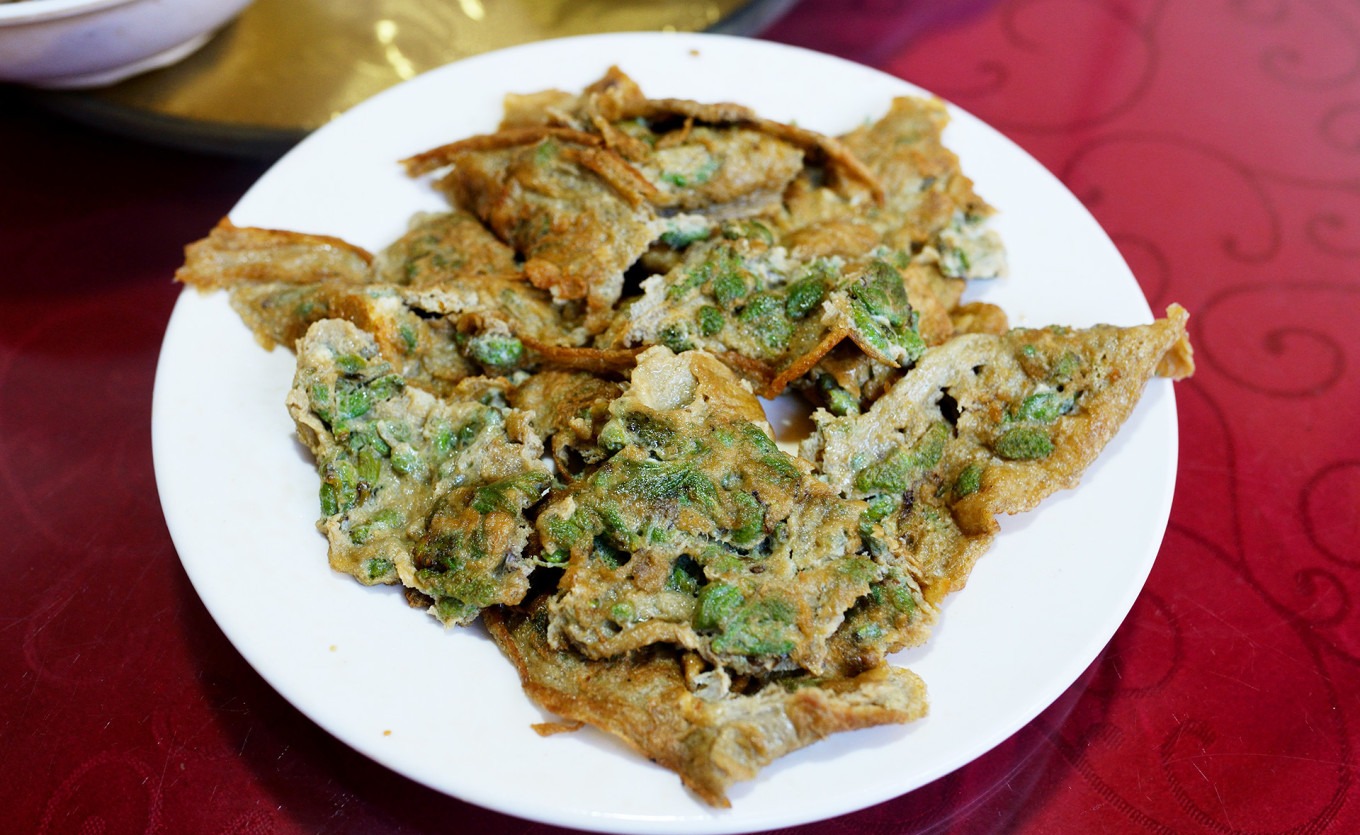
- RestaurantWuwei Restaurant (武伟餐厅)
- Address39 Dongxin Street, Nanzhao Town, Weishan Yi and Hui Autonomous County, Dali Bai Autonomous Prefecture, Yunnan (云南省大理白族自治州巍山彝族回族自治县南诏镇东新街39号)
- Recommended dishesdoumi kourou (豆米扣肉, braised pork with broad beans), chao erkuai (炒饵块, stir-fried rice cake), masanghua danbing (马桑花蛋饼, mulberry flower omelette)
- Average spend40 CNY per person
Shenji Private Kitchen
For travelers seeking authentic local flavors in Dali, Shenji Private Kitchen (沈记私家菜) offers a reliable and charming option. Tucked away in a traditional courtyard house opposite the Nanzhao Museum, this family-run spot specializes in homestyle Yunnan dishes where you can order with confidence—virtually every item on the menu is a winner. The chef-owner personally prepares each dish in a cozy, mostly private-room setting, yet the prices remain remarkably affordable.
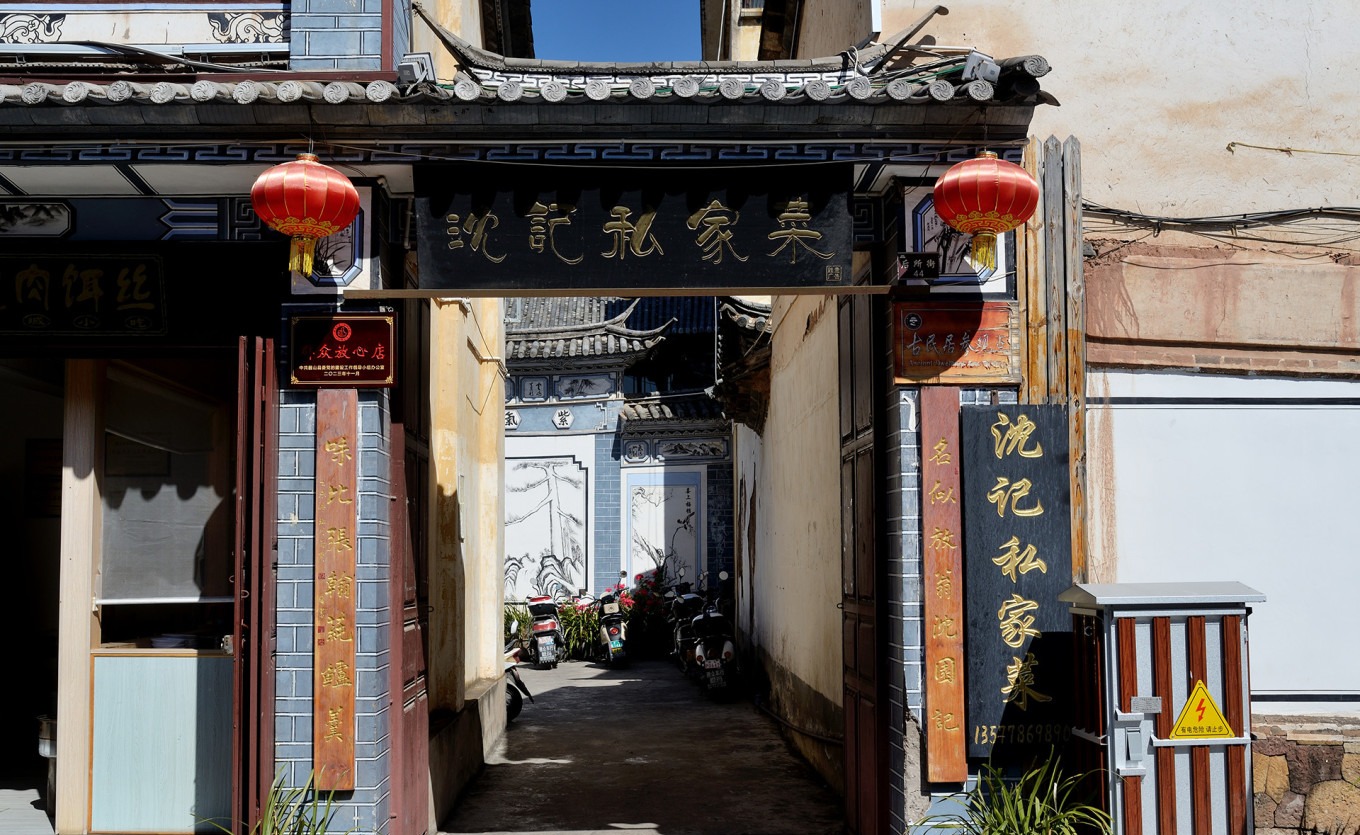
Be sure to arrive early if you want to try their signature dish, Erkuai Chicken (饵块鸡), as it often sells out. A fantastic alternative is their Flavor Beef (风味牛肉), which arrives sizzling with intense wok hei. The beef is exceptionally tender, coated in a rich, savory sauce that masterfully blends fermented black beans with aromatic onions and chilies—a deeply satisfying combination that lingers on the palate.

Another standout is the Bean and Water Celery (豆米水芹菜). Here, the water celery is finely minced, allowing its fragrance to fully infuse the oil and meld seamlessly with the creamy beans, creating a harmonious texture that delights from the first bite to the last.
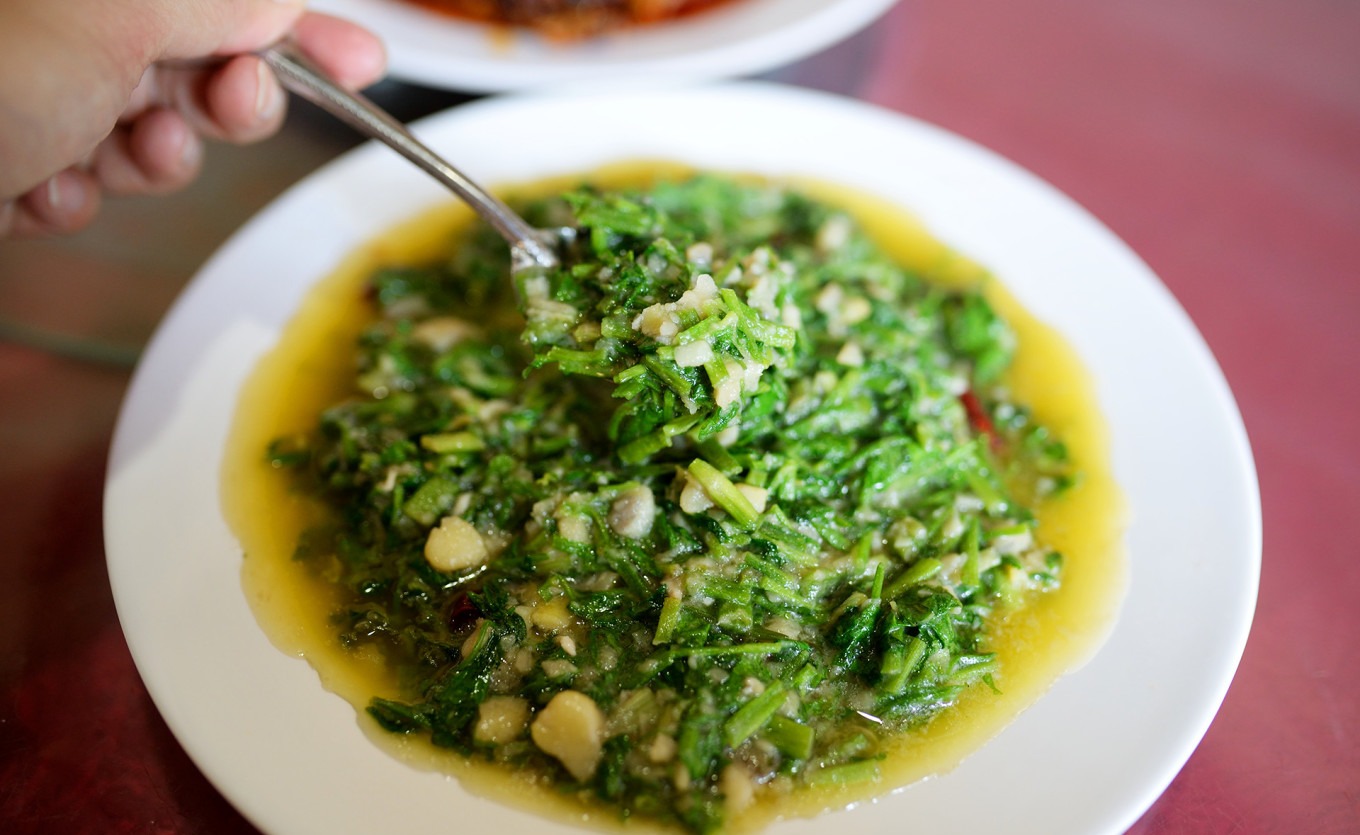
Don’t overlook the Pan-Fried Potato Shreds (干焙土豆丝), a simple homestyle dish executed to perfection. The potato strands are fried without rinsing, spread evenly in the pan and crisped on each side until golden. The result is a tangle of shreds that hold together with a satisfying crunch outside and a tender interior—utterly addictive.
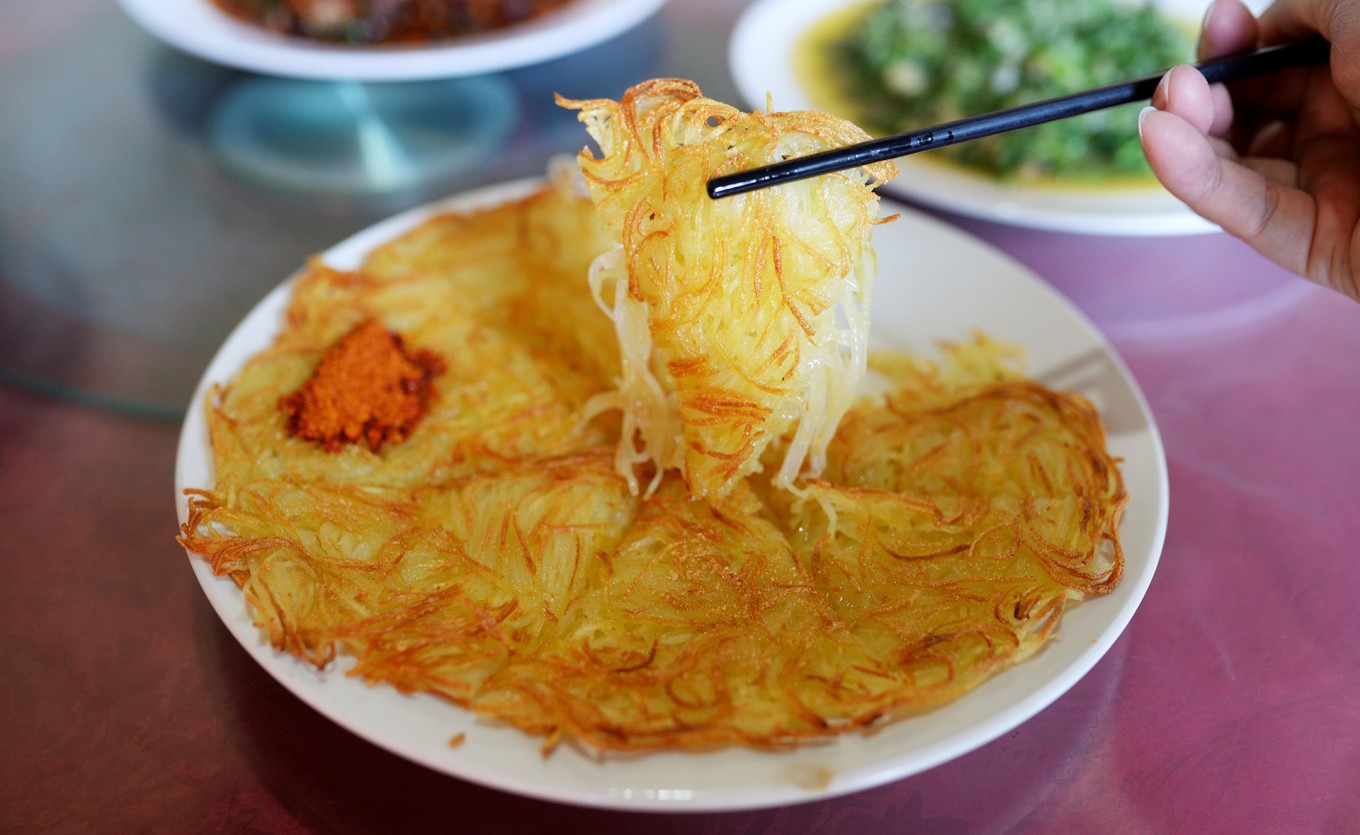
- RestaurantShenji Private Kitchen (沈记私家菜)
- AddressHousuo Street, Nanzhao Town, Weishan Yi and Hui Autonomous County, Dali Bai Autonomous Prefecture, Yunnan (云南省大理白族自治州巍山彝族回族自治县南诏镇后所街)
- Recommended dishesFlavor Beef (风味牛肉), Bean and Water Celery (豆米水芹菜), Pan-Fried Potato Shreds (干焙土豆丝)
- Average spend40 CNY per person
Yuan Shi Mutton Restaurant
For a taste of authentic local dining in Weishan, head to Yuan Shi Mutton Restaurant (元师羊肉店). This unassuming spot is a favorite among residents for breakfast and lunch, offering a delicious introduction to the area’s culinary traditions, which have been shaped by Hui Muslim communities since the Ming Dynasty.
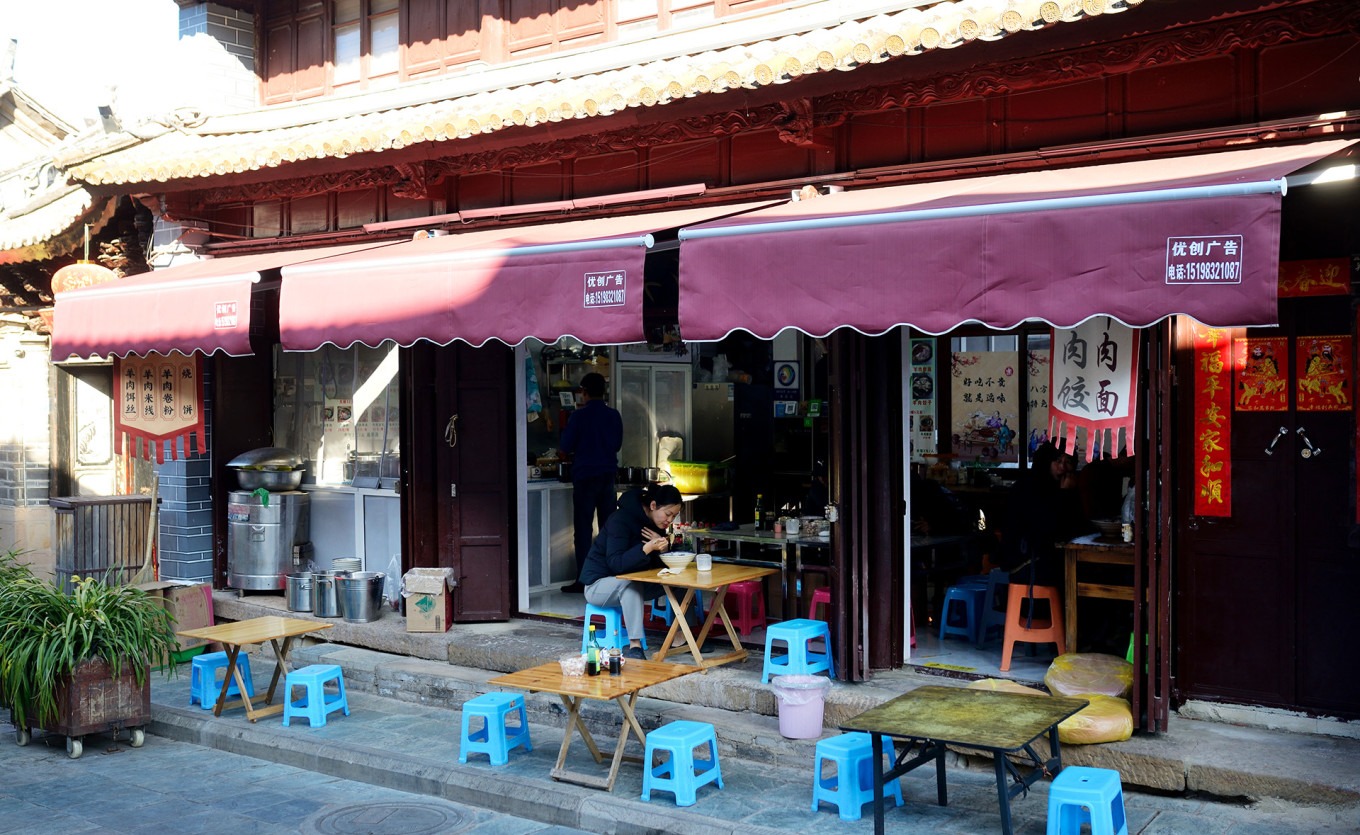
Start with their signature 羊肉米线 (mutton rice noodles). The broth follows a 西北 (Northwest China) style—rich yet balanced—and is poured over 云南 (Yunnan) rice noodles, then topped with chili oil, cilantro, and scallions. The first slurp delivers a warm, comforting sensation as the savory broth and tender noodles slide down.
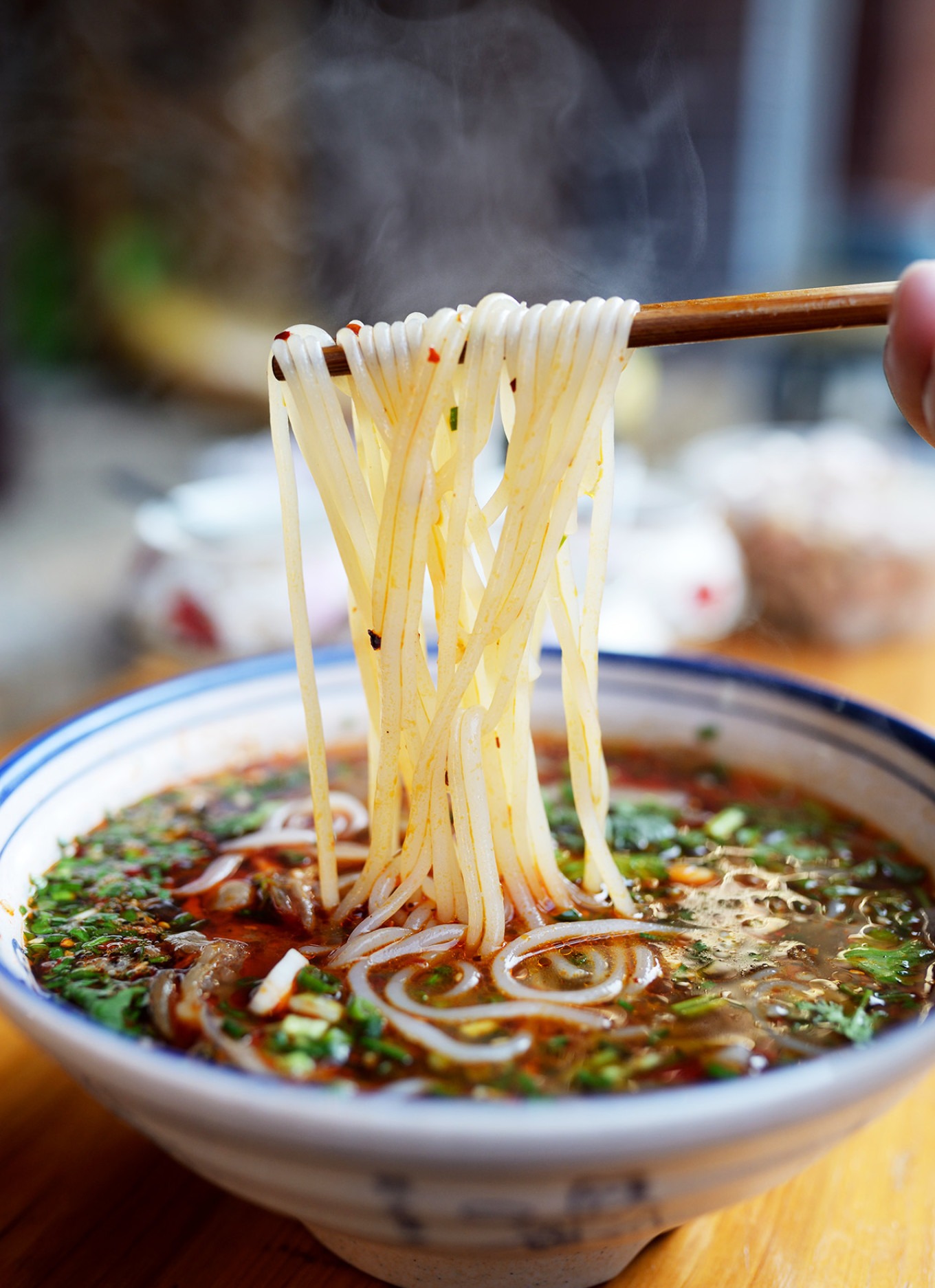
If you’re still hungry, consider adding 羊肉凉片 (cold sliced mutton). This dish features braised tendon meat that’s been marinated until the spices penetrate deeply, leaving no gaminess. Dip it in 油辣子 (chili oil) for an extra layer of fragrant, savory flavor that builds with each chew.
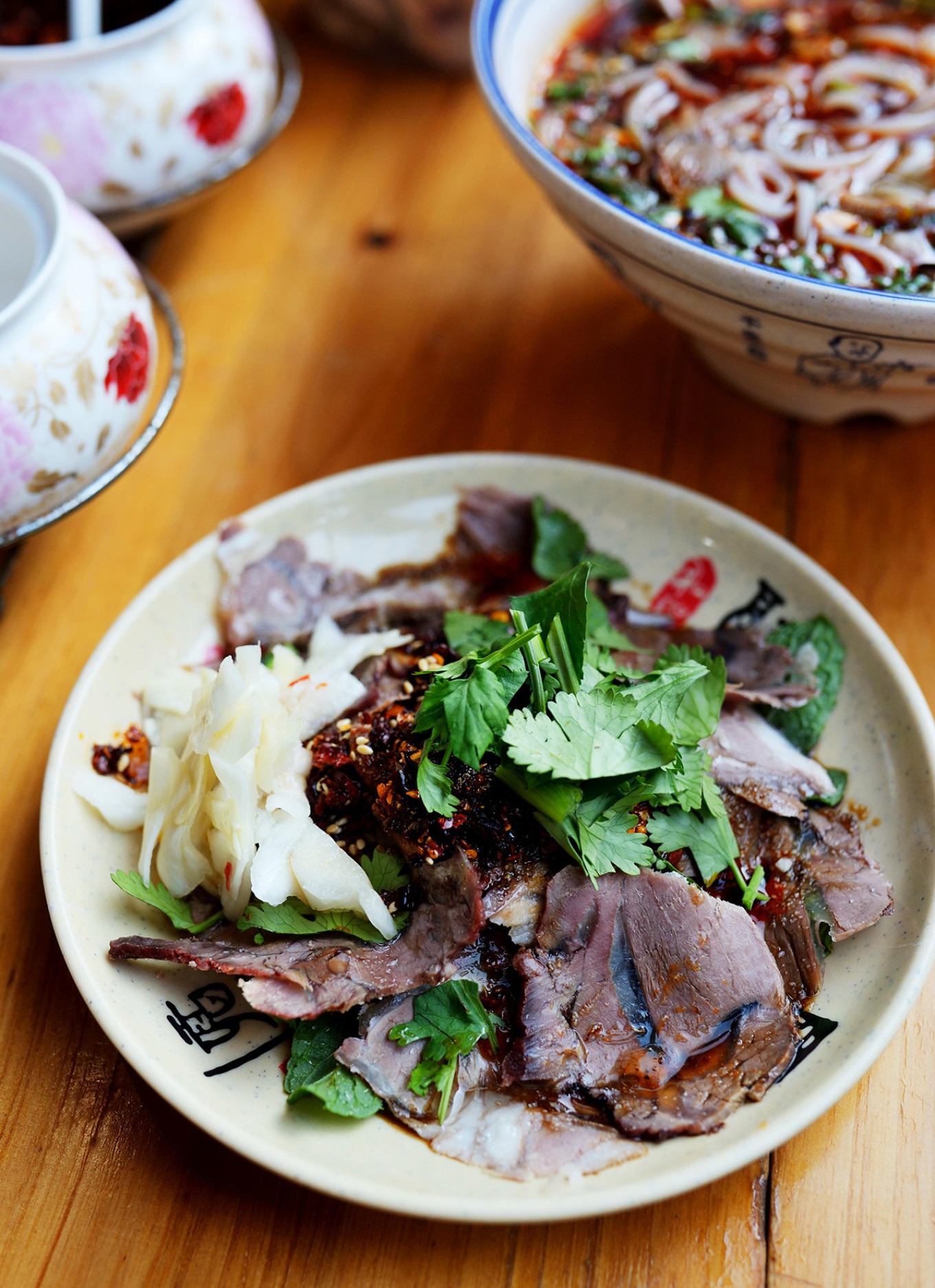
Another must-try is their 羊杂碎 (mutton offal stew). This hearty bowl includes 羊肚 (tripe),羊肺 (lung),羊肠 (intestines),羊心 (heart), and 羊血 (blood) simmered in a fragrant broth. Despite being covered in a layer of red oil, it’s not overly spicy—just deeply savory and satisfying.
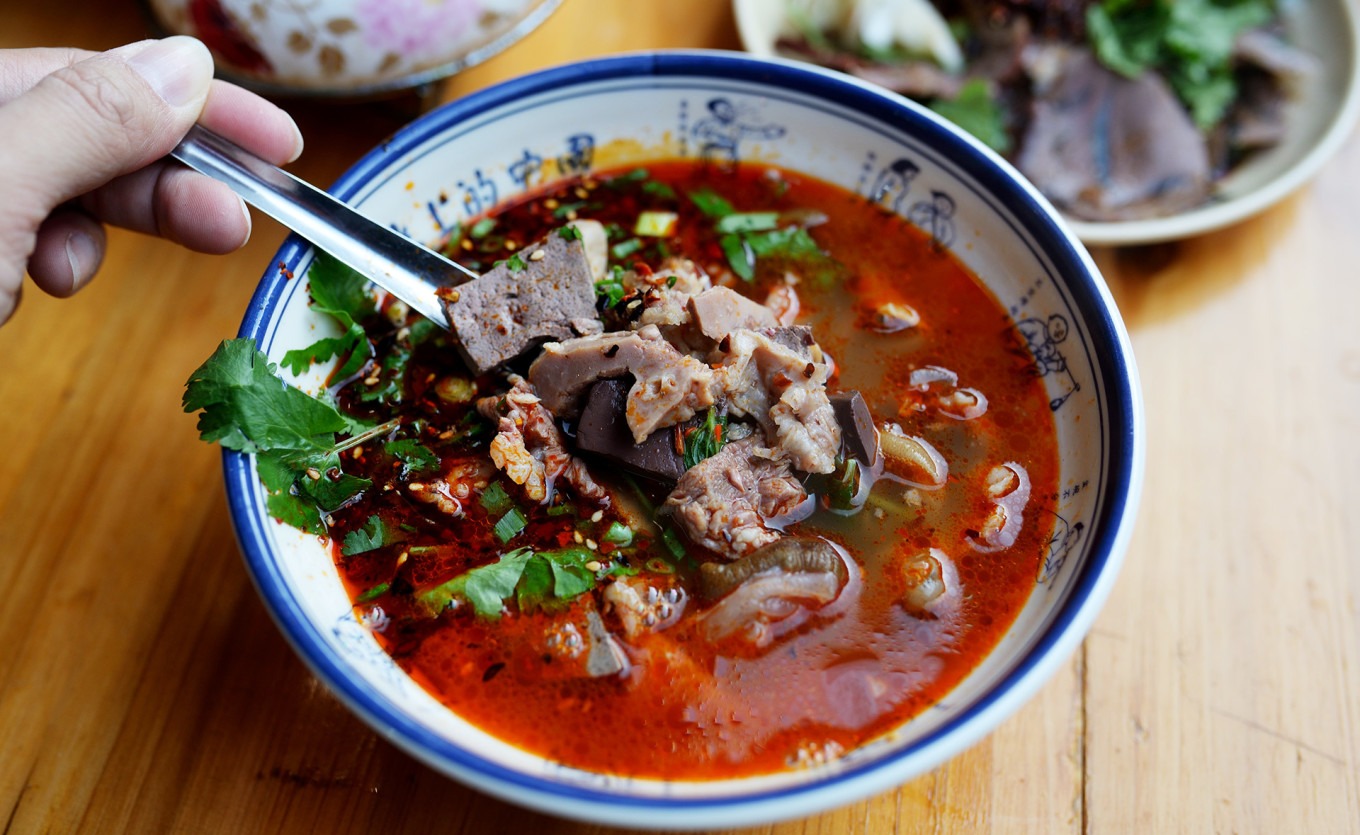
- RestaurantYuan Shi Mutton Restaurant (元师羊肉店)
- Address5 Guansheng Street, Nanzhao Town, Weishan Yi and Hui Autonomous County, Dali Bai Autonomous Prefecture, Yunnan, China (云南省大理白族自治州巍山彝族回族自治县南诏镇关圣街5号)
- Recommended dishes羊肉米线 (mutton rice noodles), 羊肉凉片 (cold sliced mutton), 羊杂碎 (mutton offal stew)
- Average spend30 CNY per person
Wencong Oil-Fried Bread
While exploring Weishan, you can discover another Hui ethnic snack worth trying: oil-fried bread, known locally as 油香 (yóuxiāng). One popular spot to sample this is Wencong Oil-Fried Bread (文聪油香), conveniently located on Housuo Street. Beyond their signature oil-fried bread, this shop also prepares other traditional items like 撒子 (sǎnzi, fried dough twists) and 树皮 (shùpí, a crispy fried snack named for its tree bark-like texture).
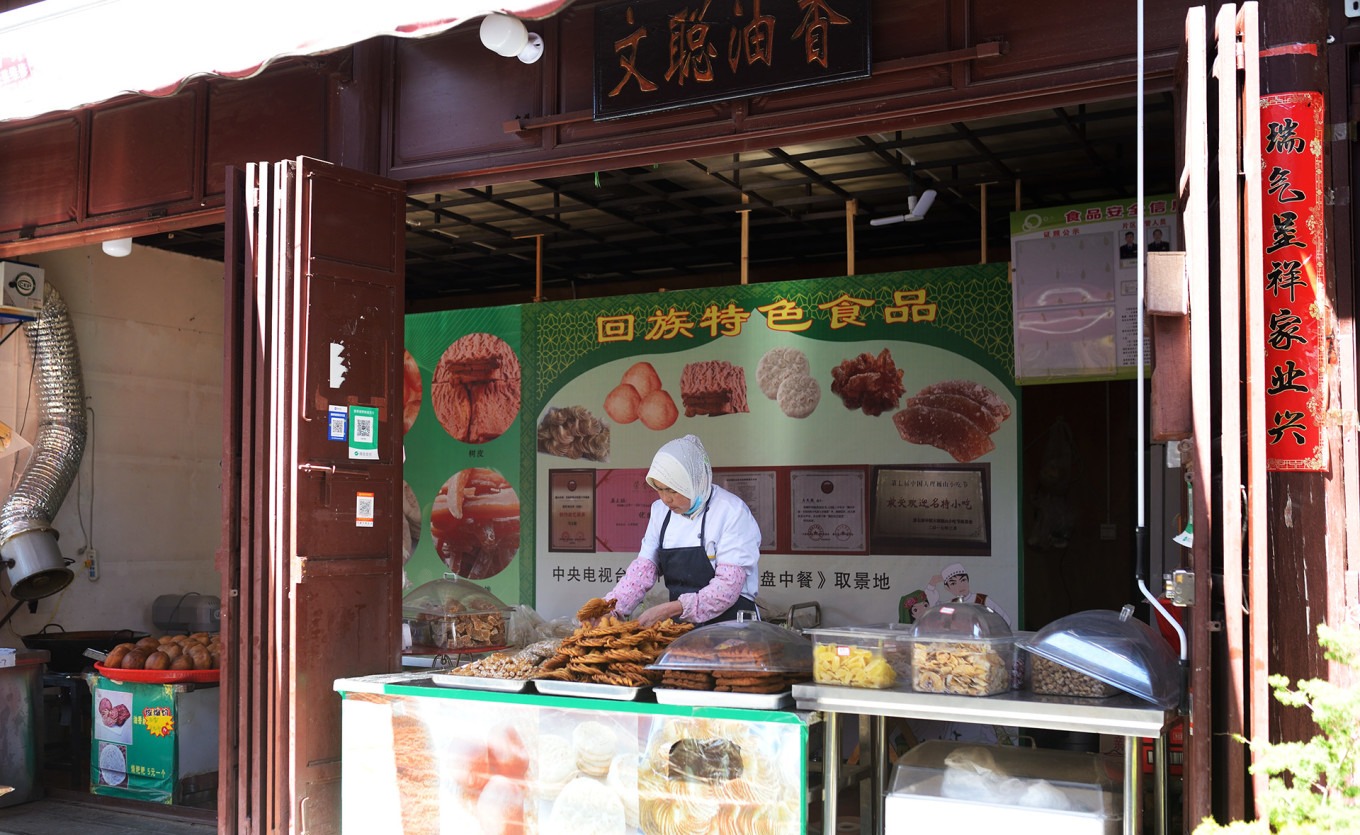
油香 (Yóuxiāng) is a deep-fried pastry made from wheat flour. The dough is shaped into discs and dropped into hot oil, where it puffs up dramatically into a round, balloon-like sphere.
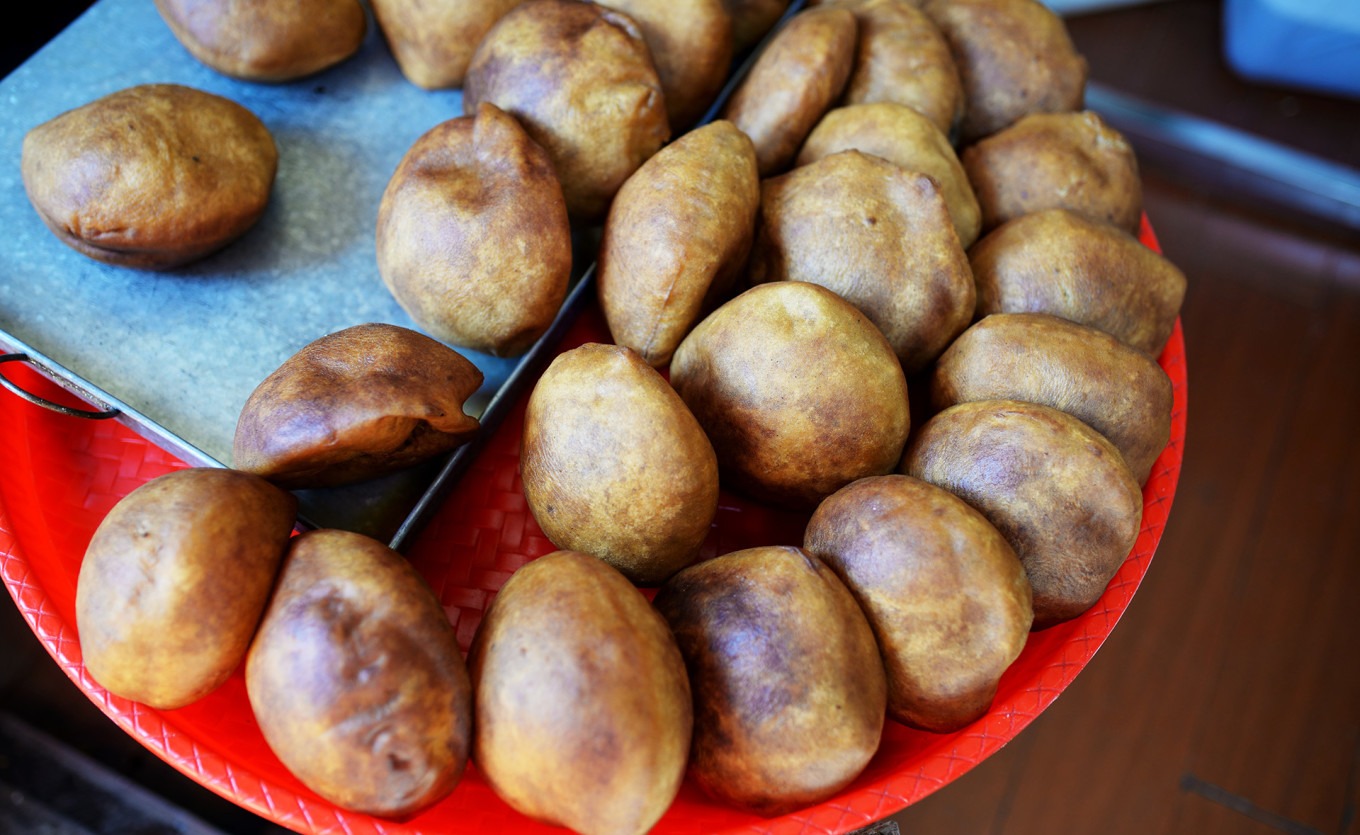
What sets this apart from other fried doughs is its uniquely soft, chewy, and elastic texture. Its rich, reddish-brown crust comes from brown sugar mixed into the dough, which, along with other spices, gives the bread its special aromatic flavor. Taking a bite releases a warm, satisfying sweetness that makes it a truly comforting treat. It’s the perfect portable snack—consider grabbing a few for your journey, just as many travelers do before catching a train.
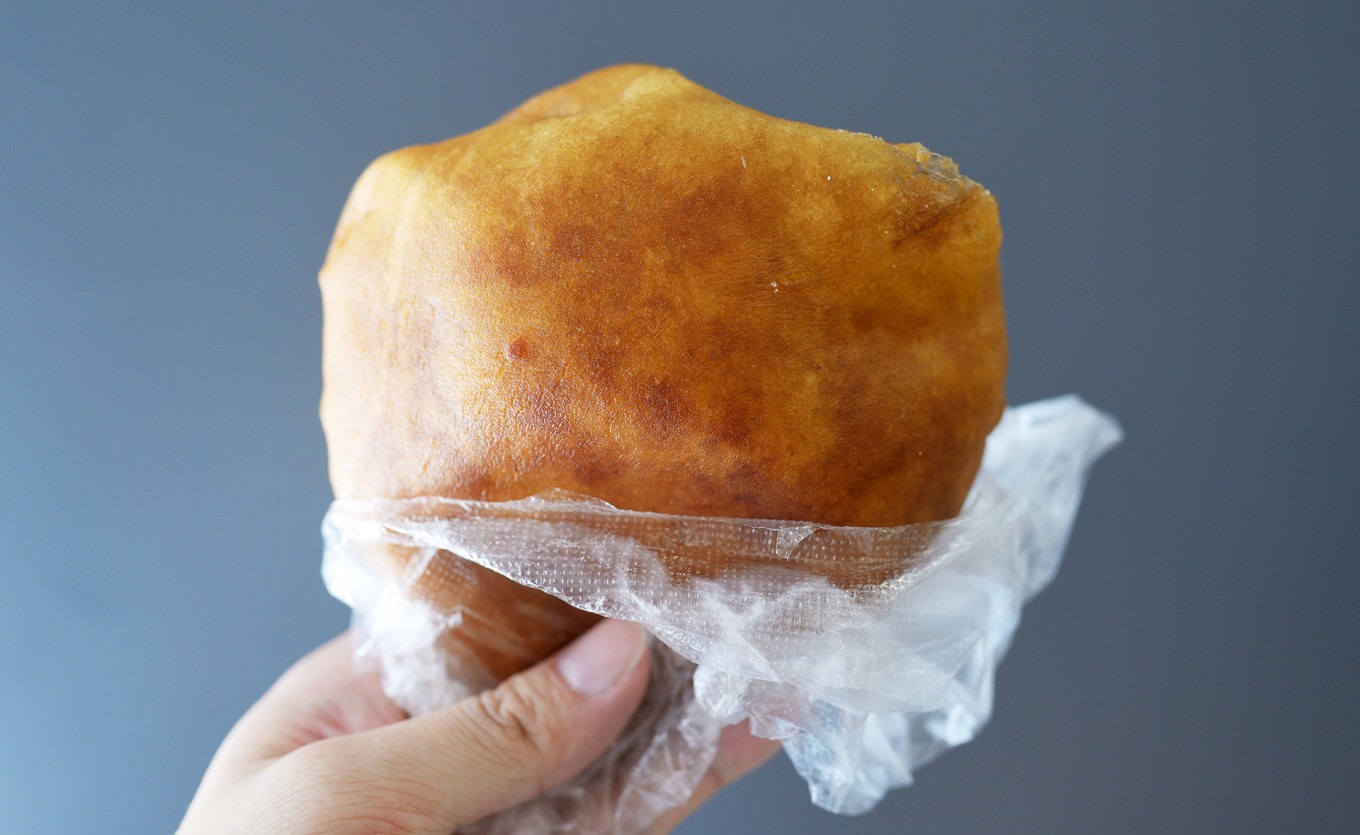
- RestaurantWencong Oil-Fried Bread (文聪油香)
- AddressHousuo Street, Weishan Yi and Hui Autonomous County, Dali Bai Autonomous Prefecture, Yunnan (云南省大理白族自治州巍山彝族回族自治县后所街)
- Recommended dishes油香 (Oil-fried bread)
- Average spend5 CNY
Practical Travel Information
Getting to Dali is straightforward, with several convenient options. Dali Airport (大理机场) is located about 12 km east of Xiaguan, the city center, at the border of Fengyi Town and Haidong Town. It’s approximately 25 km from Dali Ancient Town. The airport shuttle bus departs from the Feng Hua Xue Yue Hotel in Xiaguan. While the airport offers direct flights to major Chinese cities, the frequency is limited, and discounts are rare, especially during peak seasons like Golden Week or summer holidays. A cost-effective alternative is to fly into Kunming or Lijiang first, then take a high-speed train to Dali.
Dali Railway Station is situated in Xiaguan. Over 30 high-speed trains run daily between Kunming and Dali, with the journey taking under three hours. Additional services are added during tourist seasons. There are also several daily intercity trains connecting Dali and Lijiang, with a travel time of just over two hours. Rail travel is a highly efficient way to reach Dali.
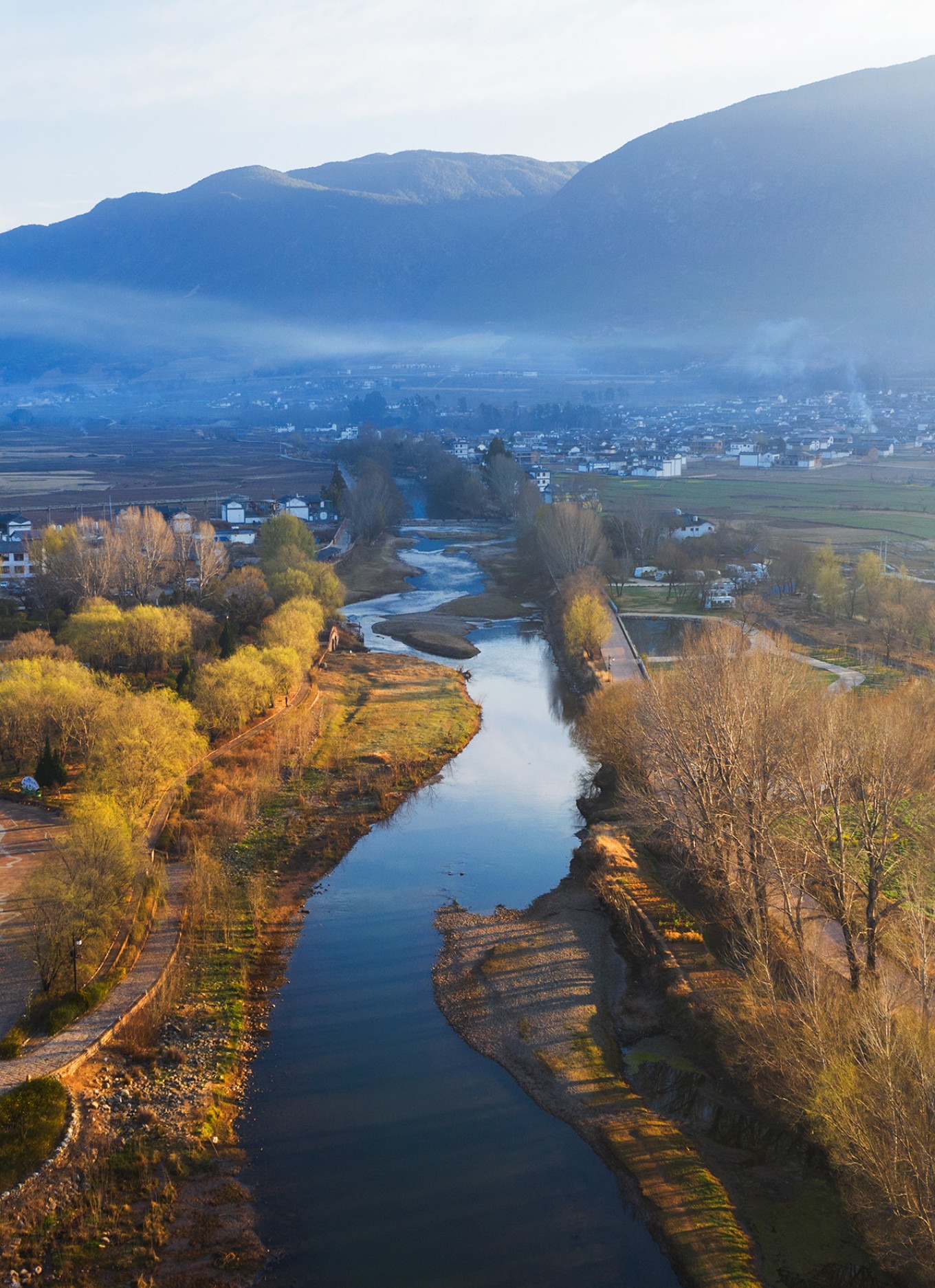
Once in Dali, you can travel onward to other popular destinations. To reach Shaxi (沙溪), you can take a coach from Dali Bus Passenger Station opposite the railway station. There are typically three daily departures, with fares ranging from 40 to 60 RMB depending on the vehicle type. The journey takes about two hours, dropping you at the Shaxi Tourist Service Center. (It’s best to confirm if there are pickup points in Dali Ancient Town).
Traveling from Shaxi to Xizhou (喜洲) is slightly more complex. Many travelers opt for ride-hailing services or carpooling, though note that drivers on this route are often professionals. A key tip: motor vehicles are prohibited from entering Xizhou Ancient Town after 10:00 AM daily. Your driver will drop you at the town entrance. If you have large luggage, it’s wise to arrange a pickup with your accommodation in advance.
The easiest side trip is to Weishan (巍山). From Dali Railway Station, a quick 20-minute intercity train ride brings you to Weishan Station. The station is close to Weishan Ancient Town; you can take a ride-hailing car or a 2 RMB tourist shuttle bus into town, making transportation hassle-free.

Accommodation options vary across these towns. In Shaxi, you’ll find countless hotels and guesthouses, many converted from traditional homes, spanning all budgets. To avoid choice overload, simply pick a place that appeals to you near Sideng Street.
Xizhou offers even more lodging choices. If you prefer a lively atmosphere, stay near the Corner Tower (转角楼) for easy access to the wheat fields and Sifang Street. For tranquility, consider Chengbei Village (城北村), known for its boutique guesthouses in restored old houses. Fans of the popular drama ‘Meet Yourself’ might enjoy staying in Xianglong Village (翔龙村).
Weishan has fewer accommodations. For convenience in sightseeing and dining, it’s best to stay within Weishan Ancient Town, such as near North Street (北街) or Gongchen Tower (拱宸楼).
Enjoyed this article? Consider buying me a coffee to support more content like this!
💖 0 people have clicked to support this article.