Tasting the Real Chaoshan: Where to Eat in Jieyang and Puning
A practical, image-rich guide you can actually use.
Introduction: The Overlooked Heart of Chaoshan
For anyone serious about Chinese cuisine, Chaoshan represents a non-negotiable pilgrimage. While Shantou and Chaozhou dominate the headlines, you should turn your attention to Jieyang (揭阳), the third pillar of this culinary triangle that remains surprisingly undiscovered. Though the regional airport carries its name, most travelers mistakenly treat Jieyang merely as a transit point for its more famous neighbors. In reality, Jieyang and its administered county-level city of Puning (普宁) harbor food scenes as fierce as anywhere in Guangdong—just without the crowds.
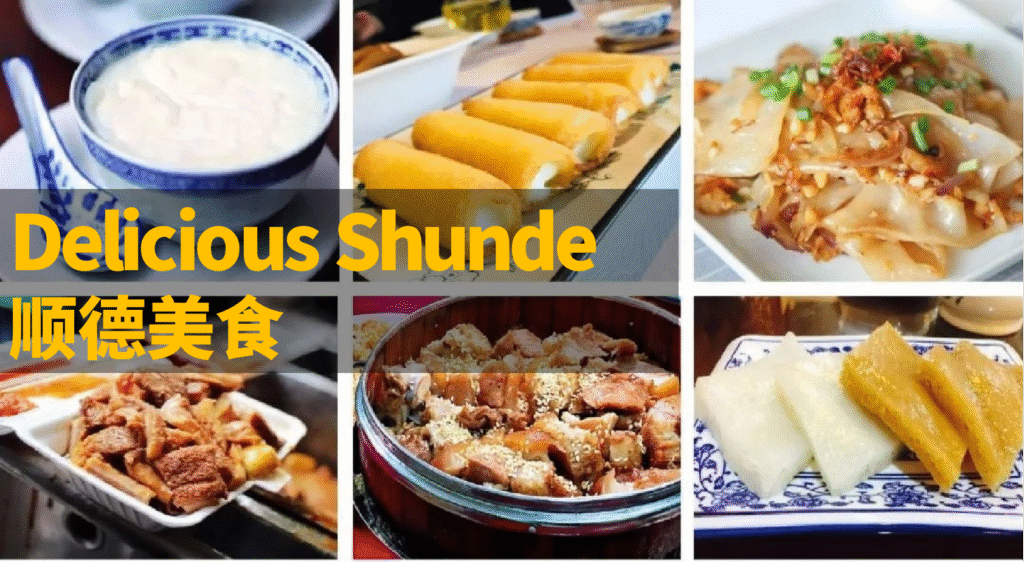
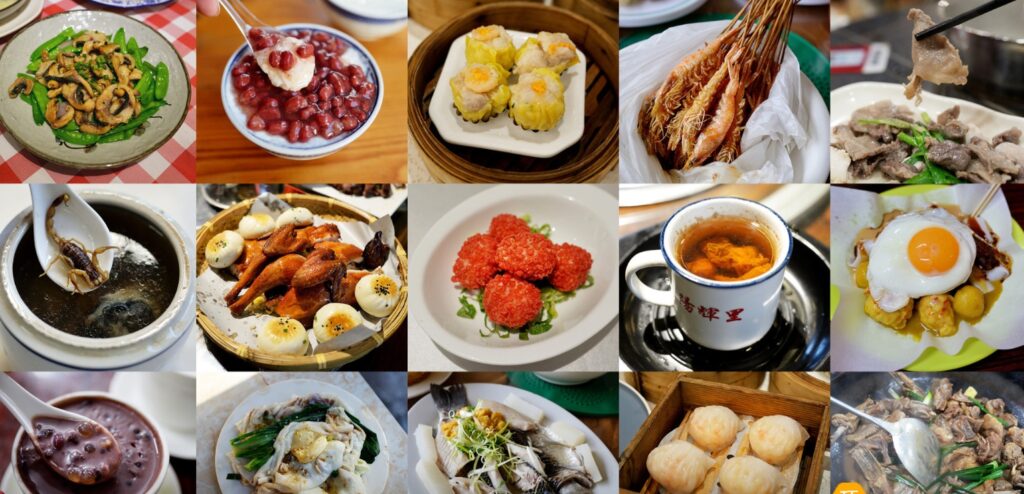
Here, culinary authenticity permeates every street corner. You can slurp 粿条 (Guotiao / Rice Noodle Sheets) from sidewalk stalls, savor 肠粉 (Changfen / Steamed Rice Rolls) dripping with savory sauce, or crunch into golden 蚝烙 (Haolao / Oyster Omelets). Seek out 粿汁 (Guozhi / Rice Noodle Soup), fried 豆干 (Dougan / Tofu), cooling 甜汤 (Tiantang / Sweet Soup), and crisp 糖葱 (Tangcong / Sugar Scallion). Above all, prioritize the region’s legendary beef hotpot—a single meal will demonstrate why Chaoshan butchery commands nationwide reverence.
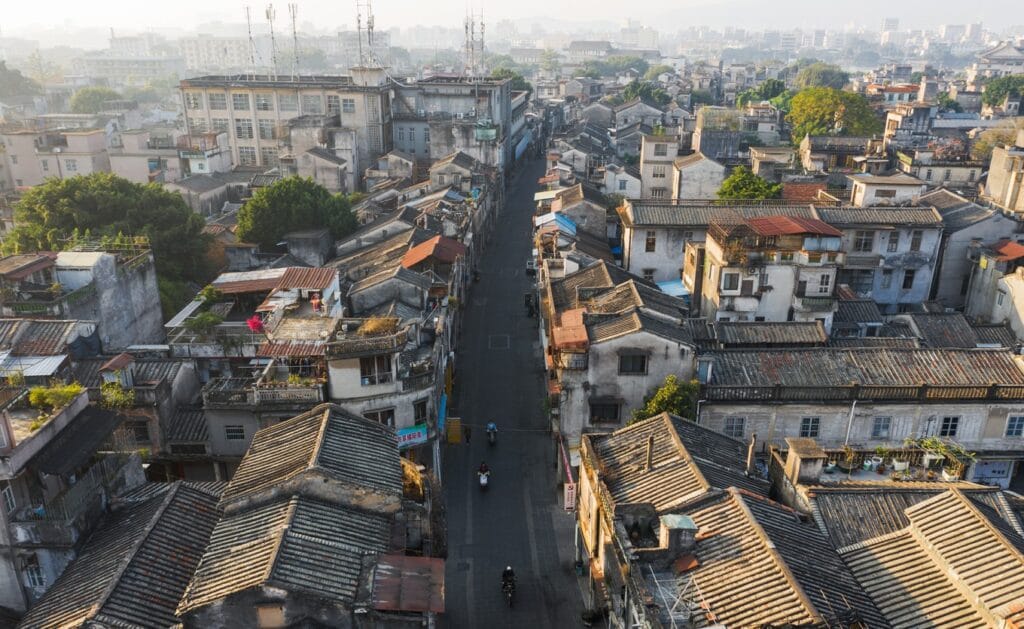
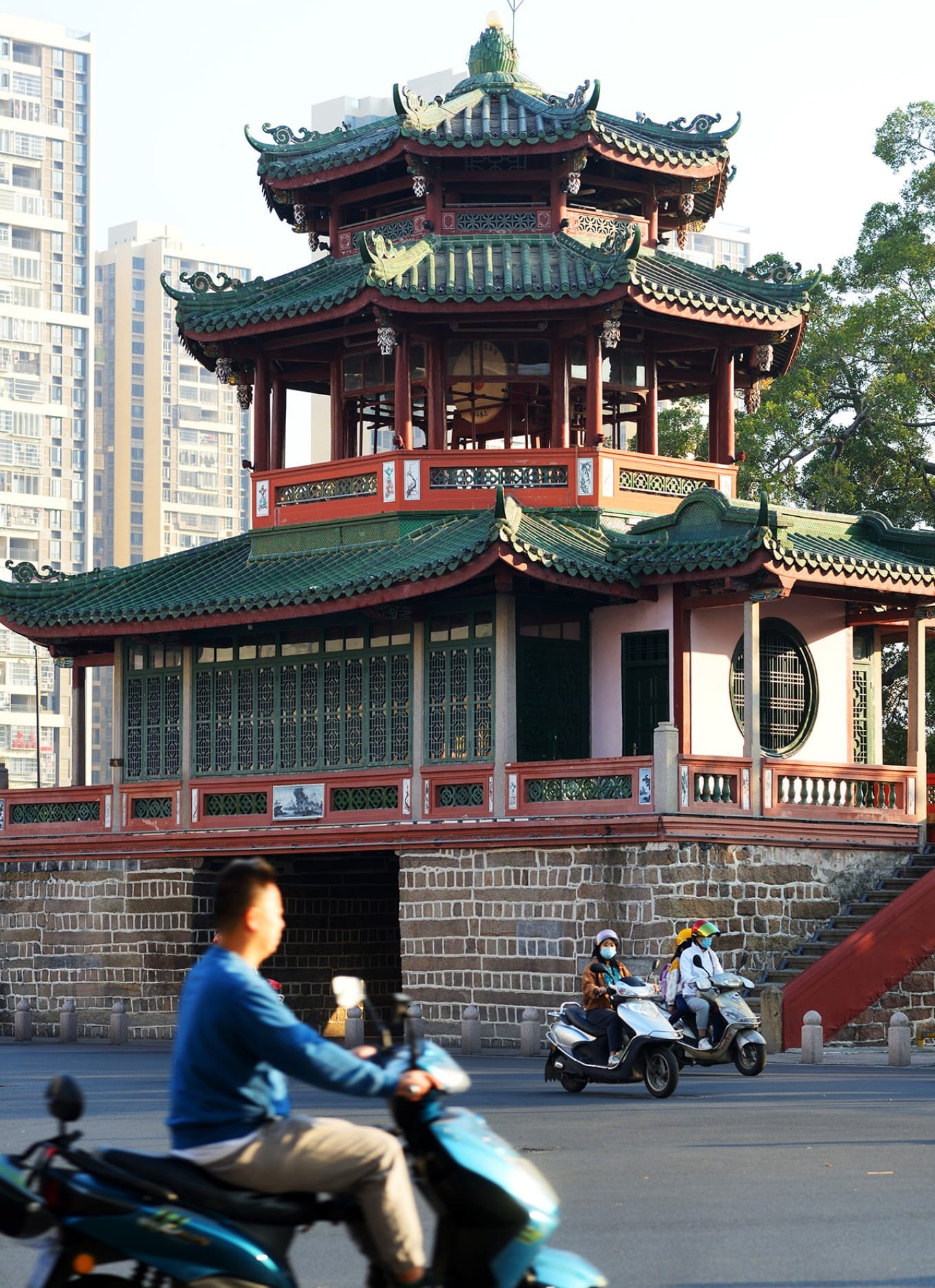
Beyond the table, Jieyang offers unfiltered street life devoid of big-city polish. The historic core reveals layers of Lingnan heritage often missed by those rushing to catch connecting buses. At the city center stands Jinxian Gate (进贤门), its carved vermilion pillars marking the entrance to old Jieyang. Nearby, the Jieyang Confucian Temple (揭阳学宫) ranks as the largest of its kind in Lingnan, while the City God Temple (城隍庙) buzzes with locals offering prayers to resolve daily troubles—a living connection to community tradition rather than a museum piece.
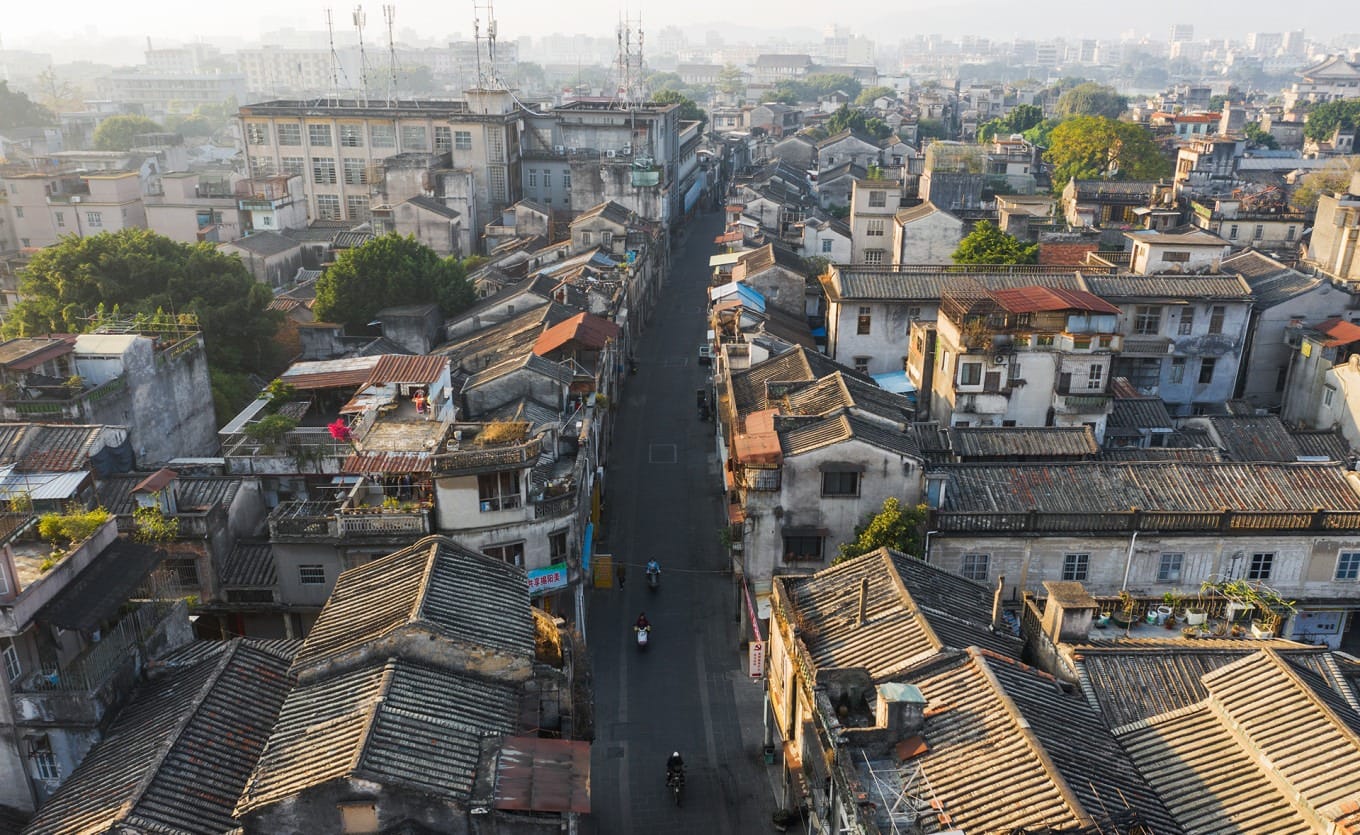
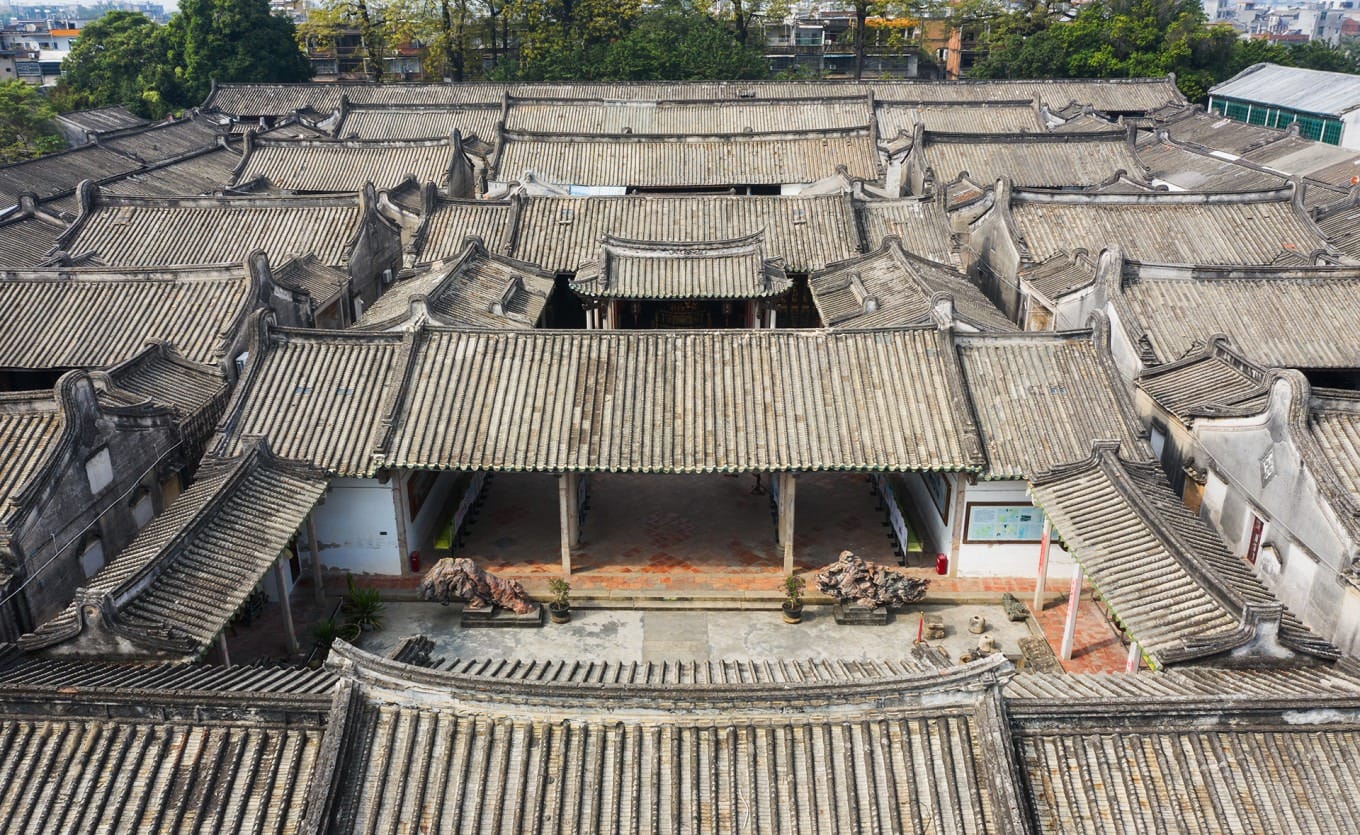
Venture twenty kilometers southwest to Puning’s ancient county seat of Hongyang, and you will discover De’anli (德安里), a massive fortified village complex of courtyard houses that stands as one of China’s most impressive examples of traditional clan architecture. Despite being the nation’s most populous county-level city, Puning remains virtually tourist-free even during peak seasons. Yet as one of the historic Eight Counties of Chaozhou and the birthplace of Chaoshan 嵌瓷 (Qian Ci / Mosaic Porcelain) and 英歌舞 (Yingge Wu / Hero’s Dance), the city offers cultural depth that rivals its culinary reputation.
This guide leads with where to eat, then maps the essential sights. Whether you are plotting a deep exploration of Jieyang or stitching together a grand tour of all three Chaoshan cities, you will find the practical intelligence here to navigate these streets like a local rather than a passerby.
Jieyang & Puning Preview
Jieyang (揭阳) and Puning (普宁) offer a raw, unfiltered taste of Chaoshan culture that rivals their more famous neighbors. While first-time visitors often rush to Shantou or Chaozhou, those who venture into this western corner discover a living museum of ancestral flavors and Ming-Qing architecture, where sidewalk kitchens and walled fortresses coexist in unexpected harmony.
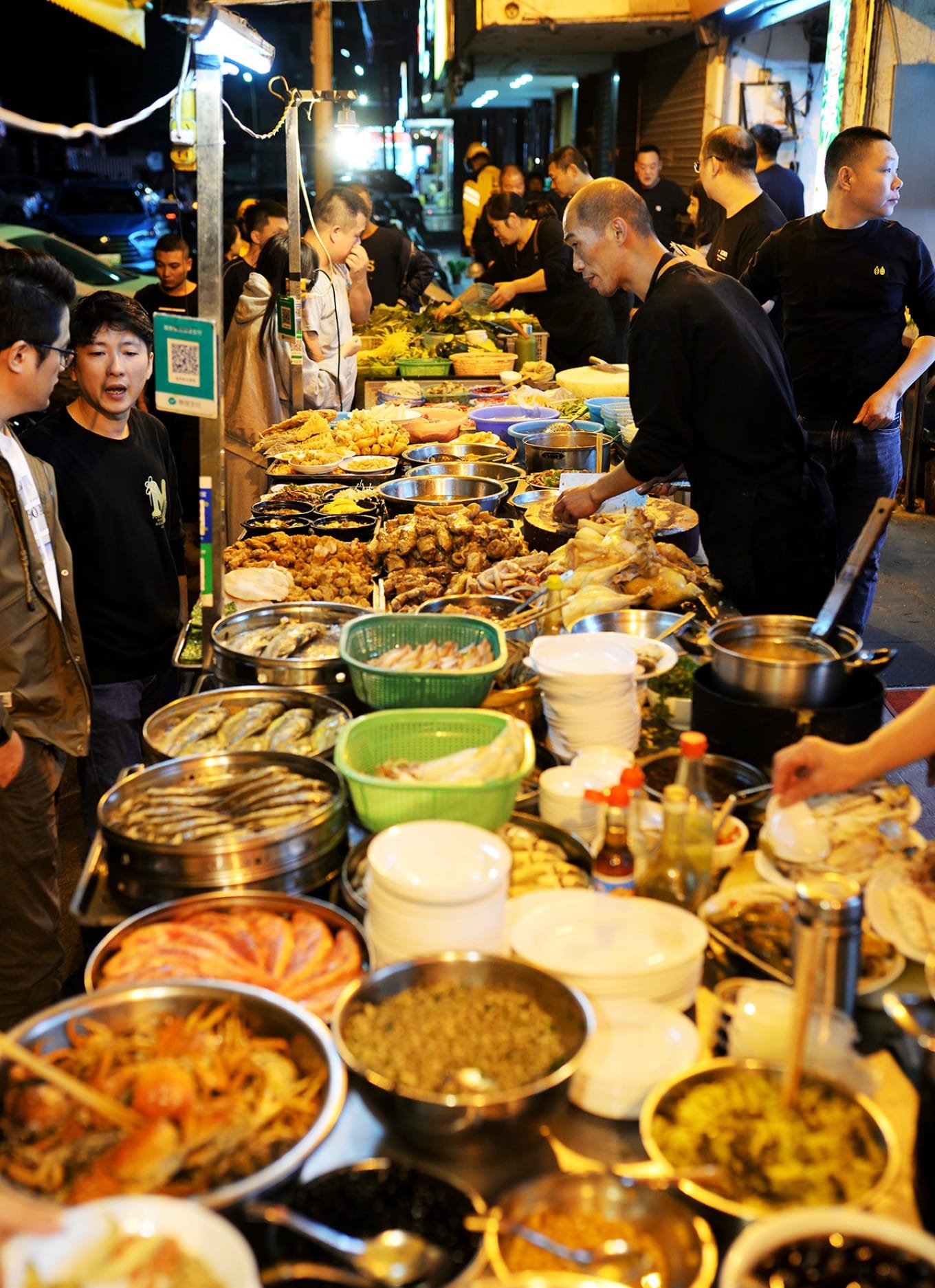
The culinary journey begins after dark. Local 潮汕大排档 (Chaoshan-style food stalls) transform sidewalks into open-air banquets where you can browse ten-meter-long display counters laden with over a hundred cold dishes and braised items. Though the spreads look like the main event, remember that plain white porridge (白粥) remains the true centerpiece—served as a palate cleanser and stomach soother between bites of marinated seafood and soy-braised offal.
Morning brings a different ritual: beef hotpot (牛肉火锅). Chaoshan butchers divide cattle into distinct cuts with proprietary terminology—cuts like 吊龙伴 (upper rib cap) and 五花趾 (crispy hind shank)—each requiring precise cooking times. When you dip a slice into the bubbling broth for exactly eight seconds, you will understand why outsiders often conclude that no one handles beef quite like the Chaoshan people.
Rice porridge appears in two essential forms here. Beyond the supporting role at food stalls, claypot congee (砂锅粥) stands as a main attraction, slow-cooked with fresh seafood or meat until the grains surrender their starch into a creamy, aromatic broth that locals consider a signature dish.
Lion head goose (狮头鹅) receives different treatment depending on where you sit. While Shantou and Chenghai favor braised versions (卤鹅), Jieyang chefs prefer the white-cut method (白切), poaching the bird to preserve its natural oils and yielding tender flesh that carries the clean sweetness of the original ingredient.
Noodle lovers should seek out dry noodles (干面), a childhood staple that seems simple until you taste the sauce. Each vendor guards a secret recipe balancing lard, soy sauce, and fermented seasonings into a glossy coating that clings to every strand.

Even humble ingredients receive reverent treatment. Longjiang pork knuckle rice (隆江猪脚饭)—braised pork leg served over rice—originated here before conquering Guangdong as the province’s ‘fast-food king.’ The collagen-rich meat and savory gravy have sustained generations of workers across the Pearl River Delta.
In Puning, rice noodle rolls (肠粉) diverge from the overloaded styles seen elsewhere. The local cabbage rolls (白菜肠粉) look deceptively plain, dressed with nothing but pickled vegetables and a light sauce, yet the texture and subtle sweetness often surprise first-time tasters.
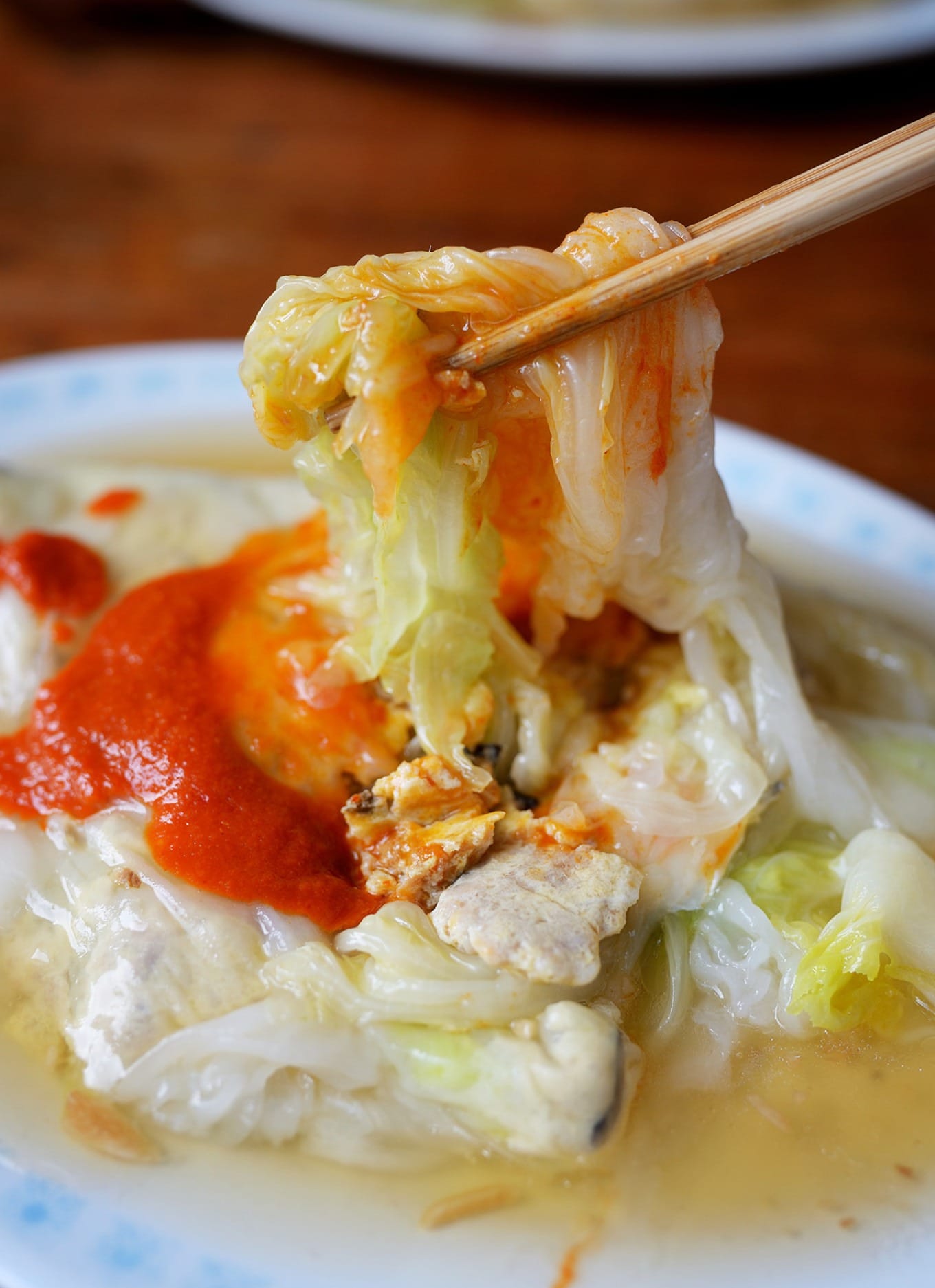
Sweet soup (甜汤) operates as emotional comfort food. Whether served warm or cold, these sugary tonics—combining ingredients like taro, adzuki beans, and glutinous rice balls—function as a culinary lighthouse for diaspora Chaoshanese, guiding memories back to childhood kitchens.

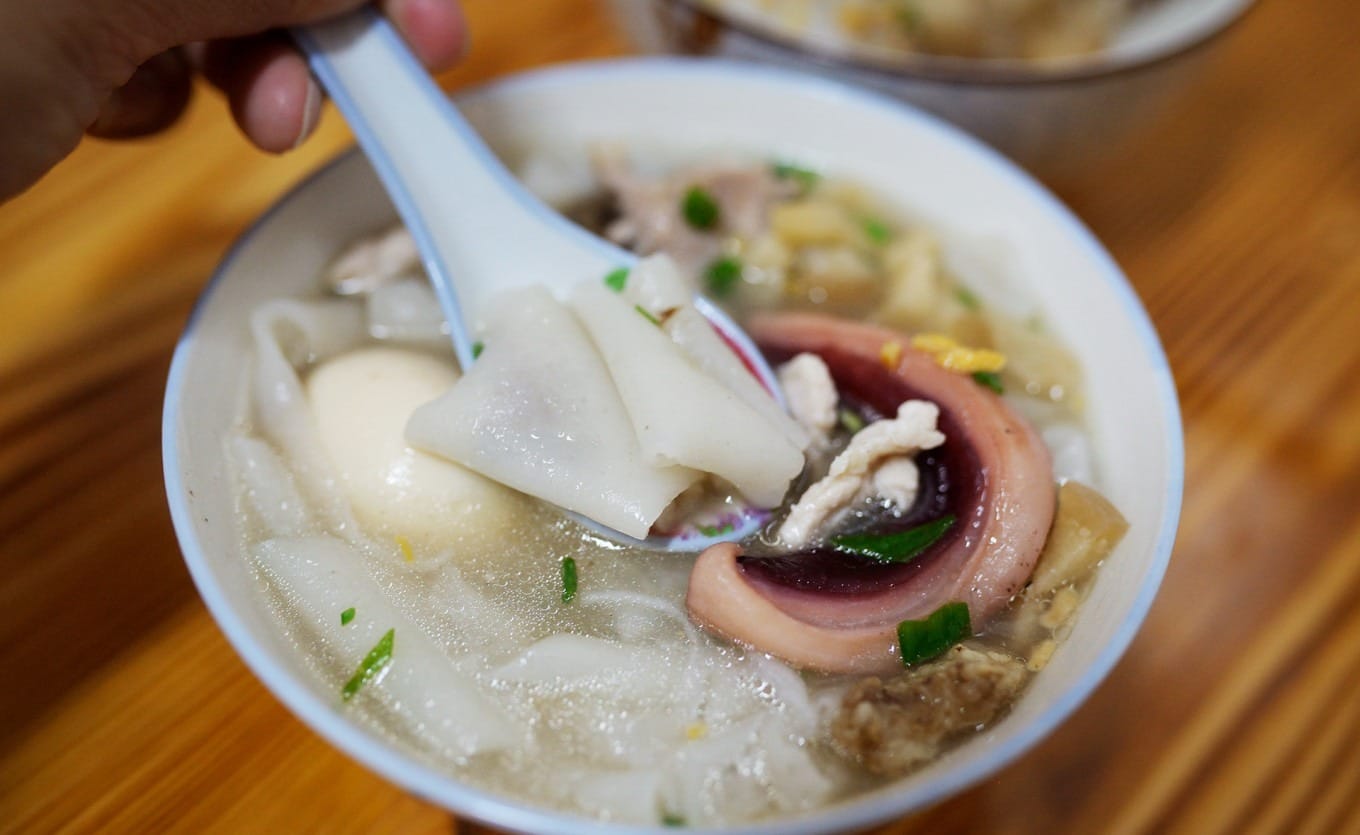
Head to Hongyang Town in Puning for two specific specialties. First, Hongyang guozhi (洪阳粿汁)—wide rice sheets simmered in a savory broth with fried tofu and offal, a preparation distinct from versions found in Shantou or Jieyang city.
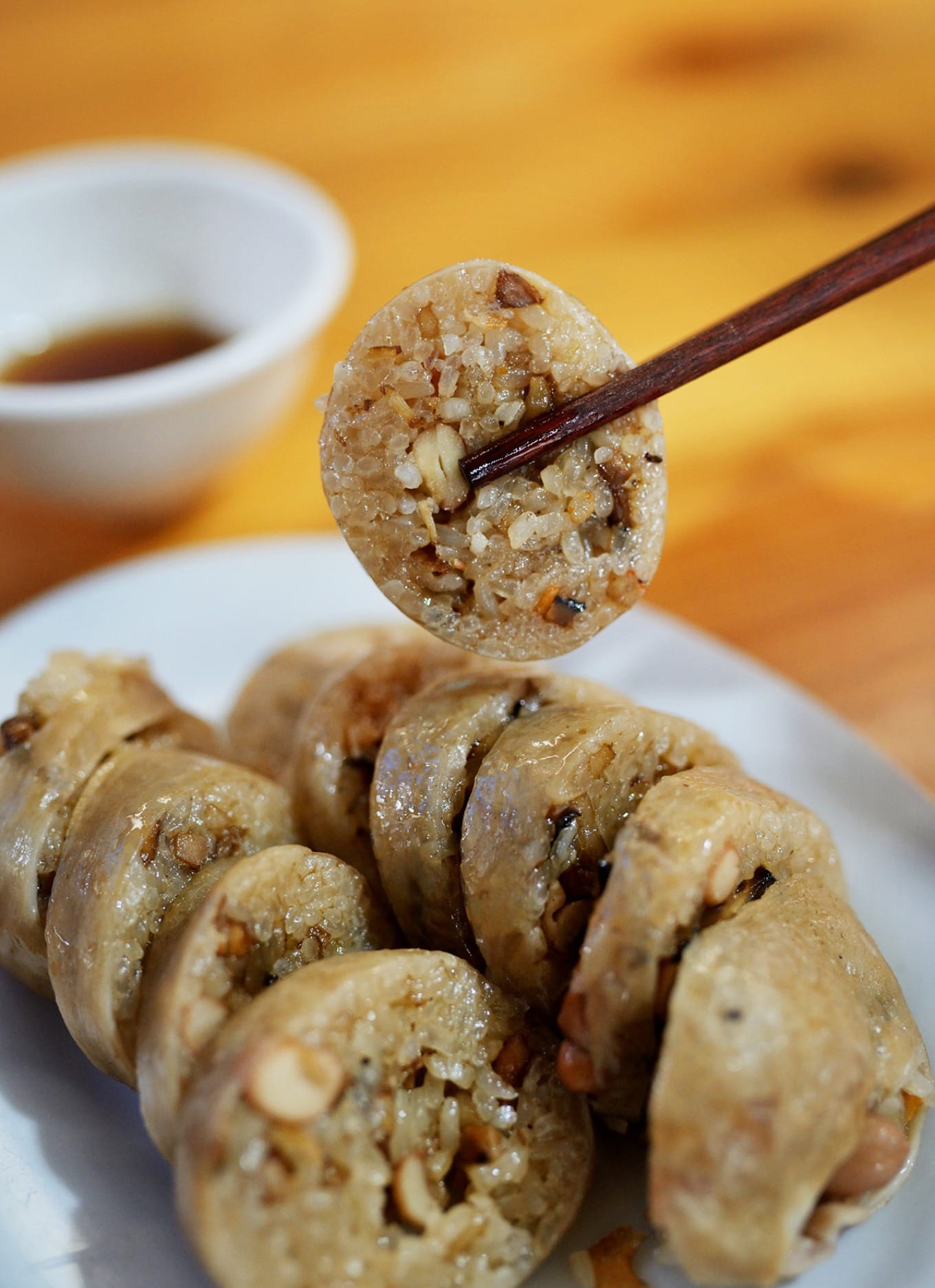
Second, seek out stuffed pork intestine with glutinous rice (猪肠胀糯米). In local dialect, ‘胀’ (zhàng) means ‘to fill,’ describing the technique of stuffing pig intestines with seasoned sticky rice, then slicing the logs into bite-sized coins that pair crunch with chewy richness.
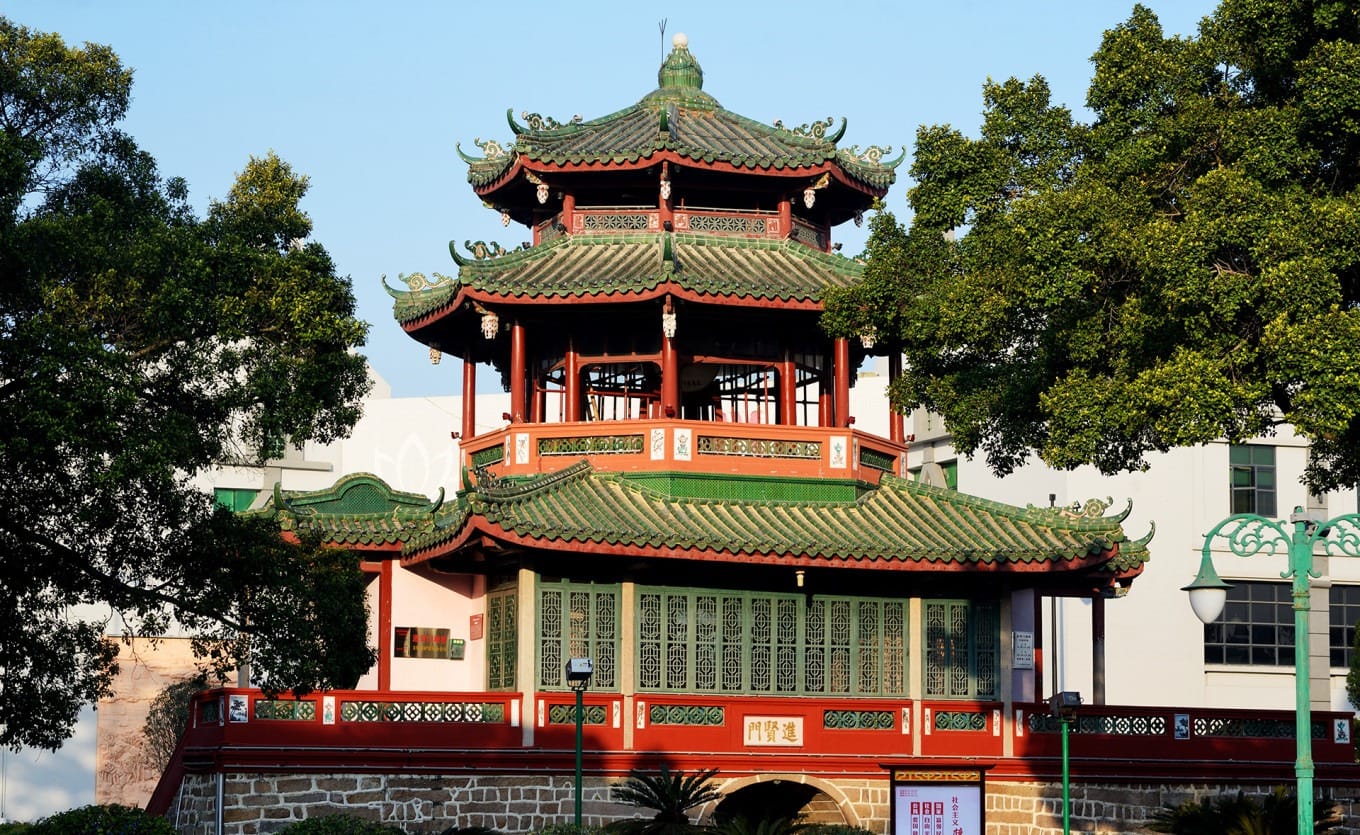
Between meals, Jieyang rewards walkers with concentrated historical density. Start at Jinxian Gate (进贤门), the city’s symbolic landmark. Local families still bring children studying for exams to pass beneath its arches, believing the ritual brings scholarly fortune.
Steps away stands Jieyang Confucian Temple (揭阳学宫), the largest of its kind in Lingnan architecture. This ‘Pearl of Eastern Guangdong Ancient Architecture’ preserves intact halls from the Yuan and Ming dynasties, offering a quiet counterpoint to the city’s food markets.
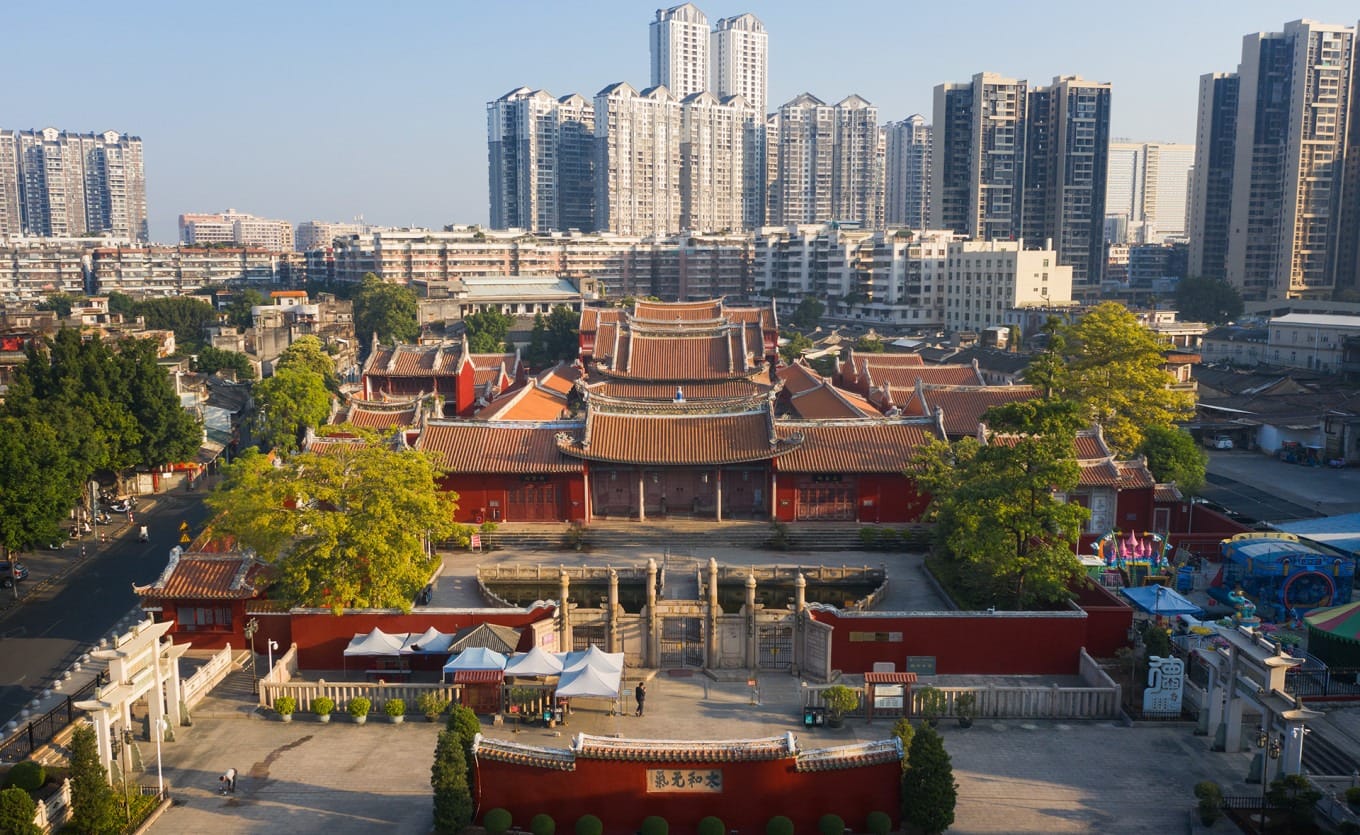
Religious life centers on the City God Temple (城隍庙), where devotion runs as deep as Shantou’s reverence for Mazu. Residents visit not just for festivals but for daily counsel, whispering troubles to the deity and asking for resolution of mundane conflicts.
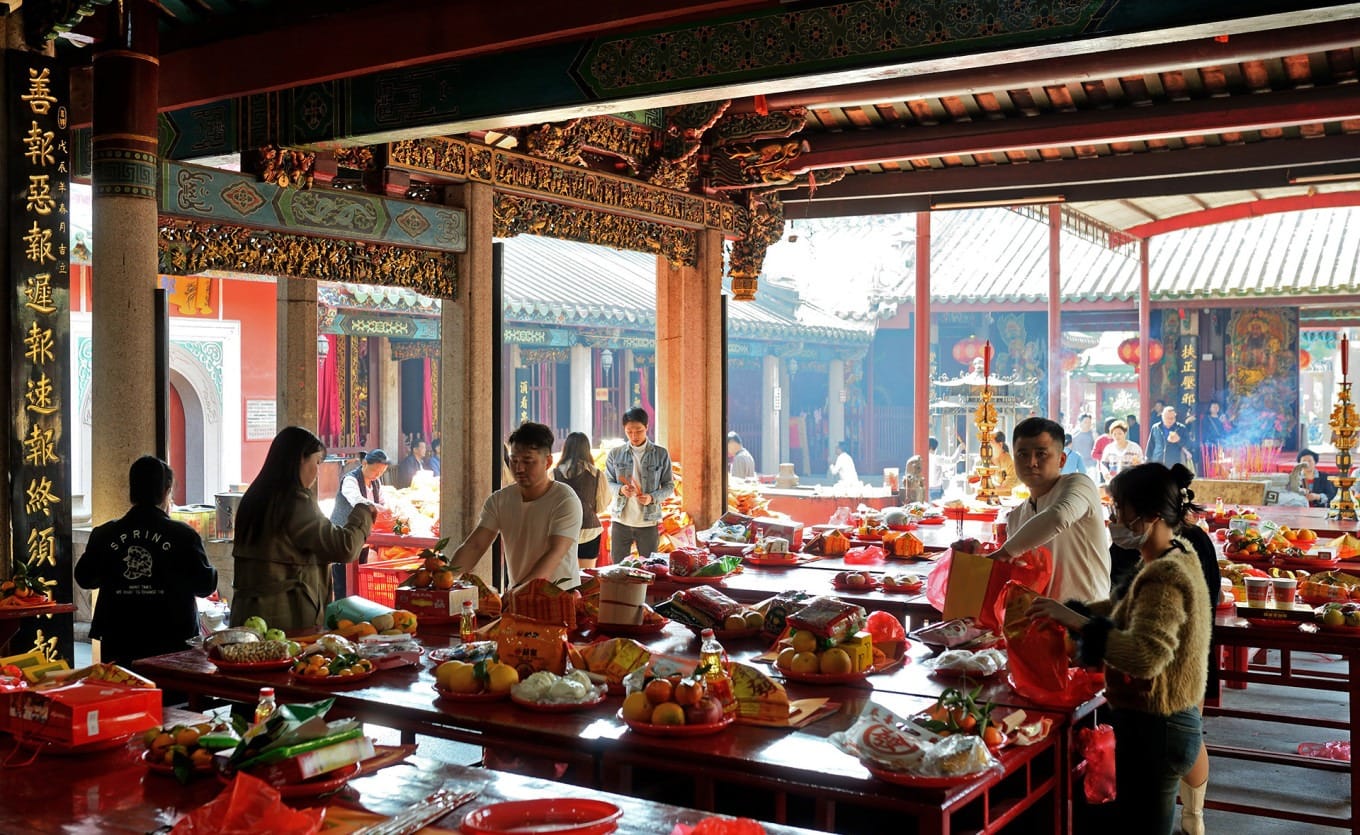
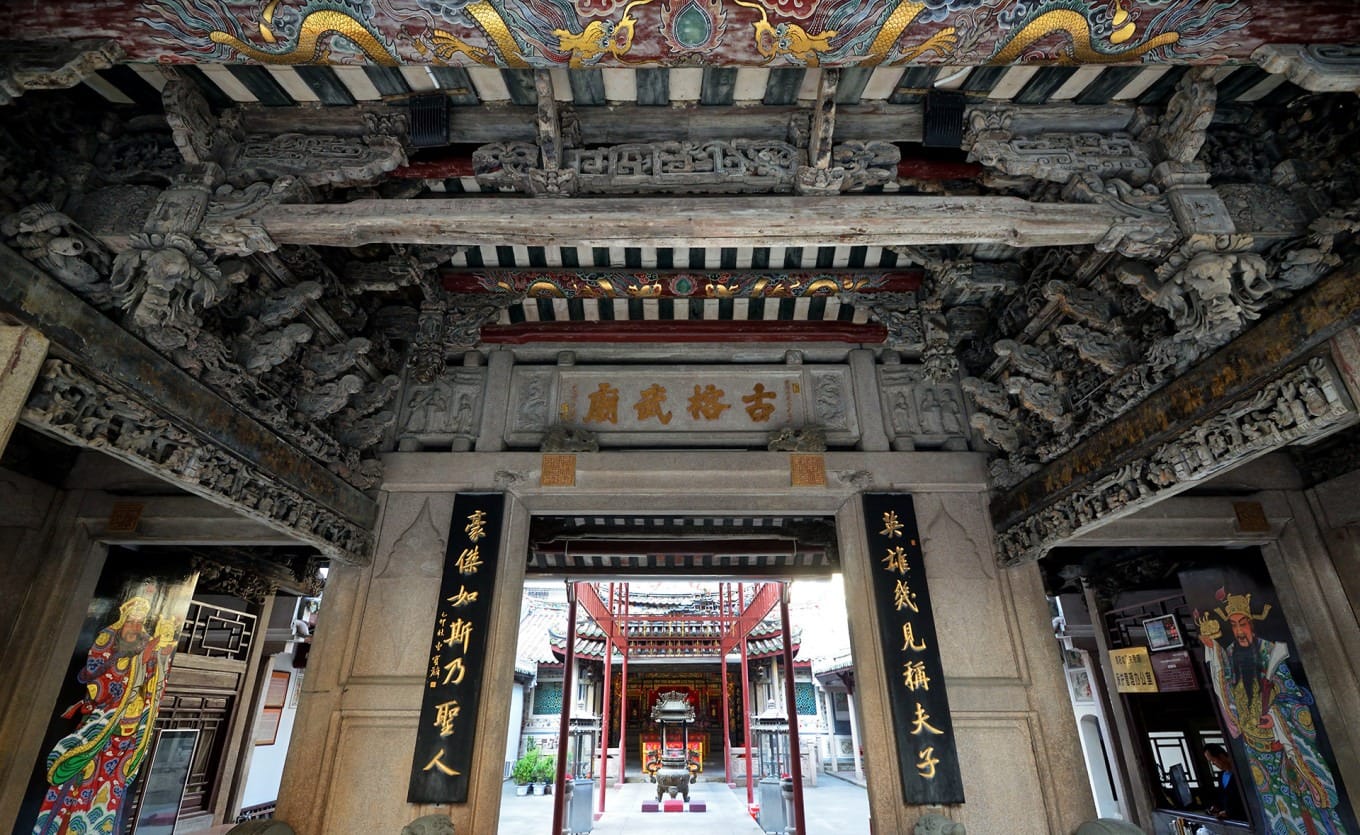
Artisans should not miss Guran Wumiao (古榕武庙), also known as the Ancient Banyan Martial Temple. Its surviving woodcarvings—intricate scenes from opera and mythology rendered in camphor and oak—qualify the building as an unofficial museum of Chaoshan woodworking.
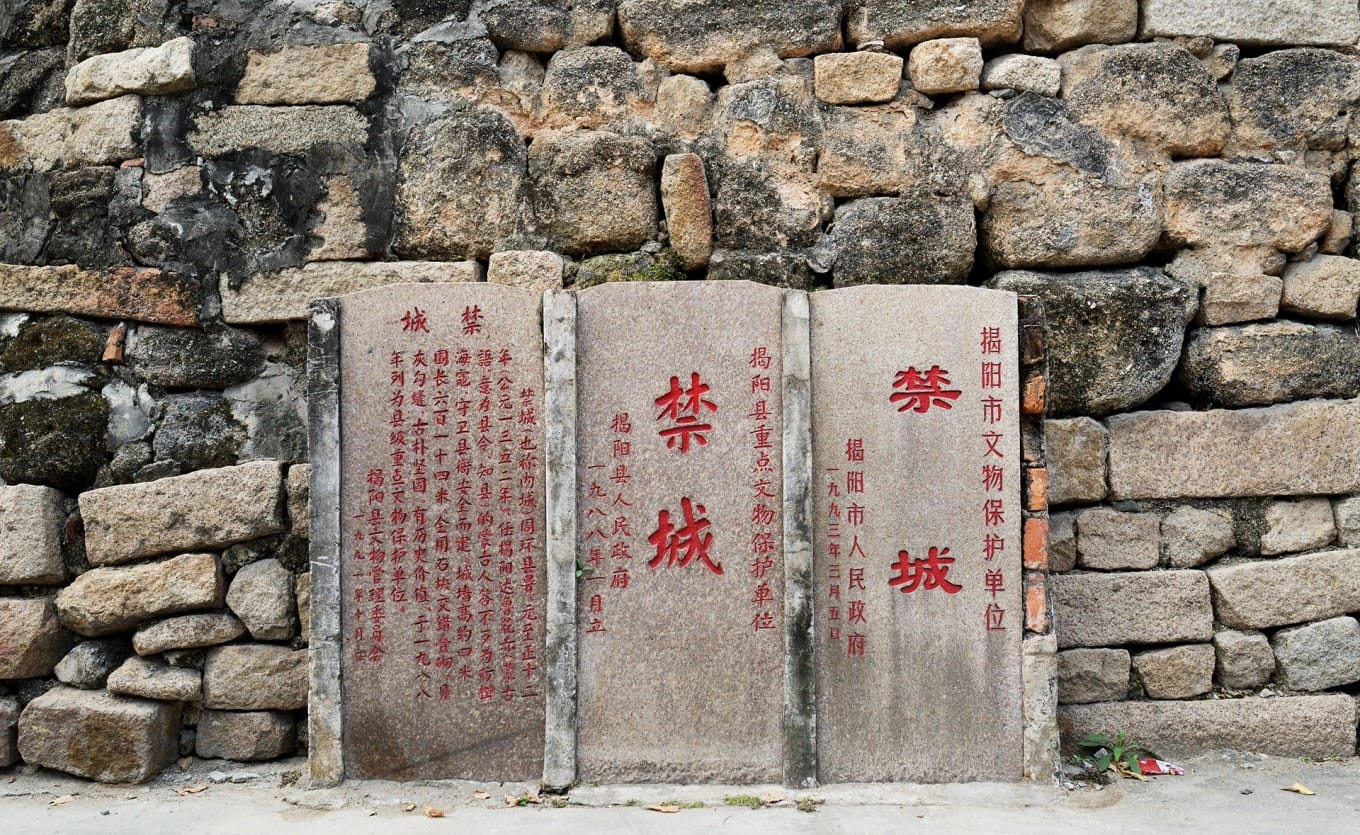
Nearby, three massive stone tablets mark the eastern turn of the old city wall, a spot once known as the ‘Forbidden City’ (禁城). Though accessible today, the name hints at the administrative prestige of old Jieyang.
For architectural grandeur, drive twenty kilometers southwest to Hongyang Town’s De’anli (德安里). This monumental walled compound arranges hundreds of rooms in a strict chessboard pattern following the ‘Hundred Birds Paying Homage to the Phoenix’ (百鸟朝凰) layout—the highest rank in Chaoshan residential design.
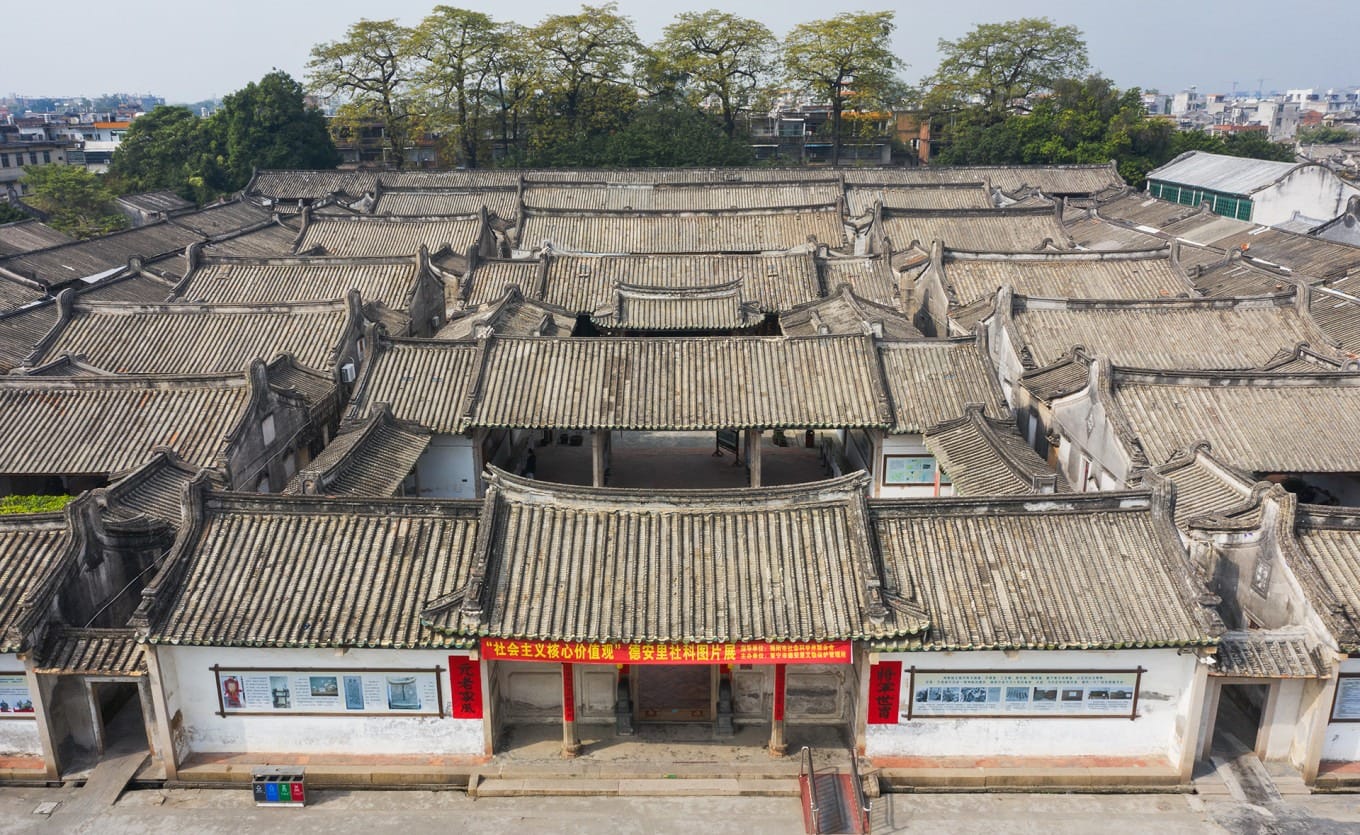
De’anli’s creator, Fang Yao (方耀), a Qing-dynasty naval commander, remains a controversial figure. His military career included brutal suppression campaigns, yet he also funded dozens of academies and land reclamation projects that materially improved local lives—a complex legacy carved into the granite gateposts.

Hongyang itself functioned as Puning’s county seat from the Ming Wanli era through 1949. Walking its old quarter, you will find layers of Republican-era shop houses, ancestral halls, and temple fairs that survived the shift of administrative power to modern Puning city.

Finally, venture to Nigou Village (泥沟村) in Liaoyuan Township. Listed among Guangdong’s ten most beautiful ancient villages, this six-hundred-year-old settlement preserves traditional Chaoshan residential clusters, ceremonial ponds, and clan temples that photograph beautifully in morning mist.
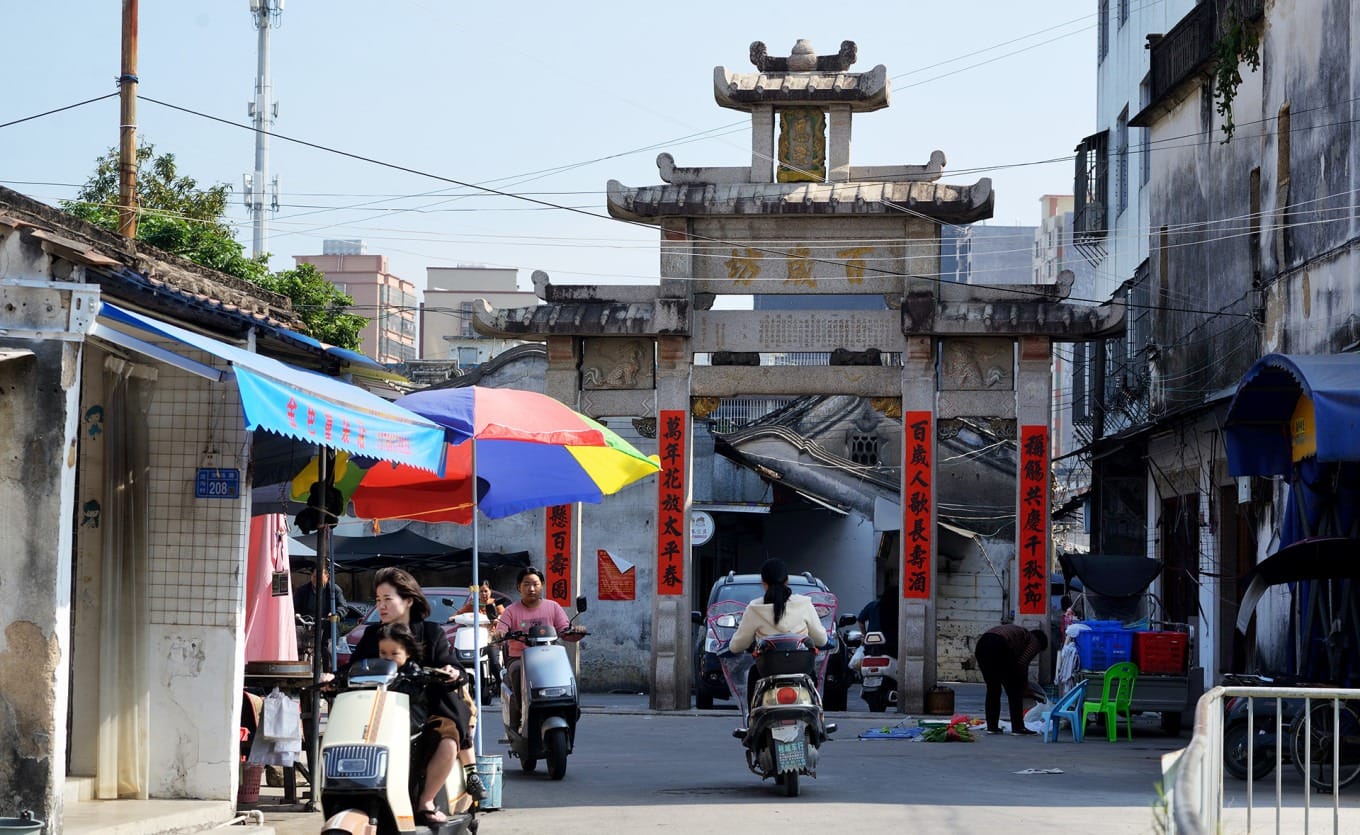
Jieyang: The Overlooked Corner of Chaoshan Cuisine
While many food-focused travelers chart a course straight for Shantou (汕头) or Chaozhou (潮州), you should not bypass Jieyang (揭阳). This understated city forms the third vertex of the Chaoshan (潮汕) culinary triangle, sharing deep historical roots with its famous neighbors yet offering distinct local interpretations that complete the regional narrative.
The entire region basks in a subtropical maritime monsoon climate, where year-round warmth and abundant rainfall create exceptional agricultural conditions. This natural bounty—from pristine seafood to tropical fruits and vegetables—has cultivated a culture of culinary creativity and reverence for ingredients that defines the local dining experience.
You will encounter the foundational elements of Chaoshan cuisine here: an obsessive focus on freshness, delicate seasoning, and sophisticated rice-based preparations. However, Jieyang introduces its own subtle vocabulary to this shared culinary language. Local chefs often employ heartier seasoning profiles and unique techniques that diverge slightly from Shantou and Chaozhou standards, presenting variations on classic dishes that distinguish the city’s gastronomic identity.
Plan to spend at least two days navigating Jieyang’s diverse food landscape. Arrive early to explore morning markets where vendors prepare fresh rice noodles and traditional breakfasts before dawn. As evening approaches, follow the scent of charcoal-grilled seafood and simmering medicinal soups through lively night markets. The city’s compact layout allows you to efficiently sample historic family-run establishments alongside contemporary interpretations, ensuring you capture the full spectrum of flavors that make this destination essential to understanding Chaoshan’s culinary heritage.
Lu Ji Beef
No trip to Chaoshan is complete without diving into a bubbling pot of beef hotpot. While this culinary tradition only rose to prominence some thirty to forty years ago, it has since become the region’s most famous edible ambassador, drawing food pilgrims from across the country. In Jieyang, bypass the tourist-heavy chains and seek out Lu Ji Beef (卢记牛肉), a local institution that trades flashy interiors for obsessive quality.
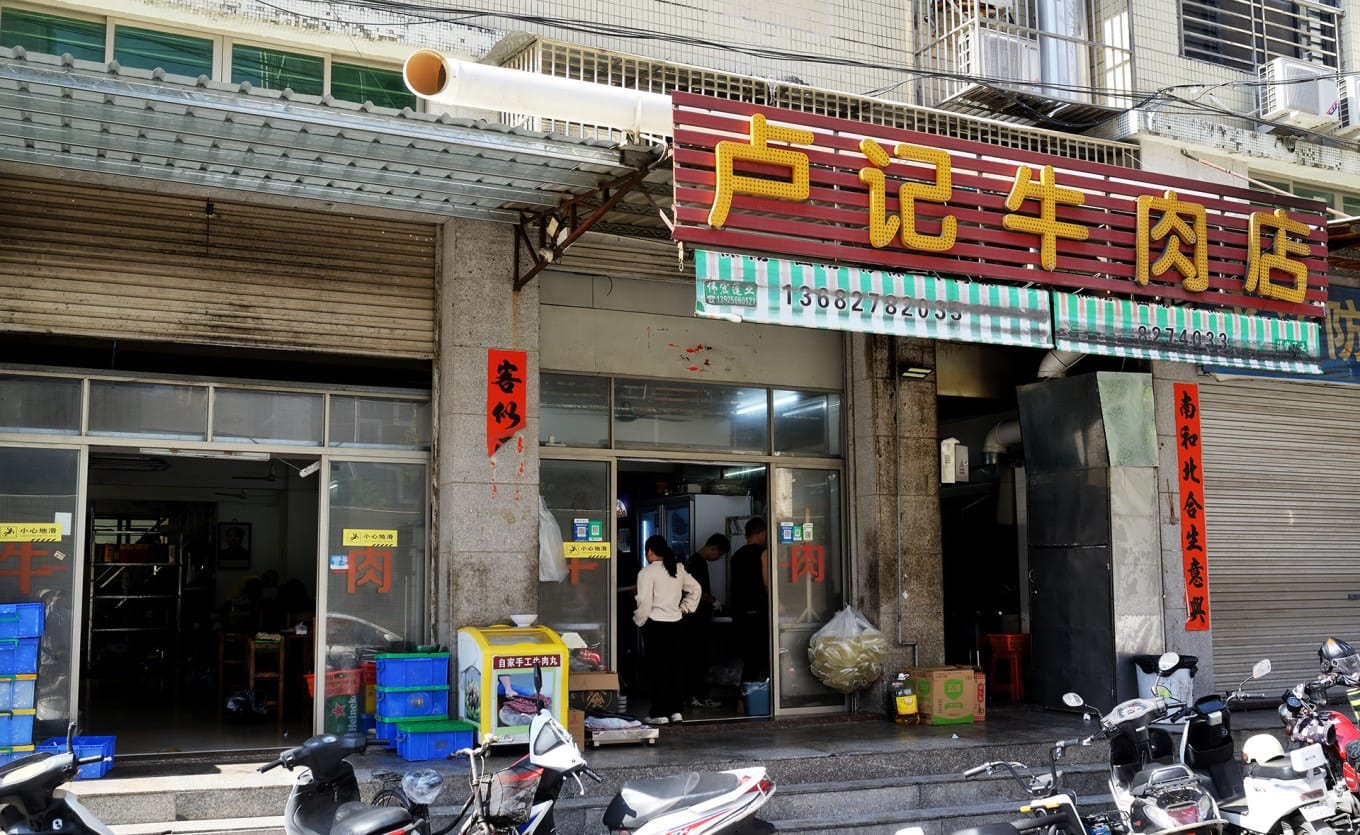
At Lu Ji, freshness is treated as a science. The beef arrives from the abattoir with a strict four-to-six-hour deadline to prevent lactic acid buildup and satisfy the Chaoshan obsession with peak freshness. Watch as the butcher’s blade moves with surgical precision, breaking the carcass into dozens of distinct cuts. Only the top third of the animal makes it to the hotpot, each section bearing its own poetic name and precise cooking time—a taxonomy that explains why locals are considered the world’s foremost beef connoisseurs.
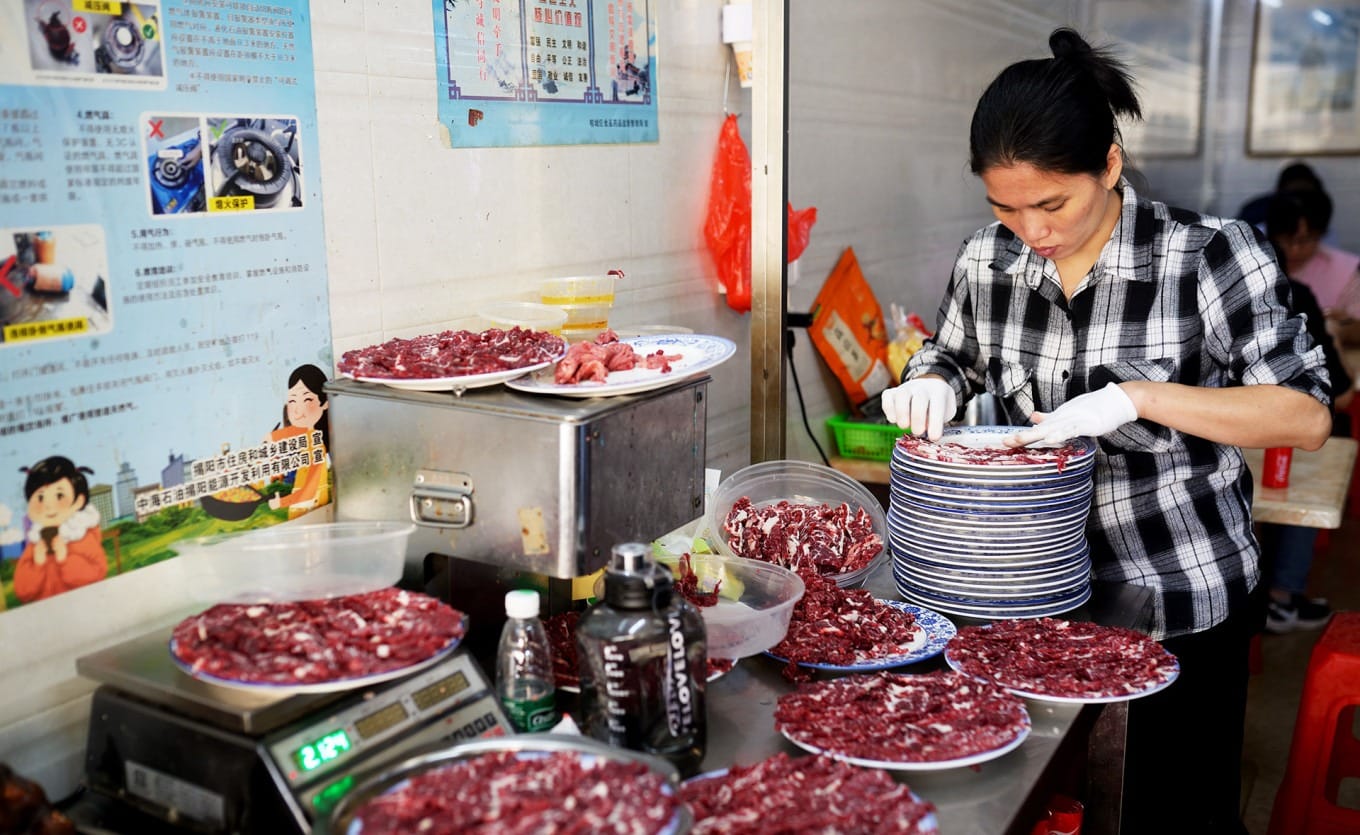
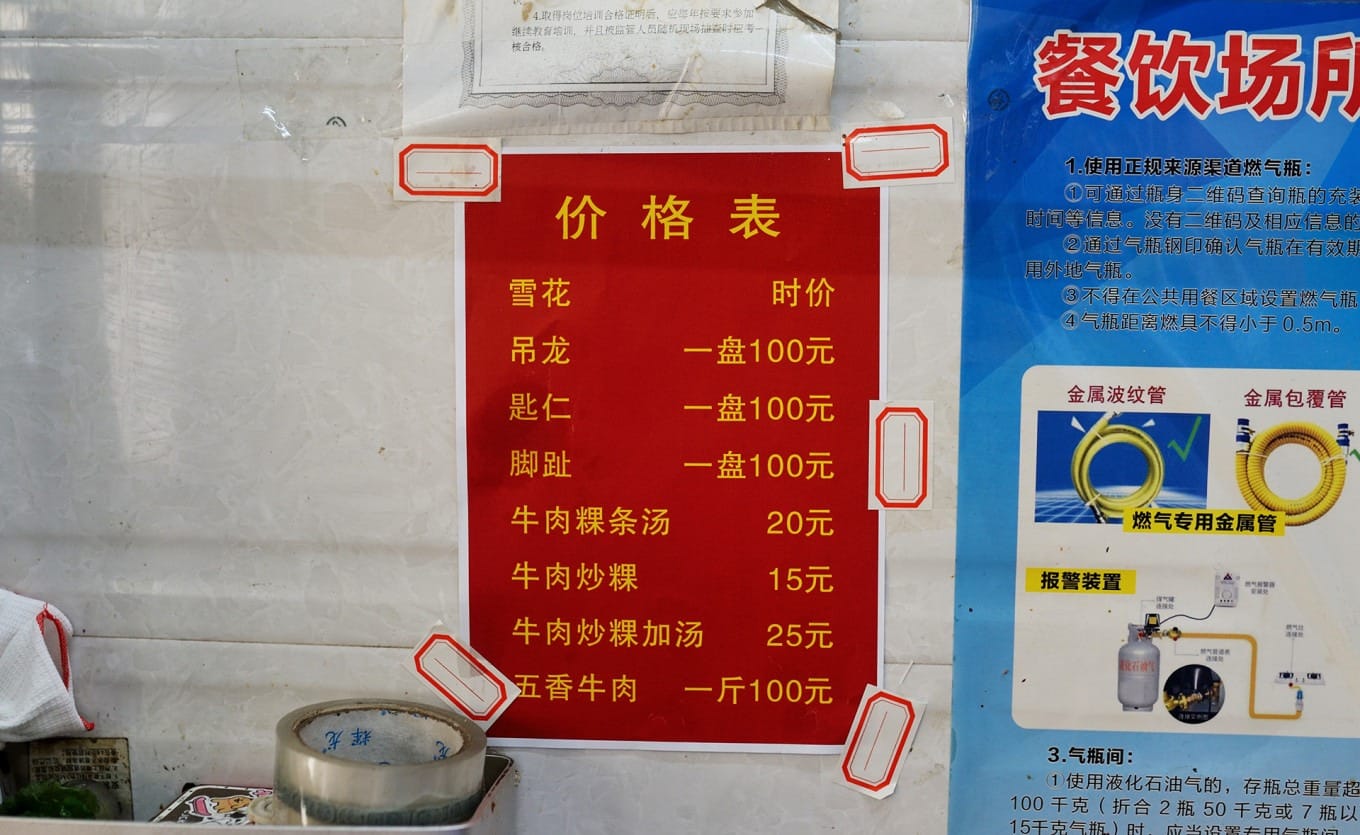
You typically won’t need to decipher the menu yourself. The owner assesses your party size and orchestrates the meal, delivering one generously piled plate per person. While the price point isn’t bargain-basement, you are paying for beef that has earned the approval of Jieyang’s most discerning regulars, served in portions that verge on extravagant.
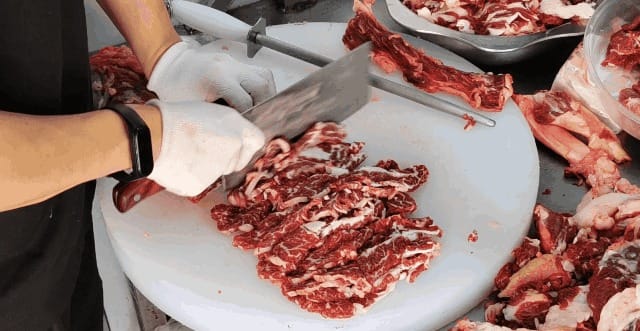
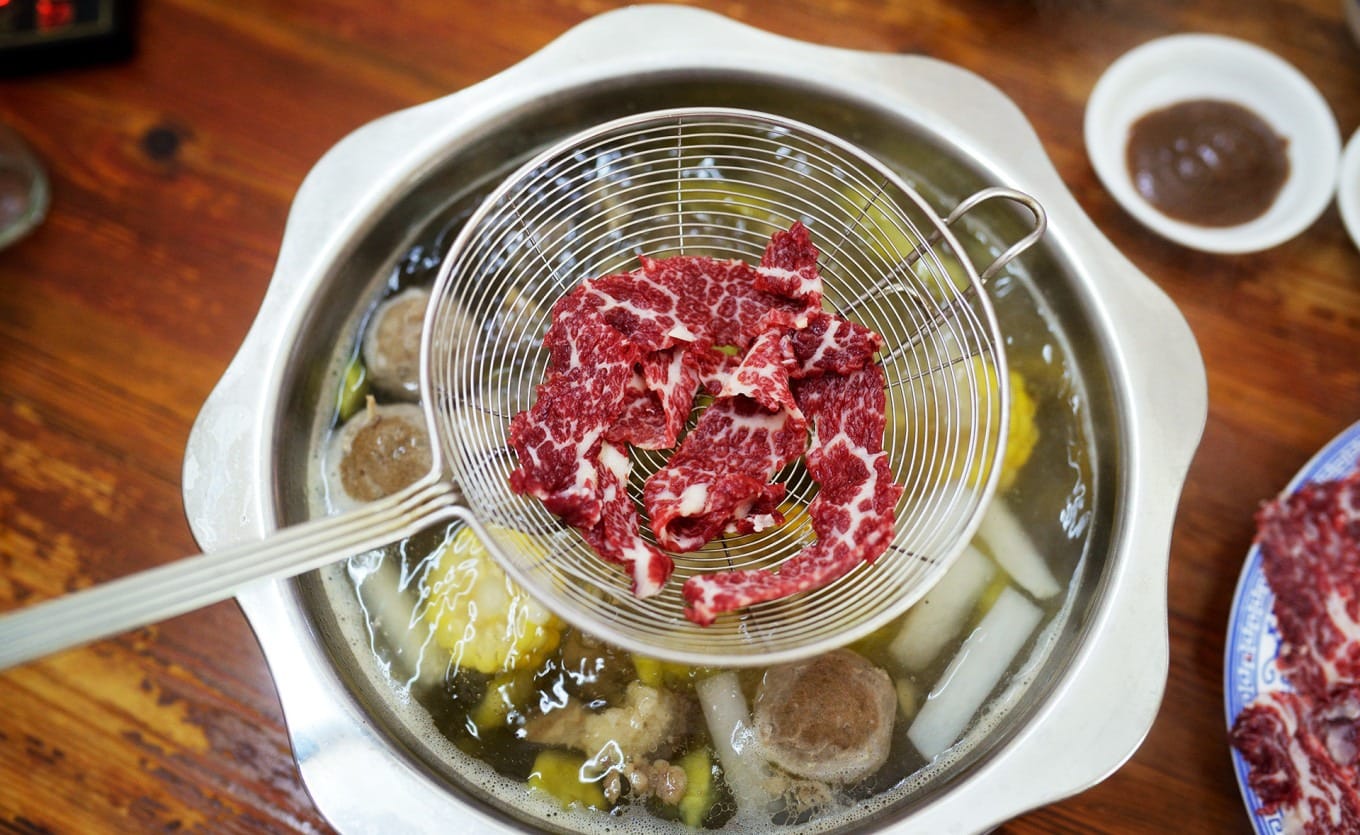
Securing the rarest cuts requires timing and luck. The 脖仁 (Snowflake Beef), harvested from the hump between the neck and back, represents one of the lowest-yield sections of the cattle and often sells out first. When it lands on your table, the cross-section reveals intricate marbling—delicate fat threads promising a luxurious texture that is simultaneously buttery and resilient. Many consider this the single finest bite on the animal.
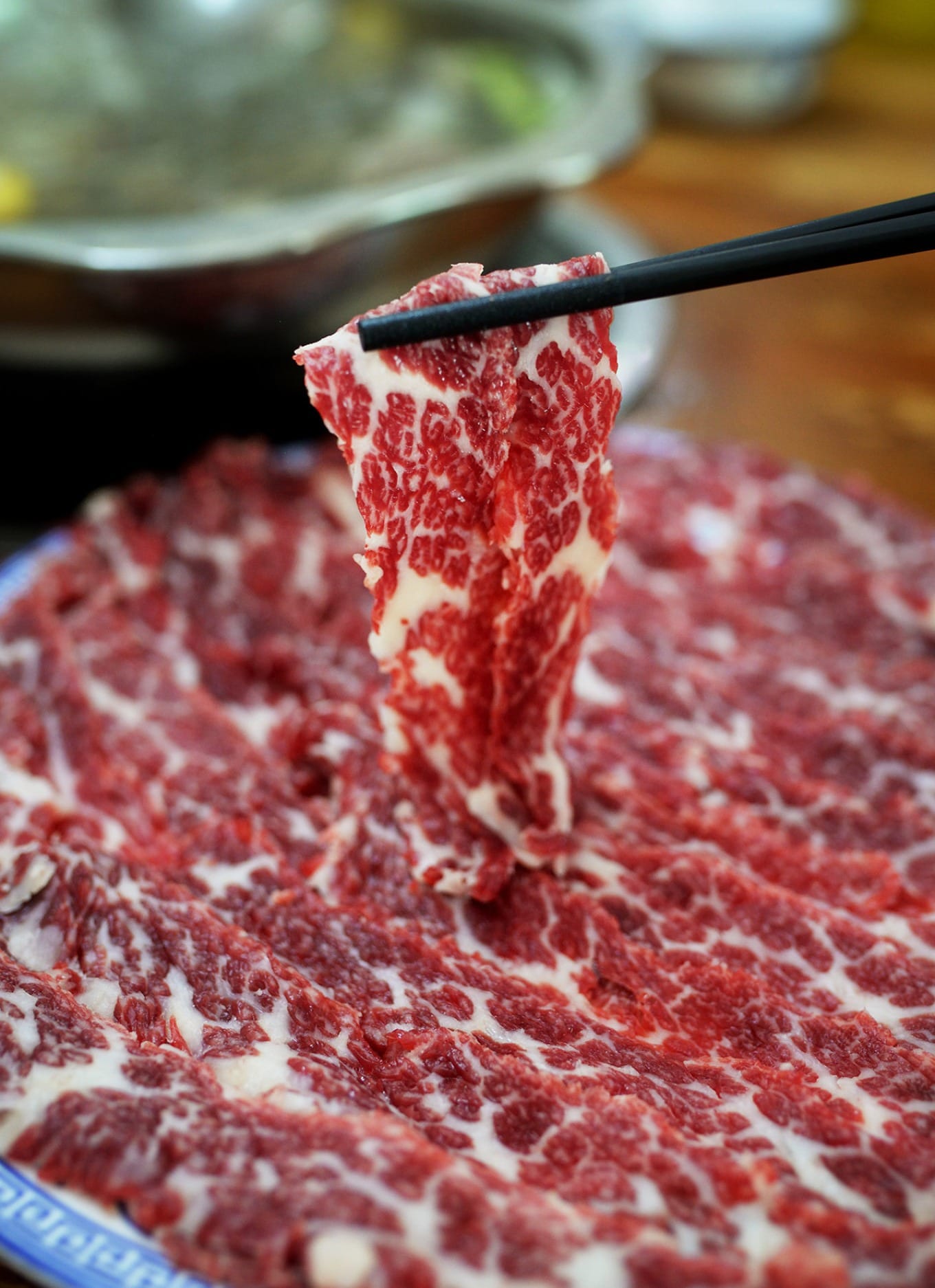
Equally essential is the 吊龙 (Hanging Dragon), cut from the dorsal region and comparable to sirloin. This strip delivers an ideal lean-to-fat ratio that reads rich rather than greasy, with a notably fine grain. Lu Ji’s kitchen favors thick slices over paper-thin shavings, a deliberate choice that preserves the meat’s fibrous integrity and delivers a satisfyingly full bite.
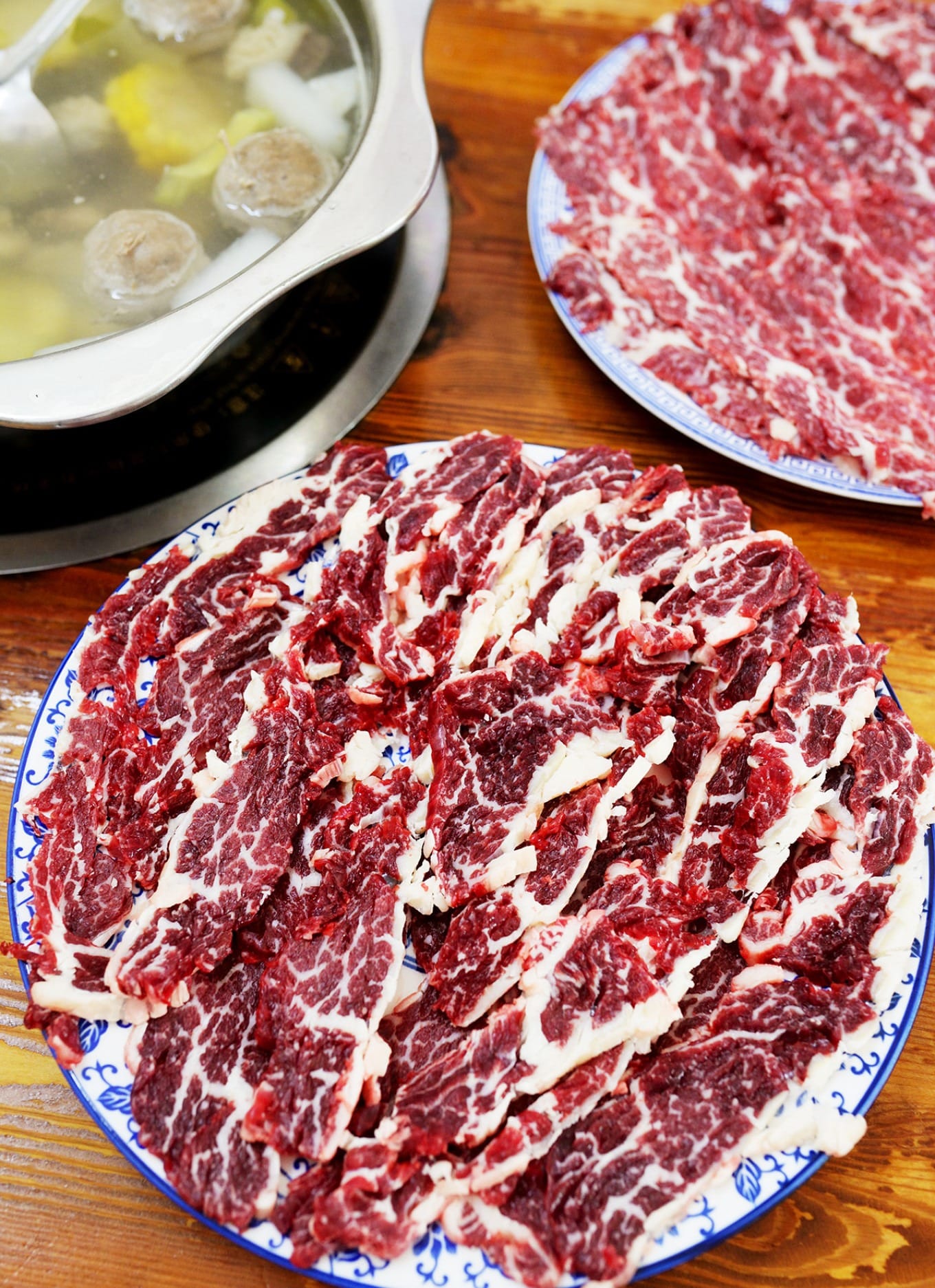
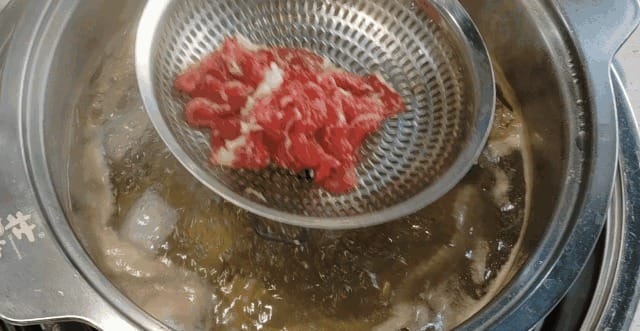
The broth remains resolutely clear—a minimalist canvas of beef bones, 牛肉丸 (Beef Balls), modest offal, sweet corn, and bitter melon. This understated base amplifies rather than competes with the meat’s natural sweetness. Load your wire strainer with slices and plunge them into the rolling boil, agitating gently. The golden rule here is 嫩而不生 (tender yet not raw): a mere six to ten seconds suffices to transform the flesh into velvet.
With beef this pristine, you may find yourself forgoing condiments entirely—the unadorned flavor is explosive enough. That said, a light dip in 沙茶酱 (Satay Sauce) is the classic move, adding a nutty whisper that complements rather than masks the beef’s essential character.
- RestaurantLu Ji Beef (卢记牛肉)
- Address2 C C12 / Opposite Maternal and Child Health Hospital, No.
- Recommended dishes脖仁 (Snowflake Beef), 吊龙 (Hanging Dragon)
- Average spend100 RMB per person
Jin’an Street Dai Pai Dong: A Late-Night Congee Institution
When midnight hunger strikes in Jieyang, skip the barbecue and head straight for the white porridge (白粥). Locals gather at open-air eateries for a “da leng” supper—an array of cold and marinated dishes paired with plain congee, a tradition borrowed from Hong Kong that has become the city’s definitive after-dark ritual. At the heart of this scene stands Jin’an Street Dai Pai Dong (进安街大排档), a twenty-year veteran that serves dinner through the early morning hours and rarely sees an empty table.
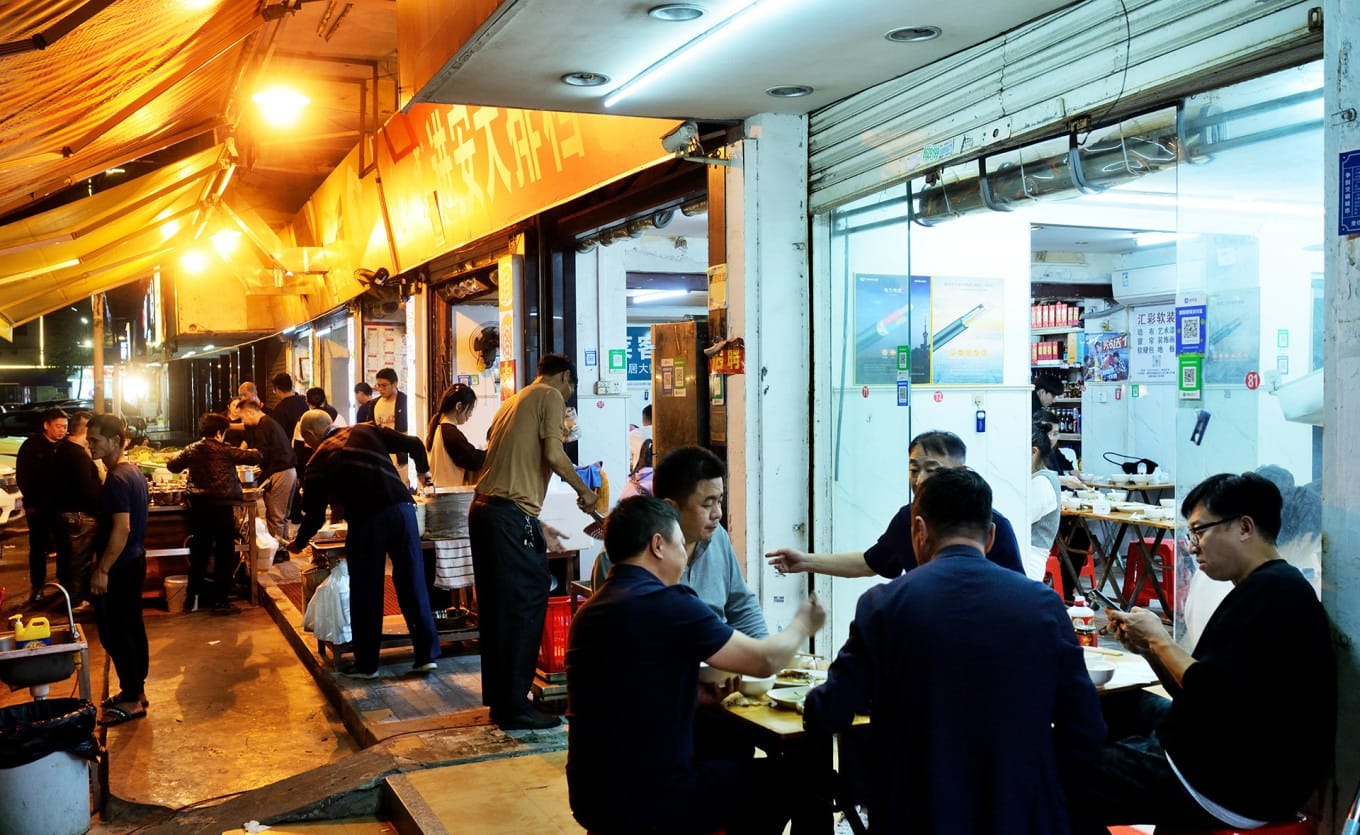
Forget elaborate banquet cuisine. This is street-level comfort food at its finest. A ten-meter-long display counter dominates the dining room, laden with over a hundred varieties of cold platters, raw marinated seafood, braised meats, and pickles. The visual abundance can distract from the fact that the humble white porridge is the true anchor of the meal, providing a neutral canvas for the salty, savory accompaniments.
There are no printed menus here. You simply stand before the stall, point to whatever catches your eye—whether raw crab, braised duck, or fresh catch of the day—and tell the staff how you would like it prepared: steamed, stir-fried, or served cold. Thanks to the kitchen’s veteran instincts and uncompromisingly fresh ingredients, even blind ordering yields delicious results. Expect a lively, competitive atmosphere during peak hours; securing your favorites sometimes requires quick decisions.
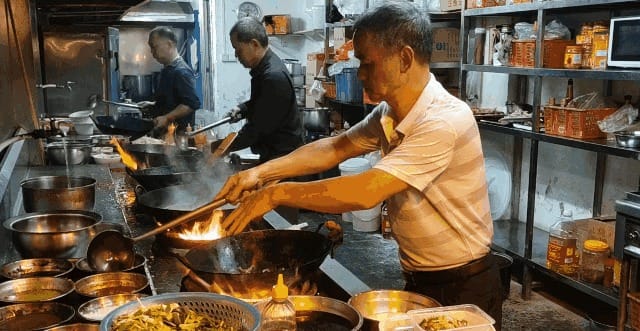
Among the offerings, fish rice (鱼饭) demands particular attention. This Teochew specialty treats fish as rice, a practice born from the days before refrigeration when fishermen preserved their catch with sea salt. The preparation remains meticulous: fish are cooked whole without scaling or gutting to retain maximum flavor, arranged with heads pointing counter-clockwise in overlapping layers, never showing the backbone—a tradition passed down through generations. The fish must cool naturally to room temperature before serving to achieve the proper texture.
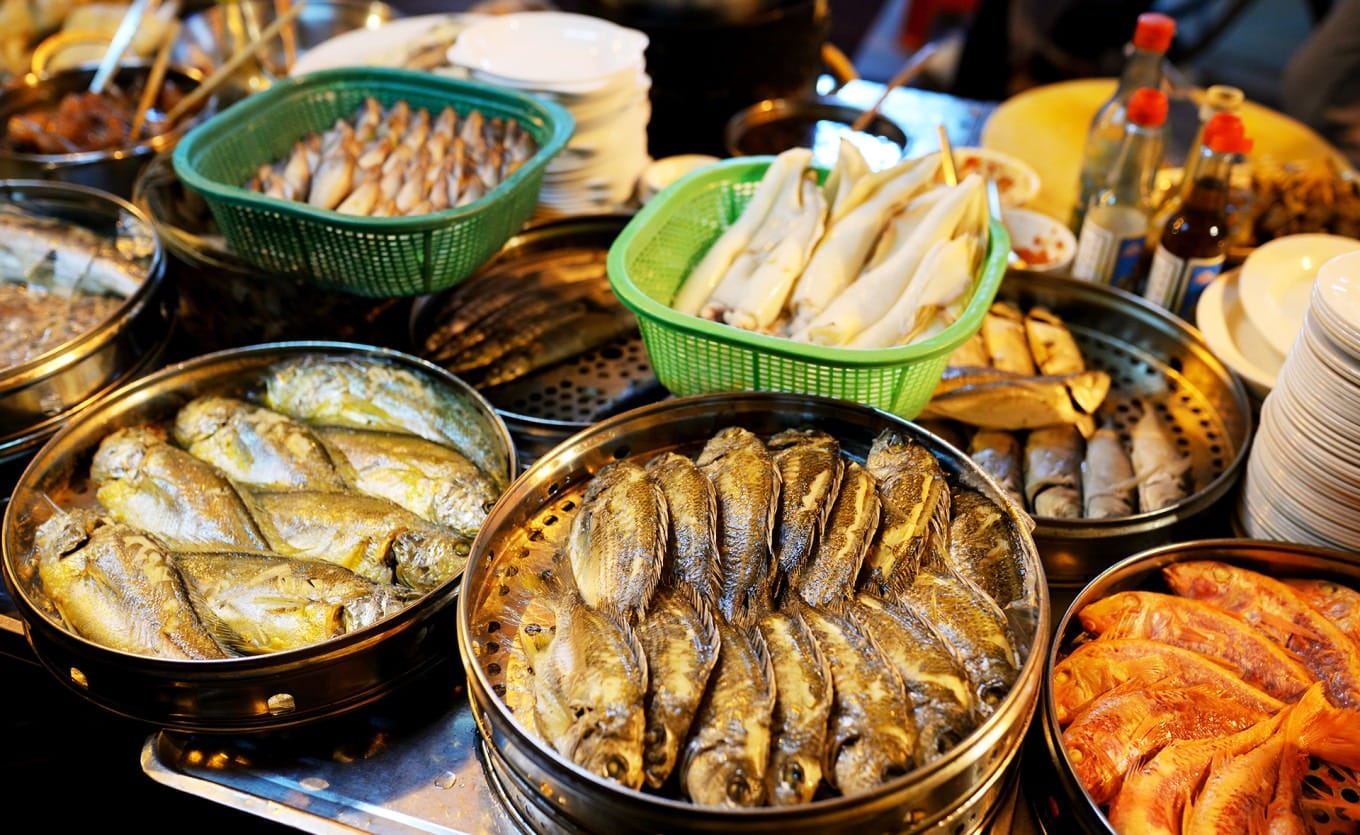
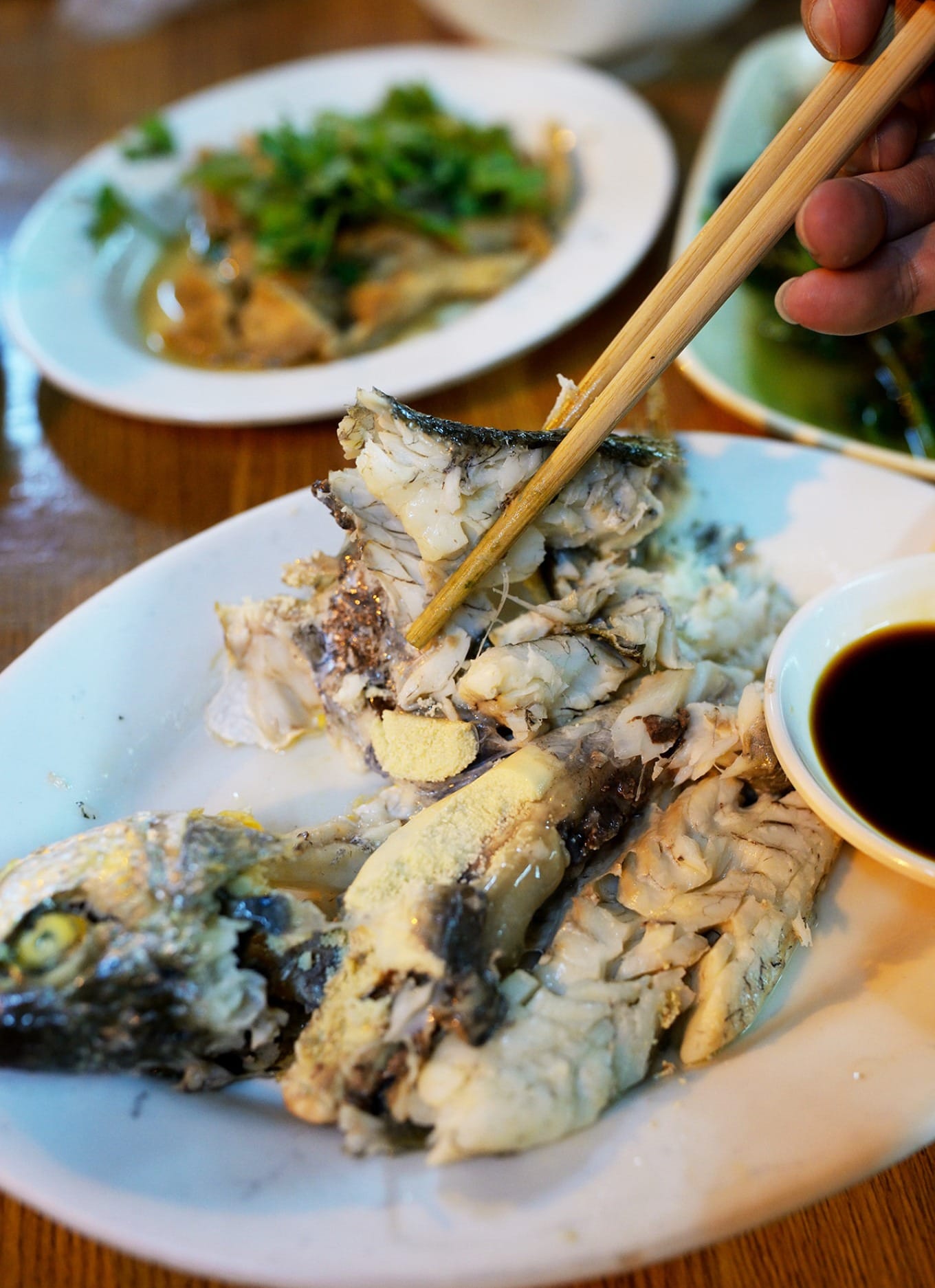
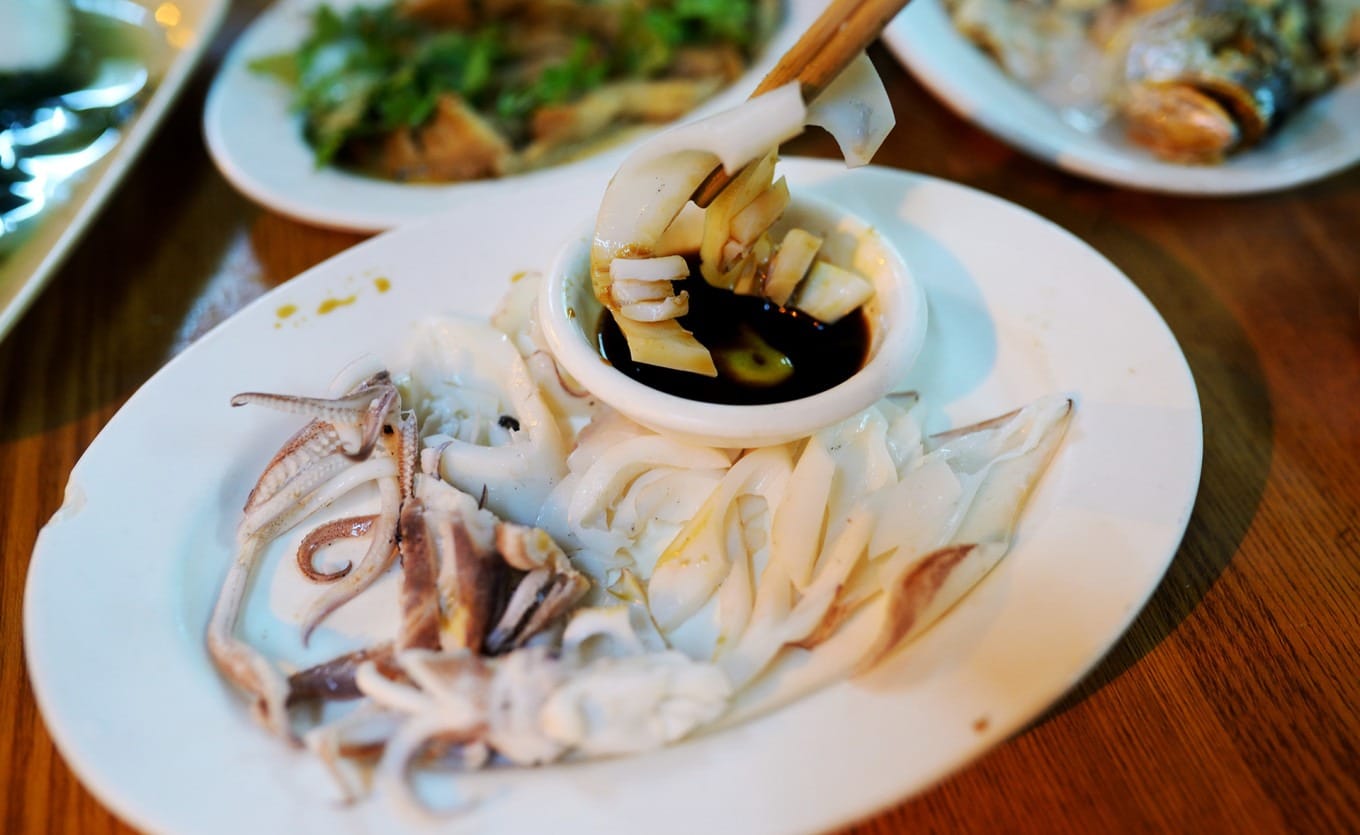
Order the yellow croaker (黄花鱼) sourced from Shantou waters. The flesh is thick and springy, best enjoyed with a brief dip in soy sauce that amplifies the clean, sweet ocean flavor. Blanched squid (白灼鱿鱼) offers another highlight—these small, near-shore specimens require absolute freshness to withstand such simple cooking. The result is tender, glossy tubes with a crisp, bouncy texture and zero fishiness. Dunk them in the provided soy sauce mixed with wasabi for an immediate jolt of umami.
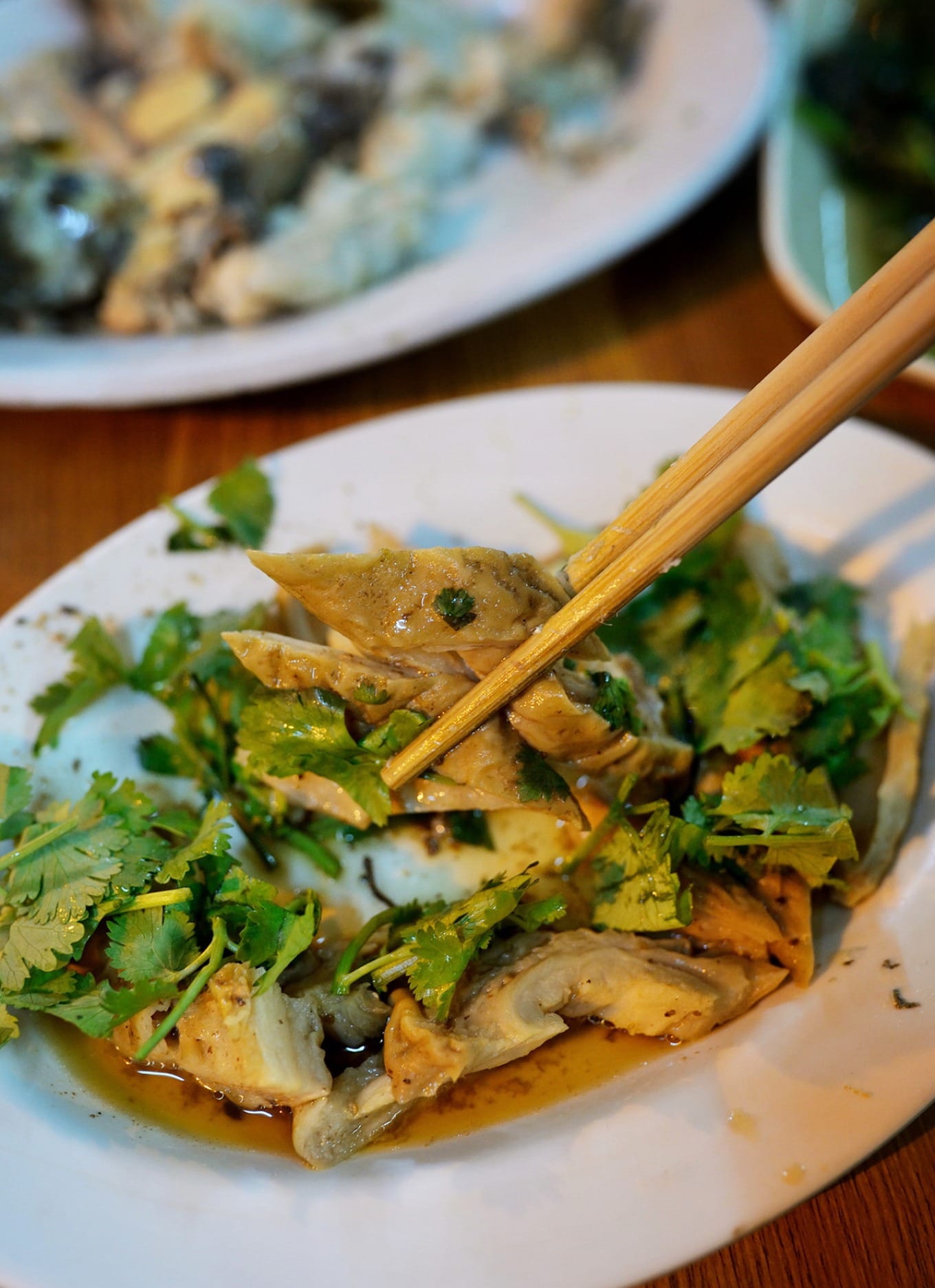
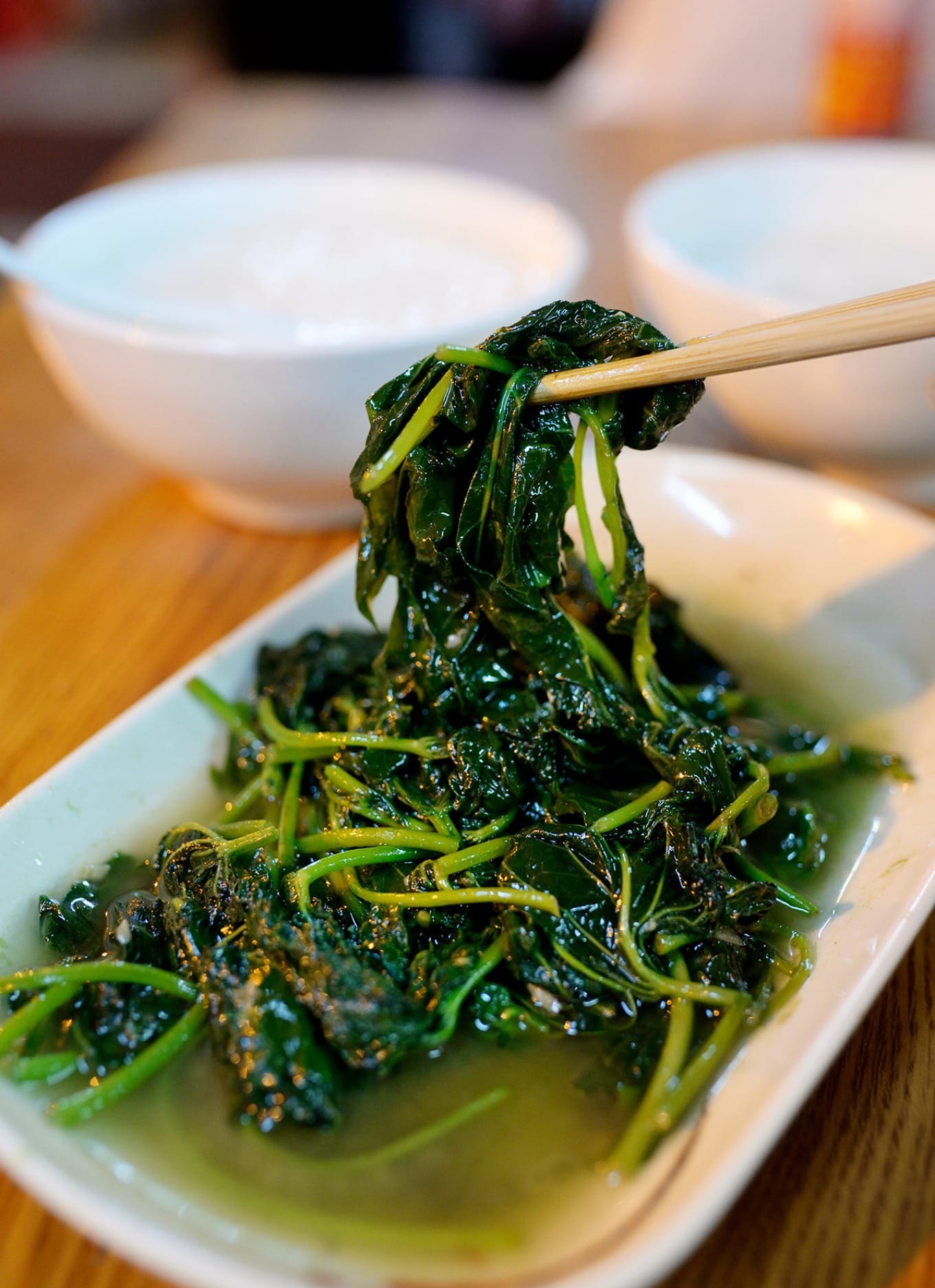
No Teochew supper is complete without braised items. The braised pork intestines (卤大肠) are simmered in a master stock enriched with southern ginger, allowing the aromatic brine to permeate every fold of the rich, fatty offal. For vegetables, try the stir-fried sweet potato leaves (炒番薯叶), using only the tenderest shoots wok-tossed with garlic until they develop a soft, fragrant sweetness with subtle caramelized notes from the hot wok.
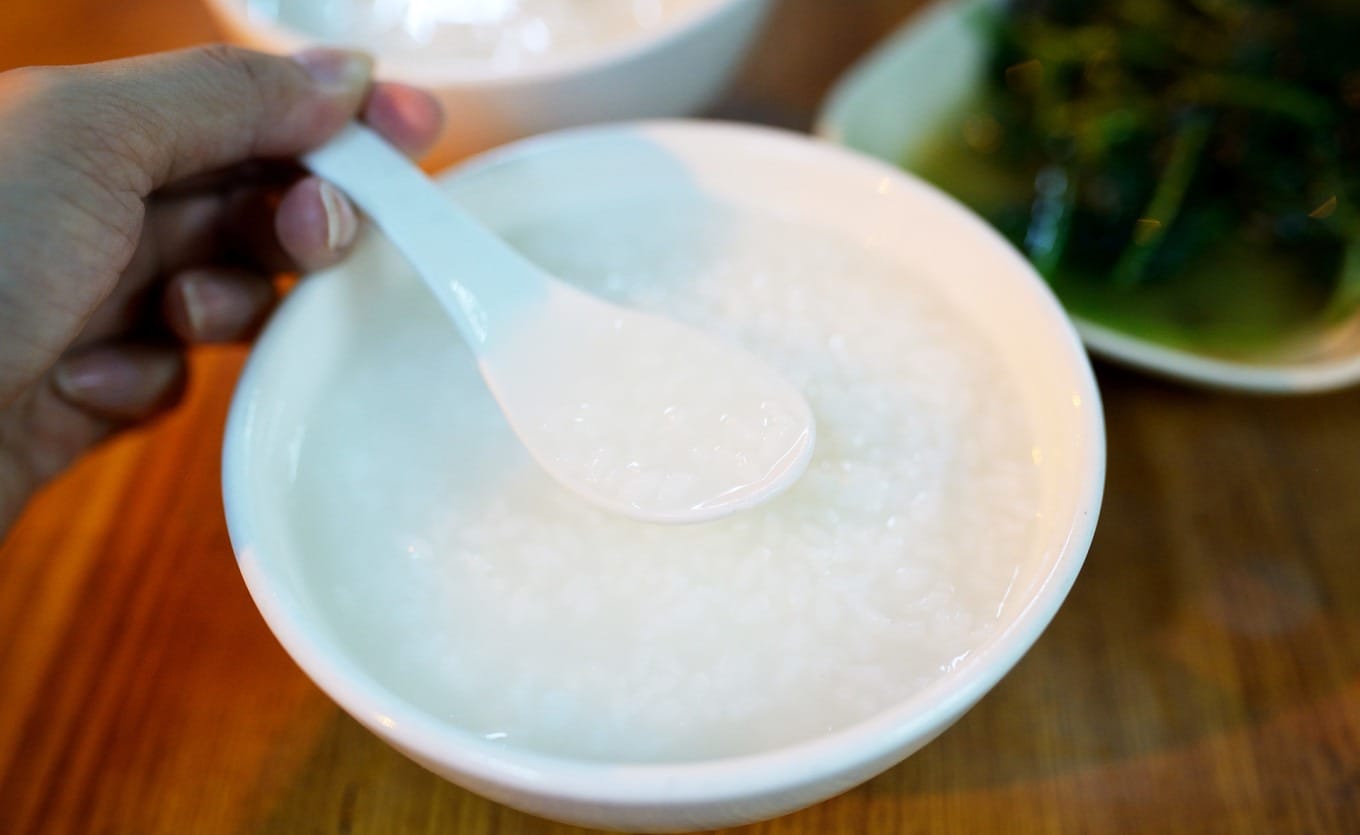
Finally, appreciate the white porridge itself. Teochew congee differs from the Cantonese style found in the Pearl River Delta. Cooks use short, plump pearl rice boiled until the grains remain distinct yet suspended in a thick, velvety broth—neither soupy nor fully broken down. This starchy, comforting base provides the perfect counterpoint to the intense flavors of the side dishes, creating a supper that satisfies deeply without overwhelming the palate.
- Restaurant进安街大排档 (Jin’an Street Dai Pai Dong)
- Address榕城区榕华街道进安街61号 (No.
- Recommended dishesWhite porridge (白粥), yellow croaker fish rice (黄花鱼鱼饭), blanched squid (白灼鱿鱼), braised pork intestines (卤大肠), stir-fried sweet potato leaves (炒番薯叶)
- Average spend50 yuan
Dongxing Raw Fish Porridge
Chaoshan locals have elevated rice porridge to an art form that extends far beyond simple comfort food. While plain white congee anchors late-night dining culture, the region’s claypot porridge (砂锅粥) represents the cuisine at its most sophisticated—a bubbling cauldron of fresh seafood and perfectly textured rice that has become a culinary calling card. In Jieyang, Dongxing Raw Fish Porridge (东兴生鱼粥) offers a masterclass in this specialty. This single-focus institution on Wangjiang North Road has built its reputation by doing one thing extraordinarily well.
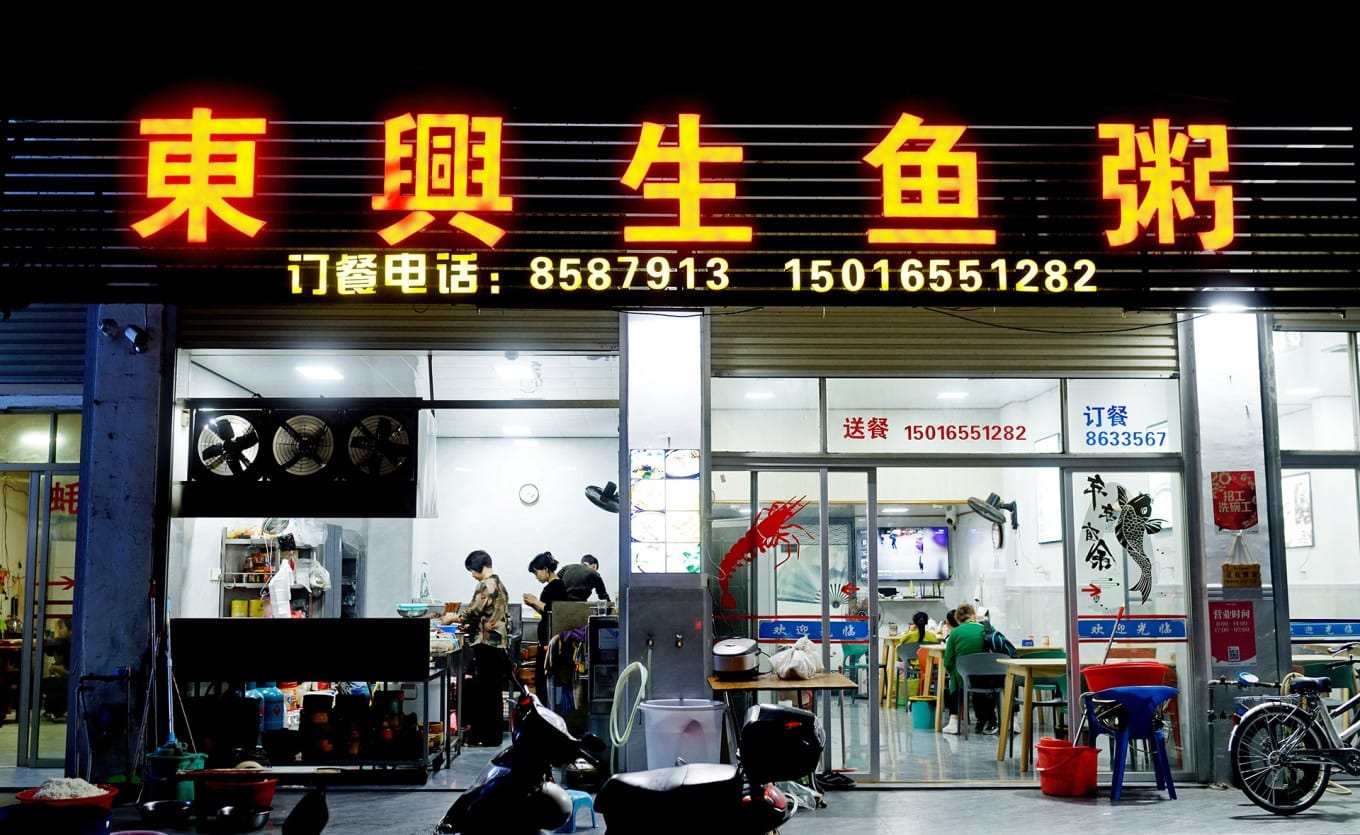
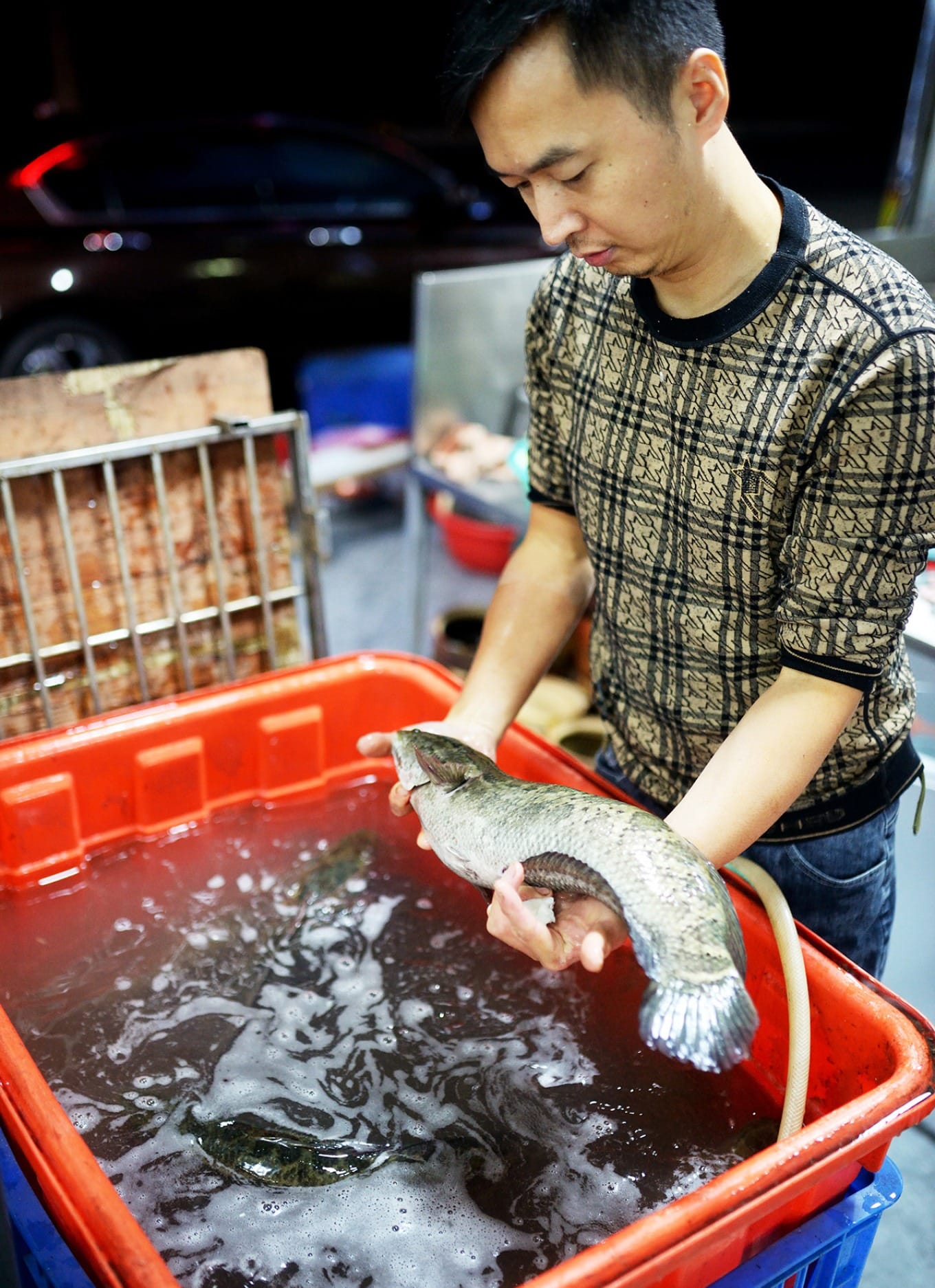
The menu philosophy here embraces the Chaoshan tenet that virtually any fresh protein can enhance a claypot. The kitchen works with an encyclopedic range of aquatic ingredients—fish, shrimp, crab, frog, and eel—available as single-protein bowls or custom combinations. For your first bowl, prioritize the house signature: raw fish (生鱼), known scientifically as snakehead fish (乌鳢). Despite its fierce reputation as an aquatic predator, this species yields remarkably tender flesh with minimal bones, creating the ideal protein for porridge integration.
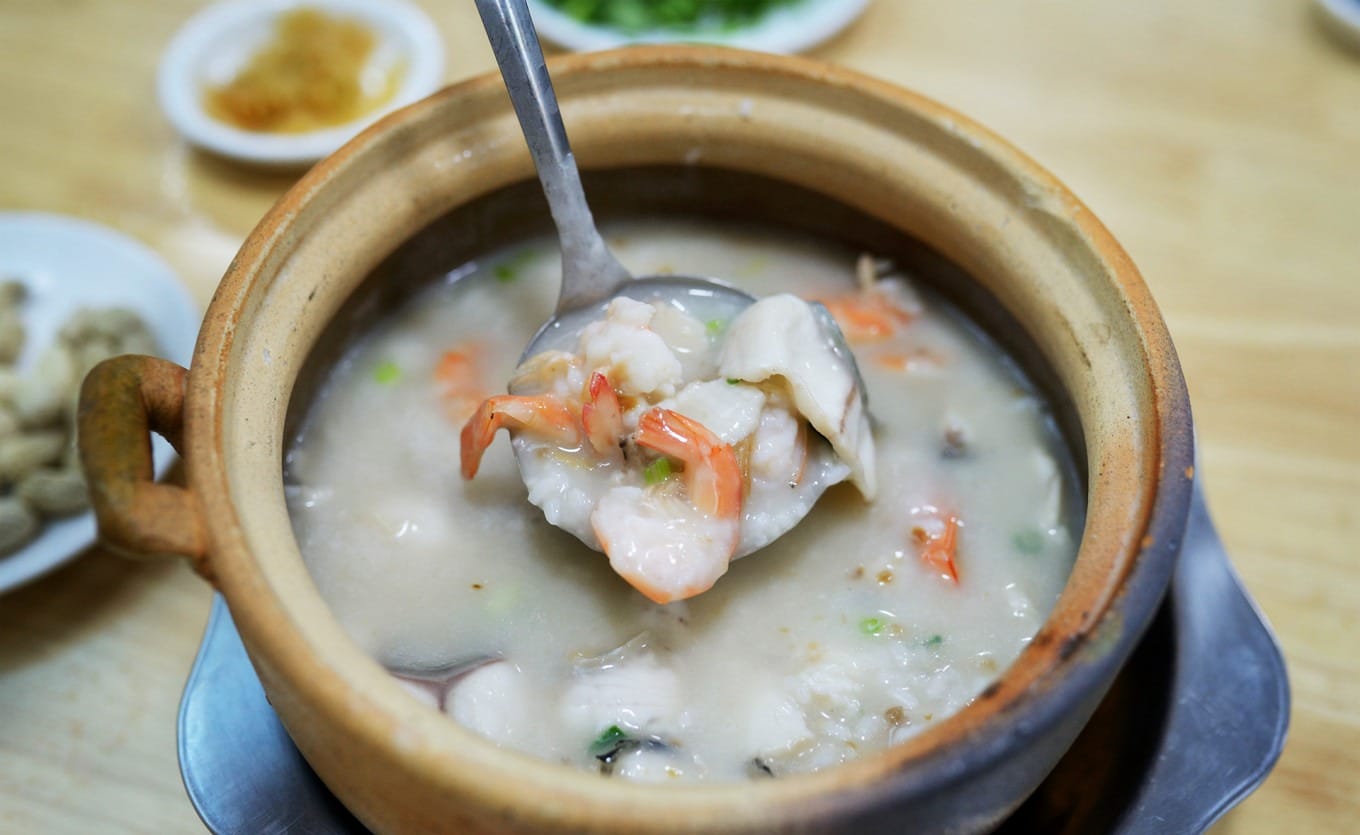
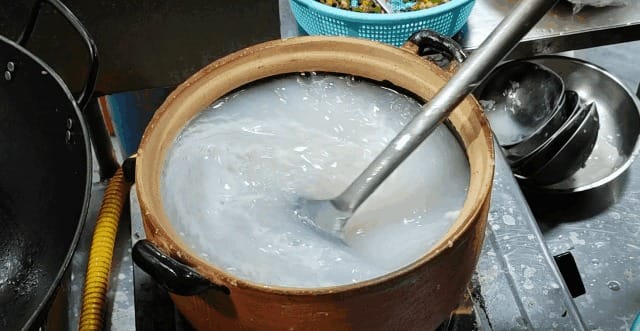
Technique distinguishes exceptional claypot porridge from ordinary rice soup. The kitchen employs deep-bottomed sand pots and insists on starting with raw grains rather than pre-cooked rice. Vigorous boiling and constant stirring over high heat transform the rice into a texture unique to Chaoshan—individual grains that remain distinct yet surrender a creamy, soft mouthfeel. The timing is critical; paper-thin slices of freshly killed fish and split fresh shrimp enter the pot only when the rice approaches doneness, allowing residual heat to gently poach the seafood. This precision preserves the fish’s silky texture and the crustacean’s natural sweetness.
The savory depth relies on strategic seasoning. Dried scallops and fish powder infuse the broth during the boil, but the defining accent appears at the table: a scattering of chopped winter vegetable (冬菜). This fermented Chinese cabbage condiment delivers a salty, aromatic punch that neutralizes any fishiness while adding earthy complexity—a flavor profile unique to Chaoshan gastronomy.
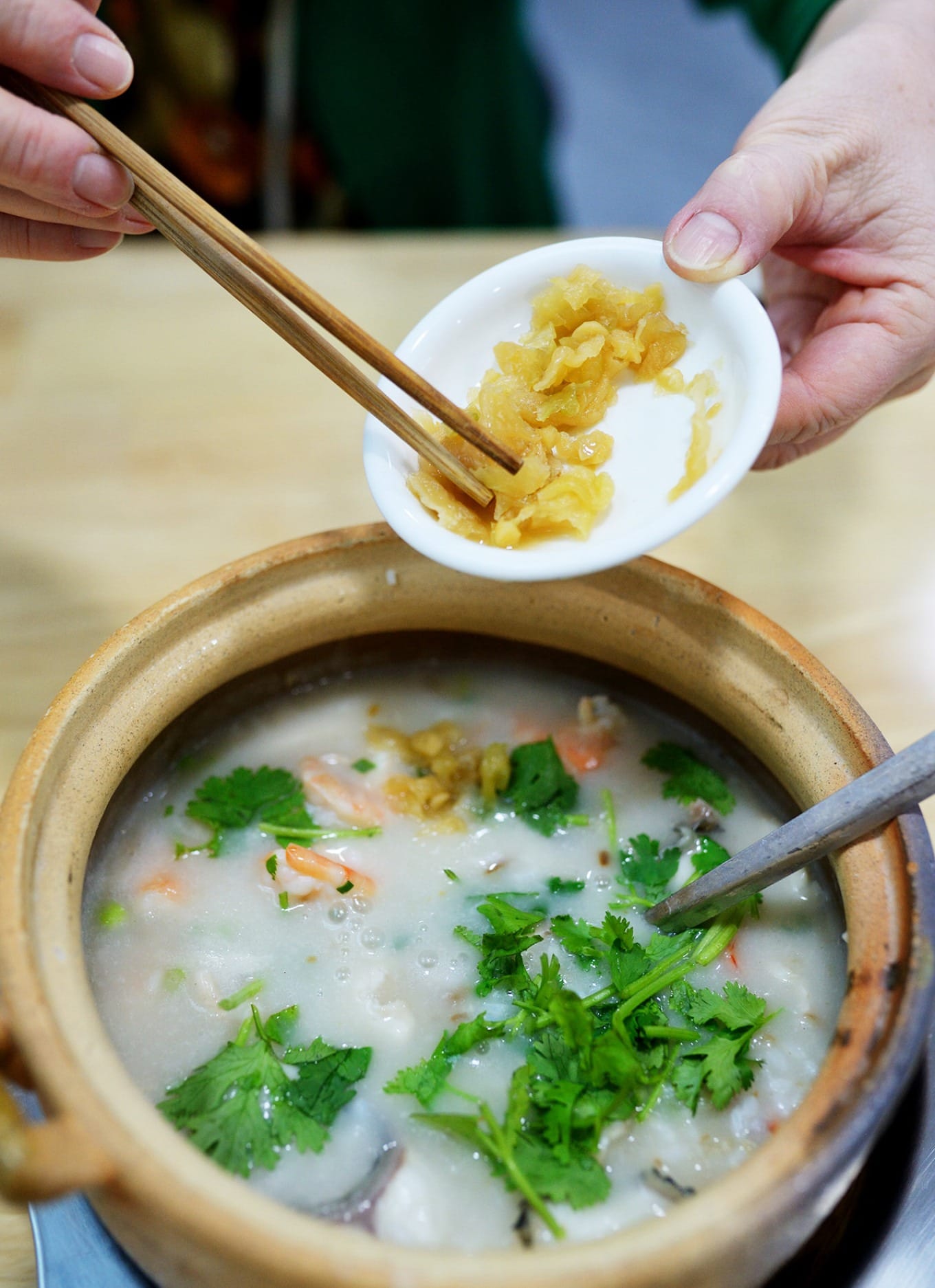
The final composition delivers a multisensory experience. Velvety fish fillets and sweet shrimp meat float in a silky broth, punctuated by the saline crunch of preserved vegetable. Each spoonful concentrates the essence of the ocean, demonstrating why this humble claypot commands such devotion among locals.
- RestaurantDongxing Raw Fish Porridge (东兴生鱼粥)
- Address榕城区望江北路区政府对面 (Opposite District Government, Wangjiang North Road, Rongcheng District)
- Recommended dishesRaw fish with fresh shrimp porridge (生鱼虾粥)
- Average spend40 yuan
Chu Sheng Goose Kuey Teow Soup
While the Chaoshan region lionizes braised lion-head goose, Jieyang offers a compelling alternative: white-cut goose, where the poaching liquid transforms into the foundation for an extraordinary noodle soup. Chu Sheng Goose Kuey Teow Soup (楚生鹅粿条汤) has built a loyal following across Jieyang and Puning with this precise specialty. You will find their Dongshan branch along Xinhe Road in Rongcheng District, a reliable pit stop for this local delicacy.
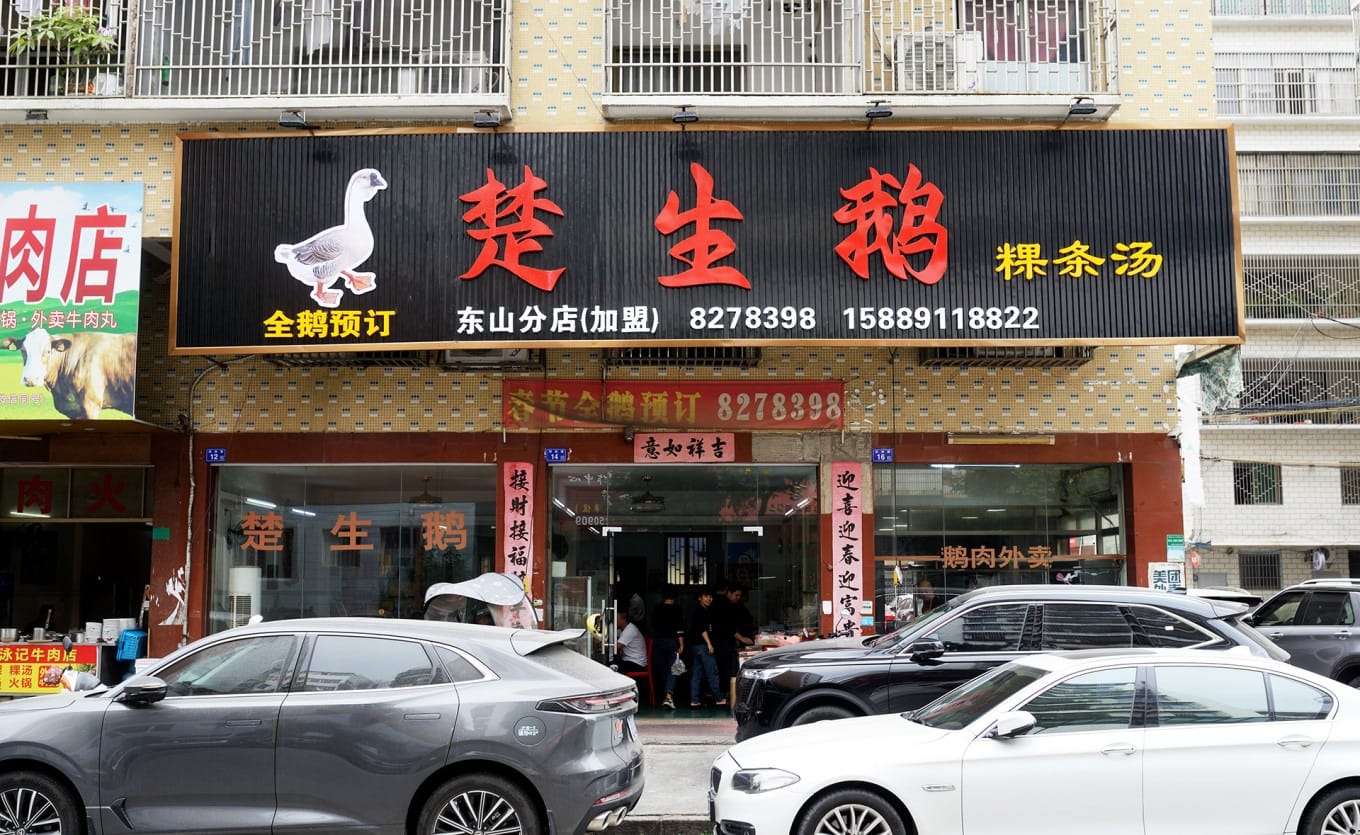
The noodles here command attention. Jieyang favors a thin variety known as 桐坑粿条 (Tongkeng rice noodles), named after Tongkeng Town where the style originated. These delicate strands resemble vermicelli yet carry less starch, allowing them to absorb the broth’s essence while maintaining a silky, supple texture that slides effortlessly across the palate—ideal for soup applications.
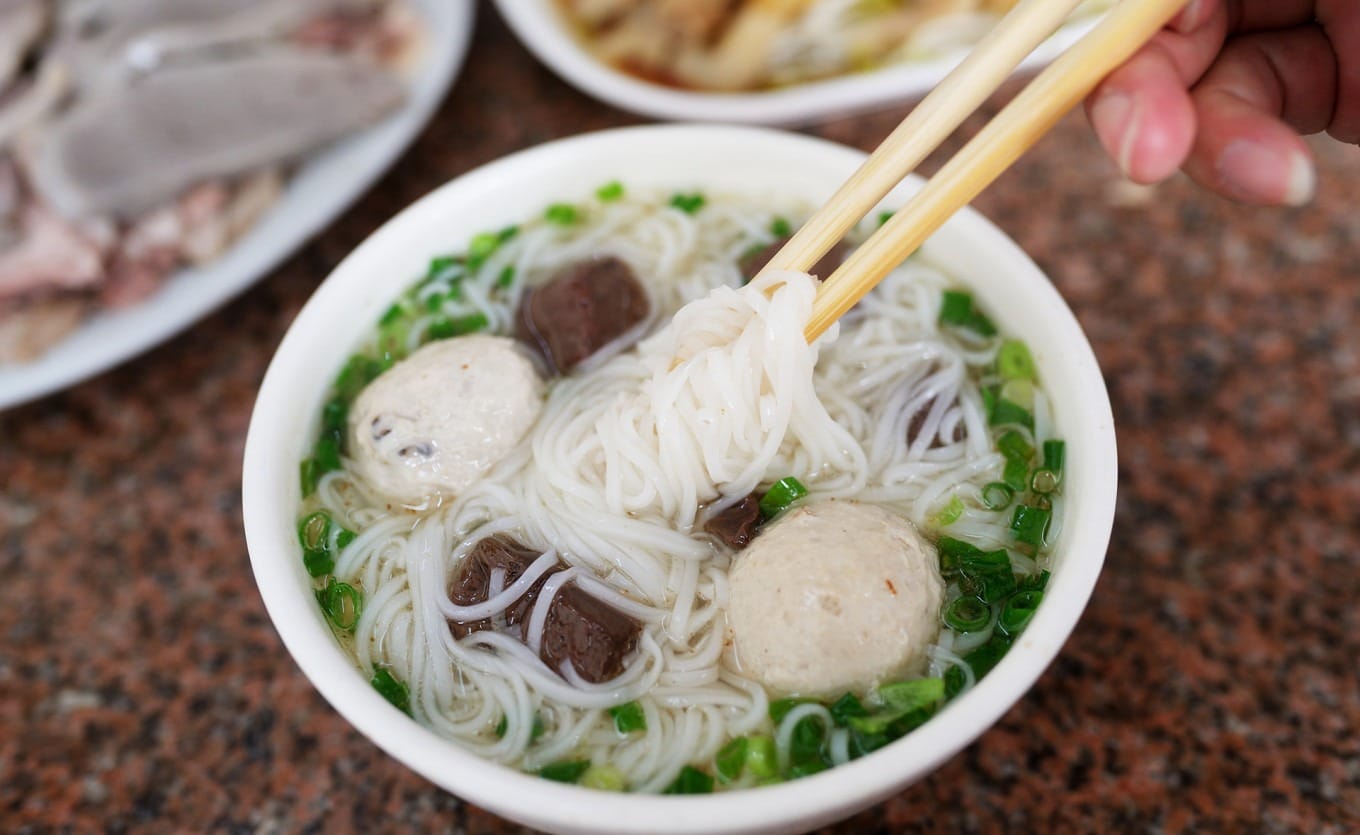
The broth itself delivers remarkable depth. Simmered from white-cut lion-head goose, the liquid carries a clean, savory richness that immediately awakens the senses. Floating within are 鹅肉丸 (hand-pounded goose meatballs), crafted from fresh goose meat worked into springy orbs with a satisfying chew and concentrated flavor.
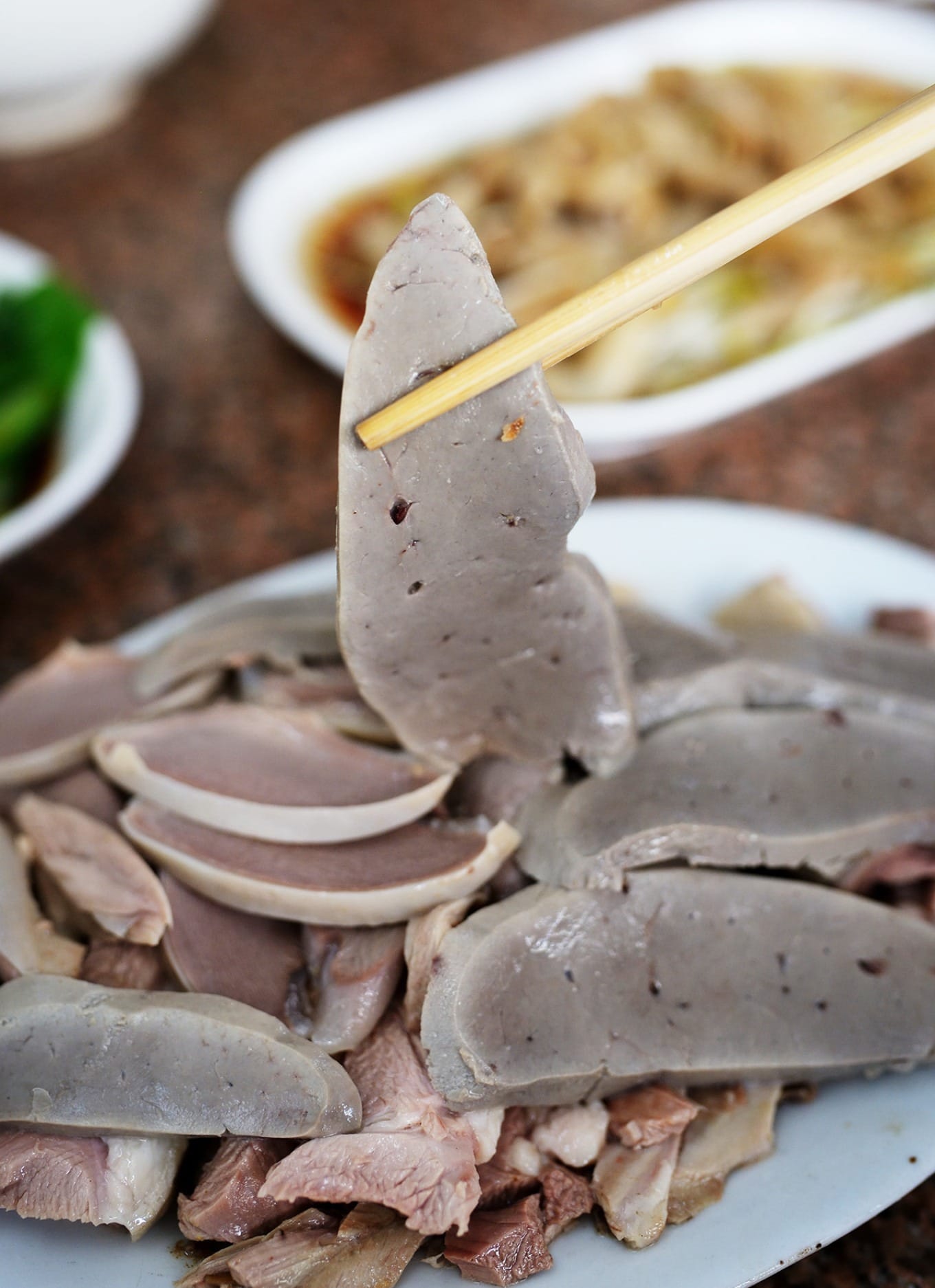
A bowl of soup alone rarely suffices, so you should order the 白切鹅肉拼鹅杂 (white-cut goose meat and offal platter). The goose arrives in thick slices showcasing the bird’s natural sweetness and fine, tender fibers without any dryness. Dip pieces in soy sauce to amplify the meat’s inherent sweetness. The platter includes 鹅肾 (goose kidney), offering a crisp, resilient bite, alongside 鹅粉肝 (goose liver)—silky and custard-like, melting instantly with an intoxicating richness that lingers pleasantly.
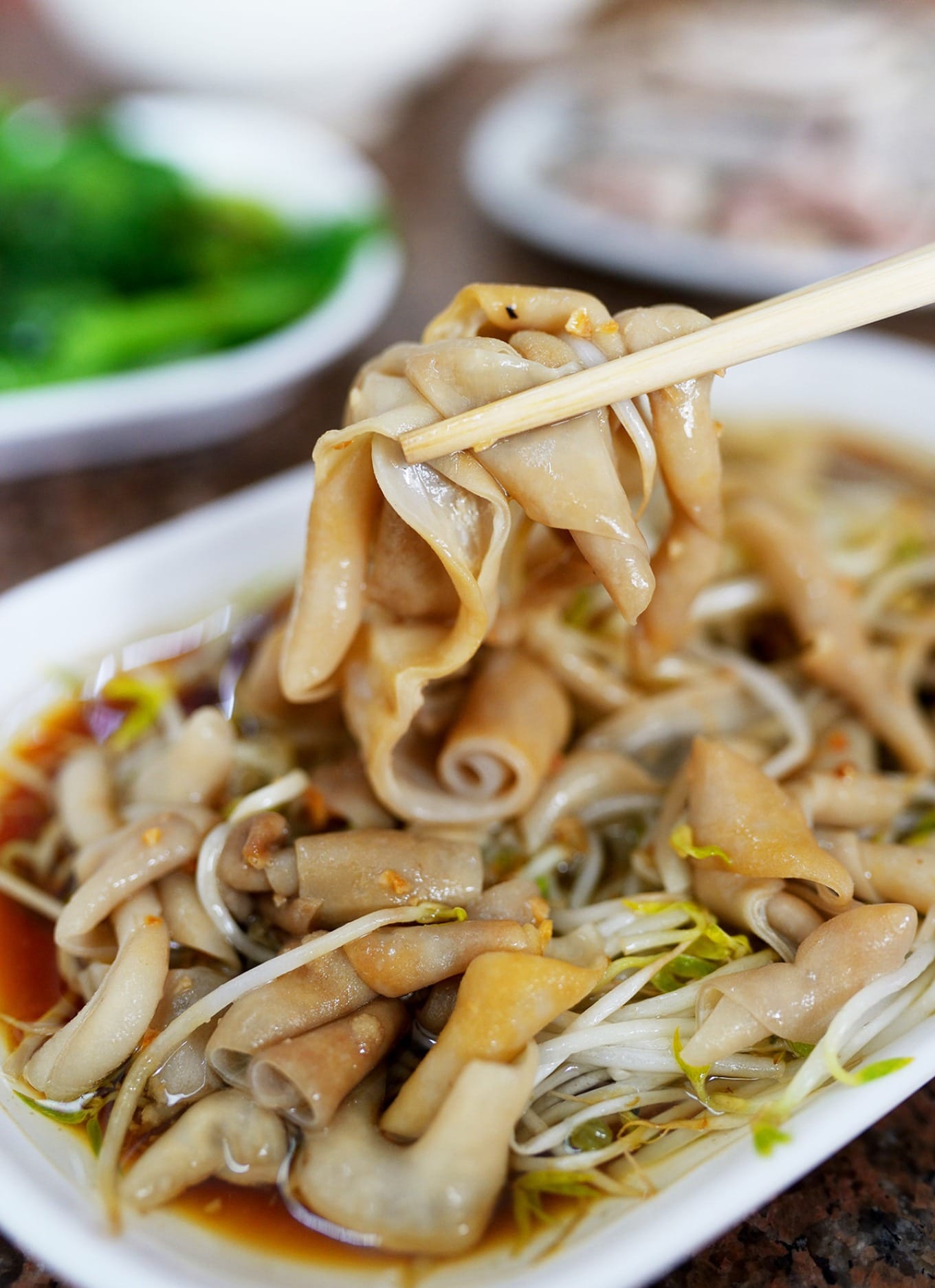
For textural contrast, consider the 白灼鹅肠 (blanched goose intestines). The kitchen treats this ingredient with restraint: a quick scald preserves the signature crunch, dressed with just soy sauce and garlic oil over a bed of fresh mung bean sprouts. The ingredient’s freshness requires minimal intervention, allowing the pure, clean flavor to shine through.
- RestaurantChu Sheng Goose Kuey Teow Soup (楚生鹅粿条汤) – Dongshan Branch
- Address榕城区新河路东祥园1幢10号 (No.
- Recommended dishes桐坑粿条汤 (Tongkeng kuey teow soup), 白切鹅肉拼鹅杂 (white-cut goose meat and offal platter), 白灼鹅肠 (blanched goose intestines)
- Average spend60 yuan
A Xi Noodle Shop
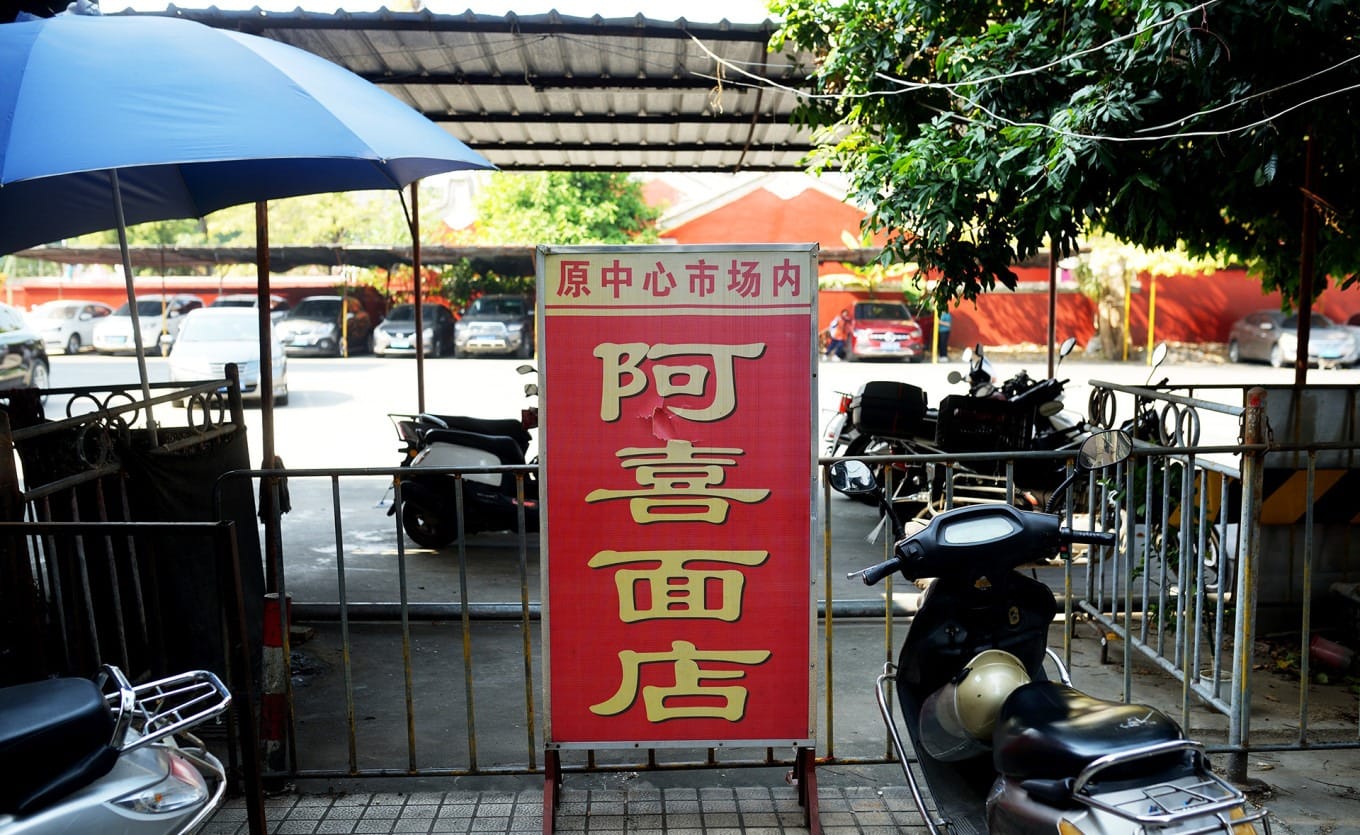
While rice noodles dominate daily Teochew cuisine, one particular dry noodle dish has sustained generations of Jieyang locals. Hidden within Jinxian Walking Street, A Xi Noodle Shop (阿喜面店) has quietly operated for over four decades—distinct from Shantou’s famous Ai Xi Dry Noodles, yet equally embedded in the city’s culinary memory. This is the kind of place that rewards travelers willing to venture beyond the obvious.
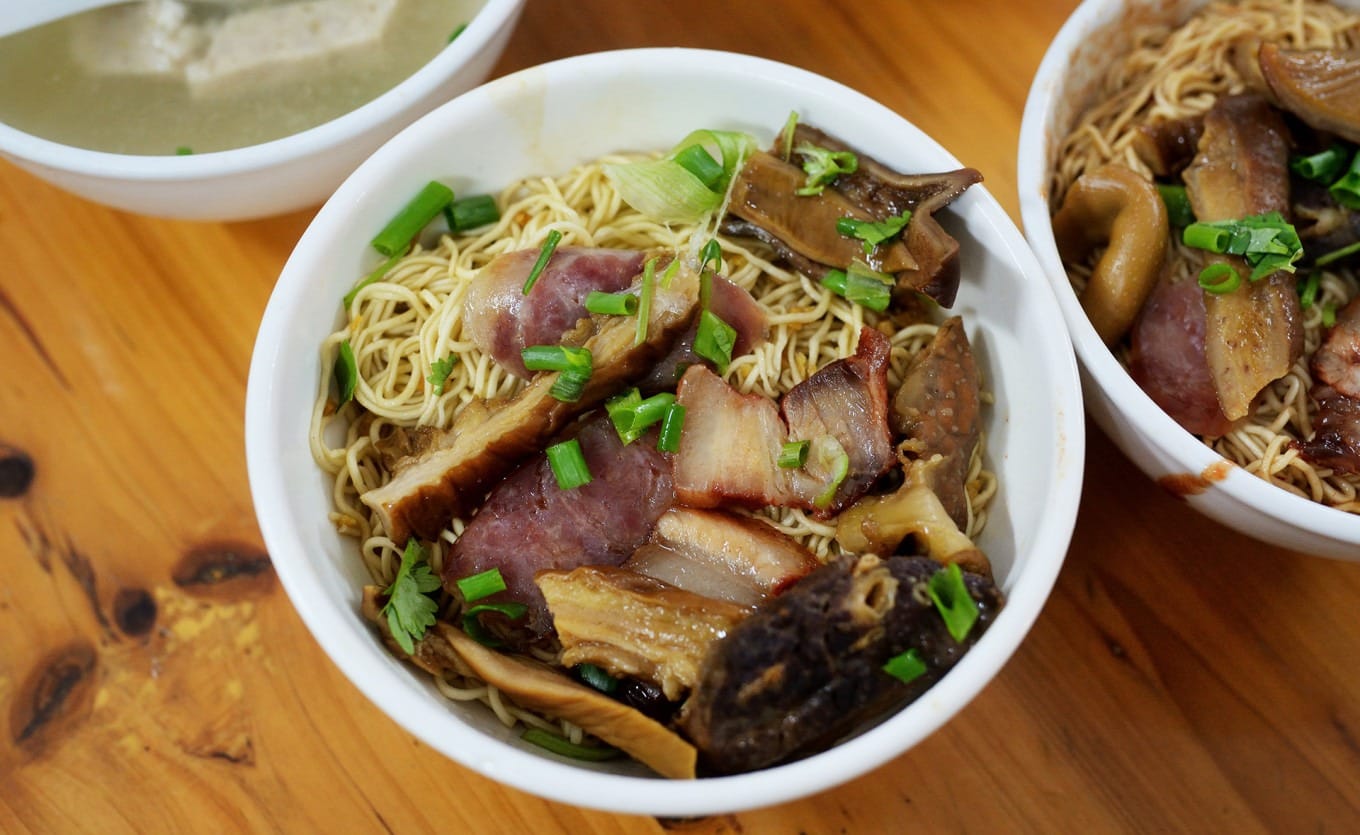
The dish resembles Wuhan’s hot dry noodles in appearance, yet arrives even drier and more concentrated. The kitchen relies on house-made alkaline wheat noodles crafted fresh on-site. Watch as the cook grabs a bundle of strands, plunges them into boiling water until just cooked, then drains them thoroughly before tossing with char siu (叉烧), Chinese sausage (腊肠), and braised pork tripe (卤水猪肚). You’ll choose between two finishing sauces: a sweet-and-sour red char siu glaze or a savory braised gravy.

Though the technique seems straightforward, the seasoning remains a closely guarded secret. Before eating, vigorously toss the noodles until each strand is coated. The texture delivers a distinctive chew—slippery yet resilient, never mushy. Opt for the sweet-and-sour red sauce and you’ll encounter a rich, concentrated char siu flavor that balances intensity without overwhelming; the vivid color alone leaves a lasting impression.
Alternatively, select the savory braised sauce (卤水汁) for a fragrant, salt-forward profile. The accompanying braised toppings deserve attention on their own: crisp-tender tripe, juicy char siu with a soft bite, and sausage that releases deeper flavors the longer you chew. Combined with the noodles, this combination satisfies even the most demanding appetite.
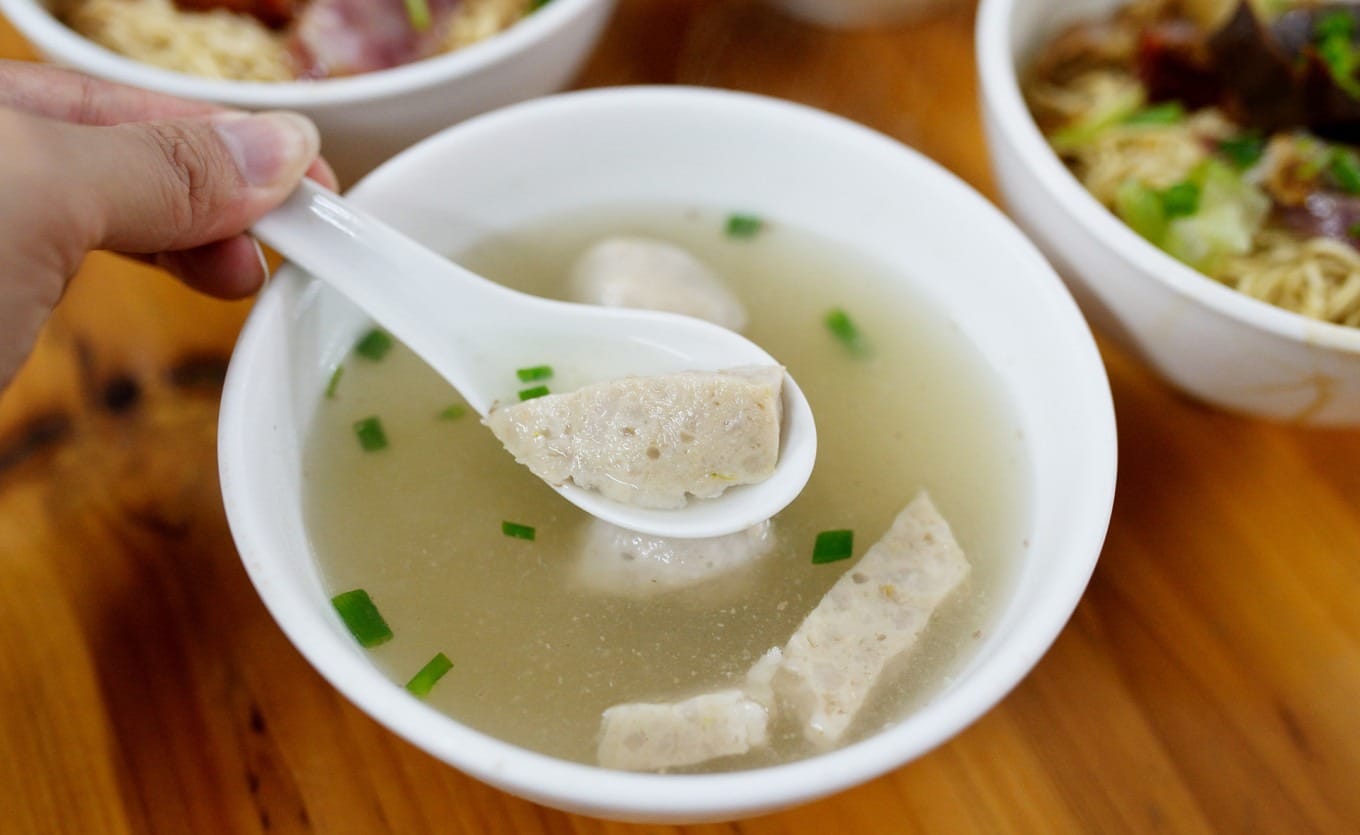
Local custom dictates pairing your dry noodles with a bowl of pork ball soup (肉丸汤). Though it appears deceptively clear, the broth simmers for hours with pork bones, delivering a subtle sweetness that washes across the palate—an ideal counterpoint to the dense, saucy noodles.
- RestaurantA Xi Noodle Shop (阿喜面店)
- Address榕城区韩祠路五十二号 / No.
- Recommended dishes拌干面 (Dry Mixed Noodles), 酸甜面 (Sweet-and-Sour Noodles), 肉丸汤 (Pork Ball Soup)
- Average spend20 yuan
Feiyan Sanxiang Rice Noodle Rolls
Ask any local about rice noodle rolls and you will likely spark a passionate culinary debate. While Chaoshan-style cheung fun traces its origins to Guangzhou, decades of regional refinement have created something entirely distinct. In Jieyang, you will encounter a version that stands apart from both its Cantonese ancestor and its cousins in Shantou and Chaozhou, defined by hearty fillings and a signature braised gravy.
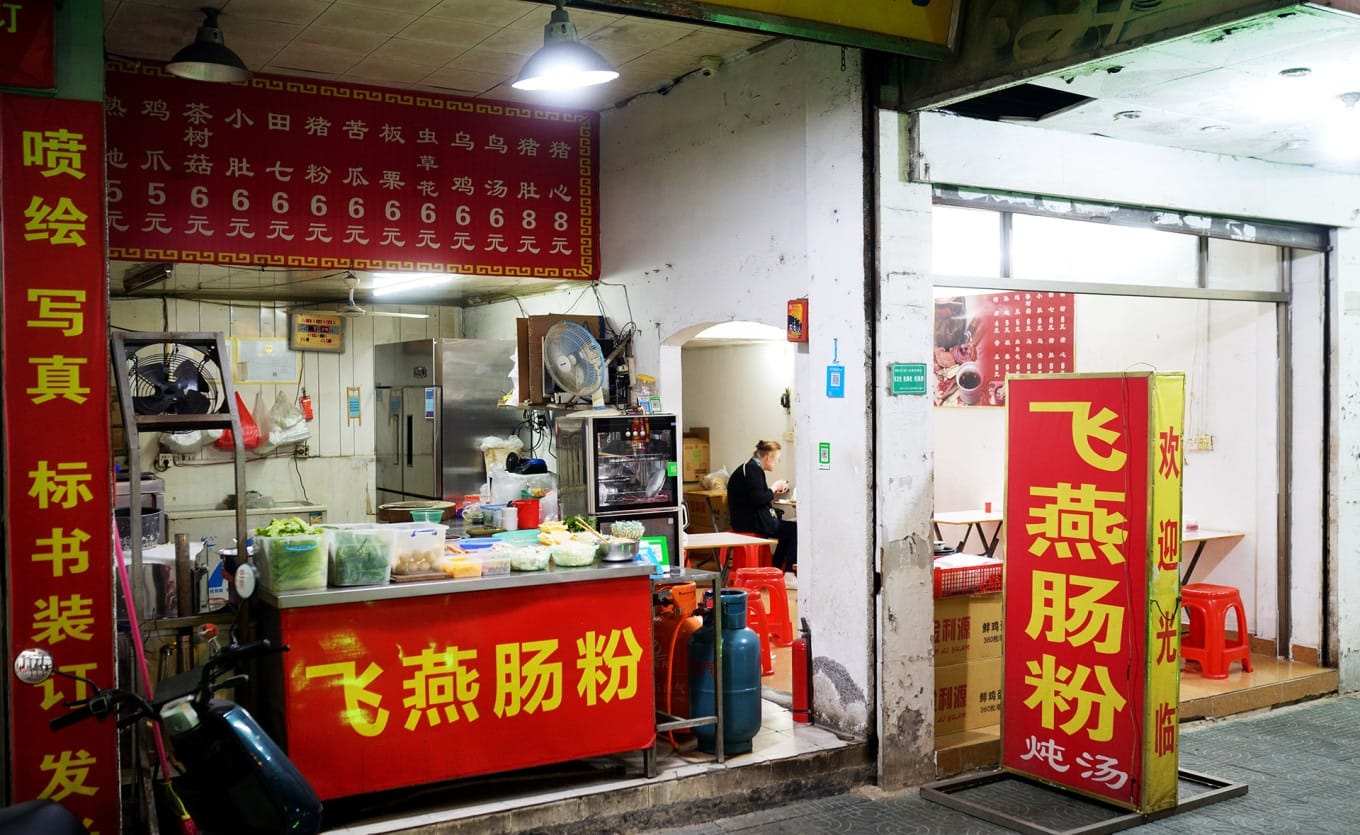
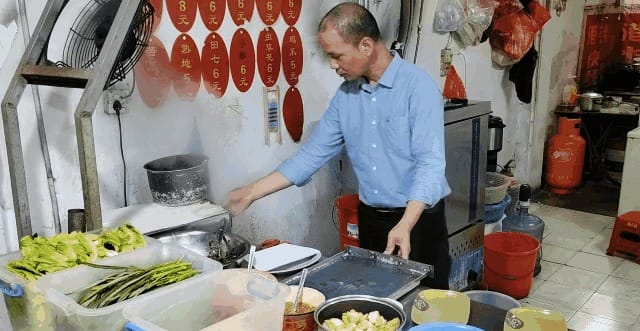
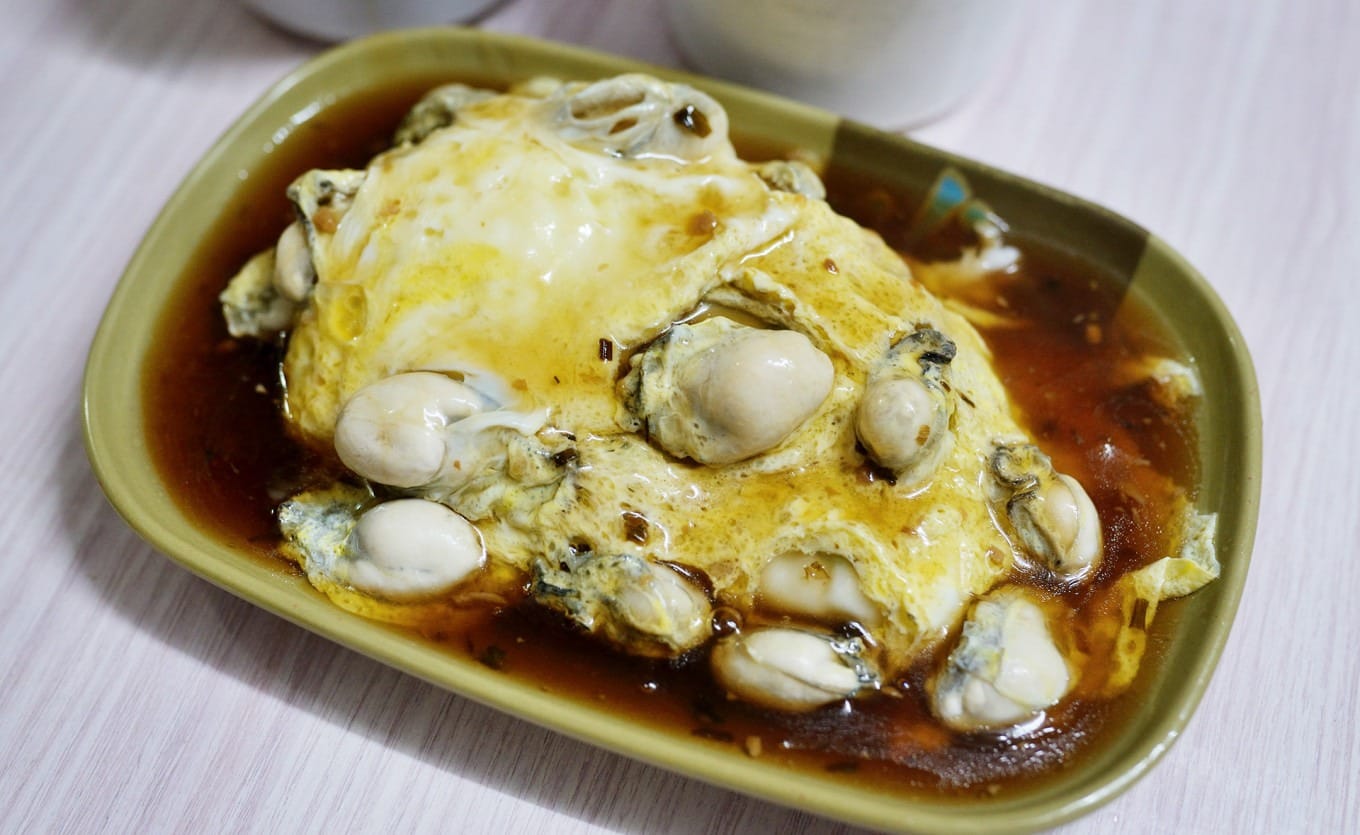
For an authentic taste, head to Feiyan Sanxiang Rice Noodle Rolls (飞燕三巷肠粉), tucked away in Rongcheng District. The storefront is easy to miss—just a simple local spot that locals frequent for breakfast or late-night comfort food. Inside, you will find no printed menu. Instead, you simply point to the fresh ingredients you want, creating your own combination from options like pork, egg, taro, leafy greens, enoki mushrooms, and fresh oysters. These get piled together into a generous medley that barely fits on the plate.
The sauce is where Jieyang asserts its identity. While Chaozhou vendors favor peanut or sesame paste and Shantou prefers straight soy sauce, Jieyang specializes in a fragrant braised gravy (卤汁) infused with garlic oil. This savory, slightly thickened liquid soaks into every layer of the rice sheet, creating a flavor profile you will not find elsewhere in the region.
The cooking method makes all the difference. Using the traditional drawer-steaming technique, chefs stretch the rice batter paper-thin. The result is a silky, translucent skin that maintains a satisfying chew. When draped over the mixed fillings and drizzled with the garlic-infused braised sauce, each bite delivers a complex interplay of textures.
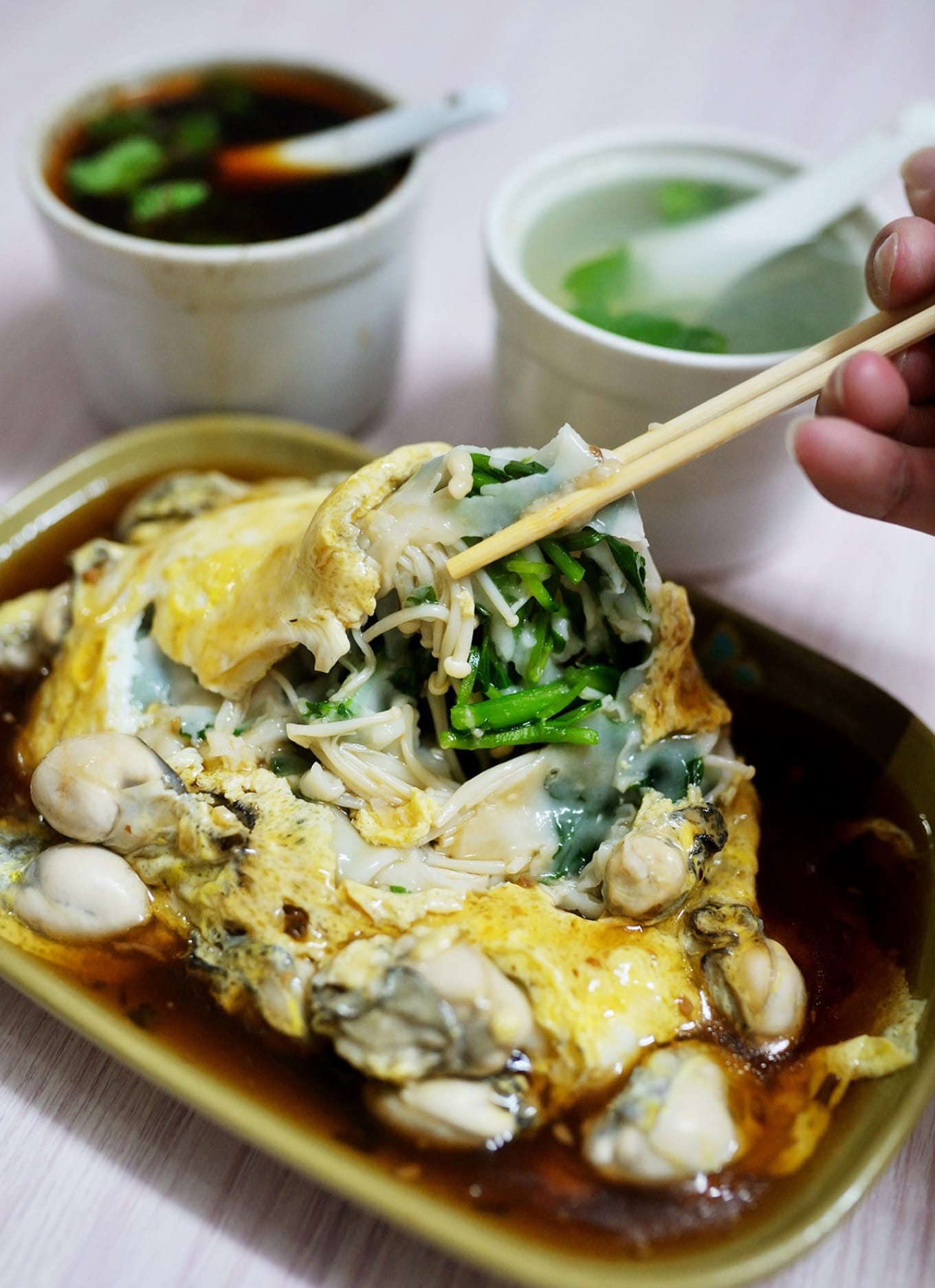
Do as the locals do and pair your rolls with a side of slow-cooked soup. Whether you opt for the pork tripe soup (猪肚汤) or the cooked rehmannia soup (熟地汤), these restorative broths cost less than ten yuan yet come loaded with substantial ingredients. It is the perfect balance to the savory richness of the main dish, whether you are starting your morning or capping off a late night.

- RestaurantFeiyan Sanxiang Rice Noodle Rolls (飞燕三巷肠粉)
- AddressRongcheng District, Feiyan First Lane, Building 4, No.
- Recommended dishesRice noodle rolls (肠粉), pork tripe soup (猪肚汤), cooked rehmannia soup (熟地汤)
- Average spendAround 15 yuan
Jian Ji Sugar Scallion: Preserving a Disappearing Chaoshan Craft
Near the City God Temple, Xuegong Cultural Square hides one of Chaoshan’s most labor-intensive culinary traditions. Seek out Jian Ji Sugar Scallion (建记糖葱), a humble stall safeguarding tangcong bing (糖葱薄饼)—a heritage snack now listed as endangered across the region. Unlike mass-produced sweets, this confection requires physical mastery that younger generations increasingly refuse to learn, making every bite a piece of edible history.
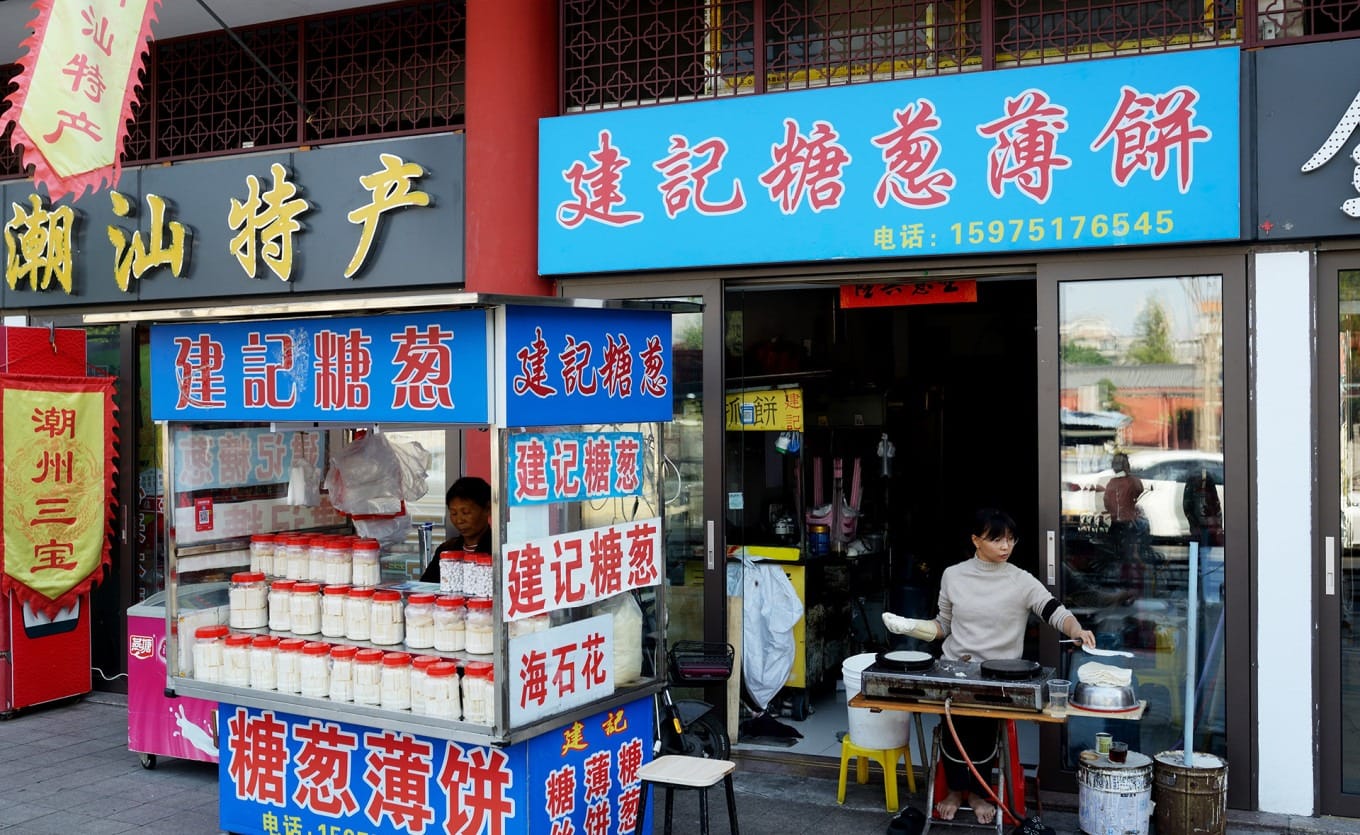
Do not mistake this for simple candy. You can watch the physics of patience unfold as craftspeople heat white sugar and water into syrup, then pull and stretch the molten mass repeatedly until it shifts from deep amber to snow white. The resulting confection resembles a scallion stalk: a hollow center surrounded by perfectly uniform holes—sixteen tiny perforations surrounding each larger cavity—creating a crisp, airy structure that shatters delicately.
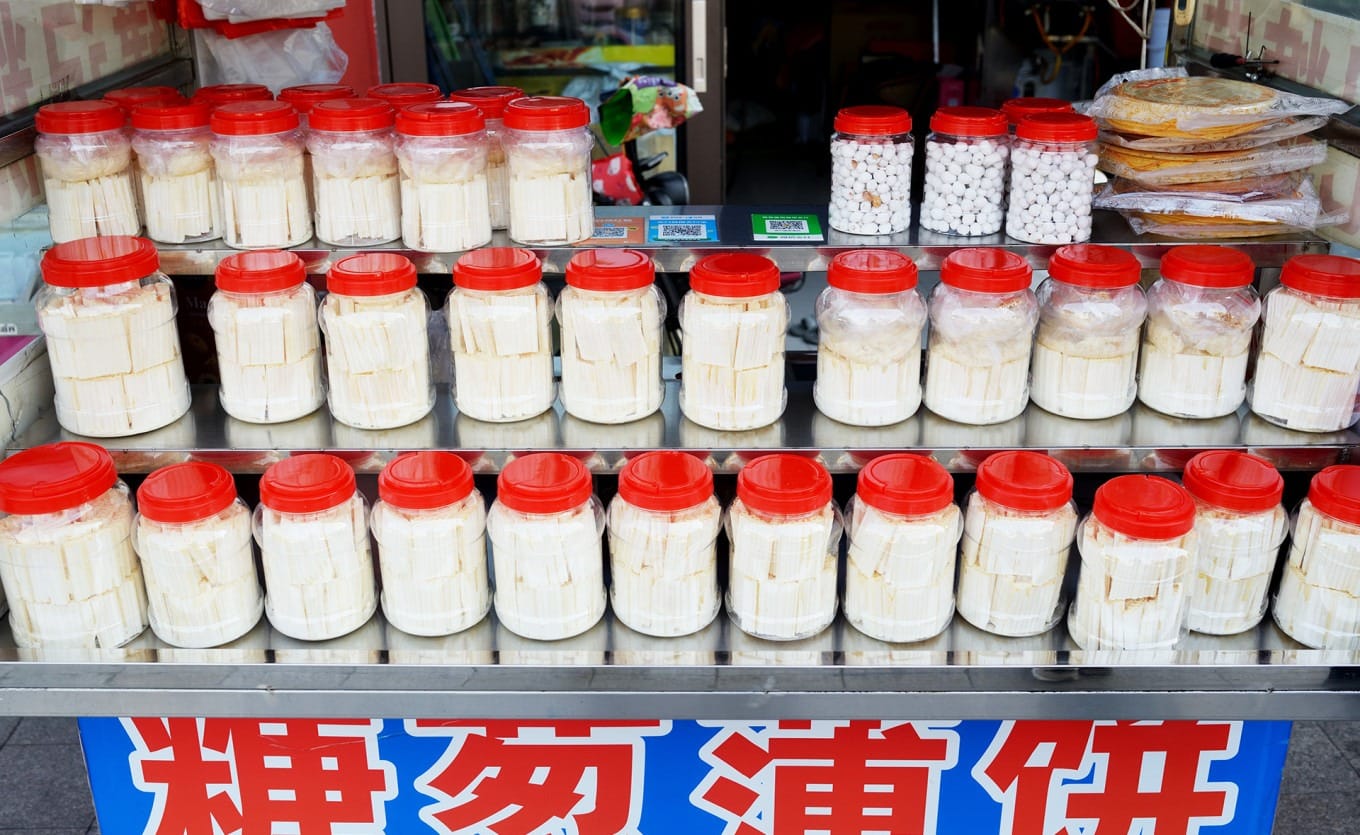
At this stall, the sugar components arrive pre-crafted, but you should watch the owner prepare the pancake skins fresh. She kneads flour and water into paper-thin sheets, then layers several sugar scallion pieces onto the translucent wrapper, dusts them with sesame seeds and fresh cilantro, and rolls everything into a neat, square package.
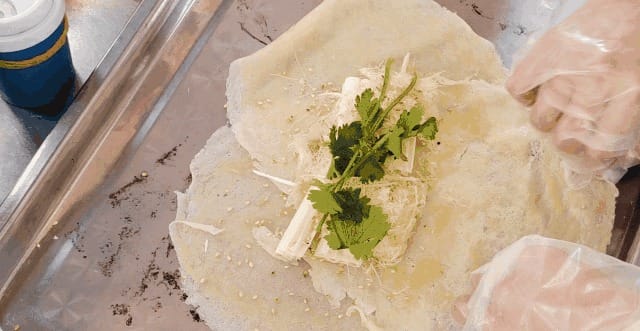
Bite in for an immediate crunch that dissolves into pure sweetness on your tongue. The contrast between the crispy candy and the soft pancake creates a textural harmony that dominated local childhoods for generations. Once found on every corner in Chaoshan, this treat now survives through only a handful of practitioners. You should prioritize tasting this ephemeral specialty before the craft vanishes completely.
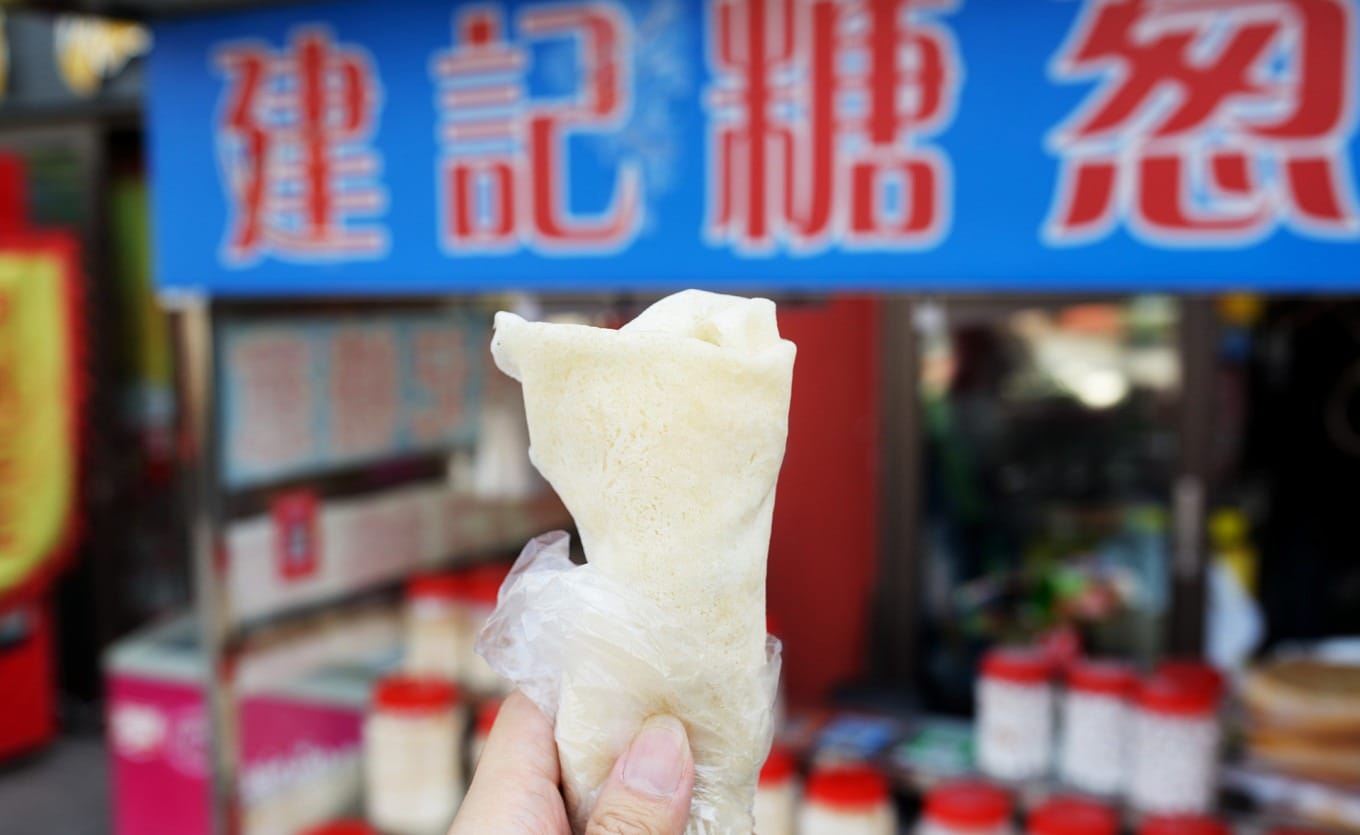
- RestaurantJian Ji Sugar Scallion (建记糖葱)
- Address榕城区观音仔街学宫文化广场东南侧 (Southeast side of Xuegong Cultural Square, Guanyinzi Street, Rongcheng District)
- Recommended dishes糖葱薄饼 (Sugar Scallion Pancake)
- Average spend5 RMB
Time-Honored Fresh Squeezed Juice
Just steps from Jianji Sugar Scallion, you will discover another local institution—a veteran juice bar that has perfected the art of fresh fruit extraction. In Chaoshan, these freshly pressed beverages are known as 青果汁 (qing guo zhi), or “green fruit juice.” Thanks to a relentless stream of customers, ingredients rotate rapidly, ensuring every piece of fruit reaches your cup at peak freshness.
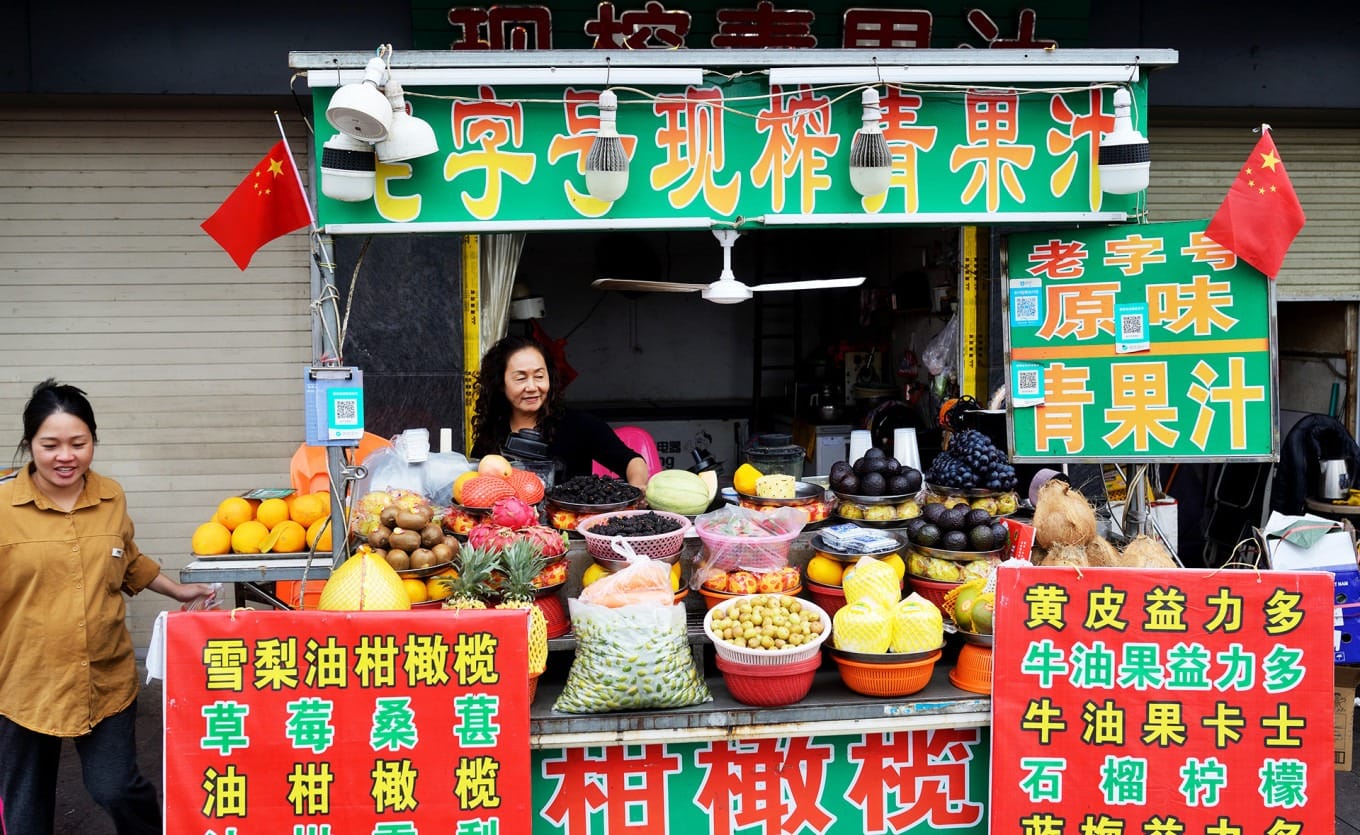
The selection spans virtually every seasonal fruit available. You can order single varieties or create custom blends, adding probiotic drinks like Yakult (益力多) or creamy yogurt to balance the tartness.
For first-time visitors, prioritize the signature 油柑橄榄 (Phyllanthus emblica with olive). Both fruits carry distinctly Chaoshan character—the emblic introduces a mouth-puckering tartness, while the olive contributes a subtle bitterness. The pairing may sound unconventional, yet the initial astringency quickly transforms through an almost chemical reaction into a lingering, throat-coating sweetness that floods the entire mouth and leaves the throat feeling cool and moist.
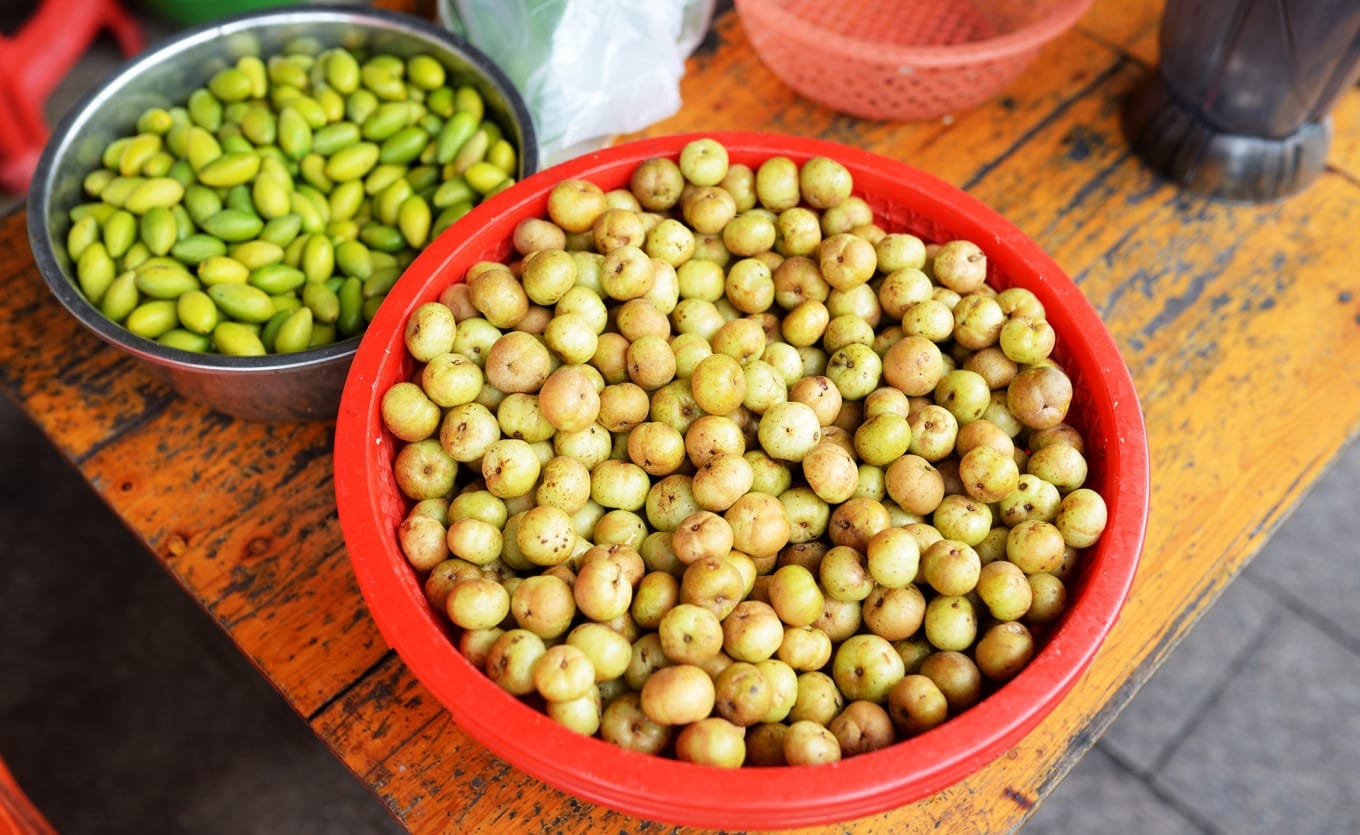
Equally compelling is the combination of 草莓桑葚 (strawberry with mulberry). This blend delivers pure, unadulterated pulp and a vibrant concentration of vitamin C, with no dilution to mask the natural flavors.

Watch for a charming local custom: if the blender yields more than your cup can hold, the staff typically pours you the remainder at no extra charge—a generous gesture that embodies the region’s hospitality.
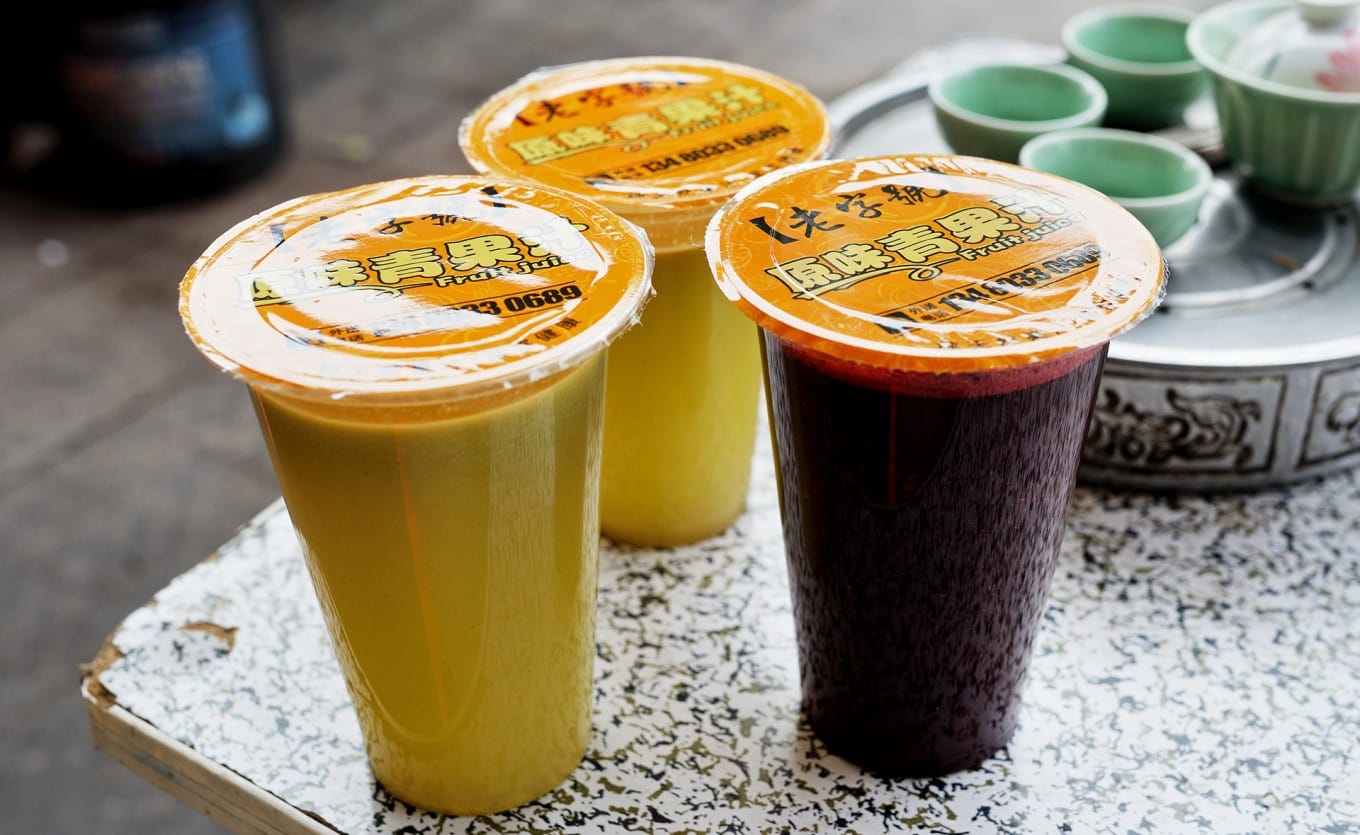
- Restaurant老字号现榨鲜果汁 (Time-Honored Fresh Squeezed Juice)
- Address榕城区中山中心新楼区观音仔街148号铺 (Shop 148, Guanyinzi Street, Xinlou District, Zhongshan Center, Rongcheng District)
- Recommended dishes油柑橄榄 (Phyllanthus emblica with Olive), 草莓桑葚 (Strawberry with Mulberry)
- Average spend15 yuan
Liu Helong Sugar-Coated Salted Egg Yolks
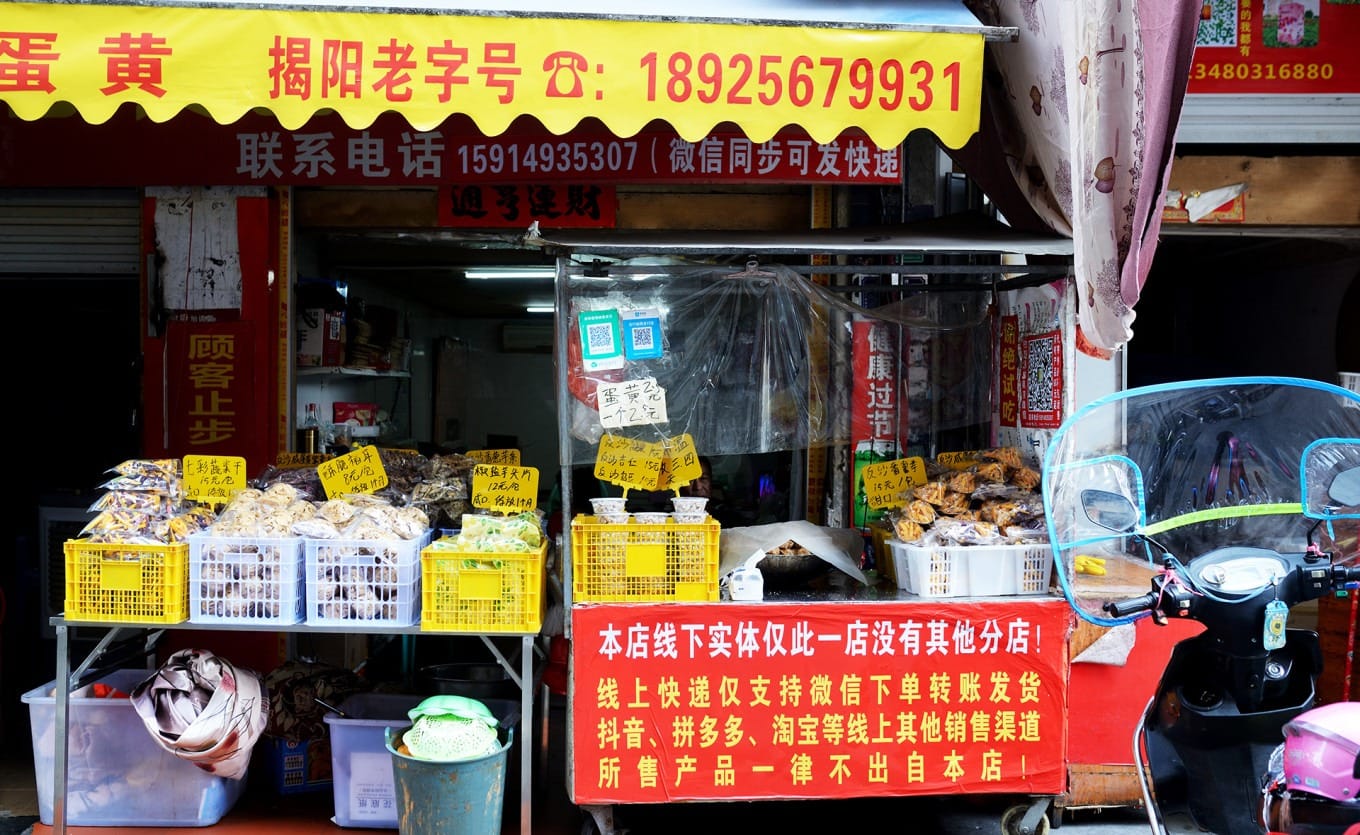
Just steps from Xuegong Square in Jieyang’s historic district, a modest corner stall has built a decades-long reputation on a singular sweet-and-savory delicacy. At Liu Helong Houpo Alley Entrance Sugar-Coated Salted Egg Yolk (刘和隆后坡巷口反沙咸蛋黄), you’ll encounter fan sha (反沙)—a crystalline sugar-coating technique similar to the Northern ‘frosting’ method that transforms humble ingredients into addictive street snacks.
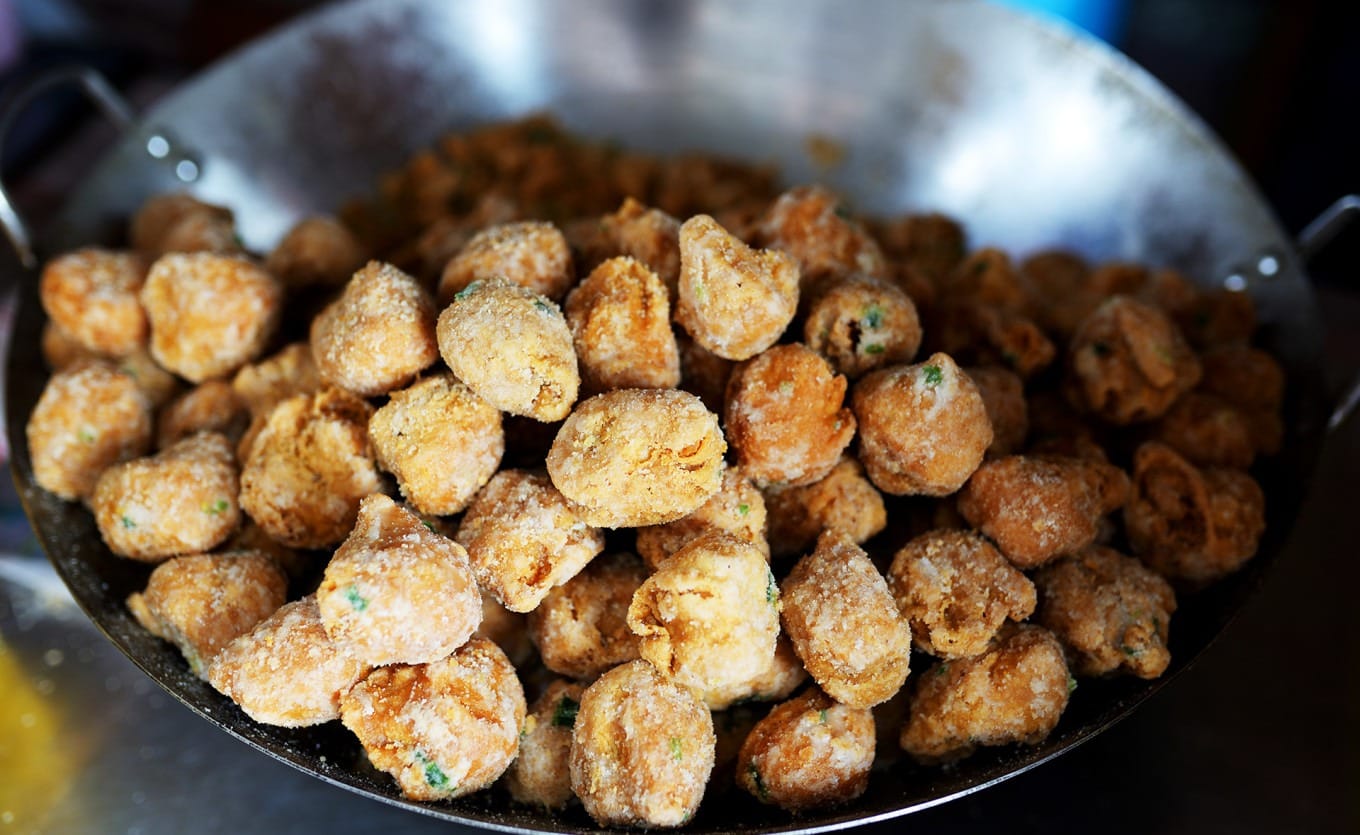
The signature 反沙咸蛋黄 (sugar-coated salted egg yolk) begins with duck egg yolks that are battered and deep-fried until golden. Vendors melt granulated sugar with fresh scallions in a small amount of water, boiling until the syrup bubbles vigorously. The fried yolks are tossed into the foaming pot; as the heat drops and the cook stirs continuously, the syrup reverts to fine sugar crystals that frost each yolk in a thin, crackling shell.
Time your purchase right, and you can taste these treasures warm from the wok. The first bite shatters the brittle sugar crust, which dissolves instantly into a sweet, aromatic syrup. A moment later, you encounter the crispy fried batter, followed by the rich, glutinous heart of the salted yolk—warm and deeply savory. The interplay of sugary exterior and saline center creates a flavor collision that explains why locals queue here daily.
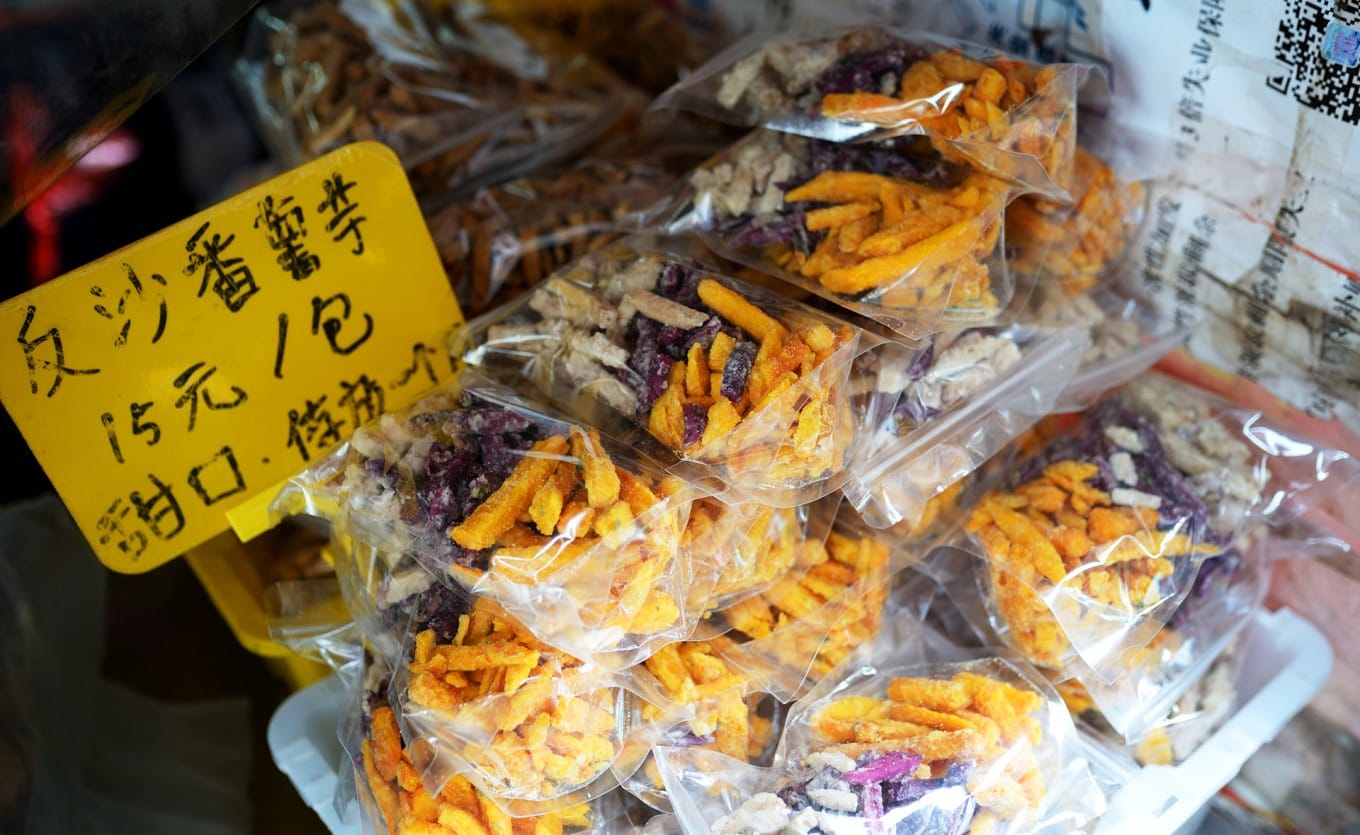
Beyond the egg yolks, you can also pick up 反沙番薯 (sugar-coated sweet potato) and 反沙芋头 (sugar-coated taro)—starchy root vegetables given the same crystalline treatment. These keep well, making them ideal snacks to carry as you explore the surrounding alleyways.
- RestaurantLiu Helong Houpo Alley Entrance Sugar-Coated Salted Egg Yolk (刘和隆后坡巷口反沙咸蛋黄)
- Address榕城区东环城路后坡巷口 (Houpo Alley Entrance, Donghuancheng Road, Rongcheng District, Jieyang)
- Recommended dishes反沙咸蛋黄 (sugar-coated salted egg yolk), 反沙番薯 (sugar-coated sweet potato), 反沙芋头 (sugar-coated taro)
- Average spend5 yuan
Han Ci Salty-Savory Pancakes
Steps from the Confucian Temple (学宫) in Jieyang’s historic quarter, a modest stall on Han Ci Road (韩祠路) draws devoted locals who leave clutching paper bags of golden, freshly fried dough. Known simply as Han Ci Salty-Savory Pancakes (韩祠咸香饼), this family-run workshop operates without a signboard, relying entirely on reputation and the irresistible aroma of hot oil. You will notice patrons frequently purchasing them by the half-dozen—evidence of their addictive quality.
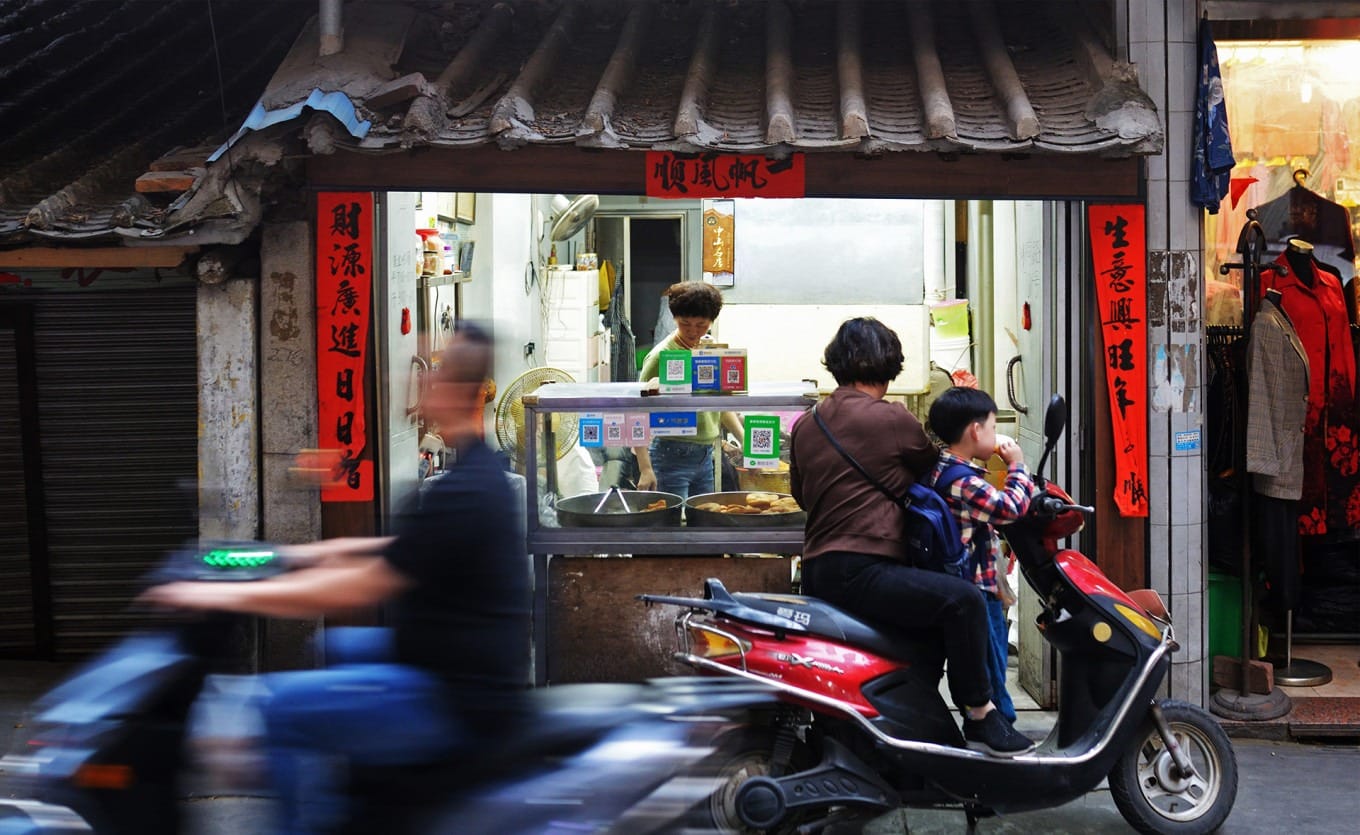
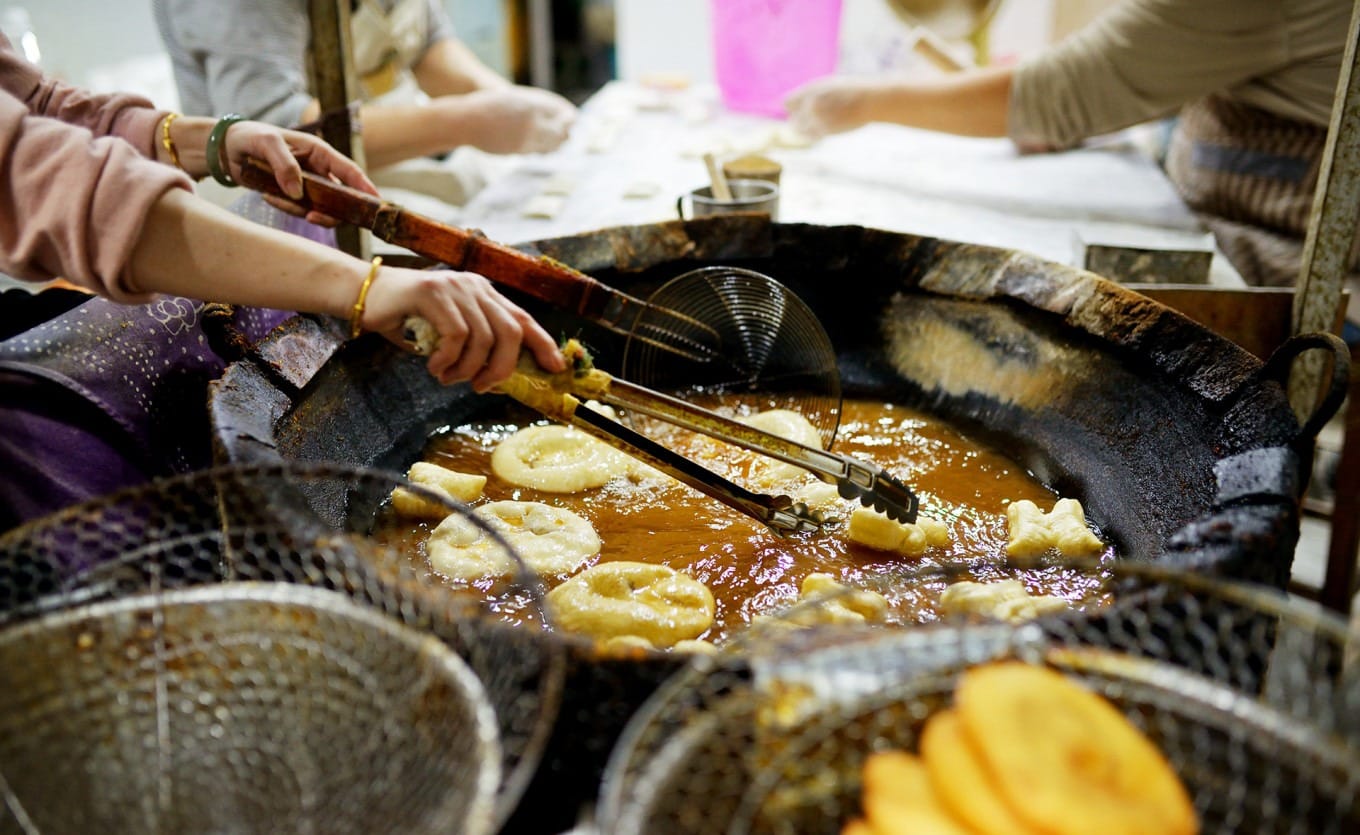
The open storefront functions as a live theater of dough craftsmanship. Through the wide kitchen window, you can observe the entire preparation of 咸香饼 (Salty-Savory Pancakes): fermented dough is rolled into rectangular sheets, generously dusted with five-spice powder (五香粉), then rolled into logs and sliced into individual portions. Each piece is rolled paper-thin before being slipped into bubbling oil, where it puffs dramatically and turns golden within seconds.
While Guangzhou offers a comparable snack called 咸煎饼 (Salty Fried Pancakes), the two diverge significantly in seasoning philosophy. The Cantonese version typically relies on fermented red bean curd (南乳) for its characteristic tang, whereas Jieyang’s iteration derives its aromatic backbone entirely from five-spice powder. This distinction gives the local version a warmer, more complex spice-forward profile rather than the funky sweetness found elsewhere.
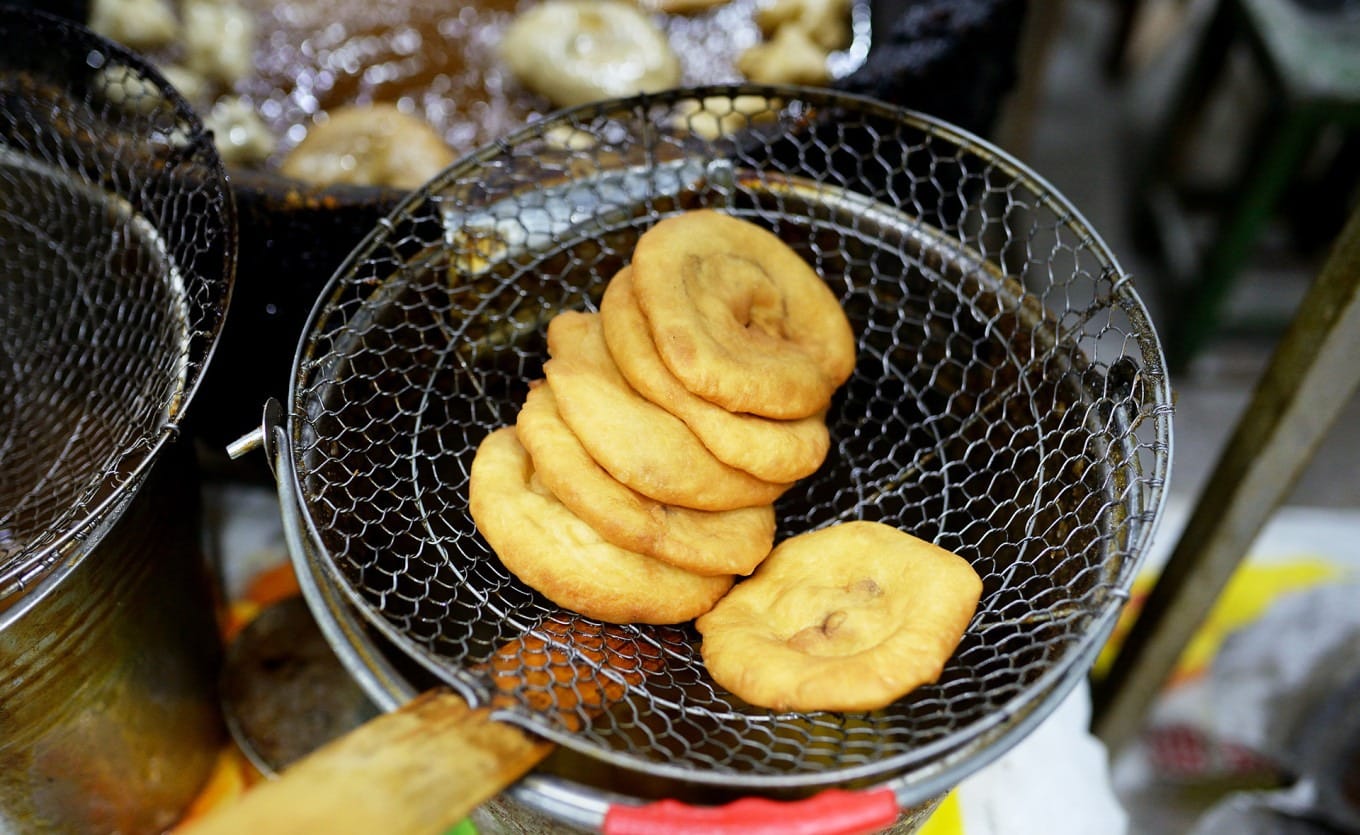
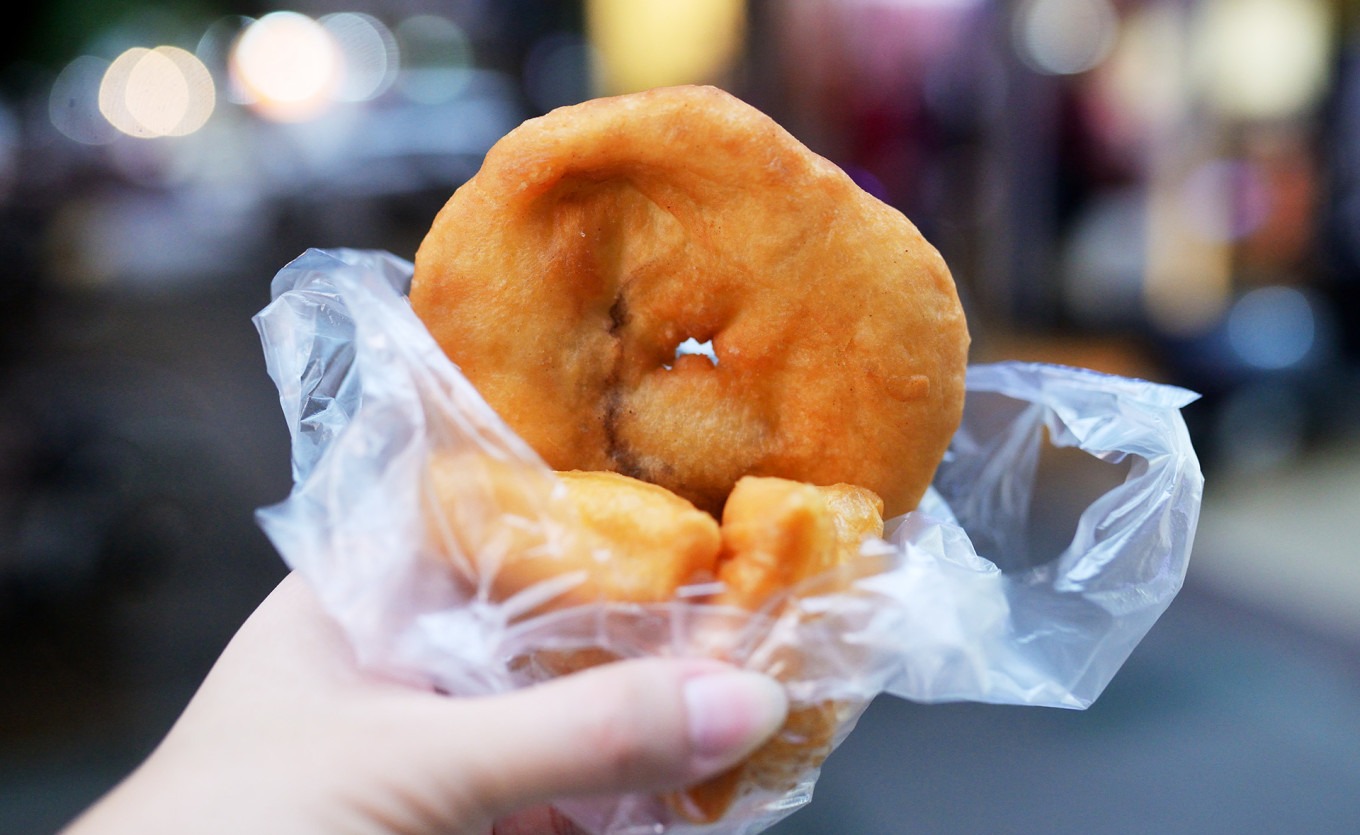
For the optimal experience, consume these pancakes while still hot from the fryer. The first bite delivers a satisfying textural contrast: a shatteringly crisp exterior that yields to an interior as light and porous as sponge cake. The dough carries a subtle natural sweetness that balances beautifully against the savory, slightly peppery kick of the spice blend—a combination that explains why locals rarely stop at just one.
- Restaurant韩祠咸香饼 (Han Ci Salty-Savory Pancakes)
- Address韩祠路70号 (No.
- Recommended dishes咸香饼 (Salty-Savory Pancake)
- Average spend5 yuan
Xianxing Sweet Soup
While Cantonese desserts dominate menus across China, Chaoshan’s sweet soup tradition remains a beloved local secret waiting for your discovery. On Hanci Road in Rongcheng District, several shops preserve this heritage, with Xianxing Sweet Soup (贤兴甜汤) offering you an authentic entry point. Unlike its famous Cantonese cousins, this regional specialty carries profound emotional weight for locals—functioning as a culinary lighthouse for the Chaoshan diaspora and a genuine cultural find for first-time visitors seeking flavors unavailable elsewhere.
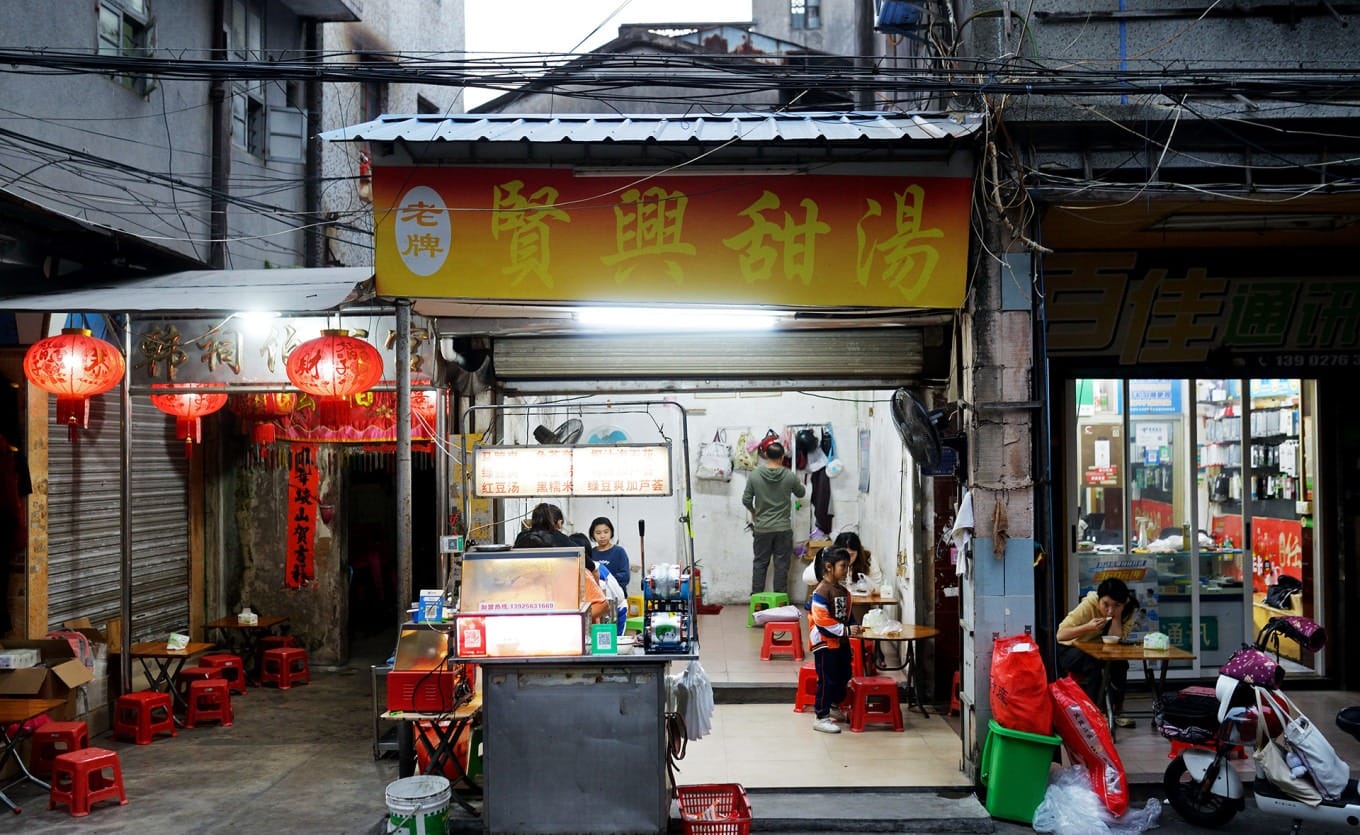
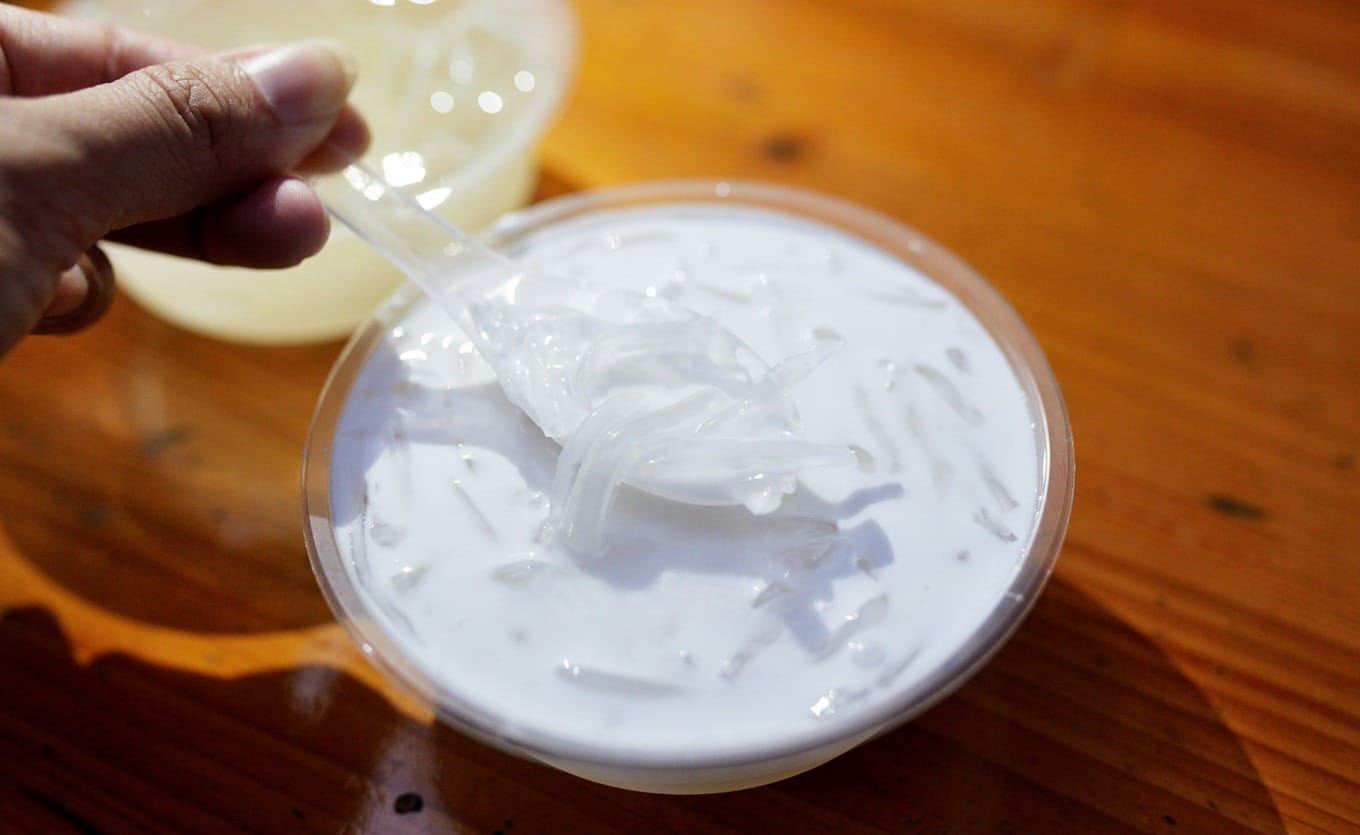
You should start with the signature 椰汁海石花 (Coconut Juice with Sea Stone Flower). This unusual dessert features an algae harvested from seabed rocks, which transforms into a delicate, jelly-like consistency after boiling and cooling. When you receive your bowl, you will find translucent strands shaved into fine, crystal-clear strips swimming in fragrant coconut milk. Each spoonful offers a subtle, clean sweetness with tropical aromatics that melt softly on your palate—a texture experience that explains why this dish commands such loyalty among regulars.
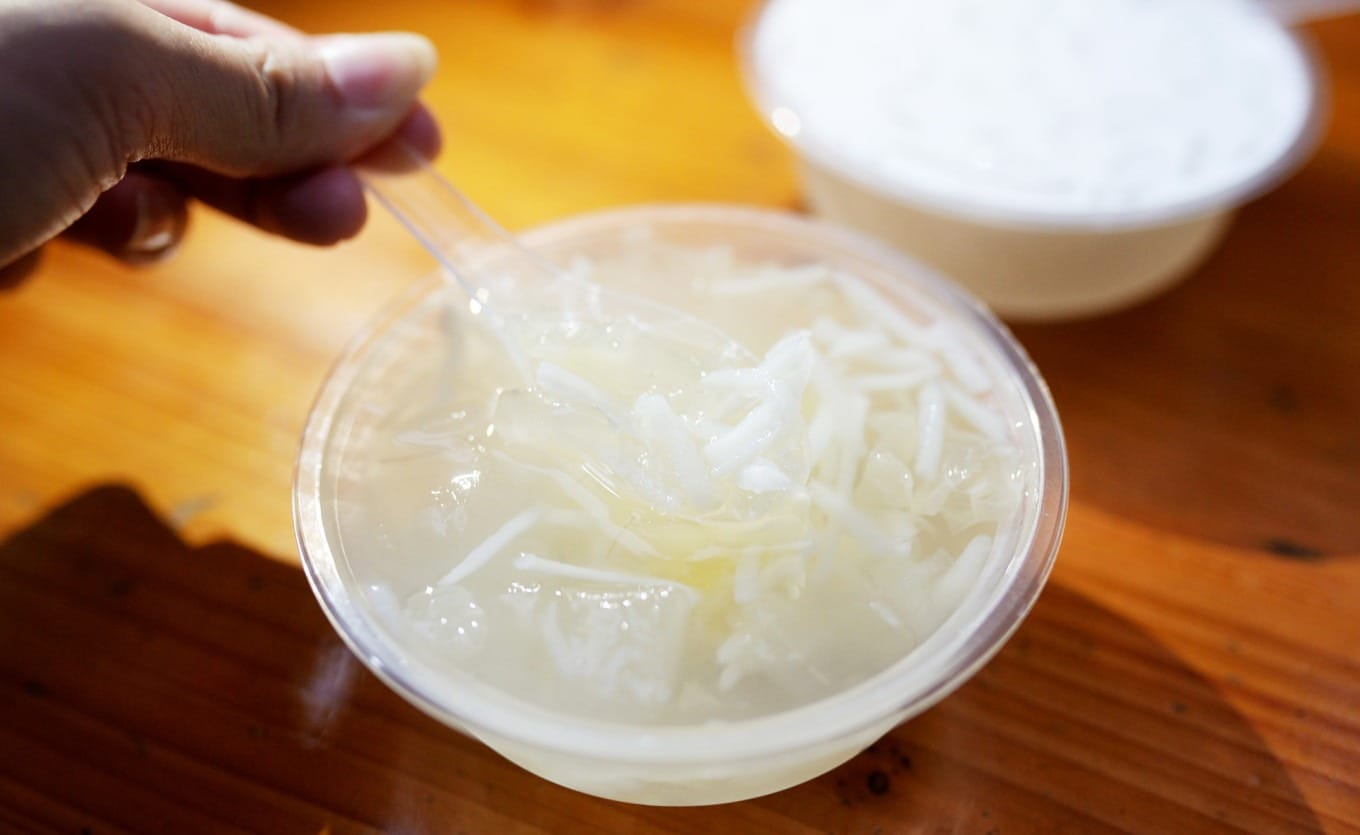
Next, consider the 马蹄爽芦荟 (Water Chestnut with Aloe Vera). Here you will encounter fresh water chestnuts shredded raw, delivering a crisp, audible crunch with every bite, while translucent aloe vera pieces add a silky, lubricating mouthfeel. The combination creates a remarkably refreshing profile—light, hydrating, and the perfect antidote to a day of exploring the neighborhood.
- Restaurant贤兴甜汤 (Xianxing Sweet Soup)
- Address榕城区韩祠路54号 / No.
- Recommended dishes椰汁海石花 (Coconut Juice with Sea Stone Flower), 马蹄爽芦荟 (Water Chestnut with Aloe Vera)
- Average spend5 yuan
Jieyang Attractions: A Walkable Heritage Core
Jieyang’s historic district rewards curious travelers with a dense cluster of temples and monuments that belie the city’s understated reputation. Sandwiched between the South and North Rongjiang Rivers on the southwest edge of downtown, the old town packs significant heritage into a highly walkable area. Most landmarks sit within a few minutes’ stroll of Xuegong Square (学宫广场) near Jinxian Gate (进贤门), allowing you to link sites without complicated logistics.
For a first-time visit, concentrate on the triumvirate of Jieyang Confucian Temple (揭阳学宫), Jieyang City God Temple (揭阳城隍庙), and Ancient Banyan Martial Temple (古榕武庙). These three anchors encapsulate the region’s scholarly, spiritual, and martial traditions, and you can cover them thoroughly in roughly half a day. Slot additional nearby attractions into your itinerary only if time permits—this core circuit delivers the essential historical narrative without requiring a rushed schedule.
Jinxian Gate: Jieyang’s 400-Year-Old Landmark
Standing at the historic heart of Jieyang, Jinxian Gate (进贤门) offers a rare glimpse into the city’s Ming Dynasty past. As the sole survivor of the city’s original five gates, this 400-year-old tower serves as both a navigational anchor for first-time visitors and a living symbol of Chaoshan architectural heritage. Unlike modern reproductions, this structure carries the weight of genuine history—having witnessed the rise and fall of dynasties while remaining the emotional center of local cultural life.
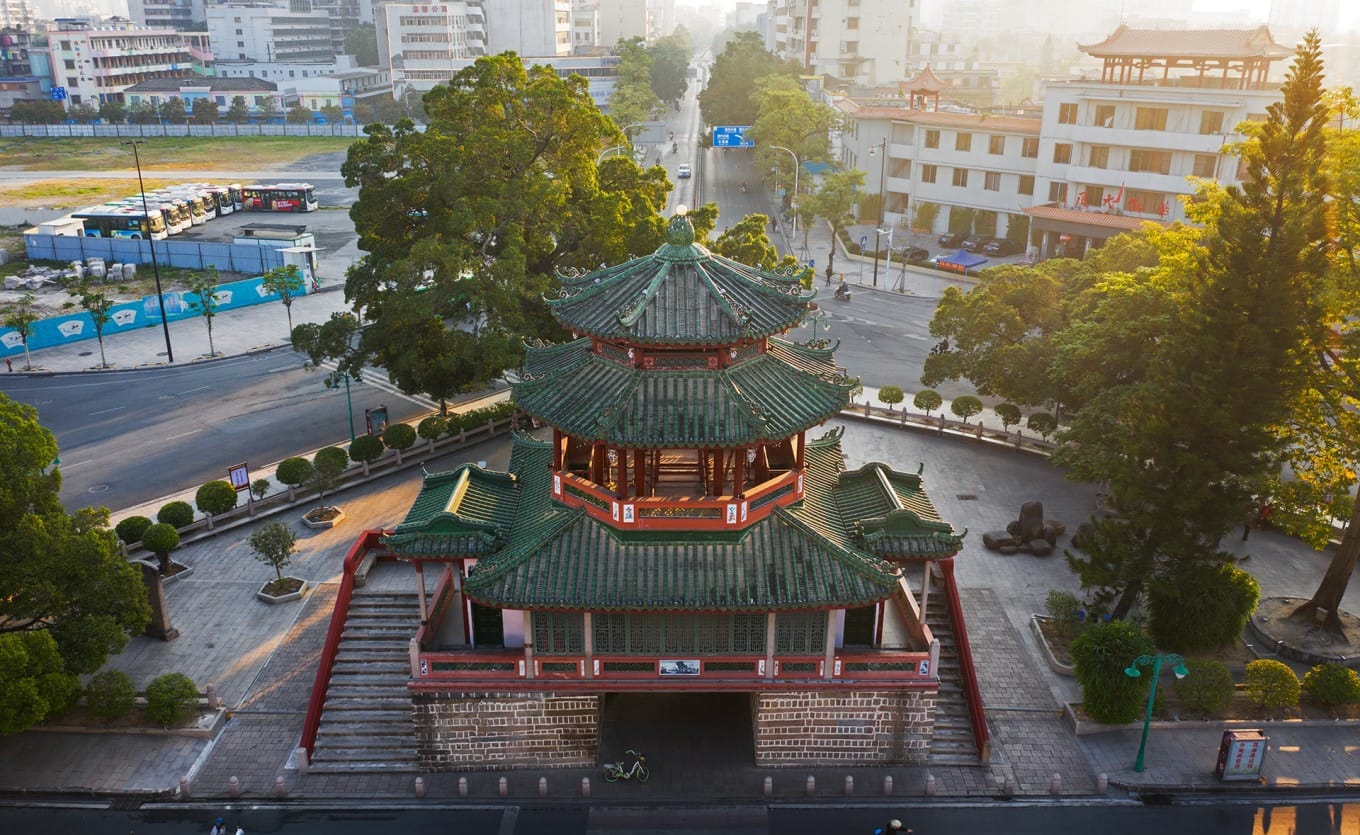
Constructed in 1621 during the Tianqi reign of the Ming Dynasty, the gate takes its name from the path that once led directly to the Confucian temple, embodying the ideal of advancing virtuous scholars. When the city underwent modernization in the 1940s, authorities demolished the eastern, southern, western, and northern gates along with the old city walls, yet spared Jinxian Gate due to its profound cultural significance. Today, you can still observe a charming local tradition: parents bringing children who face important examinations to walk beneath the archway, seeking the blessing of academic success that the gate’s name implies.
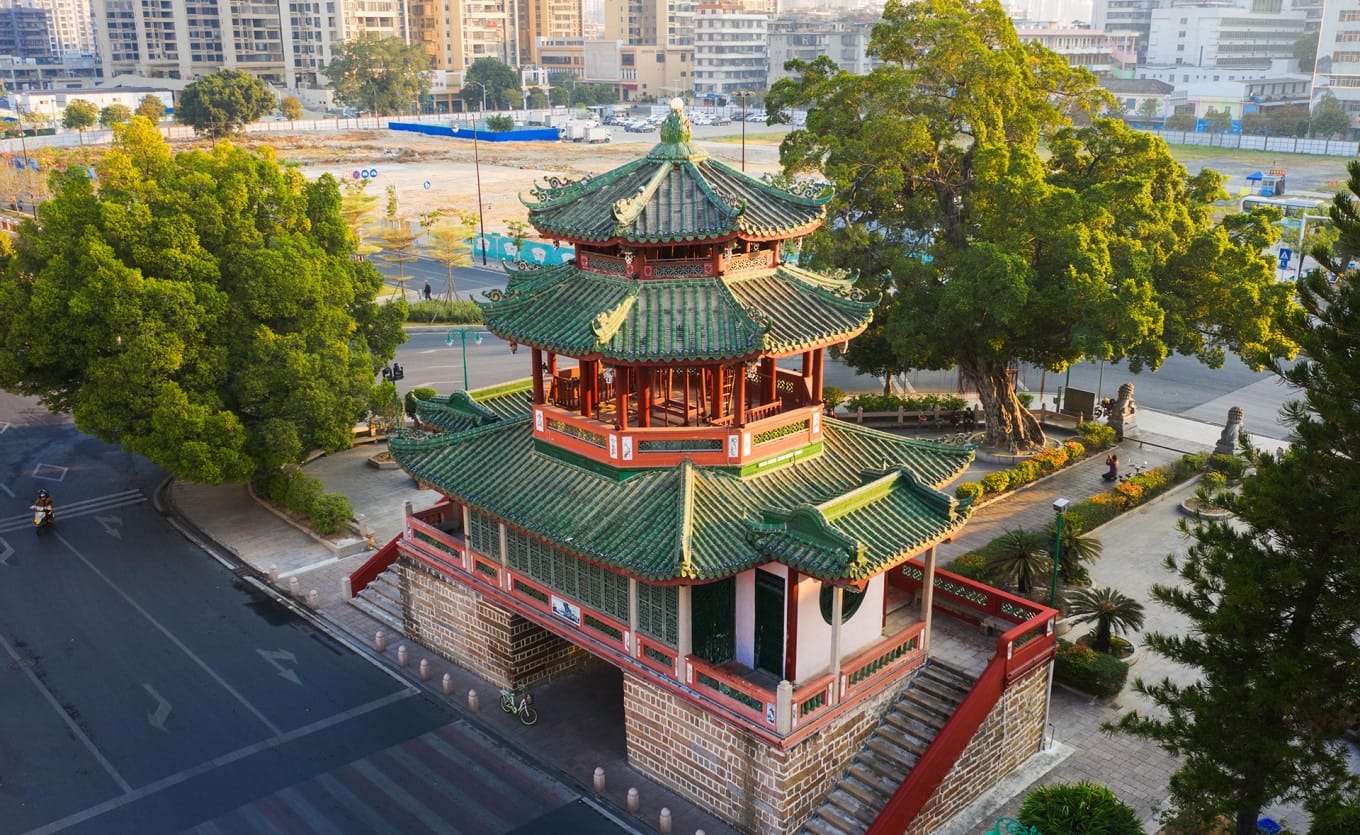
The structure rewards visitors who take time to explore its three distinct levels. Pass through the ground-floor archway to follow the same route that Ming Dynasty officials once traveled when taking up their posts. The middle floor now houses a compact exhibition hall detailing Jieyang’s historical attractions and cultural evolution, providing essential context for your wider exploration of the region. Ascend to the top level to discover the glazed pavilion with its striking octagonal pointed roof—an architectural masterpiece that earned the site its place among the ancient Eight Scenic Spots of Jieyang as ‘Dawn Light at the Watchtower’ (谯楼晓角), best viewed when morning sunlight strikes the east-facing structure.
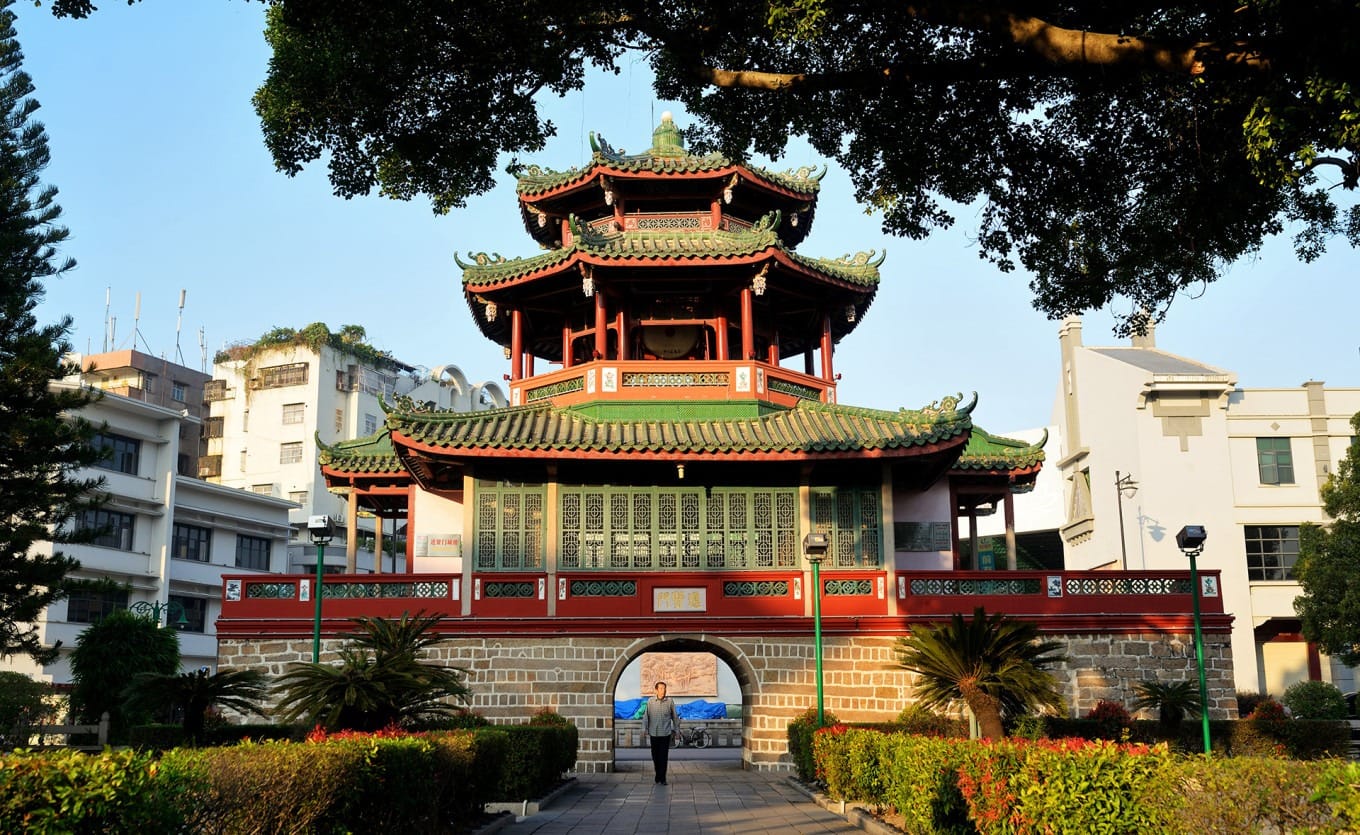
Whether you approach from the bustling commercial streets or the quieter residential lanes, the gate presents an imposing yet elegant profile that photographs beautifully from every angle. The combination of sturdy stone foundations and delicate upper craftsmanship exemplifies the refined aesthetic of Chaoshan civic architecture. After examining the exterior details, step inside to appreciate how the structure has been carefully restored following damage sustained during wartime, preserving its authentic character while ensuring stability for future generations.
You can easily incorporate a visit into your city walking tour, as the gate stands at the strategic intersection of Jinxianmen Avenue and East Ring Road in Rongcheng District (揭阳市榕城区进贤门大道与东环城路交叉口). Admission is free, making it an accessible starting point for understanding Jieyang’s urban layout before venturing deeper into the old quarter’s culinary and cultural attractions. Consider visiting early in the morning to capture the golden light that first inspired the ancient ‘Dawn Light’ designation, or stop by in the evening when the illuminated tower creates a dramatic centerpiece against the modern city backdrop.
Jieyang Confucian Temple
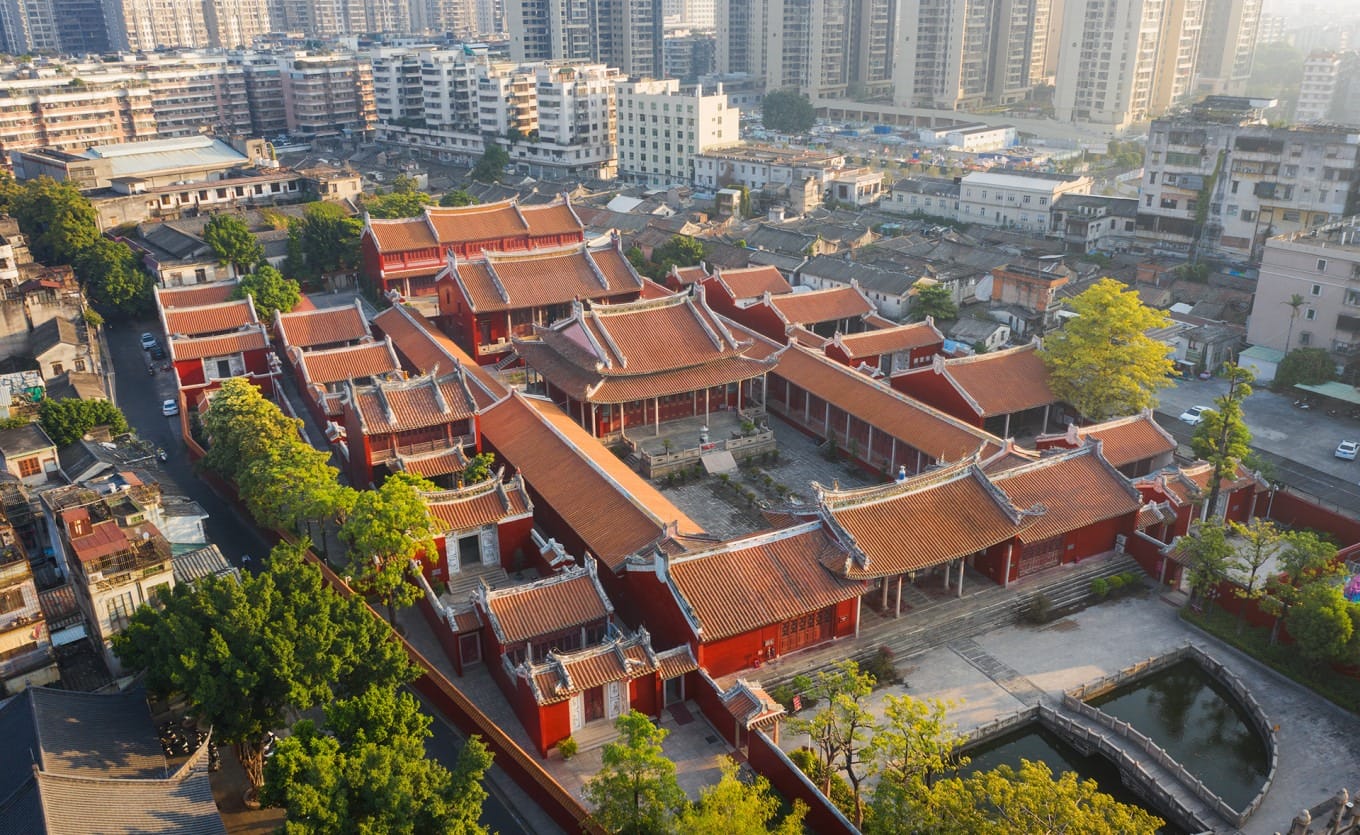
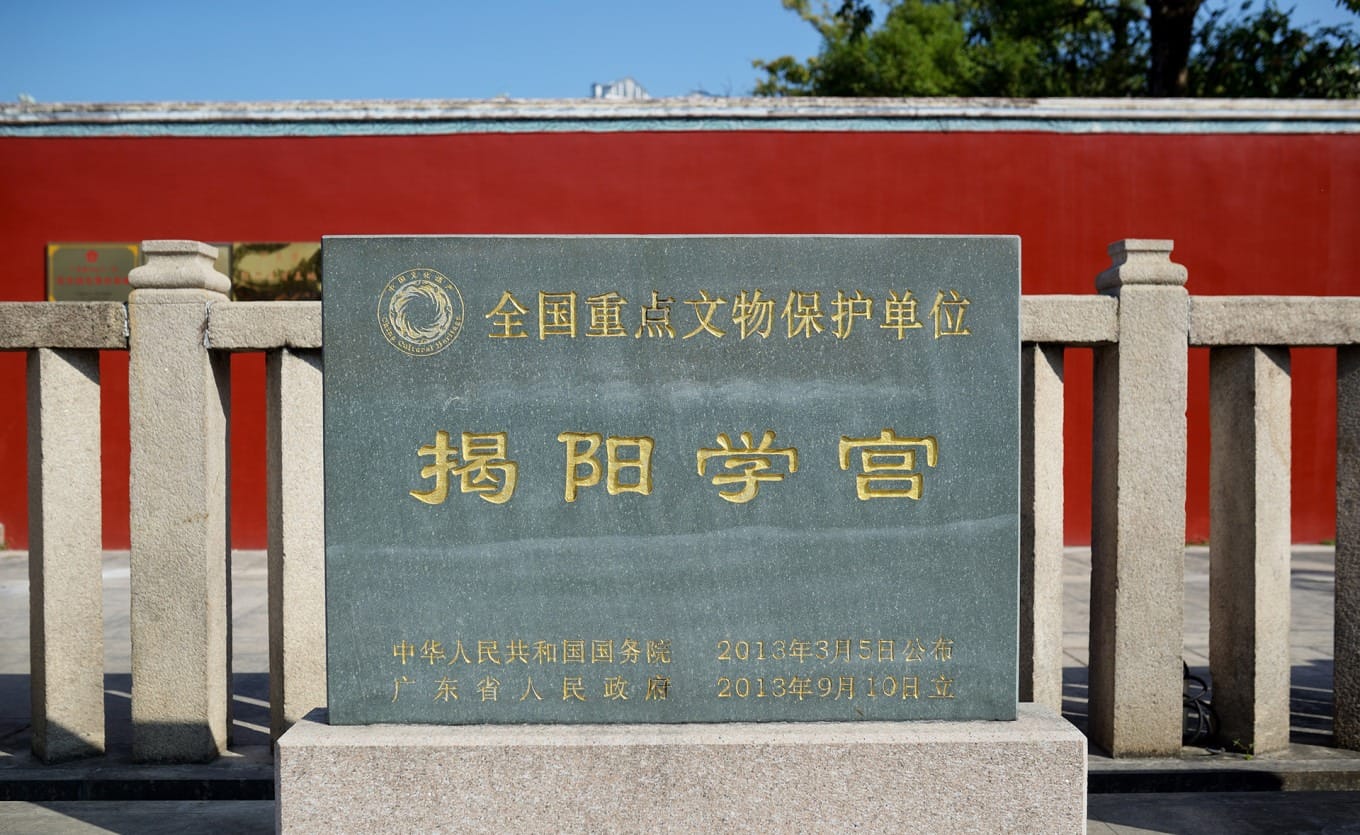
West of Jinxian Gate along Jinxian Avenue lies the heavyweight of Jieyang’s historic quarter—the largest Confucian temple complex in Lingnan. Jieyang Confucian Temple (揭阳学宫) has anchored this ancient town since 1140, earning its reputation as the “Pearl of Ancient Architecture in Eastern Guangdong.” Founded during the Southern Song Dynasty and expanded through thirty-five renovation cycles, the site reached its current grandeur after a major Qing Dynasty restoration in 1876, ranking it alongside Guangzhou’s Panyu and Zhaoqing’s Deqing temples as one of the “Three Great Confucian Temples of Guangdong (广东三大学宫).” In 2013, it earned designation as a National Key Cultural Relic Protection Unit.
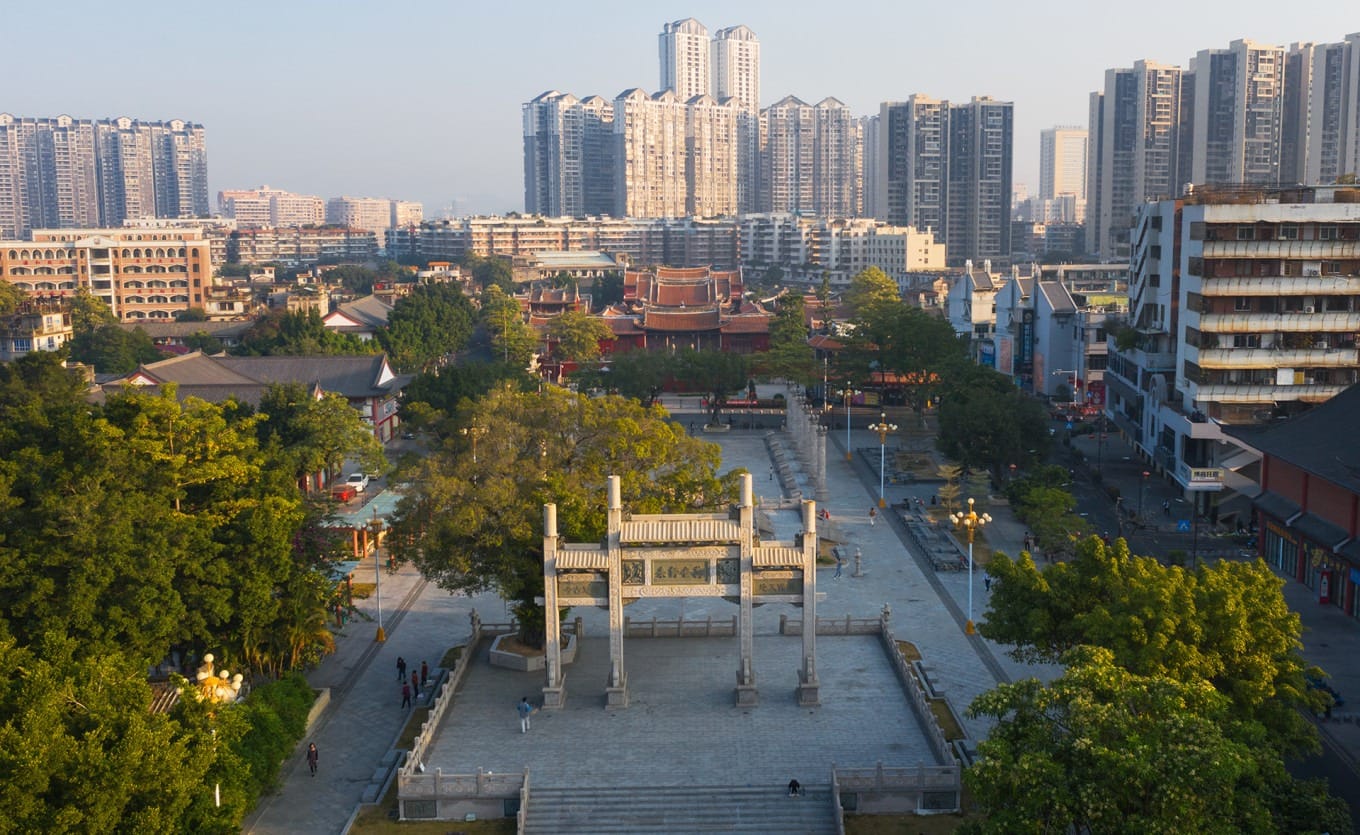
Unlike many ancient sites stripped of authenticity, this ensemble preserves its late-Qing appearance across twenty-one distinct structures arranged in three parallel routes and five courtyards. The central axis unfolds south to north: Zhao Wall (照壁), Lingxing Gate (棂星门), Panchi Pool (泮池), Dacheng Gate (大成门), Dacheng Hall (大成殿), Chongsheng Shrine (崇圣祠), and Zunjing Pavilion (尊经阁). Beyond its scholarly heritage, the temple carries revolutionary credentials—Zhou Enlai established offices here during the 1925 Eastern Expeditions, and in 1927, military commanders including Ye Ting and He Long convened strategic meetings within these walls as the Nanchang Uprising forces moved south.
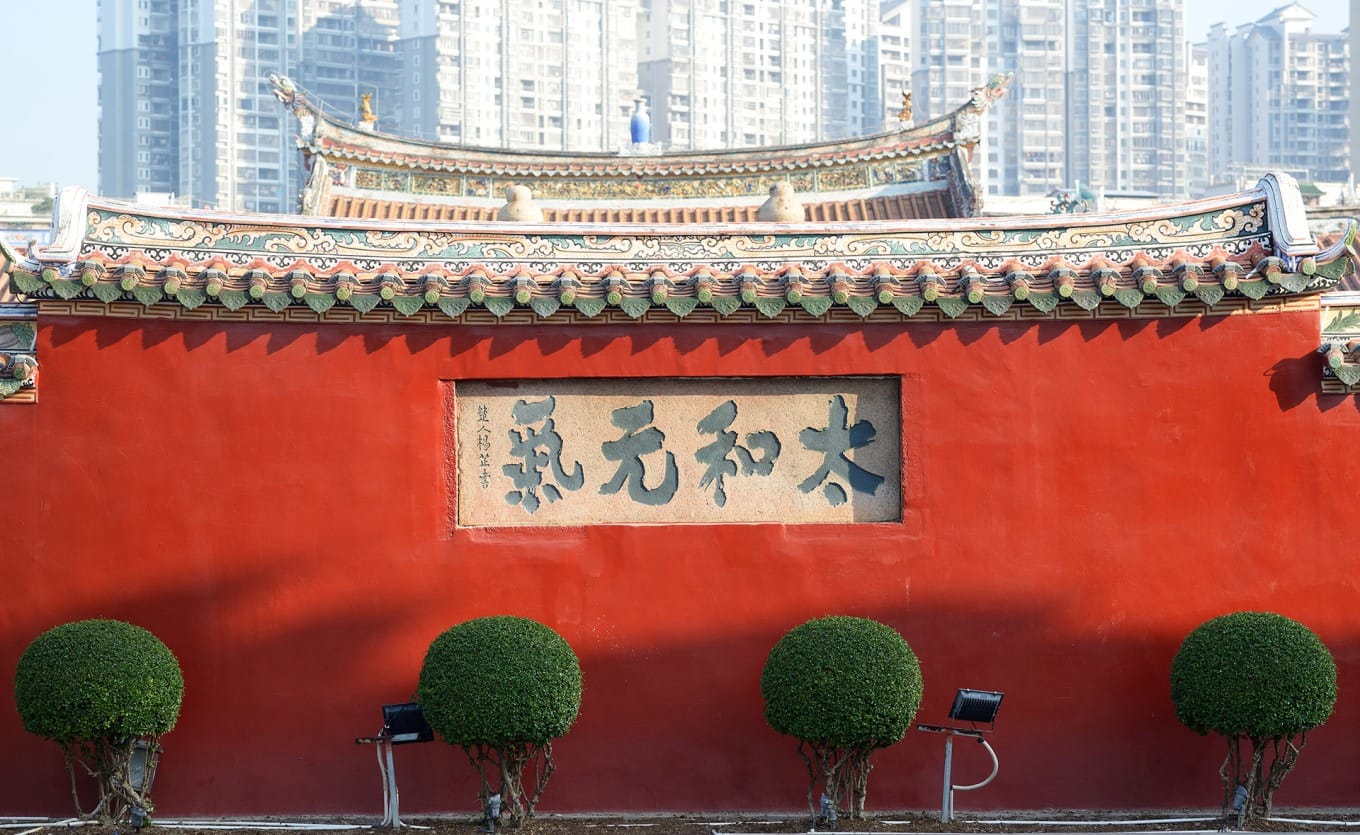
Your approach begins at the Zhao Wall (照壁), rebuilt in 1984 after 1960s destruction. Look closely at the granite plaque facing outward—it bears the characters “Taihe Yuanqi (太和元气),” a Ming Dynasty survivor unearthed during reconstruction. Pass through the Lingxing Gate (棂星门) to confront the semi-circular Panchi Pool (泮池), crossed by a symbolic stone bridge. Tradition holds that stepping onto this bridge marks your entry into the highest realm of learning. Flanking the pool, the Yuzhen and Jinsheng gates offer passage to the eastern and western wings.

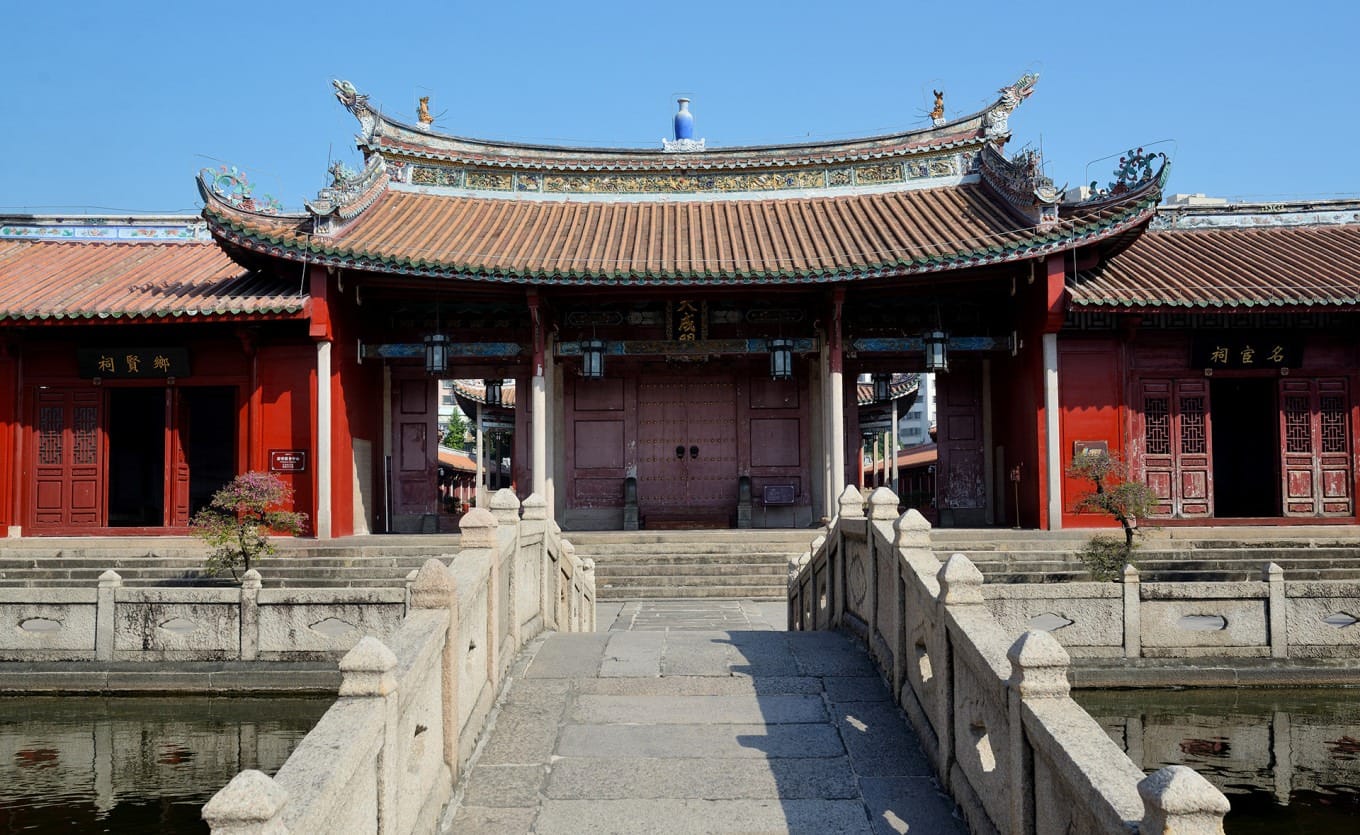
The Dacheng Gate (大成门) stands beyond—the name referencing Mencius’s praise of Confucius as the ultimate synthesis of ancient wisdom. Formerly flanked by shrines to local dignitaries and scholars (now converted to library and office space), this portal opens onto a vast stone courtyard dominated by the Dacheng Hall (大成殿).

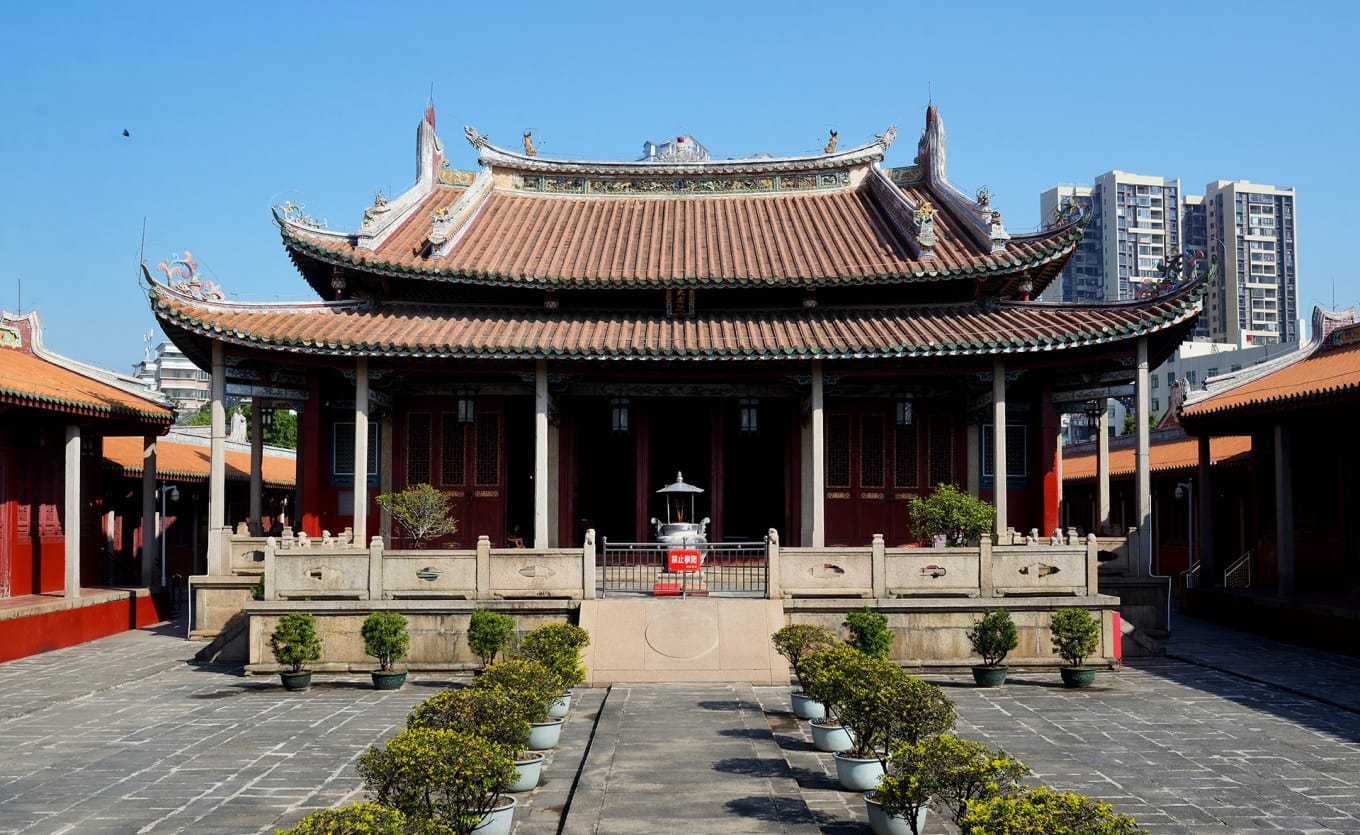
The hall itself adheres to rigid imperial specifications: five bays wide and five deep, capped with a double-eaved hip roof. Inside, Confucius occupies the central position, flanked by the Four Sages—Yanzi, Zengzi, Zisi, and Mencius—plus the Twelve Philosophers. Look upward for imperial plaques bestowed by successive dynasties, and examine the four golden columns where coiling wooden dragons climb—authentic Qing craftsmanship.
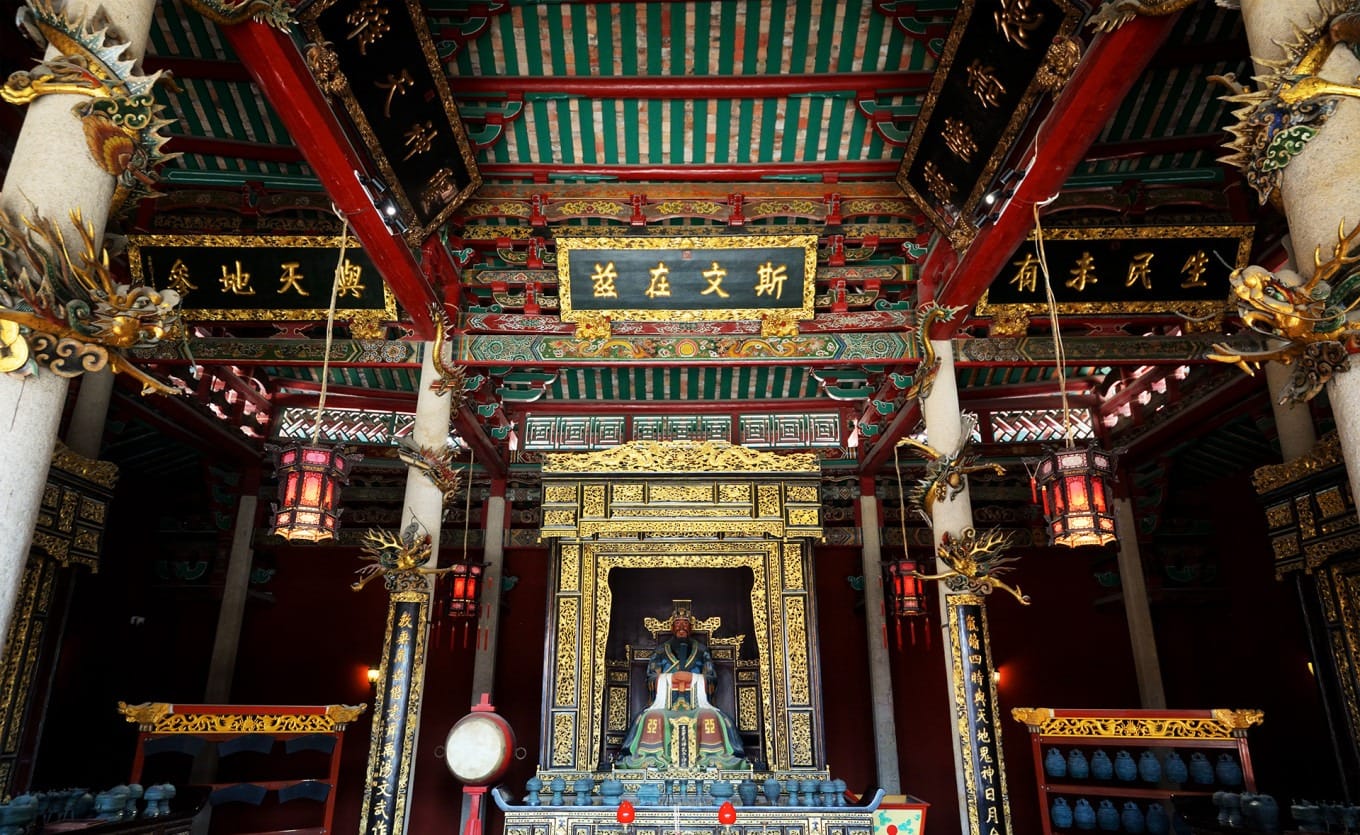
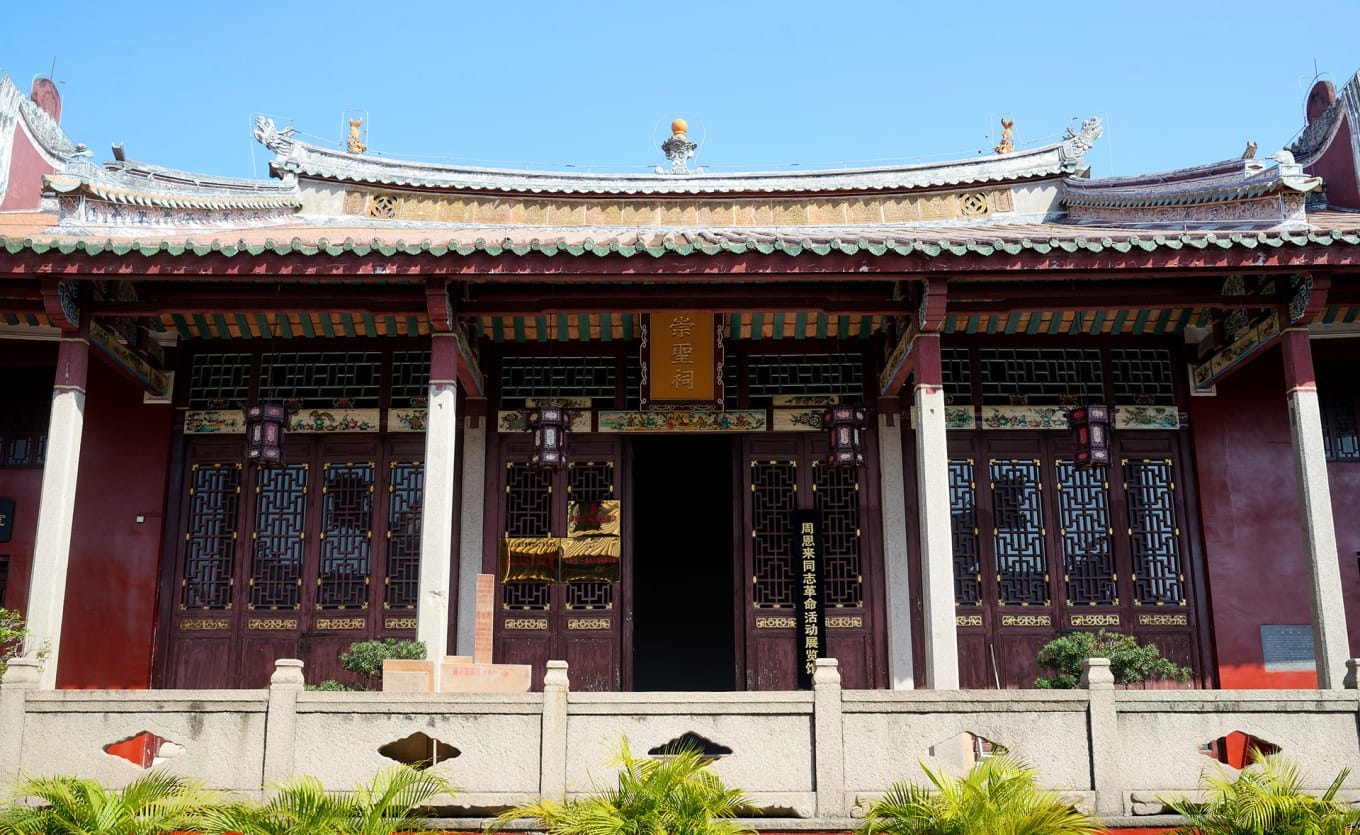
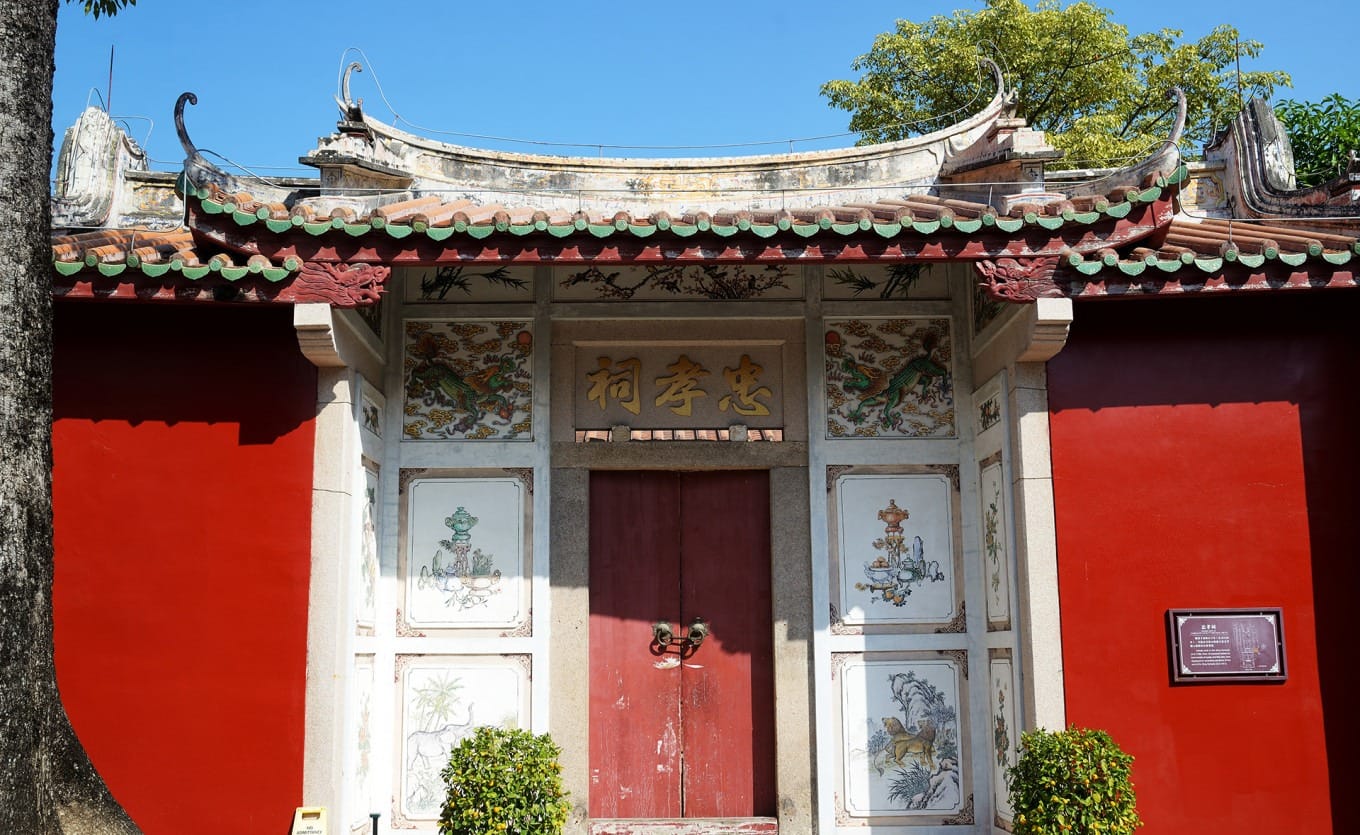
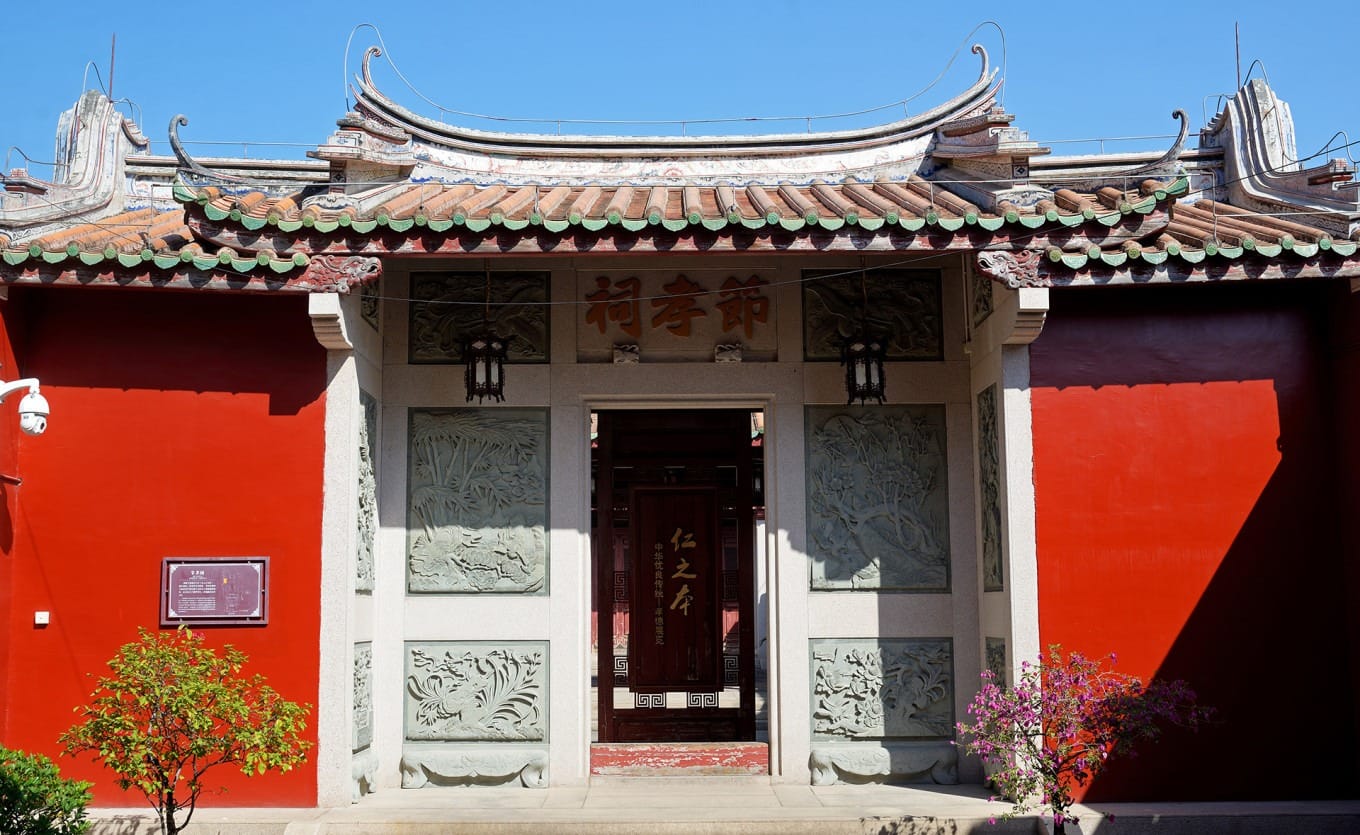
Behind the main hall lies the Chongsheng Shrine (崇圣祠), dedicated to Confucius’s ancestors and doubling as the very office Zhou Enlai used during his 1925 stays. The 1927 military conference table stood here as well. East and west wings contain additional shrines: Zhongxiao (Loyalty and Filial Piety), Minglun (Ethics), Wenchang (Literature), and Jiexiao (Chastity and Filial Piety). Notice the dominant vermillion paint covering most wooden structures—a color reserved for official state institutions representing ritual hierarchy. This crimson coating inspired locals to nickname the complex “Hongxue (红学),” a folk corruption of the classical term “Huangxue (黉学).”
Plan your visit carefully: admission is free, but the complex closes every Monday and Friday. You can explore the full sequence from south to north in about ninety minutes, though history enthusiasts should allow two hours to absorb the architectural details and revolutionary exhibits. The temple stands at 7 Hanci Road (韩祠路7号), Rongcheng District, Jieyang City—a ten-minute walk west from Jinxian Gate.
Jieyang City God Temple
Just west of Xuegong Cultural Square sits Jieyang City God Temple (揭阳城隍庙), another nationally protected heritage site that rewards curious travelers with some of the finest Chaoshan religious architecture in Guangdong.
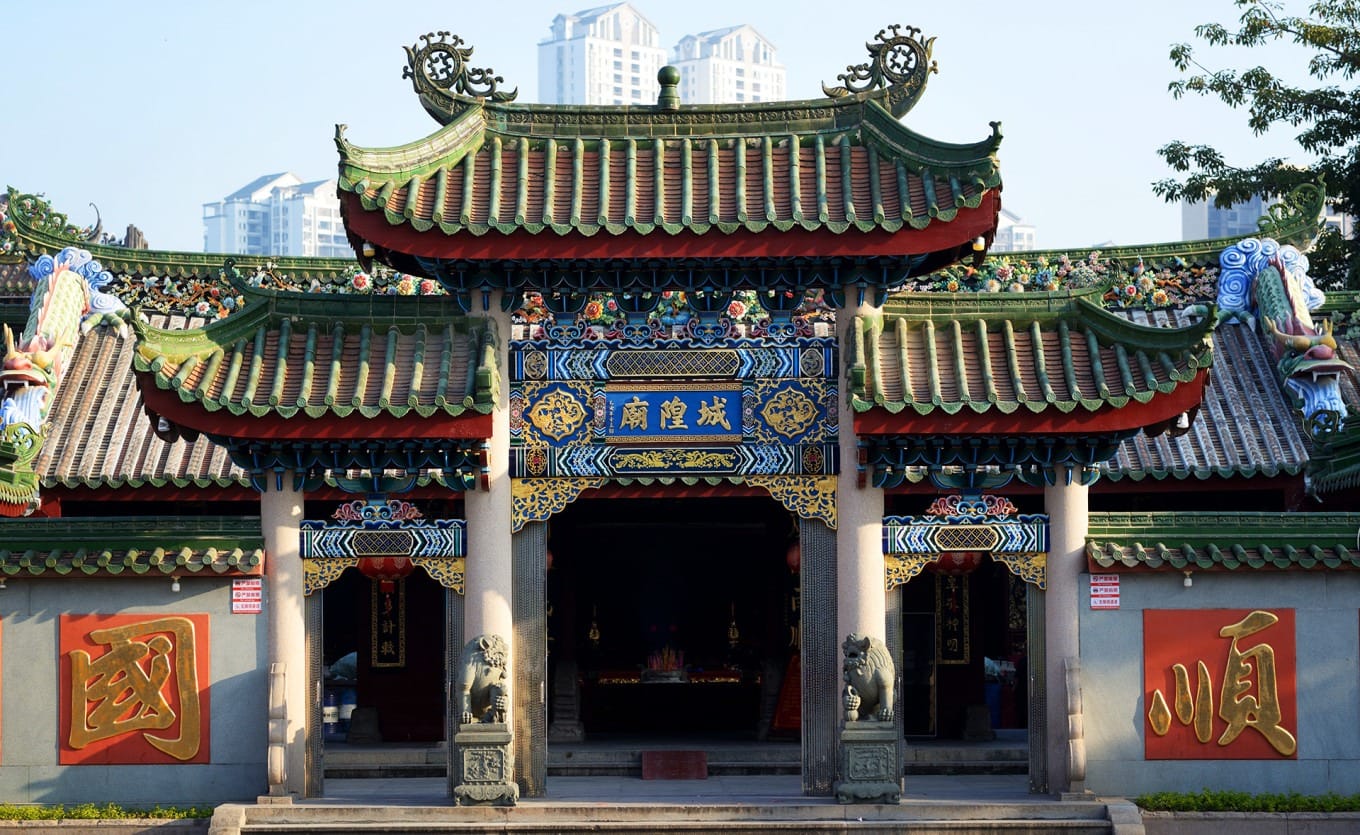
Founded in 1369 during the Ming Dynasty’s Hongwu reign—despite unsupported claims of Southern Song origins—this temple has undergone several renovations throughout the centuries. The most recent major restoration in 1993 added the impressive memorial arch gate you see today, deliberately modeled after the famous gateway at Foshan Ancestral Temple.


Like the Confucian Temple nearby, the complex follows strict imperial construction standards with perfect central axis symmetry. Walking from south to north, you will pass through the memorial arch gate, front hall mountain gate, worship pavilion, main hall, and rear hall. Despite renovations across dynasties, the temple retains its original Ming Dynasty layout, with the main hall, front hall, and rear hall structures surviving from that era. This makes it the best-preserved City God Temple in Guangdong Province, earning it designation as a National Key Cultural Relics Protection Unit in 2019.
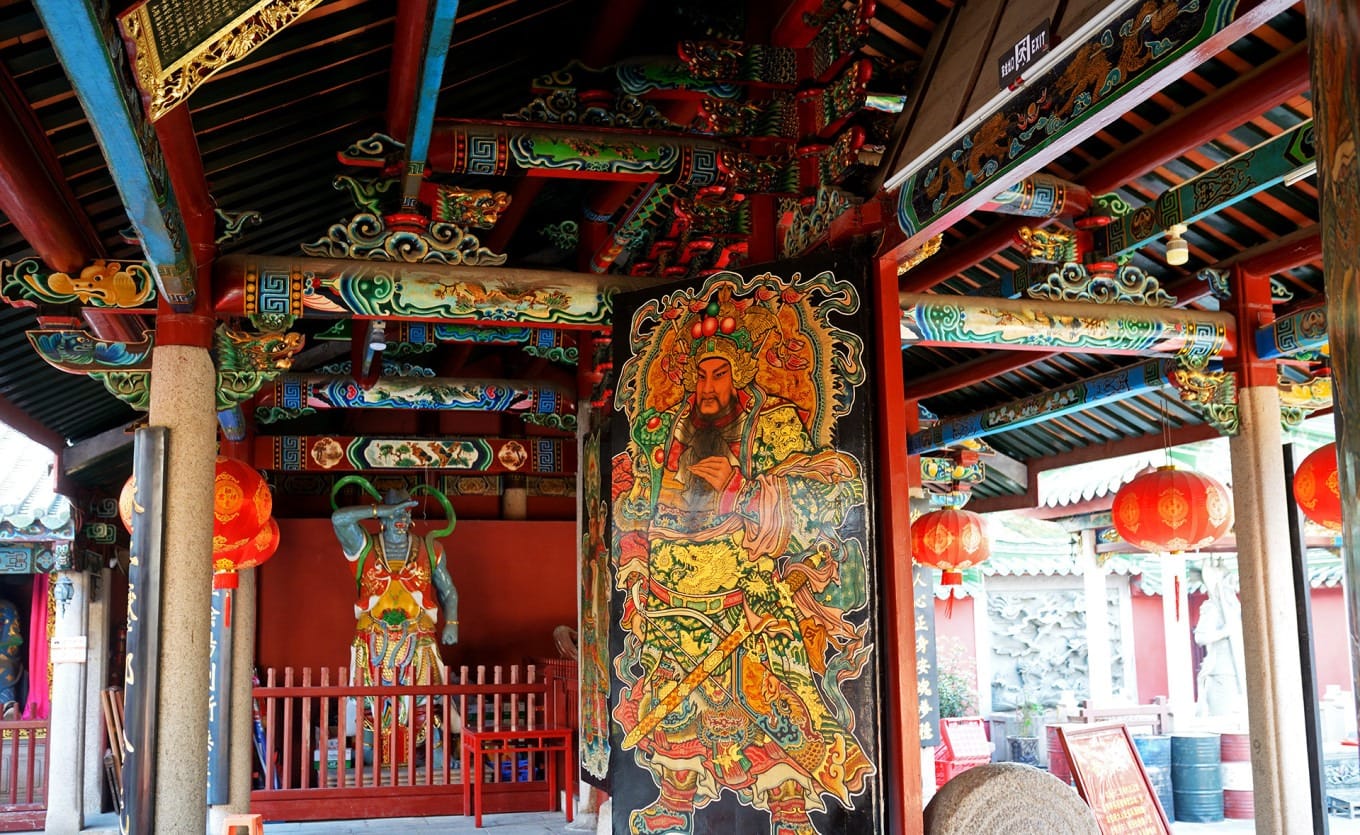
Behind the arch gate, the front hall spans five bays wide. Each door panel features vividly painted door gods, while the main entrance bears the inscription ‘城隍庙’ (City God Temple) flanked by the prophetic couplets ‘风调雨顺’ (Favorable Weather) and ‘国泰民安’ (Peace and Prosperity).
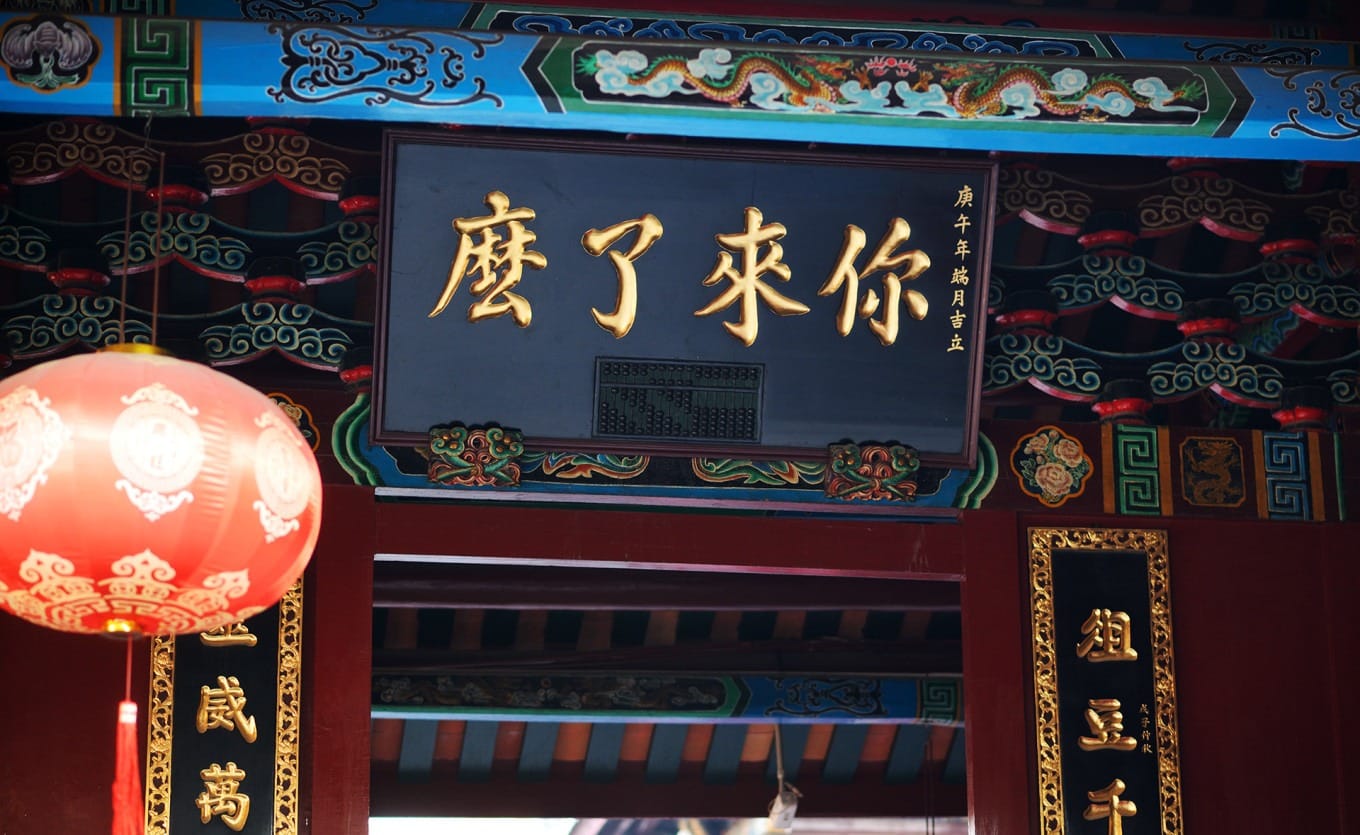
Look closely at the side doors to find the temple’s most beloved features: the charmingly humorous inscriptions ‘你来了么’ (So you’ve come?) and ‘也有今日’ (Your day has come too)—a playful yet slightly teasing greeting that catches many first-time visitors by surprise with its intimate, conversational tone.
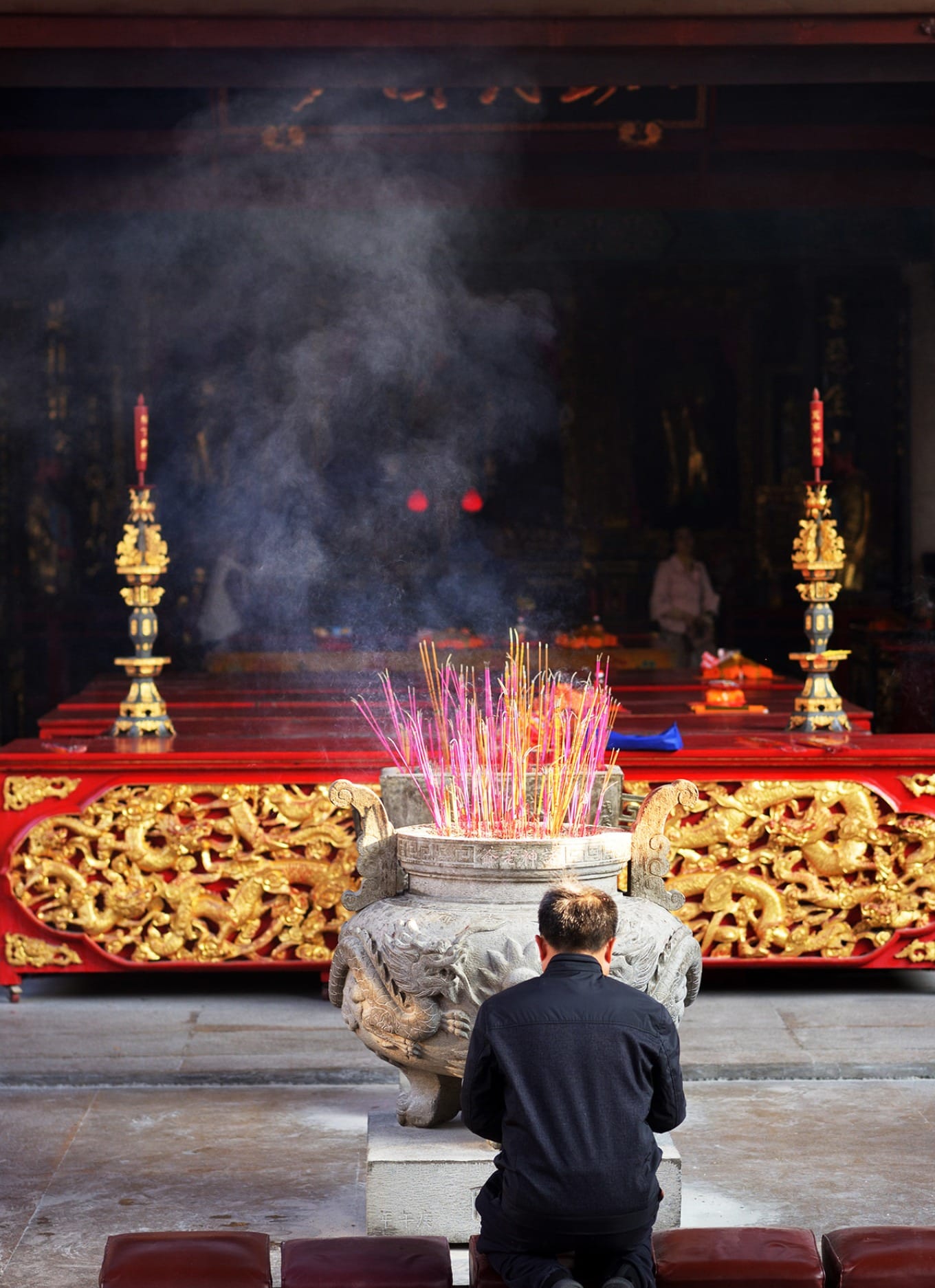
Beyond the gate lies a courtyard flanked by six administrative wing rooms (六司房舍), leading to the worship pavilion where incense burns constantly throughout the day. Jieyang maintains a particularly strong devotion to its City God—locals visit as frequently as Shantou residents worship Mazu. When facing life’s troubles, many come here to confide in the City God and seek divine resolution, creating an atmosphere of living faith rather than mere tourism.
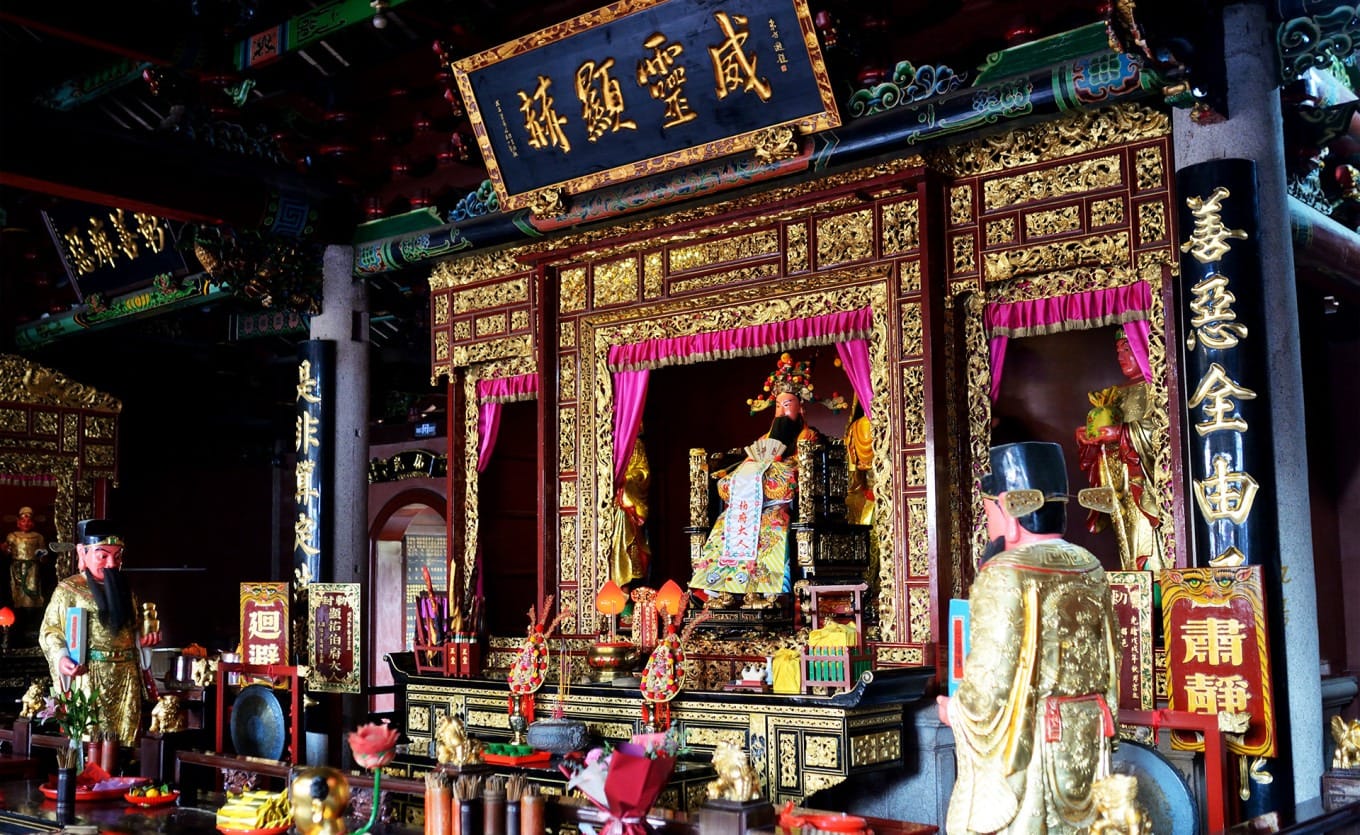
The main hall displays a magnificent gold-lacquered plaque reading ‘威灵显赫’ (Mighty and Illustrious). Below it, three niches hold the temple’s most important statues: in the center, two City God figures—a permanent seated statue that never moves, and a portable ‘traveling’ statue used during annual parades. Flanking niches contain attendant figures holding sword and seal. Additional front statues represent the fortune and prosperity gods, judges, and virtue recorders who oversee moral accounts.
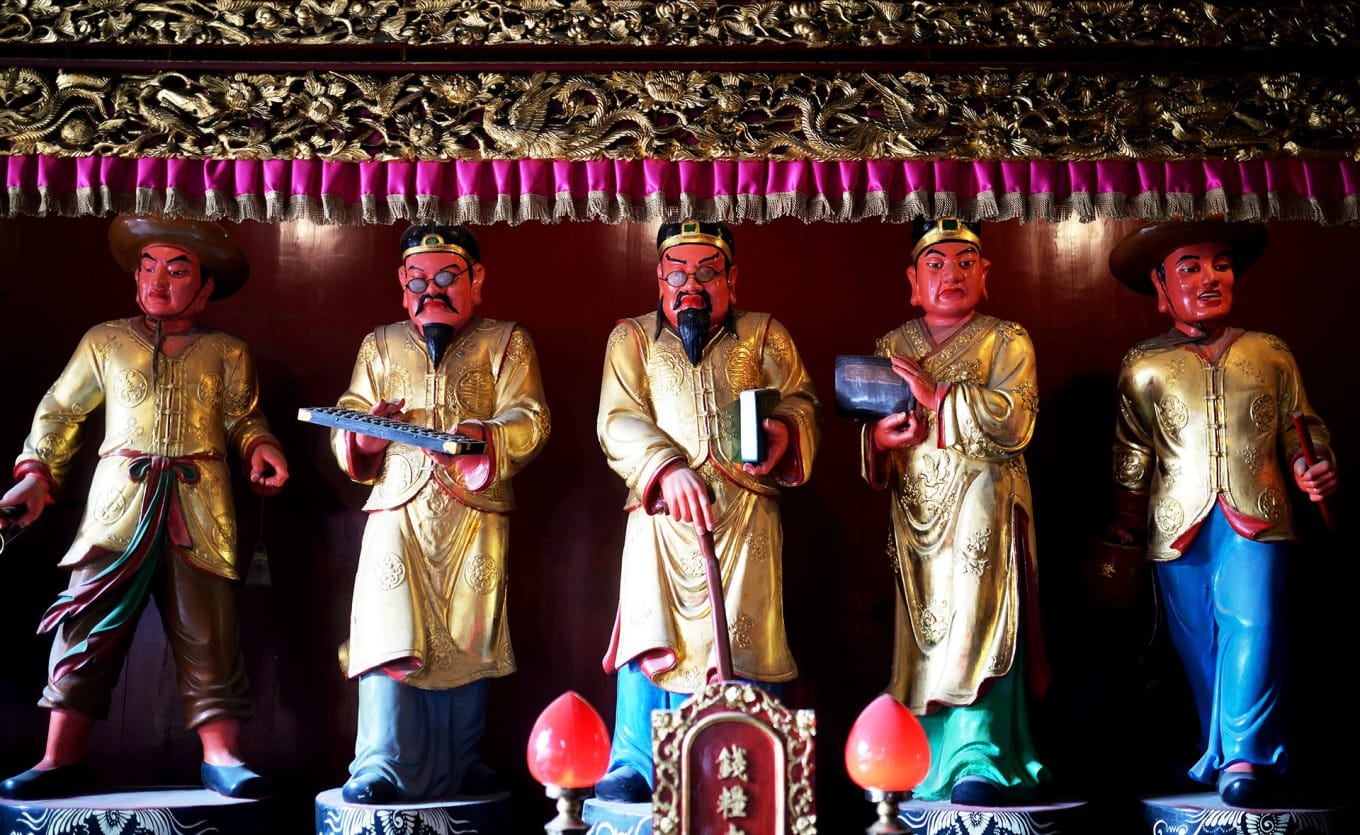
In the left and right chambers, you will find smaller shrines dedicated to Qianliang Laoye (Wealth and Grain God), Huagong Huama (Flower Lords who protect children), and Fude Laoye (Earth God). A door at the rear of the main hall leads to the back chamber, where the City God Madame receives offerings in a more intimate setting.
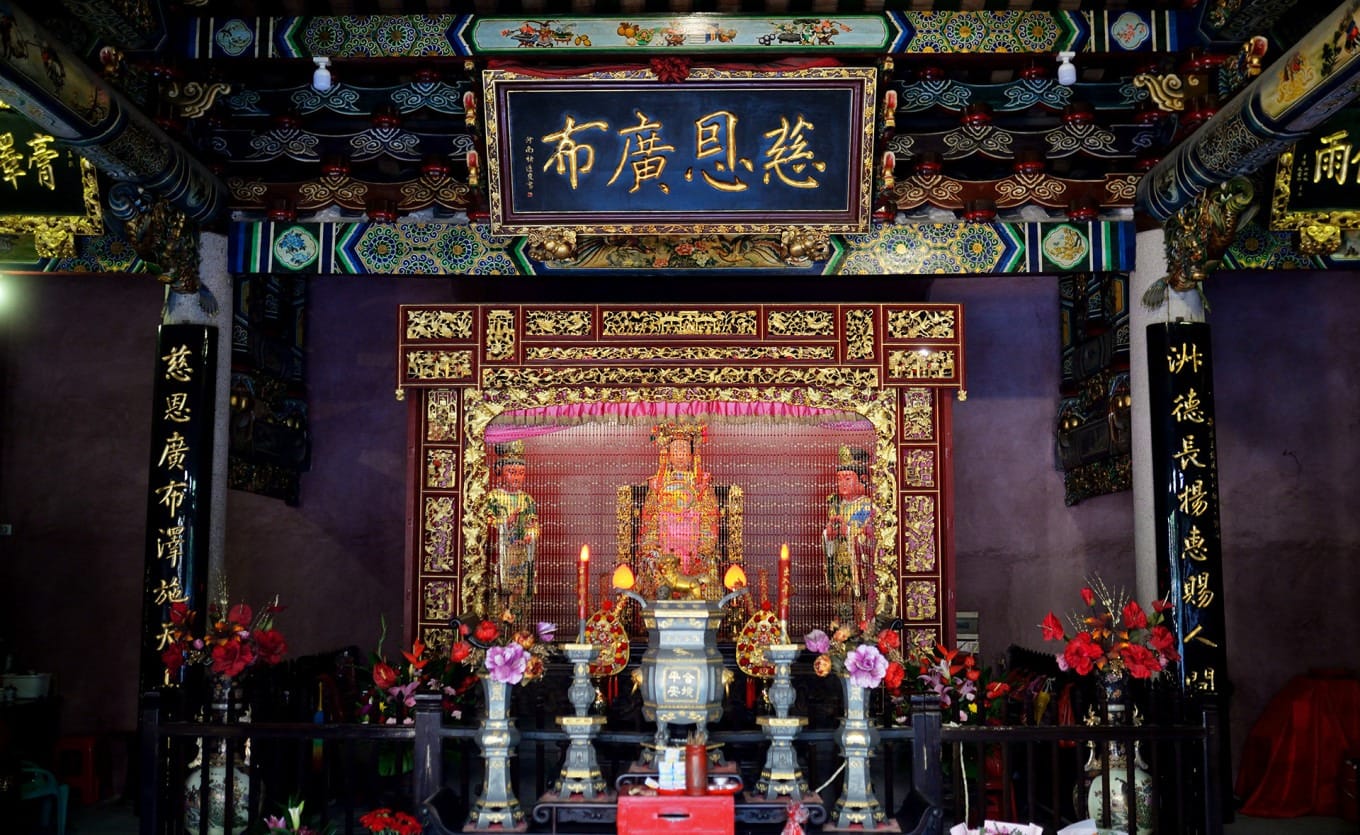
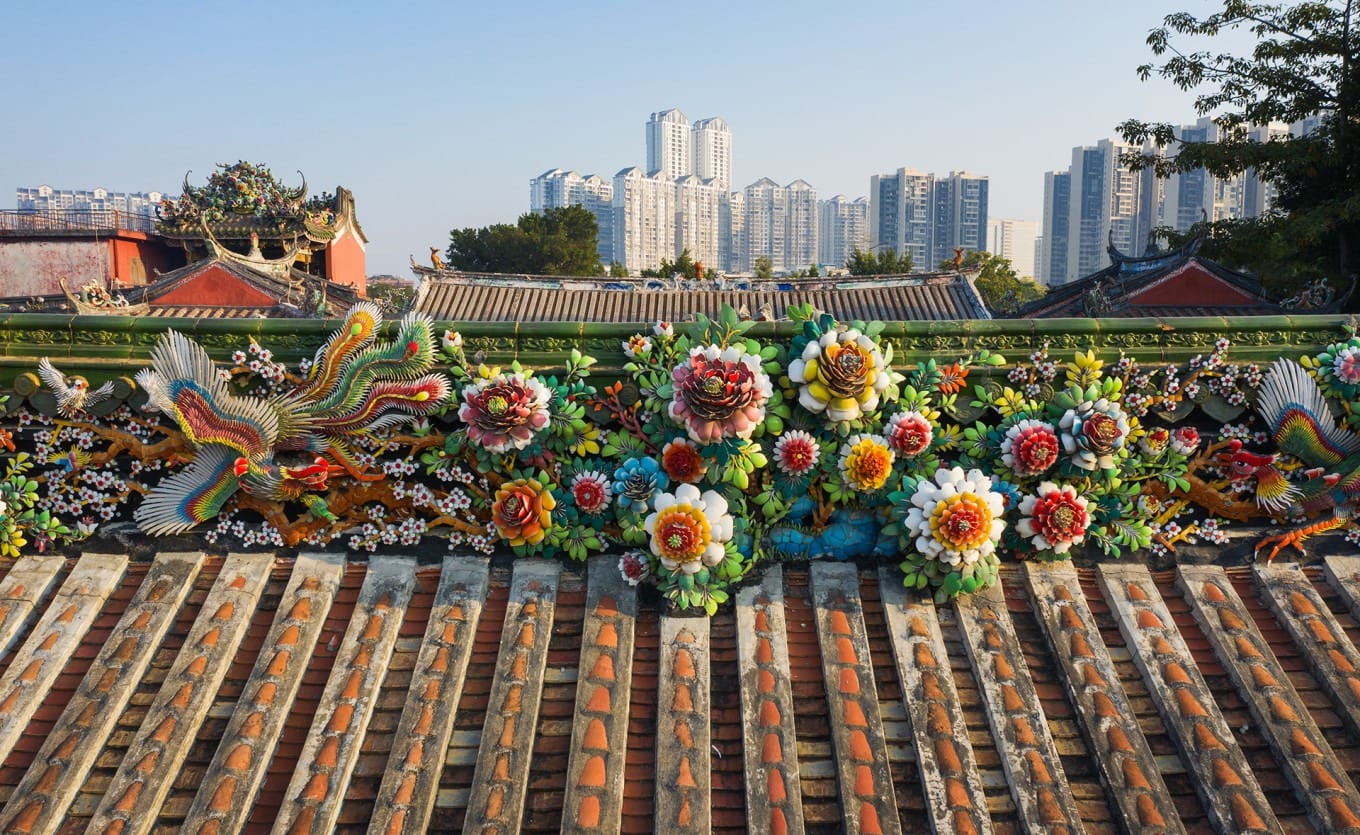
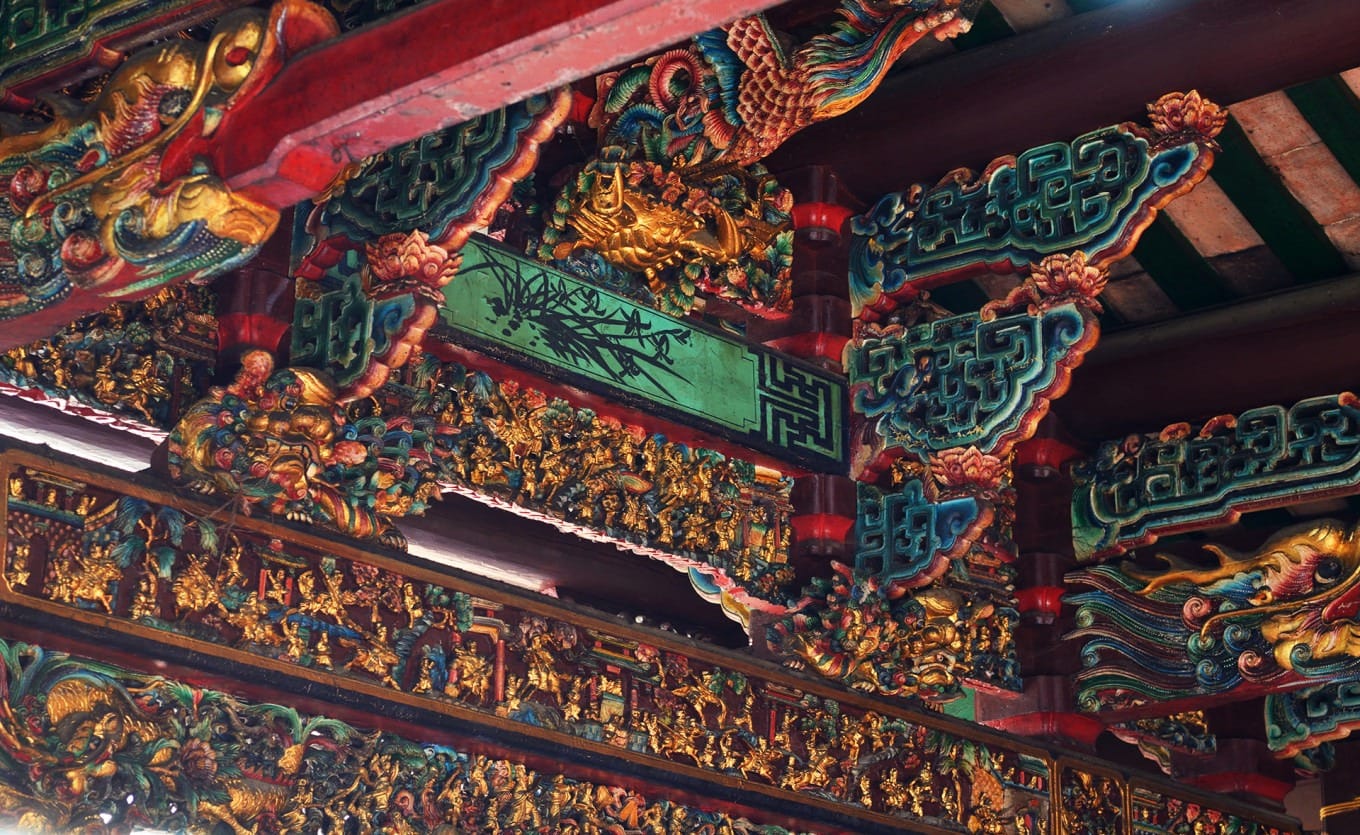
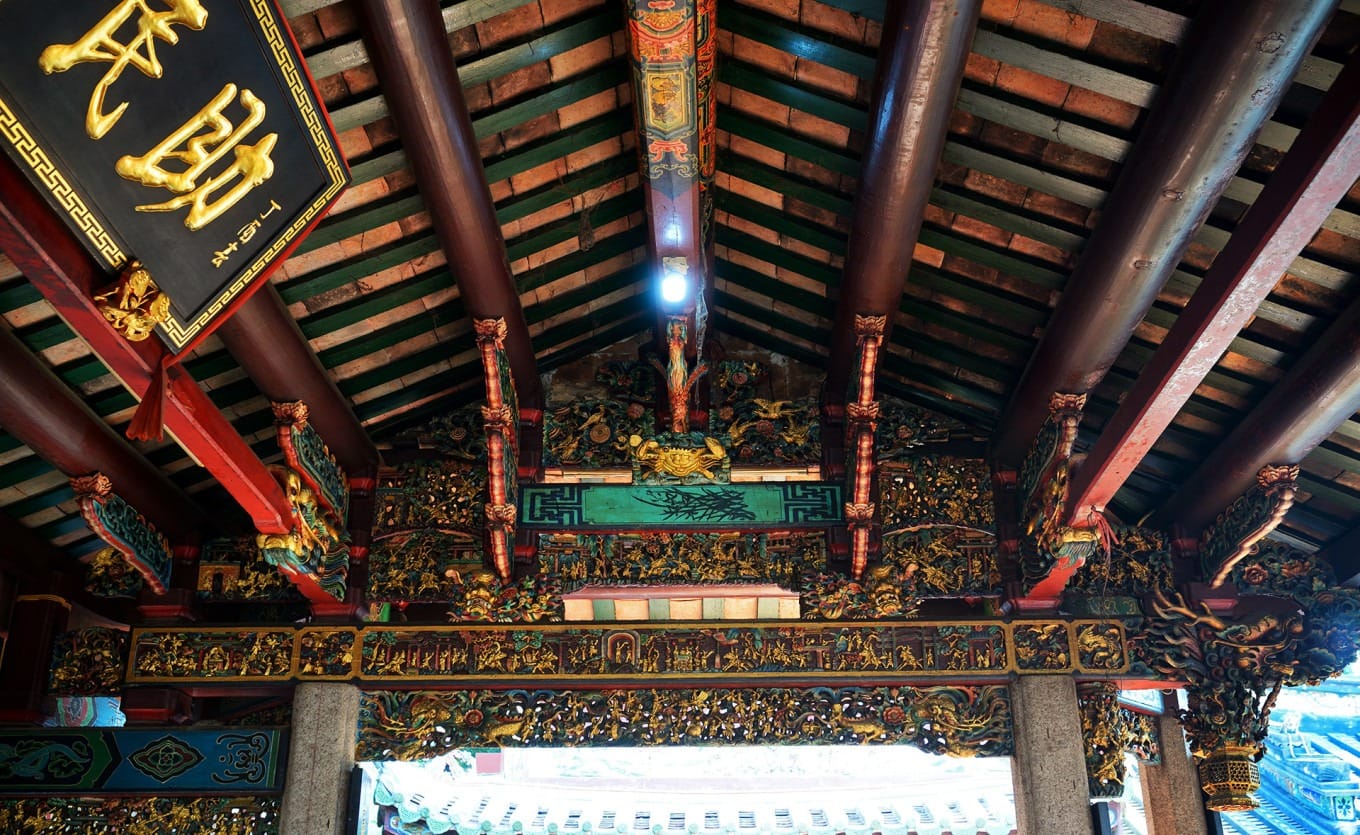
As with many temples in the Chaoshan region, stepping inside feels like entering an art museum dedicated to local craftsmanship. Your eyes will immediately draw to the brilliant 嵌瓷 (cut-and-paste ceramic mosaic) glittering in the light, the opulent 金漆木雕 (gold lacquer wood carving) covering the beams, and the intricate stone carvings, lime sculptures, and colorful paintings that adorn every surface. The temple stands at 揭阳市榕城区城隍路 (Chenghuang Road, Rongcheng District, Jieyang City) and offers free admission, making it an essential stop for anyone exploring the region’s cultural heritage.
Practical tip: You can prioritize one signature stop around the area, and you should adjust timing and budget based on transport and peak hours.
Lei Shen Temple
Just steps from the bustling City God Temple (城隍庙), a compact spiritual sanctuary offers a fascinating counterpoint to its grander neighbor. Lei Shen Temple (雷神庙) rewards the curious traveler with layered history, dramatic religious iconography, and exquisite examples of Chaoshan folk craftsmanship.

Originally built in 1663 during the Qing Dynasty’s Kangxi era, this modest structure has survived multiple transformations. After a Qianlong period reconstruction, it served briefly as a police station during the Republican era, then lay dormant until a comprehensive rebuilding project in the late 20th century finally restored it to religious use in 2003.
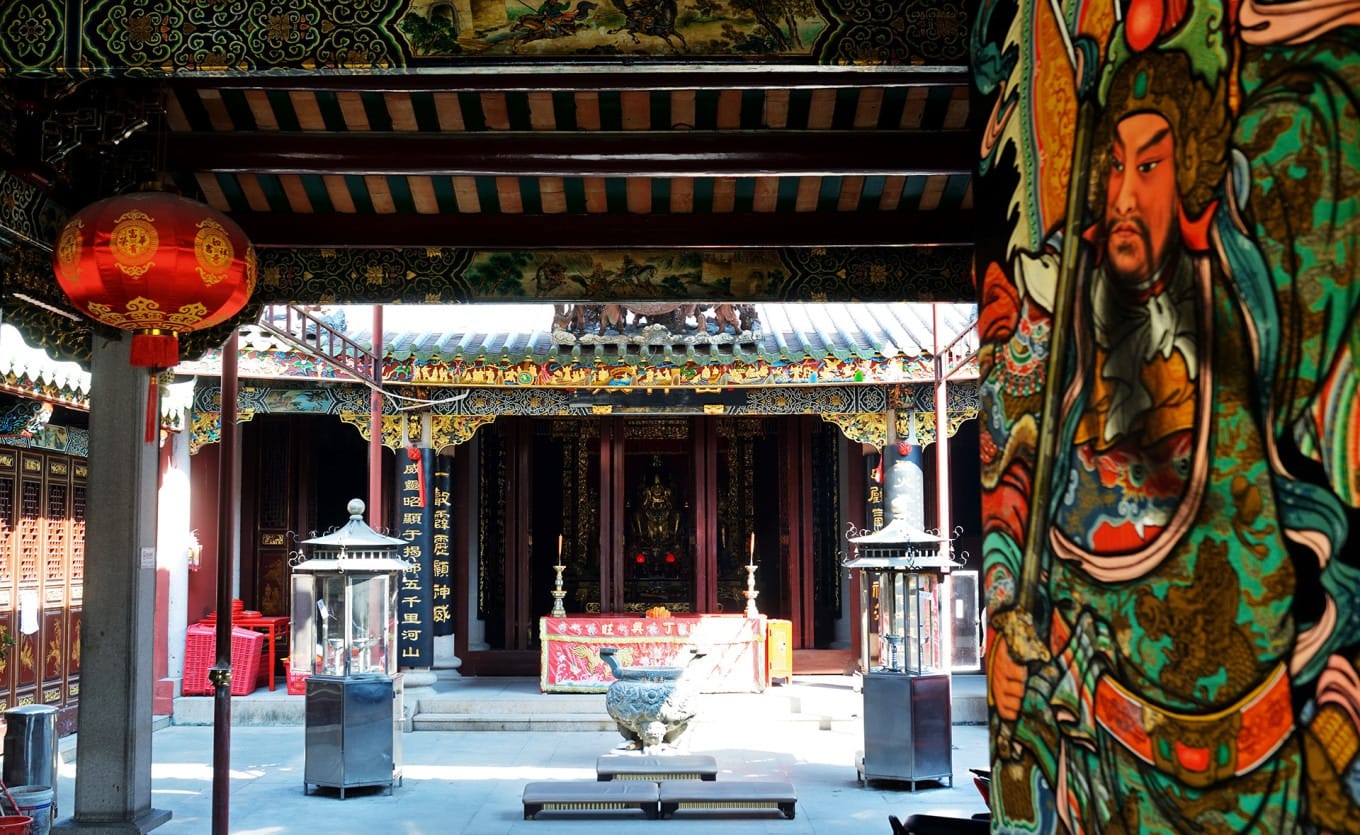
The entrance immediately commands attention with its pair of vividly painted door guardians. Unlike standard temple protectors, these figures bear fierce mottos above their heads: 见邪便打 (Strike Evil Upon Seeing) and 见恶便诛 (Punish Wickedness Upon Seeing). This uncompromising message positions the temple as a cosmic courthouse where moral transgressions face immediate divine justice.
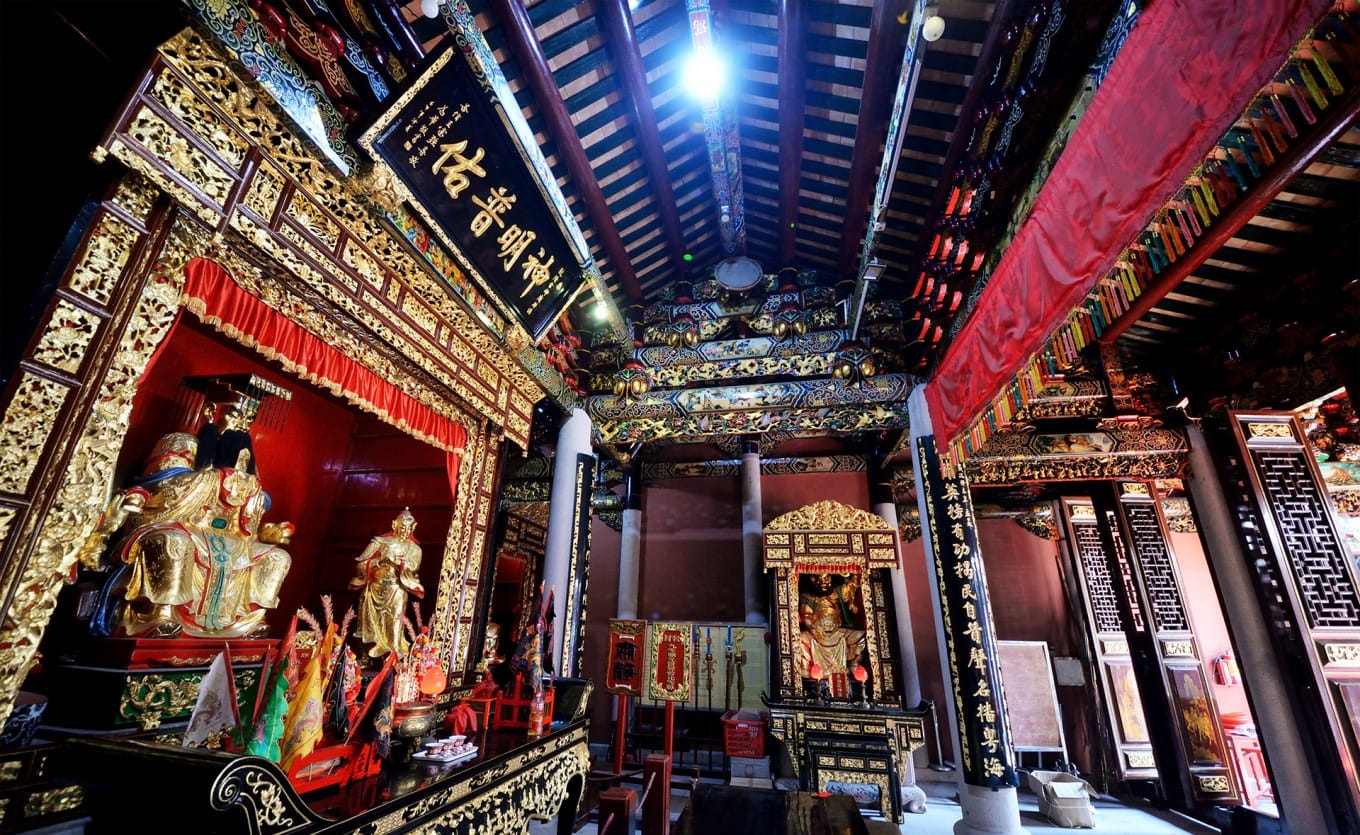
Inside the main hall, you’ll encounter the Thunder Ancestor (雷祖), formally known as the Nine Heavens Primordial Thunder Universal Transformation Heavenly Lord (九天应元雷声普化天尊). Worshipped as the supreme commander of the thunder department and an earthly manifestation of the South Pole Longevity Emperor (南极长生大帝), he presides over celestial meteorological affairs. Look to his flanks to spot his four divine lieutenants: the Thunder God (雷公), Lightning Mother (电母), Wind God (风伯), and Rain Master (雨师)—the elemental officials who execute his atmospheric decrees.
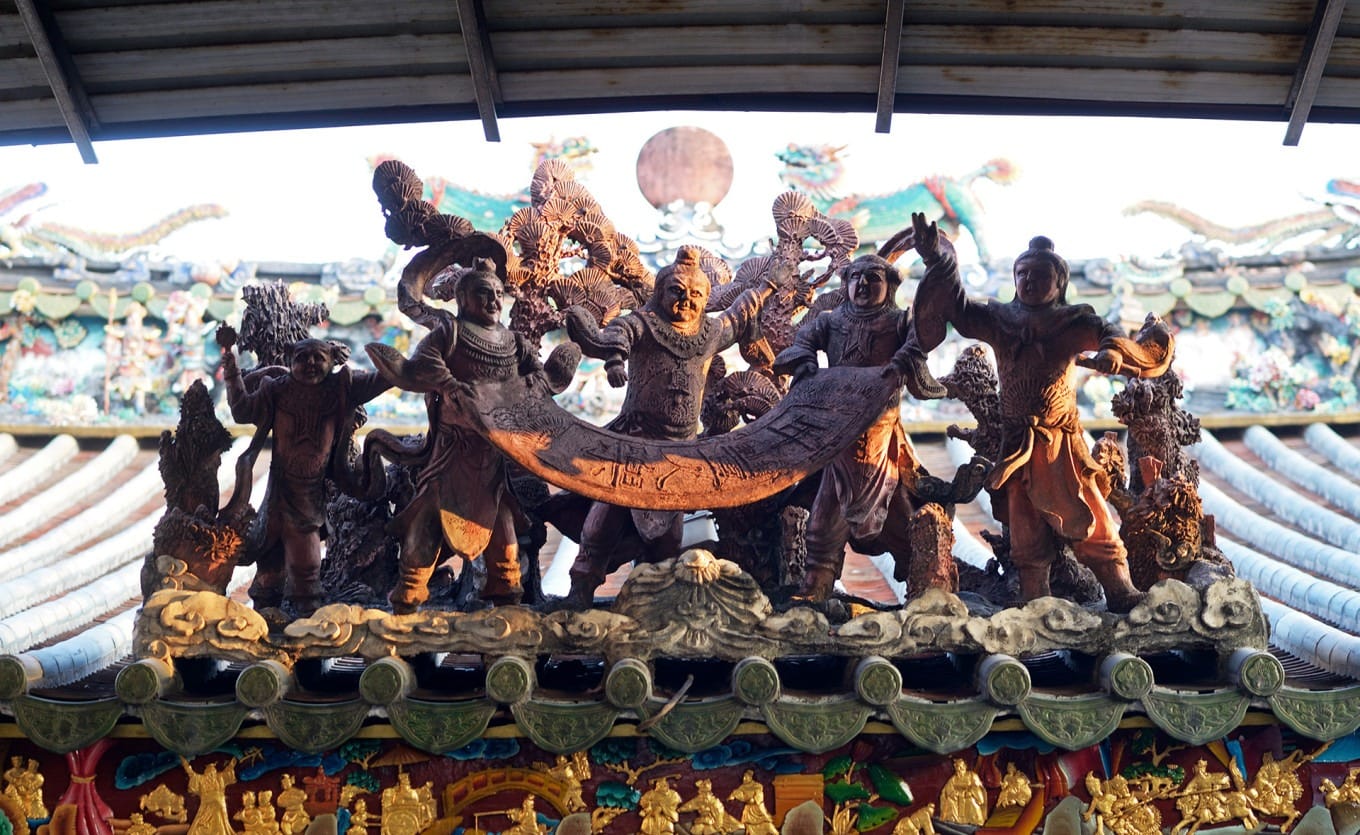
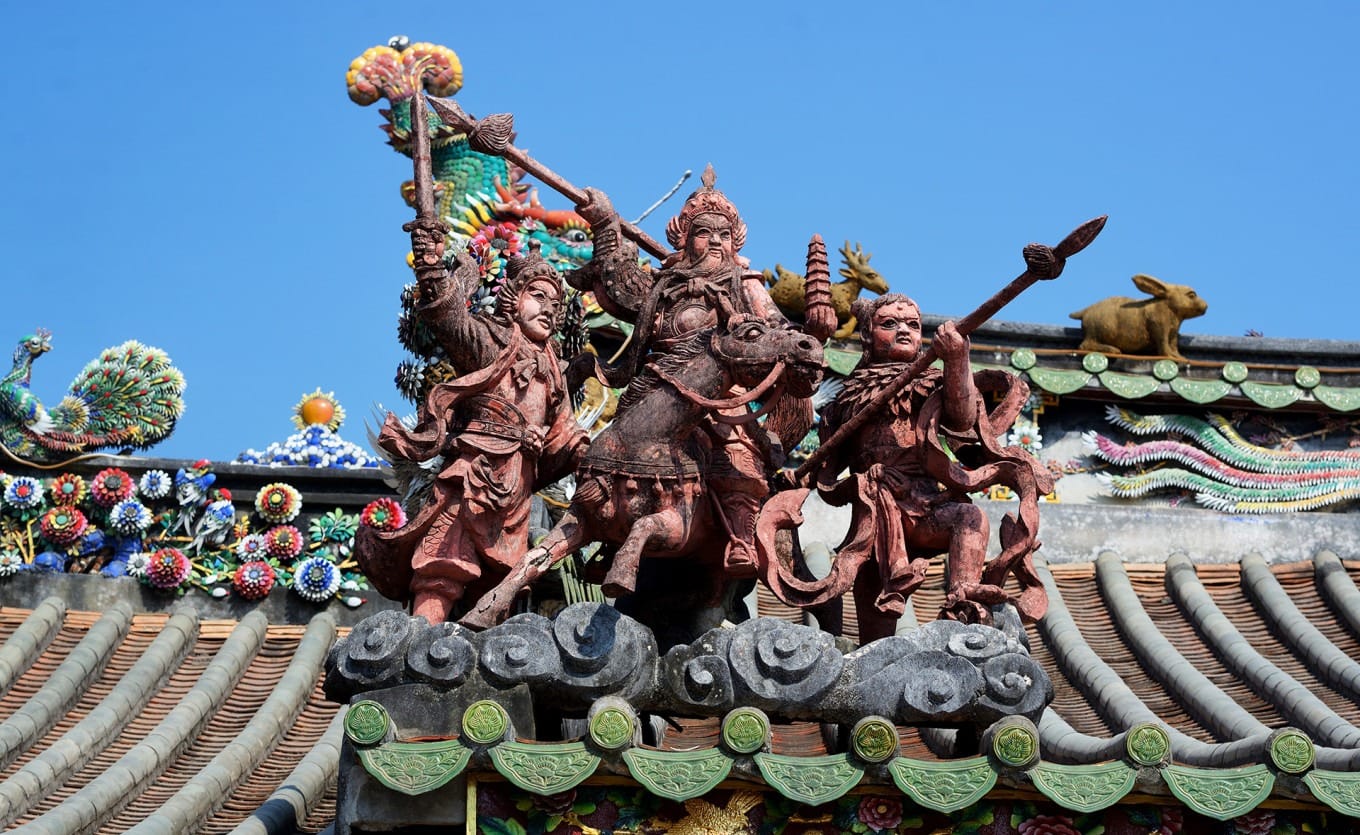
Though smaller than many regional temples, the architecture here displays masterful Chaoshan decorative techniques. Examine the rooflines and walls to discover intricate gray sculpture (灰塑) and ceramic inlay mosaic (嵌瓷)—traditional crafts characterized by delicate lines and three-dimensional vitality. These ornamental details offer tangible insight into the region’s distinctive building traditions.
Admission is free. You’ll find Lei Shen Temple immediately west of the City God Temple at 揭阳市榕城区城隍路西侧 (West side of Chenghuang Road, Rongcheng District, Jieyang City)—a natural addition to any old-town walking itinerary that requires no detour.
Practical tip: You can prioritize one signature stop around the area, and you should adjust timing and budget based on transport and peak hours.
Zhongshan Road
Step into Jieyang’s commercial past along Zhongshan Road (中山路), a historic arcade street lying just west of Leishen Temple. Dating back over two centuries to its origins as Xuanhua Street (宣化街), this thoroughfare evolved from ‘Main Street’ (大街) in the Qing Guangxu era to its current name in 1926, bearing witness to the city’s transformation from imperial trading post to Republican-era commercial hub.
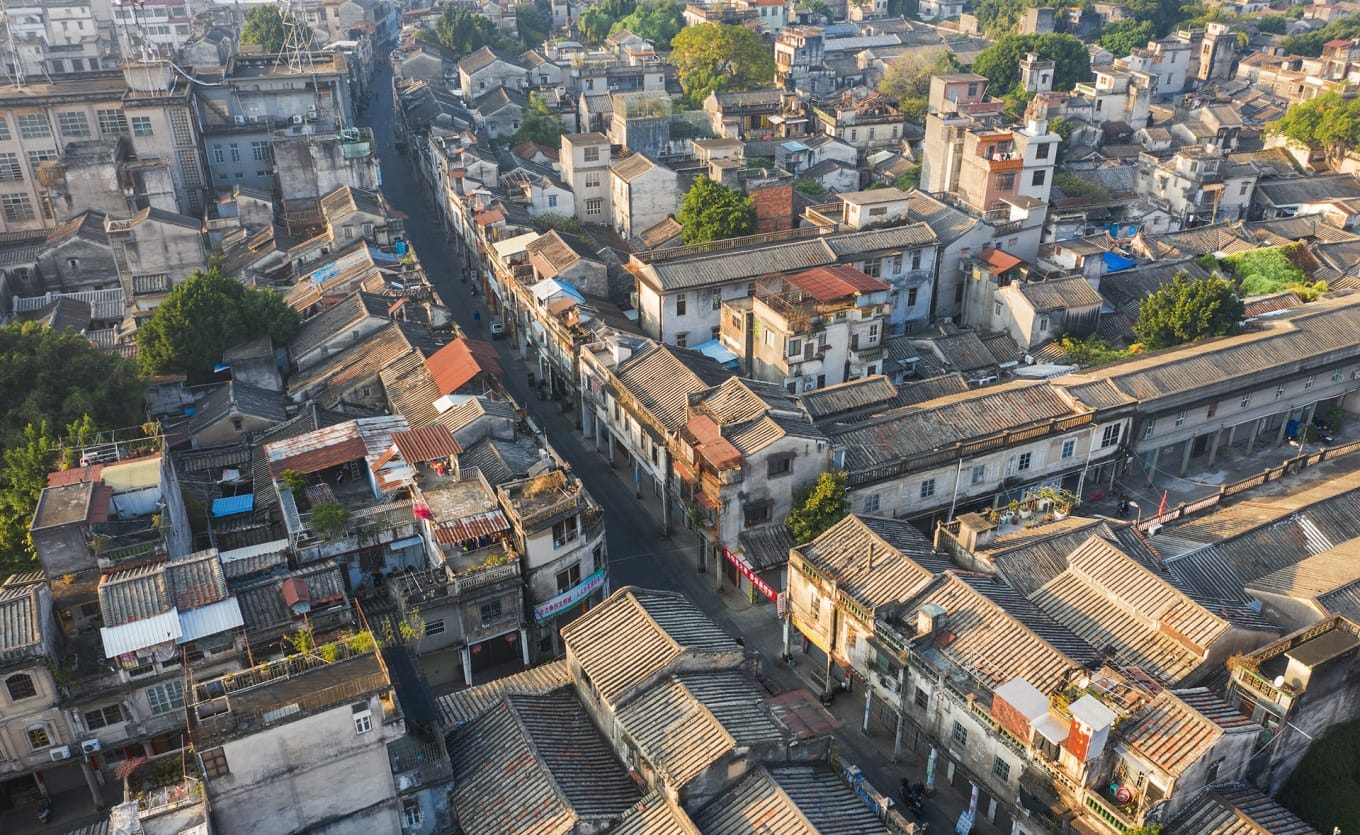
The street’s distinctive qilou (arcade buildings) represent Jieyang’s earliest examples of this architectural form, with most structures erected during the 1920s. Rather than standing in isolation, these continuous covered walkways connect seamlessly with the historic arcades of Xima Road (西马路), Beima Road (北马路), Hanci Road (韩祠路), and Datong Street (打铜街), creating one of the region’s most extensive historic districts. Examine the facades closely to discover a unique visual dialogue: Western decorative motifs mingle with traditional Chaoshan craft techniques, including intricate gray plaster reliefs (灰塑) and vibrant polychrome paintings (彩画)—a striking blend of European and Chinese aesthetics.
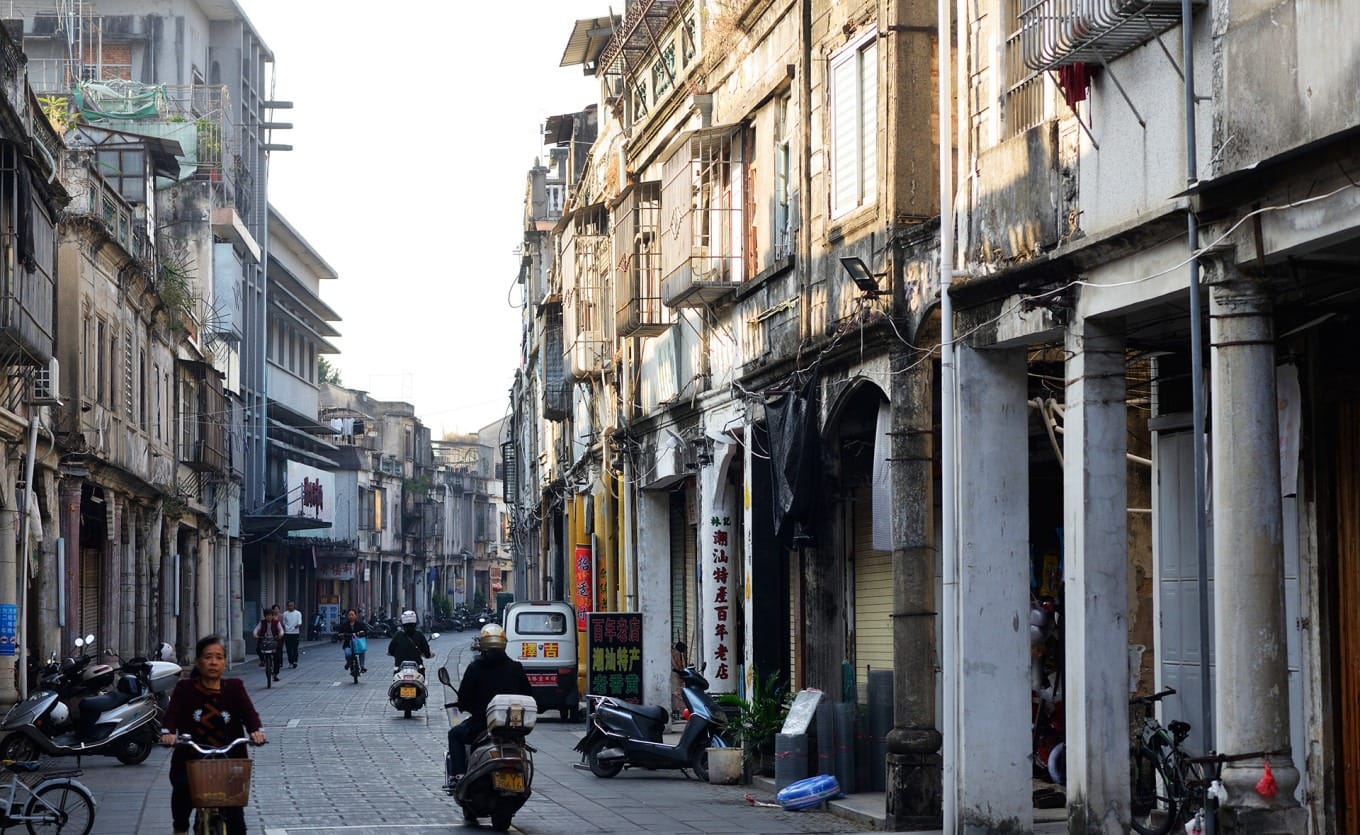
While today’s weathered facades retain their structural integrity, few travelers realize that this street once rivaled Chaozhou’s famous Taiping Road Memorial Archway Street (太平路牌坊街) in grandeur. During the Ming Dynasty, over twenty stone memorial archways (石牌坊) lined this route, honoring scholars and officials. By the Qianlong period, natural disasters and human conflicts had reduced their number to eleven, according to county records. The 1926 street reconstruction claimed ten more, and the final survivor eventually fell to modern traffic demands, leaving only photographs and local memory where imperial stone once stood.
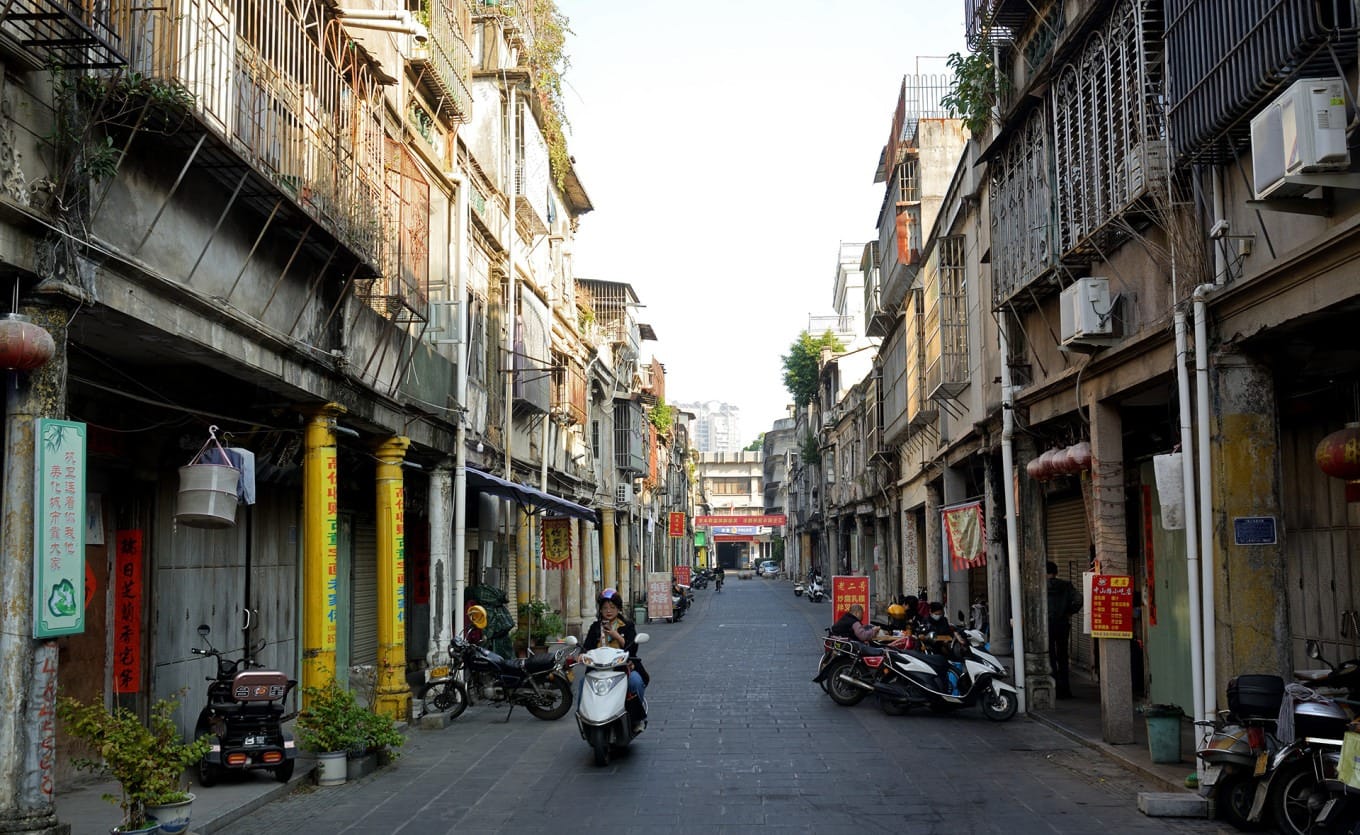
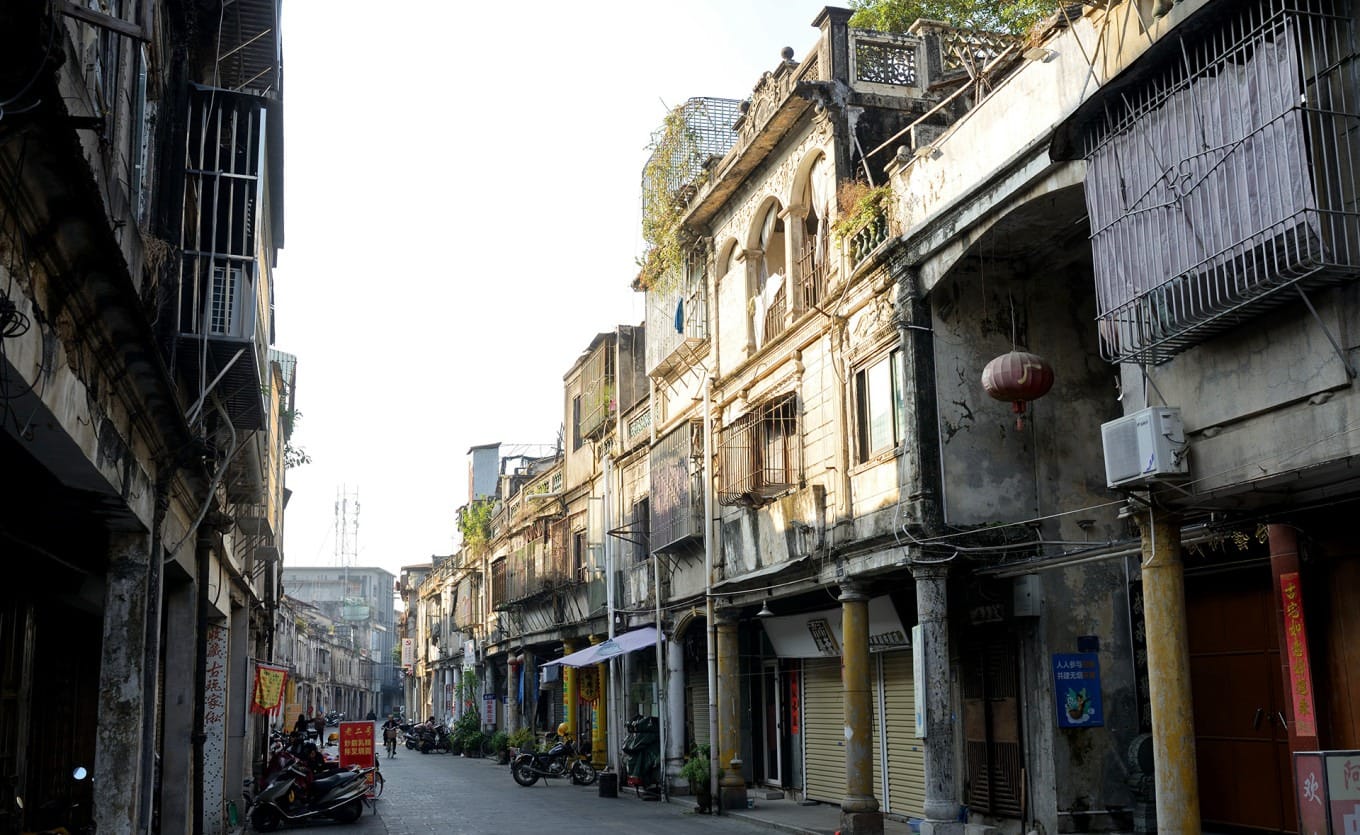
The street welcomes visitors free of charge, located in Rongcheng District (榕城区) at Zhongshan Road (中山路). Though the buildings show their age, the continuous arcade provides welcome shade as you explore this open-air museum of architectural fusion, where every column and cornice tells stories of merchants, scholars, and the passage of time.
Practical tip: You can prioritize one signature stop around the area, and you should adjust timing and budget based on transport and peak hours.
Jieyang’s Ancient ‘Forbidden City’
Tucked behind Sixian Middle School (思贤中学) at the northern end of Zhongshan Road, you’ll discover one of Jieyang’s most intriguing historical fragments: a weathered stretch of stone wall that locals call the ‘Forbidden City’ (禁城). This is the last surviving section of the city’s ancient inner fortress, a remnant that has witnessed nearly seven centuries of turbulent history.
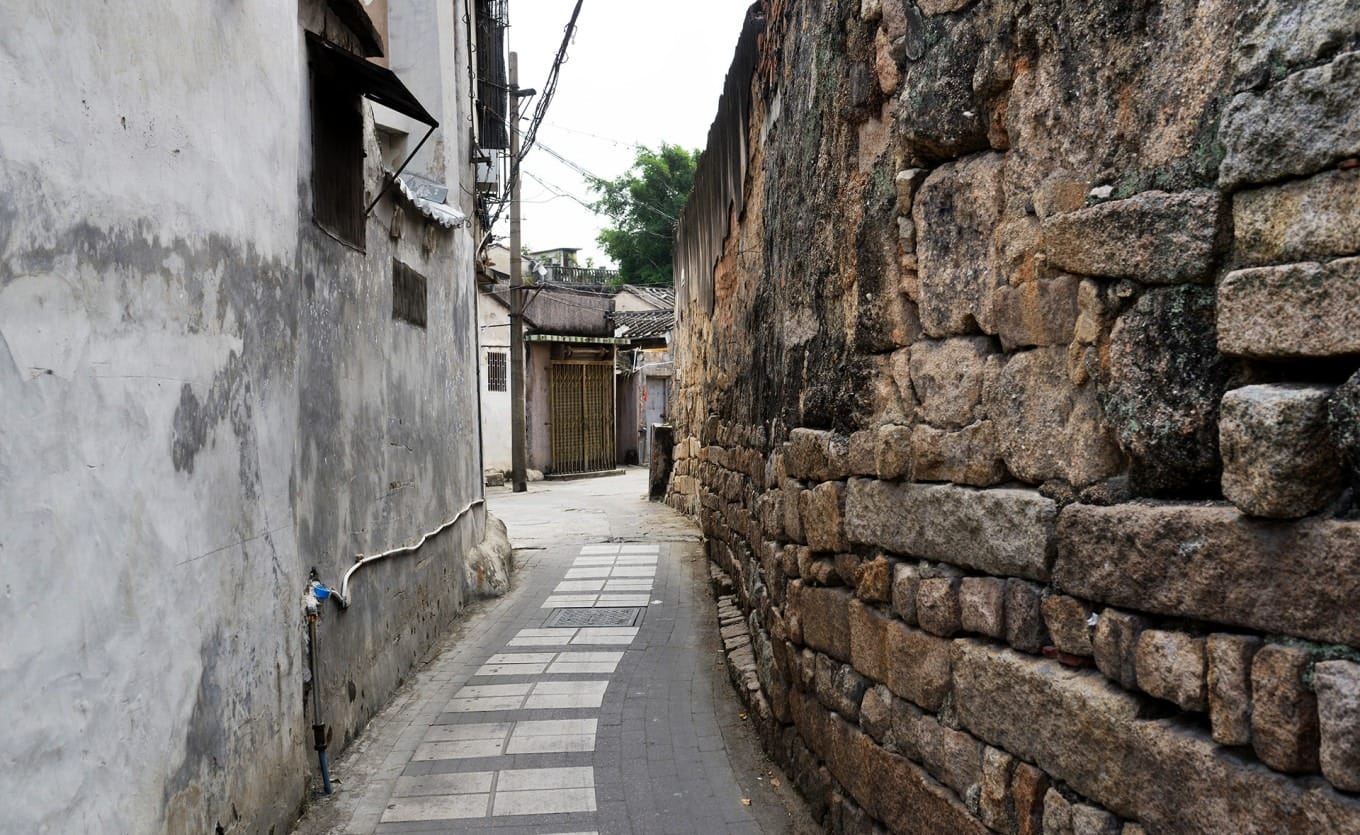
The wall dates to 1352, when Yuan Dynasty official Da Budai ordered its construction to defend the county government office from rebel forces. Laborers toiled for four years to raise these stone fortifications, yet the defenses proved futile; in 1356, rebel leader Chen Sui and his Zhangzhou troops breached the city shortly after completion. During the Ming Dynasty, authorities expanded both inner and outer walls and opened five gates including the famous Jinxian Gate, but urban development during the Republican era destroyed the outer defenses, leaving only this inner section near the school.
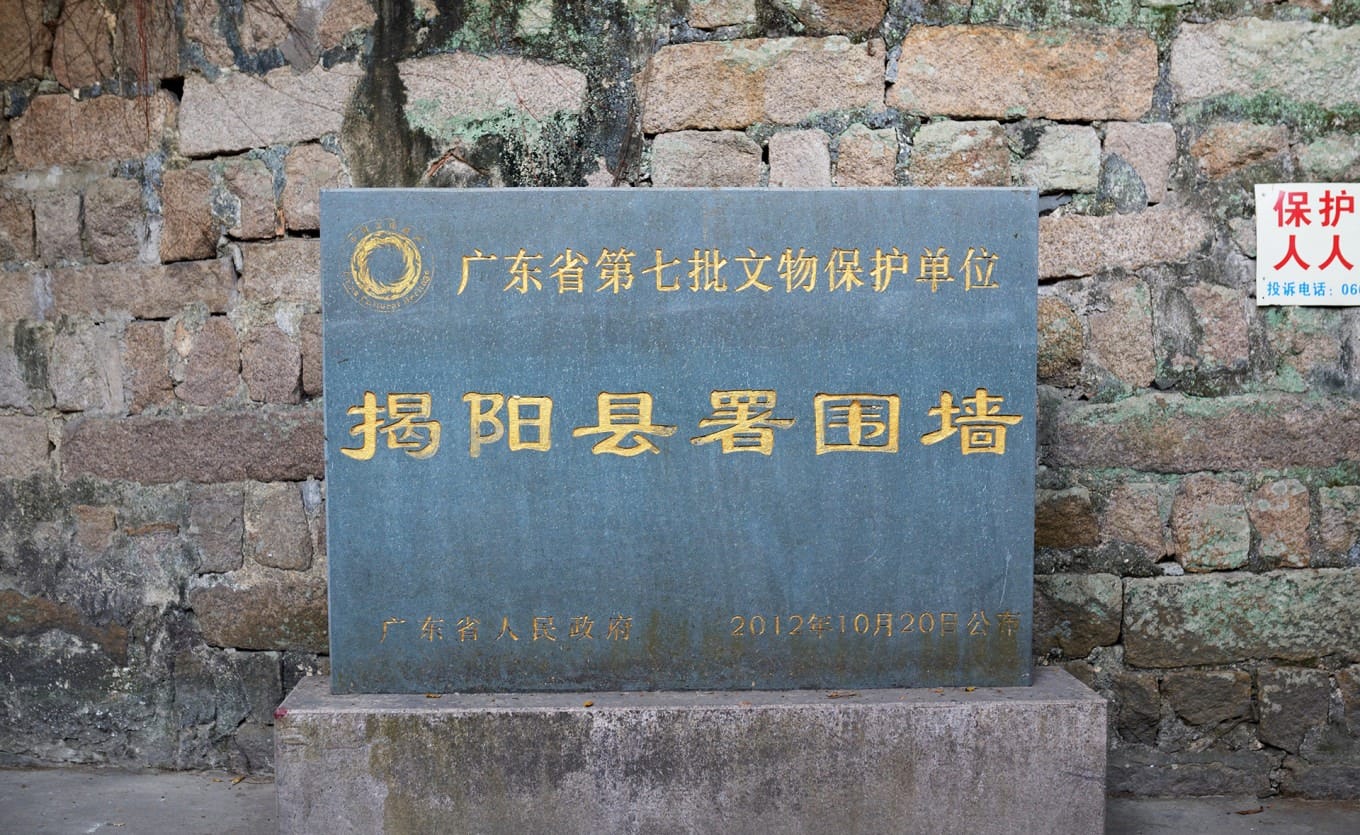
Today, three large stone tablets stand at the eastern bend of the wall, marking the spot that earned the site its mysterious name. Originally called Jincheng (金城 / ‘Metal City’), a reference to the idiom meaning ‘solid as gold and impregnable,’ the name was gradually corrupted to Jincheng (禁城 / ‘Forbidden City’) due to the similar pronunciation. While certainly less imposing than Beijing’s palace complex, this linguistic drift has left Jieyang with its own uniquely named ancient monument.

At the western terminus stands the Mingxian Ancestral Hall (名贤公祠), built in 1395 to honor Huang Huanguo (黄焕国), a local who rose to become Tongpan (通判) of Tingzhou (汀州). Though modest in official rank, Huang distinguished himself by suppressing the Qianzhou (虔州) bandit uprisings during the Shaoding era, earning him the veneration of locals as the ‘Living Buddha of Western Fujian’ (闽西生佛) and an imperial plaque reading ‘Family of Distinguished Worthies’ (名贤世家) from Emperor Lizong. The current structure was rebuilt in the early 2000s after serving as a factory and suffering tornado damage; inside, you can view a pair of stone lions and stone candles relocated from Huang’s tomb.
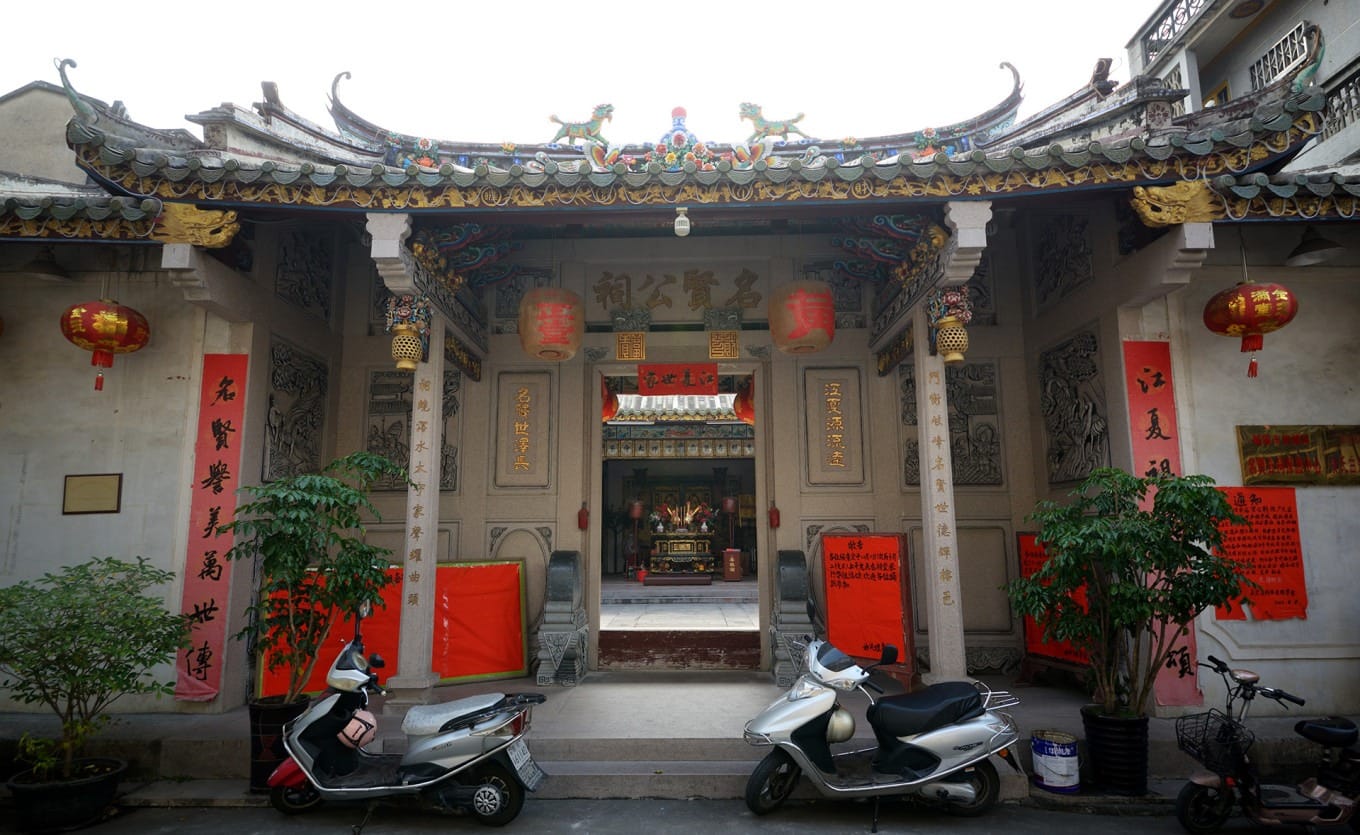
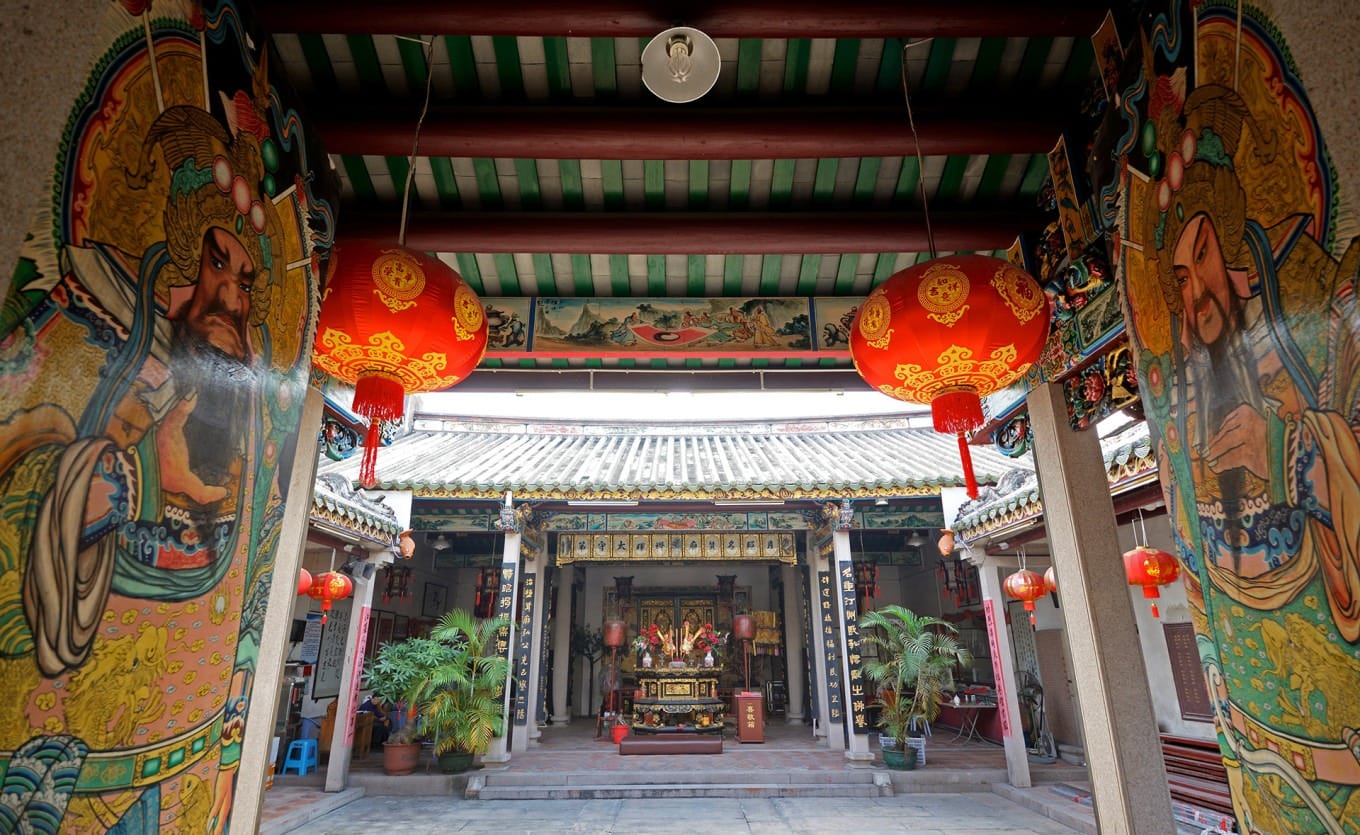
The site offers free admission and provides a quiet contrast to the surrounding city streets. To find this hidden remnant, head to the north side of the intersection between Hanci Road (韩祠路) and Sixian Road (思贤路) in Rongcheng District (榕城区), Jieyang City (揭阳市).
Ding Family Guanglu Ancestral Hall: A Qing Dynasty Masterpiece
Tucked away in the old quarters of Jieyang, the Ding Family Guanglu Ancestral Hall (丁氏光禄公祠) rewards curious travelers with one of the finest examples of Chaoshan architecture—and a fascinating glimpse into China’s late Qing Dynasty reform era. Located just west of the city center along Yuandong Road (元鼎路)—historically known as “Chai Street” (柴街 (local term)) or Firewood Street—the complex sits across the Yujiao Stream (玉窖溪) from the ancient Jincheng ruins. Despite its monumental scale, the hall rarely draws crowds, making it an ideal detour for those exploring the city’s backstreets.
The site carries remarkable layers of history. It originally served as the residence of Huang Qiyu (黄奇遇), one of the revered “Later Eight Worthies of Chaozhou” (潮州后八贤 (local term)) and a Minister of Rites during the Southern Ming period. It later passed to a local Fang family gentry, earning the nickname “Fang Residence” (方厝 (local term)), before catching the eye of Ding Richang (丁日昌), who was serving as Governor of Jiangsu Province (江苏巡抚) during the Tongzhi reign. Ding transformed the property into a grand family compound, completing construction in 1878 during the Guangxu era. In modern times, the complex has served as the Jieyang County People’s Hall and the local Party School before its current incarnation as a protected cultural monument.
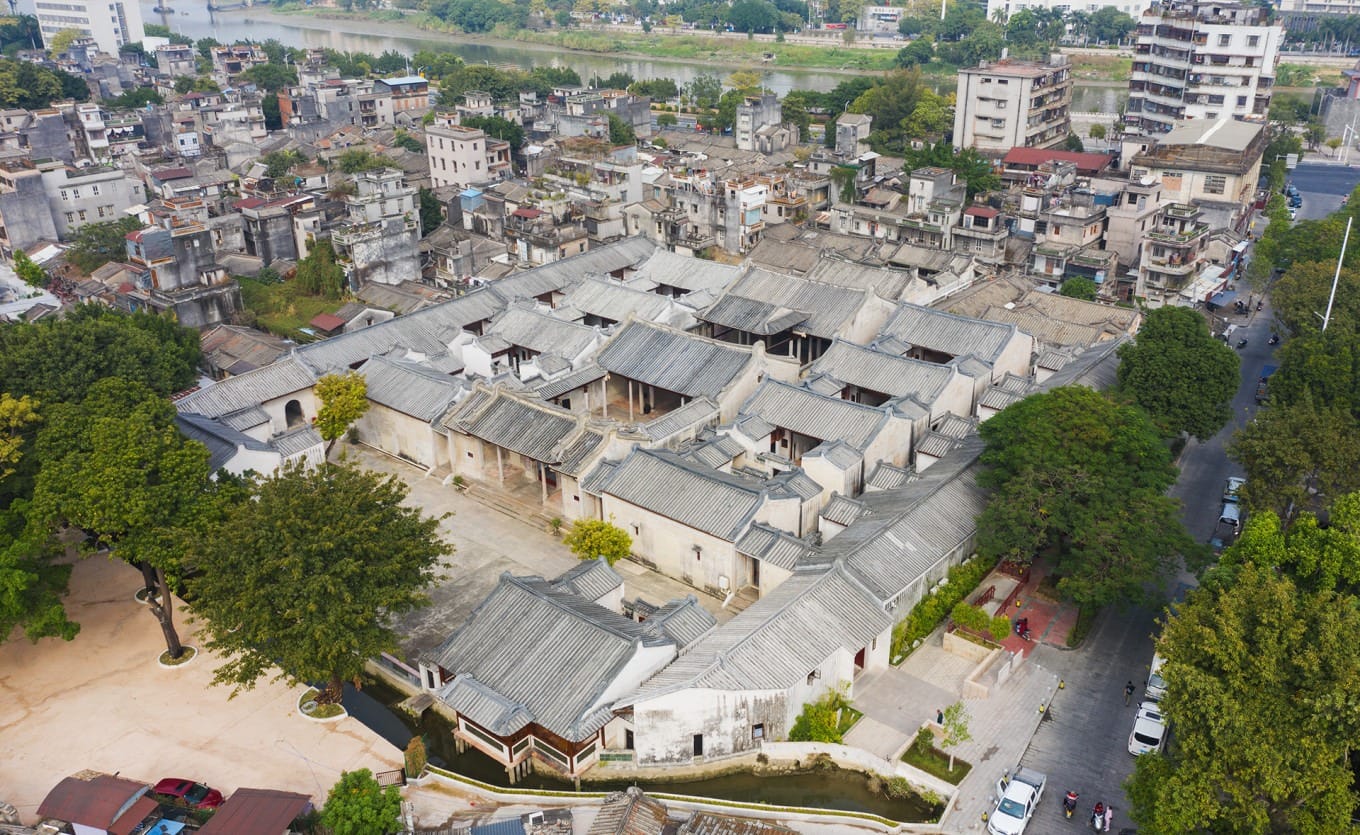
Designated a National Key Cultural Relic Protection Unit (第七批全国重点文物保护单位), the hall now houses the Ding Richang Memorial Museum. Following a two-year restoration project completed in 2024, the site reveals its original splendor, though exhibition spaces remain minimal, allowing the architecture itself to take center stage.

The layout follows the prestigious “Hundred Birds Worshiping the Phoenix” (百鸟朝凰 (local term)) pattern—the highest grade of residential architecture in Chaoshan culture. The compound faces south with the ancestral hall forming the central axis, flanked by symmetrical wings. Containing ninety-nine rooms plus a single basement, the complex totals one hundred chambers, symbolizing completeness. From above, the arrangement cleverly forms the traditional Chinese character “興 (local term)” (xing), representing prosperity and thriving descendants—a deliberate architectural blessing.
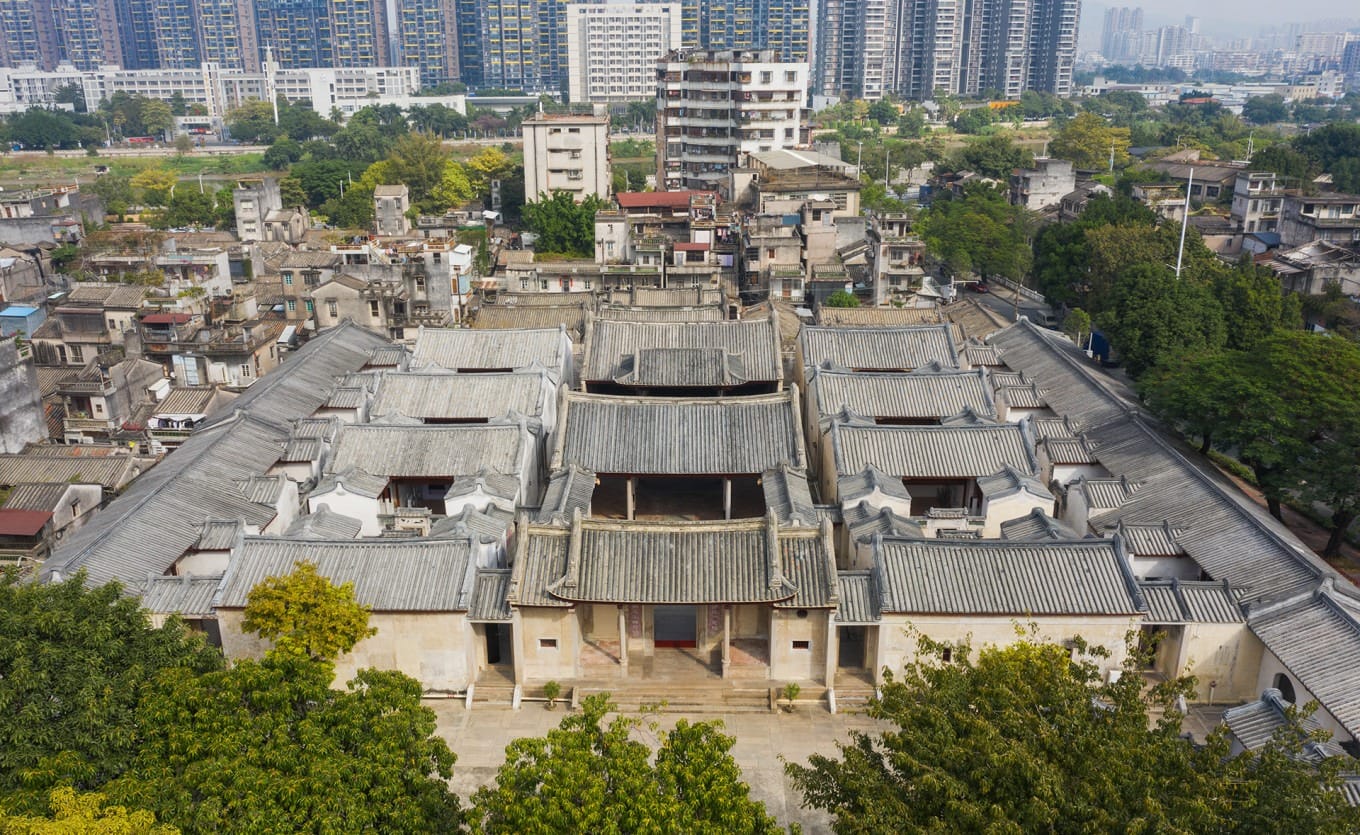
The monument honors Ding Richang (丁日昌), a pivotal figure in the Self-Strengthening Movement who hailed from Fengshun County (then under Chaozhou Prefecture). After studying in Jieyang’s Rongcheng district as a youth, he rose from a county-level academic instructor to become Governor of both Jiangsu and Fujian provinces (福建巡抚), eventually coordinating coastal defense and foreign affairs. A pragmatic modernizer, Ding championed the construction of the Jiangnan Arsenal (江南机器制造总局), the Kaiping Mining Bureau (开平矿务局), and Taiwan’s first railway (台湾铁路). He spent his final years in Jieyang, and posthumously received the imperial title “Guanglu Grand Master, General Jianwei” (光禄大夫建威将军 (local term)) with first-rank honors—hence the hall’s name.
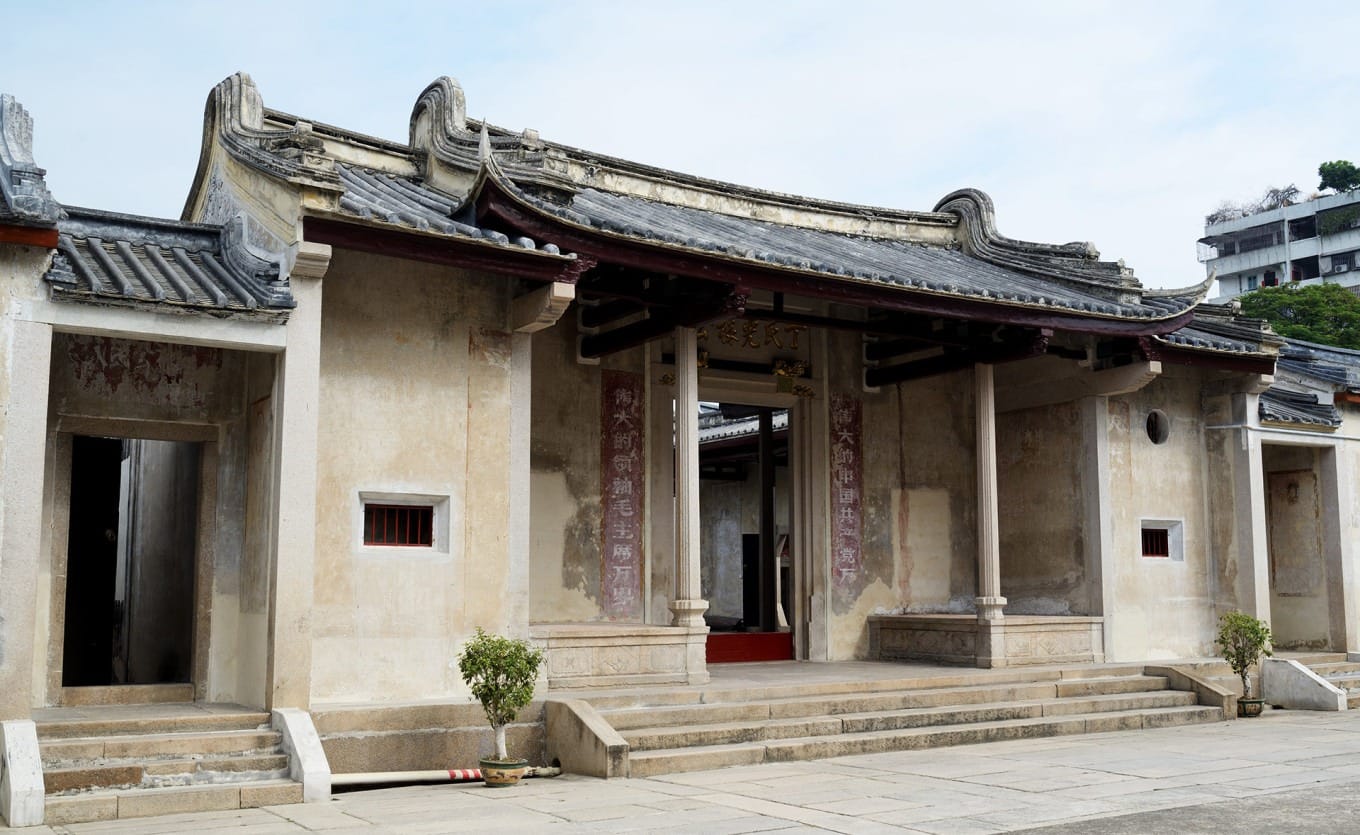
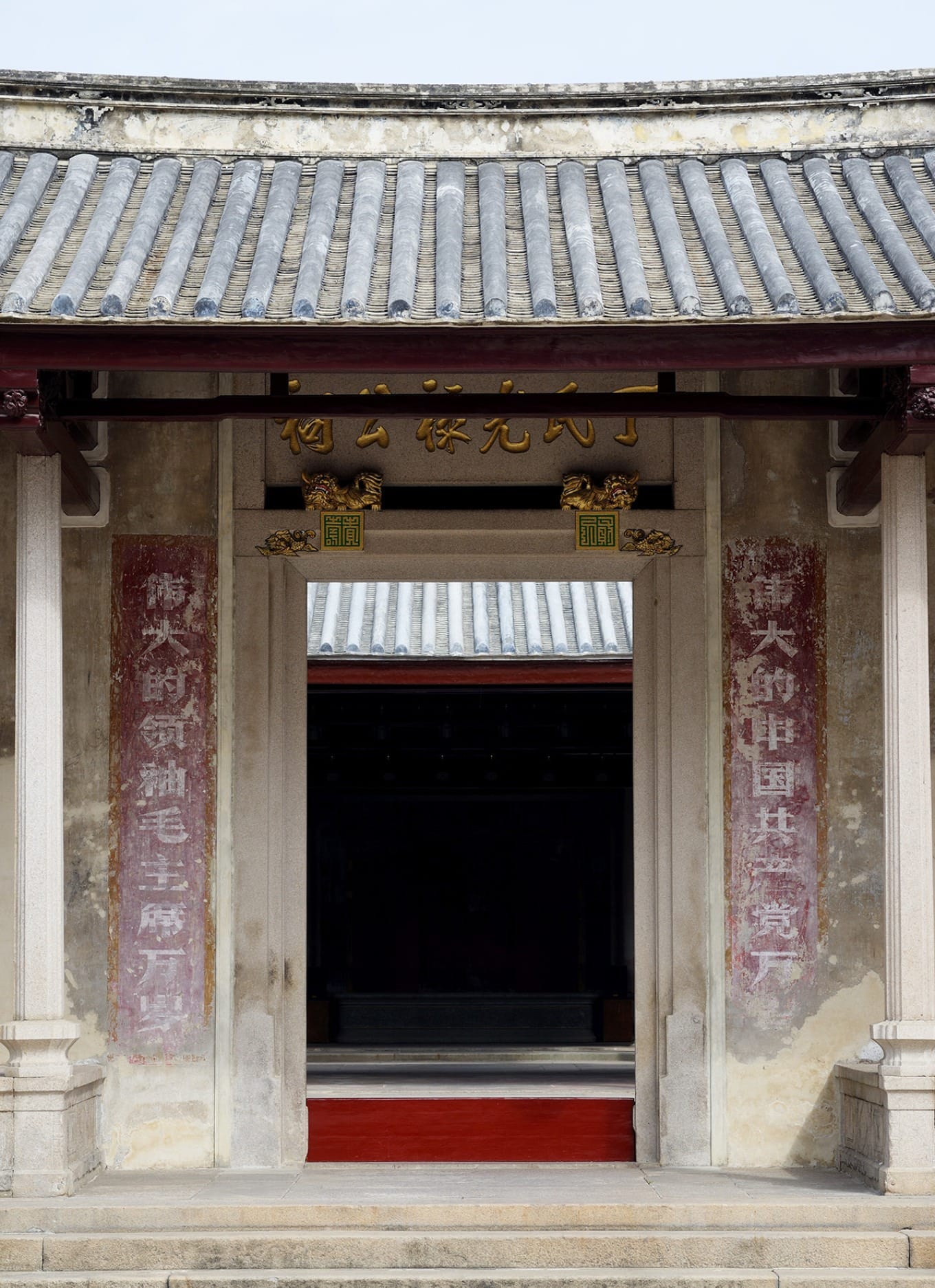
Step into the main hall, where ancestral tablets are enshrined beneath a roof completely covered in wooden tiles except for the central skylight. While the overall structure adheres to traditional Chaoshan aesthetics, look closely at the painted beams, roof ridges, and woodcarvings: Western architectural motifs blend seamlessly with local craftsmanship, marking this as a standout example of Sino-Western fusion in Chaozhou heritage architecture.
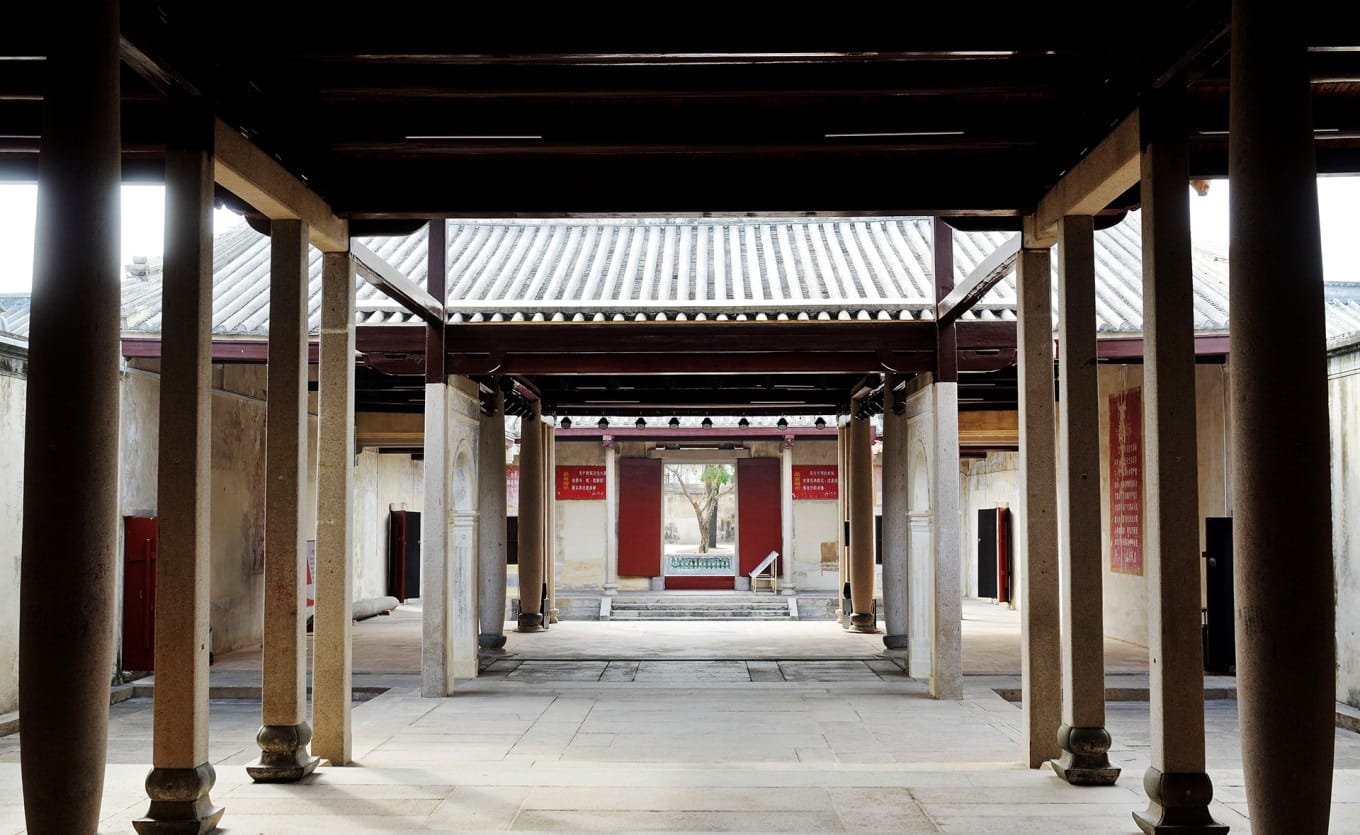
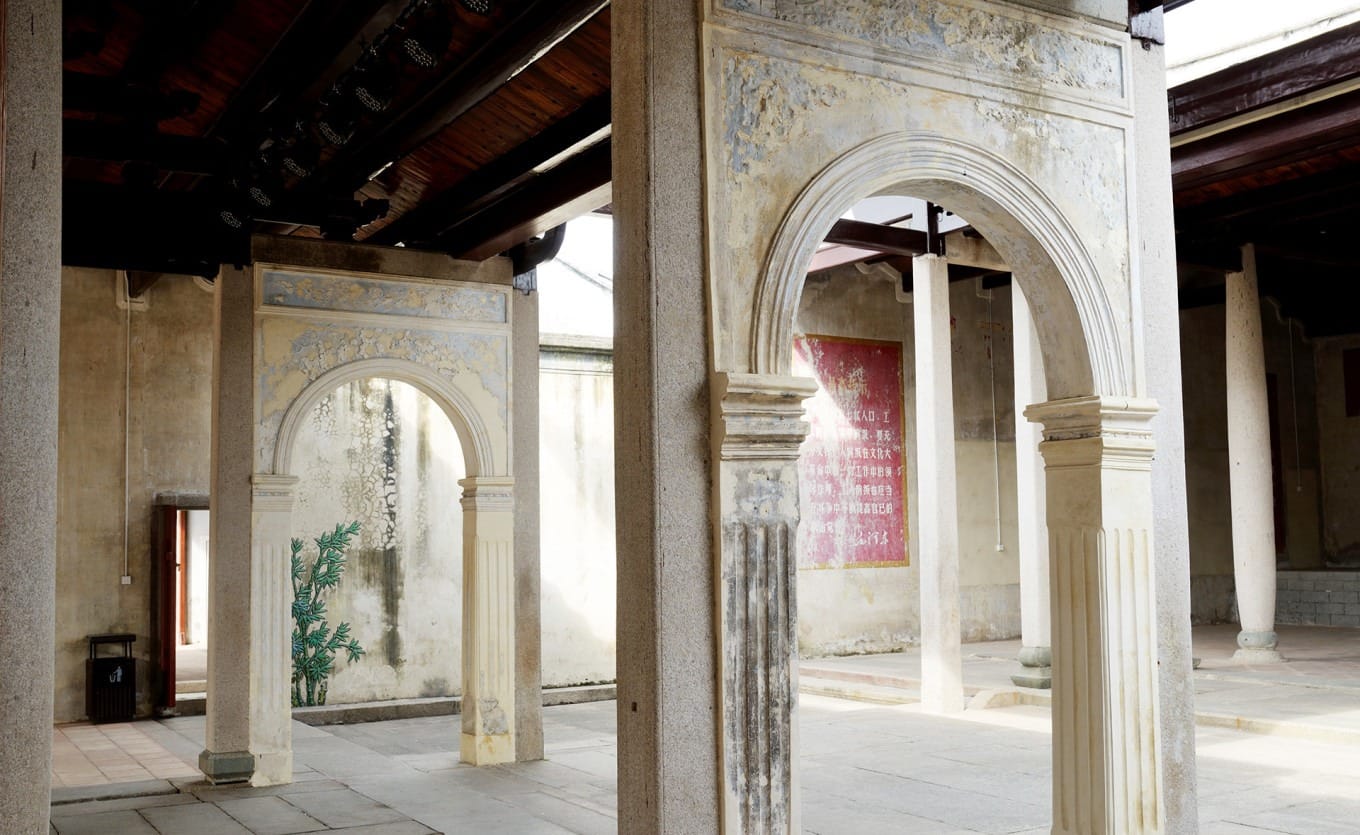

Exploring east and west, you’ll find two straight lanes protecting the main hall, each containing four small courtyard compounds. Wander into any of these satellite courtyards to discover self-contained units complete with master bedrooms, guest quarters, and reception halls—intimate worlds within the grand estate.

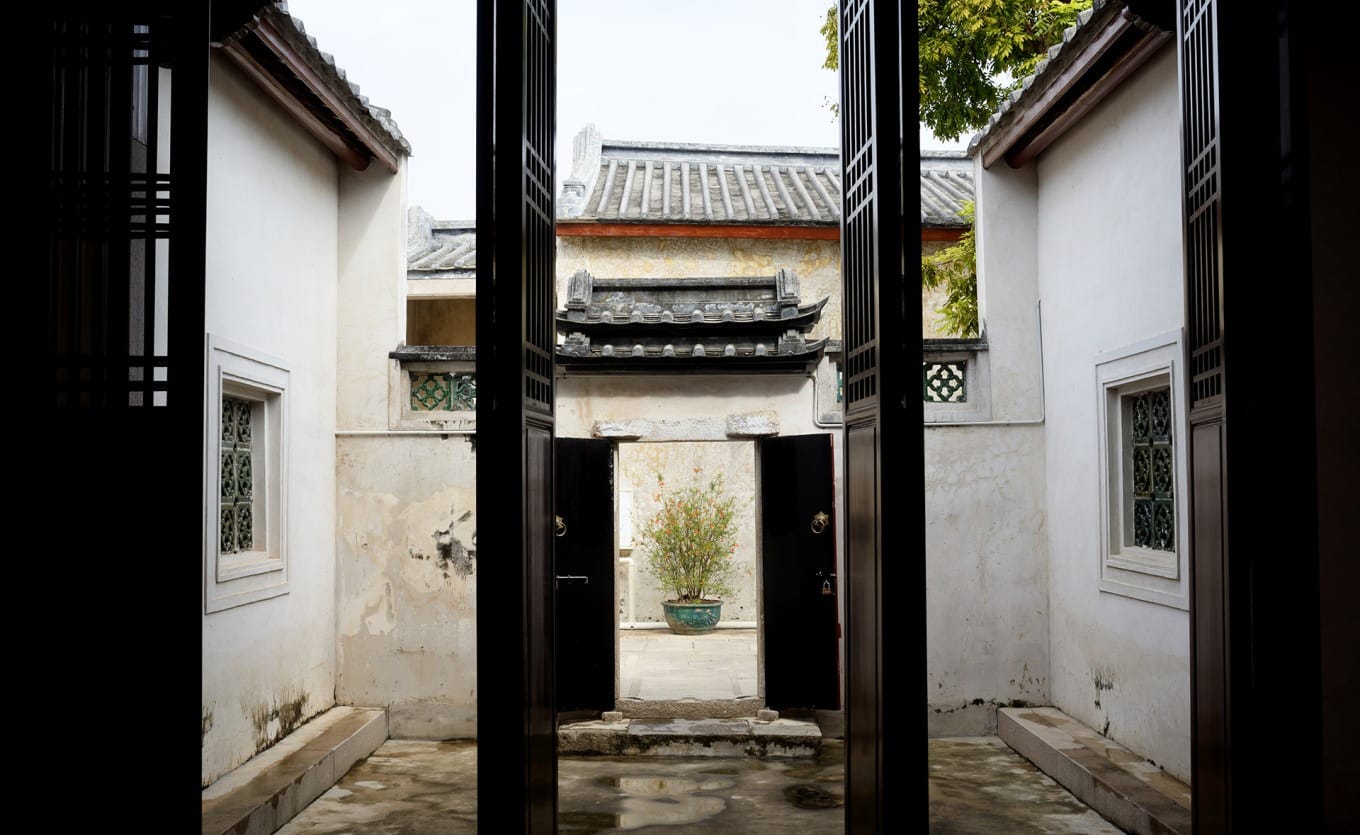
- Address: Southwest side of Beimen Primary School, Datong Street, Rongcheng District, Jieyang City (揭阳市榕城区打铜街北门小学西南侧)
- Admission: Free
Ancient Banyan Martial Temple
Hidden along Tianfu Road in Jieyang’s Rongcheng district, the Ancient Banyan Martial Temple (古榕武庙) rewards curious travelers with one of the most spectacular collections of Chaozhou wood carving in existence. Originally constructed in 1601 during the 29th year of the Wanli reign, this sanctuary arose during a turbulent era when Japanese pirates plagued China’s southeastern coast. Local militia commissioned this temple to honor Guan Yu, the God of War, seeking divine protection for garrison troops defending the region against maritime invaders.
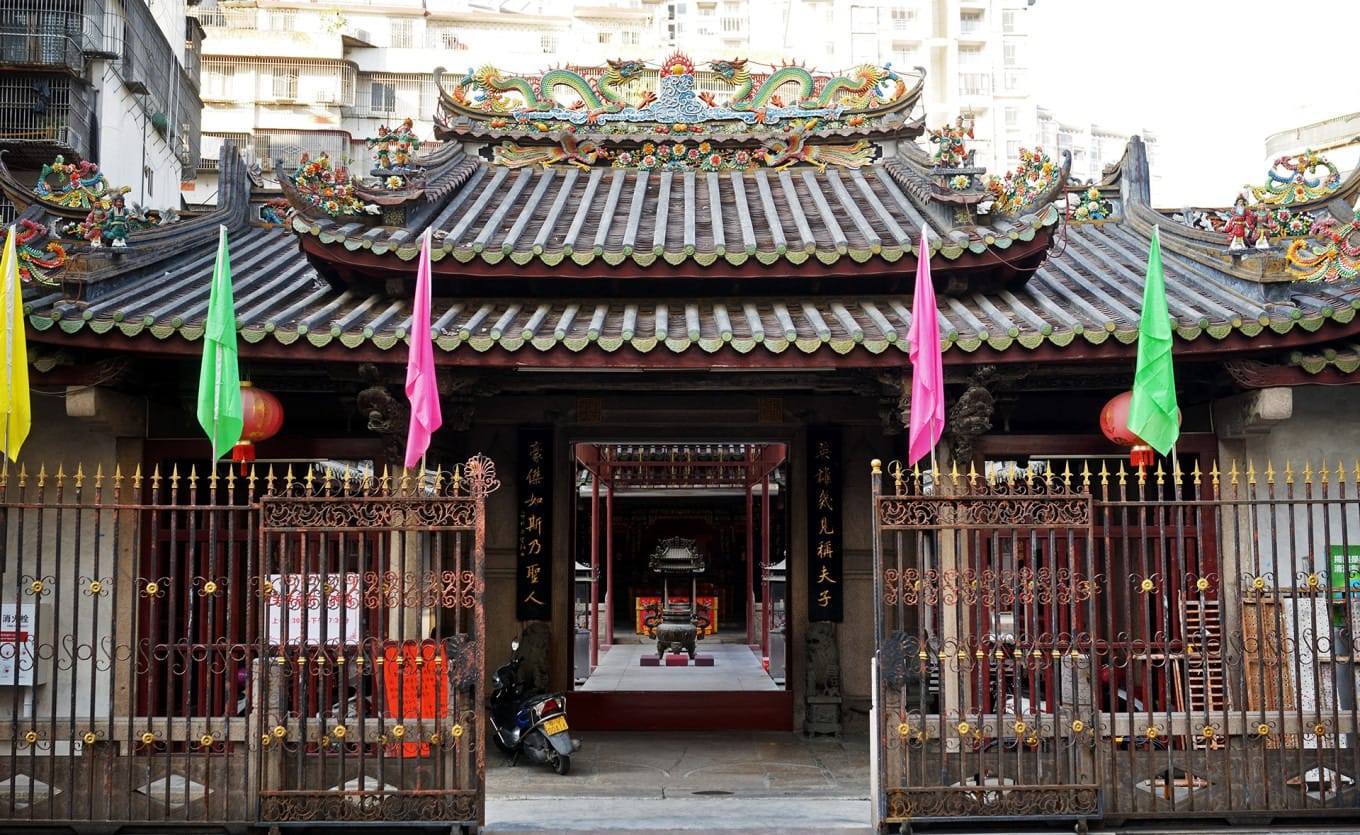
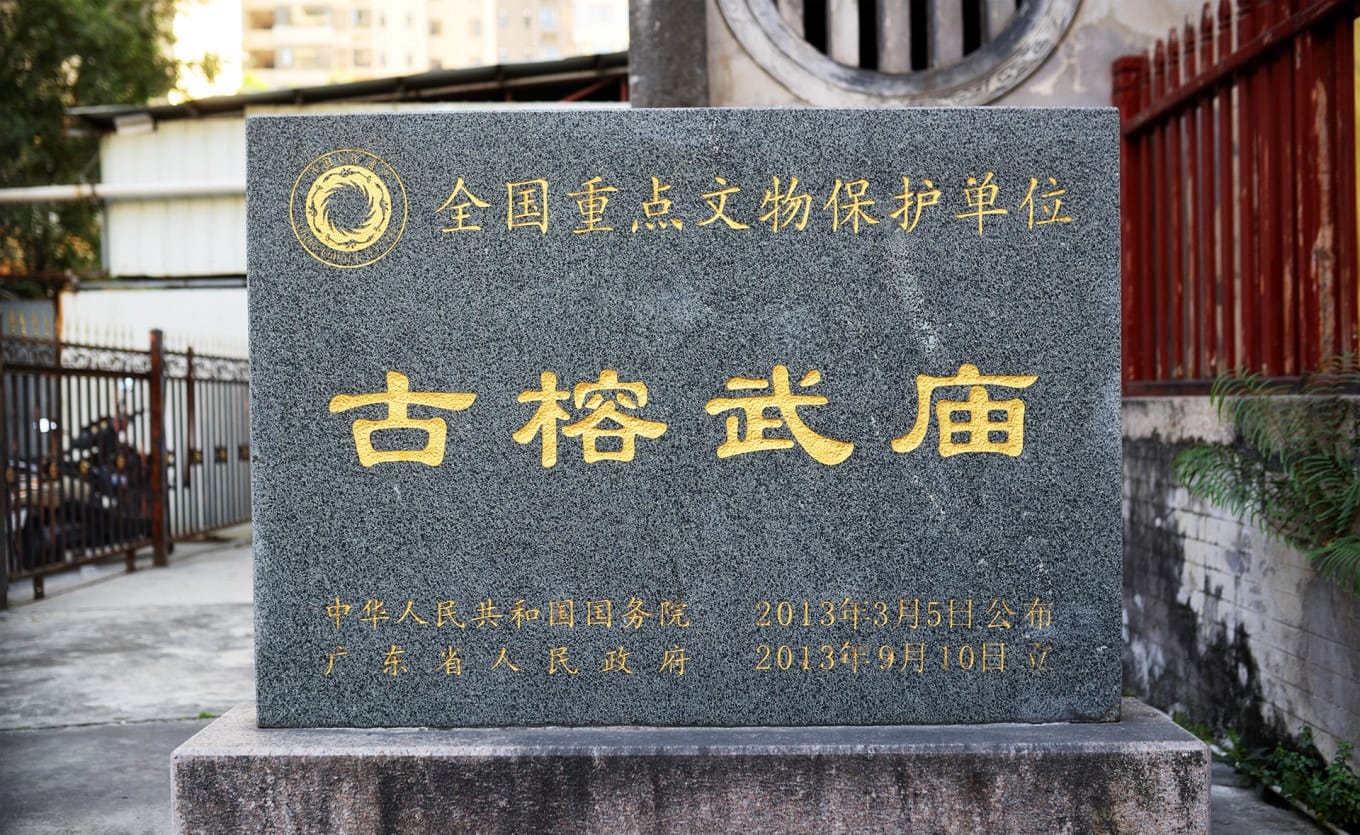
Designated a National Key Cultural Relic Protection Unit in 2013, the temple follows a traditional three-entry, three-bay courtyard layout. Unlike the stone-dominated Huang’s Ancestral Hall in Chaozhou, this structure employs traditional brick-and-wood construction. The true masterpieces await on the gate tower beams, where dense Chaozhou wood carvings (潮州木雕) cover every surface—works so exquisite that art historians consider the building a de facto open-air wood carving museum.
Step beneath the gate tower and look upward to discover a dense universe of symbolic creatures. Dragon-head beams (龙头屐) extend from the column tops, their serpentine forms designed to invoke the dragon’s power to summon rain and extinguish fires. Nearby, stylized lions (狮子) display exaggerated, anthropomorphic heads that lend them an almost playful, naive charm rather than ferocity. Watch for aquatic tableaus featuring crabs, fish, and shrimp nestled among water weeds, symbolizing peaceful seas and abundant prosperity; crabs clutching writing brushes specifically allude to academic success and scholarly dominance.
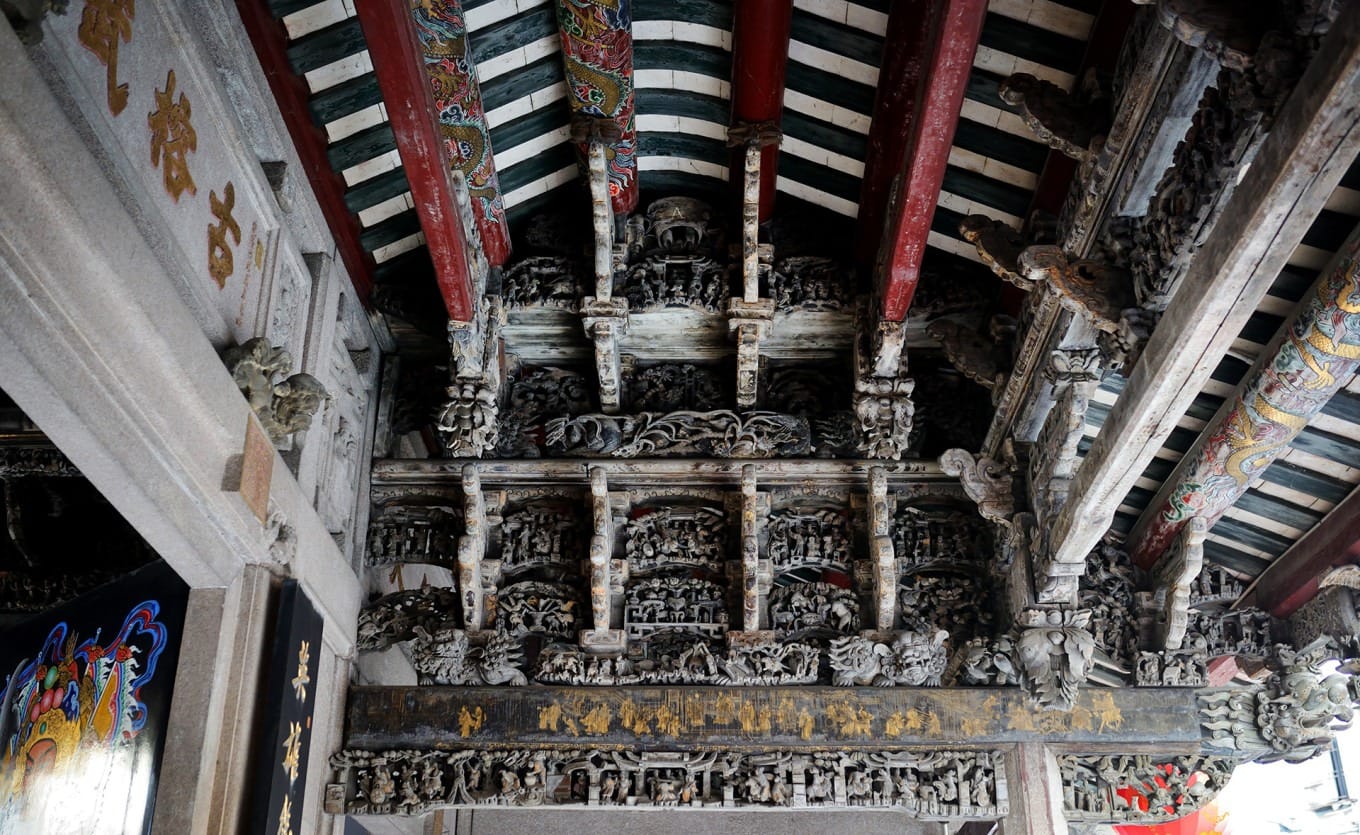
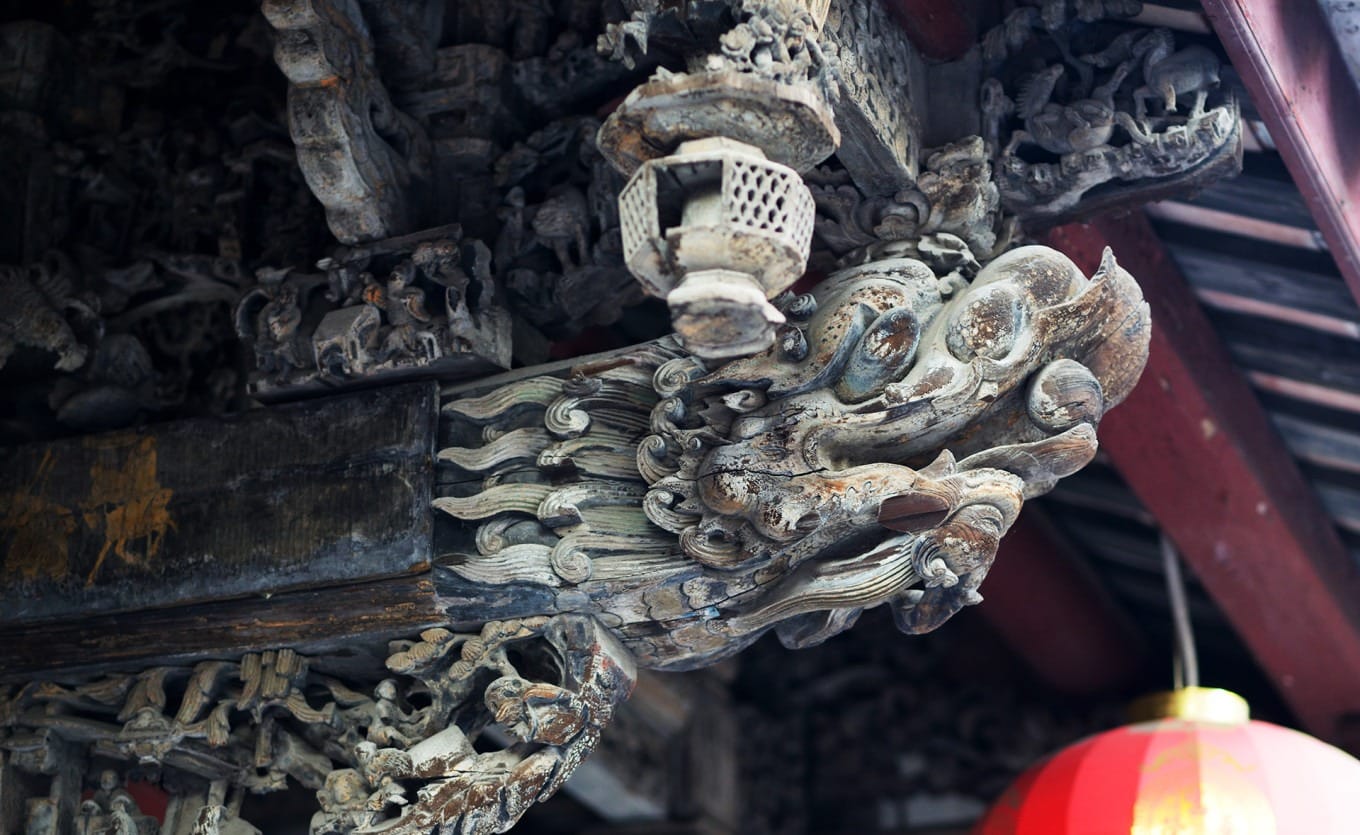

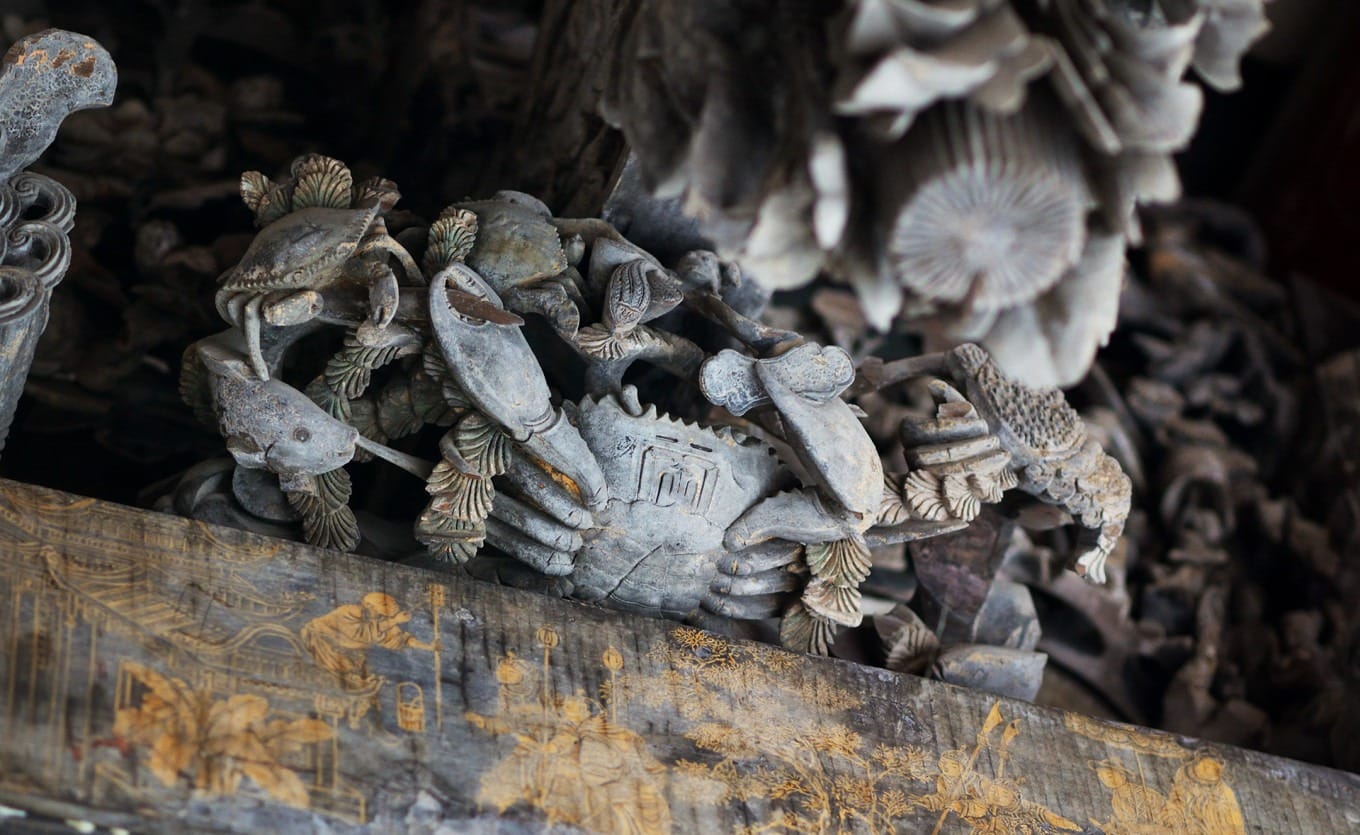
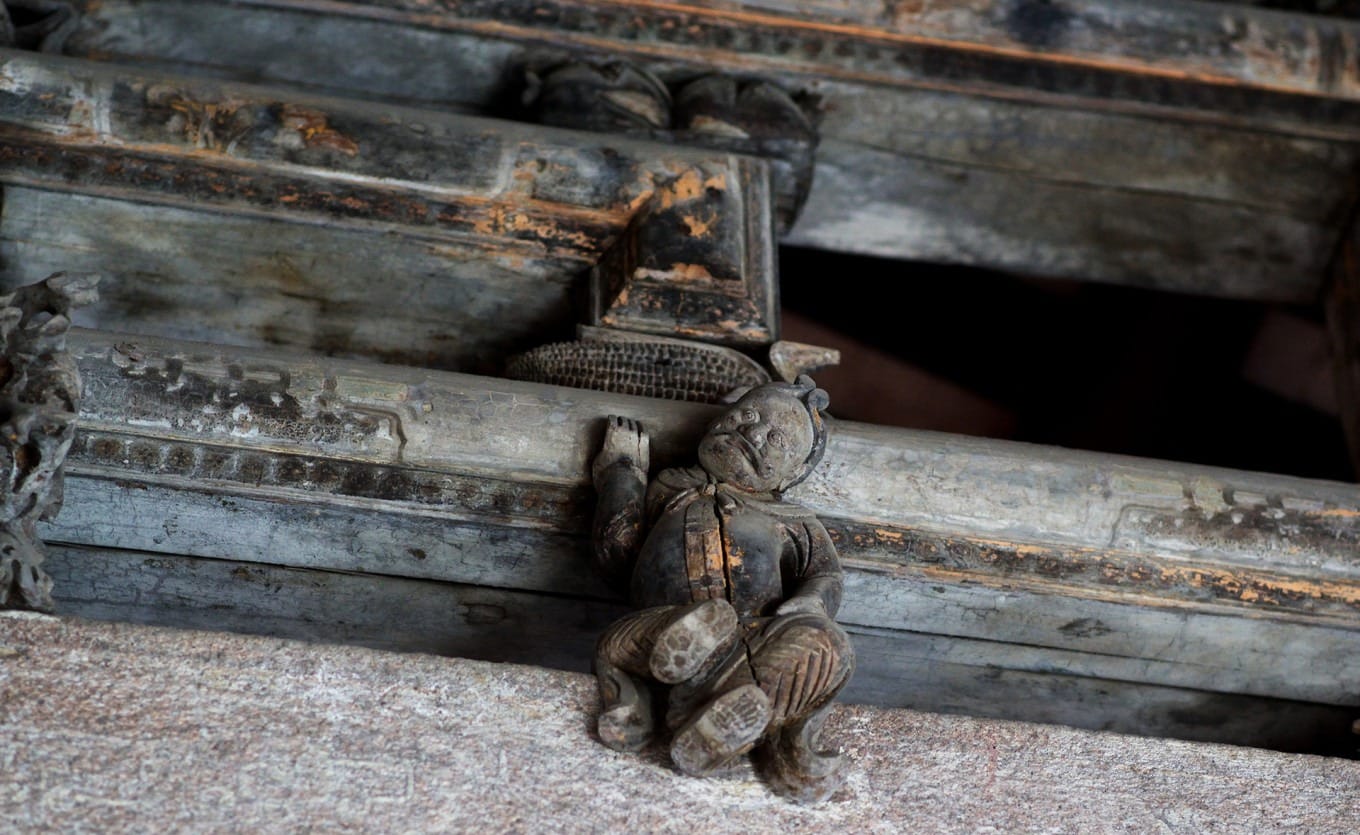
The carvings capture local daily life with surprising intimacy—miniature Chaozhou Kung Fu tea sets complete with teapots, cups, and tea boxes appear among the religious motifs. More poignantly, look for the ‘foreign devil’ (番鬼) figures carved as clownish supports beneath the beams, depicting foreign soldiers in subordinate poses. These images reflect local resentment toward imperialist forces during a vulnerable period in Chinese history, transforming religious architecture into powerful social commentary.
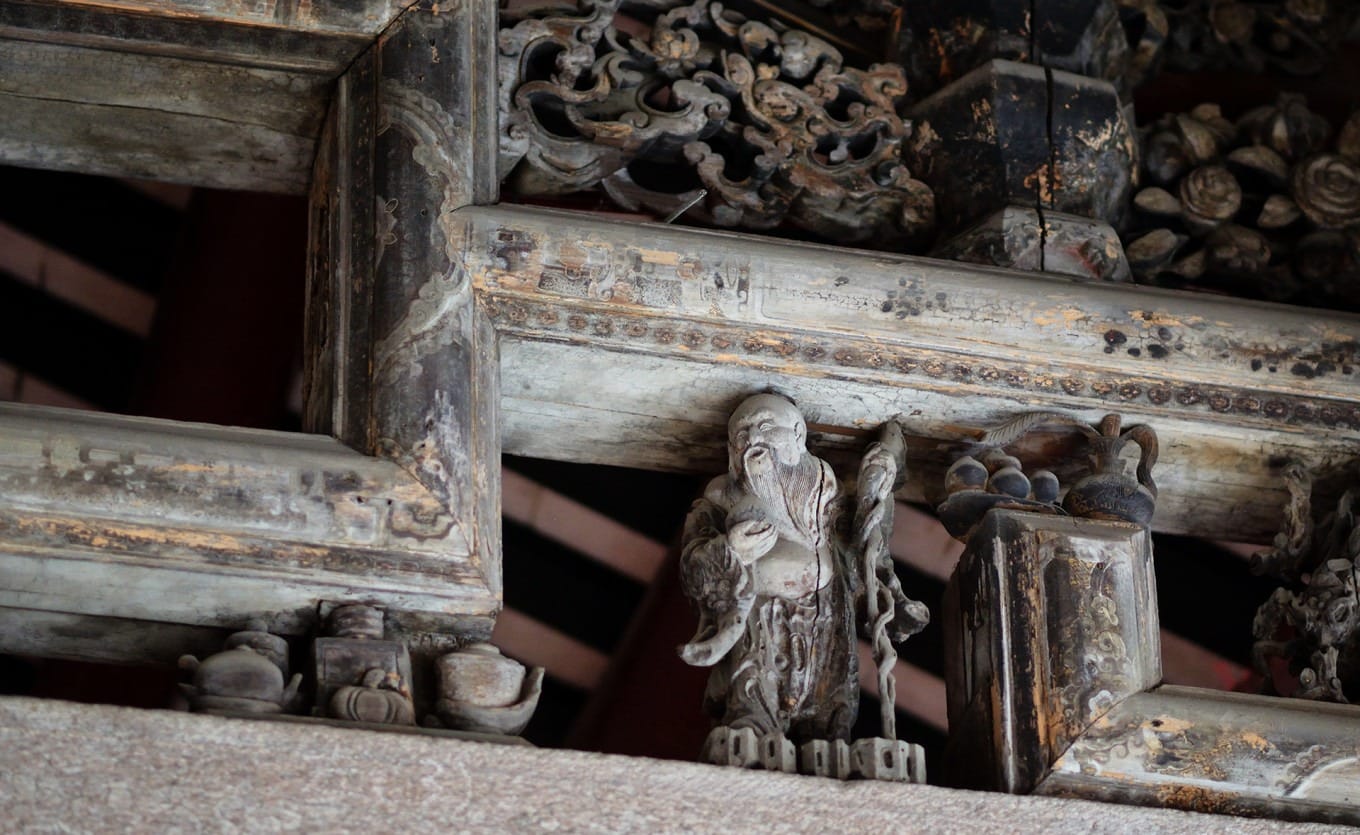
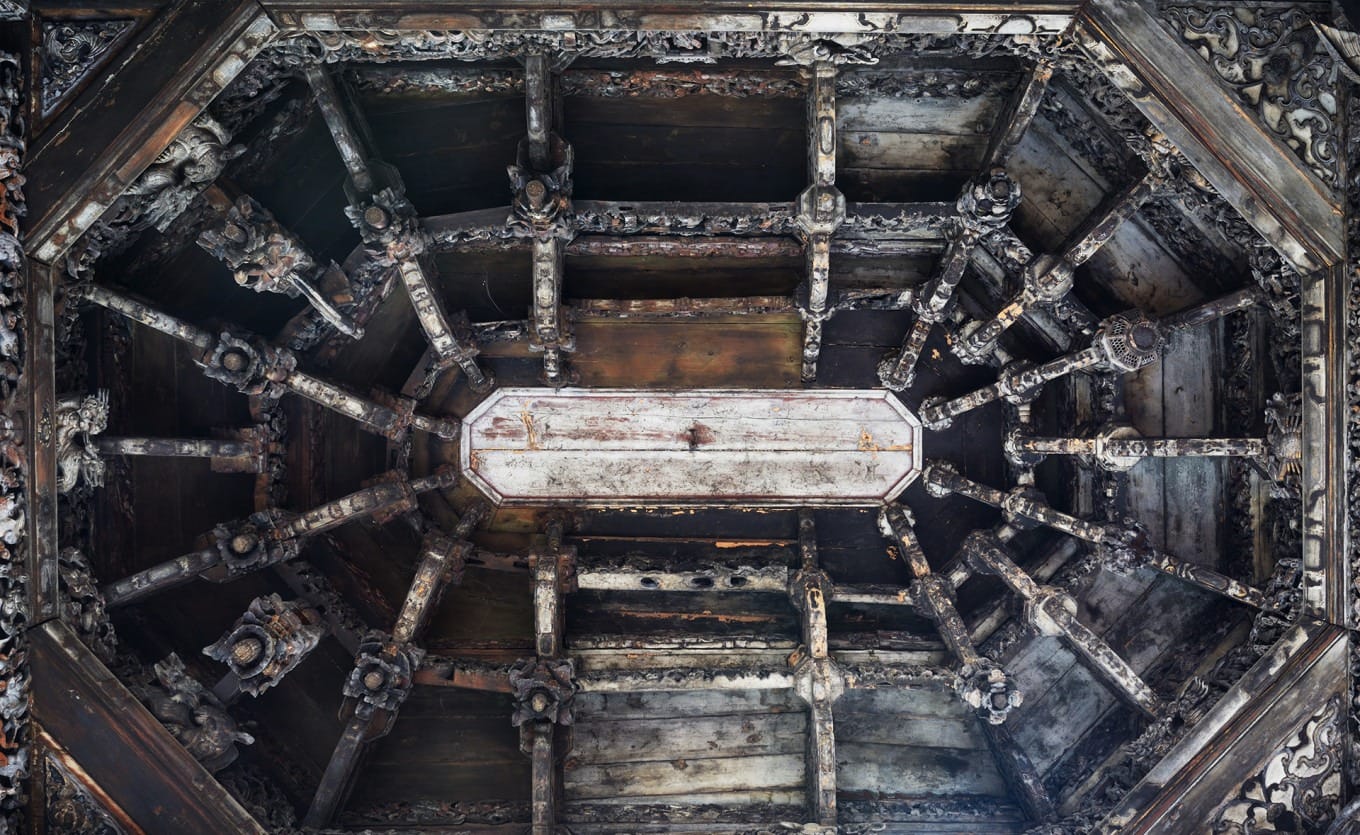
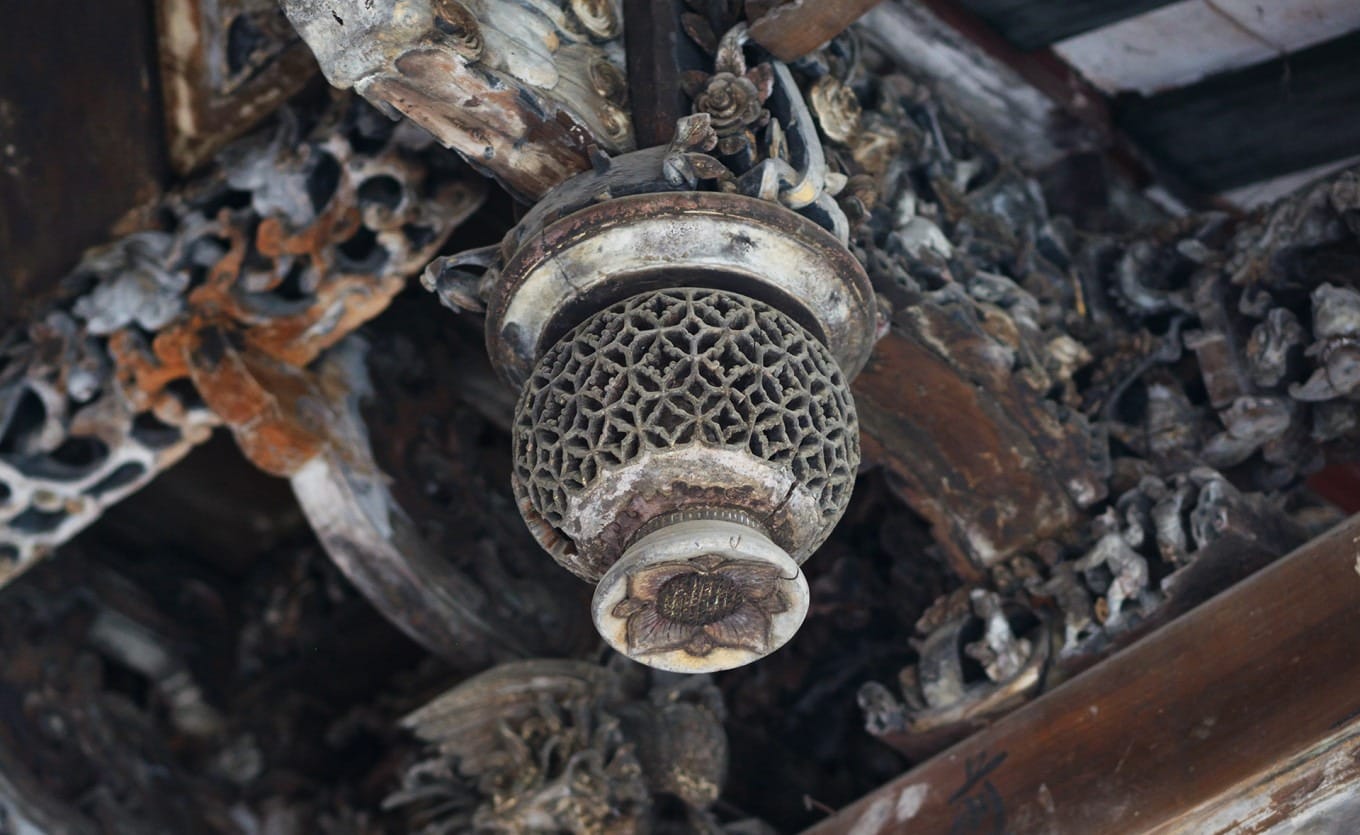
The architectural climax awaits overhead in the front hall: a Bagua-shaped caisson ceiling (八卦形藻井) that showcases the full repertoire of Chaozhou carving techniques—relief, round carving, and openwork. Suspended flower baskets display weave patterns so delicate you can distinguish individual bamboo strips, despite faded gold lacquer. Interestingly, the ceiling is not perfectly symmetrical; the left and right sections differ slightly in wood tone and technique, reportedly because two competing teams of craftsmen worked simultaneously to showcase their skills.
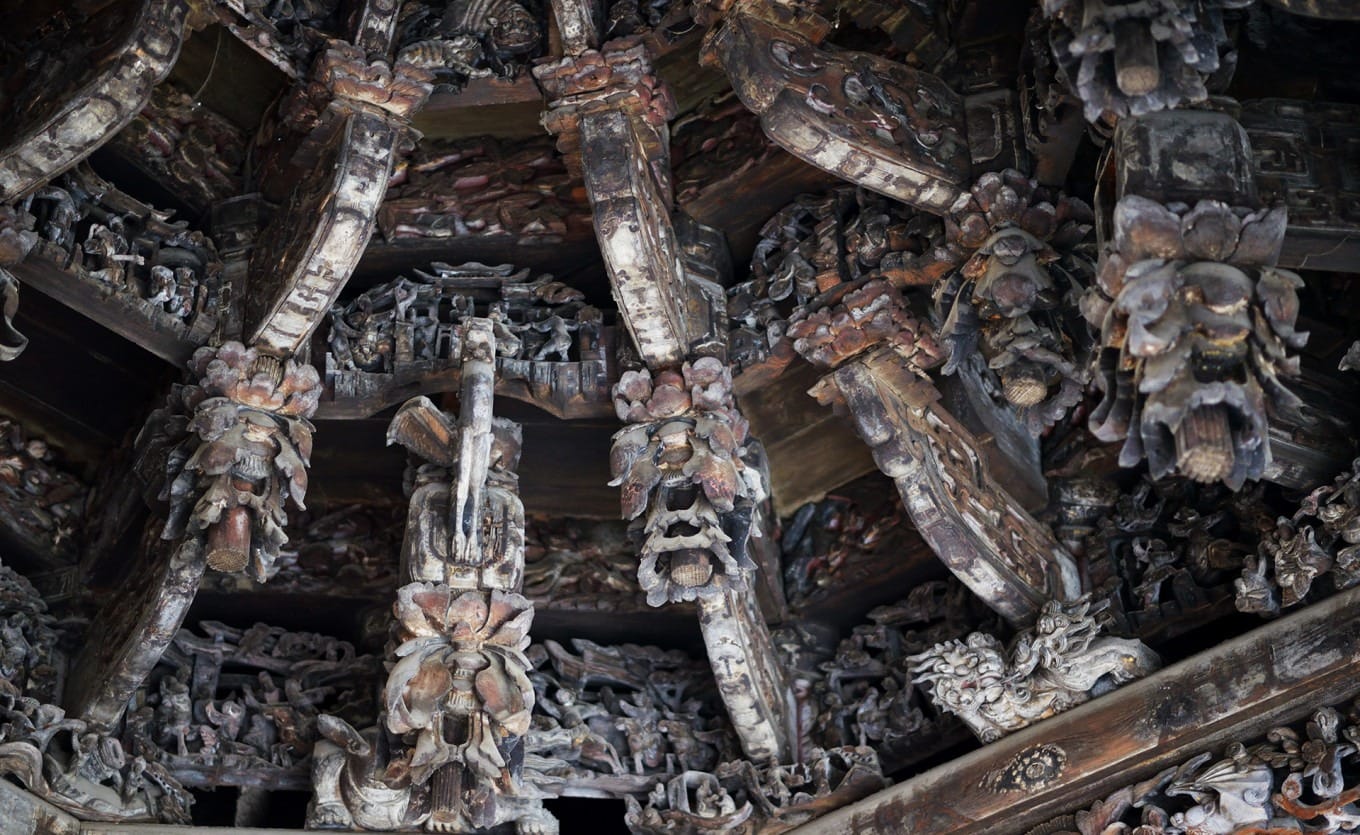
Inside the main hall, you will find two distinct statues of Guan Yu—one noticeably taller than the other. Similar to the arrangement at Jieyang’s City God Temple, one serves as a permanent seated effigy while the smaller figure functions as a portable ‘procession’ statue for annual temple festivals. Over the centuries, Guan Yu has evolved beyond his martial identity here to become a versatile deity believed to bring fortune and protection to the local community.

Directly facing the temple entrance stands a Qing Dynasty opera stage, one of the few surviving examples in Guangdong Province. Originally built for performances during religious festivals, this stage pairs with the one at the Baosheng Emperor Temple in Mianhu Town, Jiexi County, to form the celebrated ‘twin masterpieces’ of Jieyang temple architecture.
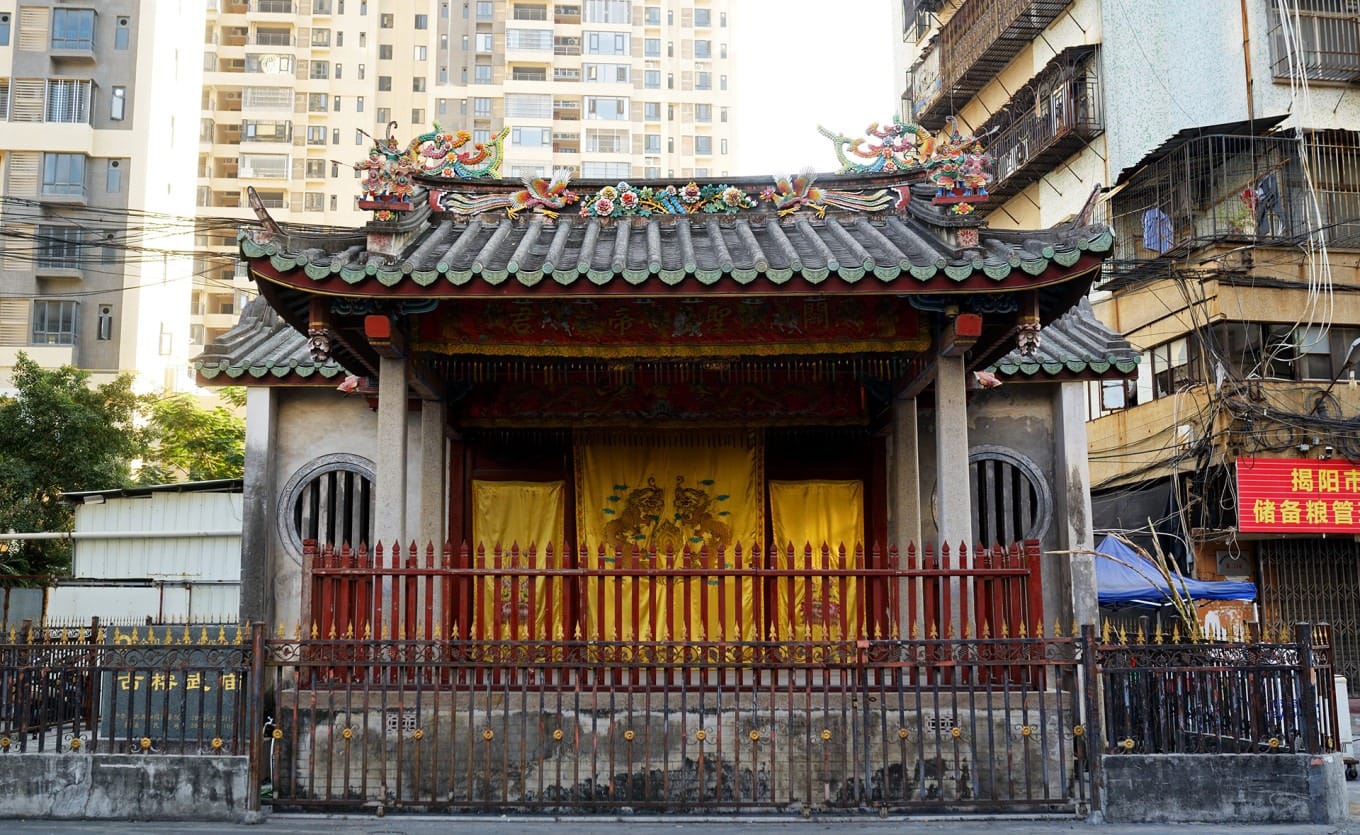
The temple welcomes visitors free of charge. You will find it at 揭阳市榕城区天福路北门 (Tianfu Road North Gate, Rongcheng District, Jieyang City). Allow at least an hour to fully appreciate the carved details, and bring a zoom lens or binoculars to examine the high ceiling work.
Rongjiang West Lake Park
Nestled in the southwest corner of Jieyang’s old city district, Rongjiang West Lake Park (榕江西湖公园) offers a refreshing counterpoint to the region’s ancient temples. While many Chinese cities boast historic West Lakes—such as those in Hangzhou, Fuzhou, Chaozhou, and Huizhou—steeped in centuries of classical poetry and imperial landscaping, Jieyang’s version carries a distinctly modern origin story. This is not a Ming-dynasty garden but a mid-20th-century creation that has evolved into the city’s most beloved communal backyard, where locals gather for morning tai chi and evening strolls.

To understand this landscape, look to the Rongjiang River (榕江), which splits into North and South branches as it flows through Jieyang. The South Branch (榕江南河 / Rongjiang South River), originating in Lufeng, Shanwei, serves as the main channel, carrying massive sediment loads downstream toward Paotai Town where it meets the North Branch and empties into the sea. Over centuries, these deposits formed numerous small sandbars, including the site now known as Ximen Sandbar (西门沙洲).
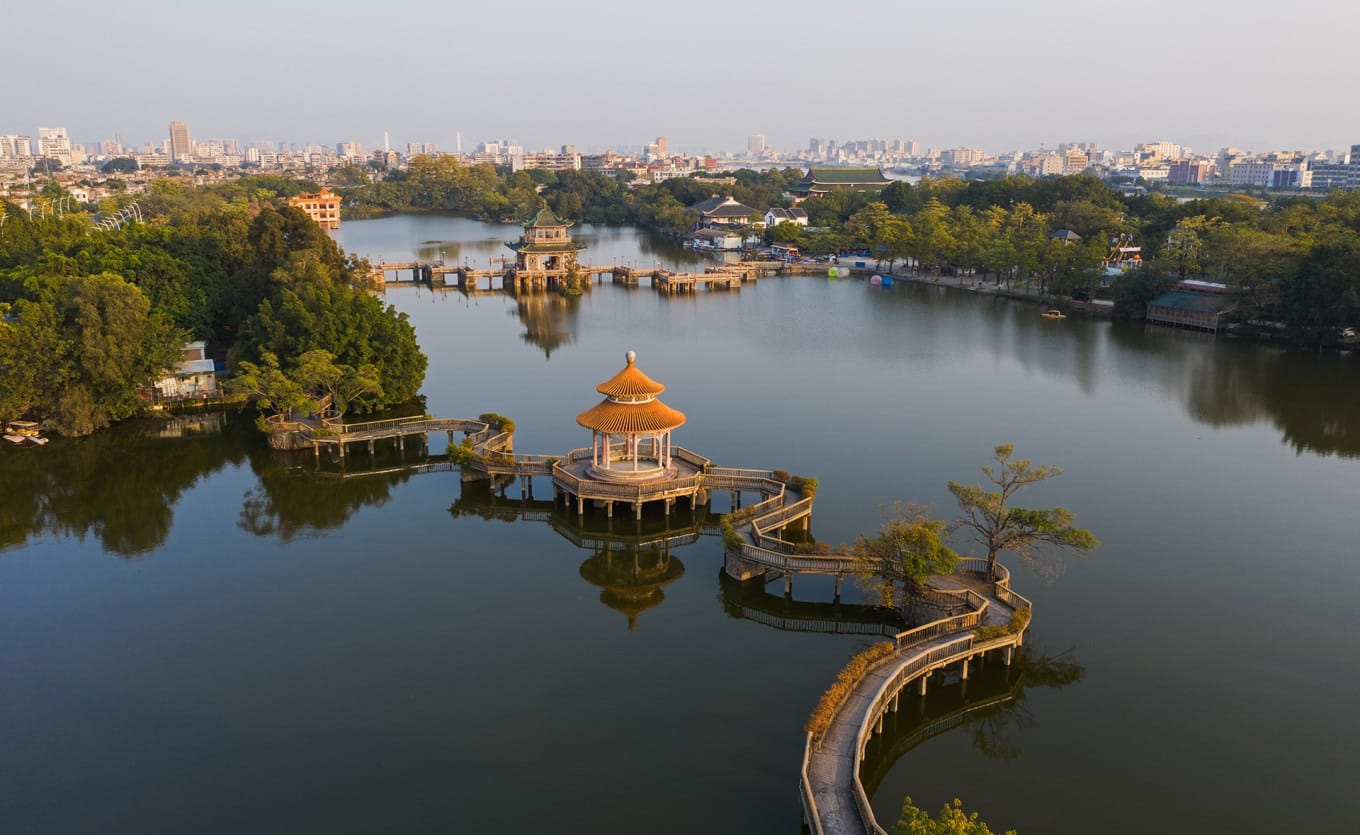
In 1958, to address the shortage of recreational space for residents, the local government organized a massive community effort to transform this barren river islet. Workers constructed earthen dikes and dredged the surrounding waters, converting the sandbar into an artificial lake and landscaped park. The result was an instant public success that has remained a cornerstone of local life for over six decades.
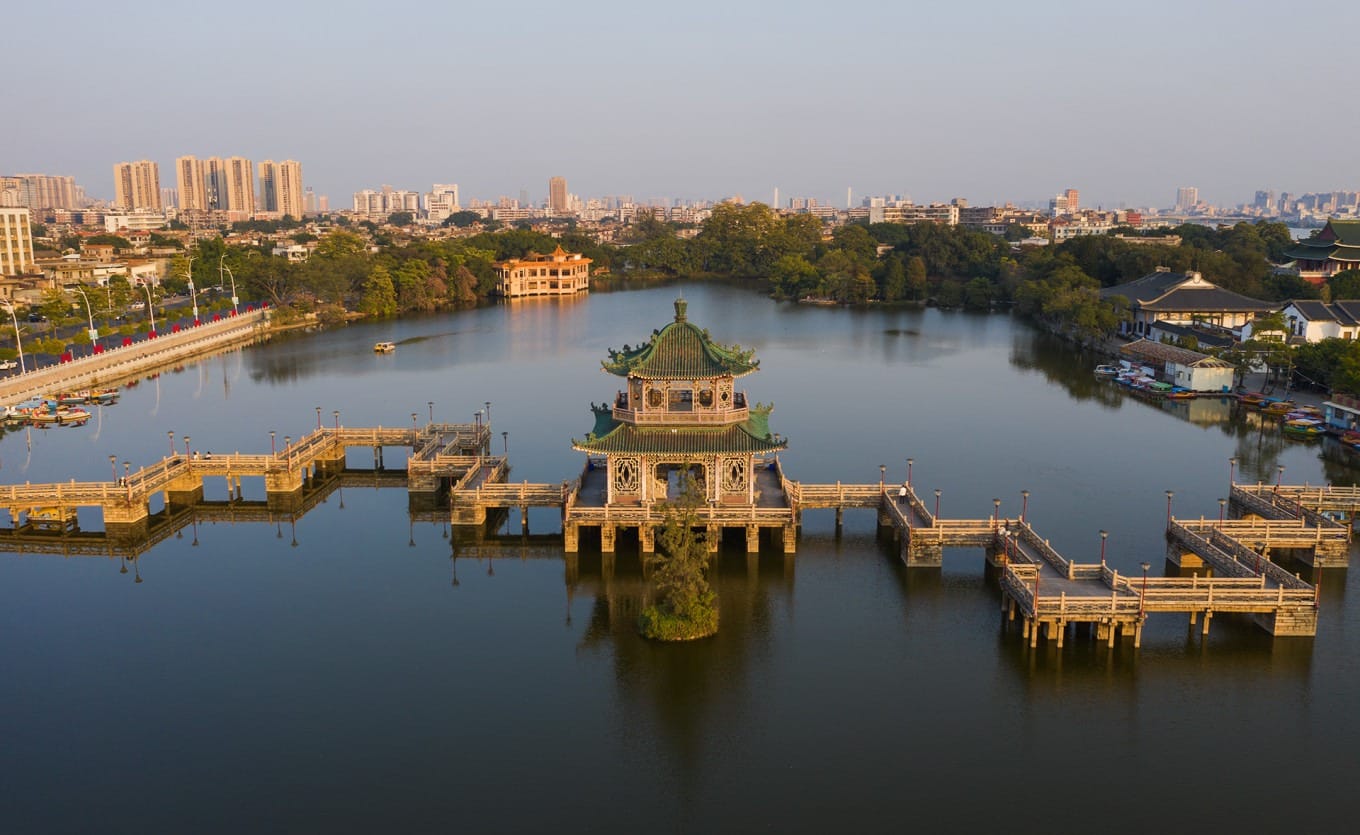
Today, your visit centers on the park’s architectural highlights: the elegant Nine-Turn Bridge (九曲桥), which zigzags across the water to reach a traditional double-story lakeside pavilion (双层湖心亭). Though these structures are relatively recent reconstructions in classical style, their curved eaves and red columns create an undeniably picturesque scene against the rippling green waters. You can wander the winding pathways, claim a bench beneath the shade of ancient banyan trees, or simply watch local families feeding fish from the stone railings.
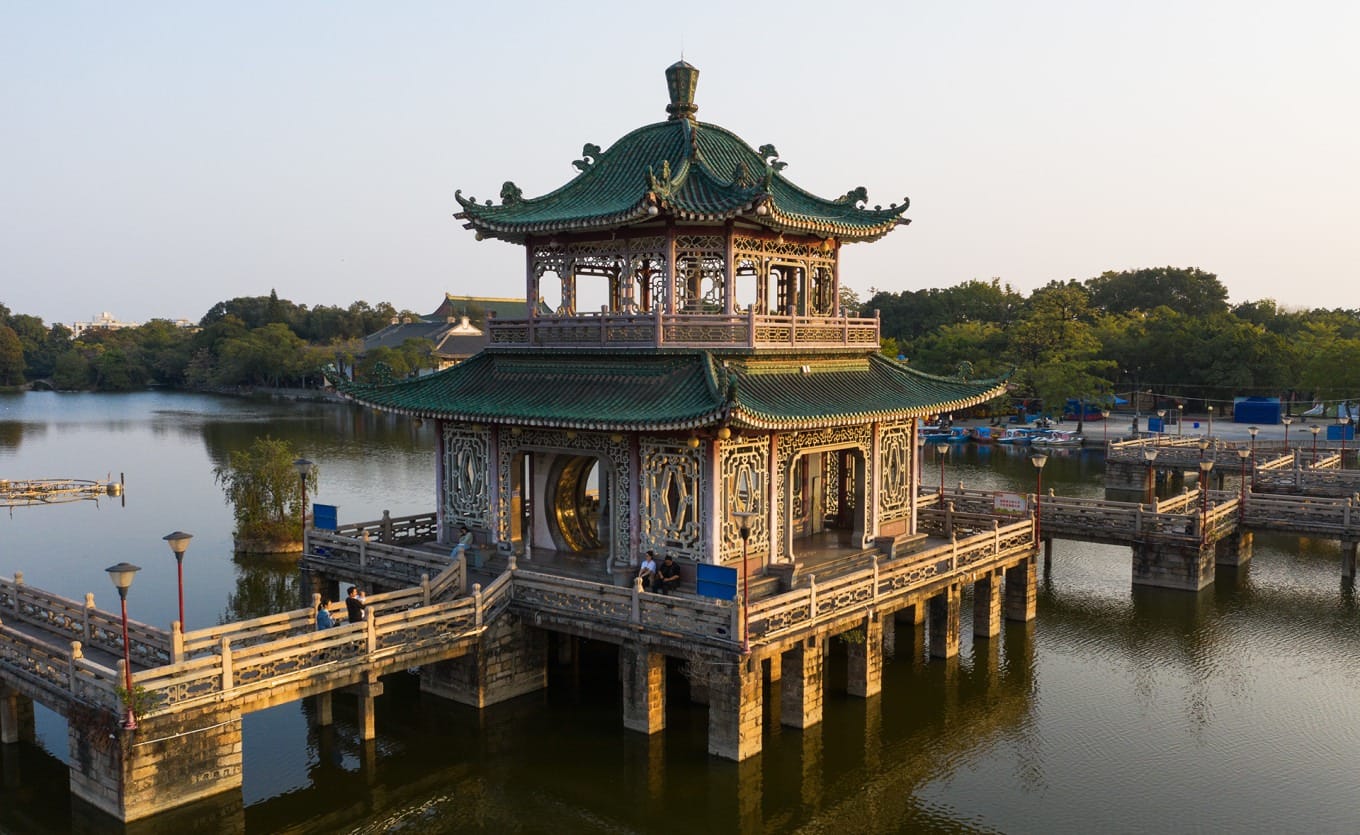
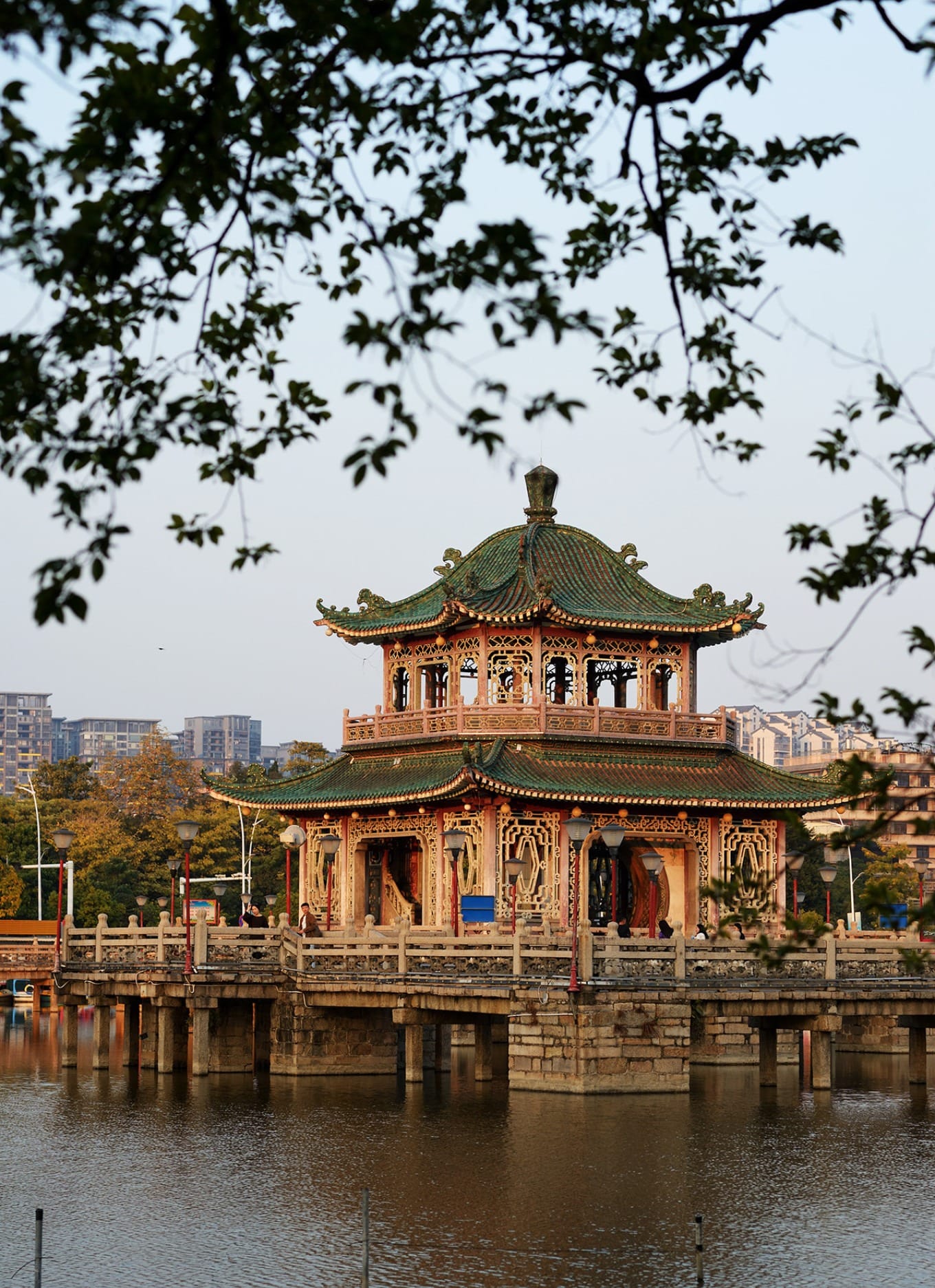
For first-time visitors, this park provides an ideal setting to slow your pace between temple visits and street food tours. Entry is completely free, making it perfect for a dawn jog or a sunset rest. You’ll find the main entrance along 望江北路 (Wangjiang North Road) in Rongcheng District, easily accessible from the old city center.
Puning: Chaoshan’s Overlooked Culinary Capital
When mapping out your Chaoshan food pilgrimage, make sure to carve out time for Puning (普宁). While Shantou and Chaozhou grab the international spotlight, this county-level city under Jieyang’s administration harbors a food scene that rivals anywhere in the region—yet remains refreshingly under-the-radar for most travelers.
Here, you can sample the full spectrum of Chaoshan classics, each interpreted through a distinct local lens. Savor beef hot pot (牛肉火锅) featuring cuts specific to Puning butchers, order rice noodle rolls (肠粉) dressed in house-made sauces that differ from Shantou versions, and warm up with claypot porridge (砂锅粥) simmered according to local timing. Seek out the city’s signature tofu (豆干), often fried to a unique texture, alongside kuey chap (粿汁) and sweet soups (甜汤) that carry subtle but noticeable differences from neighboring cities.
The real magic happens as you wander through Puning’s streets and back alleys. The density of food stalls and family-run eateries creates an atmosphere of constant culinary discovery. Every corner presents another reason to pause, whether it’s a steaming bowl of porridge at a sidewalk cart or a plate of freshly steamed rice rolls sliding out of a kitchen window.
Zhangcuozhai Beef Restaurant
No culinary exploration of Chaoshan is complete without diving into its legendary beef hotpot culture, and Puning delivers one of the region’s most authentic experiences. Set along Provincial Road 237 between Jieyang and Jiexi’s Mianhu town, Zhangcuozhai Beef Restaurant (张厝寨牛肉店) rewards travelers willing to venture slightly off the beaten path. The Chigang flagship location (赤岗总店) hides behind an unassuming roadside facade that belies a sprawling, high-energy dining hall within.
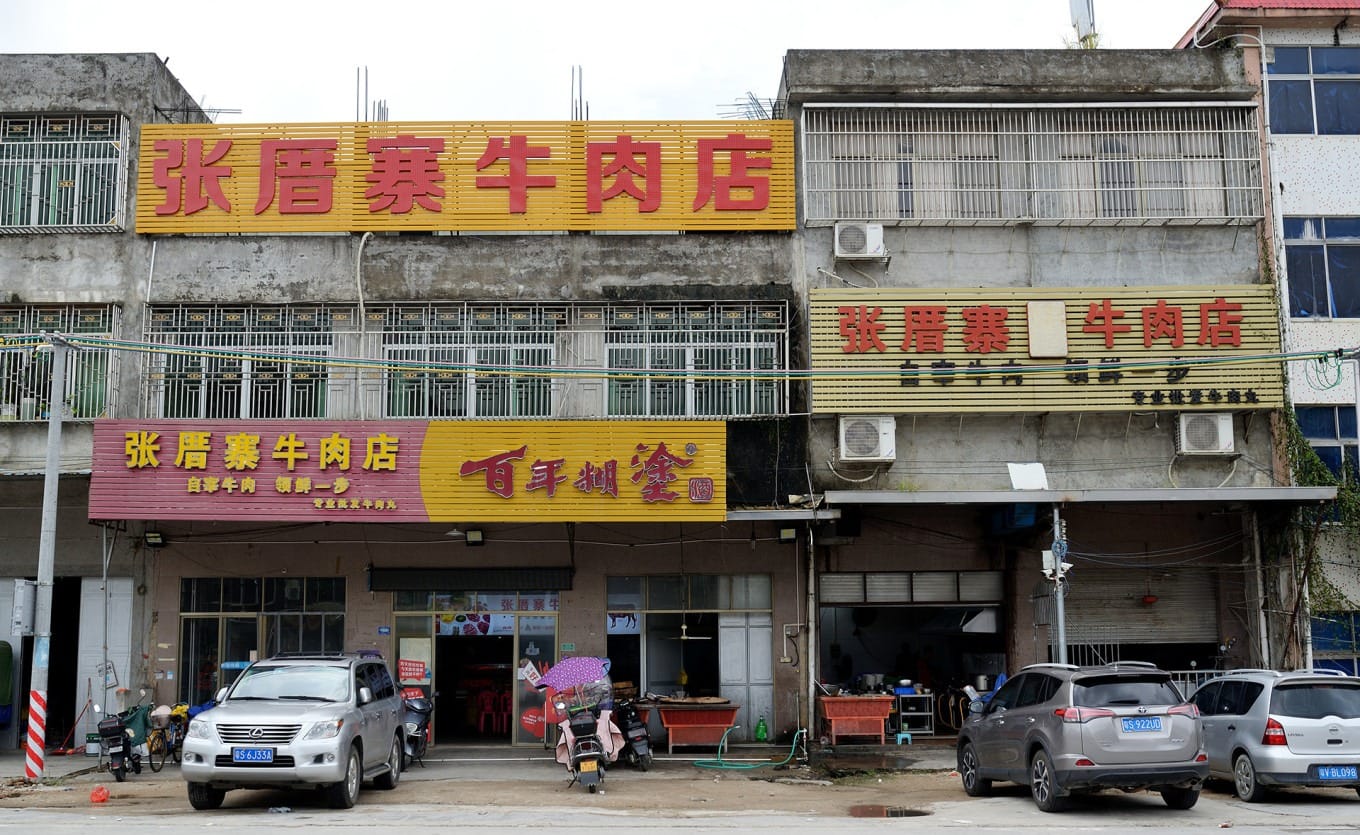
Embrace the no-frills atmosphere—this is bare-bones dining at its finest. The interior opens into a warehouse-sized space packed with local families, where servers dash between tables delivering plates of raw beef with efficient chaos. Tea and water are strictly self-service; grab a cup when you can and settle in for the ride.

Timing your visit is crucial. Arrive well before the evening rush to secure the day’s limited supply of 五花趾 (Five-Flower Tendon), a cut sourced from the inner hind leg that features intricate layers of muscle and connective tissue—traditionally five distinct strata—that deliver an addictive springy-chewy bite. Yields are miserably low, meaning this delicacy often sells out faster than the famous “snowflake” neck cuts prized elsewhere in the region.
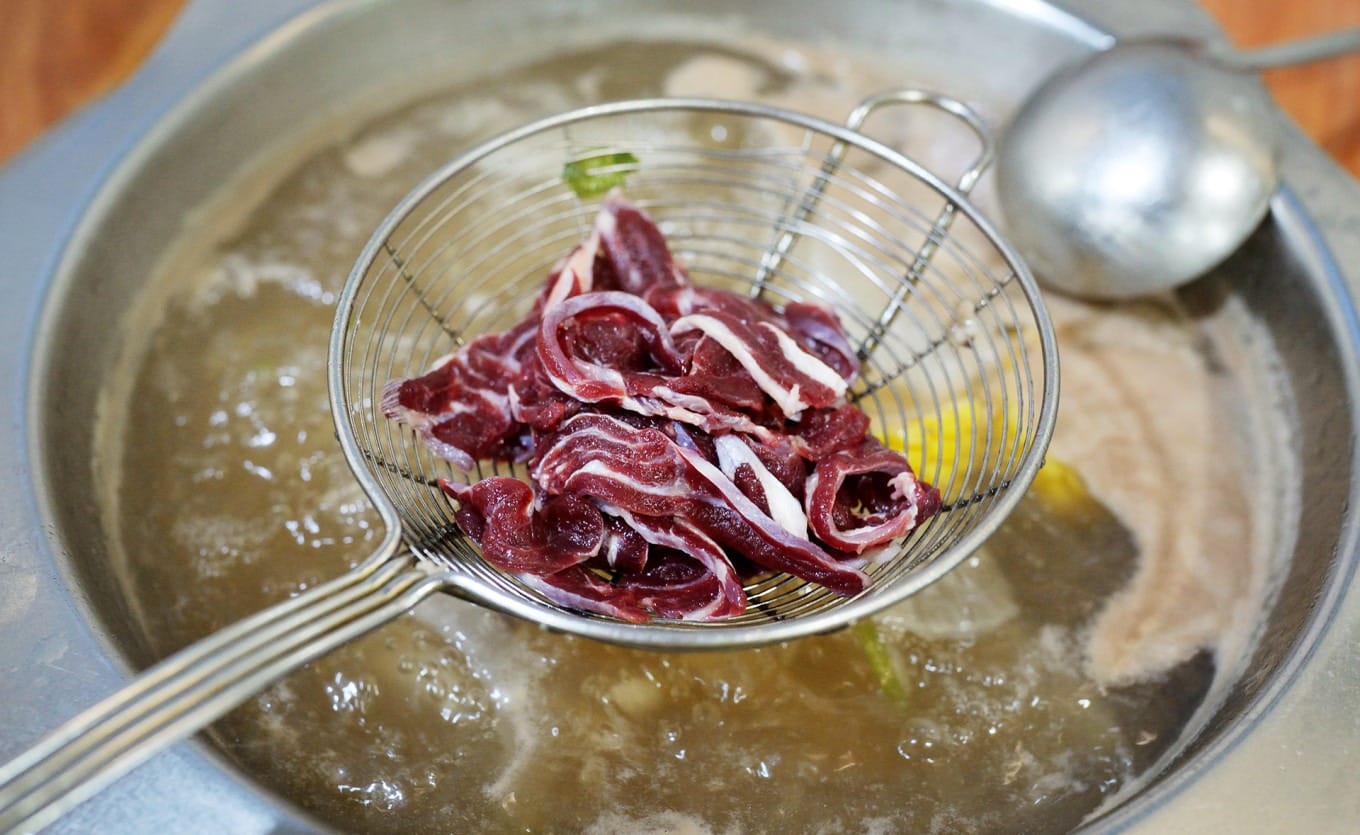
Next, order the 吊龙 (Dianglong/Rib Eye). While not as thick-cut as versions found at Jieyang’s famous Lu’s restaurant, the fat-to-meat ratio here is impeccable, with fat streaking through the muscle in elegant ribbons. A quick swish through the bubbling broth releases just enough tallow to coat your palate without overwhelming the beef’s clean, mineral flavor.
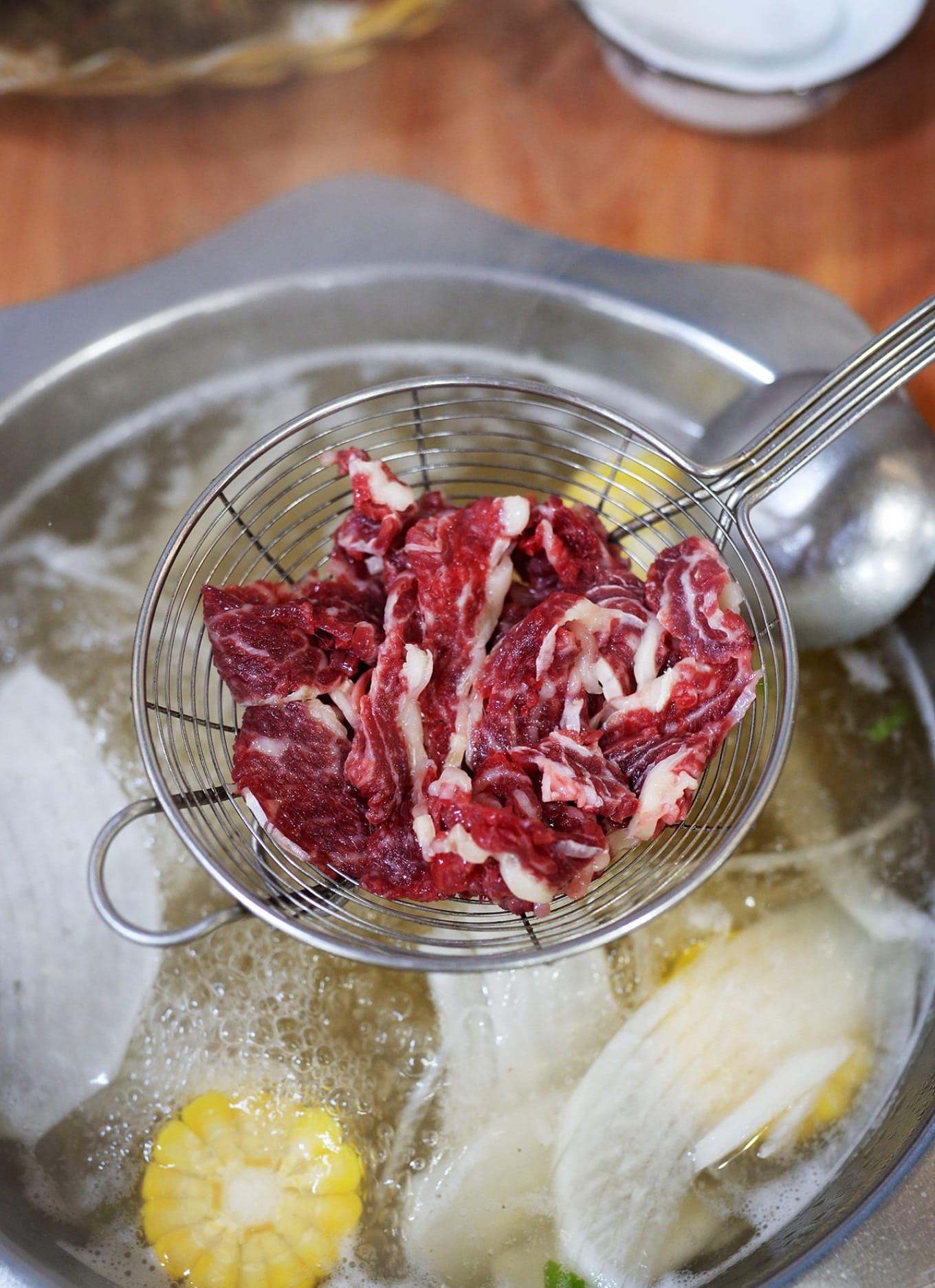
For a richer experience, request 肥胼 (Fatty Beef Belly), also known locally as 双层肉 (Double-Layer Meat). This abdominal cut carries a distinct layer of subcutaneous fat that renders into pure umami during cooking, delivering an intensely marbled, luxurious mouthfeel that stands up to the region’s bold dipping sauces.
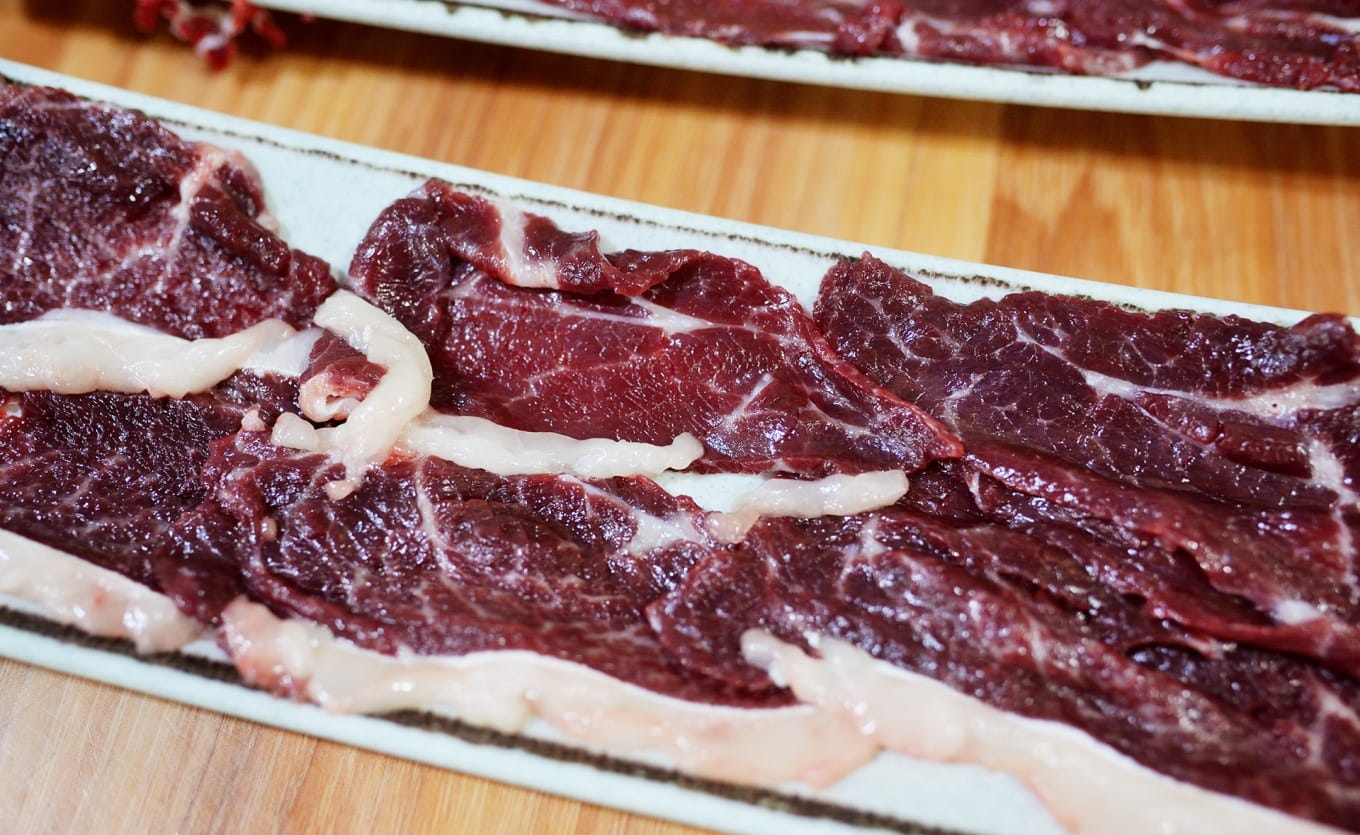
Do not skip the 生牛肉丸 (Fresh Beef Balls), which arrive at your table as raw, hand-pounded spheres rather than the pre-cooked versions found elsewhere. Traditionally beaten with heavy iron rods until the muscle fibers dissolve into a fine paste, these balls cook in seconds in the boiling broth. The result is simultaneously tender and resilient, erupting with savory juices when bitten.

Finally, sample the 椒盐牛排骨 (Salt-and-Pepper Beef Ribs), a preparation unique to Puning’s beef culture rarely seen in other Chaoshan cities. Zhangcuozhai uses beef short ribs, blanched and marinated before being deep-fried until the exterior turns crisp and mahogany while the interior remains succulent. Despite their dark, unglamorous appearance, these ribs explode with beefy fragrance and addictive seasoned salt, finished with a sprinkle of fresh scallions.
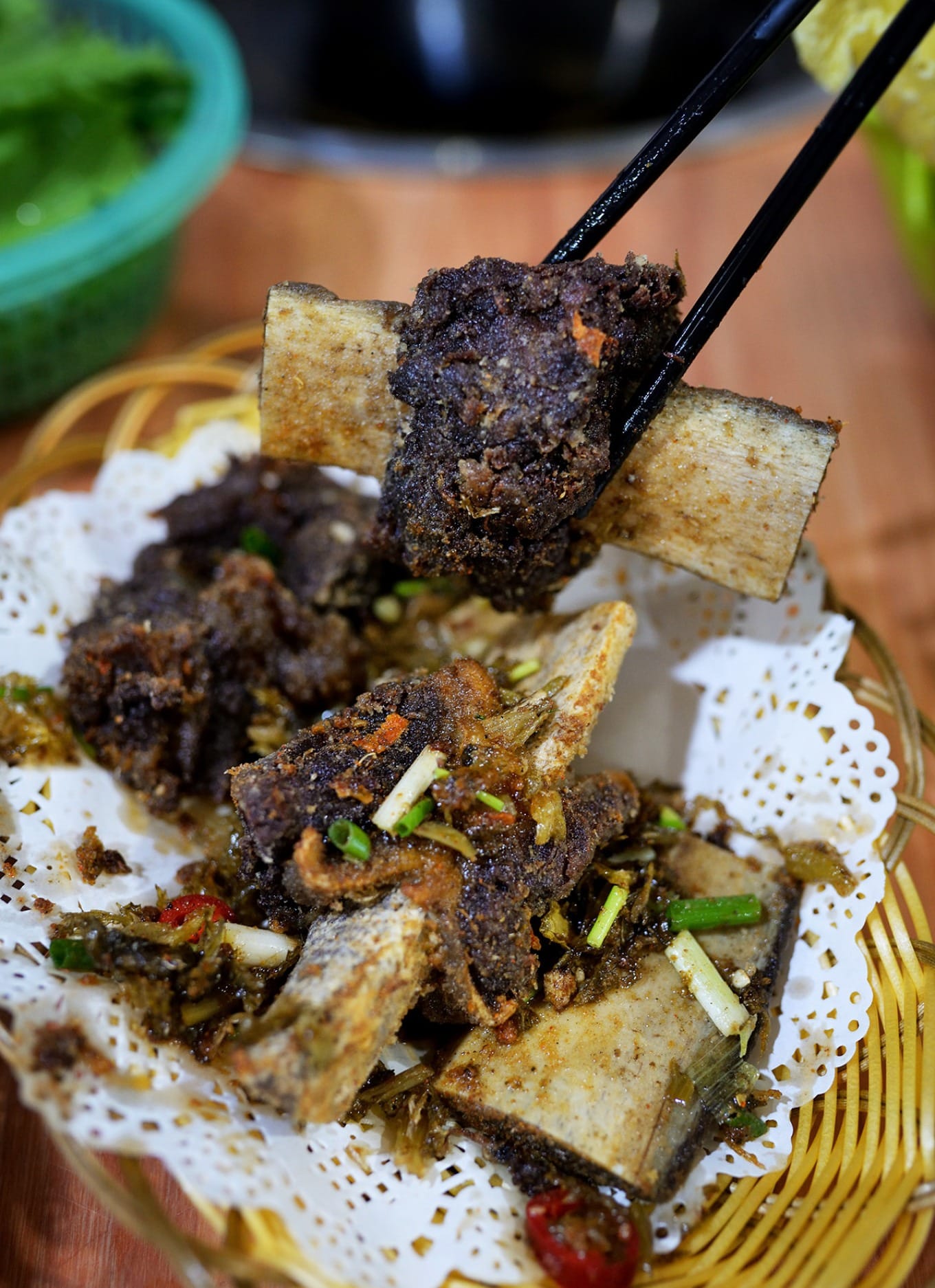
- RestaurantZhangcuozhai Beef Restaurant (张厝寨牛肉店)
- Address普宁市赤岗镇237省道张厝寨村东路口 / East entrance of Zhangcuozhai Village, Chigang Town, Puning City, Provincial Road 237
- Recommended dishes五花趾 (Five-Flower Tendon), 吊龙 (Dianglong/Rib Eye), 肥胼 (Fatty Beef Belly), 生牛肉丸 (Fresh Beef Balls), 椒盐牛排骨 (Salt-and-Pepper Beef Ribs)
- Average spend80 RMB per person
Zhuangxiong Niutu Beef Hot Pot
When locals steer you toward a hometown favorite over flashier city branches, listen. Zhuangxiong Niutu Beef Hot Pot (壮雄牛屠牛肉火锅) ranks among Puning’s most celebrated beef hot pot establishments, with a reputation that has spawned franchises as far as Guangzhou. Yet insiders insist the original location remains unmatched.
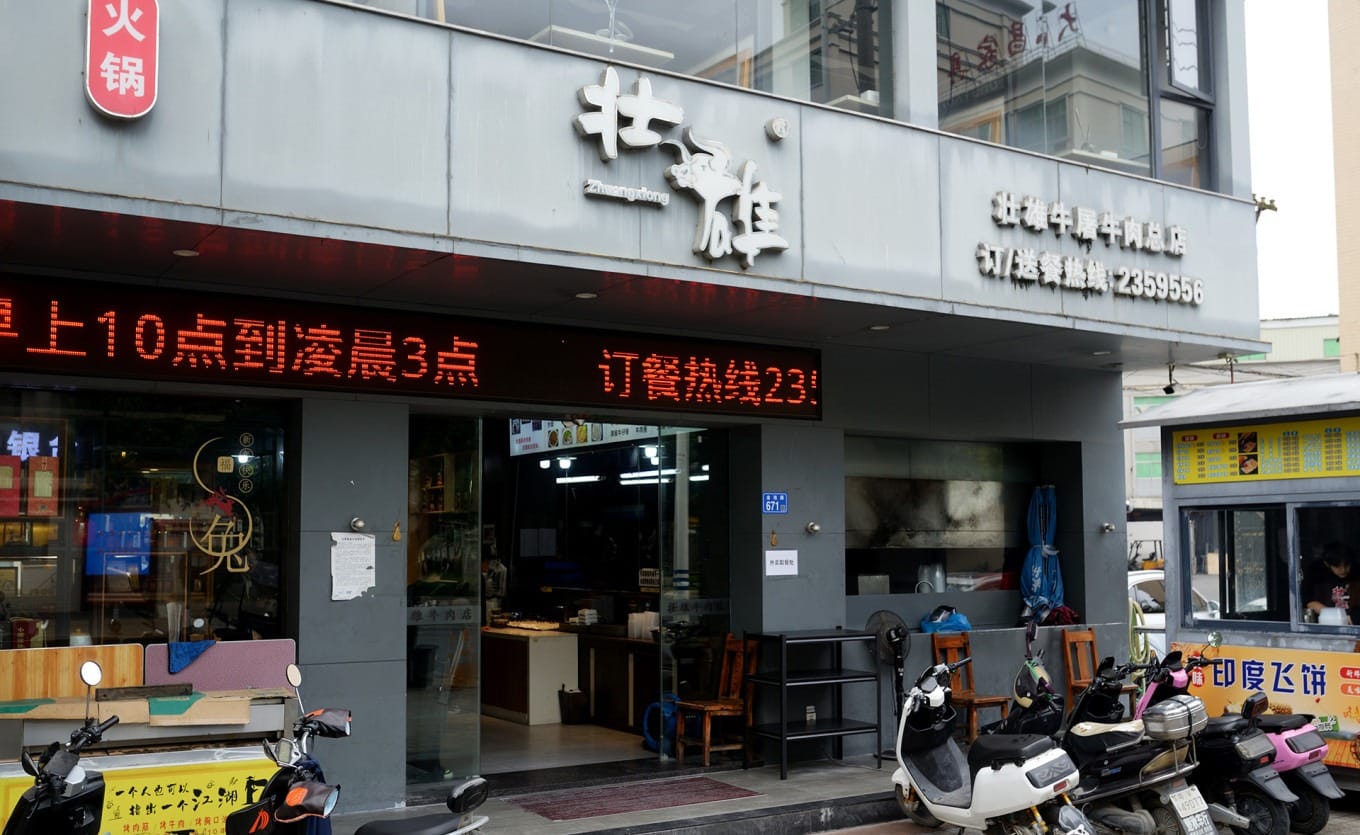
You will find the flagship store across from the Puning People’s Court on Jinchi Road. Compared to the rustic charm of Zhangcuozhai, this outlet delivers cleaner surroundings and more polished service, making it an accessible entry point for first-time visitors navigating Chaoshan beef culture.
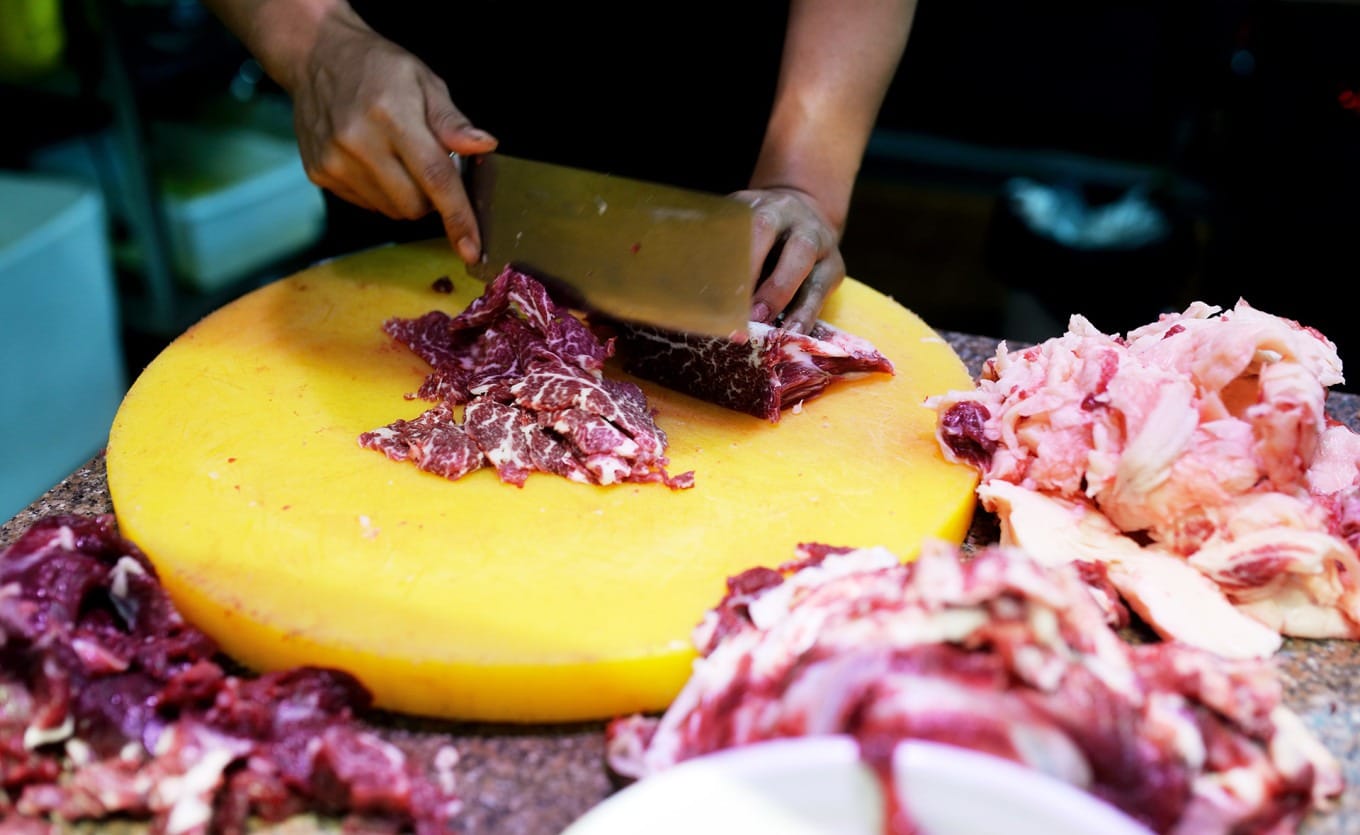
Chaoshan beef hot pot demands precision at every stage—from cattle sourcing to the butcher’s blade. Any compromise in freshness or knife work dulls the flavor, which explains why even branded chains often disappoint outside the region. At this main branch, the cuts remain exemplary.
The menu spans the full anatomy of beef. Prioritize the holy trinity of cuts: Xuehua (雪花, snowflake beef), Diaolong (吊龙, hanging tender), and Wuhuazhi (五花趾, five-flower tendon). While the meat quality here stands excellent, connoisseurs note the slicing precision falls slightly short of Zhangcuozhai’s artistry.

In the local hierarchy of beef texture, many place Lu Ji in Jieyang at the pinnacle, followed by Zhangcuozhai in Puning, with Zhuangxiong rounding out the top three—though all three surpass typical mainland standards.
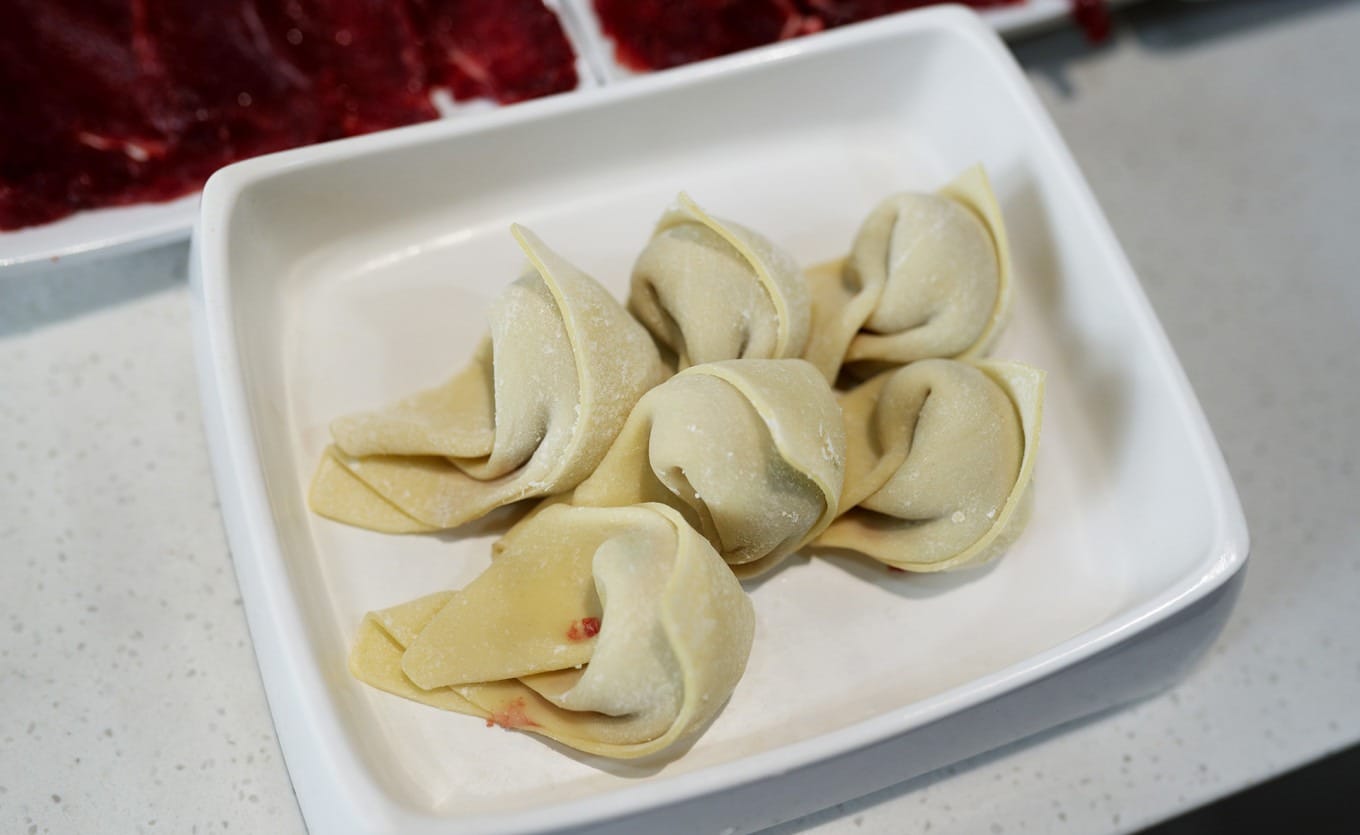
Where Zhuangxiong truly distinguishes itself lies in its beef dumplings. Order both the raw and fried varieties—Niurou Jiao (牛肉饺, beef dumplings)—which pack filling of fresh minced beef that sings when dipped in savory sha cha sauce.
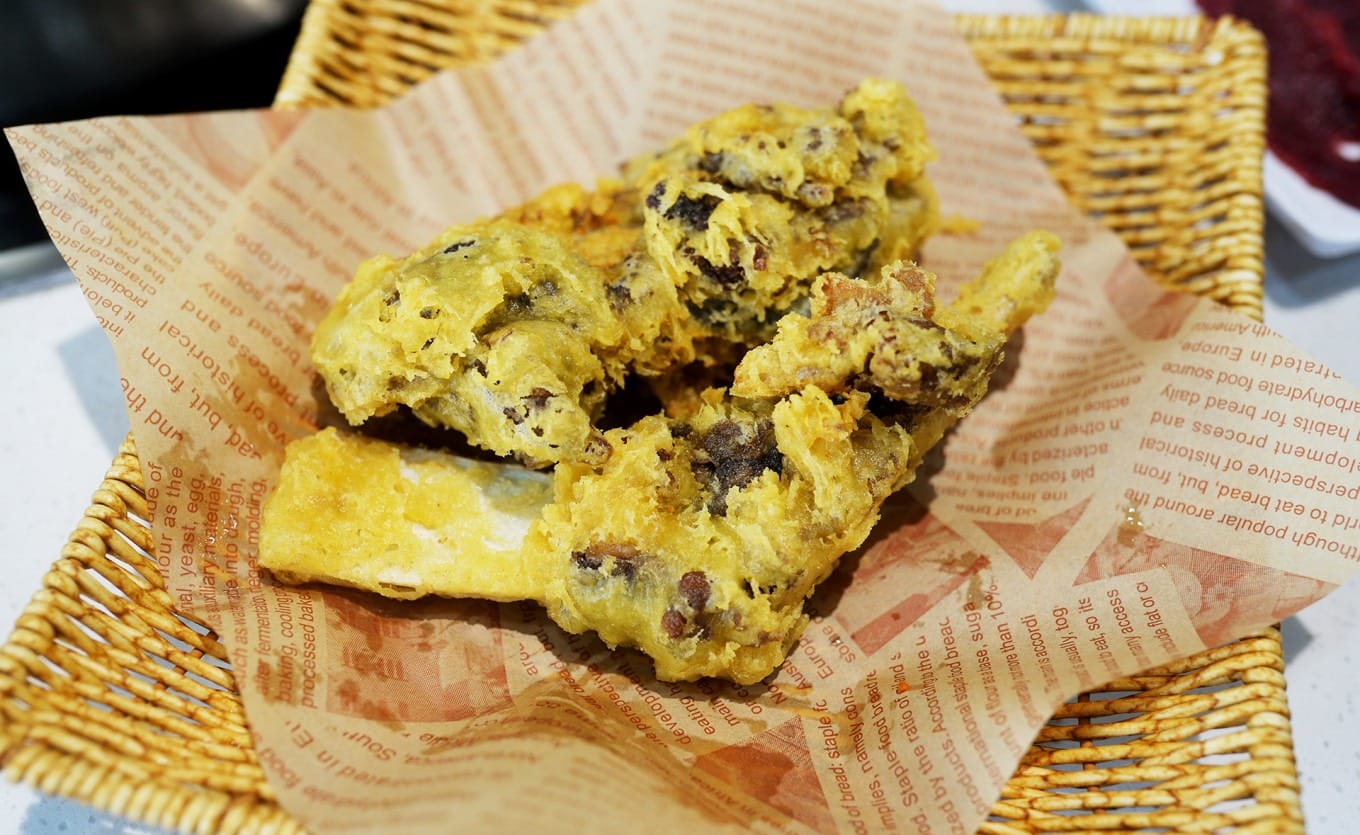
Do not skip the Jiaoyan Niupai (椒盐牛排, salt-and-pepper beef ribs), either. The kitchen coats these in egg batter and flour before frying, creating a golden crust that outshines competing versions.
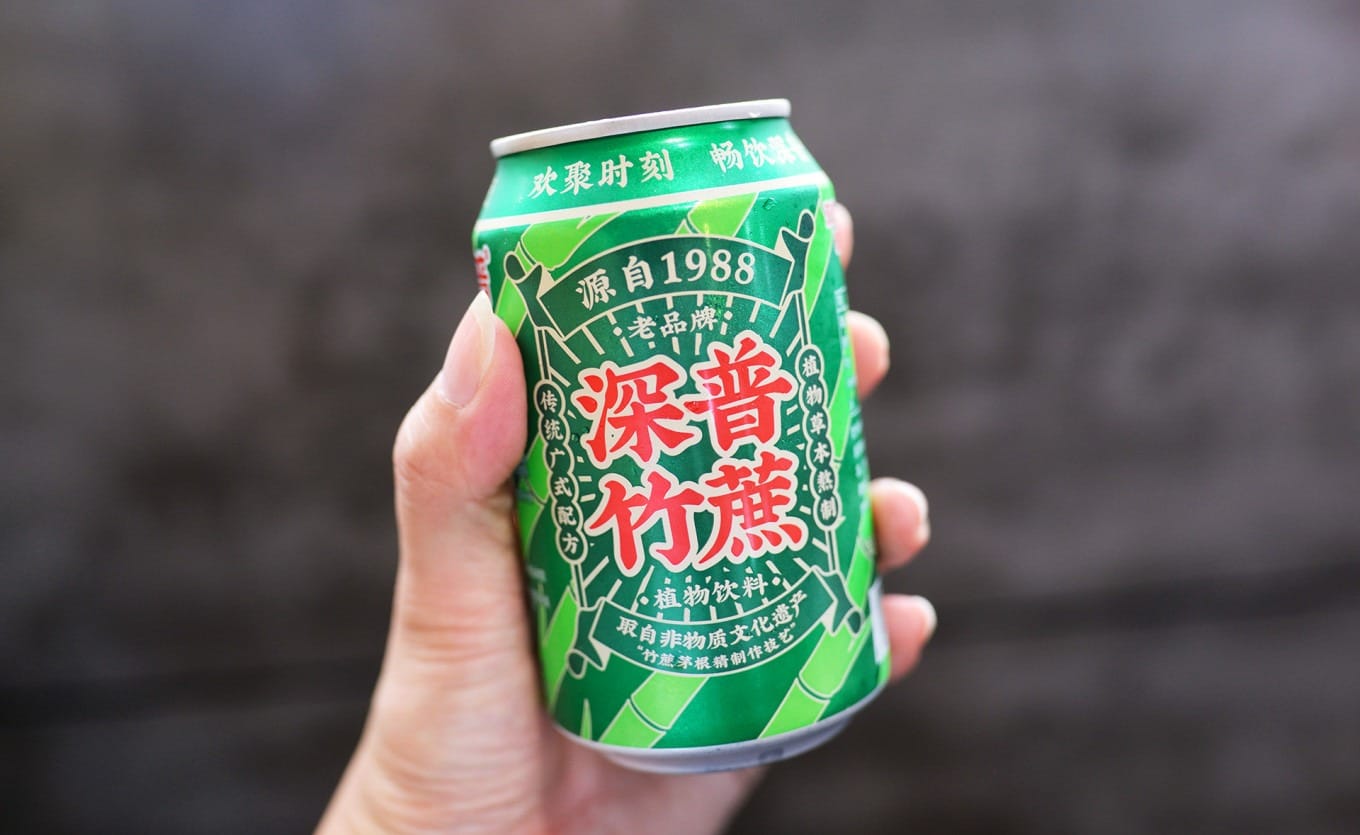
To balance the richness, grab a can of Shenpu Zhuzhe (深普竹蔗), a traditional bamboo sugarcane and cogongrass root beverage native to Puning. This sweet, cooling drink carries the agricultural heritage of a region once blanketed in sugarcane fields.
- RestaurantZhuangxiong Niutu Beef Hot Pot (壮雄牛屠牛肉火锅)
- Address697 Jinchi Road, Puning City (普宁市金池路697号)
- Recommended dishesXuehua (雪花, snowflake beef), Diaolong (吊龙, hanging tender), Wuhuazhi (五花趾, five-flower tendon), Niurou Jiao (牛肉饺, beef dumplings), Jiaoyan Niupai (椒盐牛排, salt-and-pepper beef ribs)
- Average spend80 RMB
Wang Ji Restaurant: Puning’s Pork Knuckle Rice Contender
While Longjiang in Huilai County and Dongli in Chenghai draw the most fame for Chaoshan pork knuckle rice, Puning harbors a serious contender that rivals these legendary destinations. At Wang Ji Restaurant (王记饭店), the braised pork knuckle follows the authentic Longjiang method—unsurprising given Longjiang Town lies just thirty kilometers away in neighboring Huilai, also under Jieyang’s jurisdiction. One crucial piece of advice: arrive early. The kitchen sells out of pork knuckles quickly thanks to relentless local demand, and latecomers often leave disappointed.
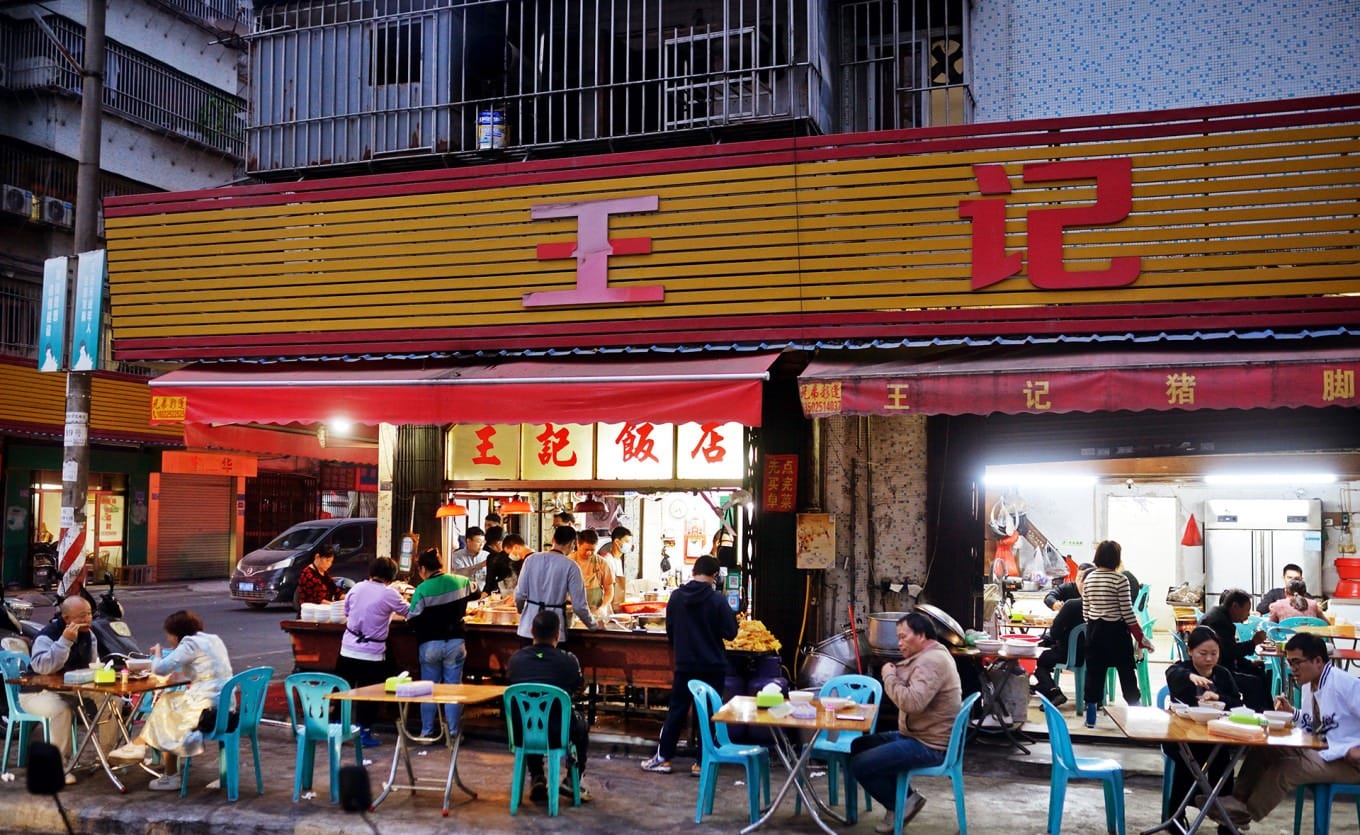
The dish traces its origins to Longjiang’s dockworkers, laborers who needed substantial morning fuel for heavy physical work. Rice topped with affordable, flavorful braised pork provided the perfect sustenance, eventually evolving into Guangdong’s reigning “fast food king” that now sustains countless workers across Guangzhou and Shenzhen.
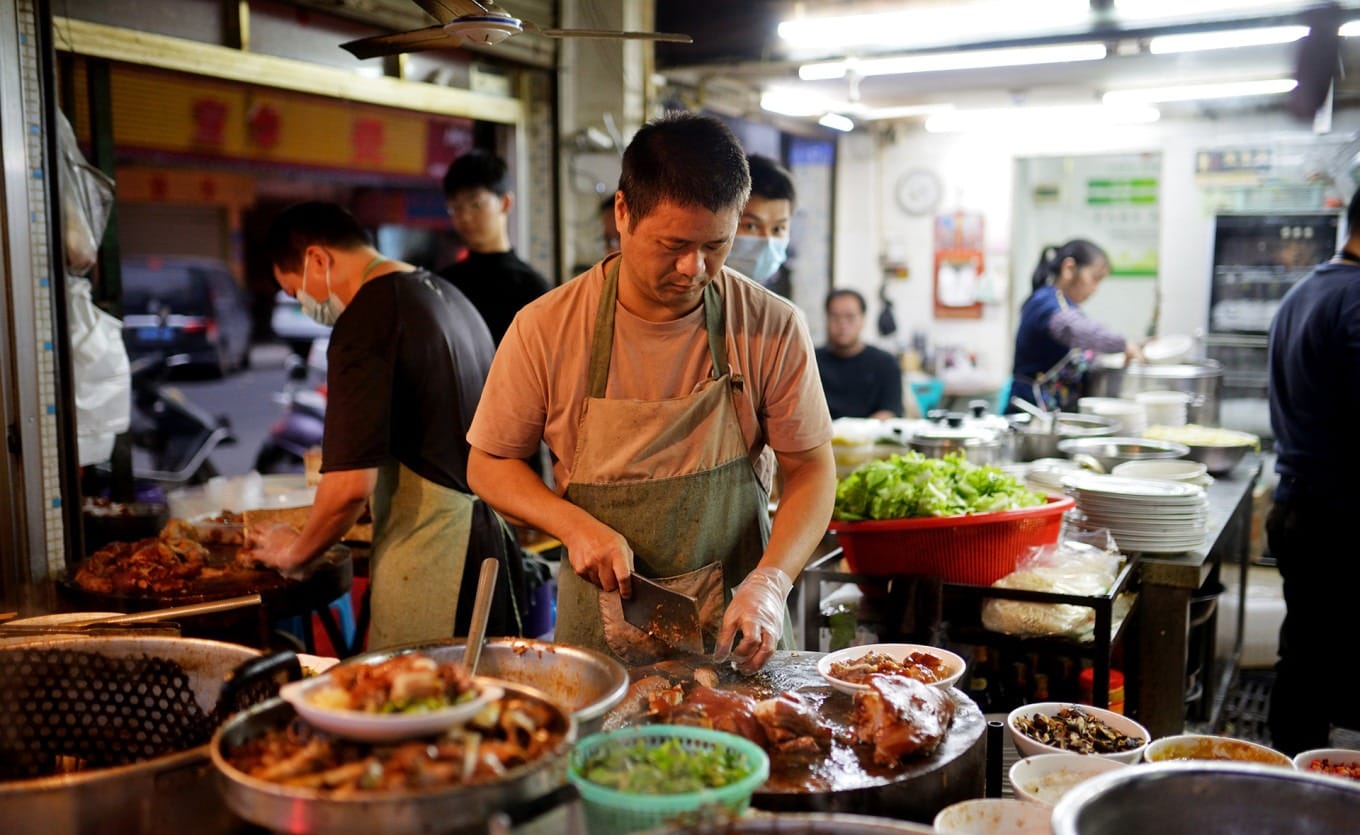
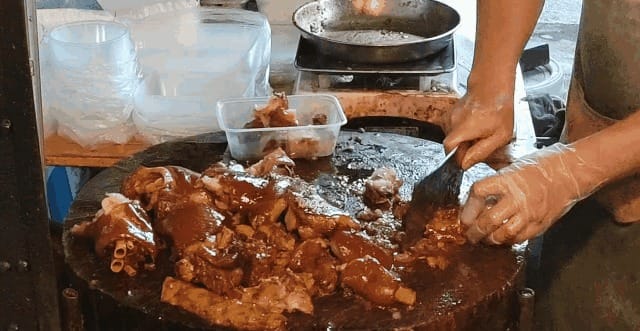
The preparation demands respect for this humble cut. Traditional methods require burning, scrubbing, and portioning the knuckle before simmering it for three to four hours in aged master stock. Cooks adhere to the “more oil, less grease” principle—counterintuitively, abundant oil during braising prevents the final dish from feeling heavy. The result glistens in reddish-brown hues, releasing aromatic waves of spices that trigger immediate hunger.
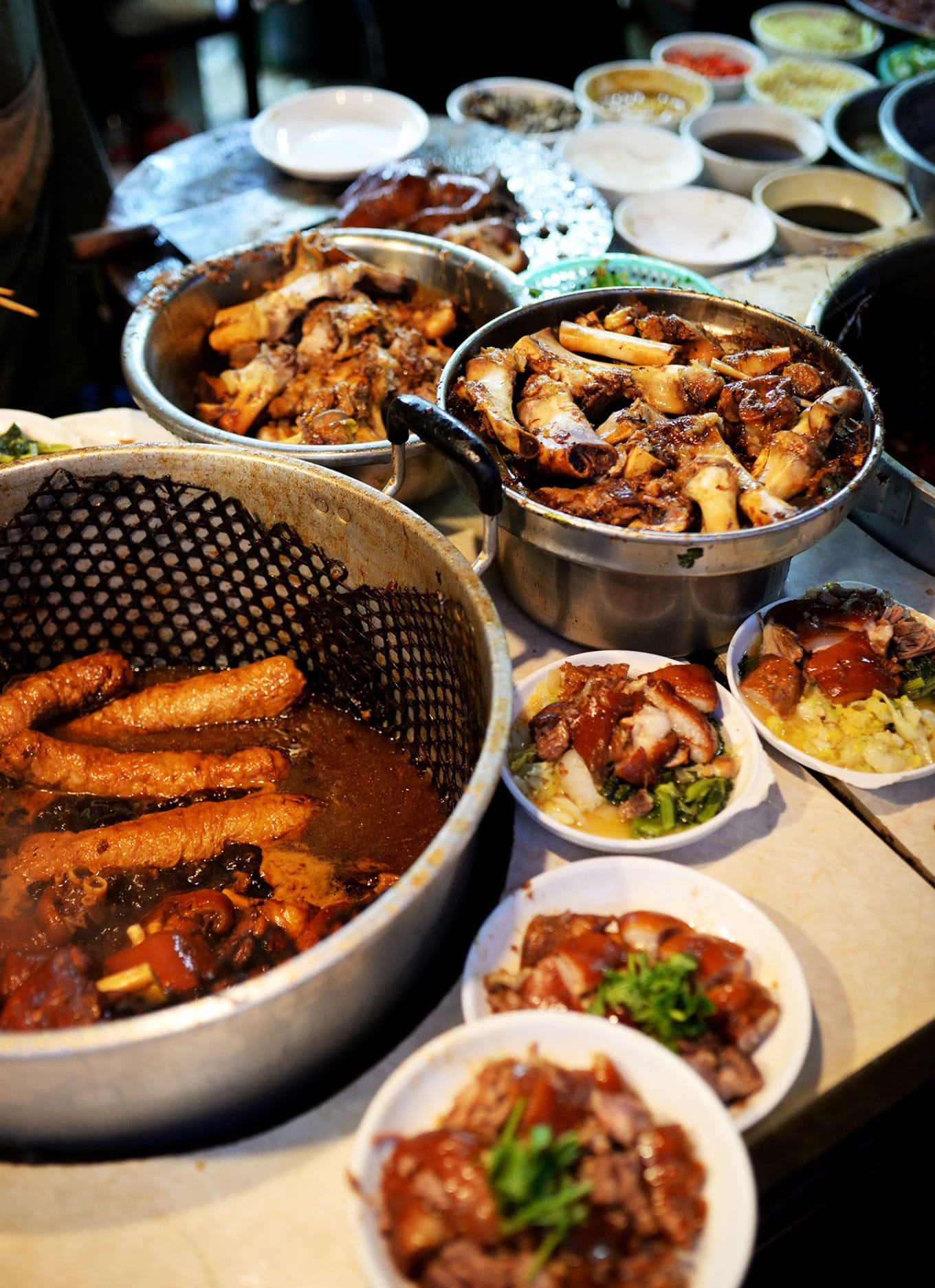
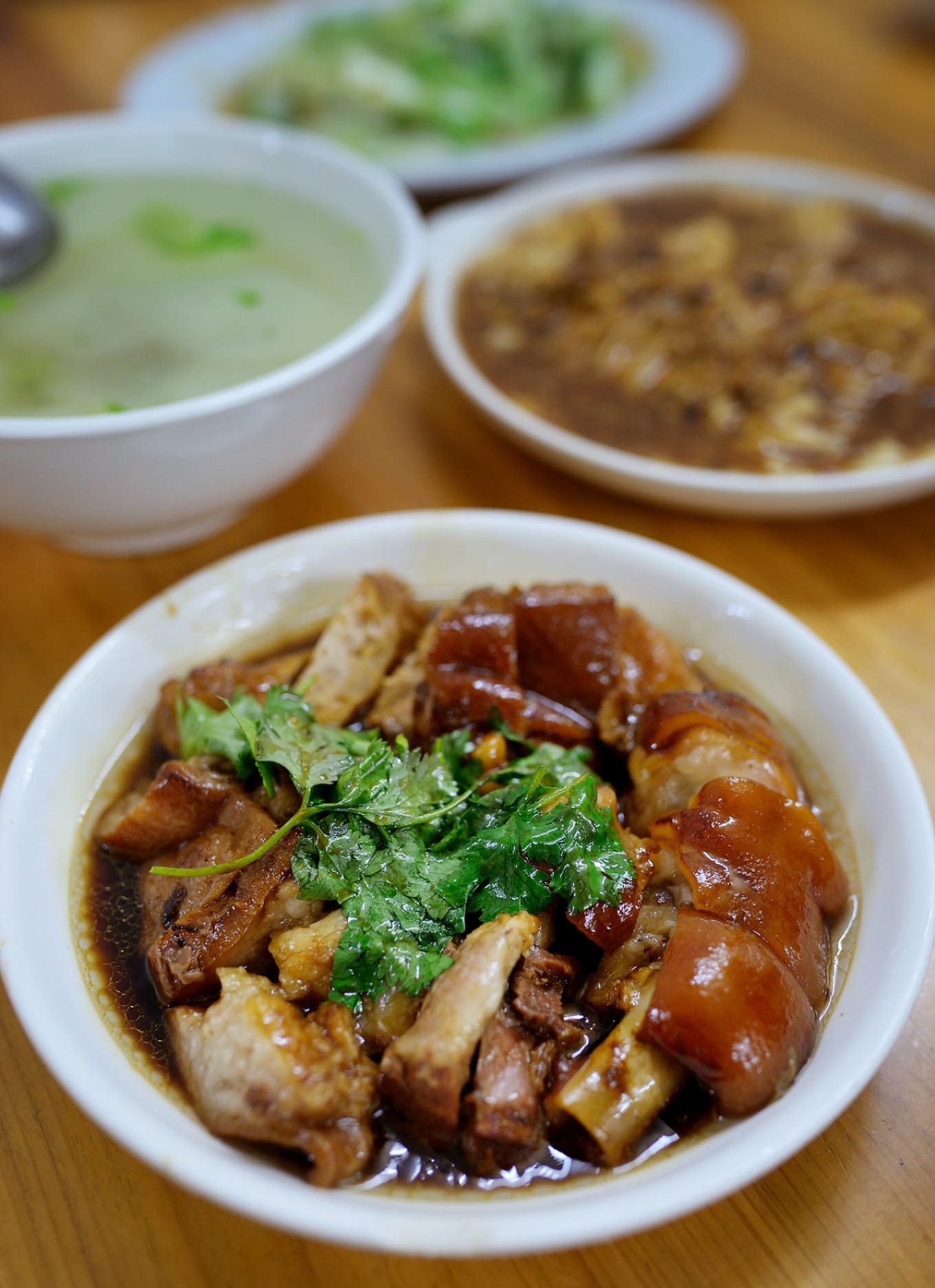
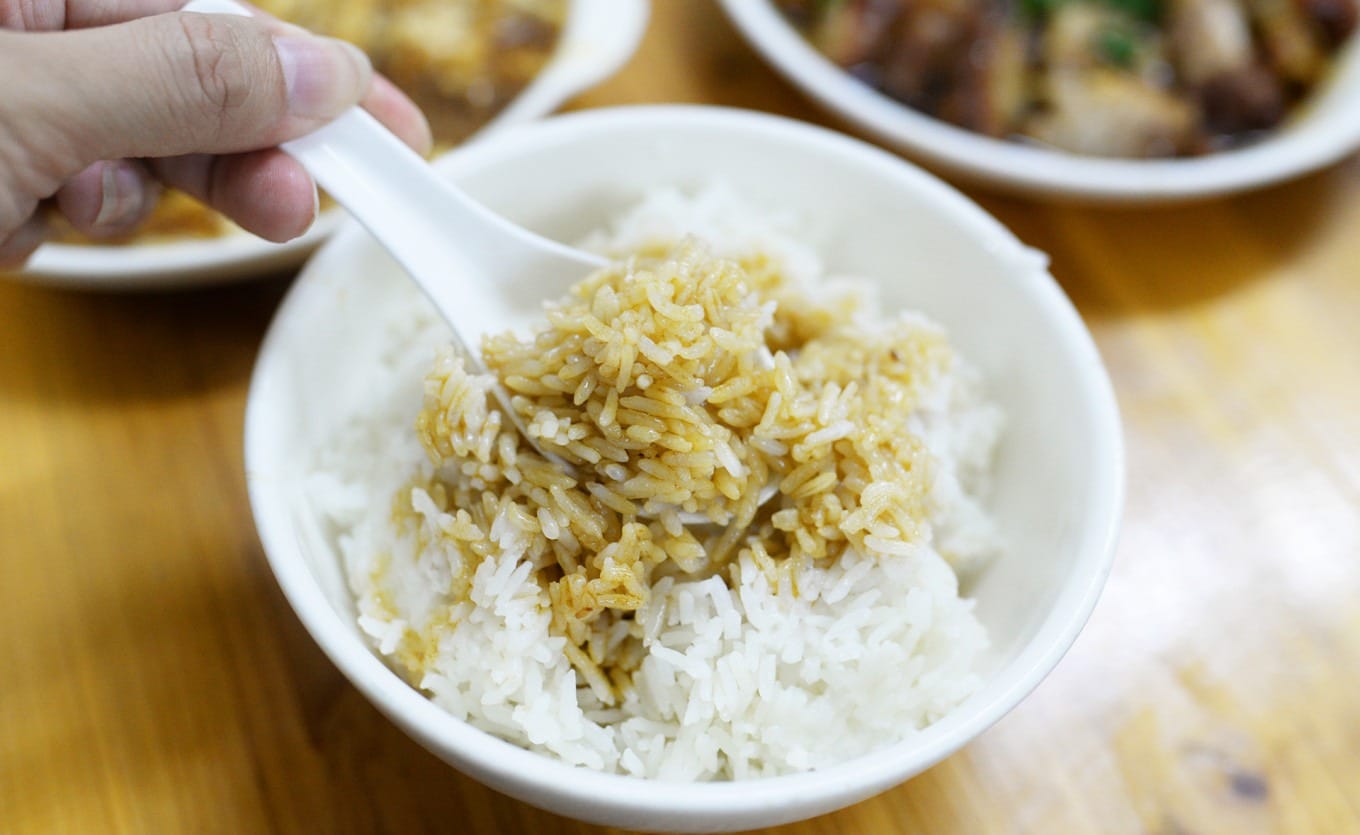
When the dish arrives, the meat surrenders effortlessly from the bone, revealing not flabby fat but trembling, gelatinous collagen. Each bite delivers a symphony of spices without overwhelming richness. You should request extra gravy to cascade over your rice—a single ladle transforms plain grains into an irresistible canvas that even carb-avoiders will devour.
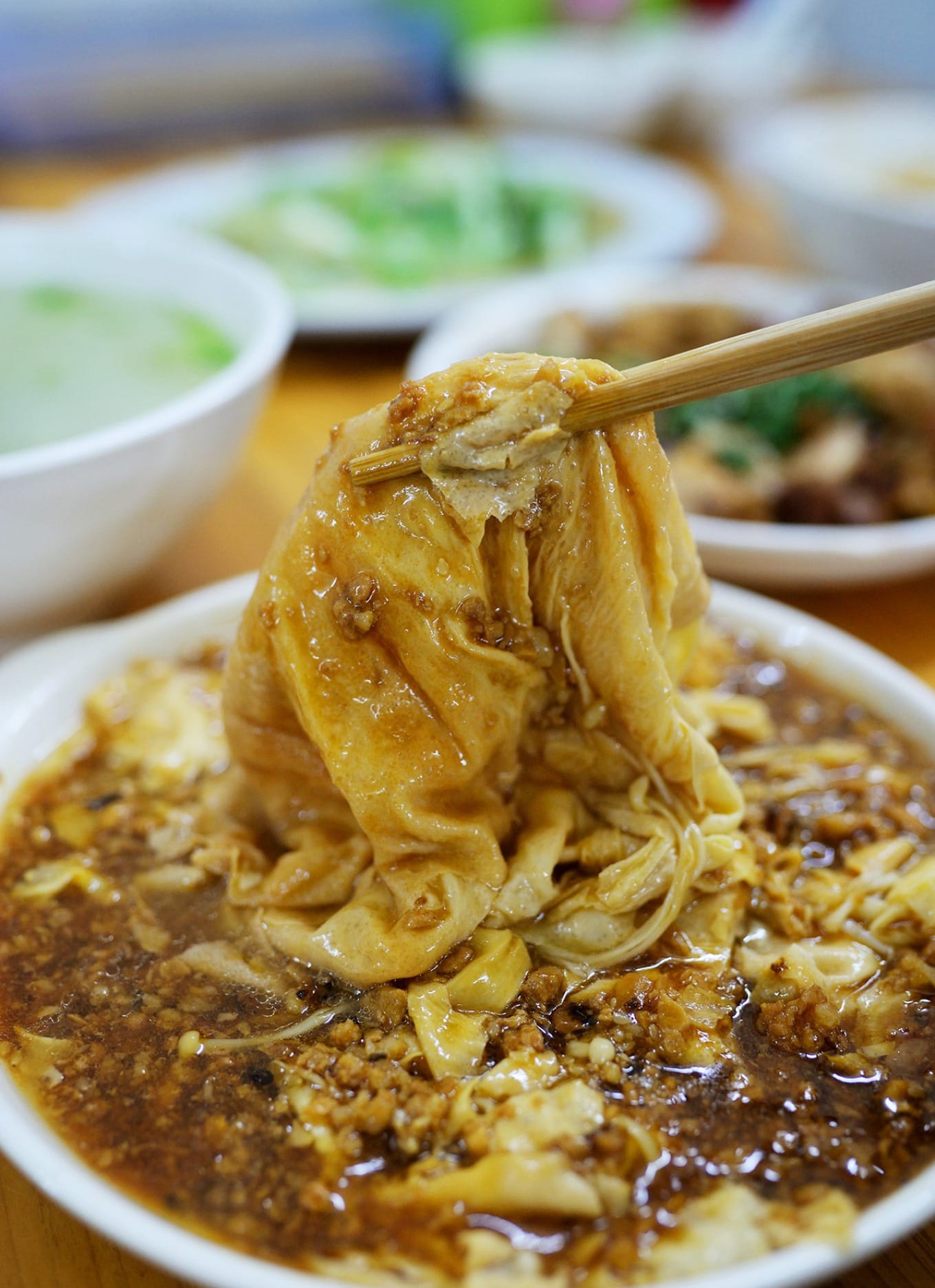
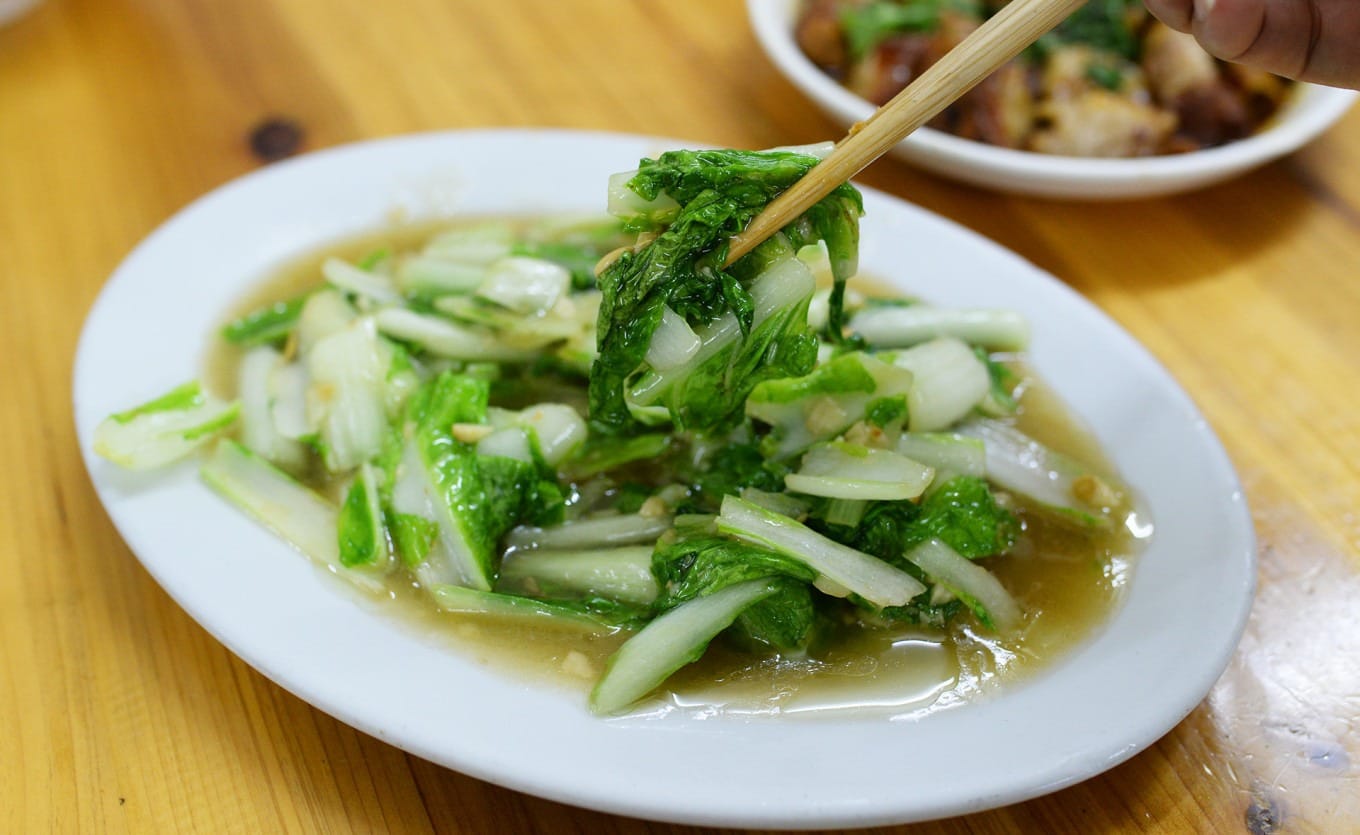
Beyond the signature pork, consider the Fried Tofu Skin with Minced Pork (腐竹肉沫, locally called “tofu paper”). The crinkled bean curd sheets trap savory meat sauce and enoki mushrooms in every fold. Also essential is the Stir-Fried Cabbage with Puning Soybean Paste (豆酱炒白菜), featuring the region’s fermented bean sauce. This condiment undergoes lengthy steaming, sun-drying, and yeast fermentation to create Chaoshan’s unique umami signature—when wok-tossed with vegetables, it imparts a subtle sweetness that perfectly balances the meal.
- RestaurantWang Ji Restaurant (王记饭店)
- Address16 Longwan New Village, West Liusha Avenue, Puning City (普宁市流沙大道西龙菀新村16栋)
- Recommended dishesBraised Pork Knuckle (猪脚), Fried Tofu Skin with Minced Pork (腐竹肉沫), Stir-Fried Cabbage with Puning Soybean Paste (豆酱炒白菜)
- Average spend30 RMB
Hongxing Dougan Fan: Puning’s Famous Tofu Eatery
Puning’s culinary identity is deeply rooted in soybean traditions, with dried tofu standing as the city’s edible emblem. While street vendors throughout town hawk quick servings from roadside stalls, serious food enthusiasts should seek out dedicated restaurants for the full experience.
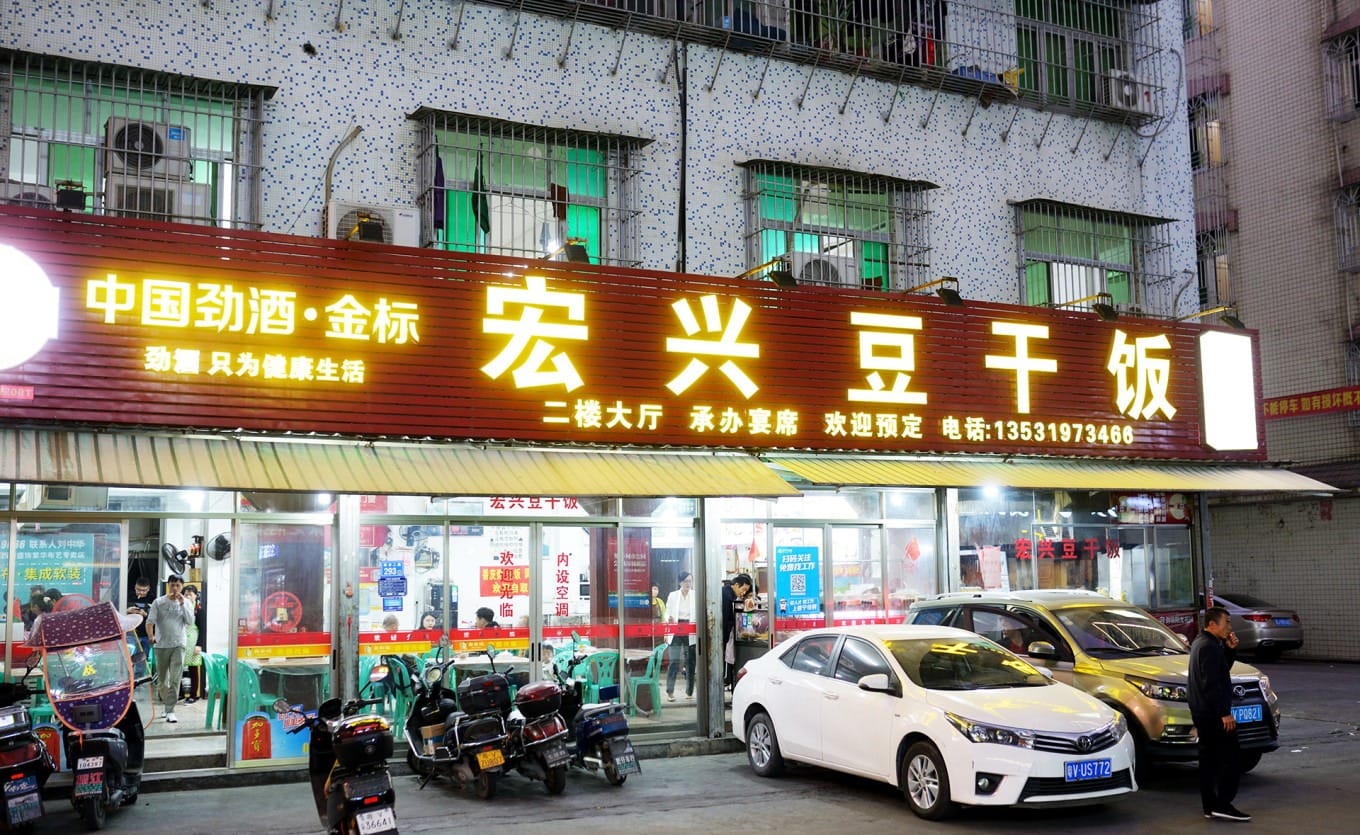
Tucked away in an urban village, Hongxing Dougan Fan (宏兴豆干饭) operates as a local institution where residents pack the house during lunch and dinner hours. The establishment has built its reputation on perfected technique rather than fancy décor, offering an authentic glimpse into everyday Puning dining culture.
Authentic Puning dried tofu (普宁豆干) requires a specific alchemy: beyond standard soybeans, gypsum, and brine, producers incorporate sweet potato flour and tint the curds golden using gardenia fruit (黄栀子). The most prized varieties originate from Guangnan and Dongpu villages. During processing, artisans press small bamboo blocks atop the bean curd to extract excess moisture, leaving a characteristic square indentation resembling an official seal—a technique locally called “sealing” (盖印 (local term)).
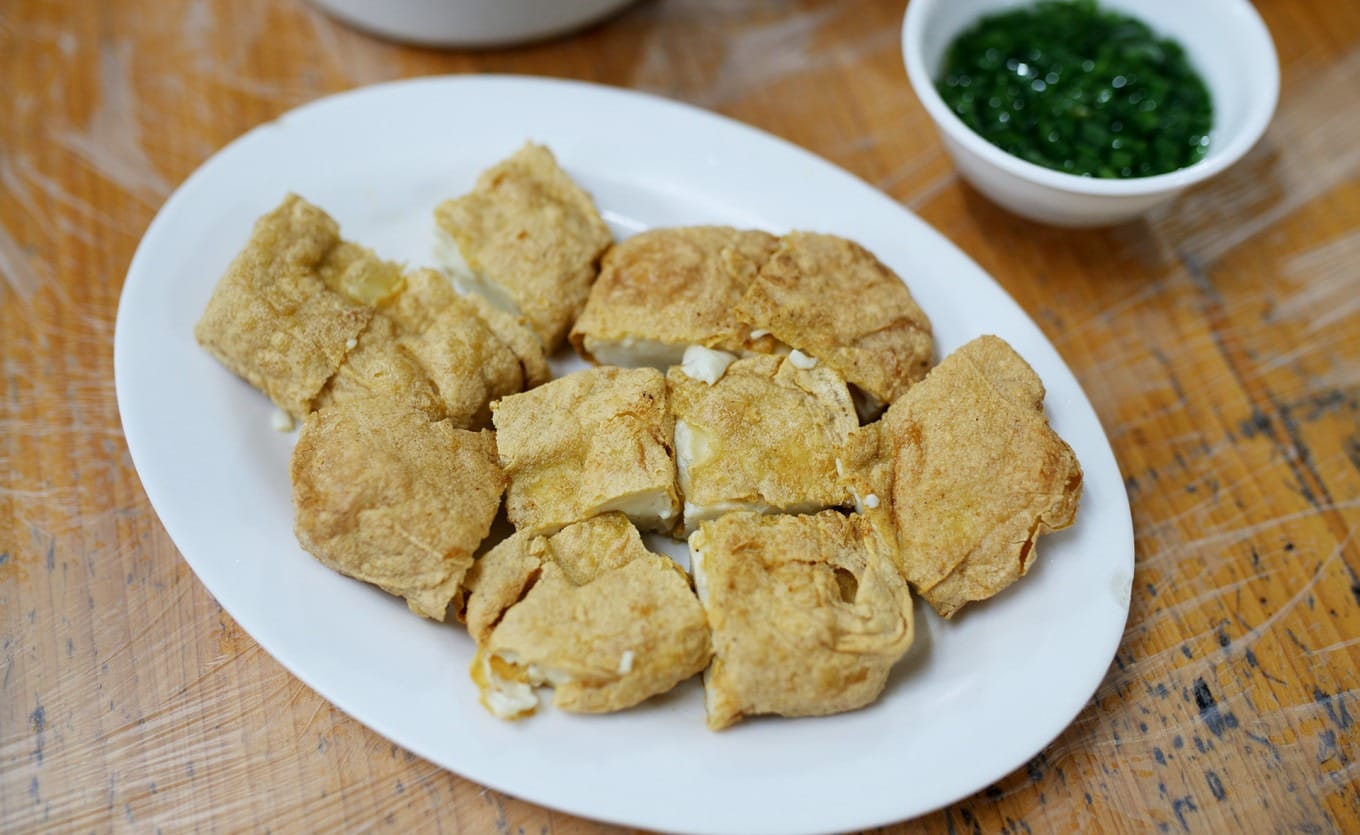
You’ll encounter three primary preparations—fried, baked, or pan-fried—though locals overwhelmingly favor the deep-fried version. Unlike practices elsewhere where tofu is sliced before hitting the oil, Puning chefs fry whole blocks first, then cut them, preserving a snowy-white, cloud-like interior.
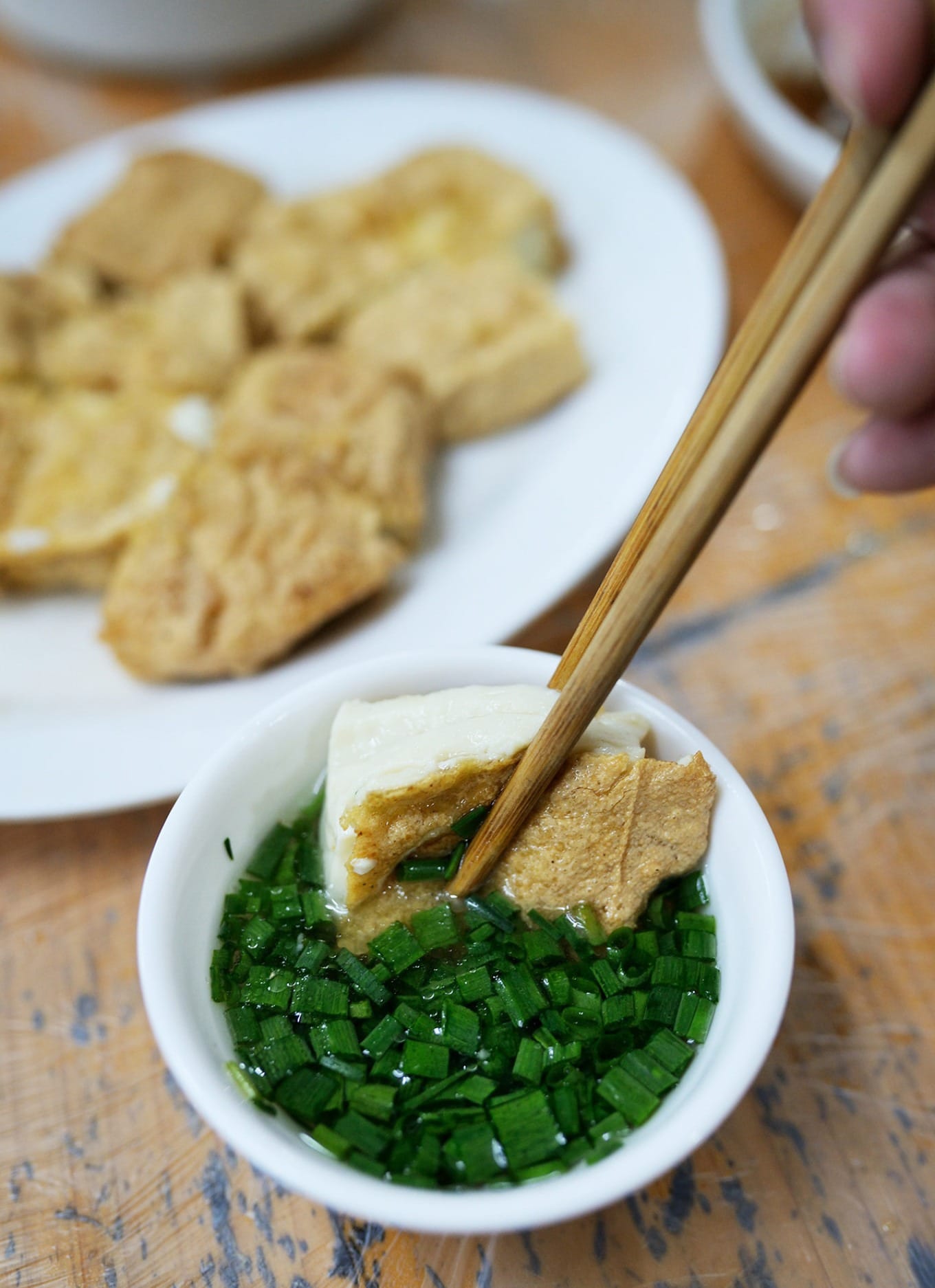
Dipping protocols vary across Chaoshan. While Chaozhou diners prefer sour chili sauce with fresh mint, Puning tradition calls for chive salt water (韭菜盐水)—a deceptively simple bath that amplifies the tofu’s intrinsic fragrance without overwhelming it. When you bite through the crisp, golden crust, you’ll meet a warm, custardy center that defies typical tofu textures. The added sweet potato flour creates a higher moisture content than conventional bean curd, yielding a mouthfeel that is simultaneously silky and springy.
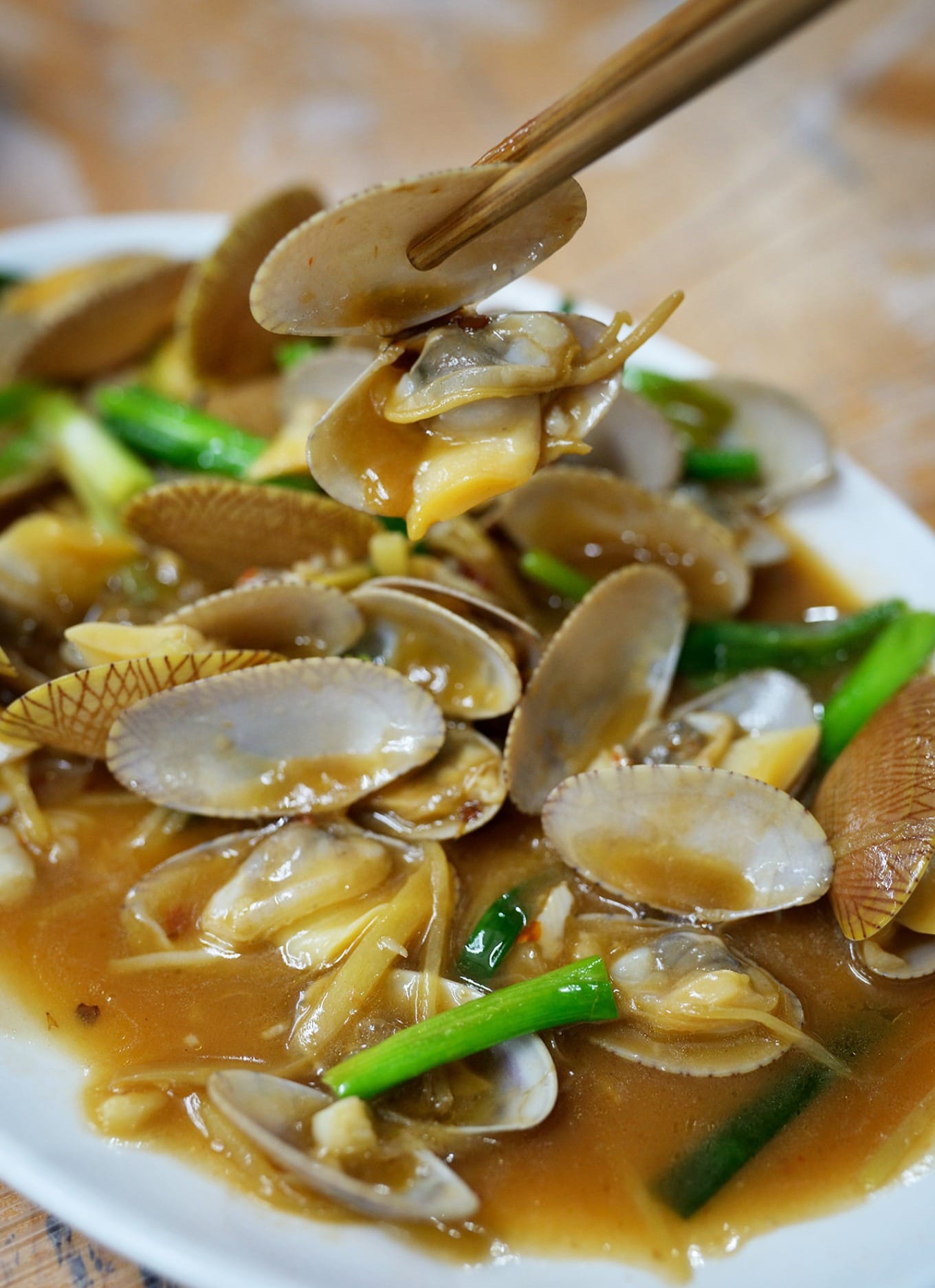
The kitchen extends its expertise beyond bean curd. Order the ginger-scallion clams (姜葱炒花甲), a regional home-style staple that relies on minimal intervention—just aromatics and seasoning—to deliver maximum flavor.
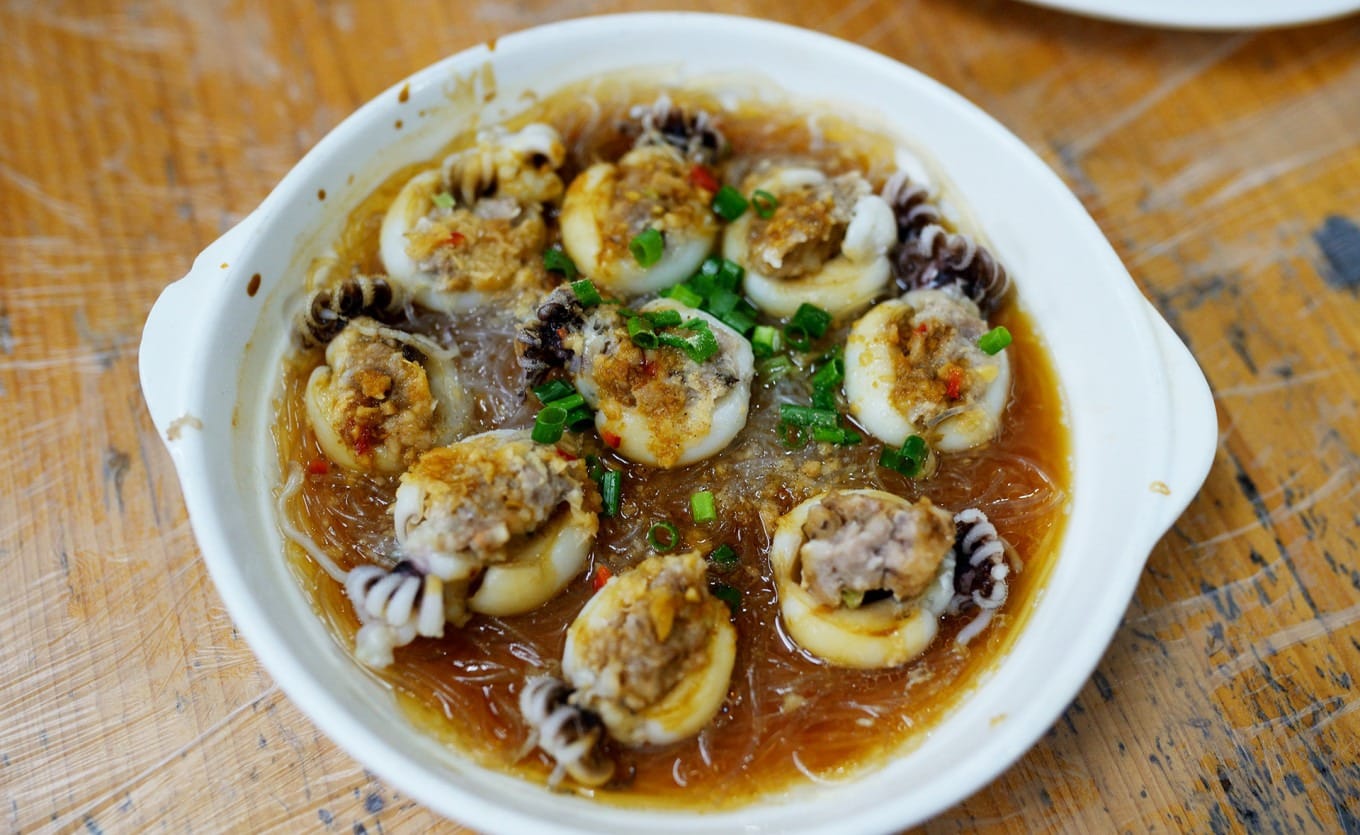
The garlic vermicelli squid (蒜蓉粉丝蒸鱿鱼) presents tender baby cuttlefish perched atop delicate rice noodles, showered with fragrant garlic and scallion oil until every strand becomes infused with savory depth.
For liquid sustenance, consider the stone olive pig lung soup (石橄榄猪肺汤). Stone olive, a medicinal herb resembling dendrobium, finds its ideal expression in this classic Chaoshan preparation simmered with pig lungs. The resulting broth is remarkably sweet and clear, traditionally consumed for its soothing properties.
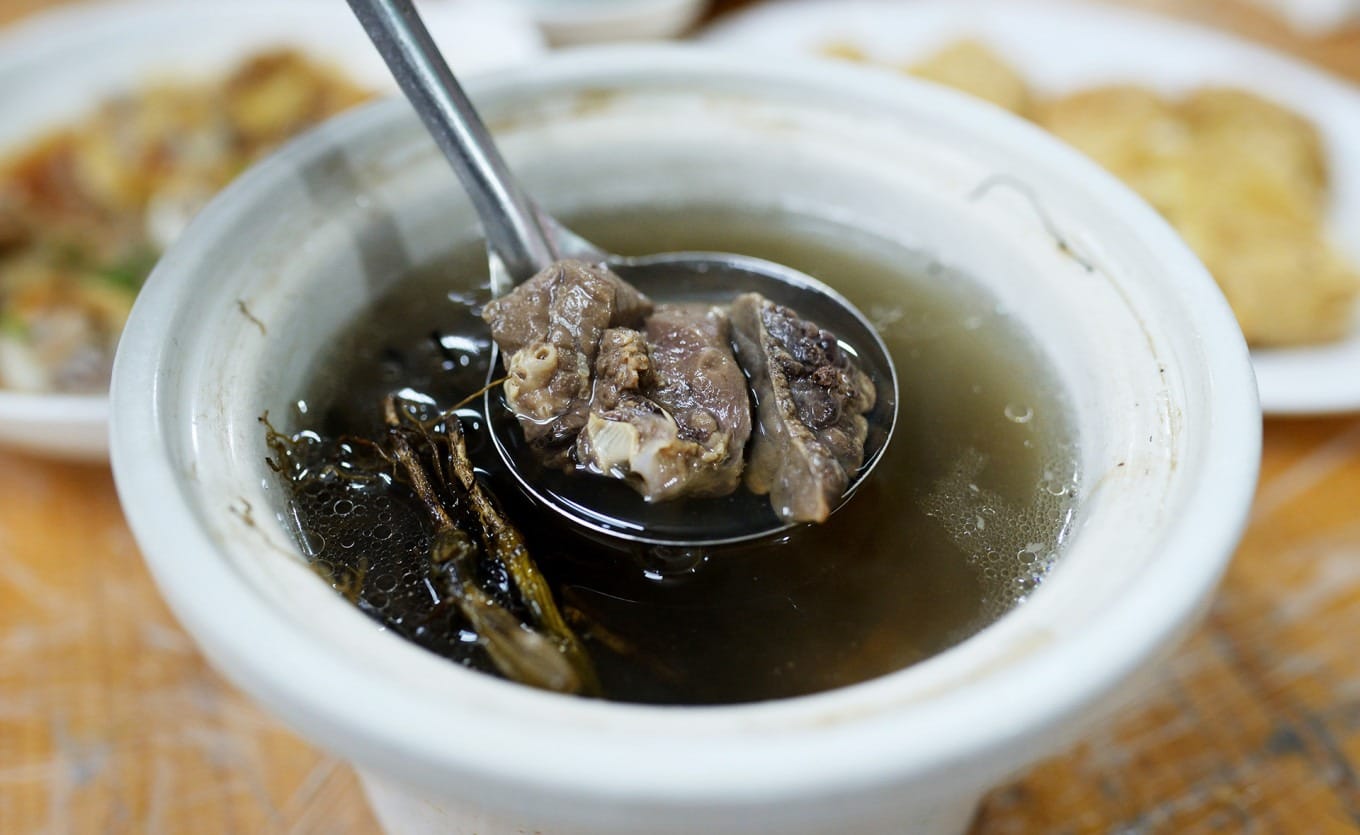
- RestaurantHongxing Dougan Fan (宏兴豆干饭)
- AddressNo.
- Recommended dishes炸普宁豆干 (Deep-fried Puning Dried Tofu), 姜葱炒花甲 (Ginger-Scallion Clams), 蒜蓉粉丝蒸鱿鱼 (Garlic Vermicelli Squid), 石橄榄猪肺汤 (Stone Olive Pig Lung Soup)
- Average spend40 RMB per person
Guangda Cabbage Rice Rolls: Puning’s Minimalist Masterpiece
In Puning, rice rolls (肠粉) follow a different philosophy than the ingredient-laden versions found in Shantou or Chaozhou. The local classic—cabbage rice rolls (白菜肠粉)—demonstrates minimalism at its finest: silky steamed sheets wrapped around nothing more than tender cabbage, occasionally joined by a scattering of minced pork and mushrooms. This restrained filling allows the texture of the wrapper and the clarity of the sauce to take center stage.
For the quintessential experience, seek out Guangda Cabbage Rice Rolls (广达白菜肠粉), an unassuming storefront tucked beneath a residential tower on Guangda Road. The operation spills onto the sidewalk with plastic stools and folding tables, creating an open-air dining room that feels deeply woven into the neighborhood fabric.
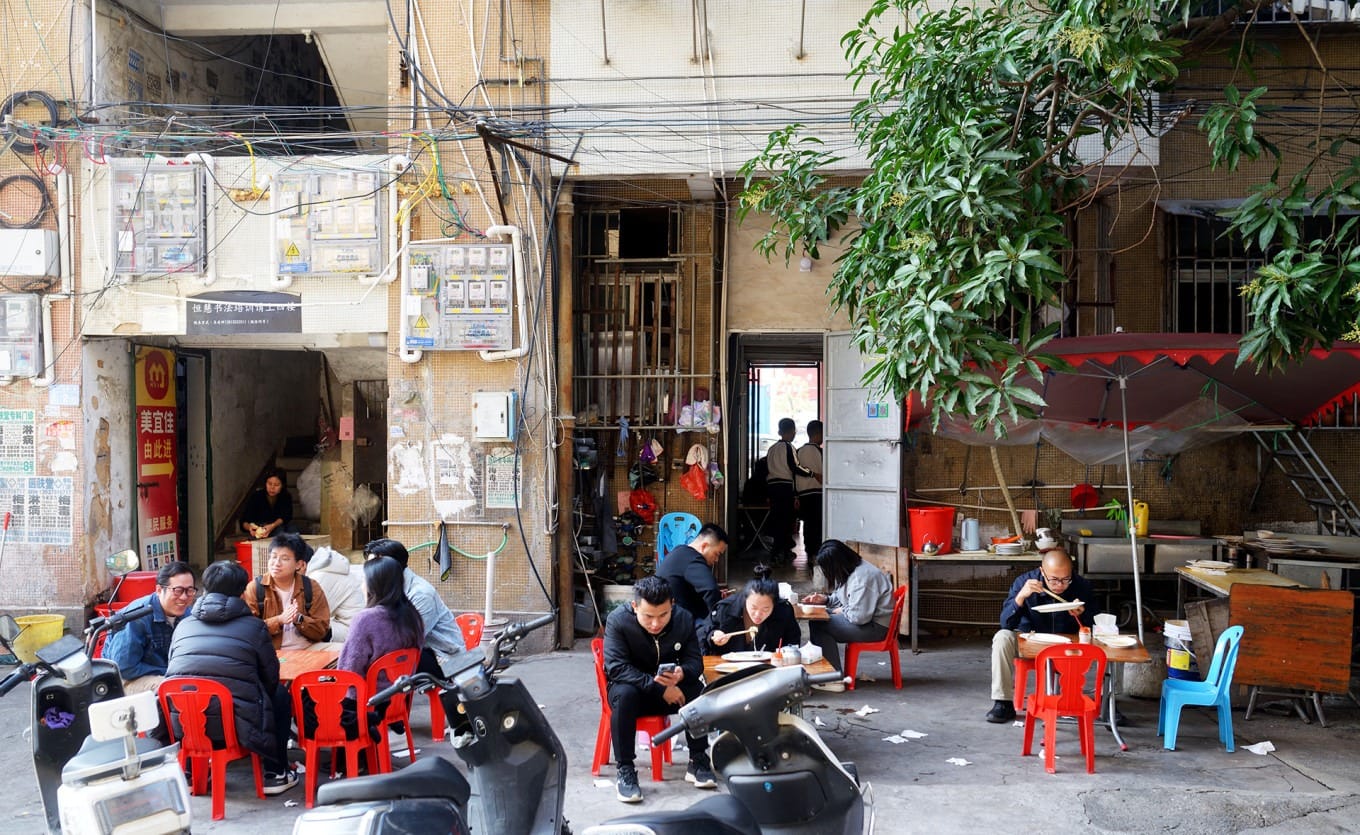
Puning’s defining characteristic lies in its sauce. While eastern Chaoshan cities favor thick, dark soy reductions, here you will encounter a light braised sauce (卤汁)—still built on a soy foundation but diluted to a near-transparent broth. The pale, soup-like liquid coats the rice rolls without drowning them, preserving the delicate chew of the steamed skin.
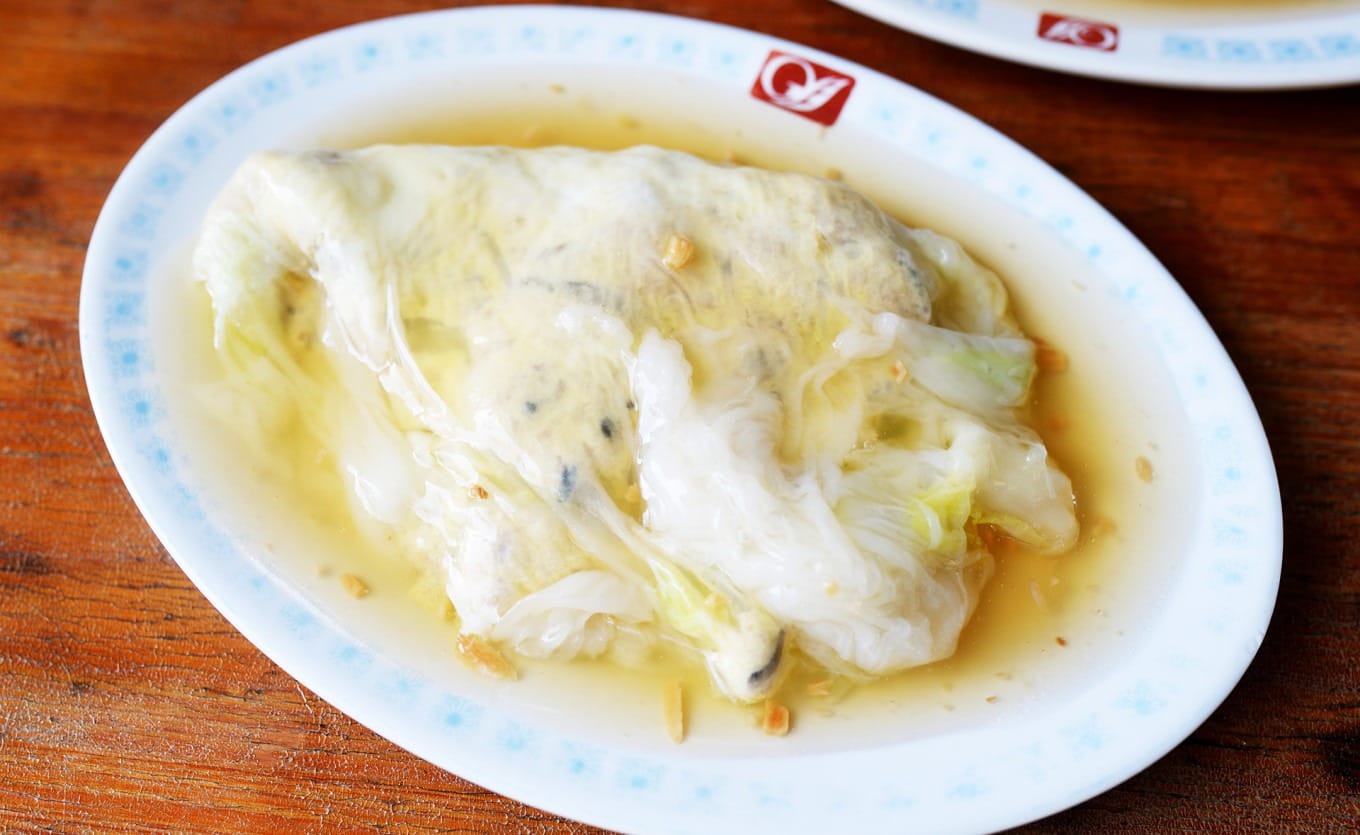
The dish arrives looking almost austere—pale, glistening, and free of heavy garnish—yet delivers surprising complexity. The wrapper is tissue-thin yet resilient, with a crystal-clear appearance and a texture that manages to be both silky and slightly springy. Inside, the cabbage offers clean, sweet crunch. Add a spoonful of garlic chili sauce (蒜蓉辣椒酱) to amplify the heat; the condiment provides aromatic punch without masking the vegetable’s natural sweetness.
- RestaurantGuangda Cabbage Rice Rolls (广达白菜肠粉)
- Address普宁市广达路口双林电脑对面 / Opposite Shuanglin Computer, Guangda Road Intersection, Puning City
- Recommended dishes白菜肠粉 (Cabbage Rice Rolls)
- Average spend10 RMB
Xichi Baima Specialty Lo Mein
Tucked away in Puning’s Liusha Xintan district, Xichi Baima Specialty Lo Mein (喜池白马特色捞面) proves that exceptional flavor often hides behind the most modest facades. Despite a bare-bones storefront and minimal service, this internet-famous spot dominates local food rankings and draws crowds even during weekday lunch hours. Arrive early or prepare to wait—seats fill fast at this beloved institution.
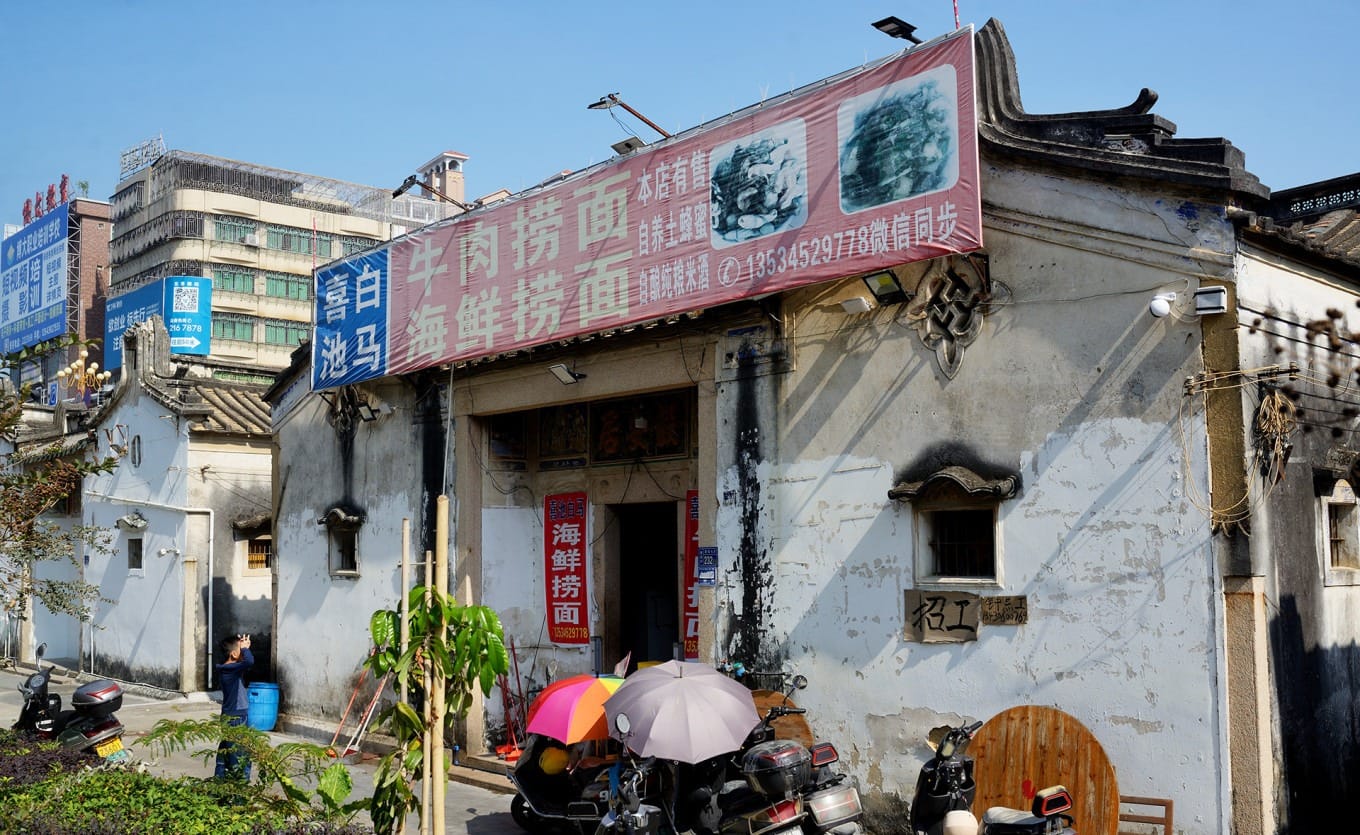
The menu focuses on just two signature bowls, both priced in the mid-range (around 30 yuan and up) but justified by prodigious toppings. The 海鲜捞面 (Seafood Lo Mein) arrives buried beneath a mountain of shrimp, oysters, and lean pork so generous the noodles nearly disappear from view.
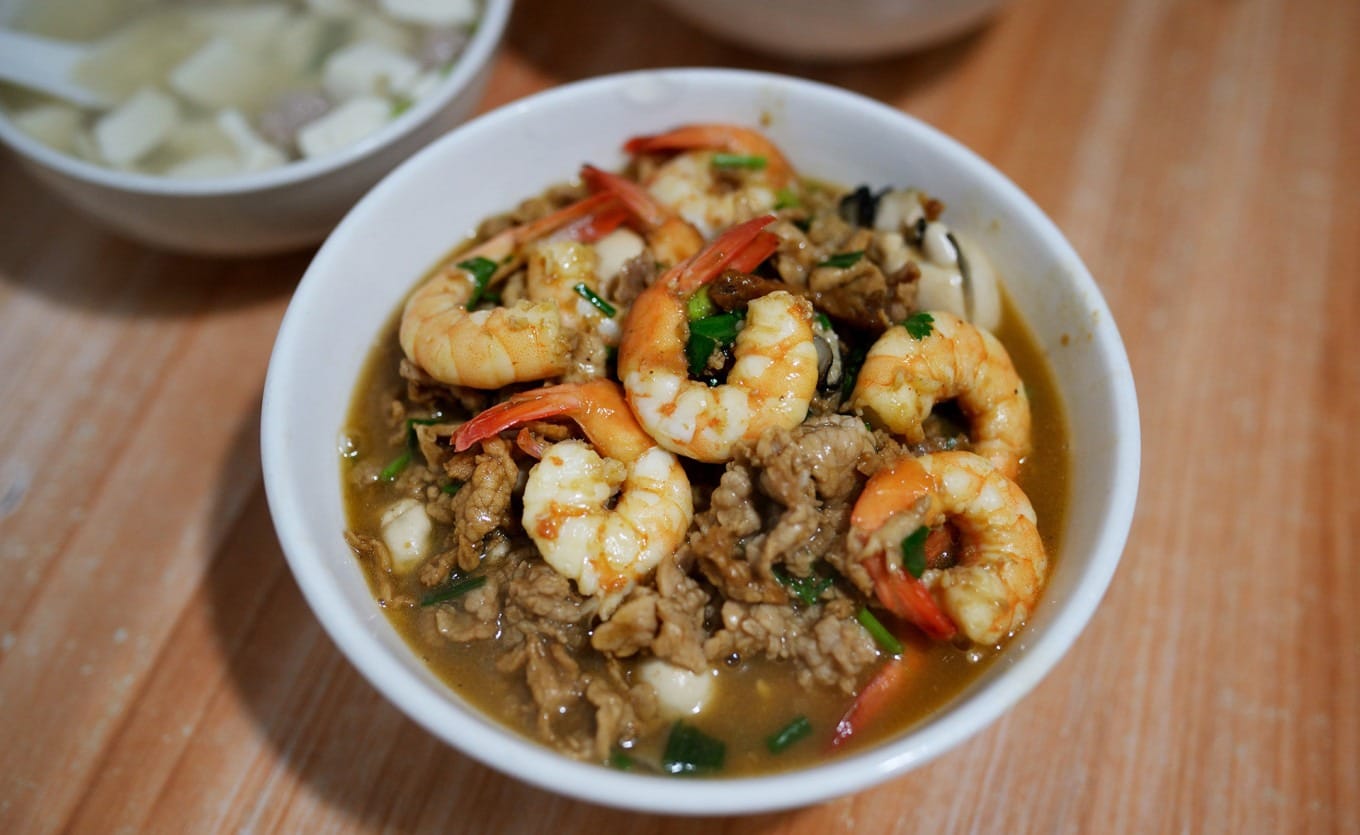
The wheat noodles possess a satisfying chewiness that demands thorough mixing. Use your chopsticks to fold every strand through the rich, savory sauce until each one glistens. Tender bean sprouts threaded throughout provide a crisp, sweet counterpoint to the dense flavors.
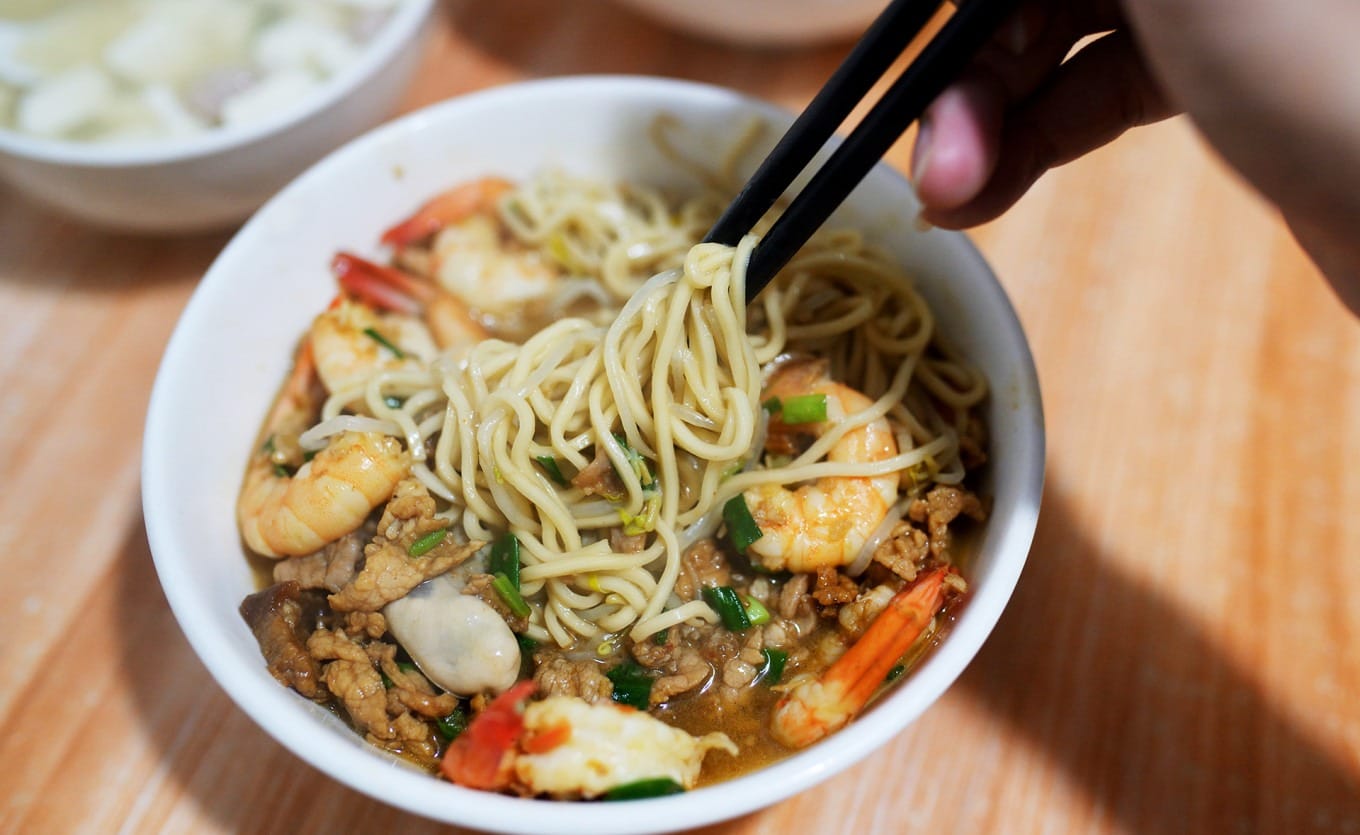
Alternatively, the 牛肉捞面 (Beef Lo Mein) blankets the bowl’s surface with thinly sliced beef that releases an aromatic rush when the bowl hits the table. The meat stays remarkably tender, never crossing into toughness, creating a harmonious bite with the sauced noodles beneath.
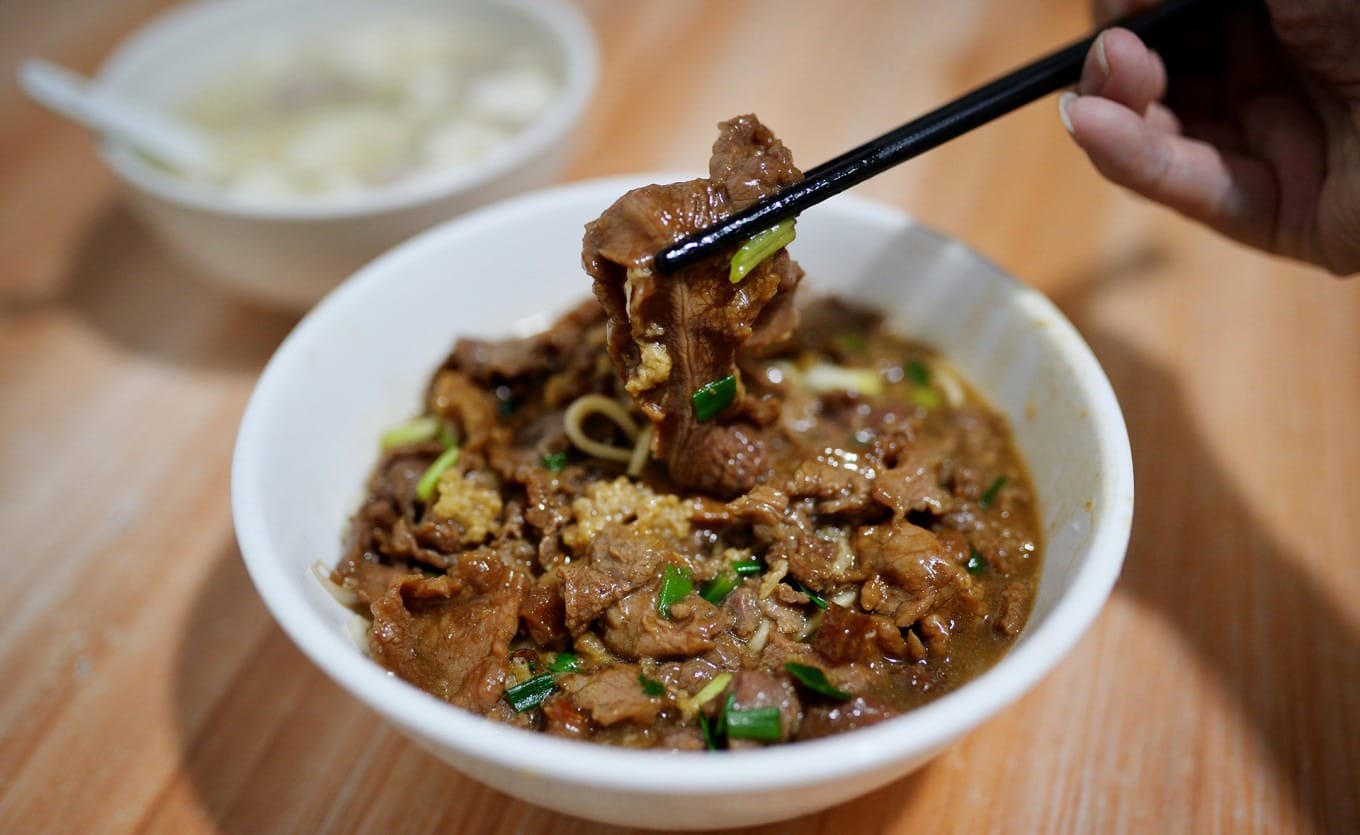
Heat seekers should request the house-made soul chili sauce (灵魂辣椒酱). The kitchen achieves an ideal equilibrium between fiery heat and salinity that elevates both varieties to their full potential.
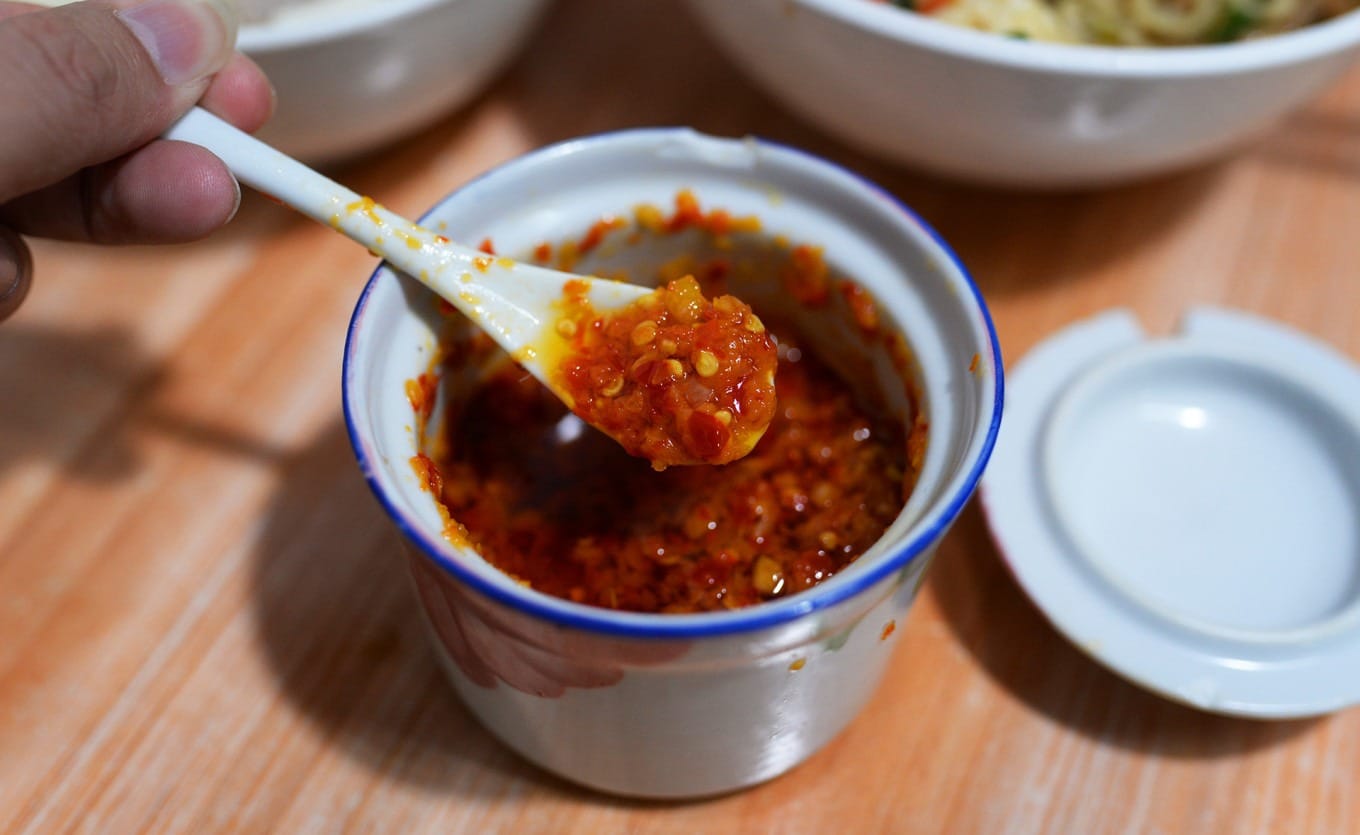
- RestaurantXichi Baima Specialty Lo Mein (喜池白马特色捞面)
- Address普宁市新坛大德南路七片232号 (No.
- Recommended dishes海鲜捞面 (Seafood Lo Mein), 牛肉捞面 (Beef Lo Mein)
- Average spend30 yuan
Hongfa Laoda Xilu Lotus Root
When exploring Puning’s food scene, you’ll notice virtually every lotus root soup vendor advertises “Xilu Lotus Root.” To taste the genuine article, head to Hongfa Laoda Xilu Lotus Root (鸿发老大西胪莲藕), a 50-year-old local institution that residents consistently rank among the city’s finest.
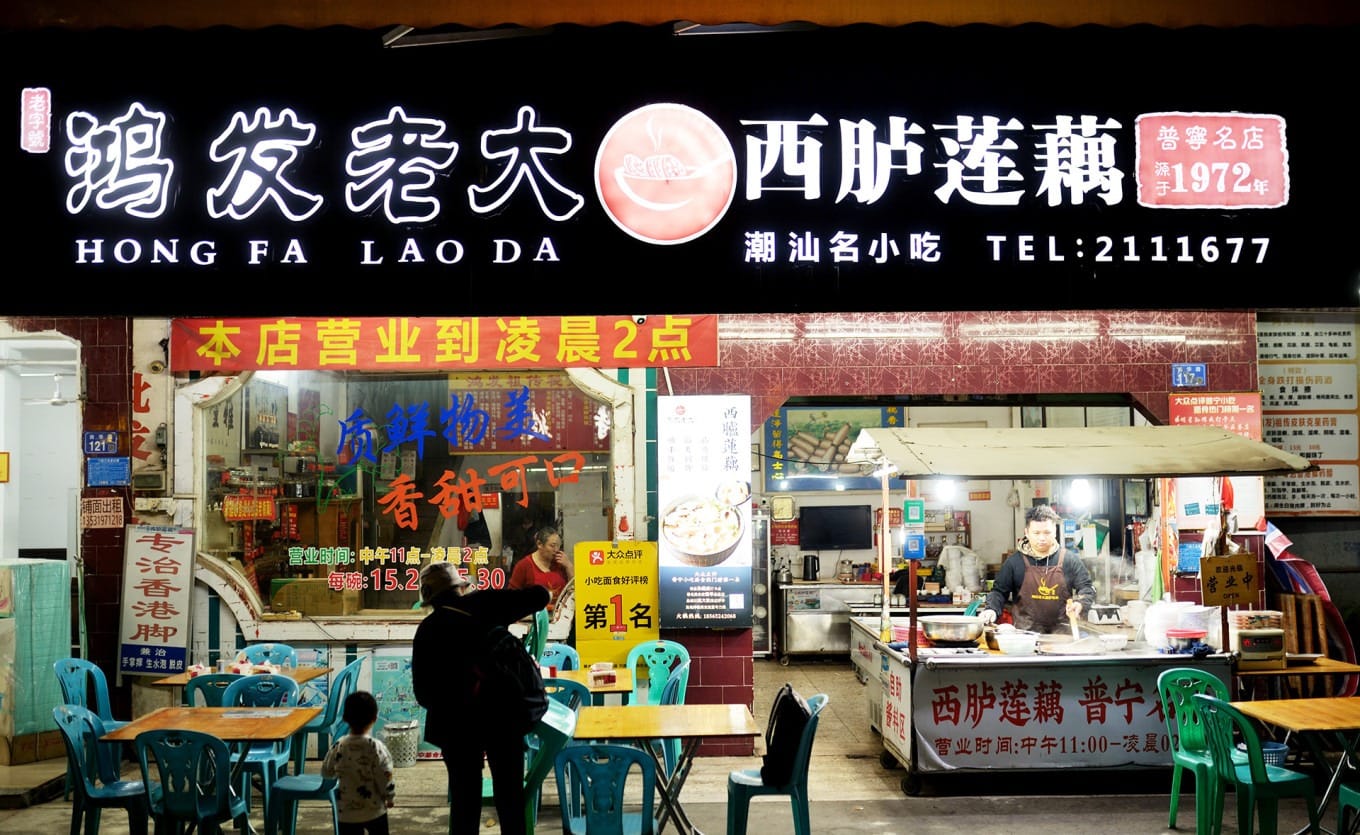
Despite the Puning location, the name references Xilu (西胪), a township in Chaoyang District, Shantou. Situated at the estuary of the Rong River (榕江), Xilu’s fields endure regular tidal saltwater intrusion that creates deep, silty “salt-field” soil. This unique terroir produces unusually large, starch-heavy lotus roots renowned for their dense, powdery texture.
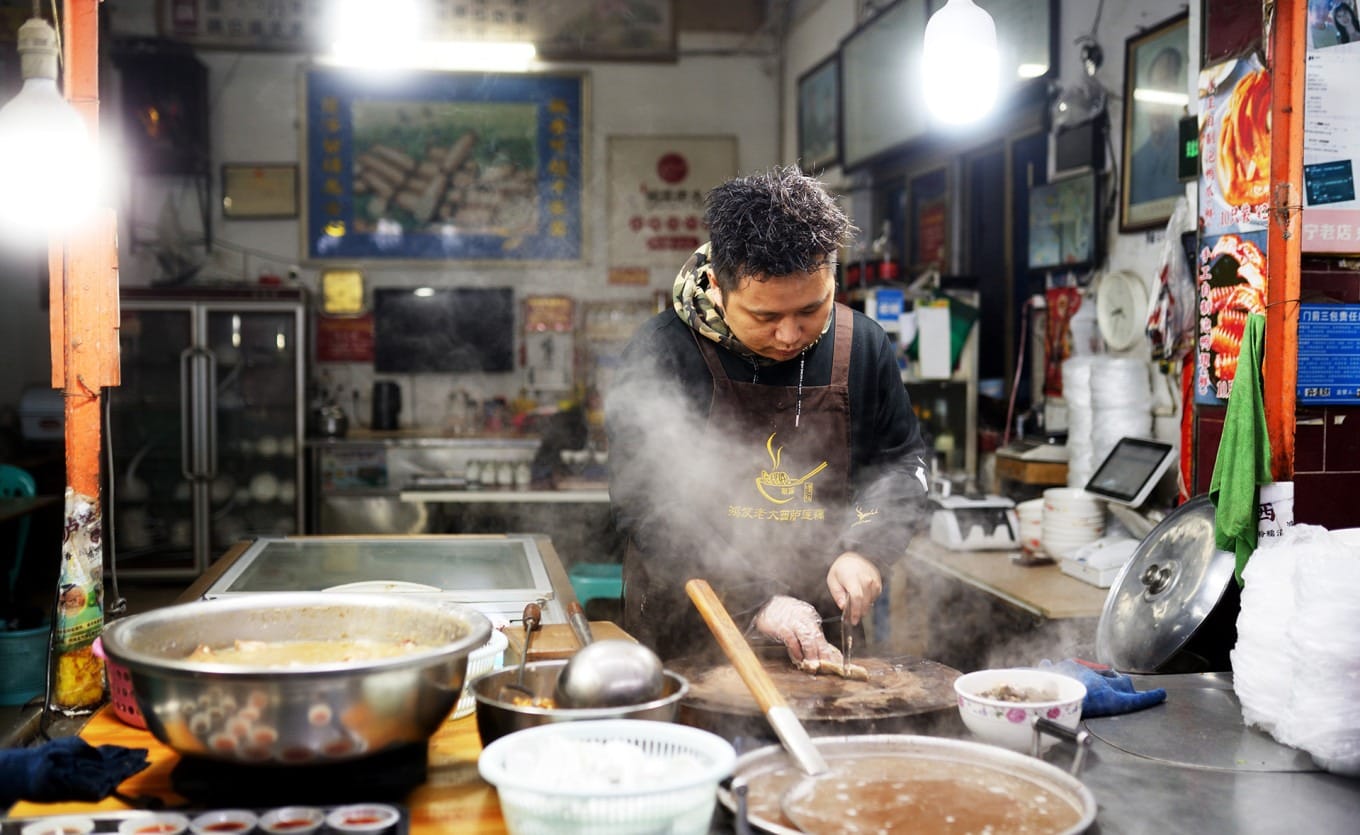
In the kitchen, cooks simmer fresh raw lotus root until it reaches a tender, half-powdery state, then cut it into substantial chunks. These meet a customizable mix of pig offal—you can select from pig intestine (粉肠), stomach (猪肚), lung (猪肺), heart tube (猪心管), or the distinctive pig palate (猪天梯, literally “pig sky ladder”) known for its crunchy cartilage. The broth simmers for hours with pork bones and lotus root, delivering a deep, savory aroma that promises rich flavor before you even lift the spoon.

Your first bite reveals the lotus root’s signature character: densely starchy with a pronounced stringiness that stretches between chopsticks, yielding a fine, sandy mouthfeel that melts on the tongue. The kitchen provides two essential dipping sauces—bright red chili sauce (辣椒酱) and dark, nutty satay sauce (沙茶酱). Alternate between them to discover how the heat and savory depth transform the clean sweetness of the lotus root and the richness of the offal.

- Restaurant鸿发老大西胪莲藕 (Hongfa Laoda Xilu Lotus Root)
- Address普宁市南园南华路汇食街7号 (No.
- Recommended dishes莲藕汤 (Lotus Root Soup)
- Average spend20 yuan
Authentic Mianhu Sweet Soup Shop
Chaoshan’s devotion to sweet soup runs deep. Historically the southern hub of China’s sugarcane industry, the region encompassing Shantou, Chaozhou, and Jieyang developed a sophisticated dessert culture that endures today. While sweet tong sui appears throughout the area, the town of Mianhu commands particular respect for its distinctive style. You can experience this legacy at Authentic Mianhu Sweet Soup Shop (正宗棉湖甜汤店), located along West Liusha Avenue in Puning’s Liusha district. Operated by a Mianhu native, the shop delivers the town’s authentic flavors to travelers seeking genuine local tastes.
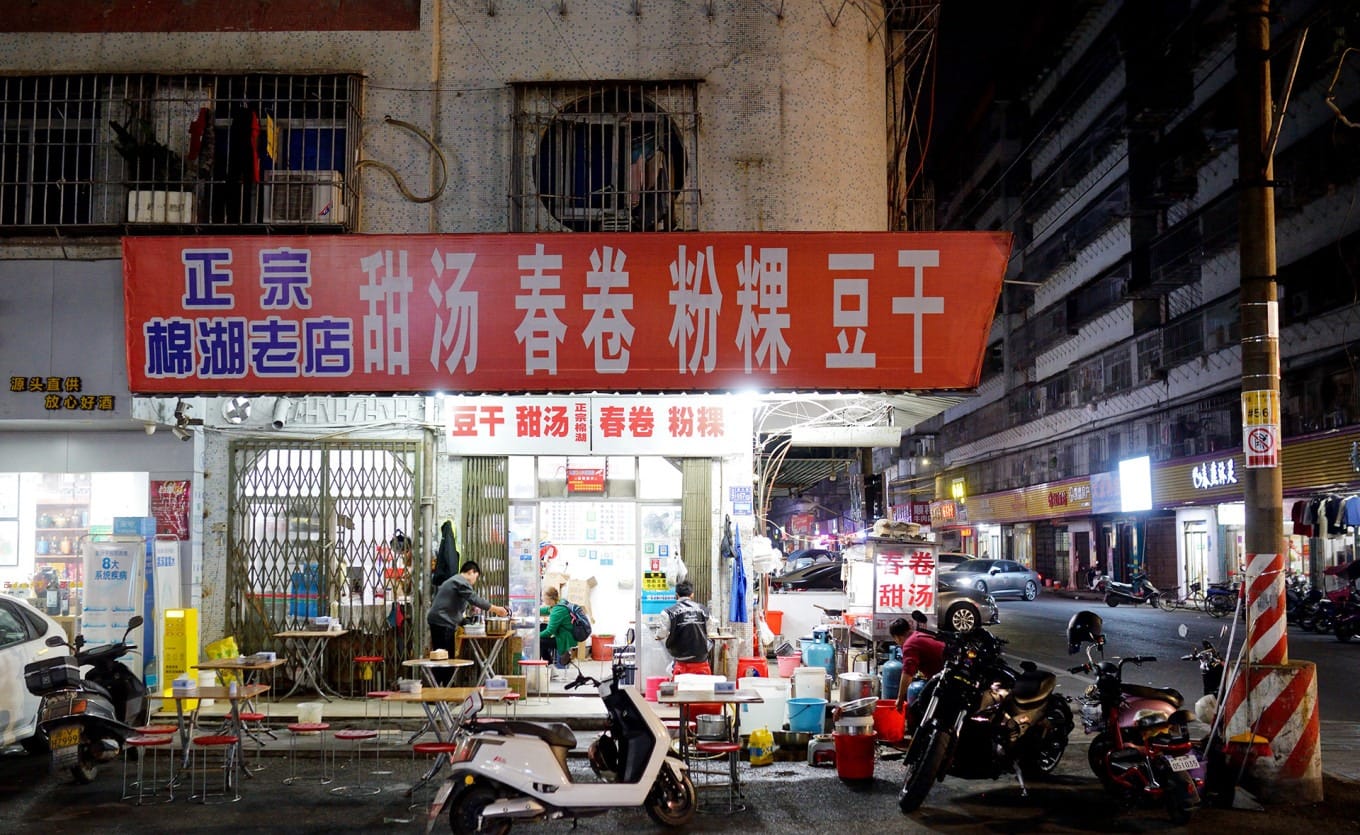
The signature ingredient here is 姜薯 (jiangshu), a tuber that grows exclusively in Chaoyang and Huilai counties. Though botanically related to Chinese yam, jiangshu possesses a unique crispness that sets it apart. The kitchen transforms this local specialty into 姜薯汤 (Jiangshu Sweet Soup) using a specialized peeler to shave the tuber into paper-thin sheets. These delicate slices curl instantly upon contact with hot syrup, creating an elegant visual effect.
When you taste the soup, expect a compelling textural interplay: the slices offer a crisp, resilient bite while releasing a subtle, mucilaginous coating that feels slick and refreshing against the palate. The sweetness remains restrained, allowing the tuber’s clean, aromatic essence to shine through.

Another essential order is 绿豆爽 (Mung Bean Refreshing), which diverges significantly from Cantonese-style mung bean desserts. Instead of whole beans, the kitchen uses 绿豆畔 (split mung beans)—peeled, split mung beans that cook into a smooth, skinless porridge. This preparation eliminates the fibrous chew of bean skins, delivering a silky texture that locals particularly cherish.
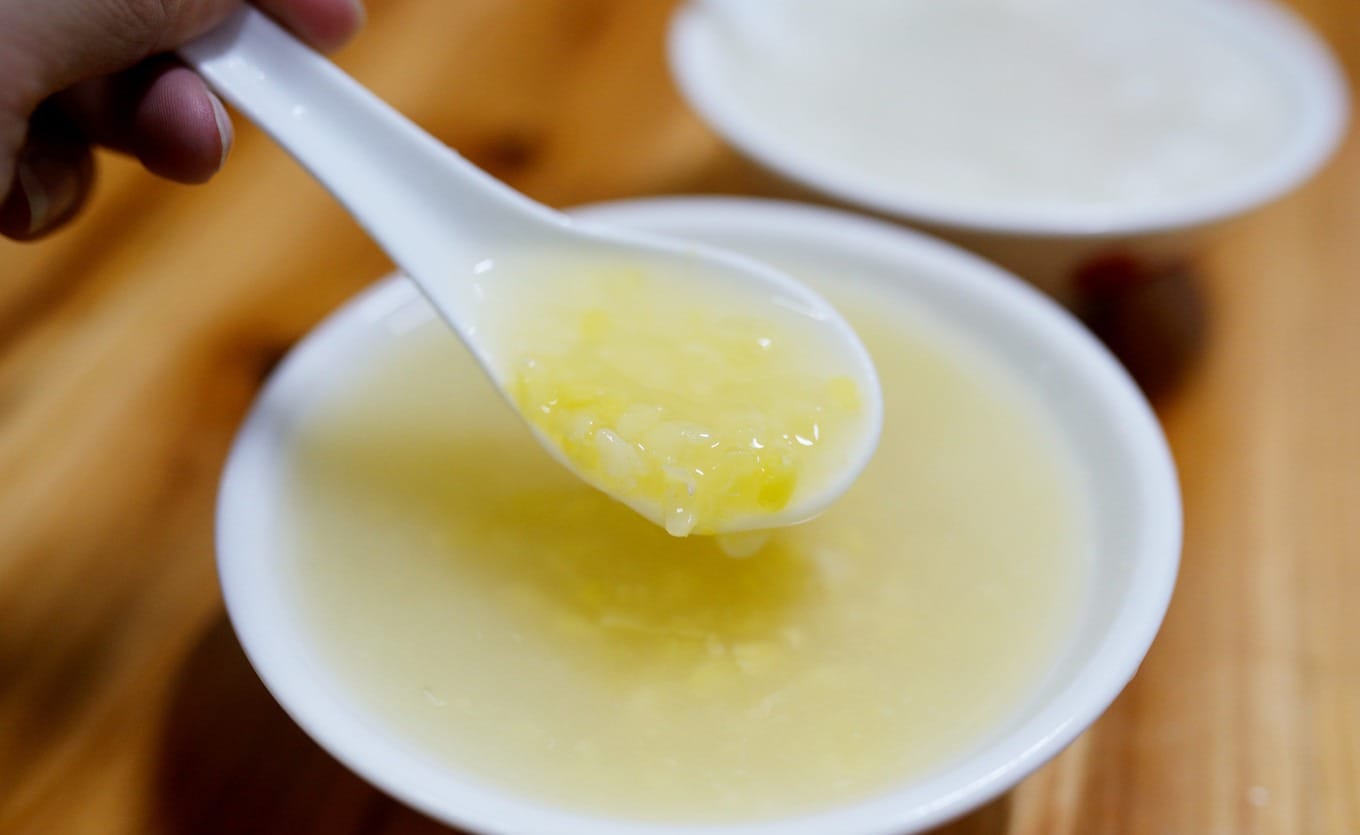
Beyond sweets, consider the savory spring rolls, known locally as 春卷 (Spring Rolls) or 春饼 (Spring Pancakes). Unlike Cantonese versions, these feature wrappers stretched thin as gossamer that fry into flaky, shattering layers. The filling combines chives with minced pork, creating a savory counterpoint to the sweetness. Each bite produces a distinct crackle, releasing an aromatic cloud of hot, savory filling.
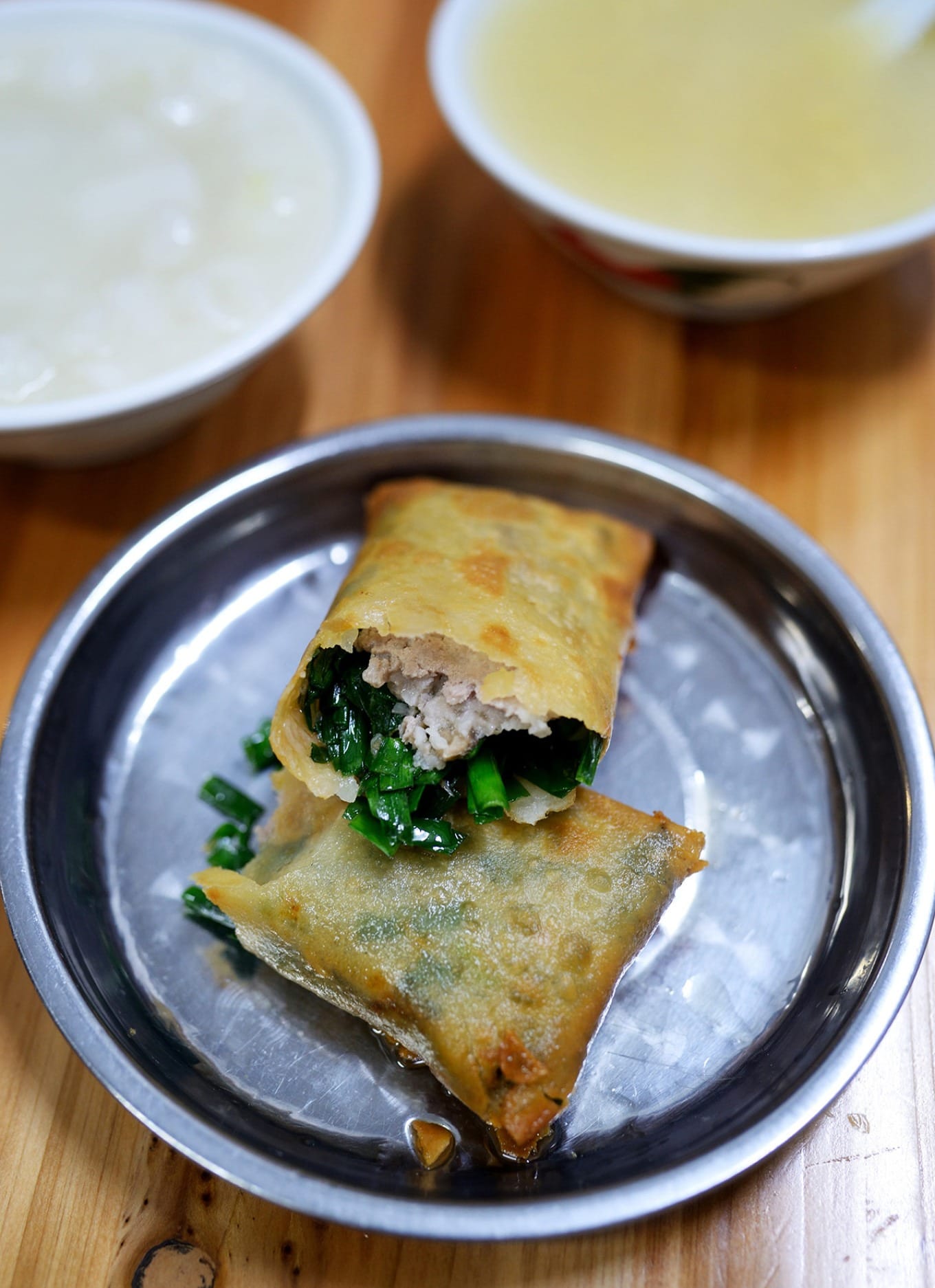
- RestaurantAuthentic Mianhu Sweet Soup Shop (正宗棉湖甜汤店)
- Address普宁市流沙大道西210号 (No.
- Recommended dishes姜薯汤 (Jiangshu Sweet Soup), 绿豆爽 (Mung Bean Refreshing), 春卷 (Spring Rolls)
- Average spend10 yuan
Hongyang Kueh Chup at Guo Zhi Ming
For a taste of old Puning, venture into Hongyang Town, the historic former county seat that predates modern city boundaries. This district preserves culinary traditions rarely found elsewhere, most notably the distinctive Hongyang style of Kueh Chup. Tucked away in an alley beside the Hongyang Cinema, Guo Zhi Ming (粿汁明) serves a version that locals consider the definitive benchmark for this regional specialty.
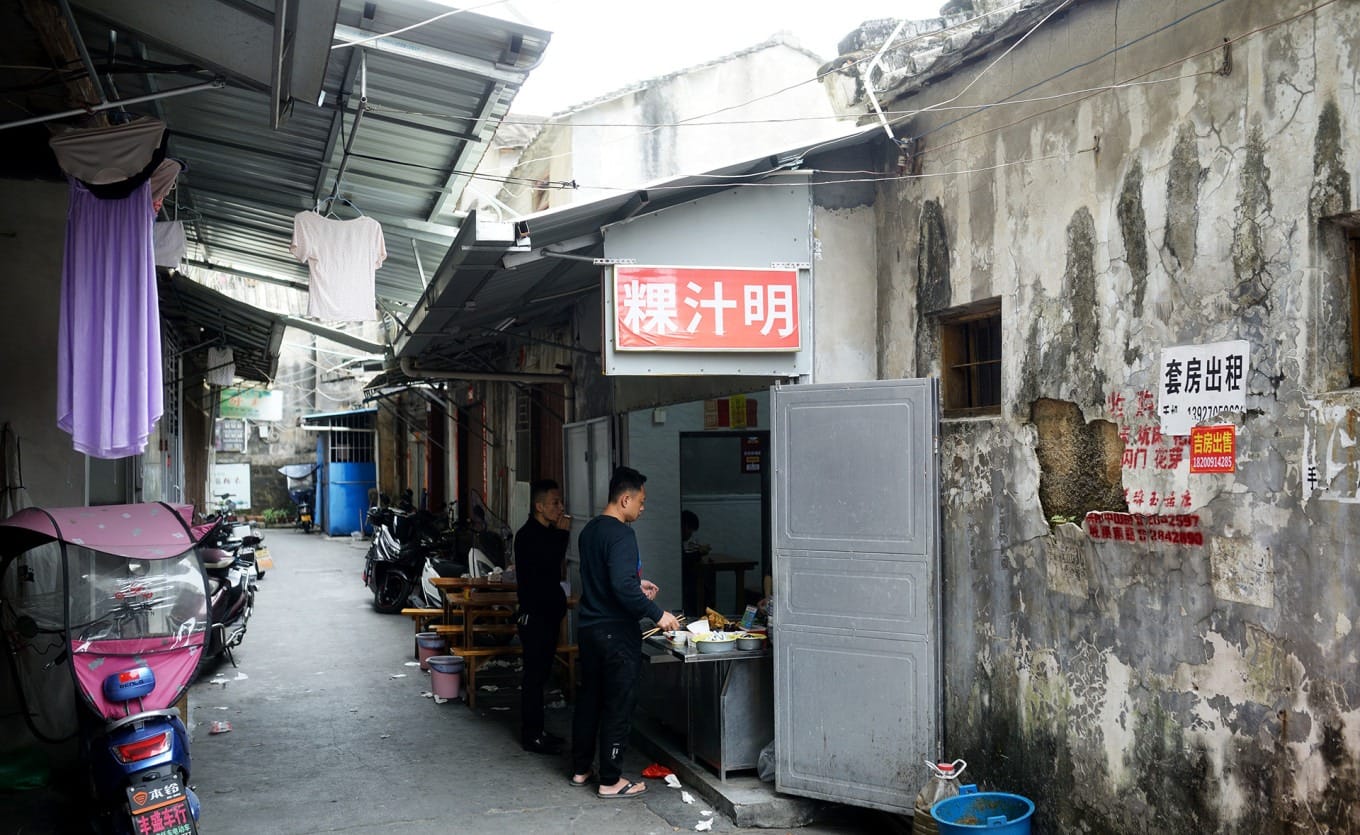
Despite sharing the character “kueh” with rice noodles, this dish contains no flat rice strips. Instead, you’ll encounter kueh chup skin (粿汁皮)—also called kueh kak (粿角)—which begins as rice batter baked in iron woks until set, then sliced into triangular or diamond-shaped pieces. These geometric cuts bear little resemblance to the slippery noodles found in other Teochew classics.
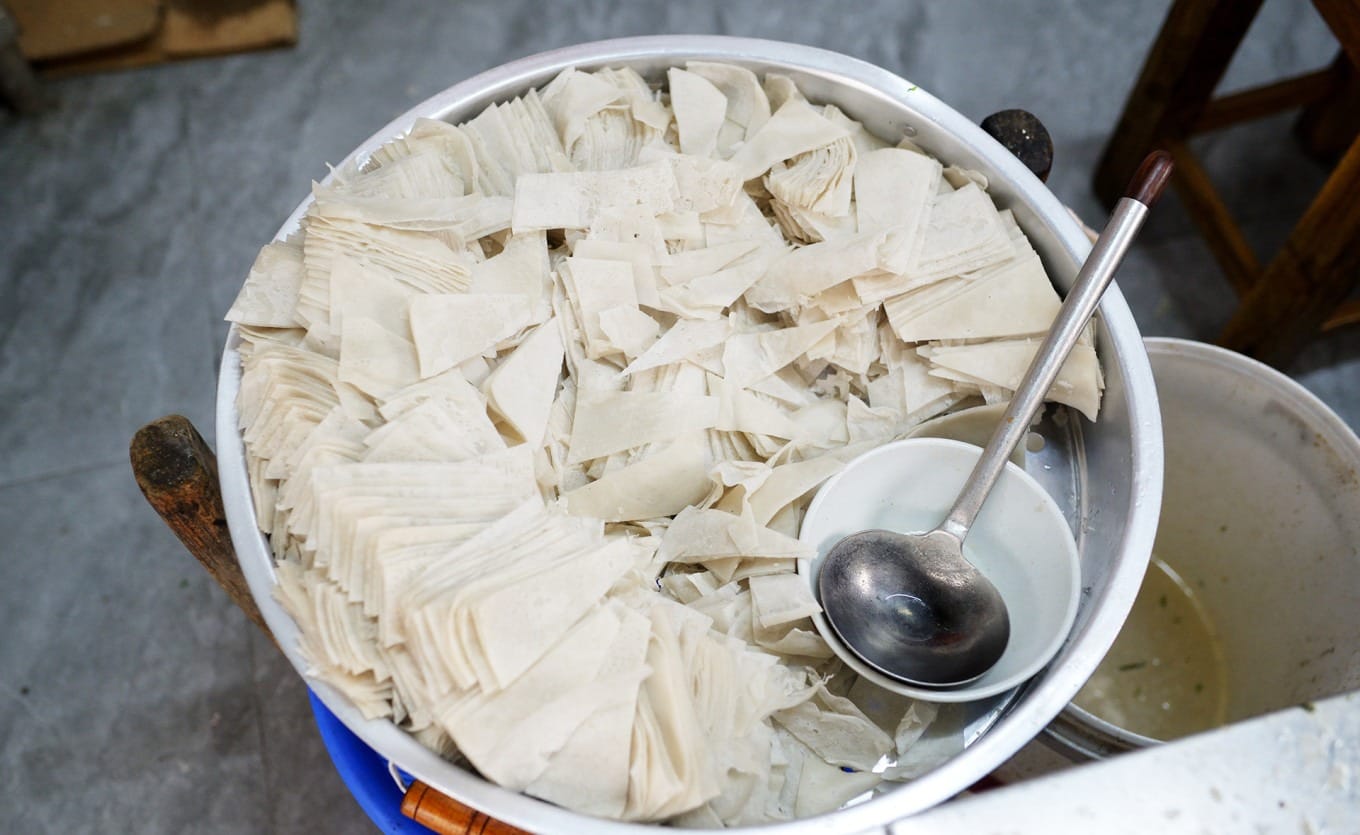
While Kueh Chup appears throughout Chaoshan, preparation varies significantly by town. Unlike the thick, braised sauce version found in Chaozhou city, Hongyang’s interpretation features a light, clear broth. At Guo Zhi Ming, the diamond-cut rice cakes simmer in this translucent soup until their microscopic pores absorb the liquid completely. The result offers a uniquely smooth yet springy texture with a clean, subtly sweet flavor profile, typically topped with braised meats and tender octopus.
You should absolutely order a spring roll (春卷) on the side, as locals do. These fried cylinders run longer than those found at Liusha or Mianhu dessert shops, encasing a savory mixture of mushrooms, dried shrimp, and minced pork within a blistered, crunchy wrapper that shatters to reveal a moist, tender center.
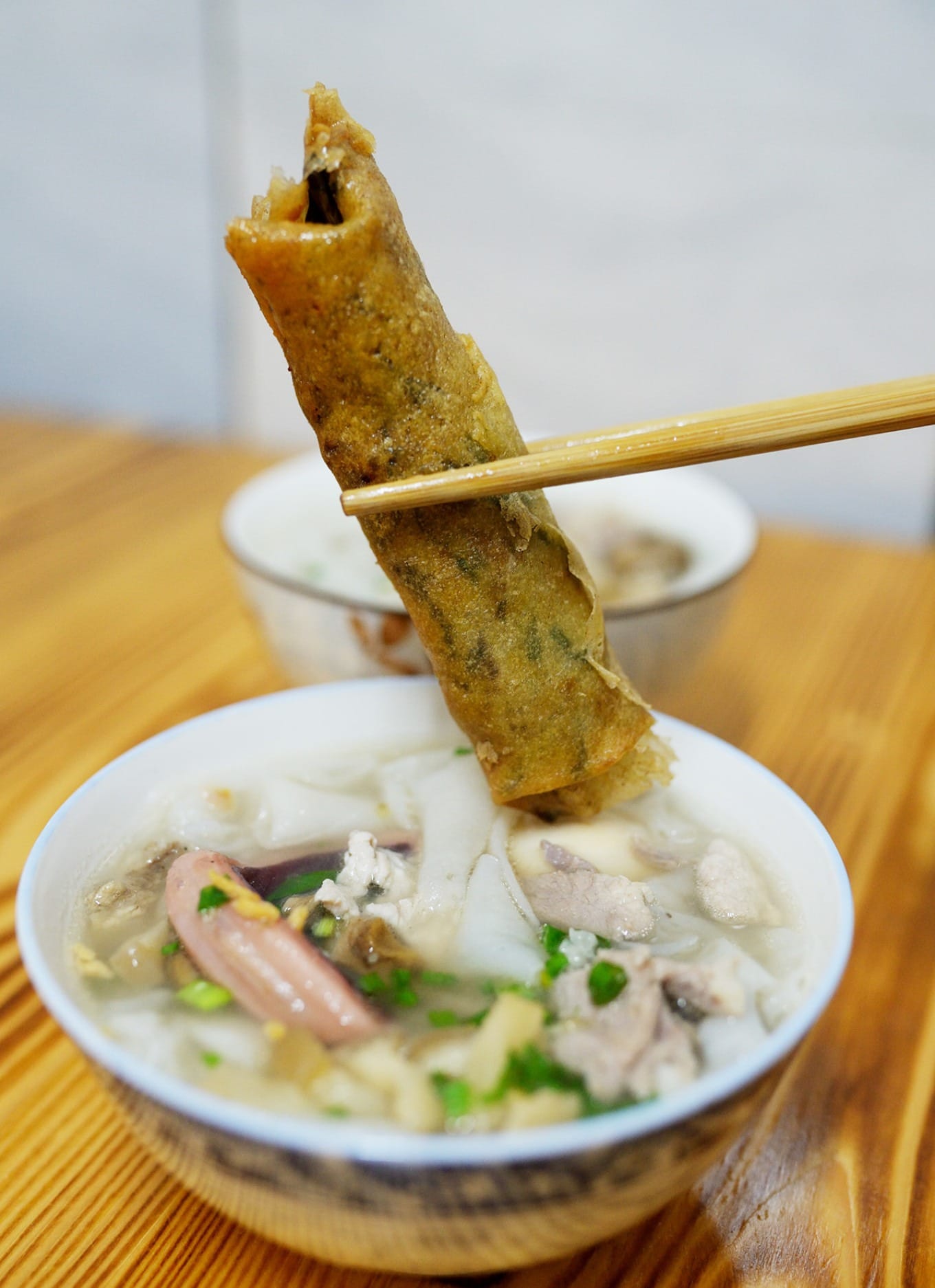
- RestaurantGuo Zhi Ming (粿汁明)
- AddressPuning City, Hongyang Town, Zhongshan Road, Dongcun, near Hongyang Cinema (普宁市洪阳镇中山路东村近洪阳电影院)
- Recommended dishesHongyang Kueh Chup (洪阳粿汁), spring roll (春卷)
- Average spend10 RMB
Fang Chunliang Stuffed Pork Intestines
In the culinary landscape of Hongyang Town, one traditional preparation stands out as both a technical marvel and a beloved comfort food: 猪肠胀糯米 (Stuffed Pork Intestines with Glutinous Rice). This iconic Chaoshan snack traces its origins to this very town, where generations have perfected the art of transforming humble ingredients into something extraordinary.
You will find 方春亮 (Fang Chunliang) tucked away at the corner of an alley beside 粿汁明 (Guo Zhi Ming), a no-frills spot that locals consistently rank among the best in town. Do not expect polished décor—here, the focus remains entirely on the food.

The name itself offers insight into the preparation: in Chaoshan dialect, ‘zhang’ (胀) means ‘to fill’ or ‘to stuff.’ The dish involves carefully packing glutinous rice into meticulously cleaned sections of pig intestine, creating a savory bundle that balances texture and flavor.
The process demands considerable patience and skill. Cooks select the lower section of the large intestine and wash it thoroughly before filling it to about seventy or eighty percent capacity with a mixture of glutinous rice, pork belly, shiitake mushrooms, dried shrimp, and peanuts.

Once simmered until tender, the rice expands within the casing, creating plump, rounded slices that resemble the original intestine shape. The vendor serves it hot, sliced into bite-sized pieces ready for immediate enjoyment.

The crucial finishing touch comes from the dipping syrup—a reduction of brown and white sugar that adds a subtle caramel sweetness. When you dip a warm slice into the glossy syrup, the savory filling and sweet coating create a lingering, satisfying complexity that explains why this remains a cherished local favorite.
- Restaurant方春亮猪肠胀糯米 (Fang Chunliang Stuffed Pork Intestines with Glutinous Rice)
- Address普宁市洪阳镇东村新街12号 (No.
- Recommended dishes猪肠胀糯米 (Stuffed Pork Intestines with Glutinous Rice)
- Average spend10 yuan
Lao Cai Fried Rice and Rehmannia Crab
In Hongyang, culinary devotion means overlooking frayed table edges for flavors worth a 20-kilometer drive. For more than two decades, 老财炒饭·熟地蟹 (Lao Cai Fried Rice · Rehmannia Crab (老财炒饭·熟地蟹)) has operated on exactly this principle: no frills, just unforgettable seafood. Travelers regularly abandon Jieyang’s city comforts to queue at this humble storefront, where plastic stools and bare walls matter little once the steaming pots arrive.

The signature 熟地蟹 (Rehmannia Crab) begins with 青蟹 (green crabs) pulled from Chaoshan’s coastal waters, selected for their imposing size and kept alive until the moment you order. Specify your preference between 肉蟹 (meat crabs)—the males prized for dense, sweet flesh—and 膏蟹 (roe crabs), the mature females known in Fujian as 红蟳 (red xun) for their brilliant, buttery roe. The latter commands a premium but rewards with rich, golden texture.
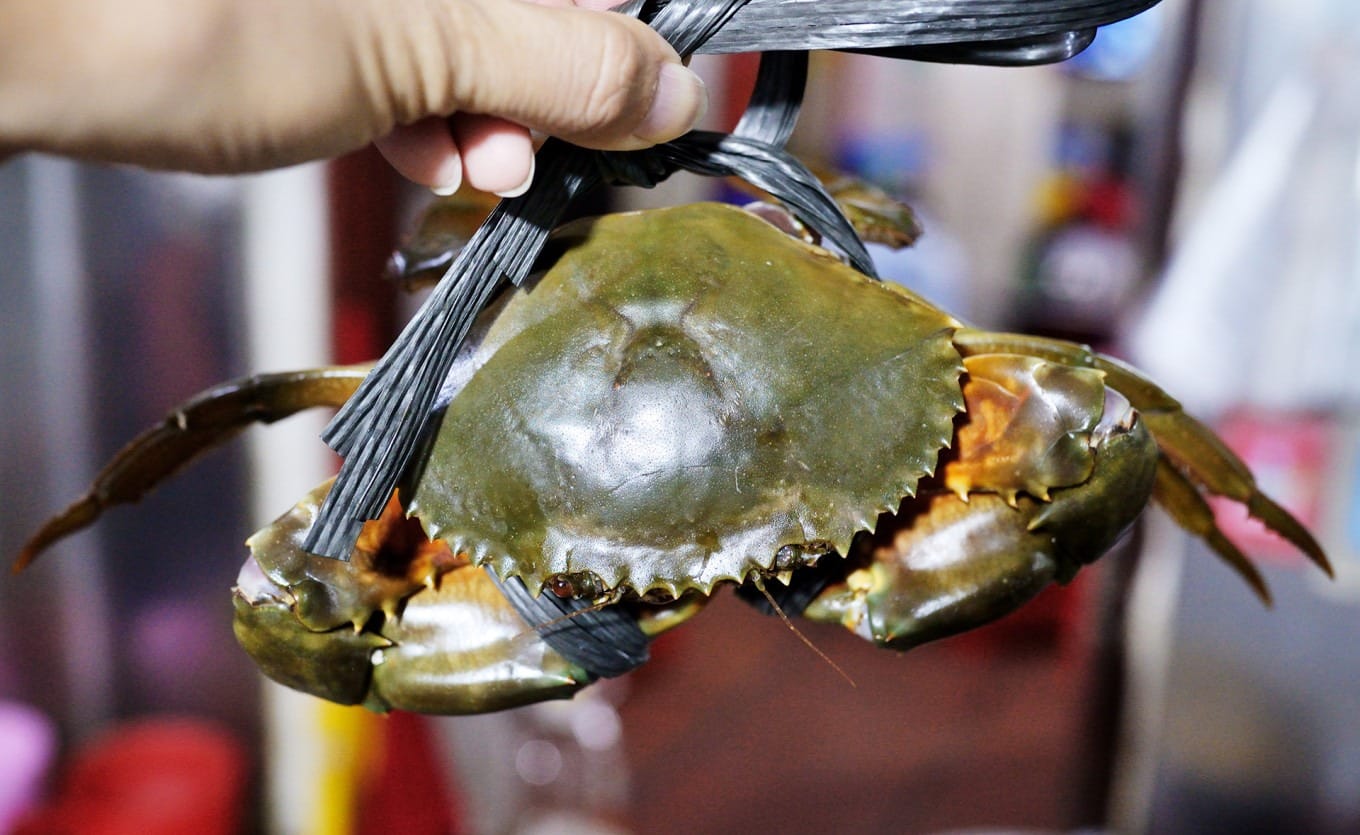
True to Cantonese medicinal cooking traditions, the kitchen splits the crabs and slow-simmers them with 熟地 (rehmannia root), 黑豆 (black beans), and other herbs. This combination supposedly nourishes yin, supports kidney function, and eliminates dampness—perfect justification for indulgence. As steam fills the room, the aromatic broth penetrates every crevice of the shell.
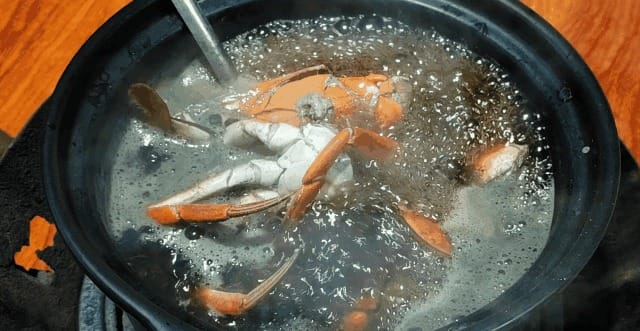
When the lid lifts, you’ll find crimson shells glistening with savory moisture. Crack one open to reveal swollen, snow-white meat that fills every chamber. The first bite floods your palate with marine sweetness, followed by earthy undertones from the herbal infusion, finishing with a warm, satisfying glow that settles deep in your stomach.
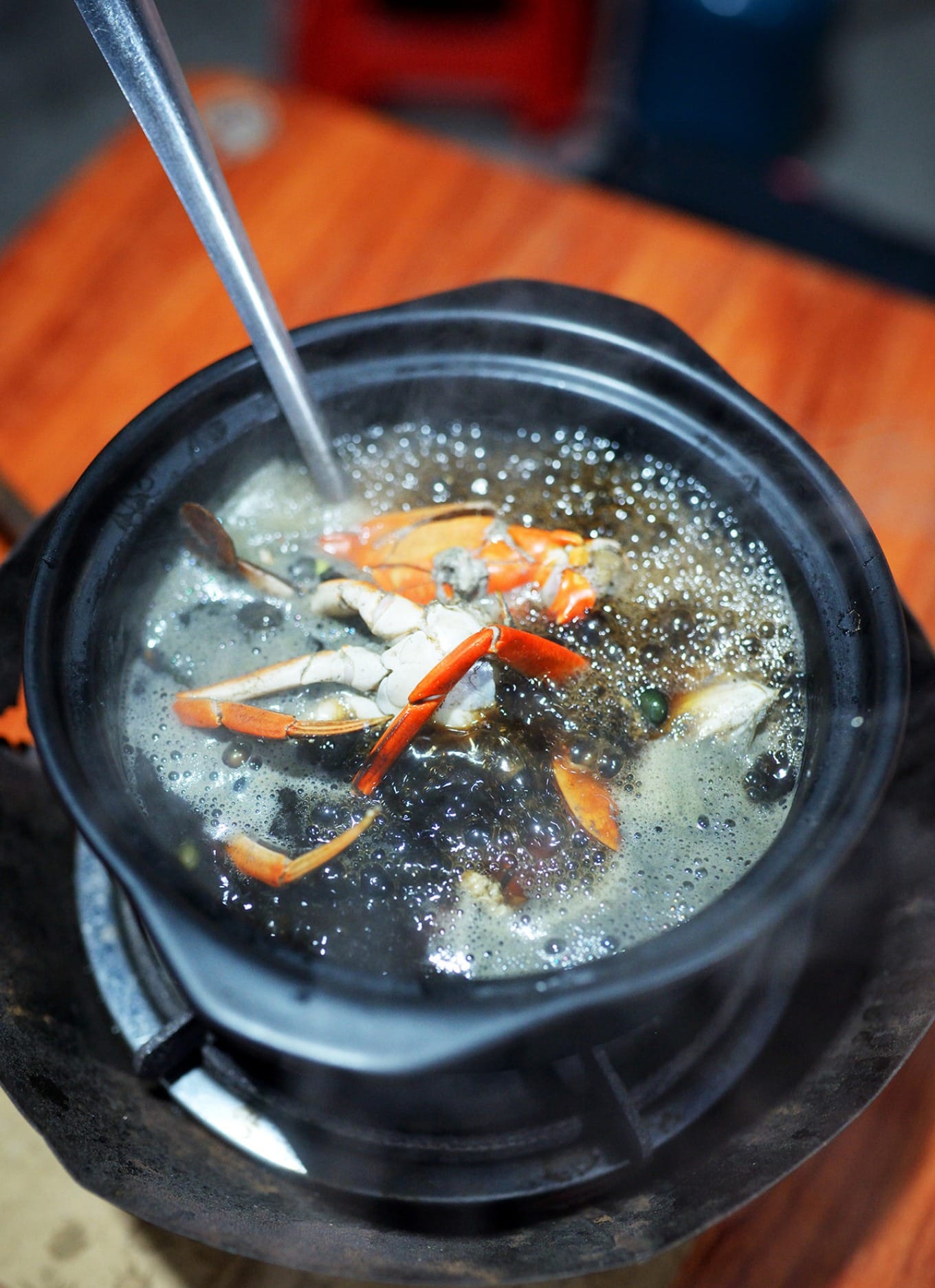
Balance the meal with an order of 老财炒饭 (Lao Cai Fried Rice), the house staple that showcases fierce wok hei. The rice carries a savory depth, tossed with egg, 腊肉 (cured pork), 豆角 (long beans), mushrooms, and carrots. Each grain remains distinct yet coated in smoky oil, creating a colorful, hearty companion to the delicate crab.

- Restaurant老财炒饭·熟地蟹 (Lao Cai Fried Rice · Rehmannia Crab)
- Address普宁市洪阳镇南商场二街培英幼儿园 (Peiying Kindergarten, South Market 2nd Street, Hongyang Town, Puning City)
- Recommended dishes熟地蟹 (Rehmannia Crab), 老财炒饭 (Lao Cai Fried Rice)
- Average spend80 yuan
Wu Di Stone Mill Rice Rolls
For an authentic taste of Puning’s breakfast culture, make your way to the historic De’an Li (德安里) complex in Hongyang. Just steps from the main gate, you’ll find Wu Di Stone Mill Rice Rolls (乌弟石磨肠粉), a time-tested neighborhood institution that has earned locals’ trust through decades of consistent quality and remarkably affordable prices.
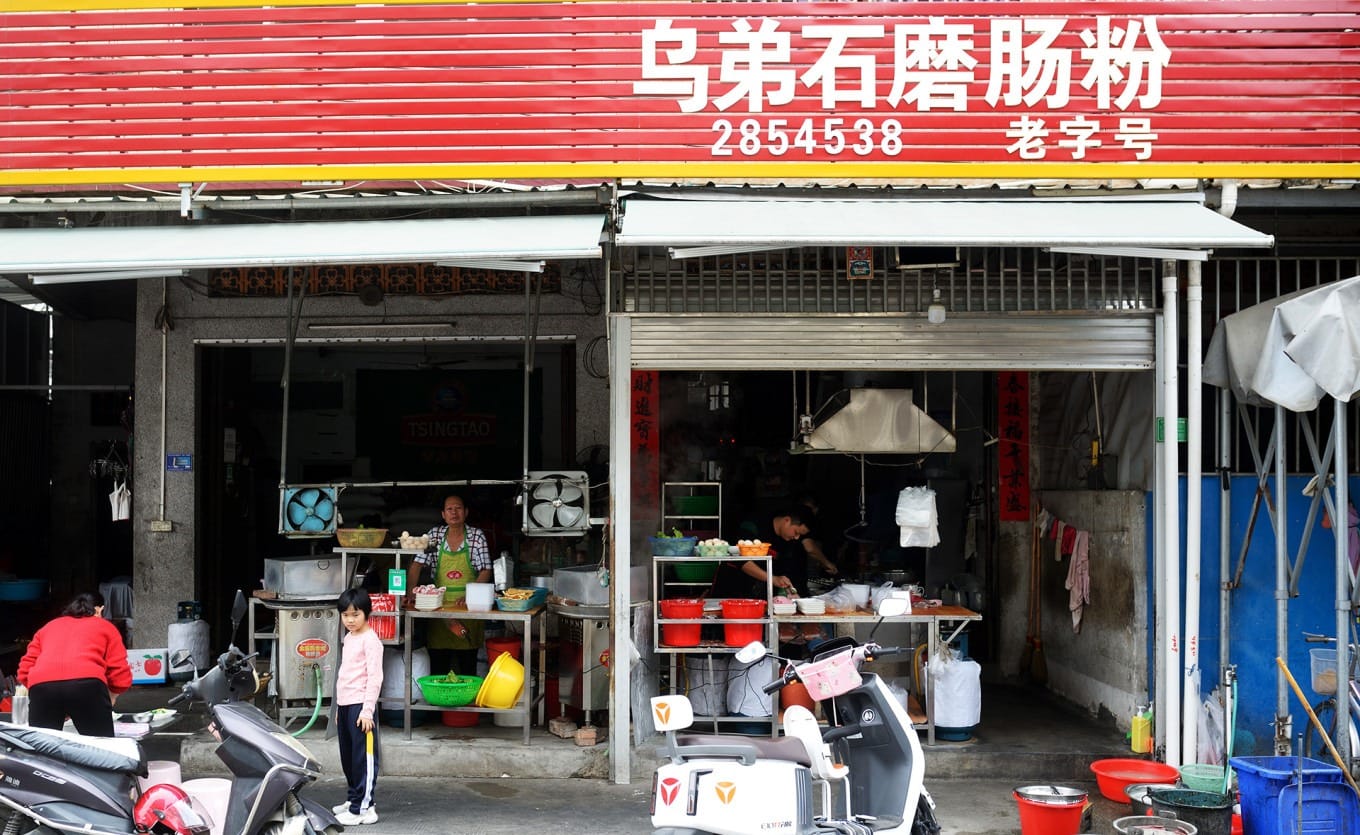
Like many traditional eateries in the area, this shop operates without a printed menu. You can customize your 肠粉 (steamed rice rolls) by selecting from available ingredients such as 生蚝 (oysters), 鸡蛋 (eggs), 南瓜 (pumpkin), 冬菇 (mushrooms), 瘦肉 (lean meat), and fresh 生菜 (lettuce). The rice batter is stone-ground daily, producing a wrapper so delicate and translucent that the colorful fillings remain visible through its silky surface.
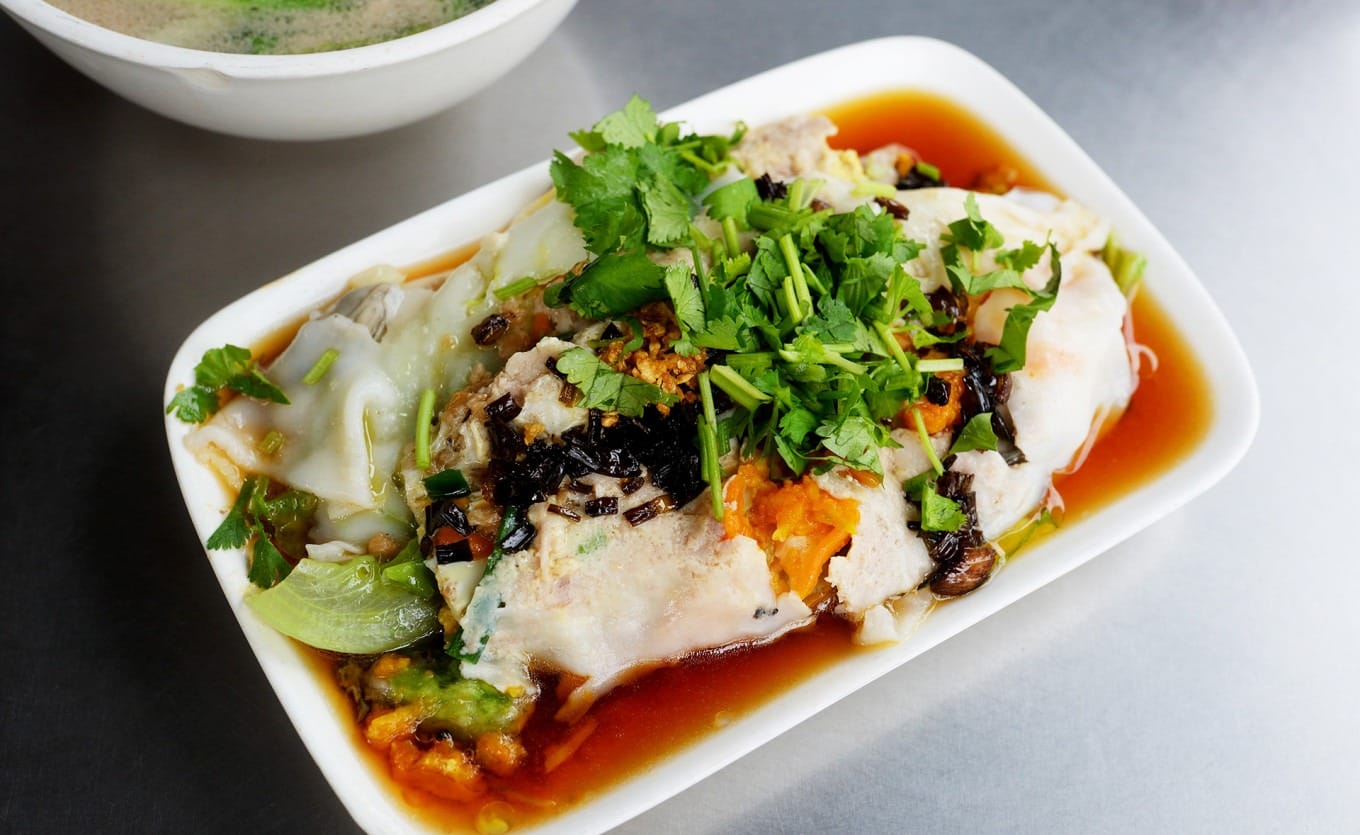
What sets these rice rolls apart is the distinctive sauce. Instead of standard soy dressing, the shop uses 葱珠油 (scallion oil), a fragrant Chaoshan specialty made by slowly frying shallots until golden. This aromatic oil adds a deep, savory richness that complements the tender rice skin perfectly.
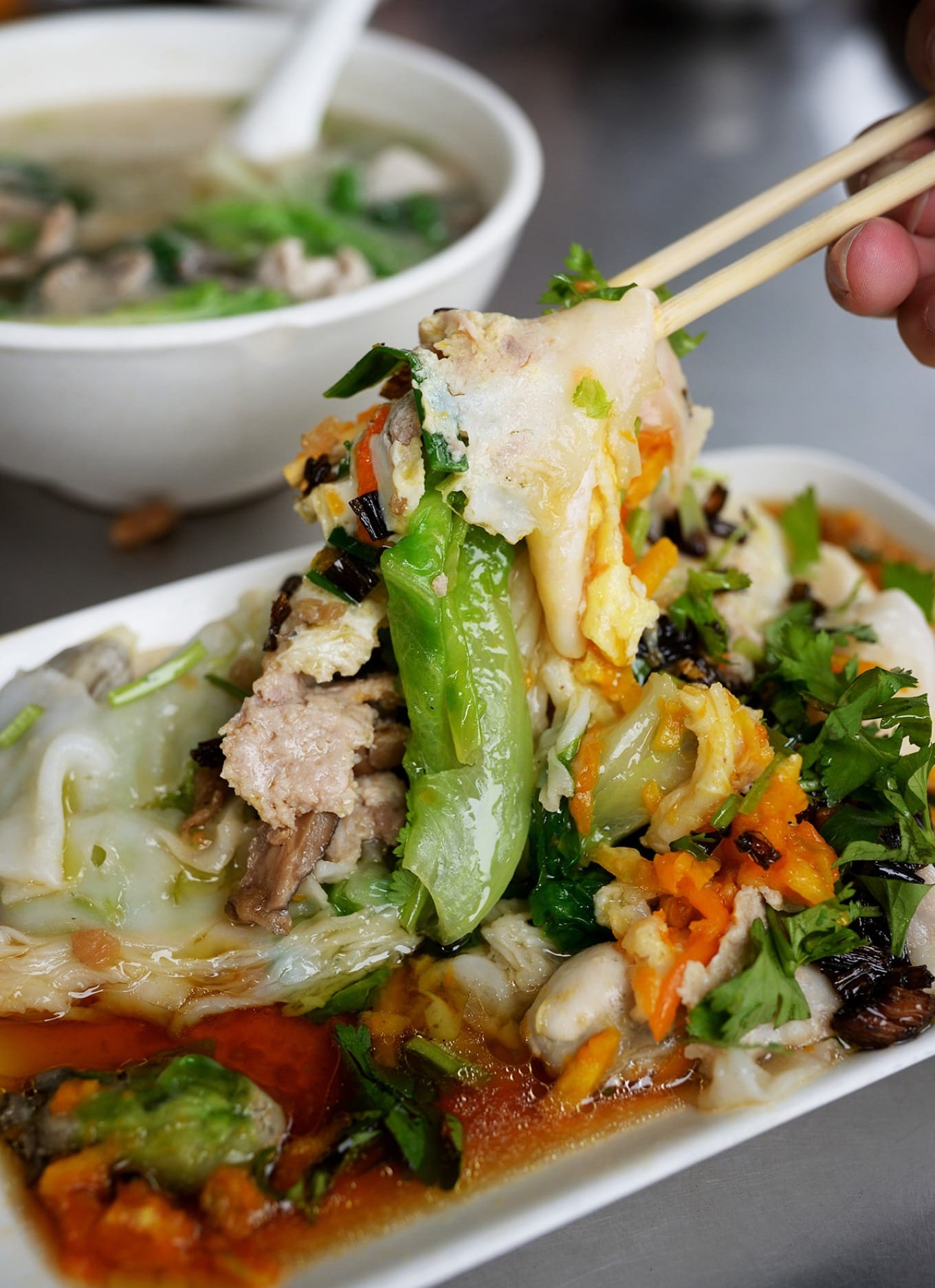
- Restaurant乌弟石磨肠粉 (Wu Di Stone Mill Rice Rolls)
- Address普宁市洪阳镇德安里大门前 (In front of De’anli Main Gate, Hongyang Town, Puning City)
- Recommended dishes肠粉 (steamed rice rolls) with mixed fillings
- Average spend10 yuan
A Bin Oyster Omelette: Hongyang’s Signature Wet Stir-Fry
In the backstreets of Hongyang Town, a modest eatery draws steady crowds despite its simple surroundings. Here, you will encounter a regional variation of Chaoshan’s famous oyster omelette that departs dramatically from the versions found in larger cities. While Shantou and Chaozhou typically serve their 蚝烙 / Oyster Omelette as a crispy, pan-fried cake, Hongyang has perfected a “wet” preparation that transforms the dish into something softer and more complex.
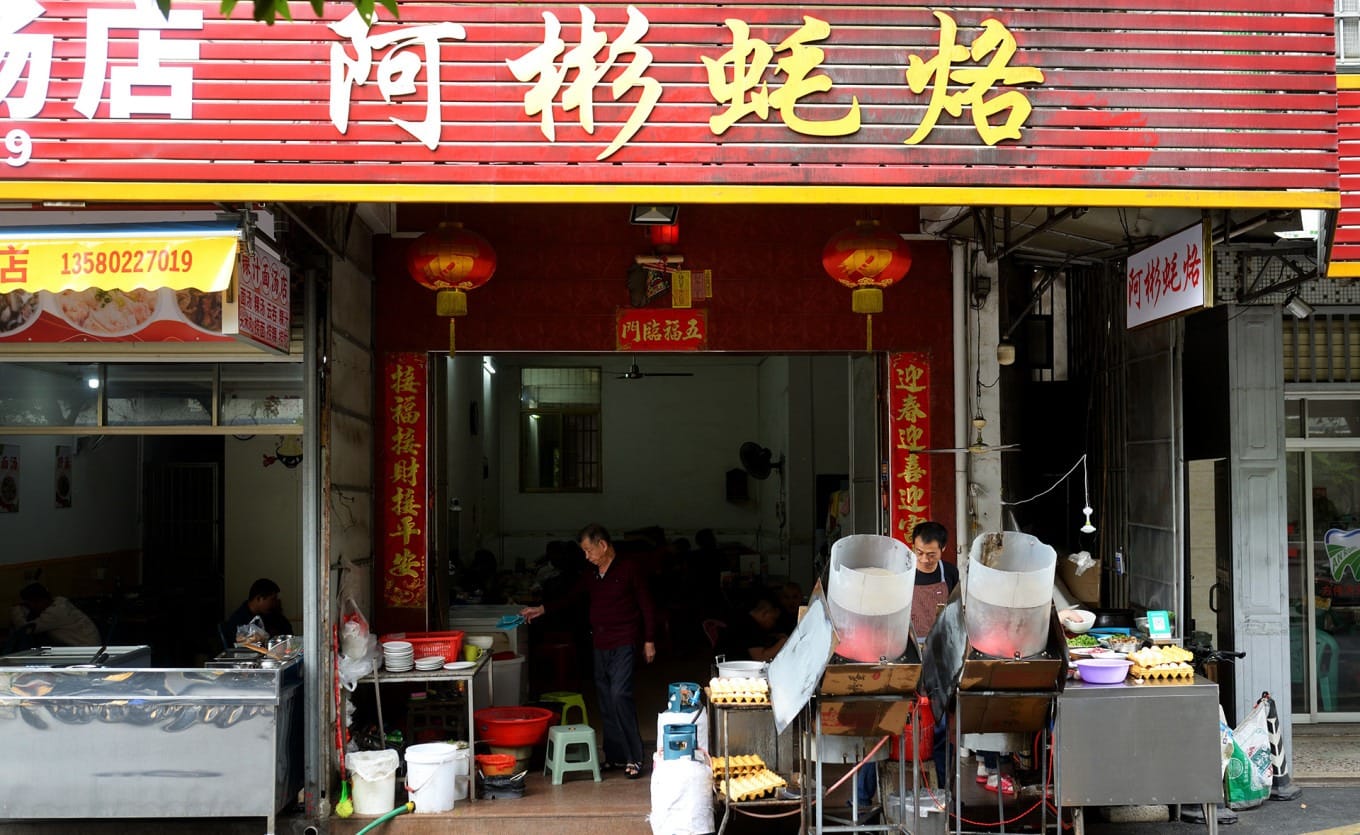
The foundation of any good oyster omelette begins with the shellfish. This region favors 珠蚝 / Pearl Oysters, tiny sweet mollusks sourced from the coastal waters of Raoping and Nan’ao. When preparing the dish, cooks create a slurry using 番薯粉 / Sweet Potato Starch to coat the oysters. This starchy layer acts as a protective barrier during high-heat cooking, preventing the delicate seafood from dehydrating and toughening—a crucial step that ensures each bite remains plump and juicy.
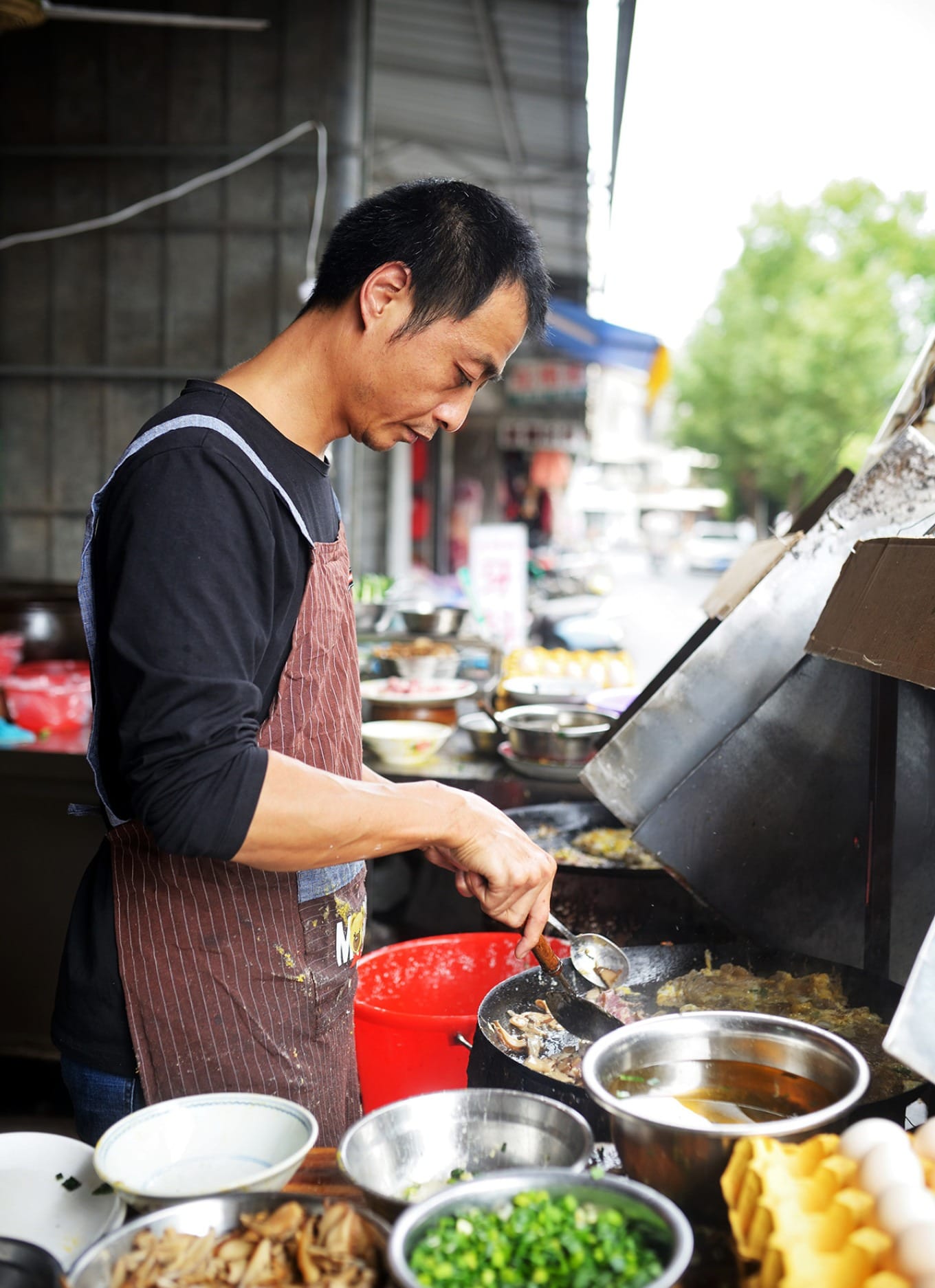
Where Hongyang’s version truly diverges is in its cooking method. While the standard approach across Shantou, Chaozhou, and Jieyang involves dry-frying until crisp, local chefs here employ a 湿炒 / Wet Stir-fry technique. The mixture hits the wok along with lean pork, mushrooms, eggs, and finally a scattering of fresh celery. Rather than forming a solid pancake, the ingredients break into tender, irregular pieces that retain more moisture.
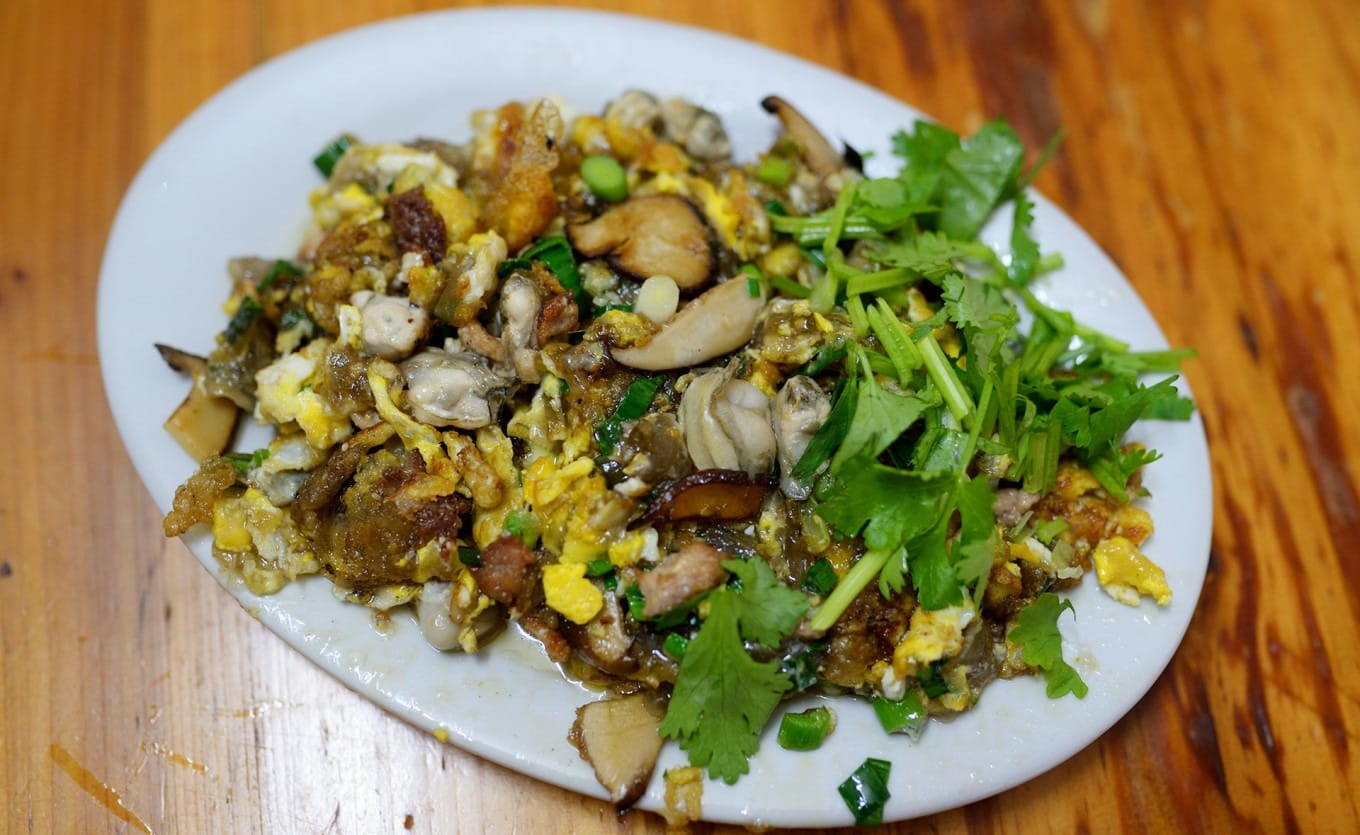
The resulting texture surprises first-time visitors: yielding and slightly chewy rather than crunchy, with the starch creating a silky matrix that holds everything together. The oysters remain notably moist and full of their natural liquor. For the full local experience, request the house’s signature slightly spicy sauce, which locals drizzle over the top. The gentle heat balances the sweetness of the seafood and cuts through the richness of the eggs and starch, creating a harmonious flavor that defines this particular regional style.
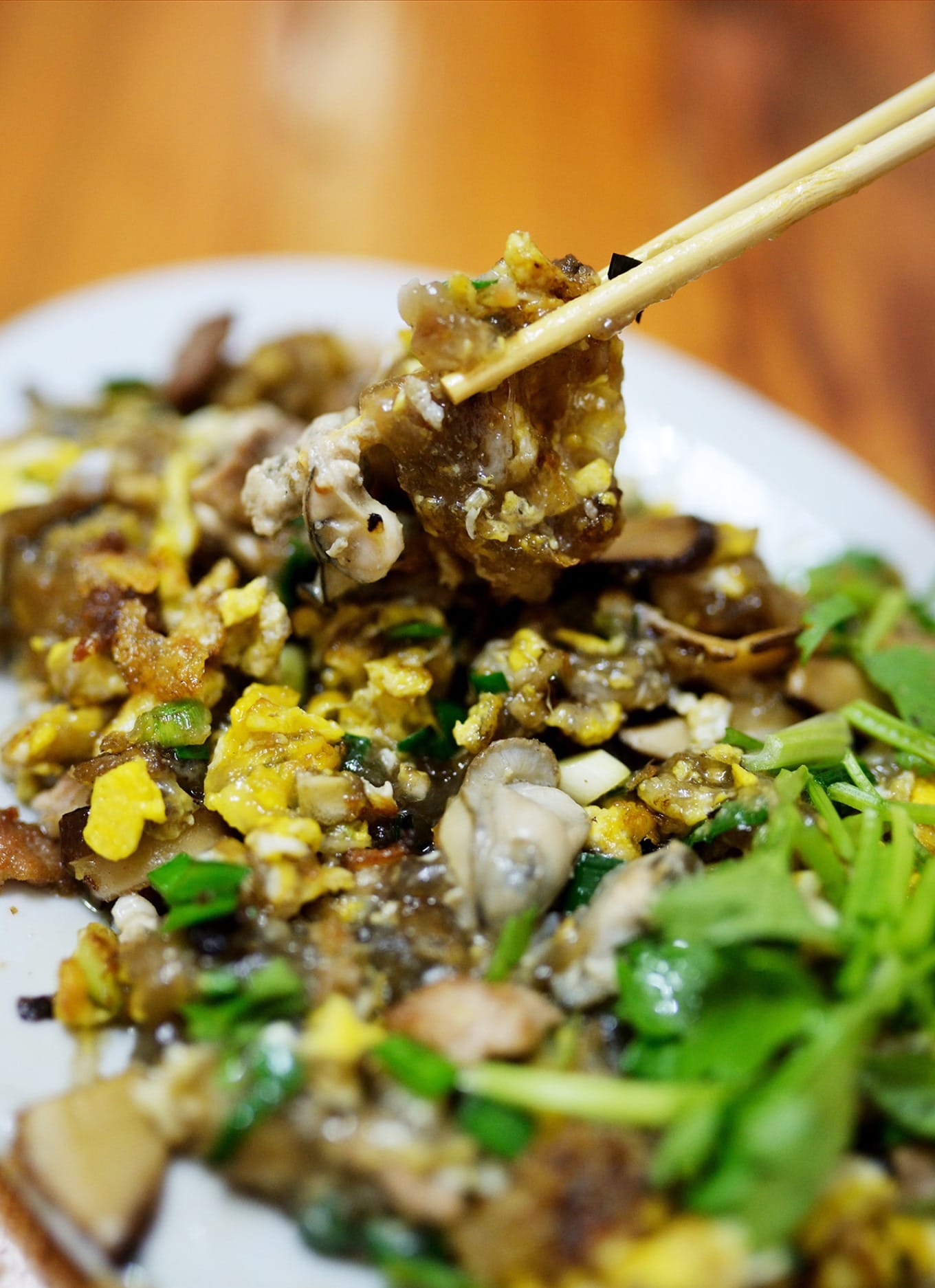
- RestaurantA Bin Oyster Omelette (阿彬蚝烙)
- AddressNorthwest of Puning Rural Commercial Bank, Yanhe West Road, Hongyang Town, Puning City (普宁市洪阳镇沿河西路普宁农商银行西北)
- Recommended dishesOyster Omelette (蚝烙)
- Average spend10 yuan
Hongyang Authentic Pumpkin Cakes
Tucked away in a quiet corner of Hongyang Town, a modest storefront draws locals craving a distinctive take on traditional snacks. While finding the shop requires following navigation through the town’s winding lanes, the hunt leads to one of the area’s most beloved specialties. Here, the 南瓜饼 (Pumpkin Cakes) defy expectations—rather than the fluffy pancakes the name suggests elsewhere, these are ingenious sandwich-style creations built from two thin, crispy cookies.
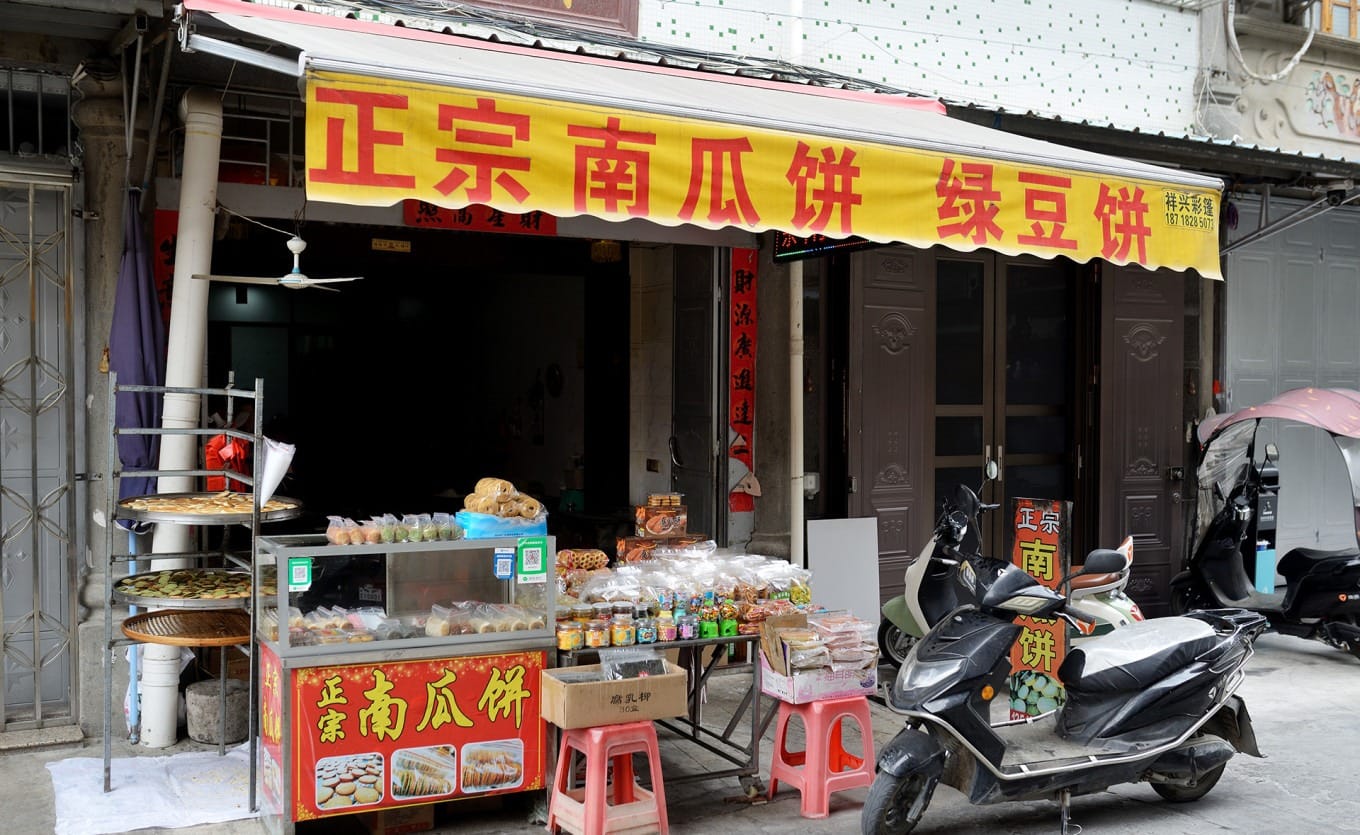
The preparation is straightforward but transformative: crispy cookie wafers encase a generous layer of pumpkin puree before the whole assembly takes a quick bath in hot oil. When served fresh from the fryer, the contrast is irresistible—the shatteringly crisp exterior gives way to a silky, mashed pumpkin filling that is naturally sweet without becoming cloying. The aroma alone justifies the trip.
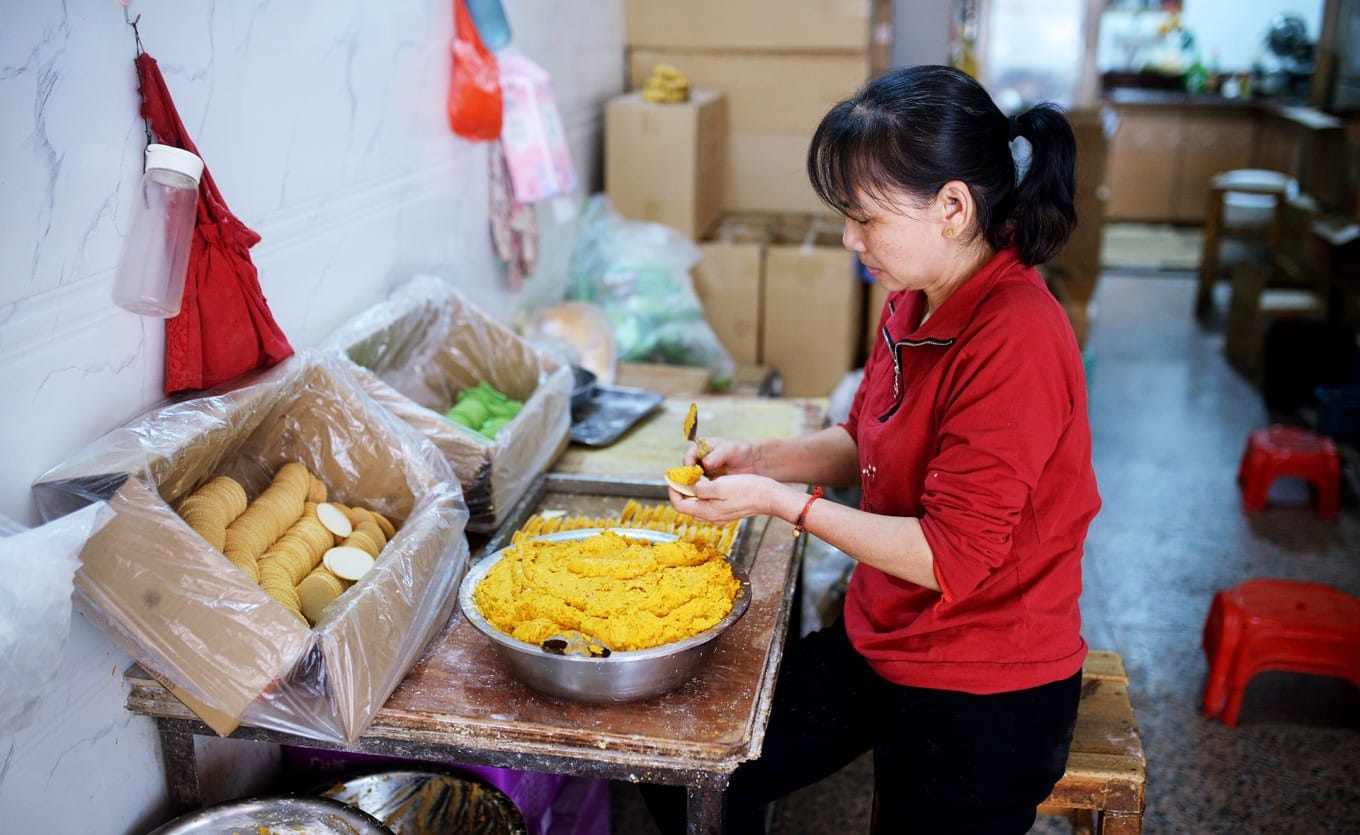
You should also sample the 紫薯饼 (Purple Potato Cakes), which substitute green cookies and purple potato filling using the same frying method. Both varieties demand timing: for the optimal texture, eat them within one hour of purchase. After that window, moisture softens the cookies and the signature crunch disappears.
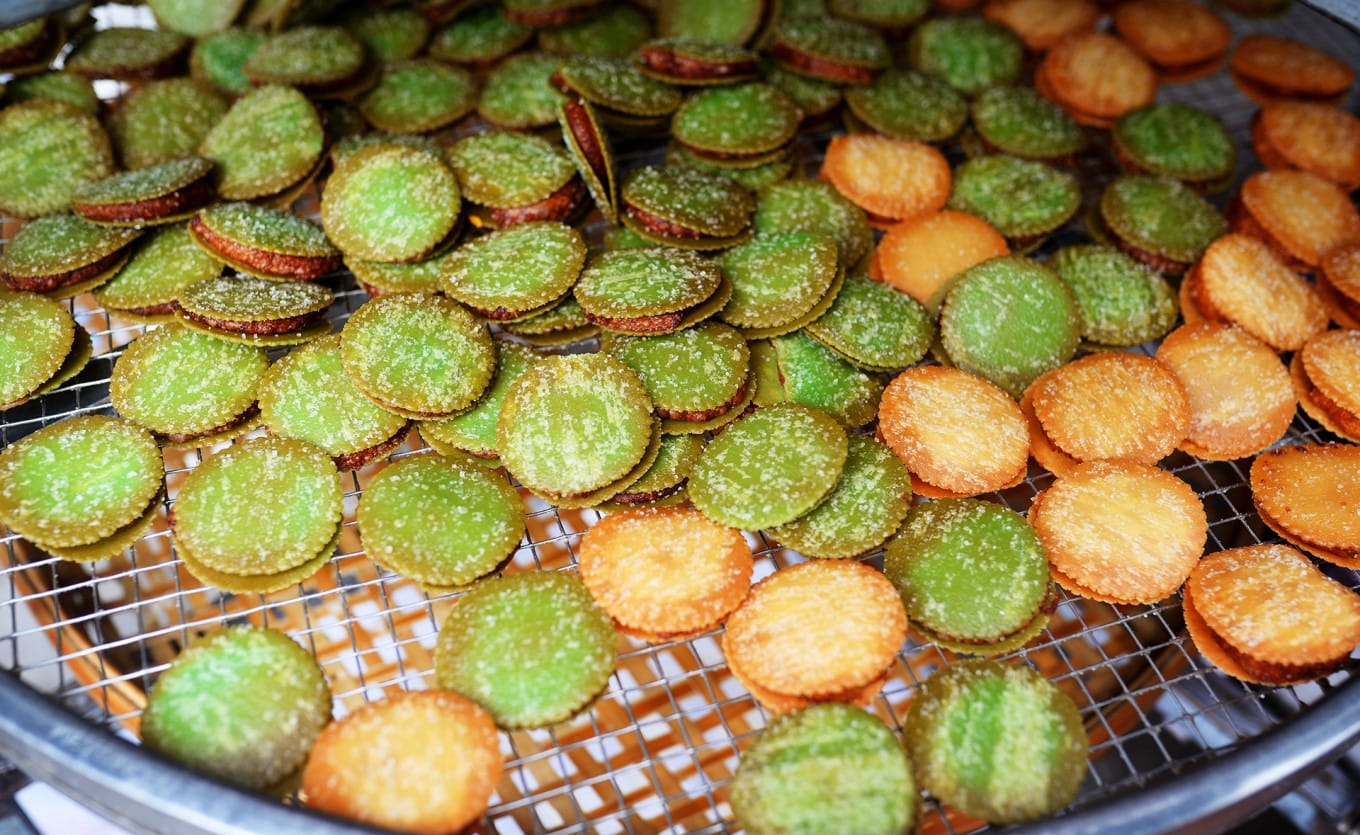
If you need souvenirs that travel well, the shop’s 绿豆饼 (Mung Bean Cakes) offer a ten-day shelf life. These traditional Chaoshan snacks strike a perfect balance between cake and pastry, with pure mung bean filling baked inside dough until any beaniness dissipates into a fragrant, tender, and aromatic delight.
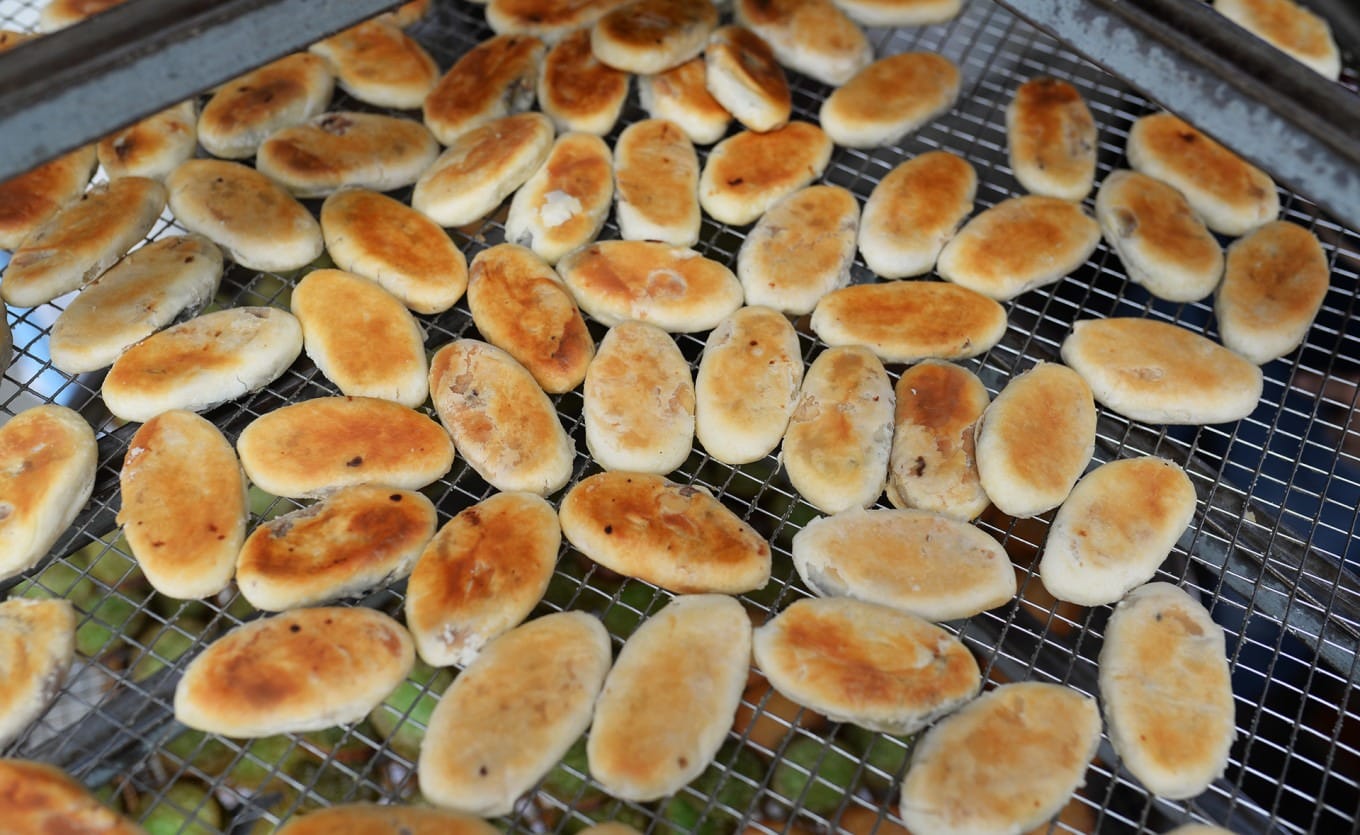
- Restaurant洪阳正宗南瓜饼 (Hongyang Authentic Pumpkin Cakes)
- Address普宁市洪阳镇百里桥商场四街 (Bailiqiao Mall Fourth Street, Hongyang Town, Puning City)
- Recommended dishes南瓜饼 (Pumpkin Cakes), 紫薯饼 (Purple Potato Cakes), 绿豆饼 (Mung Bean Cakes)
- Average spend5 yuan
Yingge Soul — Chaoshan’s Signature Tea Brand
While exploring Chaoshan, you’ll notice the region’s celebrated Yingge (hero) dance culture has inspired more than just street performances—it has spawned a distinctly local tea brand. Yingge Soul (英歌魂) operates as the area’s homegrown “national trend” tea label, originating from Puning and serving as a daily essential for visitors much like Chayan Yuese (Tea Yan Yue Se) does in Changsha. Though the chain now reaches Guangzhou and Shenzhen, seeking out this Chaoshan original offers a taste of place you won’t find elsewhere.
When deciding what to order, two bestselling signatures anchor the menu. White Peach Qinxue (白桃沁雪) features a light, refreshing white peach oolong base crowned with cream and freeze-dried strawberries, delivering both visual appeal and delicate fruit aromatics. Alternatively, Misty Rain Jiangnan (烟雨江南) blends fresh milk with honey-scented black tea for a rich yet clean profile, topped with a generous scattering of pecans over the cream. Either choice provides a reliable introduction to the brand’s signature style.
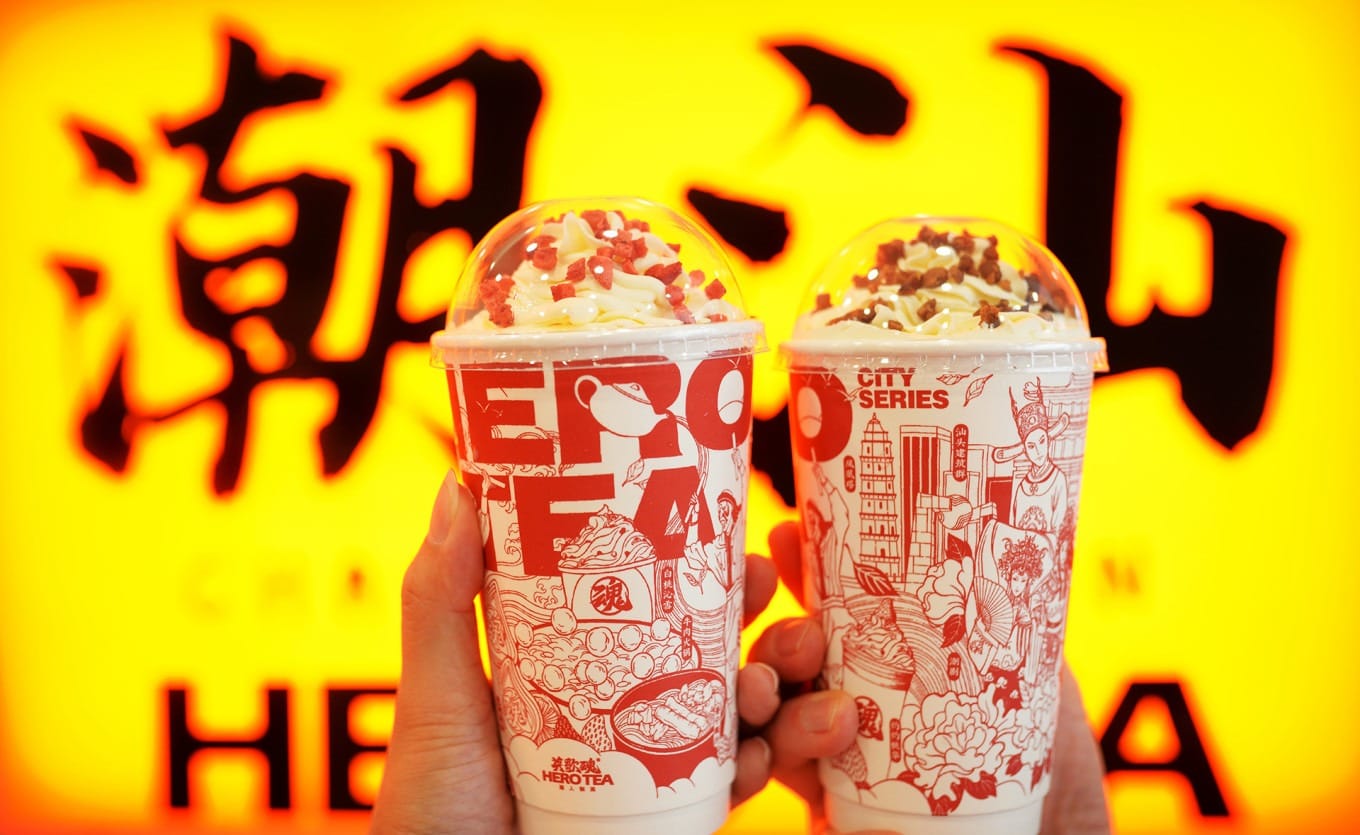
For a lighter option, consider the Jasmine Oolong Fresh Milk Tea (茉莉乌龙鲜奶茶), where subtle jasmine fragrance infuses smooth oolong tea before meeting fresh milk. The combination yields a mellow, refreshing drink that balances floral notes with creamy depth without overwhelming the palate.
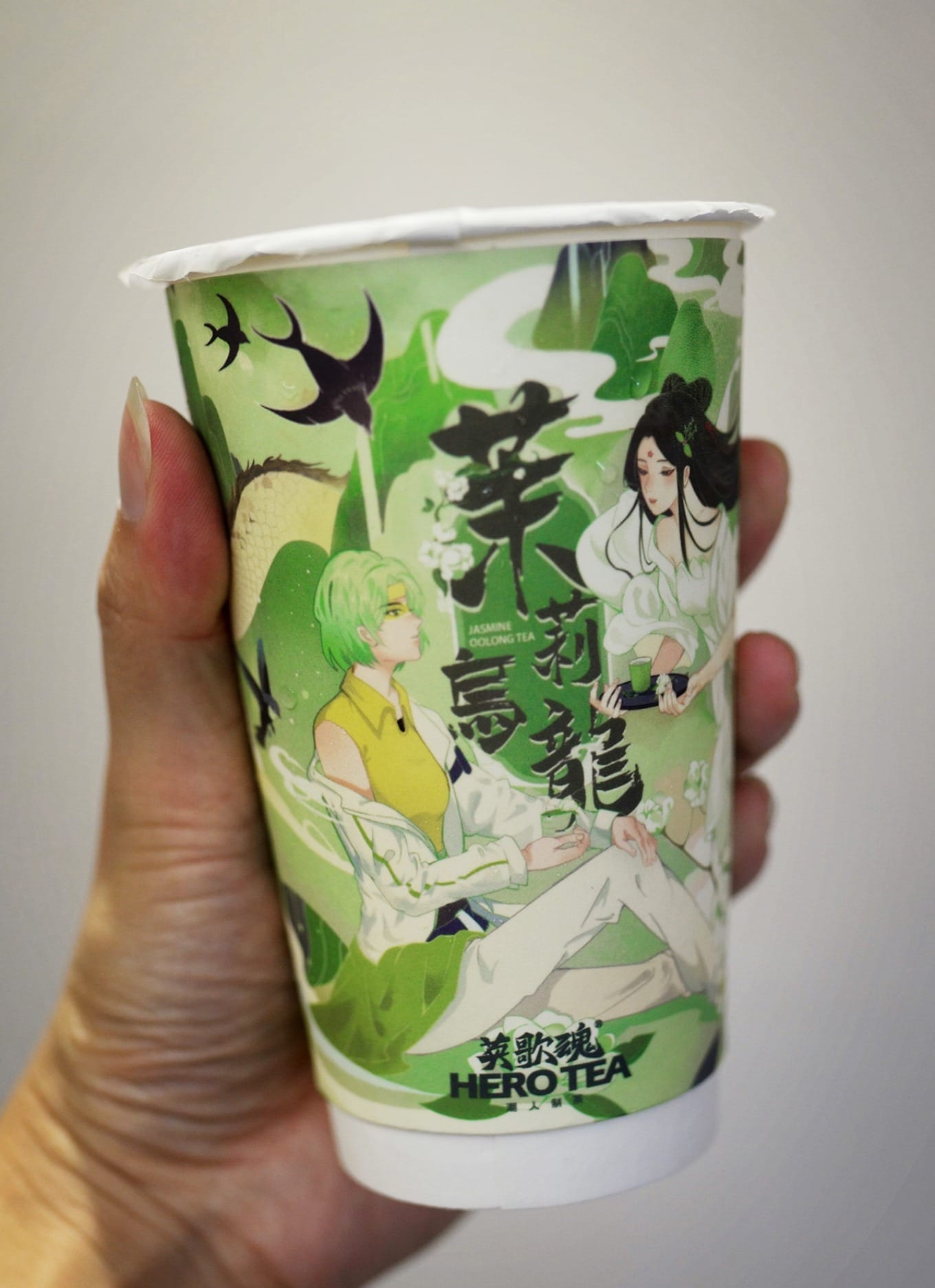
Fruit tea enthusiasts should explore options like the Snow Top Grape Ice (雪顶葡萄冰), previously a standout menu item packed with real grape pulp in every sip. Note that this particular offering currently shows as discontinued or limited to specific seasons, so check availability before ordering. With multiple locations across the Chaoshan region, finding a branch proves convenient during your travels.
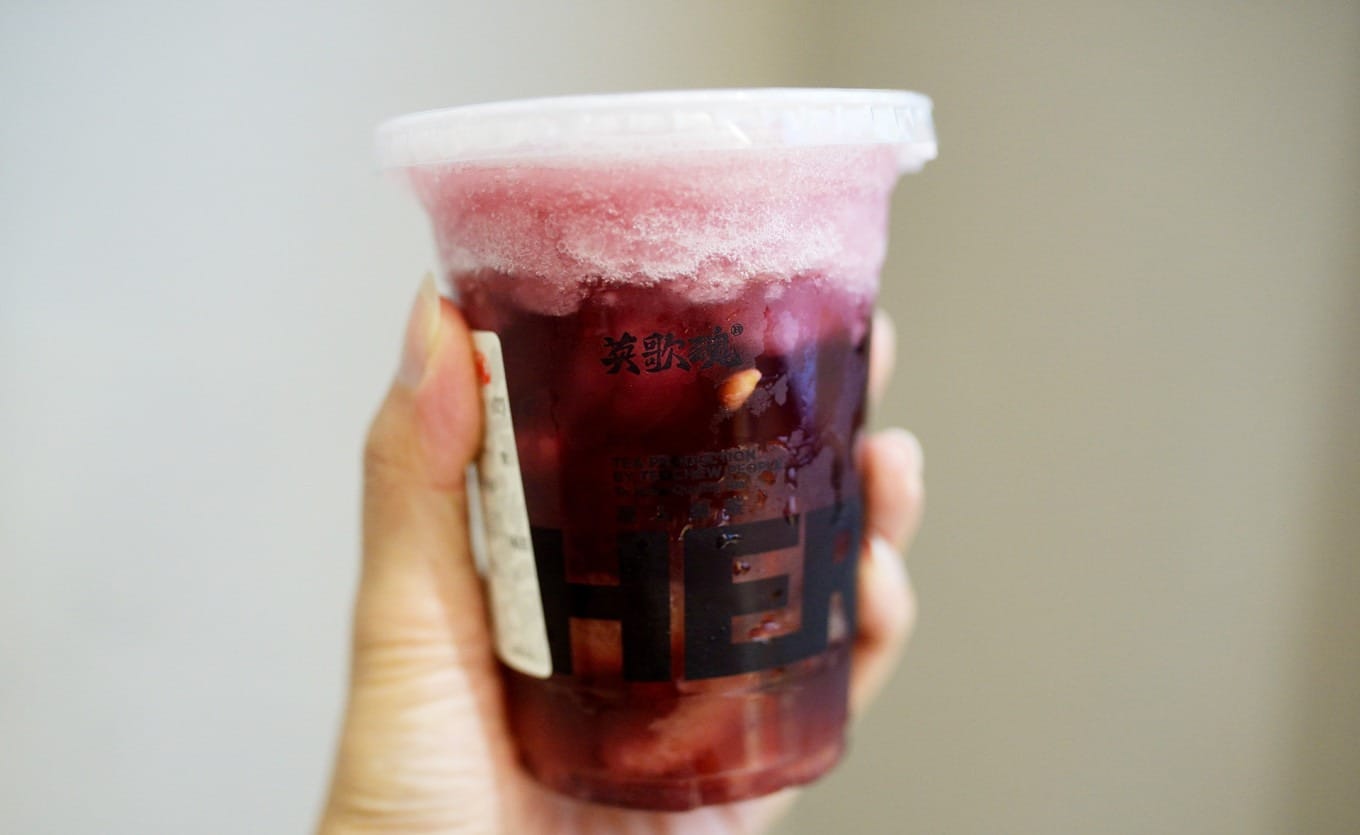
- RestaurantYingge Soul — De’anli Store (英歌魂德安里店)
- Address洪阳镇沿河西路4号 / No.
- Recommended dishes白桃沁雪 (White Peach Qinxue), 烟雨江南 (Misty Rain Jiangnan), 茉莉乌龙鲜奶茶 (Jasmine Oolong Fresh Milk Tea), 雪顶葡萄冰 (Snow Top Grape Ice)
- Average spend15 yuan
Puning Attractions: Hongyang Ancient Town
While Puning’s modern downtown in Liusha (流沙) offers limited sightseeing appeal, your cultural exploration should head straight to Hongyang Town (洪阳镇), the region’s historical repository. This ancient Chaoshan (潮汕) stronghold served as Puning’s administrative center from the Ming Dynasty’s Wanli era through 1949, accumulating centuries of architectural heritage and human stories within its boundaries.
You can spend hours wandering among the dense clusters of ancestral halls and temples that fill the old quarters, but the absolute highlight is De’anli (德安里), a sprawling mansion-style ancient village that showcases the grandeur of traditional local architecture. History buffs should also make time to visit the site where Lin Zexu, the celebrated Qing Dynasty official and national hero, spent his final days. Plan to dedicate at least half a day to exploring these well-preserved remnants of eastern Guangdong’s administrative past.
De’anli: A Qing Dynasty Architectural Masterpiece
For travelers seeking authentic Qing dynasty architecture beyond the usual tourist trails, De’anli (德安里) in Hongyang Town offers one of Chaoshan’s most impressive residential complexes. This fortified village, commissioned by Fang Yao (方耀)—a Guangdong naval commander during the late Qing period—and his brothers, took two decades to complete starting from 1871. Spanning over 60,000 square meters with 773 rooms divided into three distinct compounds, it represents the pinnacle of traditional Chaoshan design.
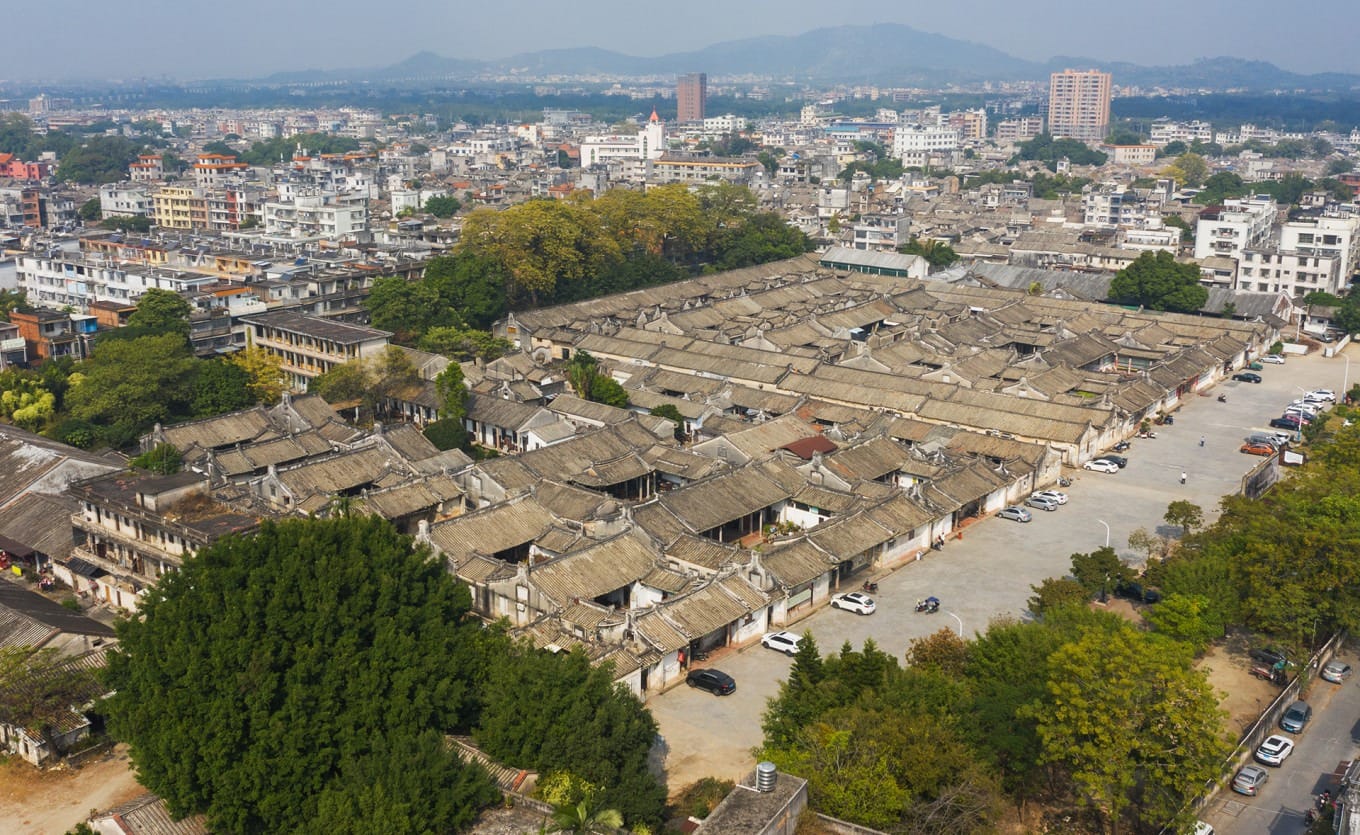
The architectural highlight awaits in the Old Village (Lao Zhai), which follows the prestigious “Hundred Birds Paying Homage to Phoenix” (百鸟朝凰 (local term)) layout—the highest grade of Chaoshan residential architecture. From above, you’ll notice the rigid grid pattern resembling a chessboard. At the center stands Yan Yi Tang (燕诒堂), also known as the Fang Family Ancestral Hall (方氏家庙), serving as the “phoenix” atop the layout. One hundred surrounding houses—representing the “birds”—radiate symmetrically around this central axis, creating a village within a village that surpasses even the Ding Family Guanglu Ancestral Hall in Jieyang for scale and preservation.
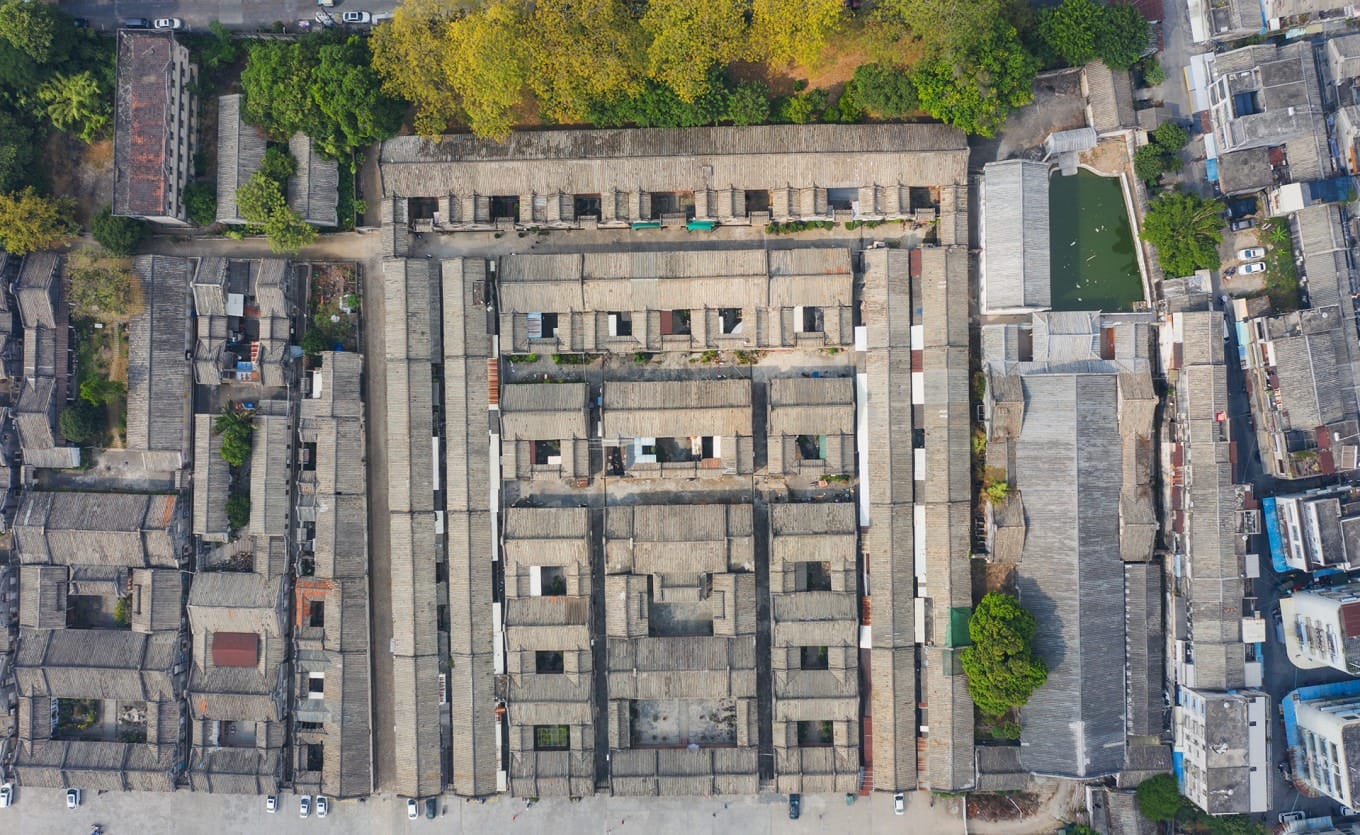
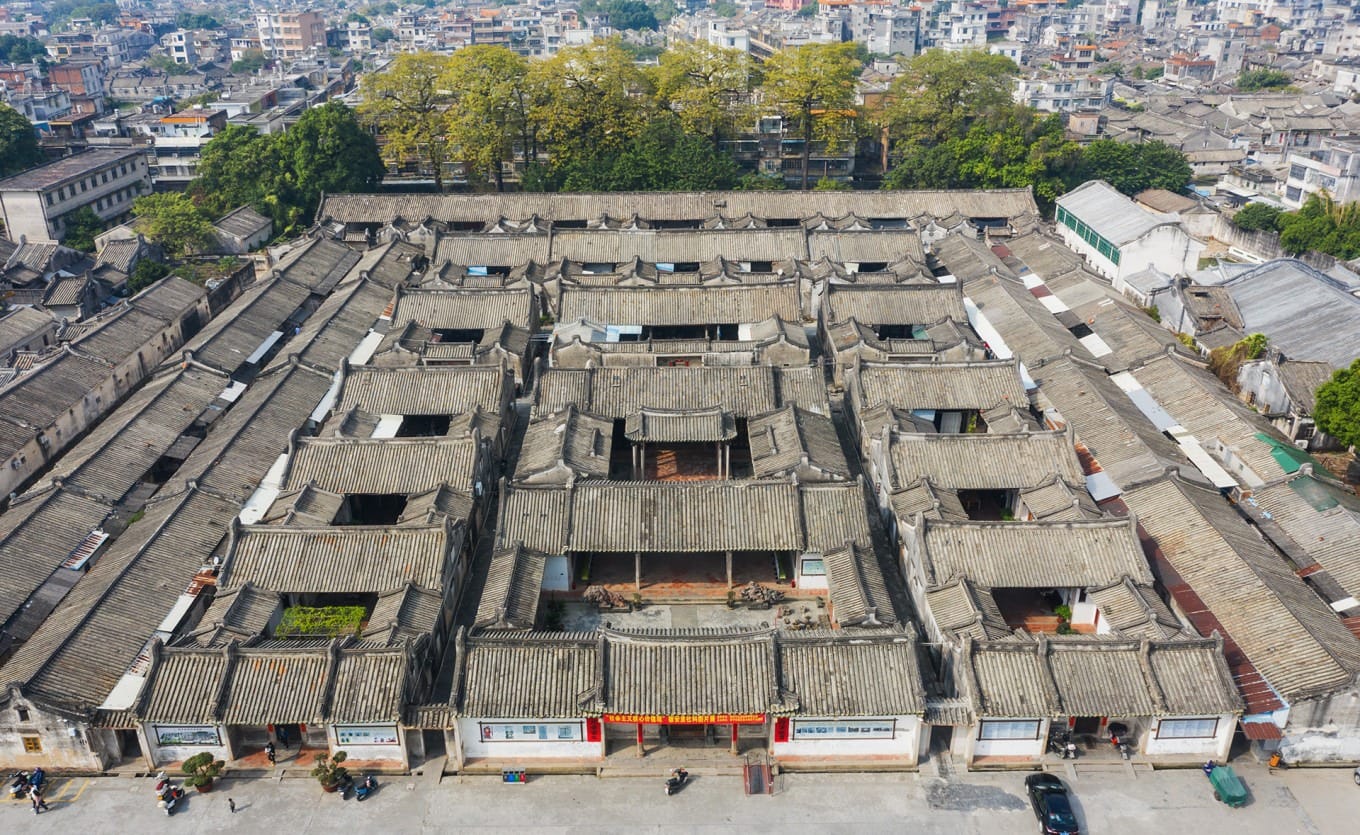
Today, the Old Village functions as a museum where you can explore Chaoshan’s architectural heritage. The main exhibition hall occupies Yan Yi Tang itself. Named after a phrase from the Book of Poetry meaning “to plan for future generations,” the hall displays Fang Yao’s biography alongside archaeological treasures including pottery from the Hutoupu (虎头埔) site—a Neolithic kiln complex representing Guangdong’s earliest ancient ceramic production.
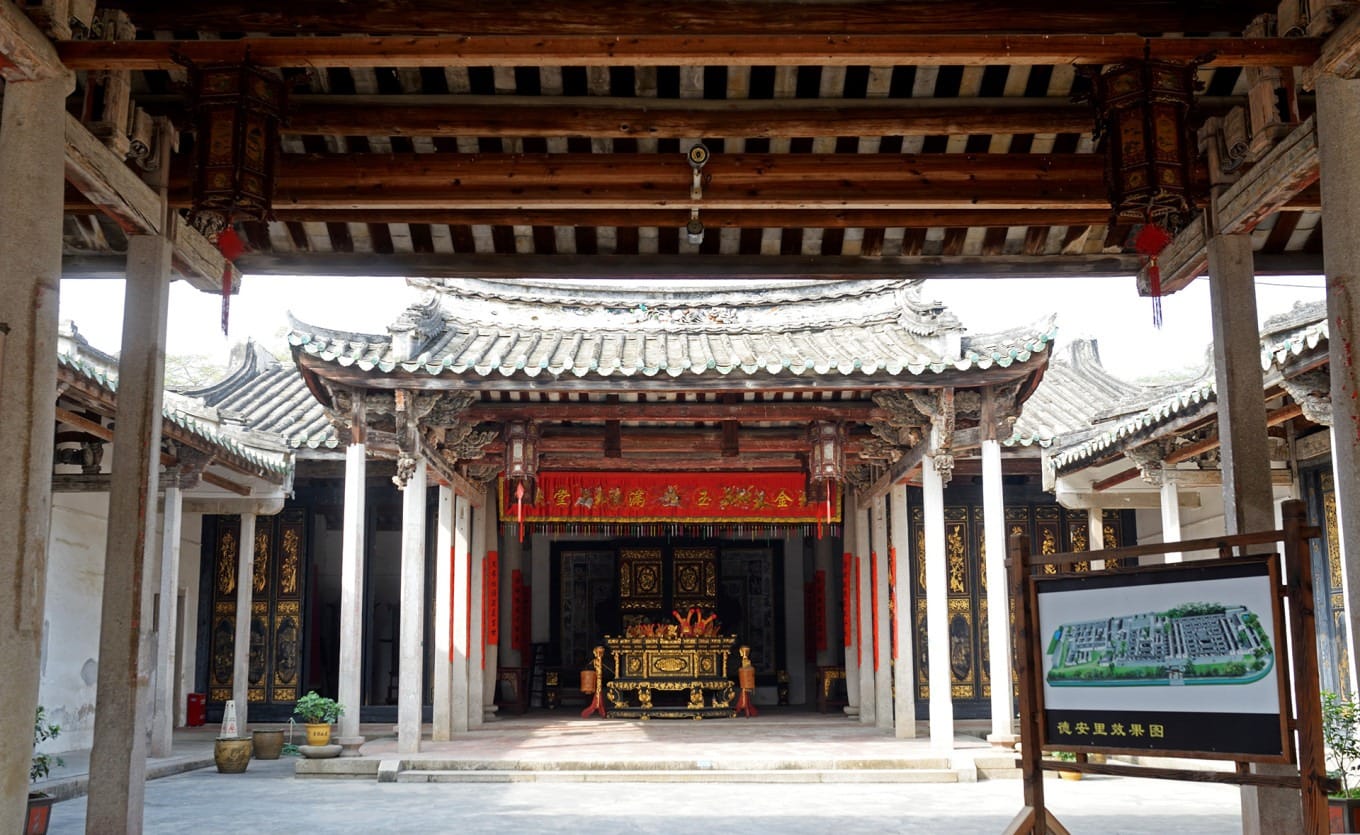
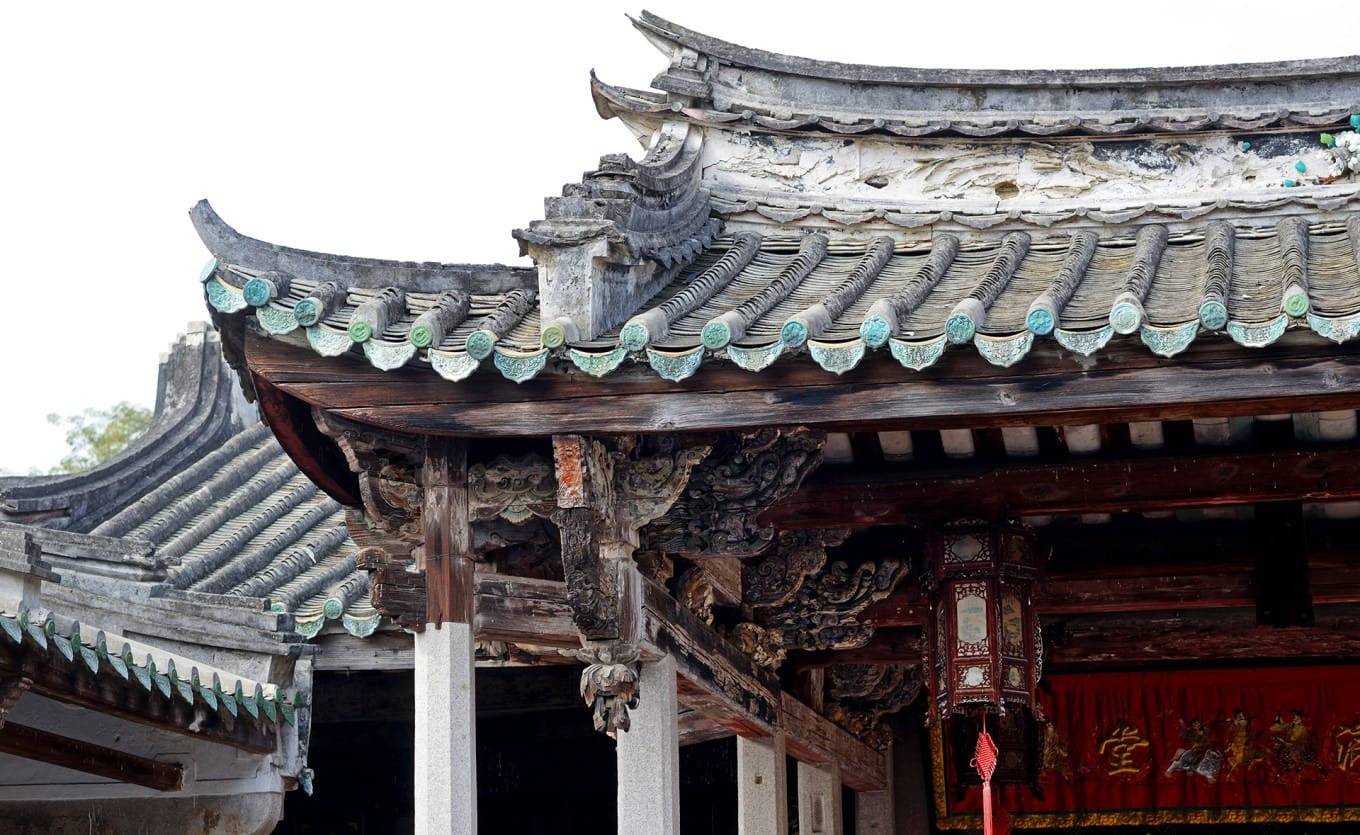
History enthusiasts can trace Fang Yao’s controversial career from his rise suppressing Taiping remnants to his appointment as Guangdong Naval Commander. Despite his reputation for harsh suppression of banditry, he significantly contributed to local education by supervising the construction of dozens of academies, water conservancy projects, and even the Qilu Battery in modern-day Shantou, before his death from heatstroke during a military march in 1891.
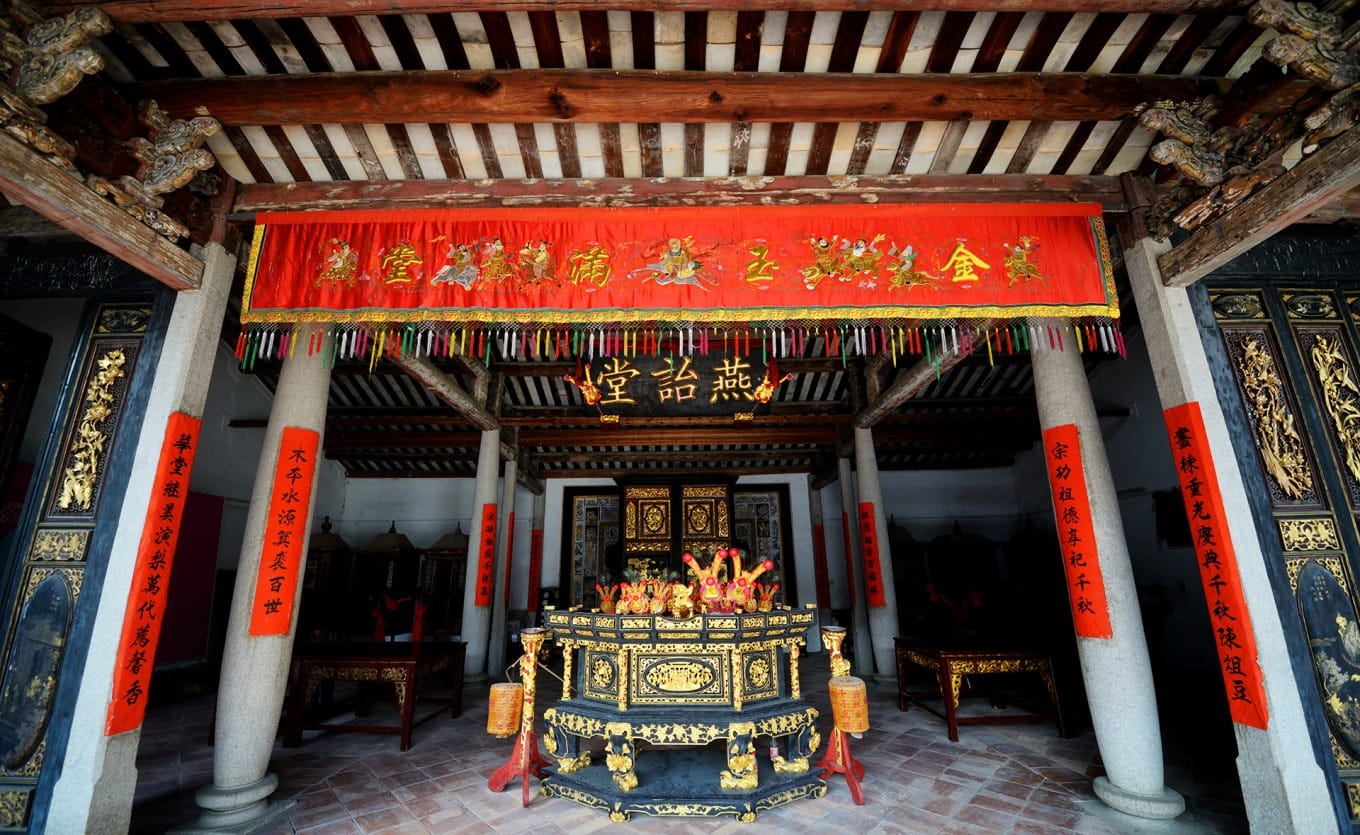
Don’t miss the museum’s most ornate feature: the gold-painted partition doors (槅扇门) in Yan Yi Tang. These masterpieces feature intricate carvings of flora, auspicious bats, and detailed opera scenes on the lower panels, representing the height of Chaoshan woodcraft.
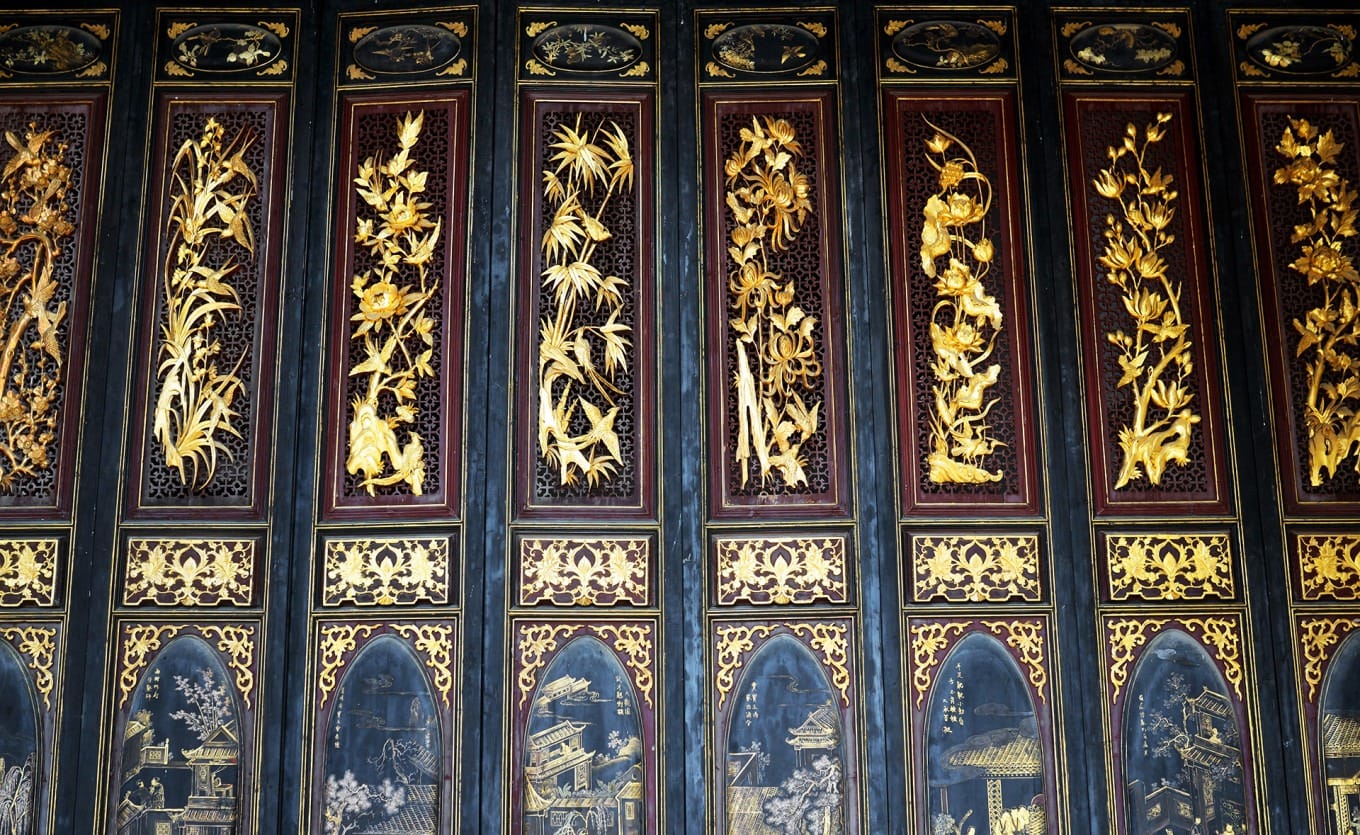
Among the historical artifacts, you’ll find the Puning County Anti-Japanese War Martyrs Monument (普宁县抗战殉难军民纪念碑), inscribed in 1947 by County Magistrate Zhou Yingyao. This granite stele, accompanied by a Blue Sky and White Sun emblem relief, originally stood outside the old city walls and offers a poignant glimpse into the Republican era.
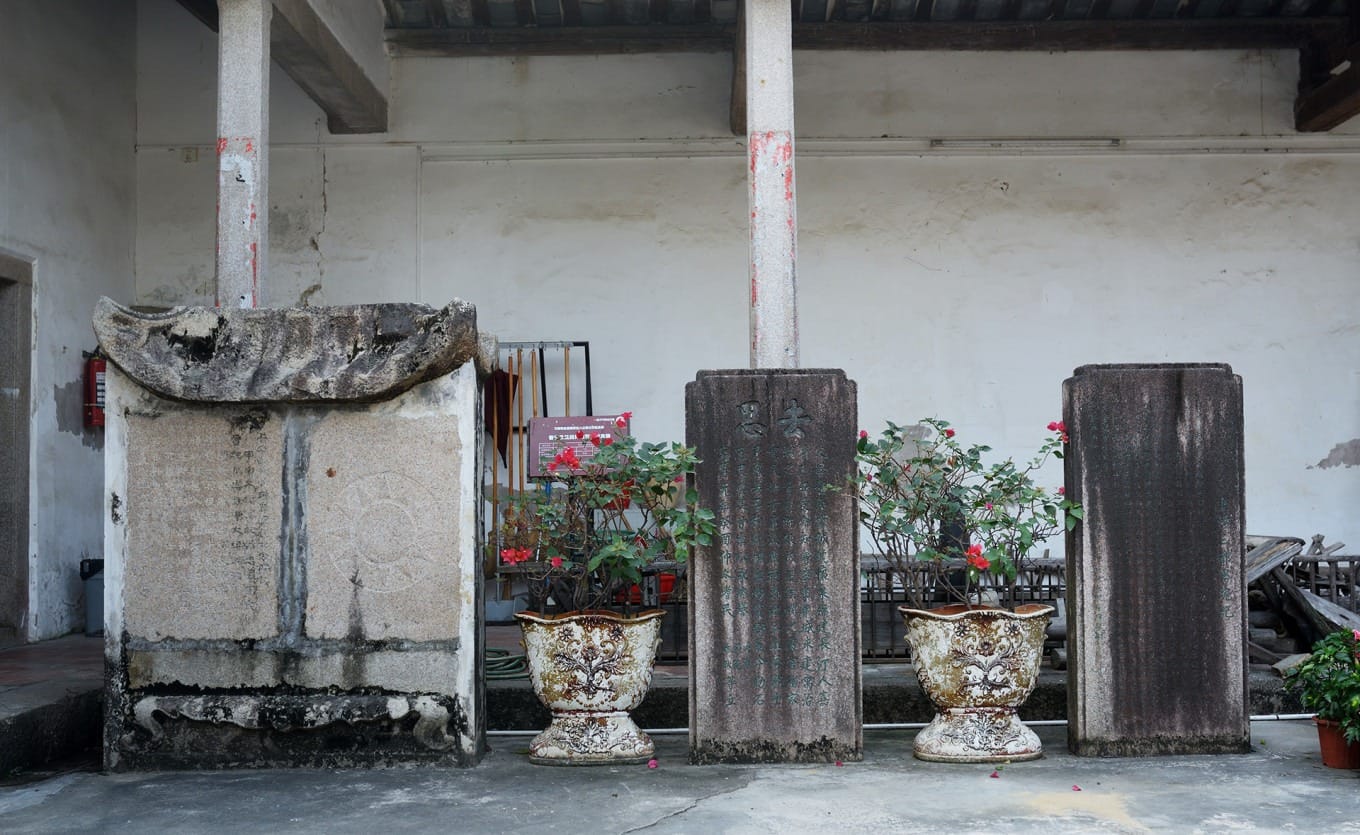
The auxiliary exhibition occupies Jian Wei Di (建威第), located south of Yan Yi Tang. This “Three Halls Connecting” (三厅亘 (local term)) structure—featuring three halls, six rooms, and two courtyards—houses collections of Puning wax stone and Ming-Qing blue-and-white porcelain. Though compact, it provides a quick but worthwhile survey of local material culture.
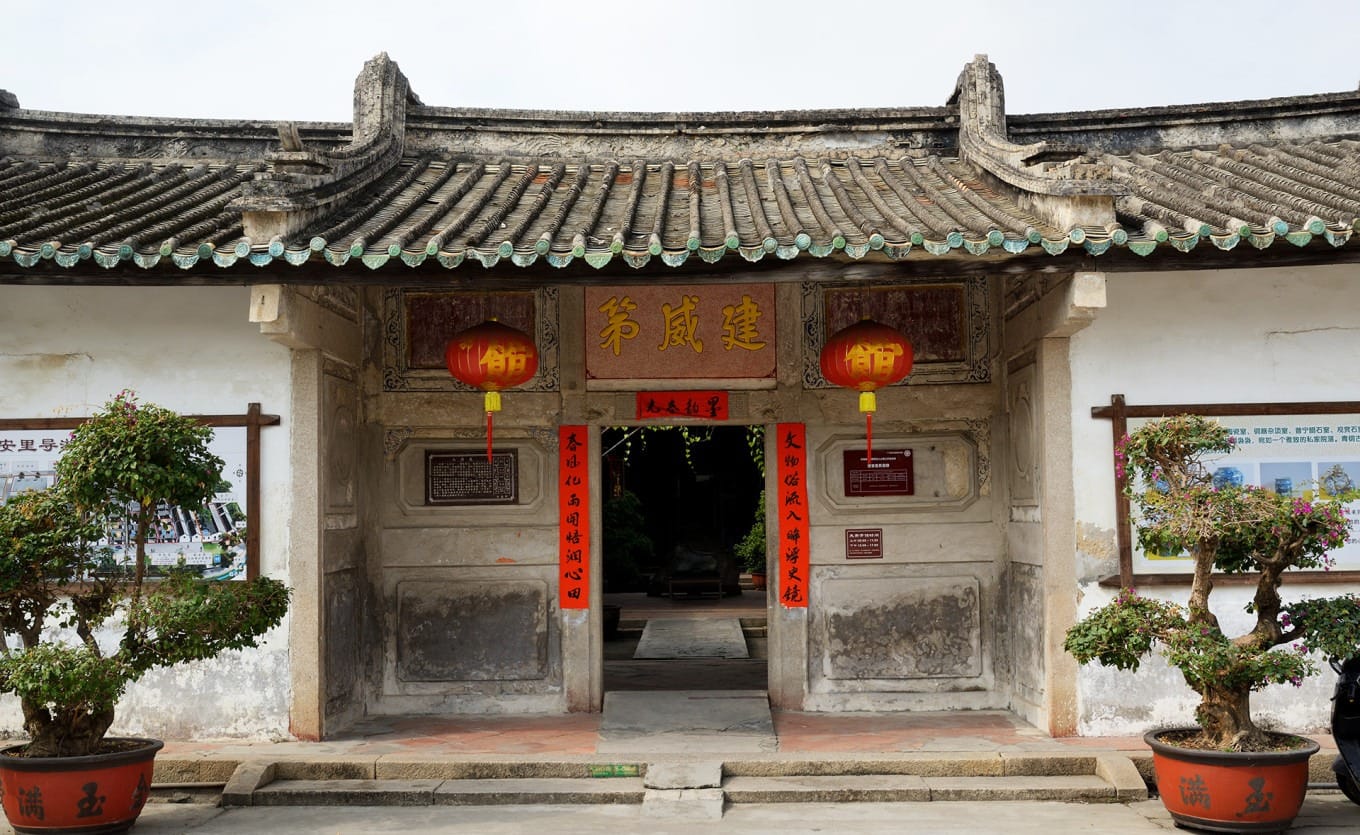
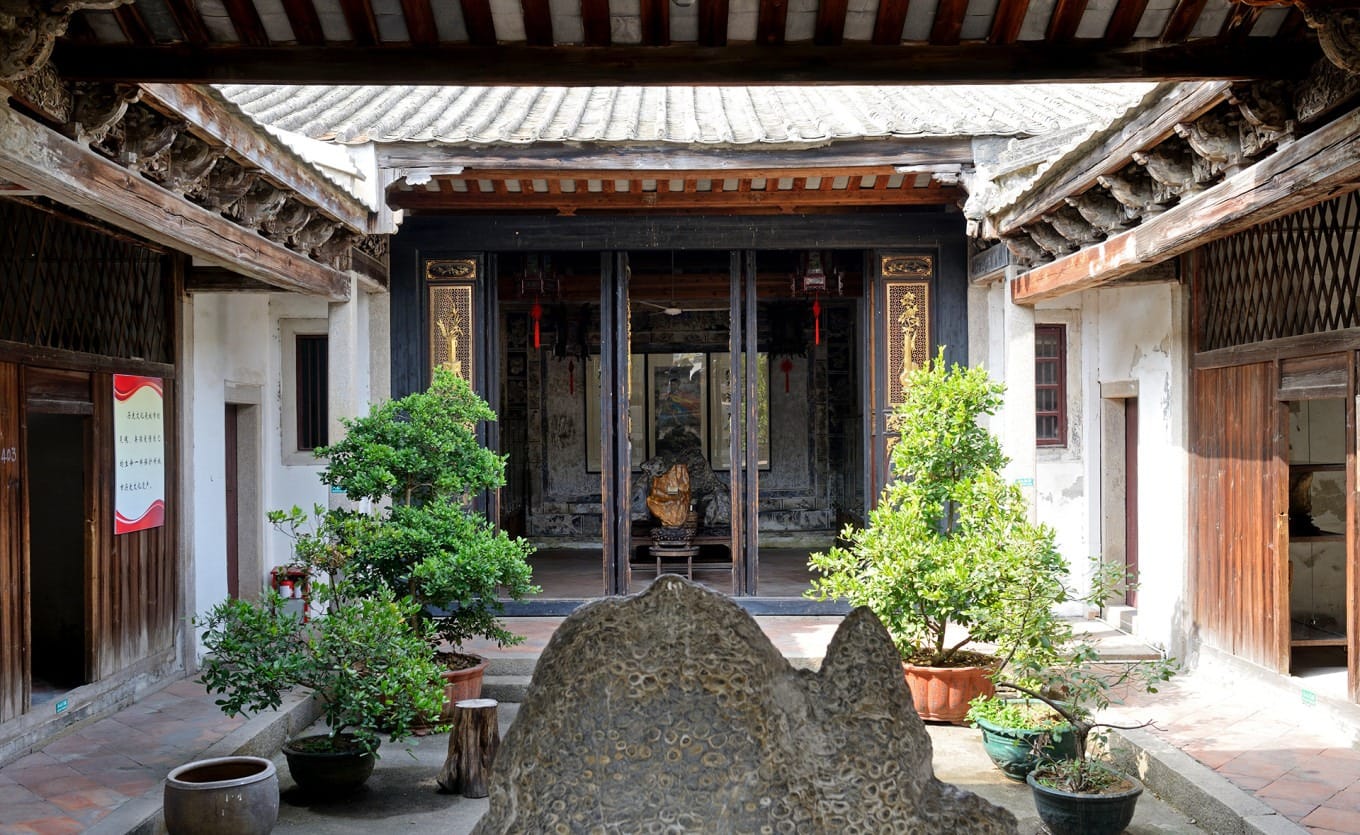
While the Old Village showcases the “phoenix” layout, the Middle Village (Zhong Zhai) and New Village (Xin Zhai) demonstrate the “Four Horses Pulling a Carriage” (驷马拖车 (local term)) configuration—where central ancestral halls represent the carriage and flanking buildings act as the horses. The Middle Village currently operates as an antique market (古玩城), offering opportunities to browse vintage curios and calligraphy if you enjoy treasure hunting. The New Village remains closed to the public as it serves as the Hongyang Grain Administration office.
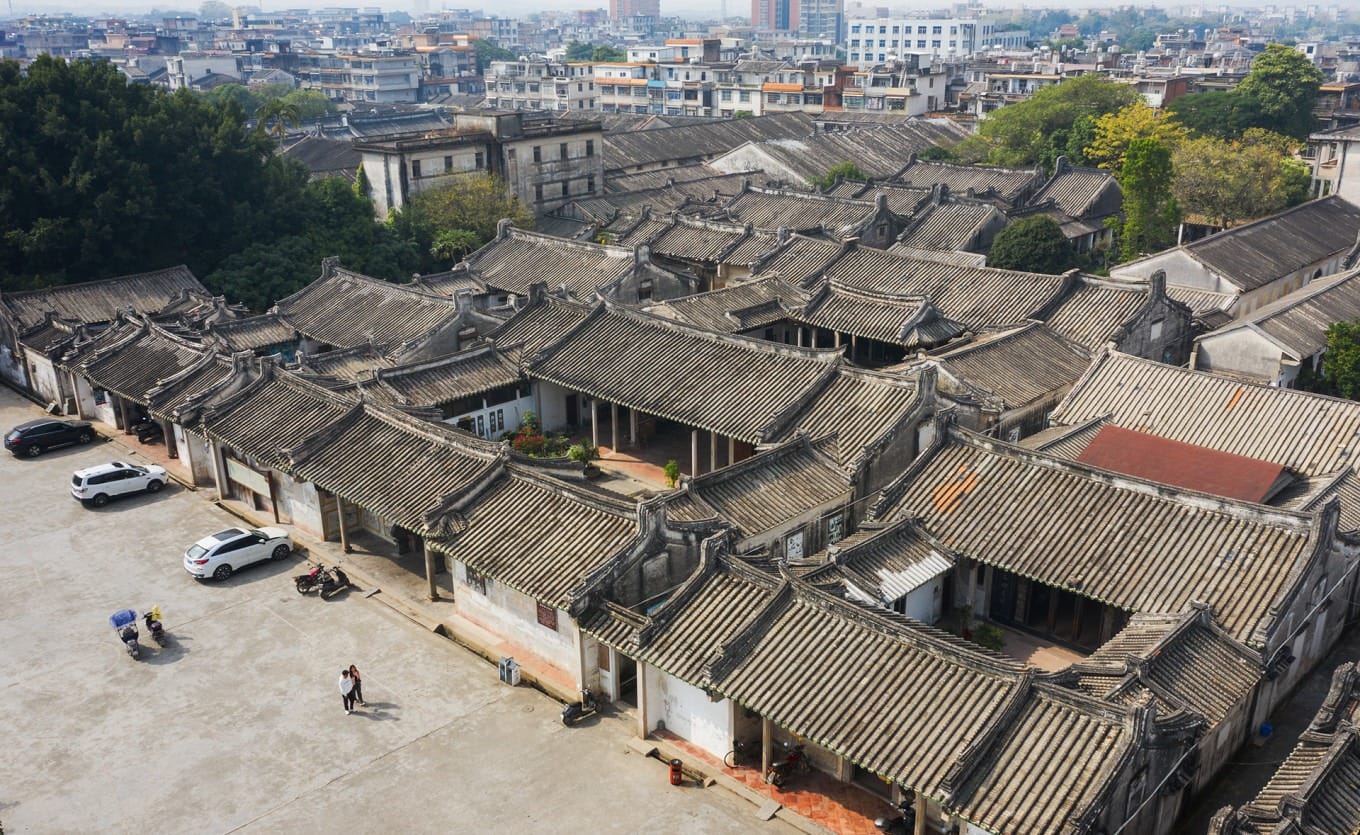
Unlike sterile heritage sites, De’anli remains a living community. Descendants of the Fang family still reside within these walls, and the compound served as Puning No. 1 Middle School from 1952 after functioning as educational institutions since the late Qing. This continuity creates a rare atmosphere where ancient architecture accommodates modern daily life without conflict.
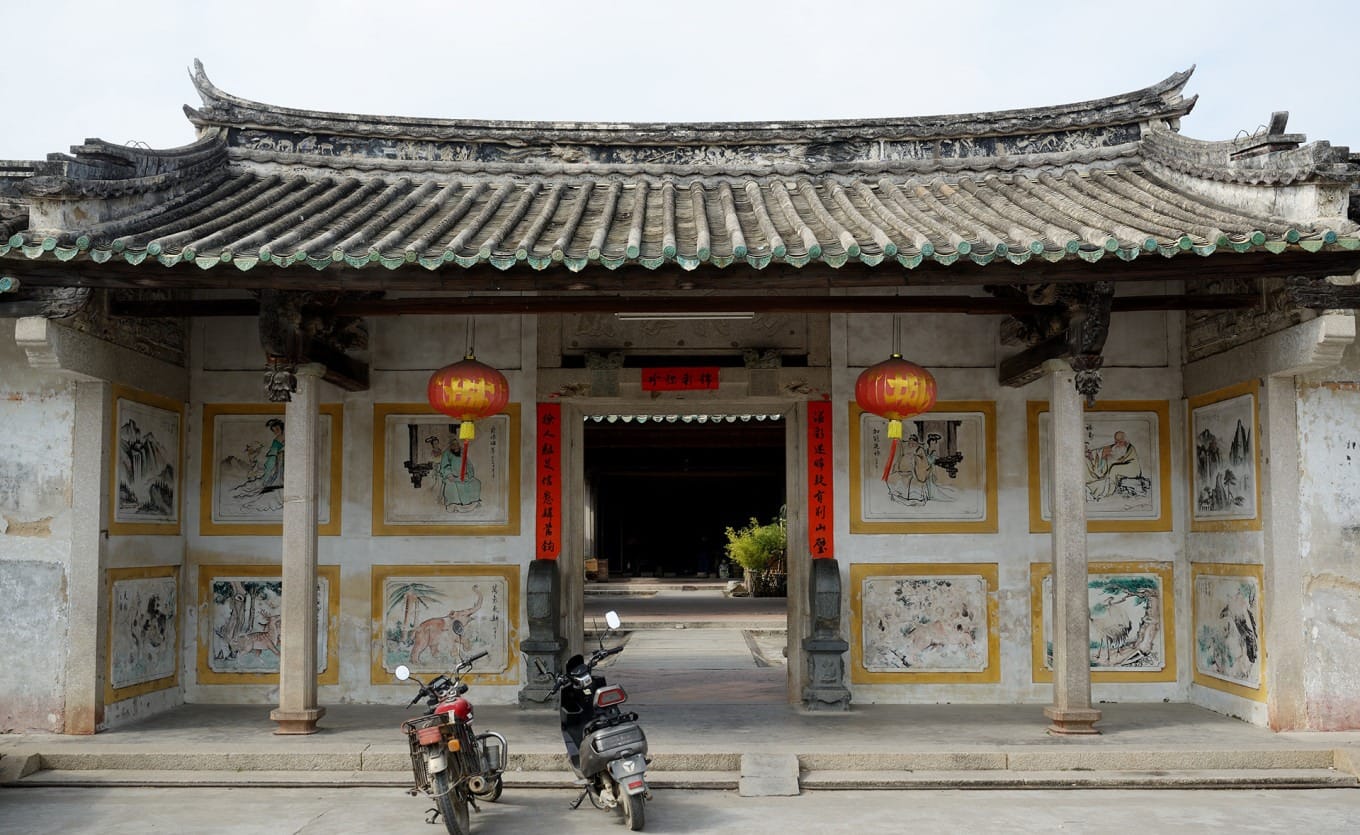
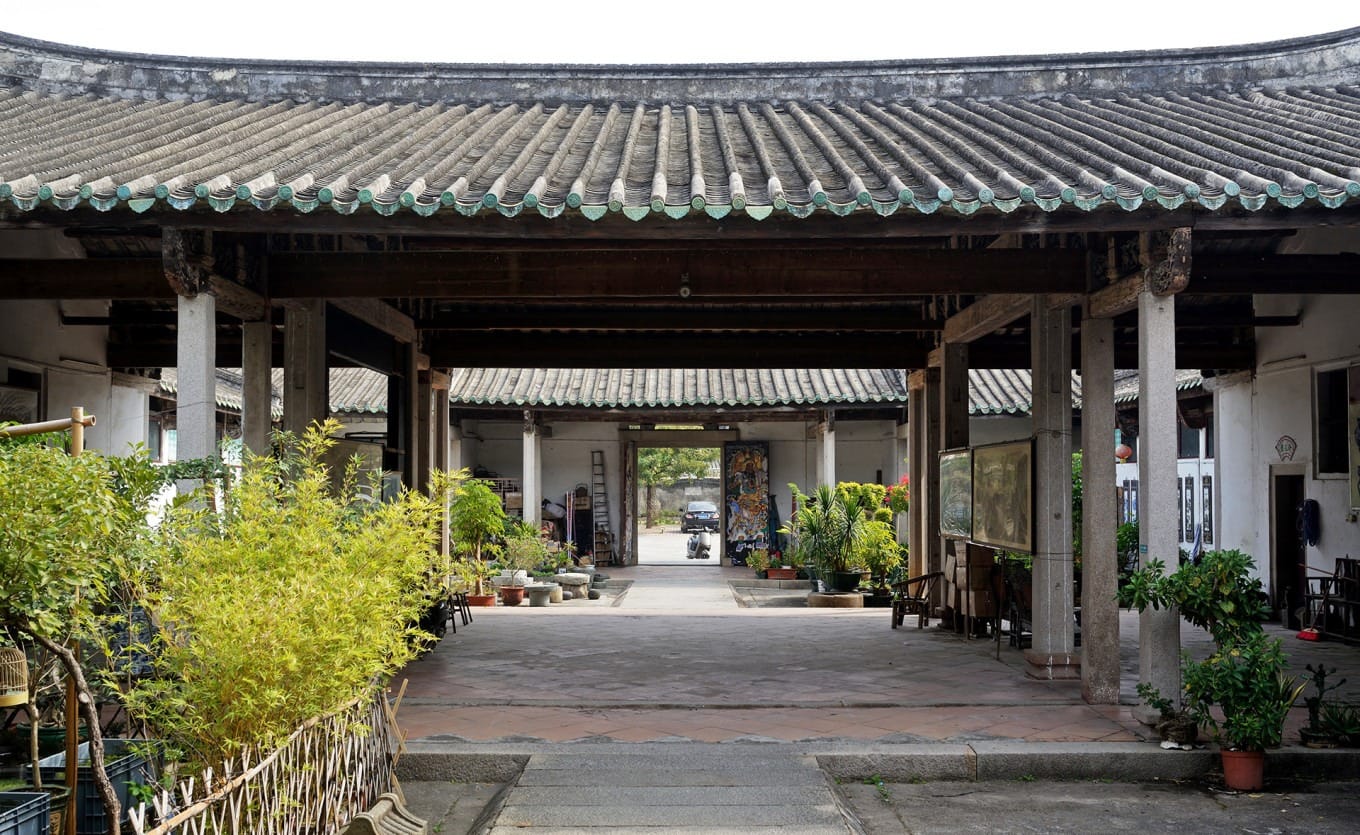
Practical planning note: Admission is free, but the museum closes entirely on Mondays and Tuesdays. Both the main and auxiliary halls shut for lunch breaks, so schedule your visit for morning or afternoon sessions to avoid finding locked doors. De’anli (德安里) sits at 32-33 Yanhe West Road (沿河西路32-33号), Hongyang Town, Puning City.
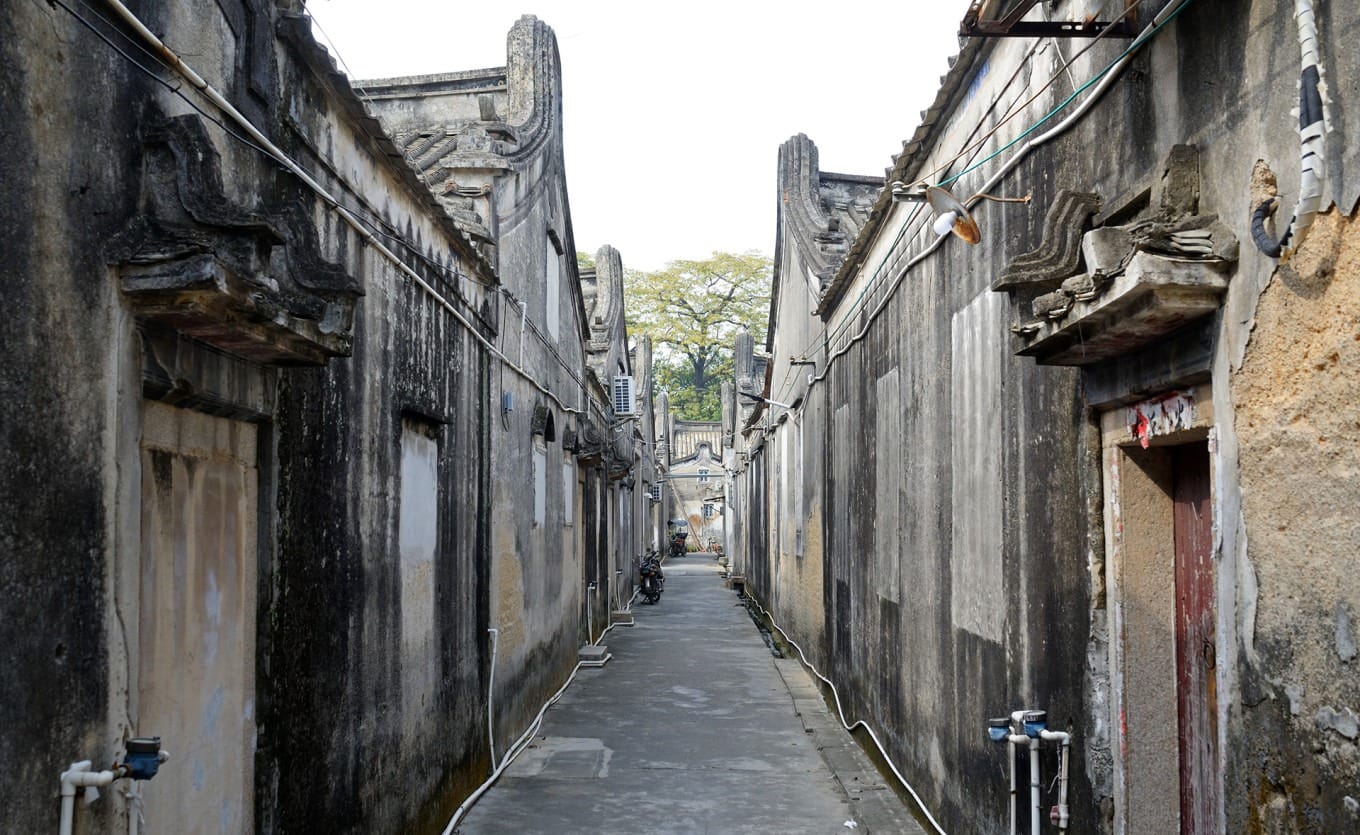
Hongyang Ancient City: A Living Museum of Chaoshan Heritage
Imagine drifting above a settlement shaped like a gourd floating on water—this is Hongyang Ancient City (洪阳古城), a four-hundred-year-old former county seat that remains one of the Chaoshan (潮汕) region’s most concentrated repositories of traditional architecture. From 1575 to 1949, this walled settlement served as the administrative center of Puning (普宁), and though it was later downgraded to a township, its historical fabric survived remarkably intact. Encircled by a double ring of rivers that create the distinctive “Floating Water Gourd” (浮水葫芦 (local term)) silhouette, the old town retains the grid of its original four gates—now transformed into the villages of Dongcun (东村 / East Village), Nancun (南村 / South Village), Xicun (西村 / West Village), and Beicun (北村 / North Village).
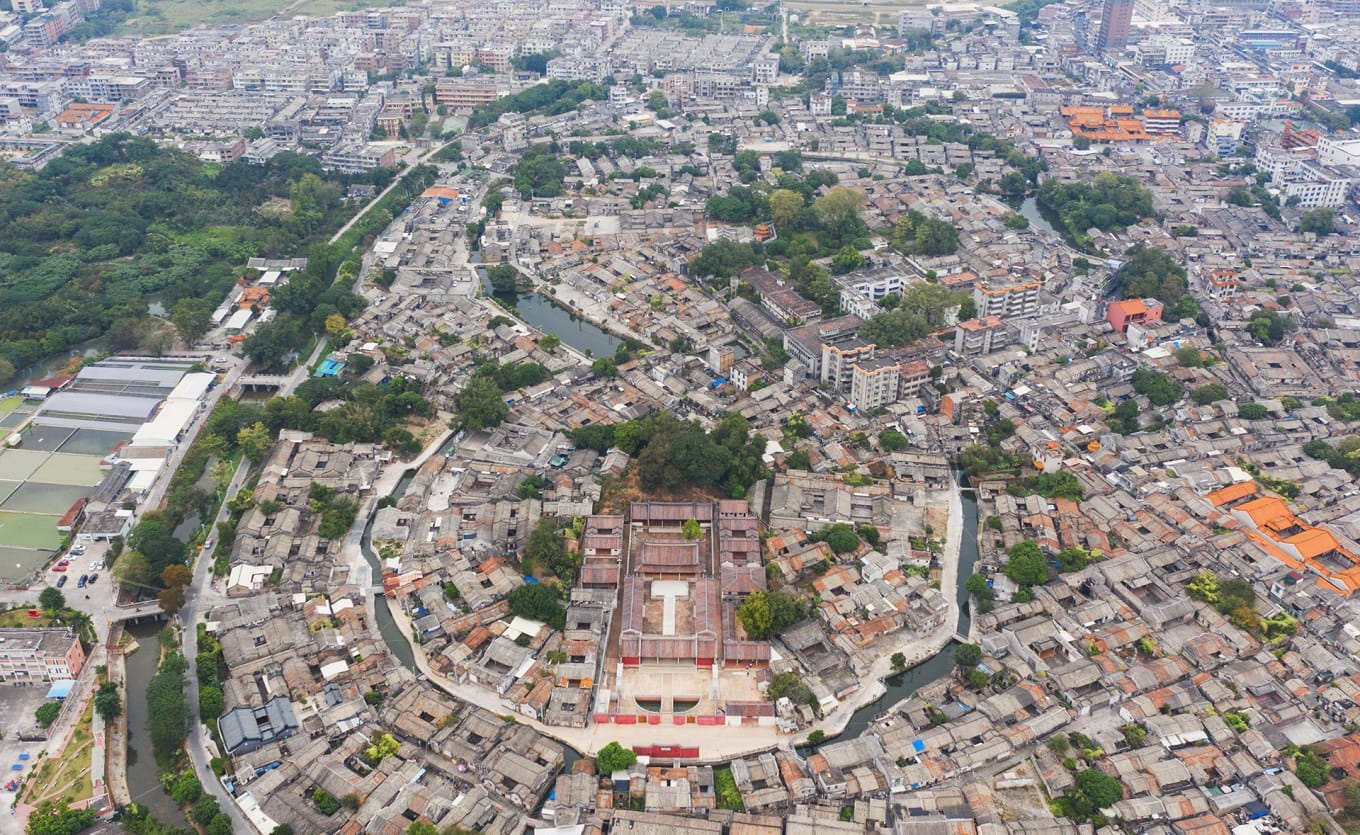
Unlike many heritage sites sanitized for tourism, Hongyang functions as a living community. Its residents still inhabit Ming and Qing dynasty residences, and clan elders continue to convene in ancestral halls. You can trace the town’s scholarly pedigree at the Puning Confucian Temple (普宁学宫), founded in 1575 but destroyed during Zheng Chenggong’s (郑成功) military campaigns, then rebuilt during the Kangxi and Qianlong reigns of the Qing Dynasty. Though currently undergoing renovation and not officially open, you may find the side door unlocked, allowing a discreet glimpse inside.
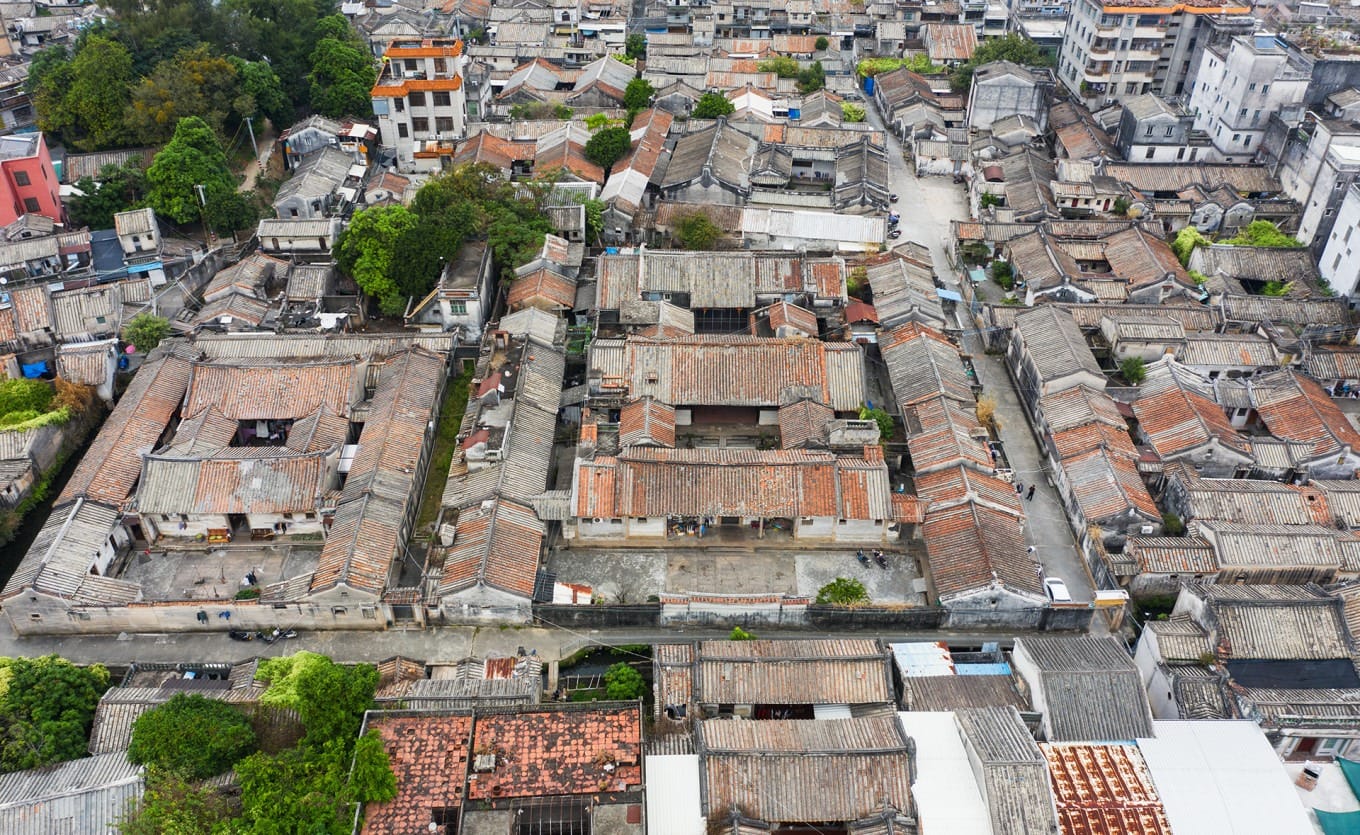
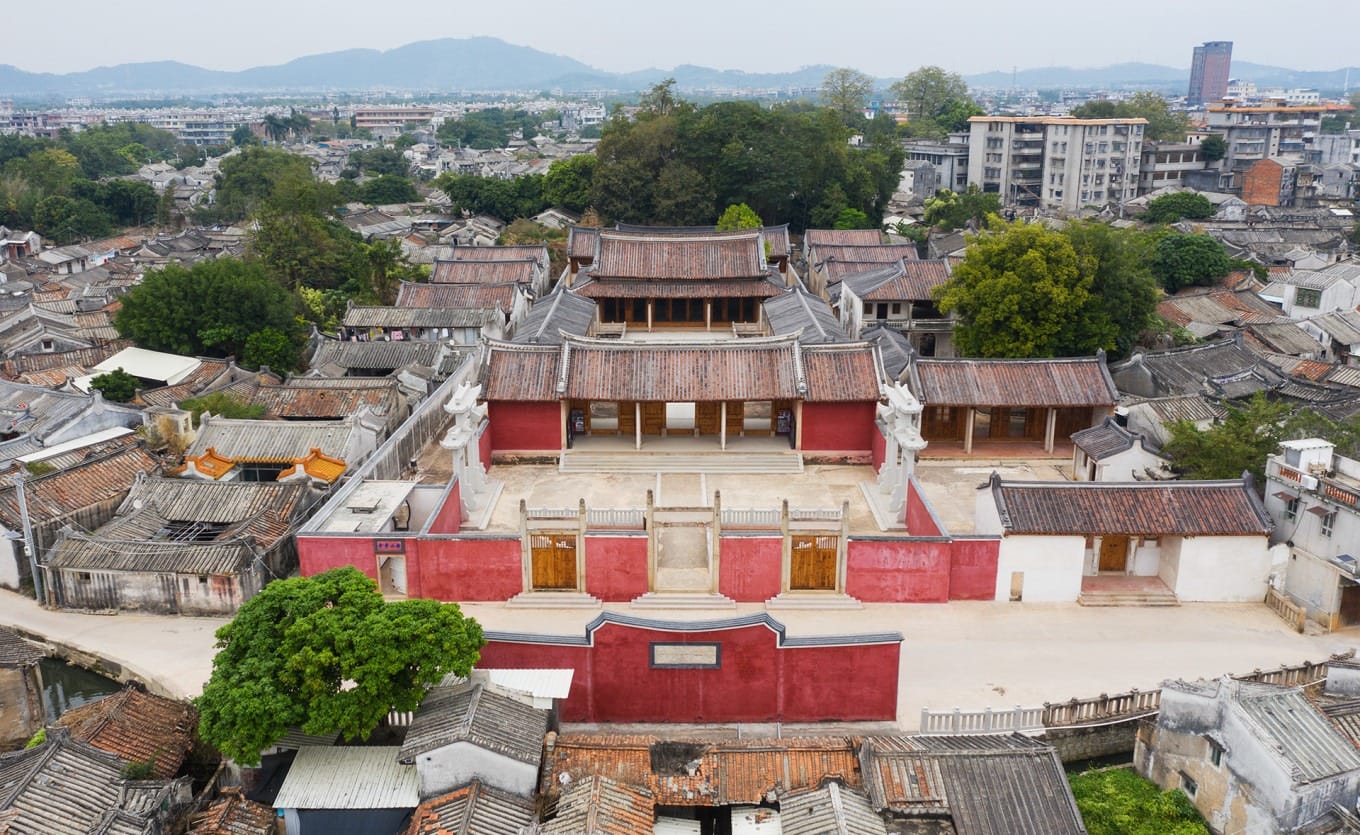
Stepping through the Lingxing Gate (棂星门), note the fading characters for “Puning County No. 1 Middle School” etched into the pillars—this sacred space served as a schoolhouse until the late 20th century. The temple follows a strict north-south axis: screen wall, Lingxing Gate, Panchi (泮池 / ritual pool), Dacheng Gate (大成门), Dacheng Hall (大成殿), and Chongzheng Shrine (崇正祠). The main hall sits elevated on a half-meter platform, featuring a Xieshan-style (歇山顶) wooden beam structure. Examine the stone balustrades on the ceremonial platform closely—you can spot carvings of the “Eight Immortals’ Treasures” (暗八仙 (local term)), a subtle decorative motif common in Chaoshan craftsmanship.
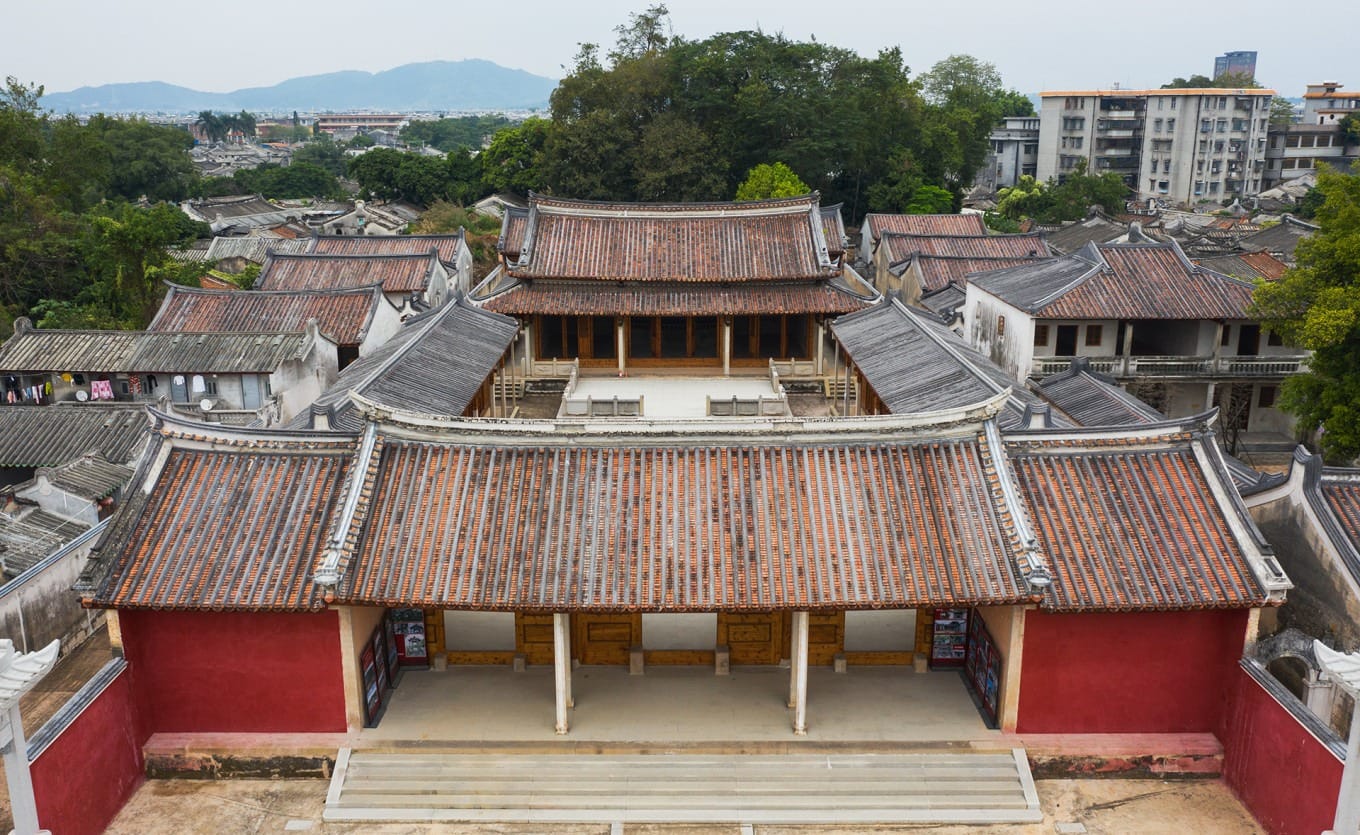
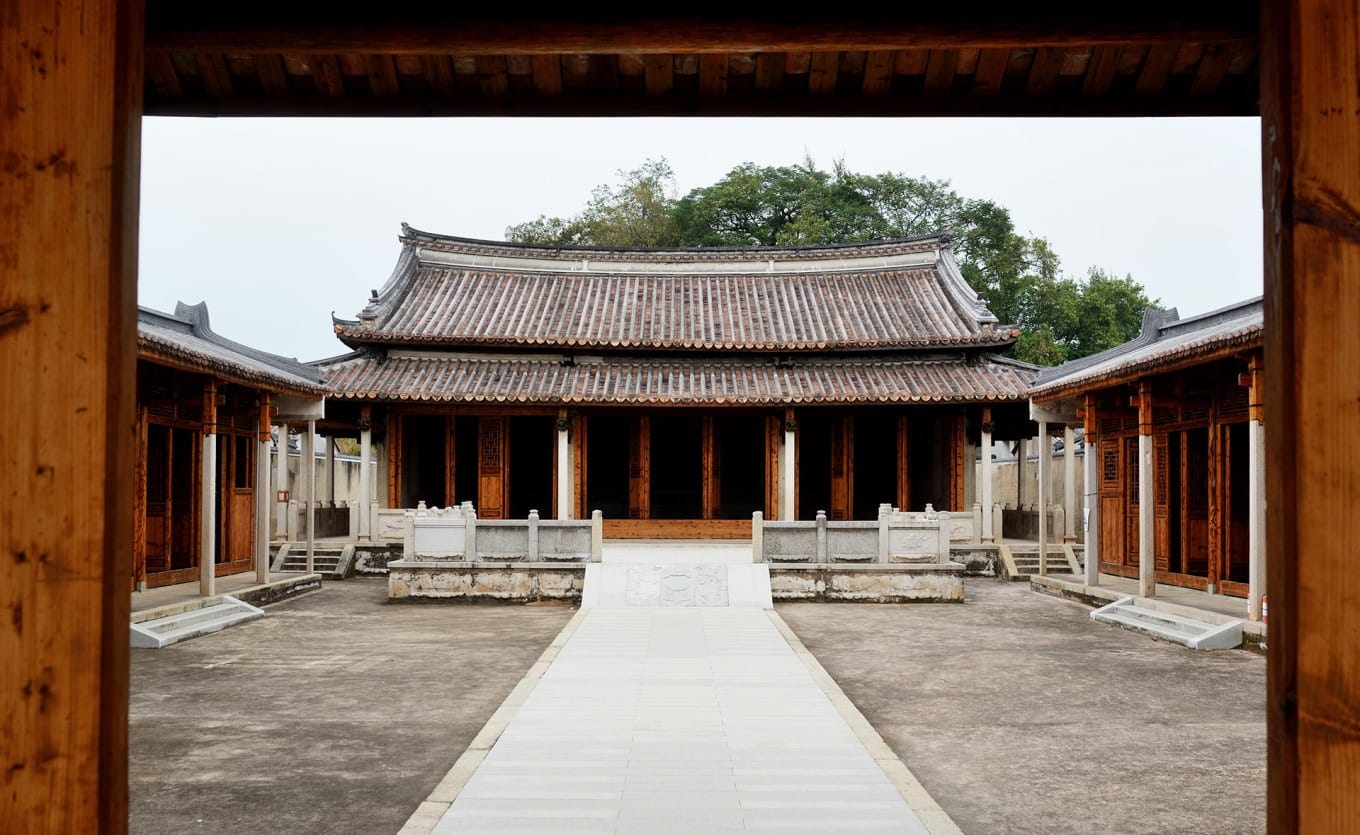
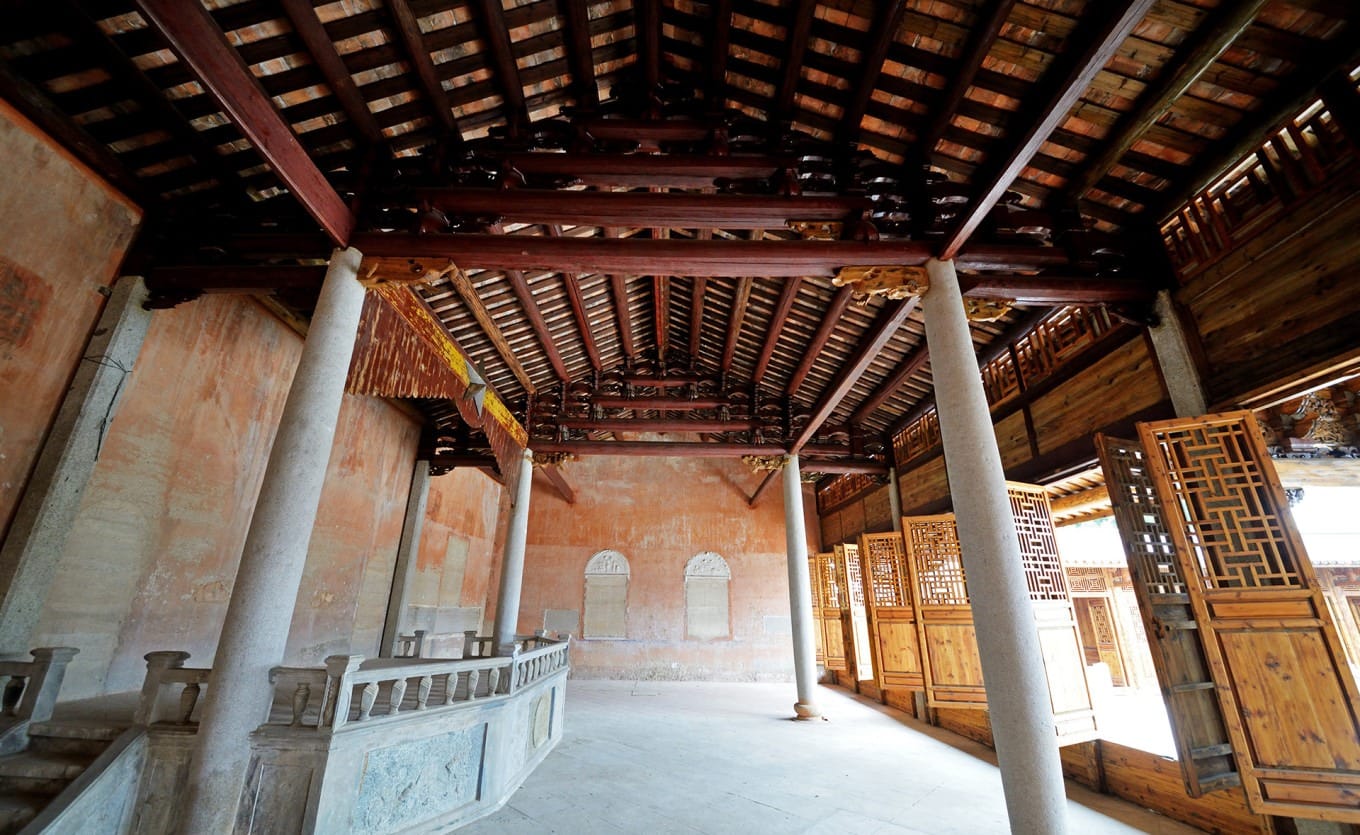
Adjacent to the temple’s western flank stands the Former Residence of Fang Fang (方方故居), commemorating the revolutionary Fang Siziong (方思琼), who adopted the name Fang Fang to assert his political commitment after clan elders forbade him from using the family name. While the house remains closed to visitors, it signals the dominance of the Fang clan throughout Hongyang. The settlement hosts roughly seventy to eighty ancestral halls, the majority belonging to the Fang lineage. The most imposing is the Fang Family Ancestral Hall Fengxian Tang (方氏宗祠奉先堂), located on the east side of Shizi Street in Nancun. Commonly called the “Old Fang Ancestral Hall,” this three-courtyard complex honors Lianxi Gong Fang Yao (濂溪公方瑶), the Yuan Dynasty scholar who founded the Hongyang branch of the Fang family.
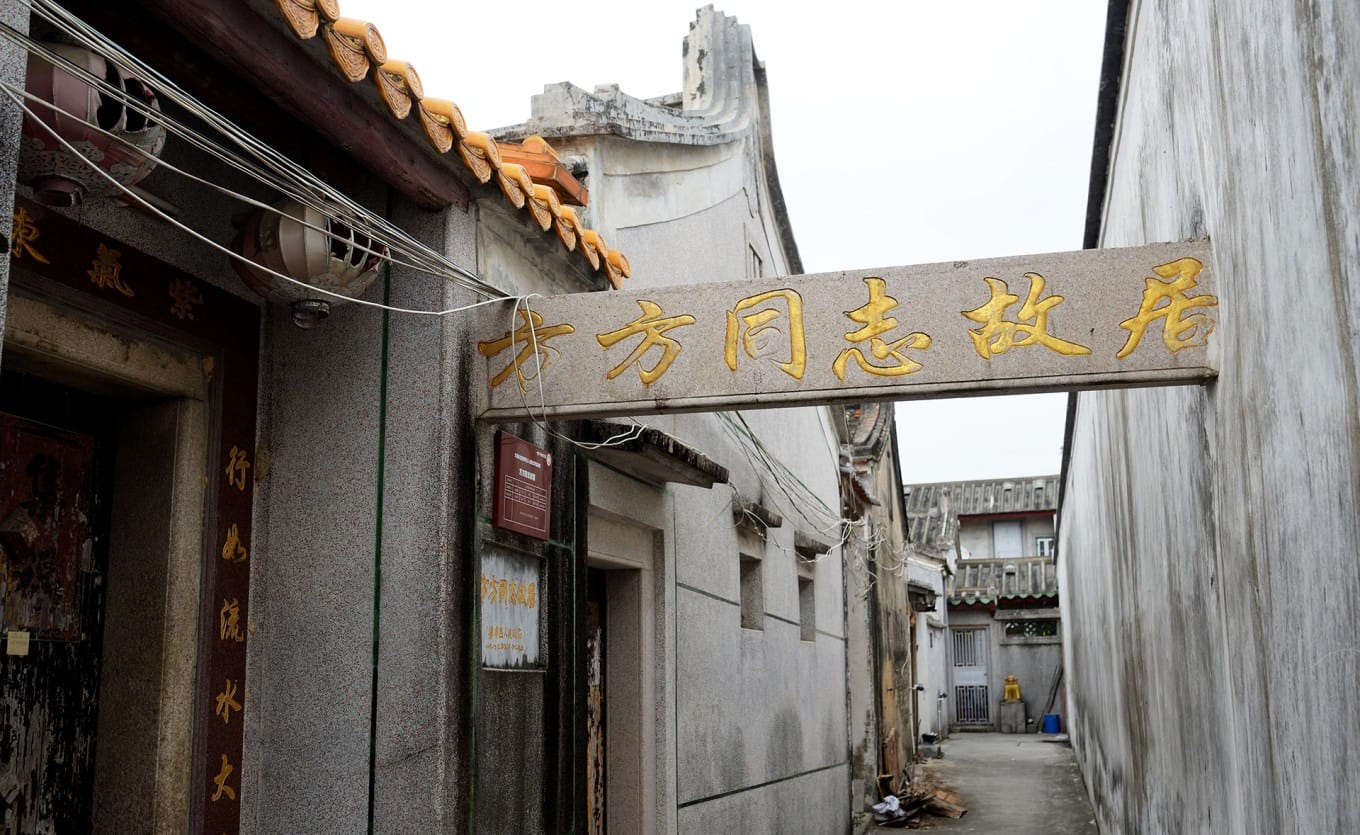
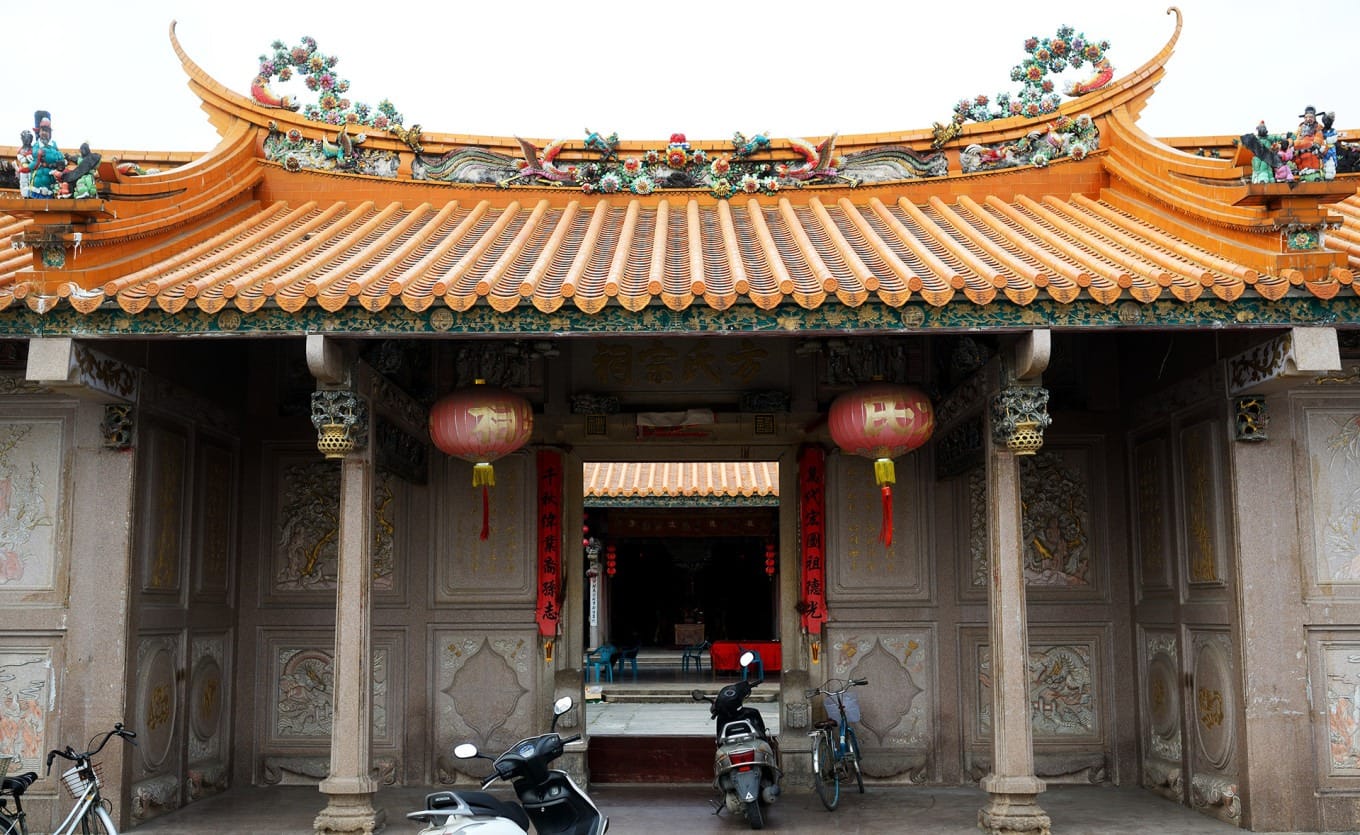
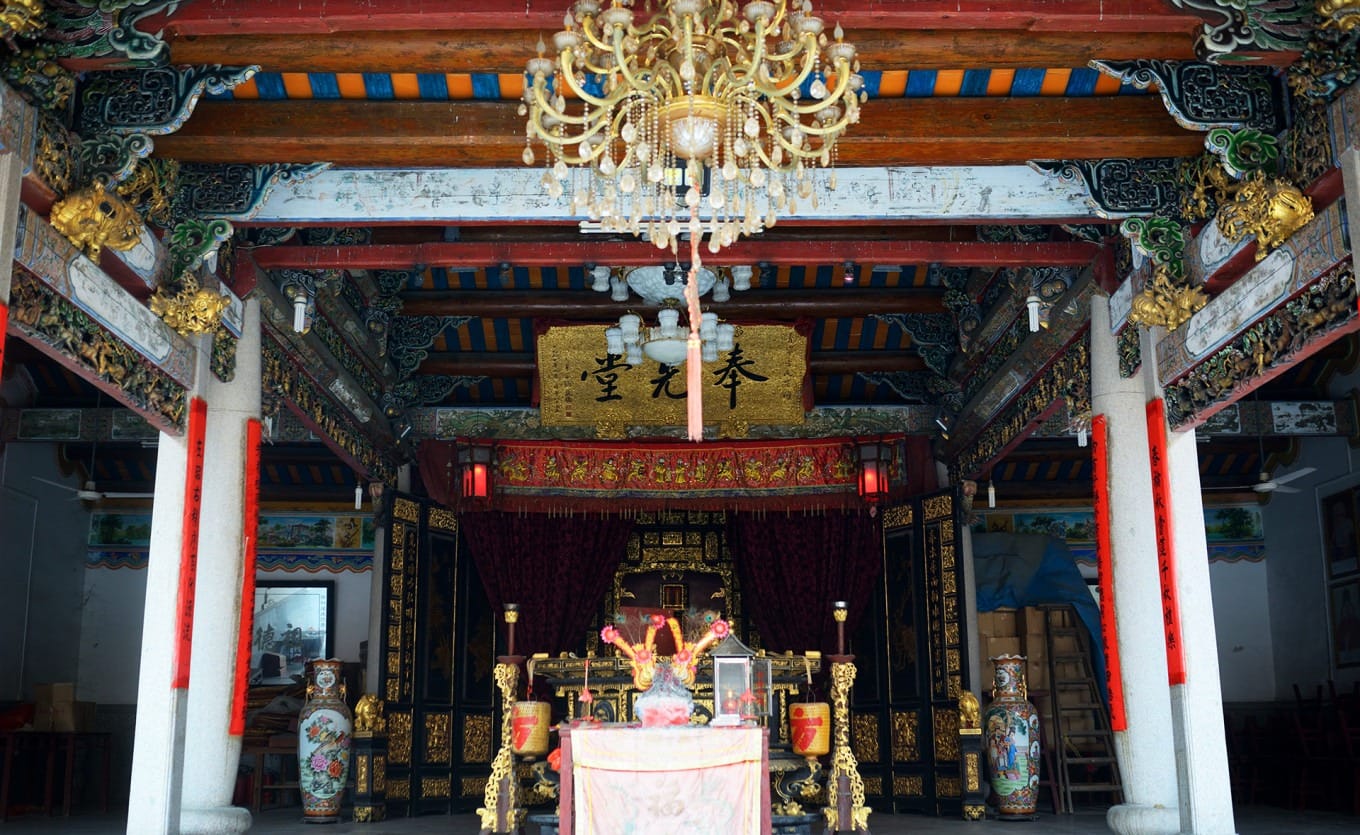
Originally constructed in the Ming Wanli era and rebuilt during the Kangxi reign, Fengxian Tang was long occupied by a textile factory after 1949, suffering severe damage until the Fang clan funded its reconstruction in 1995. Despite being a modern rebuild, artisans adhered strictly to traditional Chaoshan techniques—the colorful paintings, dragon and phoenix reliefs, and intricate woodcarvings maintain the grandeur of the original. Just east lies Wenlin Residence (文林第), a complex of comparable scale that remains a private residence; you can only peer through the iron gates to appreciate its scope.


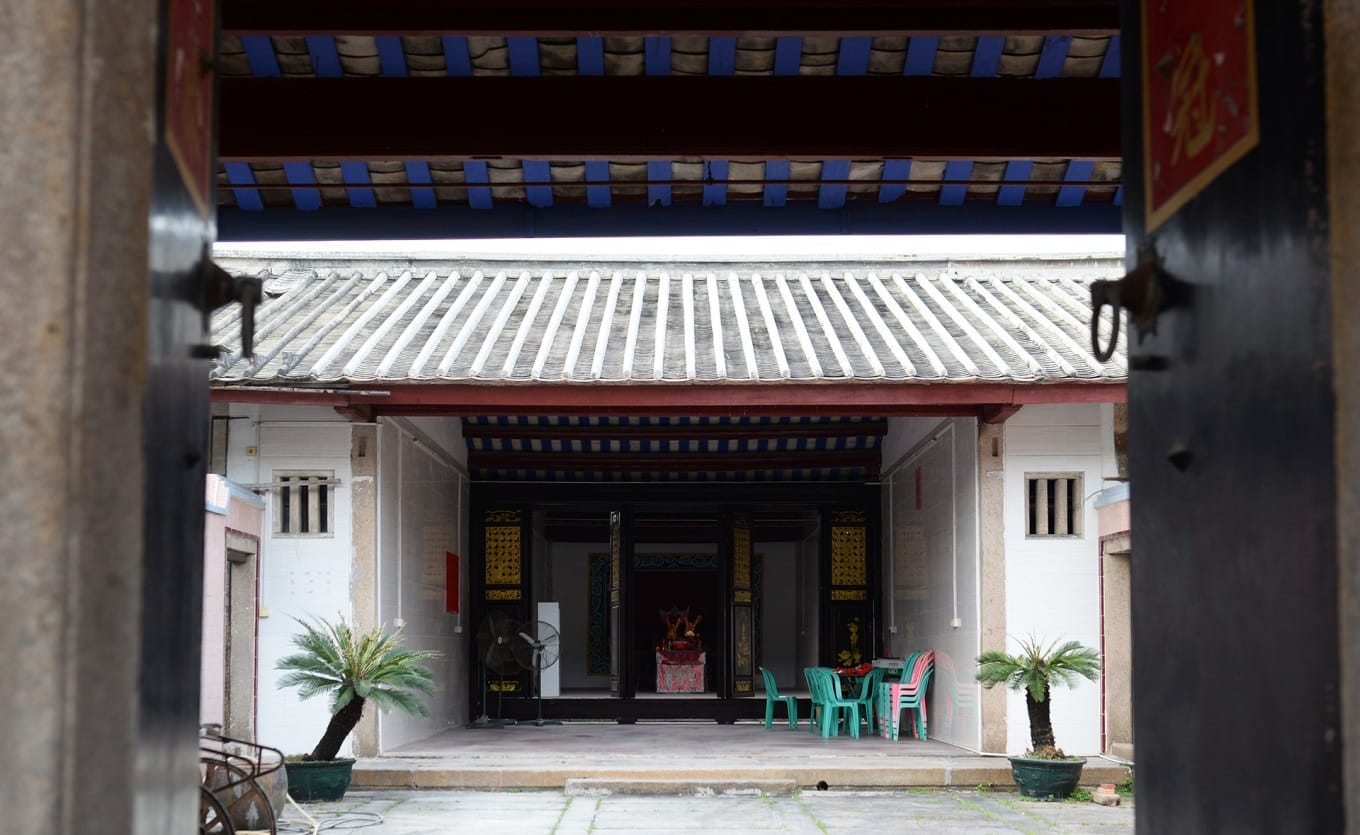
Nearby, Dafu Residence (大夫第), locally known as Dacuonei (大厝内), presents a three-courtyard mansion dating to the Ming and Qing dynasties. Inside the rear hall hangs a plaque reading Dunben Hall (敦本堂), flanked by imperial tablets: one from the Tianqi Emperor honoring the 1621 tribute scholar Fang Weihan (方维翰), and another from the Qianlong Emperor for Fang Zhonghui (方忠惠), the Sichuan Provincial Judicial Commissioner in 1739. If you look carefully, you can also find a stele titled “Proclamation from County Magistrate Zhang of the County” (奉县主张太爷示 (local term)), recording a lawsuit judgment from the Guangxu era of the Qing Dynasty.
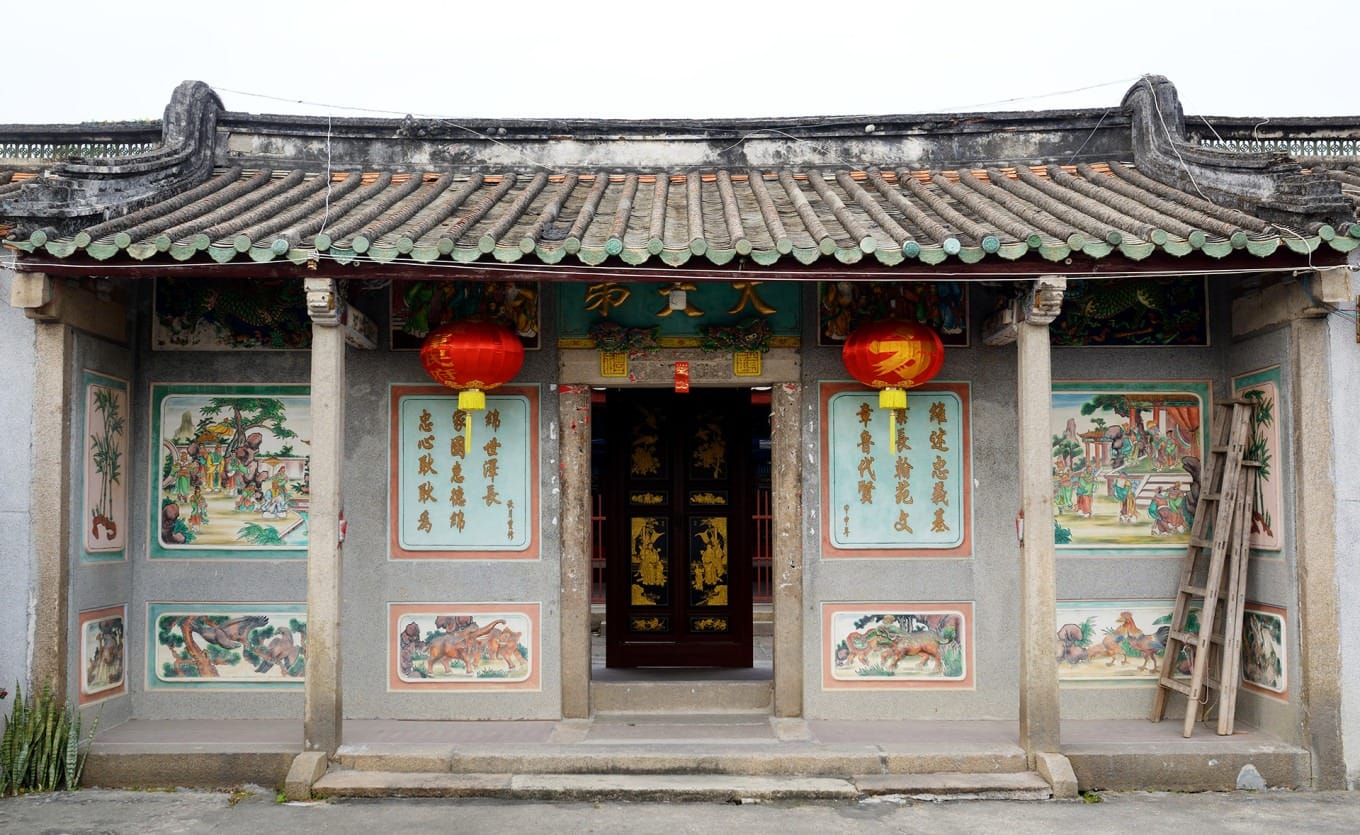
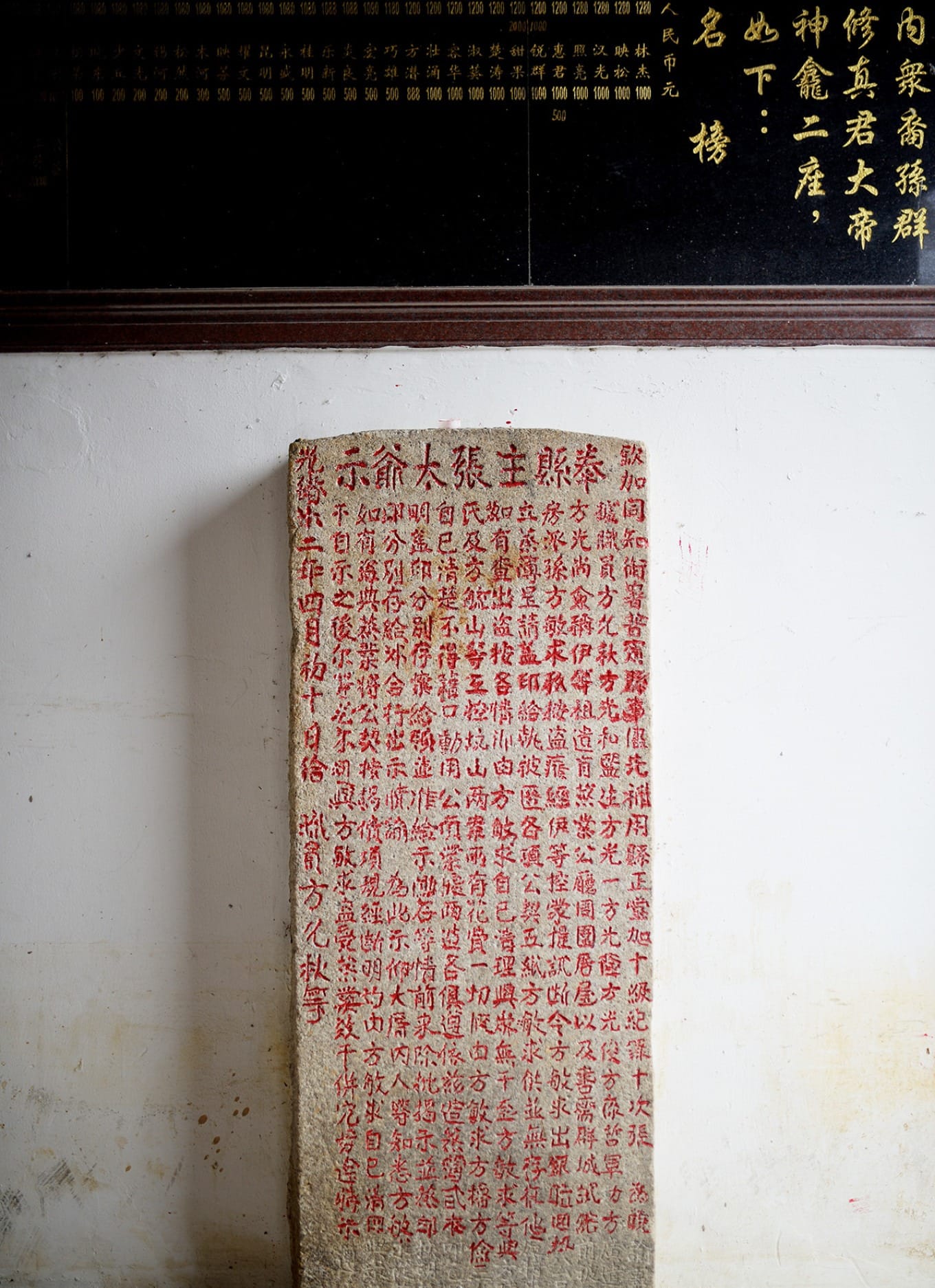
The complexity of the Fang clan’s genealogy manifests in the numerous halls bearing the name “Fang Family Branch Ancestral Hall” (方氏房祖祠 (local term)) with different hall titles. Fang’s Yougong Hall (方氏友恭堂), nicknamed Liufangsan (六房三), dates to 1886 and was restored in the late 20th century. With over seventy such structures, even clan members struggle to trace the exact relationships between branches.
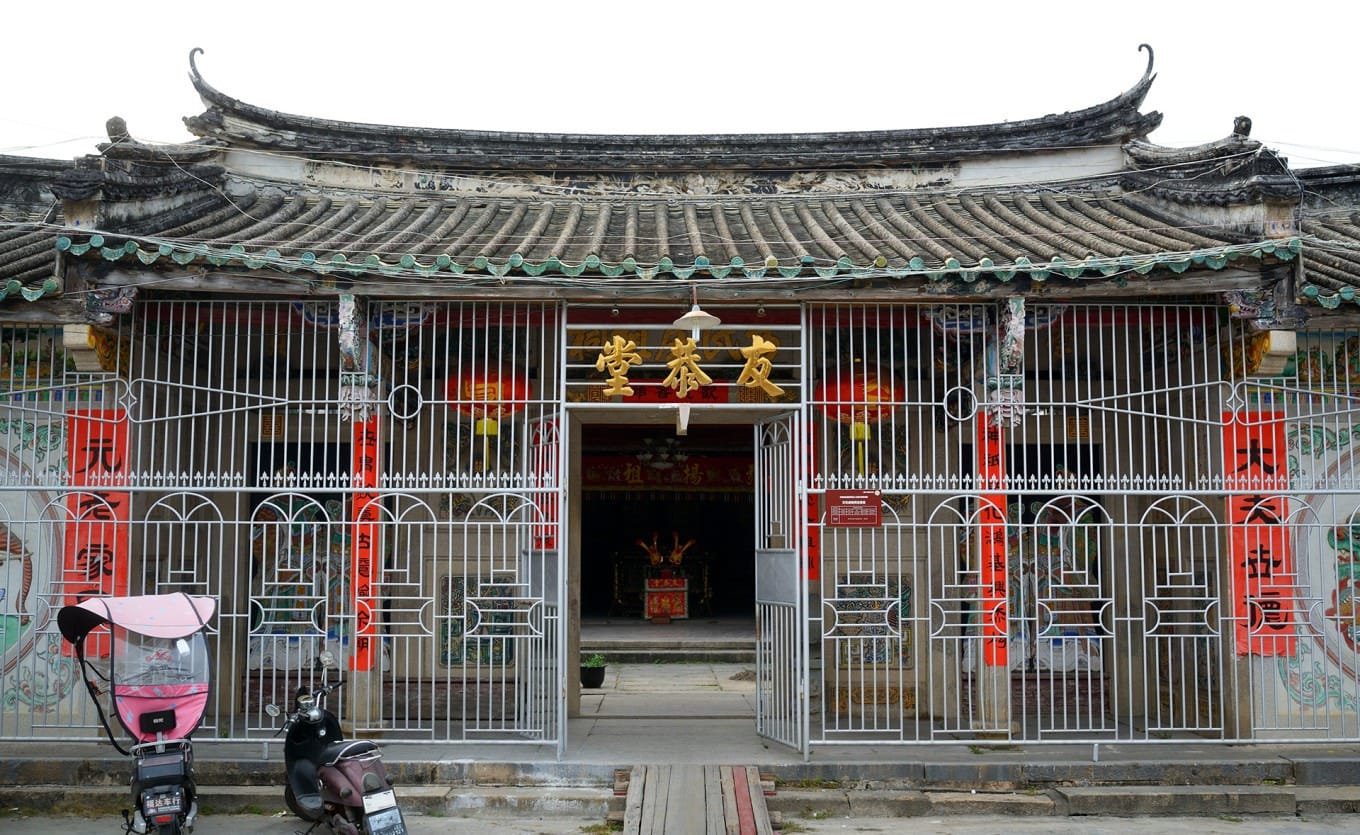
Feng shui principles dictated that prestigious halls feature screen walls (照壁) decorated with qilin motifs symbolizing official rank. Only high-ranking officials could install qilin screen walls: third to fifth rank featured running qilin (one knee bent), second rank featured crouching qilin (two knees bent), and first rank featured three bent knees. At Fang’s Zuoshu Hall (方氏作述堂), nicknamed Liufangci (六房祠), you can identify this hierarchy in action. This “Four Points Gold” (四点金 (local term)) layout structure boasts ten flagpole holders at its entrance and a screen wall depicting the three-kneeling qilin, indicating the highest imperial rank.
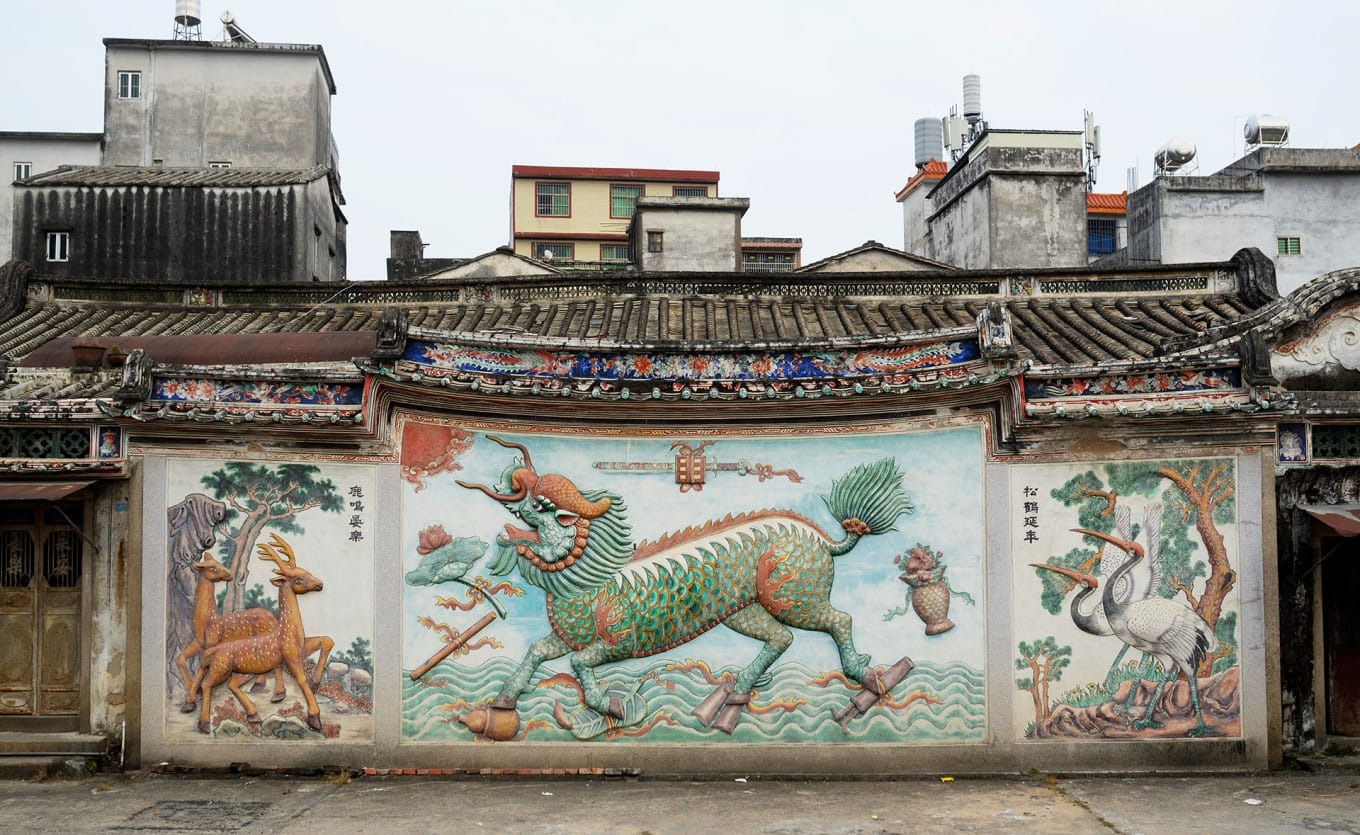
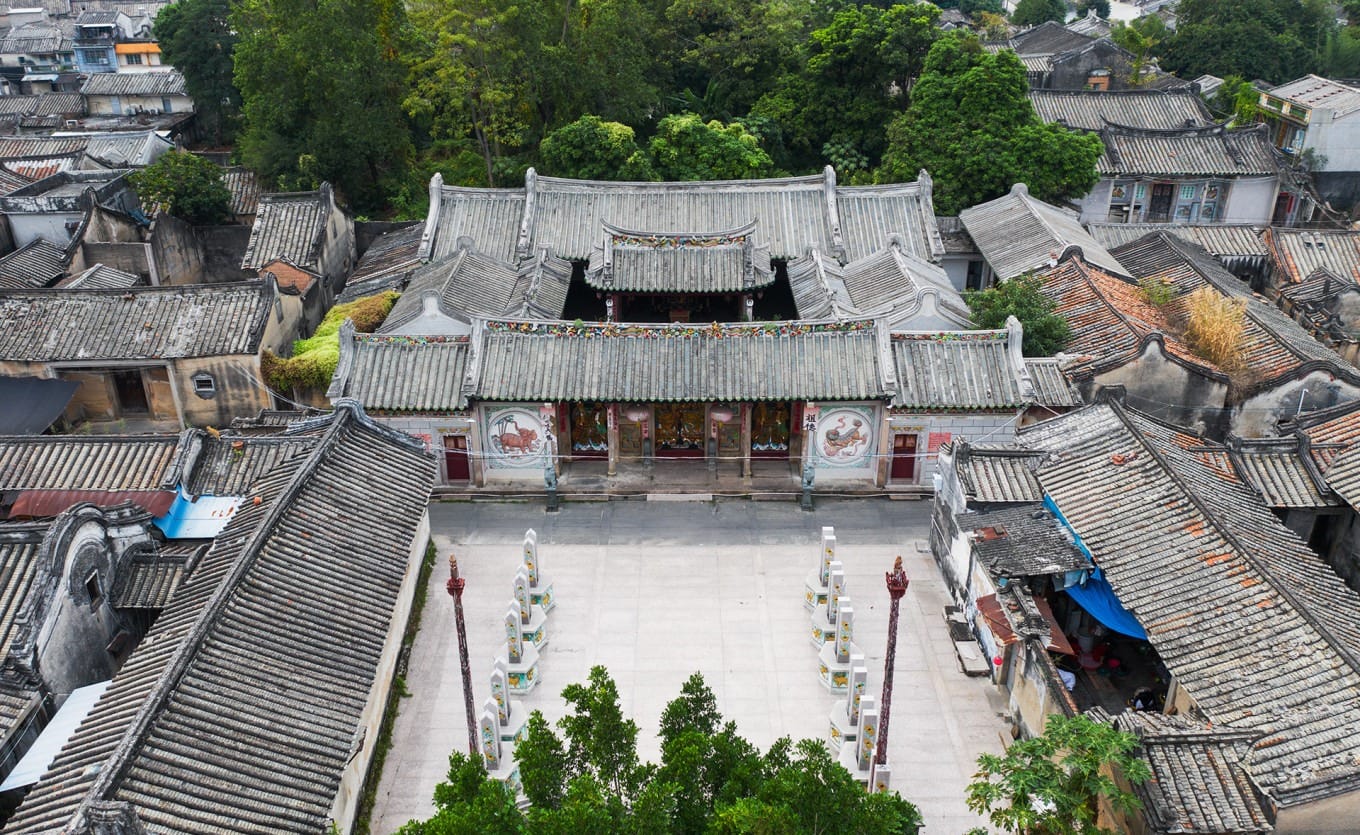
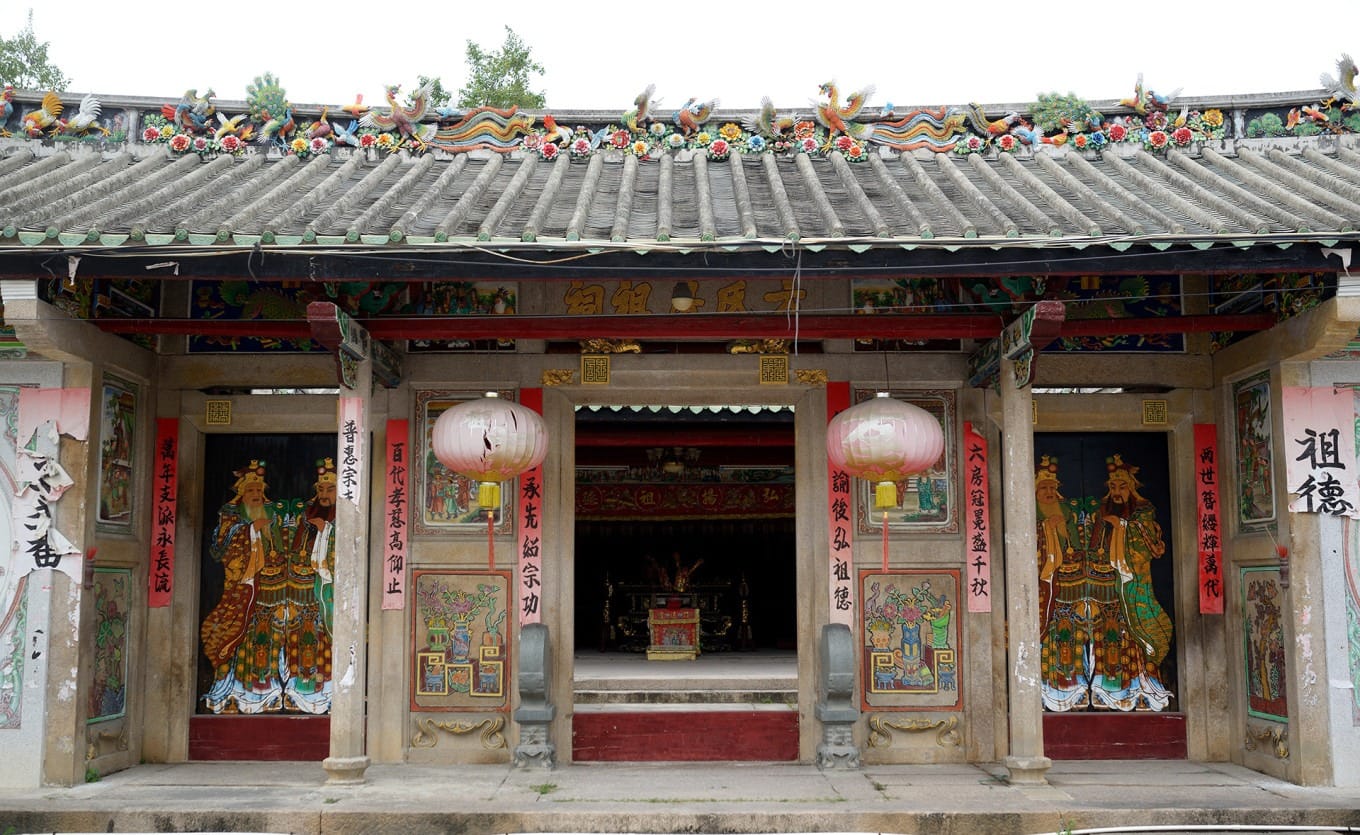
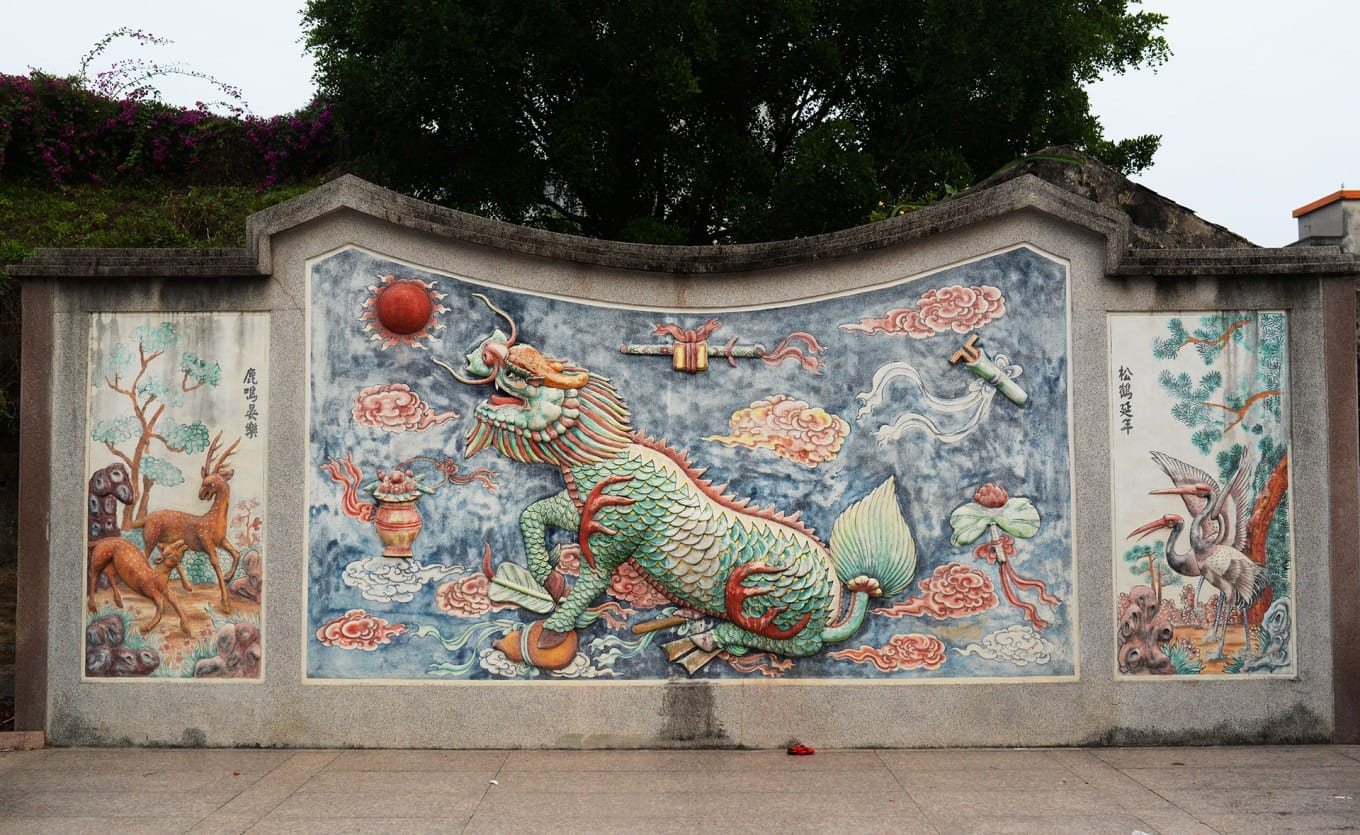
West of the City God Temple stands Fang’s Shude Hall (方氏树德堂), originally built during the Republican era and restored in the early 2000s. While the Fang clan dominates the residential quarters, the spiritual center lies at the Puning City God Temple (普宁城隍庙), founded in 1563 when Puning was established as a county. Tragically, the original four-century-old complex was demolished and completely rebuilt in the 1990s, transforming the town’s oldest structure into a modern imitation.

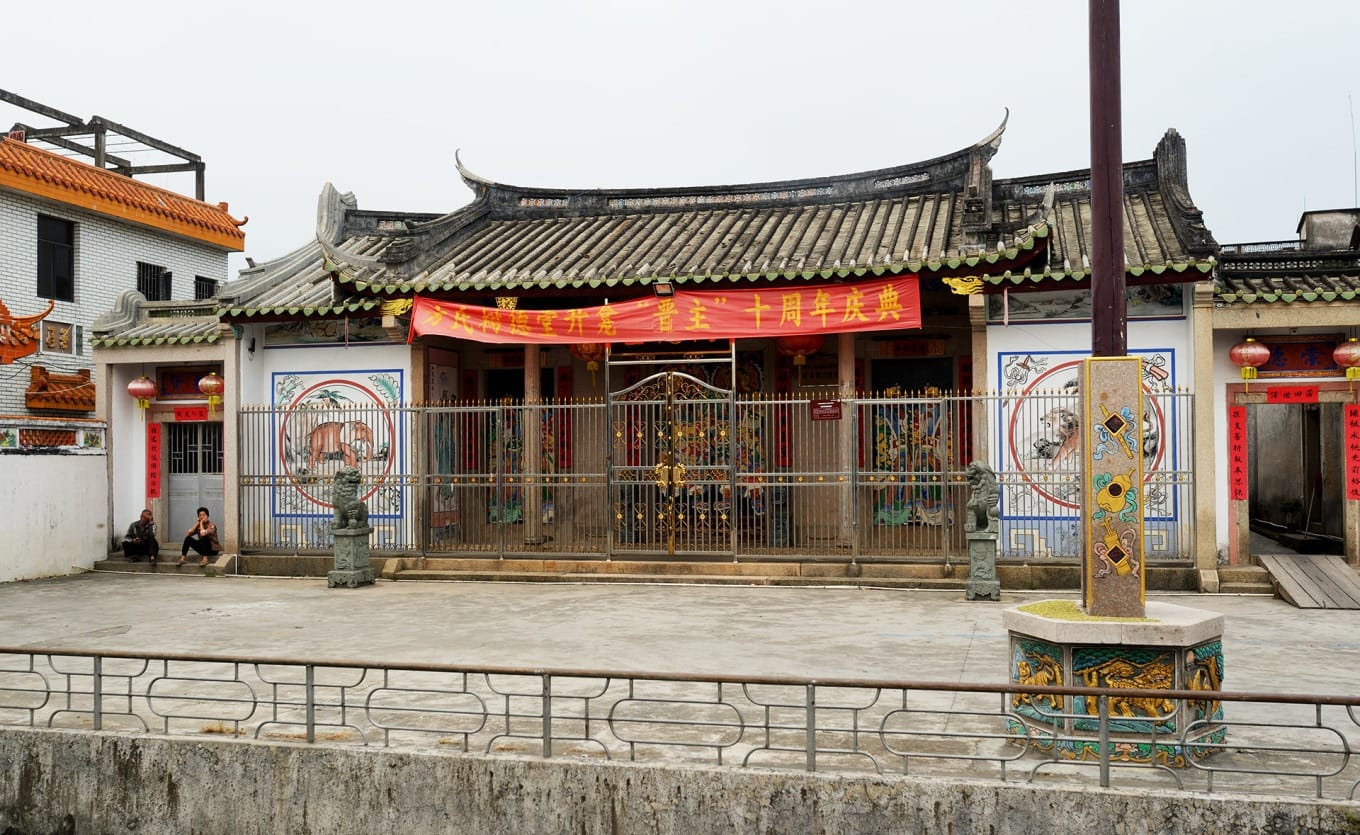
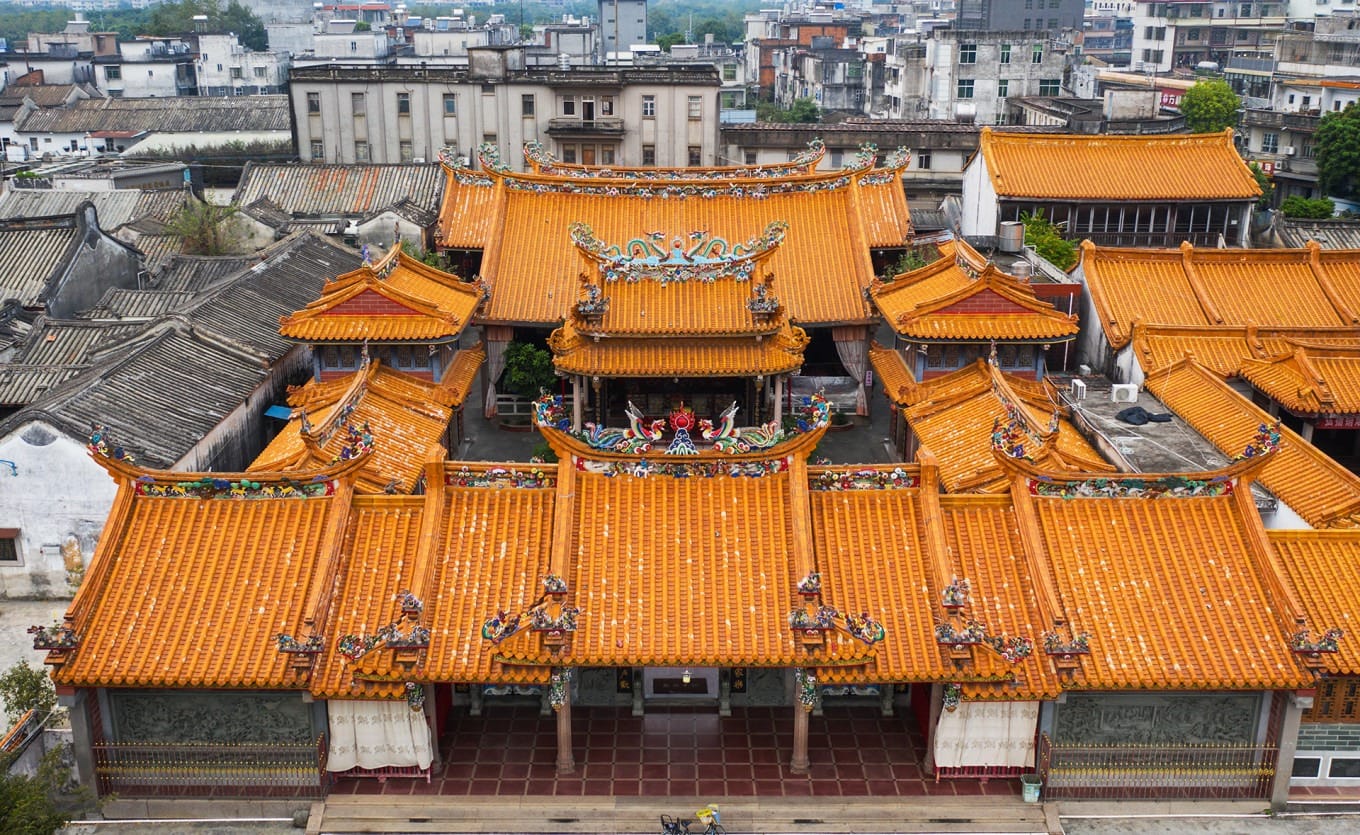
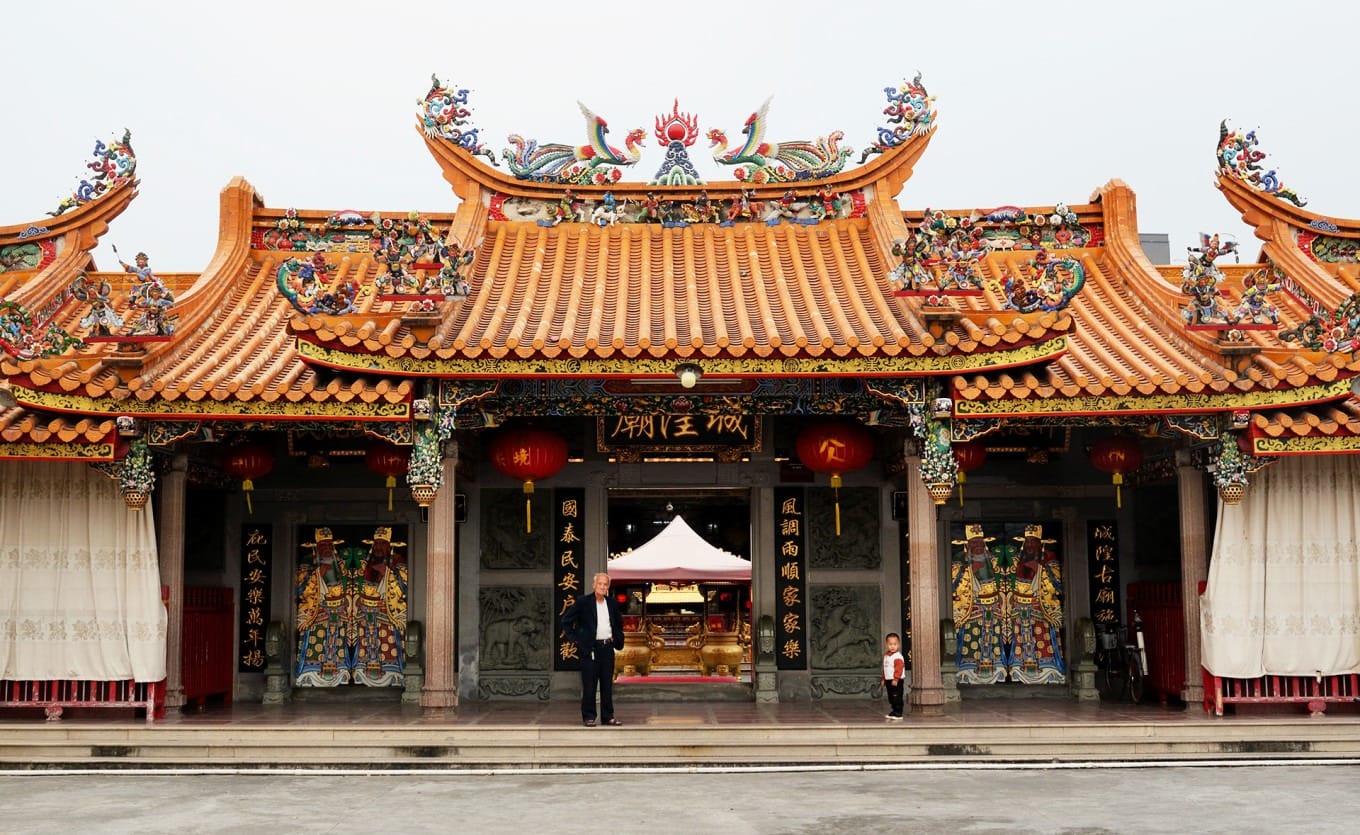
Though the historical authenticity is lost, you can still appreciate the craftsmanship in the current structure. The main hall enshrines the City God, known locally as “Lord Bo” (伯府大人 (local term)), accompanied by civil judges, seal officers, and the Four Messengers of Rewarding Good and Punishing Evil. The rear hall honors Lady Bo. Despite being new construction, the temple employs traditional Chaoshan techniques—woodcarving, stone carving, and 嵌瓷 (local term) (嵌瓷 / ceramic mosaic)—executed with considerable skill and ornate detail.
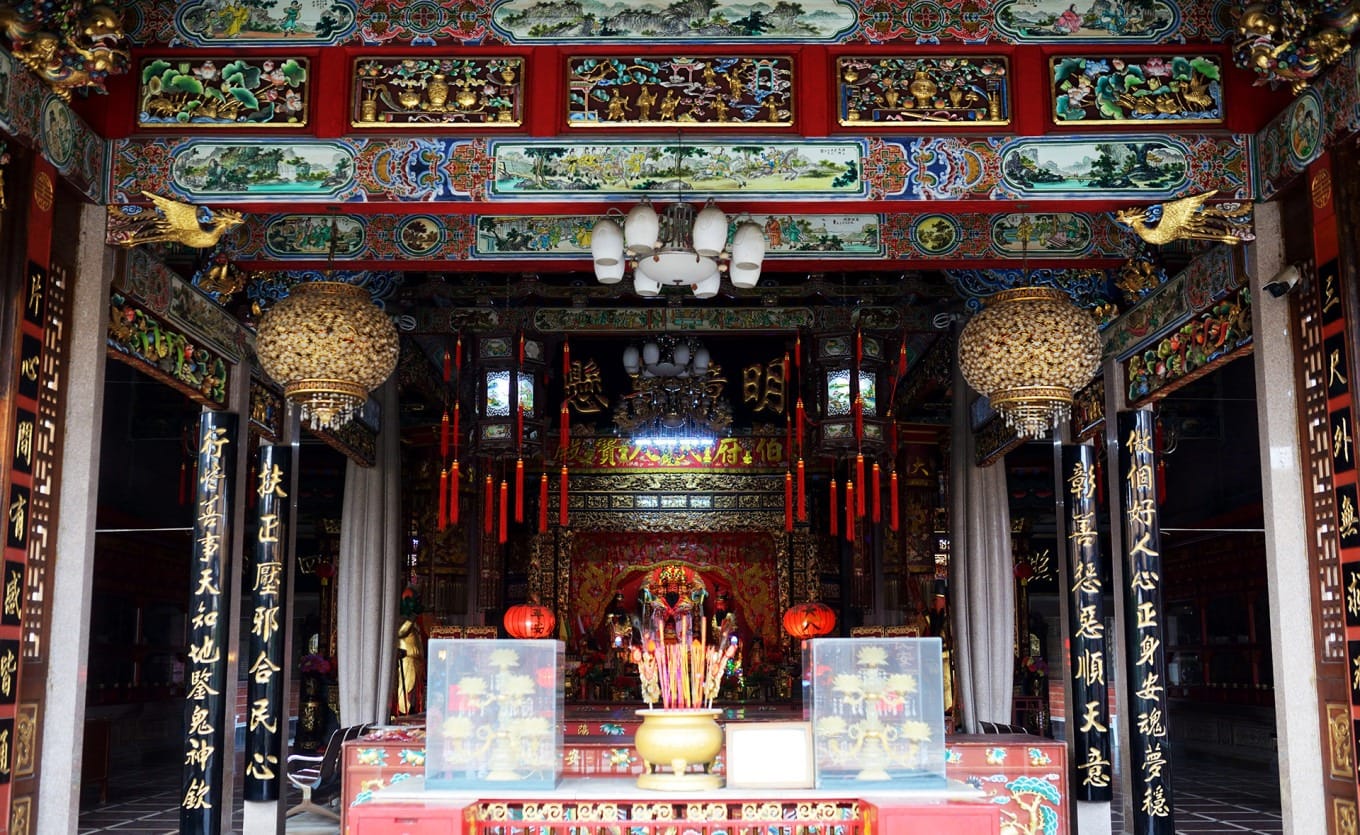
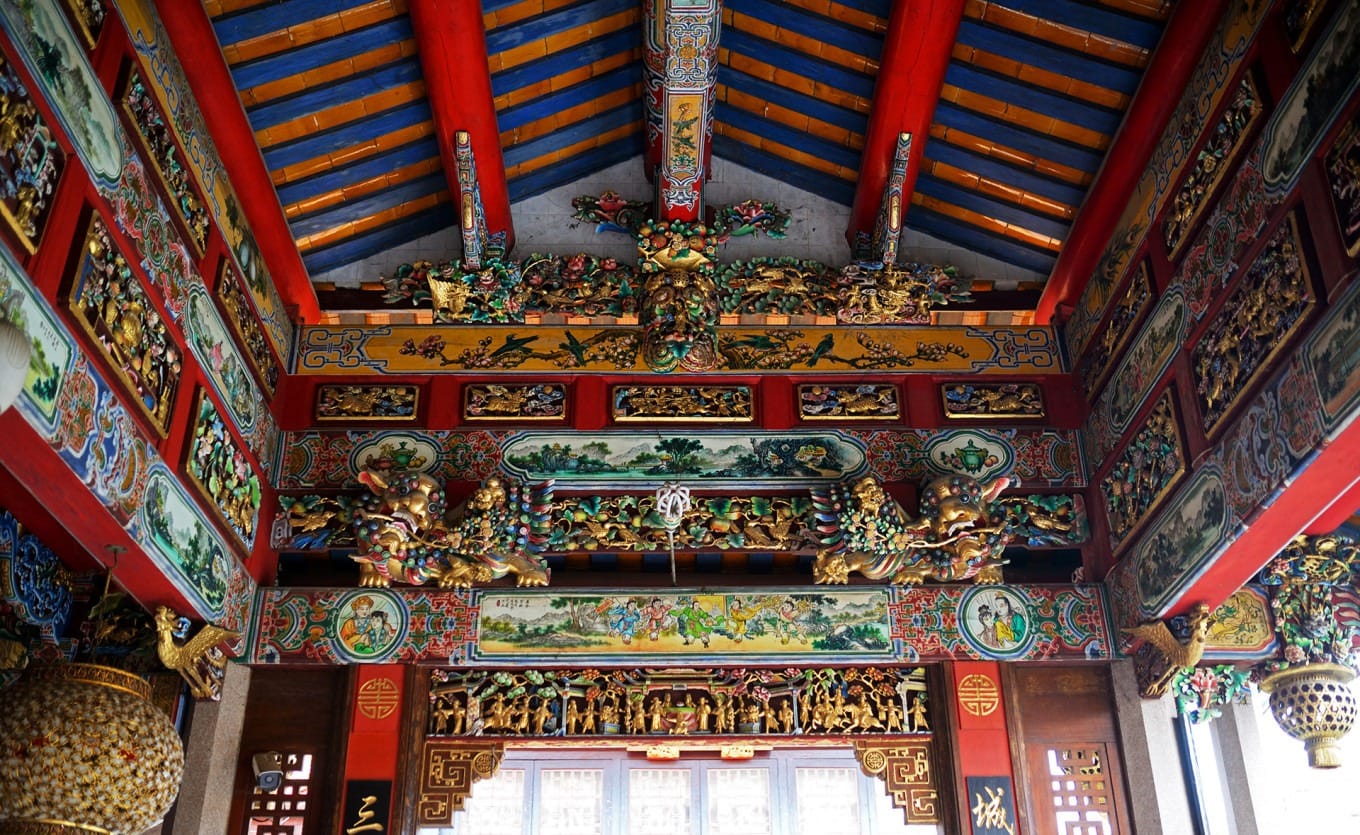
East of the temple stands the Wenchang Pavilion (文昌阁), originally built in 1721 during the Kangxi reign and later renovated in the early 2000s. This site holds particular historical significance as the deathplace of Lin Zedong (林则徐), the Qing Dynasty official famous for destroying the opium at Humen. In 1850, the ailing 66-year-old Lin was reappointed as an imperial commissioner and traveling from Fujian to Guangxi when he fell ill at this pavilion. He died here on November 22, 1850, reportedly crying out “Xingdou Nan” (星斗南 (local term)) three times—a phrase whose meaning remains debated by historians. The pavilion now contains a reconstructed room depicting his final moments.
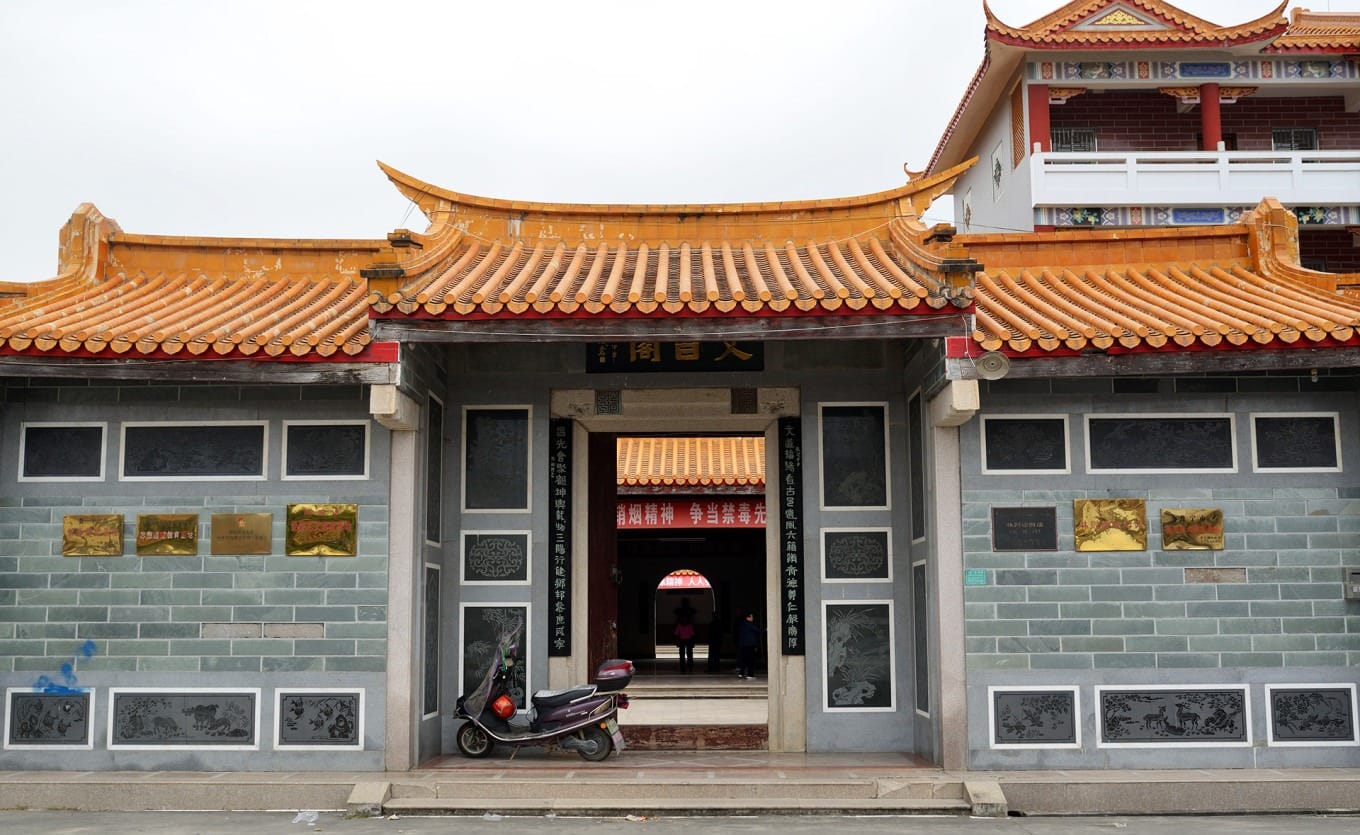

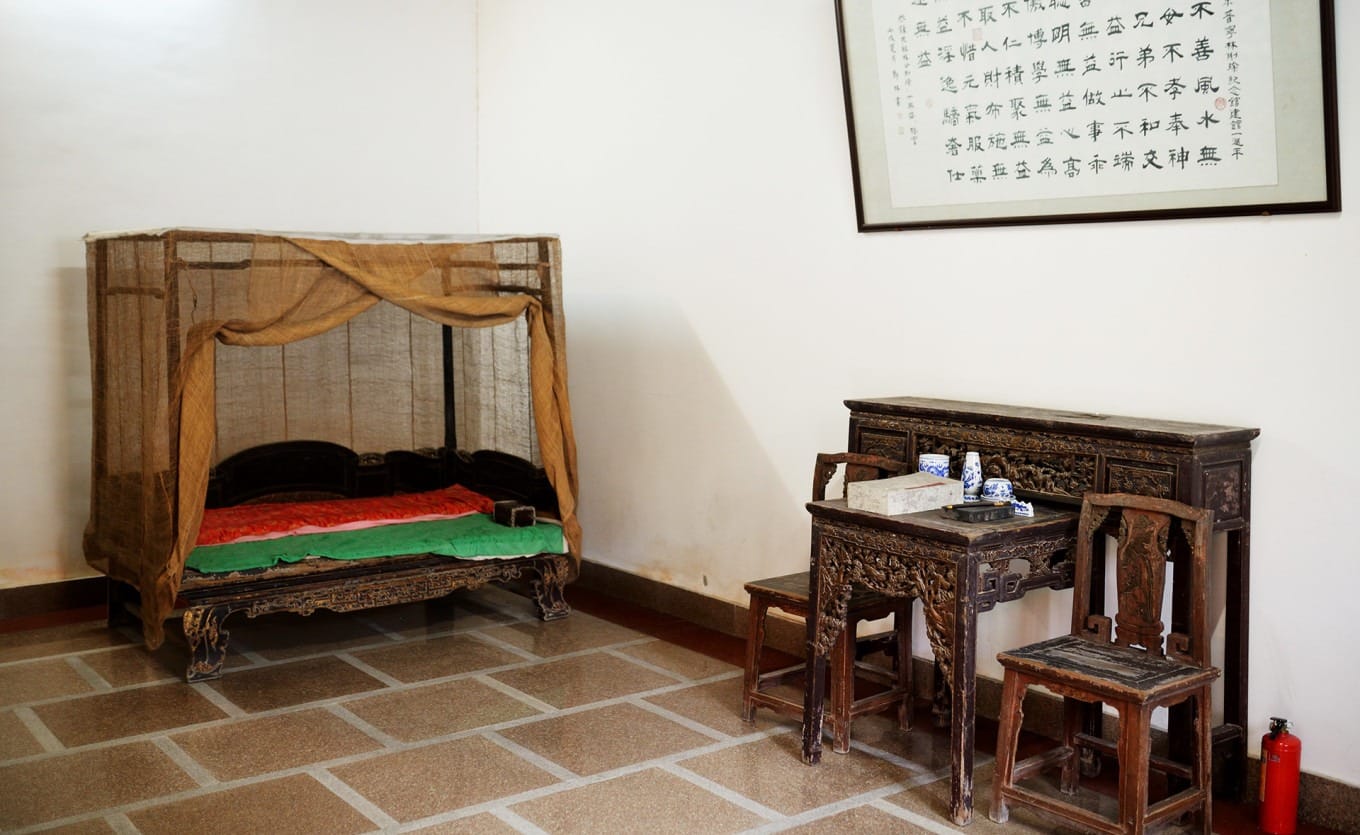
The temple and pavilion sit in Dongcun (东村 / East Village), the site of the former eastern city gate. Locals still refer to this neighborhood as Dongmentou (东门头 / East Gate), which has served as Hongyang’s commercial hub since the Ming and Qing dynasties. Strolling down Zhongshan Road (中山路), you will find a remarkably intact arcade street largely untouched by tourism. The Republican-era qilou (骑楼 / arcade buildings) lining both sides create a time-capsule atmosphere where local life proceeds at a leisurely pace.
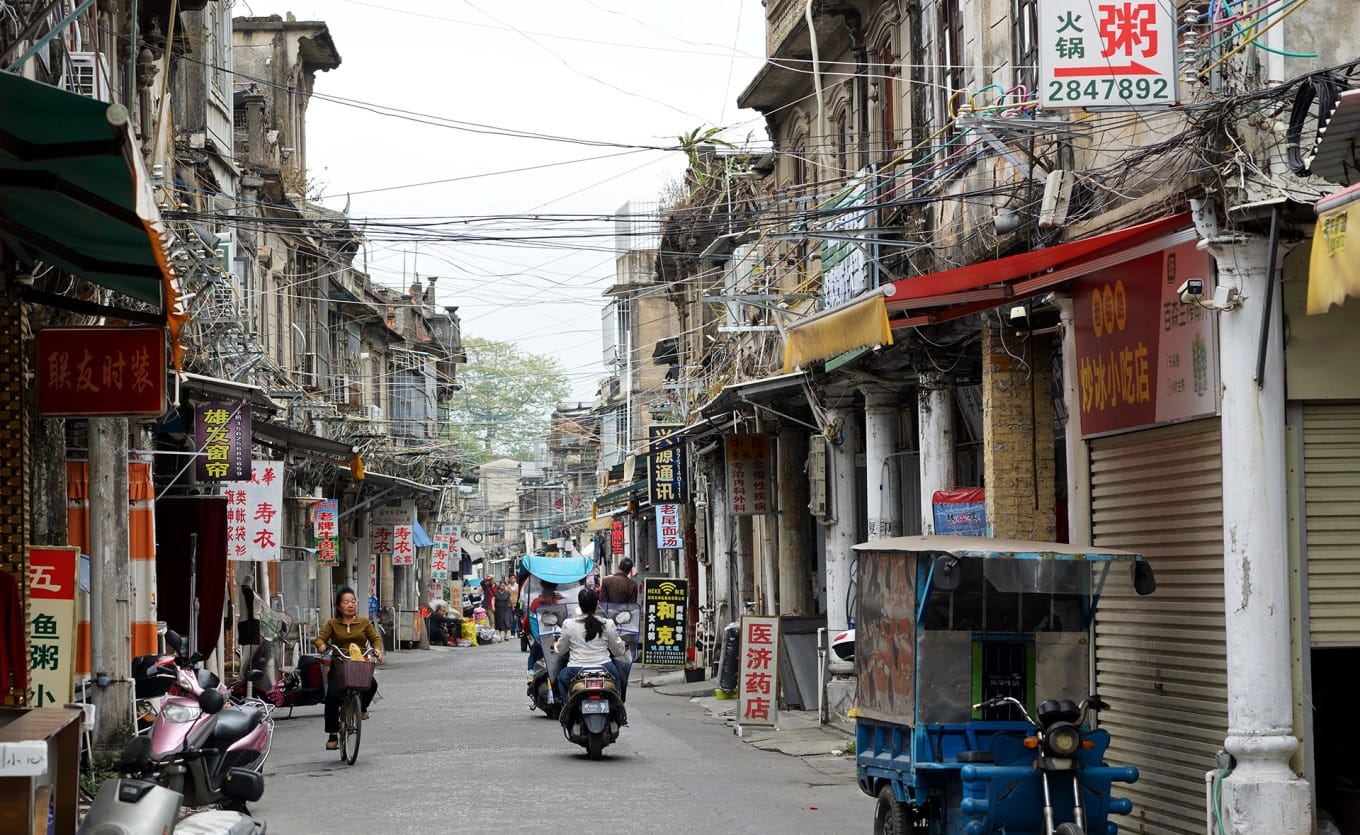
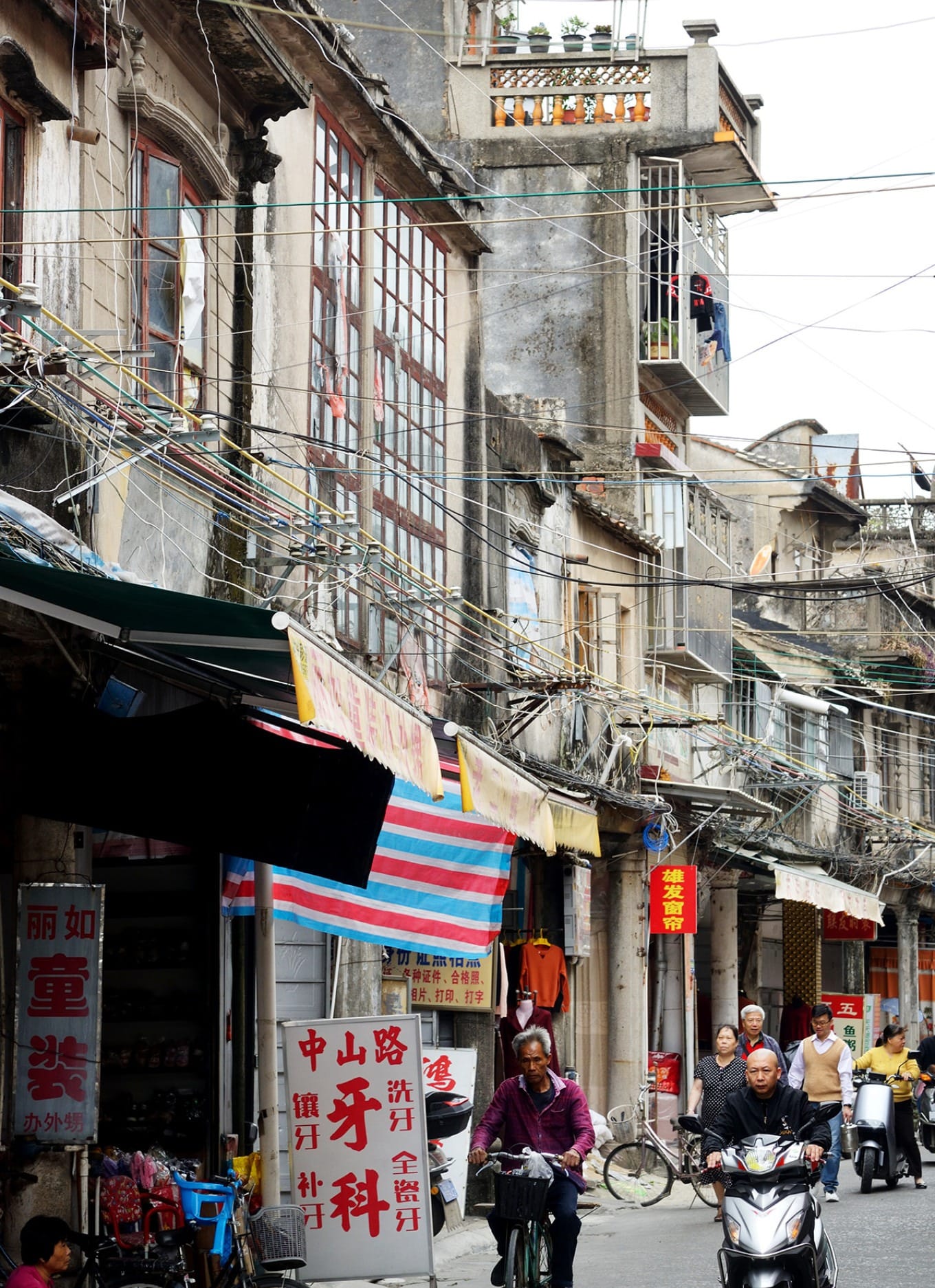
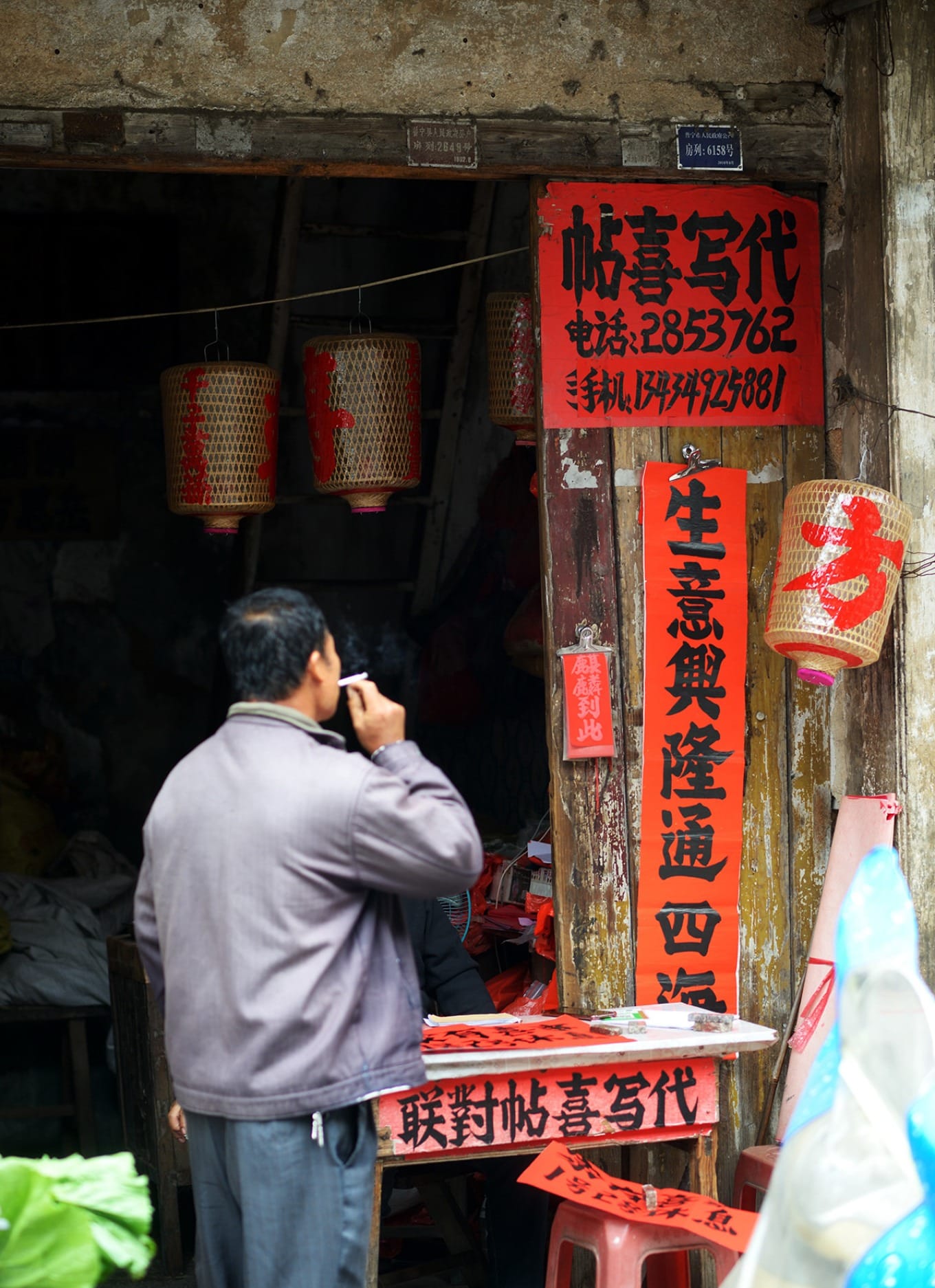
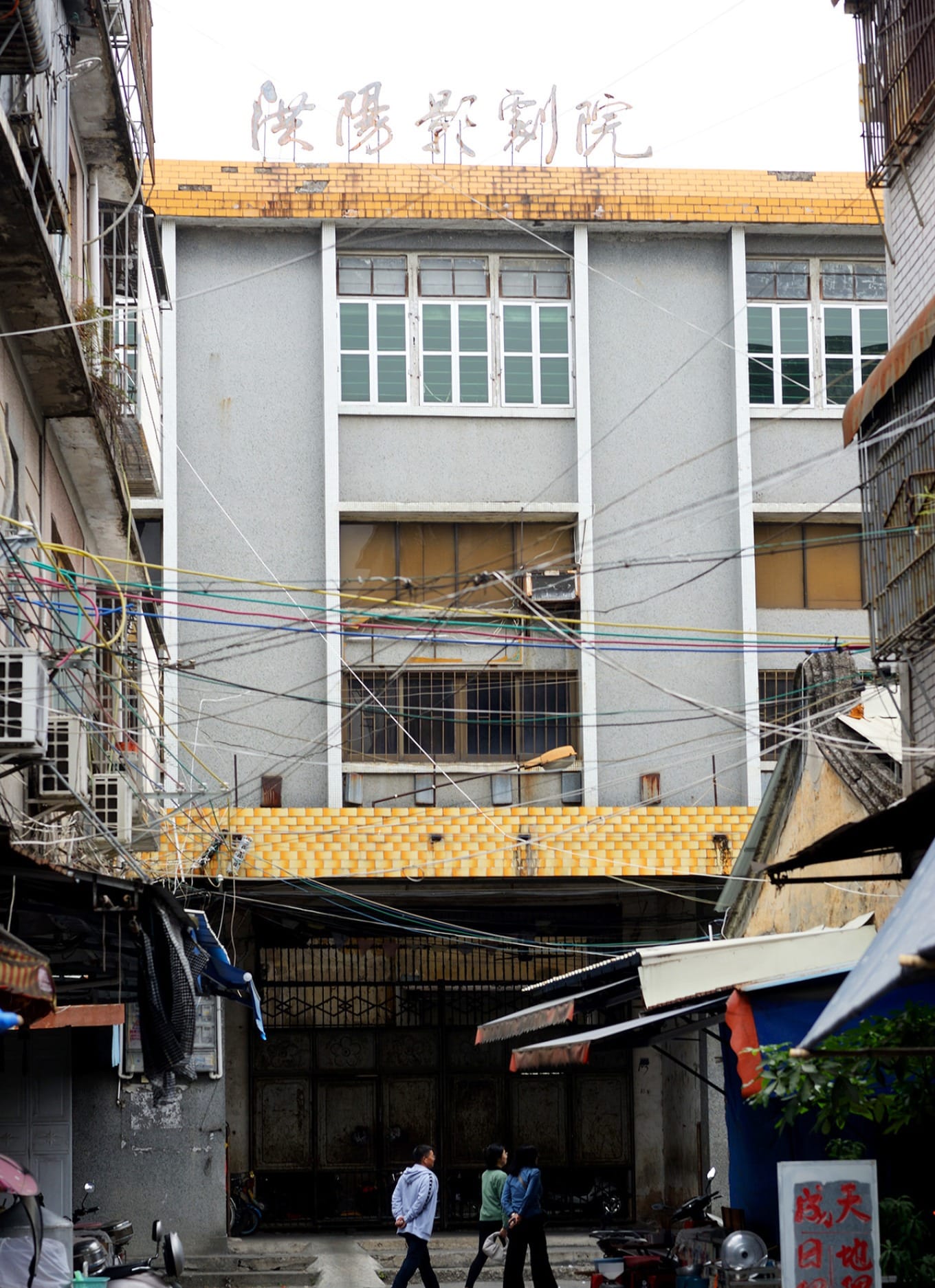
Hongyang rewards travelers who look beyond the obvious. While some interiors remain closed, the density of historical markers—from imperial tribute plaques to Republican school inscriptions—offers an unfiltered glimpse into Chaoshan’s layered past. The site remains freely accessible, allowing you to wander the grid of ancestral halls, temple courtyards, and arcaded commercial streets at your own pace.
- Address: 普宁市洪阳镇 (Hongyang Town, Puning City)
- Admission: Free
Nigou Village: A Living Ancient Settlement in Chaoshan
Step into Nigou Village (泥沟村) and you enter a settlement that locals call Guangdong’s only ‘living’ ancient village—a claim that may sound bold, yet the accolades support the hype. Listed among the second batch of ‘Guangdong Ancient Villages’ (广东省古村落) and named one of the ‘Top Ten Most Beautiful Ancient Villages in Guangdong’ (广东十大最美古村落), this 600-year-old community in Liaoyuan Street (燎原街道), Puning (普宁), offers a rare glimpse into Chaoshan rural life frozen in architectural amber. Founded in 1403 during the Ming Dynasty’s Yongle era, the village traces its origins to Zhang Cuifeng (翠峰公), who migrated from Fujian’s Zhangzhou to establish a new home. Today, over half the villagers still bear the Zhang surname, joined by Xu, Chen, Zheng, Sun, Zhou, Li and other families who settled over the centuries.
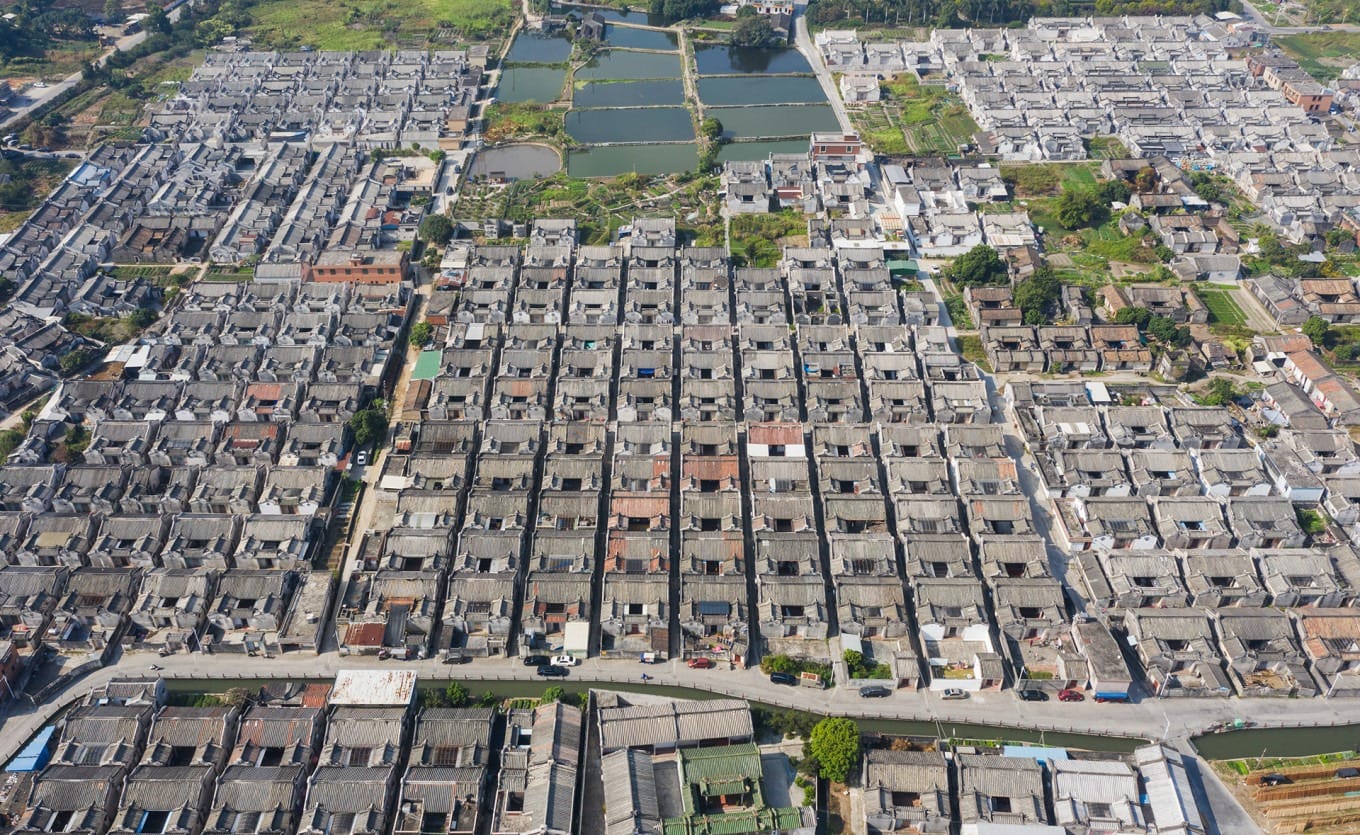
The village’s southern-high, northern-low topography channels water through a network of canals that carve the settlement into more than 100 residential clusters called zhaiwei (寨围). Here you will find classic Chaoshan architectural forms—the Xia Shan Hu (下山虎) and Si Dian Jin (四点金)—which function as the region’s distinctive take on the courtyard house. While most structures date from the 1980s and 90s, built under collective village planning at the old settlement’s edge, they faithfully reproduce traditional styles. These grid-like arrangements of grey earthen walls capped with blue glazed tiles create a visual rhythm so orderly it soothes the eye.
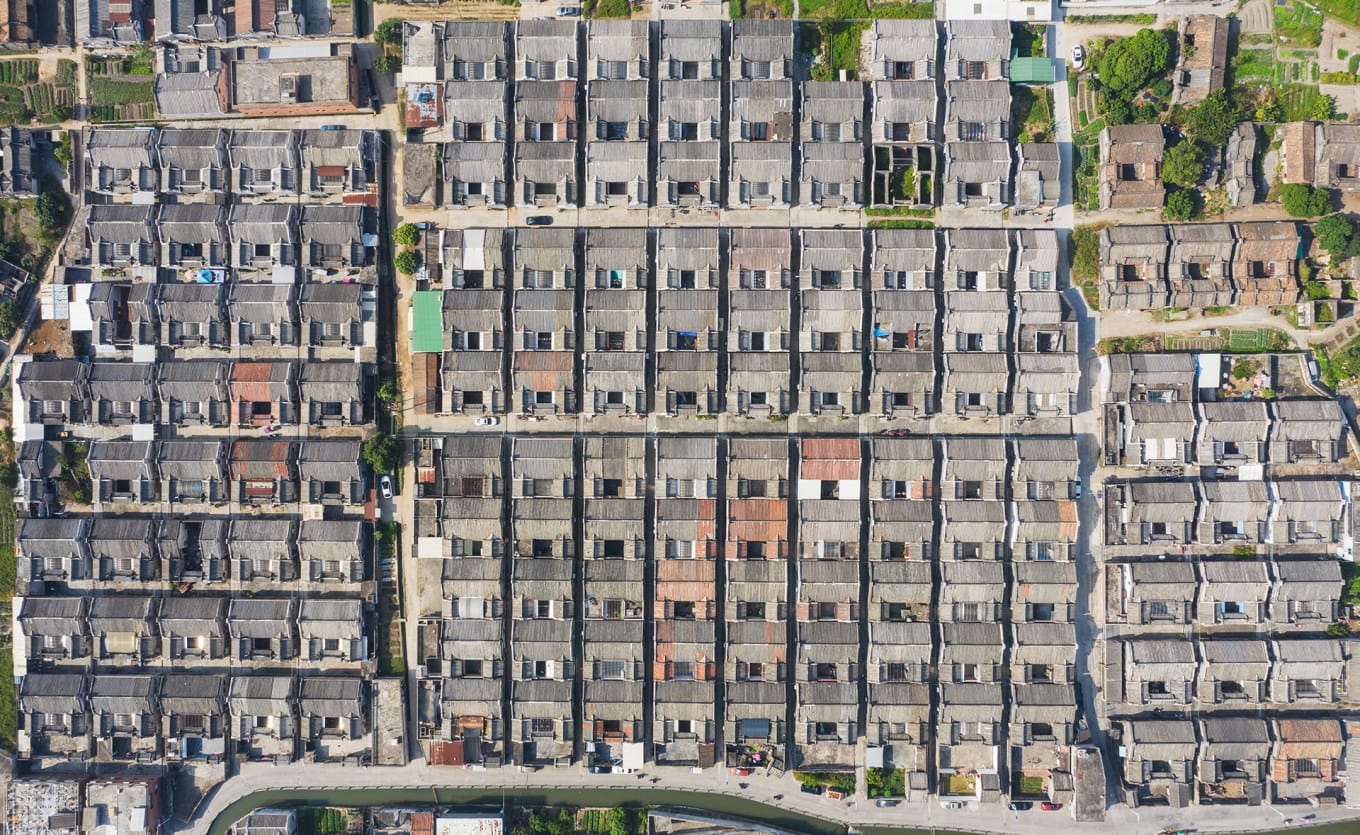
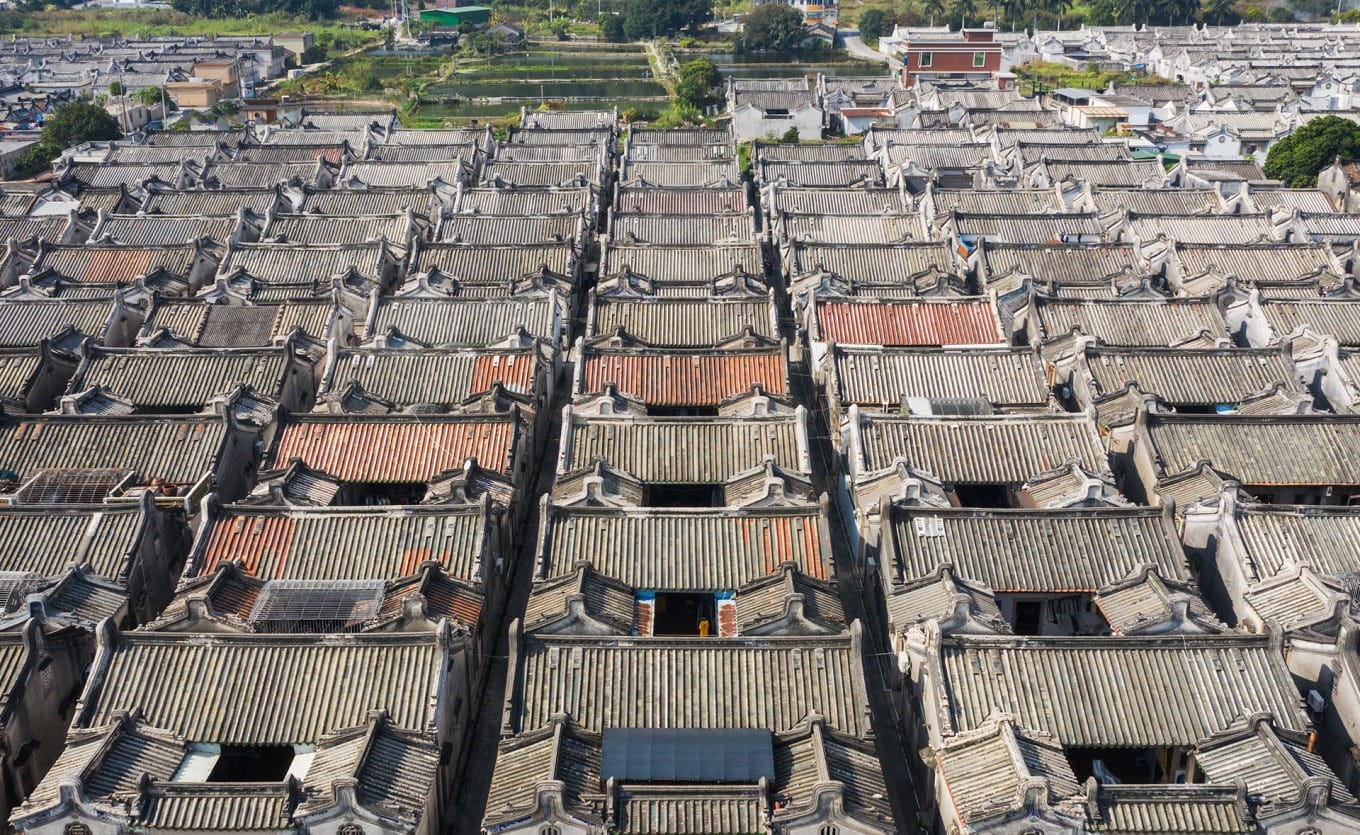
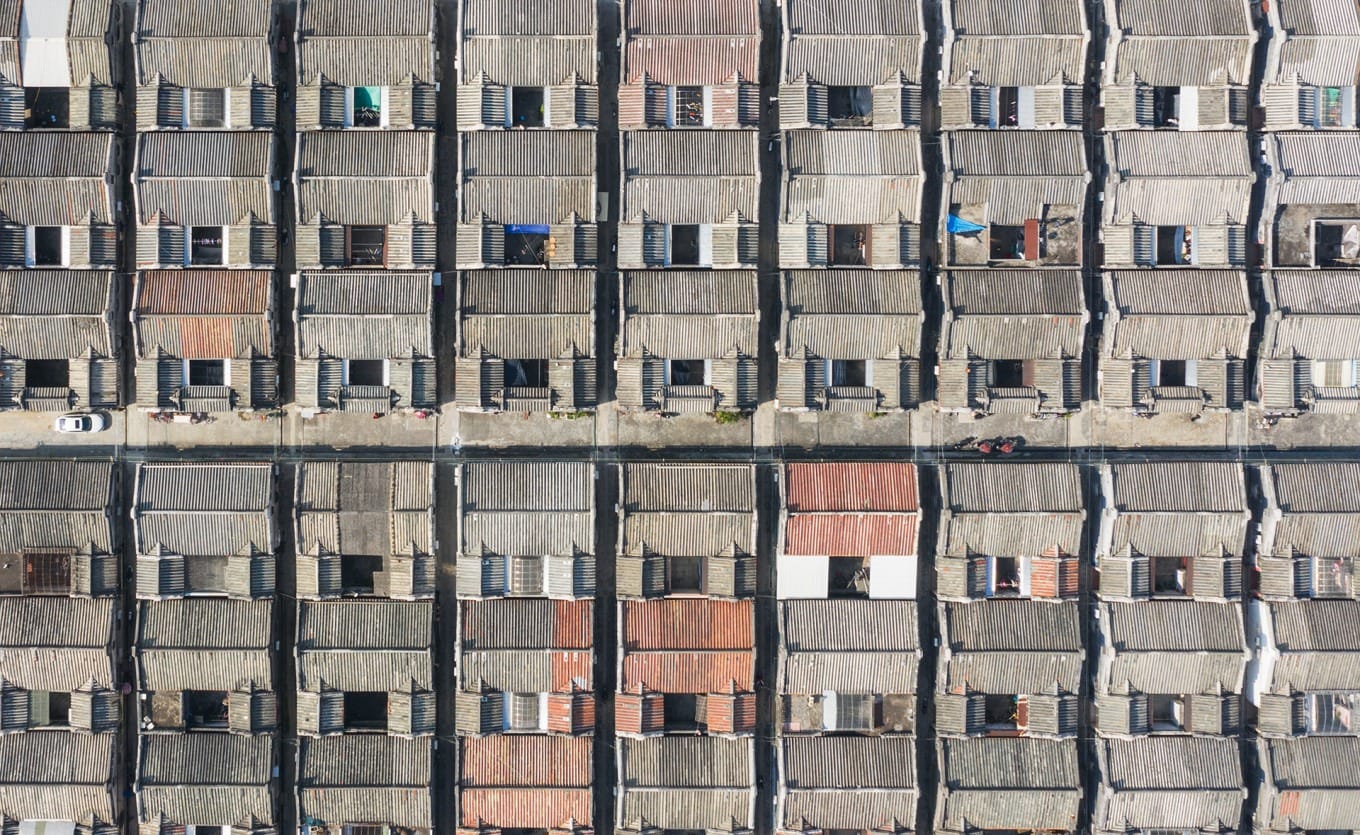
Clan identity runs deep here, evidenced by over 100 ancestral halls dotting the village, predominantly belonging to the Zhang and Xu lineages. Make your way to the Zhang Family’s Baoben Hall (张氏报本堂), known locally as the ‘Old Hall’ inside the South Gate. Founded in 1520 during the Jiajing reign, this is the village’s oldest surviving ceremonial structure, honoring Zhang Cuifeng, the founding ancestor. Though you will view it through locked iron gates—preserving its interior—the original shell remains intact: the left, right, and rear walls of oyster-lime composite date back five centuries, while the gatehouse retains exquisite Qing Dynasty stone carvings. In 1725, descendant Zhang Can, who rose to become a second-rank imperial guard, bestowed the ‘Baoben Hall’ plaque. Inside, replicas of historical honorific boards—including ‘Jinshi,’ ‘Wenkui,’ and ‘Gongyuan’—recall the family’s scholarly achievements. If you visit during the Double Ninth Festival (ninth day of the ninth lunar month), you may witness Zhang clan members returning from across China and overseas to pay respects at this spiritual anchor.
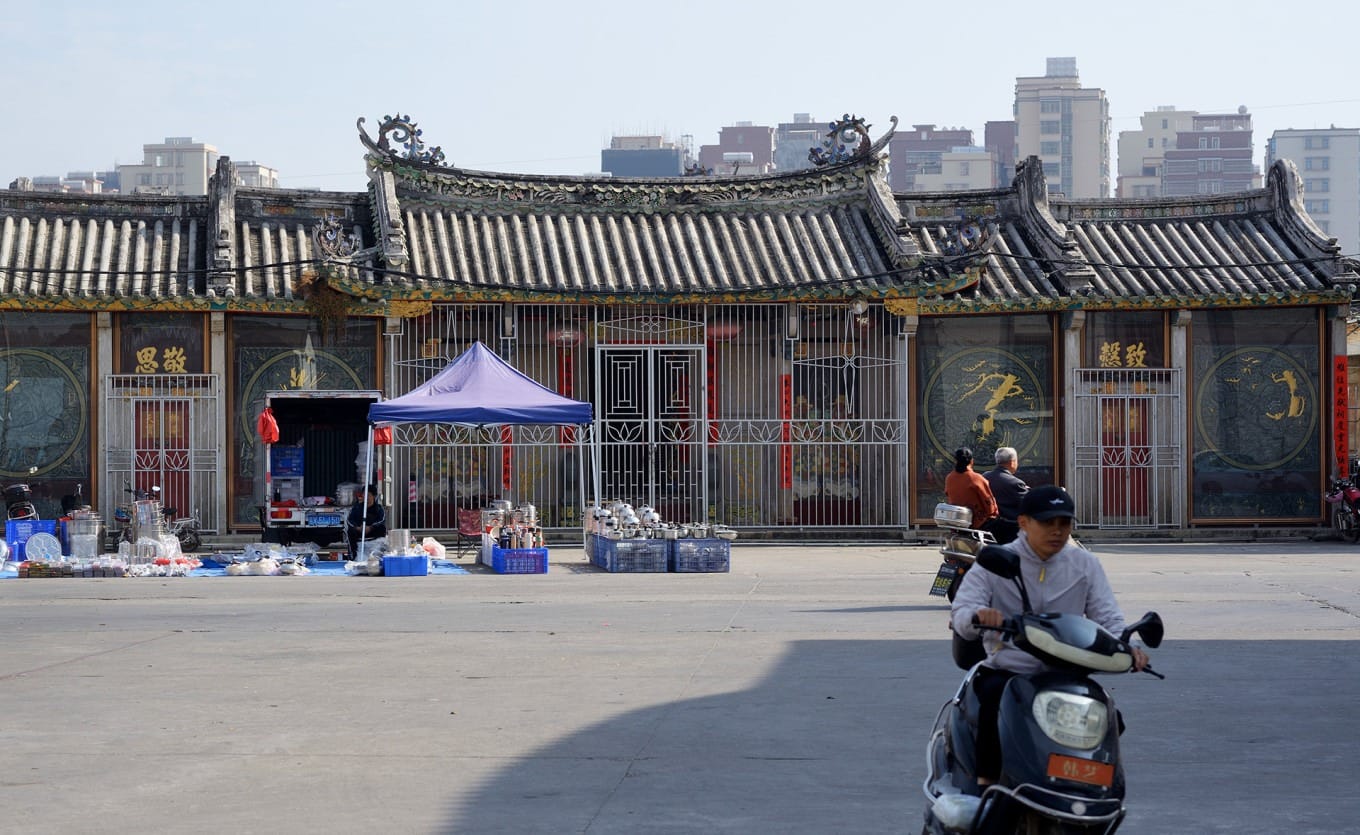
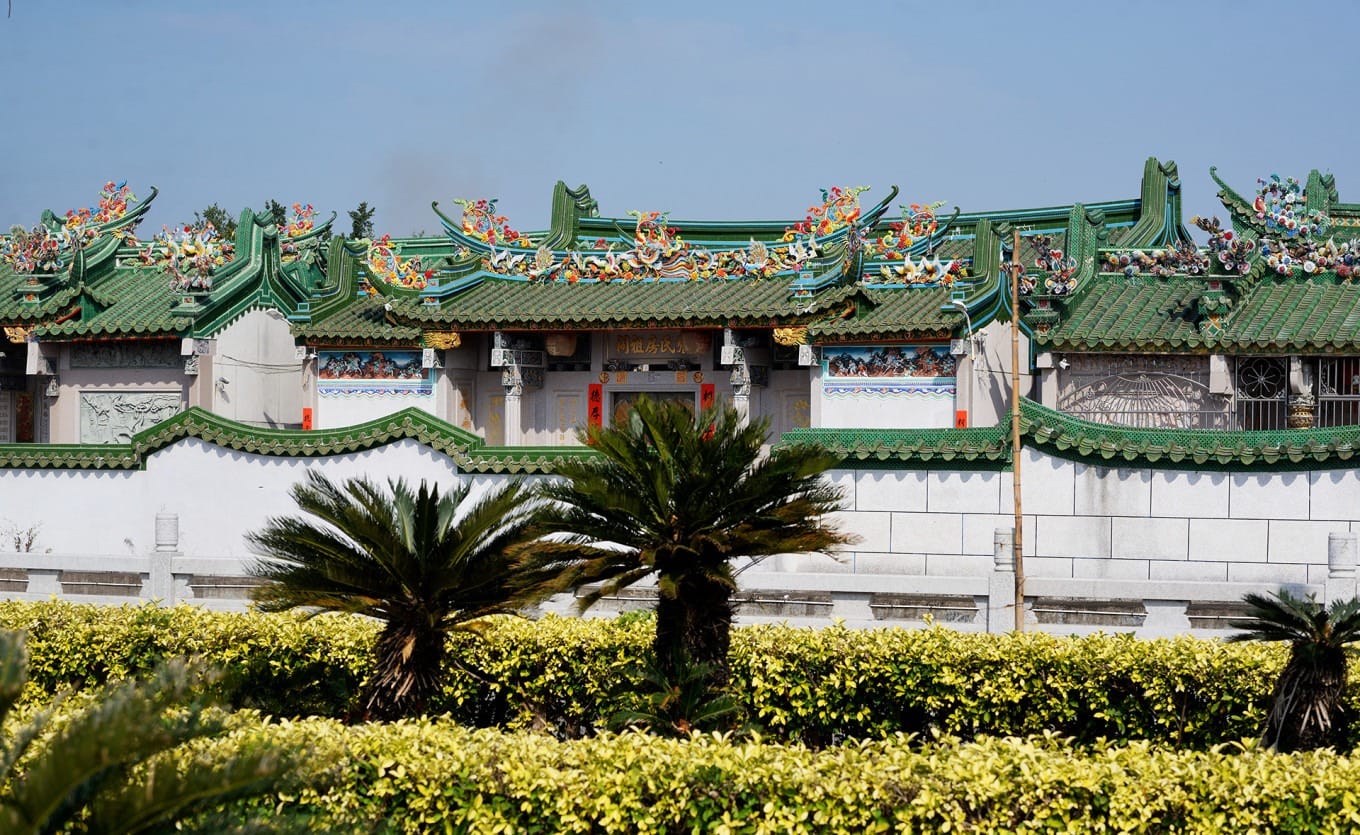
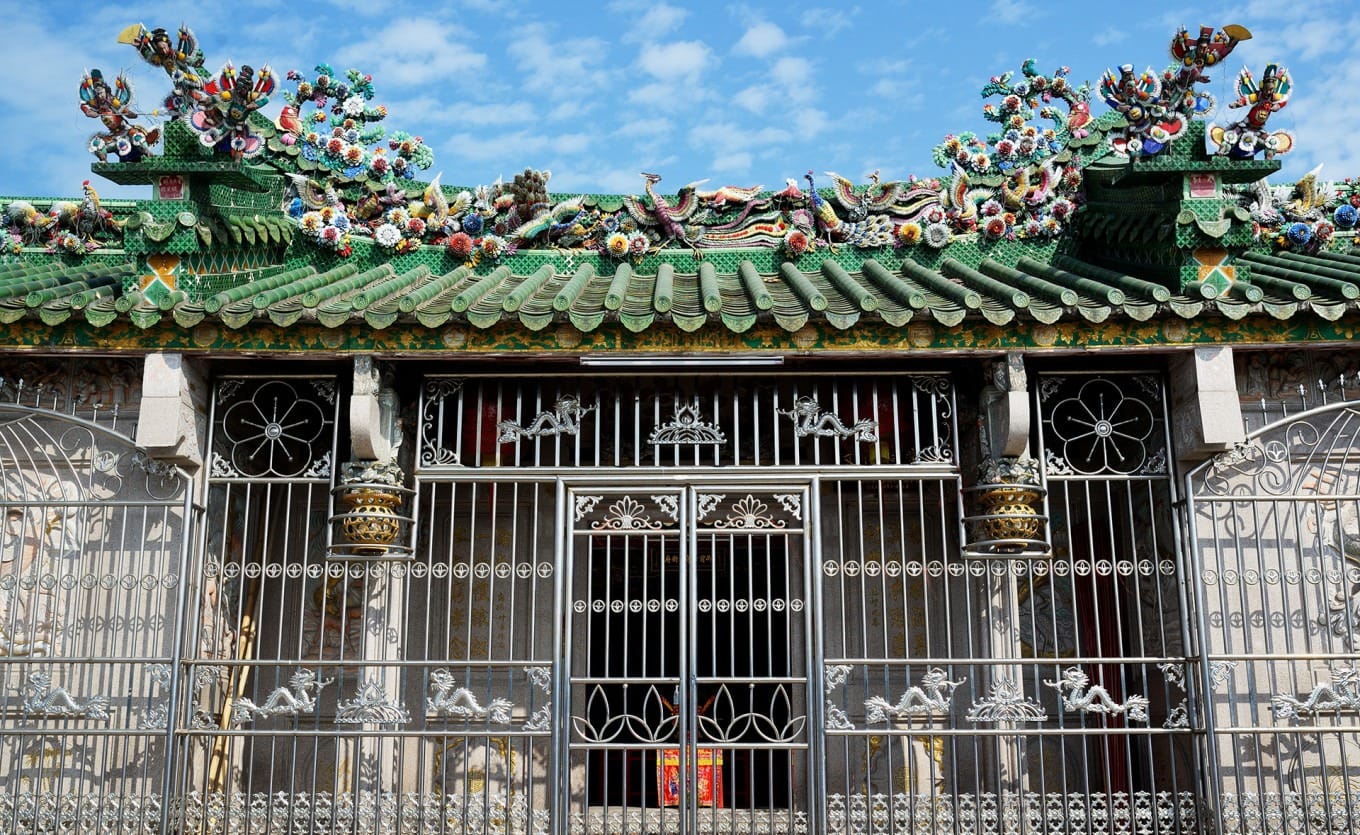
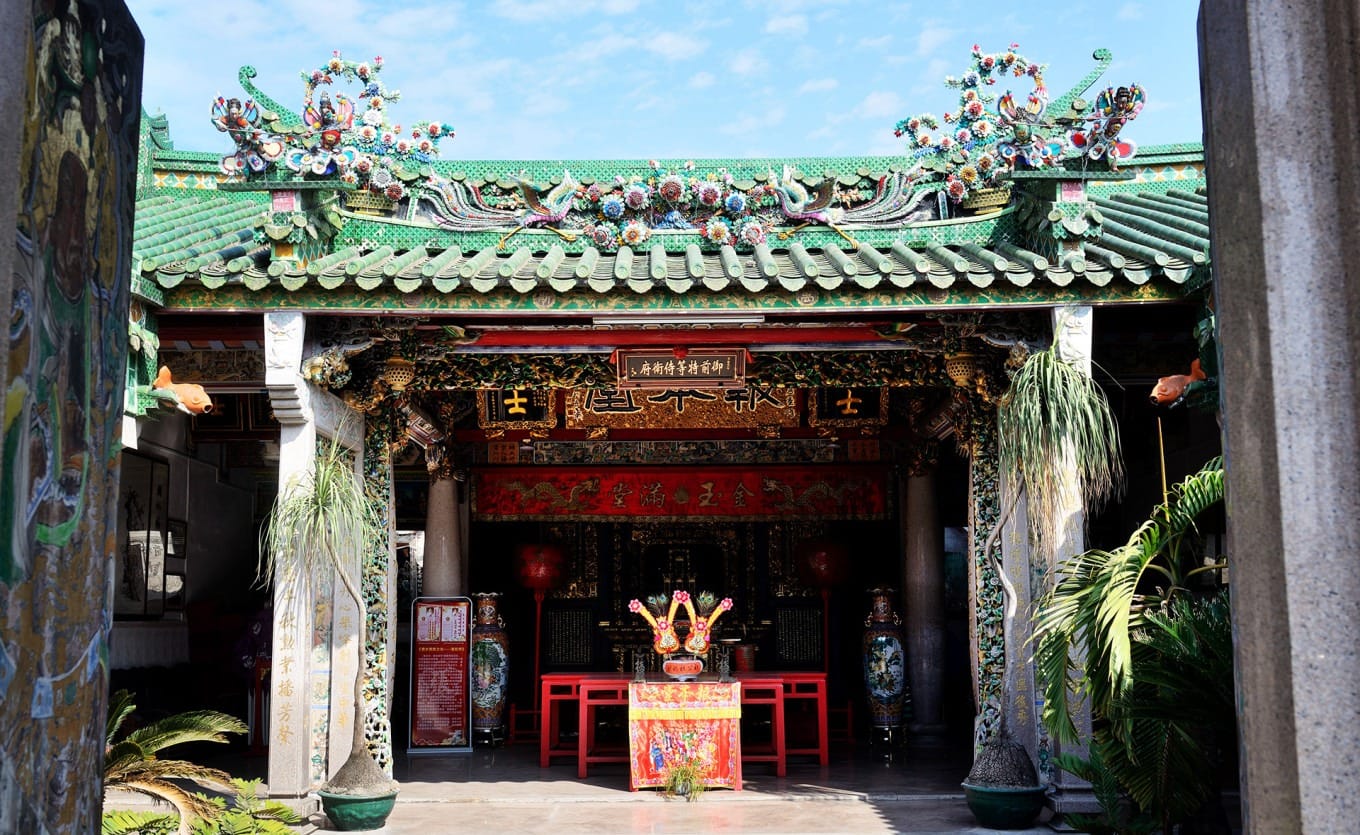
Adjacent stands the Zhang Family’s Tongde Hall (张氏桐德堂), or ‘Great Ancestral Hall,’ originally built during the Qing Dynasty to honor the second-generation ancestor Fengwu. After the 2013 typhoon destroyed the old structure, villagers rebuilt it to maintain their connection to the lineage. Like others throughout the village, these halls serve dual purposes: sites for ancestor worship and bridges linking local residents to overseas kin. Given that Chaoshan is one of China’s great qiaoxiang (hometowns of overseas Chinese), these halls represent sacred ground for millions reconnecting with their roots.

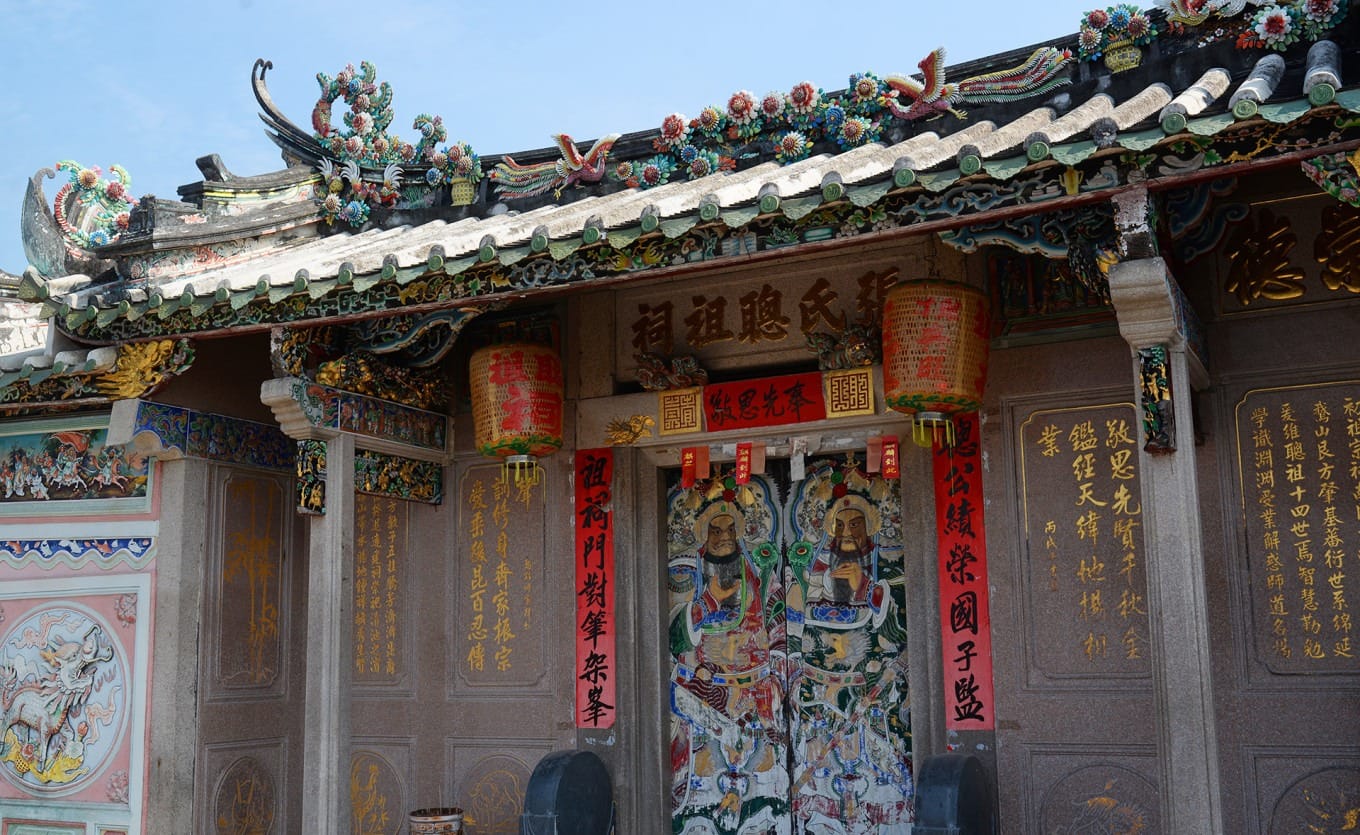
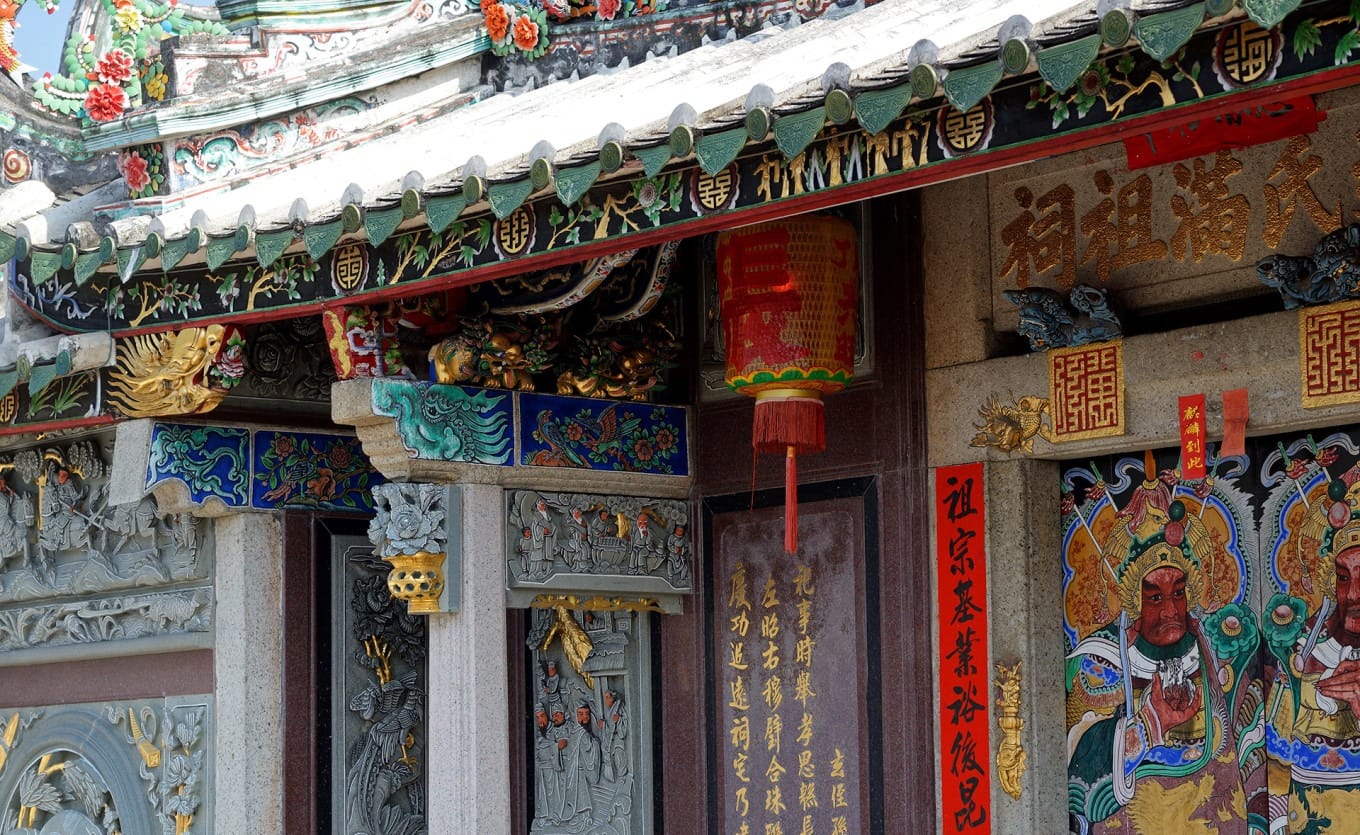
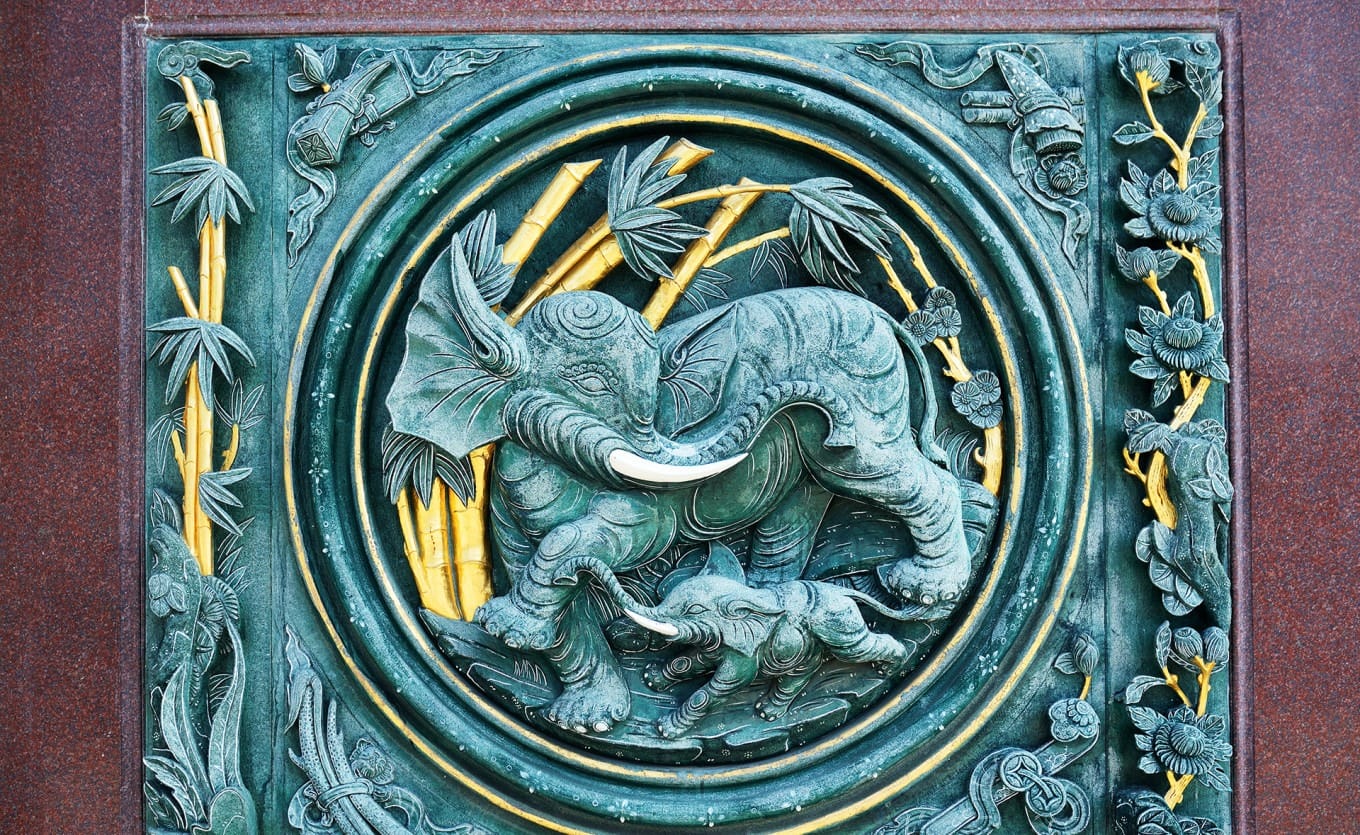
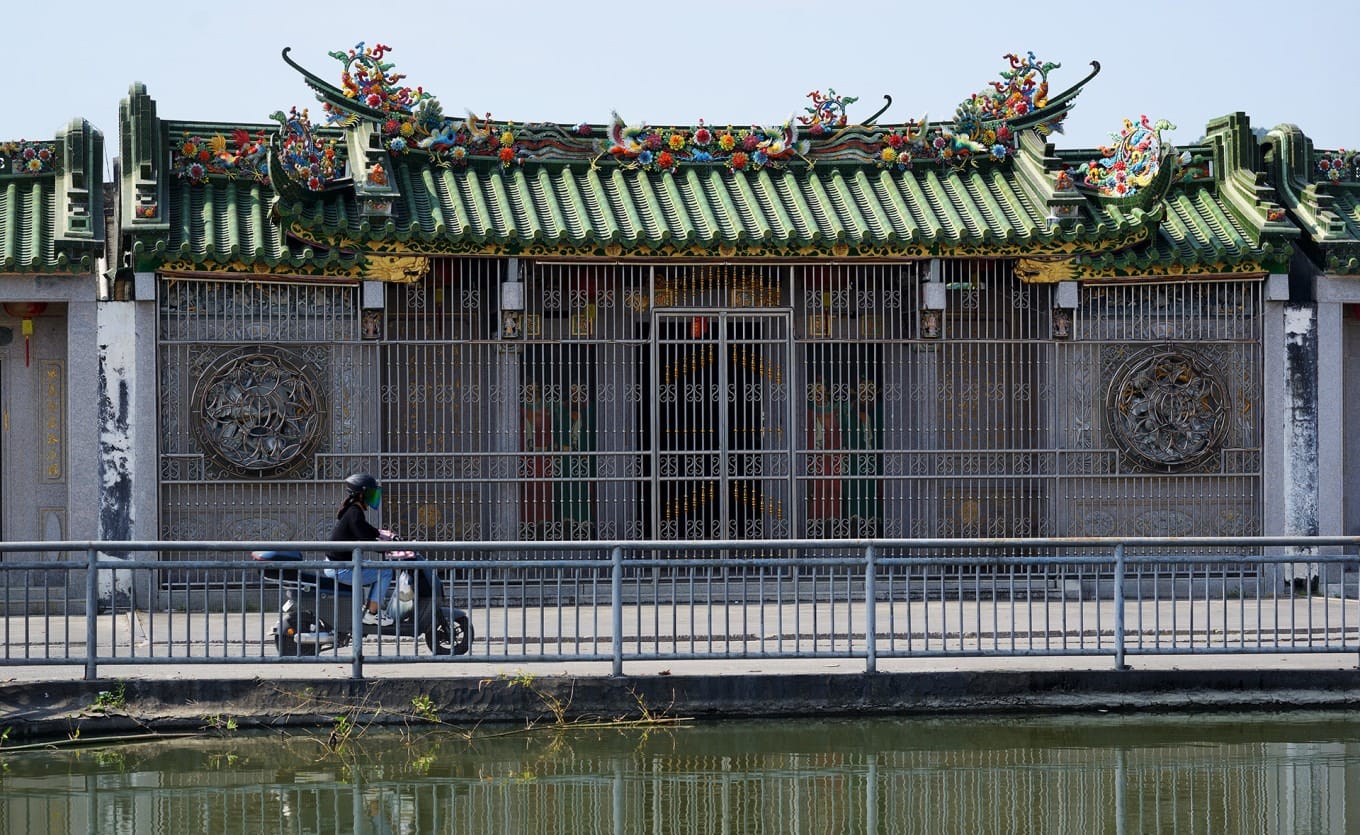
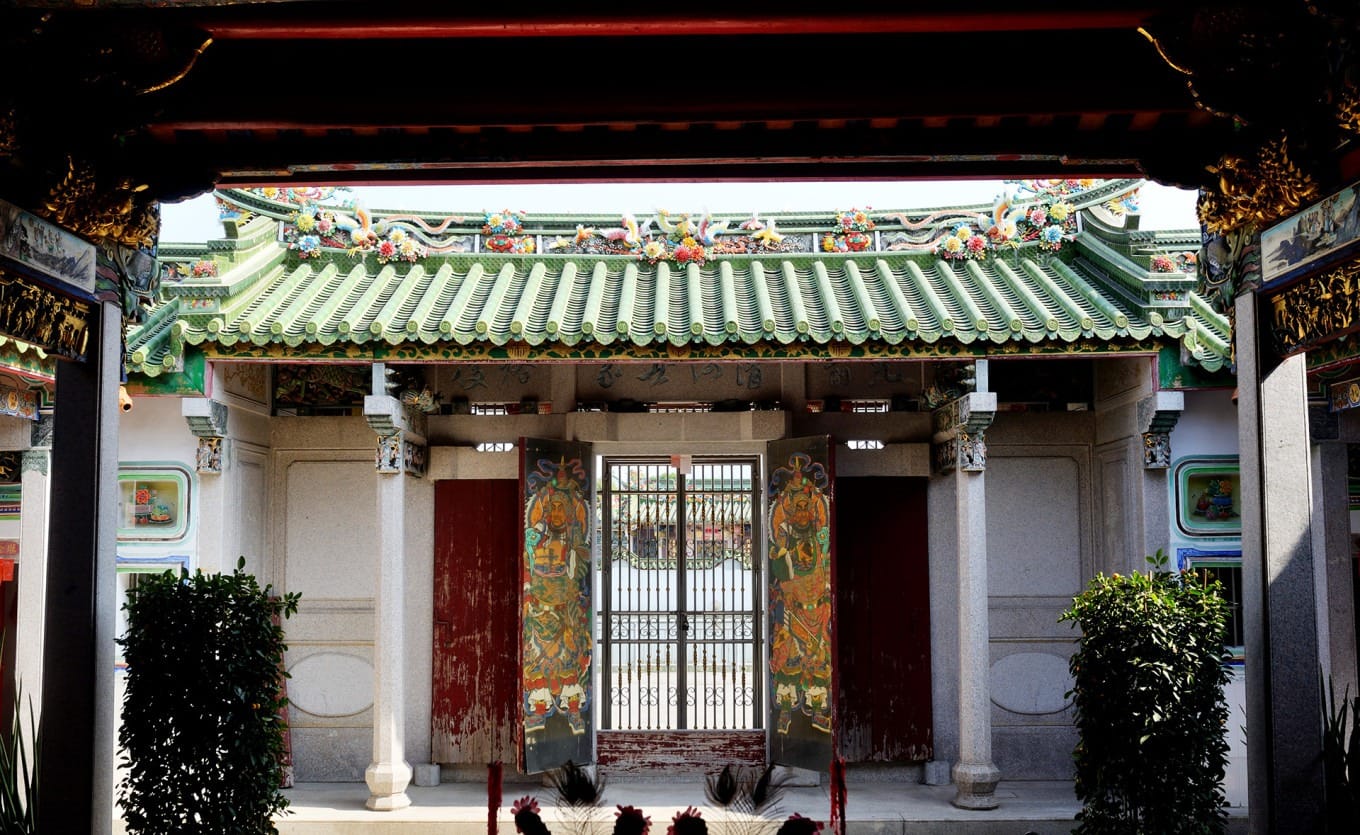
Beyond the halls, seek out the village’s most photogenic monument: the Baishou Arch (百岁坊), also inscribed as ‘Shengping Renrui’ (昇平人瑞). Erected in 1709 during the Kangxi Emperor’s reign to honor a local Xu centenarian, this four-pillar, three-bay, three-tiered stone gateway features intricate carvings of qilin, lions, and dragons. Though dismantled during the political turmoil of the 1960s, villagers salvaged every component, storing the pieces safely until reconstructing the archway in the 1990s. Standing before this 300-year-old survivor, you grasp the community’s fierce dedication to preserving its heritage.
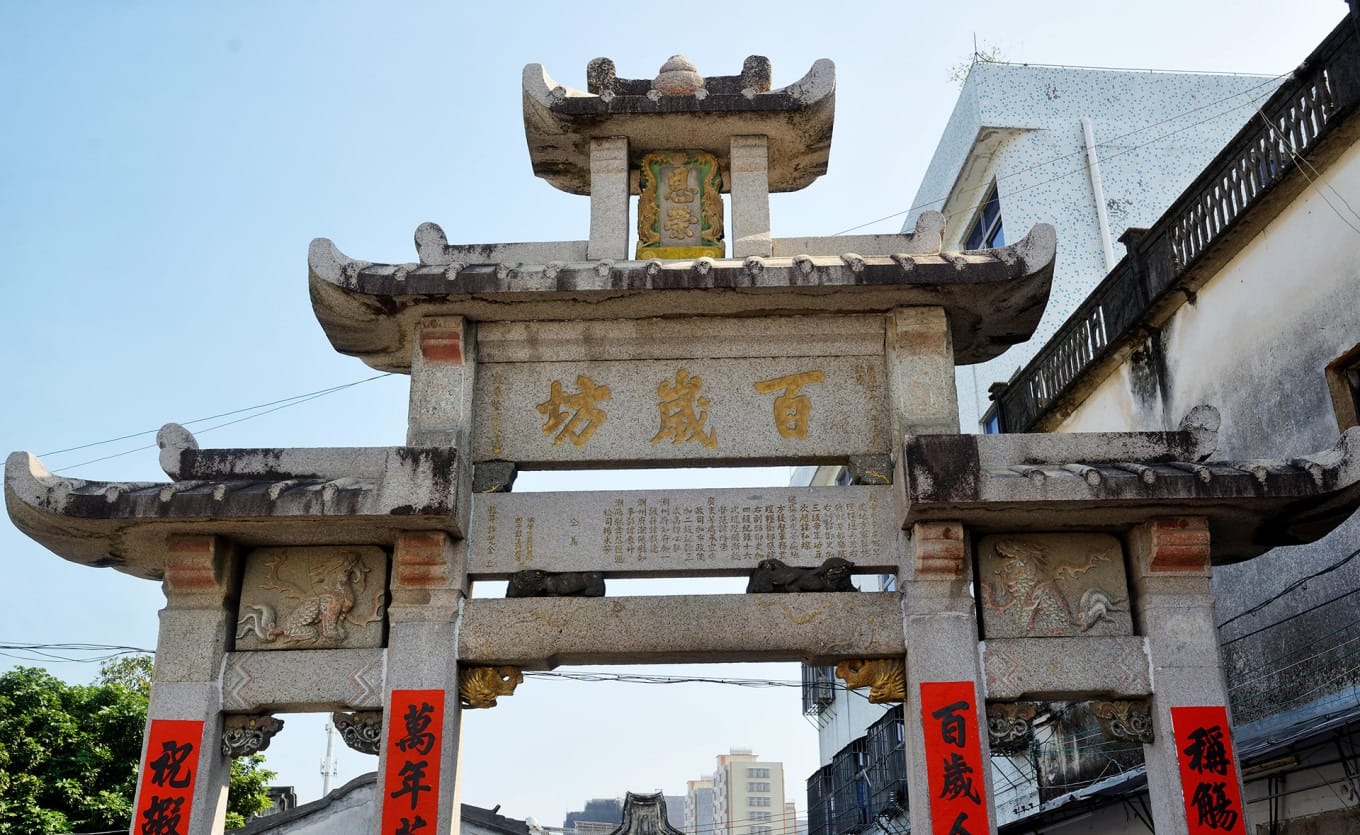
Culture here extends beyond stone and mortar. Nigou ranks among the birthplaces of Chaoshan Yingge Dance (英歌舞), the explosive folk performance that combines martial arts, theater, and percussion. If you plan your visit during Spring Festival (late January to February), you can catch the village’s touring troupes in action—an unmissable introduction to Chaoshan folk traditions.
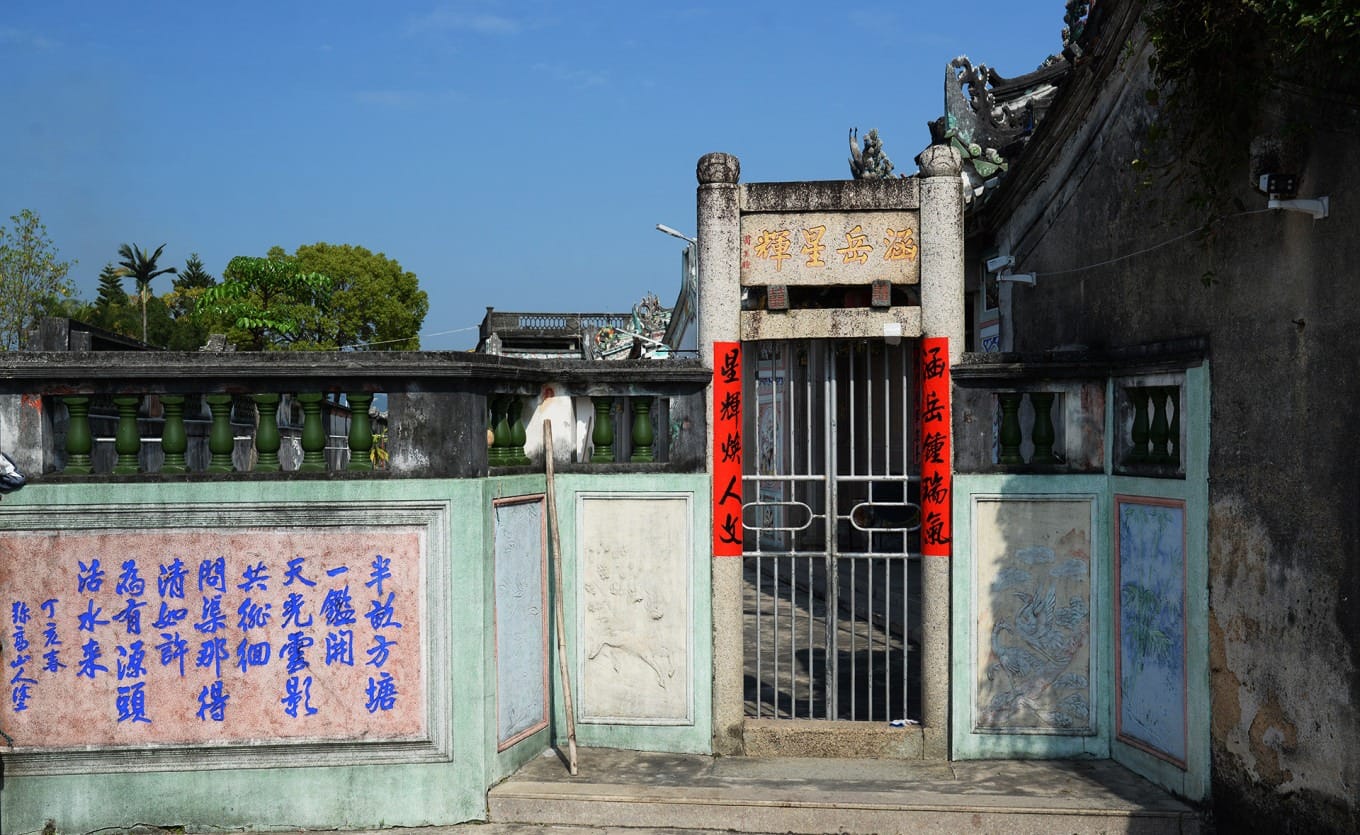
The village opens freely to visitors. You will find it at Nigou Township, Liaoyuan Street, Puning City (普宁市燎原街道泥沟乡). Allow half a day to wander the lanes, peek into courtyard compounds, and absorb the atmosphere of one of Guangdong’s most architecturally cohesive ancient settlements.
Practical Information
Planning your first Chaoshan culinary adventure requires minimal logistics headaches. Whether you’re flying in from across China or driving up from the Pearl River Delta, Jieyang and Puning offer multiple entry points that cater to different travel styles.

By air, you’ll land at Jieyang Chaoshan Airport (揭阳潮汕机场), which connects to the city center via direct airport buses terminating at either Jinxian Gate (进贤门) in downtown Jieyang or Liusha Station (流沙车站) in Puning. Rail travelers should look for tickets to Jieyang Station (揭阳站) or Puning Station (普宁站), both served by the regional high-speed network. For those preferring road trips, the four-hour drive from Guangzhou or Shenzhen rewards you with the freedom to explore satellite towns at your own pace.
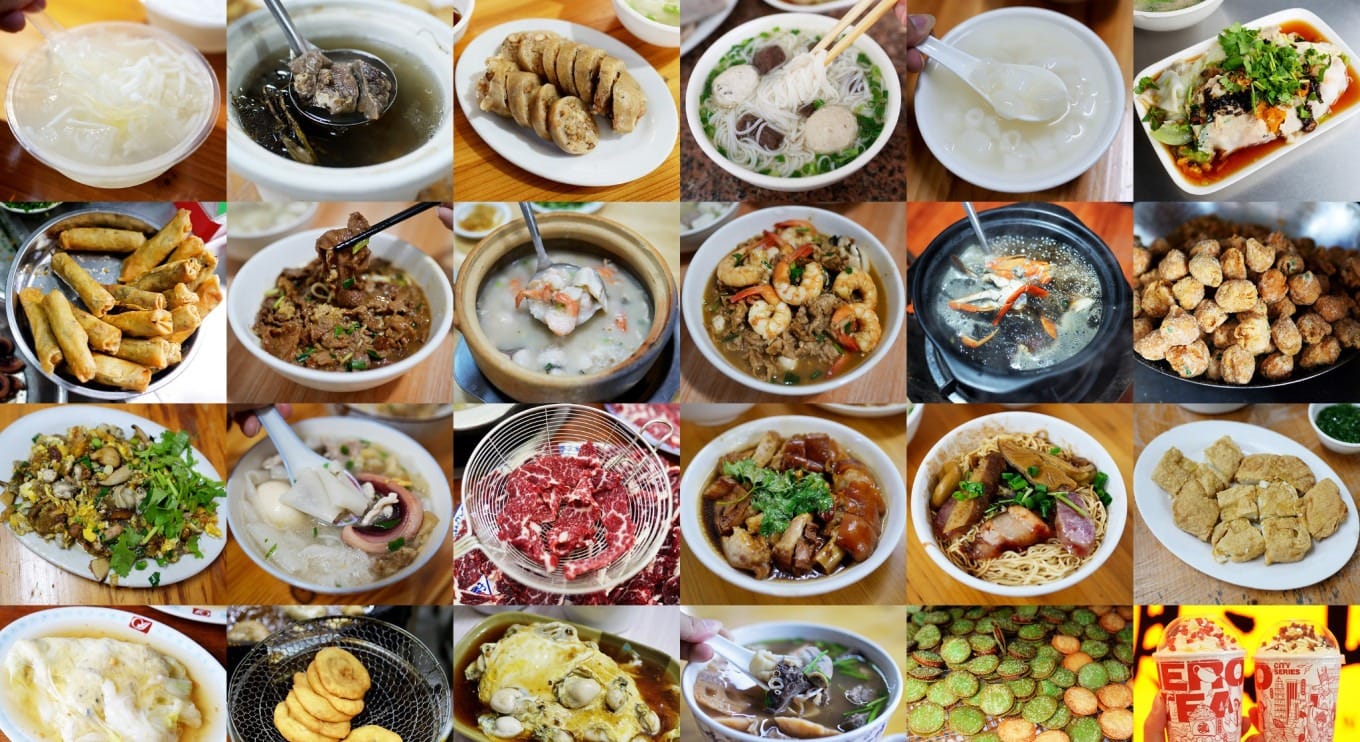
Strategic lodging choices maximize your eating efficiency. In Jieyang, prioritize hotels within walking distance of Jinxian Gate (进贤门), the unofficial center of the old city where morning markets and night stalls cluster. Puning presents a different challenge—accommodation options are thinner on the ground. Consider booking one night in Hongyang (洪阳) and another in Liusha (流沙) if your itinerary spans multiple days; this split-stay approach eliminates tedious cross-town commutes when chasing specific local specialties.
Here’s a welcome surprise for budget-conscious travelers: unlike destinations that nickel-and-dime visitors at every turn, Jieyang and Puning maintain a refreshingly open-door policy. Local authorities keep virtually all signature attractions—including every cultural site and historic quarter worth exploring—completely free of charge, reflecting the region’s genuine hospitality toward visitors who venture beyond the usual tourist circuits.
Enjoyed this article? Consider buying me a coffee to support more content like this!
💖 0 people have clicked to support this article.